| THS trip 23-11-2014
| |
|
Some information about Kota Ngah Ibrahim, Isabella Bird etc
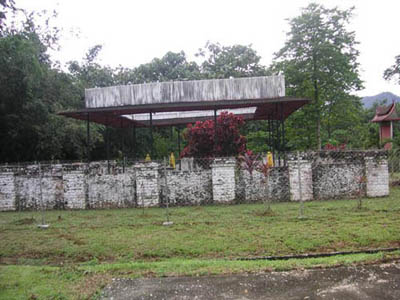
The discovery in Perak of the richest tin deposits in the world in the 1820's drew in a huge influx of immigrants, particularly Chinese. Around 1870 there were an estimated 40.000 Chinese in Perak Legend has it that Long Jaafar 1790-1856) discovered tin in the Larut region in 1848, when one of his elephants (named Larut) came back with "silvery" mud on its legs He became a tin miner and built a fortified residence in Bukit Gantang : Kota Long Jaafar
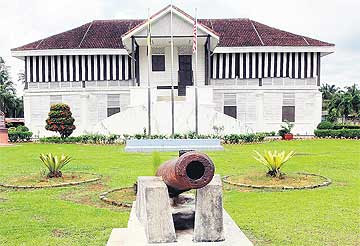
His son Ngah Ibrahim (1836-1895) took over when Long Jaafar died. He built his fort in Matang: Kota Ngah Ibrahim because this was close to Teluk Kertang, from where the boats with tin ore left for Penang. According to the memorial stone at the fort, it was probably completed in 1858
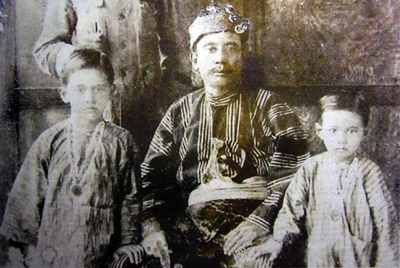
Here is Ngah Ibrahim, with two of his sons
Two Chinese secret societies
Ghee Hin (Cantonese)-> ~ Hokkien Two mine locations
Klian Pauh (now Taiping) mined by the Hai San , "Five Associations" (Go-Kuan) The Larut Wars 1st Larut war (1861-62): the Hai San chase the Ghee Hin out of Klian Baharu . The Governor of Straits Settlements, William Orfeur Cavenagh intervened and the Mentri of Larut, Ngah Ibrahim, was made to compensate the Ghee Hin with $17,447 on behalf of the Sultan of Perak. 2nd Larut war (1865) Gambling quarrel. Both groups had to pay compensation . Leaders banished
3rd Larut War (1871-1872) Started with a scandal between a Ghee Hin leader and the wife of a nephew of Chung Keng Quee.
4th Larut War (1873) The Ghee Hin, supported by Abdullah, fight back and destroy Matang. It spreads out to other places.Both Abdullah and Chung Keng Quee ask for Britisch intervention.
About Speedy:
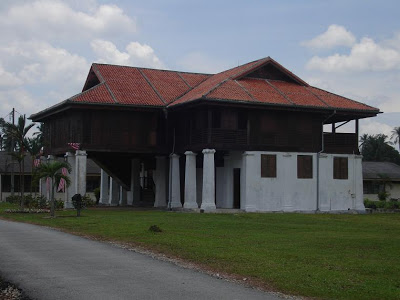
"In 1871 Speedy sailed to the Straits Settlements in Malaya and became superintendent of police on the island of Penang. Speedy's bungalow, near Kota Ngah Ibrahim
Aftermath of the Pangkor Treaty
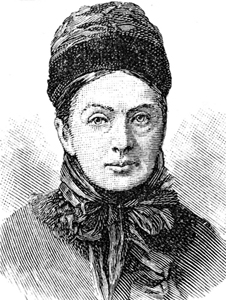
Birch turns out to be an impopular Resident. Killed by followers of a local Malay chief Maharaja Lela. Because Birch was arrogant and disrespectful of Malay sensitivities, is the official explanation. Maharaja Lela and several others are arrested. The trial takes place in Kota Ngah Ibrahim and Maharaja Lela is hanged in 1877. Because both Ngah Ibrahim and Sultan Abdullau were implicated in the planning of the killing, they are deposed and sent to exile in the Seychelles. Isabella Bird Isabella Bird arrives in Taiping in February 1879, from Penang, with the steamer Kinta. She lands at Teluk Kertang and from there she travels by horse-cart to the Residency in Taiping A year earlier, in 1878 Taiping had been destroyed by fire, but she does not mention that in her book. Here she is, the intrepid lady-traveller:
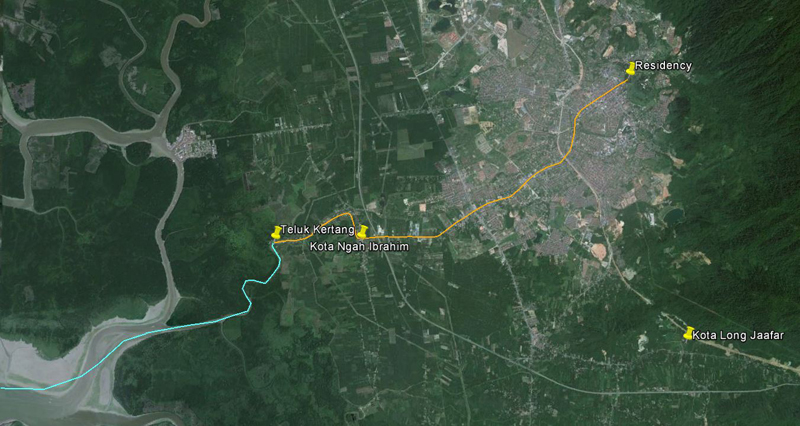
And this is how she writes, in her delightful travel book The Golden Scersonese "The little cabin below was frightfully hot, and I shared it not only with two nice Malay boys, sons of the exiled Abdullah, the late Sultan, who are being educated at Malacca, but with a number of large and rampant rats. Finding the heat and rats unbearable, I went on deck in the rosy dawn, just as we were entering the Larut river, a muddy stream, flowing swiftly between dense jungles and mangrove swamps, and shores of shining slime, on which at low water the alligators bask in the sun" One more quote, about her landing in Teluk Kertang "A small but very useful Chinese trading steamer, the Sri Sarawak, was lying against the pier, and we landed over her filthy deck, on which filthy Chinese swine, among half-naked men almost as filthy, were wrangling for decomposing offal. Dismal as this place looks, an immense trade in imports and exports is done there; and all the tin from the rich mines of the district is sent thence to Pinang for transhipment." Here is the route she probably has followed, blue by steamer, brown by horse cart. The location of the Long Jaafar fort in Bukit Gantang is also indicated
About the Kota Ngah Ibrahim
After Ngah Ibrahim was banned to the Seychelles, the fort has been used as court, until it was moved to Taiping in 1900. From 1987, this fort was taken over by the Perak Museum Department as a state historical site known as Kota Ngah Ibrahim Historical Complex. | |