
When Aric said, Let’s go to Klang and visit a temple there. It will be a surprise for you, I immediately accepted. One afternoon, we drove to Klang and used Waze to find the Tian Hock Keng temple (Temple of Heavenly Bliss). Here is the temple, when you look at the roof, you may already guess what makes it special. On Google Earth, you see its location. beside the Klang river, and next to a highway.
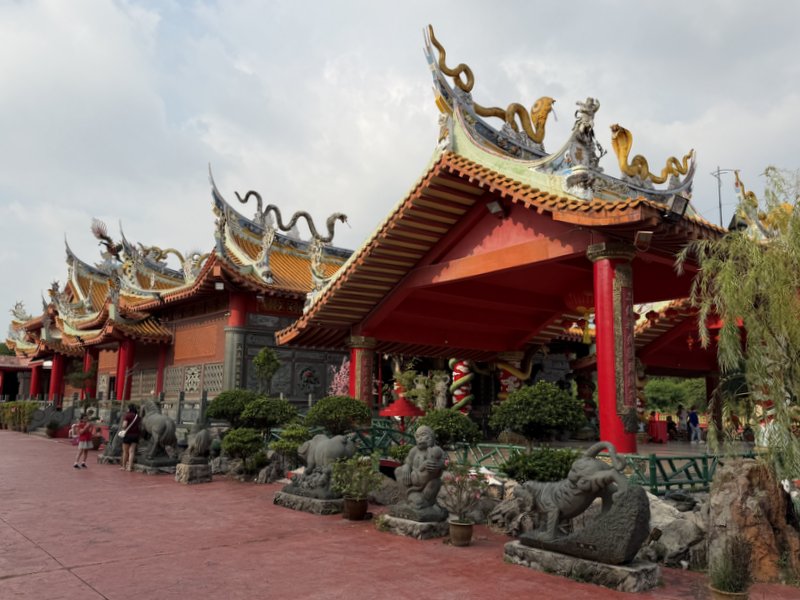
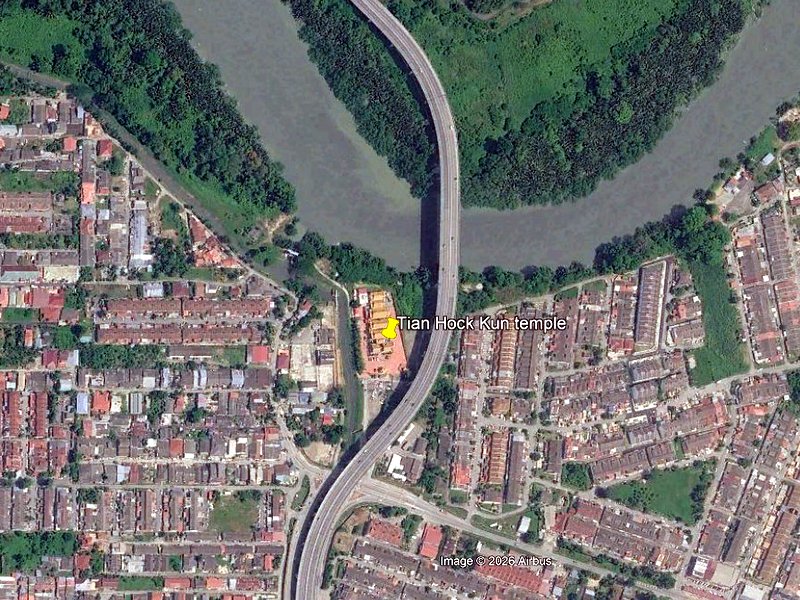
The temple is relatively new, built in the 1980s. In 2017, the Klang Third Bridge was opened, and the access road is dominating the temple. It is a typical Chinese temple, mainly Taoist, but with elements of Buddhism (an impressive shrine for Guan Yin) and folk religion (a Datuk Kong shrine).
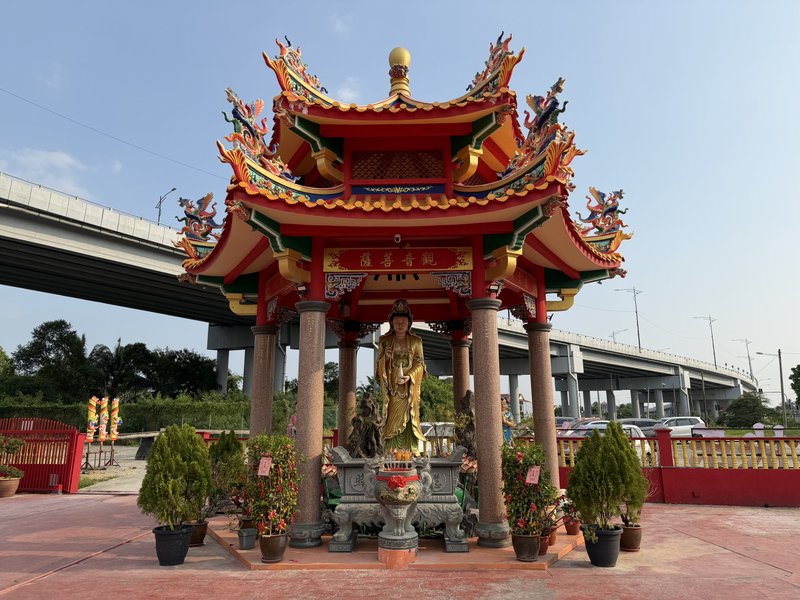
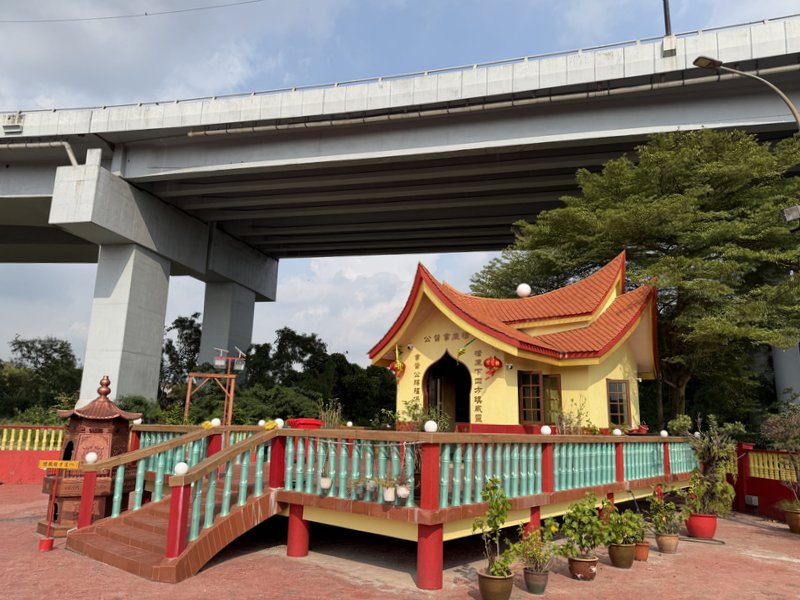
You enter the main hall by crossing a bridge.
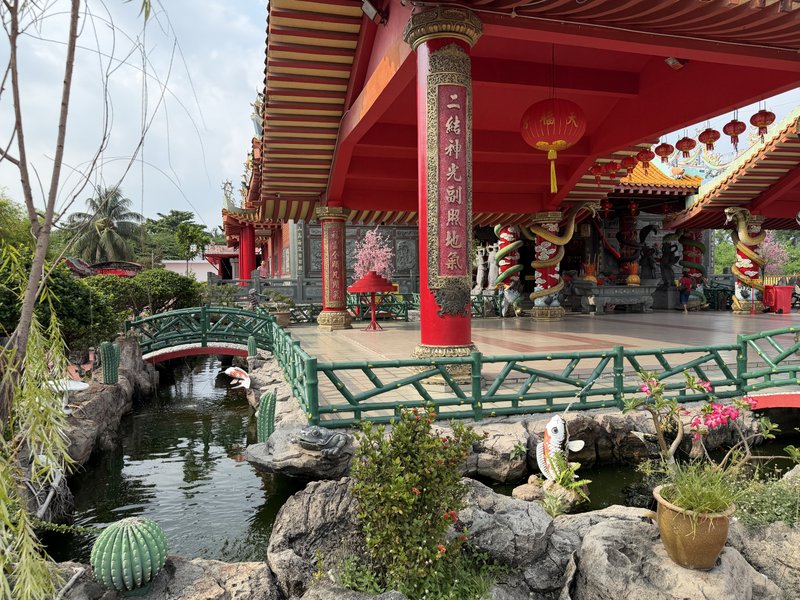
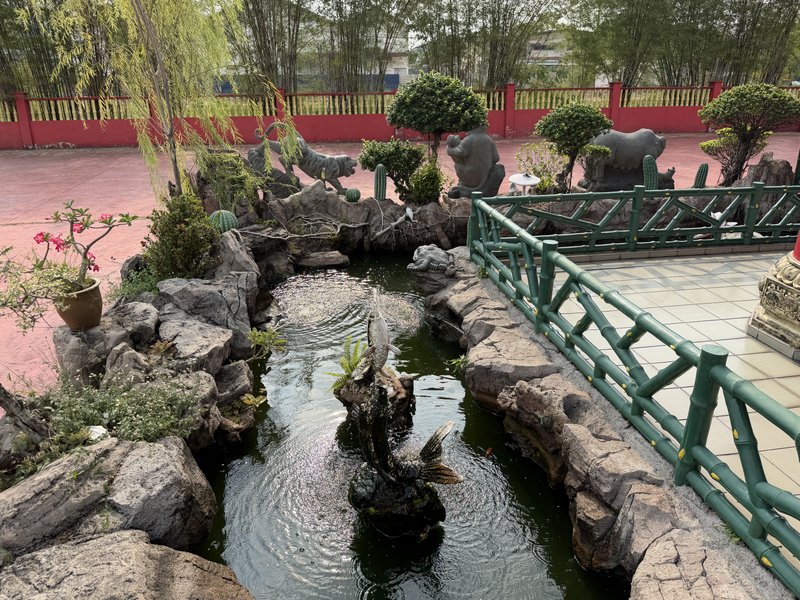
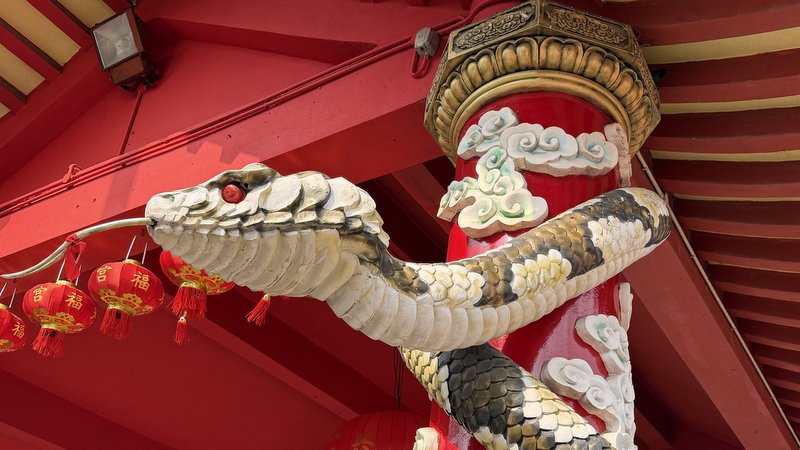
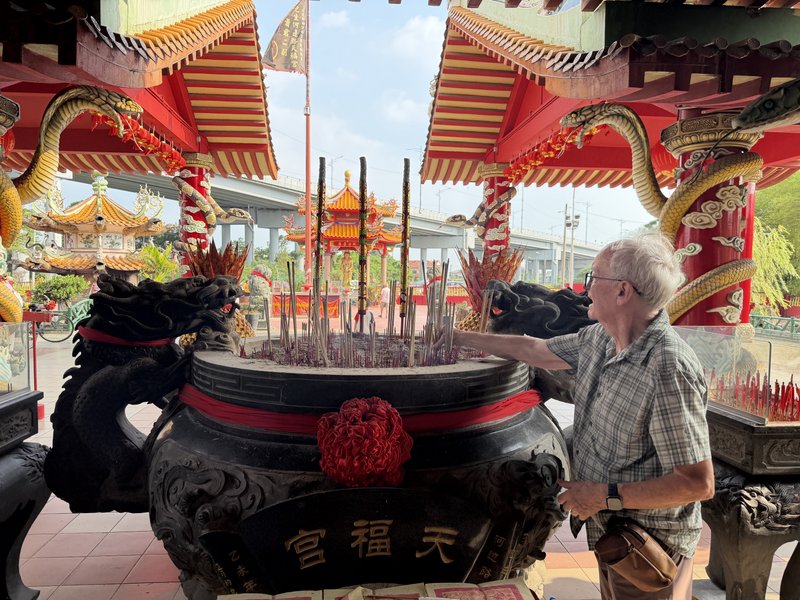
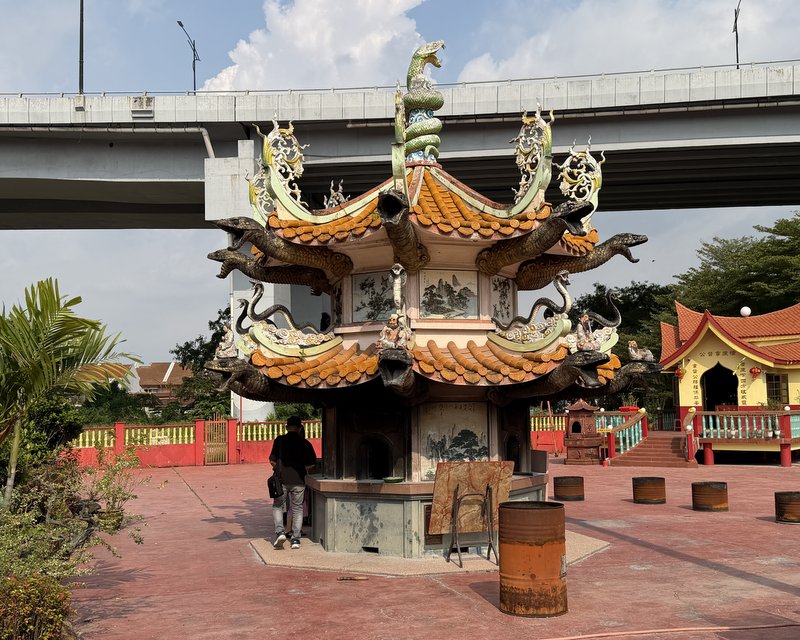
The entrance to the main hall makes clear why the temple is named the snake temple. No dragons here, but snakes. Everywhere, decorating the pillars, on the roof, apparently more than 60 sculptures.
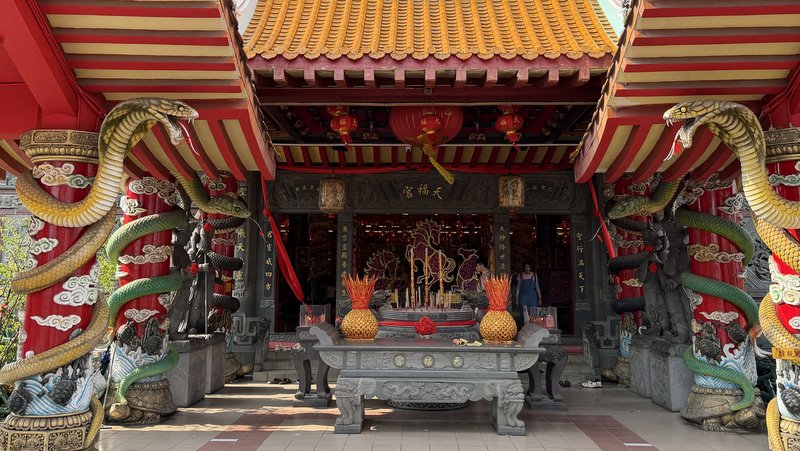
Four huge cobras adorn the four pillars.
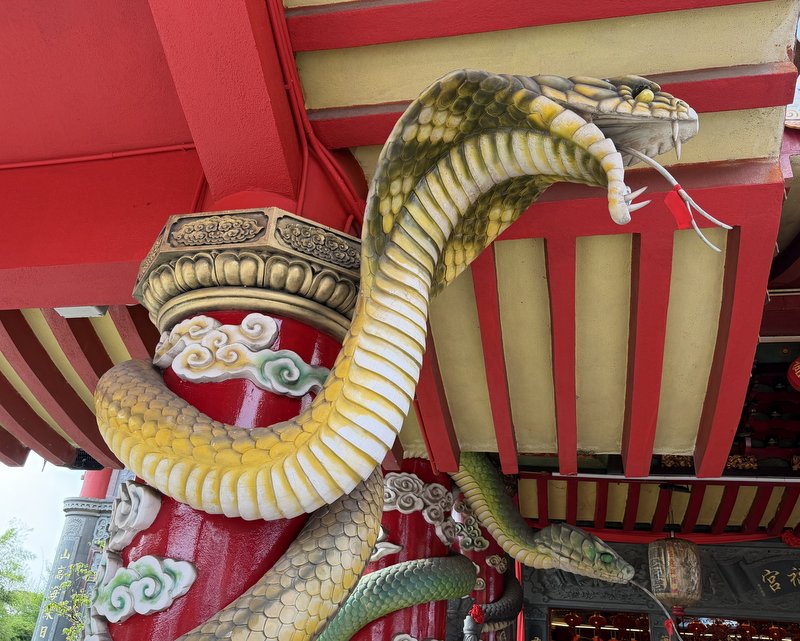
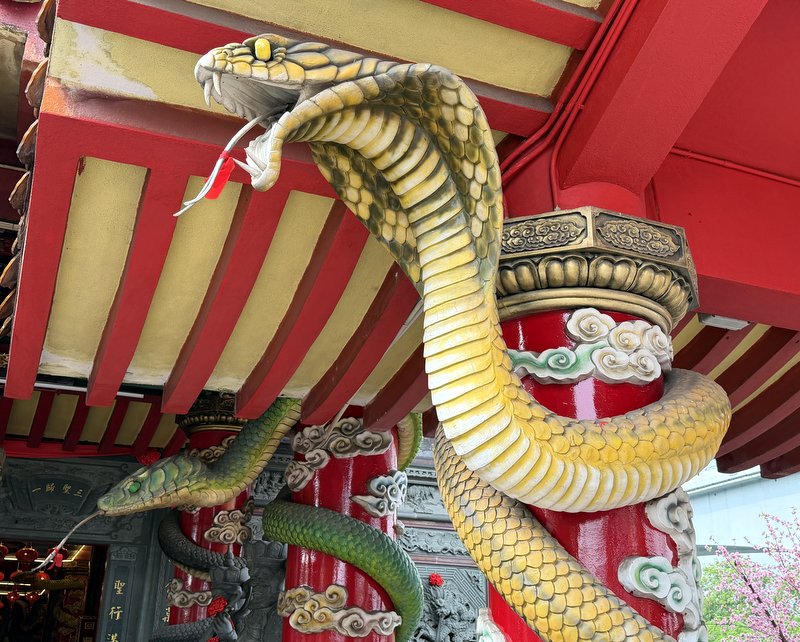
Frightening for people with ophidiophobia.
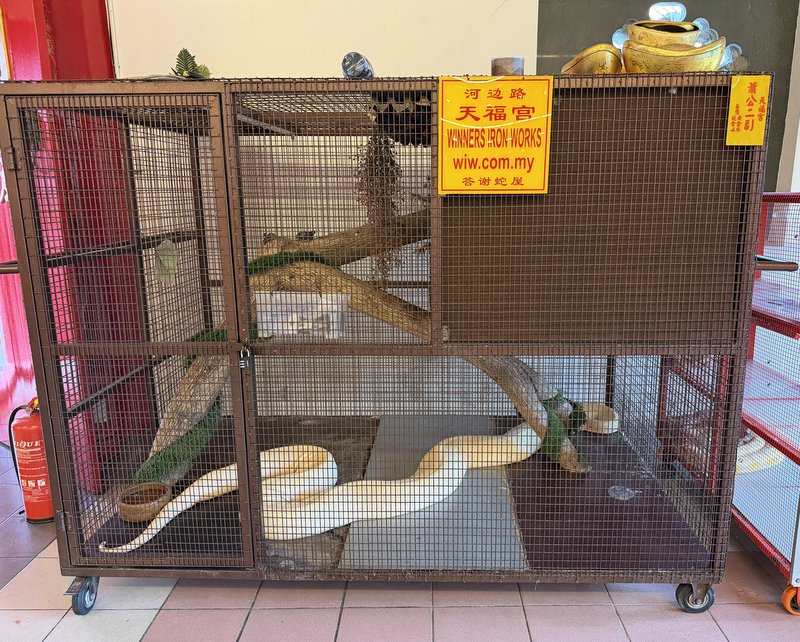
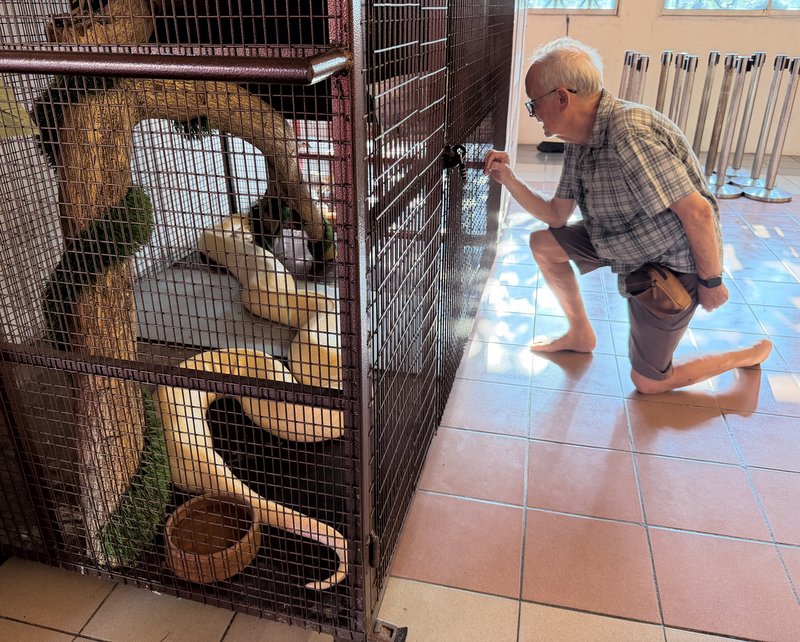
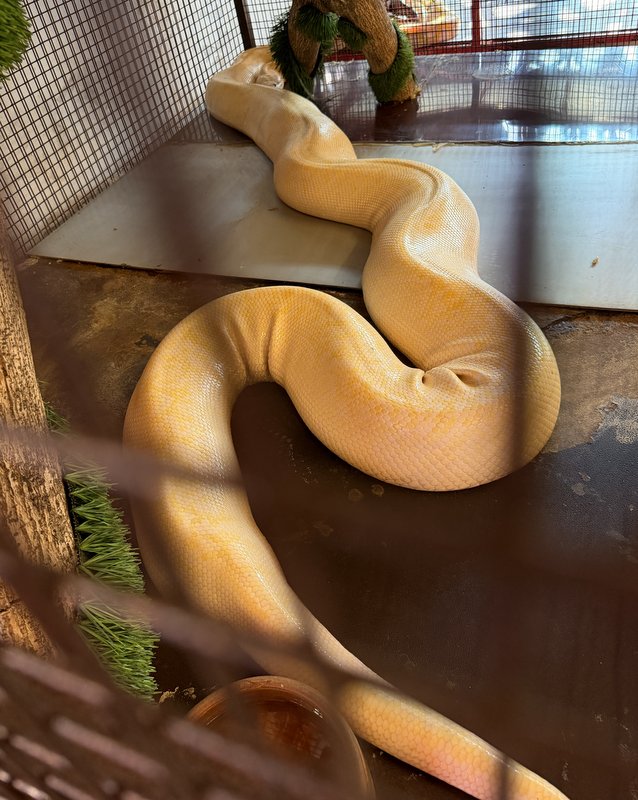
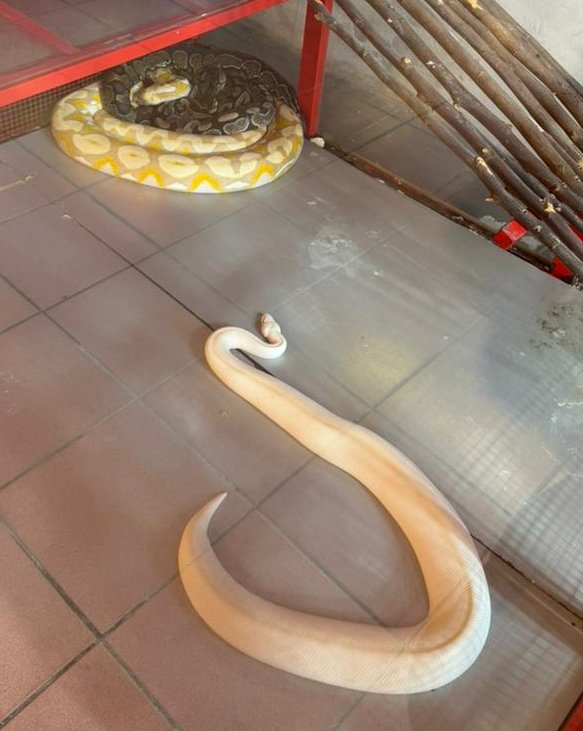
The temple also has a few real snakes. In cages. The albino python is very impressive/
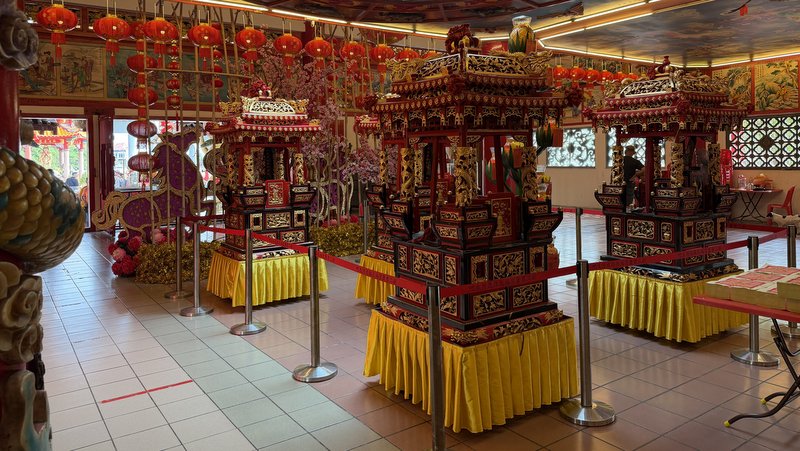
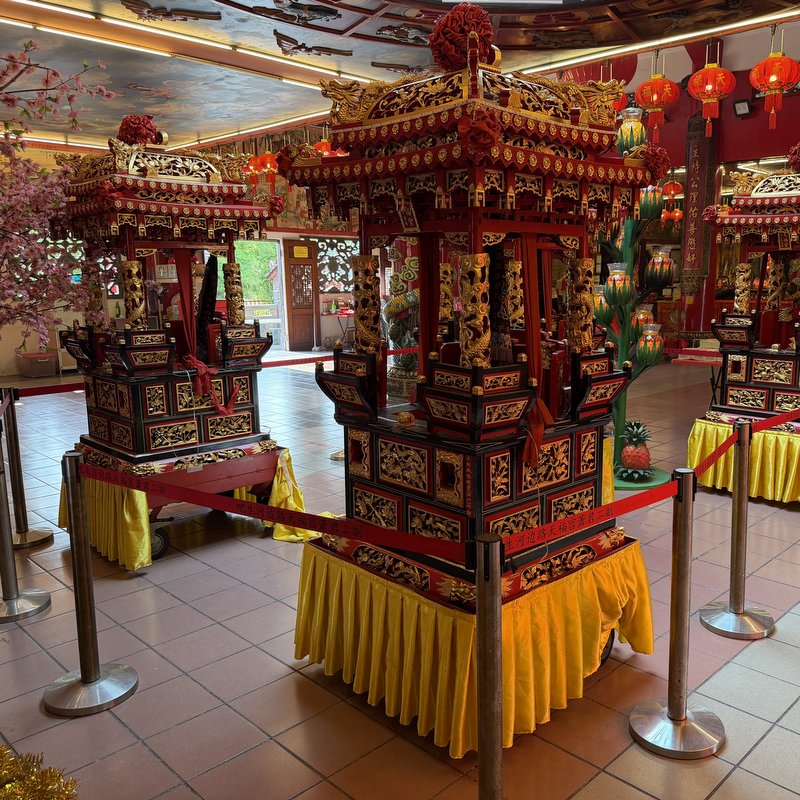
Entering the main hall, you will find several beautiful small wooden shrines. Maybe they are used to carry deities out during processions.
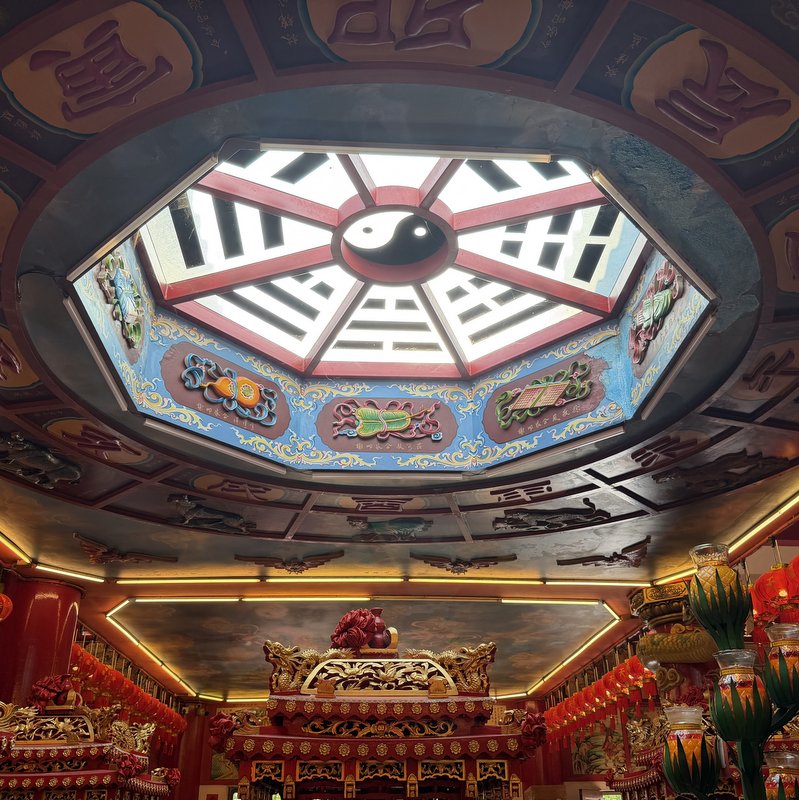
Should you still have any doubts, the octagonal window in the ceiling with the eight trigrams and the Yin Yang symbol proves that this is a Taoist temple.
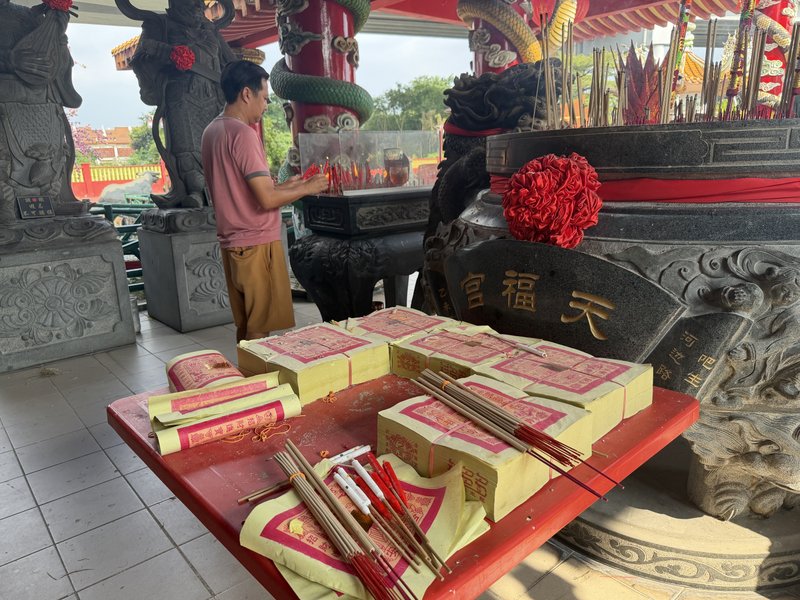
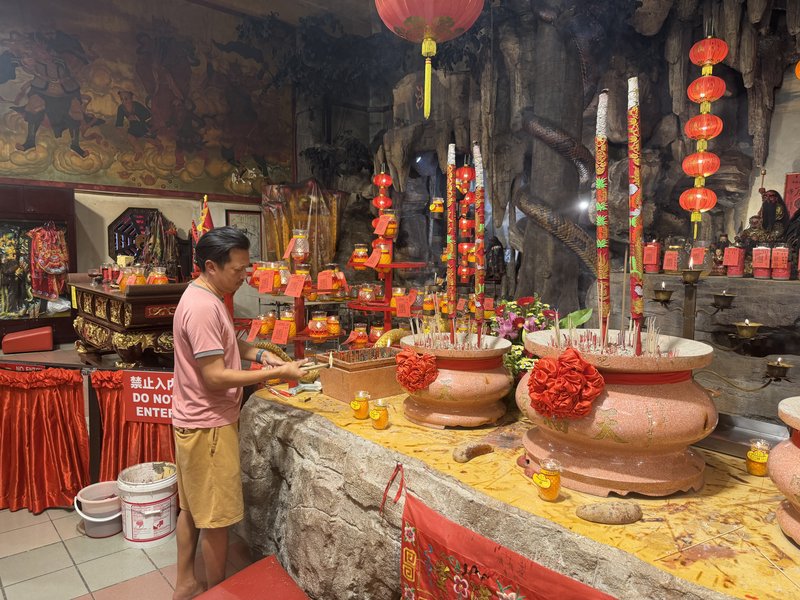
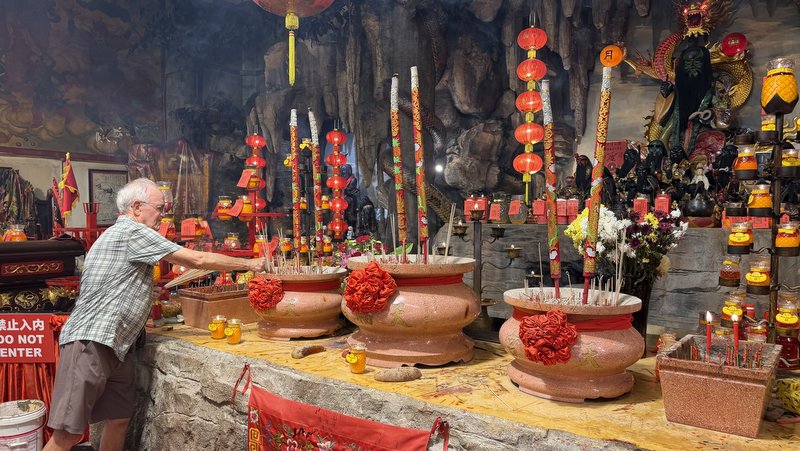
We bought a set of 24(?) joss sticks, 6 candles, and a pack of “hell money”. A signboard showed where and in which order the sticks and candles had to be placed. Took quite some time 😉
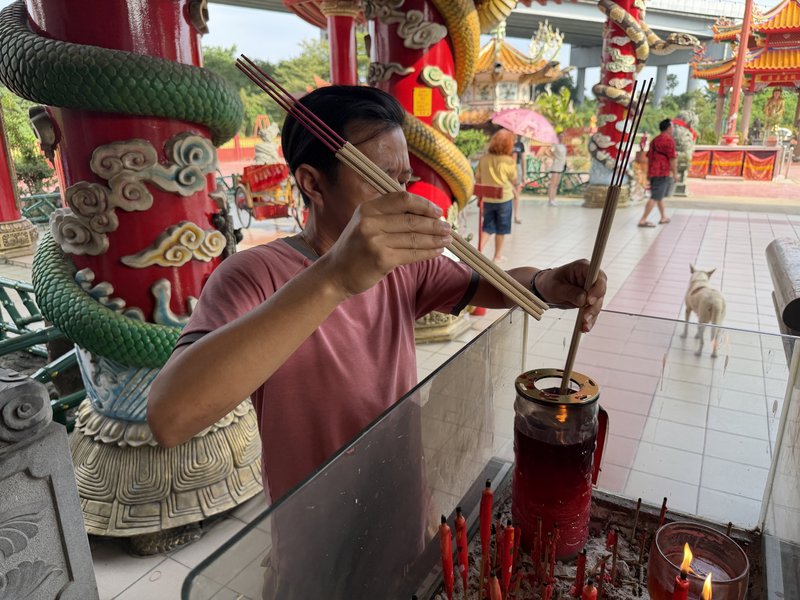
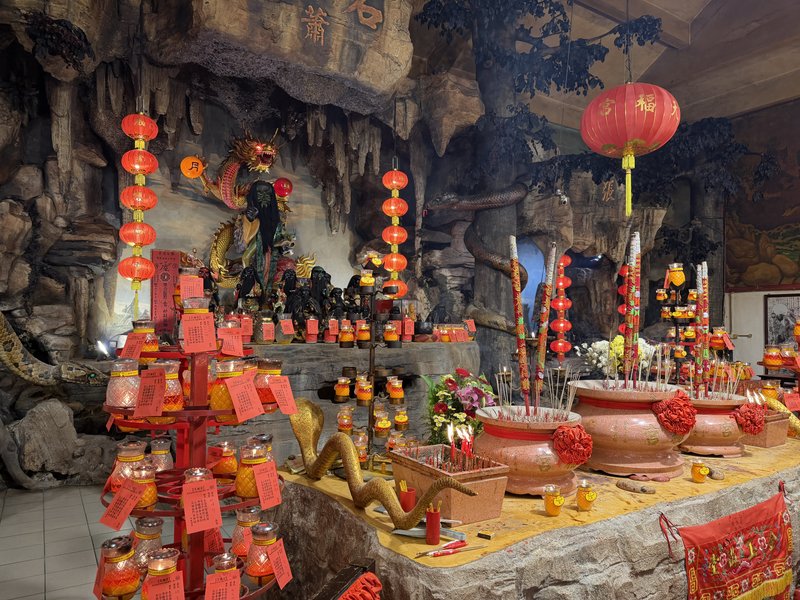
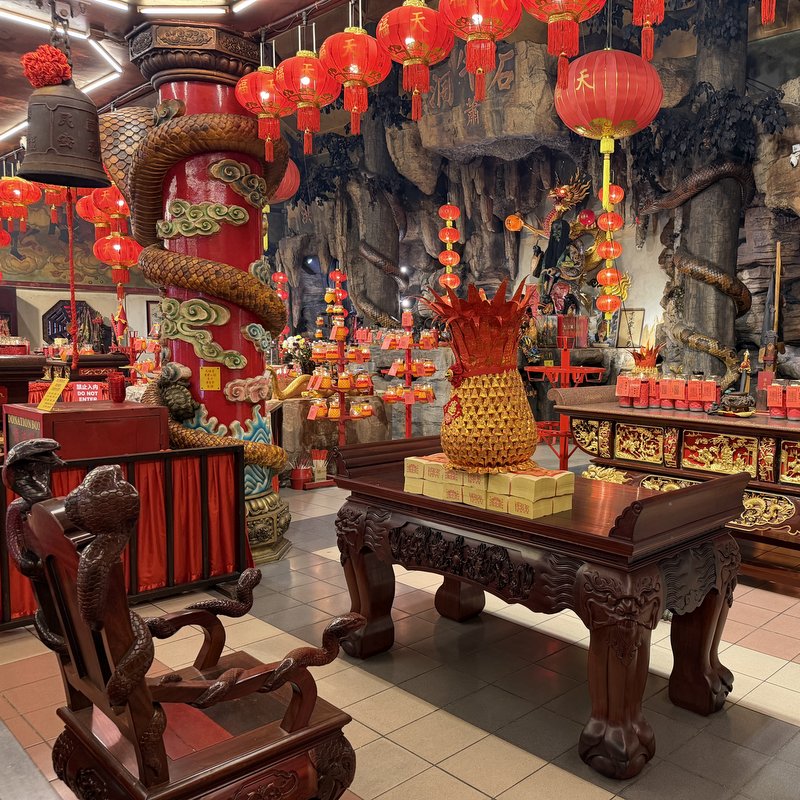
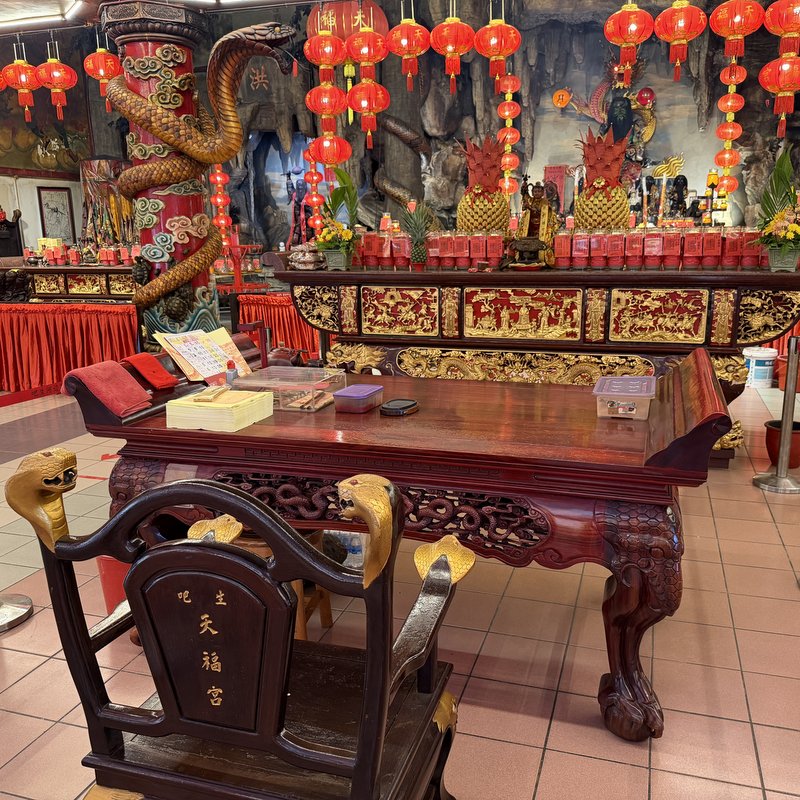
This is the main altar. The temple is dedicated to Xiao Jun Er Fu, a Taoist deity. According to legend, he was one of three brothers who defeated an evil serpent during the Song dynasty (960-1279), and was later deified.
He is generally depicted with a green face (left picture, with a snake curled around him)
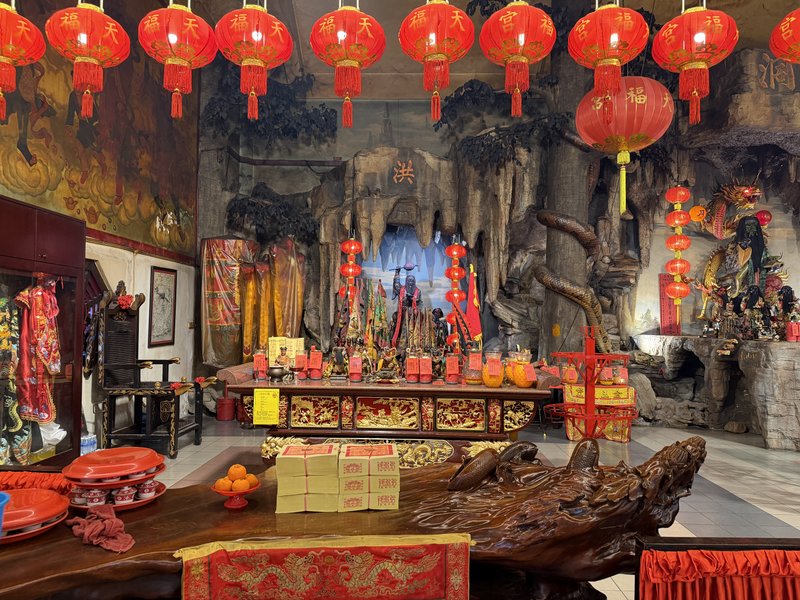
There were a few ornamental tables and chairs. Perhaps they are used when a medium enters a trance and can answer questions from devotees.
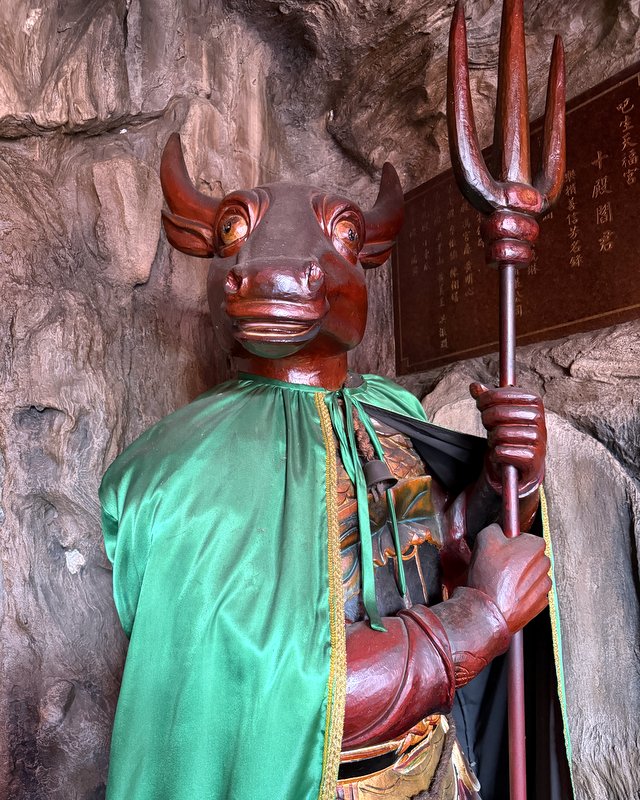
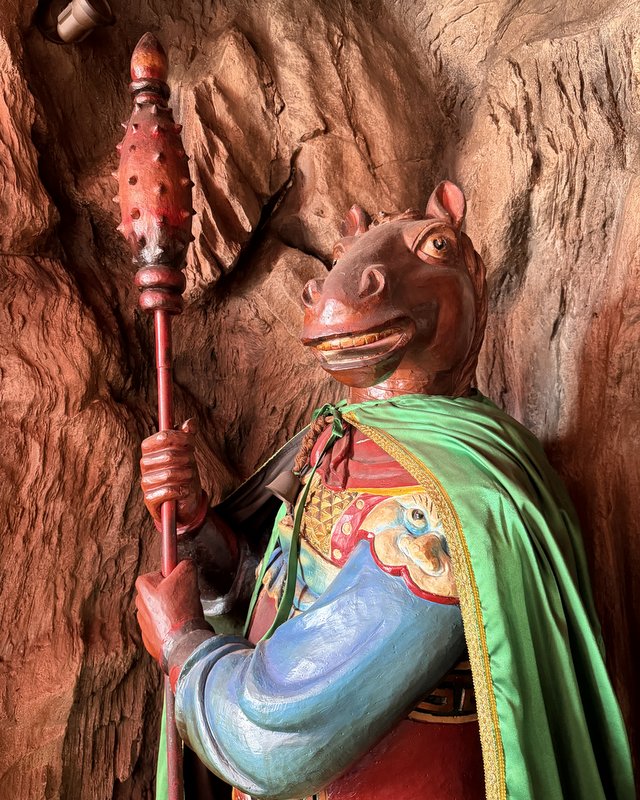
On the left side of the main hall, there is an entrance to the underworld!, guarded by Ox-Head and Horse-Face. Note that you can not enter the underworld, there is a modern sign Do Not Enter. But I could take a picture 😉
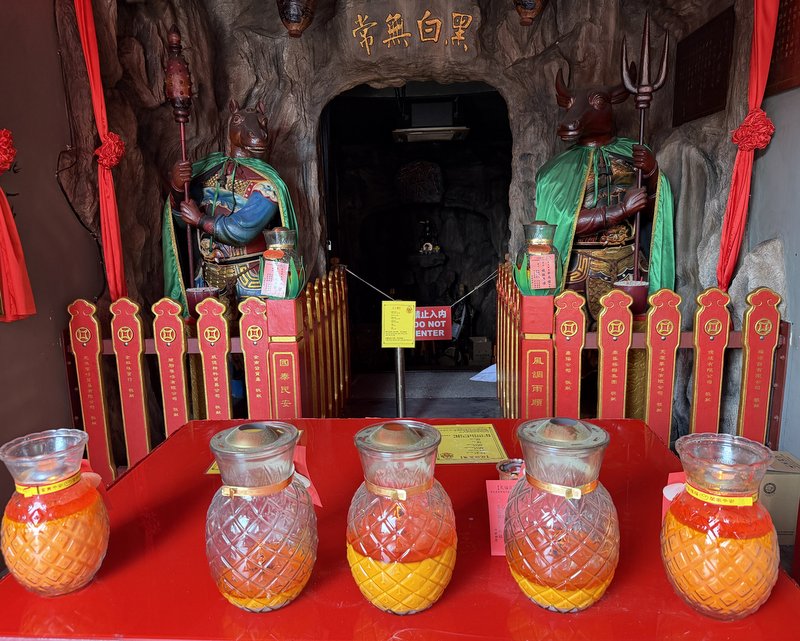
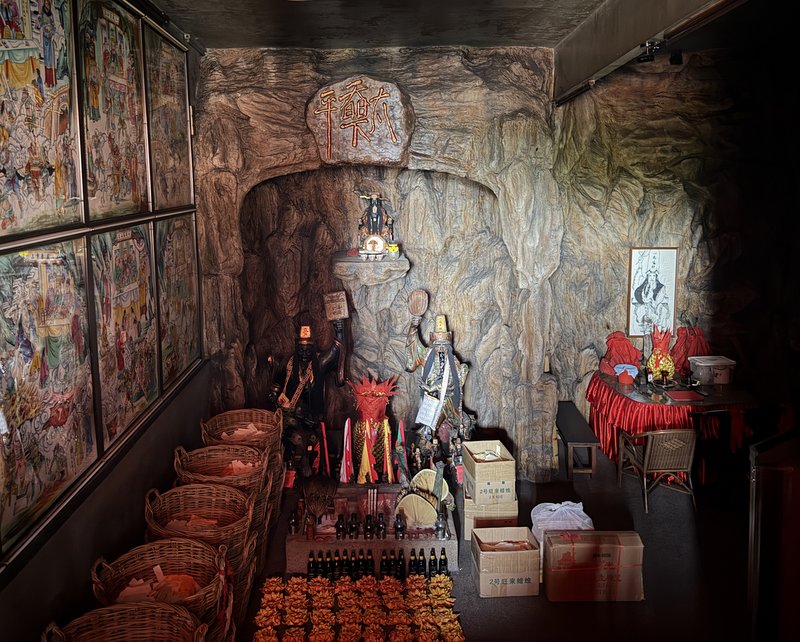
Here are Ox-Head and Horse-Face
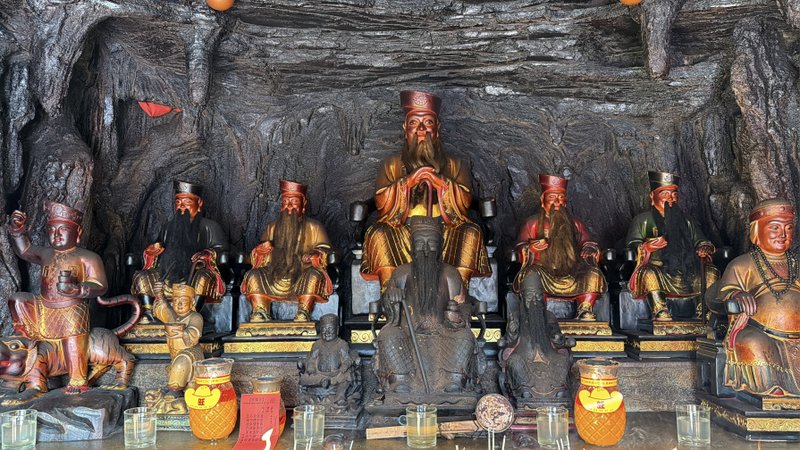
The Datuk Kong shrine is very beautiful and much more elaborate than the usual Datuk Kong shrines I have seen. All the figures are Datuk Kong, with a lot of symbolism. For example, the one in the center is dressed in yellow and represents balance and well-being. Their headgear looks like a tengkolok, worn by sultans and royals. The three in front are wearing songkoks. The walking stick is a common attribute and offerings can not contain pork.
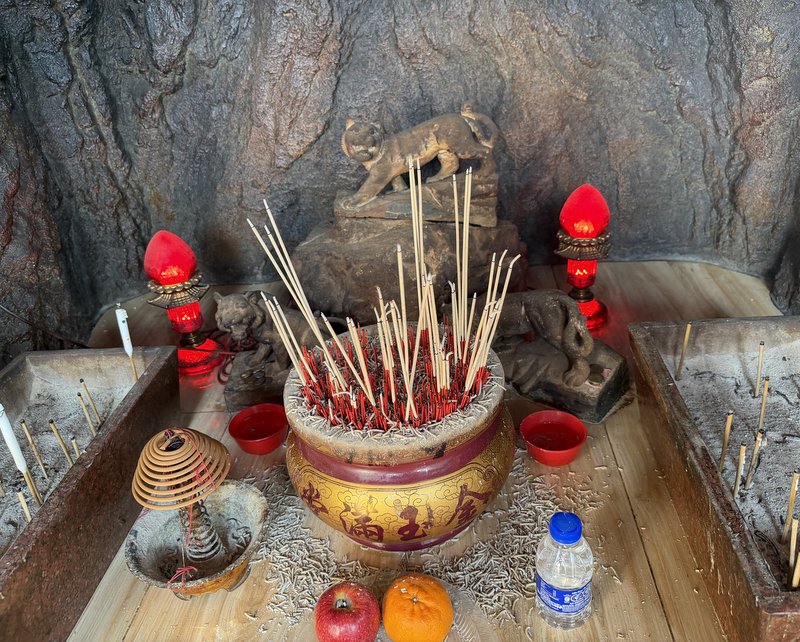
Below the main shrine, there is a small shrine dedicated to Hu Ye, the Tiger god, also a protector deity.
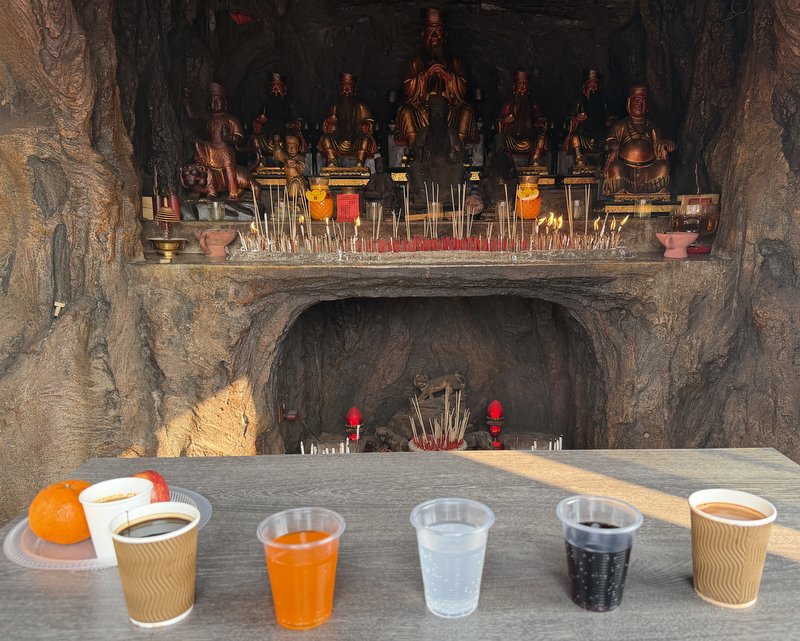
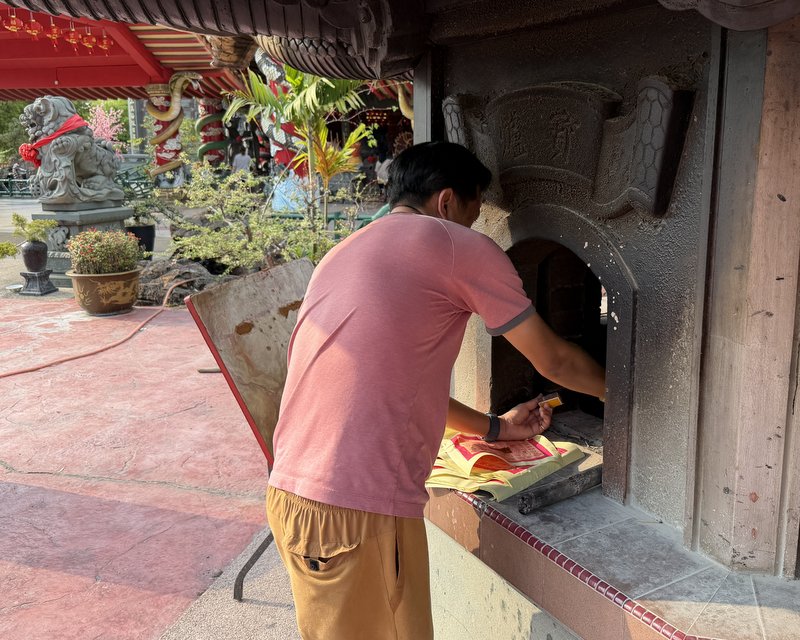
At the end of our visit, Aric burned the josspapers.
A very interesting temple. Not much information is available on the Internet, but this FMT article is quite informative.
Yes we had visit the origin of this temple. That time it was managed by a medium in a very small building with many disciples seeking medical treatment from him. Then it expanded to this current snake temple.
I heard this medium was very reluctant to be the medium and objected the spirit from entering him. In the end he was killed in an accident.
It’s a pity.
Since then we had not pray at this temple
Ah. Thanksssss for thissss nice blog
Very interesssssting !! Haha
Sssssso much information.
I must visit this Temple one of these days. It is very near one of the Bak Kut Teh restaurant I sometimes go to.
I personally find the name “Temple of Heavenly Bliss” highly appropriate.