
A cousin of Aric was getting married, and we were invited to her wedding dinner in Melaka. We decided to combine it with a visit to Tangkak. When I mentioned Tangkak to a friend, he said, Oh, Beef Noodles! And that was what we had for lunch! Aric ordered the normal one; I took the mixed one, with many different parts of the cow ;-). Very nice.
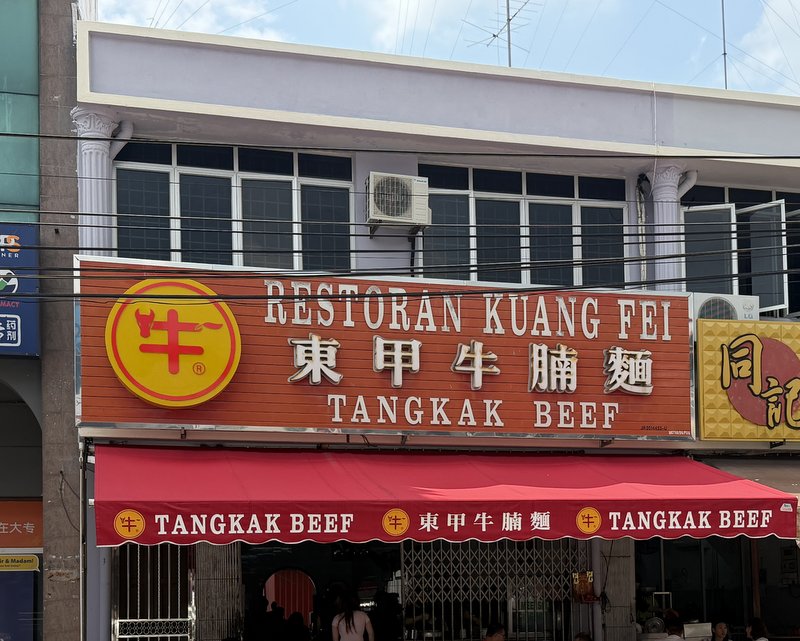
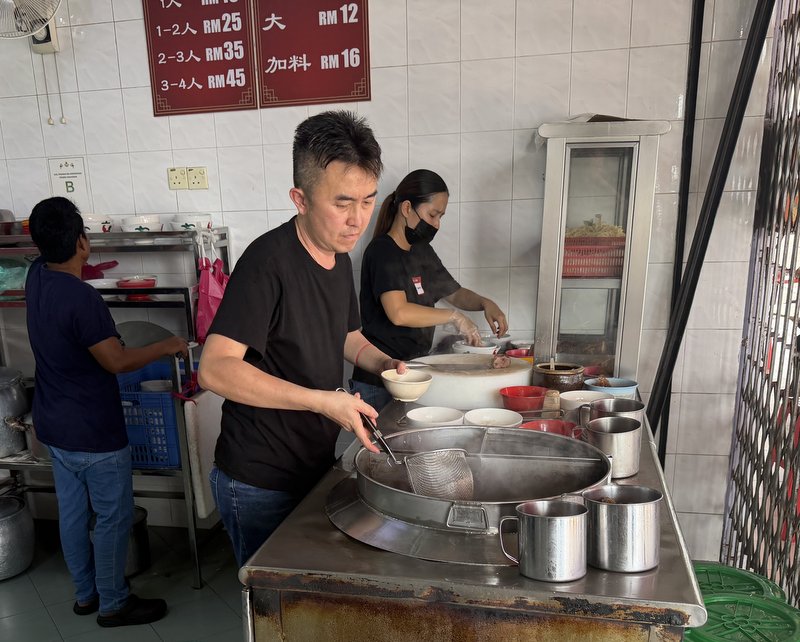
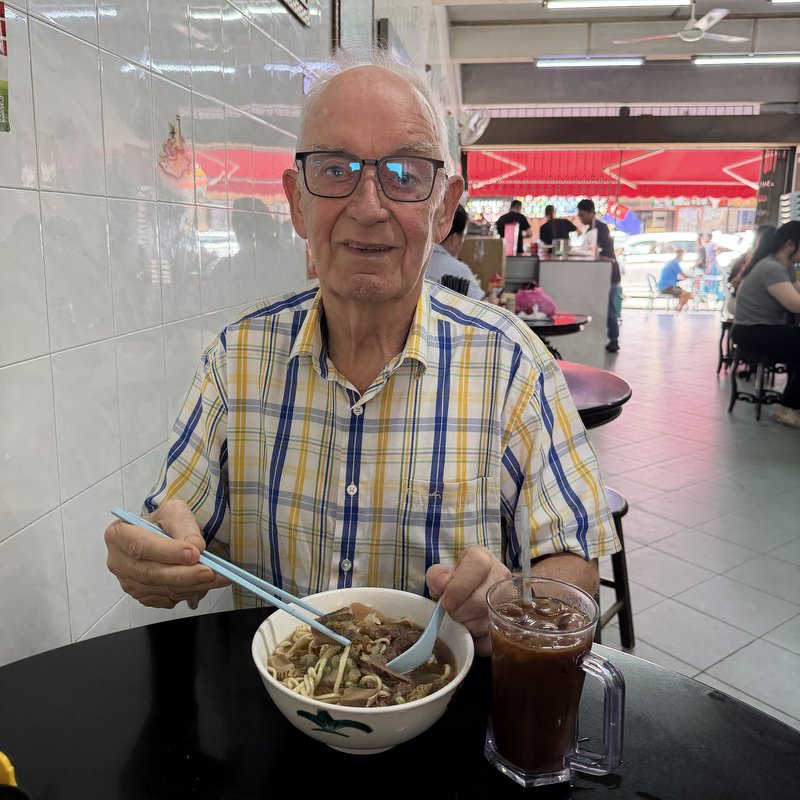
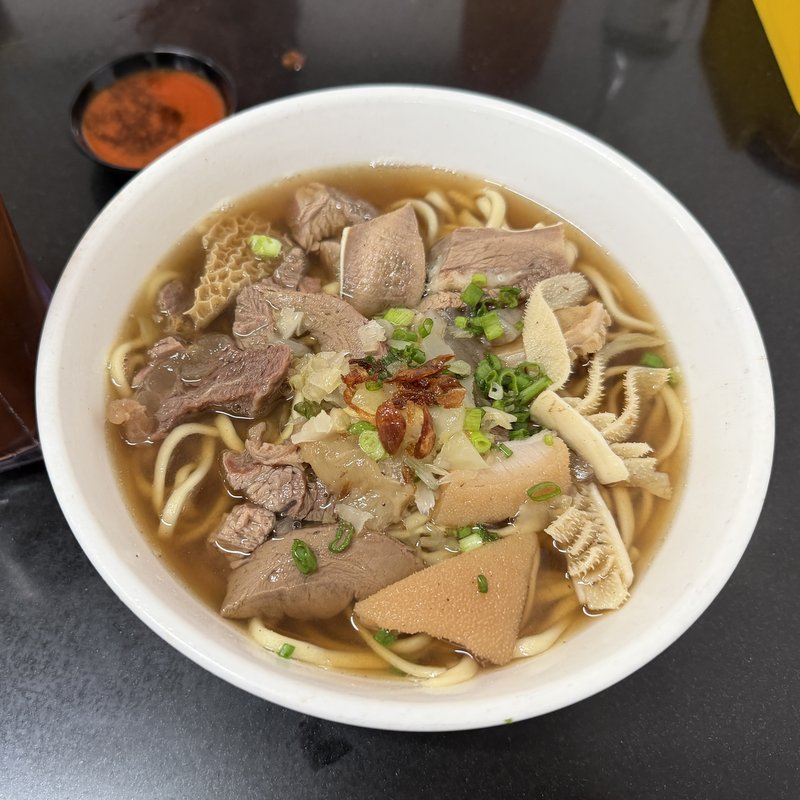
Tangkak is not a tourist destination; there are only a few hotels. We booked a room at the Ophir Hotel in the center of the town.
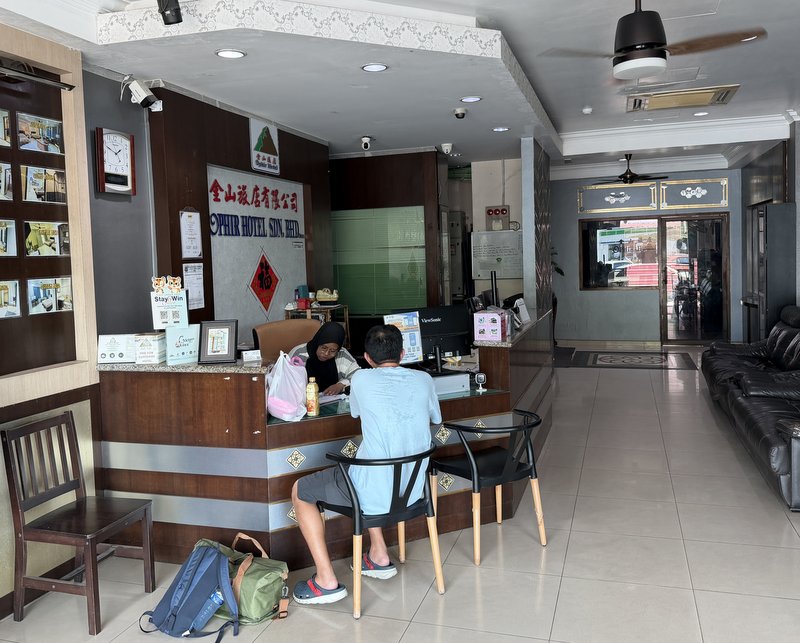
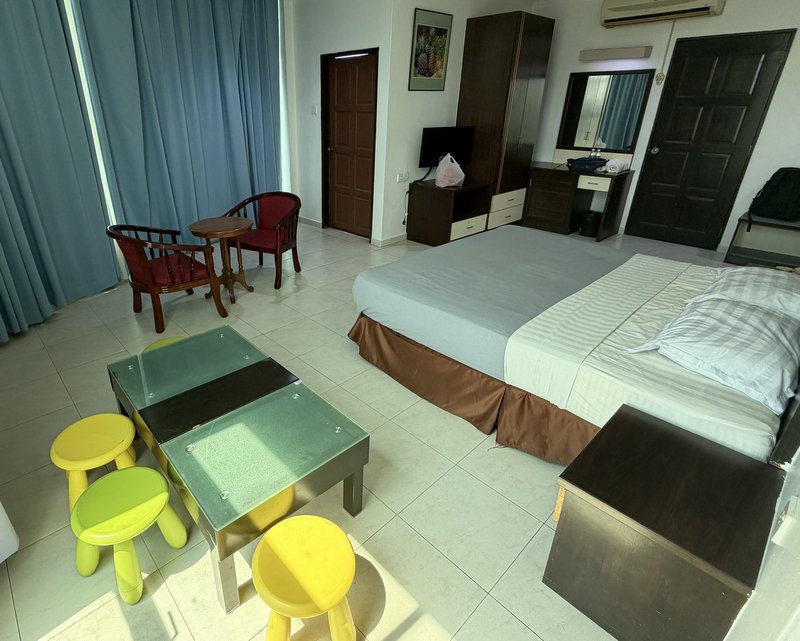
Tangkak is not far from the Pueri Falls, which I visited only once, in 2004. It is a recreation park, suitable for senior citizens, but I prefer visiting waterfalls in the morning, so we decided to explore a few temples.
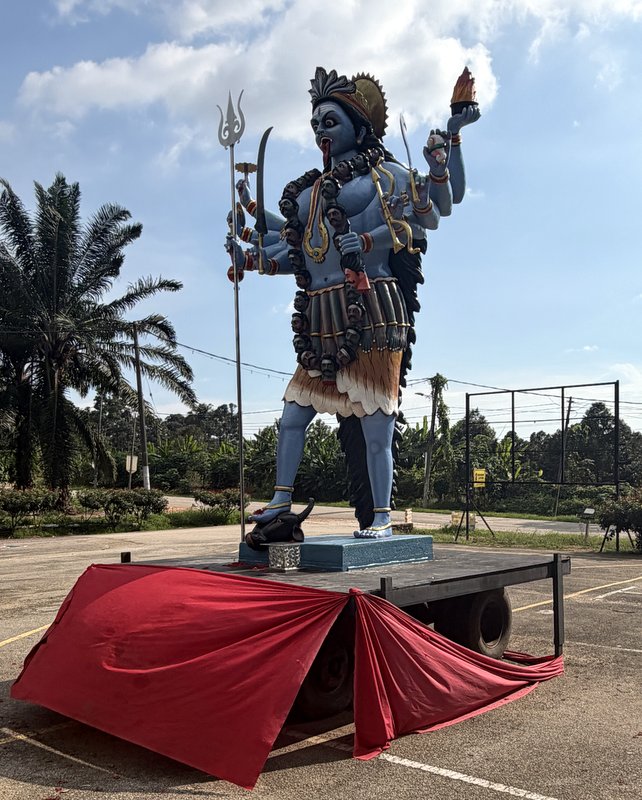
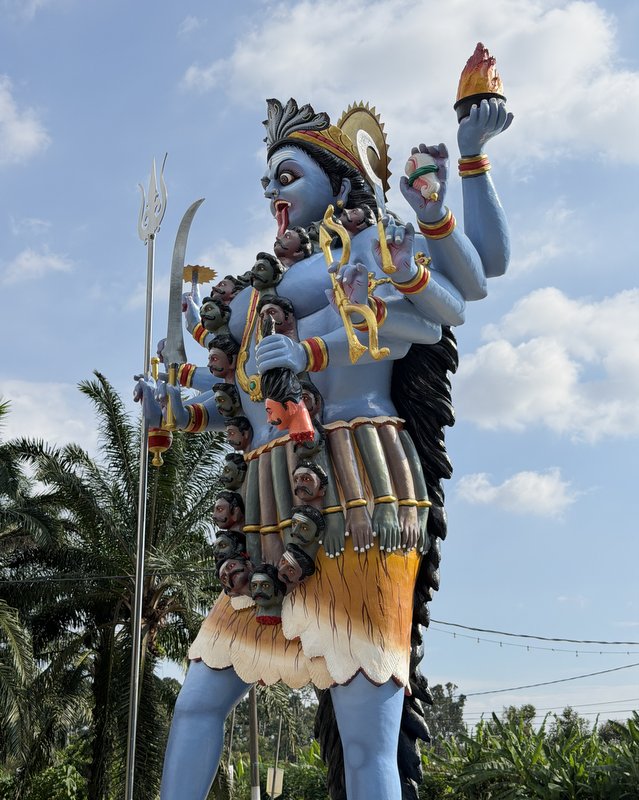
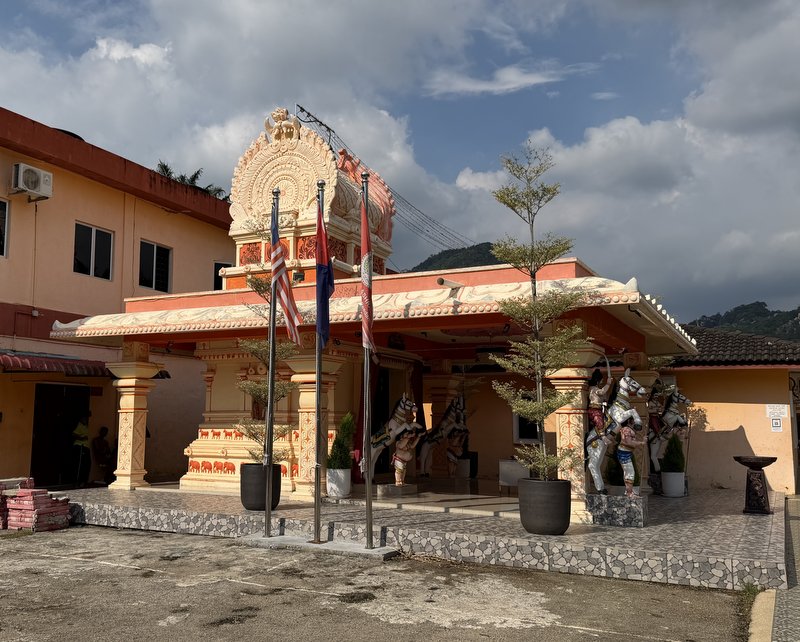
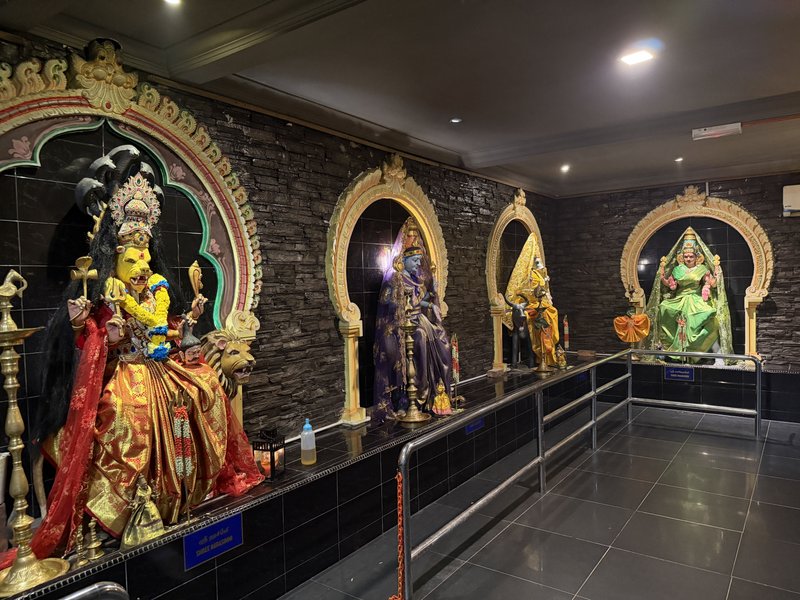
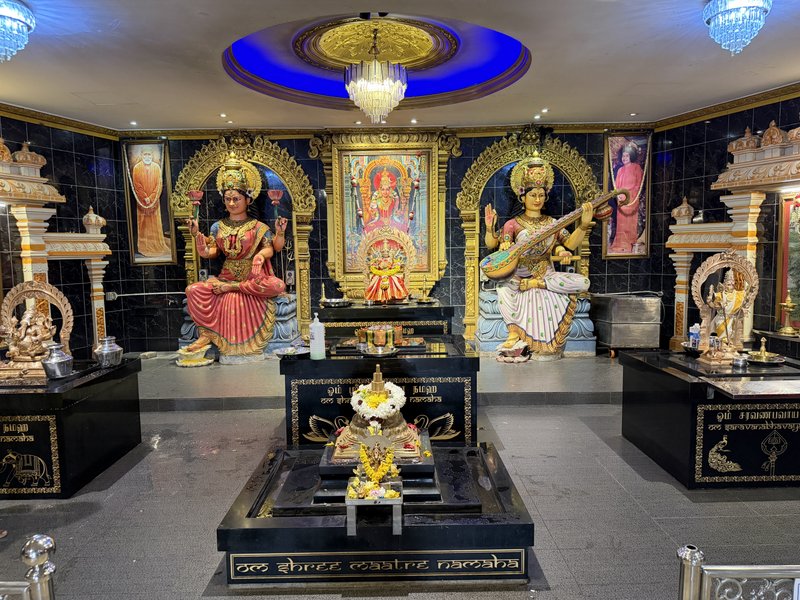
The first one was the Sri Sakthi Ashram, about 10 km from Tangkak. It is an ashram, a spiritual center, not a temple. It is dedicated to Shakti, the Divine Mother, the feminine cosmic energy. Together with Vishnu and Shiva, they are the main deities of Hinduism.
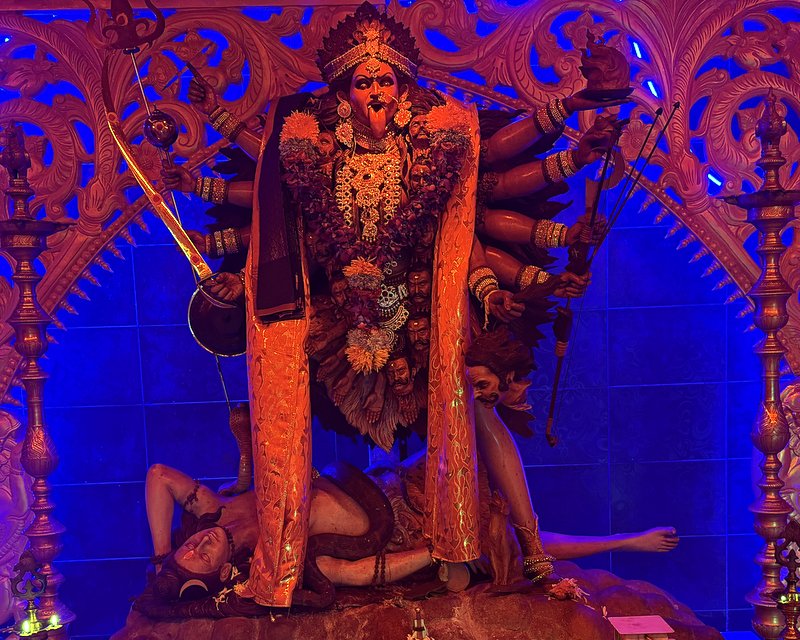
When you enter the ashram, you will immediately see the huge statue of Mahakali, a personification of Shakti, whose primary role is to embody time, death, transformation, and the destruction of evil. The statue is mounted on a trailer, so it can take part in processions. -She is usually depicted with ten arms.
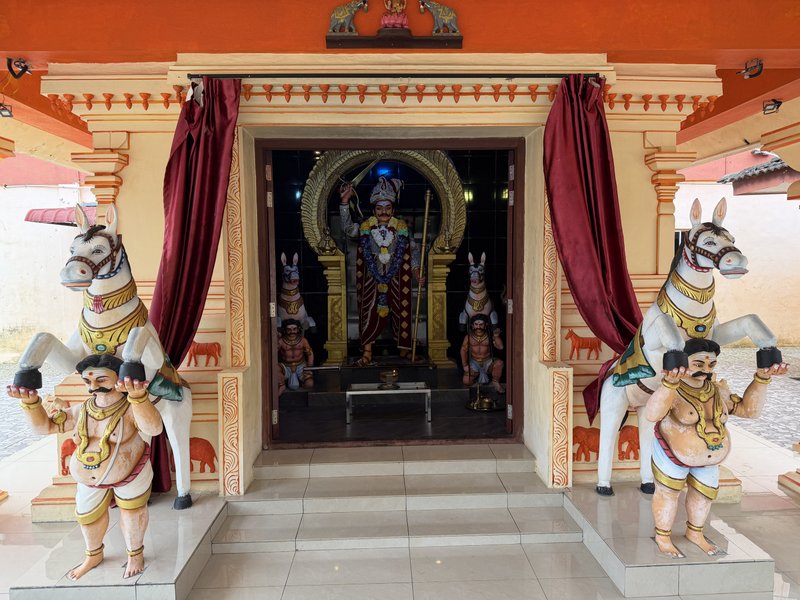
We were welcomed by a young man who accompanied us and showed us the various halls. We started with the main hall. The right photo shows an altar for Madurai Veeran, a popular Tamil guardian deity.
The most fascinating part of the ashram, was the underground Mahakali hall. Our guide asked us to take off our shirts, so the spiritual energy could enter our bodies.
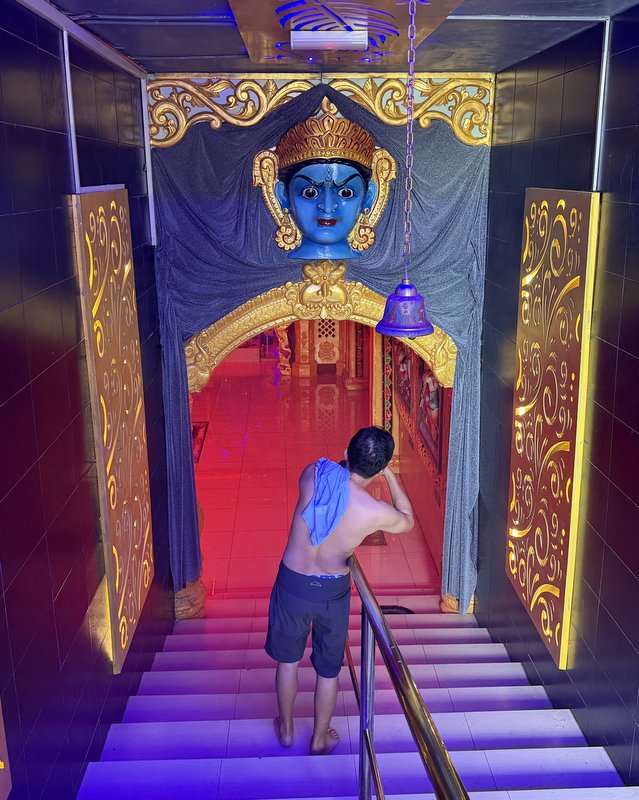
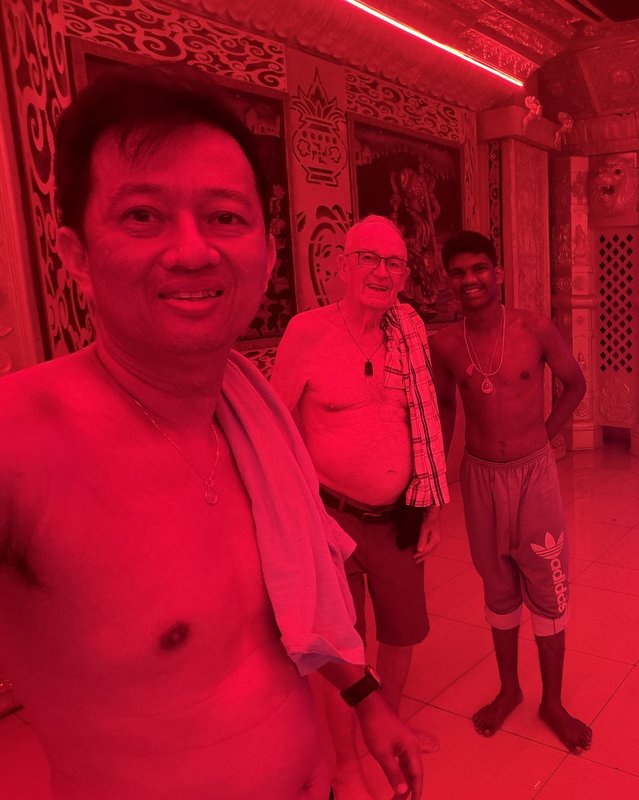
The fluorescent colors and the UV light create a very special atmosphere. Notice how the ten-armed Mahakali is standing on somebody. Unless you know a lot about Hindu mythology, you would never guess that it is Shiva she is “dancing” on. Shiva’s consciousness would be static without her energy.
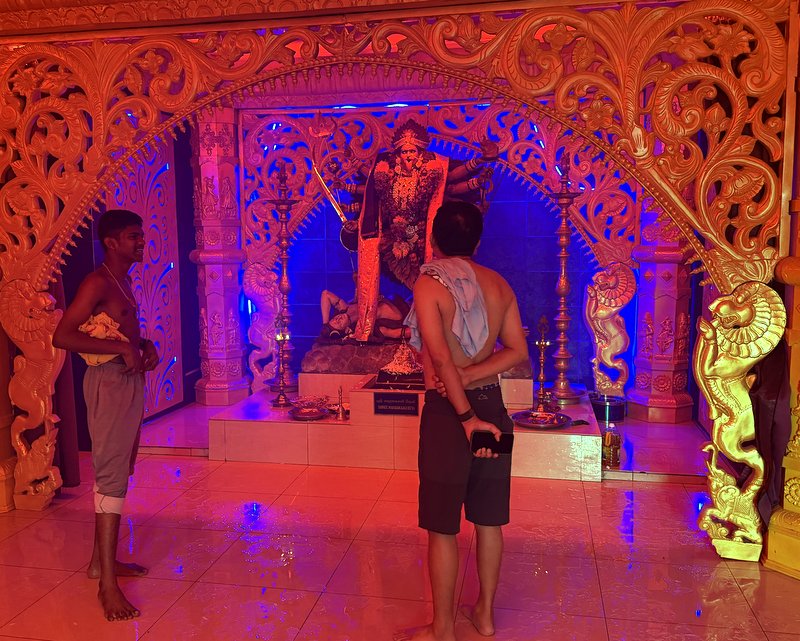
The entrance to the underground hall.
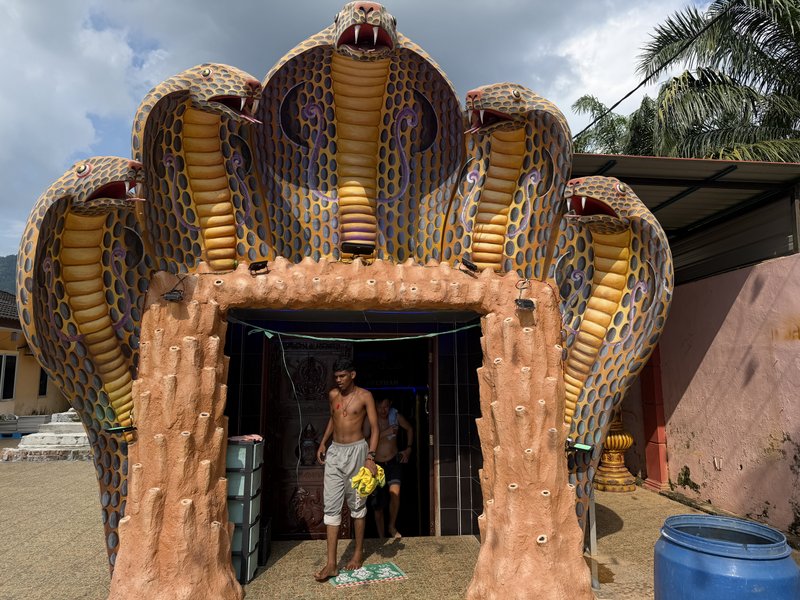
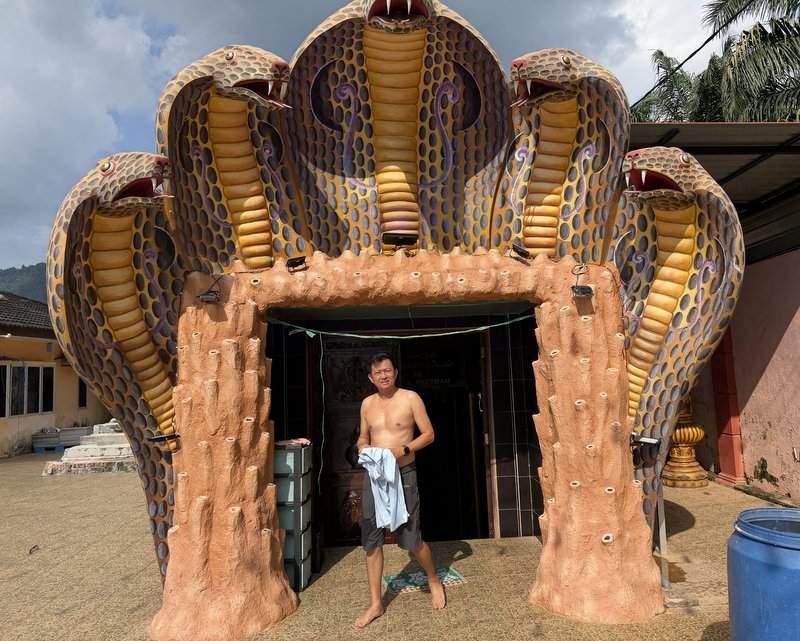
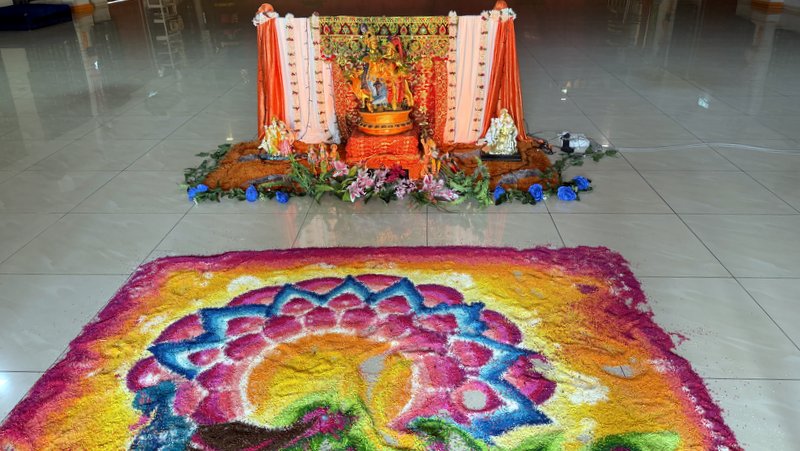
The guide showed us more galleries and halls. Now it was quiet, but many devotees must have come here during Deepavali, one wee
k earlier.
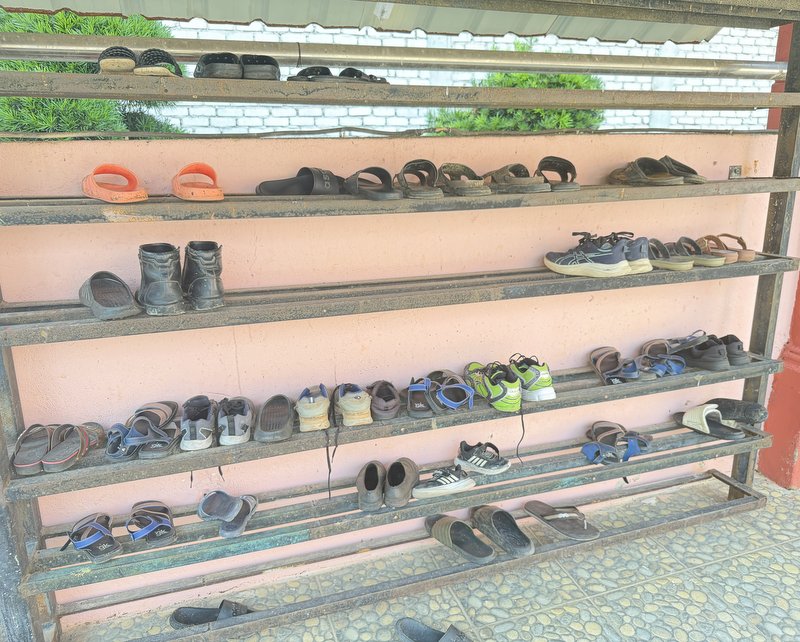
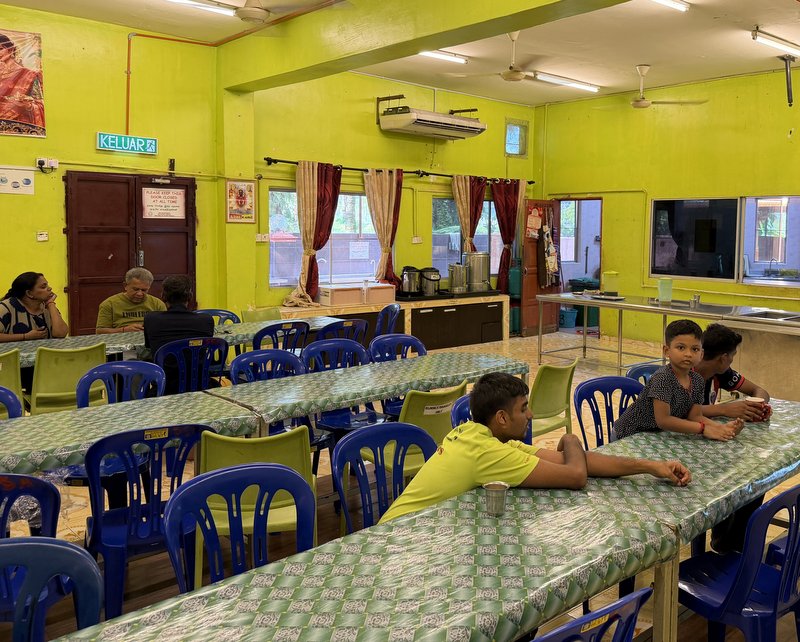
It was only at the end of our visit that it became clear that the young guide was not a monk, but a student. The ashram houses an orphanage, and he was one of the 30 orphans living there. He was preparing for his SPM exam one week later.We had a look at the dining hall and the dormitory. The shoe rack made sense now.
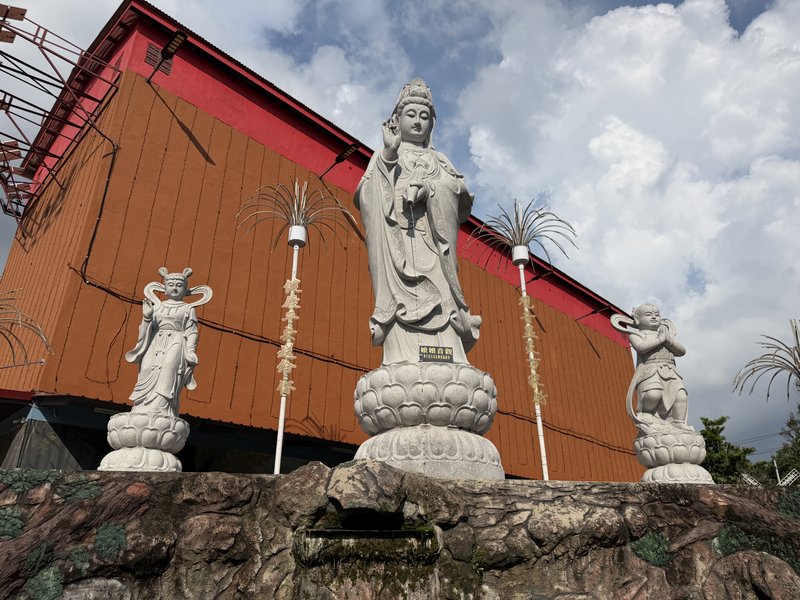
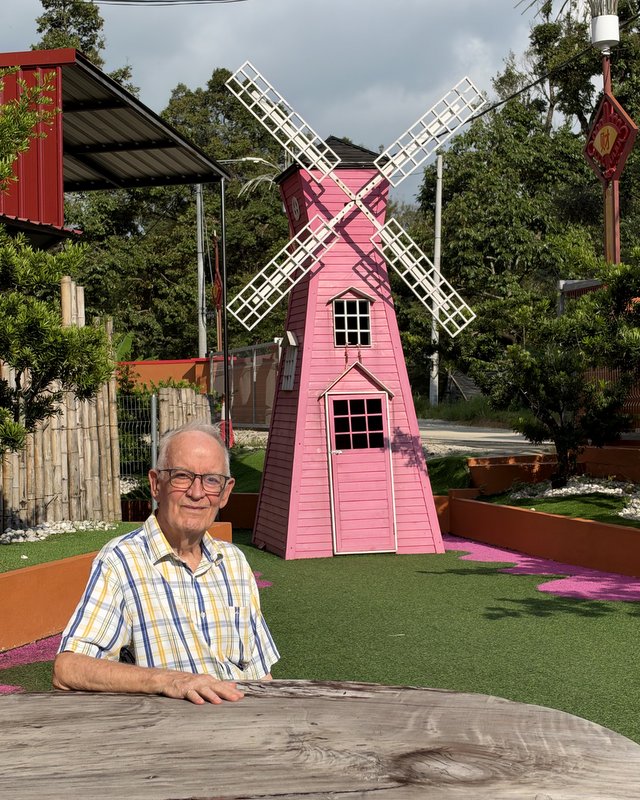
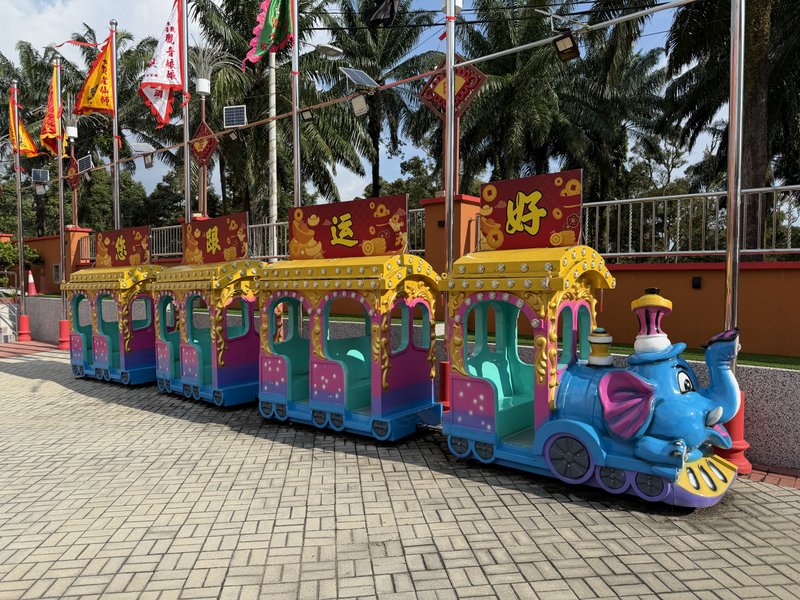
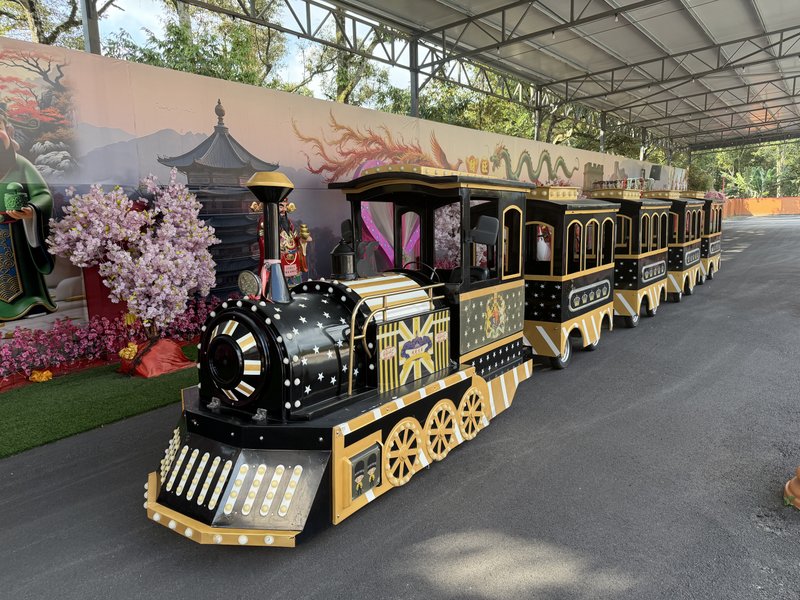
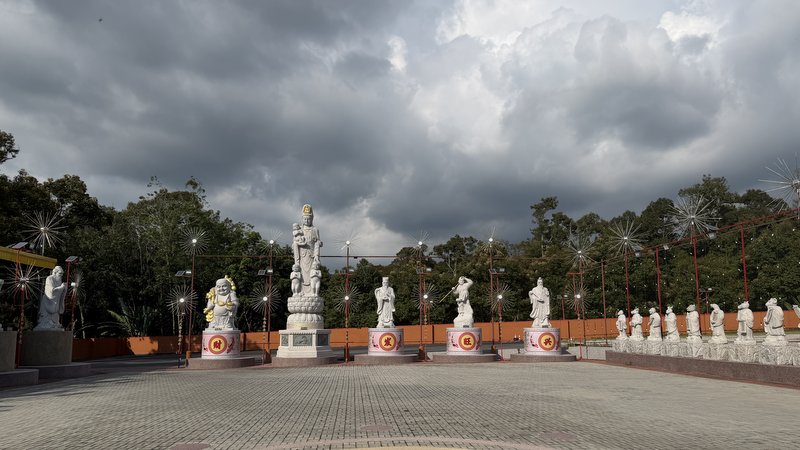
Not far from the ashram, there is a Buddhist temple dedicated to Guan Yin, the goddess of mercy. A new temple, a big contrast with the spiritual atmosphere of the ashram. A large statue of Guan Yin, with the ugly background of a bird’s-nest farm/
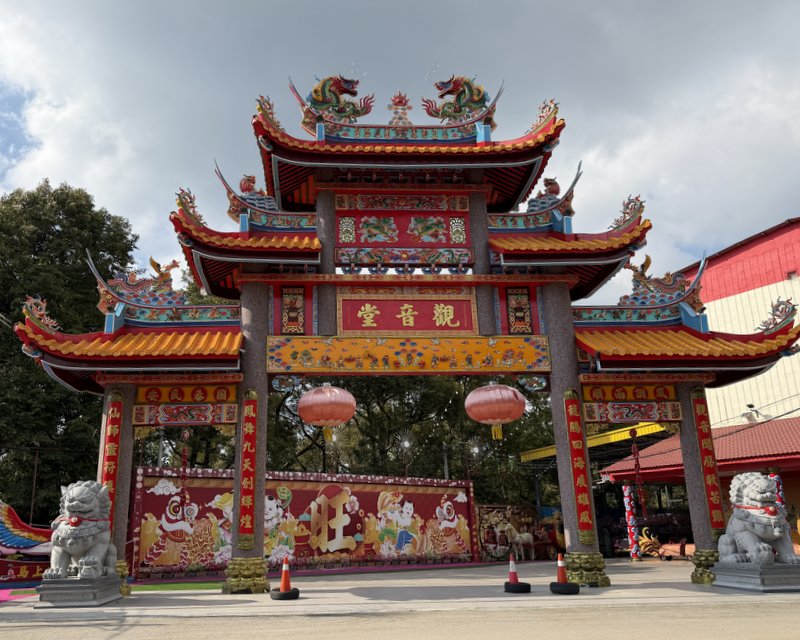
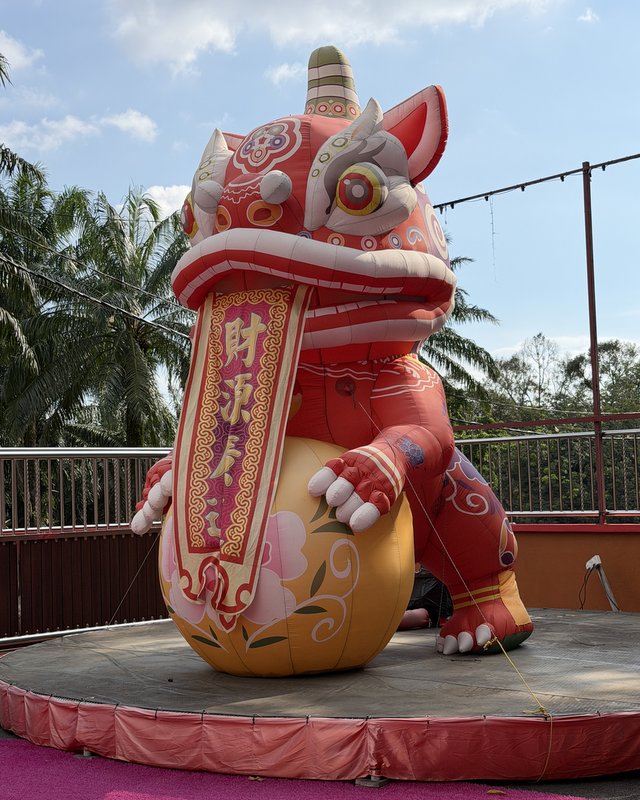
It loo0ked a bit like a Buddhist theme park. The main attraction was a train ride over the (large) area for kids and adults.We didn;t go for a ride, but here is a video.
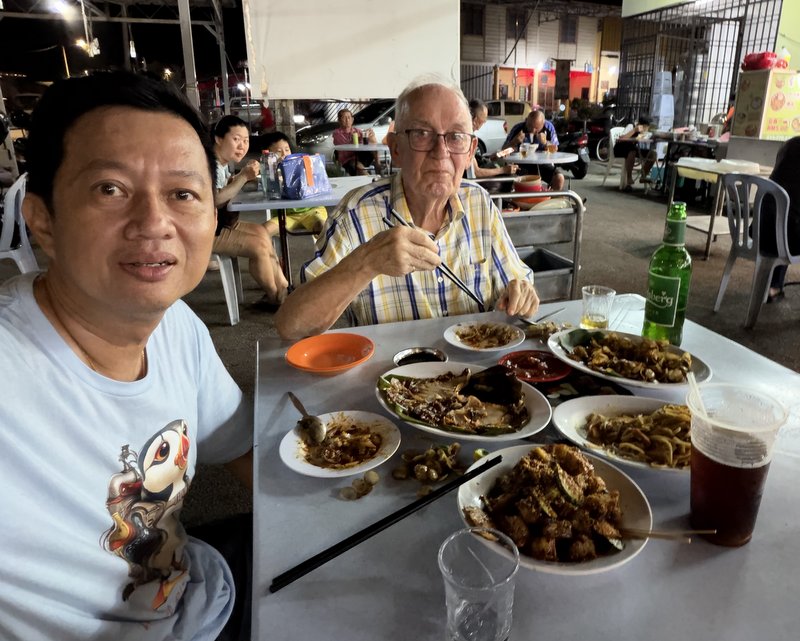
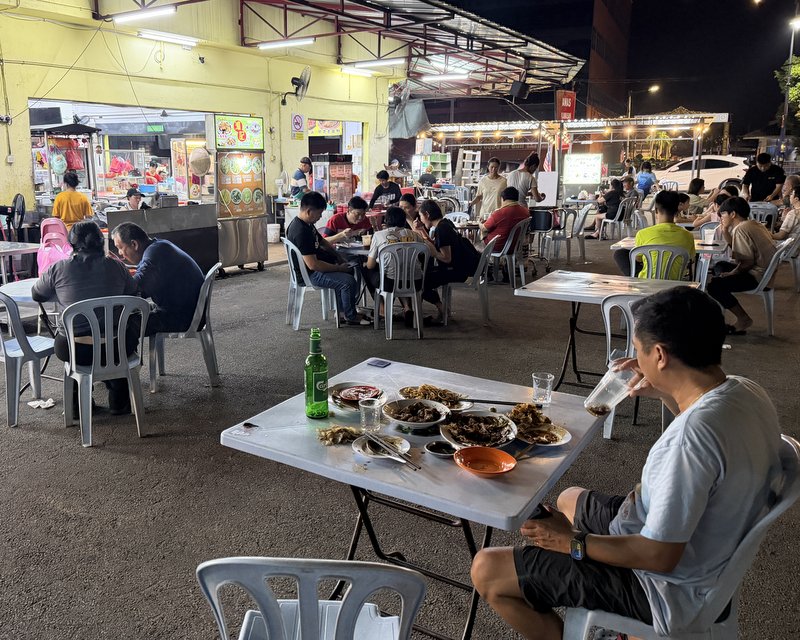
We had dinner at a pleasant, busy food court.
We had energy for two more temples and decided to make it a religious day. After the Hindu ashram and the Buddhist temple, we visited two temples that practice Chinese folk religion, a mix of Taoism, Buddhism, and Confucianism.
The first one was the Kian Hoon Kiong Temple, founded in 1896. We spent quite some time there, as there is a lot to see. Here are some pictures.
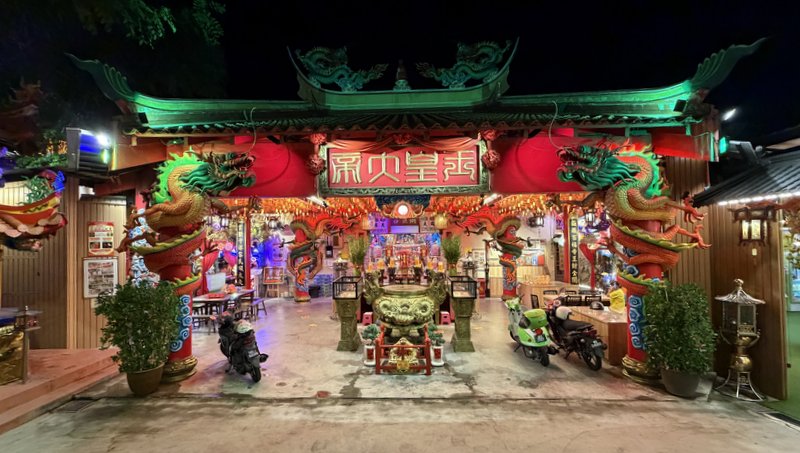
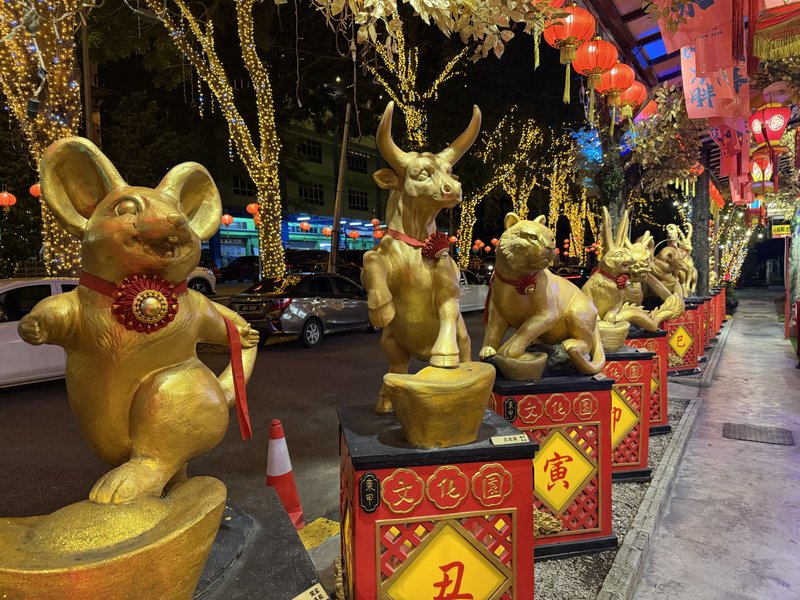
When you enter the temple, you will be greeted. Of course, there are the 12 Zodiac signs
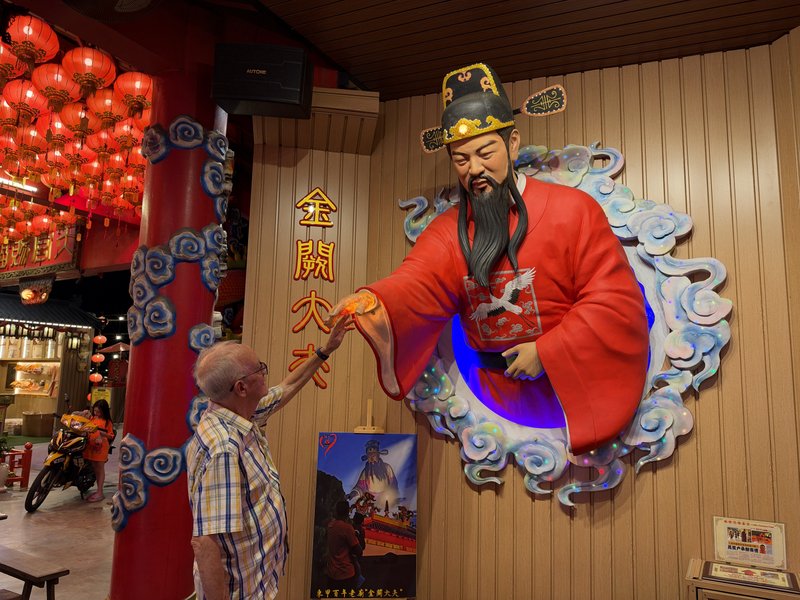
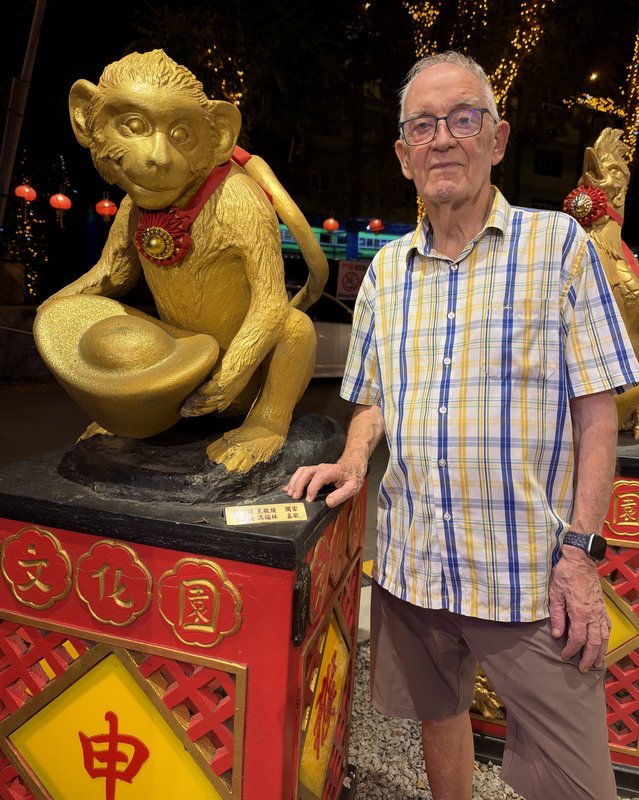
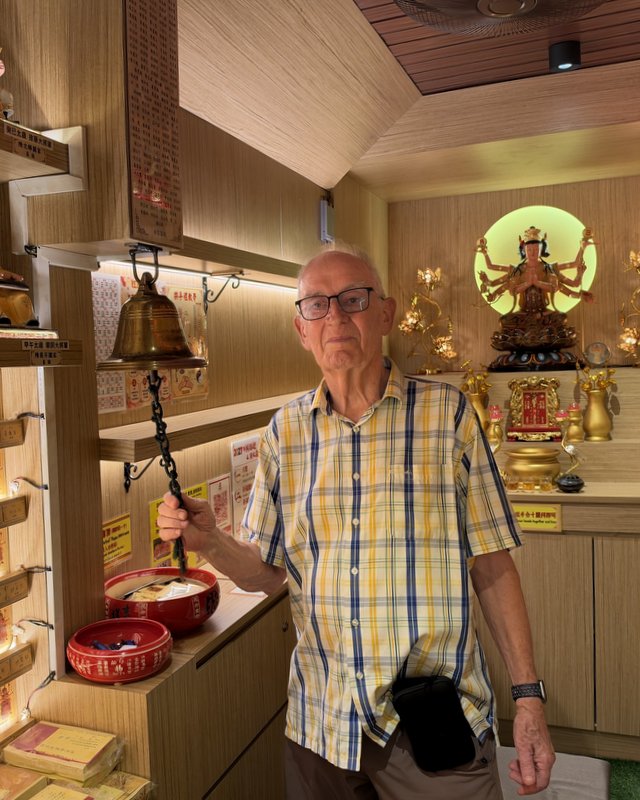
As I am a monkey, I wanted a picture of my Zodiac sign. The right picture shows a Buddhist shrine featuring the multi-armed statue of Cundi Bodhisattva.
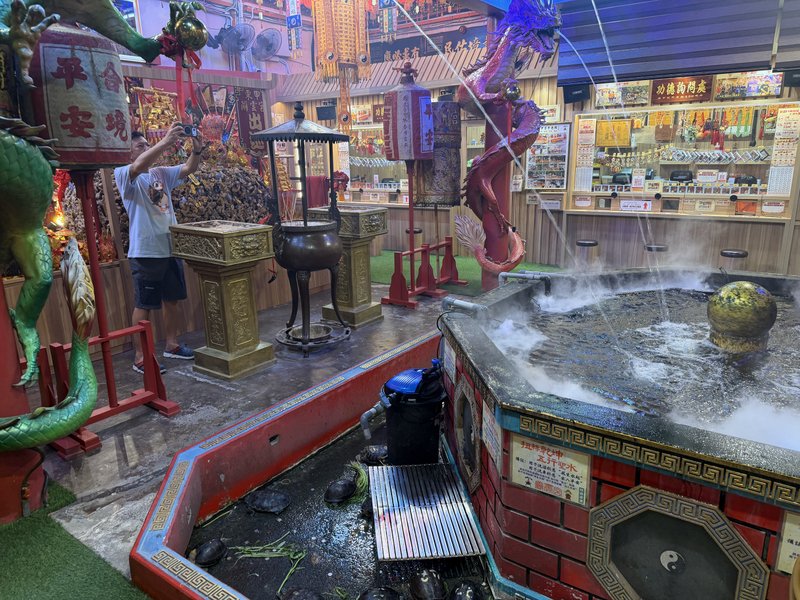
Taoist symbols in the central hall.
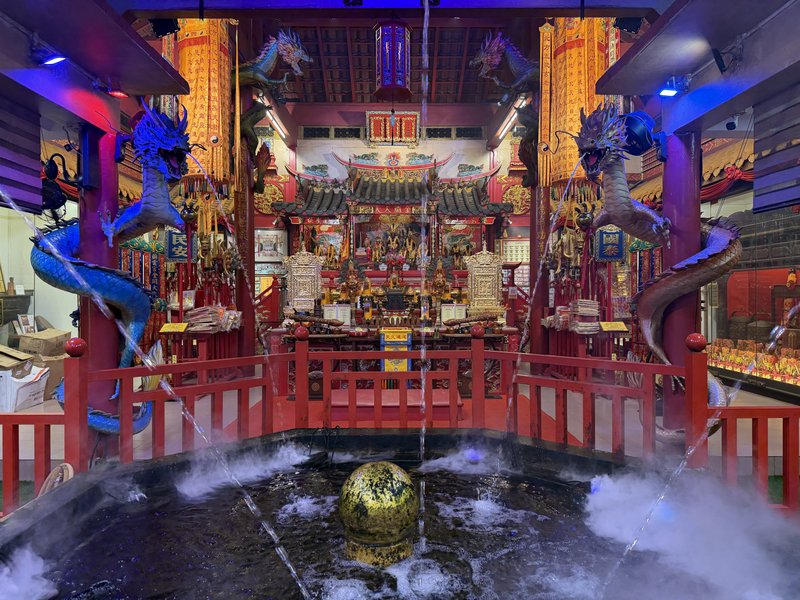
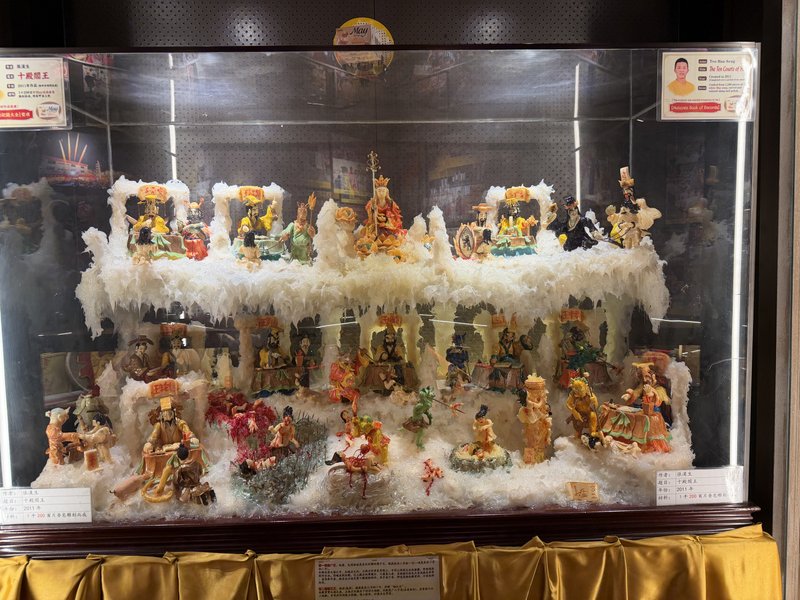
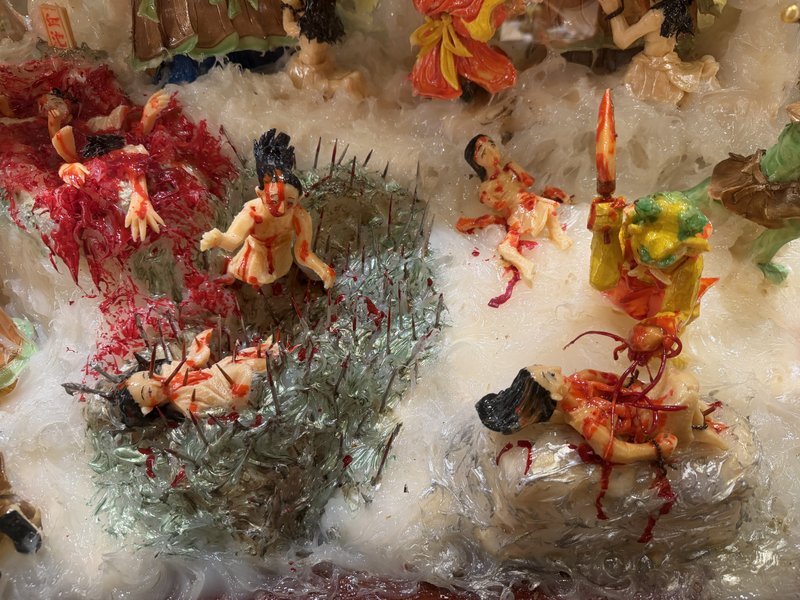
Helaven and hell are depicted, with the punishments you may get.
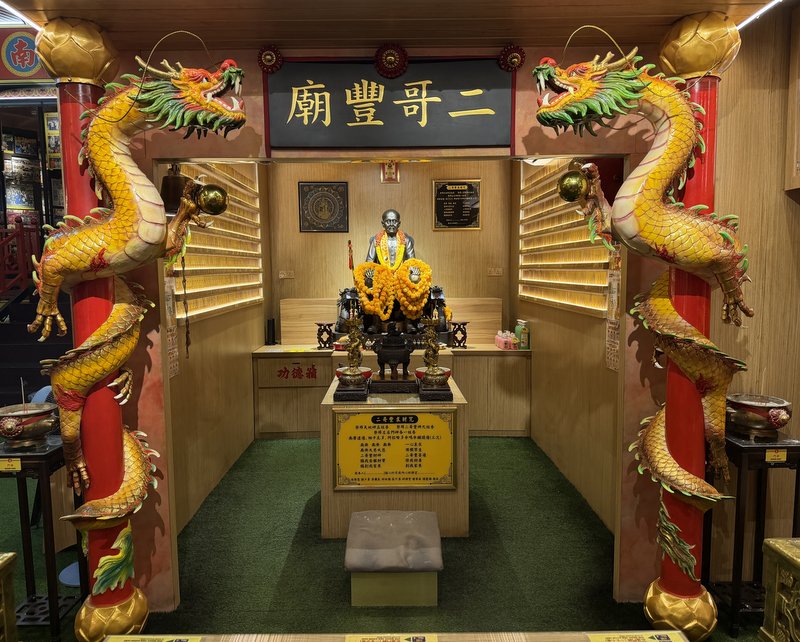
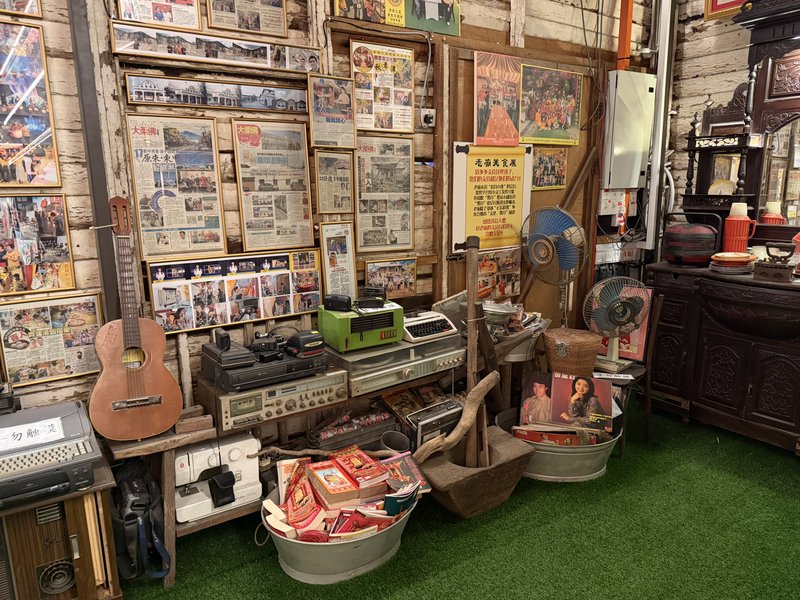
The shrine is for Er Ge Feng, a prominent 19th-century Chinese-Thai tycoon, who is now revered across Southeast Asia as a folk deity of wealth and gambling. The temple also houses a cultural section, with galleries containing antiques. There is a mountain made of Ginger.After spending hours exploring, I needed a rest.
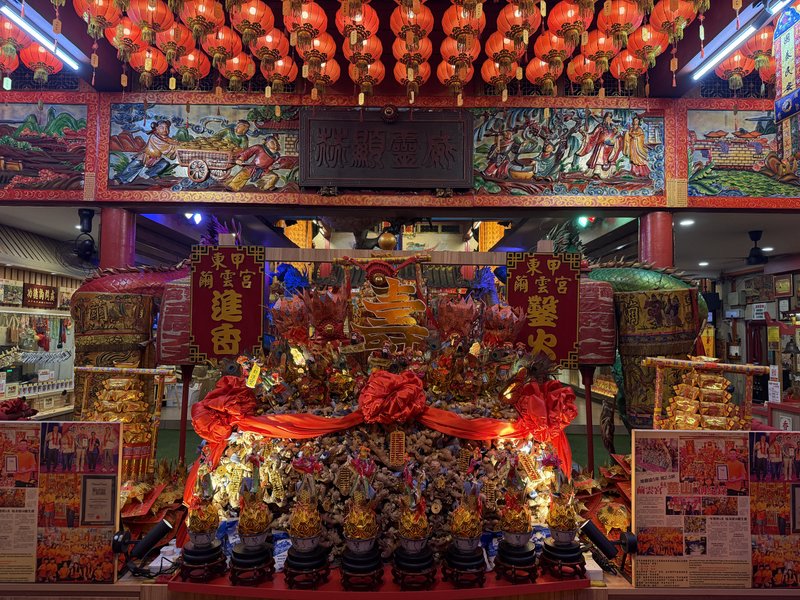
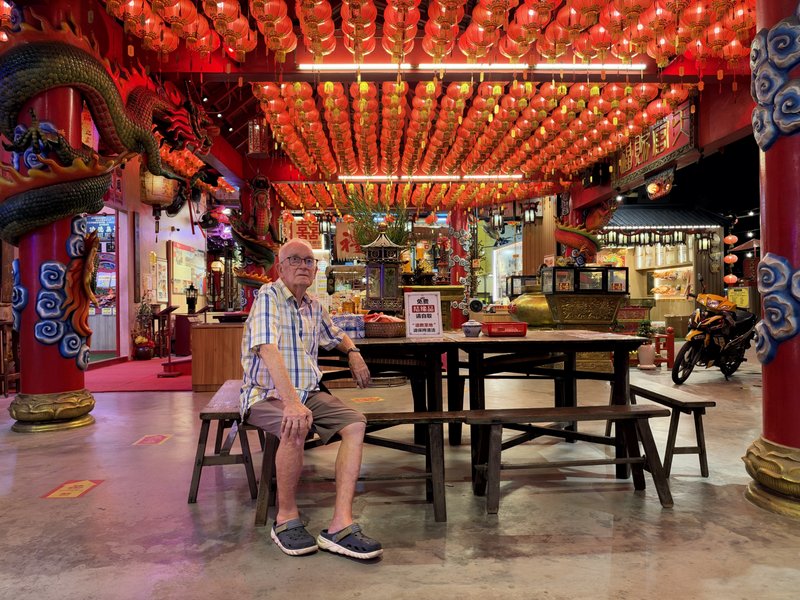
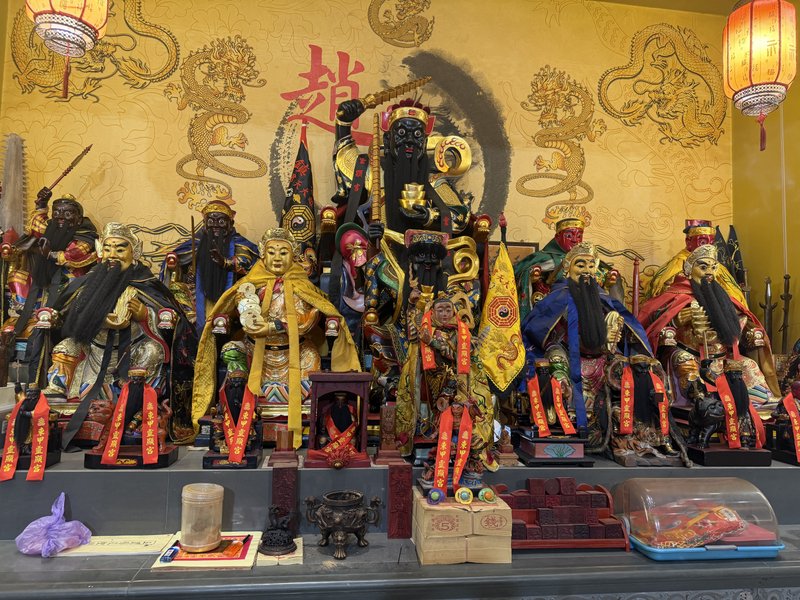
Our last visit was to the Tian Koon Guan Sui Temple, also a mixture of Taoism, Chinese Folk Religion, and Buddhism. The temple is dedicated to Marshal Zhao, the Martial God of Wealth. It features a prominent large granite statue of the deity who is revered in both Taoism and Chinese Folk Religion. It was consecrated last year.
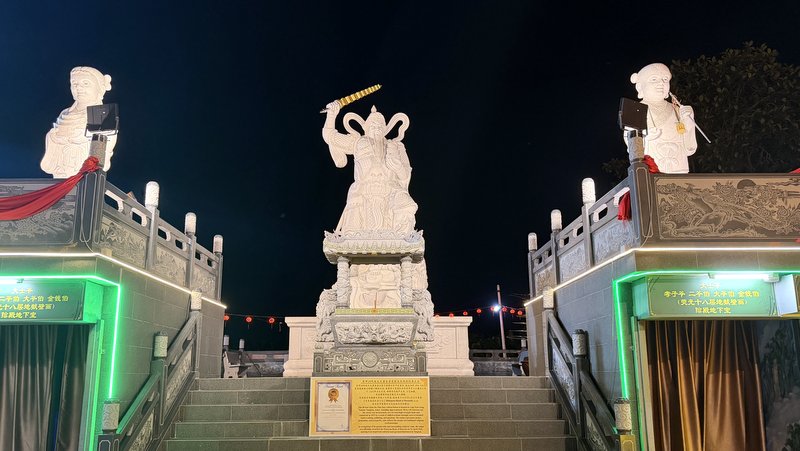
Marshal Zhao can be seen here in the center of the altar, with a dark complexion, surrounded by his generals.
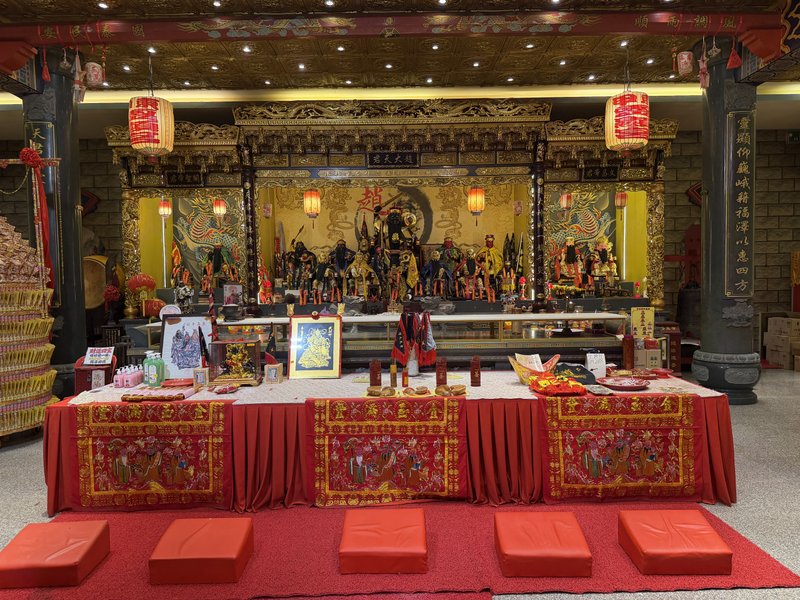
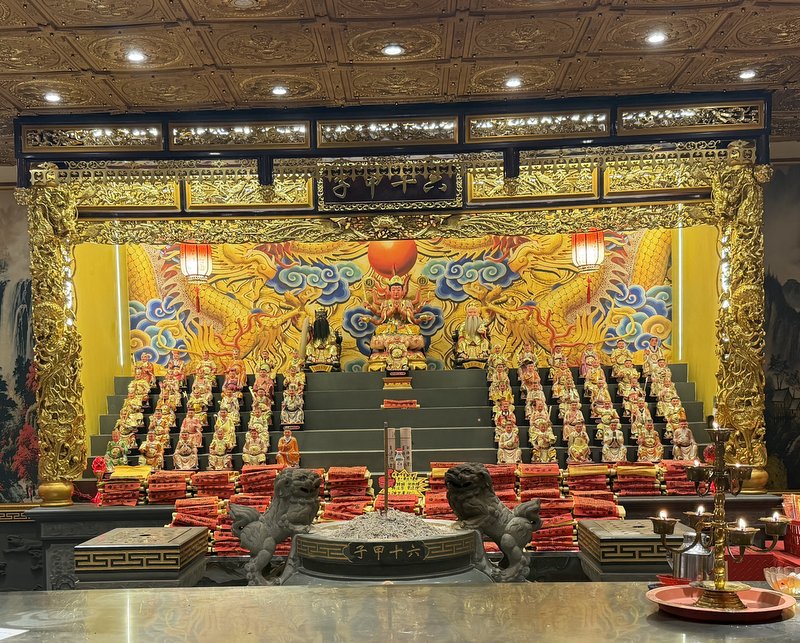
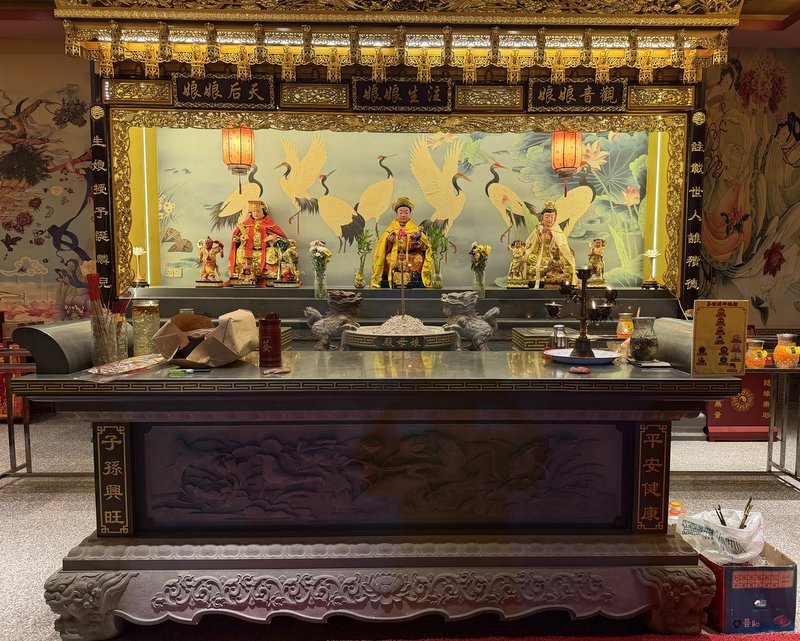
Tai Sui Hall. The tiered altar houses statues of the 60 Tai Sui generals, representing the 60-year cycle of the Chinese calendar. An upper floor houses shrines for Buddhist/Taoist deities: Mazu (Goddess of the Sea), Guan Yin (Goddess of Mercy), and Songzi Niangniang (Goddess of Birth)
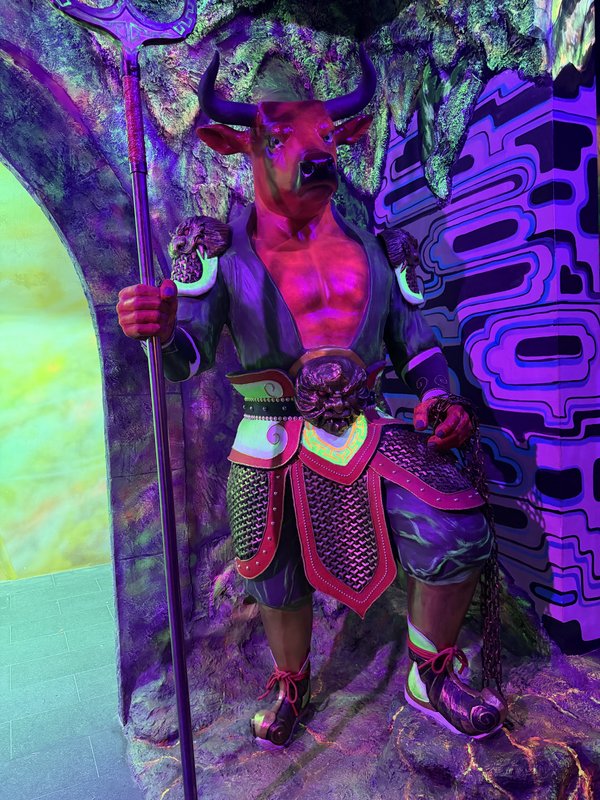
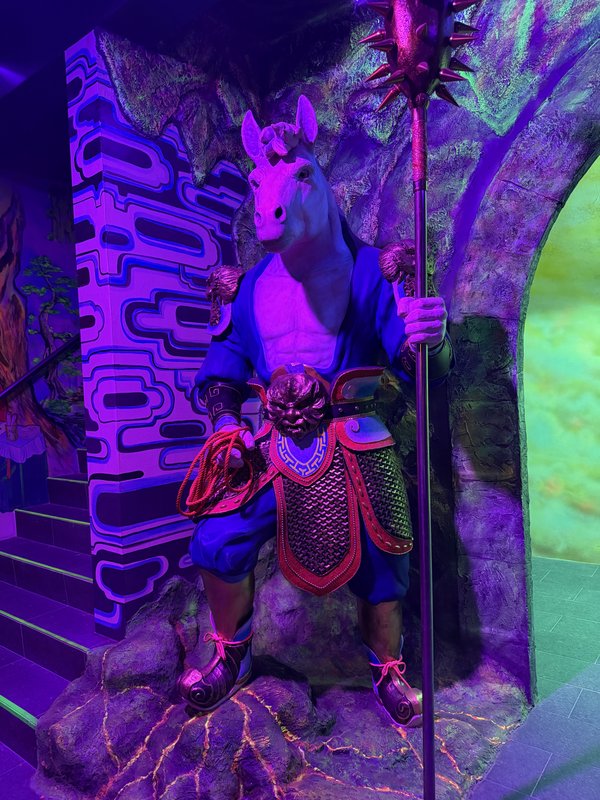
There is an underground hall, depicting Hell. Fluorescent light created a frightening atmosphere. Ox-Head and Horse-Face guard the entrance.
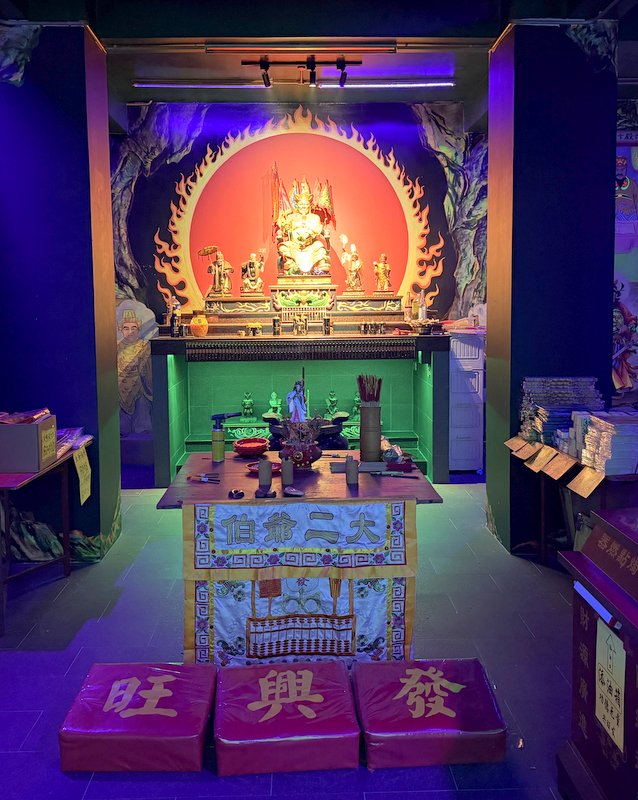
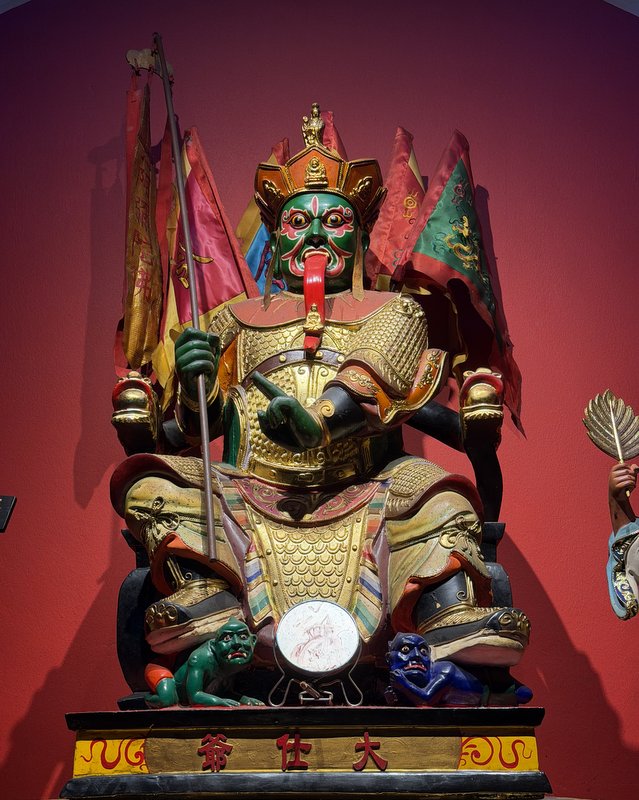
Left the Martial God of Wealth. Devotees come to this underground hall to pray for prosperity and wealth. The right picture shows this statue of Da Shi Ye, also known as the King of Ghosts.
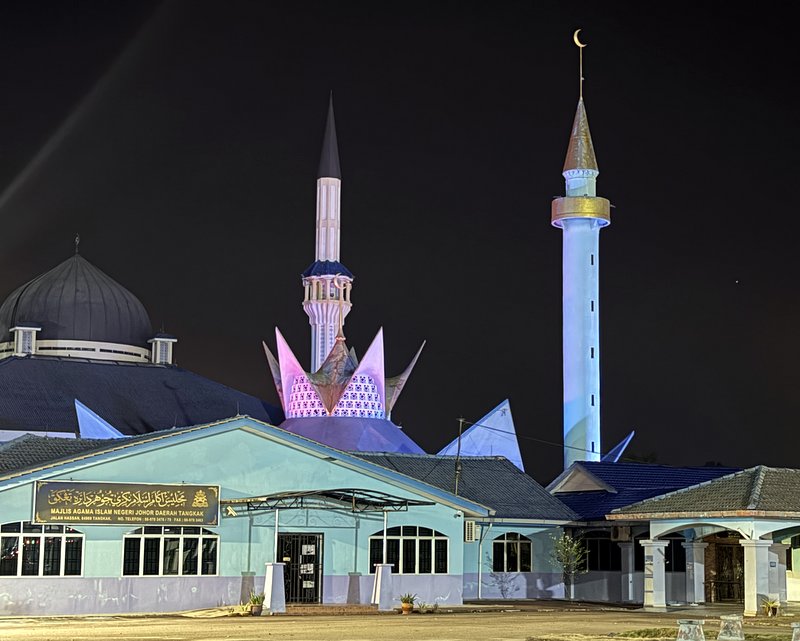
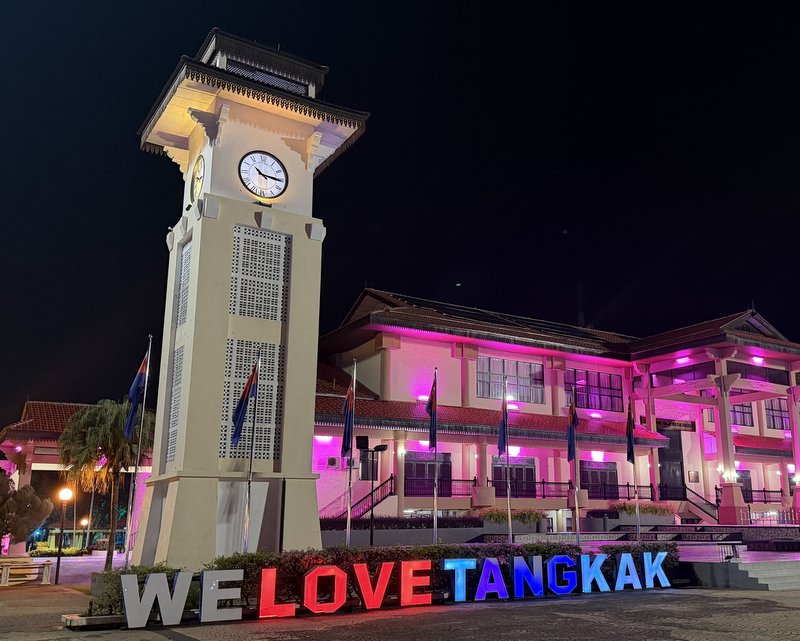
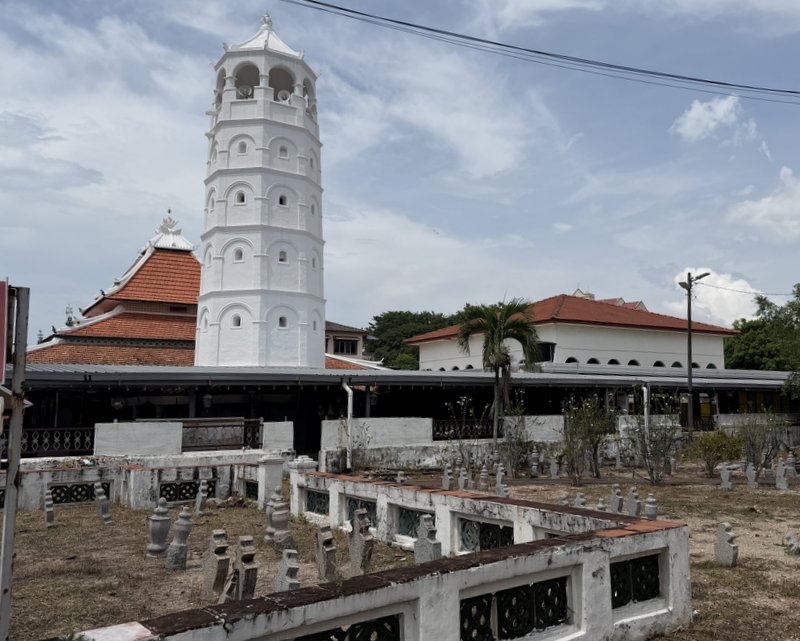
On our way back to our hotel, we passed a nice mosque. We thought it was fitting for our religion day to include a picture, and we checked if there was a Christian church nearby. But we found only a clock tower. A very remarkable and interesting day.
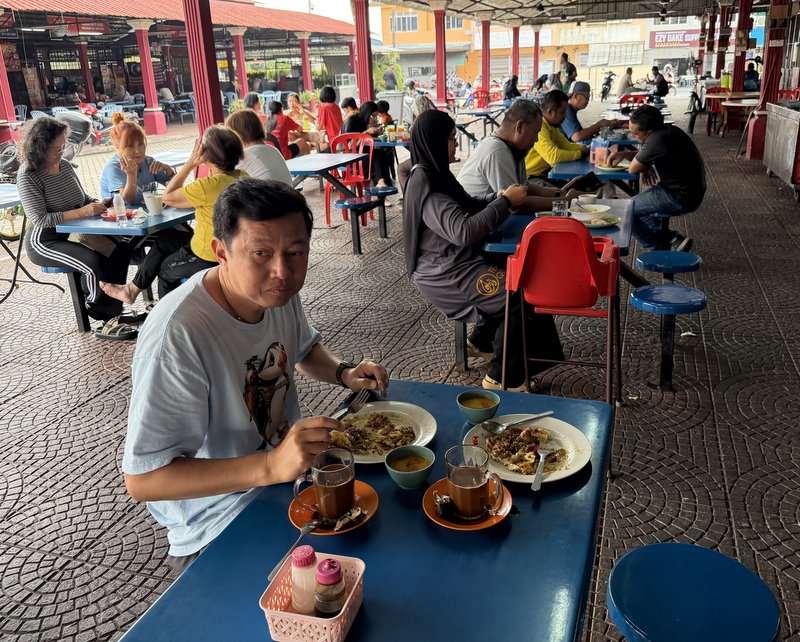
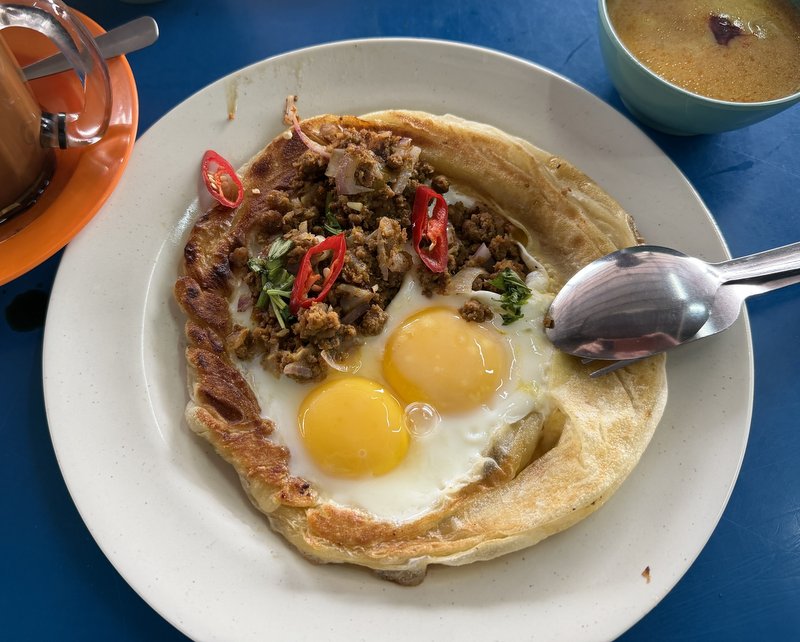
The next morning I was in the mood for mamak food. We found a nice stall where I had an interesting Roti Sarang Burung. Bird’s Nest Roti!
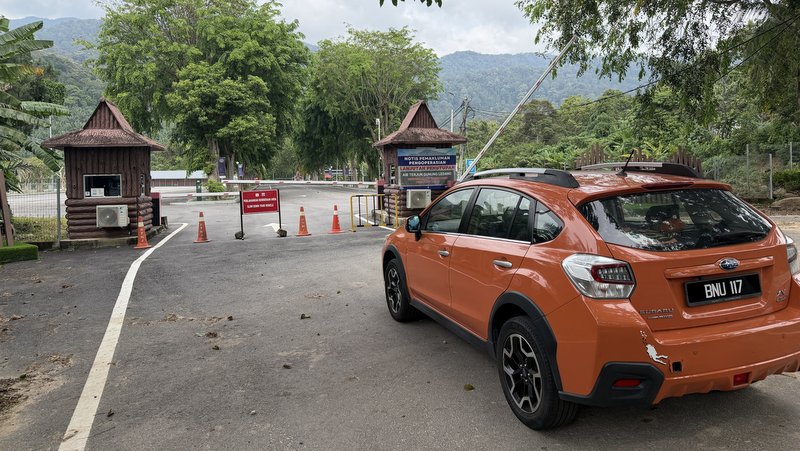
After our breakfast, we drove to the Puteri Falls, and found that the recreation park was closed. Apparently for a long time already. I should have consulted the Waterfalls of Malaysia– website, which is now managed by my friend Joshua. Shame on me 😉
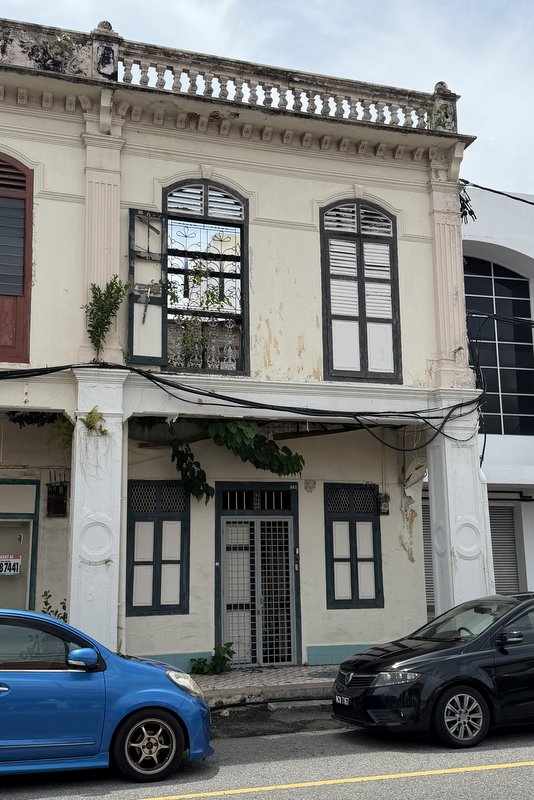
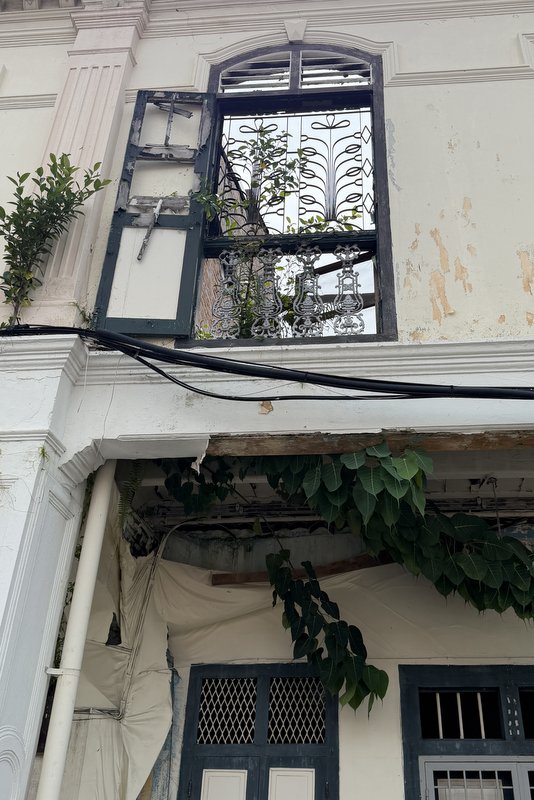
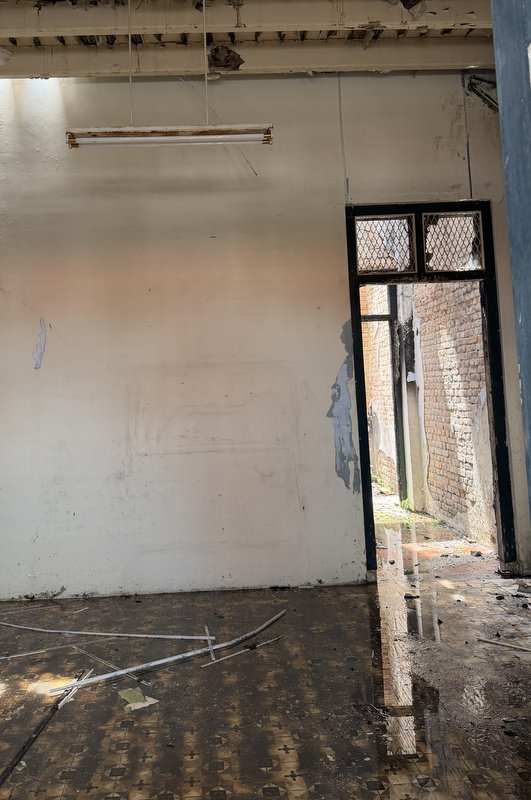
We continued to Melaka. A hiking friend of mine, who is from Melaka, told me that a historic building that belonged to her family was destroyed by fire more than a year ago. As I am a fan of Urbex, I told her I would like to have a look and asked for directions. Directly opposite the Masjid Tengkera, she said. That made it easy to find.
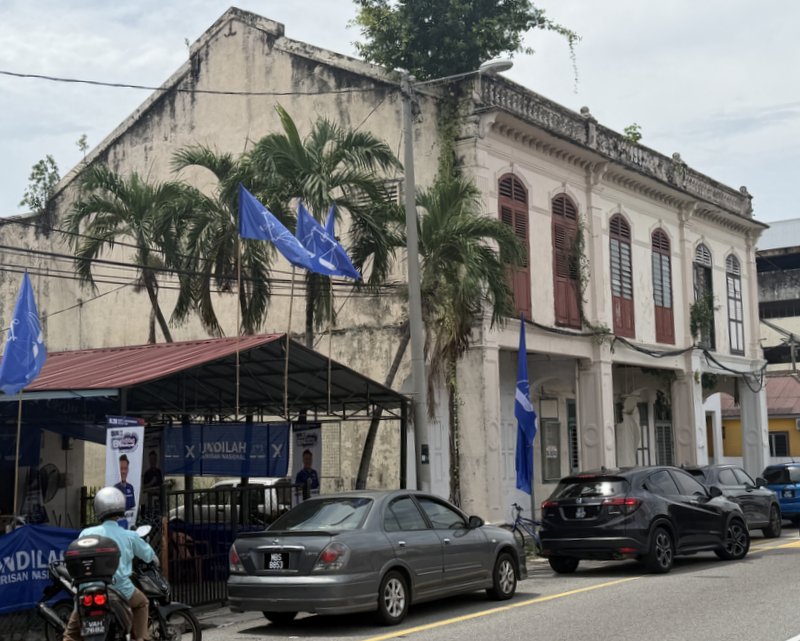
But it was a Friday, many people were visiting the mosque for prayers, and we only had a superficial look. The front door was locked solidly, but through an opening in the grille, I could take a shot of the interior. It looks like I could have entered from the back.
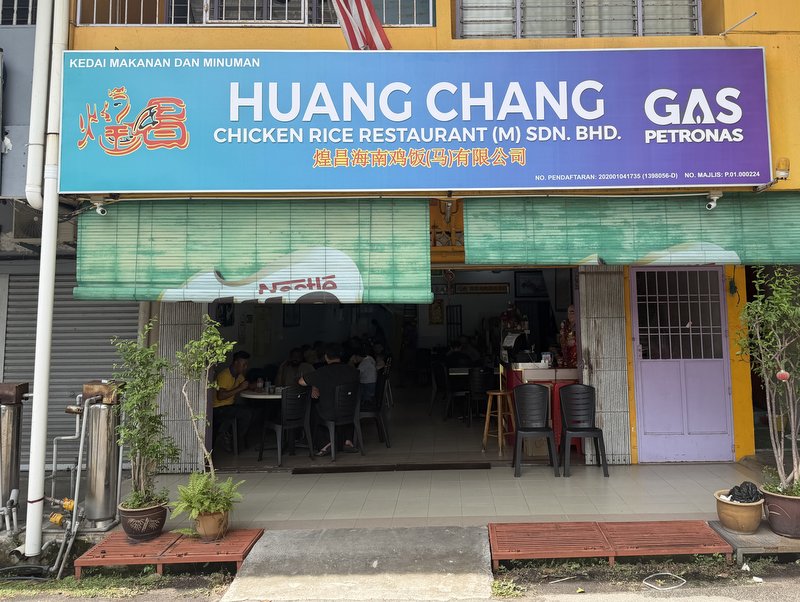
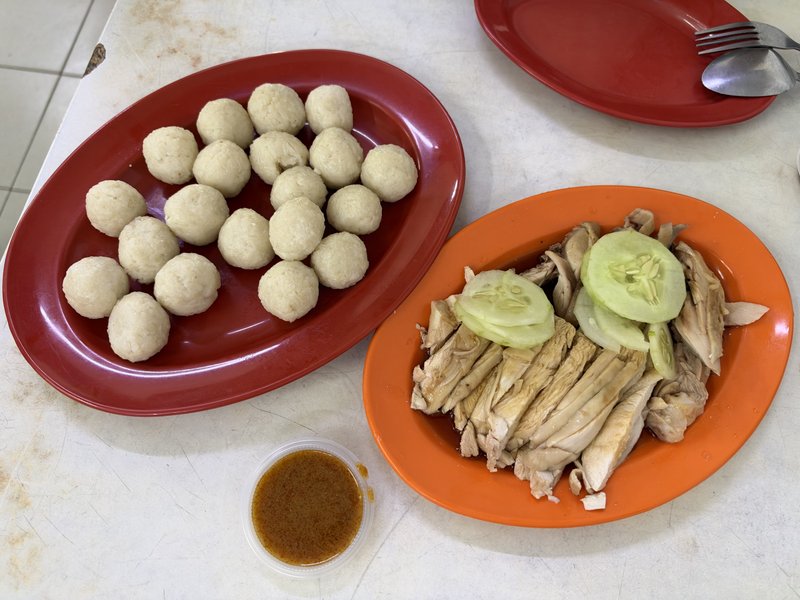
We had lunch at Huang Chang Chicken Rice, well-known for its bite-sized, hand-rolled chicken rice balls, away from the main Jonker Street tourist crowds.
We checked in at Hotel Puri in Heerenstraat and took a nice rest. It is a favourite of us, although it has become more expensive.
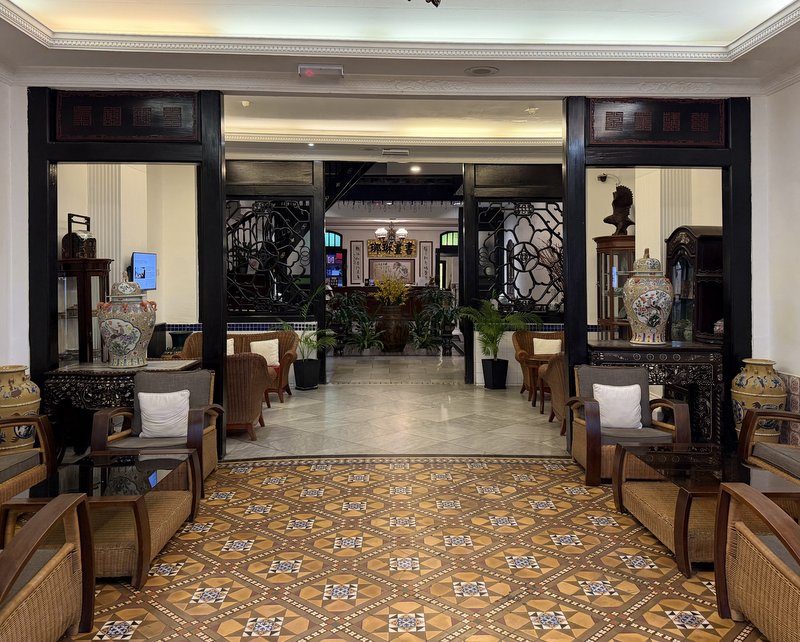
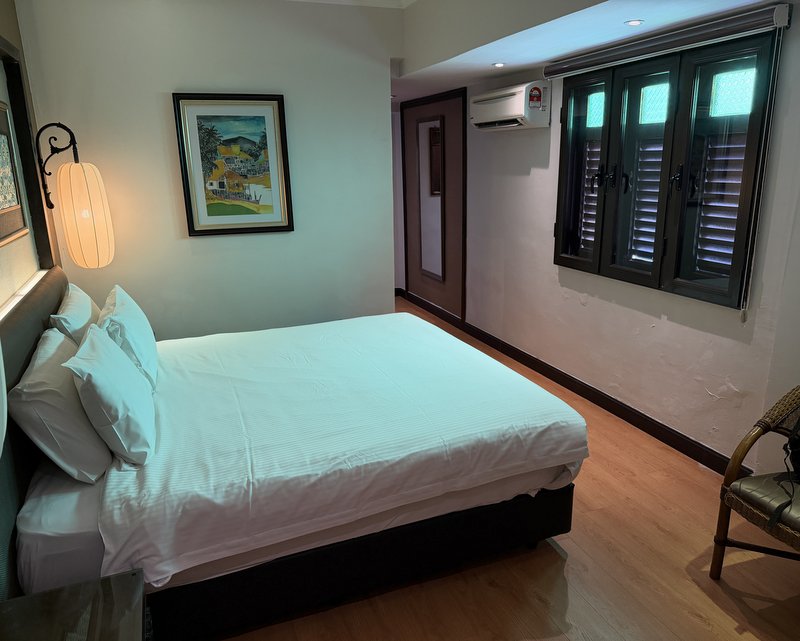
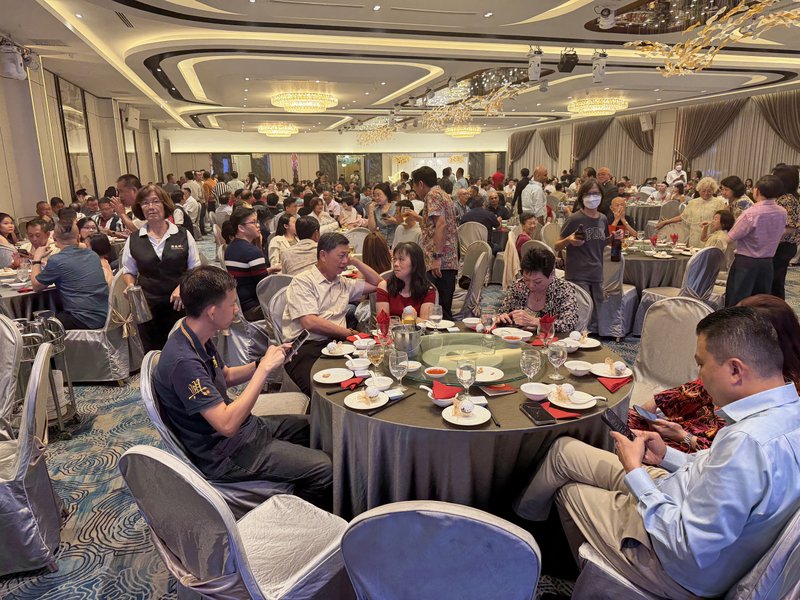
We had planned to take a Grab to the New Lagoon restaurant, where the wedding dinner would take place, but Heerenstraat is closed for Grab during the Jonker Street market, so we drove by car. When we arrived, we were greeted by the bride and groom at the entrance of the dining hall.
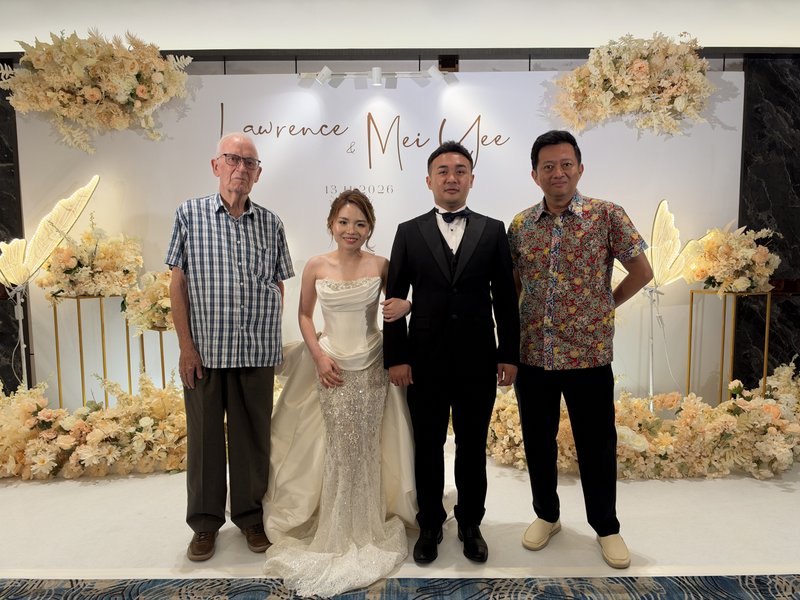
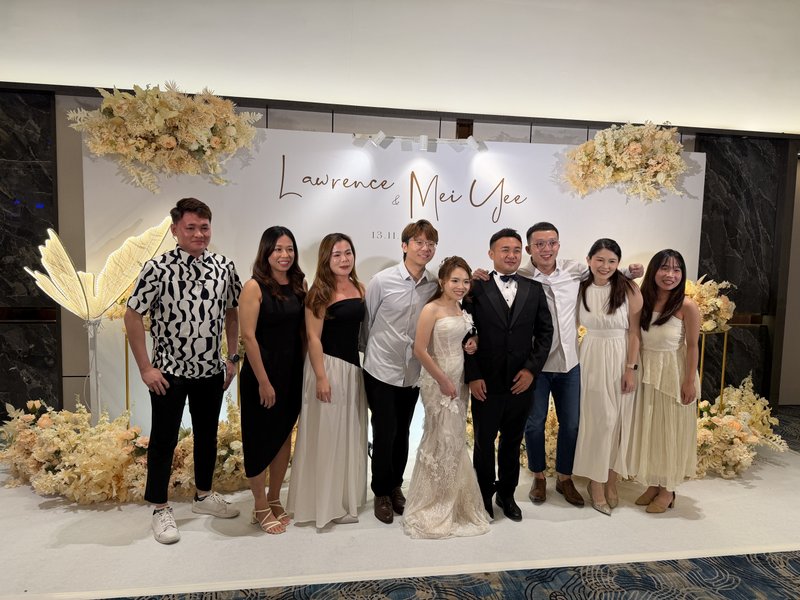
There were almost 60 tables. I have attended many Chinese wedding dinners, but never of this size. The father of the bride was a business man, many of his business contacts were invited. Luckily the three tables for Aric’s family were next to each other.
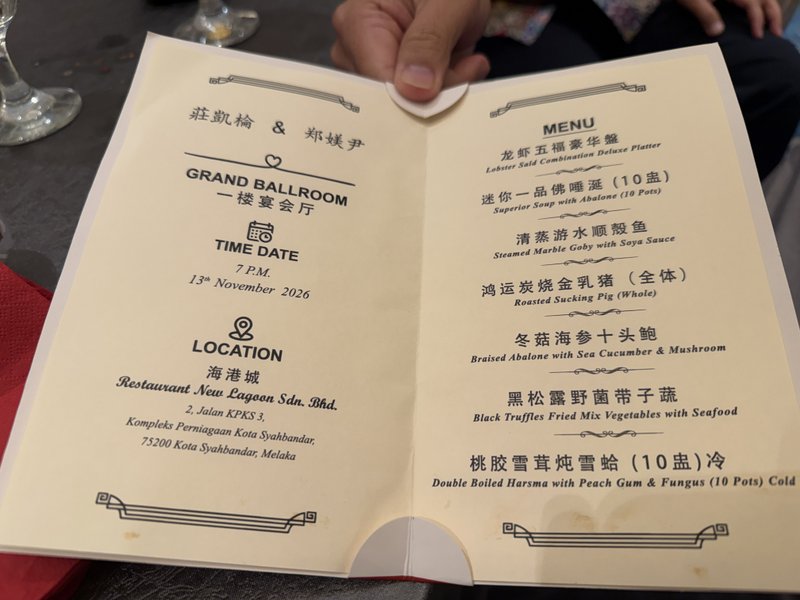
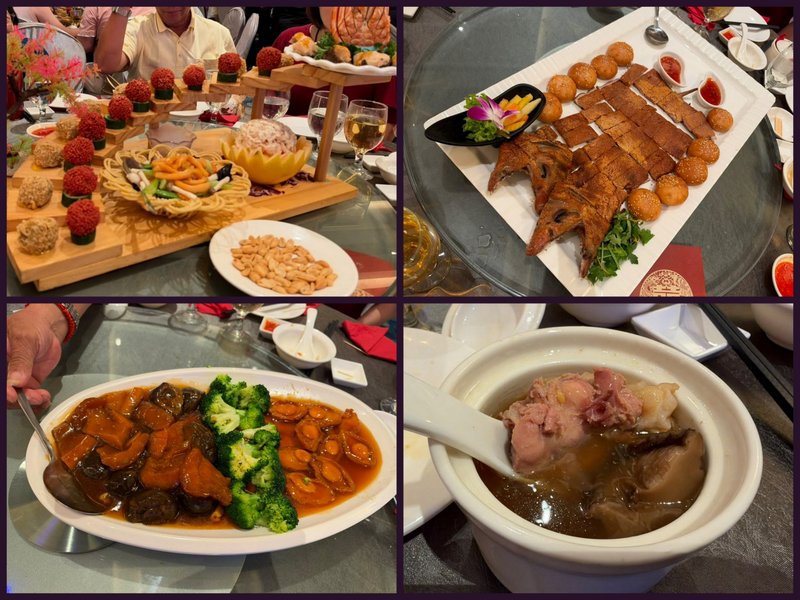
Nere is the dinner menu. Seven courses, here is a collage with four of them.
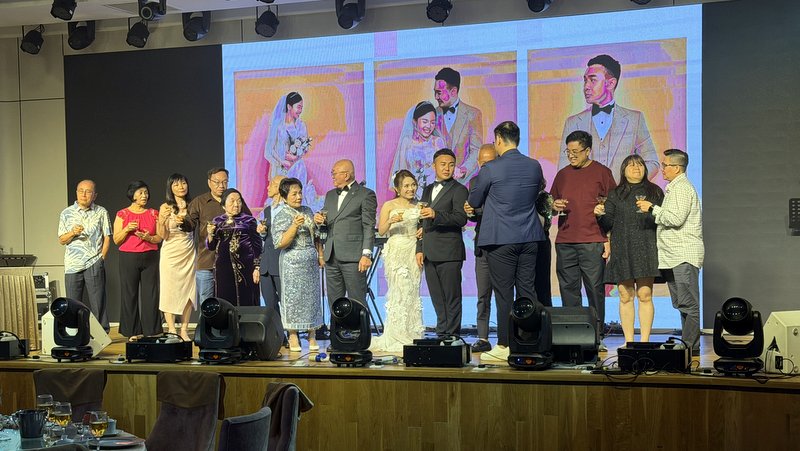
Traditional celebration, with an MC, a music band, and a toast on the young couple
There was an almost unlimited supply of alcohol, beer, wine, cognac.
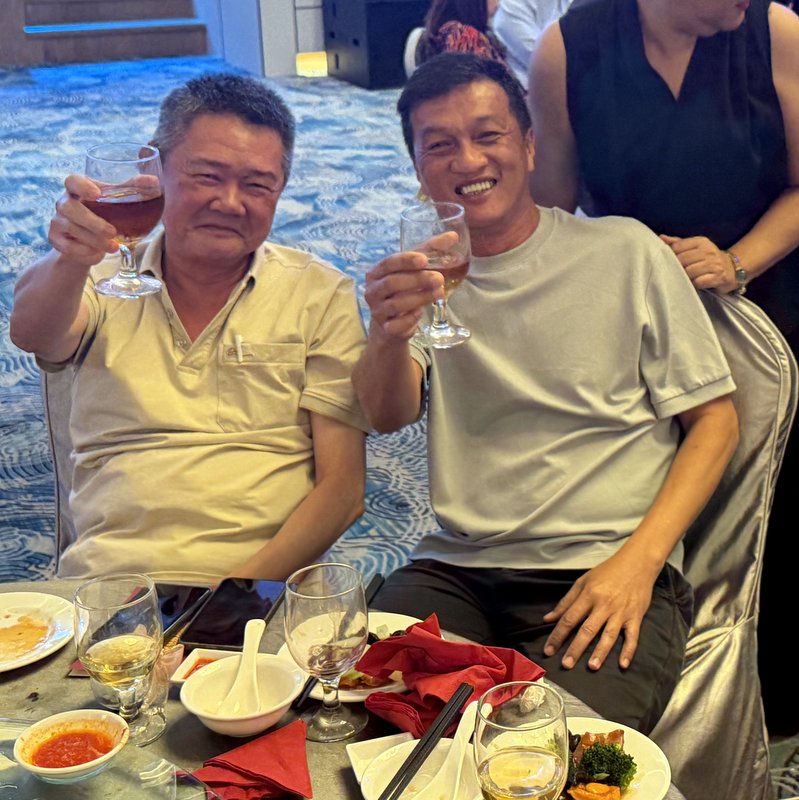
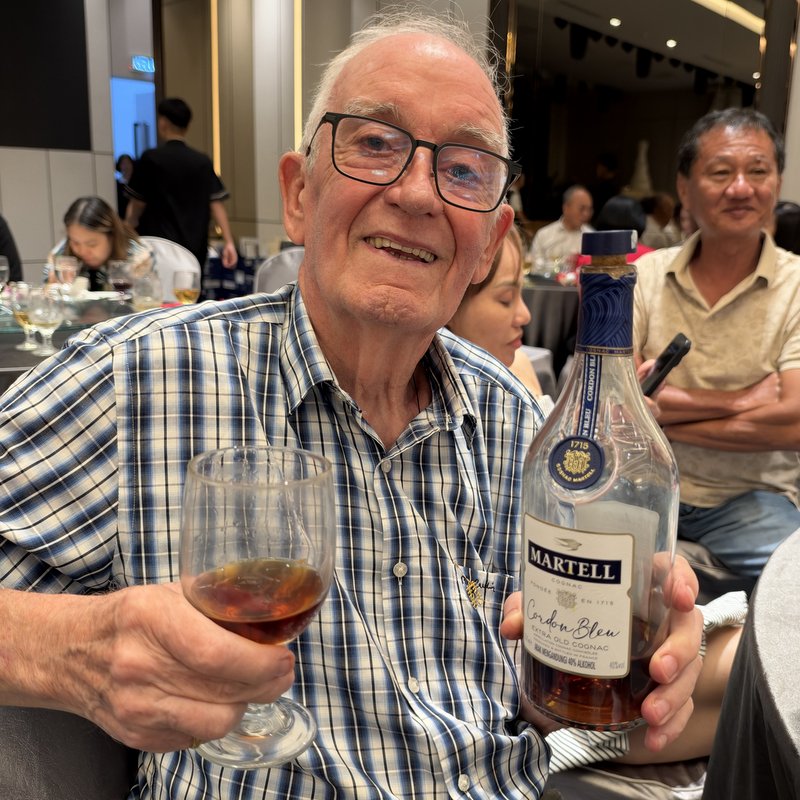
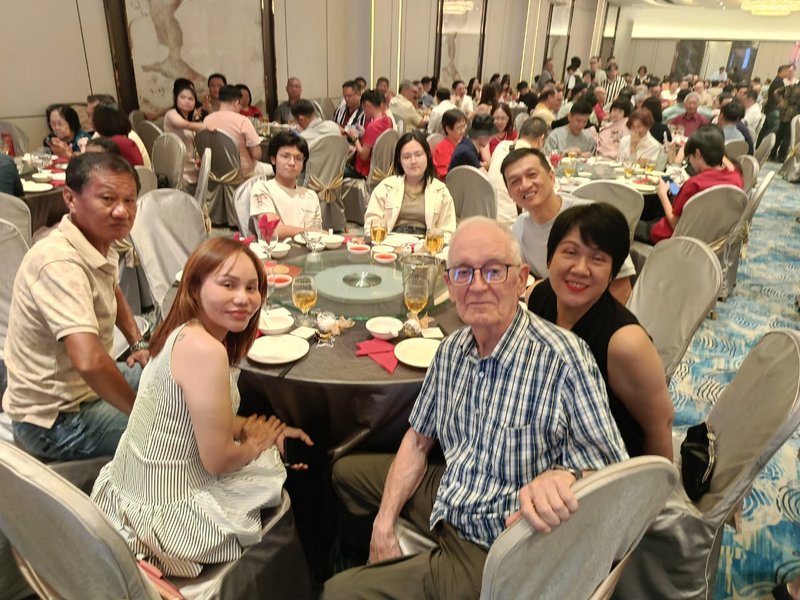
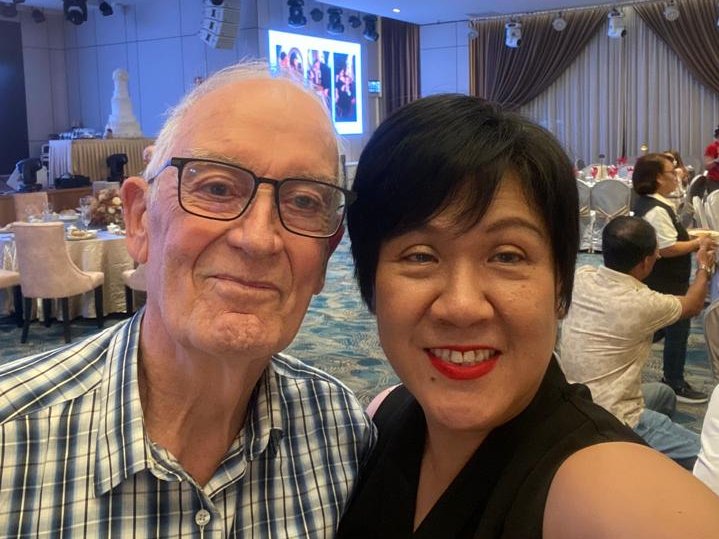
It was nice to meet relatives and friends.
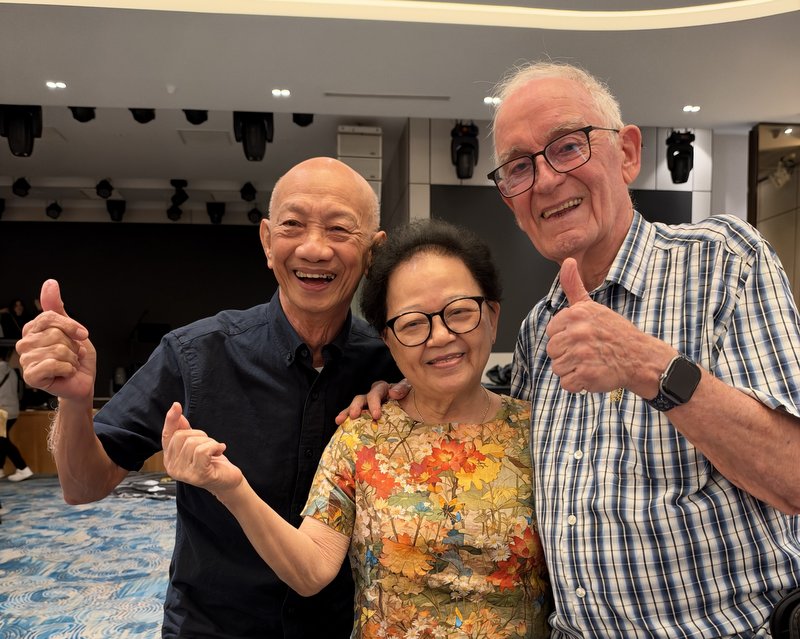
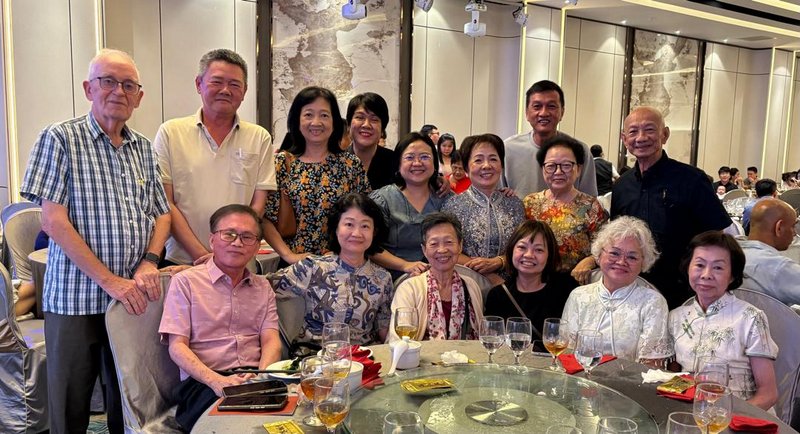
Of course-, a family photo was taken.
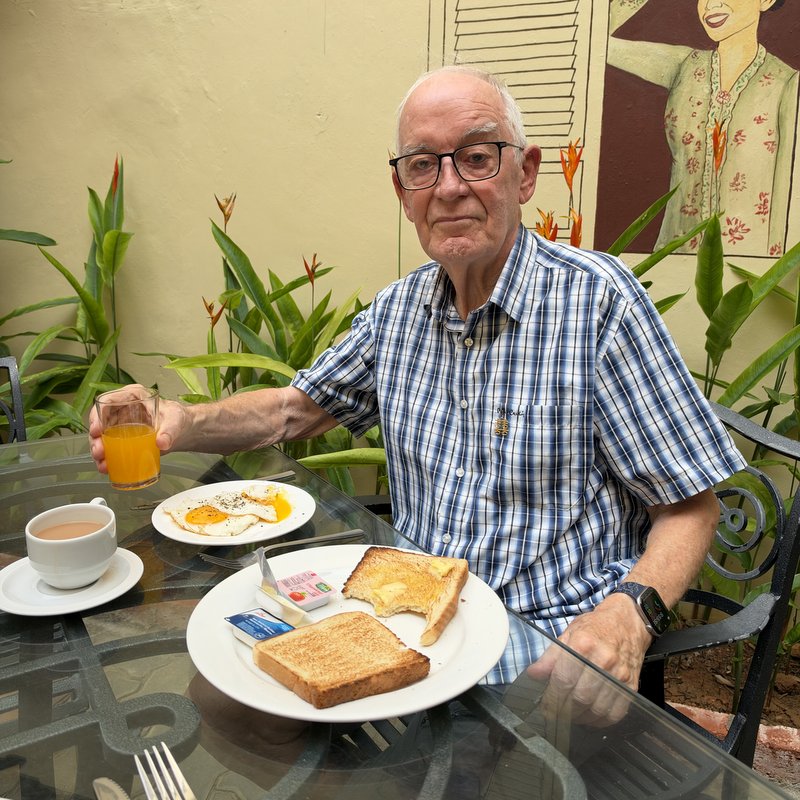
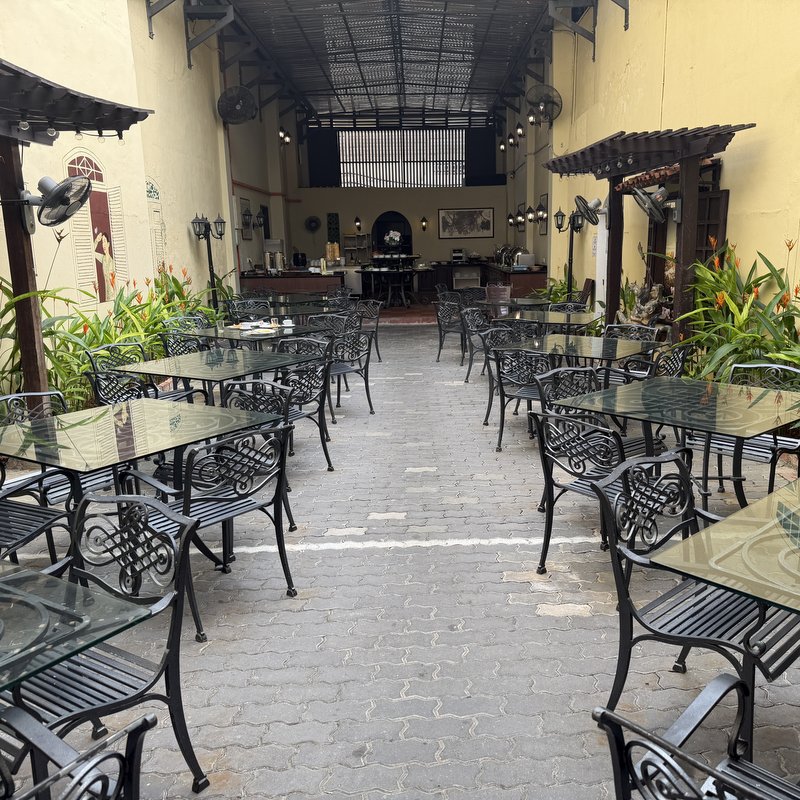
The next morning, we took a light breakfast at our hotel, before checking out.
We planned to stop on our way back at the Royal Museum of Sri Menanti, but we decided to check first whether it was open. The Department of Museums Malaysia lists standard hours as 9:00 AM to 5:00 PM daily. But another website said it was closed.
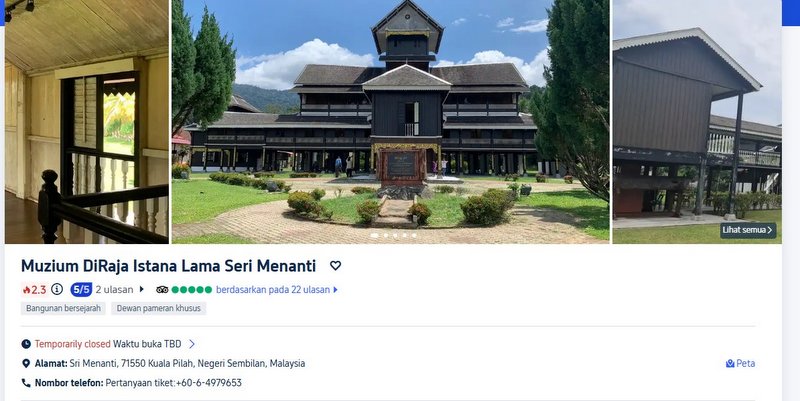
We decided not to take the risk. We skipped it and went to Seremban for lunch. The stall Ariuc had in mind was closed, but we found a good alternative.
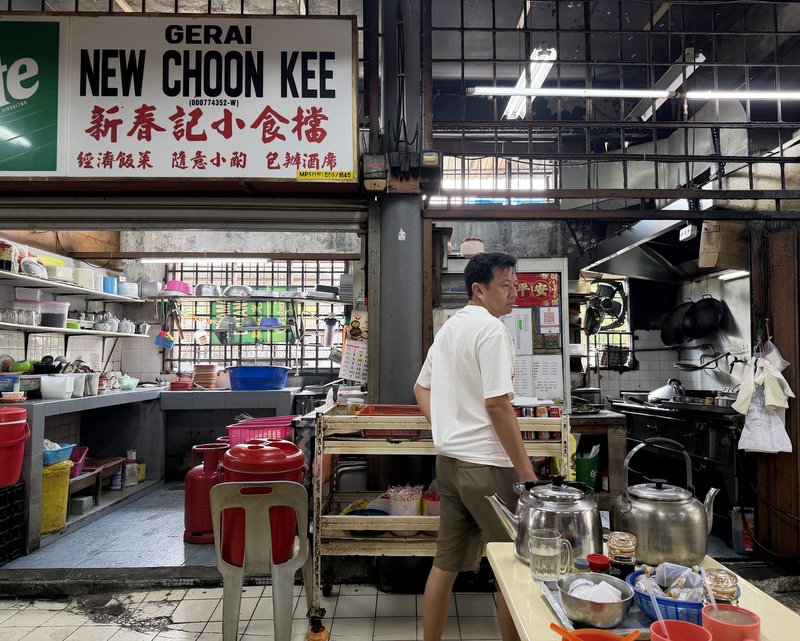
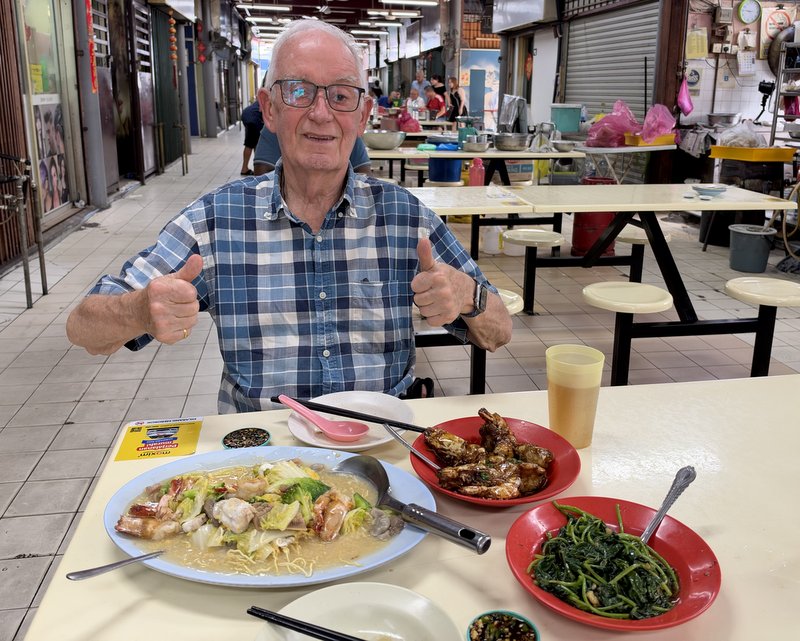
Although we could not do everything we had planned+, it was a very nice outing, especially the religion day in Tangkak.