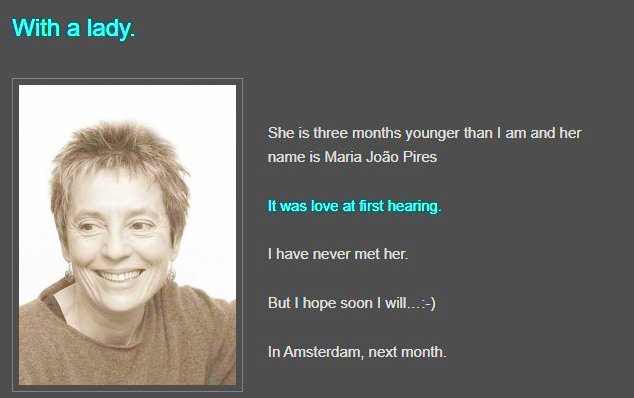
In August 2013, I wrote a blog, I have fallen in love .The (short) blog is outdated, because several of the YouTube links do not work anymore. Here is the first part of that blog.
-+
A few weeks later, in the Concertgebouw in Amsterdam, I heard her play Beethoven’s 3rd piano concerto, one of her favorites. No recording exists, but click here for a beautiful recording with Frans Brüggen and his Orchestra of the Eighteenth Century in 2010. During her long career she had a close, affectionate relationship with her Dutch audience.
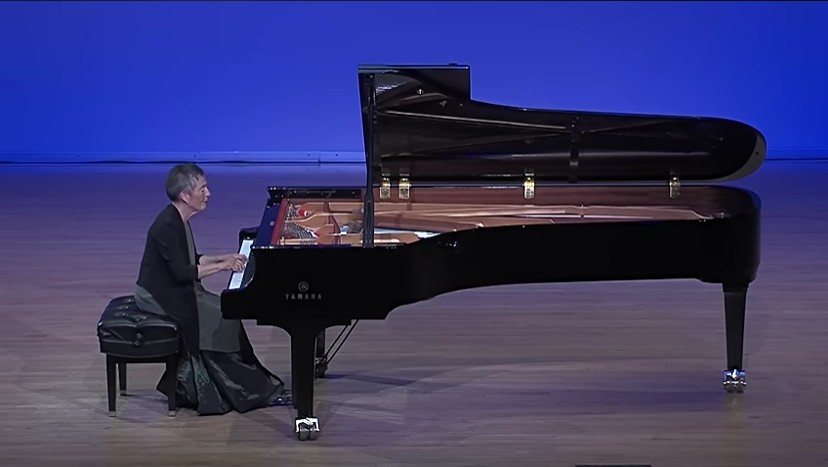
Her last public performance was on 19 March 2025 in Den Haag. A duo recital with the (blind) Spanish pianist Ignasi Cambra in the World Master Pianists series. A few months later, she had a (minor) stroke, which she saw as a warning sign. In November, at 81 year old, she officially confirmed her permanent retirement from performing. I no longer am a pianist
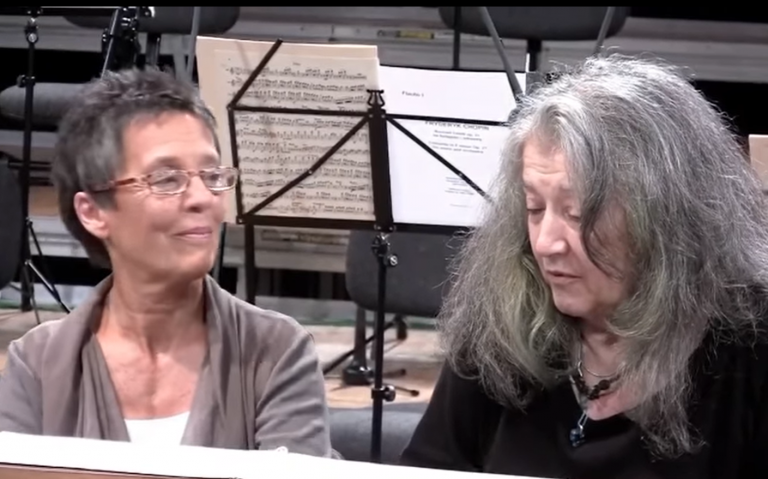
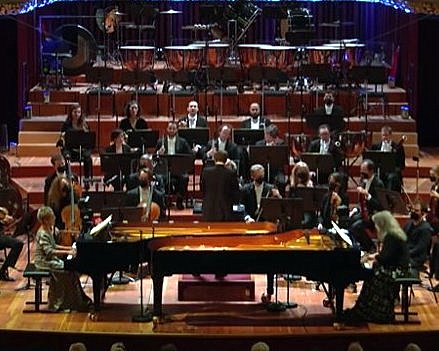
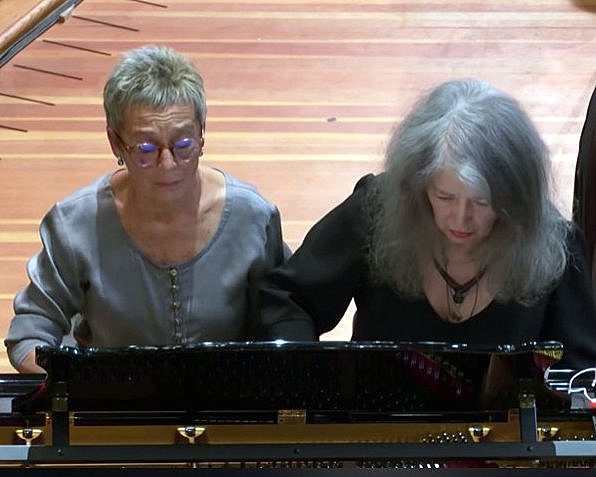
After my 2013 blog, I remained a fan, but never wrote another blog about her. In 2021, I wrote a blog about Martha Argerichh, in many ways her antipode. In 2012 both world-famous pianists attended the 8th Chopin and his Europe festival in Warsaw. On 28 August they played with Frans Brüggen and his orchestra two Beethoven piano concertos and gave an encore. Here it is, part of Grieg’s Peer Gynt Suite. Click on the photo to listen.
Look at their body language. By the way Martha Argerich is now 85 and still active, having concerts around the world.
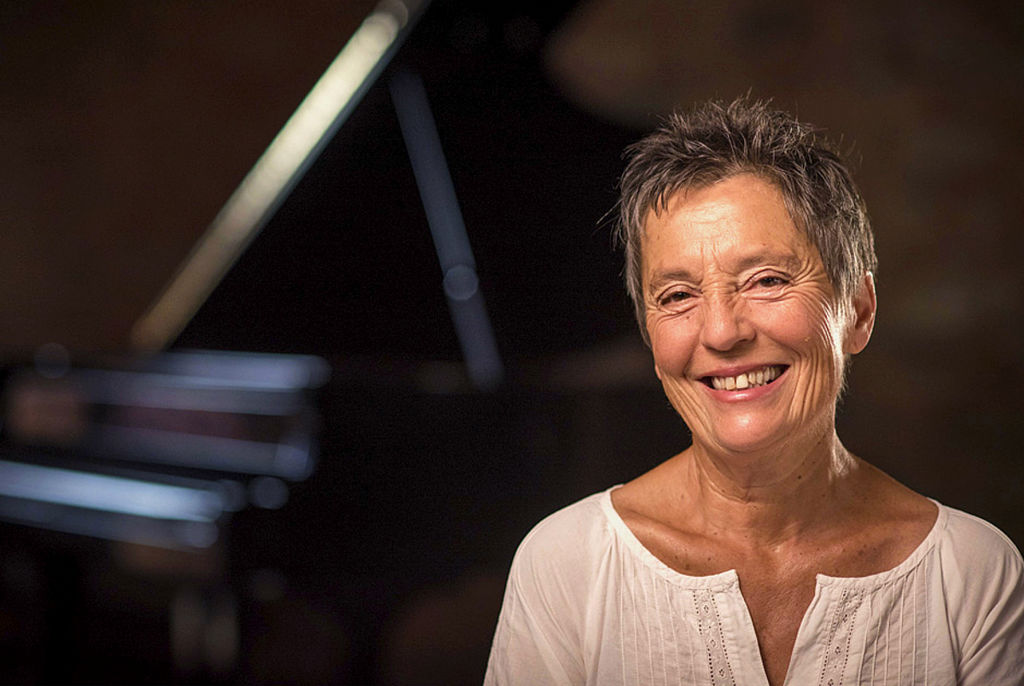
Maria João was born in Lisbon on 23 July 1944. Her father passed away two weeks earlier, she was raised by her norther and her grandfather. She was a child prodigy, giving her first public performance when she was 7. When se was 17, she got a scholarship to to continue her piano study in Germany.
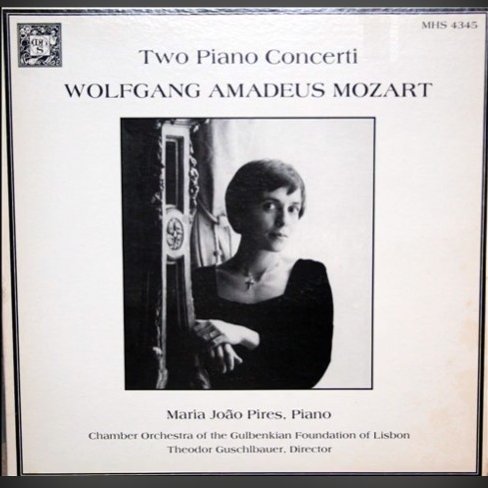
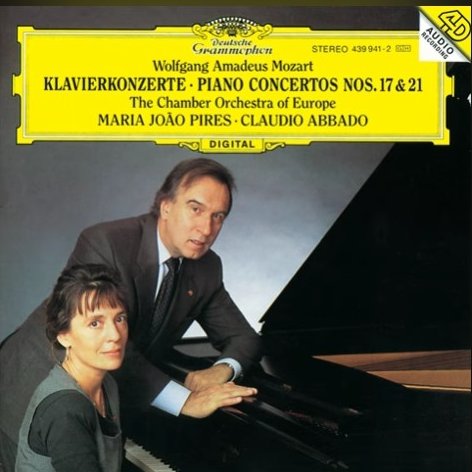
In 1970, at age 26, she won the first prize in the Beethoven Bicentennial Competition, held in Brussels. It launched her into international fame and established her career on the global stage. She got a contract with ERATO. Click on the left picture to listen to some of her recordings (Bach, Mozart, Beethoven). In 1989, she signed an exclusive contract with Deutsche Grammophon. Click the right picture for two Mozart piano concertos.
She was not always happy with her career and fame. Between 1978 and 1982, she even stopped public performances. She had an aversion to the commercialized classical music circuit, with its competitions and first-prize winners. Around that time, her interest in Buddhism started.
In 1985 she played Mozart’s Piano Concerto no. 21 in a music movie. Fascinating and unconvential. Click on her photo to watch.
She started touring again, and had her debut in Carnegie Hall in 1988.
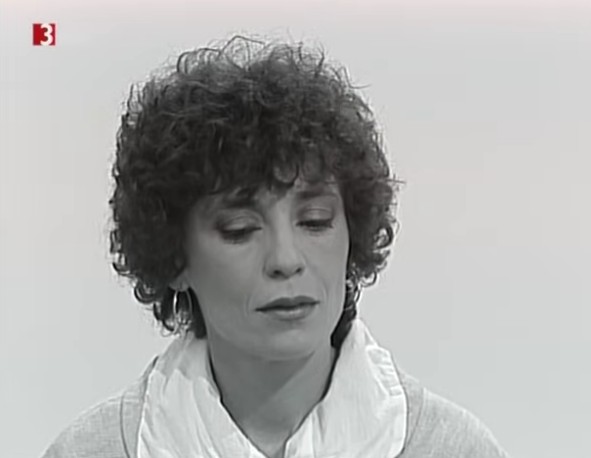
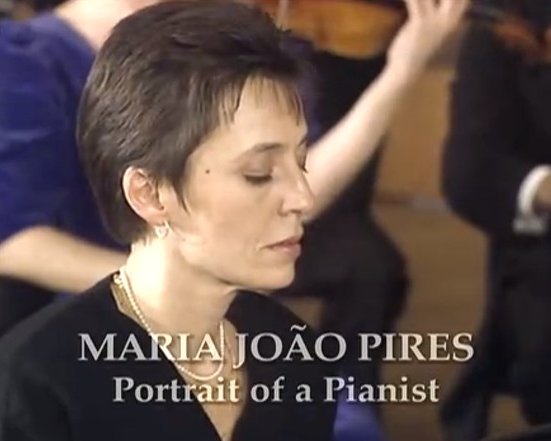
In1991 Werner Zeindler. a Swiss film director. ,made a documentary movie about her, Portrait of a Pianist. Interviews with her and her mother, and music by various composers. The interview is candid and gives insight into her personal feelings about being a famous pianist. Her reservations about the classical music scene are still strong; she dreams of a farm in the countryside, far away from the urban crowd. Click on the picture for the movie.
In 1999 she followed this dream and started the Belgais Centre for the Study of the Arts in a remote rural area of Portugal. Much more than a farm, it was an ambitious humanistic project. A primary school to bring under-privileged children in contact with music and arts. A training center for young musicians, not in competition but in collaboration. A place to give concerts, far away from urban noise.
Soon after the start, the center ran into problems due to hostility from the Portuguese media and the political establishment. Funding became a problem; Maria had to continue giving concerts. Exhausted and frustrated, she left Portugal in 2006 for Brazil, but came back one year later and is still active, though more as a teacher/mentor than as a concert pianist.
Traditional public performances in famous concert halls became a rarity. Here is a 2003 recording of Mozart’s Piano Concerto No. 20 with the Berliner Philharmoniker and Pierre Boulez. Click on the photo to listen.
In 2012, she launched the Partitura Project, where musicians participate in an atmosphere of collaboration instead of competition. Workshops have been organized in many European countries. The last few years it was hosted by The Gilmore.
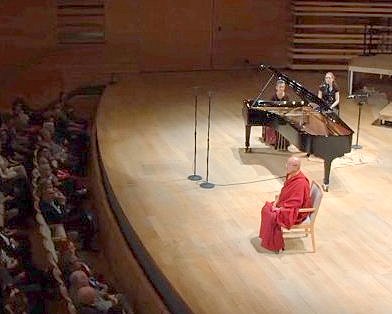
She prefers more intimate encounters with her audience. Her interest in Buddhism was evident in a series of Cocnert-Meditation, organized in 2019 with the French Buddhist Monk Matthieu Ricard. Click on the photo to watch.
-+
On 16th December 2021, she played in Geneva with Martha Argerich, Mozart’s Piano Concerto No. 10 for two pianos. Listen to how the two pianists play together, collaborating instead of competing. They also played a piano sonata for four hands.
`
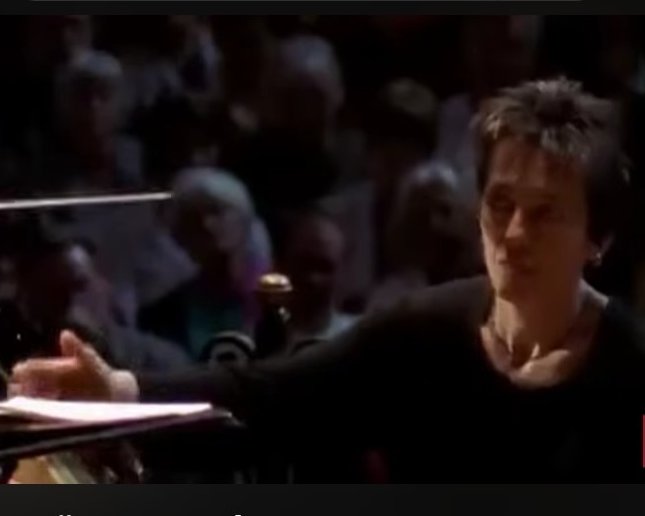
In May 2023, she attended the Gilnore festival and was interviewed. One part is called “Finding the Path“, about her life and beliefs. The other part, “The Actual Story“, is about the famous incident in 1999, when she found out during the performance that she had prepared a different Mozart concerto than the one being played. The screenshot shows her initial shock. But she recovered. Watch the interview, where she explains.
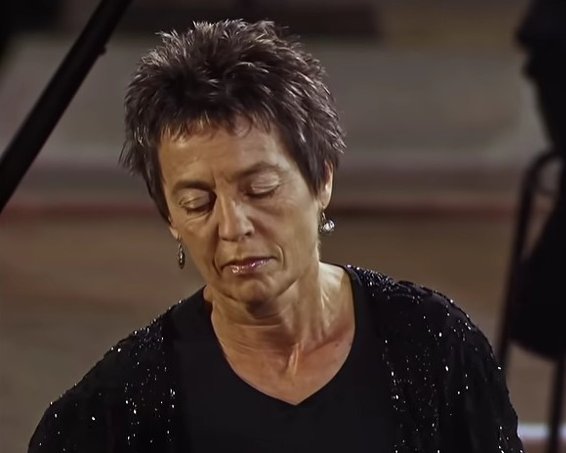
The next year, in May 2024, she came back to the Gilmore and gave a recital, playing music by Mozart and Debussy. It is the most recent YouTube video I have found. Click on the photo to watch.
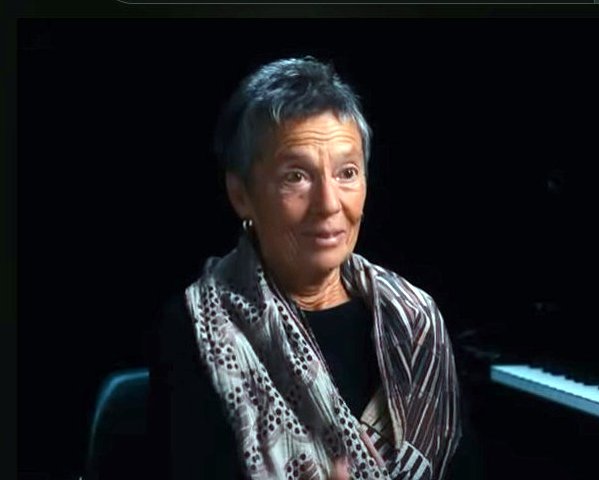
A few months later, on 24 July 2024, one day after her 80th birthday, she was interviewed in Bordeaux after she had given a recital. Click on her photo for a text transcription. Very informative.
Although she will no longer give public performances, she remains active as a teacher/mentor. This year, she launched a new project, the MJP Piano Academy.
Collecting information for this blog, my respect and admiration for her have grown.
While planning our Europe trip, Aric suggested that we could go to Germany for a couple of days. He would like to visit Görlitz. I had never heard of that name, so he explained that it was a town on the border between Germany and Poland, with a pedestrian bridge between the two countries. To get there, we had to fly to Dresden and then take a train. Of course I had heard of world-famous Dresden, but never had the chance to visit. it. We decided to make it a 6D5N trip, with the first 3 nights in Dresden and then two nights in Görlitz.
There were no direct flights from Amsterdam to Dresden, so we took Lufthansa, with a stopover in Frankfurt.
Departure from homeTransit in FrankfurtArrival Dresden
Aric had booked a room with a view, within walking distance from the Innere Altstadt. This inner old town dates back to around 1200 and was full of Renaissance and Baroque heritage monuments. In February 1945, at the end of WWII, it was firebombed and destroyed by the Allied Forces, killing more than 20000 civilians and refugees. A controversial action, called a war crime by many.
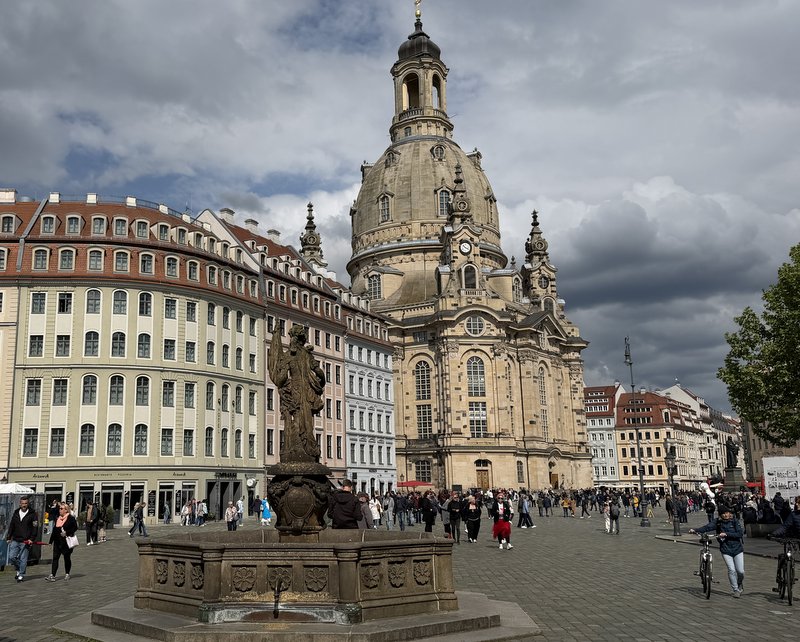
After a short rest, we walked to the Inner Old Town to have a look at the Frauenkirche, the iconic landmark of Dresden. Completely destroyed in February 1945, it has remained a ruin for almost fifty years, until it was rebuilt between 1994 and 2005..
We were actually looking for a restaurant with traditional local food, but could not find any that we fancied; all were very touristy. So we gave up and went to McDonald’s. A hamburger has at least German roots 😉 .
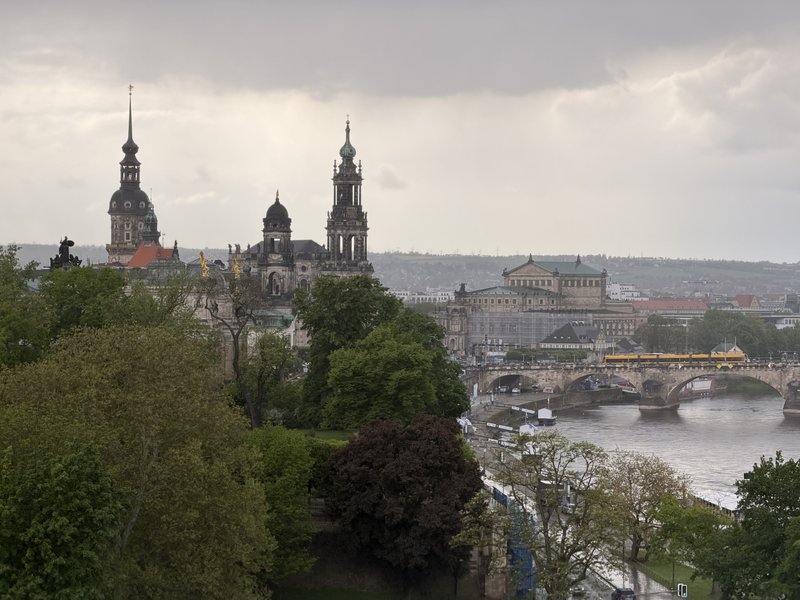
Back in our hotel, we enjoyed the view from our room. The floodlit dome of the Frauenkirche is on the left.
“`
The next day, we first visited Dresden Neustadt on the other bank of the Elbe River. This “New Town” is actually quite old. After a devastating fire in 1685, it was rebuilt in Baroque style and named Neustadt. Our first destination was a dairy shop, the Pfunds Molkerei. it was founded in 1880, and the entire interior is completely covered in beautiful ceramic tiles.
That has made it a tourist attraction with busloads of tourists visiting the shop and having a glass of fresh buttermilk.
We stayed a bit longer and had our breakfast with a cheese platter and another glass of the delicious buttermilk.-
After this nice start of the day, we explored Neustadt a bit. We had a look at the Martin Luther Church, built in the 1880s. Martin Luther was one of the founders of the Protestant Reformation and visited Dresden in 1517. At the back of the church, we noticed a war memorial for the soldiers who died during World War I. Germany played a central role in both World Wars.
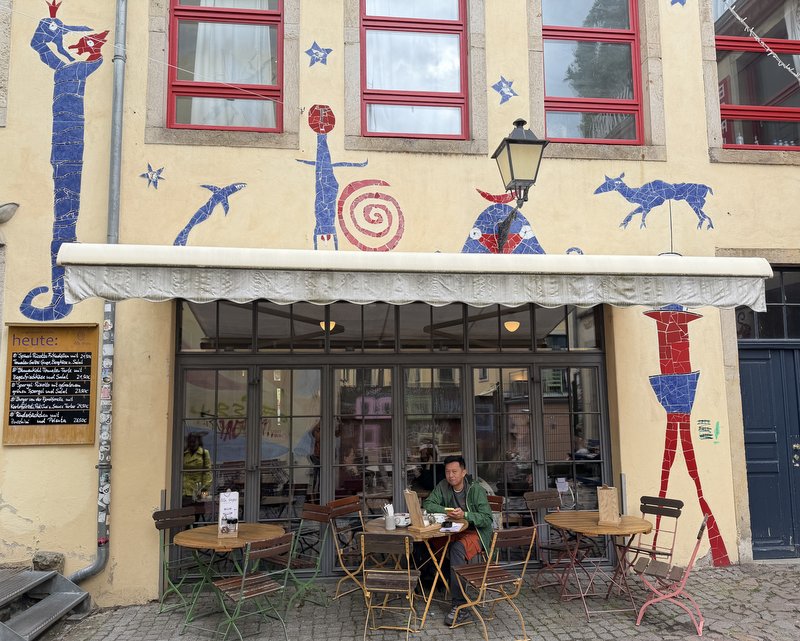
Our second destination in Neustadt was the Kunsthof Passage, a charming collection of courtyards dedicated to art, architecture, and urban living. Created in the 1990s, after the reunification of West and East Germany on 3 October 1990. Here is the entrance of the courtyards.
The courtyard of the elements has facades that represent light and water. Other courtyards are decorated with images of animals.
We had our lunch in one of the courtyards. Restaurant Lila Soße is highly rated and has a creative presentation of “German Tapas”.
+
Before crossing over to the Old Town, we sat down in the grass and enjoyed the view. The undeveloped grassy plain along the river has an important function; it serves as an overflow when the Elbe has too much water.
We spent the afternoon exploring the Innere Altstadt, taking many photos, but not entering any museum or building. I have provided the pictures with captions that give the names of the buildings. Clicking on a caption will link to a webpage with more information (sometimes in German).
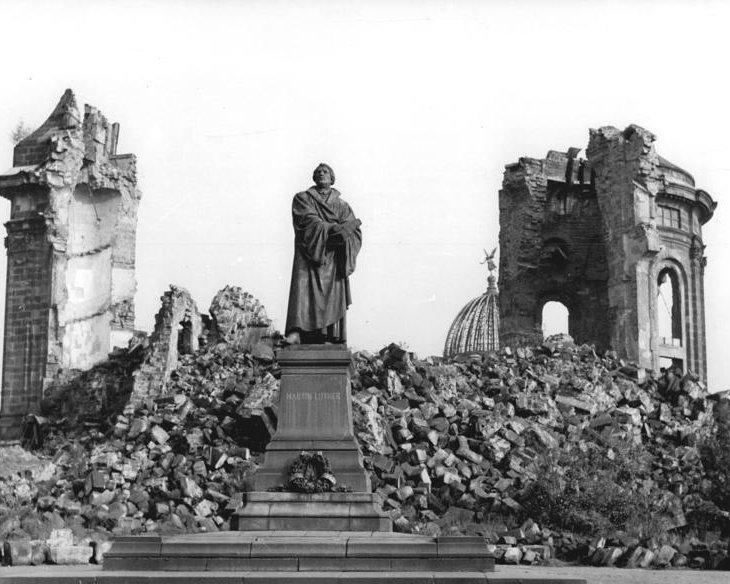
The Frauenkirche after the Allied bombing in 1945. Only the statue of Martin Luther has survived. After the war, Germany was split into two parts, West Germany and communist East Germany. East Germany left the ruins untouched and officially declared it an anti-war memorial. After the reunification, a monumental project started to rebuild this Baroque masterpiece. The rubble was meticulously searched for usable sandstone bricks, and the rebuilding took more than ten years. The church was reopened in October 2005 and now stands as a symbol of reconciliation and peace.
In the rebuilding, old blackened sandstone bricks from the old church were used where possible, with striking effect.
We visited the interior and admired the new organ and the amazing sandstone dome.
We walked back to our hotel and enjoyed the night view.
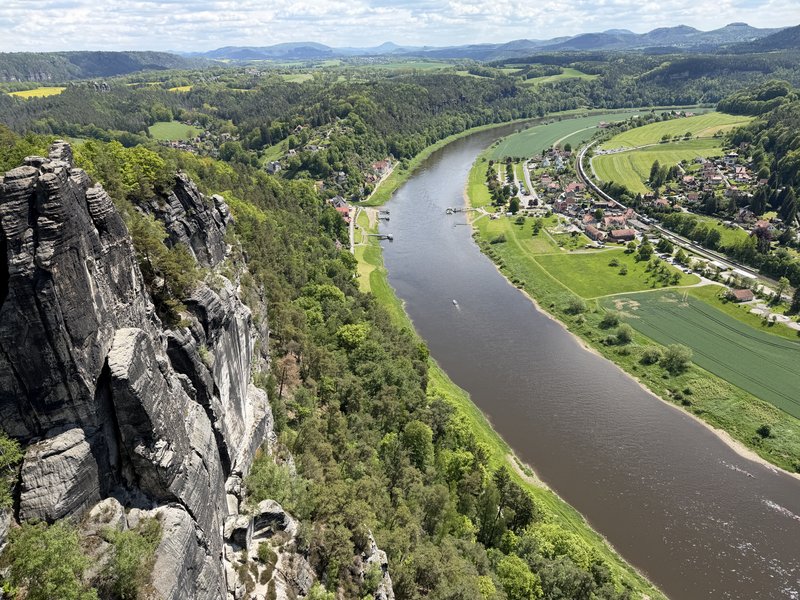
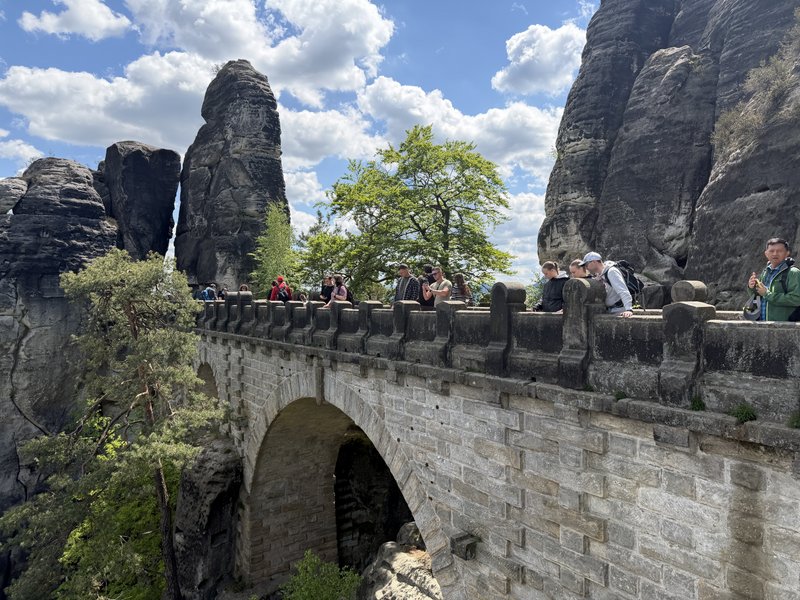
The next day, we could (should?) have explored the Old Town more, climbed the Hausmannsturm, and visited museums. But instead, we made a day trip to the Bastei Bridge, a tourist attraction for over 200 years. Easy access from Dresden: first a 40-minute train ride, along the river Elbe, then a ferry crossing to a small resort.
From the resort, a clear but sometimes steep path brings you in less than an hour to the bridge, about 200 meters above the river. The sandstone rocks, eroded over a million years by water, are a favorite spot for rock climbing.
In 1824, a wooden bridge was built for visitors, in 1851 replaced by the present sandstone bridge. Painters visited this region; click here for a famous work by Romantic painter Caspar David Friedrich.
We spent quite a long time at the Bastei, enjoying the views of the bridge, the Elbe River, deep down, visiting several viewpoints, and having lunch at a hilltop restaurant.-
A view from the top, before walking down. A day well spent.
Back in town, we looked again for a restaurant serving local fare, that was not overly touristy. We found one, ordered the Sächsischer Sauerbraten and the Leberkäse mit Spiegelei. And of course, local beer.
Friendly service, but we were not impressed by these local specialties.
Later that evening, Aric had enough energy to walk again to the viewpoint near the river, which we had visited the day before. He took this beautiful shot of the illuminated Altstadt.
The next day, before taking the train toGörlitz, we had breakfast with coffee and cheesecake.
On our way to the station, we passed a 7-seater party bicycle. The train ride took about one and a half hours. In Görlitz, we took a tram and walked the last part to our homestay. I have marked it with a yellow cross.
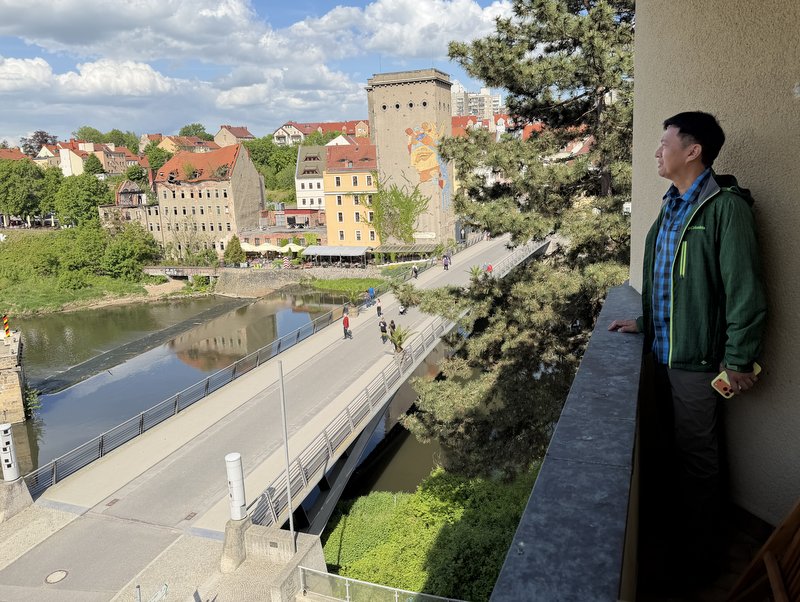
It was a perfect accommodation, the interior as well as the location. From our balcony, we could see the bridge connecting Germany and Poland.
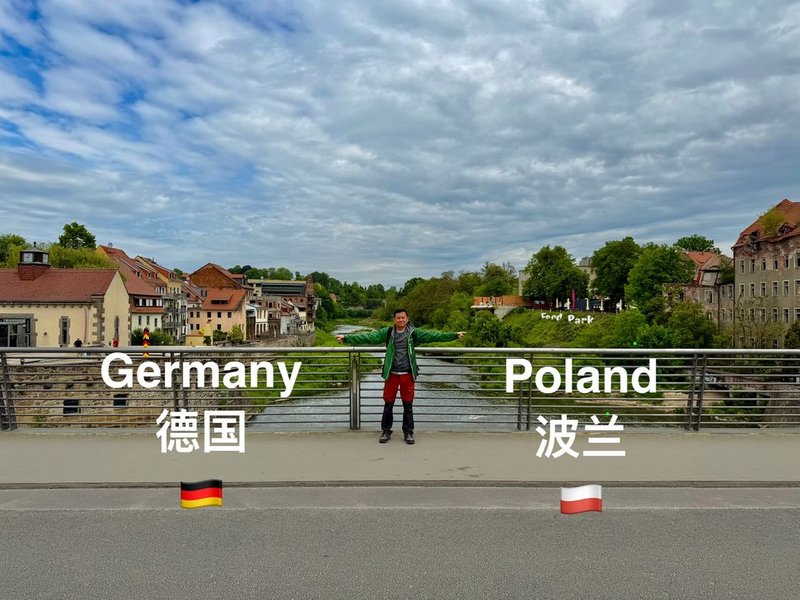
The Altstadtbrücke has an interesting history. I had never heard about Görlitz, but it is older than Amsterdam or Dresden, documented for the first time in 1071. It was a key trading town on the Via Regia route linking Western and Eastern Europe, with a bridge crossing the Neisse River. The bridge was destroyed by the retreating German army in 1945. After Germany surrendered, the Neisse became the borderline between East Germany and Poland, splitting Görlitzz in two. It was only after the reunification of Germany and the accession of Poland to the European Union that a new bridge was built in 2004, for pedestrians and cyclists only.
Here I am standing between Germany and Poland. As both countries are in the Schengen area, there is no passport control. The quiet Neisse River is part of the Oder/Neisse line
We walked over to Poland for a drink, a snack, and some shopping. Poland has kept its own currency (the zloty), but we paid digitally 😉
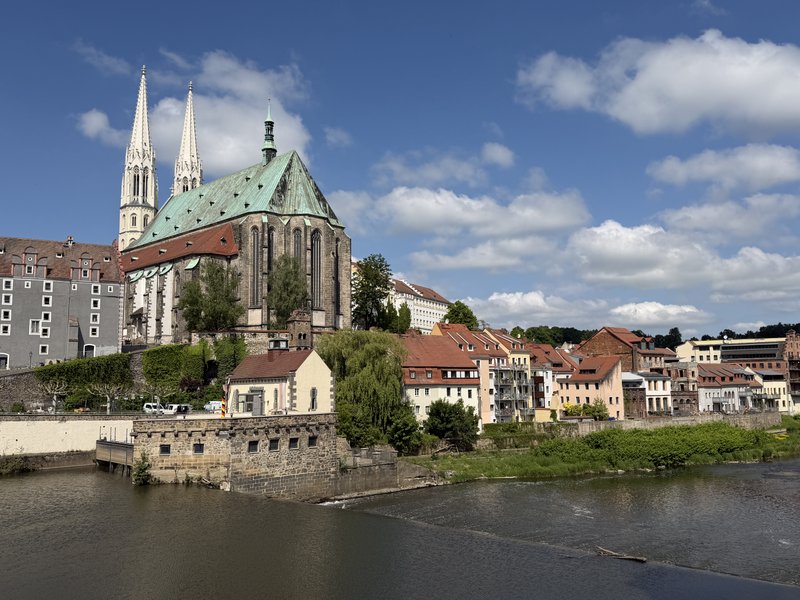
View of Görlitz and the iconic St. Peter’s Church from the Polish side.
The next day, we started by visiting the church. It is a Gothic hall church, the twin towers were added much later. The church has a famous organ.
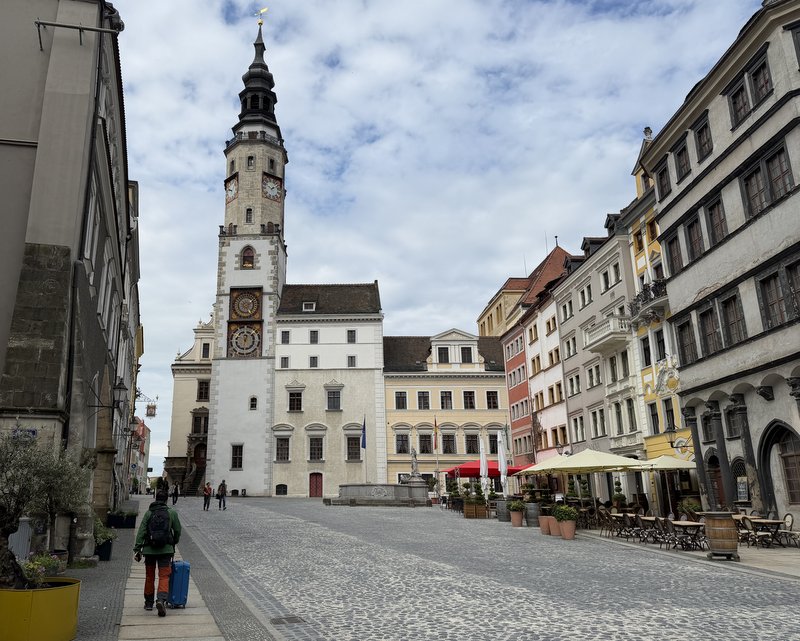
Next we walked around in the Old Town. The many Renaissance and Baroque buildings in the town have been so well preserved that several movies have been filmed here, giving the town its nickname, Gorliwood.
The. Marienplatz is a popular and lively square. The Dicker Turm (Thick Tower) was part pf the fortifications and erected in 1250. The building on the other side of the square is Kaufhaus Görlitz, built in 1913 in Jugendstil style. The interior must have been spectacular, but it is now unfortunately closed. The interior was used for the movie The Grand Budapest Hotel
The Obermarkt is the center of the old town. The church is the Dreifaltigkeitskirche (Hp;u Trinity Church), built between 1234 and 1245.
The Reichenbach Tower, built in the 13th century was also part of the fortification of Görlitz
It is a pleasant town, we could (should?) have stayed more days. Here are a few fountains we notice during our walk. From left to right, an angel, two humans and a devil.
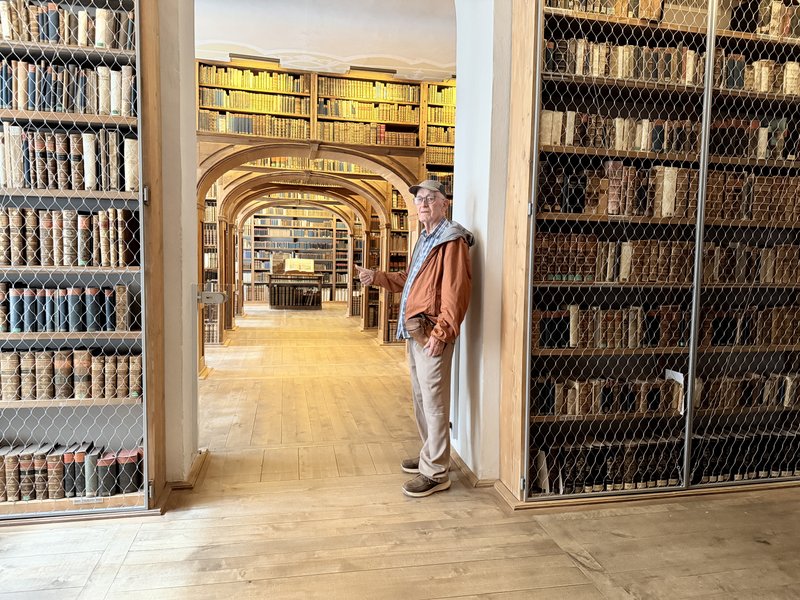
We ended the day by visiting a museum, the Barockhaus. The house was built between 1726 and 1729 as a residential and commercial building for a textile merchant and ranks among the most magnificent merchant houses in the Old Town.
A section of the museum displays the civic culture of the Baroque.
In 1801, the building became the property of the Upper Lusatian Academy of Sciences. They housed their library and their collection of scientific instruments there.
+-
What a fascinating museum.
The owner of our homestay advised a nearby Italian restaurant to have dinner.
+
The next day we had a long travel day, first by train to Dresden, then a flight to Munich, and from there to Amsterdam. It was an exciting trip, and we reached our destination. Here is the image Aric created to share with family and friends.
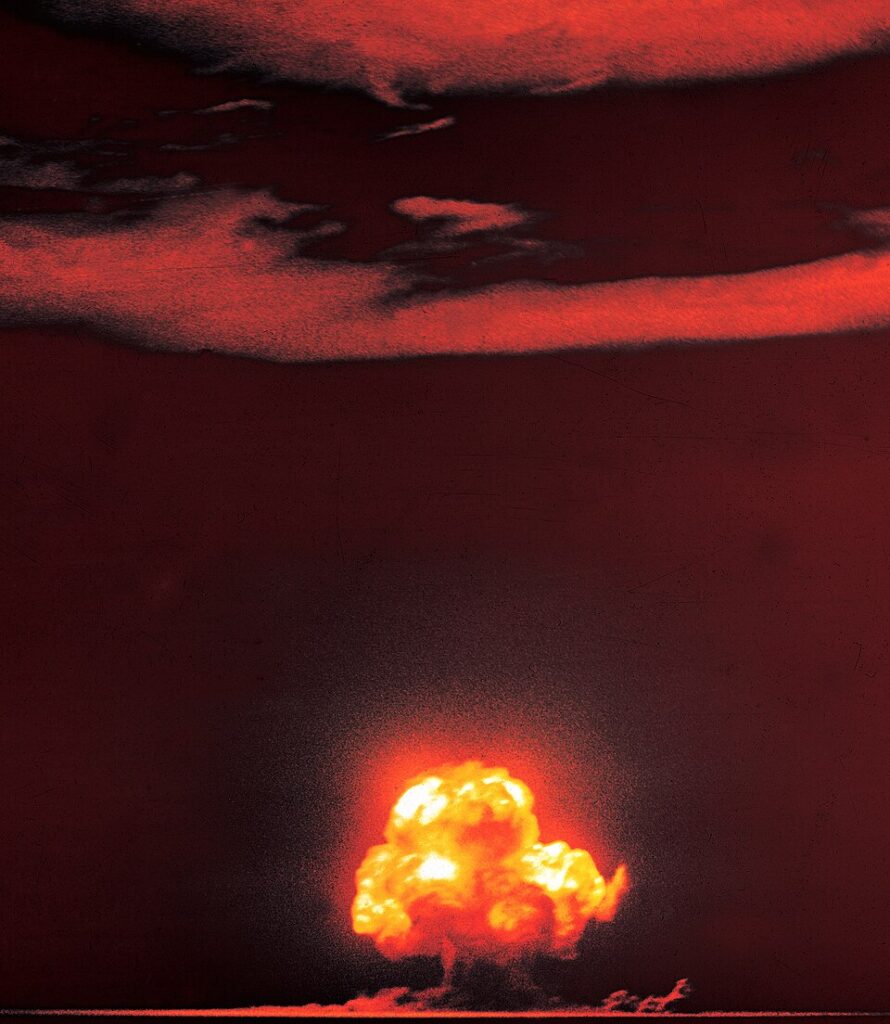
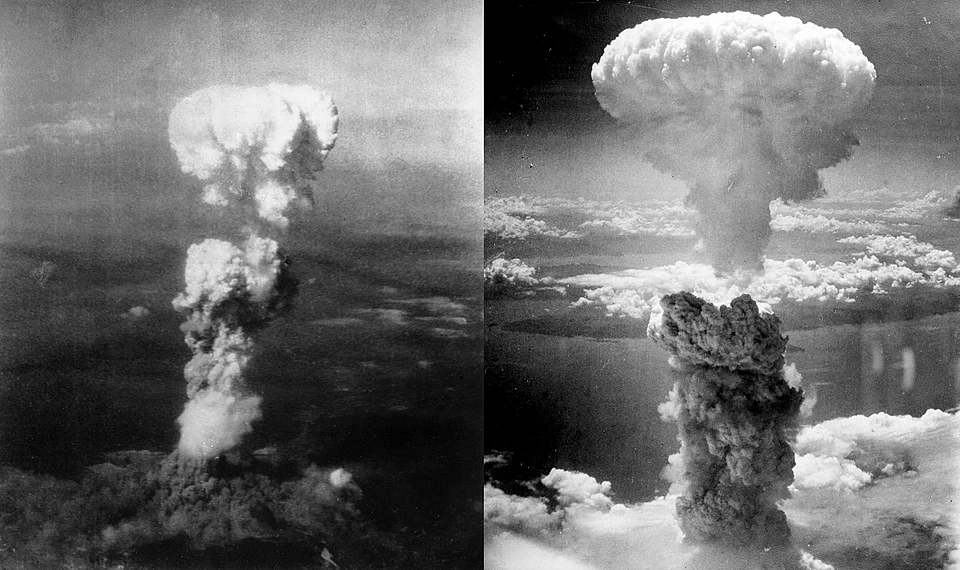
On 16 July1945, the world entered the atomic age. The Manhattan Project detonated successfully the Trinity test bomb at a remote location in the USA state of New Mexico. The photo was taken from 16 km away and the bomb had an explosive power of 21-25 kilotons of TNT, thousands of times more than conventional bombs. See the appendix for more info about TNT.
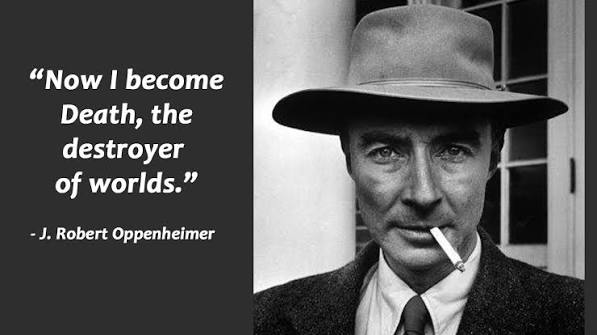
Robert Oppenheimer, the scientific director of the Manhattan Project, witnessed the detonation from the South Bunker, 9 km away, with many scientists and VIP’s. In a 1965 interview (video) , he reminisced that moment. He said:
We knew the world would not be the same. A few people laughed, a few people cried. Most people were silent. I remembered the line from the Hindu scripture, the Bhagavad-Gita; Vishnu is trying to persuade the Prince that he should do his duty, and to impress him, takes on his multi-armed form and says, ‘Now I am become Death, the destroyer of worlds.’ I suppose we all thought that, one way or another.”
The quote has become famous. Not sure if everybody understands it. In the Bhagavad Gita, Arjuna (the Prince) is reluctant to fight a war with his cousins. Krishna tells him that it is his moral duty, and to convince him, he assumes the avatar of multi-armed Vishnu. He is the “I” in the quote. Oppenheimer sees himself as Arjuna.
A few weeks later, on 6 and 9 August, atomic bombs were dropped om Hiroshima and Nagasaki, killing 95000 – 150000 people instantly. Total estimated deaths: 150000 – 246000 at the end of 1945 (burns, radiation sickness etc.)
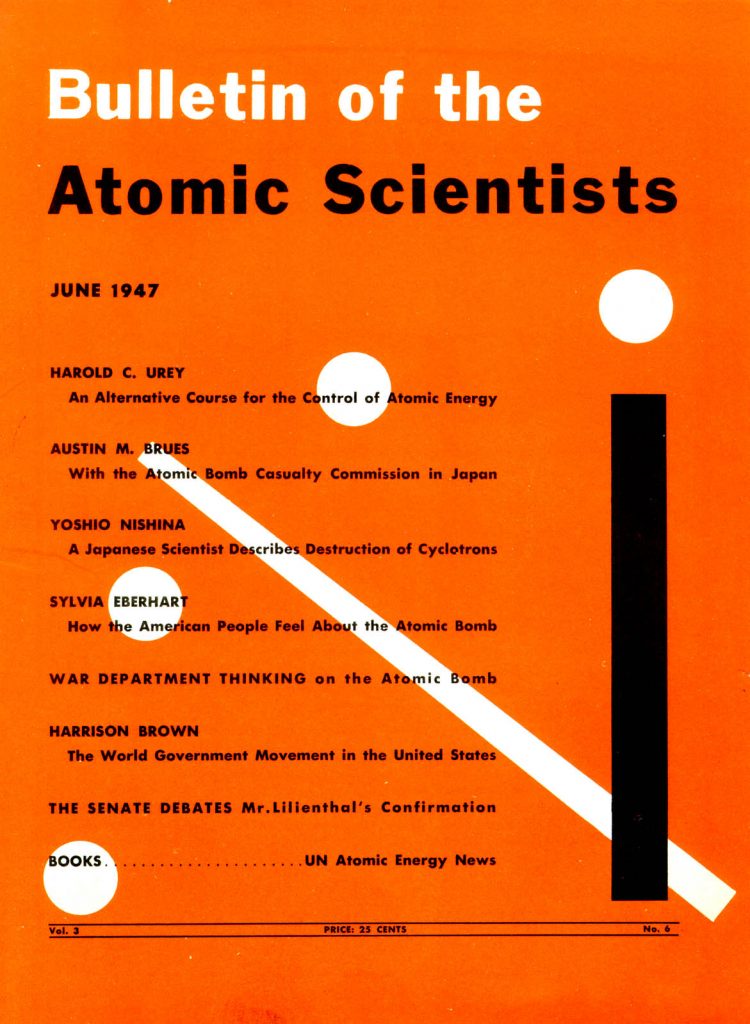
A few months later, members of the Manhattan Project created the organization Bulletin of the Atomic Scientists. It published a regular newsletter under the same name, to educate and warn the public and politicians about the dangers of this new atomic age, advocating that a world government should take control of everything related to atomic energy.
The United Nations officially came into existence on 24 October 1945 and its first resolution was the formation of the United Nations Atomic Energy Commission (UNAEC) on 24 January 1946. A promising start, but soon the tensions between the USA and the Soviet Union escalated and in 1947 the Cold War started.
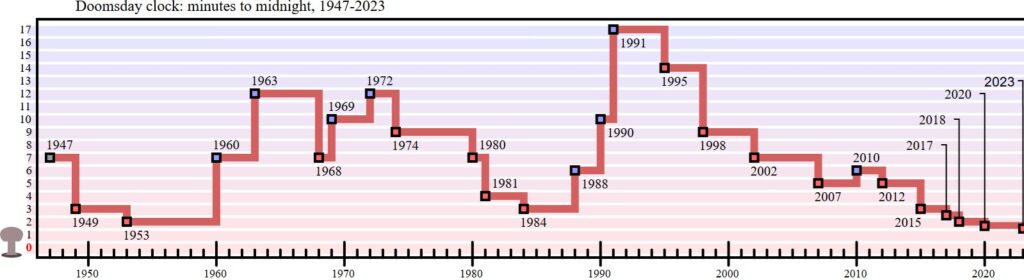
It was in that year that the Bulletin of the Atomic Scientists decided to publish a bi-monthly magazine instead of a newsletter. On the front cover of the first issue, the Doomsday Clock was introduced to convey the urgent nuclear dangers facing humanity: only a few minutes to midnight. That the clock showed 7 minutes to midnight was just because the design then looked prettier.
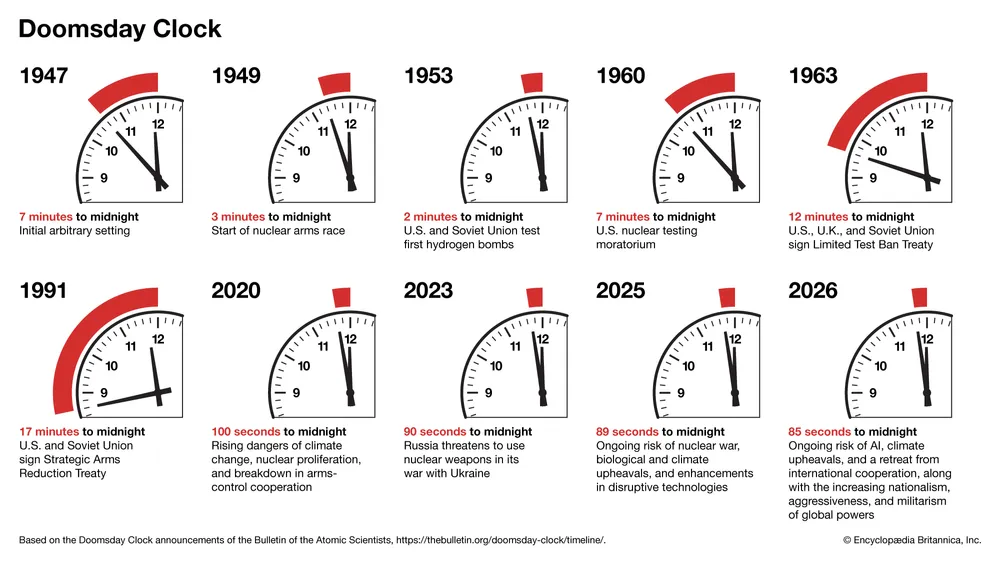
At first, the clock was fixed at seven minutes to midnight, but when the Soviet Union tested its first atomic bomb in 1949, ending the monopoly of the USA and increasing the risk of a nuclear conflict, it was decided to move the minute hand 4 minutes closer to midnight. When in 1953 both the USA and the Soviet Union tested the H-bomb, the minute hand was advanced one more minute. Sometimes there was positive news: in 1963, a treaty was signed to limit nuclear bomb testing; therefore, the minute hand was moved 12 minutes away from midnight. In the image below, a few more years are shown. In 1991, at the end of the Cold War, the minute hand was moved 17 minutes away from midnight. This year, 2026, it has never been so close to midnight, only 85 seconds away.
In the graph below, the time of the Doomsday Clock is shown. The vertical axis gives the time in minutes to midnight. Each year in January, a team of experts evaluates the global situation and decides whether to move the minute hand or not. In 1974, India tests its atomic bomb (-2 m), and in 1998, both India and Pakistan test nuclear weapons (- 5 m). Details about the argumentation of the Bulletin of Atomic Scientists can be found on this very detailed website, The Clock Shifts
In the almost 80 years of its existence, the Doomsday Clock has been adjusted 25 times. Until 2007, the decision was based on atomic/nuclear arguments, such as proliferation, test bans, nuclear treaties, etc. That changed after 2007, when the effects of climate change were also considered. Later, “disruptive” technologies were added, such as AI-warfare. In my opinion, a regrettable decision, which has seriously undermined the (symbolic) value of the Doomsday Clock. Nuclear War and Climate Change belong to different categories of existential anger.
There are now nine countries with nuclear weapons. The USA, Russia, China, France, the UK, India, Pakistan, Israel, and North Korea. Together, they possess almost 4000 active warheads. Several world leaders have publicly said that using nuclear weapons was an option. We are far away from a world government, as envisaged by the Bulletin of the Atomic Scientists in 1945. There is a real risk that humanity will destroy itself in the near future.
Appendix about (explosive) energy
The explosive energy of (atomic) bombs is often expressed in terms of the amount of TNT that would have the same effect. TNT (trinitrotoluene) is an explosive material, similar to dynamite. Modern conventional aircraft bombs contain 0.1 to 1.1 ton of TNT, depending on their size. The explosive energy of the Trinity test bomb (21000-25000 tons of TNT) is many thousand times stronger. The Hiroshima bomb (“Little Boy”) had a power equal to about 15000 tons (15 kilotons) of TNT, and the Nagasaki bomb (“Fat Man”) equaled about 21000 to 22000 tons (21–22 kilotons) of TNT. In the arms race during the Cold War between America and Russia, much stronger bombs have been developed and tested. In 1954 the USA tested its first H-bomb, with an explosive power of 15 Megaton of TNT, thousand times stronger than the Hiroshima bomb!
In part 1, I described the natural wonders of Iceland, which we visited on a 10D9N trip. In this part, I describe the many other things we did: we went on a whale-sighting trip, visited a bird colony, an open-air museum, and much more. I will also describe the places where we stayed overnight and the food we ate.
Reykjavik
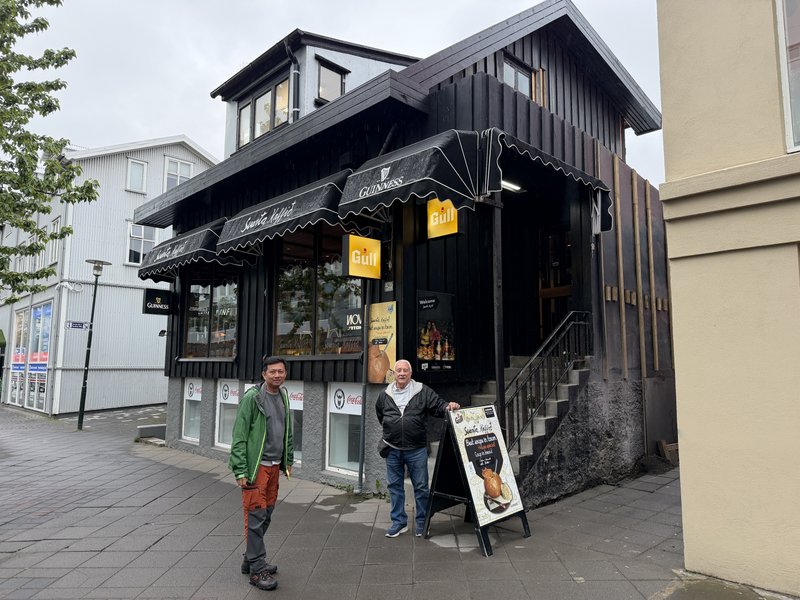
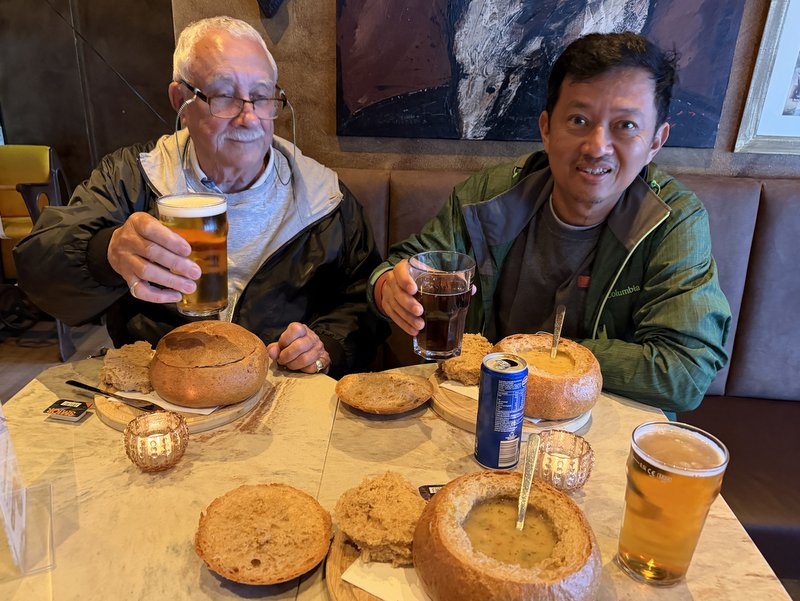
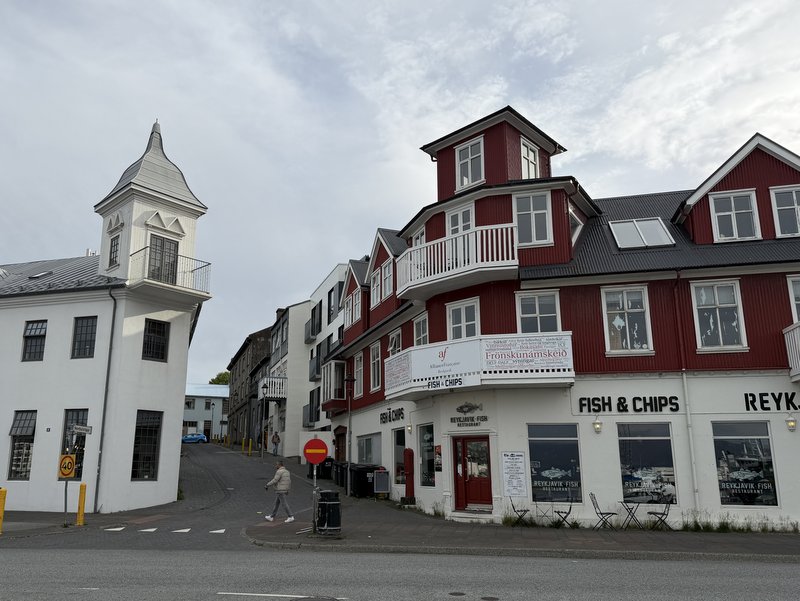
Iceland has a size of 2.4 times the Netherlands, but a population of only about 400.000. Reykjavik, the capital, is the only real town on the island. About 2/3 of the Icelanders live here. We stayed overnight on the first and the last night of our trip. The first night, after checking in at our hotel, we went out for dinner. Iceland has no culinary reputation, but the soup in a bread bowl at Svarta Kaffið was as delicious as it was unusual 😉
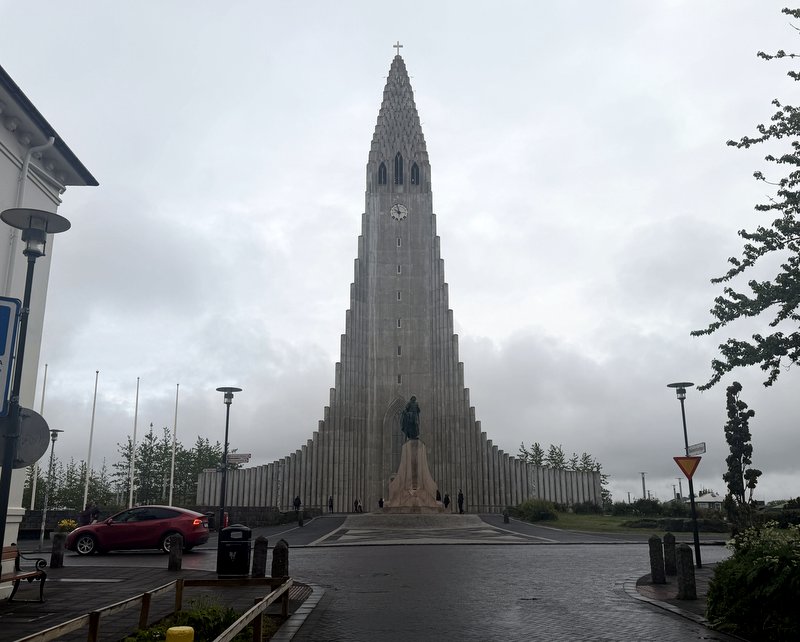
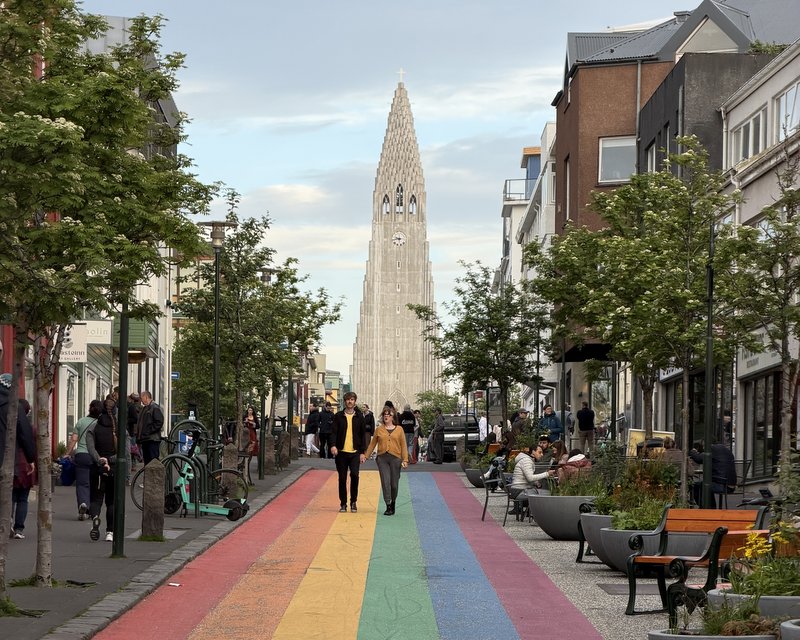
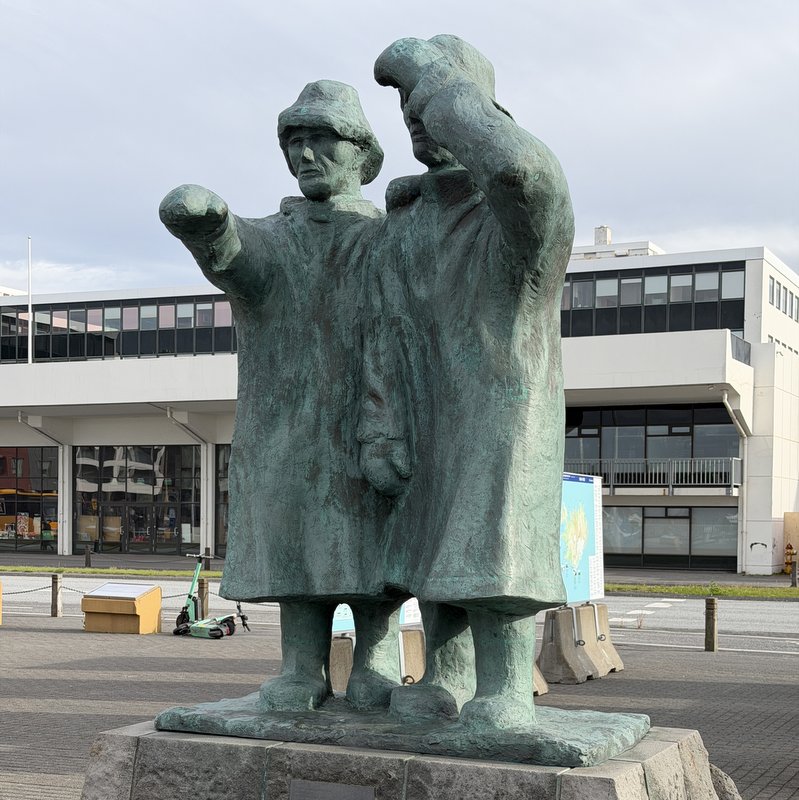
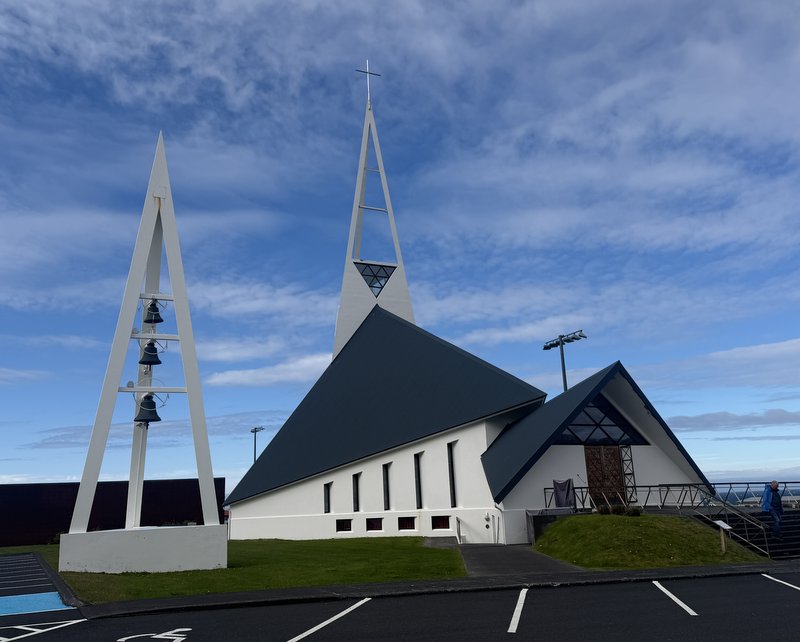
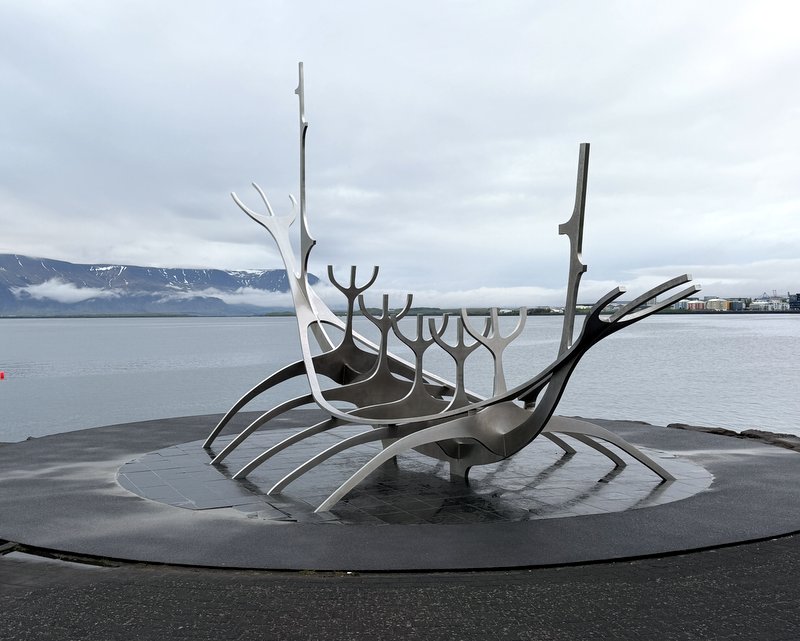
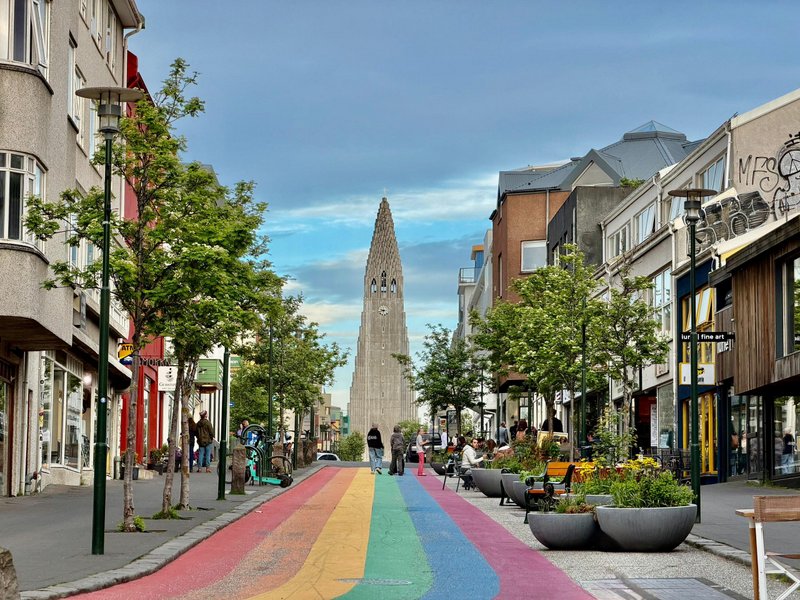
After dinner, we walked around and had a look at two landmarks of the town, the Hallgrímskirkja and the Sun Voyager. Both the church and the sculpture are related to the year 1986, when Reykjavik celebrated that it received town rights in 1786 from the Danish crown. The history of Iceland is complicated.
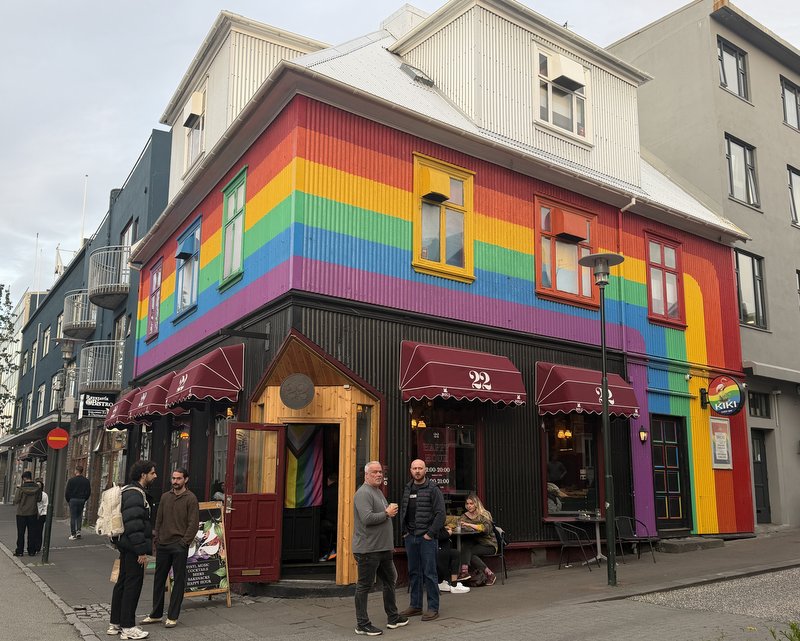
My first impression of the town was not really positive: a bit boring, cold, and grey. But that changed when we came back to Reykjavik after our round trip. Many people were out, enjoying the pleasant weather. Iceland is a progressive country, as the many rainbow-colored decorations show.
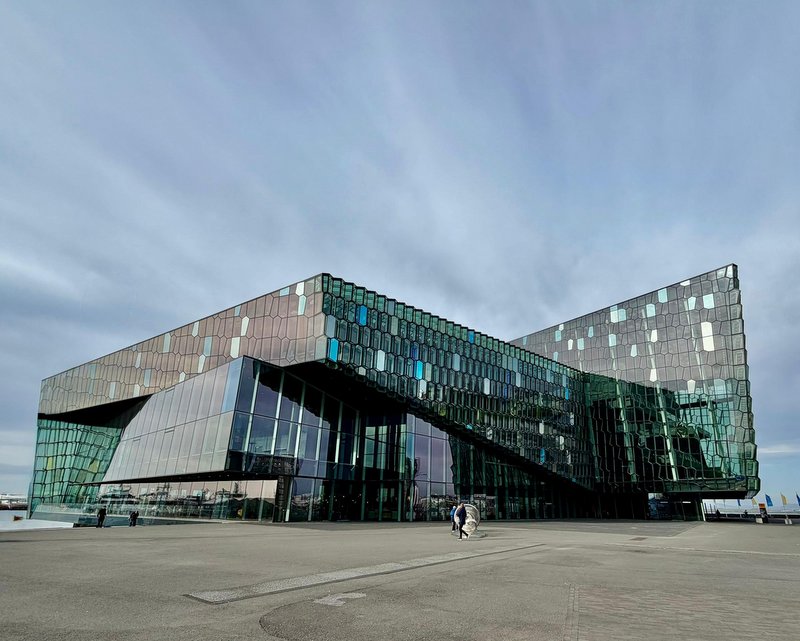
I was not impressed by the modern architecture of Reykjavik. Uninspired and boring. An exception was the Harpa Concert Hall and Conference Centre
Harpa Concert Hall
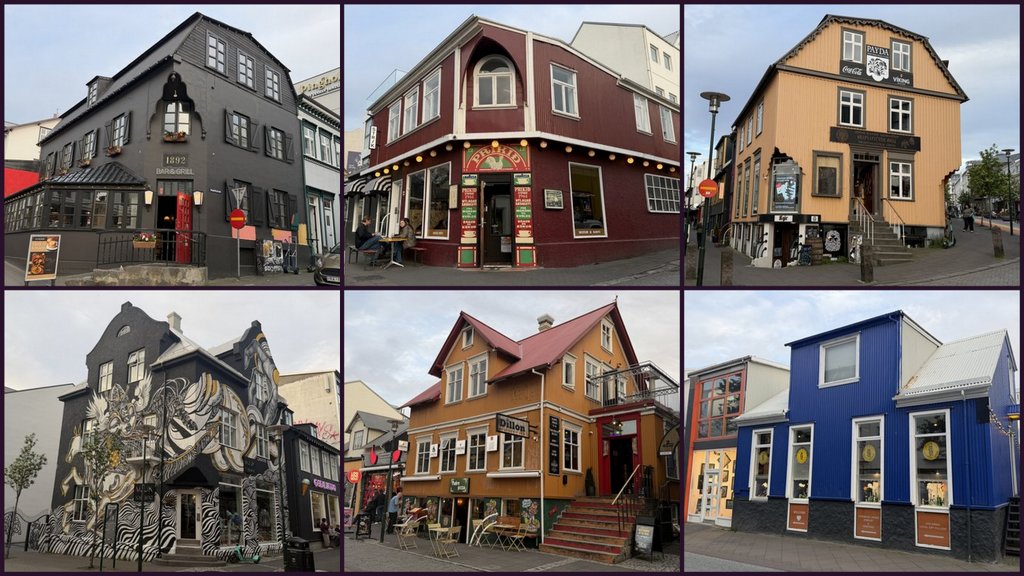
But the old harbor has many picturesque houses.
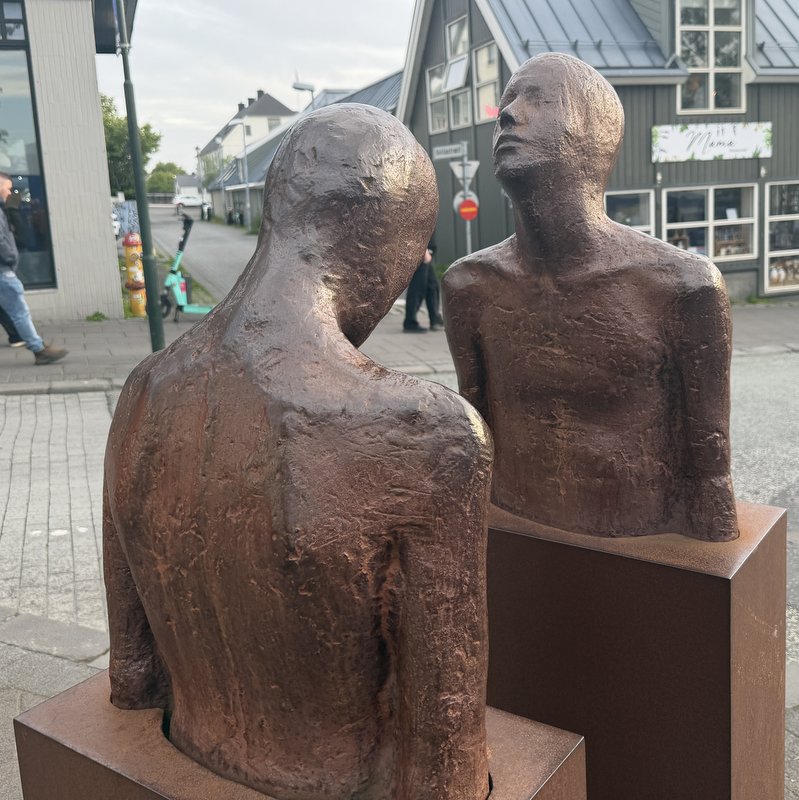
During our walk, we spotted several street artworks.
Roots
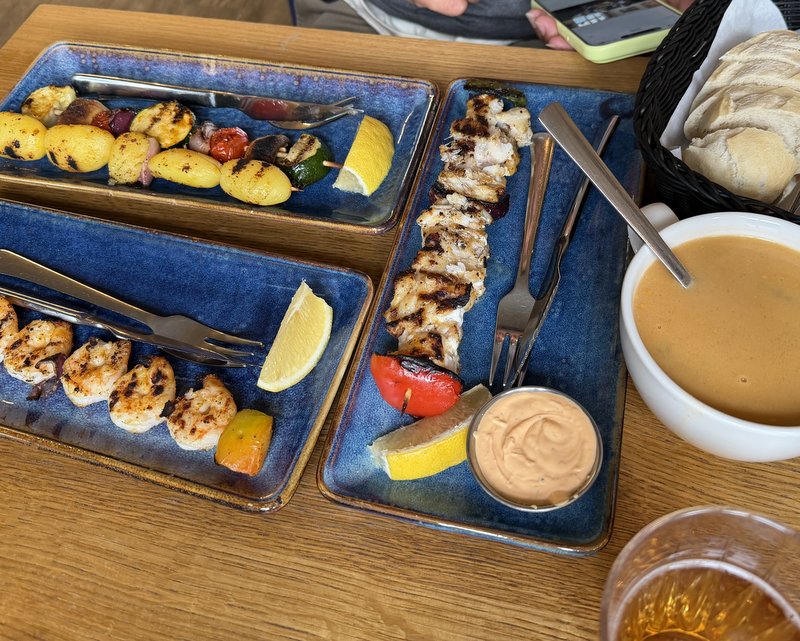
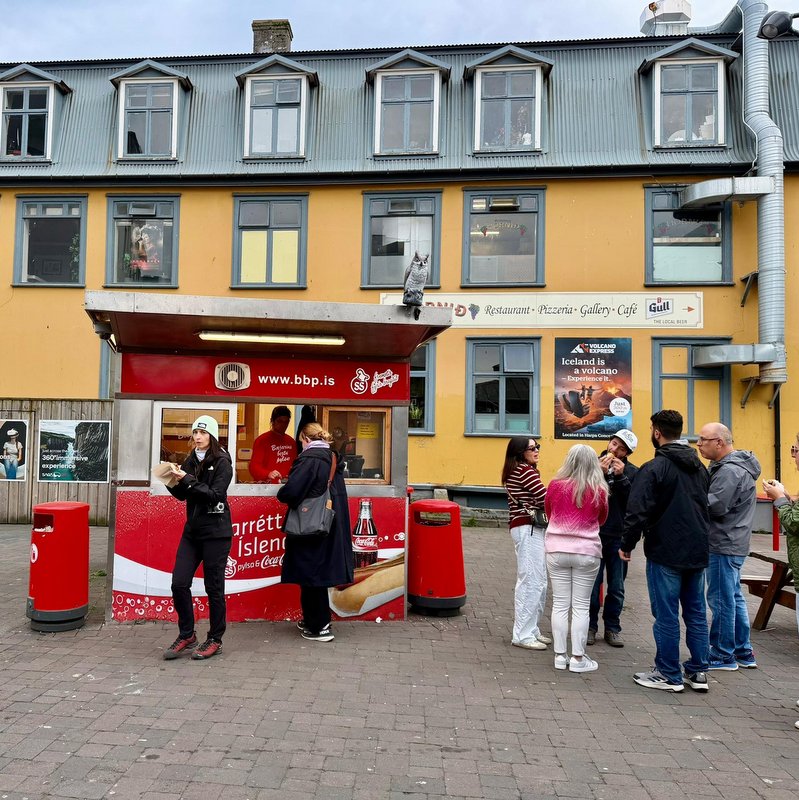
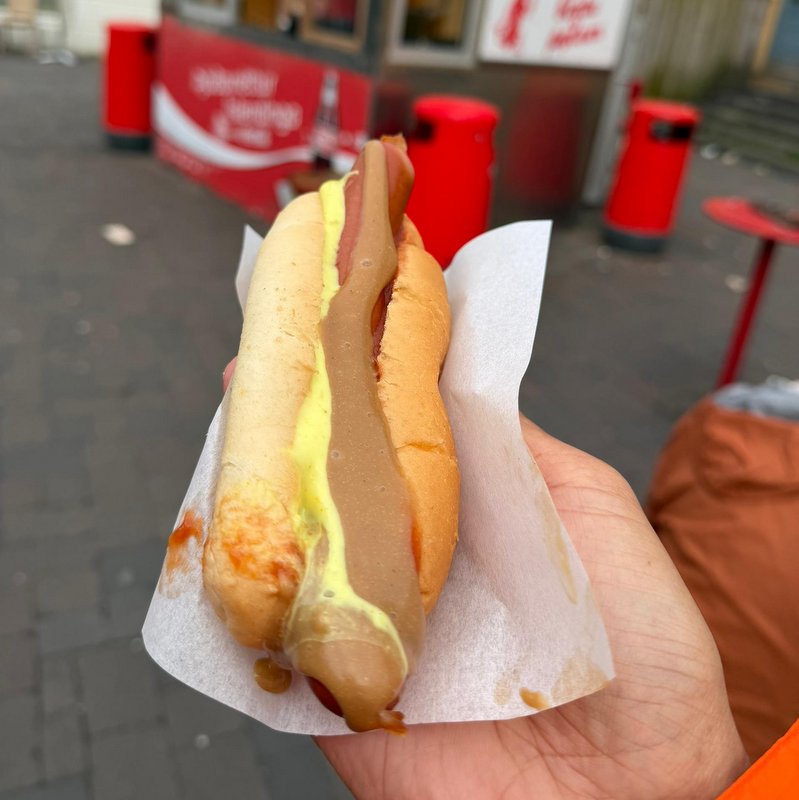
We had dinner in the Seabaron seafood restaurant, famous for its lobster soup. The seafood was nice, but the portions were small, so later we had a hot dog (Iceland’s favorite snack) and a beer.
–
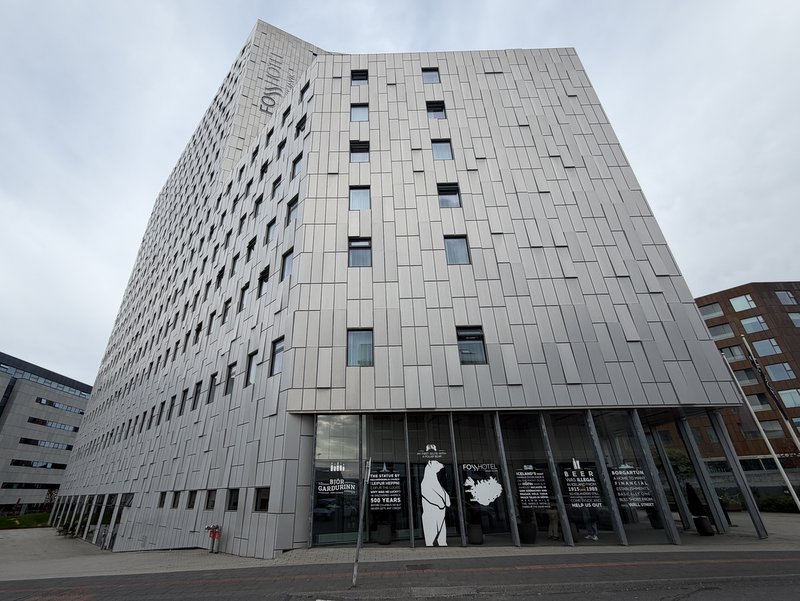
We stayed the last night in a modern hotel on an upper floor, so we had a view of the town and the church. This photo was taken at 11pm+, when the sun had not yet set.
Homestays
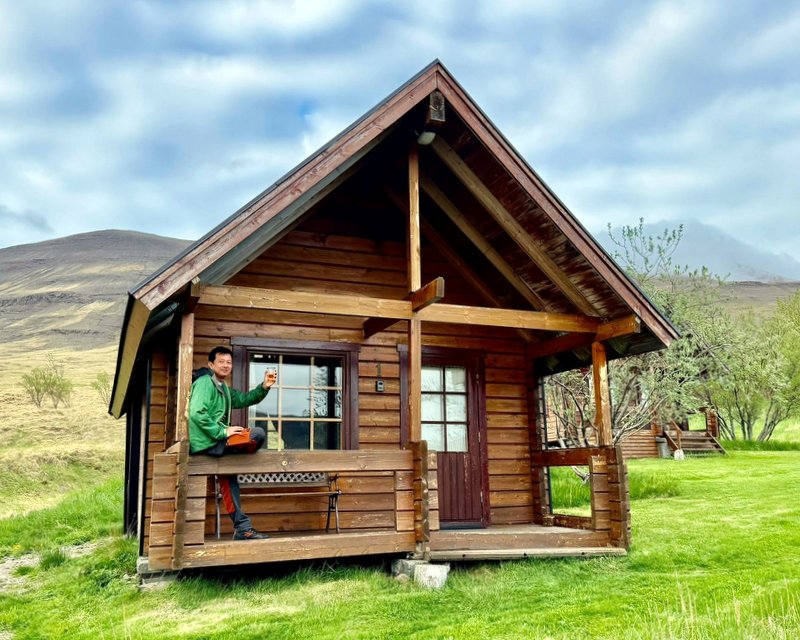
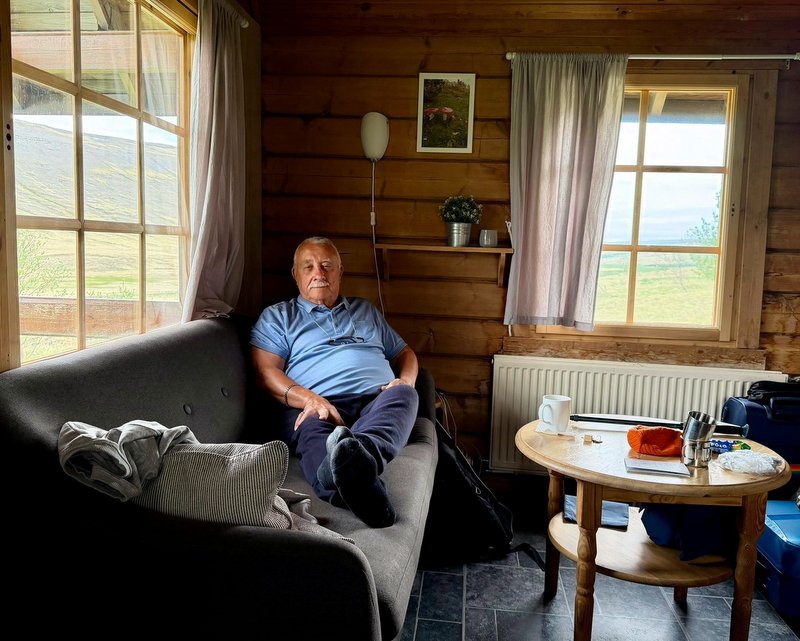
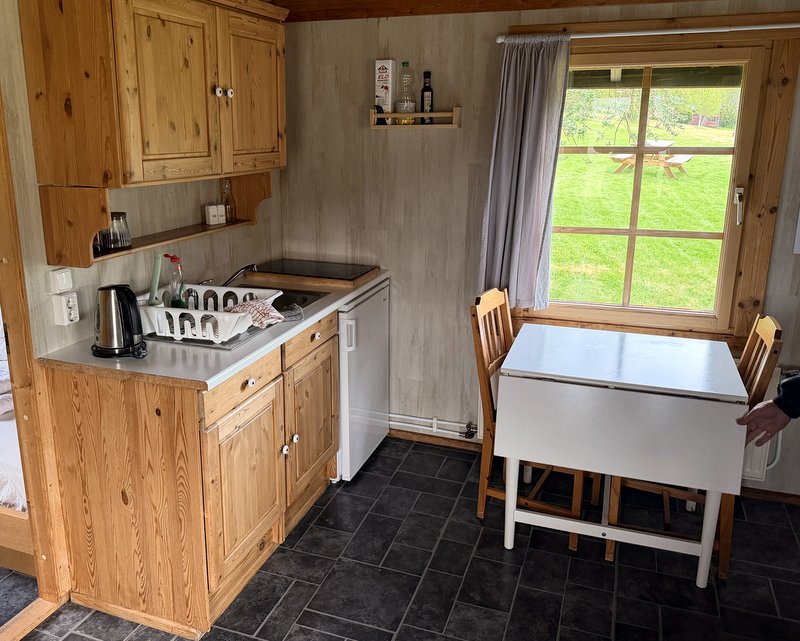
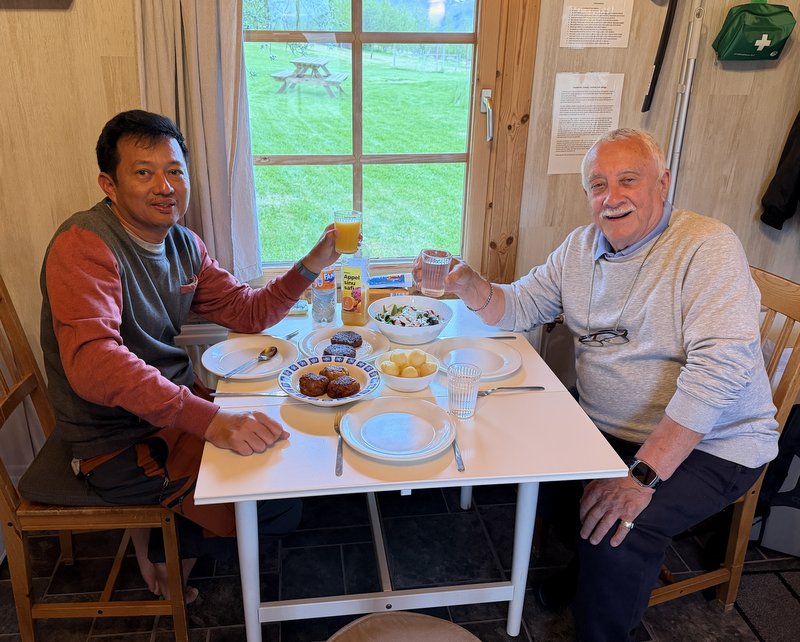
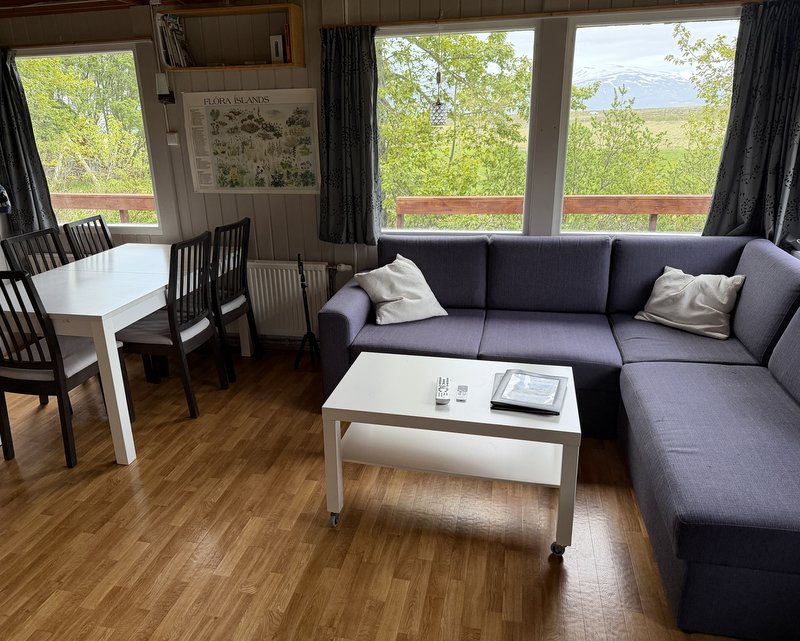
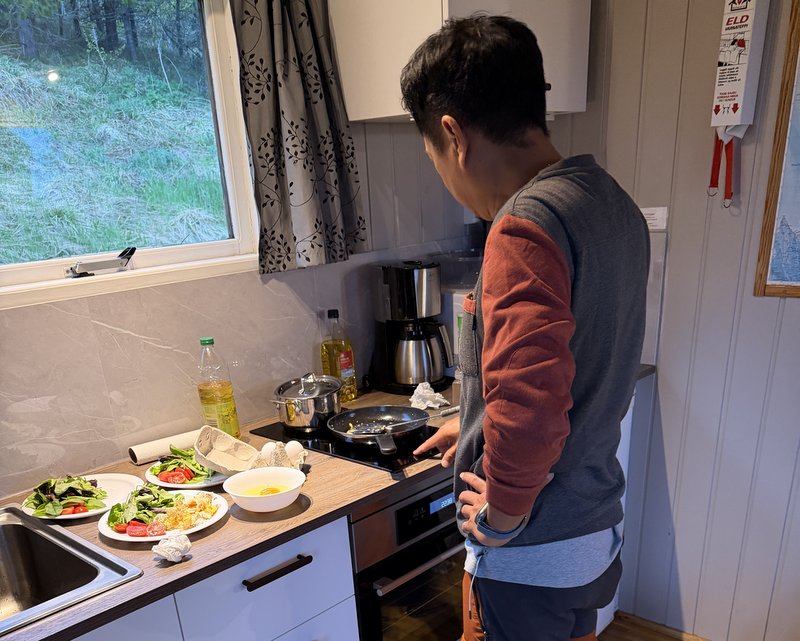
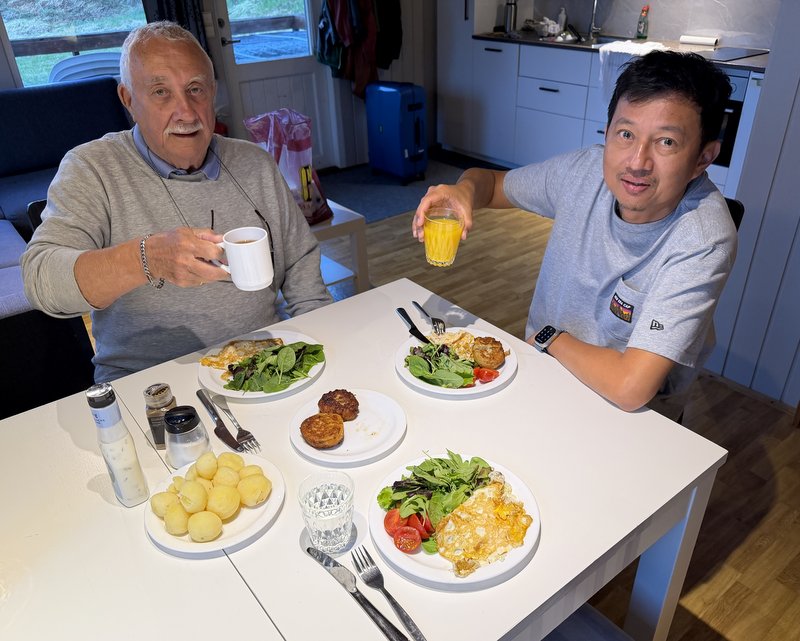
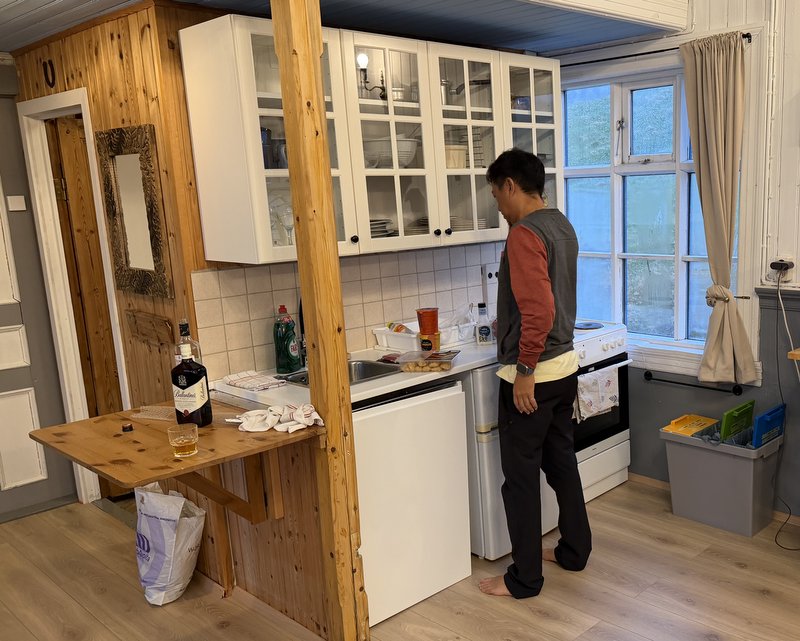
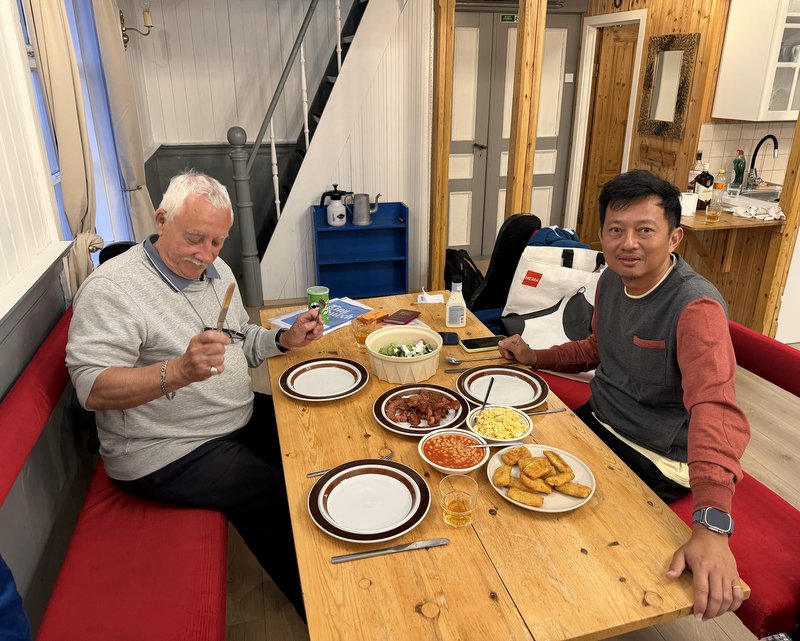
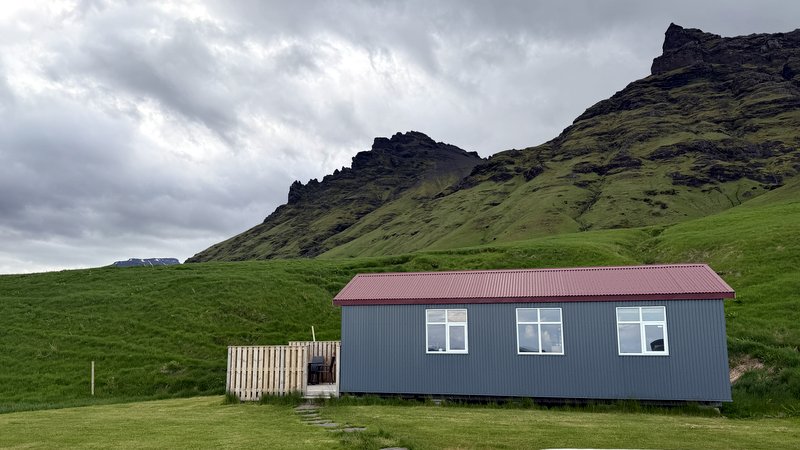
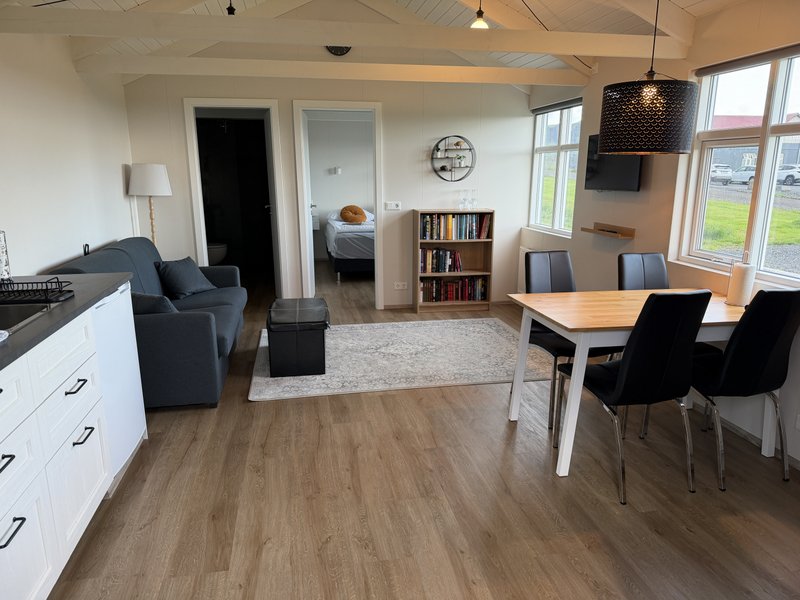
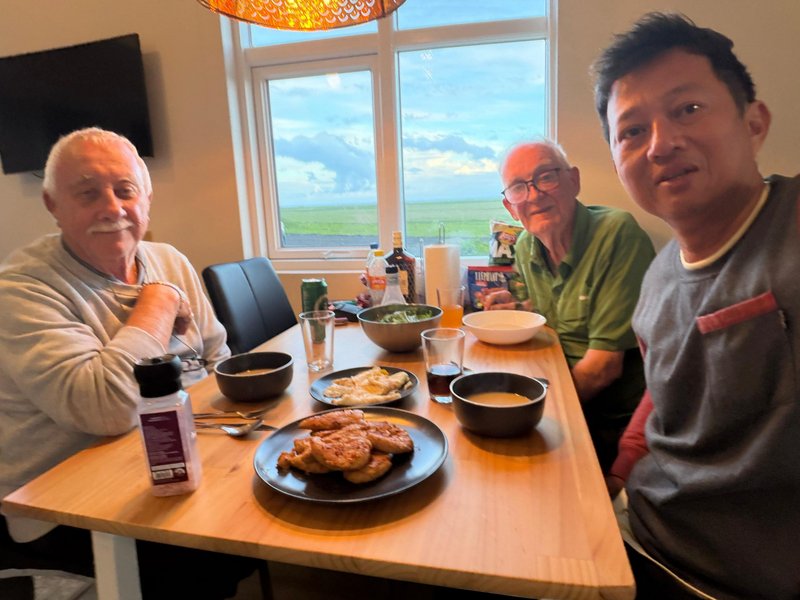
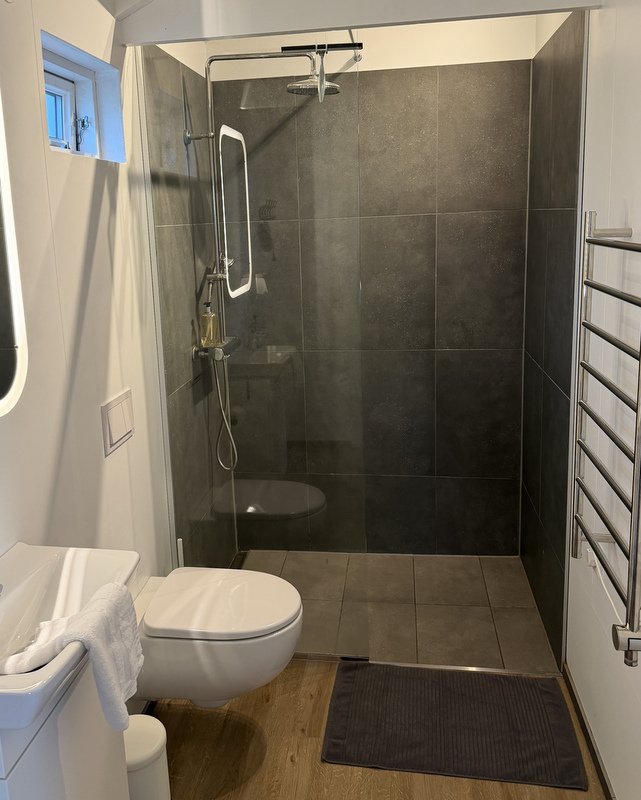
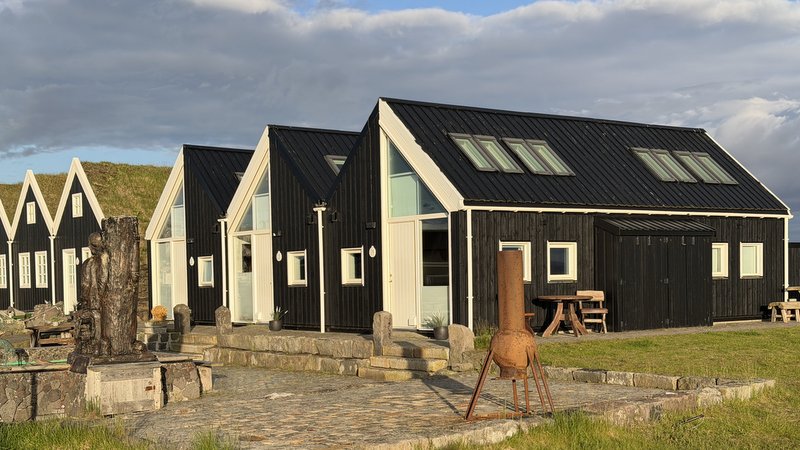
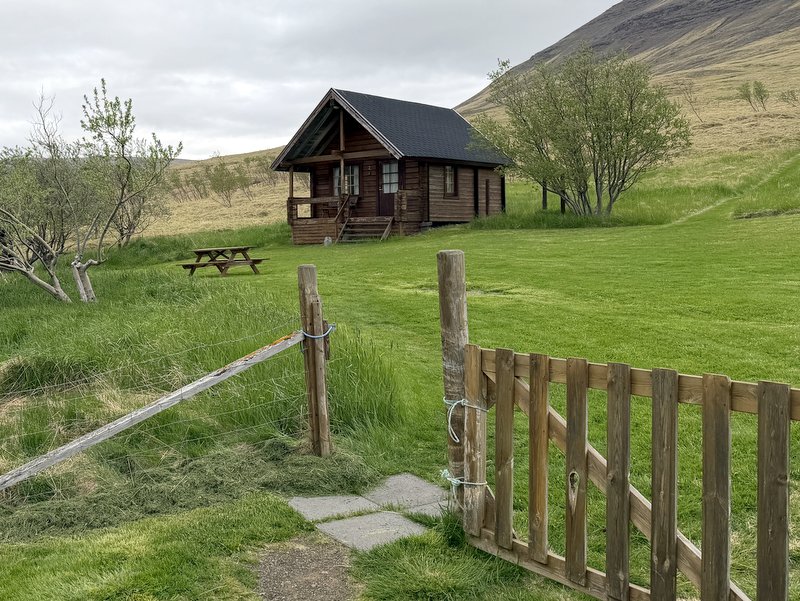
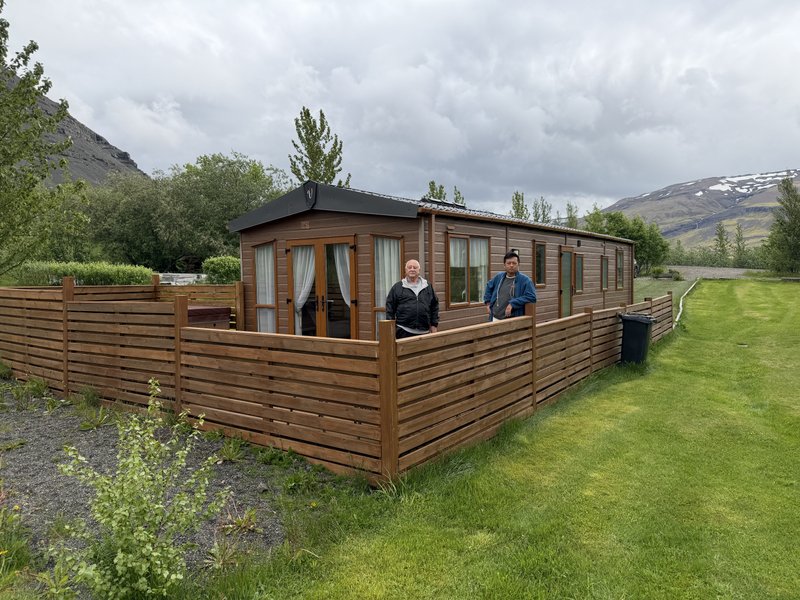
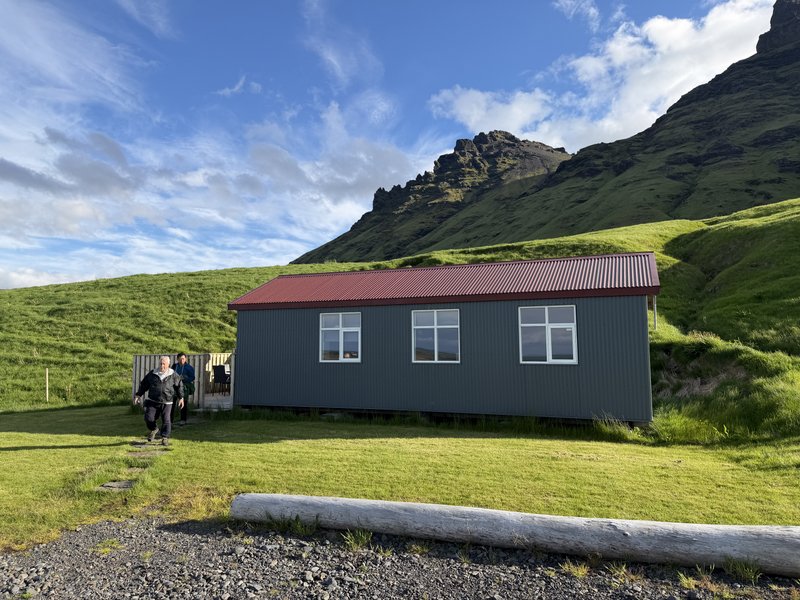
When Aric was planning the trip, he tried to find homestays for accommodation, so we could prepare our own food there. Here is the first one, a nice chalet, in the middle of nowhere. The bungalow was comfortable and fully equipped. We had bought provisions in a supermarket, and Aric was the cook.
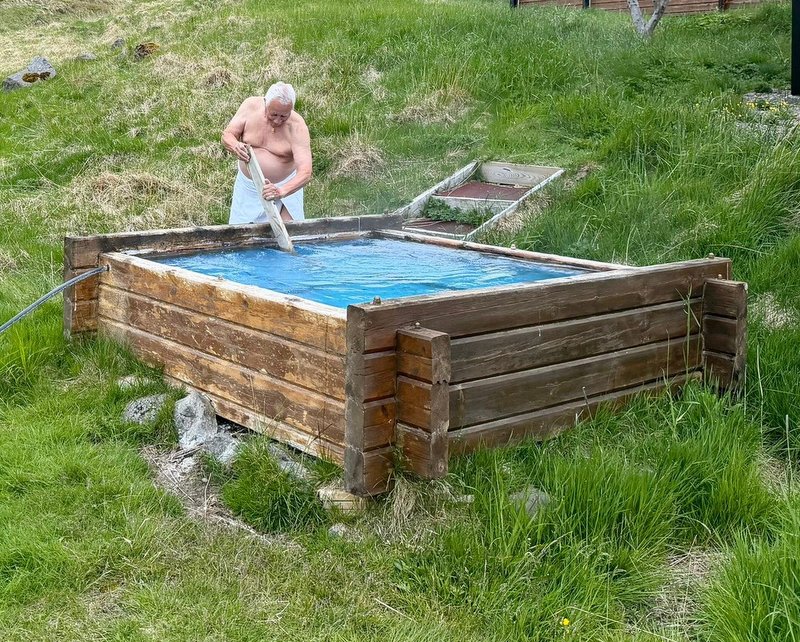
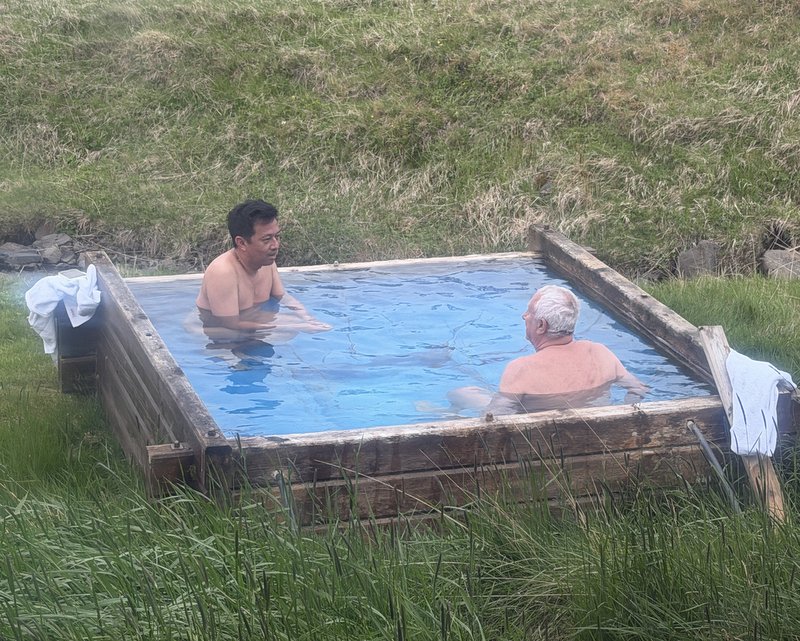
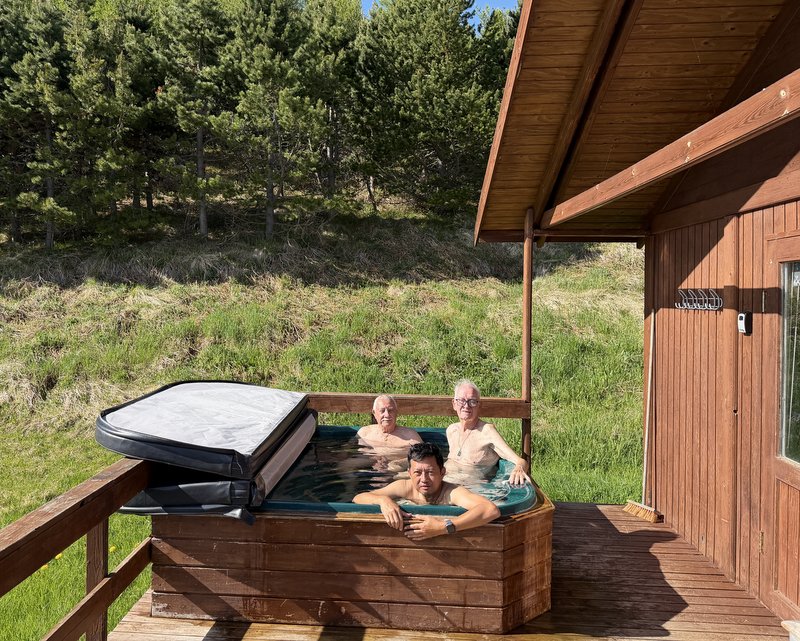
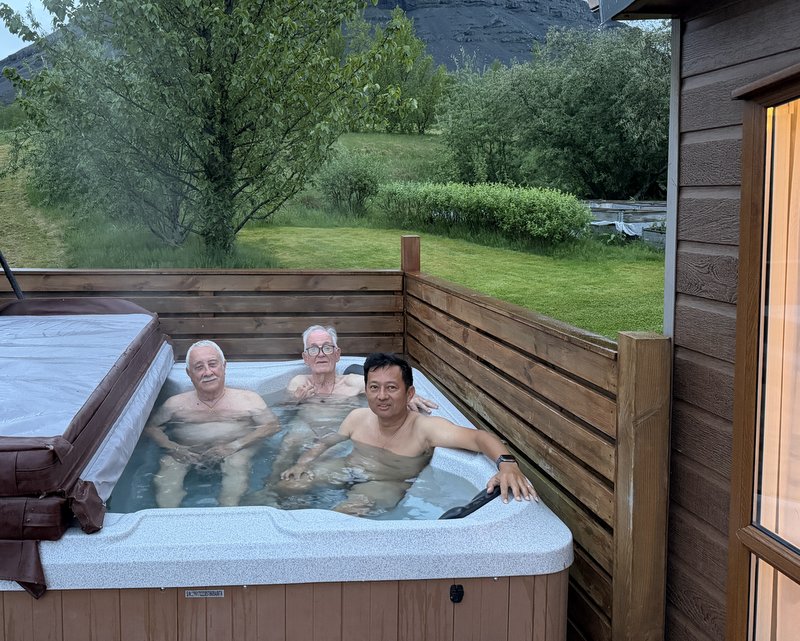
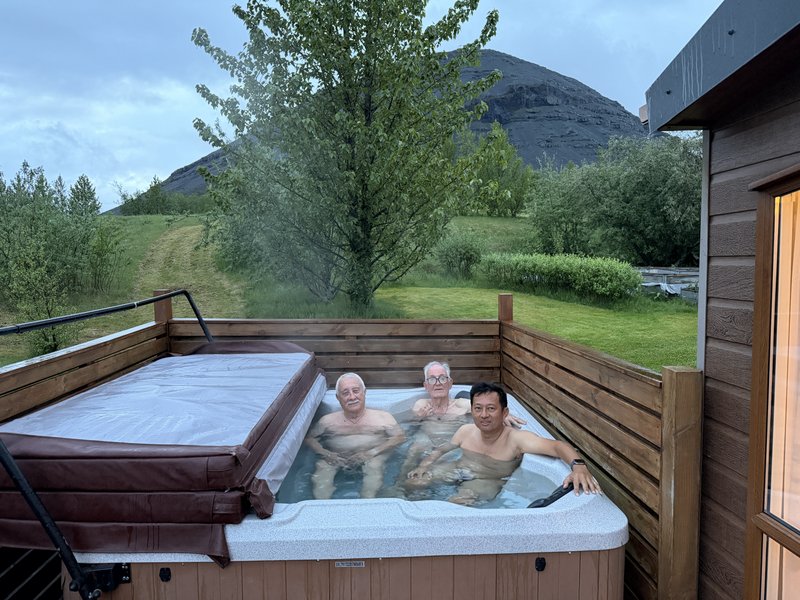
The homestay had its own hot bathtub. Hot geothermal water was diluted with cold water in a storage tank, from where it was piped to the bathtub. A little bit of sulfur smell and a bluish color of the water. Very enjoyable.
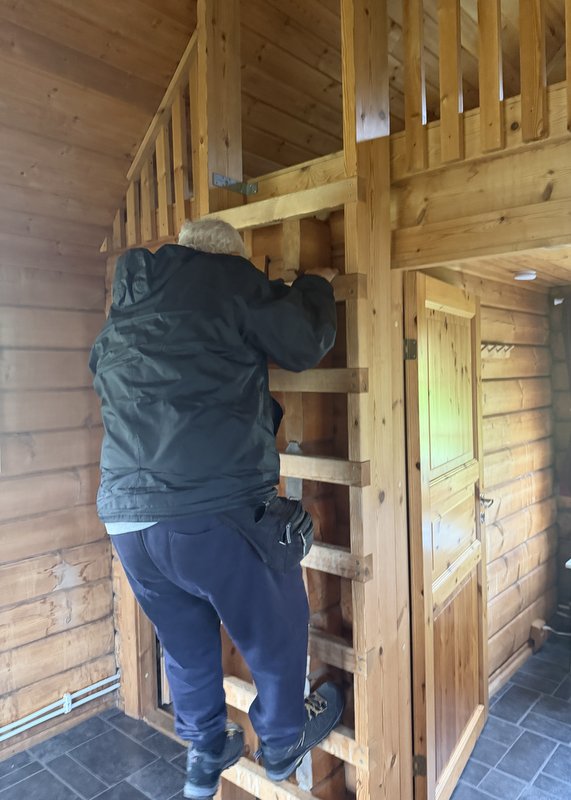
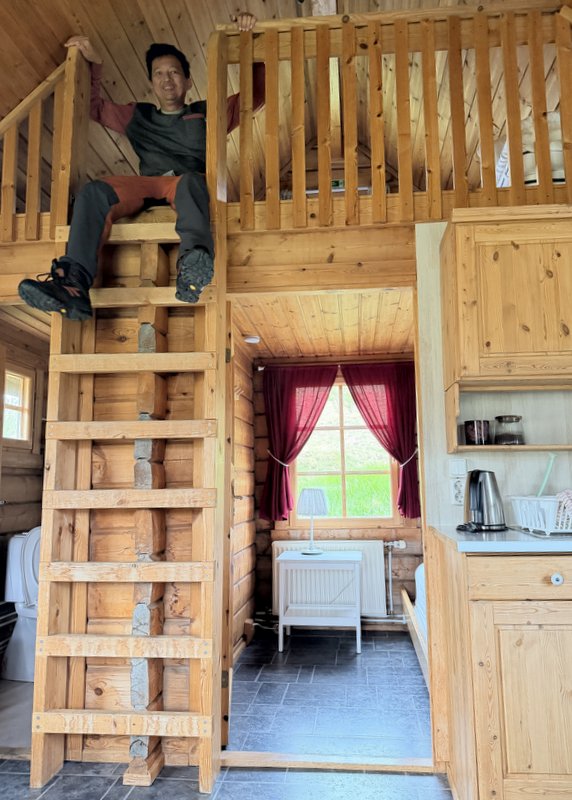
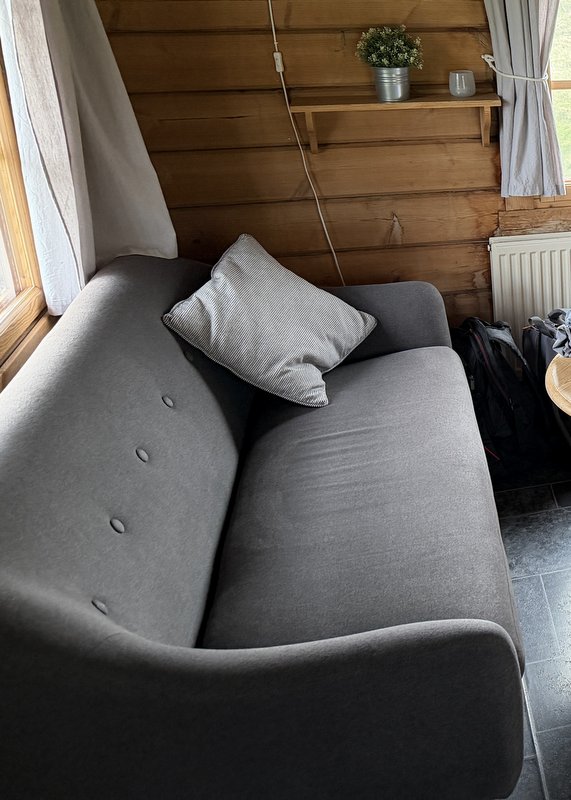
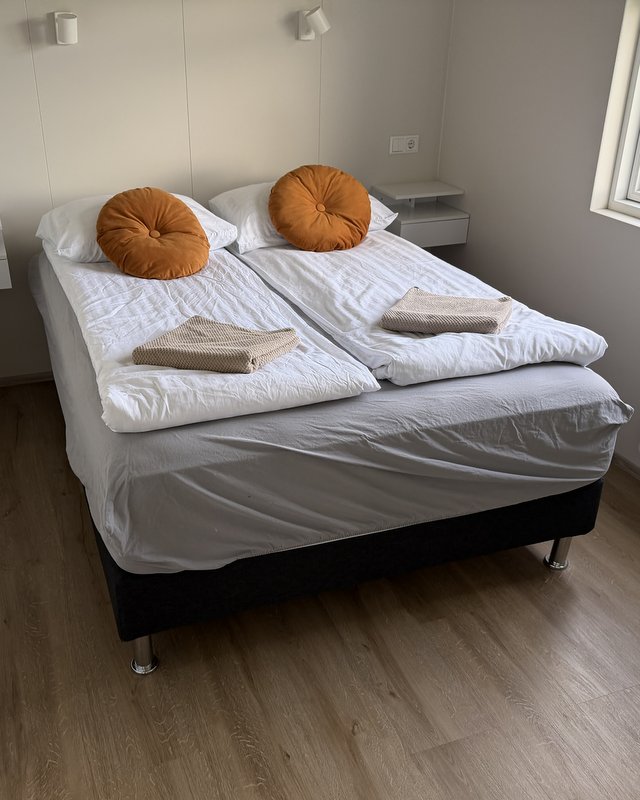
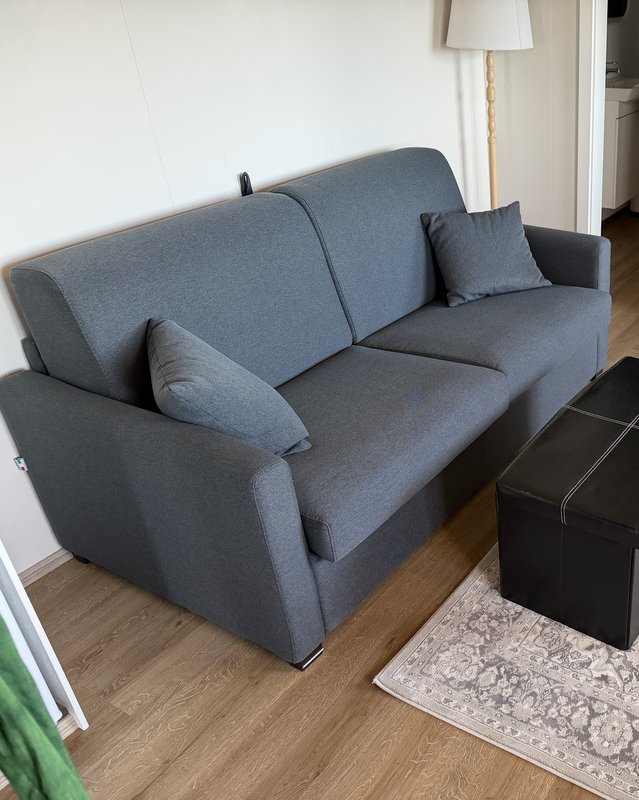
One master bedroom and extra beds reachable via a ladder. Too dangerous for us, but there was a sofa that could be used as a bed 😉
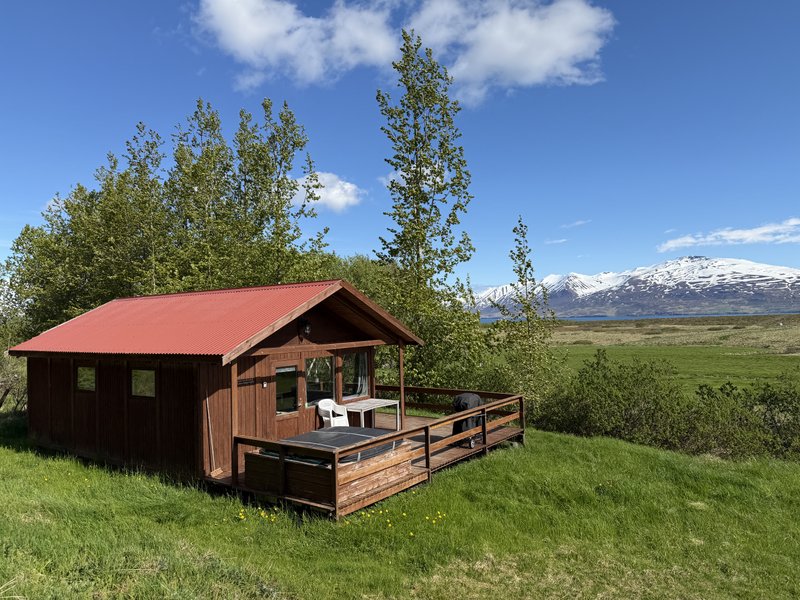
The second homestay was beautifully located with a fantastic view of the snow-covered mountains. The chalet had a bathtub too, but the water was not geothermal; instead, it was heated by electric power. We arrived late, after a long day, so it was only the next morning that we took a bath. Aric was again the cook.
+****
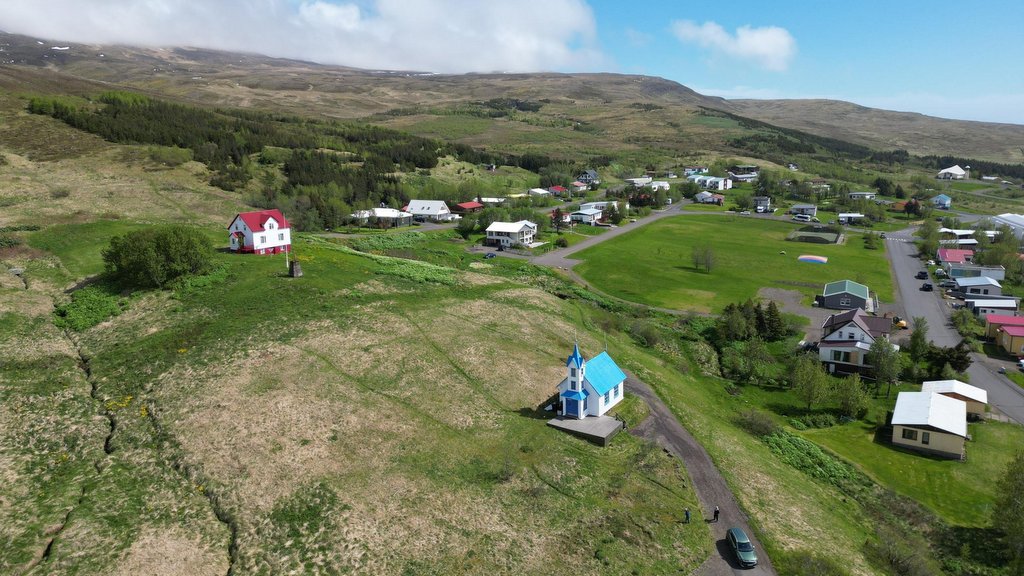
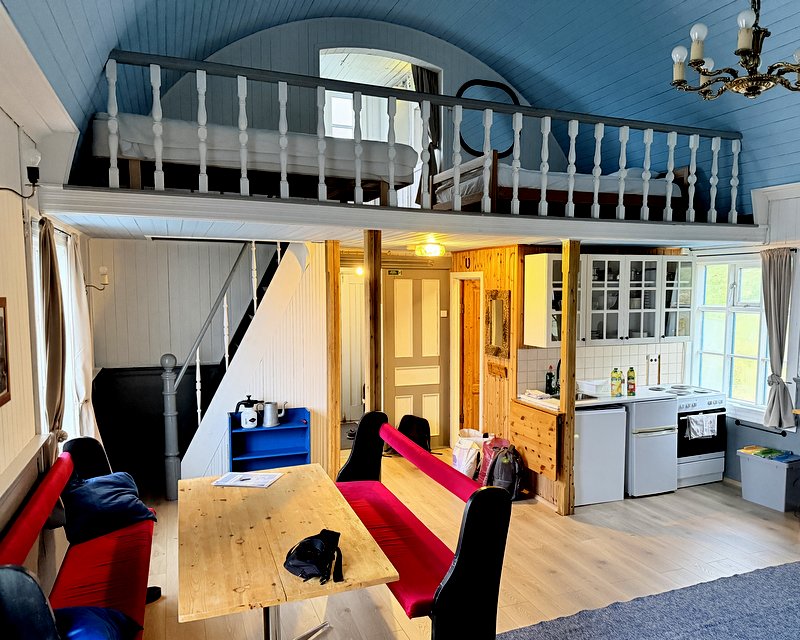
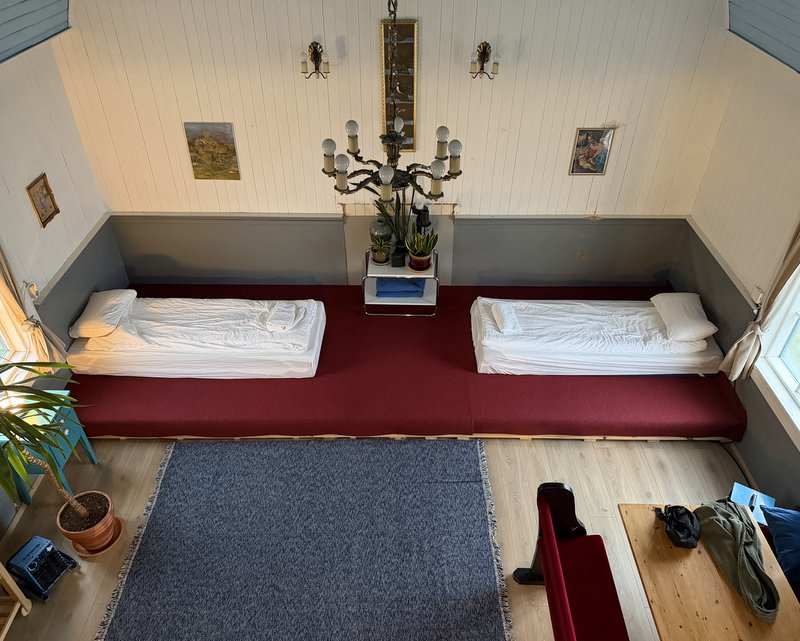
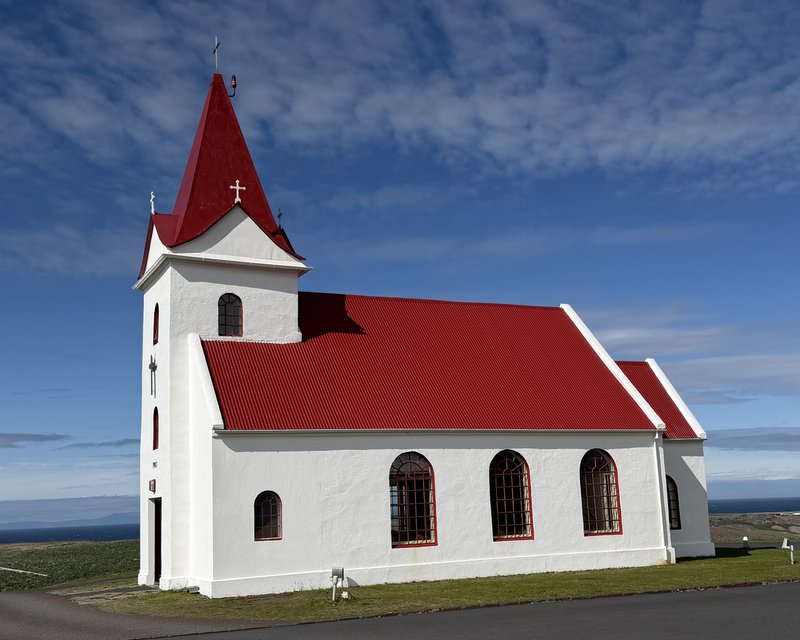
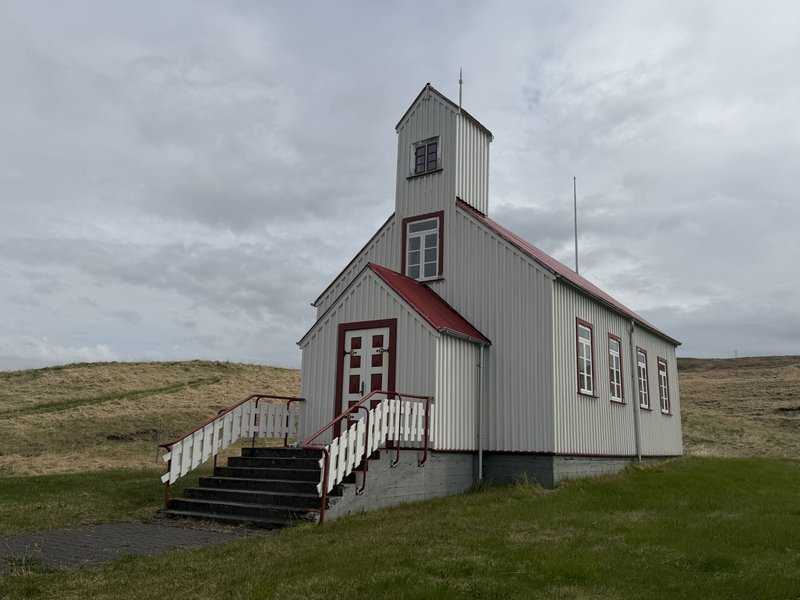
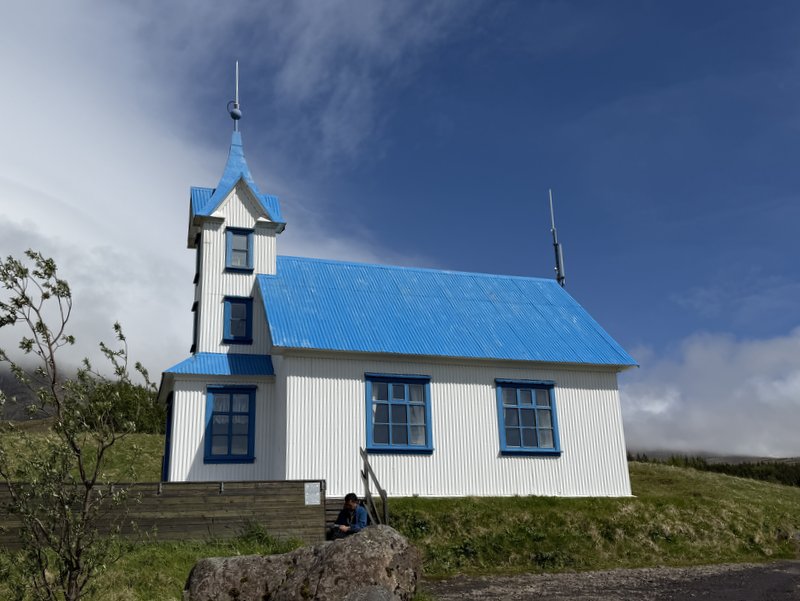
Our third homestay didn’t have a bathtub, but was special for another reason: it was a former church, transformed into a unique homestay. No separate bedroom; some beds on the upper floor, this time reachable via an easy ladder. Aric used his drone to take this aerial view.
Our fourth homestay was quite big, with three bedrooms and again its own bathtub.
Homestay no 5 didn’t have a bathtub. Nice location against a backdrop of characteristic Icelandic rocks. As usual, Aric was the cook. One master bedroom and a sofa bed.
`
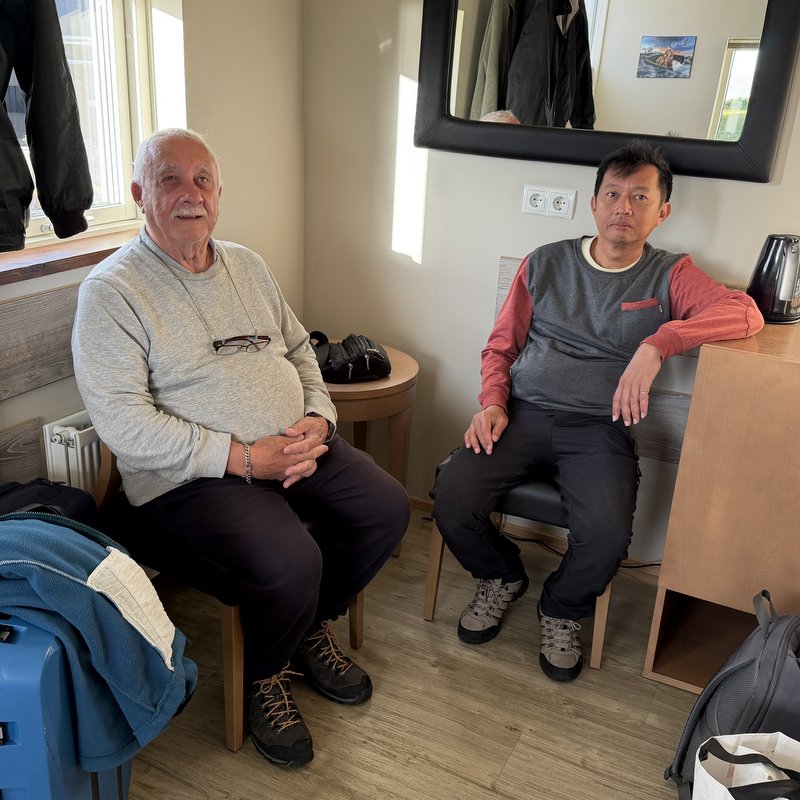
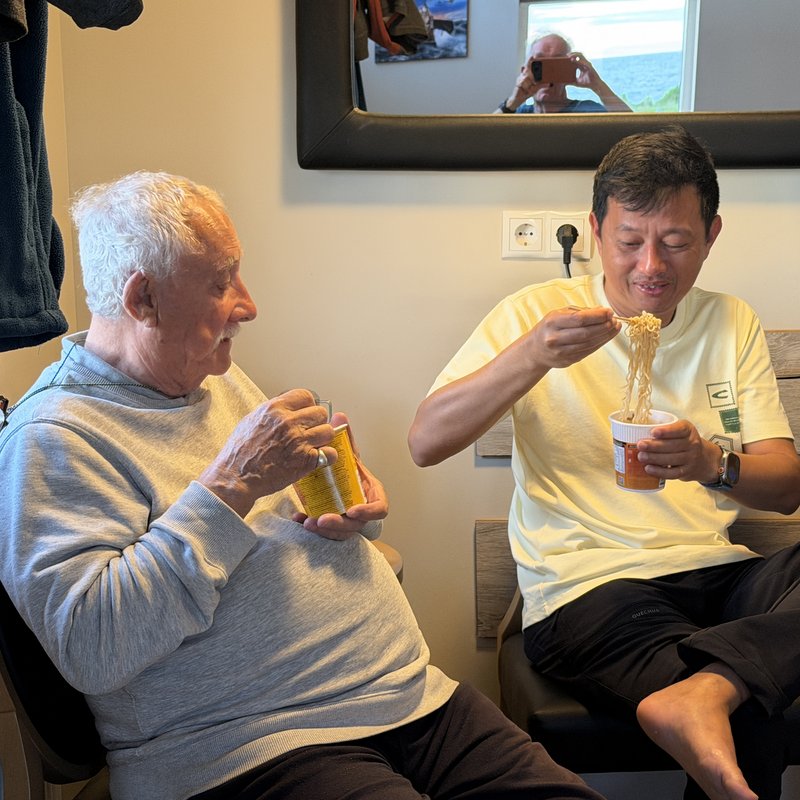
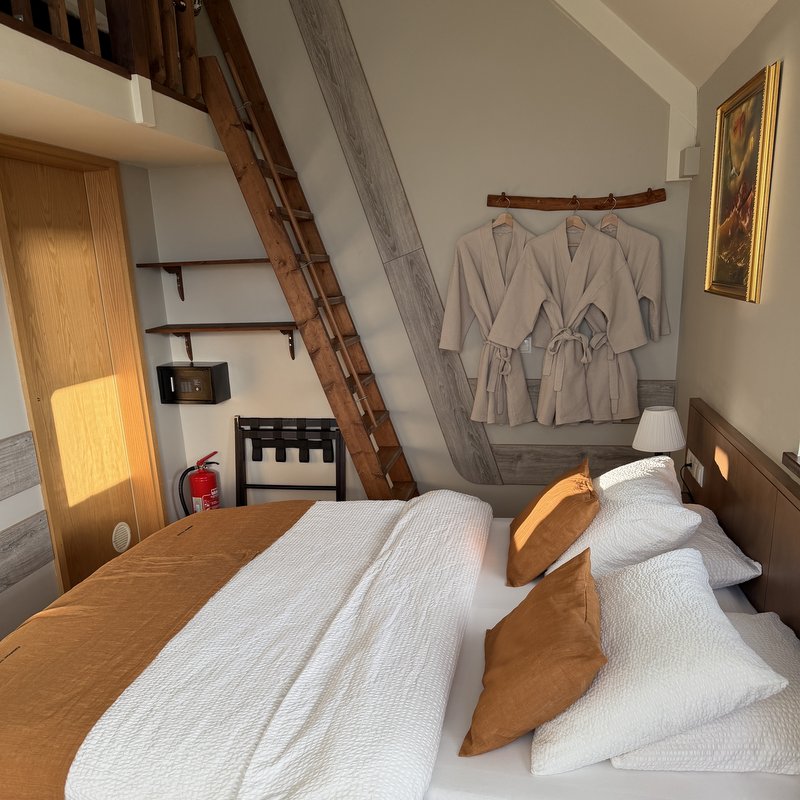
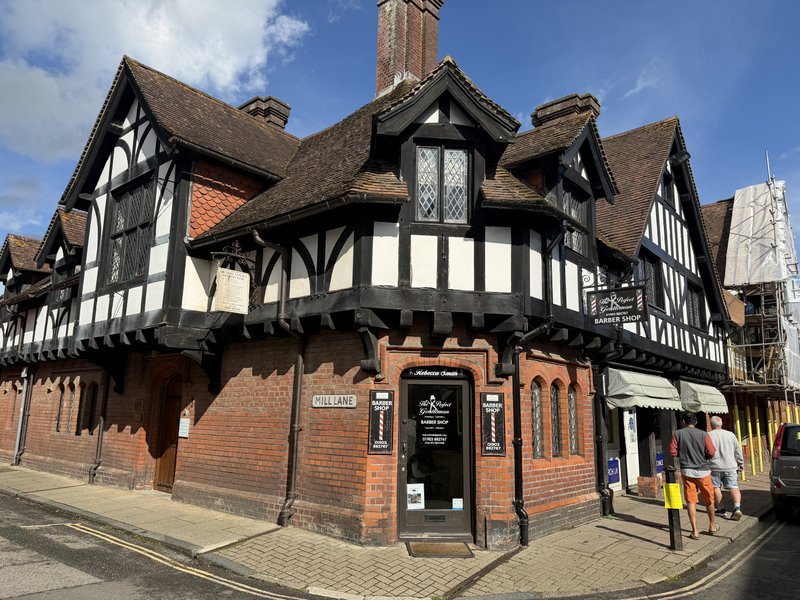
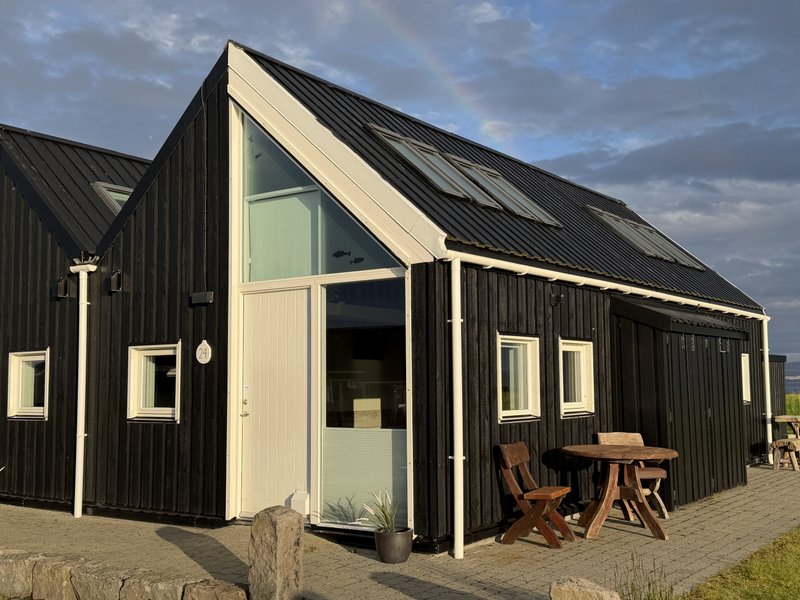
Our last night before going back to Reykjavik, Aric thought he had booked a homestay, but it was a hotel room. A very attractive former fisherman’s hut, but only a water kettle. Good that we had bought cup noodles as emergency food. The room was also very small, with two beds, only reachable via a steep ladder and no sofa bed. Well, we survived 😉 Actually, a nice hotel; a few of the rooms still had turf roofs. We had the corner room.
The homestays were an attractive part of our visit. Pity that we were so busy visiting places and driving many hours that we often arrived only around 9-10 pm. It was almost the Summer Solstice; the Sun sets around midnight and rises again a few hours later.
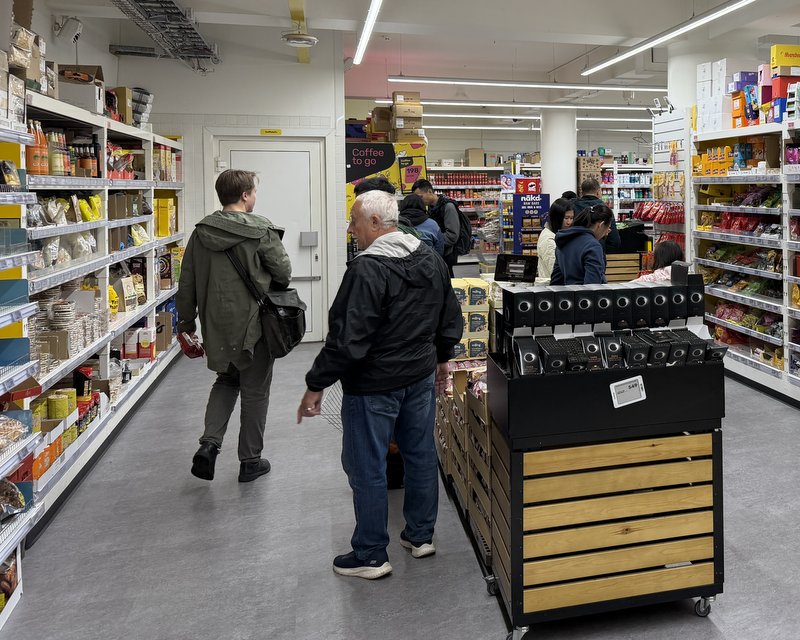
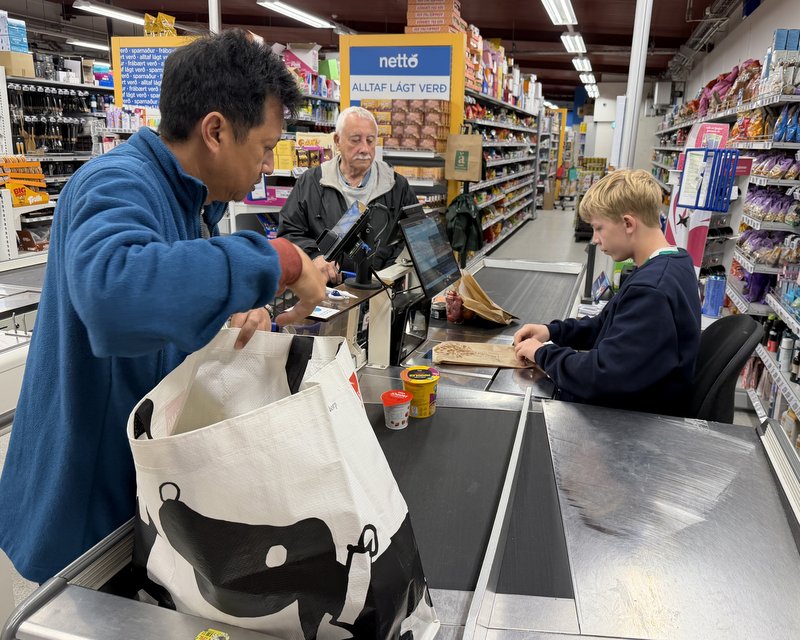
Almost daily, we visited a supermarket to buy provisions for breakfast and dinner.
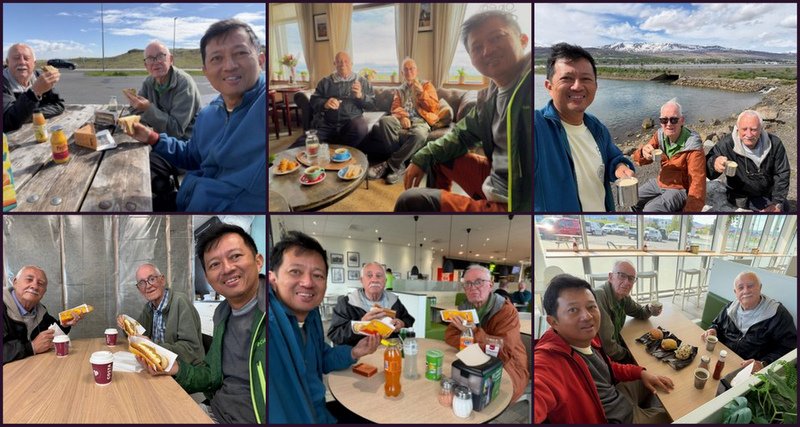
For lunch, we had some snack food or sandwiches. Petrol stations and major tourist attractions often had a cafe, or we had it at a picnic table when weather permitted.
Fauna and Flora
Whale-watching
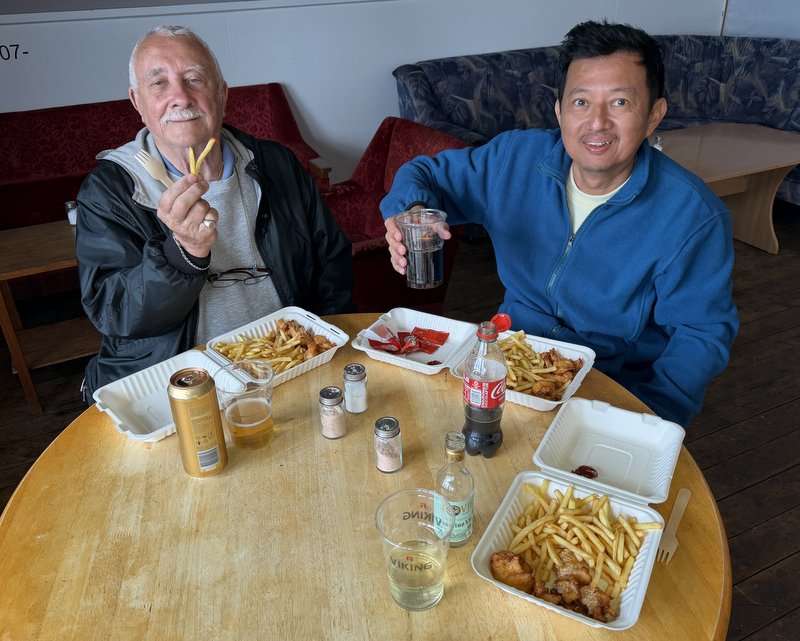
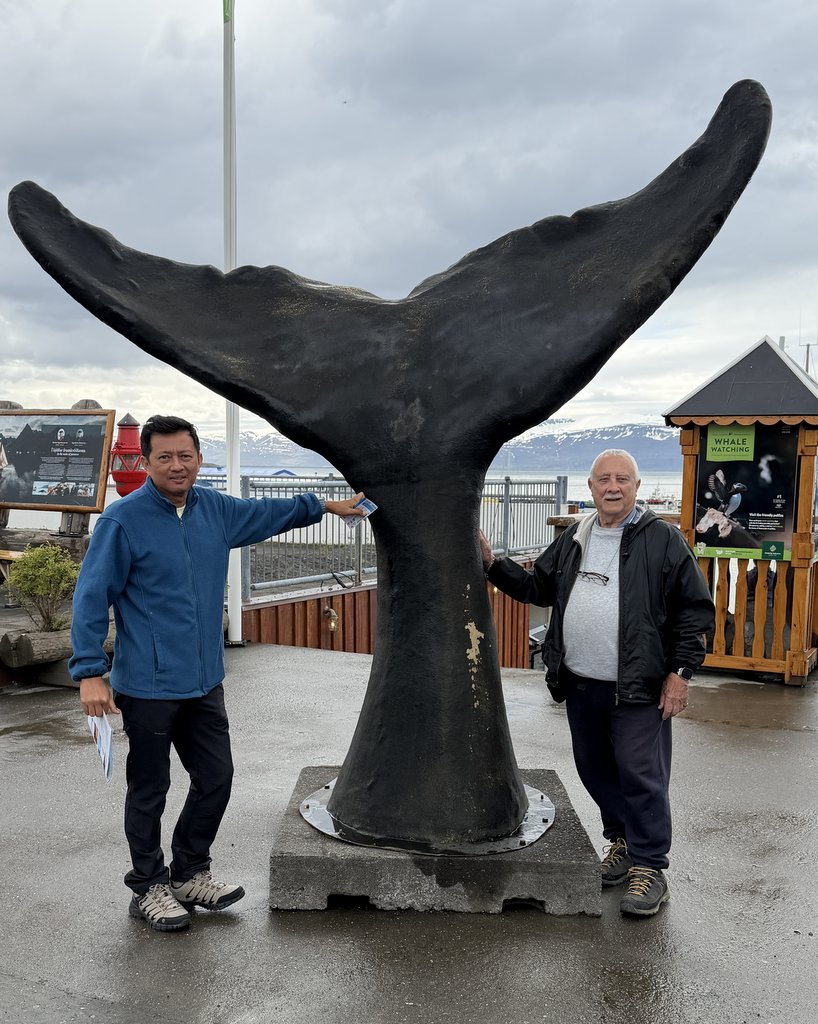
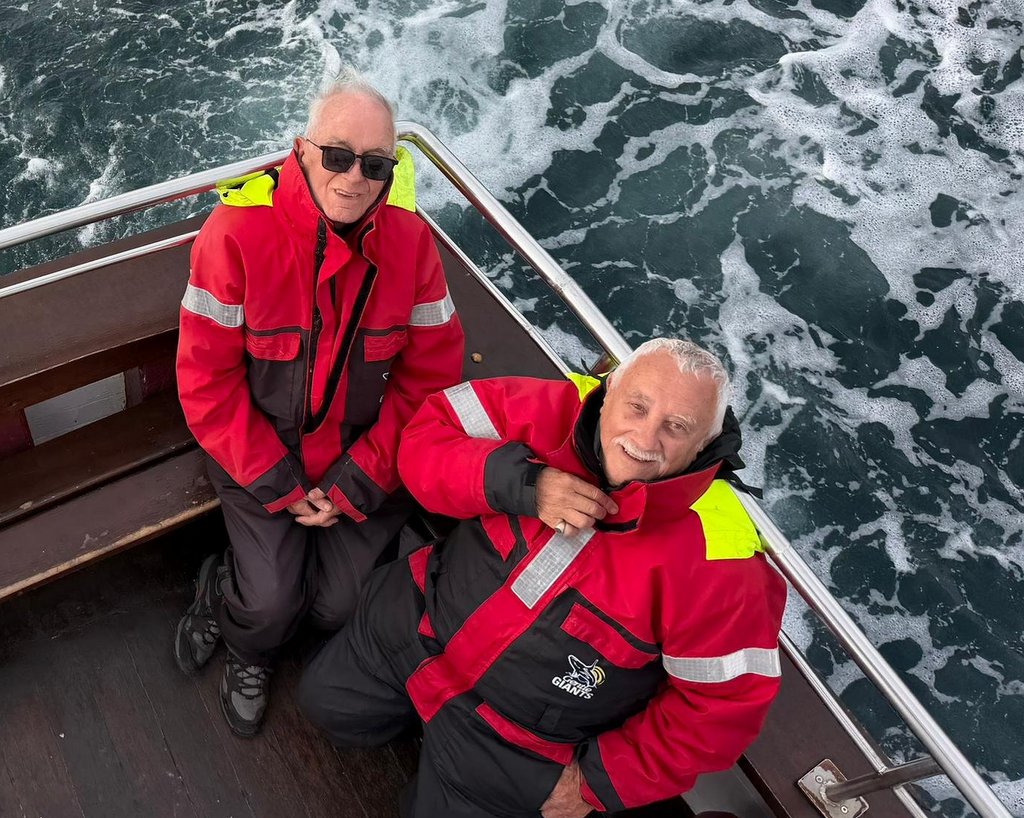
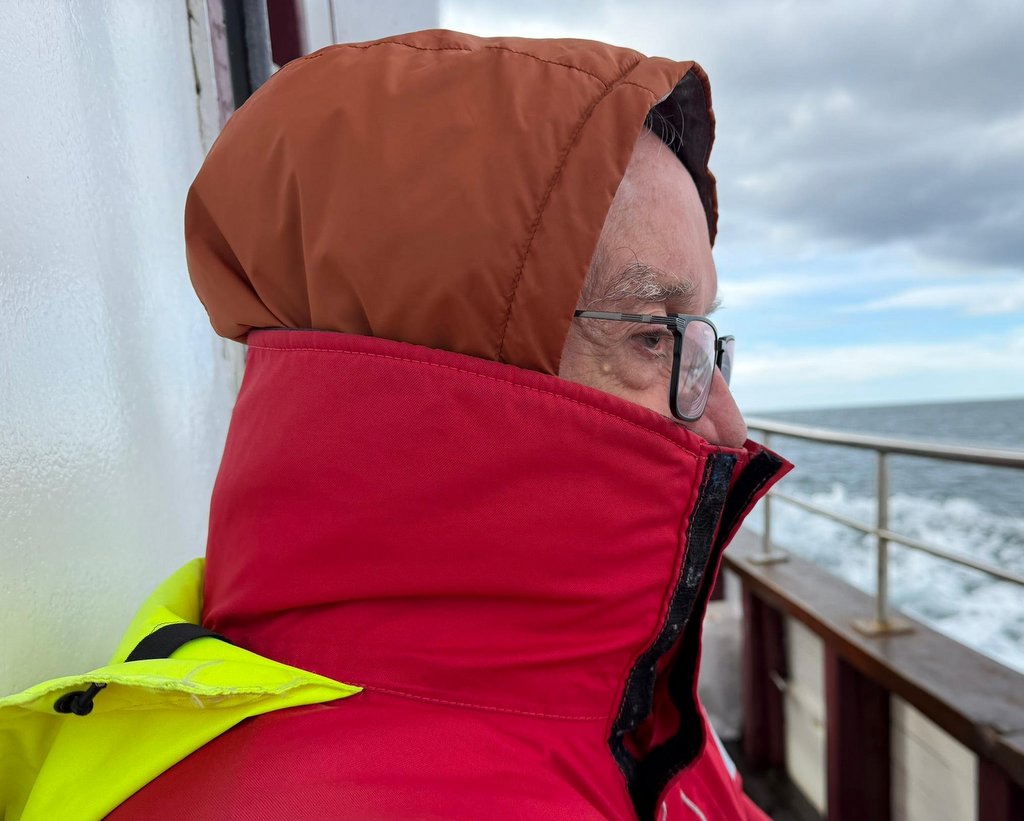
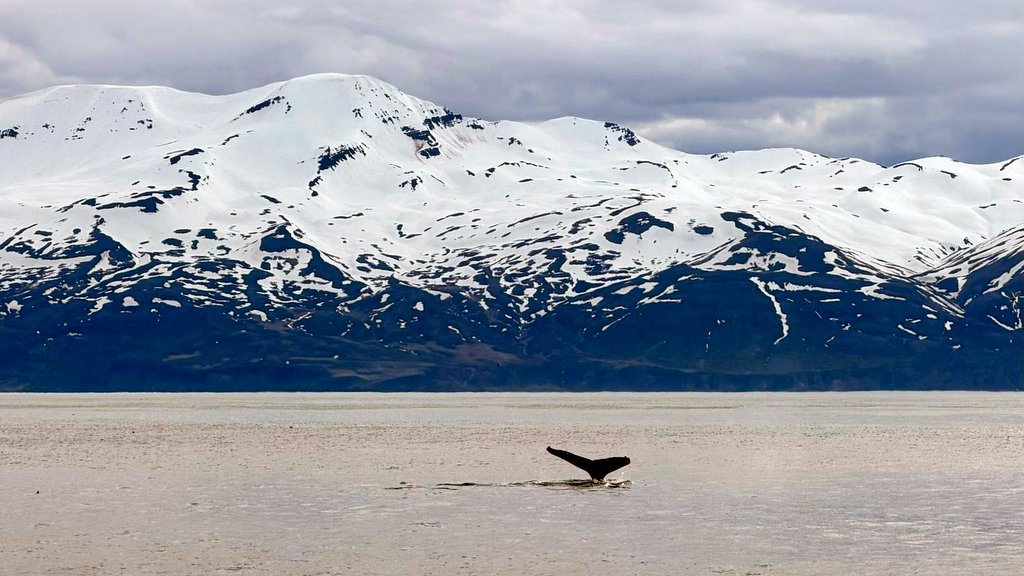
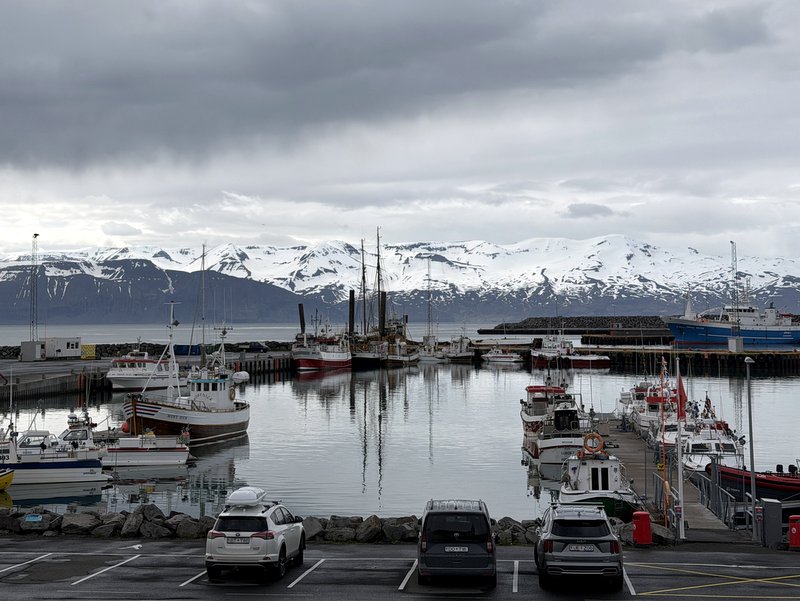
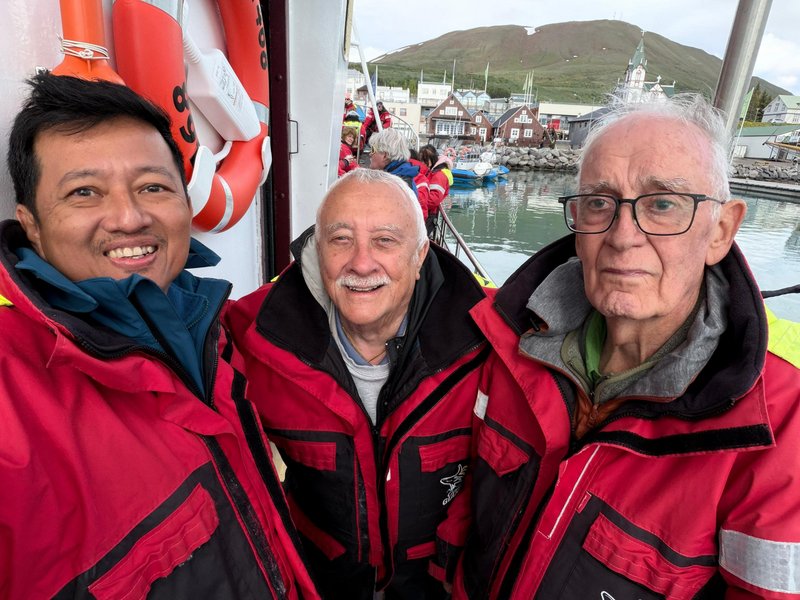
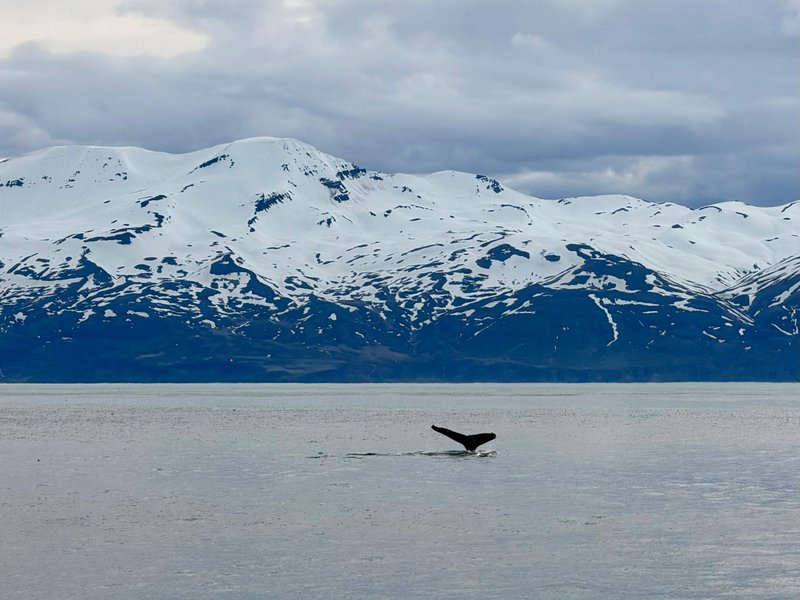
Two highlights were related to animals. Húsavík in Northern Iceland is widely recognized as the whale-watching capital of Iceland and all of Europe. We had booked a 3-hour trip starting at 5 pm, so we arrived early in the small town, checked in, and had lunch with fish and chips. The trip was well organized; we were given protective clothing, and a guide gave a warning when he spotted a whale. They are humpback whales, 14-17 m long, who come up to the surface every 10-15 minutes to breathe. The guide is trained to spot the spray when they exhale and gives the direction. When diving down, you can see their tail (if you are lucky). With my vision problem, I could not see details, but Aric managed to take a few nice shots.
`
Puffin Island
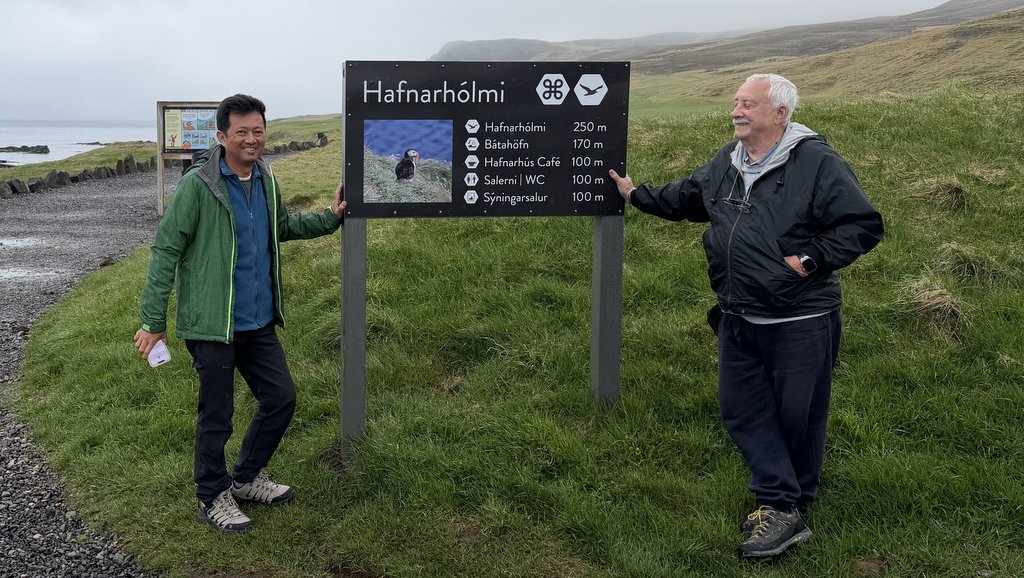
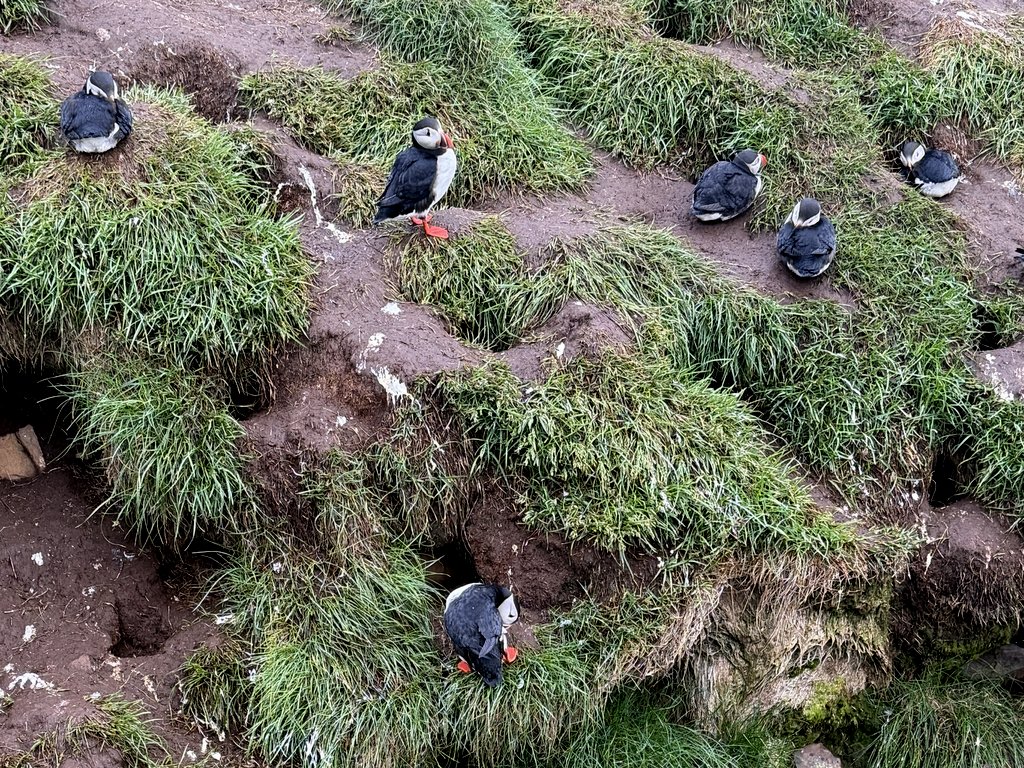
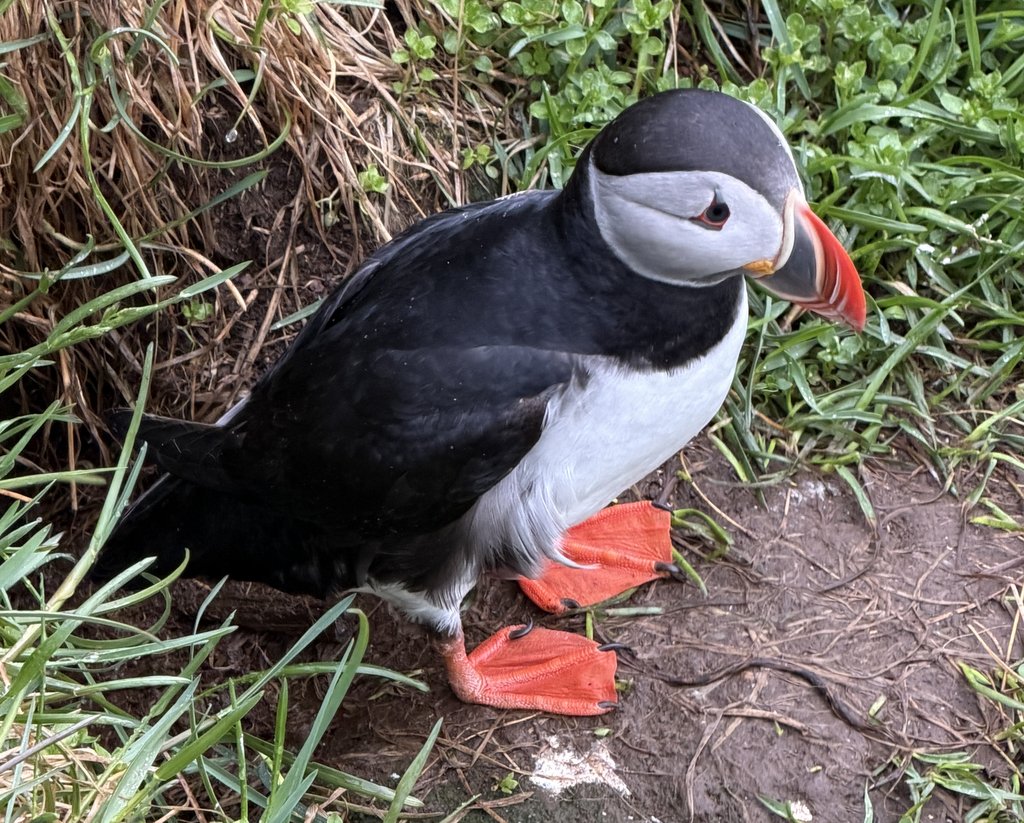
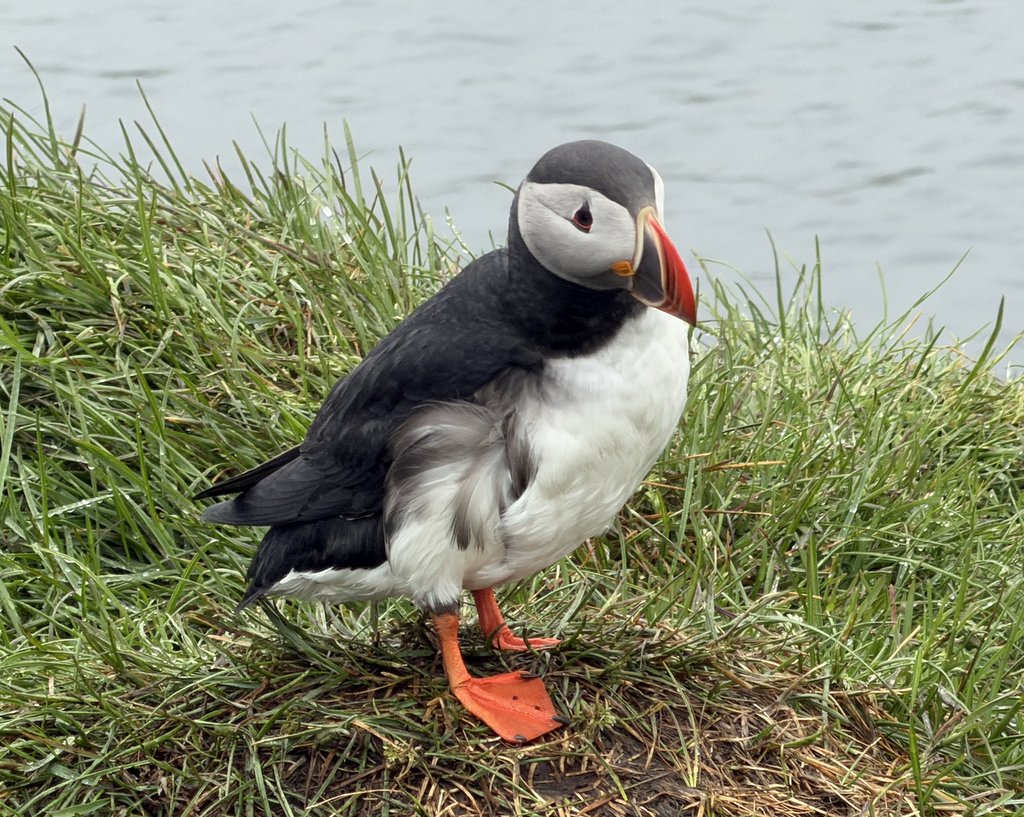
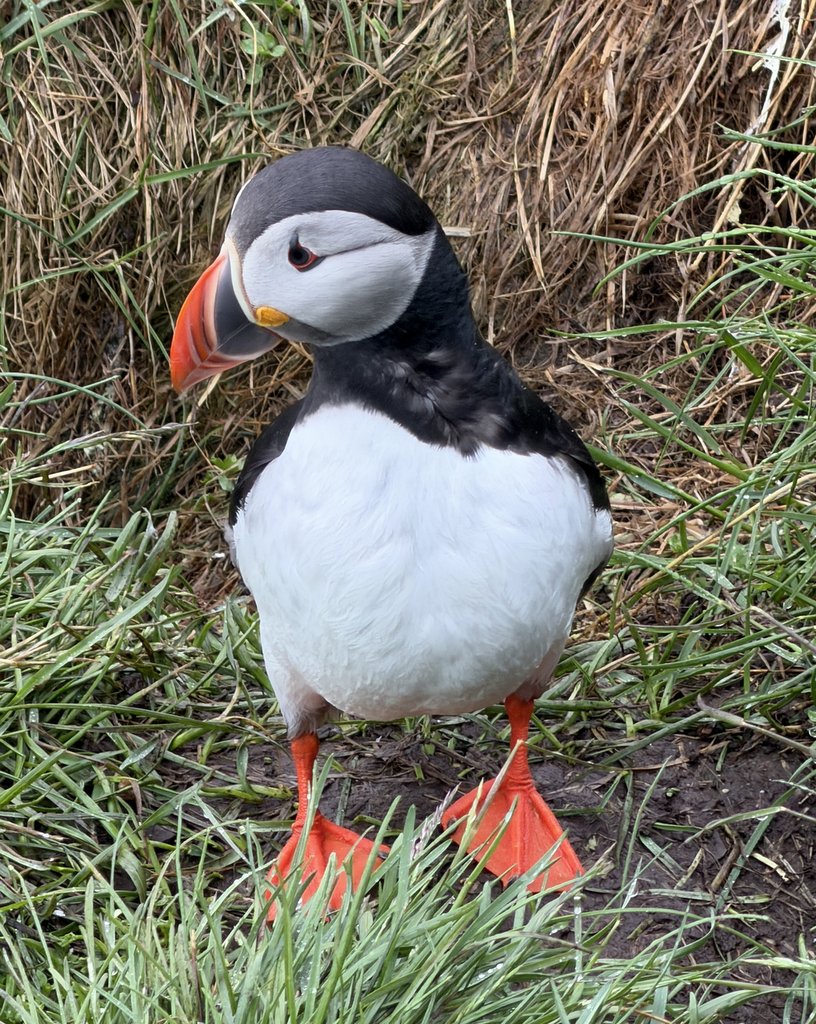
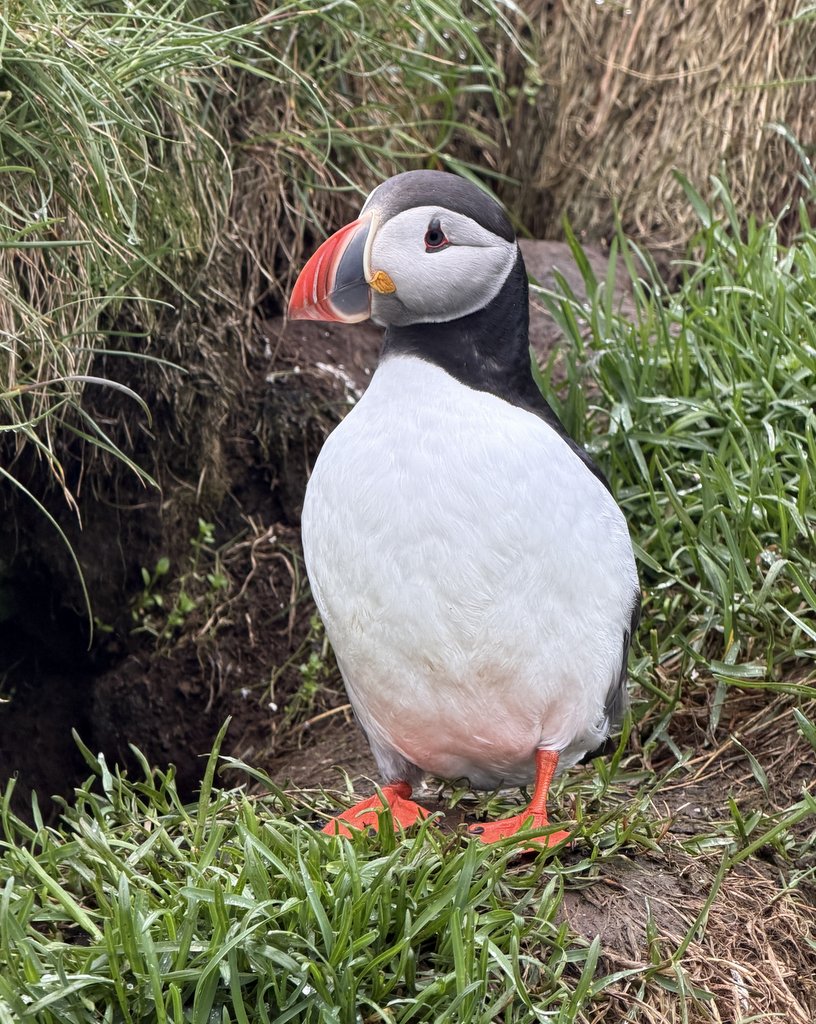
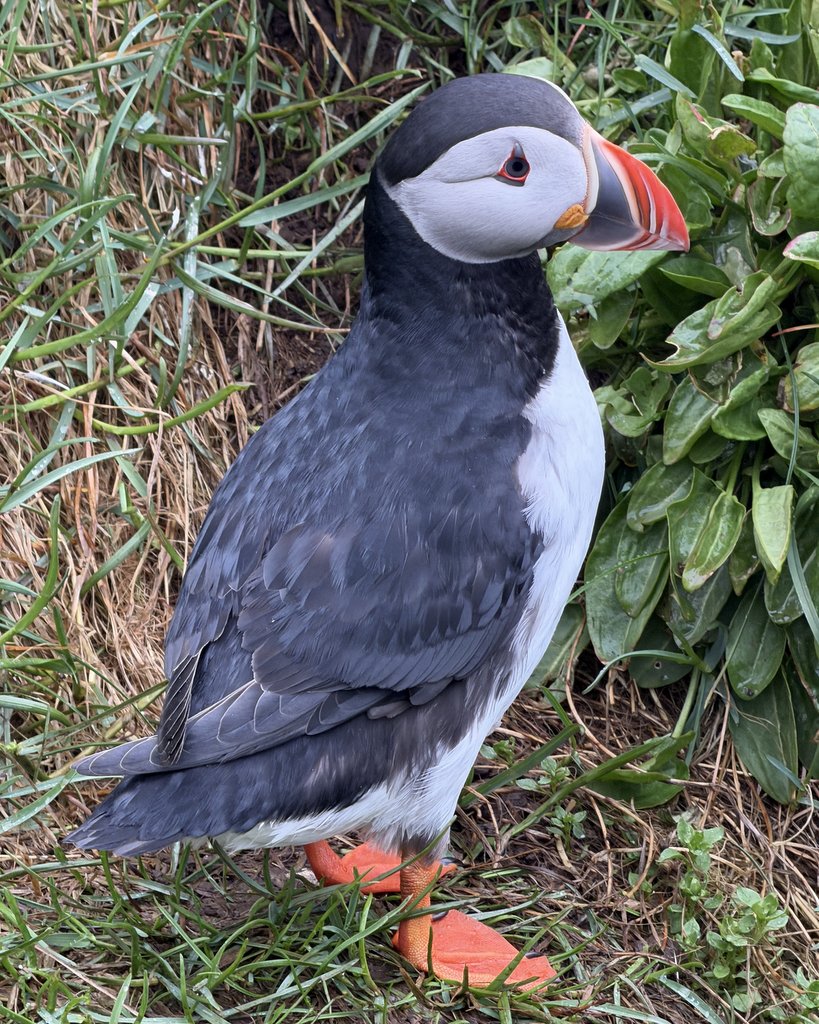
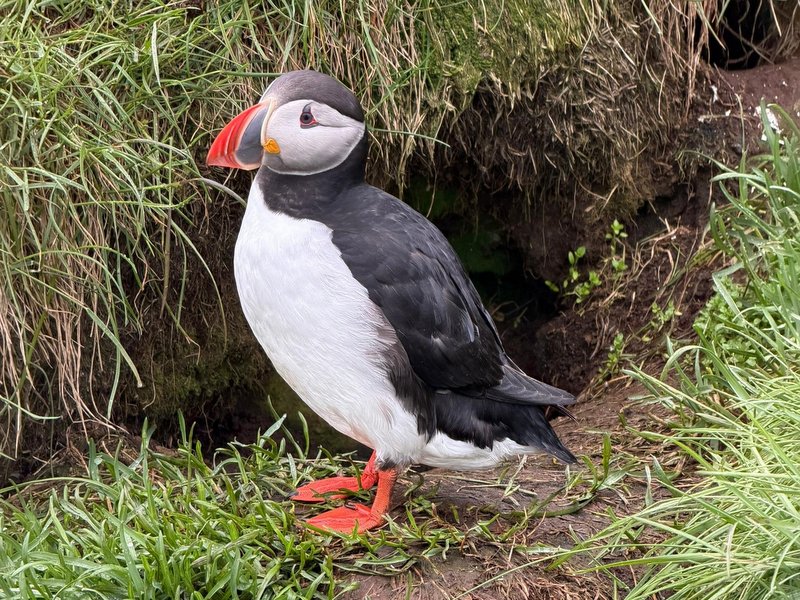
The following day we drove to Hafnarhólmi, widely considered Iceland’s puffin capital. In summer there are thousands of nesting Atlantic puffins. The small islet is connected by a causeway to the mainland, and wooden walkways and platforms have been constructed to watch the cute birds from very close by. Free access, and the birds are apparently not disturbed. Fascinating experience; you can not stop taking pictures.
Other animals abd flowers
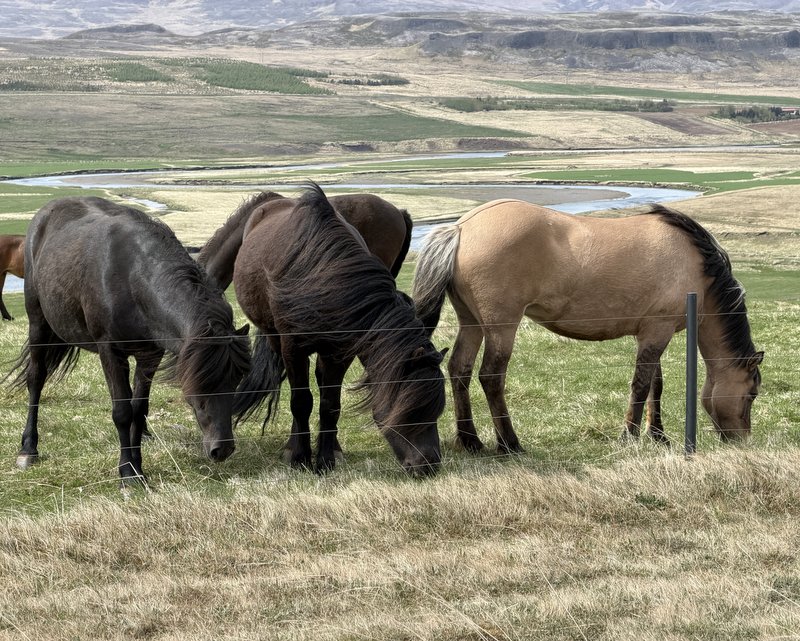
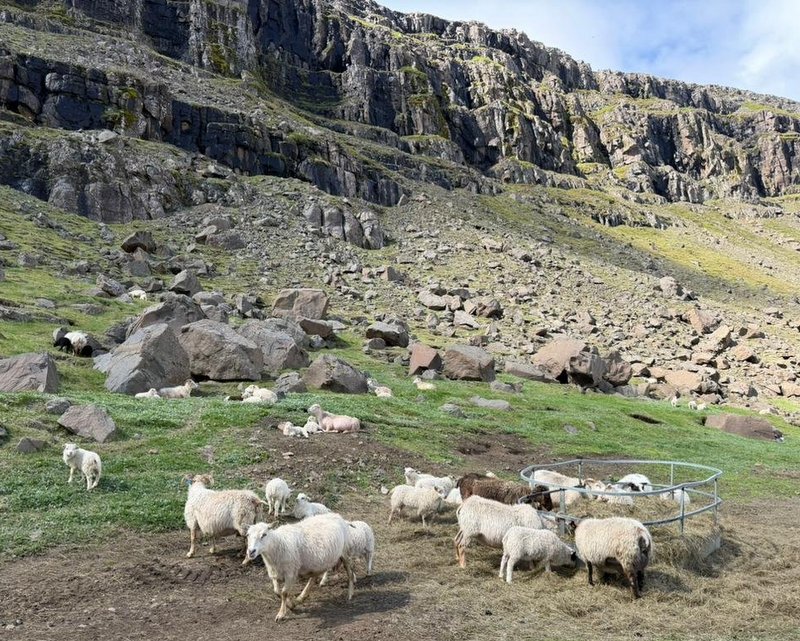
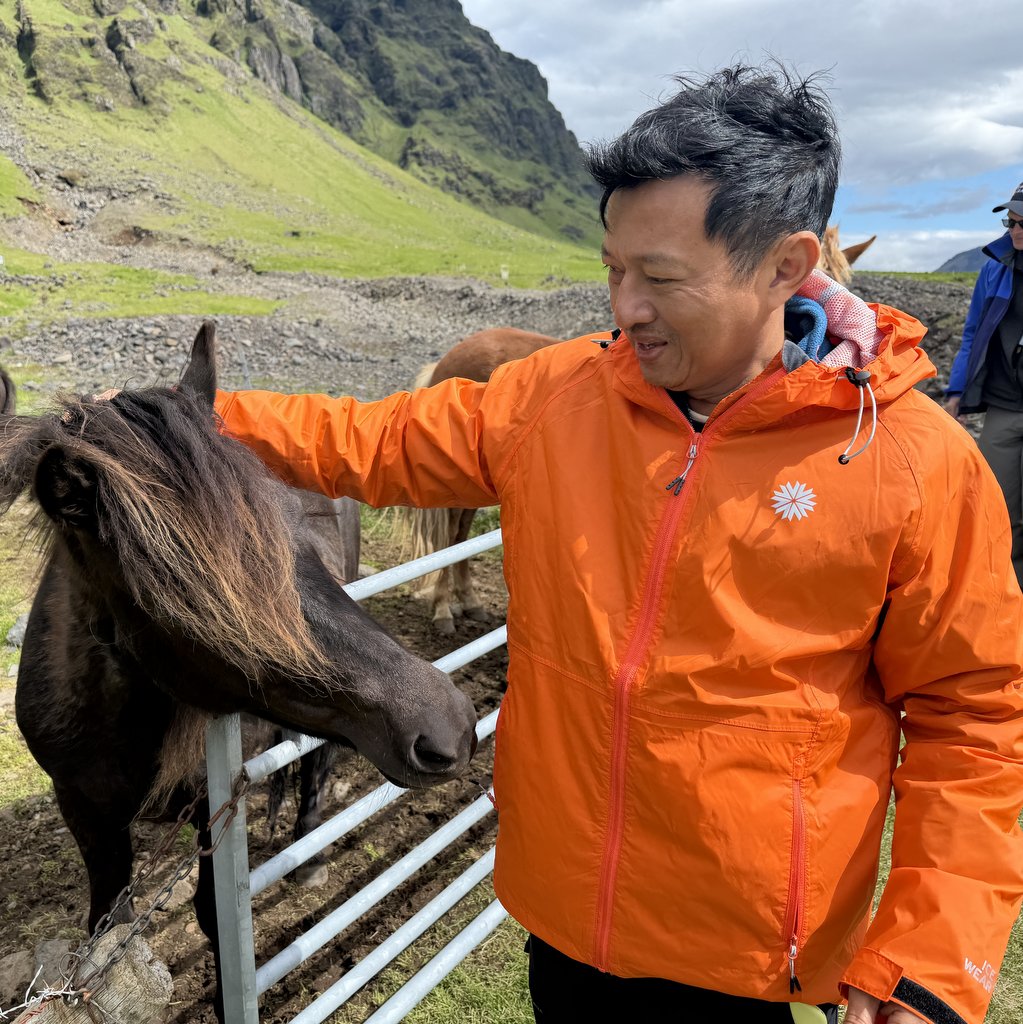
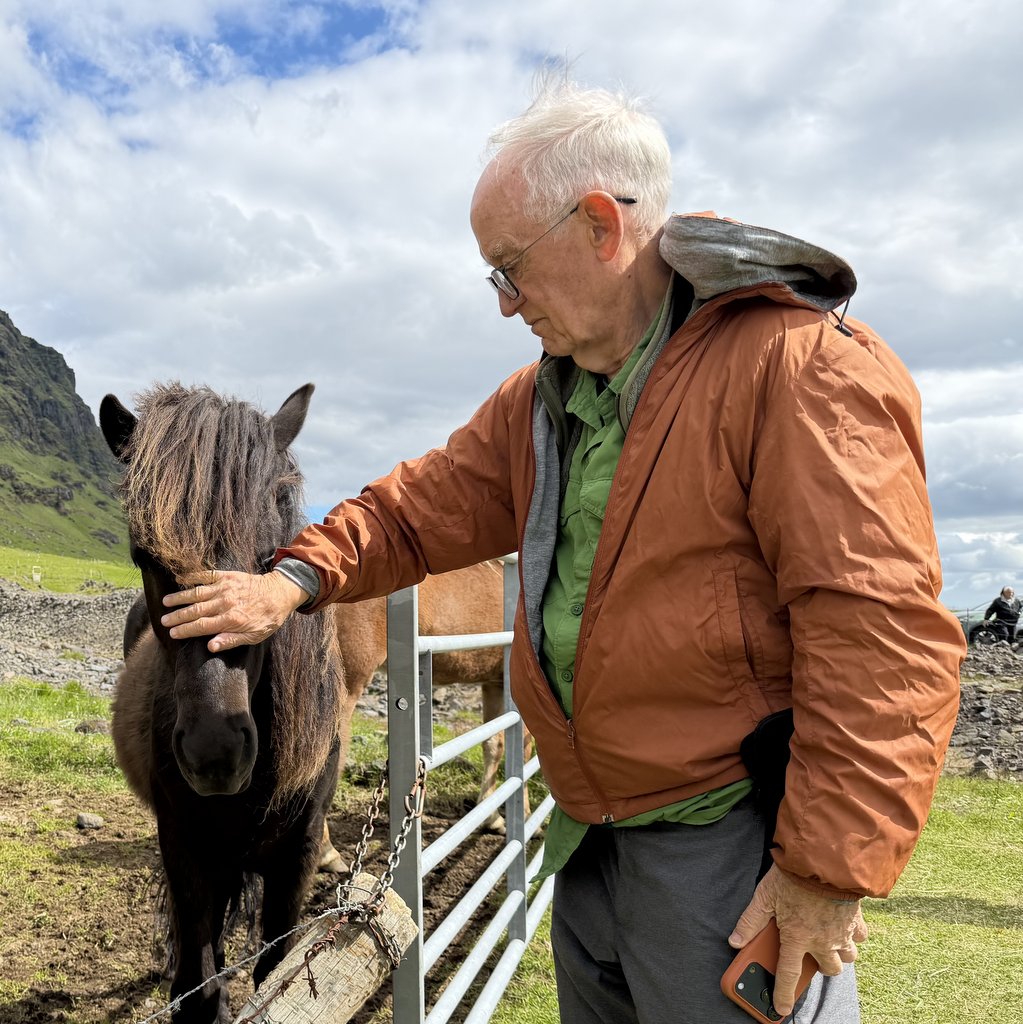
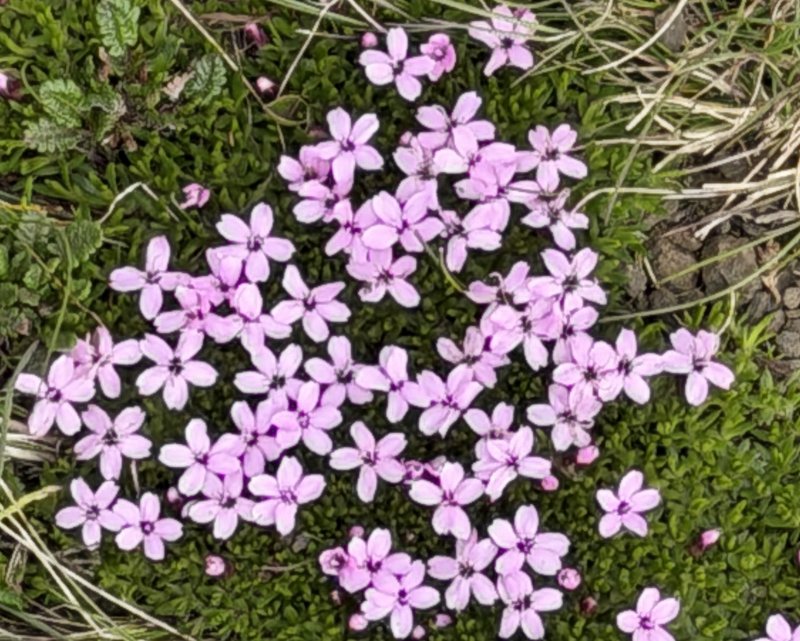
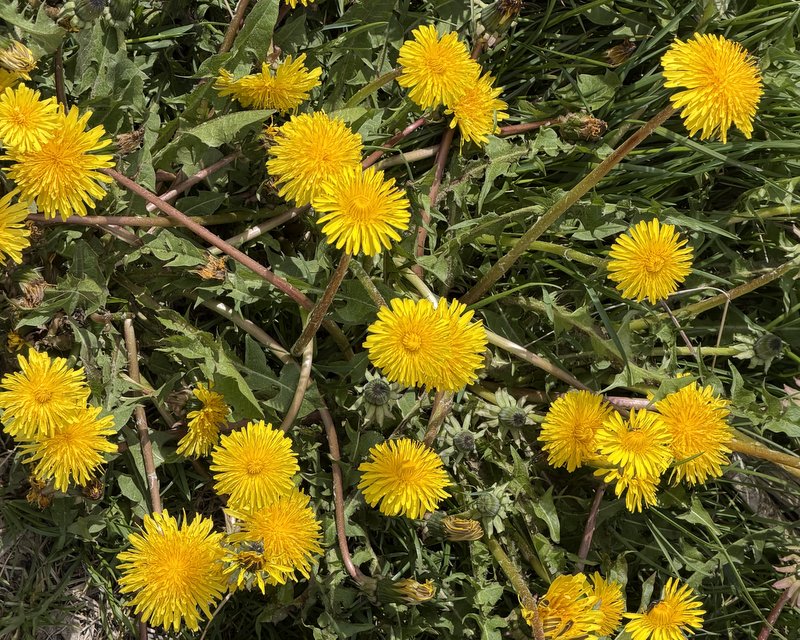
During our trip, we saw herds of horses and flocks of sheep. The beautiful Icelandic horses are small in size, but don’t call them ponies; that is impolite. We did not see much flora.
Turf Houses
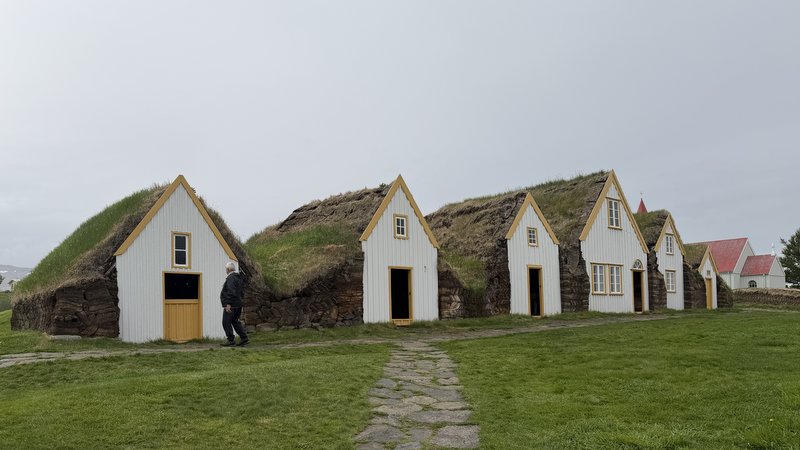
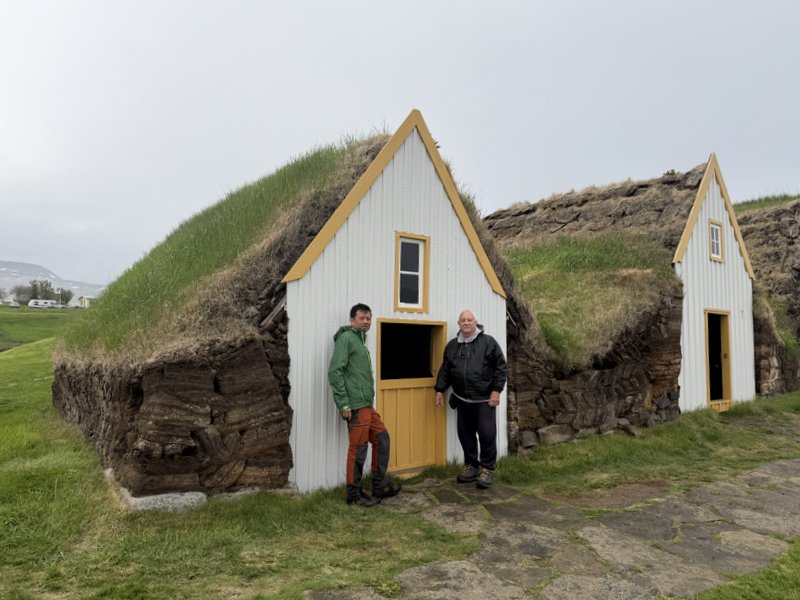
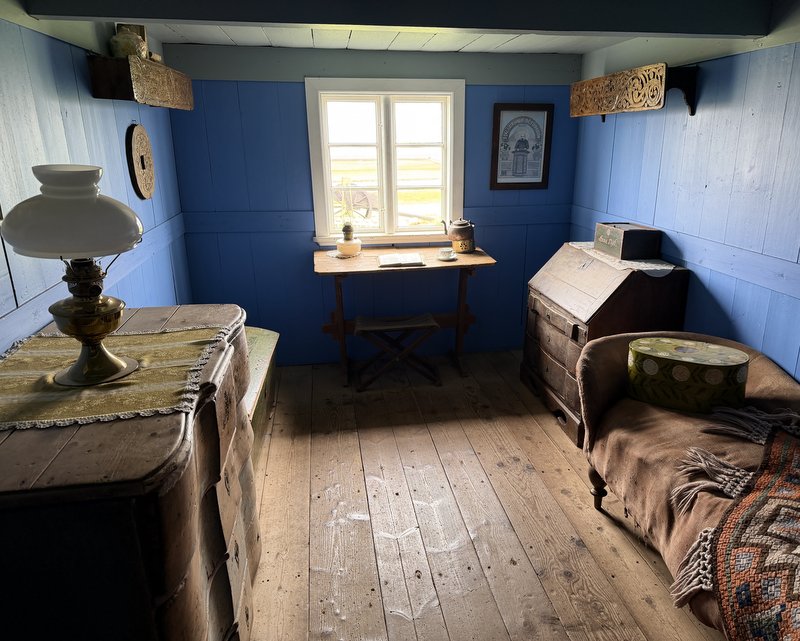
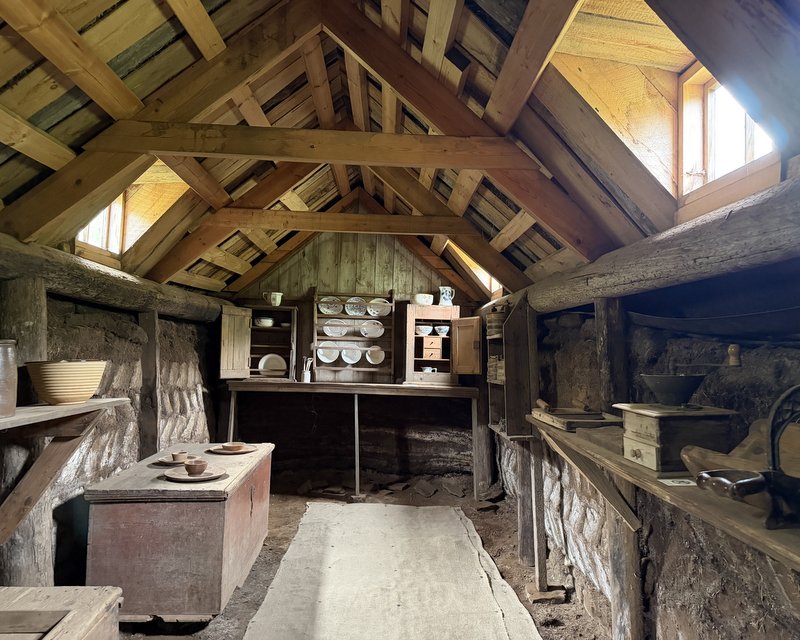
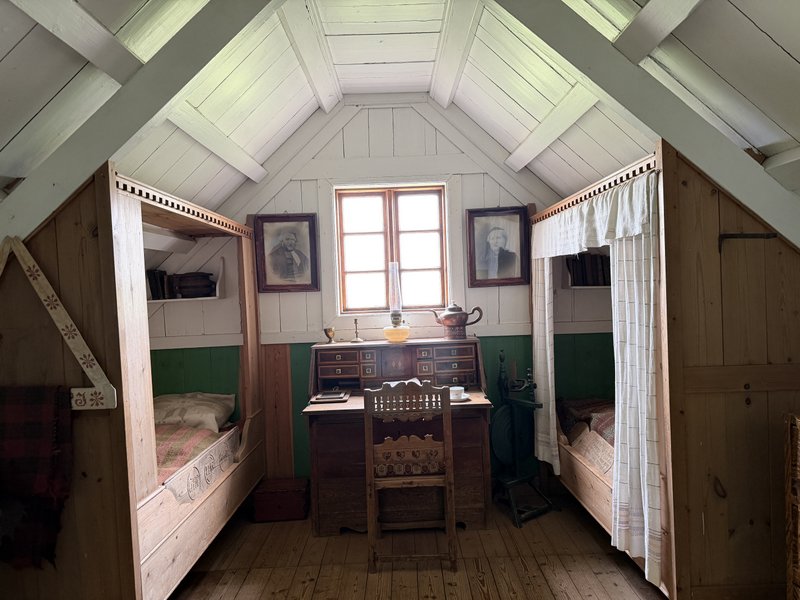
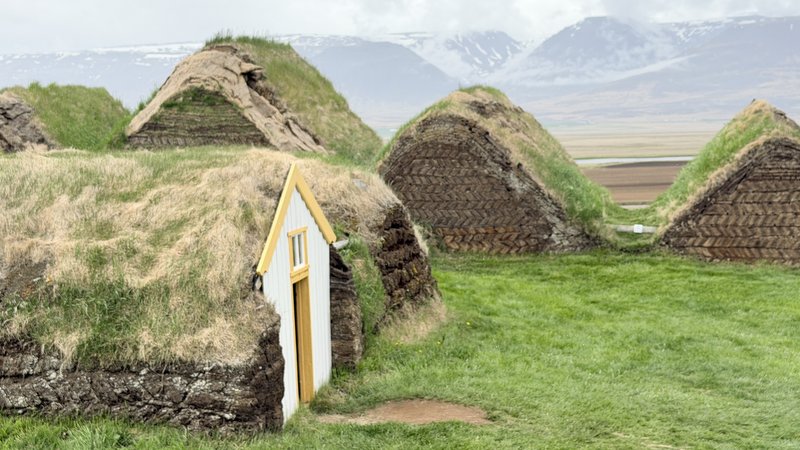
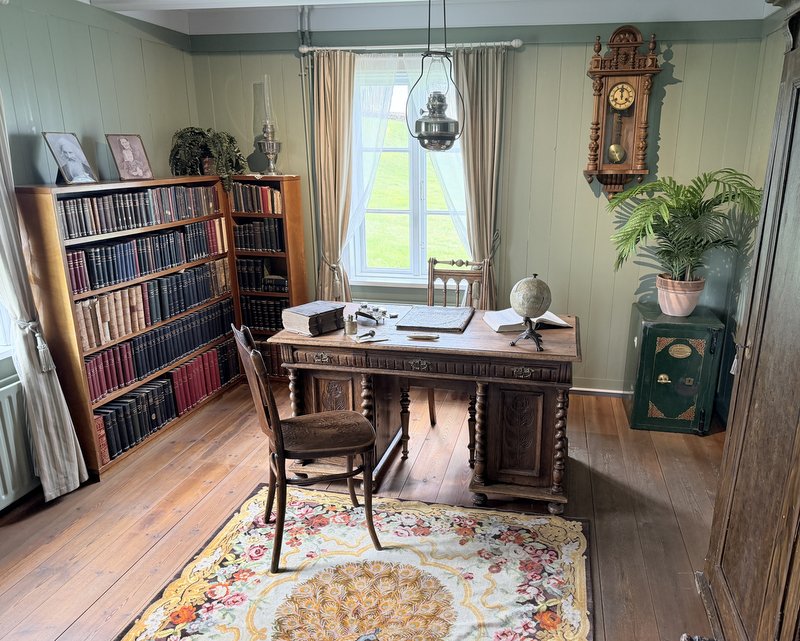
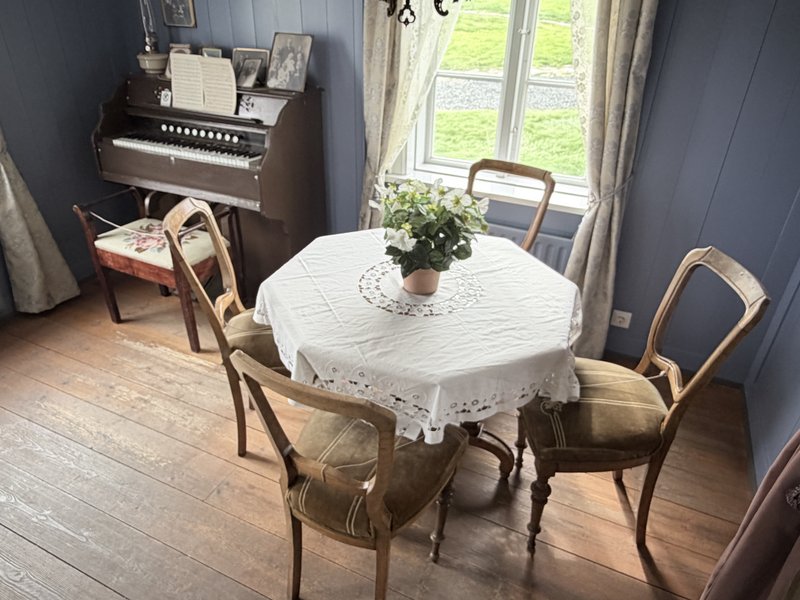
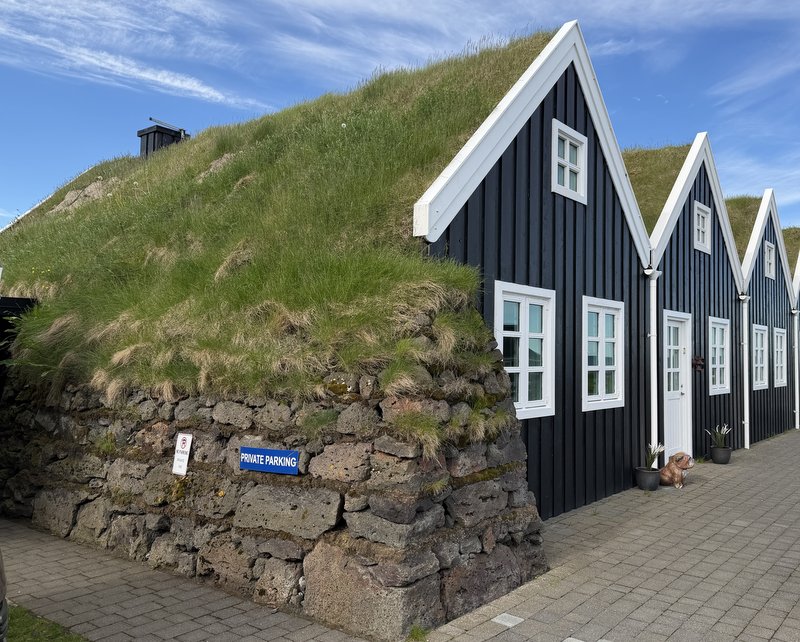
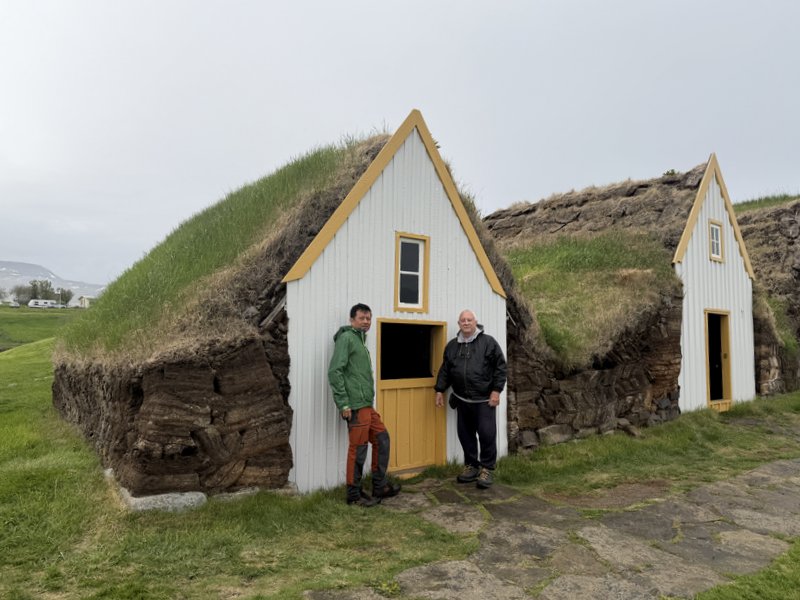
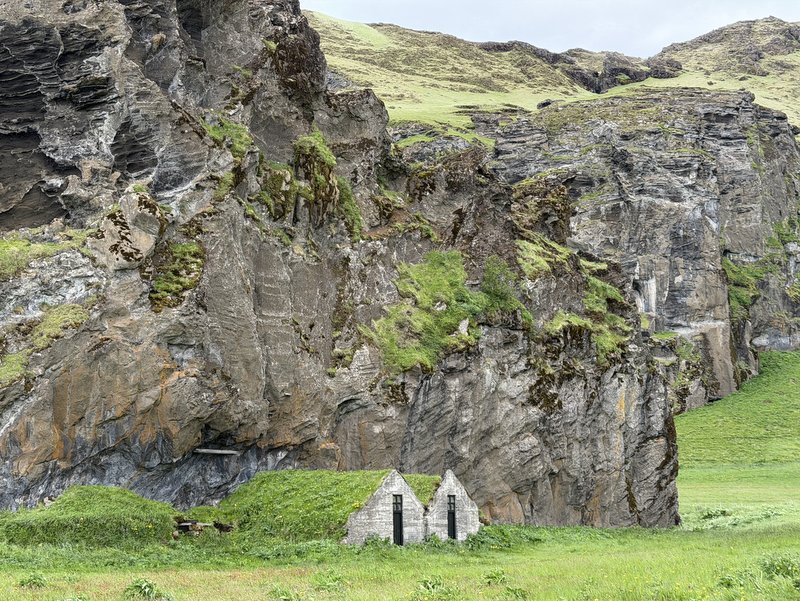
Using turf as a building material has been common in Iceland for over a thousand years. Its insulation properties made it suitable in a cold climate. On the second day of our round trip, we visited Glaumbær, where until 1948 villagers lived in turf houses. It has now become the Skagafjörður Folk Museum. There are 13 turf houses, which can be visited. Fascinating. Pity that it was drizzling and raining that day; otherwise we would have stayed longer. Here is the front row of six turf houses. Many of the artifacts have been kept after the residents left.
+–
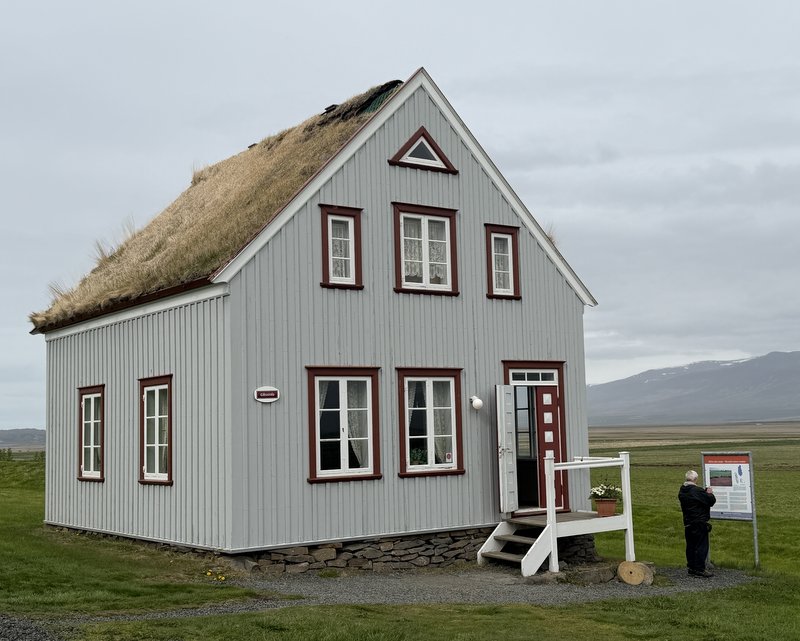
This timber house with a turf roof comes from another location and has been rebuilt here. It houses the management office and a cafe.
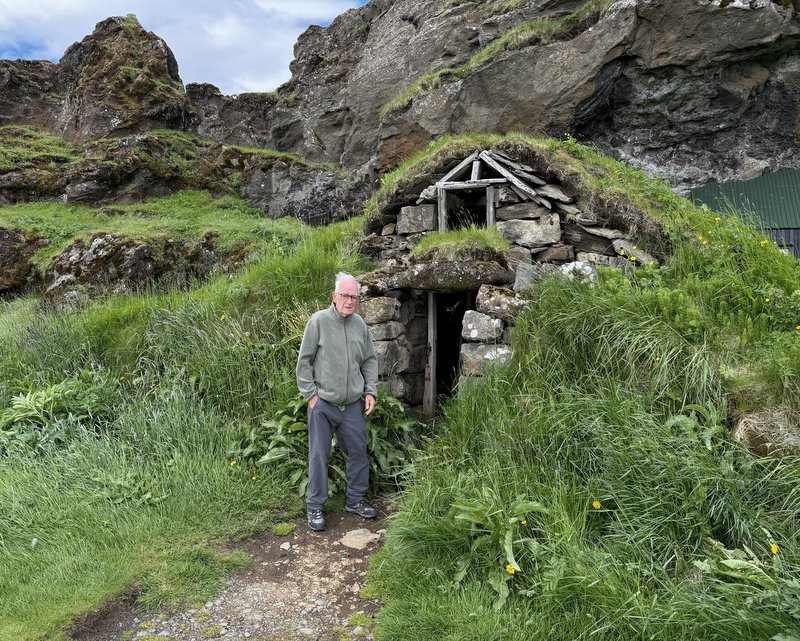
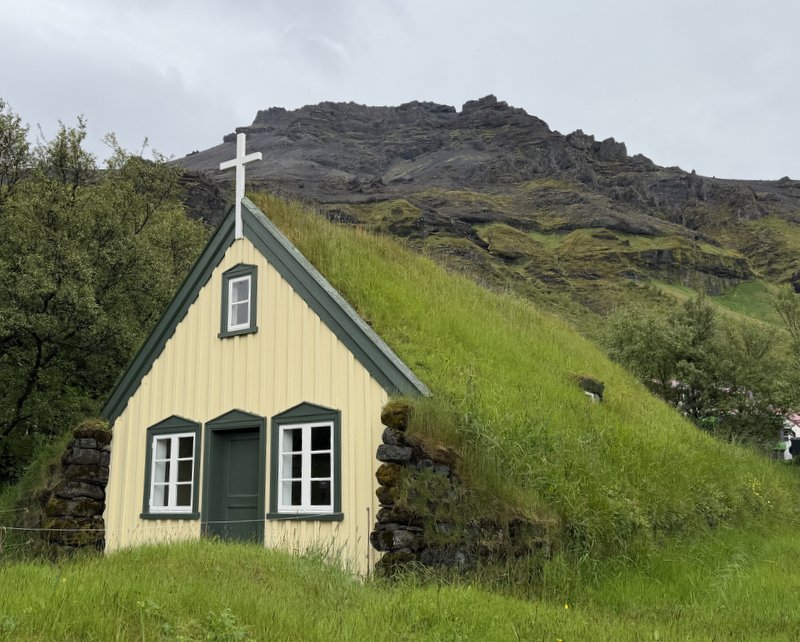
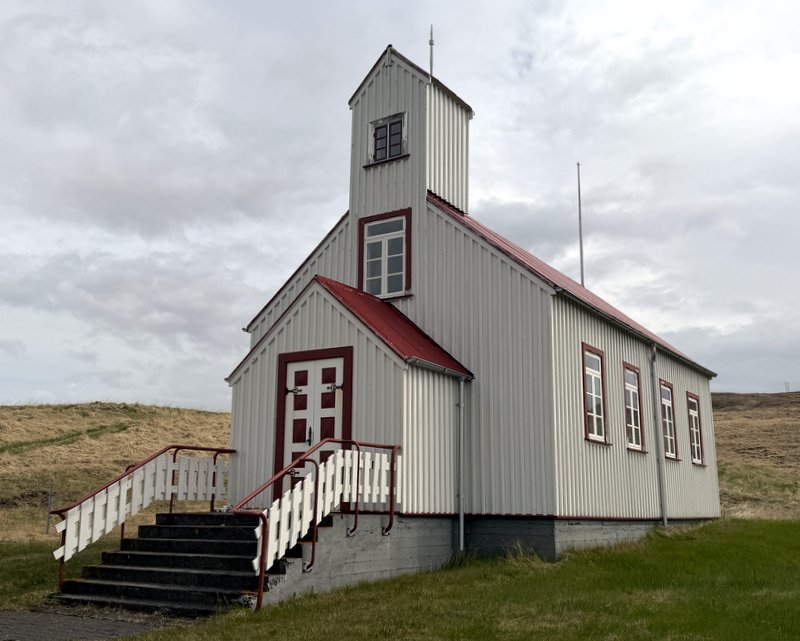
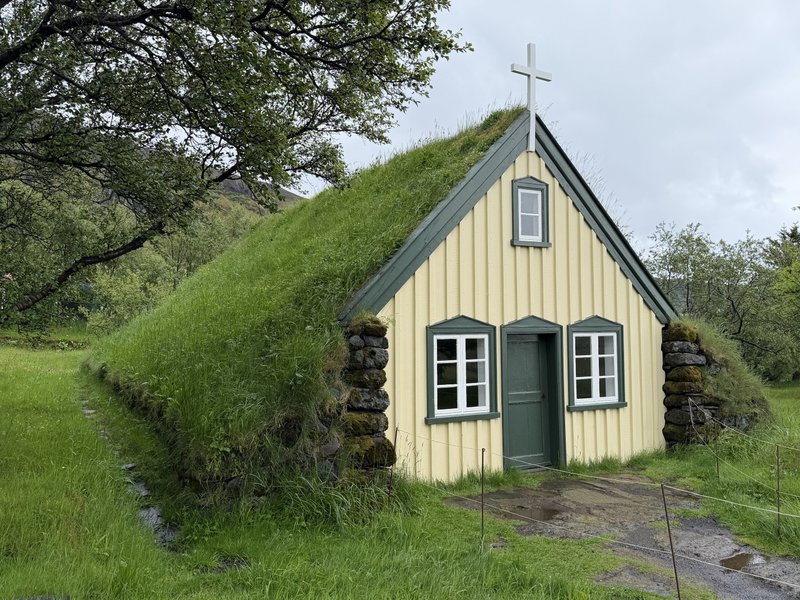
On our trip, we have seen a few more turf sheds and one of the six remaining turf churches. A few of the fishermen’s huts in our last “homestay” still had turf roofs.
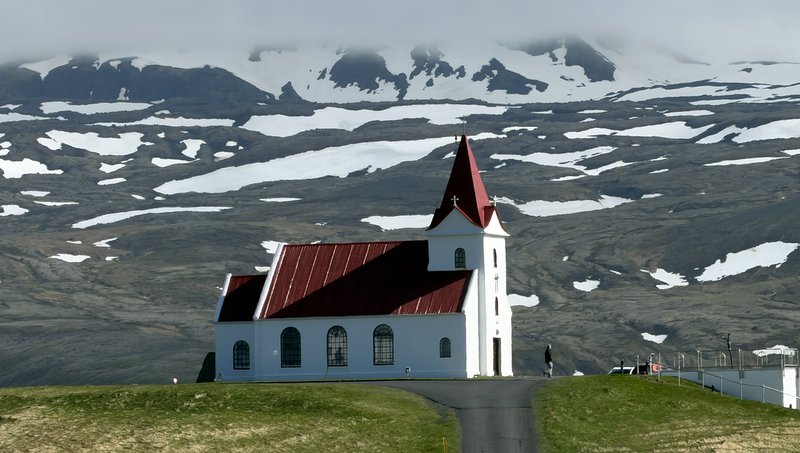
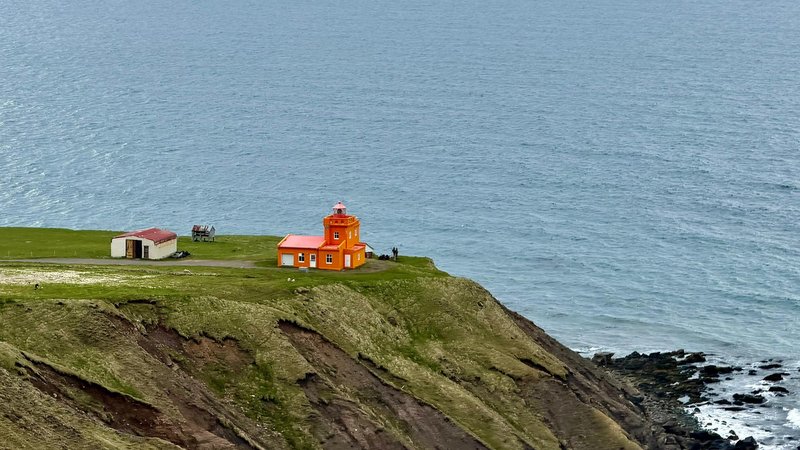
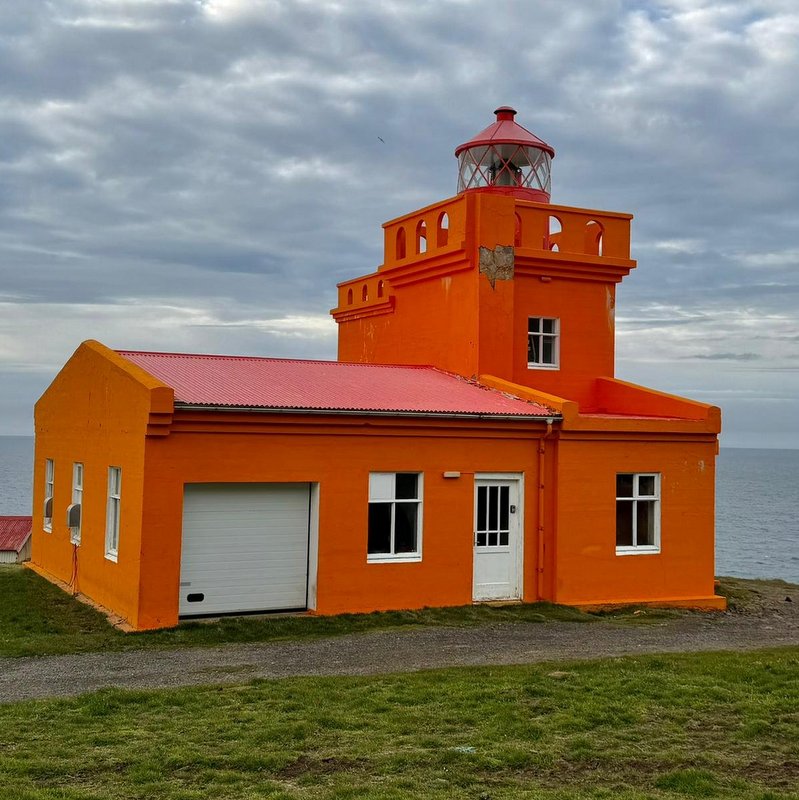
Lighthouses are a bit similar to churches. Remote location, with a tower.
Art
During our round trip we visited two public art installations.
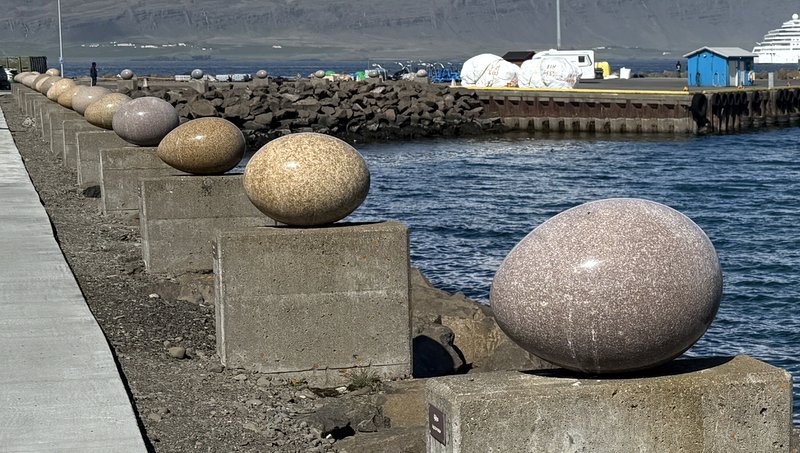
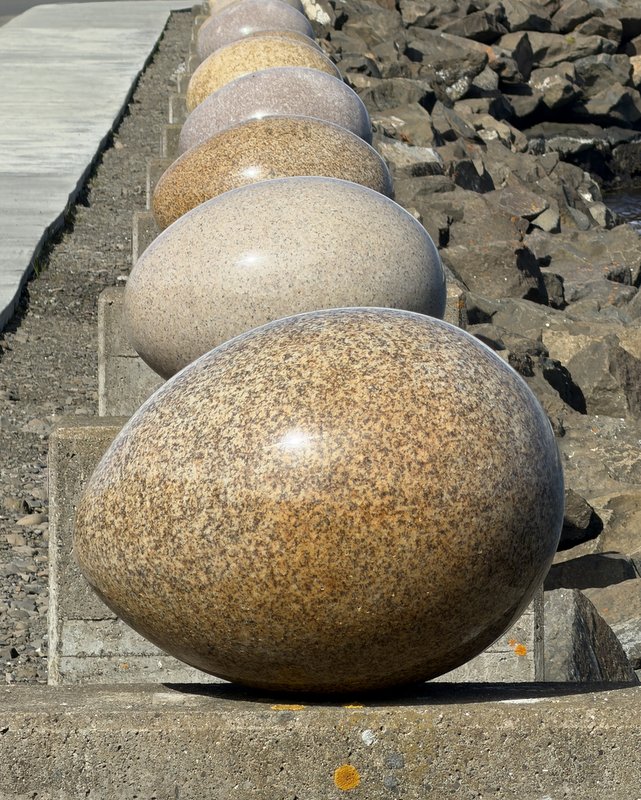
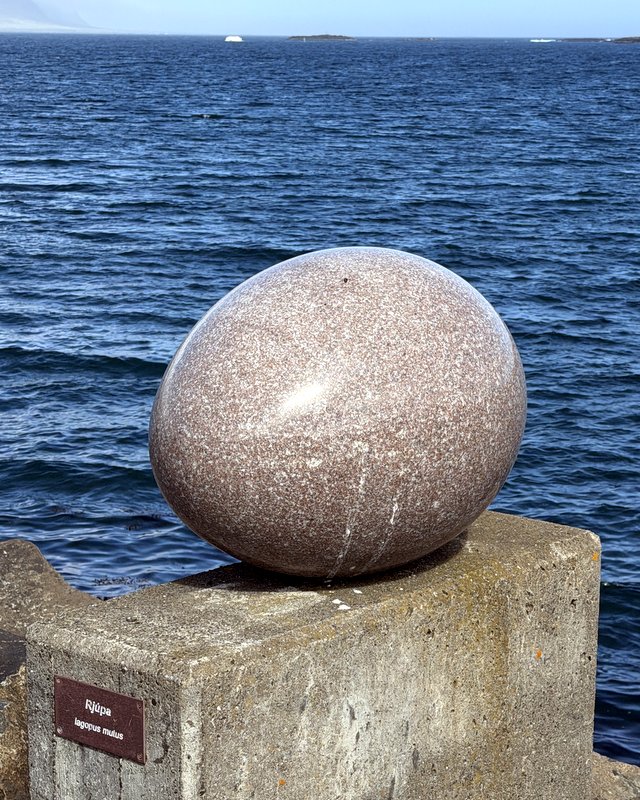
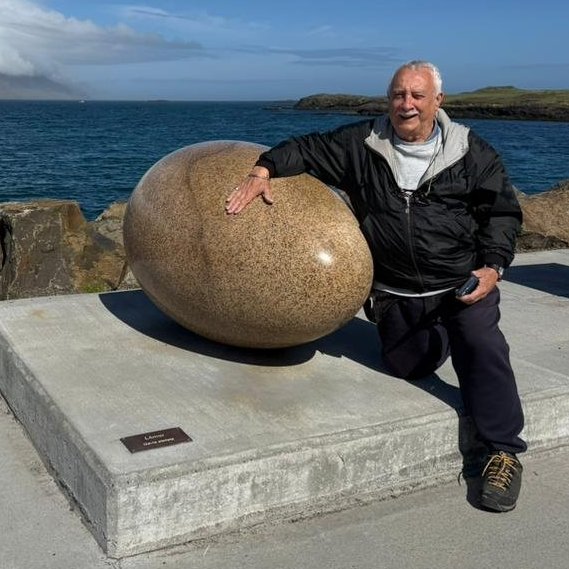
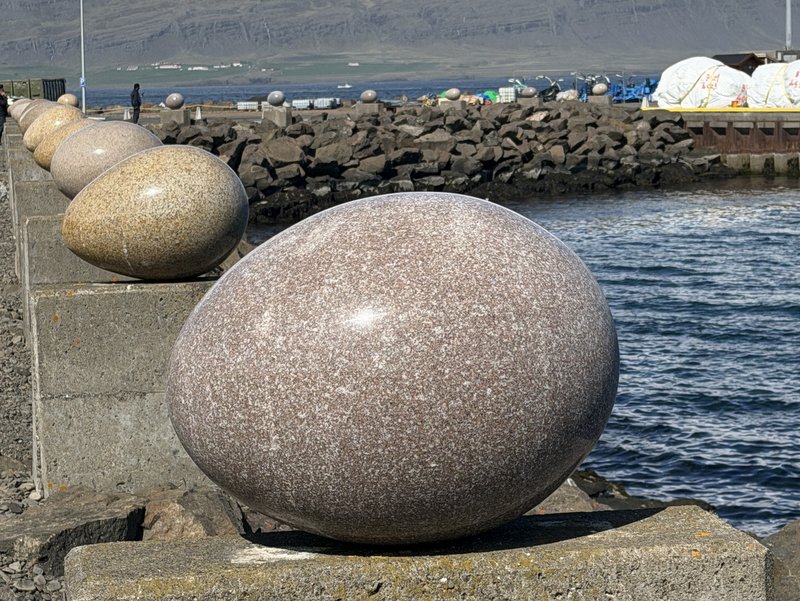
The Eggs of Merry Bay
Created by Sigurður Guðmundsson and officially unveiled in 2009. The installation consists of 34 oversized granite replicas of bird eggs. Each egg represents a different species of local bird that nests in the country.
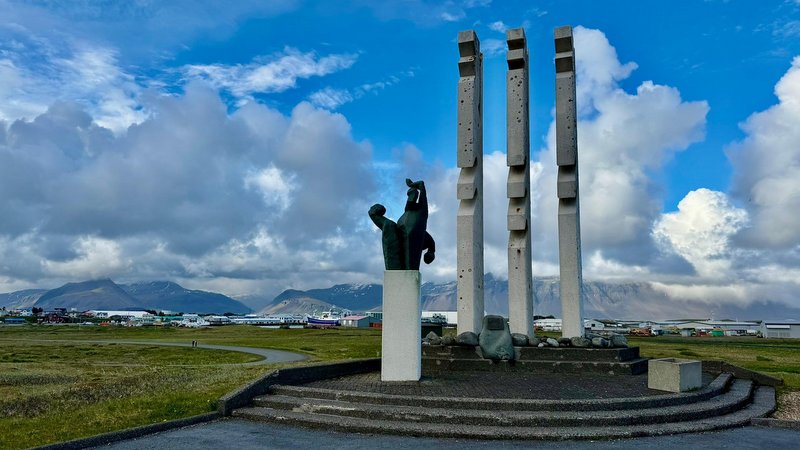
Höfn Universe Sculpture
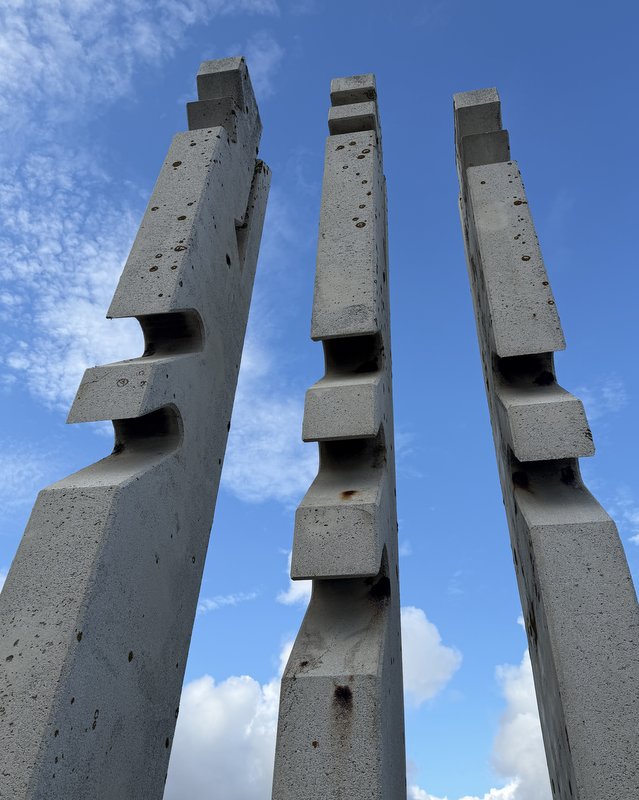
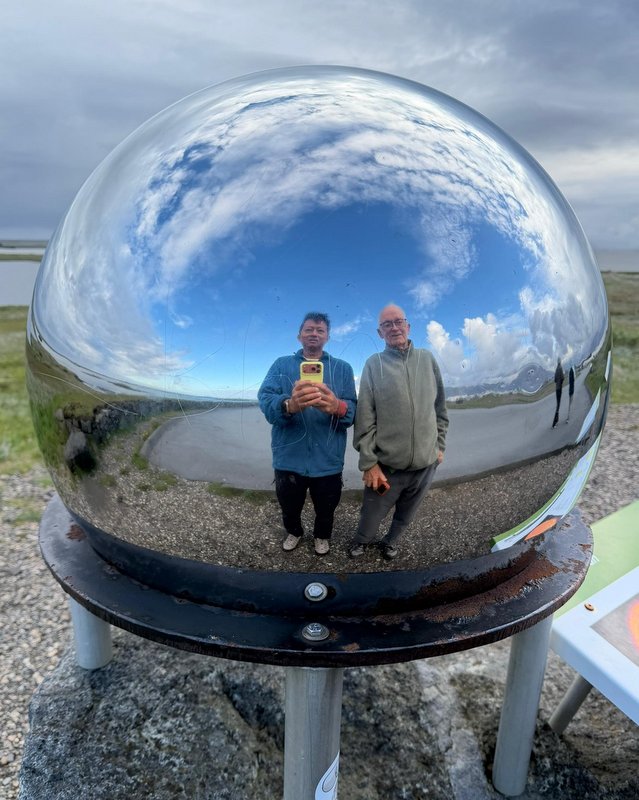
This artwork was created by Jón Gunnar Árnason (who also created the Sun Voyager in Reykjavík). The bronze sculpture is a memorial for all fishermen who lost their lives at sea; the chrome ball represents the Sun, and the three pillars may point to the famous Pillars of Creation. –
We drove about 2400 km, mainly on Highway no 1. It resulted in this lengthy blog
We visited Iceland on a 10D9N trip as part of our Europe holidays. Click here for a chronological account of this 7-week holiday. I have split this Iceland report into two parts because we have visited many places in those 10 days. This part describes the many natural wonders of Iceland.
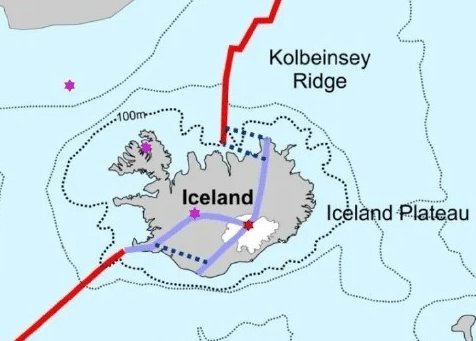
Iceland is unique because of two factors. In the first place it is located on top of the Mid-Atlantic Ridge. Two tectonic plates, the Eurasian and the North-American, are moving apart from each other a few cm per year, magma from the Earth’s mantle fills the gap and gives rise to a suboceanic mountain ridge. Iceland is one of the places where this ridge reaches the surface. Because of its origin, Iceland is volcanic; the last eruption was in 2025. The other factor is its northern location, very close to the Arctic Circle. During the Last Ice Age (~21000 years ago), the island was covered by an icecap of between 1500 and 2000 m thick. Volcanic eruptions beneath such an ice cap can have catastrophic consequences and are responsible for the island’s rugged structure.
Here are two images. One shows the Mid-Atlantic Ridge (in red) and fractures in the Earth’s crust (in blue), the other one the thickness of the icecap (in shades of grey) during the Last Ice Age.
Geothermal Activity
The fractured Earth crust allows groundwater to seep deep underground, where it is heated by magma to hundreds of degrees and returned to the surface, leading to hot springs, steam vents, and geysers. About one-third of Iceland’s electricity production uses this geothermal energy.
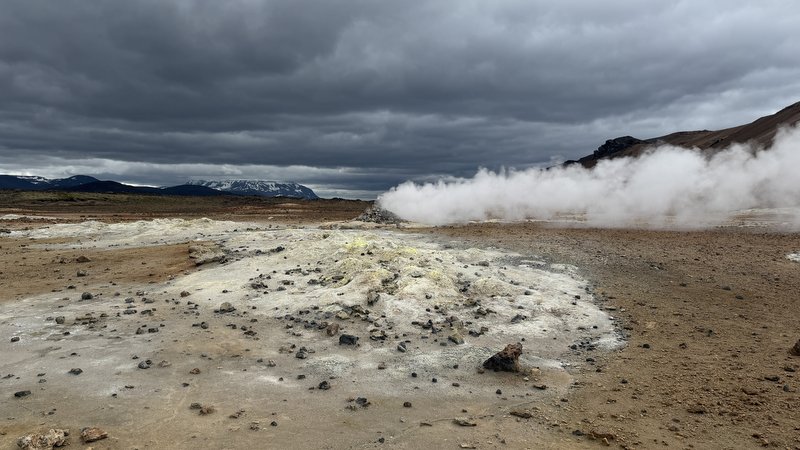
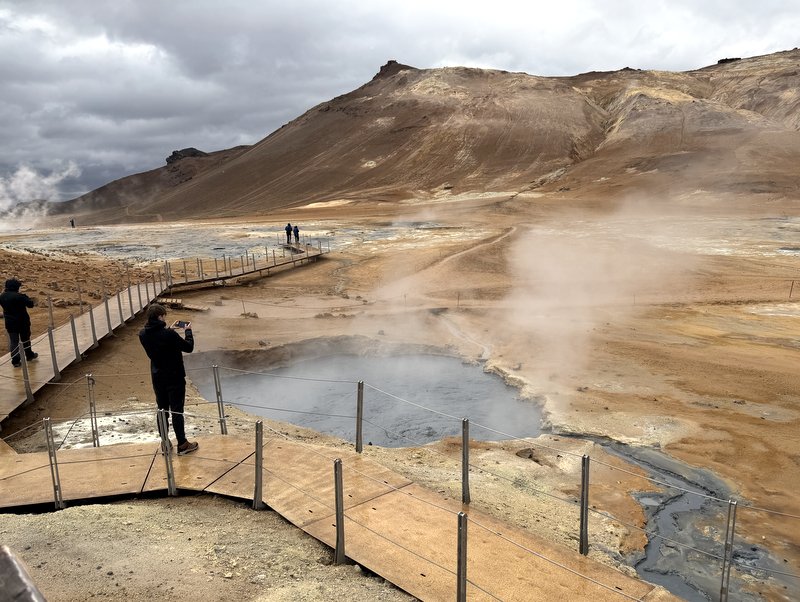
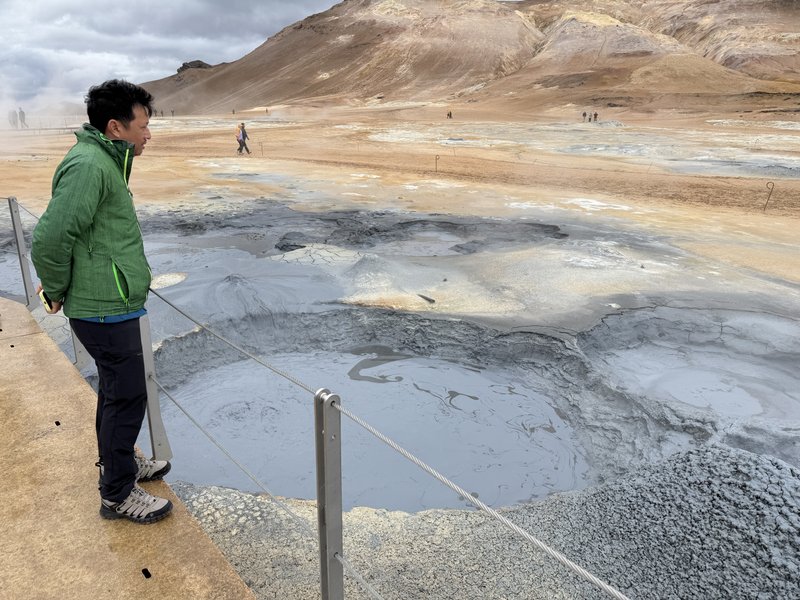
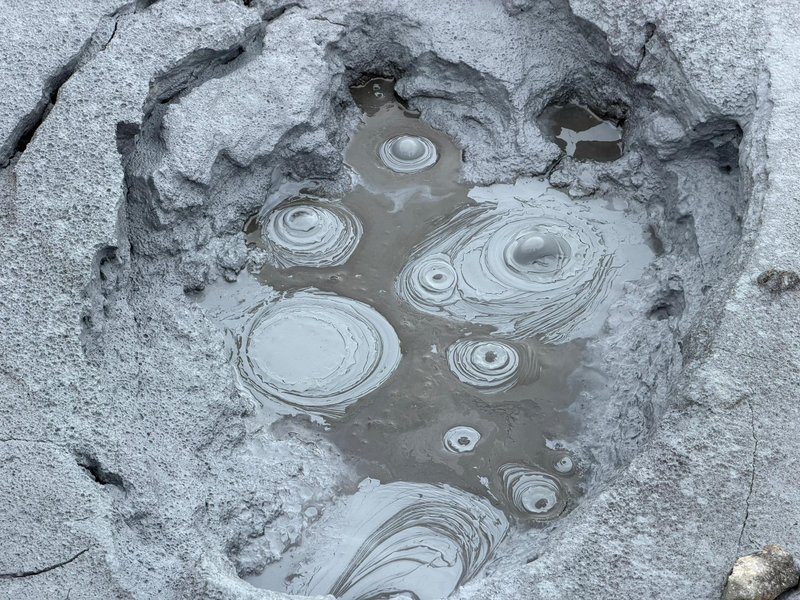
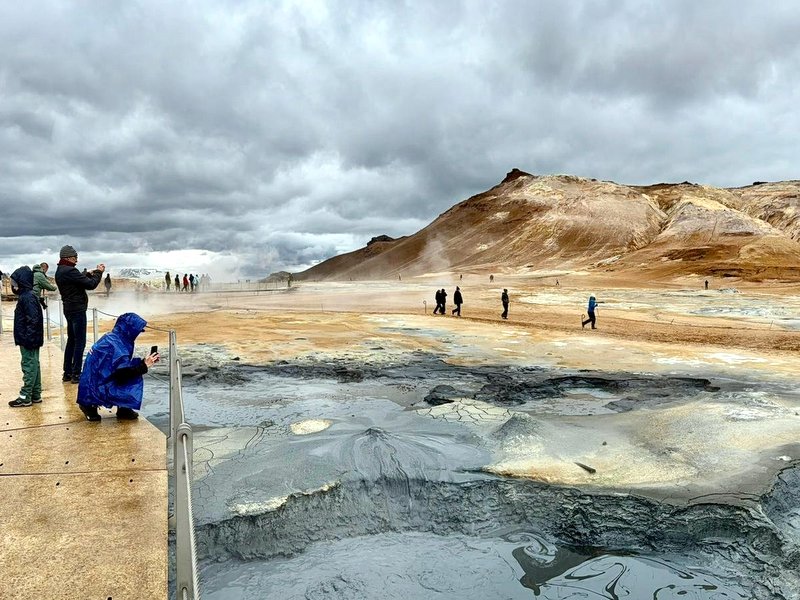
We visited Hveri, the most active geothermal area of Iceland. An alien landscape, steam vents (known as fumaroles), bubbling mud pools, yellow sulfur, and a smell of rotten eggs. Free access, but you have to pay for parking. Well-marked pathways near the pools; to the fumarole,- you could walk on your own. Fascinating.
—
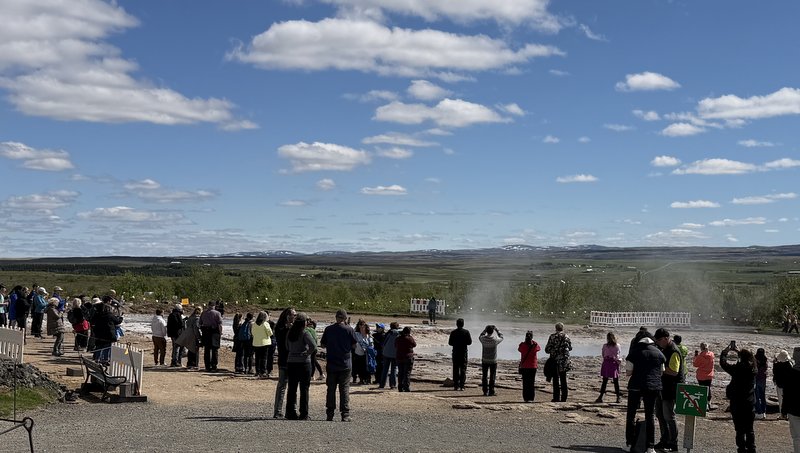
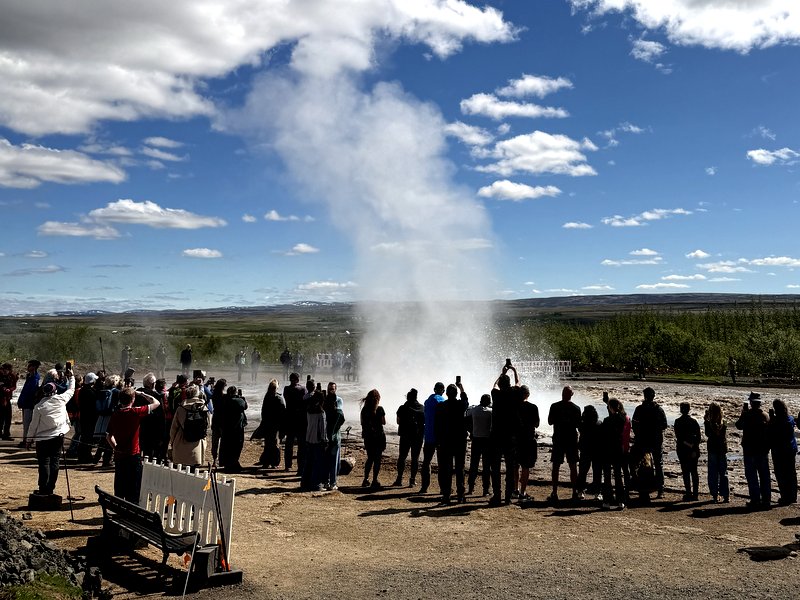
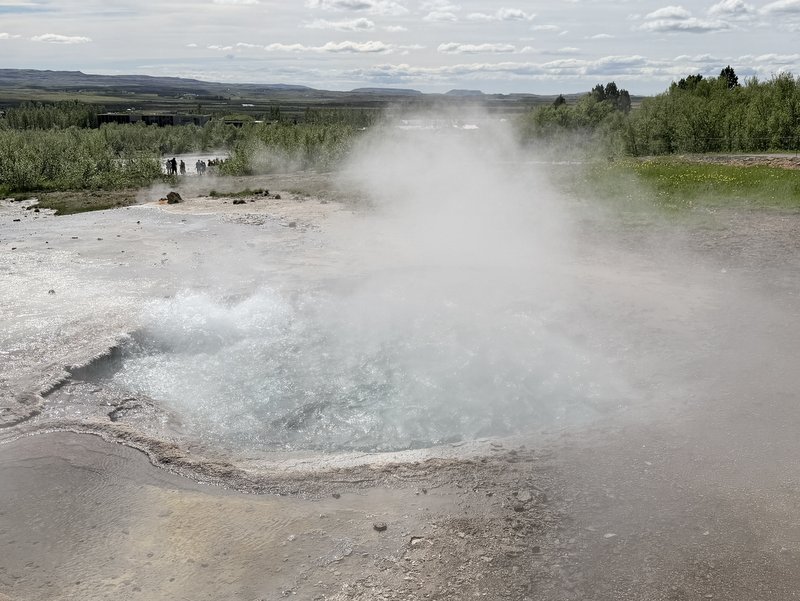
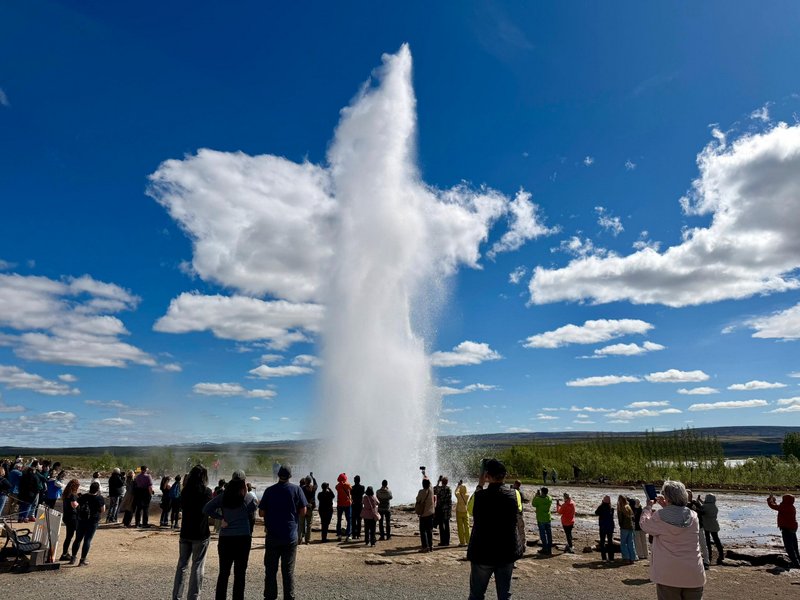
On our last day in Iceland we visited the famous Geysir, one of the most popular tourist attractions. Bus loads of tourists visit the location daily. A geyser is basically a hot spring, where water seeps down though cracks and gets (super) heated. This builds up pressure resulting in an eruption of water and steam. How often this happens, depends on the underground structure. Earthquakes can change this structure, there have been years that eruptions were rare, but presently the Great Geysir erupts every few minutes. Not always to the same height so we stayed for some time, hoping for a powerful one. There are also smaller geysers and mud pools
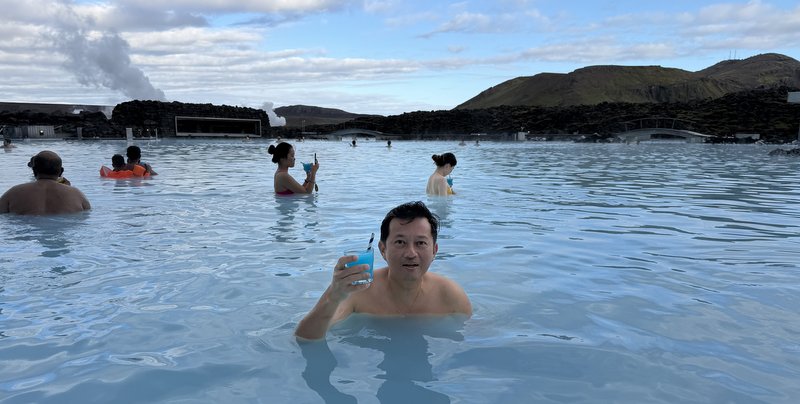
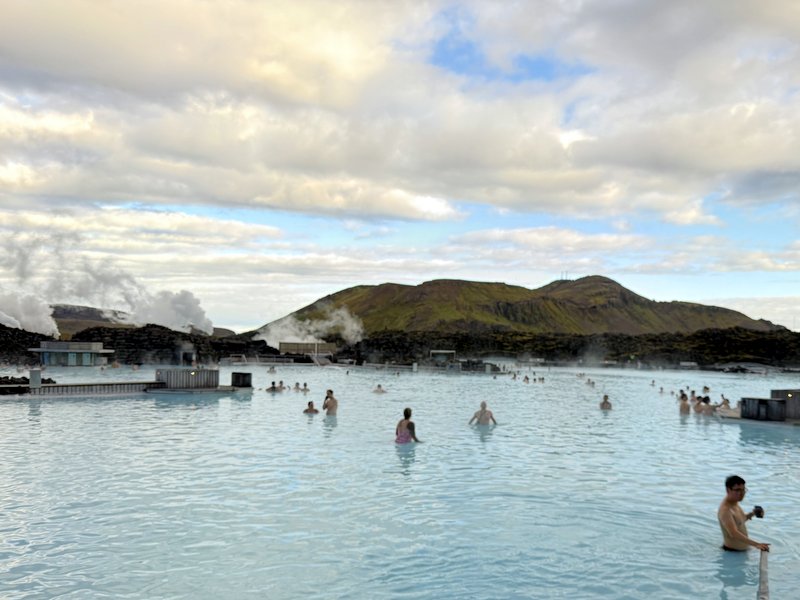
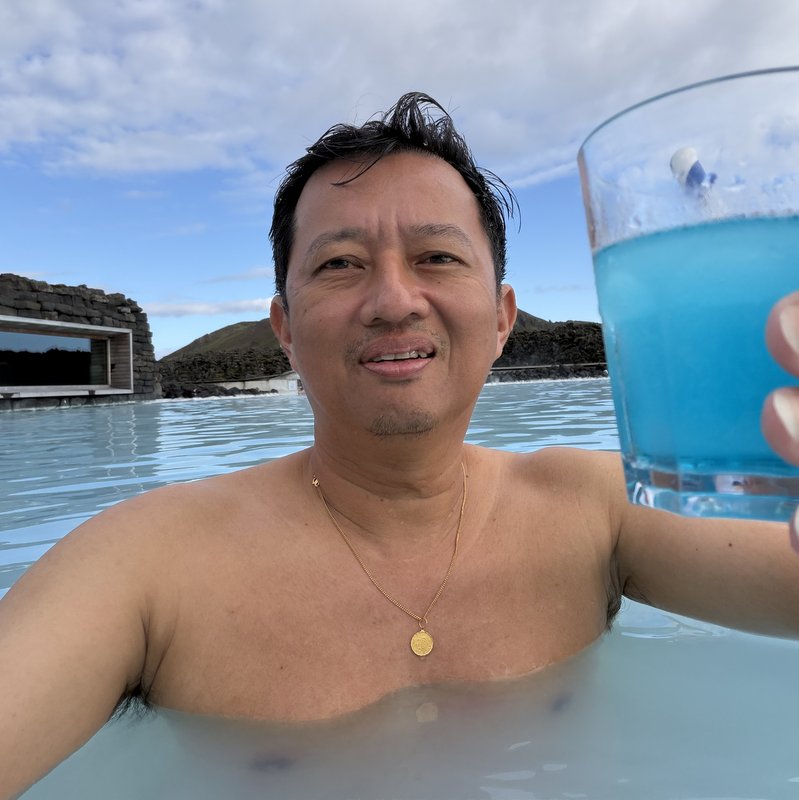
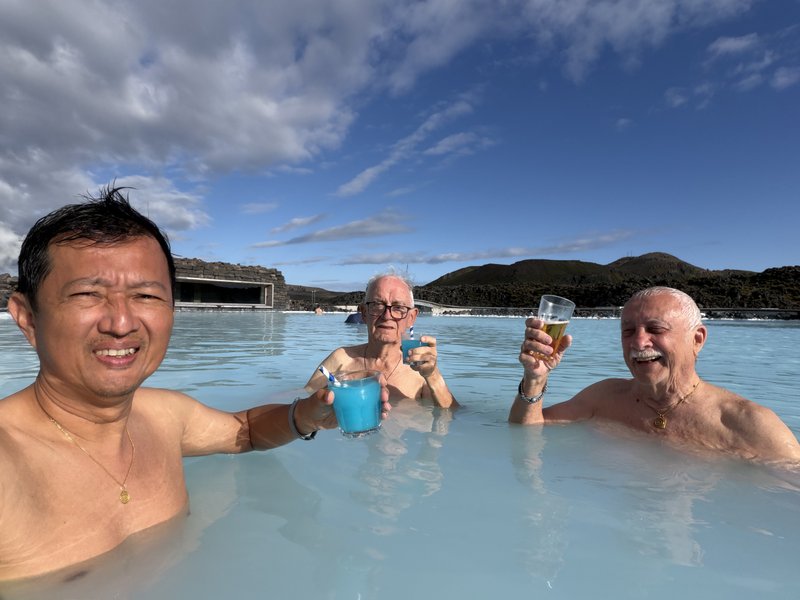
When you tell people that you visited Iceland, they often ask, did you visit the Blue Lagoon? And yes, we did, but it is very overrated and commercial It is actually a byproduct of a nearby geothermal powerplant. The powerplant uses superheated water to generate electricity and hot water for households. Then the wastewater is released in nearby ponds, the Blue Lagoon! Tickets are expensive and you need to book a timeslot. One free (non-alcoholic) drink is provided. Swimming is prohibited, we walked around in the milky blue water.
Glaciers
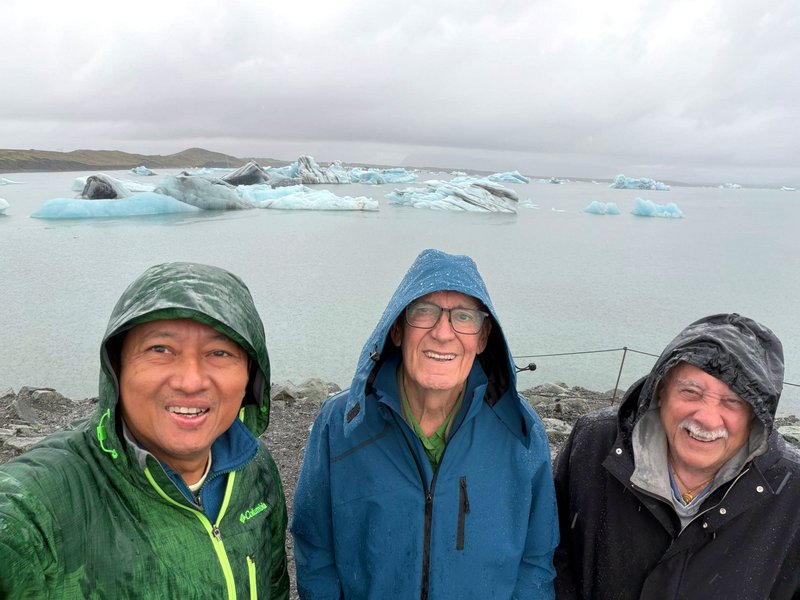
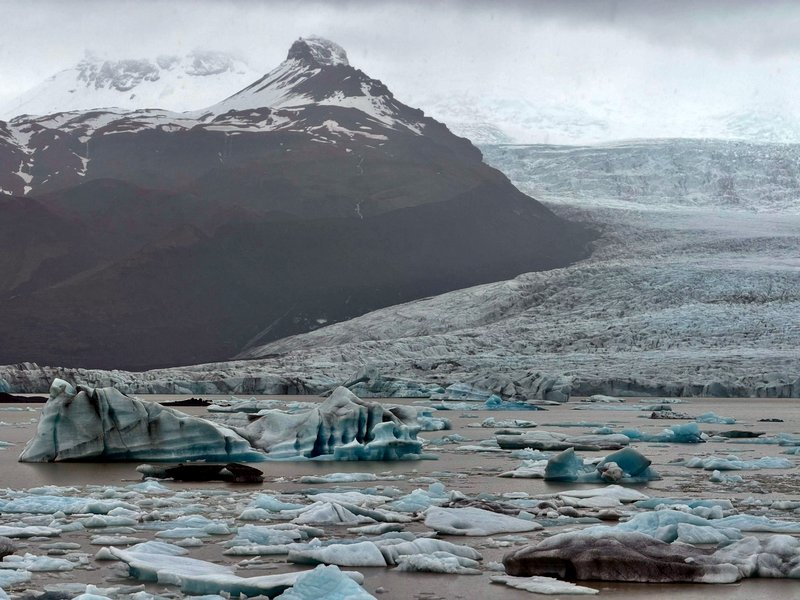
After the Last Ice Age, the icecap that covered Iceland, has melted, but glaciers still cover part of the island, and because of Iceland’s location, they can extend almost to the coast. As glaciers are still retreating, the melting ice forms a glacier lake and when near the sea a glacier lagoon! We visited the Jökulsárlón lagoon. Aric is standing on the beach with the lagoon behind him and far away the front of the glacier. The beach is called Diamond Beach, because the broken glacier pieces melt in the seawater and become transparent, like jewels.
—
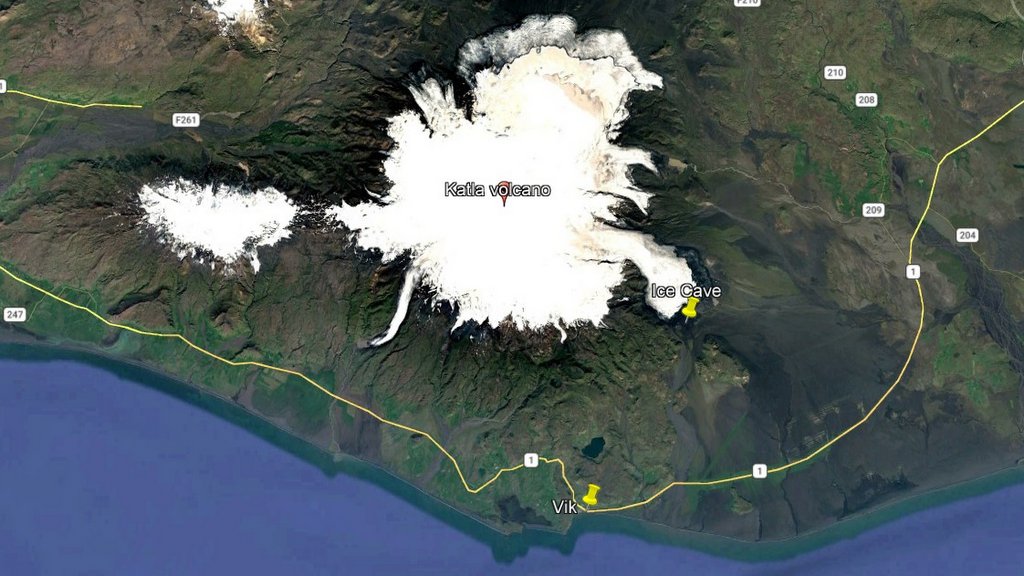
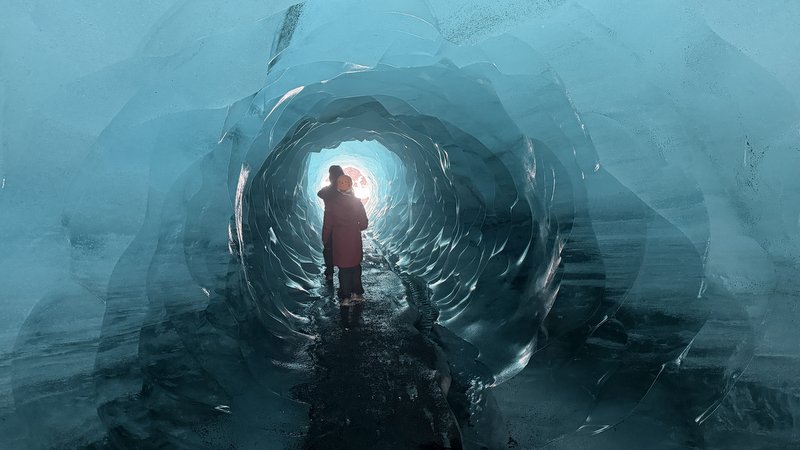
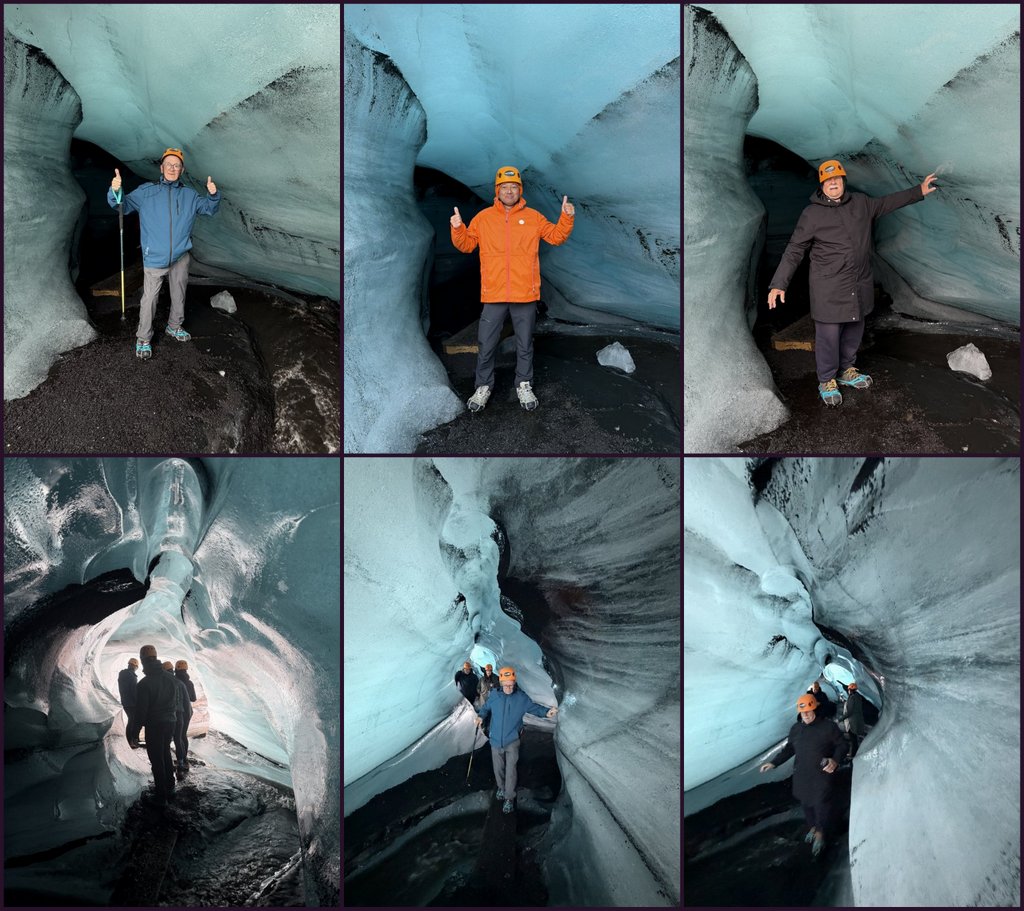
An absolute highlight of our Iceland holiday was a visit to the Katla Volcano Ice Cave. The Katla Volcano in the south of Iceland is one of the most active volcanos of the country. It is covered by an icecap of 200-700 meter thick. Every 40-80 years it has a major eruption, that can lead to a catastrophic glacier flood. The last one was in 1918, until now it is dormant, but closely monitored.
+
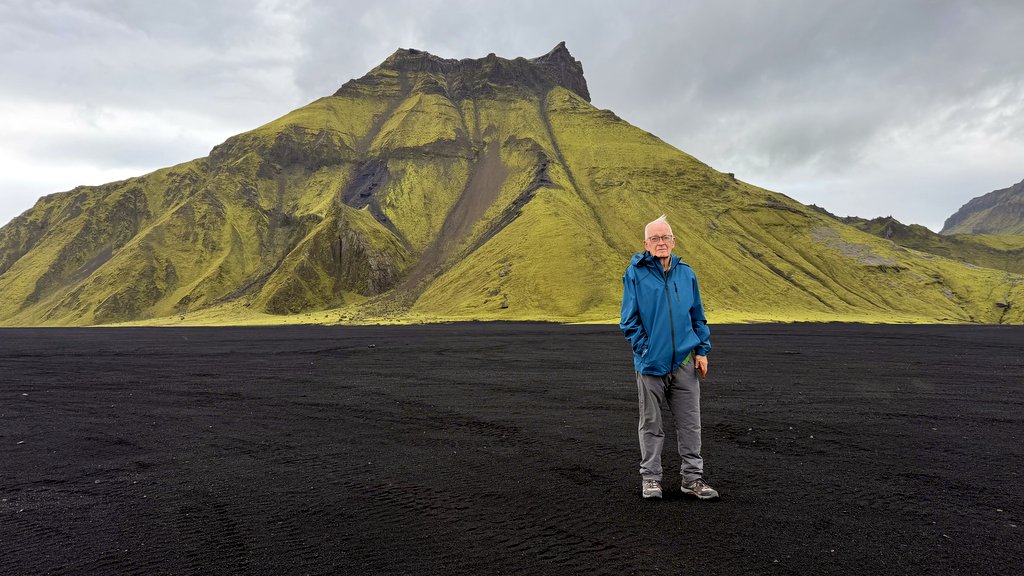
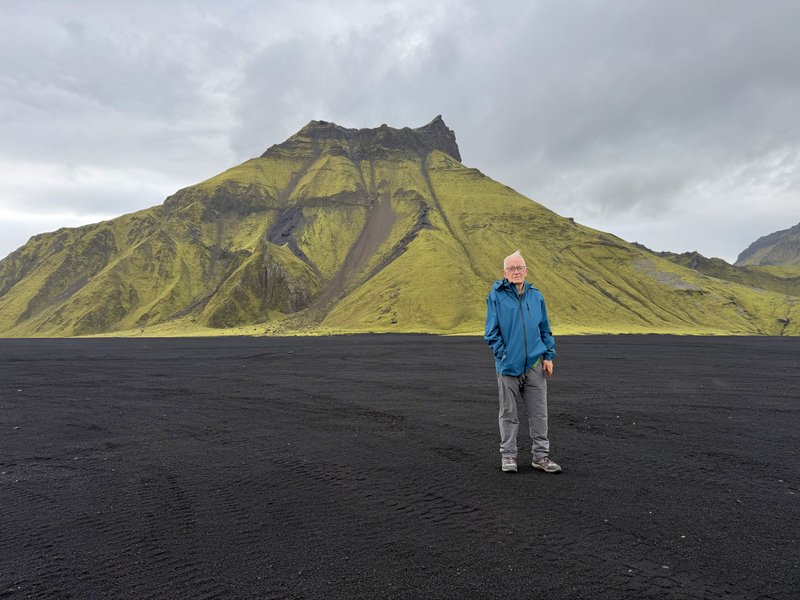
The “expedition” took 3 hours and started from Vik. a small village. After following the Ring Road for a while the super jeep went off road to our first stop, a beautiful black plain with a mossy-green mountain, where an episode of Star Wars had been filmed.
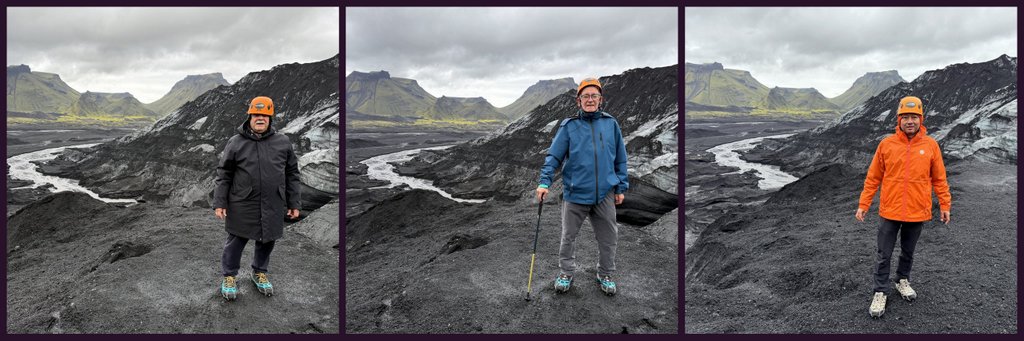
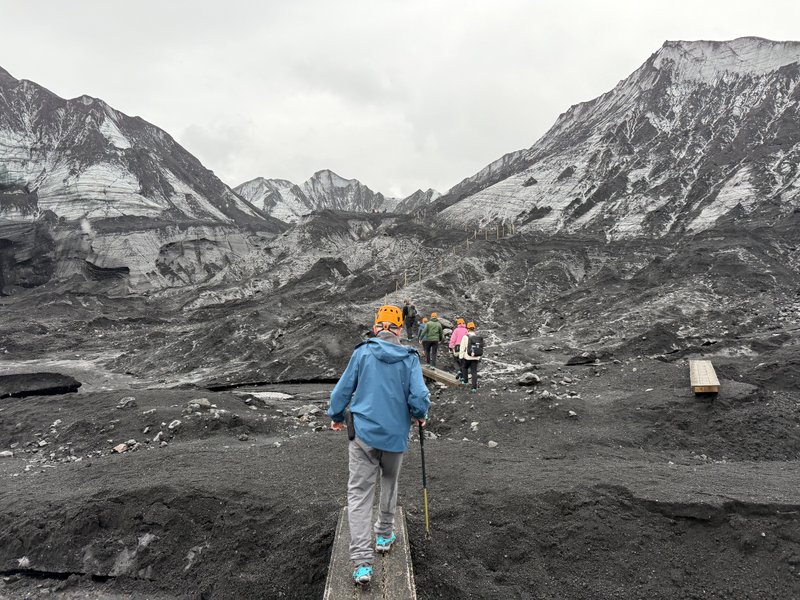
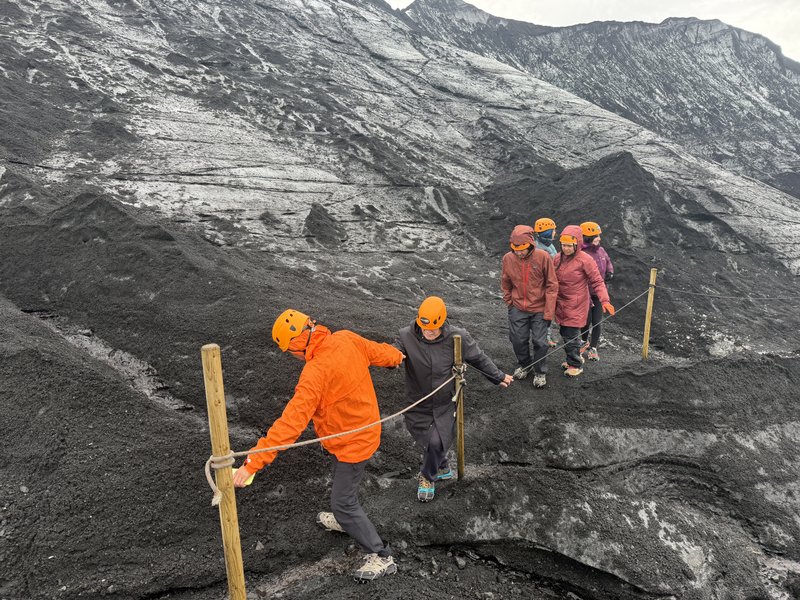
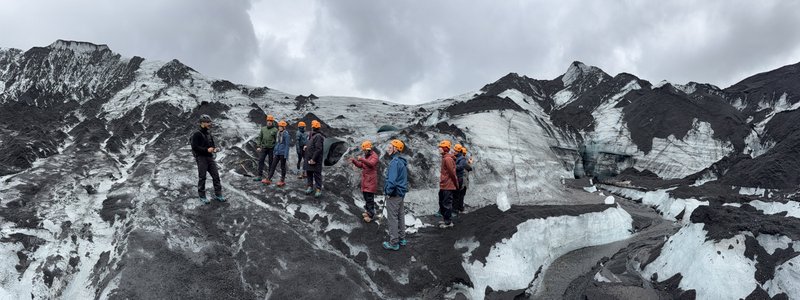
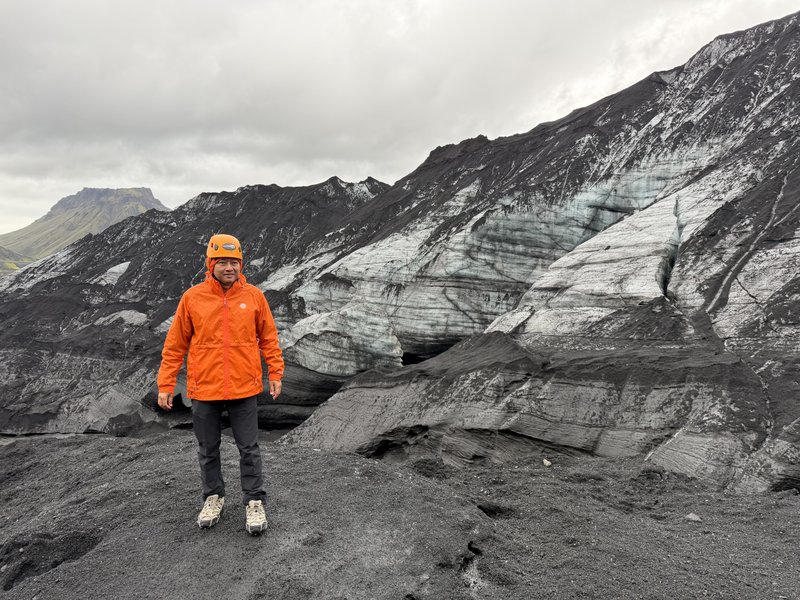
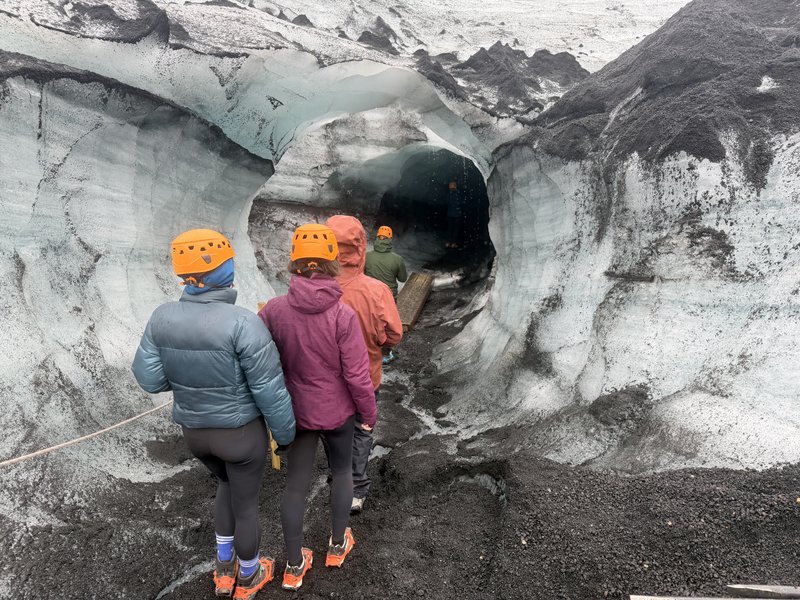
We continued to the glacier, where we were given helmets and crampons. The glacier is covered with black volcanic ash, the ice can be slippery. After putting them on, we were ready to go.
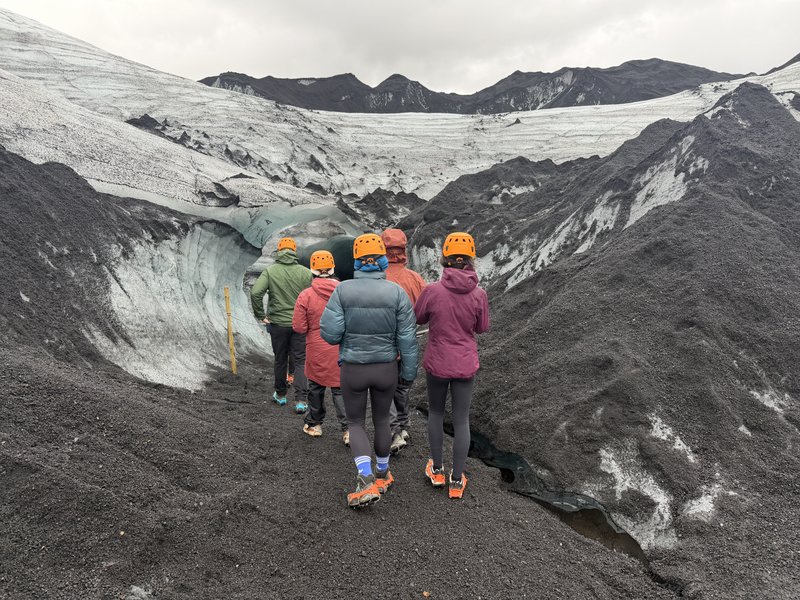
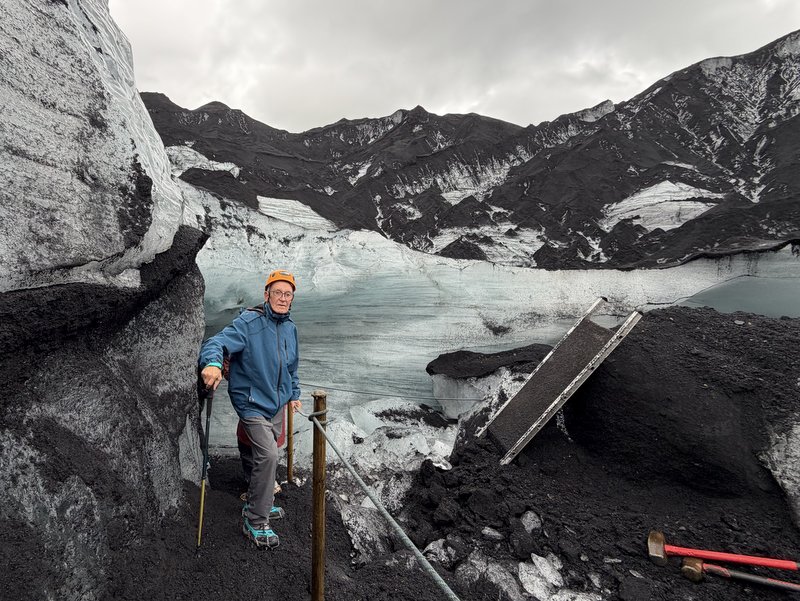
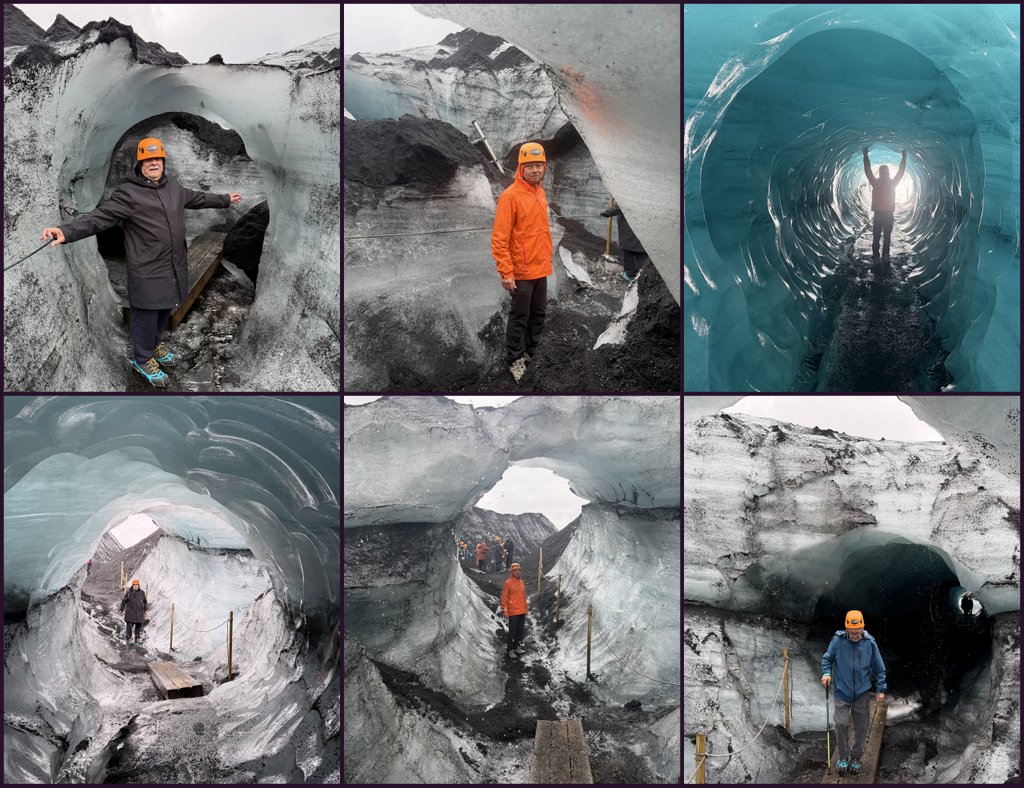
We are walking here on the glacier already/, climbing to the entrance of a man-made tunnel
–
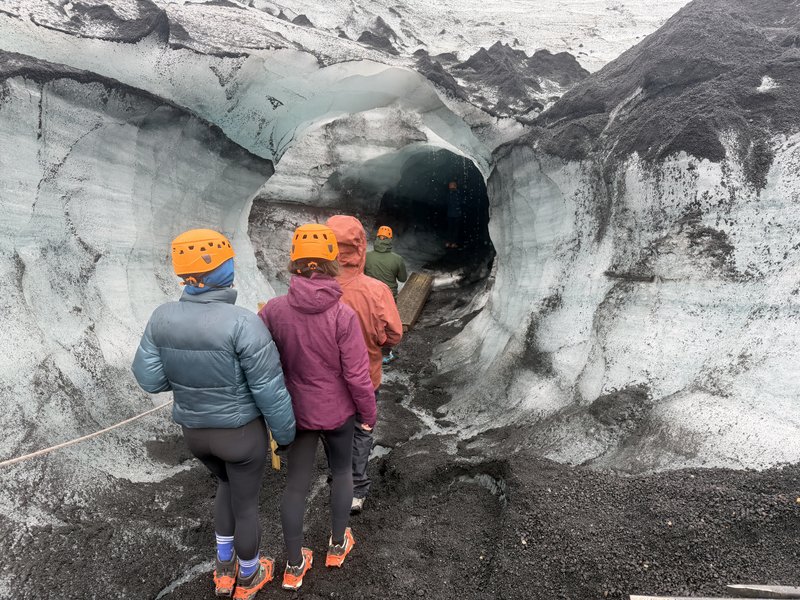
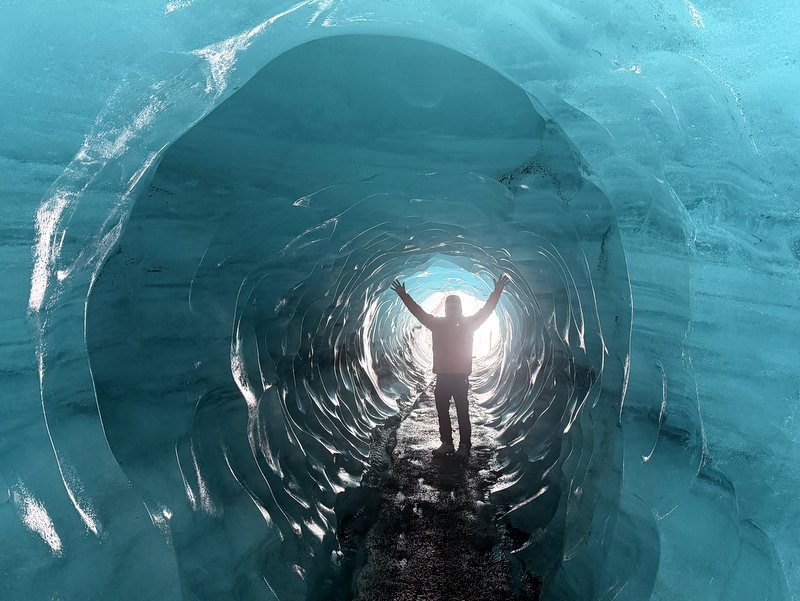
The tunnel is amazing/
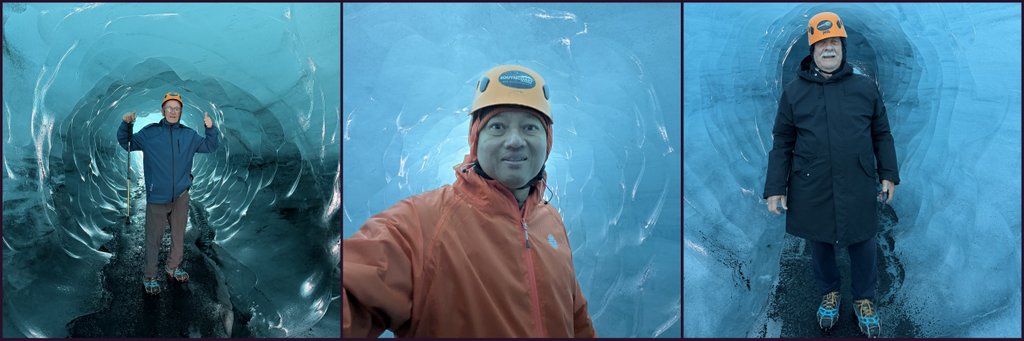
After crossing the tunnel, we are surrounded by glacier.
In the ice cave.
Going back through the tunnel.
Returning helmets and crampons. What a spectacular adventure.
Waterfalls
Iceland is often called the “Land of Waterfalls” due to over 10.000 falls and cascades, fed by glaciers and rainfall. The volcanic structure of the island, with steep slopes and cliffs, provides a perfect location for often dramatic waterfalls. Here is a List of waterfalls in Iceland.
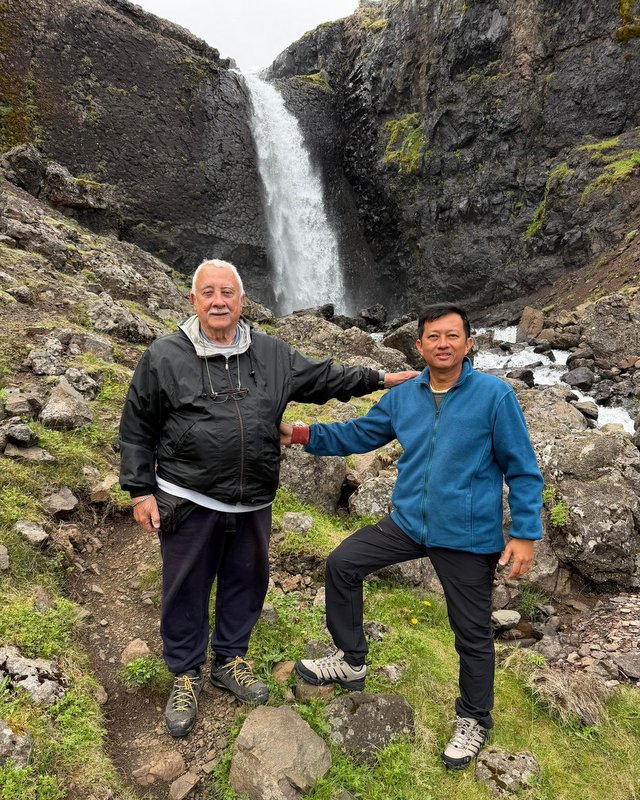
A few hours after we had started our clockwise round trip around the island, we stopped for the first waterfall. A fine example by Malaysian standards, but run of the mill in Iceland.
A nameless waterfall
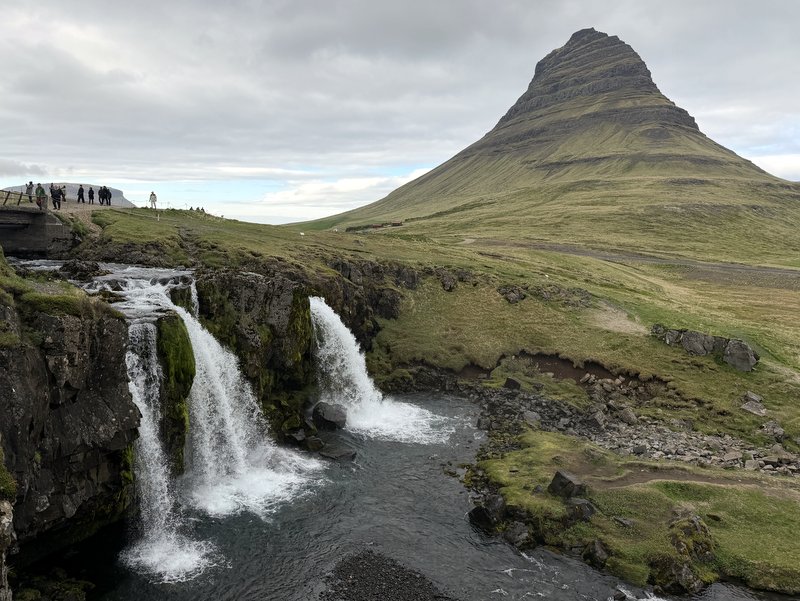
Later on the same day, visited the Kirkjufelllfossl (Foss is the Icelandic word for waterfall).- This is a popular tourist attraction, especially because of the “mountain”. This is not a volcano, but a so-called Nunatak, a rocky outcrop that protruded from the ice field that was here during the Ice Age.
Kirkjufellsfoss
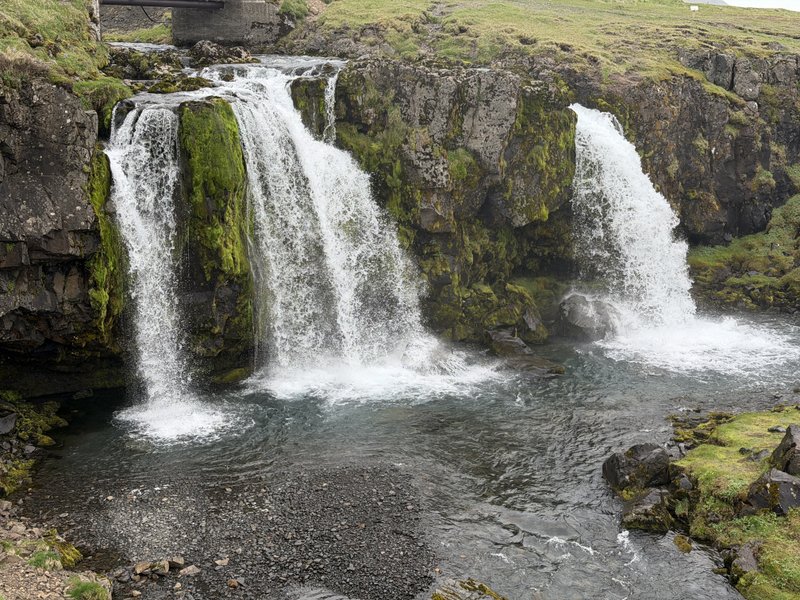
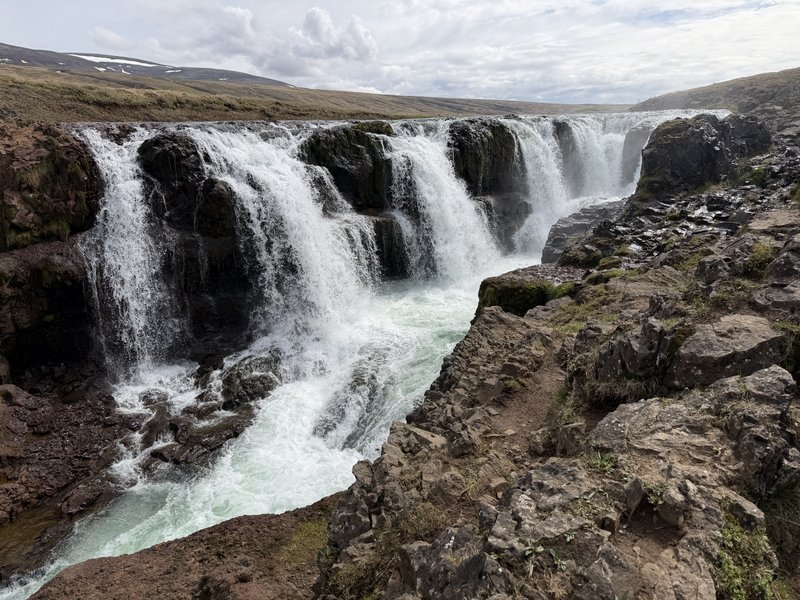
The following day we visited two waterfalls. First, the Kolugljúfur Canyon, 40-50 m deep and 1 km long, eroded by the Víðidals river. The water of this river plunges in several tiers, the Kolufossar waterfalls. Not very tall, but wide with an impressive water volume. –
Kolufossar main fallKolugljúfur Canyon
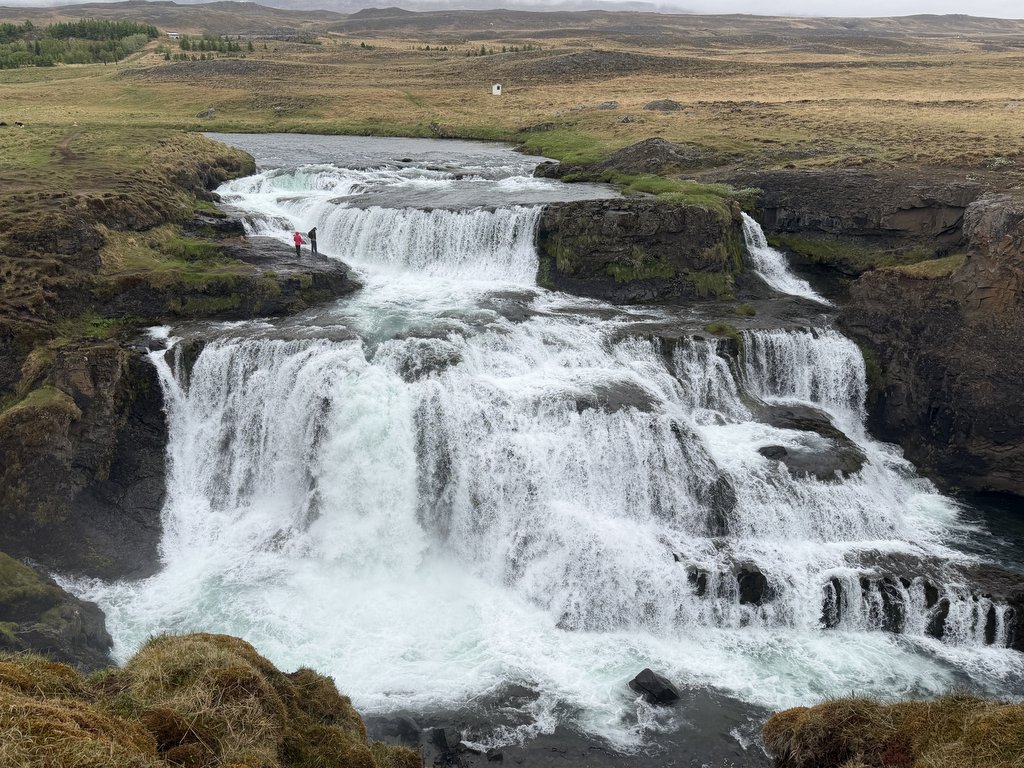
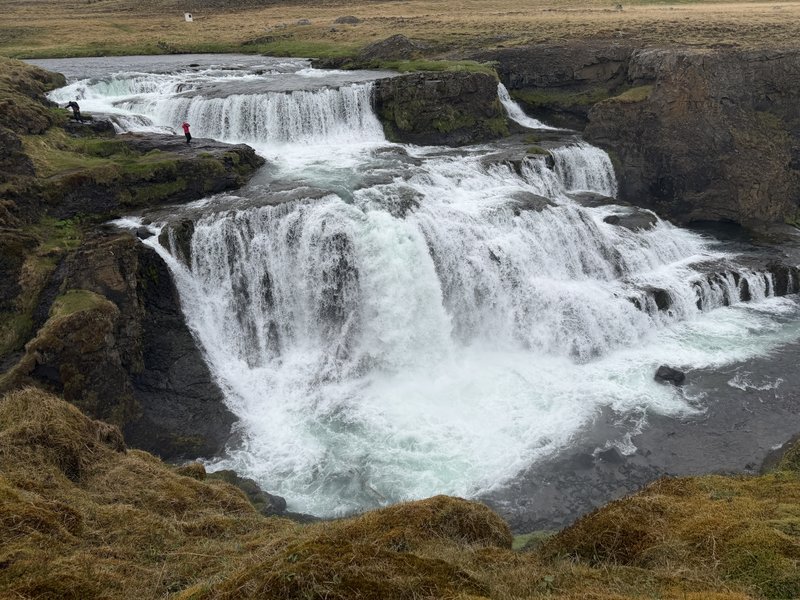
Later that day, we had a look at the Reykjafossl. This waterfall is on private land, we could visit it, but has recently been closed to visitors. Notice the tiny human figures in the pictures.
Reykjafoss
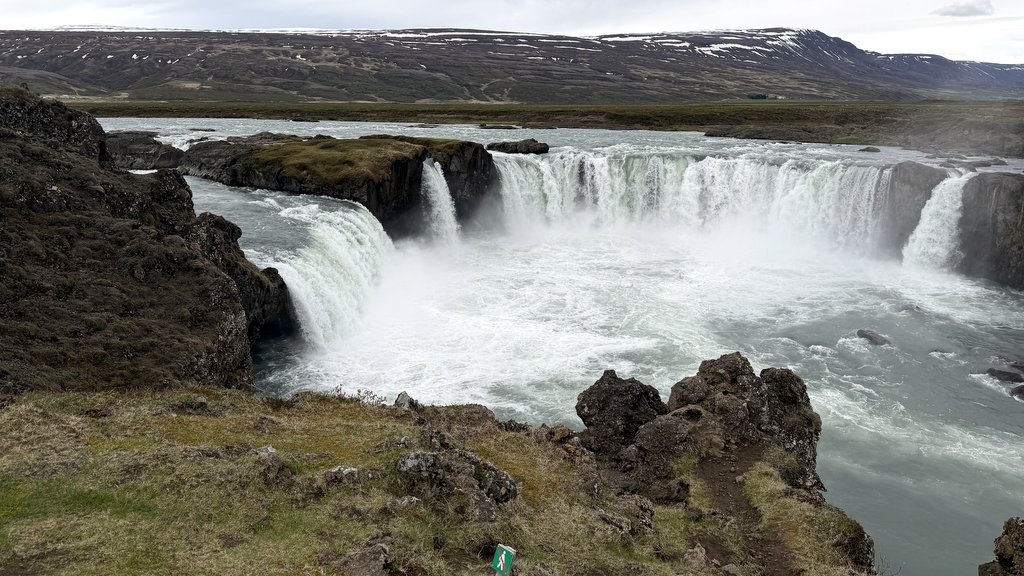
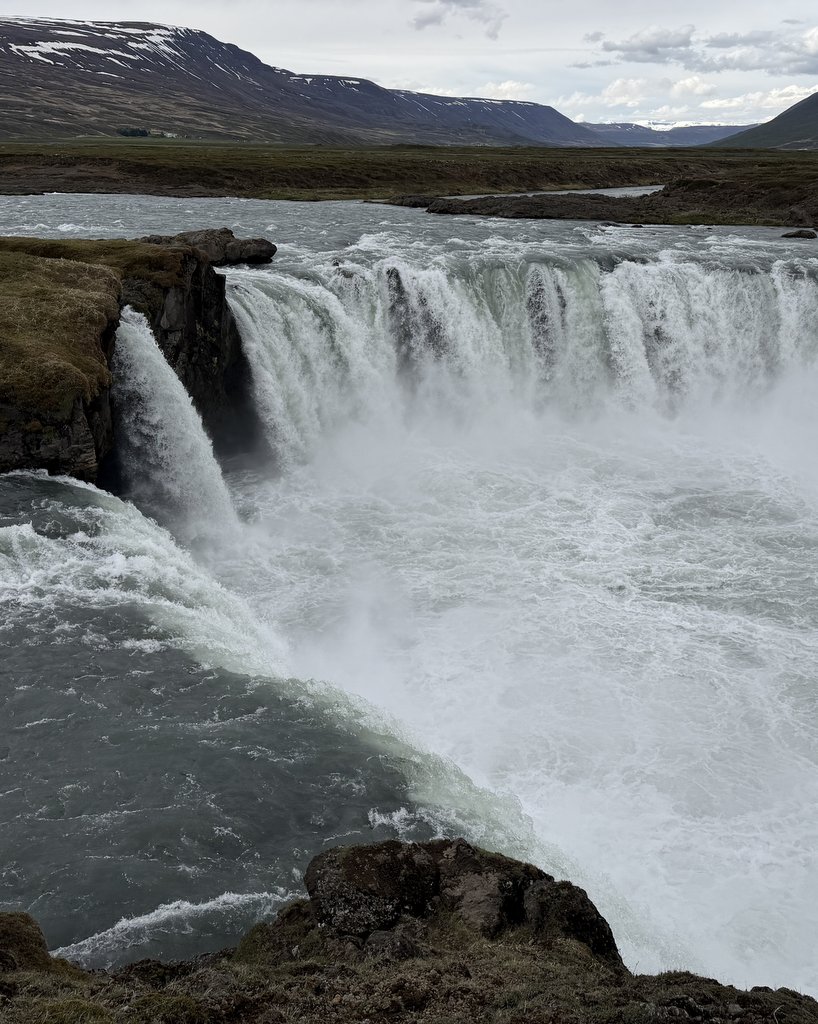
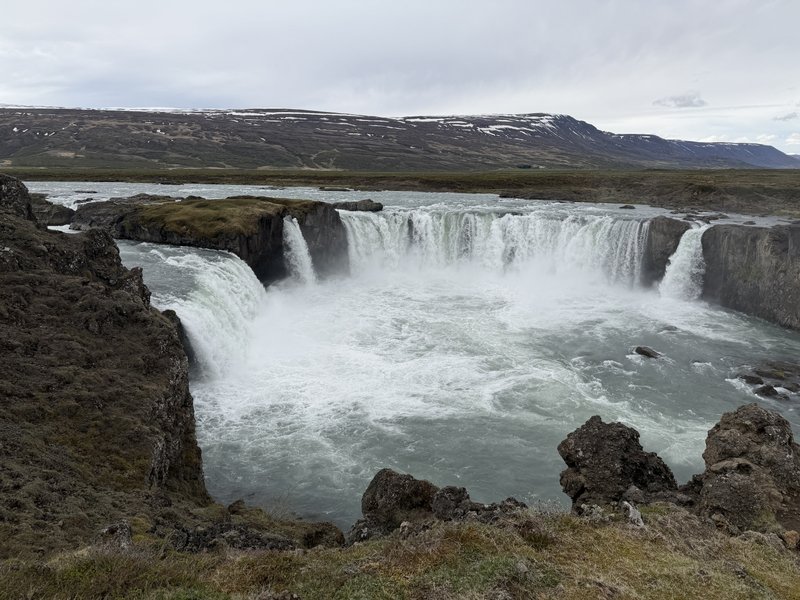
The next day we visited the Goðafoss. The water of the Skjálfandafljót river falls from a height of 12 meters over a width of 30 meters. Very impressive.
Goðafoss
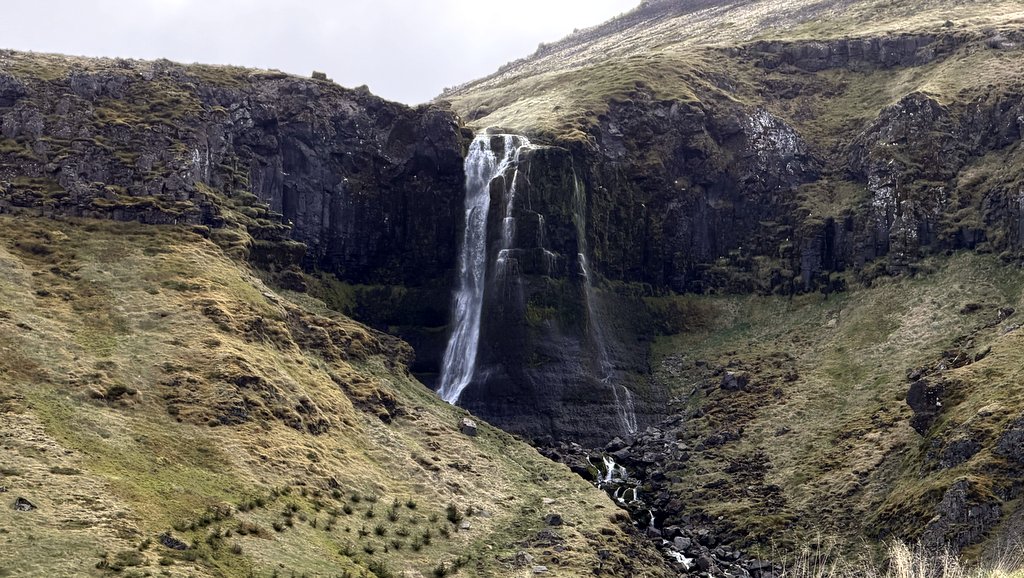
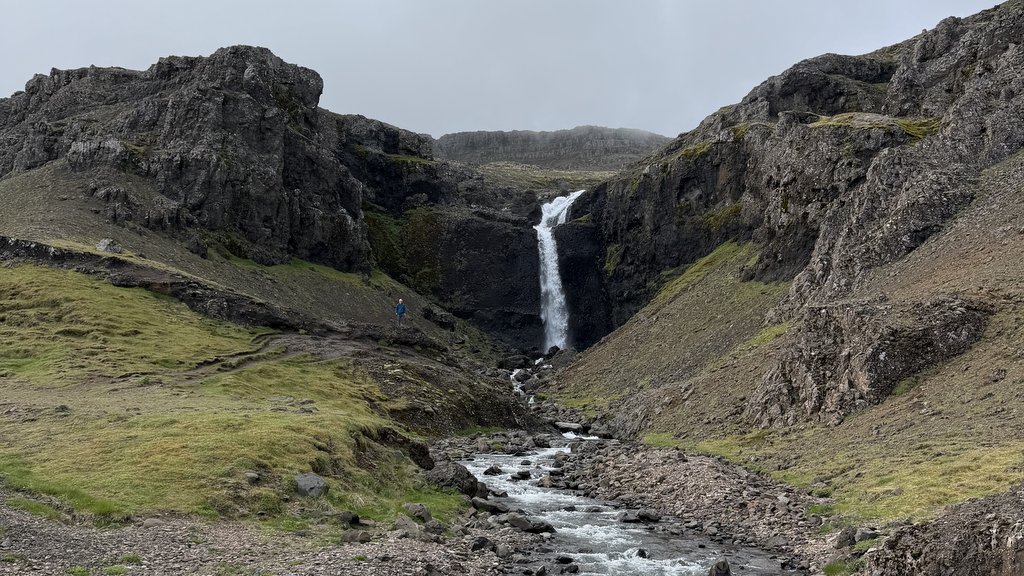
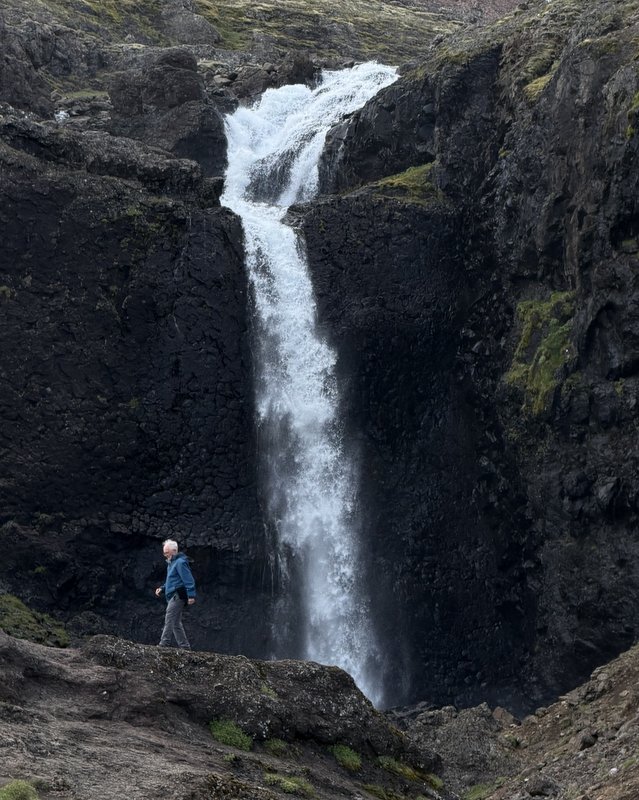
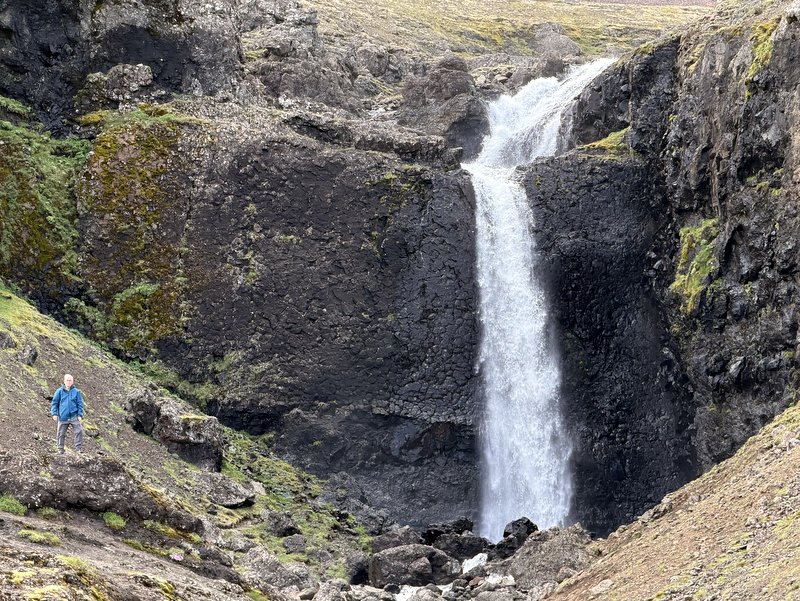
The last three waterfalls are all in substantial rivers, not very tall, but wide with lots of water. Here is a tall waterfall, visible from the Ring Road. A small parking lot with a picnic table, but no name. We walked closer and took pictures. I tried in vain to Google for a name, so we decided to name it ourselves: Lata JAR. Lata is a common name in Malaysia for a waterfall and JAR stands for Jam, Aric, Rodney.
Lata JAR
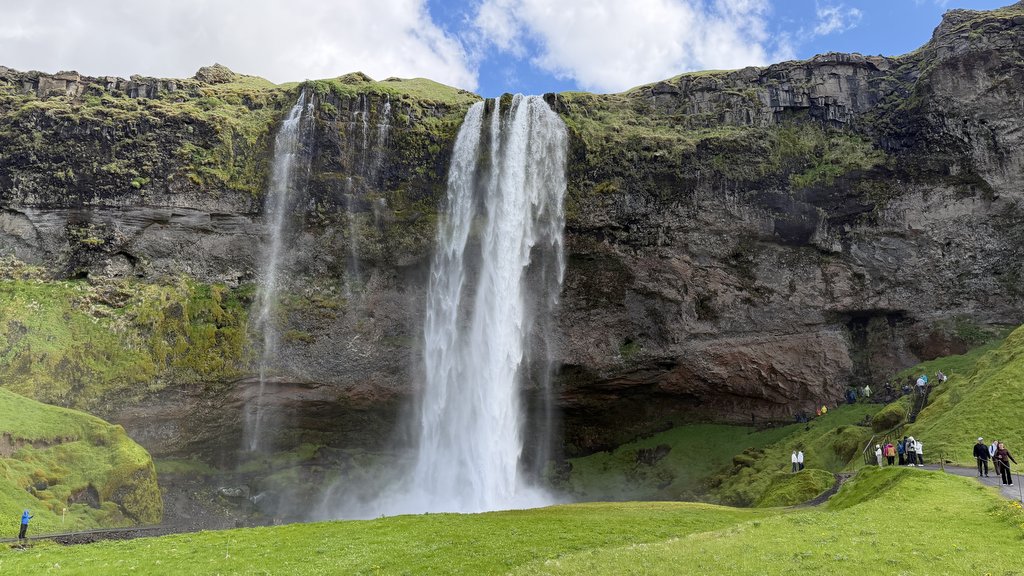
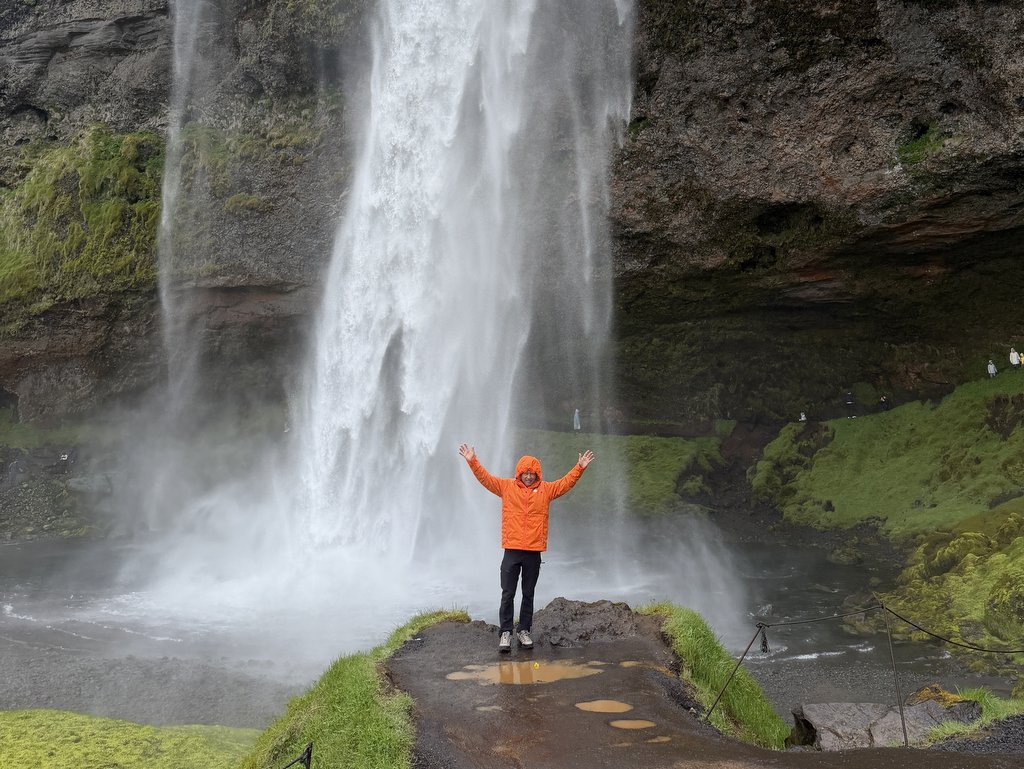
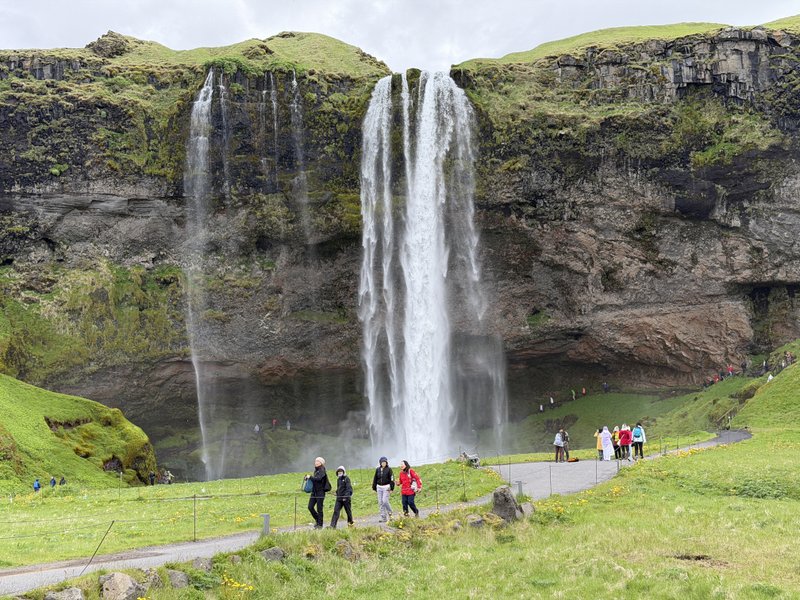
Another tall fall (~60 m), the Seljalandsfoss, is famous for the trail that allows visitors to walk entirely behind the falling water. We were prepared to get wet, and we got wet.
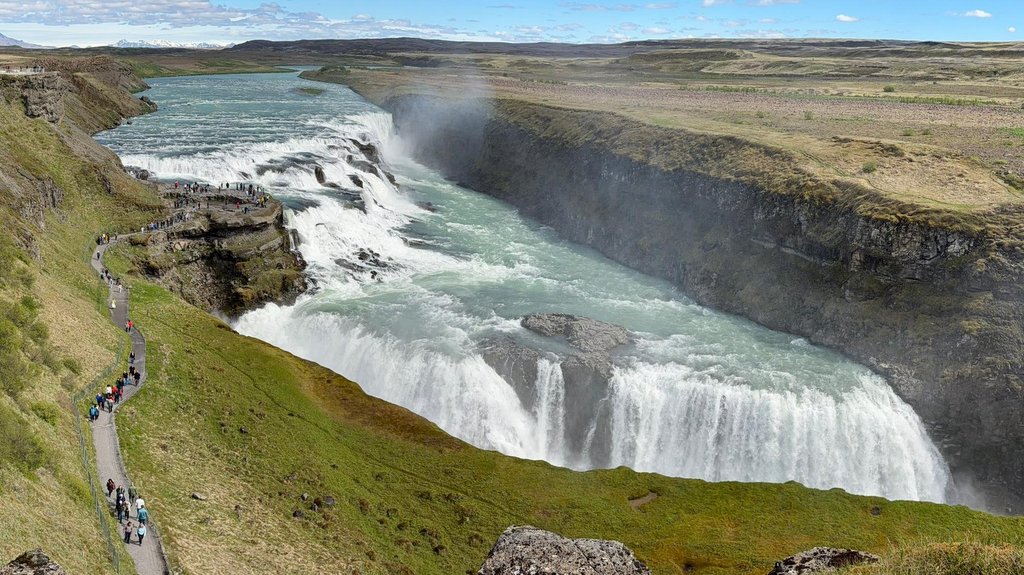
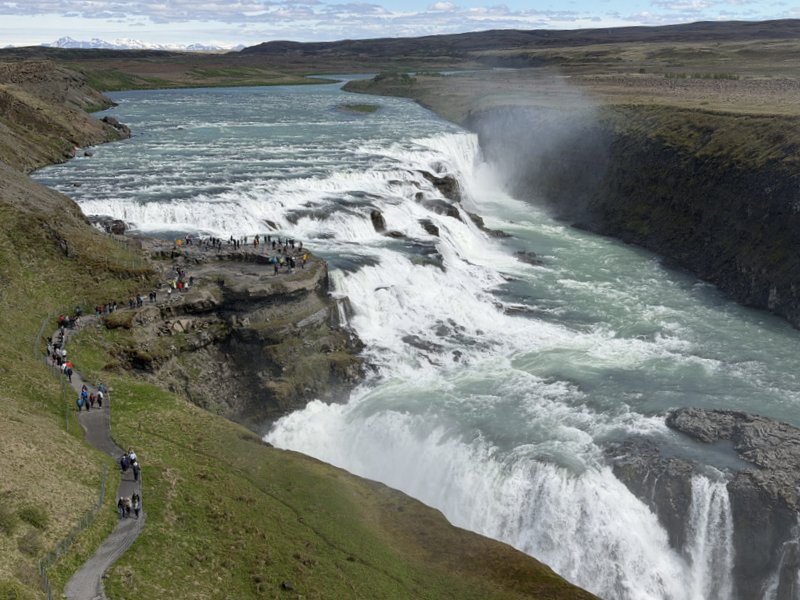
On the last day of our Iceland trip we visited the Gullfoss/
. We just had a quick look, no time to explore this powerful waterfall, a popular day excursion from Reykjavik
Other Natural Attractions
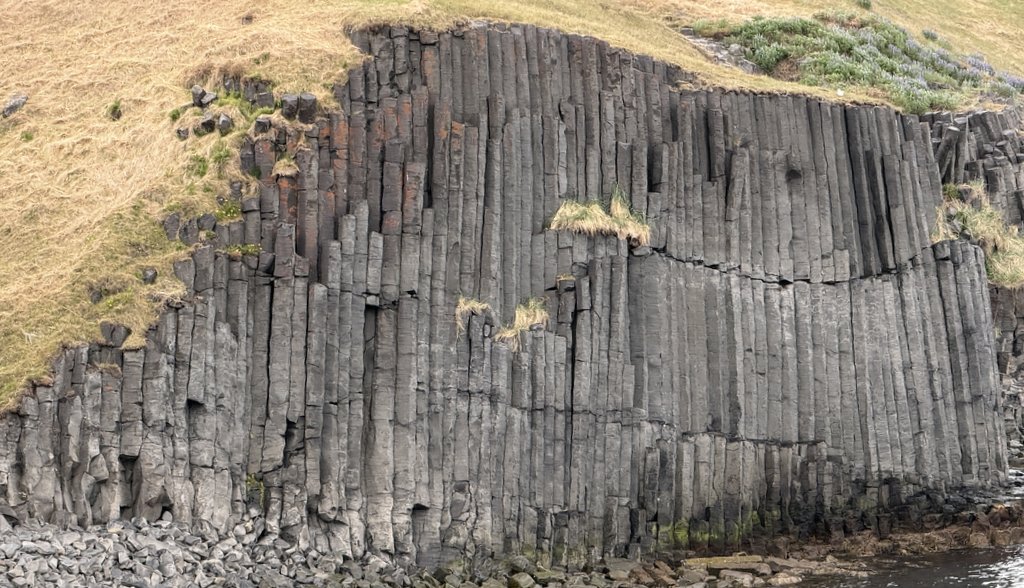
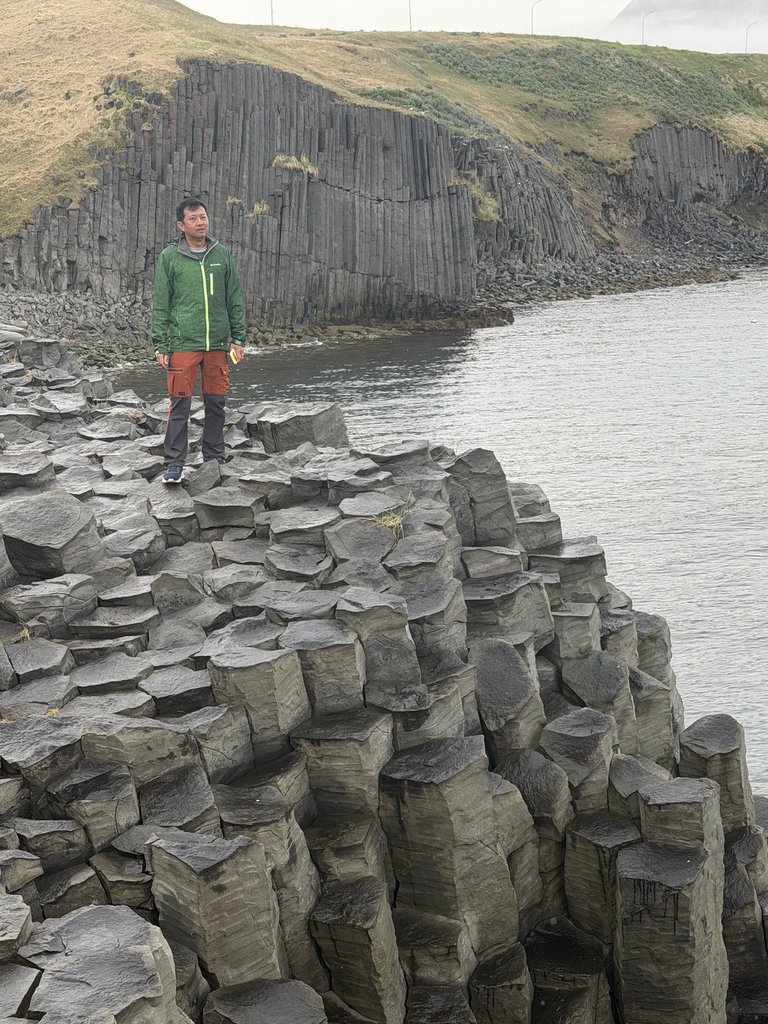
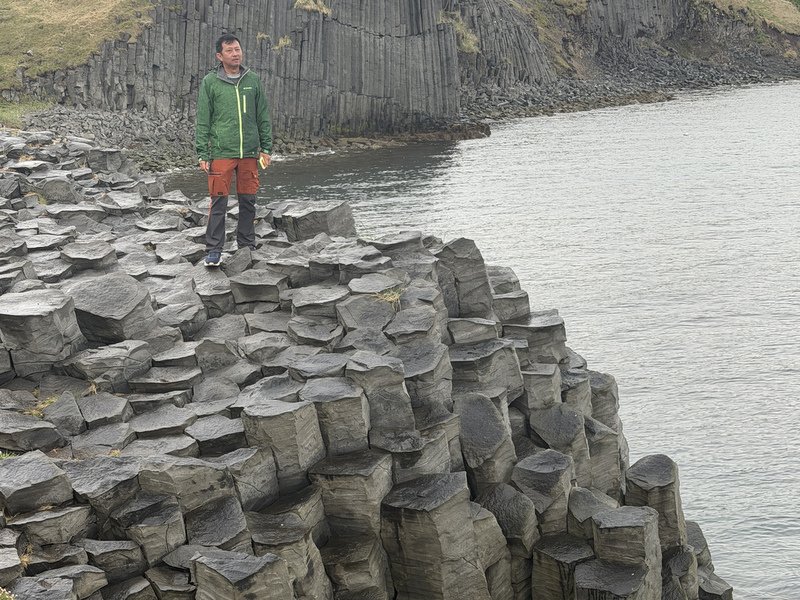
There are many locations where the volcanic origin of Iceland is clearly visible. Here are basalt columns at the coast of North Iceland.-
Basalt Columns
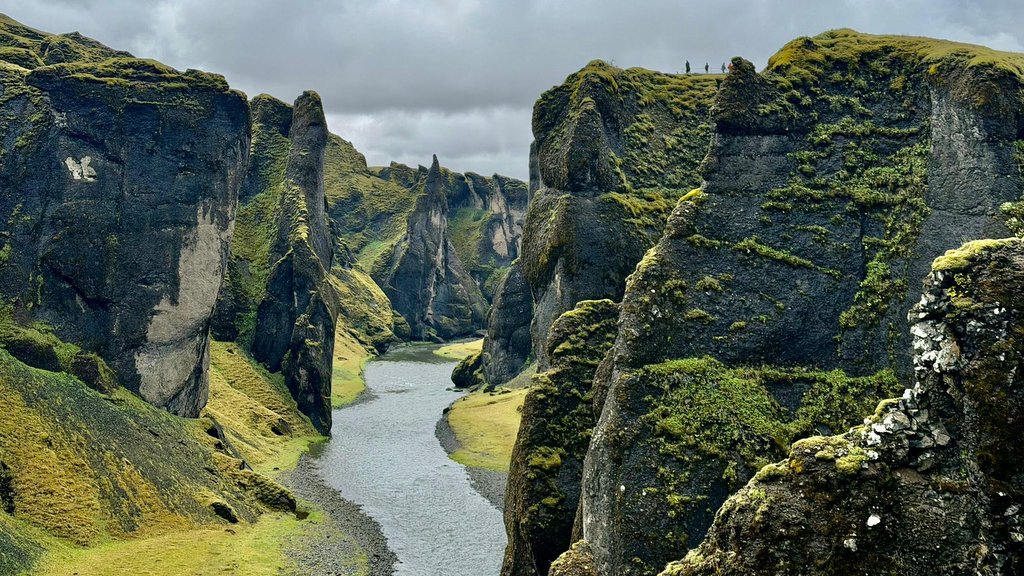
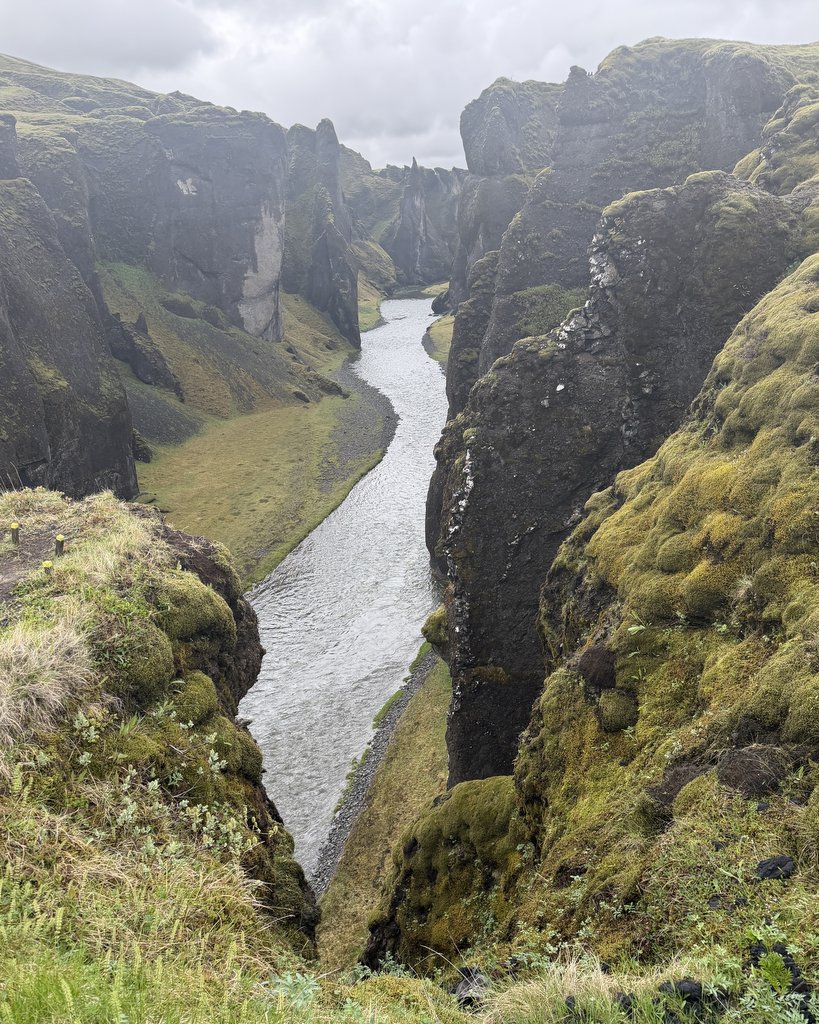
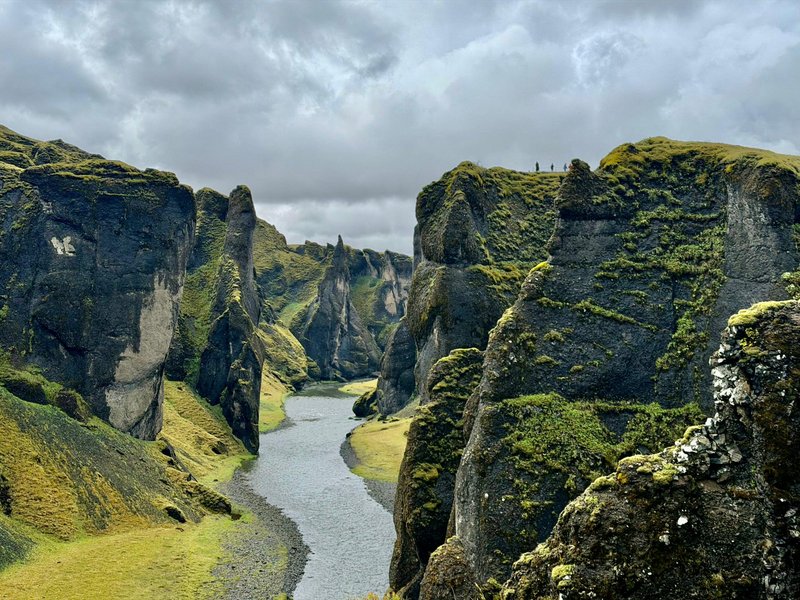
Here is a beautiful canyon, the Fjaðrárgljúfur in the Southern part of the island. Eroded by a river during many millennia. It is up to 100 m deep and about 2 km long.
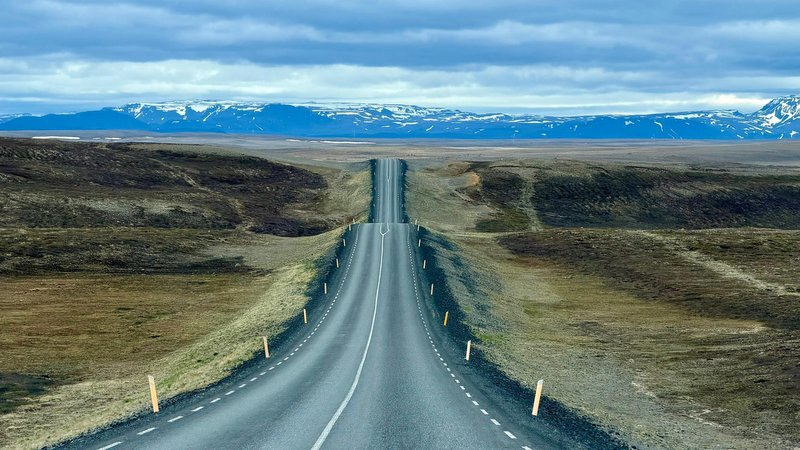
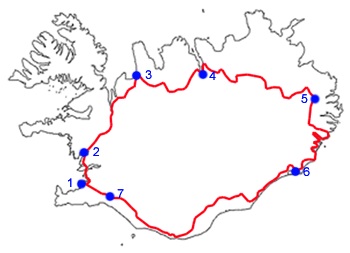
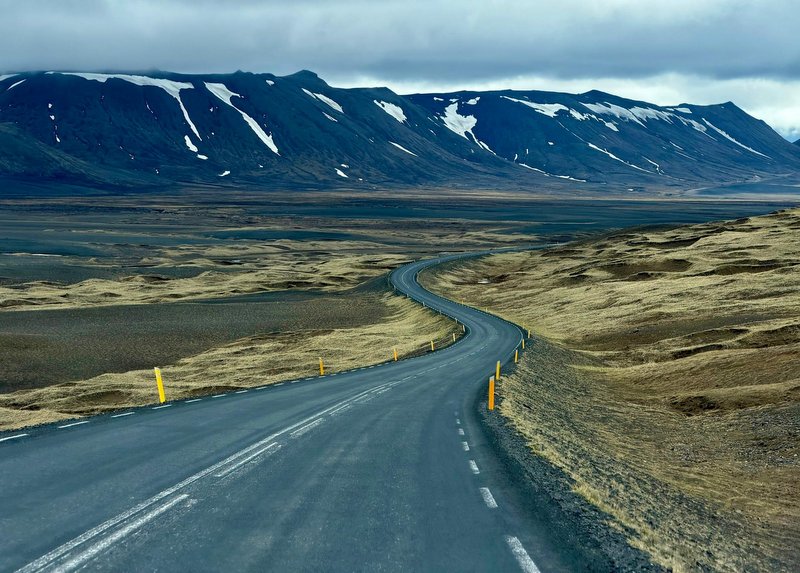
Iceland has a ring road around the island, called Highway 1. The left image shows the route. It is a two-lane road. The blue dots mark populated places. We followed basically this road, clockwise. Rodney was our expert driver, Aric was the navigator. Often we had to take secondary roads to reach a location. We drove around 2400 km in 8 days.
+
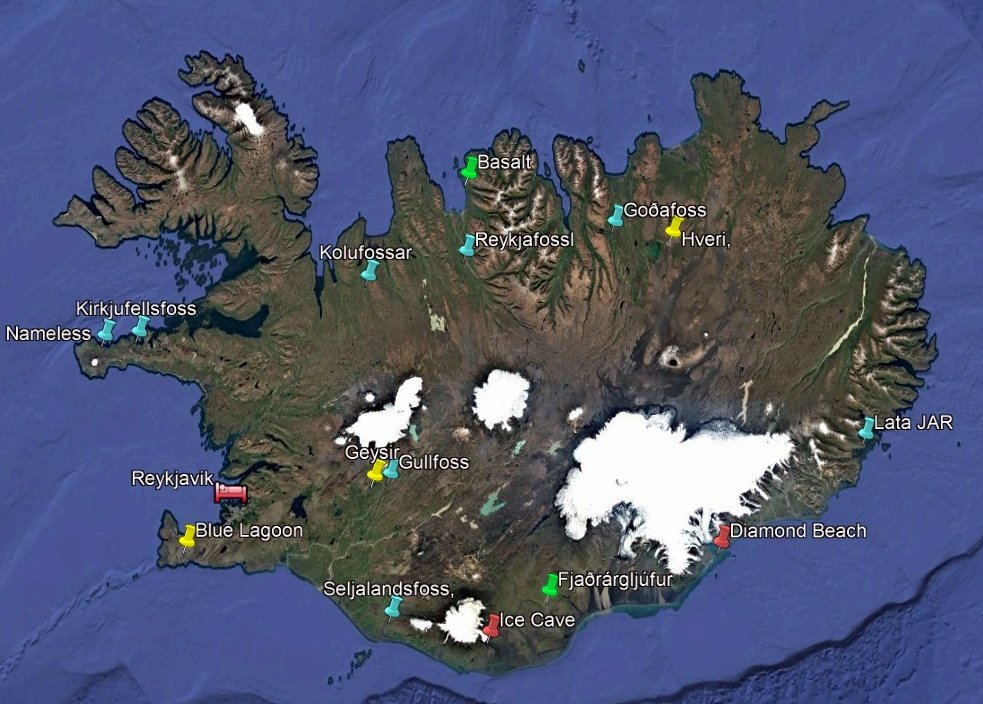
This Google Earth image shows the places we visited, using colored markers. Geothermal (yellow),glaciers (red), waterfalls (blue) and others (green).
In the second part of this Iceland report, more info about the “cultural” places we visited, the places where stayed overnight, the food we had, etc.
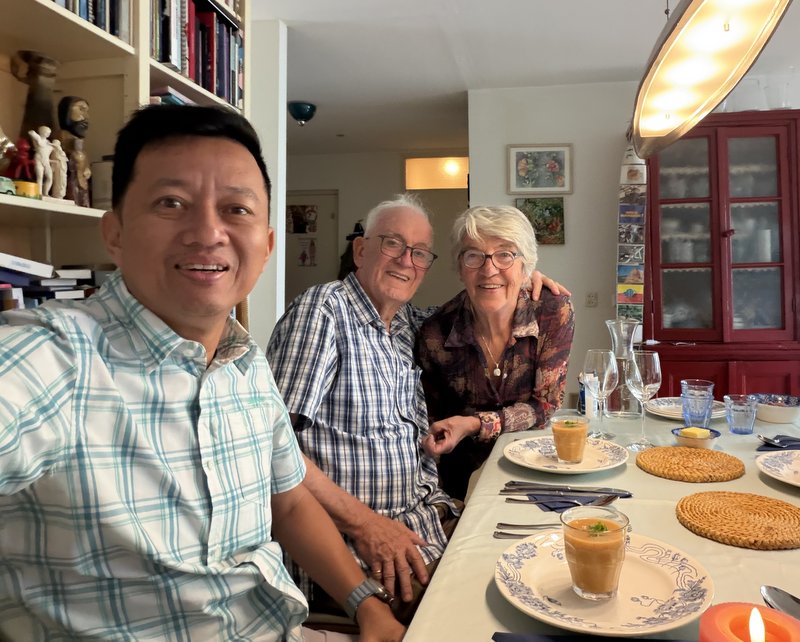
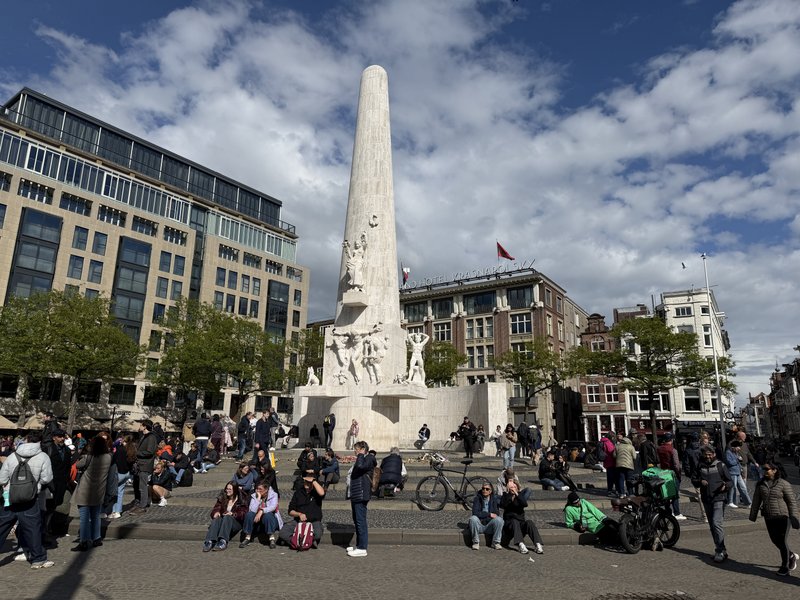
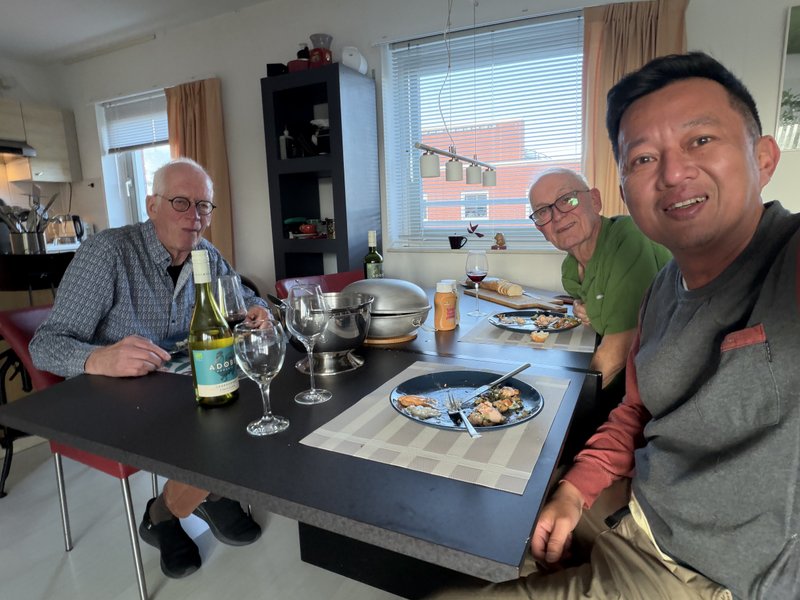
On 11 May, we flew to Amsterdam. For Aric, it was the first time since 2019, but I had been back in 2023 and 2024. Last year, we were planning to visit Iceland, but I got a vision problem (AMD) that affects and limits my activities. This year we decided to travel together for five weeks, after which I would stay in Amsterdam on my own for two more weeks.
Iceland was the main destination and Aric made am elaborate planning for a 10D9N visit. We asked our UK friend Rodney to join and visited him on a 5D4N trip before flying together to Reykjavik. Aric proposed also a 6D5N trip to Germany. And of course there were visits to family and friends. So It was a full program.
I will write several blogs about the various trips, but start here with a chronological report. Only two photos per day, not easy to make a selection.
11 May
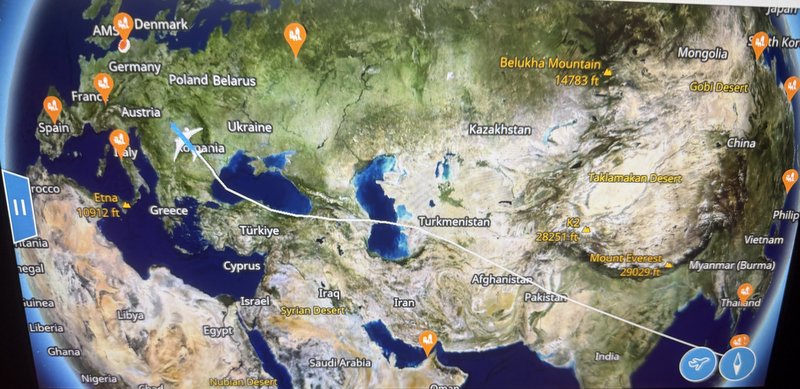
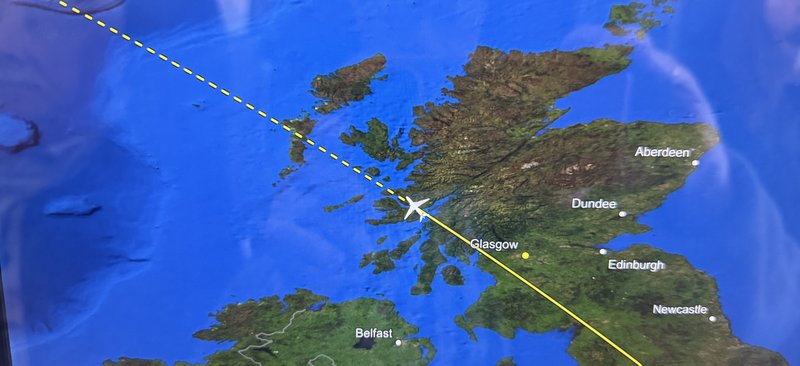
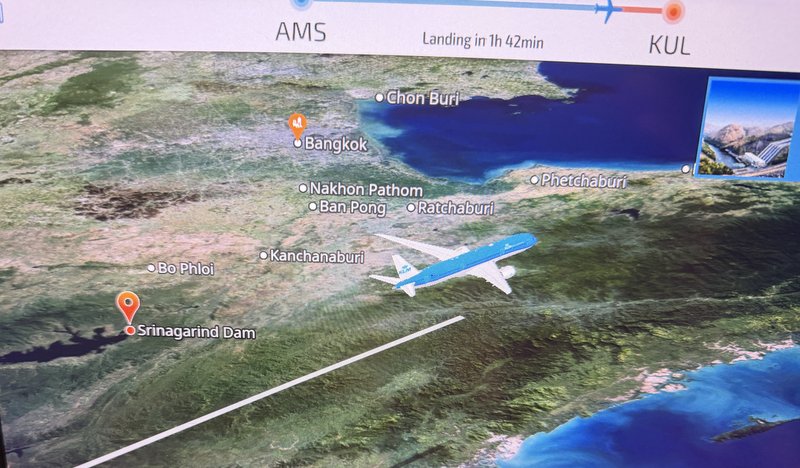
Traveling from KLIA to Schiphol, a direct, long flight. Notice how the route avoids the Middle East and Ukraine/
12 May
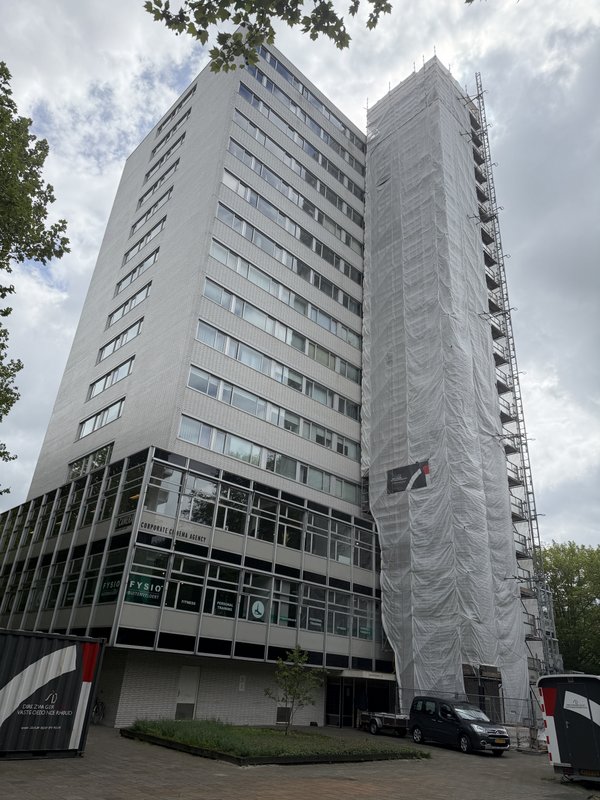
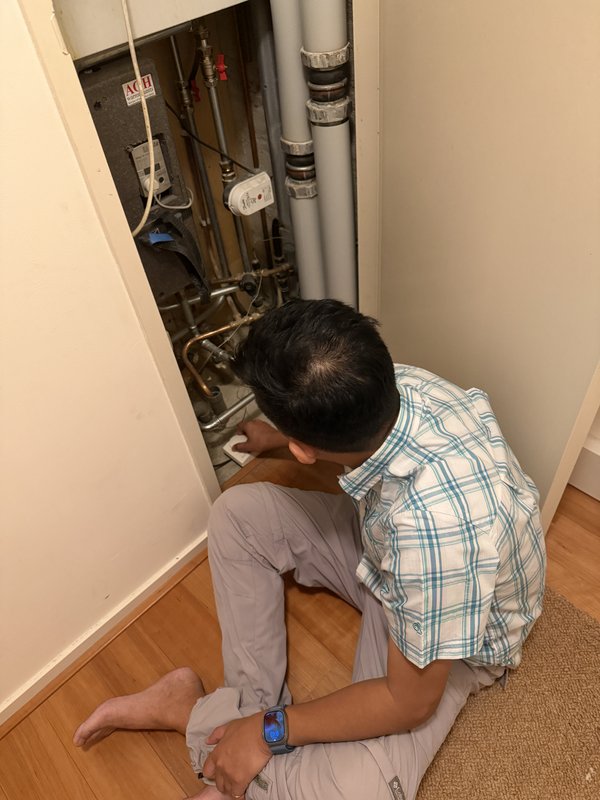
The pilot announced that the temperature at the airport was only 6° C. We took an Uber to my apartment, where an unpleasant surprise awaited us: the central heating was not working properly.An uncomfortable start to our trip.
13 Nay
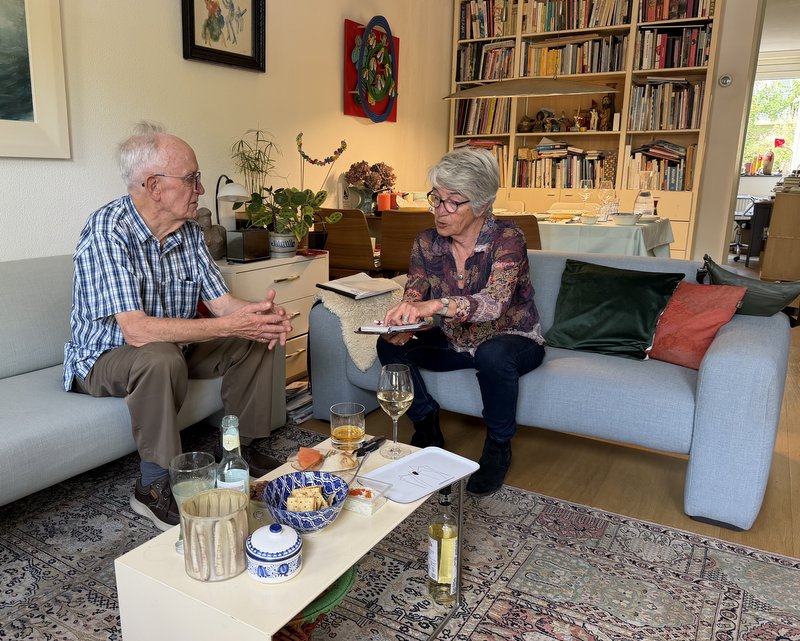
Trying to contact a central heating technician. In the afternoon, we visited my soulmate Inez, who had stayed with us several times in Malaysia.
14 May
After a long city walk, dinner with my brother Pim.
15 May
Start of our Germany trip. Lufthansa flight to Dresden, via Frankfurt. Hotell with view of the old town center.
16 Nay
Exploring Dresden. Many more pictures in a separate blog.
17 May
A fascinating day trip to Saxon Switzerland. The Bastei bridge is located high above the Elbe river. Lots of climbing. See separate blog.
18 May
By train from Dresden to Gorlitz. The main reason that Aric wanted to visit this town, was the pedestrian bridge crossing between Germany and Poland.
19 May
The town has featured in movies and is worth a visit. Also about Gorlitz, a separate blog/
20 May
+
A traveling day. From Gorlitz by train back to Dresden, and flying back to Amsterdam via Munich.
21& 22 May
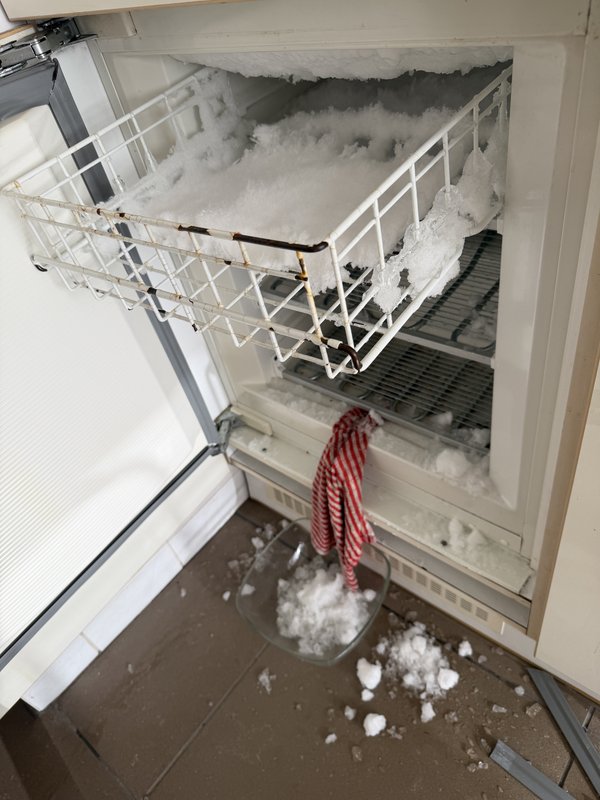
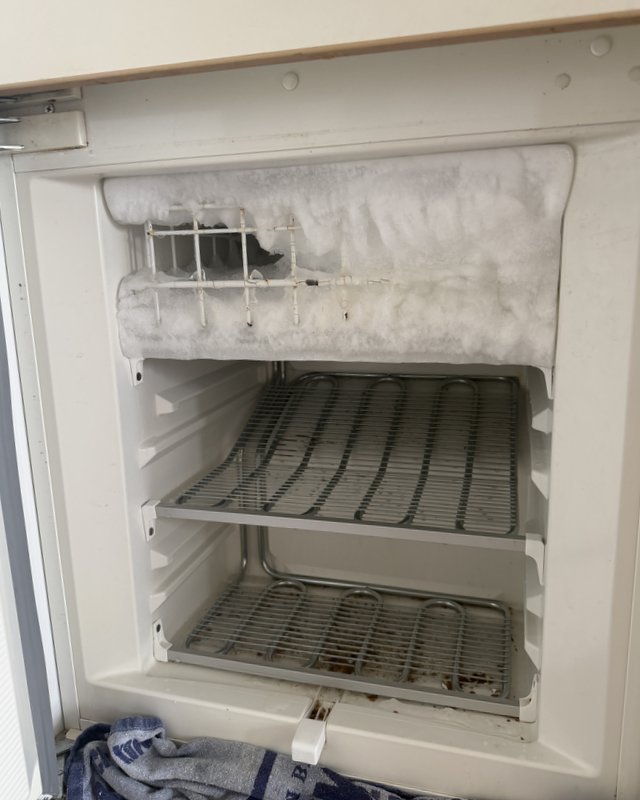
The central heating still wasn’t working, but it wasn’t as cold in the house anymore. There was a problem with the fridge, though. And we were both recovering from a bad cold. Two recovery days, to get ready for the family reunion.
23 May
The family reunion started in the family house in Alphen. We visited the cemetery where my parents were buried, and had dinner in an Afghan restaurant. A very nice day, see the report for more details.
24 May
+
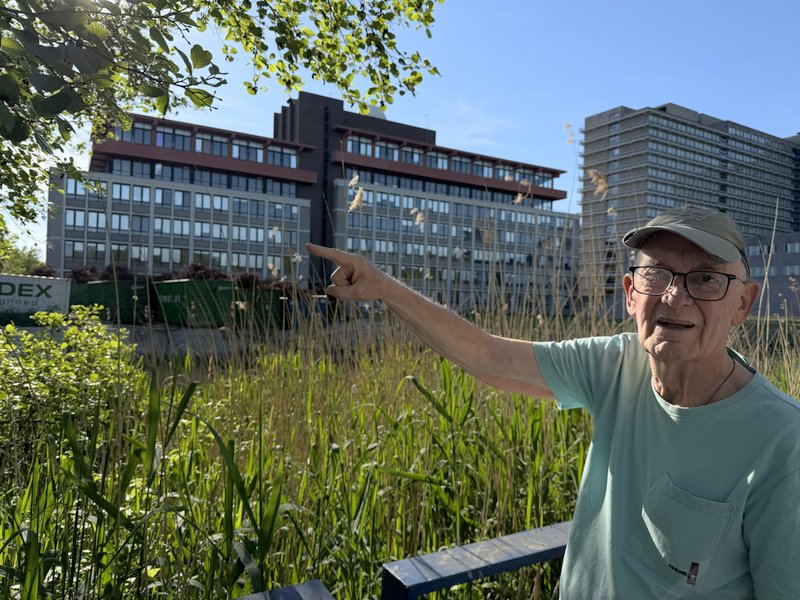
It was Whitsun, a public holiday in the Netherlands. We stayed at home, just walked in the neighborhood, had a look at -the university where I had spent my student years.
25 May
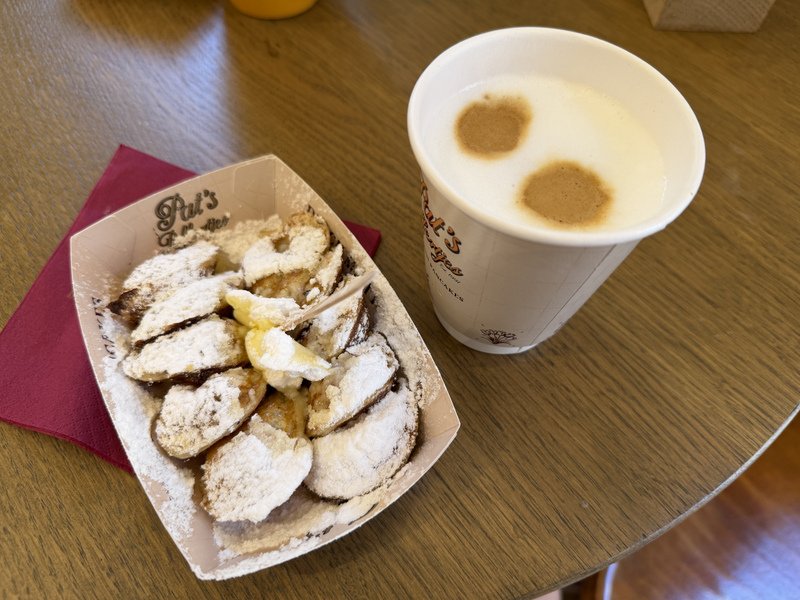
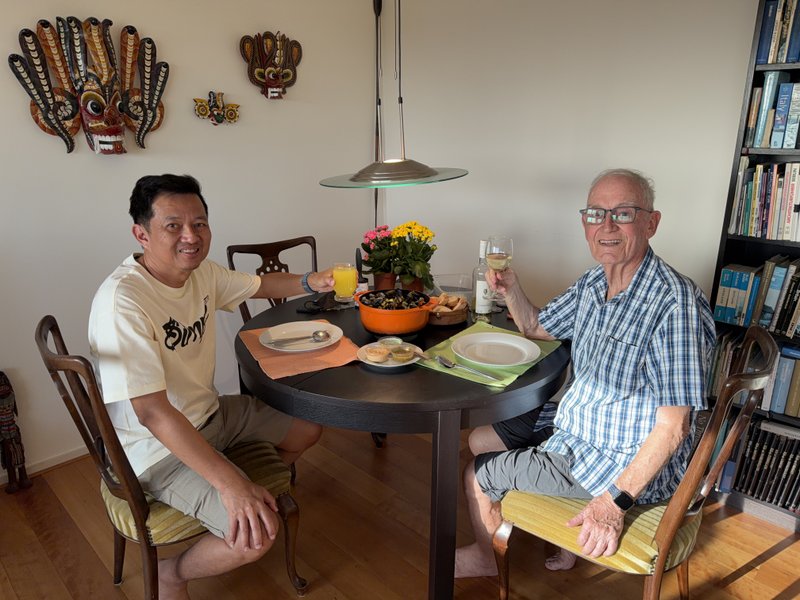
One more relaxing day. We wanted to eat poffertjes, the traditional Dutch mini-pancakes. But I forgot that Whit Monday is also a public holiday, Beautiful day, but the market and the shop we had in mind, was closed. We found another one and that evening we had mussels for dinner.
26 May
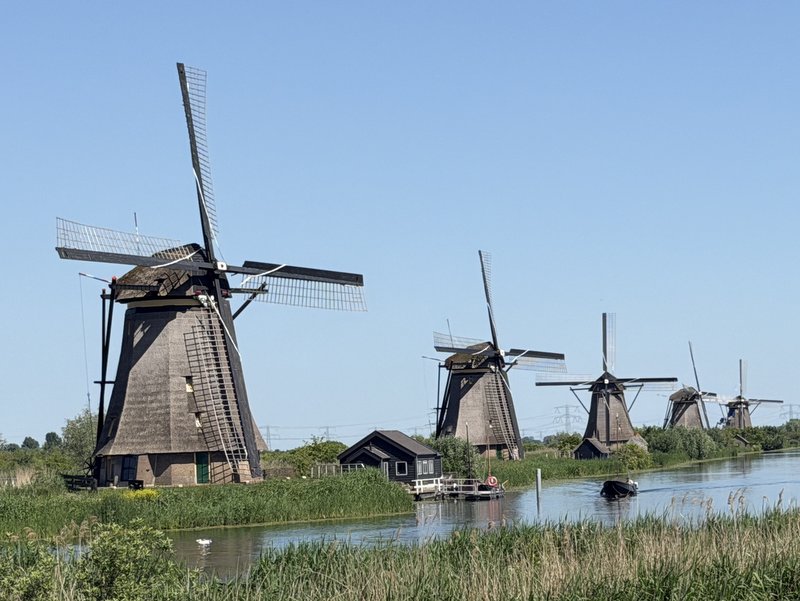
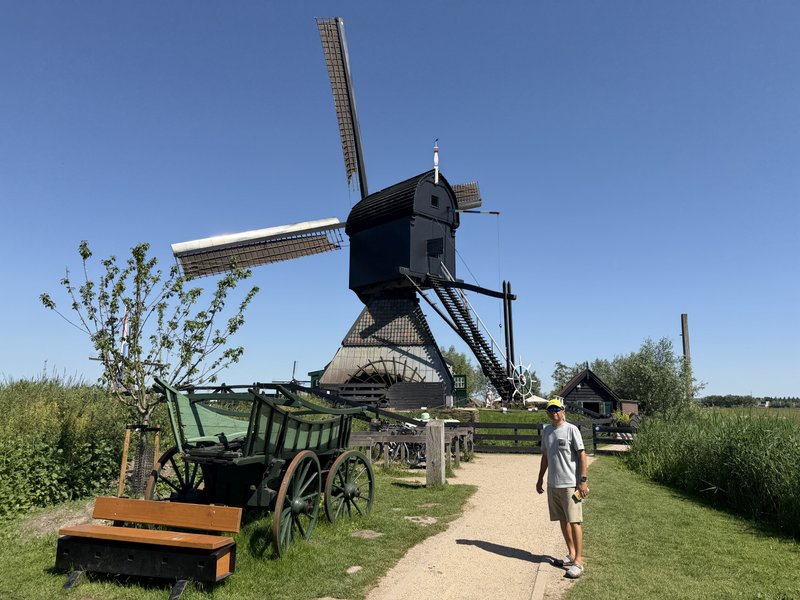
Time for action—a day trip to the windmills of Kinderdijk, a UNESCO World Heritage Site. I had been there a few years earlier, but it was Aric’s first. Perfect weather. More details in another blog.
27 May
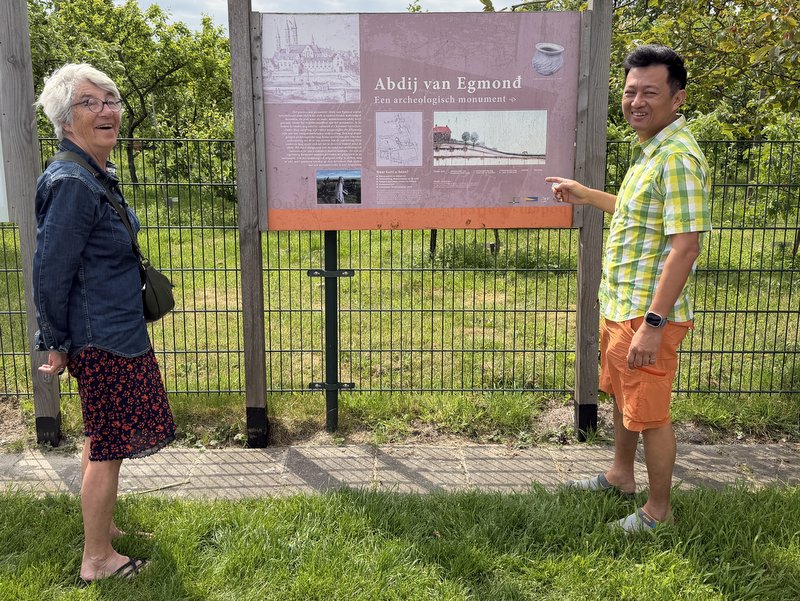
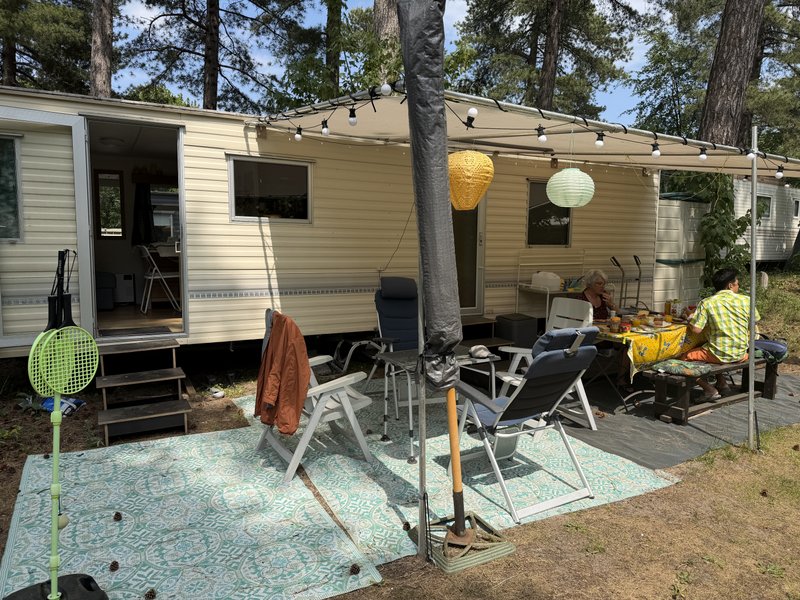
An outing with Inez. First, we visited the Abbey of Emond, expecting it to be historical ruins. A mistake, they had been replaced many decades ago by modern buildings. The afternoon we spent at Inez’s caravan in Bakkum, enjoying the quiet atmosphere. We had dinner in IJmuiden.
28 May
Staying at home. I tried (in vain) to solve the fridge problem and finally a guy came to inspect the central heating. He found a faulty part; his company would send me a quotation for repair.
29 May
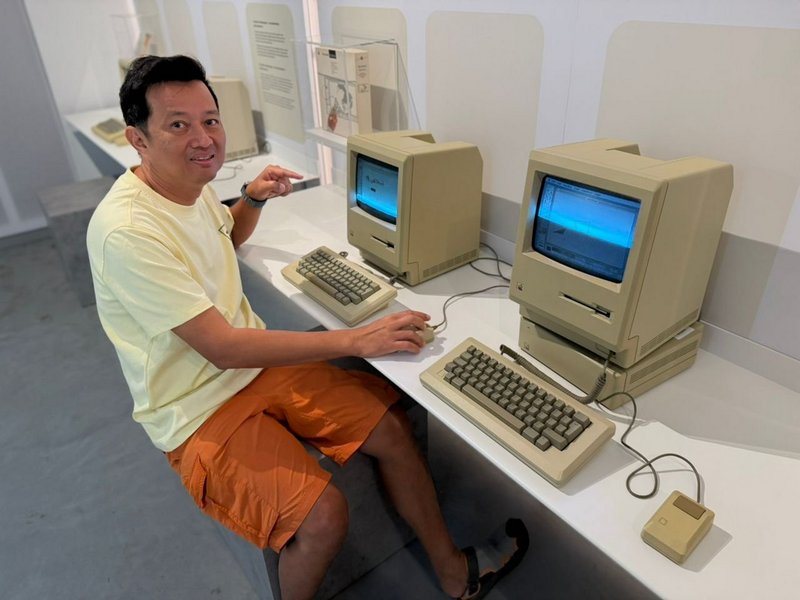
A very active day. Aric had read about a new Apple museum in Utrecht and, being an Apple addict, wanted to have a look. We had lunch with Yolanda and Math, and walked around in the town center. Back in Amsterdam, we had dinner with Nico and Yolanda, the brother and sister of Paul. Probably two vlogs about this day later 😉
30 May
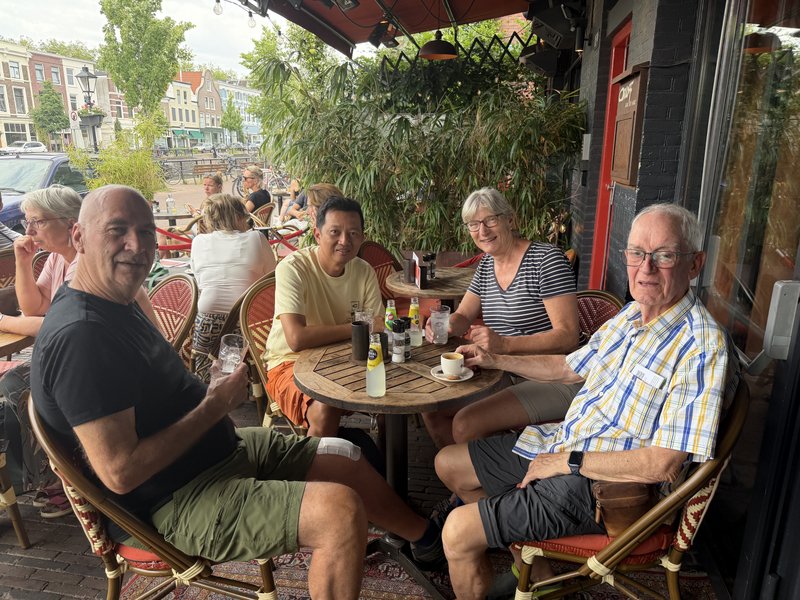
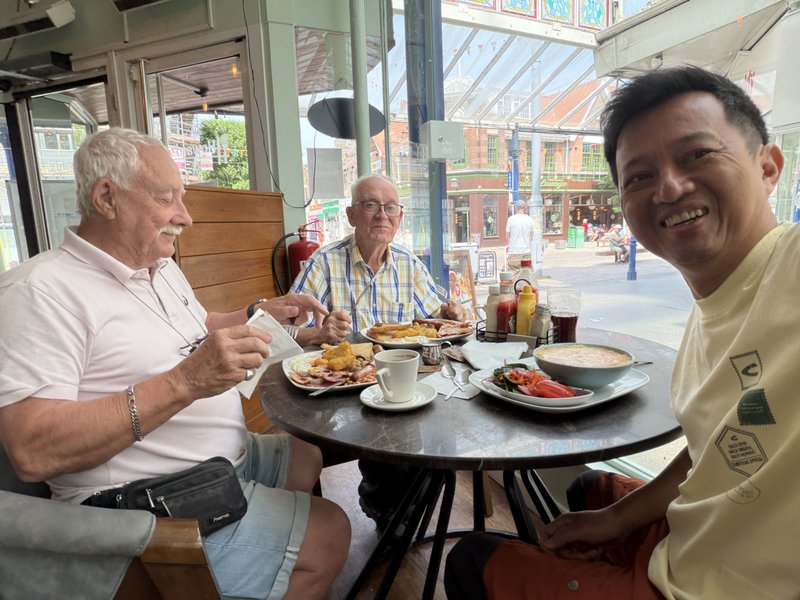
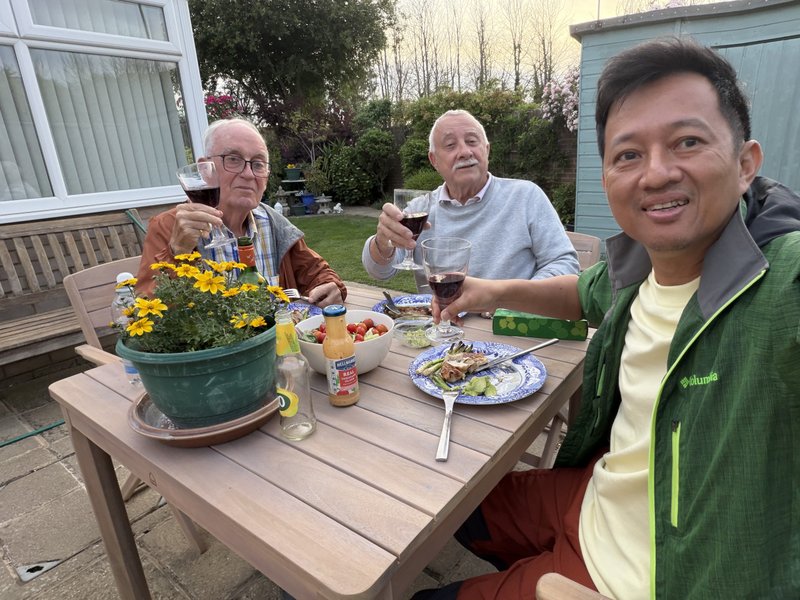
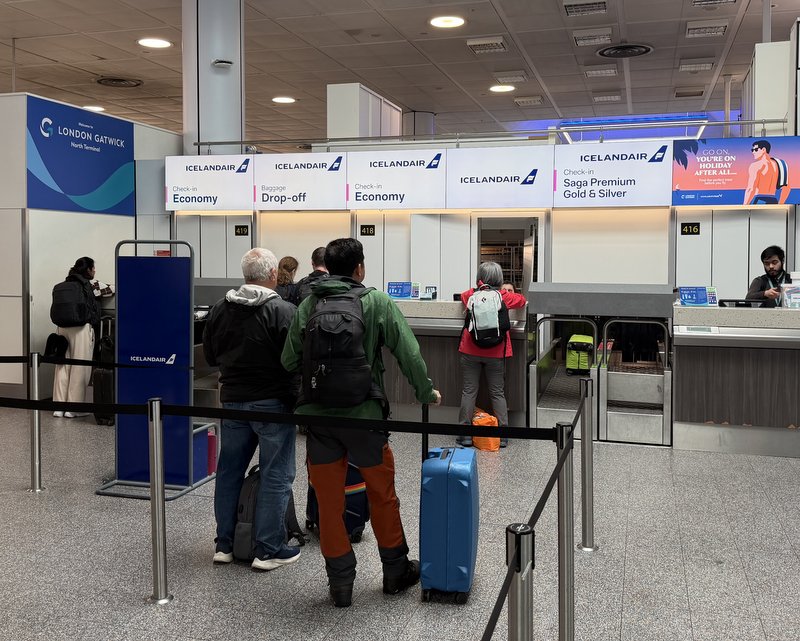
A traveling day. With EasyJet to Gatwick, where Rodney was waiting for us. He drove us back to Bognor Regis, where he is living. We had Lunch there and later dinner in the garden of his home.
31 May
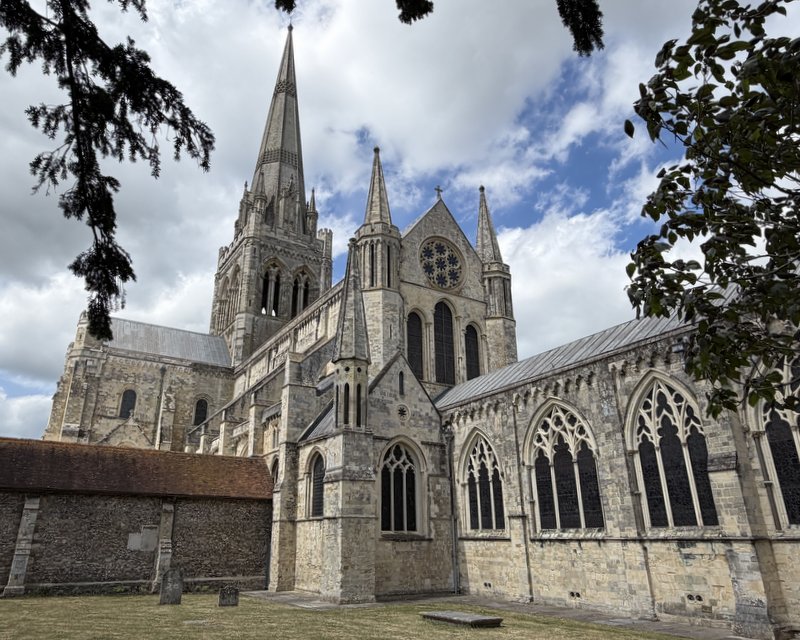
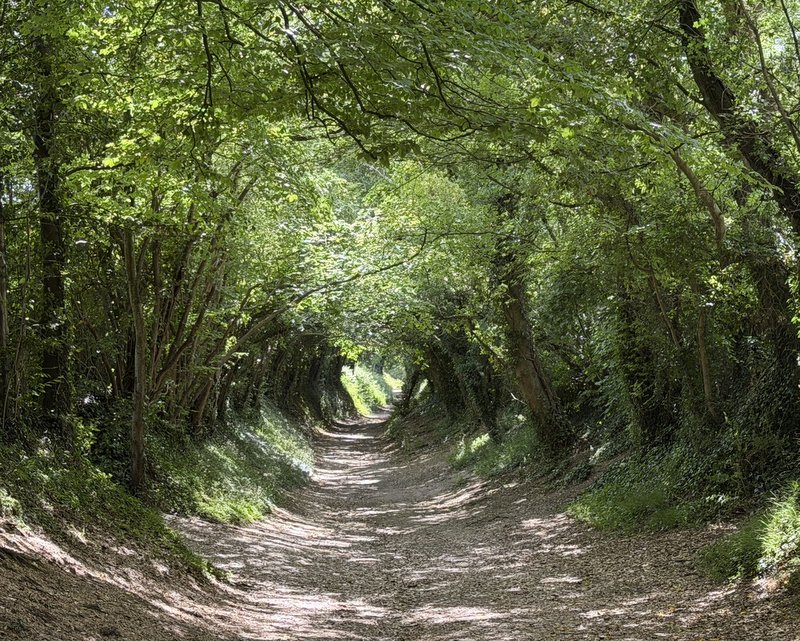
Exploring the region around Bognor Regis. We visited Chichester with its famous cathedral, which was unfortunately closed. We walked to the Halmaker windmill, passing through an enchanting tree tunnel.
1 June
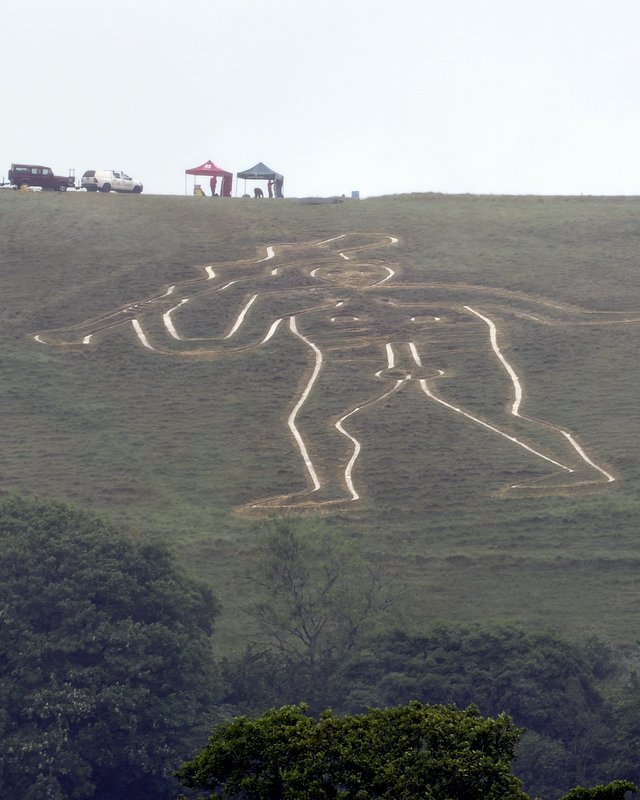
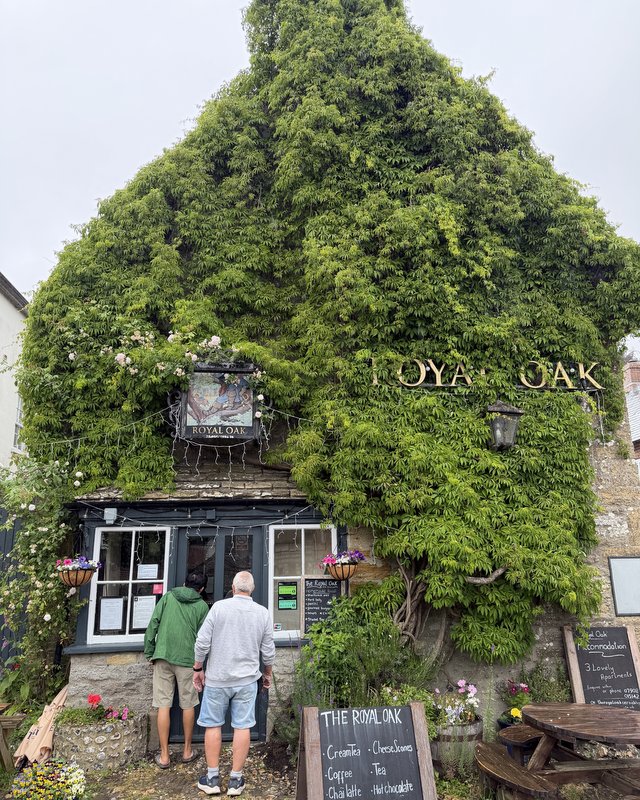
Instead of Stonehenge or the White Horse m we decided to visit the Cerne Abbas Giant, a two-hour drive away. When we arrived at the 55-meter-tall giant with his erection, it had started drizzling, not a good idea to walk closer. A nice pub in the village was alos closed. We continued to Dorchester for a pub lunch.
2 June
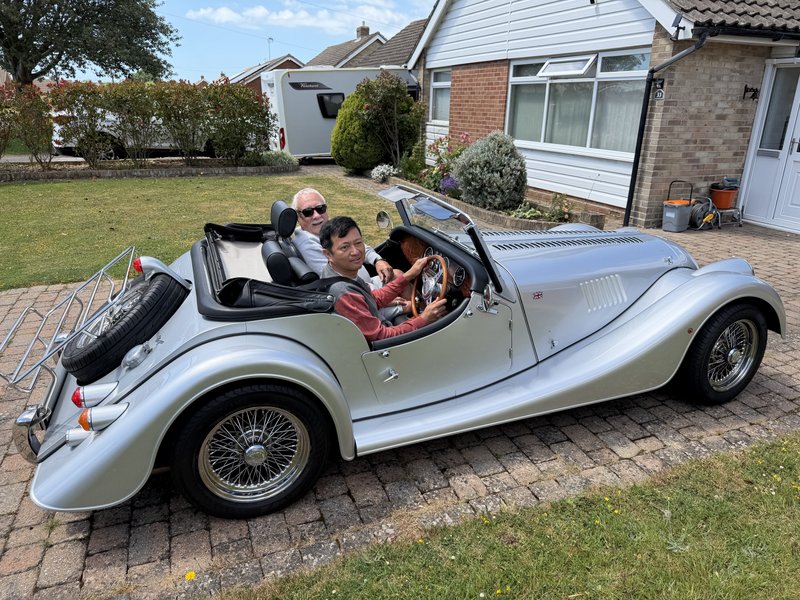
Of course, Rodney had to show us his love baby, a classical Morgan. Aric was even allowed to drive it a short distance. In the afternoon, we drove to nearby Arundel, a very picturesque town with a famous castle/
3 June
First day of our trip to Iceland. We took a taxi to our homestay in Reykjavik. In the evening, we went out for dinner and to get a first impression of the town. At 11 pm it was still broad daylight.
4 juni
We rented a car for 9 days with Rodney as driver and Aric as navigator. Aric had prepared Google Maps for each day with the various points of interest marked. Here is for example the map for this day. We could only visit a few,
Ingjaldshóll ChurchKirkjufell
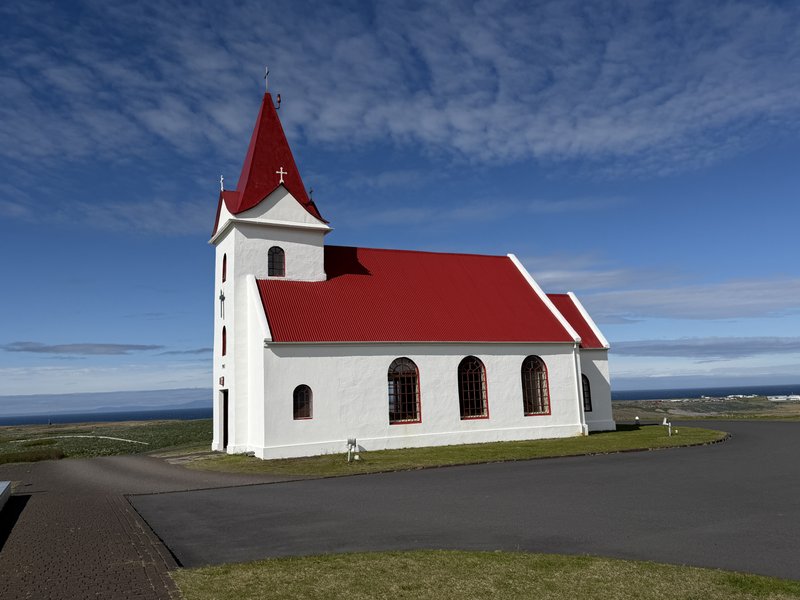
The first of many churches we visited. The National Religion is Evangelical Lutheran, but most Icelanders are secular. Waterfalls all over the island, often spectacular, like this one. Aric had booked idyllic homestays, often in the middle of nowhere. Well equipped, we prepared dinner and breakfast with food bought in local supermarkets.
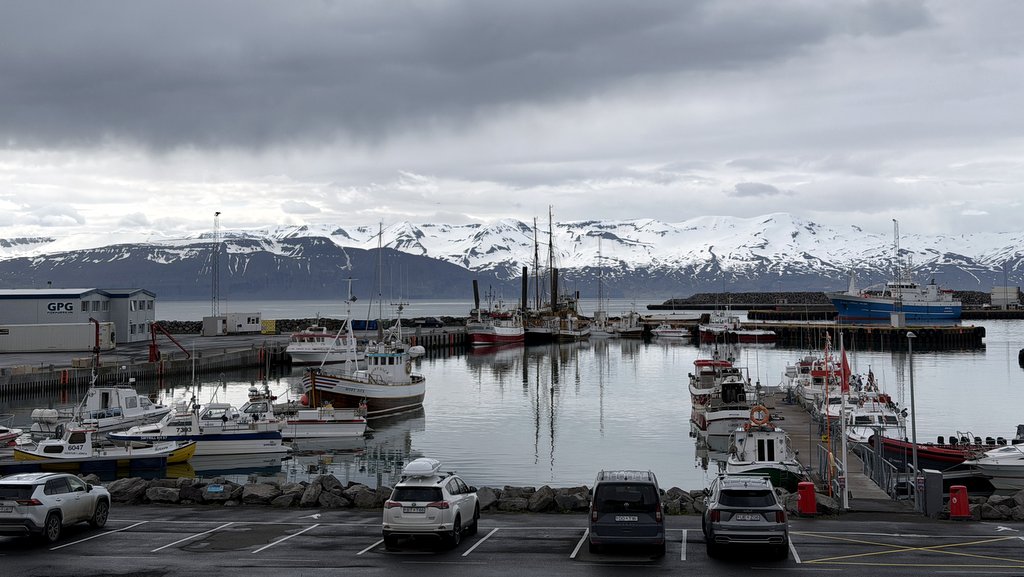
The long daylight allows you to do a lot in one day. We started at 10 am and reached our fantastic homestay at 10 pm, visiting another church, two waterfalls, an open-air museum, basalt formations, and much more. Too much, we decided to limit our program.
6 Juni
Goðafoss WaterfallHúsavík+
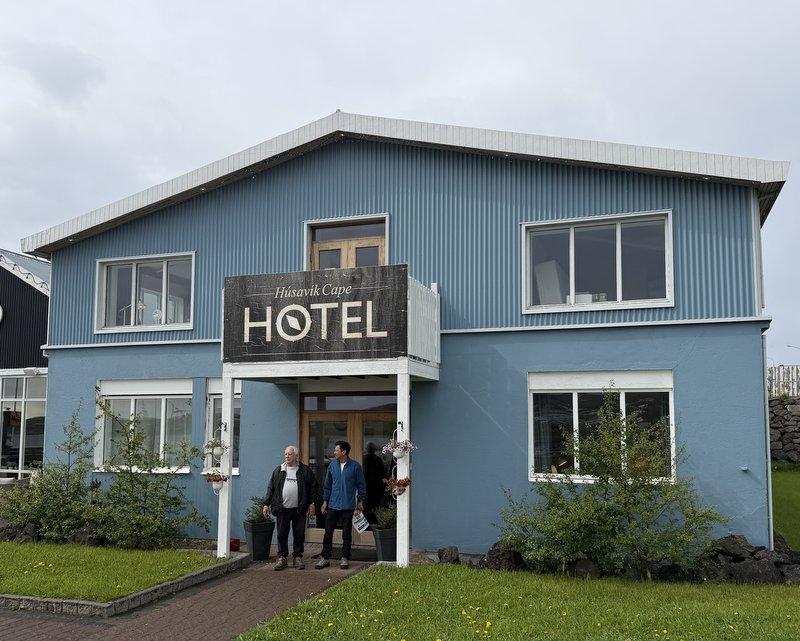
Aric had booked a whale-sighting boat trip for the afternoon and booked a hotel in the small town of Húsavík, where the excursions start. On our way, we passed a very dramatic waterfall. The trip took about 3 hours, we were given much-needed protective clothing. There is no guarantee that whales will be sighted, but we were lucky to spot quite a few. With my AMD, I can not see details, but Aric managed to take a few perfect shots. A well-organized trip.
7 juni
Hverir
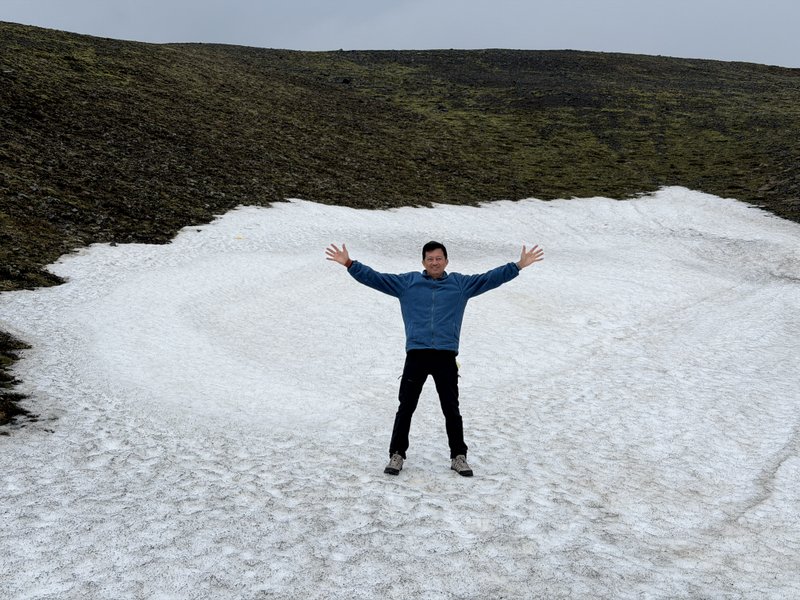
A long 11-hour drive. The main destination was the remote Puffin Island. On our way we stopped for a while only at Hverir, one of the most active geothermal sites of the island. A few hours later, Aric was walking in the snow. Puffin Island was worth the long ride, with hundreds of colorful birds, which you could almost touch. Our accommodation for the night was a former church, transformed into a charming homestay.
8 juni
Eggin í GleðivíkNot in our list
This day we followed the south-eastern coastline of the island. We had a look at an artwork of eggs, representing all bird species from Iceland. We found another waterfall. that was not in the list prepared by Aric. And we stayed overnight in a luxury homestay, with its own hot bath tub.
9 juni
Diamond BeachHof ChurchMulagljufur Canyon
Glaciers in Iceland can reach the sea, where broken pieces of ice gradually melt in the sea water. We visited another church, with a grass roof.
0 juni
On this day we took part in the most spectacular event of our Iceland trip, a three-hour “expedition” to an Ice Cave, a man made tunnel inside a glacier. Later that same day we visited a waterfall, where there was a path behind the falling water In the late afternoon we visited the famous Blue Lagoon. And we stayed overnight in a fisherman hut, transformed into a homestay. What a day.
11 June
Our last full day. Before returning the car, we visited two of the top attractions in the region of Reykjavik, the spectacular geyser and another dramatic waterfall. Many tourists who stay only a few days in Island, visit these places. Our last night we stayed in a hotel in Reykjavik. After dinner we walked around in the old part of the town.
12 June
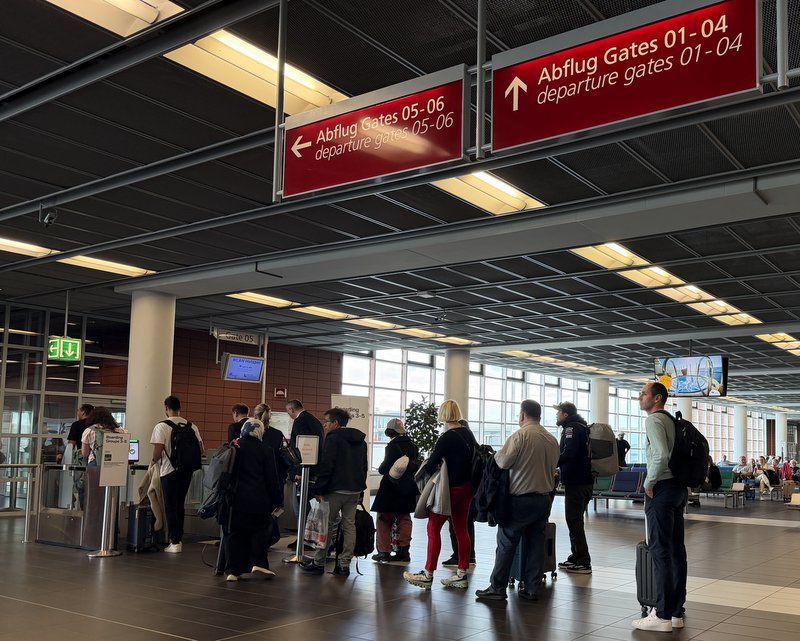
Traveling day. Rodney back to UK, Aric and I to Amsterdam
13-14 June
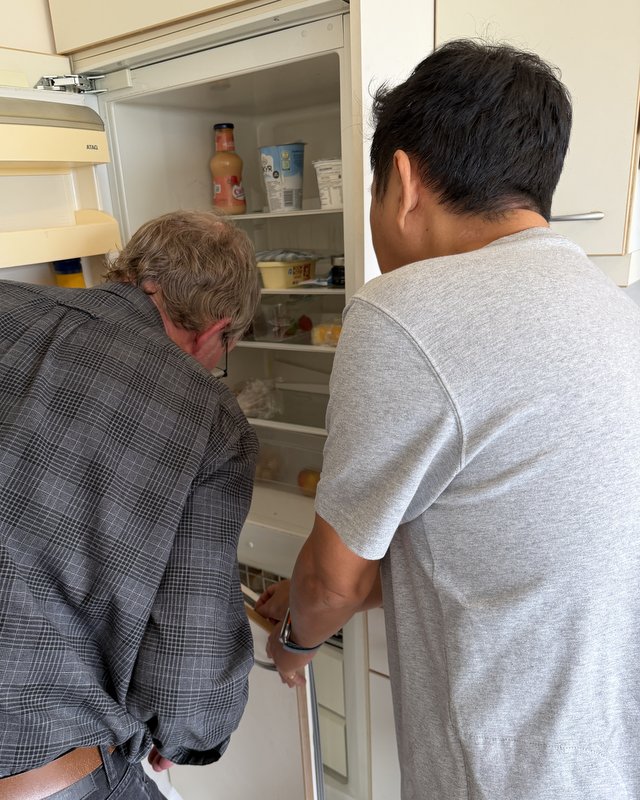
Recovery days. Defrosting the fridge, doing laundry. My brother Otto came to help us with the fridge. He and Aric managed to repair it!
15 June
On this day, Aric was supposed to fly back to Malaysia. During the trip to Iceland, I had noticed how dependent I had become on others due to my AMD. I worried about whether I would be able to spend the next two weeks independently in the Netherlands. It was a huge relief for me when Aric decided to change his return flight and fly back with me on June 29.
16 June
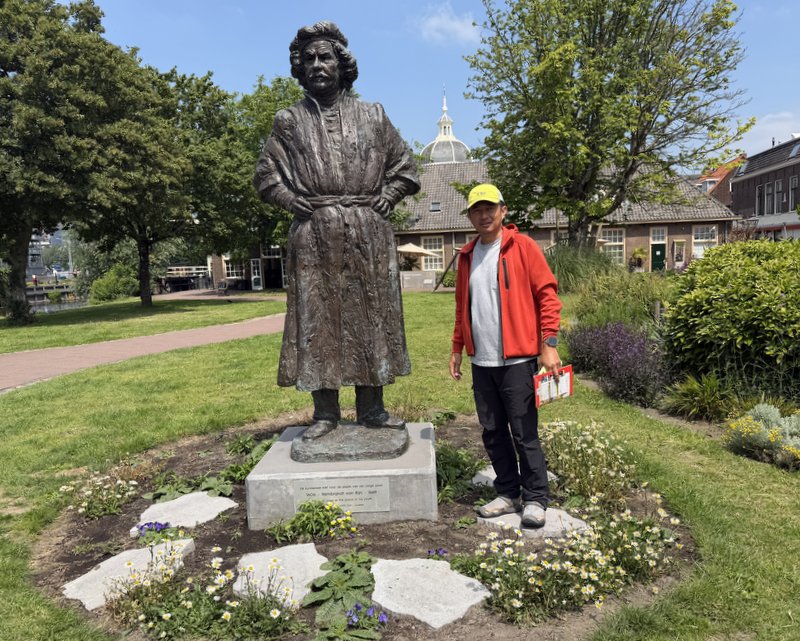
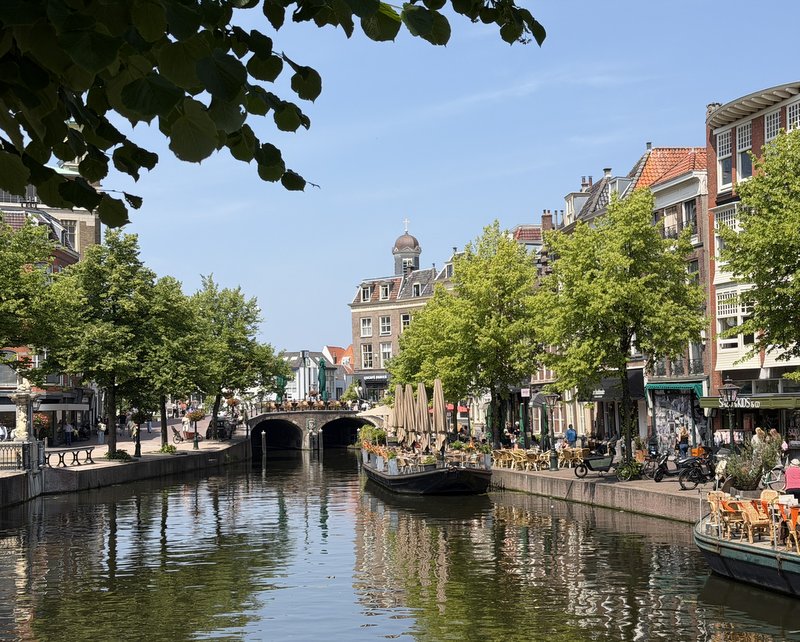
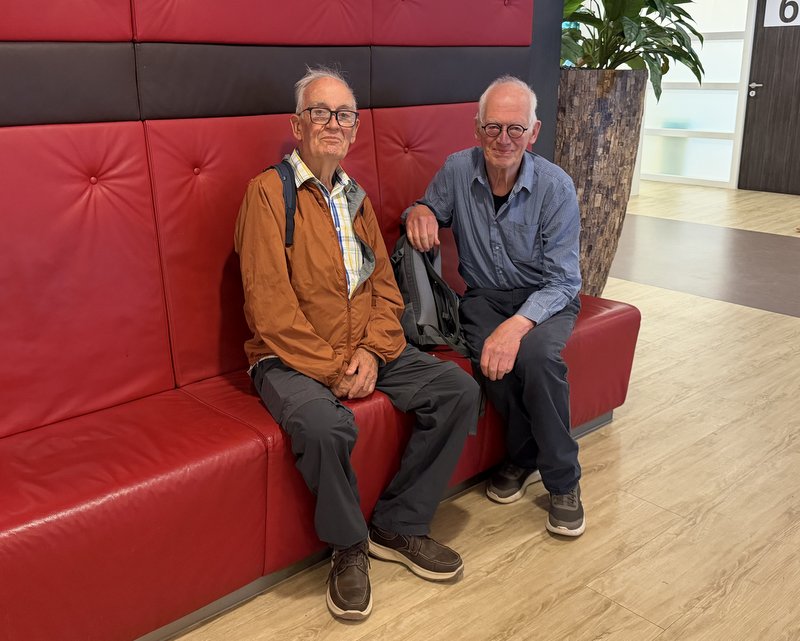
A day trip to Leiden. Aric thought he had never visited this historic town, but during our long city walk (8 km) he remembered a few locations from an earlier visit, more than 20 years ago. Separate blog about this trip.
17 June
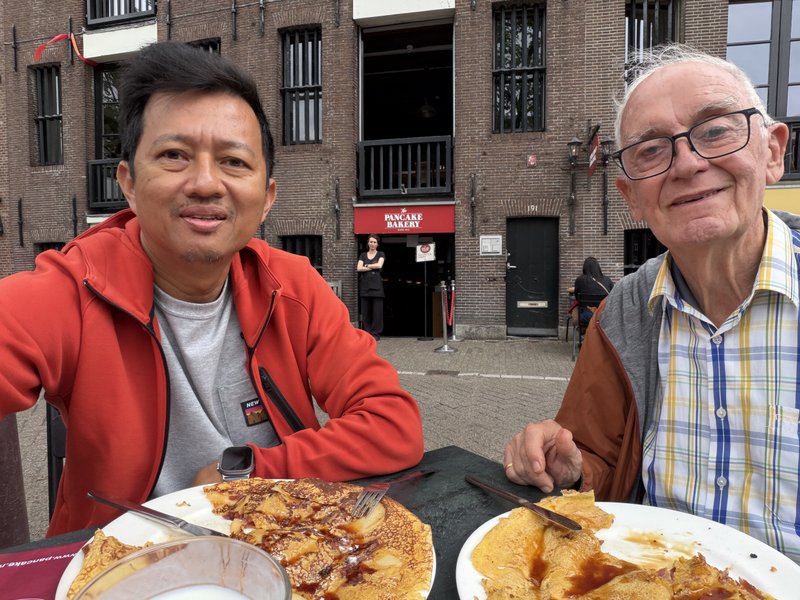
My brother Pim had a cataract operation and the eye clinic had advised him to come with an escort. We joined him and after the (successful) operation, took a Uber to his home, where we had coffee. Aric and I continued with another city walk and had lunch with pancake in the Pancake Factory at the Prinsengracht.
18 June
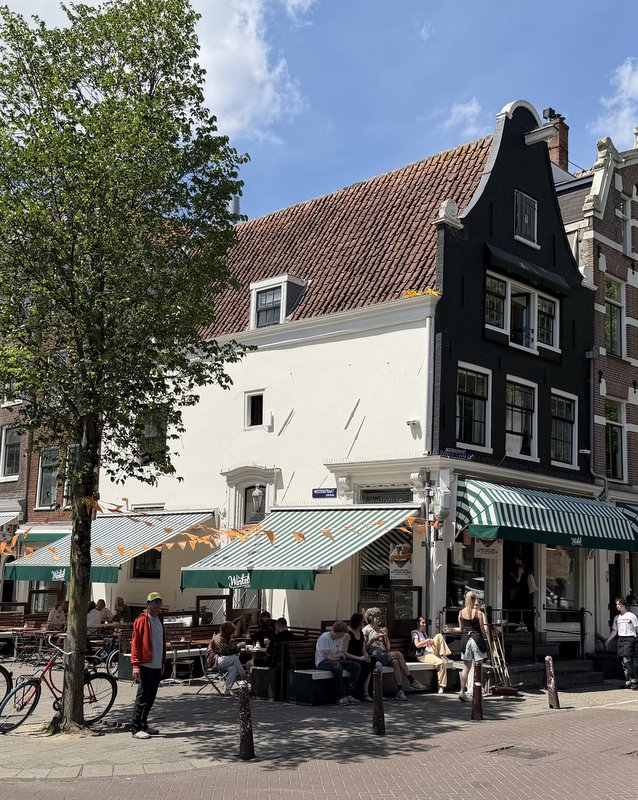
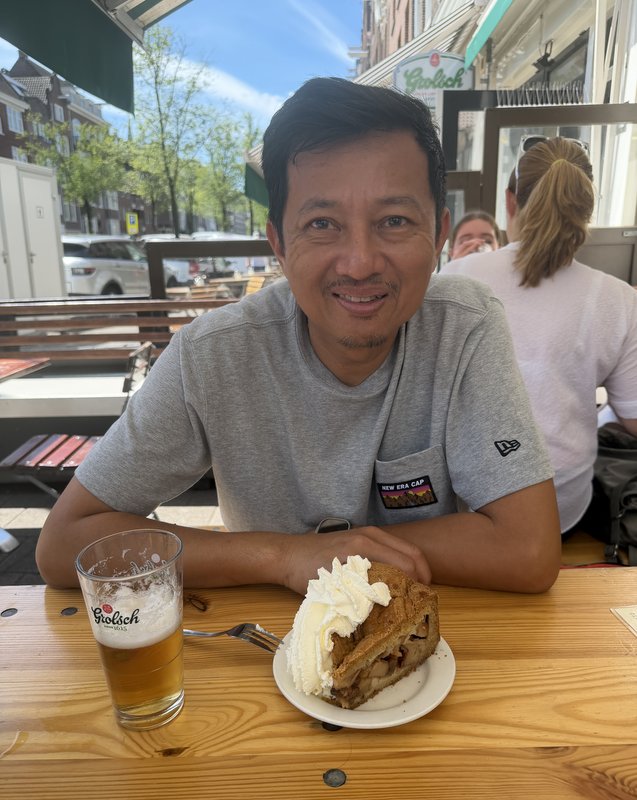
After visiting my friend and former student Roald, another city walk. This time lunch with Apple pie.
19 June
A resting day
20 June
We visited our friends Marjan and Mike. When they lived in Malaysia, we met them and became friends. I kept in touch when they returned to the Netherlands, for Aric it was nice meeting them again after so many years.
21 June
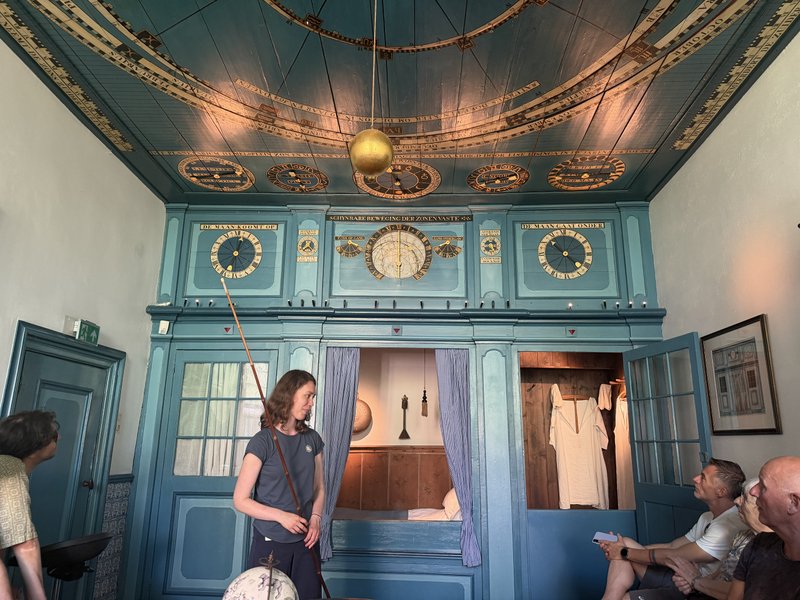
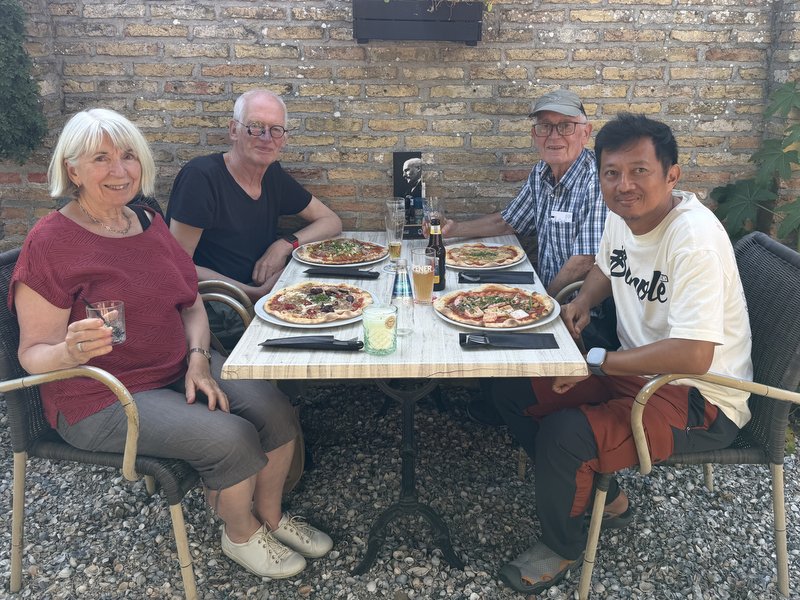
Pim had recovered fast from his cataract operation and could drive again. With him we went to Franeker, where we stayed overnight in the house of Nanda, his partner. In the afternoon we visited the Planetarium and had pizza for dinner. Very hot weather.
22 June
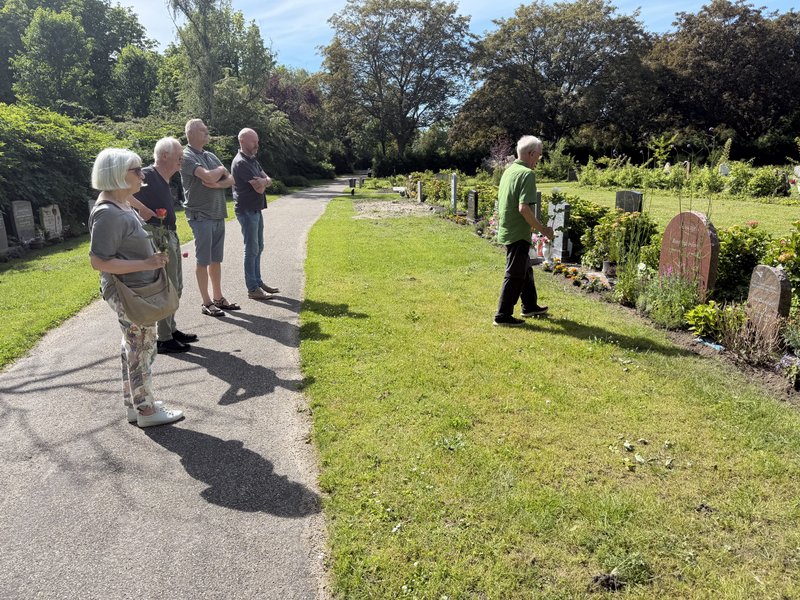
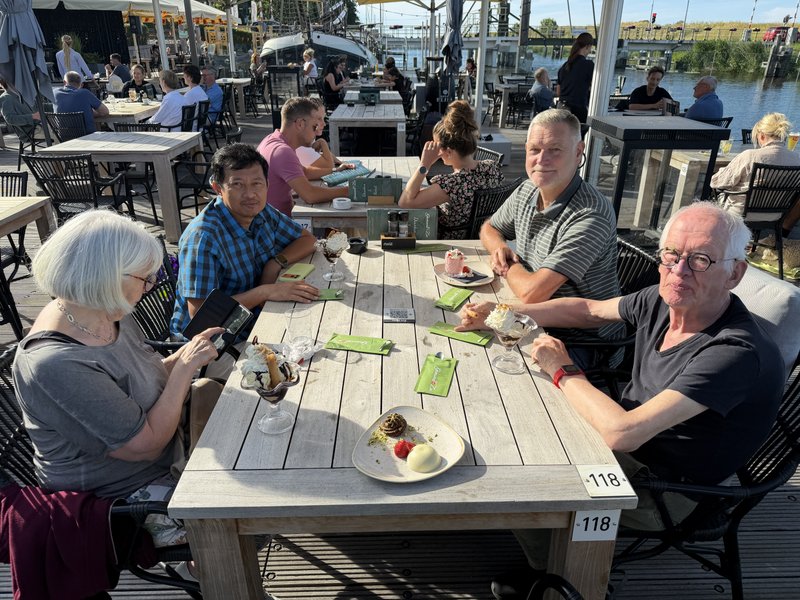
The four of us drove to Groningen where we met Jur and Jasper, partner, esp. son of my brother Ruud who passed away one year ago, when I was in Malaysia/ It was my wish to visit his grave. We had dinner later in a restaurant where I had dinner with Ruud and Jur in 2024. A satisfactory closure.
23 Juni
Traveling back to Amsterdam. During a conversation with my siblings about our past, the topic of the HEMA had surfaced, a traditional department store, famous for its “rookworst” (smoked sausage). They still sell them and that evening we had a traditional winter stew with the outside temperature more than 30 degrees!
24 June
Resting day
25 June
A long traveling day by bus and train to Doetinchem where we met Carle Poeder and Joanne. He is now 95 years old and was the school principal in 1976 when I started teaching. They had a house in southern France, where Aric and I visited them, years ago. Very nice meeting them again,
26 June
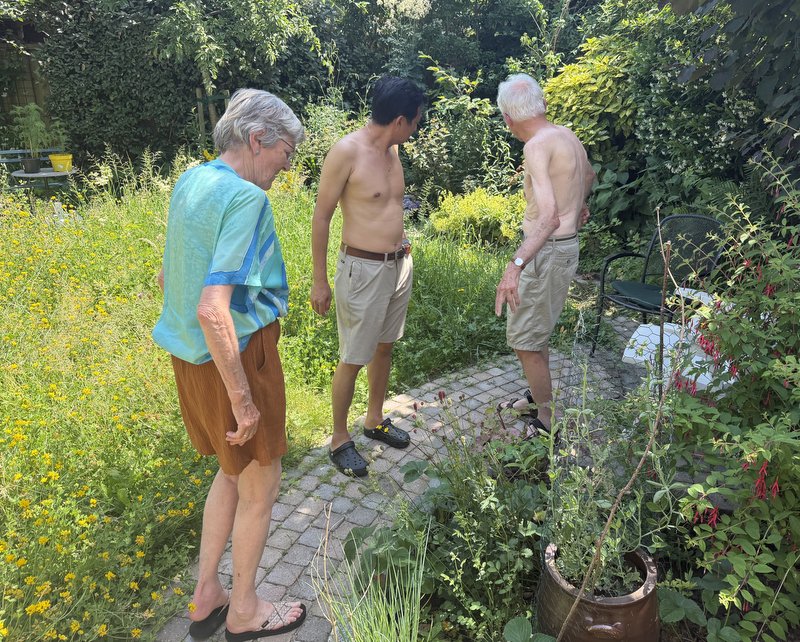
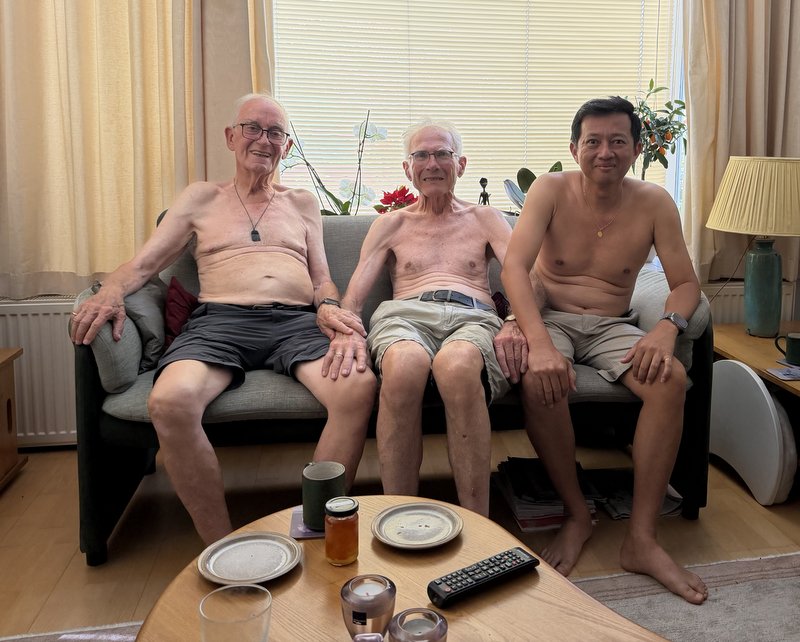
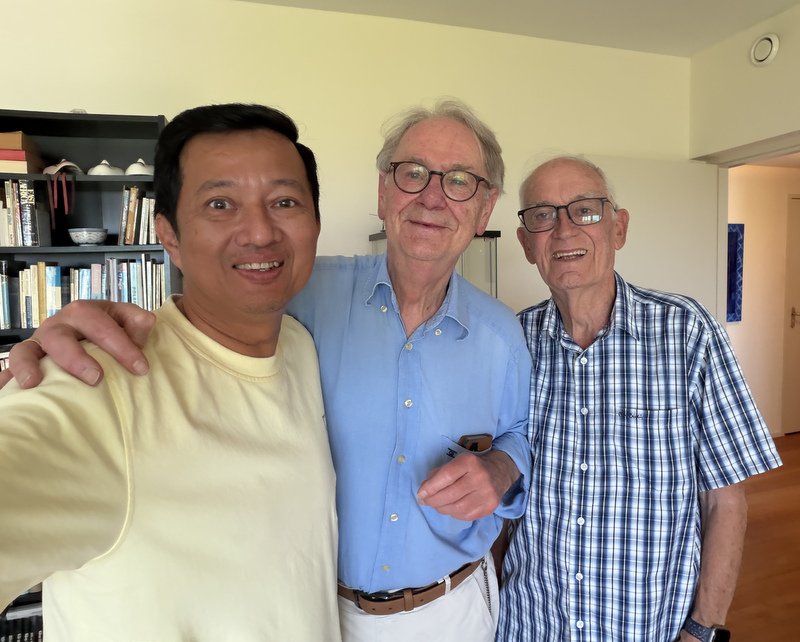
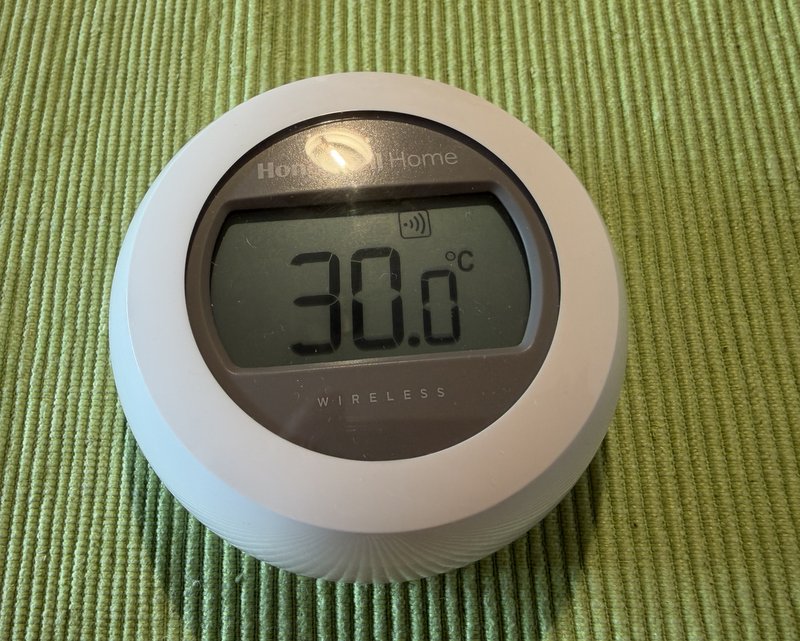
We visited my former university colleague Henk and his wife Marian. There was a heatwave in the Netherlands (a code red alert: stay at home), that explains how we were dressed. They had visited us 20 years ago in Malaysia and were pleased to meet Aric again.
27June
A last-minute visit of former school teacher and friend Hans. It was still very hot.
28 June
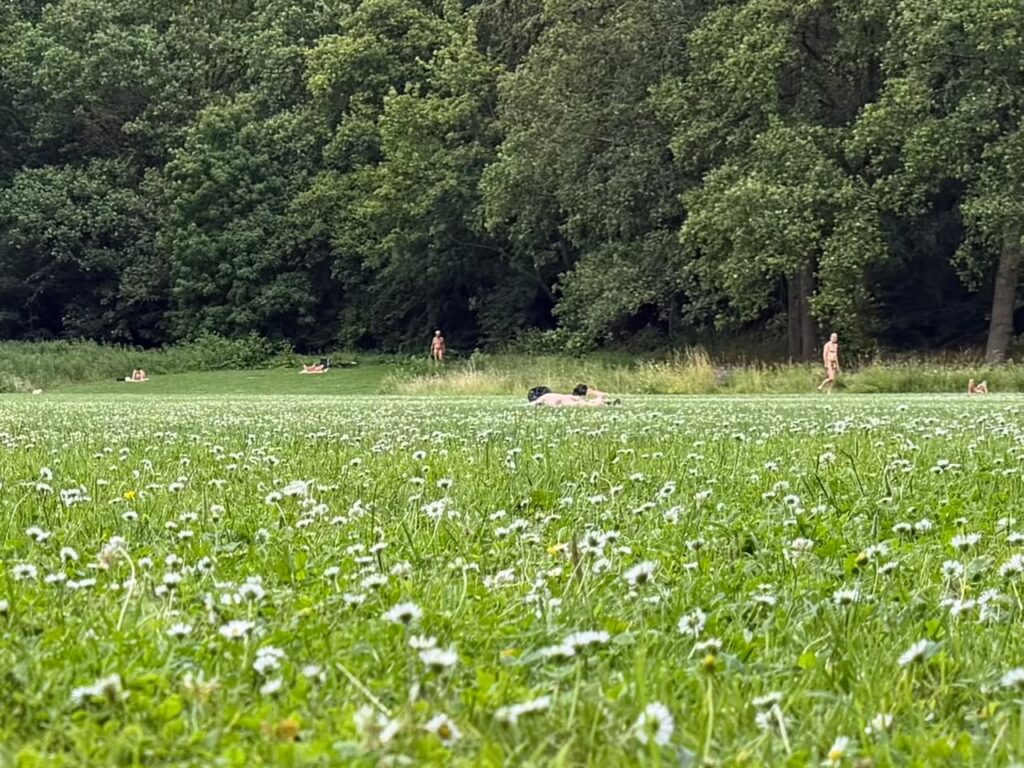
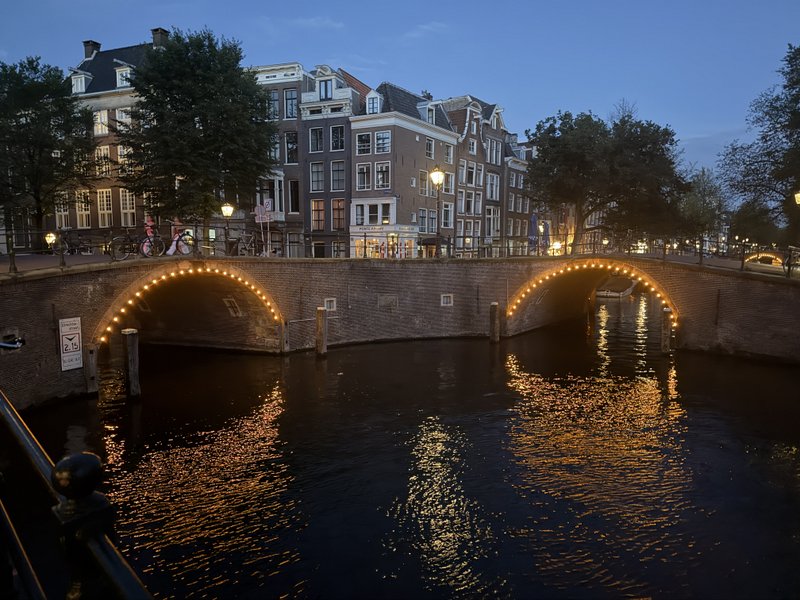
Our last full day in Amsterdam. The Amsterdams Bos park has a special area for nudist recreation, called the Zonnewiede. We decided to have a look. Although a Sunday, there were a few visitors only. Later that night we went for the last time to the town center, to take night view photos.
In May 2025, I visited the Tun Razak Memorial with my friend Pek Foong. Click here for a report. We share an interest in Malaysian history, and when she suggested to visit two more historic places in Kuala Lumpur, I was eager to accept her invitation.
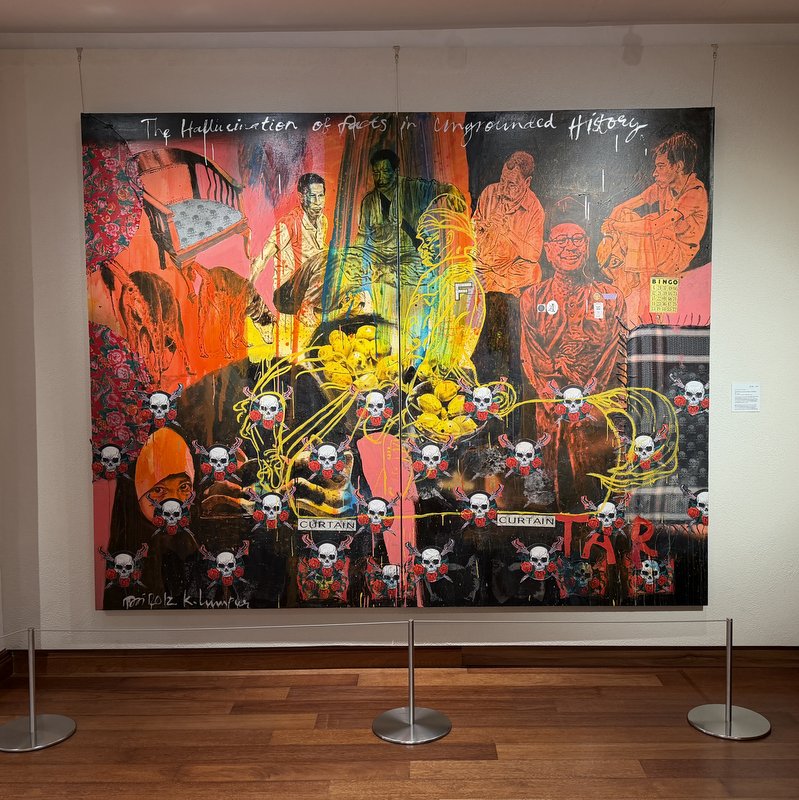
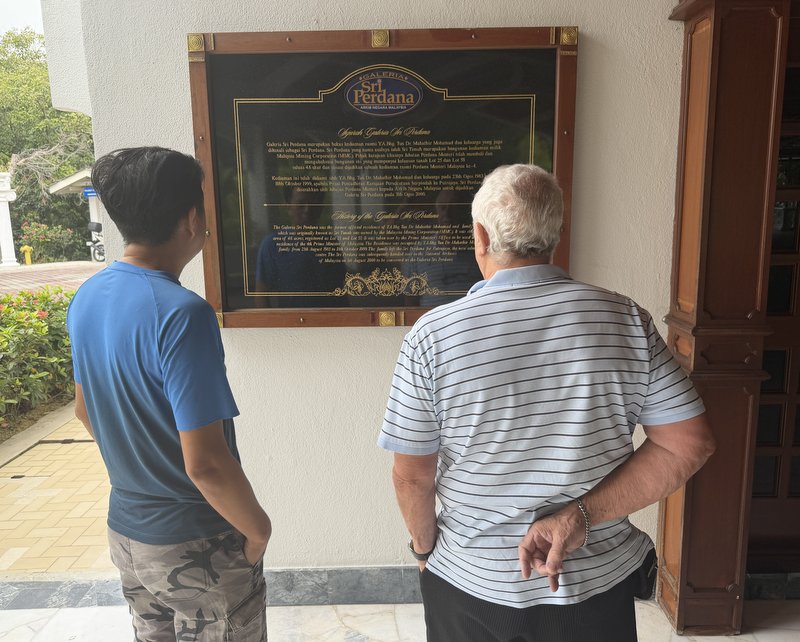
Our first destination was the Galleria Sri Perdana, the former residence of Mahathir, Malaysia’s fourth PM. When he became PM in 1981, he should have moved to Sri Taman, the official PM residency, where both Tun Razak and Hussain Onn had lived during their tenure. Instead, he decided to build a new residency and converted the old residency into a memorial for Tun Razak.
HIs government acquired Sri Timah on Federal Hill, the residence of the Malaysia Mining Corporation chairman, demolished it and rebuilt it for RM 11 million as Sri Perdama. Mahathir and his family lived there from 1983 until 1999, when they moved to the present Sri Perdana in Putrajaya. The residency was handed over to the National Archives in 2000 and last year reopened to the public as a gallery.
The Galleria Sri Perdana is located on a 46-acre site, visitors have to park outside the gat. A friendly security guard said he could take me to the gallery on the back of his bike. I thanked him, but said I still could walk 😉
The entrance to the gallery is free of charge; you only have to register. Not many other visitors.
–
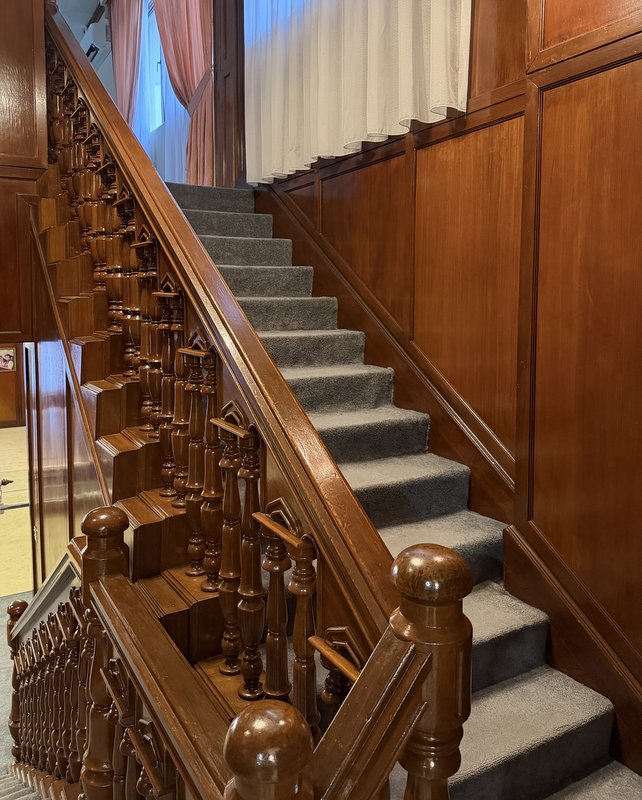
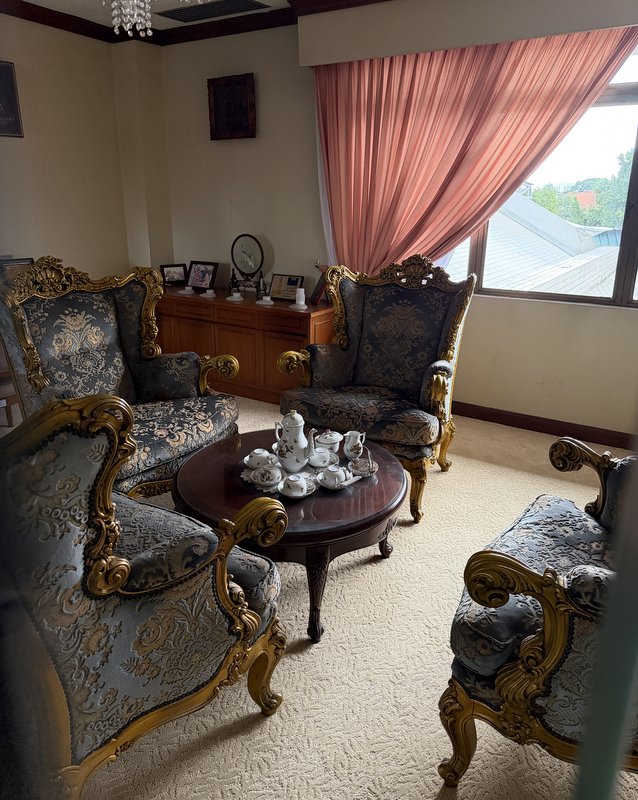
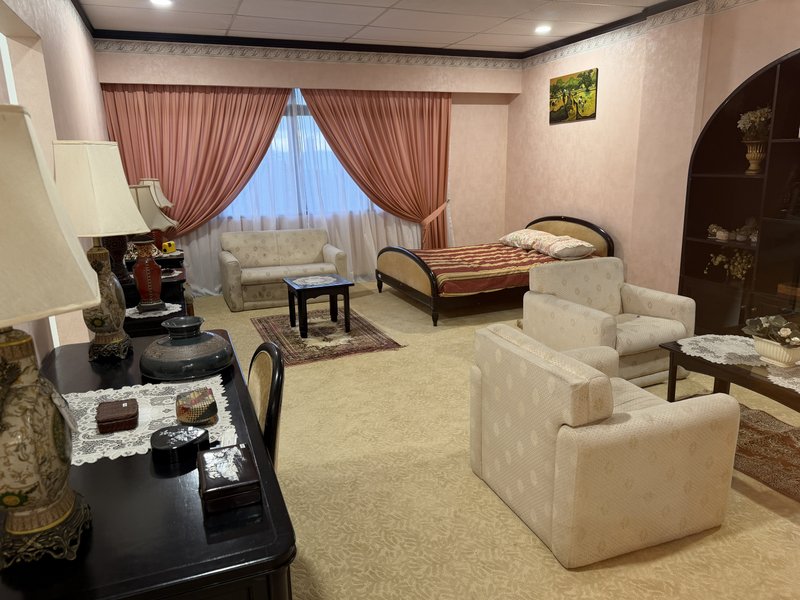
After registration, we were directed to a separate section of the residency, meant for important guests. It has its own staircase and leads to a luxury apartment.
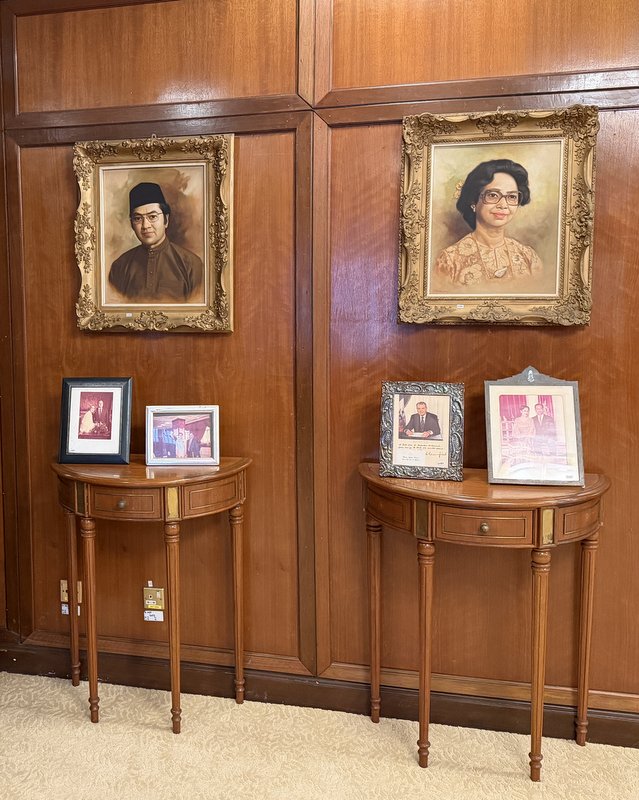
Paintings show the former occupants of the mansion, Mahathir Mohamad and his wife, Siti Hasmah.
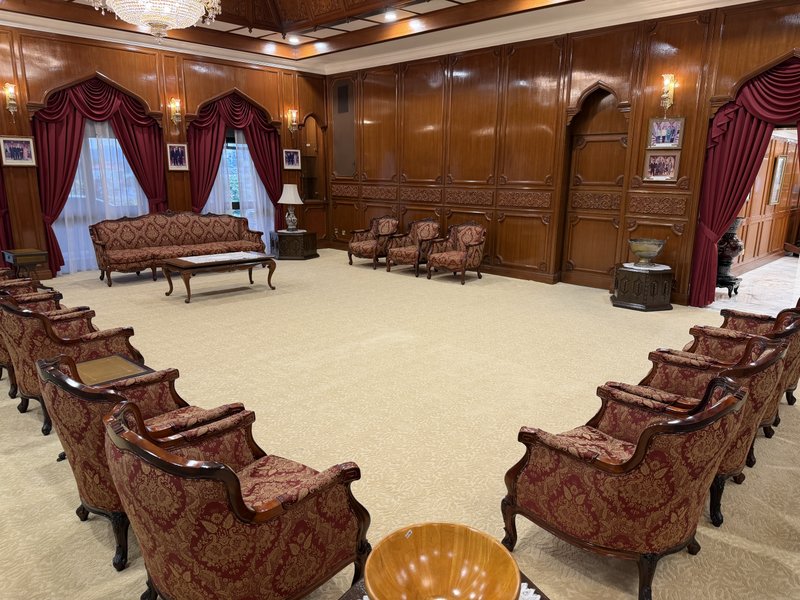
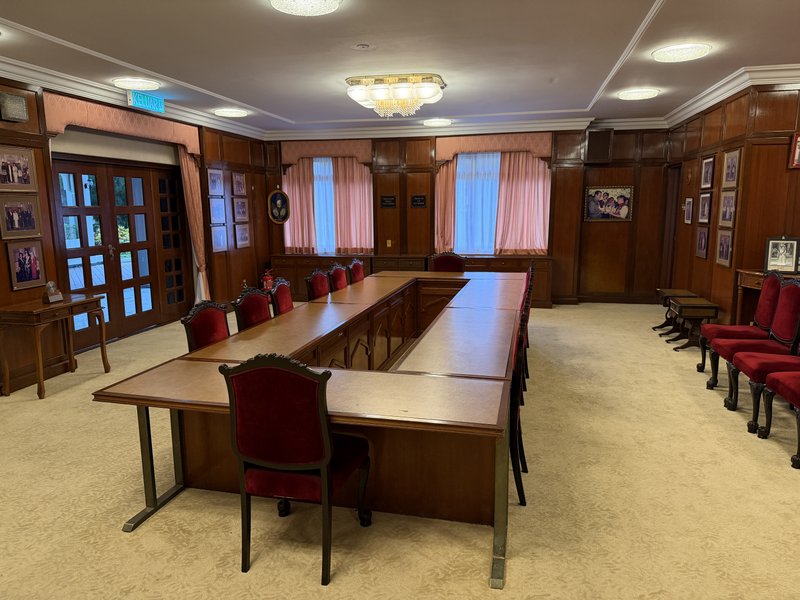
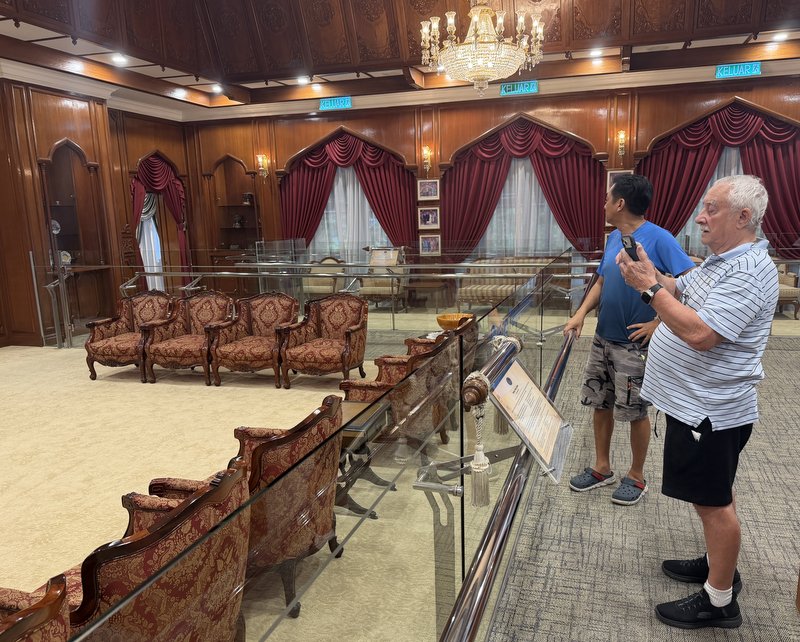
The ground floor of the residency was meant for official use, cabinet meetings, state banquets, etc.
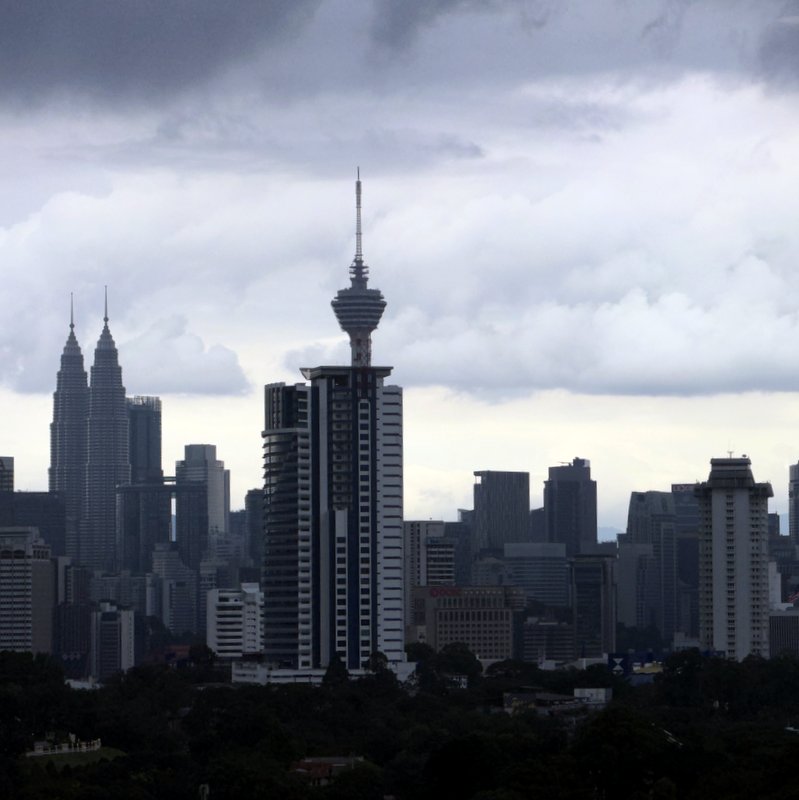
The location of the residence on Federal Hill allows abundant views of the KL skyline.
The basement would not look out of place in a grand hotel.
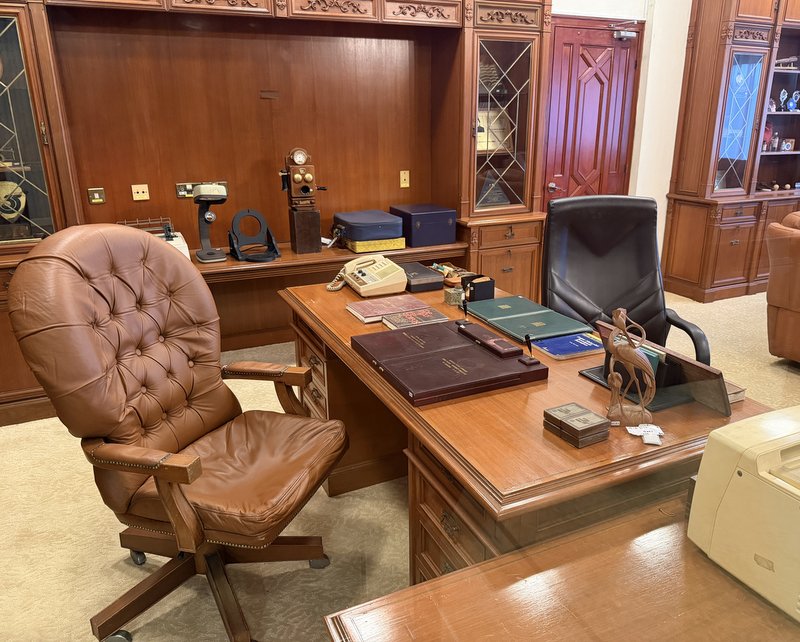
The first floor houses the family’s private quarters and is, for me, the most interesting part. The room of his daughter, his private office.
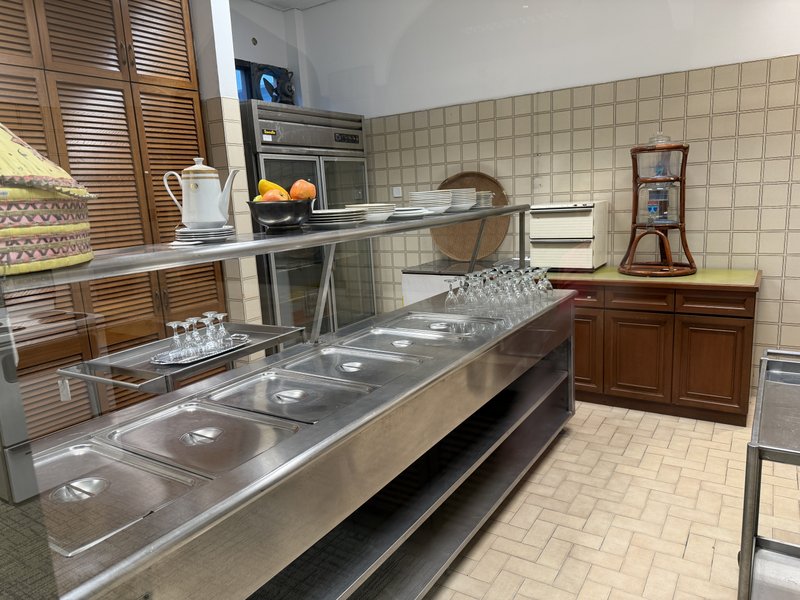
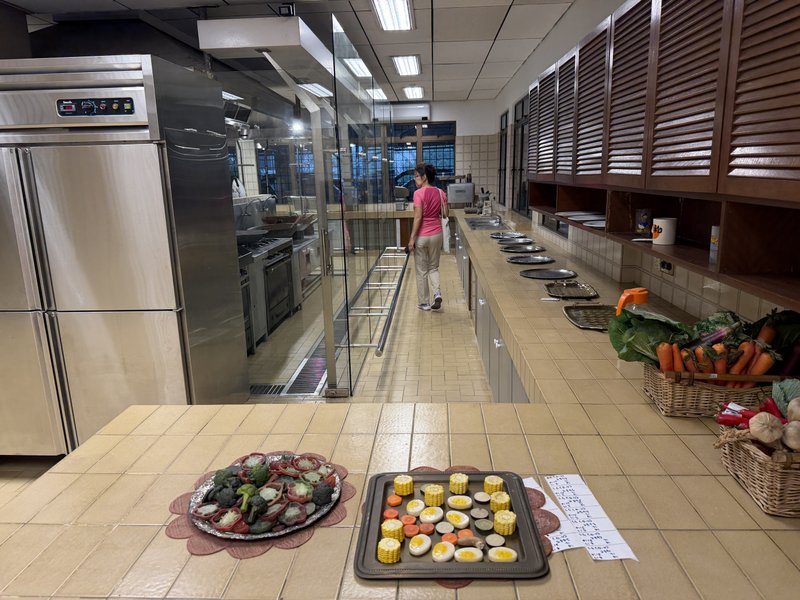
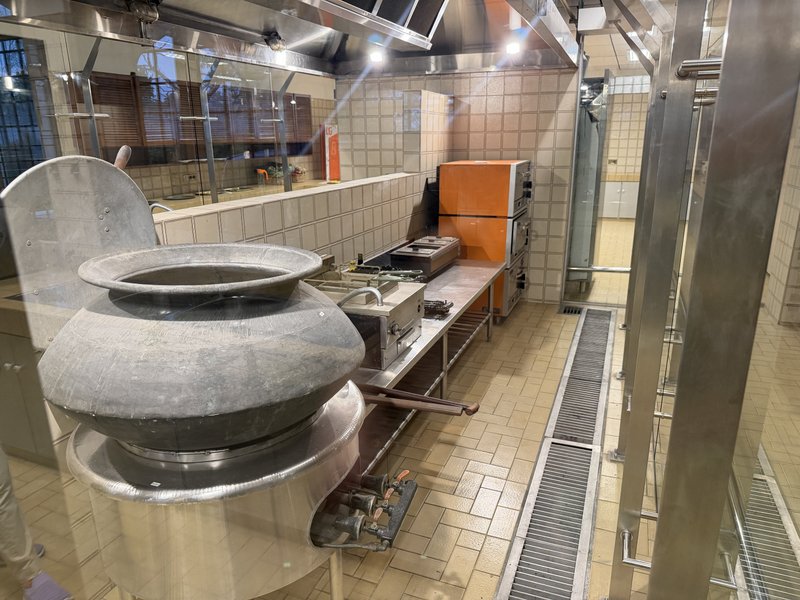
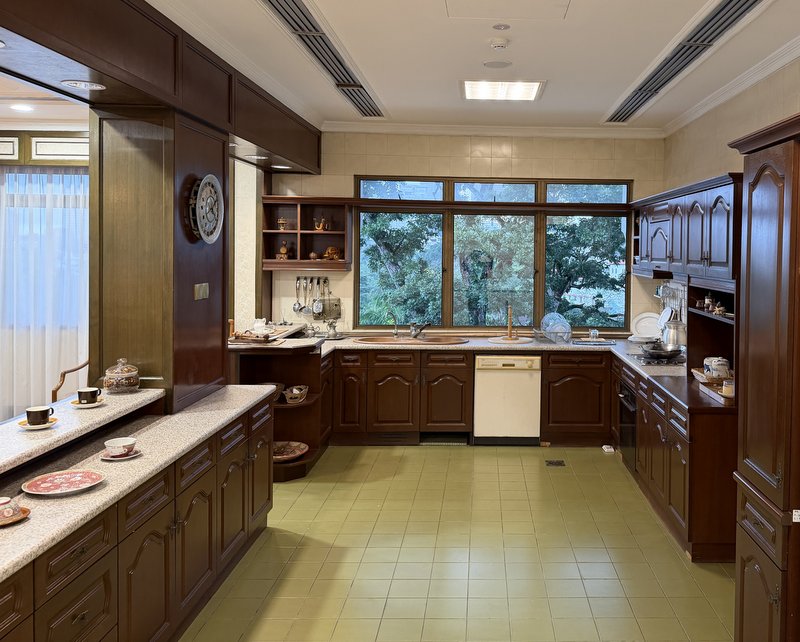
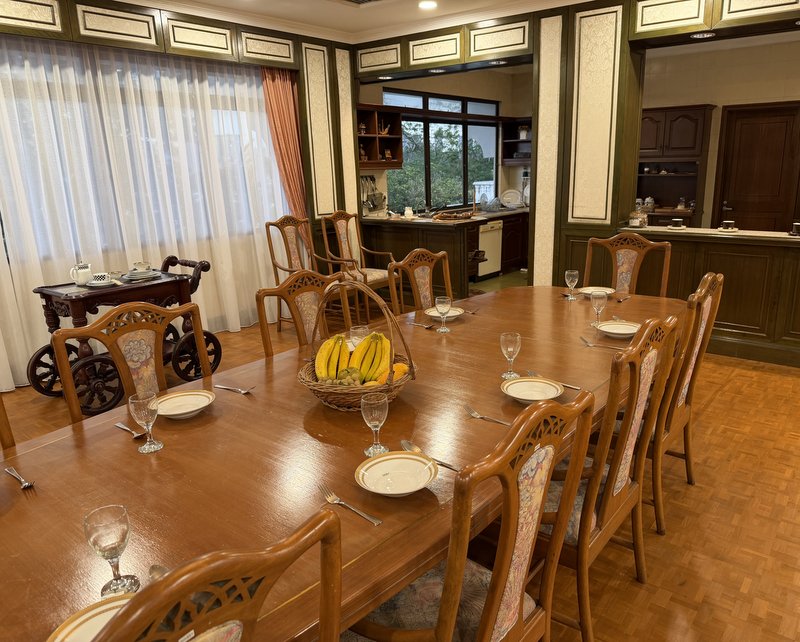
Kitchen and dining room. You wonder if Siti Hasmah sometimes prepared dinner for the family.
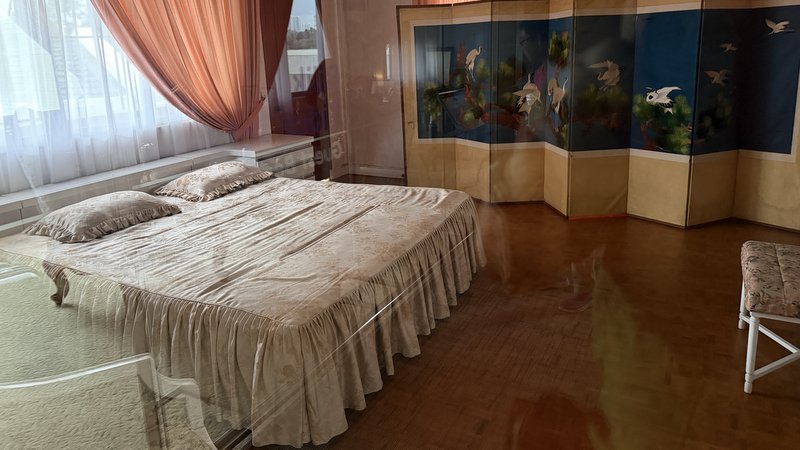
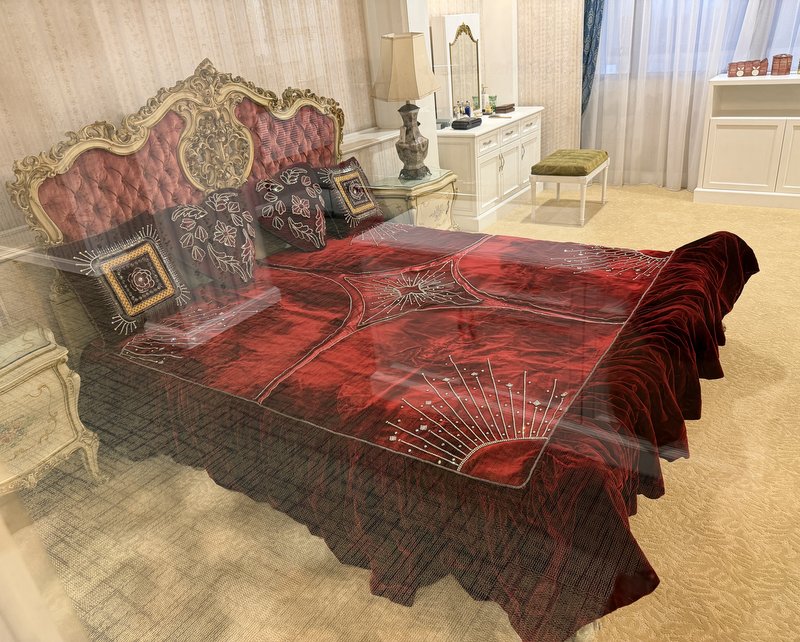
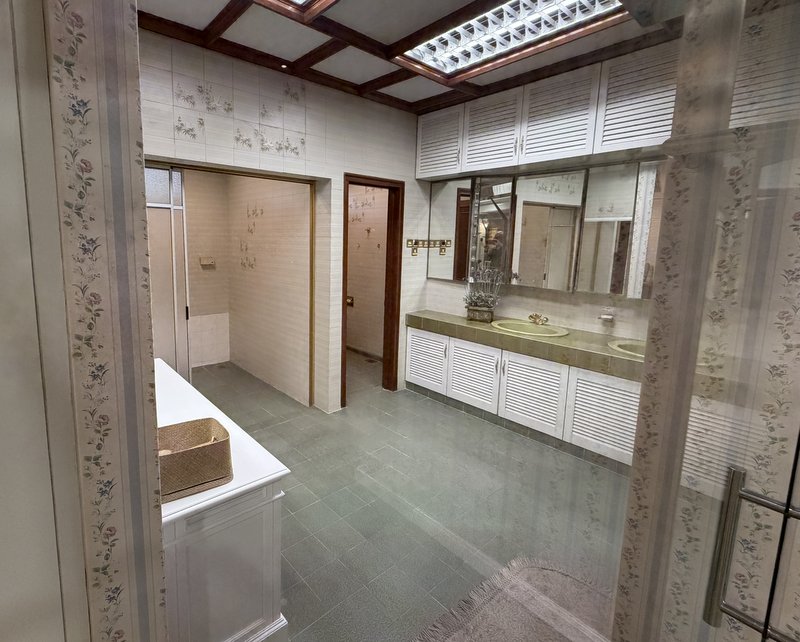
The master bedroom and bathroom.
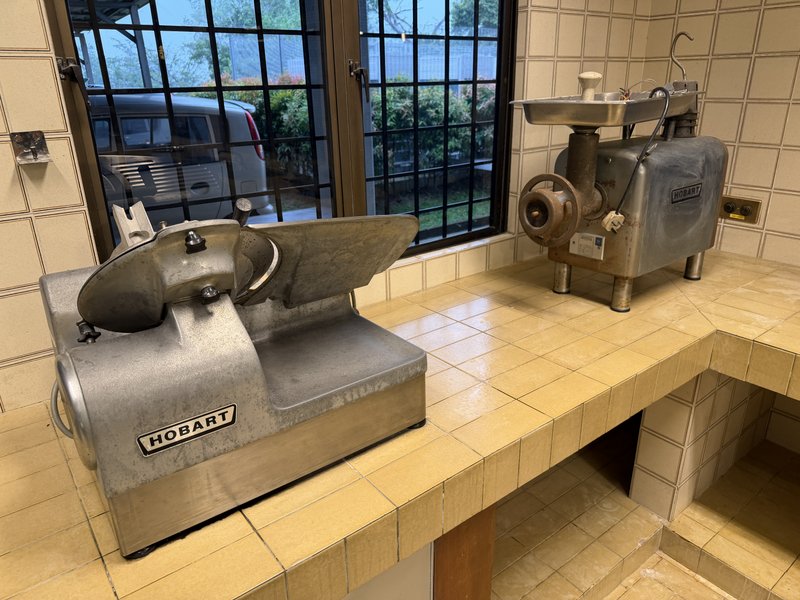
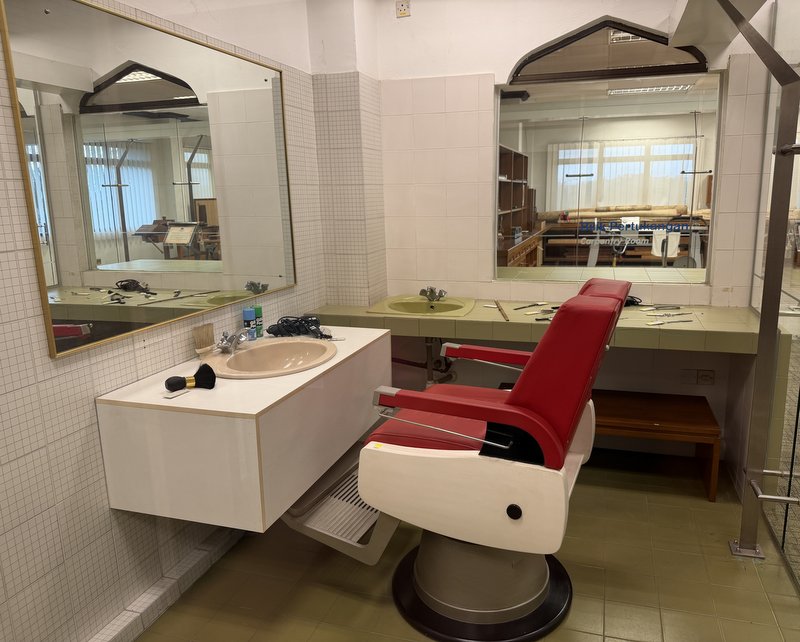
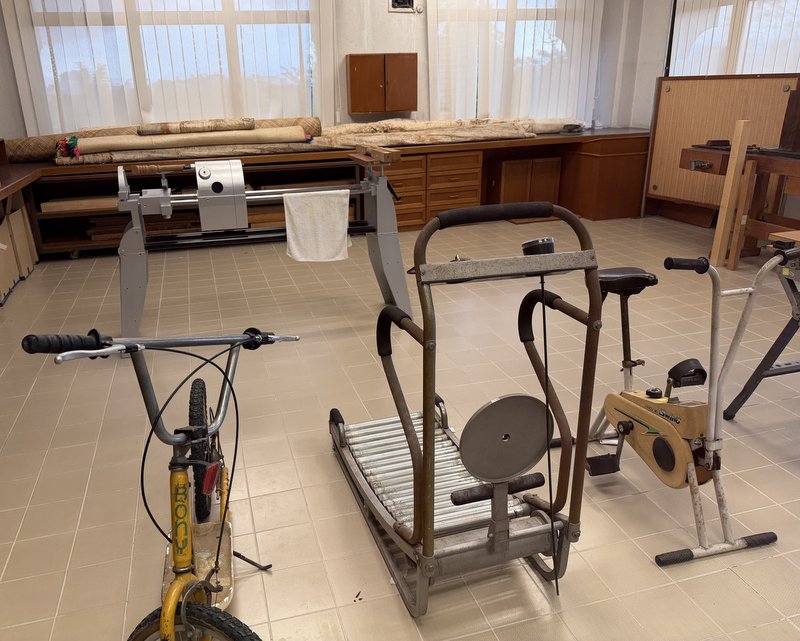
Mahathir had his personal barber and his private gym.
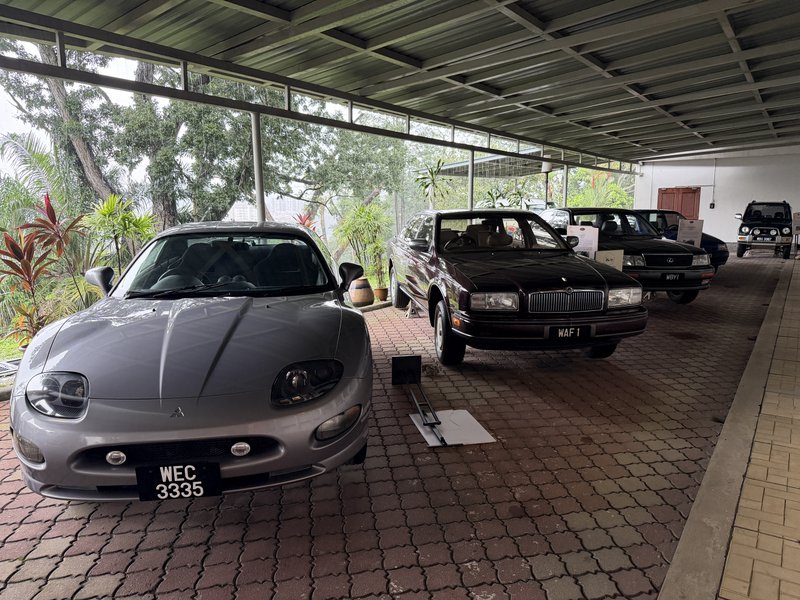
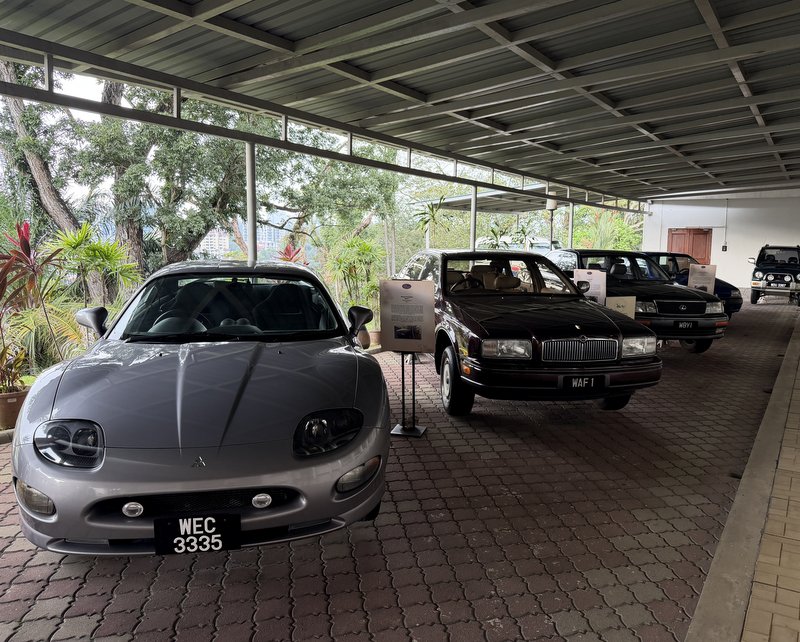
At the end of our visit, we had a look at the official cars, used while he was the PM. It had started to rain, Pek Foong had an umbrella and was allowed to drive her car to the entrance, where she could pick me up.
It was an interesting visit.
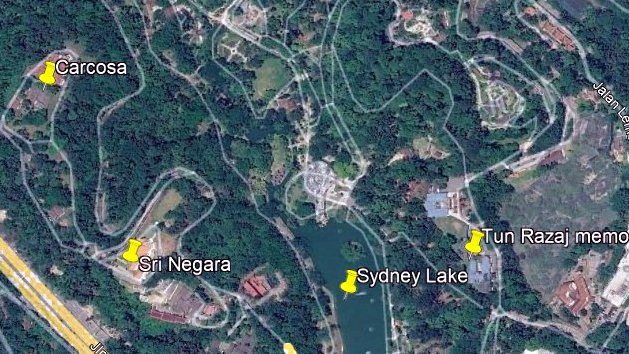
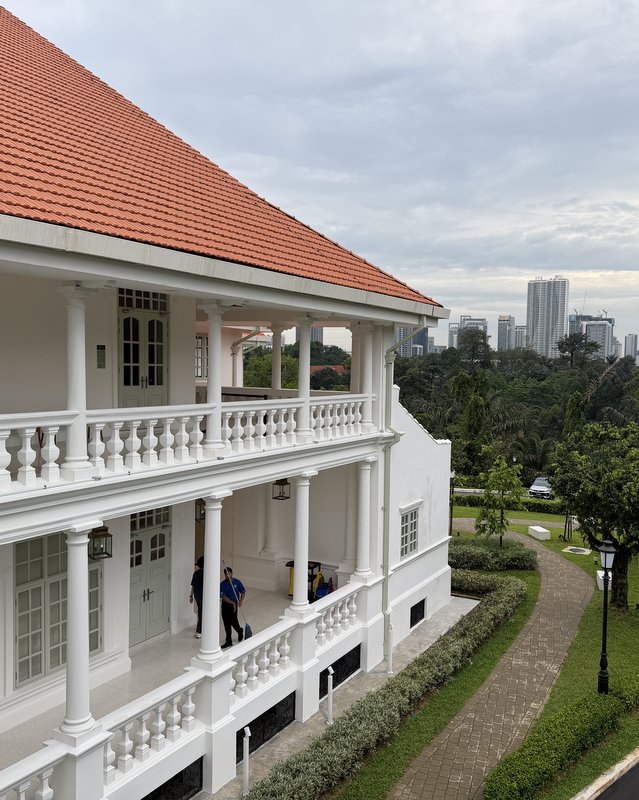
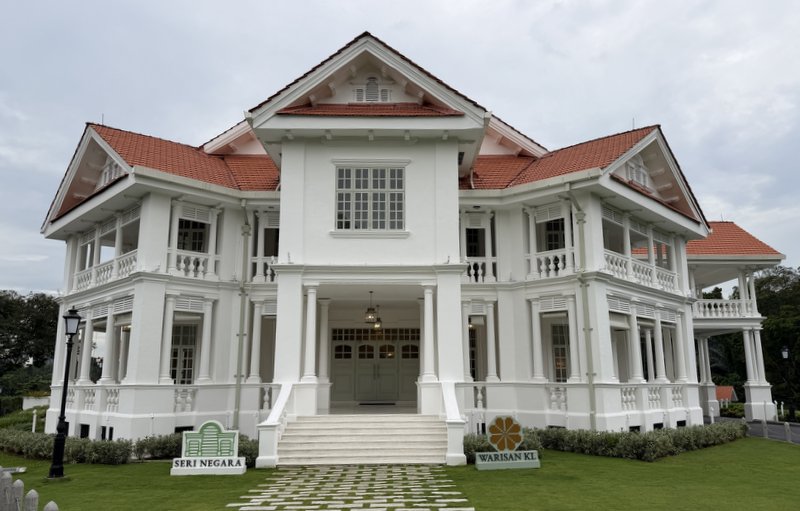
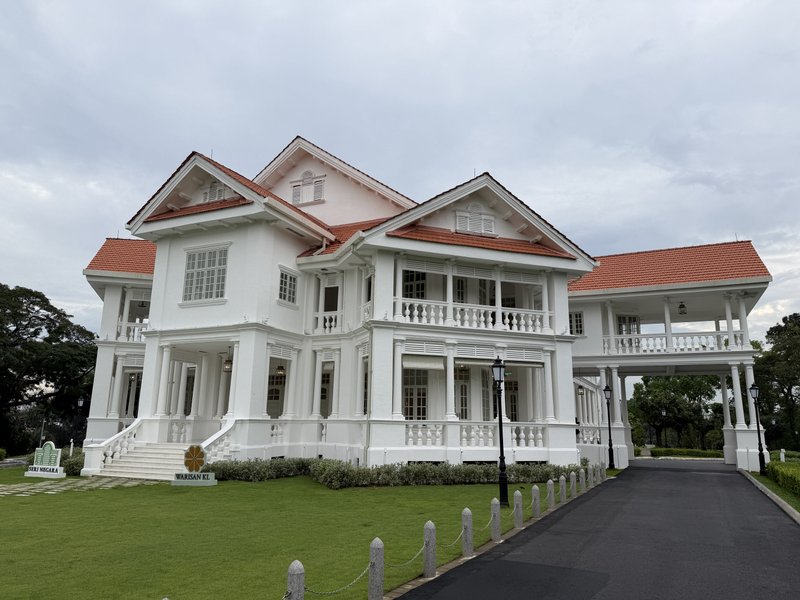
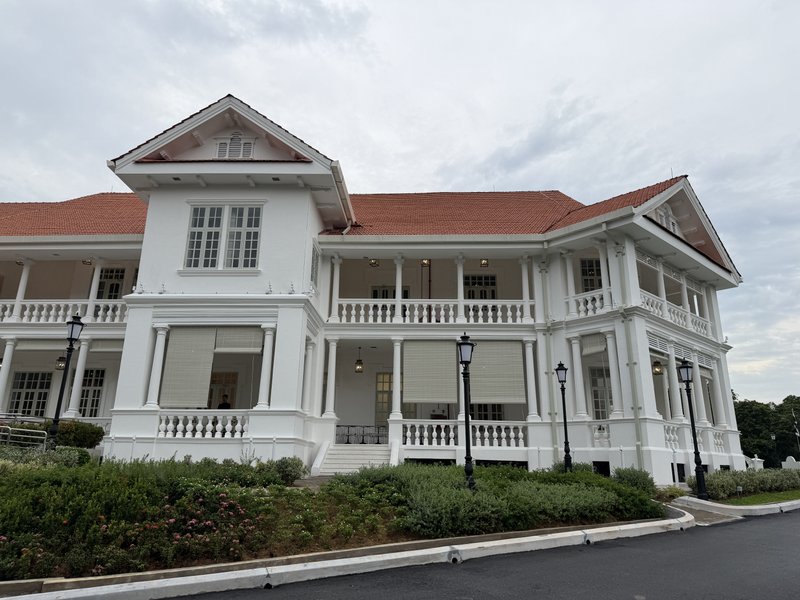
Next, we drove to Sri Negara. Here is a Google Earth screenshot. It is located near the KL Lake Gardens. I have marked the lake with its original name, Sydney Lake, and also marked the location of the Tun Razak memorial. The building was designed by the famous architect A.B. Hubback and completed on1913.It was a guesthouse for high-ranking British officials, it was never a residency. Nearby, also marked in the map is Carcosa, another design of Hubback, but completed 15 years earlier. It was the residency of Frank Swettenham, the first Resident-General of the Federated Malay States.
Basically I understand why the two mansions are often taken together as Carcosa Sri Negara, but it is unfortunate and very confusing. See the appemdix
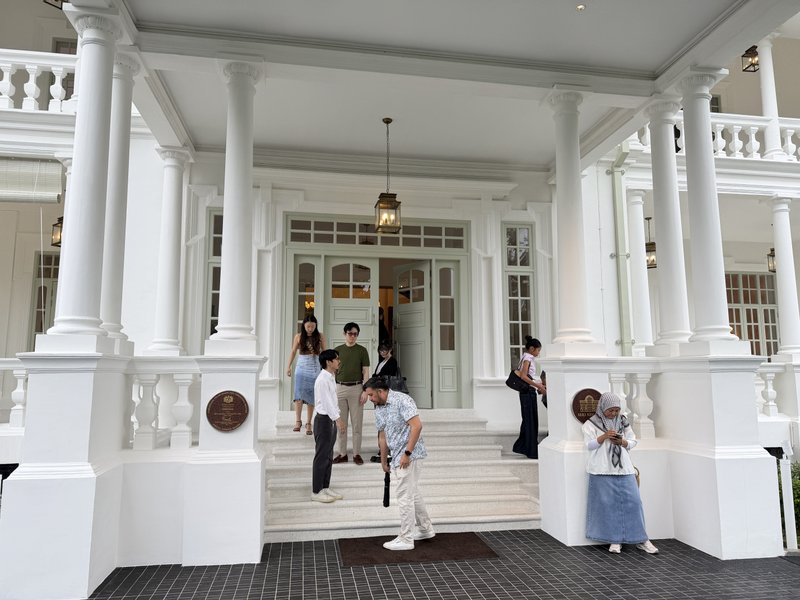
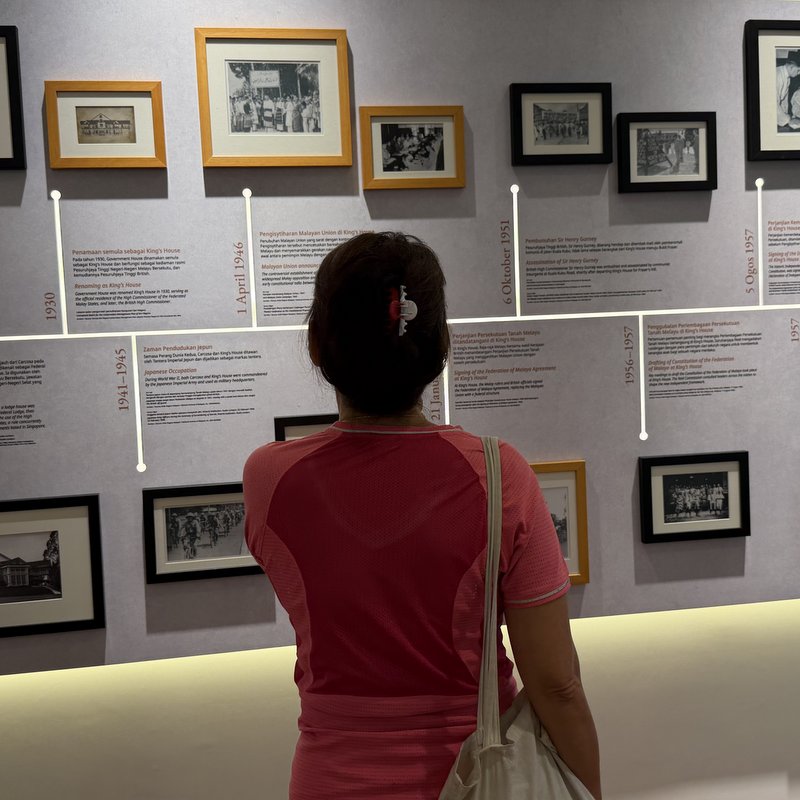
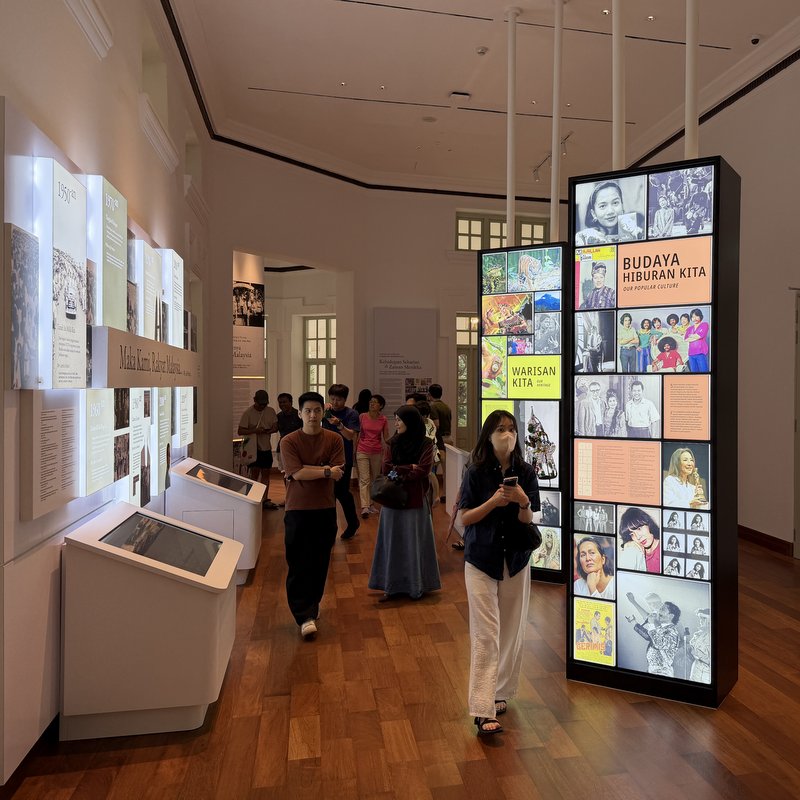
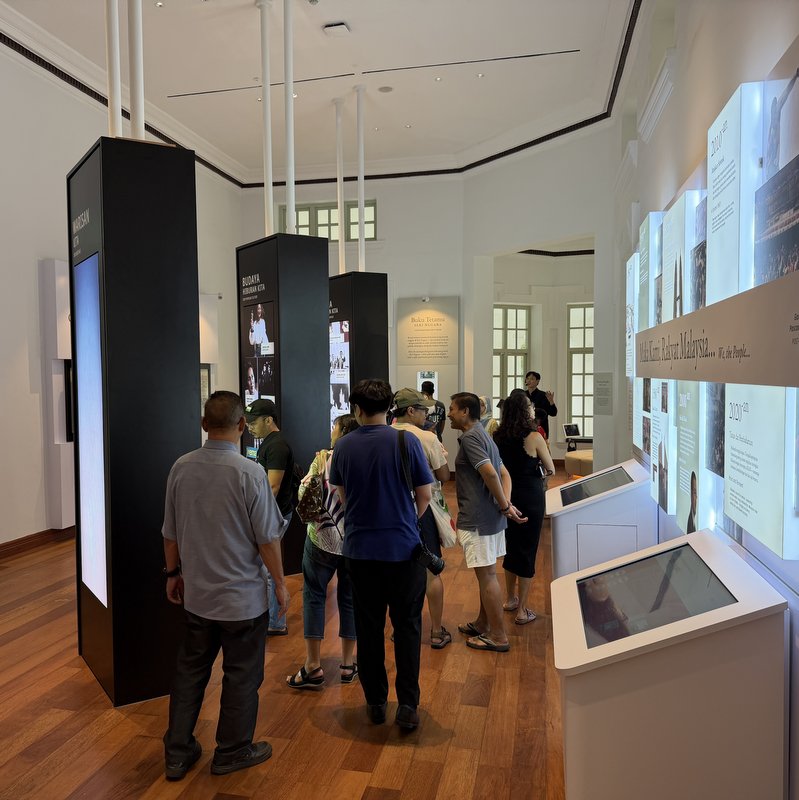
The guesthouse (King’s House, Governor Rest House, Federal Lodge, Sri Negara) has been opened to the public since the end of 2025 as a gallery to highlight Malaysia’s development to independence in the 20th century.
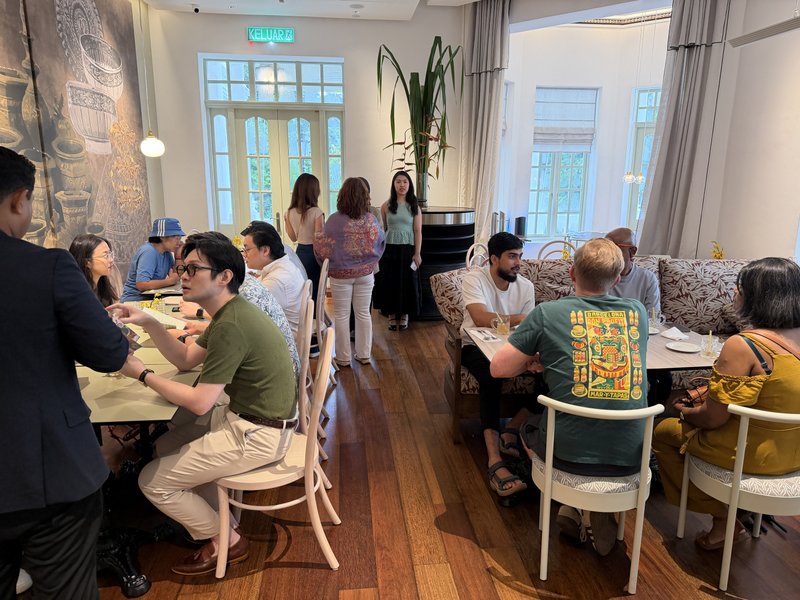
When we visited the gallery, it was free access, but you had to book a time slot for a guided tour. We arrived a bit early, there is a cafe on the ground floor.
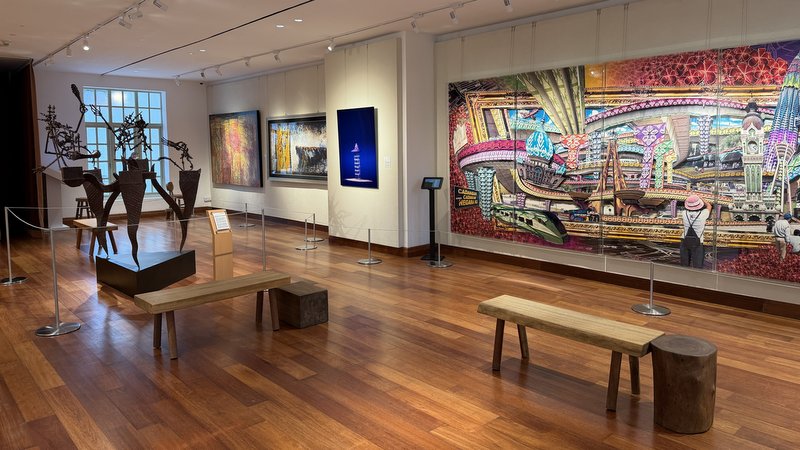
While waiting for the guided tour, we visited the ground floor which is an art gallery
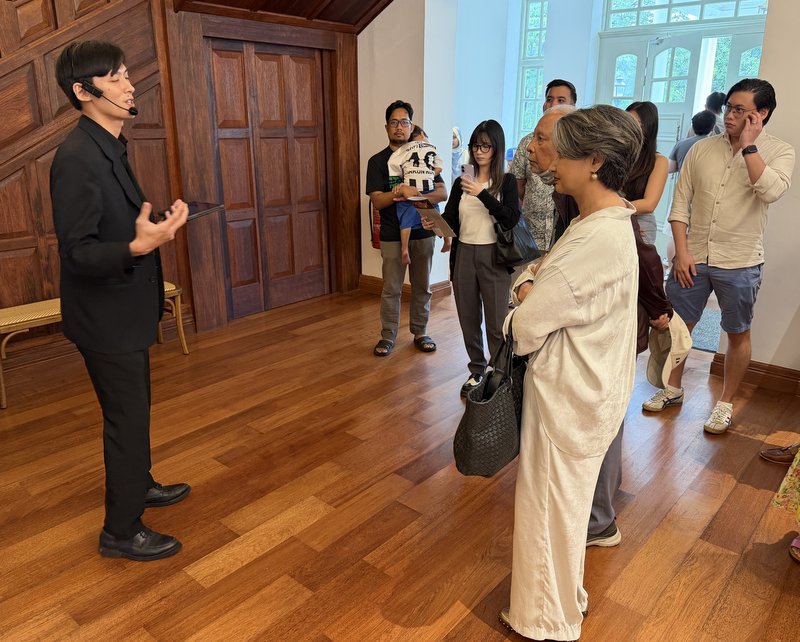
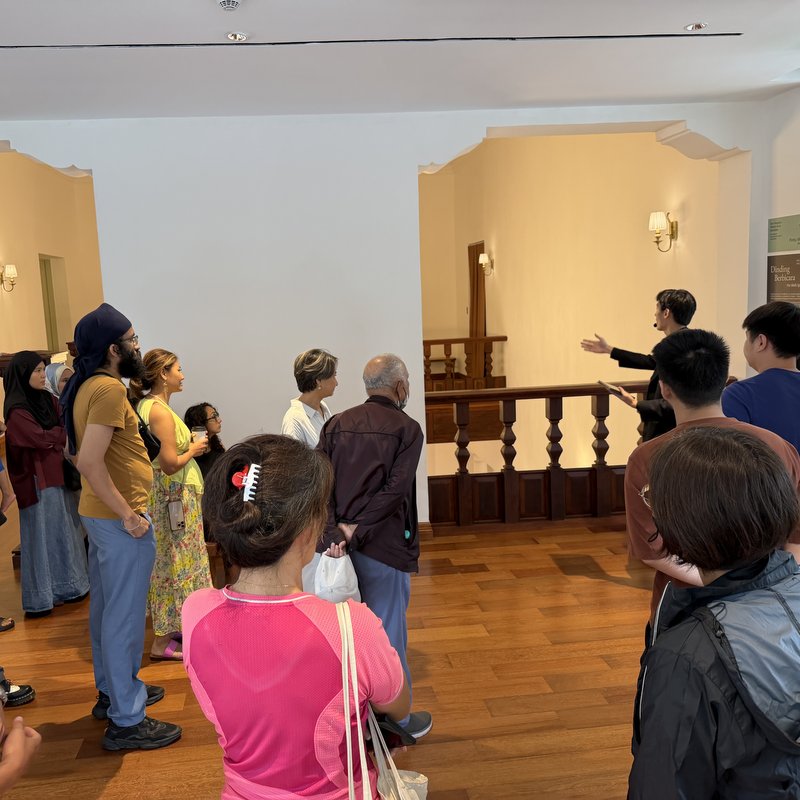
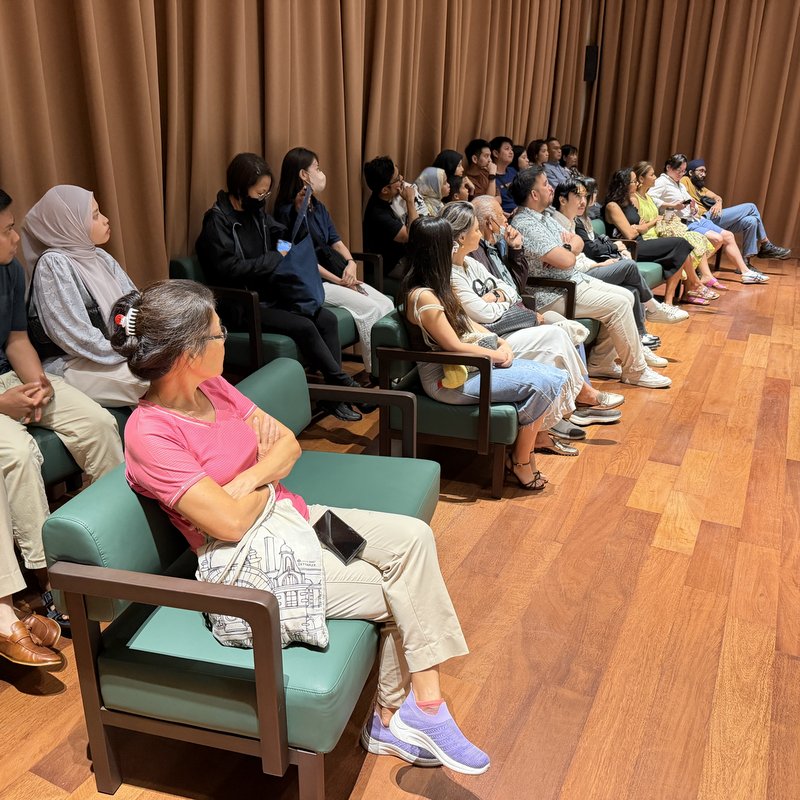
Our guide told about the history of the building and took us to the galleries on the first floor We started with a audiovisual presentastiom.
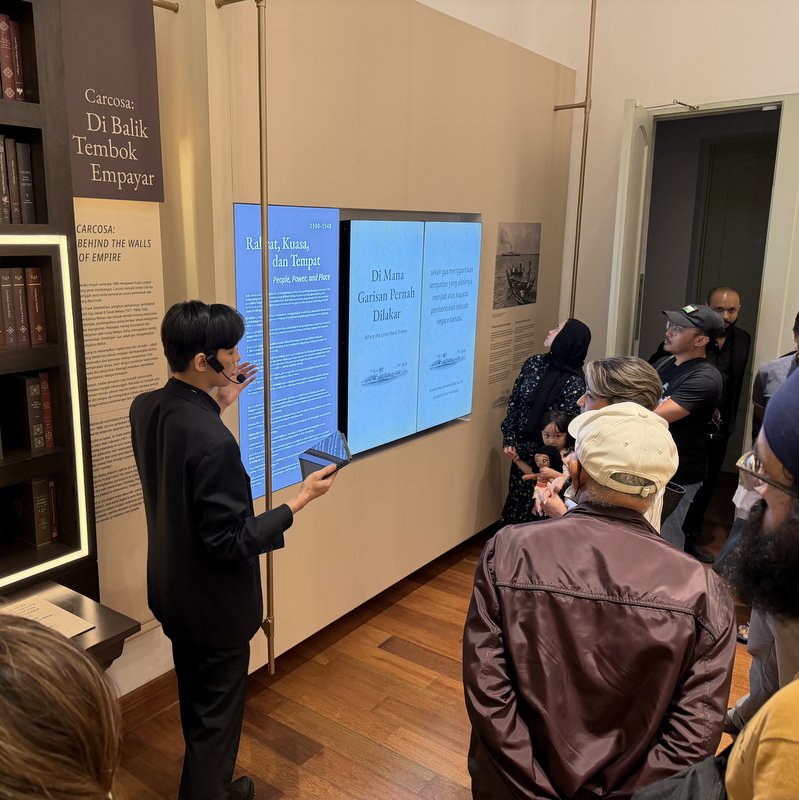
In each gallery the guide gave a short introduction, after which we could walk around.
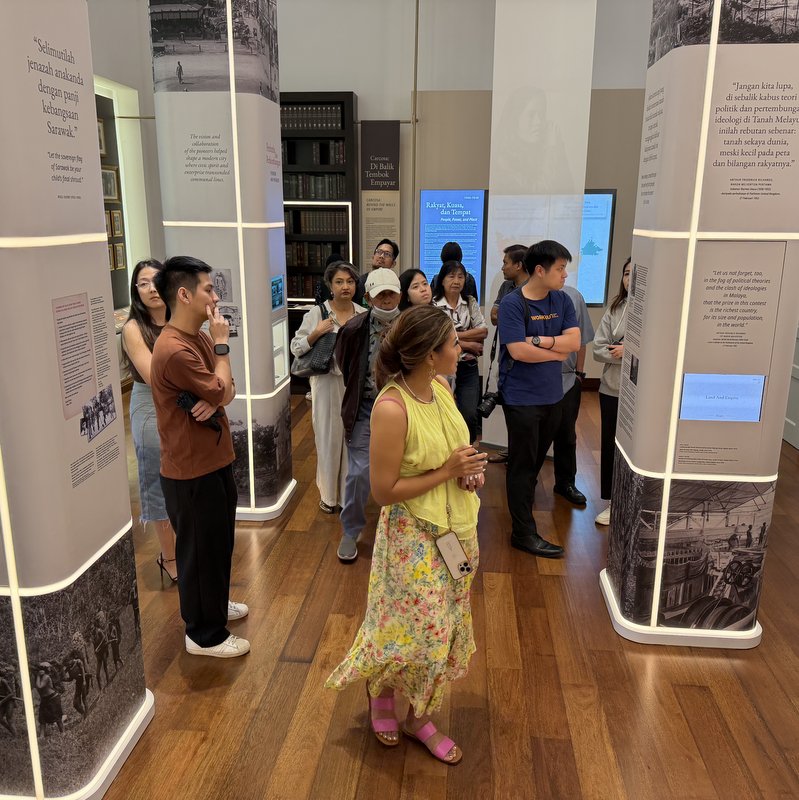
The galleries mainly contain posters with documentation. A guided tour is not really suitable, it would be better if you walk around at your own pace.
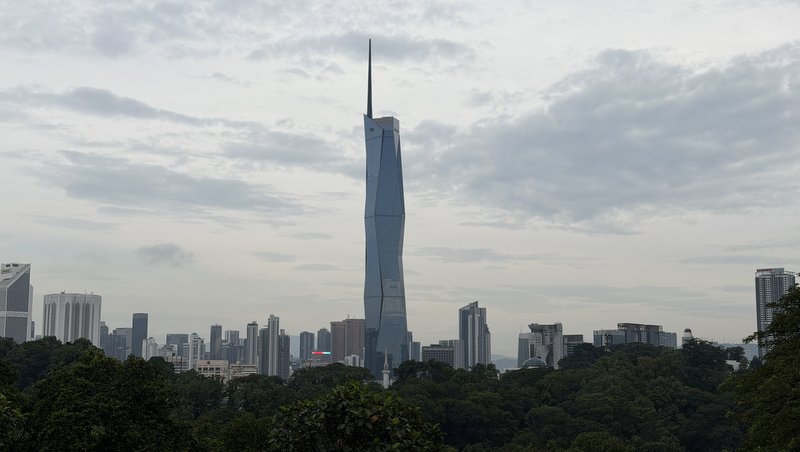
Also her you have a spectacular view of the Merdeka 118 skyscraper.
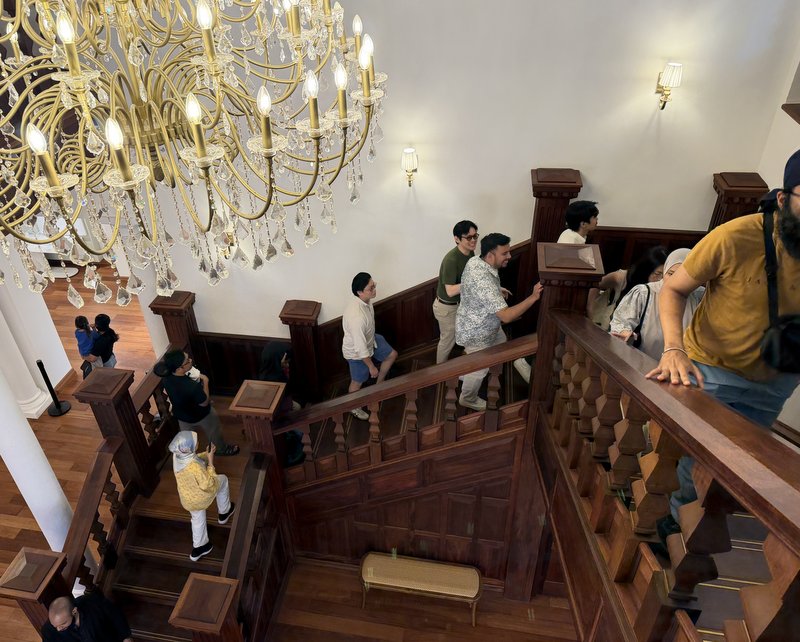
Both floors are surrounded by verandas.
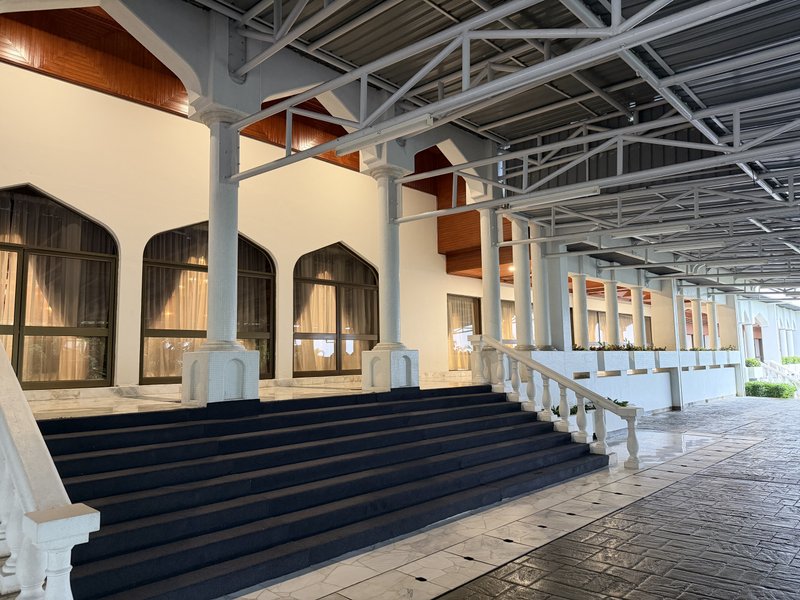
The rain had stopped, so I could walk around the mansion and admire the architecture.
It is in the planning to restore also Carcoa. It would be wonderful if the government decides to make it a museum of colonial history,
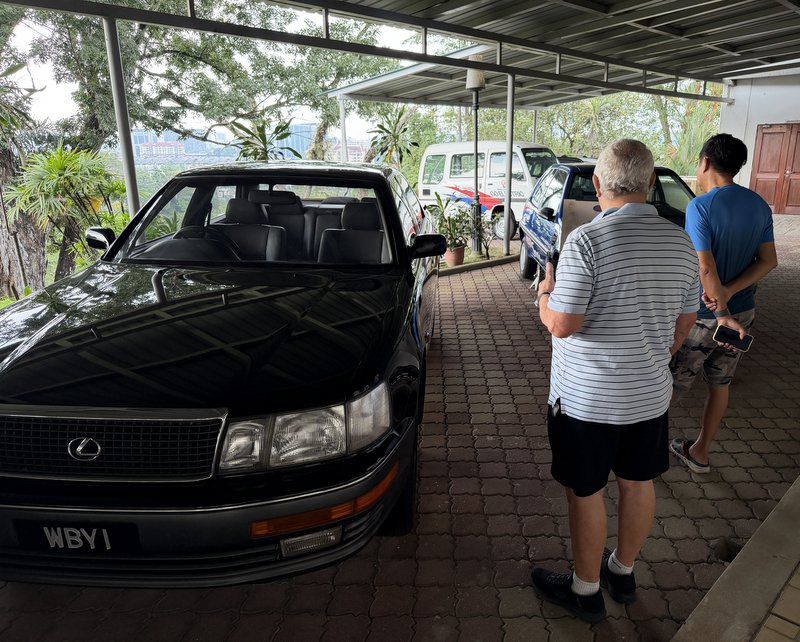
A few weeks later I came back to Sri Perdana, this time with Aric and our UK friend Rodney. Main reason was to have a look at the cars, as he is fond of (old) car models. No rain this time, so I could take a picture of the exterior.
We visited the memorial again, but I didn’t take many photos this time.
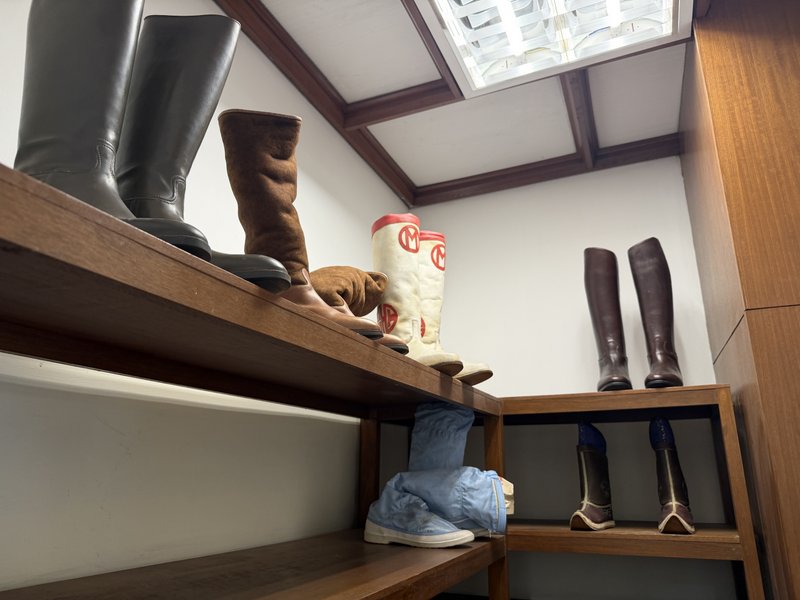
Of course I gad to take a photo of Aric and the laundry facilities in the basement. And during my first visit I had overlooked the cupboard with the shoe racks at the entrance of the family quarters. Malaysian culture, you take off your shoes when entering a private home.
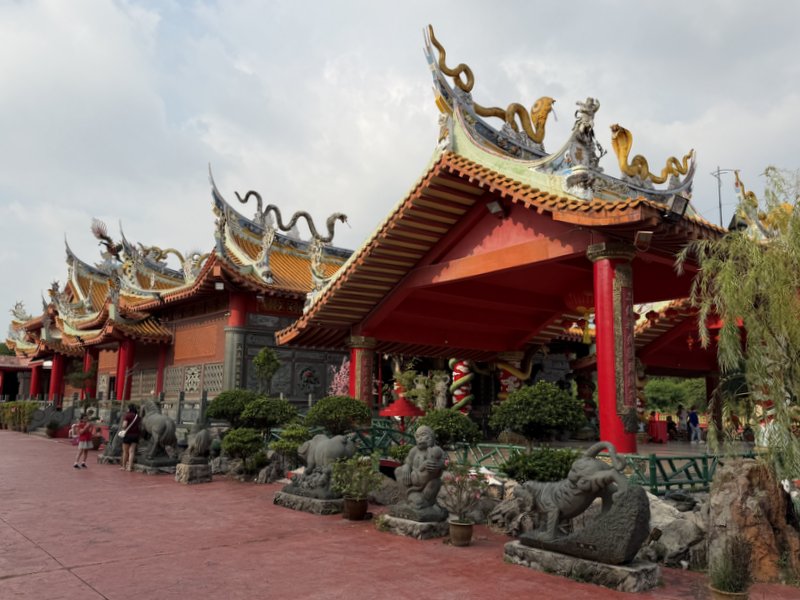
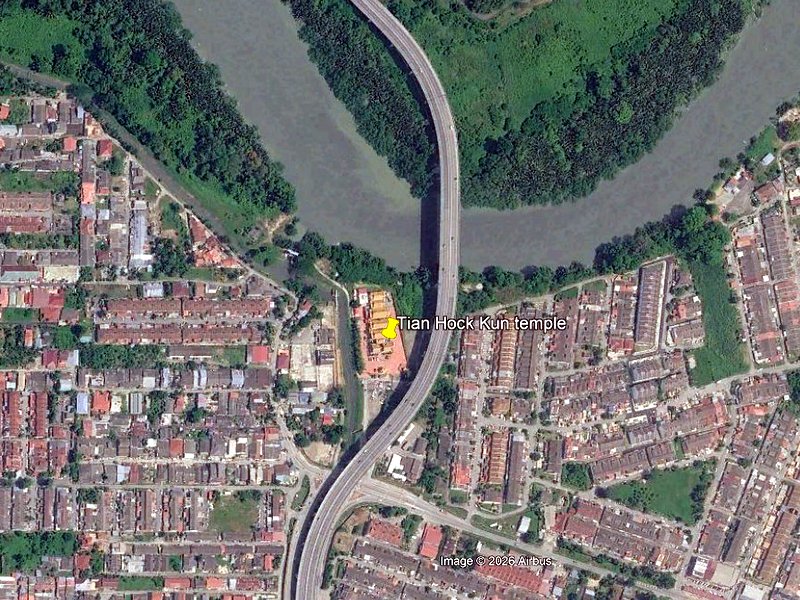
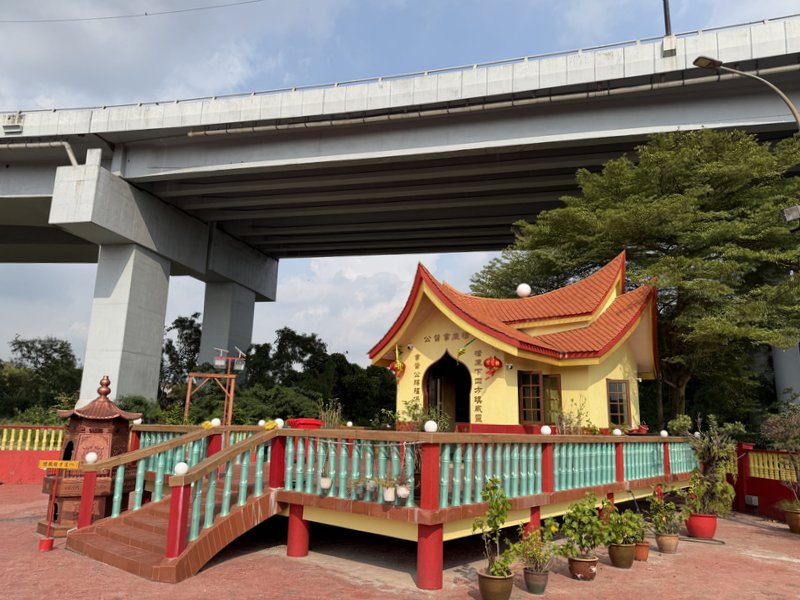
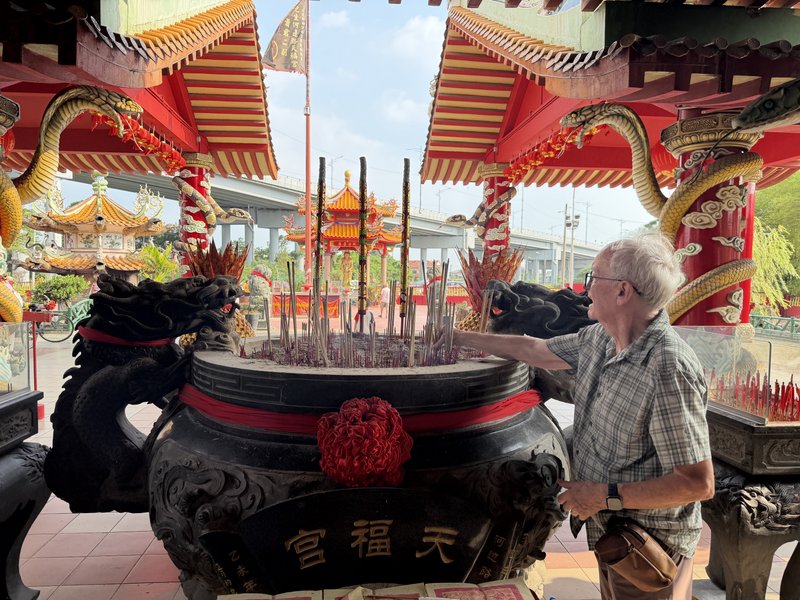
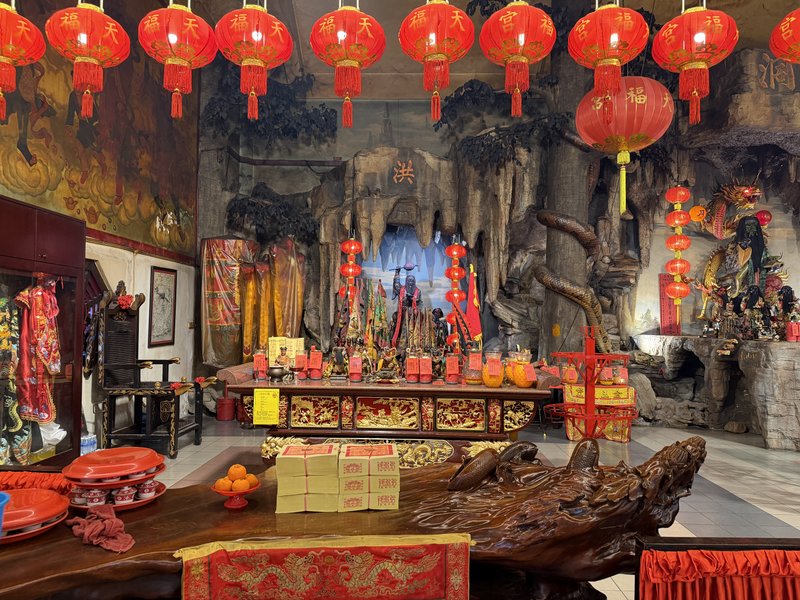
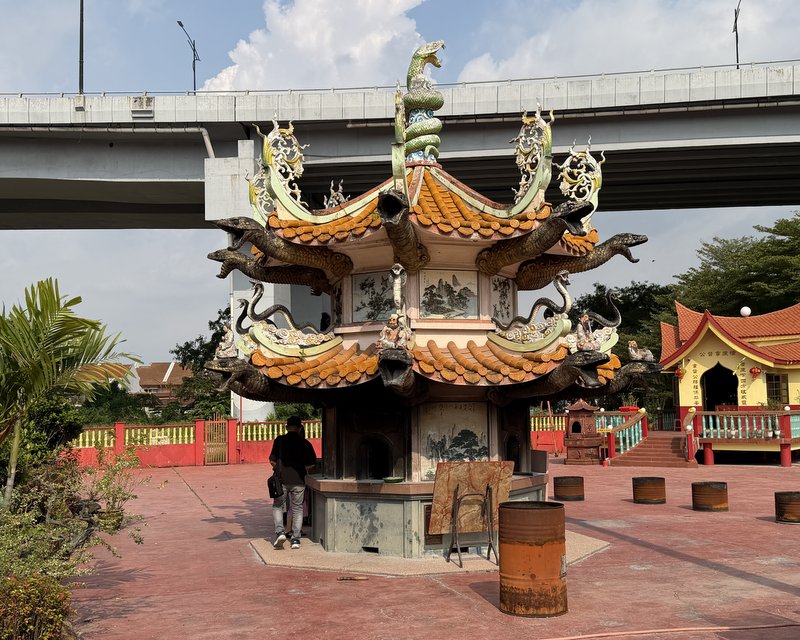
When Aric said, Let’s go to Klang and visit a temple there. It will be a surprise for you, I immediately accepted. One afternoon, we drove to Klang and used Waze to find the Tian Hock Keng temple (Temple of Heavenly Bliss). Here is the temple, when you look at the roof, you may already guess what makes it special. On Google Earth, you see its location. beside the Klang river, and next to a highway.
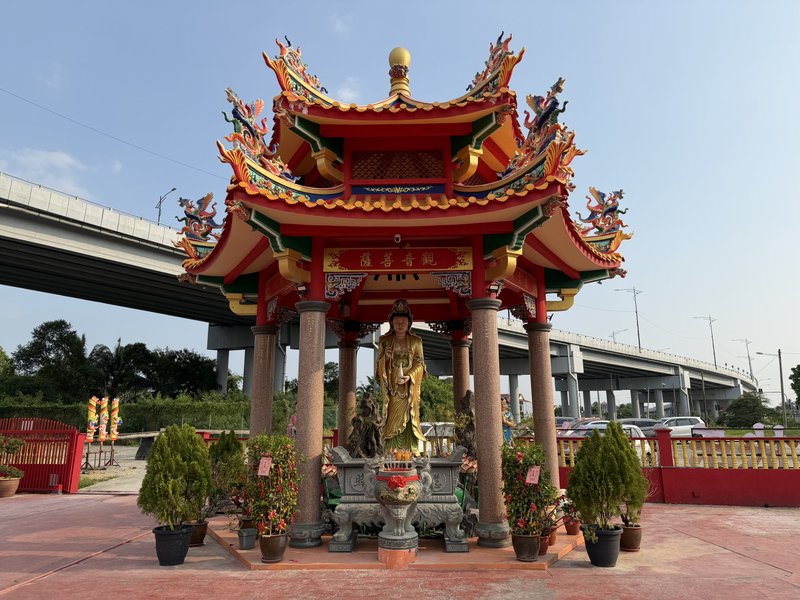
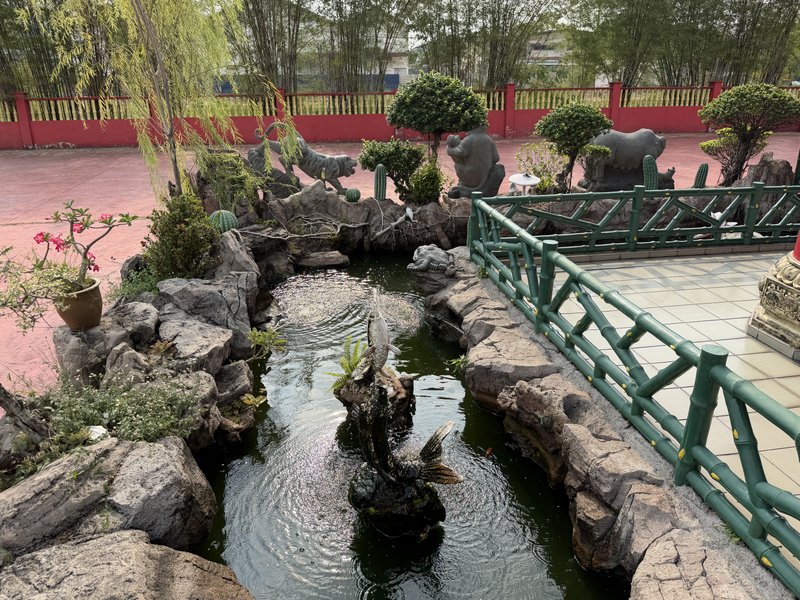
The temple is relatively new, built in the 1980s. In 2017, the Klang Third Bridge was opened, and the access road is dominating the temple. It is a typical Chinese temple, mainly Taoist, but with elements of Buddhism (an impressive shrine for Guan Yin) and folk religion (a Datuk Kong shrine).
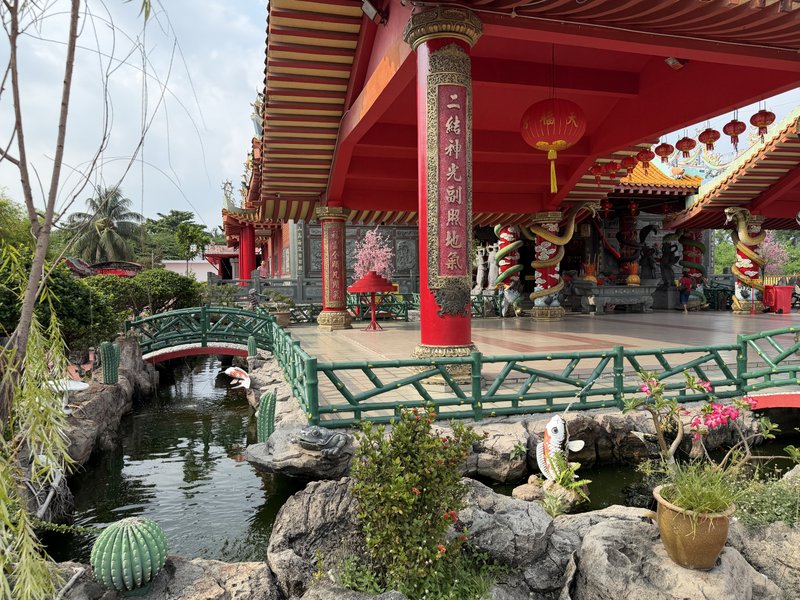
You enter the main hall by crossing a bridge.
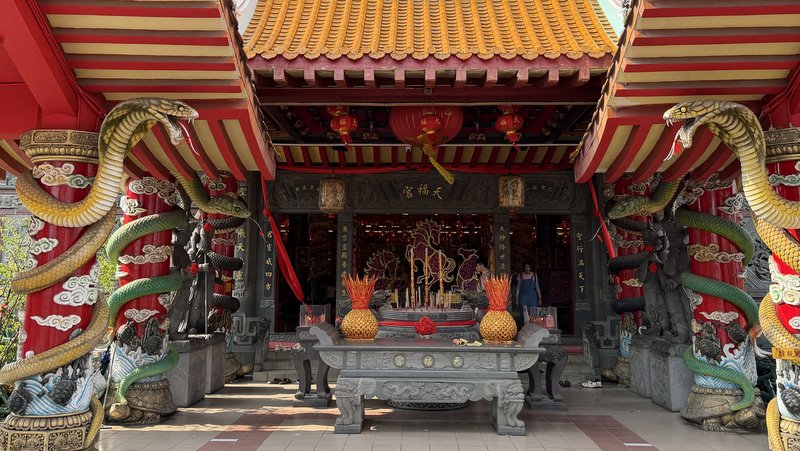
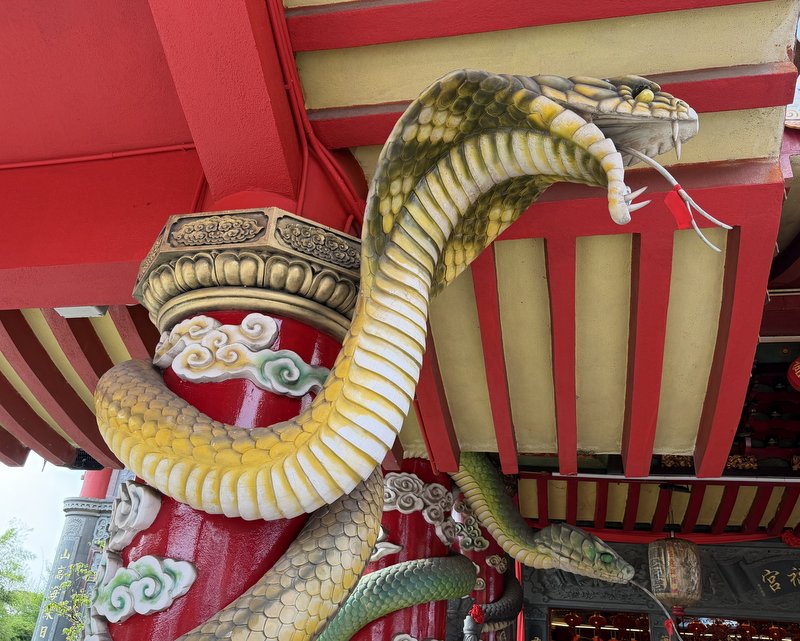
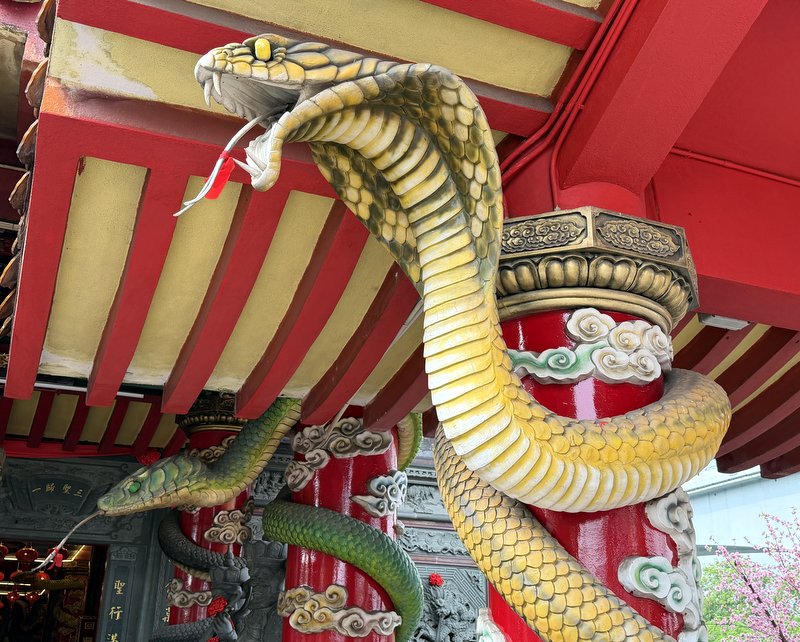
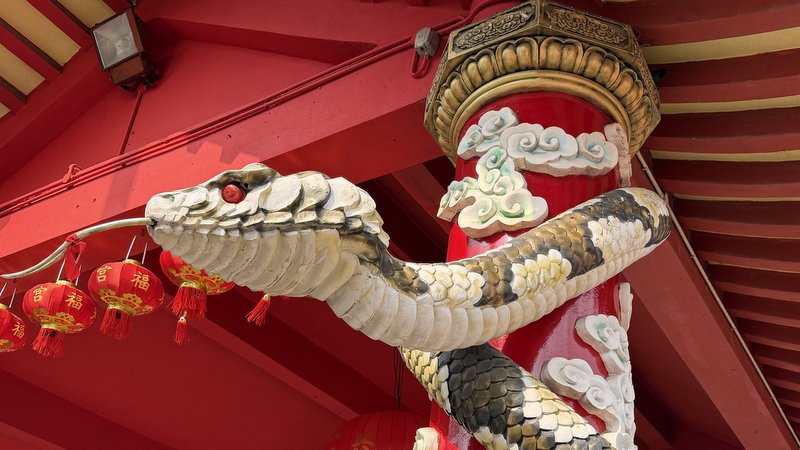
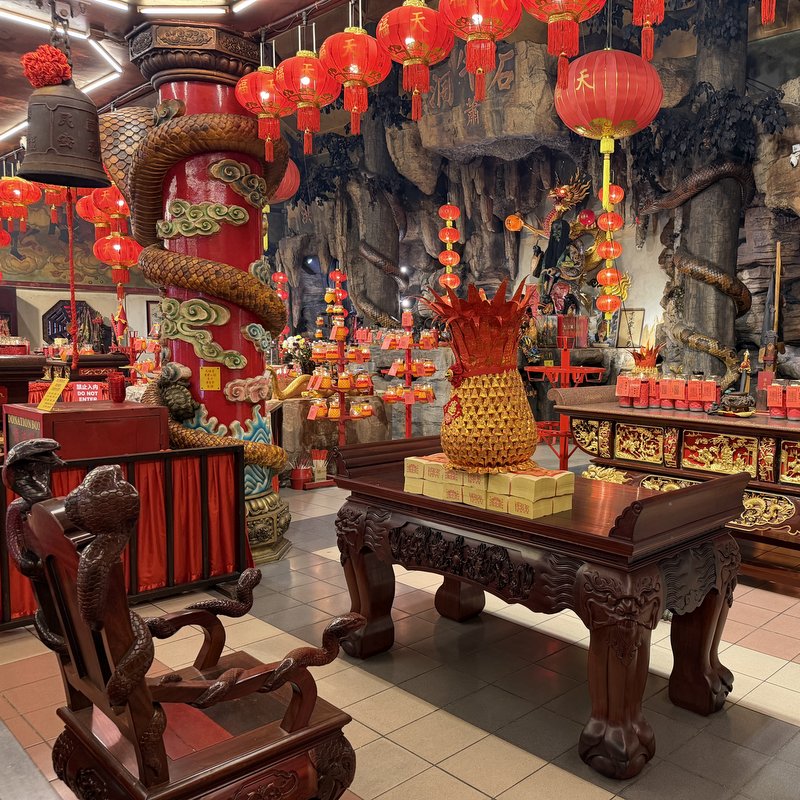
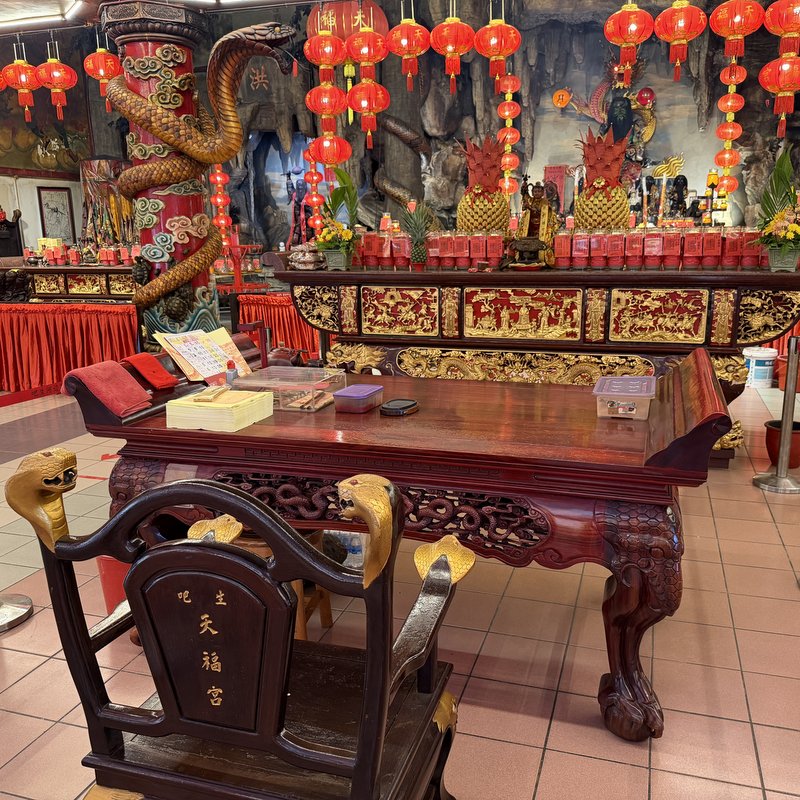
The entrance to the main hall makes clear why the temple is named the snake temple. No dragons here, but snakes. Everywhere, decorating the pillars, on the roof, apparently more than 60 sculptures.
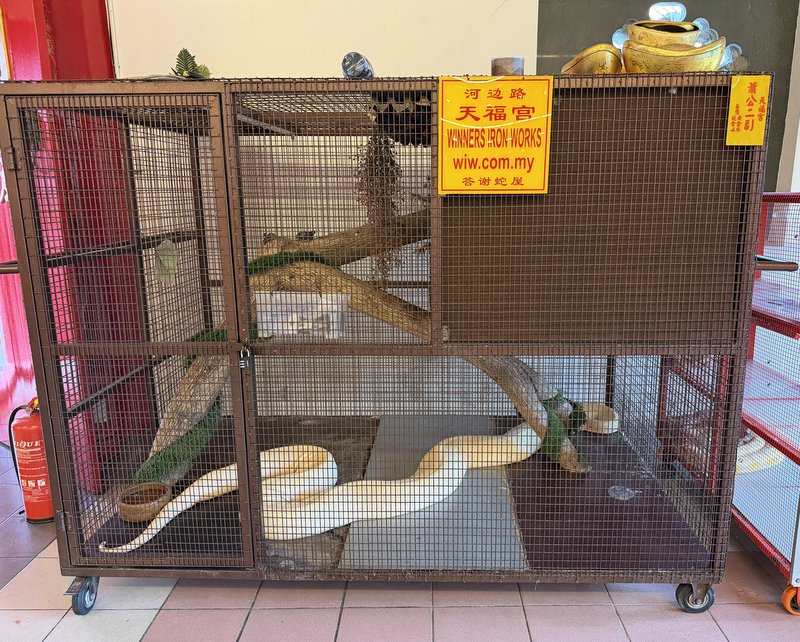
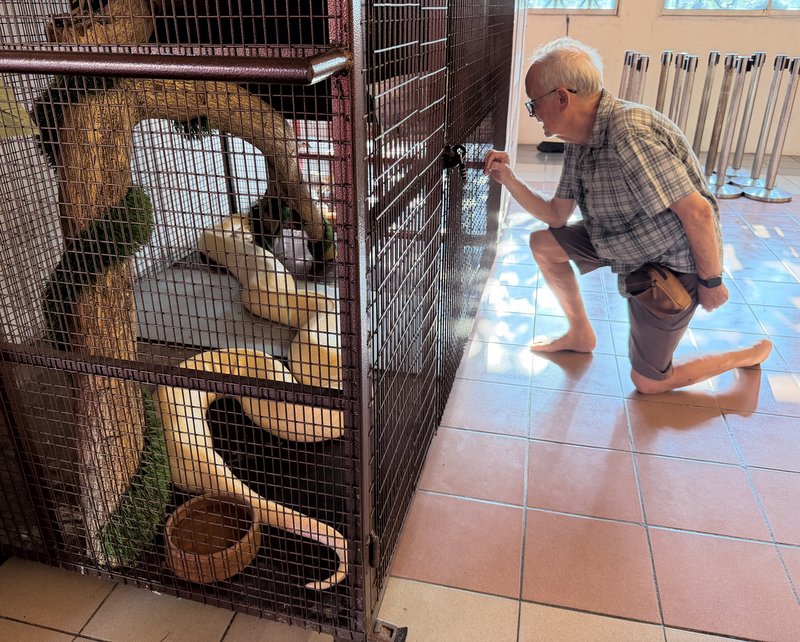
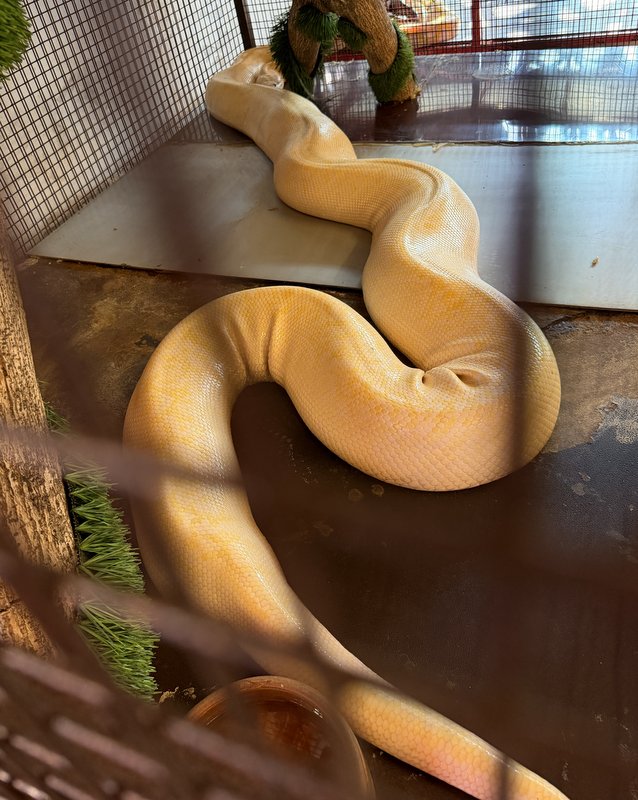
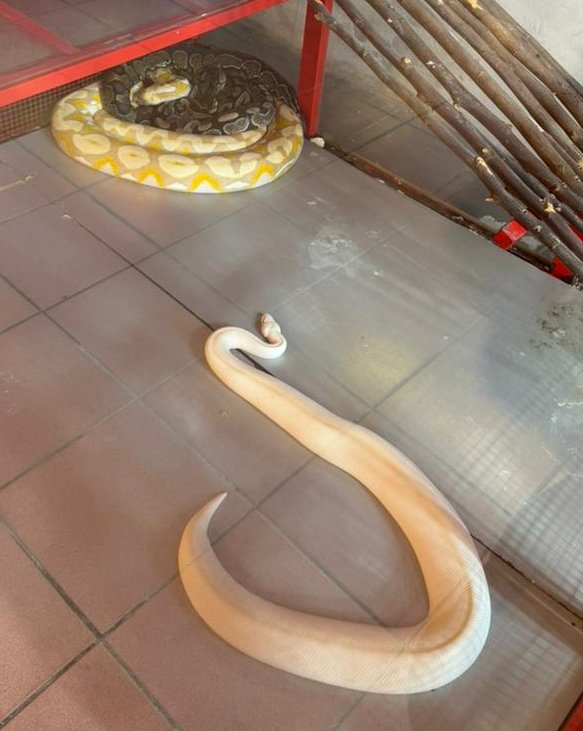
The temple also has a few real snakes. In cages. The albino python is very impressive/
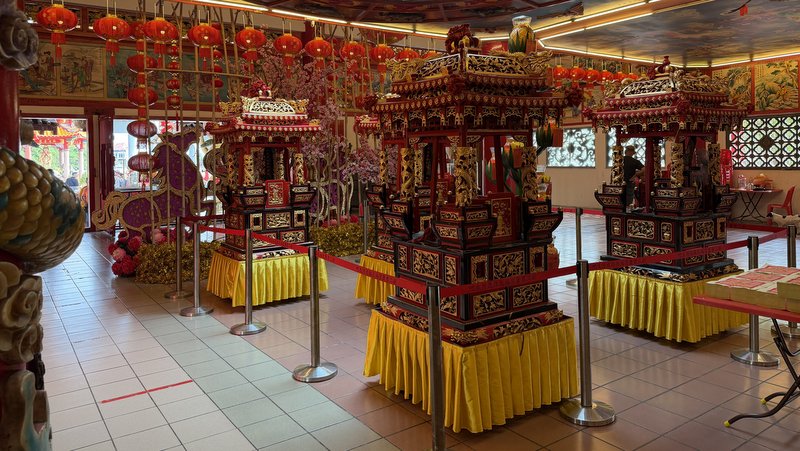
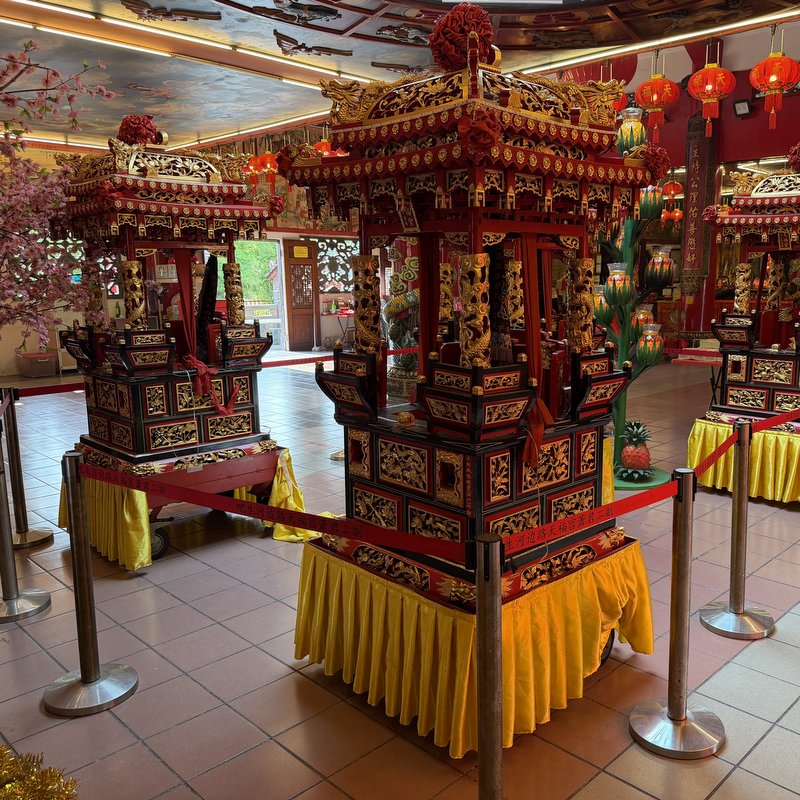
Entering the main hall, you will find several beautiful small wooden shrines. Maybe they are used to carry deities out during processions.
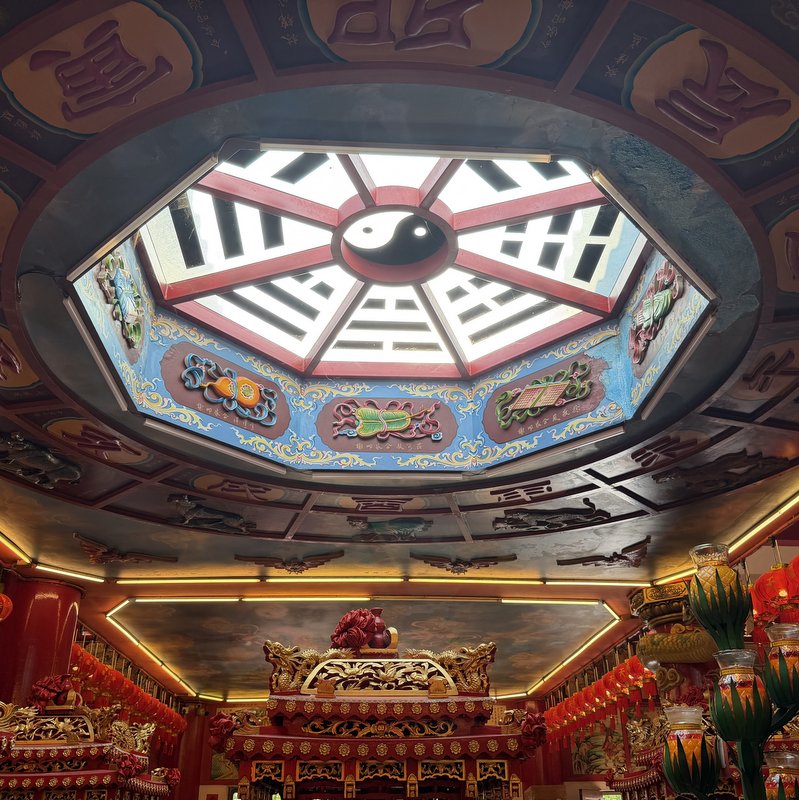
Should you still have any doubts, the octagonal window in the ceiling with the eight trigrams and the Yin Yang symbol proves that this is a Taoist temple.
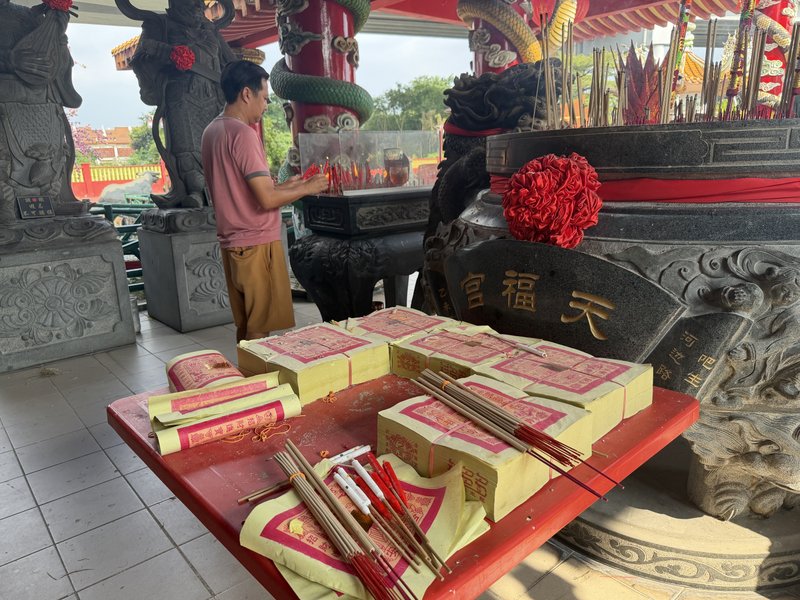
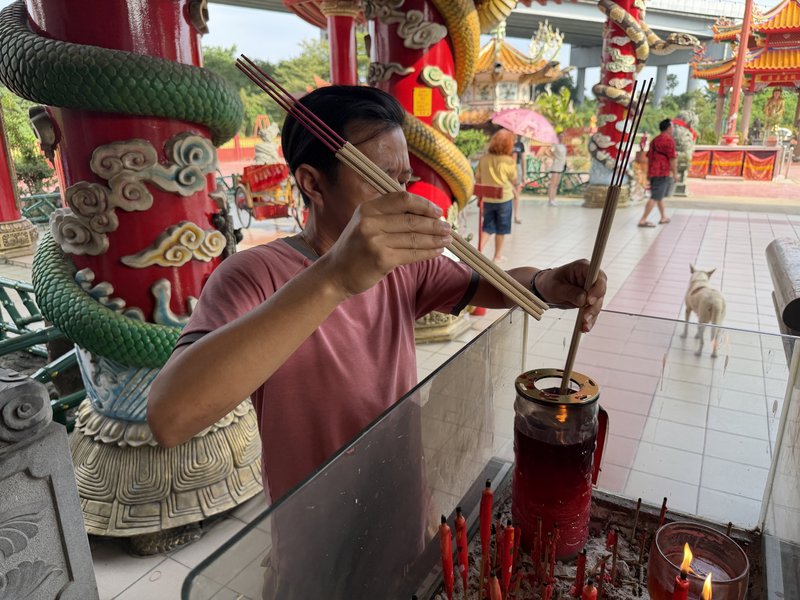
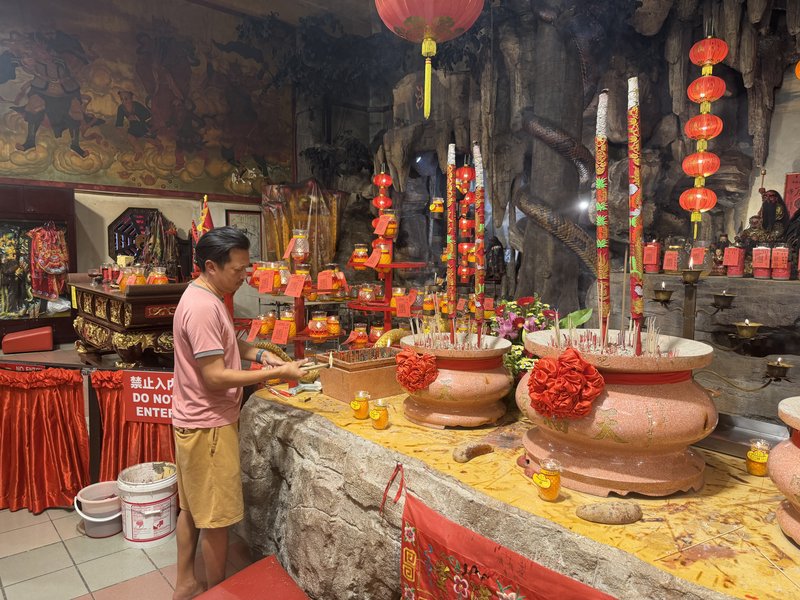
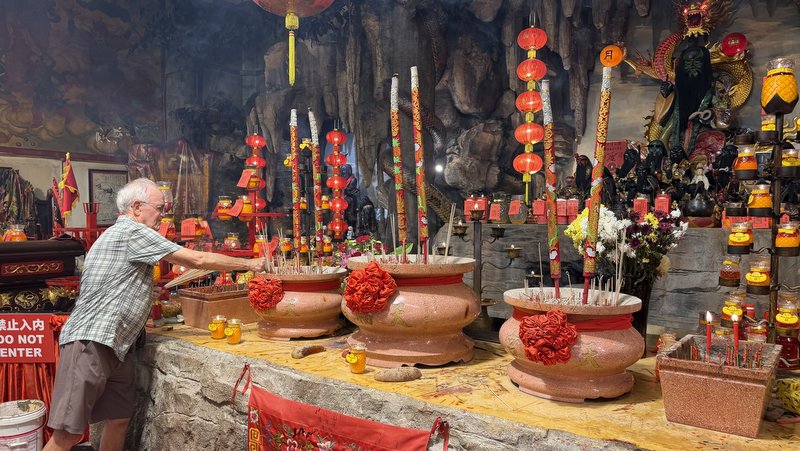
We bought a set of 24(?) joss sticks, 6 candles, and a pack of “hell money”. A signboard showed where and in which order the sticks and candles had to be placed. Took quite some time 😉
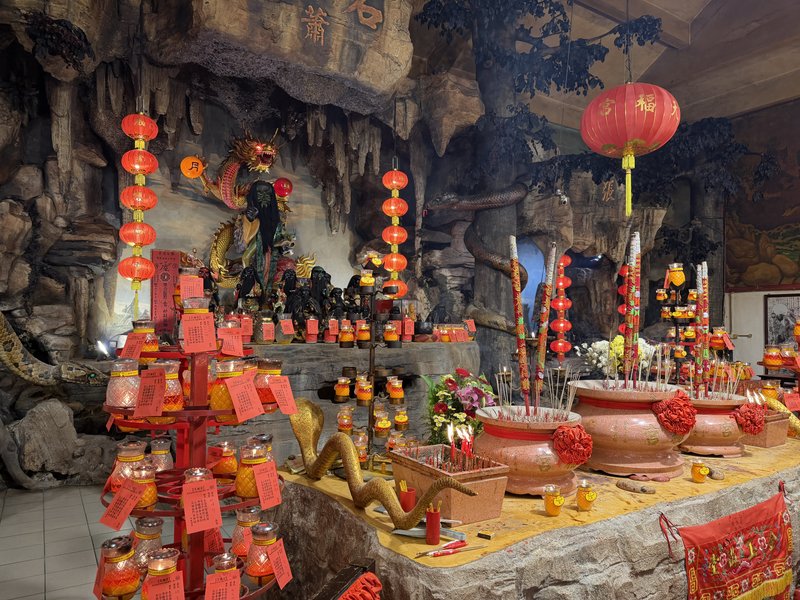
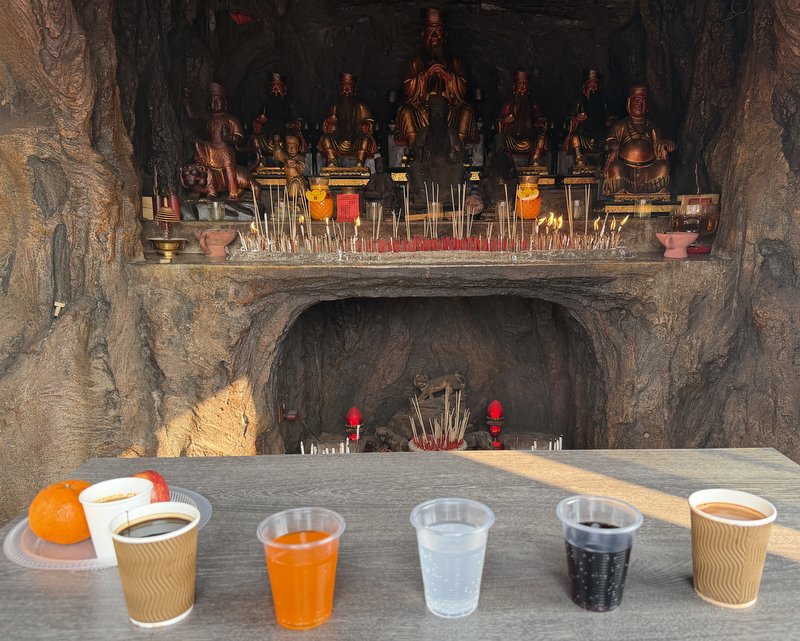
This is the main altar. The temple is dedicated to Xiao Jun Er Fu, a Taoist deity. According to legend, he was one of three brothers who defeated an evil serpent during the Song dynasty (960-1279), and was later deified.
He is generally depicted with a green face (left picture, with a snake curled around him)
There were a few ornamental tables and chairs. Perhaps they are used when a medium enters a trance and can answer questions from devotees.
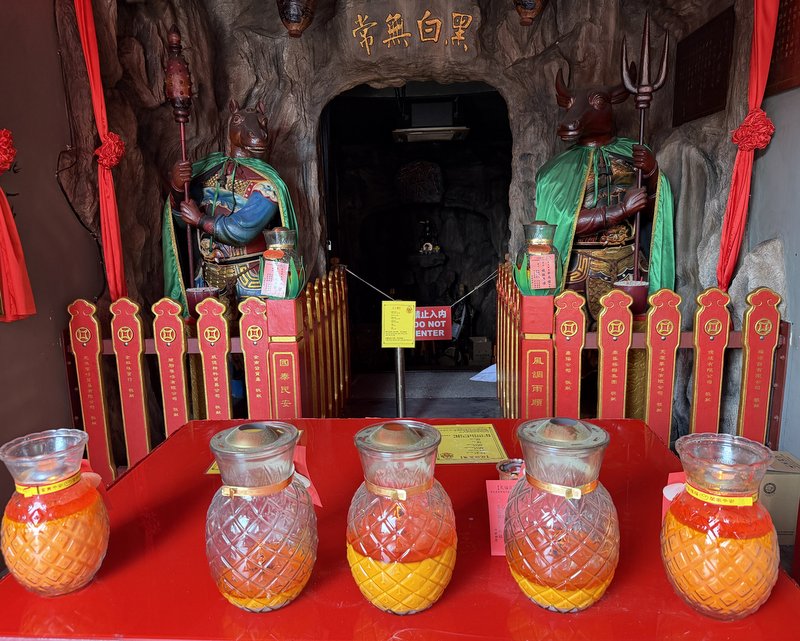
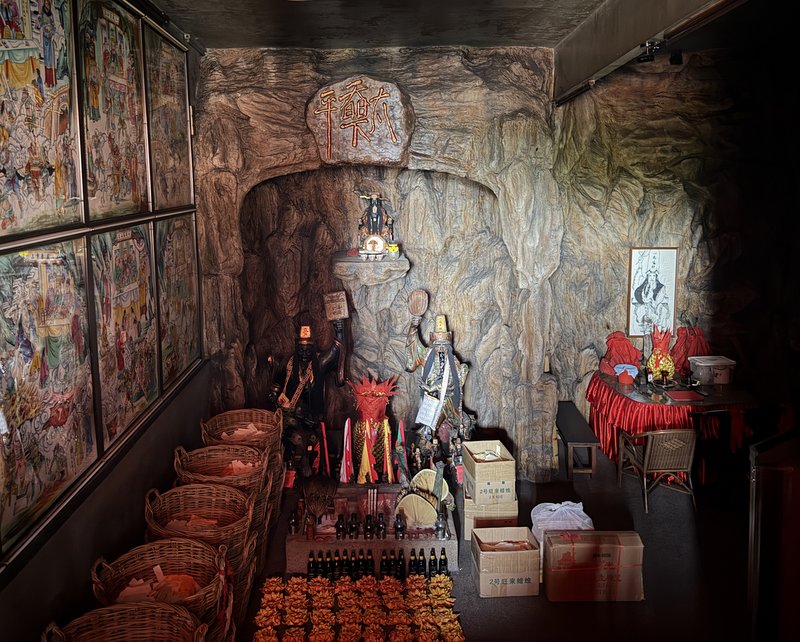
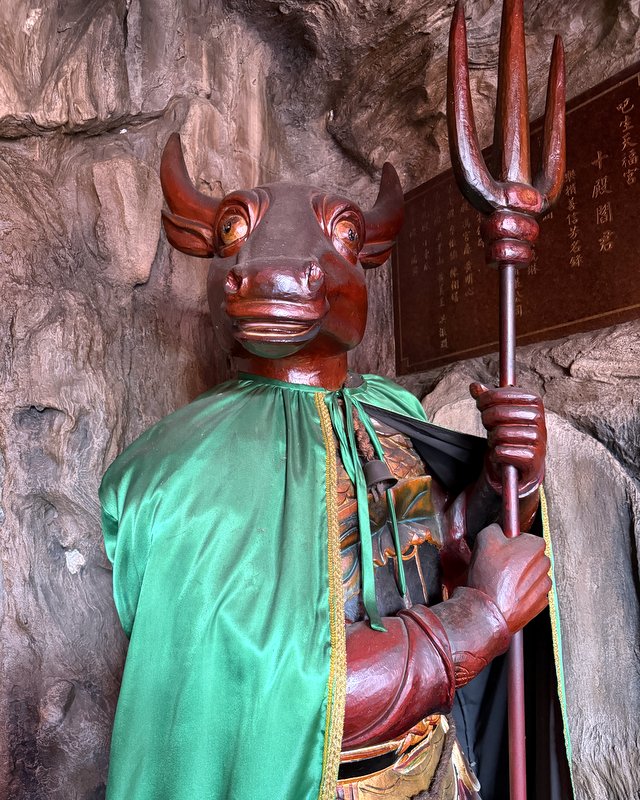
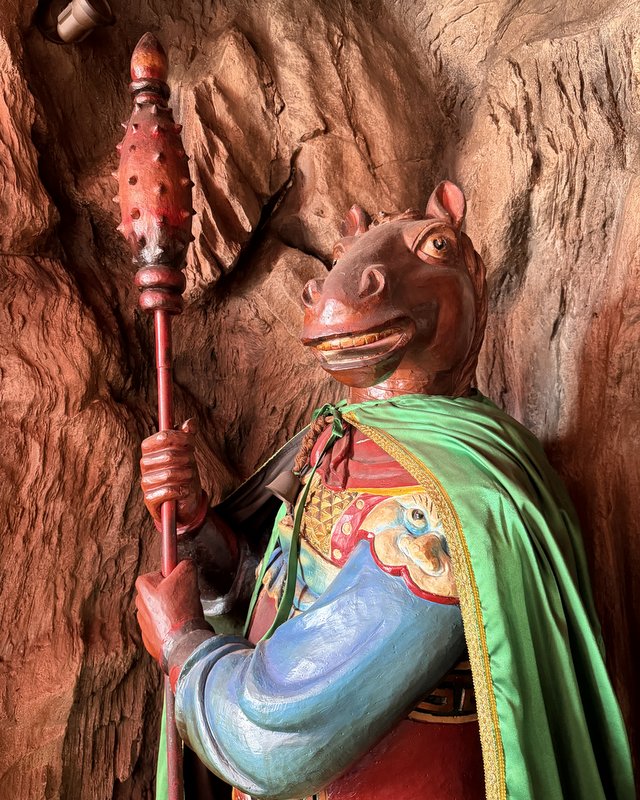
On the left side of the main hall, there is an entrance to the underworld!, guarded by Ox-Head and Horse-Face. Note that you can not enter the underworld, there is a modern sign Do Not Enter. But I could take a picture 😉
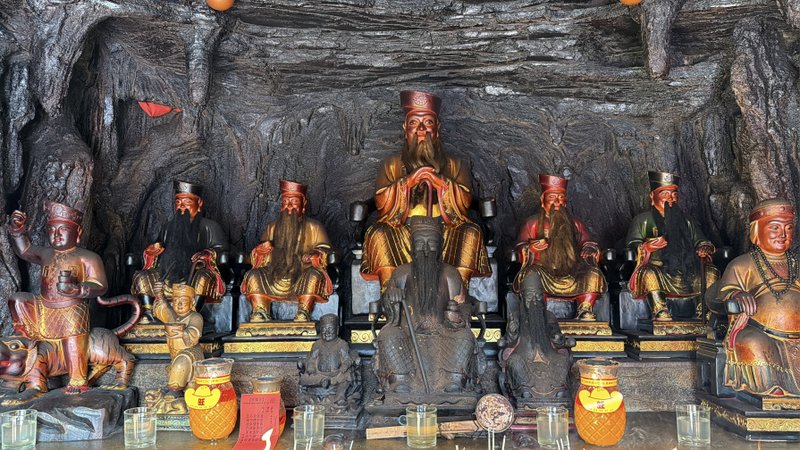
The Datuk Kong shrine is very beautiful and much more elaborate than the usual Datuk Kong shrines I have seen. All the figures are Datuk Kong, with a lot of symbolism. For example, the one in the center is dressed in yellow and represents balance and well-being. Their headgear looks like a tengkolok, worn by sultans and royals. The three in front are wearing songkoks. The walking stick is a common attribute and offerings can not contain pork.
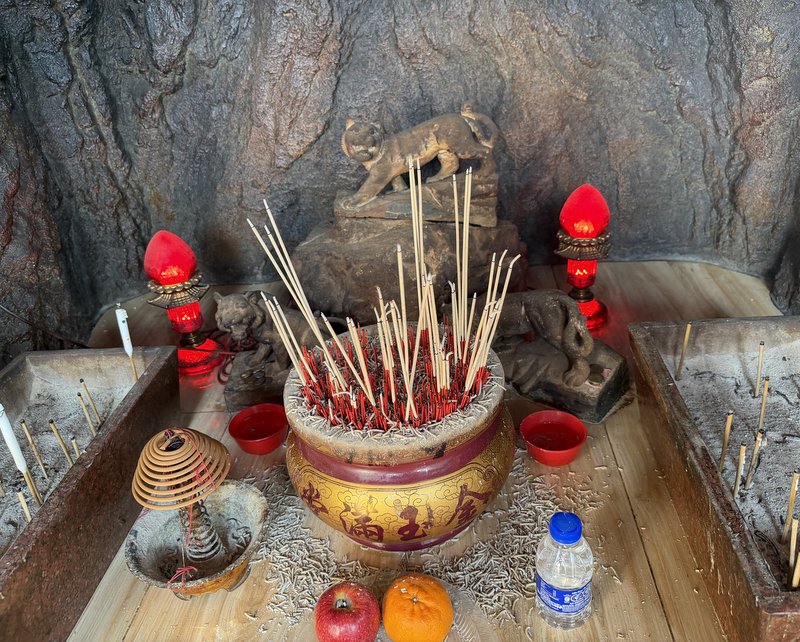
Below the main shrine, there is a small shrine dedicated to Hu Ye, the Tiger god, also a protector deity.
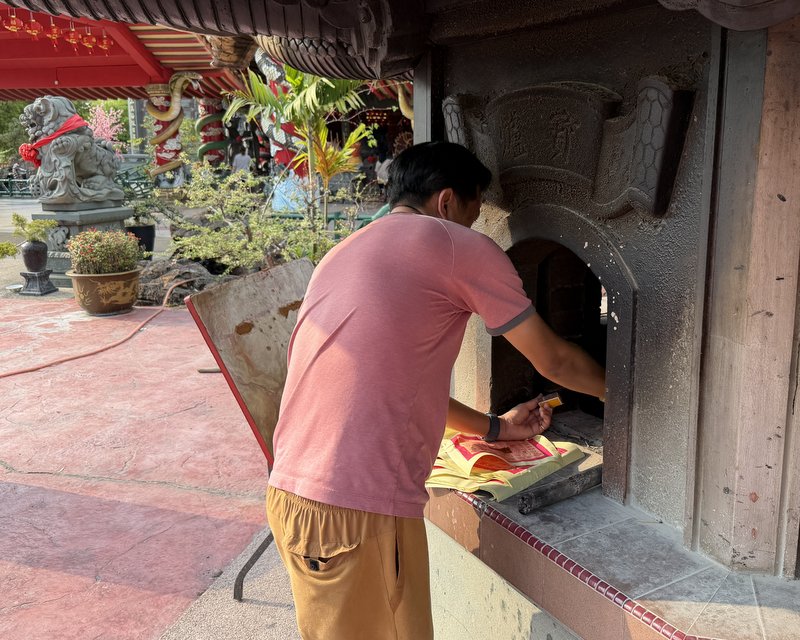
At the end of our visit, Aric burned the josspapers.
A very interesting temple. Not much information is available on the Internet, but this FMT article is quite informative.
On 10/01/2025, the Ipoh Echo published an article Ng Boo Bee Fountain Restored, about the iconic fountain in the Taiping Lake Gardens. I visited the fountain a few times, last year.
A quote from the article:
Originally located in front of the Taiping Market, this iron fountain was made by Penang Foundry and was donated by Ng Boo Bee
When you Google for Ng Boo Bee Fountain, you will find many similar hits: Donated by Ng Boo Bee in the late 19th century, originally located in front of the Taiping market, removed to the Lake Gardens when the New Clocktower was constructed in the 1960s.
Unfortunately, this story is completely wrong.
I will split this post in three parts, about the fountain in the Lake Gardens, about Ng Boo Bee and- about the origins of the incorrect story.
The fountain in the Lake Gardens
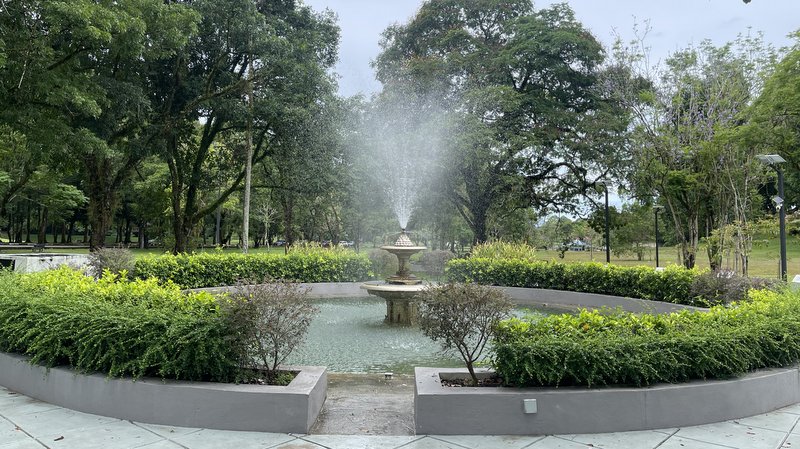
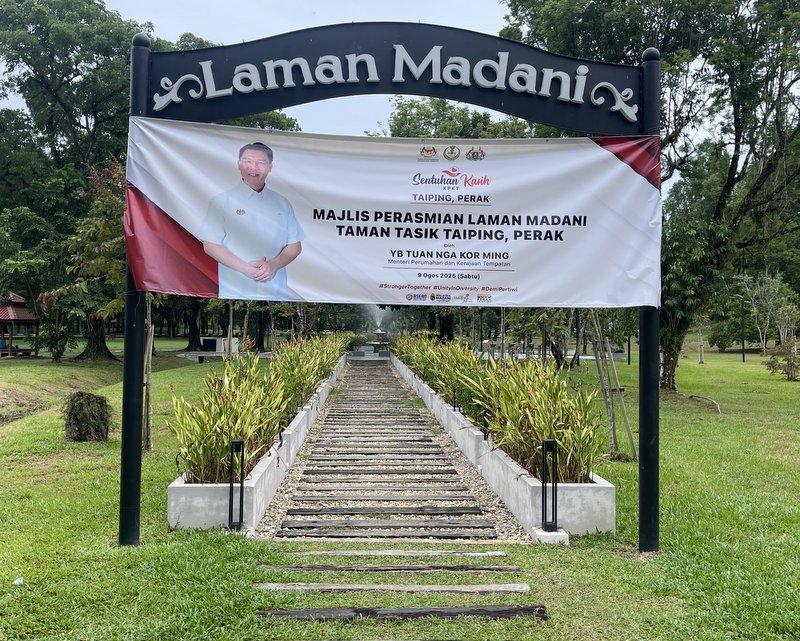
It was an eyeopener for me that there has been a fountain in the Taiping Lake Gardens from the beginning. Presented by the Chinese community, see my blog, Taiping Lake Gardens. I searched the NewspaperSG archive and found another report about the opening of the Lake Gardens.
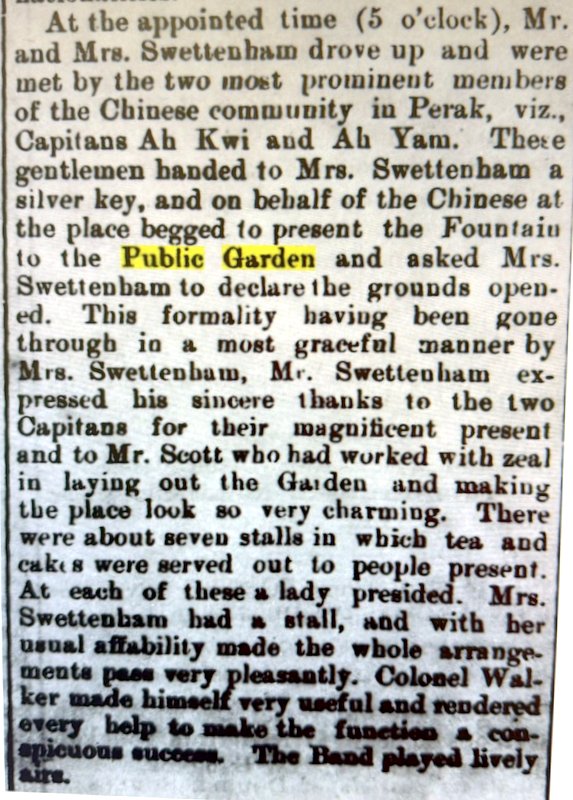
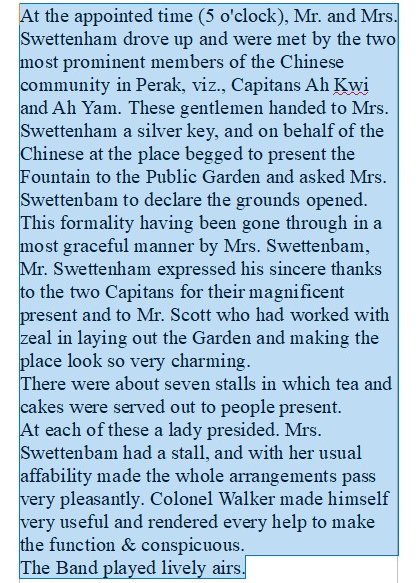
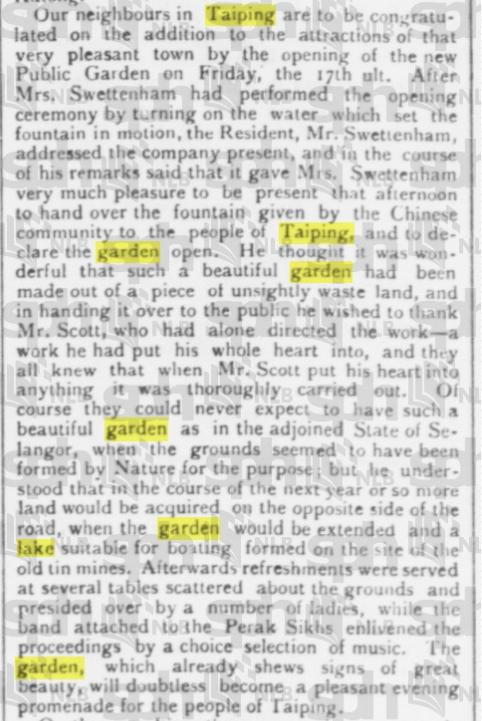
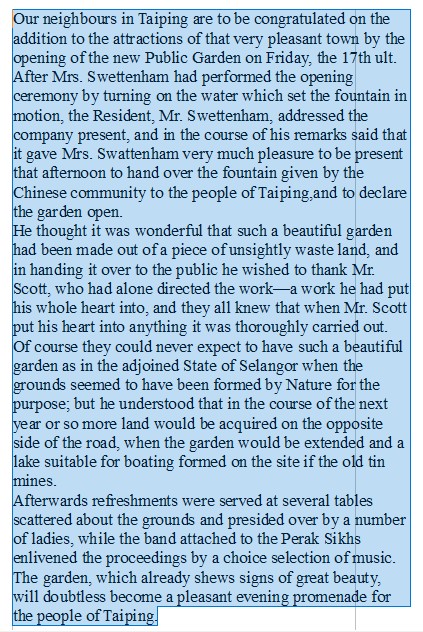
Source: Straits Times Weekly Issue, 28 November 1893. I have added a transcription.
+
When Mr. and Mes. Swettenham arrive, they are met by the two leading members of the Chinese community, Chung Keng Quee (Ah Kwi), and Chin Ah Yam (Ah Yam). During the Larut Wars they were sworn enemies, as leaders of the Hai San and Ghee Hin, now they have become friends and both have been appointed Kapitan Cina. They hand over a silver key to Mrs. Swettenham and ask her to present the fountain on behalf of the Chinese to the Public Garden.
So that settles the question if Ng Boo Bee was related to the fountain. He was not and the name Ng Boo Bee fountain should not be used. Maybe name it Peace Fountain?
About Ng Boo Bee
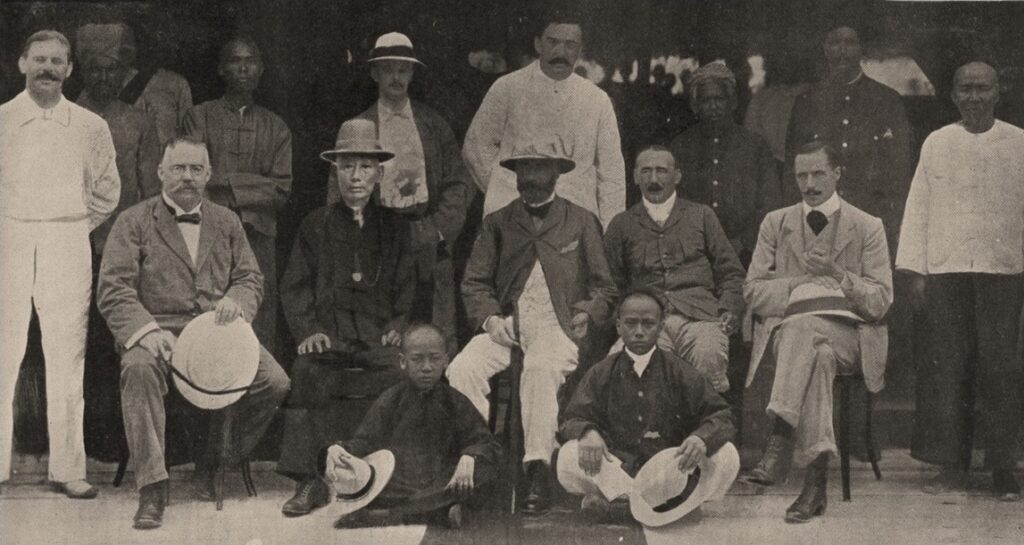
Although Ng Boo Bee (1853-1921) has been very important for Taiping, not much information can be found on the Internet. There is no Wikipedia topic about him, like there is for Chung Keng Quee. In the Wikipedia article Malaysian Chinese there is only a picture of him with British officials, nothing about his life. Here is the picture, he is seated second from left, flanked by Sir John Anderson(incoming Governor of the Strait’s Settlements, and Sir Frank Swettenham (the outgoing Governor).
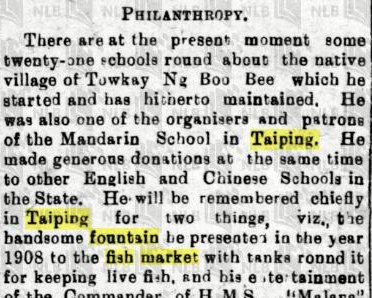
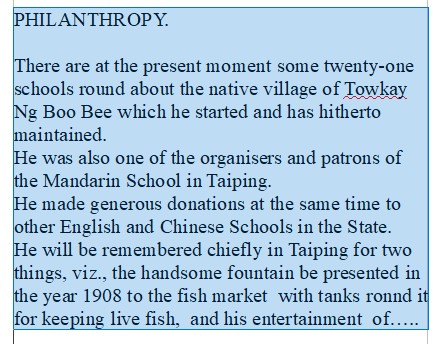
Ng Boo Bee was not only an important tycoon and a millionaire, but also a philanthropist . Here is a part of the obituary, published in the Pinang Gazette and Straits Chronicle after he passed away in 1921.
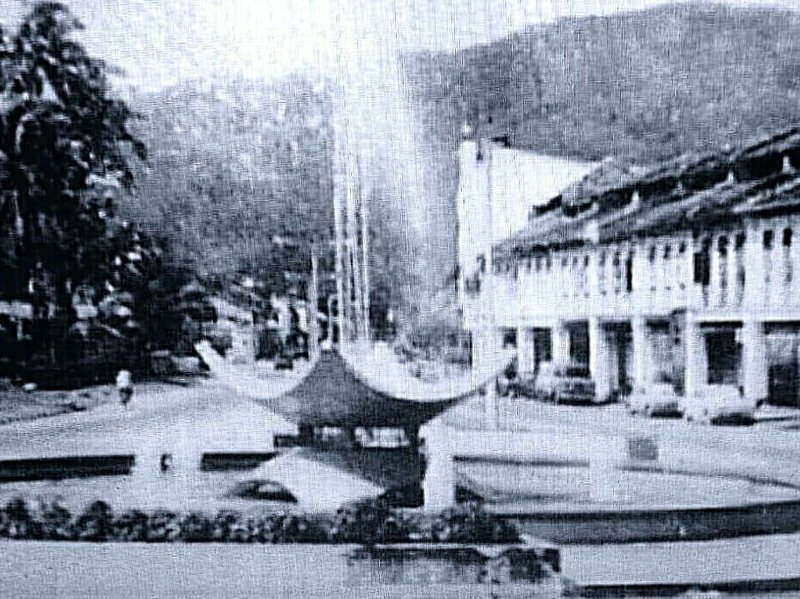
The Taiping people will remember him because of the handsome fountain he donated in 1908 to the fish market of Taiping. Not only decorative, but also functional because there were tanks around the fountain to keep the fish alive.
Two senior THS members remember the fountain, it was still there when they visited the fish market in the early1960s with their mothers. A few years ago they interviewed an old fishmonger, who told them how sad he was when the fountain was destroyed to make place for more stalls. So the fountain donated by Ng Boo Bee, doesn’t exist anymore. It would be wonderful to have a picture of that fountain.
It is not clear when it was destroyed. But this newspaper clipping might be a clue. Source: The Straits Times, 3 February 1965 A big freshen-up campaign by Taiping council. Here is a paragraph that might be interesting for this post:
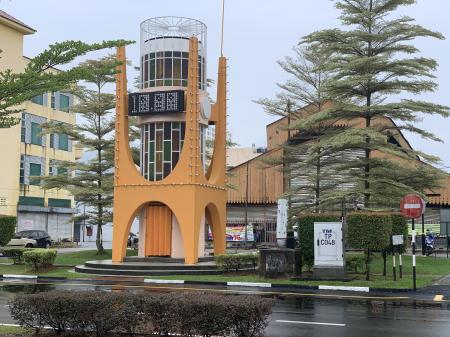
The council is also considering sponsoring design competitions for a new $100,000 market, a clocktower $50,000 and a $30,000 water fountain.+
The clocktower and the fountain were built, although the fountain (and the roundabout where it was located), do not exist anymore. No new market has been built, could the money have been used to upgrade the Fish Market (resulting in the destruction of the fountain)?
The origins of the incorrect story.
I have spent much time the last few weeks searching for the source of the wrong story. The initial mistake is that the Ng Boo Bee Fountain was located at (outside) the fish market, instead of inside.
The earliest reference to a fountain AT the market that I have found, is this one: Ng Boo Bee Fountain, Taiping (4 February, 2006). It gives some information about Ng Boo Bee and then continues:
Ng Boo Bee’s fountain was made of cast iron at the Penang Foundry. It was originally installed at the Taiping Market, but was later moved to the lawn outside the Lake Gardens.
Another “old” reference is the Taiping Heritage Trail (~2015) which mentions the New Clocktower and writes about it:
Market Square used to feature an iron fountain (Ng Boo Bee Fountain) but this was relocated to the Lake Gardens and replaced by this extraordinary concrete clock tower
These two references are from popular, reliable websites and have percolated the Internet for many years. Even if they are corrected, it will take a long time before the Ng Boo Bee Fountain in the Lake Gardens has disappeared from cyberspace.
What might help, is an entry in Wikipedia about Ng Boo Bee, but to create it, would be a gigantic job.
A few weeks ago, I published a post about the KL Lake Gardens, now renamed Perdana Botanical Garden. The gardens were developed in the 1880s and opened on 13 May 1889. During this period Sir Frank Swettenham was Resident of Selangor, and his wife, Lady Sydney Swettenham, was a strong supporter of the project/ In her honor the lake was named Sydney Lake.
I knew that Lady Swettenham was also a supporter of the Taiping Lake Gardens, I searched for more information and found a Wikipedia article Taiping Lake Gardens, in which she is mentioned in the history section. But how? I was shocked. Here is a quote:
The Taiping Lake Gardens was originally a mining ground before it was established as a public garden in 1880. The idea of a public garden was the brainchild of Colonel Robert Sandilands Frowd Walker.[1] The garden was developed by Charles Compton Reade (1880–1933), who was also responsible for planning the Kuala Lumpur garden town, together with Lady Swettenham.
That the garden was developed by Reade is clearly nonsensical, as he was born in 1880., the year that Colonel Walker came with the idea.
I asked Marianne, a member of the Taiping Heritage Society and experienced in using the NewspaperSG online archive to search for information. She found a gem. Here it is
Source The Singapore Free Press and Mercantile Advertiser, 4 December 1893 As it is not easy to read, I have added a transcription.
The Public Gardens (the original name) were opened on+ 17 November 1893 by Sir Frank Swettenham, the Resident of Perak and his wife, Lady Swettenham. She performed the opening ceremony by turning on the fountain presented by the Chinese community. Frank Swettenham gave a speech in which he praised W.R Scott who had put his whole heart in the project.
Not only the reference to Raede is bizarre, also the opening date of the Garden is incorrect, and it is not the first public garden in what soon would become the Federated Malay States, because the Kuala Lumpur public garden had been opened in 1889, 4 years earlier.
What I often do, when I find discrepancies in Wikipedia, is to check the history of the article. Followers of my blog may remember the Amelia Earhart saga, where the author of the Tekah Aeodrome article , had wrongly assumed that she had landed there on 7 June 1937.
So I checked the history of the Taiping Lake Garden topic, and I was shocked to find that the creator of the Lake Gardens topic on 5 February 2009, was the same Andrew Kidman, who created the Tekah item on 12 June 2007. He has been quite active between 2007 abd 2012, creating 36 Wikipedia pages. No sign of life after that, I have tried to contact him in 2019, no response.
Does it matter, these two mistakes? Yes, because these errors have percolated the Internet during the more than 15 years that they went unnoticed. Google for the history of the Taiping Lake Gardens and you may find that they are the oldest public gardens in Malaya and designed by the New Zealand town planner Charles Compton Reade.
In my opinion, the Taiping Heritage Society has the best credentials to correct the errors. I am willing to assist them.
A humorous detail: Swettenham compares the two public gardens in Taiping and Kuala Lumpur. He can do that because, before becoming the Resident of Perak (1889-1896), he was the Resident of Selangor (1882-1889). This is his opinion about the Taiping Lake Gardens:
Of course they could never expect to have such a beautiful garden as in the adjoined State of Selangor when the grounds seemed to have been formed by Nature for the purpose
Would current visitors of both gardens still agree with him?
A final remark
Lady Swettenham opened the gardens by activating the fountain given by the Chinese community of Taiping. The beautiful fountain is still there and has been rejuvenated last year. It is commonly called the Ng Boo Bee Fountain. But that is incorrect. In my next post I will explain the confusion.