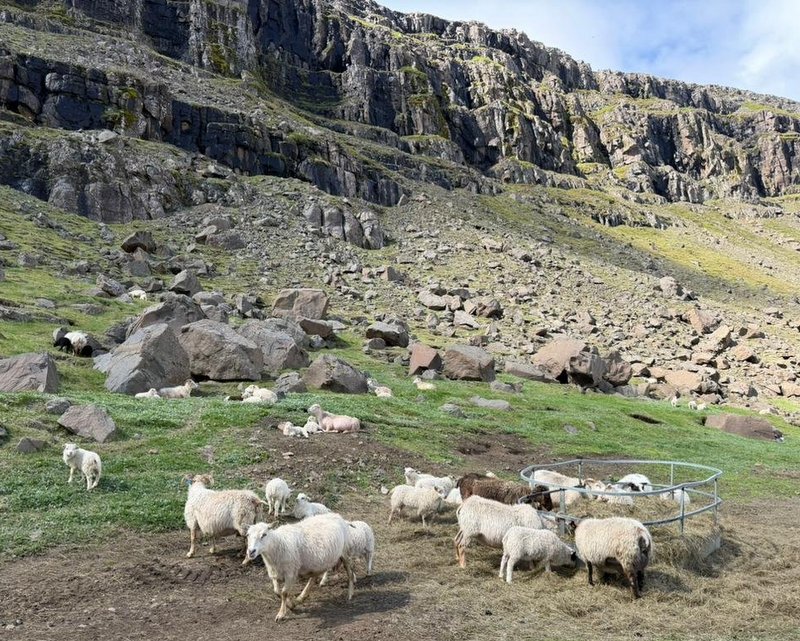
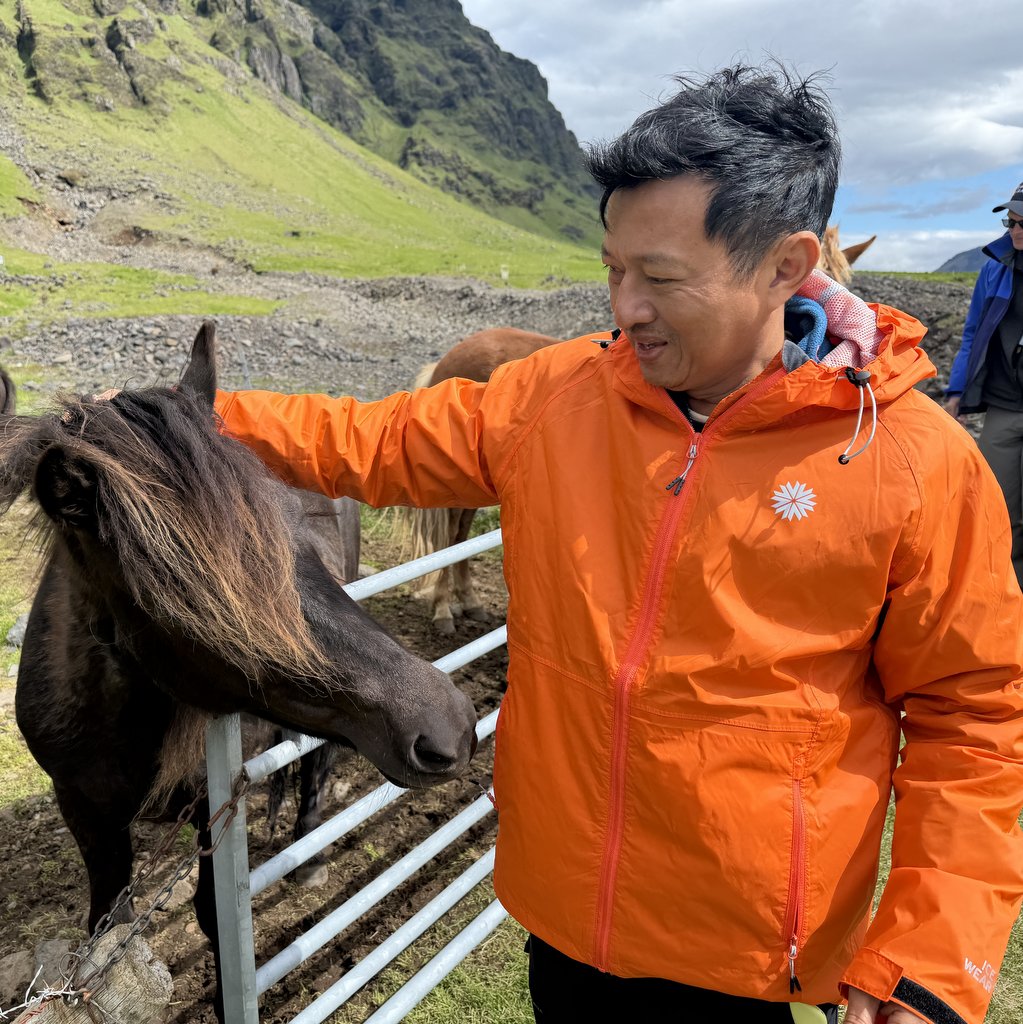
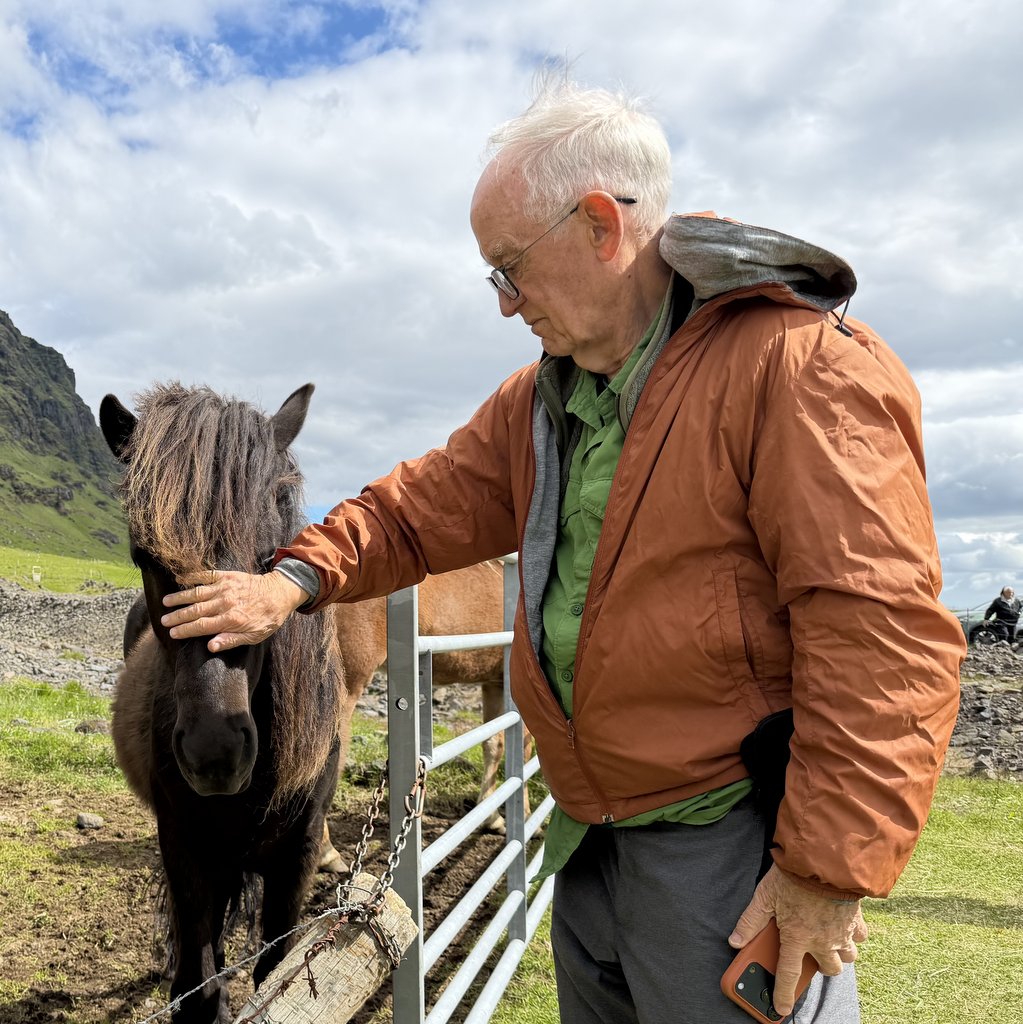
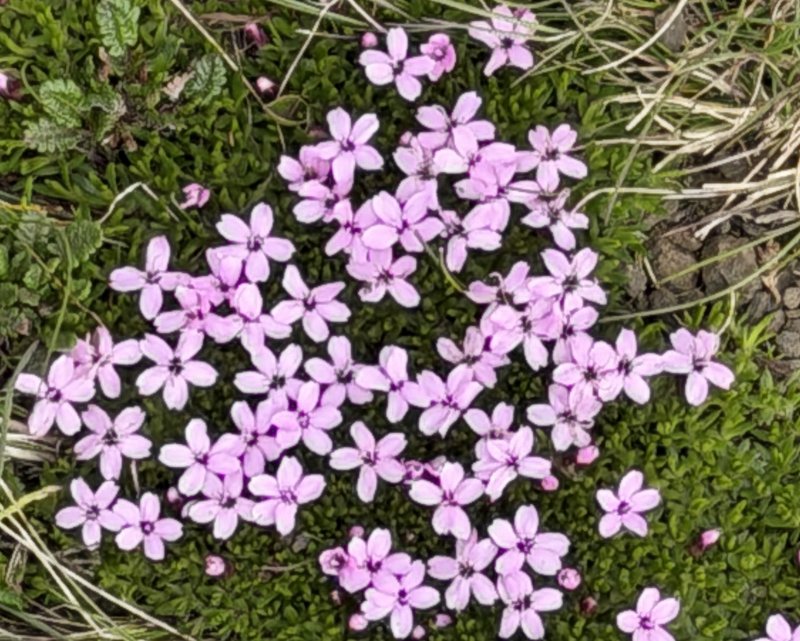
Iceland 2026, part 1

We visited Iceland on a 10D9N trip as part of our Europe holidays. Click here for a chronological account of this 7-week holiday. I have split this Iceland report into two parts because we have visited many places in those 10 days. This part describes the many natural wonders of Iceland.

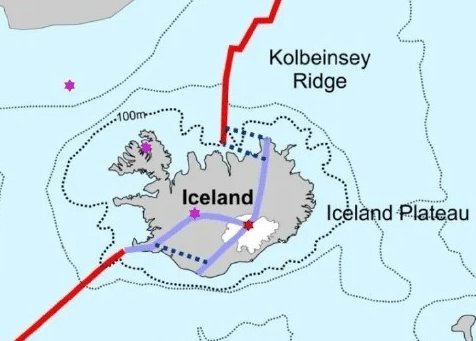
Iceland is unique because of two factors. In the first place it is located on top of the Mid-Atlantic Ridge. Two tectonic plates, the Eurasian and the North-American, are moving apart from each other a few cm per year, magma from the Earth’s mantle fills the gap and gives rise to a suboceanic mountain ridge. Iceland is one of the places where this ridge reaches the surface. Because of its origin, Iceland is volcanic; the last eruption was in 2025. The other factor is its northern location, very close to the Arctic Circle. During the Last Ice Age (~21000 years ago), the island was covered by an icecap of between 1500 and 2000 m thick. Volcanic eruptions beneath such an ice cap can have catastrophic consequences and are responsible for the island’s rugged structure.

Here are two images. One shows the Mid-Atlantic Ridge (in red) and fractures in the Earth’s crust (in blue), the other one the thickness of the icecap (in shades of grey) during the Last Ice Age.

Geothermal Activity

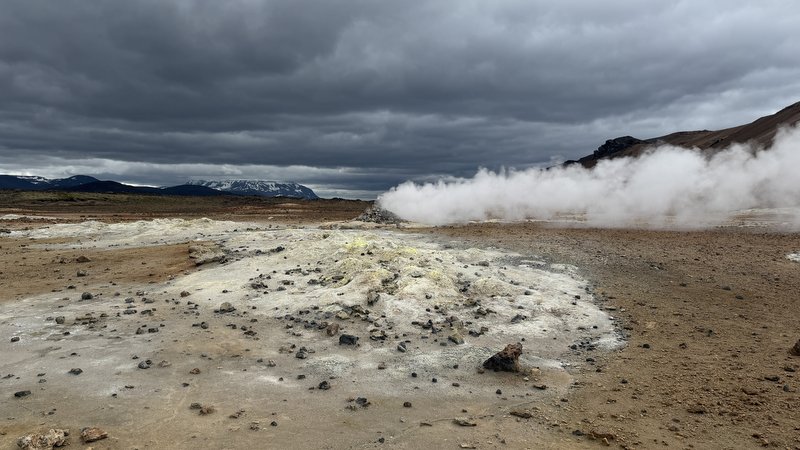
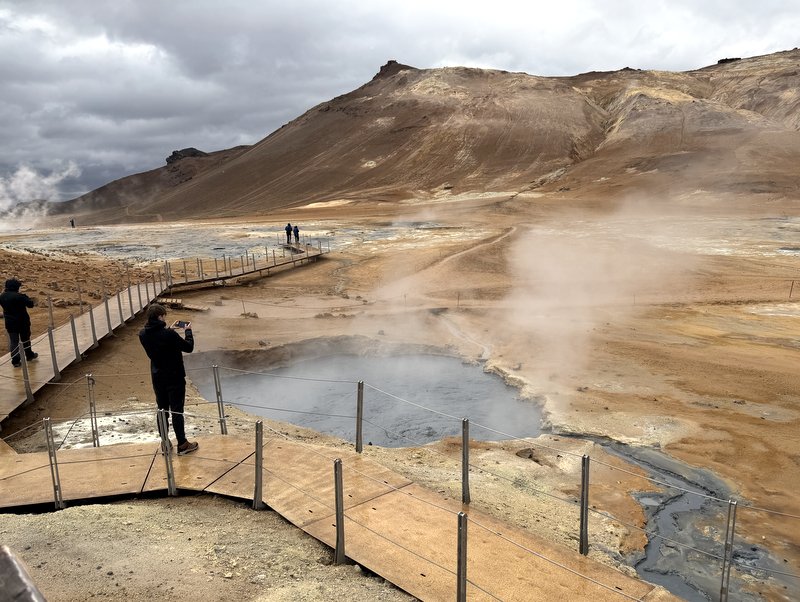
The fractured Earth crust allows groundwater to seep deep underground, where it is heated by magma to hundreds of degrees and returned to the surface, leading to hot springs, steam vents, and geysers. About one-third of Iceland’s electricity production uses this geothermal energy.


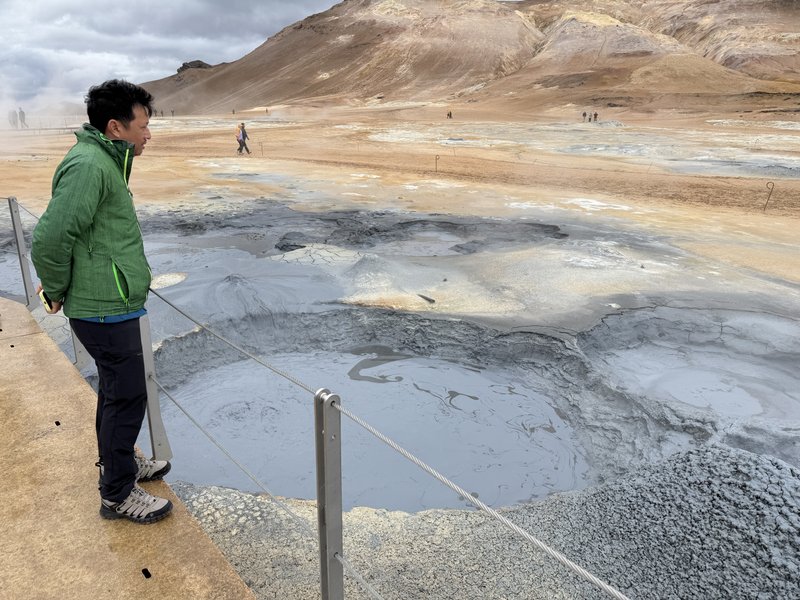
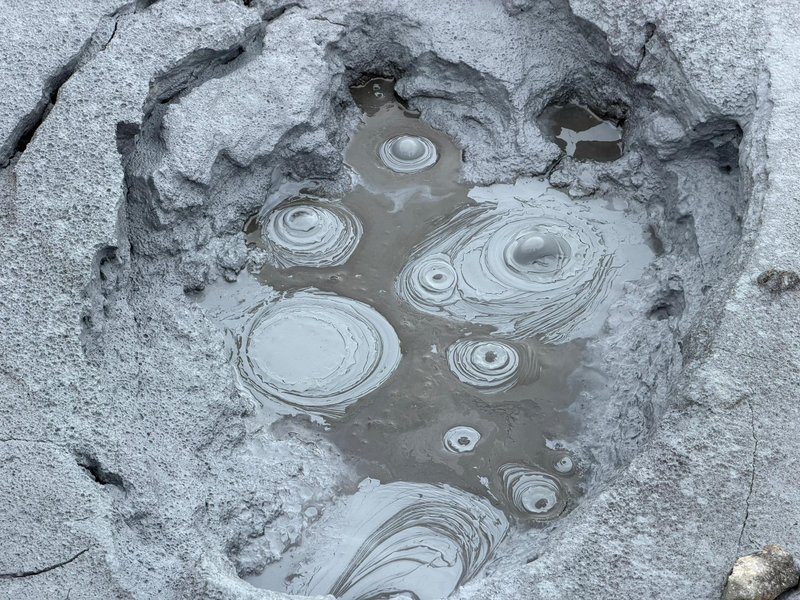
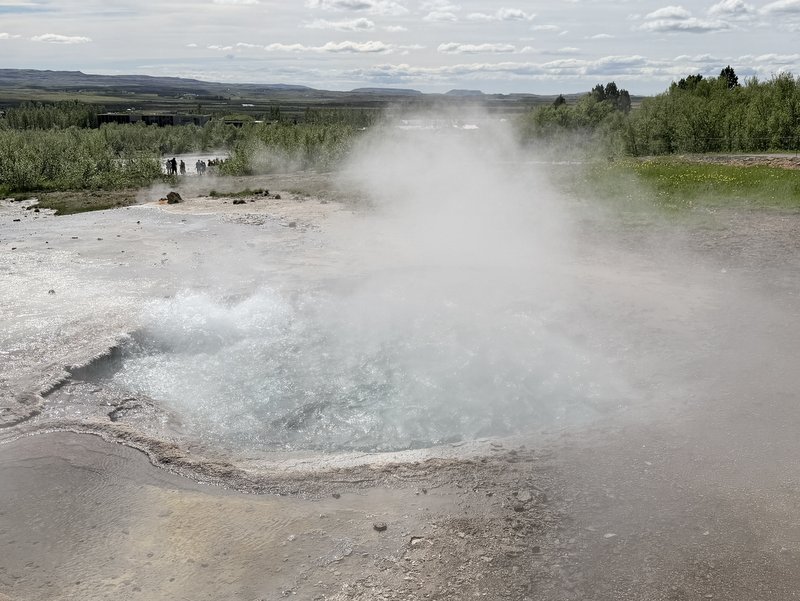
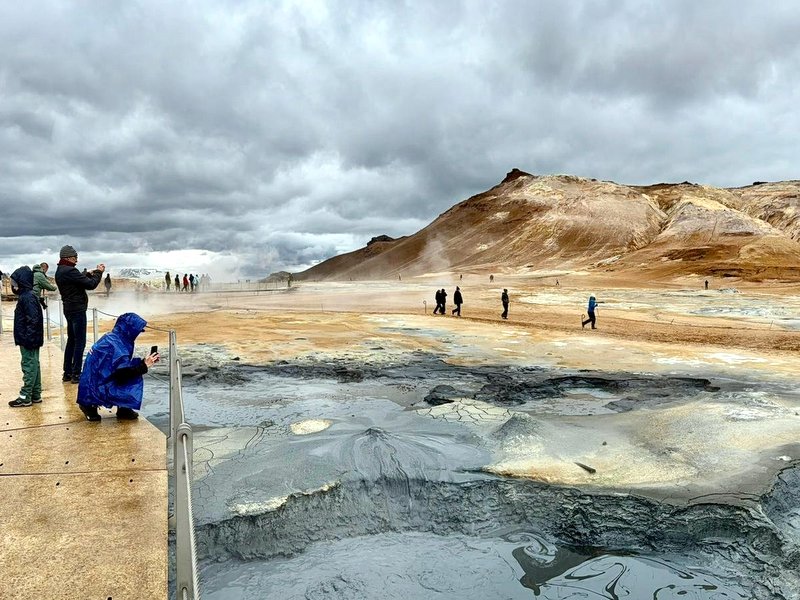
We visited Hveri, the most active geothermal area of Iceland. An alien landscape, steam vents (known as fumaroles), bubbling mud pools, yellow sulfur, and a smell of rotten eggs. Free access, but you have to pay for parking. Well-marked pathways near the pools; to the fumarole,- you could walk on your own. Fascinating.


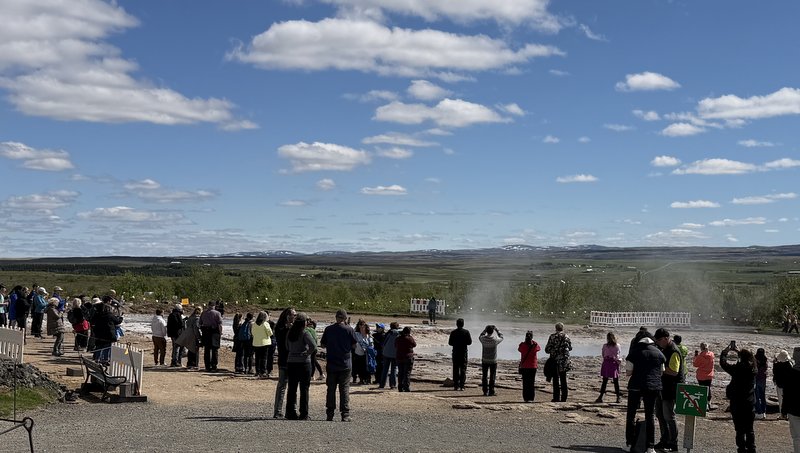
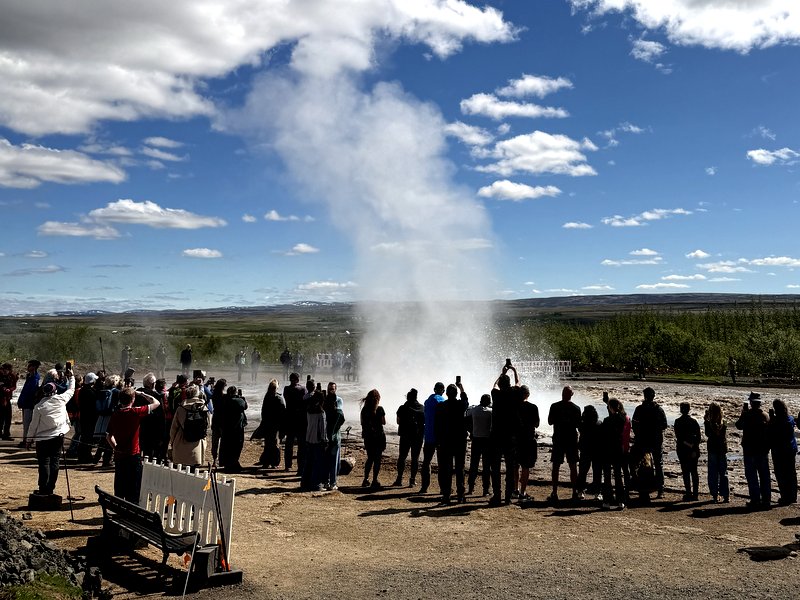
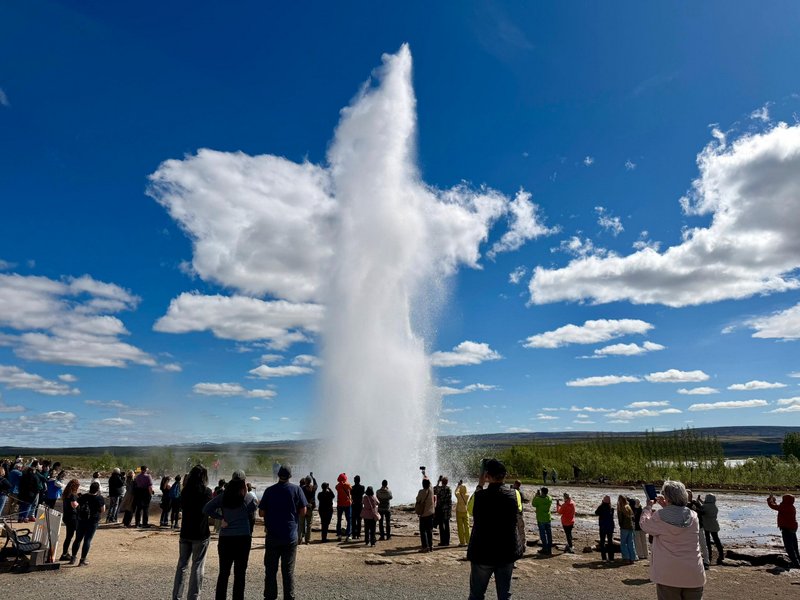
On our last day in Iceland we visited the famous Geysir, one of the most popular tourist attractions. Bus loads of tourists visit the location daily. A geyser is basically a hot spring, where water seeps down though cracks and gets (super) heated. This builds up pressure resulting in an eruption of water and steam. How often this happens, depends on the underground structure. Earthquakes can change this structure, there have been years that eruptions were rare, but presently the Great Geysir erupts every few minutes. Not always to the same height so we stayed for some time, hoping for a powerful one. There are also smaller geysers and mud pools


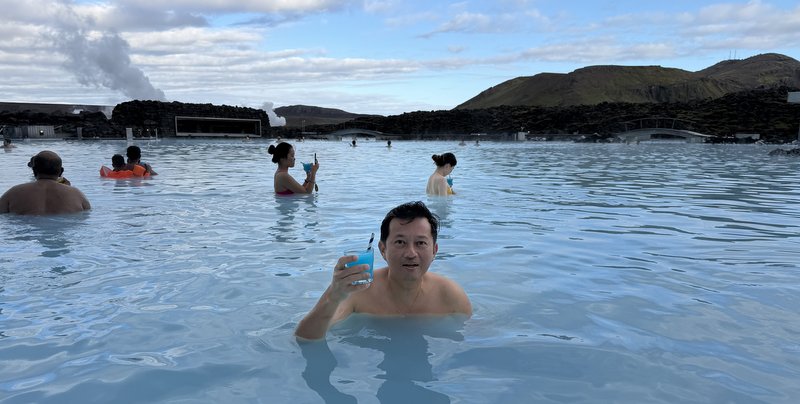
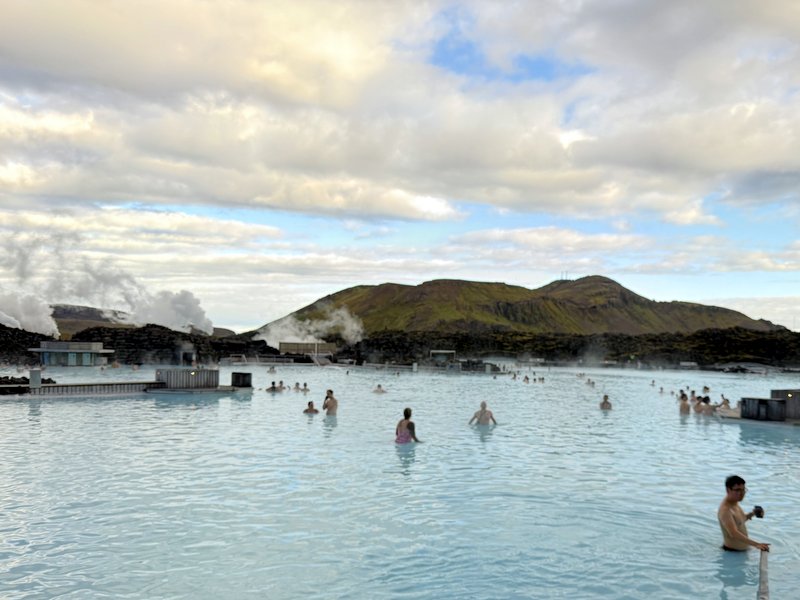
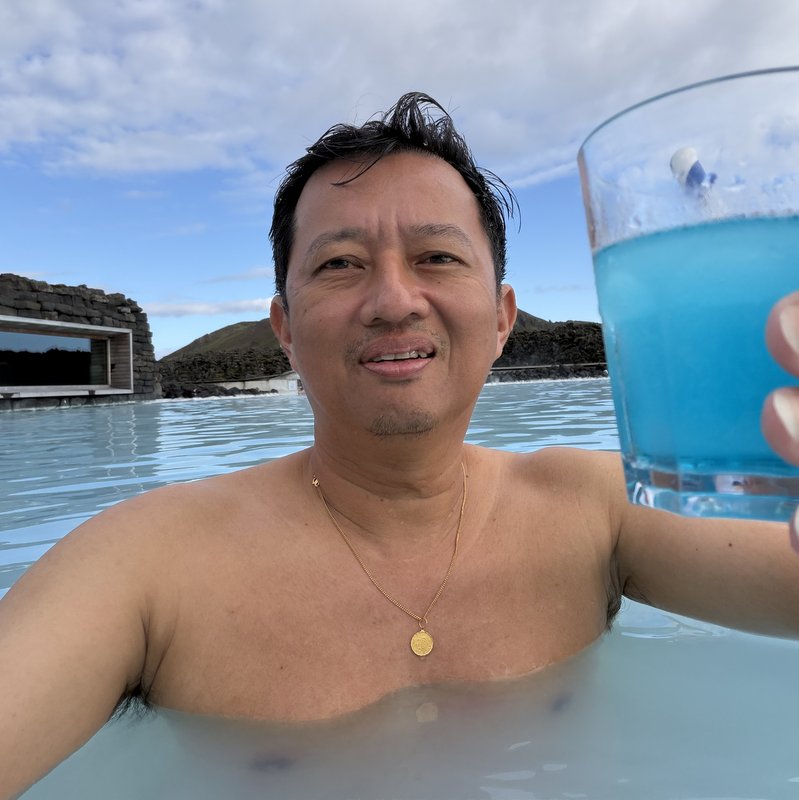
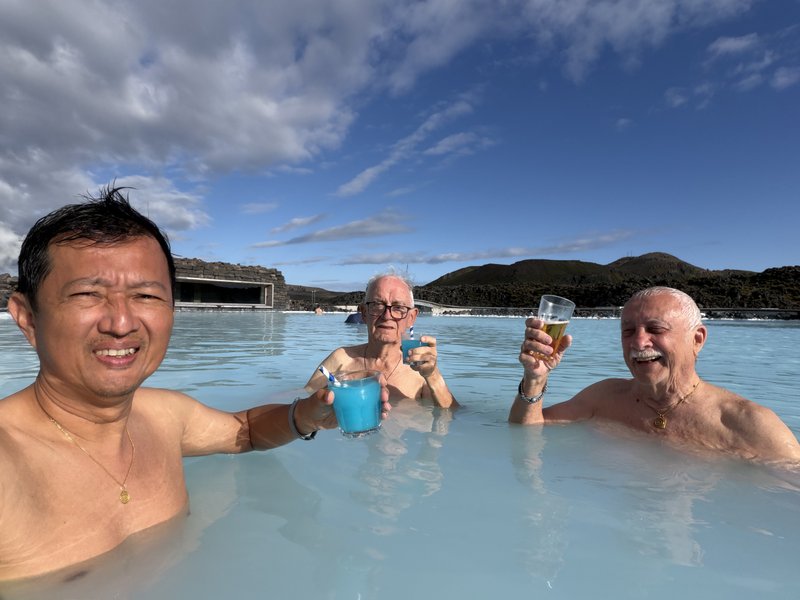
When you tell people that you visited Iceland, they often ask, did you visit the Blue Lagoon? And yes, we did, but it is very overrated and commercial It is actually a byproduct of a nearby geothermal powerplant. The powerplant uses superheated water to generate electricity and hot water for households. Then the wastewater is released in nearby ponds, the Blue Lagoon! Tickets are expensive and you need to book a timeslot. One free (non-alcoholic) drink is provided. Swimming is prohibited, we walked around in the milky blue water.

Glaciers

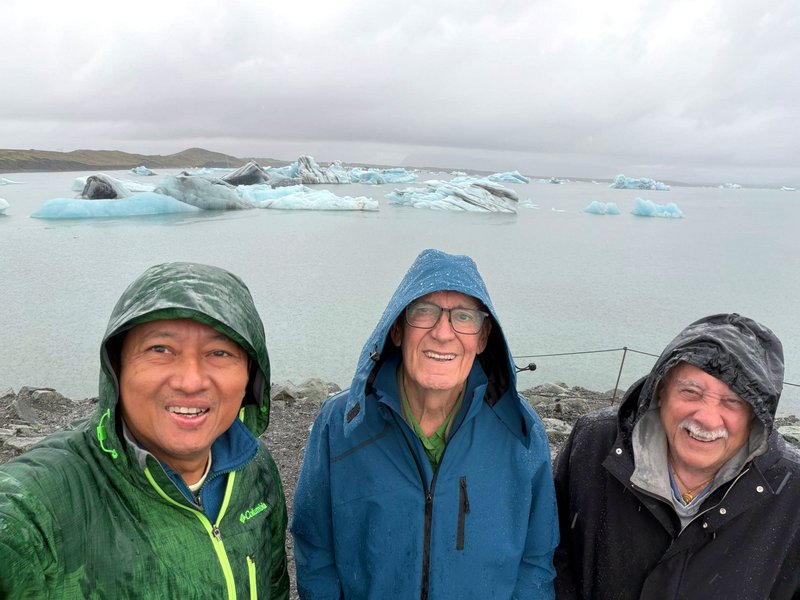
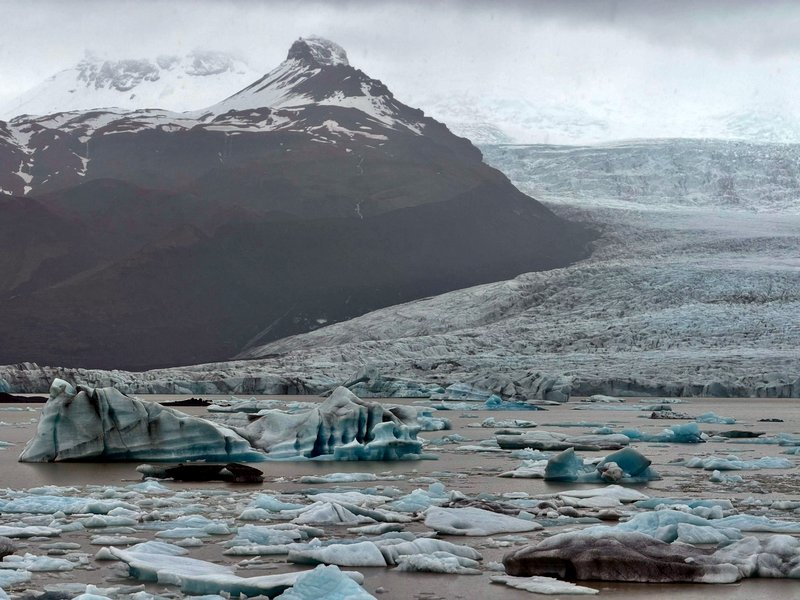
After the Last Ice Age, the icecap that covered Iceland, has melted, but glaciers still cover part of the island, and because of Iceland’s location, they can extend almost to the coast. As glaciers are still retreating, the melting ice forms a glacier lake and when near the sea a glacier lagoon! We visited the Jökulsárlón lagoon. Aric is standing on the beach with the lagoon behind him and far away the front of the glacier. The beach is called Diamond Beach, because the broken glacier pieces melt in the seawater and become transparent, like jewels.


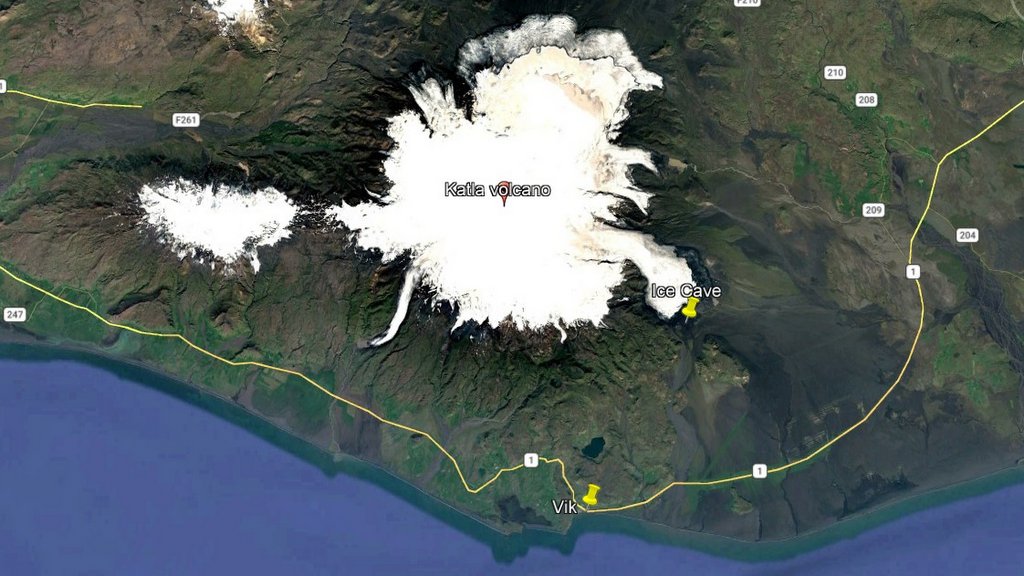
An absolute highlight of our Iceland holiday was a visit to the Katla Volcano Ice Cave. The Katla Volcano in the south of Iceland is one of the most active volcanos of the country. It is covered by an icecap of 200-700 meter thick. Every 40-80 years it has a major eruption, that can lead to a catastrophic glacier flood. The last one was in 1918, until now it is dormant, but closely monitored.

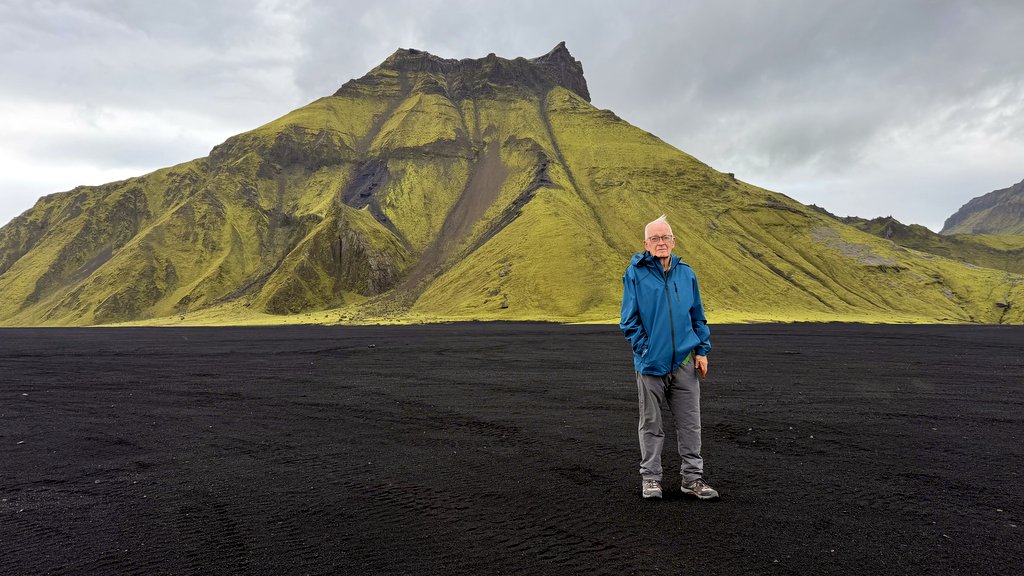
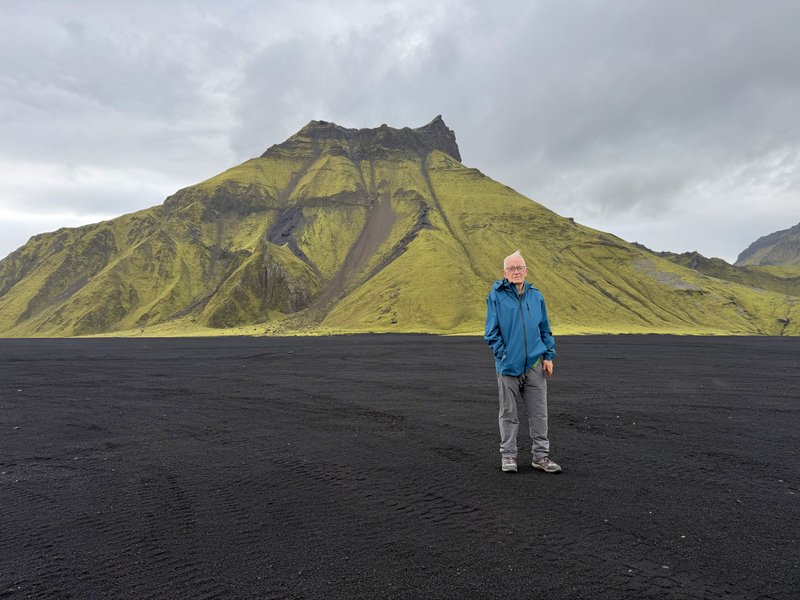
The “expedition” took 3 hours and started from Vik. a small village. After following the Ring Road for a while the super jeep went off road to our first stop, a beautiful black plain with a mossy-green mountain, where an episode of Star Wars had been filmed.

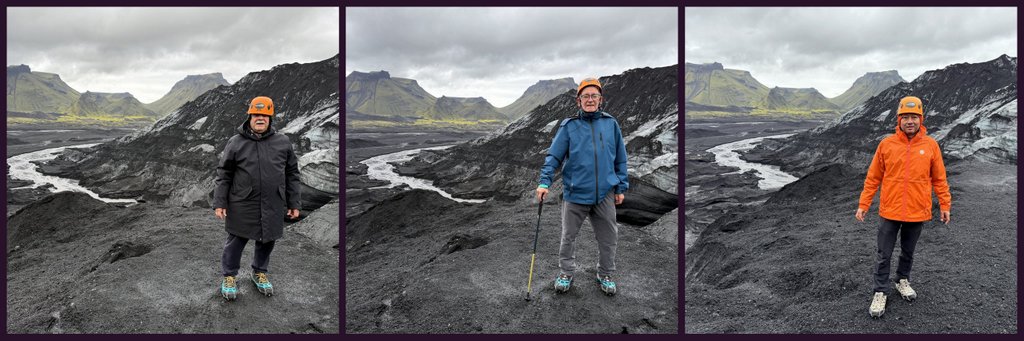
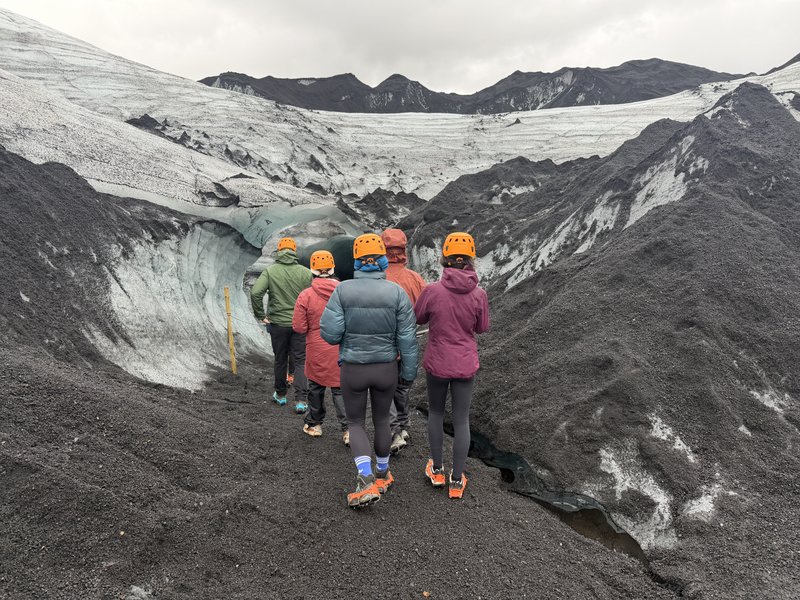
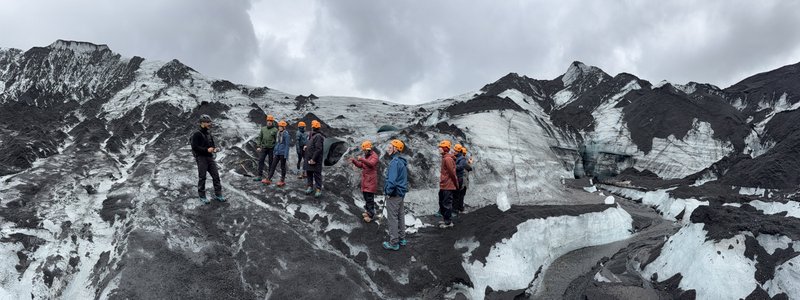
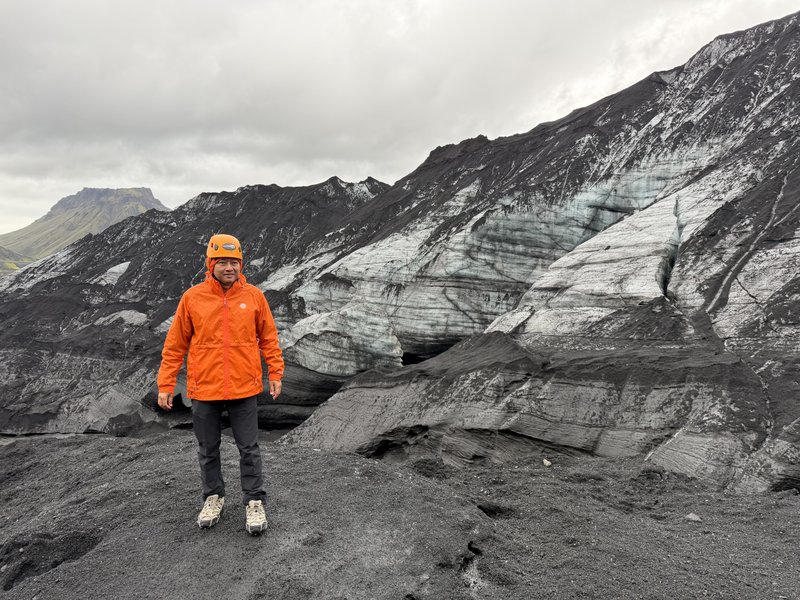
We continued to the glacier, where we were given helmets and crampons. The glacier is covered with black volcanic ash, the ice can be slippery. After putting them on, we were ready to go.

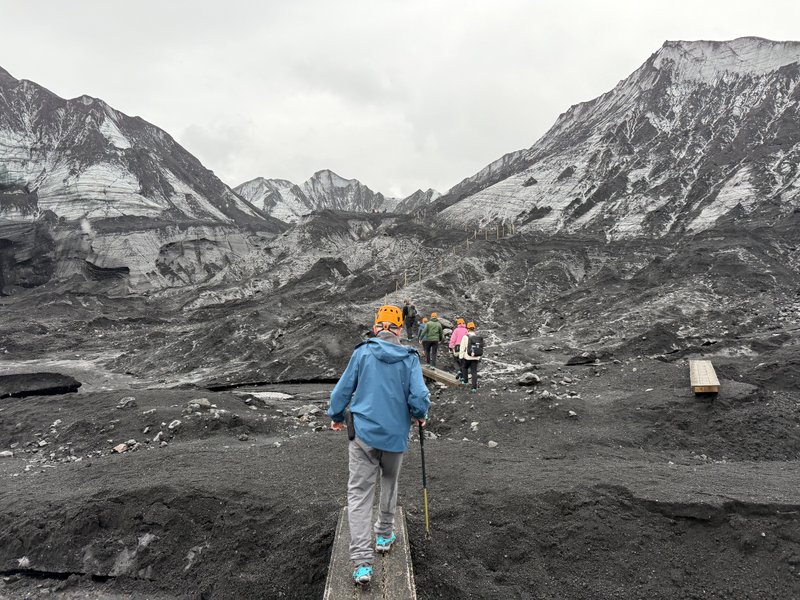
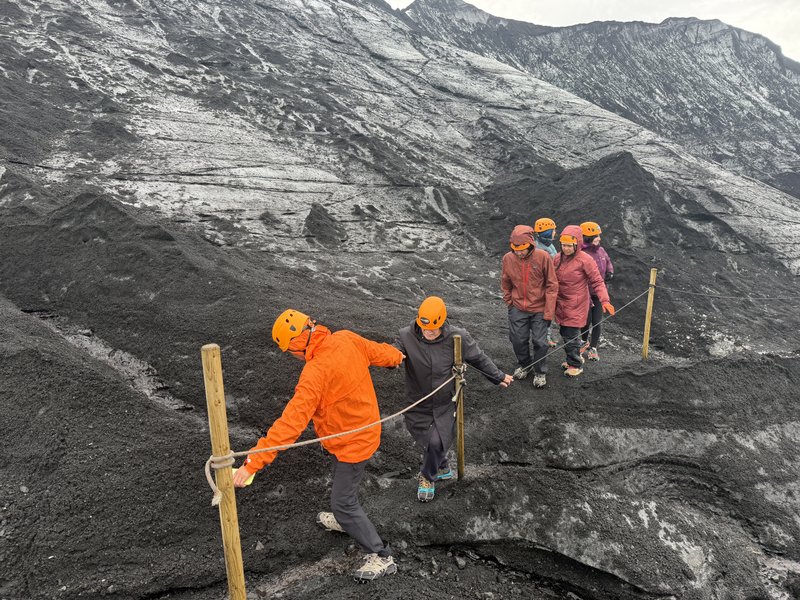
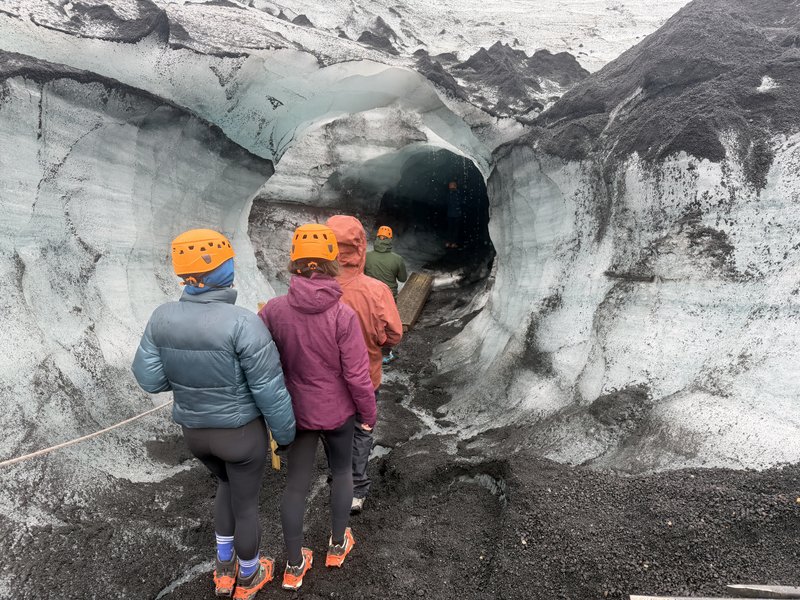
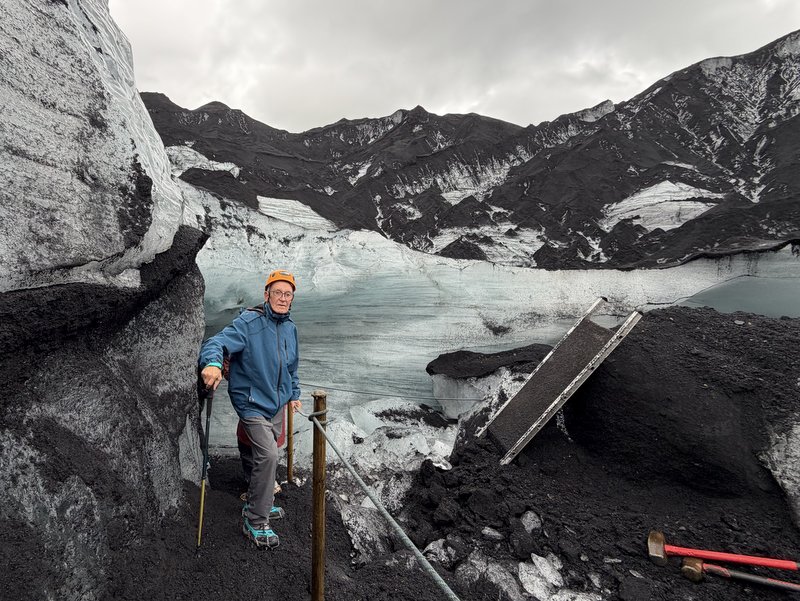
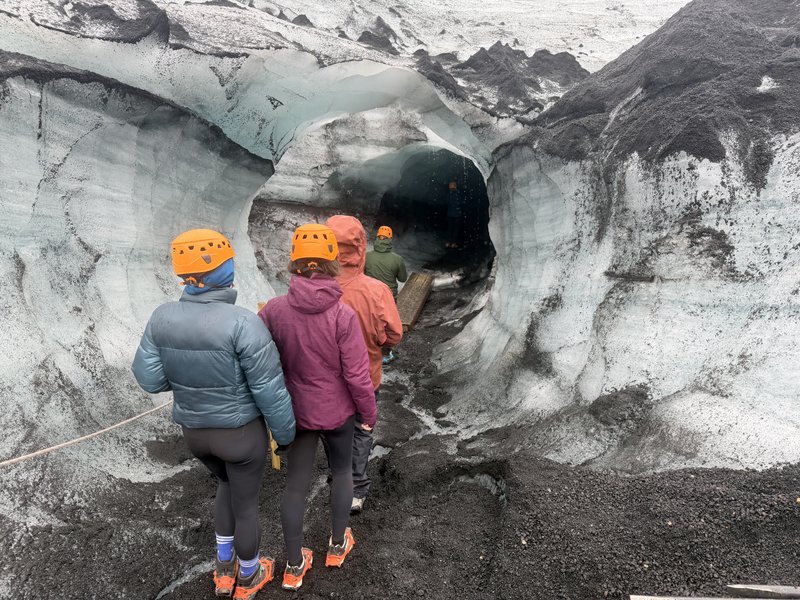
We are walking here on the glacier already/, climbing to the entrance of a man-made tunnel

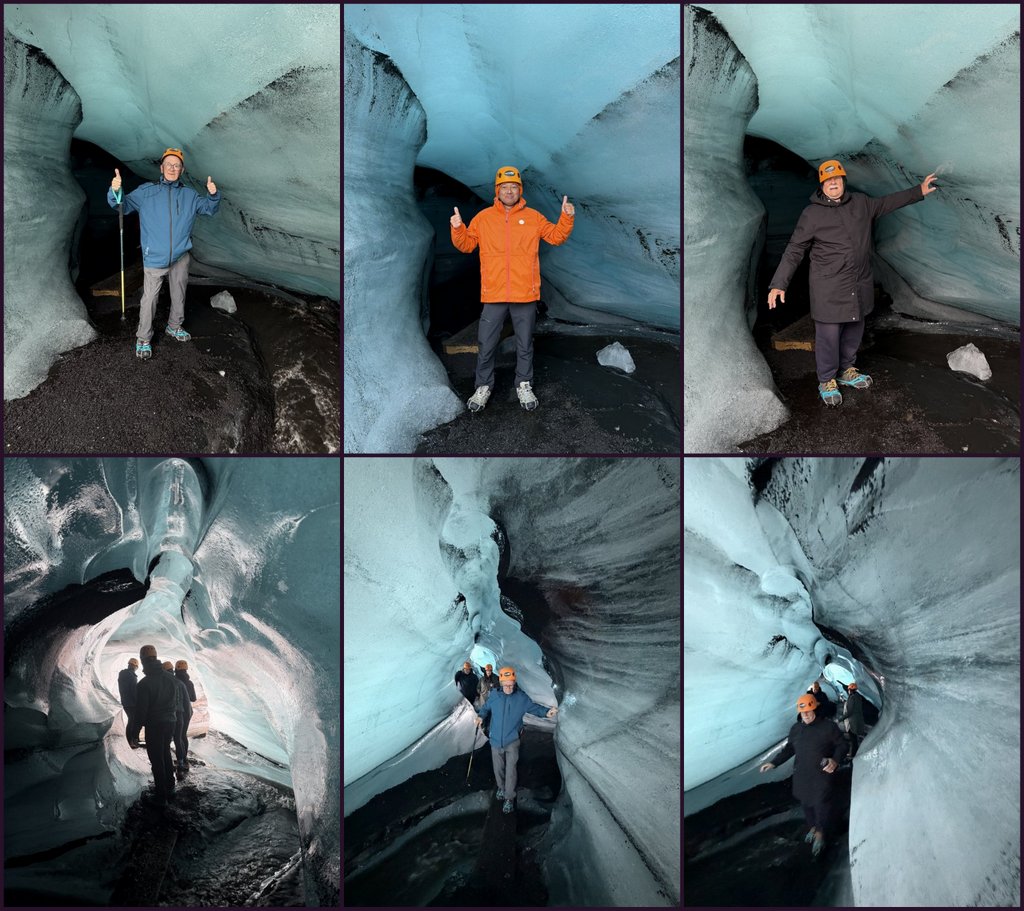
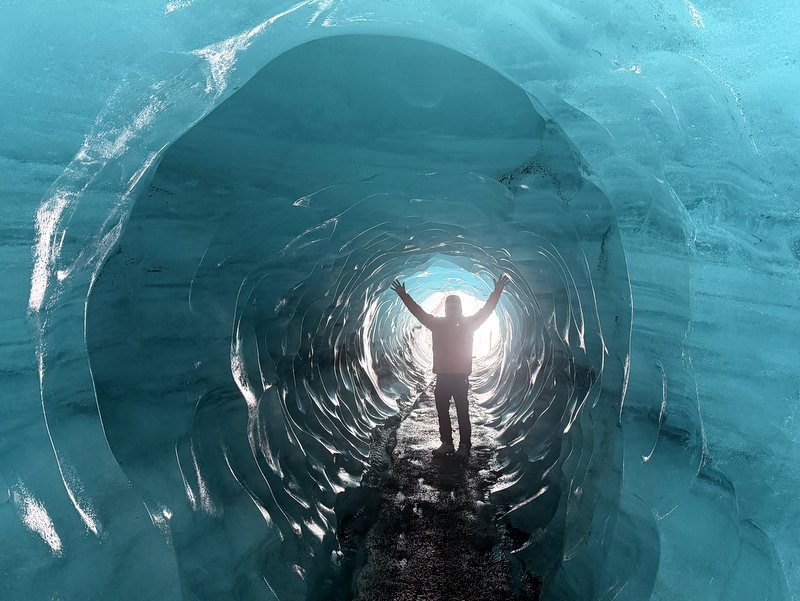
The tunnel is amazing/

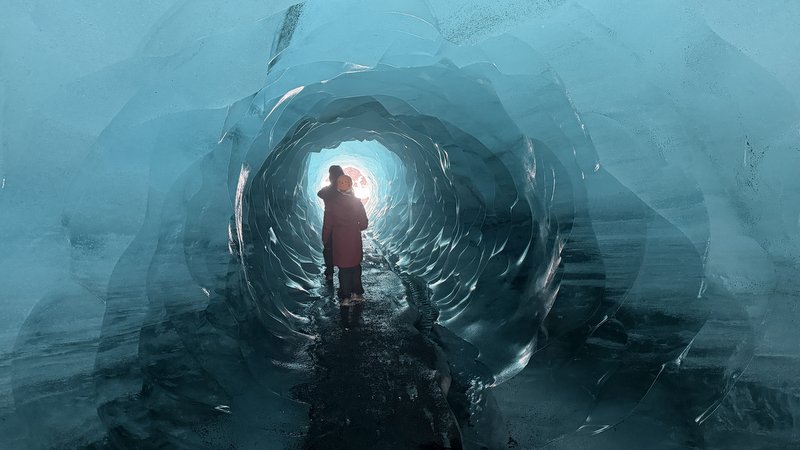
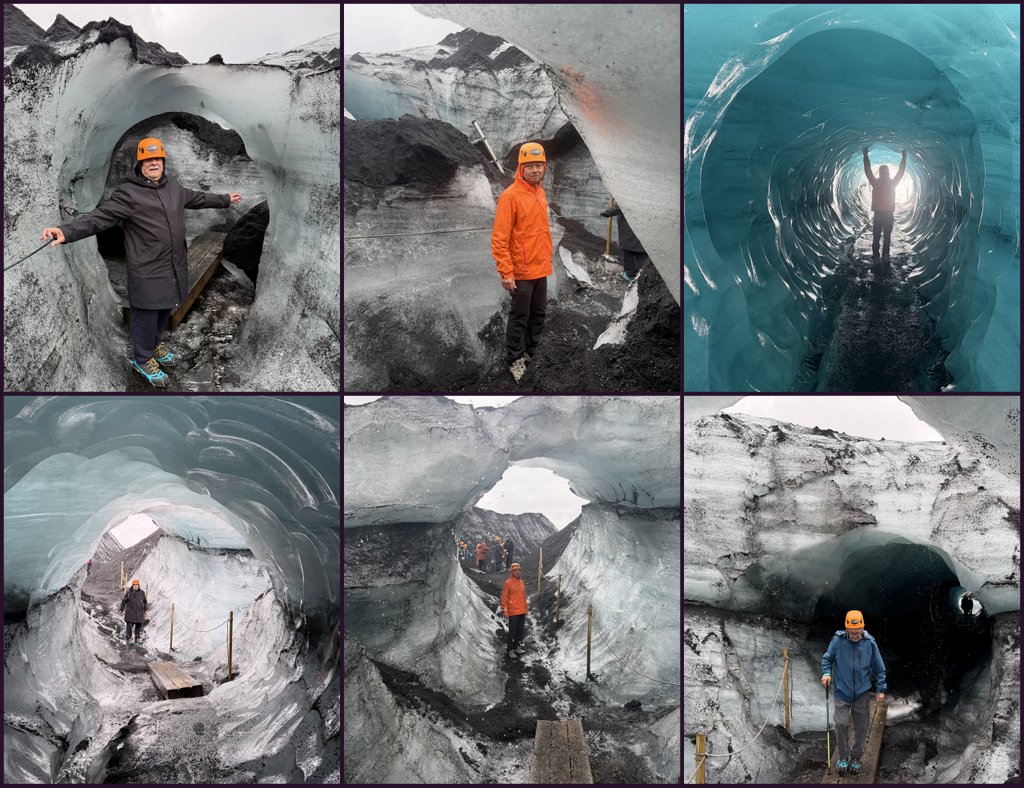
After crossing the tunnel, we are surrounded by glacier.

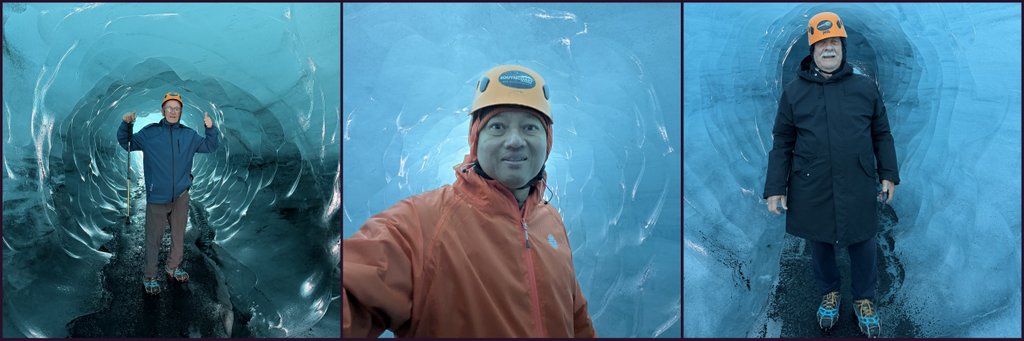
In the ice cave.

Going back through the tunnel.

Returning helmets and crampons. What a spectacular adventure.

Waterfalls

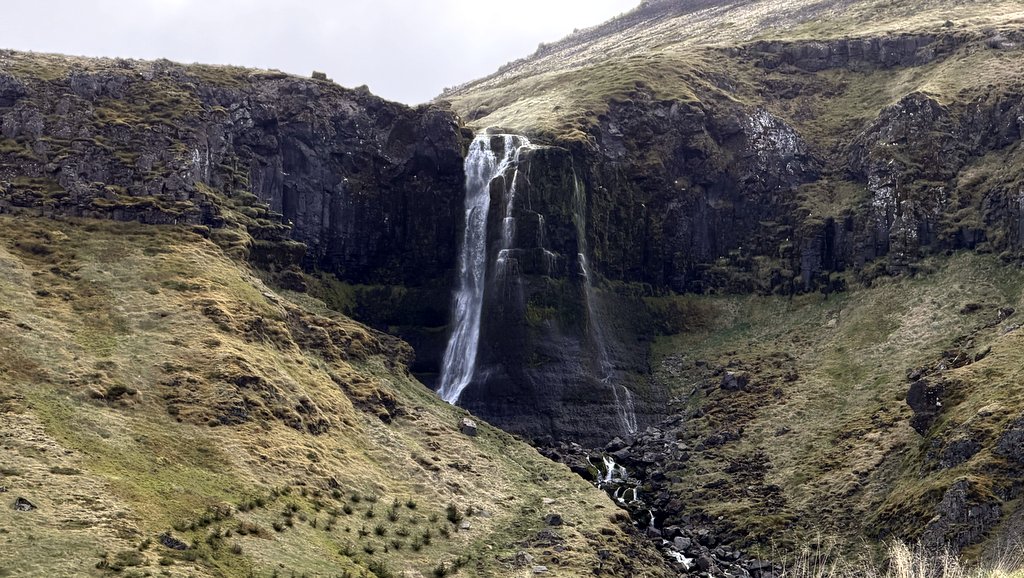
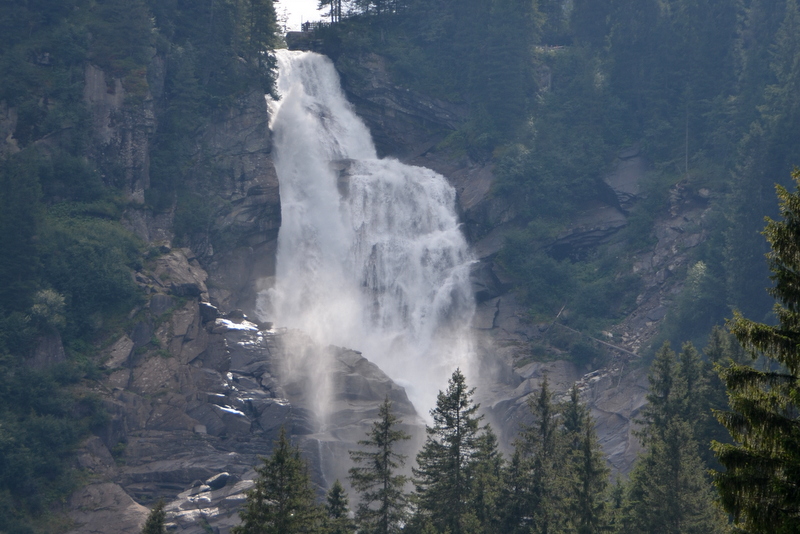
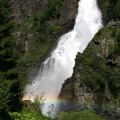
Iceland is often called the “Land of Waterfalls” due to over 10.000 falls and cascades, fed by glaciers and rainfall. The volcanic structure of the island, with steep slopes and cliffs, provides a perfect location for often dramatic waterfalls. Here is a List of waterfalls in Iceland.

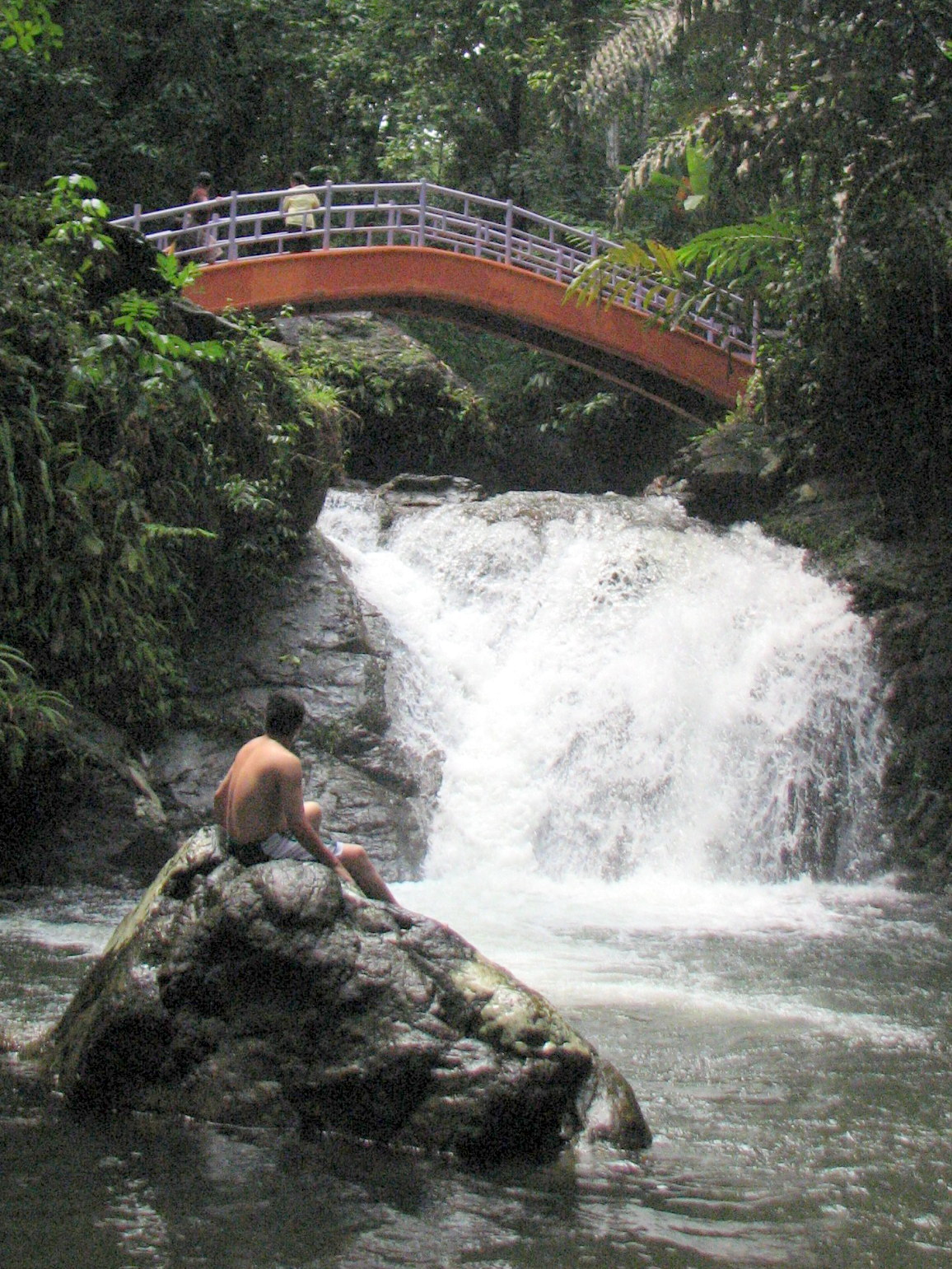
A few hours after we had started our clockwise round trip around the island, we stopped for the first waterfall. A fine example by Malaysian standards, but run of the mill in Iceland.

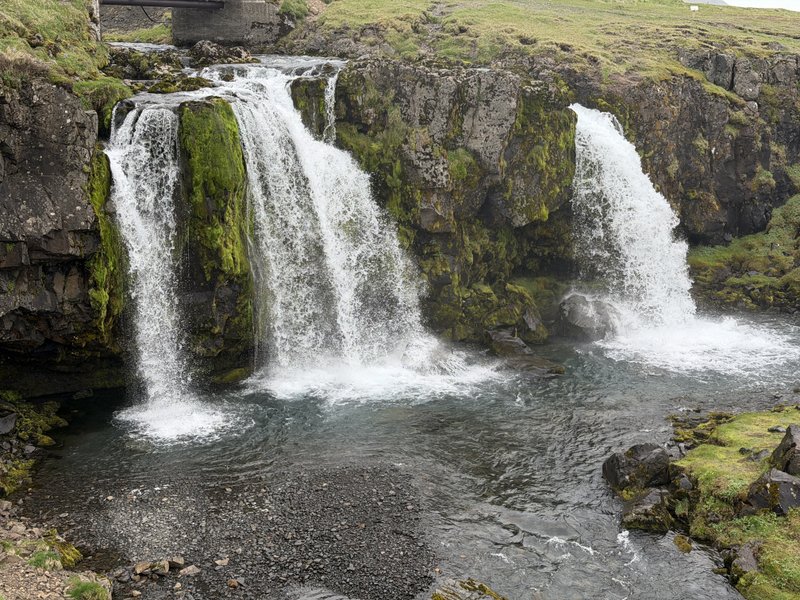
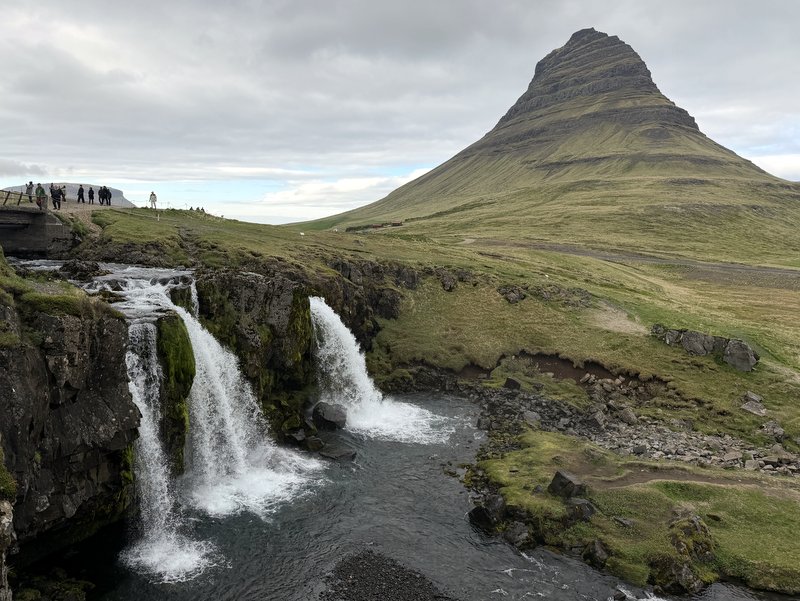
Later on the same day, visited the Kirkjufelllfossl (Foss is the Icelandic word for waterfall).- This is a popular tourist attraction, especially because of the “mountain”. This is not a volcano, but a so-called Nunatak, a rocky outcrop that protruded from the ice field that was here during the Ice Age.

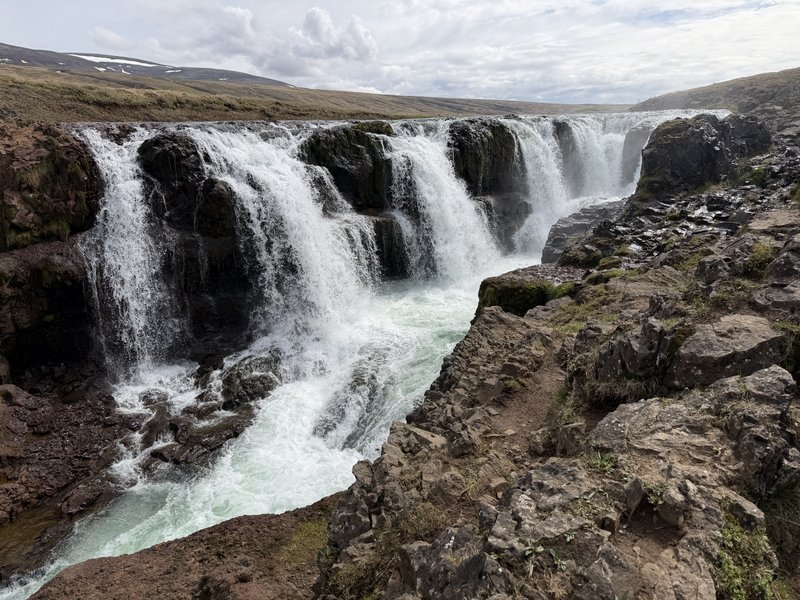
The following day we visited two waterfalls. First, the Kolugljúfur Canyon, 40-50 m deep and 1 km long, eroded by the Víðidals river. The water of this river plunges in several tiers, the Kolufossar waterfalls. Not very tall, but wide with an impressive water volume. –

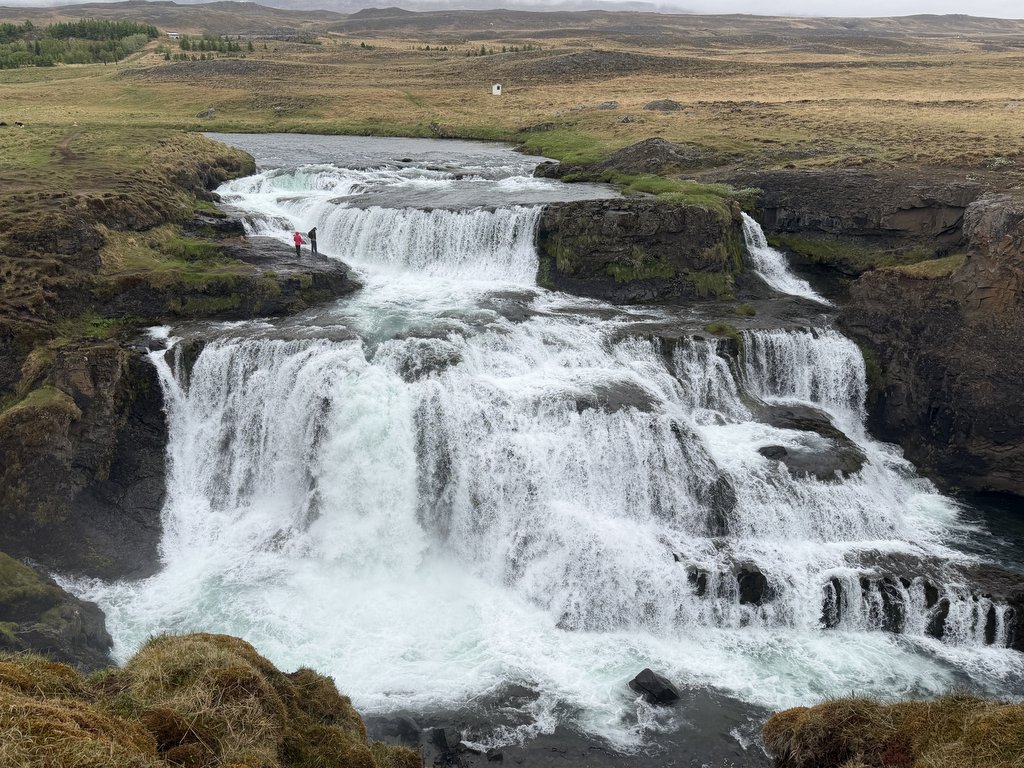
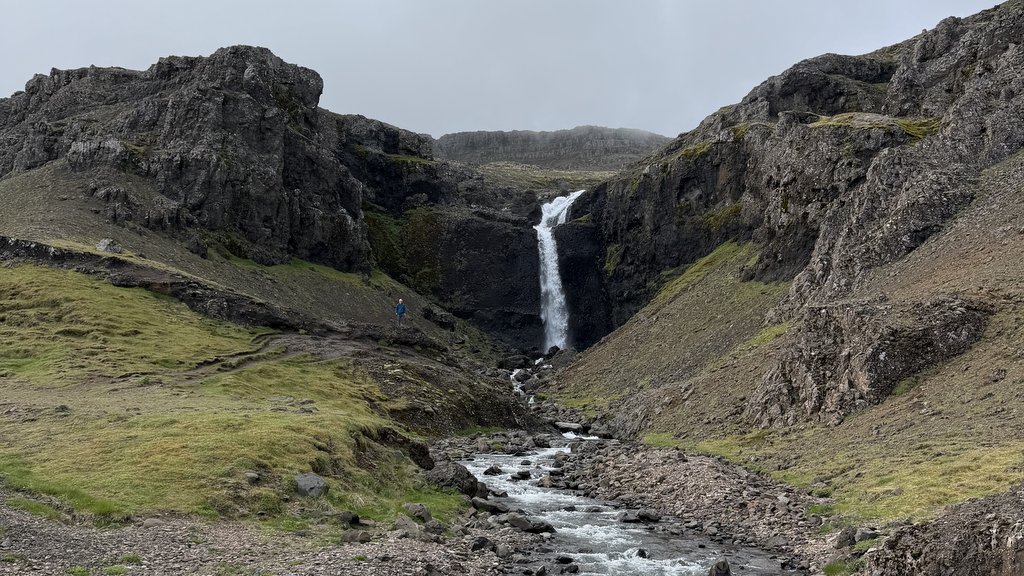
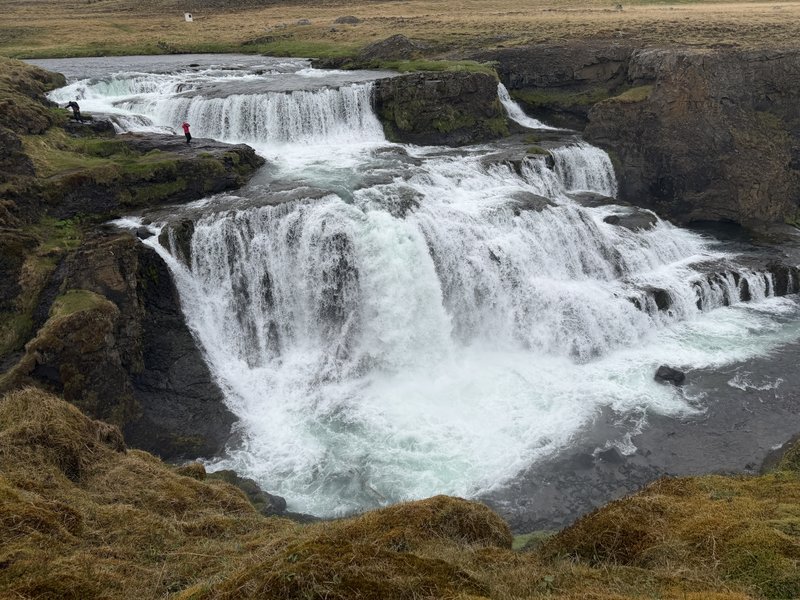
Later that day, we had a look at the Reykjafossl. This waterfall is on private land, we could visit it, but has recently been closed to visitors. Notice the tiny human figures in the pictures.

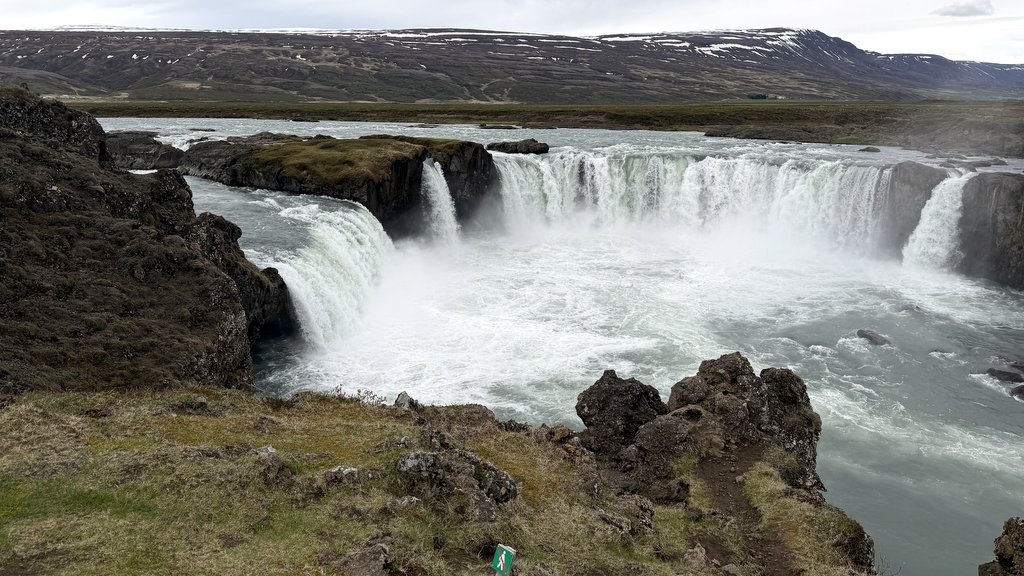
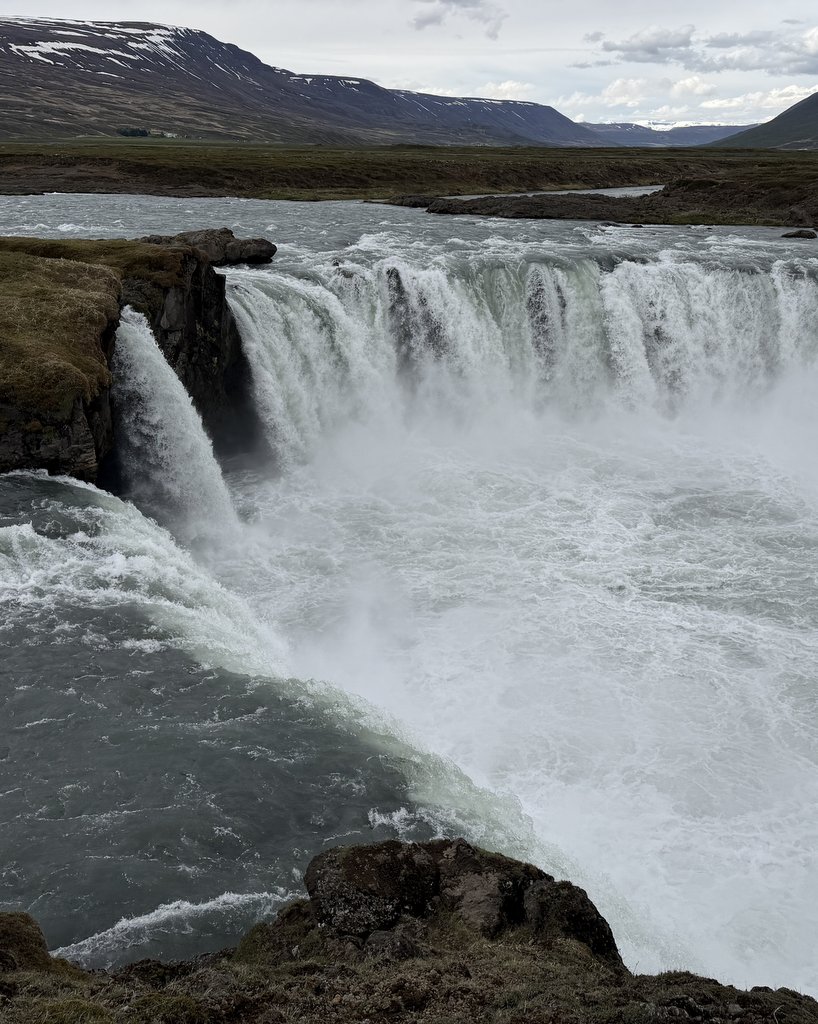
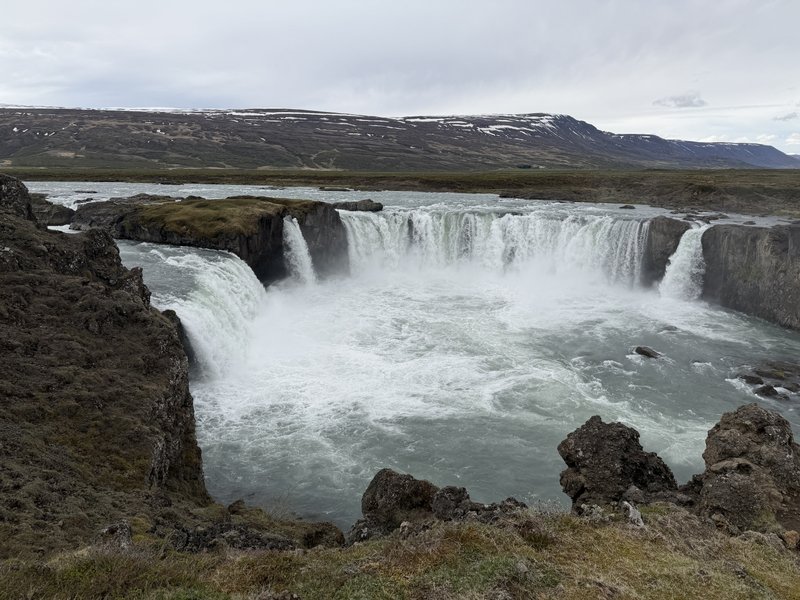
The next day we visited the Goðafoss. The water of the  Skjálfandafljót river falls from a height of 12 meters over a width of 30 meters. Very impressive.

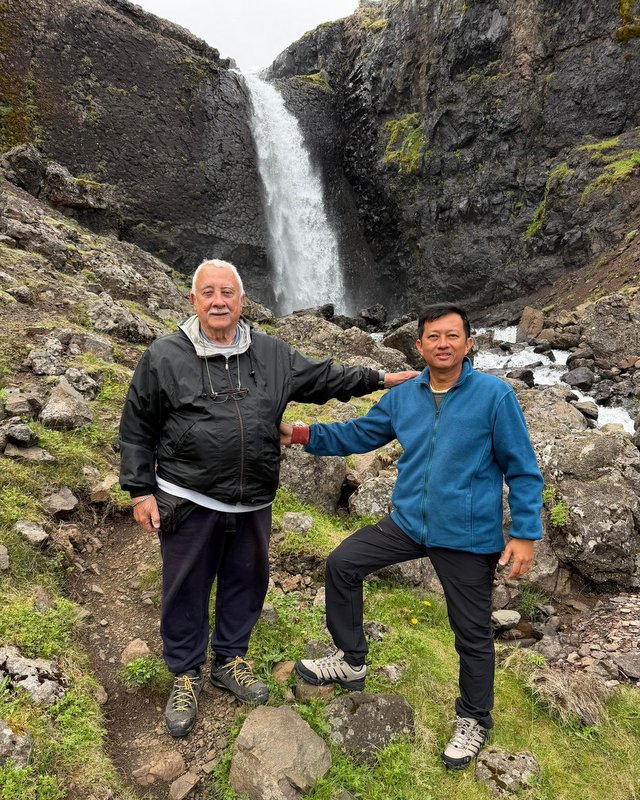
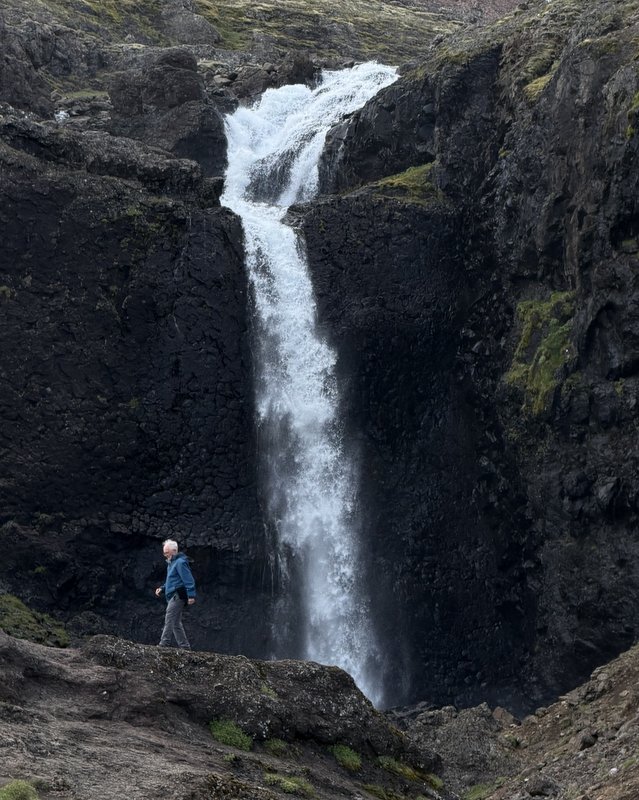
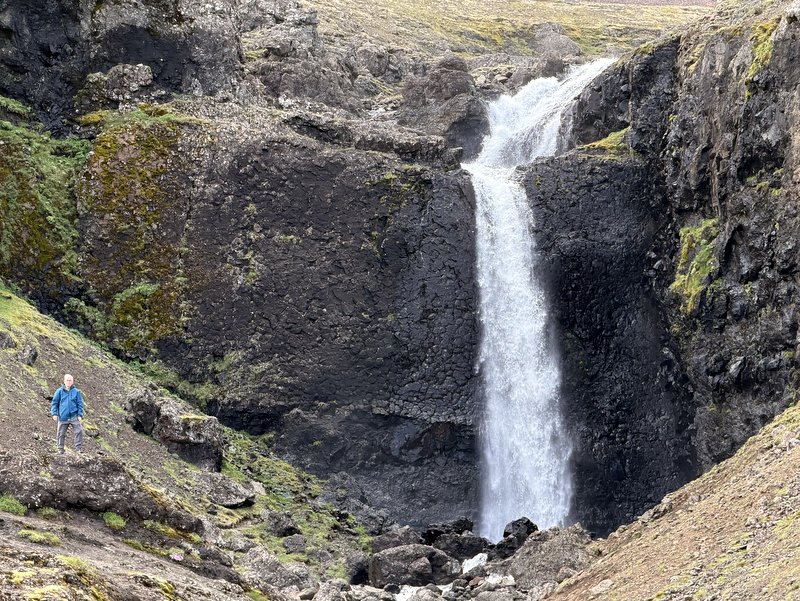
The last three waterfalls are all in substantial rivers, not very tall, but wide with lots of water. Here is a tall waterfall, visible from the Ring Road. A small parking lot with a picnic table, but no name. We walked closer and took pictures. I tried in vain to Google for a name, so we decided to name it ourselves: Lata JAR. Lata is a common name in Malaysia for a waterfall and JAR stands for Jam, Aric, Rodney.

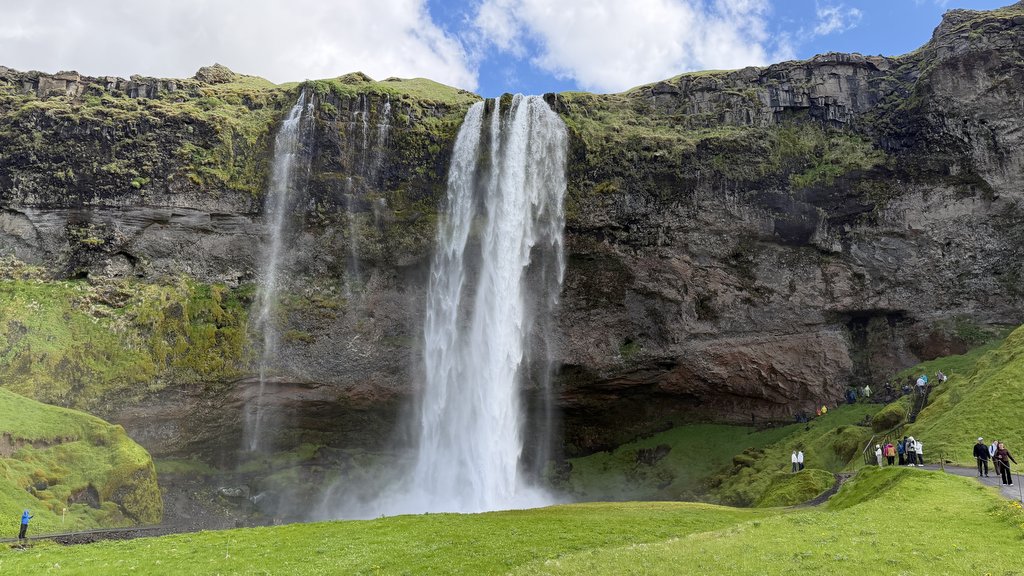
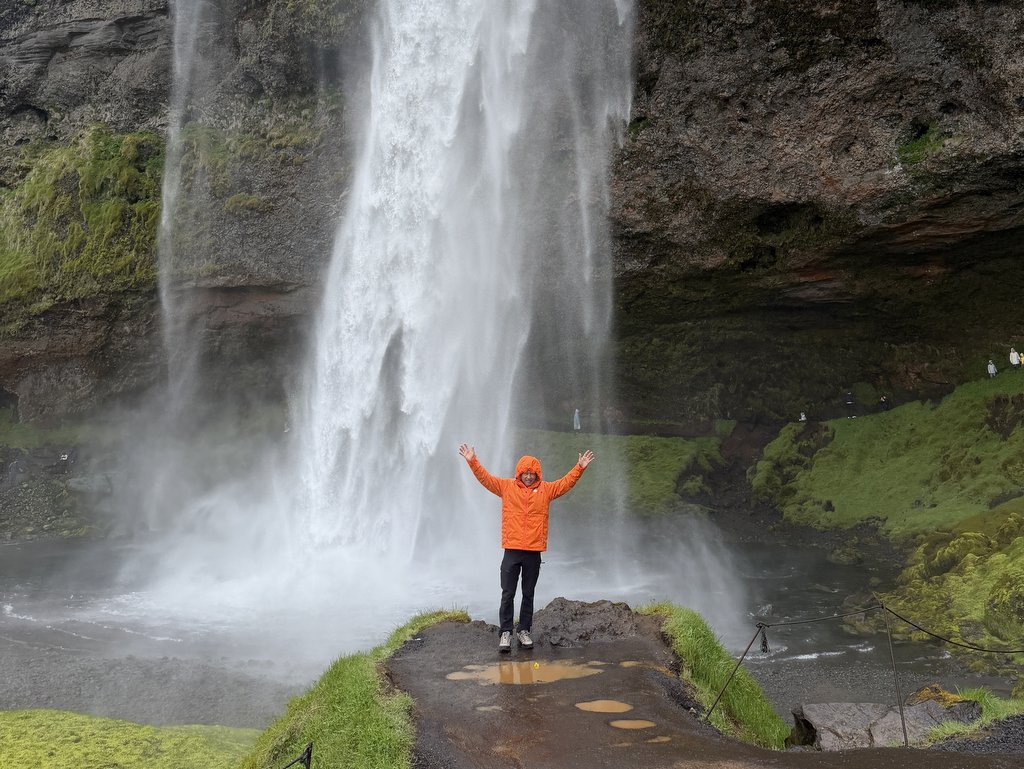
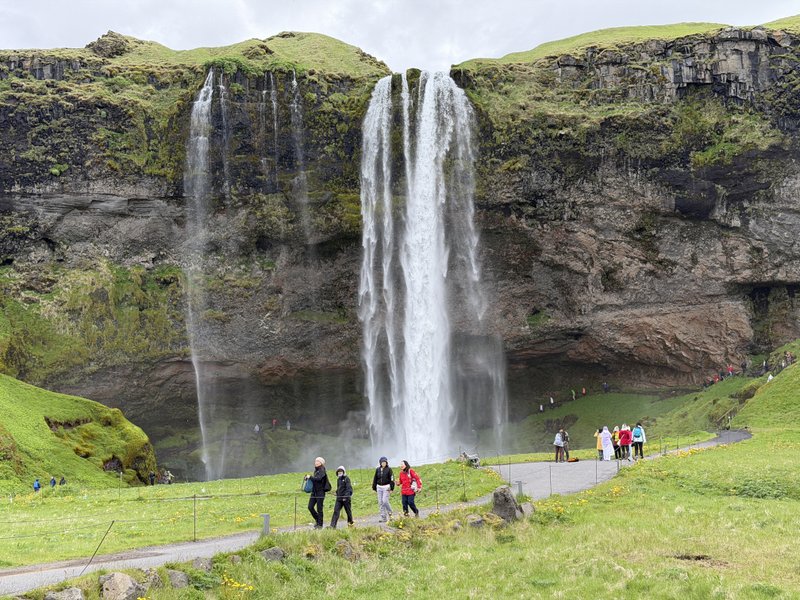
Another tall fall (~60 m), the Seljalandsfoss, is famous for the trail that allows visitors to walk entirely behind the falling water. We were prepared to get wet, and we got wet.

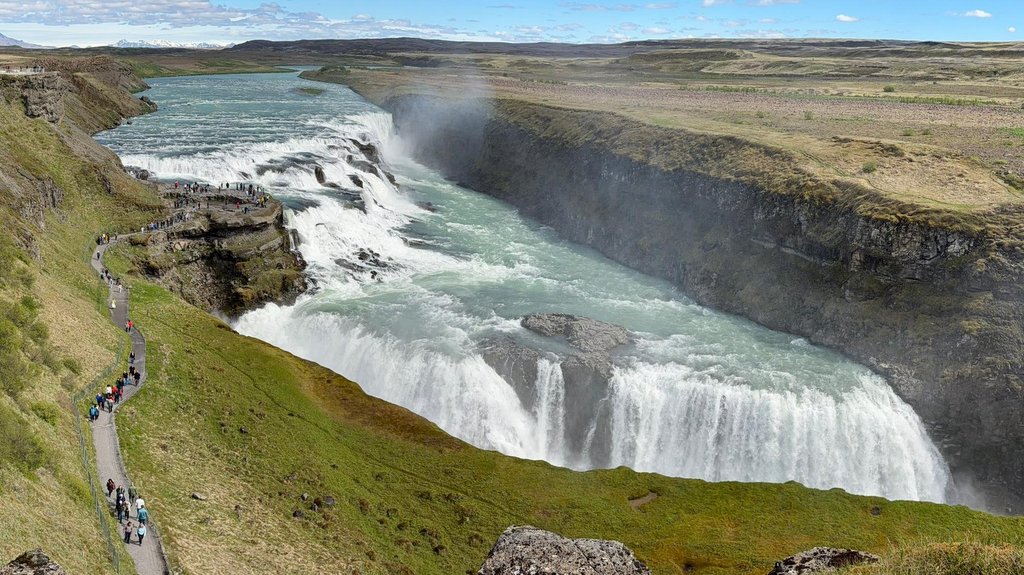
On the last day of our Iceland trip we visited the

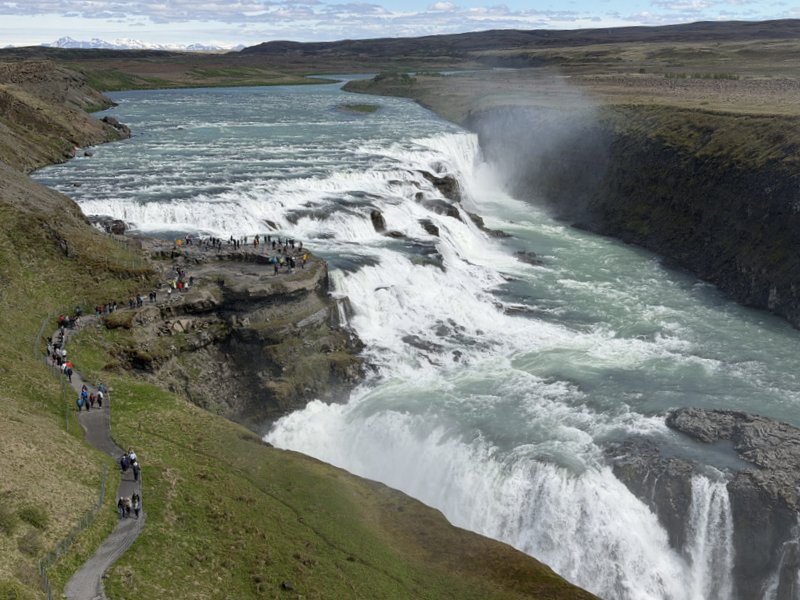
. We just had a quick look, no time to explore this powerful waterfall, a popular day excursion from Reykjavik

Other Natural Attractions

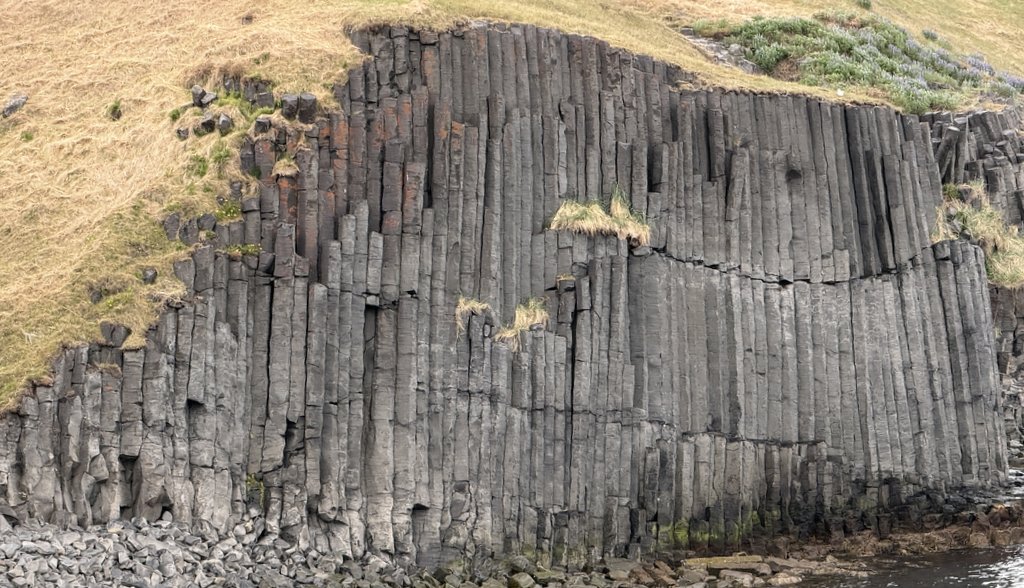
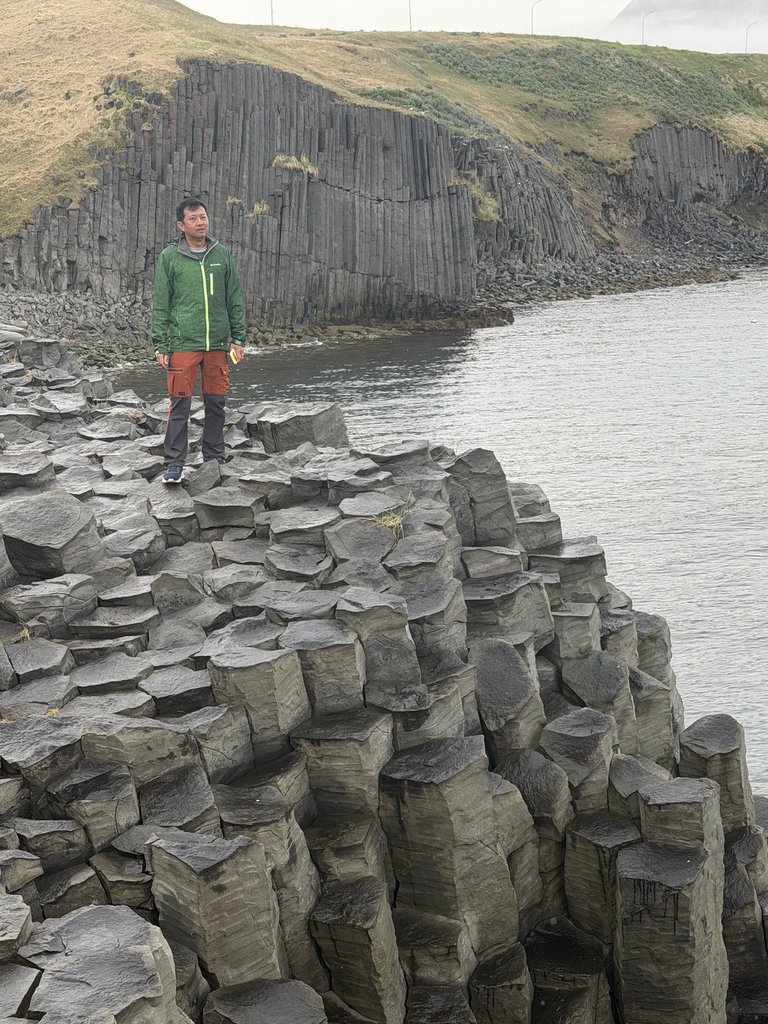
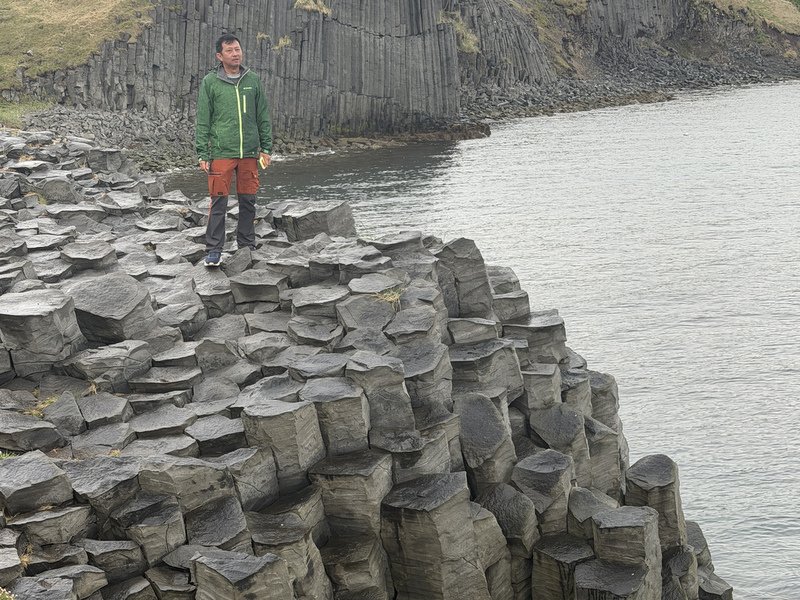
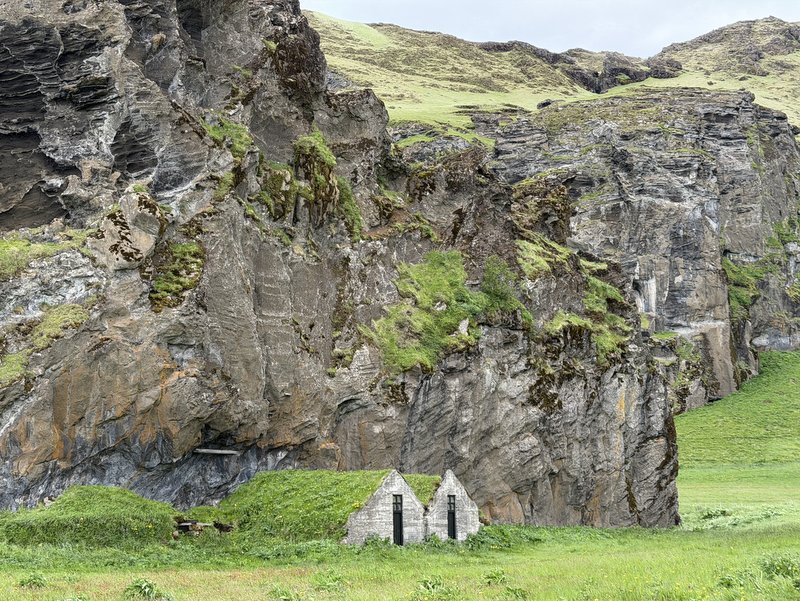
There are many locations where the volcanic origin of Iceland is clearly visible. Here are basalt columns at the coast of North Iceland.-

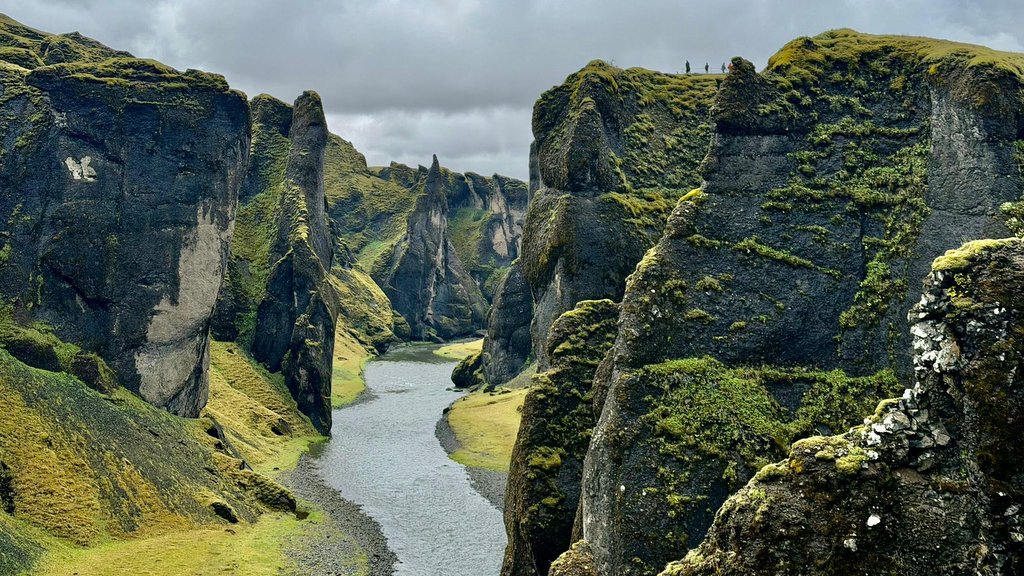
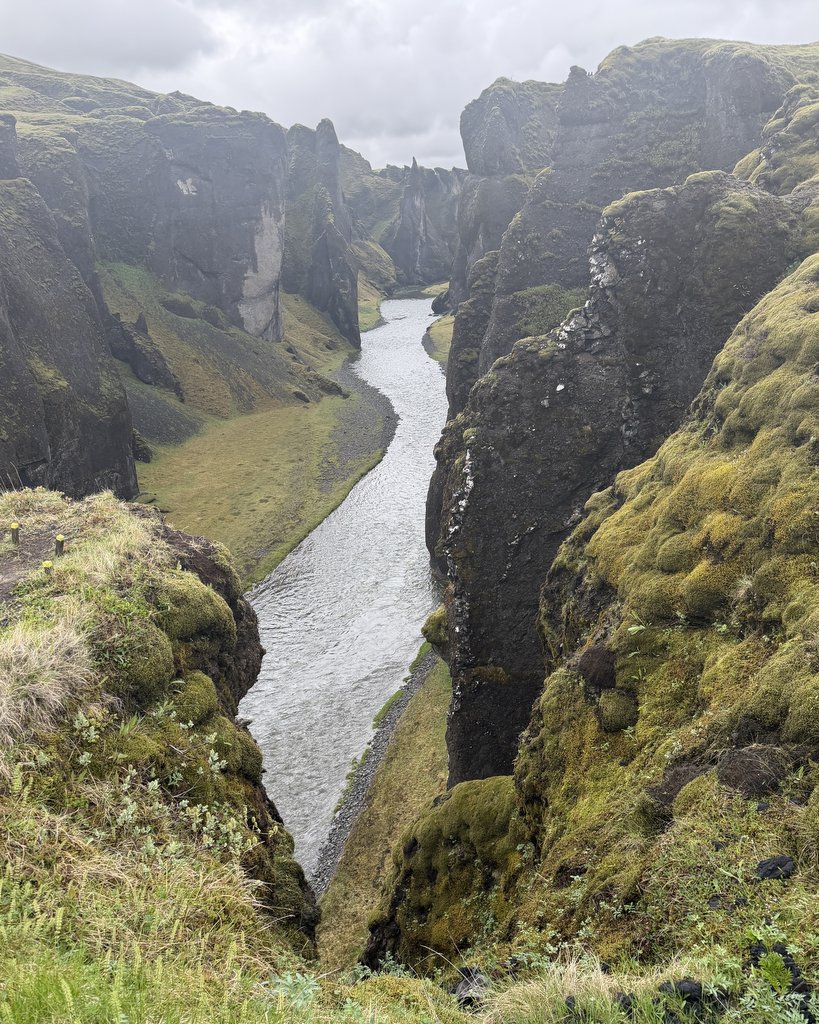
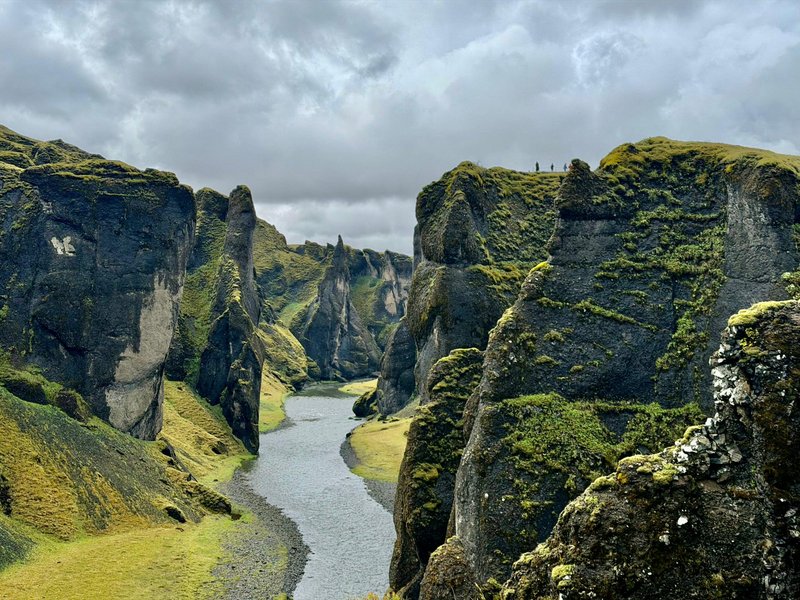
Here is a beautiful canyon, the Fjaðrárgljúfur in the Southern part of the island. Eroded by a river during many millennia. It is up to 100 m deep and about 2 km long.

Summary

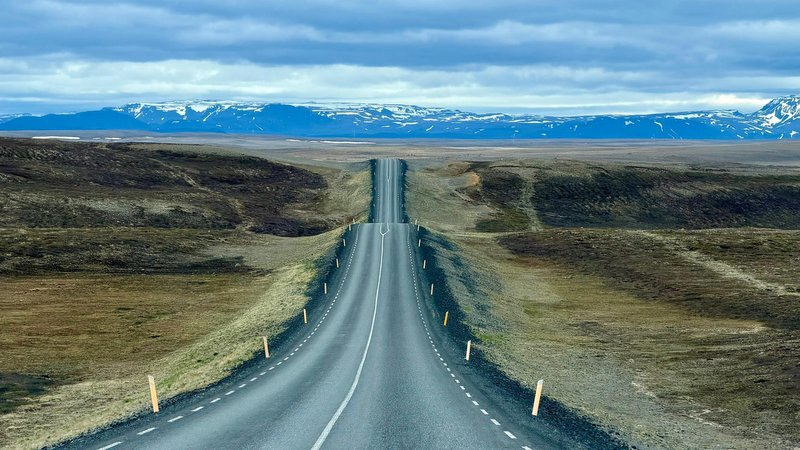
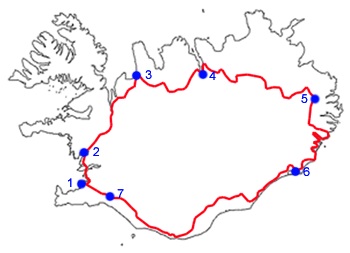
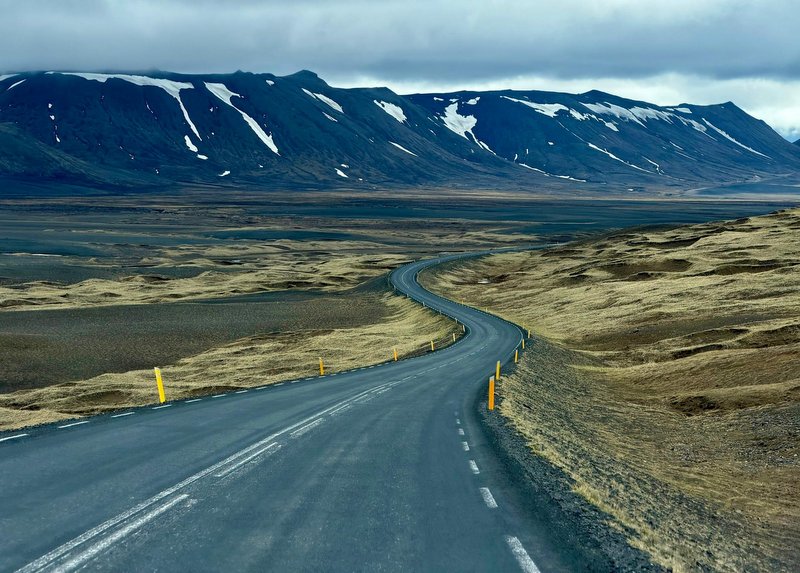
Iceland has a ring road around the island, called Highway 1. The left image shows the route. It is a two-lane road. The blue dots mark populated places. We followed basically this road, clockwise. Rodney was our expert driver, Aric was the navigator. Often we had to take secondary roads to reach a location. We drove around 2400 km in 8 days.

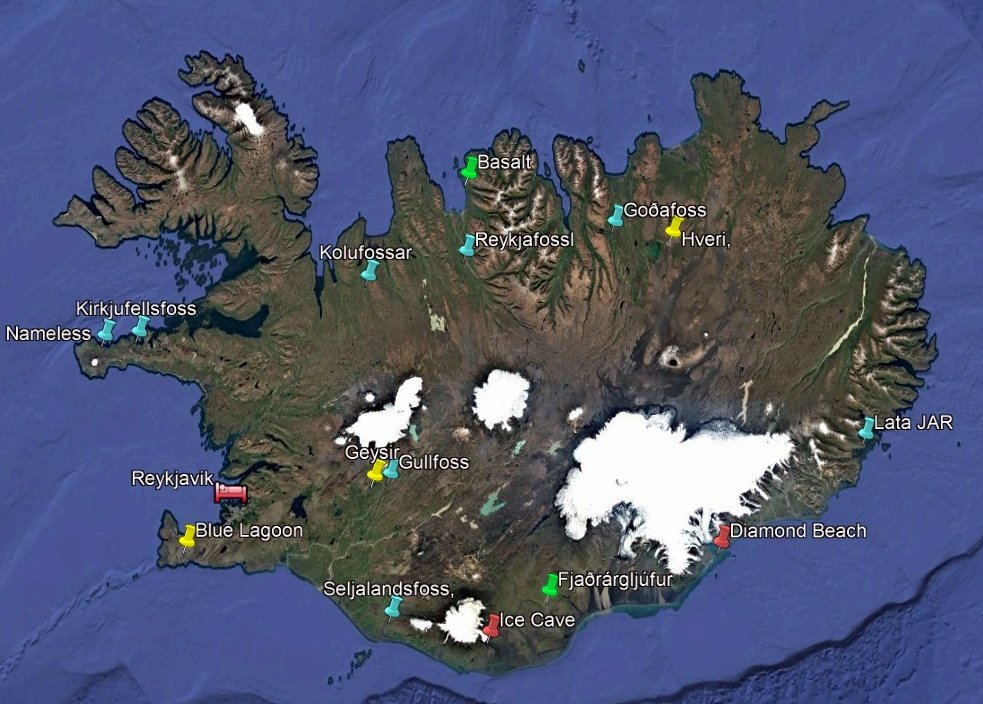
This Google Earth image shows the places we visited, using colored markers. Geothermal (yellow),glaciers (red), waterfalls (blue) and others (green).

In the second part of this Iceland report, more info about the “cultural” places we visited, the places where stayed overnight, the food we had, etc.

Our visit to Europe in 2026

On 11 May, we flew to Amsterdam. For Aric, it was the first time since 2019, but I had been back in 2023 and 2024. Last year, we were planning to visit Iceland, but I got a vision problem (AMD) that affects and limits my activities. This year we decided to travel together for five weeks, after which I would stay in Amsterdam on my own for two more weeks.

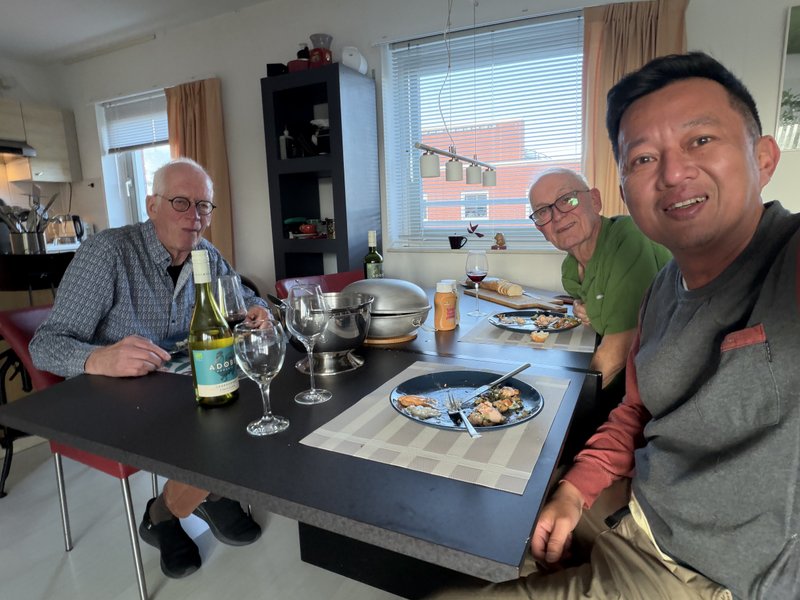
Iceland was the main destination and Aric made am elaborate planning for a 10D9N visit. We asked our UK friend Rodney to join and visited him on a 5D4N trip before flying together to Reykjavik. Aric proposed also a 6D5N trip to Germany. And of course there were visits to family and friends. So It was a full program.

I will write several blogs about the various trips, but start here with a chronological report. Only two photos per day, not easy to make a selection.

11 May

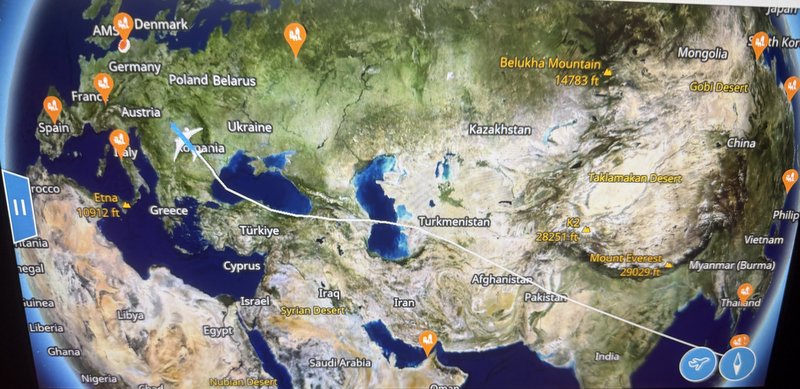
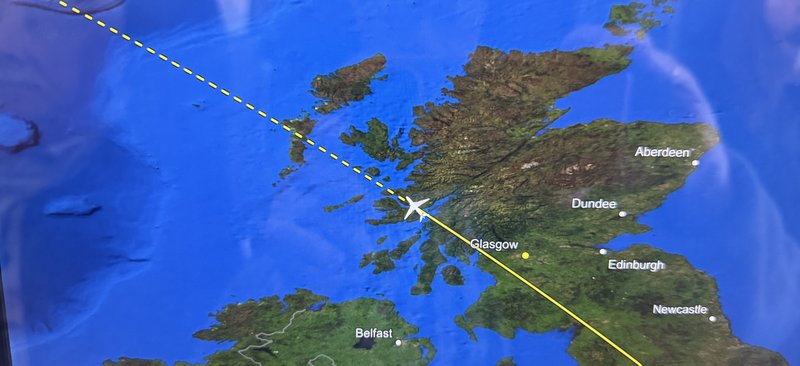
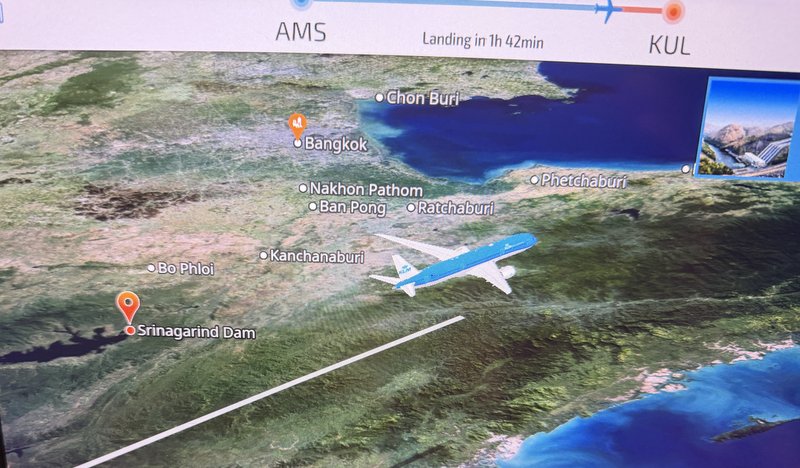
Traveling from KLIA to Schiphol, a direct, long flight. Notice how the route avoids the Middle East and Ukraine/

12 May

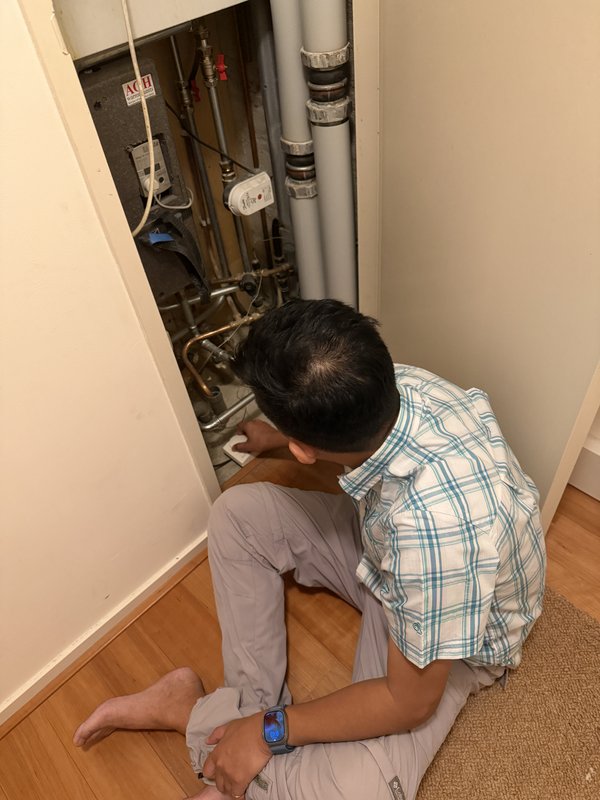
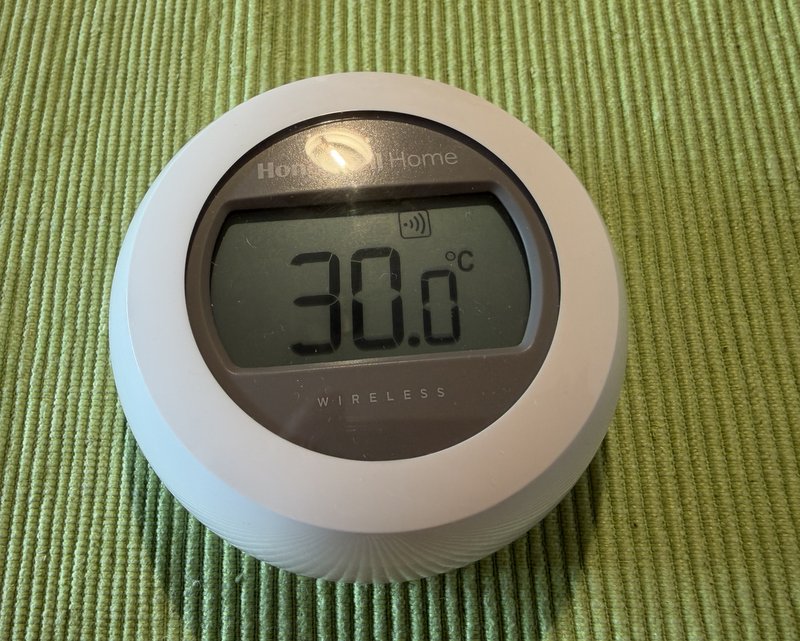
The pilot announced that the temperature at the airport was only 6° C. We took an Uber to my apartment, where an unpleasant surprise awaited us: the central heating was not working properly. An uncomfortable start to our trip.

13 Nay

Trying to contact a central heating technician. In the afternoon, we visited my soulmate Inez, who had stayed with us several times in Malaysia.

14 May

After a long city walk, dinner with my brother Pim.

15 May

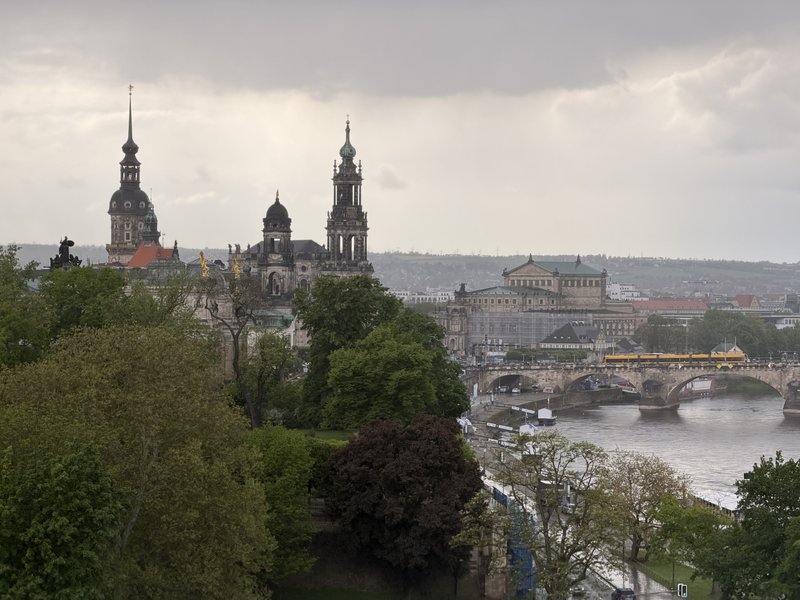
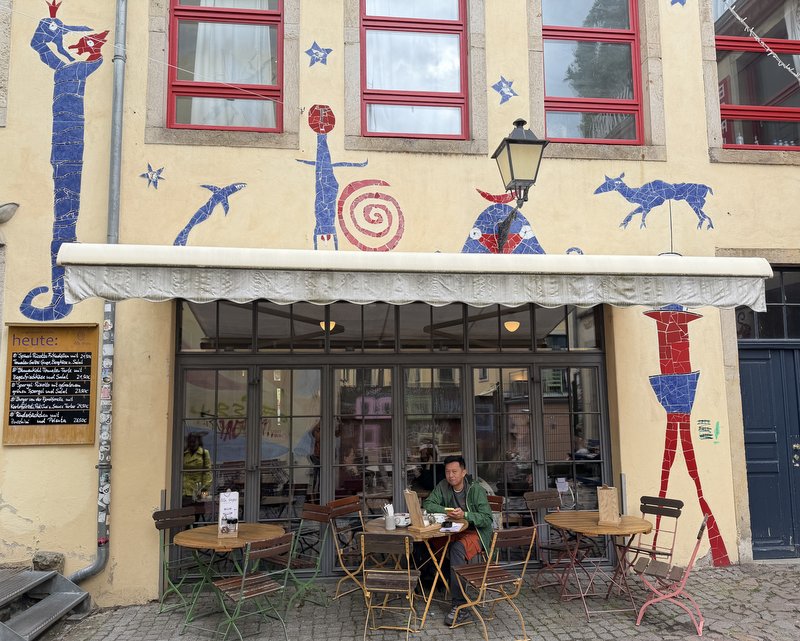
Start of our Germany trip. Lufthansa flight to Dresden, via Frankfurt. Hotell with view of the old town center.

16 Nay

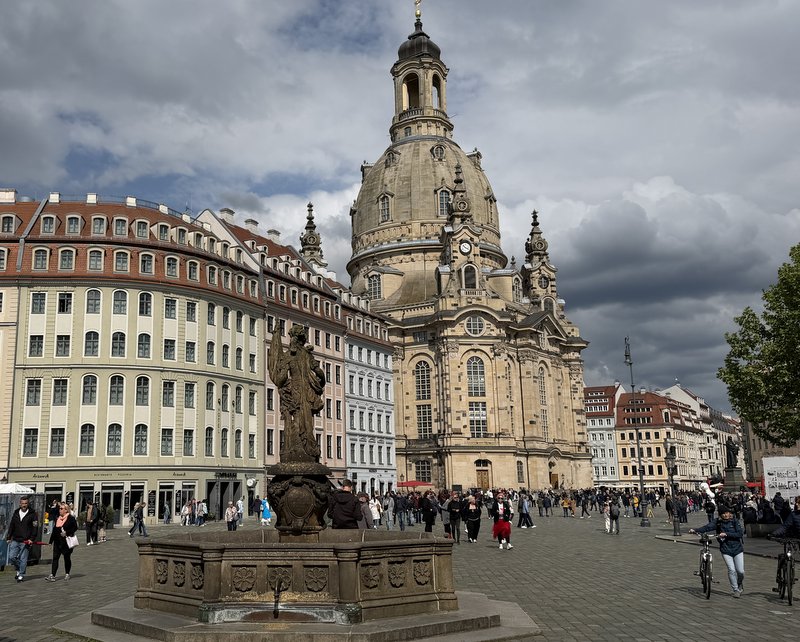
Exploring Dresden. Many more pictures in a separate blog.

17 May

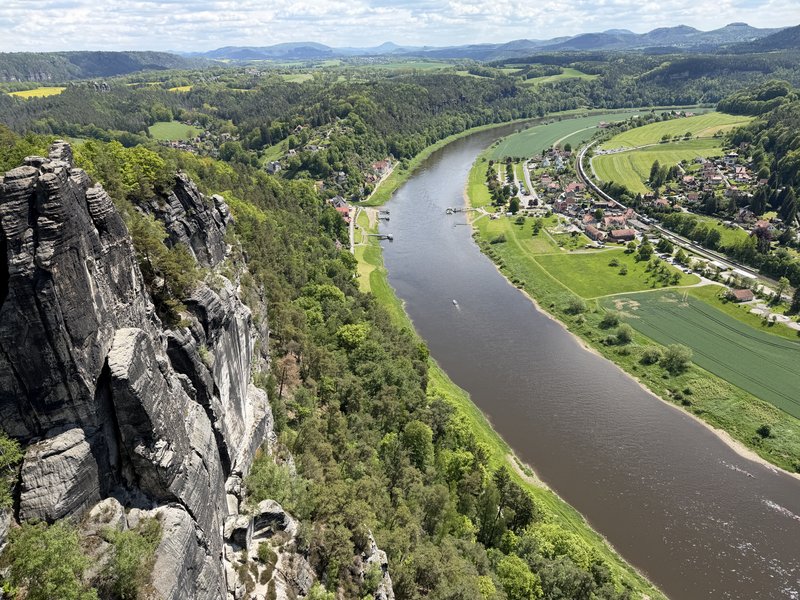
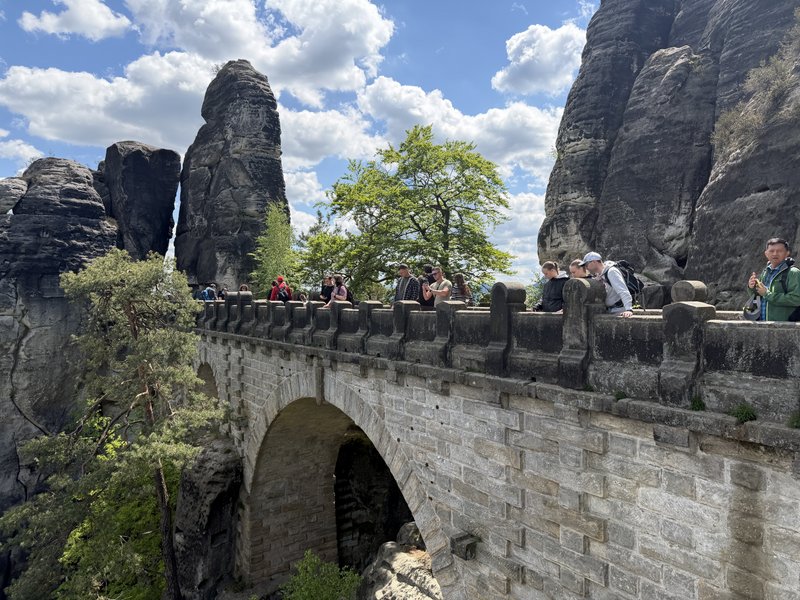
A fascinating day trip to Saxon Switzerland. The Bastei bridge is located high above the Elbe river. Lots of climbing. See separate blog.

18 May

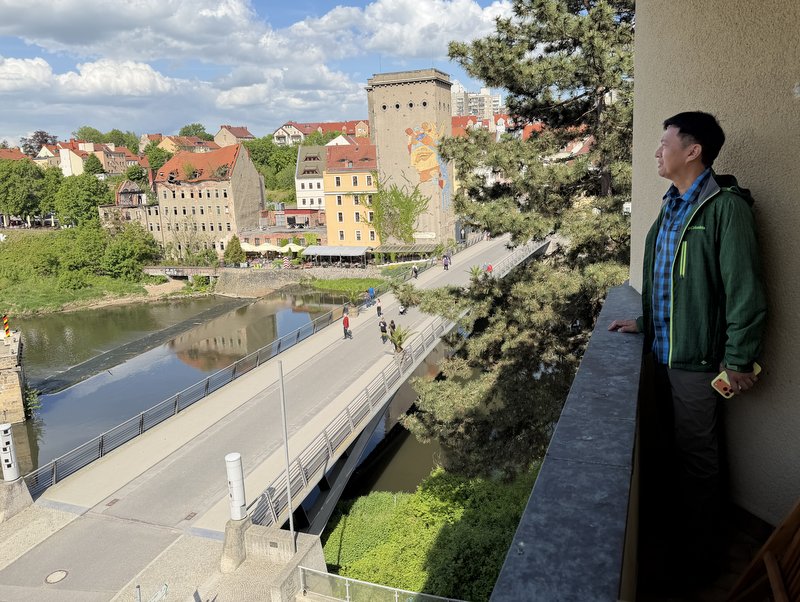
By train from Dresden to Gorlitz. The main reason that Aric wanted to visit this town, was the pedestrian bridge crossing between Germany and Poland.

19 May

The town has featured in movies and is worth a visit. Also about Gorlitz, a separate blog/

20 May

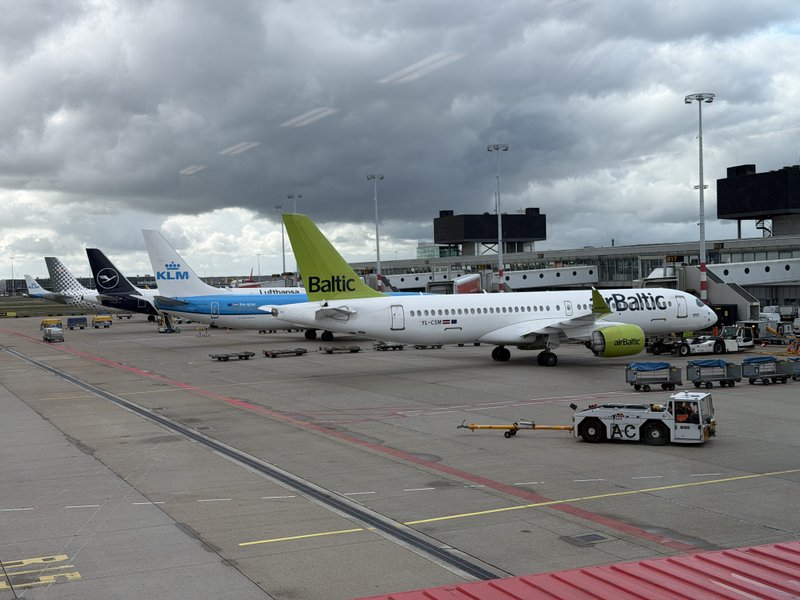
A traveling day. From Gorlitz by train back to Dresden, and flying back to Amsterdam via Munich.

21& 22 May

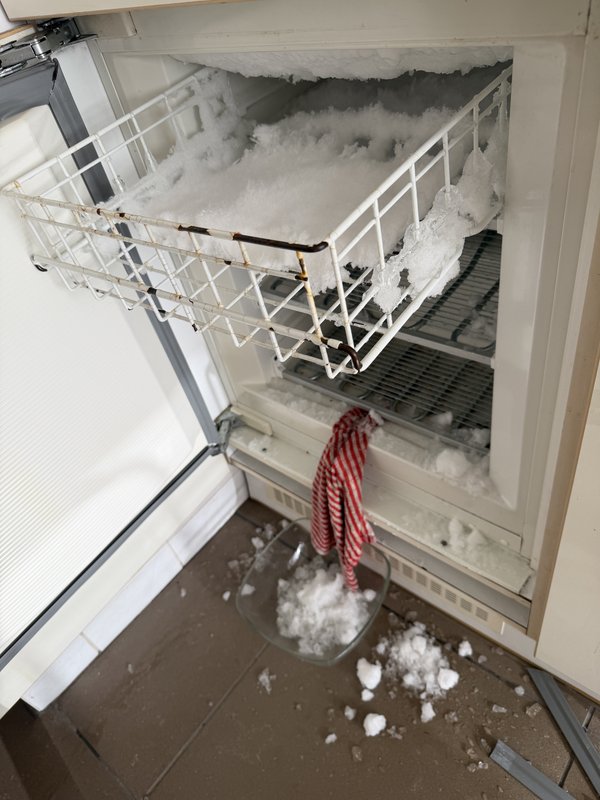
The central heating still wasn’t working, but it wasn’t as cold in the house anymore. There was a problem with the fridge, though. And we were both recovering from a bad cold. Two recovery days, to get ready for the family reunion.

23 May

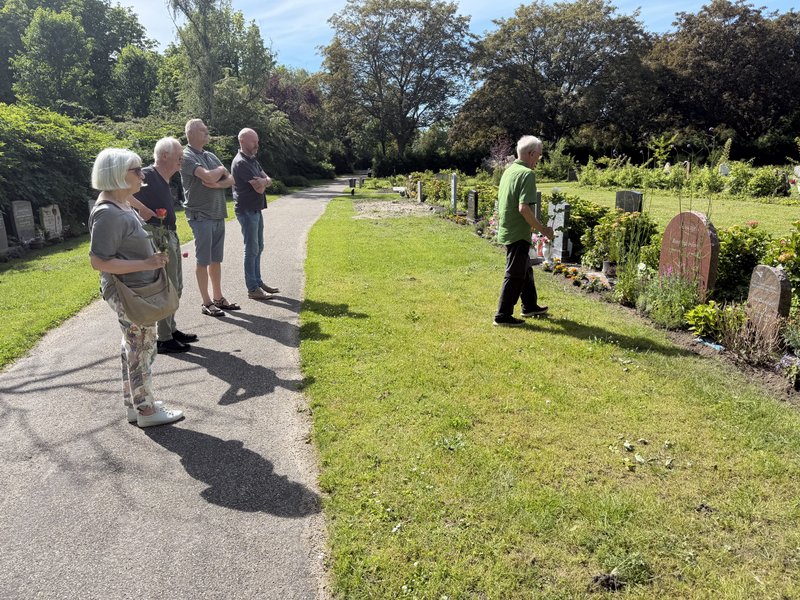
The family reunion started in the family house in Alphen. We visited the cemetery where my parents were buried, and had dinner in an Afghan restaurant. A very nice day, see the report for more details.

24 May

It was Whitsun, a public holiday in the Netherlands. We stayed at home, just walked in the neighborhood, had a look at -the university where I had spent my student years.

25 May

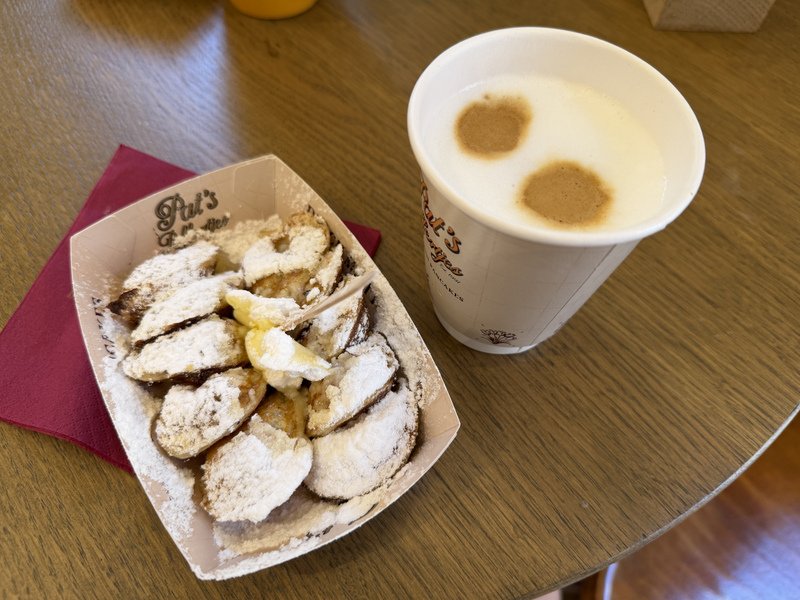
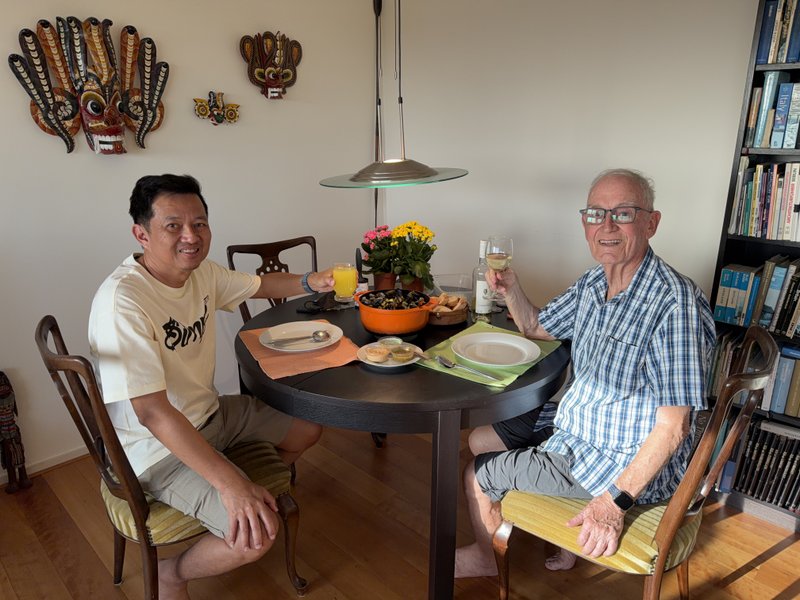
One more relaxing day. We wanted to eat poffertjes, the traditional Dutch mini-pancakes. But I forgot that Whit Monday is also a public holiday, Beautiful day, but the market and the shop we had in mind, was closed. We found another one and that evening we had mussels for dinner.

26 May

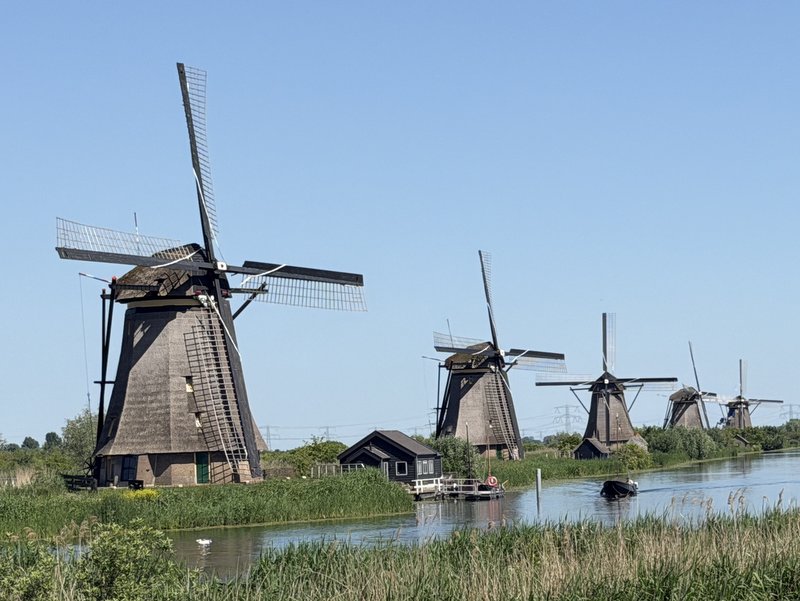
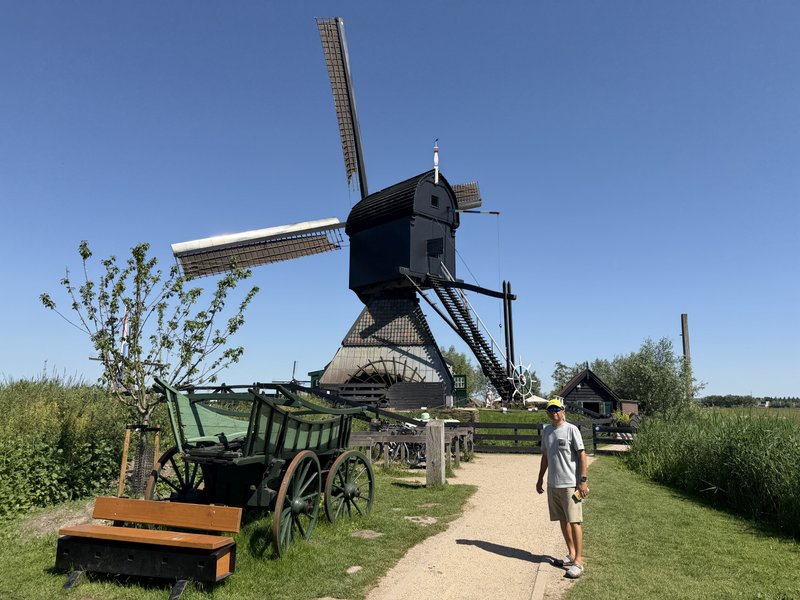
Time for action—a day trip to the windmills of Kinderdijk, a UNESCO World Heritage Site. I had been there a few years earlier, but it was Aric’s first. Perfect weather. More details in another blog.

27 May

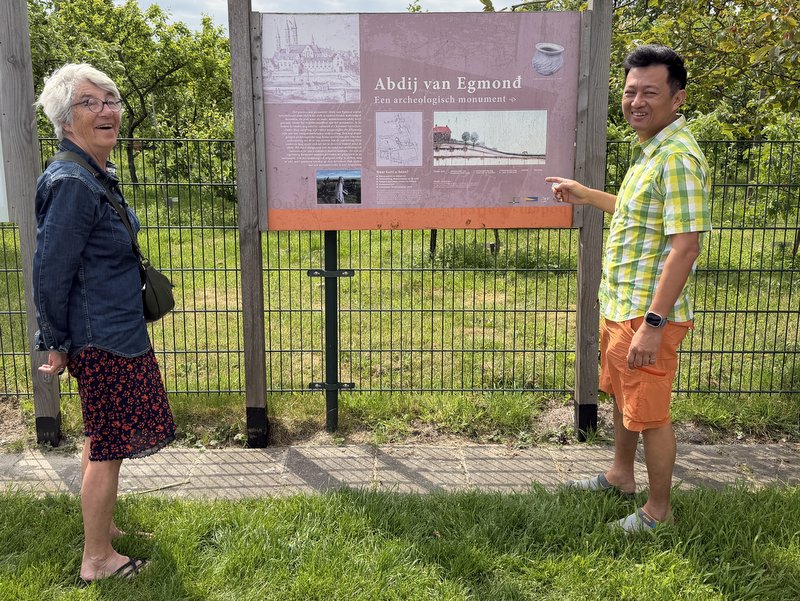
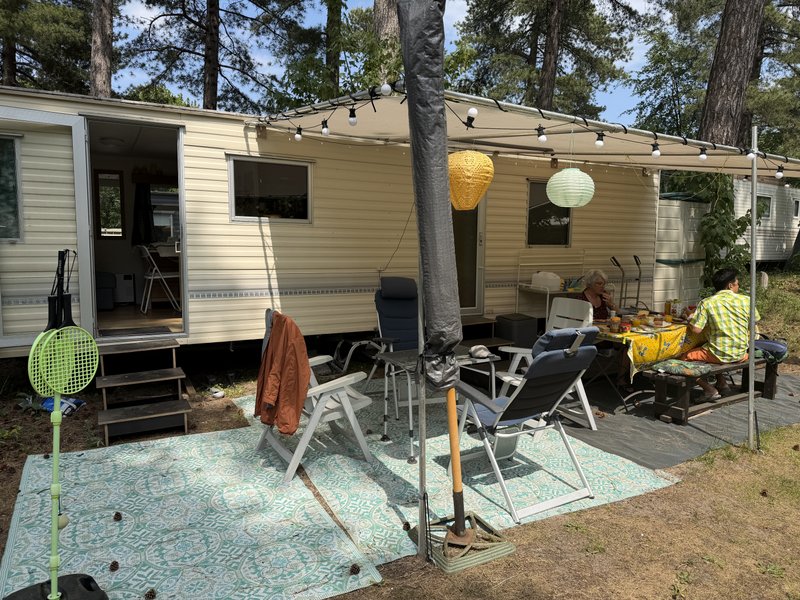
An outing with Inez. First, we visited the Abbey of Emond, expecting it to be historical ruins. A mistake, they had been replaced many decades ago by modern buildings. The afternoon we spent at Inez’s caravan in Bakkum, enjoying the quiet atmosphere. We had dinner in IJmuiden.

28 May

Staying at home. I tried (in vain) to solve the fridge problem and finally a guy came to inspect the central heating. He found a faulty part; his company would send me a quotation for repair.

29 May

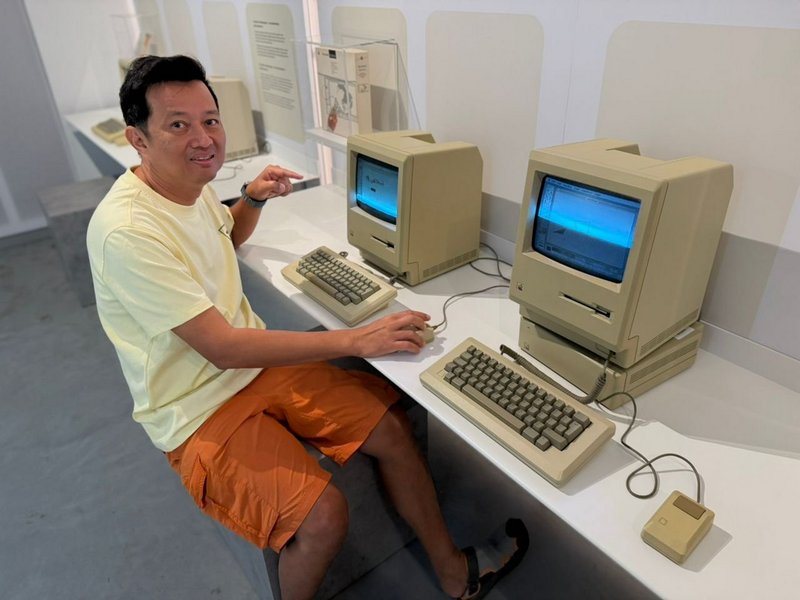
A very active day. Aric had read about a new Apple museum in Utrecht and, being an Apple addict, wanted to have a look. We had lunch with Yolanda and Math, and walked around in the town center. Back in Amsterdam, we had dinner with Nico and Yolanda, the brother and sister of Paul. Probably two vlogs about this day later 😉

30 May

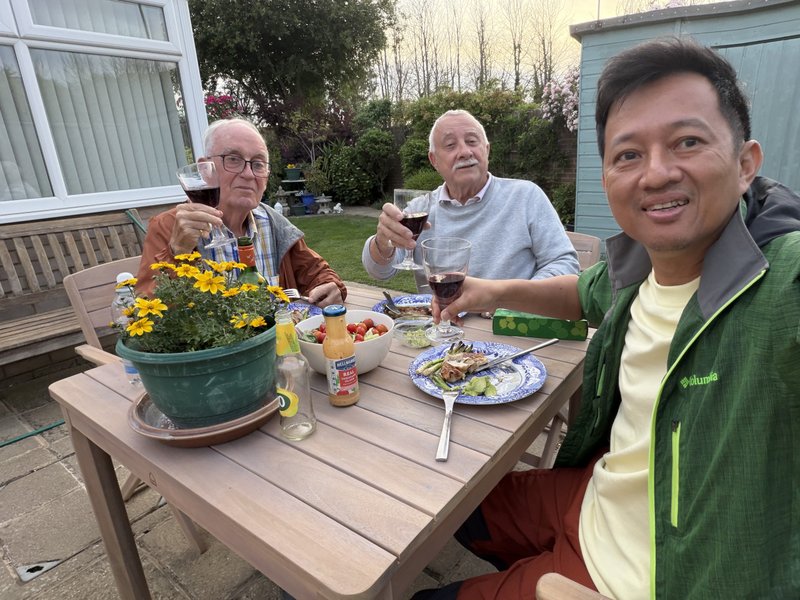
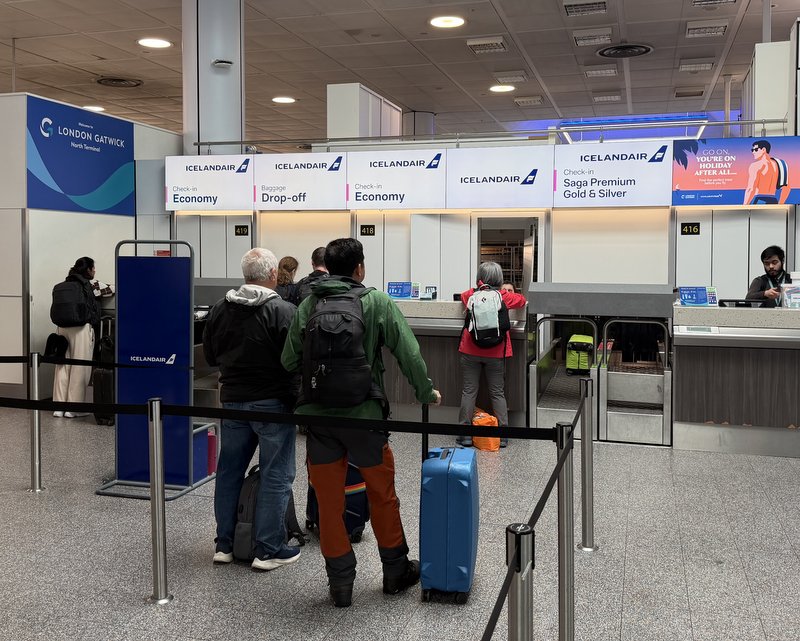
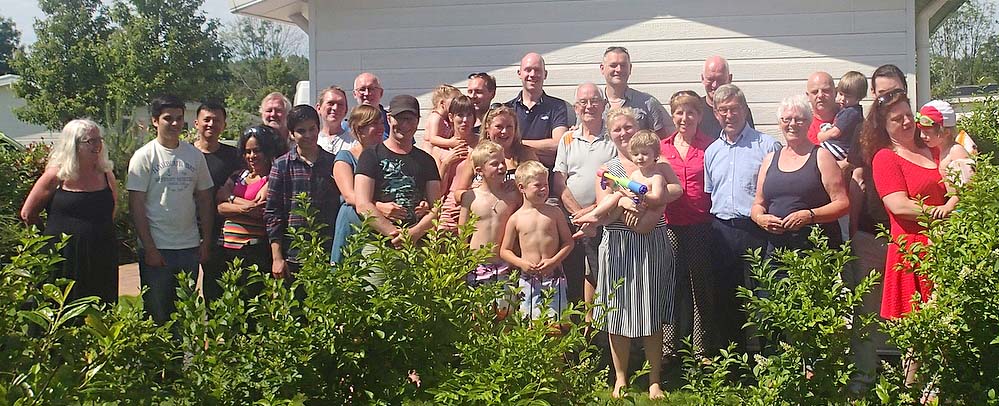
A traveling day. With EasyJet to Gatwick, where Rodney was waiting for us. He drove us back to Bognor Regis, where he is living. We had Lunch there and later dinner in the garden of his home.

31 May

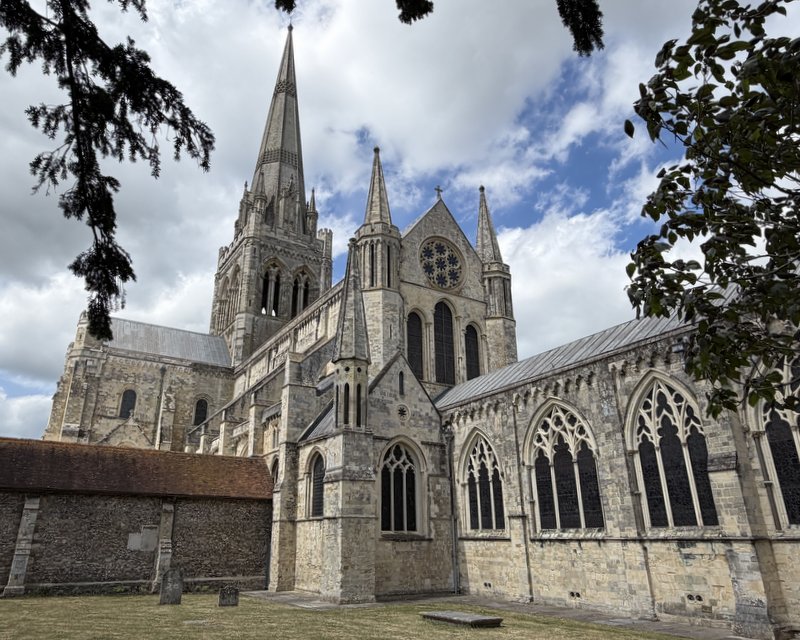
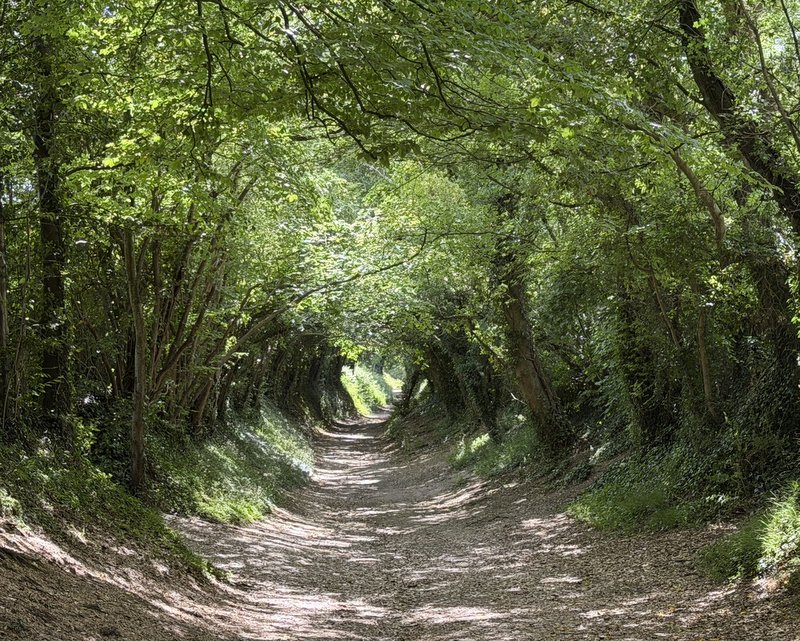
Exploring the region around Bognor Regis. We visited Chichester with its famous cathedral, which was unfortunately closed. We walked to the Halmaker windmill, passing through an enchanting tree tunnel.

1 June

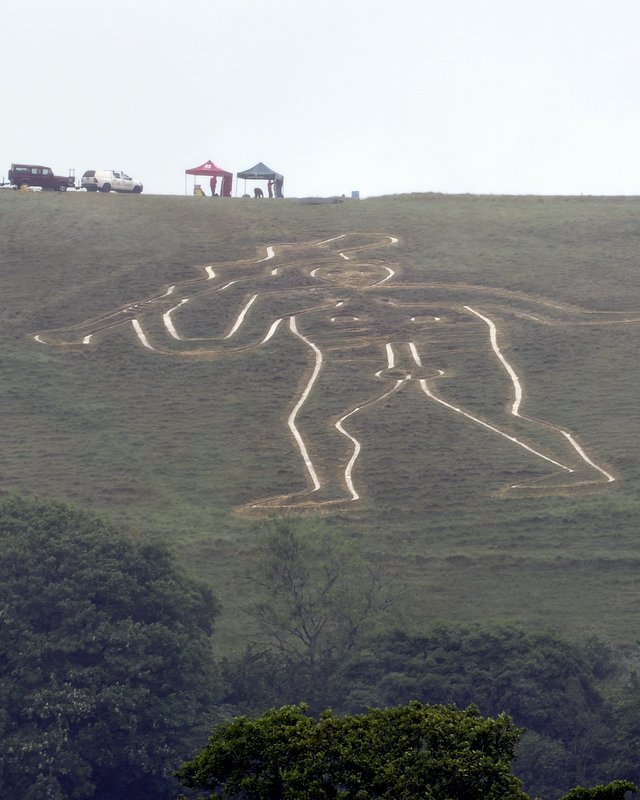
Instead of Stonehenge or the White Horse m we decided to visit the Cerne Abbas Giant, a two-hour drive away. When we arrived at the 55-meter-tall giant with his erection, it had started drizzling, not a good idea to walk closer. A nice pub in the village was alos closed. We continued to Dorchester for a pub lunch.

2 June

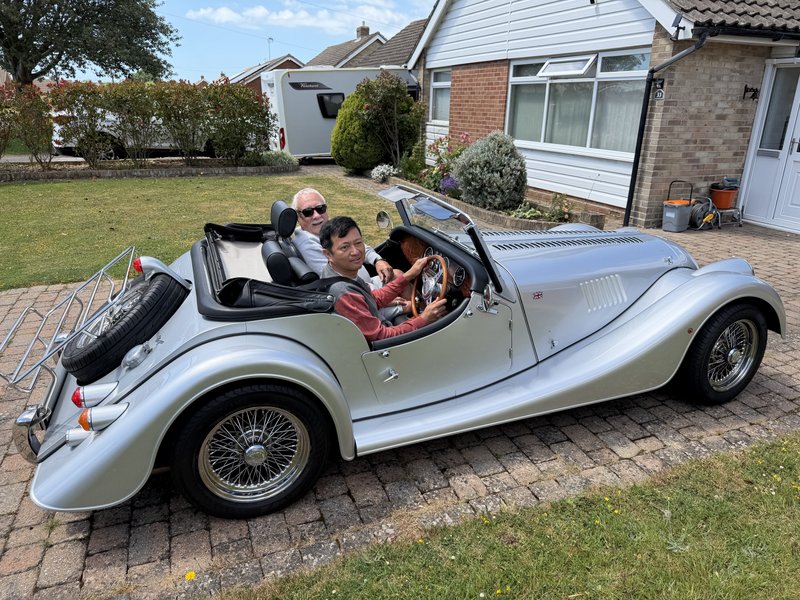
Of course, Rodney had to show us his love baby, a classical Morgan. Aric was even allowed to drive it a short distance. In the afternoon, we drove to nearby Arundel, a very picturesque town with a famous castle/

3 June

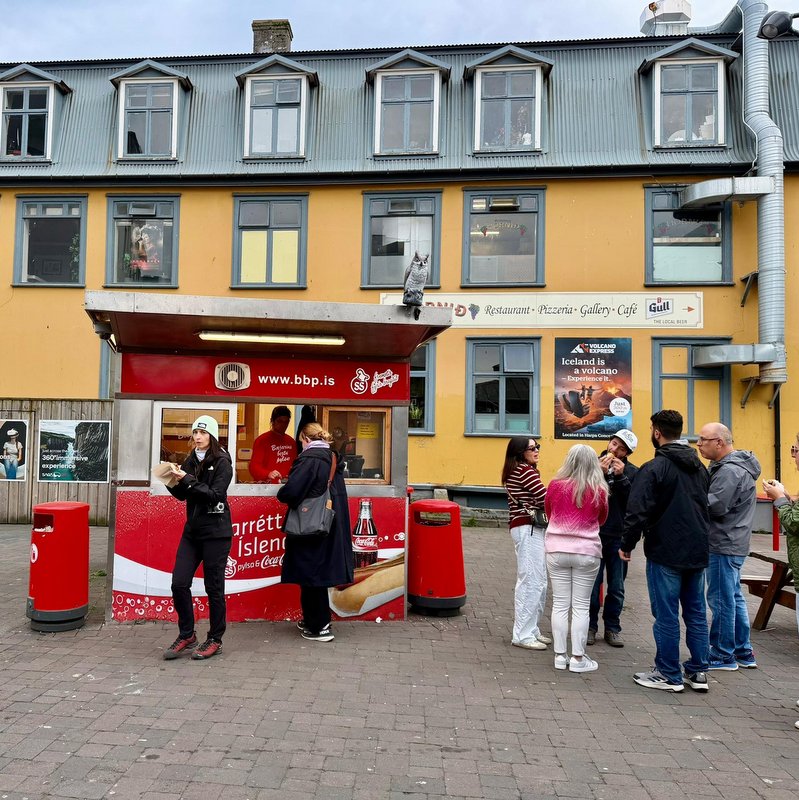
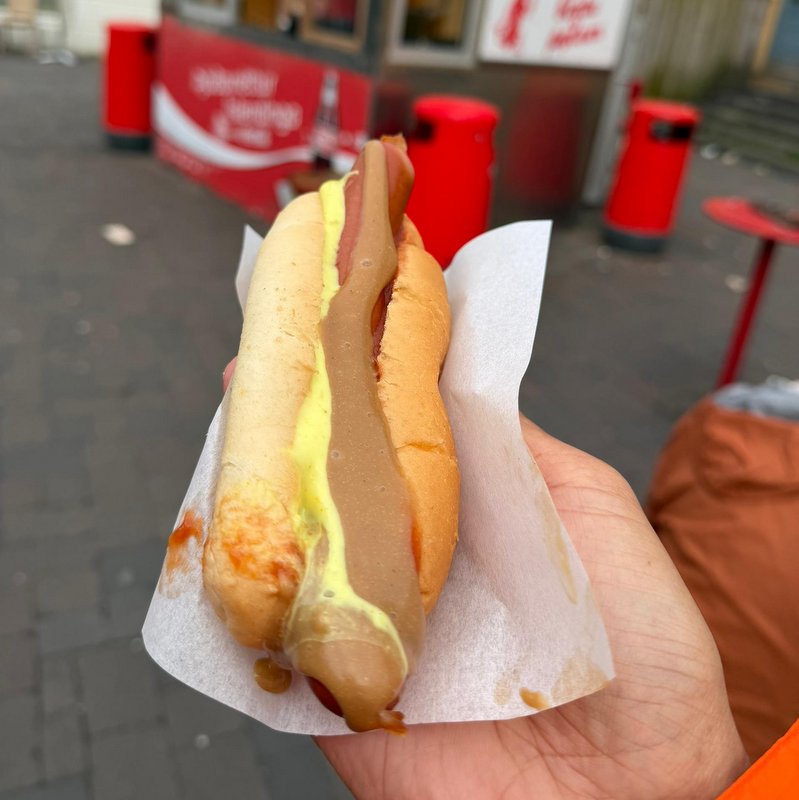
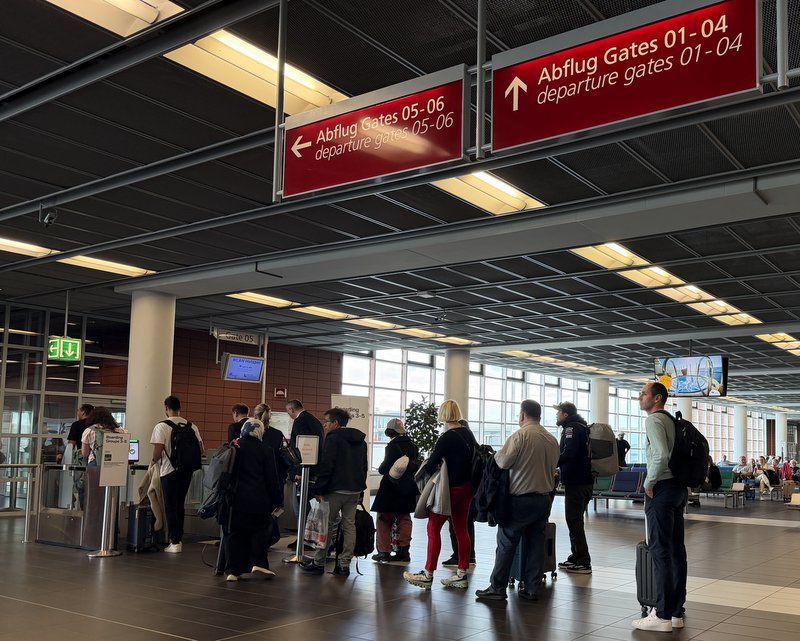
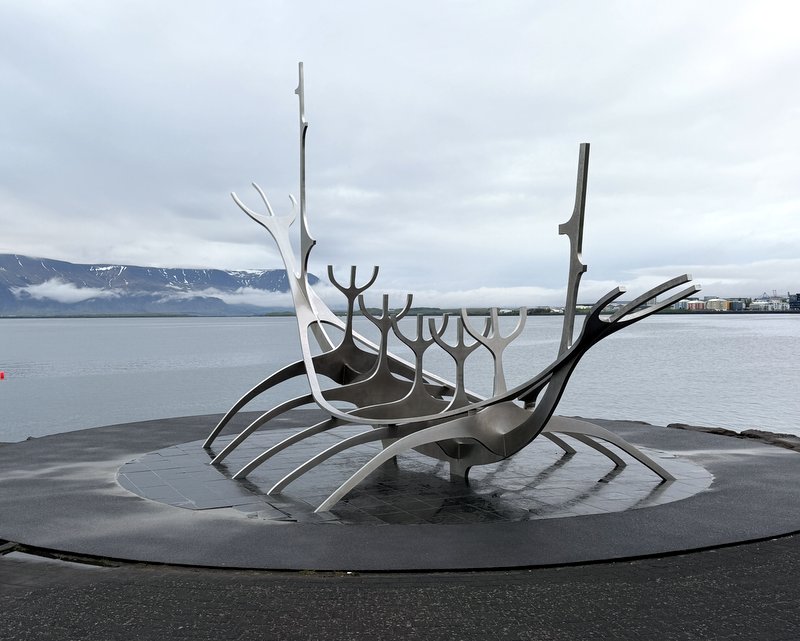
First day of our trip to Iceland. We took a taxi to our homestay in Reykjavik. In the evening, we went out for dinner and to get a first impression of the town. At 11 pm it was still broad daylight.

4 juni

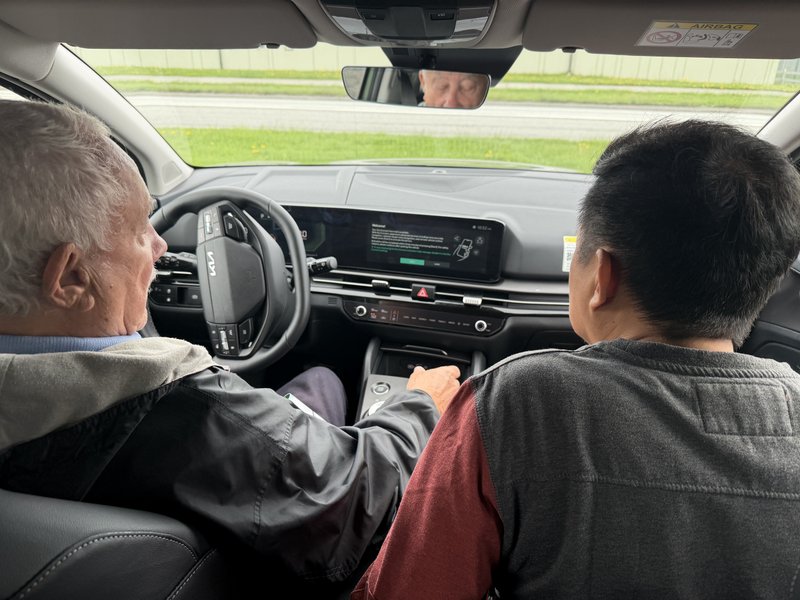
We rented a car for 9 days with Rodney as driver and Aric as navigator. Aric had prepared Google Maps for each day with the various points of interest marked. Here is for example the map for this day. We could only visit a few,

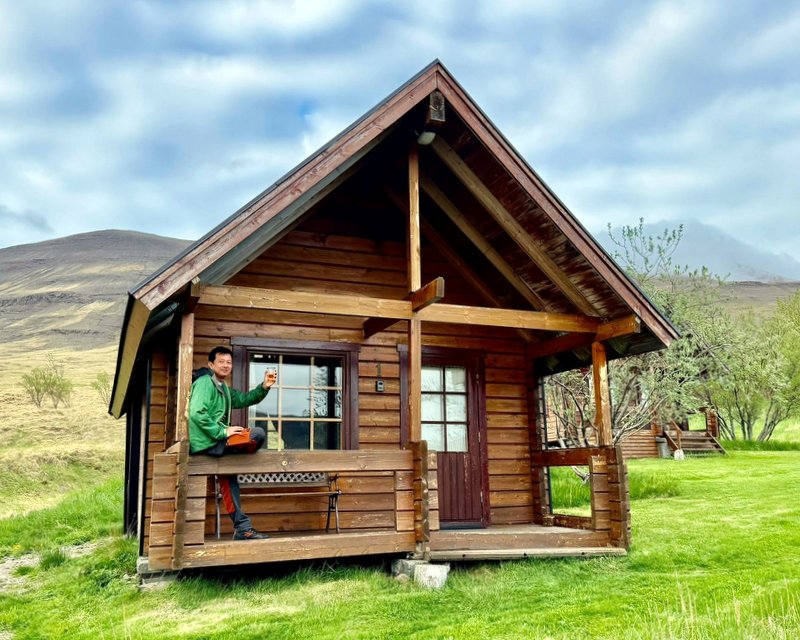
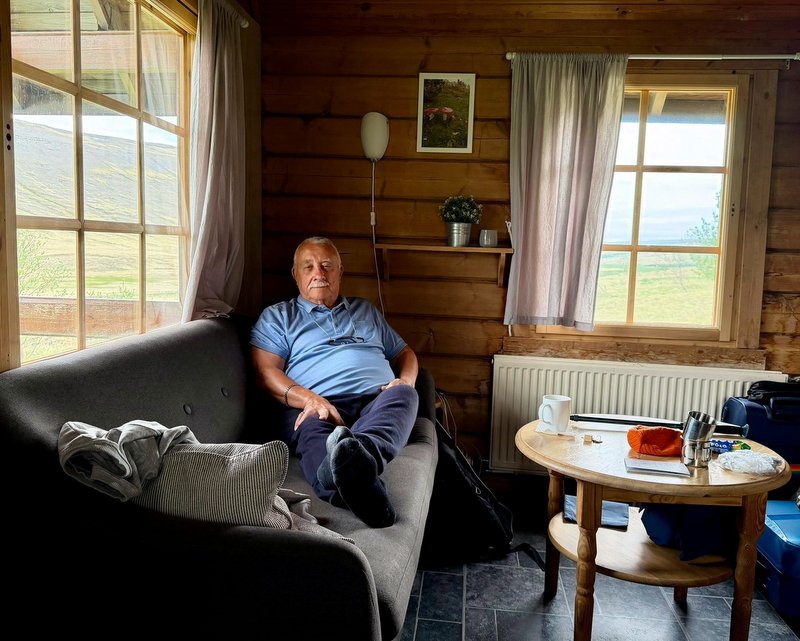
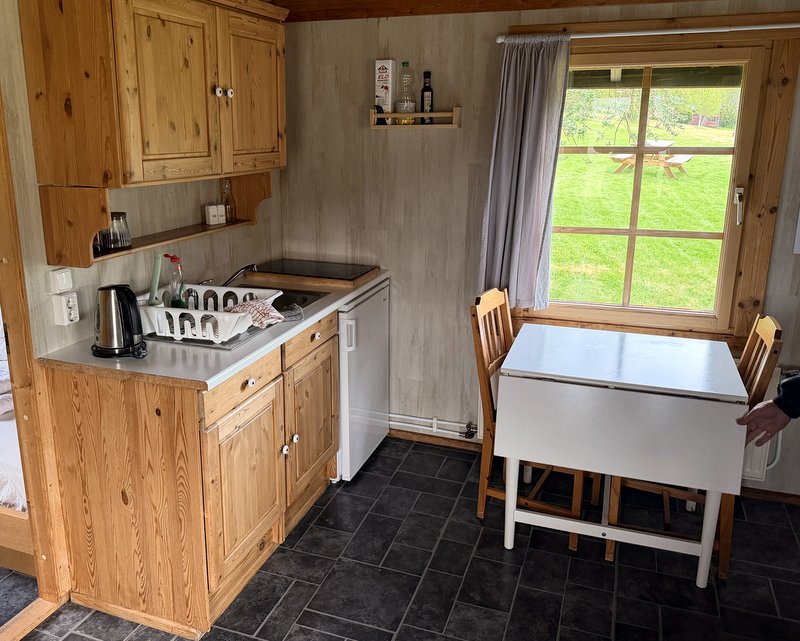
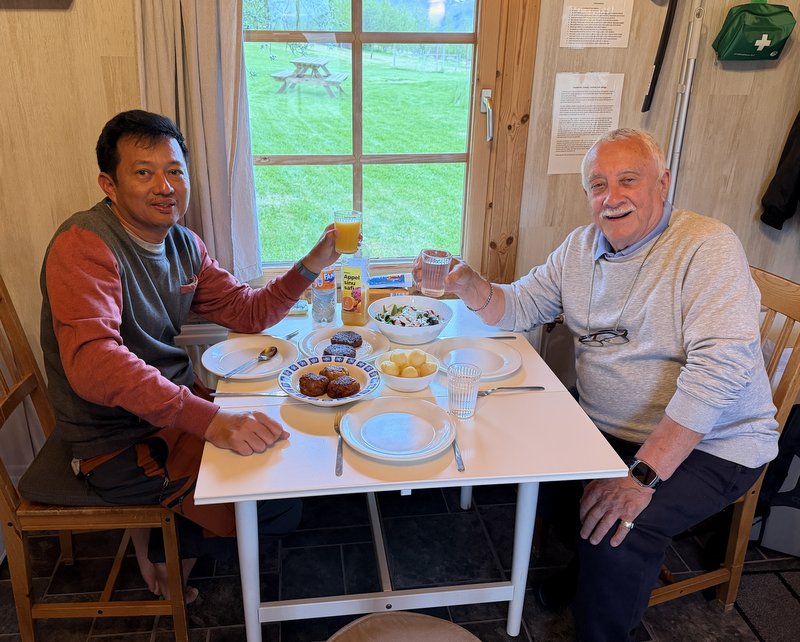
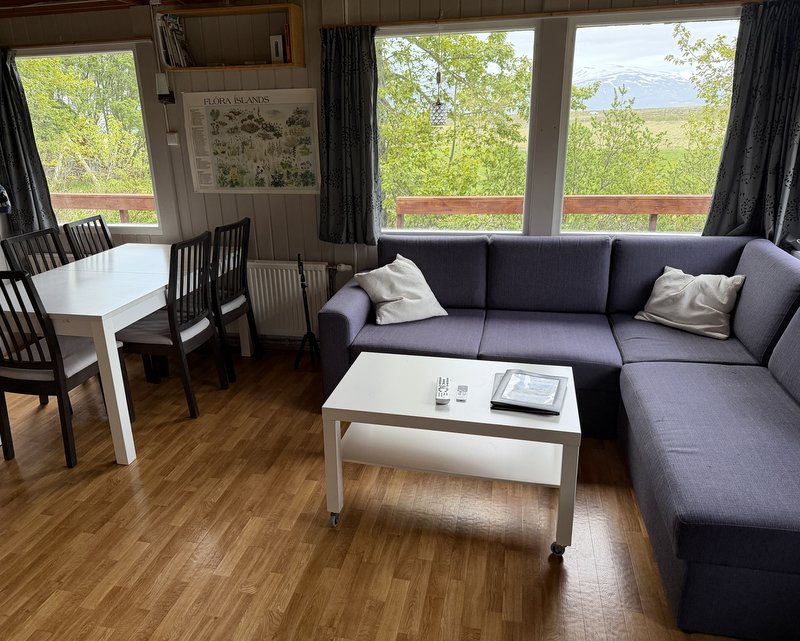
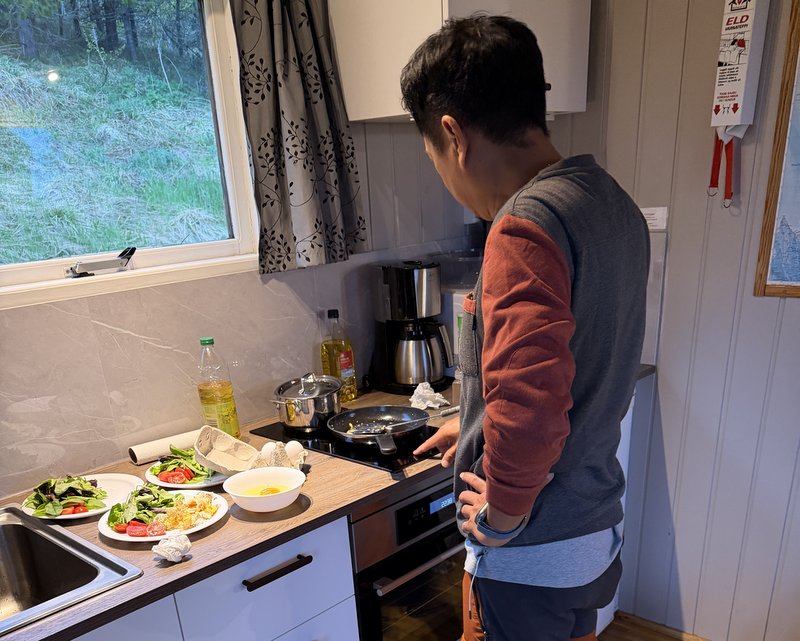
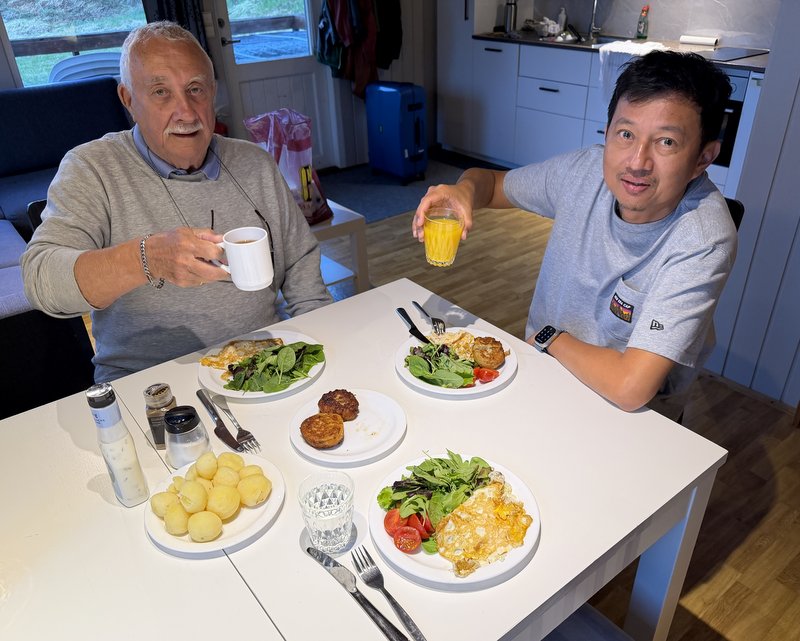
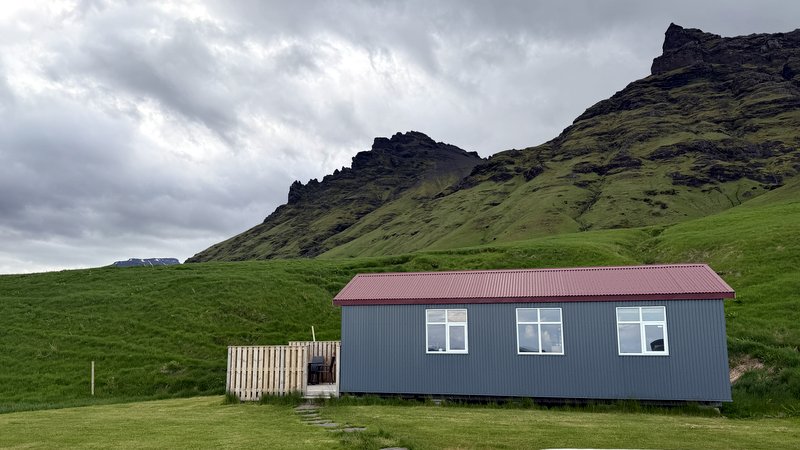
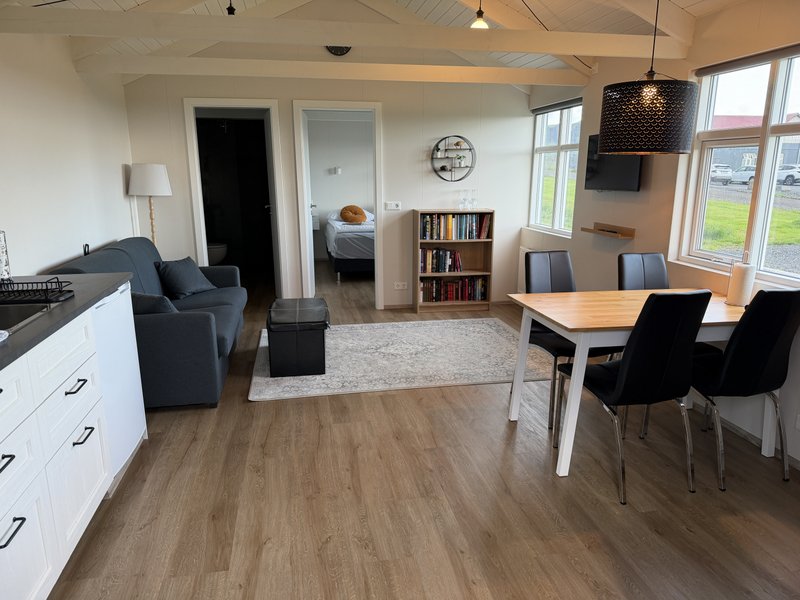
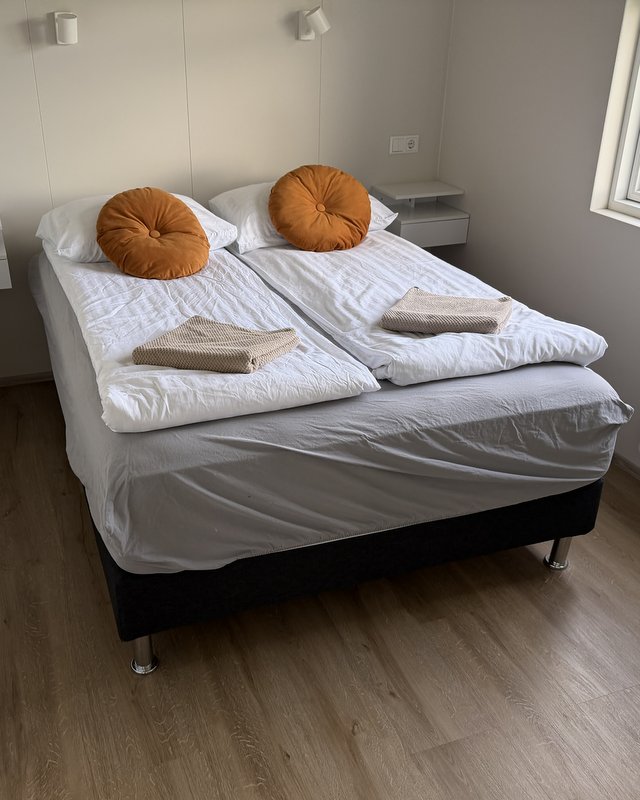
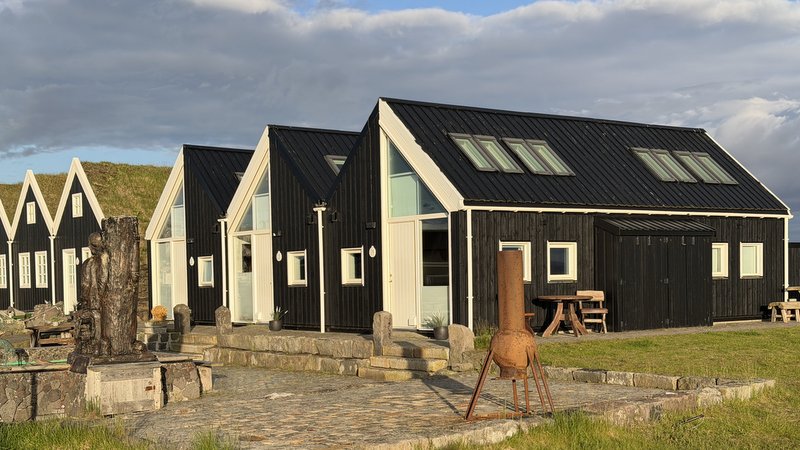
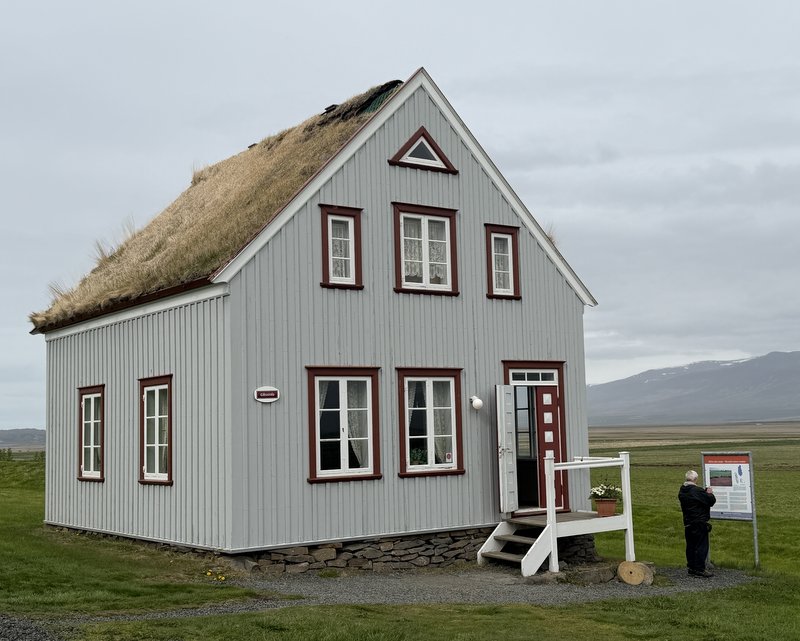
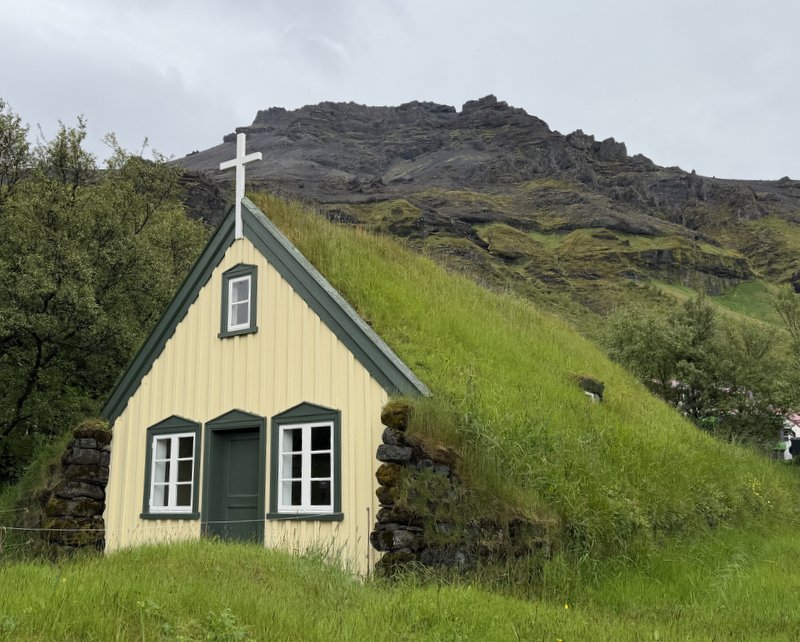
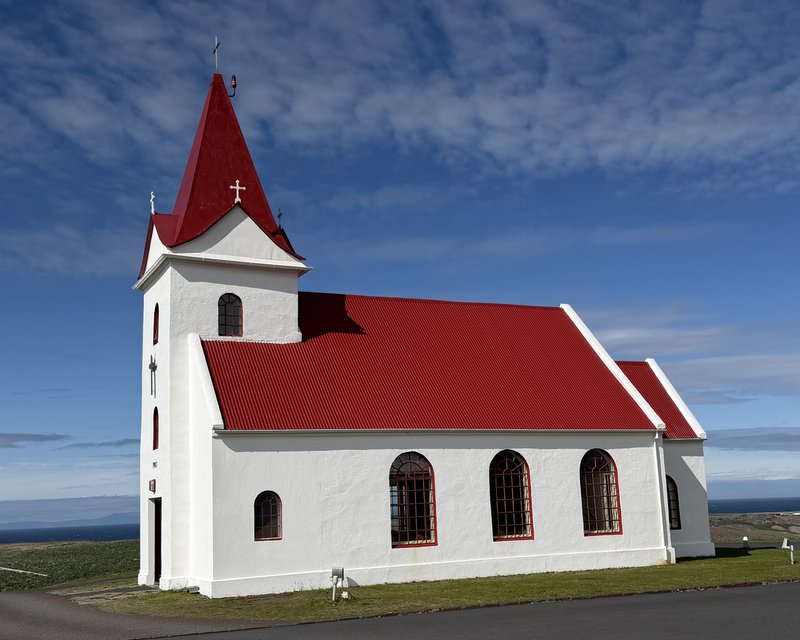
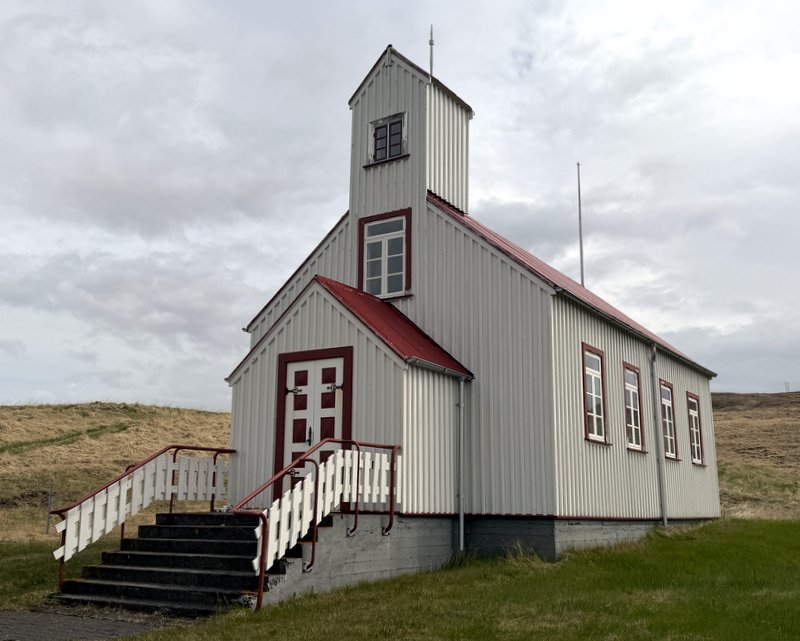
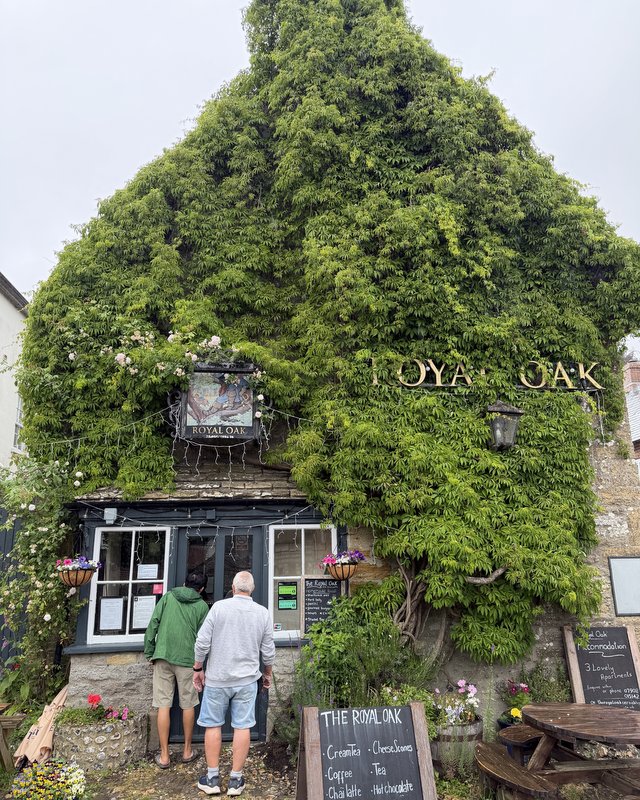
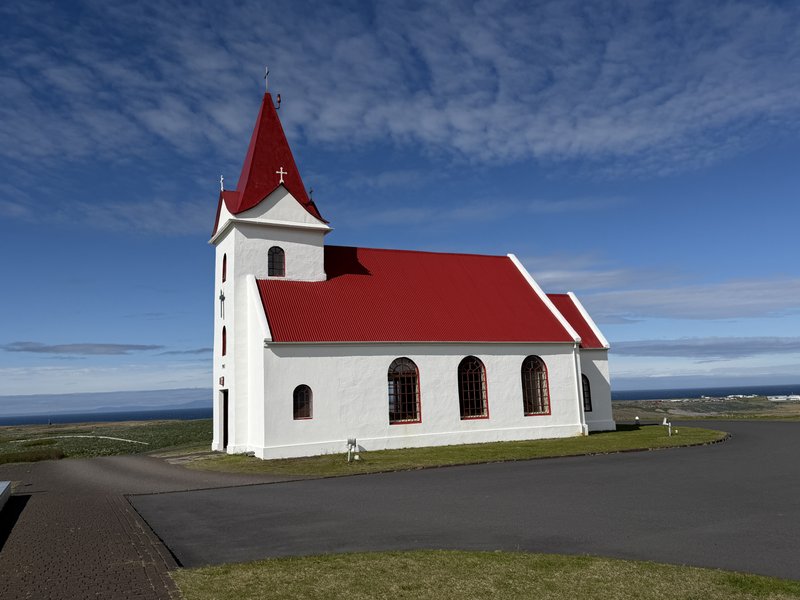
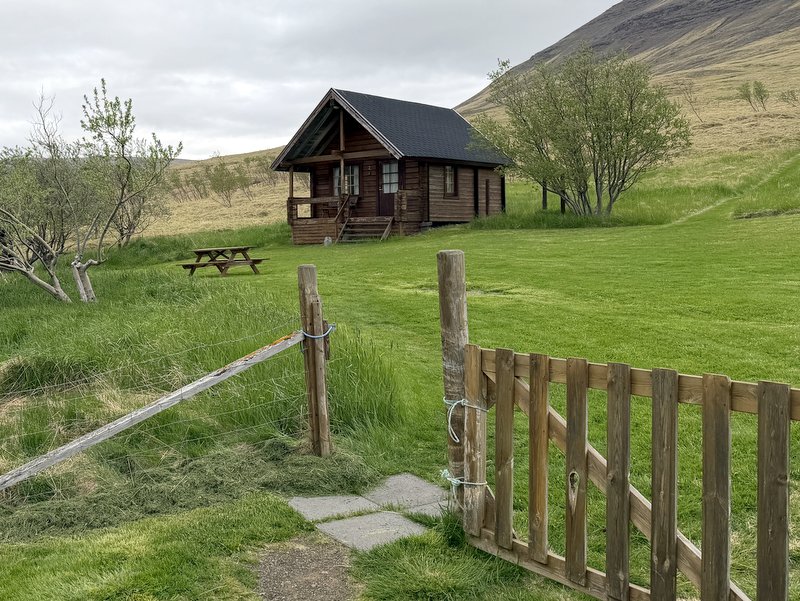
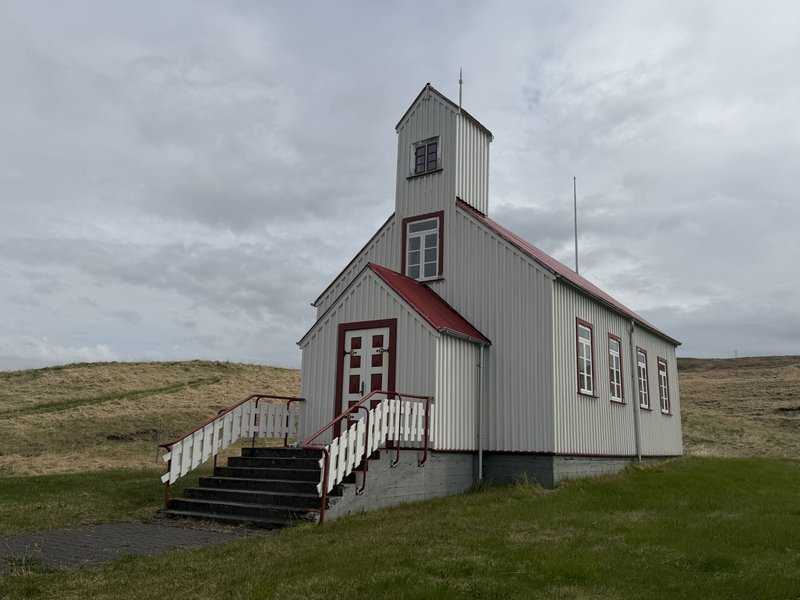
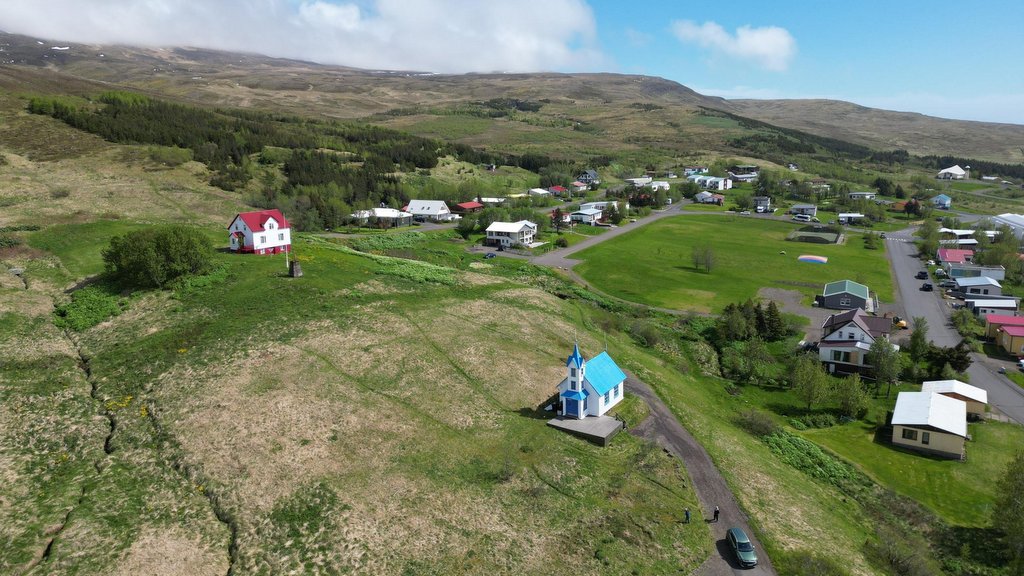
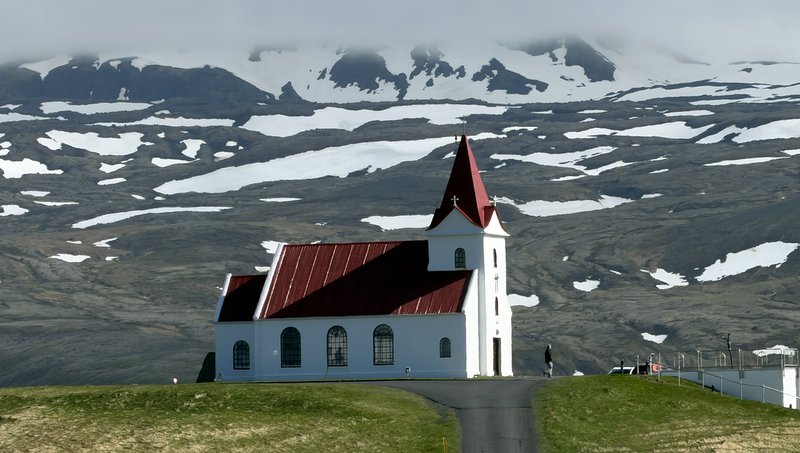
The first of many churches we visited. The National Religion is Evangelical Lutheran, but most Icelanders are secular. Waterfalls all over the island, often spectacular, like this one. Aric had booked idyllic homestays, often in the middle of nowhere. Well equipped, we prepared dinner and breakfast with food bought in local supermarkets.

5 Juni

The long daylight allows you to do a lot in one day. We started at 10 am and reached our fantastic homestay at 10 pm, visiting another church, two waterfalls, an open-air museum, basalt formations, and much more. Too much, we decided to limit our program.

6 Juni

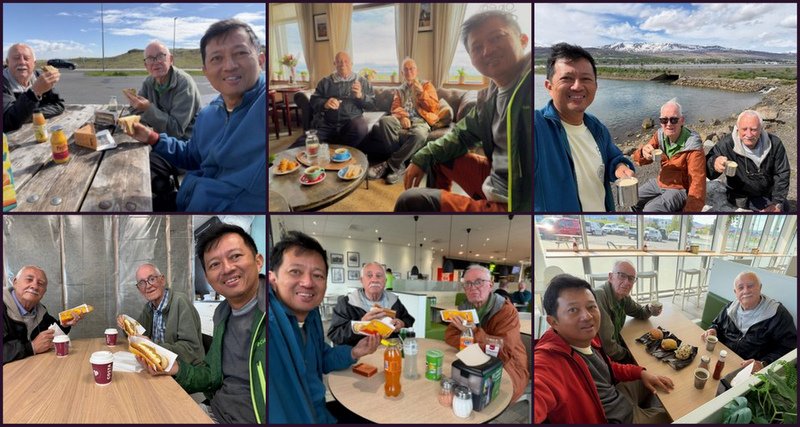
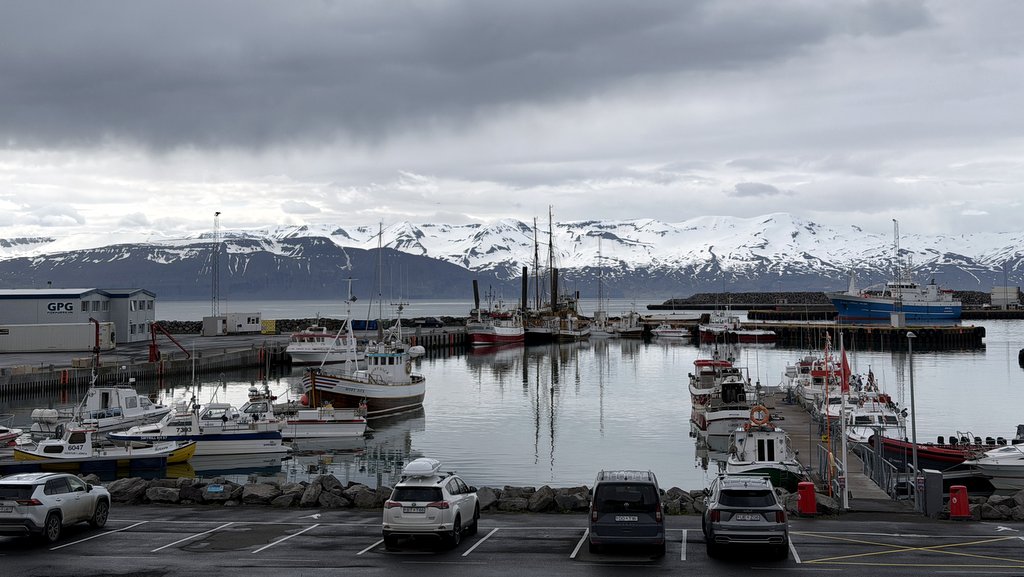
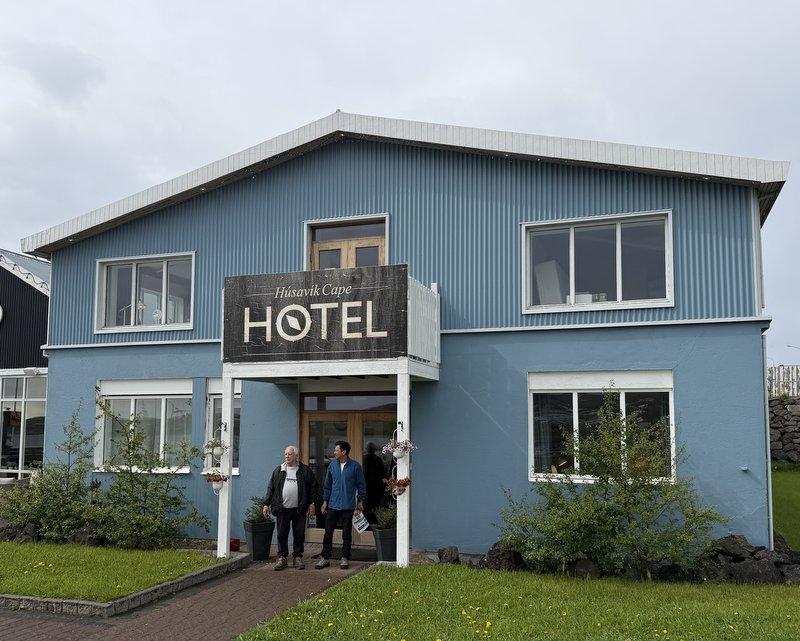
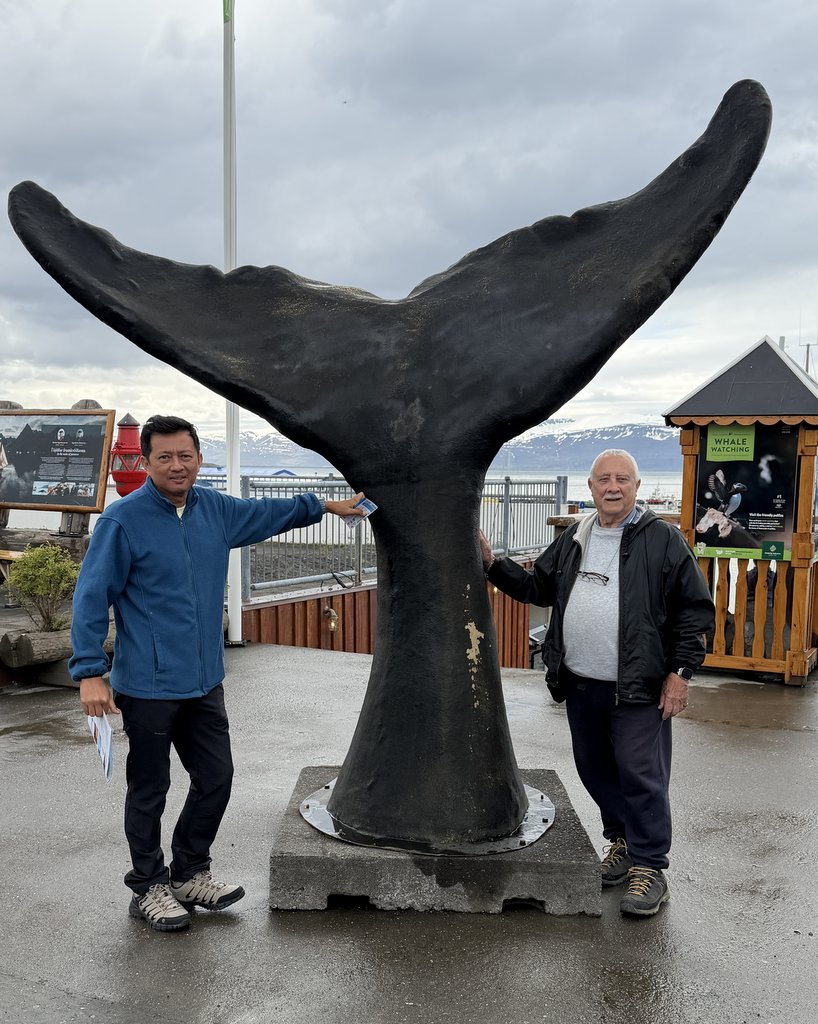
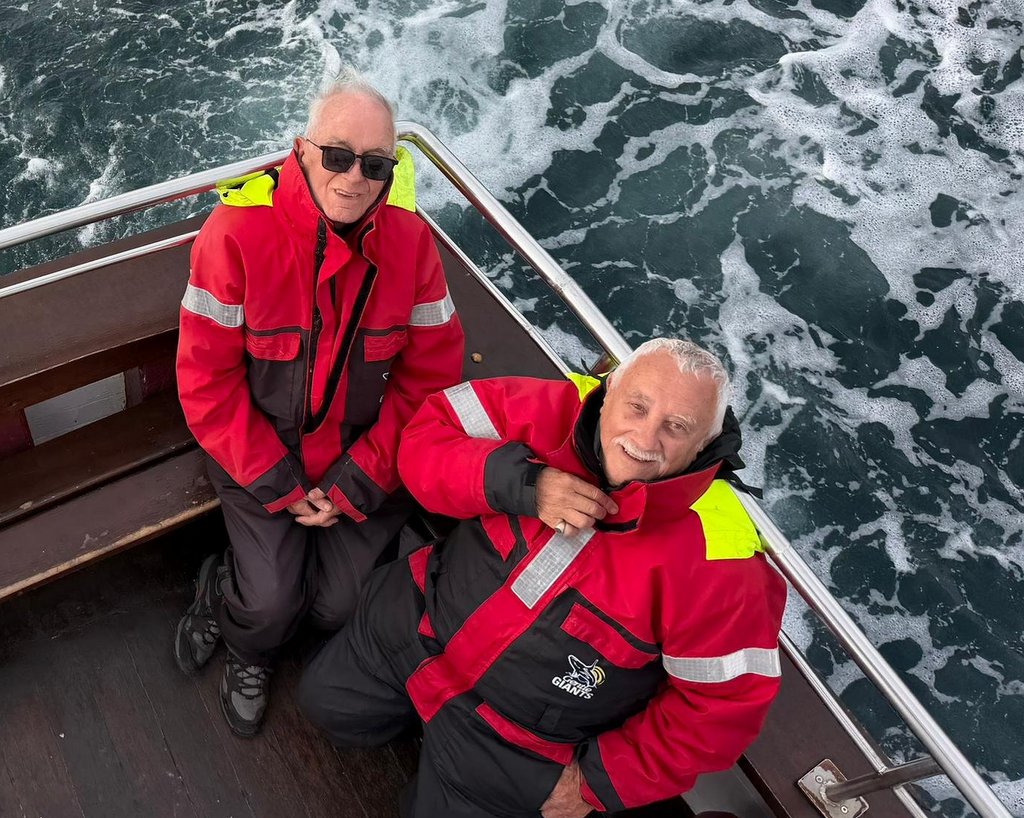
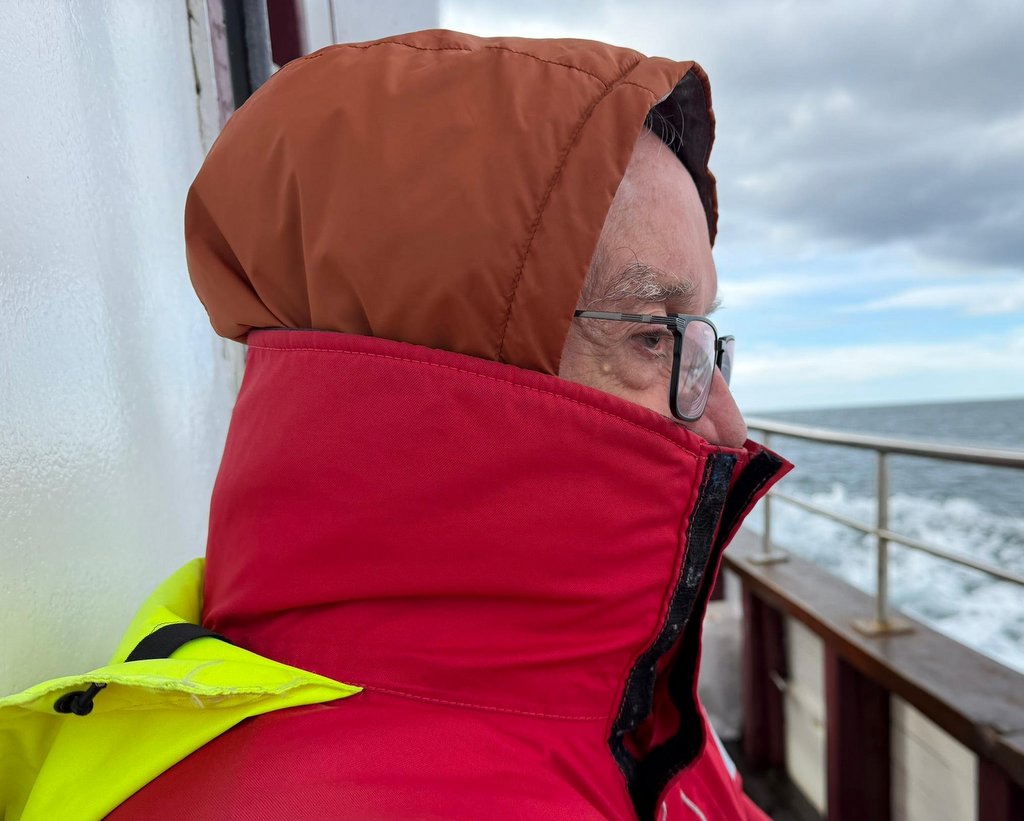
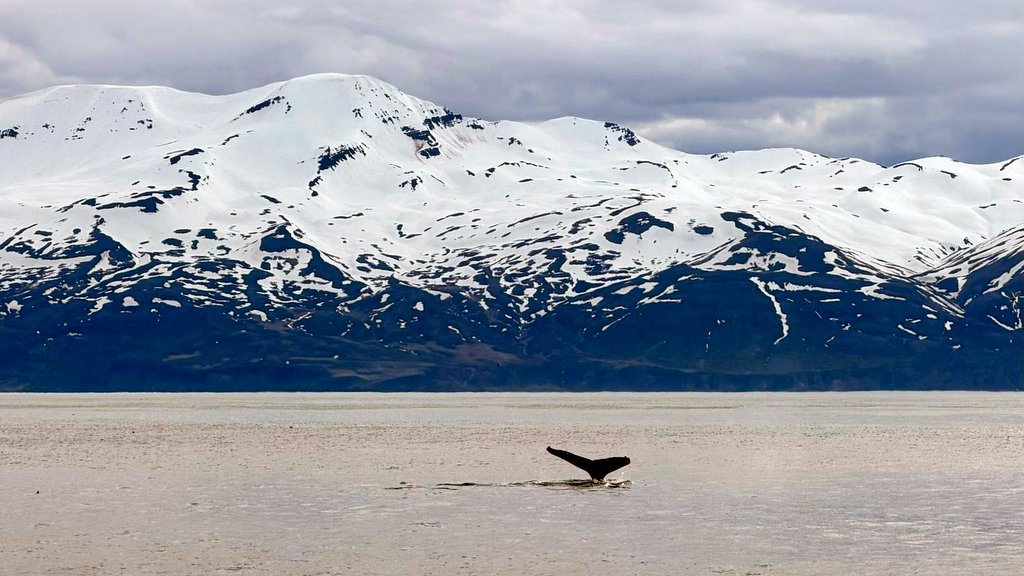
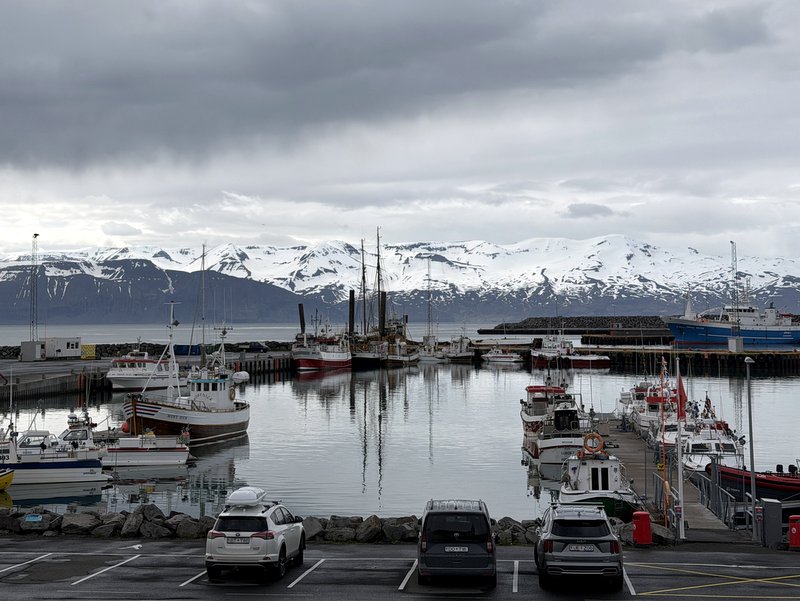
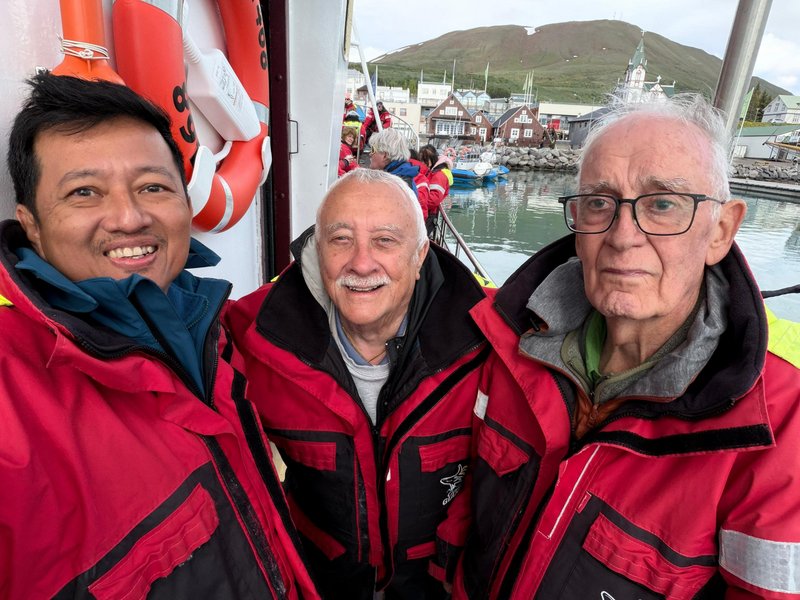
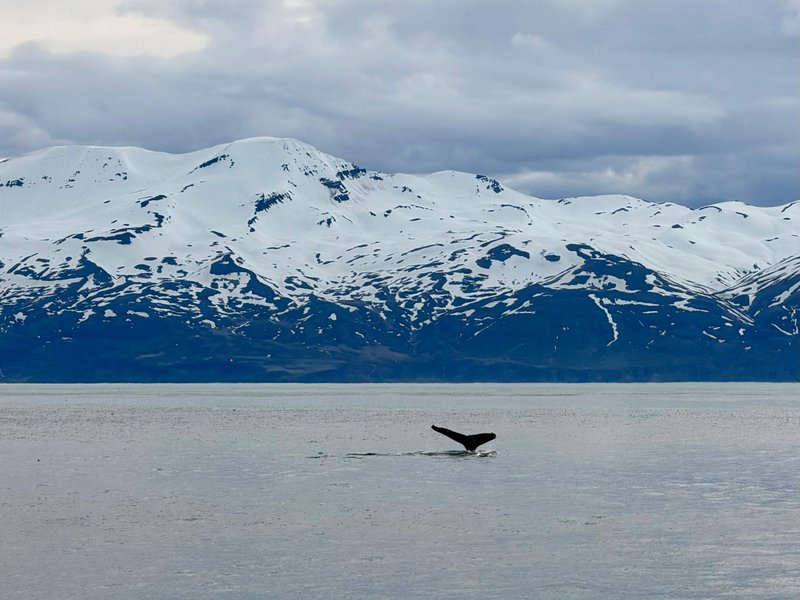
Aric had booked a whale-sighting boat trip for the afternoon and booked a hotel in the small town of Húsavík, where the excursions start. On our way, we passed a very dramatic waterfall. The trip took about 3 hours, we were given much-needed protective clothing. There is no guarantee that whales will be sighted, but we were lucky to spot quite a few. With my AMD, I can not see details, but Aric managed to take a few perfect shots. A well-organized trip.

7 juni

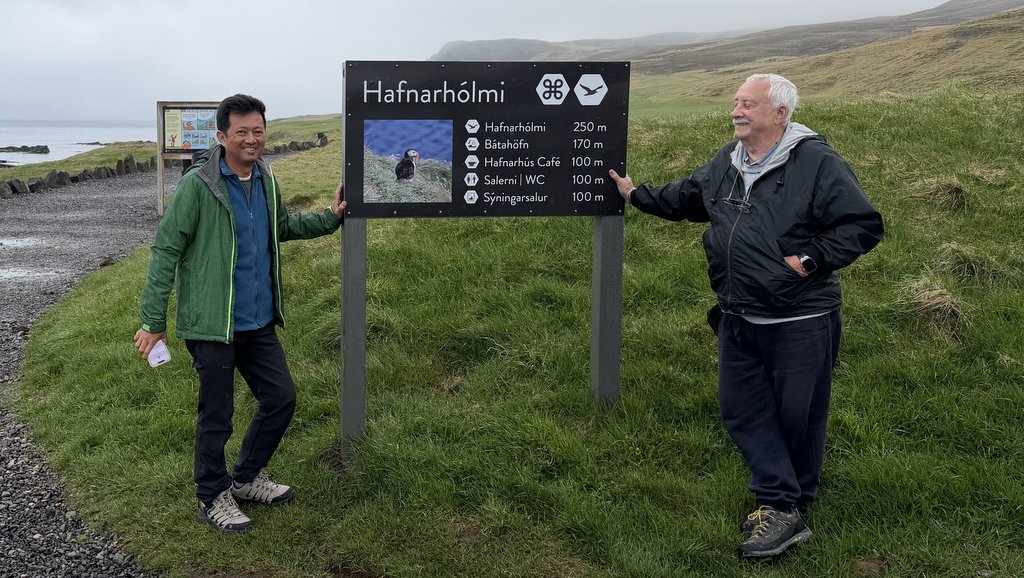
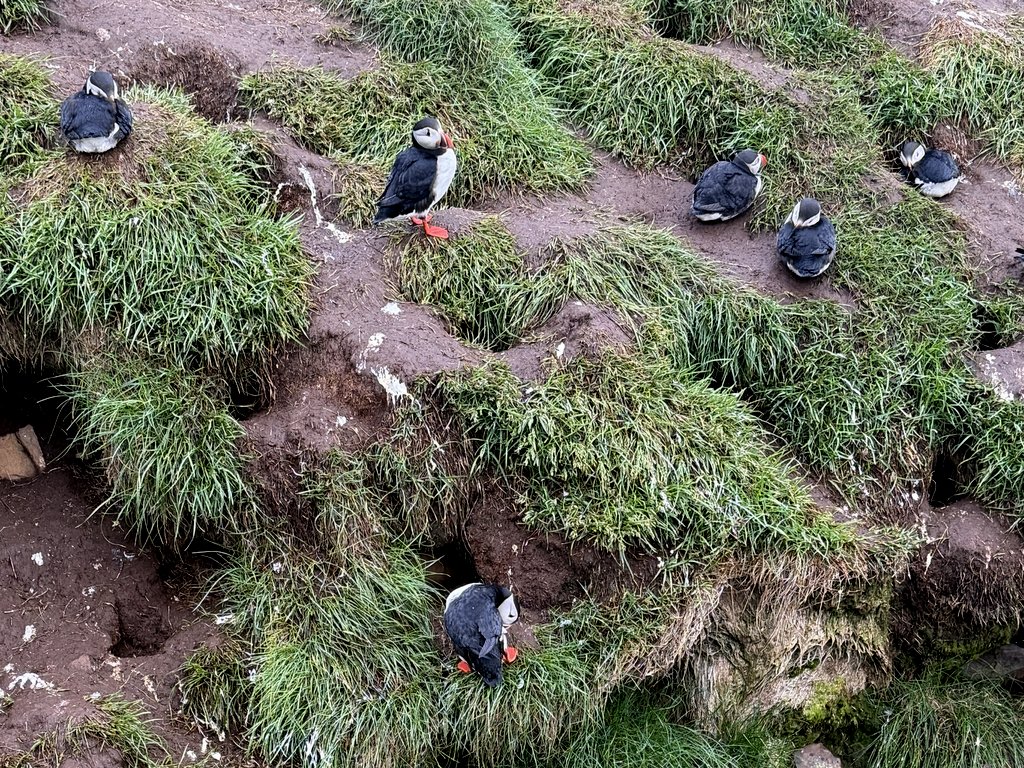
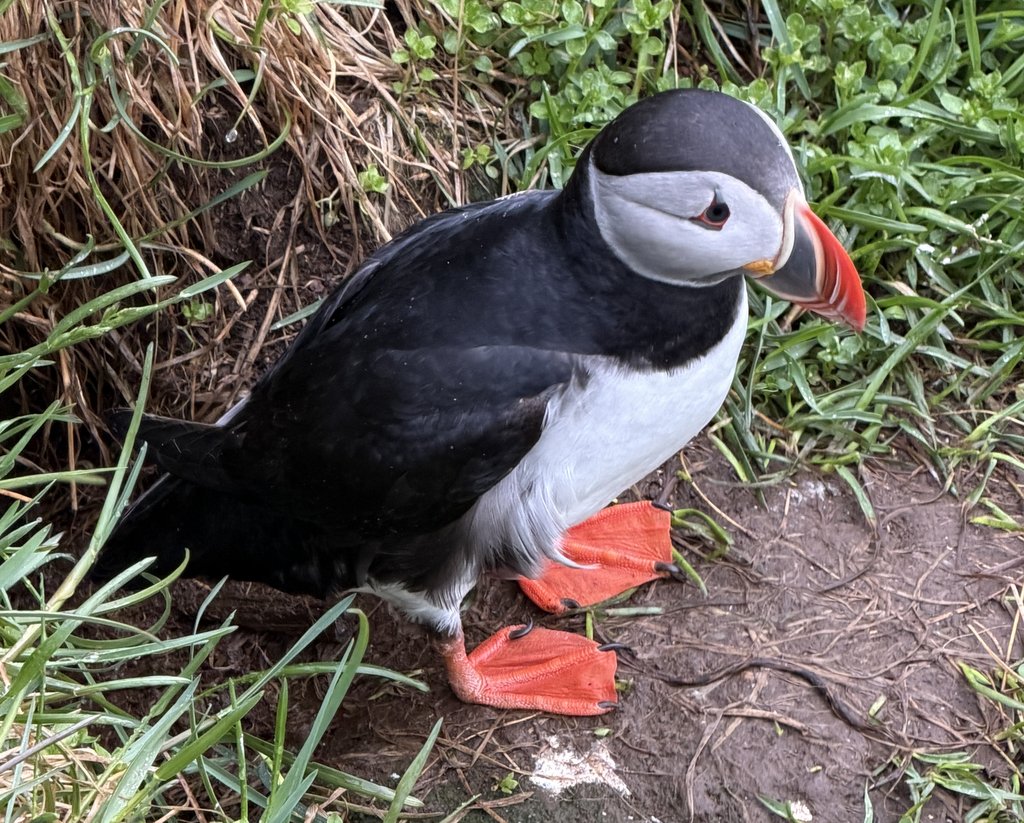
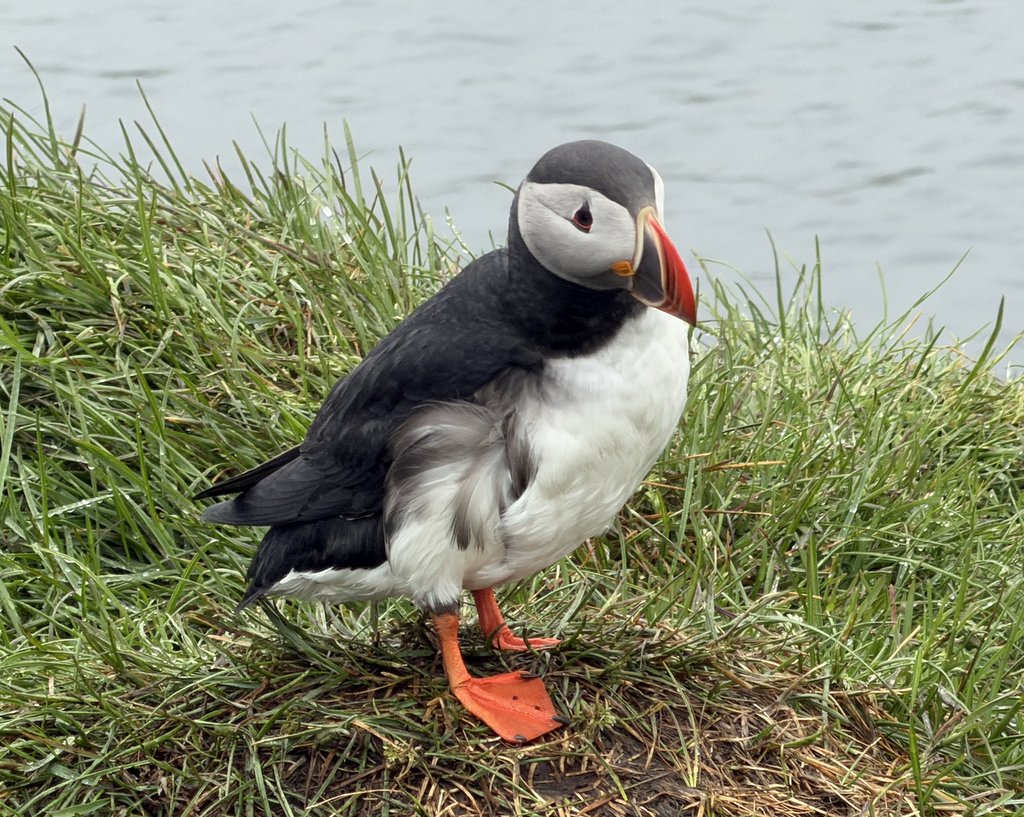
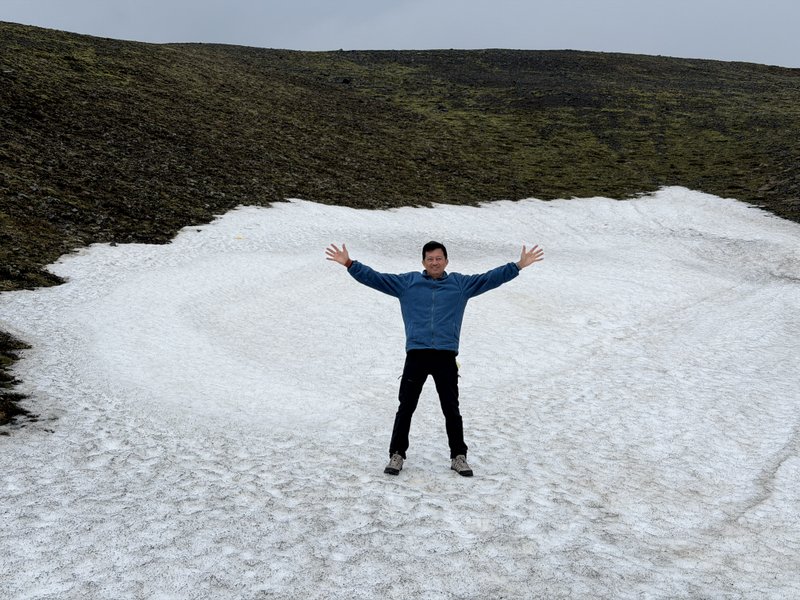
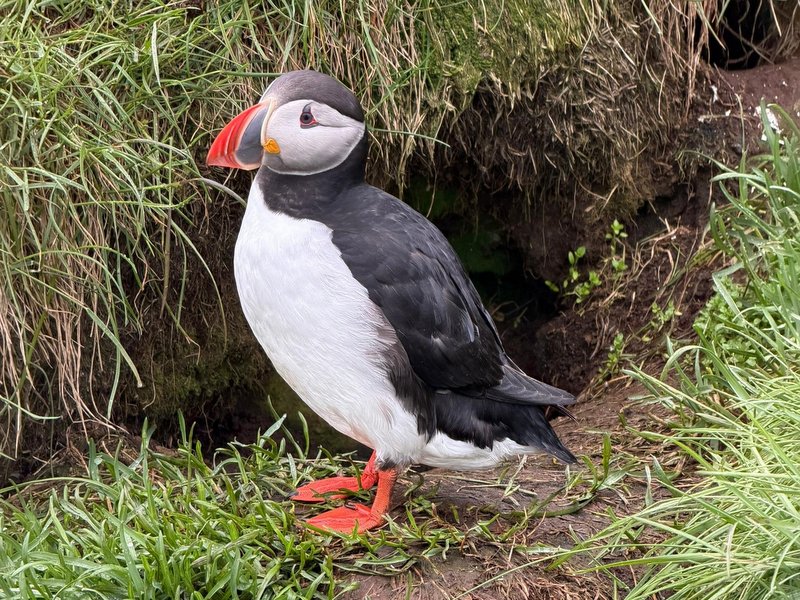
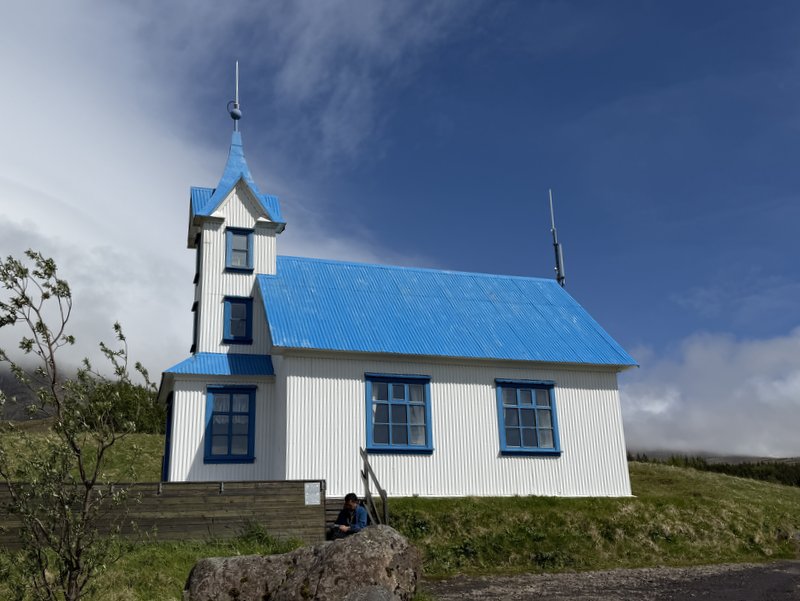
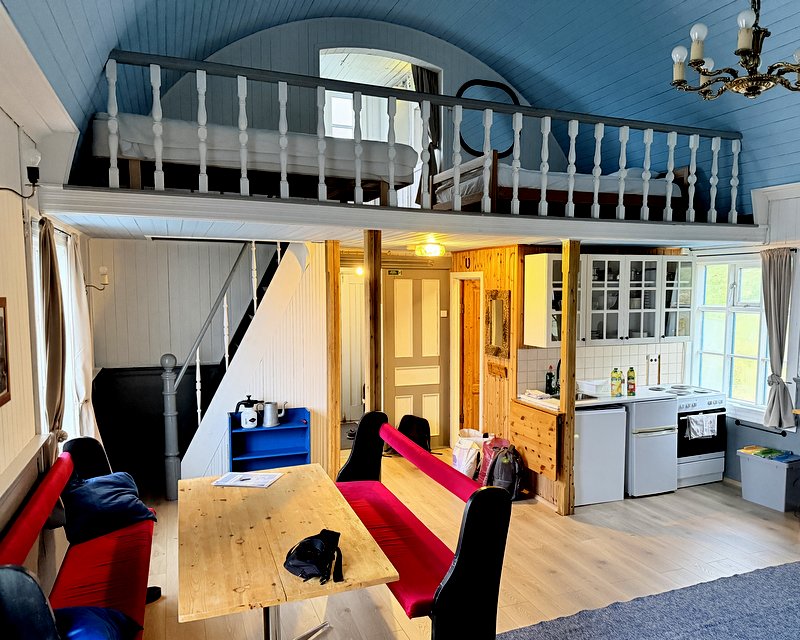
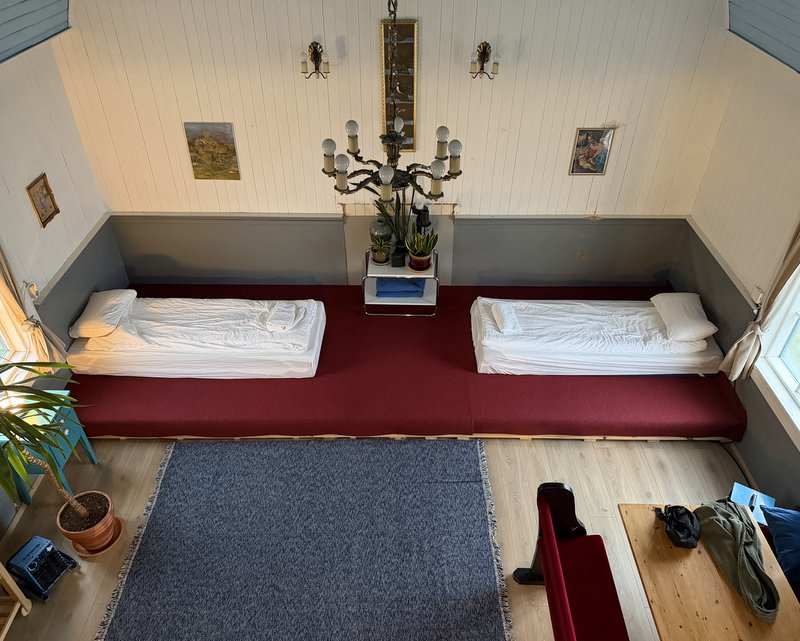
A long 11-hour drive. The main destination was the remote Puffin Island. On our way we stopped for a while only at Hverir, one of the most active geothermal sites of the island. A few hours later, Aric was walking in the snow. Puffin Island was worth the long ride, with hundreds of colorful birds, which you could almost touch. Our accommodation for the night was a former church, transformed into a charming homestay.

8 juni

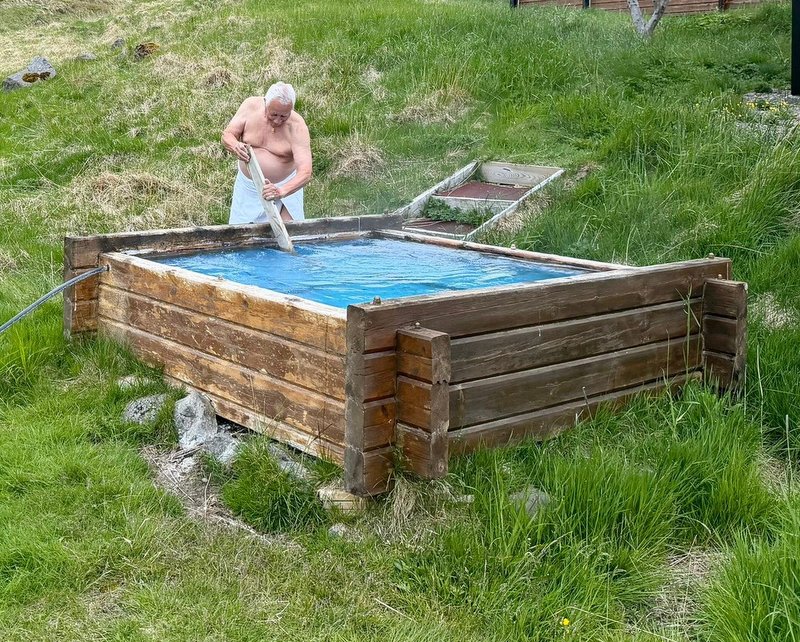
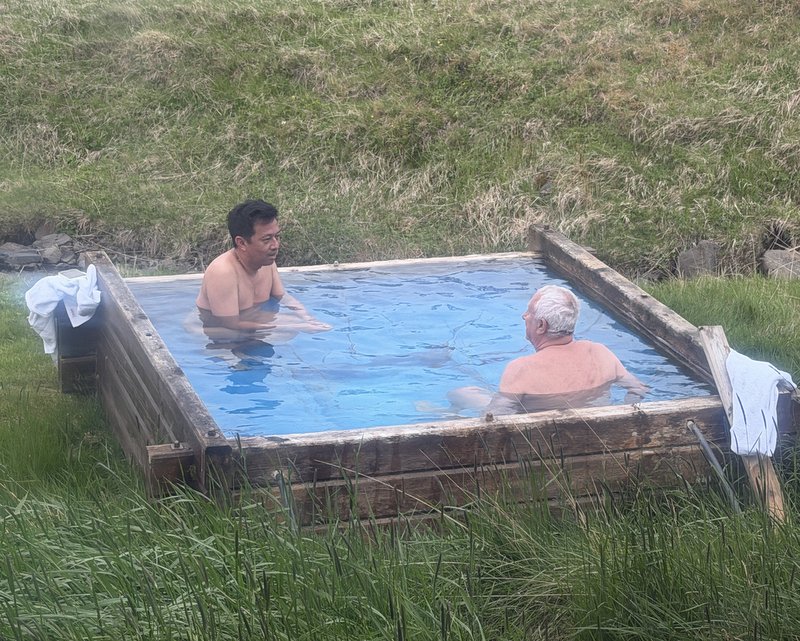
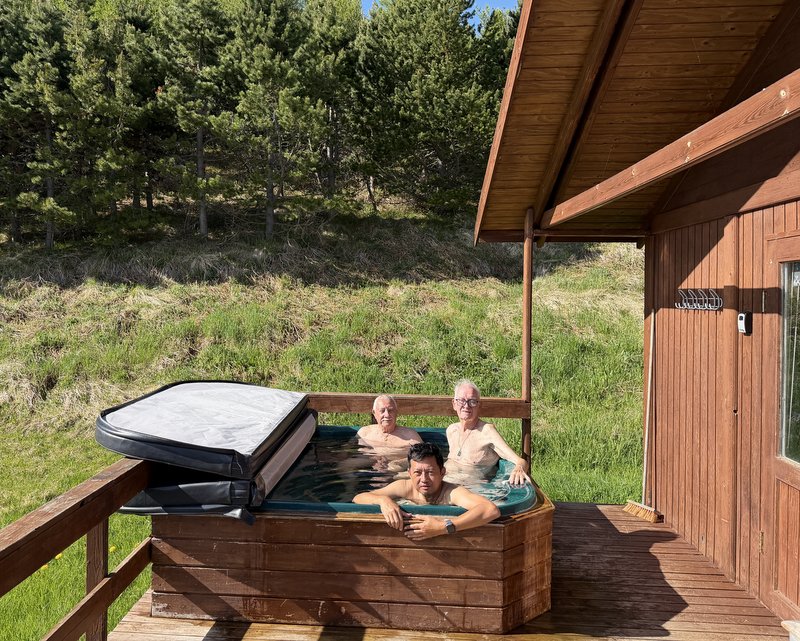
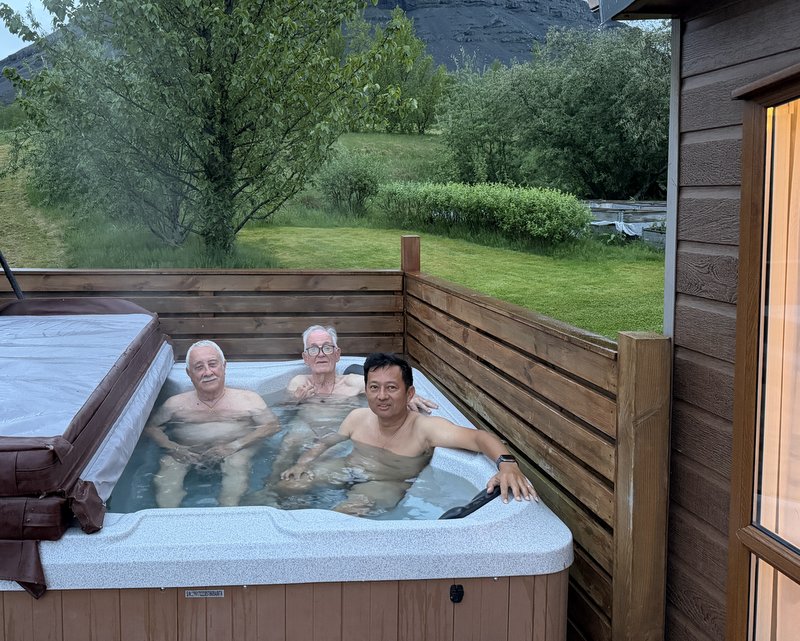
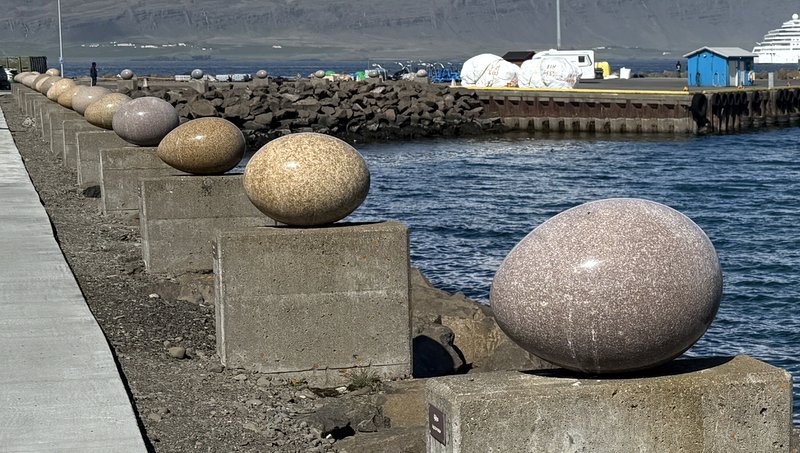
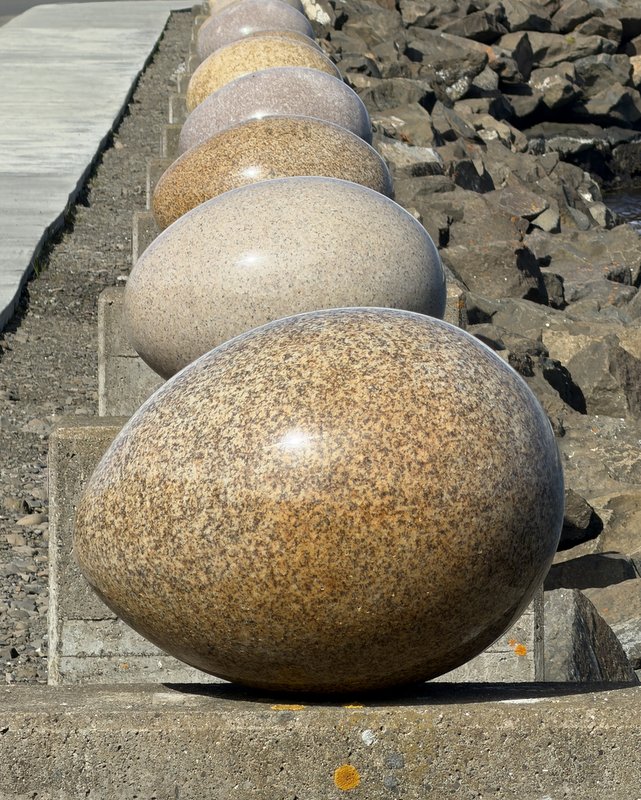
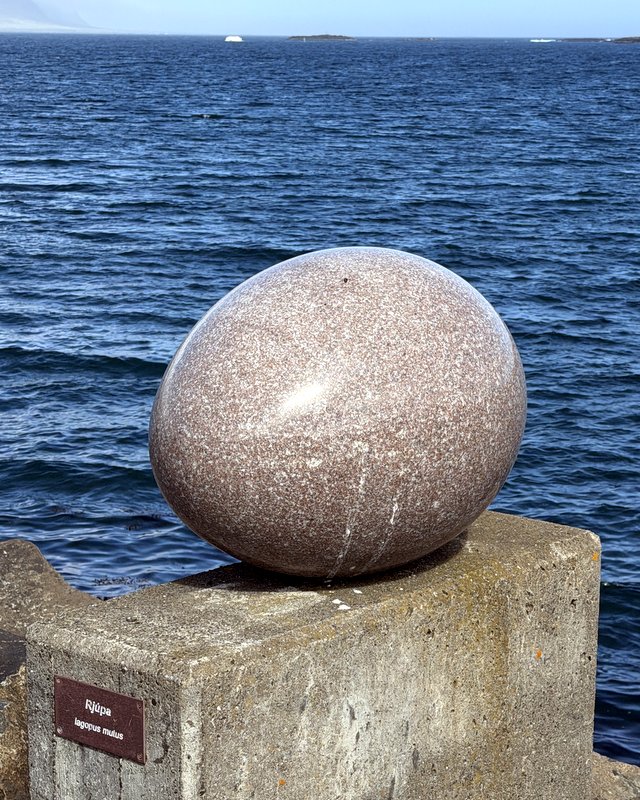
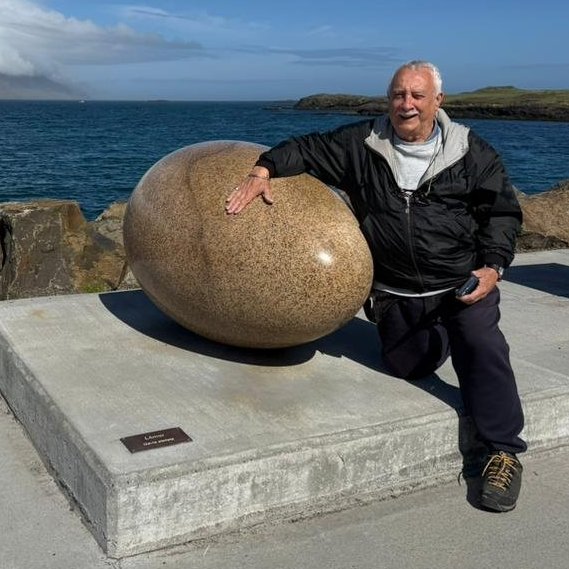
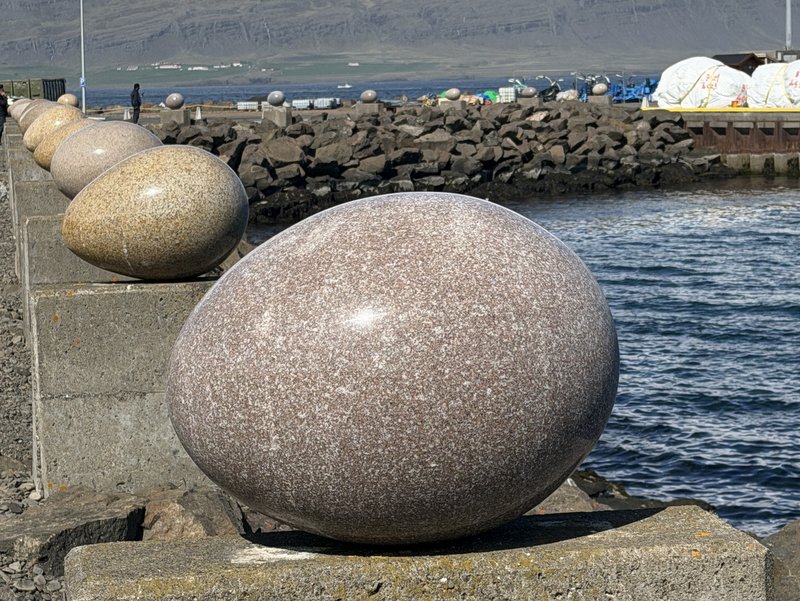
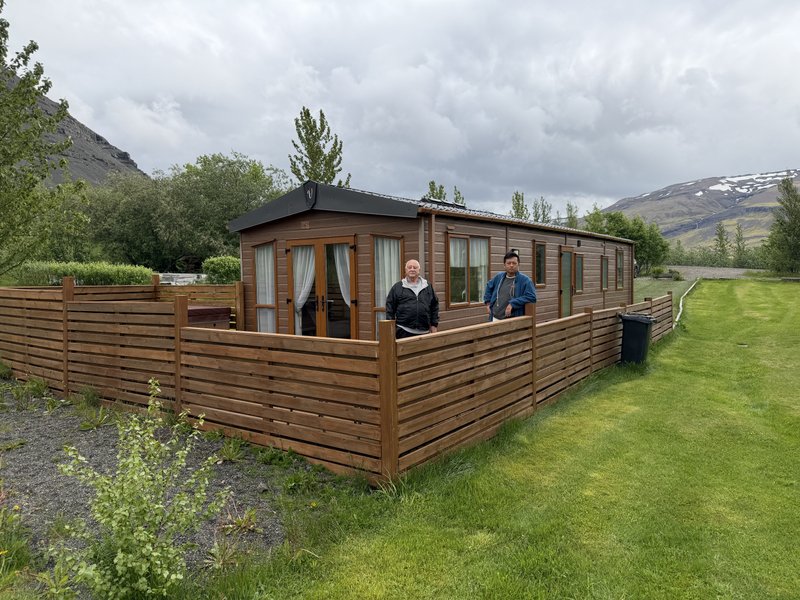
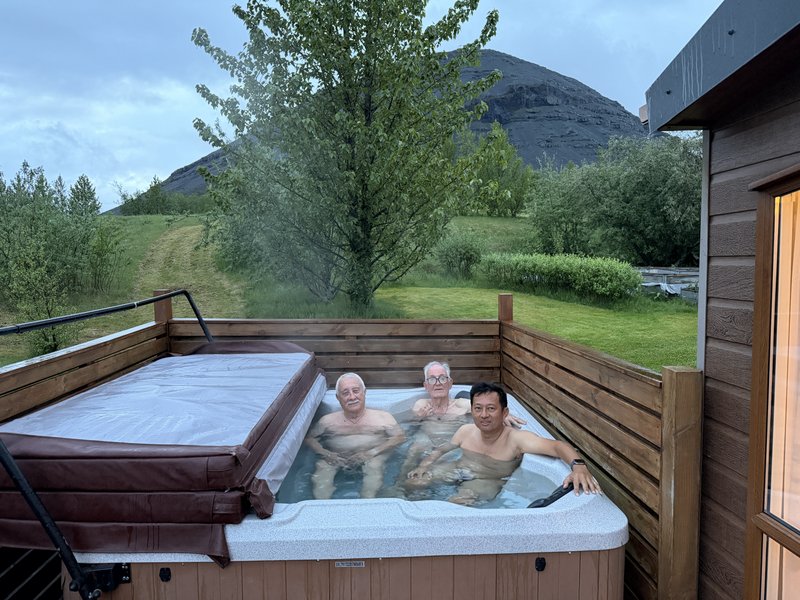
This day we followed the south-eastern coastline of the island. We had a look at an artwork of eggs, representing all bird species from Iceland. We found another waterfall. that was not in the list prepared by Aric. And we stayed overnight in a luxury homestay, with its own hot bath tub.

9 juni

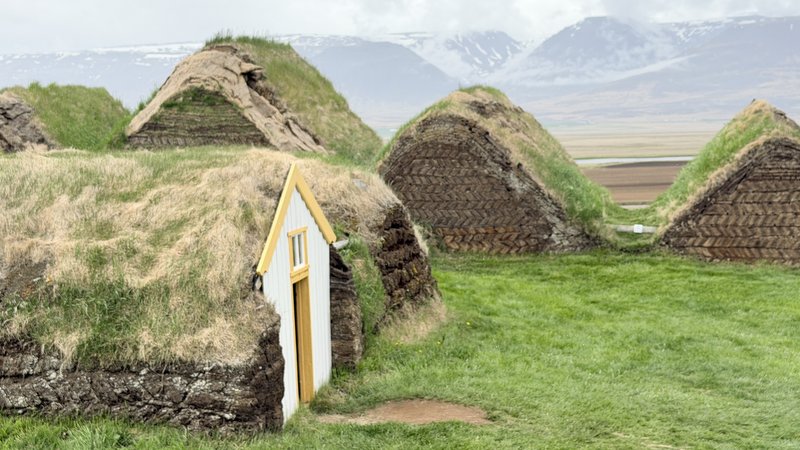
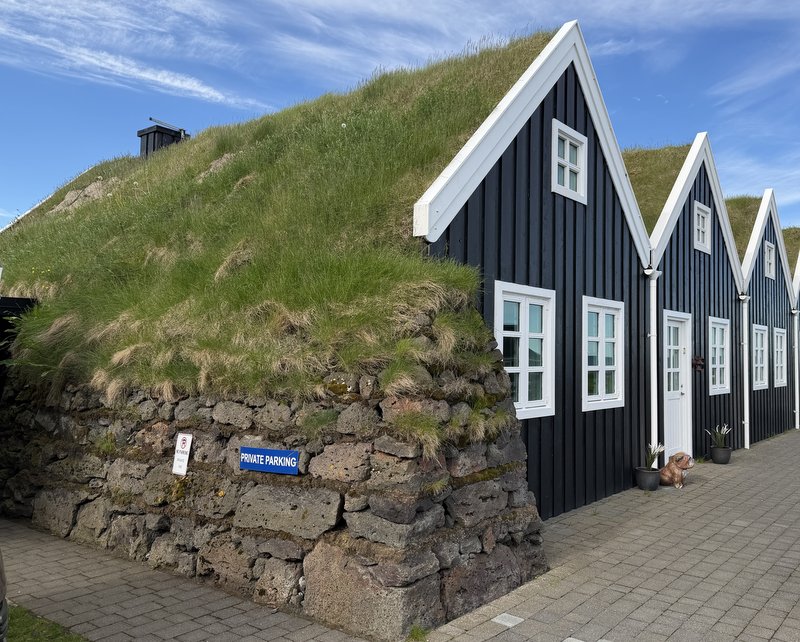
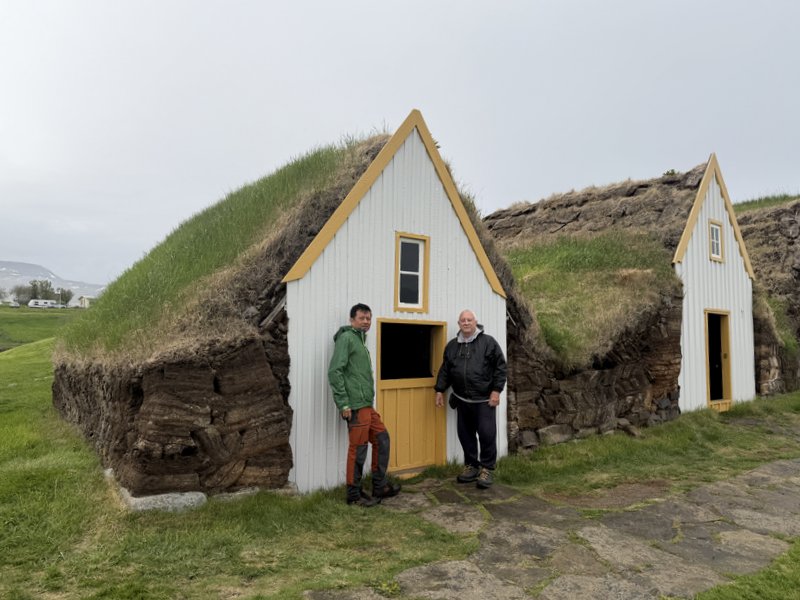
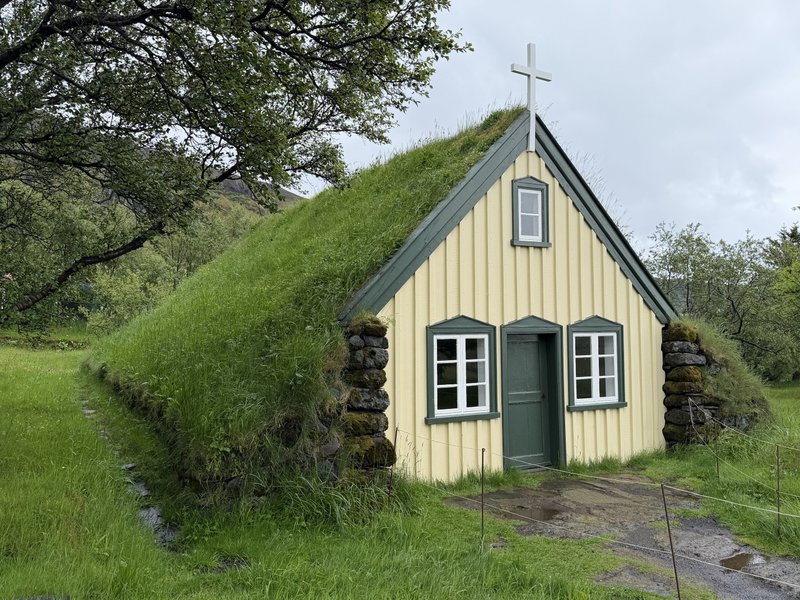
Glaciers in Iceland can reach the sea, where broken pieces of ice gradually melt in the sea water. We visited another church, with a grass roof.

0 juni

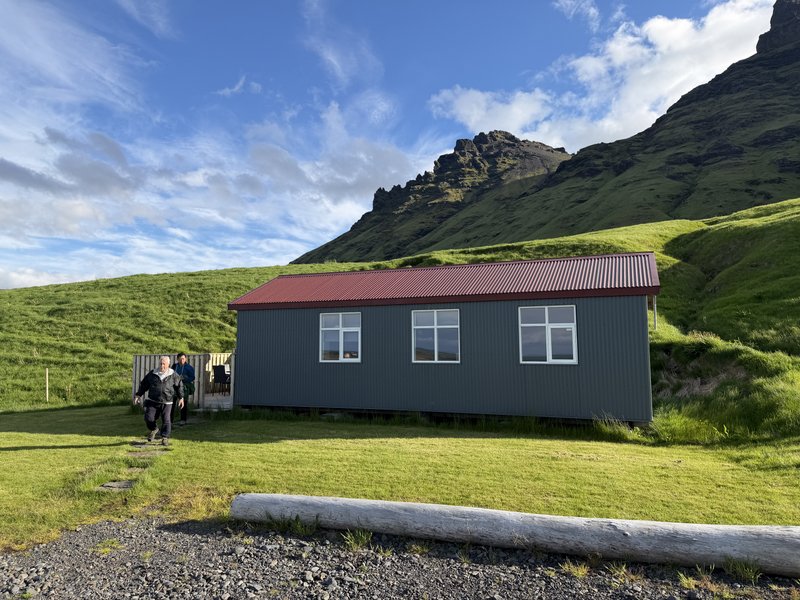
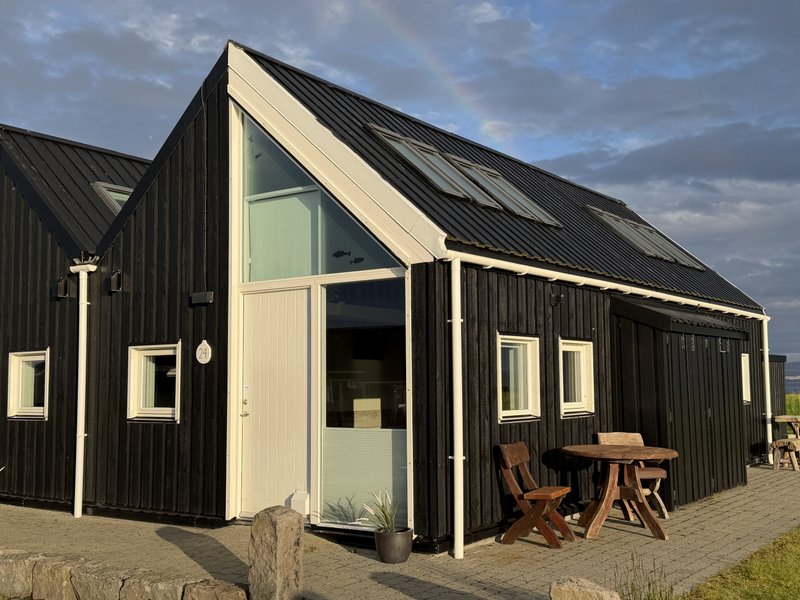
On this day we took part in the most spectacular event of our Iceland trip, a three-hour “expedition” to an Ice Cave, a man made tunnel inside a glacier. Later that same day we visited a waterfall, where there was a path behind the falling water In the late afternoon we visited the famous Blue Lagoon. And we stayed overnight in a fisherman hut, transformed into a homestay. What a day.

11 June

Our last full day. Before returning the car, we visited two of the top attractions in the region of Reykjavik, the spectacular geyser and another dramatic waterfall. Many tourists who stay only a few days in Island, visit these places. Our last night we stayed in a hotel in Reykjavik. After dinner we walked around in the old part of the town.

12 June

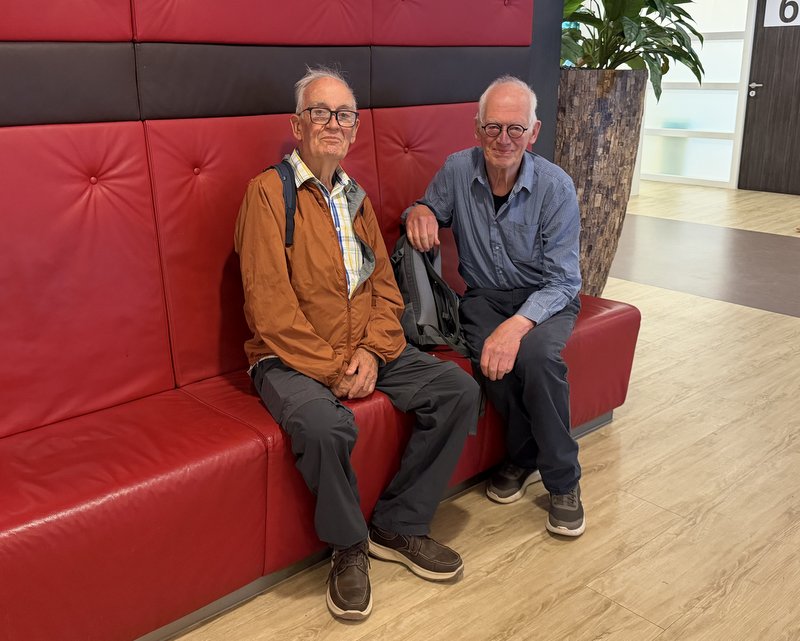
Traveling day. Rodney back to UK, Aric and I to Amsterdam

13-14 June

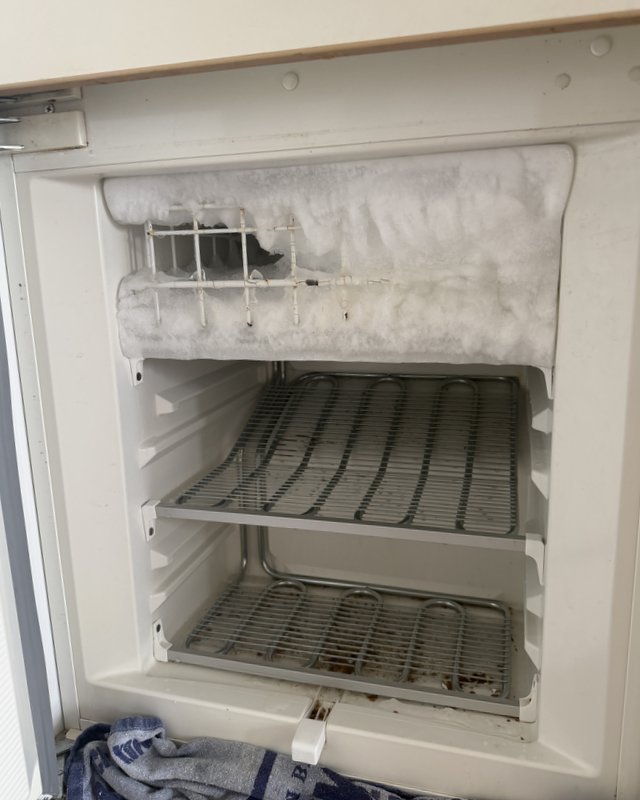
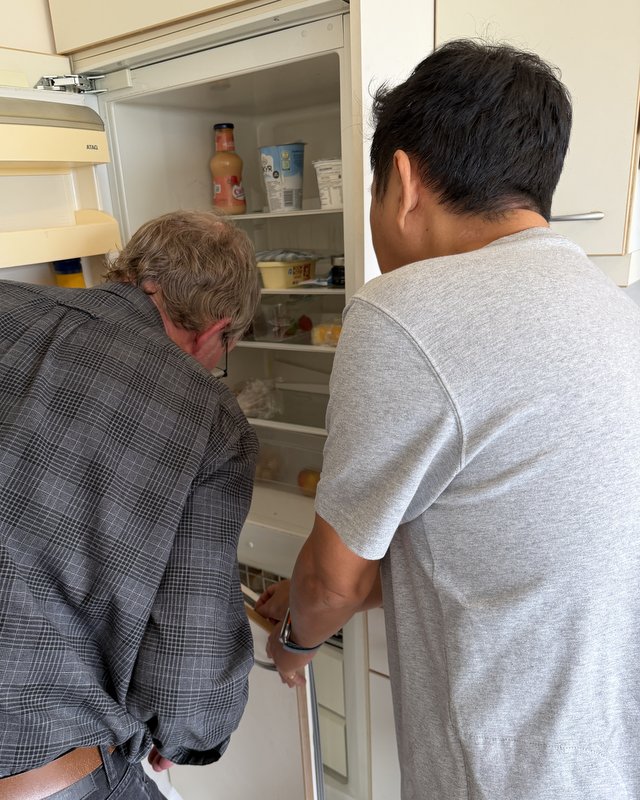
Recovery days. Defrosting the fridge, doing laundry. My brother Otto came to help us with the fridge. He and Aric managed to repair it!

15 June

On this day, Aric was supposed to fly back to Malaysia. During the trip to Iceland, I had noticed how dependent I had become on others due to my AMD. I worried about whether I would be able to spend the next two weeks independently in the Netherlands. It was a huge relief for me when Aric decided to change his return flight and fly back with me on June 29.

16 June

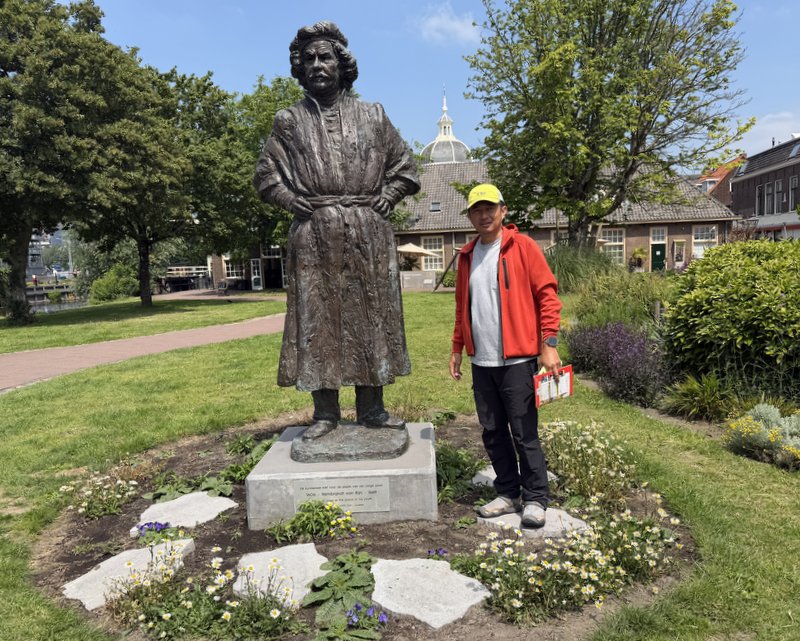
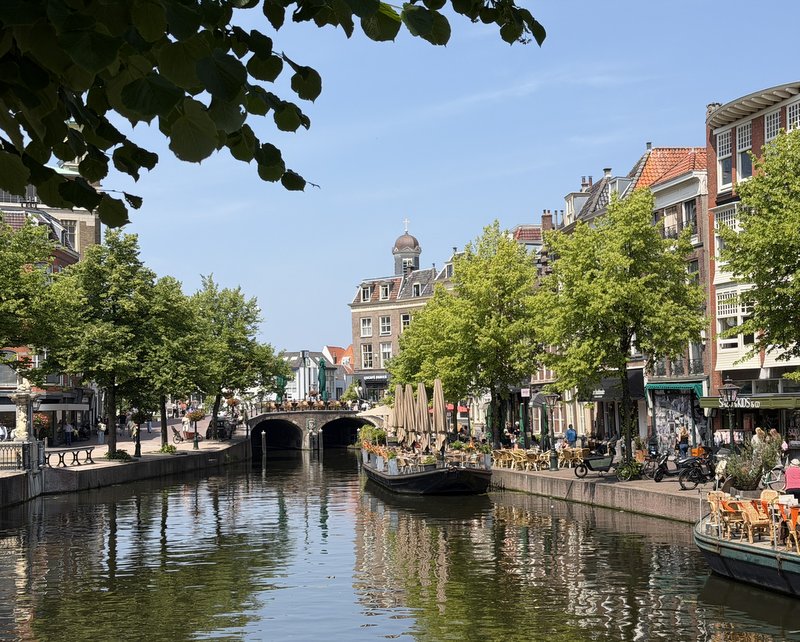
A day trip to Leiden. Aric thought he had never visited this historic town, but during our long city walk (8 km) he remembered a few locations from an earlier visit, more than 20 years ago. Separate blog about this trip.

17 June

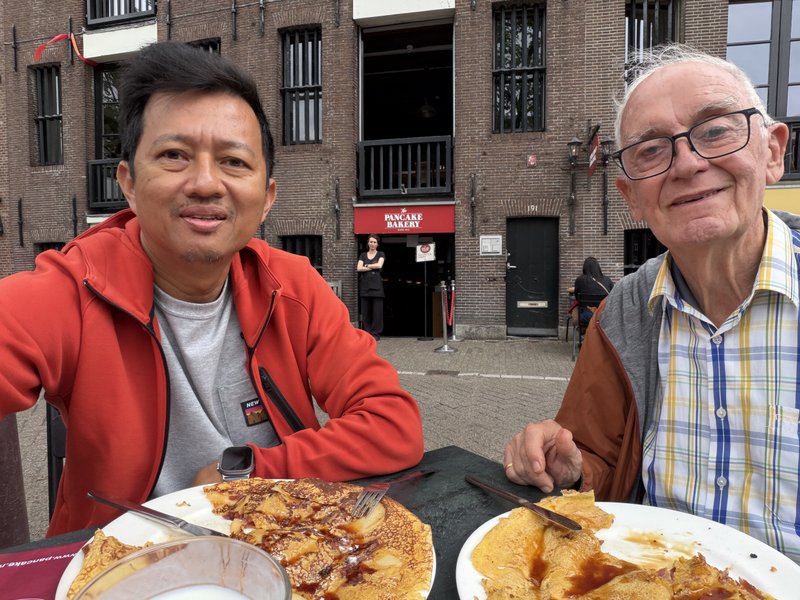
My brother Pim had a cataract operation and the eye clinic had advised him to come with an escort. We joined him and after the (successful) operation, took a Uber to his home, where we had coffee. Aric and I continued with another city walk and had lunch with pancake in the Pancake Factory at the Prinsengracht.

18 June

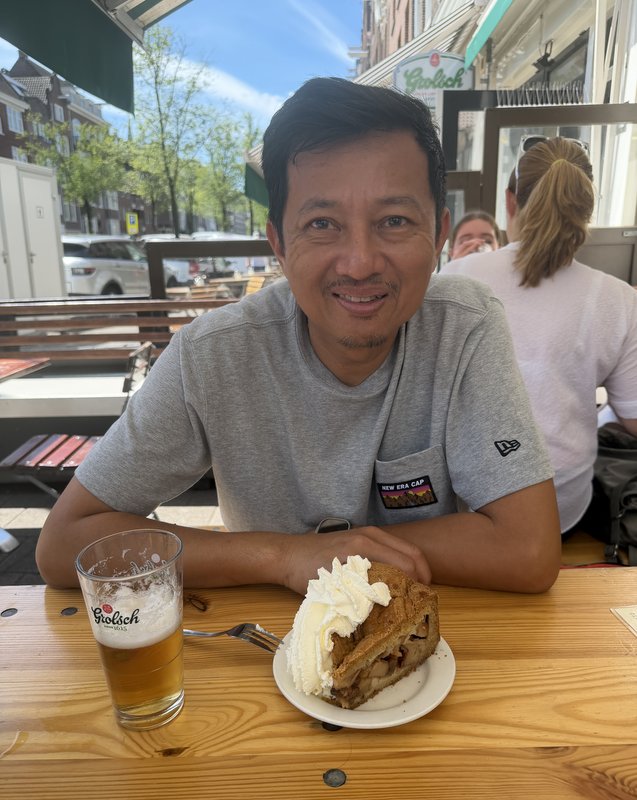
After visiting my friend and former student Roald, another city walk. This time lunch with Apple pie.

19 June

A resting day

20 June

We visited our friends Marjan and Mike. When they lived in Malaysia, we met them and became friends. I kept in touch when they returned to the Netherlands, for Aric it was nice meeting them again after so many years.

21 June

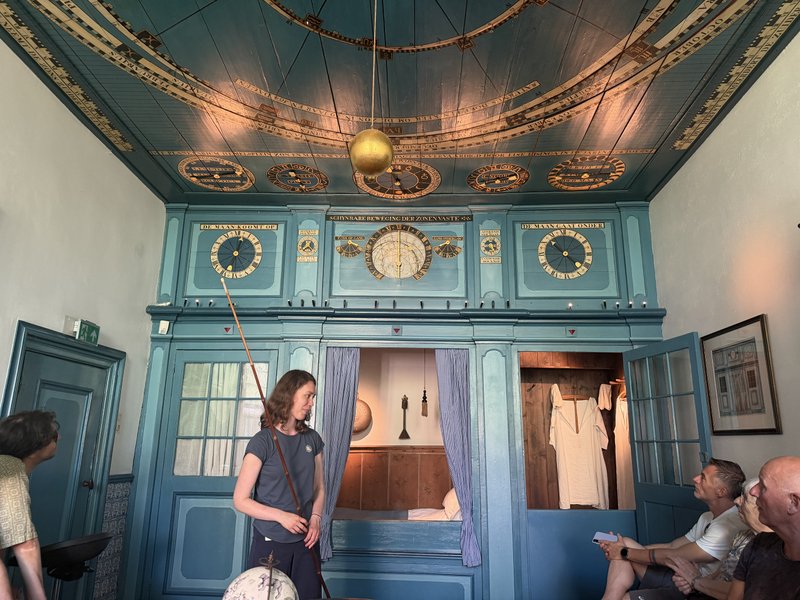
Pim had recovered fast from his cataract operation and could drive again. With him we went to Franeker, where we stayed overnight in the house of Nanda, his partner. In the afternoon we visited the Planetarium and had pizza for dinner. Very hot weather.

22 June

The four of us drove to Groningen where we met Jur and Jasper, partner, esp. son of my brother Ruud who passed away one year ago, when I was in Malaysia/ It was my wish to visit his grave. We had dinner later in a restaurant where I had dinner with Ruud and Jur in 2024. A satisfactory closure.

23 Juni

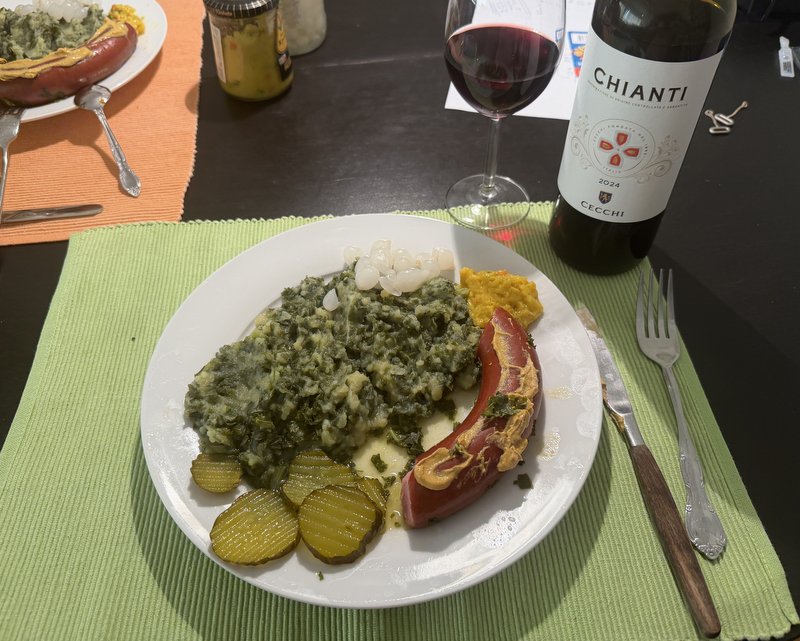
Traveling back to Amsterdam. During a conversation with my siblings about our past, the topic of the HEMA had surfaced, a traditional department store, famous for its “rookworst” (smoked sausage). They still sell them and that evening we had a traditional winter stew with the outside temperature more than 30 degrees!

24 June

Resting day

25 June

A long traveling day by bus and train to Doetinchem where we met Carle Poeder and Joanne. He is now 95 years old and was the school principal in 1976 when I started teaching. They had a house in southern France, where Aric and I visited them, years ago. Very nice meeting them again,

26 June

We visited my former university colleague Henk and his wife Marian. There was a heatwave in the Netherlands (a code red alert: stay at home), that explains how we were dressed. They had visited us 20 years ago in Malaysia and were pleased to meet Aric again.

27June

A last-minute visit of former school teacher and friend Hans. It was still very hot.

28 June

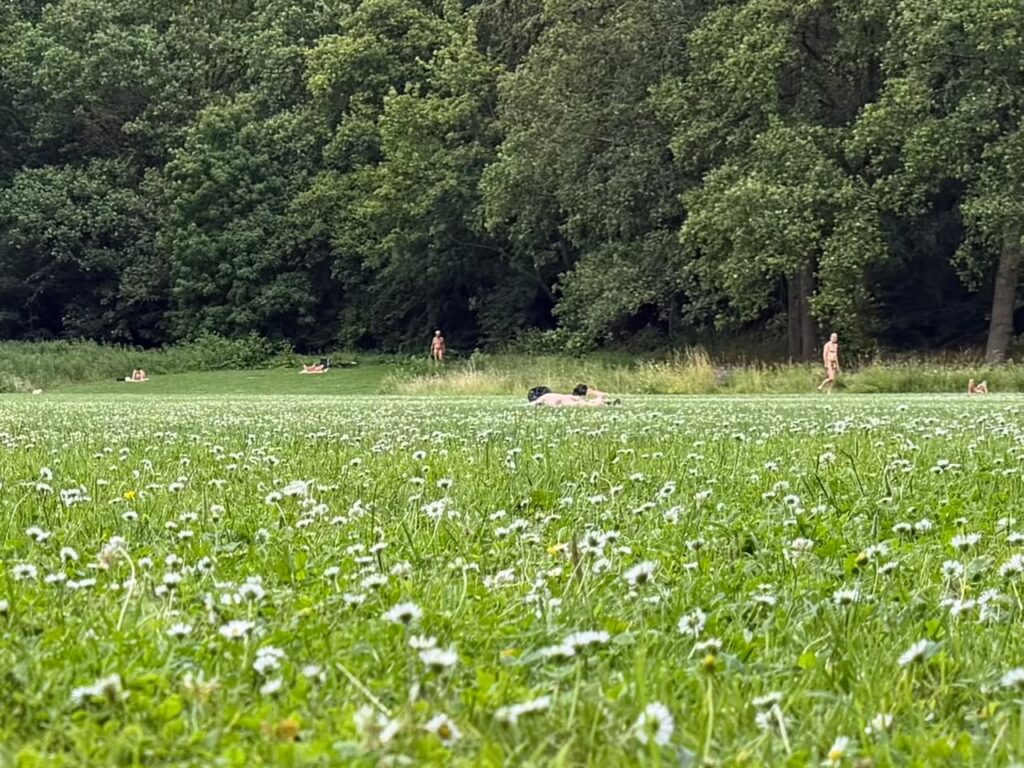
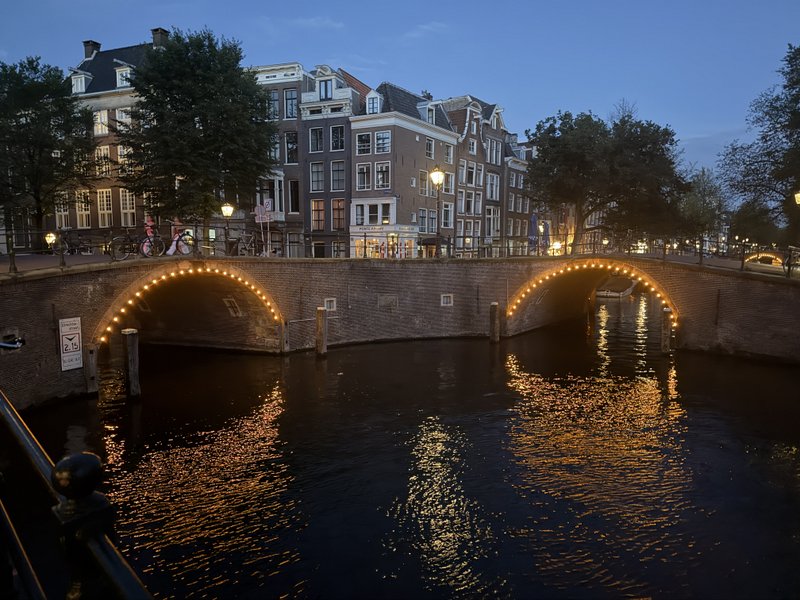
Our last full day in Amsterdam. The Amsterdams Bos park has a special area for nudist recreation, called the Zonnewiede. We decided to have a look. Although a Sunday, there were a few visitors only. Later that night we went for the last time to the town center, to take night view photos.

29 June

Flying back to Malaysia.

Traveling

Aric and I like traveling and in the past twenty years we have visited many countries. In this blog post I have collected all the trips we have made between 2002 and 2019. Most of these trips I have documented in reports, in which case I give the link with a short description and a few pictures.

———————————————–
Europe, May 2002

Aric’s first trip in Europe. I had planned an ambitious itinerary, including Germany, Austria, Italy, Switzerland and France 😉 . In those days I didn’t keep a blog, so details have become vague. We traveled by car, stayed mostly in hotels, camping occasionally. We did Venice as a daytrip from Padua and took a train from Florence to Rome, because Aric absolutely wanted to see the Colosseum!

———————————————–
Bali, February 2003

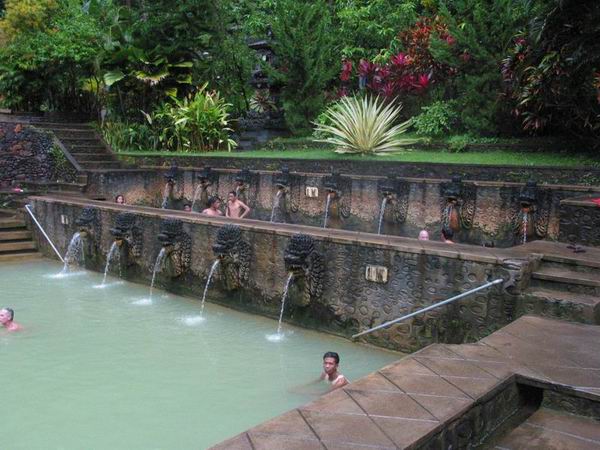
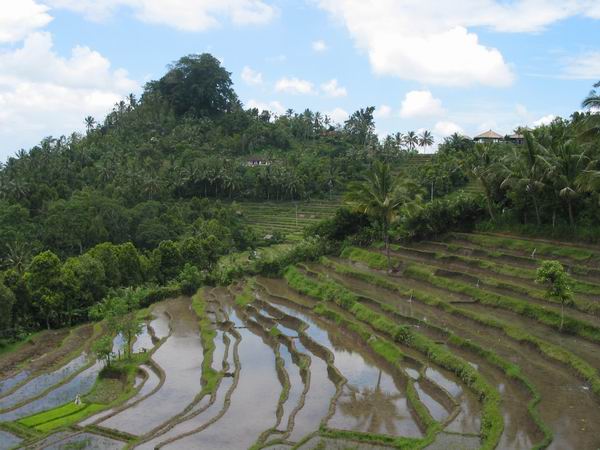
We visited Bali only a few months after the Kuta bombings, tourism had come to an almost complete standstill. I kept a diary and published four picture reports about various aspects of the trip: Nature, Culture, Sawah and Personal.

———————————————–
Sydney, October 2003

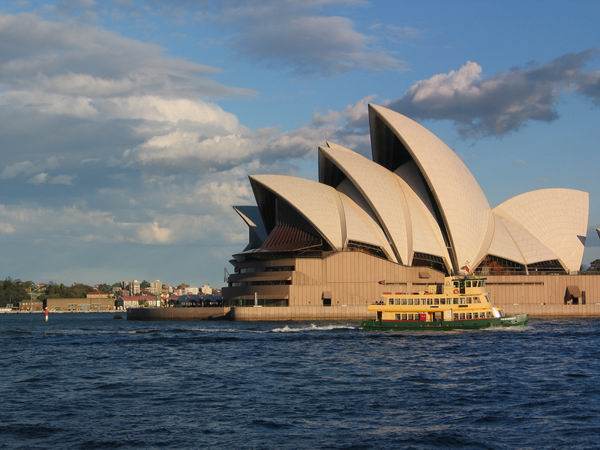
In 2003 I didn’t have a MM2H visa yet, therefore I had to leave Malaysia every three months.. Originally we had planned a trip to Beijing, but finally we decided for a short holidays Down Under. Sydney is a very pleasant town and we could easily have spent a much longer time there. Even with the sometimes winter-like cold weather, so we have hardly visited any of the famous surf beaches!. Here is a pictorial report Sydney 2003. The captions of each picture link to separate sub-reports.

———————————————–
Beijing, June 2004

When my three-months visa expired, we decided to visit China this time. Beijing was our destination, but we also visited the Great Wall, the Ming Tombs etc. Here is a report with the Highlights of our trip. Detailed reports can be found in Beijing 2004.

———————————————–
Cambodia, January 2005

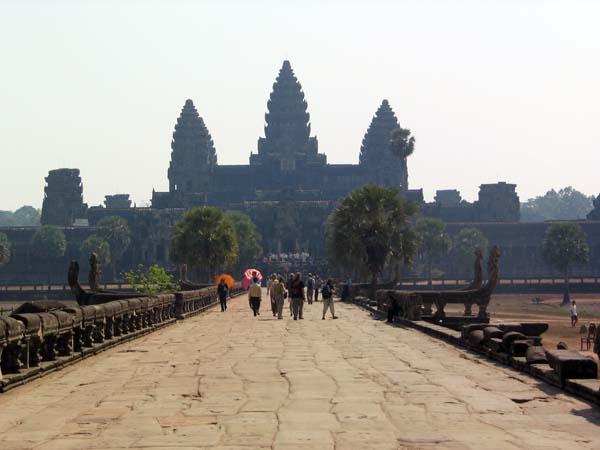
Of course Angkor Wat was the main destination of our Cambodia trip. But we started in Phnom Penh and visited the Killing Fields. By boat to Siem Reap and after three days of Angkor Wat, we continued to Battambang. I created a kind of travelogue this time: A Pictorial Travel Report of a Trip to Cambodia.

———————————————–
Sabah, May 2007

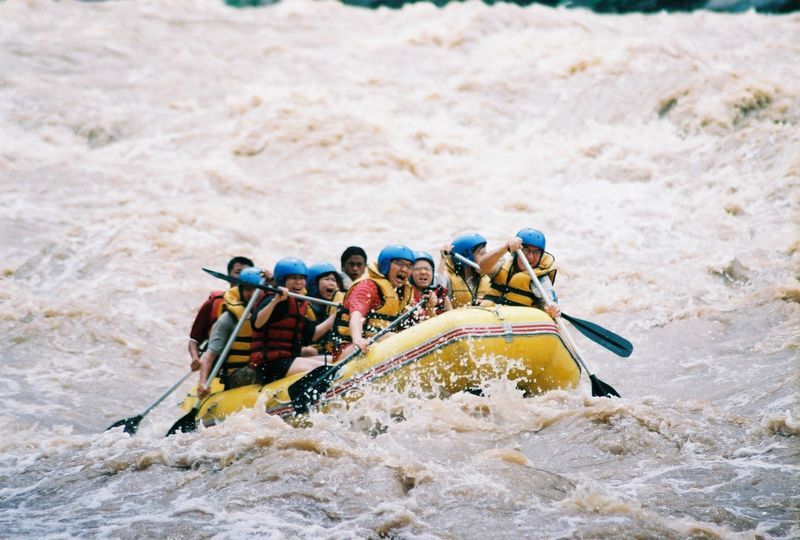
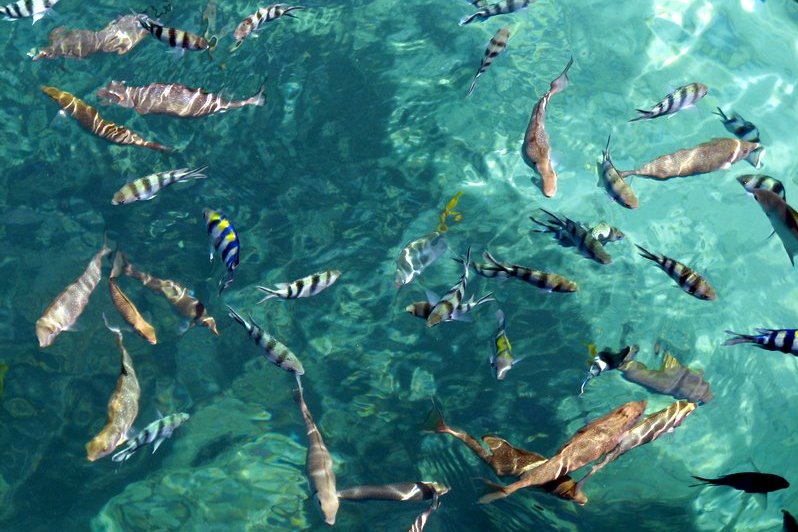
An adventurous trip, well organised by a friend of Aric. First we went snorkeling on Manukan island, next there was wild water rafting on the Padas river and the culmination was climbing Mount Kianabalu. I stopped at Laban Ratah, Aric made it to the top. After a relaxing time at the Poring Hot Springs we went back to KL. Here is the travelogue: Sabah Trip.

———————————————–
Vietnam, July 2007

Air Asia had a promotion with free tickets to Hanoi, we could not resist the temptation and went to Vietnam. First we stayed a few days in Hanoi, a very pleasant town, although it was very hot. We made a trip to Halong Bay, very worthwhile. Instead of visiting Hue (too hot), we took the train to Sapa in the mountains. Finally a few more days in Hanoi. Here is the travelogue Vietnam, July 12-21, 2007.

———————————————–
Sarawak, December 2007

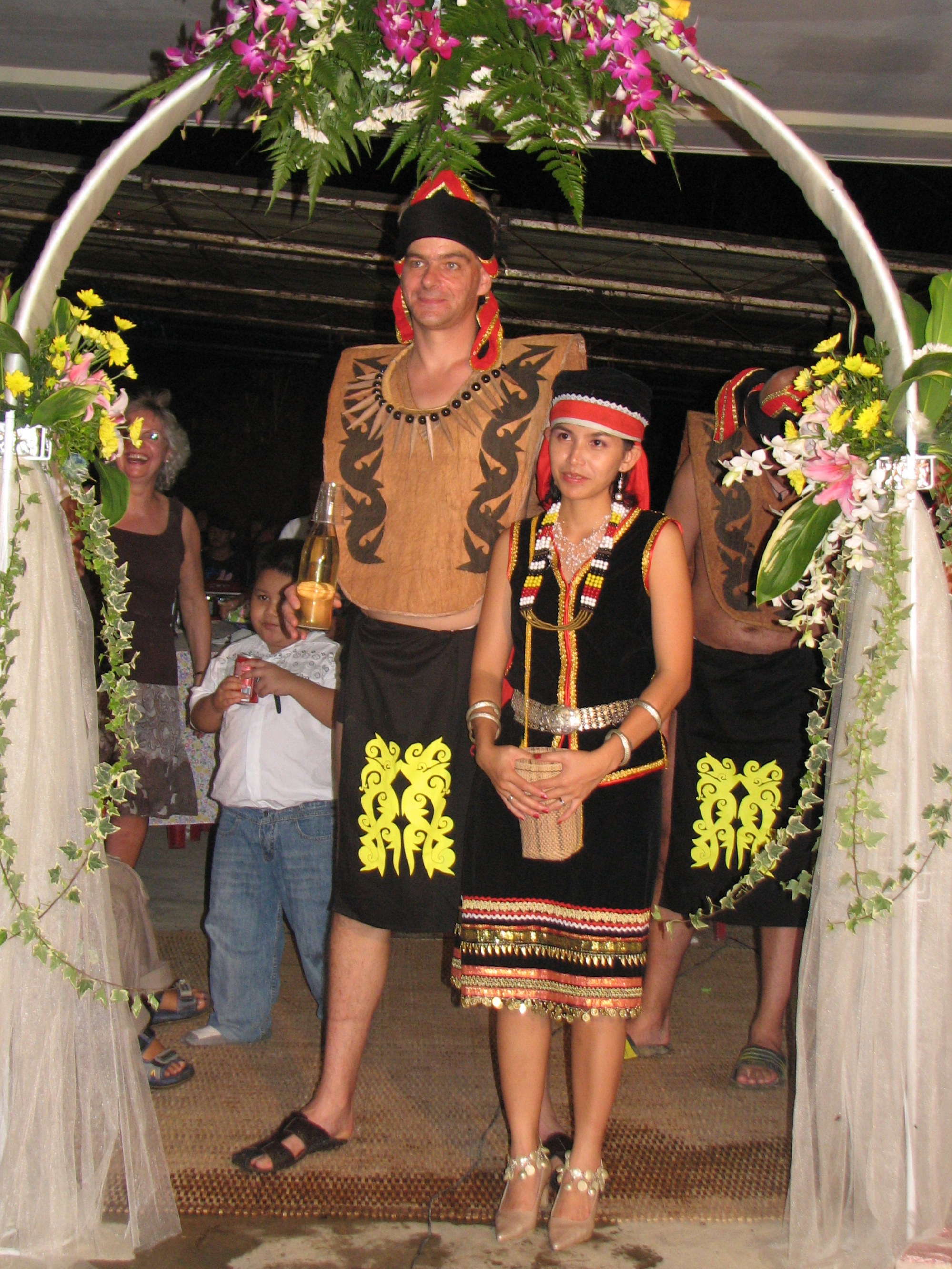
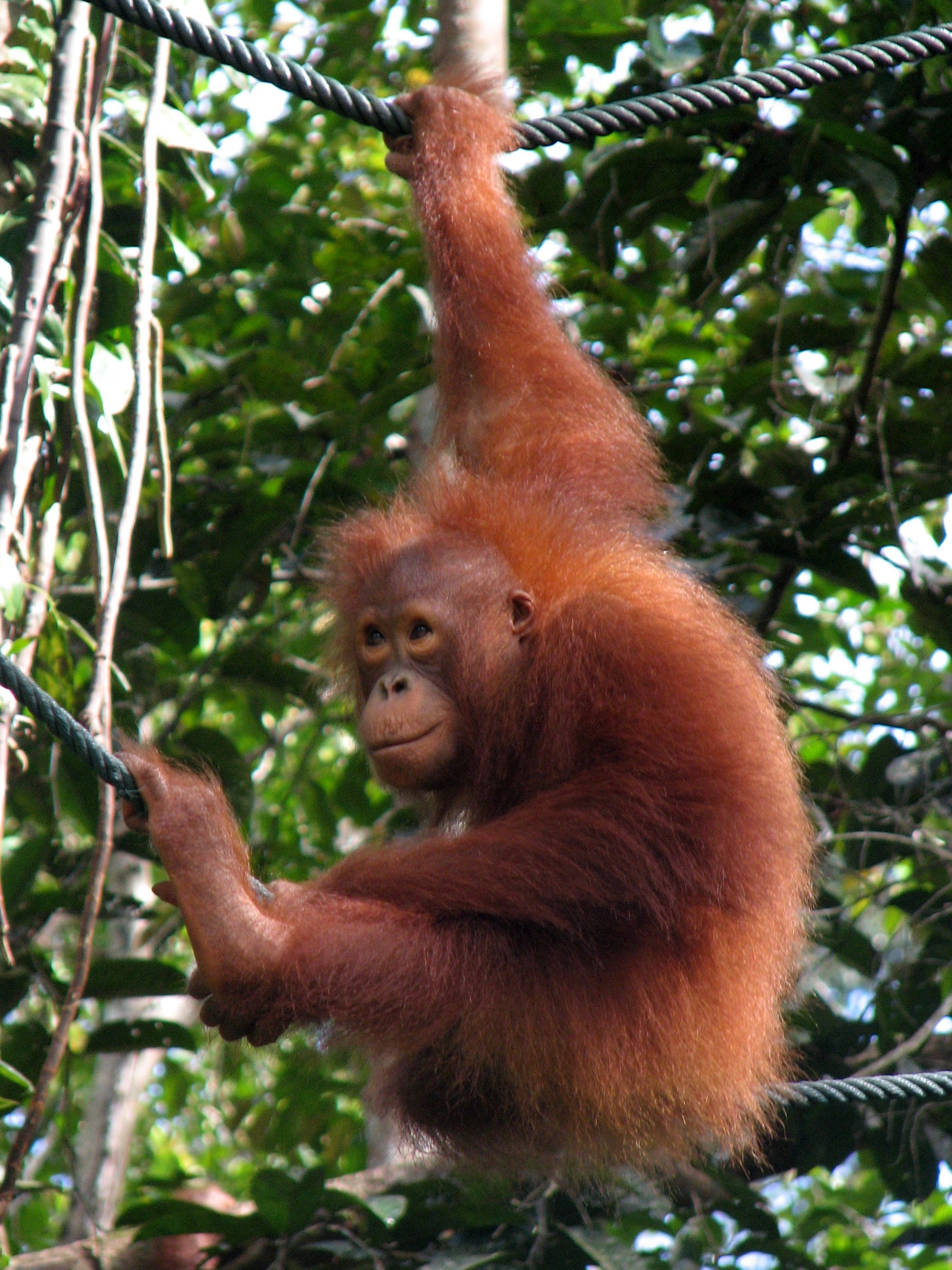
A short trip to Sarawak to attend the wedding of a Dutch friend with a Bidayu lady. Of course we managed to include a few waterfalls and also an Orang Hutan rehabilitation center. More details in Sarawak, (14-17)-12-2007.

———————————————–
Thailand, November 2008

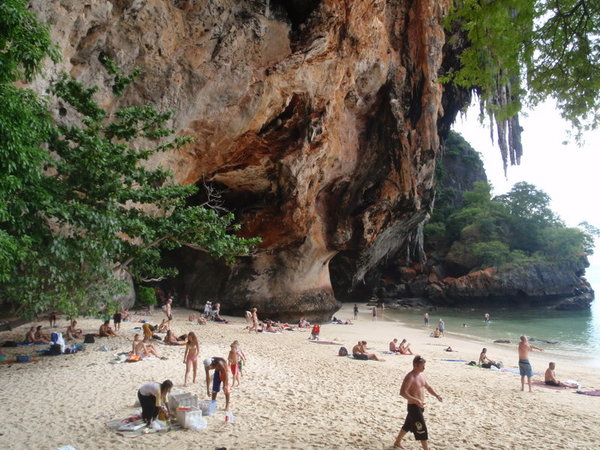
A friend of ours, Dick Sandler, has a resort near the Khao Sok National Park in Thailand and Marcia, another friend, has a house at Railay Beach, near Krabi. We took a flight to Krabi, spent some time there, then took a boat to Railay , where we celebrated Loy Krathong on the beach. In Khao Sok we stayed in a romantic tree house and visited a waterfall. More pictures in Thailand (Krabi & Khao Sok) 2008

———————————————–
China, July 2009

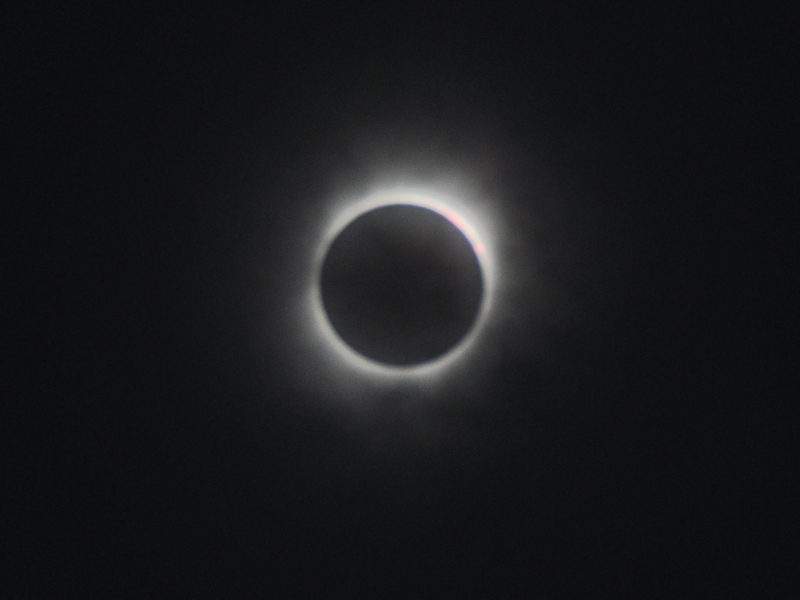
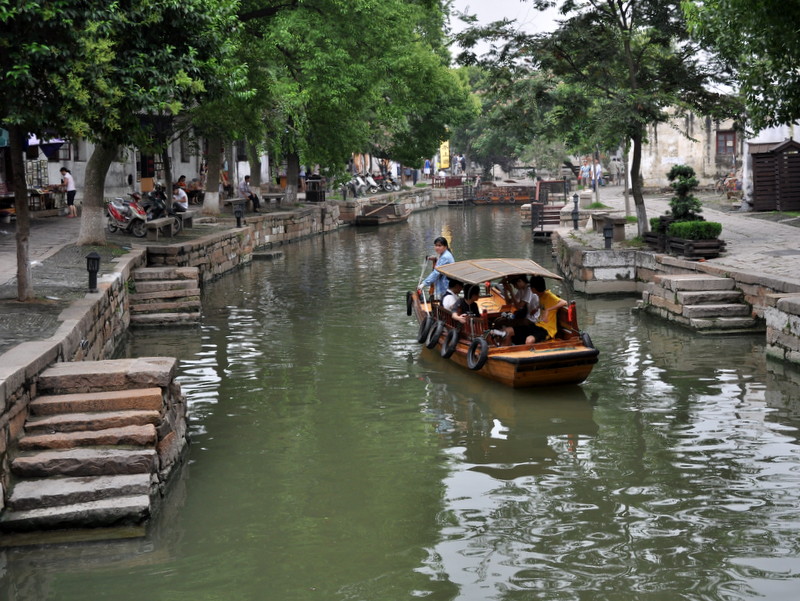
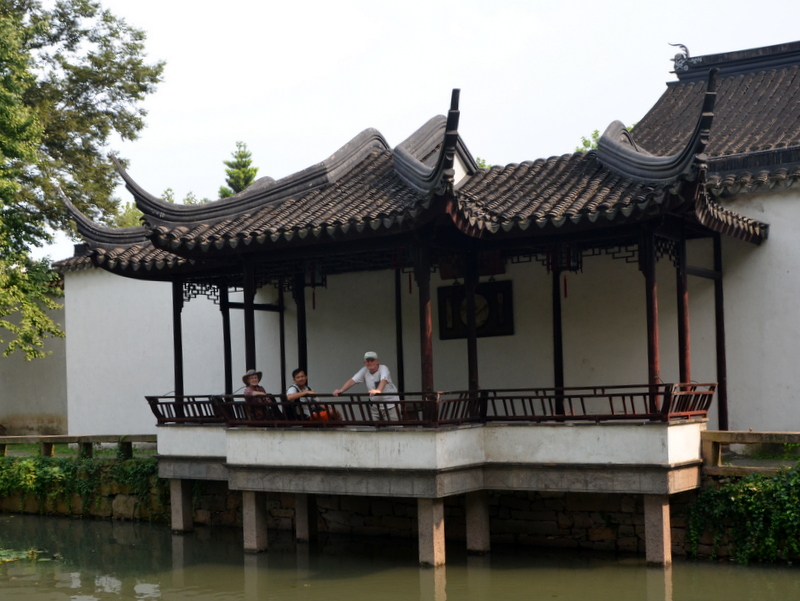
In July 2009 we went back to China for a very special reason, to see for the first time in our lives a solar eclipse! Solar eclipses are only visible from narrow regions on Earth, in this case a part of China. We decided to start our trip in Hangzhou and watch the eclipse there. Then to continue our trip to Suzhou and finally Tong Li. All three places famous tourist attractions. Our trip resulted in three albums, Hangzhou, Suzhou and Tong Li.

———————————————–
Melbourne, October 2009

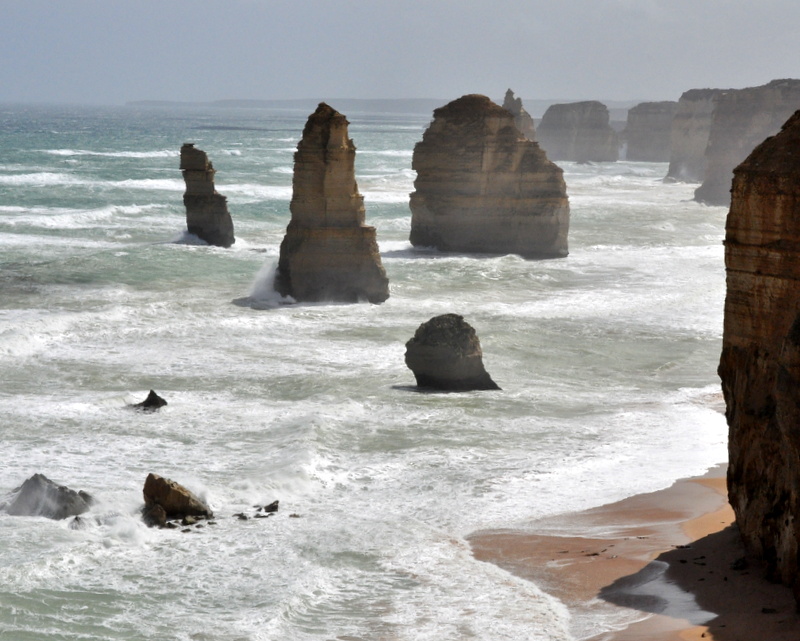
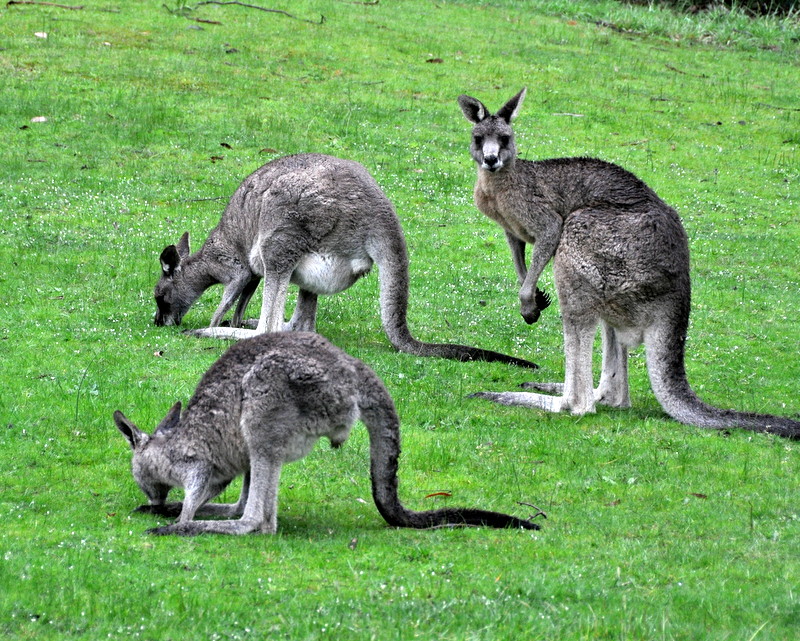
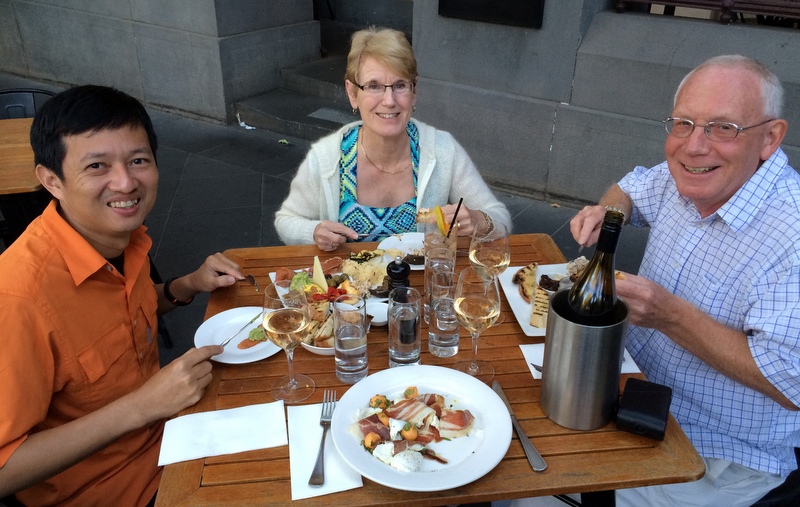
A few months later we visited our friends Pat and Roger in Melbourne. I had visited them before, so I could guide Aric around in Melbourne. Our hosts took us on a very nice trip along the Great Ocean Road. We also saw kangaroos and had delicious food. Here is the travelogue Melbourne, October 2009.

———————————————–
Sarawak , March 2010

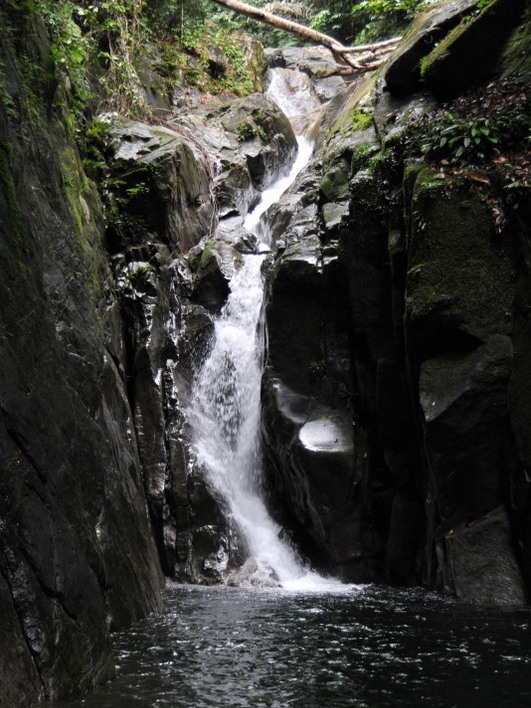
Our friend Keong invited us to join him on a trip to Semban. This village in the Bungo range south of Kuching, is famous for its “ring ladies”. High up in the hills, it is called the “Village above the Clouds”. We stayed a few days in the village, enjoying the hospitality of the Bidayu people and hiking to impressive waterfalls. Here is the report, Village above the clouds, February 2010.

———————————————–
China, family visit, May 2010

For our third trip to China we visited the Teochew region, where Aric’s family originally came from. For a long time already it had been Aric’s wish to organise a trip for his parents and his favourite uncle and auntie to their roots. It was a very successful and rewarding trip, resulting in three albums, Shantou, Chaozhou and Chenghai

———————————————–
Thailand, August 2011

We were invited to attend the wedding of my former student Raoul with his Thai boyfriend Aunn and decided to combine this event with a visit to some world heritage sites and waterfalls. We took a flight to Bangkok and rented a car there. We visited Ayutthaya, Kamphaeng Phet and the Khlong Lan waterfall. After the wedding party we drove back to Bangkok where we stayed a few more days. Here is the travelogue Thailand (16-24)-8-2011

———————————————–
Greece, September 2011

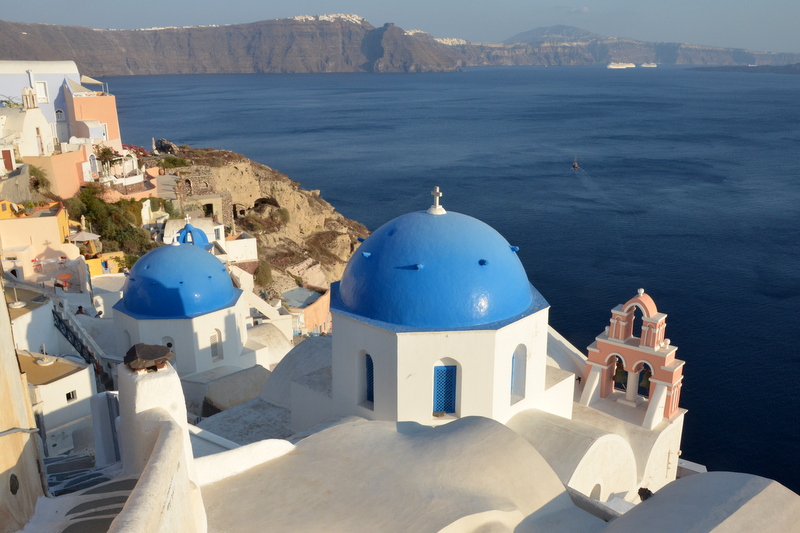
If I had to make a list of our most fascinating holidays, our trip to Greece would probably be number 1. We did a lot during 16 days, starting with Athens, followed by Delphi, Meteora, the Sporadic Islands and Santorini. I compiled four albums, one about Athens, one about Delphi & Meteora, the third one about the islands Skopelos & Skiathos and the last one about Santorini. A magical world.

———————————————–
Singapore, November 2011

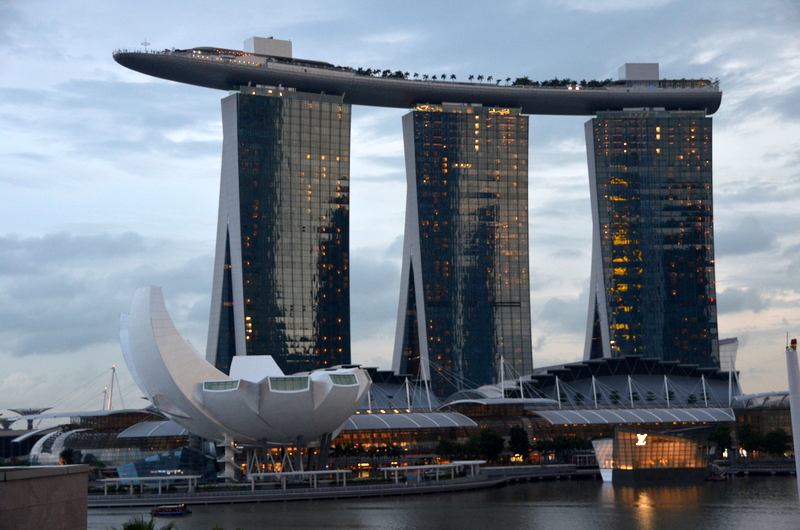
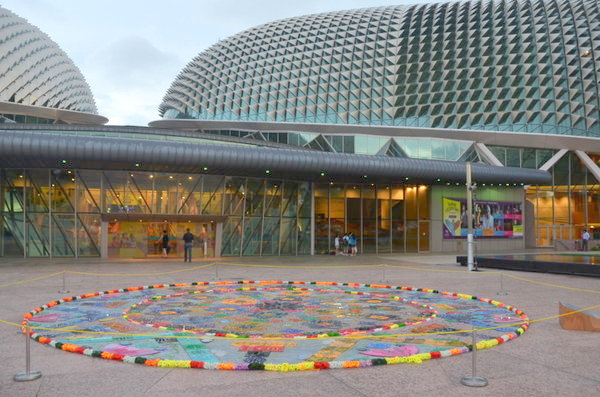
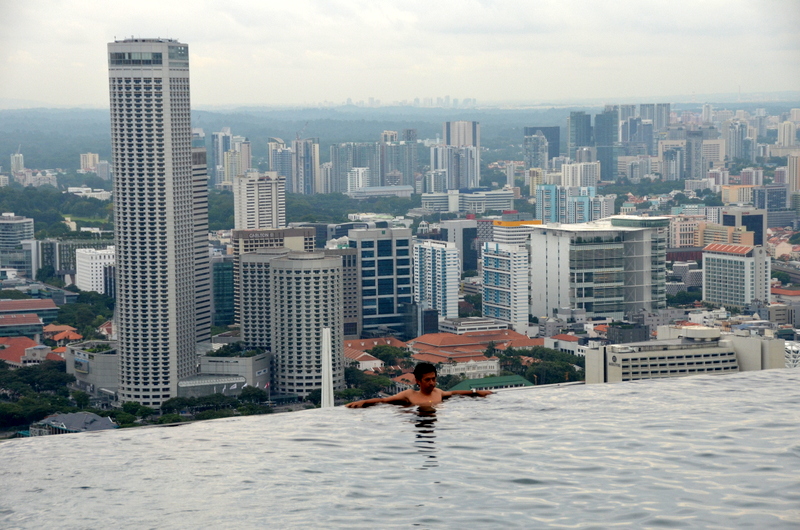
The reason that we visited Singapore again was to attend a concert of the MozART GROUP, classical music with a humorous twist. The concert took place in the concert hall, nicknamed the Durian, We stayed in the Marina Bay Sands Hotel and of course enjoyed the infinity swimming pool. We also visited the Haw Par gardens. Report is here: Singapore, November 2011.

———————————————–
Europe, September 2013

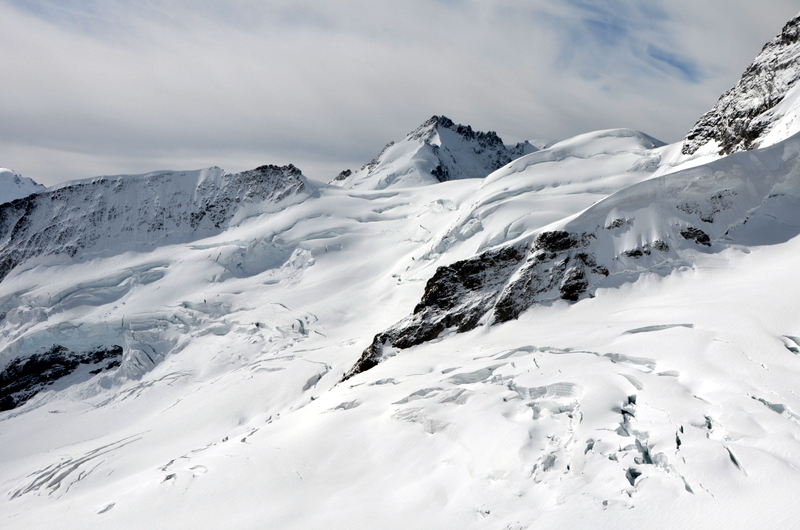
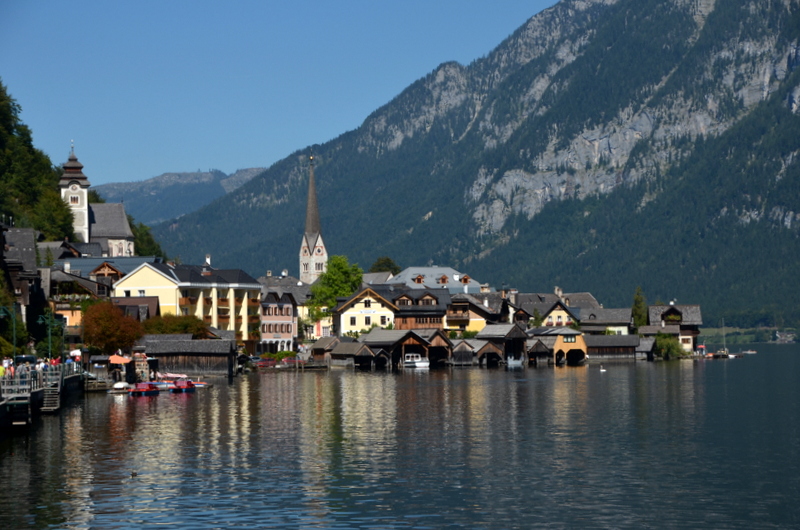
Our second Europe holiday, two weeks this time. Again a full program, Germany, Austria, Liechtenstein (!), Switzerland and France. Many highlights, the most spectacular one was the Jungfraujoch, the Top of Europe. Four albums about this trip, Germany, Austria, Switzerland and France.

———————————————–
Barcelona, September 2013

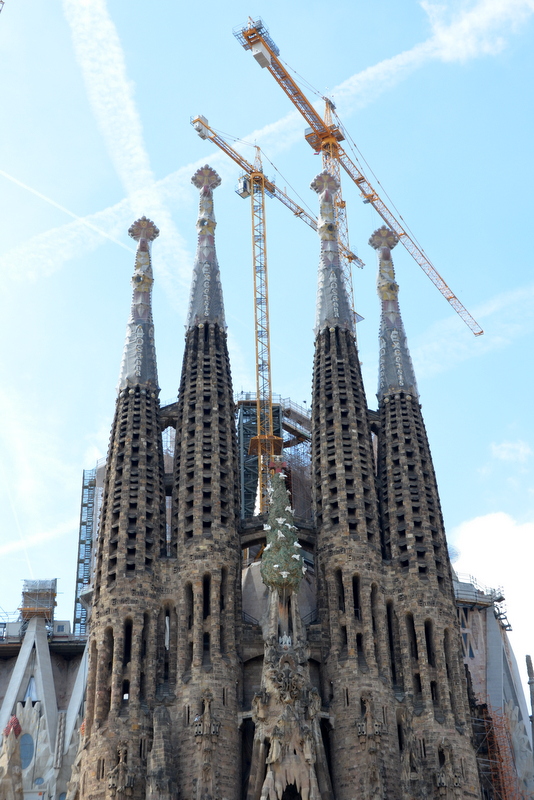
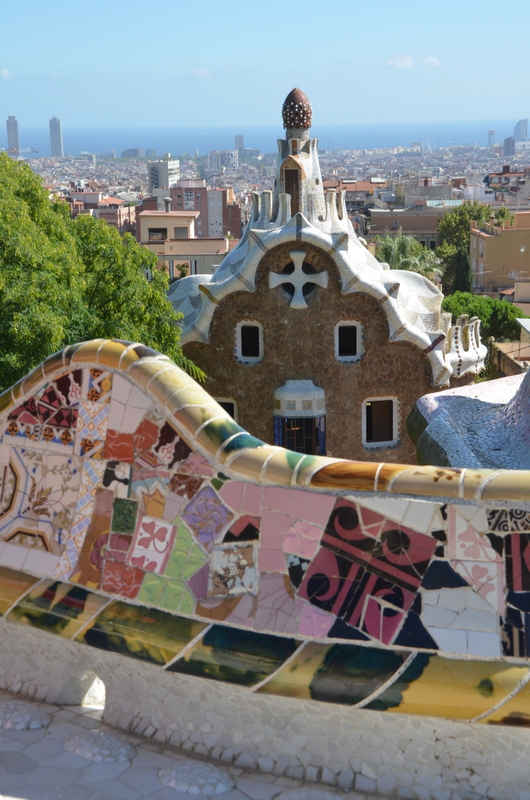
Back in Amsterdam we still had some time before Aric went back to Malaysia. So we booked a flight to Barcelona , one of my favourite towns. The town of Gaudi, for me it was the first time to visit the Sagrada Familia cathedral, still unfinished. We liked the tapas, the paella and the sangria. But, like Amsterdam, overcrowded with tourists (like ourselves, I know).

———————————————–
Taiwan, March 2014

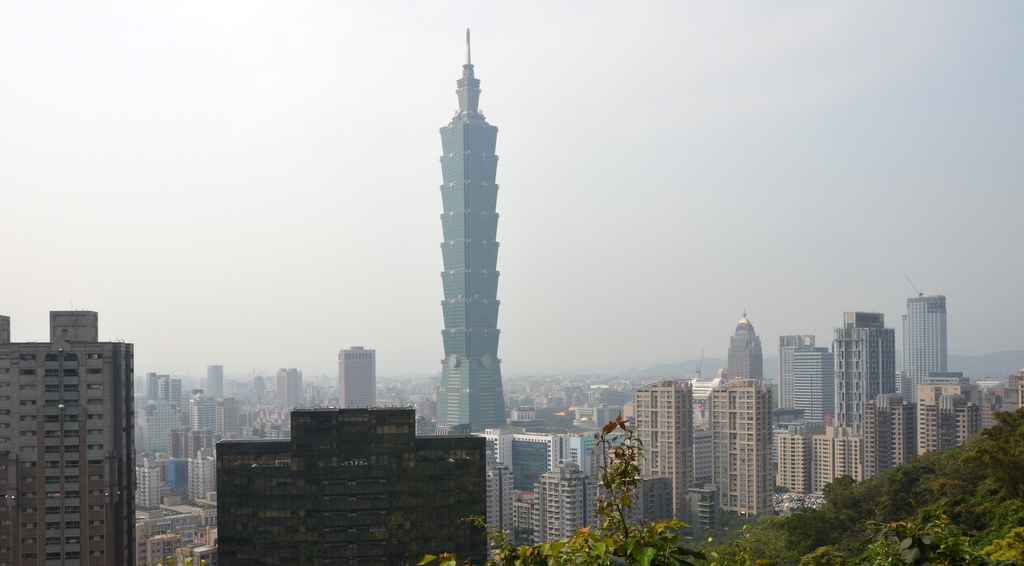
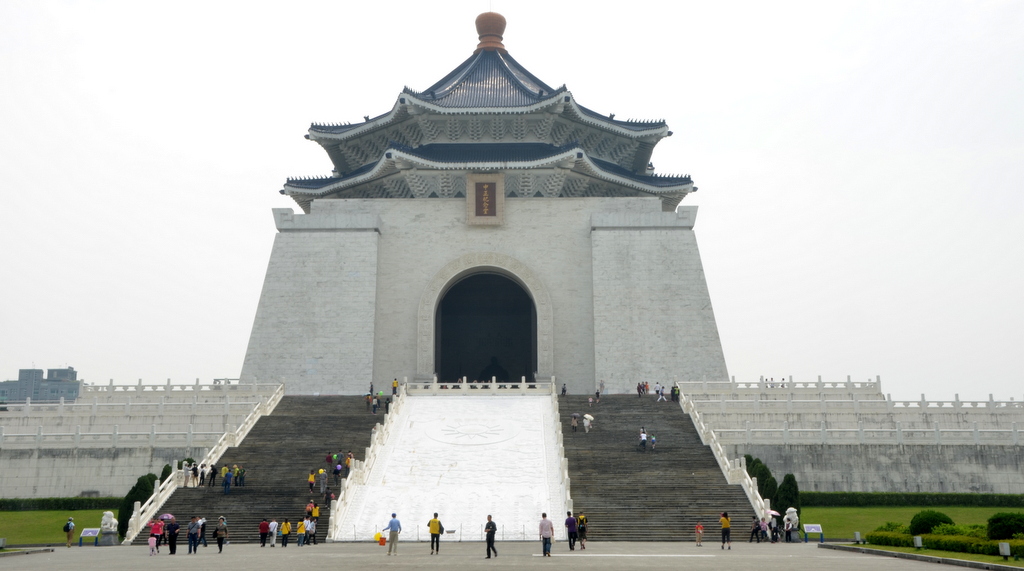
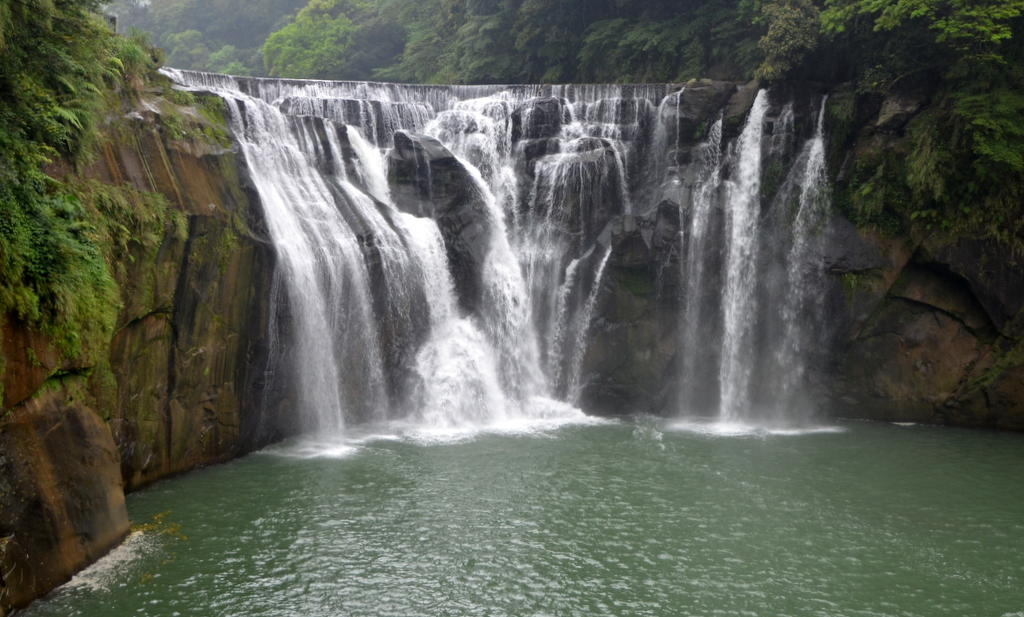
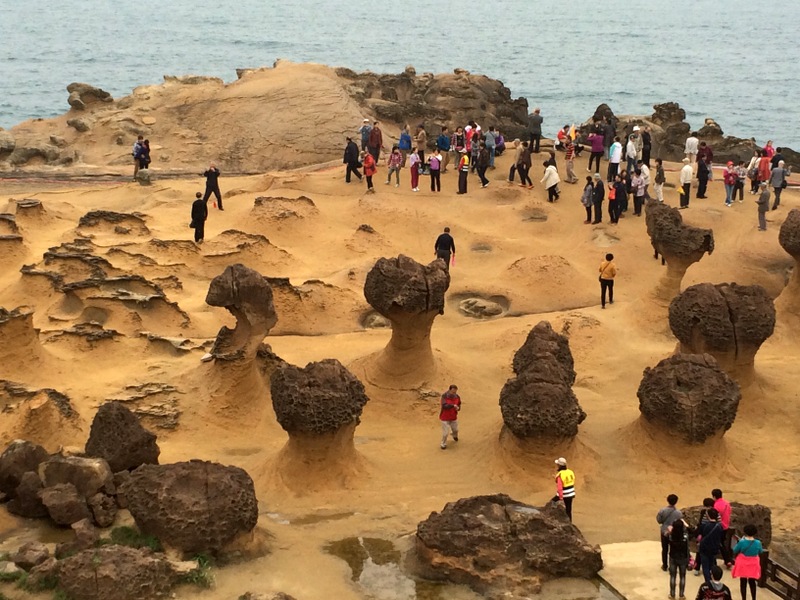
For quite some time Taiwan has been on our list of countries to visit and this year we finally booked an Air Asia flight to Taipei for a 12-day trip. One reason was to try the Taiwanese food, but of course there was also the culture and the nature. We got addicted to onsen, the hot baths. Below pictures of the iconic 101 tower, the Chang Kai-shek memorial, the Shifen waterfall and the Yehliu Geopark. Many more pictures in the album Taiwan Trip.

———————————————–
Norway, June 2014

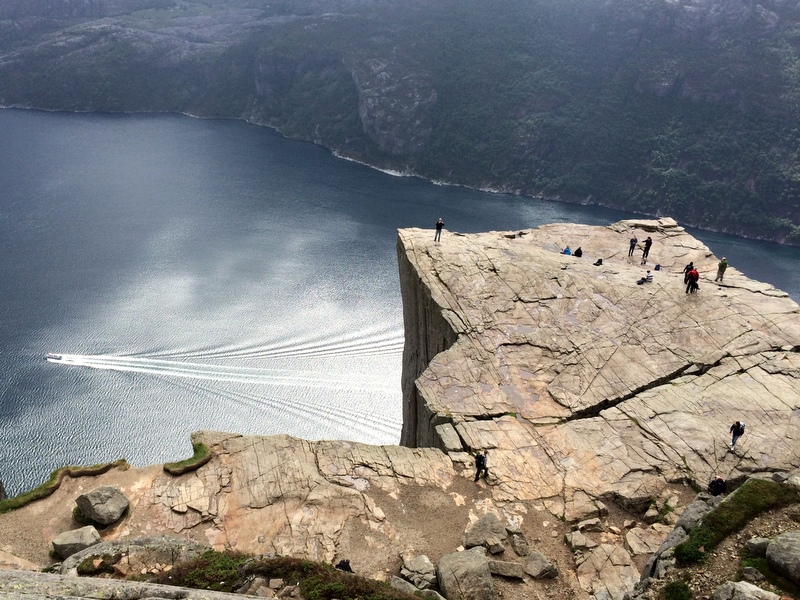
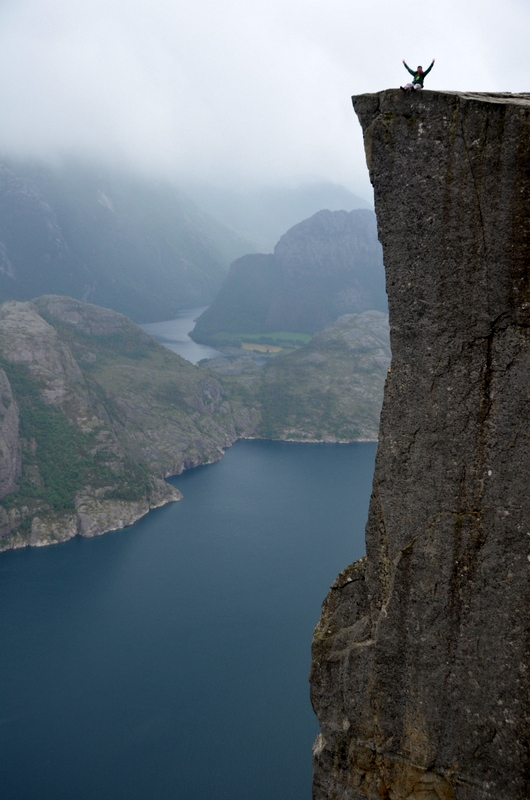
Several times we have chosen a holiday destination because of a specific tourist attraction. We had never considered Norway until we saw a picture of the Pulpit Rock, rising 600 meter above the water of the Lysefjord. We discovered that it was a doable hike, access from Stavanger. We booked a 10-day trip combining it with Bergen and Oslo. A very nice holiday, more pictures in the album Norway June 2014.

———————————————–
Japan, October 2014

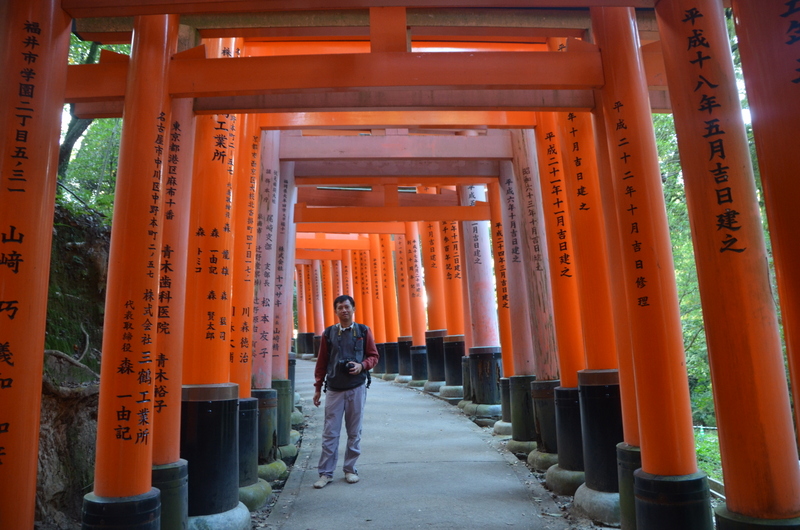
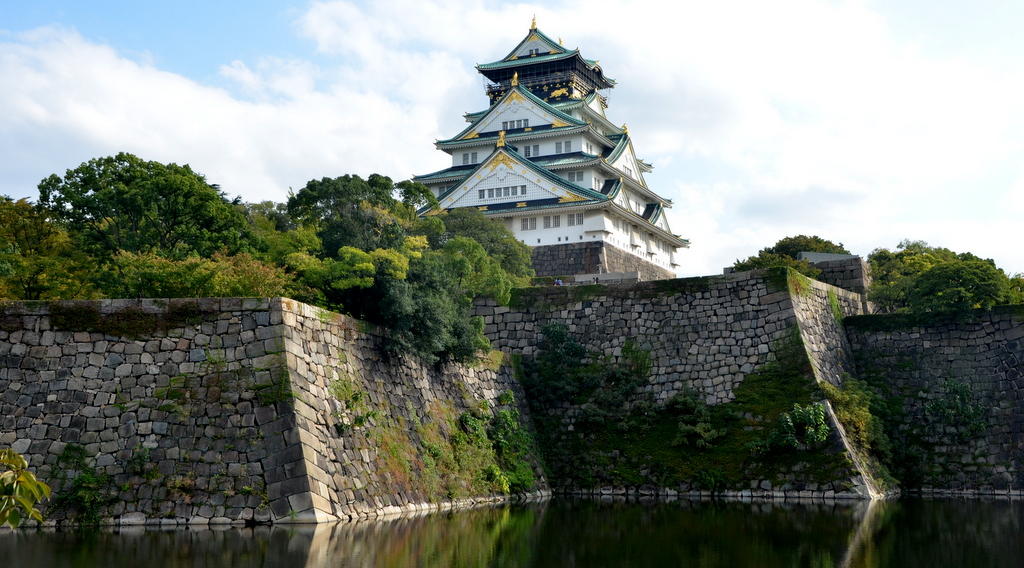
For many years we have been thinking about a trip to the Land of the Rising Sun. Would there be a language problem? We booked a 9-day trip, booked a flight to Osaka, where we stayed a few days. Then Kyoto and finally Wakayama. Osaka and Kyoto are well known, Wakayama not really, we went there especially because of our addiction to onsen, the Japanes hot baths. Three reports: Osaka, Kyoto and Wakayama. A country to visit again.

———————————————–
Melbourne, January 2015

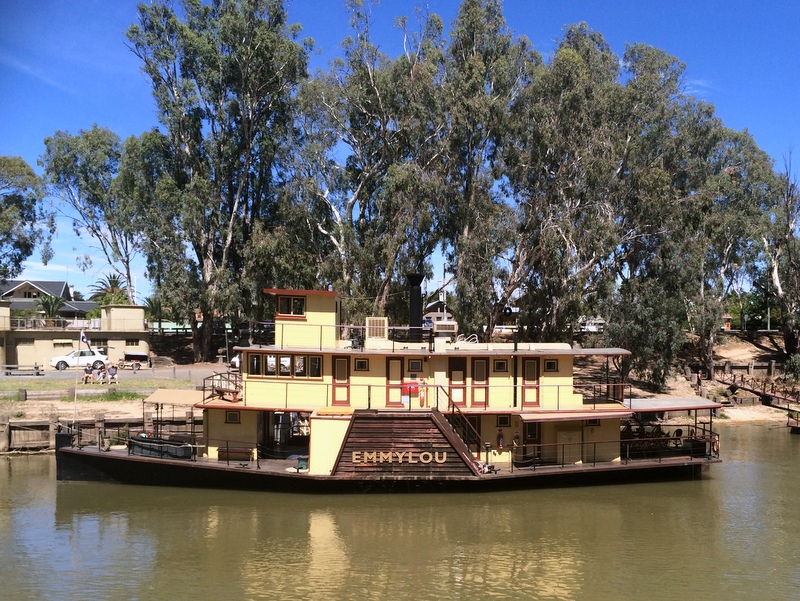
Another visit to our friends Pat and Roger in Melbourne We explored the town and enjoyed their hospitality. They took us on a trip to Bendigo (goldmines) and Echuca (paddle boats). Two albums, one about our stay with them, Melbourne, and a separate album about our trip, Victoria

———————————————–
China, September 2015

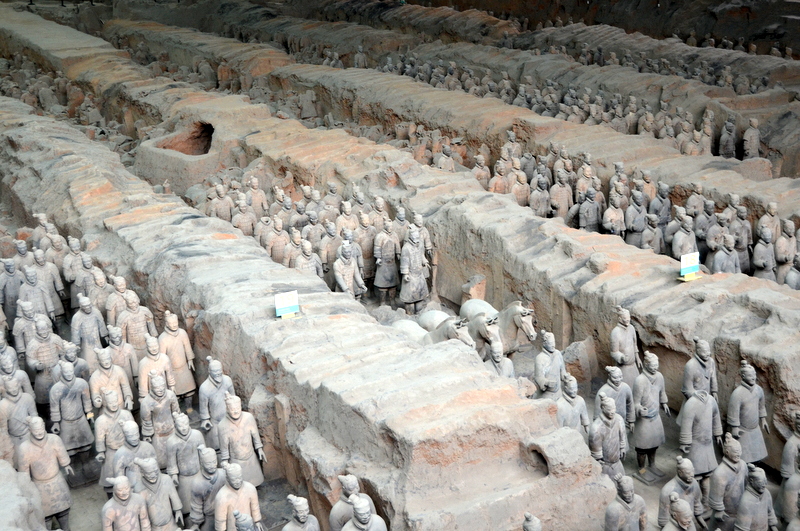
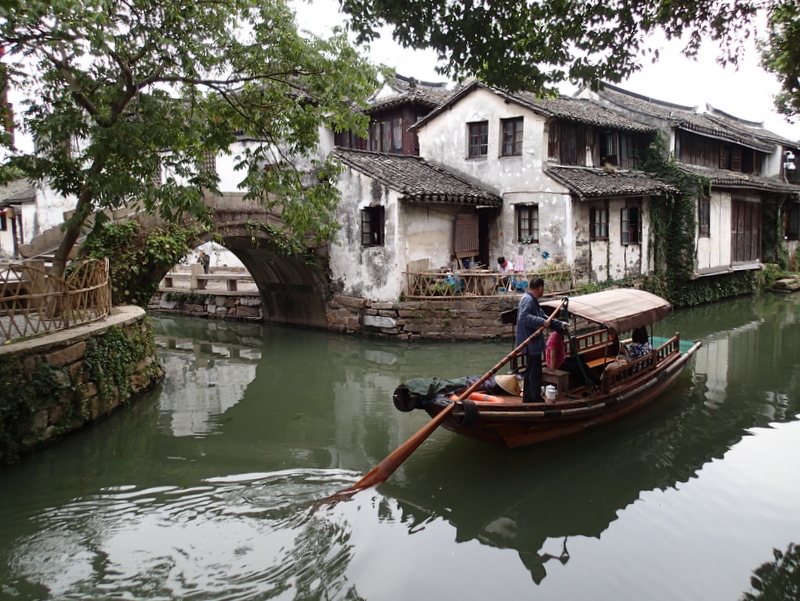
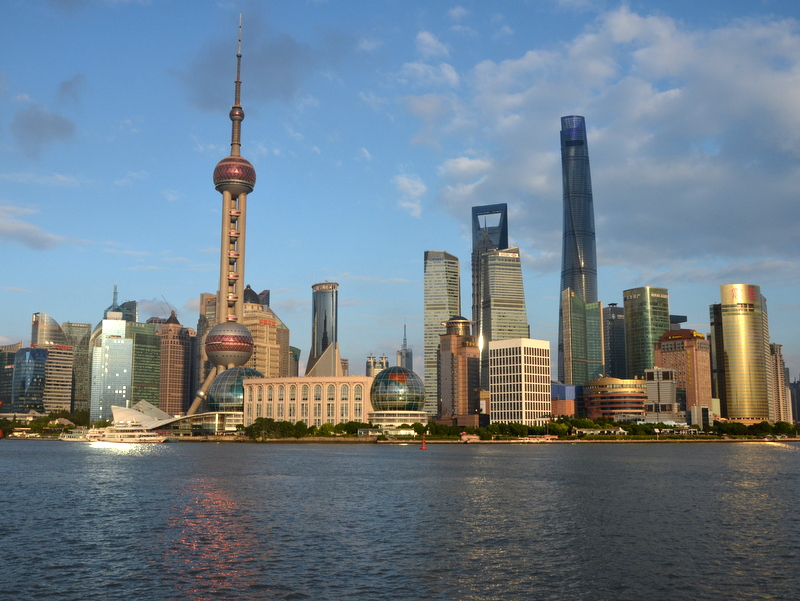
Our fourth trip to China, this time with our friends Pat and Roger. For them it was their first visit, Aric had organised the trip and was also our guide and translator. We started in Xi’an with its famous terracotta army. Next we went to Suzhou, where Aric and I had been before and after that to the water village of Zhouzhuang. Then they returned to Australia and we stayed a few more days in Shanghai. I created four albums about these holidays, Xi’an, Suzhou, Zhouzhuang and Shanghai.

———————————————–
Laos, November 2015

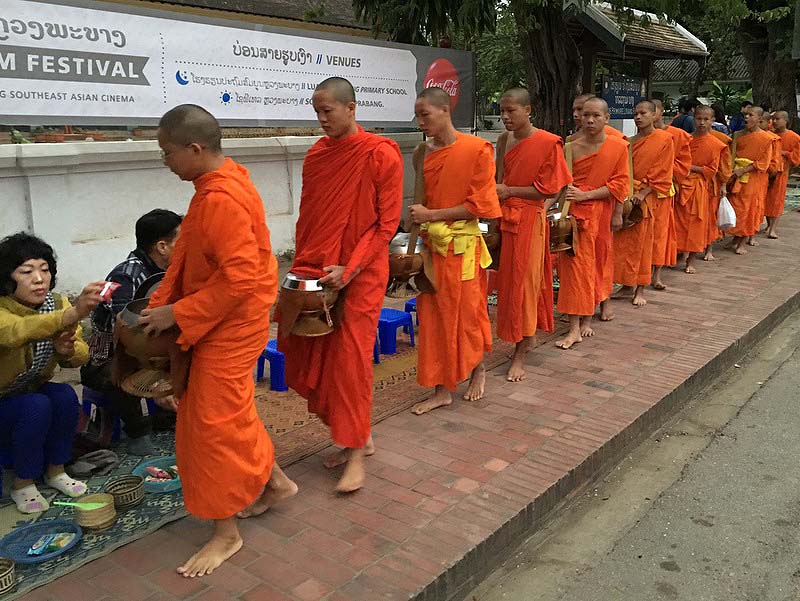
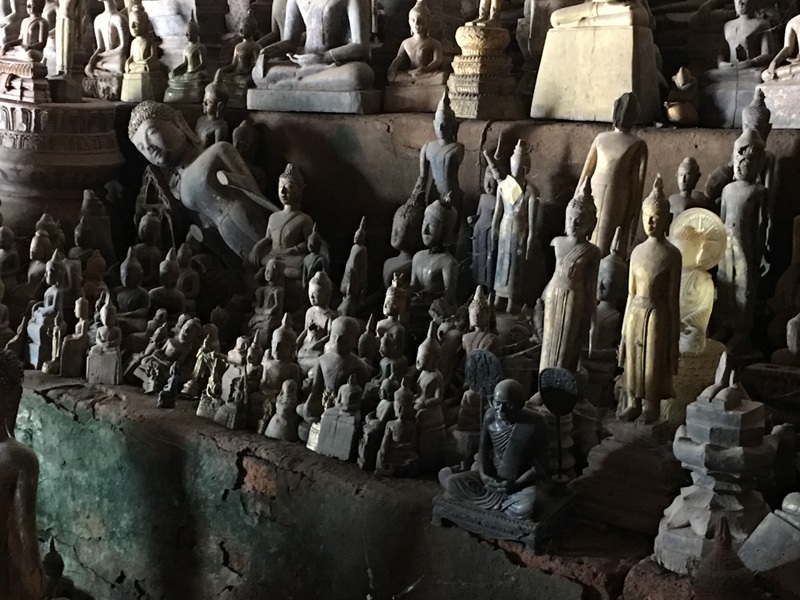
A few months later we made a short trip to Laos. Writing this report I discovered that I had written several albums about details of our trip, but never a comprehensive report. Here is a summary with links to the detailed reports. We took a flight to Luang Prabang, where we stayed a few days. We attended the (touristic) Alms Giving ceremony and visited many temples. We made two trips, one to the Pak Ou caves and one to the impressive Kuang Si waterfalls. On our way back to Vientiane we stayed two nights in Vang Vieng, where we visited another cave, the Tham CHang caves and made an interesting excursion in a Hot Air Balloon. Back in Vientiane we visited the Buddha Park.

———————————————–
Portugal, September 2016

When Aric and I visit the Netherlands , we try to include a short trip to another part of Europe. This time we decided to visit Portugal. I had visited Lisbon in the past, now we also visited Porto and a few other towns. A very pleasant and friendly country. Two albums, Part 1 about Lisbon, Sintra , Obidos and Porto. Part 2 about Aveiro, Monsanto and Evora

———————————————–
Taiwan, August 2017

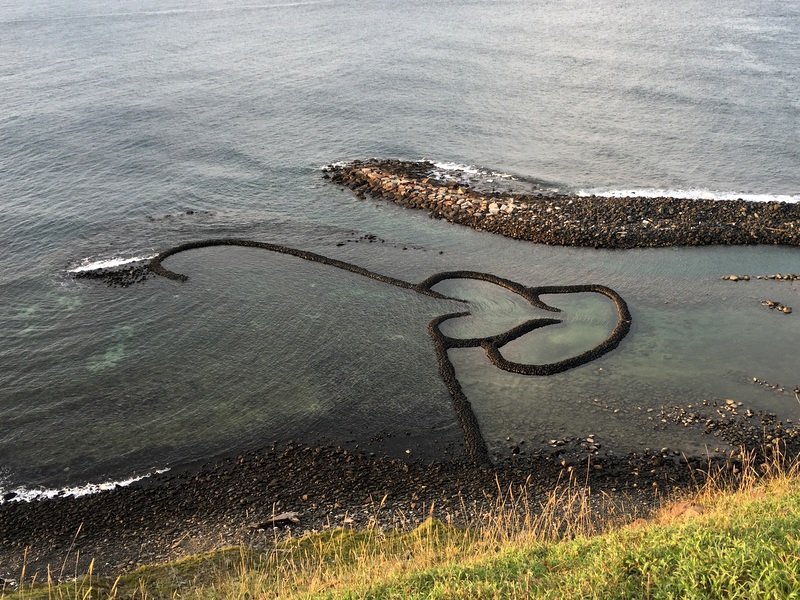
Our second visit to Taiwan (for Aric even his third). This time we wanted to explore the whole island, so we rented a car. But first we visited the Penghu islands, off Taiwan’s West Coast,. to see the Twin Hearts. A beautiful country, full of nature, culture, food and onsen. Better read the report for the details Taiwan, August 2017. .

———————————————–
Singapore, January 2018

A short trip to Singapore, to visit our friend ST Lee, explore the Gardens by the Bay, visit the Botanical Gardens and the National Museum. Here is a report Singapore 2018. I was so impressed by the museum that I created a separate album about it: National Museum, Singapore.

———————————————–
Japan, March 2018

We timed our second Japan visit so that we could attend the famous Hōnensai fertility festival on 15 March. We were hoping to see the Fuji mountain, expecting lots of sakura blossom and planning to visit as many onsen as we could find. We were very fortunate to achieve all these goals. I wrote a report about the highlights, Japan 2018, in which I announced more detailed albums, but that never materialised.

———————————————–
Bhutan, April 2018

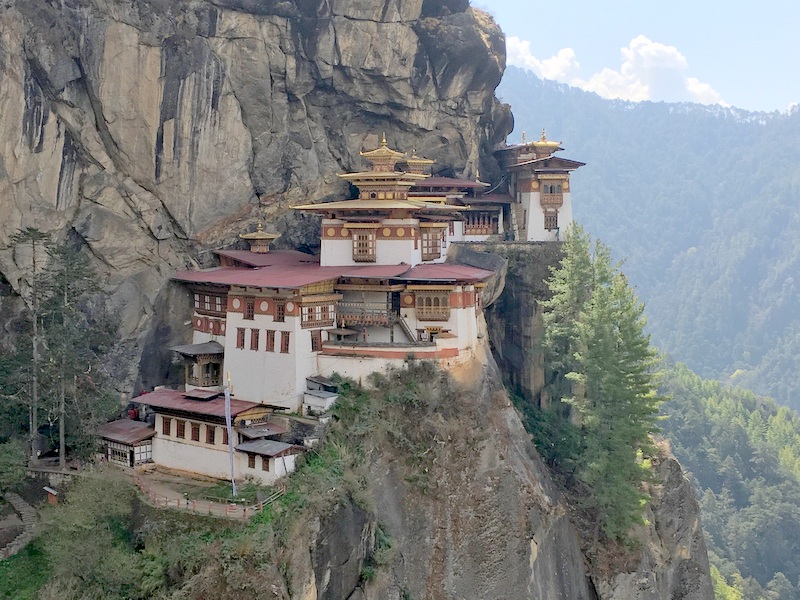
One reason that I didn’t write detailed reports about our Japan trip was that one month later we visited Bhutan. You can not travel on your own in this isolated country, we booked a tour for the two of us and were very lucky with our guides, who became friends almost immediately. There were many highlights on this 10-day trip, culminating in our climb to the Tiger’s Nest. Here is a travelogue with many more photos: Bhutan 2018.

———————————————–
France, August 2018

My former principal is living in Southern France, we are friends and he invited us to visit him. We took a flight to Montpellier and rented a car. There are many historical places in that part of France, we visited quite a few of them. We enjoyed a few days the hospitality of my friend and his wife. Two reports about these holidays. France 2018, part I about Nîmes, Arles, Avignon and Pont du Gard. Part 2 about Robiac, Millau, Albi, Carcassonne and Cap d’Agde.

———————————————–
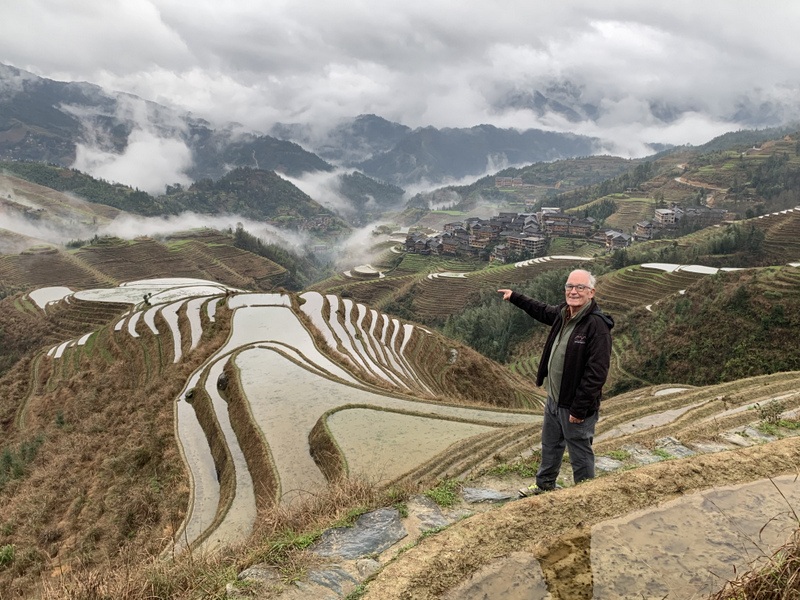
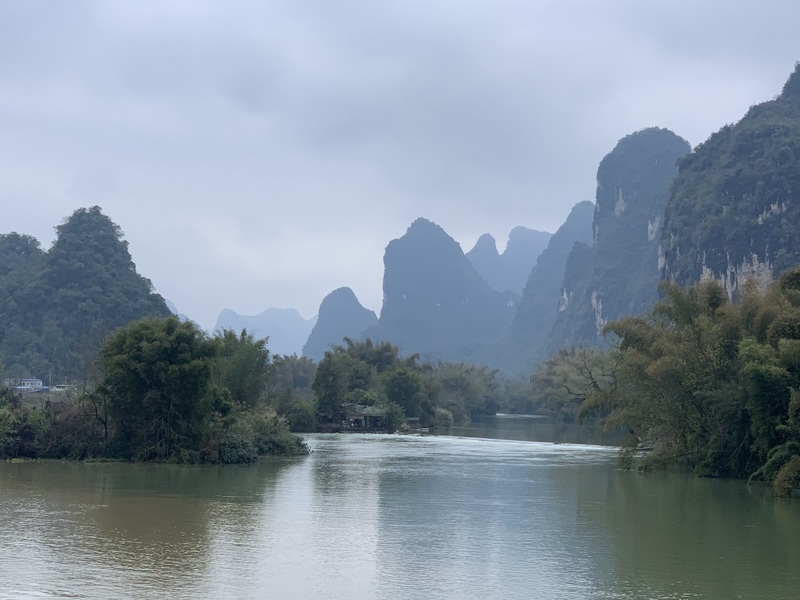
Guilin , March 2019

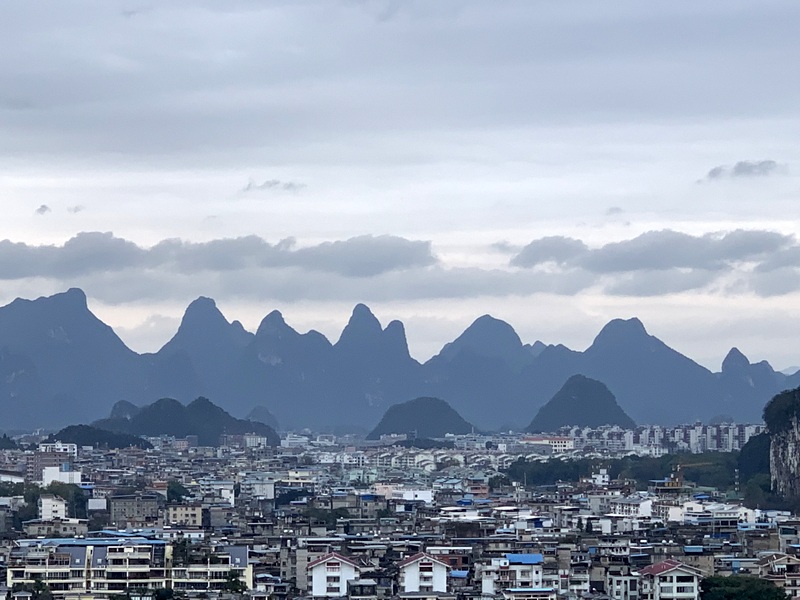
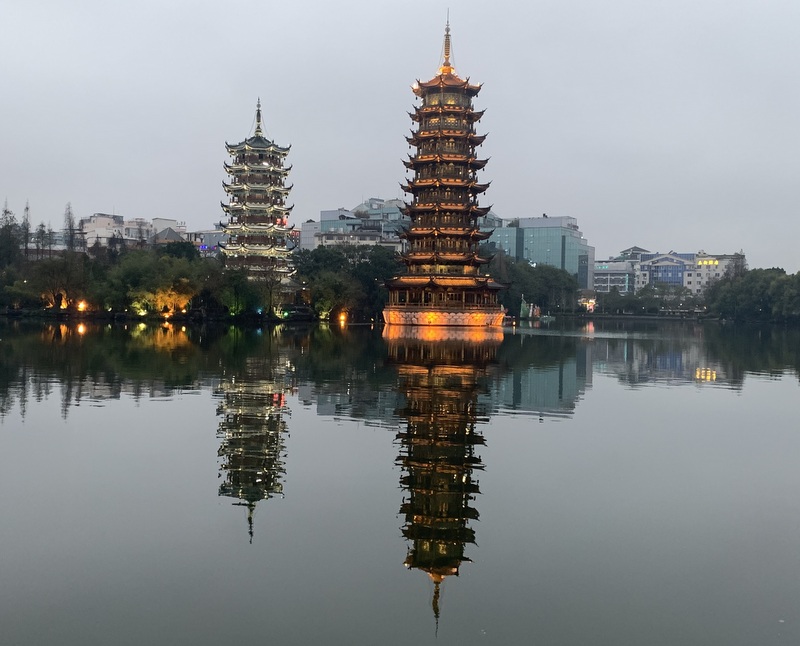
There is so much to see in China. This time we visited Guilin in Southern China, famous for its limestone karst hills. We explored the town and its surroundings. the weather was not very favourable, cold and grey. We stayed two nights in Longji with its terraced rice fields. Next we visited Yangshuo, the main tourist center of the Guilin region. In my report Guilin, March 2019 I announced three more albums, another promise I never kept.

———————————————–
Paris, April 2019

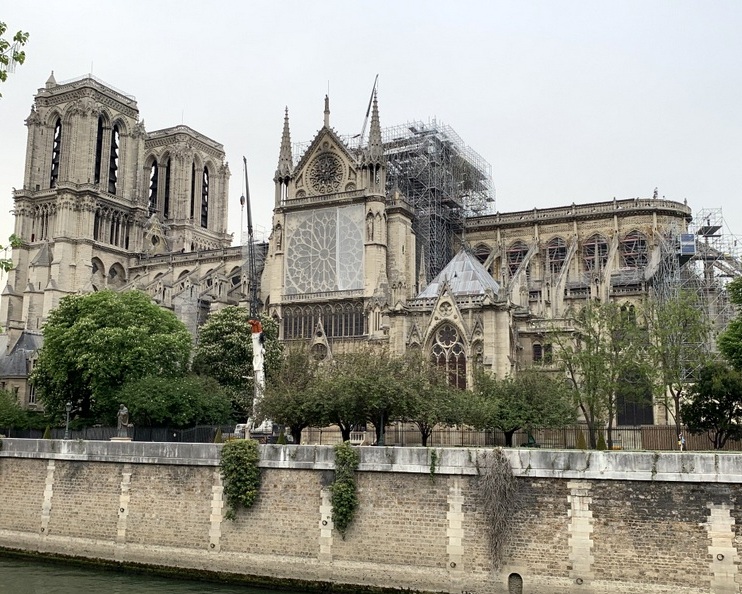
When Aric’s sister visited us in Amsterdam, we still found time to spend a few days in Paris. We managed to see quite a few of the Paris highlights, one of then, the Notre Dame, sadly destroyed by fire just one week before we arrived. More photos in Paris, 2019 .

———————————————–
Italy, May 2019

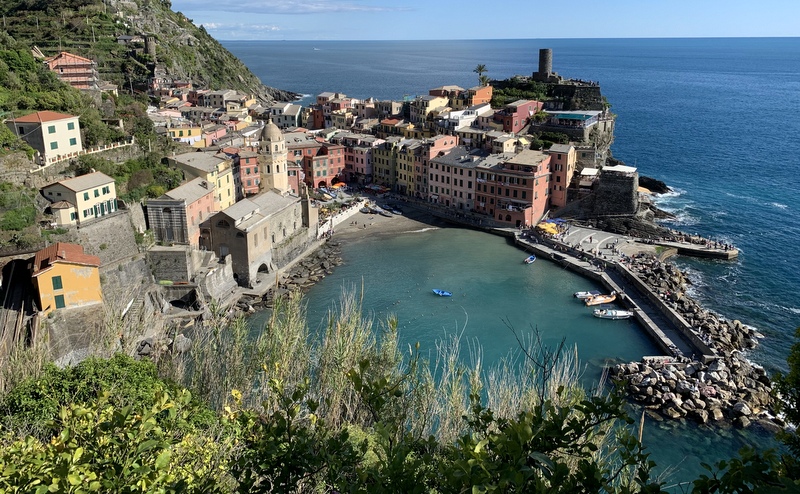
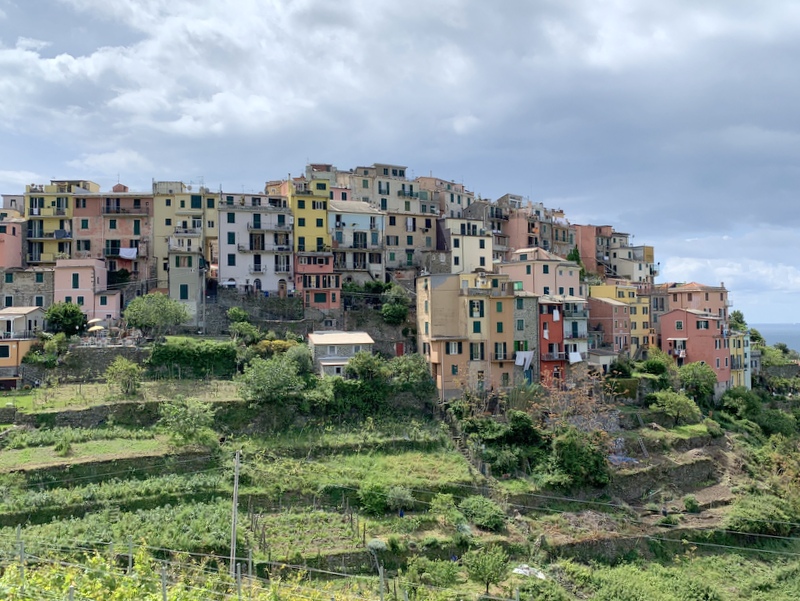
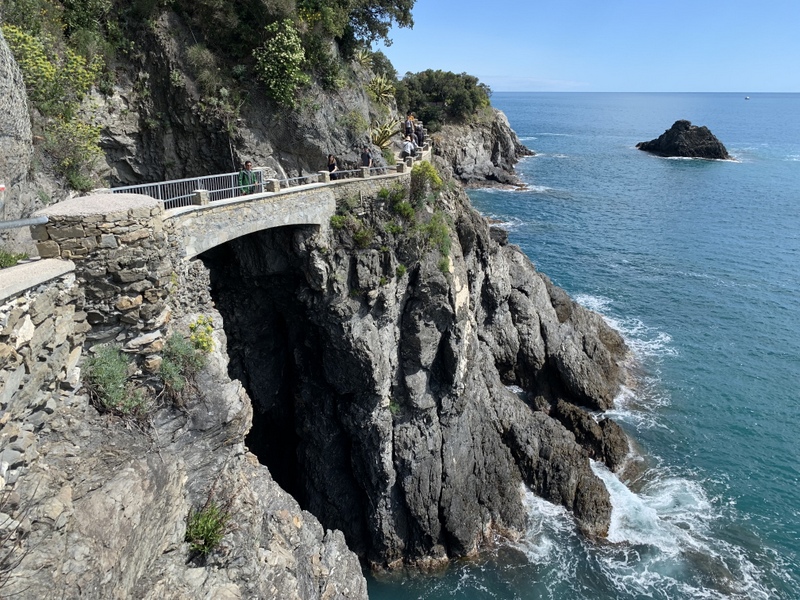
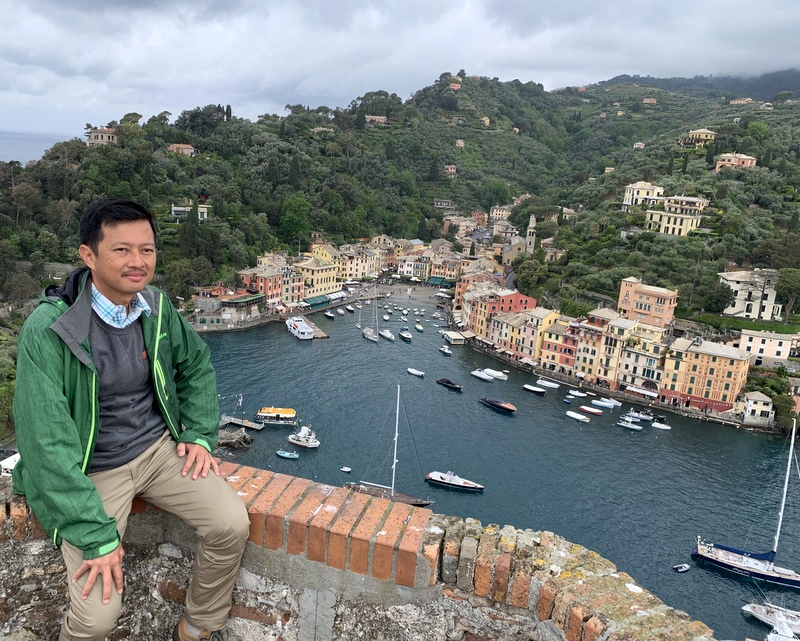
During our stay in the Netherlands, after visiting Paris with Aric’s sister, we made a short trip to the Cinque Terre in Italy. We stayed in La Spezia and made daytrips to the various fishing villages, sometimes walking from one village to another. Here is the travelogue: Cinque Terre, May 2019

———————————————–
Singapore, December 2019

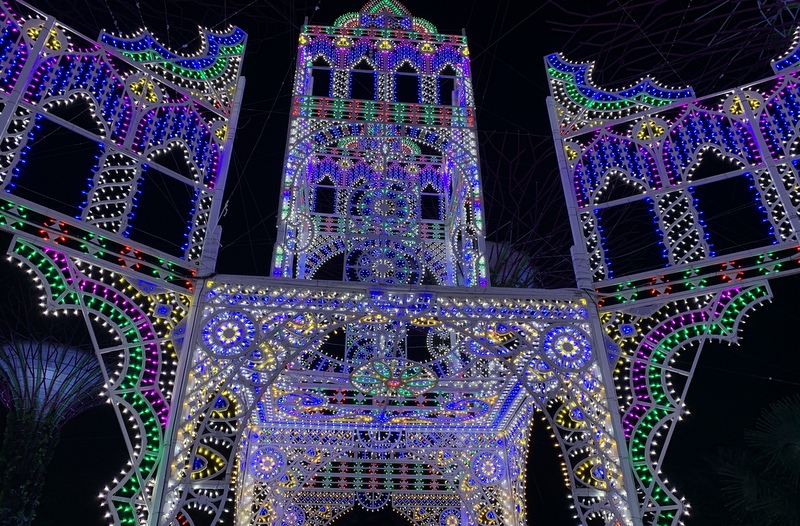
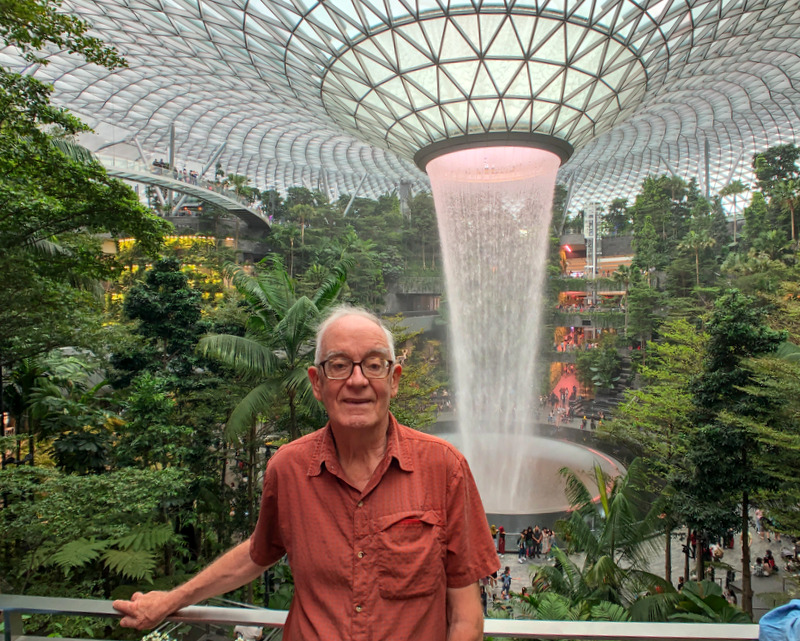
A social Singapore visit to meet friends and to see the Christmas decorations. In Orchard Road they were disappointing, but in the Gardens by the Bay quite spectacular. We also visited the new airport at Changi and the Buddha Tooth Relic Temple. And our friend ST Lee invited us for a ballet performance of the Swan Lake. Here is the report: Singapore 2019

That was our last traveling trip abroad. Of course we had plans for 2020, another China trip with Aric’s family and in summer a visit to Iceland with its waterfalls, glaciers and hot springs. But then came Covid-19, the borders were closed in March 2020 and still are.

We have been very fortunate that we were able to visit so many beautiful places. Those times may never come back..

Paris, April 2019

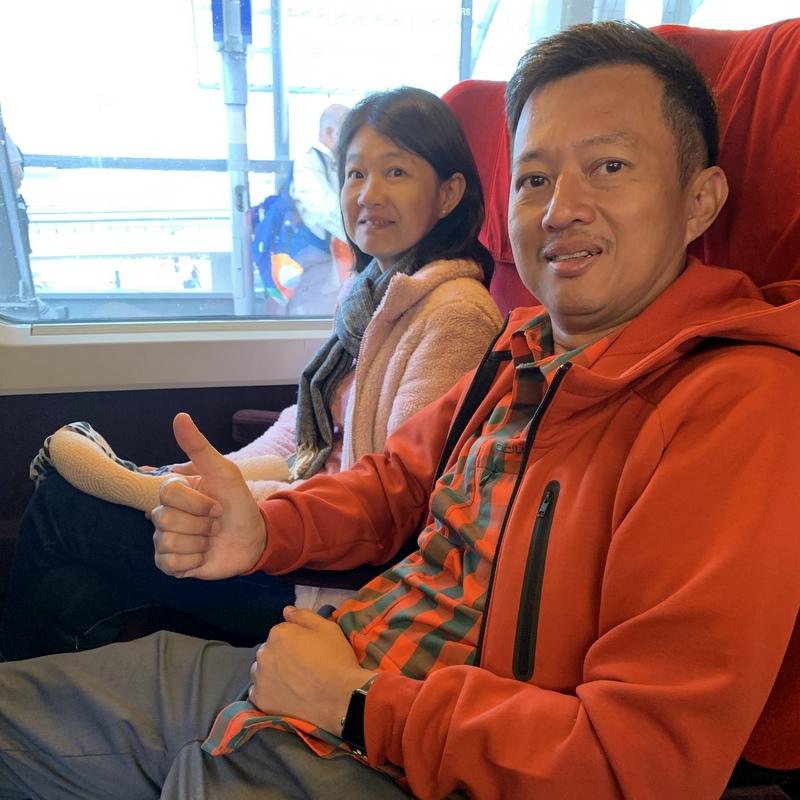
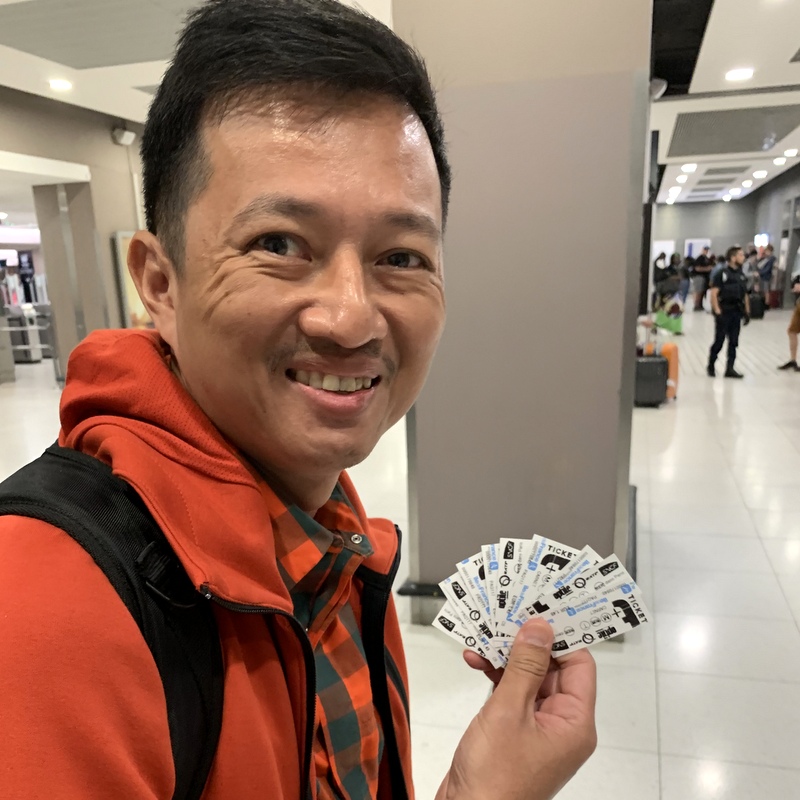
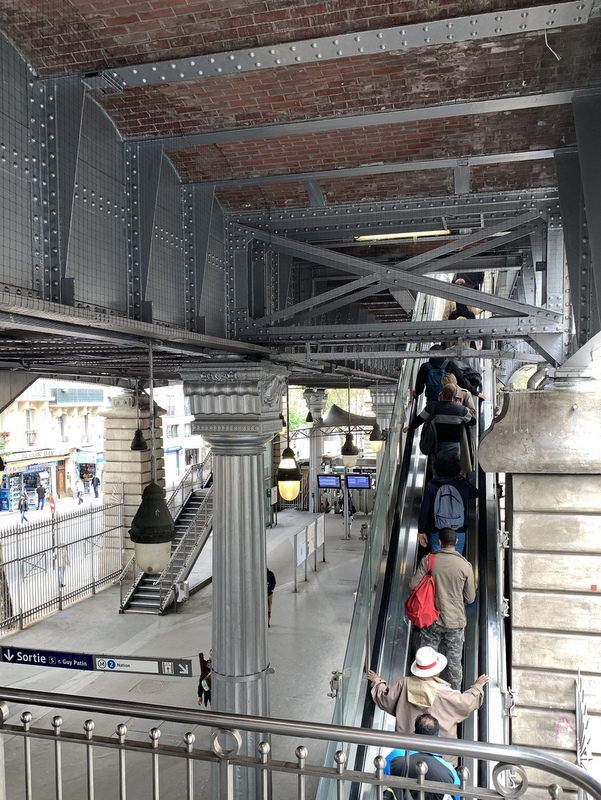
During Aei Ling’s stay in the Netherlands, we decided to visit Paris a few days. By train! The fast Thalys train takes only a bit more than three hours to reach the Gare du Nord. From there to our Airbnb we took the Metro. It has been many years ago that I visited Paris, they still use the old ticket system 😉

Aric had discovered and booked an Airbnb with a view! Located on the tenth floor with a balcony. Metro and supermarket around the corner.

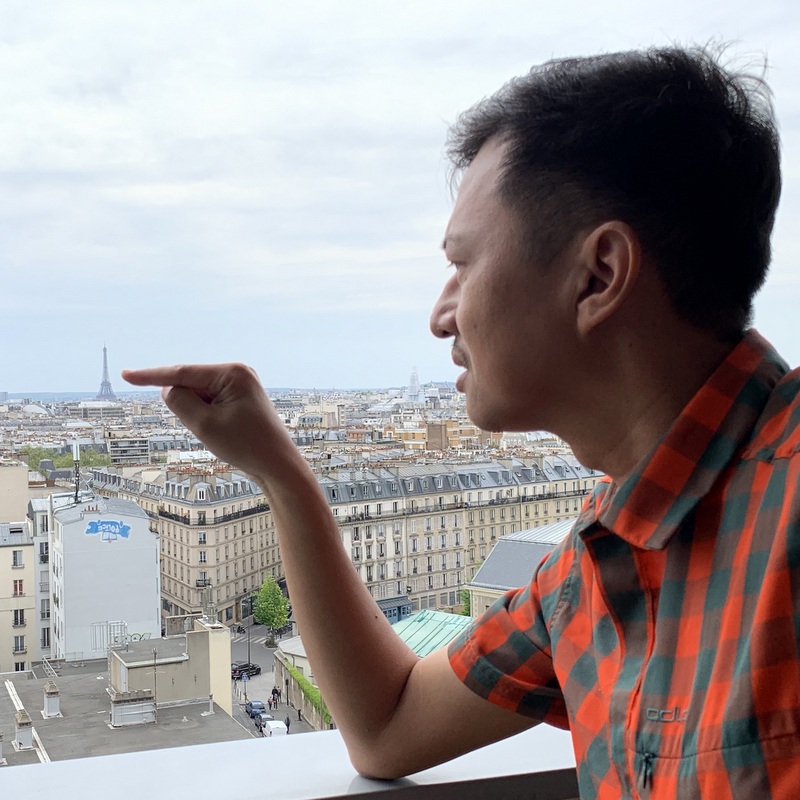
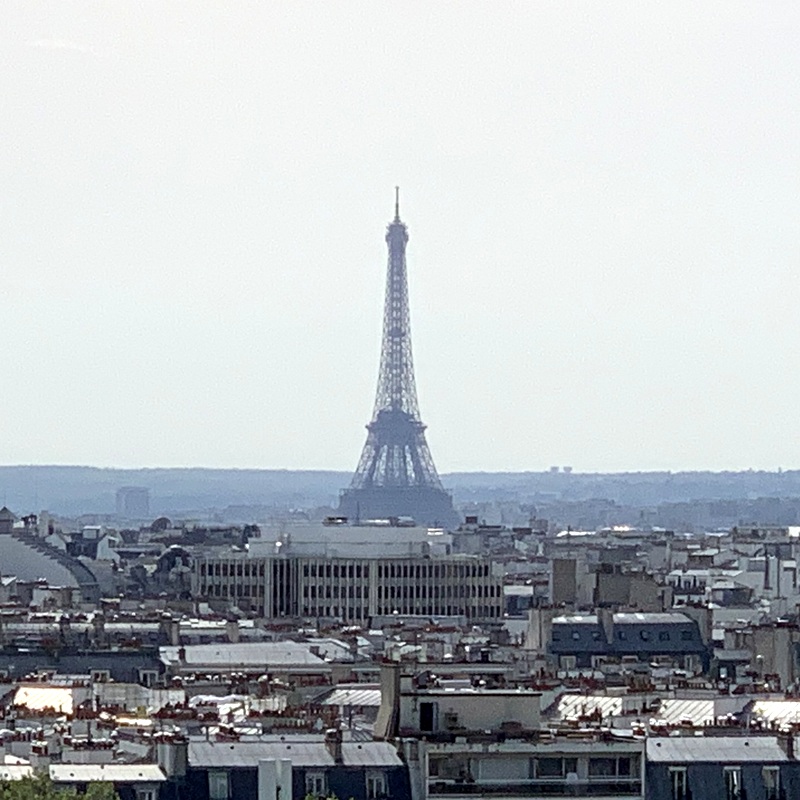
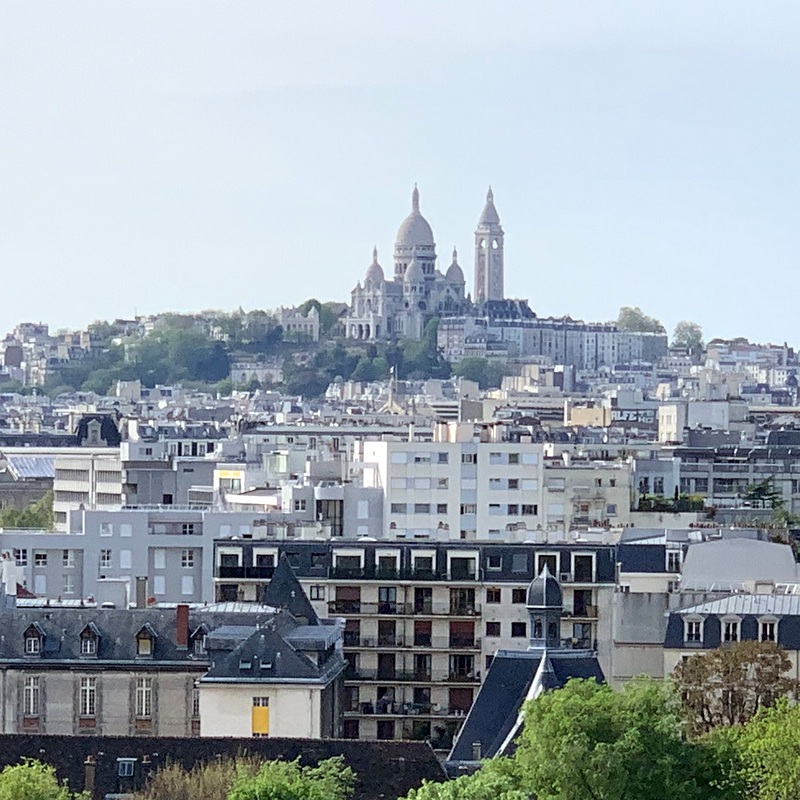
From the balcony we had a view of the Eiffel tower, the Sacré-Cœur and several other Parisian landmarks, like the Pantheon and the Notre Dame.

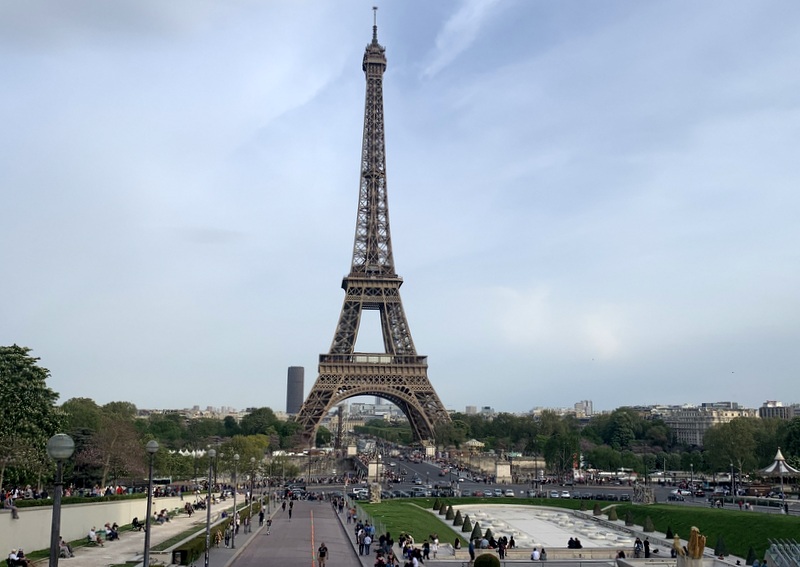
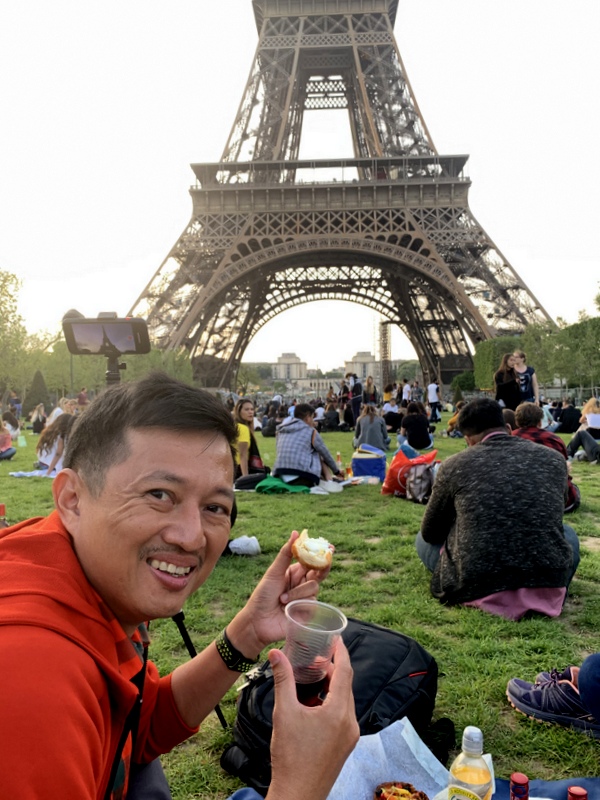
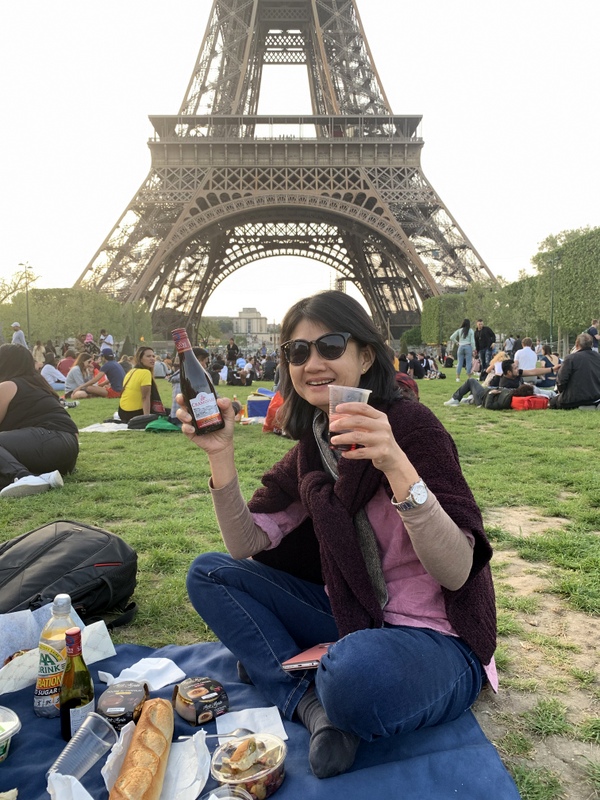
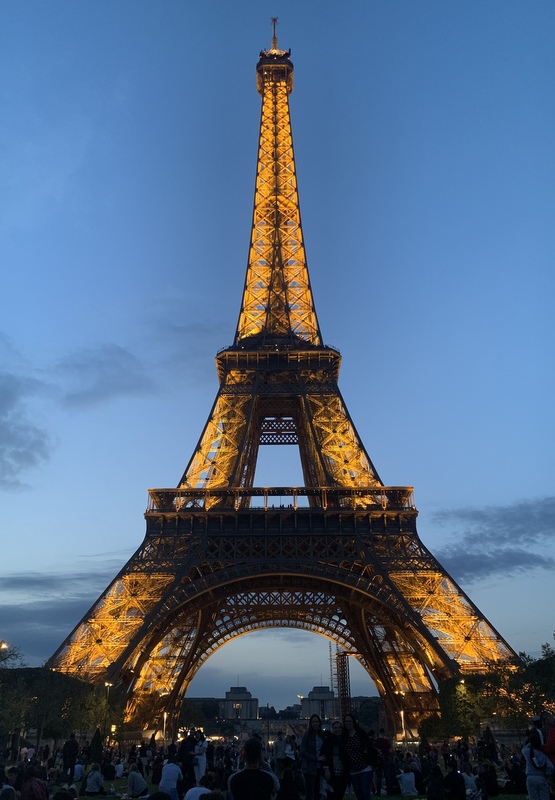
After some rest and a visit to the supermarket, we decided to have a picnic dinner at the foot of the Eiffel tower! Here is a view of the tower from the Palais de Chaillot, at the other side of the Seine river.

After taking “tourist” pictures from its terrace, we descended to the river, crossed the bridge and walked past the tower to the Champ de Mars.

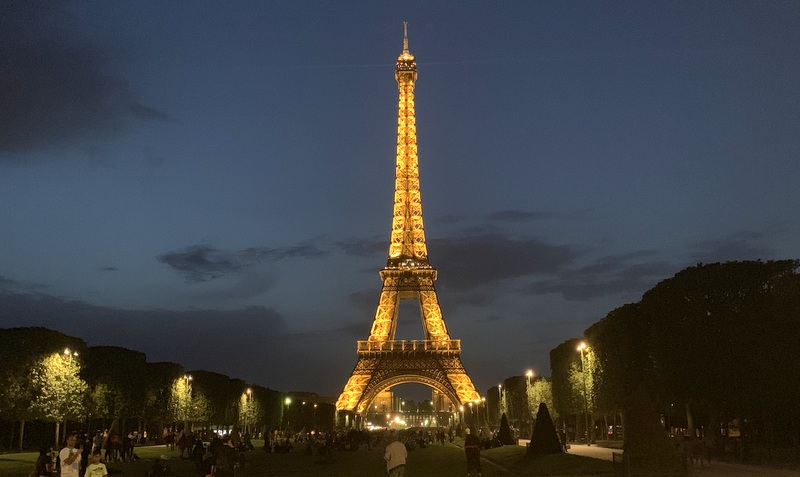
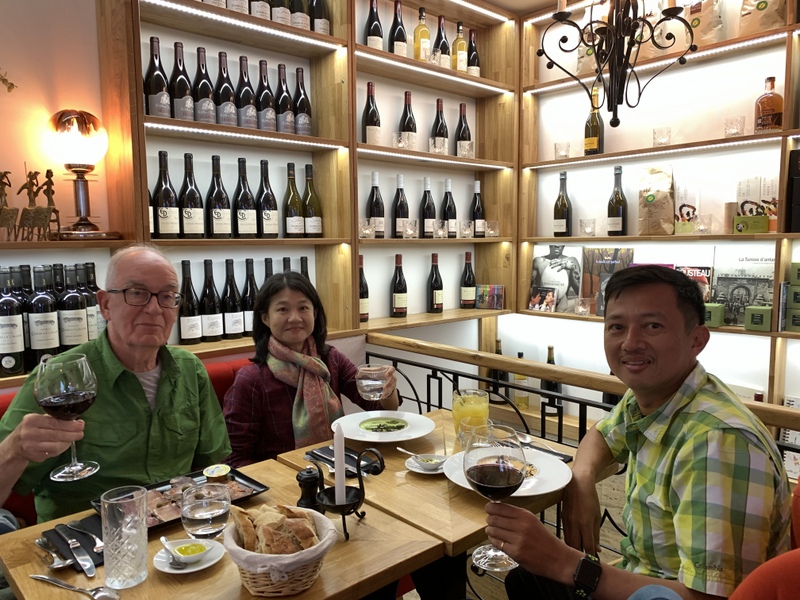
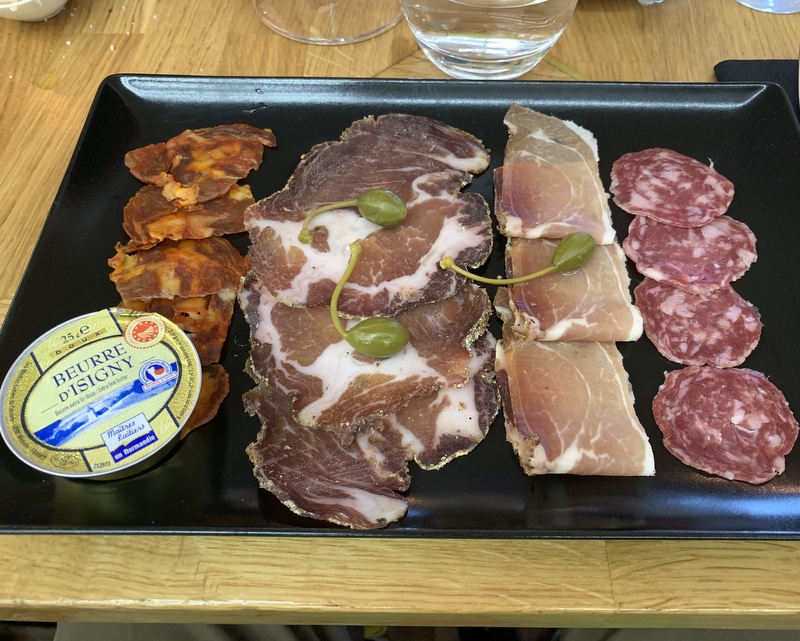
Many hundreds of tourists were having their food there and we joined them, with wine, cheese, saucisson and baguette. Really fun.

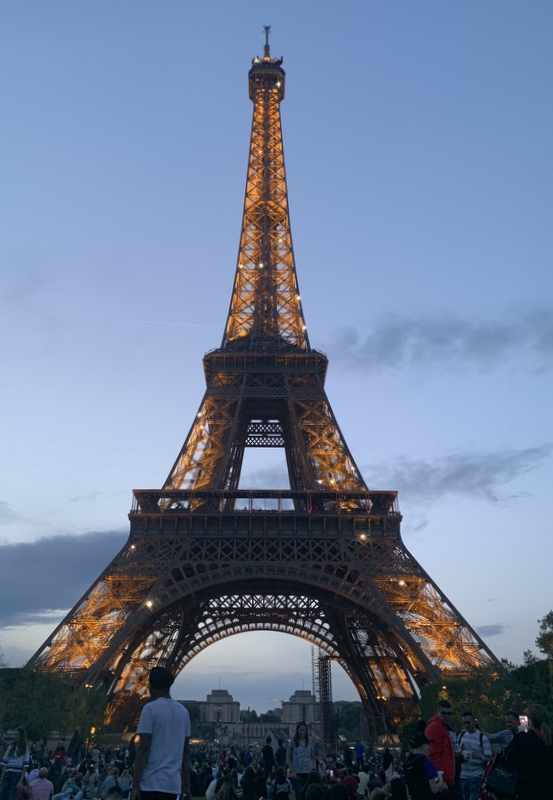
While the sun was setting, slowly the lights on the tower came on, some blinking, like a gigantic christmas tree.

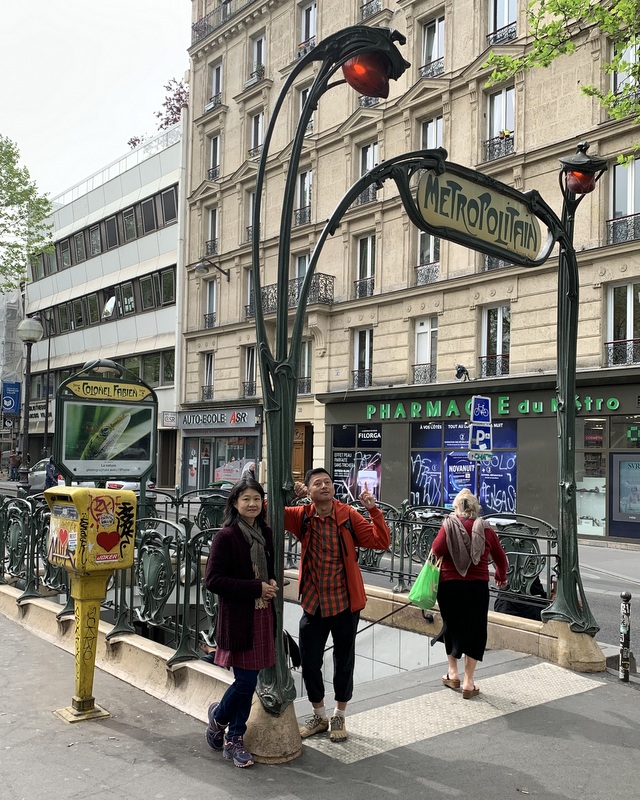
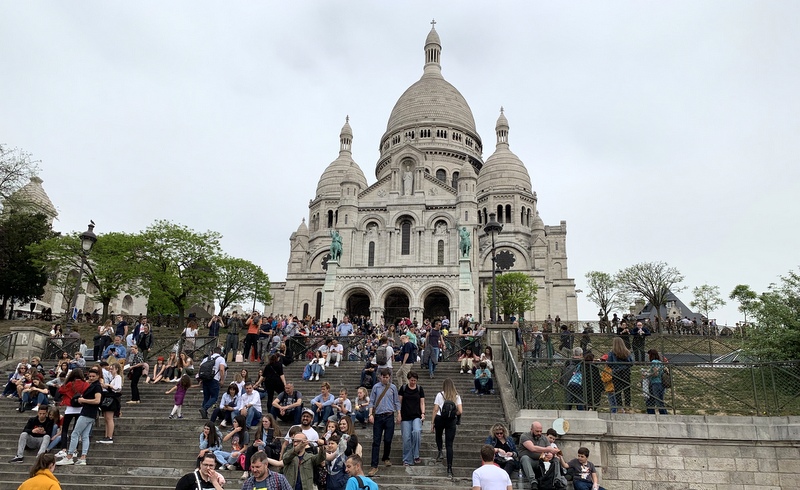
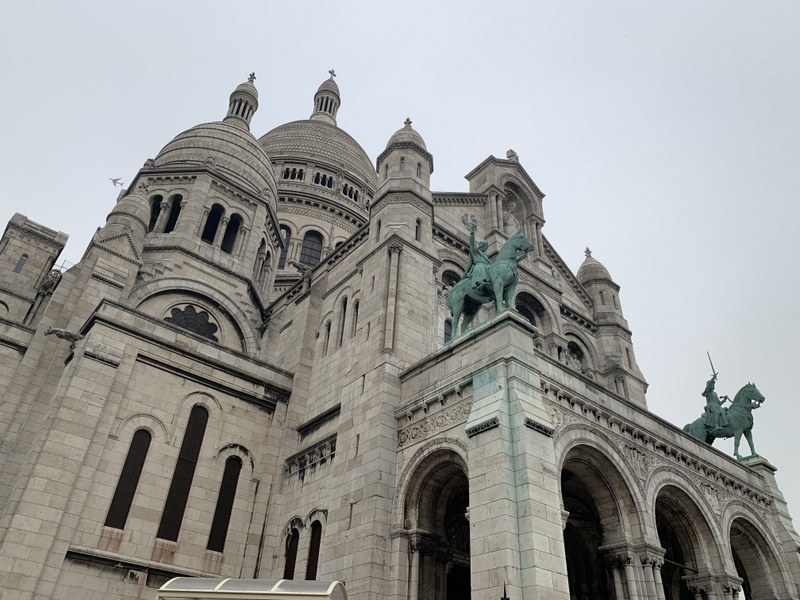
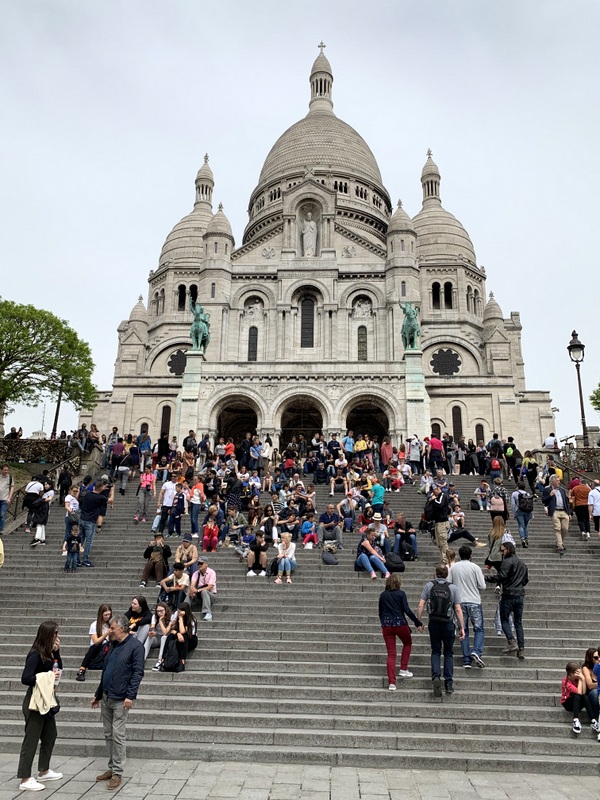
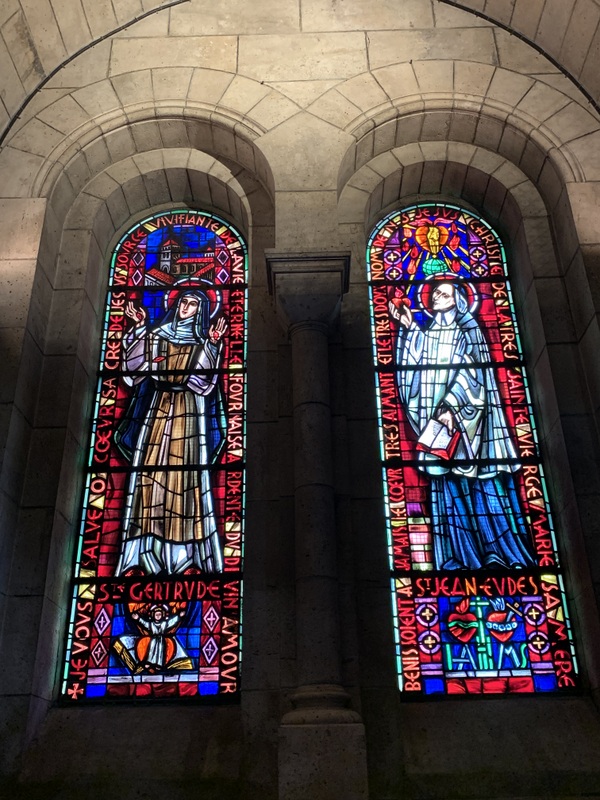
The next day we started with the Sacré-Cœur, we went there by Metro. I love the Art-Nouveau entrances of the Metro stations, dating back to the early 20th century. The basilica of the Sacred Heart is not an old church, construction on the top of the Montmartre Hill was completed in 1914.


It is the second most visited monument of Paris, so we were not the only visitors 🙂

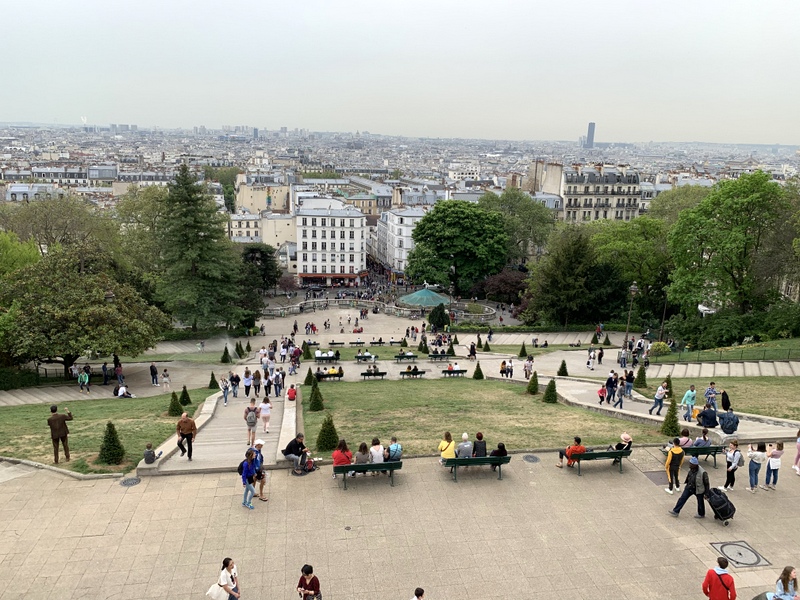
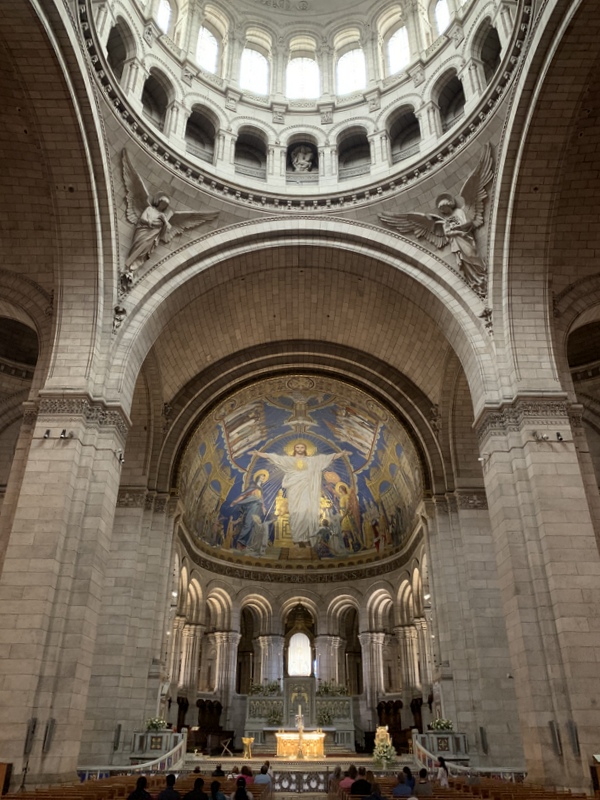
The Butte Montmartre is the highest of the seven hills of Paris, if the sky is clear, the views are extensive. It was quite grey and a bit hazy during our visit, in sunny weather the church is bright white and sometimes nicknamed the “Sugar Cake”. We had a look inside the church, but did not climb up the tower.

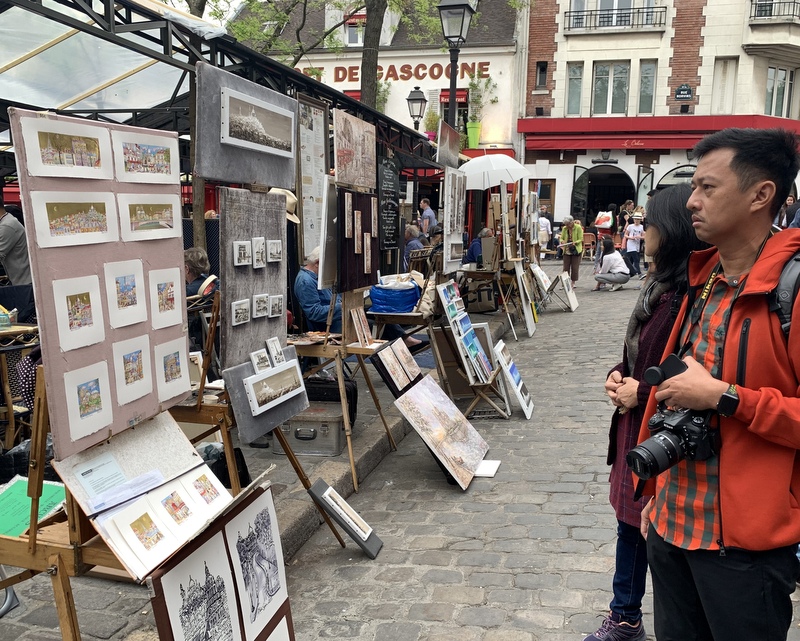
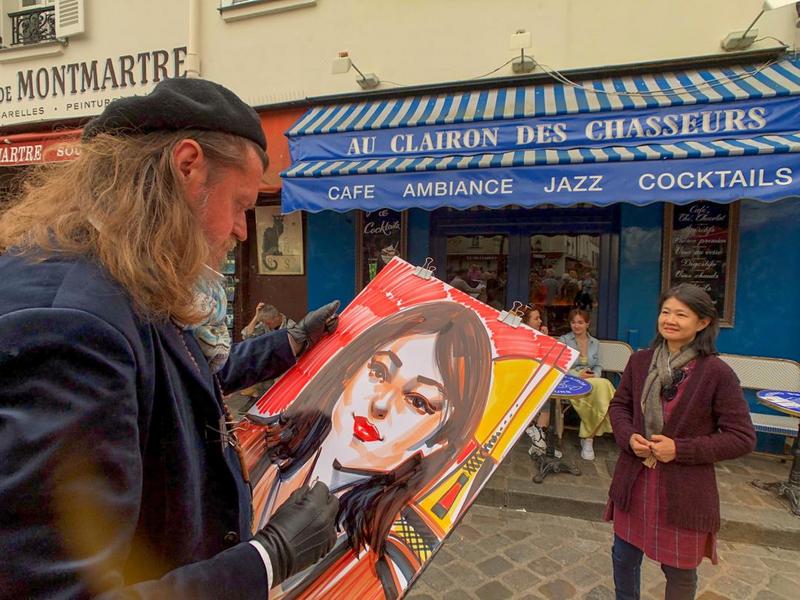
Next we walked to the nearby Place du Tertre, where dozen if not hundreds of artists try to earn some money by painting tourists. Aei Ling could not resist the temptation to have herself painted ..:-)

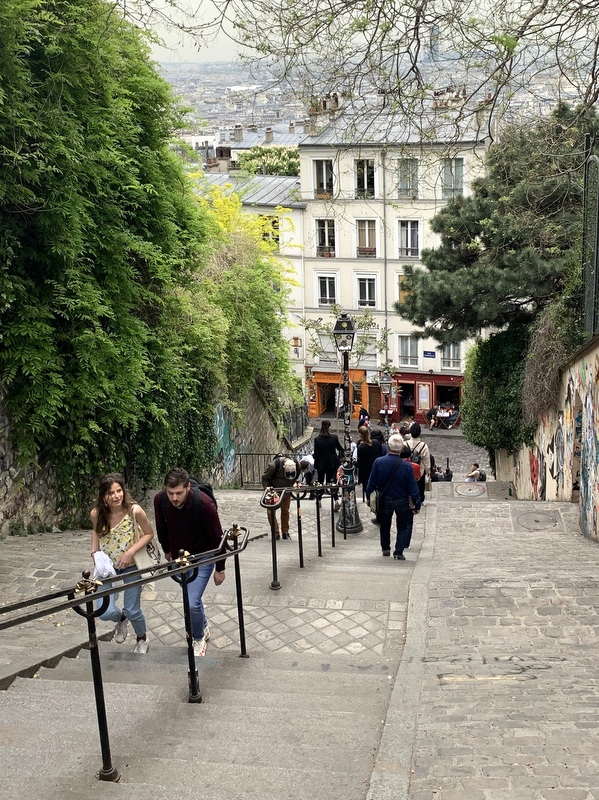
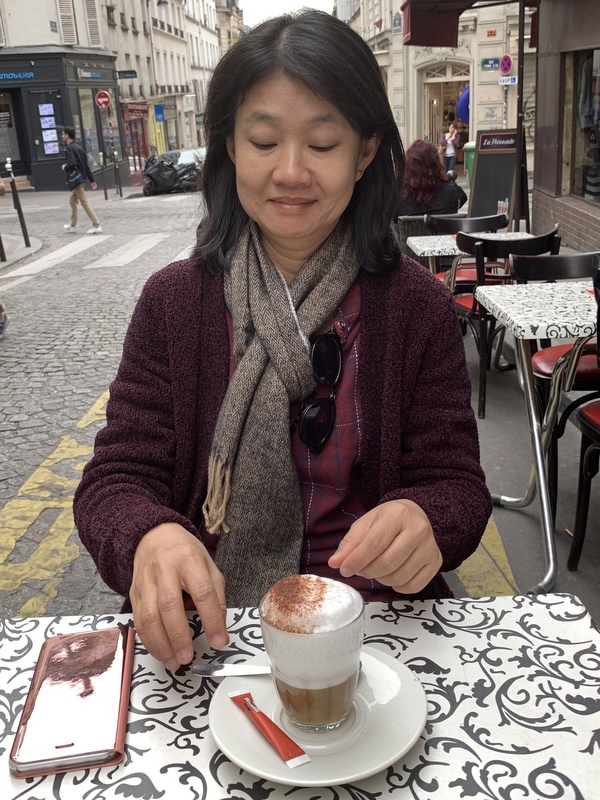
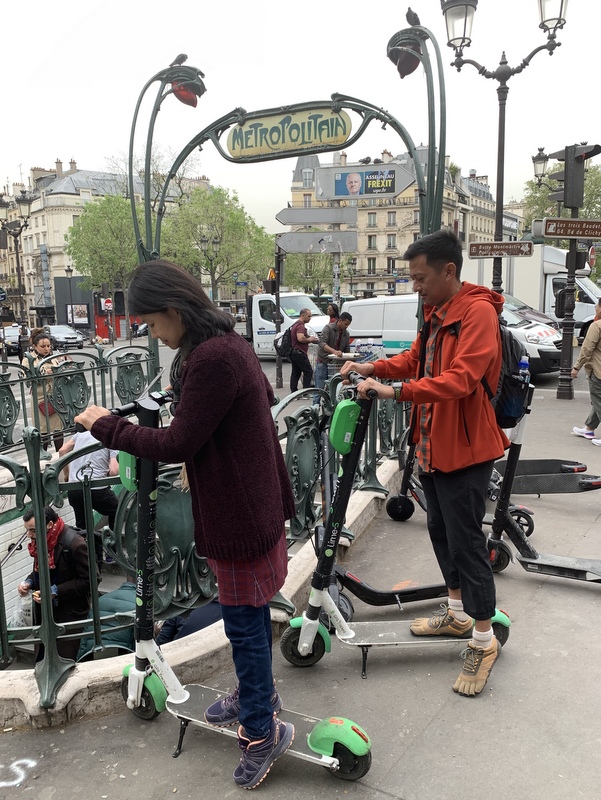
We walked down the steep streets from Montmartre and had a cup of coffee. The electric scooters are very popular, you can hire them everywhere, but we took the Metro again.

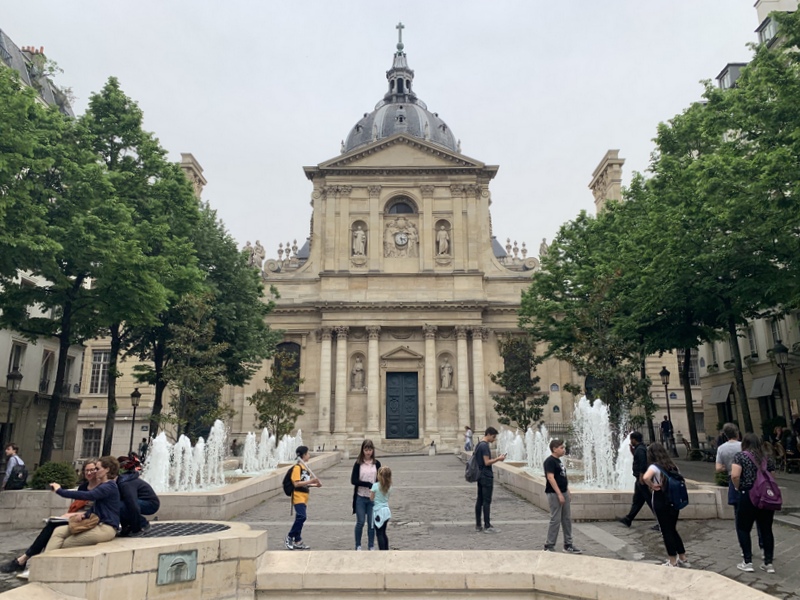
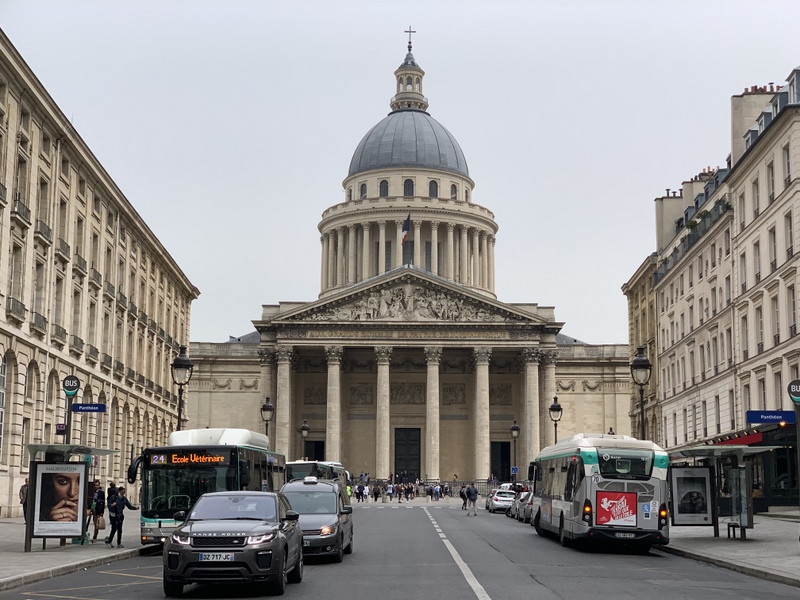
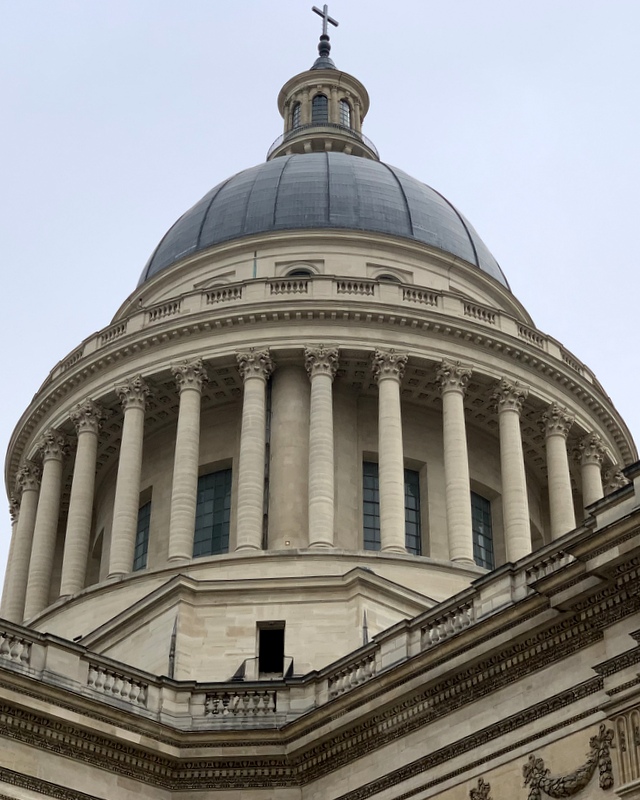
Our next destination was the Notre Dame, but on our way we first had a look at some other monuments. Left the Sorbonne, the famous university of Paris, and right the equally famous Pantheon, burial place of many French celebrities.

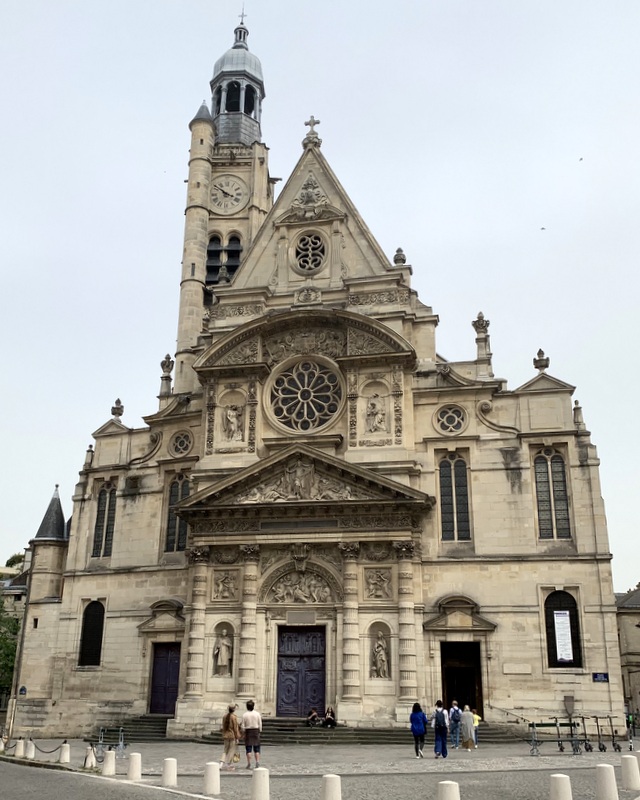
Left a close-up of the Pantheon, in the center the Facade of the Faculty of Law (with a young doctor in front of it), and right the church of Saint-Etienne-du-Mont, next to the Pantheon. It is a very nice neighbourhood of Paris.

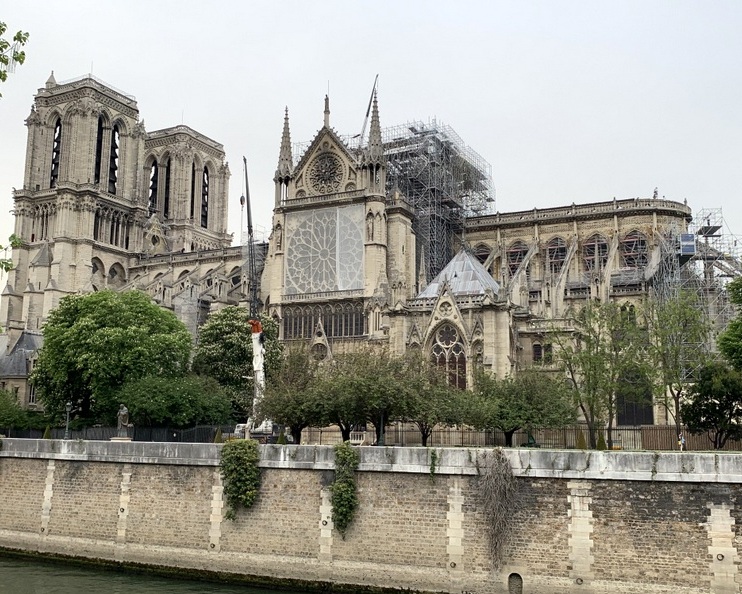
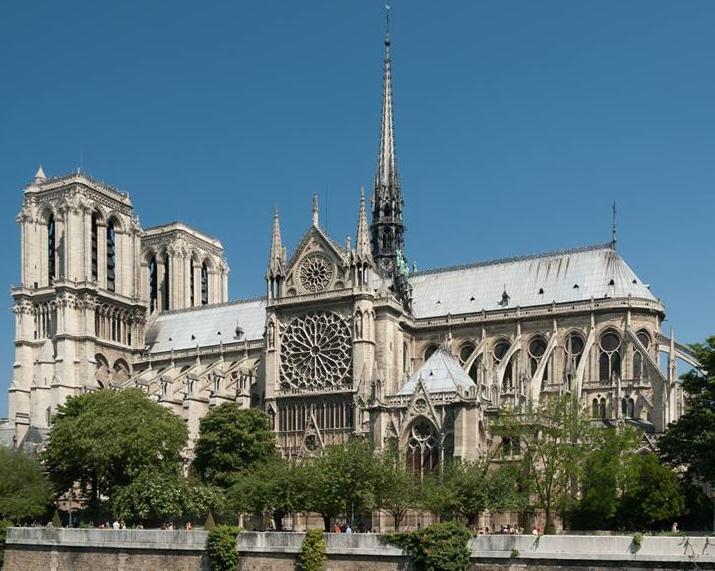
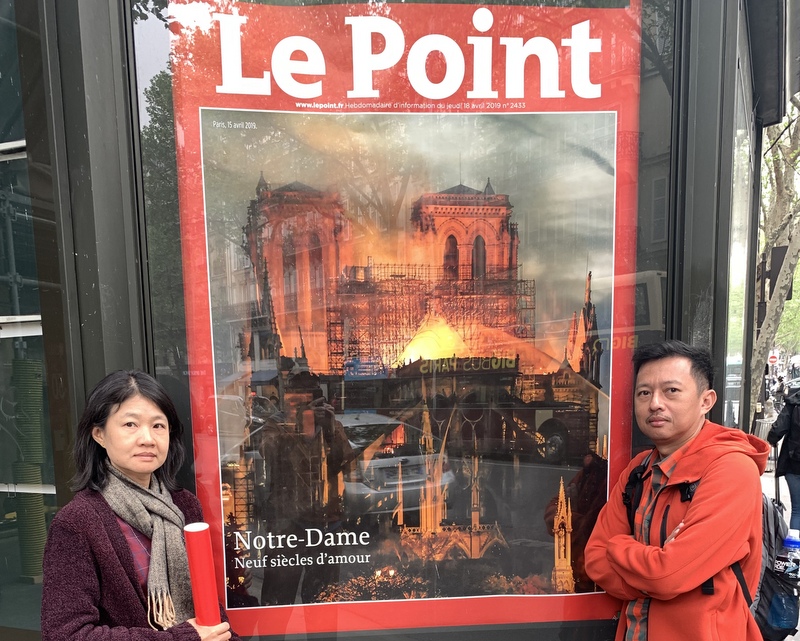
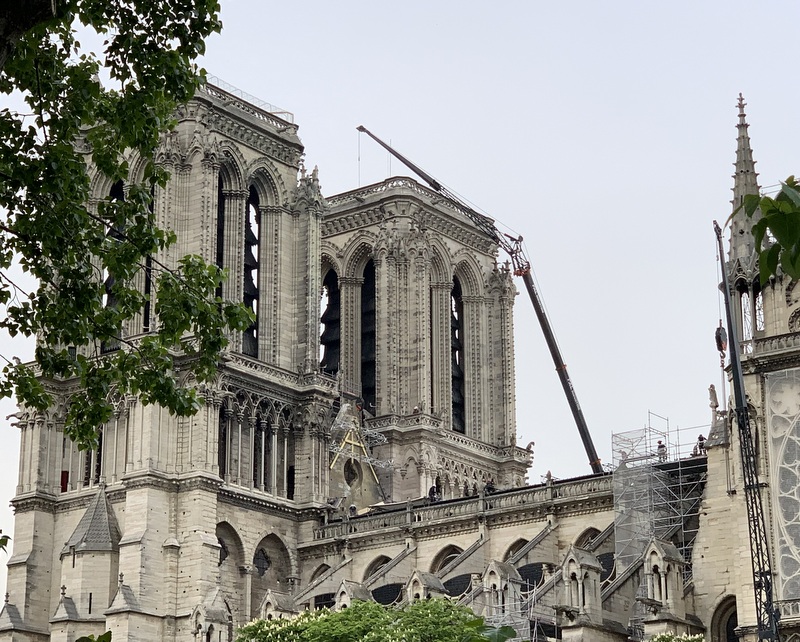
One week before our arrival, a devastating fire had destroyed the spire and the roof of the Notre Dame. Here are two photos. One (taken from the Internet) with the church in its full glory, the other one how it looked during our visit. Spire and roof have disappeared.

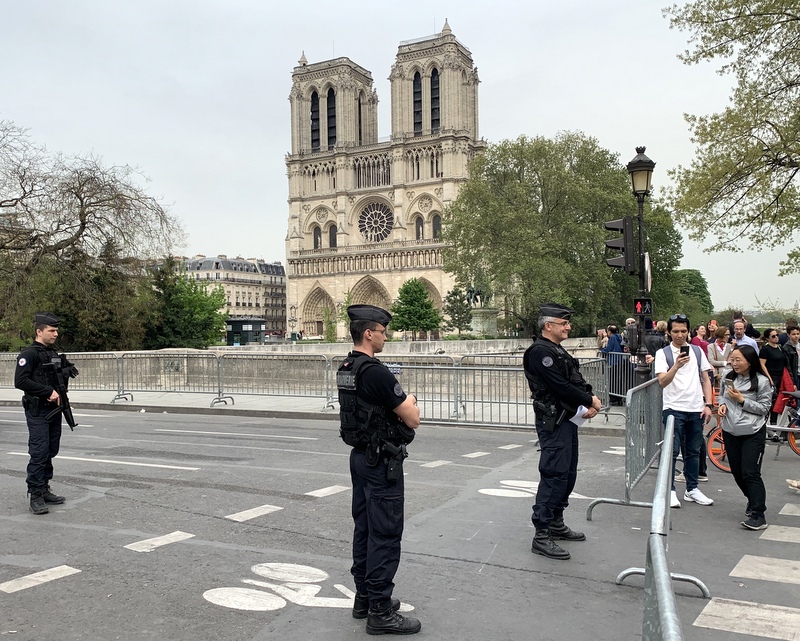
Of course many tourist wanted to see the destruction. The region around the church was cordoned of, but from across the Seine you had a good view. Protection work was going on.

It had been a long day, we were tired and decided to have a microwave dinner at home. The last day we would go out for a real French dinner 🙂

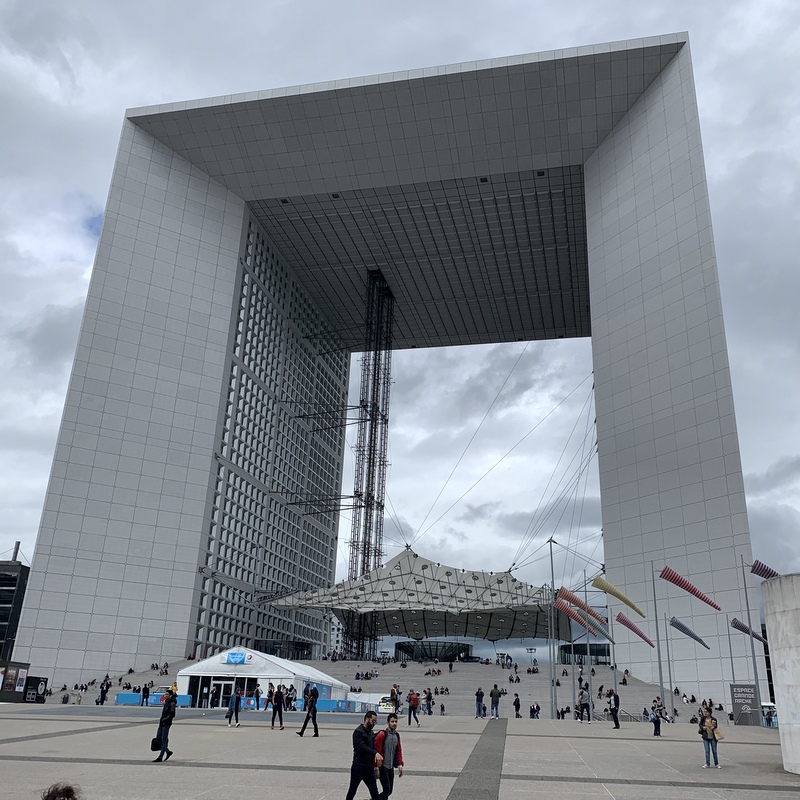
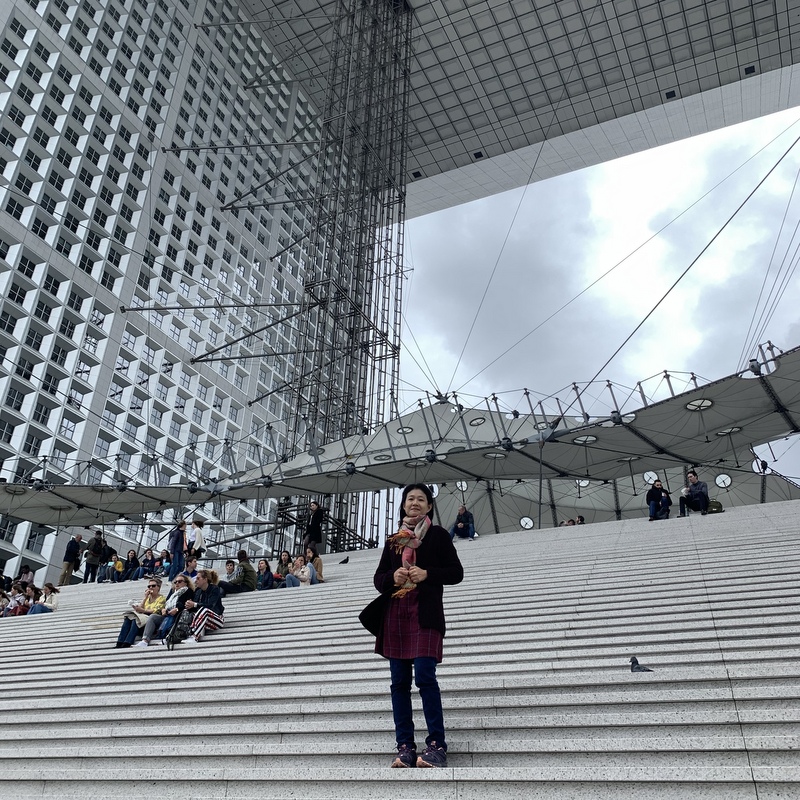
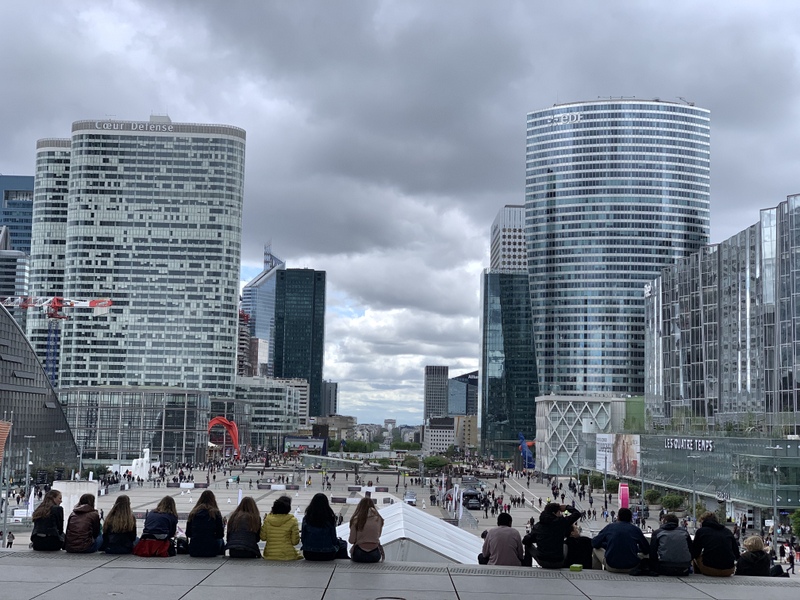
The next day we started with la Défense, the modern business district of Paris, dominated by the Grande Arche.

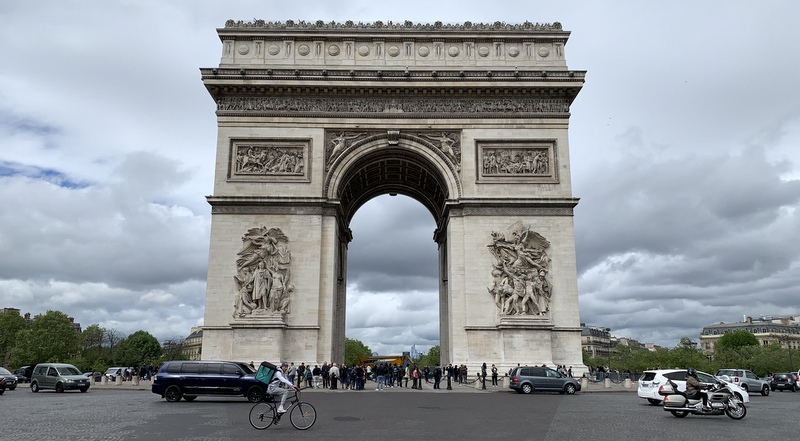
From the Grande Arche you can see, about 4 km away, the
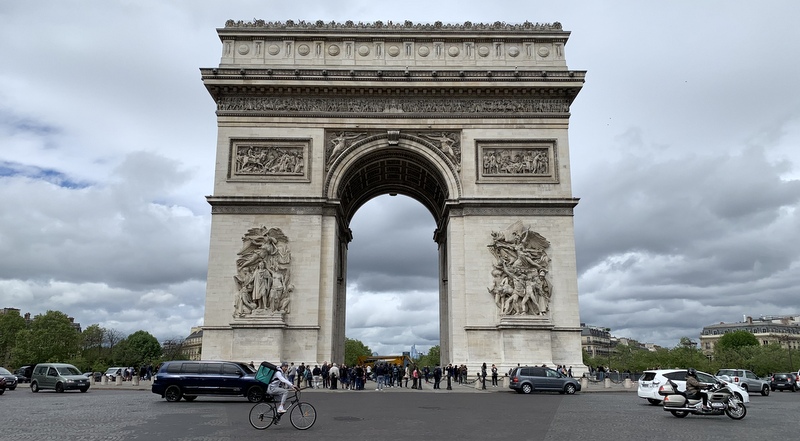
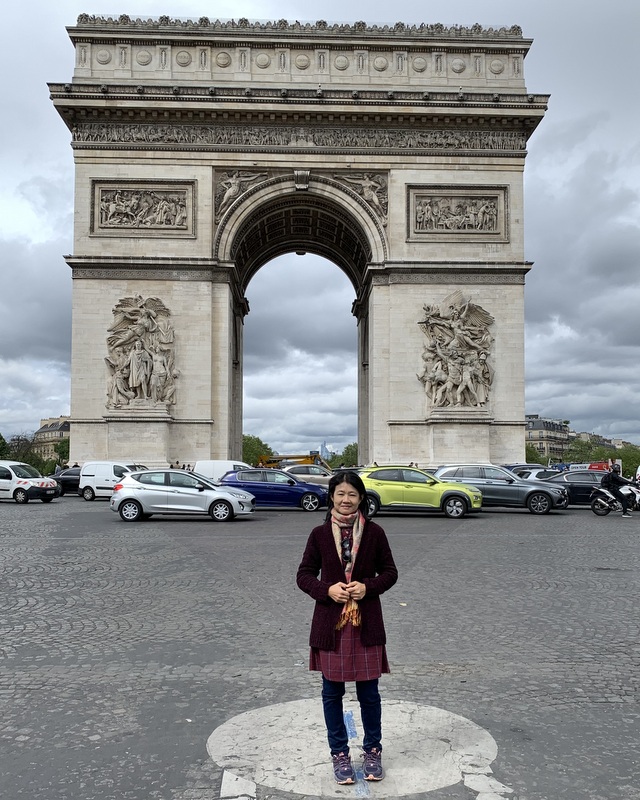
Arc de Triomphe , our next destination. Click on the right picture to enlarge

We didn’t walk, but took the Metro to the Arc de Triomphe.

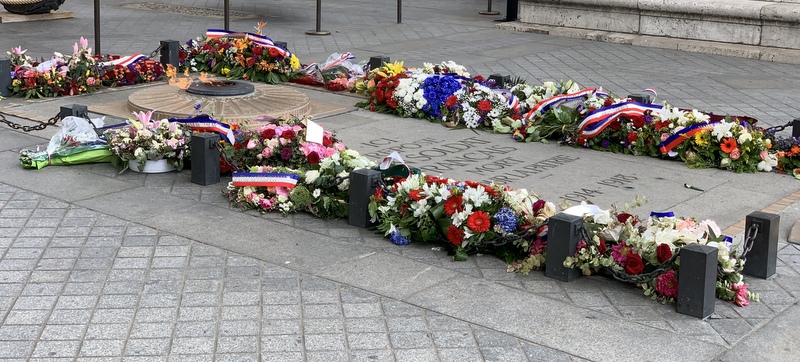
This is the Tomb of the Unknown Soldier, beneath the Arc.

A few more pictures. Construction of the Arc was started in 1806 after the victory at Austerlitz by Napoleon, but only completed in 1836.

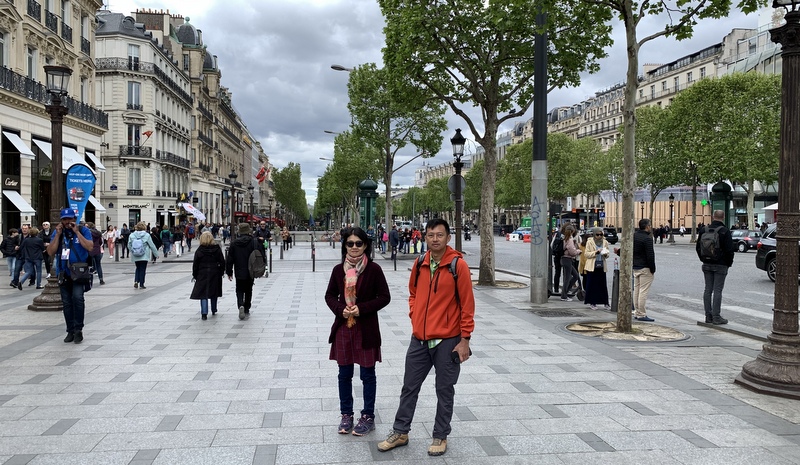
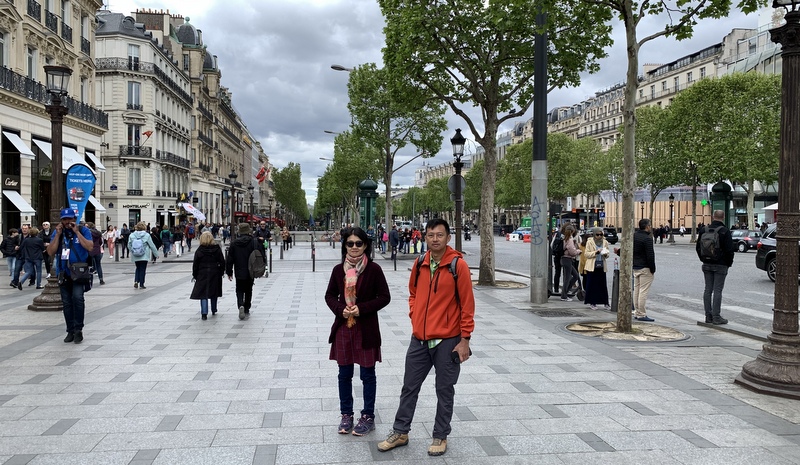
From the Arc de Triomphe we followed the famous Avenue des Champs-Élysées to the Place de La Concorde.

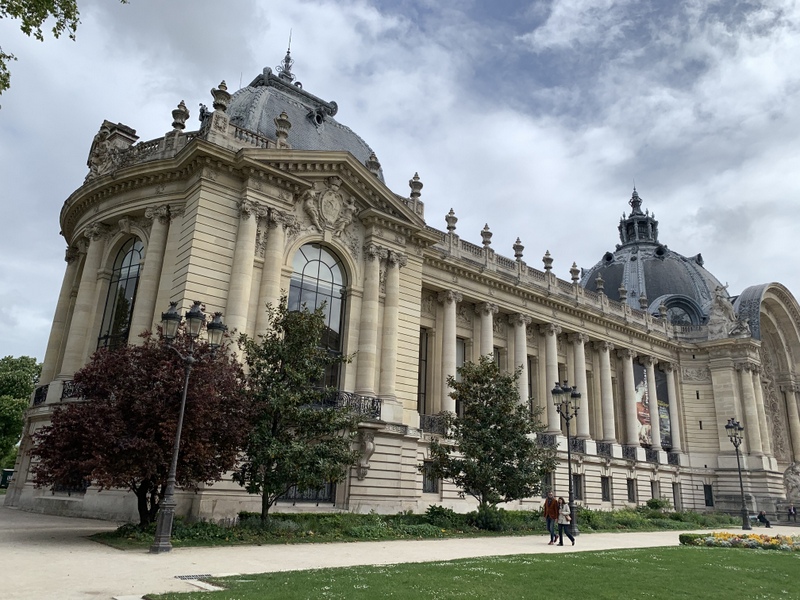
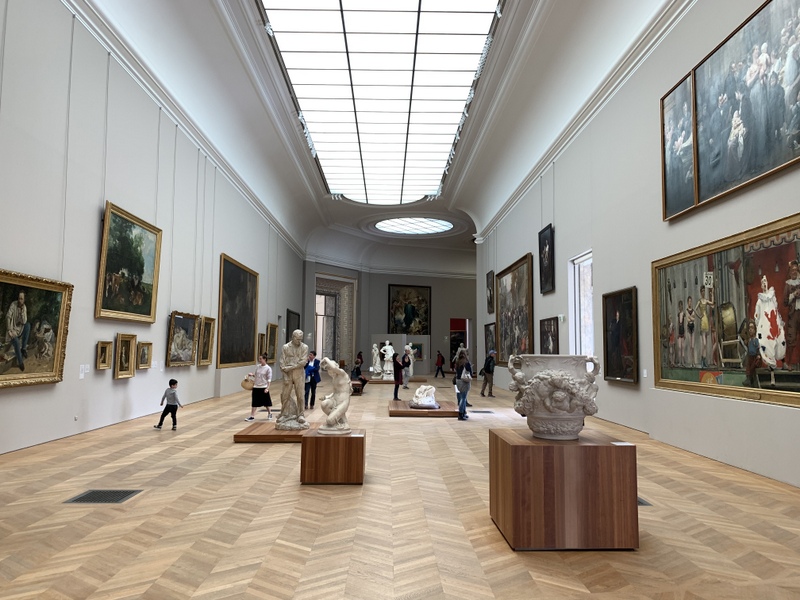
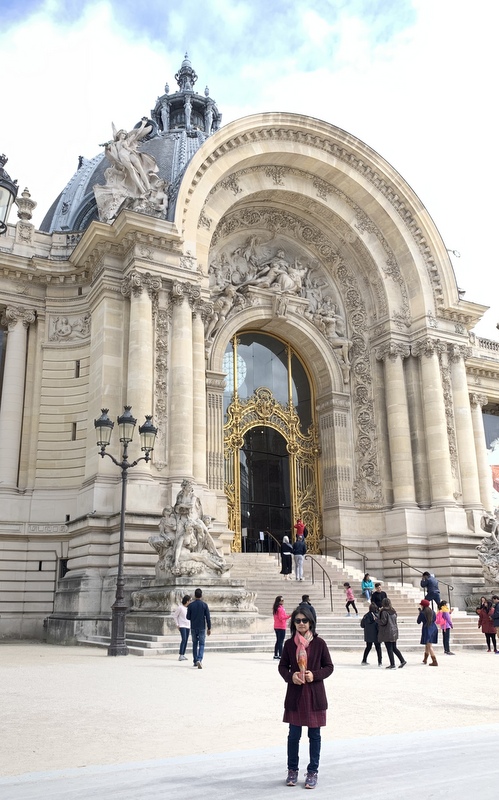
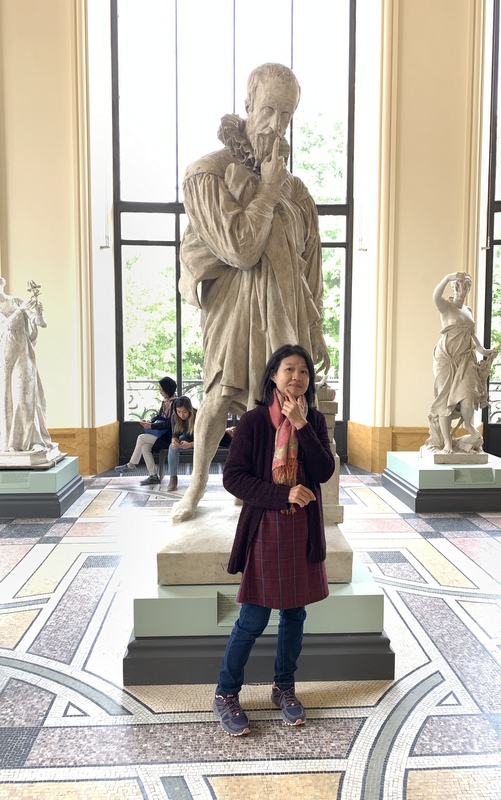
On our way we passed the impressive buildings of the Petit and Grand Palais, built in 1900 for the World Exhibition. The Petit Palais is now a fine arts museum. As access is F.O.C, we decided to have a look inside…:-)

The Place de La Concorde is the largest square of Paris. During the French Revolution a guillotine was placed here, where King Louis XVI, Queen Marie Antoinette and many others were executed. In 1829 one of the Luxor obelisks was given by the Egyptian government to France and placed in the center of the square.

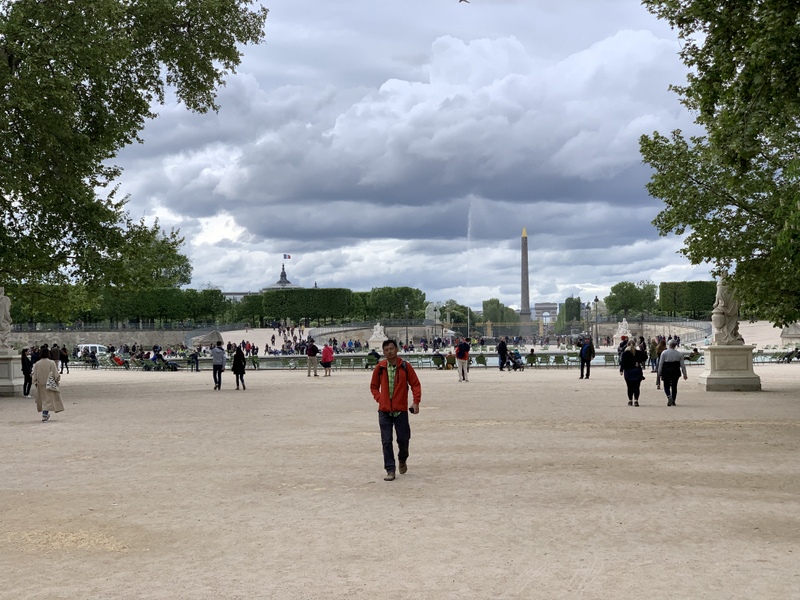
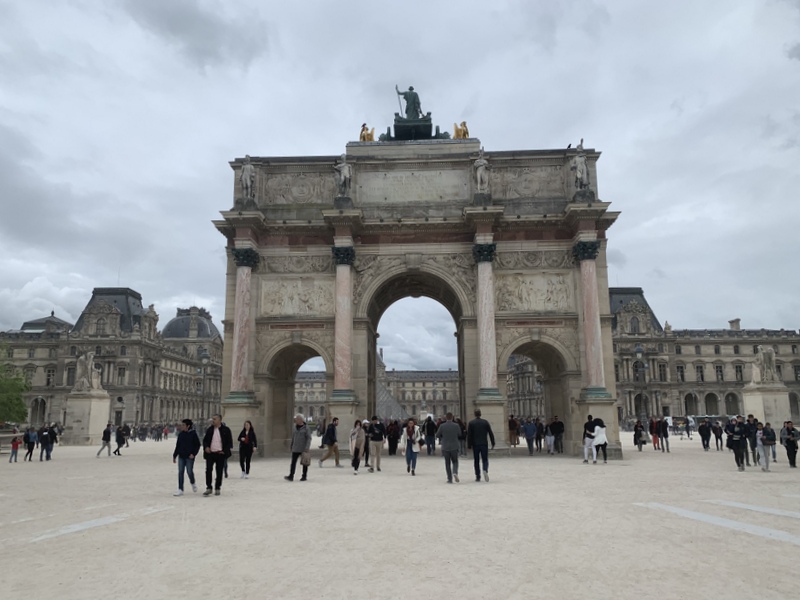
We continued to the Tuileries gardens and the Louvre. When you enlarge the top left picture, you will see the obelisk and the Arc de Triomphe in the background. Pity that it was rather cold and grey weather.

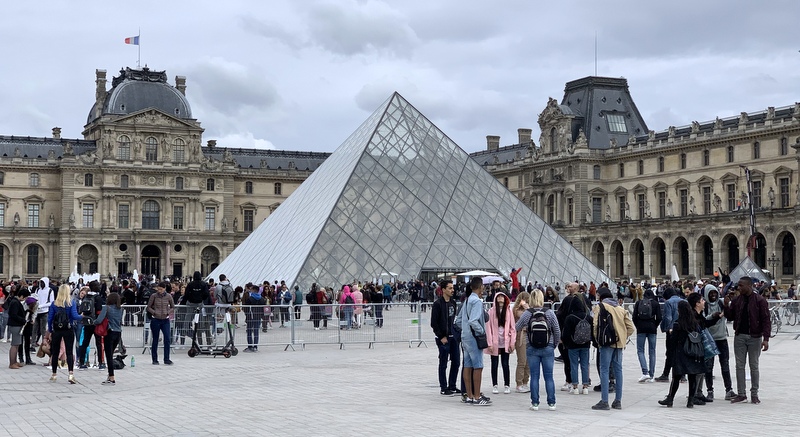
The Louvre is the world’s largest art museum. We didn’t visit , just had a look at the Pyramid, designed by famous architect I.M Pei (who passed away a few weeks ago at the age of 102!)

It was a long, but rewarding walk. After a short rest, we went out again to a restaurant, Au P’tit Curieux, where we had a nice dinner.

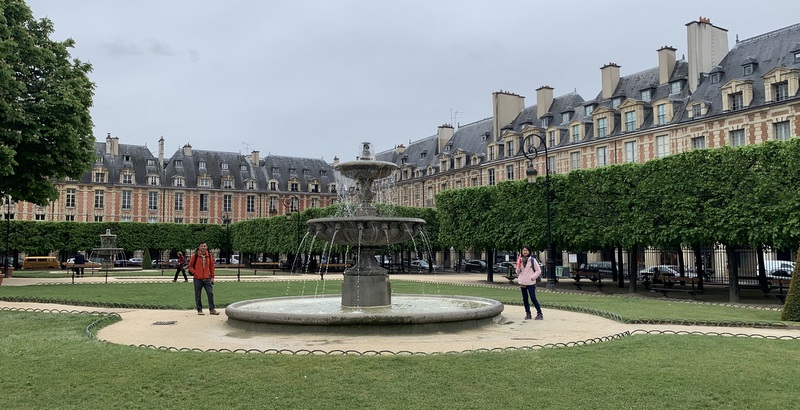
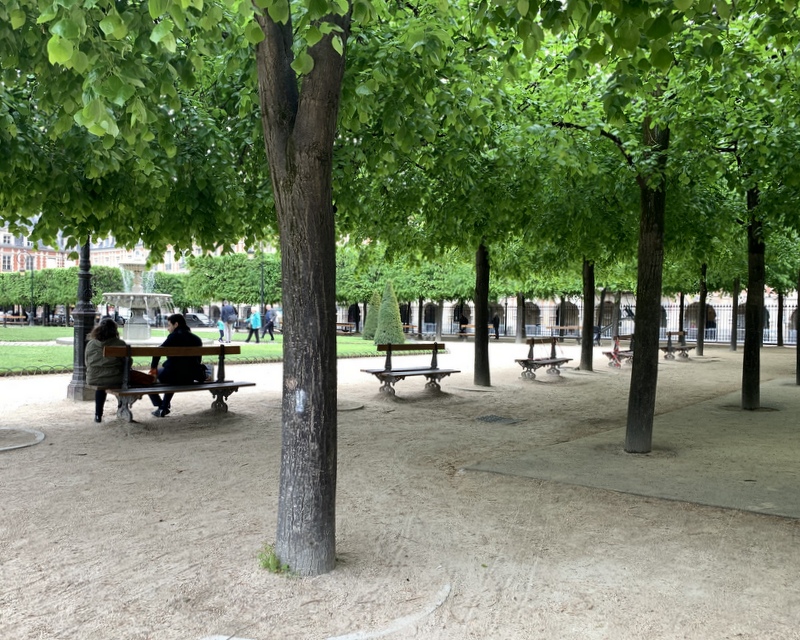
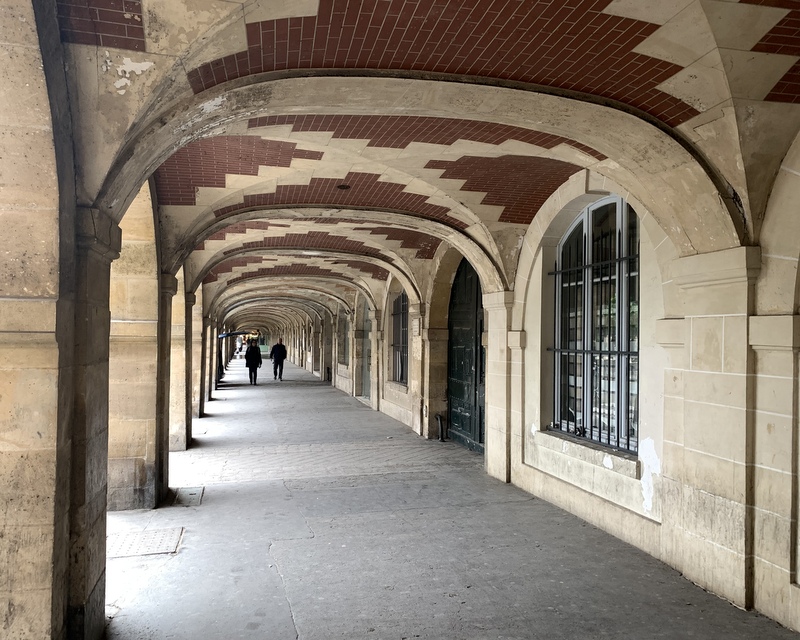
The next day we still had some time left, because our train back to Amsterdam was leaving Paris in the afternoon. After checking out we first visited the Places des Vosges. Built in 1612, it is one of the first examples of city planning.

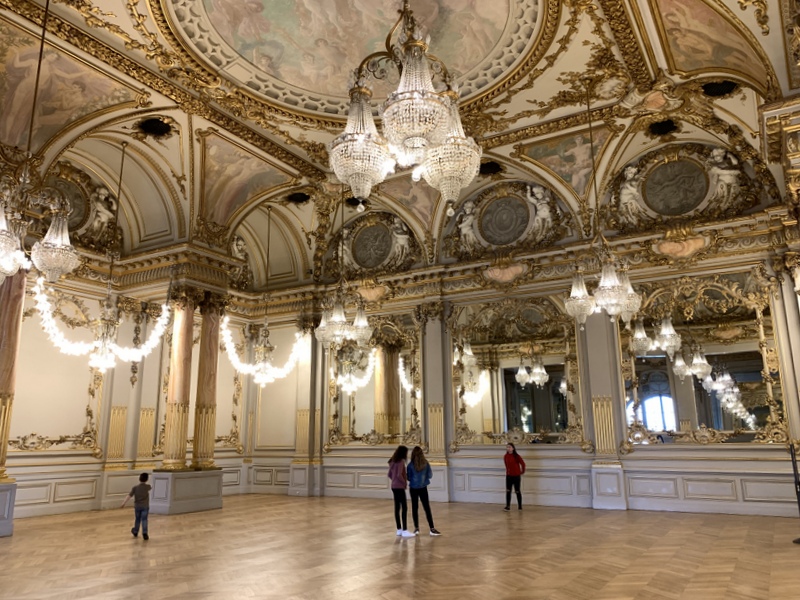
Our last destination was the Musée d’Orsay, a former railway station, my favourite Paris museum. When we arrived at the museum, we noticed the very long queue of visitors, we should have bought tickets online! So that is what we did on the spot, with the help of Aric!

The station was built around 1900 and houses French art from 1848 until 1914.

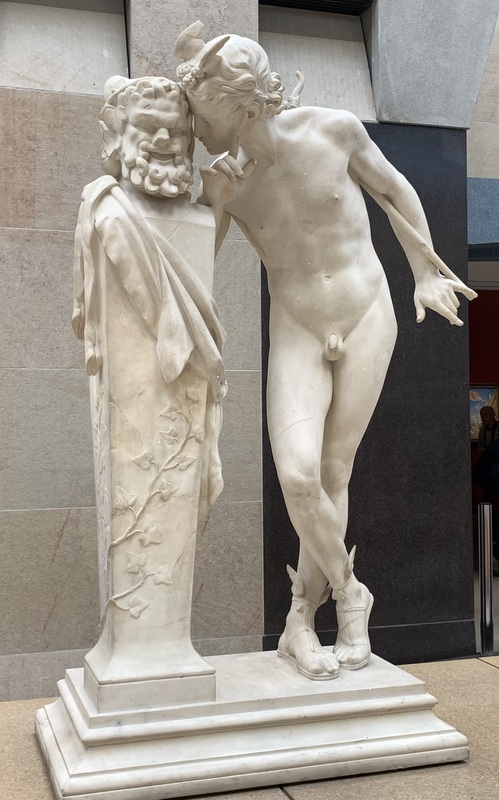
I could have spent the whole day, but we had not much time. Here are a few pictures.

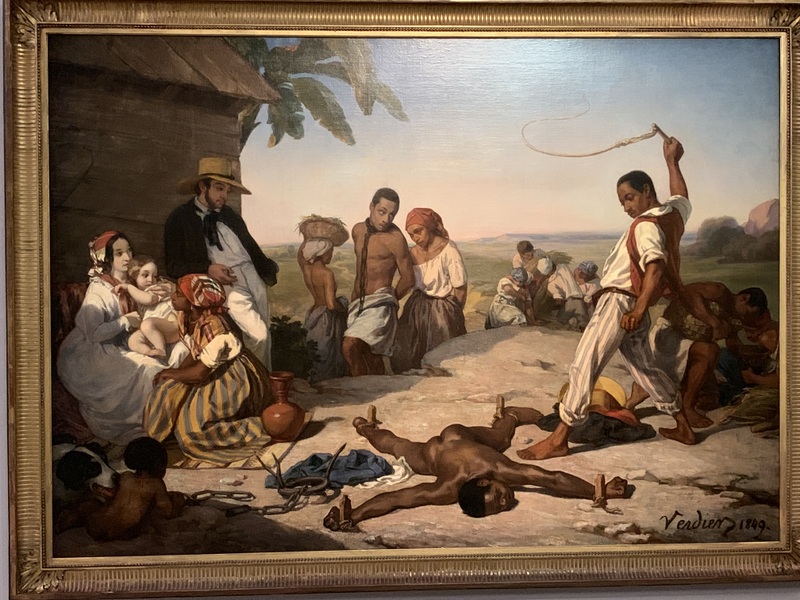
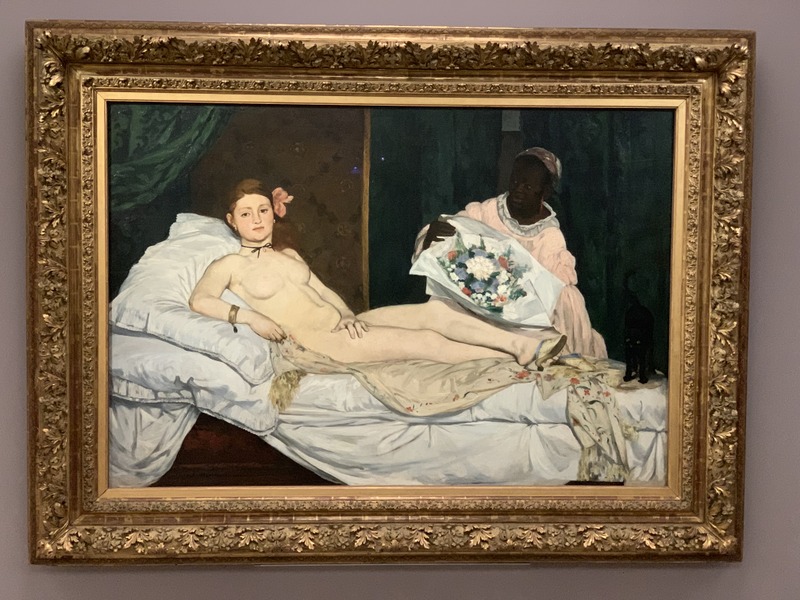
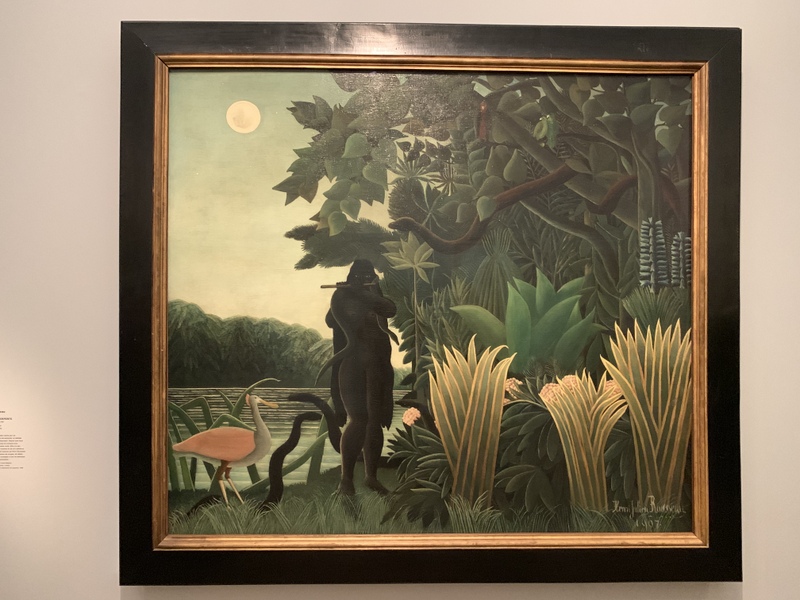
There was an interesting exhibition: Black models:from Gericault to Matisse. Famous paintings, like Manet’s Olympia and Rousseau’s Snake Charmer, but also interesting works, unknown to me.

Then it was time to go back to the Gare du Nord and catch our train back to Amsterdam. Amazing how much you can do in only a few days.

France 2018, part II

Status

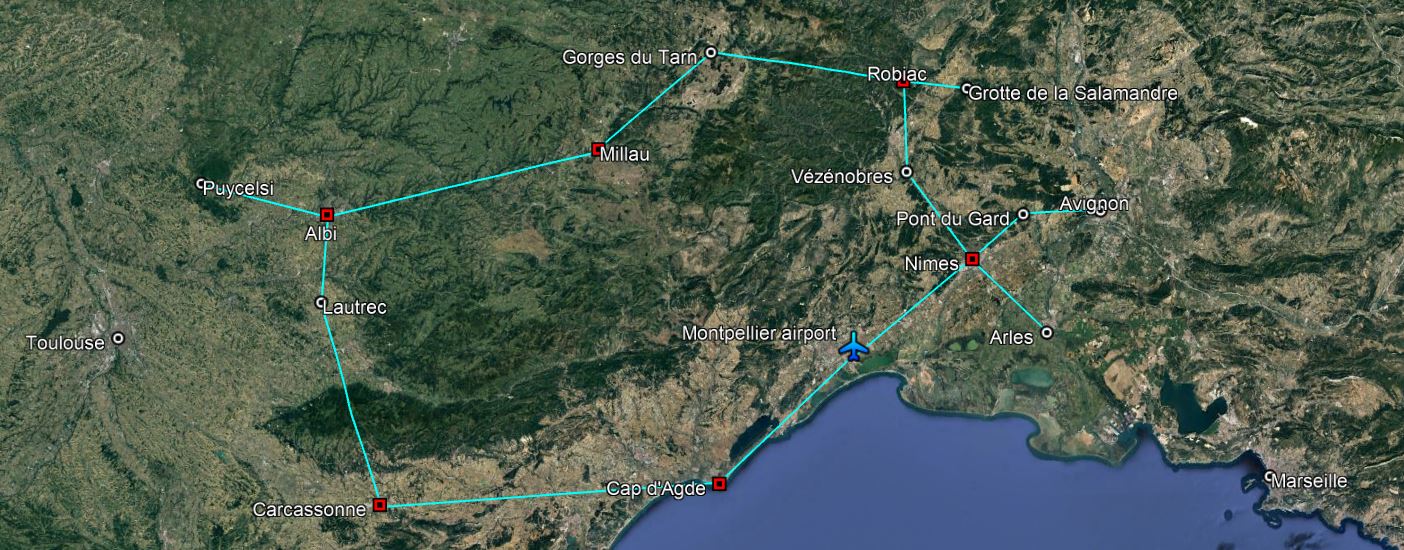
See France 2018, part I , for the first part of our trip to France. Here is again a map of the places we visited.

In 1976(!), after my graduation, I applied for a position as a physics teacher at a school in Amstelveen. The rector (headmaster) in those days was Dr B.C. Poeder, he interviewed me and decided to give me the job. He retired long ago, but we had become friends and kept in touch. Therefore I knew that he was now living in France, in the region that Aric and I were going to visit.

I wrote to him, and he invited us to stay a few days in his house, in the small village of Robiac, about 50 km north of Nîmes. Take the road via Vézénobres, he suggested.

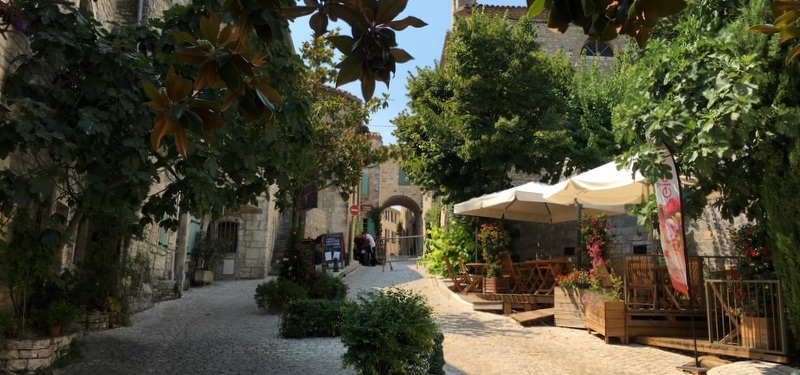
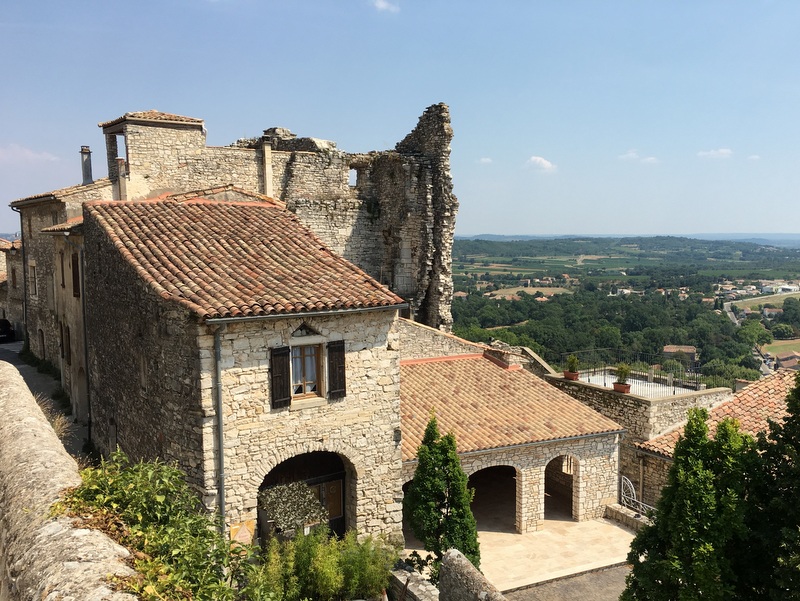
I had never heard about that village, but we followed his advice and decided to have lunch there . A romantic, medieval village, no cars allowed, we had to park quite far outside the walls

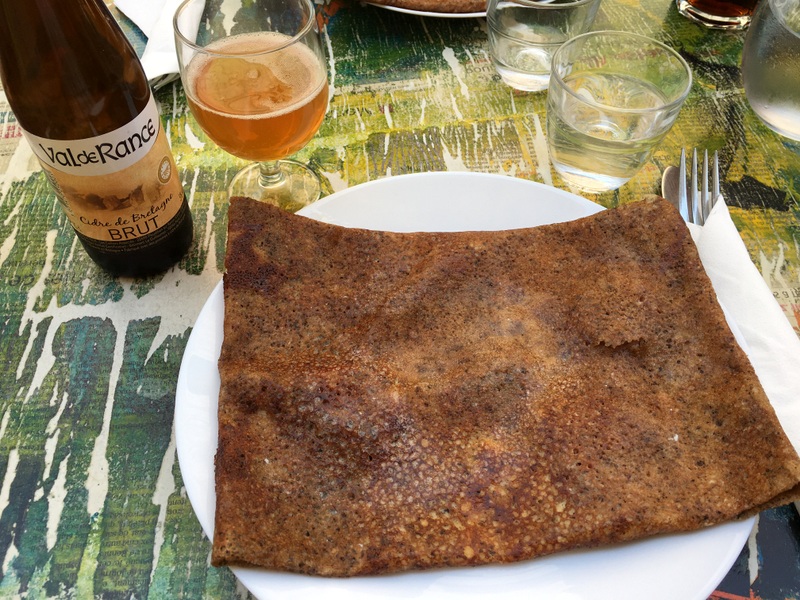
Walking around we were wondering if there was a place to have some food. We were lucky, found a nice shop where they prepared crepes and galettes. I had a glass of cider. Very nice people too.

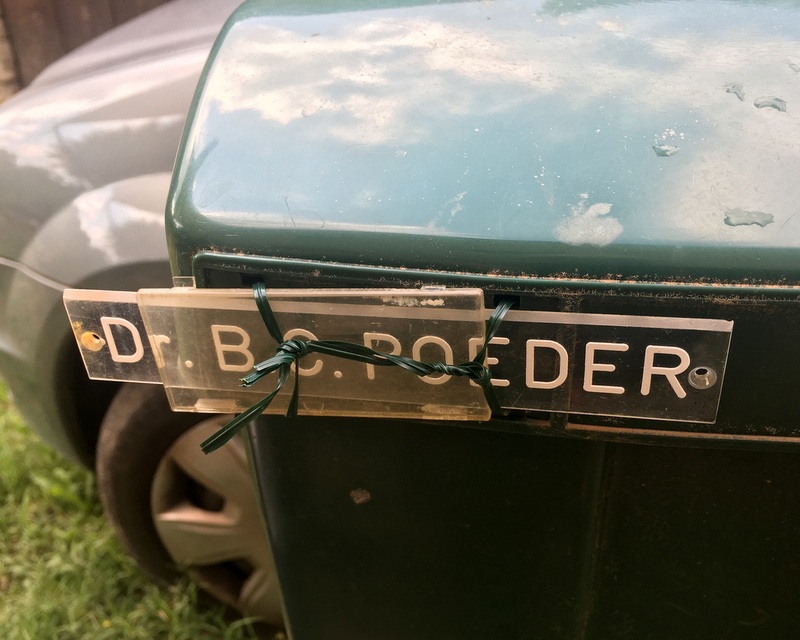
When we arrived in Robiac, Carel was already waiting for us at the roadside, otherwise we might have missed the small road leading to his house. The nameplate on the letterbox still refers to his past as headmaster :-).

We were warmly welcomed by Carel and Joanne, his wife. The house is part of what before has been a school. The basement, formerly a goat stable, has been transformed in a guest room.

A big garden with many flowers.

Our hosts invited us for a nice dinner in Barjac, a nearby village.

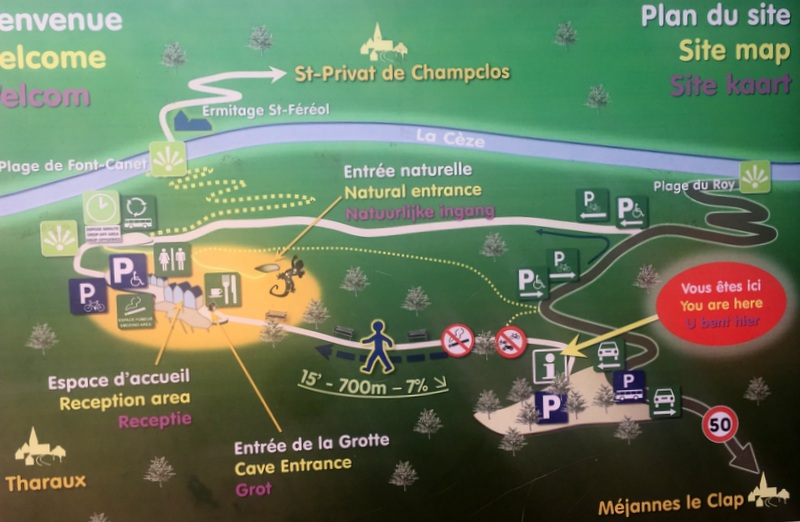
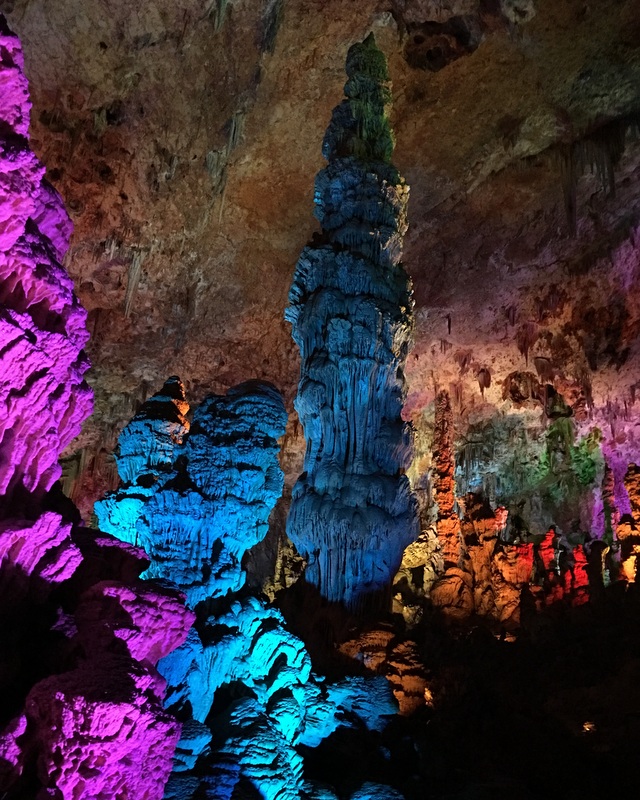
The next day we enjoyed the swimming pool and the hospitality of Carel and Joanne, but also made a trip to a cave, the Grotte de la Salamandre. This cave was discovered in the 60s, access was possible only by abseiling through a hole above the cave! Five years ago the cave was opened to the public after an access tunnel had been excavated from the side of the hill.

You can still rappel down in the original way ( for an extra fee), we chose the tunnel..:-). A guided tour, clear explanations, the stalagmites and stalactites were illuminated with varying colors, some really very bright, but also with normal white light.

A very rewarding experience.

When you click on the left picture below to enlarge it, you can see at the top people who are abseiling from the hole in the roof!

The next day we said goodbye to our hosts and continued our trip. We had decided to follow the Gorges du Tarn, a long but very  scenic route. It is a canyon, 400 to 600 meter deep, eroded by the river Tarn. Spectacular views, like here of the village of Castelbouc, deep down.

The river is a favourite playground for kayakers.

We had lunch in La Malène

We stayed overnight in Millau, our Airbnb was a nice apartment, located in the historic center of the town.

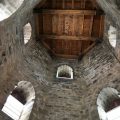
Millau is nowadays known for its viaduct, but it turned out to be a surprisingly attractive town itself. The next morning we climbed the Beffroi, a bell tower consisting of a 12th-century square tower topped by an octagonal 17th-century tower.

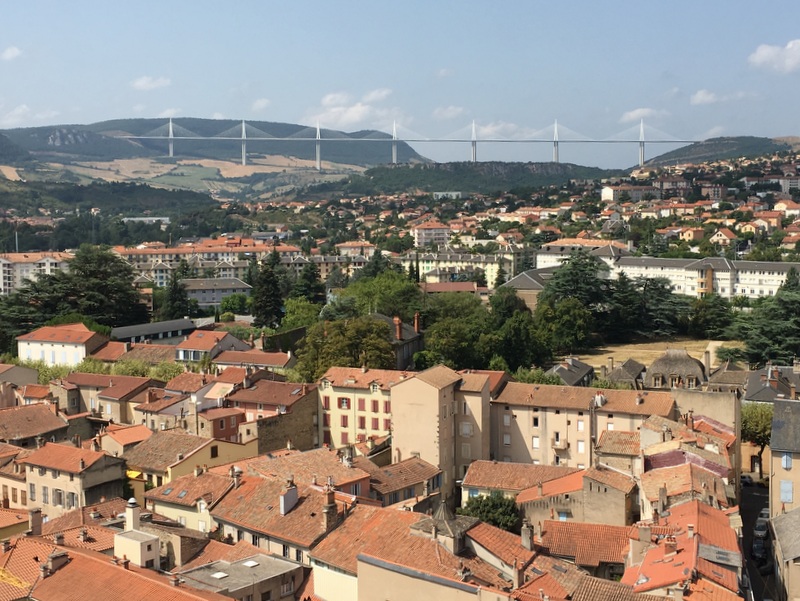
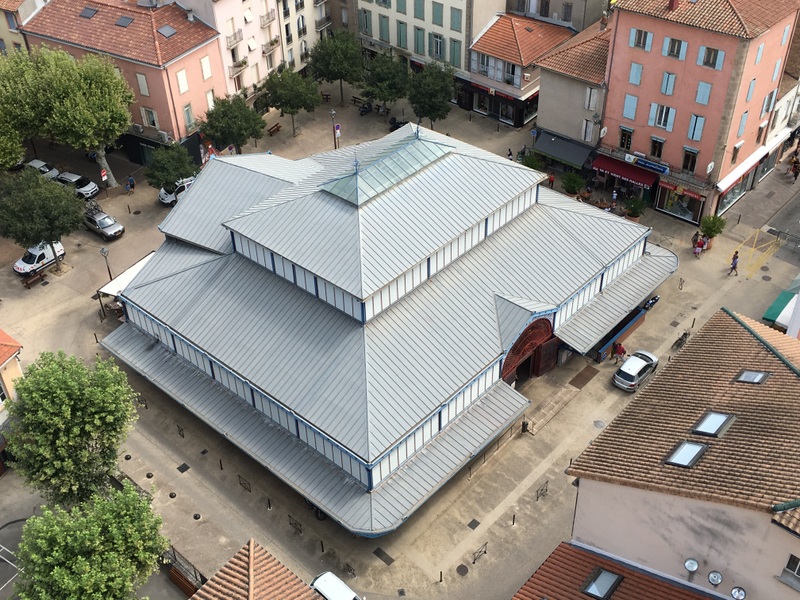
It was a steep climb, but the view was worth the effort. The Millau viaduct was of course clearly visible and deep down the Halles, built in 1899.

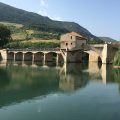
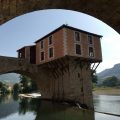
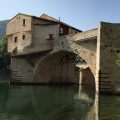
In the Middle Ages Millau was an important town, especially because of a bridge across the Tarn river, consisting of 17 spans. Nowadays only one span remains with a house built on it, formerly a watermill. Very scenic.  In a nearby cafe we had coffee with a piece of fouace, a cake specialty of Millau.

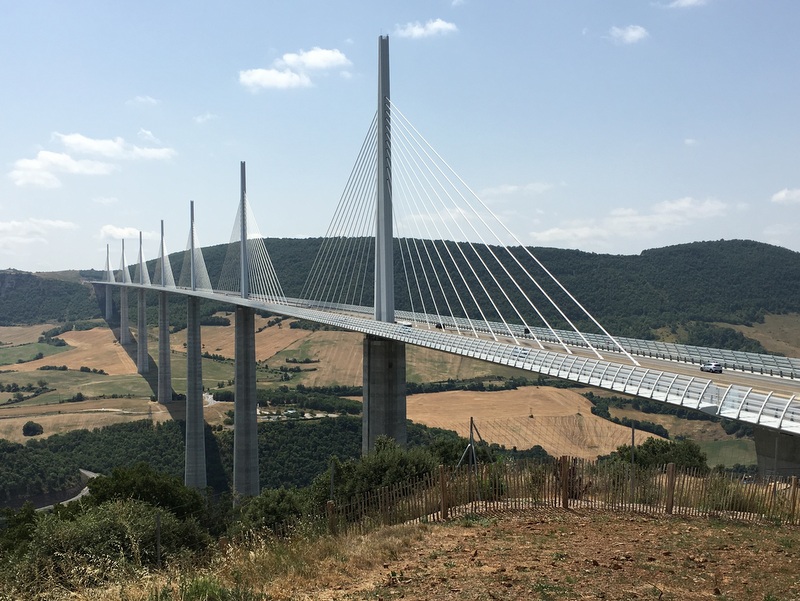
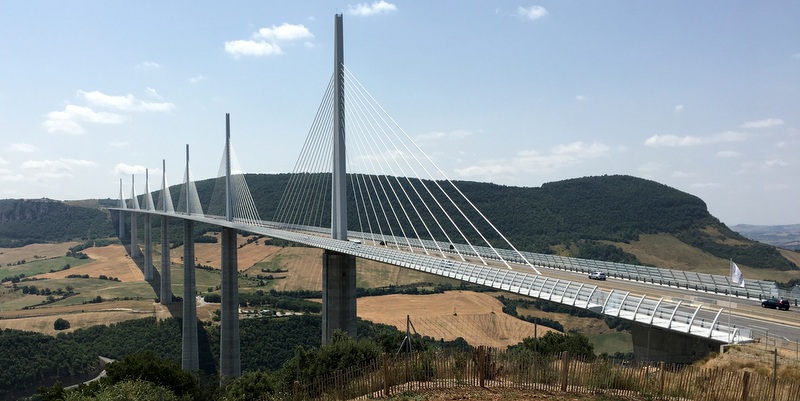
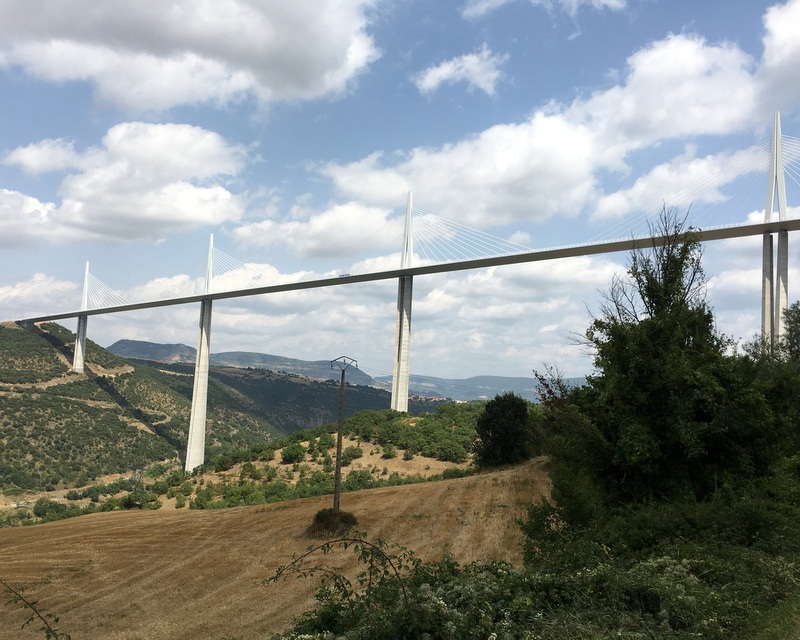
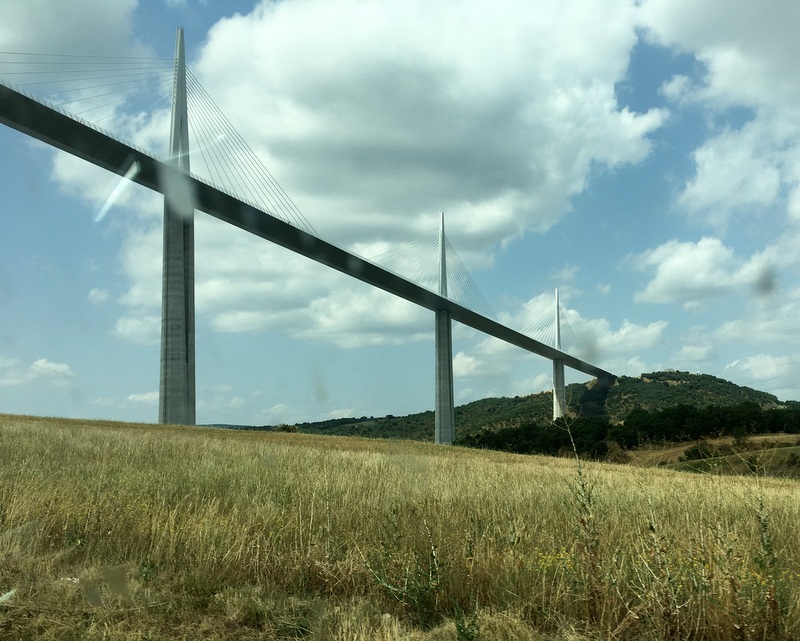
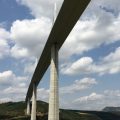
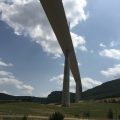
The Millau viaduct is (at the time of writing) the tallest bridge in the world, with a height of 340 meter above the river Tarn. It is considered one of the great engineering achievements of all time.

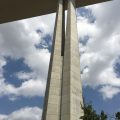
The viaduct has become a major tourist attraction. We drove over it and also under it, when you look up at the supporting pylons from the river valley, they look so fragile!

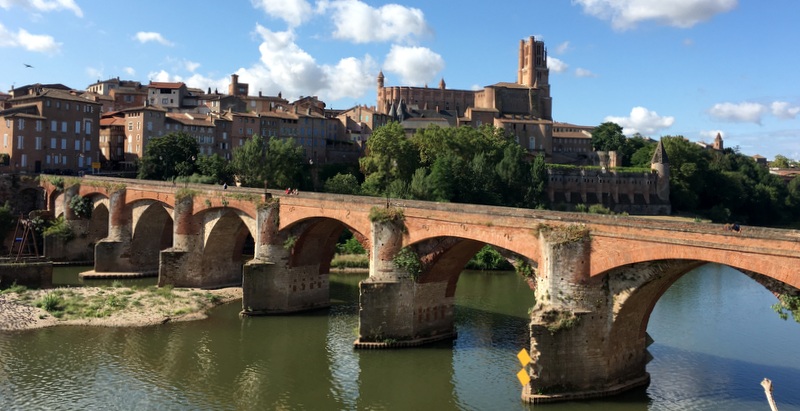
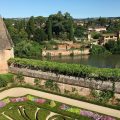
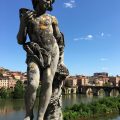
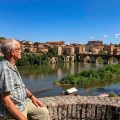
Our next destination was Albi. Here a view of the town with the Sainte Cécile cathedral and the Vieux Pont (Old Bridge) in the foreground. This bridge was originally built in 1035.

We stayed two nights in Albi in a very nice Airbnb , a complete house, a bit outside the historic center, easy parking, with a very friendly hostess, who advised us where to eat where to shop and where to park when we wanted to visit the town center. Airbnb at its best…:-)

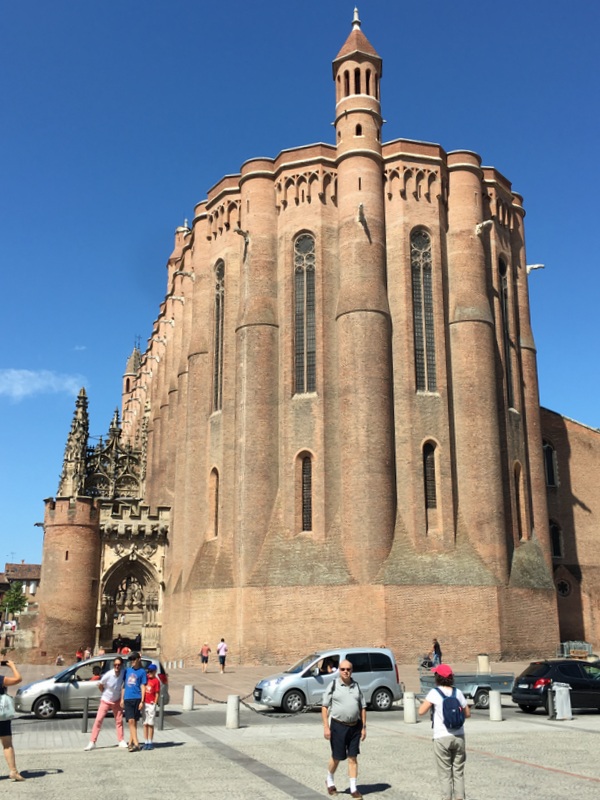
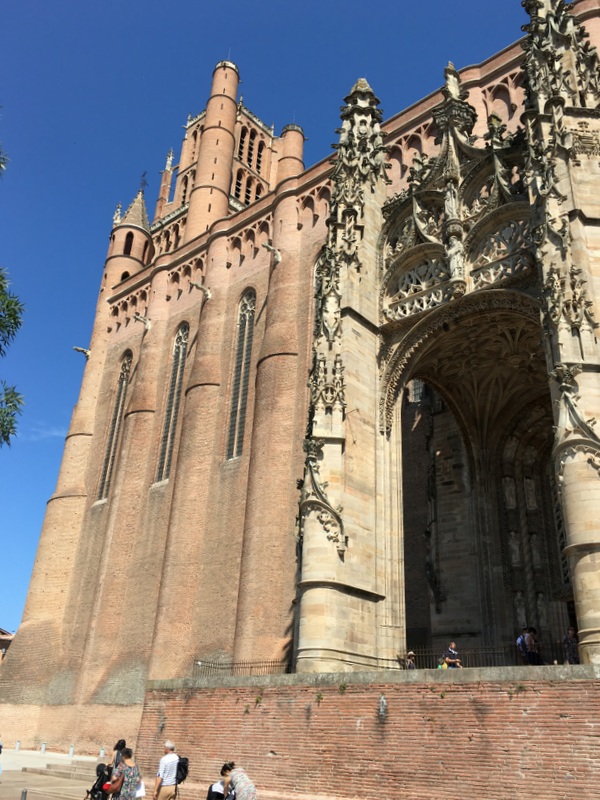
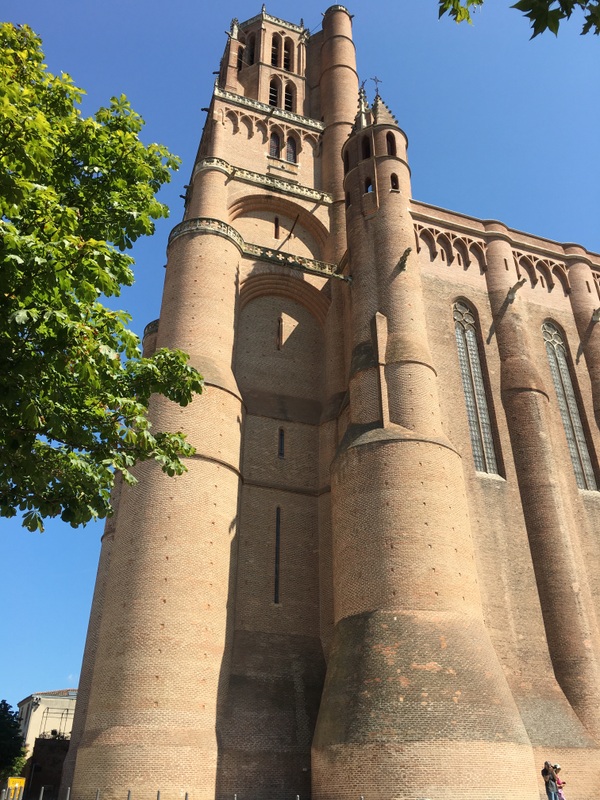
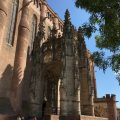
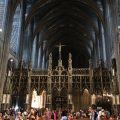
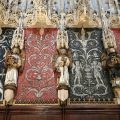
The cathedral is an amazing building, constructed between the 13th and 15th century. Those were the days of the Cathar Heresy, and the Roman Catholic church wanted to make a clear statement of strength. What a contrast with for example the Notre Dame in Paris! It looks like a fortress and is claimed to be the largest brick building in the world.

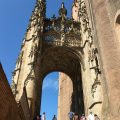
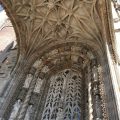
The monumental doorway was added at the end of the 14th century

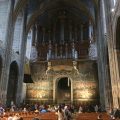
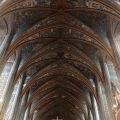
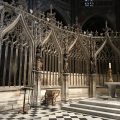
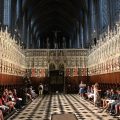
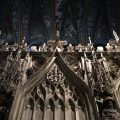
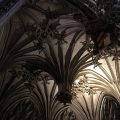
The austere outside forms a strong contrast with the flamboyant interior.

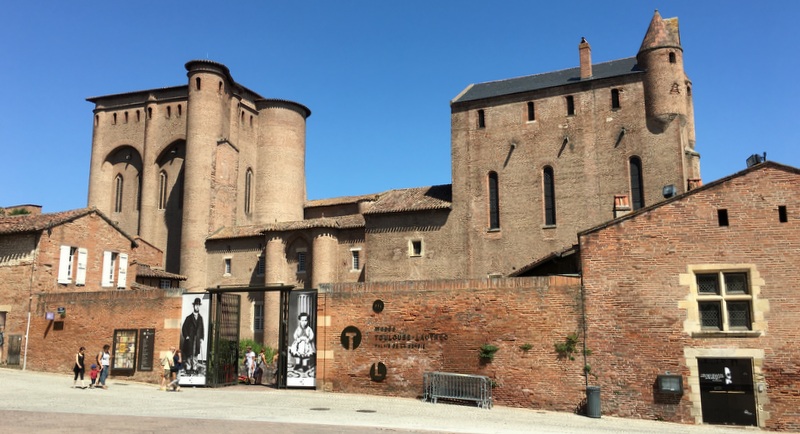
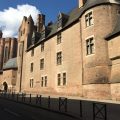
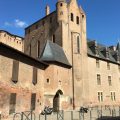
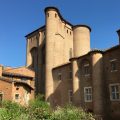
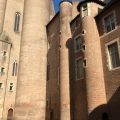
Next to the cathedral the fortress of the Palais de la Berbie, the Bishops’ Palace, dating to the end of the 13th century

Nowadays it is the Toulouse-Lautrec museum. We had a quick look , I am not really a fan of him..:-)

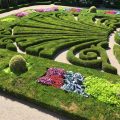
But the gardens of the Palace are beautiful.

For dinner, our hostess had advised us  restaurant Lautrec in Albi and that was a good choice!

Albi has of course many interesting old houses. The left picture also shows the belltower of the cathedral

Another useful advice of our hostess was to visit the small village of Puycelsi, one of the Most Beautiful Villages of France . There are more than 150 of them…:-)

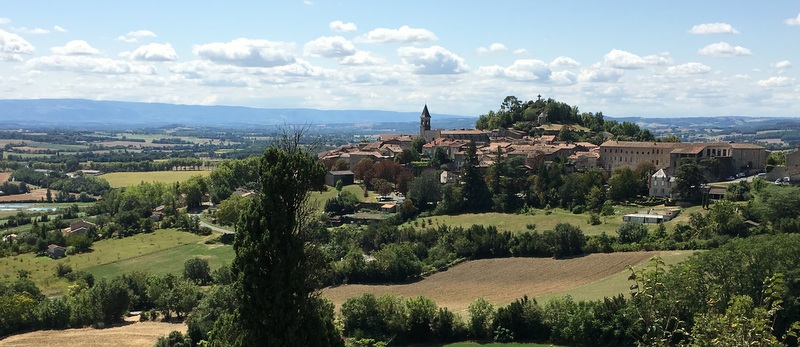
The weather was a bit grey during our visit, here is a view of the village

We parked our car outside the walls and explored the narrow streets, visited the church and had lunch.

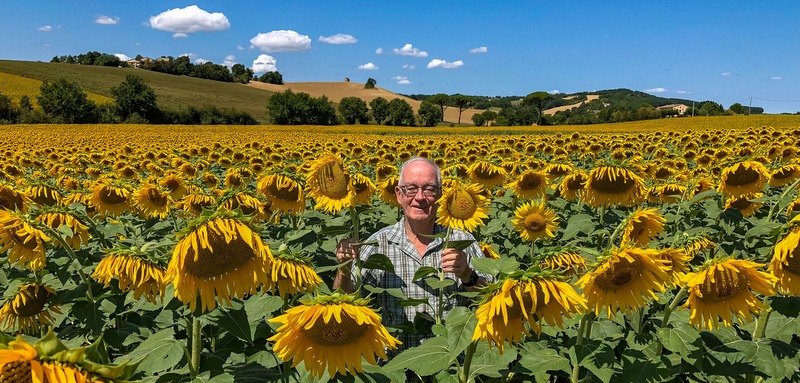
During our trip we had already passed  many sunflower fields, but on our way to Carcassonne we found such a beautiful field that we really had to stop to take pictures..:-)

We visited Lautrec, another of the Most Beautiful Villages of France. The view of Lautrec might look similar to the view of Puyselci, but careful inspection of the two pictures will show you they are not the same…:-)

The weather was beautiful again, that could be the reason that we liked this village better. The walls are still there and the 14th century market square is attractive

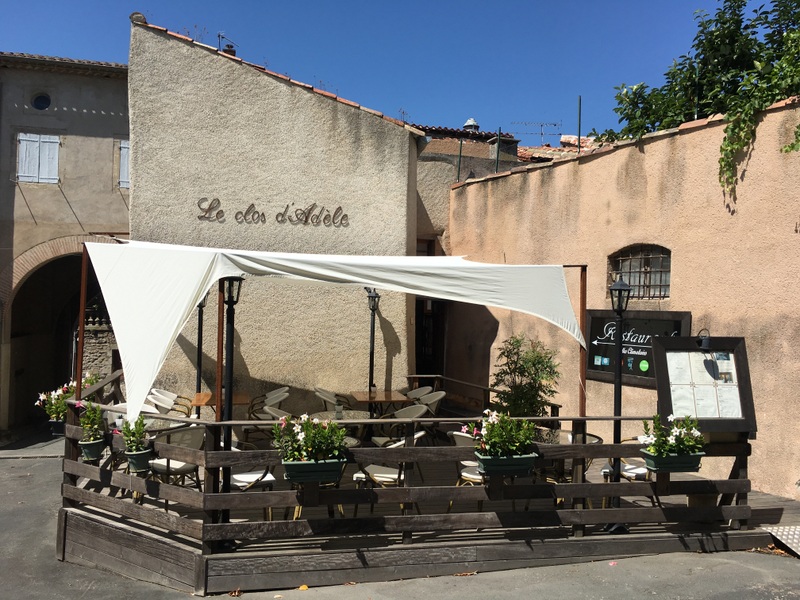
We had lunch in a nice restaurant , Le Clos d’Adele. Good food, pleasant service, value for money.

After lunch we visited one of the other attractions of Lautrec, a 17th century windmill. A steep climb, but worth the effort, we could enter the mill and had a nice view of the surroundings. When there is enough wind the mill is still operating.

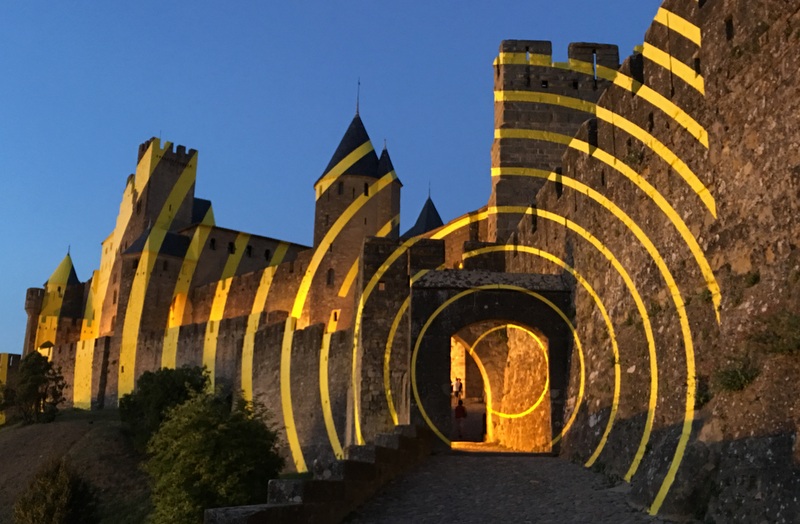
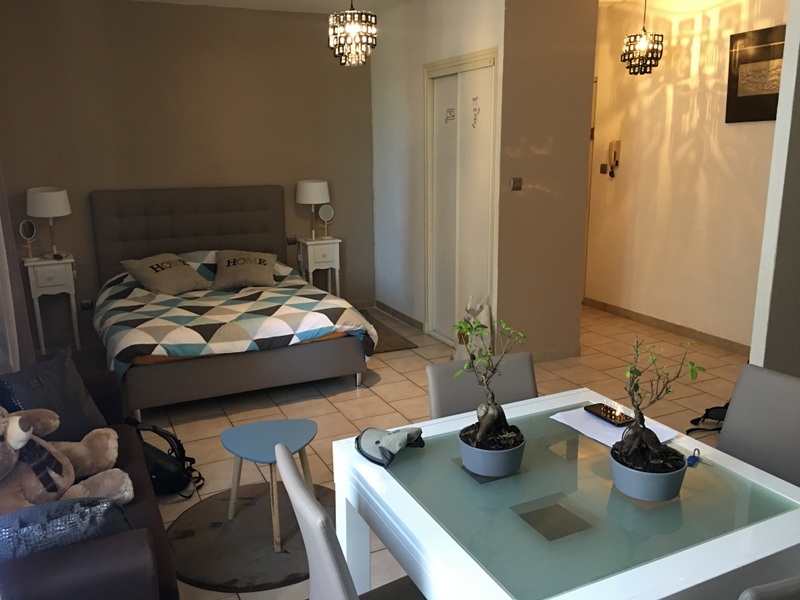
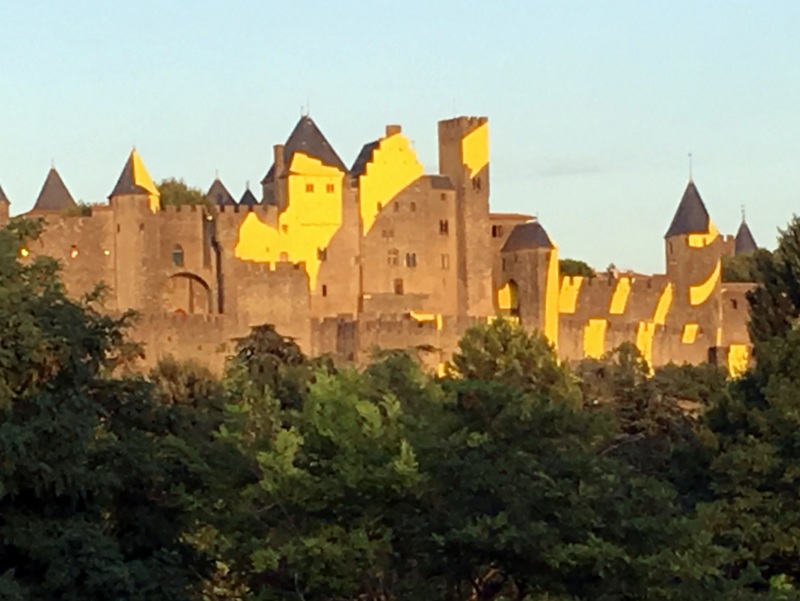
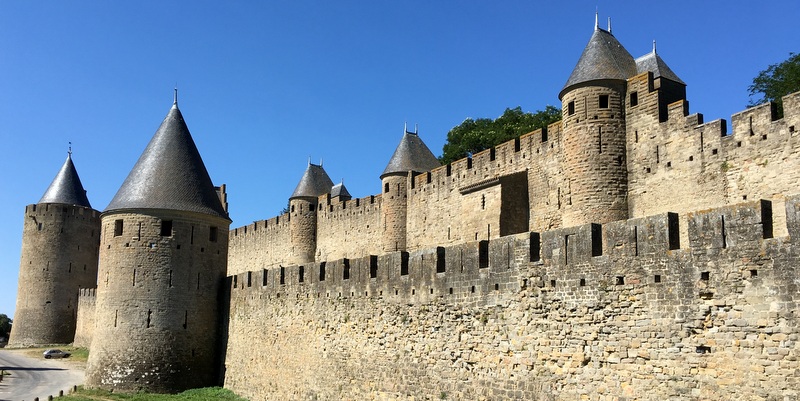
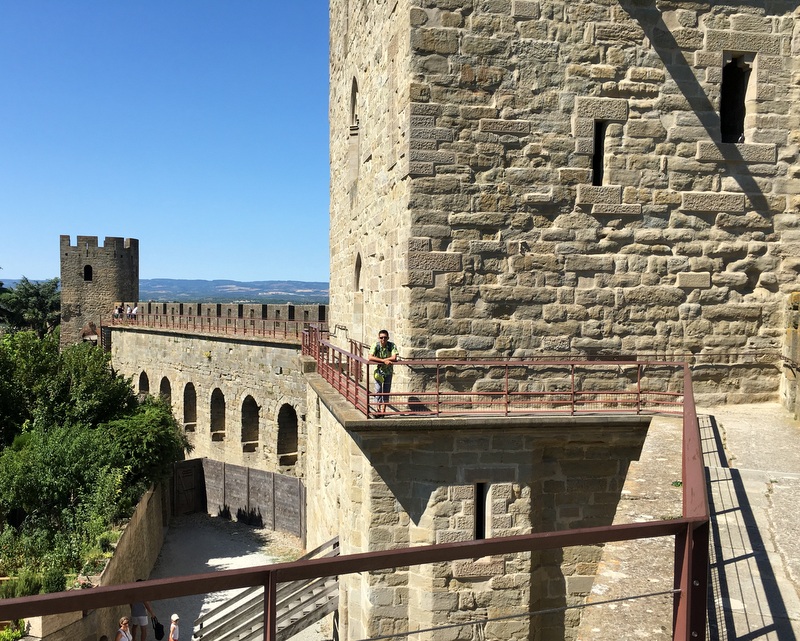
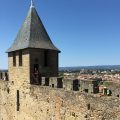
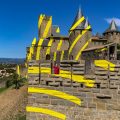
With Airbnb the host often doesn’t live in  the same building, so you have to contact him/her about your arrival time. That works well in general, but in Carcassonne it took us some time, the apartment also looked more like a hotel room. But it was ok, from our window we could see the medieval fortress in the evening light. But what were those strange yellow surfaces on the walls and towers?

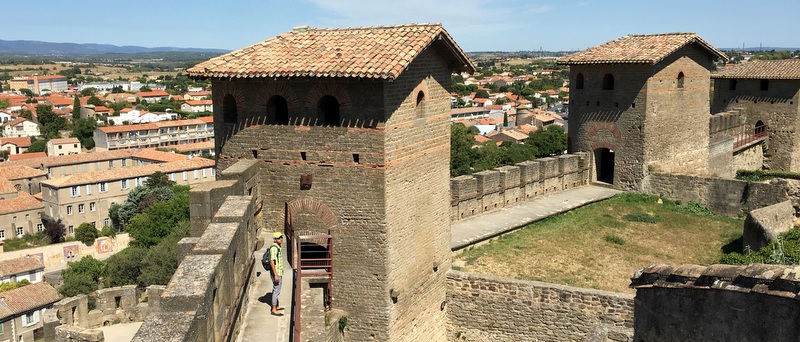
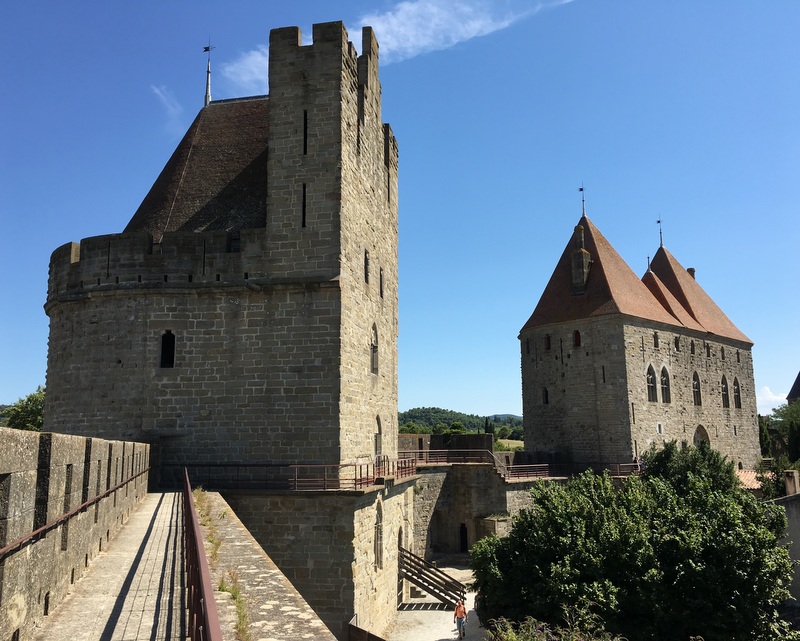
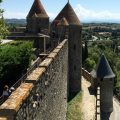
The next day we explored the old town. It  the largest walled city in Europe and really impressive.

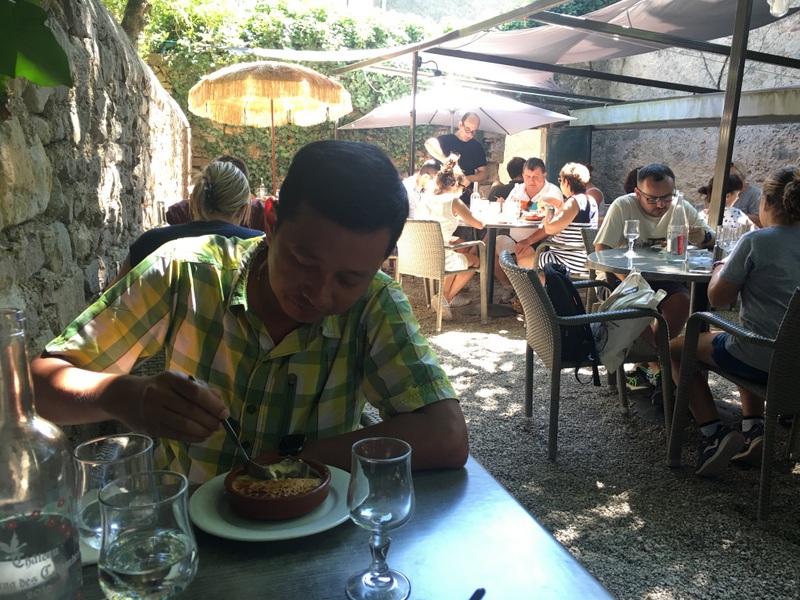
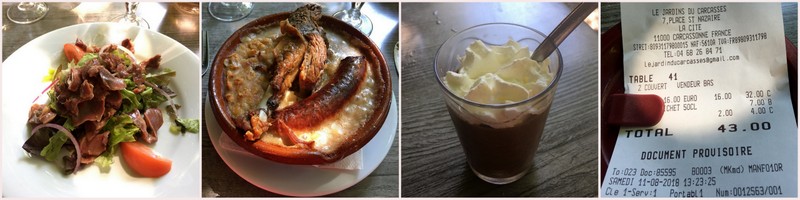
Not surprisingly it is a major tourist attraction with crowds of visitors in the narrow streets. We were lucky to find a restaurant with a secluded garden, where we had a nice lunch, again value for money

The name of the restaurant is Le Jardin du Carcasses, it has good reviews

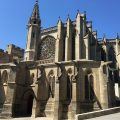
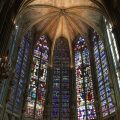
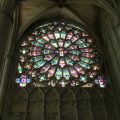
The Church of Saints Nazarius and Celsus was built in its Gothic form at the end of the 13th century on the site of an earlier church. It was the cathedral of Carcassonne until 1803. Beautiful interior. But keep in mind that this church and also the citadel itself have been “renovated” in the 19th century by the French architect Viollet-le-Duc!

Access to the medieval city is free, but to access the fortress and the walls you have to pay an entrance fee.

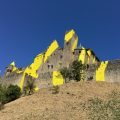
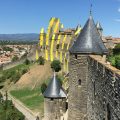
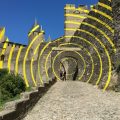
Carcassonne is  a Unesco World Heritage site already for 20 years and of course that had to be celebrated. The Swiss artist Felice Varini was asked to create a project.

Quoting Wikipedia:

Felice paints on architectural and urban spaces, such as buildings, walls and streets. The paintings are characterized by one vantage point from which the viewer can see the complete painting (usually a simple geometric shape such as circle, square, line), while from other view points the viewer will see ‘broken’ fragmented shapes.”

In this case he projected concentric circles on the walls and towers of the citadel. They look broken, only from one vantage point they are circles. Quite spectacular, of course many specatators, not easy to take a picture without people.

In the evening we came back especially to admire Varini’s work

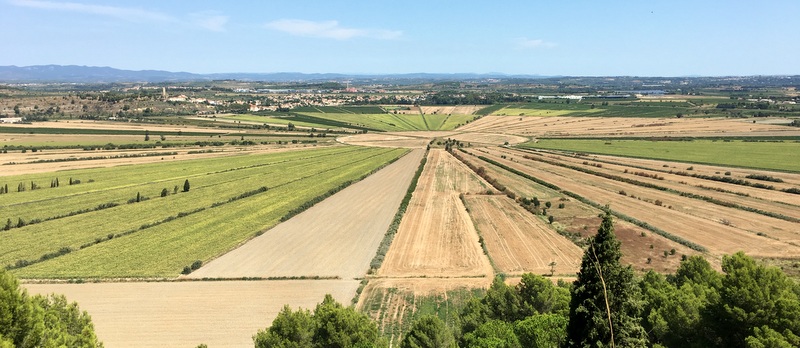
Our trip was coming to an end, our last destination was the naturist village of Cap d’Agde. On our way we passed this strange landscape, the Étang de Montady, a wetland, drained in the 13th century.

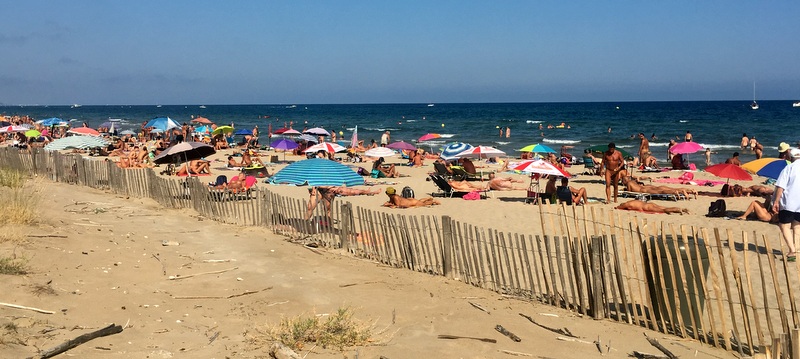
What to say about Cap d’Agde? Here is a picture of the beach, when you enlarge it, you will see that the sunbathers are naked…:-)

Nudist beaches are common in Europe, but Cap d’Agde is a nudist village, where you walk around, have a drink/ food on a terrace, go to the supermarket etc, all in your birthday suit..:-)

We had booked a room (Airbnb) with Bernard and that was a lucky choice, because he had been living there for many years and could tell us the do’s and don’ts. One don’t is that you can not take pictures of other naked people. Another one is that at night, during dinner, you are supposed to be a bit dressed at least…:-)

Bernard had two other guests, Christiane and Alain, a nice couple who had been regular visitors of Cap d’ Agde for many years. We became friends almost immediately…:-) The village itself is a nondescript conglomerate of concrete apartment complexes, but the company made our visit very enjoyable.

The second (also last) night of our stay we were invited to join our new friends to a dinner in a nearby restaurant. There was music, there was drag, and both Aric and I have been dancing! A fun evening and a worthy ending of our trip

It is amazing how much you can do in twelve days. After our return ot Amsterdam we needed several days to recover…:-)

France 2018, part I

When Aric and I visit the Netherlands, we always try to combine it with a short trip to another European country. In 2014 we have visited Norway, and in 2016 Portugal. This time we went to the Languedoc region in Southern France. We wanted to visit the famous “village naturiste” of Cap d’Agde, in combination with some of the numerous historical towns in the region, like Arles, Avignon, Carcassonne.

We took a flight from Amsterdam to Montpellier, where we rented a car. The map below gives the places (in red) where we stayed overnight. To guide the eye I have connected the different locations with blue lines, the actual roads were of course winding and much longer..:-)

Our first stop was in Nîmes where we stayed three nights in an Airbnb. A nice apartment, on walking distance from the historic center, only a bit difficult to find a parking place.

After arriving in the apartment, I discovered that I was missing my passport and driving license! Searching my luggage and the car, nothing. Panic! Could I have dropped it when I entered the rental car? A telephone call to Avis in Montpellier finally gave the solution, they apologised that they had not given back the documents after photocopying them! Of course it was my fault not to have asked them back, but what a relief.

After this commotion we went out to explore the town a bit. Nîmes was an important regional capital during the Roman Empire

We were not in the mood to look for a restaurant, so we bought food in a nearby Carrefour supermarket and had a drink on our own balcony followed by a microwave dinner, Brandade de Morue, a typical Nimois specialty .

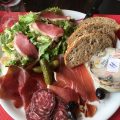
The next day our destination was Arles, but first we had to go back to the airport to collect my documents. From there we drove to Arles through the Camargue and on our way we found a very nice place for lunch, le Resto de Paty. Isolated location, we wondered if it was open, but it was , friendly service. We had tellines as a starter, a kind of clams, similar to the Malaysian lala. The main dish was grilled Camembert with charcuterie , delicious but filling 🙂  Really a lucky find!

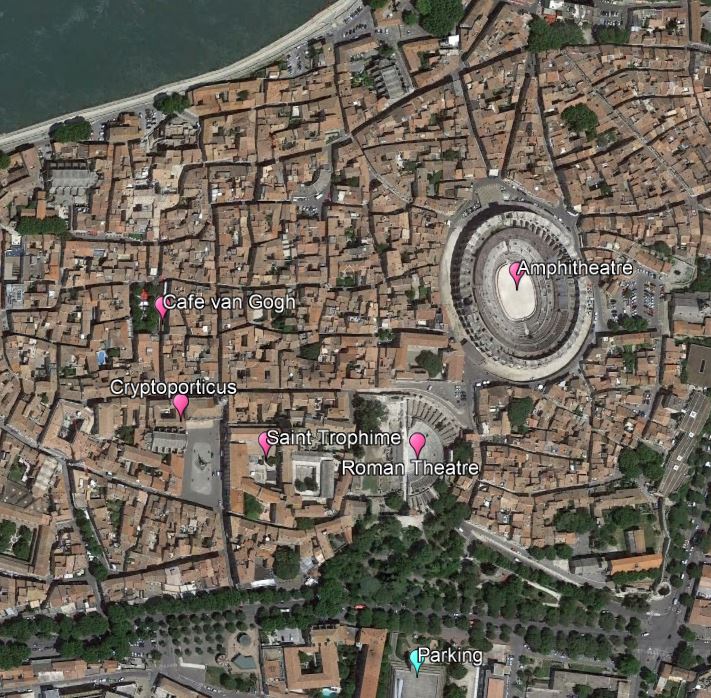
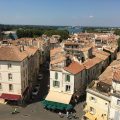
You can easily spend days in Arles, but we had only a few hours. Fortunately we could park near the center. Here is a GE view, with the places we visited.

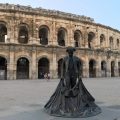
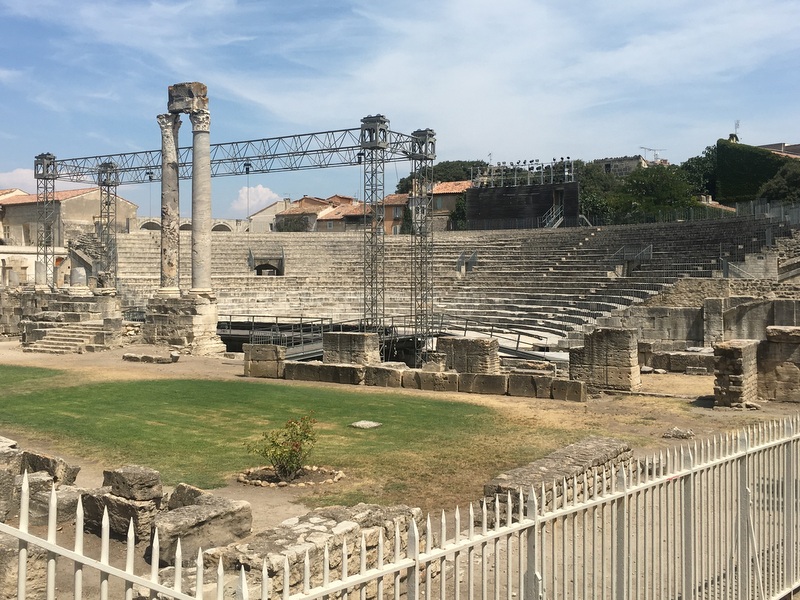
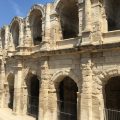
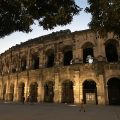
The Roman theatre was built in the 1st century BC and is one of the oldest stone theatres in the Roman world.. It is used now for concerts and events, which rather spoils its visual appearance.

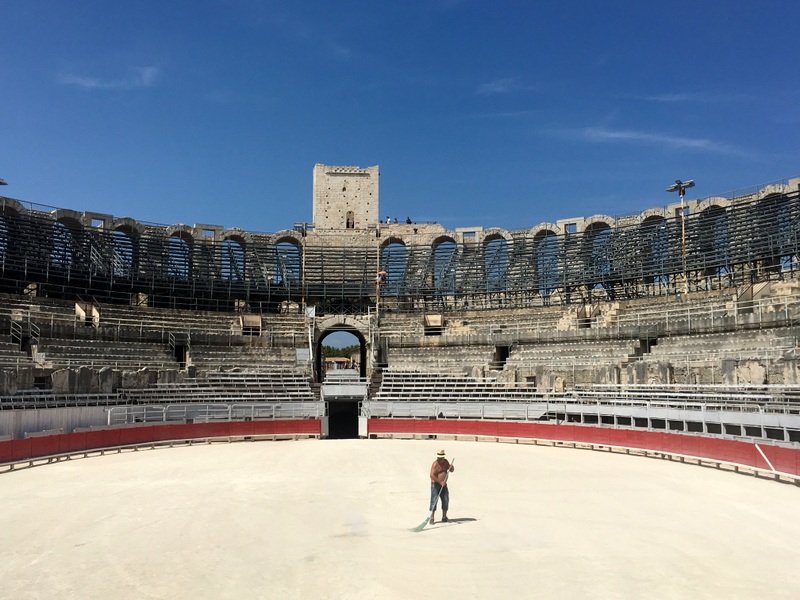
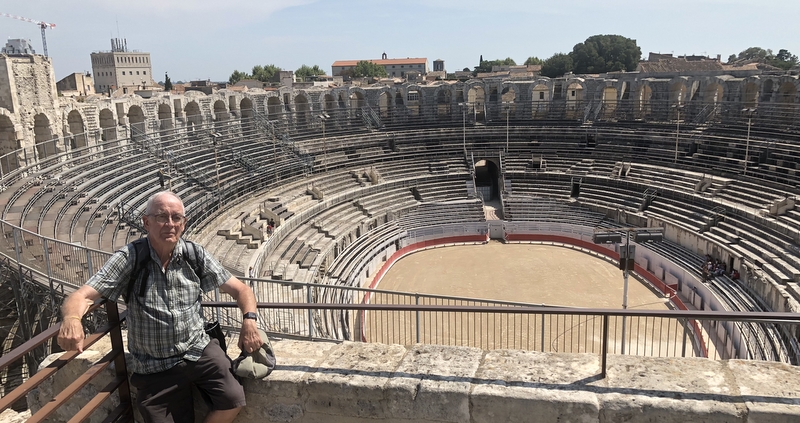
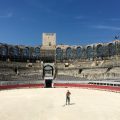
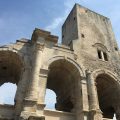
Much more impressive is the amphitheatre, built in 90 AD and capable of seating over 20.000 spectators. In Roman times it was used for chariot races and gladiator fights, nowadays for bullfighting and concerts.

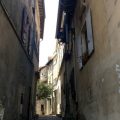
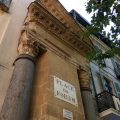
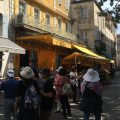
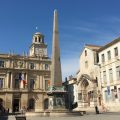
Many visitors will come to Arles because van Gogh lived there more than one year and created some of his most famous paintings. Through narrow streets we walked to the Place du Forum, with the cafe, painted by van Gogh.

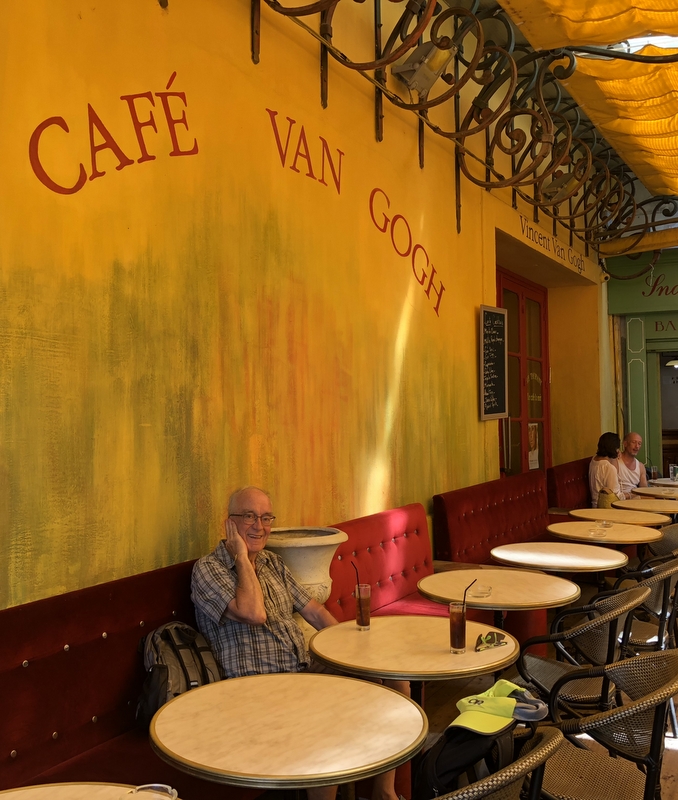
Here is the painting (1888) and the cafe, where I had a lousy ice coffee for a ridiculous price. To be avoided!  I hope you will understand why I cover my ear…:-)

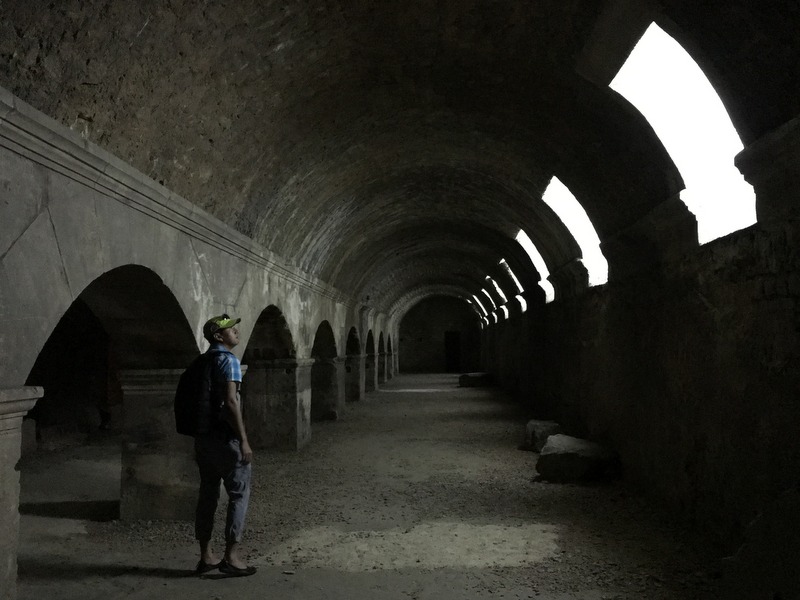
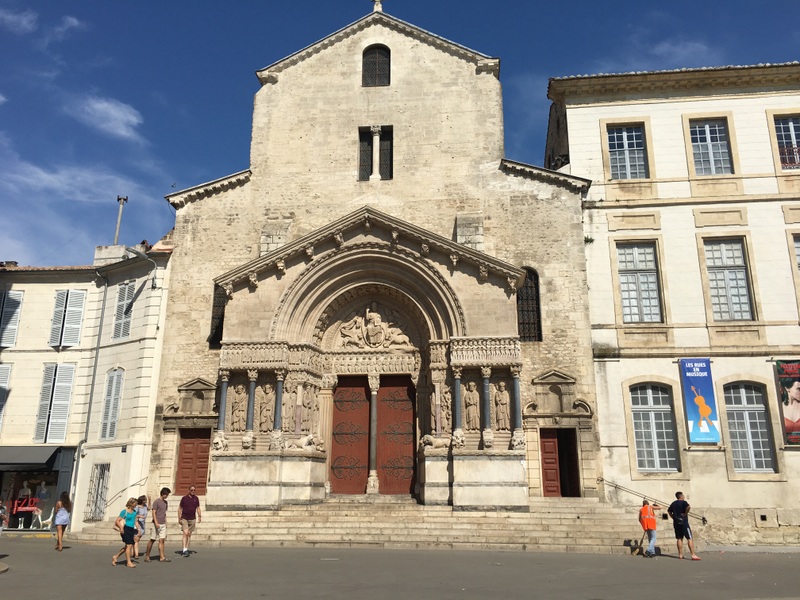
Our last destination in Arles was the Saint Trophime church, but on our way we passed the entrance of the Cryptoporticus, and we visited this intriguing foundation of the former Roman Forum first. Crowds of tourists in Arles, but this place was deserted. I loved it!

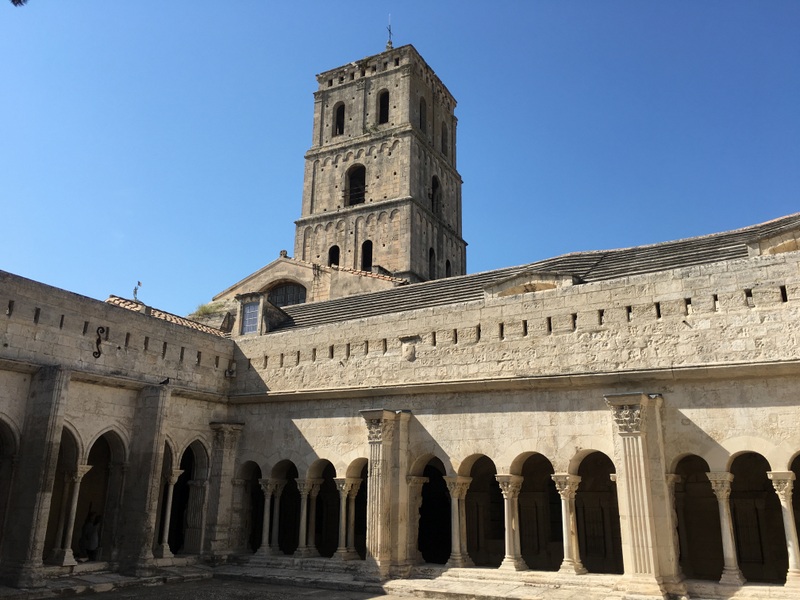
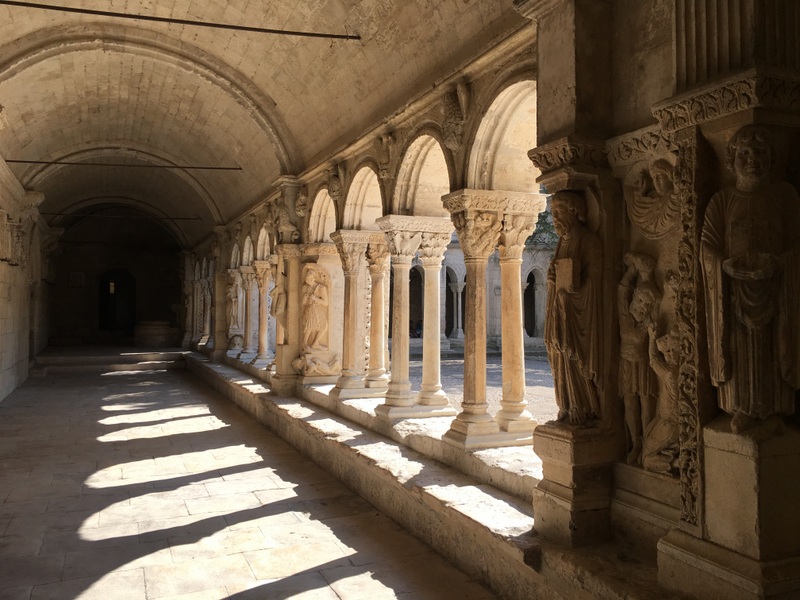
Saint Trophime was built between the 12th and 15th century  and is famous for its cloisters.

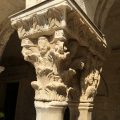
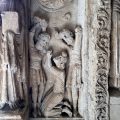
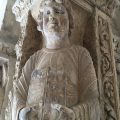
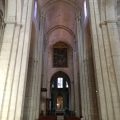
Some details of the columns, fine examples of the Romanesque style, and a photo of the church interior.

It had been a long and very hot (38 °C !) day. Before going back to Nîmes, we relaxed for a while on the Place de la Republique, with a 4th-century Roman obelisk in its centre.

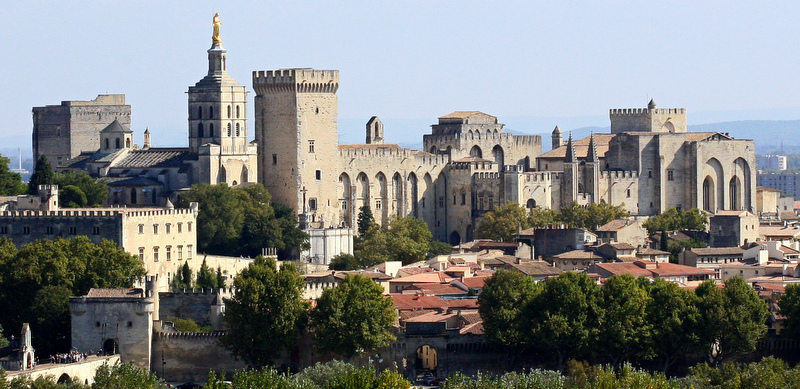
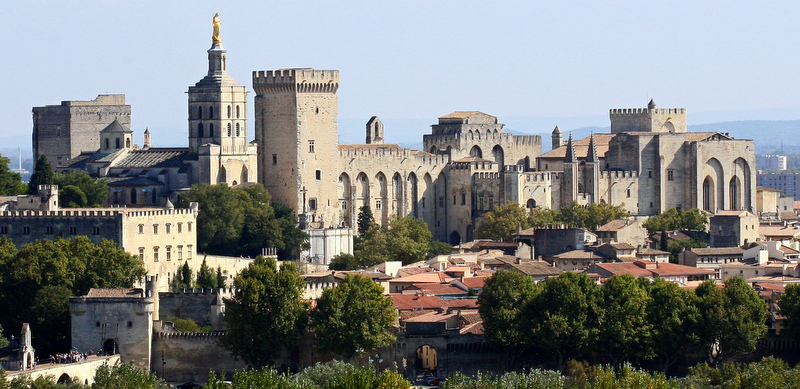
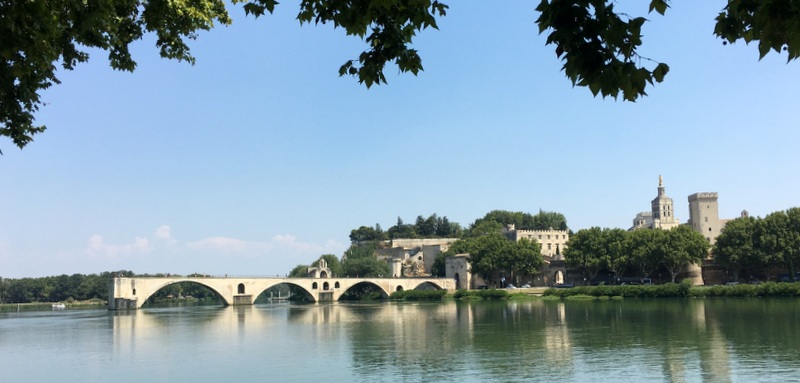
The following day we visited Avignon and it was even hotter.(38 °C). Probably almost everyone will associate Avignon with the famous children song  Sur le pont d’Avignon but the real importance of the town is because it replaced Rome as the seat of the Pope in the 14th century, the Avignon Papacy . The Palais des Papes is what remains of those turbulent times. It is one of the largest and most important medieval Gothic buildings in Europe. More of a fortress than a palace, here is an overview taken from Wikipedia to show its size. Bottom left you can see the beginning of the Pont d’Avignon.

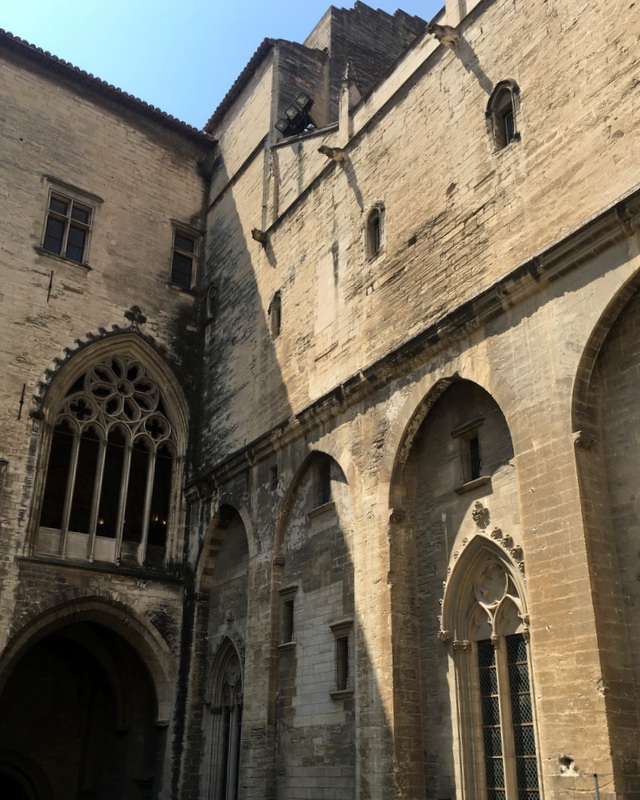
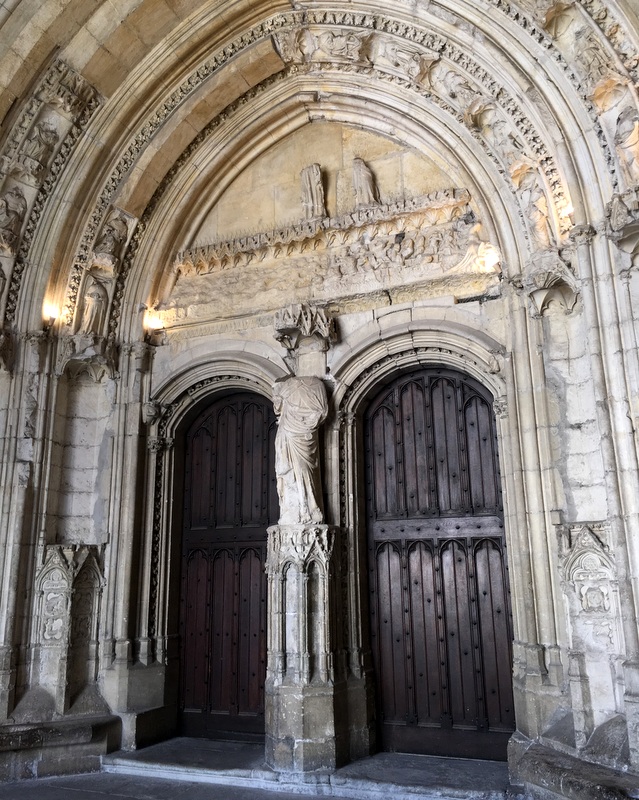
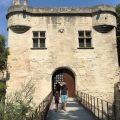
Because of the hot weather we limited ourselves to the bridge and the palace. Here are my own photos. In the top left picture you see the cathedral of Avignon with the prominent statue of the Virgin Marie on top of the belltower. Notice the massive fortifications. The bottom right photo shows a door in the palace. Enlarge it to see the damage that has been done to the statues.

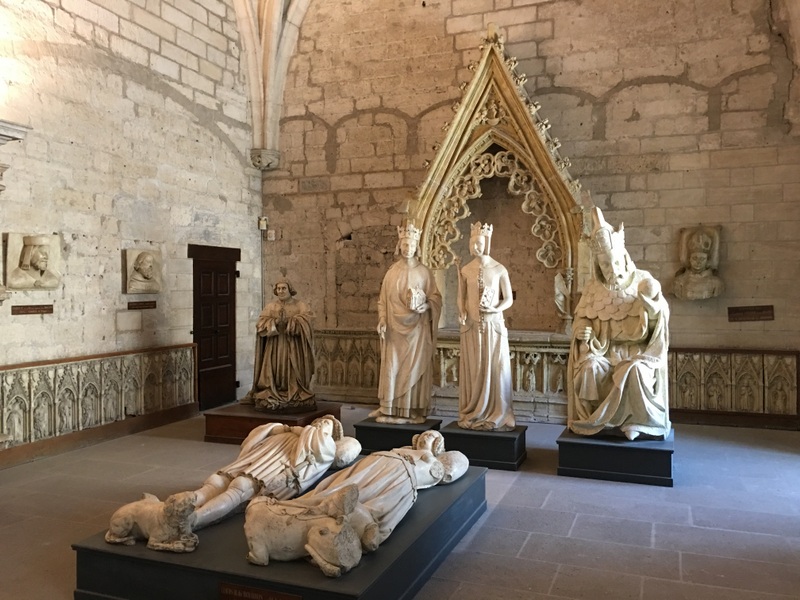
And here are pictures of the interior. You can easily spend many hours here.

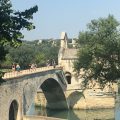
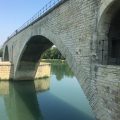
Here is the famous  Pont Saint-Bénézet, which is the official name of the Pont d’Avignon. To take this picture we crossed the Rhone river. The bridge was built in the 12th century and had originally 22 arches of which nowadays only four remain. In 1995 the bridge, together with the palace and the cathedral were declared  Unesco world heritage sites.

We walked across the bridge , but it was too hot to dance…:-)

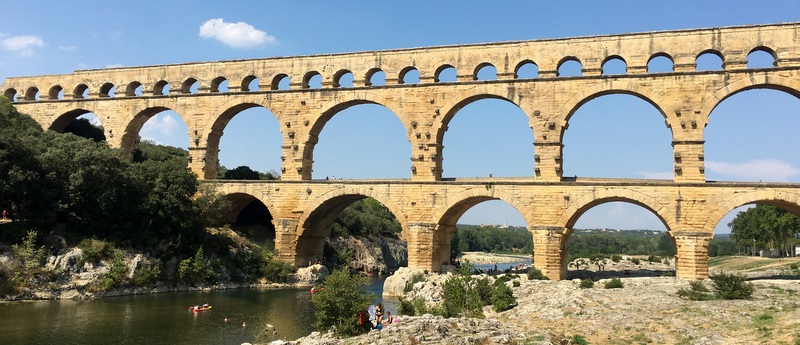
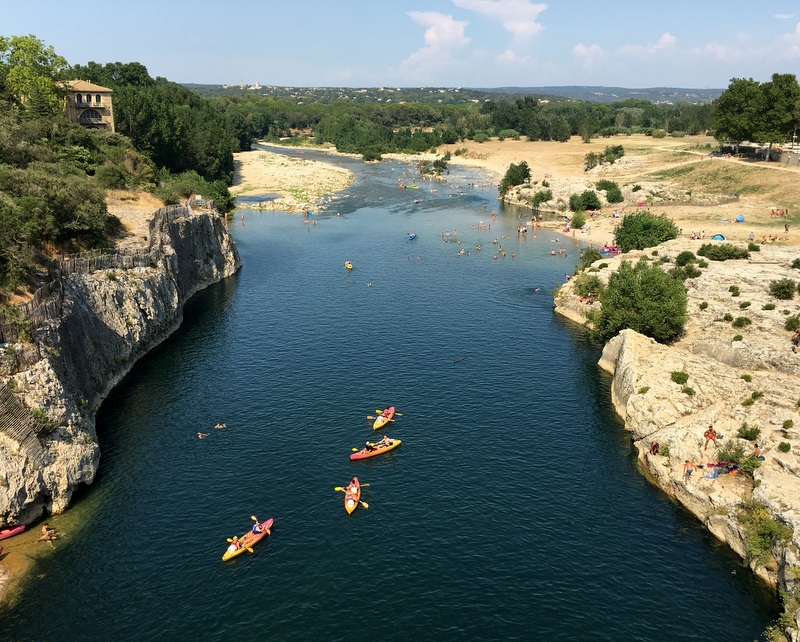
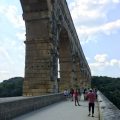
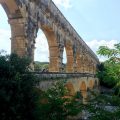
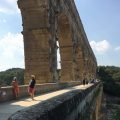
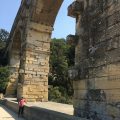
On our way back to Nîmes, we visited another Unesco world heritage site,  the famous Pont du Gard. It is an ancient Roman aqueduct, built in the first century AD to bring water to the town of Nîmes.  It is the highest of all elevated Roman aqueducts and really impressive.

Back in Nîmes, we decided to have a real French dinner. We walked to the Place aux Herbes, with many eateries, and had our dinner in restaurant O-Delice. Nice food

After our dinner we walked back to our apartment. Nice atmosphere, it was a Saturday evening, big crowds everywhere.

Although we had chosen Nîmes only as a convenient location to visit Arles, Avignon and the Pont du Gard, we discovered that the town itself has also many interesting places. Before leaving next morning, we visited two of them.

First  the Halles de Nîmes. It is considered a major tourist attraction, but for somebody used to the Central Markets of Asia, it was a bit disappointing. Lots of fresh food of course, always nice to take pictures.

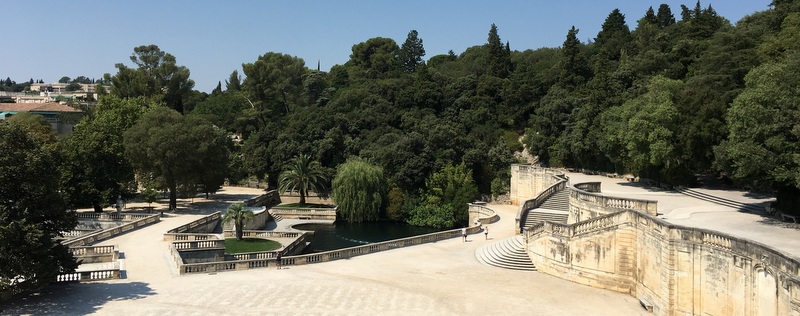
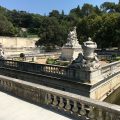
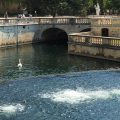
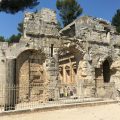
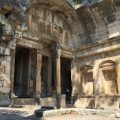
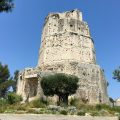
The Jardins de la Fontaine are a public park, established in the 18th century around a water source. In Roman times this was the center of Nîmes, ruins of the so-called Temple  of Diana (not a temple, probably a library) and the Tour Magne can still be seen.

Our next destination was Robiac, a small village north of Nîmes. Why did we go there? That will be explained in part II of this blog.

Journal 12-7-2014

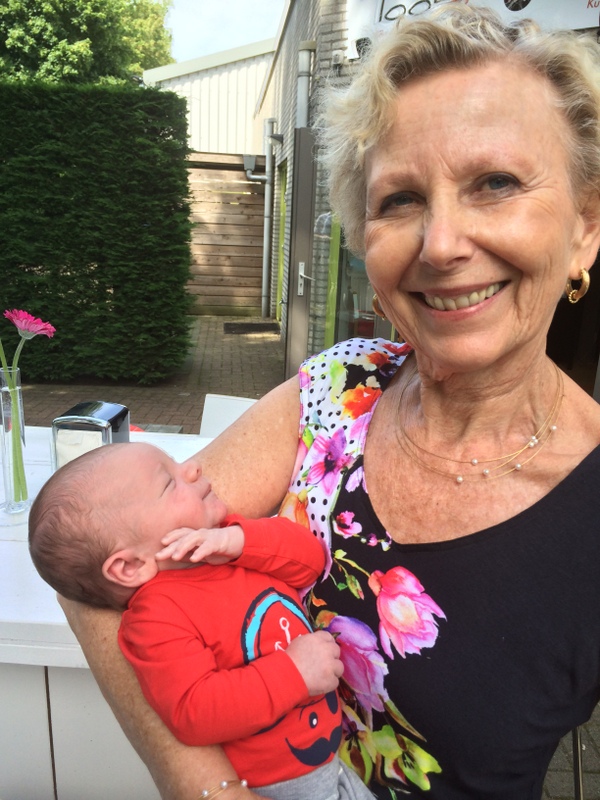
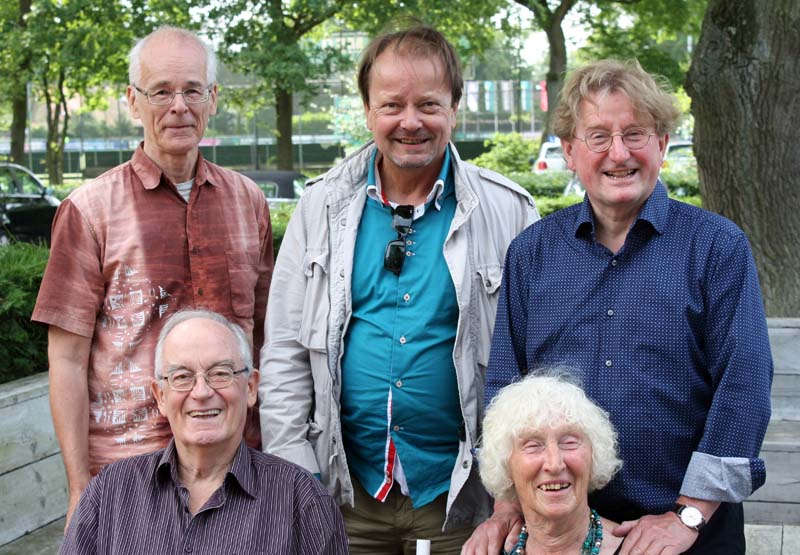
From 29 May until 9 July I have been back in the Netherlands. During that period I have been so busy  that I had no time to update this blog. Here is a journal about what I have been doing. More detailed reports will follow. I arrived on Ascension day and had not much time to overcome my jet lag because two days later Yolanda, Paul’s sister, celebrated her 65th birthday with an afternoon party. Here she is showing her youngest grandchild. It was an animated party, where I met several old friends. The picture to the right shows our former music group, numerous times we have come together to play (classical) music and enjoy  the fellowship (and the food!).
Yolanda My friends

The next few days Paul and I have been done some long-distance walking, an activity we also started decades ago. We had planned to walk three days, a part of the Pelgrimspad  in the southern part of the Netherlands. But the first day I developed a few painful blisters, so we had to cut short our trip. Beautiful countryside, here is a detailed report: The Dutch Pilgrims Path
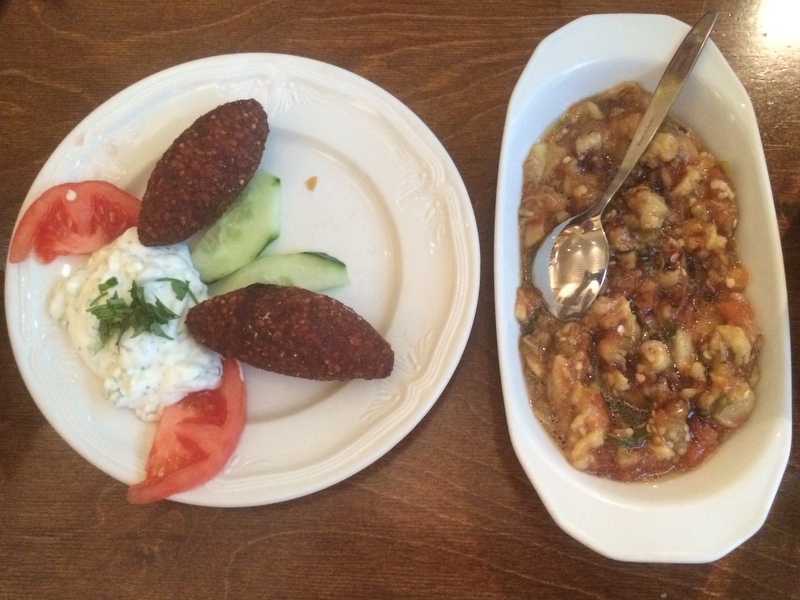
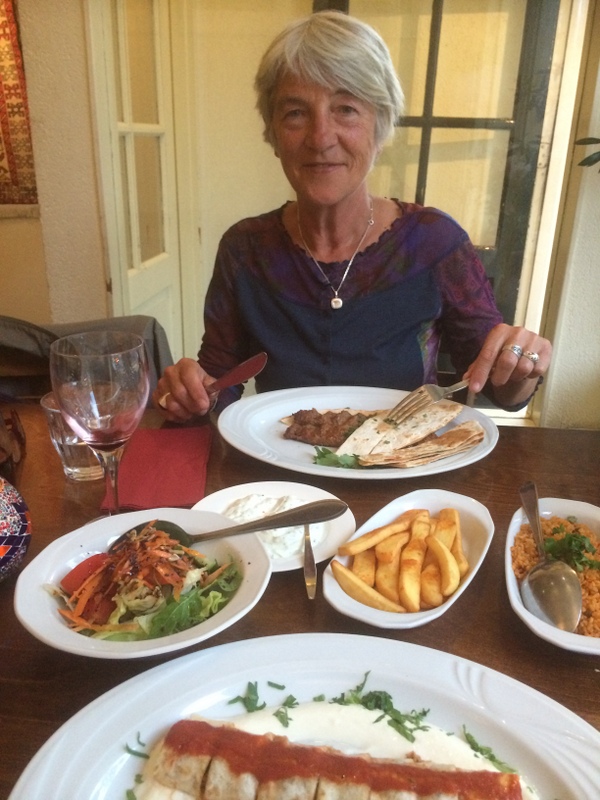
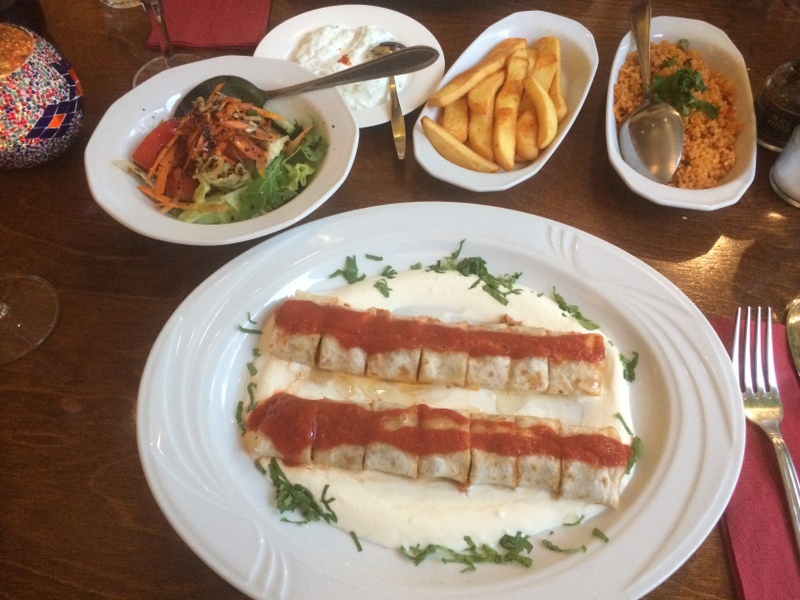
Pilgrims Path When I am back in Amsterdam, one of the first things I do is to call Inez, my long time friend and soul mate.  We had a nice dinner together in a Turkish restaurant. She is also a proud grandmother now…:-). By the way, don’t laugh at me that I am always complaining that I gain weight when back in Holland (this time it was only 2 kg) Turkish food Inez Turkish food


Aric arrived a few days later, just in time for the family gathering. My siblings and I always try to have a reunion during my visits, and this time we decided to do it in a grander way, because we had much to celebrate. My brother-in-law and I turned 70 this year, my brother Ruud 65 and my brother Pim 60, nephew Jasper 40, nephew Stefan 35, twin nephews Xander and Aswin 15. And there were several relationship celebrations. So we rented a number of bungalows in a recreation park and spent there the Whitsun weekend. Here is part of the crowd Family meetingAnd here a few more pictures

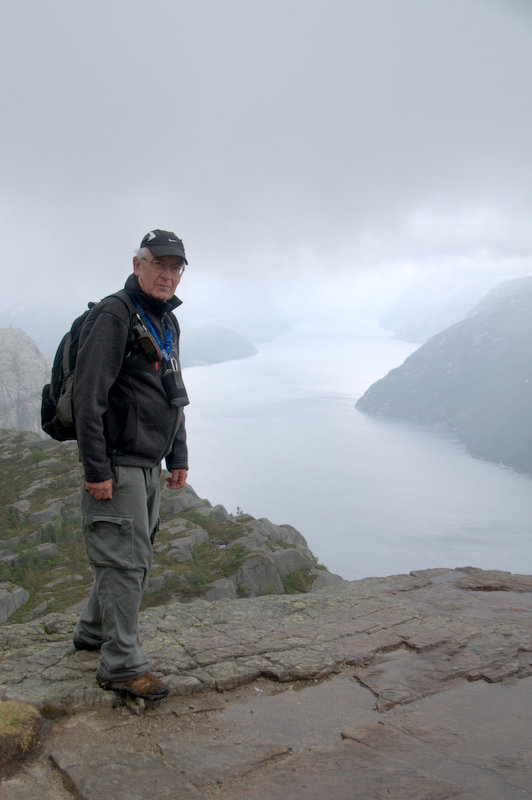
We had decided to make a trip to Norway during this visit. I had seen pictures of the Preikestolen, near Stavanger in Southern Norway and had become fascinated by this rock, rising 600 meter above the water of the Lysefjord. So we booked a flight to Stavanger and climbed this Pulpit Rock! Here we are. I can tell you that It is quite scary to get close to the edge…:-)

Preikestolen Preikestolen

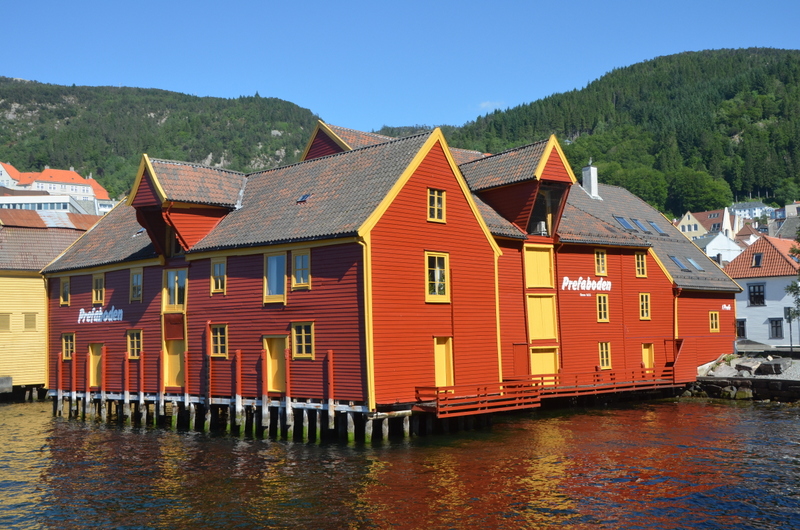
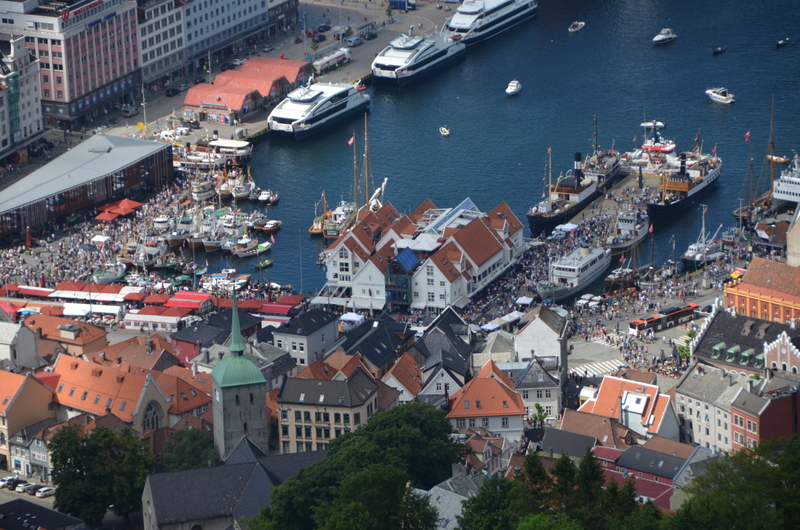
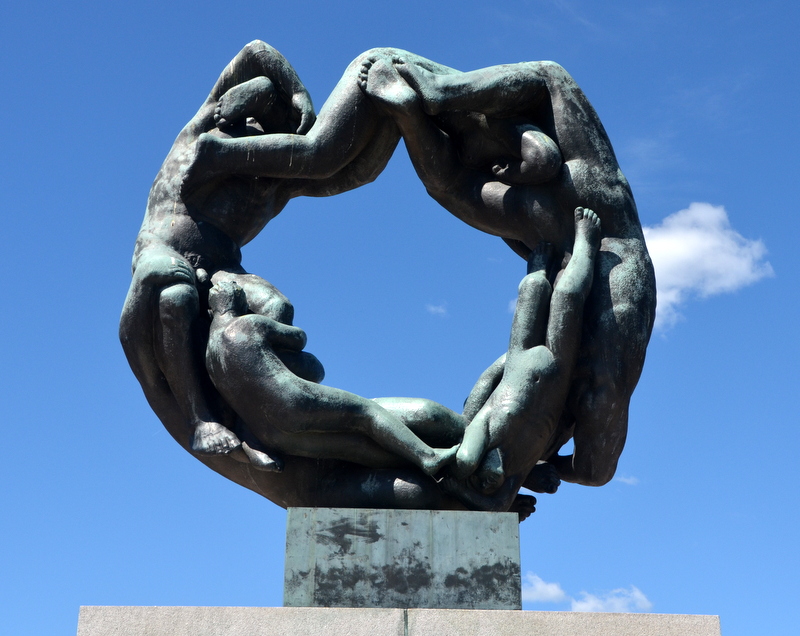
As it was our first visit of Norway, we also visited a few other places, Bergen and Oslo. Traveling from Bergen to Oslo by bus, boat and train is quite spectacular, beautiful fjords, numerous waterfalls and still a lot of snow in the higher regions. Stavanger and Bergen are picturesque towns with their brightly-coloured wooden houses. In Oslo we visited the famous Vigeland park, an ice-bar and the local nude beach. Our overall impression of Norway is positive, we like to come back. But the country is really very expensive. I took about one thousand picture, here a few. Click here for a detailed report.

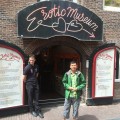
After we came back in Amsterdam, we took two days absolute rest, because the trip was interesting but also tiring. The last day of Aric’s visit we decided to go cultural and visit two musea. Not sure if you can call the Erotic museum and the Marijuana museum cultural, but it was fun…:-) After lunch with a pancake, we went to the beach. At 7pm it was still warm and sunny.

Although the water was still very cold (~ 16 C) I even took a bath. It happens not often that you have the beach completely for yourself…:-)! Beach Time flies, so the last two weeks of my stay were quite hectic. One day I met Nellie, my friend of 50 years, in Zwolle.  It was a real cultural visit, the Nijenhuis castle (part of the Fundatie museum) had two interesting exhibitions. We also visited the bookshop Waanders in de Broeren, I was very impressed by the way this old church had been given a new destination.

The next  weekend I did another long (20 km) walk, with two of my former students and the partner of one of them. After heavy rain at the start, the weather became sunny. From the train station of Amersfoort we took a bus to Woudenberg and then walked back to the station. I have documented the walk in an EveryTrail report

Heiligenbergerbeek wandeling

Another tradition during my stay in the Netherlands is that I visit my (only) sister and my brother in law. They live in a nice bungalow near Schagen and this time they took me around the countryside. We visited a plant nursery, specialised in unusual/exotic flowers and got a private guided tour by the friendly owner. Also a windmill, where the miller explained finally what had puzzled me for a long time: why do rotate windmills always counterclockwise! He is living in the mill and was so kind to give us permission to have a look inside. We also went to the seaside. In that particular region there are no dunes, so the hinterland has to be protected by a dyke. And the next morning we visited my brother Arie and his wife Ineke, who proudly showed us their new house in nearby Alkmaar.

Here are a few more pictures of my activities. From left to right, visiting my former vice-principal and good friend Dick, dinner with Yolanda, lunch with Edmund and Johan and dinner with my ex-student Raoul and his Thai husband Aunn.

On the last evening for my departure I had dinner with Pim and Inez in a restaurant in the northern part of Amsterdam. A pleasant surprise, we had to cross over the river by ferry to an industrial area, the restaurant was located in a former machine factory. Delicious food and very friendly service. The name of the restaurant is Hotel de Goudfazant

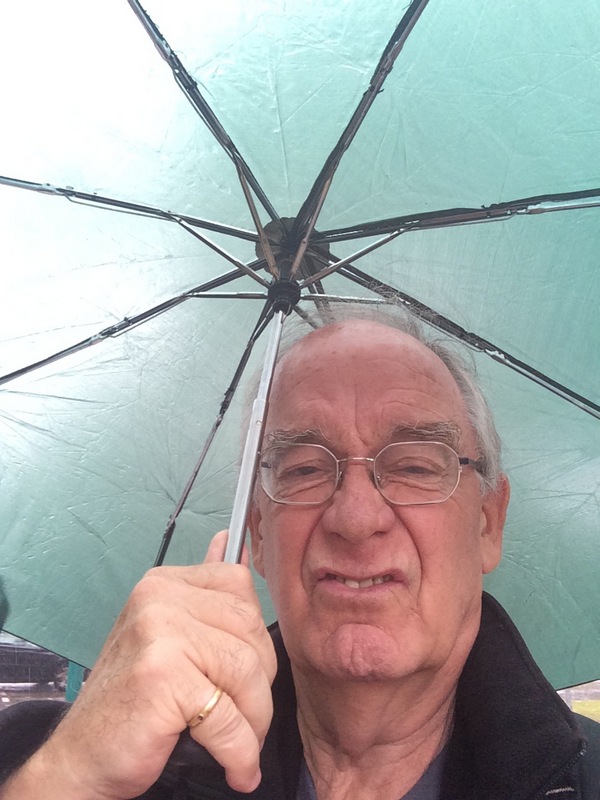
Then it was time to go back. The last days it had started raining, maybe the country was crying to see me leave…:-) But I was looking forward to Malaysian food and to celebrate Aric’s birthday…:-)

Rain Hokkien Mee IMG_9011

Down Memory Lane

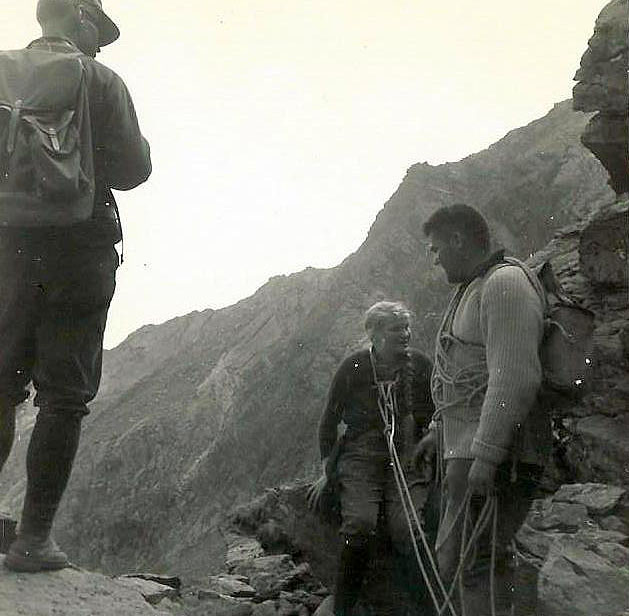
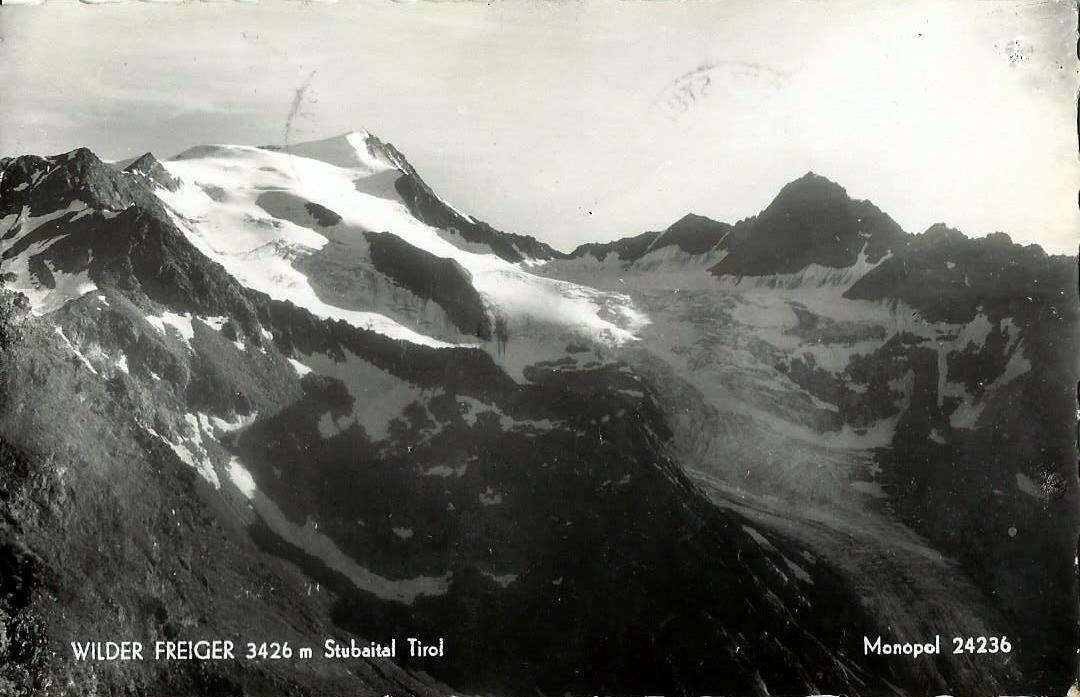
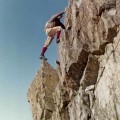
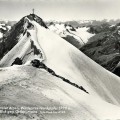
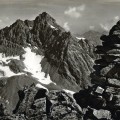
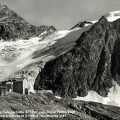
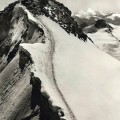
In 1964, fifty years ago, was a young student at the Free University of Amsterdam. With two friends I went to Austria during our summer holidays. Both also named Jan, so in the following pictures you will see Jan St (me) , Jan V and Jan Str. Camping in Tirol, hiking in the mountains. On one of these hikes we met Robert, a friendly German and an experienced mountaineer, who took us to the summit of the Wilder Freiger, 3418 m. It was a fascinating experience.

We were hooked and wanted to become mountaineers ourselves!

Robert

Wilder Freiger

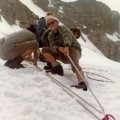
We became members of the Austrian Alpine Club and the next year we followed a training course at the (in those days) famous Kaunergratschule. Here we got a thorough instruction in the handling of rope, ice axe and crampons, how to rescue somebody who had fallen in a glacier crevasse, we learned how to rappel down steep rock faces, to brake our fall on the snow and much more.

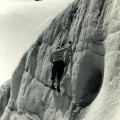
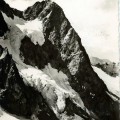
The course took two weeks, a balanced mix of theory and practice. As a part of the program we climbed several of the majestic mountains around the hut. Most impressive was the Watze Spitze with its hanging glacier.

After the training program, we felt confident enough to make our own alpine tours. We stayed in the same alpine region, but hiked to another hut, from where we climbed a few beautiful mountains, culminating in the Wildspitze, the second-highest mountain of Austria at 3770 m.

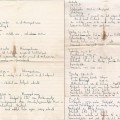
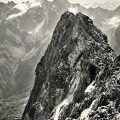
Here are more pictures, taken during these holidays. Most of them still in black and white. I found them in one of my photo albums, it was quite fun to reconstruct this part of my past, as I had forgotten most of the details. The last picture is a scan of the trip diary I kept during our stay. With information about weather and snow conditions, information about the route chosen, the difficulty (I – VI, I = easy, III= difficult)

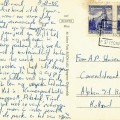
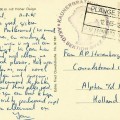
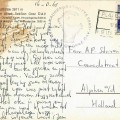
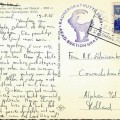
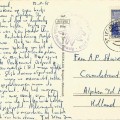
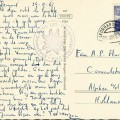
To keep my family informed, I sent them postcards regularly. Later they had given back these postcards to me and I had put them in my album. Had completely forgotten that I had written on the backside of these cards. It is in Dutch, it gives a nice “travelogue” of our holidays.
A nice trip down memory lane!

Europe trip 2013 Barcelona & Amsterdam

After our two-week trip through Europe we needed some time to relax and do our laundry. Only a few days because we had one more destination on our program: Barcelona in Spain. The town of Gaudi, the country of paella and sangria!
It was a short visit of three nights only. Instead of looking for a hotel we found a nice apartment, a loft on the fourth floor of an old building, near to the Ramblas and in the middle of the Red Light district…:-) The dimensions must have been something like 30 x 5 meter!


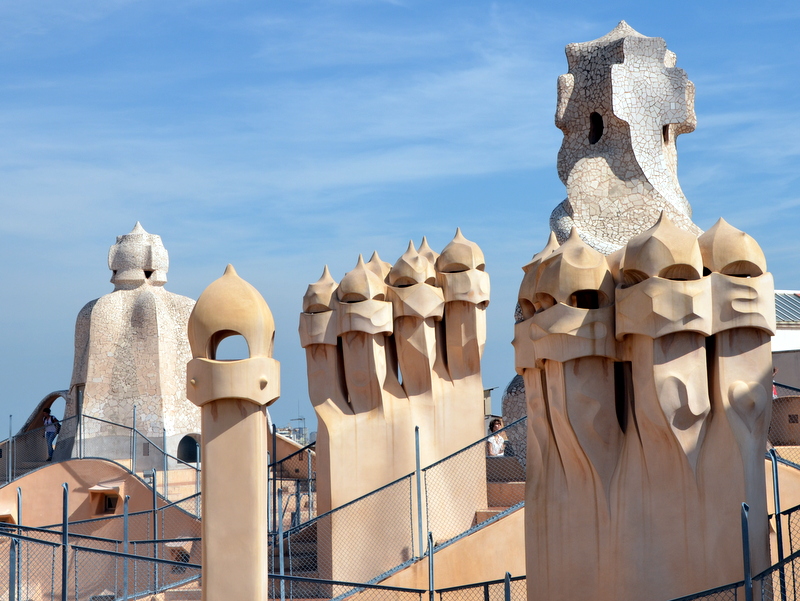
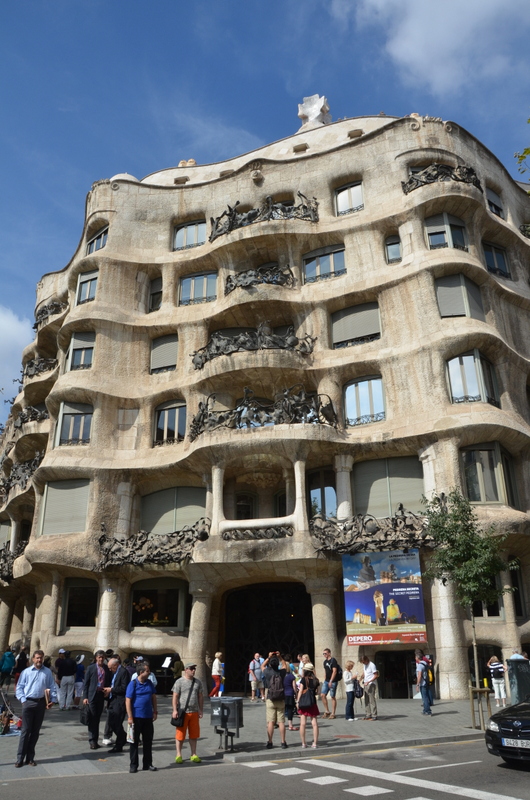
Of course we spent most of our time in Barcelona visiting and admiring the wonderful works of art created by Gaudi.. A pity that we were not the only ones! I have created a separate album about Barcelona on my Stuif’s Adventures site. Here only four pictures of the places we visited
We had lots of tapas and sangria. Not always top quality. One night we had really a wonderful meal in a local tapas bar suggested to us by the hostess of our apartment. Spanish style, We started our dinner at about 10 pm..:-). Delicious food. The name of the restaurant is Cañete and you should not miss it when you visit Barcelona!
Back in Amsterdam, we had a few days left before Aric went back to Malaysia. The weather was still ok, so we looked for some more of the KLM houses. And we visited the Rijksmuseum, opened last year after an extensive renovation. With a spectacular result, I will post a separate blog later about it. We had a look at the Night Watch by Rembrandt, one of the most famous paintings in the world. Also here we were not the only ones…:-)
Night Watch

Here are a few more pictures of these last few days in Amsterdam

Europe trip 2013 part 4

My idea was to travel back from Switzerland to Amsterdam via France. Last year I had visited a few Loire castles with my brother Pim,  and I wanted to show their beauty to Aric, so I booked two nights in Blois. However, planning in more detail, I found that the distance between Grindelwald and Blois was almost 700 km, a bit too long for a comfortable drive. Therefore I looked for a suitable stopover halfway. Beaune! To be honest, the name did not ring a bell. Now I know better.

DSC_5856

Wine lover friends will scold me, because Beaune is the Wine Capital of the Burgundy region. The most important wine auction of France is held here yearly, but we were too early for that. Besides, Burgundy wines are too  expensive for me.

It is a medieval town with a famous tourist attraction: the Hospices de Beaune, a hospital for the poor, founded in 1443 (!)

DSC_5857

Well worth a visit, here are some pictures.

The hospices also possess a very famous medieval work of art, The Last Judgment (1445-1450) by Rogier van der Weyden. Impressive.

DSC_5917

After a nice dinner and a good night sleep we continued the next day to Blois, situated on the banks of the Loire river. The weather had changed, it drizzled when we arrived. We did a short walk in the town

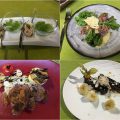
After our walk we had a delicious dinner

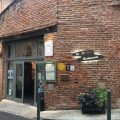
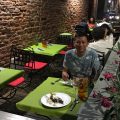
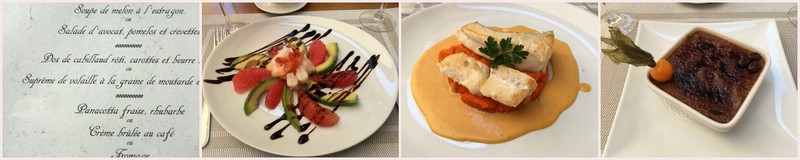
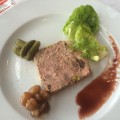
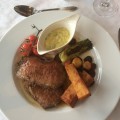
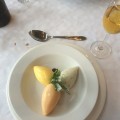
Haute Cuisine in les Banquettes Rouges, Blois

Haute Cuisine in les Banquettes Rouges, Blois

The next day it was raining cats and dogs! Still we decided to visit the two castles. And we were not the only ones. It was the National Heritage weekend, there were special activities everywhere and the admission was at a reduced rate or even free. Resulting in crowds of people. First we visited Chenonceau, my favourite.

DSC_6021

Because of the rain we skipped the beautiful gardens and spent more time inside the castle. In its present state it dates back to the 16th century. The castle was acquired by king François I and later given by his son, Henry II to his mistress Diane de Poitiers. She commissioned the building of the famous arched bridge across the river Cher.

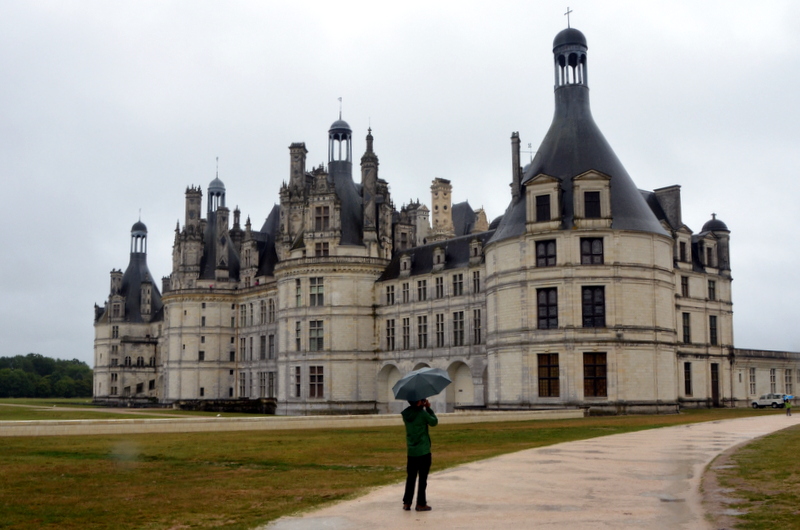
Next destination was Chambord, the largest of the Loire castles. If Chenonceau is androgynous, Chambord is alpha-male…:-).Built by the same king François I and possibly designed by Leonardo da Vinci.

DSC_6065

The rain had become heavy now, we were soaked already, so we spent only a short time on the roof with its many chimneys. Pity for all the people who took part in the activities. The castle was never inhabited continuously, the kings of France just moved in a for a couple of weeks. Lous XIV, the Roi-Soleil had a ceremonial bedchamber here, where VIPs could watch how he woke up and was dressed..:-)

Wet and cold we came back to our hotel, bought some food in the supermarket and had a simple meal in our room. This was the only day during our trip that we had bad weather, so we consider ourselves lucky…:-)

The next morning there was sun and blue sky again! But we had to be back in Amsterdam that evening, so we could only make a hurried visit of the castle of Blois. The Chateau de Blois is located in the center of the town, from our hotel room we could see the backside of the François I wing. Here is the entrance from the square:

DSC_6071

There is a lot to see in the castle, the famous octagonal staircase in the courtyard, the François I wing, the Salle des États Généraux and much more. But we had not much time. Here are some pictures

Are you interested in philosophy? Then you may think about the caption with Aric above: “The present king of France is Chinese” True or false?

We arrived in Amsterdam just in time to return our car. About 3500 km in two weeks time.