Germany 2026

While planning our Europe trip, Aric suggested that we could go to Germany for a couple of days. He would like to visit Görlitz. I had never heard of that name, so he explained that it was a town on the border between Germany and Poland, with a pedestrian bridge between the two countries. To get there, we had to fly to Dresden and then take a train. Of course I had heard of world-famous Dresden, but never had the chance to visit. it. We decided to make it a 6D5N trip, with the first 3 nights in Dresden and then two nights in Görlitz.

There were no direct flights from Amsterdam to Dresden, so we took Lufthansa, with a stopover in Frankfurt.

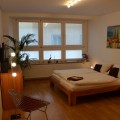
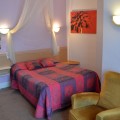
Aric had booked a room with a view, within walking distance from the Innere Altstadt. This inner old town dates back to around 1200 and was full of Renaissance and Baroque heritage monuments. In February 1945, at the end of WWII, it was firebombed and destroyed by the Allied Forces, killing more than 20000 civilians and refugees. A controversial action, called a war crime by many.

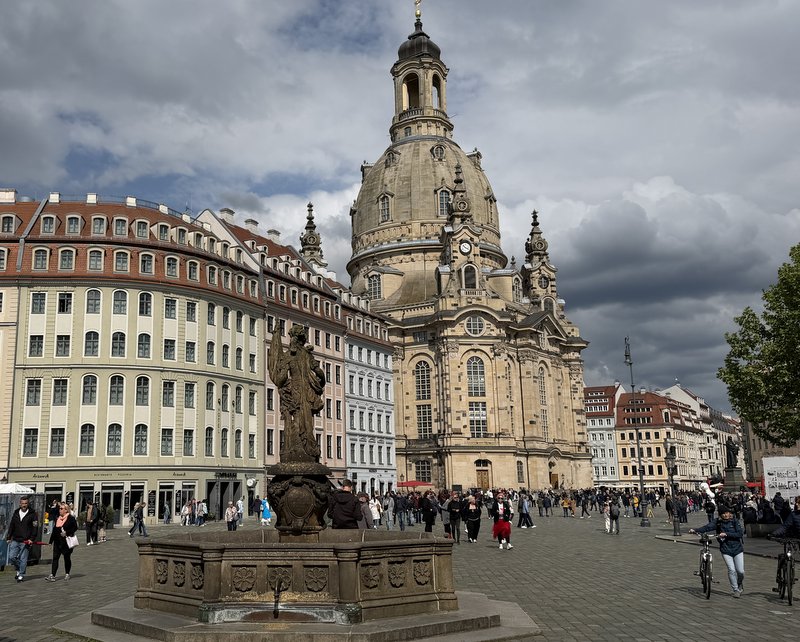
After a short rest, we walked to the Inner Old Town to have a look at the Frauenkirche, the iconic landmark of Dresden. Completely destroyed in February 1945, it has remained a ruin for almost fifty years, until it was rebuilt between 1994 and 2005..

We were actually looking for a restaurant with traditional local food, but could not find any that we fancied; all were very touristy. So we gave up and went to McDonald’s. A hamburger has at least German roots 😉 .

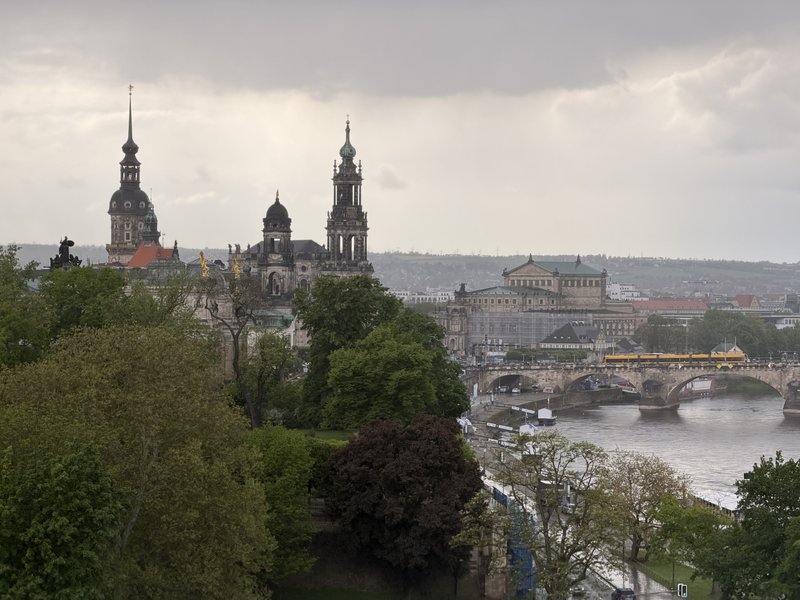
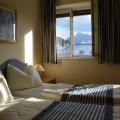
Back in our hotel, we enjoyed the view from our room. The floodlit dome of the Frauenkirche is on the left.

The next day, we first visited Dresden Neustadt on the other bank of the Elbe River. This “New Town” is actually quite old. After a devastating fire in 1685, it was rebuilt in Baroque style and named Neustadt. Our first destination was a dairy shop, the Pfunds Molkerei. it was founded in 1880, and the entire interior is completely covered in beautiful ceramic tiles.

That has made it a tourist attraction with busloads of tourists visiting the shop and having a glass of fresh buttermilk.

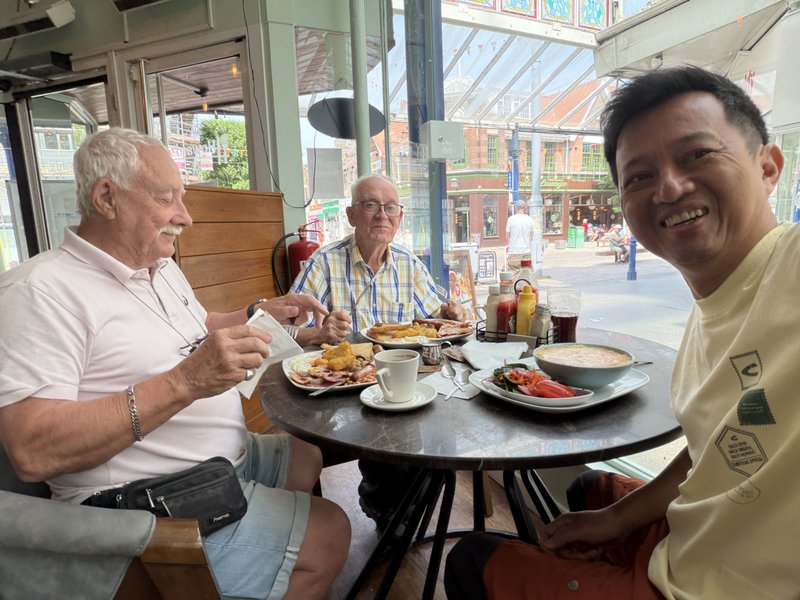
We stayed a bit longer and had our breakfast with a cheese platter and another glass of the delicious buttermilk.-

After this nice start of the day, we explored Neustadt a bit. We had a look at the Martin Luther Church, built in the 1880s. Martin Luther was one of the founders of the Protestant Reformation and visited Dresden in 1517. At the back of the church, we noticed a war memorial for the soldiers who died during World War I. Germany played a central role in both World Wars.

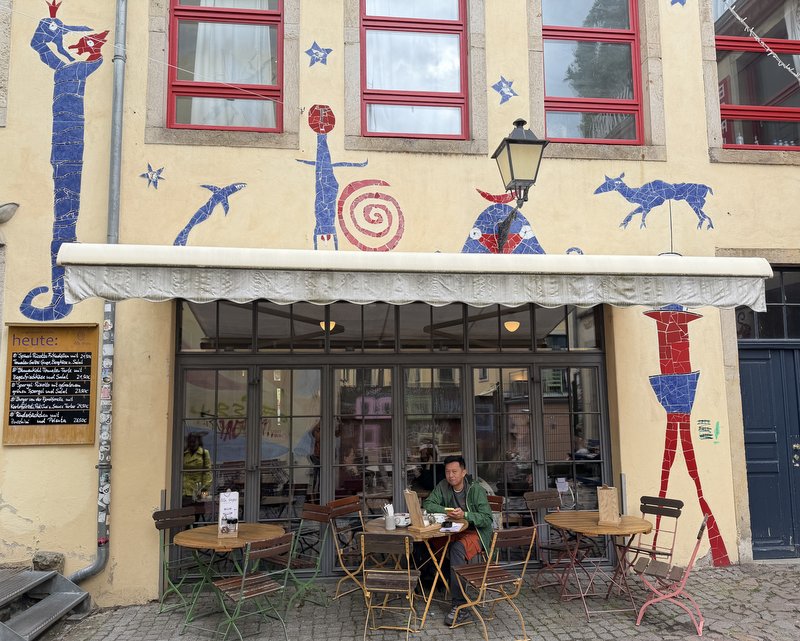
Our second destination in Neustadt was the Kunsthof Passage, a charming collection of courtyards dedicated to art, architecture, and urban living. Created in the 1990s, after the reunification of West and East Germany on 3 October 1990. Here is the entrance of the courtyards.

The courtyard of the elements has facades that represent light and water. Other courtyards are decorated with images of animals.

We had our lunch in one of the courtyards. Restaurant Lila Soße is highly rated and has a creative presentation of “German Tapas”.

Before crossing over to the Old Town, we sat down in the grass and enjoyed the view. The undeveloped grassy plain along the river has an important function; it serves as an overflow when the Elbe has too much water.

View of the Elbe from the Augustus Bridge, named after its builder, King Augustus II the Strong

We spent the afternoon exploring the Innere Altstadt, taking many photos, but not entering any museum or building. I have provided the pictures with captions that give the names of the buildings. Clicking on a caption will link to a webpage with more information (sometimes in German).

The Frauenkirche after the Allied bombing in 1945. Only the statue of Martin Luther has survived. After the war, Germany was split into two parts, West Germany and communist East Germany. East Germany left the ruins untouched and officially declared it an anti-war memorial. After the reunification, a monumental project started to rebuild this Baroque masterpiece. The rubble was meticulously searched for usable sandstone bricks, and the rebuilding took more than ten years. The church was reopened in October 2005 and now stands as a symbol of reconciliation and peace.
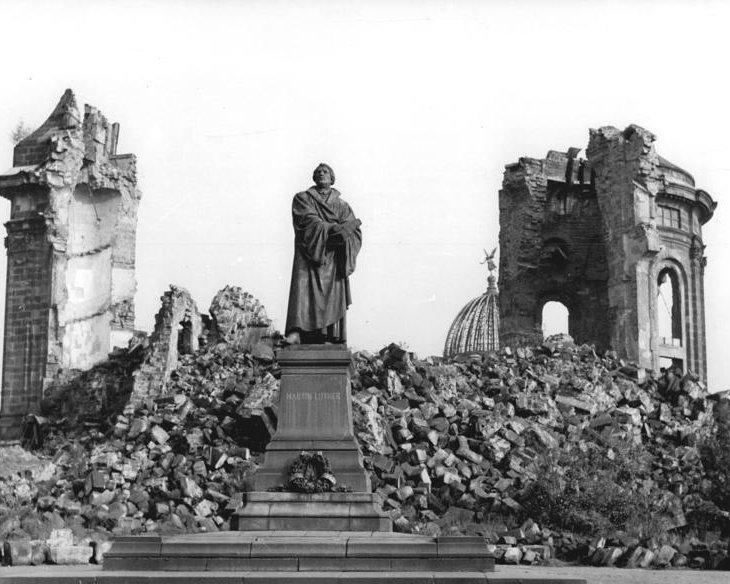
In the rebuilding, old blackened sandstone bricks from the old church were used where possible, with striking effect.

We visited the interior and admired the new organ and the amazing sandstone dome.

We walked back to our hotel and enjoyed the night view.

The next day, we could (should?) have explored the Old Town more, climbed the Hausmannsturm, and visited museums. But instead, we made a day trip to the Bastei Bridge, a tourist attraction for over 200 years. Easy access from Dresden: first a 40-minute train ride, along the river Elbe, then a ferry crossing to a small resort.

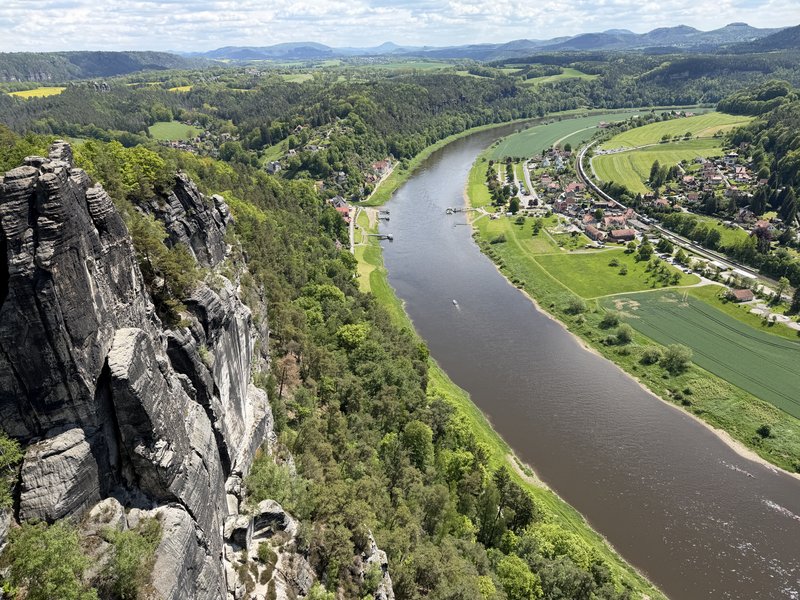
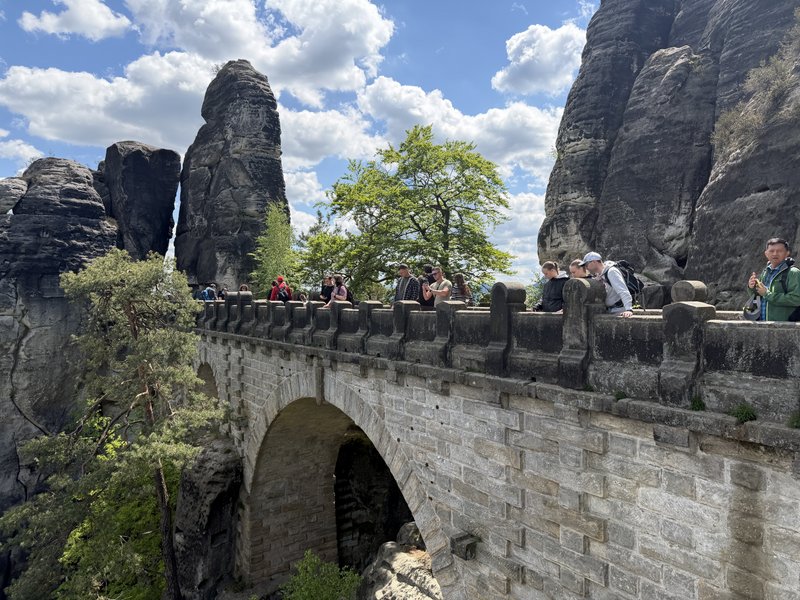
From the resort, a clear but sometimes steep path brings you in less than an hour to the bridge, about 200 meters above the river. The sandstone rocks, eroded over a million years by water, are a favorite spot for rock climbing.

In 1824, a wooden bridge was built for visitors, in 1851 replaced by the present sandstone bridge. Painters visited this region; click here for a famous work by Romantic painter Caspar David Friedrich.

We spent quite a long time at the Bastei, enjoying the views of the bridge, the Elbe River, deep down, visiting several viewpoints, and having lunch at a hilltop restaurant.-

A view from the top, before walking down. A day well spent.

Back in town, we looked again for a restaurant serving local fare, that was not overly touristy. We found one, ordered the Sächsischer Sauerbraten and the Leberkäse mit Spiegelei. And of course, local beer.

Friendly service, but we were not impressed by these local specialties.

Later that evening, Aric had enough energy to walk again to the viewpoint near the river, which we had visited the day before. He took this beautiful shot of the illuminated Altstadt.

The next day, before taking the train toGörlitz, we had breakfast with coffee and cheesecake.

On our way to the station, we passed a 7-seater party bicycle. The train ride took about one and a half hours. In Görlitz, we took a tram and walked the last part to our homestay. I have marked it with a yellow cross.

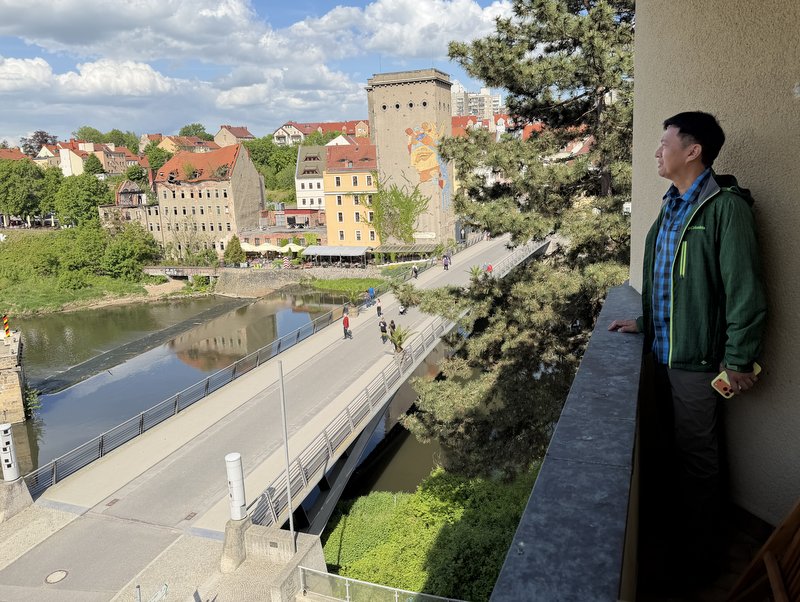
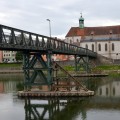
It was a perfect accommodation, the interior as well as the location. From our balcony, we could see the bridge connecting Germany and Poland.

The Altstadtbrücke has an interesting history. I had never heard about Görlitz, but it is older than Amsterdam or Dresden, documented for the first time in 1071.  It was a key trading town on the Via Regia route linking Western and Eastern Europe, with a bridge crossing the Neisse River. The bridge was destroyed by the retreating German army in 1945. After Germany surrendered, the Neisse became the borderline between East Germany and Poland, splitting Görlitzz in two. It was only after the reunification of Germany and the accession of Poland to the European Union that a new bridge was built in 2004, for pedestrians and cyclists only.

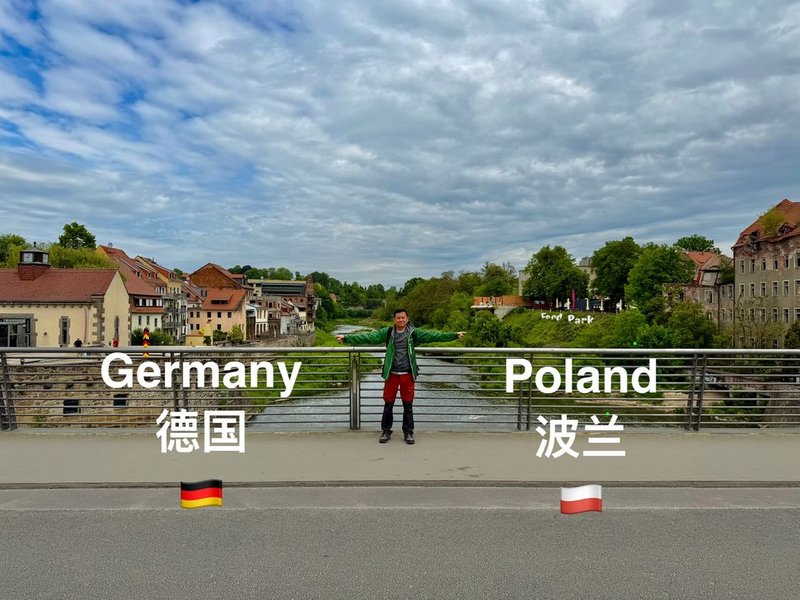
Here I am standing between Germany and Poland. As both countries are in the Schengen area, there is no passport control. The quiet Neisse River is part of the Oder/Neisse line

We walked over to Poland for a drink, a snack, and some shopping. Poland has kept its own currency (the zloty), but we paid digitally 😉

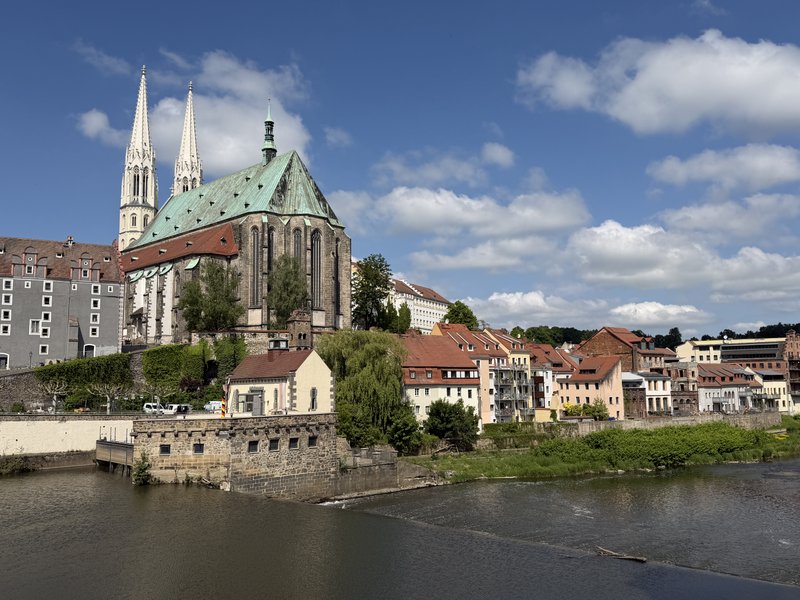
View of Görlitz and the iconic St. Peter’s Church from the Polish side.

The next day, we started by visiting the church. It is a Gothic hall church, the twin towers were added much later. The church has a famous organ.

Next we walked around in the Old Town. The many Renaissance and Baroque buildings in the town have been so well preserved that several movies have been filmed here, giving the town its nickname, Gorliwood.

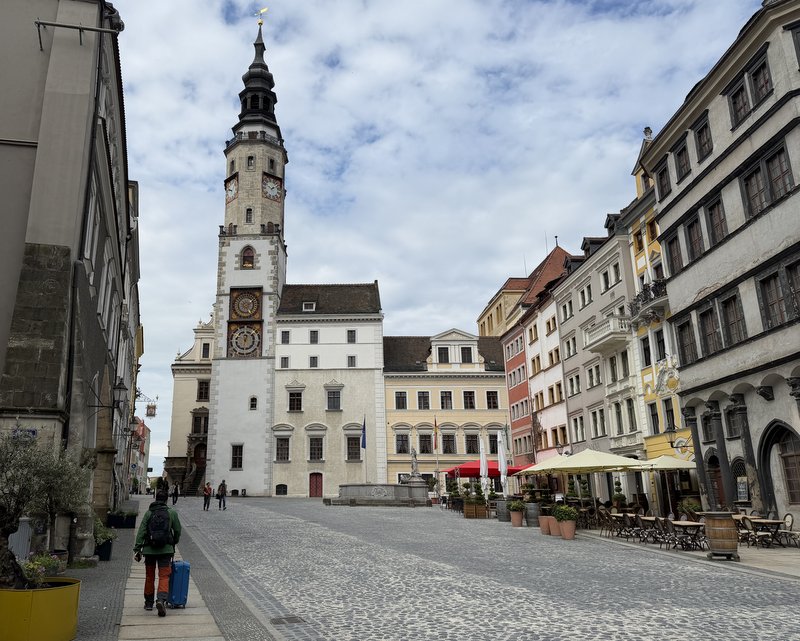
The. Marienplatz is a popular and lively square. The Dicker Turm (Thick Tower) was part pf the fortifications and erected in 1250. The building on the other side of the square is Kaufhaus Görlitz, built in 1913 in Jugendstil style. The interior must have been spectacular, but it is now unfortunately closed. The interior was used for the movie The Grand Budapest Hotel

The Obermarkt is the center of the old town. The church is the Dreifaltigkeitskirche (Hp;u Trinity Church), built between 1234 and 1245.

The Reichenbach Tower, built in the 13th century was also part of the fortification of Görlitz

The Old Town Hall , fist mentioned in1369.

It is a pleasant town, we could (should?) have stayed more days. Here are a few fountains we notice during our walk. From left to right, an angel, two humans and a devil.

We ended the day by visiting a museum, the Barockhaus. The house was built between 1726 and 1729 as a residential and commercial building for a textile merchant and ranks among the most magnificent merchant houses in the Old Town.

A section of the museum displays the civic culture of the Baroque.

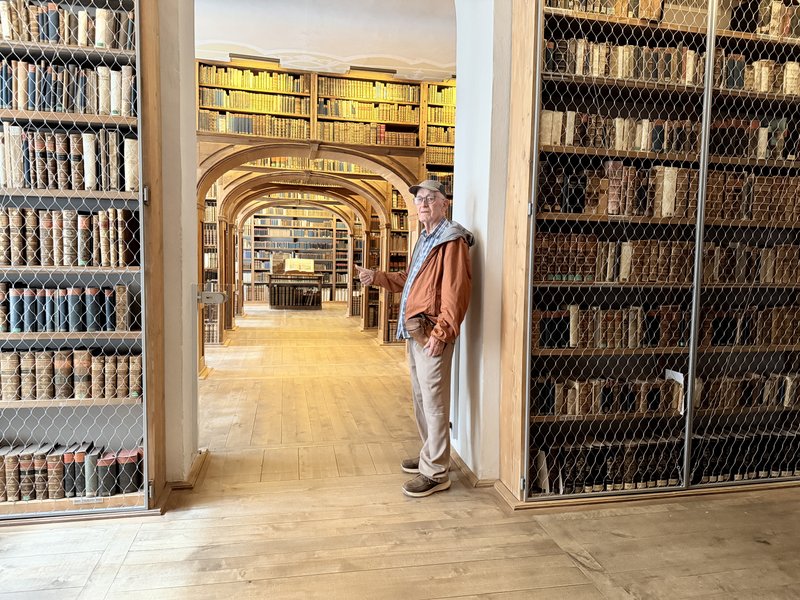
In 1801, the building became the property of the Upper Lusatian Academy of Sciences. They housed their library and their collection of scientific instruments there.

What a fascinating museum.

The owner of our homestay advised a nearby Italian restaurant to have dinner.

The next day we had a long travel day, first by train to Dresden, then a flight to Munich, and from there to Amsterdam. It was an exciting trip, and we reached our destination. Here is the image Aric created to share with family and friends.

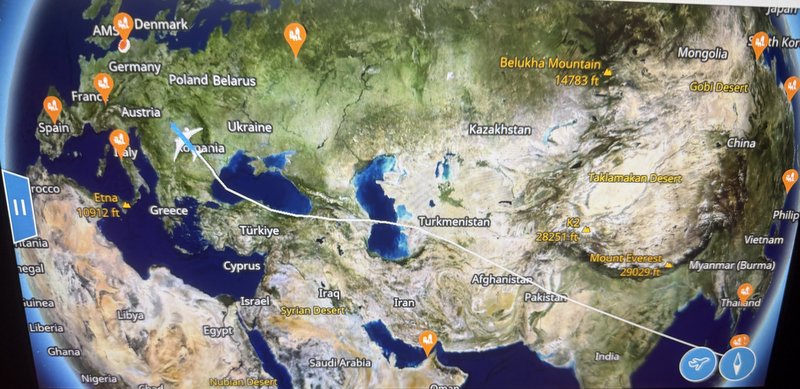
Our visit to Europe in 2026

On 11 May, we flew to Amsterdam. For Aric, it was the first time since 2019, but I had been back in 2023 and 2024. Last year, we were planning to visit Iceland, but I got a vision problem (AMD) that affects and limits my activities. This year we decided to travel together for five weeks, after which I would stay in Amsterdam on my own for two more weeks.

Iceland was the main destination and Aric made am elaborate planning for a 10D9N visit. We asked our UK friend Rodney to join and visited him on a 5D4N trip before flying together to Reykjavik. Aric proposed also a 6D5N trip to Germany. And of course there were visits to family and friends. So It was a full program.
I will write several blogs about the various trips, but start here with a chronological report. Only two photos per day, not easy to make a selection.

11 May

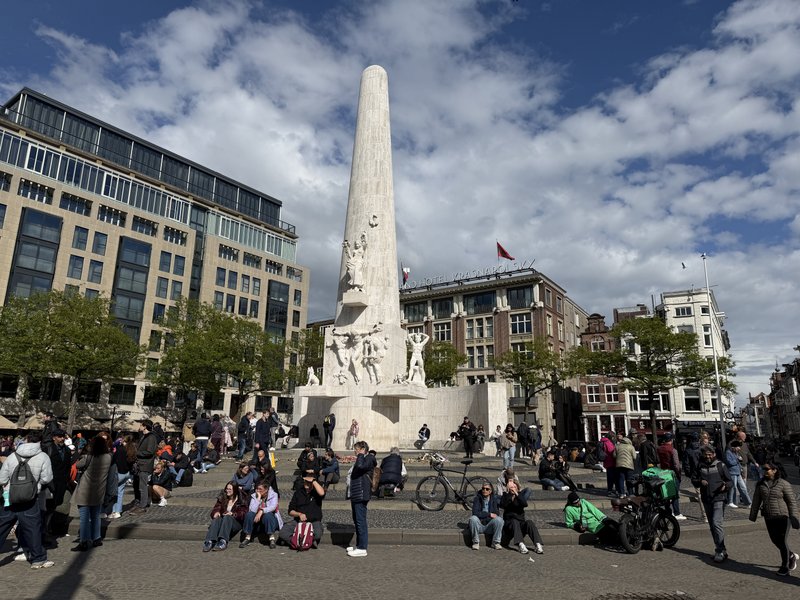
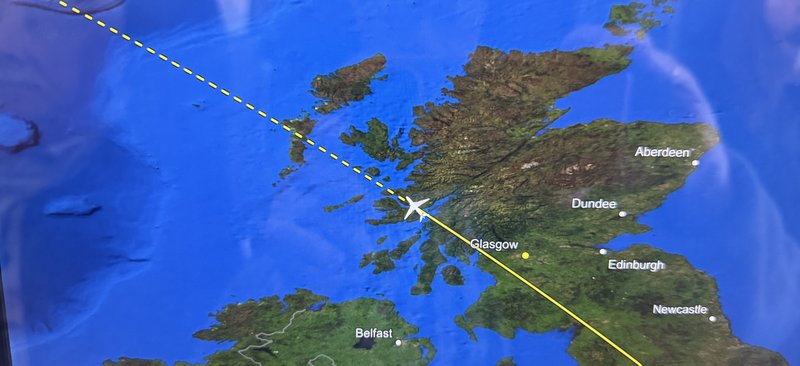
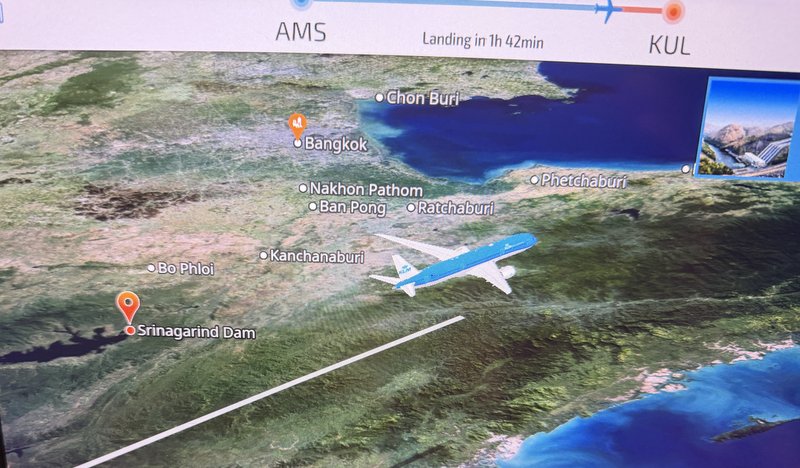
Traveling from KLIA to Schiphol, a direct, long flight. Notice how the route avoids the Middle East and Ukraine/

12 May

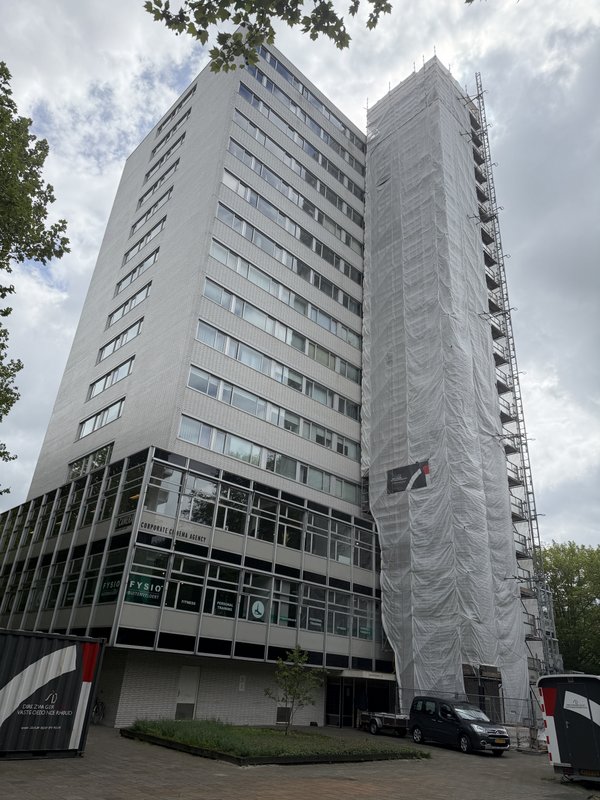
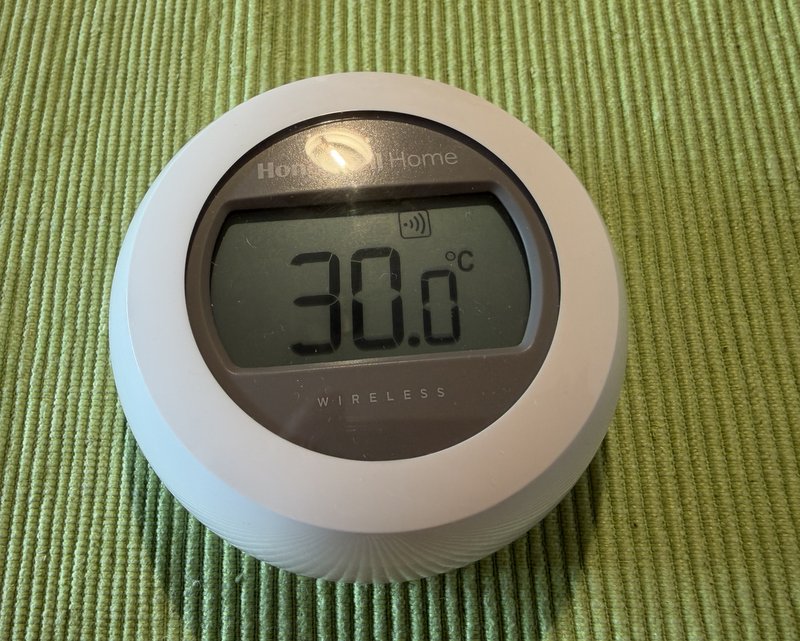
The pilot announced that the temperature at the airport was only 6° C. We took an Uber to my apartment, where an unpleasant surprise awaited us: the central heating was not working properly. An uncomfortable start to our trip.

13 Nay

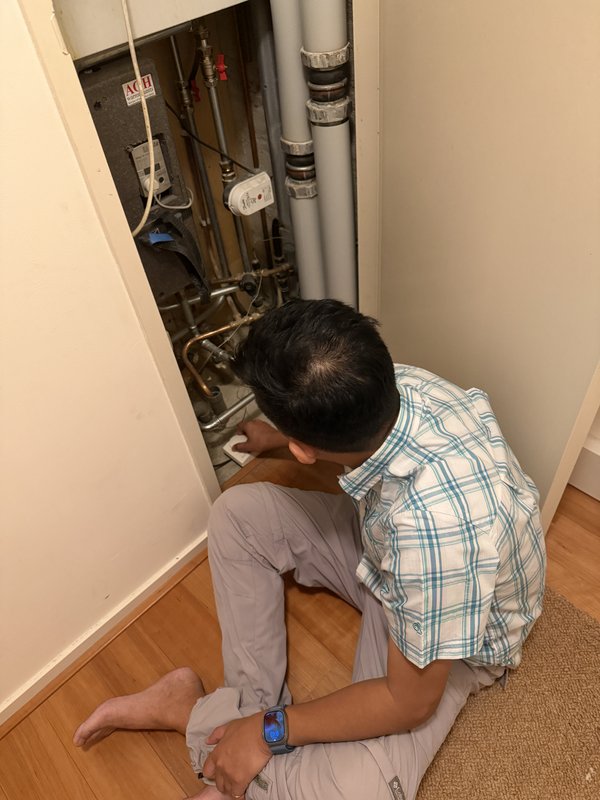
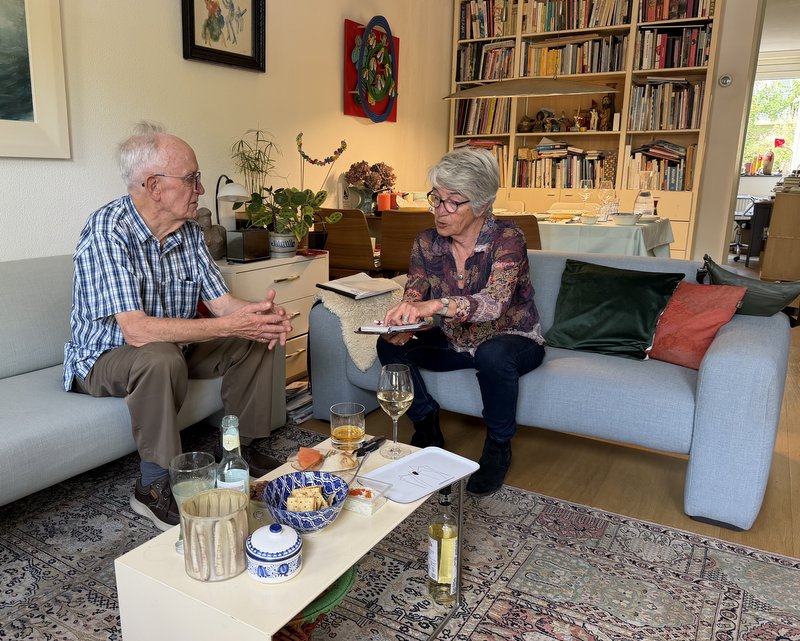
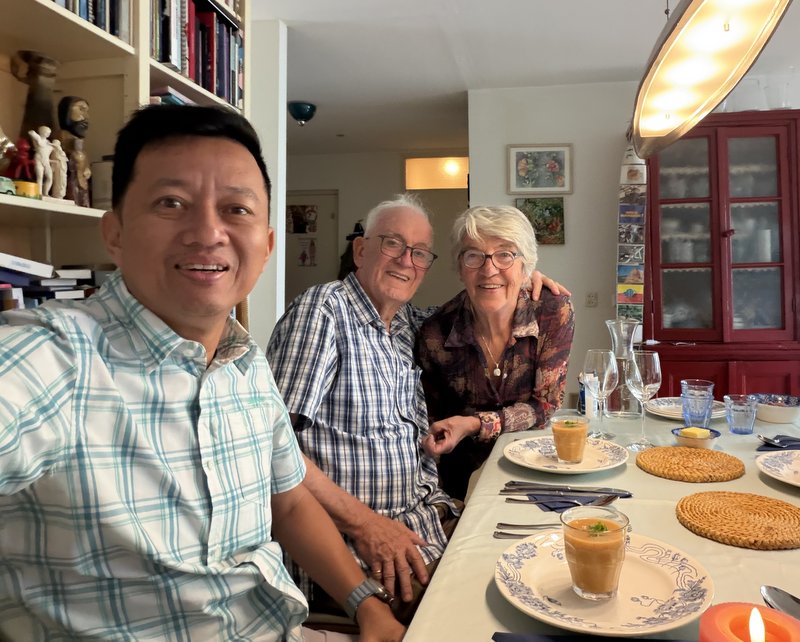
Trying to contact a central heating technician. In the afternoon, we visited my soulmate Inez, who had stayed with us several times in Malaysia.

14 May

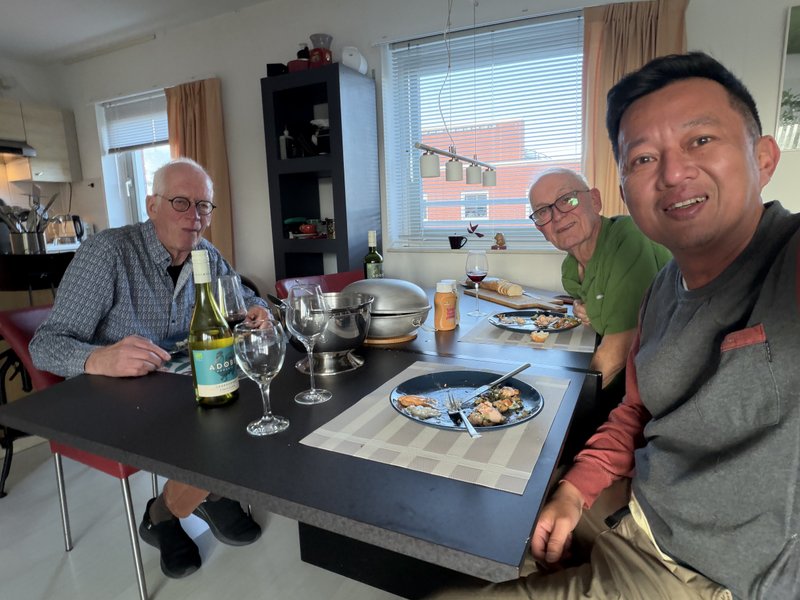
After a long city walk, dinner with my brother Pim.

15 May

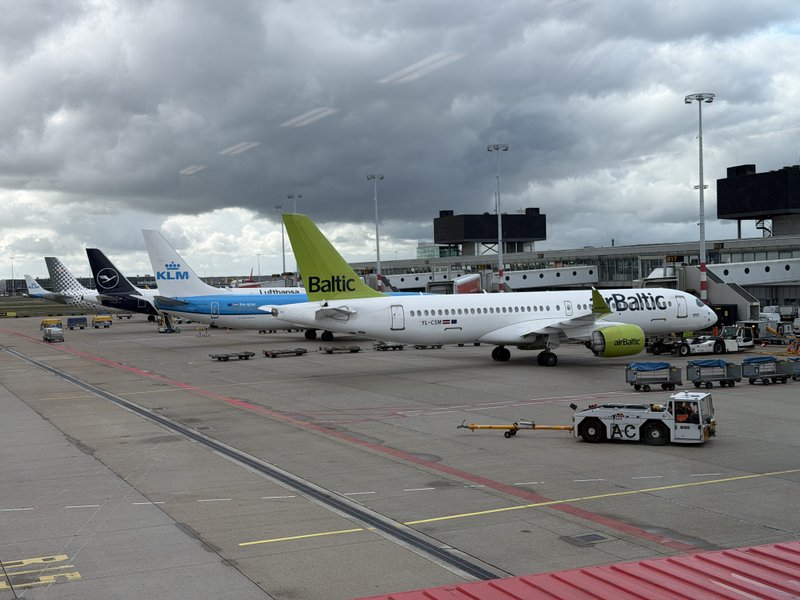
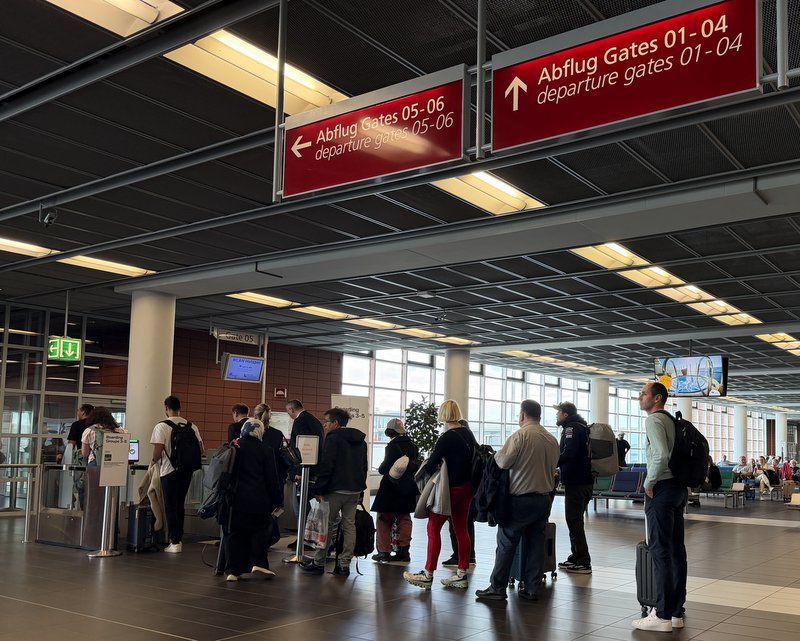
Start of our Germany trip. Lufthansa flight to Dresden, via Frankfurt. Hotell with view of the old town center.

16 Nay

Exploring Dresden. Many more pictures in a separate blog.

17 May

A fascinating day trip to Saxon Switzerland. The Bastei bridge is located high above the Elbe river. Lots of climbing. See separate blog.

18 May

By train from Dresden to Gorlitz. The main reason that Aric wanted to visit this town, was the pedestrian bridge crossing between Germany and Poland.

19 May

The town has featured in movies and is worth a visit. Also about Gorlitz, a separate blog/

20 May

A traveling day. From Gorlitz by train back to Dresden, and flying back to Amsterdam via Munich.

21& 22 May

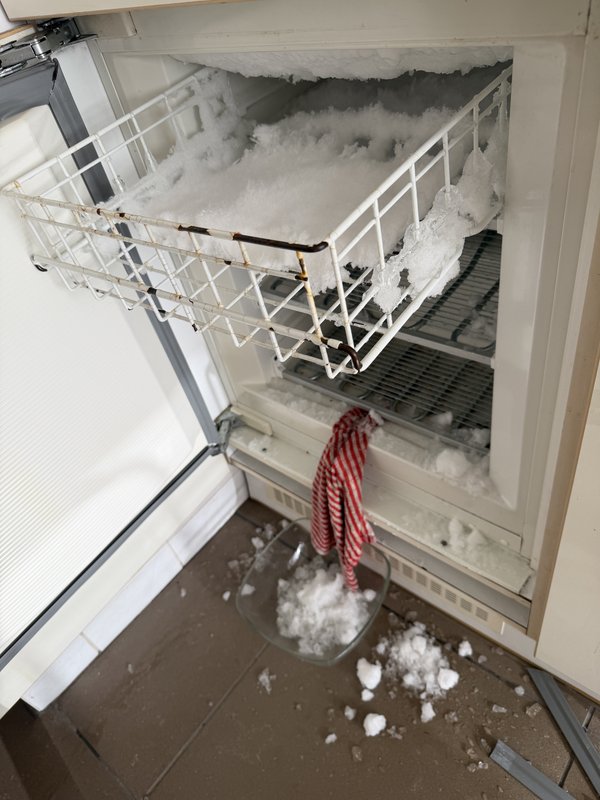
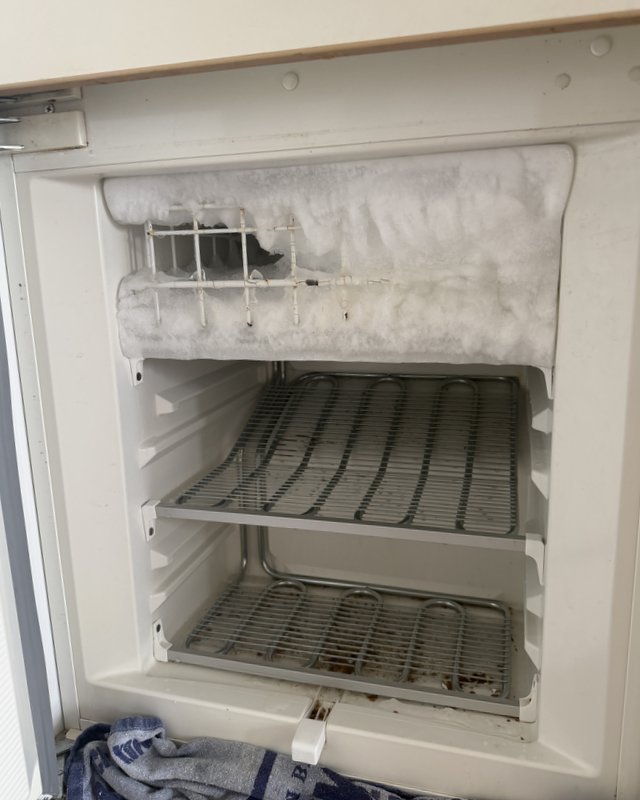
The central heating still wasn’t working, but it wasn’t as cold in the house anymore. There was a problem with the fridge, though. And we were both recovering from a bad cold. Two recovery days, to get ready for the family reunion.

23 May

The family reunion started in the family house in Alphen. We visited the cemetery where my parents were buried, and had dinner in an Afghan restaurant. A very nice day, see the report for more details.

24 May

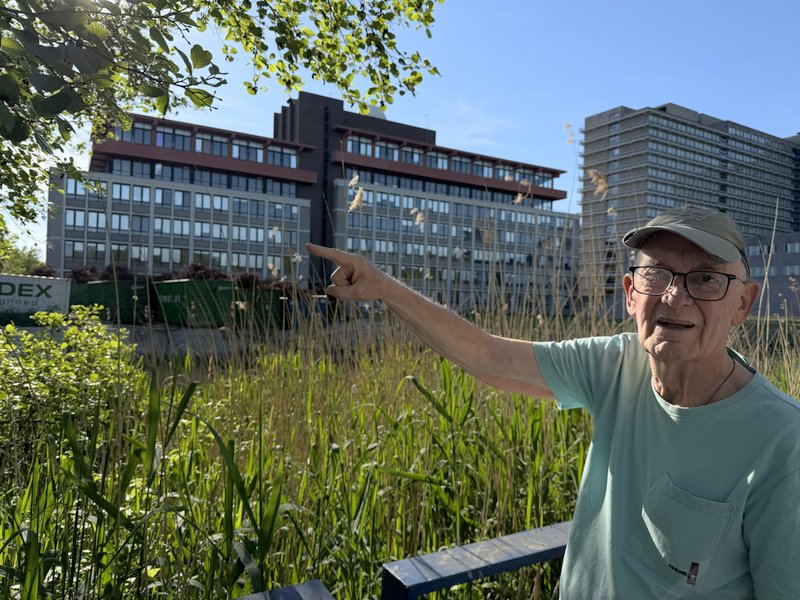
It was Whitsun, a public holiday in the Netherlands. We stayed at home, just walked in the neighborhood, had a look at -the university where I had spent my student years.

25 May

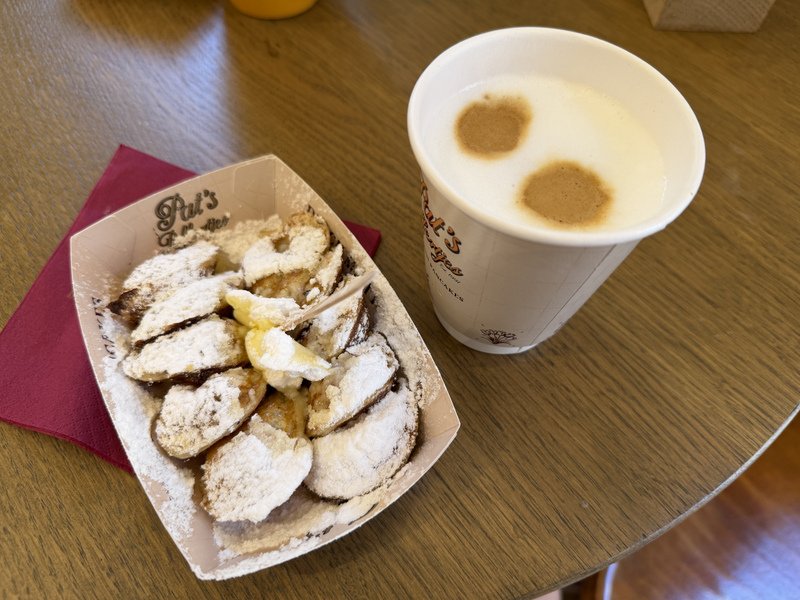
One more relaxing day. We wanted to eat poffertjes, the traditional Dutch mini-pancakes. But I forgot that Whit Monday is also a public holiday, Beautiful day, but the market and the shop we had in mind, was closed. We found another one and that evening we had mussels for dinner.

26 May

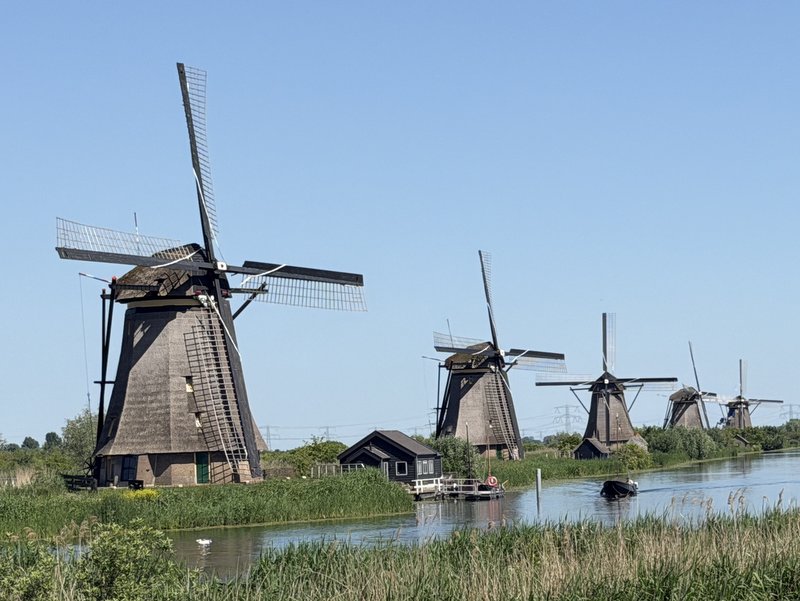
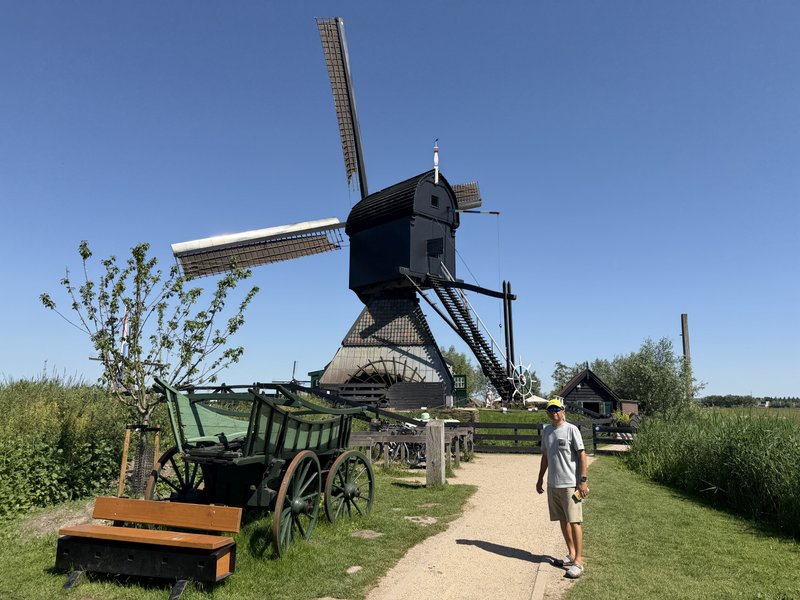
Time for action—a day trip to the windmills of Kinderdijk, a UNESCO World Heritage Site. I had been there a few years earlier, but it was Aric’s first. Perfect weather. More details in another blog.

27 May

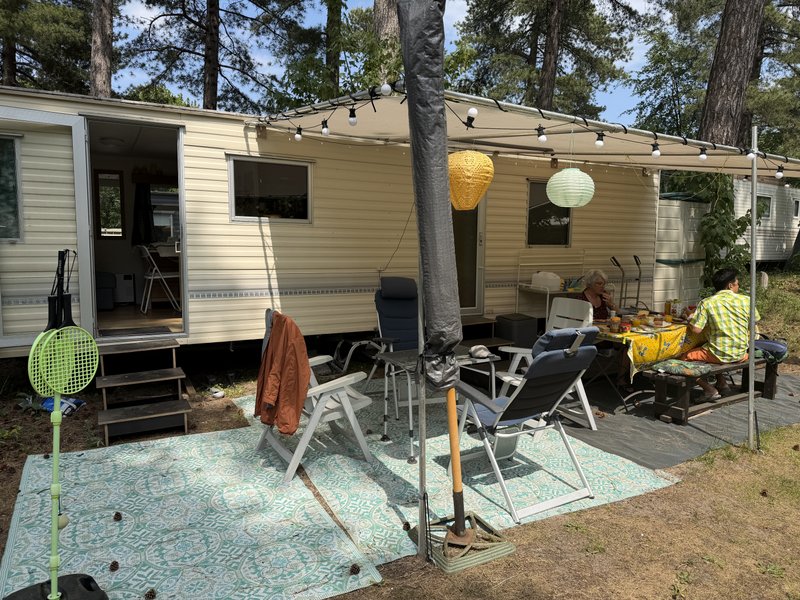
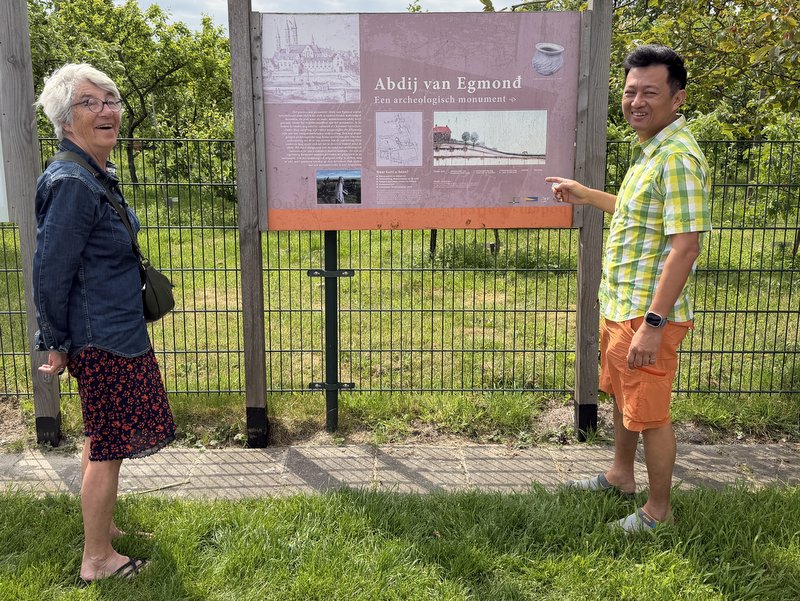
An outing with Inez. First, we visited the Abbey of Emond, expecting it to be historical ruins. A mistake, they had been replaced many decades ago by modern buildings. The afternoon we spent at Inez’s caravan in Bakkum, enjoying the quiet atmosphere. We had dinner in IJmuiden.

28 May

Staying at home. I tried (in vain) to solve the fridge problem and finally a guy came to inspect the central heating. He found a faulty part; his company would send me a quotation for repair.

29 May

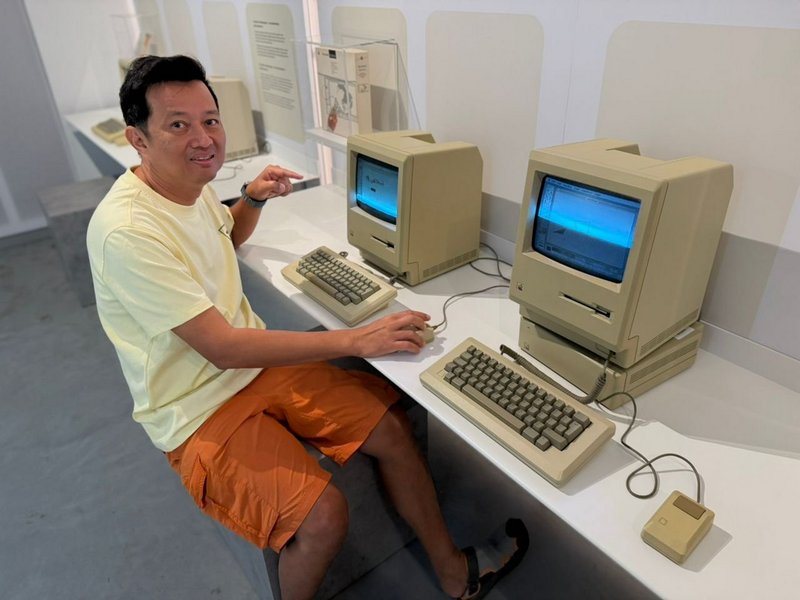
A very active day. Aric had read about a new Apple museum in Utrecht and, being an Apple addict, wanted to have a look. We had lunch with Yolanda and Math, and walked around in the town center. Back in Amsterdam, we had dinner with Nico and Yolanda, the brother and sister of Paul. Probably two vlogs about this day later 😉

30 May

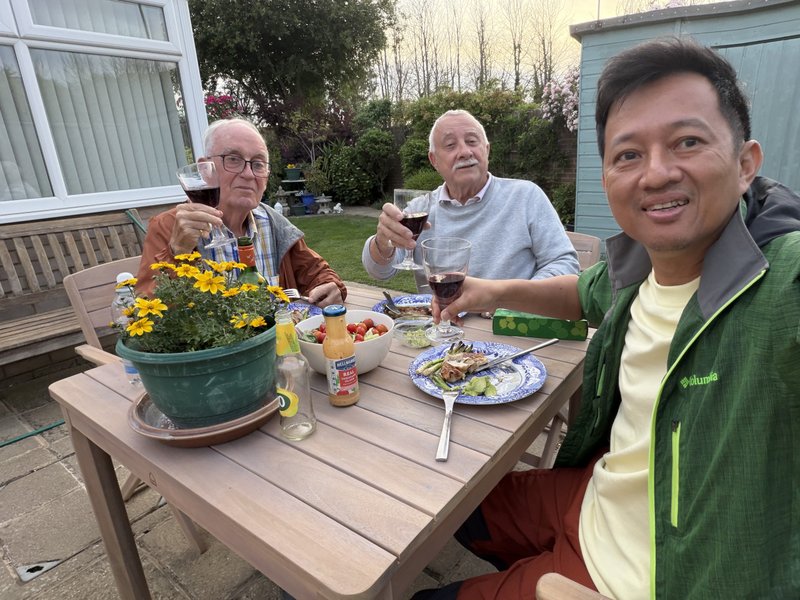
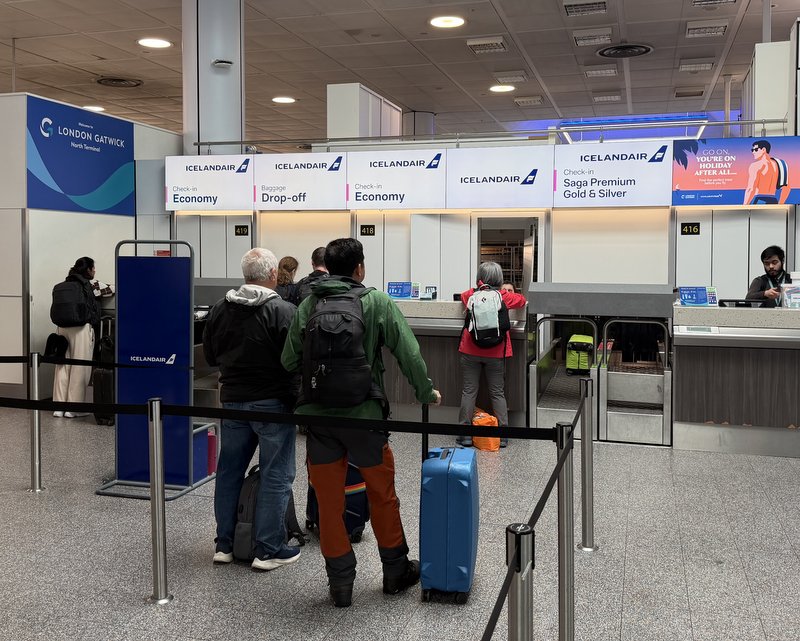
A traveling day. With EasyJet to Gatwick, where Rodney was waiting for us. He drove us back to Bognor Regis, where he is living. We had Lunch there and later dinner in the garden of his home.

31 May

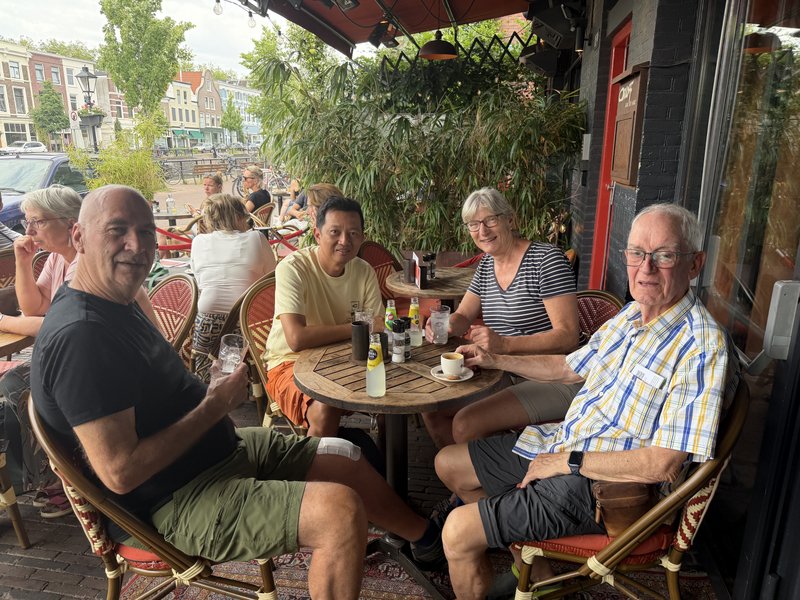
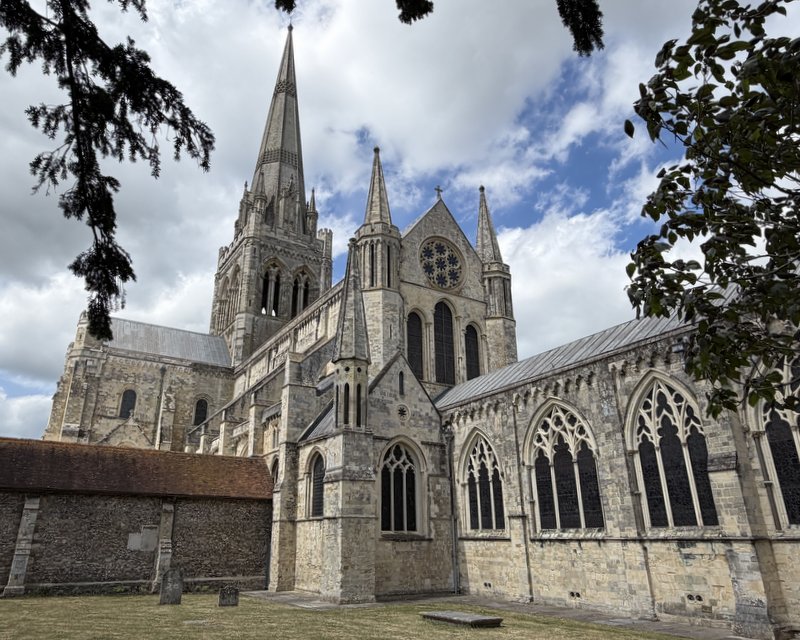
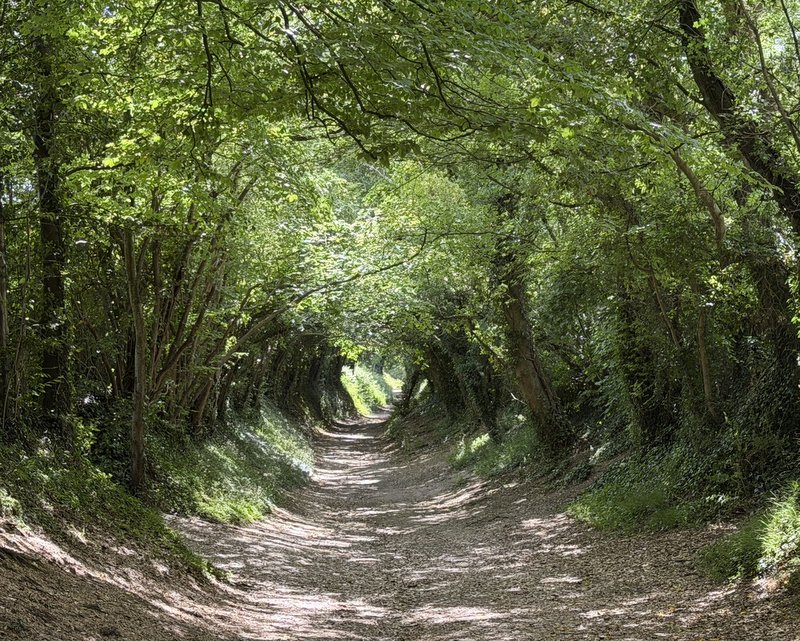
Exploring the region around Bognor Regis. We visited Chichester with its famous cathedral, which was unfortunately closed. We walked to the Halmaker windmill, passing through an enchanting tree tunnel.

1 June

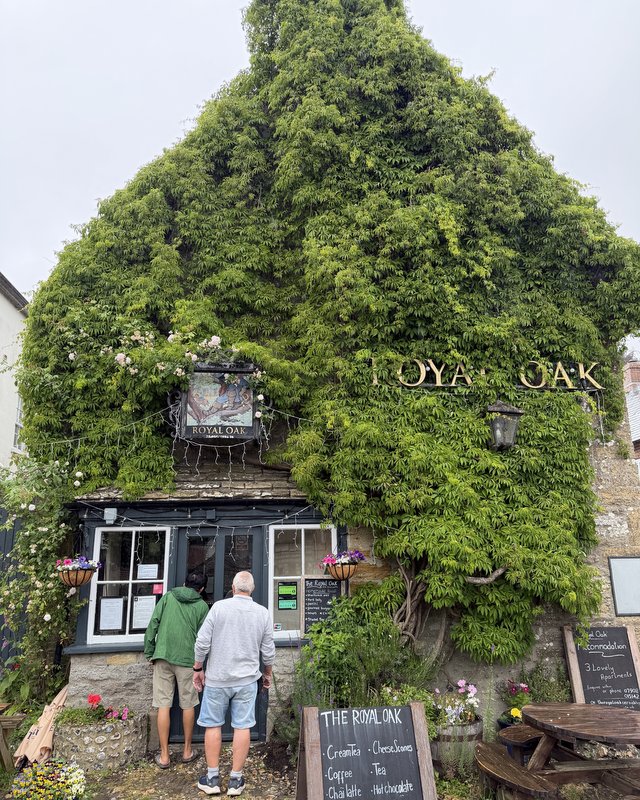
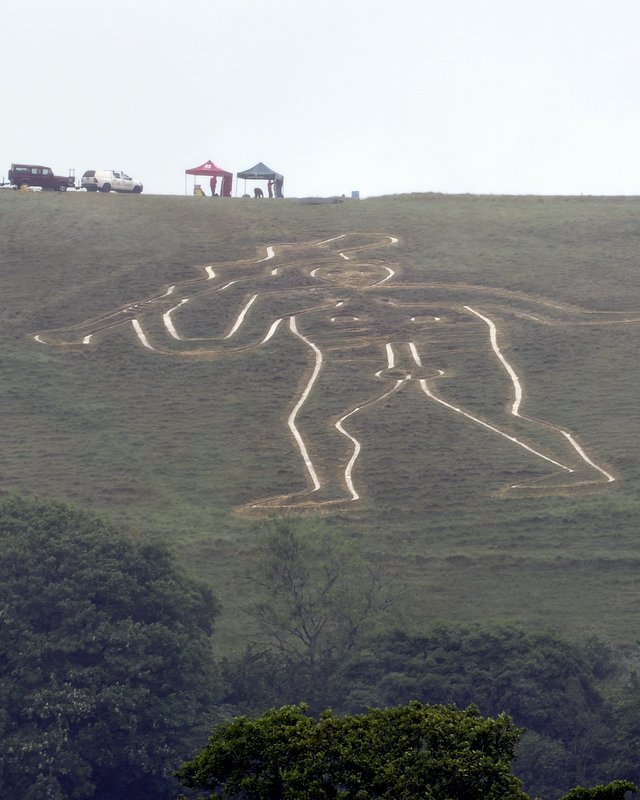
Instead of Stonehenge or the White Horse m we decided to visit the Cerne Abbas Giant, a two-hour drive away. When we arrived at the 55-meter-tall giant with his erection, it had started drizzling, not a good idea to walk closer. A nice pub in the village was alos closed. We continued to Dorchester for a pub lunch.

2 June

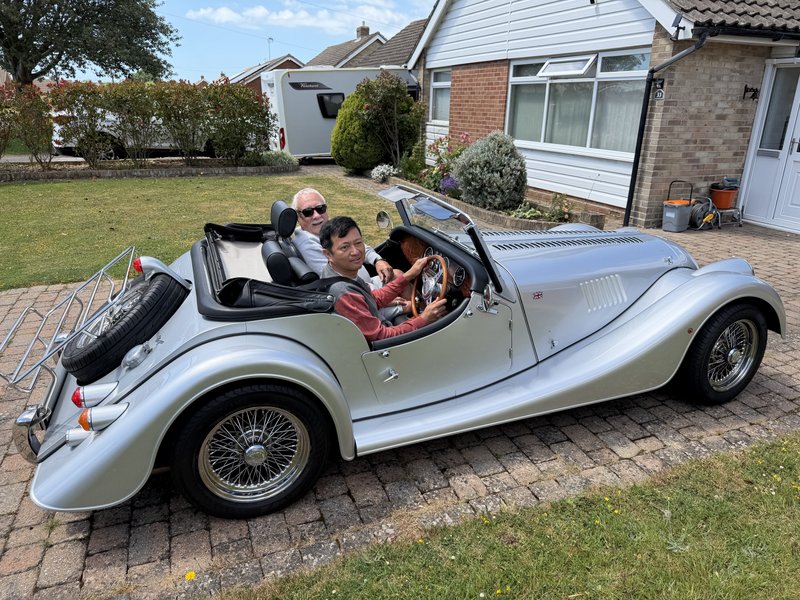
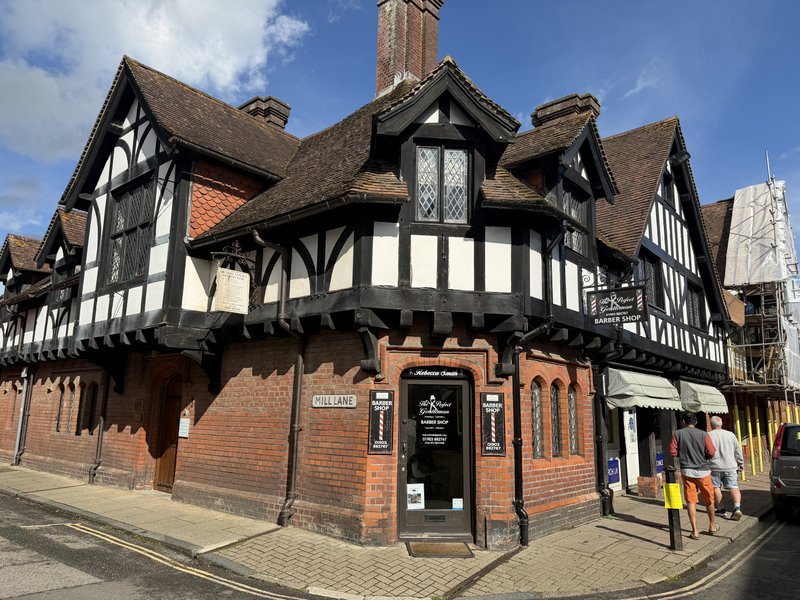
Of course, Rodney had to show us his love baby, a classical Morgan. Aric was even allowed to drive it a short distance. In the afternoon, we drove to nearby Arundel, a very picturesque town with a famous castle/

3 June

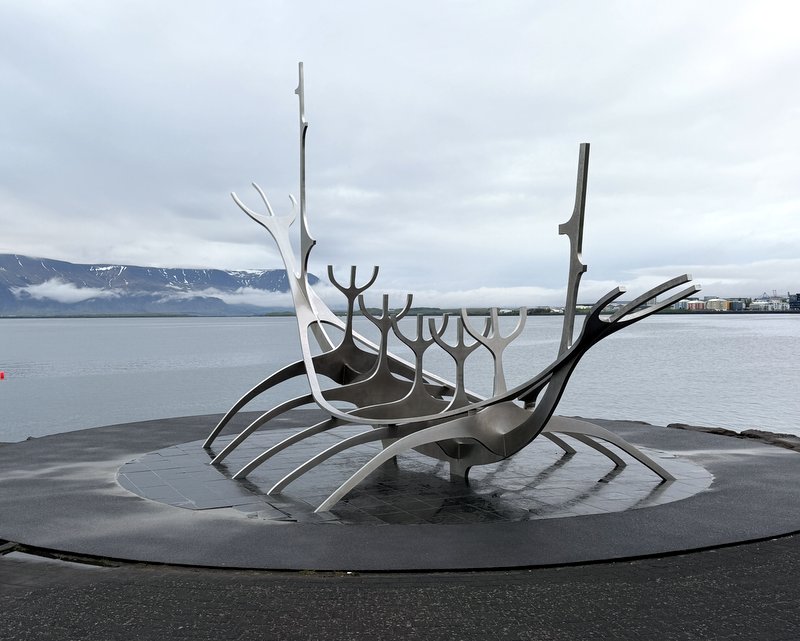
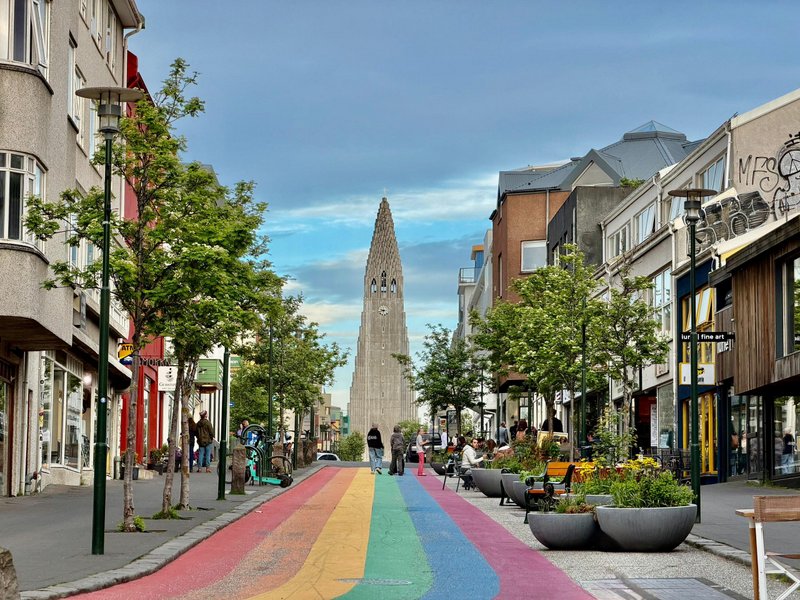
First day of our trip to Iceland. We took a taxi to our homestay in Reykjavik. In the evening, we went out for dinner and to get a first impression of the town. At 11 pm it was still broad daylight.

4 juni

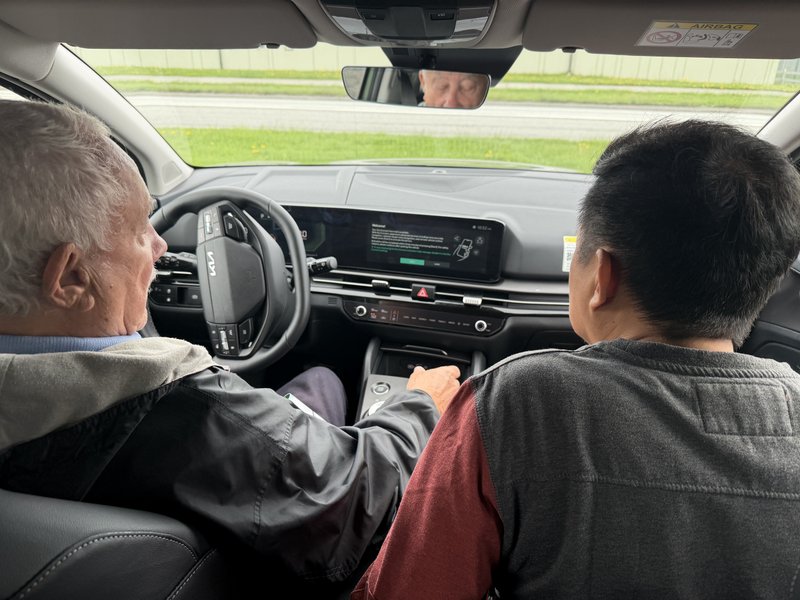
We rented a car for 9 days with Rodney as driver and Aric as navigator. Aric had prepared Google Maps for each day with the various points of interest marked. Here is for example the map for this day. We could only visit a few,

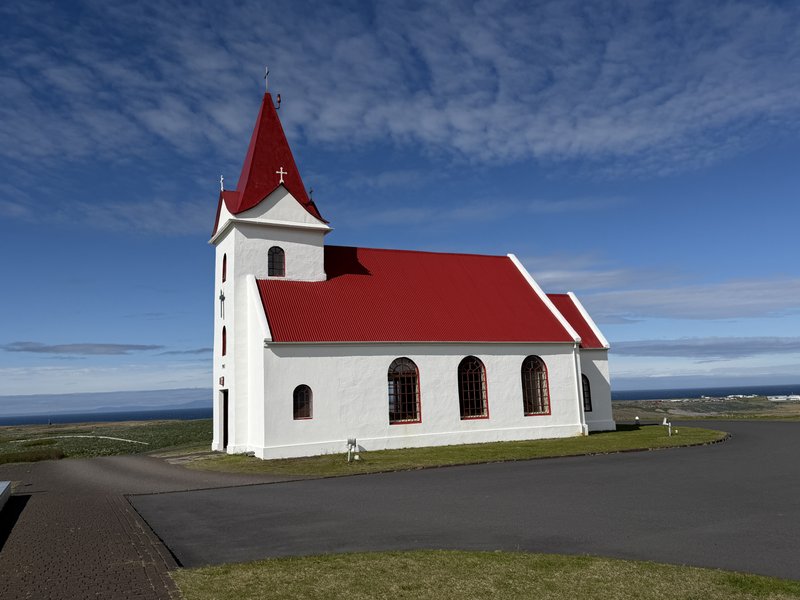
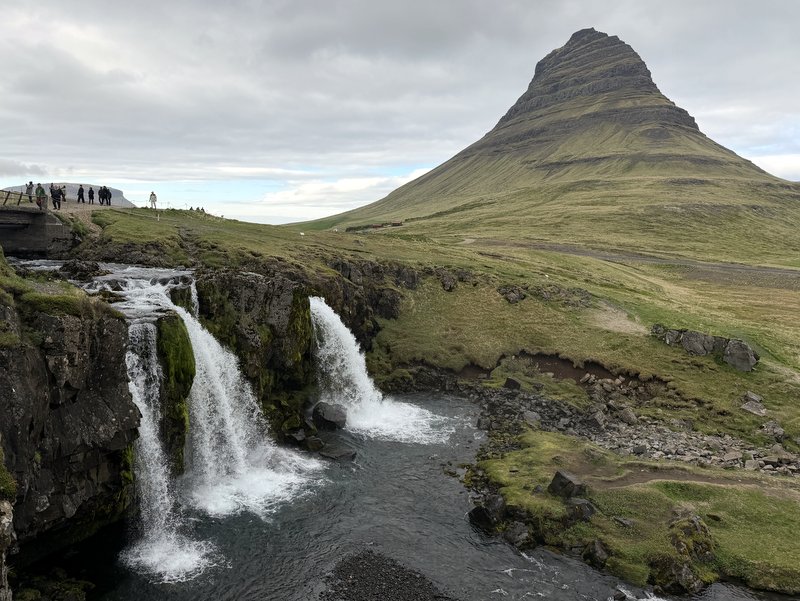
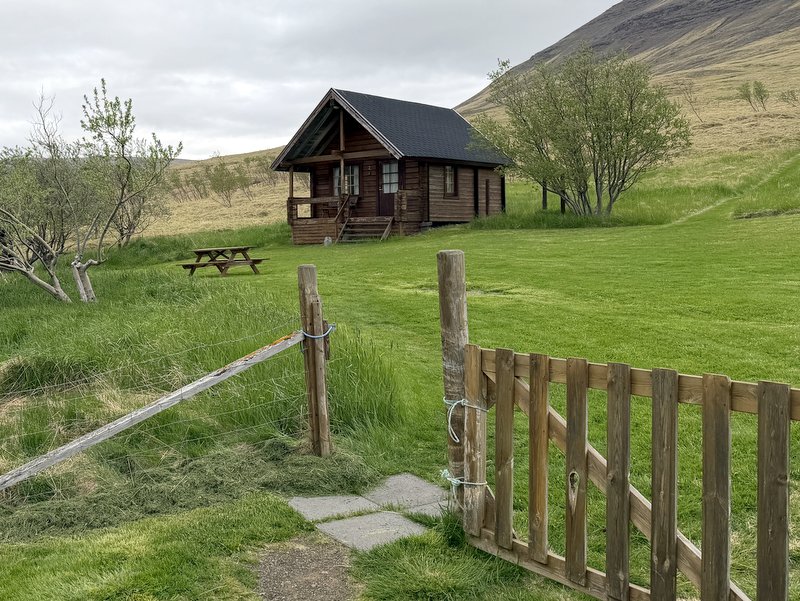
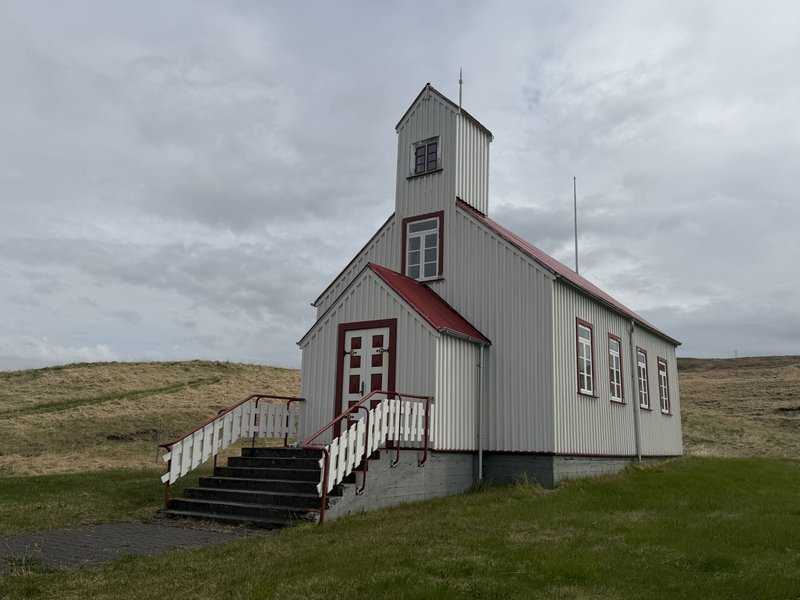
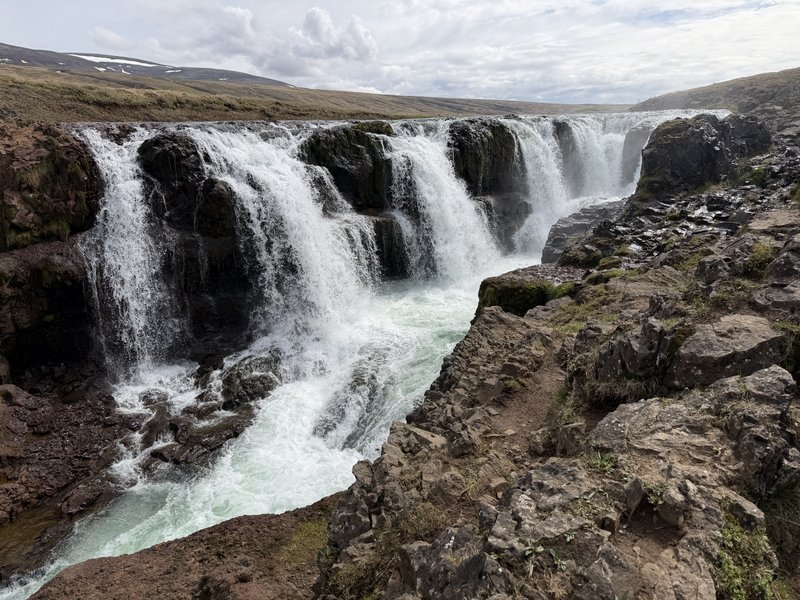
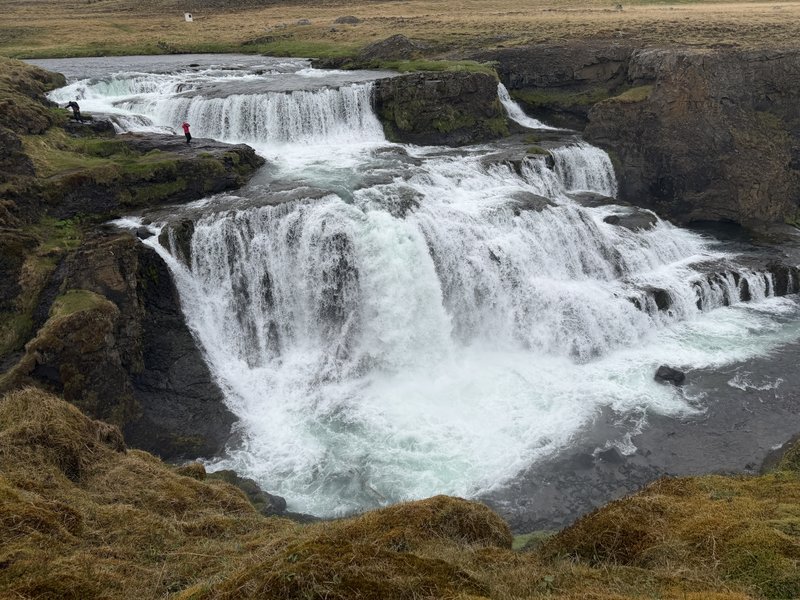
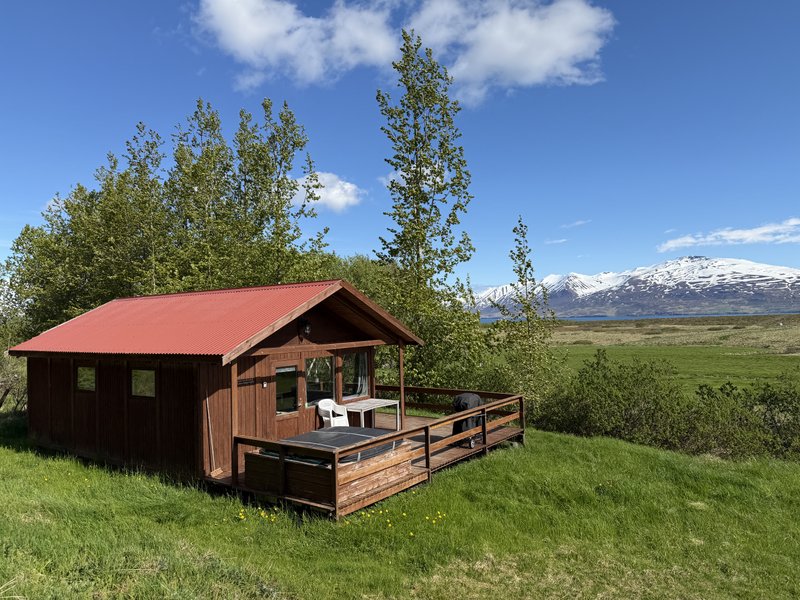
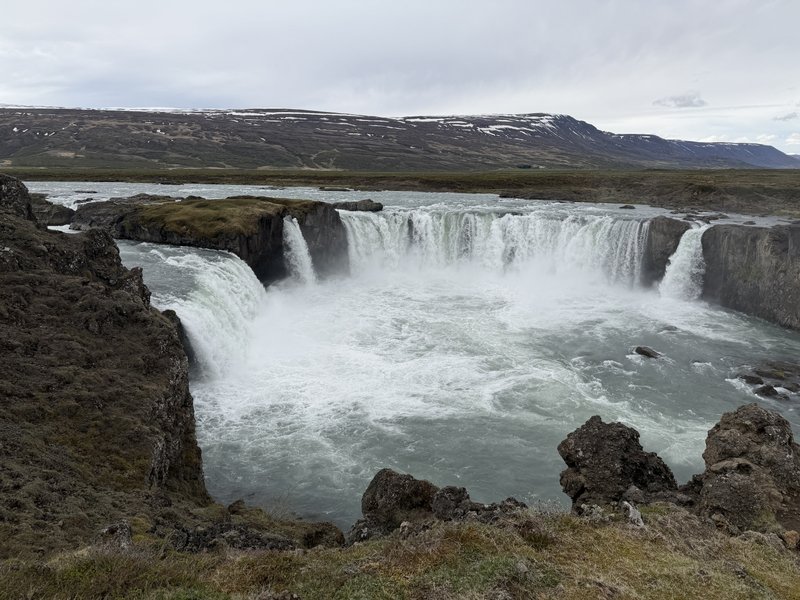
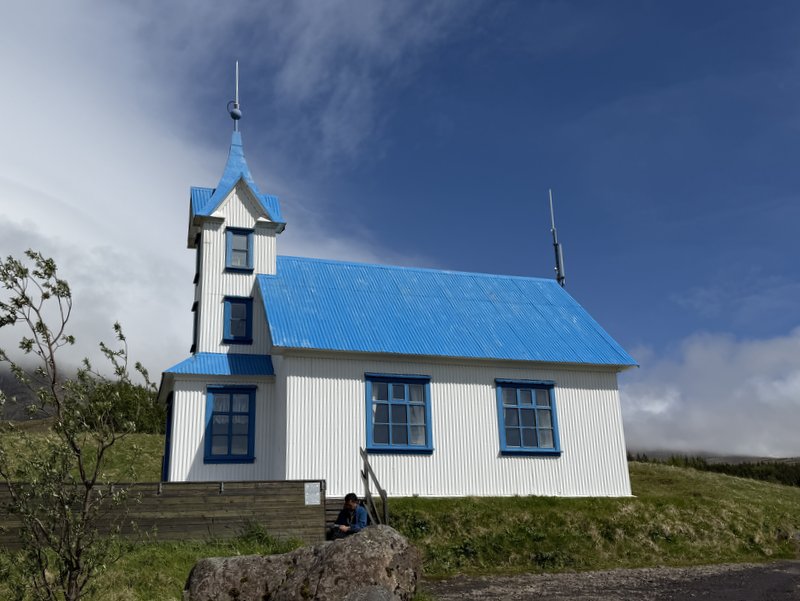
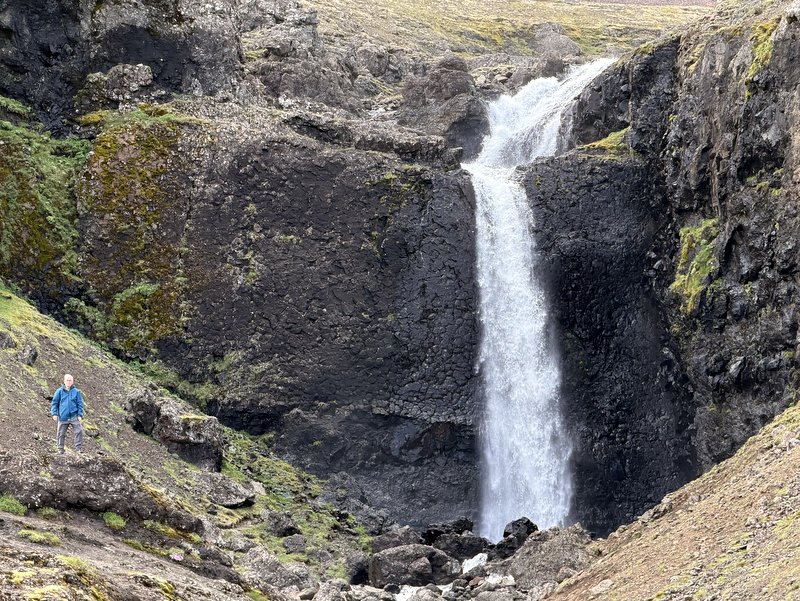
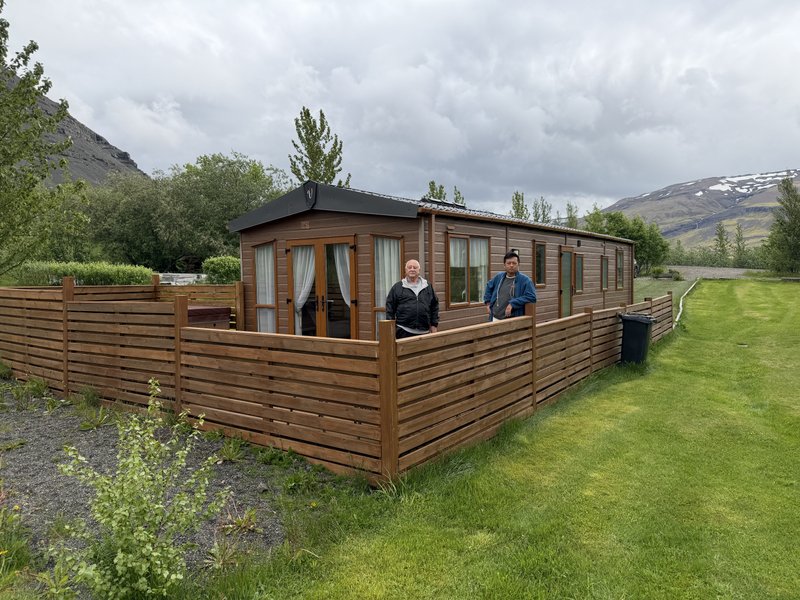
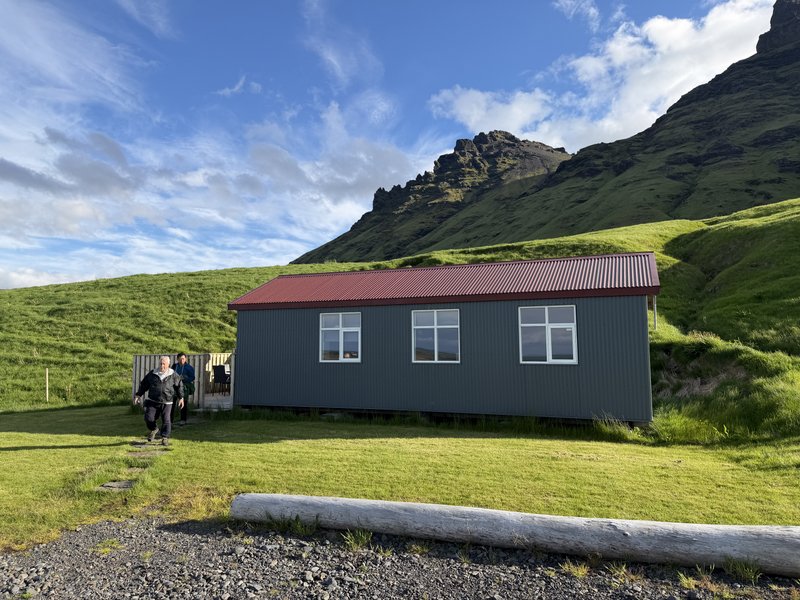
The first of many churches we visited. The National Religion is Evangelical Lutheran, but most Icelanders are secular. Waterfalls all over the island, often spectacular, like this one. Aric had booked idyllic homestays, often in the middle of nowhere. Well equipped, we prepared dinner and breakfast with food bought in local supermarkets.

5 Juni

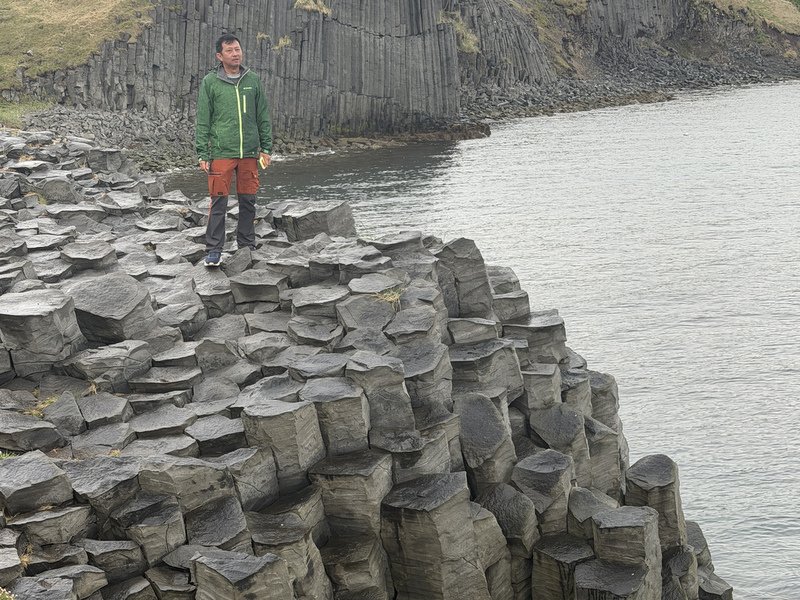
The long daylight allows you to do a lot in one day. We started at 10 am and reached our fantastic homestay at 10 pm, visiting another church, two waterfalls, an open-air museum, basalt formations, and much more. Too much, we decided to limit our program.

6 Juni

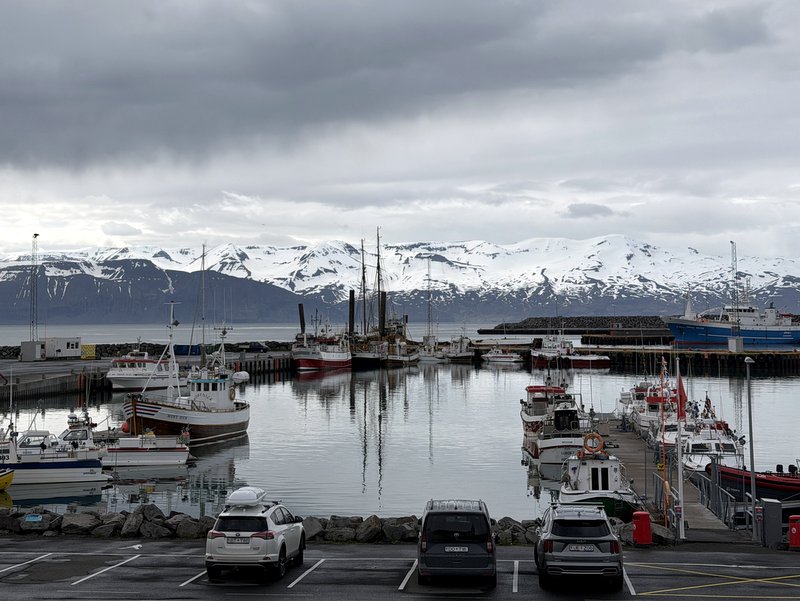
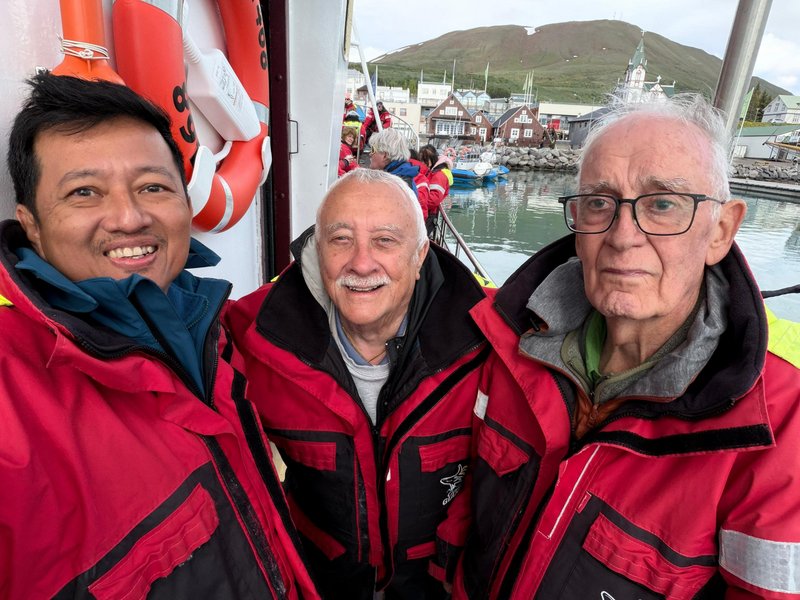
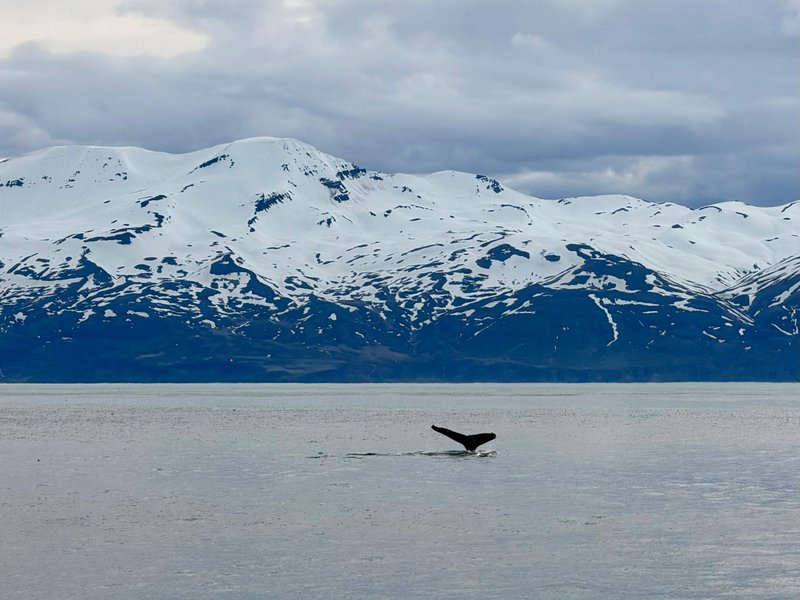
Aric had booked a whale-sighting boat trip for the afternoon and booked a hotel in the small town of Húsavík, where the excursions start. On our way, we passed a very dramatic waterfall. The trip took about 3 hours, we were given much-needed protective clothing. There is no guarantee that whales will be sighted, but we were lucky to spot quite a few. With my AMD, I can not see details, but Aric managed to take a few perfect shots. A well-organized trip.

7 juni

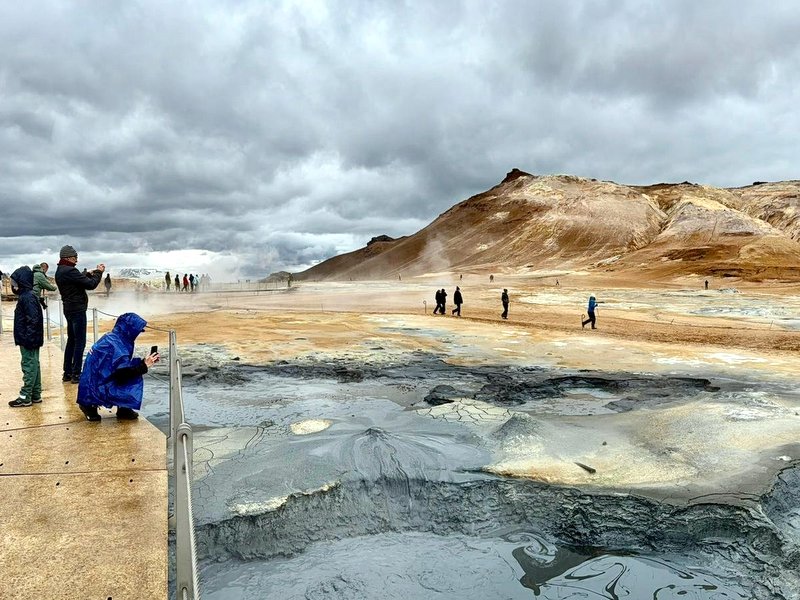
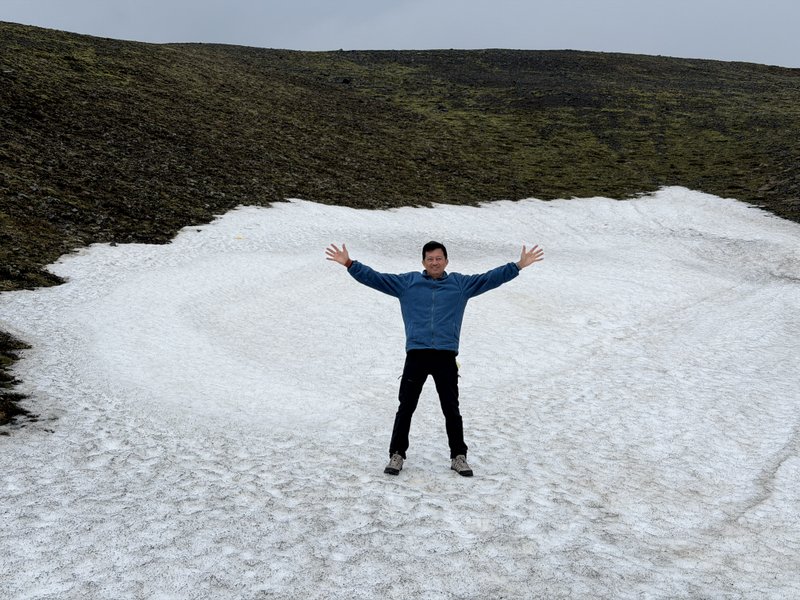
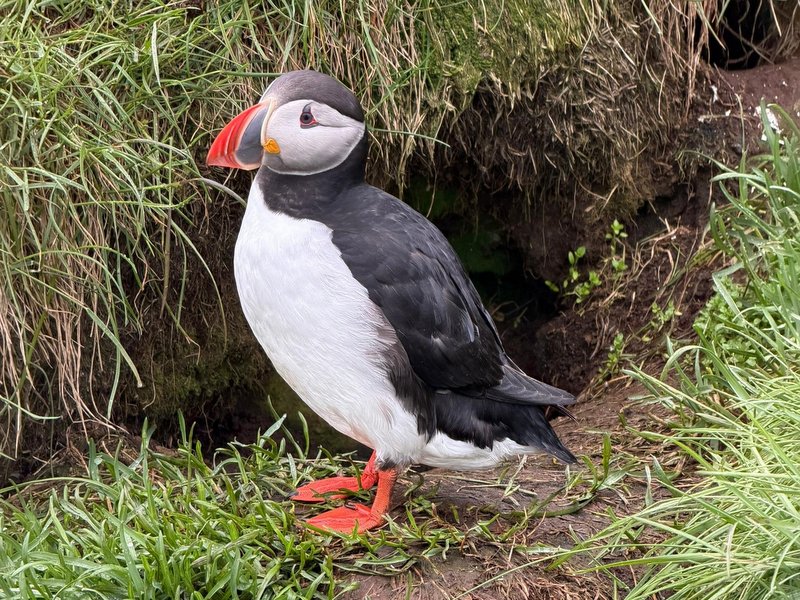
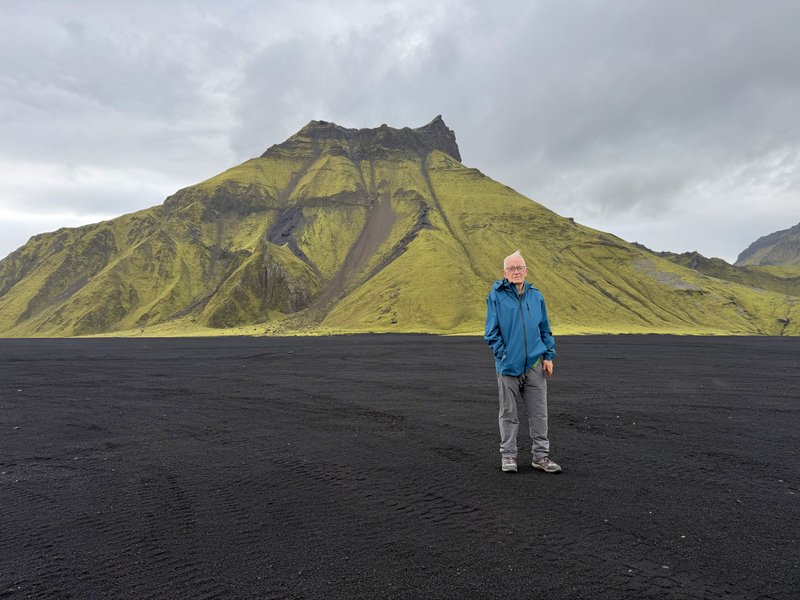
A long 11-hour drive. The main destination was the remote Puffin Island. On our way we stopped for a while only at Hverir, one of the most active geothermal sites of the island. A few hours later, Aric was walking in the snow. Puffin Island was worth the long ride, with hundreds of colorful birds, which you could almost touch. Our accommodation for the night was a former church, transformed into a charming homestay.

8 juni

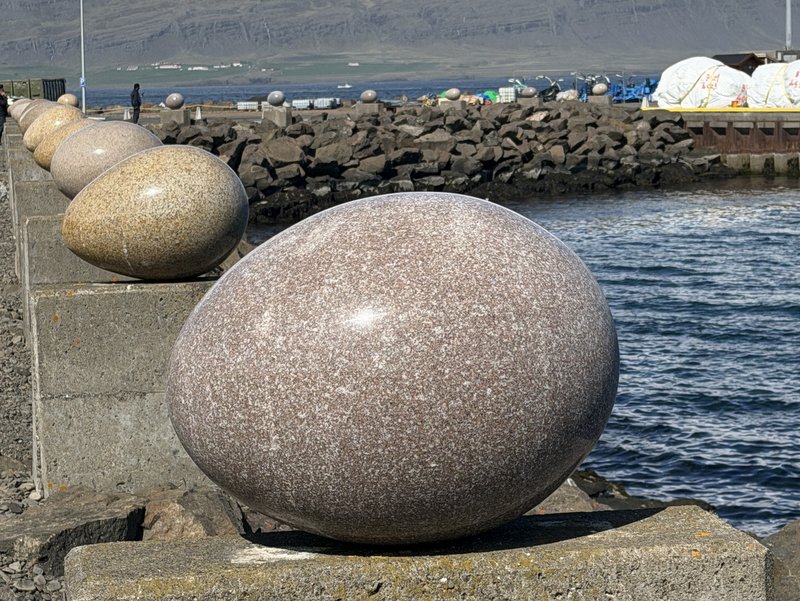
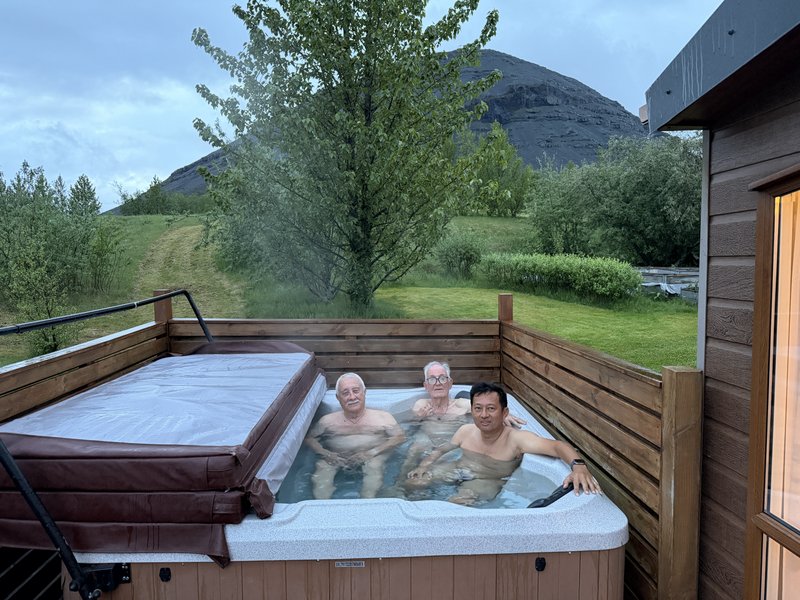
This day we followed the south-eastern coastline of the island. We had a look at an artwork of eggs, representing all bird species from Iceland. We found another waterfall. that was not in the list prepared by Aric. And we stayed overnight in a luxury homestay, with its own hot bath tub.

9 juni

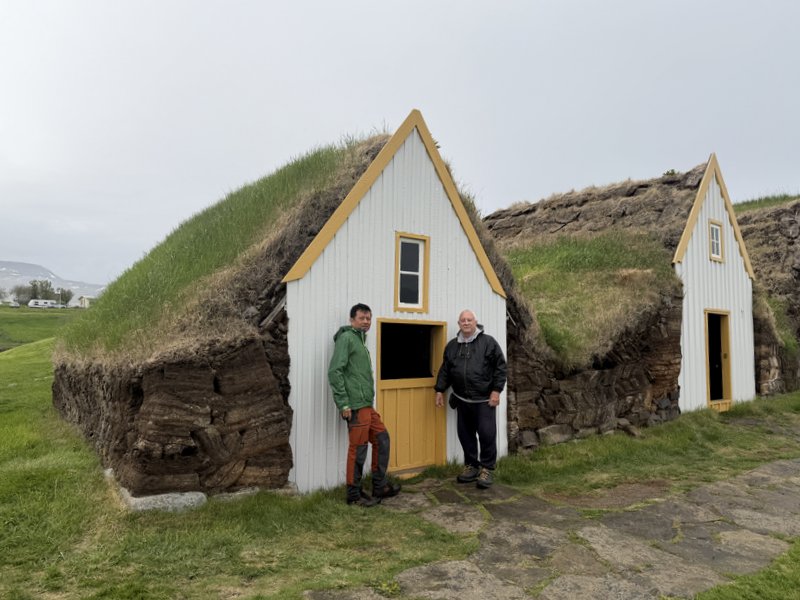
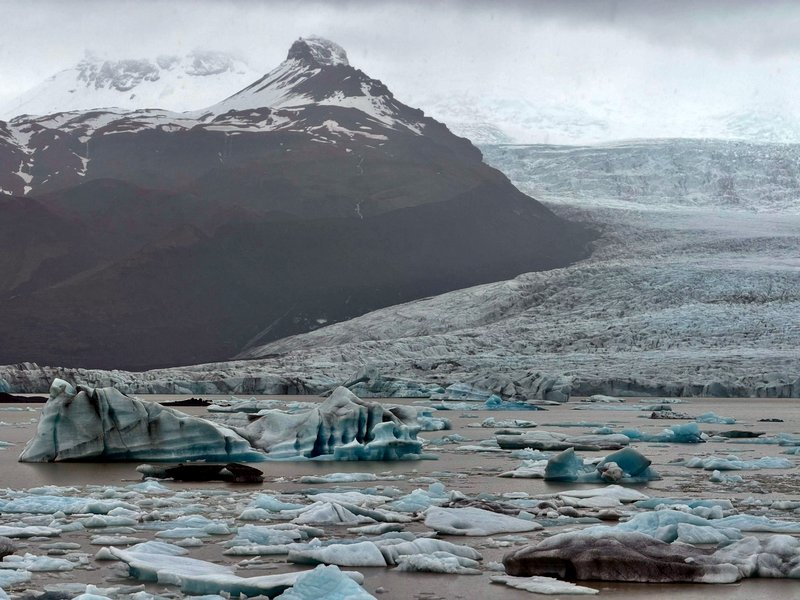
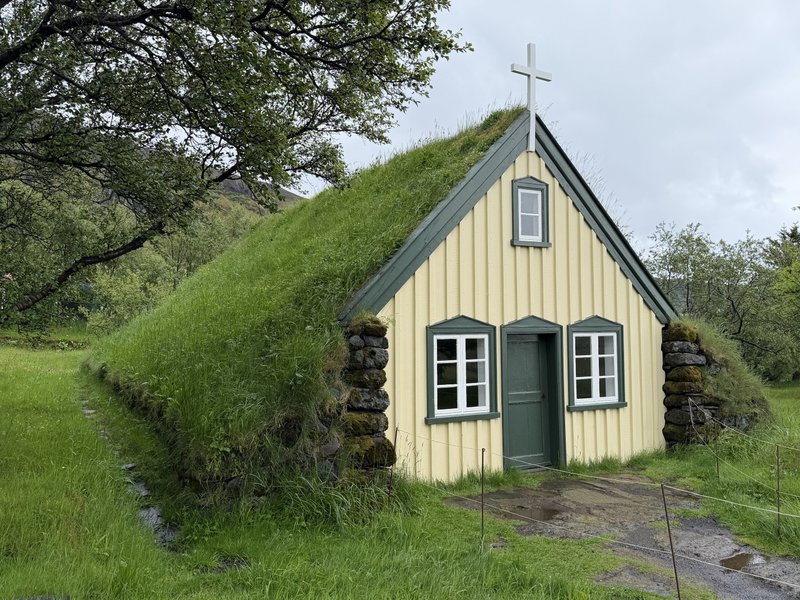
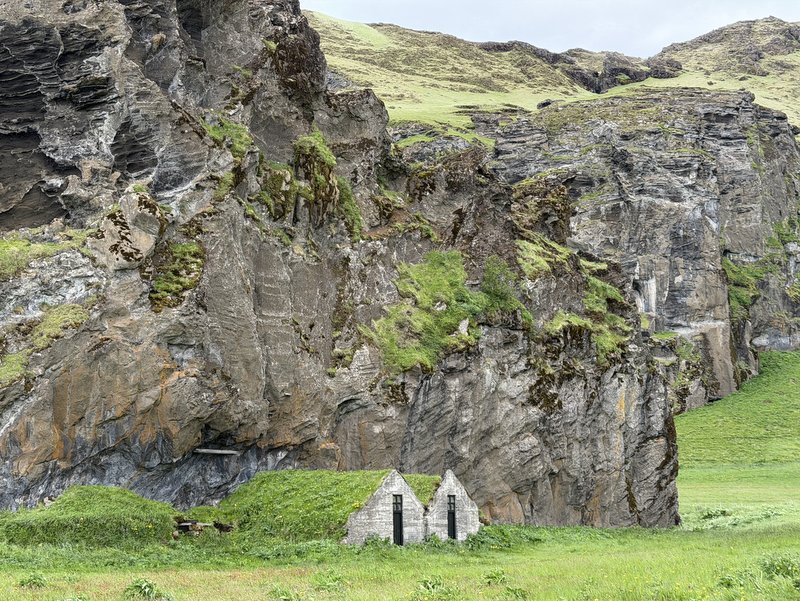
Glaciers in Iceland can reach the sea, where broken pieces of ice gradually melt in the sea water. We visited another church, with a grass roof.

0 juni

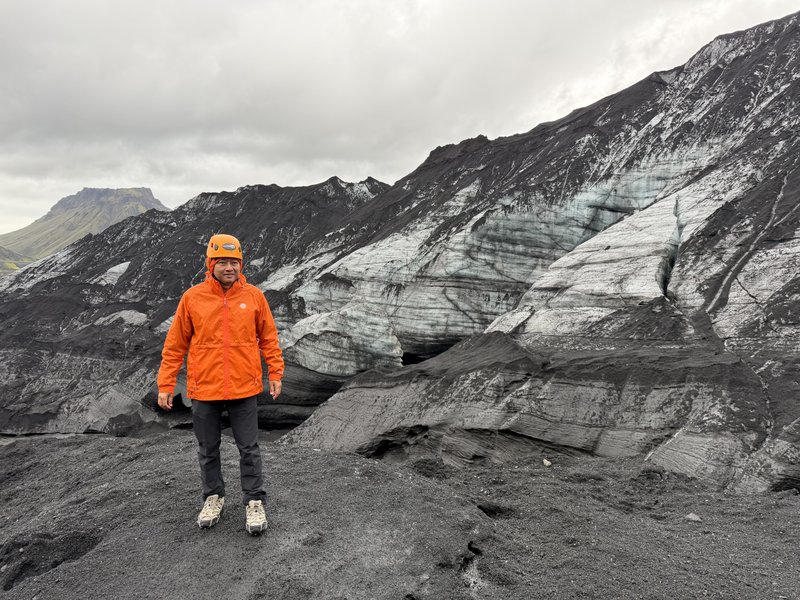
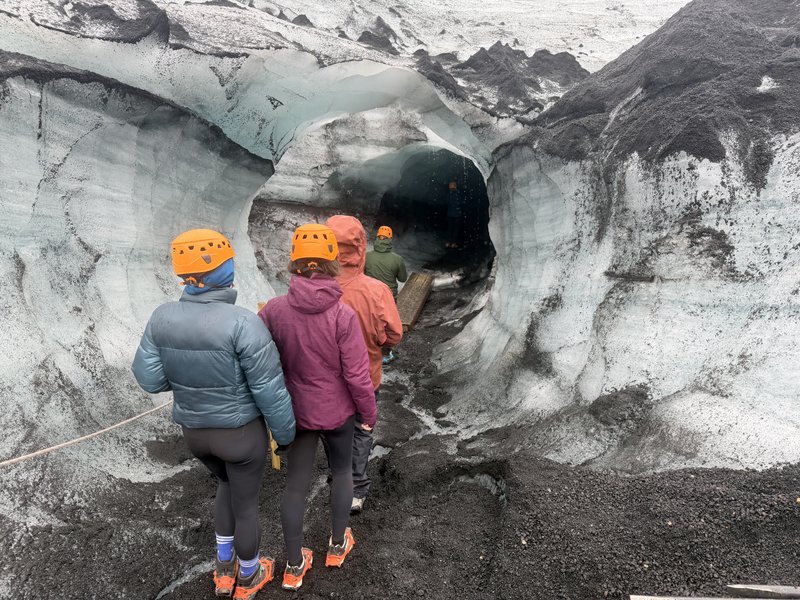
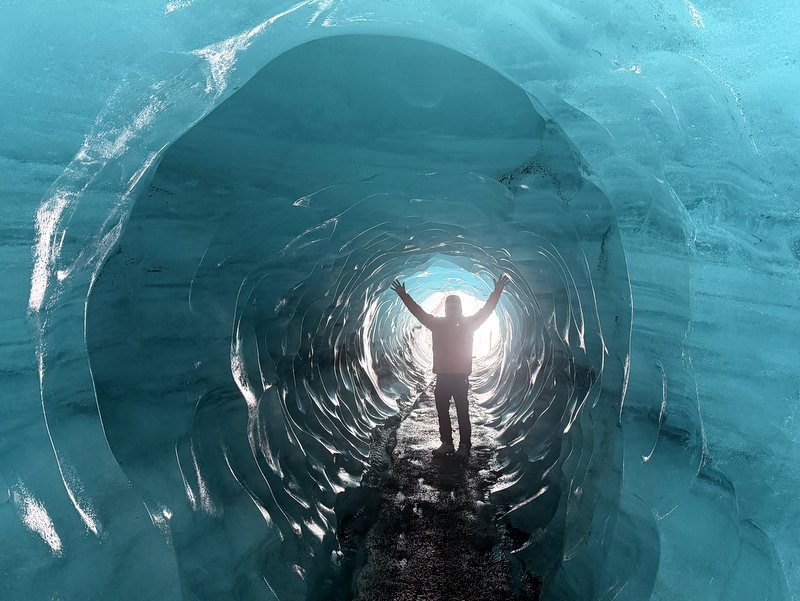
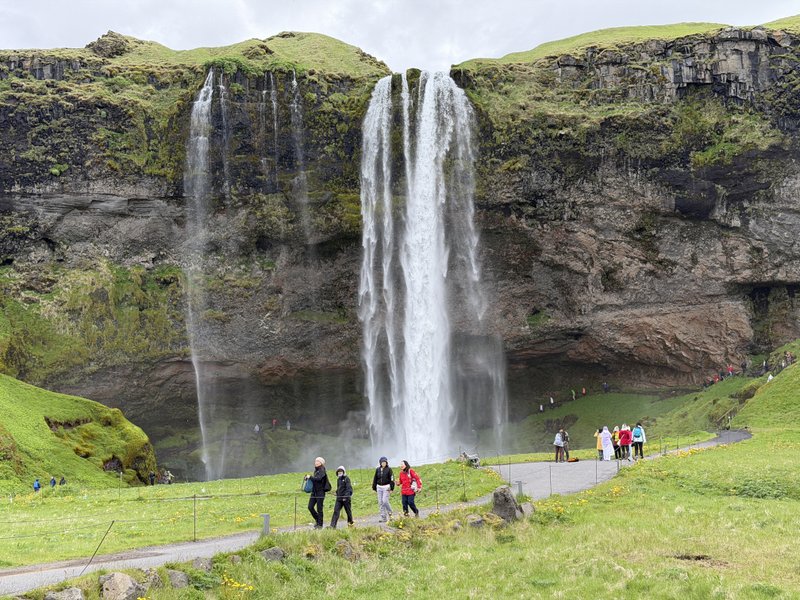
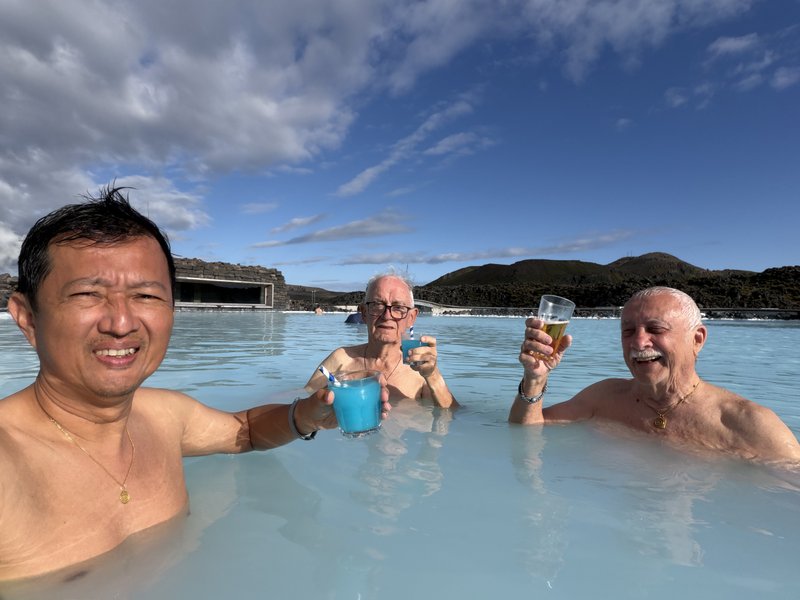
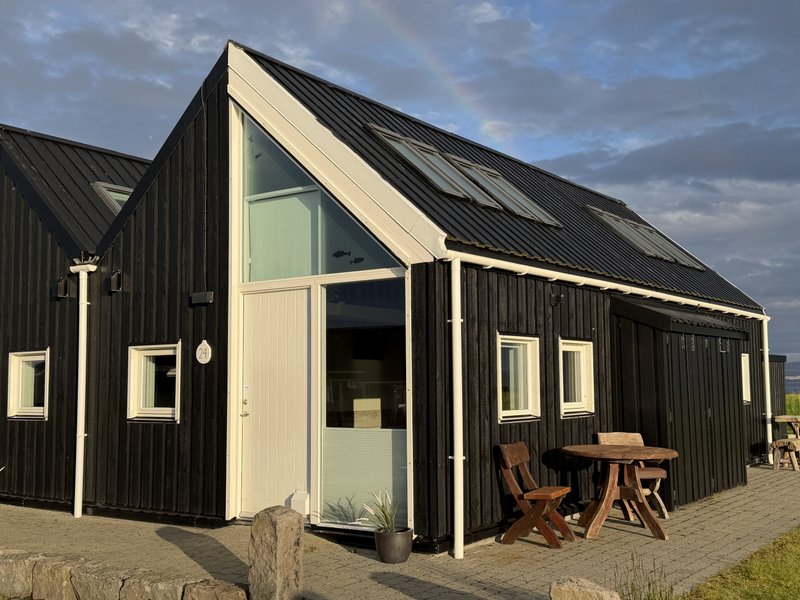
On this day we took part in the most spectacular event of our Iceland trip, a three-hour “expedition” to an Ice Cave, a man made tunnel inside a glacier. Later that same day we visited a waterfall, where there was a path behind the falling water In the late afternoon we visited the famous Blue Lagoon. And we stayed overnight in a fisherman hut, transformed into a homestay. What a day.

11 June

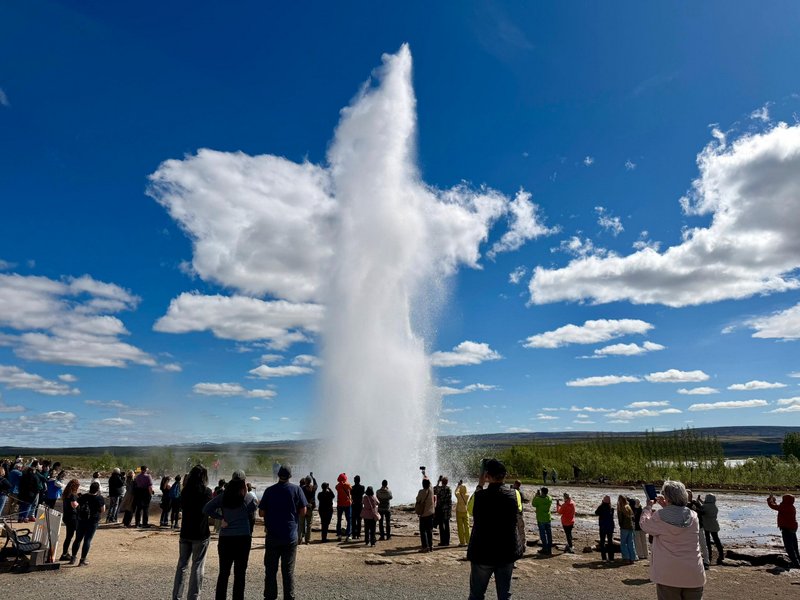
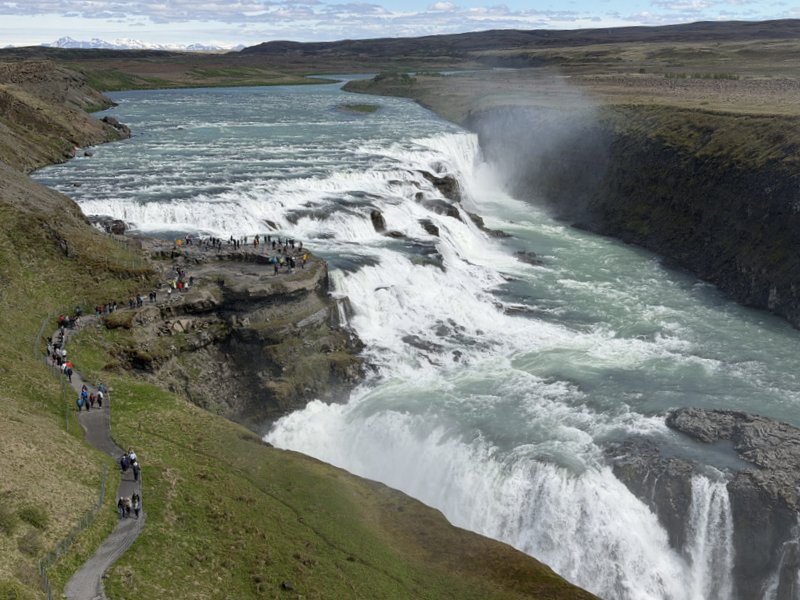
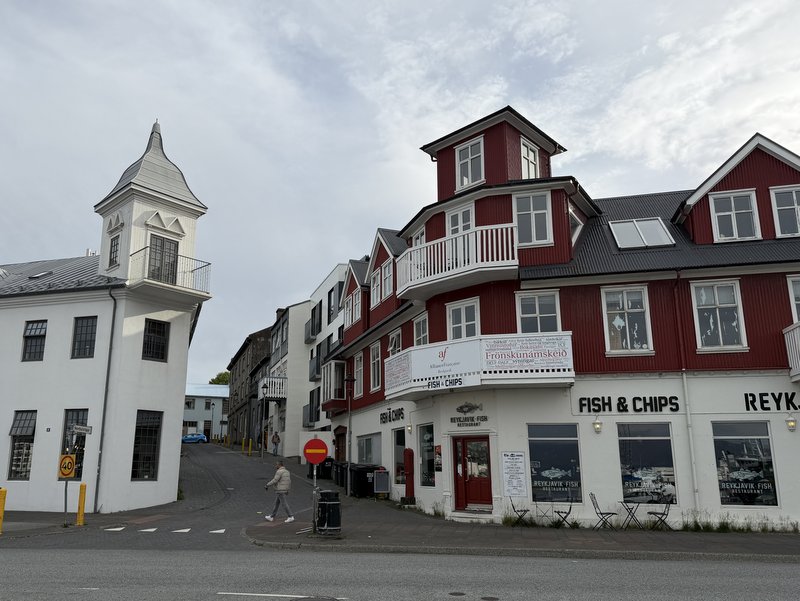
Our last full day. Before returning the car, we visited two of the top attractions in the region of Reykjavik, the spectacular geyser and another dramatic waterfall. Many tourists who stay only a few days in Island, visit these places. Our last night we stayed in a hotel in Reykjavik. After dinner we walked around in the old part of the town.

12 June

Traveling day. Rodney back to UK, Aric and I to Amsterdam

13-14 June

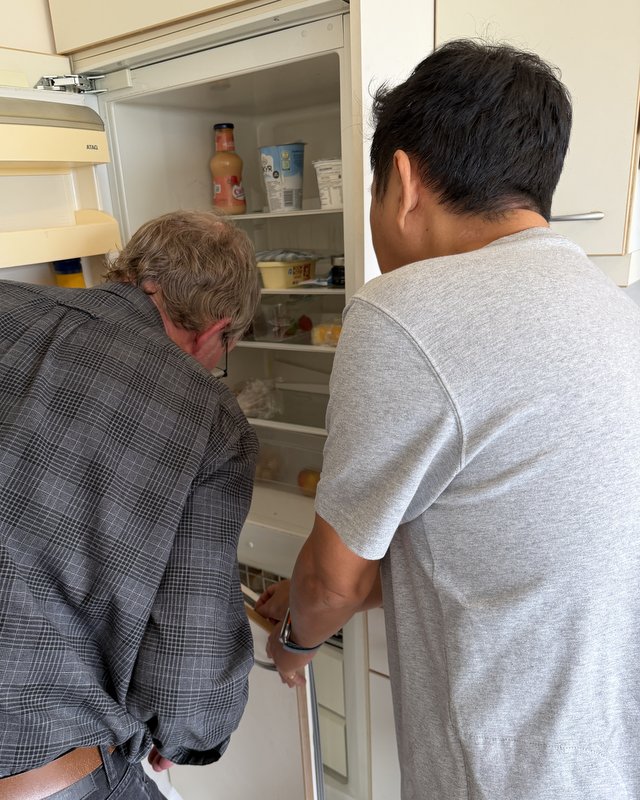
Recovery days. Defrosting the fridge, doing laundry. My brother Otto came to help us with the fridge. He and Aric managed to repair it!

15 June

On this day, Aric was supposed to fly back to Malaysia. During the trip to Iceland, I had noticed how dependent I had become on others due to my AMD. I worried about whether I would be able to spend the next two weeks independently in the Netherlands. It was a huge relief for me when Aric decided to change his return flight and fly back with me on June 29.

16 June

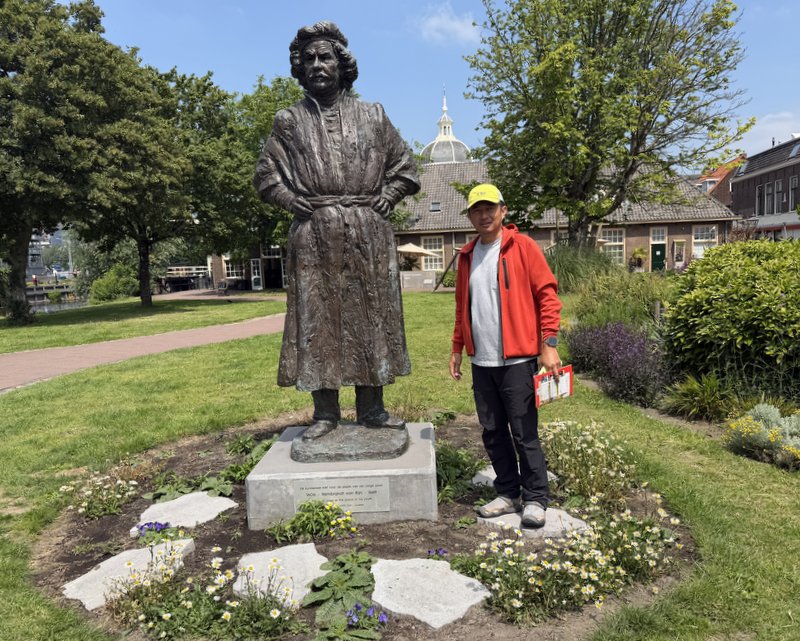
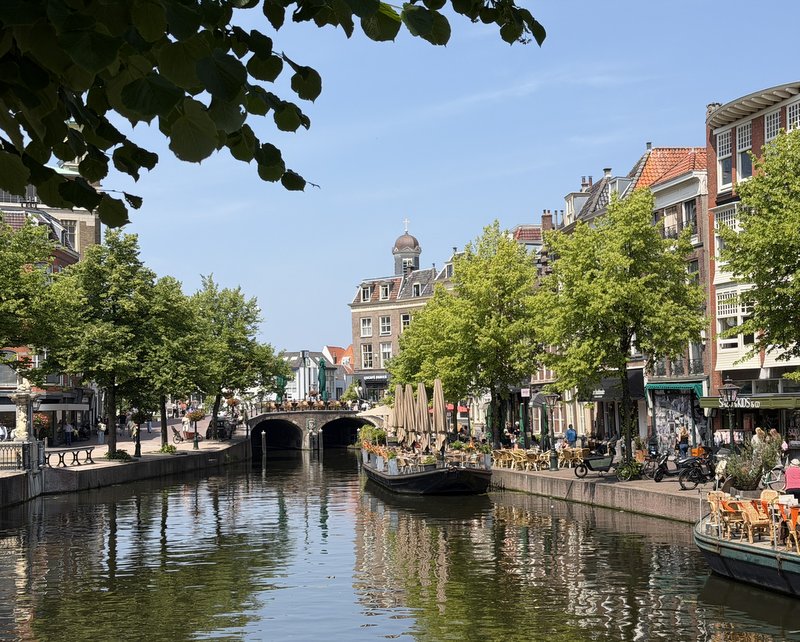
A day trip to Leiden. Aric thought he had never visited this historic town, but during our long city walk (8 km) he remembered a few locations from an earlier visit, more than 20 years ago. Separate blog about this trip.

17 June

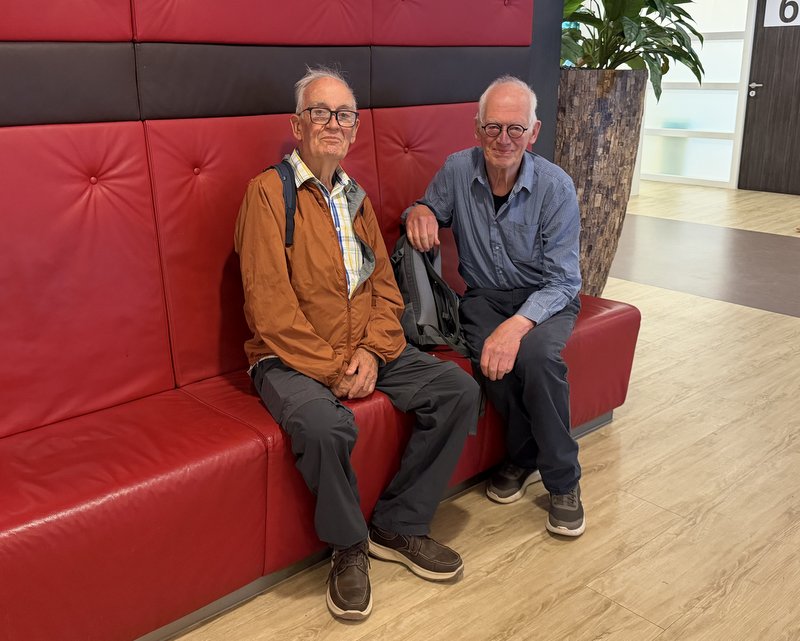
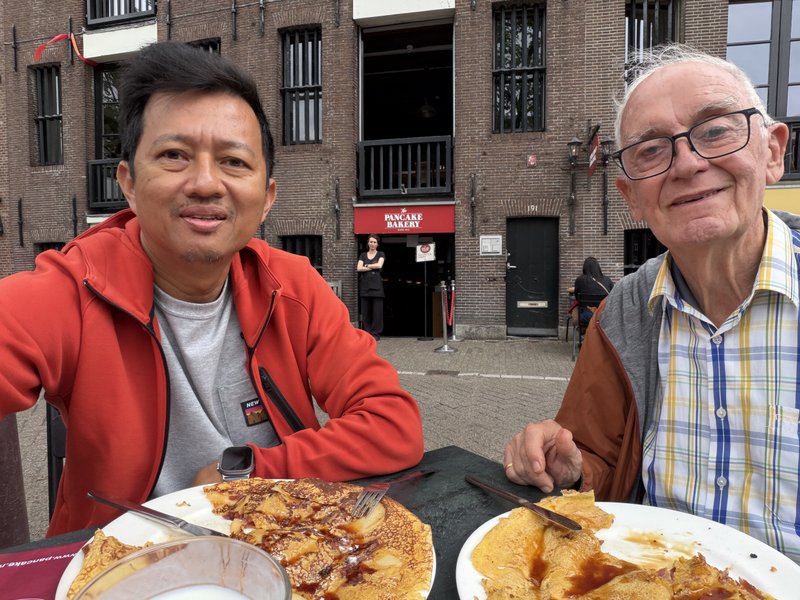
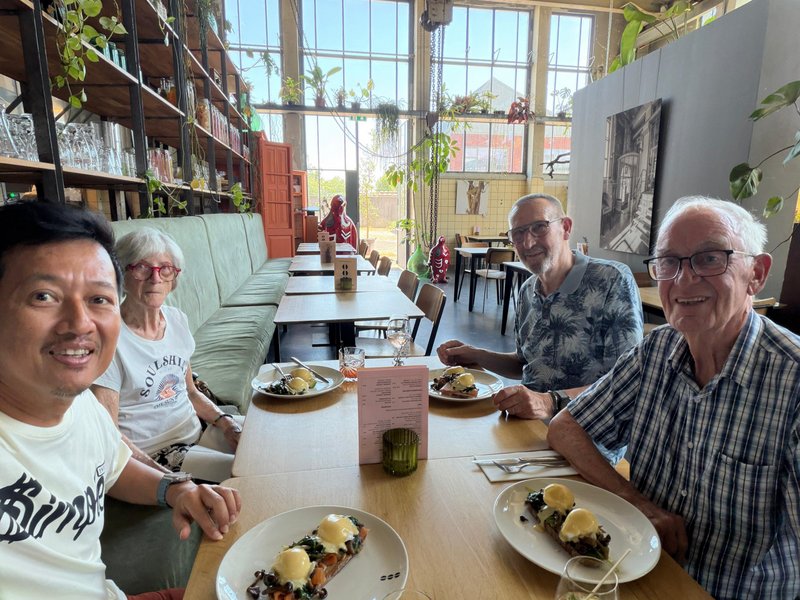
My brother Pim had a cataract operation and the eye clinic had advised him to come with an escort. We joined him and after the (successful) operation, took a Uber to his home, where we had coffee. Aric and I continued with another city walk and had lunch with pancake in the Pancake Factory at the Prinsengracht.

18 June

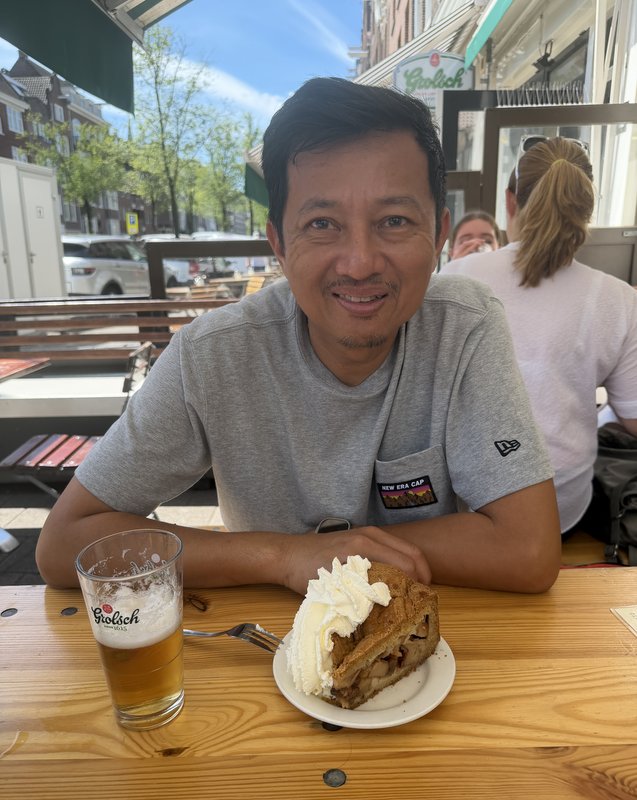
After visiting my friend and former student Roald, another city walk. This time lunch with Apple pie.

19 June

A resting day

20 June

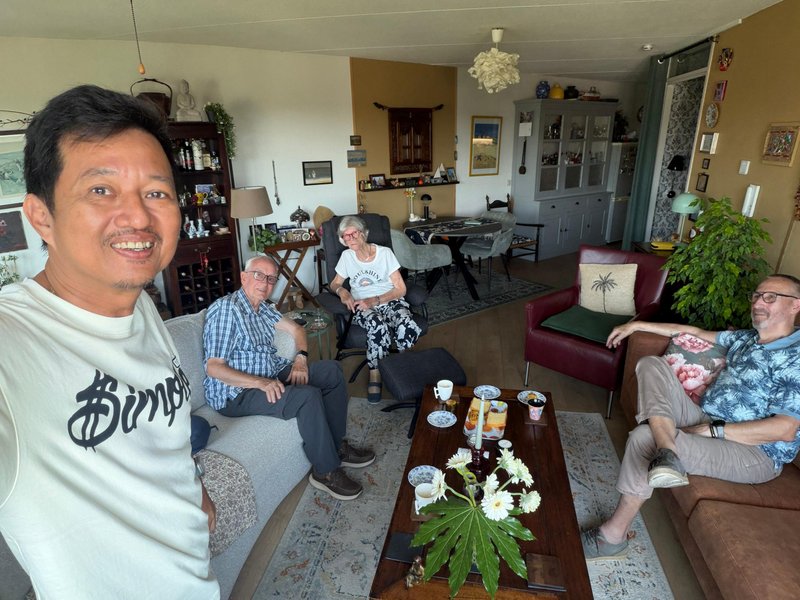
We visited our friends Marjan and Mike. When they lived in Malaysia, we met them and became friends. I kept in touch when they returned to the Netherlands, for Aric it was nice meeting them again after so many years.
21 June

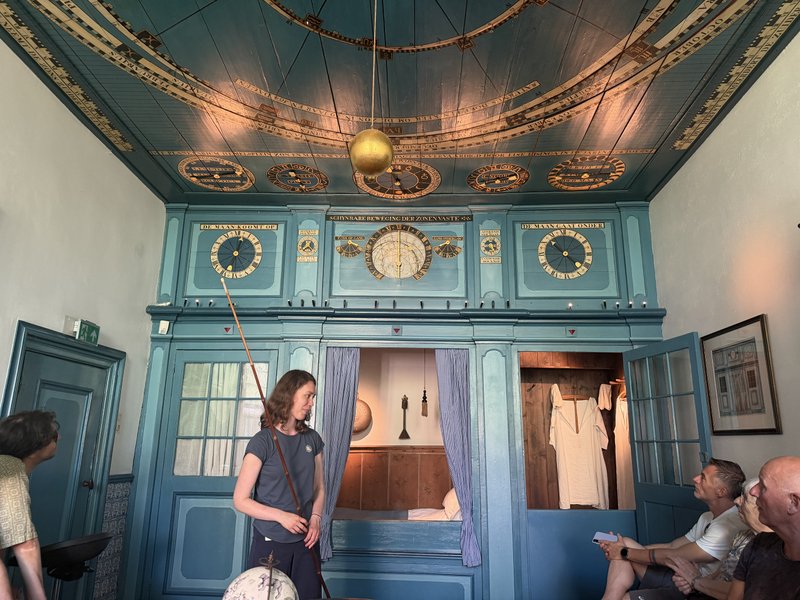
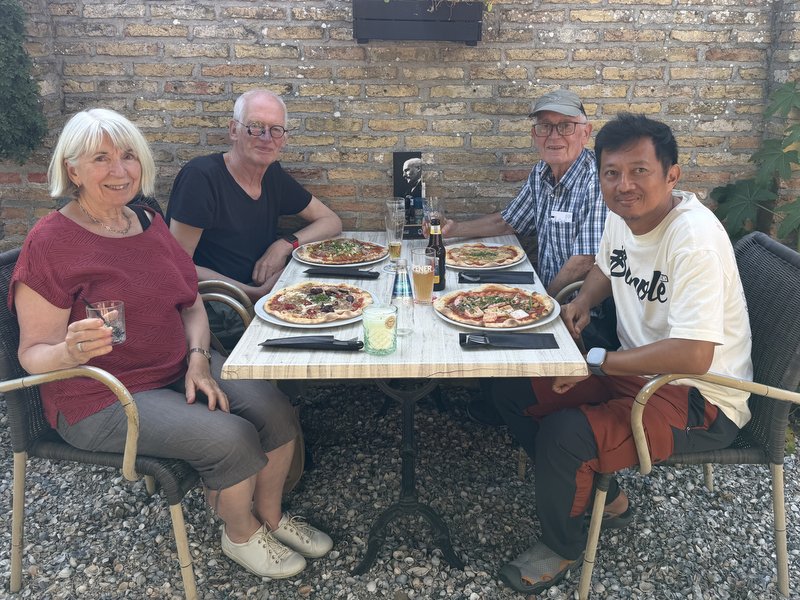
Pim had recovered fast from his cataract operation and could drive again. With him we went to Franeker, where we stayed overnight in the house of Nanda, his partner. In the afternoon we visited the Planetarium and had pizza for dinner. Very hot weather.
22 June

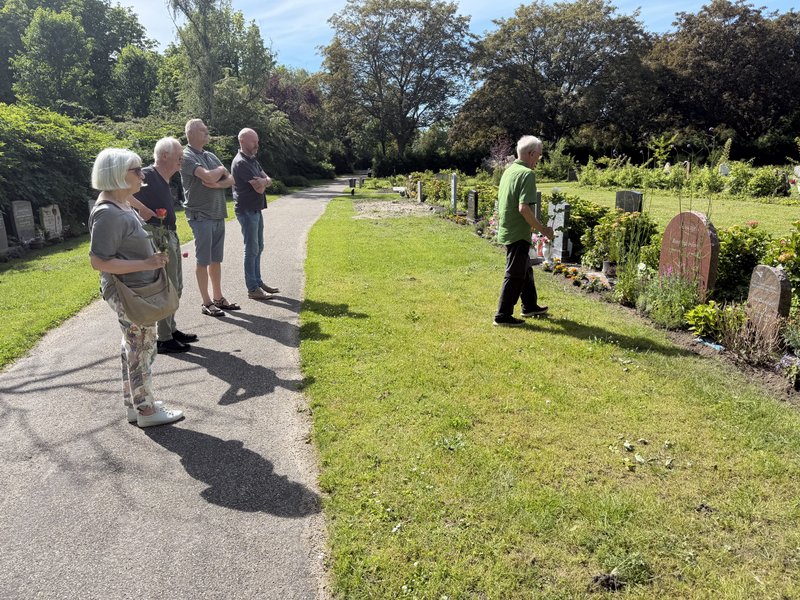
The four of us drove to Groningen where we met Jur and Jasper, partner, esp. son of my brother Ruud who passed away one year ago, when I was in Malaysia/ It was my wish to visit his grave. We had dinner later in a restaurant where I had dinner with Ruud and Jur in 2024. A satisfactory closure.

23 Juni

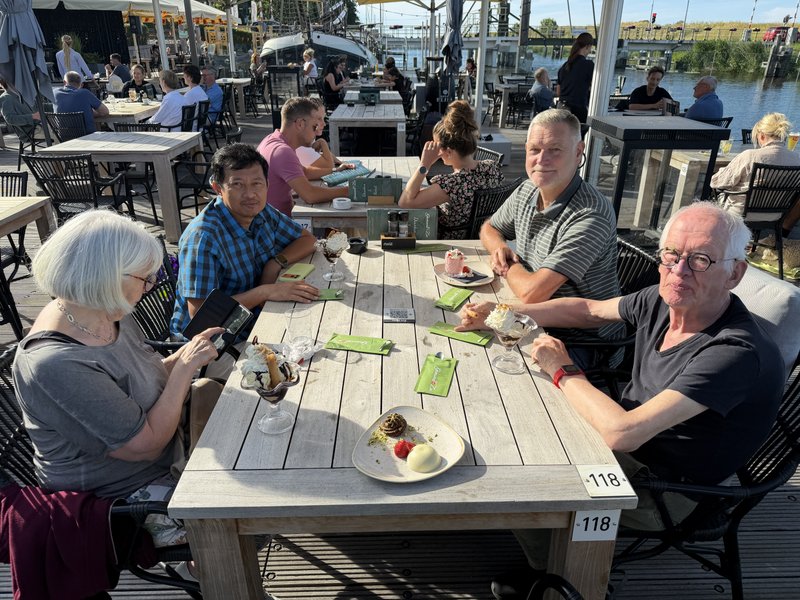
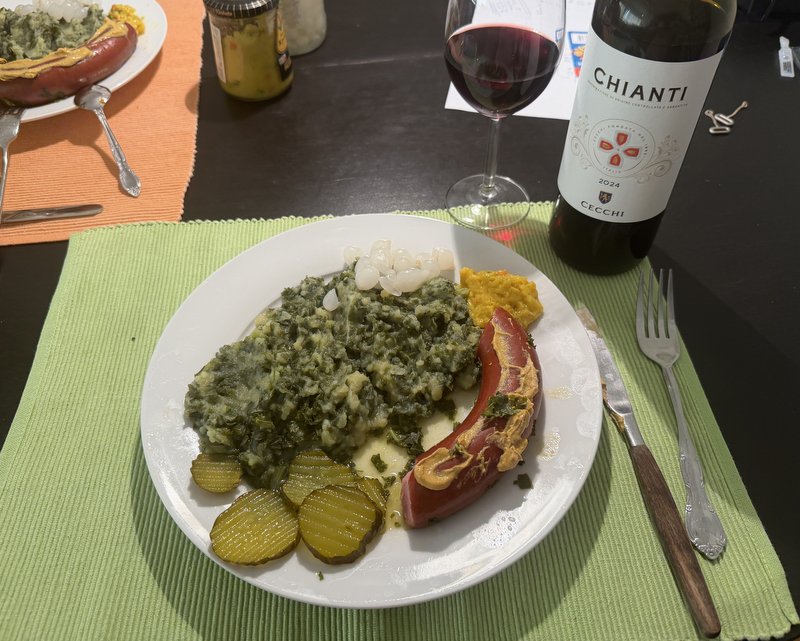
Traveling back to Amsterdam. During a conversation with my siblings about our past, the topic of the HEMA had surfaced, a traditional department store, famous for its “rookworst” (smoked sausage). They still sell them and that evening we had a traditional winter stew with the outside temperature more than 30 degrees!

24 June

Resting day

25 June

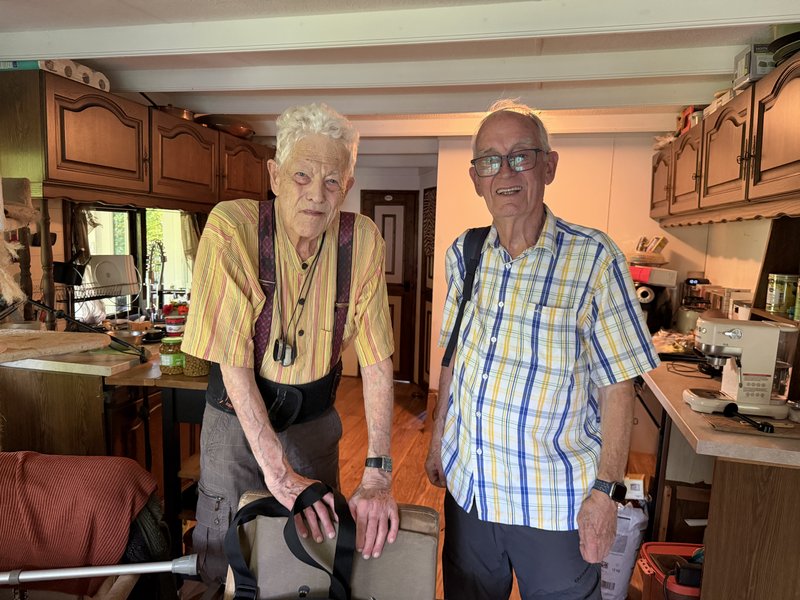
A long traveling day by bus and train to Doetinchem where we met Carle Poeder and Joanne. He is now 95 years old and was the school principal in 1976 when I started teaching. They had a house in southern France, where Aric and I visited them, years ago. Very nice meeting them again,

26 June

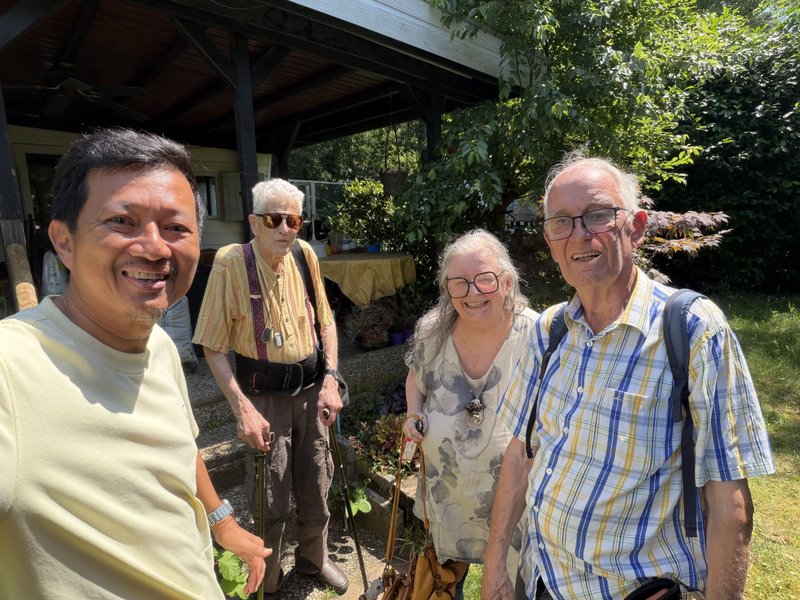
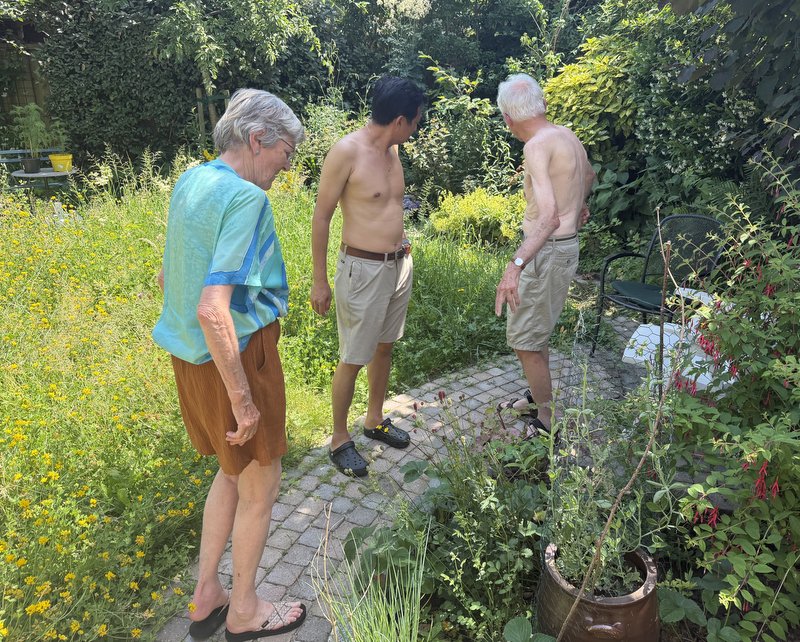
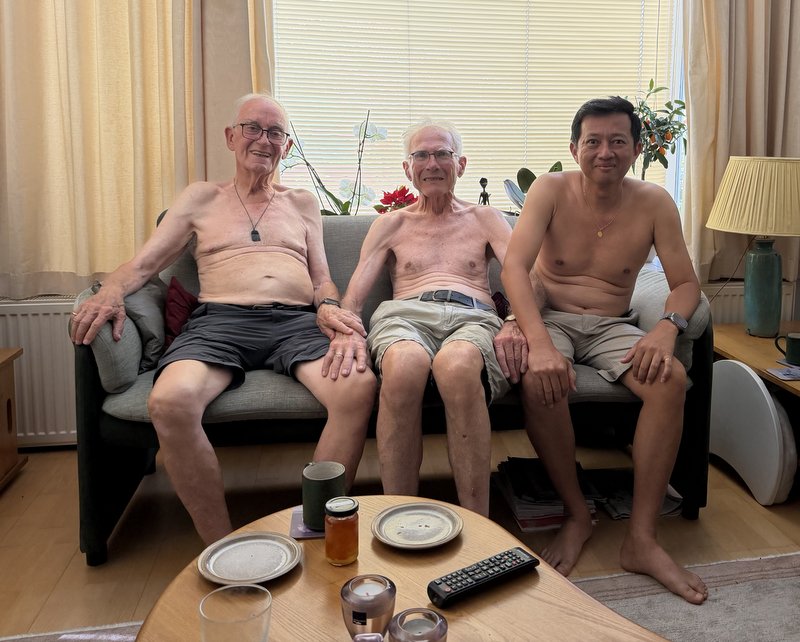
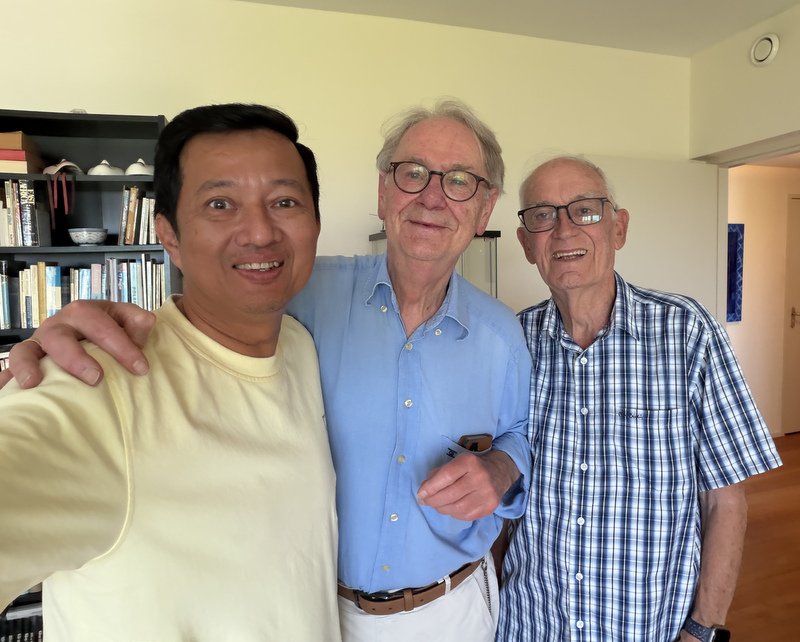
We visited my former university colleague Henk and his wife Marian. There was a heatwave in the Netherlands (a code red alert: stay at home), that explains how we were dressed. They had visited us 20 years ago in Malaysia and were pleased to meet Aric again.

27June

A last-minute visit of former school teacher and friend Hans. It was still very hot.
28 June

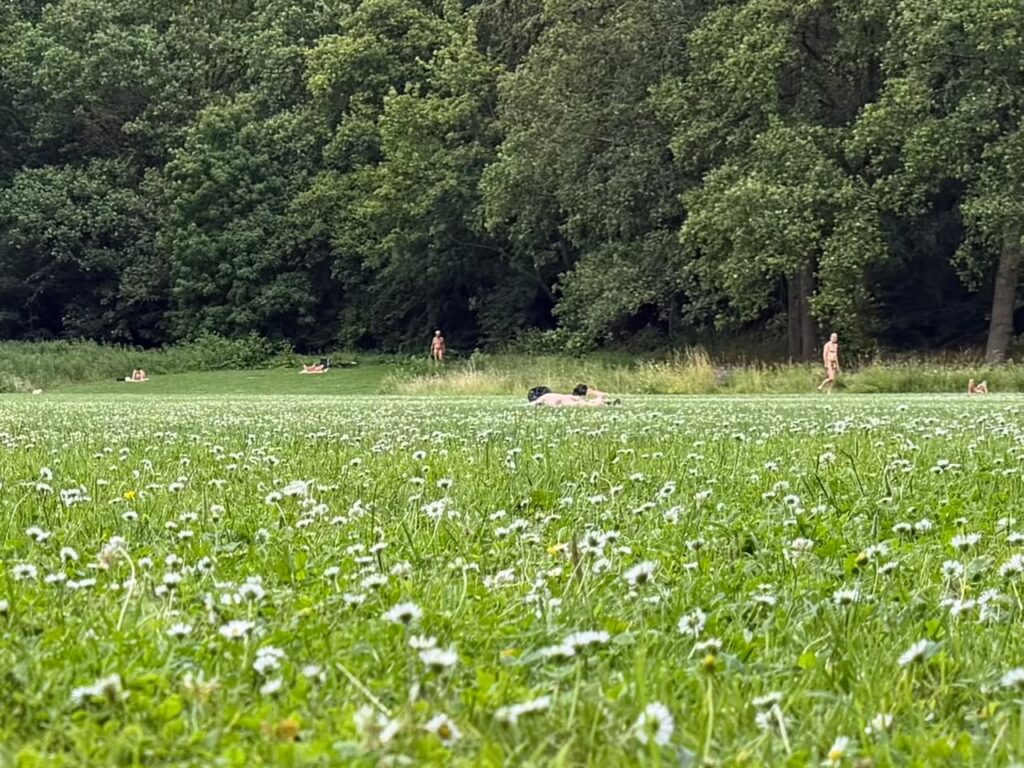
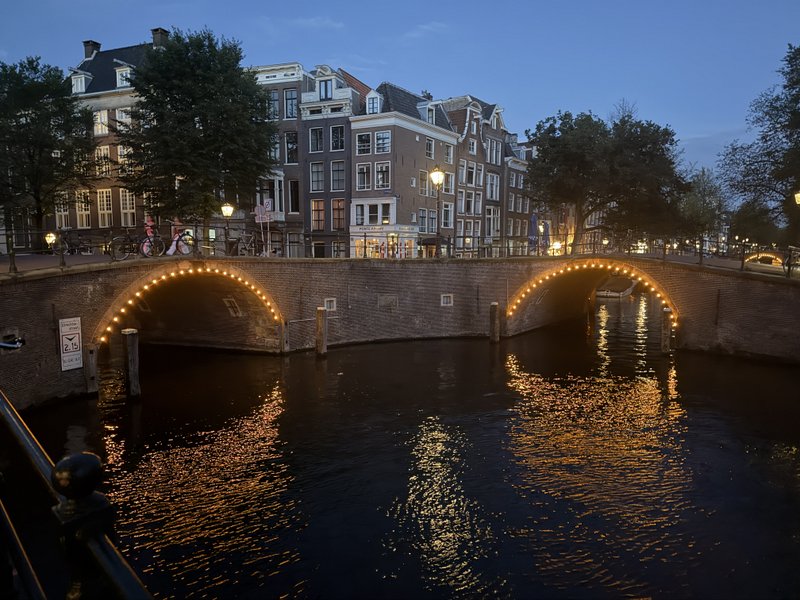
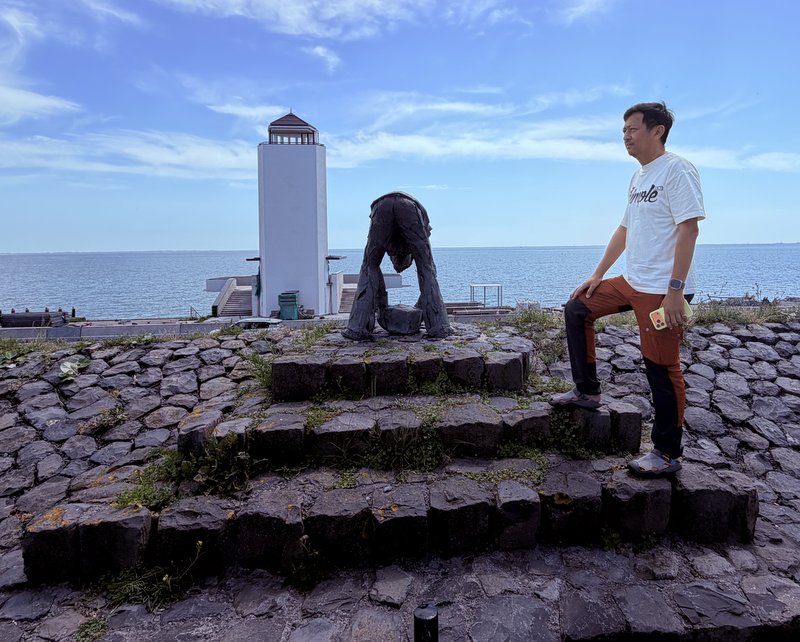
Our last full day in Amsterdam. The Amsterdams Bos park has a special area for nudist recreation, called the Zonnewiede. We decided to have a look. Although a Sunday, there were a few visitors only. Later that night we went for the last time to the town center, to take night view photos.

29 June

Flying back to Malaysia.

Europe trip 2013 part 1

I will split this post in a few parts, because it covers a two-week trip through Europe, visiting Germany, Austria, Liechtenstein (!), Switzerland and France. I took more than 1000 pictures. Don’t worry, I will publish here only a few..:-)

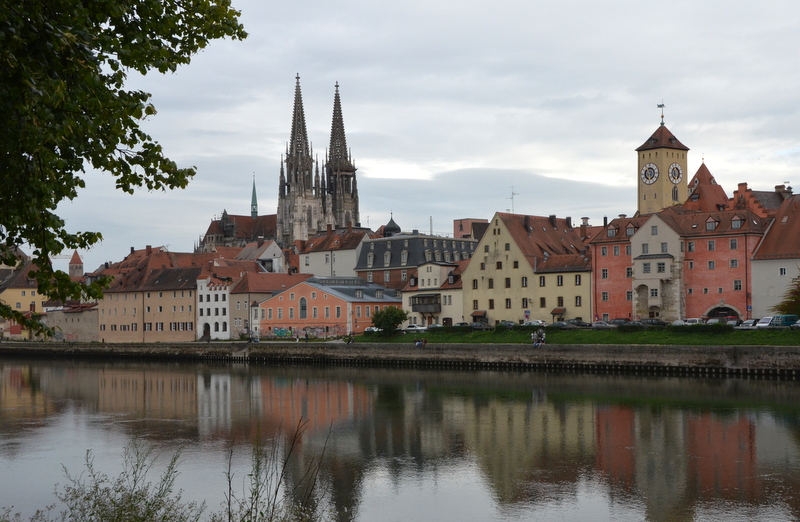
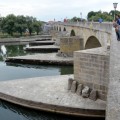
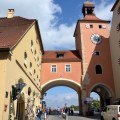
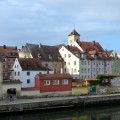
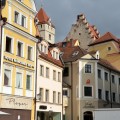
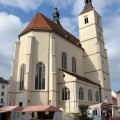
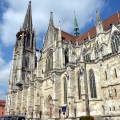
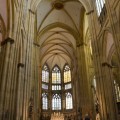
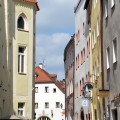
We started with a long (750 km) drive from Amsterdam to Regensburg in Bavaria. This is a very old town and a Unesco World Heritage site.

DSC_4967

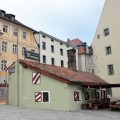
It is located on the Danube river, has many beautiful buildings and is famous food-wise for its sausages. Less touristic than its neigbours Nürnberg and Salzburg, it was a nice surprise for us.

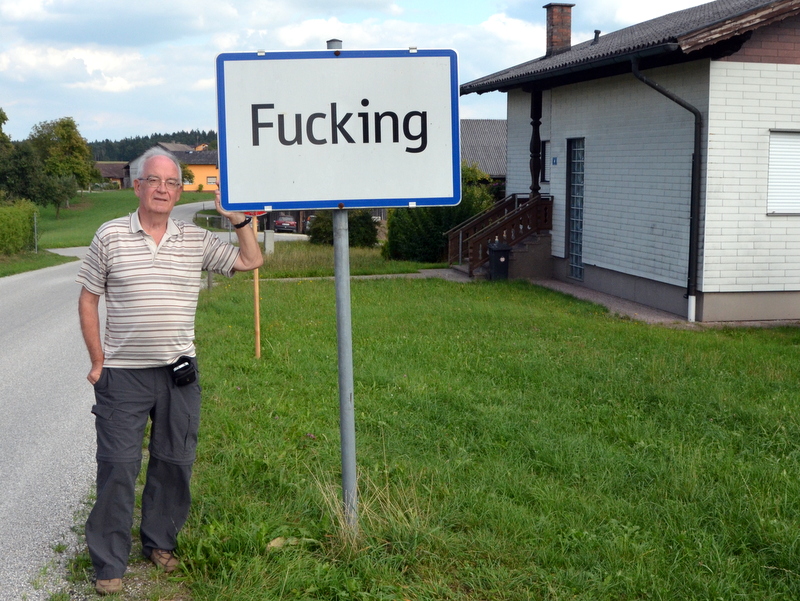
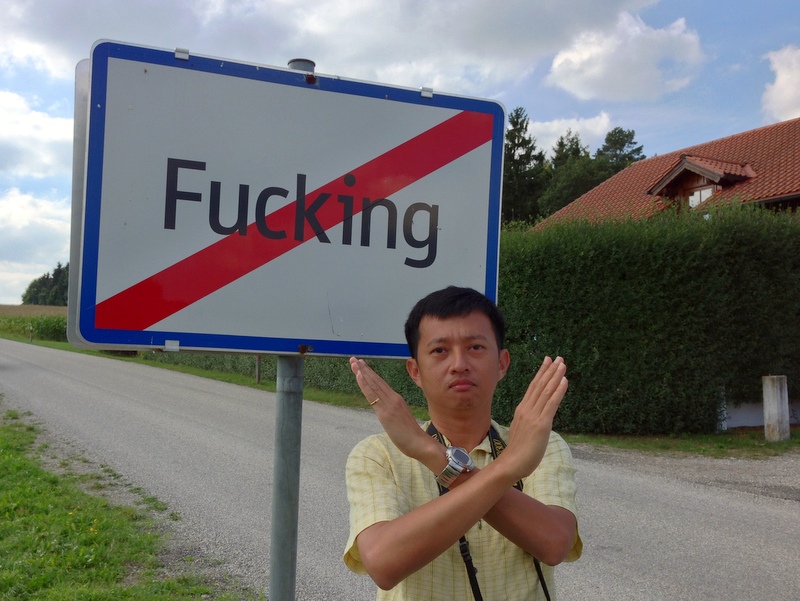
The next day we crossed the border with Austria on our way to a tiny hamlet with a funny name: Fucking. There is nothing to see, there is not even a shop, but every year thousands of tourists come here to have their picture taken with the signboard for the village. And so did we …:-)

DSC_5092-001

IMG_5624

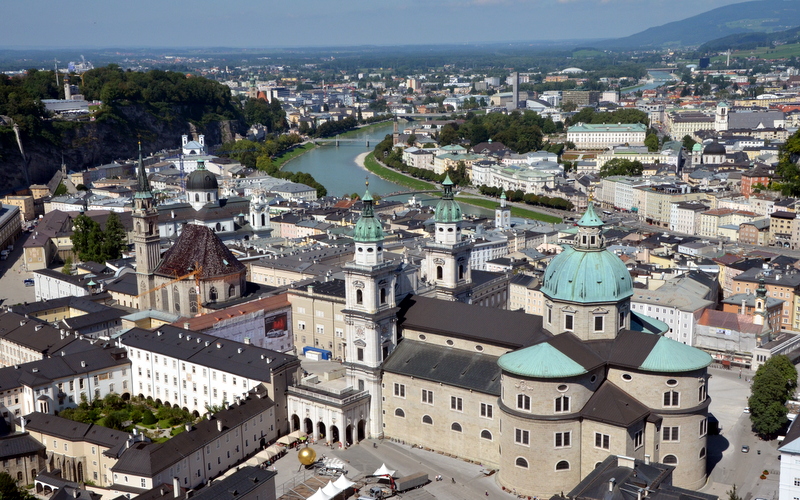
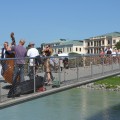
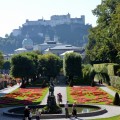
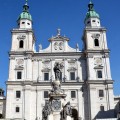
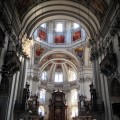
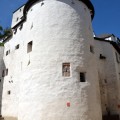
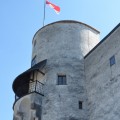
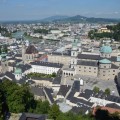
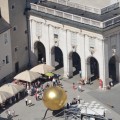
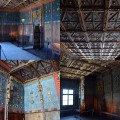
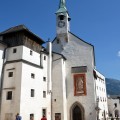
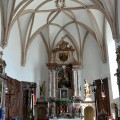
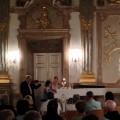
Salzburg was our next destination, the town where Mozart was born. We stayed in Hotel Mozart, had dinner in Cafe Mozart, visited the house where he lived and went to a concert where his music was played. The Salzburger Festspiele had just finished, but there were still many tourists. A beautiful town with the castle Hohensalzburg high above the town.

DSC_5172

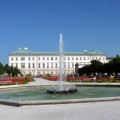
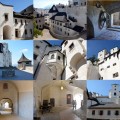
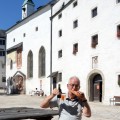
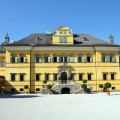
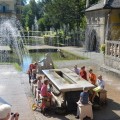
We stayed two nights in Salzburg, the weather was splendid. We really enjoyed the Hohensalzburg castle, spent almost a full day there. The Hellbrun Palace, just outside the town, was fun, with its trick fountains. Unbelievable that an archbishop was responsible for it. Here is a collection of Salzburg pictures.

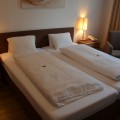
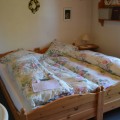
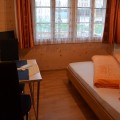
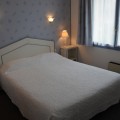
From Salzburg we continued our trip to Hallstatt, that will be part two of this report. Here already two galleries about the whole trip. First some pictures of the places where we stayed overnight. We like Guesthouses, Pensions, Bed en Breakfast places better than the big hotels.

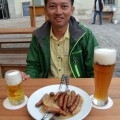
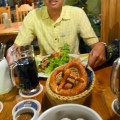
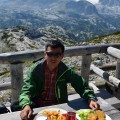
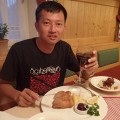
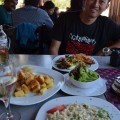
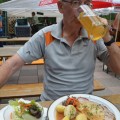
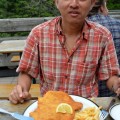
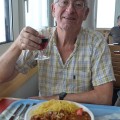
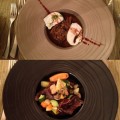
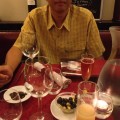
And of course we had lots of food…:-) The German and Austrian cuisine are not very refined, but they serve in general huge portions. With lots of beer.In France we had a few times really fine dining.