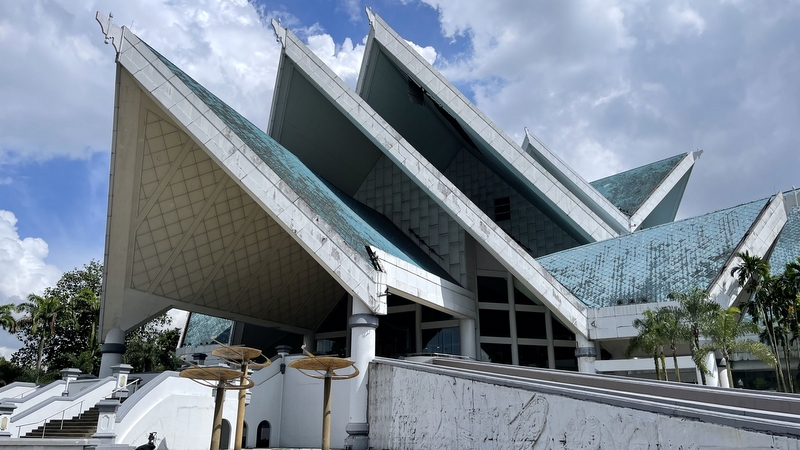
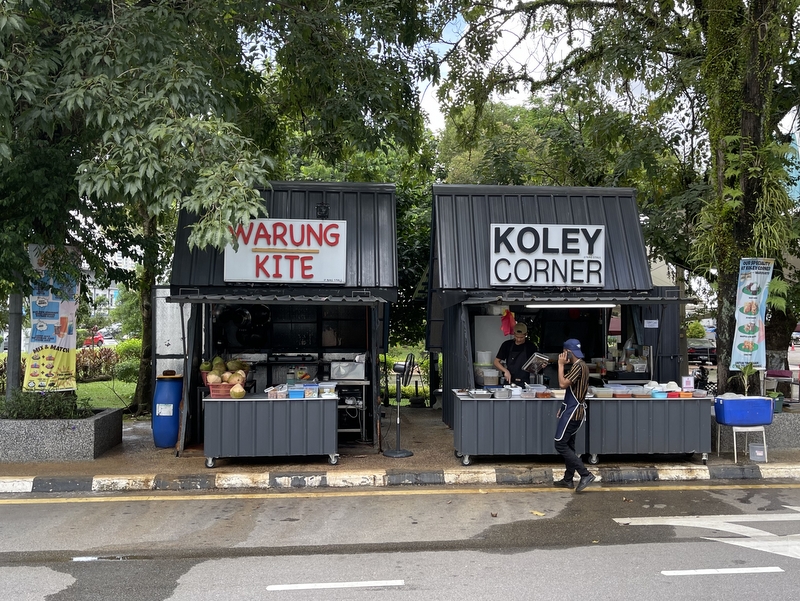
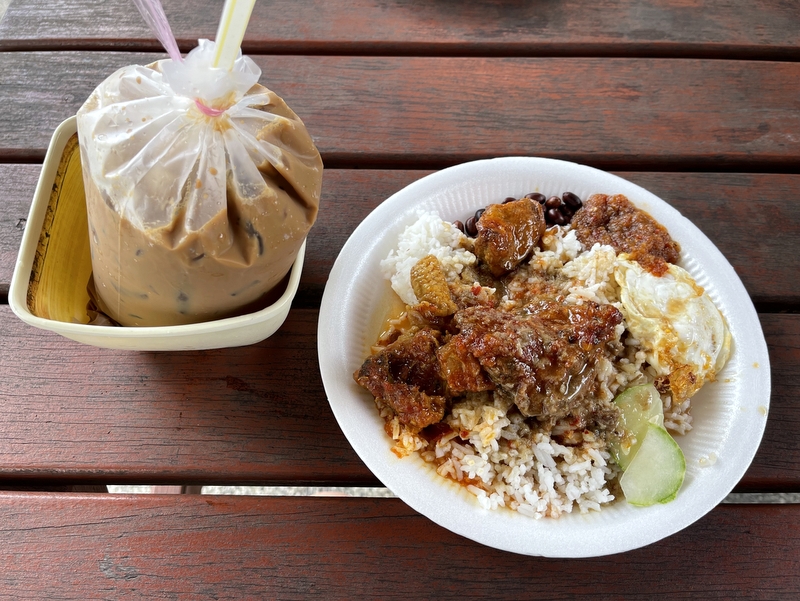
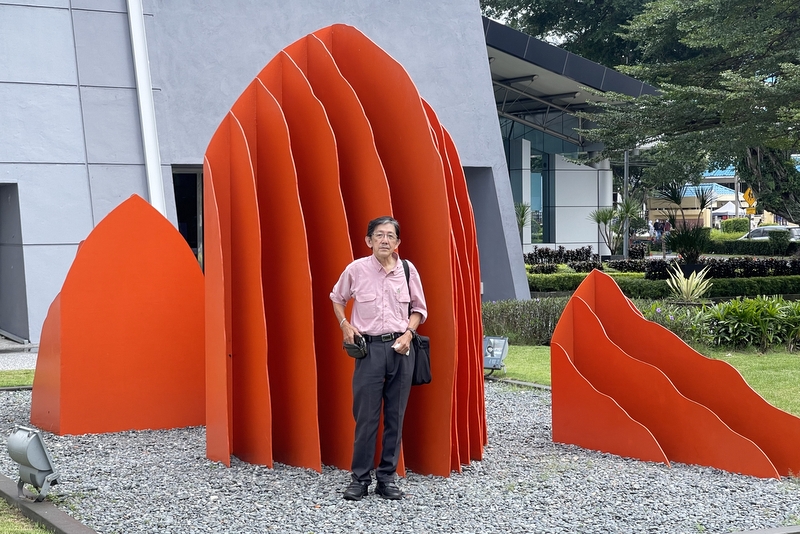
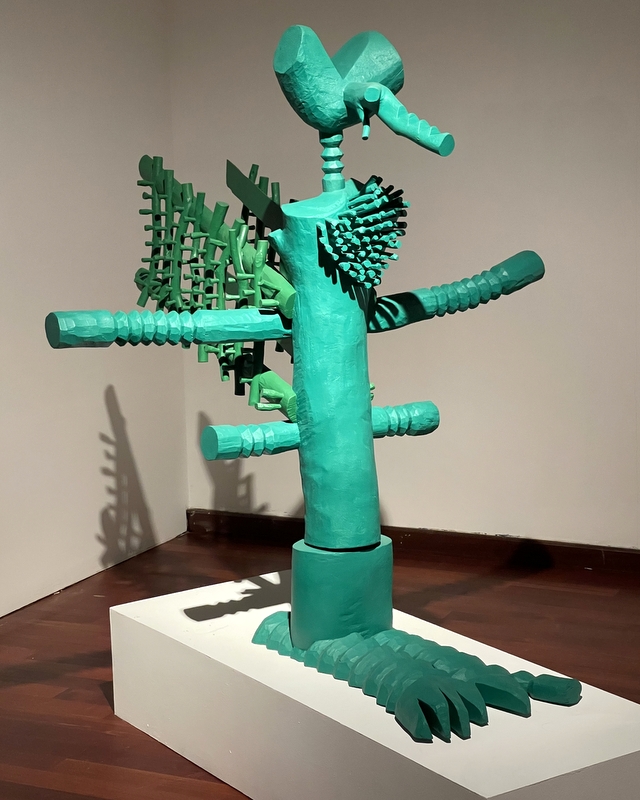
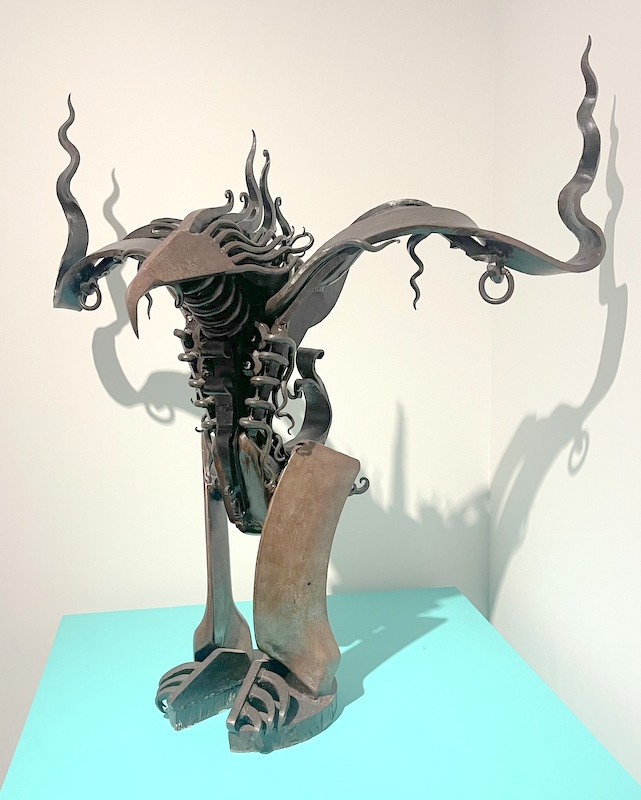
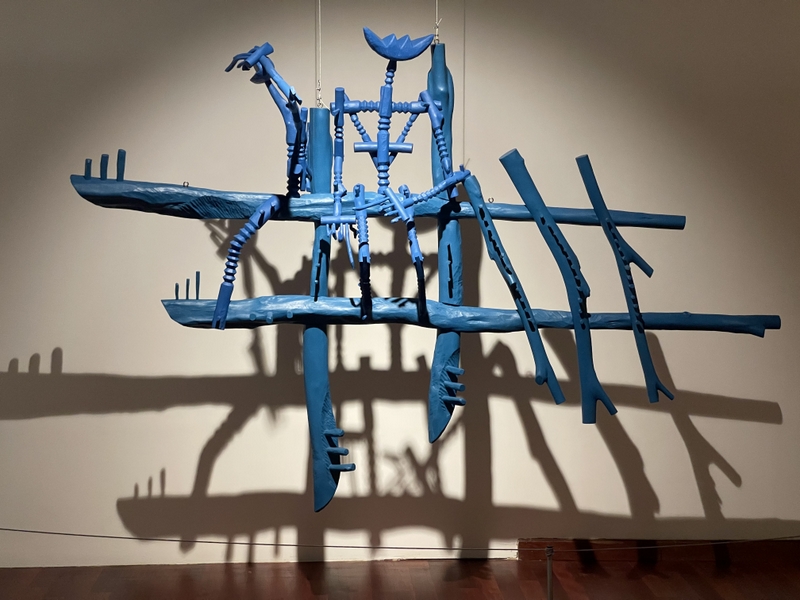
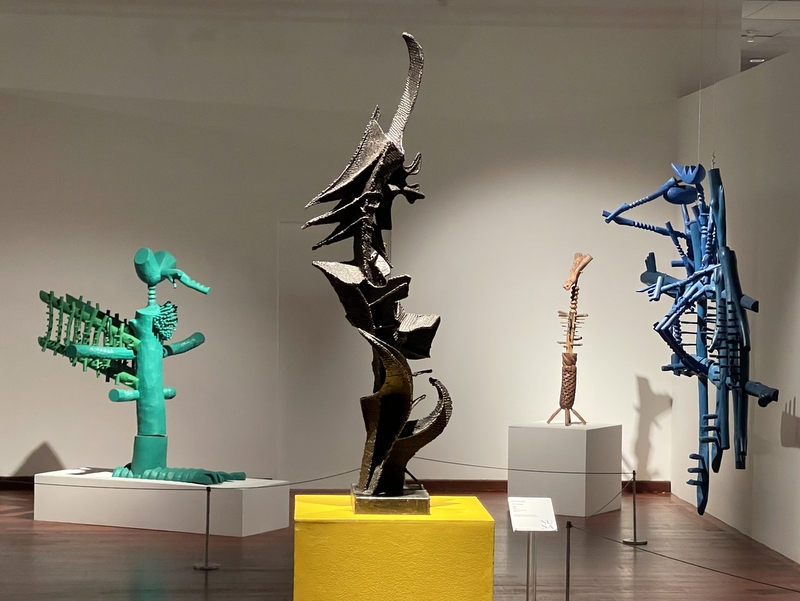
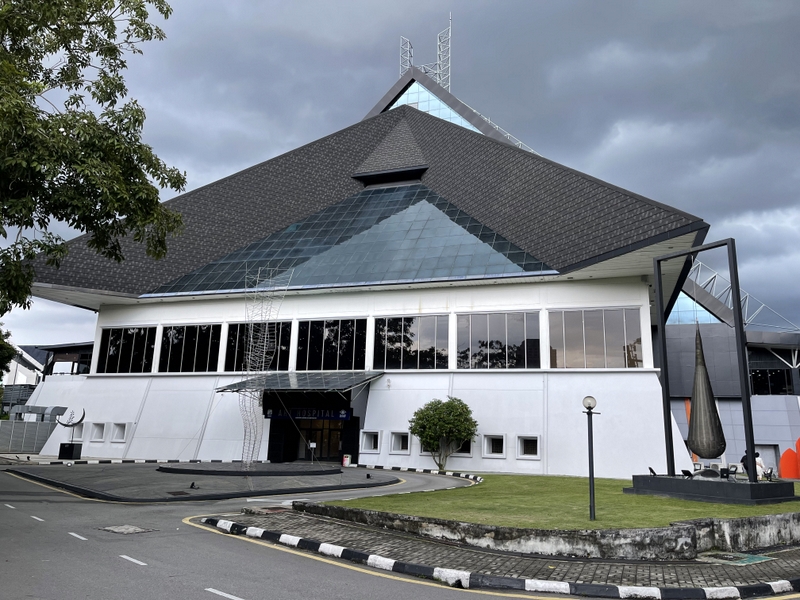
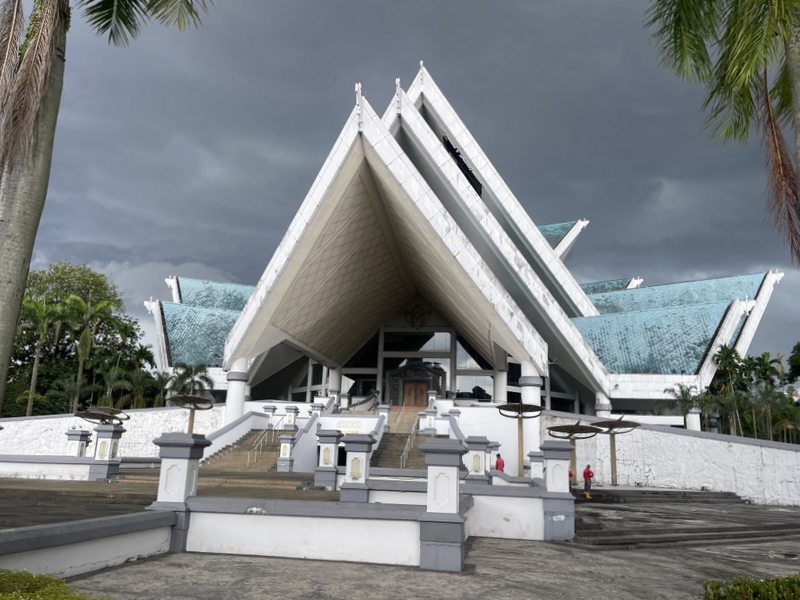
Probably everybody knows KLCC, the Kuala Lumpur City Center, but what about BBCC, the Bukit Bintang City Center? It is a mixed-use development on the former site of the Pudu Prison in Kuala Lumpur. The monumental entrance has been preserved.
We found a parking spot in the huge Lalaport shopping center, had a look at the iconic Merdeka 118 skyscraper, and decided to have a drink near the old prison entrance. Expensive, but the cake was delicious.
Our plan was to visit the Immersify multi-media exhibition in The Labs, part of the BBKL. A journey beyond imagination, as is announced on their website. The ticket price is not cheap. RM 68 for adult Malaysians, RM 50 for me (senior discount). They use a time-slot system, but it was not busy.
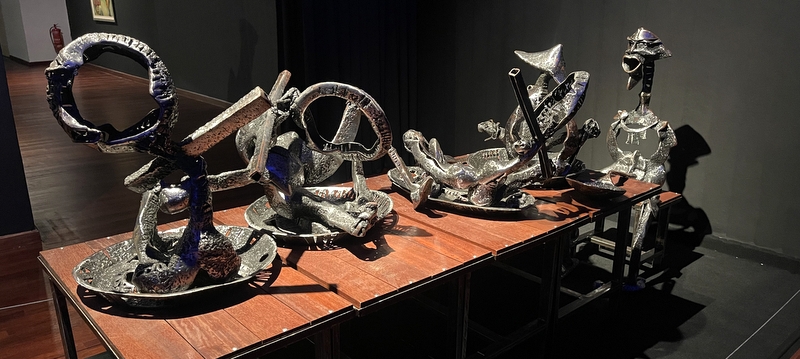
It was a fascinating experience, worth every Ringgit. We stayed more than two hours, enjoying each of the eleven exhibition halls. Visual and sound effects, we really became immersed. I will just show a few pictures from each zone, using the same names as in the folder.
Zone 1 Glowing Garden
Zone 2 Mystic Waterfall
A thundering waterfall, where fowering trees grow and elephants emerge from the water. Absolutely breathtaking.
Zone 3 Moonlight Memories
Zone 4 Starlight Garden
Zone 5 Turning Moment
Zone 6 Illusion Road
Zone 7 Neon Jungle
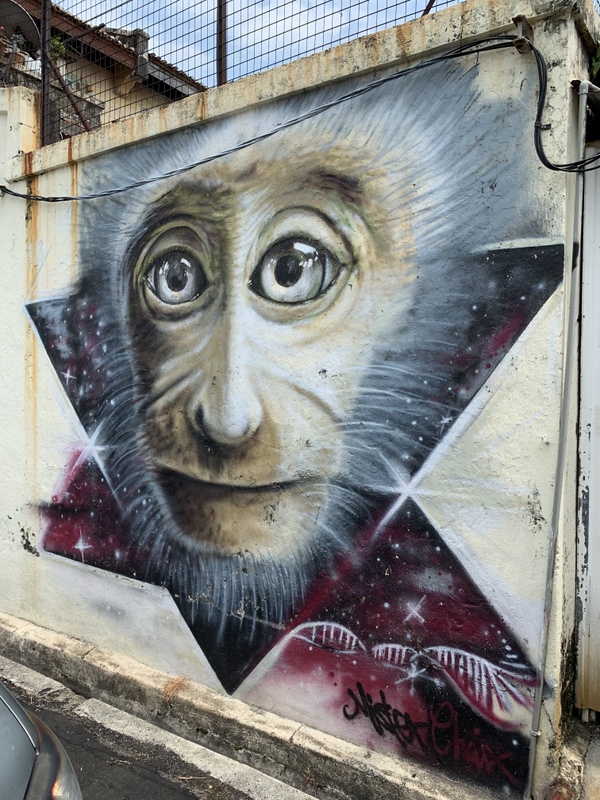
Another fascinating hall. The proboscis monkey jumps and shows off, The ape gets angry and destroys the glass window.
Zone 8 Canvas Oceania
We stayed a long time here. You take a paper with the outline of a fish and color it as you like it. Then you scan your drawing and within a minute your fish is swimming in the tank. Aric created the fish with my name on it.
He made a few more drawings, one with his name and the other with his dive devil gang.
Most people stayed longer here. I also did one, but I am not so creative, easy to guess which one was mine.
Zone 9 Prism Shine
Zone 10 Surreal World
Mesmerizing.
Zone 11 Art Gallery
A very unexpected ending, for me the apotheose of Immersify. Paintings of three painters were shown, as the “real” painting together with a digital tarnsformation on the surrounding walls. Combined with classical 19th century music
Claude Monet
Gustav Klimt
Vincent van Gogh
What an amazing exhibition. First I thought that this exhibition would only temporarily be in KL before traveling around the world. But no, it will stay here in a building specially designed for it. A Korean concept, until now only materialised here, in KL. Malaysia Boleh.
We were a bit hungry, but the food in the Lalaport didn’t attract us, we went to an eatery nearby where we had nice hokkien mee.
A final look at the Merdeka 118 building, before we drove home.
Broga Hill is a popular hiking destination, but I had never heard about a Sak Dato temple in Broga , until Aric suggested to visit this temple, as it was famous for its monumental statue of the Monkey King.
It’s about a one hour drive from KL Broga Hill is located in Selangor, but the village and the temple are situated in Negri Sembilan.
The temple is a Datuk Kong temple, where Chinese devotees worship not a Taoist deity, but the “spirit of the land”. The tradition started in the 19th century when Chinese settlers arrived in the country. Often Datuks were once humans who were greatly respected by society. After their passing away, people started to worship their spirits for protection. Often they were Muslim Malays. Interesting about this temple is that Sak Dato was an Orang Asli. He supported the Chenese tin miners in the 1860s and probably became a Taoist himself. See also the appendix
Here is the entrance of the temple. Most Datuk Kong temples are smaller, often even just shrines. This is a large complex , apparently very popular, although it was quiet during our visit.
Climbing the steps, we soon reached the statue of Guan Yin, the goddess of Mercy.
A large hall is dedicated to her.
Climbing further we arrived at the Sak Dato hall.
The interior is simple without images. Inside the hall we noticed a picture of the former PM Mahathir, handing over a National Temple Beautification Award.
There is another Sak Dato shrine in a cave next to the hall. Probably the original one. There is also the grave of the Sak Dato. It was originally located inside the cave, but has been relocated to its present position..
Climbing highere there is a split.To the right leads to a hanging bridge, we first explored the left side which took us to a kind of park with an intriguing collection of art works and statues. A very enjoyable place.
A dragon-turtle is pulling a cart with treasures and a bit further on there are the animals of the Chinese Zodiac.
Of course we had to take pictures with our Zodiac signs,
The park must be a popularr destination for families. There is a wishing tree but you can also hang your wishes here. Everywhere benches donated by devotees. There is also a stall, but it was closed during our visit.
Finally we went to the suspension bridge and walked to the hill qwhere the statue of the Monkey King is located. Quite a steep climb up.
A warning sign for dogs, but the dogs we met were peaceful and sleepy.
I am sure all Chinese know about the Monkey King, one of the main characters in the 16th century novel Journey to the West. For those who don’t know this wonderful folk tale, you can download it here .The statue of the Monkey KIng is mentioned in the Guinness Book of Recirds as the tallest one in Malaysia. It is quite impressive. The other picture shows the monk Tripitaka and his other helpers.
Aric had brought his drone to take video and pictures. Here are a few.
In the hall inderneath the statue, walking around three times is supposed to bring luck.
After visiting the Monkey King, we had to walk down and cross the bridge again.
After our visit (about 1.5 hour) we drove to Semenyih for dinner.
Nice food, steamed cuttlefish with lemon and garlic, paku belacan and deep fried tilapia
Nice, relaxed atmosphere
And a beautiful sunset
A perfect outing.
Appendix
Although the Sak Dato temple in Broga is a popular destination, with numerous hits when you Google for it, it was not easy to find background information.
The Temuan, an Orang Asli group, were the earliest inhabitants of Broga. Because of rich tin ore, Broga was settled in the 1850s by Hakka miners from Huizhou, China.
Broga became prosperous, first because of tin, later rubber.
During the Japanese Occupation (1941–45), many shops in Broga were burned by the Japanese and many villagers fled. In 1950, the British colonial government resettled the Chinese in the area in Broga New Village.
The Sak Dato Temple in Broga is one of the oldest Datuk Gong temples in Malaysia. The temple still holds many old plaques; the oldest one was offered by a devotee Li Yuchang to Sak Dato in 1904
Since 1910 , the Sak Dato procession at Broga has been held annually, even during the Malayan Emergency. After the establishment of Broga New Village in 1950,entry and exit were strictly controlled, so the villagers brought the spirit tablet of Sak Dato to a small new shrine in the New Village. Following the end of the Emergency, the villagers returned the spirit tablet, and renovated the old temple in 1965. In 1991, the temple was renovated again, at a cost of MYR700,000.
Also useful is the inscription next to the grave of Sak Dato
.So the original shrine in the cave is old, the worship of Sak Dato started in 1868. His bones were relocated a few times (?) after the temple was rebuilt in 1991 and finally put in the present grave only last year (?)
Finally here is a very readable travelogue, written in 2013, where renovation of the Guan Yin timple is still going on.
So the Sak Datu temple is old , but the enlargement and extension are recent.
I found confirmation by looking at the historic imagery of Google Earth, This screenshot shows the sutuation in 2010. I have marked the places where I took pictures. There is not yet a park, and there is no suspension bridge. They are working on the Monkey King
Here the situation in 2022
The Sak Dato temple committee has been very successful in developing the temple to attract more visitors.
One year ago I joined Paul and Fahmi on a trip to Kota Bharu. This year they invited me again, a 3D2N trip to Muar. I had visited Muar more than 10 years ago, see my report Penarikan Recce. Here are two maps of Muar, one from ~1940, the other one a Google Earth screenshot. I have marked a few POI’s and the location of our homestay. A bridge across the Muar river has replaced the ferry.
When we arrived in Muar it was still too early to check in, therefore we first drove to Tanjung Emas, a public park near the mouth of the Muar River. It was a bit too hot to explore, we decided to come back in the evening.
Driving back to the town, we passed the impressive Sultan Ibrahim Jamek Mosque, constructed bewteen 1925 and 1930. This royal mosque looks more like a palace.
We passed the former High Court Buildings.
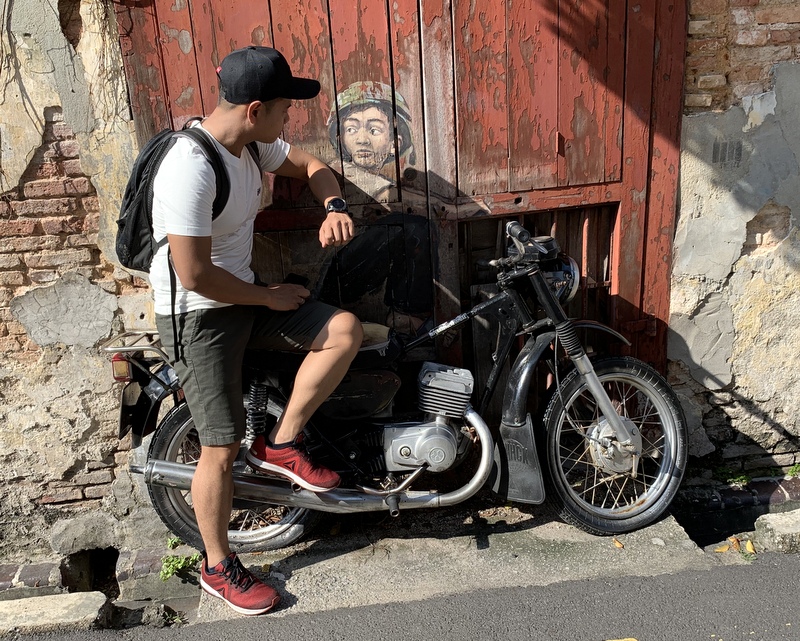
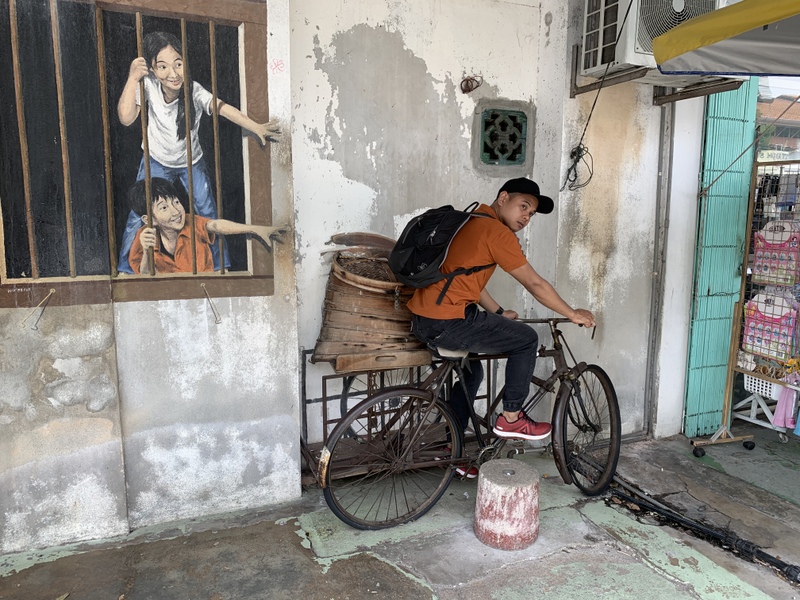
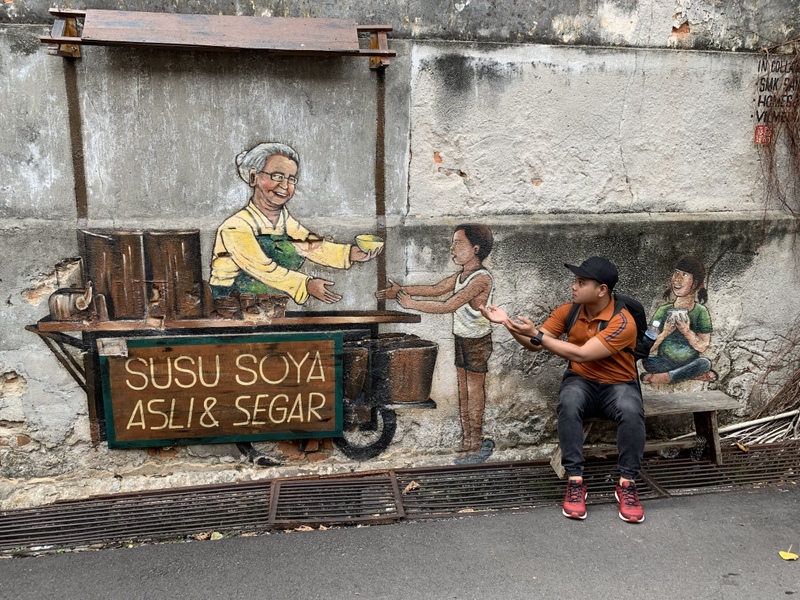
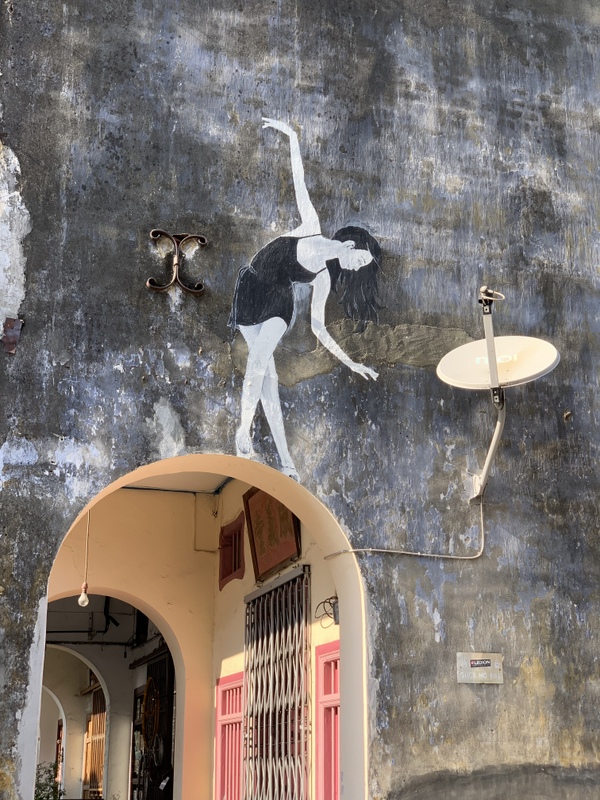
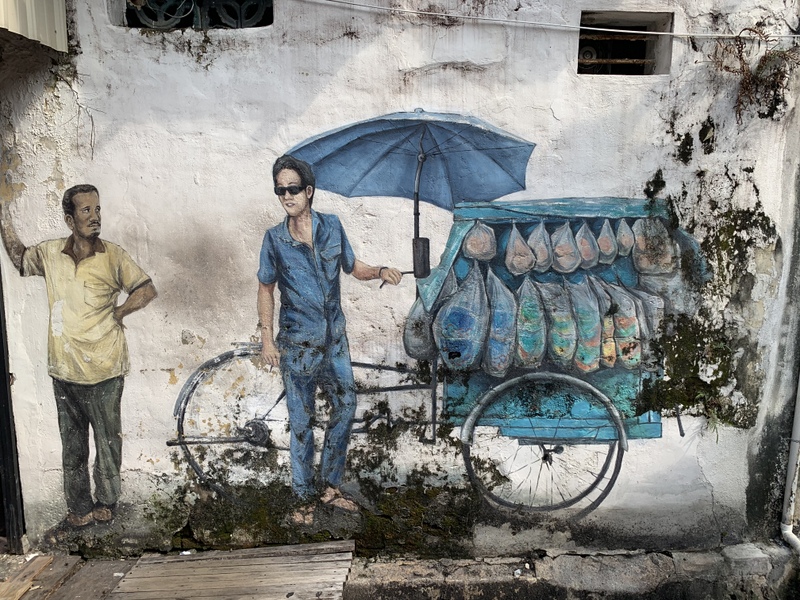
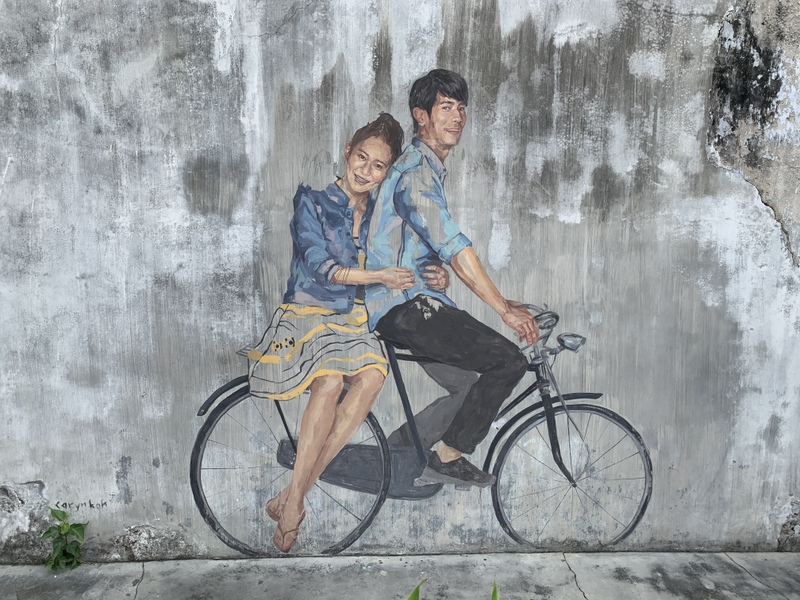
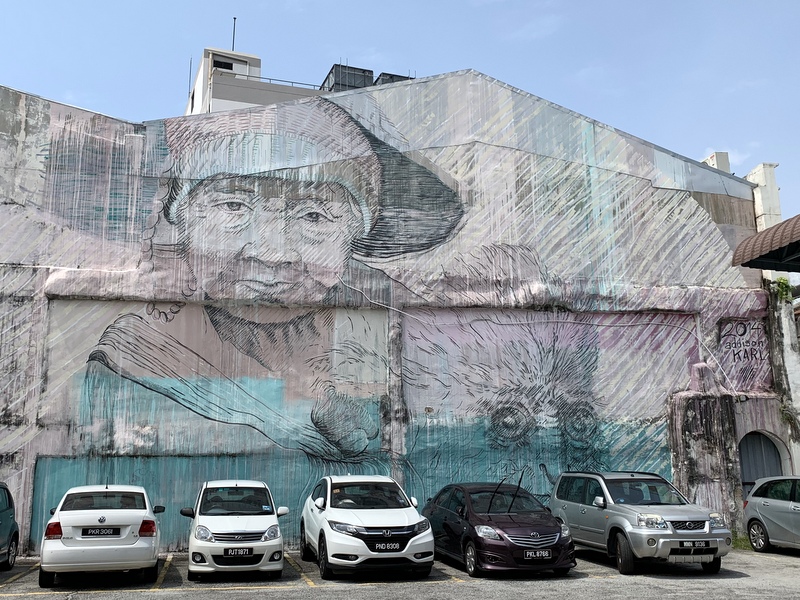
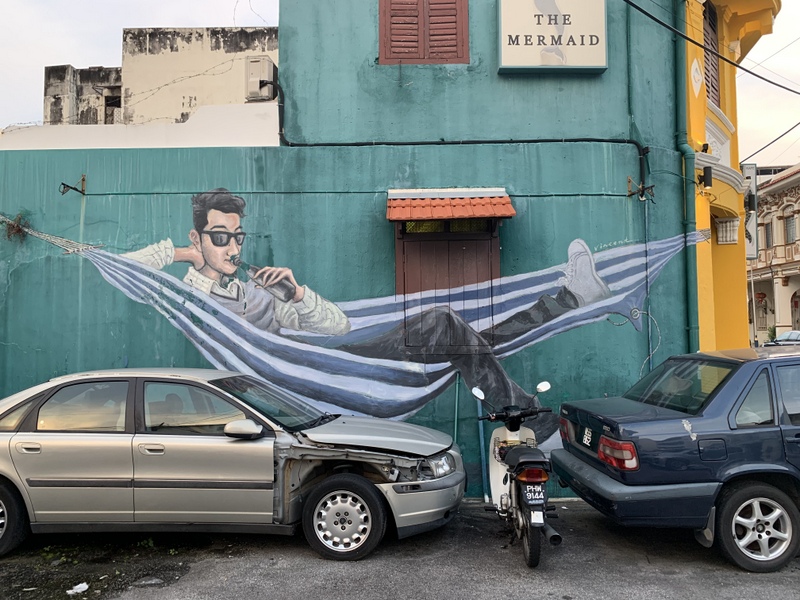
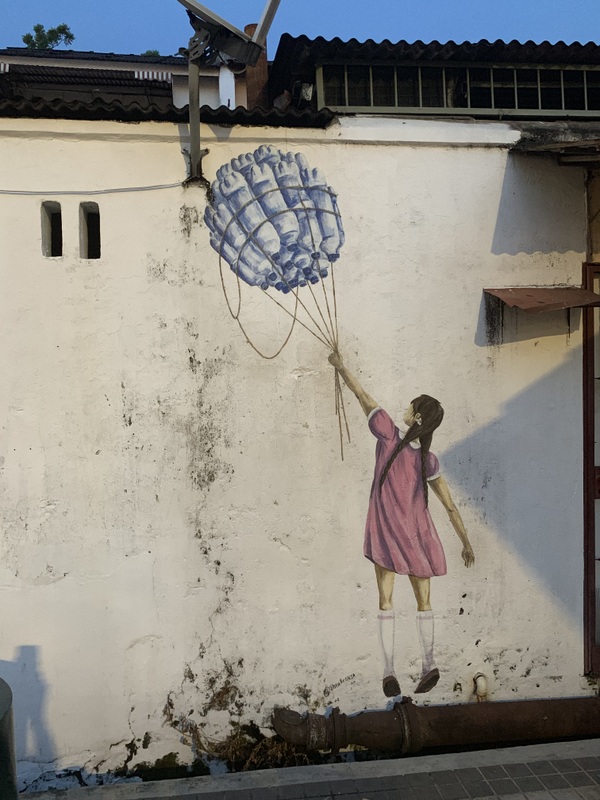
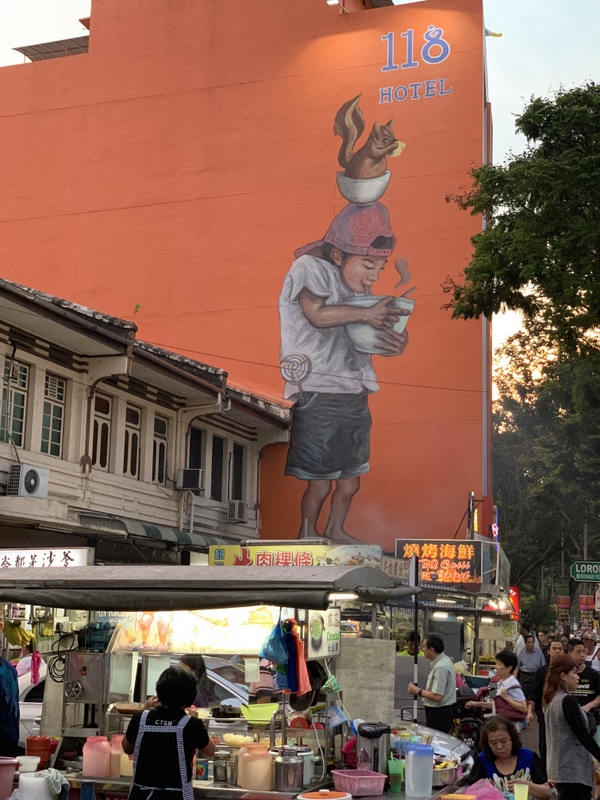
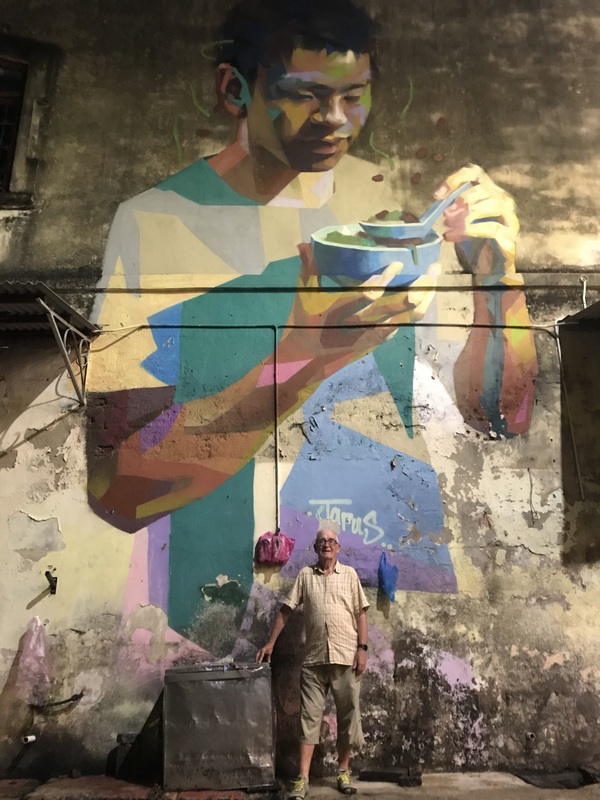
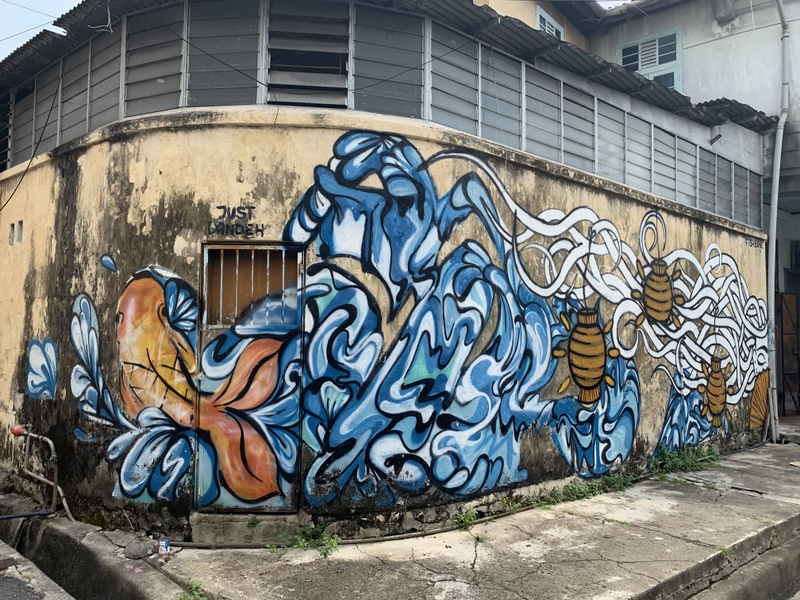
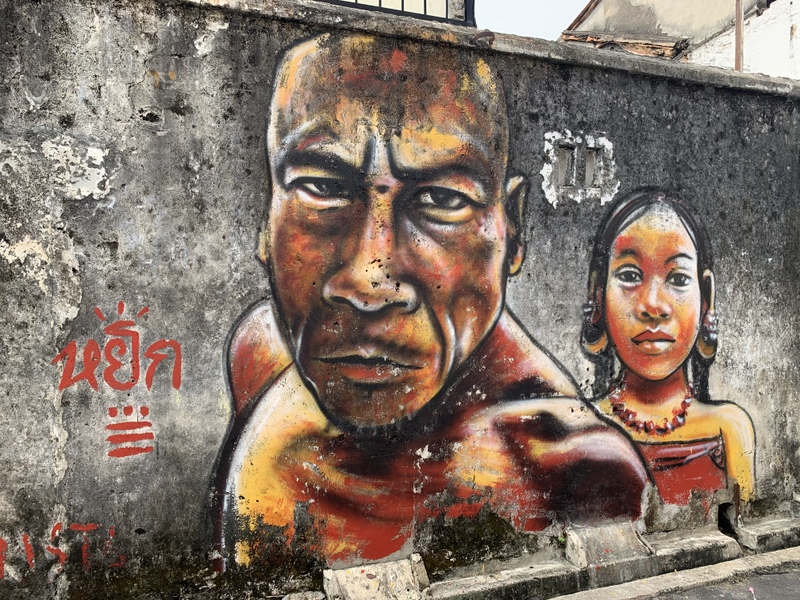
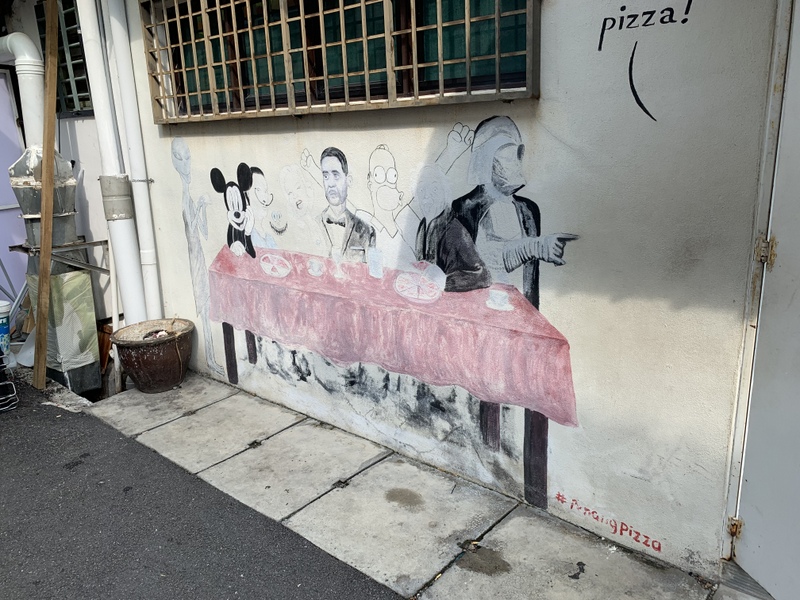
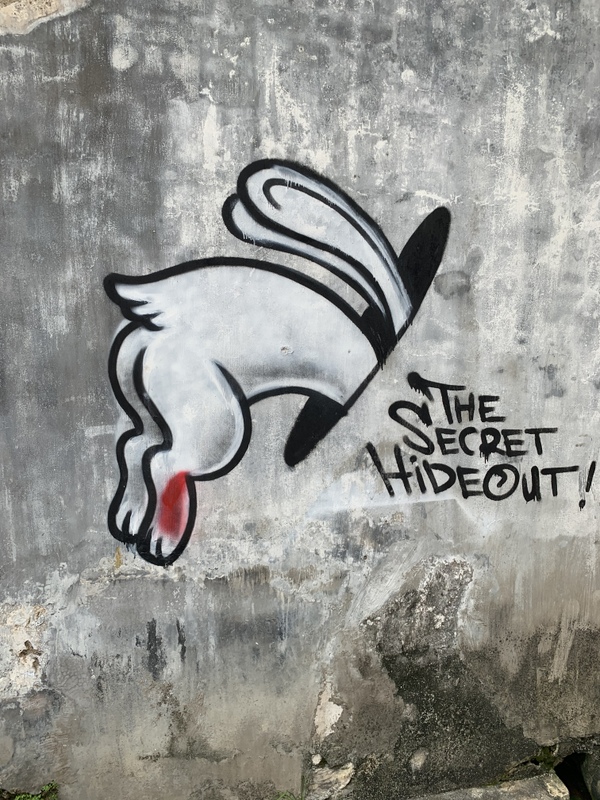
Before we had lunch, we visited some of the murals of Muar. In recent years there has been a proliferation of mural paintings in Malaysia, starting with the iconic ones of Zacharevic in Penang. Sometimes (often?) of mediocre quality. Muar is teeming with murals, and although there are enough of the simple ones, often depicting cartoon characters, there are also many that have artistic value. Commissioned by the town council? They show aspects of traditional culture, heritage and nature. Here are a few.
This huge one shows, in the form of a a mural, many of the heritage buildings of Muar.
For reasons unknown to me, Muar has been officially named (since 2012 only!) the RoyalTown of Johor (that should be Johor Bahru, right?). Muar, the town of Murals, would be more appropriate. Murals are really everywhere.
Time for lunch. We went to a famous Mee Bandung restaurant in the town center.
The food was nice. There was a photo collage of illustrious visitors on the wall, for example the Sultan of Johor 😉 .
Of course we had also our pictures taken. Maybe we will end up on the wall as well?
After our lunch we continued looking for more murals. I was surprised to find this collection of art works in one of the lorongs (back alleys). Not graffiti-based, but almost like in an art museum, complete with description tags!
I was pleasantly surprised by the general atmosphere of Muar. There are lots of nice facades, often painted in bright colors. Looking at the dates on several gables, the city must have had its heyday in the 1920s .
It is a very clean city, some lorongs are decorated with ornamental plants, the five-foot ways are well-kept, and everywhere you find rubbish bins.
Our homestay was modern and comfortable, three bedrooms with aircon and fans. In a nearby supermarket we bought some groceries and we took a rest.
In the evening we went out again to an open-air food court in the center of town, near the Muar river. Muar is the fourth-largest town of Johor, but it still has aspects of a fishing village. The food court had a very relaxed atmosphere. We had otak-otak, sata(r) and satay.
After our dinner we drove back to Tanjung Emas, where we walked around and took pictures. There were more people now, but not as many as I expected.
The next morning we went for breakfast to the cafe of Pak Inchik. I had Roti Pool, one of their specialities.
Starting our walk, we first had a look at the Muar High School. The building dates back to 1915.
We continued visiting more murals.
Of course there is more than only murals. Left the Old Dutch Houses, right the Nattukkottai Chettiars Temple, dedicated to Lord Murugan.
And I found one ruined colonial building. As my followers know, I have a fascination for those remains of past glory. I would have liked to explore inside (like I did and do in Taiping), but the building was thoroughly fenced.
We had coffee in a famous Muar cafe, named Kopi 434.
Finally a last round of murals. I always like the 3D-ones. The last one is also a bit 3D, a relief created against the wall. Beautiful
Asam Pedas (Sour and Spicy Fish) is a speciality of the region, there are many eateries serving it, but not for dinner. We found one for lunch, Pak Ndak, again beside the Muar river. They also served fresh oysters and we could not resist the temptation 😉 .
We had seen enough murals. Fahmi and Paul had found on Google that Muar had an Art Gallery. We decided to have a look and found that it was not an art gallery but, according to their FB, a “new community concept”, There was a cafe and a shop where they sold objects made of rubber tree wood. I was intrigued by a wooden phone holder, shaped as a resonator, to amplify the sound of the phone. I bought one 😉
Back to our homestay for a rest. Dinner later at a Malay restaurant, not far from our homestay, as we were lazy to drive again into town. We had nasi goreng, fried squid and Thai salad.
The next morning we checked out and went to Pak Inchik again for breakfast. This time I had Lontong, delicious.
One last POI during this trip, outside Muar, the Beca Gergasi Muar, a giant tricycle. You may wonder who decided to create this object here, in the middle of nowhere.
Halfway on our way back, we stopped for lunch in Tampin (Negeri Sembilan). The Lomak Salai restaurant is really an experience, a kind of Malay style IKEA restaurant.
You just take a trolley, and collect the dishes you want. A place to keep in mind for a next visit.
It was an interesting trip, well organised by Fahmi and Paul. Fahmi is a vlogger with his own YouTube Channel . He created a vlog about this trip, have a look.
Let me start with a confession: I was not aware that Malaysia had a National Art Gallery. My friend George mentioned this museum to me and asked me if I would like to come with him and visit it. The museum is located next to the Istana Budaya (National Theatre), and can be reached by public transport. We decided to meet at the Hospital Kuala Lumpur MRT station, from where the museum is within walking distance.
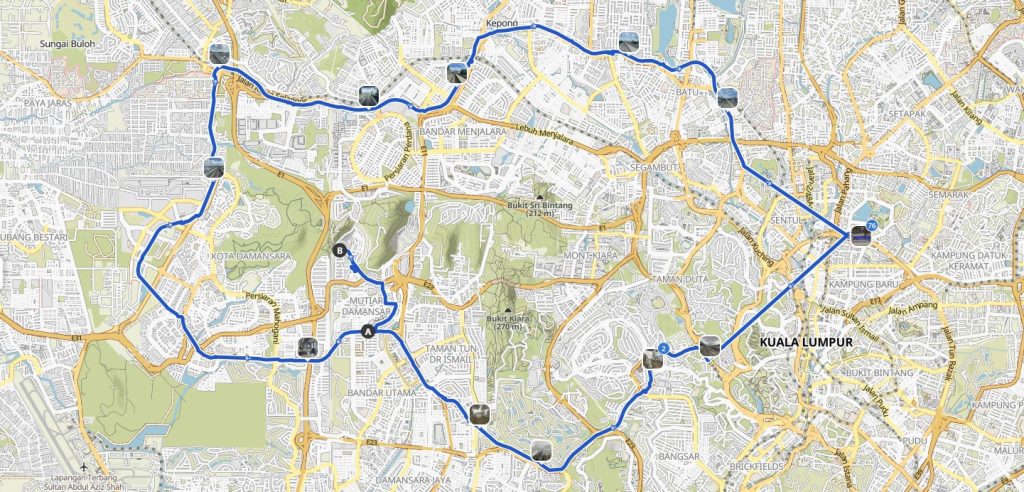
George is quite expert about KL public transport and advised me to use two MRT lines. First the Kajang line from Damansara Mutiara to Kwasa Damansara and transfer there to the Putrajaya line until the Hospital KL station. On my way back continue the Putrajaya line until the TRX station and transfer there to the Kajang line. A circuitous route, but fun. Altogether 34 stations! I used the Komoot app on my phone to record the trip. Komoot adds pictures taken during the trip to the report, just click on the map below to view them. Part of the MRT is underground, no GPS, that’s why you see two straight lines at the right.
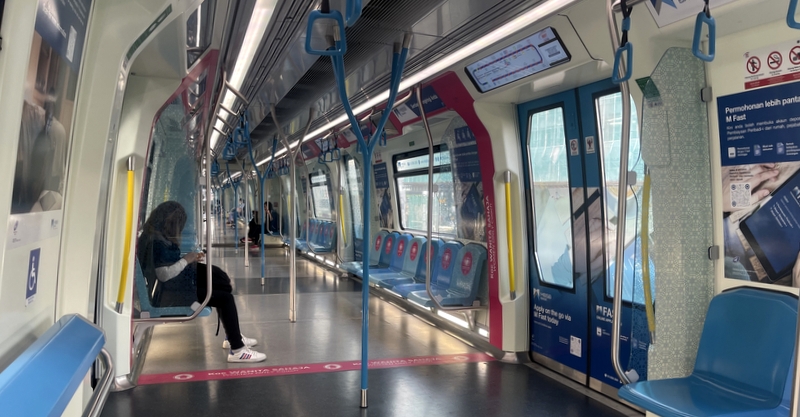
The MRT to Kwasa Damansara was almost empty, but the Putrajaya line was slowly filling up in Sri Damansara and Kepong. Notice the red line, it marks where the women’s coach starts. The seats there also have red markers.
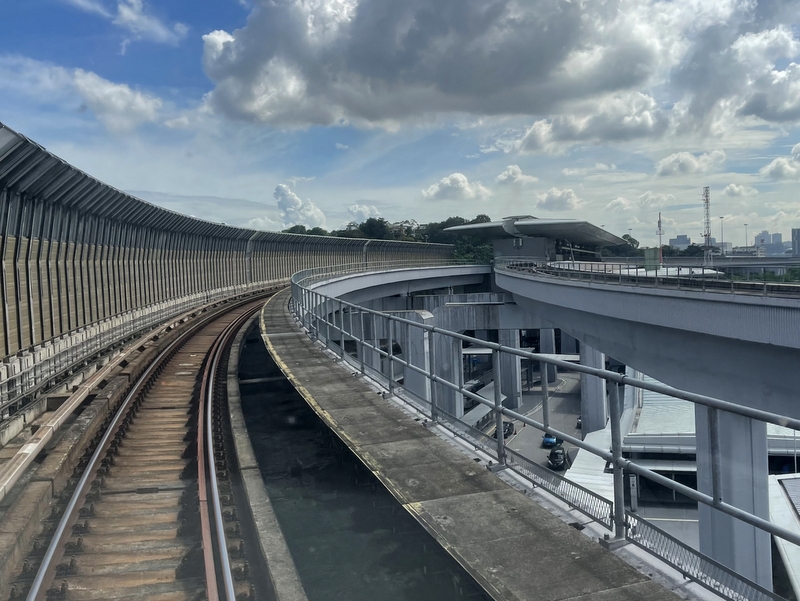
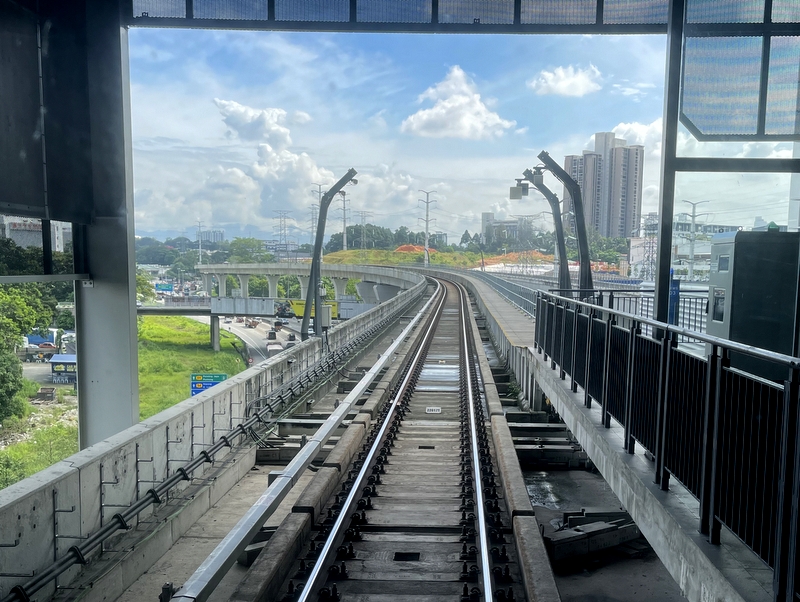
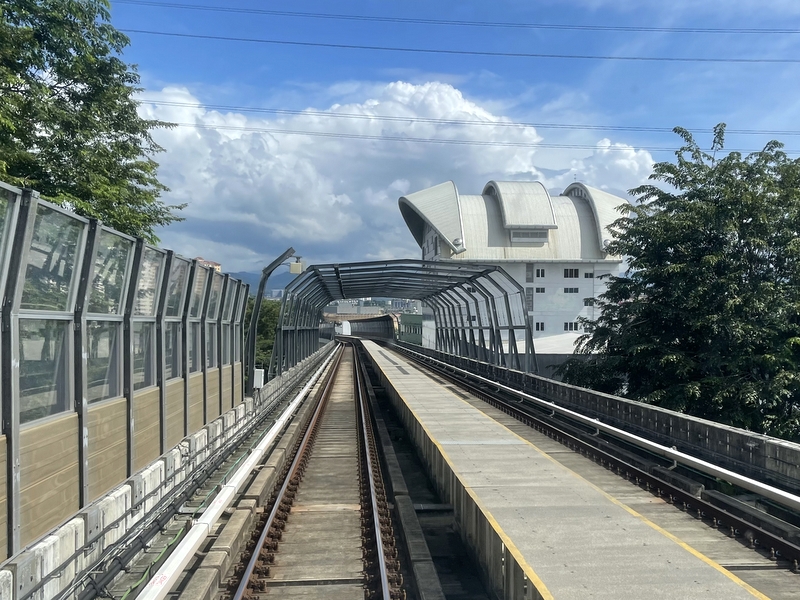
I had a seat at the front of the coach, from where I could take pictures. The MRT lines are state of the art and make traveling really easy.
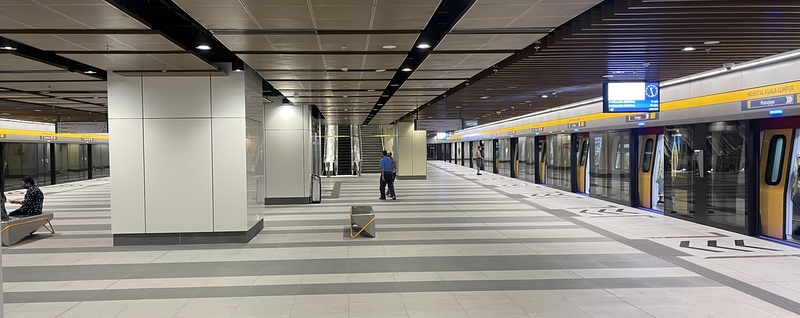
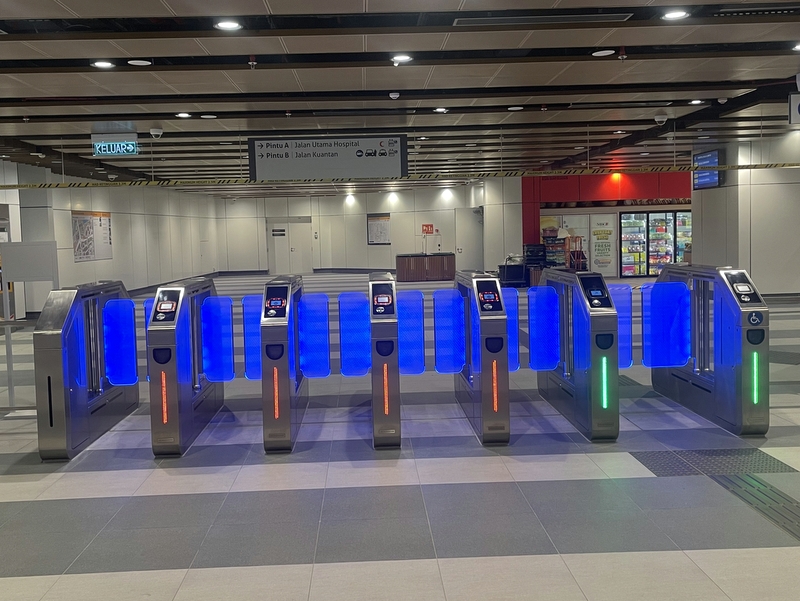
The Hospital KL station is huge and has an underground passage to the General Hospital. But I took the Jalan Kuantan exit to meet George.
At first we missed each other, I had to call him, as he was waiting for me inside the station while I went out already.
This is the Istana Budaya, opened in 1999, but now already closed three years for renovation. Interesting architecture, many years ago I have attended a concert there.
It was almost noon, we decided to have lunch first and found a few stalls nearby where we had nasi lemak and coffee.
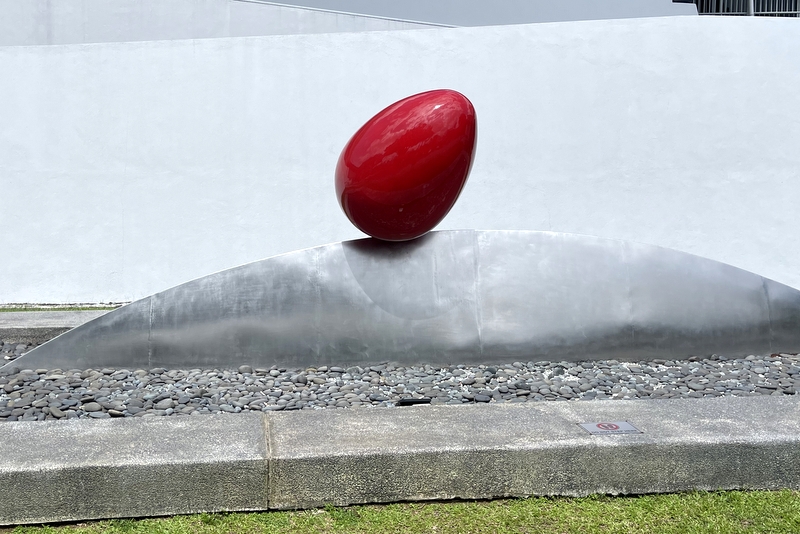
Walking to the museum entrance, we passed already a few (modern) artworks.
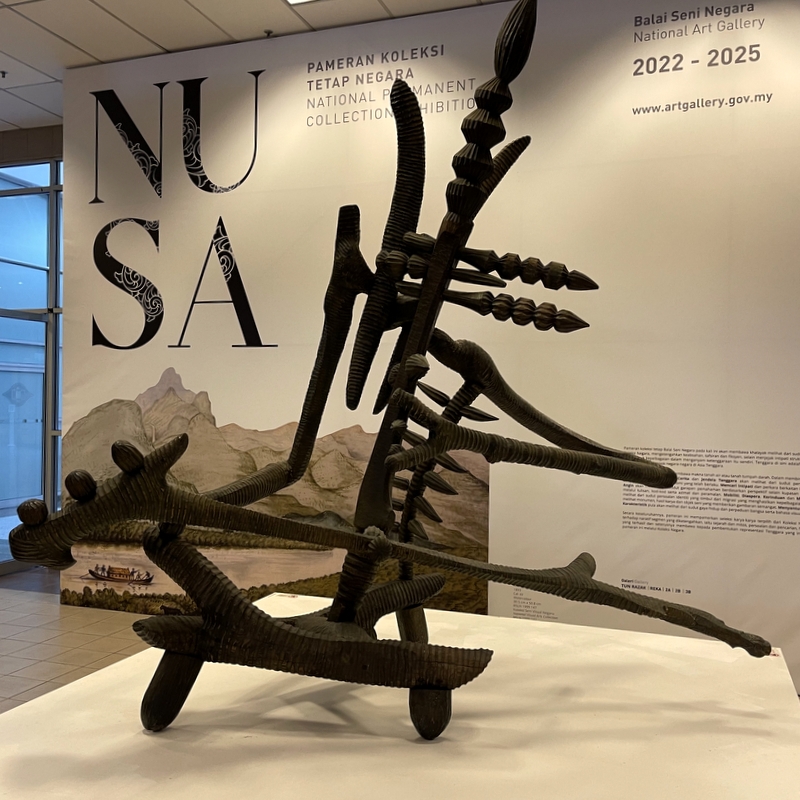
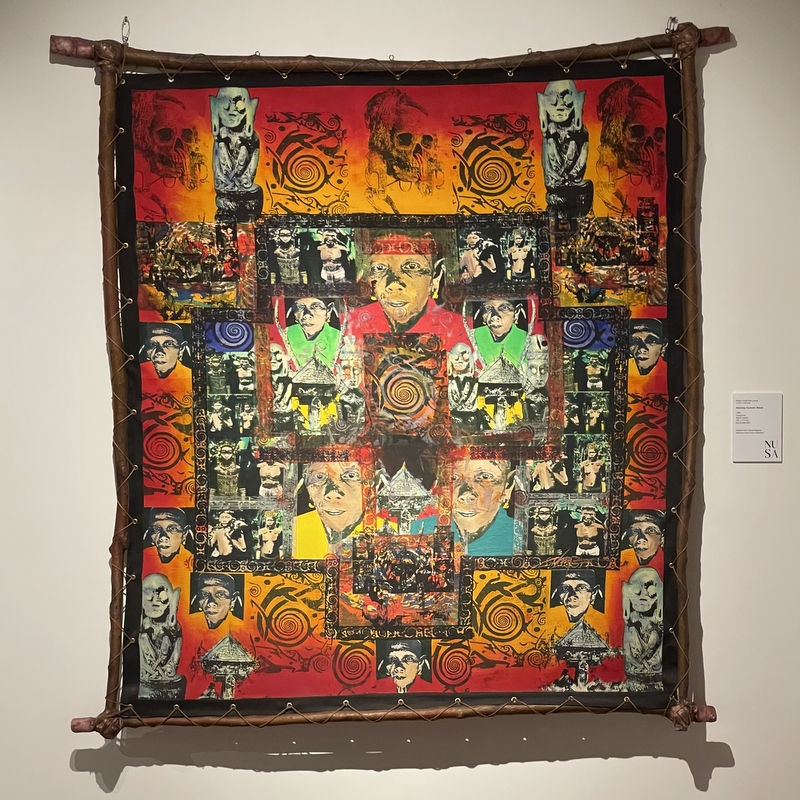
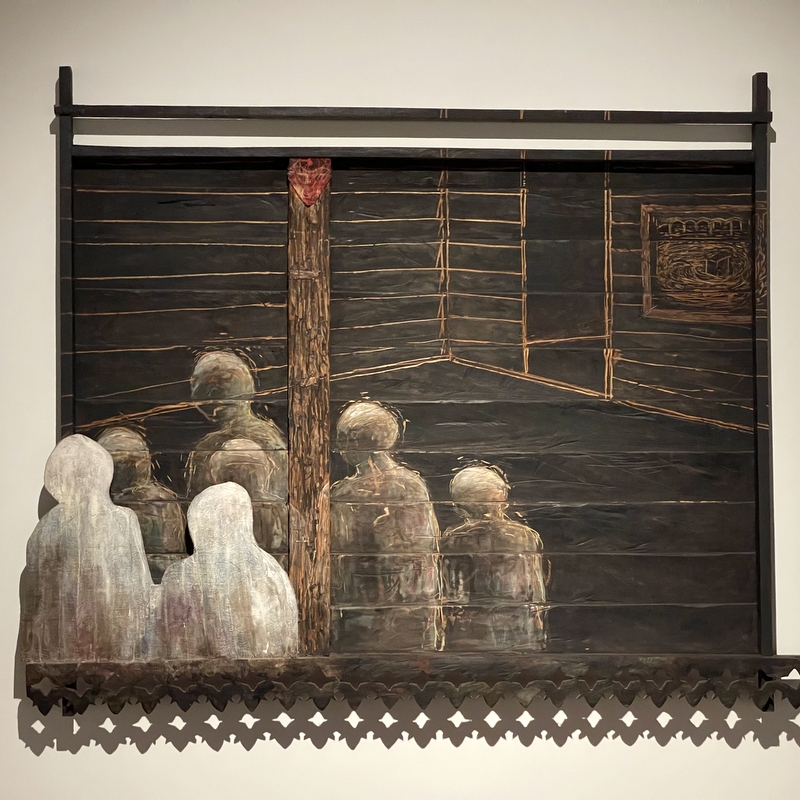
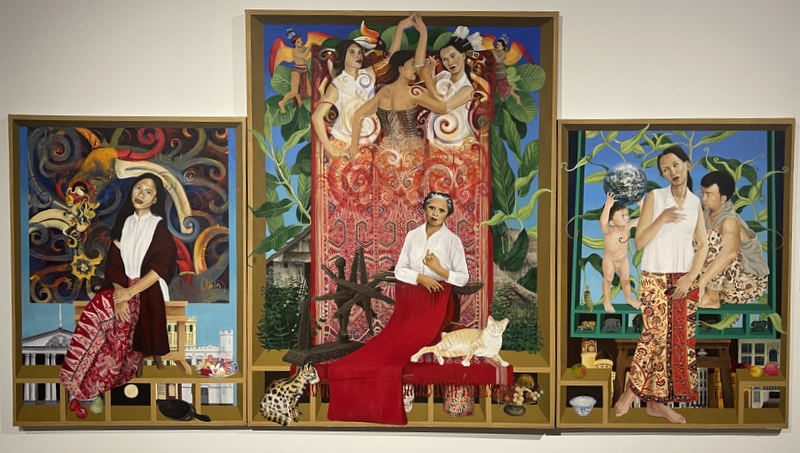
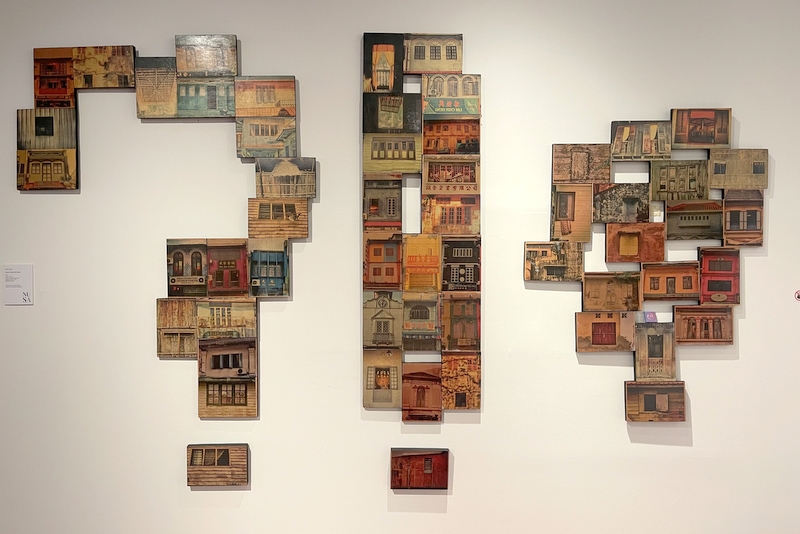
Entrance to the museum is free, you have to register in a modern way, via a QR code. From 2022-2025 the museum will show part of its permanent collection, the exhibition is called NUSA (motherland in English). There is an informative online catalog available (select the NUSA icon, loading will take some time).
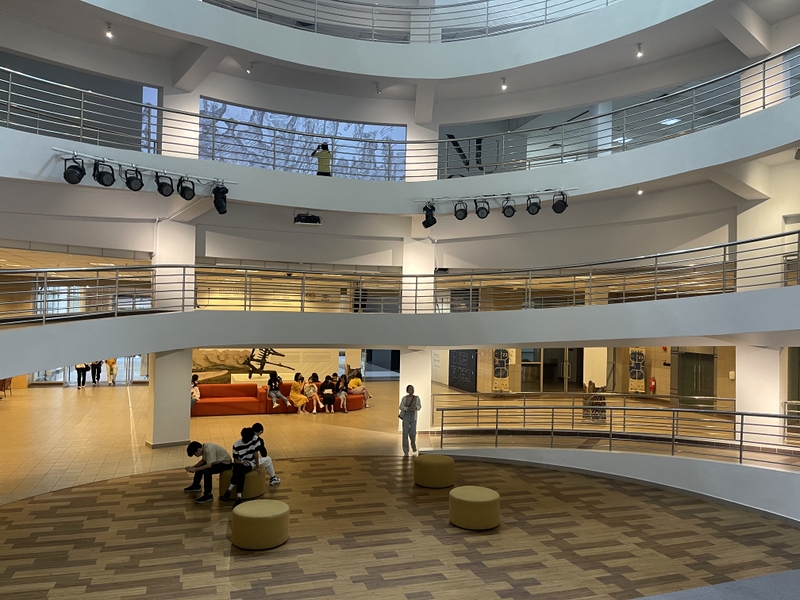
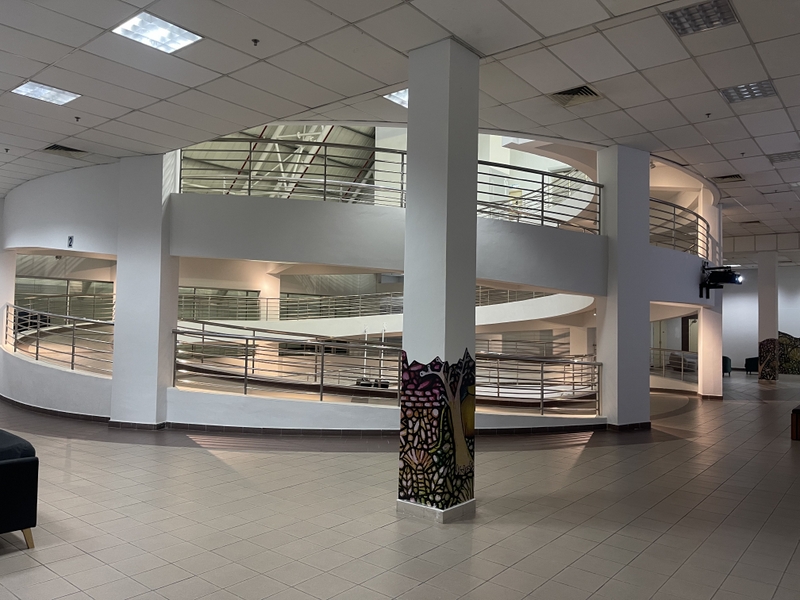
The National Art Gallery was created in 1958, one year after the Independence of Malaysia. The present building was designed by a Malaysian architect and opened in 1998. The interior is vaguely reminiscent of the iconic Guggenheim Museum in New York, but the spiral ramp, although visually attractive, is not functional here.
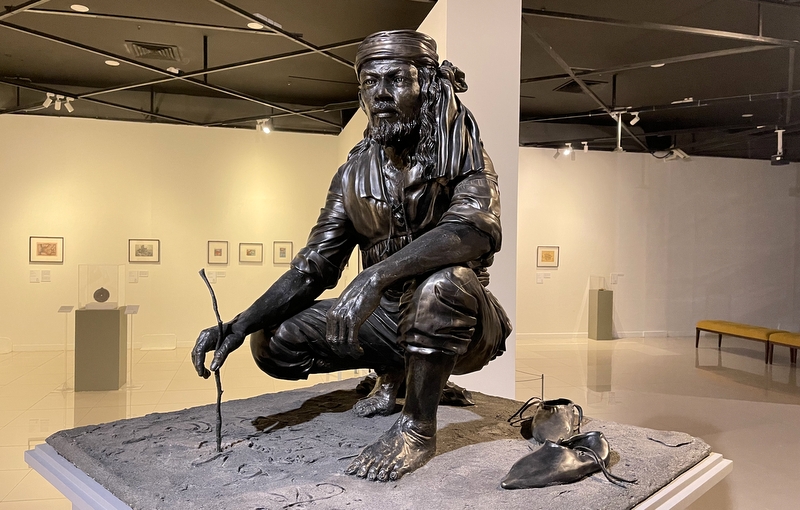
First we visited the Enrique de Malacca Memorial Project on the ground floor. Enrique was a Malay boy, acquired in Melaka as a slave by Magellan, brought back to Europe, accompanied Magellan on his famous circumnavigation of the world and disappeared without leaving any trace after Magellan was killed in the Philippines, during a battle. Assuming that Enrique, now ~ 25 year old, had gone back to Melaka, he would have been the first human who had personally travelled around the world. Worthy of inclusion in the Guinness book of records 😉 . I have condensed the story a lot .
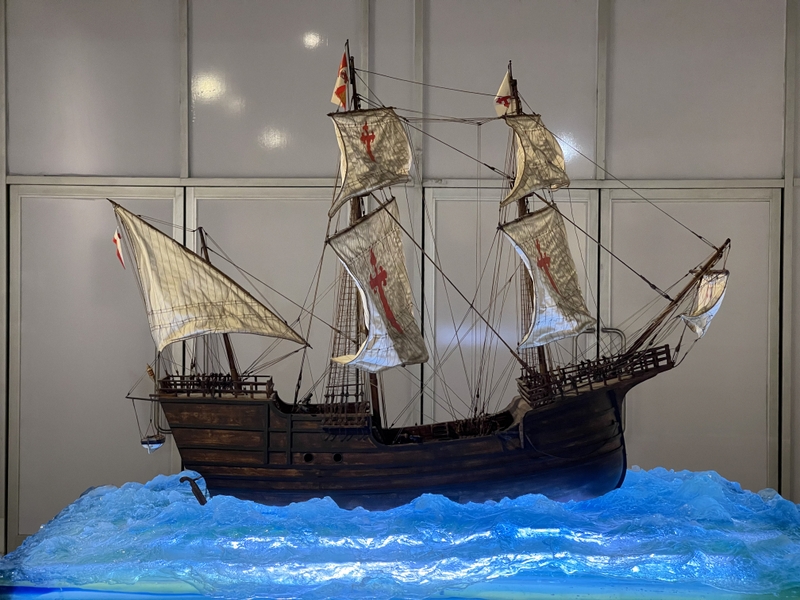
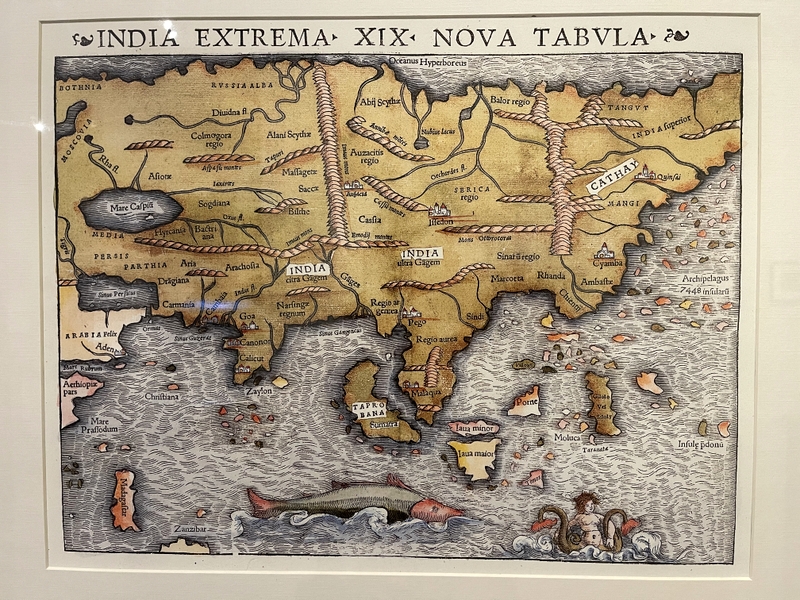
The project belongs to the category installation art. It contains copies of documents and maps, a model of a ship, a video and much more. Here is a statue of Enrique made by Ahmad Fuad Osman, the creator of the memorial project.
A model of a ship, similar to the ships in Magellan’s fleet and a a map of the world as it was known in those days.
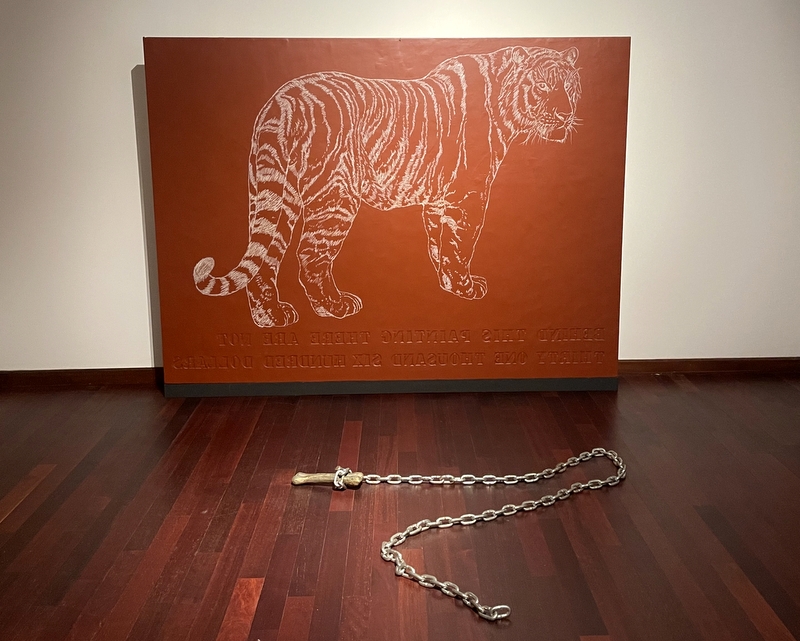
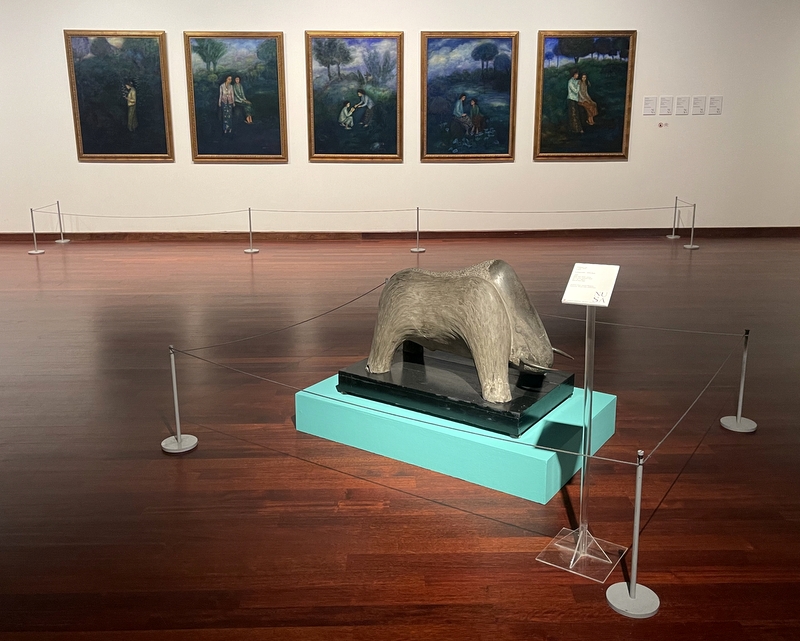
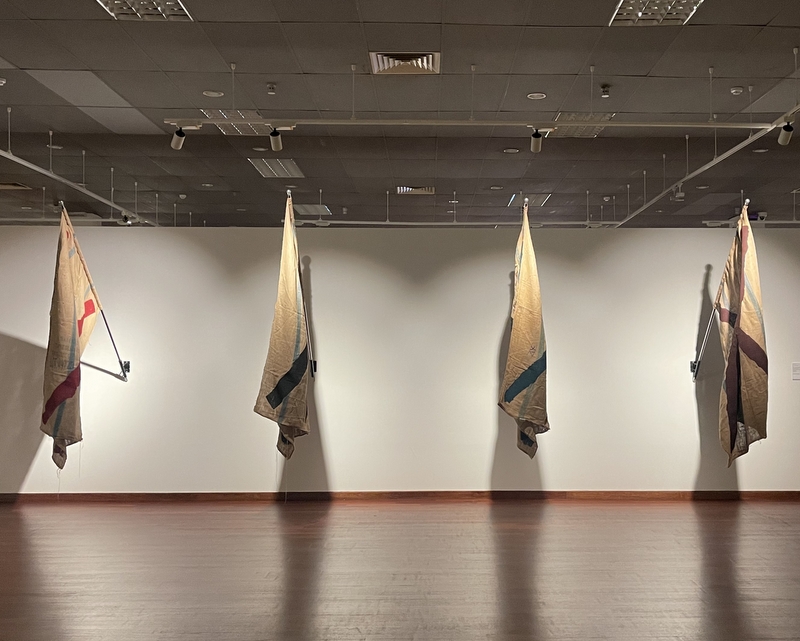
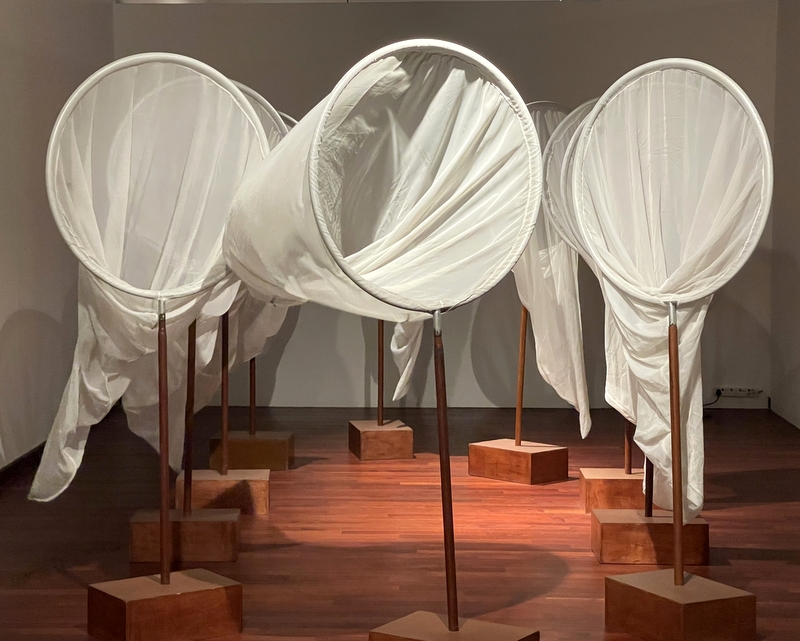
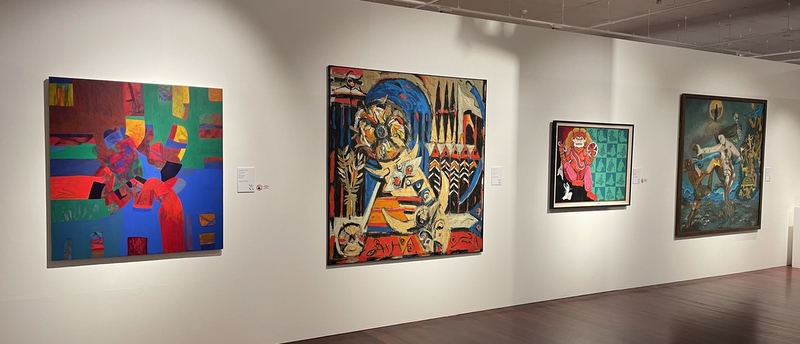
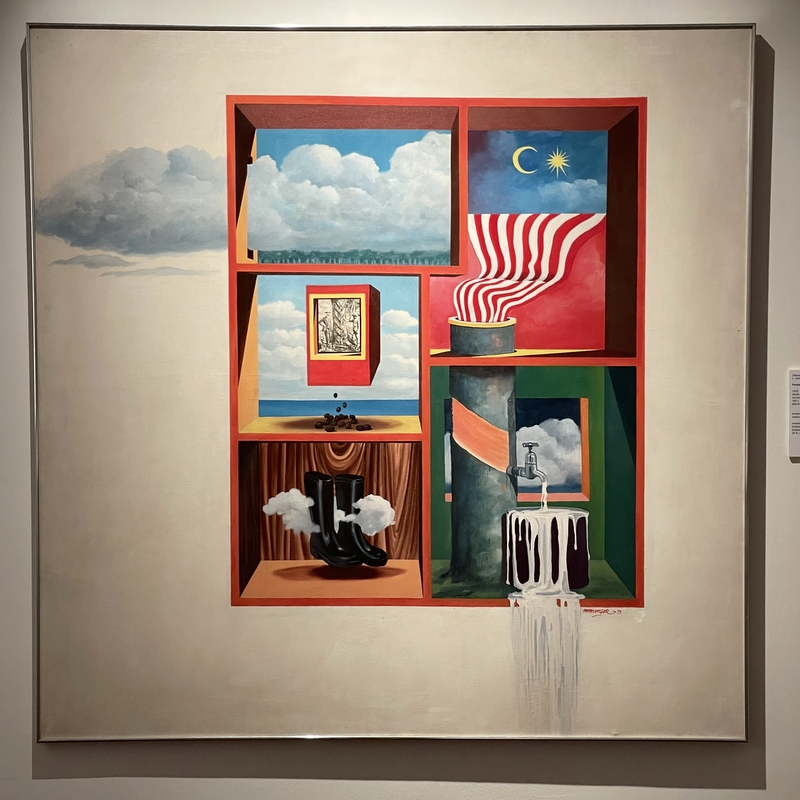
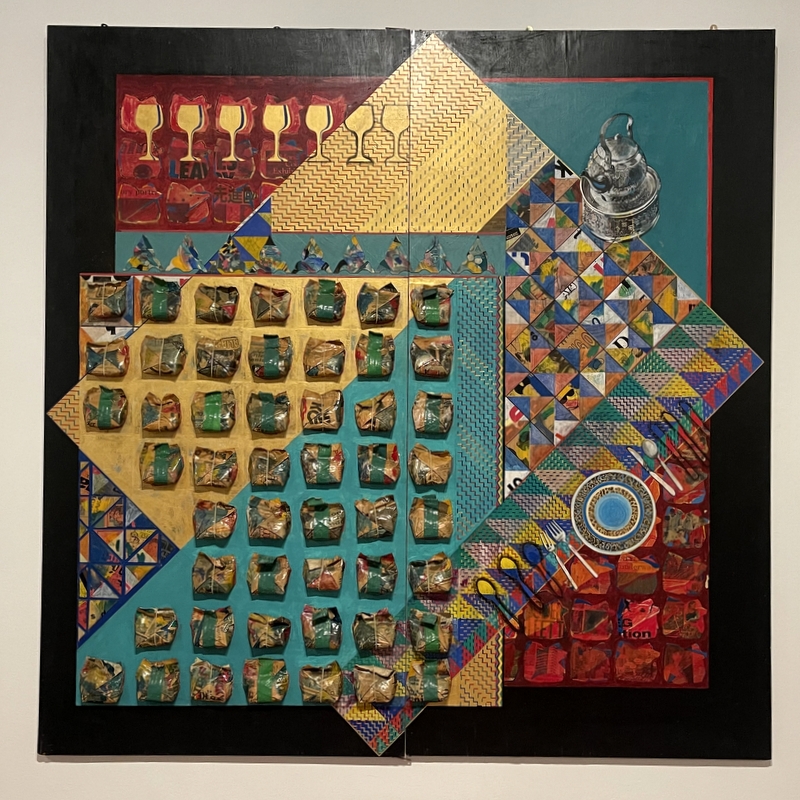
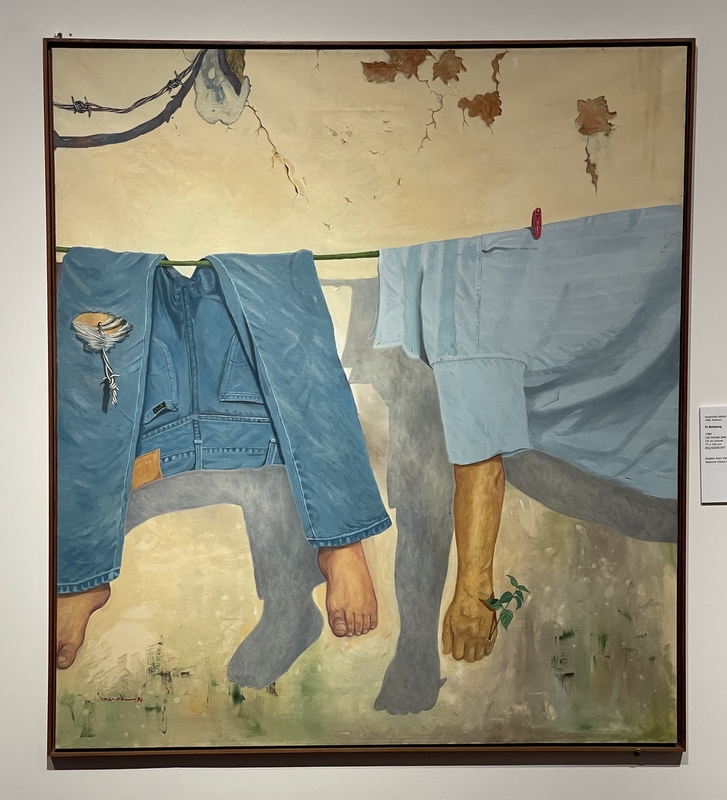
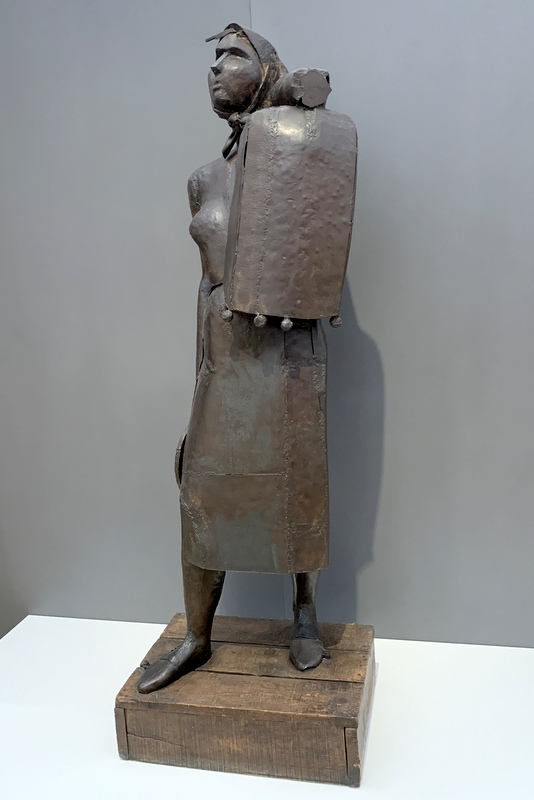
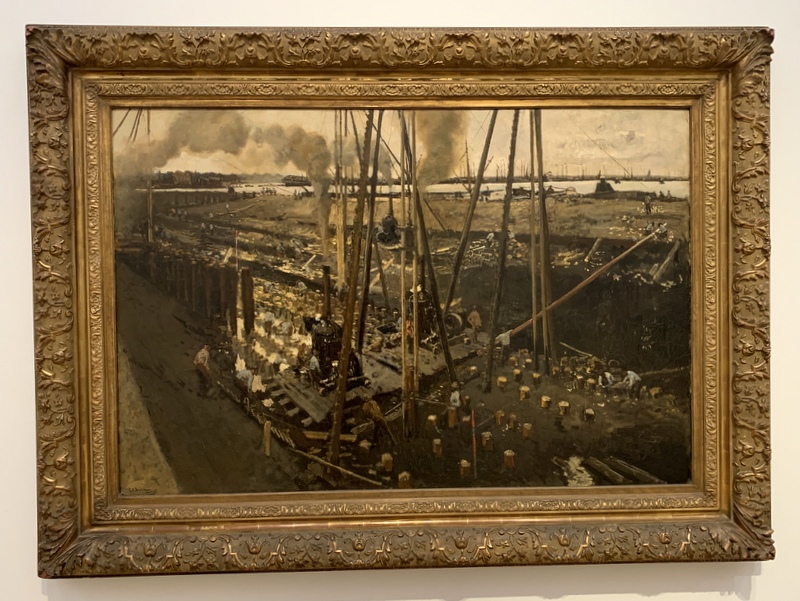
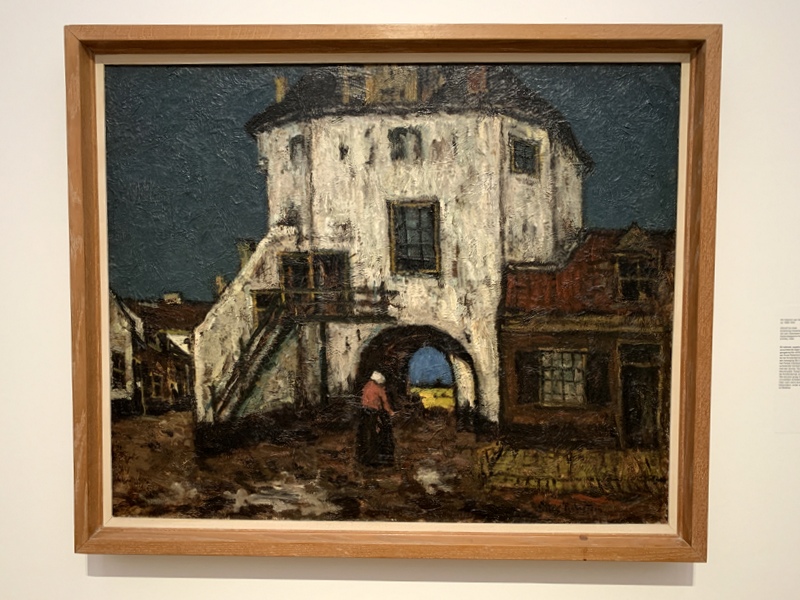
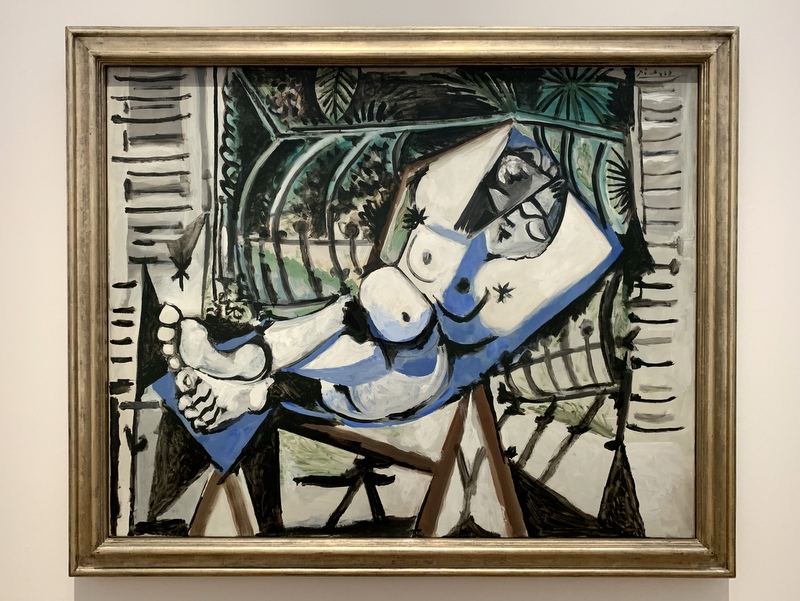
For George it was the main reason to visit the museum. I also stayed for a while, but then started to explore the other exhibition halls. I didn’t expect too much, but it became a pleasant surprise. A vibrant collection, full of contrasts, mostly work of local artists. A large variety of styles. The following is a personal selection of the artworks that appealed to me.
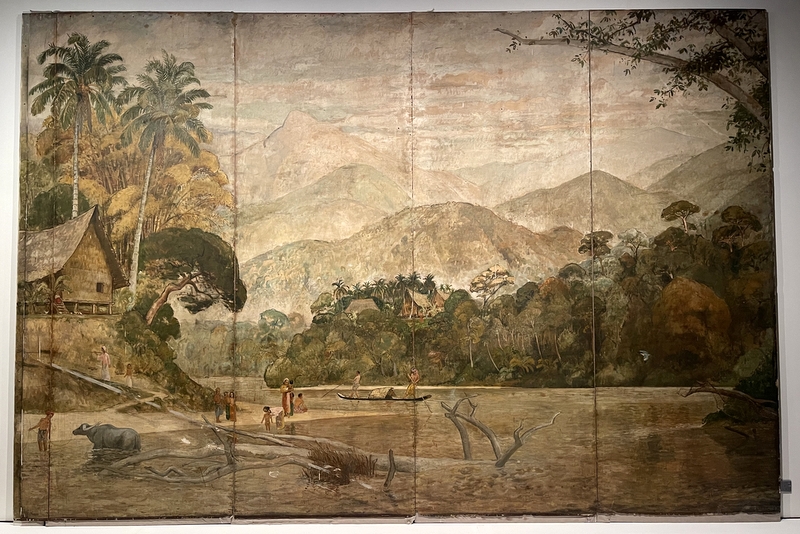
Traditional paintings.
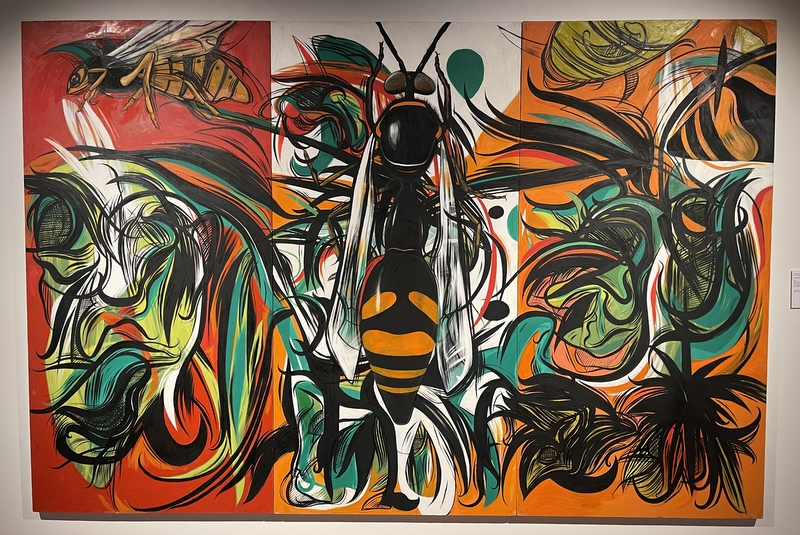
Modern ones.
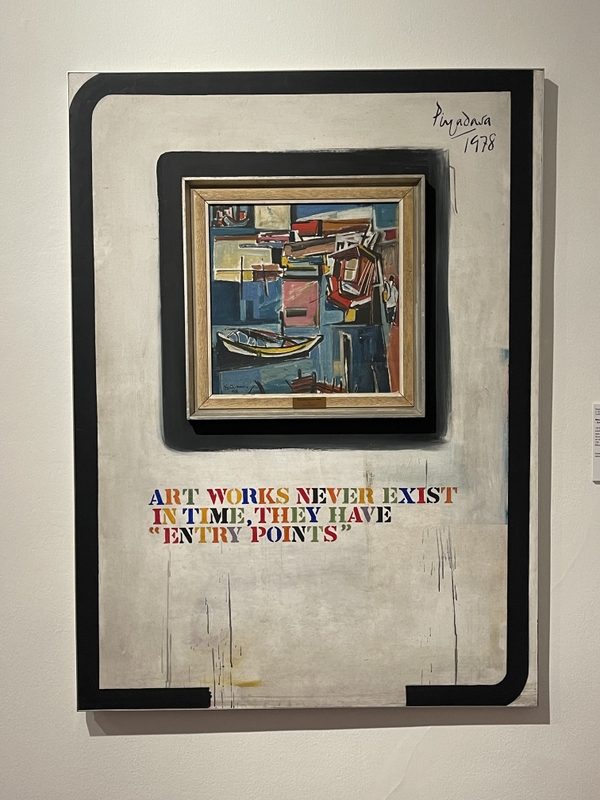
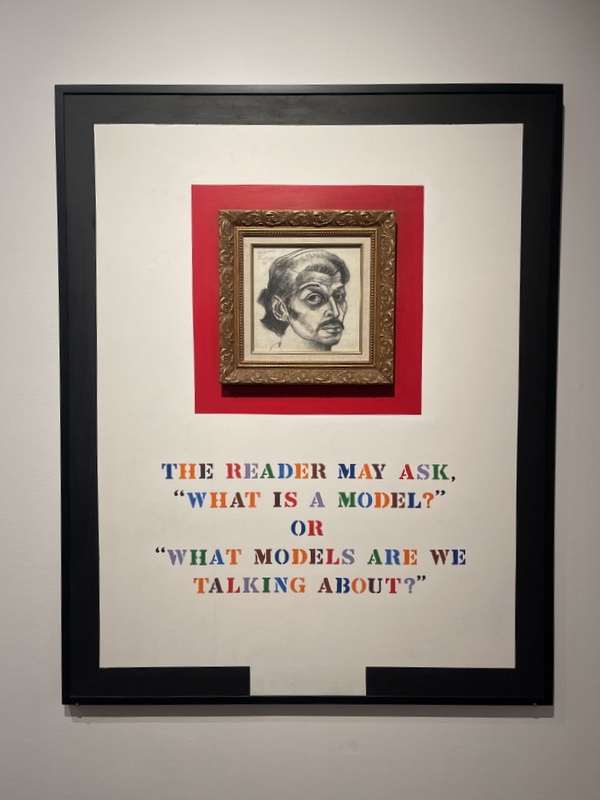
Using language.
Contrasts.
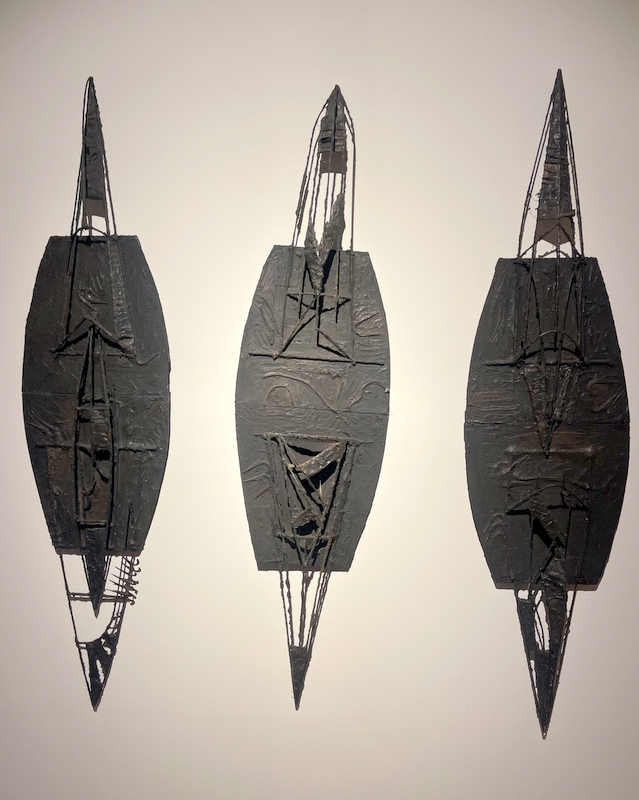
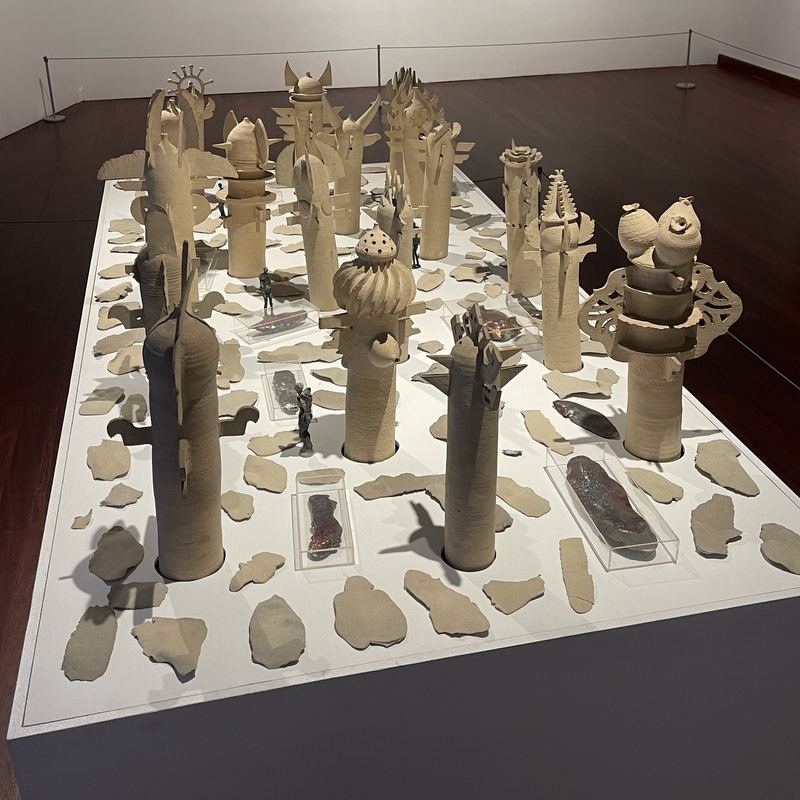
Also many sculptures.
It was really a pleasure to walk around. I kept taking pictures.
Here is a collection of paintings with their date of creation.
197519911994199519962009
Some artworks are huge.
Never boring.
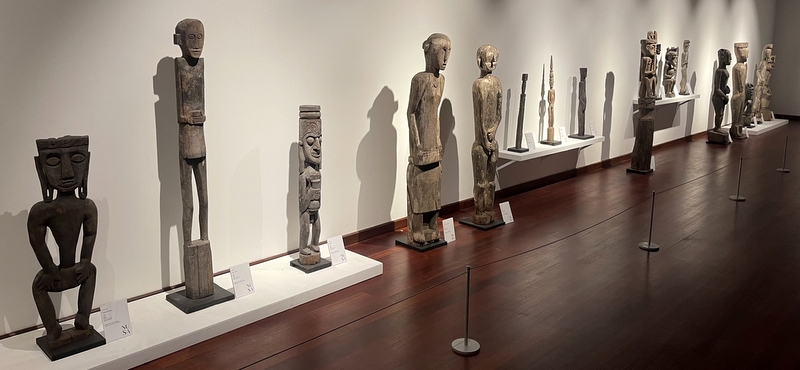
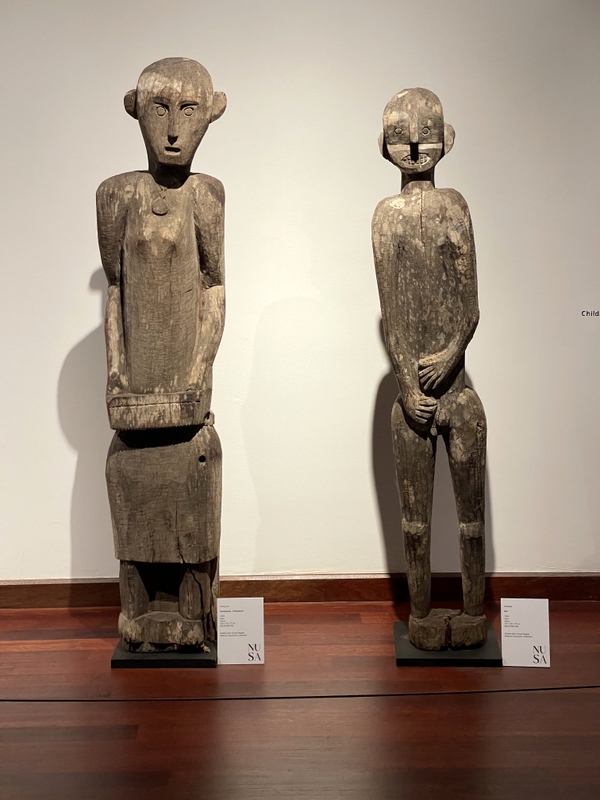
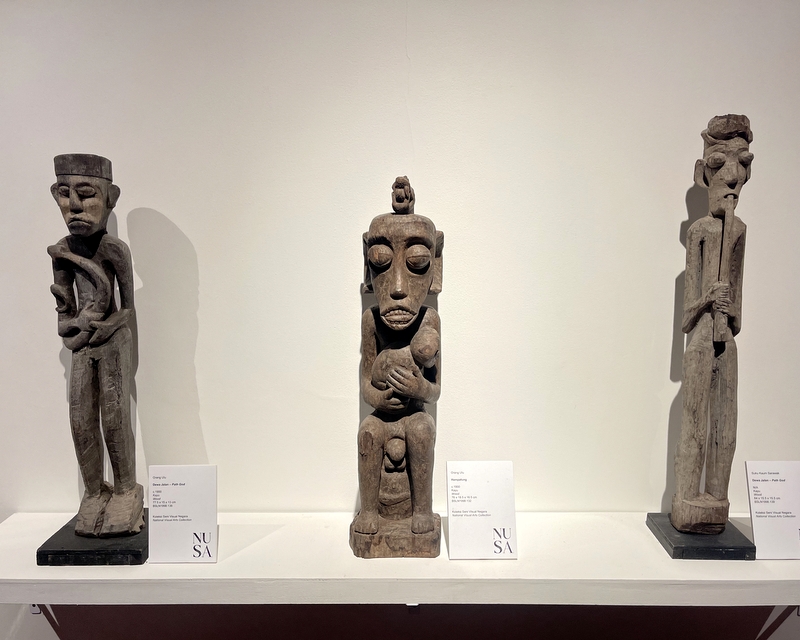
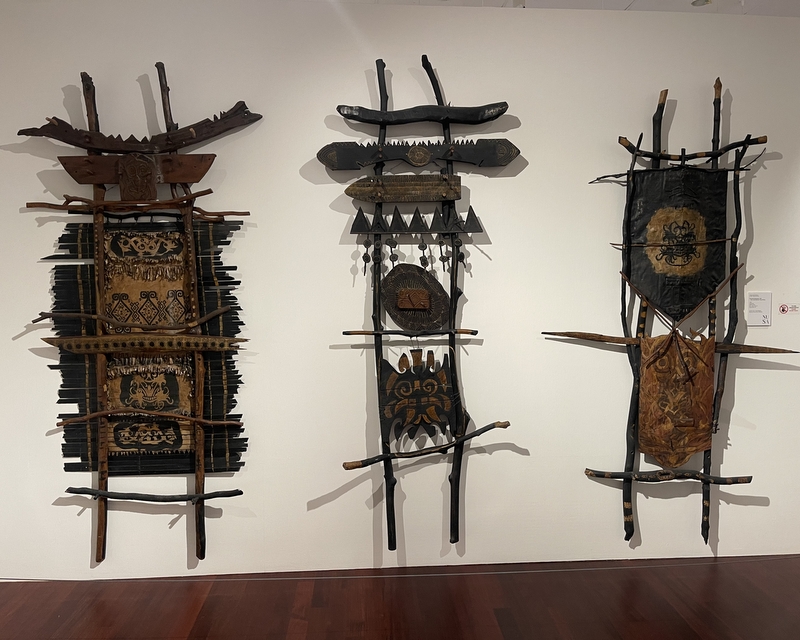
Interesting collection of art from Sarawak and Sabah
`
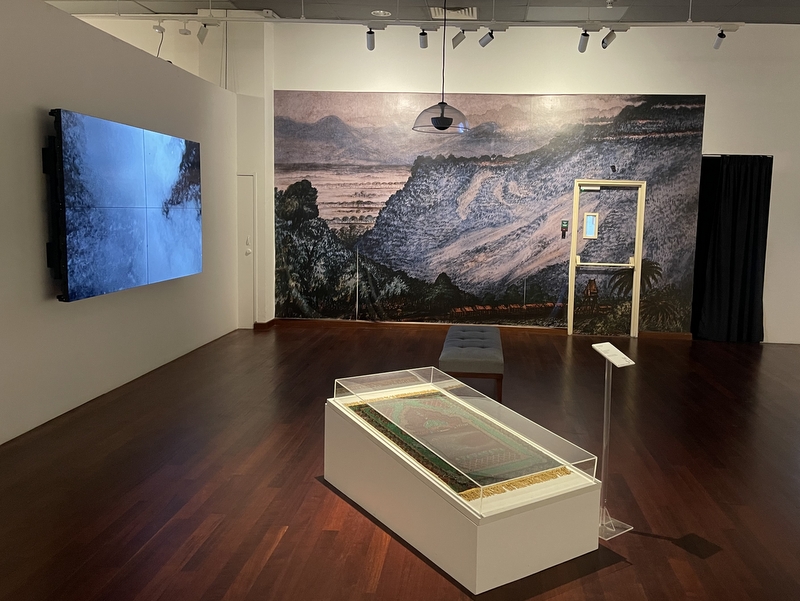
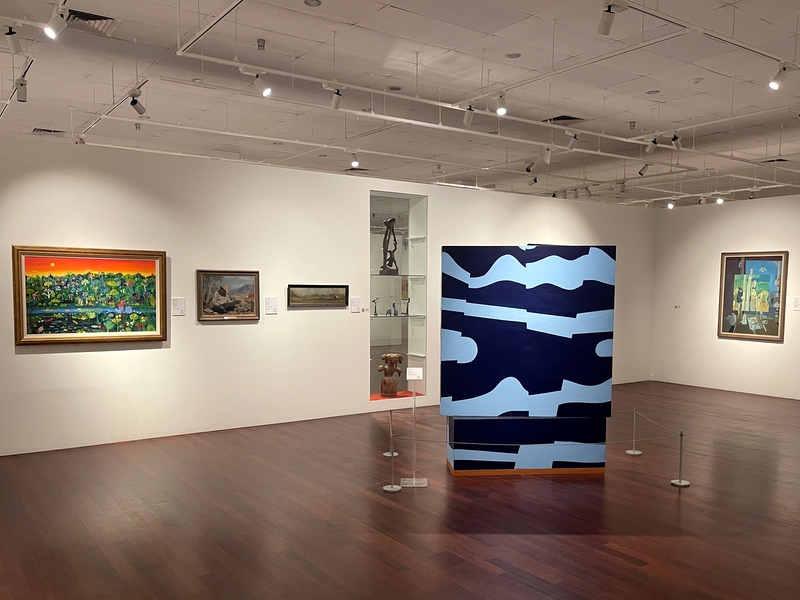
The museum uses the modern approach of combining different art forms in a hall
Another big painting, (208 x 460 cm) The Soul Under Midnight (1996) by Tan Chin Khuan .
On the top floor there was an exhibition of “Art and Gastronomy”
When we left the museum, the weather had changed, it would start to rain soon.
Left the National Art Gallery, right another photo of the Istana Budaya. Nice contrast with the dark sky.
Heavy rain on my way back.
A very interesting outing. Will come back to the museum for another visit.
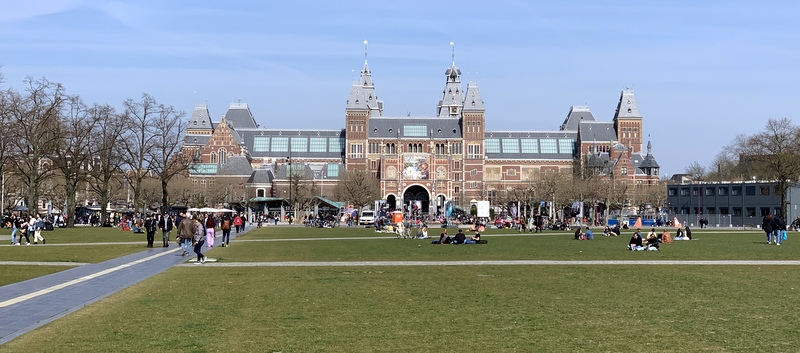
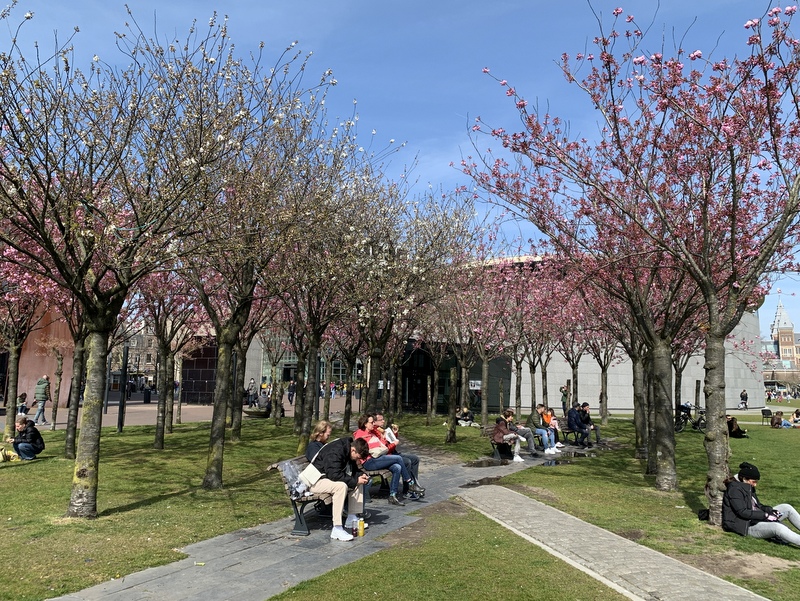
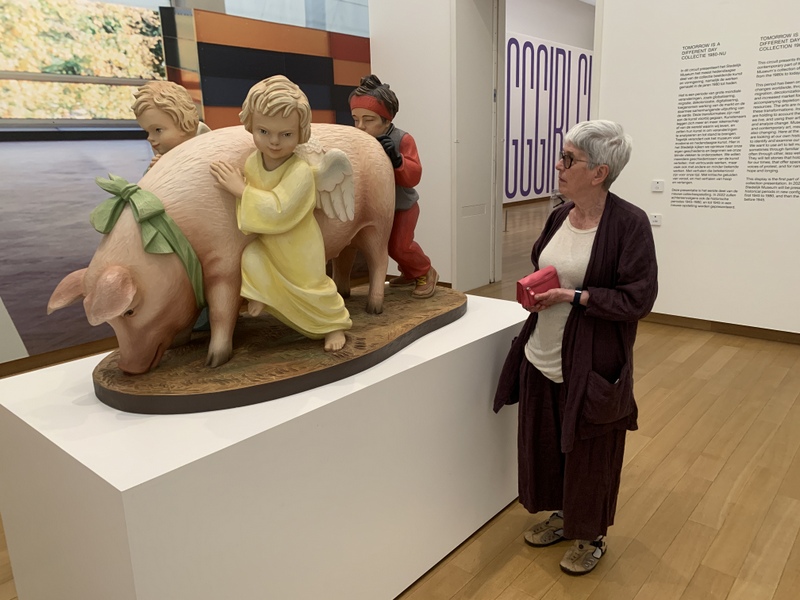
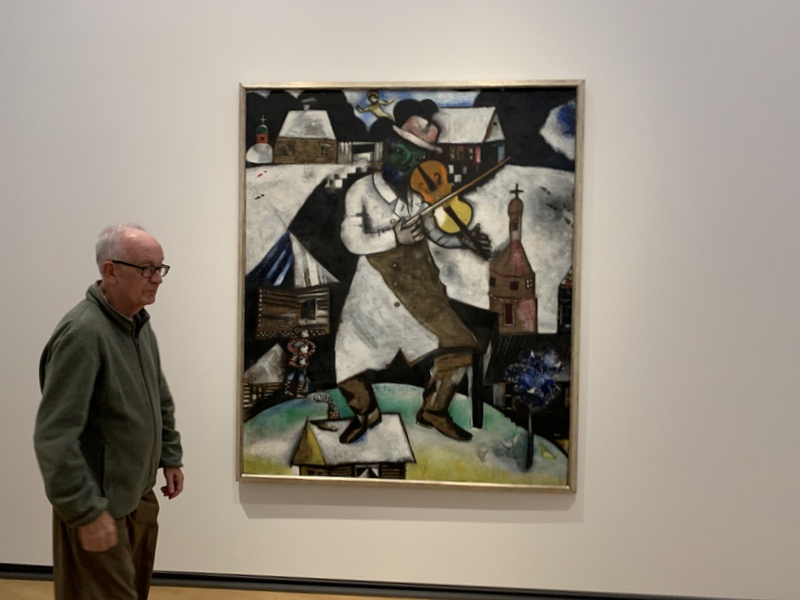
The Stedelijk Museum in Amsterdam is one of my favourite art museums. I visited it on a sunny, but cold Monday morning. It is located on the Museum square, with two other famous museums, the Van Gogh museum and the Rijksmuseum (picture).
The New Wing of the Stedelijk (2012), nicknamed the Badkuip (Bathtub).
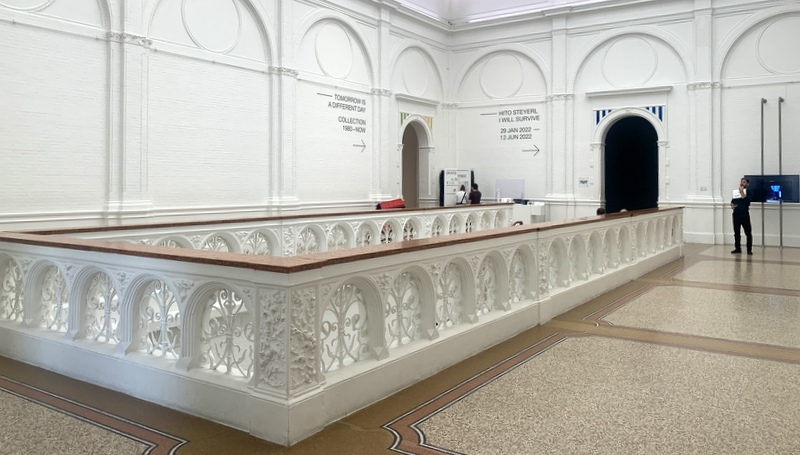
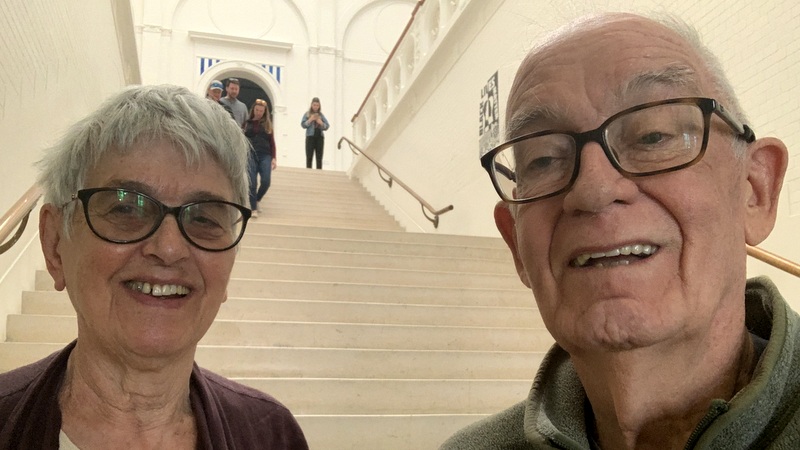
I started with the old building, walking up the monumental stairs to the mail hall, which was barren and very white.
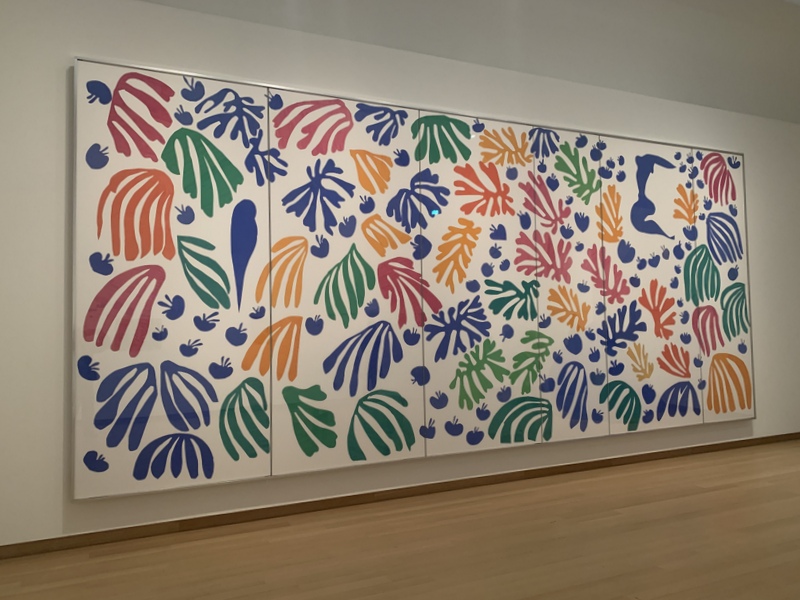
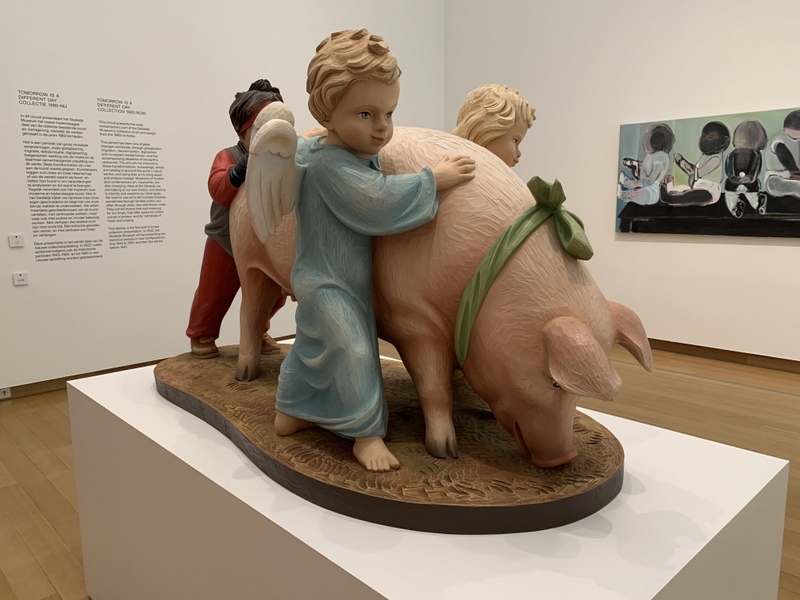
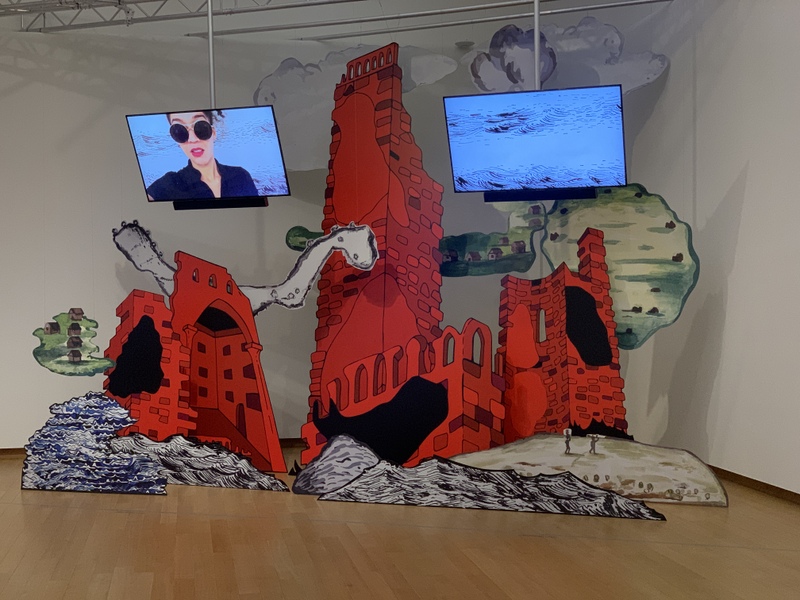
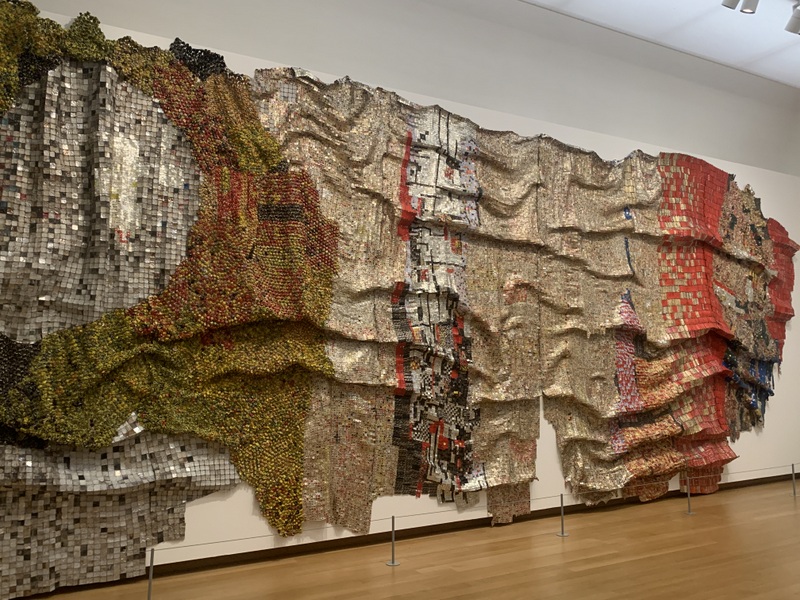
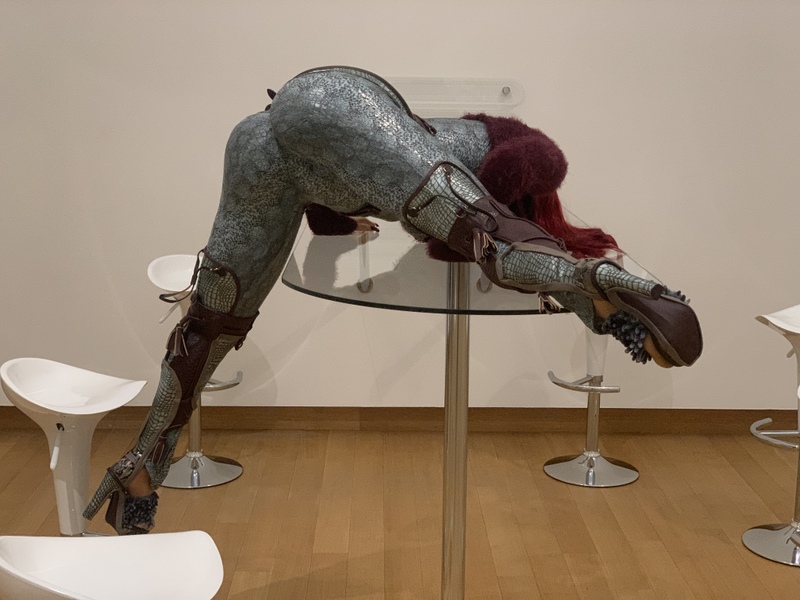
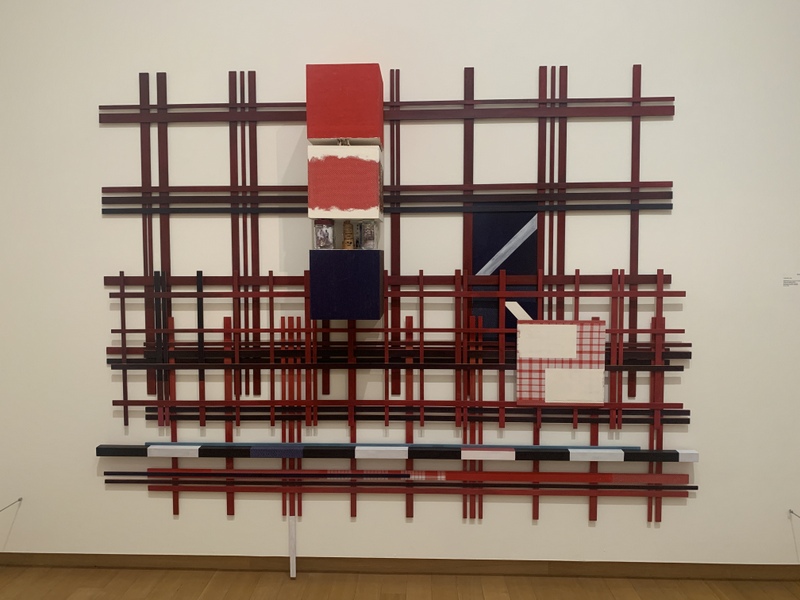
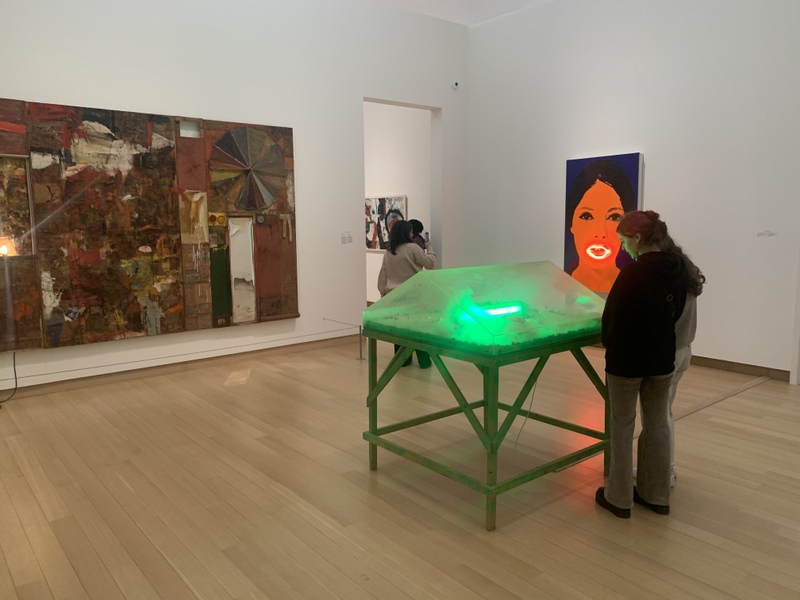
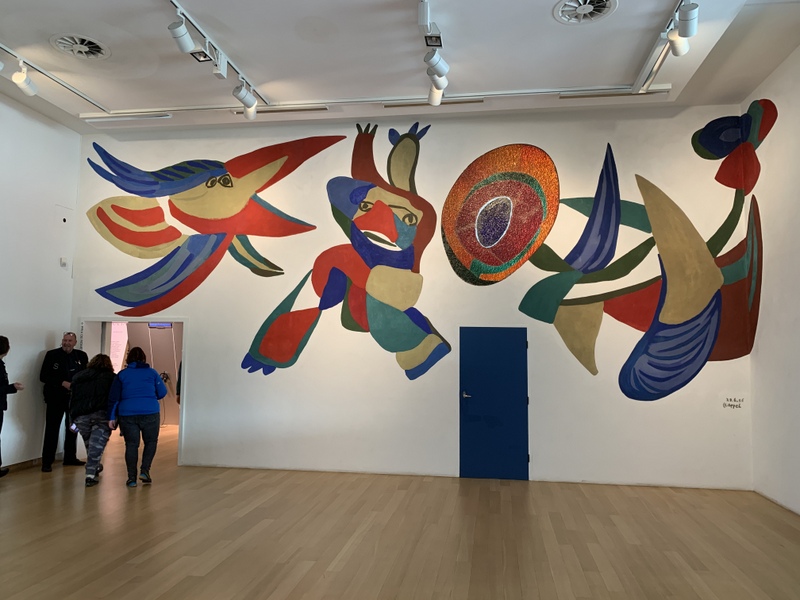
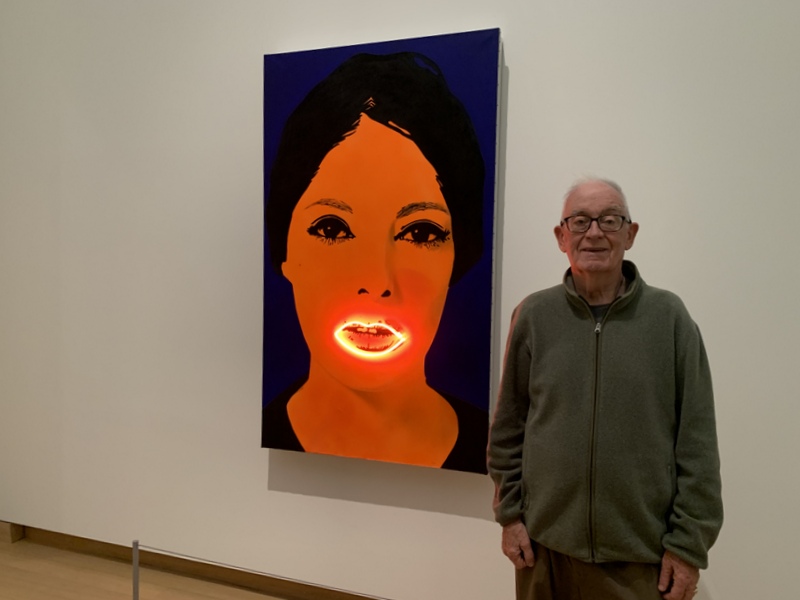
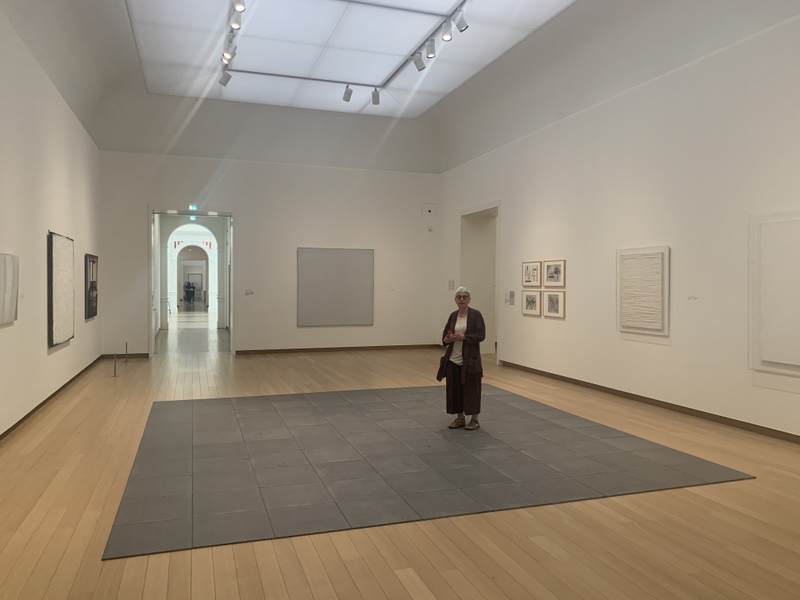
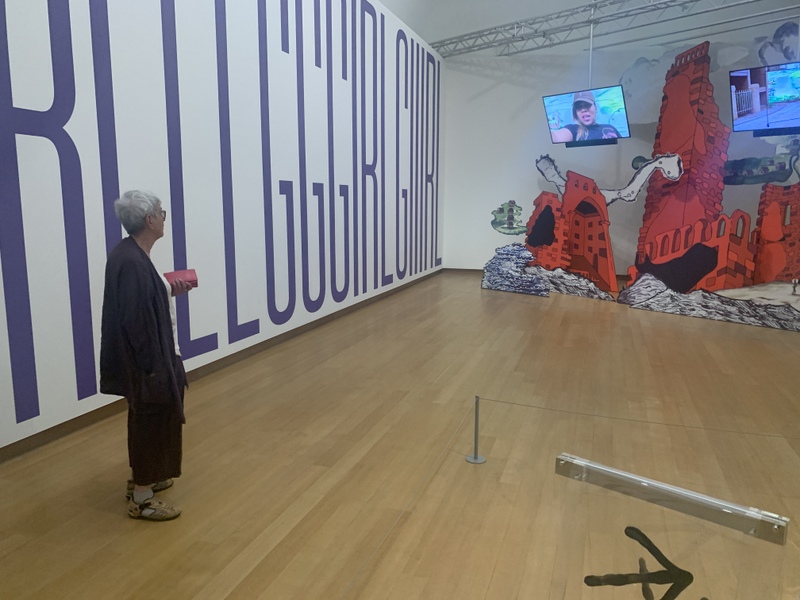
The old building houses the “collection 1980-now”, with the exception of the huge Parakeet and the Mermaid (1952) by Matisse, because this huge work of art needs a big hall. I took a few pictures, but most of the modern works didn’t really impress me. A sign that I am getting old?
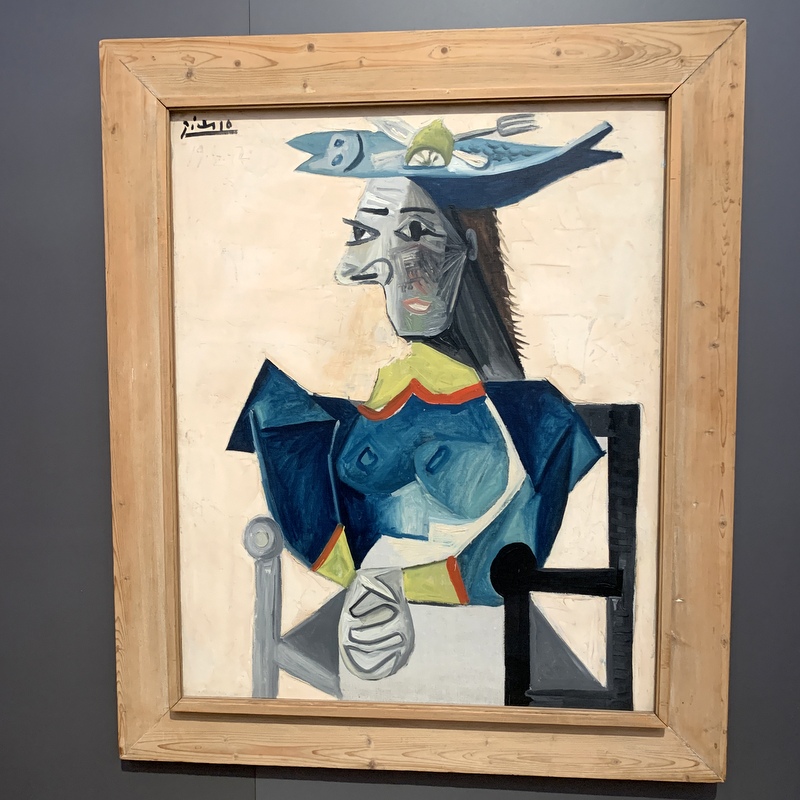
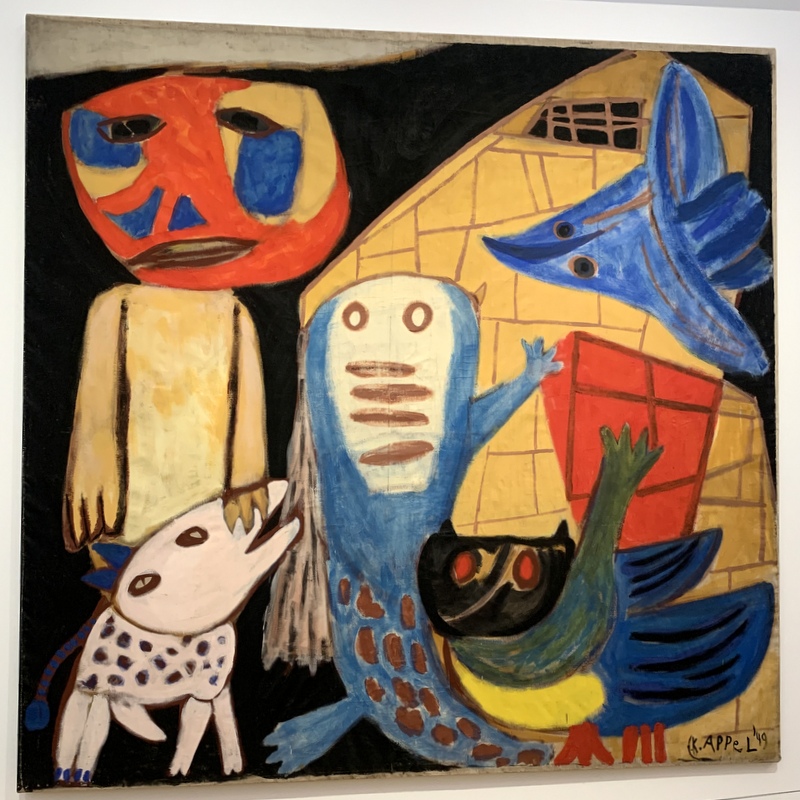
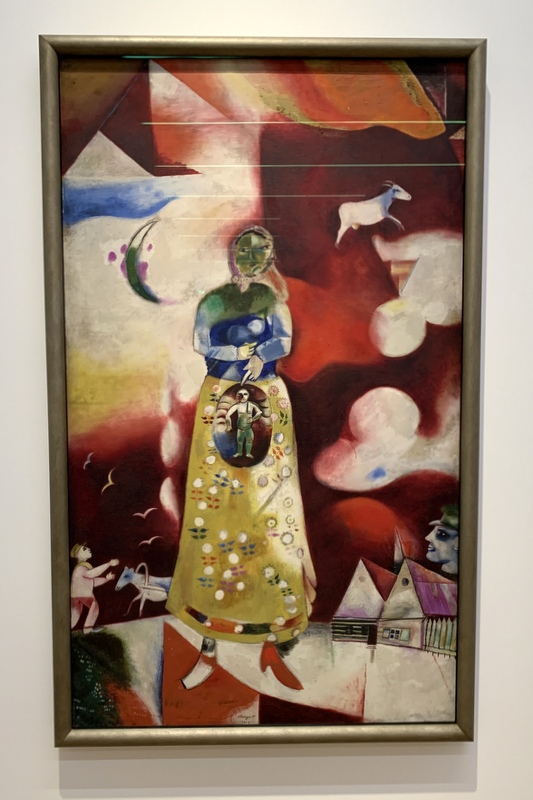
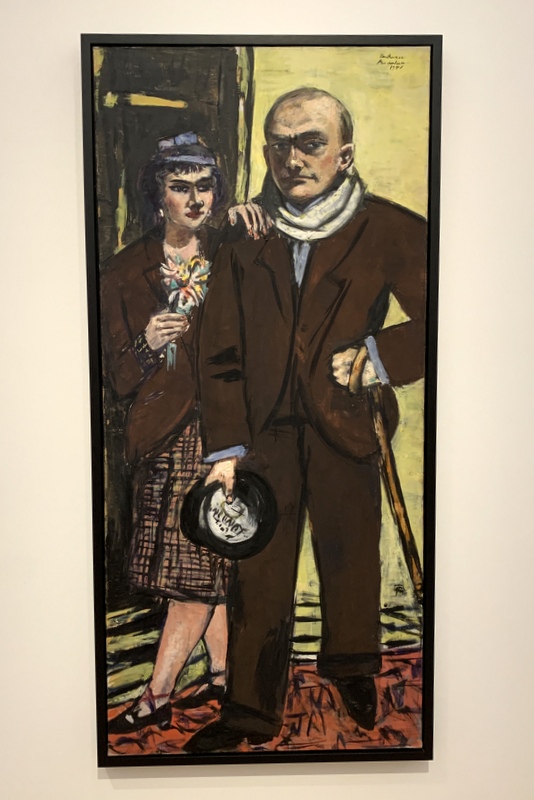
MatisseKoonsAppel
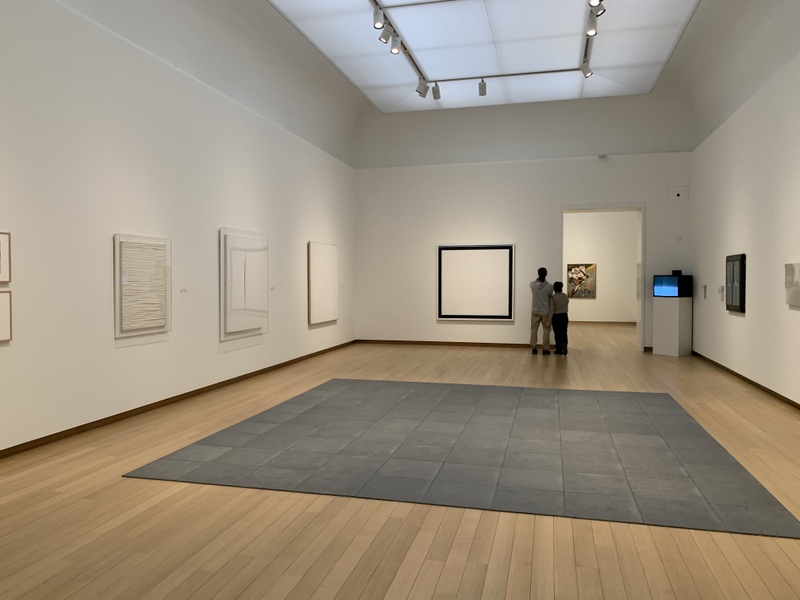
The new wing houses the “old” collection. The way the works of art are exhibited is quite nice.
Here is a selection of what appealed to me. It was of course a feast of recognition, I had seen all these works of art many times before.
But something was missing. I was not in the right mood, Strange.. I stayed in the museum less than one hour..
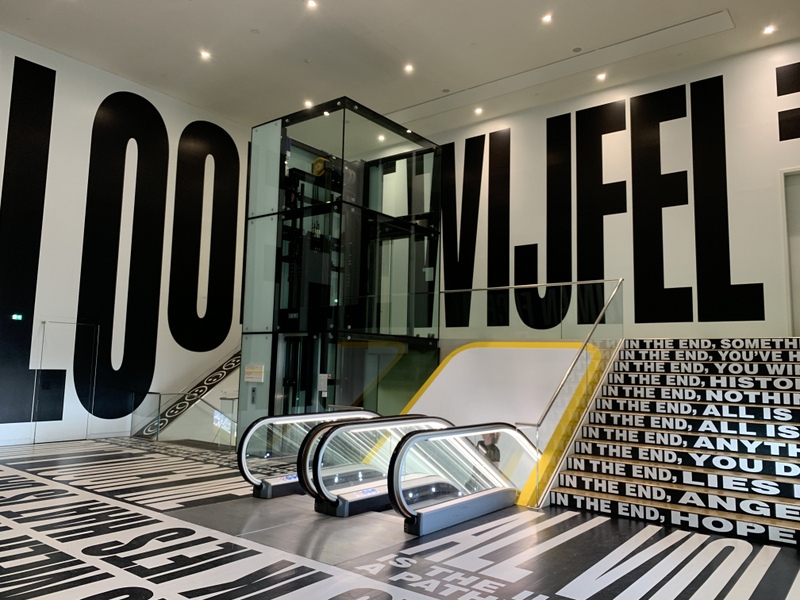
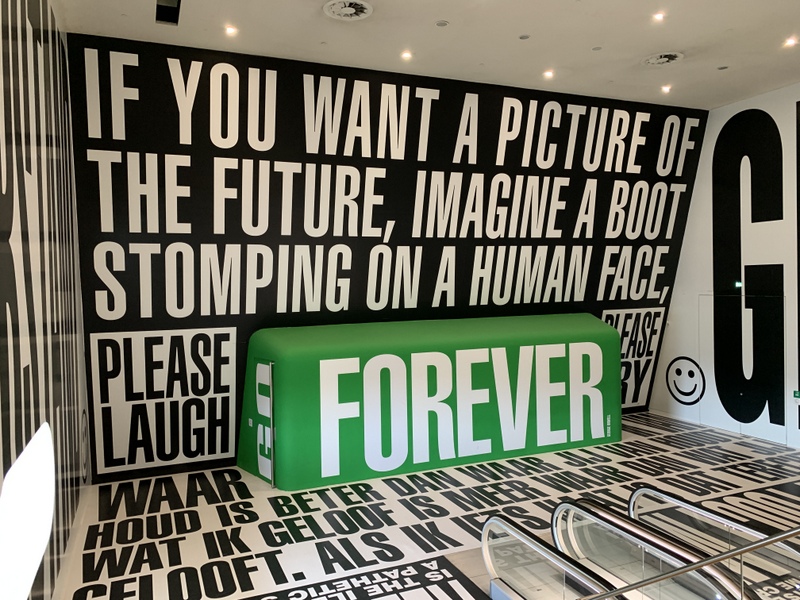
The first floor of the new wing is dominated by this modern artwork of Barbara Kruger,
Was I missing Aric? It was good that outside the sun was shining.
One week later I visited the Stedelijk Museum again!
This time not alone, but in the company of Nellie. We first met as freshmen at the Free University in 1961, more than sixty year ago. When I am in the Netherlands we try to meet for a cultural activity. This time we wanted to visit the Cobra Museum in Amstelveen but noticed that it had a timeslot system which was not suitable for us. Instead we decided to visit the Stedelijk. This time I was in a much more positive mood.
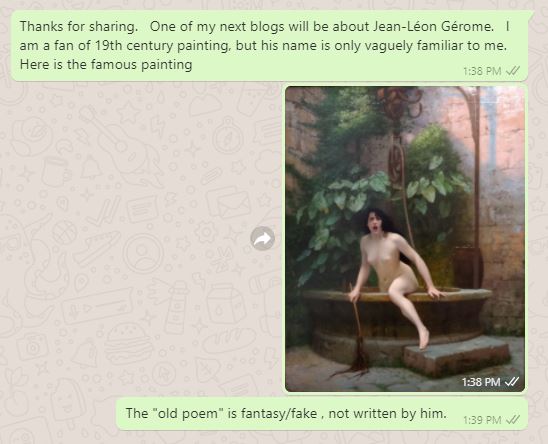
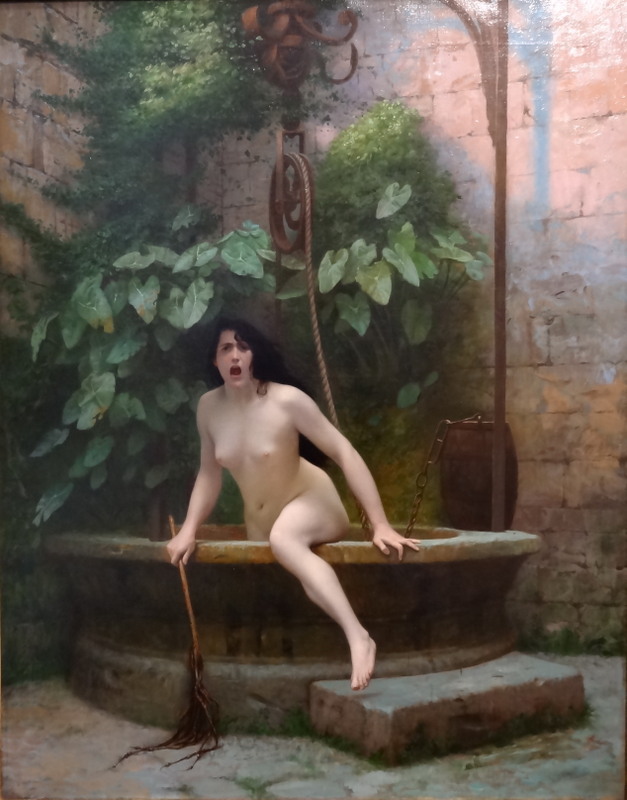
Last week one of my friends forwarded me an “old poem” about the Lie and the Truth, taking a bath together. The Lie runs away with the clothes of the Truth, leaving her naked. The poem was supposed to be written by Jean-Léon Gérôme in 1896. A quick Google search showed that Gérôme was actually a French painter who had, in 1896, created a painting Truth coming from the well armed with her whip to chastise mankind. But he didn’t write the poem, as I replied to my friend. Here are the WhatsApp messages.
I decided to write a blog about the painter Jean-Léon Gérôme, the Naked Truth and the Well.
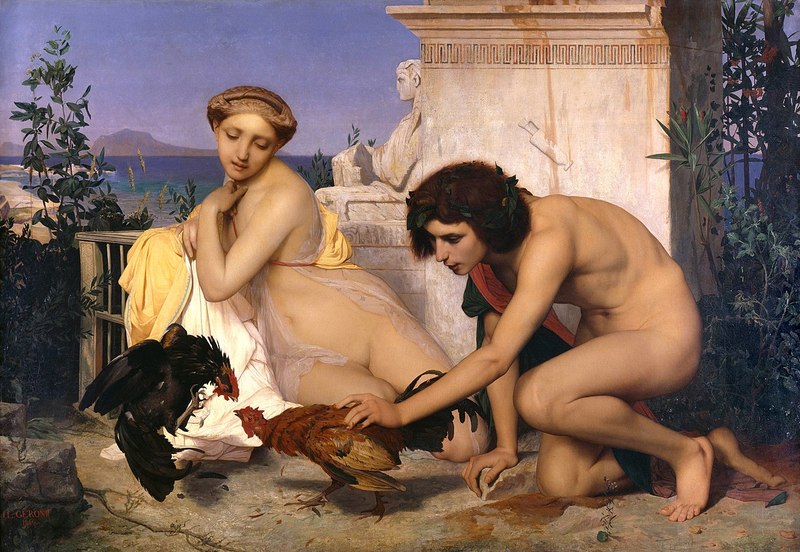
Gérôme lived from 1824 until 1904. In 1840, 16 year old, he moved to Paris where he got his training in what often is called Academic Art, because it was taught in the art academies of Europe, especially the French Académie des Beaux-Arts. In 1846 he painted The Cockfight which won him a prize and launched his career.
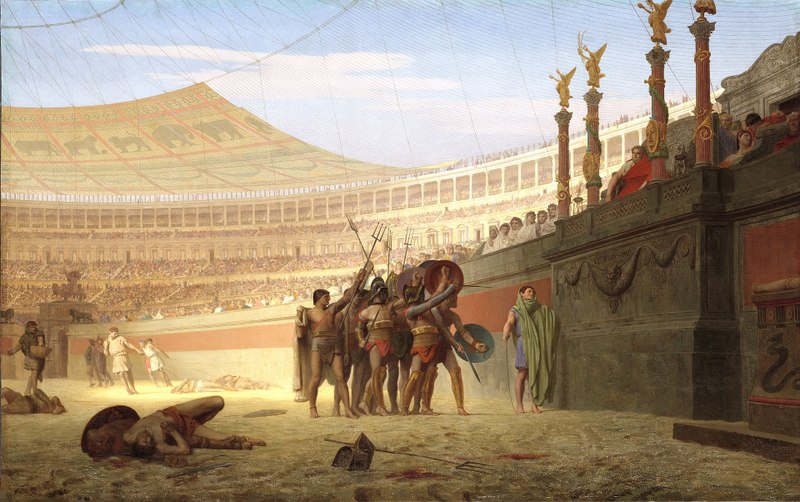
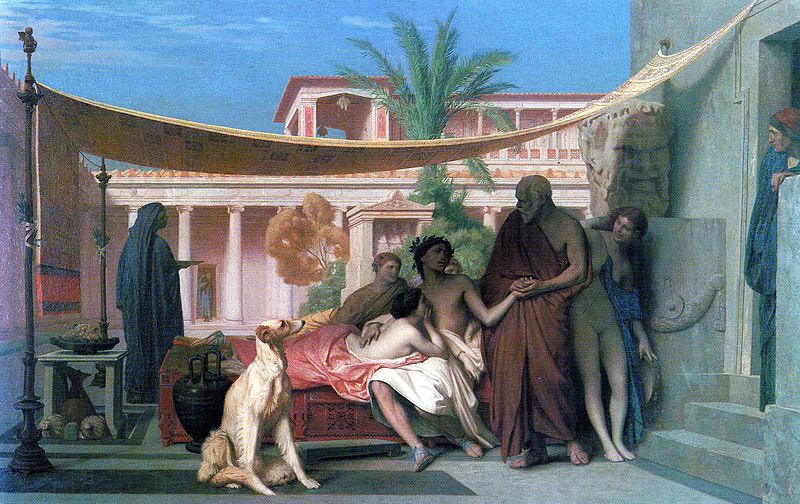
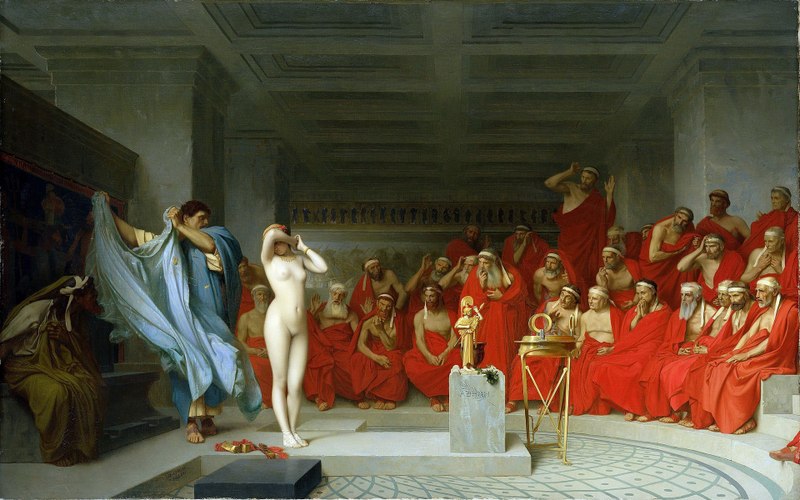
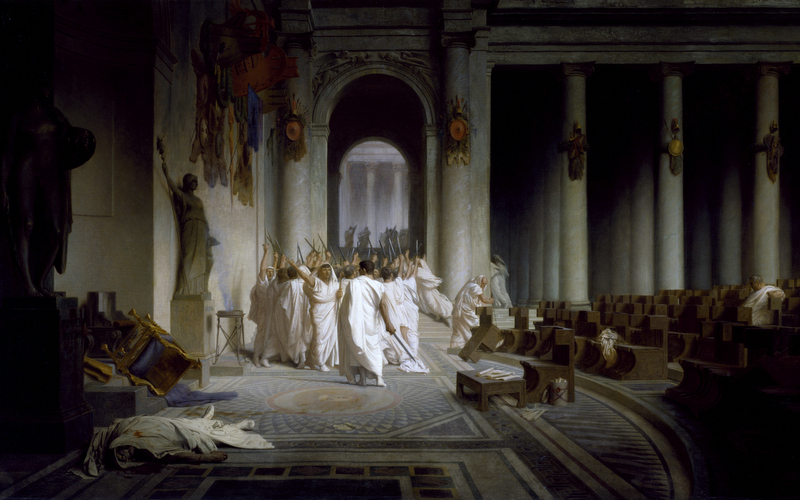
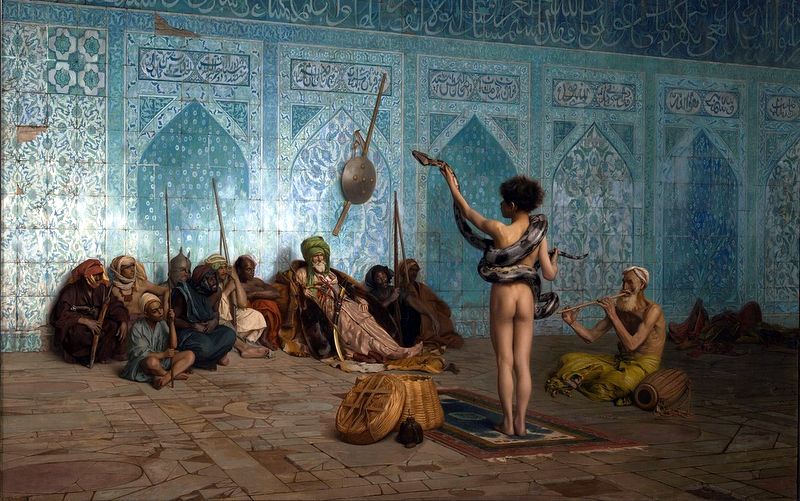
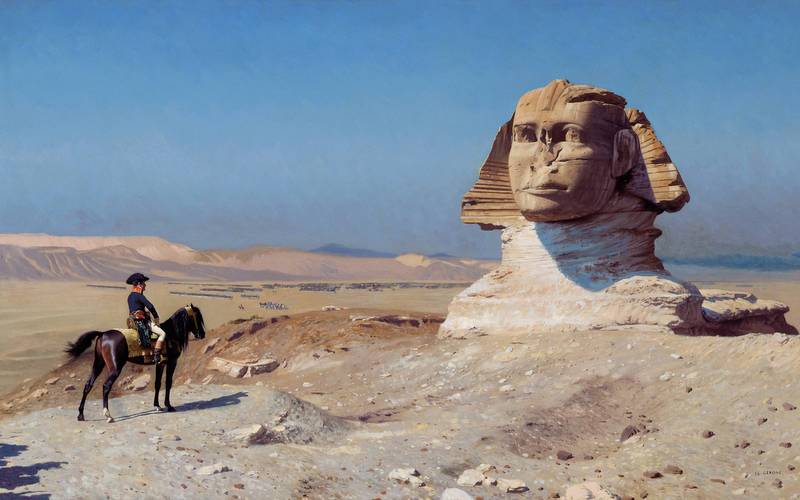
He became one of the most officially honored and financially successful French artists of the second half of the 19th century. Subjects from Roman and Greek antiquity, but also from the Middle-East where he traveled extensively. His paintings are pleasing to the eye, no wonder that they were sold easily. As a result they can be found all over the world, often in private collections. Here are a few of his paintings to give an impression.
Ave Caesar! Morituri te salutant (1859)
Socrates seeking Alcibiades (1861)
Phryne before the Areopagus (1861)
The death of Caesar (1867)
The snake charner (c. 1879)
Bonaparte before the Sfynx (1886)
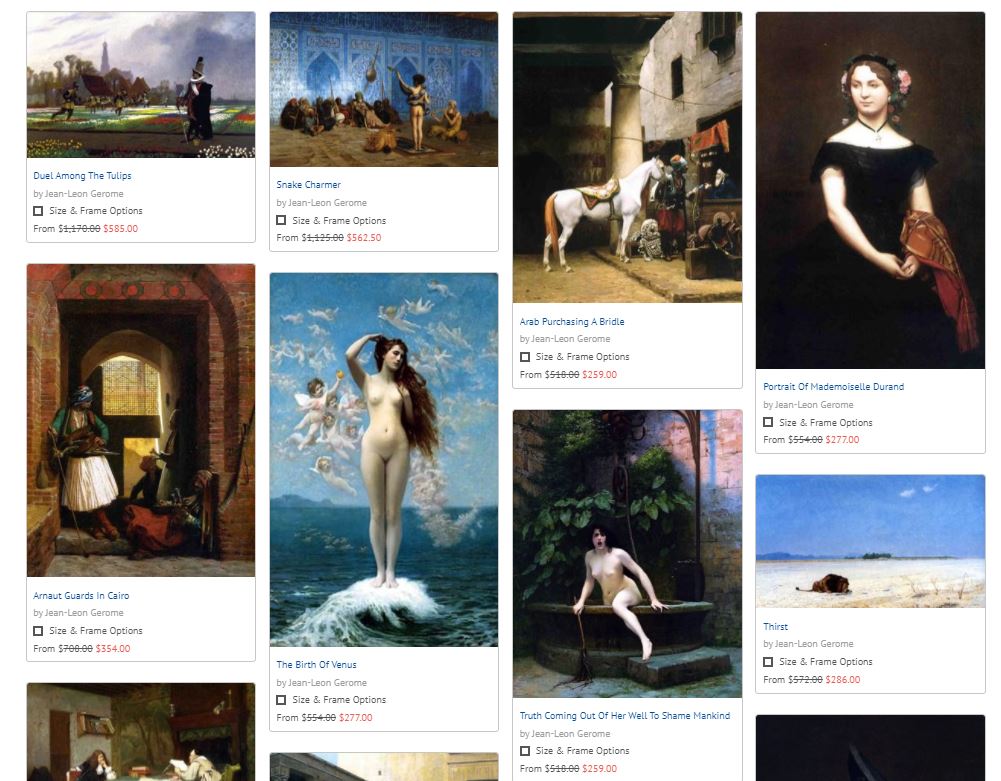
Even today you can buy copies of his paintings, here is a website that has copies of 234 (!) Gérôme paintings for sale. Click on the screenshot to view the website. Interested in your own copy of Truth coming from the Well? You can order it in 14 different formats, from 18″ x 24″ ($259) to 80″ x 104″ ($898) , frame not included.
At the end of his life he became a very vocal opponent of the upcoming impressionist school of painting. Interest in the “sterile”, “academic” style of painting faded but came back in the second half of the 20th century. The Gare d’Orsay museum in Paris is dedicated to 19th century art and one of my favourites. In 2010 the museum organised a retrospective exhibition The Spectacular Art of Jean-Léon Gérôme which I would have liked to see.
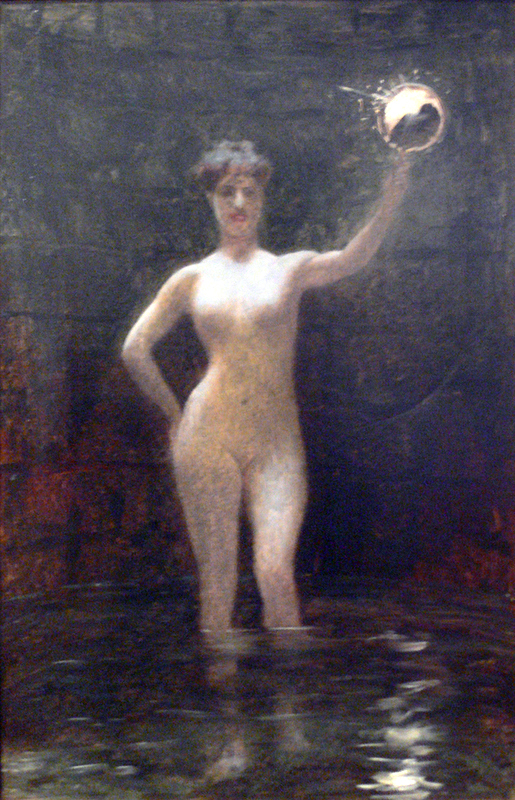
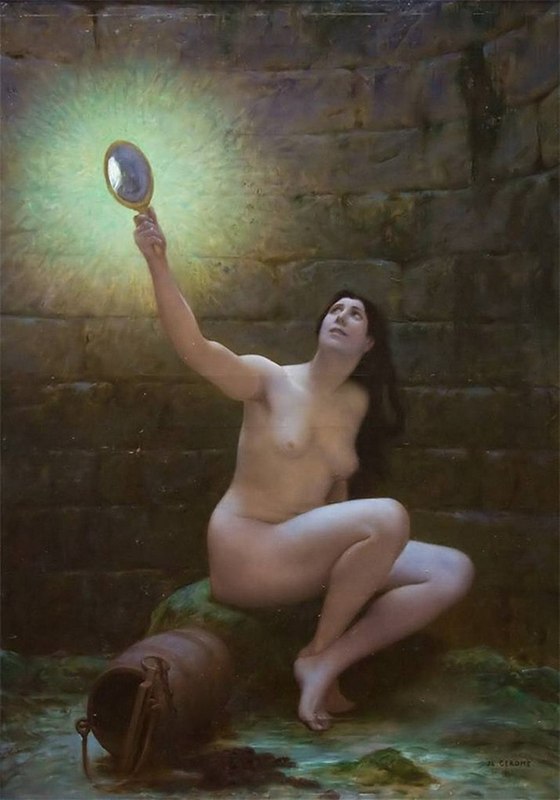
As I mentioned at the beginning of this blog, the story about Truth and Lie taking a bath is fake, a fabrication. But why is Truth coming out of her well? Gerome created several paintings about it. In two of the paintings she is also holding a mirror.
In Roman mythology Veritas (Truth) was a goddess, the daughter of Saturn. From the Wikipedia article Veritas : “The elusive goddess is said to have hidden in the bottom of a holy well” and “She is depicted both as a virgin dressed in white and as the “naked truth” (nuda veritas) holding a hand mirror“
The expression :naked truth” can be found in Ode 1.24 by Horatius, the famous Roman poet (65-8 BC). According to the Greek philosopher Demokritos (c. 460 – c. 370 BC), knowledge of truth is difficult, since perception through our senses is subjective. In reality we know nothing, for truth is in the depths. No mention of a (holy) well. I have not been able to find any depiction of Veritas in Roman/Greek antiquity on the Internet.
Fortunately I found this webpage: Painting Truth: When did she emerge from a well? The page is part of a fascinating website , created and maintained by Howard Oakley, a developer of Mac software with a huge interest in paintings. The page is so well written and complete, that I will only summarize the content here.
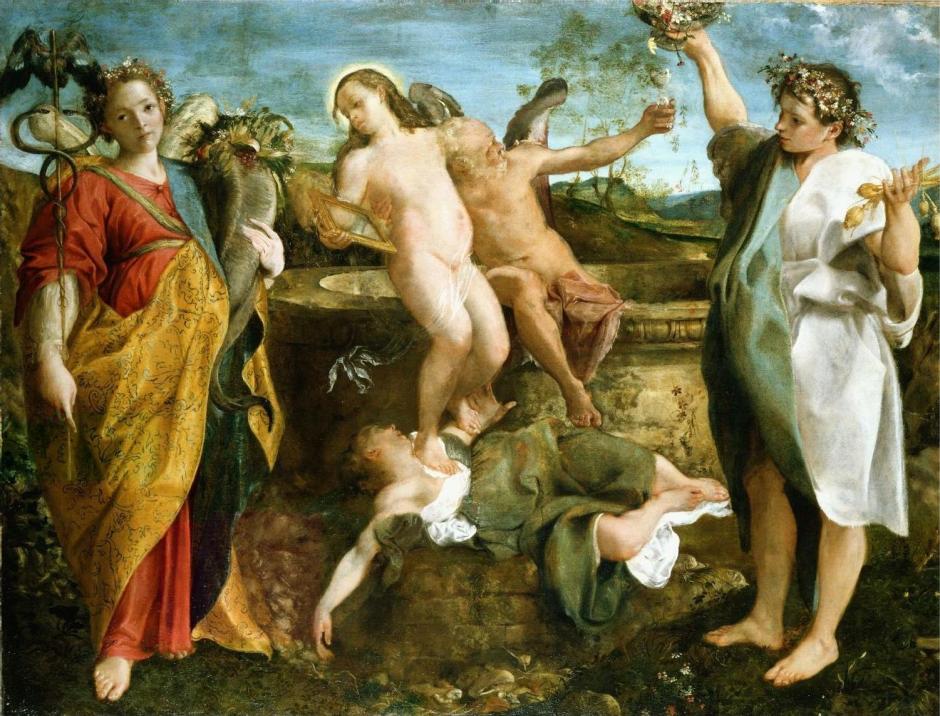
At the end of the 19th century “Truth climbing from a Well” suddenly became a popular subject for painting. It has been suggested that this was related to the infamous Dreyfus affair, where the army officer Dreyfus was falsely accused (and convicted) of treason. But Oakley shows that the interest started earlier already. In fact , he found that the earliest painting with Truth and a Well dates back to the 16th century, about the same period that the expression “the naked truth” got used in the way we still do nowadays. Here is that painting, An Allegory of Truth and Time, by Carracci (1560-1609).
To summarise this post, Truth and the abyss where she resides had a philosophical background, and nothing to do with a (holy) well, from where she emerges. I have found nothing about a naked truth in antiquity except the reference by Horatius. It is only in Western art that the topic appears in the 16th century, culminating at the end of the 19th century. There is sometimes a mirror, but never a bathing encounter with Falsehood stealing her clothes 😉
When you Google for truth, lie, bath, you get quite a few hits. Often it is a 19th century legend, or a Roman fable. Sometimes Truth and Lie are twin brothers, swimming a river.
A report about a 3D2N trip to Penang with my friends Paul and Fahmi. Our target was to enjoy food and culture. I have already written separate posts about Penang Mural Art, Penang Colonial Architecture and Penang Museums. In this post I will write about our trip and about food.
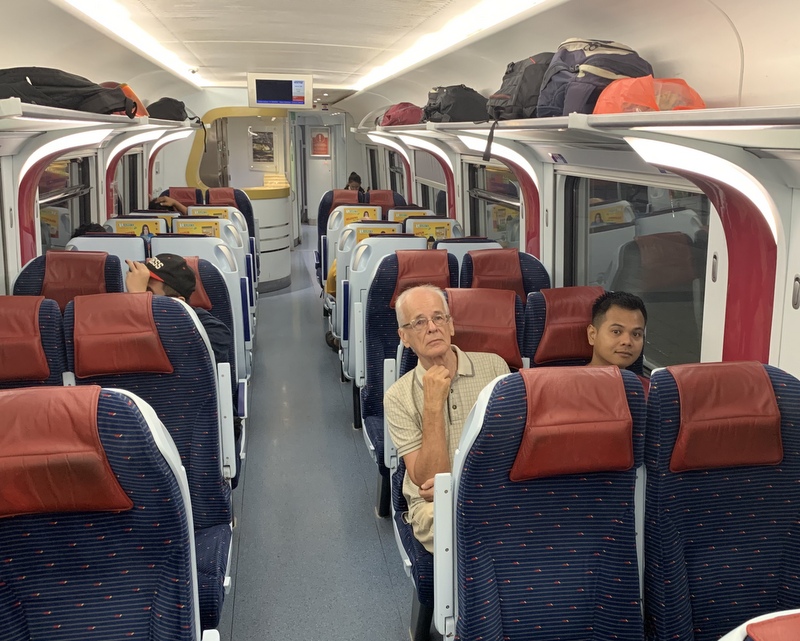
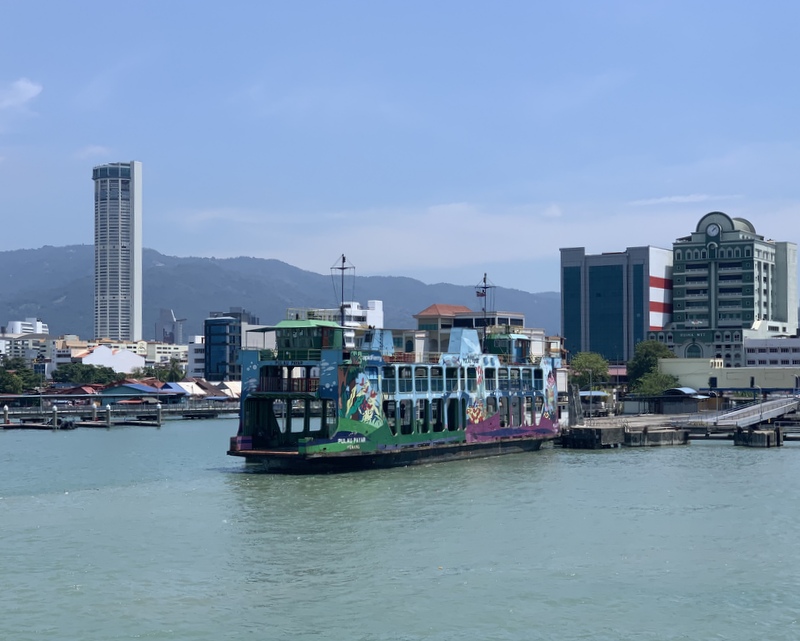
We traveled by ETS train from KL Sentral to Butterworth, a very comfortable journey. From Butterworth we took the ferry to George Town. This way of reaching the island is more romantic, compared to the usual way (by car and bridge).
ETS train
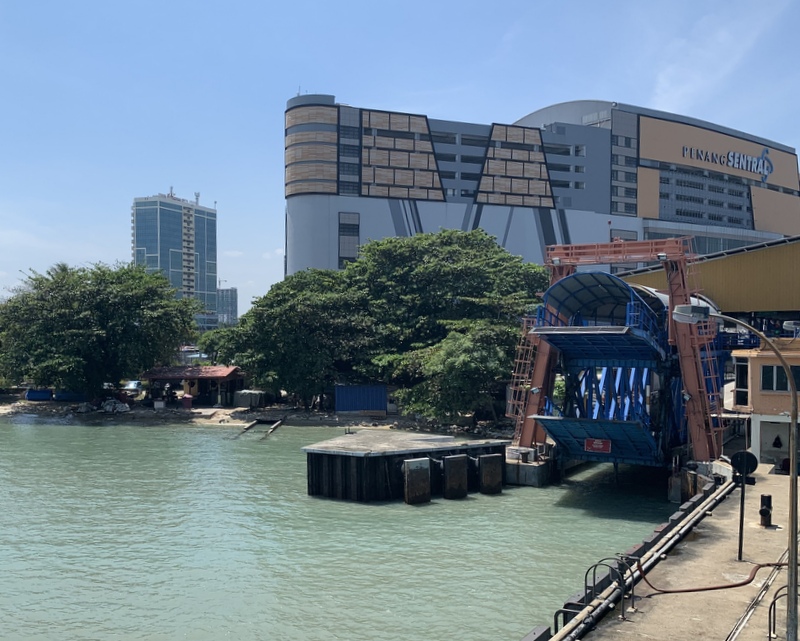
Leaving Butterworth
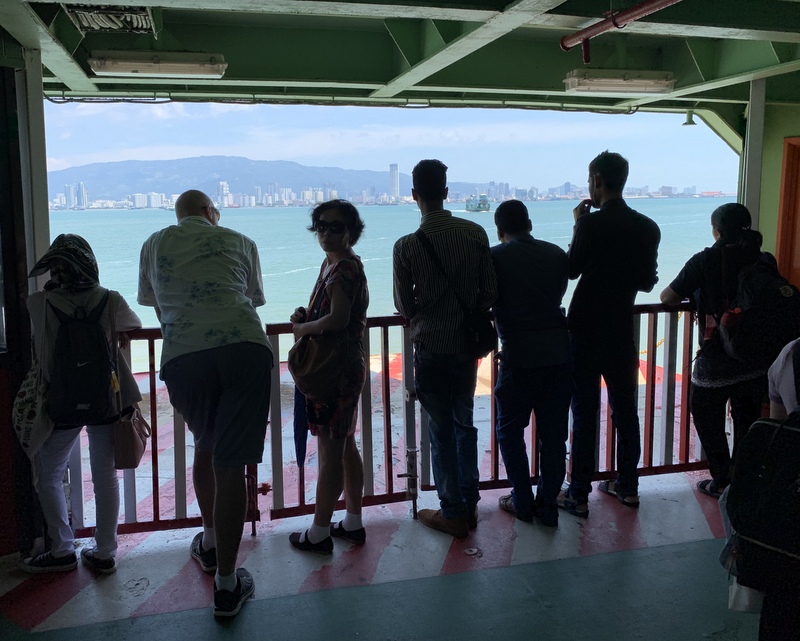
Ferry Crossing
Arriving at George Town
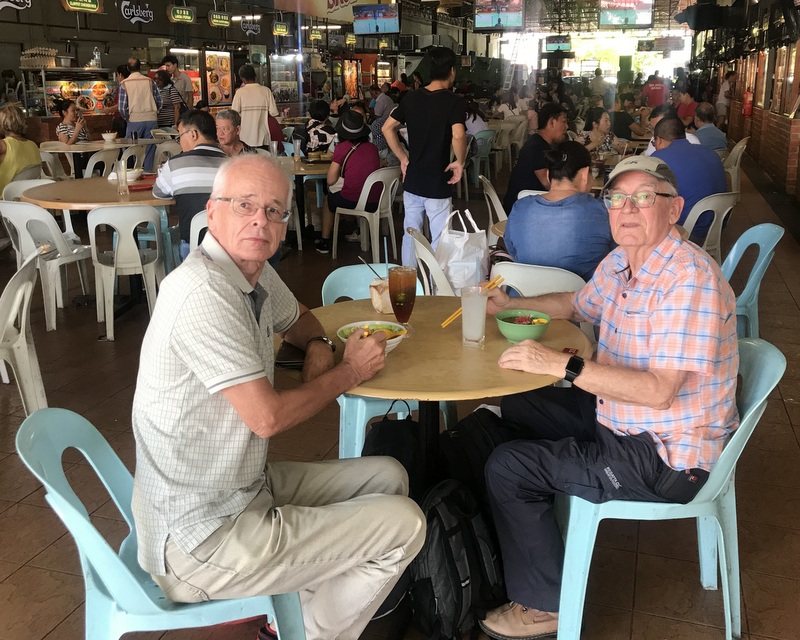
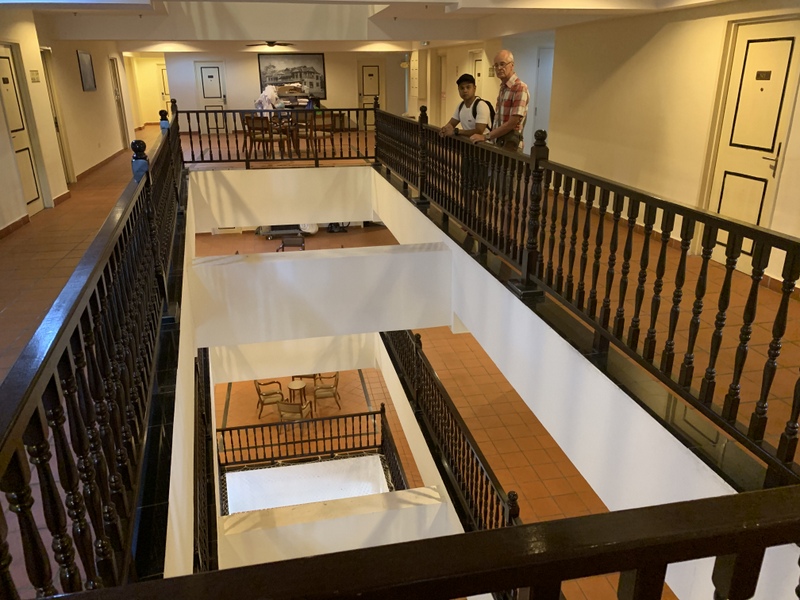
Our hotel was on walking distance from the jetty, but we were hungry and needed lunch first . We found a busy food court, where I had Penang Assam Laksa. The Armenian Street Heritage Hotel is very well located in the heart of the historical town.
Lunch
Penang Laksa
Our hotel
Quite ok
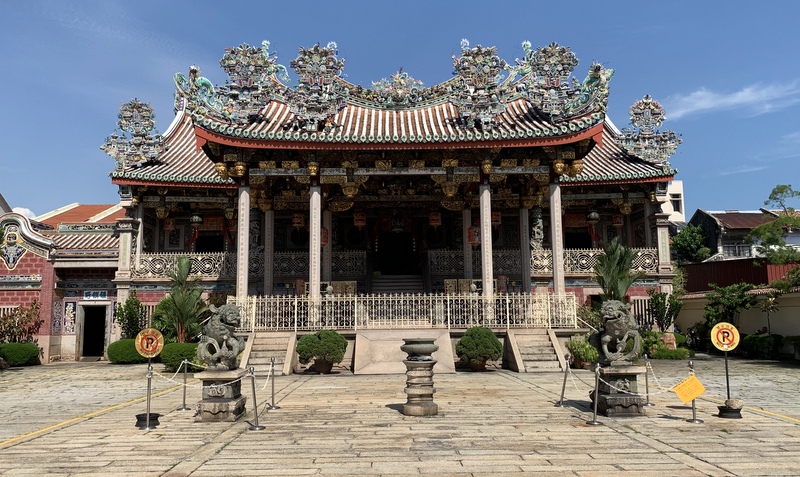
After some rest we went out to explore the town. We started with the Khoo Kongsi. More photos .
Khoo Kongsi Temple
And of course we saw a lot of mural art. More photos .
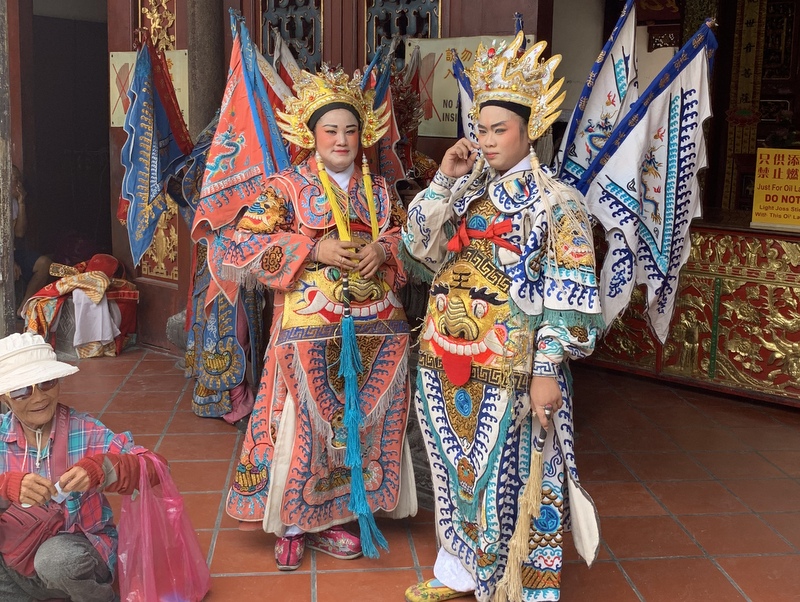
The weather was nice. We walked past many houses of worship, in the Guan Yin Temple a celebration was going on with a performance of Chinese opera.
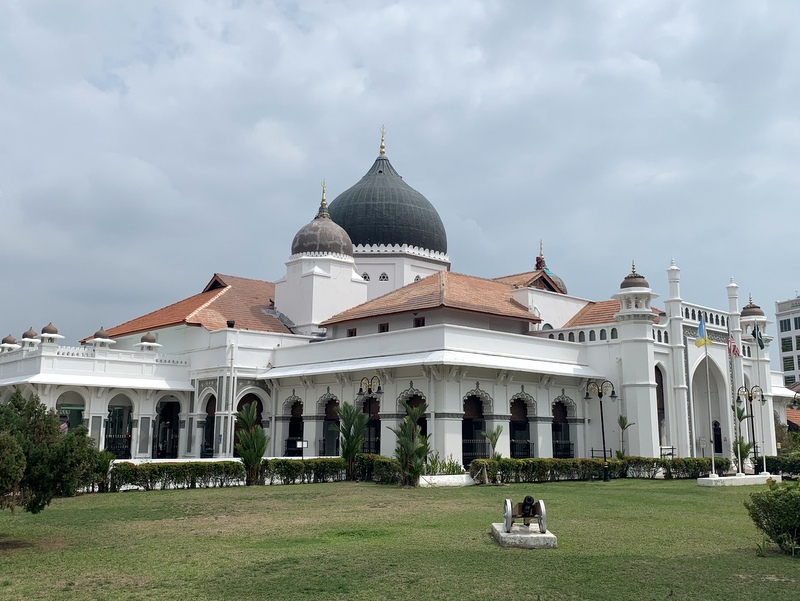
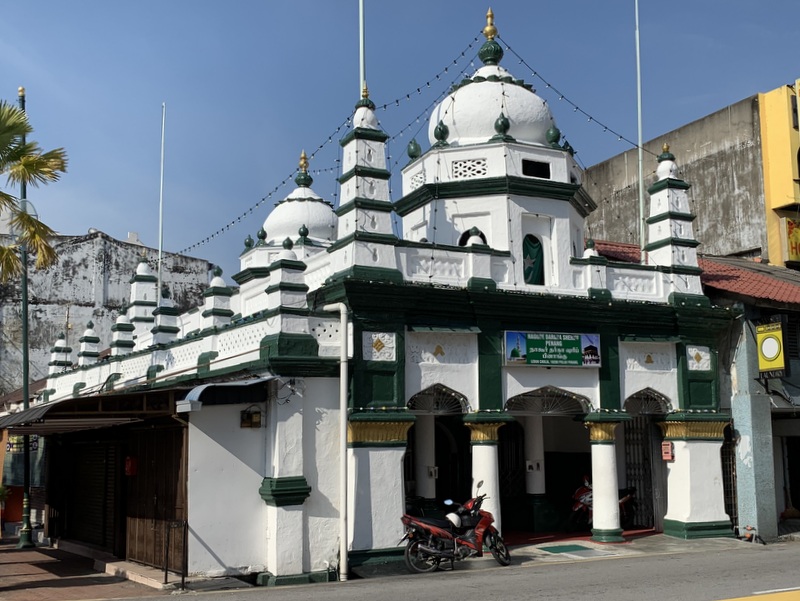
Kapitan Keling Mosque
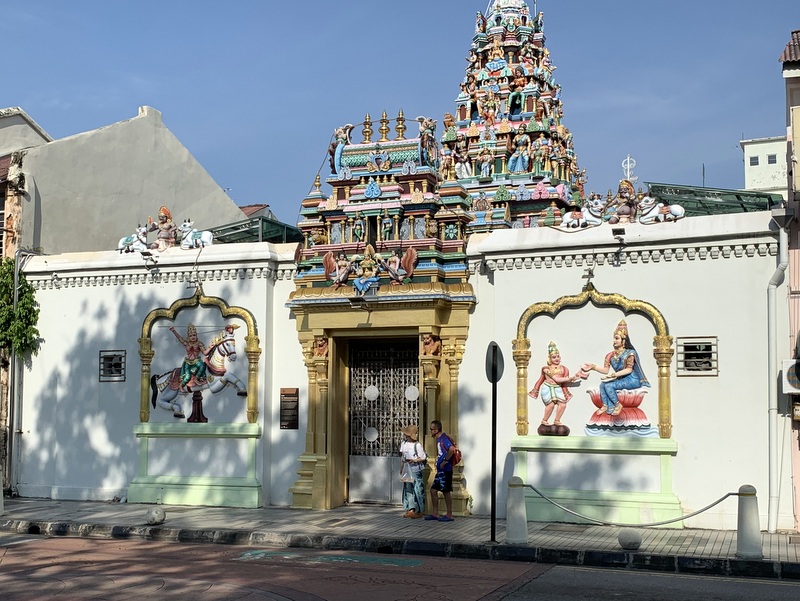
Sri Mahamariamman Temple
Guan Yin Temple
Nagore Durgha Shrine
George Town is a haven for foodies, in 2014 I wrote a blog about it, Penang Food. This time we were looking for halal food. We first walked to the Esplanade. because we remembered that there was a Malay food court there, but it was closed already. Beautiful views of the floodlit colonial buildings!
Townhall (1880)
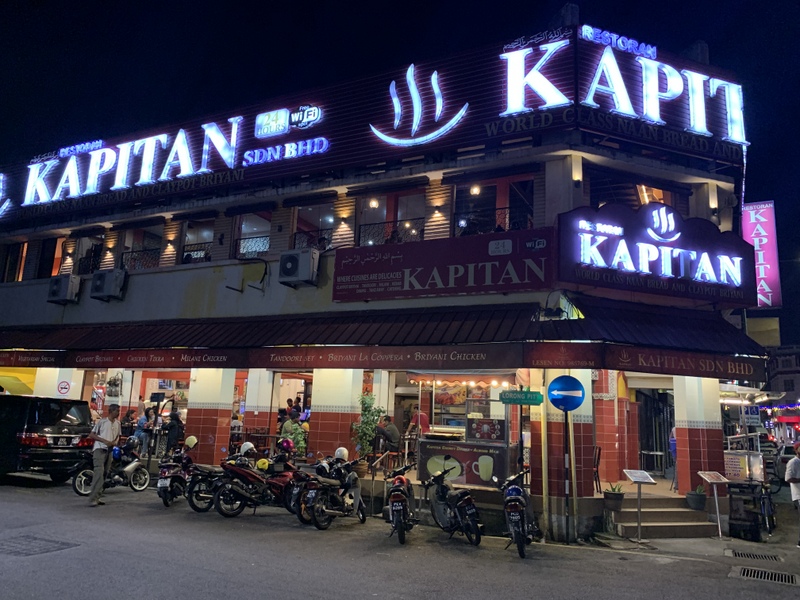
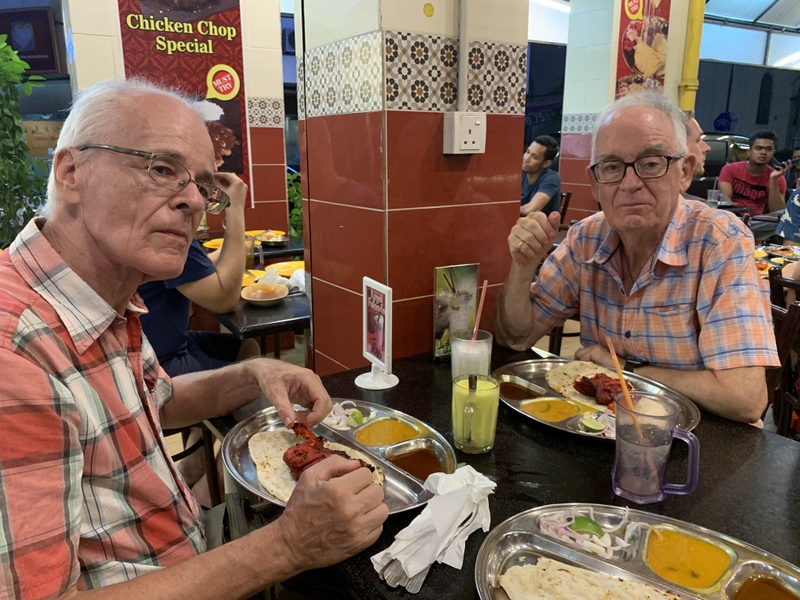
Walking back we ended up at the popular Kapitan restaurant, where we had an acceptable Tandoori Chicken.
Restoran Kapitan
Tandoori Chicken
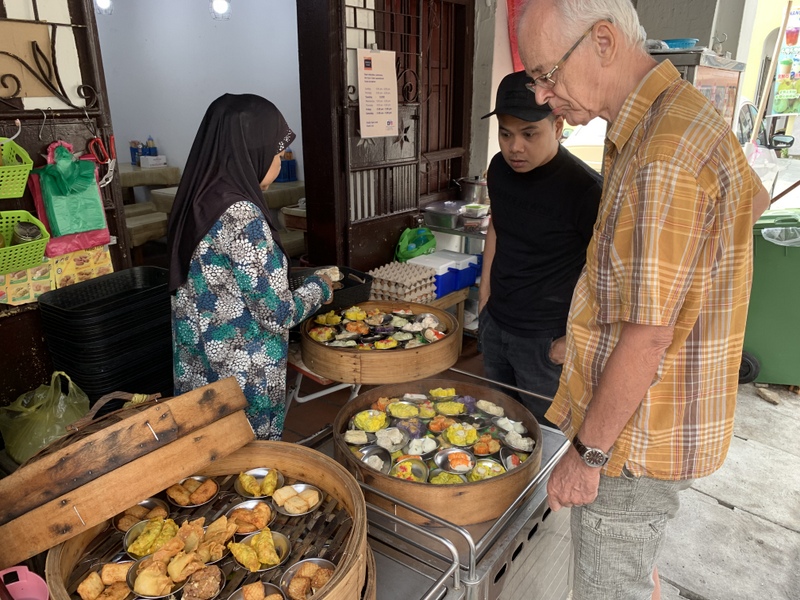
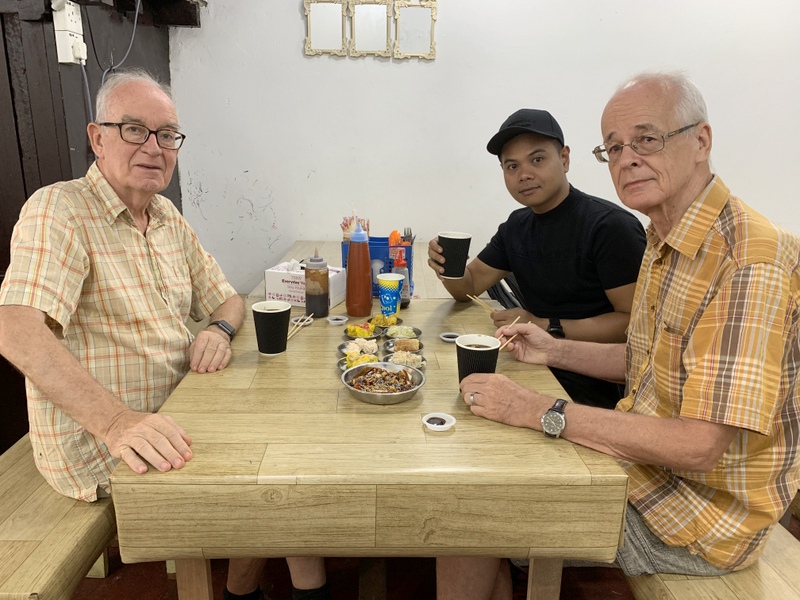
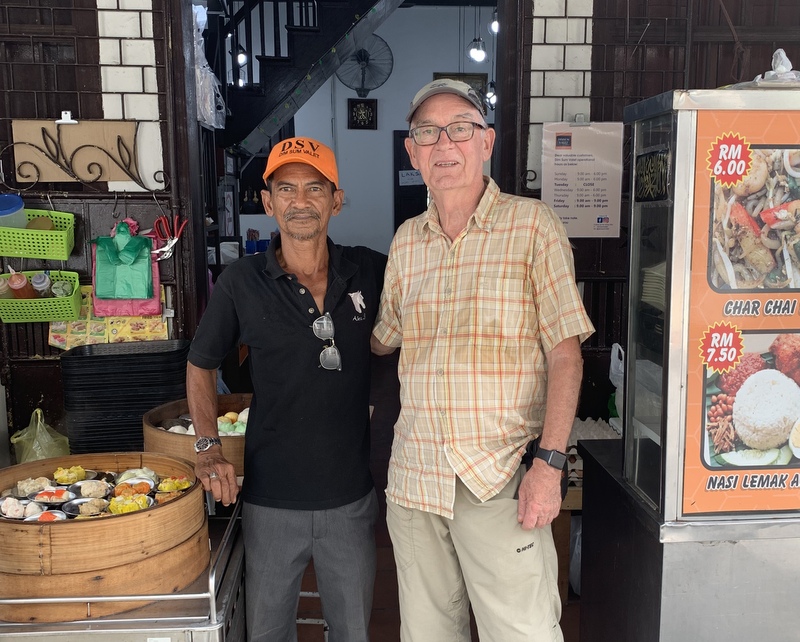
The next morning we were in the mood for a dim sum breakfast, but of course most dim sum places are not halal. We were lucky to find a gem: Dim Sum Valet . Delicious dim sum, a very friendly Malay couple, they started the shop beginning of this year. Worth visiting!
Dim Sum Valet
A lot of choice
Having our breakfast
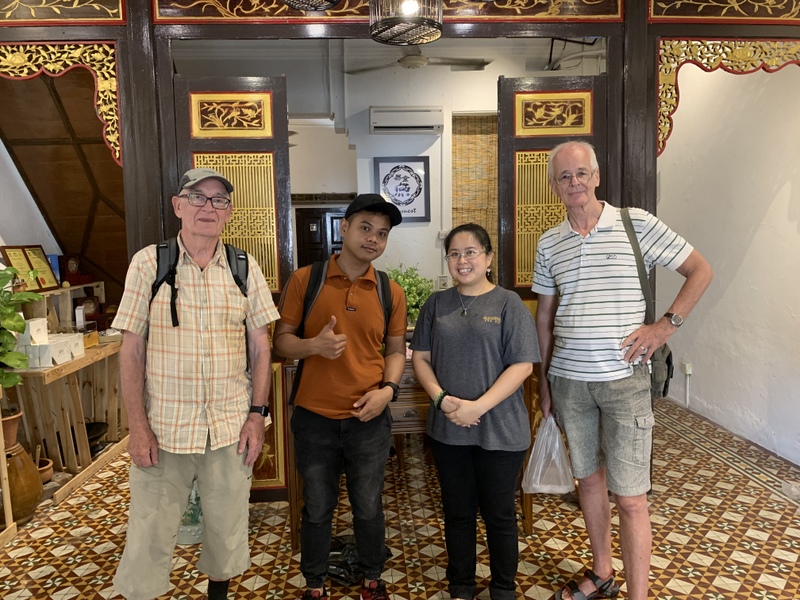
The owner and I
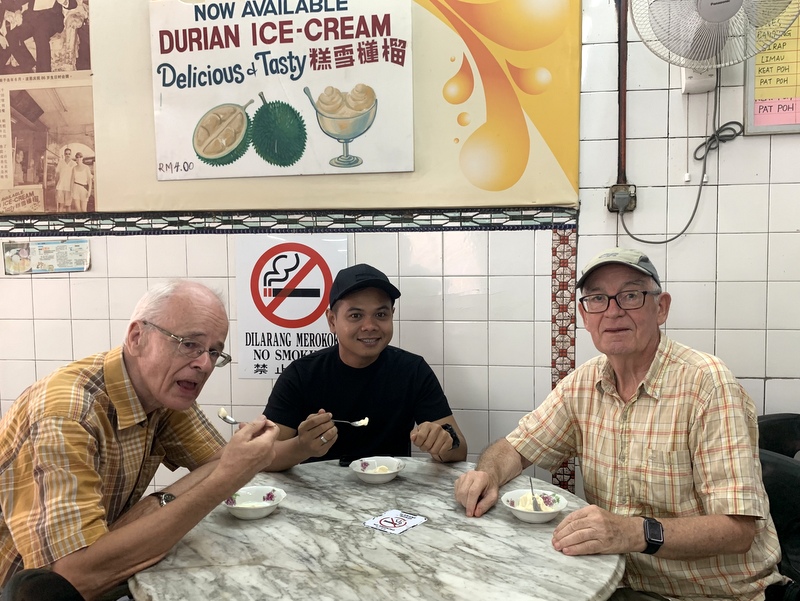
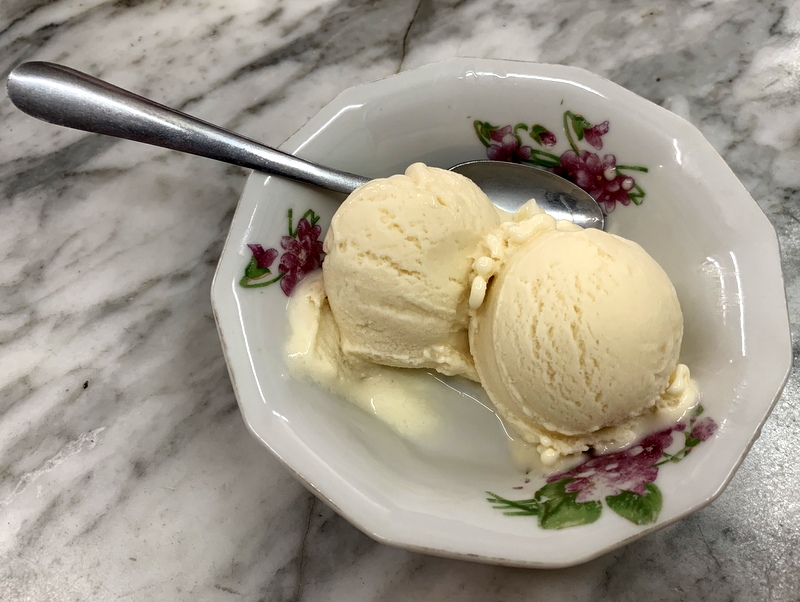
We still had some space left for a dessert. Our friends Pat and Roger had visited George Town recently and were very enthusiastic about the durian ice cream of Kek Seng. They were right, it was delicious.
Kek Seng
Durian Ice Cream, Yummie
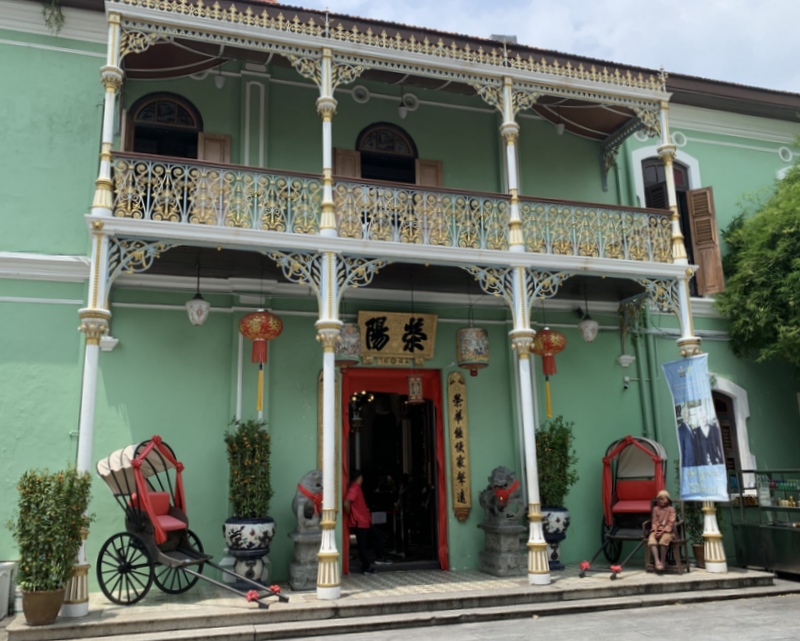
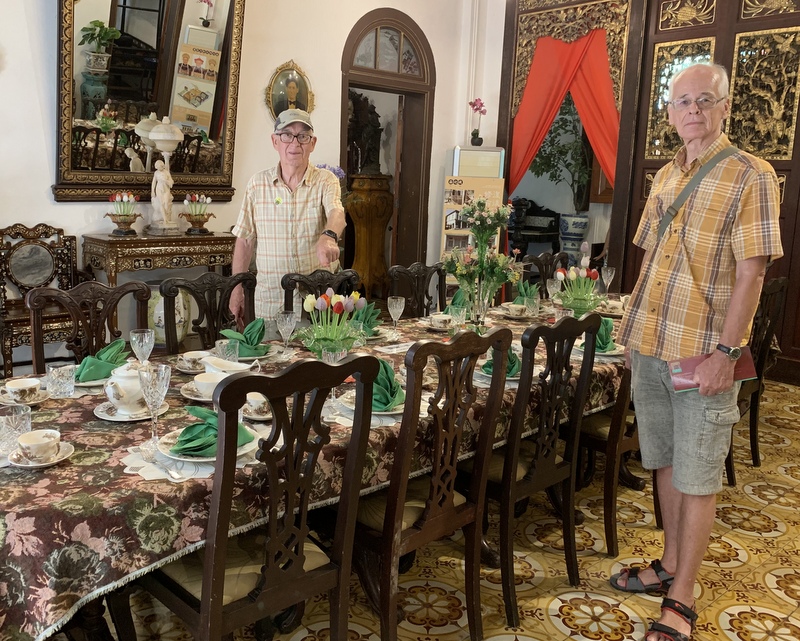
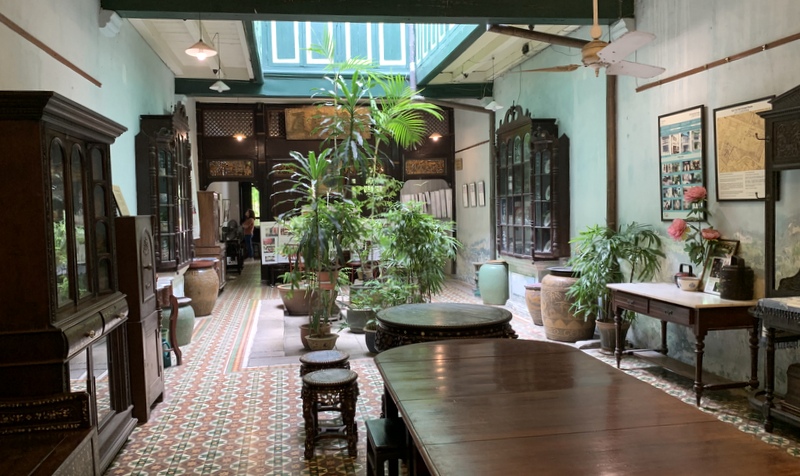
Our first target for the day was the Pinang Peranakan Mansion. A wonderful museum, surprising that I had never heard about it earlier! More photos .
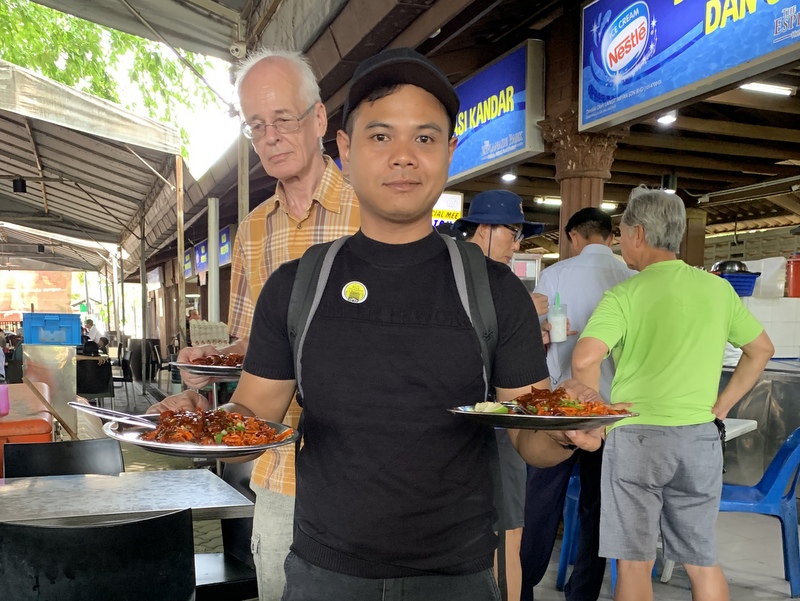
We spent considerable time in the museum, there was a lot to see. For lunch we went back to the food court at the Esplanade that was closed yesterday evening. Now it was open, we had the famous Mee Sotong of Hameed Pata . A long queue, but worth waiting for it
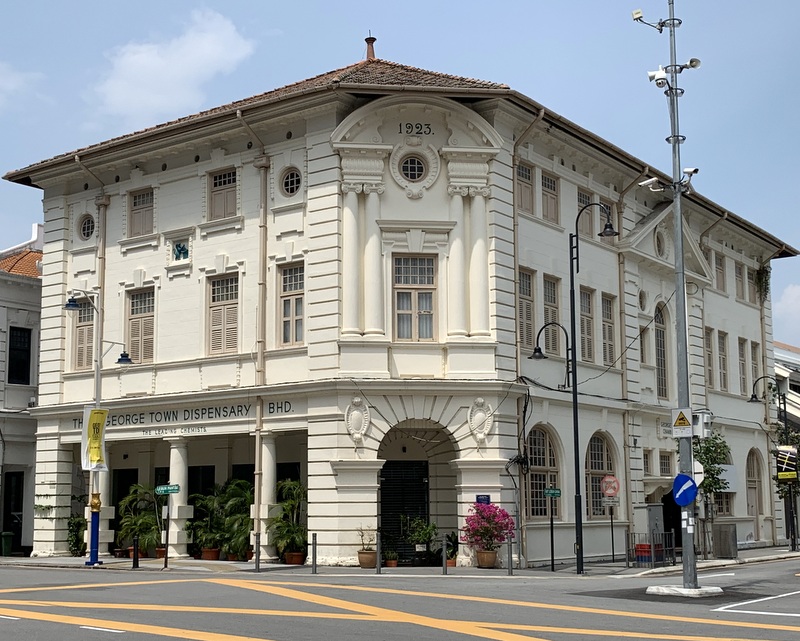
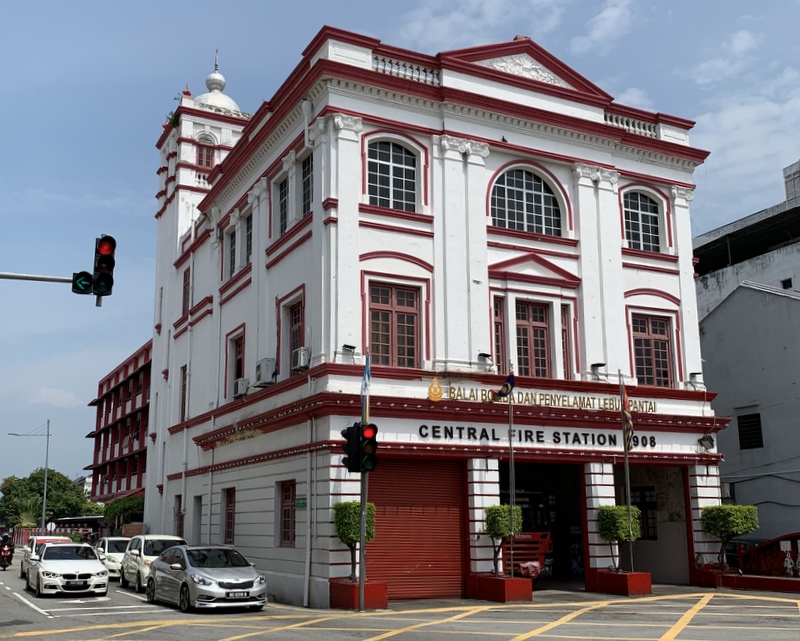
In the afternoon we explored the colonial architecture of Beach Street. One bank building after another prove that in those colonial times George Town was the financial center of Malaya. But not only banks, also emporiums, shops, opulent residences. More photos .
George Town Dispensary (1923)
Central Fire Station (1908)
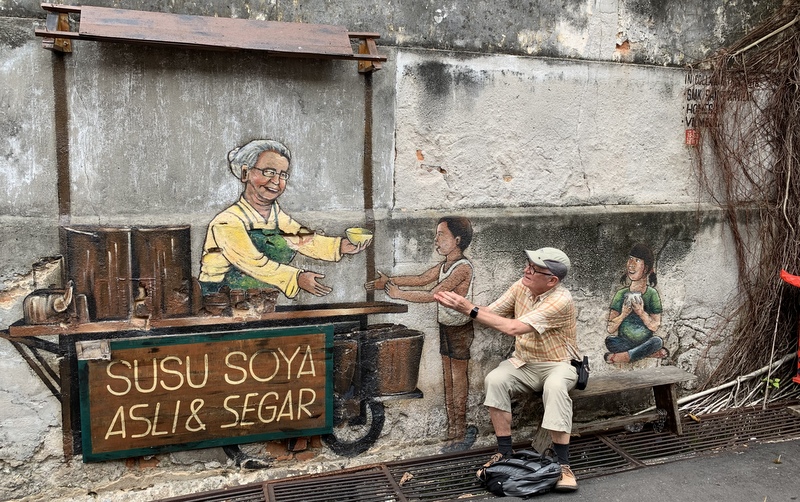
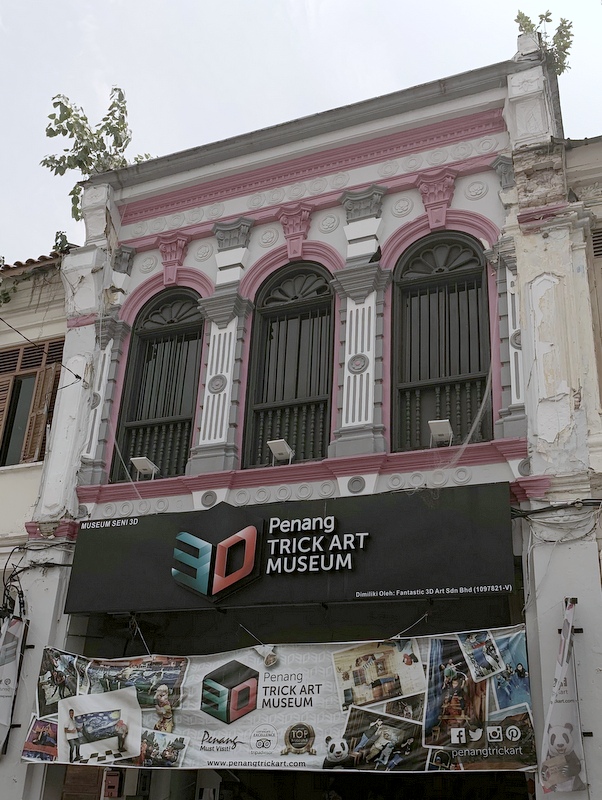
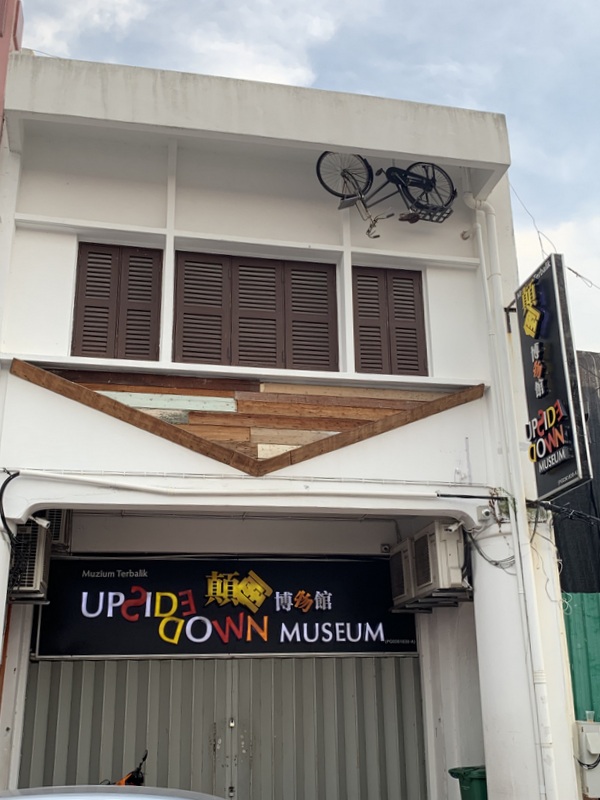
We visited a few more mural artworks, and we were not the only ones. Actually I am not happy about the mushrooming of mural art in Penang (and in the whole of Malaysia!). Not always is it high quality and the economical Law of Diminishing Returns is valid also here. More photos .
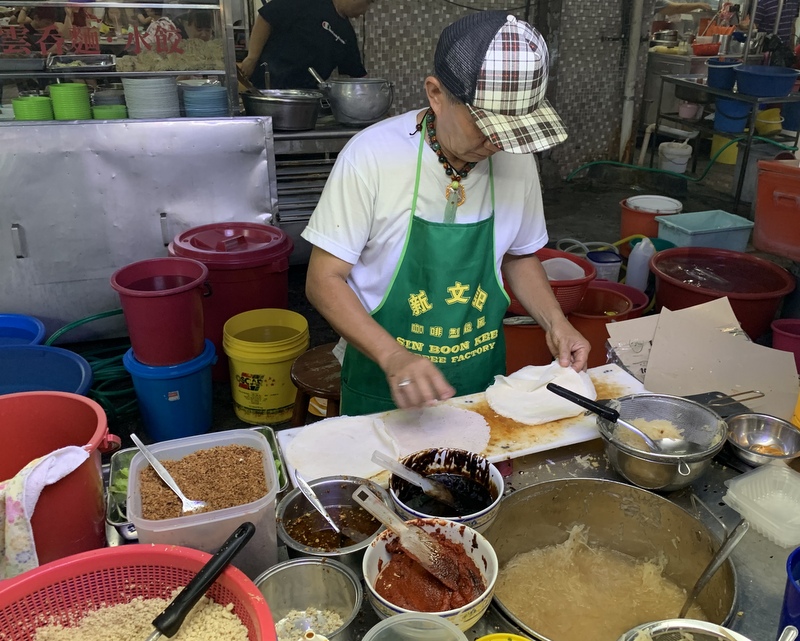
After a short rest in our hotel we went out for dinner to the New Lane Hawker Center. I had good memories about this place from earlier visits, but this time I was rather disappointed. Too many tourists, too expensive. We had popiah, oyster omelet , kerang and stingray.
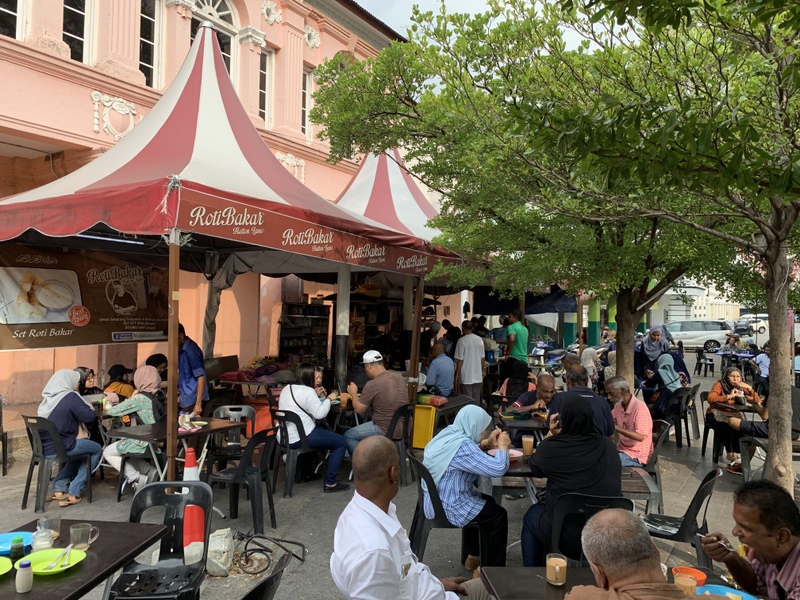
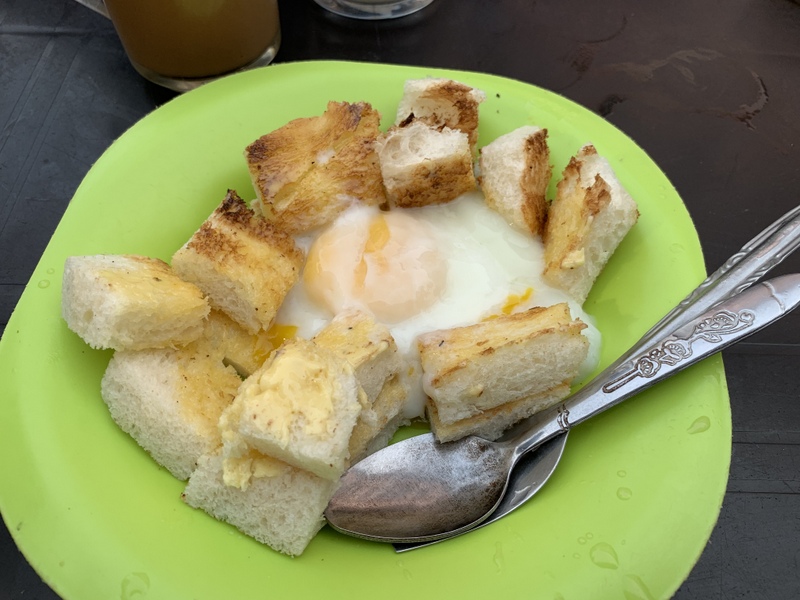
Our last day in George Town already. We had breakfast with Roti Goyang at the Roti Bakar in Hutton Lane. The soft-boiled eggs were really shaking (goyang) surrounded by the pieces of toast. Very nice.
The Sun Yat Sen Penang Basee was the last museum on our list. Sun Yat Sen had his office here in 1912 when he was looking for support for the Chinese revolution. More photos .
A last round of more mural art. Some of them quite nice, in the humoristic Zacharevic style. More photos .
Before taking the ferry back to Butterworth, we had lunch near our hotel, in restaurant Jawi . Peranakan food, friendly service.
Jawi House Cafe & Gallery
Peranakan food
Friendly staff
After lunch we took the ferry back to Butterworth. Paul and Fahmi went back to KL, I stayed in Taiping for couple of days more, see my report Taiping, July 2019 .
It was nice to visit George Town. But as a result of being a Unesco Heritage Site, it has become very touristic. Fancy museums, I may be old-fashioned, but for me it doesn’t add value.
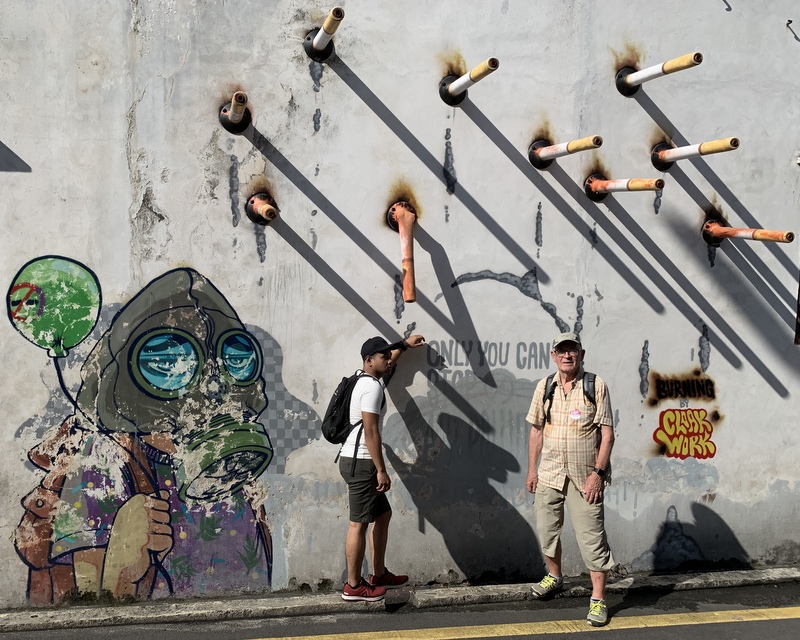
Five years ago, I visited Penang to have a look at the Mural Art, created by the Lithuanian artist Zacharevic in 2012. Here is my report: Penang Street Art. I like Zacharevic, his sense of humour, the way he is using existing objects for his creations. Even then there were already more artists active, some copying his style, sometimes good, more often mediocre.
I went back to Penang with my friends Paul and Fahmi, and to be honest, I was shocked by the proliferation that has taken place in these five years. There is hardly an empty wall anymore, mural art in almost every street. Really too much, IMHO. But I may be an exception in not appreciating this epidemic 🙂 . Here is a quote from Tripadvisor :
The highlight of Penang is literally the street arts. They are everywhere, every street, every corner. I have tons of photos of them. You don’t need a map but just don’t miss any street there. 🙂 .
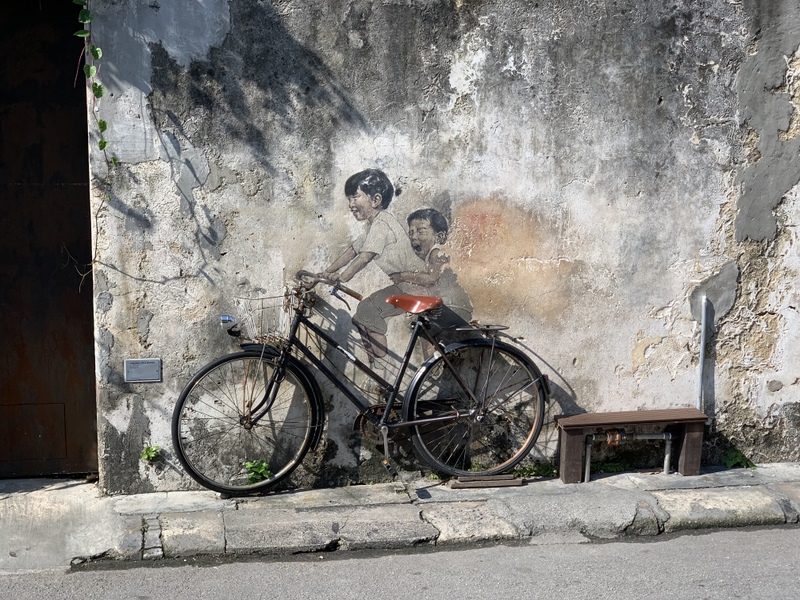
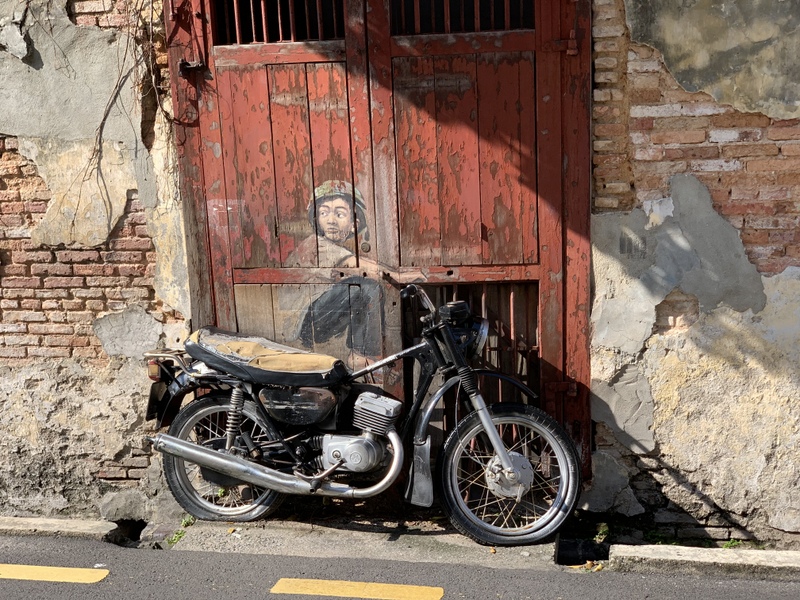
Here are a few of Zacharevic’s creations. When you compare the pictures with those in my report, you will see that several of them have faded. Some even have been destroyed. Zacharevic has no problem with this, he is not making art for eternity. I like his attitude.
Little children on a bicycle
Boy on a bike
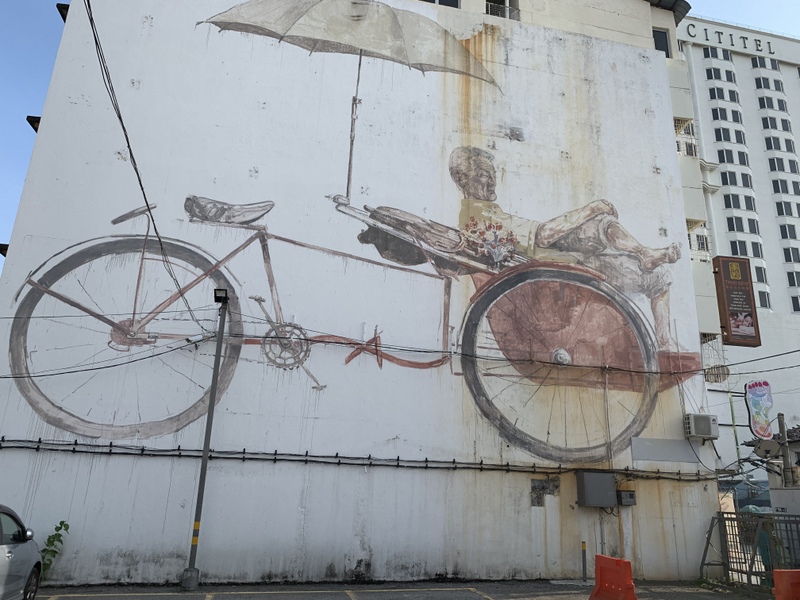
The trishaw
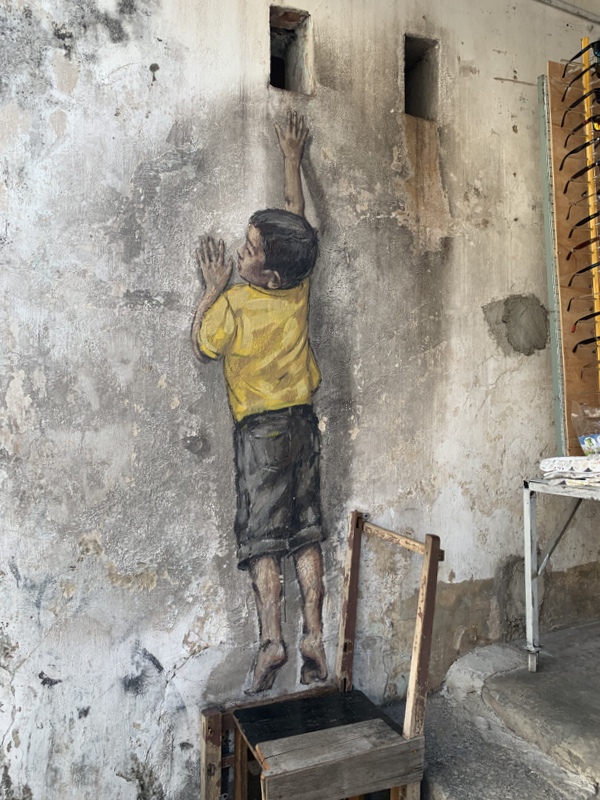
Boy on a chair
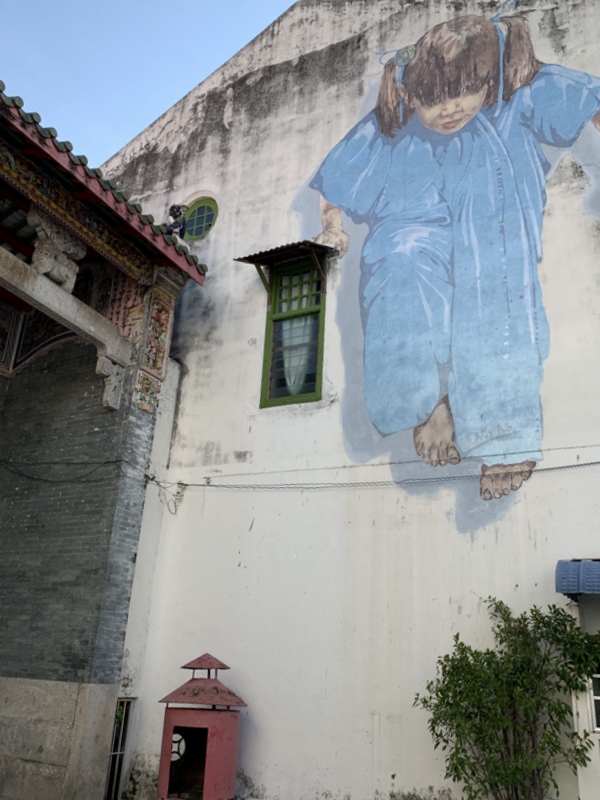
Kungfu girl
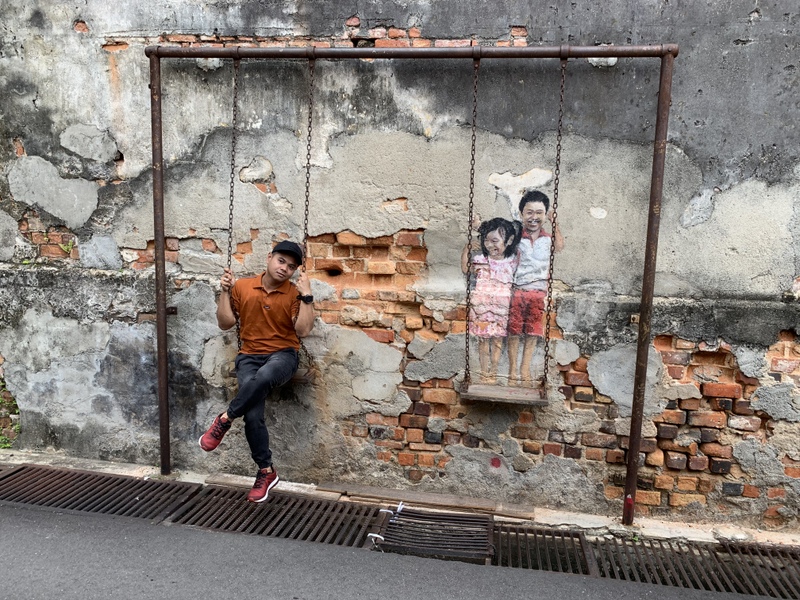
A few pictures of Mural Art in Zacharevic style, where you can interact with the artwork
Using existing elements.
Many more. Actually not bad, just that there are too many of them
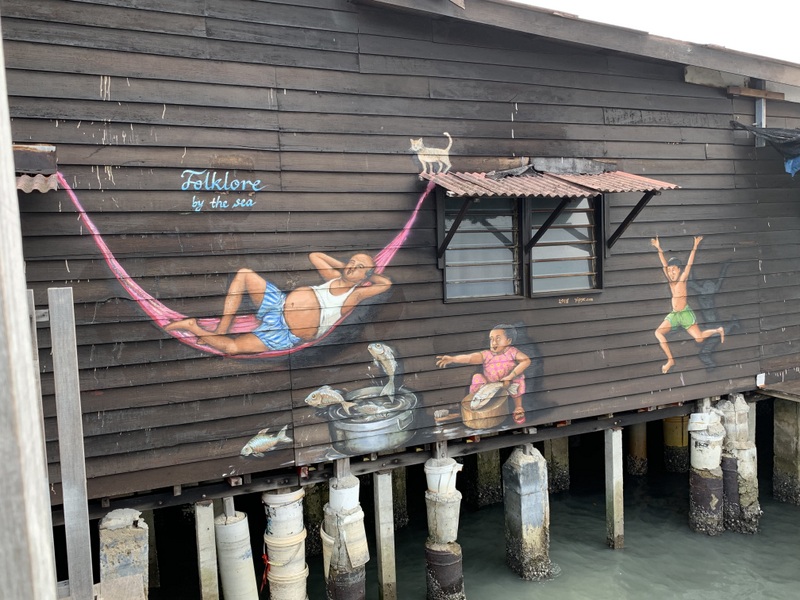
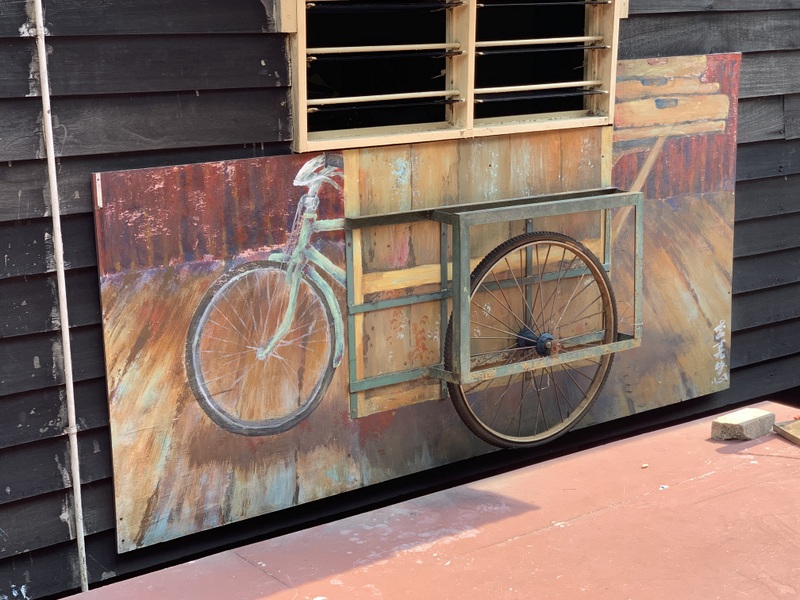
Two artworks on the Chew Jetty. An original Zacharevic on this jetty has been destroyed.
There are many, many more, which often did not really appeal to me.
During my last stay in the Netherlands, I visited Leiden and I was very enthusiastic about this historic town. This time I had arranged to have lunch with a friend in Utrecht and I decided to make it a daytrip, so I could explore another historic town.
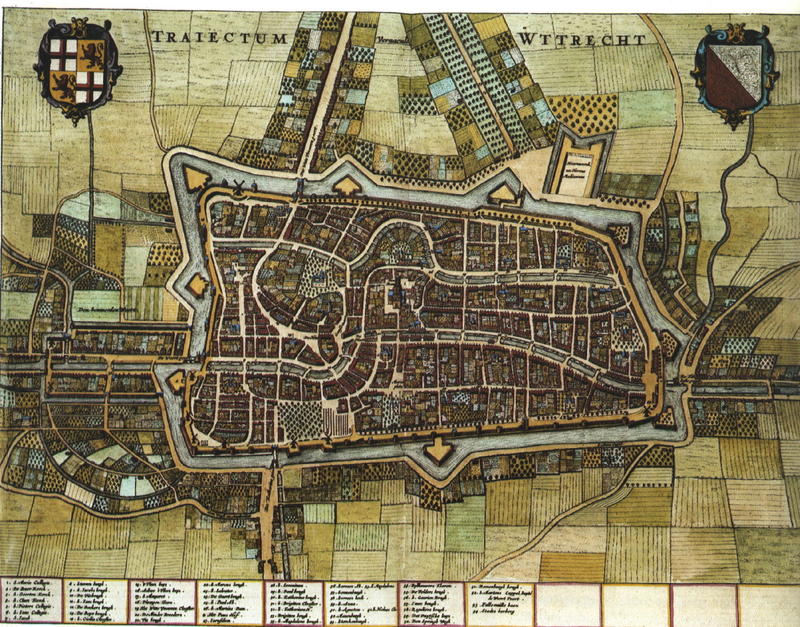
Let me start with three images. First a map of Utrecht , drawn in 1652. The town is surrounded by defensive moats (singels in Dutch).
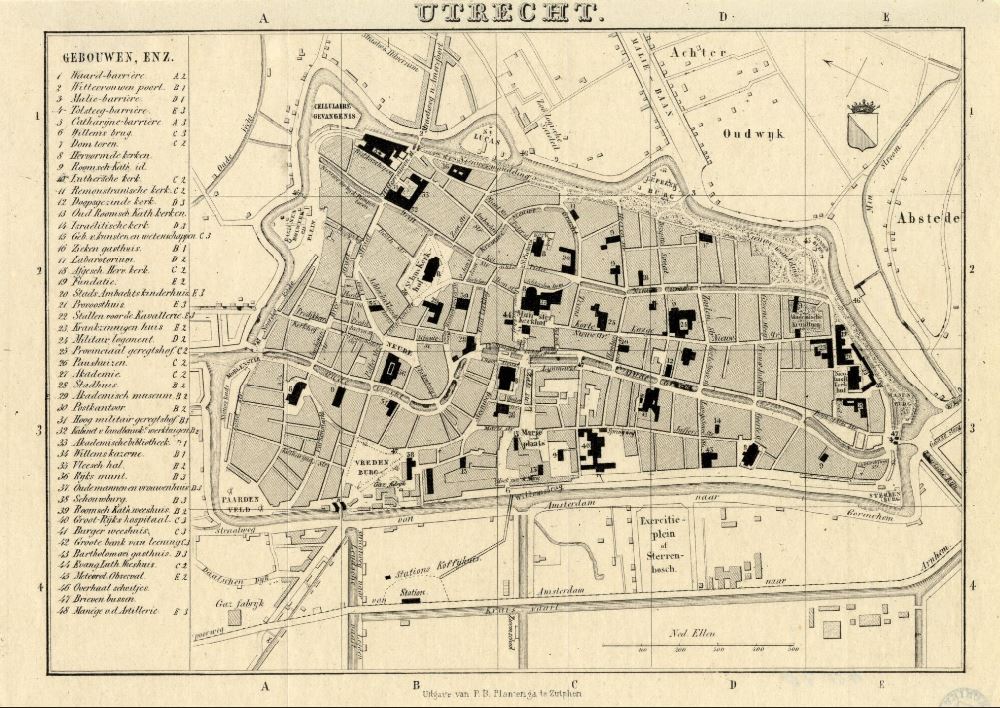
This map is from 1856. Still not much development outside the singels
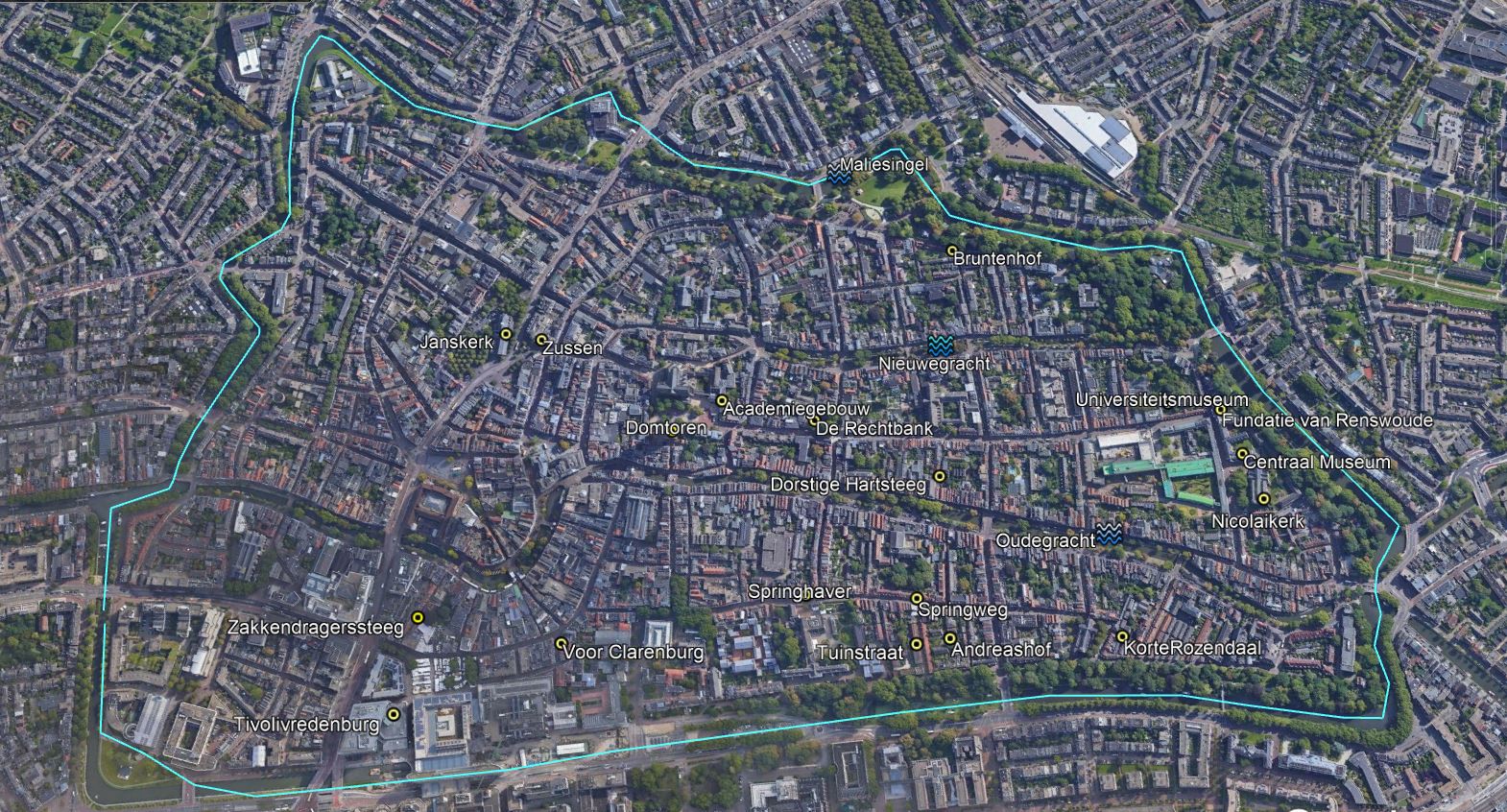
And here is a Google Earth screenshot from 2017. To guide the eye, I have marked the “singels” in blue and also indicated the locations where I have taken pictures. Click to enlarge. (I have rotated the GE image in such a way that North points in the same direction as in the old maps)
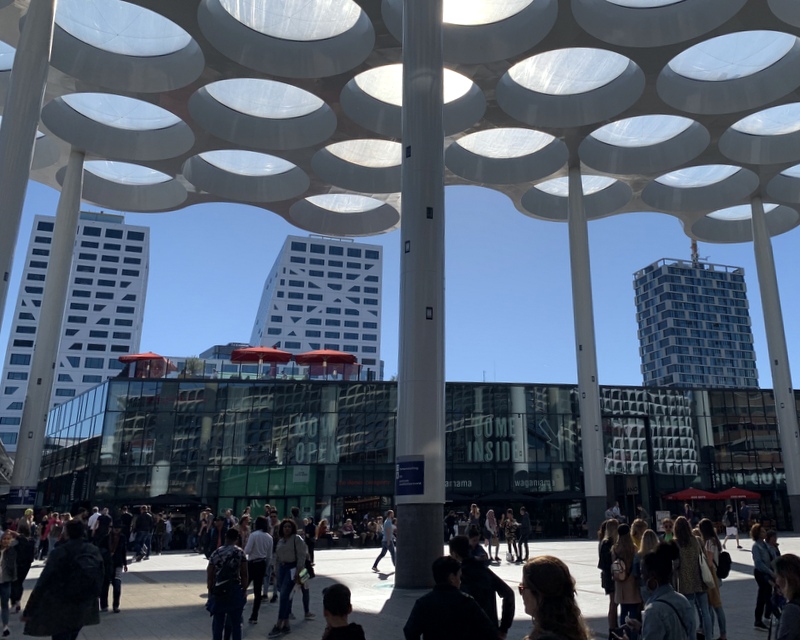
I arrived at Utrecht CS, the largest and busiest railway station in the Netherlands. To reach the historical town, I had to cross a shopping center to the Vredenburg square, from where I had a look at the TivoliVredenburg (2014), the modern music complex of Utrecht.
Utrecht Central
TivoliVredenburg
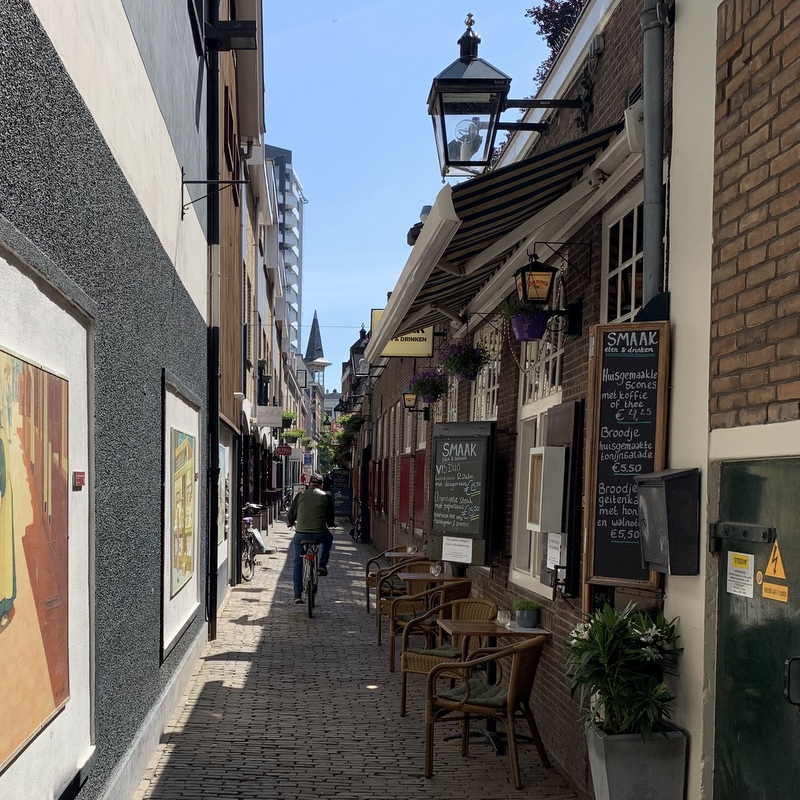
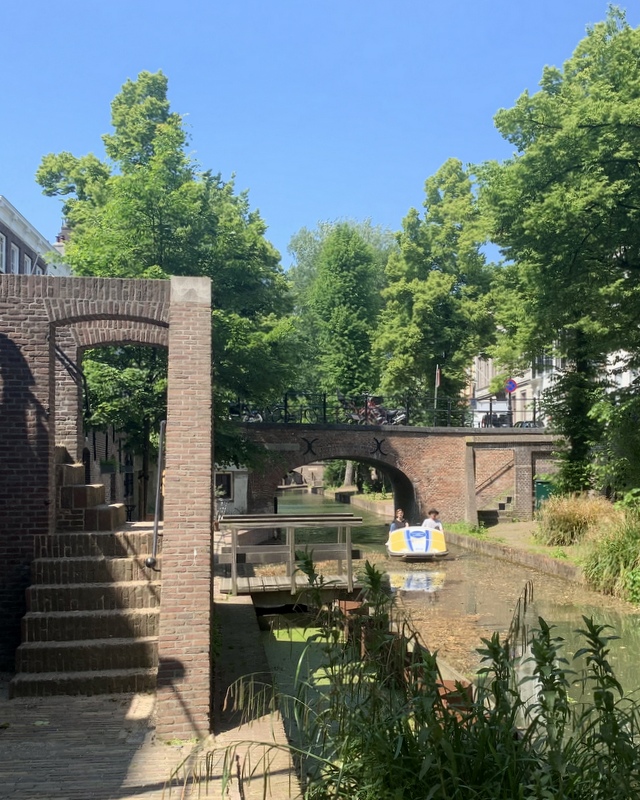
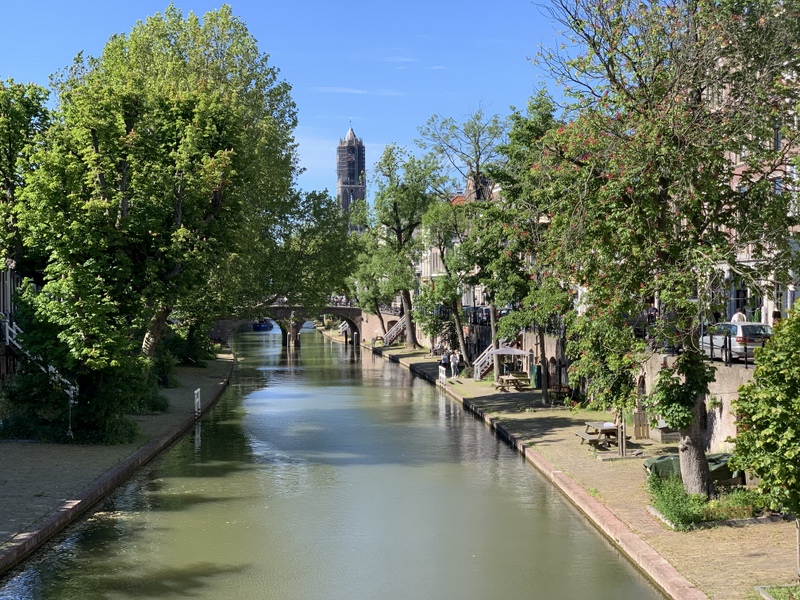
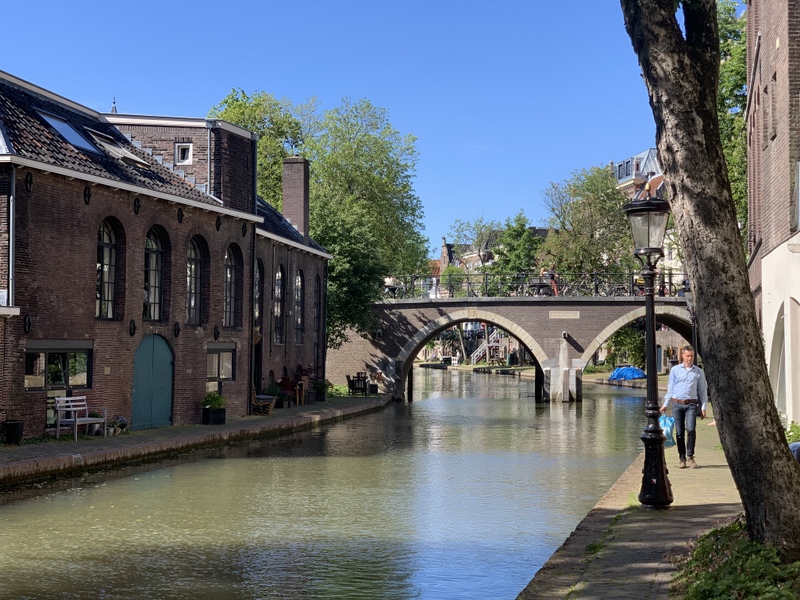
From the square I entered the Zakkendragerssteeg, mentioned for the first time in 1425 and reached the Oudegracht, dating back to the 12th century. In a few hundred meters from the 21th century to the Middle Ages 😉
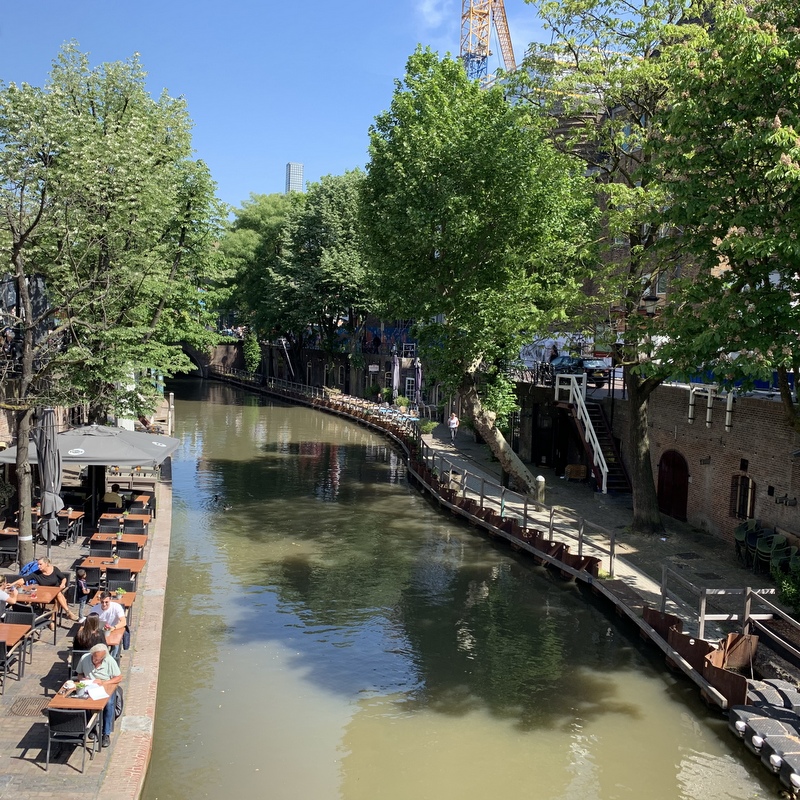
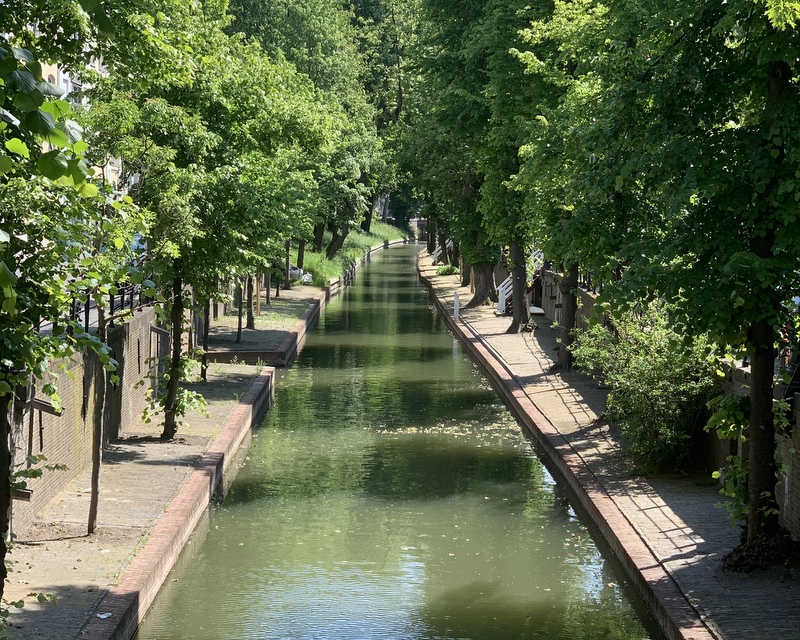
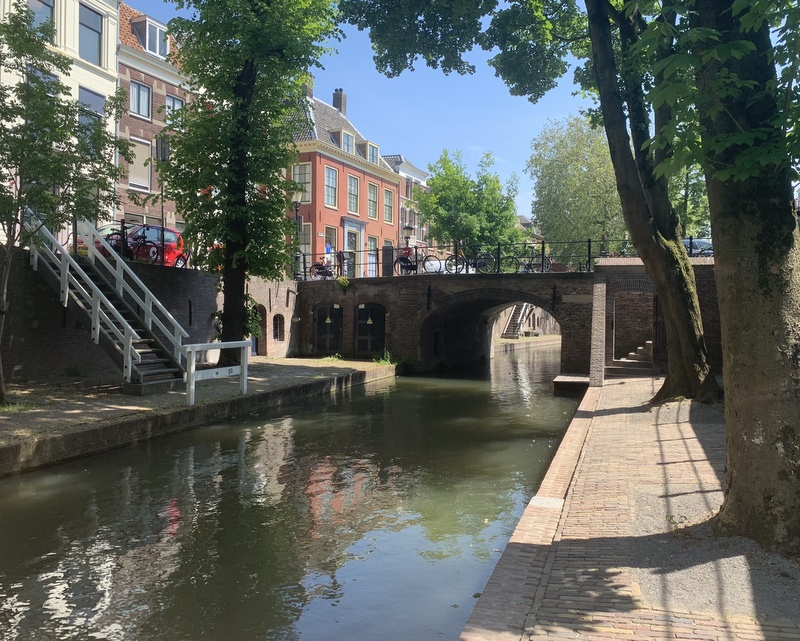
The canals of Utrecht (Oudegracht, Nieuwegracht and a few minor ones) are rather unique in the world, very different from the Amsterdam ones. They have functioned in the past as an inner-city harbour. The canals were connected to the rivers Rhine and Vecht, and alongside the canals there were wharves, giving access to basement cellars, underneath the houses of the merchants.
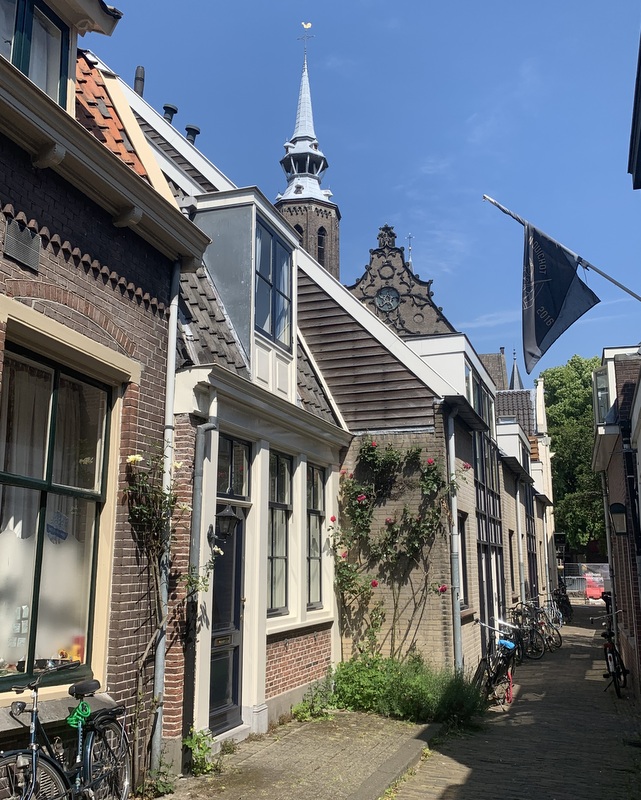
Zakkendragerssteeg
Oudegracht
I crossed the Oudegracht (more pictures later) and walked to the Janskerk, founded shortly after 1040, built in roman style, but of course modified many times later.
Janskerk (after 1040)
I had no time to visit the interior, and continued to the hallmark of Utrecht, the Domtoren (Dom tower) built between 1321 and 1382. With a height of 112 m it is the tallest church tower in the Netherlands. Work was being done on it during my visit.
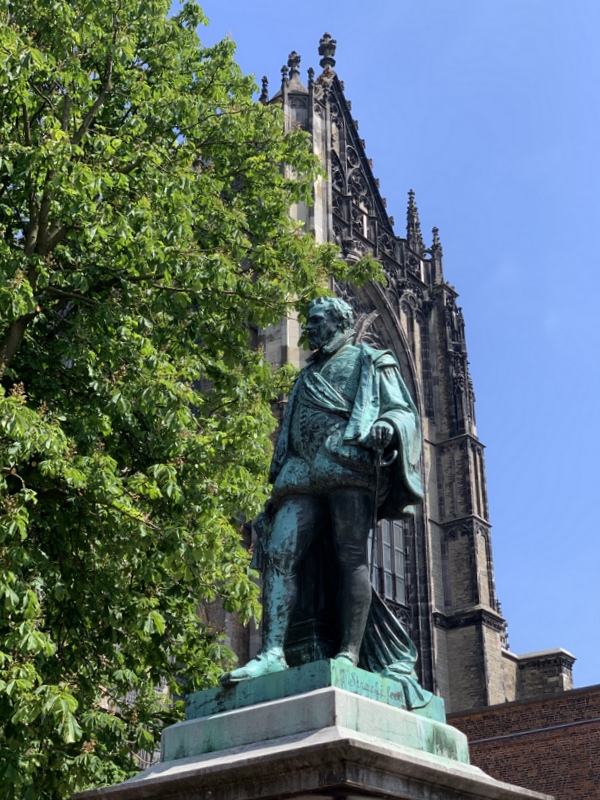
On the Dom square I took a picture of the statue of Jan van Nassau, the younger brother of William of Orange, who has been instrumental in the signing of the Unie van Utrecht (1579), regarded as the foundation of the Republic of the Seven United Provinces, during the war of independence with Spain.
Domplein met Domtoren
Standbeeld Jan van Nassau
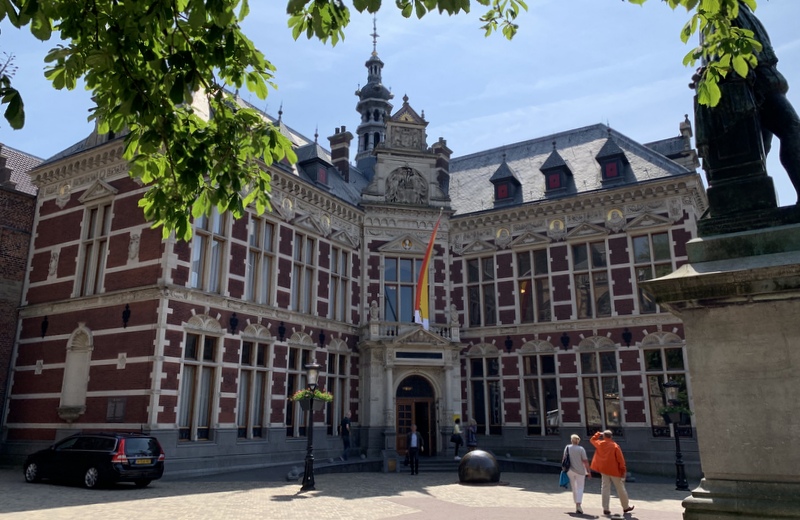
The Academiegebouw on the Dom square looks old, but isn’t ! It was built between 1891-94 in Dutch Neo-Renaissance style.
Academiegebouw (1891)
Then it was time for lunch. I met my friend at the Rechtbank, in earlier days a courthouse, now a popular cafe. He was one of my first students when I was a physics teacher, and is now a physicist himself…:-)
De Rechtbank
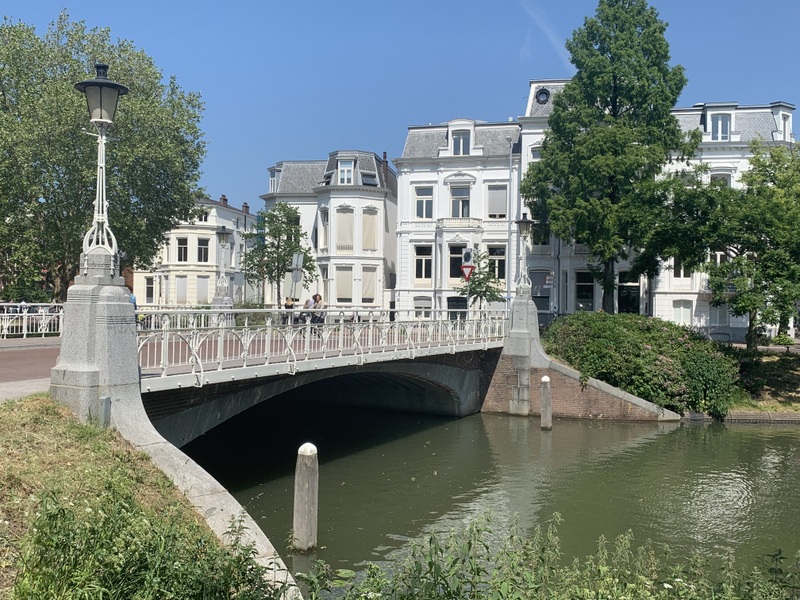
AFter our lunch I continued my walk, crossing the Nieuwegracht to the Maliesingel. The Nieuwegracht (New Canal) is actually very old, built around 1390, but still newer than the Oudegracht (Old Canal), which was built in the 12th century. The Maliesingel is one of the moats, still surrounding the old town.
Nieuwegracht
Herenbrug en Maliesingel
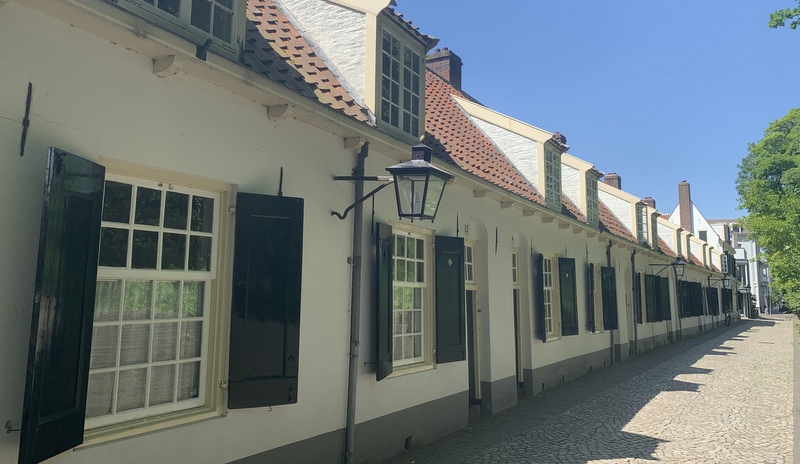
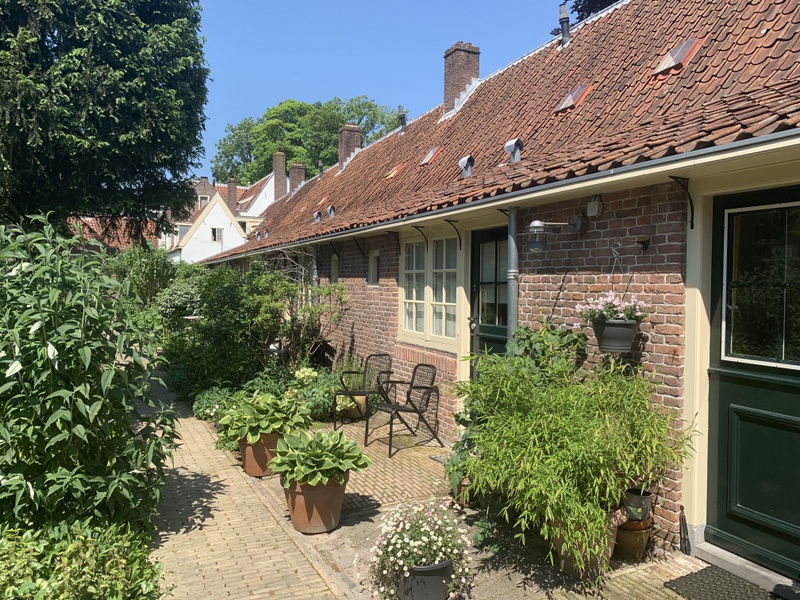
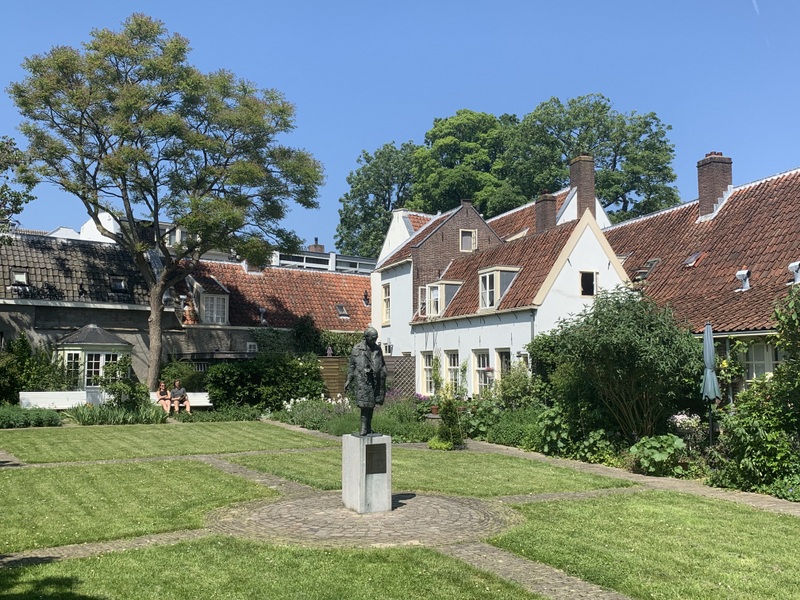
In the past, rich people sometimes built simple houses for the poor around a courtyard. The Dutch name for such a compound is “hofje”, in Utrecht you still find an alternative name : Kameren. The houses consisted basically of one room (kamer). Here is the Bruntenhof (Bruntscameren), built in 1621.
Bruntscameren
I wanted to visit the Centraal Museum, so I walked back to the Nieuwegracht and the Lange Nieuwstraat. This “New Street” dates back to ca 1300, same as the Dorstige Hartsteeg. The church tower you see in the background, belongs to St Catherine’s Cathedral, no time to visit.
Nieuwegracht
Quintijnsbrug
Romantic 🙂
Dorstige Hartsteeg
Walking to the Centraal Museum I noticed a sign for The University Museum and the Hortus , the former botanical gardens of the University.
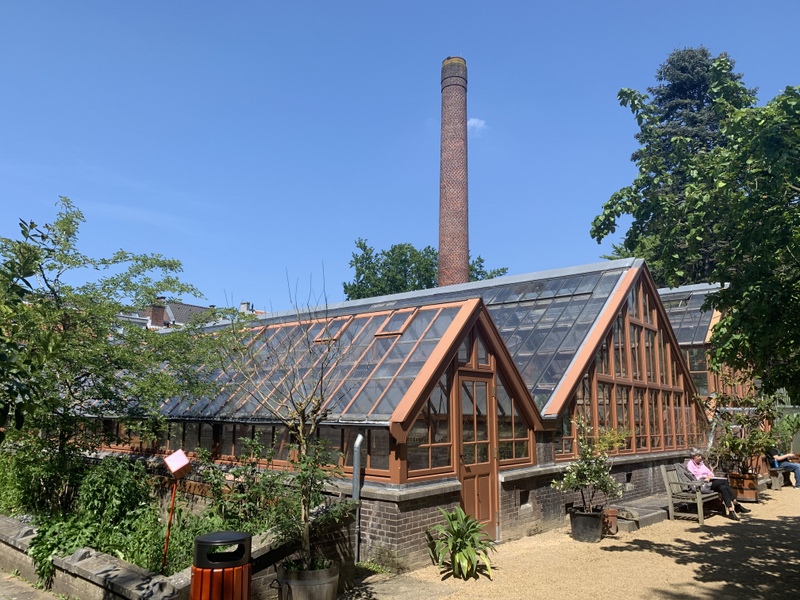
Hortus
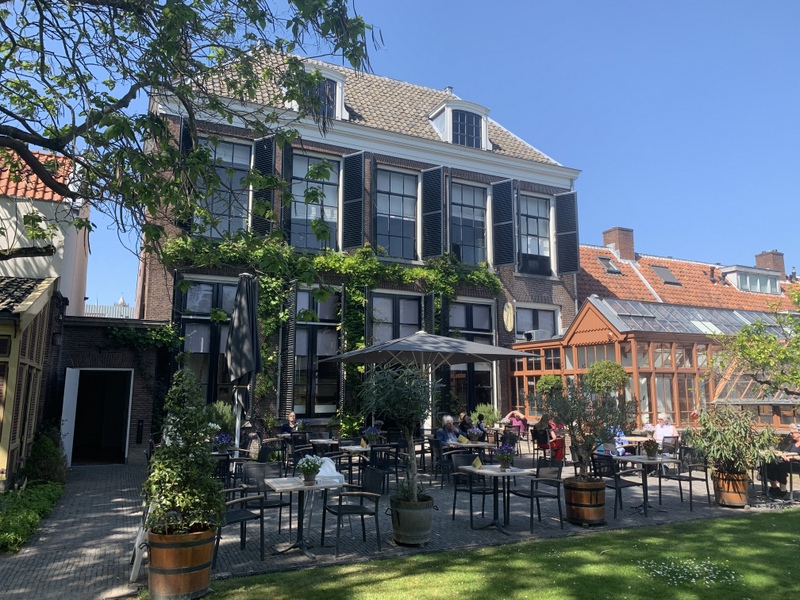
Hortus Cafe
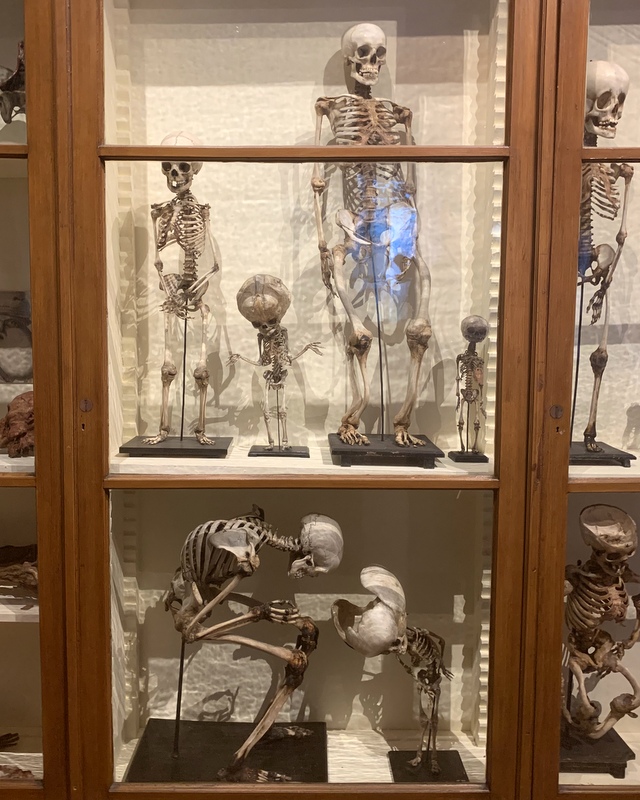
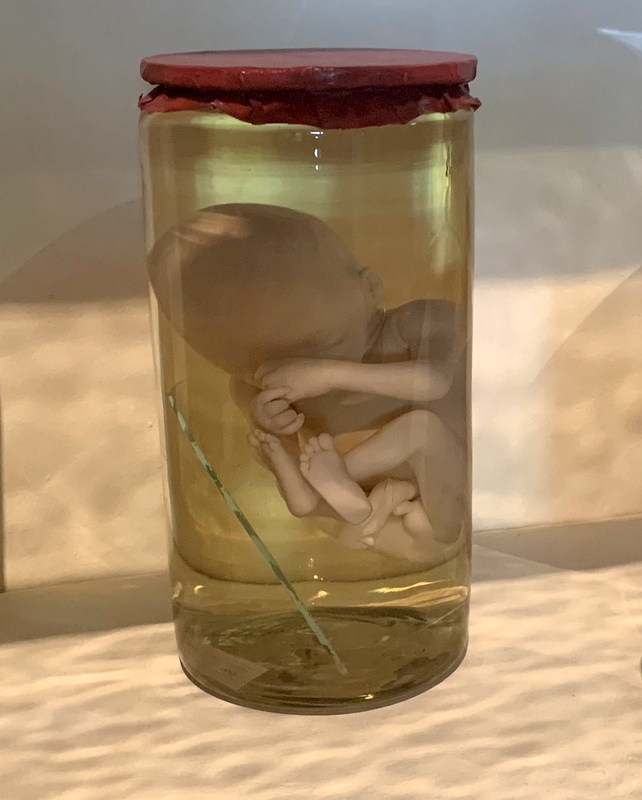
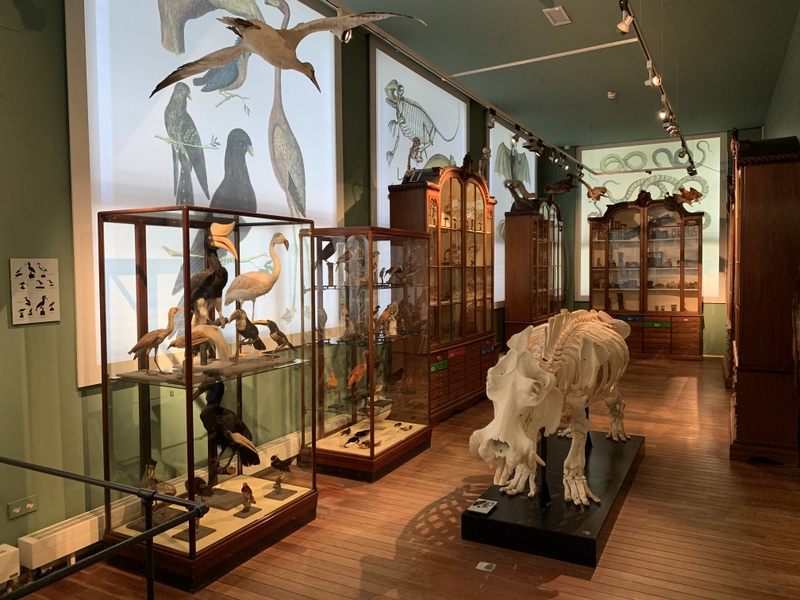
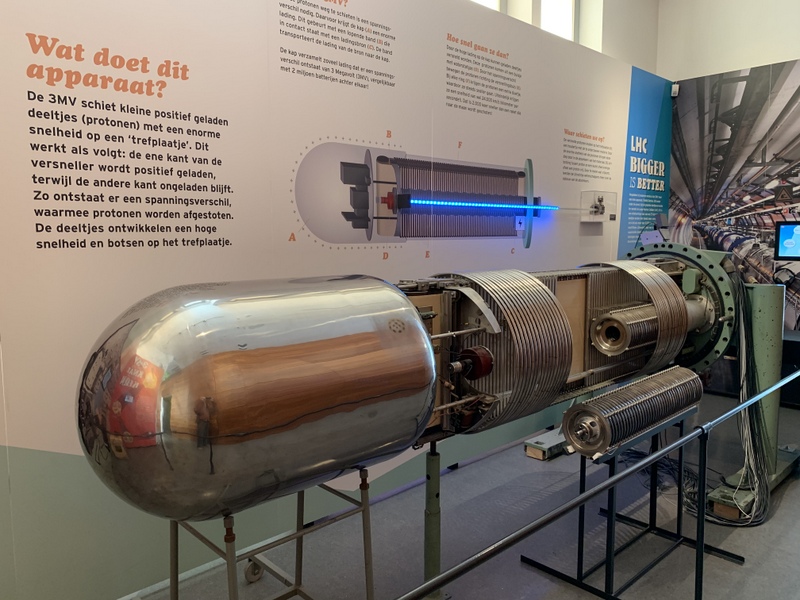
I spent some time in the University Museum. Interesting mixture of sometimes weird objects. As a physicist I was of course interested in the particle accelerator, in this case even more, because my friend told me that he had actually been working with this machine, during his research!
Malformities
Fetus
Ape and Human
Cabinet of Curiosities
3MV Van de Graaff-generator
Walking to the Central Museum I passed the Beyerskameren (1597), another charity project to give (free) housing to the poor.
Beyerskameren
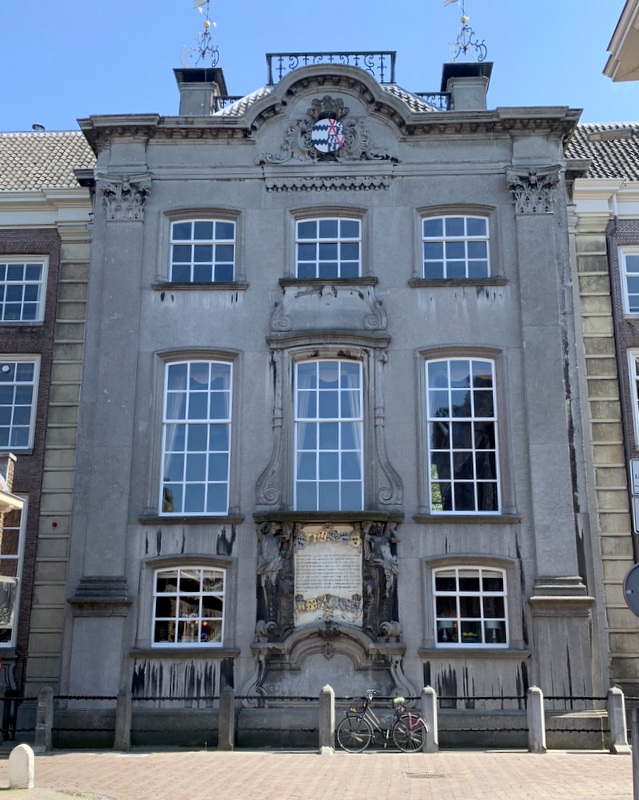
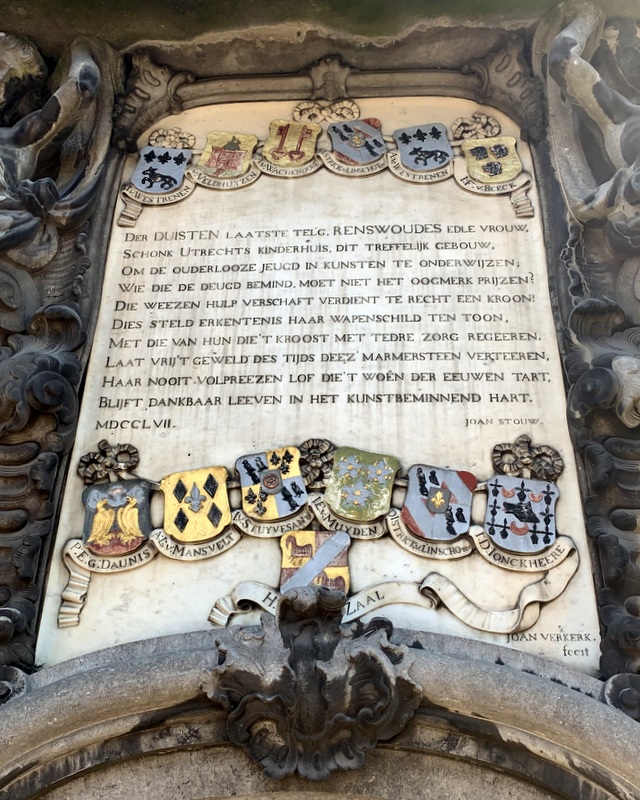
The end of the Lange Nieuwsstraat is dominated by the Fundatie van Renswoude. Built in Rococo style in 1757, it was meant to provide education for “intelligent” orphan boys. The interior must be magnificent, but is only open to the public at specific times, like the Open Monument Day.
De Fundatie van Renswoude (1757)
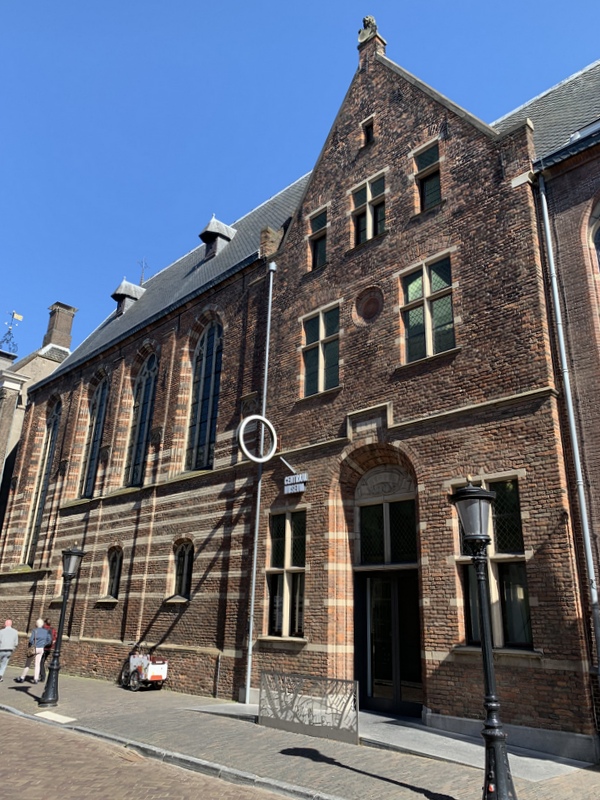
The Centraal Museum is the main museum of Utrecht, founded in 1838. It has an interesting collection of “old” art, modern art, applied art, the history of Utrecht etc. For me it was the first time that I visited the museum. Therefore quite a lot of pictures.
Centraal Museum
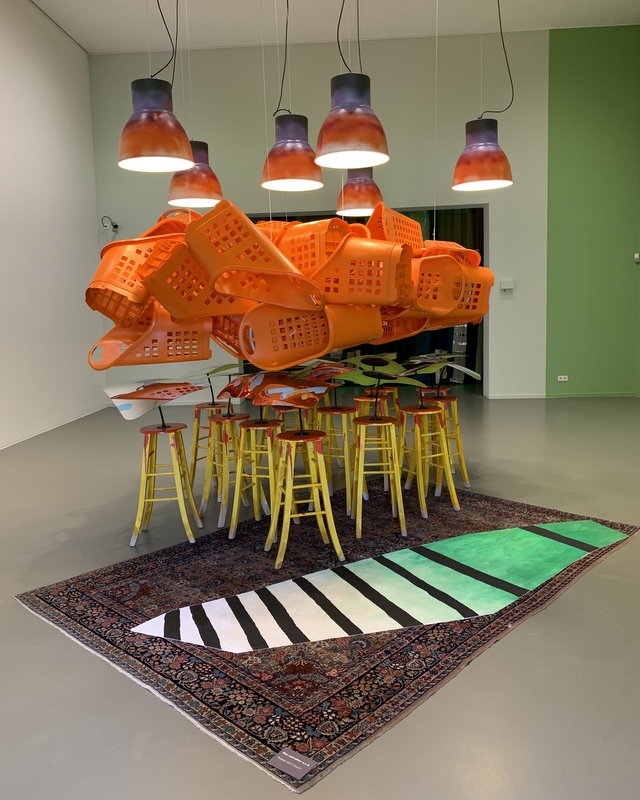
Jessica Stockholder, 2014
J.H. Moesman, 1933
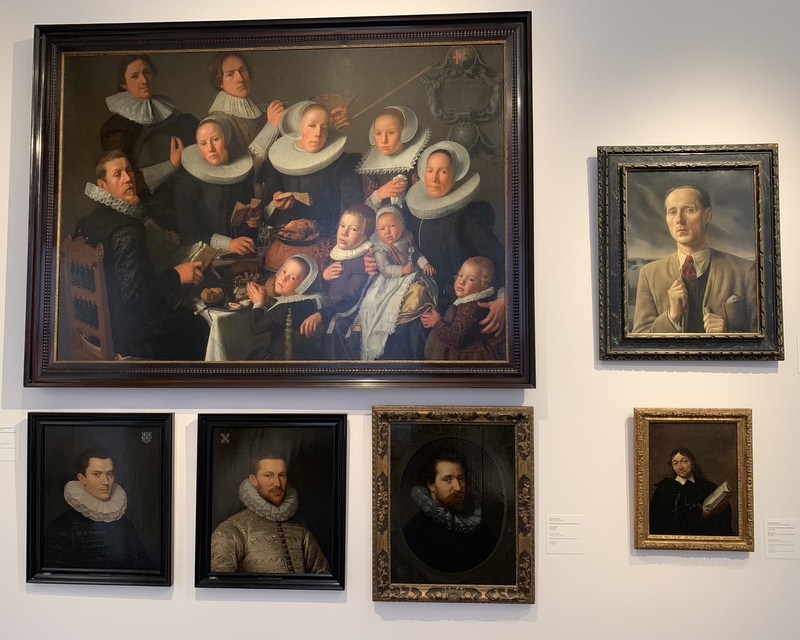
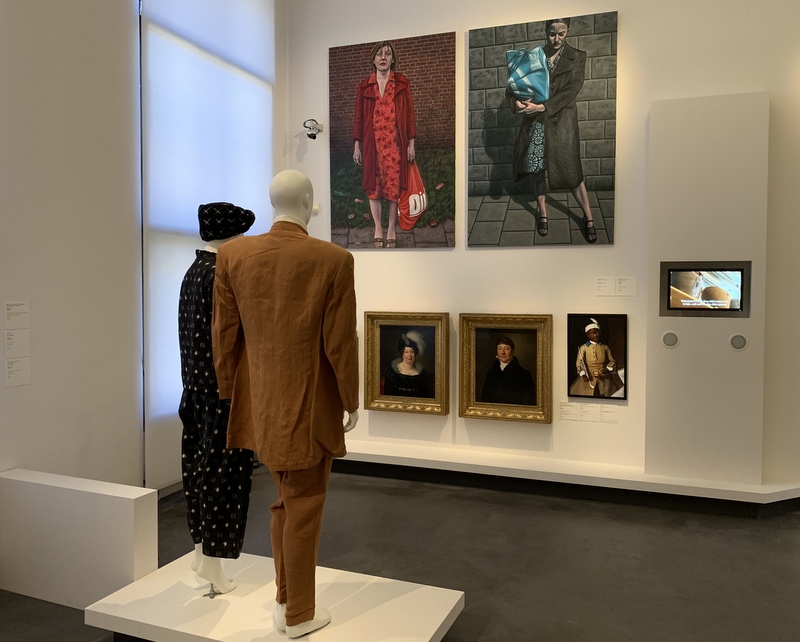
Many museums nowadays show their collection, combining the various art forms, like here: paintings, furniture, fashion. I really like this approach..
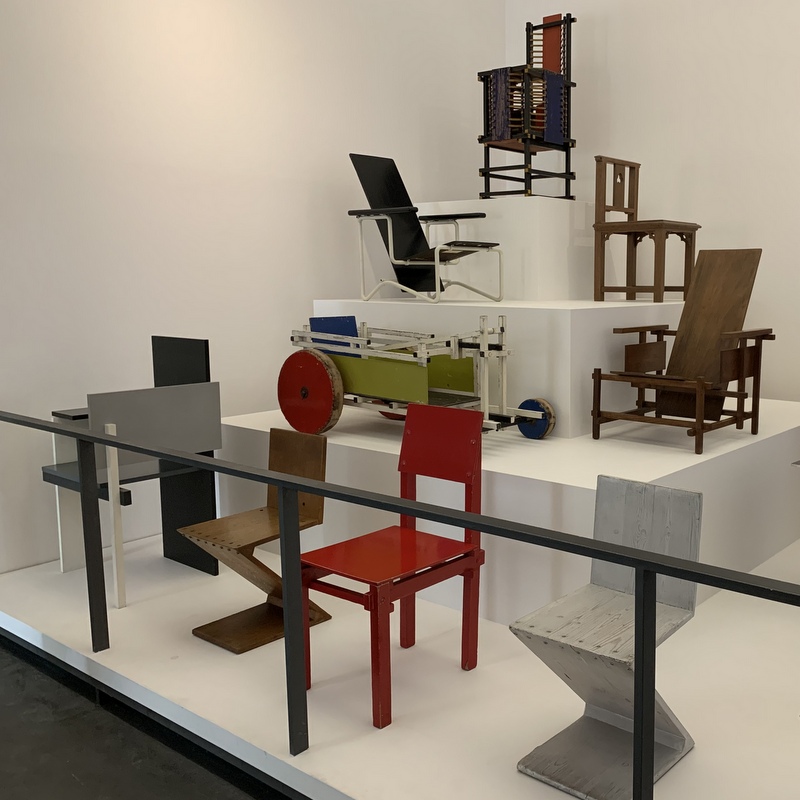
Of course the museum has lots of Rietveld furniture. The dollhouse is from the end of the 17th century and obviously not meant for children 🙂
Rietveld furniture
Antique dollhouse
Two examples of art mixing. Left 17th century portraits combined with a self-portrait by Carel Willink (1922). Right various forms of fashion.
Roelant Saverij (1576 –1639) was a Golden Age painter who lived a large part of his life in Utrecht.
Orpheus en de dieren, Roelant Saverij, ca. 1630
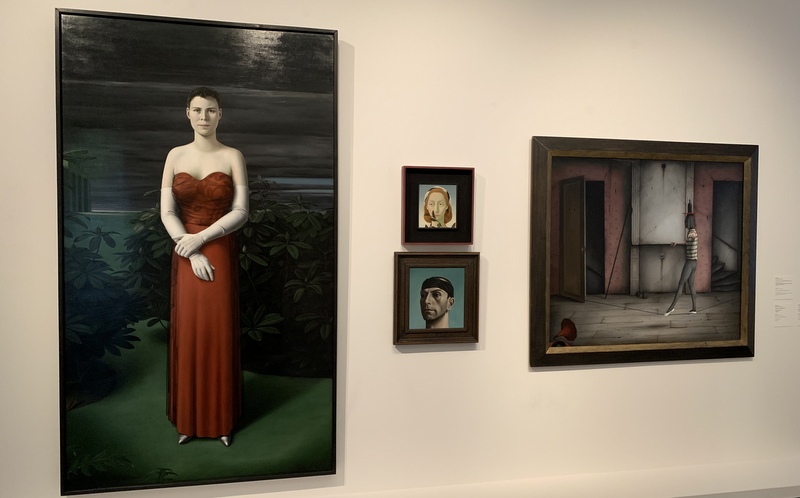
Pyke Koch 1901 – 1991 ) can also be considered an Utrecht painter. He and Carel Willink were the main representatives of Dutch Magic Realism. He was a perfectionist, his oeuvre is quite small, and I am always happy to find one of his paintings in a museum. The Centraal Museum has quite a few!
Pyke Koch
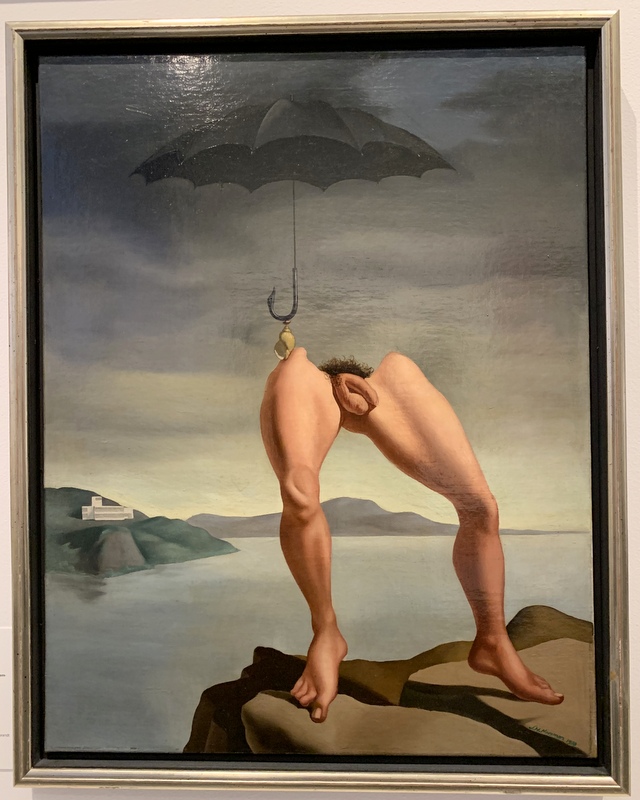
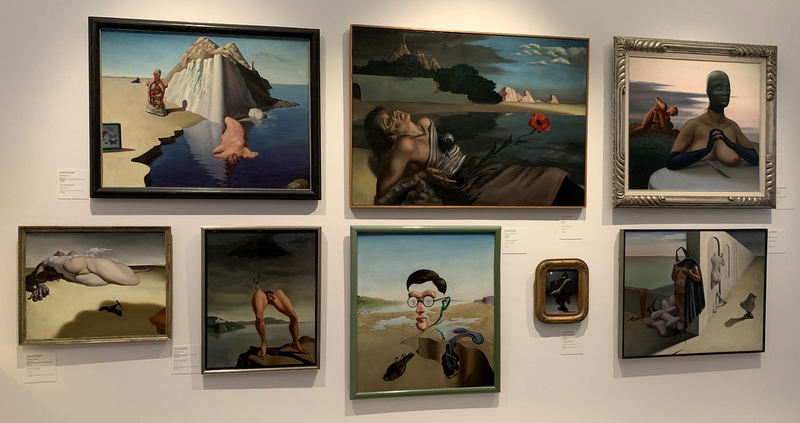
J.H. Moesman (1909-1988) was born in Utrecht and lived there almost all of his life. A Surrealist painter, the “Dutch Dali”. The museum houses a large collection of his works.
J.H. Moesman
I spent only about one hour in this museum, a next time I will stay longer, there is a lot to see, but I had to make my way back to the station.
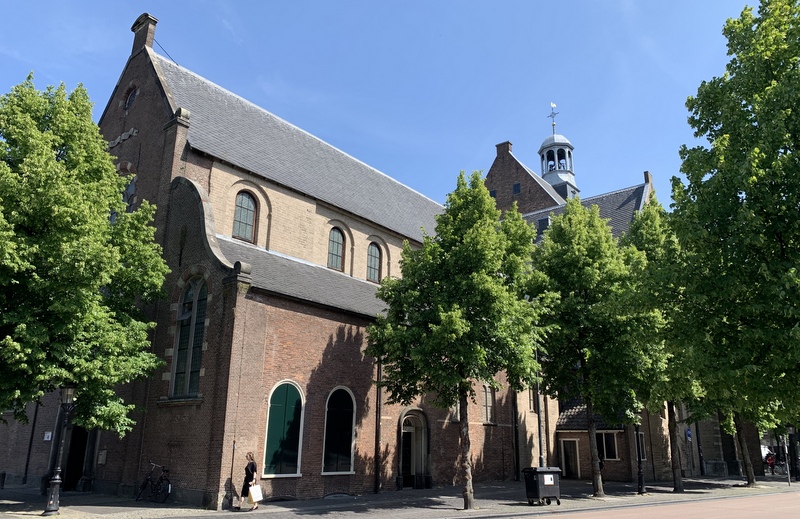
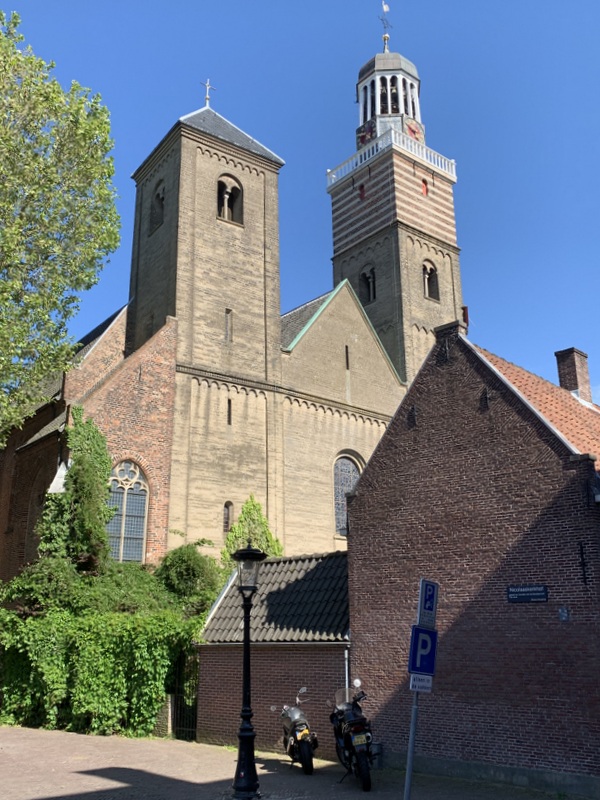
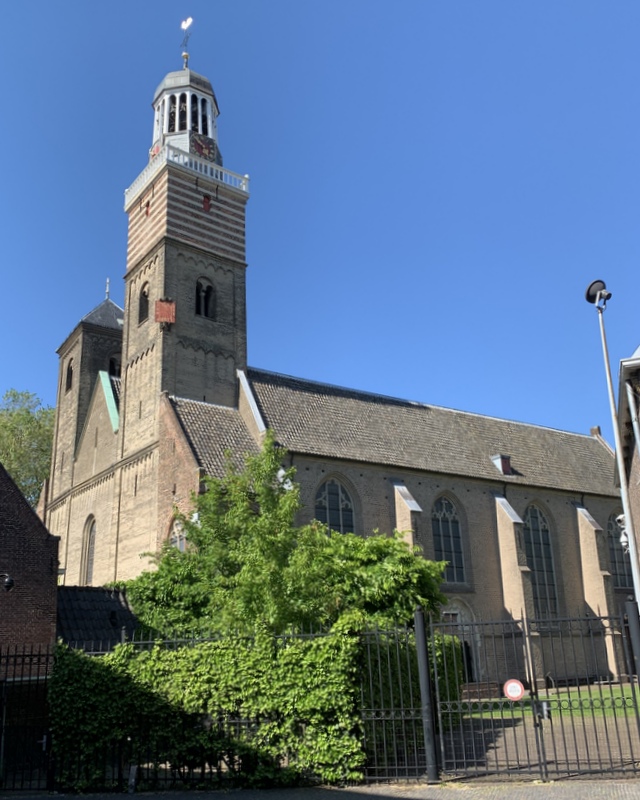
The Nicolai church is located next to the museum. Its origins go back to the 12th century, the front with the two towers is still in the original Roman style. In 1586 one tower was raised to make room for a carillon.
Nicolaïkerk
Nicolaïkerk
A few more pictures of de Oudegracht.
Oudegracht
Vollersbrug
On my way back, I visited a few more “hofjes”. Lot of heritage buildings, a very pleasant part of Utrecht.
Korte Rozendaal
Andreashof
Tuinstraat, Hofje van Veelo
Springweg 102
But Utrecht is not only interesting because of its heritage. It is a lively town, with many cafes, restaurants and entertainment outlets. And there is a lot of Jugendstil in Utrecht, one of my architecturale favourites. But that will be for a future visit.
Zussen, Jugendstil (1904)
Springhaver
Voor Clarenburg
When friends of mine are visiting the Netherlands, I sometimes advised them to skip overcrowded Amsterdam and visit Utrecht instead. Now that I have walked around myself, I will keep telling them: Visit Utrecht!
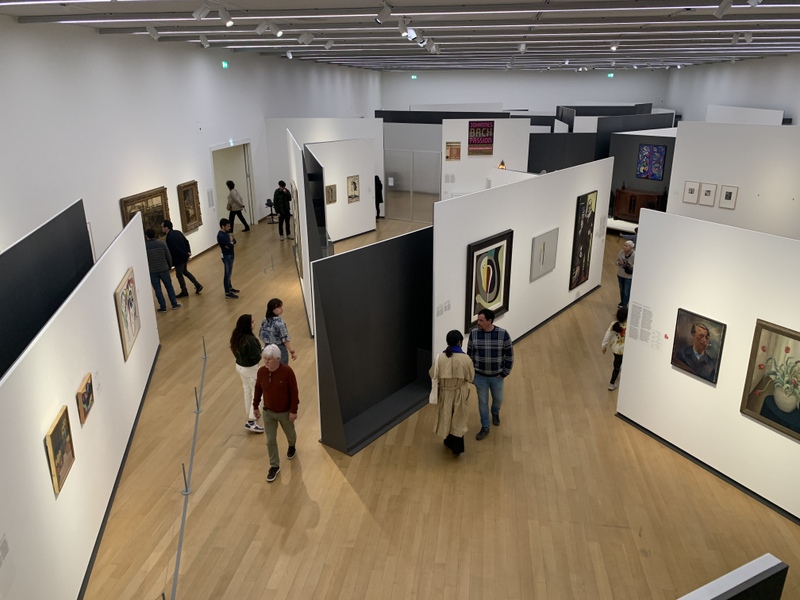
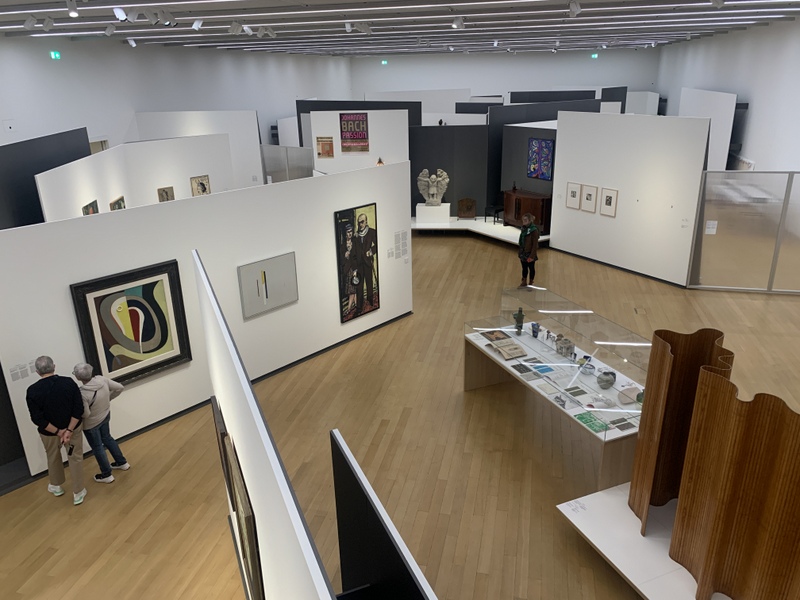
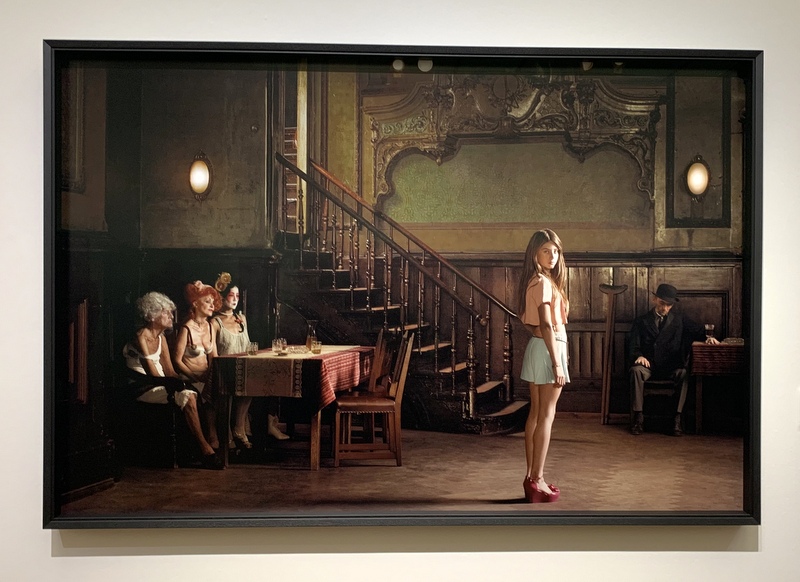
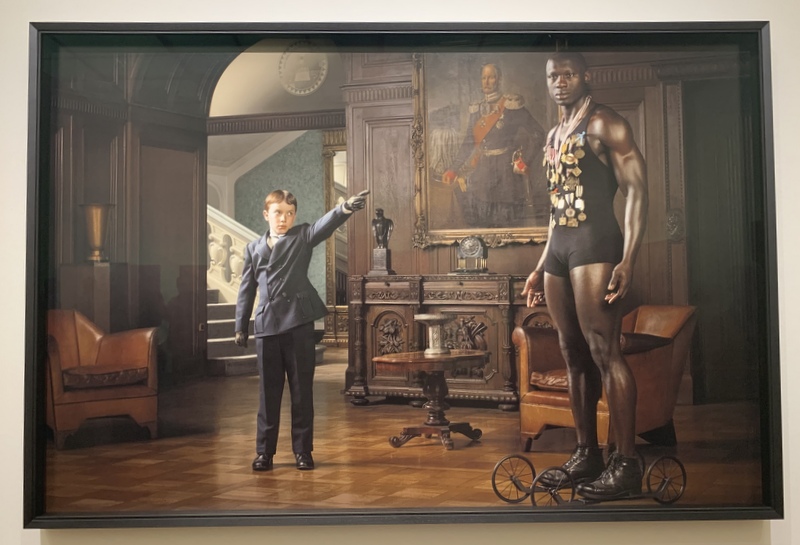
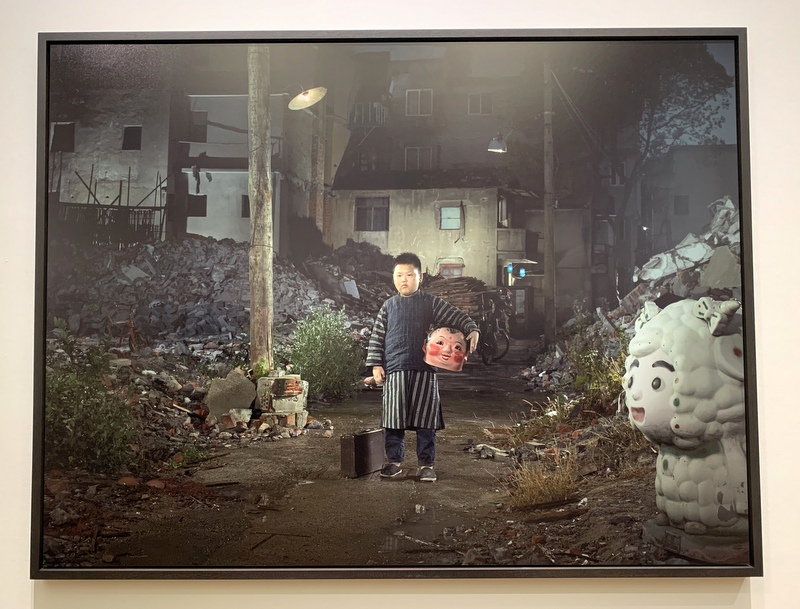
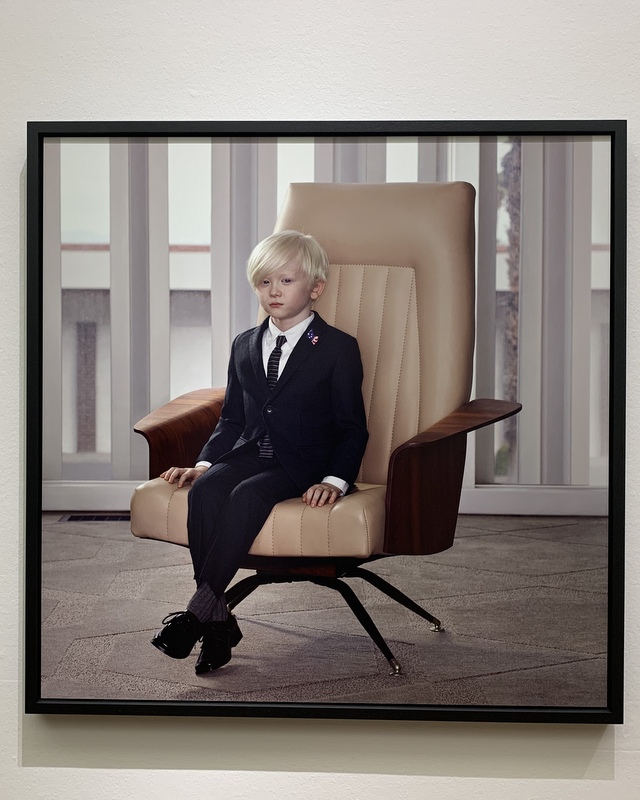
To celebrate the 60th birthday of Dutch photographer Erwin Olaf a double retrospective exhibition of his work has been held in the Gemeentemuseum and the Photography Museum, both in Den Haag.
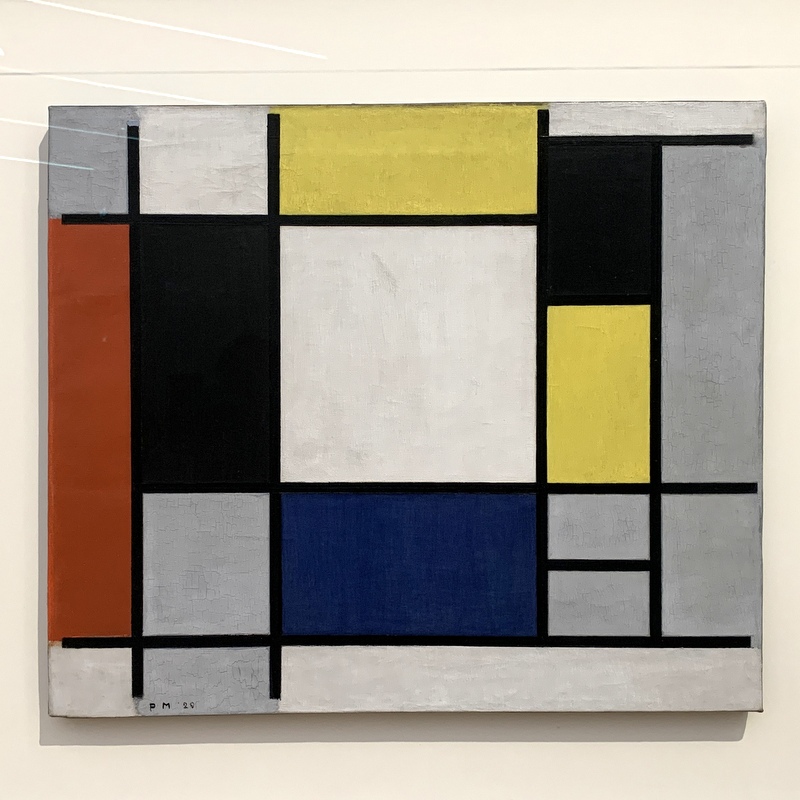
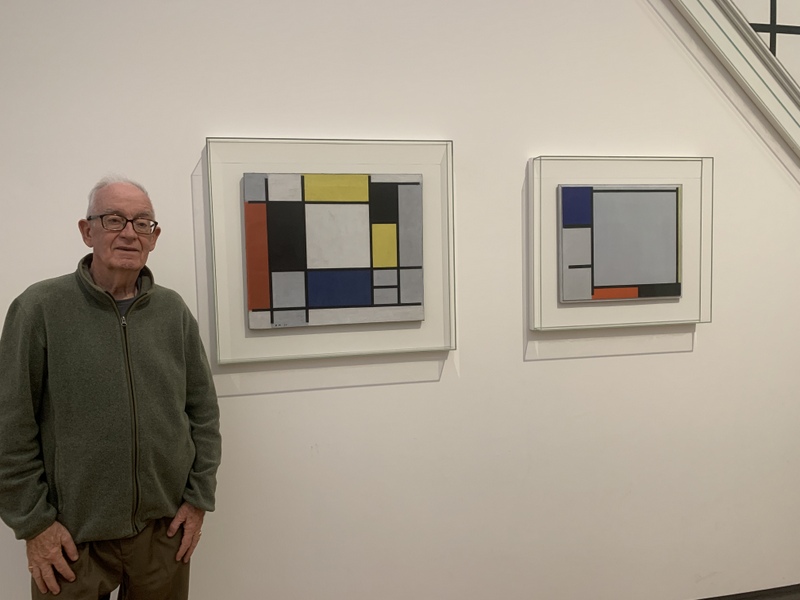
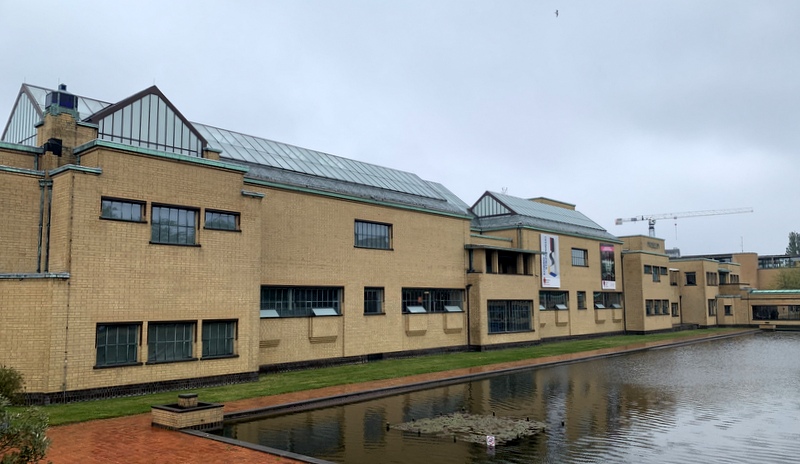
I have always been a fan of him, so during my recent trip to the Netherlands, Aric and I made a day trip to Den Haag. The Gemeentemuseum is one of my favourite museums. The building, designed by Berlage and constructed between 1931-1935, is an artwork itself, and the museum houses the world largest collection of Mondrian paintings. My last visit was in 2017, More museums in Den Haag
Composition de lignes et couleur: III, 1937
Victory Boogie Woogie, 1943 -1944
I was very impressed by the Erwin Olaf exhibition. I was familiar with his older work, but not really aware of his development during the last decades. As the Gemeentemuseum describes him, he is not only a photographer but has become a digital image-maker and storyteller.
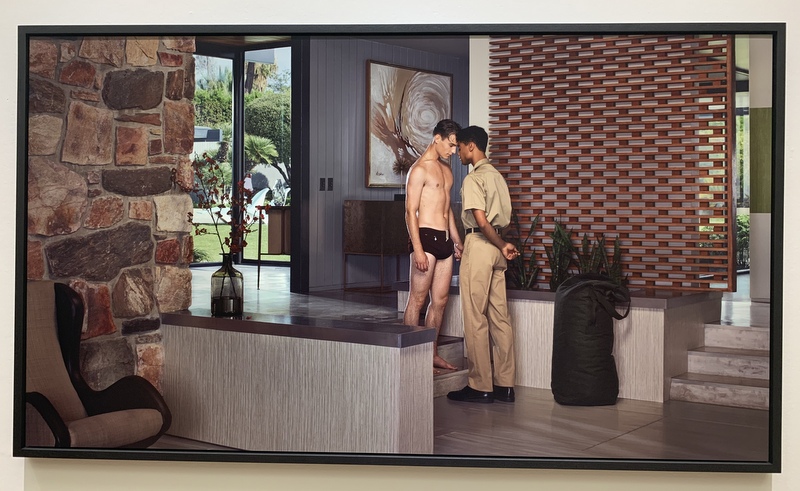
Here are two of his recent works, that especially fascinated, and also intrigued me.
Self Portrait with Alex (2018)
The Farewell (2018)
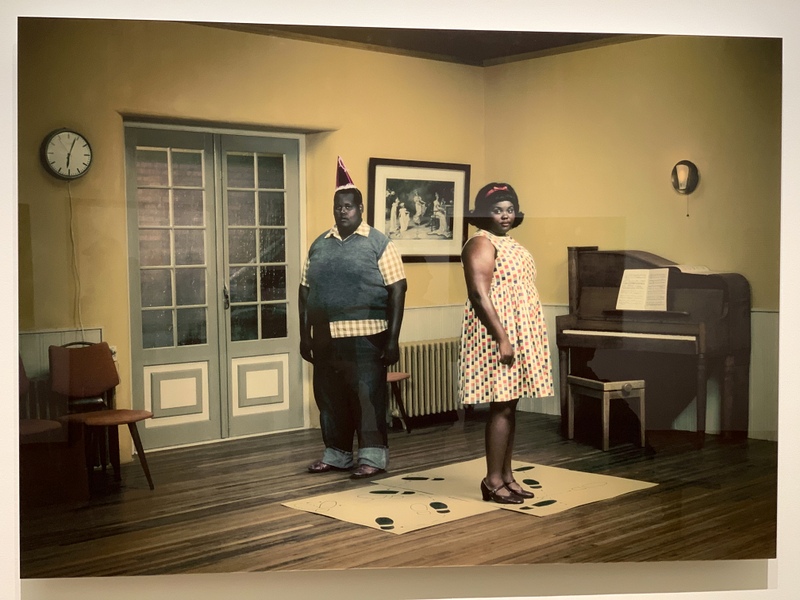
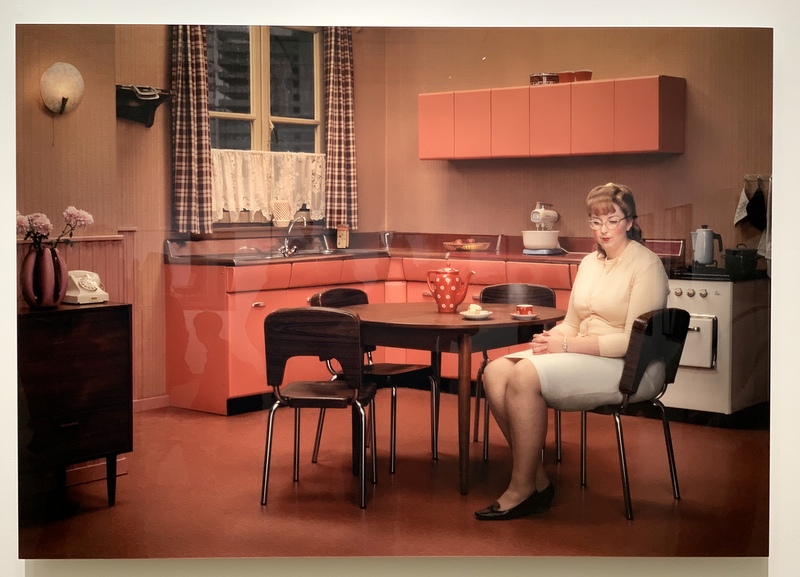
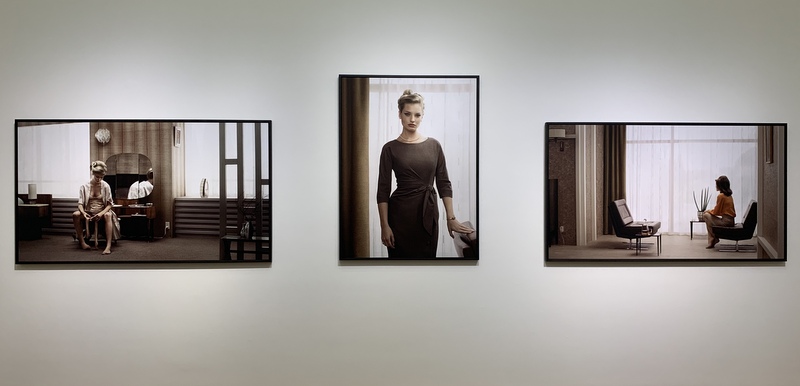
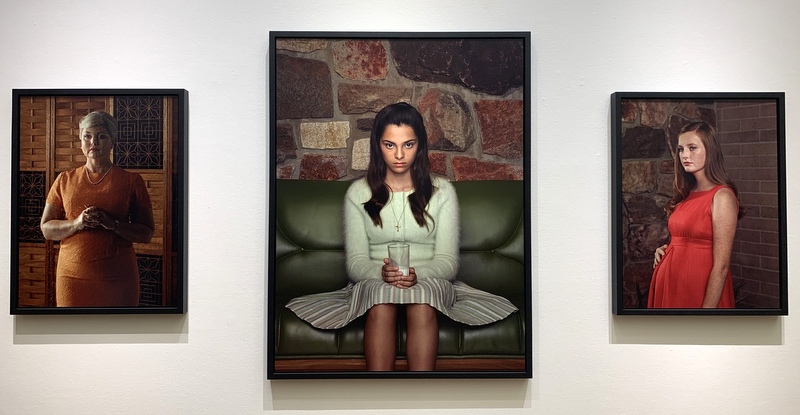
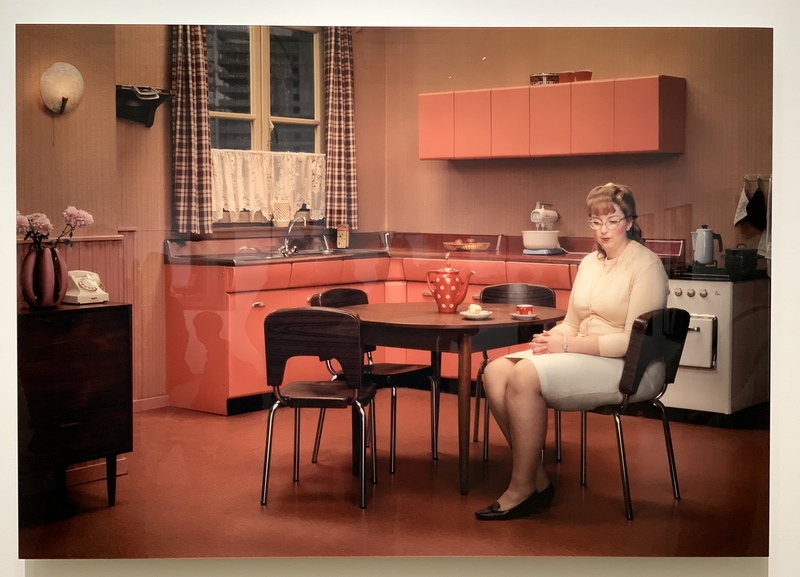
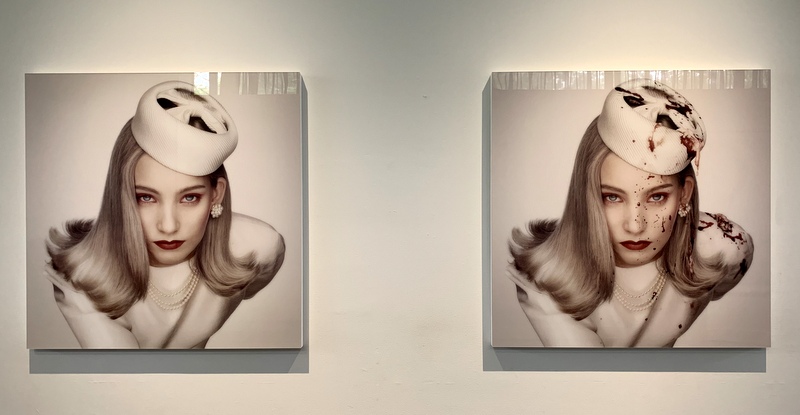
What struck me is the lack on interaction between the two persons. They seem to be living in their own world. Here are a few more examples.
More persons, or one only, I get the same feeling of loneliness and isolation. With all of these (large-scale) photographs, you are wondering about the story behind it. And of course admiring the sheer technical perfection!
The Kitchen , 2005
Masonic Lodge, Dahlem (2012),
The Journey (2017)
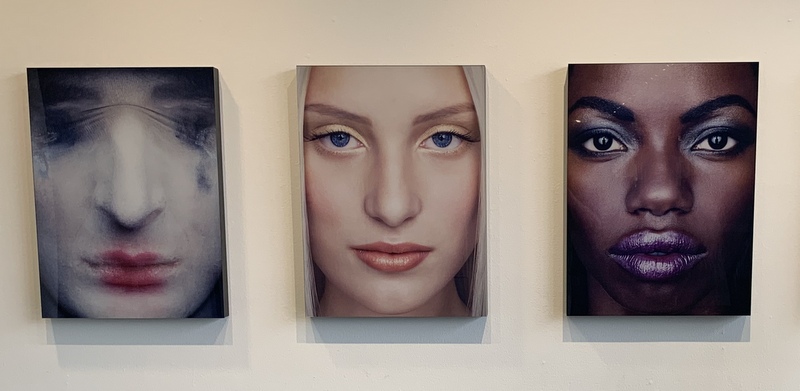
A selection of portrait photos
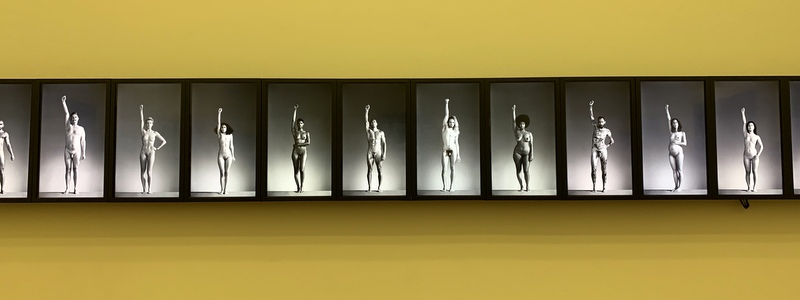
Erwin Olaf is also an installation artist.
Karussell (2012)
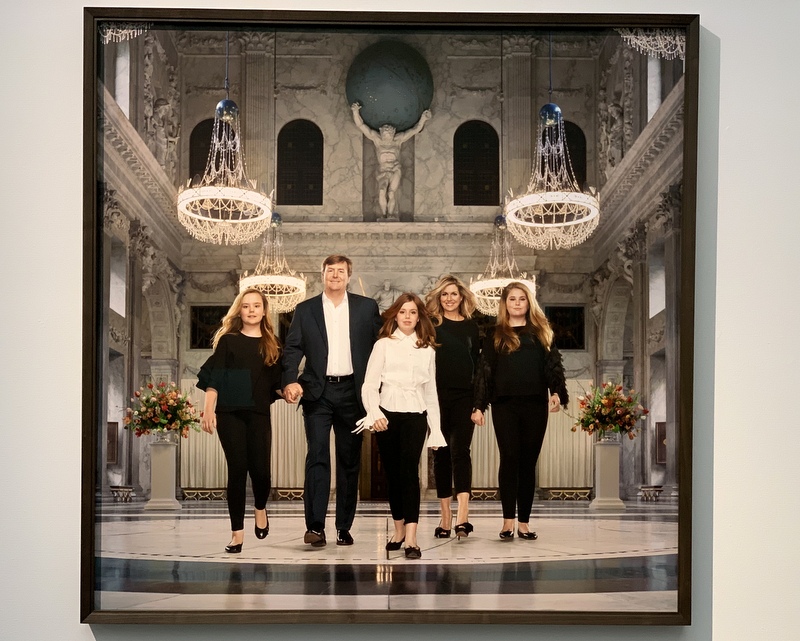
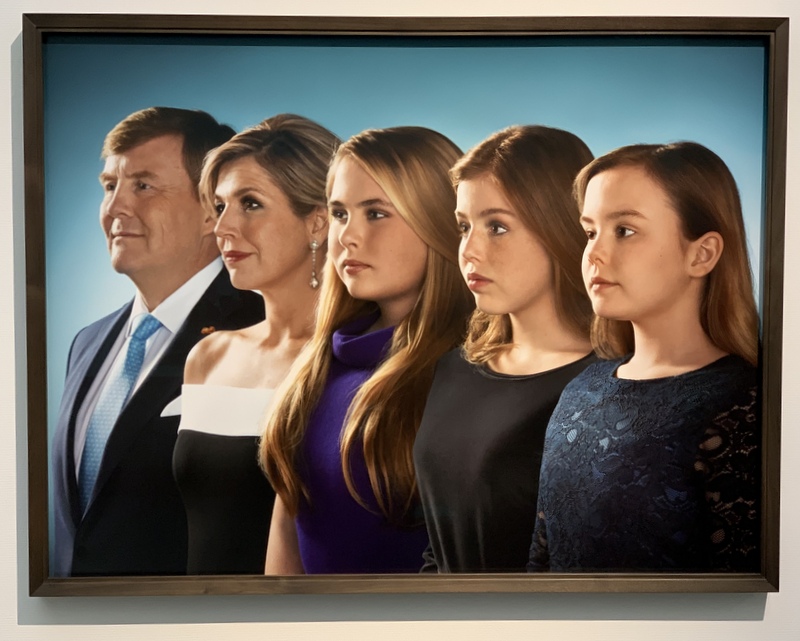
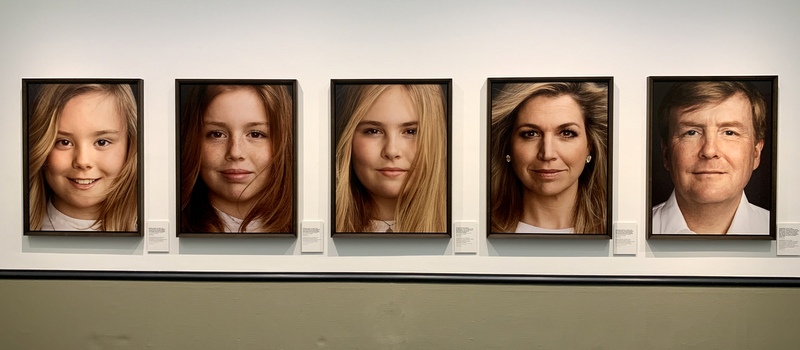
Last year he has made a widely acclaimed series of portraits of the Dutch Royal Family.
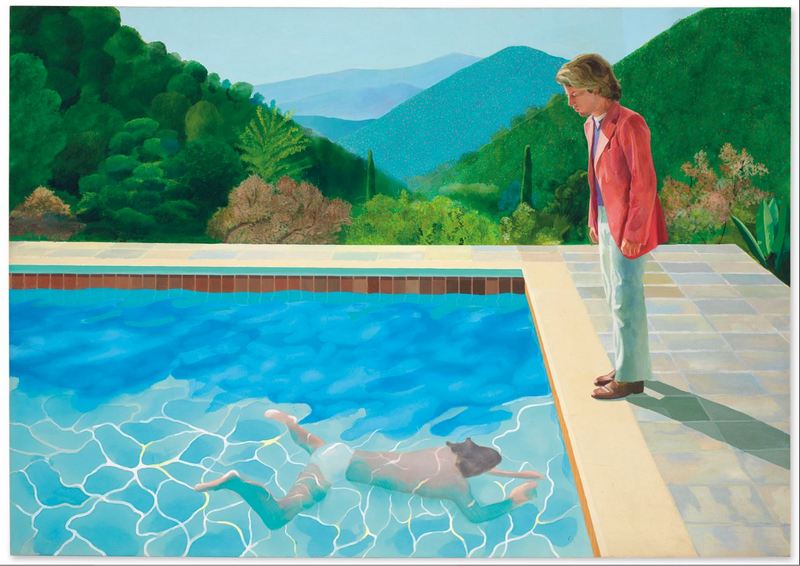
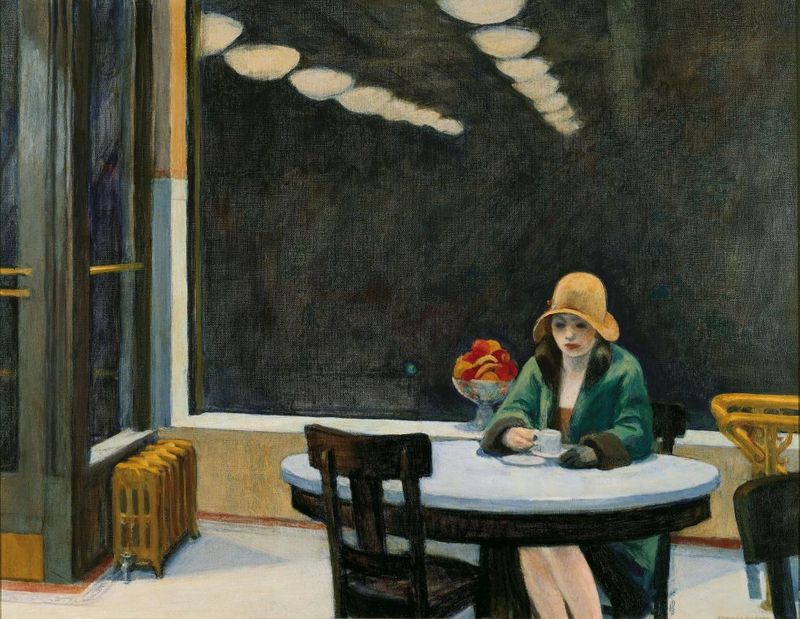
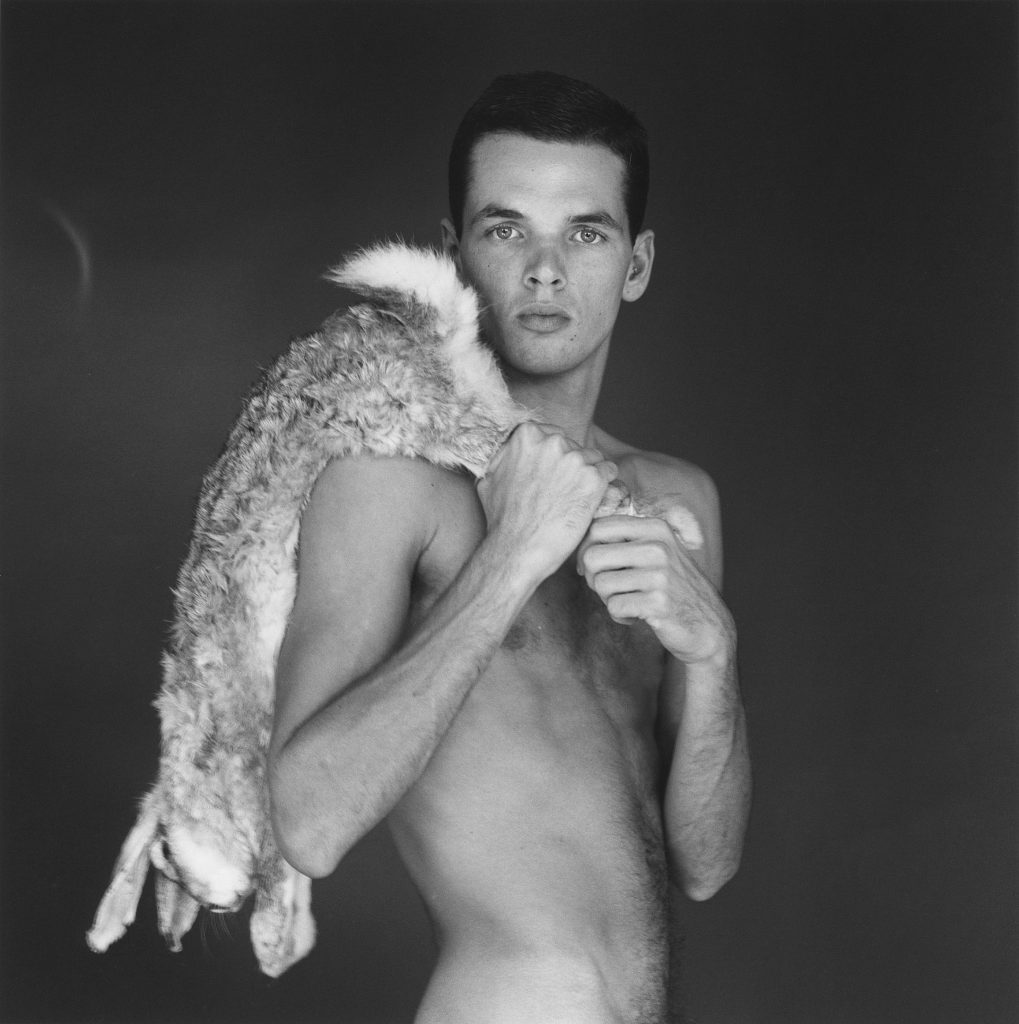
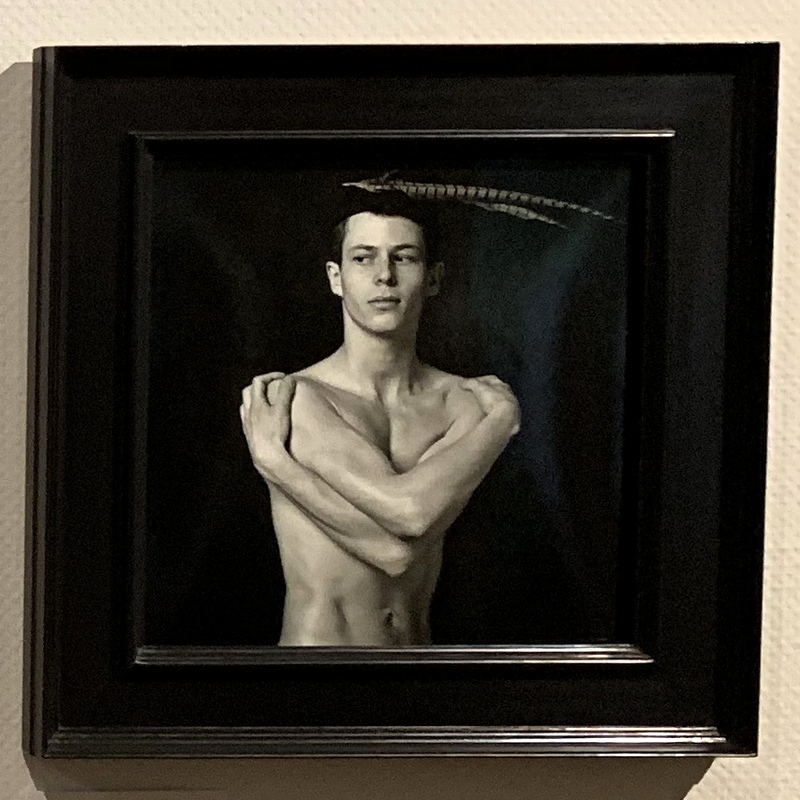
I enjoyed this exhibition of his recent works very much! Maybe also because some of his photographs reminded me of works by other favourite artists of mine 😉
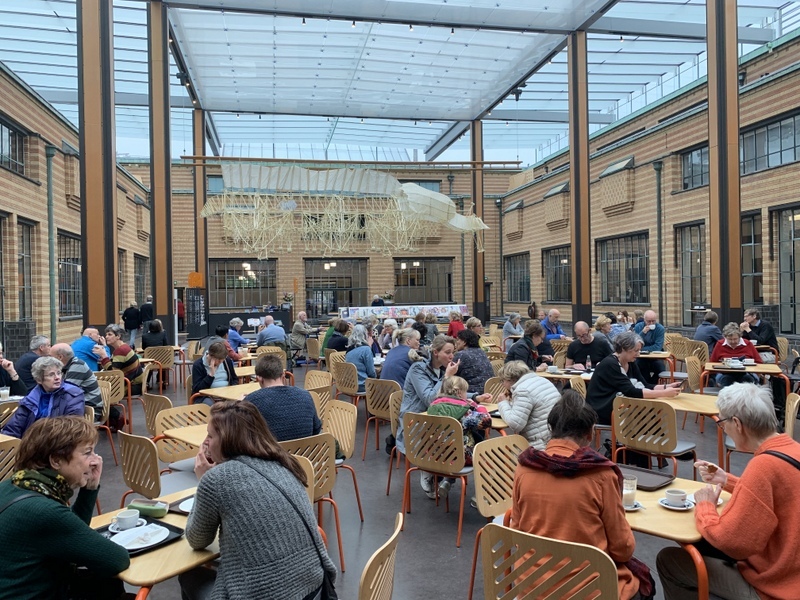
Before moving to the Photography Museum for the second part of the exhibition, we first had some food in the restaurant. The right picture shows my failed attempt to evoke loneliness and isolation 😉
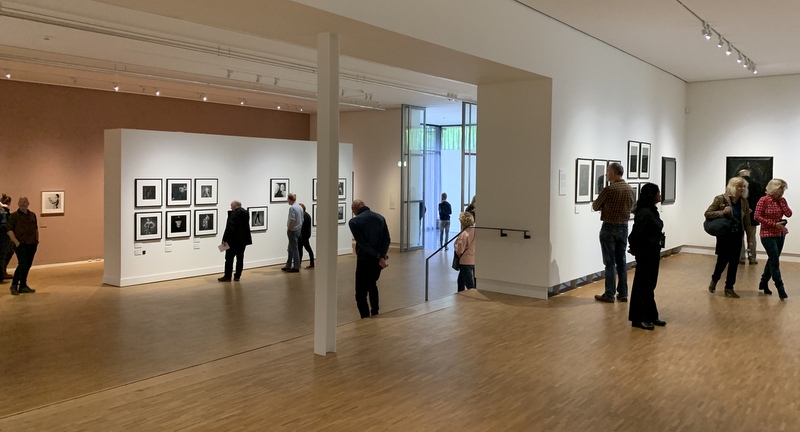
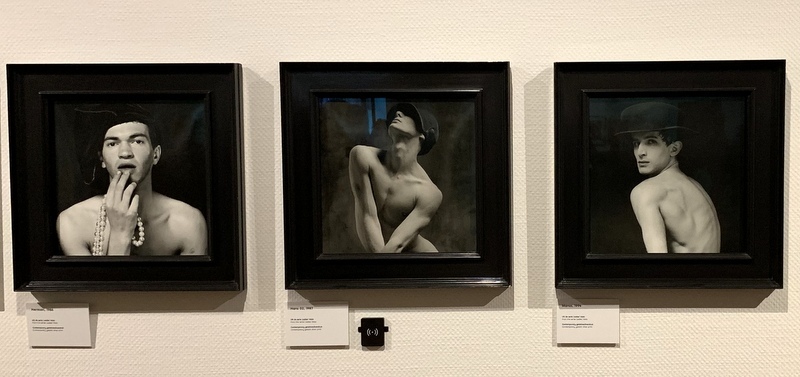
The exhibition in the Photography Museum is about Erwin Olaf’s development as a photographer. Most of the photos I had seen before, so we spent less time here. There was also work of photographers who have influenced him.
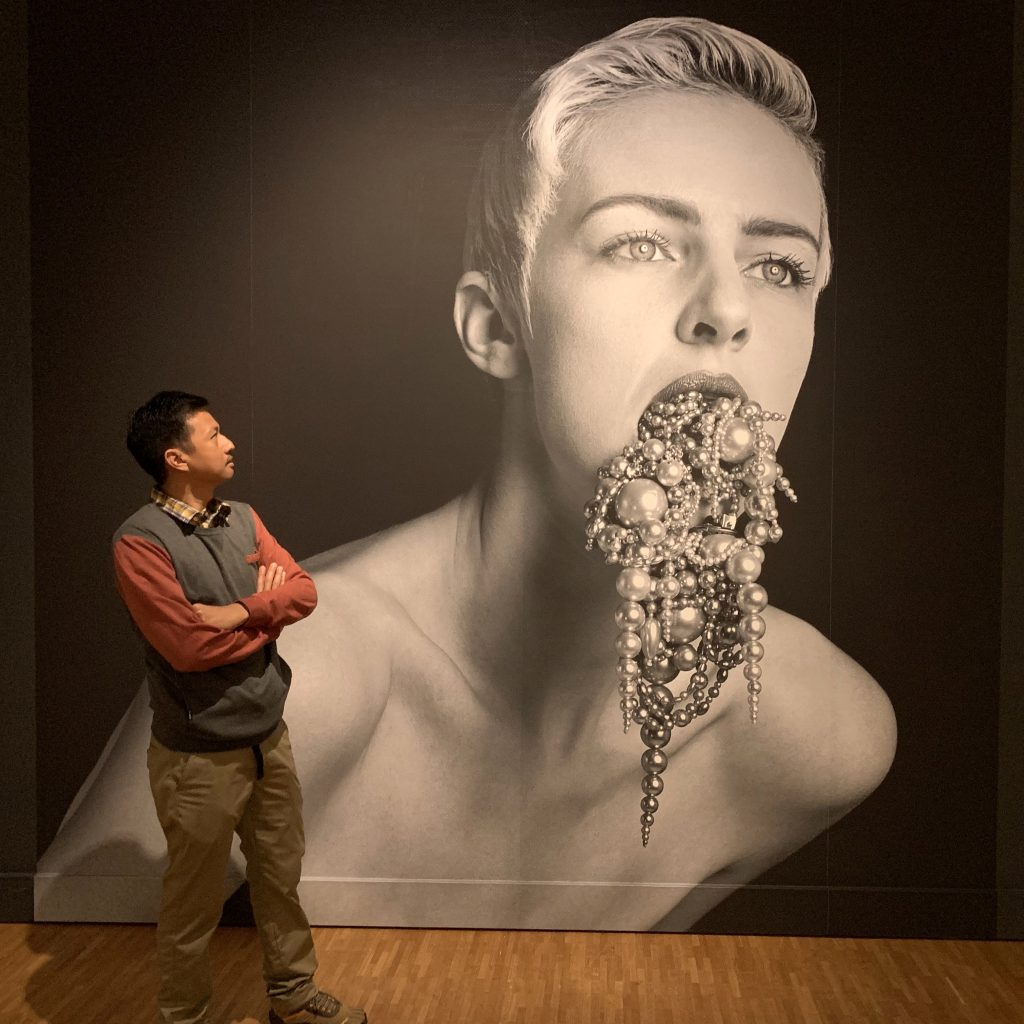
Pearls (Sabine) (1986)
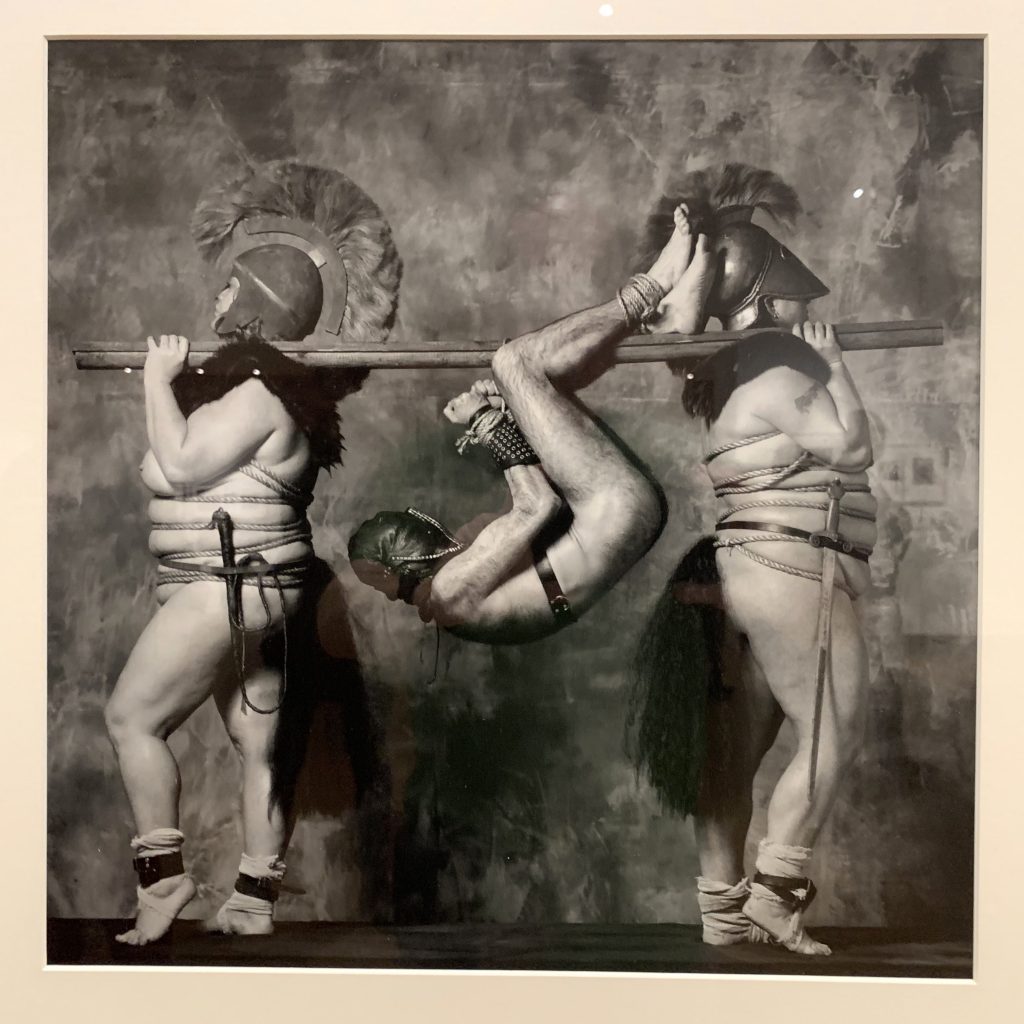
Chessmen (1988)
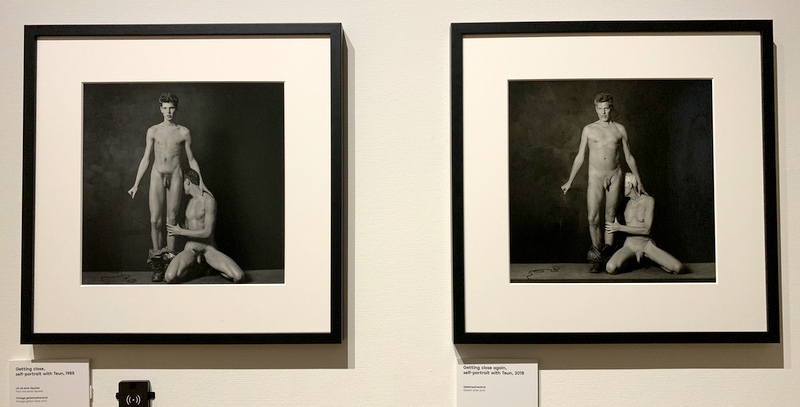
Two fascinating self-portraits, created 33 years apart!
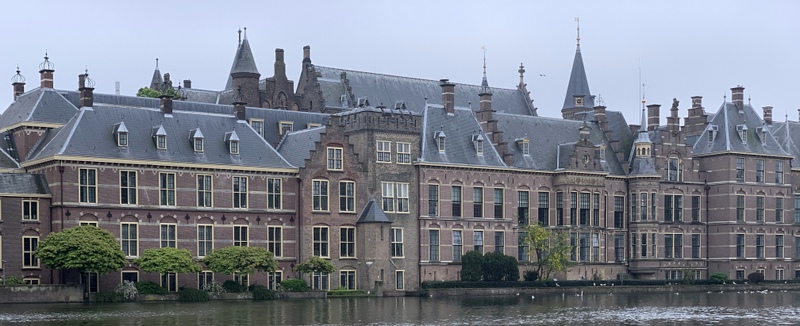
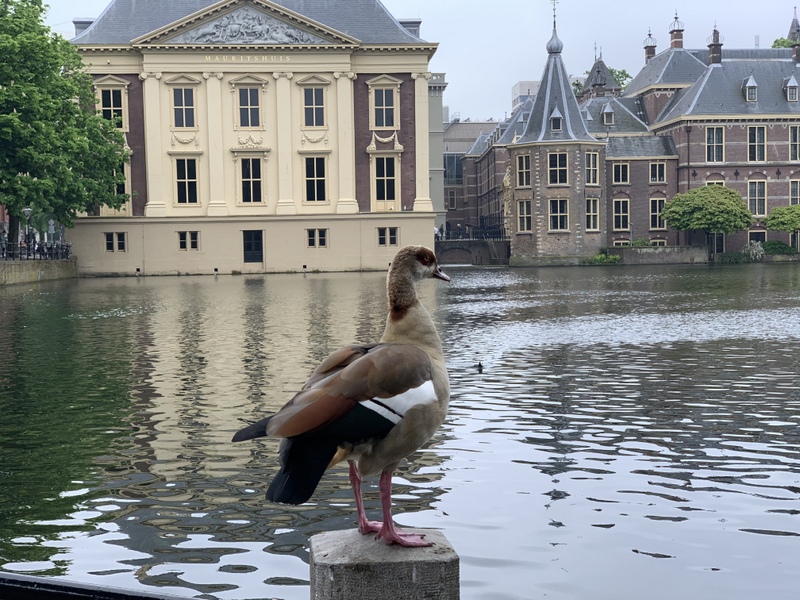
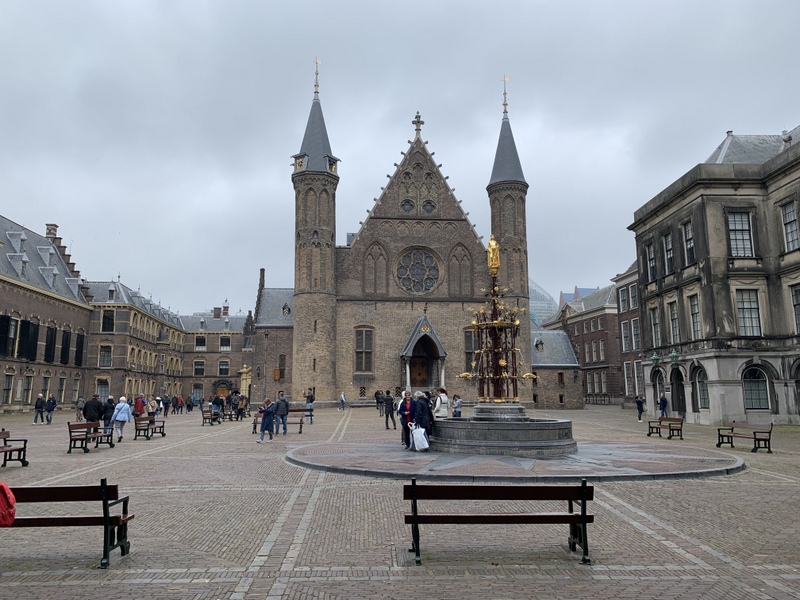
It was a perfect outing. On our way back, by tram to the Den Haag train station, we passed the parliament buildings and decided to have a short walk around, because Aric had never been there.