Penarikan recce – part 2

In an earlier post I have reported about my friend Chadel’s plan to paddle in his canoe from Muar to Pekan, using the Muar, Jempol, Serting, Bera and Pahang rivers with a portage (penarikan) at Bahau. In that post I described our recce from Bahau to Muar.

This time we started again in Bahau, but now we followed the Serting river as closely as possible. The Serting river is a small one, running through palm oil plantations and Felda land. Chadel had bought topo maps of the region.
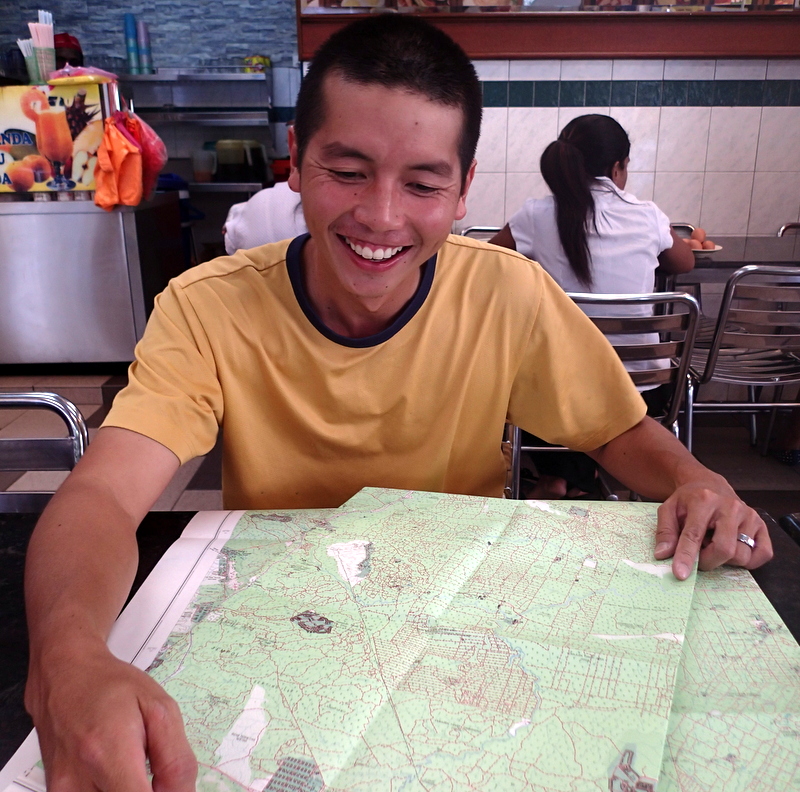
Topo maps

OLYMPUS DIGITAL CAMERADuring our traditional breakfast in a mamak near my condo, we studied the maps and found a meandering route that would cross the Serting river as many times as possible.

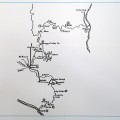
Here is the Google Earth map of our route (in red). The rivers are marked in blue
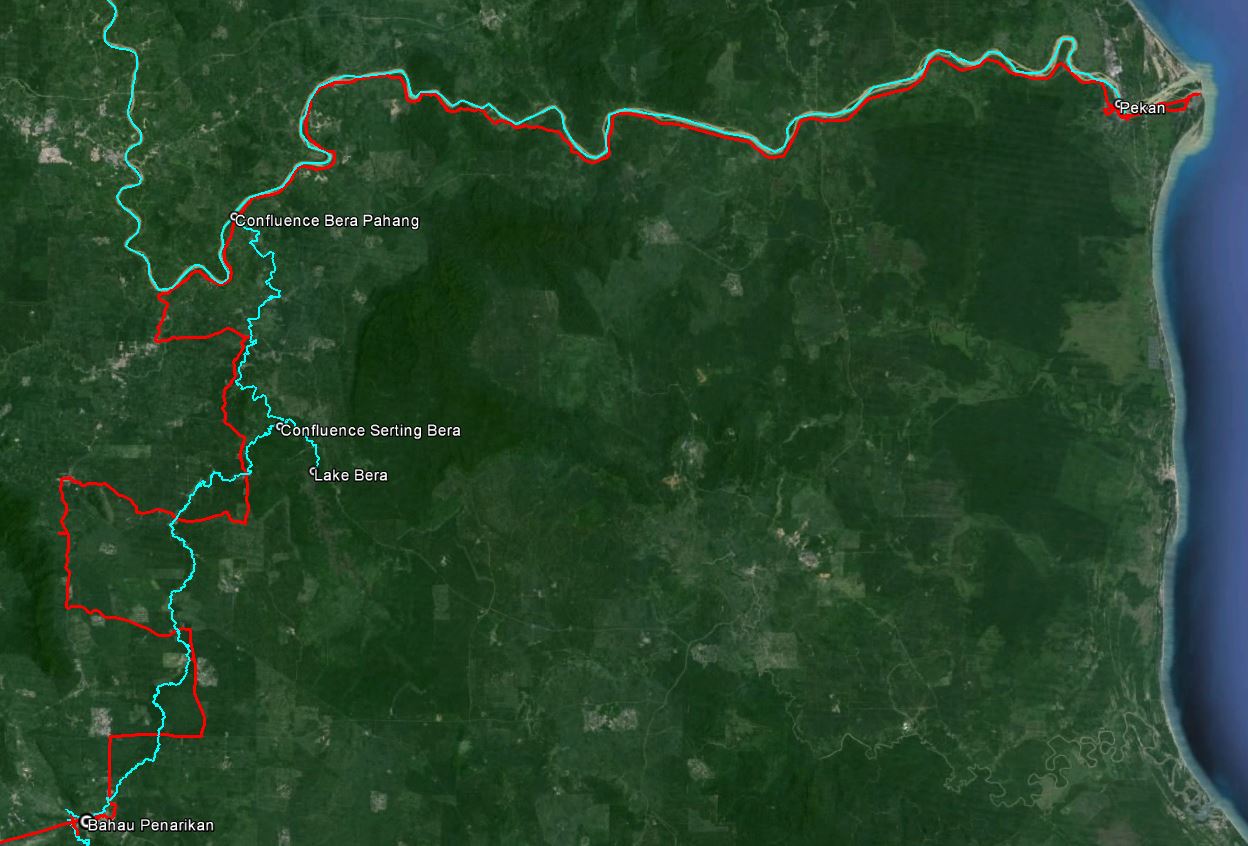
Penarikan_2

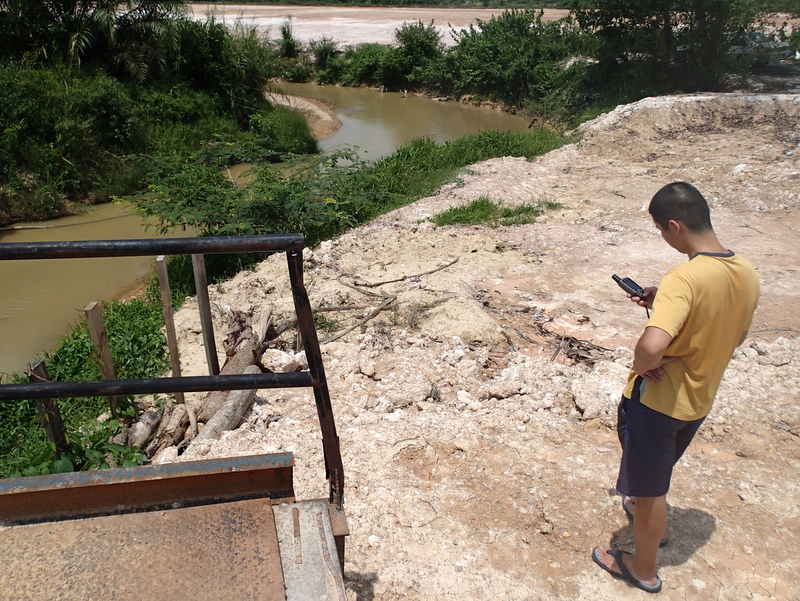
In Bahau we first checked the two locations chosen by Chadel for the Pull Out and Put In. The original penarikan was from the Jempol river to the Serting river, a distance of about 500 meter. Chadel is considering to take the canoe out a bit earlier, from the Muar river. Considerably longer distance, about 2.5 km, but he could then use existing roads, which would make the portage a lot easier. Here are the Pull Out and Put In places.
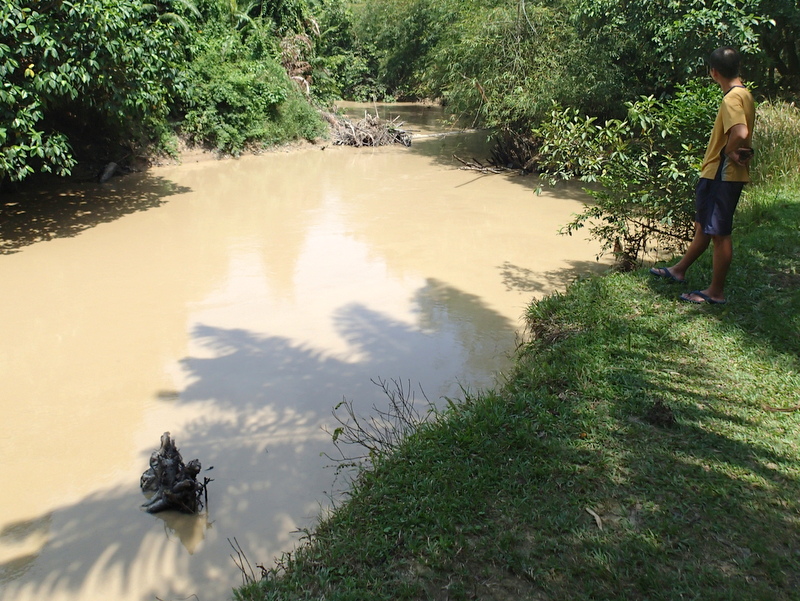
OLYMPUS DIGITAL CAMERA

Pull Out , Muar river

OLYMPUS DIGITAL CAMERA

Put In, Serting river


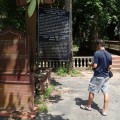
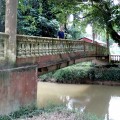
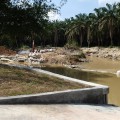
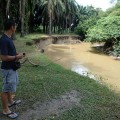
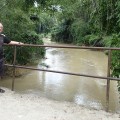
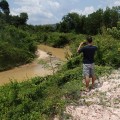
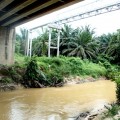
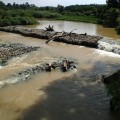
After lunch in Bahau we started the actual recce. Altogether we crossed the Serting river seven times. We took pictures at each crossing; when you click on a marker in the map below, you will see the correspondig picture. All the way, Serting remains a small stream, at least in this time of the year.  Often trees have fallen in the river, a potential risk of puncture when you are paddling over them.

View the  Recce in a larger map

The confluence of the Serting river with the Bera river is located in the middle of plantations and not accessible by road. The Bera river is a real river, draining the Tasik Bera, about 10 km south of the confluence. The Bera river flows into the mighty Pahang river, the longest and biggest river of the Malay Peninsula.
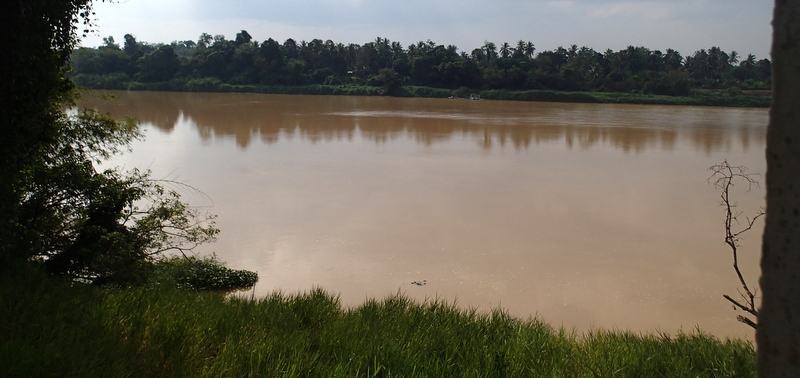
OLYMPUS DIGITAL CAMERA

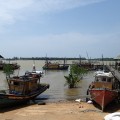
The mighty Pahang river

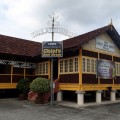
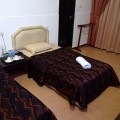
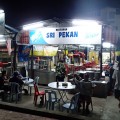
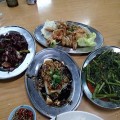
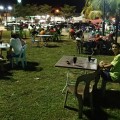
We arrived late in Pekan, wanted to stay overnight in the scenic Rest House, but that was fully booked, so we found suitable accommodation in the Melati Inn. Pekan is a sleepy hollow, but, driving around, we found a good Chinese restaurant and after our dinner we had coffee at a lively Malay stall near the Pekan riverfront.
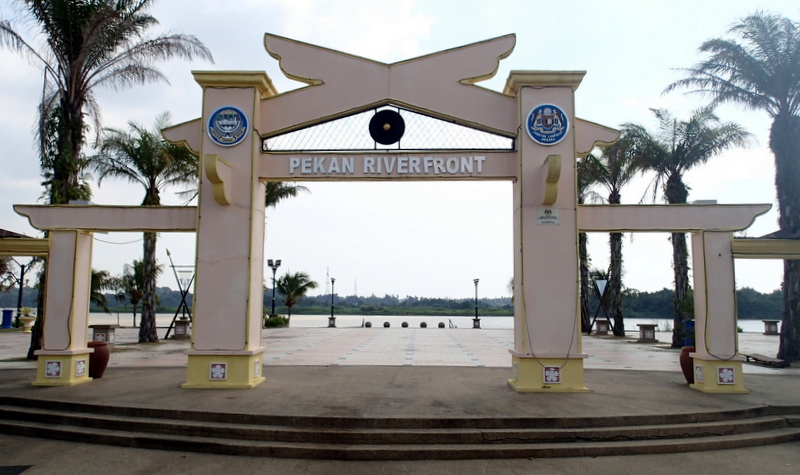
OLYMPUS DIGITAL CAMERA

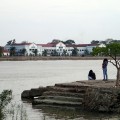
The next morning after breakfast we looked for a suitable pull out point. An easy decision, what could be a better location that the Pekan riverfront itself! When Chadel finishes his heroic expedition here, the Sultan of Pahang and the Prime MInister (Pekan is his constituency) can welcome him…:-)

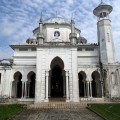
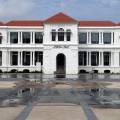
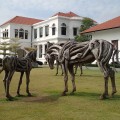
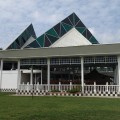
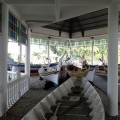
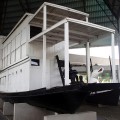
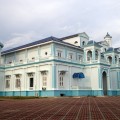
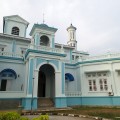
Pekan has a few nice mosques and an interesting museum: the Pekan Water Craft Gallery . It is an open-air museum, FOC, with an interesting collection of various types of boats. They even had information about the Bahau Penarikan! Not completely correct, they take the portage distance as 300 yards, which is not true. And it is suggested that the Penarikan route was discovered by the Malays, while it was actually already used by the Chinese before the Malays came to the Peninsula. A sensitive issue…:-)

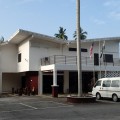
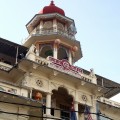
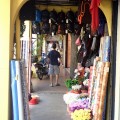
Here are some pictures of Pekan

On our way back we visited the Pandan waterfall near Kuantan. Many visitors as it was school holidays.
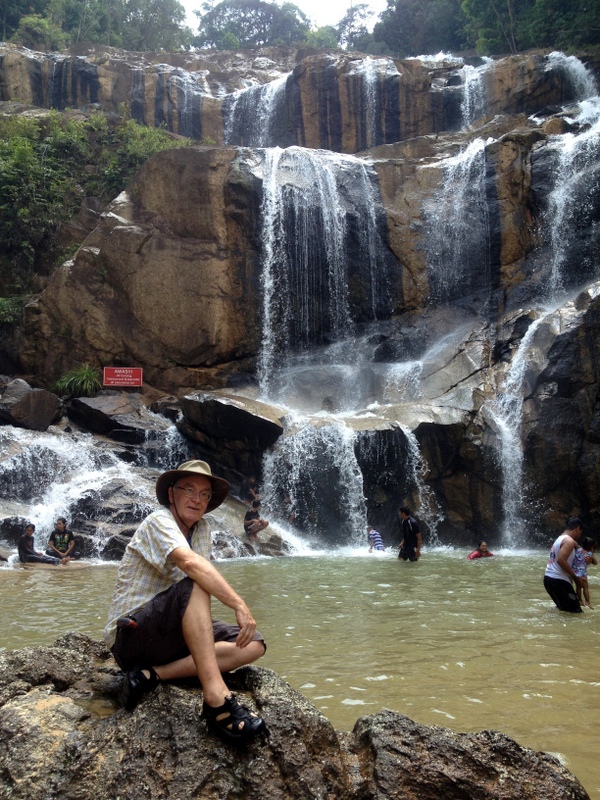
2013-08-016

Chadel is planning to do the real expedition around March next year. I wish him good luck!
A Taoist temple and a festival

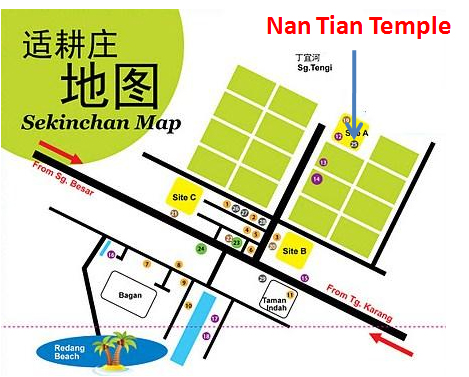
Last week, on our way to Aric’s hometown, we had planned to visit Bukit Melawati in Kuala Selangor, but it was quite hazy that day, so we decided to cancel that plan. What to do instead? According to Aric there was an interesting Chinese temple, somewhere in the paddy fields near Sekinchan. How to find its location?

Nowadays that is easy, just take your smartphone, go to the Internet , Google for “temple Sekinchan” and hey presto, you even get a map..:-) Plus lots of extra information, for example that in 1953 (during the Emergency!) the Sekinchan farmers were relocated in three new villages, still named site A, B and C.

Sekinchan temple

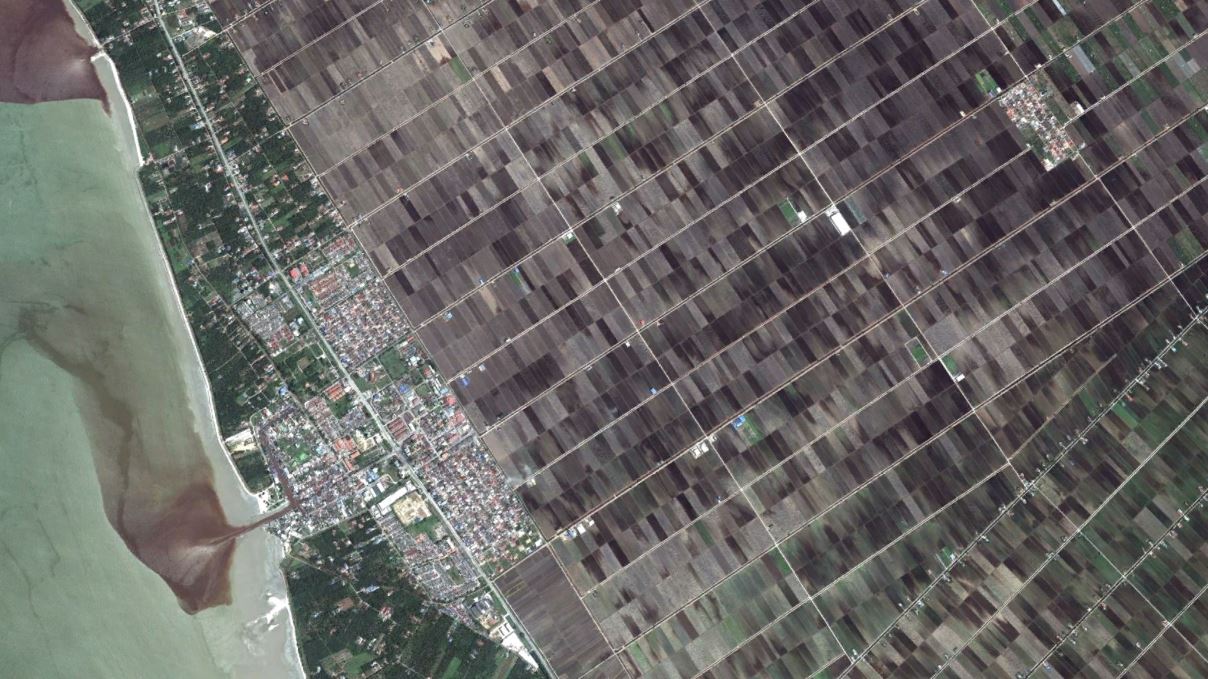
Here is a GE screenshot of this small Teochew village and the paddy fields. The fishing village (Bagan) in the lower left and Site A at the upper right. This image was taken in Februart 2012, when the paddy fields were barren. Interesting pattern, almost art…:-) During our visit, the seedlings had been planted, but many fields did not look healthy, the irrigation channels almost dry.

Sekinchan

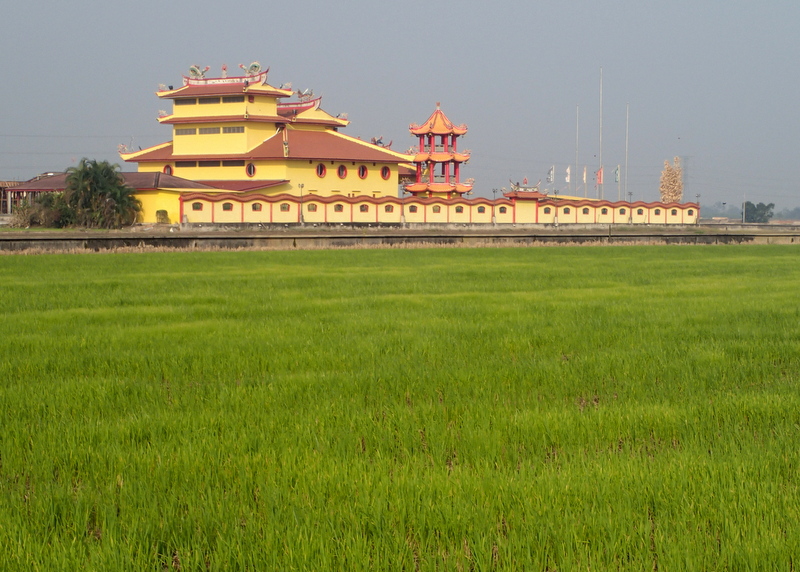
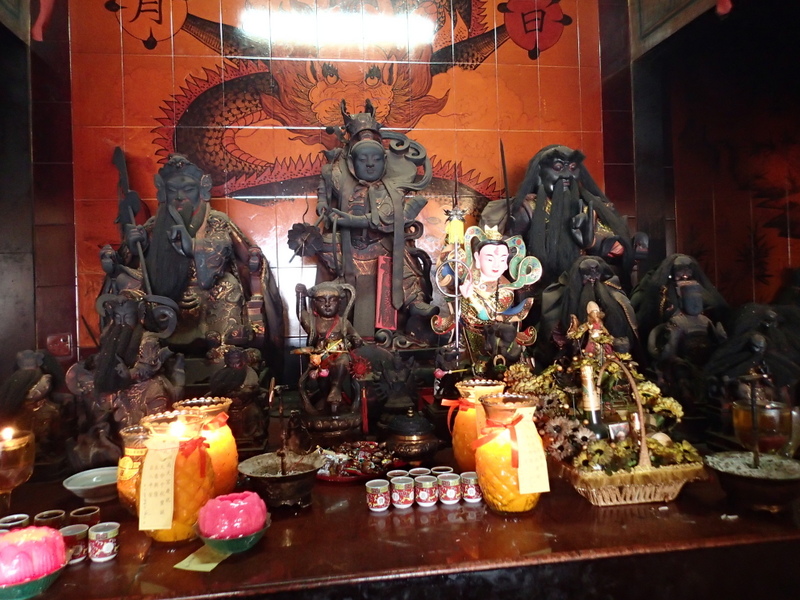
The Nan Tian temple in Site A is also called the Nine Emperor Gods temple, and attracts lots of visitors, especially during the 9th month of the Chinese calendar. Even now there was a bus from KL with devotees. From far away the temple complex is visible already.

Sekinchan temple

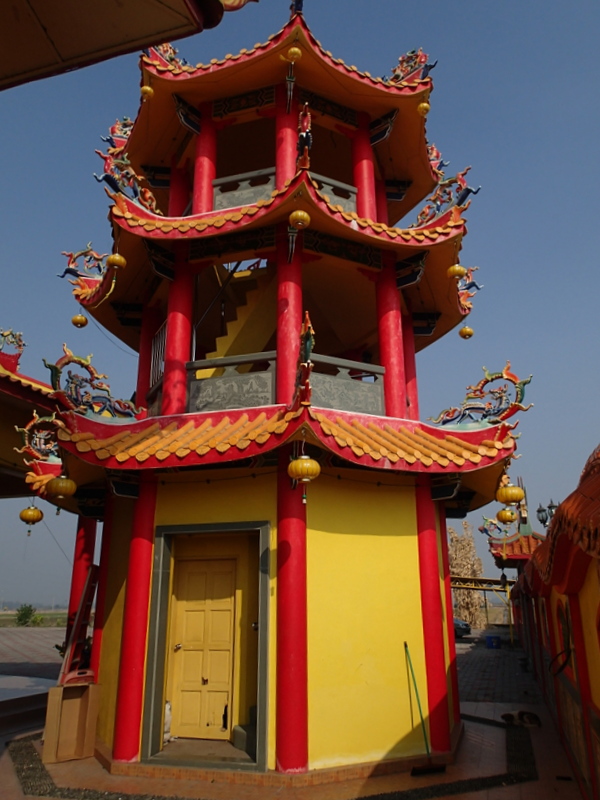
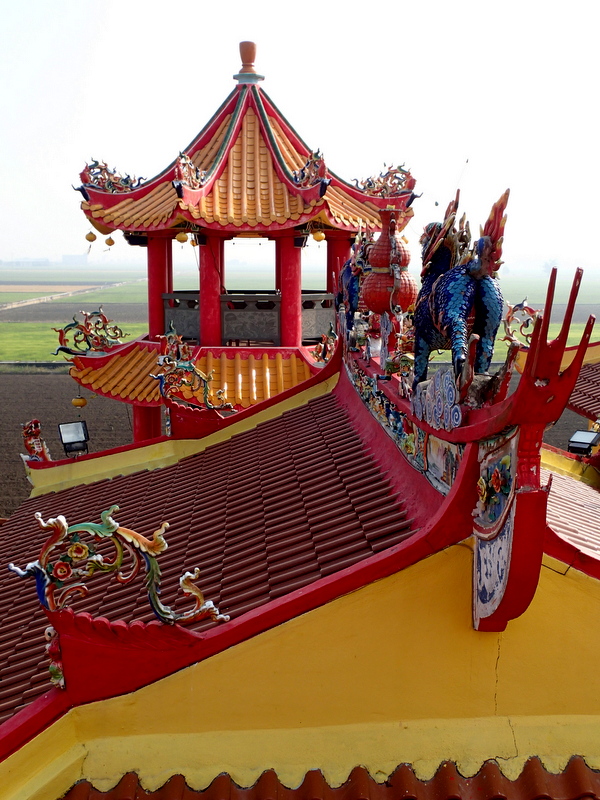
The location is very attractive. You can climb the towers in front of the main hall, from where you have a nice view of the surrounding paddy fields, although this time it was quite hazy.

Temple tower

View from tower

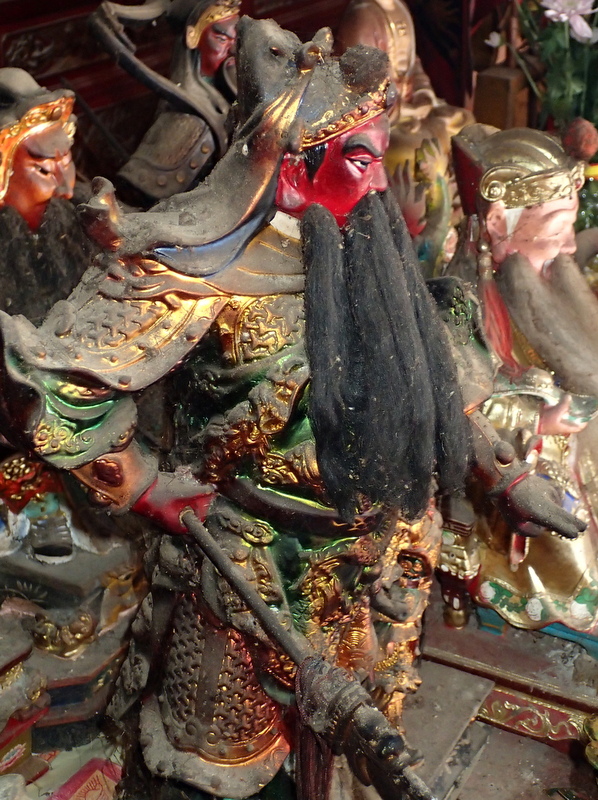
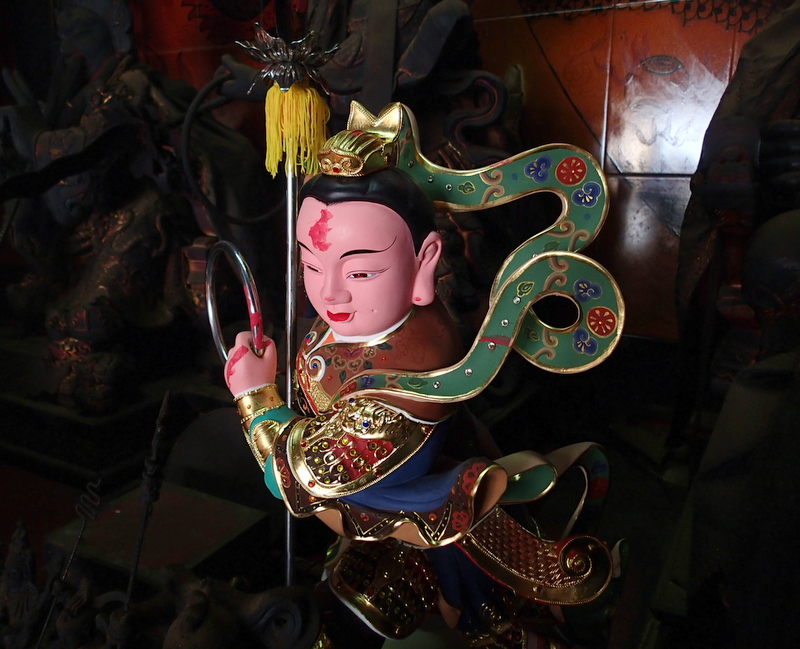
Here are a few more pictures of the temple interior.

Main hallA godDetail


We have to come back on a clear day…:-). There are also good seafood restaurants in Sekinchan.

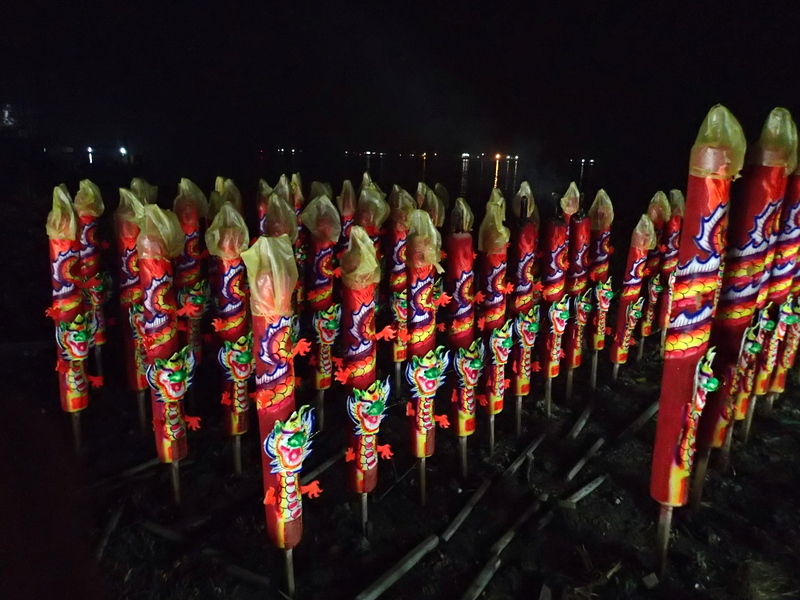
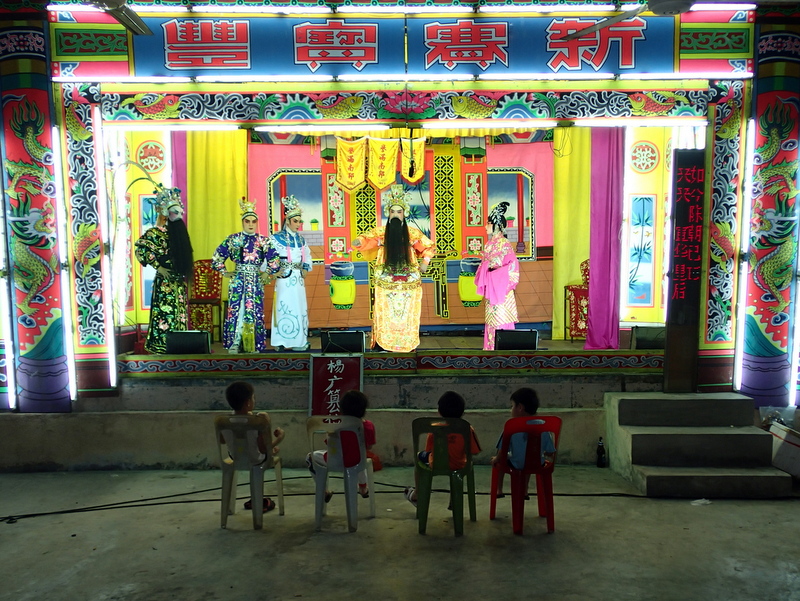
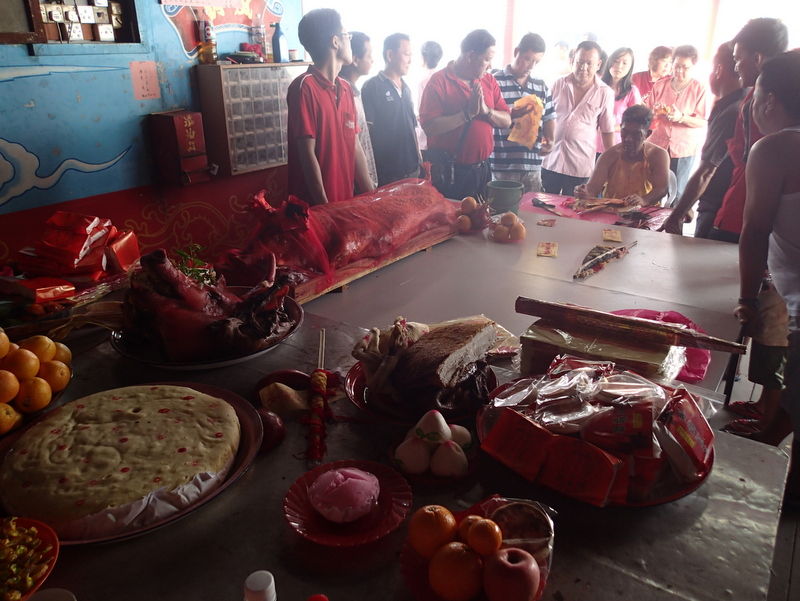
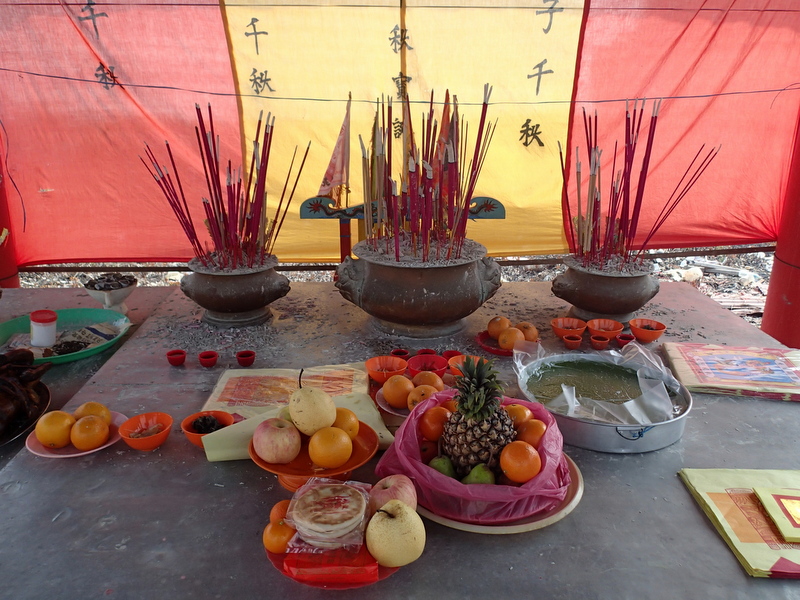
The reason to visit Aric’s hometown, was that there was a Taoist temple festival in the nearby fishing village of Bagan Parit Baru. Once a year in these Teochew villages the anniversary of the temple god is celebrated. A group of actors is invited to perform Chinese opera, there are prayers and offerings. Here you see the huge joss sticks outside the temple, with the Bernam river in the background.

Giant joss sticks

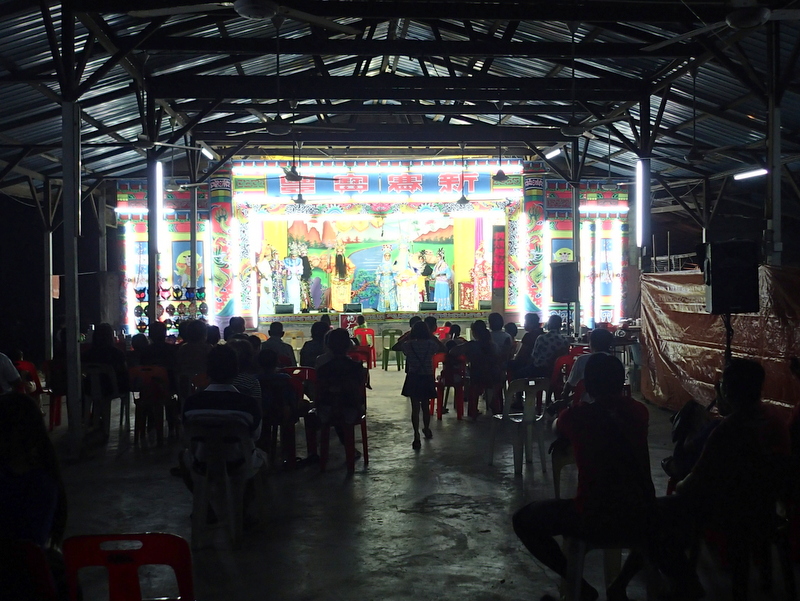
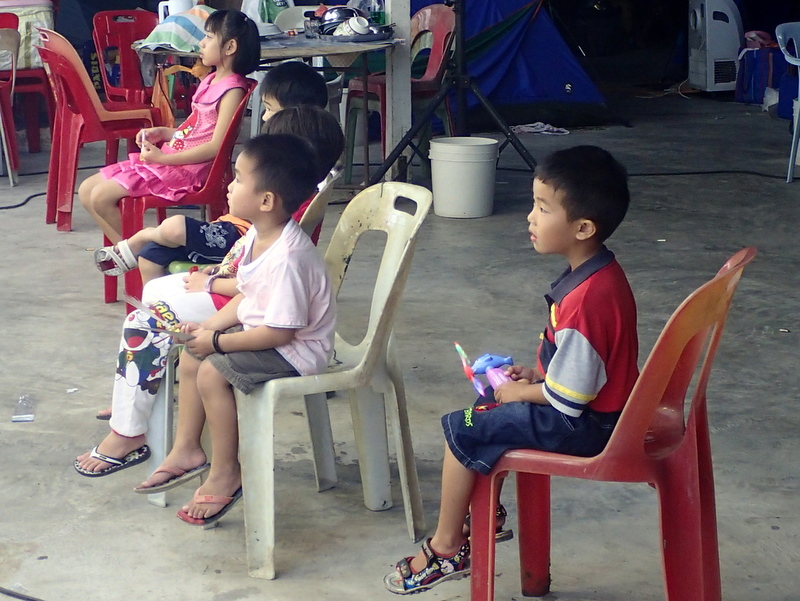
During the past years I have attended several of these temple festivals and slowly learned to appreciate Chinese opera…:-) I understand that in the past these performances attracted big crowds, but now many (young) people have left the villages, so the audience mostly consists of senior citizens and kids.

OLYMPUS DIGITAL CAMERA

OLYMPUS DIGITAL CAMERA

OLYMPUS DIGITAL CAMERA

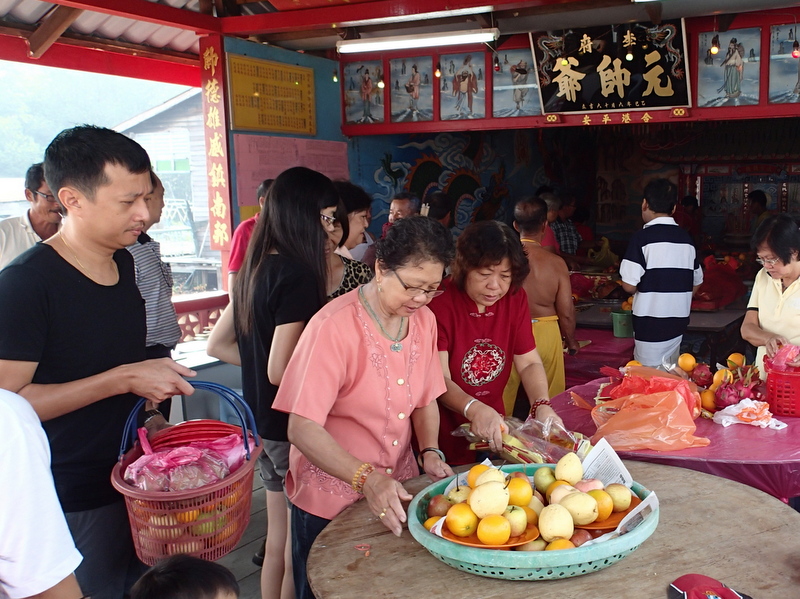
We came back the next morning, for the offering and praying.

OLYMPUS DIGITAL CAMERA

OLYMPUS DIGITAL CAMERA

OLYMPUS DIGITAL CAMERA

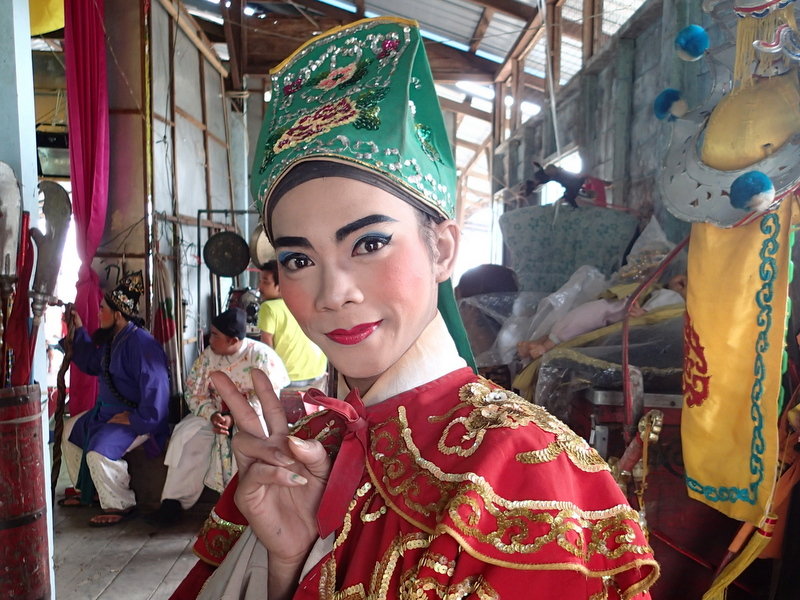
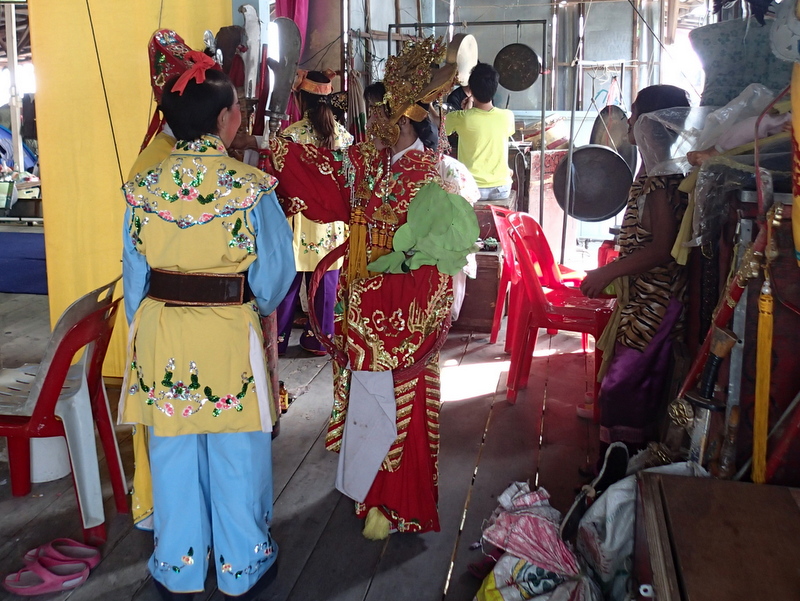
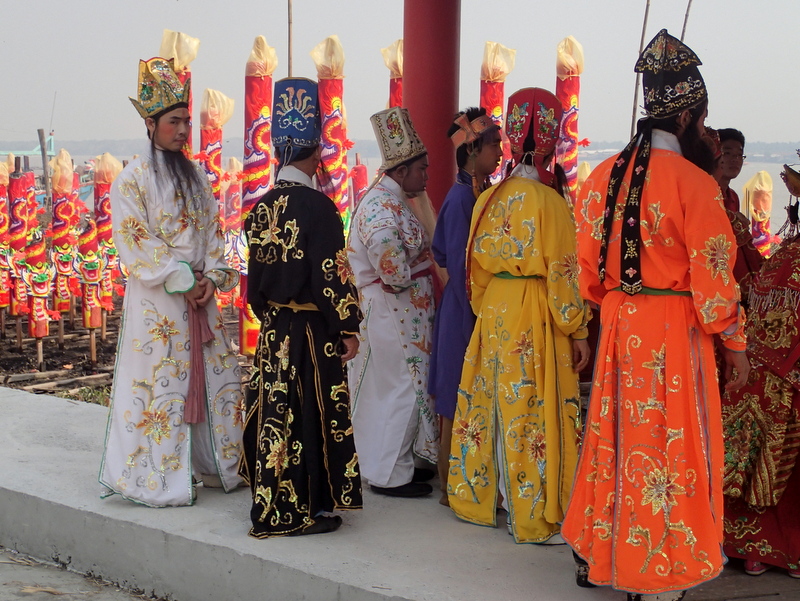
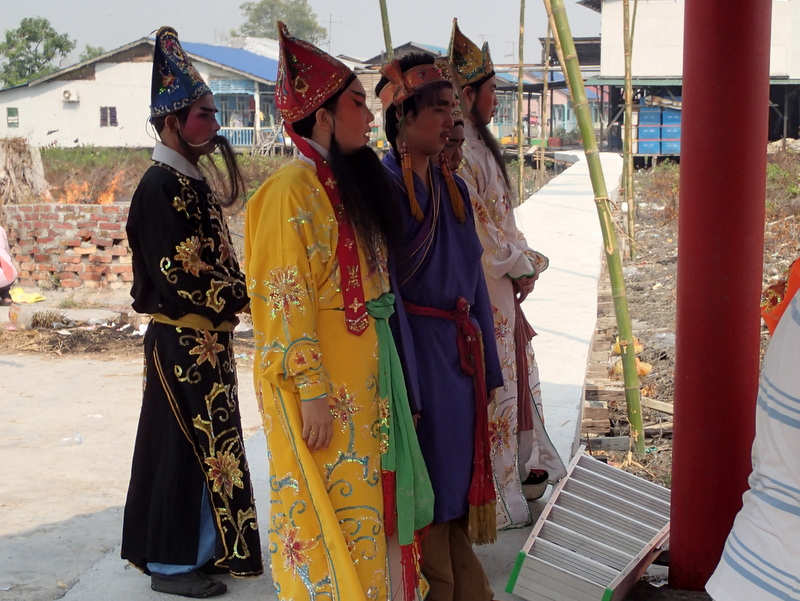
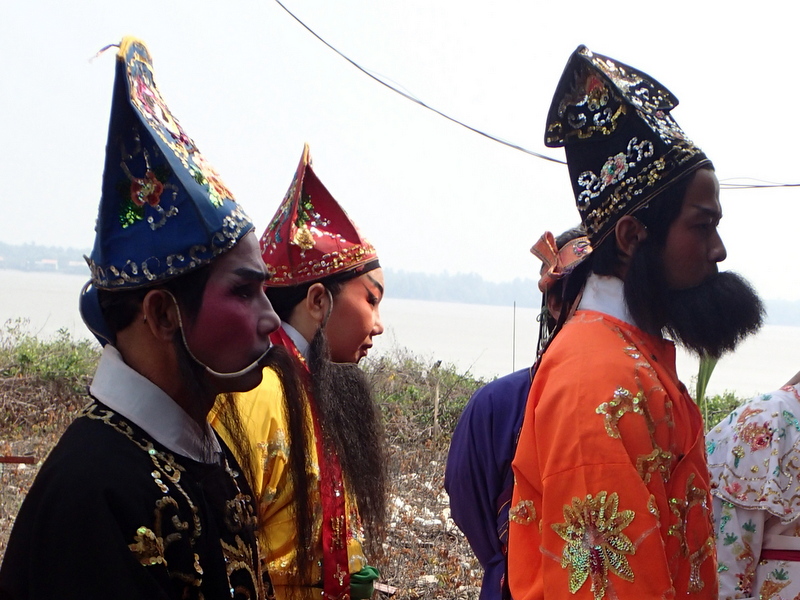
Even in the morning, the opera was going on. When I was walking around the stage, one of the actors noticed me and asked me to come backstage. I felt a bit shy, so I took only a few pictures. Some actors waiting their turn to go on stage, others are working on their make-up, or putting on their costume. During the festivities, the group is camping next to the theater. How I would love to stay with them a few days and make a picture report! But there would be a insurmountable language barrier.
OLYMPUS DIGITAL CAMERA

OLYMPUS DIGITAL CAMERA

OLYMPUS DIGITAL CAMERA

As a part of the praying ceremony, also the actors took part, walking in a procession to the temple. Fascinating

OLYMPUS DIGITAL CAMERA

OLYMPUS DIGITAL CAMERA

OLYMPUS DIGITAL CAMERA

Penarikan recce

It must have been about five years ago that I heard or read for the first time about the Bahau Penarikan. Bahau is a small town in Negeri Sembilan and a penarikan is the Malay word for a portage. A portage is the process where a boat is “carried” overland from one waterway to another. In my native country, with its many separate canals and rivers it was a common procedure.

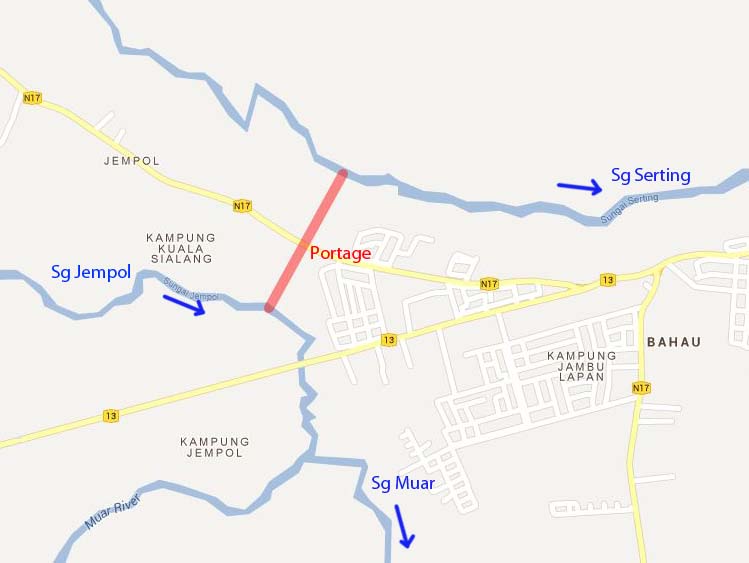
In Bahau it is a portage over a distance of less than 1 km between the Serting river and the Jempol river. Or better, it was, because we are talking about the past, many centuries ago!

Bahau portage

The Bahau penarikan is unique in that it basically connects the West Coast of Malaysia (the Straits of Melaka) with the East Coast (the South China Sea)!

Because the Serting river flows into the Bera river, which flows into the Pahang river, which reaches the South China Sea at Pekan.

And the Jempol river connects, close to Bahau, with the Muar river, which reaches the Straits of Melaka at Muar.

In the 14th century merchants discovered this connection as an alternative to the long and dangerous route around the Malay peninsula.

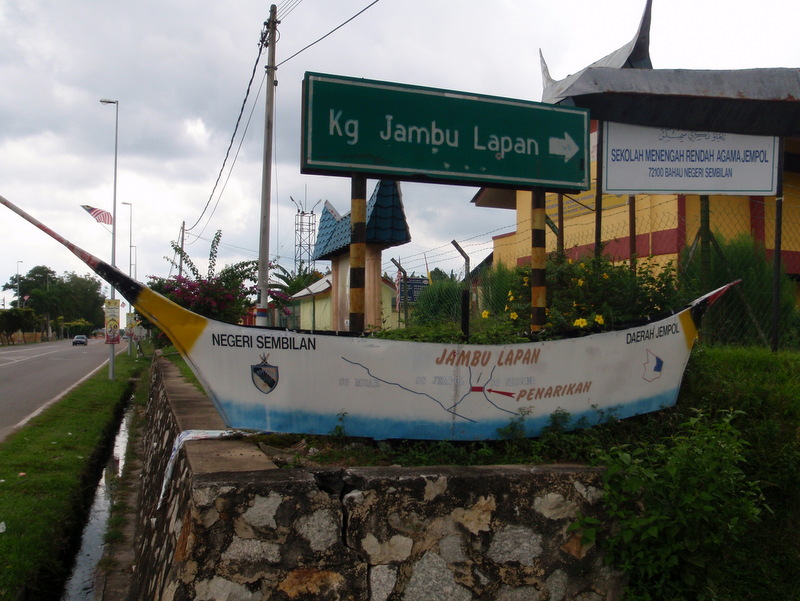
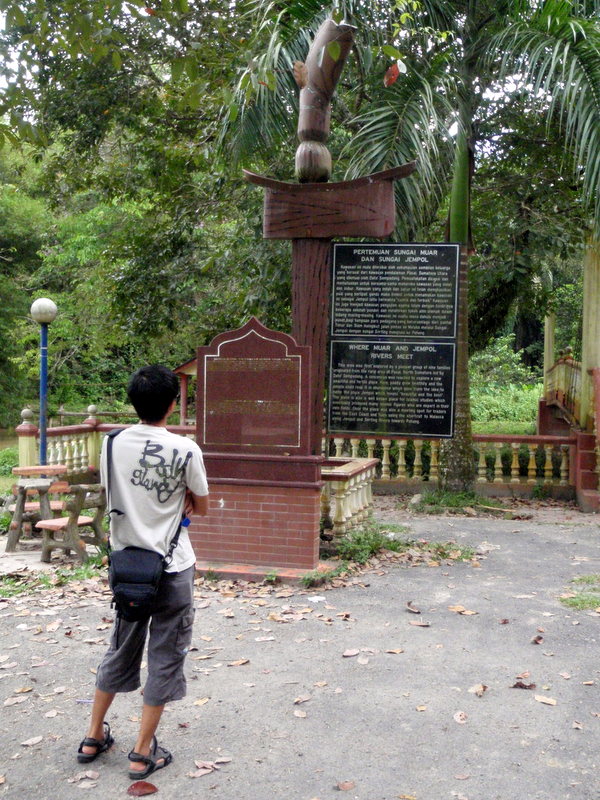
When I read about this, I wanted of course to have a look myself, so we went to Bahau. We found a road sign in the form of a boat and a rundown small memorial park. The Bahau penarikan predates the Malay sultanate of Melaka, so unfortunately there is not much official interest in it. We also had a look at the Serting and Jempol rivers, both small streams. Of course no trace anymore of the portage.

OLYMPUS DIGITAL CAMERA

OLYMPUS DIGITAL CAMERA

That was five years ago. I more or less forgot about the Bahau penarikan, until Chadel, a friend of mine, told me recently that he was planning to paddle by canoe or kayak from Muar to Pekan, using the Bahau portage! For this ambitious project he wanted to do a recce first, checking the portage region, finding a suitable “put in” location in Muar, and a “take out” location in Pekan. Of course I was eager to join him in this recce..:-)

Chadel decided that we would first do a recce from Bahau to Muar, then later a second one from Bahau to Pekan.

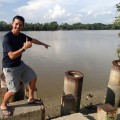
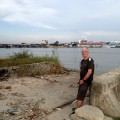
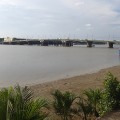
It was a very pleasant trip. In Bahau I showed him the memorial park, but I could not find the sign board anymore, maybe it has been removed. Near the confluence of the Jempol and Muar rivers they were doing construction work for the nearby water treatment plant, but according to Chadel that would be no problem. We checked the rivers at several places to find a place where taking out a canoe would not be too difficult. Have a look at the Google Map.

The green markers are where we had a look at the rivers. Clicking on a marker gives a picture of the river. The two red ones are probably the most suitable ones for the actual portage. When you zoom out, you will find a few more green markers, on our way too Muar we crossed the Muar river a few times. You will also see a number of blue markers, where the Serting and Bera rivers are accessible from the road. That is something for our next recce.

Here is a series of pictures taken during the trip

After lunch in Bahau we drove to Muar, choosing our route so that we would cross the Muar river a few times. When you zoom out in the Google map, you will see the extensive meandering of the rivers. Chadel estimates that he has to paddle about 540 (!) km and is planning to do that in about three weeks. In Muar we found two suitable start locations.

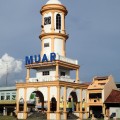
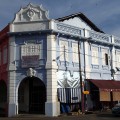
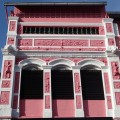
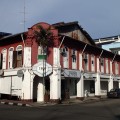
I had been in Muar only once before, quite long ago. I was pleasantly surprised by the town. Characteristic Chinese shop lots, a beautiful mosque, I must come back here soon. A few more pictures.

It was a long day, but very rewarding as we met all our objectives.

Looking forward to part two!

Trip with Pat and Roger

Our English friends Pat and Roger live in Melbourne, but visit Malaysia regularly. It has become a tradition to organise a trip during their stay. We have been to Gunung Jerai, to Fraser’s hill, to Pulau Ketam and more.

Where to go this time? We decided for the coastal region, south of Klang, visit the Chinese temple in Jenjarom, a few historical places, Jugra Hill and of course have nice food.

Then came the haze, see my separate post Haze, haze, haze . A few days before our trip Klang recorded an air pollution index  of ~500 (> 300 is considered hazardous), schools were closed, people were wearing face masks. Change our plan? We decided to take the risk. As you see Pat came well prepared..:-) We were lucky, of course it was hazy, but a lot less than the days before.

Pat

A detailed report of the trip can be found here. Some highlights:

The Fo Guan Shan Dong Zen temple in Jenjarom. This is the main hall

Jenjarom temple

The Istana Bandar, former palace of the Sultan of Selangor, located in the middle of nowhere and recently renovated. It will become a museum.

Istana Bandar

Nearby, on the slopes of Jugra Hill, a mausoleum of the Selangor Sultans, a tranquil oasis, well maintained. We also went up the hill, the haze was not too bad, but of course the view was limited

Mausoleum

We had planned to have lunch at the foot of Jugra Hill in the famous Beggar’s Chicken restaurant, but it had its weekly closing day. So we drove on along the coast, passing romantic fishing villages, to Kg Batu Laut,  where we had a seafood lunch

Fishing village

After a short visit of Tanjung Sepat and the “iconic” but overrated Golden Palm Tree resort in Sepang, we returned via the highway. On our way back we had rain. Hurrah, everybody happy, because it meant the end of the haze, at least for the time being.