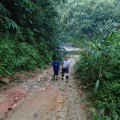
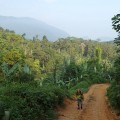
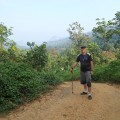
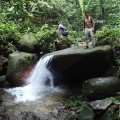
Pos Dipang revisited

In 2009 my friends Siang Hui and Harry (†) discovered beautiful waterfalls in the Dipang river. A few months later I visited these falls myself, here is a report. During this trip I met Jinnah, a friendly Semai from Pos Dipang. He told me that that were more waterfalls upstream. Within a period of a few months, I came back three times. The last time Jinnah took my friend Rani and me to the very remote upper falls. The report can be found in Three times Dipang.

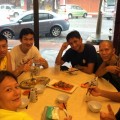
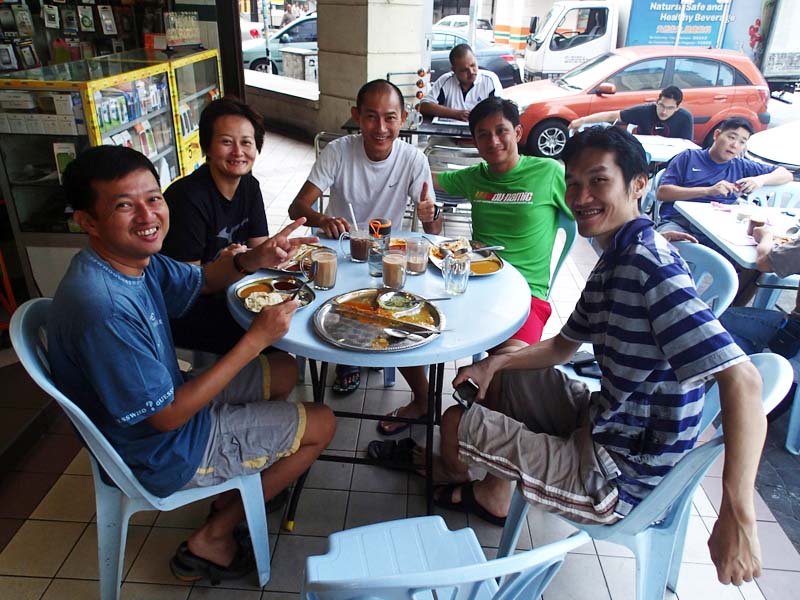
That was four years ago.Time to go back, with a group of friends. A camping weekend. We met as usual at the mamak near my condo for breakfast. From left to right Aric, Janine, Edwin, Teoh and Nick.
Breakfast

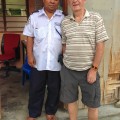
On our way to Pos Dipang we picked up Eddie at Tanjung Malim. After we arrived in the Orang Asli kampung, we asked for Jinnah, as I had not been able to contact him earlier. It was nice to meet him after four years, but at first it did not look good, because somebody had died recently in the kampung and he was not sure if he could guide us into the jungle. We went with him to the penghulu to ask permission to camp.
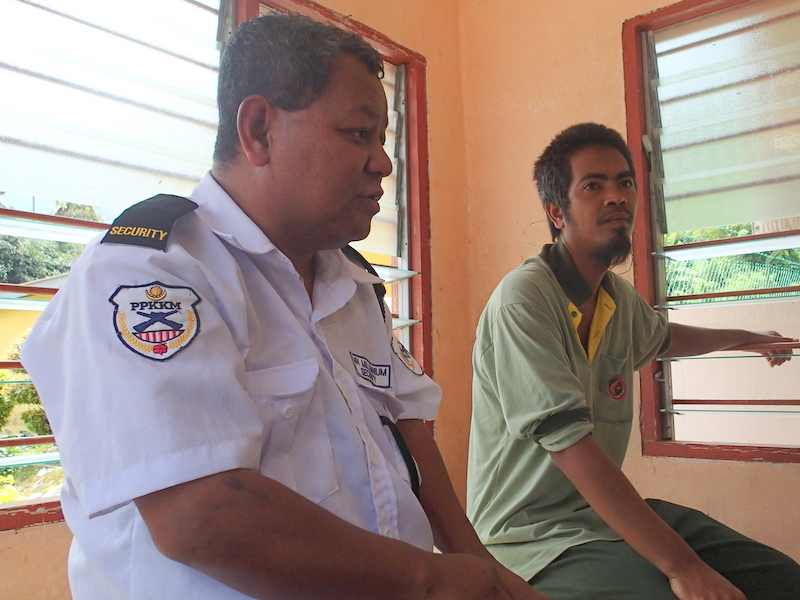
Meeting the penghulu

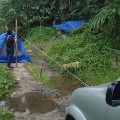
That was no problem, but the penghulu asked us to report at the police. While Edwin went to the police station, we went already to the campsite where Rani and I had camped four years ago. At first Jinnah was not happy with the location (too close to the river) and suggested a location a bit further upstream.
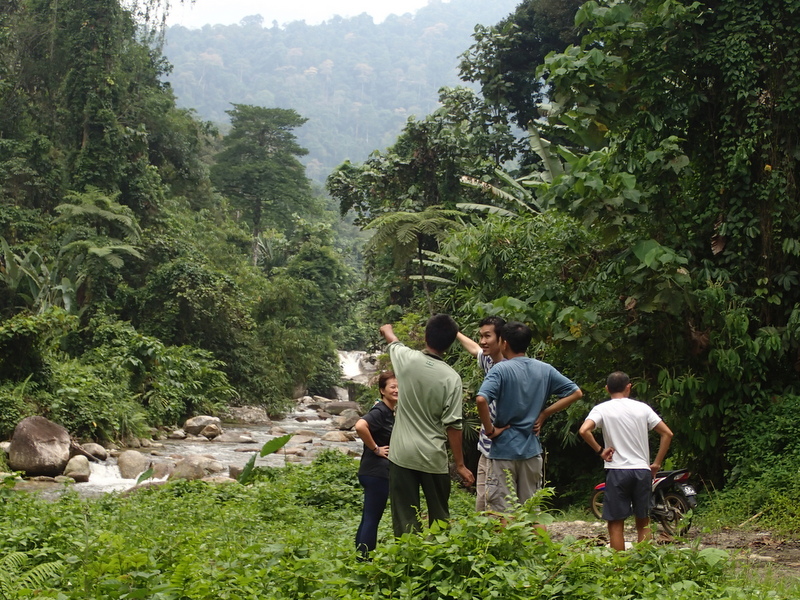
Where to camp?

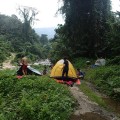
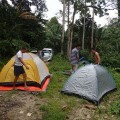
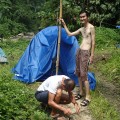
But after some discussion we decided it was better to camp at this spot. Hurriedly we put up our tents, as the sky was darkening.

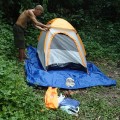
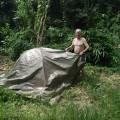
We had to provide extra rain cover. I had none for the tent borrowed from us byTeoh and Nick. That was not a success, it turned into a swimming pool…:-(

We had planned to explore the nearby falls in the afternoon, but we had to take shelter in our tents. Fortunately the rain stopped around 5 pm, so we had a relaxed evening.
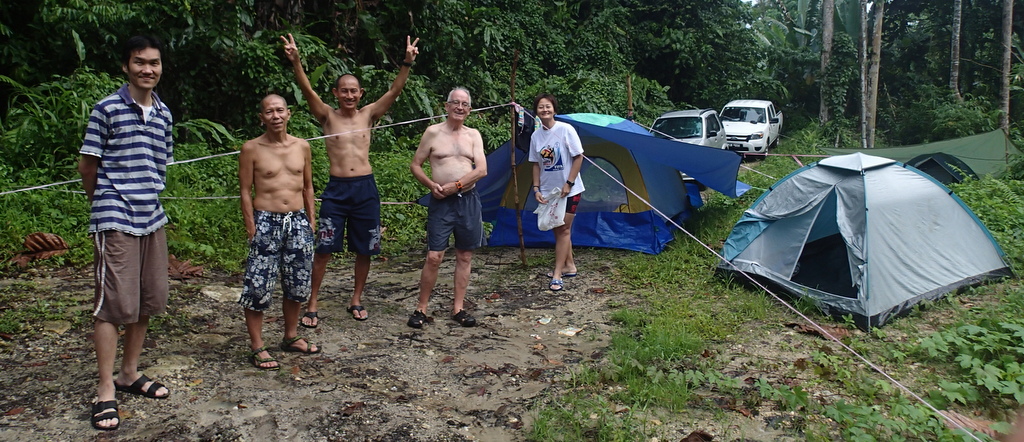
After the rain

The plan was that everybody would take care of his own food, but on the spot we decided to have a shared meal. With a pre-dinner drink and a glass of wine. That is what I call luxury camping…:-)
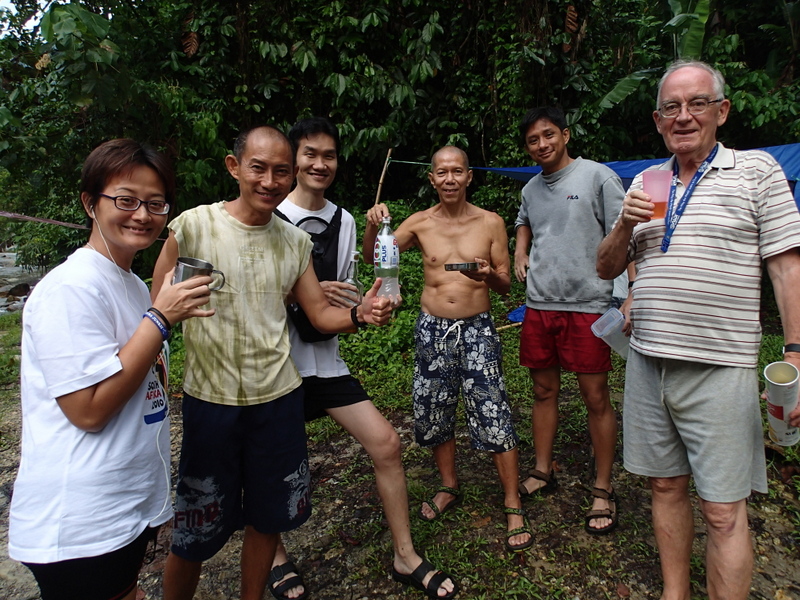
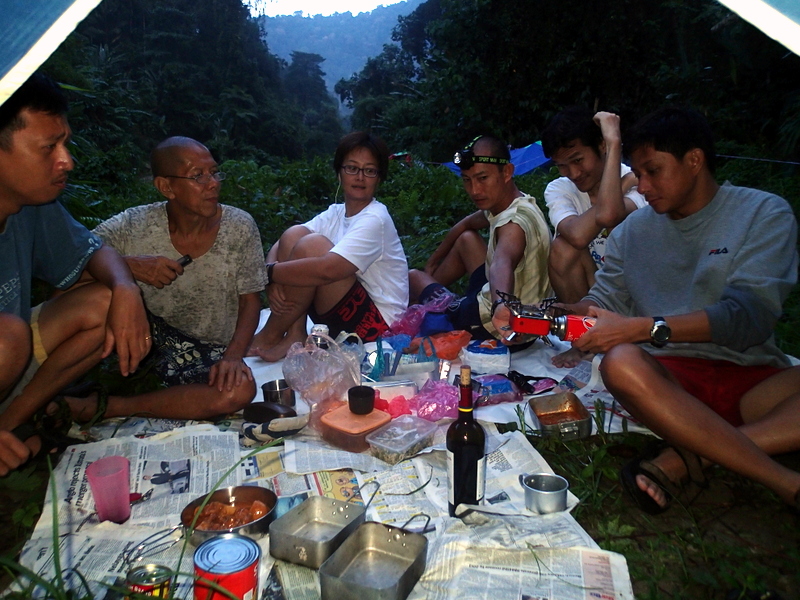
Pre-dinner drink

Shared dinner

Jinnah came to tell us that he would guide us to the upper falls. That was good news, I had GPS tracks taken during my visit four years ago, but I expected the trail to be overgrown, as Jinnah told us that almost nobody ever visited these remote falls.

Here we are, the next morning, ready for a long hike…:-)
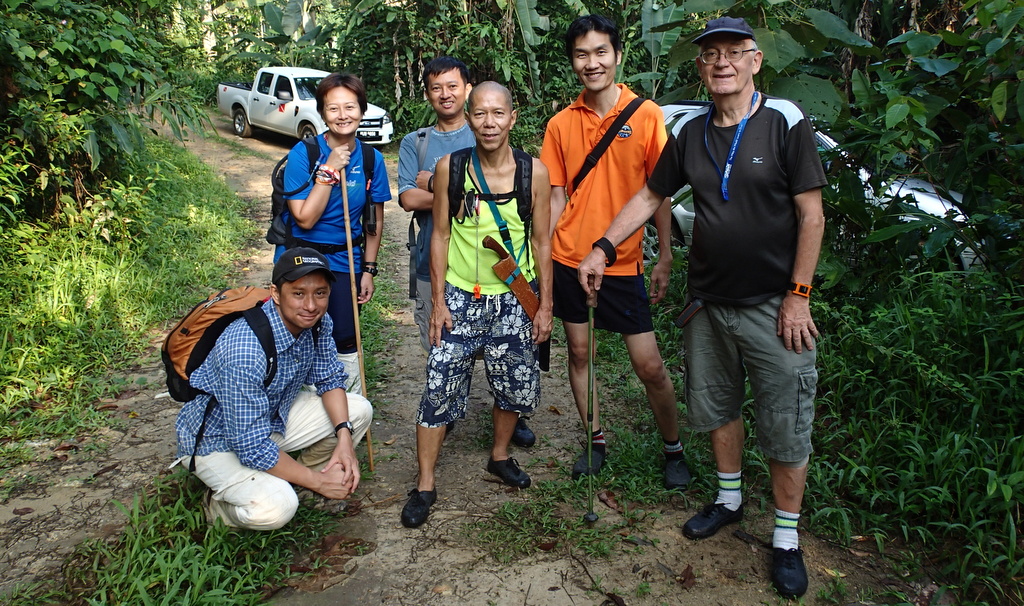
Ready to go

Jinnah guided us on a different route, because after my last visit a logging road had been opened. A steep climb, but very fast compared with the old route. Nice views of the surrounding jungle.

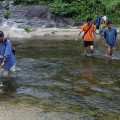
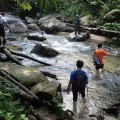
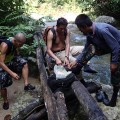
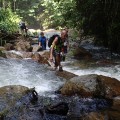
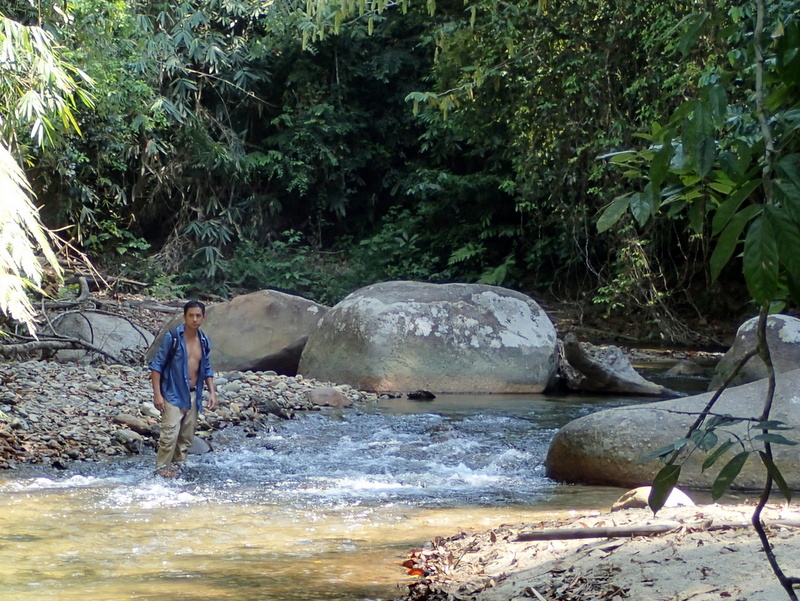
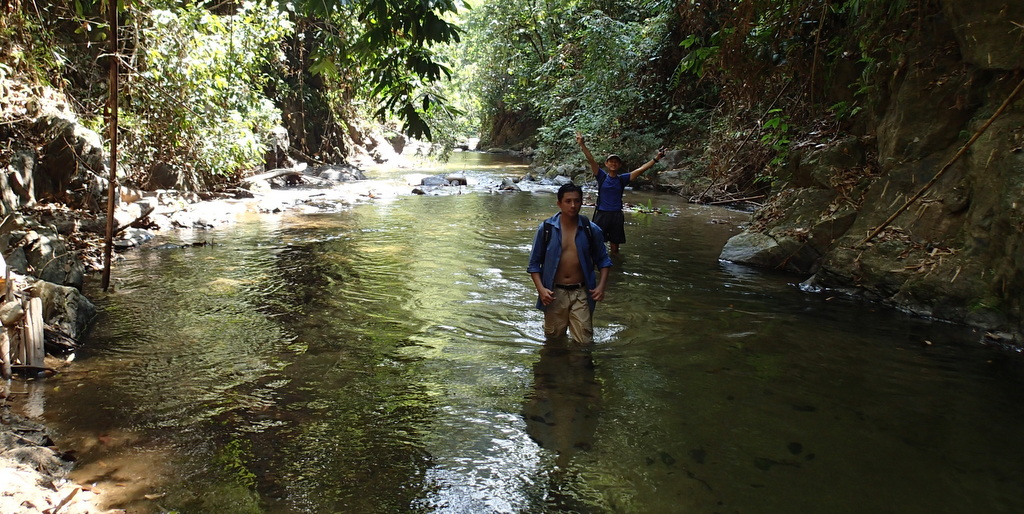
When we entered the jungle, we first followed a rather clear trail to a pettai garden. After that, our two guides had to do a lot of chopping until we reached the river. There were legions of leeches, Jinnah used tobacco as protection. River trekking is fun, but also slow.

After 2.5 hours hiking we reached the bottom of what I had called fall nr 4. The real name is Lata Cheroh. During my 2010 trip I had seen this waterfall only from the top, so this was a new fall for me. Very impressive, but my pleasure was spoiled by the large number of bees…:-( So we took only a few pictures before we continued.
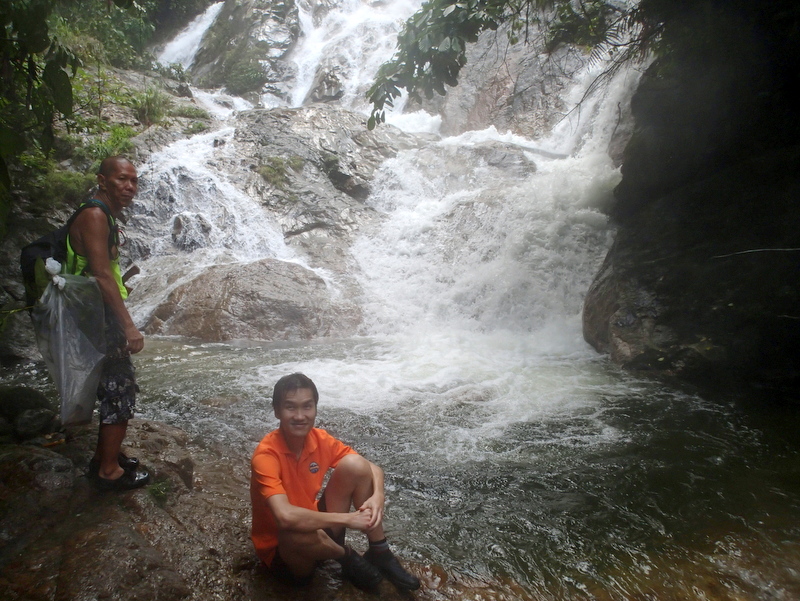
Lata Cheroh

Lata Cheroh, pic by Aric

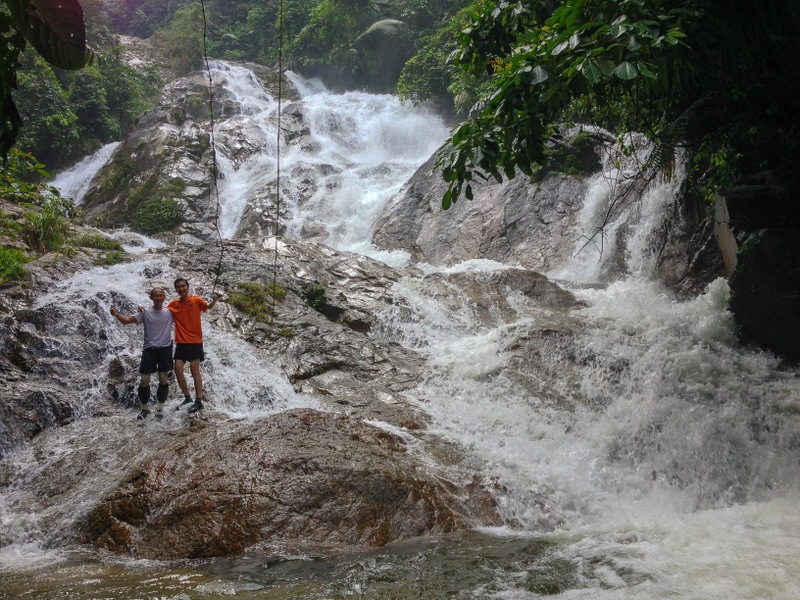
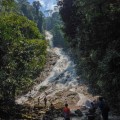
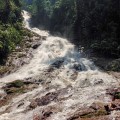
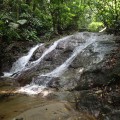
To reach our final destination, we had to scramble up a really steep slope until we arrived at the top of this waterfall. From there it was an easy, short  river trek to the bottom of Lata Merjur (fall nr 5). Because of the rainy season the water flow was spectacular. What a waterfall!
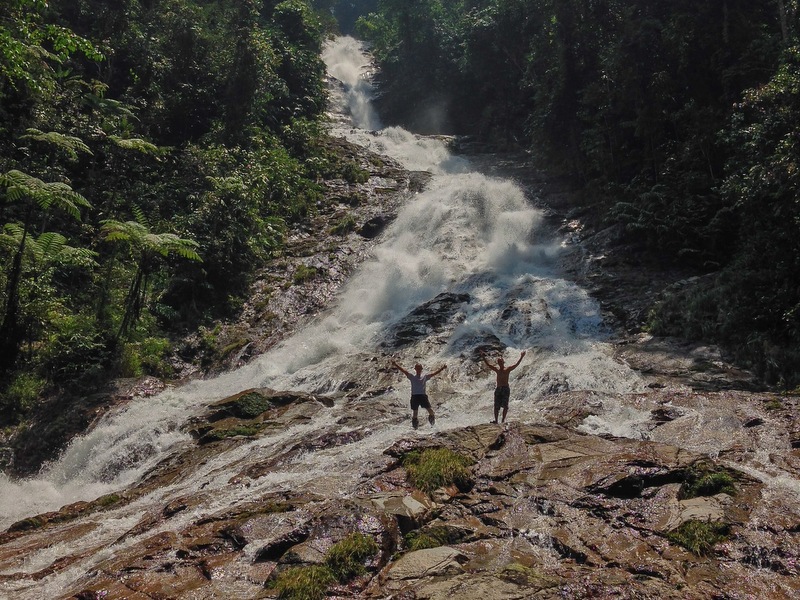
Lata Merjur, pic by Aric

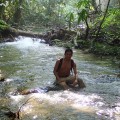
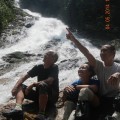
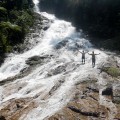
But also here there the bees were all over the place. Because it was the flowering season, Jinnah explained. Almost everybody in our group was stung one or two times. Instead of frolicking around, I kept myself mostly submerged in the water. Hardly took pictures, here are a few , taken by Aric and Janine

Here is a video of the fall.

Because of the bees we did not stay long at the fall. As the weather was still good, Jinnah decided to go back the same way, river trekking. With (heavy) rain, that would have been too risky. In that case the best way back would have been a jungle trail with a lot of chopping. Now we were back around 3 pm.

We were very lucky with the weather, it became cloudy and a bit threatening, but no rain until we had reached our cars. Beautiful landscape

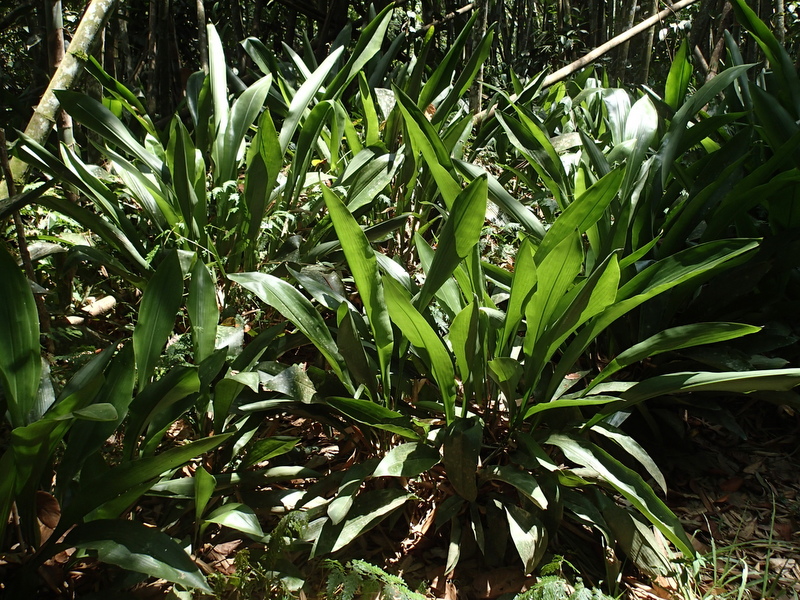
Dipang jungle

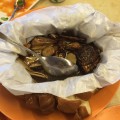
After saying goodbye to Jinnah and the penghulu, we drove back to Kampar for a very late lunch (more like an early dinner). Kampar is famous for its Roti Ayam . During our meal, there was a huge downpour, probably our tents would not have survived the strong winds…:-)

It was a wonderful trip, with a very pleasant group. Pity that there were so many bees. These falls are very remote, if anything happens, you really have a problem. Actually, although I had not noticed it, I must have been stung, as both my left cheek and right foot were swollen when I came out of the jungle.  Maybe it is time for me, at my age, to slow down a bit..:-)

On this GE screenshot you can see how remote the location of the waterfalls is.
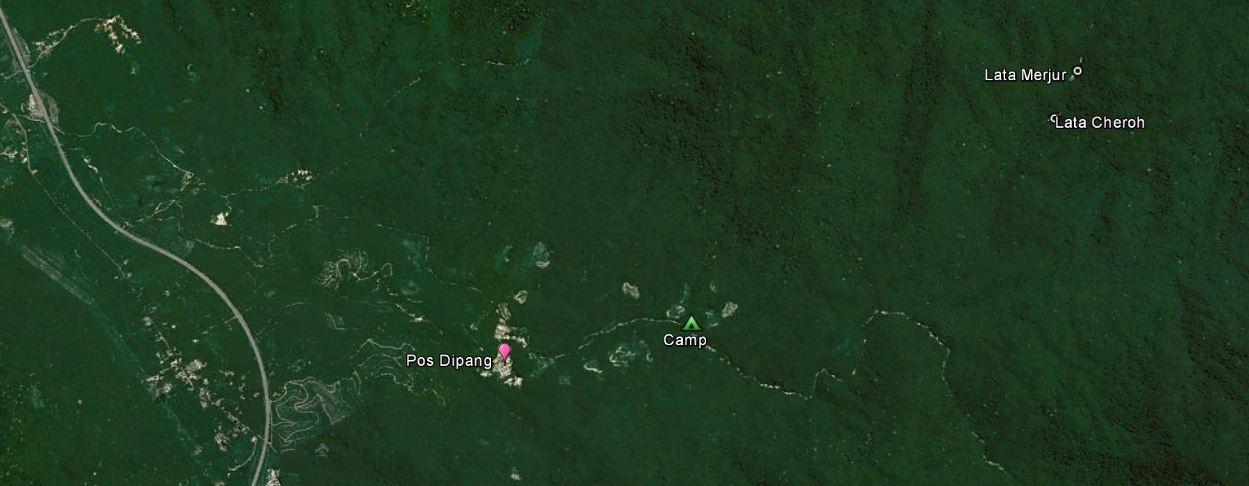
GE screenshot

Rock Climbing

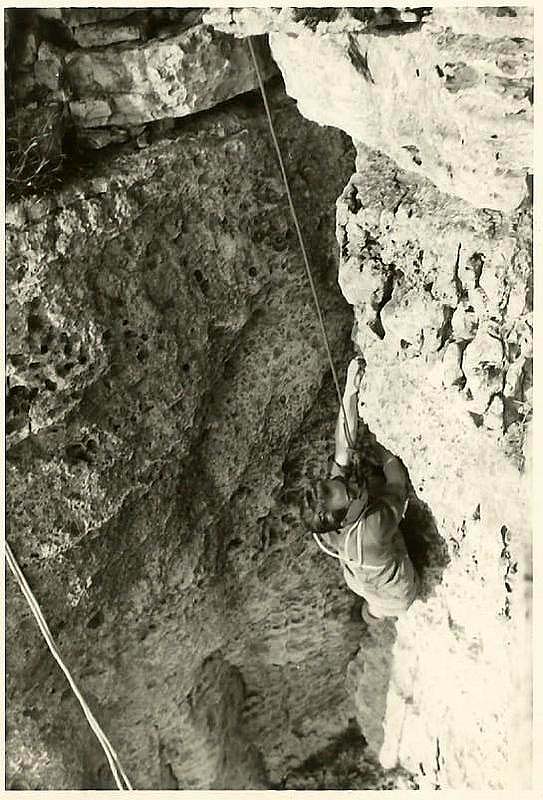
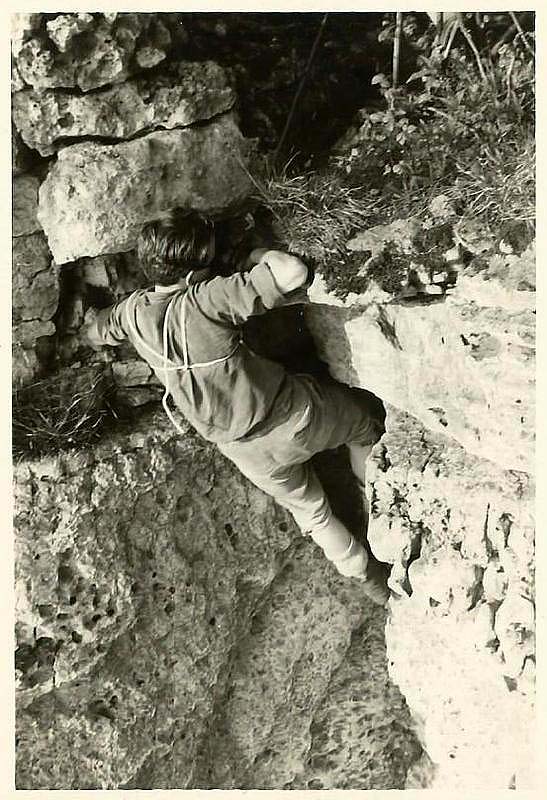
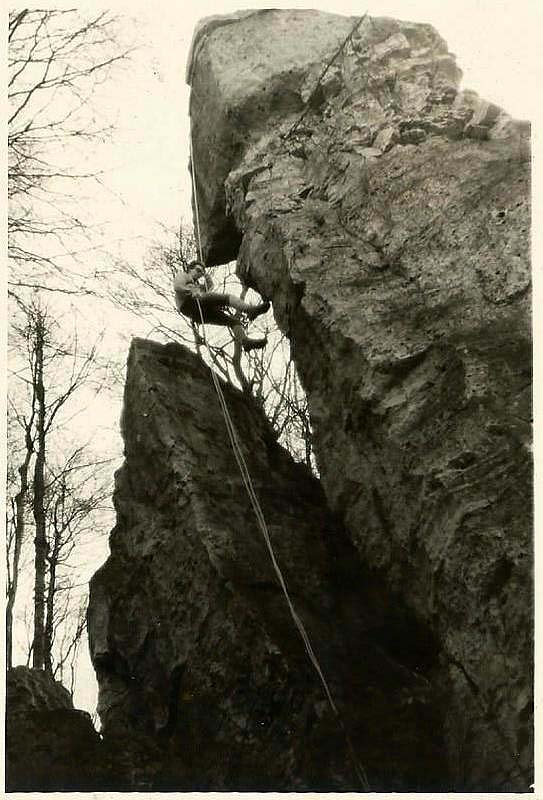
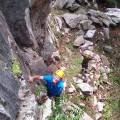
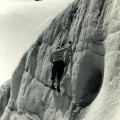
In a recent post, Down Memory Lane , I have written about my mountaineering past. In those days I went during the summer holidays with my friends to Austria. To get additional training we also visited several times, during weekends, a rock climbing site in Germany, the limestone hills of the Kanstein . Here are a few pictures. The two pictures to the left show me (yes, this slender young man is me, lol) climbing a route up the Sudostlicher Buchensluchtfelsen and in the picture to the right I am abseiling from the Liebesnadel (the Love Needle, guess why it was named that way!)

Rock Climbing

Rock Climbing

Abseiling

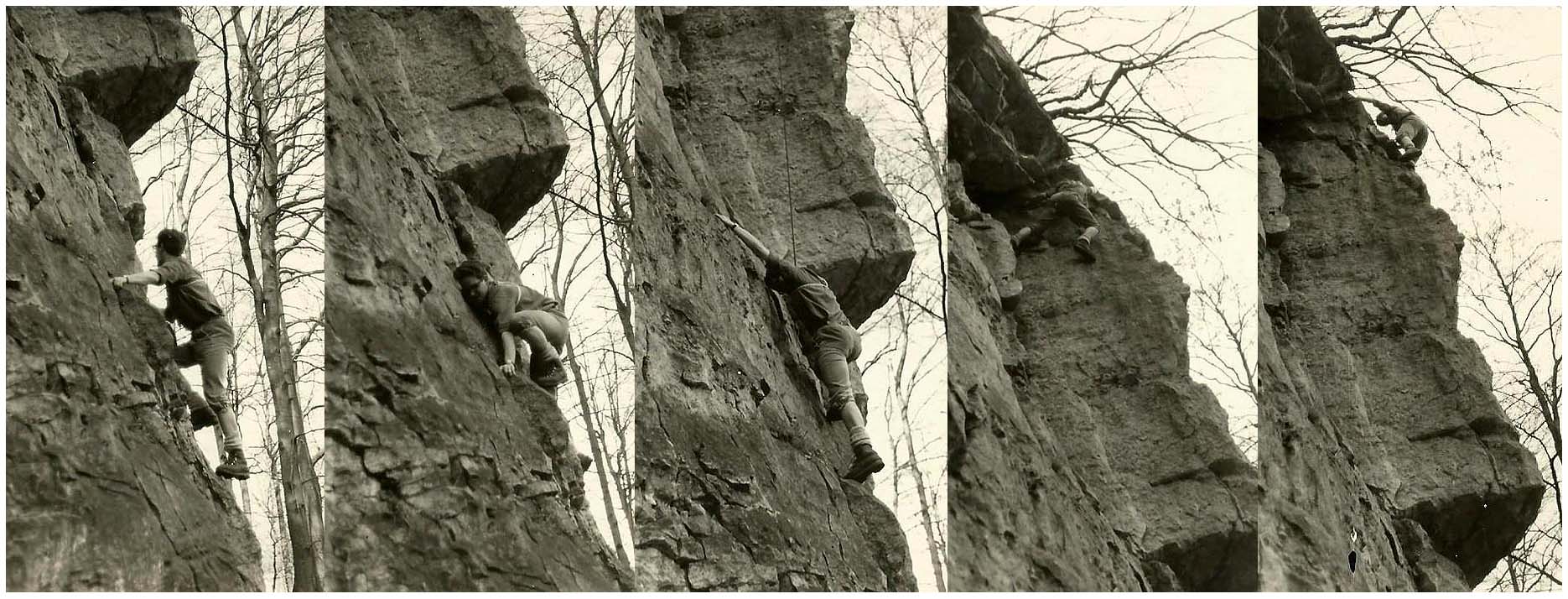
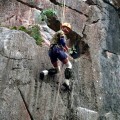
And here I am climbing the Vogelbeerfels. If you look carefully, you can see that I am secured by a rope, after all I was a beginner. But the rappelling was unsecured, if you would loose your grip, you would just fall down…:-)

climbing

That was fifty years ago.

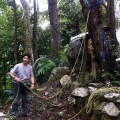
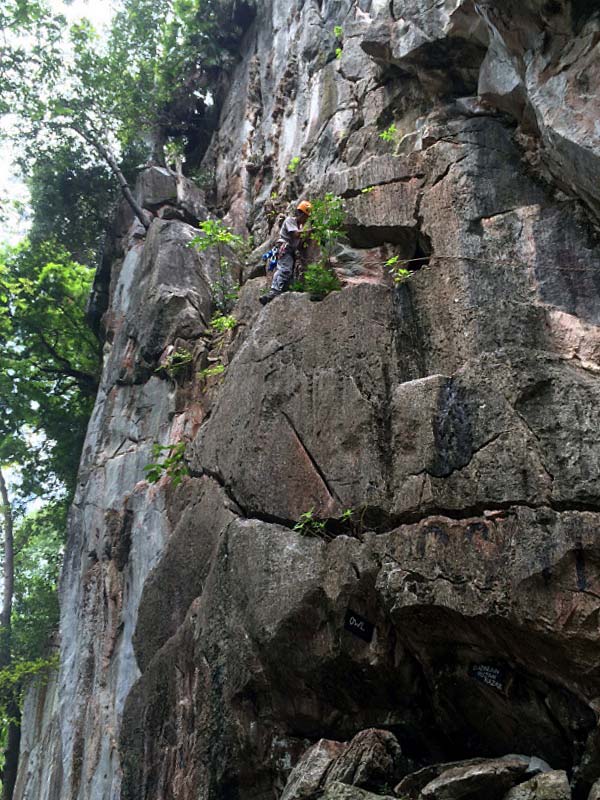
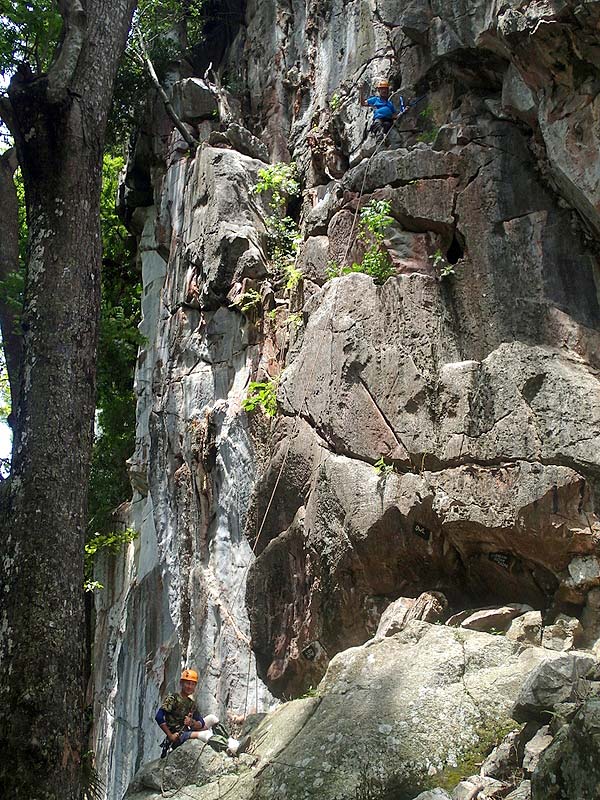
Last week, one day after my seventieth birthday, I went rock climbing again. My friend Chadel had invited a few friends for a climbing practice day at Bukit Takun, a rock climbing site near Templer’s park. After a thorough instruction we would climb up the steep rock face, and then rappel 30 meter down.  It was especially the rappelling that attracted me…:-)

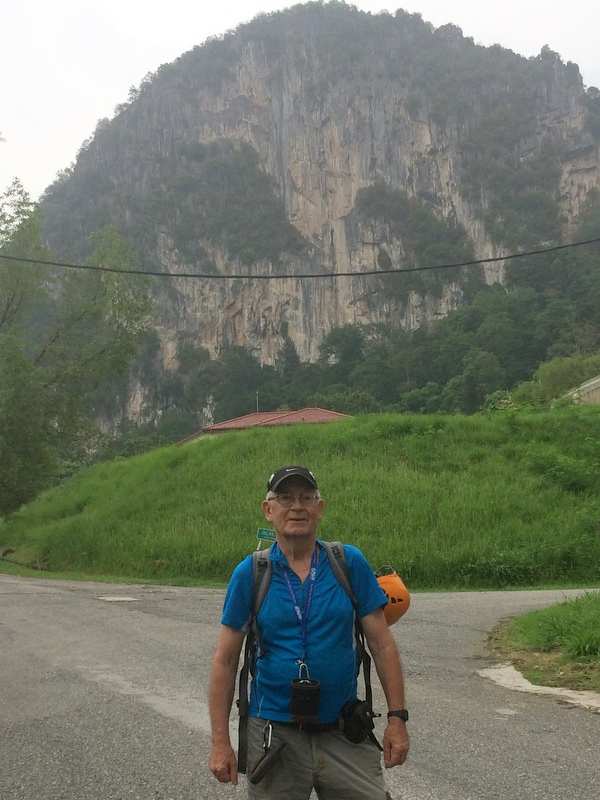
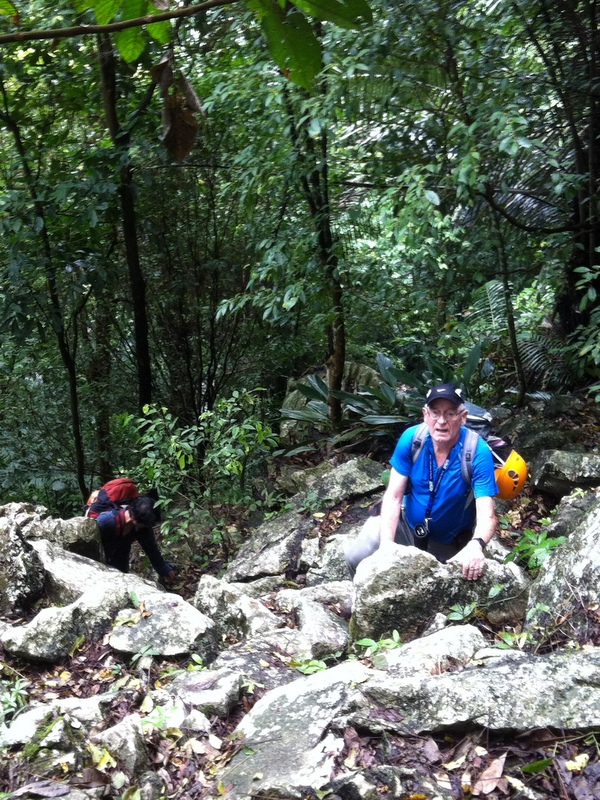
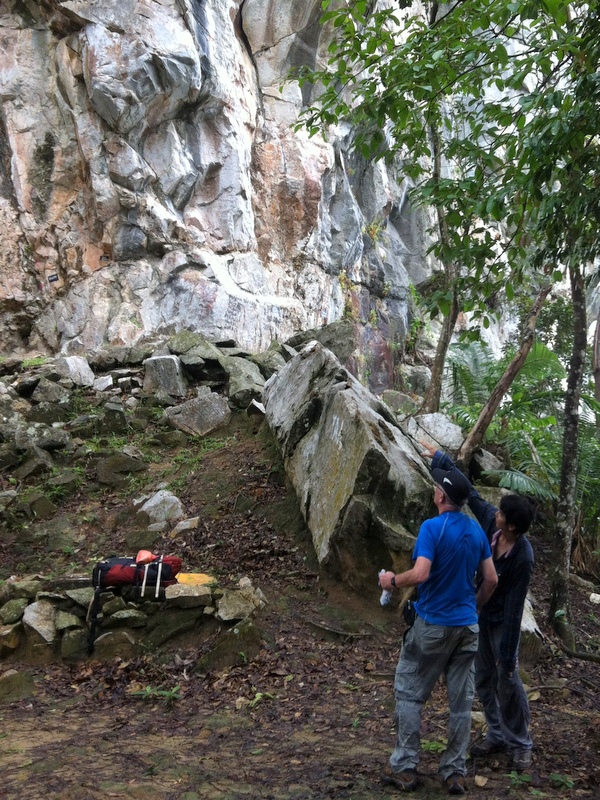
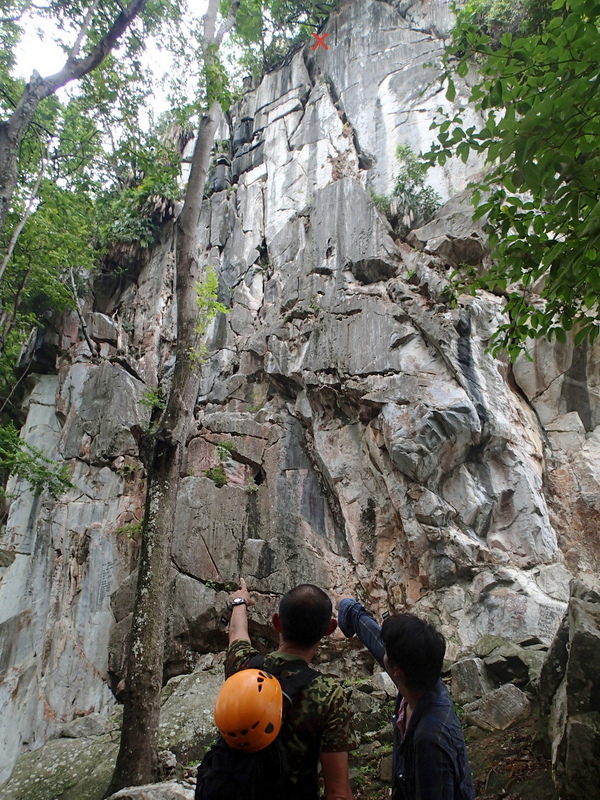
Bukit Takun is a conspicuous rocky hill. To reach the rock face, a steep climb was needed. In the right picture Chadel is pointing out the route we were going to follow. An almost vertical wall, rather overwhelming..:-)

Bukit Takun

Steep access

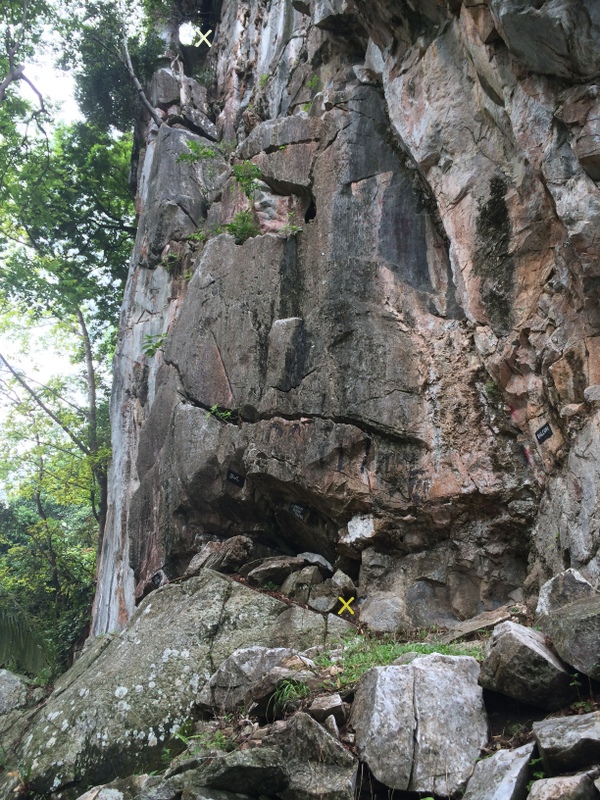
The climbing wall

We would start at the lower yellow cross, first climb halfway, then up through a so-called chimney (second cross). Finally abseiling down from the red cross.Click the pictures to enlarge them

Climbing up

Rappelling down

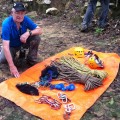
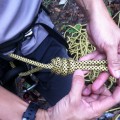
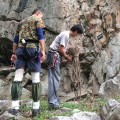
First Chadel explained rope handling, some useful knots and how to secure (belay) a fellow-climber. He is an experienced guide and has brought numerous clients to this hill.

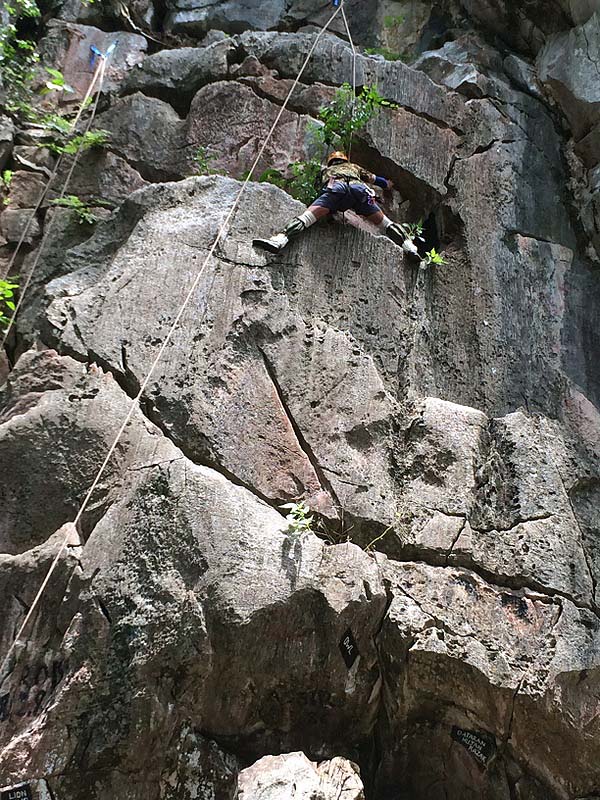
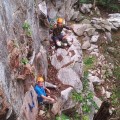
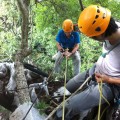
Chadel went up first. In the left picture he has almost reached the ledge, where he will prepare the safety anchor for Edwin and me. In the middle picture it’s me on the ledge and in the third one Edwin. To be honest, I found it not easy and almost gave up, but thanks to Chadel’s pep talk I made it..:-). Click on the picture to enlarge it, so you can see how Edwin is belaying me.

Chadel

Me

Edwin

From the ledge Chadel lowered us down to the base, where we took a rest and had our lunch. Because this was just a practice climb..:-).

The second half (pitch) of our climb was easier but had a “chimney” as a bottleneck. In a chimney you have to use a different climbing technique and here it helped that I had some experience from my mountaineering past.

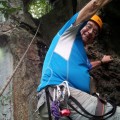
After this second pitch it was an easy scramble up to where we were going to rappel thirty meter down to our starting point. Not taking any risk, Chadel prepared an extra safety rope, in case we would loose our grip on the abseiling rope. The abseiling technique is very different from what I have been doing fifty years ago, Mark the tiny red gadget, that does the trick.

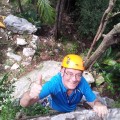
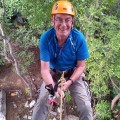
I think from my face it is easy to see how happy I was.

I also took a few videos. Here Chadel is starting the climb, belayed by Edwin.

In this video I have already climbed to the ledge abd I am watching how Edwin is coming up

And here Edwin is abseiling down. Can you hear the funny buzzing sound? There were a lot of annoying sweat flies..:-)

Thanks for a wonderful trip, Chadel!

St Matthew Passion

This week is Holy Week for Western Christianity. On Good Friday Christians celebrate the Crucifixion of Jesus and on Easter Sunday his Resurrection.

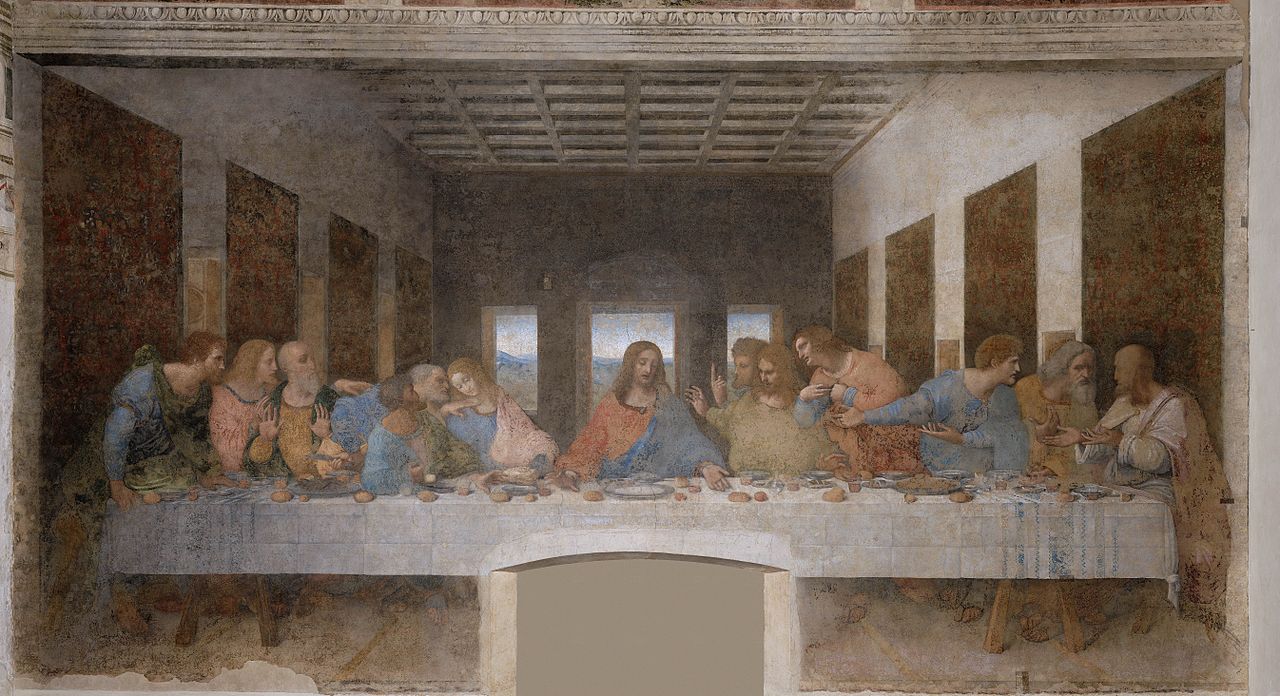
Throughout the ages people have been inspired by these events to create works of art. The Last Supper by Leonardo da Vinci (1498) is world famous.

The Last Supper

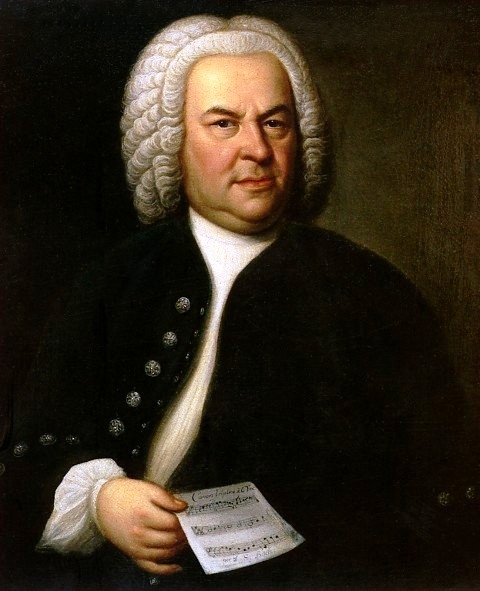
For me the most impressive musical work of art about the last days of Jesus’ life has been written by Johan Sebastian Bach in 1727: the St Matthew passion.

Johann Sebastian Bach

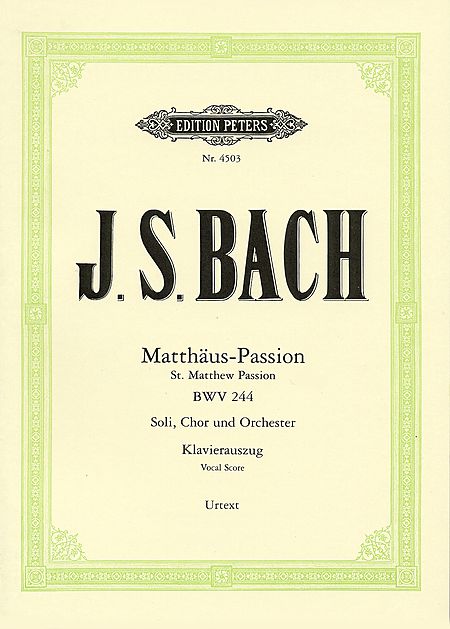
Mattheus Passion

When I was a school boy, my father took me for the first time to the Matthäus-Passion as it is called in German. It was performed in a church, and the atmosphere was religious. No applause for example after the concert! At that young age it was a long session, more than three hours. Still I was impressed.

When I moved to Amsterdam in 1961 for my studies, I became a regular concertgoer, mostly listening to the Matthäus Passion in the Concertgebouw. I think I must have attended it more than 40 times.

Although I am an atheist, Bach’s music still can move me to tears. For example this aria: Aus Liebe will mein Heiland sterben (Out of love my Savior is willing to die)

Now that I live most of the time in Malaysia, I can not always attend live performances of the Matthäus Passion, as the work has never been performed here as far as I know. But no problem, I have a few recordings on CD and we have now YouTube!

You can find there a large number of recordings. Here is my favourite: a recording by Dutch conductor and harpsichordist Ton Koopman in the St Joris church in Amersfoort, March 2005. Very clear and transparent, impressive soloists.

The orchestra is playing on authentic Baroque instruments, as is common practice these days. Also considerably faster than in the past. The (beautiful) recording in 1971 by Karl Richter takes 3 hours and 18 minutes, more than half an hour longer than Koopman’s recording.

One more recording deserves to be mentioned. In 1989 Gustav Leonhardt, Ton Koopman’s teacher, recorded the Matthäus Passion, with the female parts (alto & soprano) sung by males (counter-tenors and boy-sopranos/altos) as was a common practice in Bach’s time.

Bach has written more Passions, but of those only the St John Passion has survived. More dramatic, shorter, for many years I did not pay much attention to it. But that has changed…:-)  Here is a recording by Ton Koopman . My favourite aria in this Passion is “Es ist volbracht”, written for alto. In Koopman’s recording it is sung by Andreas Scholl.

Listen to the performance by Panito Iconomou, boy alto in the Tölzer Boys Choir. Harnoncourt is the conductor. Try not tot get emotional…:-)

One closing remark.
It has always intrigued me that for Bach (a Lutheran Christian), it seems that the death of Jesus is the end of the story. There is no expectation of a resurrection. In the final chorus of the St Matthew, the choir starts with: “Wir setzen uns mit Tränen nieder” (“We sit down in tears“). They continue with “Ruhe sanfte, sanfte ruh!” (“Rest gently, gently rest!“)

Happy Easter!

MH370

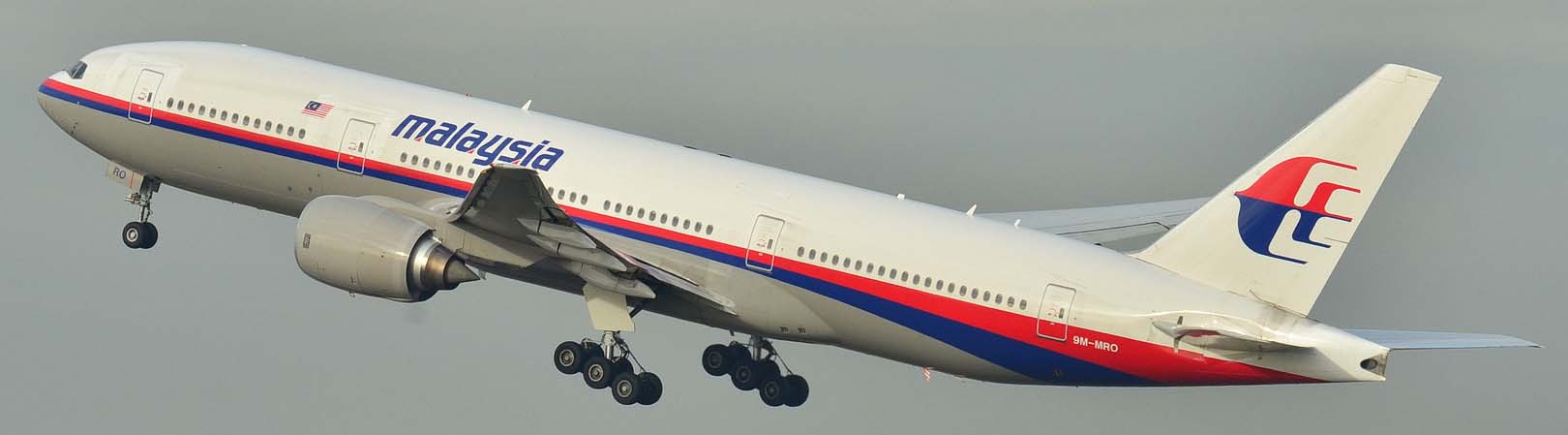
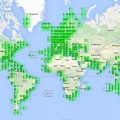
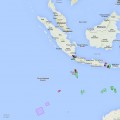
Just now I did a Google News Search for MH370. I got “about 276 million results” That is an amazingly huge number. It reflects the interest of the whole world in the disappearance of Malaysian Airlines flight MH370, now more than one month ago. Here is the plane in better days. MH370 Until now the search for the black boxes of the MH370 has been a lot less successful, with no results at all the last two days. After a lot of confusion during the early days, it has now been generally accepted that MH370 has been diverted deliberately from its original course and finally crashed in the Indian Ocean, about 1000-1500 km west of Australia. Here are some maps of the search area, based on a complicated analysis of satellite data. A bit surprisingly, until now no debris has been found.

These maps are available for everybody and very interesting on this website: Marine Traffic In the top right corner you will find an option “Go to Area” where you can choose MH370 Search Area. The site has many options, just find out for yourself. In the picture to the right, you see the recent tracks of the Ocean Shield, an Australian vessel that has recorded a number of “pings”, possibly coming from the black boxes. But the last few days contact has been lost. Searching the Internet formore  information,

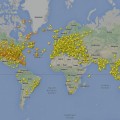
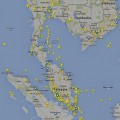
I found another very interesting website, this time not covering the marine traffic, but the air traffic. Flightradar24. Be warned, this site is addictive…! You can follow a flight, from the take off, live, as long as it is wihin reach of the radar. Click on a plane icon and you will get detailed flight information about speed, altitude. This is the information sent by the transponder on  board of the plane.

It is this transponder that was switched off on board of MH370, when the plane was about to cross over from Malaysian to Vietnamese air space. Just after the transponder was disabled, the plane diverted from its course in a western direction, and later turned to the south.

After the disappearance of MH370, MAS has decided to rename the flight from Kuala Lumpur to Beijing from MH370 to MH318. I followed this flight from the start, last night, until it was about to leave Malaysian airspace. It is the last picture below.

After a few days of optimism, when several “pings” were recorded, now there is doubt whether  the black boxes will ever be recovered. In that case it may remain forever a mystery what has happened to MH370…:-(

Taiwan trip videos

During our recent trip to Taiwan, I have take quite a few video clips, which are now available on YouTube. Here they are presented with some additional comments and links..

The first clip was taken in the Longshan temple in Taipei. This temple was originally built in 1738 by Chinese settlers from Fujian, It was destroyed many times by earthquakes and fires, but every time rebuilt. The last time was after the Americans had bombed the temple in 1945, claiming that the Japanese had hidden weapons inside the temple. It is an iconic example of classical Taiwanese architecture.

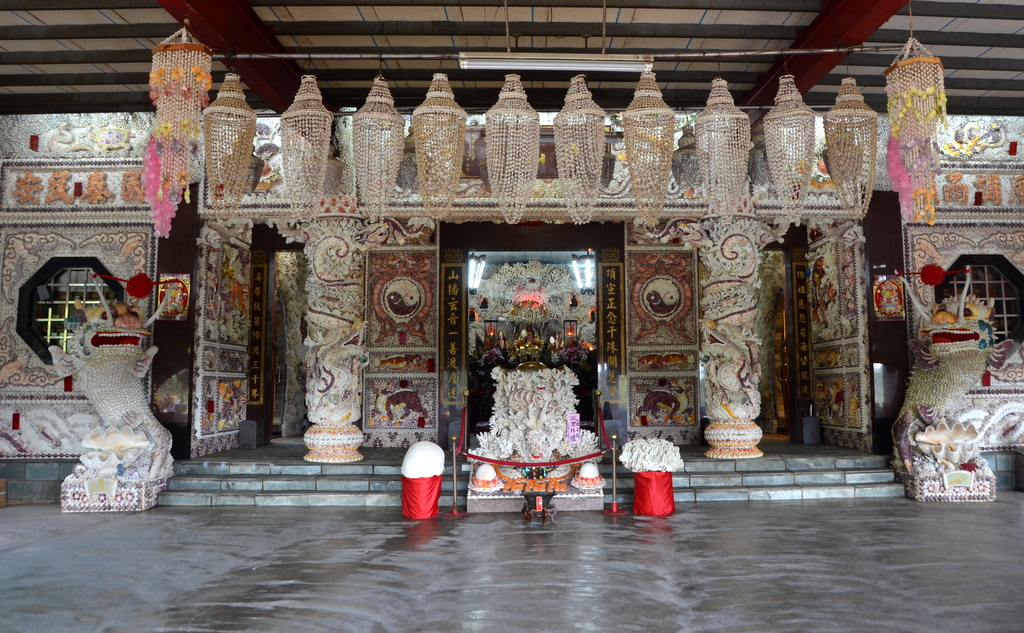
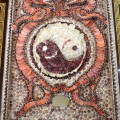
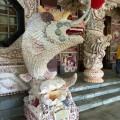
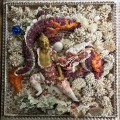
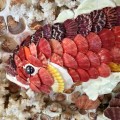
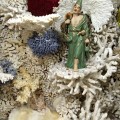
Also a temple, but in a completely different style and much more recent: the Shell Temple in Dangshui. In the hills, north of Taipei, remote, we hired a taxi to get there. Completely built from sea corals and shells. Amazing.

During our trip we had lots of nice and often unknown food. One of them was this dish with I think  is called Milk Mochi. It has a Japanese origin and was very refreshing. Aric shows here how to eat it.

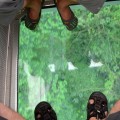
One of the tourist attractions of Taipei is the Maokong Gondola. It connects the Taipei Zoo with the Maokong hill. Opened in 2007 it was closed in 2008 after structural damage of the supporting pylons was discovered. Reopened in 2010. Some of the cabins have glass bottoms.

Maokong is a tea growing region, so one of the attractions is to drink tea in one of the many tea houses that can be found near the gondola station. It was misty, so the famous night view of Taipei was disappointing. But we had tea and here Aric is showing how to do a tea ceremony (more or less…haha)

In Xin Beitou I took two videos of the geothermal activity there. The first one on our way back from our  hot spring bath experience in the remote location. Note how there is a small stream with cold water just next to the boiling water and the steam. Transported with numerous pipes to the baths.

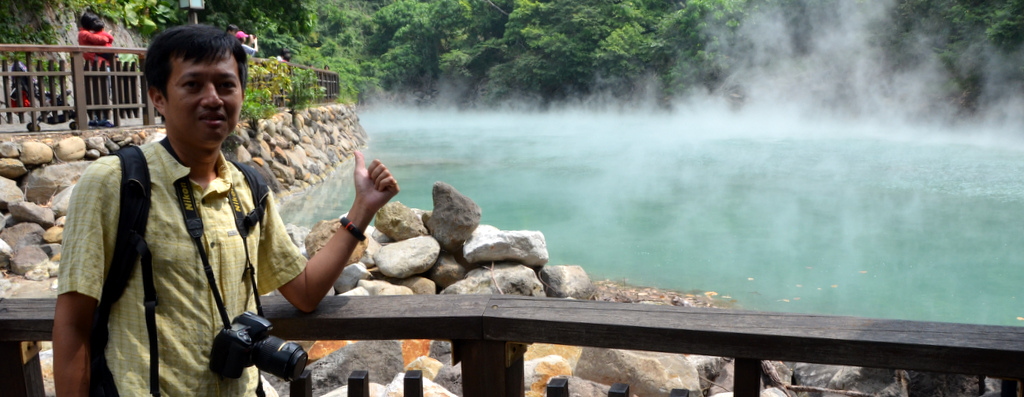
In Xin Beitou itself, walking distance from the center, there is a “Thermal Valley”, a small lake of hot water, greenish colour, with a lot of steam coming from the water.

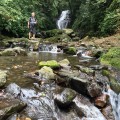
Our next destination was Jiaoxi, on the north-east coast of Taiwan. Here Aric had discovered during his research a nice waterfall, the Wufengqi falls. Walkable from the town.This is the lower tier

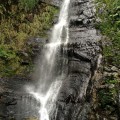
The upper tier is quite impressive, a tall vertical fall. We were not the only visitors, although it was  a steep climb. This is a popular tourist attraction.

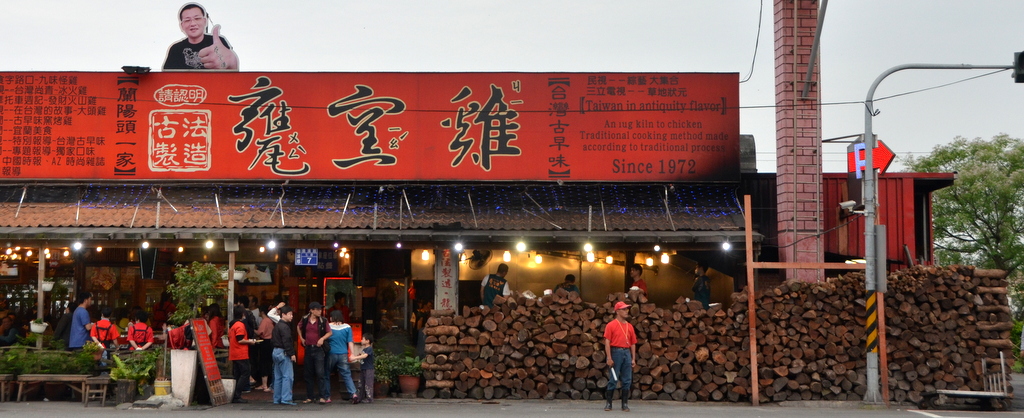
One of the must-visit places for food in Jiaoxi is the Wengyao Roast Chicken restaurant . Their specialty is chicken, slowly smoked over tropical longan wood.

WengYao restaurant

First here a video about how they prepare the chicken.

What a job! The chicken is cooked in its own fat, with some herbs. You can only order a whole chicken. They bring it to your table with two pair of gloves and you have to dissect it yourself. Here I am doing that, it became a kind of slapstick video. Watch it full screen and have a good laugh.

By the way, I have never in my life eaten a more juicy and delicious chicken!

From Jiufen, the last village where we stayed, we made a few trips in the north-eastern hills of Taiwan. One of the places Aric liked to visit was the grave of Teresa Teng, a Taiwanese Chinese pop singer, passed away at a young age in 1995 and still very popular in Malaysia and other Asian countries. Elaborate grave, with her songs being played. Interesting.

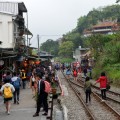
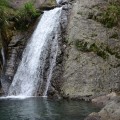
On our last day we explored the Pingxi line, a single-track railway line, built in 1921 to transport coal. Now a major tourist attraction. On a day ticket you can stop at each station, walk around and then proceed to another one. From the Shifen station you can walk to what is considered the most scenic waterfall of Taiwan, the Shifen fall. Kind of Niagara falls in miniature.

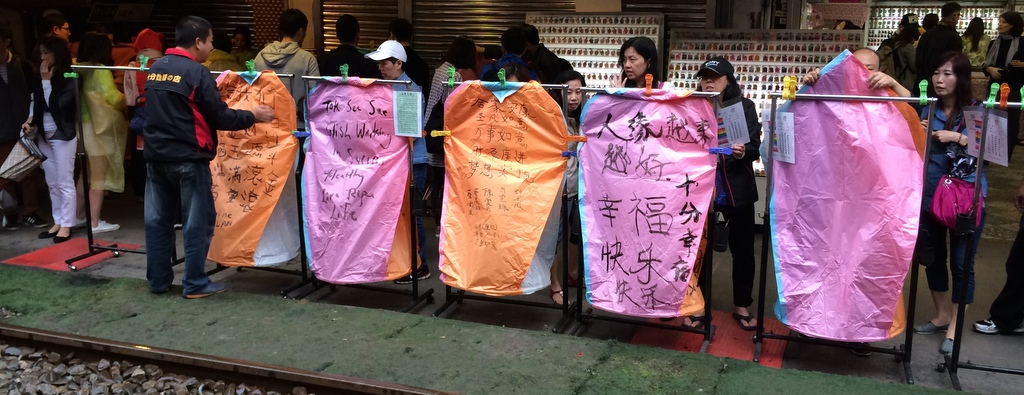
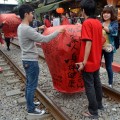
The Shifen station itself is an interesting one, with the railway tracks running in the middle of the village main street! When no train is arriving these railway tracks are a center of activity with people preparing huge Chinese lanterns, writing messages on them and then let them go up in the sky.

Chinese lanterns

Taiwan trip

For quite some time Taiwan has been on our list of countries to visit and this year we finally booked an Air Asia flight to Taipei for a 12-day trip. To be honest, our primary reason was… the Taiwanese food! Aric likes to watch Taiwanese TV programs about food and had collected a large number of dishes to try out. But of course there was also culture and nature..:-)

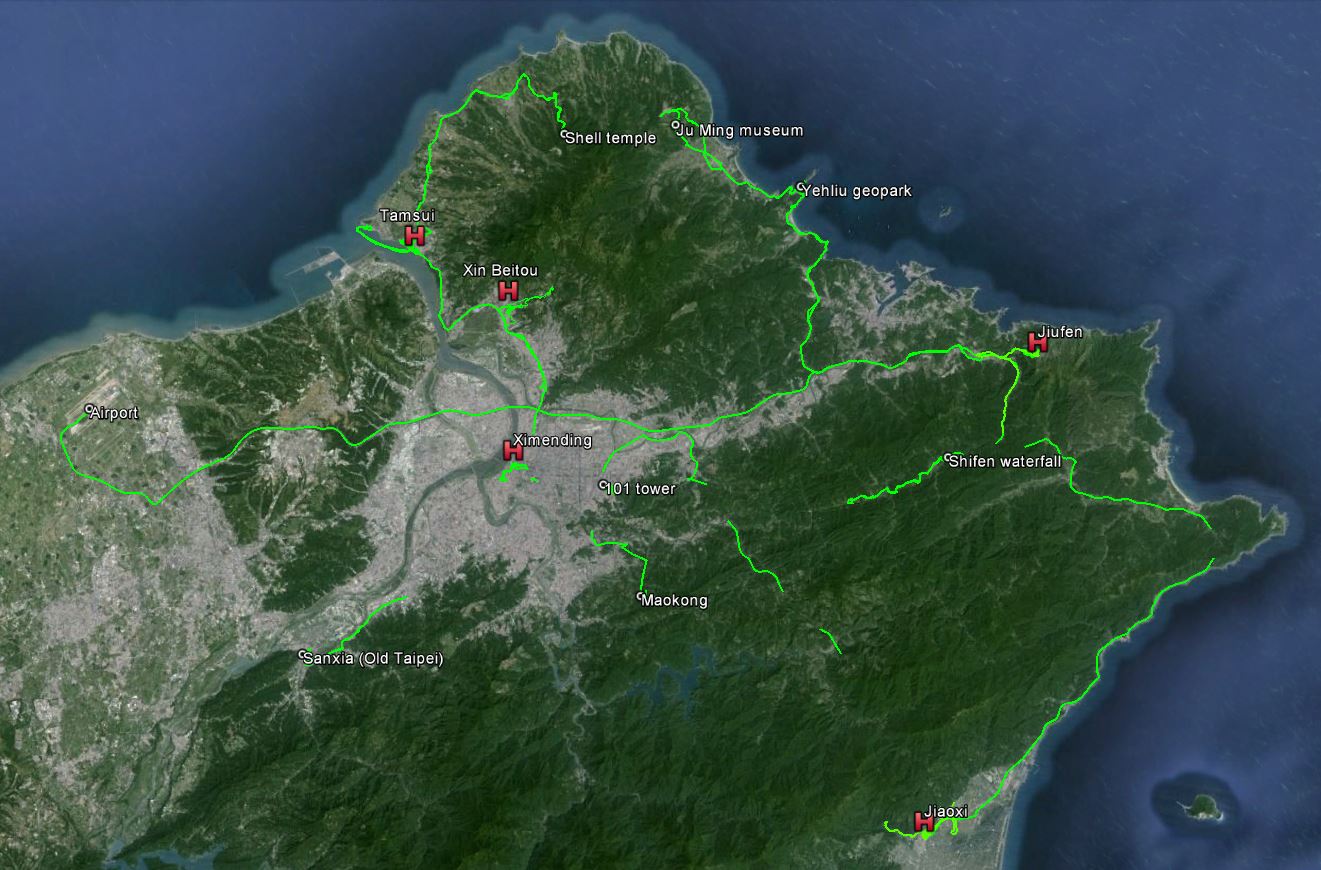
As usual Aric had done  a thorough research for the trip. He suggested that we should not  try to cover the whole country (size a bit less than the Netherlands), but limit ourselves to the northern part, Taipei and surroundings. Here is the map of our traveling in Taiwan. The GPS tracks are often broken, in the town because we used the (underground MRT) a lot and in the mountains because of the many tunnels. Click on the map to enlarge.

Map

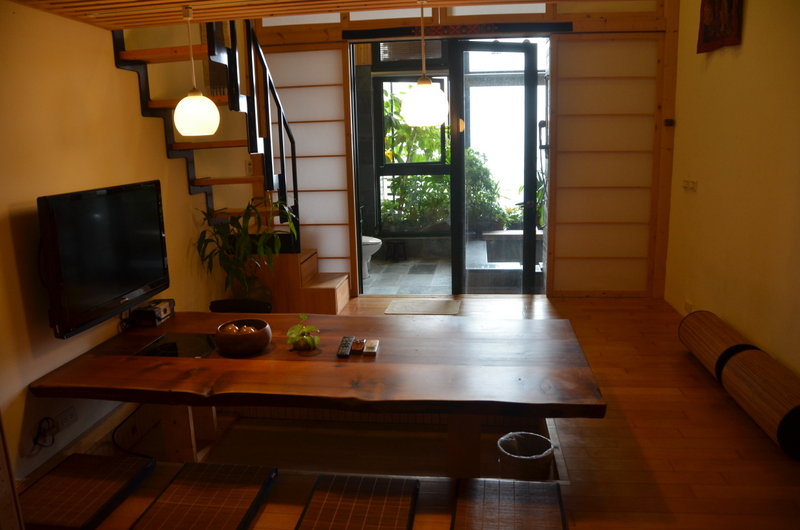
Actually we could have stayed in one hotel in Taipei center and  make day trips from there out. Instead we decided to move around to various nice boutiquehotels. We started in Ximending, the entertainment and shopping district of Taipei. After three days we took the MRT(!) to Tamsui, a suburb of Taipei where we stayed two nights in a nice “room with a view”. Back to Xin Beitou, one night, for the hot springs. After that by bus to the East coast, Jaoxi, two nights in a beautiful apartment with our own private hot spring!. The last three nights up in the hills, in Jiufen, another apartment with a view.

Room with private hotspring!

Our apartment in Jaoxi, in Japense style, with a private hot spring bath!

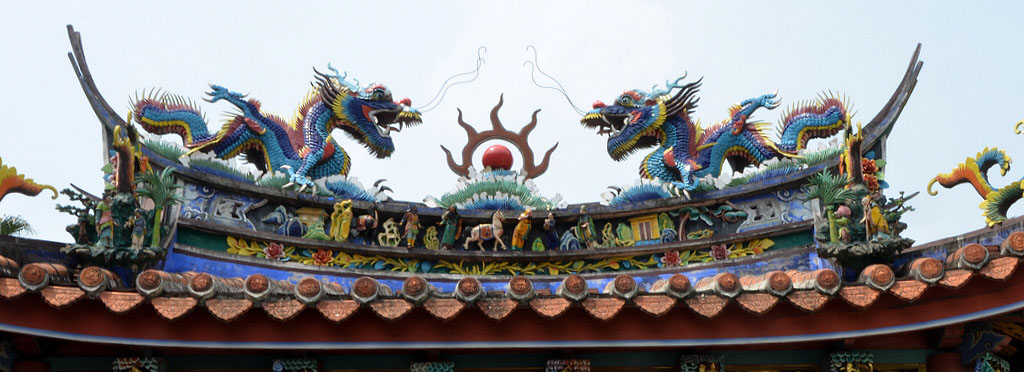
When you visit Taiwan, of course you have to visit the Taoist/Buddhist temples. Taipei has a number of famous ones, but you find them in every town and village. They are well maintained and beautiful, but also basically the same…:-). So after a number of temples your reach your saturation level.  Here only  a limited number of pictures. Below is the entrance decoration of the Qingshui Temple in Taipei

Temple facade

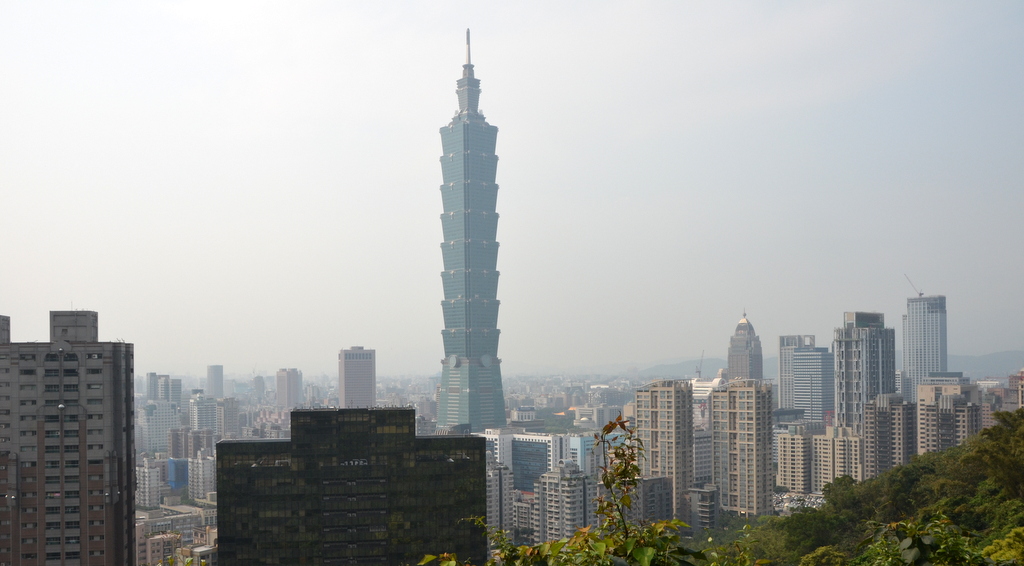
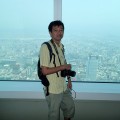
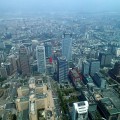
The (modern) architecture of Taipei is rather monotonous and a bit boring. Of course there is the “outstanding” landmark of the 101 tower, until a few years ago the tallest building in the world. Personally I think the Petronas towers are much more impressive. Of course we had to go up in the ultra-fast elevator (600 m/minute!) to the observatory on the 91st floor.

101 tower

The 101 tower as seen from the nearby Elephant mountain

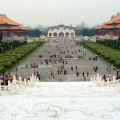
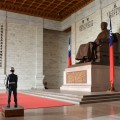
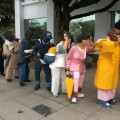
More impressive is the Memorial for Chang Kai-shek, the former president of the Republic of China. It was opened in 1980, on the fifth anniversary of his death. During our visit there was an amusing panda event in the huge square in front of the memorial hall, attracting a big crowd of spectators. Many school children, it was nice to see how disciplined they behaved. Same with the people waiting for the MRT in an orderly queue. Our general impression of Taiwanese people is very positive, they are friendly and eager to help.

Chang Kai Shek memorial

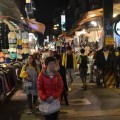
We had a busy program, especially the first few days. We visited Sanxi (Old Taipei) where the “Old Street” was built during the Japanese occupation (1895-1945). The Red House is another example of Japanese architecture. Of course we went to the Shilin night market with its underground foodcourt. The MRT transport system makes traveling easy, but you also still have to walk quite a lot!

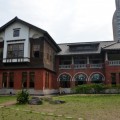
After three days in Ximen we took the MRT to Tamsui, a sea-side town, but still part of what is called New Taipei City. Different atmosphere, university town, a bit artistic. We visited the Santo Domingo fort, dating back to Dutch colonial times, and the nearby British Consular Residence. And we took the ferry to the harbour to see tne famous sunset, but it was cloudy. You can not have everything…:-)

Tamsui

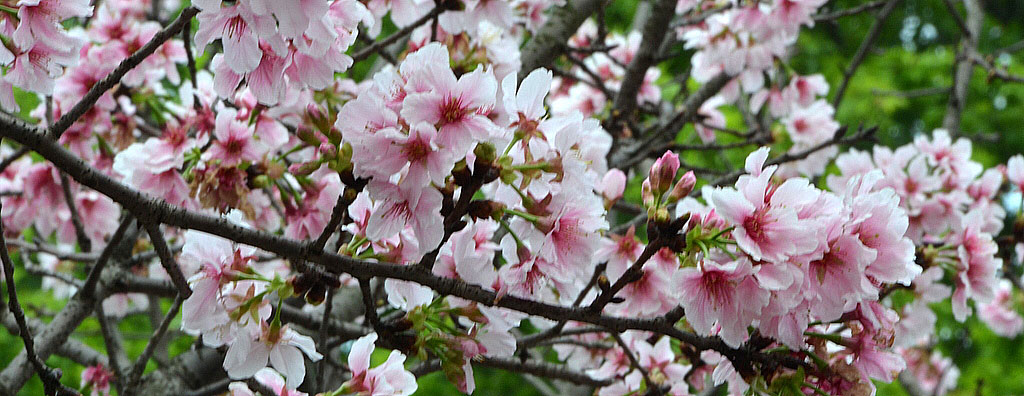
We had chosen this time of the year for our Taiwan visit, because we were hoping to see the cherry blossom. The season lasts only a few weeks and is not really predictable. We were a bit late, but still we could see some. And there were other flowers as well, as it was the beginning of spring.

Cherry Blossom

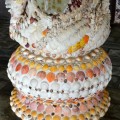
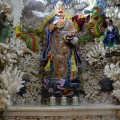
From Tamsui we made a trip to a remote, little known jewel: the Shell Temple (Fufuding temple), completely constructed from sea shells and corals. Quite unbelievable. We had to hire a taxi to go there, but it was worth the effort.

Dingshan Shell Temple

Here are a few pictures of the interior. There is even a kind of cave behind the shrime, where you can crawl through. Good that there were no other tourists…:-)

One of the famous tourist attractions in Taiwan are the hot spring baths. The public bath culture was introduced during the Japanese occupation. Originally they were free of charge, with a separate pool for men and women, and you are bathing naked. These traditional ones are getting less in numbers, being renovated and modernised, mixed, you have to pay and you need swimwear.

A famous hot spring region is Xin Beitou, where we went next. There is a lot of geothermal activity around there and Aric had discovered a remote traditional public bath. We were quite shy to enter, because we were warned that you have to follow the rules, or you will be scolded…:-). But it was a nice experience and I was scolded only once. Mainly older men, who prepare their tea, and chit-chat a lot. We tried another one in Xin Beitou, also a traditional one. And we went to the original Japanese one, now a museum.

Geothermal activity

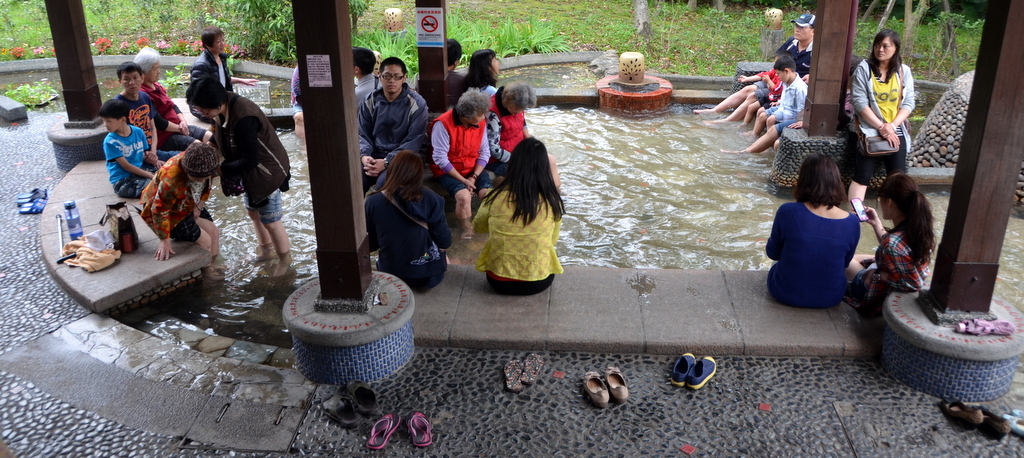
After Xin Beitou we took a bus to the West Coast, to Jaoxi, another hot spring center. Here Aric had booked a room with a private hot spring bath! In the town on several places there are popular public foot baths. We even had lunch in a restaurant while soaking our feet in the hot water! Also here we found a traditional bath and I even managed, a bit sneakily, to take a picture inside the bath hall…:-) Of course we also used our own private bath. It is easy to get addicted!

Public foot bath

Our last stop was in Jiufen, a small town in the hills. Popular tourist attraction but most visitors came on a day trip, so in the evening it became quiet. It was good that we had brought our jackets, because it was a lot colder here. From here we made two day trips. For the first one we hired again a taxi. First we went to…. a museum!

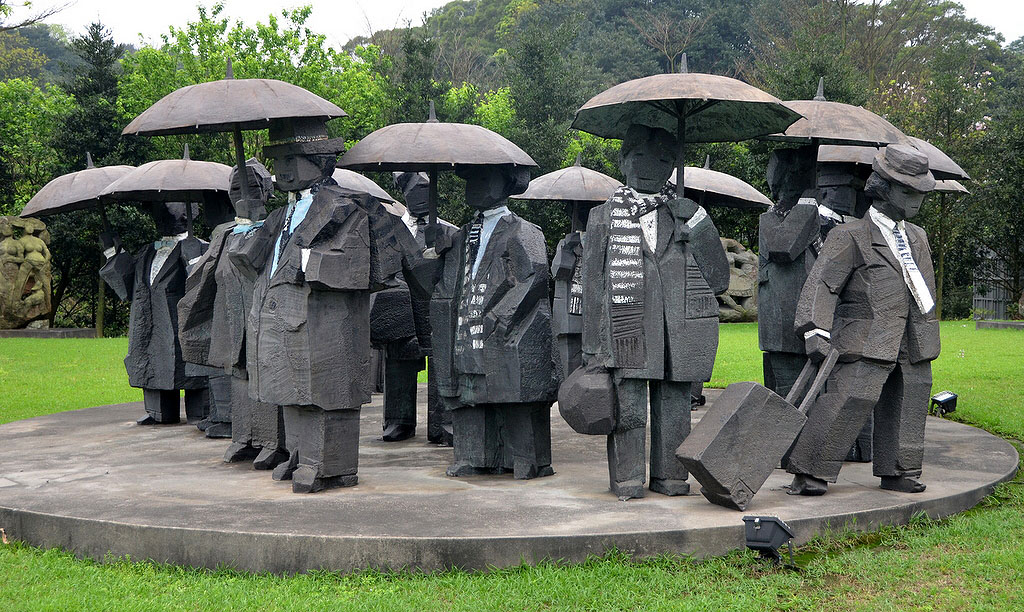
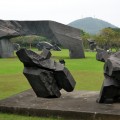
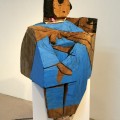
Ju Ming is a Taiwanese sculptor with an international reputation. He has created his own museum in the hills north of Taipei. I had never heard about him, and the museum was really an eye-opener for me. We spent quite a long time, walking around as many of his works are in the open air

Ju Ming museum

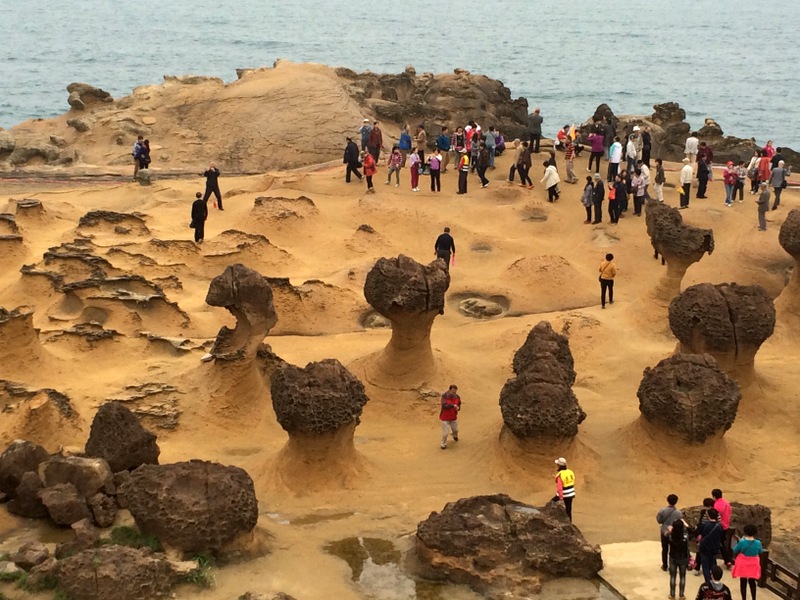
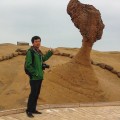
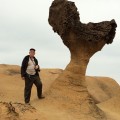
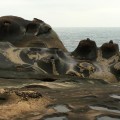
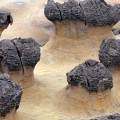
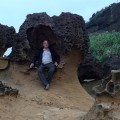
After the museum and lunch we visited the Yehliu Geopark, another surprise. Erosion has over the millions of years created an amazing collection of strange rock shapes. The most famous of them is the Queen’s Head. In earlier days you could just touch this rock formation, but now you can only view it from some distance, because unscrupulous visitors scraped some of the soft rock to take home, causing the neck of the queen to become thinner and thinner.

Yehliu geopark

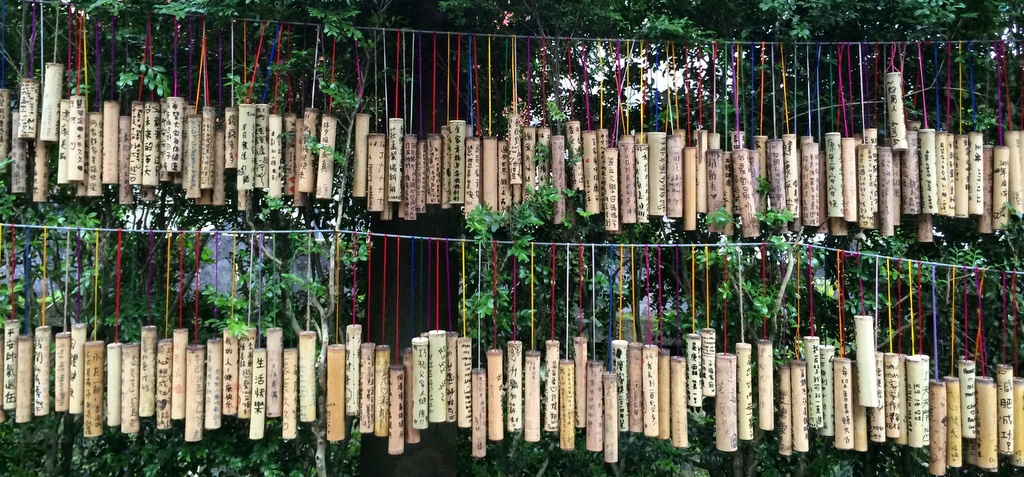
The last day we took the train into the hills. In the past this was a coal mining region, now it has become a popular tourist destination.When there is no train coming, the tracks are used for walking. Couples leave bamboo cylinders behind with love(?) messages, a variation on the love locks you find in for example Paris. Another popular activity is to paint a message on a Chinese lantern and let it fly away as a hot air balloon.
Bamboo cylinders

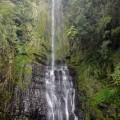
The most famous tourist attraction along this train route is the Shifen waterfall, considered to be the most scenic waterfall of Taiwan. A real beauty. From Jiaoxi we had already visited two other waterfalls. Here are the pictures.Shifen fall
It was a wonderful trip, and we are already looking forward to visit Taiwan again.
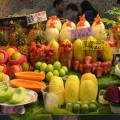
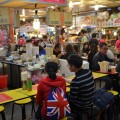
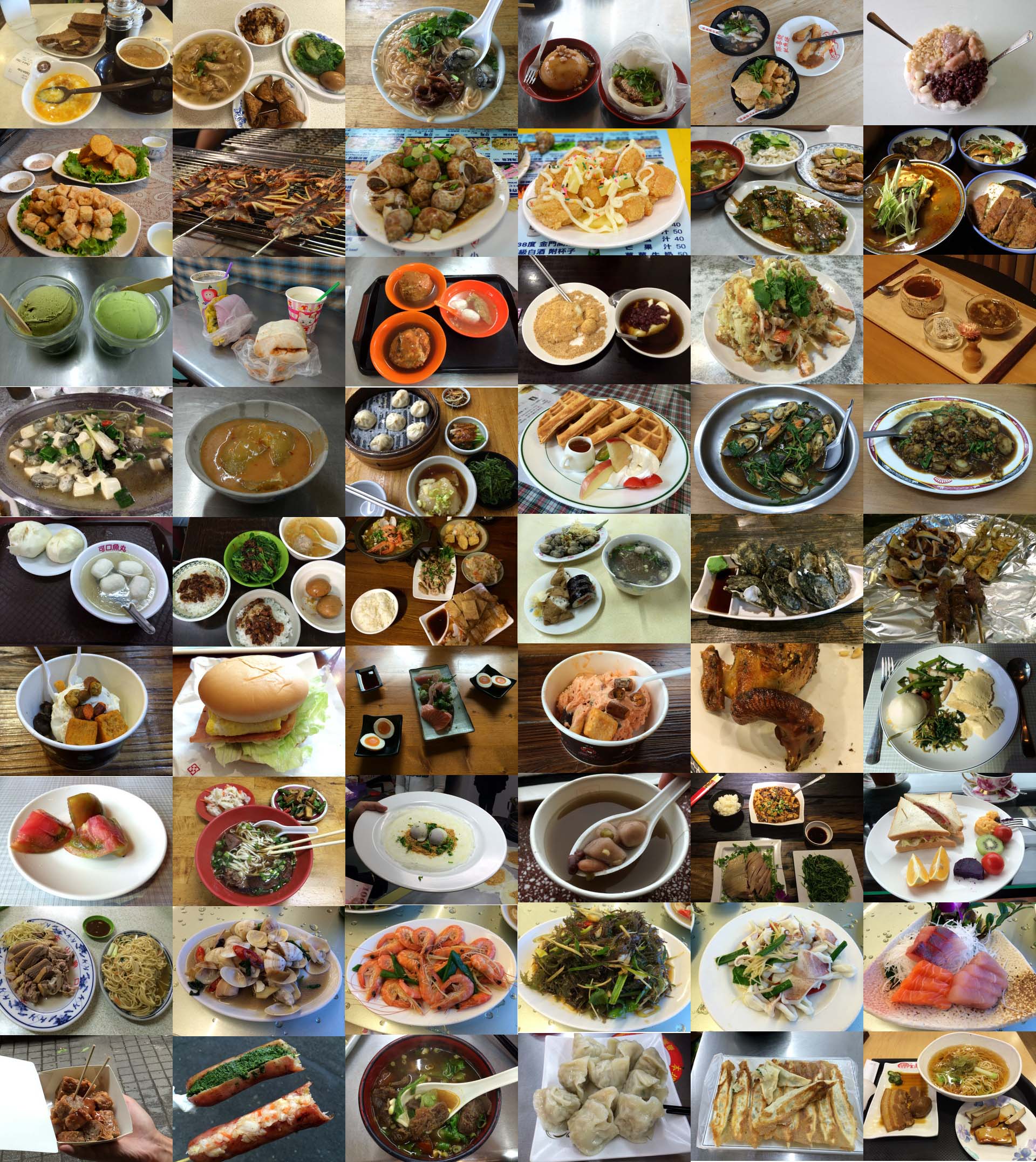
But wait, I almost forgot to mention the food…:-) And I started this blog, mentioning the Taiwanese food. Well, we have done our best and tried as many different Taiwanese specialties as we could find…:-). It was a pleasure every day. Lots of pork, lots of delicious oysters. Menus are in Chinese, so I had to trust Aric. Here is a collage of what we had,  I don’t know the names.
Taiwan food

I also shot a number of video’s, but I will put them in a separate blog, as this one is already longer than usual.

Bukit Kiara again

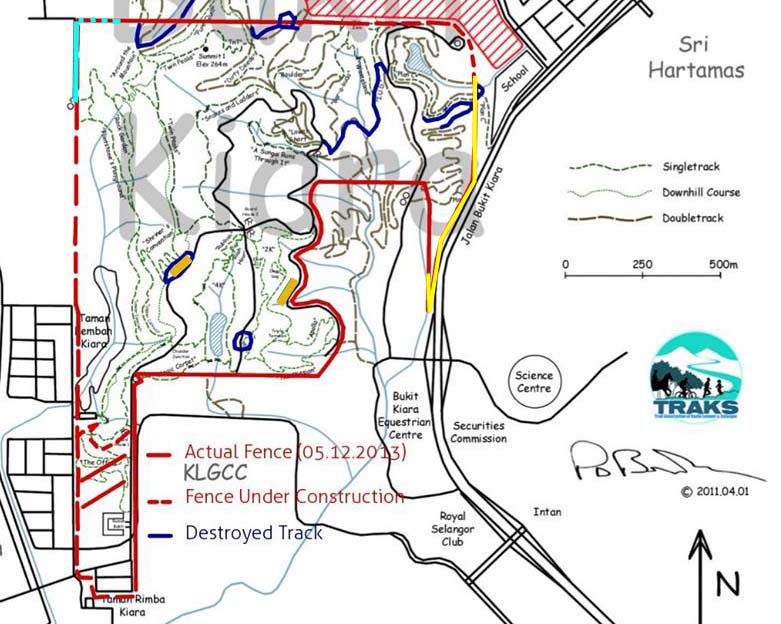
My last post about Bukit Kiara, Bukit Kiara: Not All Is Well, was written end of December and reported that JLN had resumed the fence construction at the eastern border of the proposed Kiara park. It is the yellow line in the TRAKS map below.

Kiara Fence

Now they are constructing the fence at the western side, where the park borders TTDI. Indicated in the map by a light blue line. I went there with my friend Pola Singh to have a look.

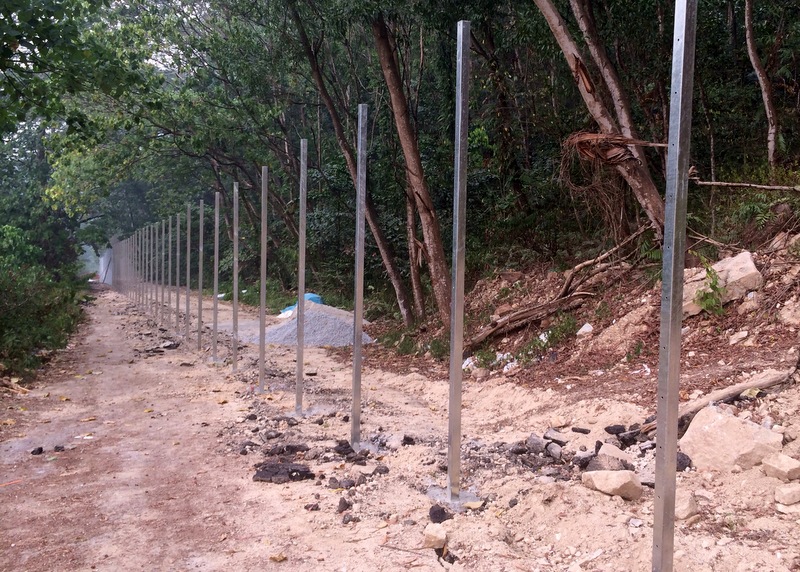
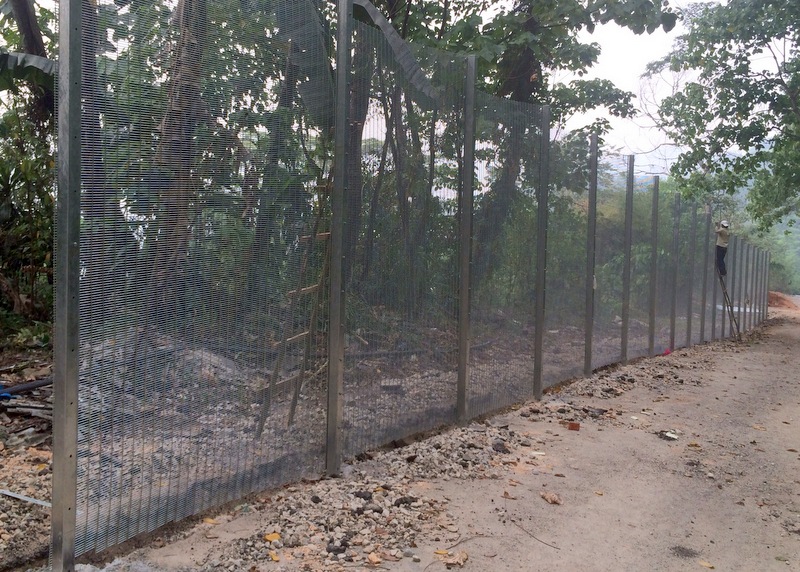
Fence under construction

Fence under construction

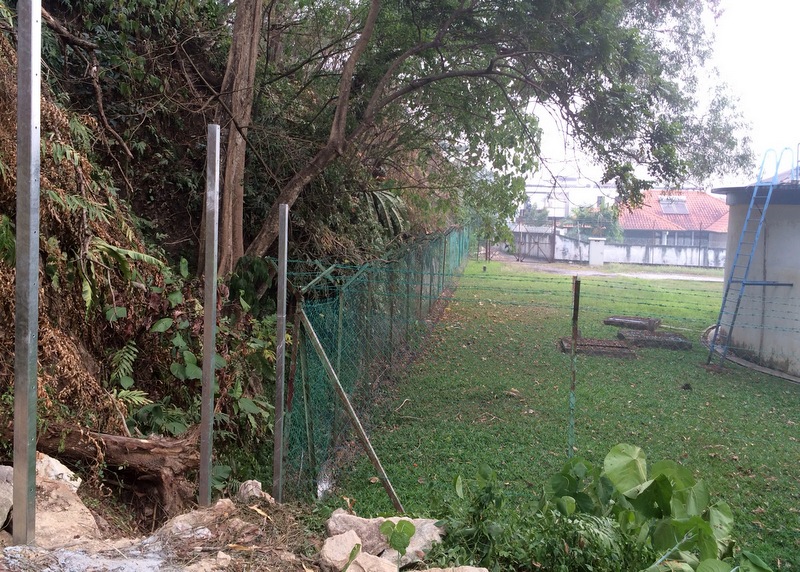
A small unpaved road, leading to a water tank, separates here the hill from the Taman Tun area, and it is this road where they are constructing the fence. The pylons have been cemented, now the workers are applying the actual fence. Halfway a gate has been planned. Near the water tank, the “prison” fence will connect to an old “friendly” existing fence.

Location of the gate Old fence and new one

What will they do with this old fence? They will have to replace it, IMHO, otherwise the whole idea of making an unclimbable, high-security prison fence around Bukit Kiara becomes meaningless! Where the fence ends at the northwestern corner, it has  to turn 90 degrees (blue dashed line in the TRAKS map) and then go up a very steep slope to connect with the existing northern fence. That will be a very tough job!

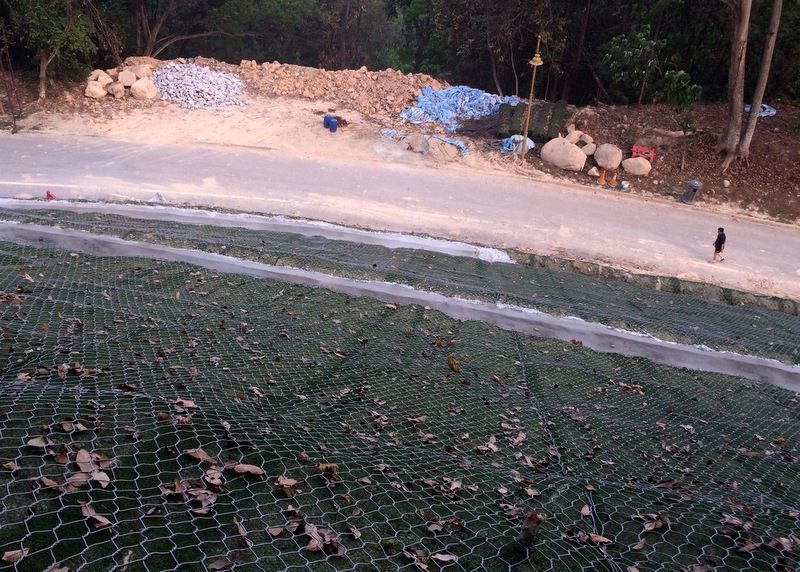
On our way back we climbed to the ridge to have a look at another of JLN’s “achievements”, the slope rectification project (see my aforementioned post)

Slope rectification

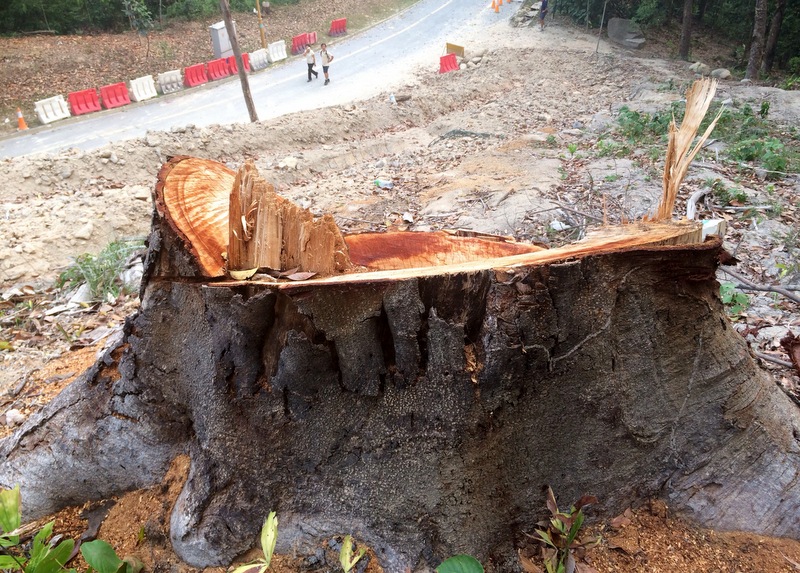
This was a beautiful tree

When it became clear that the soil removed from the slope, was just dumped at the other side of the road, destroying more trees and one of the TRAKS trails, a public outcry followed, and they stopped. But the damage was already done, as so often happens in Malaysia…:-(  In the beginning they had left one majestic tree standing, but that one now has also been cut down.

Here is a Youtube clip, taken while walking this trail (the 4K trail), until blocked by the JLN-made landslide. Pathetic.

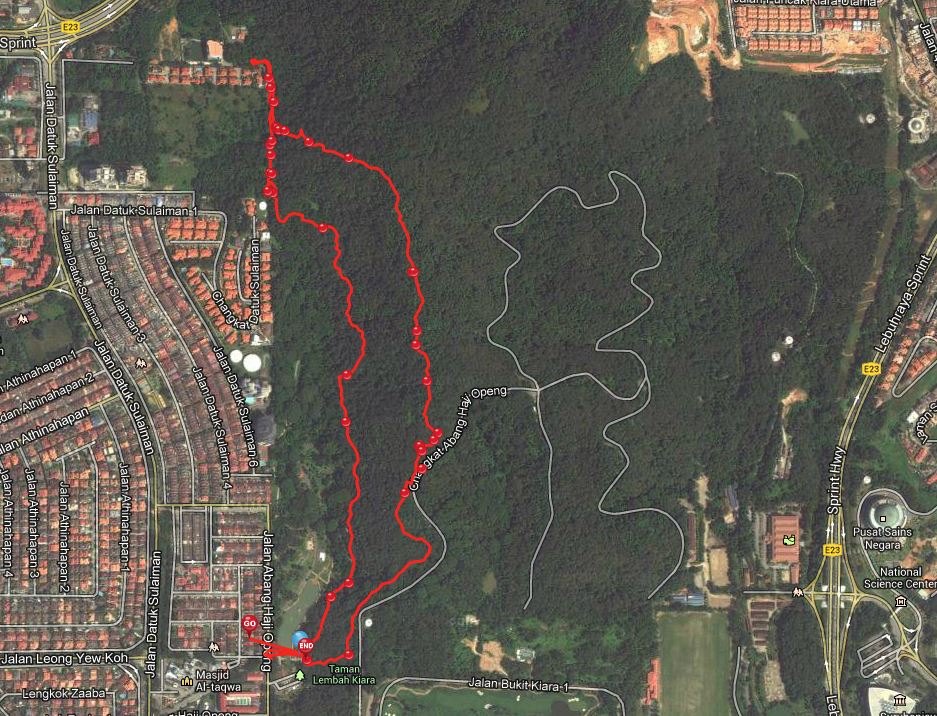
During our hike, I recorded the GPS coordinates and took quite a lot of pictures. It resulted in an EveryTrail report. In the map below you can see our hike, and when you click on it, a slideshow will start.

EveryTrail map

Teoh’s Canyon

My friend Teoh has been talking several times about a beautiful canyon in Negeri Sembilan, where he would like to bring me and my waterfall gang.  A canyon in Malaysia! It was not easy to find a suitable date, that everyone was available, so finally we went only with three people, Teoh Edwin and I.

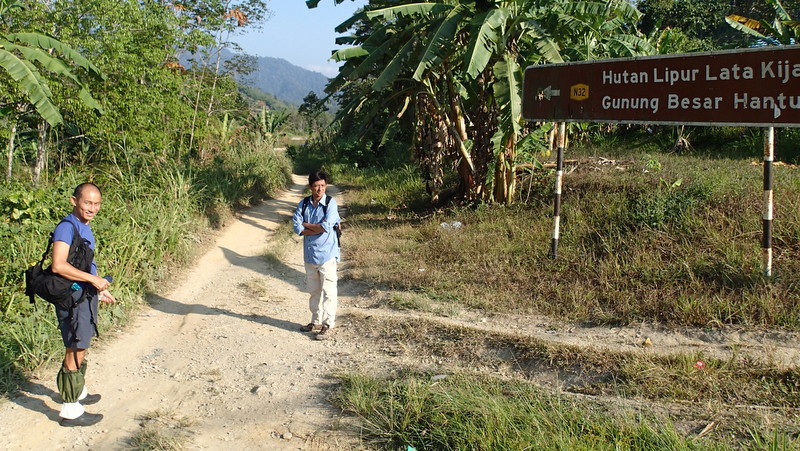
After breakfast in Batu 9, Cheras, we went on our (long) way to the region of Lata Kijang. This waterfall was almost destroyed by a severe flash flooding in September 2010 and is officially still closed to the public. With a 4WD you can reach the fall, we had to park our sedan at one of the Orang Asli kampungs along the access road and walk from there.

Hot and sunny

It was a few years ago that Teoh had been here, some development had taken place, it took him some time to find the right trail. It was a hot and sunny day, so it was really refreshing when we finally reached the river and could start river trekking!

Start of river trekking

It had not been raining for some time, so the water level was relatively low and the trekking easy. In the beginning the riverbanks were still walkable, but gradually they became steeper

River trekking

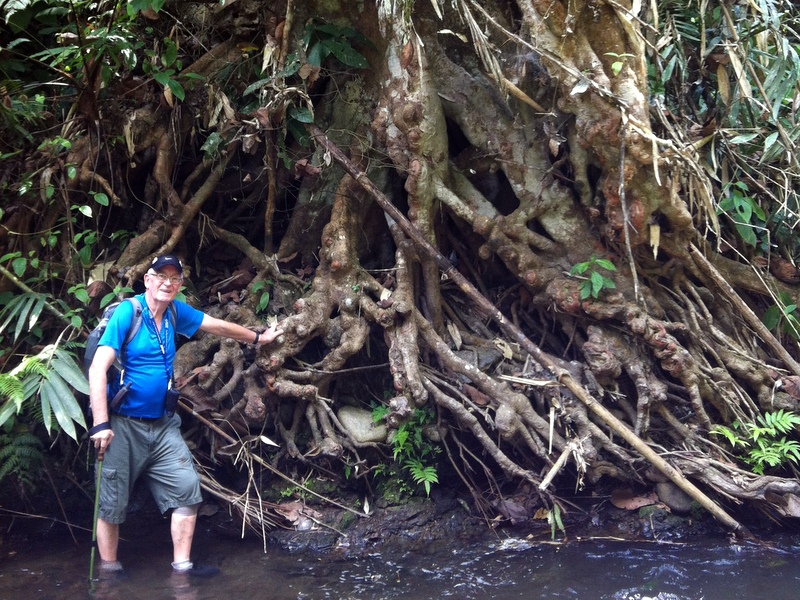
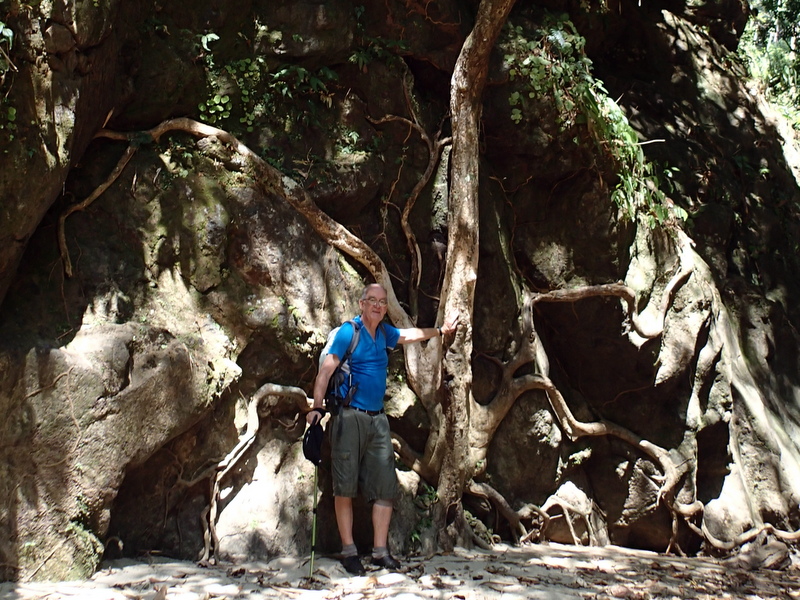
It was amazing to see how some of the trees were clinging to the rocks.

Giant tree roots

Tree clinging to the rocks

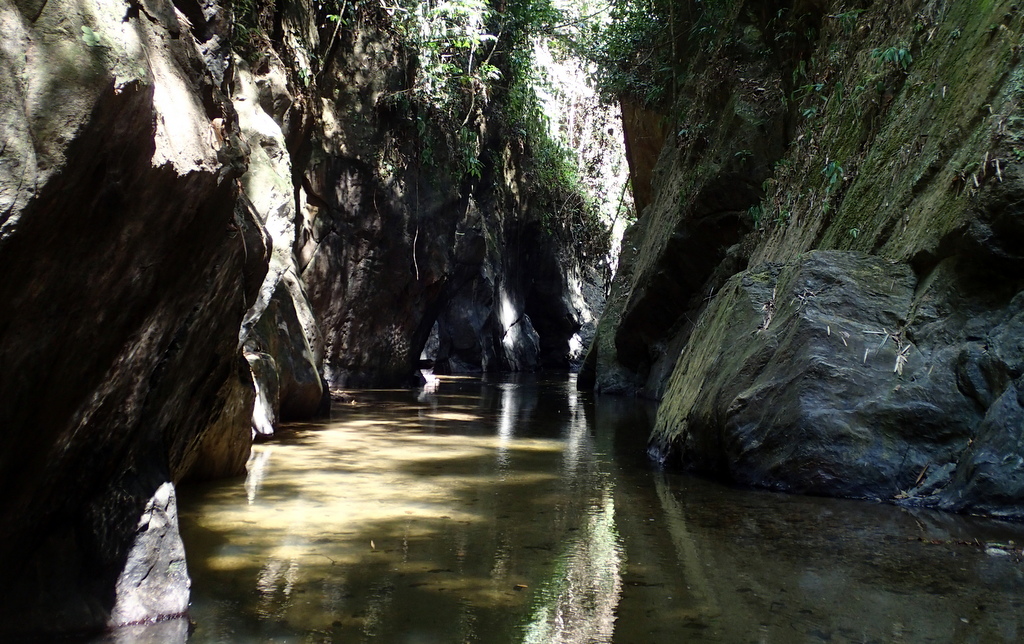
And then there was the canyon! Quite impressive. This is not a safe place to be when there is a risk of rain!. We noticed debris several meters up in the tree branches

The canyon

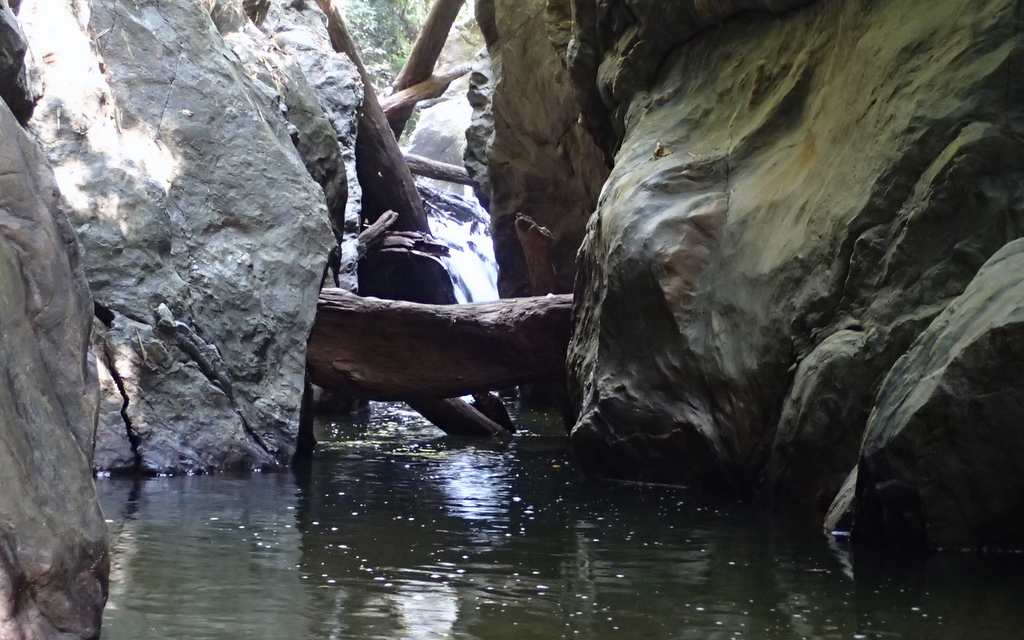
The canyon becomes narrower and at the end we saw a small waterfall. Huge tree trunks and branches in (and under) the water.  Here the water became also deeper, we would have to swim to get nearer. It might be interesting to find out if the canyon continued after the fall, but we considered it too risky to go further.

The canyon ends in a fall

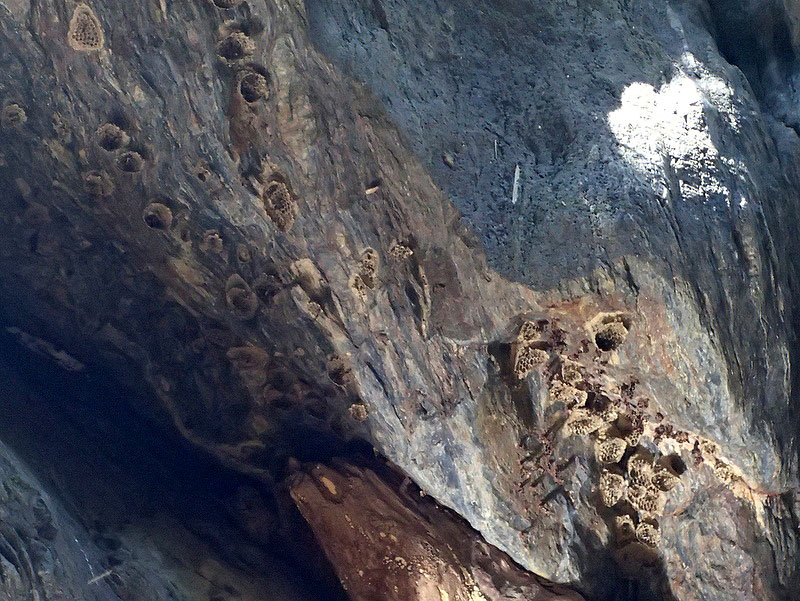
Another reason that we did not stay too long, was that not only there were quite a few bees, there were even bee hives up against the rocks. With my bee-sting allergy I did not feel comfortable, so we returned.

Bee hives

Here are a few more pictures. This is the only canyon I know about in Malaysia, a quite interesting experience. Also a bit overwhelming.

So it was also nice to be back again in the green forest, with nice flowers…:-)

Nice flowers

Fresh green plants

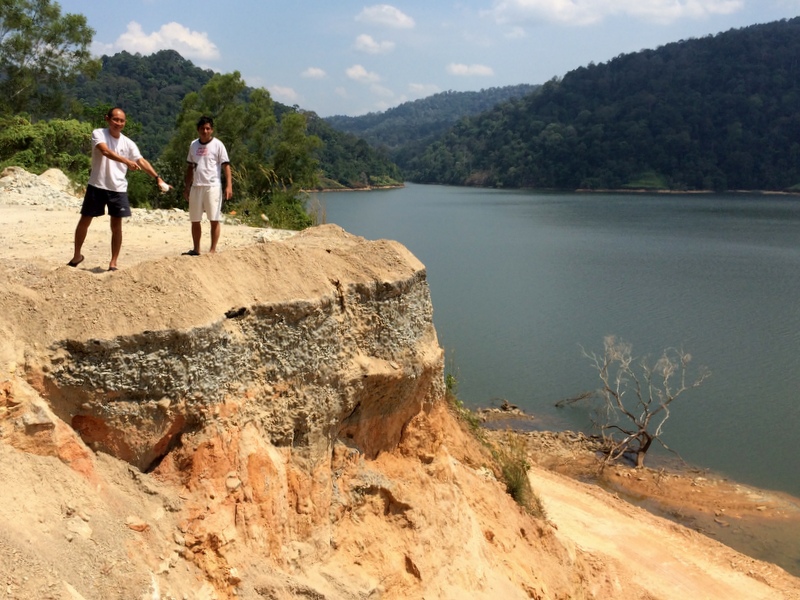
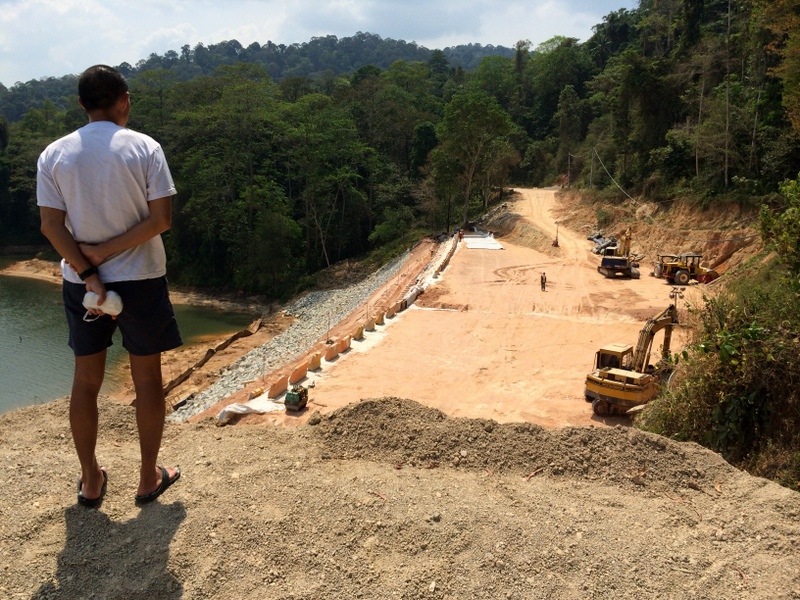
On our way back we decided to have a look at the Semeniyeh reservoir, where last year a massive landslide took place. The road is still blocked, they are working on it.

Semeniyeh landslide

Road under construction


Here is a video of the canyon:

Chingay Johor Baru, 2014

I had never heard about the Chingay parade before I recently watched the movie The Journey. In this beautiful movie, the daughter of an old farmer in the Cameron Highlands comes back from England with her boyfriend to get married. Big clash between conservative Frankie and naive, young Benji. Frankie reluctantly agrees to the wedding, but on condition that the wedding invitations will be handed over personally to the wedding guests. This brings them to Johor Baru (JB) where at that time (three weeks after CNY) the Chingay parade is held.

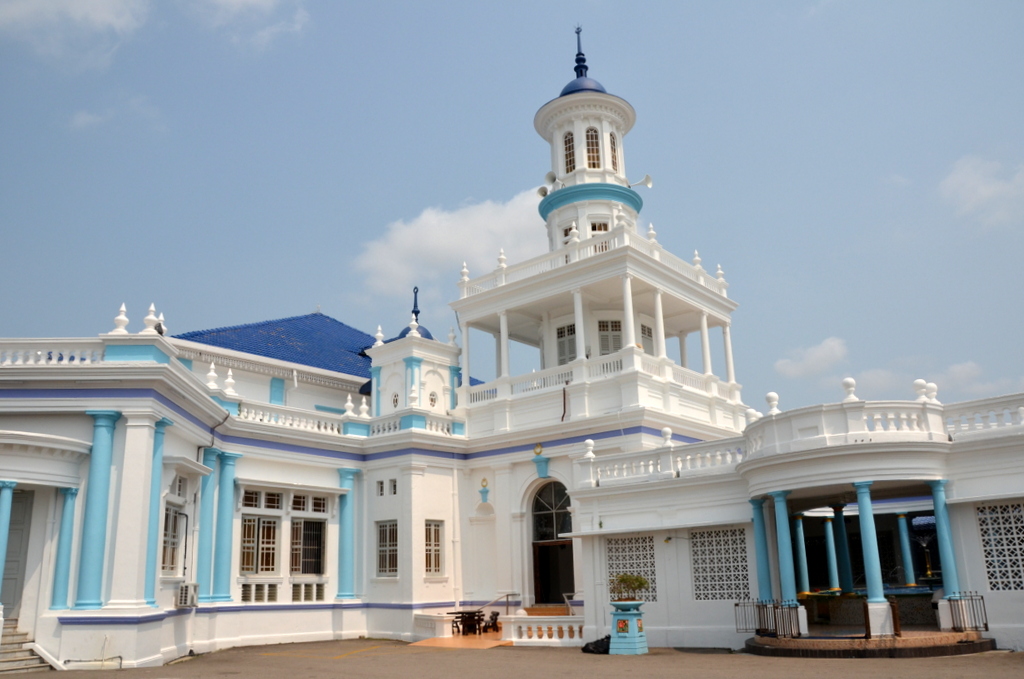
I was fascinated by what I saw, so we decided to go to JB and watch it for ourselves. To break up the long way to JB, we first spent a night in Muar. An interesting town with good food and a lot of beautiful old architecture. I have published a detailed report about this trip on my Adventure Site, so here only one picture of Muar, the iconic Masjid Jamek Sultan Ibrahim, completed in 1930. The British knew how to create spectacular architecture!

Masjid Jamek Sultan Ibrahim

In JB we had booked a room in a hotel along the route followed by the parade. A JB friend of Aric had also provided us with T-shirts we should wear when following the procession. So for the time being a Kwai Loh and a Teochew became Hakka, LOL. A bit of information about Chingay in JB might be useful:

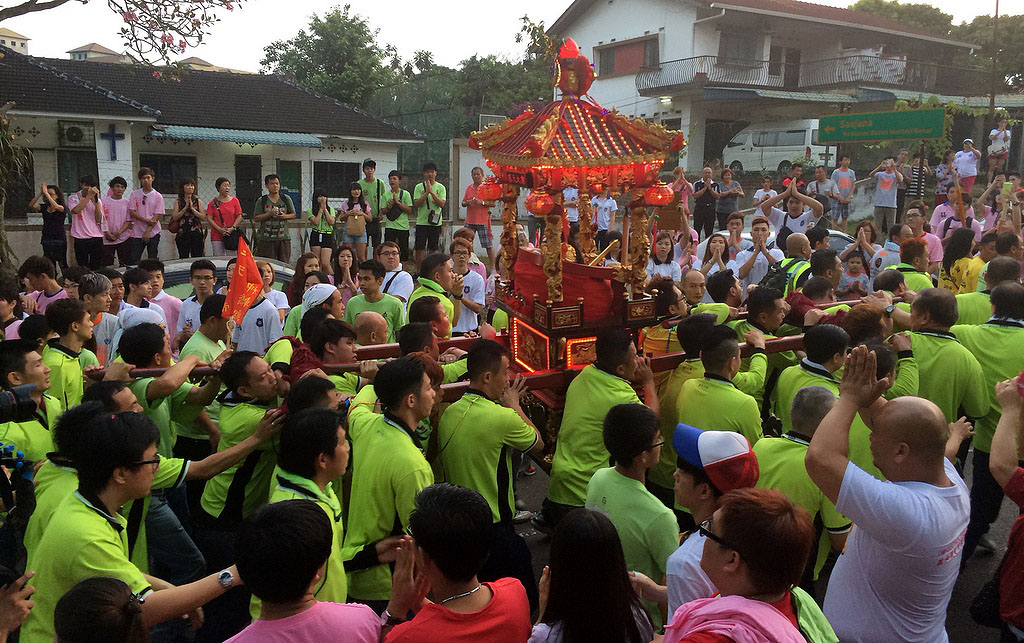
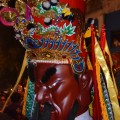
In the Old Temple in JB, five deities reside, belonging to five different Chinese clans/dialects, Hakka, Hainanese, Cantonese, Hokkien and Teochew. During Chingay they are carried through the town, in sedan chairs, carried by devotees belonging to that clan. Here is the Hakka deity

The Hakka deity

During the parade the deities are jostled and tussled often, so they have to be expertly bound to their sedans. Here you see one passing. Of course people are taking pictures, but many, often young people, are also praying. It is not just carnival, but religious as well.

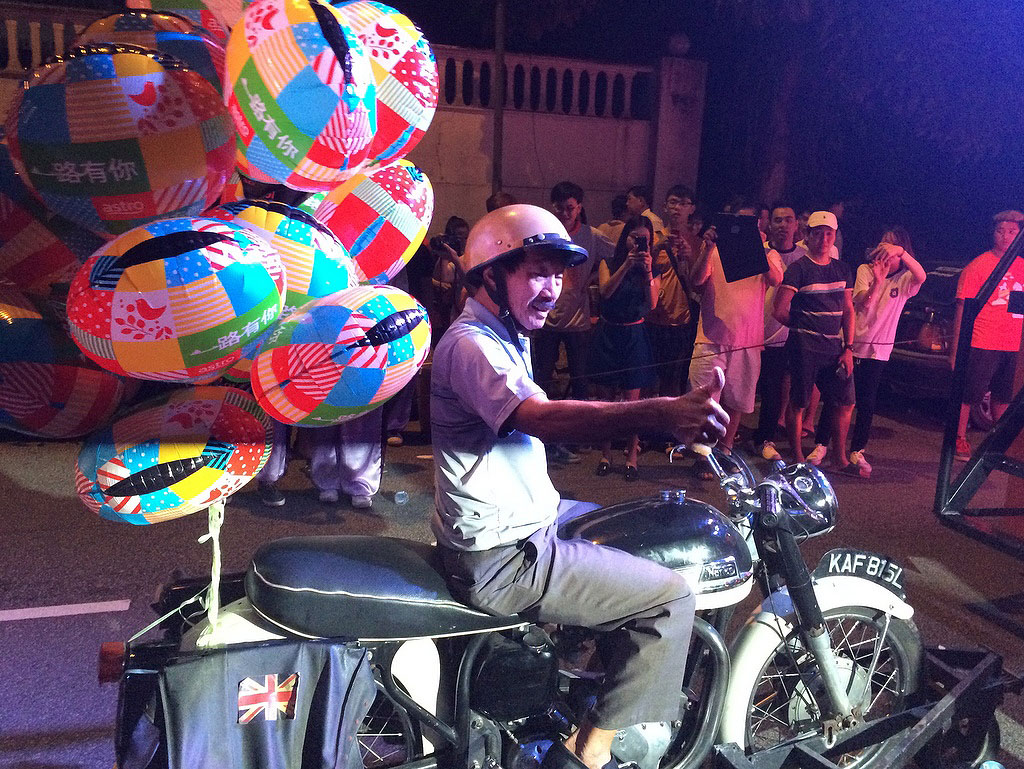
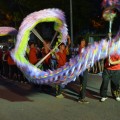
Chingay parades are held in other places as well, for example in Singapore. But the JB one is different and very impressive. After the Five deities have left the “Deities’ Depot in Jalan Ulu Air Molek, their sedans are interspersed with a variety of activities, dragon and lion dancers, stilt walkers, giant puppets, floats. A popular float was this time dedicated to the Journey movie, and main actor Frankie was present.

Frankie

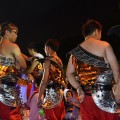
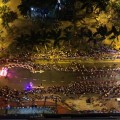
Here is a collection of pictures, for more pictures, see the report mentioned above. After watching the parade and having our dinner, we went back to our hotel room (on the 15th floor!), where we had a last view of the parade. We will come back next year.

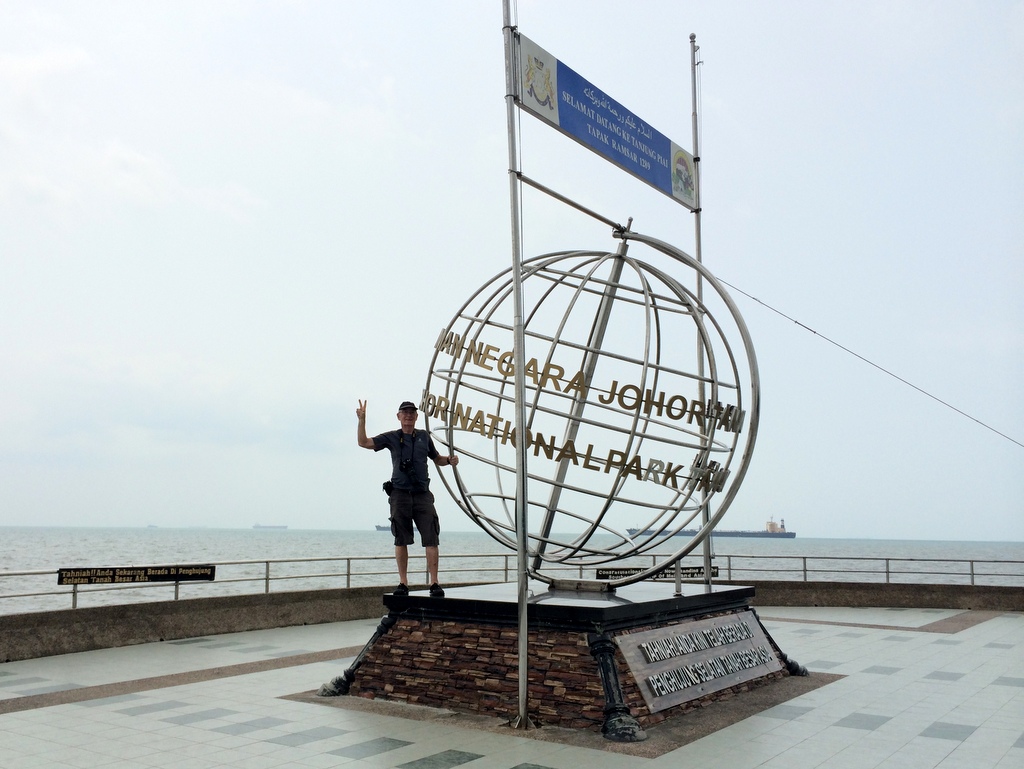
The next day, on our way back home, we visited the Tanjung Piai National Park, the southernmost tip of mainland Asia.

Tanjung Piai N.P.

More pictures and a travelogue here.

Down Memory Lane

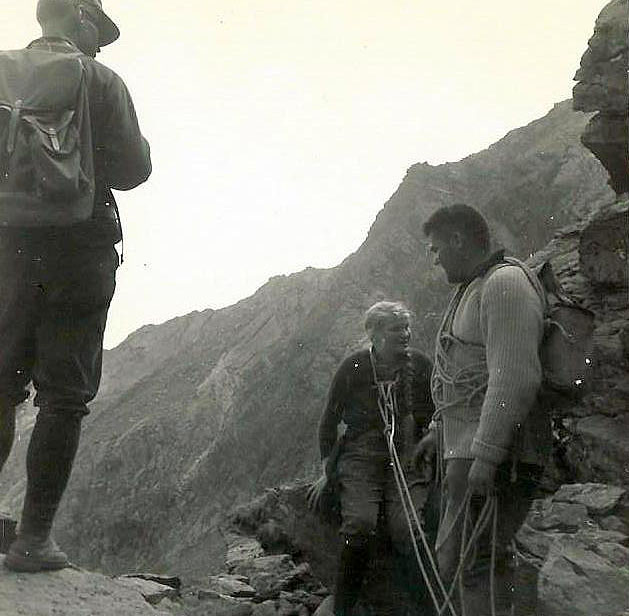
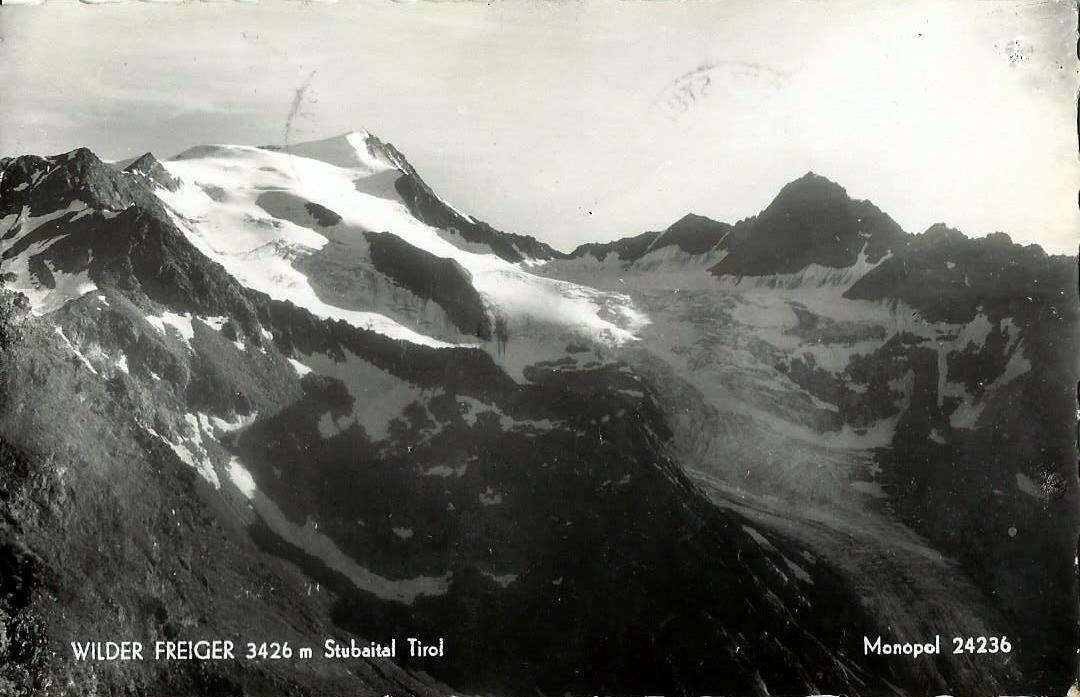
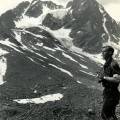
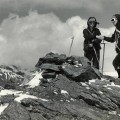
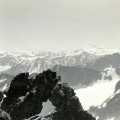
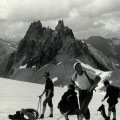
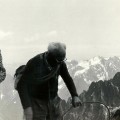
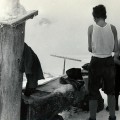
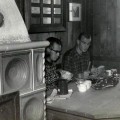
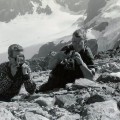
In 1964, fifty years ago, was a young student at the Free University of Amsterdam. With two friends I went to Austria during our summer holidays. Both also named Jan, so in the following pictures you will see Jan St (me) , Jan V and Jan Str. Camping in Tirol, hiking in the mountains. On one of these hikes we met Robert, a friendly German and an experienced mountaineer, who took us to the summit of the Wilder Freiger, 3418 m. It was a fascinating experience.

We were hooked and wanted to become mountaineers ourselves!

Robert

Wilder Freiger

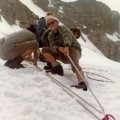
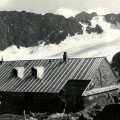
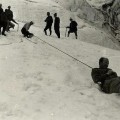
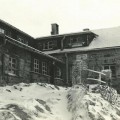
We became members of the Austrian Alpine Club and the next year we followed a training course at the (in those days) famous Kaunergratschule. Here we got a thorough instruction in the handling of rope, ice axe and crampons, how to rescue somebody who had fallen in a glacier crevasse, we learned how to rappel down steep rock faces, to brake our fall on the snow and much more.

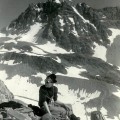
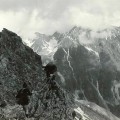
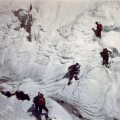
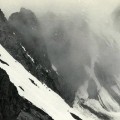
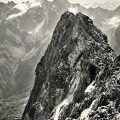
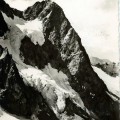
The course took two weeks, a balanced mix of theory and practice. As a part of the program we climbed several of the majestic mountains around the hut. Most impressive was the Watze Spitze with its hanging glacier.

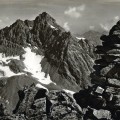
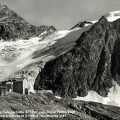
After the training program, we felt confident enough to make our own alpine tours. We stayed in the same alpine region, but hiked to another hut, from where we climbed a few beautiful mountains, culminating in the Wildspitze, the second-highest mountain of Austria at 3770 m.

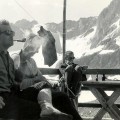
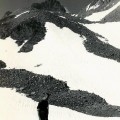
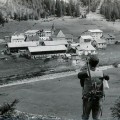
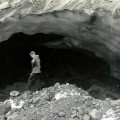
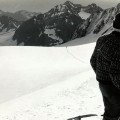
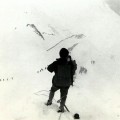
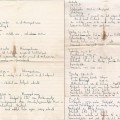
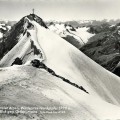
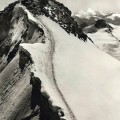
Here are more pictures, taken during these holidays. Most of them still in black and white. I found them in one of my photo albums, it was quite fun to reconstruct this part of my past, as I had forgotten most of the details. The last picture is a scan of the trip diary I kept during our stay. With information about weather and snow conditions, information about the route chosen, the difficulty (I – VI, I = easy, III= difficult)

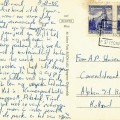
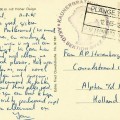
To keep my family informed, I sent them postcards regularly. Later they had given back these postcards to me and I had put them in my album. Had completely forgotten that I had written on the backside of these cards. It is in Dutch, it gives a nice “travelogue” of our holidays.

A nice trip down memory lane!