Ice Ages

What is an Ice Age? And how many Ice Ages have there been on Earth? I came across these questions, while writing a blog post about Sundaland. During the Ice Ages the sea level was much (~ 120 meter) lower than at present and the islands of the Malay archipelago were connected to Thailand, Cambodia and Vietnam. This landmass was called Sundaland. In my blog Sundaland (still under construction) I write in more detail about it.

If what follows is too detailed for you, just jump to the summary

During the 4.5 billion years that Earth existed, Its climate has fluctuated between Greenhouse and Icehouse. During a Greenhouse there were no glaciers, no icecaps (South Pole), no Ice sheets (Greenland) no permanent sea ice (North Pole). Earth was mostly a greenhouse , about 85 % of the time. Temperature was (a lot) higher than at present. Sea levels higher, sometimes 300-400 meter. Lots of carbon dioxide in the atmosphere. Tropical rain forests on the South Pole 😉

But there also have been Icehouses, often called Ice Ages, where glaciers, icecaps and ice sheets were permanently present. Scientists have identified 5 of them. Here they are marked on the 4.5 billion year timescale that Earth existed.

The Hadean, Archean and Proterozoic are the first three “aeons” of Earth’s geological history. We are now living in the last aeon , the Phanerozoic, which started ~ 542 million years ago, the name is too long to be named in the image. Before I “zoom in” on this last aeon, a few comments, related to blogs I wrote in the past.

  • Only a few million years after the formation of Earth, in the Hadean, our Moon was “born” as a result of a collision of Earth with another planet. Where does the Moon come from? .
  • The oldest fossils date back to the Archaean, 3.4 billion years ago, when Earth was still young. Therefore many think that life comes easily and must be ubiquitous in the universe. I am sceptical, see my blog The Drake Equation.
  • It took a long time before those simple cells evolved and developed a nucleus that contained the DNA, about 2,2 billion year ago in the Proterozoic. And it took even longer for multicellular organisms to develop, about 600 million year ago, at the end of the Proterozoic. See my blog The Tree of Life.

The Proterozoic had two Ice Ages. The Huronian actually consists of several separate Ice Ages and lasted about 300 million years The Cryogenian also has two separate Ice Ages, together lasting about 85 million years. The Cryogenian was severe, there may have been periods that Earth was completely covered with ice, a so-called Snowball Earth.
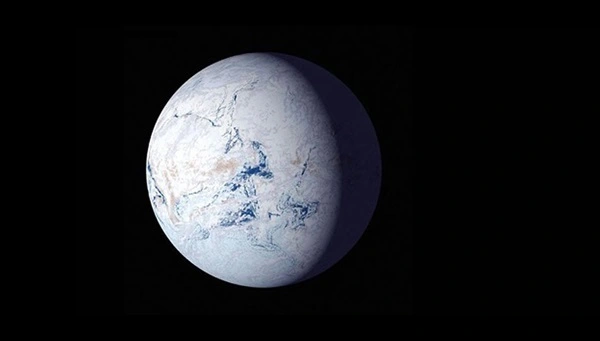
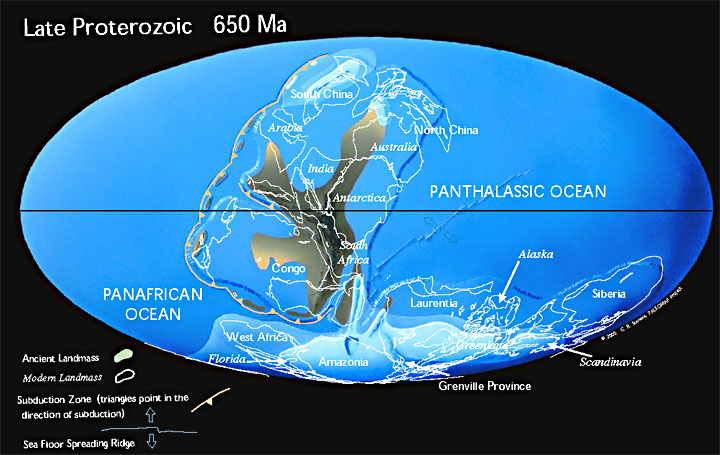
.Keep in mind that Earth looked very different in those days because of plate tectonics and continental drift. See my blog The Paleomap Project. Here is one of Scotese’s maps: Earth during the Cryogenian Ice Age.
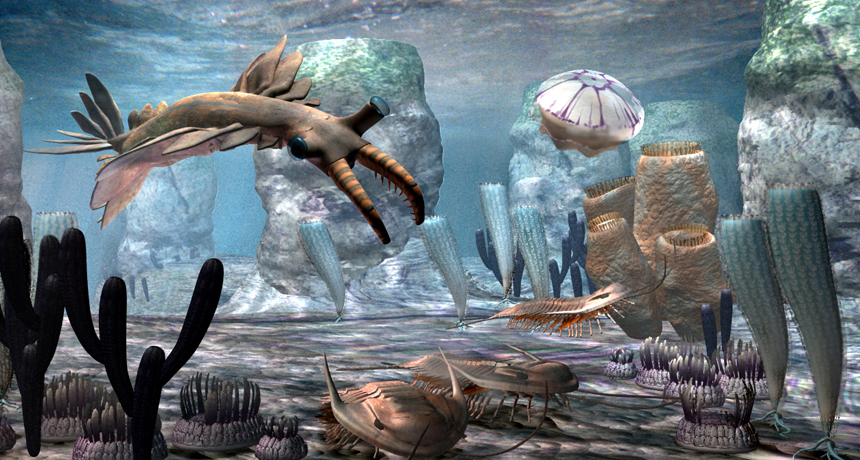
Now let’s zoom in on the Phanerozoic, from 542 million year ago until present. The ‘official’ start of this aeon is 538.8 million year ago. This beginning was chosen because around that time a sudden , explosive diversication of life forms started, the Cambrian explosion. Multicellular organisms evolved into a multitude of species. Here is an artist impression.
The Phanerozoic had three major Ice Ages, the Andean-Saharan, 440 million years ago, lasting 40 million years, the Karoo , 300 million years ago, lasting 100 million years and the current one, the Late Cenozoic Ice Age , which started 34 million years ago and is still ongoing.

Here is a (complicated) graph of the global temperature during the Phanerozoic. Complicated because the timeline has been split in five parts, zooming in.
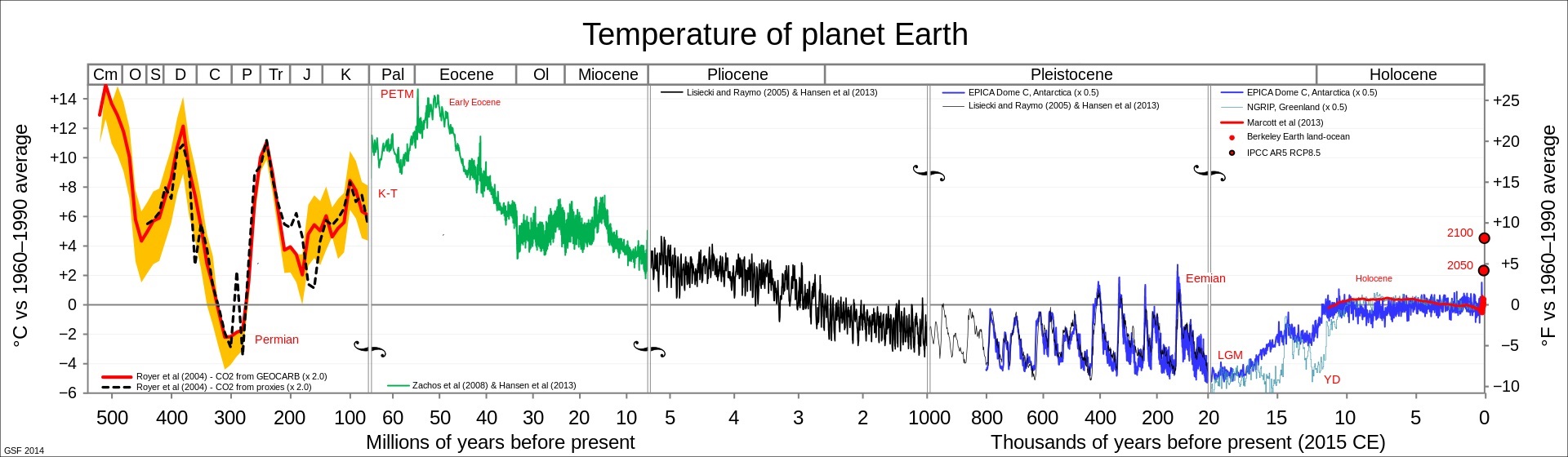
The first part (in red) covers from 542 Million years (Ma) until 66 Ma. The temperature data are less reliable, but you can see the Andean-Saharan (440), the Karoo (300) and an unnamed one (~180). Next comes the green part, timeline enlarged about 10 times, from 66 Ma until ~ 5 Ma. Around 66 million years ago a huge asteroid collided with Earth, causing the extinction of the dinosaurs and giving mammals the opportunity to develop. Earth was a hothouse then with a maximum temperature around 55 million years ago (PETM). After that maximum, global temperature started to decrease. Around 34 million years ago, Antarctica got an icecap and Earth became officially an Icehouse, the Antarctic Glaciation . The next zoom in (again x10, in black) shows how the cooling of Earth continued. Around circa 2.58 million years ago the Pleistocene started, ice “everywhere”, also in the Arctic region.

The next part, in blue, shows in more detail the last one million years of Earth. It’s clearly an Icehouse but there are periods which are colder (glacials) alternating with warmer ones (interglacials). If you would be able to watch Earth during this one million years, you would see the icecaps and ice sheets advancing during glacials and retreating during interglacials. The last of these “warmer” interglacials was the Eemian (130-115 thousand year ago. Followed by the last glacial (26-20 thousand years ago). It is this last glacial that is often, called the Ice Age.

At present Earth is in an interglacial, as can be seen in the last part of the graph (also in blue). This interglacial started around 12 thousand years ago and is predicted to continue for many thousands of years. These predictions are based on the theory of Milankovitch cycles, a bit to complicated to explain here. It may last 50 thousand years, or even longer because of human interference (climate change!). After the interglacial, a new glacial will start, because Earth is still an Ice House.

Summary:

  • Earth is an Ice House already for 34 million years. An Ice House (also known as Ice Age) consists of many glacial (colder) and interglacial (warmer) periods, each lasting thousands of years.
  • The last glacial period occurred 26-20 thousand years ago and is often called the ICE AGE.
  • At the moment Earth is in an interglacial and that will last for many thousands of years, possibly even longer because of human interference.

Of course there is a lot of information available these days about future climate developments. Not always reliable !

Here is a very dishonest one, A New ICE AGE Is Coming: Prepare To Freeze By 2050! A lot of factually correct information, leading to a ridiculous ending. Click on the link to watch the video, AYOR!. His advice: Pump more greenhouse gases into the atmosphere to avoid the impending next Ice Age (~ 2050!).

Here is a much more interesting one, New Evidence We Are Entering An Ice Age Termination Event Glacials have been ended numerous times by termination events. We are in an interglacial now, but it looks different this time. Could this be the start of a Hot House. We just don’t know.
Taiping, October 2023

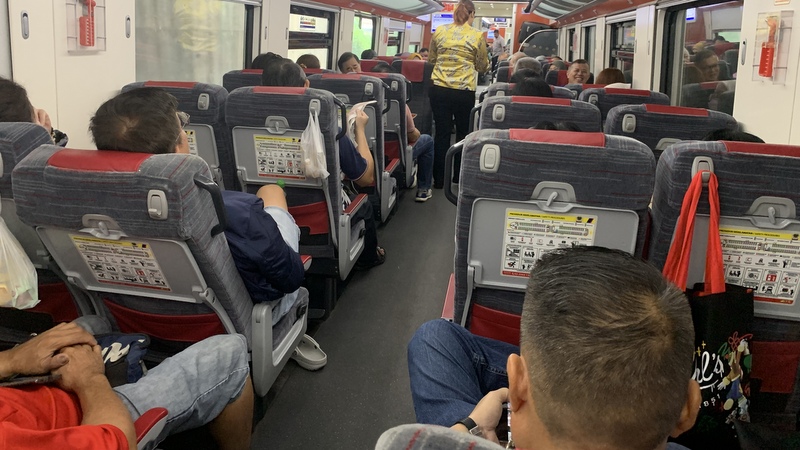
This time the main reason for my Taiping visit was to watch the Nine Emperor Gods procession, but there was (much) more. In April the iconic market buildings were demolished and last month the equally iconic Rest House was partially destroyed by fire. And of course there were friends to meet and Taiping food to enjoy. So I booked 3 nights in my usual Furama hotel and on 20 October took the ETS, arriving in Taiping around 1 pm. A comfortable way of traveling.

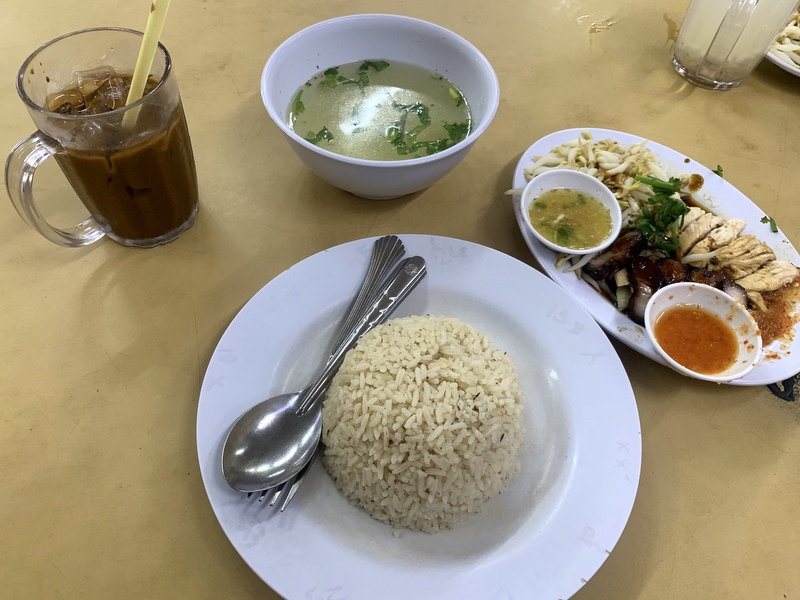
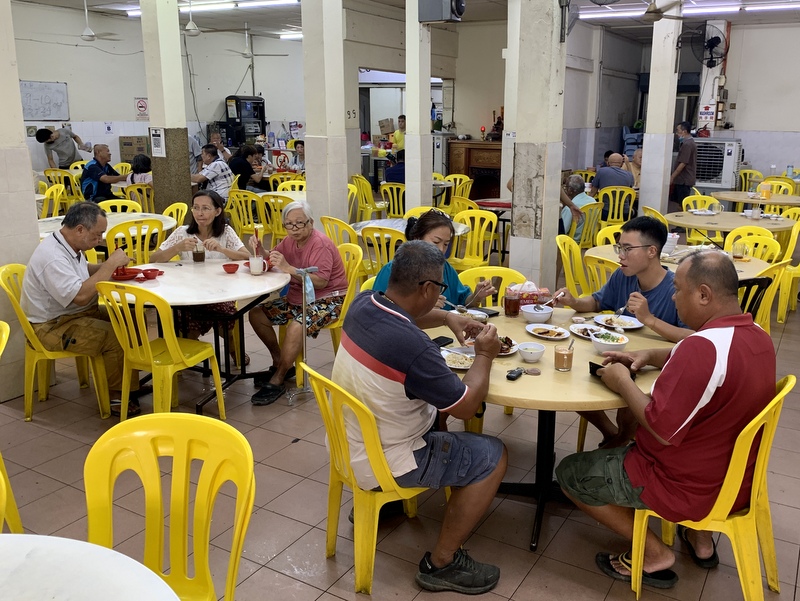
My friend Lay Chun picked me up from the station and first we had lunch in Prima, chicken rice.

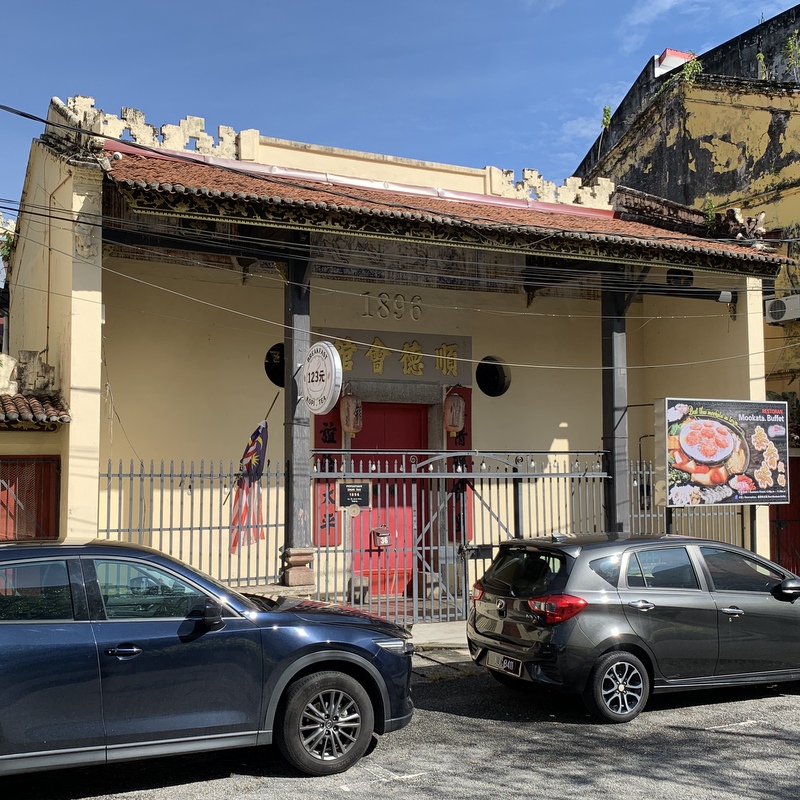
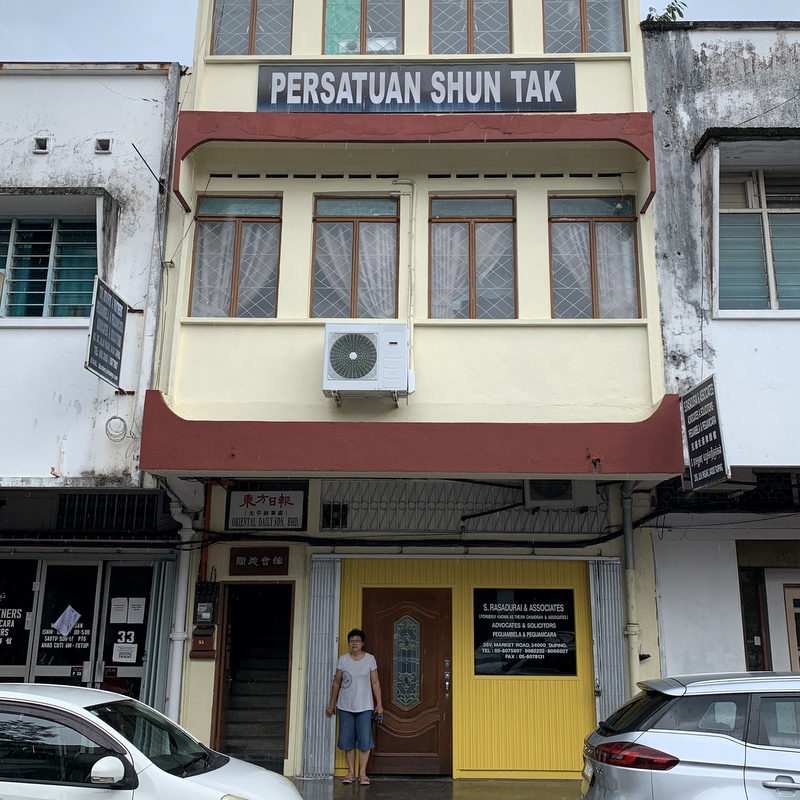
She is a very active member of the Shun Tak Association, one of the many Clan associations in Malaysia. Left the Ancestral Home in Jalan Kota, now rented out to a restaurant. Right the Shun Tak gallery in Jalan Pasar, recently opened, More information about the history of the Shun Tak association can be found in this blog, written by Wong Tuck Ee, the secretary of the association.

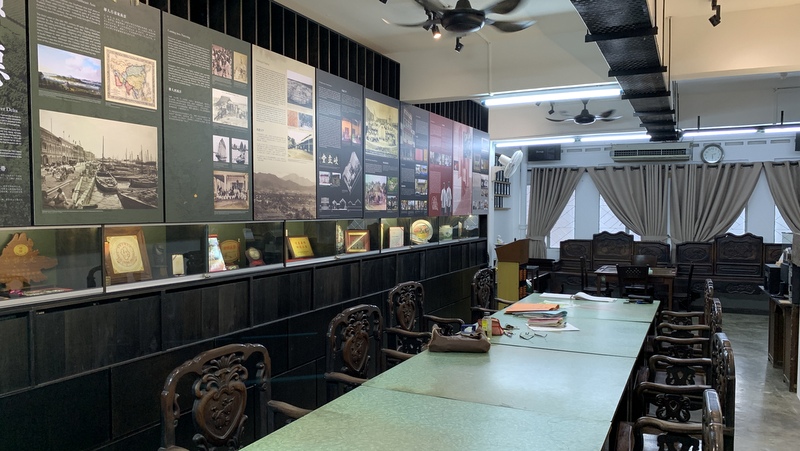
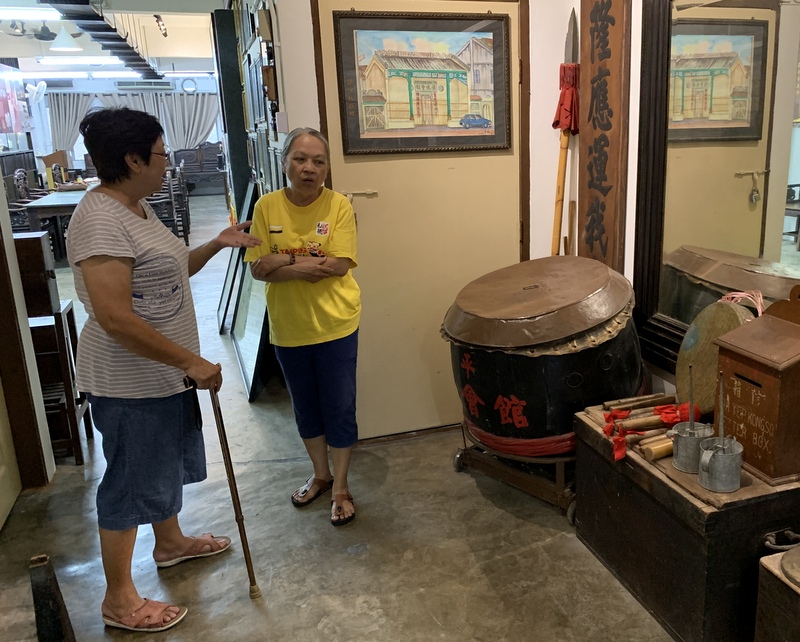
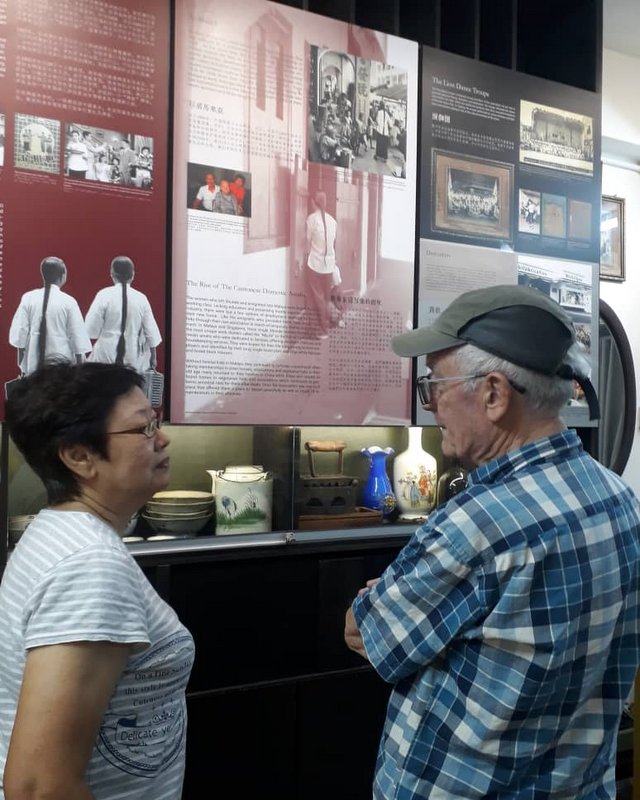
The gallery is on the first floor and open by appointment only. Lay Chun had arranged a visit. Here you see the interior of the gallery Panels about the history decorate the walls. The spacious gallery can also be used for meetings of the association.

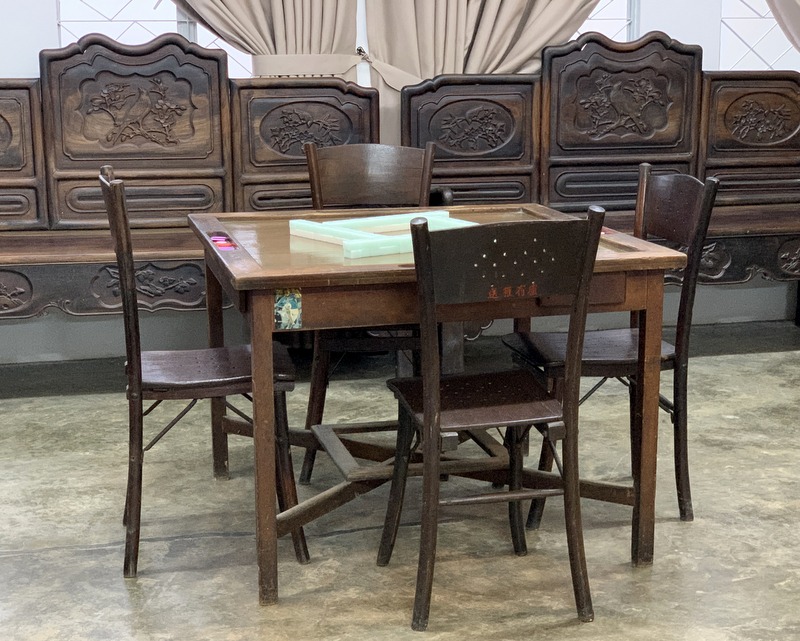
We met Miss Leong , the clerk, and walked around. Right a mahjong table. In the past members often came to the clan house to play mahjong.

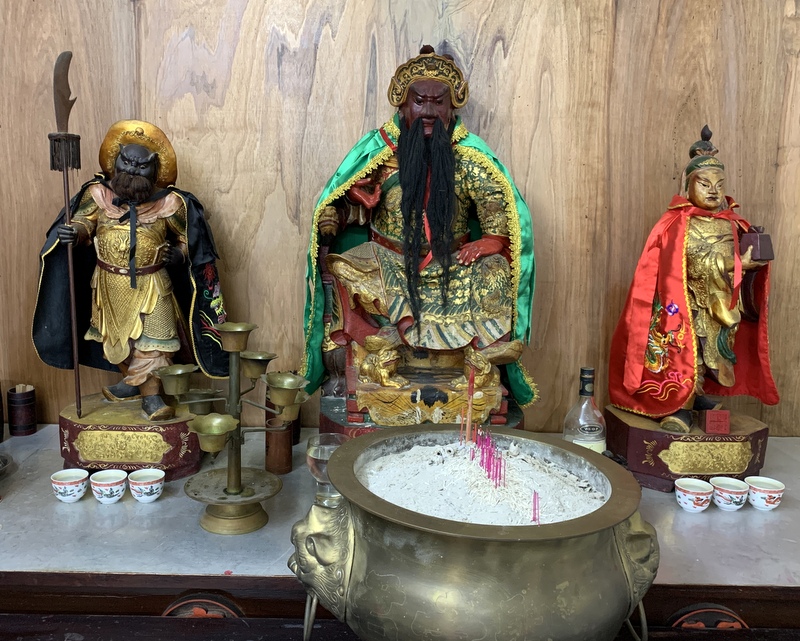
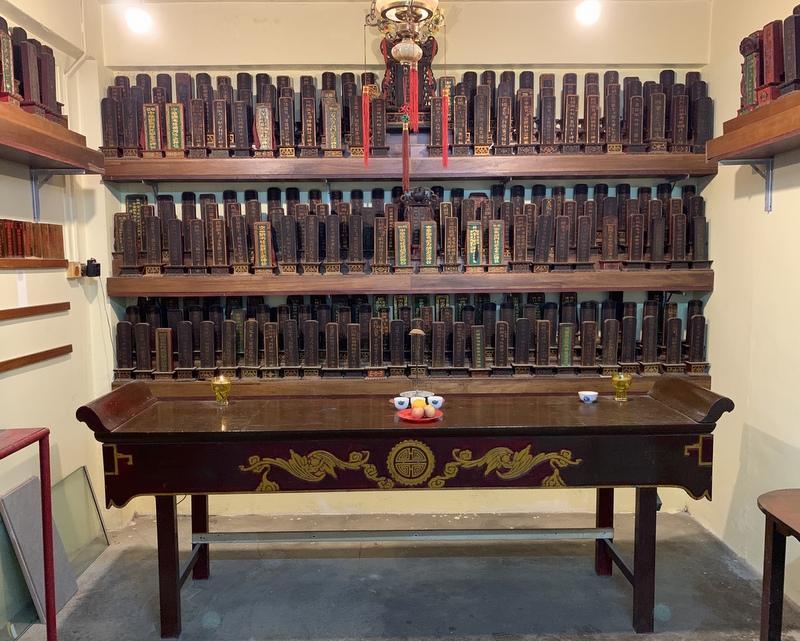
The deity in the middle is Kwan Gong, the Chinese warrior god. Right the Ancestral Tablets.

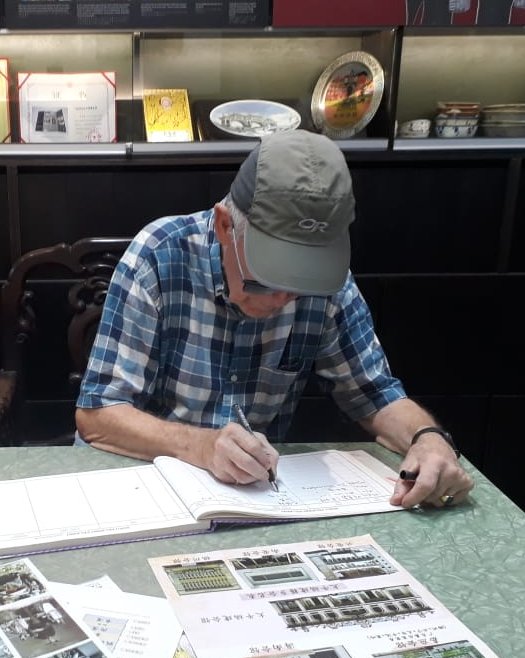
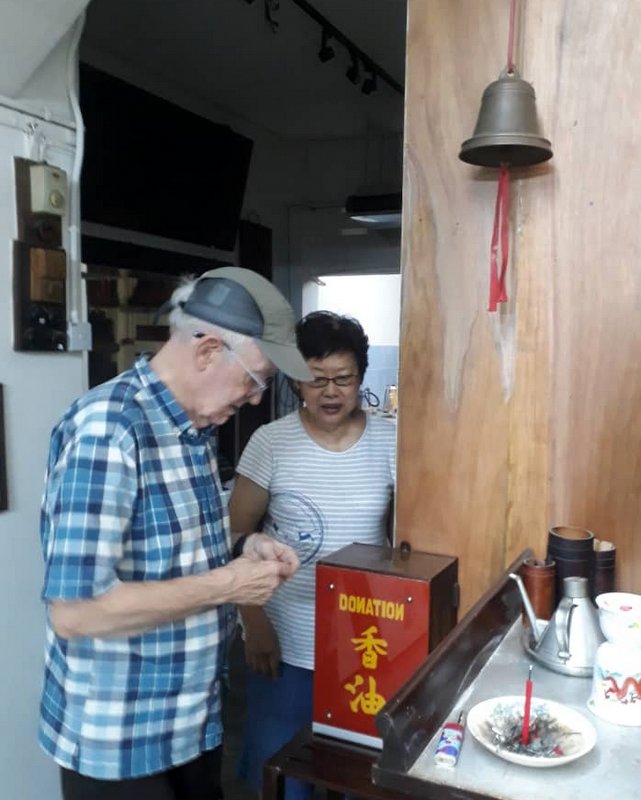
It was an interesting visit, I signed the guestbook and gave a small donation after which I was allowed to ring the bell three times. It would be good to promote the gallery as a Taiping tourist attraction. I am thinking about writing a separate blog about the clan associations of Taiping.

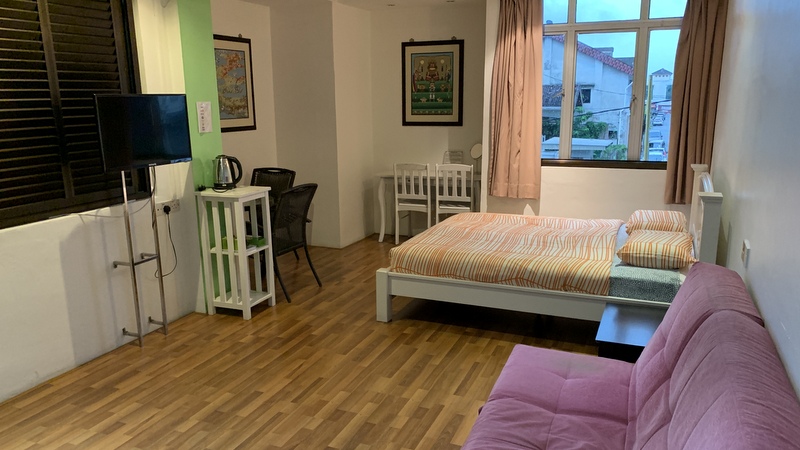
After the visit Lay Chun dropped me at Furama. I have stayed in this hotel numerous times, almost always in this room 😉 . Feels a bit like home.

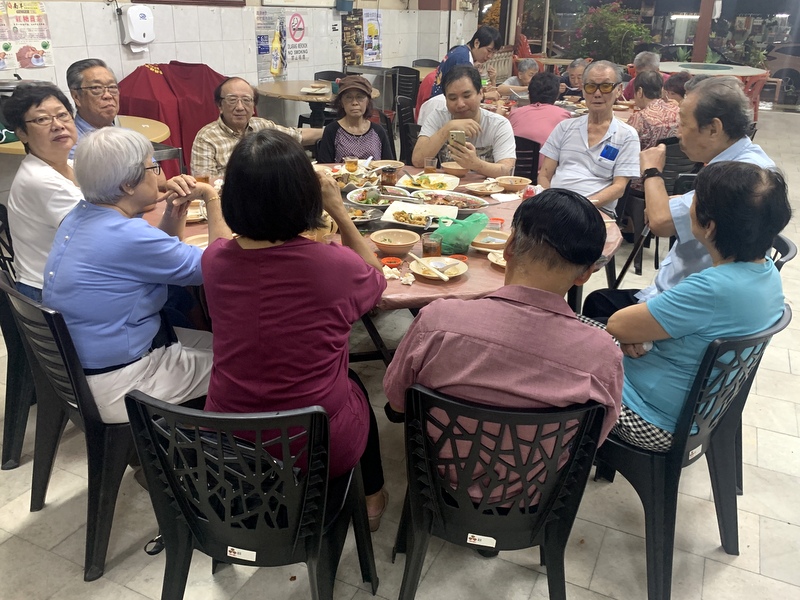
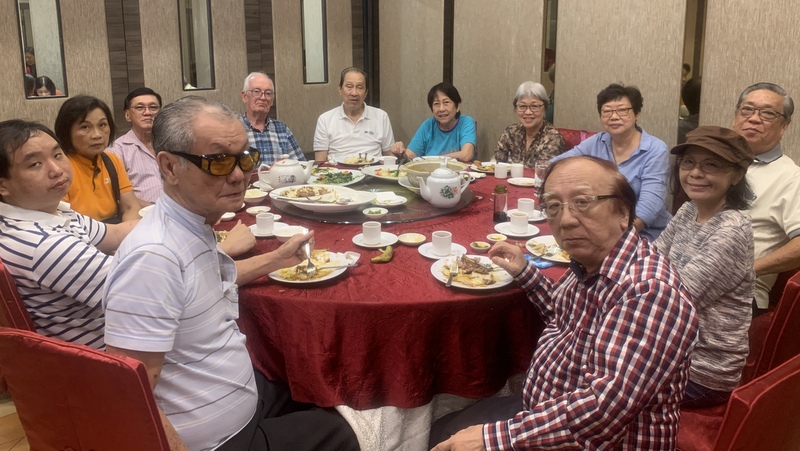
Lay Chun and her friends organise regular dinner meetings, in the past I attended a few of them. This time I told her that I would like to be the host for such a dinner party. That was accepted, Goh, a member of the “gang”, who lives next door to Furama, picked me up from my hotel, we drove to Matang, the Lemon Tree restaurant, where we met the other members and had a delicious dinner.

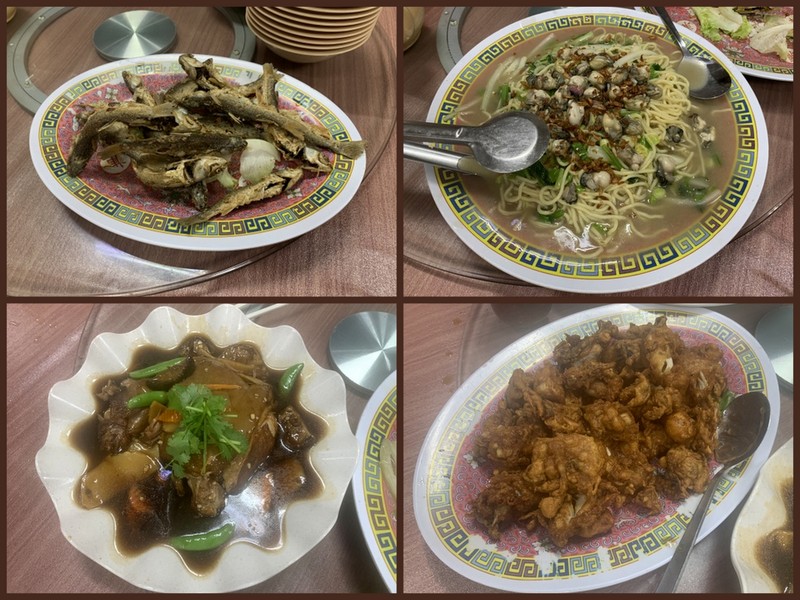
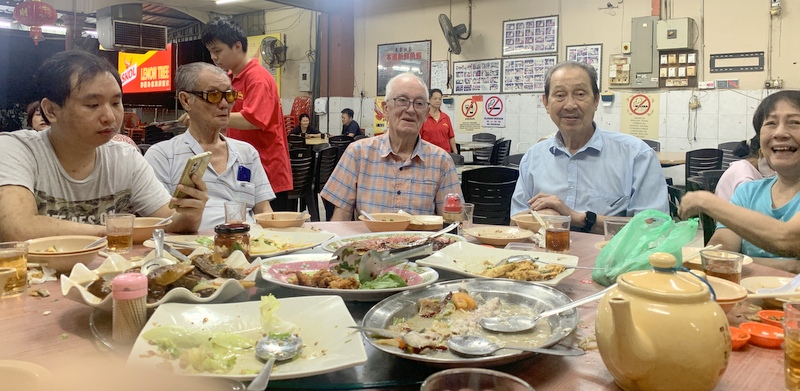
Me in the middle, next to me Yong (left) and Goh (right). We were 12 pax, had 9 dishes (pork, chicken, fish, duck, veggies etc) and the bill was RM 330. Unbelievable, so cheap.

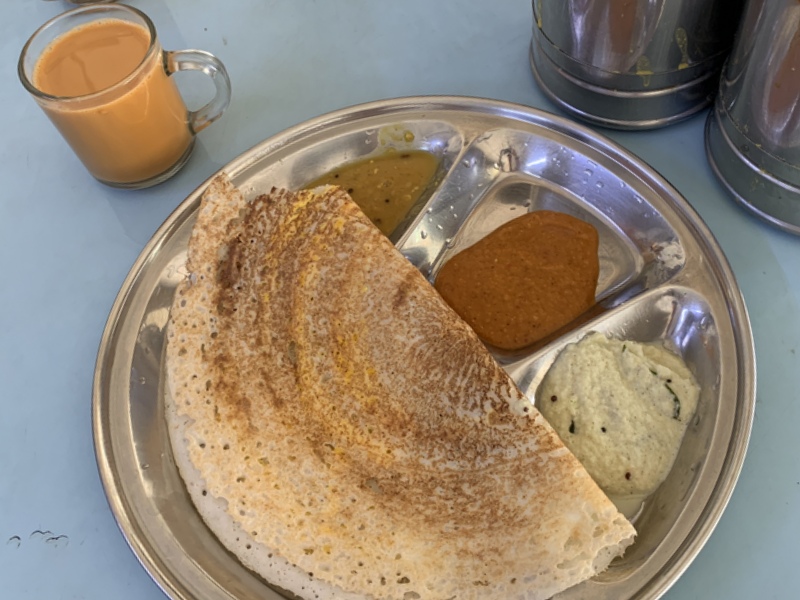
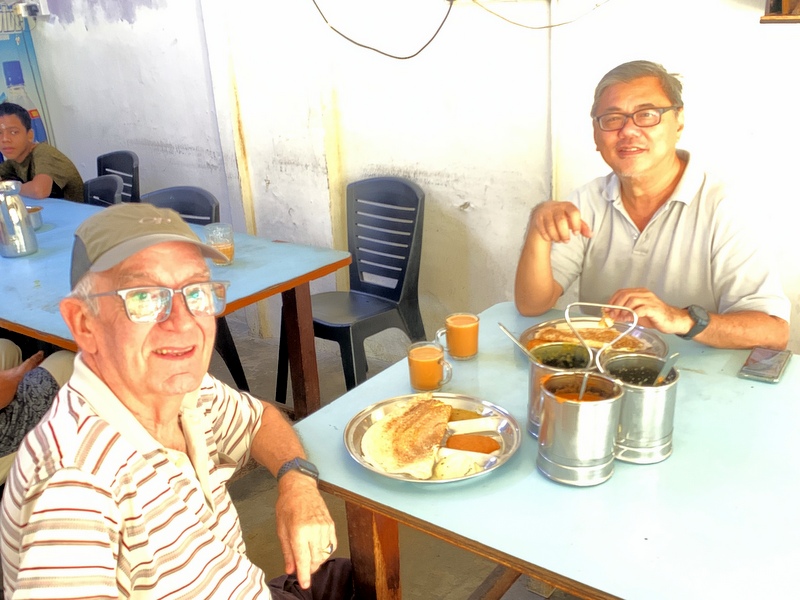
The next morning I had breakfast with my friend Yeap in an Indian restaurant. I had dosai and asked a waiter to take a picture of us, but something went wrong. Nice breakfast place.

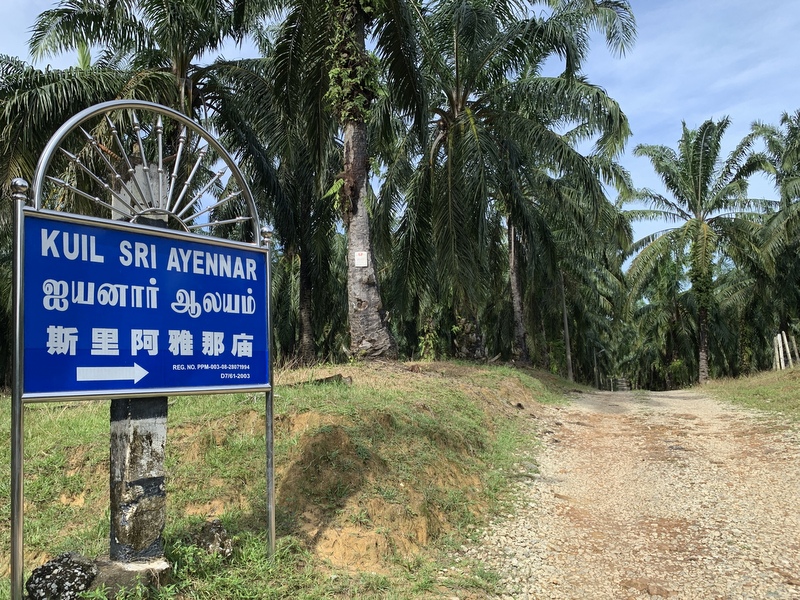
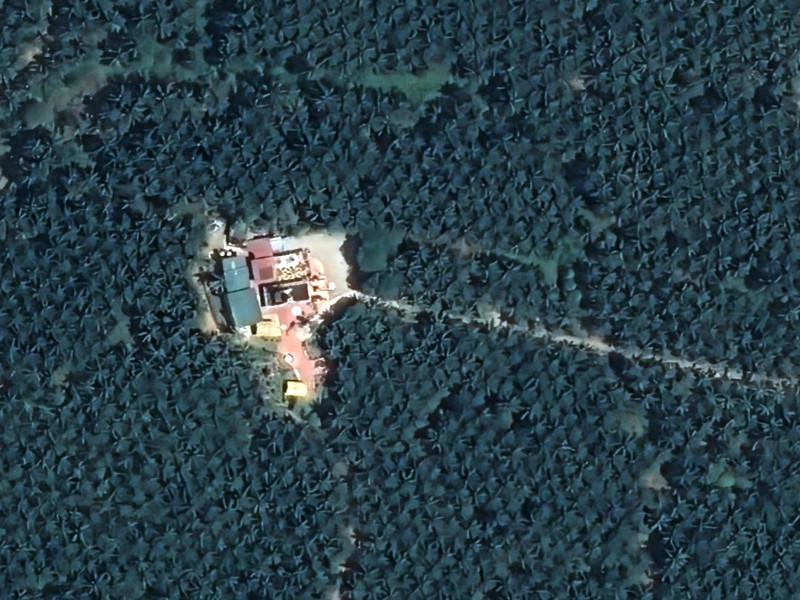
A few months ago a Facebook contact had told me about a remote Hindu temple, the Sri Ayyanar Temple, north of Kamunting. When I asked Yeap if he knew this temple, he said, sure, it is not far from my oil palm farm, I can bring you there. After our breakfast we drove there, the signage is no problem, but the road is untarred and the location is really in the middle of plantations.

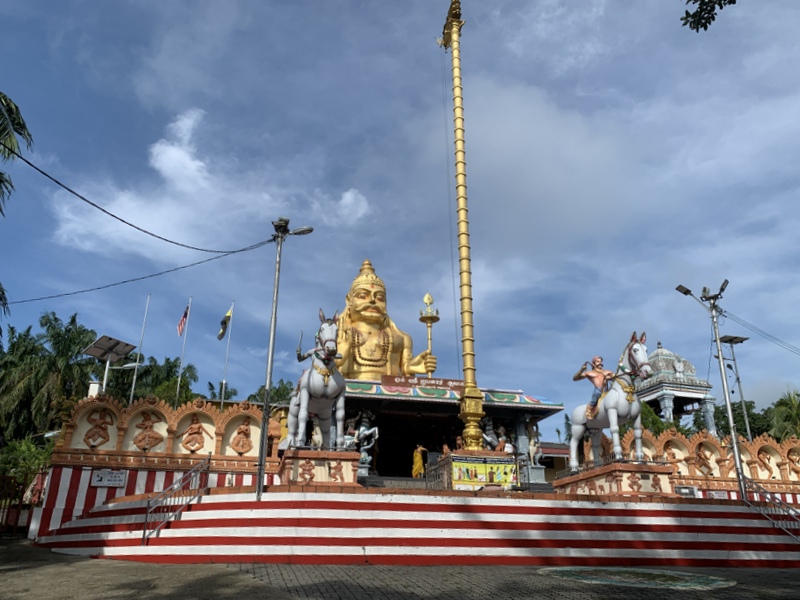
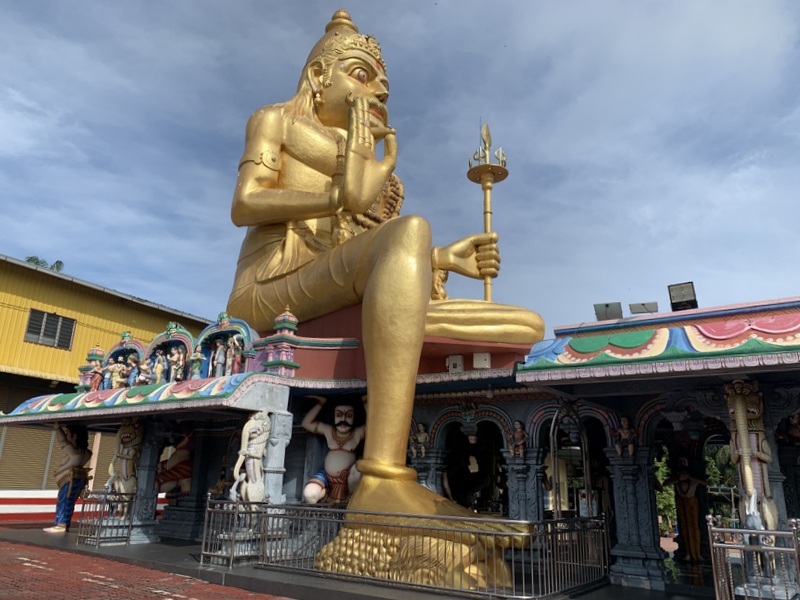
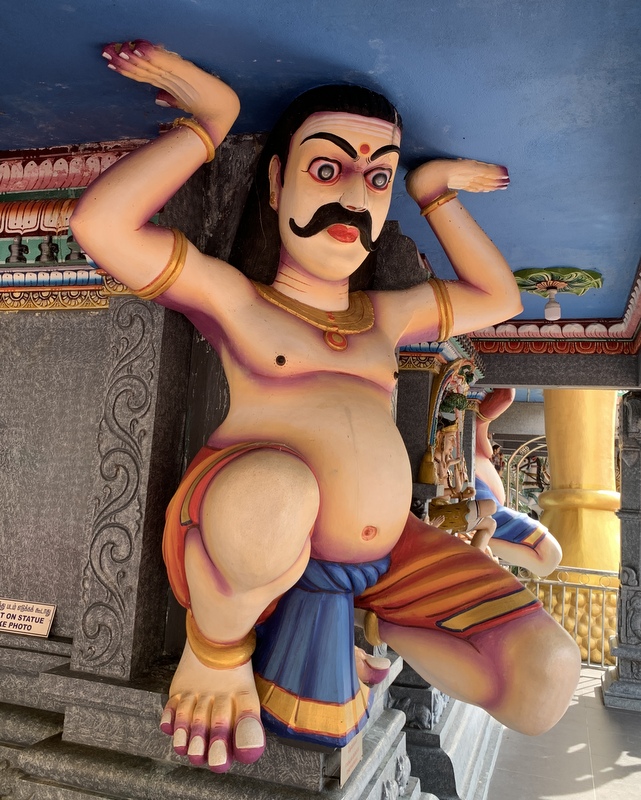
The beautiful temple comes as a big surprise. Colorful, dominated by a giant statue of Ayyanar, a Tamil deity.

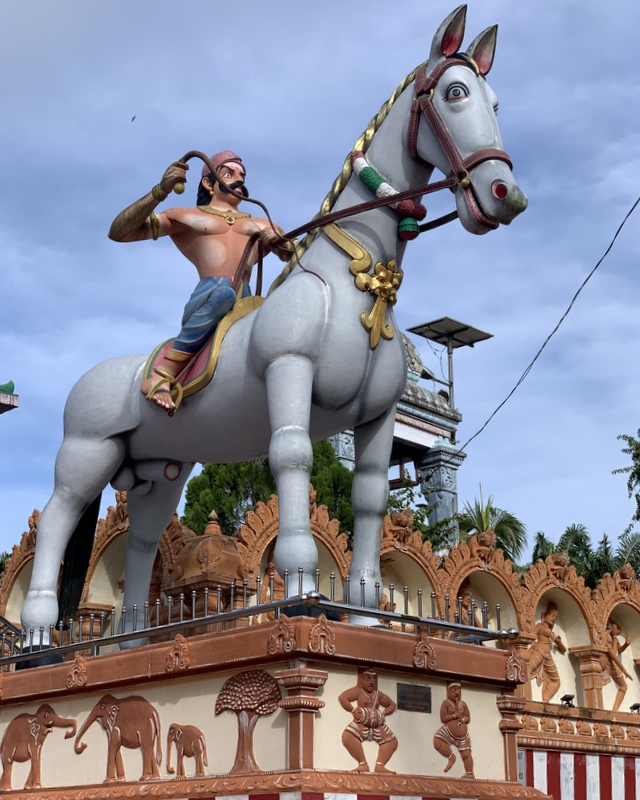
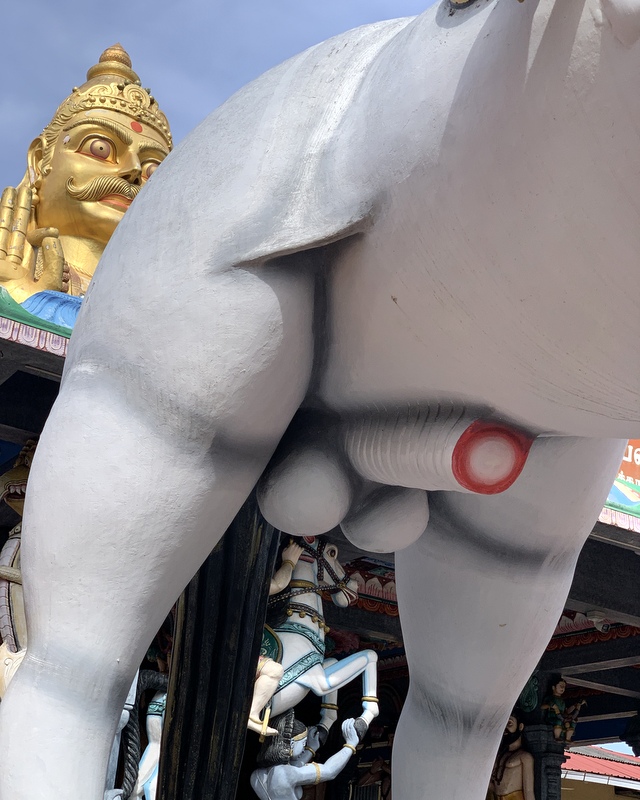
He is accompanied by horse riders, also huge statues. And there can be no doubt about it, the horses are stallions, not mares 😉

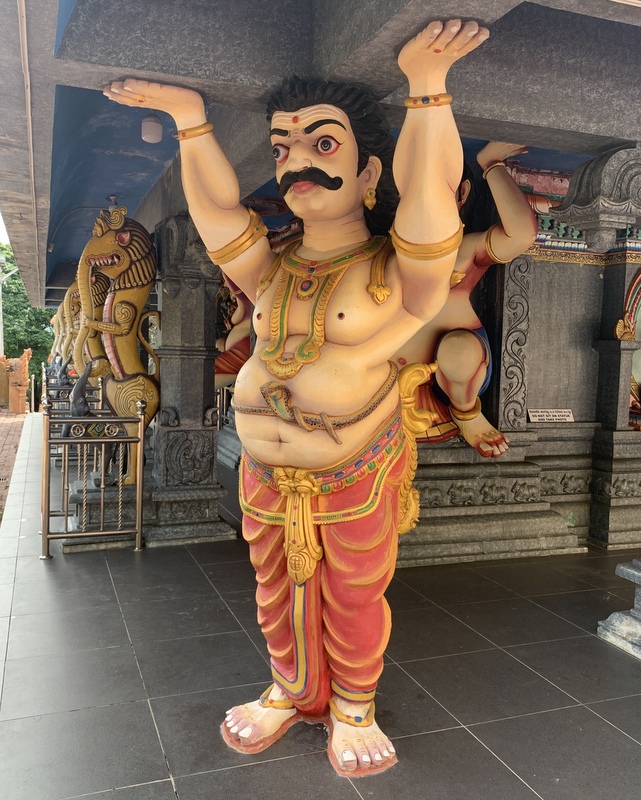
A few more pictures. Servants are supporting the temple.

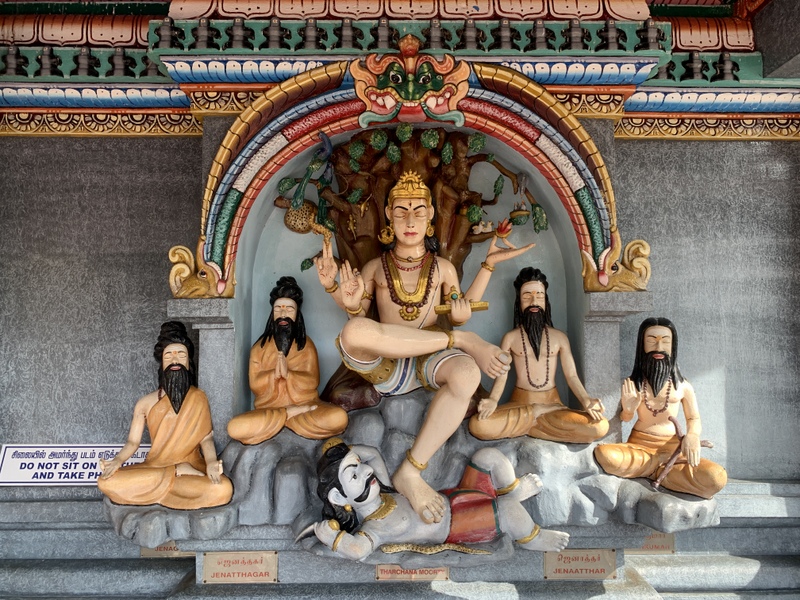
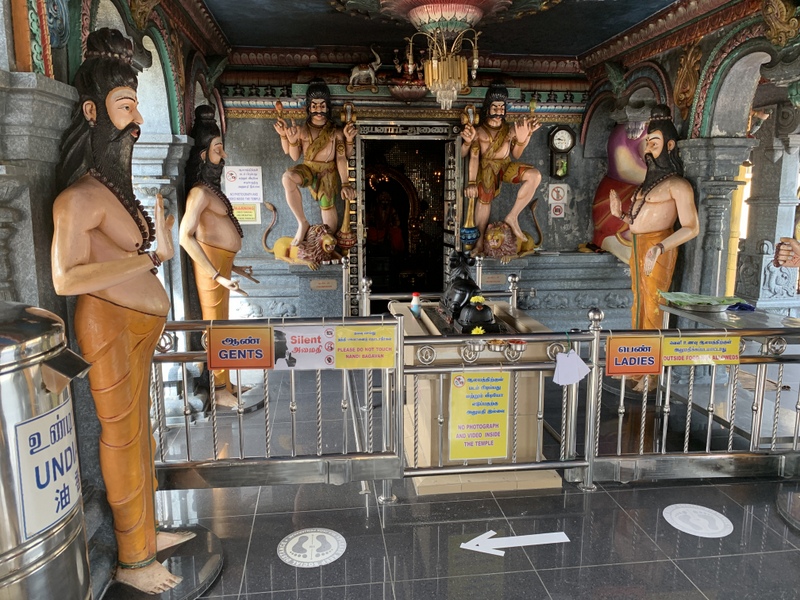
Left Dakshinamurti an aspect of Lord Shiva as a teacher. Right the inner sanctum of the temple. Everything beautifully maintained.

Really an unexpected discovery. When I asked my Taiping friends, many of them were not aware of this gem, less than 15 km away of the town center.

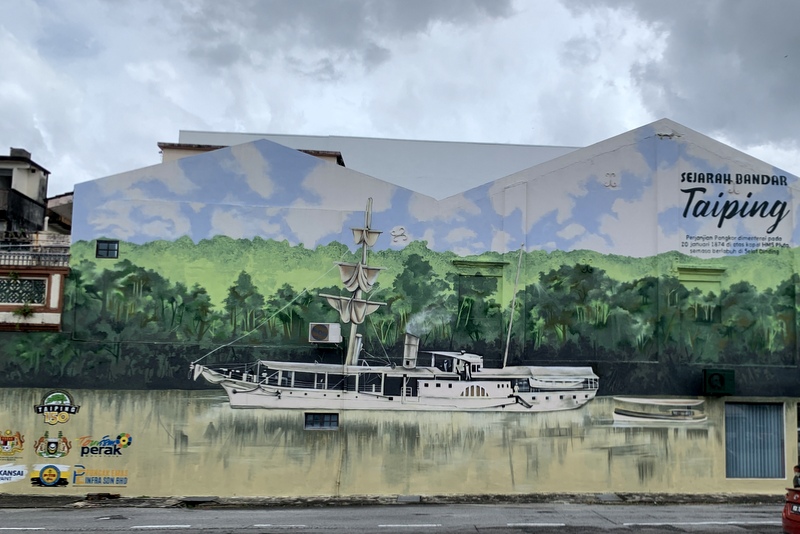
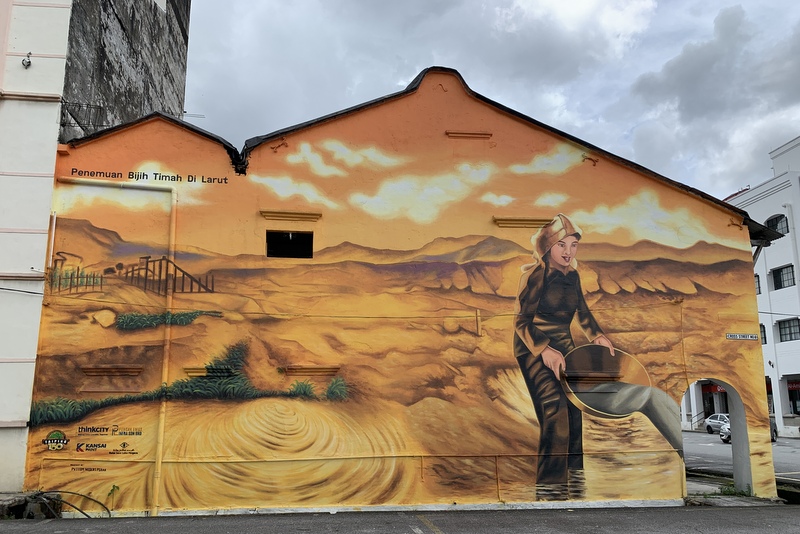
Back in town, I walked around a bit. Next year Taiping will celebrate its 150th anniversary, many activities are planned. I had a look at two recent murals, one commemorating the Treaty of Pangkor (1874). the other one showing dulang washing (the panning of tin ore). They are huge, but I am not impressed. The Amelia Earhart one has more artistic value, but unfortunately, the pilot never landed at Tekah areodrome.

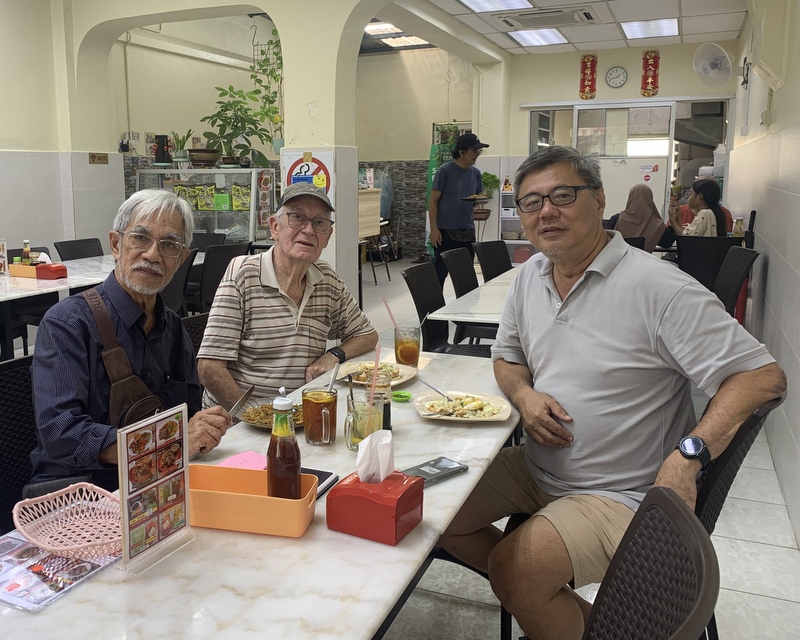
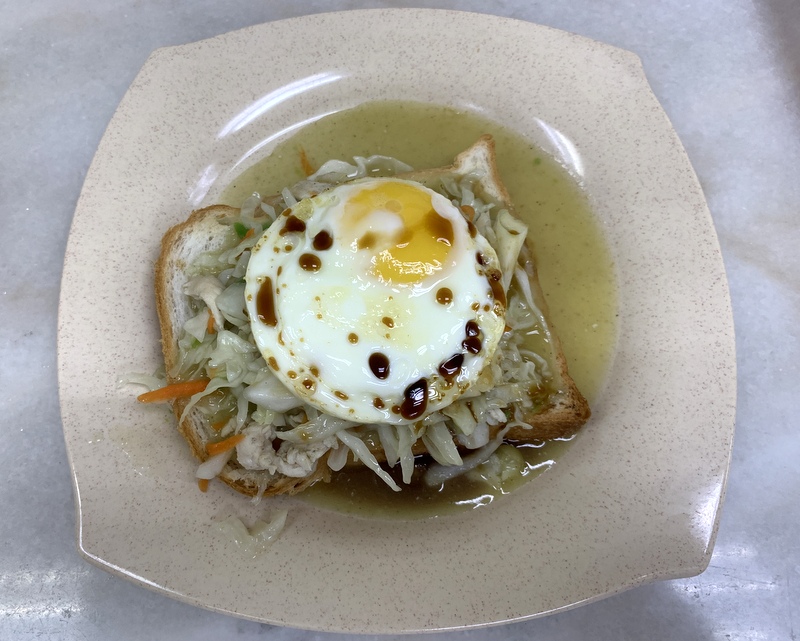
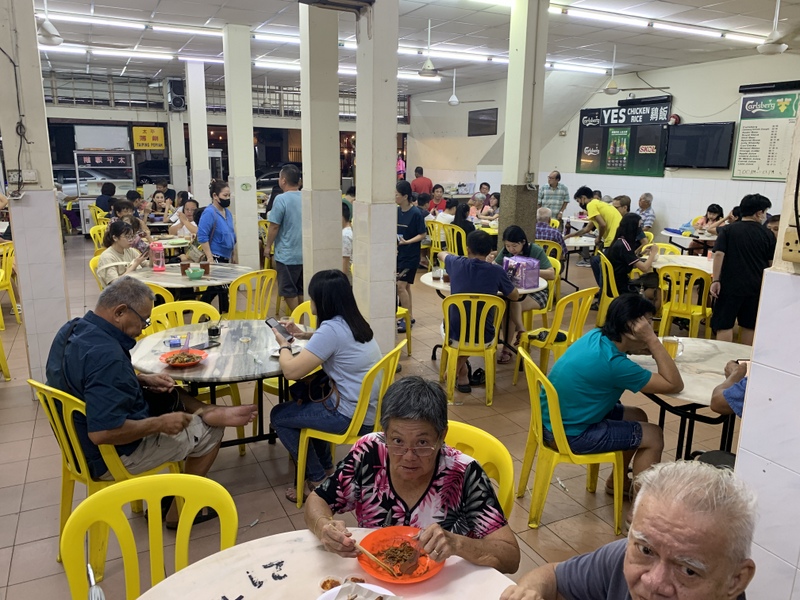
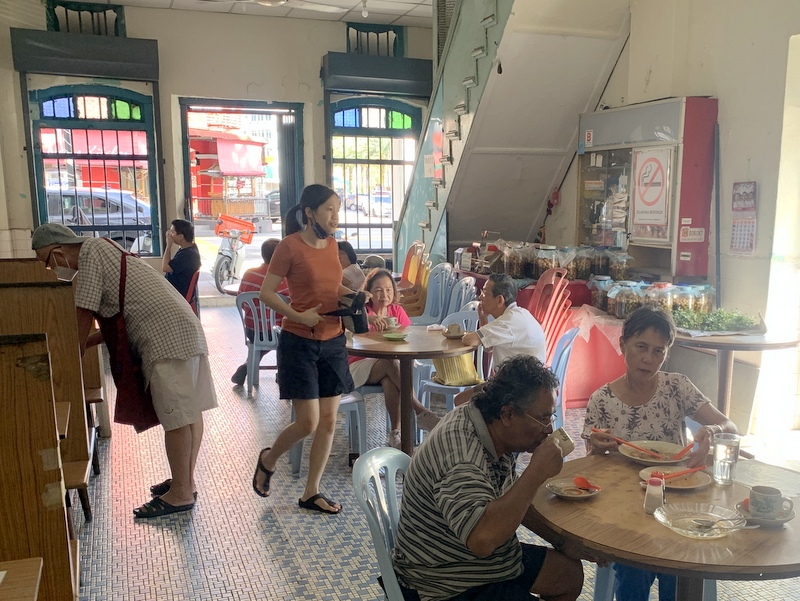
Lunch with Yeap and Halim in Yut Sun. The “new” branch, we first tried the original one, but there the Rajah Muda of Perak had just arrived with his entourage, we expected long waiting times. No Hainanese Chicken Chop for me this time, a simple egg and veggie on bread was enough.

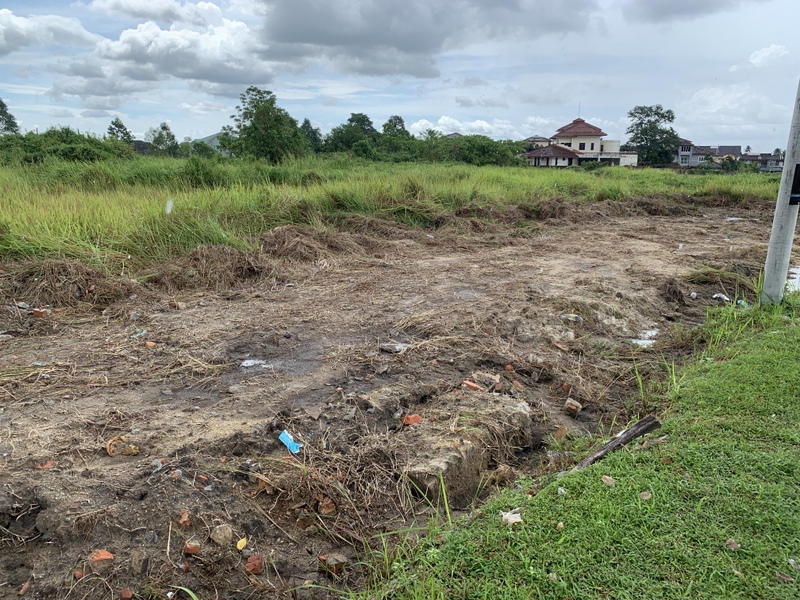
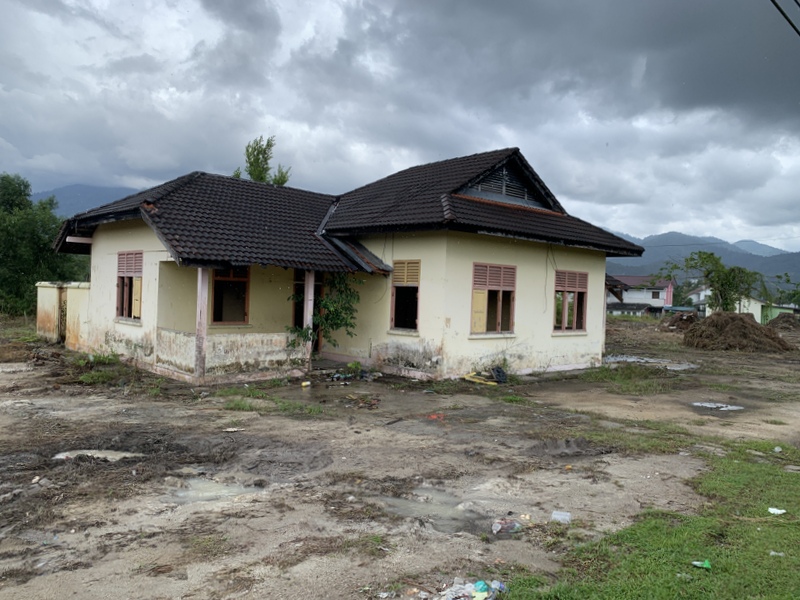
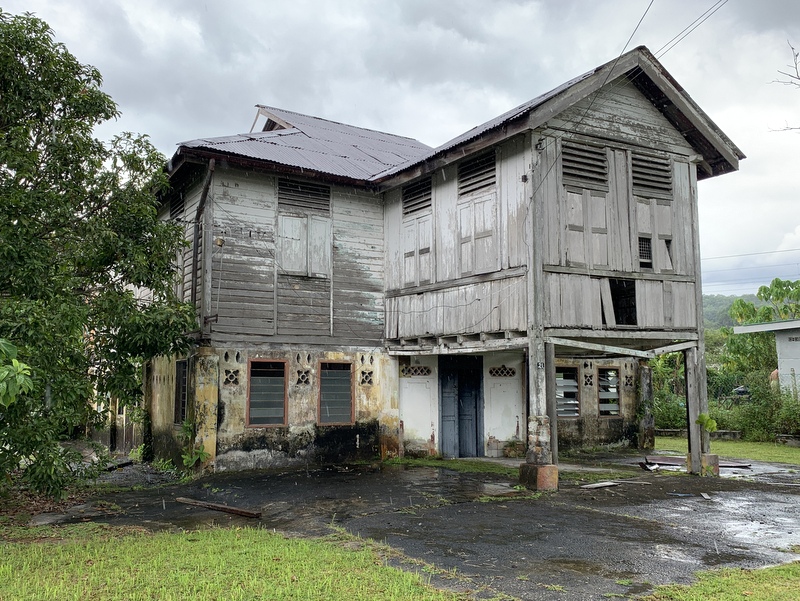
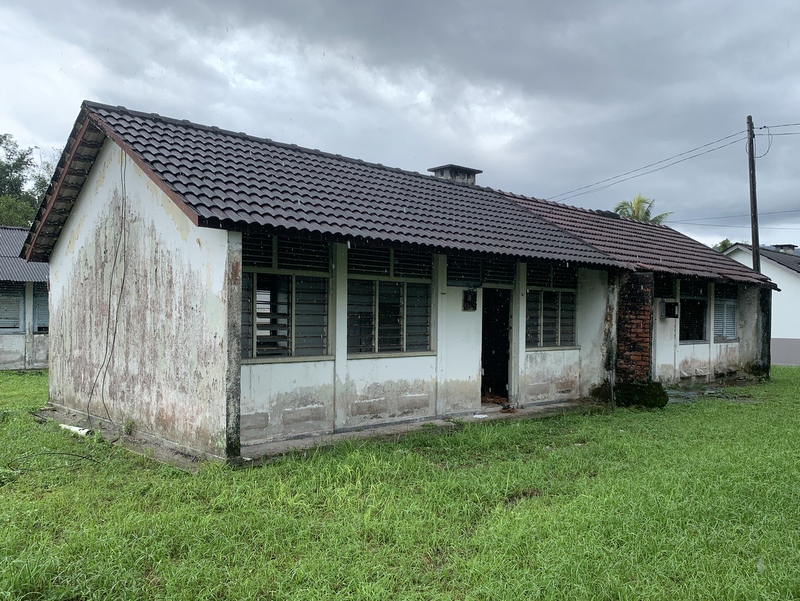
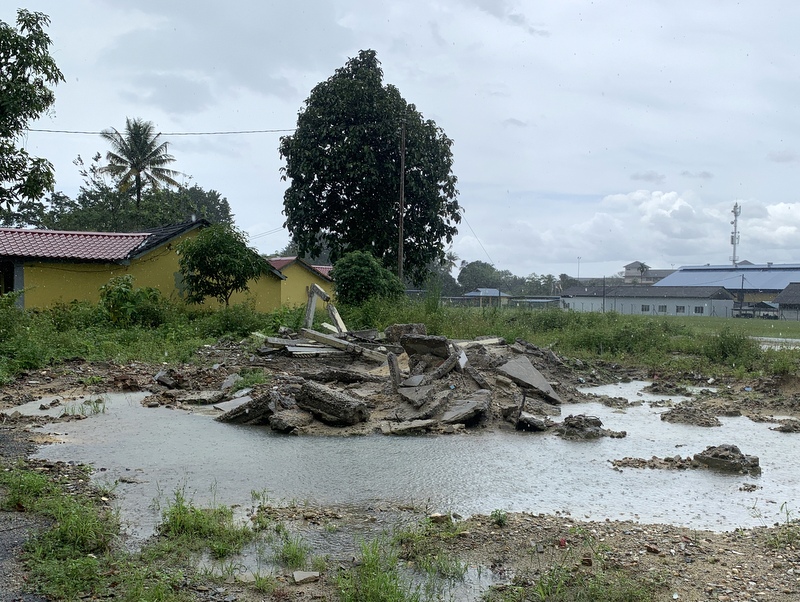
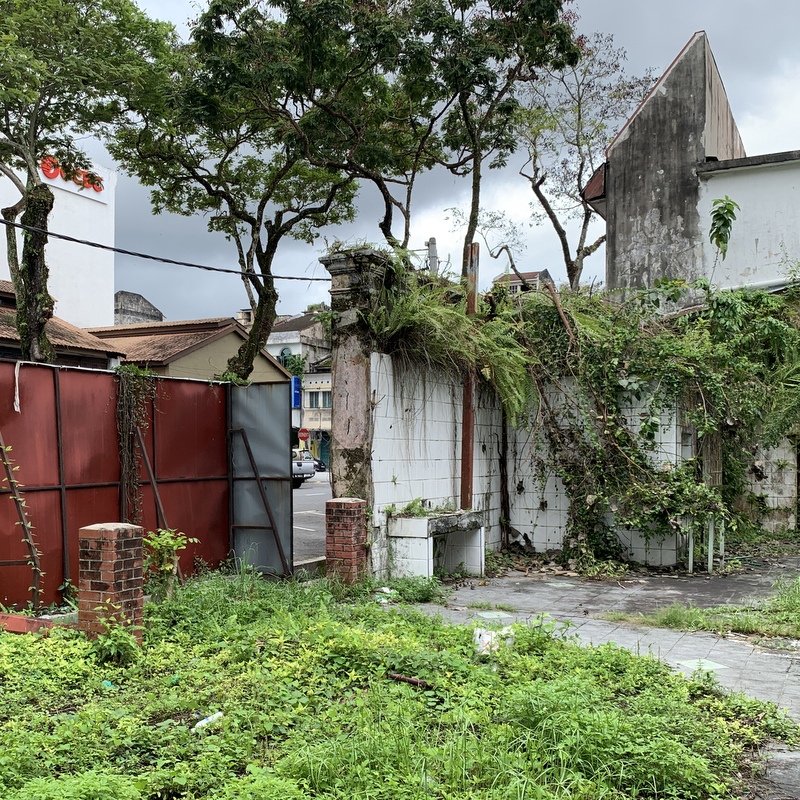
In the afternoon I met my friend Goh, the photographer. He had published on Facebook pictures of old buildings, colonial bungalows but also simple staff quarters. I was interested. We drove around in Asam Kumbang, He took the photos many years ago and was not sure if the buildings still existed. This is what we found. Desolation.

Cleared land, the house must have been demolished not so long ago, One house still standing.

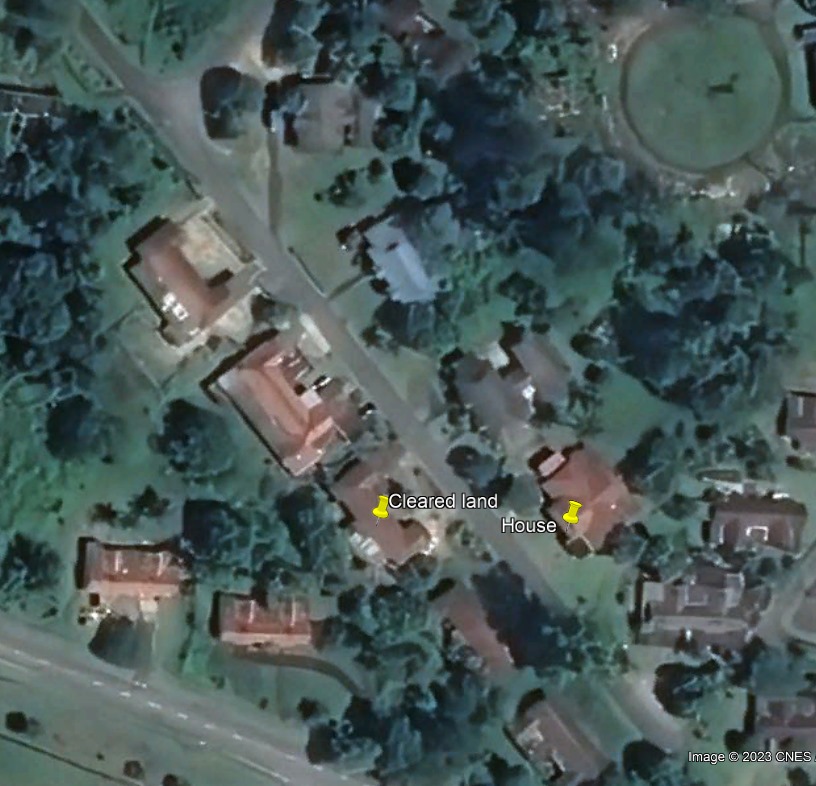
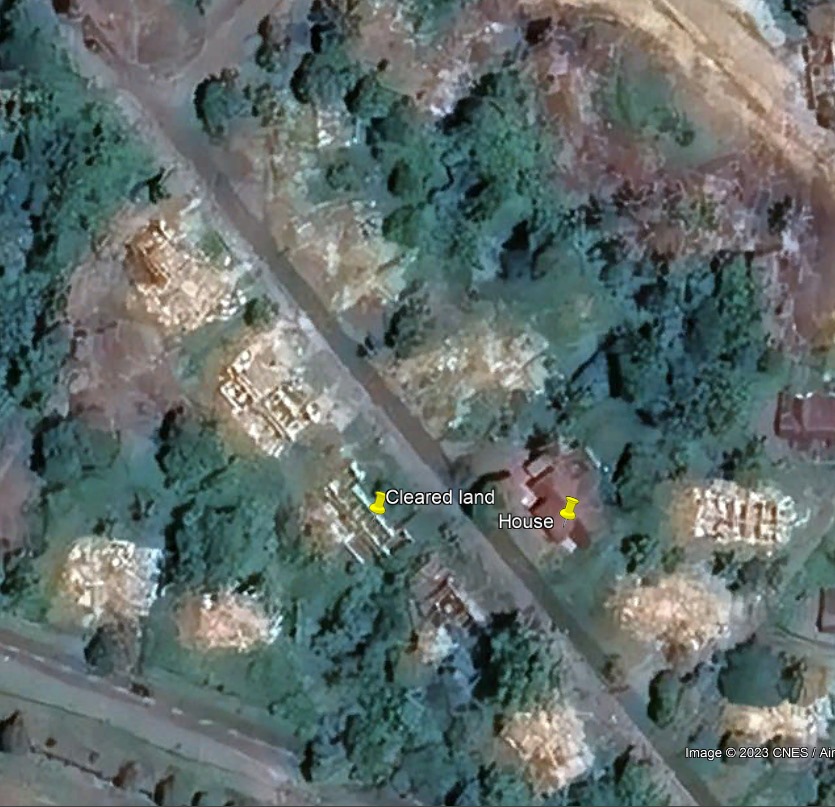
Later, back home, I opened Google Earth on my laptop and selected the “historical imagery” option. Left the situation in 2016, right in 2022. We were too late 😉 I have marked the locations “cleared land” and “house”. It was drizzling which added to the melancholic atmosphere.

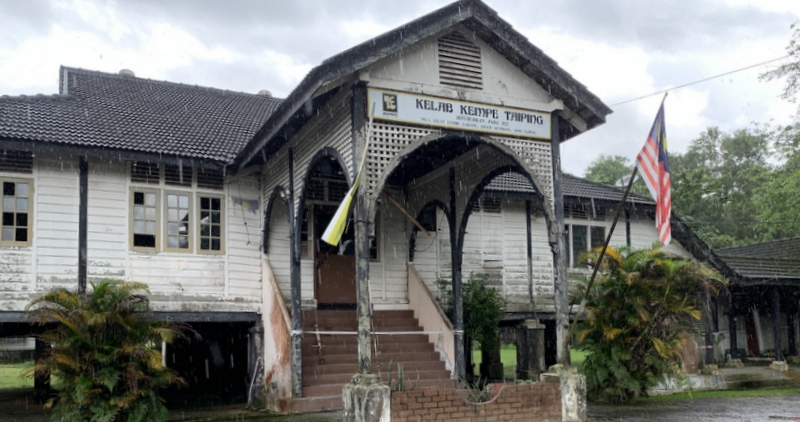
We passed the Kempe Club, now closed. In 2019 I visited the club and was warmly welcomed by the seniors who gathered there to play mahjong.

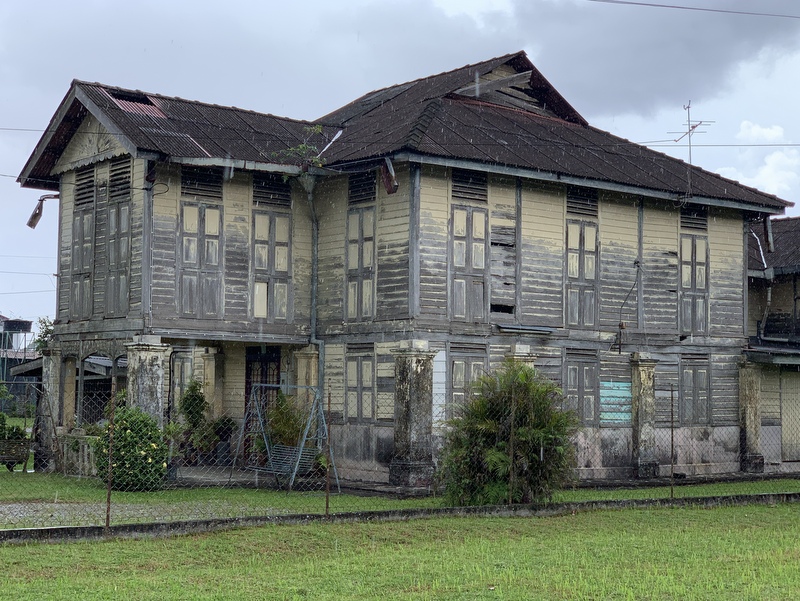
In another part of Asam Kumbang we found a few monumental bungalows. Still standing, but for how long?

Also some simple quarters, a few still inhabited, others empty or already demolished.

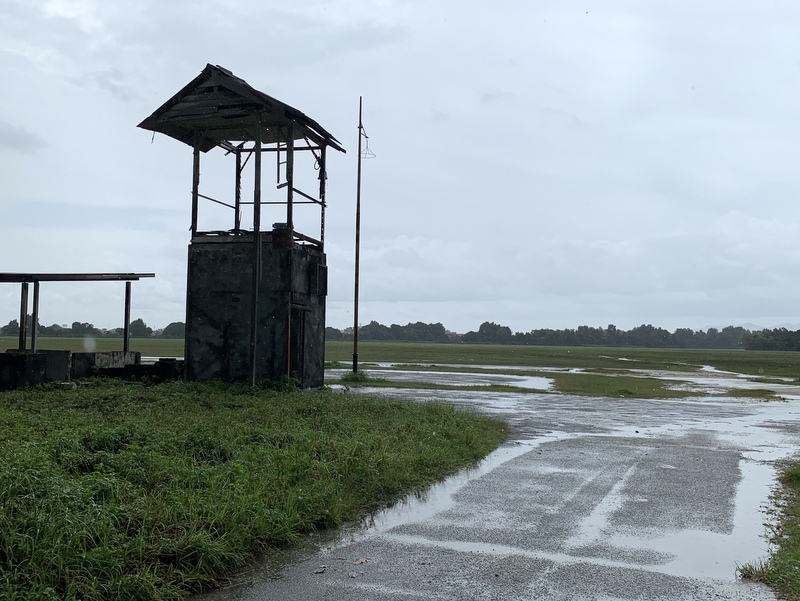
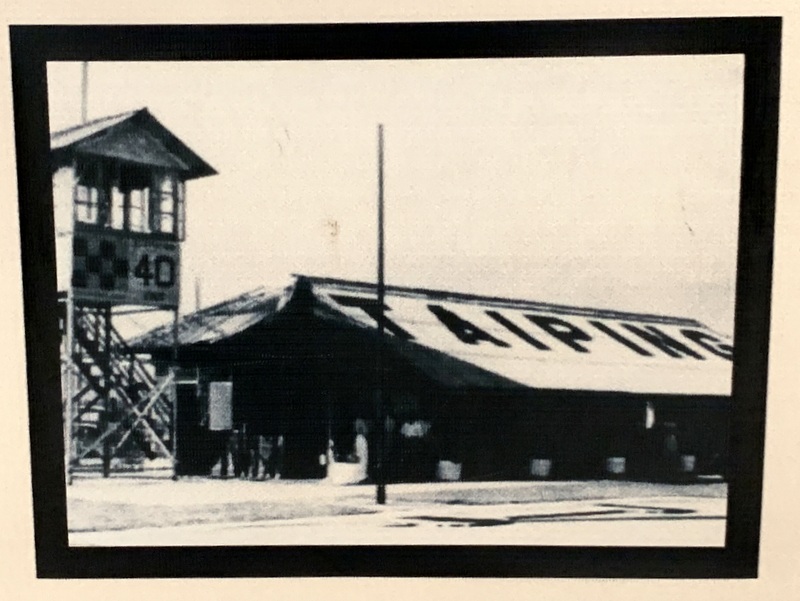
We also passed the remains of the Tekah airport. Right a photo of the control tower and arrival hall when the aerodrome was still in operation.

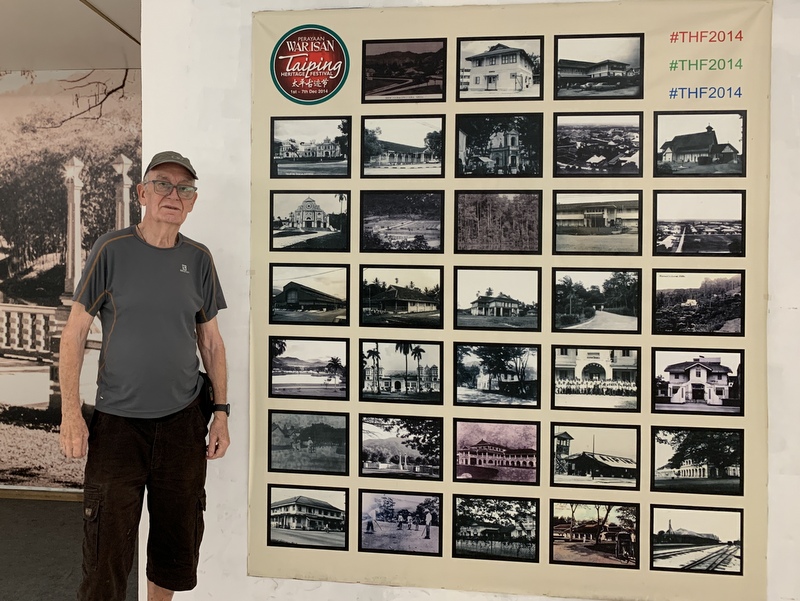
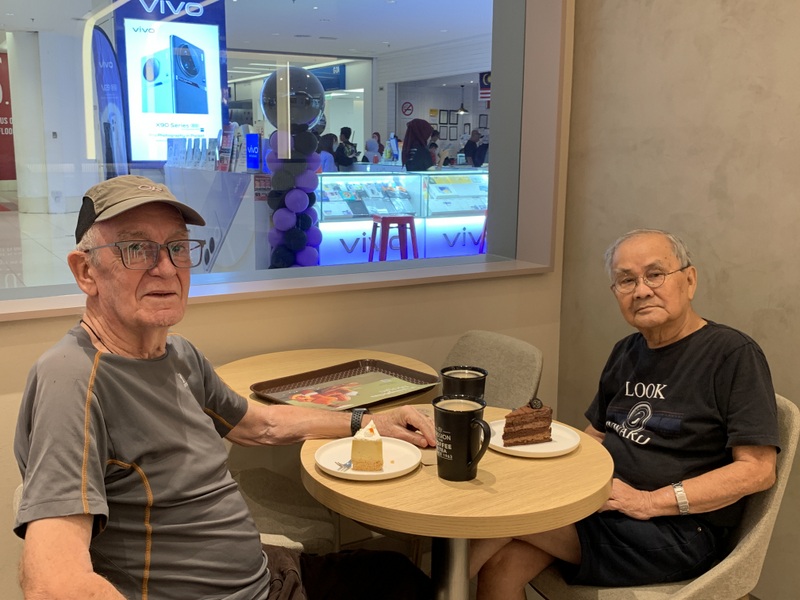
I found the above picture in the Taiping Mall, where Goh and I had a coffee and cake.

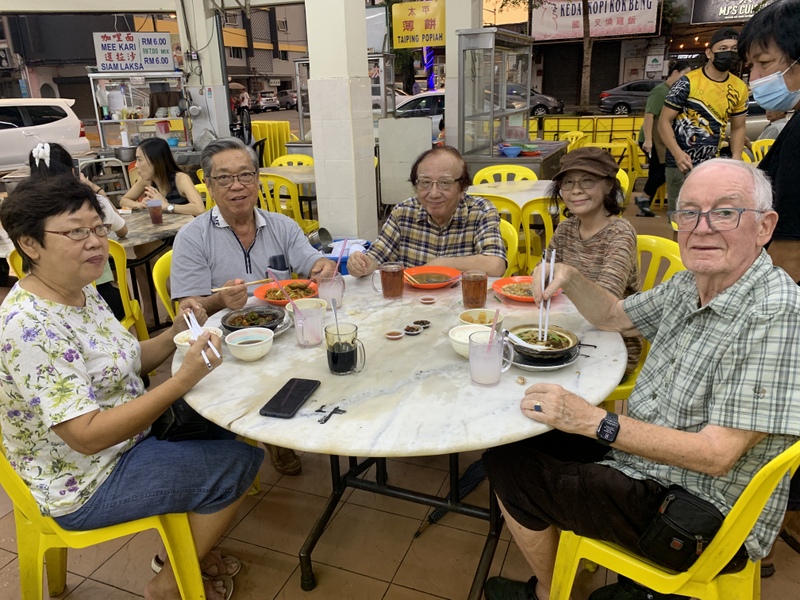
After a short rest in my hotel, I had another dinner with a number of “gang” members, again in Prima. I had Bak Kut Teh this time. From left to right Lay Chun, Kar Seng, Dr Poh and his wife Rosalind.

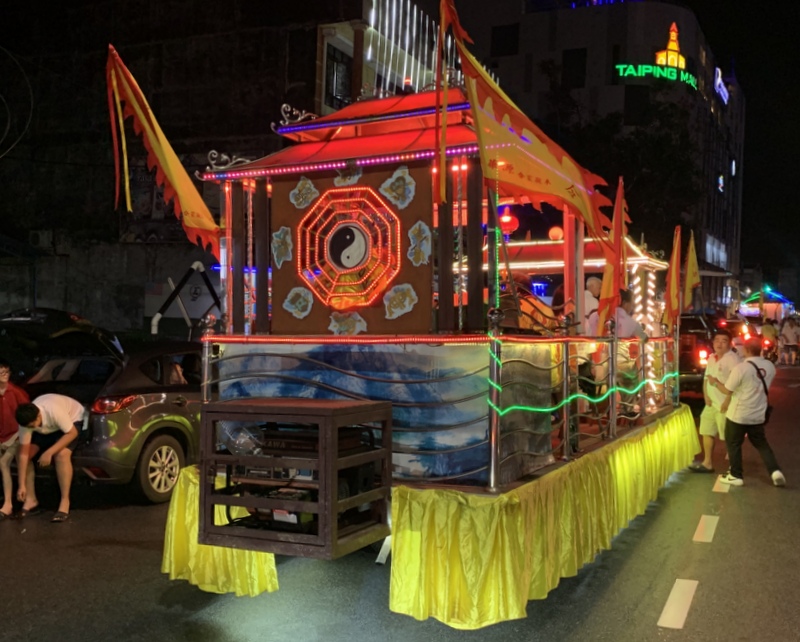
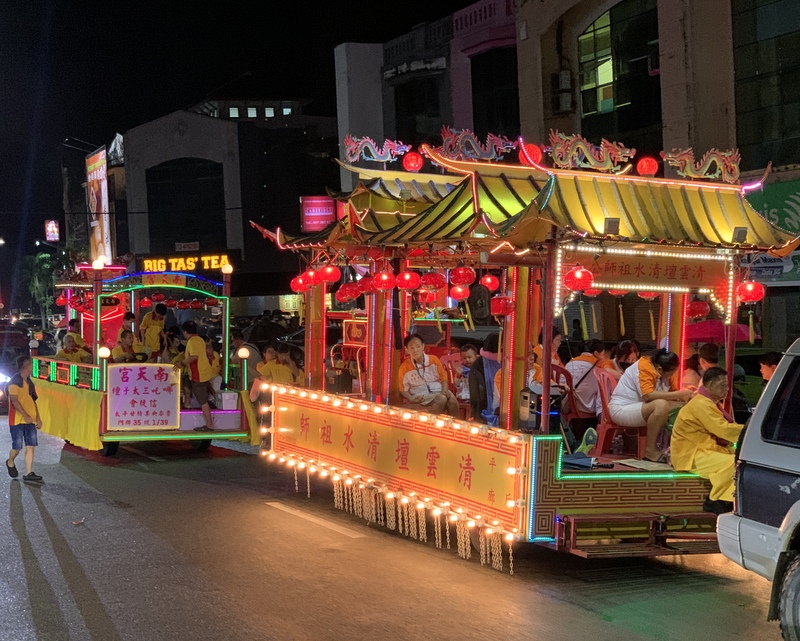
Back in my hotel the reception told me that a procession for the 9 Emperor Gods would pass close to Furama. Although a bit tired, I went out to the Jalan Tupai where soon the procession arrived.

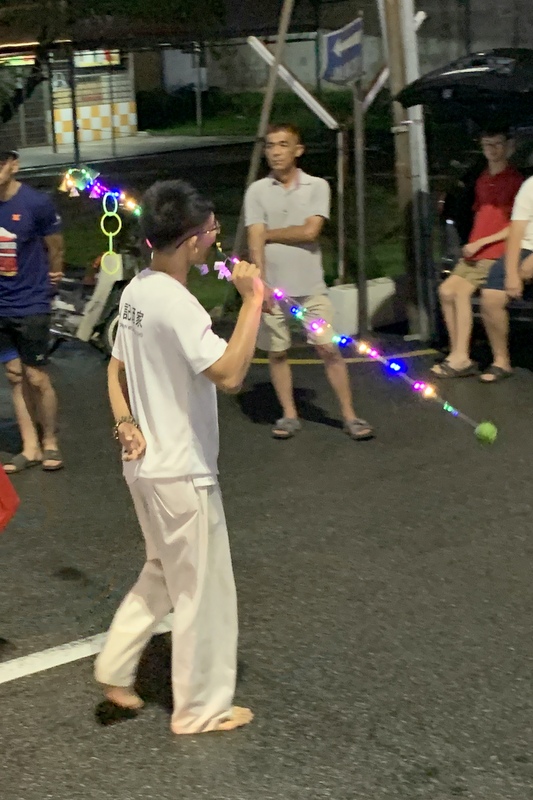
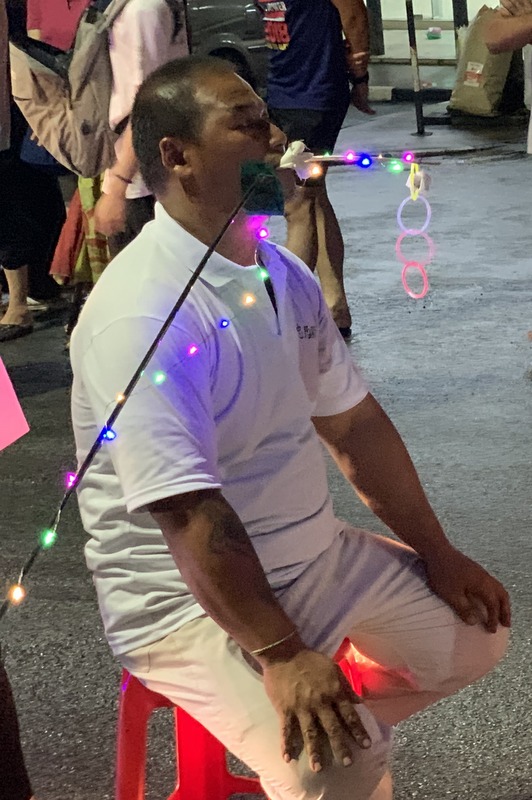
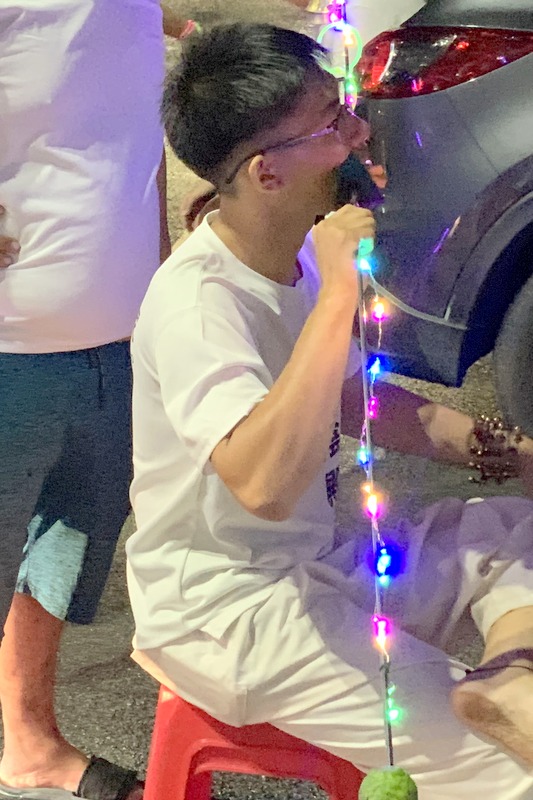
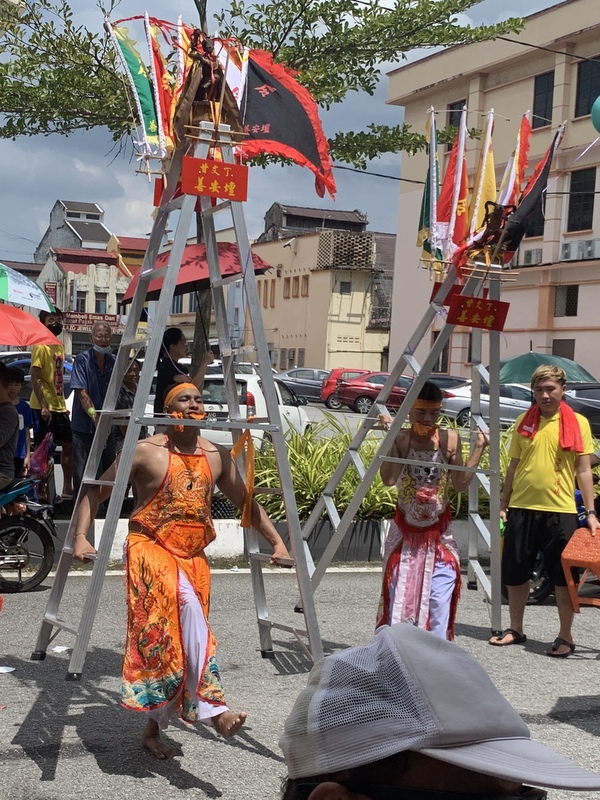
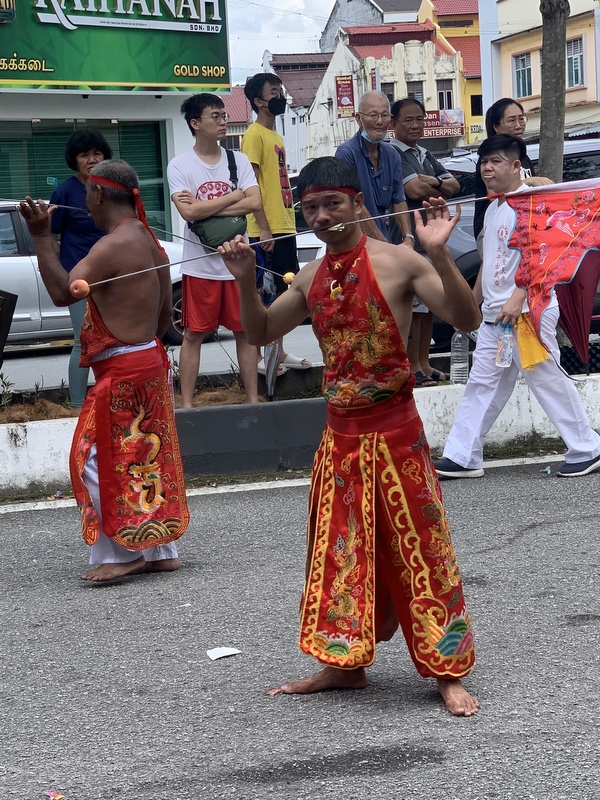
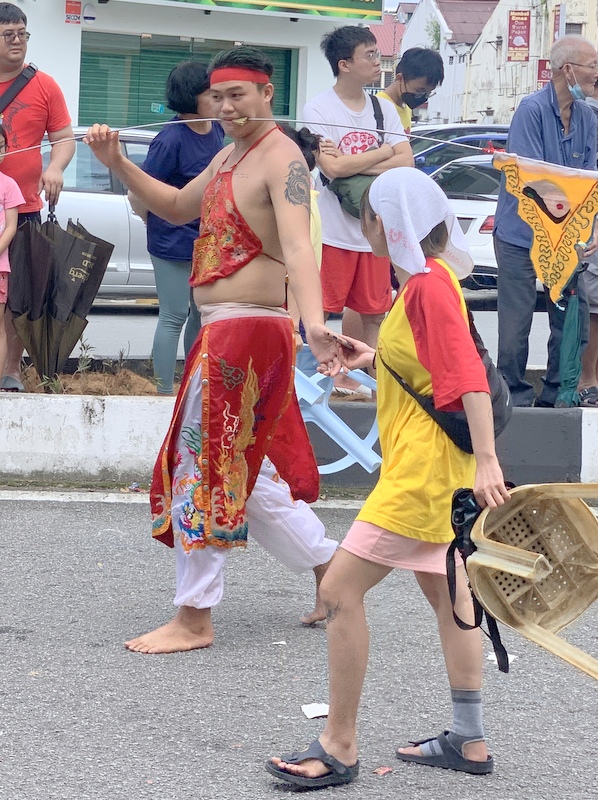
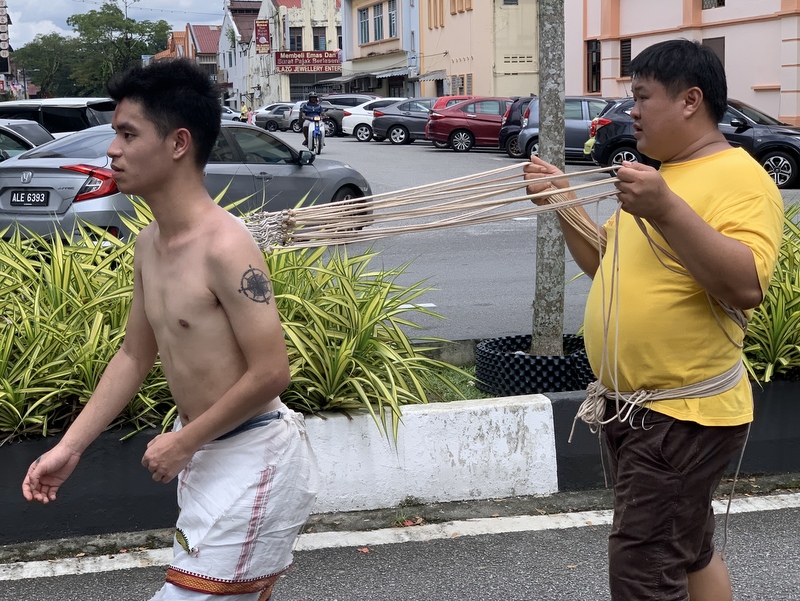
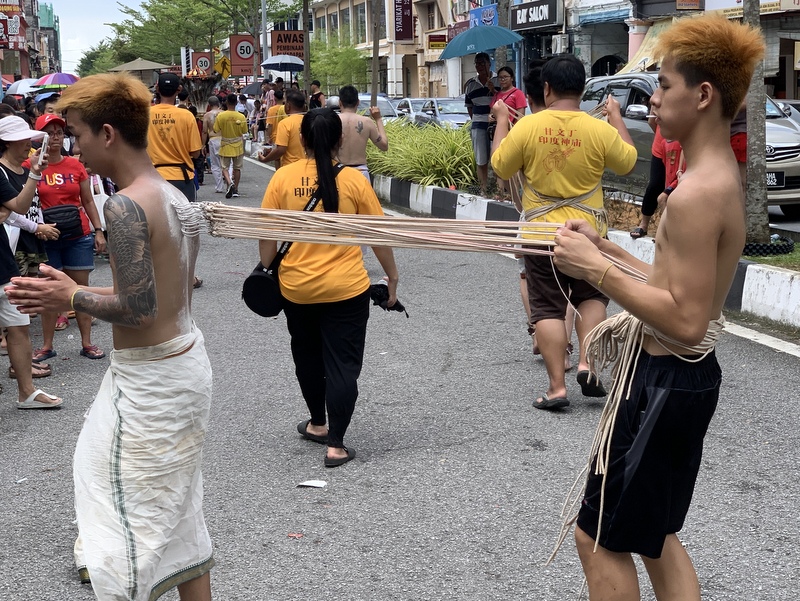
A few people had metal poles pierced through their cheeks. Look how the poles are decorated with led lights. Traditional customs combined with modern technology.

Really a day full of variety.

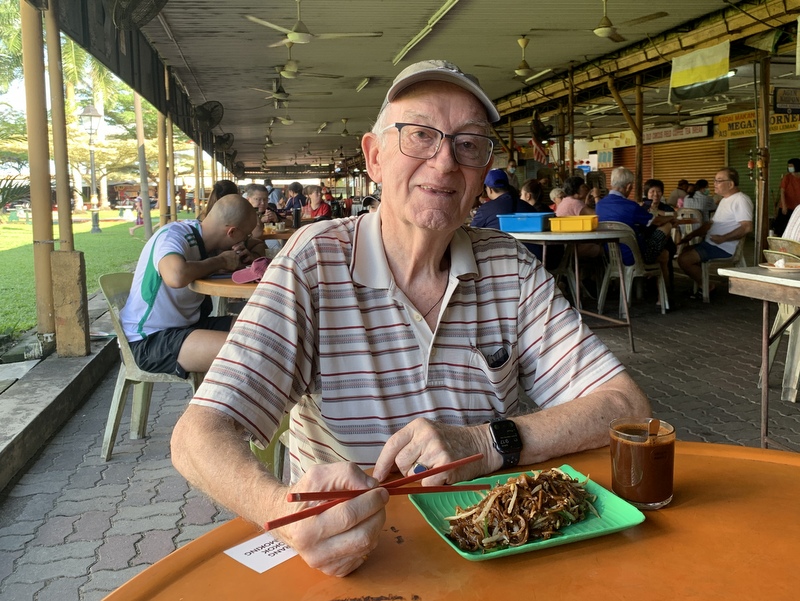
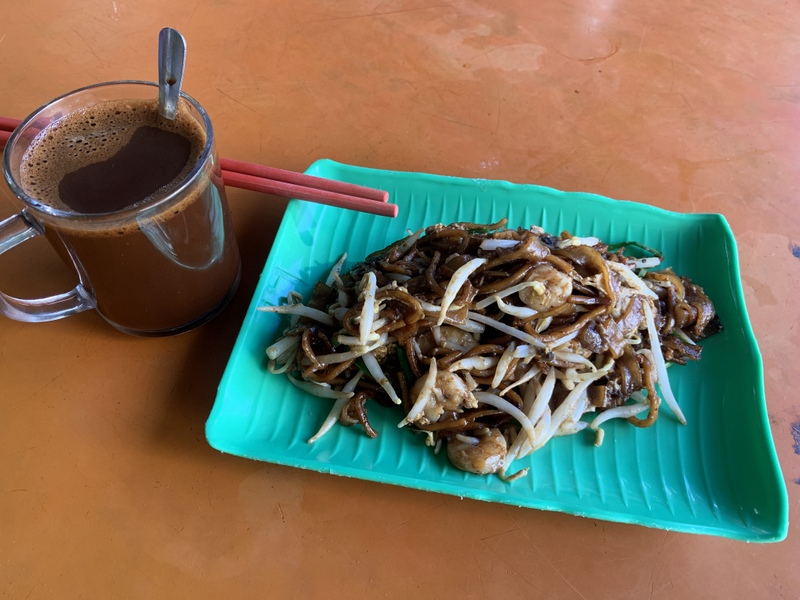
The next morning my plan was to have my usual Chee Cheong Fan for breakfast, but when I arrived at the Circus ground, it was sold out already. Instead I had Char Kway Teoh, another favorite of mine. Not bad.

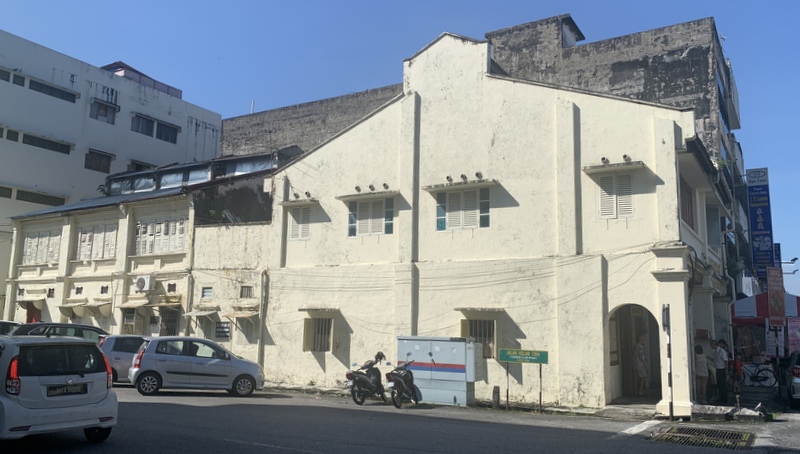
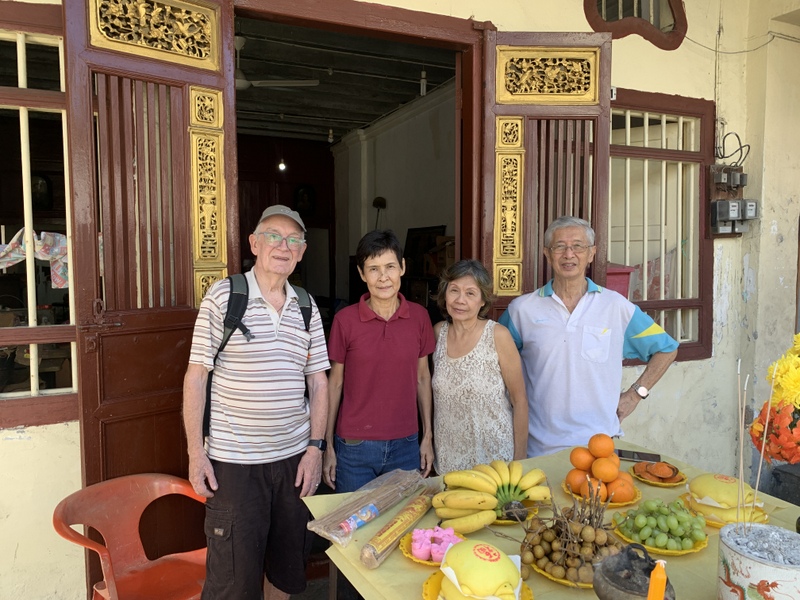
Next I walked to 81, Jalan Kota, where I met my friend Bok Kin. Her husband is a descendant of Ng Boo Bee and the Ng family has a tradition of placing an offering table in front of what was originally Boo Bee’s townhouse. When the Nine Emperor Gods procession passes, the participants stop for a while at the table. A good location to take pictures.

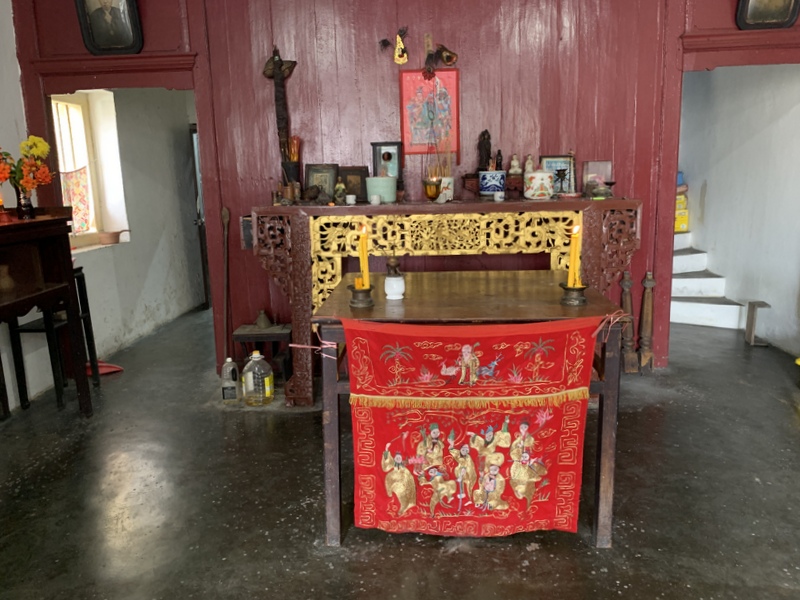
Left the house altar and right the offering table. Waiting for the procession to arrive.

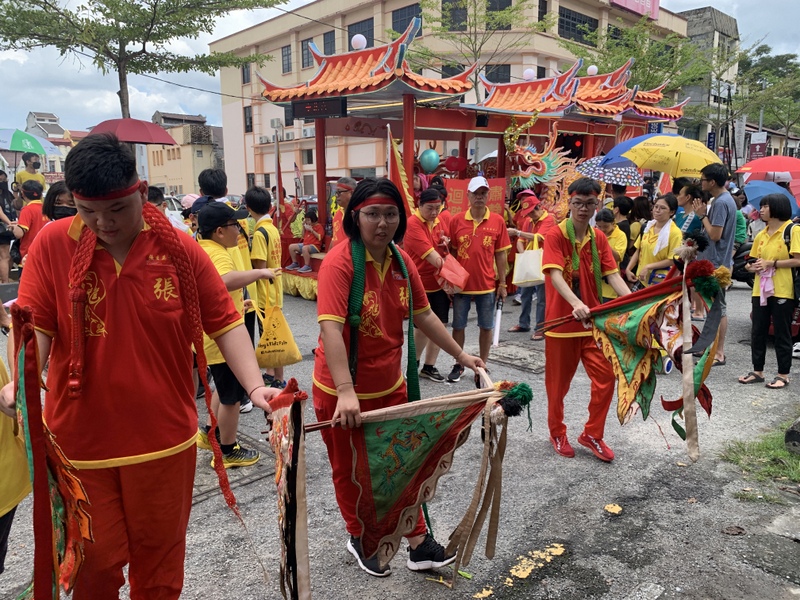
In 2019 I had watched the procession at the same location, I wrote a report The Nine Gods Emperor Festival about it. In the following years there was no procession because of the COVID pandemic This year it took place again, I had the impression that it was less elaborate and exotic than the last time. But still fascinating,

Here is a collage of some video clips I took this time, Watch also the more spectacular video I took in 2019.

Here is a photo collection of the devotees who pierced their cheeks or had hooks in their back.

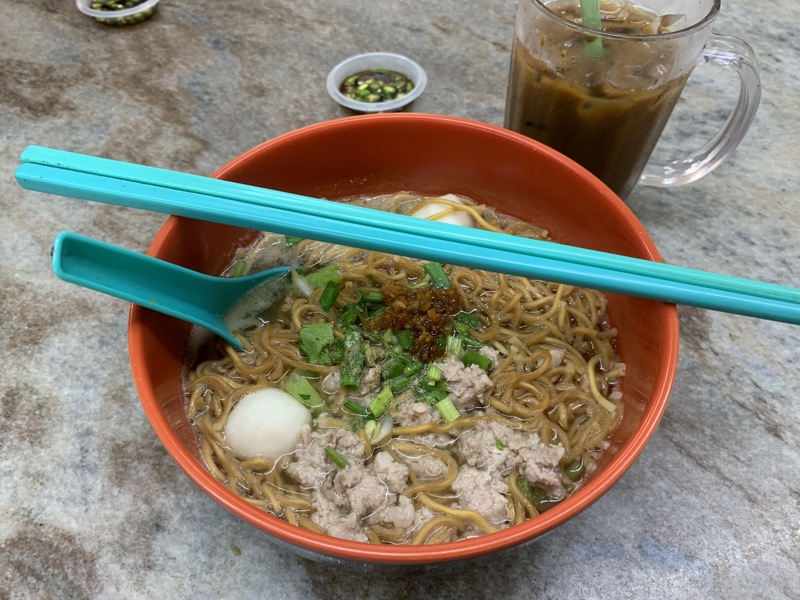
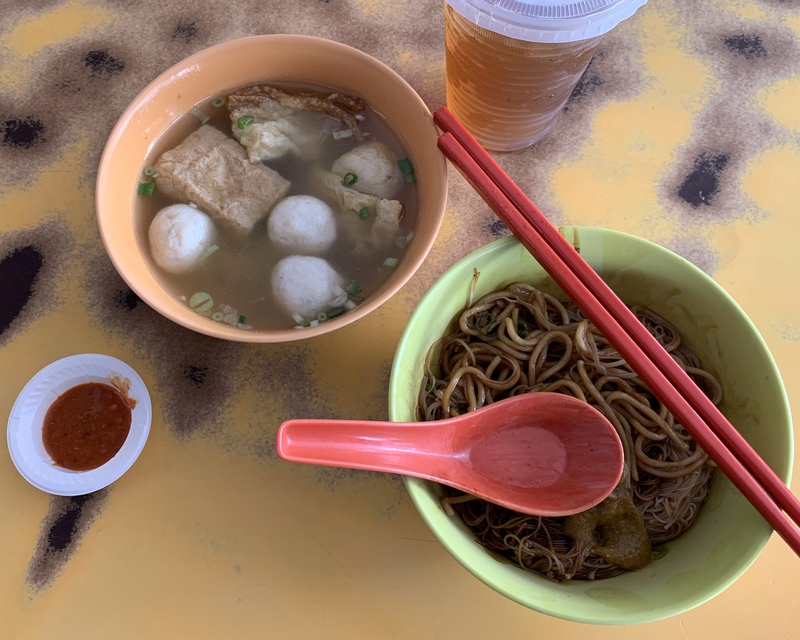
After the procession was finished, we went for lunch, again to Prima, for the third time during this visit! I had fish ball noodles with pork intestines.

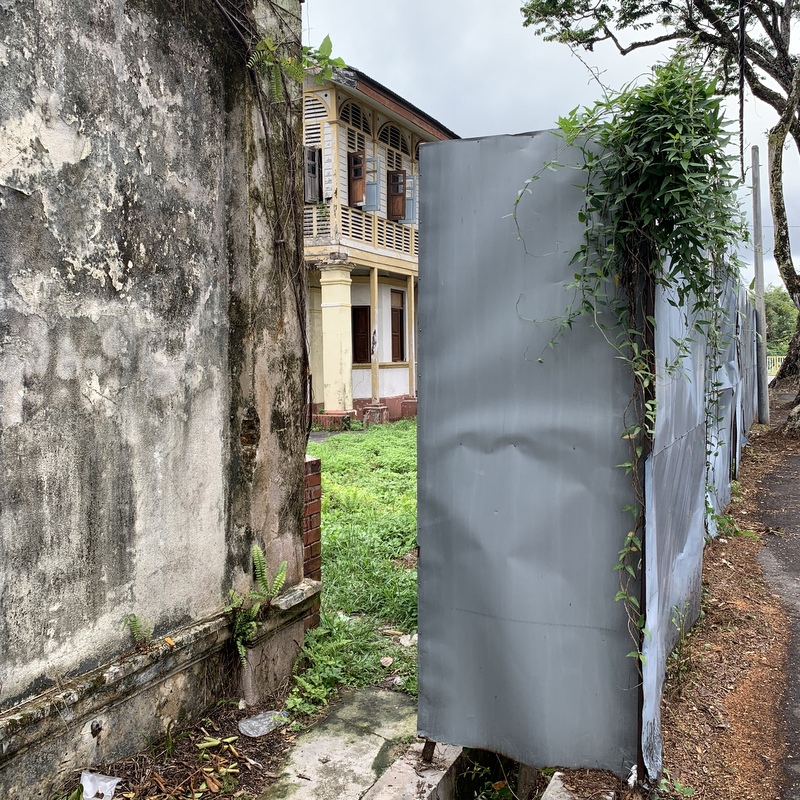
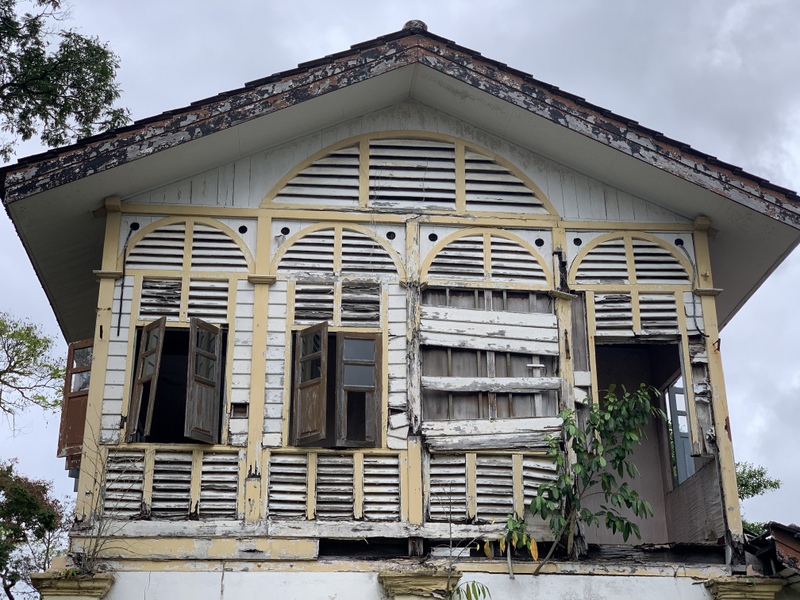
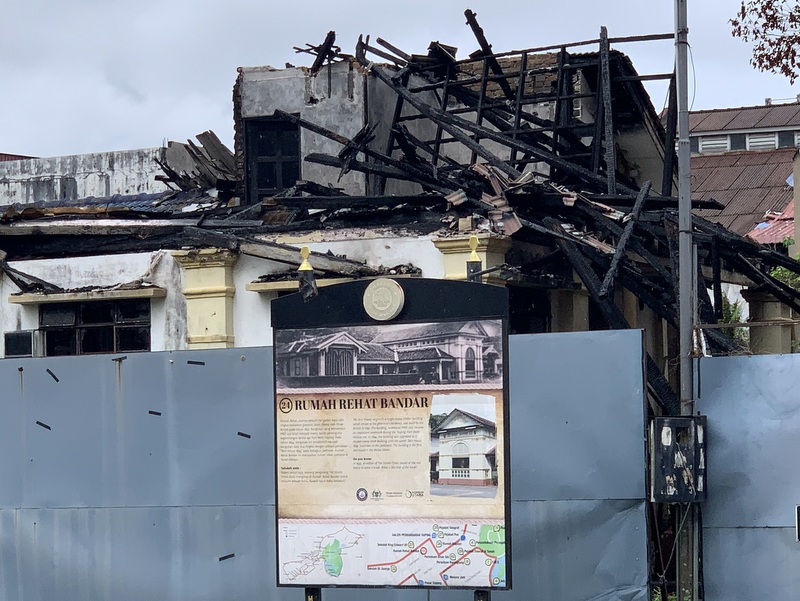
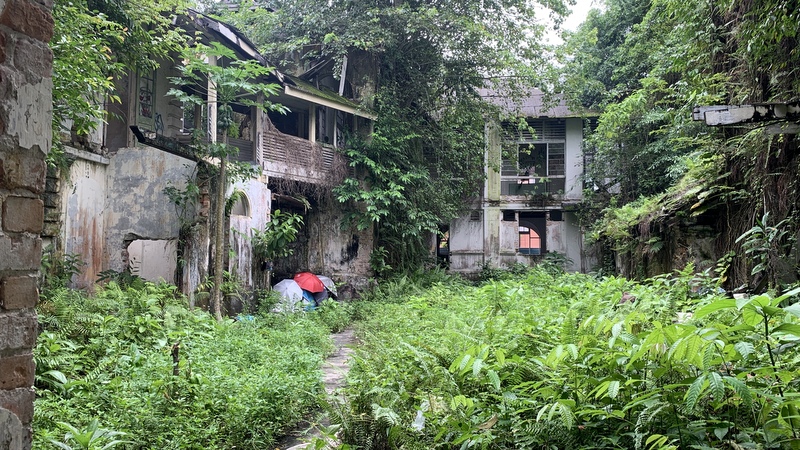
My first destination after lunch was the Rest House. Built in 1894 , one of the “Firsts” of Bander Warisan (Heritage Town) Taiping. Now left to rot. It has been fenced off but there is an obvious opening in the fence, for many years already. I am sure the authorities must be aware of this gap, that could easily be closed. Do they leave it open on purpose? Of course I walked in.

Left the opening as seen from the street. Right after entering, through the opening you can see part of KEVII. The yard is partly overgrown, but a clear path proves that people (squatters or drug addicts?) have been using it and maybe still do.

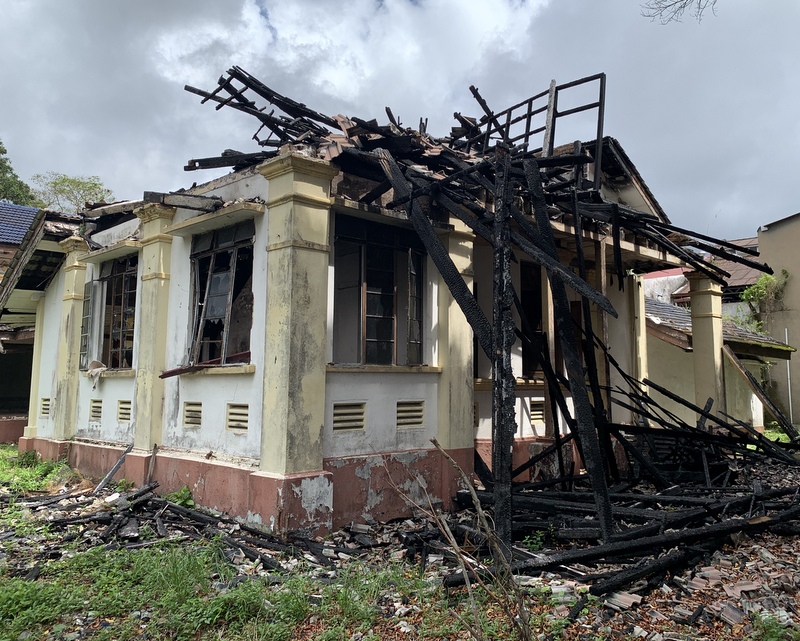
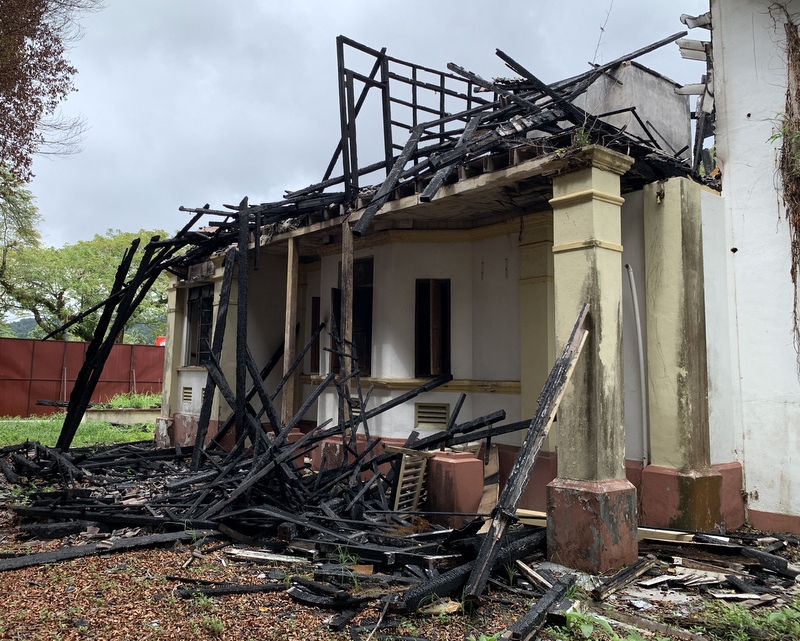
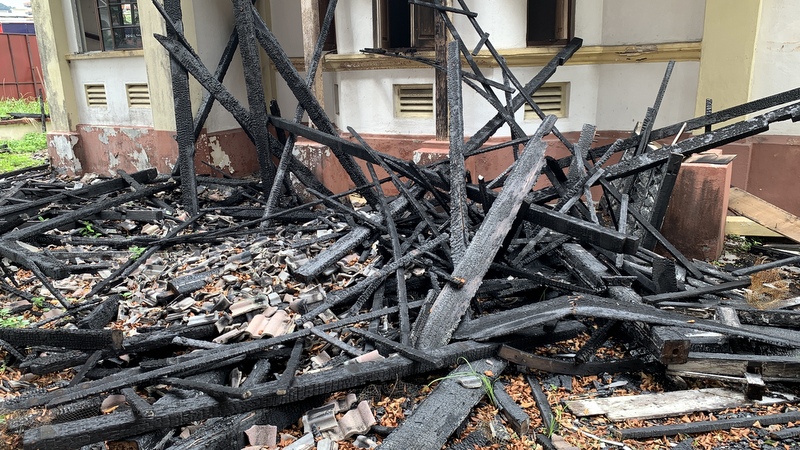
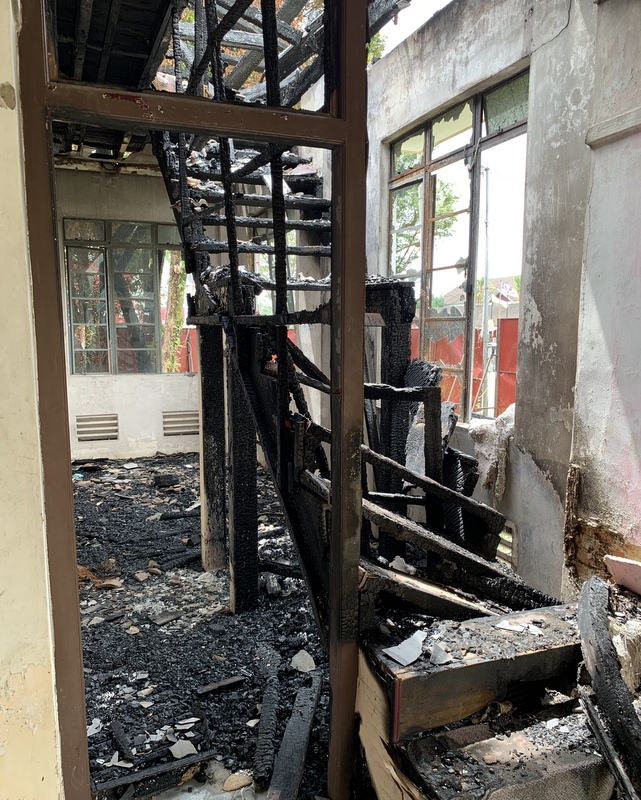
The part of the Rest House that has been destroyed by fire, a few weeks ago.

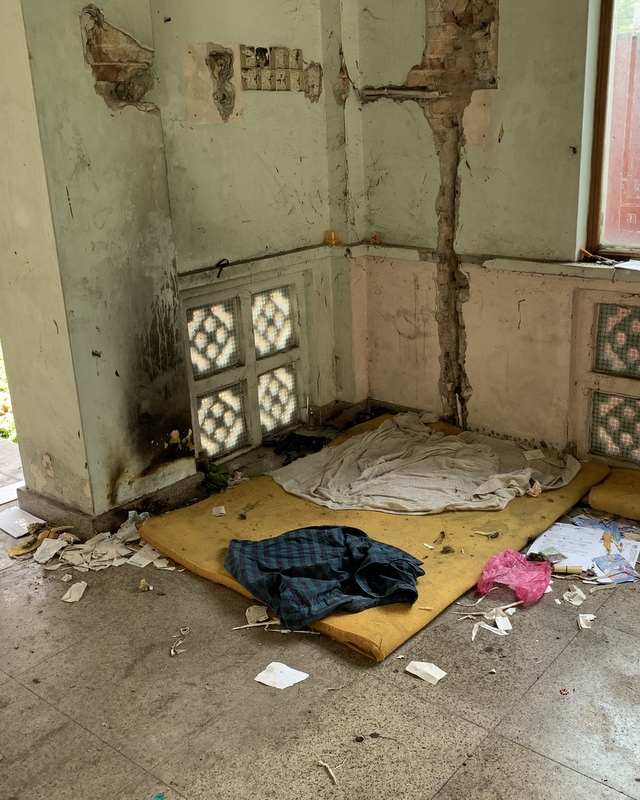
I could still walk in. And in an undamaged room there were clear signs that homeless people were still using it. As there is no electricity in the building, they may have to use a candle at night. Could that be the cause of the fire, just an accident?

Two pictures from the outside. The right picture is ironic, I took it on purpose.

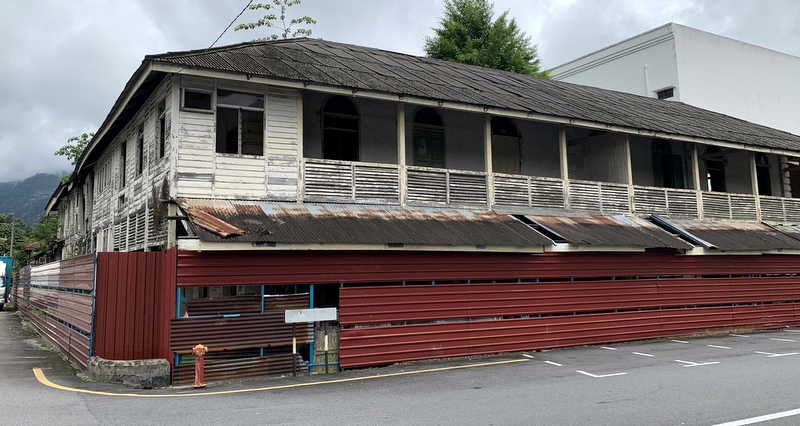
Next to the Rest House, on Jalan Stesen, are two historical heritage buildings, one of them is the former Perak Railway Building (1885) . Ruined beyond repair, in my opinion, see my blog Taiping Bandar Warisan . After much of the interior had been demolished and/or stolen a few years ago, MPT (the Taiping town council) constructed a solid fence around the complex, to avoid further destruction.

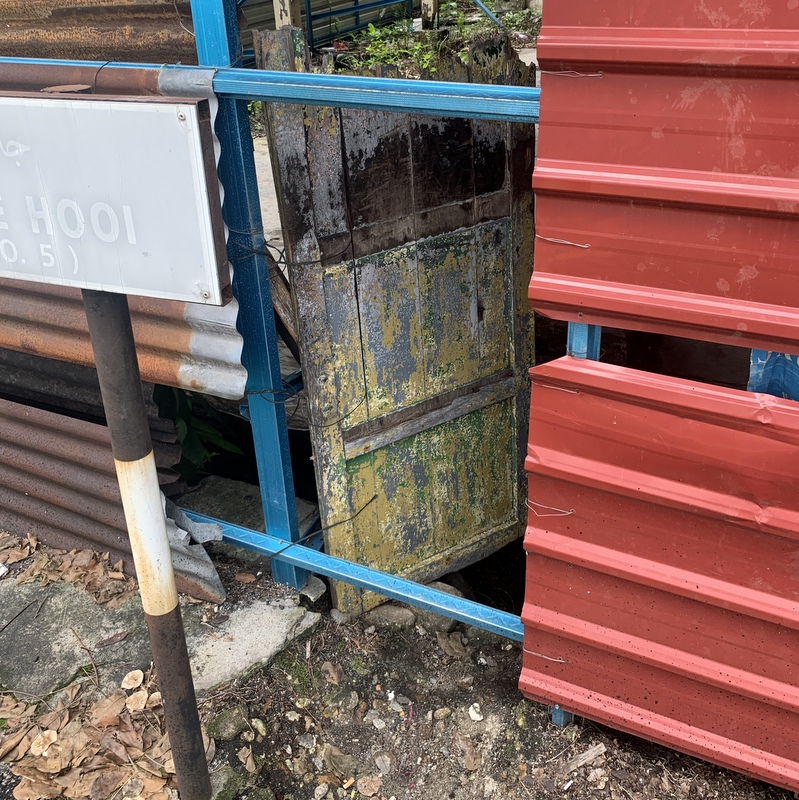
Really solid, I thought, no way to sneak in. So I was shocked to discover that there actually still is an entrance, a jalan tikus (literally a rat road). You can see it clearly when you enlarge the above photo.

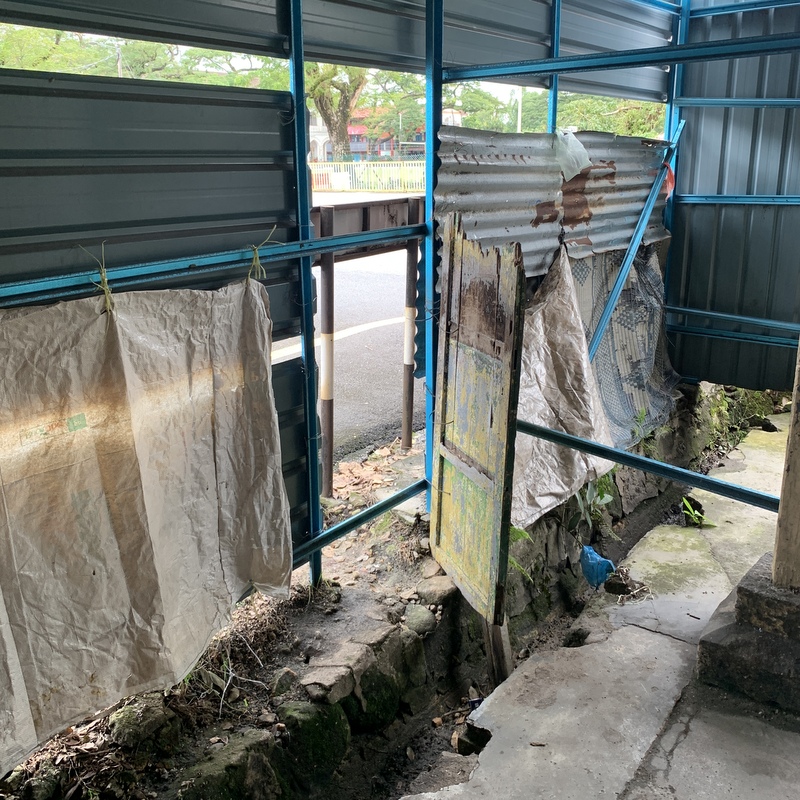
With some hesitation I entered. For sure, this complex was used by drug addicts, in the past I have encountered one. They probably still use it, I didn’t want a confrontation. As you can see, it is a regular makeshift wooden door.

I only stayed inside a few minutes, took a photo of the courtyard and didn’t examine the rooms. The courtyard is overgrown, with a clear path, more people must know about this. Leaving, I politely closed the door.

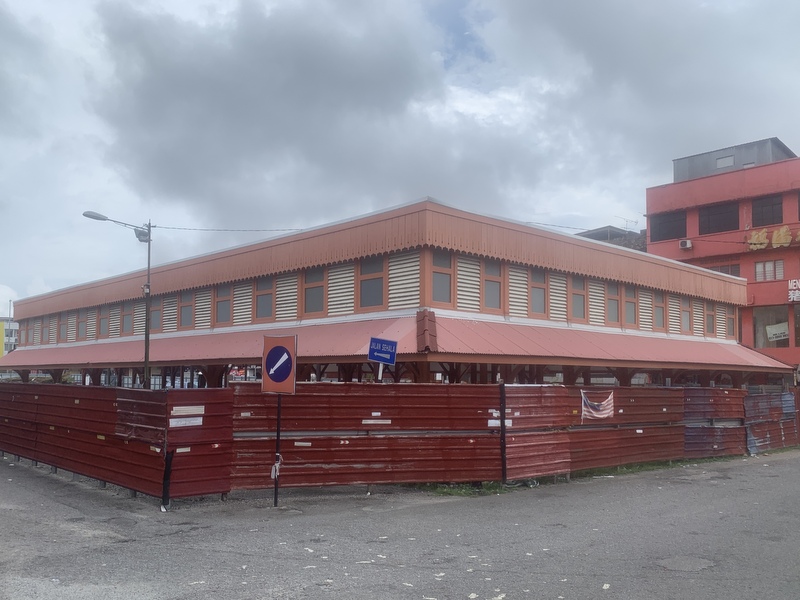
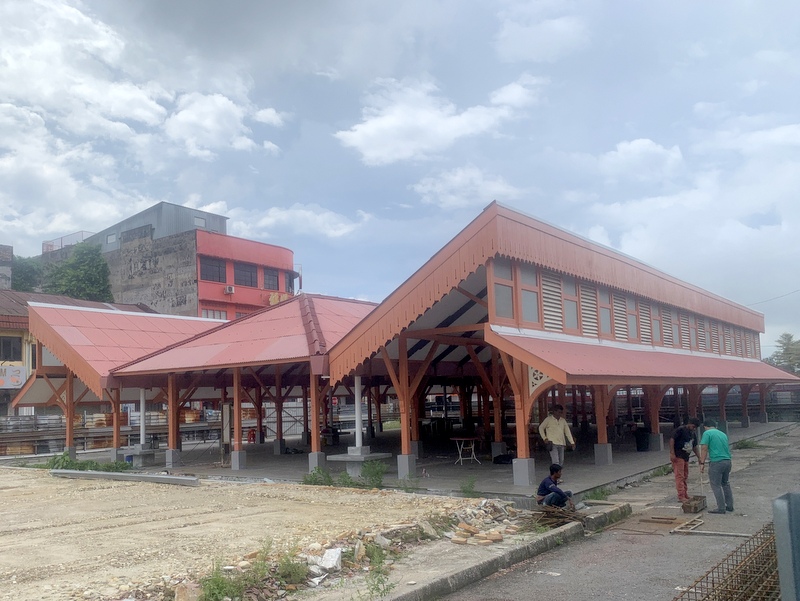
Final destination for the afternoon, the Pasar (1884/85). Two buildings, with Siang Malam in the middle. A few years ago closed for renovation. February this year, Siang Malam was under reconstruction. The exterior has now been completed, the interior is still empty. I heard on the grapevine that the former stall holders, temporarily relocated near the dobi line, like it there and may not be interested to return.

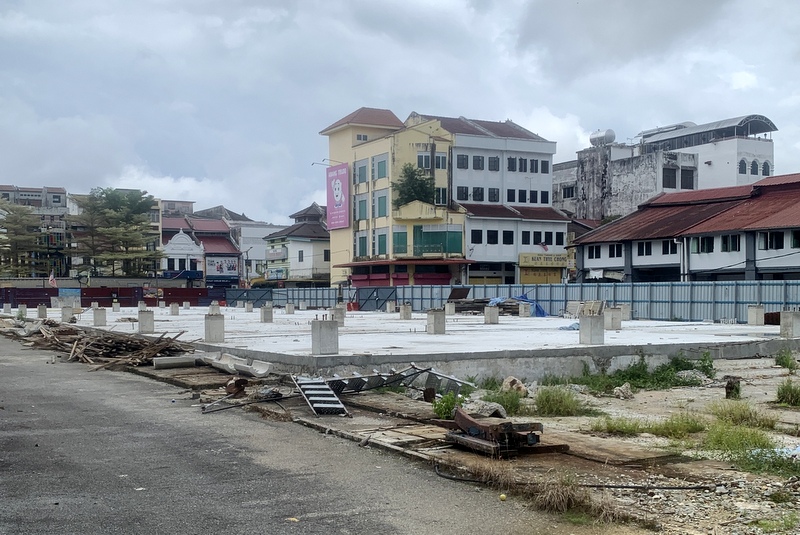
In February the Pasar buildings were still standing, but in recent months first the wooden parts have been removed and later also the metal structure. Taiping people were getting worried, but a minister assured that medio next year, when Taiping celebrates its 150th anniversary, the market would be restored in all its glory. There is some doubt if that is possible, and also if it will be renovation, or a modern reconstruction.

Here are two pictures, which I managed to take, not easy because here the fencing is very solid. Left the location of the veggie, beef/mutton and chicken market.. Completely clean. The right photo shows the location of the fish, fruit and pork market. To my surprise I noticed that a concrete foundation has been laid there. According to the grapevine again, the pasar is being rebuilt/reconstructed in Kelantan at the moment. Later it will be transported to Taiping. Can that be true? Why is there not more transparency from the authorities?

That evening I was invited by the same group of friends for another dinner, this time at Soon Lee restaurant, very close to my Furama hotel. Because I had hosted the dinner in Matang, this time I was not allowed to pay anything. Such a pleasant group of friends!

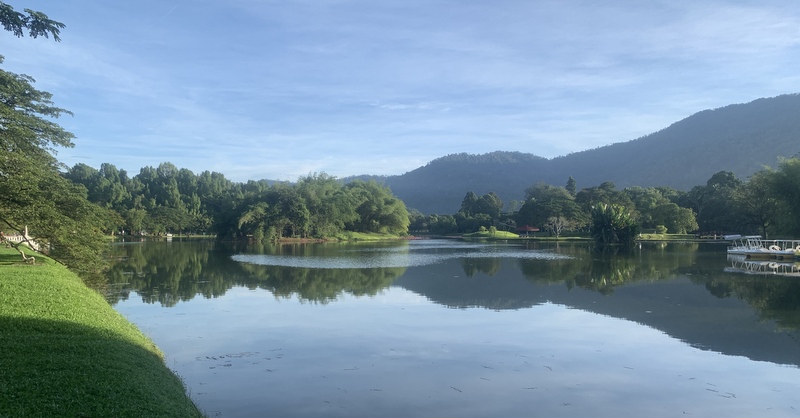
Another busy day. The next morning I woke up early because I had not yet visited the Lake Gardens and I was going to meet my friend Neal there. The Lake Gardens are beautiful, any time of the day.

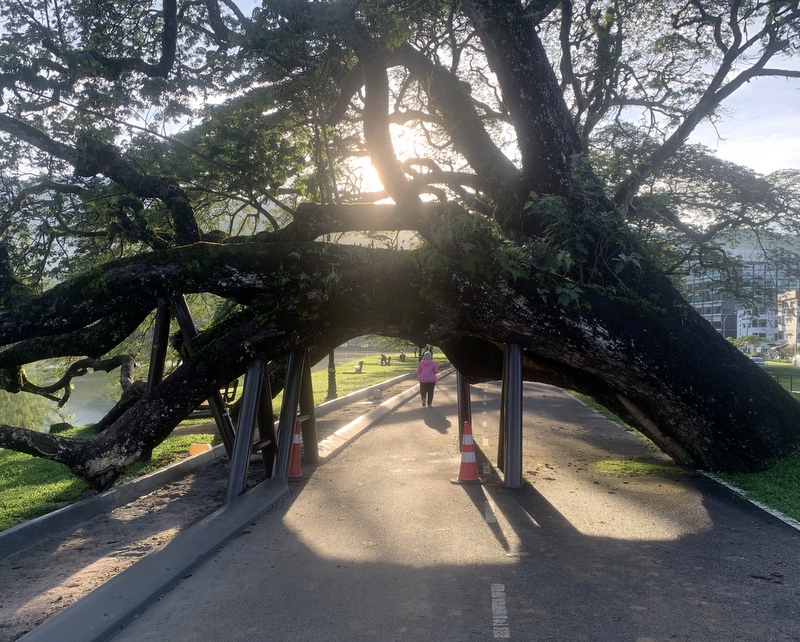
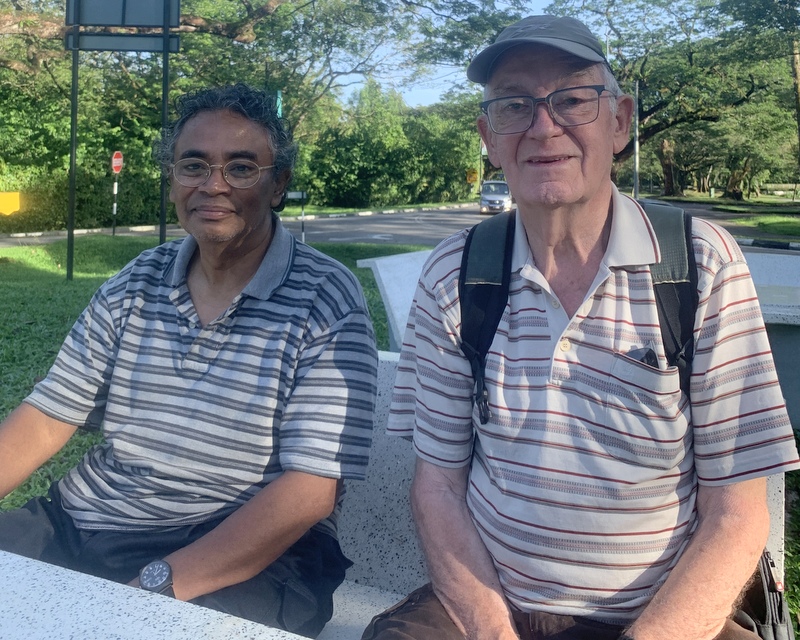
Nice weather, I walked the Raintree Walk and met Neal there. We chatted about Taiping, its Heritage and the new Electrical Heritage bus

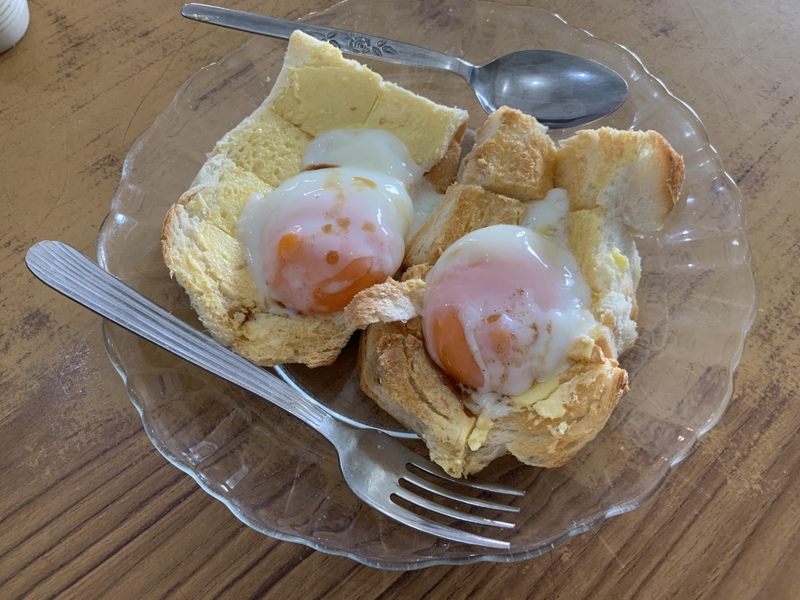
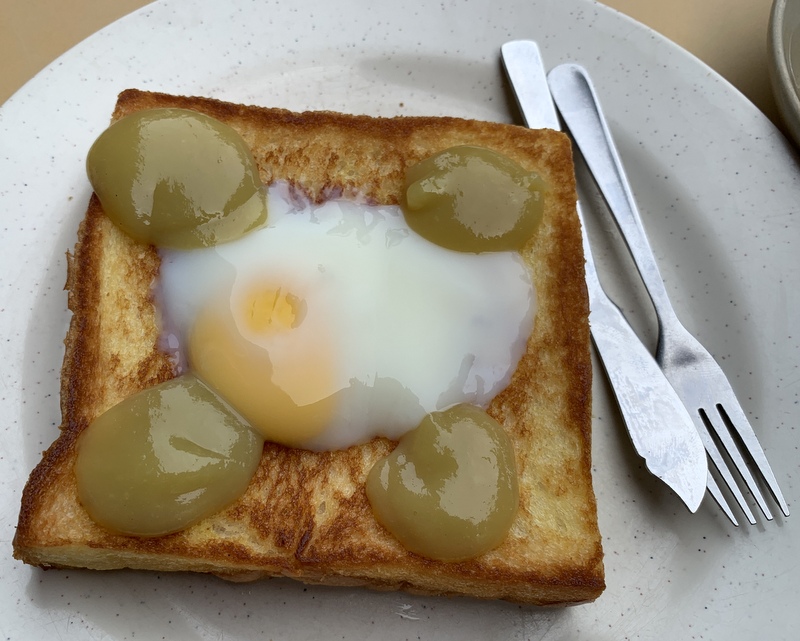
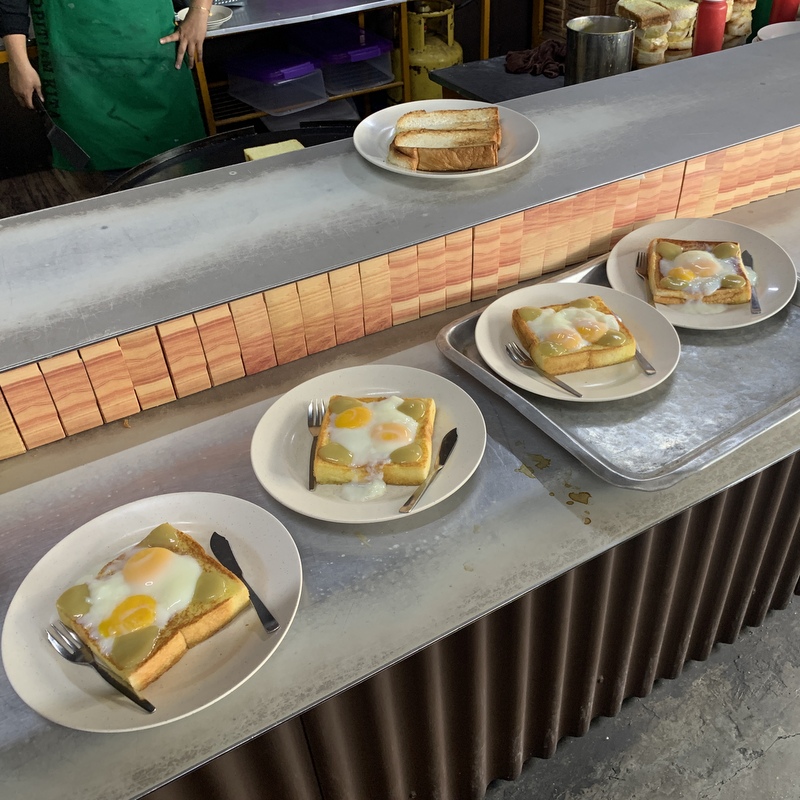
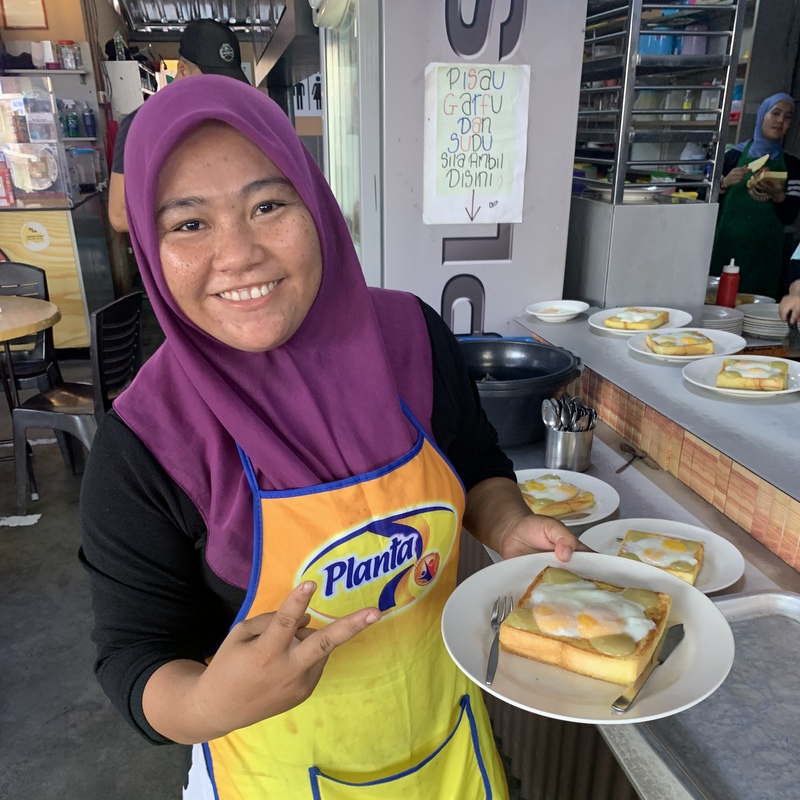
I invited him and his wife for breakfast at Lian Thong. Eggs on Toast (Roti Goyang) is a favourite of mine. Funny story: after we had ordered our breakfast, a lady customer came to our table and told us that she had ordered Roti Goyang, but could not finish it. Was I willing to take it? Of course I did, we cancelled our own order, and I had a free breakfast. I really love Taiping 😉 .

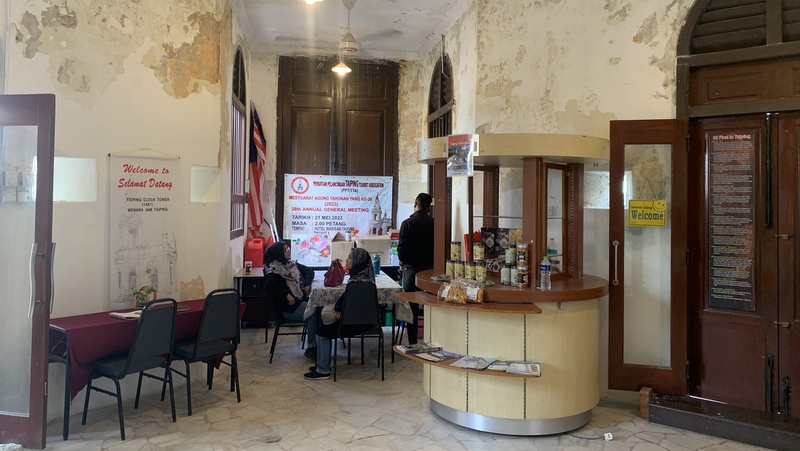
Walking back to my hotel, I stopped at the clock tower, the location of the Taiping tourist office. It is managed by the Taiping Tourist Association, who don’t have sufficient funds for repairs, maintenance and promotion. In my opinion a tourist office should be managed and funded by MPT itself.

They have leaflets and maps, but there could be more. Also, in my opinion the Heritage Bus should start from here, not from the Zoo.

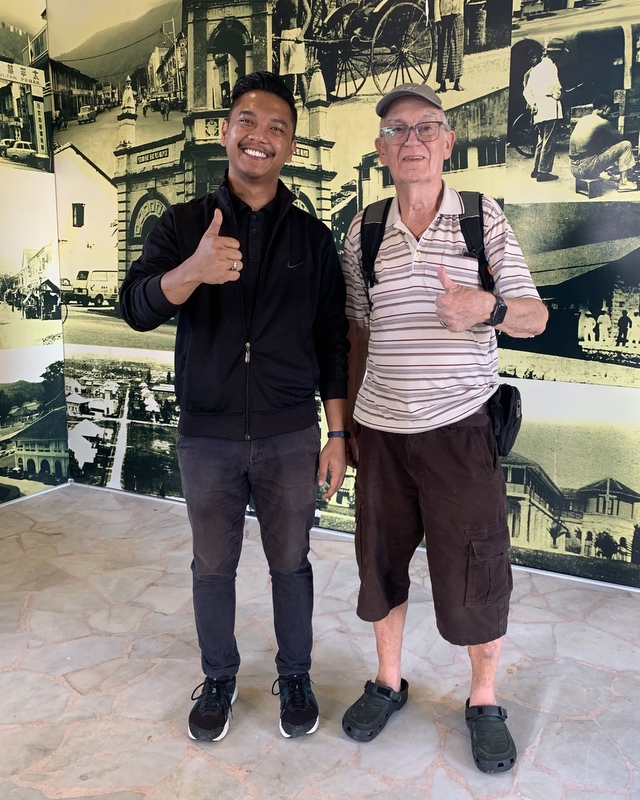
I wanted to meet Puan Kamaria of TTA, but she was not in. Instead I chatted with Asraf, a volunteer of TTA, very interested in heritage. But only for a short while, because I had to hurry back to my hotel and check out.

Lay Chun and Kar Seng picked me up from my hotel and, after lunch together dropped me at the station.

A very busy, rewarding visit, I needed a few days to recover 😉

Bach… In Other Hands

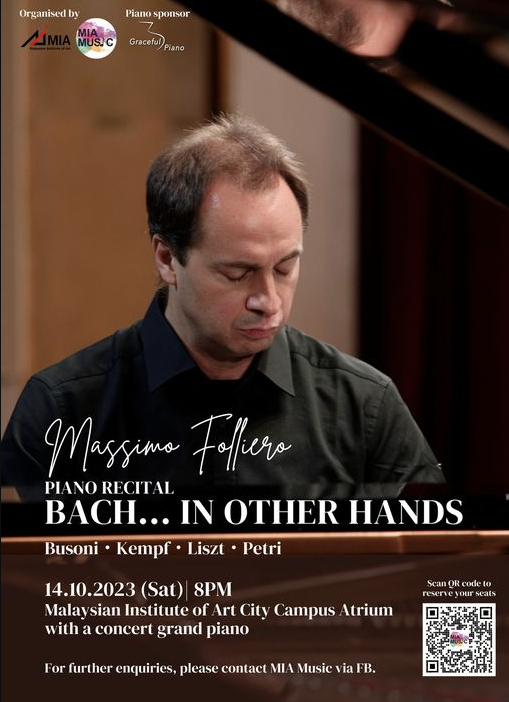
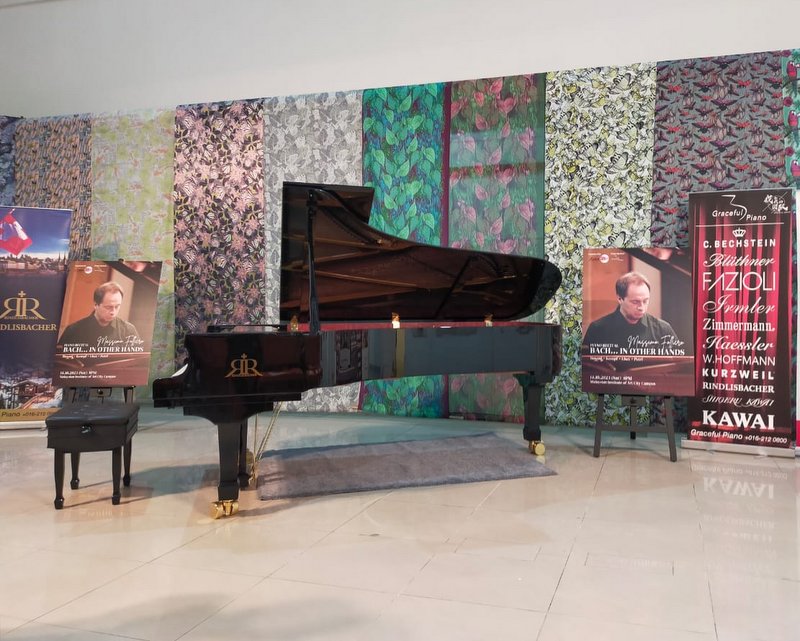
A few weeks ago I saw on Facebook(!) an announcement of a piano recital at the Malaysian Institute of Arts (MIA) with the intriguing title Bach.. in Other Hands.

The MIA was unknown to me and I had never heard about Massimo Folliero, the pianist who was giving the recital. But I love Bach’s music and in this recital it would be Bach in Other Hands, transcriptions of Bach’s music. I know that transcriptions of his works have been made by other composers, not least by himself. Ten years ago I wrote a post about Bach’s Goldberg Variations and in 2017 one about the Chaconne . Both contain links to transcriptions. But the transcriptions in this recital, except the Busoni one of the Chaconne were new to me.

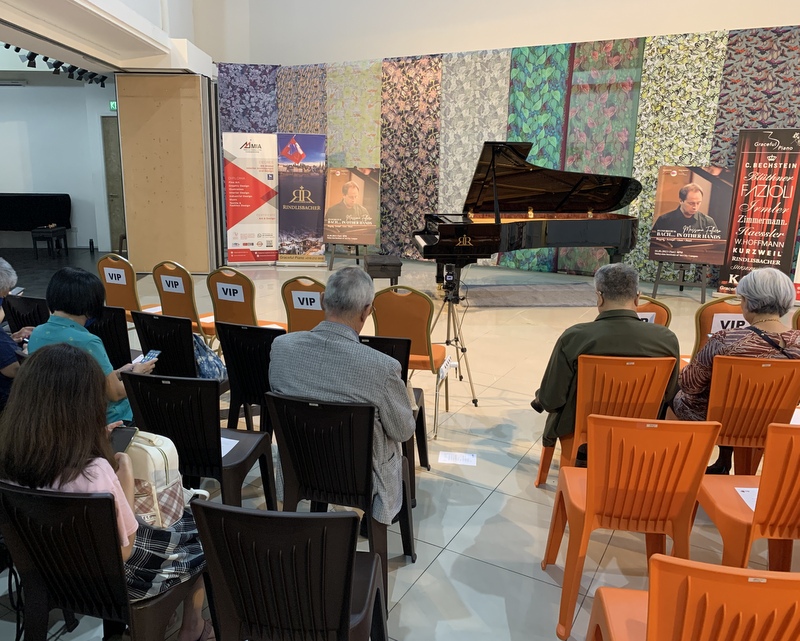
So I contacted MIA, chatted with Mr Neo, the head of the Music Department, and booked a seat for the recital. Donation RM 80. The City campus of MIA is located next to Dang Wangi LRT station. I live not far from Mutiara Damansara MRT, so I used public transport, changing trains in Pasar Seni, it took me less than 45 minutes. I arrived early, so I could choose a front seat with a good view.

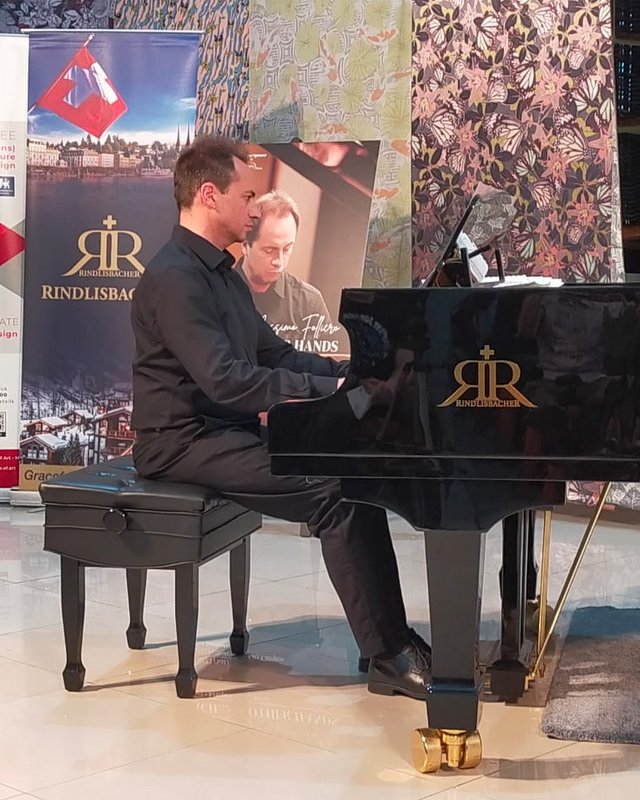
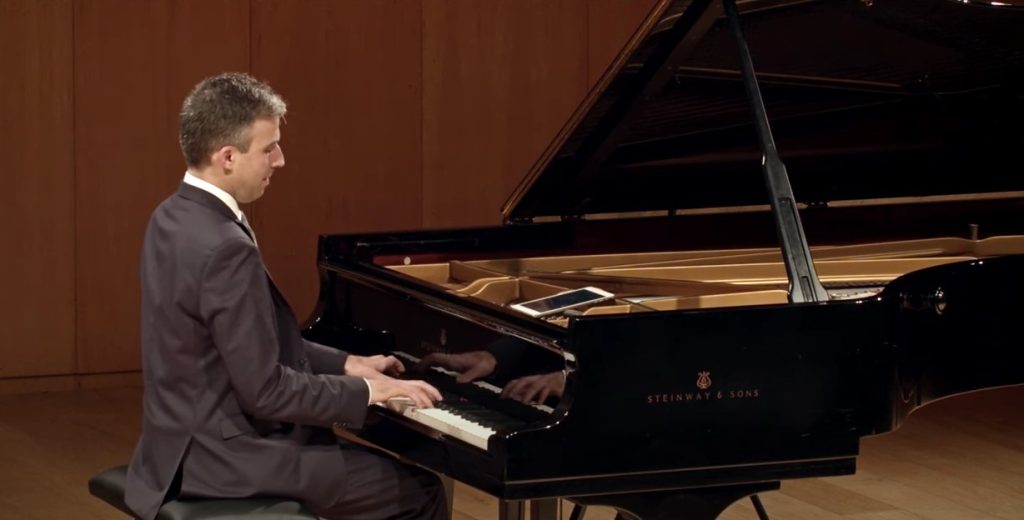
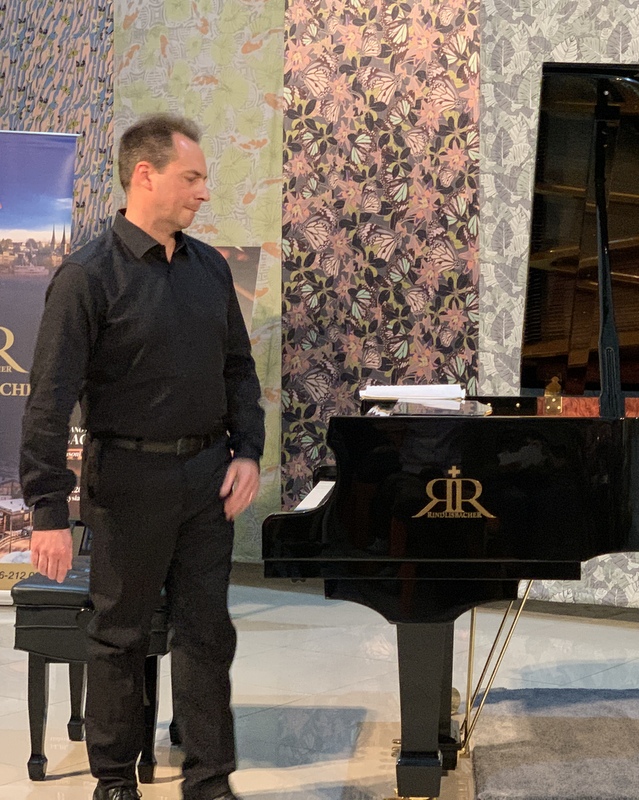
And here is Massimo Folliero. Lots of information about him can be found here .

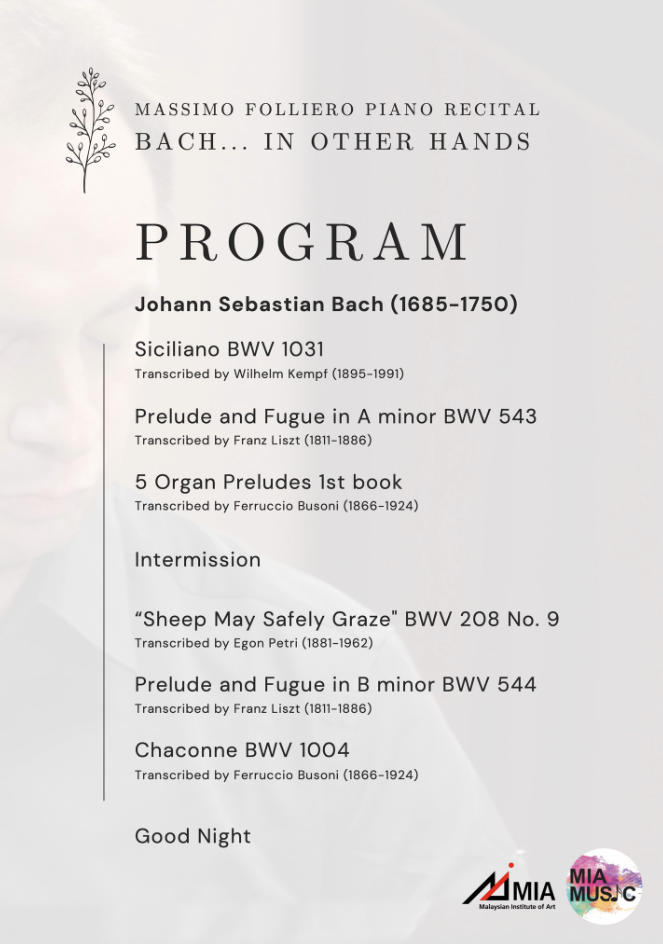
In preparation for the concert, I had assigned myself some homework, listening to the original versions and comparing them with the transcription. Nowadays almost all (classical) music can be found on YouTube. For each composition I have selected an original and a transcription, just click on the picture to watch the YouTube.

1 Siciliano BWV 1031 Johann Sebastian Bach / Wilhelm Kempff.

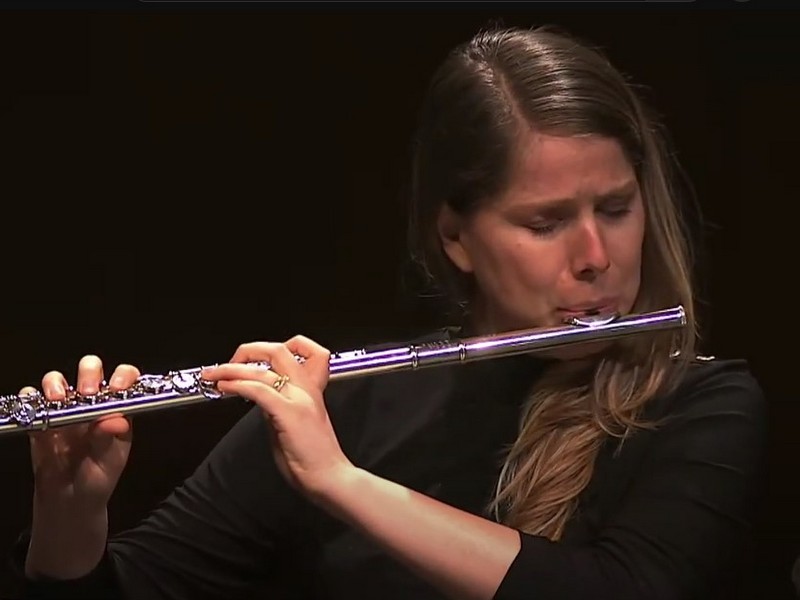
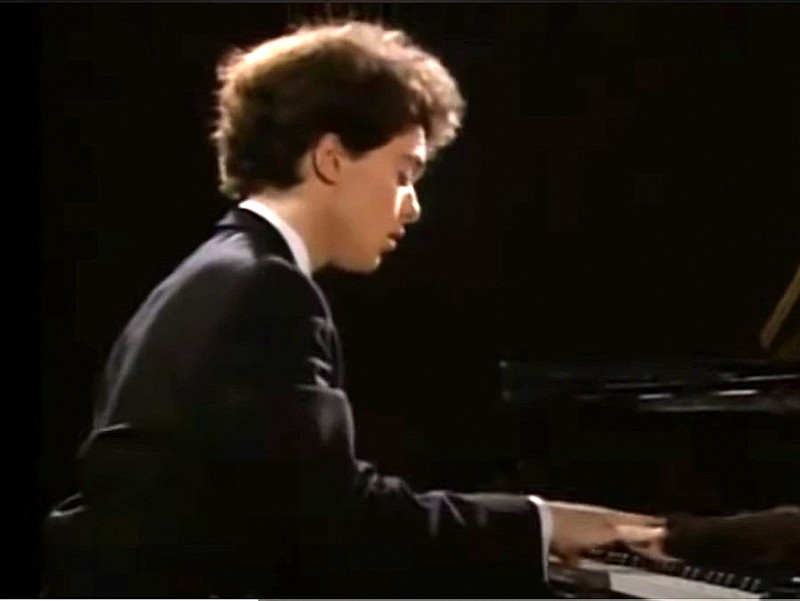
The slow movement from Bach’s Flute sonata in E-Flat Major, played by Francely Zurita. The transcription is beautifully played by a very young Evgeny Kissin. Here the transcription, played by Wilhelm Kempff himself in 1955. Compare the two versions! A nice, “easy” start of the recital.

2 Prelude and Fugue in A minor BWV 543 Johann Sebastian Bach / Franz Liszt

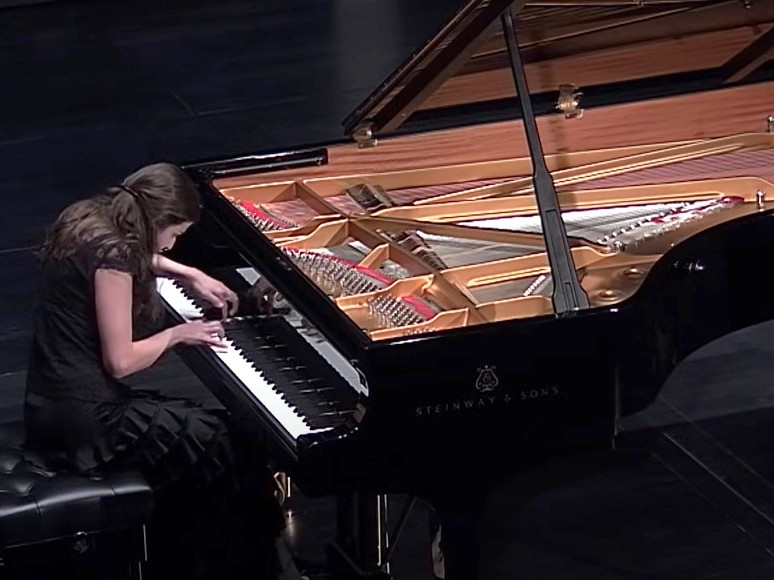
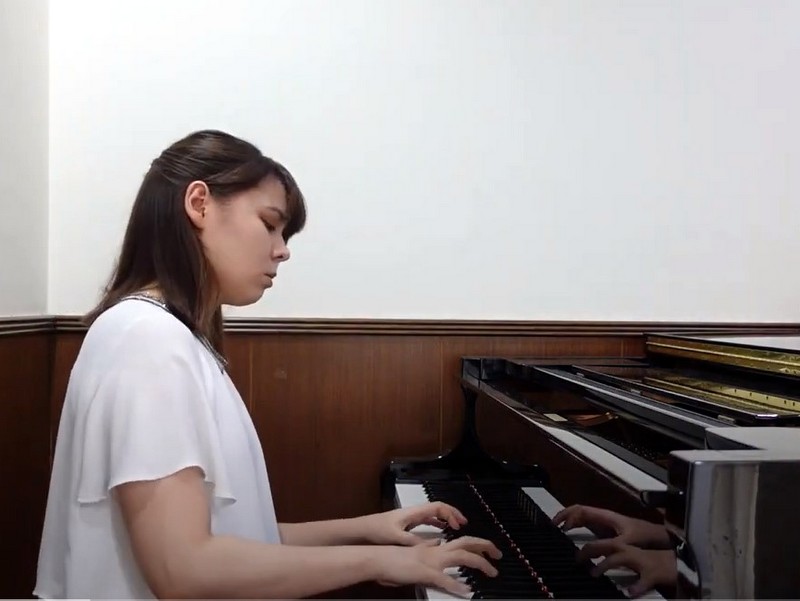
Between1842 and 1850 Franz Liszt transcribed six of Bach’s Preludes and Fugues (BWV 543-548) from solo organ to solo piano. Not familiar with Bach’s organ works (except of course the famous Toccata and Fugue BWV 565), it took me some time to appreciate this BWV 543. Left the original, played by Christoph Bull , right the transcription played by Violetta Khachikyan. My favorite, clear and transparent.

3 5 Organ Preludes 1st book Johann Sebastian Bach / Ferruccio Busoni

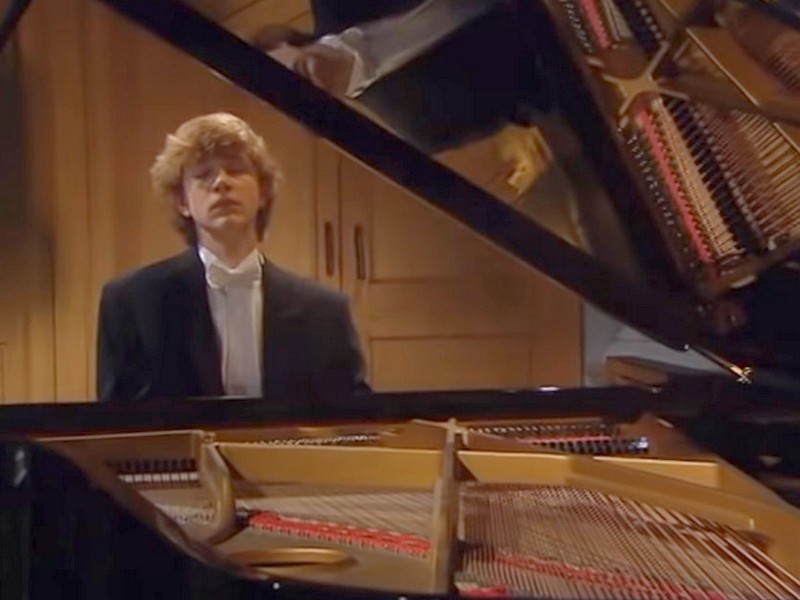
In 1898 Busoni published 10 Chorale Preludes, BV B 27, transcriptions of various Chorale Preludes by Bach. A Choral Prelude is a (short) introduction for a hymn , sung by the congregation during a church service . Folliero played 5 of them, here is a very popular one, Wachet auf, ruft uns die Stimme BWV 645. Left Willem van Twillert on organ, right Jan Lisiecki on piano.

Interval

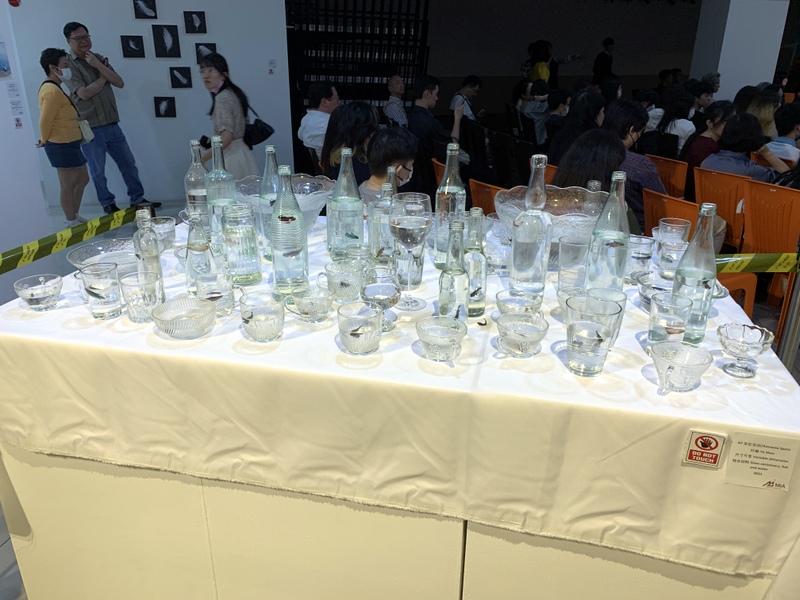
During the interval, I walked around a bit and had a look at the art gallery. At first I thought that the table with glasses and bottles was for us to have a drink, but no, it was a work of art. Note the tiny fish in the bottles and glasses ;-).

4 Sheep May Safely Graze” (BWV 208 No. 9) Johann Sebastian Bach / Egon Petri

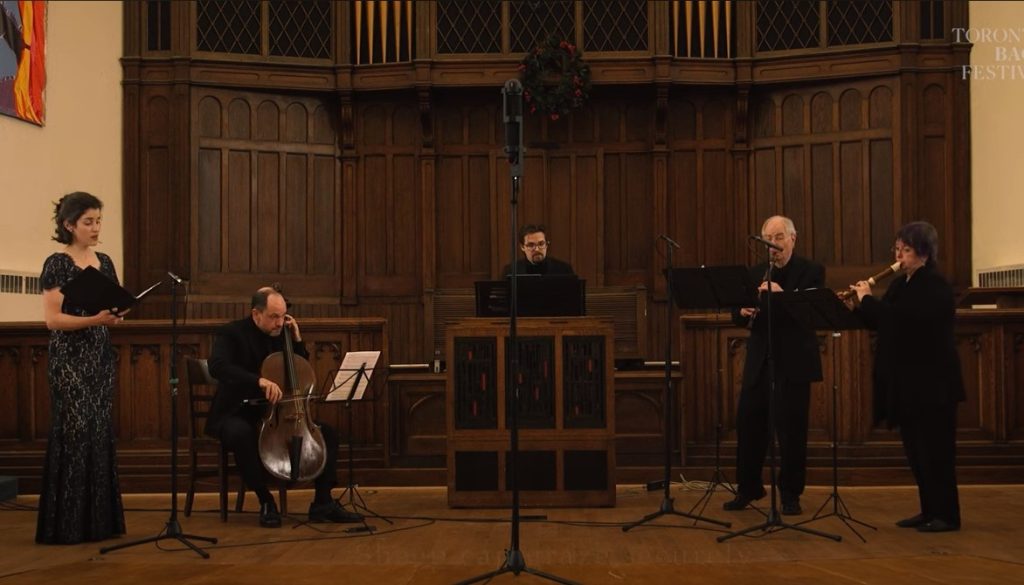
The second half of the recital started with another “easy” piece. BWV 208 is known as the Hunting Cantata. written by Bach for vocalists and instrumentalists. The aria, sung here by Ellen McAteer, is for a soprano, two recorders and continuo. The transcription by Egon Petri is played by Benjamin Hochman. Beautiful music, but in this case for me the original wins.

Prelude and Fugue in B minor BWV 548 Johann Sebastian Bach / Franz Liszt

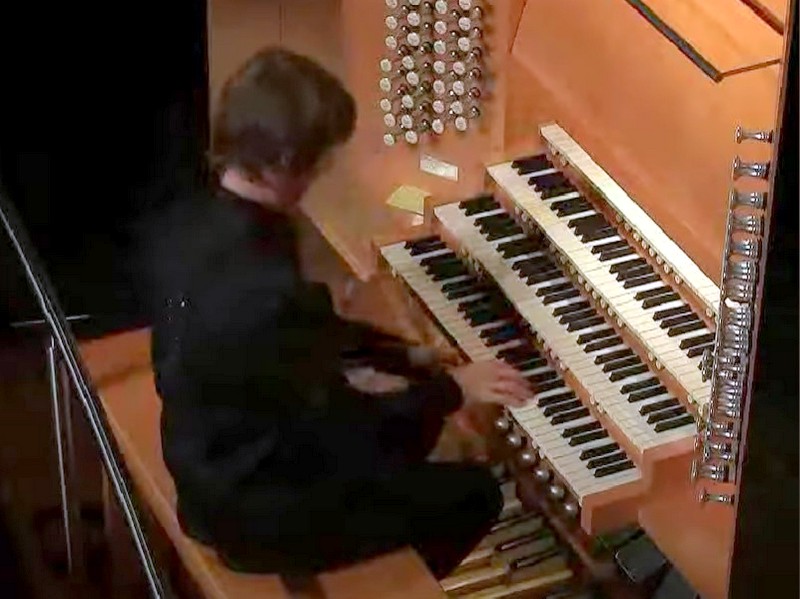
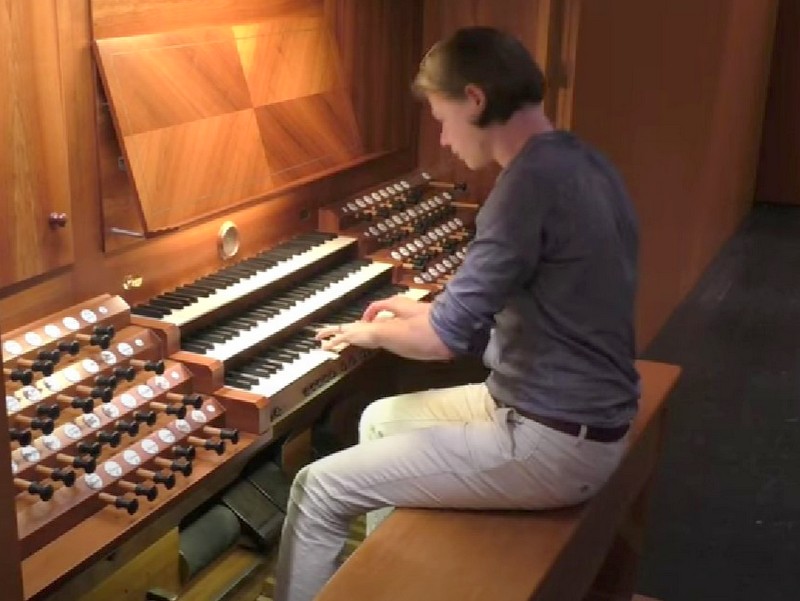
When I studied the recital program on Facebook , it said that after the interval another Prelude and Fugue, BWV 548 would be played. Considered by many as one of Bach’s masterworks for organ. It took me quite some time to get familiar with the complicated, intricate structure of this “two-movement symphony for organ“. Played on organ by Sebastian Heindl. Fascinating to see this young man playing, watch his pedaling. The Liszt transcription is played admirably by Alicia Juan. Transparent and clear.

5 Prelude and Fugue in B minor BWV 544 Johann Sebastian Bach / Franz Liszt

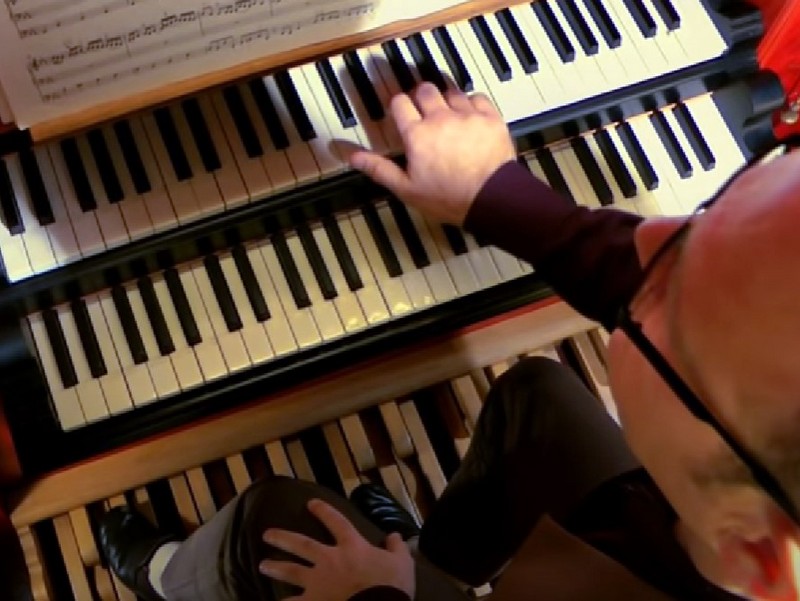
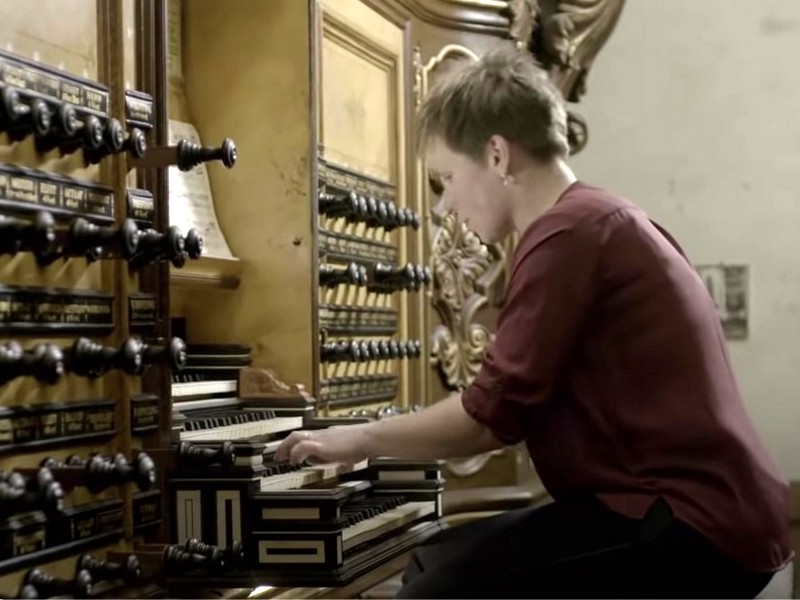
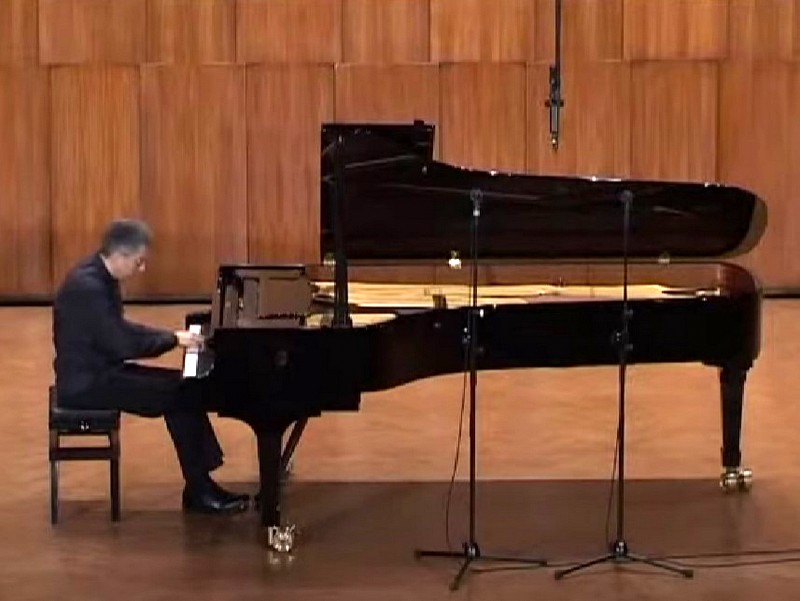
When Folliero started playing it came as a bit of a shock, the musique was not familiar to me. I had a look at the program leaflet, he was playing BWV 544! After the concert I asked him why and he told me that 548 in the Facebook announcement was actually a mistake, it was always the plan to play 544. So, after I came back home, I had some more homework to do and listen to recordings of BWV 544. An “easier” work, compared with 548. Elske te Twillert plays the original on organ and Nenad Radic plays the transcription.

6 Chaconne BWV 1004 Johann Sebastian Bach / Ferruccio Busoni

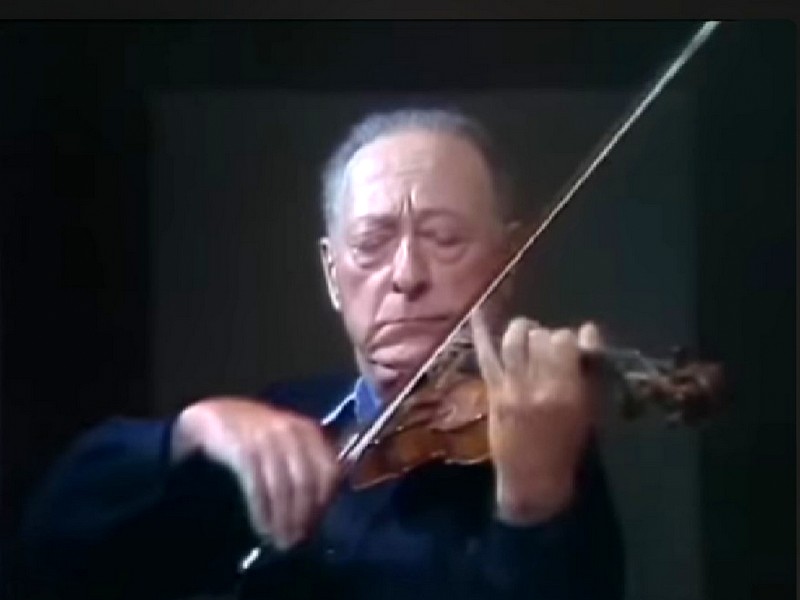
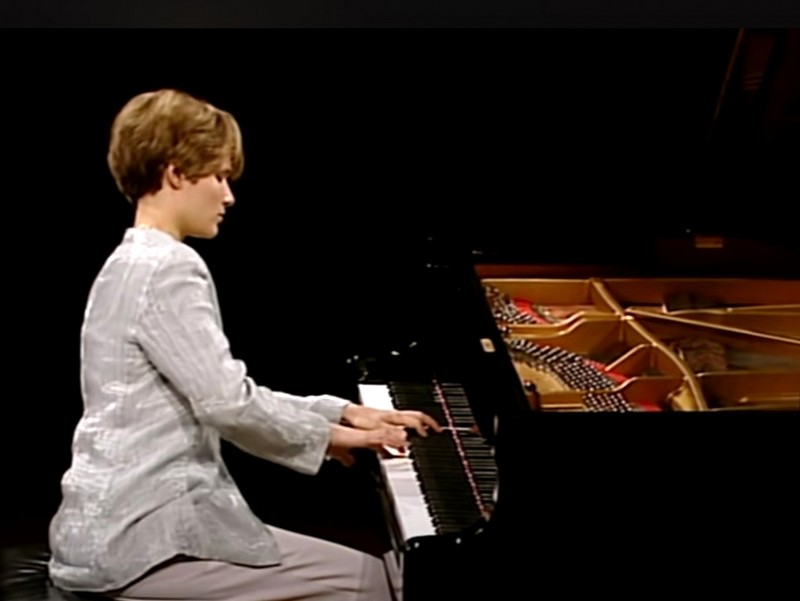
The recital ended with the Busoni transcription of the famous Chaconne , the final part of Bach’s Partita in D minor for solo violin. As mentioned above, I have written a blog post about the Chaconne and its many transcriptions. Of course there are many recordings available, I have chosen here an old one (1971), as a homage to Jascha Heifetz. And there are also numerous recordings of the Busoni transcription, I have chosen the recording by Hélène Grimaud.

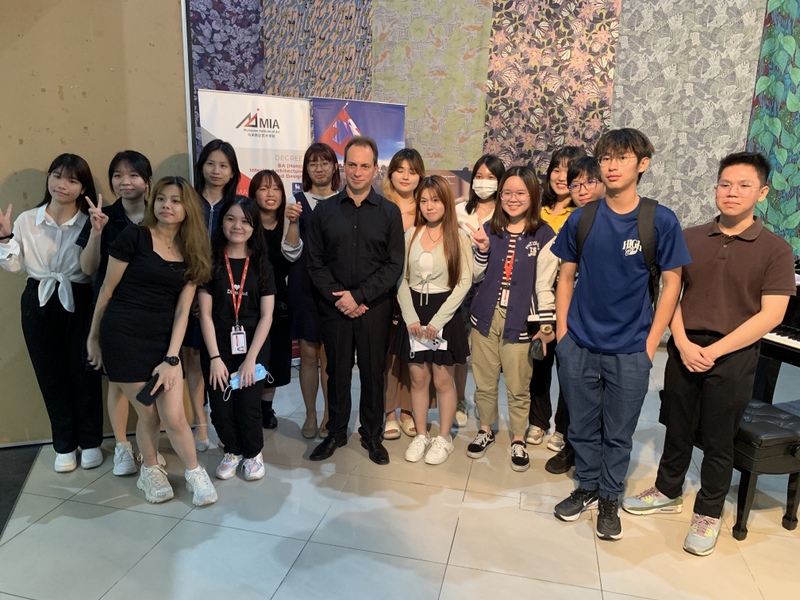
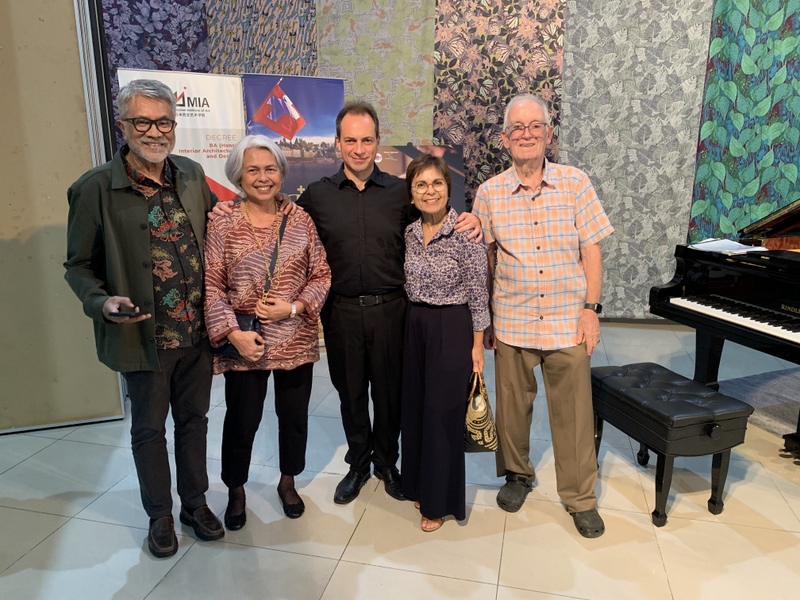
It was a beautiful finale of an interesting concert. The pianist joined the audience after the recital and was willing to have his picture taken. With the students, some of whom he had been teaching in the days before the concert. And with a few seniors 😉

I took a few short recordings of the recital, but the acoustics of the hall are not good enough to share them here. On YouTube I found a video of Folliero , playing in Bangalore. Just to give you an impression.

Life on Europa & Enceladus?

It is generally assumed that you need liquid water for life to develop. The planet Mars is now dry and arid, but had lots of water in its far past.. The Perseverance rover (see my blog) is at the moment collecting samples of Martian soil, hoping to find fossil remains of (microbial) life, until now without results. Disappointing for those who are convinced that “simple” life must be ubiquitous in the universe.

When you have been following my blog, you will know that I am not really surprised. Personally I think that (simple) life will NOT develop easily, even in a suitable environment. See my recent post about the Drake Equation.

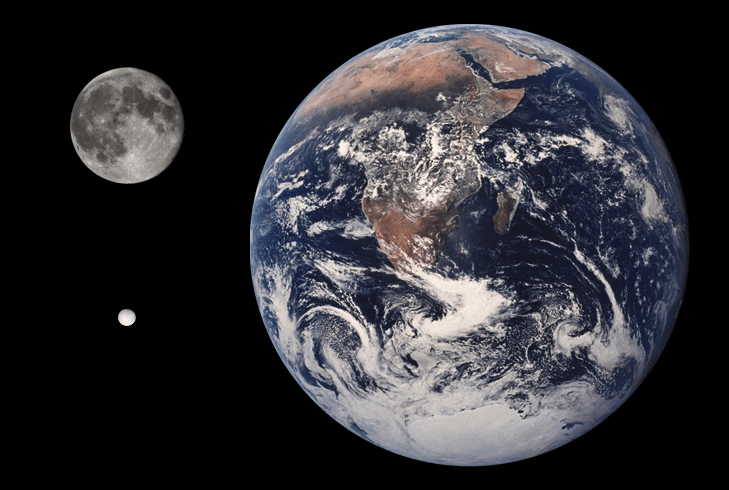
Are there other places in our solar system with (abundant) liquid water? Yes, there are, here are two, Europa and Enceladus. Europa is a moon of Jupiter and Enceladus a moon of Saturn. Europa is large with a diameter of 3122 km, only slightly smaller then Earth’s Moon (3475 km). Enceladus is much smaller, with a diameter of 504 km. In this image you see the relative sizes of Earth, Moon and Enceladus,

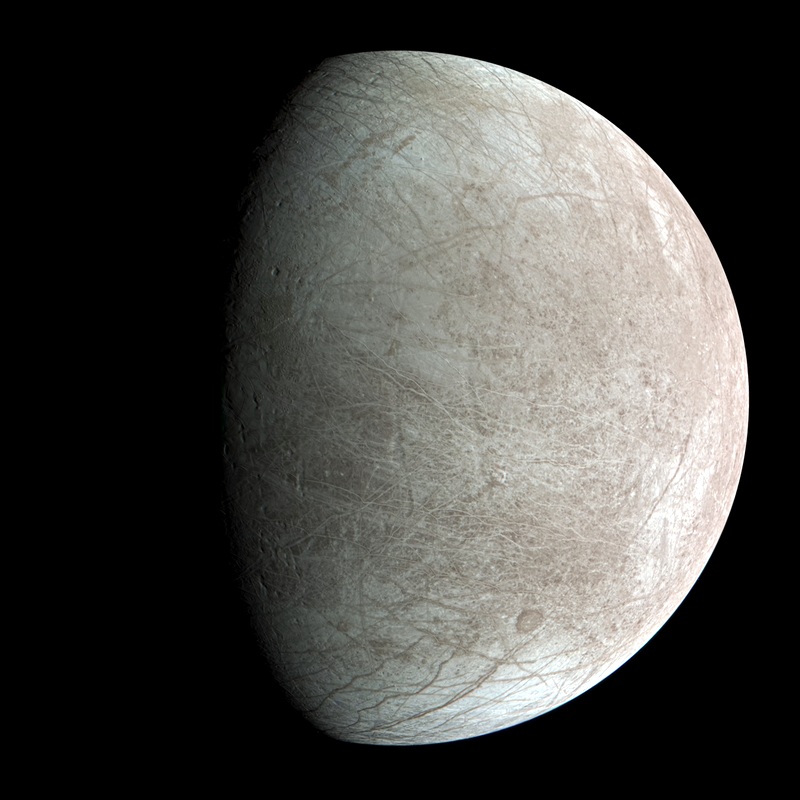
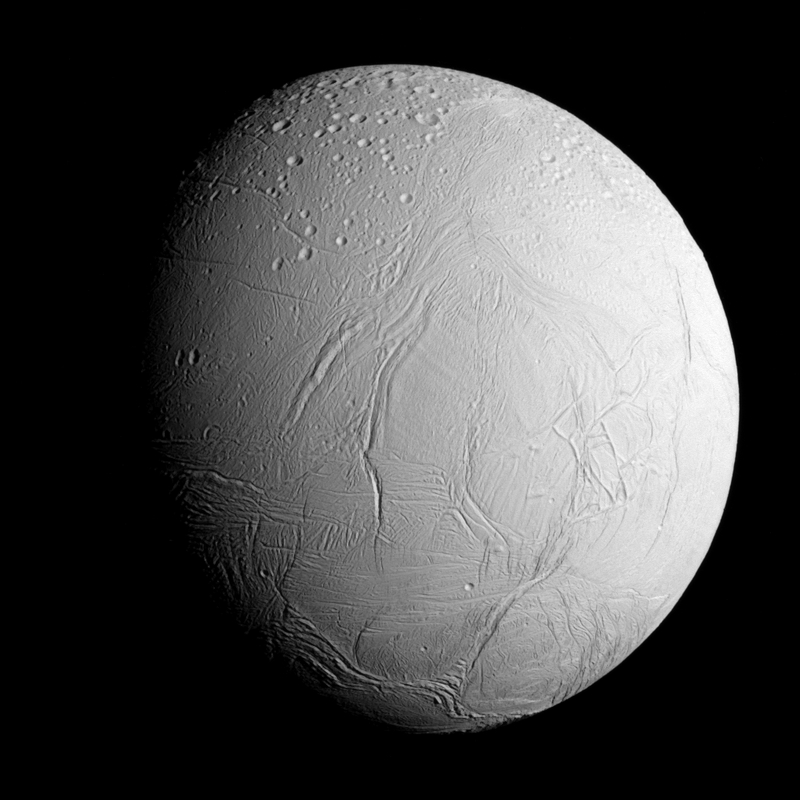
Here are the two moons, Europa left and Enceladus right.. Both moons are covered with a thick crust of water ice. This ice surface has a temperature of about -200 degree Celsius. But underneath this crust both moons have oceans of liquid water!

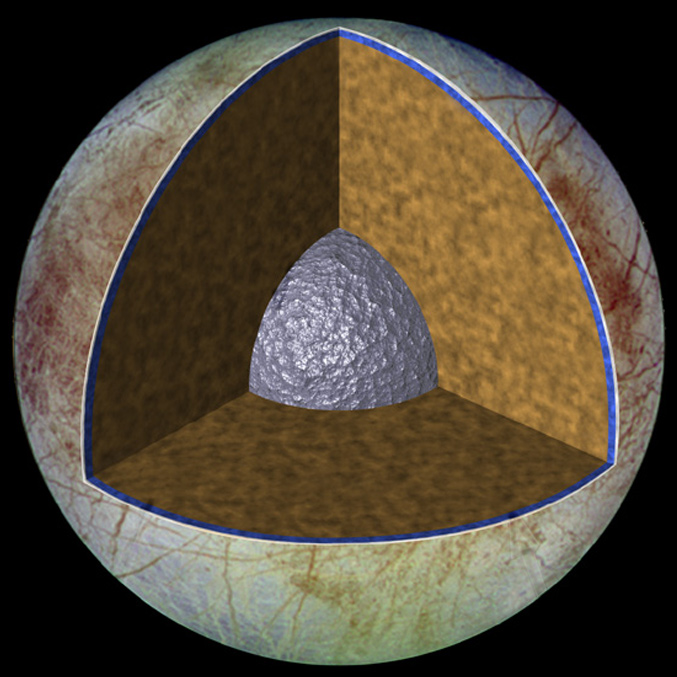
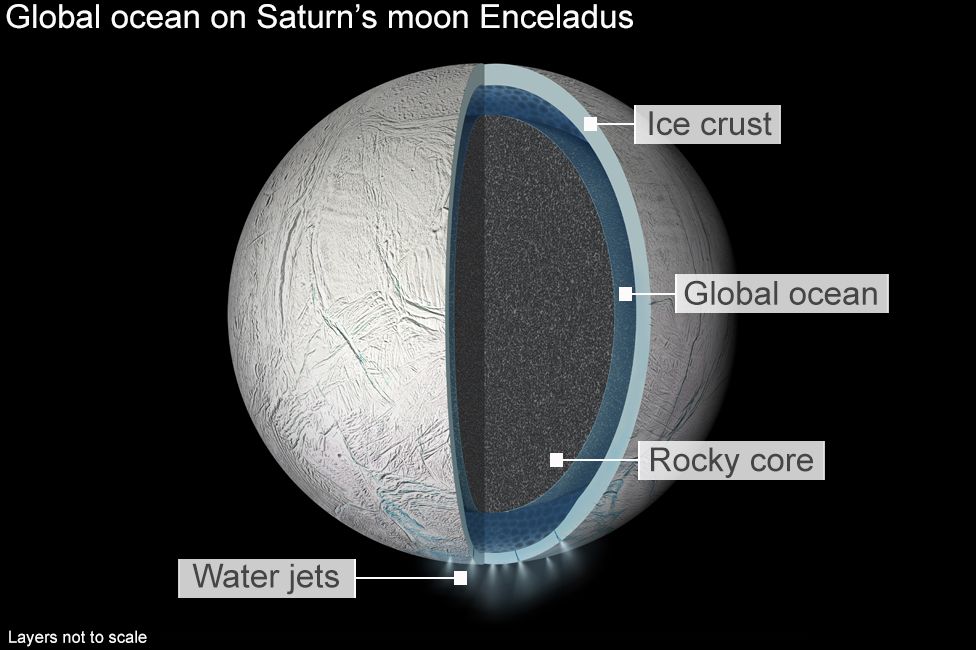
We think that the interior of the two moons look like this. Europa has a metallic core (iron and nickel),a rocky mantle and a (salty) ocean with an estimated depth of 60-150 km.. A thick ice crust ( 15-25 km) covers the ocean. The model shows the layers to scale.

Enceladus has a rocky core with radius of ~ 180 km , covered by a 30 km deep ocean. and a 20 km thick crust. The ice crust is thinner at the south pole.

How is it possible that these moons have liquid water under their ice crust? Where does the energy come from, the Sun is far way. The answer is: because of the tidal forces exerted by the giants Jupiter and Saturn on their moons.

Newton’s gravitation between two objects depends on the distance between them. For example the gravitational force exerted by the Moon on Earth is stronger on the side facing the Moon than on the other side. This difference is responsible for the tides. The tidal friction will slow down the rotation of Earth , so the length of a day will increase a little bit, about 1,8 millisecond per century. In the far past when the moon was born, the day length may have been about 4 hours only!, For the moon the story is similar: tidal friction has slowed it down, even a lot more, the Moon shows always the same face to Earth, it is “tidally locked”. Actually all the major moons in the Solar System are tidally locked to their planet.

Even tidally locked moons still can undergo tidal flexing, if the orbit is elliptical, a kind of kneading. Model calculations for Europa and Enceladus indicate that this .can generate enough energy to keep the oceans liquid. More (technical) details here.

So both moons have liquid water and a source of energy , two of the essential ingredients for life as we know it. The third ingredient (chemicals like carbon, hydrogen, nitrogen, oxygen, sulfur, and phosphorus) should be available in the rocky core.

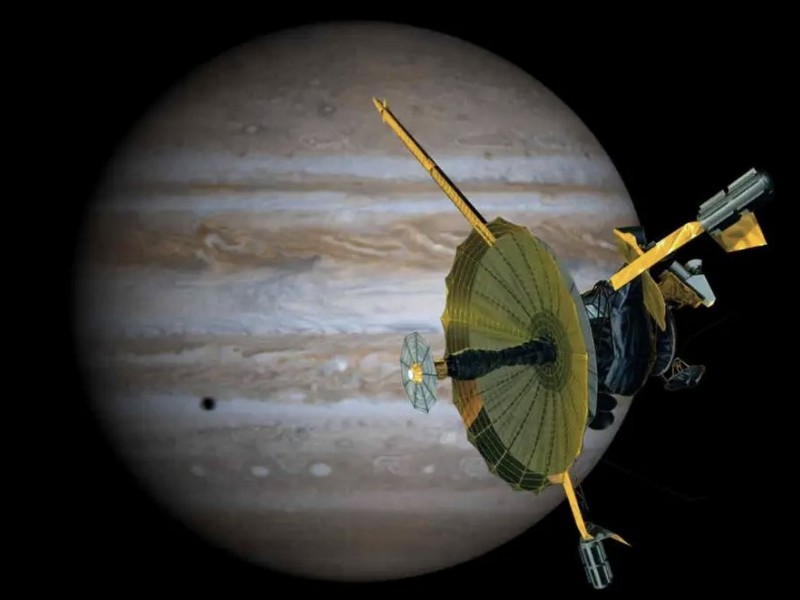
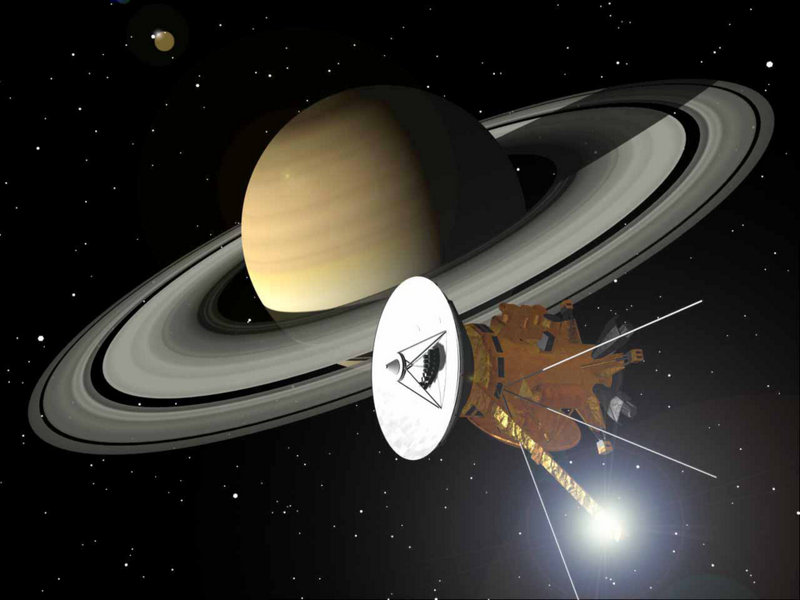
The information about the two moons comes basically from two successful space missions. The Galileo spacecraft arrived at Jupiter in 1995 and stayed in orbit until 2003. It’s main mission was to study the planet, but it managed to have numerous flybys’ of Europa. The Cassini entered Saturn’s orbit in 2004 and stayed there until 2017.

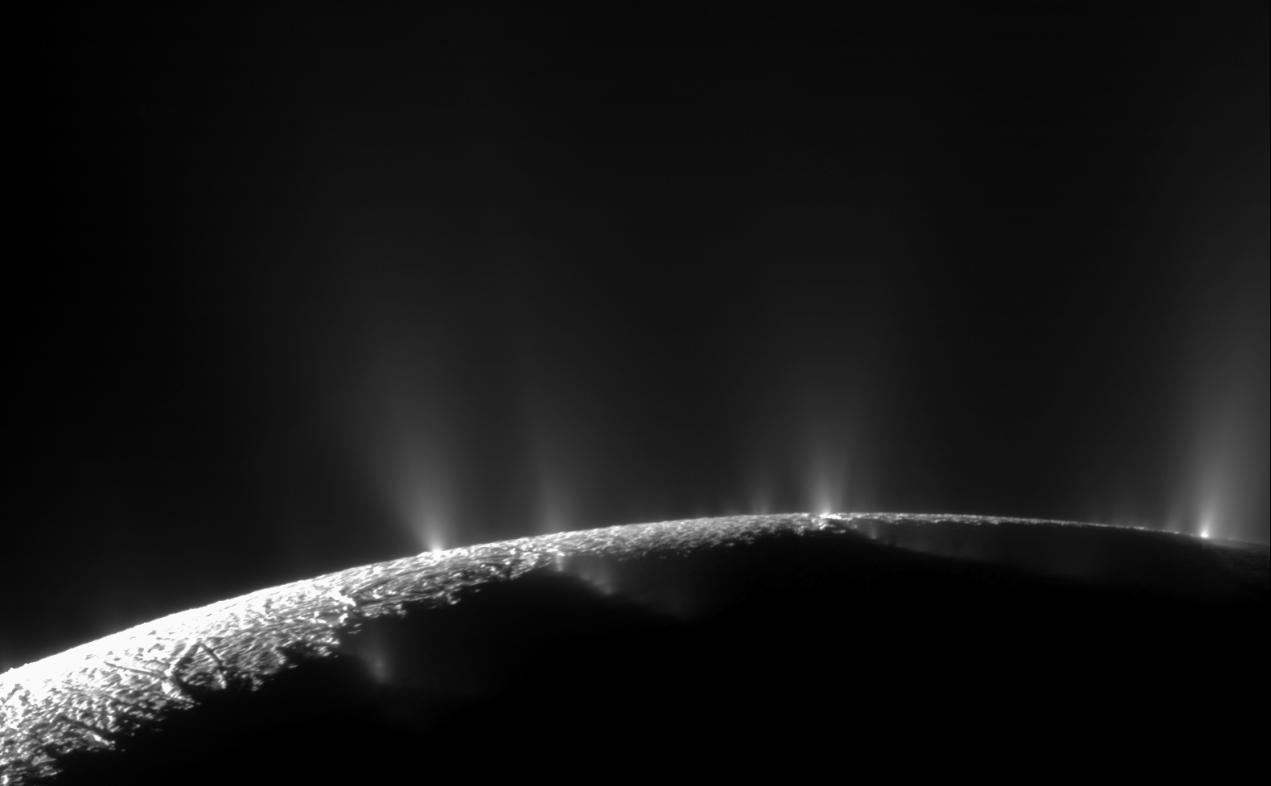
The Cassini mission was very successful, click here for an overview. One of the most spectacular discoveries was that Enceladus is an active moon. There are geysers in the south polar region of the moon! This picture was taken by Cassini in February 2010.

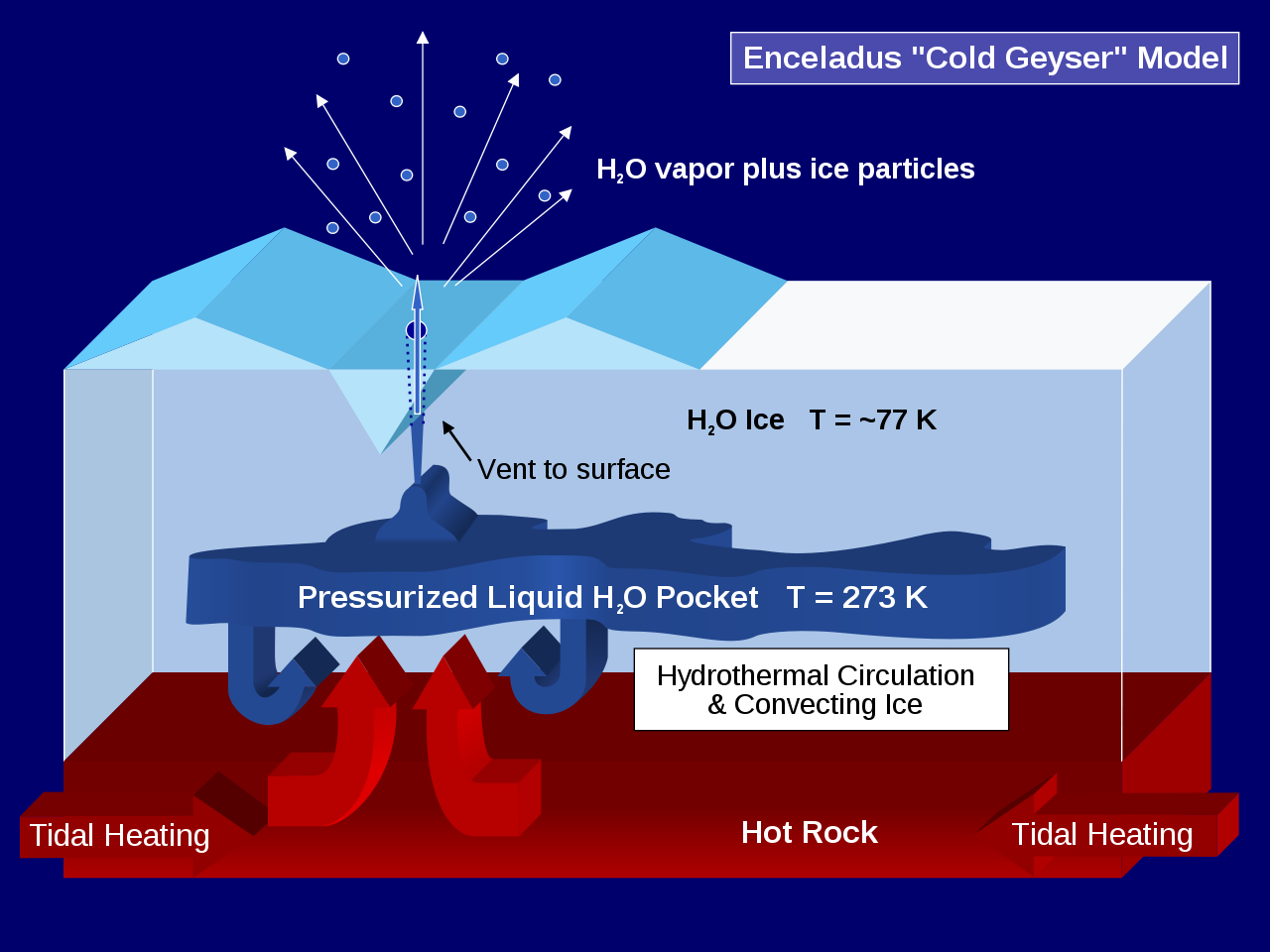
The geysers consist of water vapor and ice particles. The explanation is that water seeps from the ocean floor into the rocky core where it is heated. The heated water rises and erupts though fissures in the icy crust.. It is a bit similar to the hydrothermal vents in Earth’s oceans.

There are indications that Europa also has this kind of geyser activity, although less intense Here is a recent (2021) NASA report, Are Water Plumes Spraying from Europa?

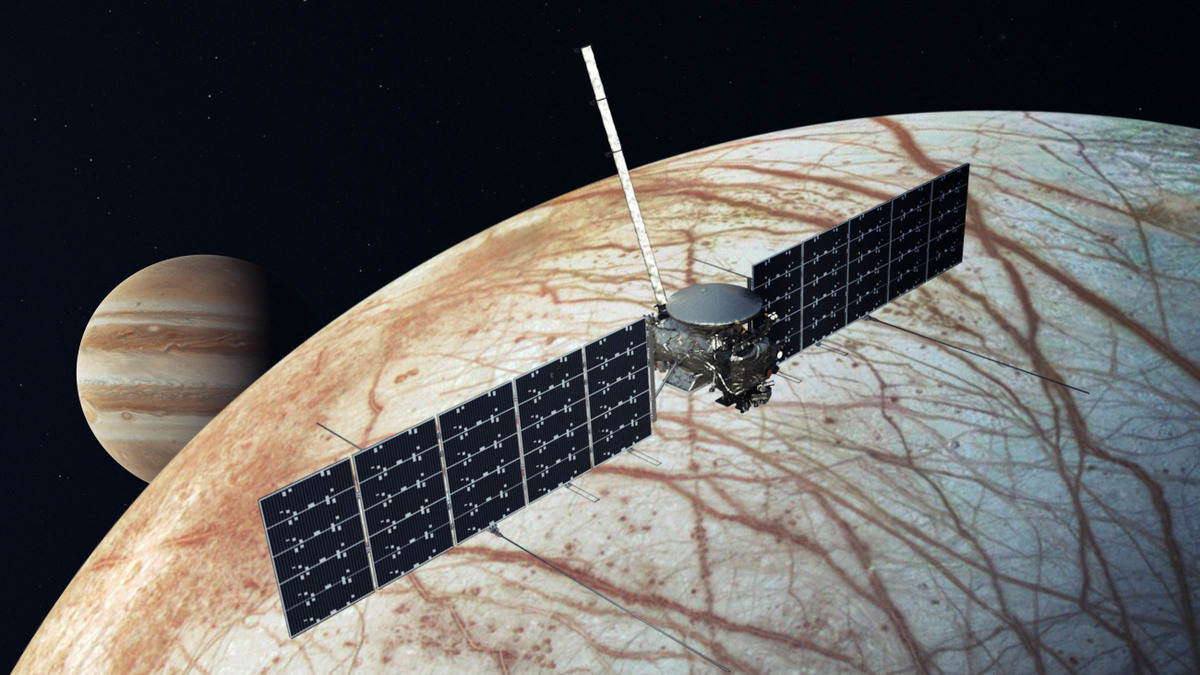
In the search for extraterrestrial life these two moons have top priority. Many proposals for missions to Europa have been formulated and later discarded, here is a list. At the moment the Europa Clipper is being prepared for a launch in October 2024. It will arrive at Jupiter in April 2030. Here is an artist’s concept, of Clipper, Europa and Jupiter. The solar panels of Clipper span 30 meter!

The artist impression might suggest that the Clipper will orbit Europa, but that is not the case, it will orbit Jupiter in an elliptical orbit and make 44 flybys of Europa. It will study Europa’s icy crust, find confirmation for the ocean underneath and try to make flybys through the geysers (if they exist).

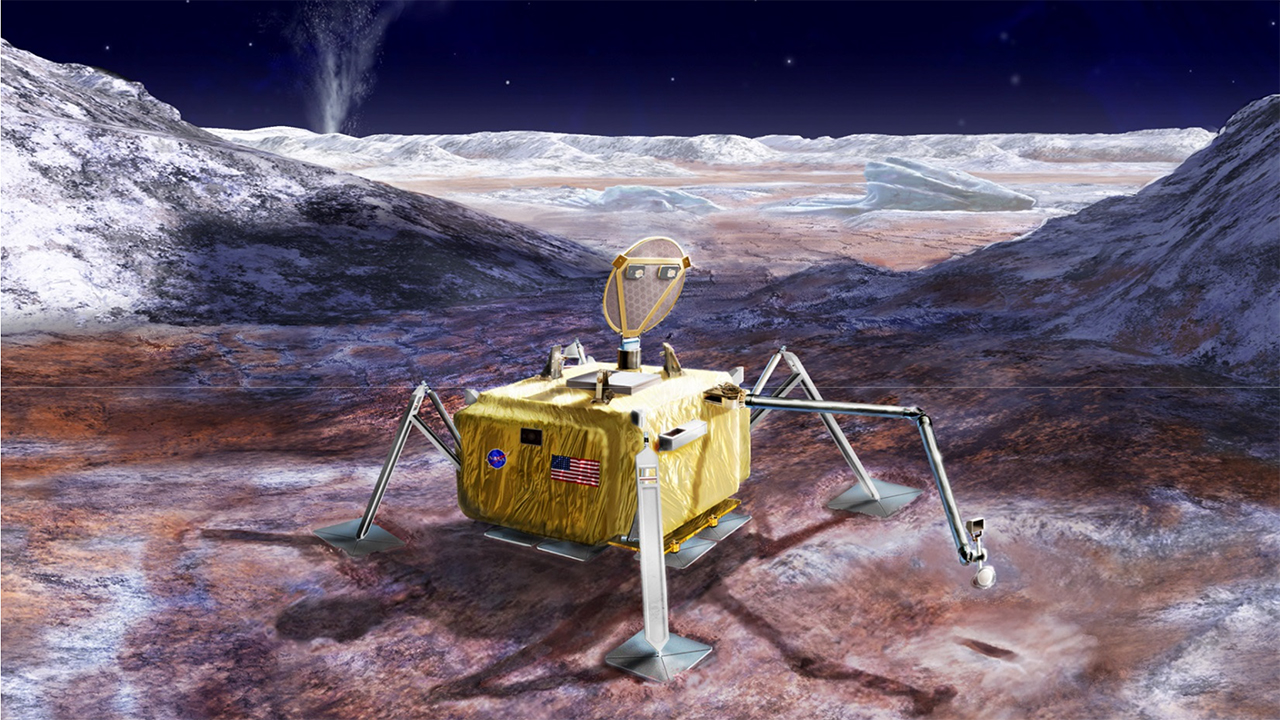
A proposed follow-up mission is the Europa Lander. It would land on Europa, collect some material from the icy crust and search for biomarkers, signs of life. Here is another artist impression. Notice the geyser at the horizon 😉 .

Probably the Europa Lander mission will be cancelled. Why? Because Enceladus offers better options than Europa. The main difference is that Enceladus is continuously spewing water and ice crystals, whereas the geysers of Europa are sporadic and still have to be confirmed.

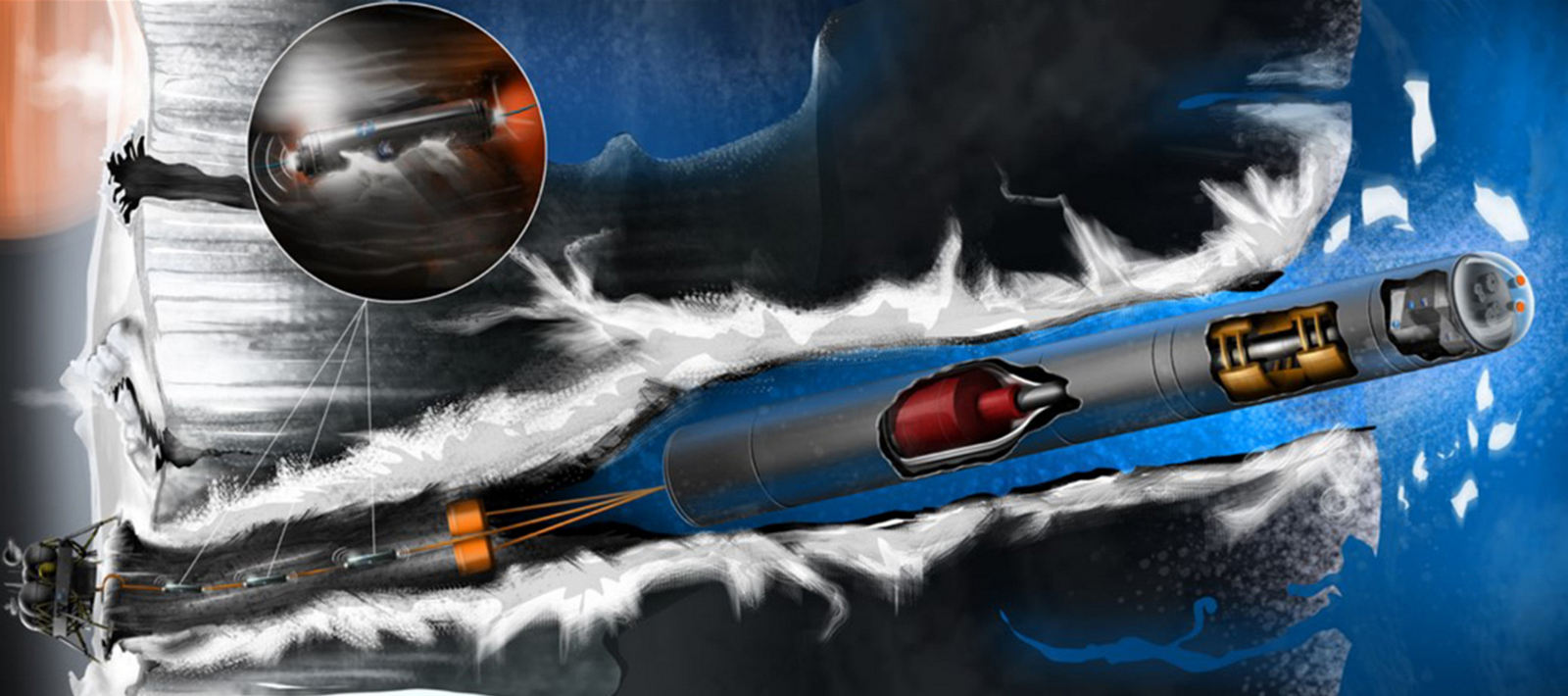
The reason that there is so much interest in the geysers is obvious. To find out if there is life in these oceans, we have to drill through a 15-25 km thick ice crust first. Actually there are studies how to do that, they read like science fiction. Here is the final report (pdf file, 70 pages, 2019) about the Europa Tunnelbot. The basic idea is that this tunnelbot would melt itself down through the ice crust of 20 km in 3 years time, to reach the ocean. Here is a artist impression from the report, I have rotated it 90 degrees, to fit better in this post. Left is the icy surface of Europa, the inset shows three “repeaters” because even when the bot reaches the ocean it still must transmit date to the lander.

Science fiction and I think it will never happen, because the geysers on Enceladus and possibly on Europa may already give information about life in the oceans below the crust!

After Cassini observed the geysers on Enceladus, the scientific program was adapted and the spacecraft went a few times through the plumes. It found water, ice crystals and organic compounds!

So that will be the program for the next decades, explore Enceladus and find out whether the geysers will have convincing biomarkers.. .

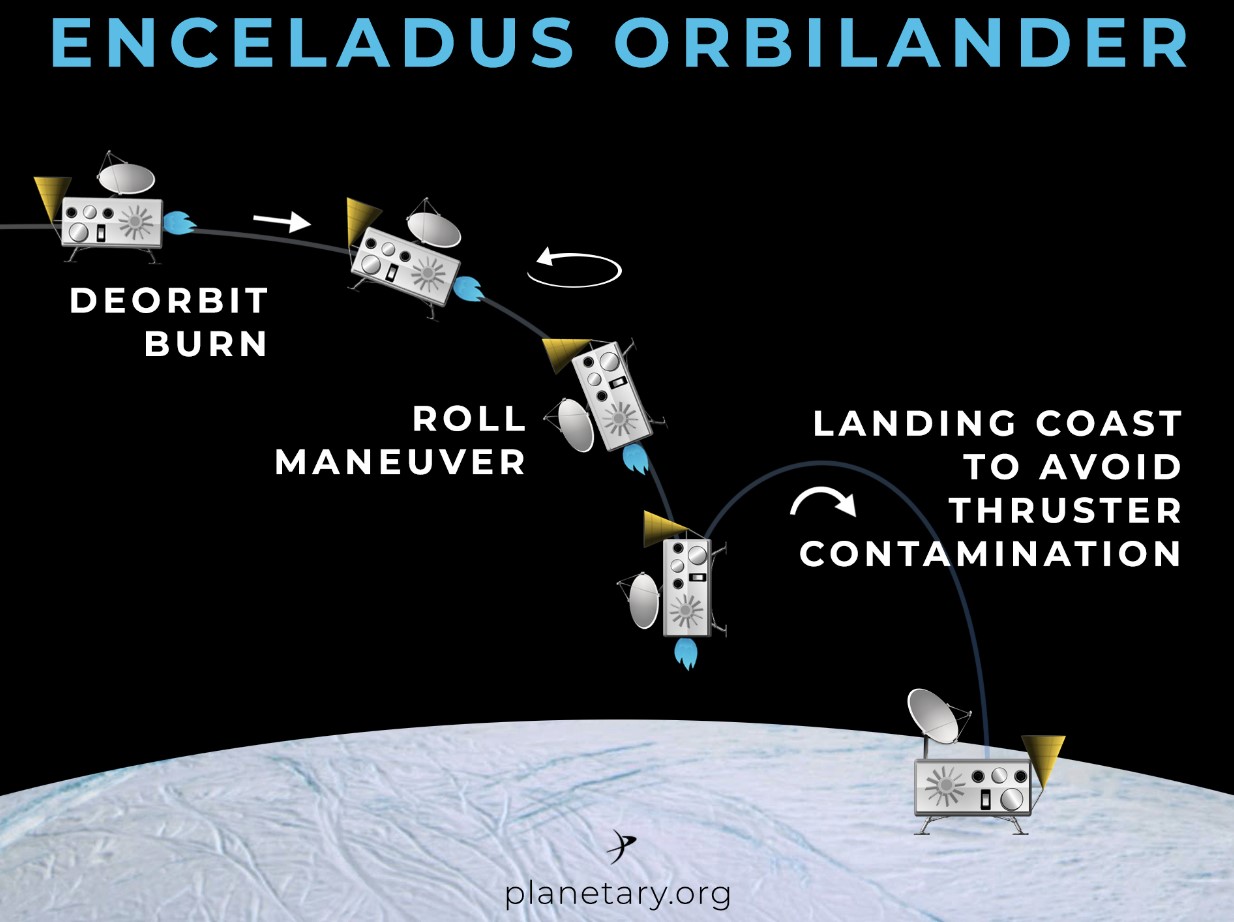
Of course it will take time to design Enceladus missions. Here is one, the Enceladus Orbilander. Approved as a so-called Flagship Mission. Still in the design phase. possible launch in the late 2030s Arriving at Enceladus in the early 2050s.

First it will fly numerous times through the geysers, collect material and analyse it. Then it will land at the South polar region.

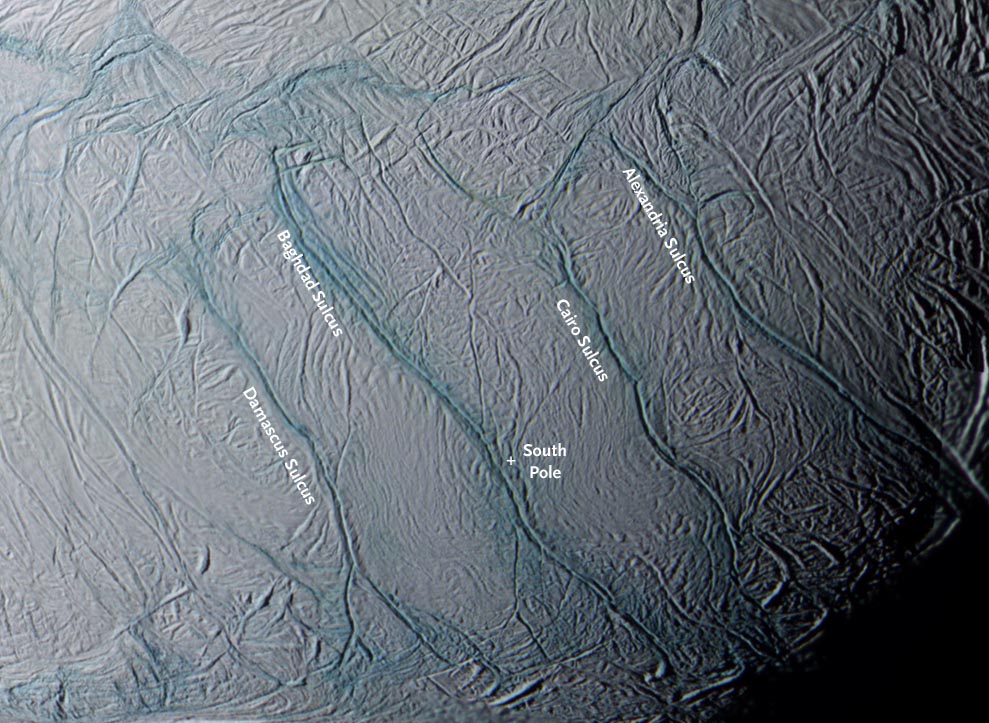
This is the South polar region of Enceladus. The “tiger stripes” are fissures in the ice crust where geysers erupt.

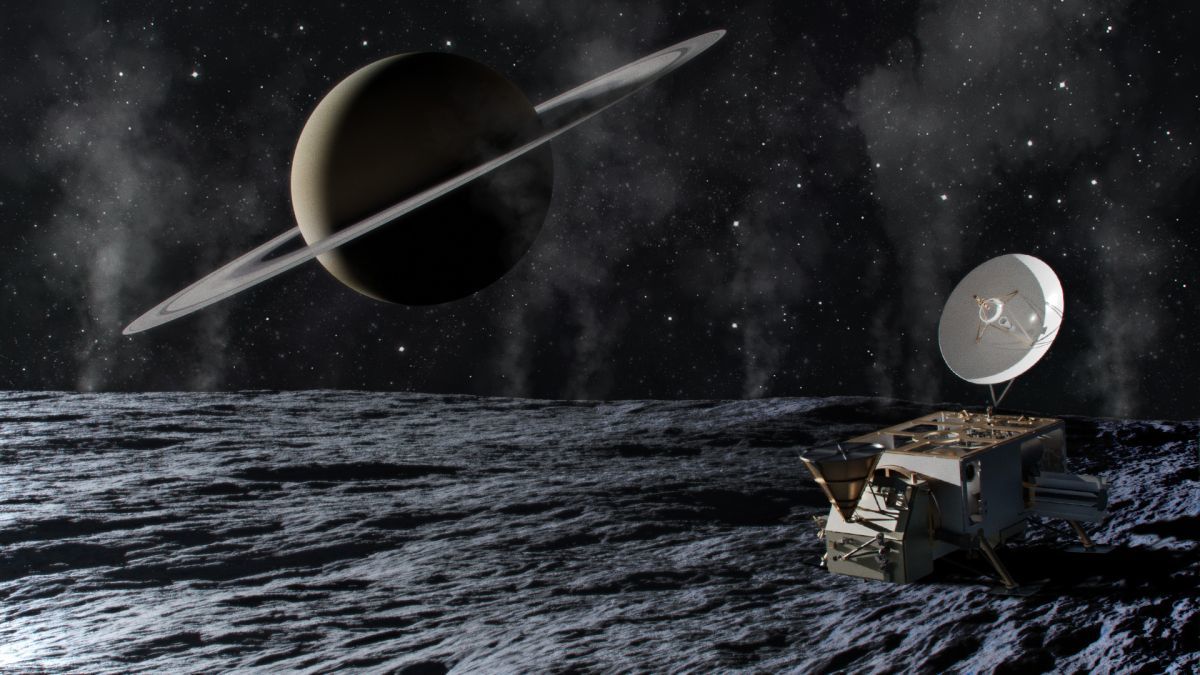
And here is an artist impression of the Orbilander on the surface of Enceladus.

Until now life has only be found on Earth. Discovery of (primitive) life elsewhere in our solar system would be dramatic, because in that case we would know that (intelligent) life is ubiquitous in the universe.

At the moment Perseverance is collecting soil samples on Mars which will be brought back to Earth by the Mars Sample Return Mission around 2033. At about the same time Clipper will explore Europa. So we will have to wait for 10 years and for results from Enceladus about 30 years.

Seremban, September 2023

As far as I remember, I have never visited Seremban as a separate destination, it was always part of a trip. In Linggi adventure, 15-7-2008 my friend Liz Price and I ended our trip in Seremban, where we spent only a few hours before returning home. And in 2019, during a Trip down South, Aric and I visited the Centipede temple in the suburbs of Seremban.

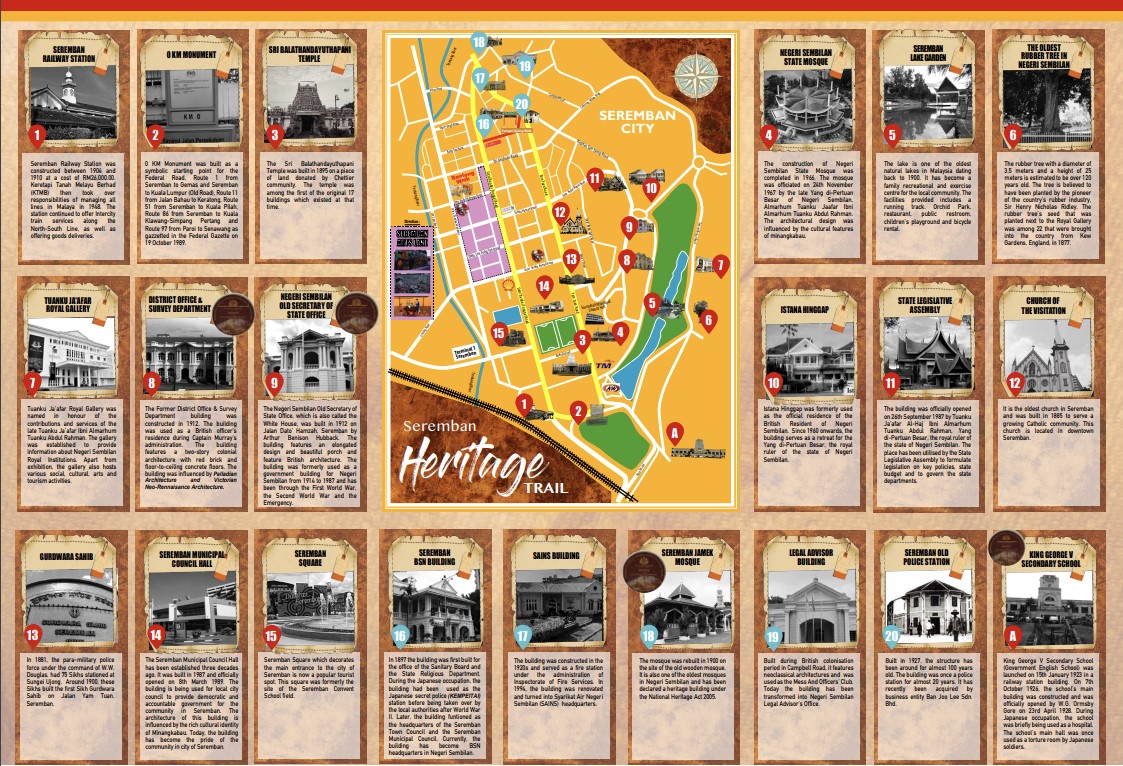
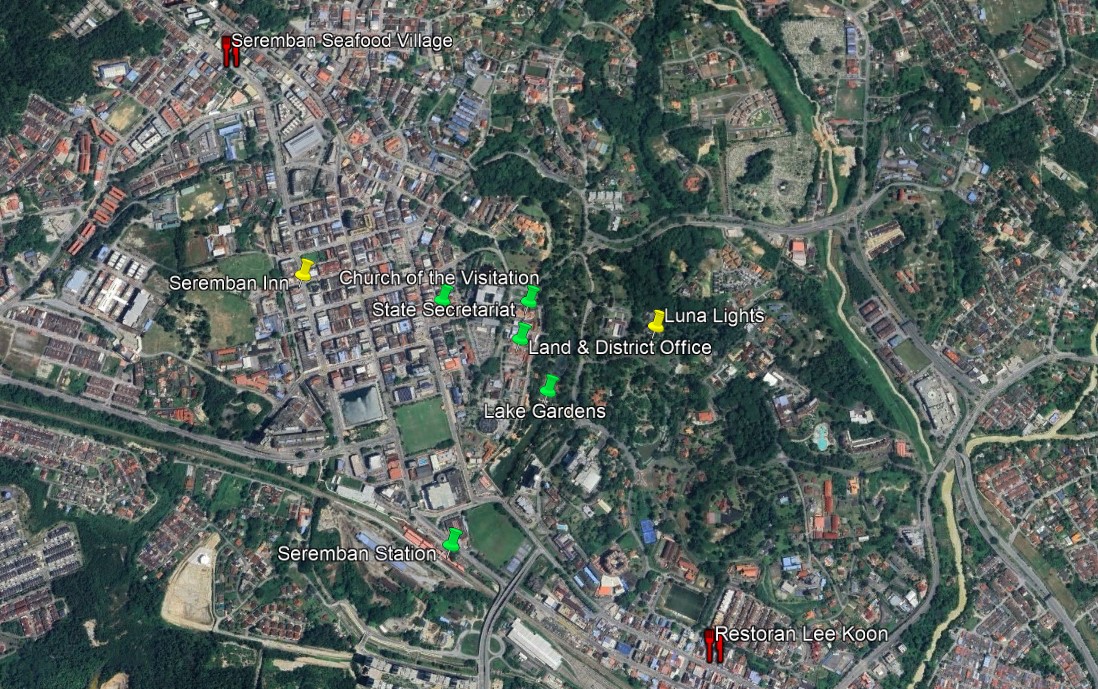
Looking for heritage information about Seremban I found online this map, where the heritage points of interest are marked. There is quite a lot to see.

So we decided to visit Seremban on a 2D1N trip, similar to what we did recently in Melaka, starting on Friday, coming back Saturday.

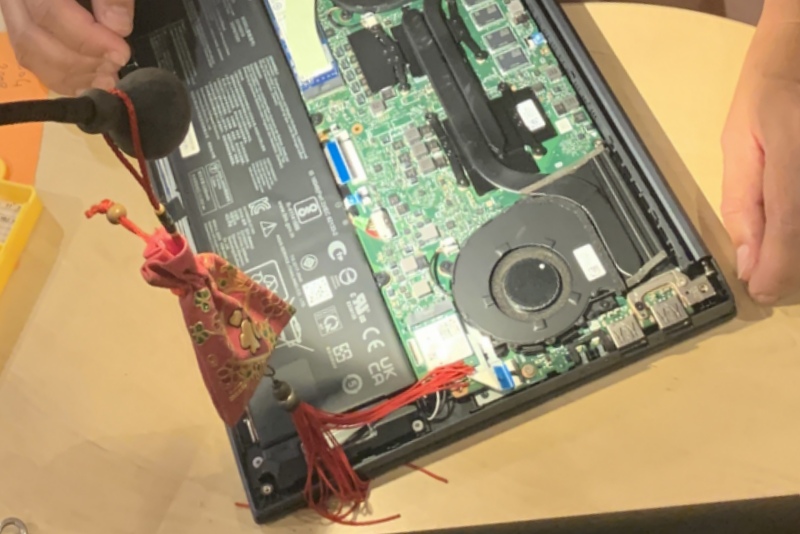
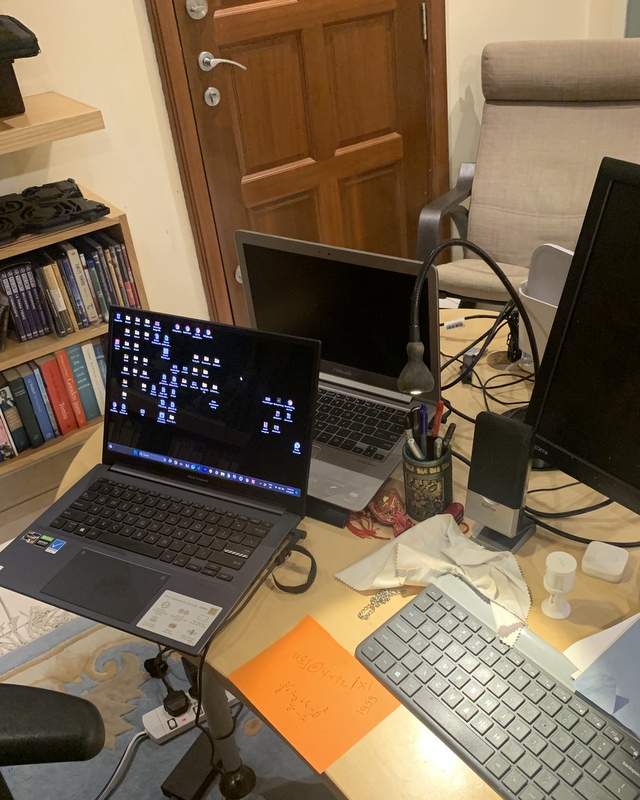
One week before this trip, my laptop crashed. Aric did his best to repair it, but could not, it might be the motherboard. We brought it to the ASUS service center, where they said that it would take a few days to check what was wrong. Friday afternoon they messaged that they had replaced the motherboard, but that they needed more time to test the system. As I was worried about possible data loss, I was not in the best of moods when we left for Seremban.

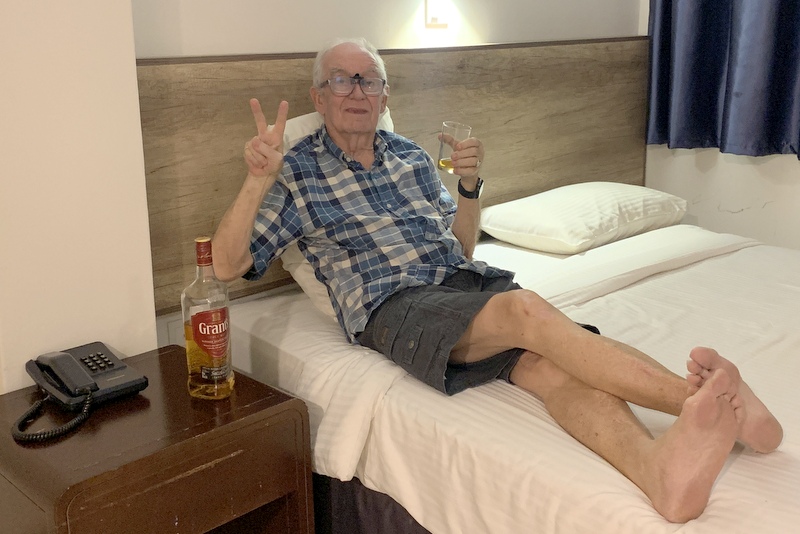
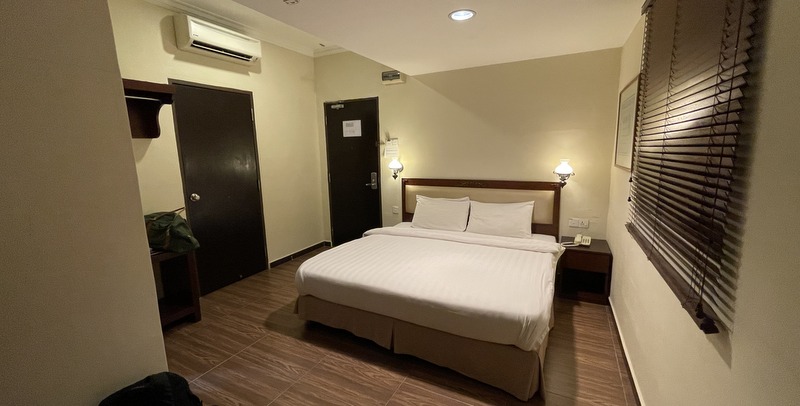
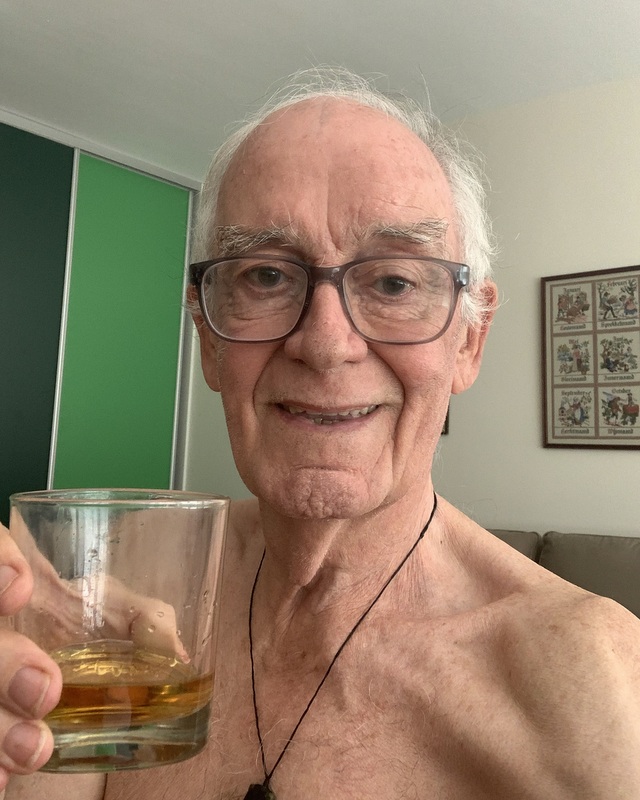
Aric had booked a room in the Seremban Inn, in the center of the old town. A basic room, not even supplying a water cooker. Good that I had brough a bottle of whisky for my pre-dinner drink 😉

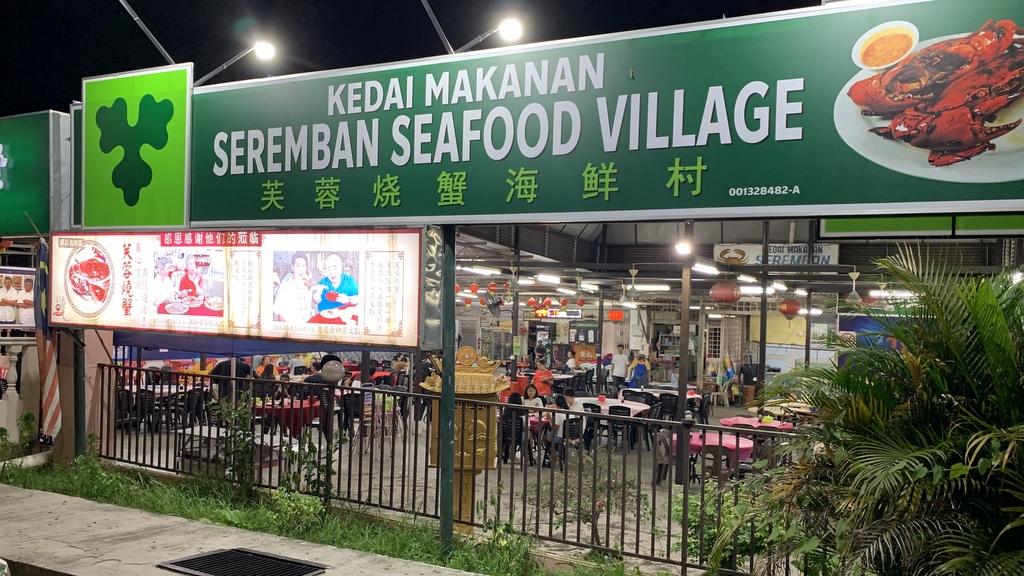
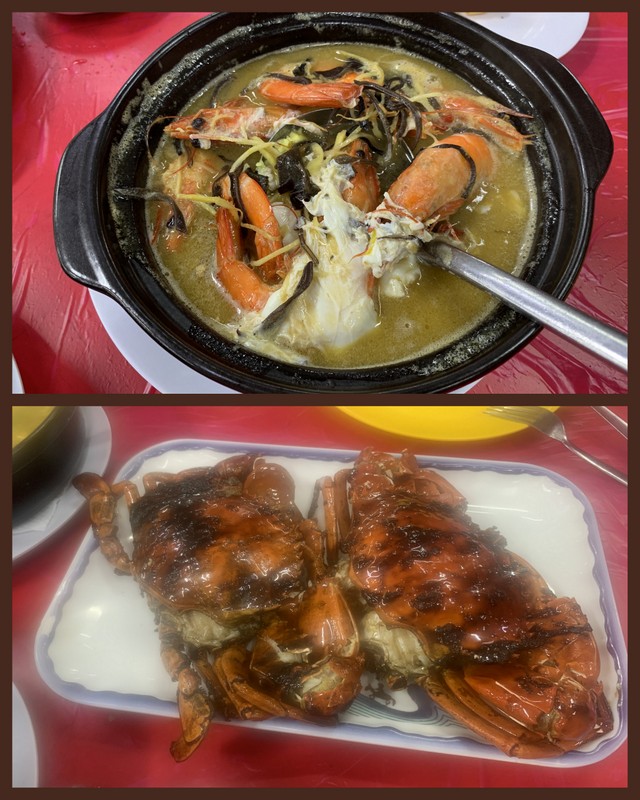
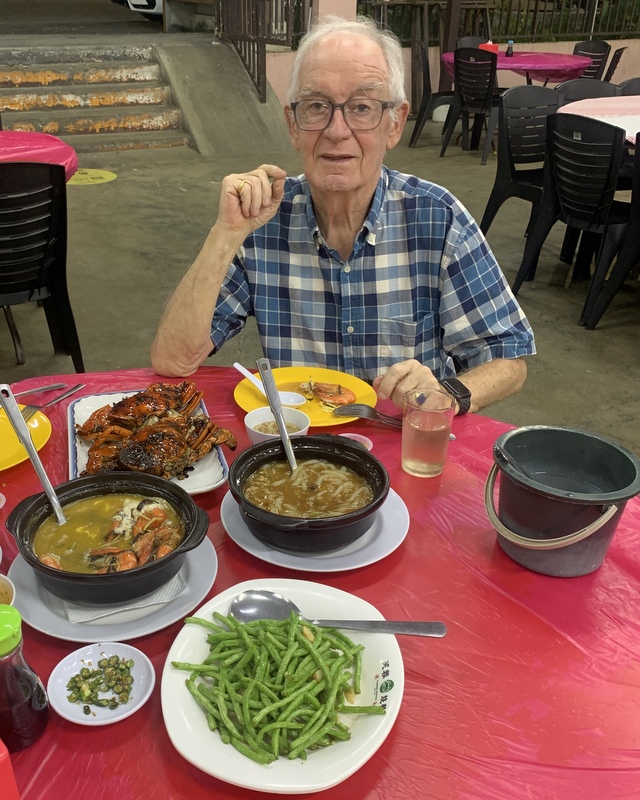
We had a seafood dinner in the Seremban Seafood Village. Delicious Seremban Baked Crab and Rice Wine Prawns. With Mouse Tail Noodles, Young Long Beans and Tea the bill was RM 203, a bit expensive, but really worth it,

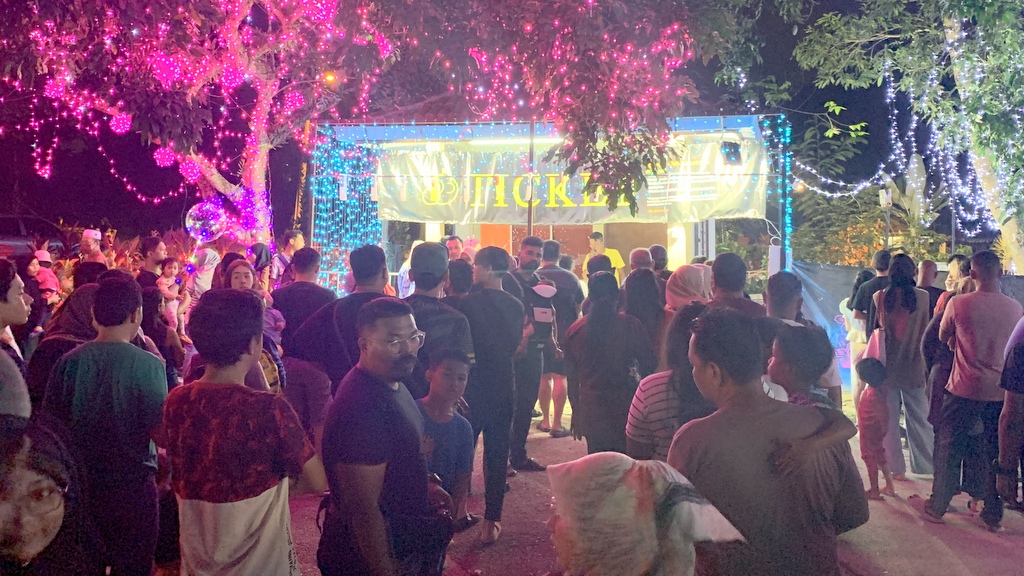
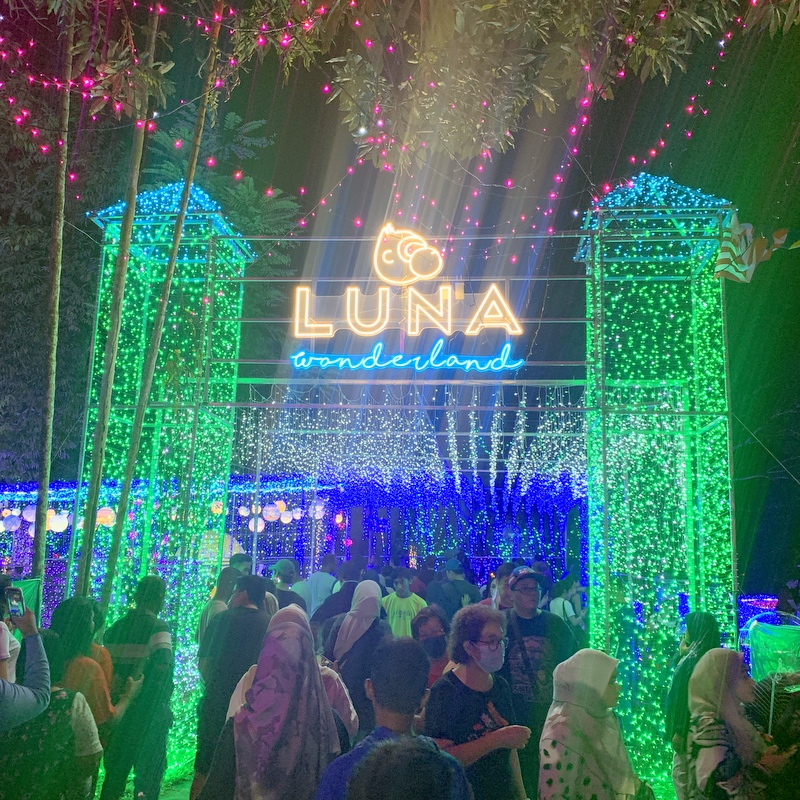
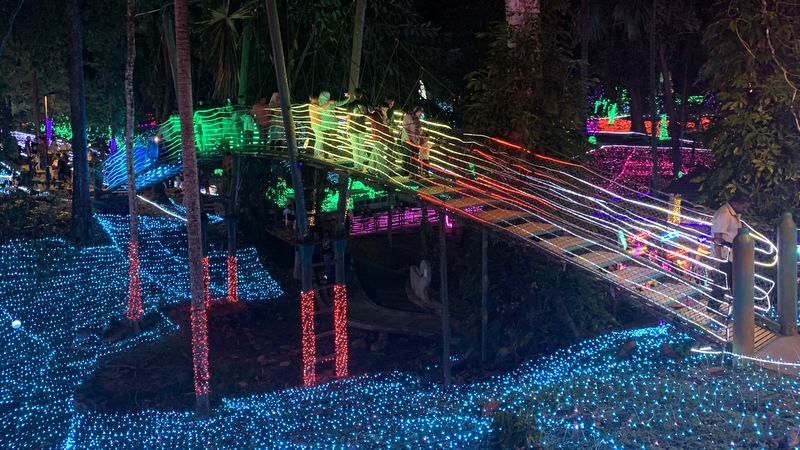
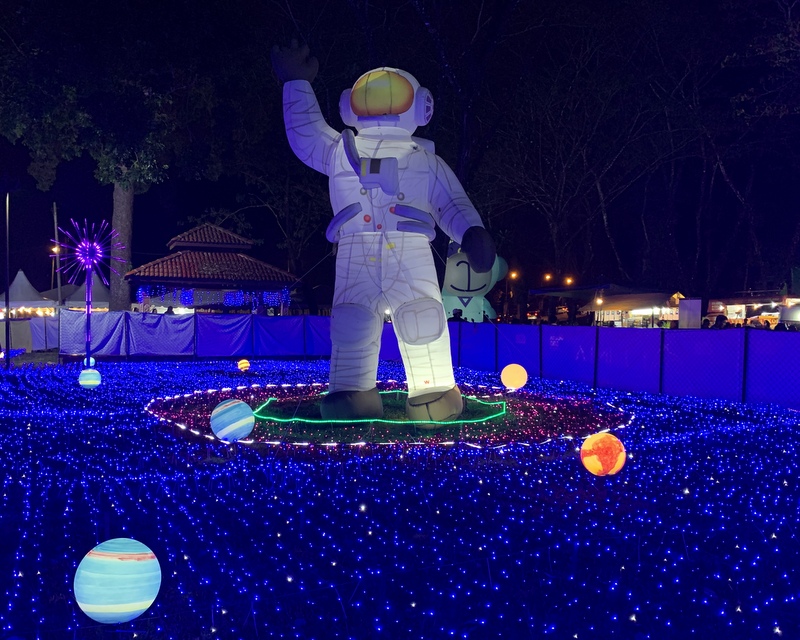
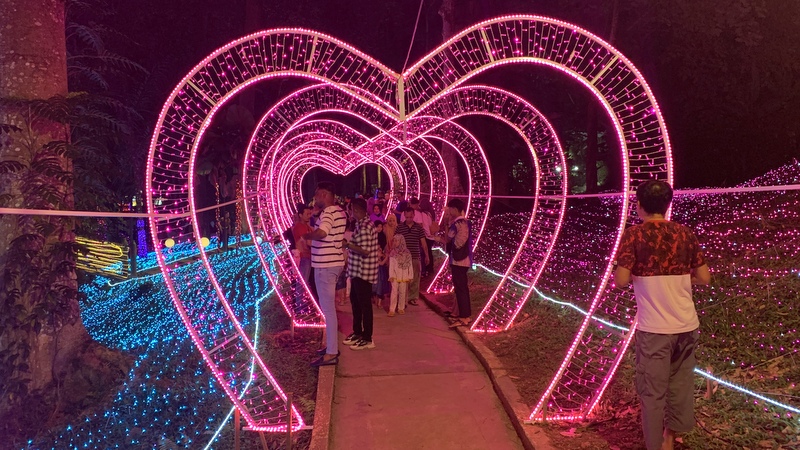
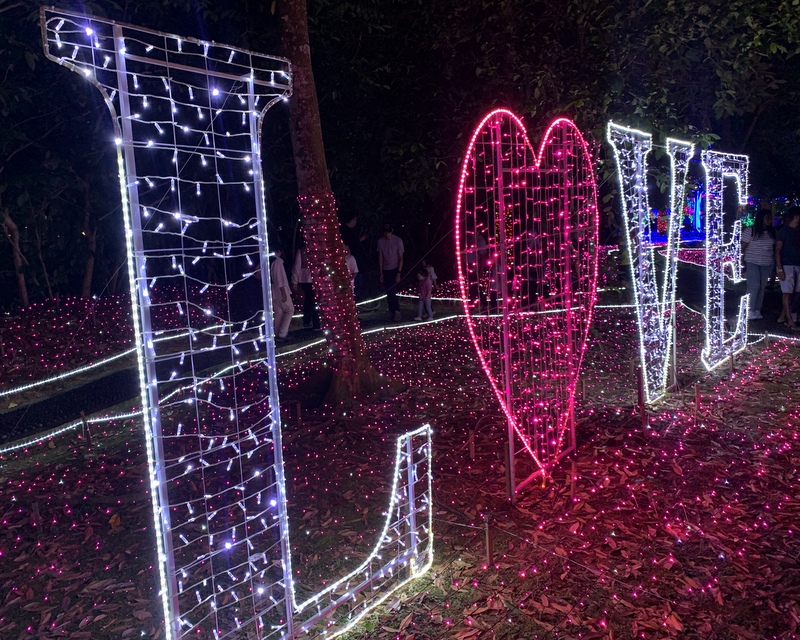
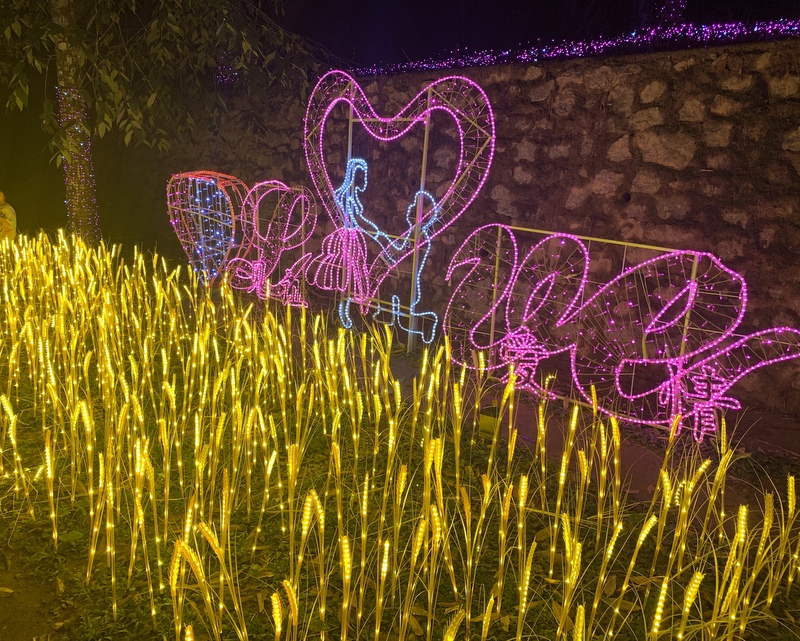
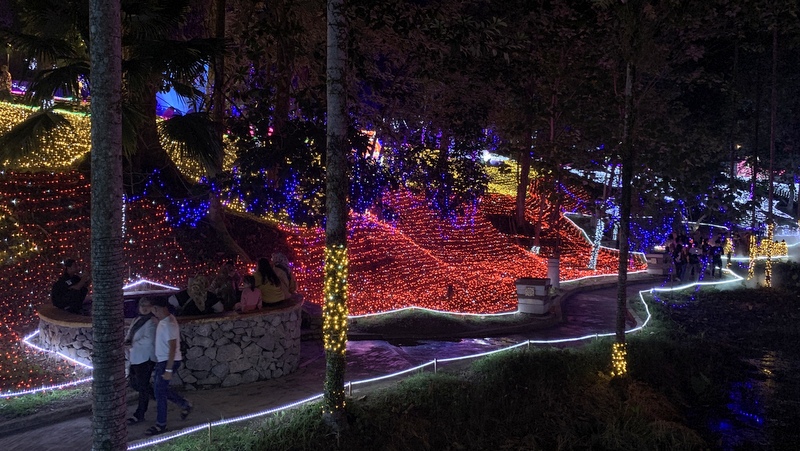
We had heard about the Luna Lights Wonderland, held in Seremban until 24 September and decided to have a look. Supposed to be the biggest “light festival” in Malaysia. it was located in the Malaysia Park and very popular, it was not easy to find a parking place for our car. And even at 10 pm we still had to queue to get tickets.

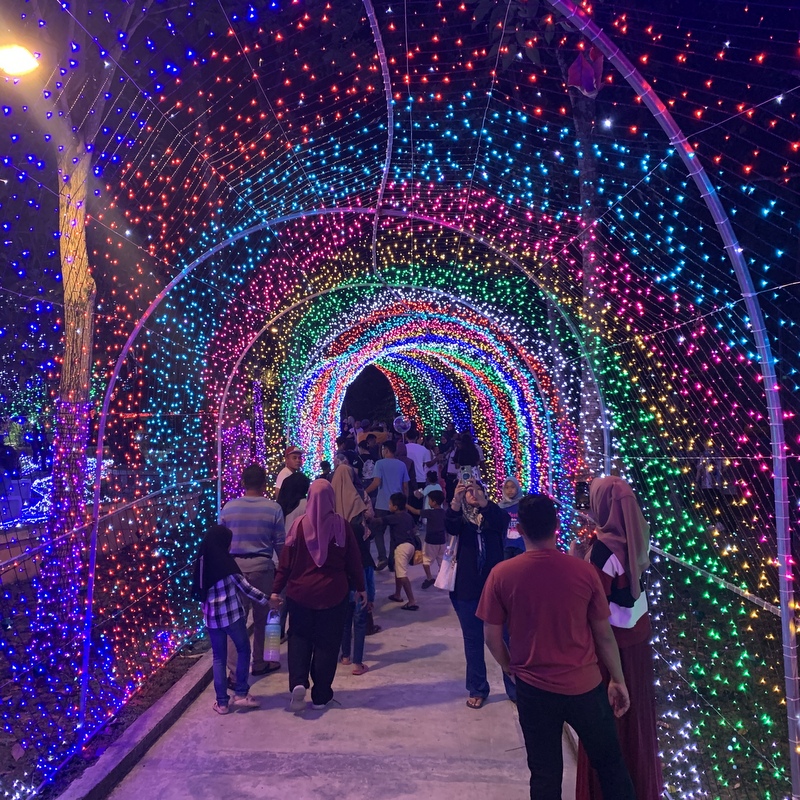
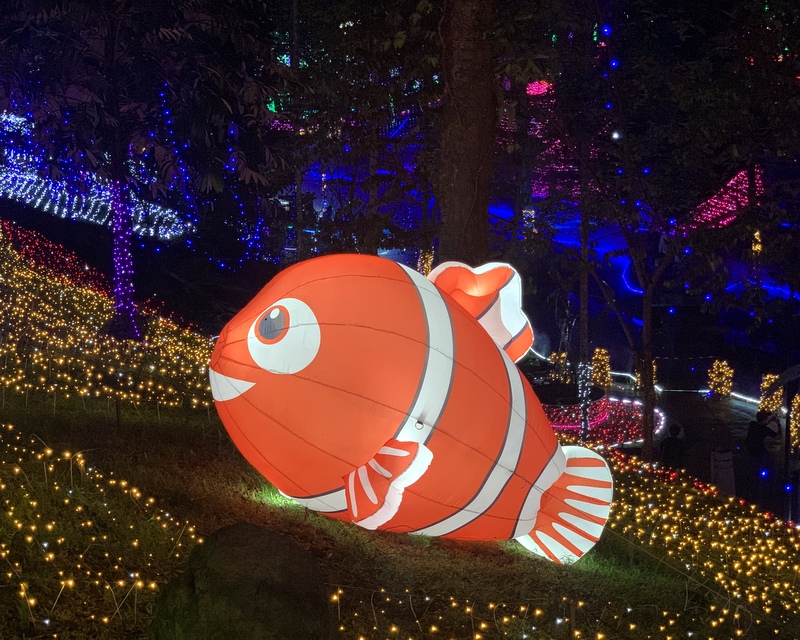
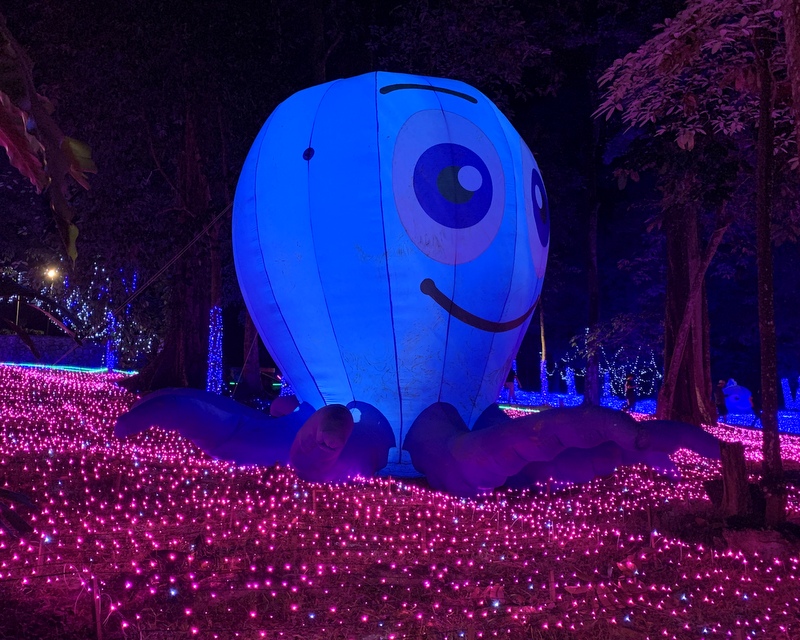
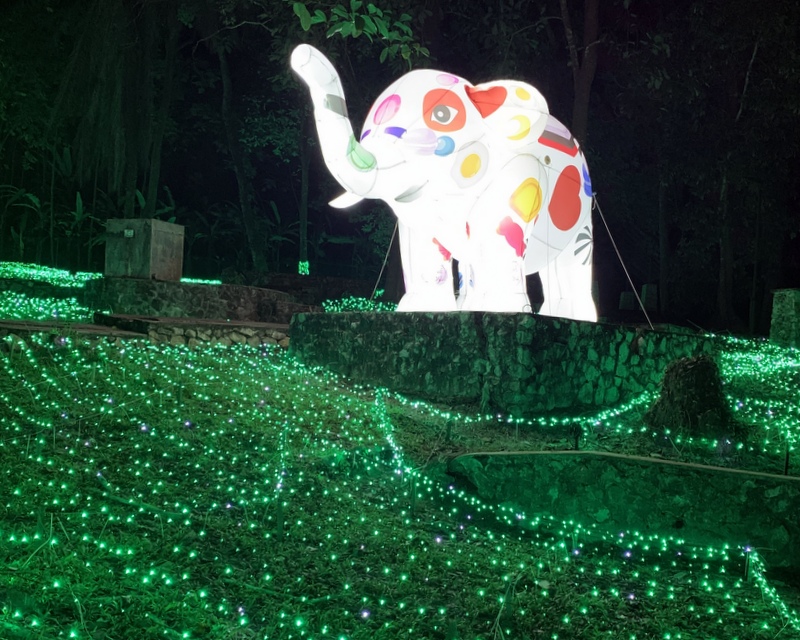
Almost one million of led lights have been used to decorate the park. Here is a collection of photos.

There are different themes, fish, animals, space travel.

And romance 😉

A large part of the park is covered with lights, it took us almost two hours to explore everything.

The photos do not show that the lighting is dynamic, the colours are changing all the time. So I also took numerous videos. Here is a compilation, made with the iMovie app of my iPhone..

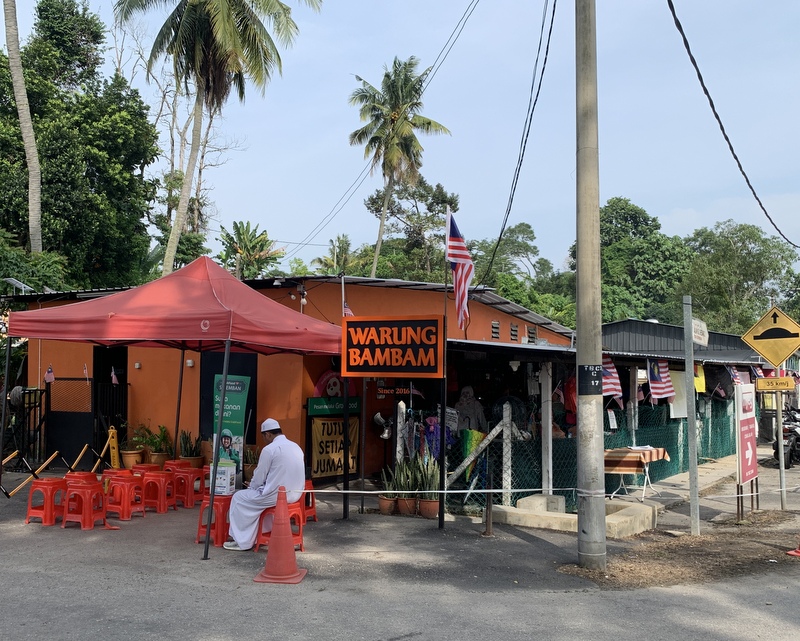
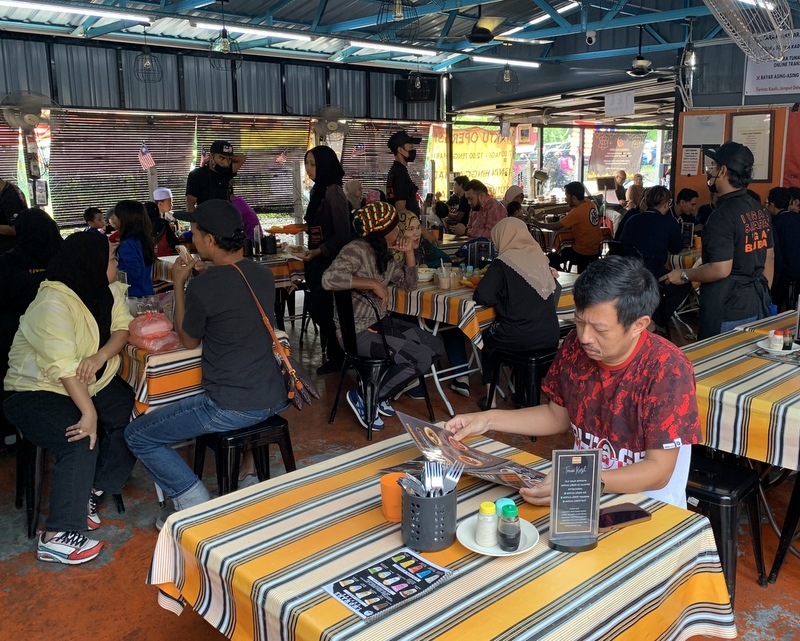
The next morning we went for breakfast to the Warung Bambam, which had positive reviews. Quite far from old Seremban, actually more in Rasah. Rural surroundings, we were surprised that it was very popular, we even had to queue a bit.

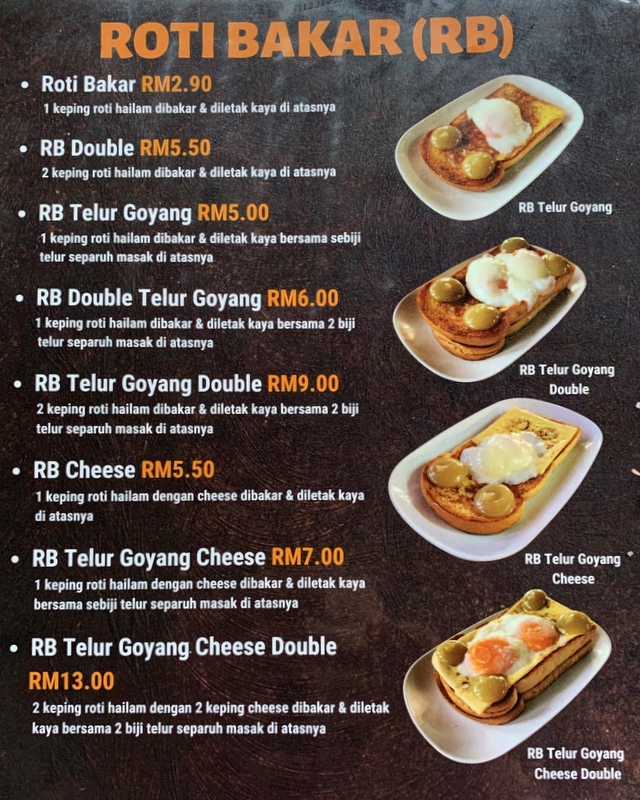
It was a pleasant surprise for me to find on the menu Roti Goyang with Kaya, which I had tasted for the first time in Kota Bharu. Of course we had to order it.

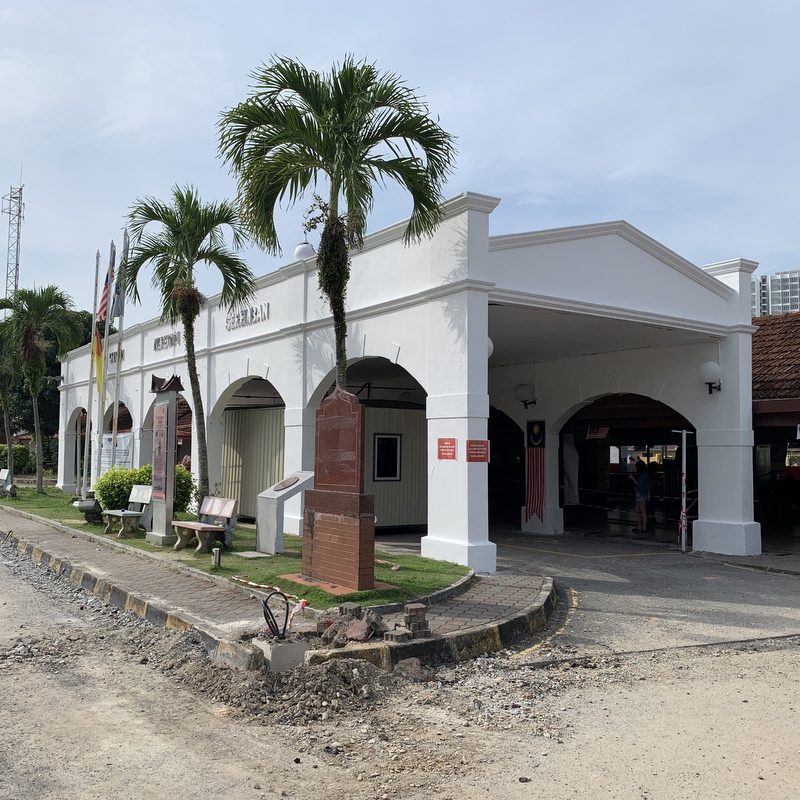
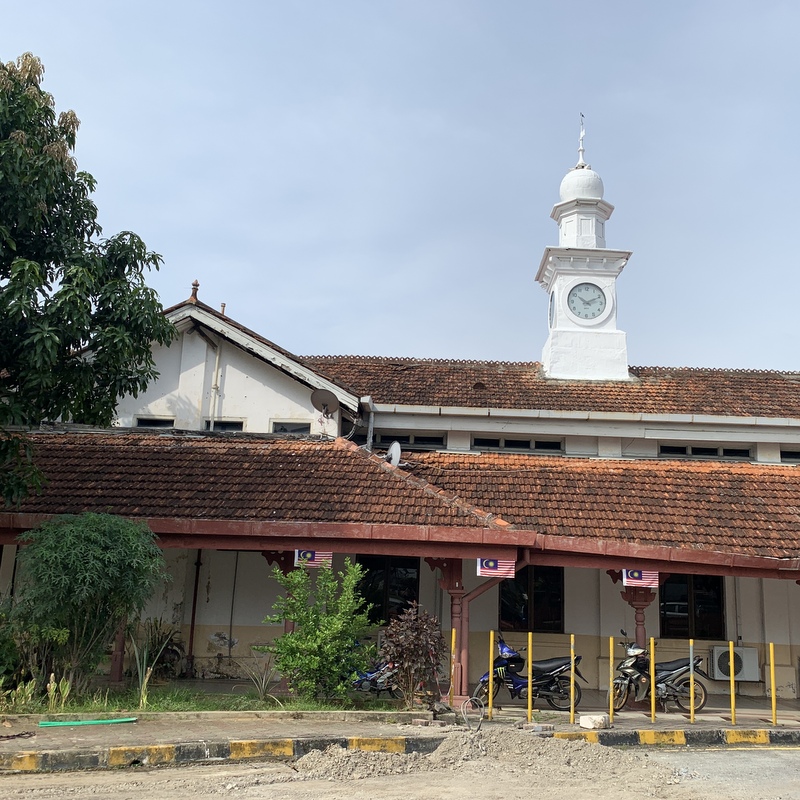
After breakfast we drove back to the old town to start our heritage walk. First we stopped at the Railway Station, constructed between 1904 and 1910, with its nice clocktower.

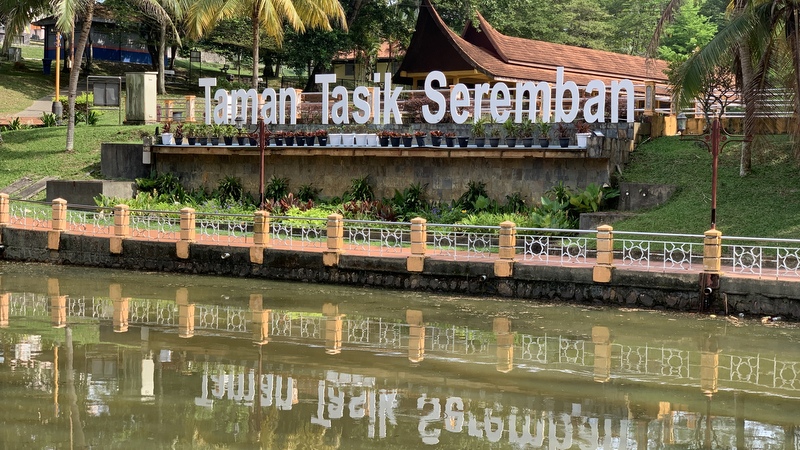
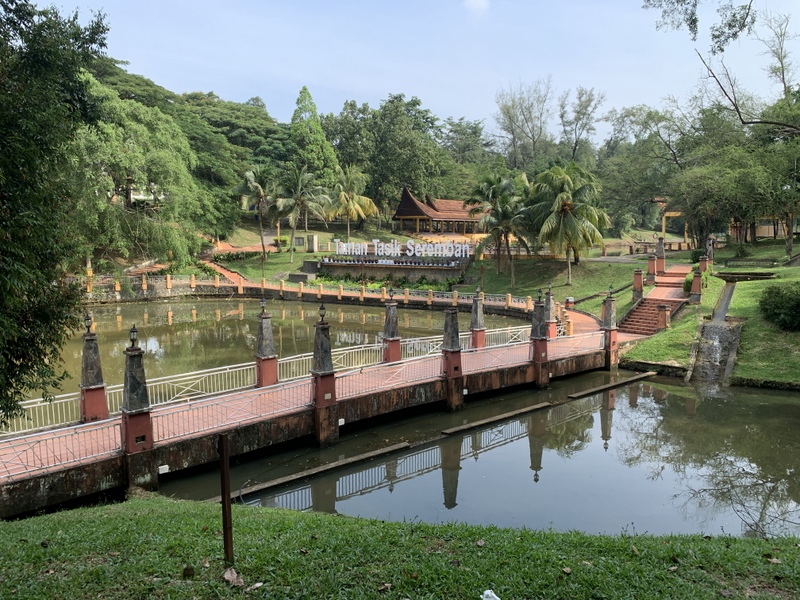
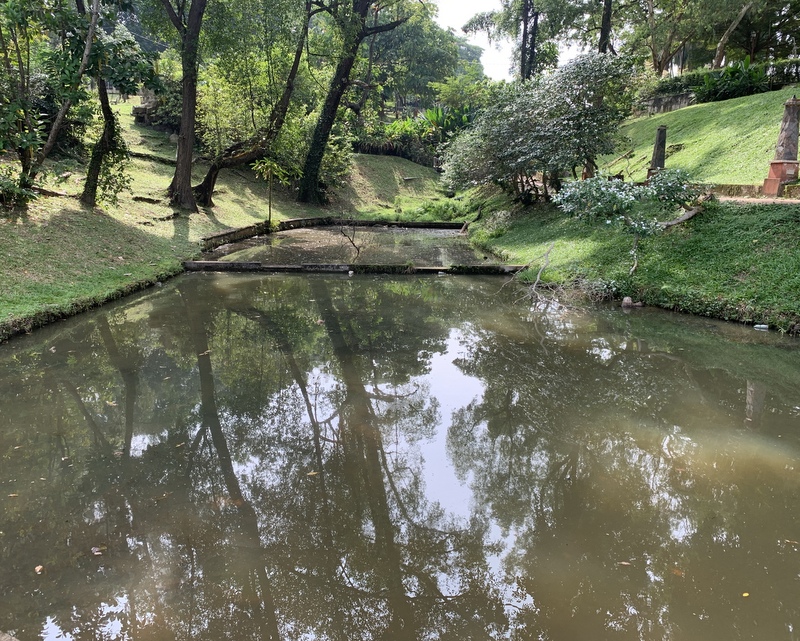
Next the Seremban Lake Gardens. A miniature copy of the Taiping Lake Gardens. I could not find information about its history. Not sure if it was in the past a tin mining lake, because the center of tin mining was Rasah.

We walked around a bit, not too long because it was a hot day. To me, the shape of the lake doesn’t look like the result of tin mining.

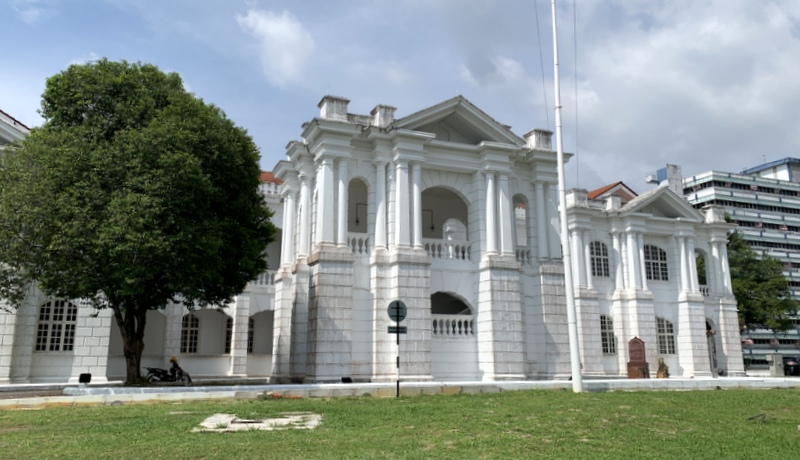
Next we drove to what is called the White House of Seremban, the former State Secretariat, a design of famous architect Arthur Benison Hubback (1912)

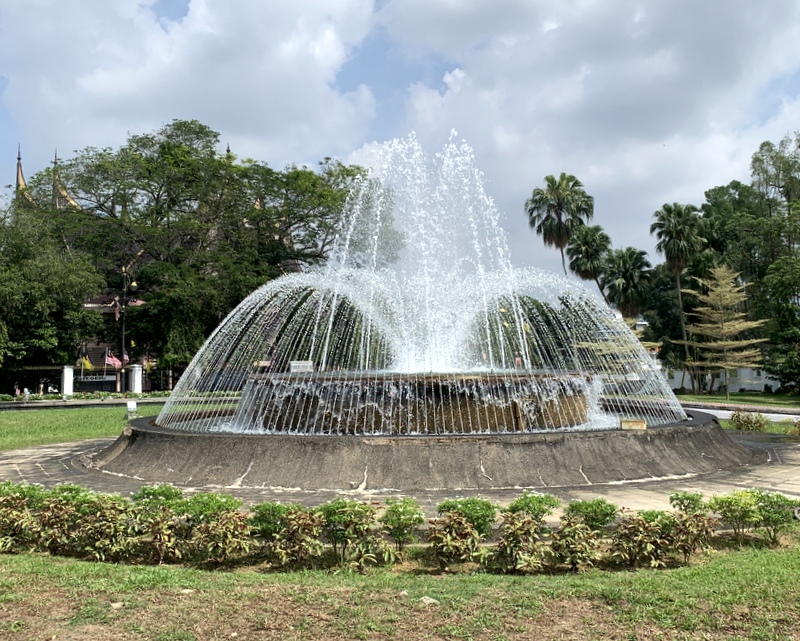
It housed later the Public Library and it now abandoned but still in good shape. Opposite the attractive building there is a nice fountain.

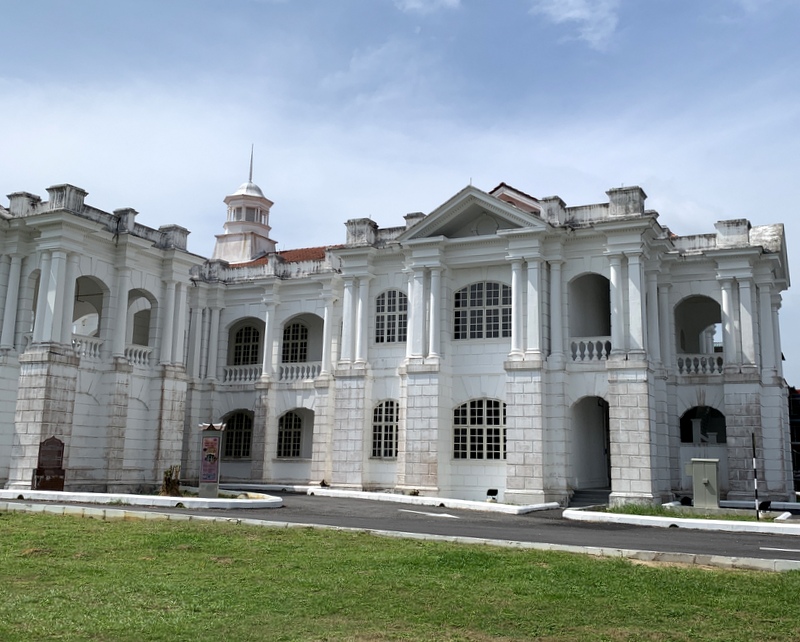
That it is in good shape can not be said of the District office and Surveying department, almost next to it. Also built in 1912 and the design looks almost identical to the State Secretariat, but I didn’t find any mention of Hubback being the architect.

It’s clearly in decay.

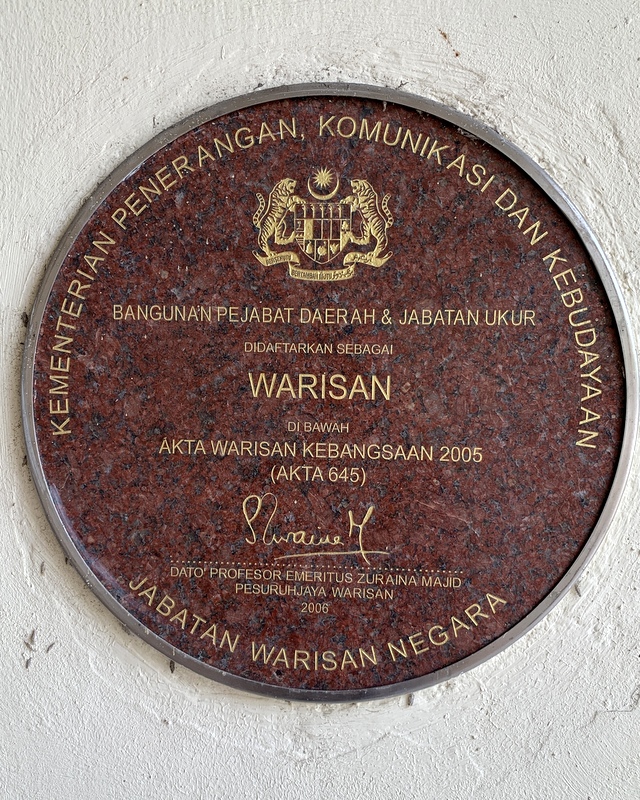
Although in 2006 the building got an official plaque that it was National Heritage! Reminds me of Taiping. Malaysia Boleh.

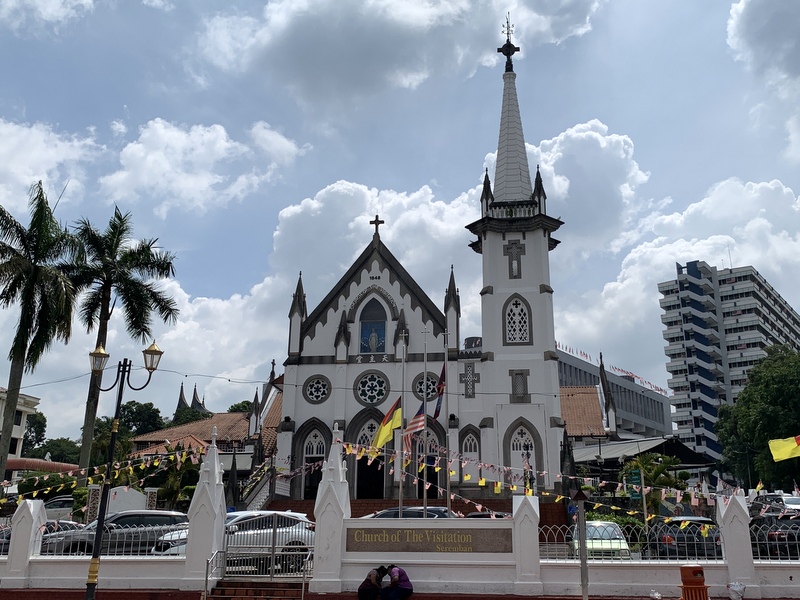
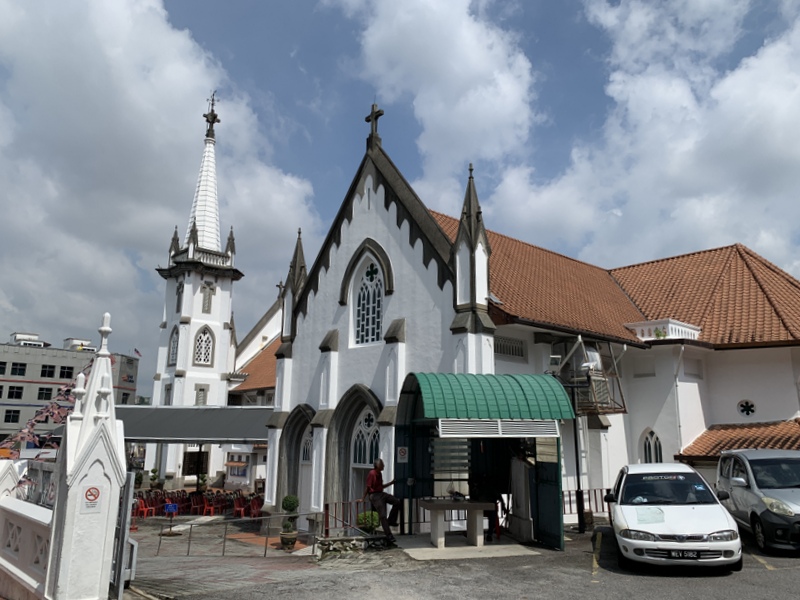
We continued to the Church of the Visitation, a Catholic church in the center of the old town with an interesting history. The building dates from 1934, but the parish is much older, 1848, long before Captain Murray started as the first British Resident in 1875.

We had now visited POI 1, 5, 8, 9 and 12 from the heritage poster (see above). many more to go. But the ASUS center messaged us that my laptop would be ready around 3 pm! And it was a very hot day. So we decided to cut our visit short, have lunch and then drive back.

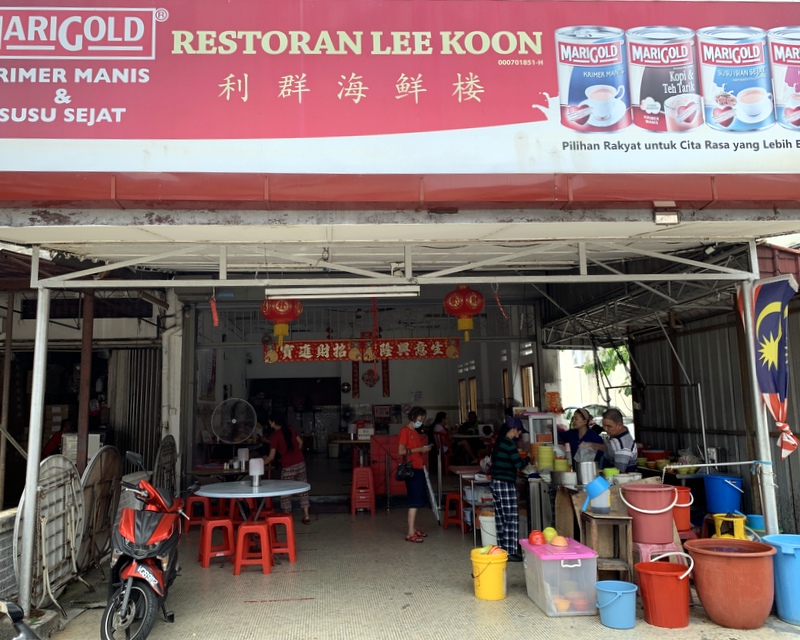
For lunch we went to the Lee Koon restaurant, with a reputation for its fish ball noodles. Nice food and a very friendly staff.

On our way back home, we got an update from ASUS that it would be more like 4 pm, they had to do more testing on my laptop after replacing the motherboard. We passed the time at a nearby McDonalds , went to the ASUS center at 4 pm, they were still testing and it was only at 5:30 pm that we could collect my laptop.

It was a relief that basically everything worked, no data loss.

It was a bit of a funny trip, here is a GE screenshot with the places we visited

I have to go again another time 😉

Revisiting Melaka, August 2023

The last time that Aric and I have been on a touristic overnight trip, was in 2020. The Covid Lockdown started in Malaysia on 18 March 2020, but there were still limited options to travel. In July we made a trip to the Cameron Highlands and in August we visited Taiping.

In 2022 traveling became possible again, but Aric was busy with his laundry shop and could not take leave easily. Last week we finally managed to make a short 2D1N trip to Melaka. We have visited Melaka often, the last time was with our Chinese friend Dong Dong, in January 2020, before the pandemic started. So it was time to go again.

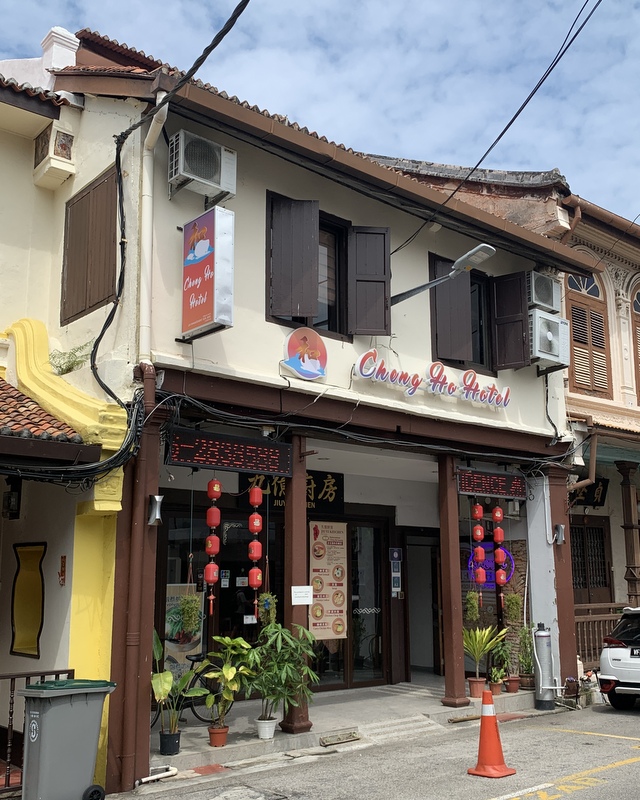
We left home on Friday 25 August at 5 pm, got caught on our way in a huge traffic jam and arrived in Melaka at 9 pm only. Not a very auspicious start 😉 . We had booked a room in the Cheng Ho Residence and that was a very good decision, as the hotel was located in the center of the old town.

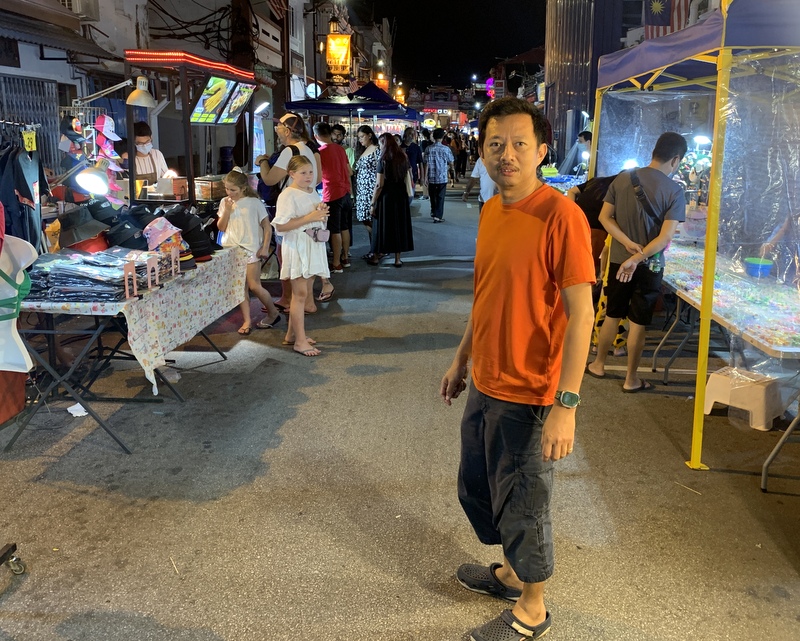
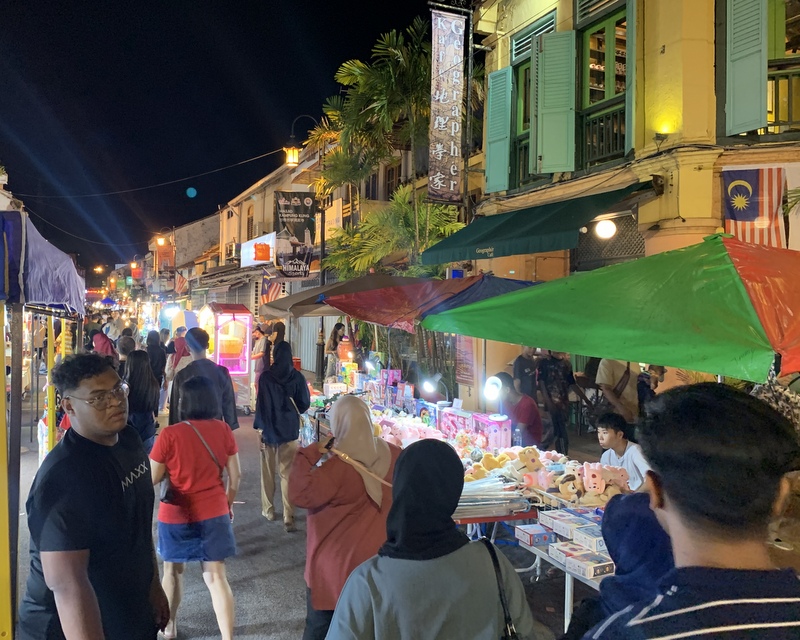
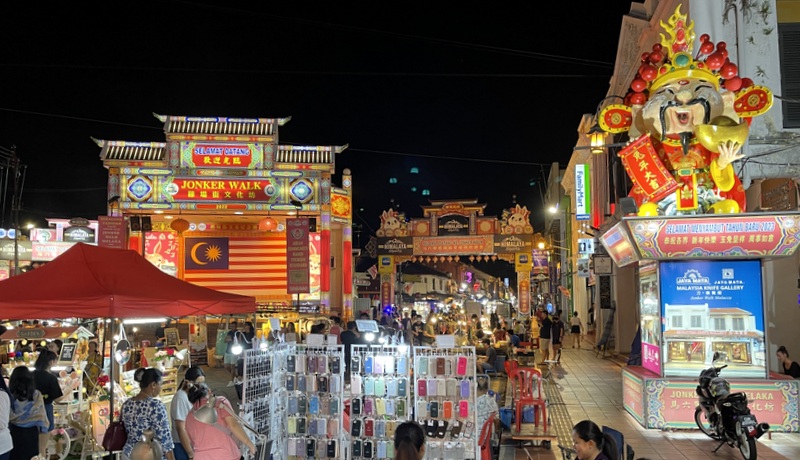
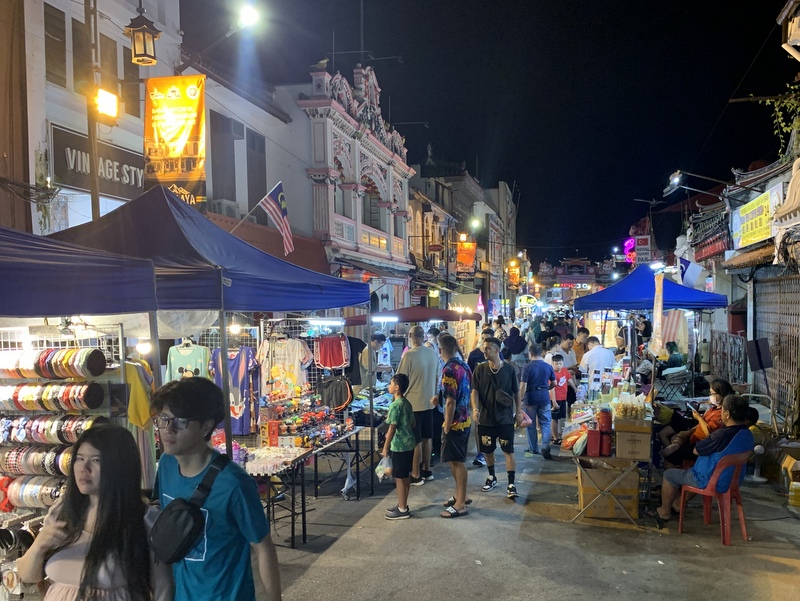
After dropping our luggage, we went out again to explore the Jonker Walk, the popular weekend market of Melaka. Not crowded, more pleasant than I expected.

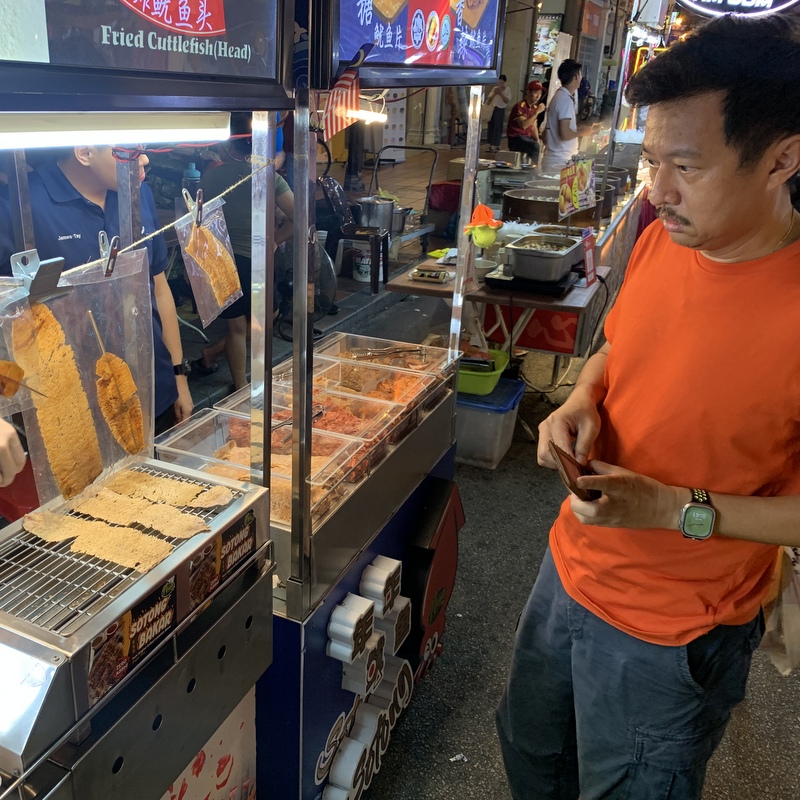
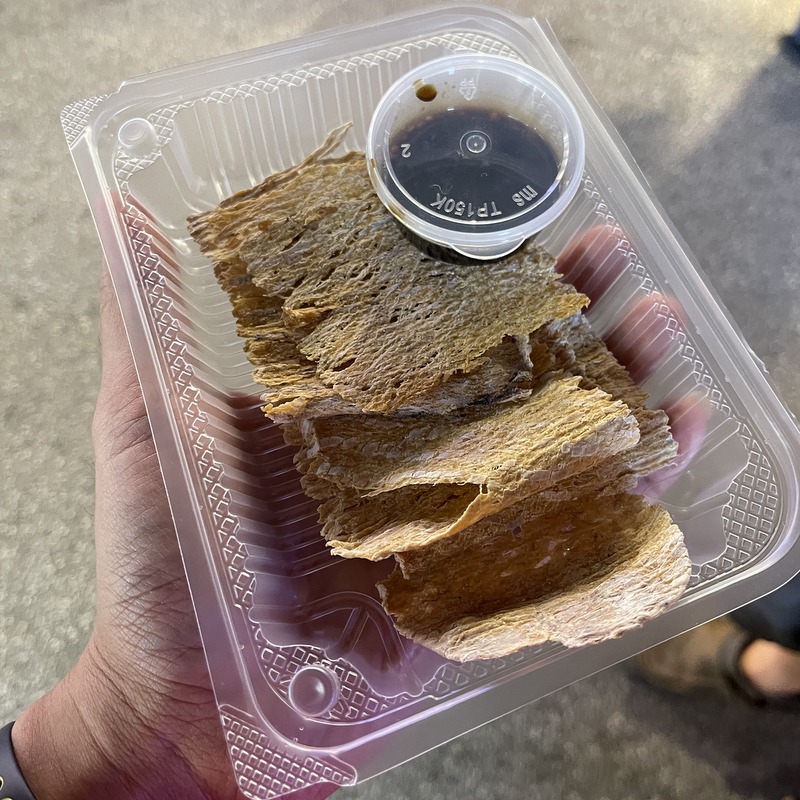
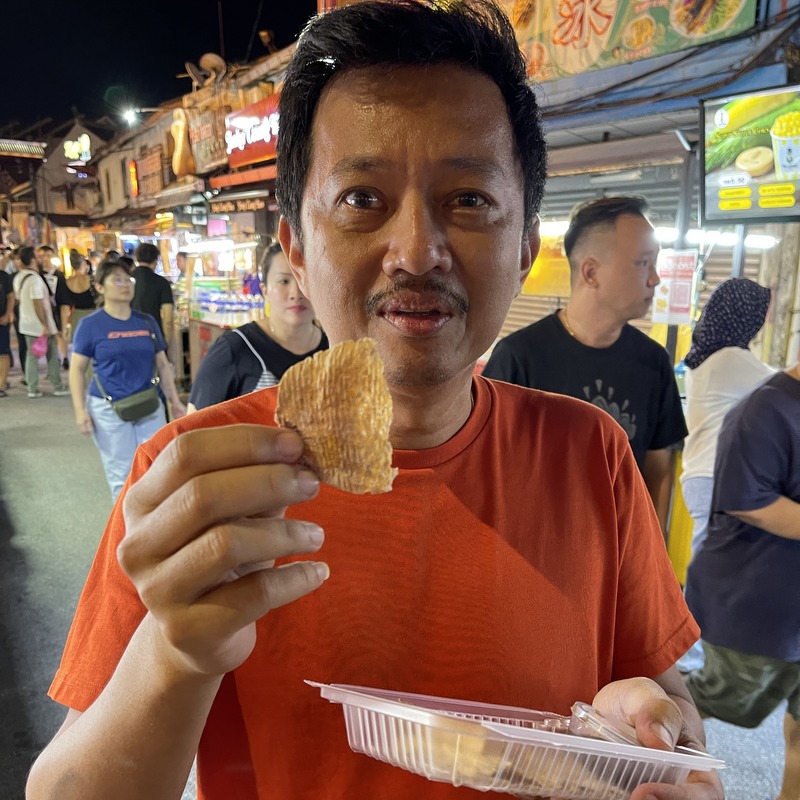
Looking for a place to eat, we first had a snack,; Baked fried cuttlefish. Not everybody will like it, it’s an acquired taste 😉

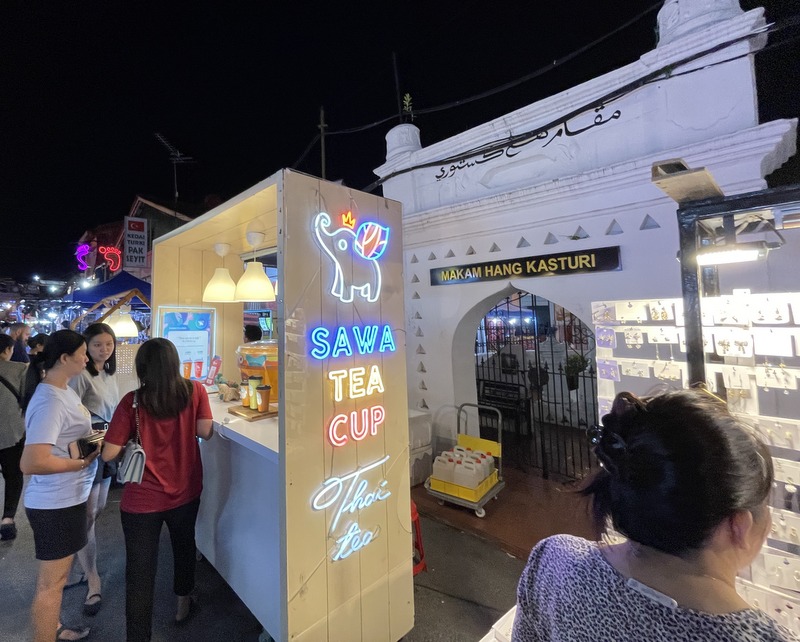
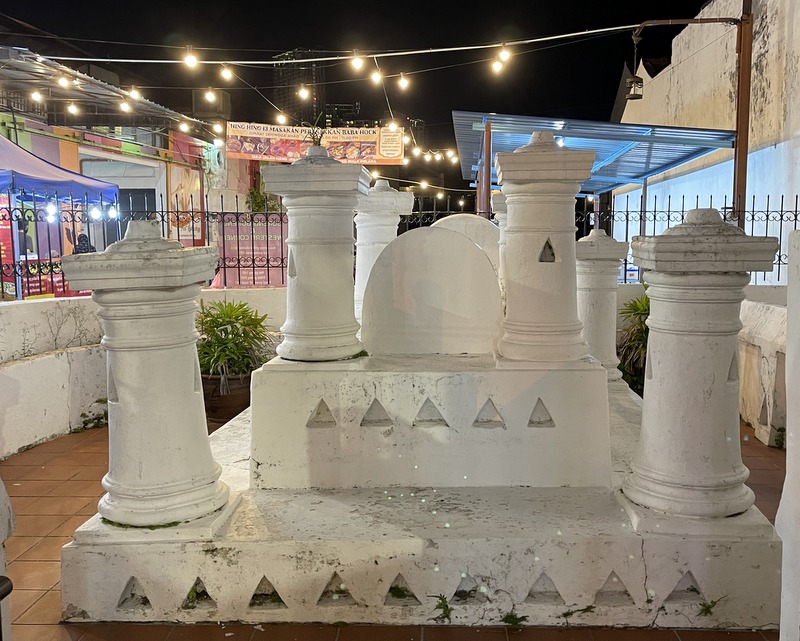
The tomb of Hang Kasturi is located along the Jonker street. He is one of the famous five Malay warriors, who lived in the 15th century and served the Sultan of Melaka. See below for the tomb of Hang Tuah, the most famous of them.

The entrance of the Jonker Walk, with the big stage, where often karaoke singing is performed.

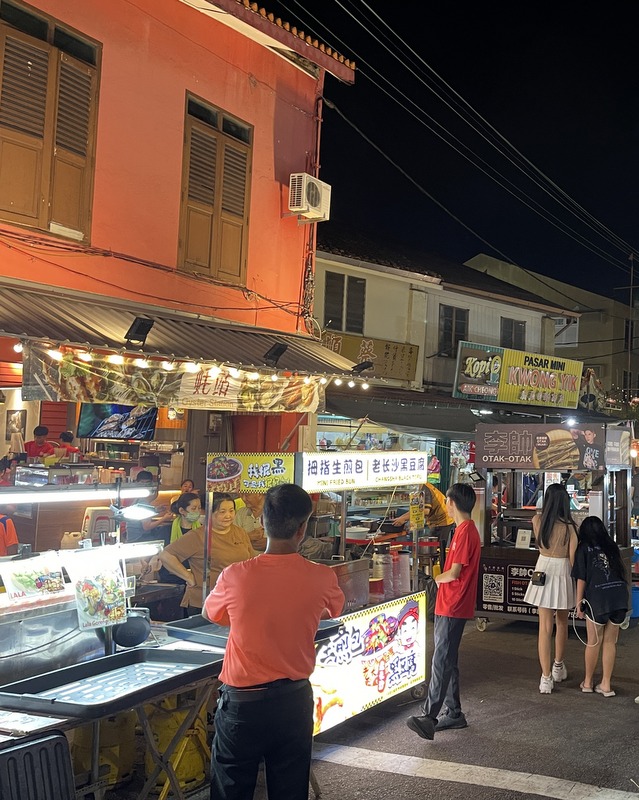
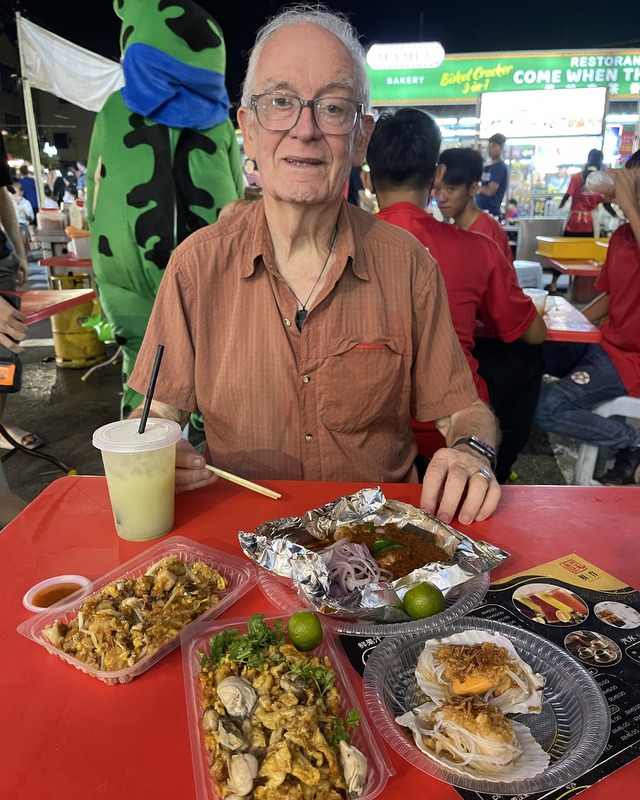
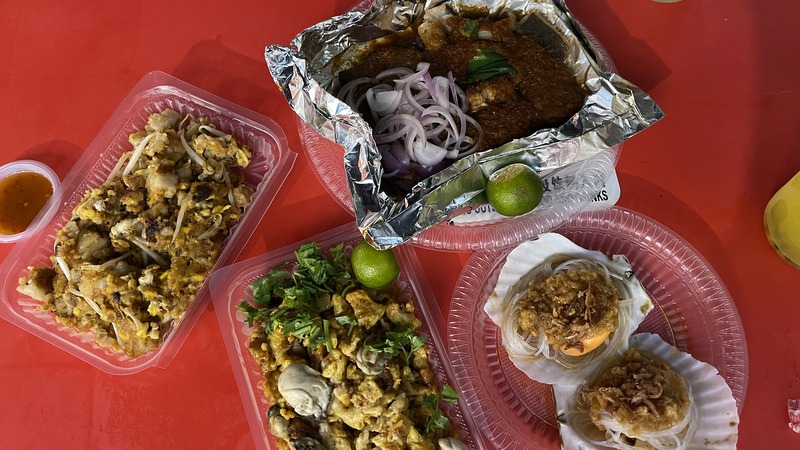
There were still many hawker stalls open, although it was already past 10 pm. Aric selected a variety of dishes, stingray, scallops, oyster omelet and fried rice cake.

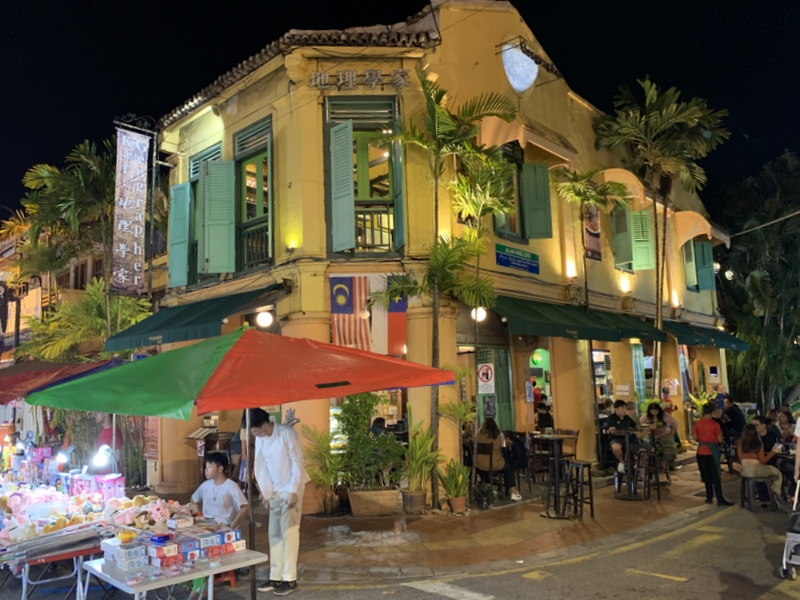
After our dinner we walked back, the pasar was starting to close. We passed the well-known Geographer bar (right picture), where I have enjoyed a beer several times in the past.

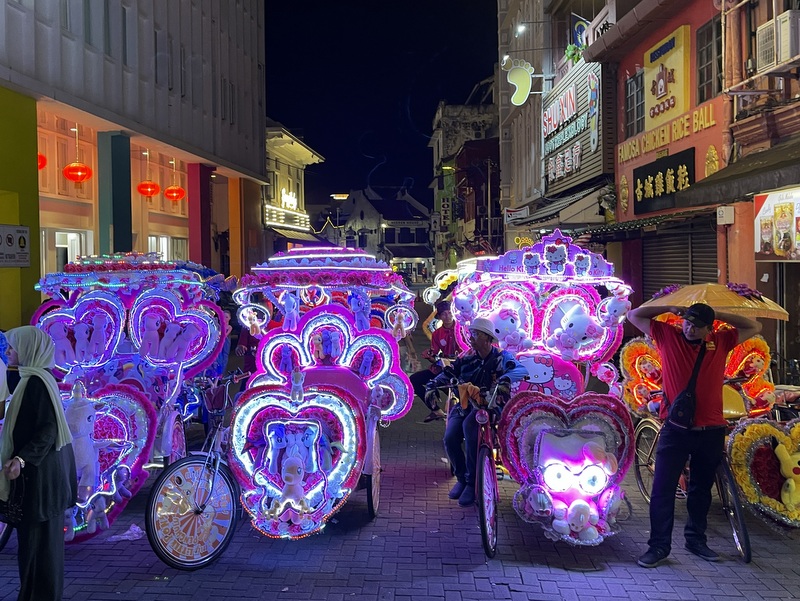
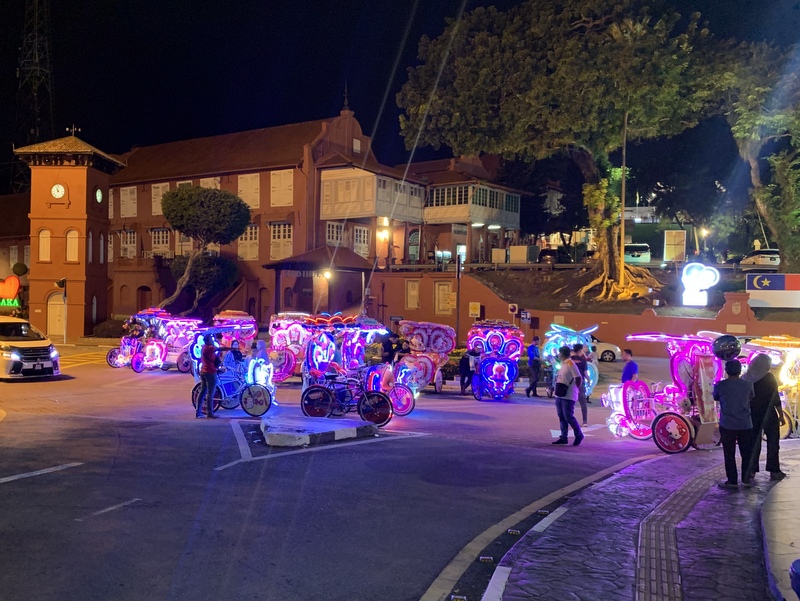
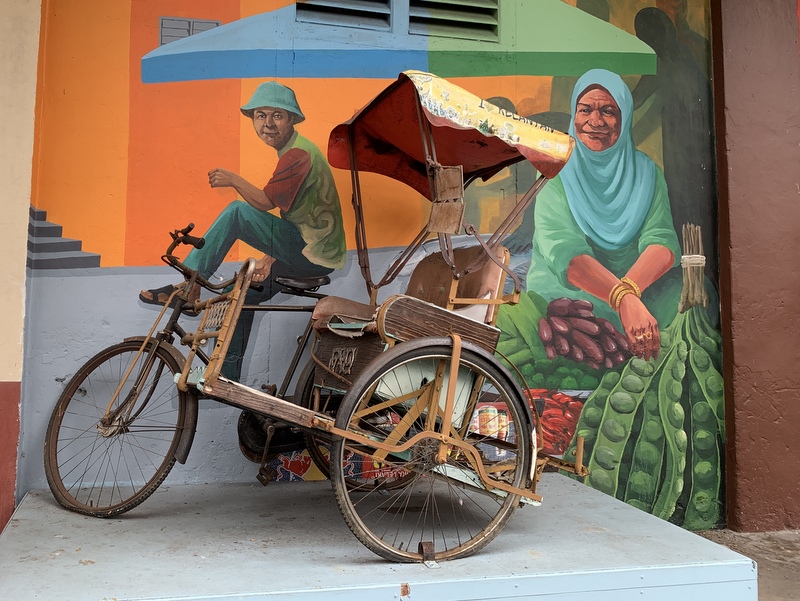
Melaka has a huge number of trishaws, their bright colors are almost painful to the eyes 😉

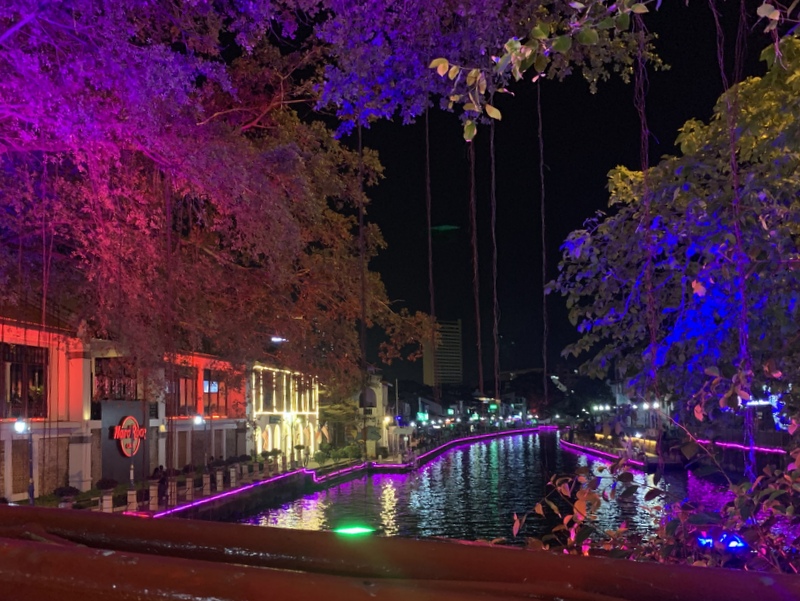
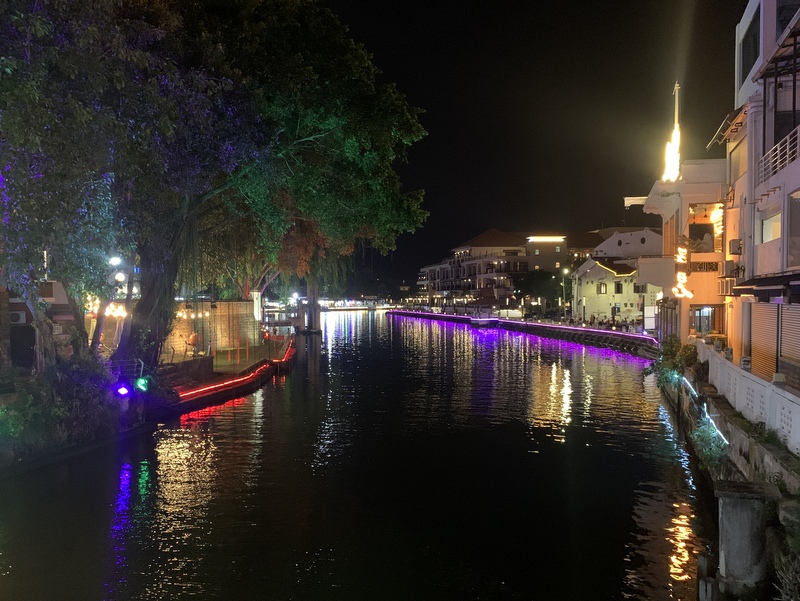
River views from the bridge, in both directions, also an orgy of colors.

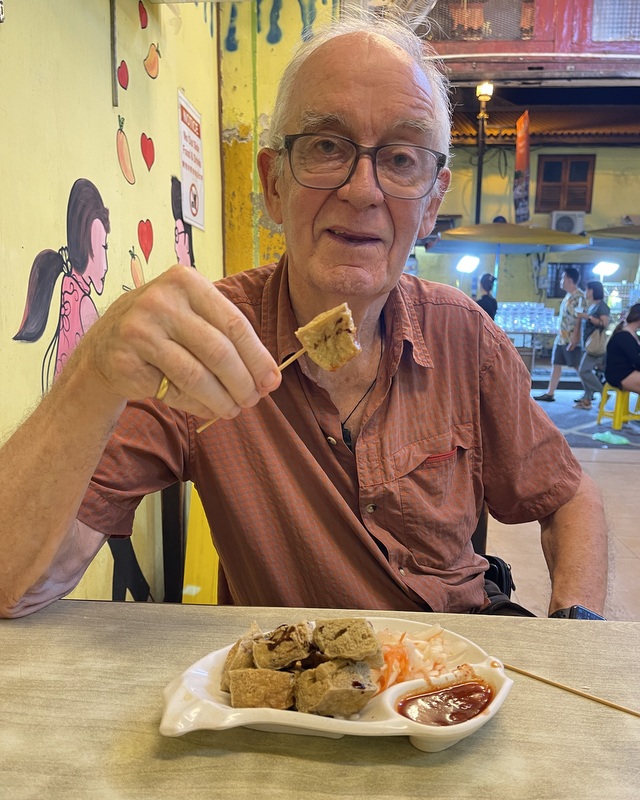
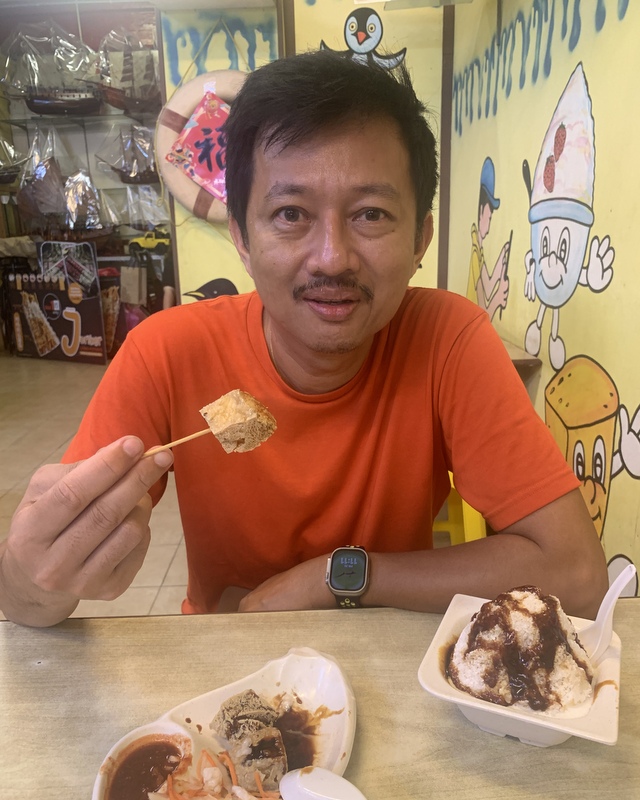
Before going back to our hotel, we had a dessert of “smelly tofu“, another acquired taste.

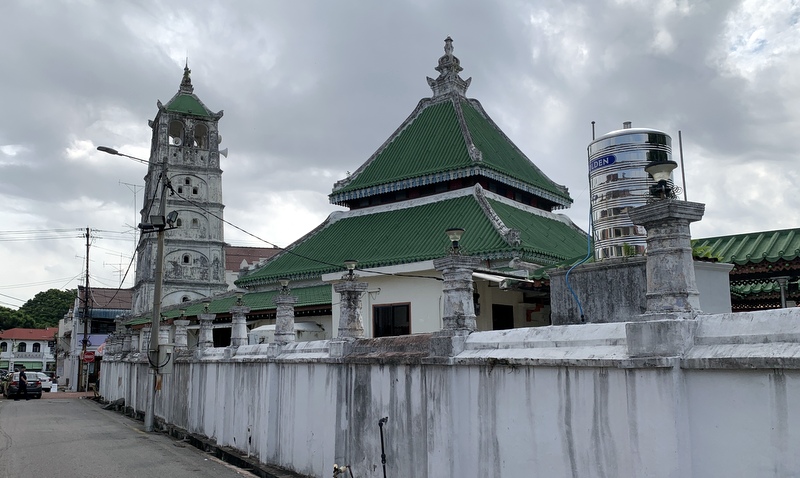
The restaurant where we wanted to have our breakfast the next morning was on walking distance from our hotel. On our way we passed the Kampung Kling Mosque. As I had visited Melaka so often, I had numerous photos of all the heritage buildings, so I was lazy and hardly took pictures this time.

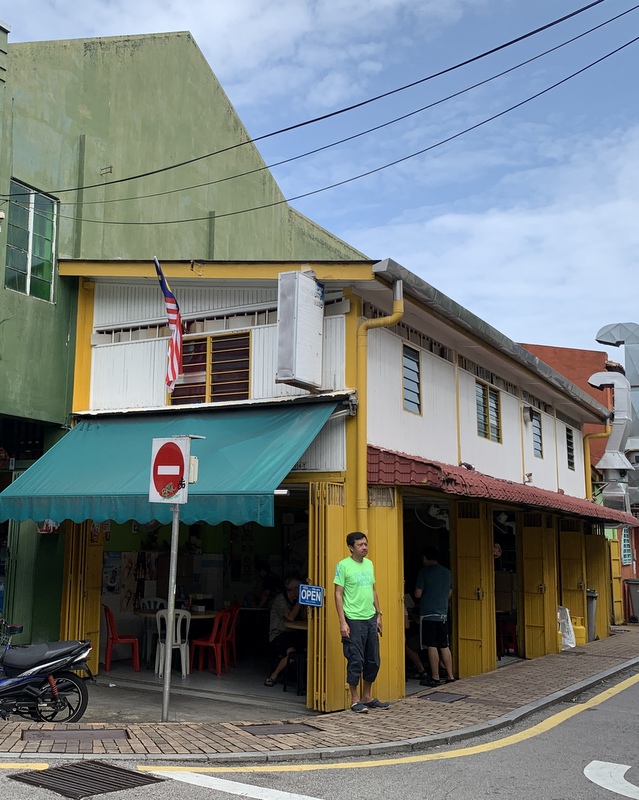
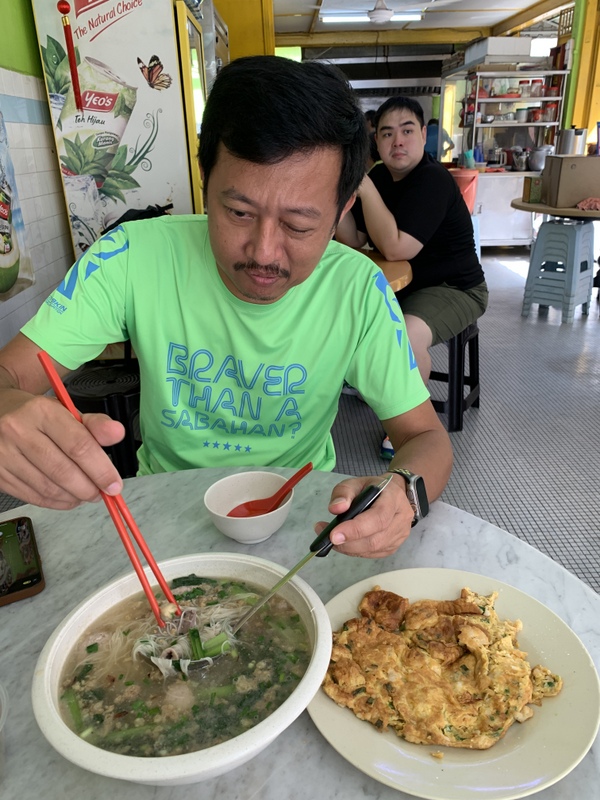
We had our breakfast in the Pin Pin Hiong Restaurant with oyster mee sua and a prawn omelet. Nice food, friendly service.

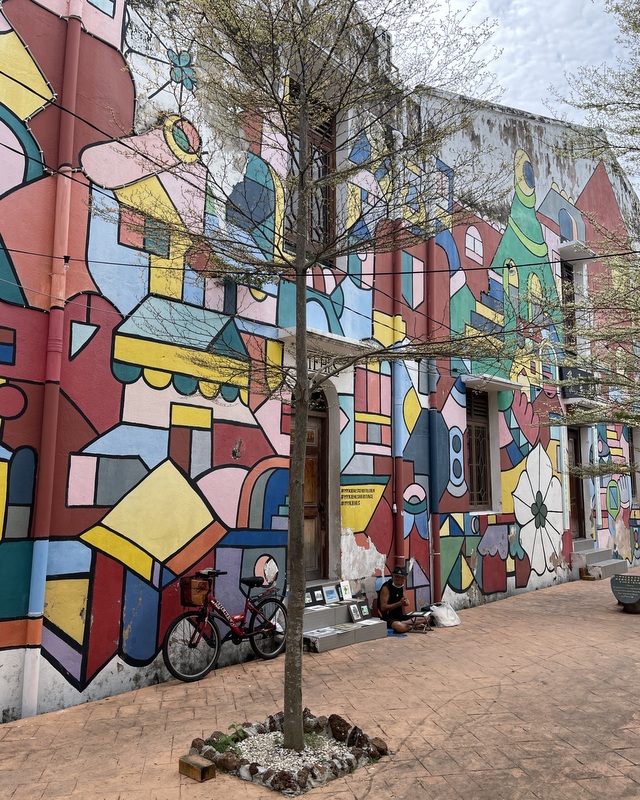
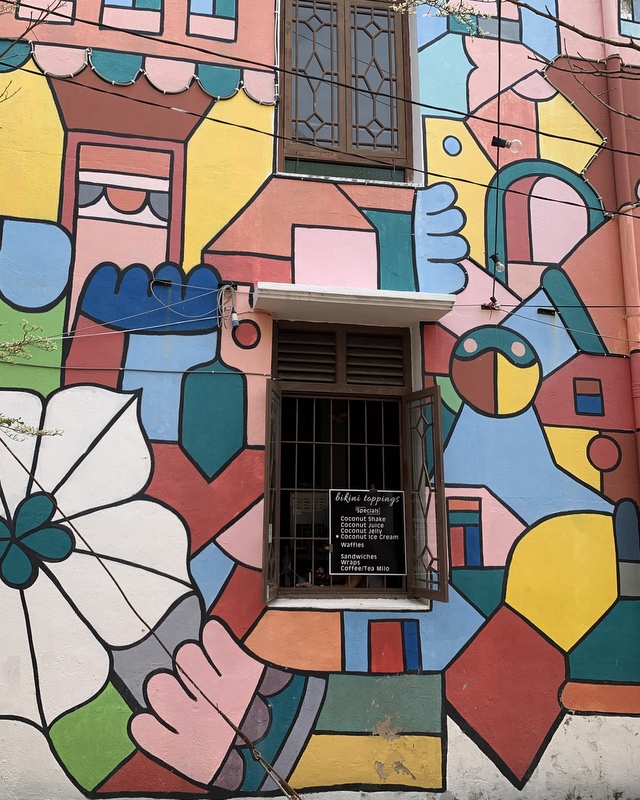
The mural art tsunami has not yet reached Melaka, as far as I have noticed this time. Here is a nice one, quite unusual.

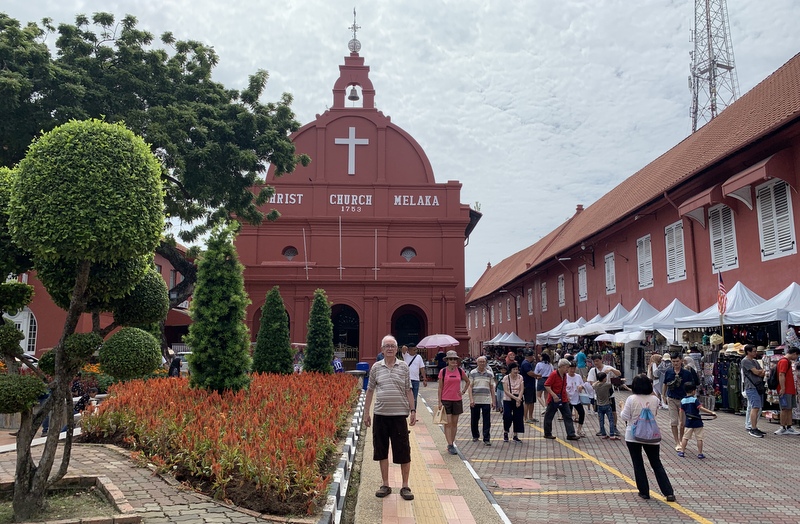
After our breakfast we walked back to the town center with the church and the Stadthuys.

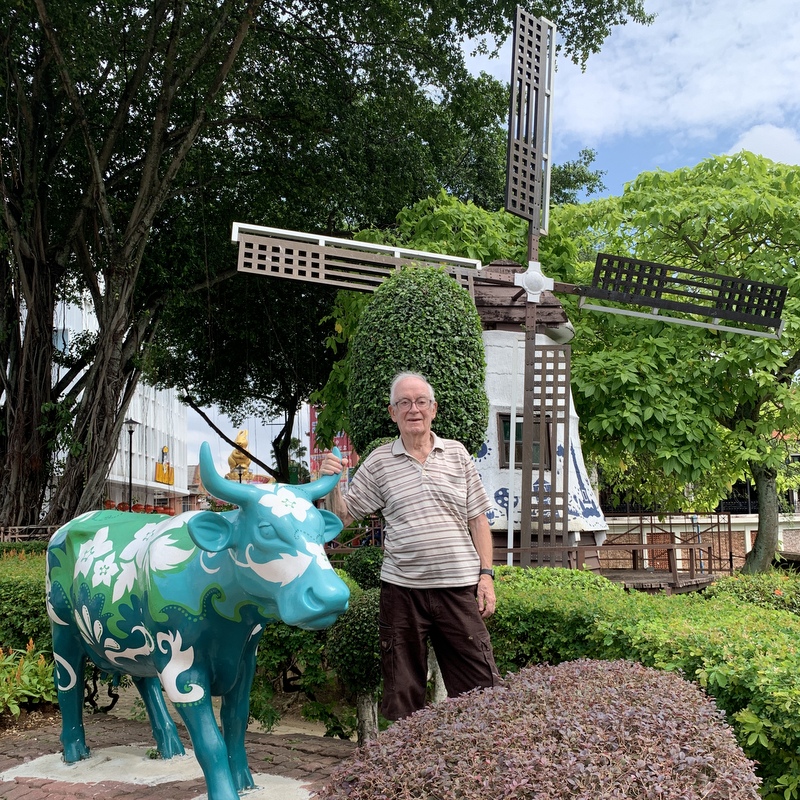
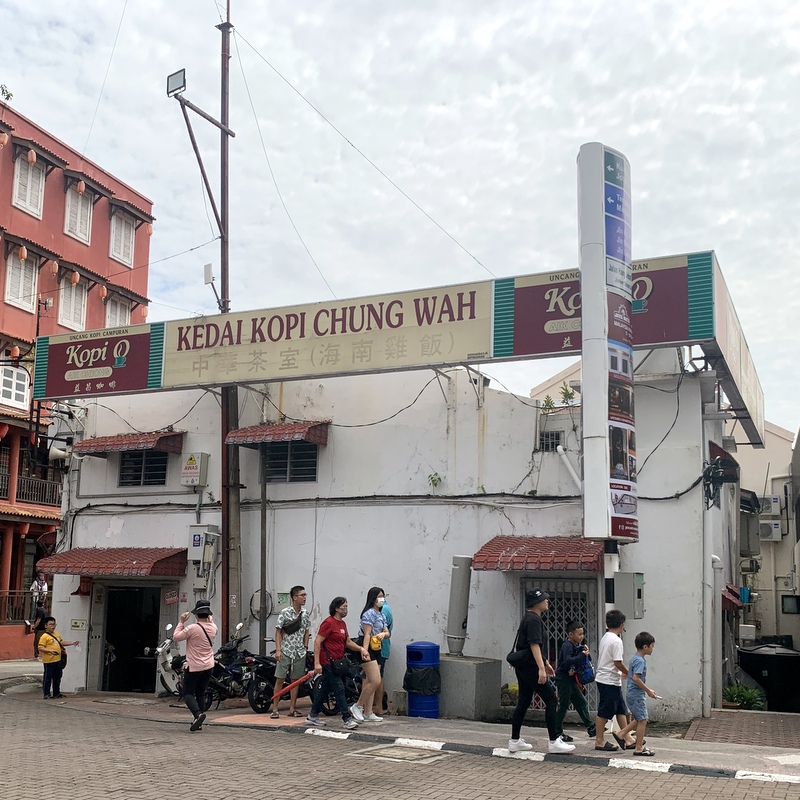
Of course I had also my picture taken with a Dutch windmill and a not very Dutch cow. The other picture shows the Chung Wah restaurant, famous for its Hainanese Chicken Rice. We have queued there often, but now we have discovered an even better place, see below.

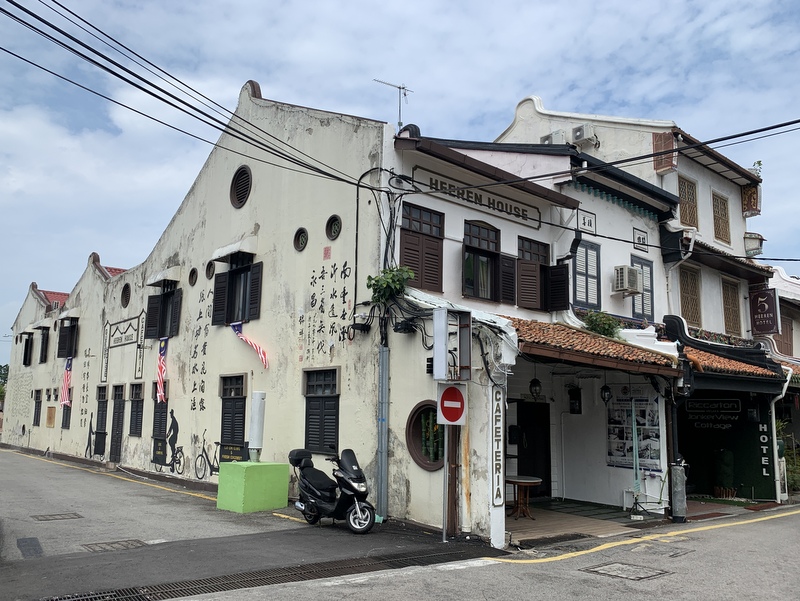
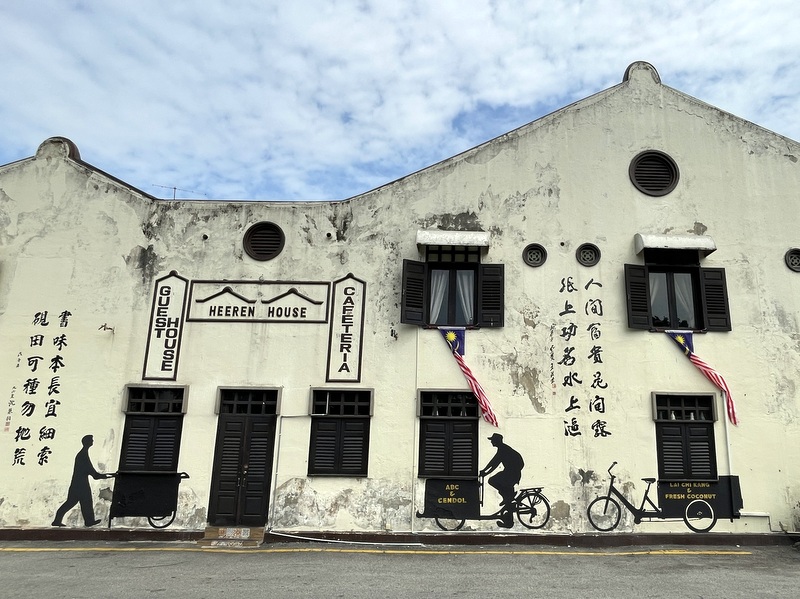
The Heeren House looks very attractive and has always been on my list of Melaka hotels to try out , but it seems that it is now mainly a restaurant, with negative reviews about the hotel.

Back to our hotel, where we checked out. We stayed on the second floor and our windows opened to the air well. The interiors of the Baba House and the Puri hotel, where we have stayed before, is more interesting, but the location of Cheng Ho is perfect.

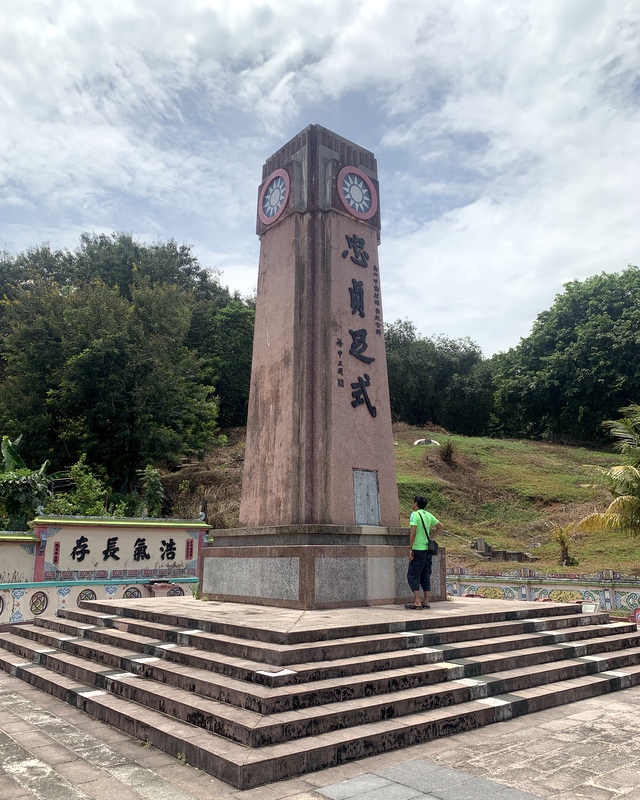
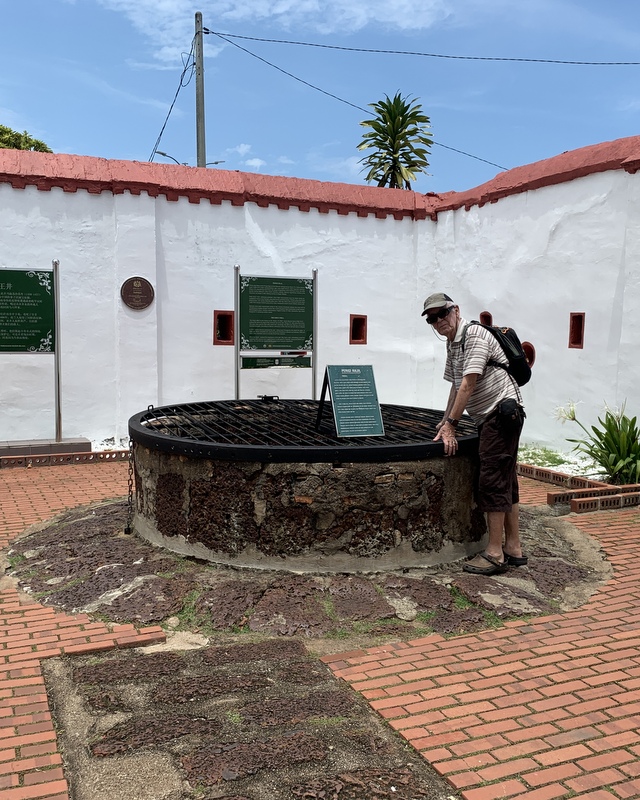
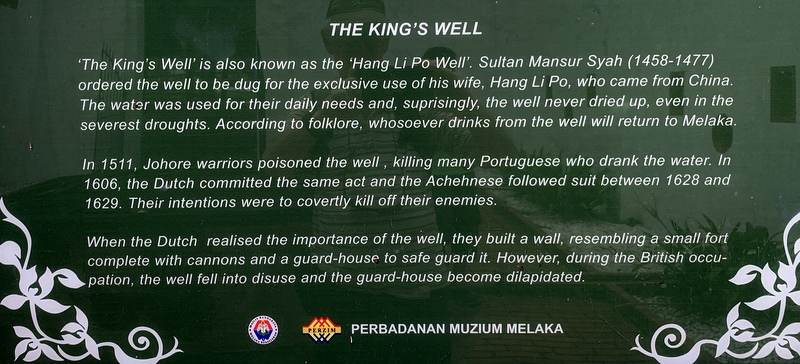
Arc had brought his drone and we decided to visit Bukit Cina to take drone videos and pictures, Before we climbed up the hill we had a look at the cenotaph, a memorial for the Japanese occupation. The other picture shows the Hang Li Poh well (the King’s well), with an intriguing history.

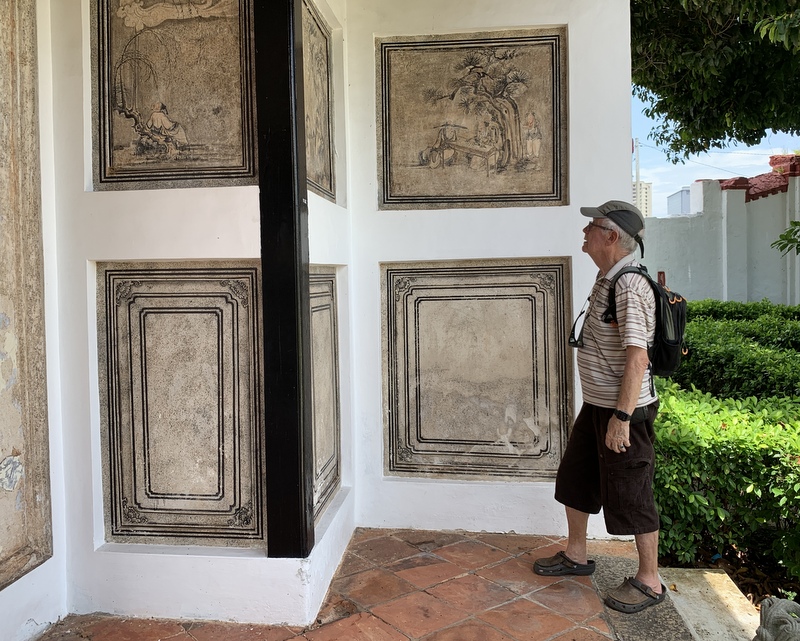
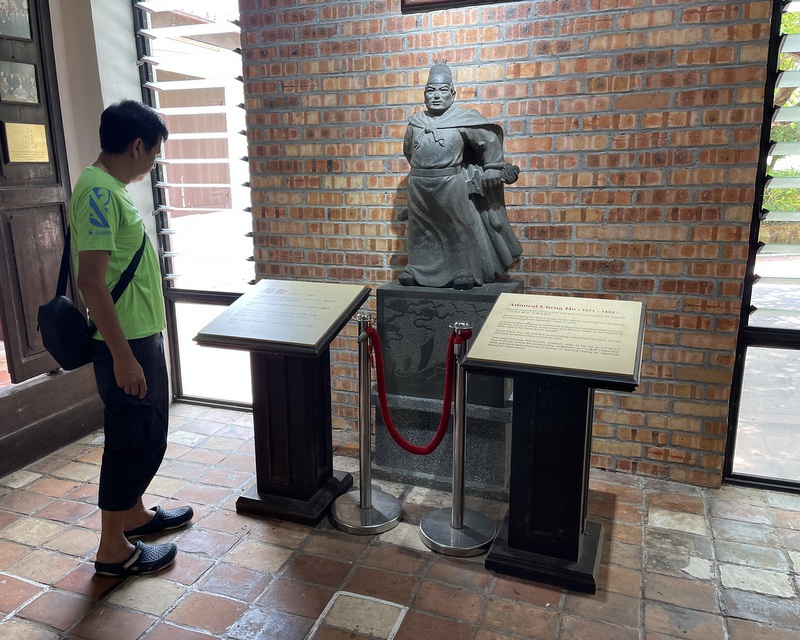
A few details of the Sam Po Kong Temple at the foot of Bukit Cina. The right picture shows a statue of admiral Cheng Ho who visited Melaka many times in the 15th century.

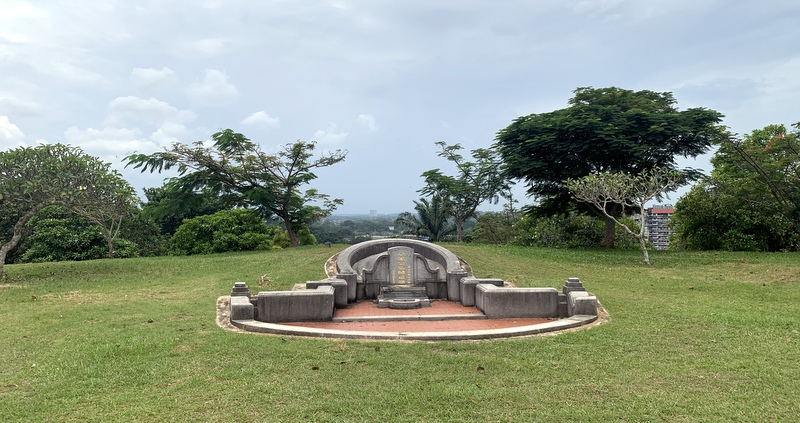
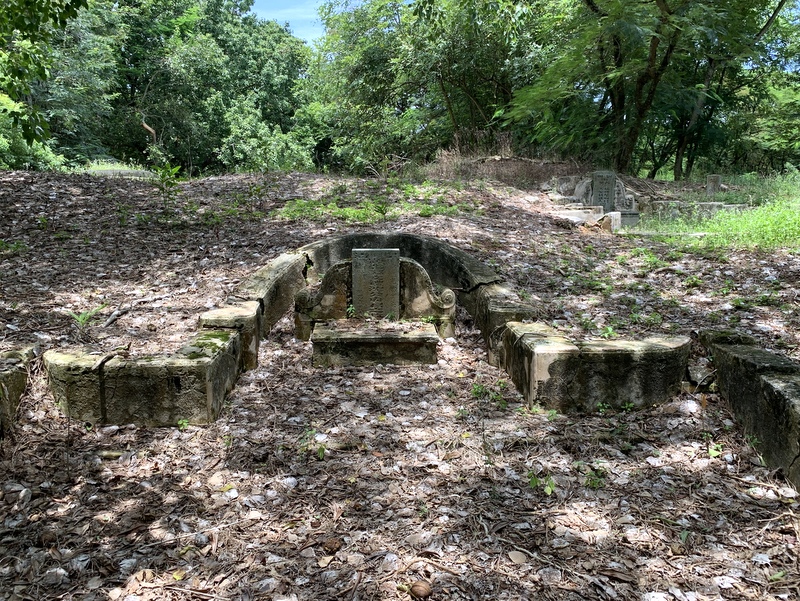
Finally we climbed up to Bukit Cina. A Chinese cemetery, very quiet during our visit, maybe because it was the month of the Hungry Ghosts ;-). On the top of the hill a monumental, symbolic grave is well kept

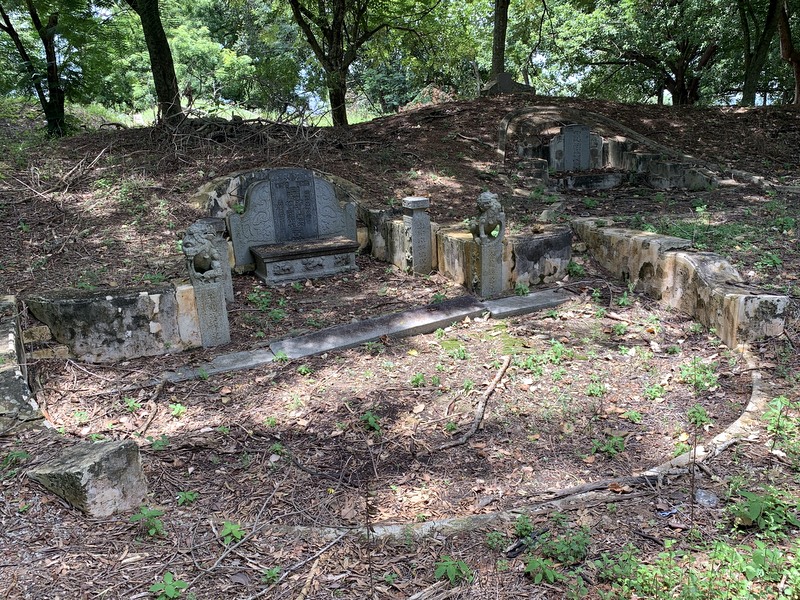
Many other graves are in disrepair. It adds to the atmosphere of the cemetery.

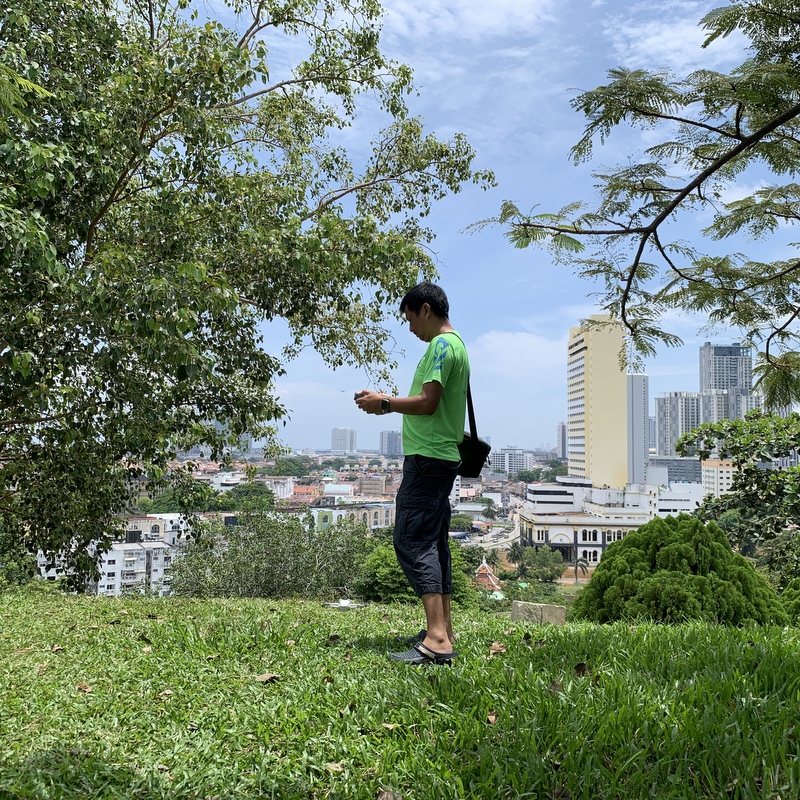
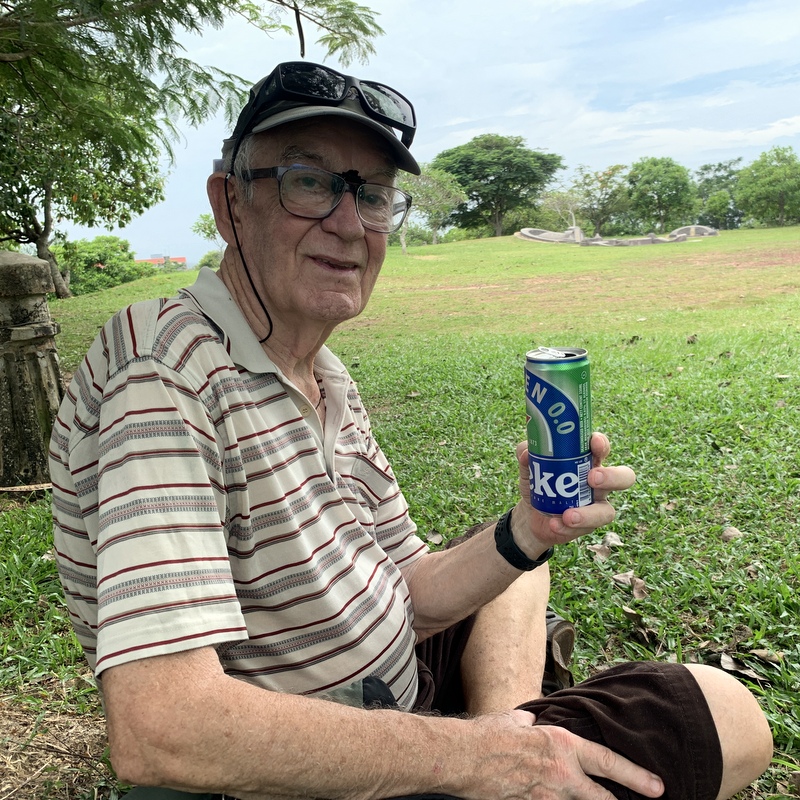
While Aric was “droning”, I enjoyed an (alcohol-free) Heineken beer.

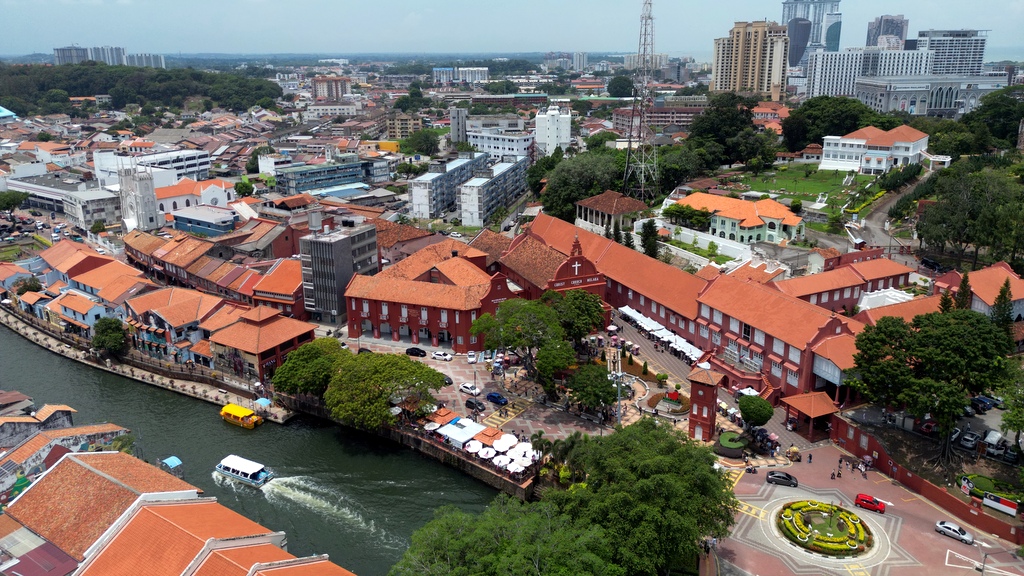
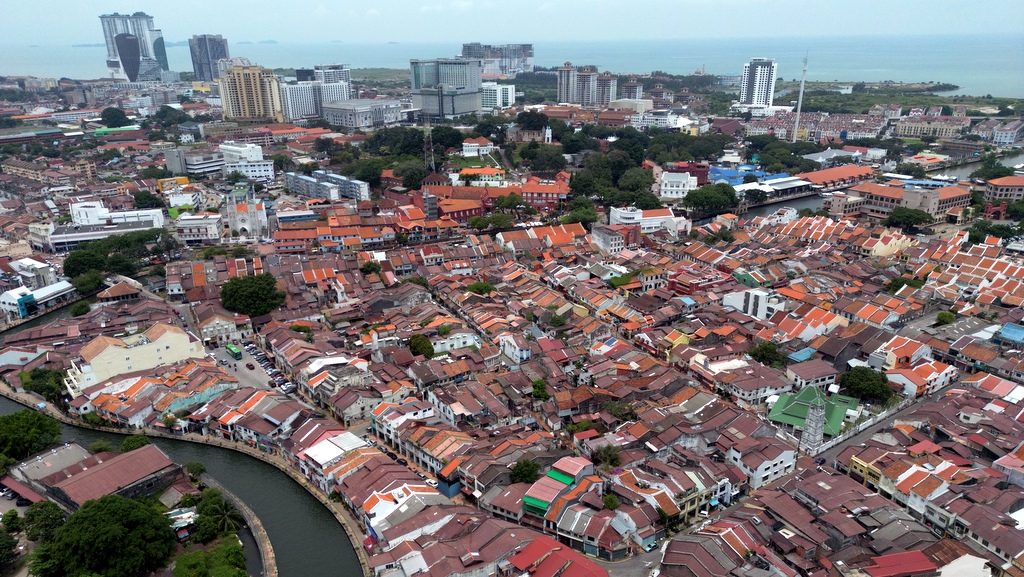
Here is a drone picture of the old town center, with the Christ Church and the Stadthuys..

And this is the old town, surrounded by modern buildings.

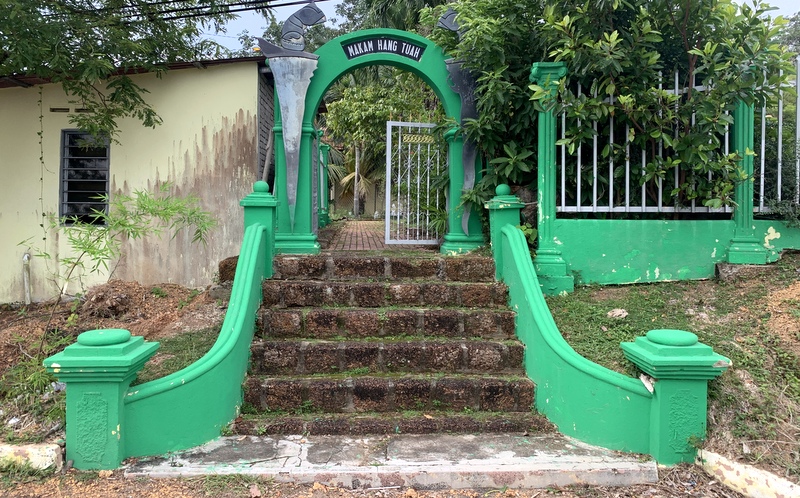
Before driving back home we visited the Makam Hang Tuah, in Tanjung Kling, about 10 km west of Melaka town.

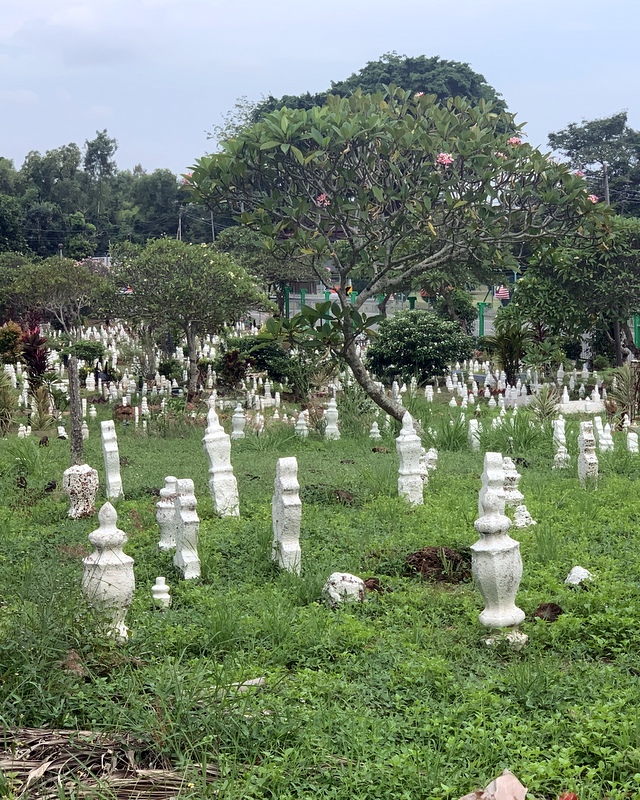
Located inside a nice Muslim cemetery and well kept.

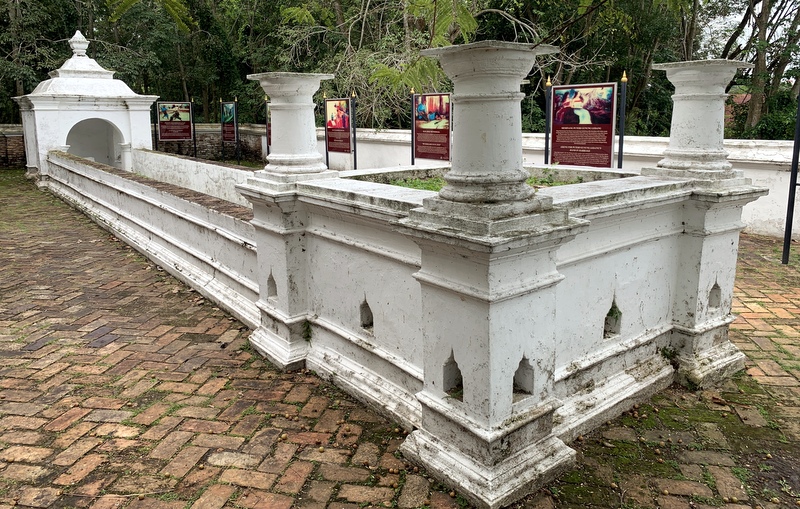
A giant grave. The signboards around the tomb tell the story of Hang Tuah .

On our way back home we had no real traffic jam. Hopefully many similar trips will follow, preferably a bit longer and better not during weekends.

The Drake equation

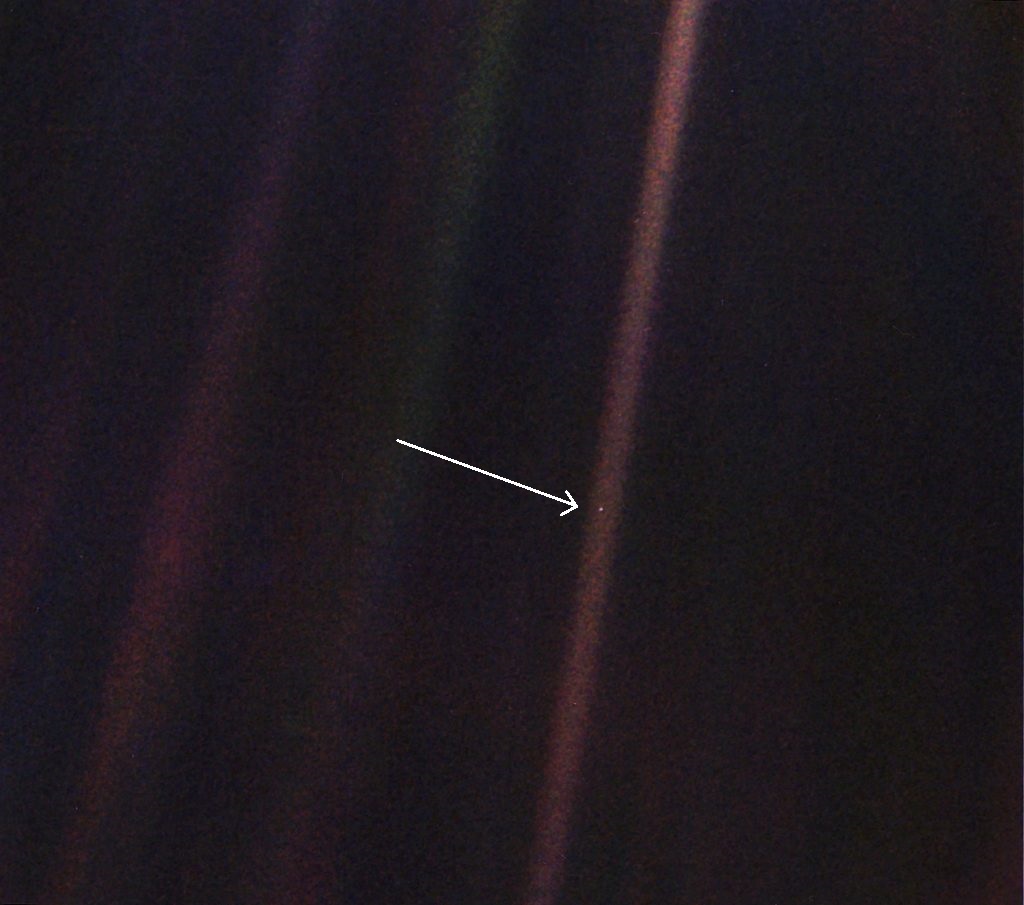
In 2019 I wrote a blog post A Pale Blue Dot with these two pictures in it. Left the iconic picture of Earth, taken  in 1972 by the crew of the Apollo 17 spacecraft, on their way to the Moon. Right a picture taken in 1990 by the Voyager 1, leaving the solar system and looking back to Earth At 6 billion km only a pale blue dot.

Earth is our beautiful world, one of the eight planets in the Solar System and the only one where life has developed, as far as we know.
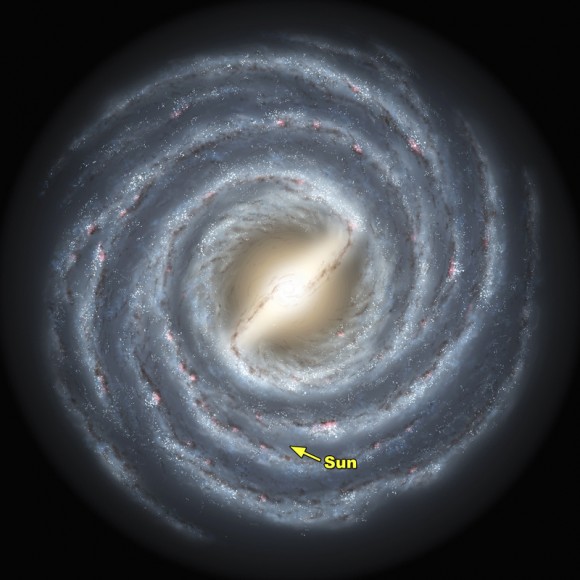
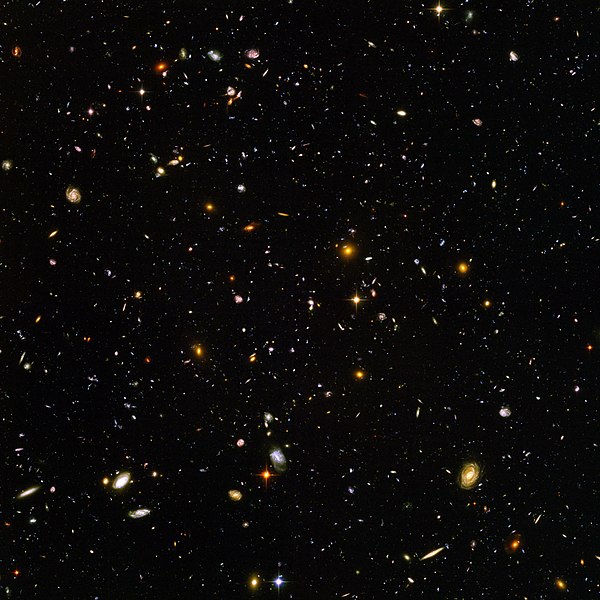
Are there other worlds in the Universe? Our Sun is one of about 100 billion stars in the Milky Way and the MIlky Way is one of an estimated 200 billion galaxies in the (observable) universe.
The left picture shows the spiral structure of the Milky Way, with the location of our Sun marked. The right picture is the famous Ultra-Deep Field image taken in 2003 by the Hubble telescope. The image shows an estimated 10.000 galaxies in a part of the sky with a diameter 1/10th of the moon.
In 1992 the first extrasolar planet (exoplanet) was detected, at the time of writing this blog more than 5000 have been found and it is now assumed that most stars will have at least one planet orbiting it. That means that in the Milky Way alone there are already billions of planets.

Wouldn’t it be strange if Earth is the only planet where (intelligent) life has developed? There could be numerous planets in the Milky Way and Universe where life has developed. Michio Kaku an American ‘science communicator’, who always enjoys being in the limelight, goes even further: “The Laws of Probability Tell Us That the Universe Should Be Teeming With Intelligent Life Forms” 

The Laws of Probability ? As usual I am a sceptic. In 2010 I wrote two posts about “Are we alone in the Universe“. My personal opinion at that time was: “Yes, we might well be alone“. Now, thirteen years later, my opinion is still the same, maybe even stronger.

After this lengthy introduction, time to go back to the topic of this post, the Drake Equation.

Speculation about extraterrestrial life dates back to antiquity. Around 1900 it was thought by many that the planet Mars had irrigation canals, built by intelligent beings. Development of more powerful telescopes showed that those canals were an illusion. But maybe there were intelligent beings outside our solar system? This led in the 1960’s to the SETI program. the Seach for Extra-Terrestrial Intelligence. Involved in this program was Frank Drake, a young American astronomer. To have discussion points for the first scientific SETI meeting, he came up with what is now called the Drake equation.

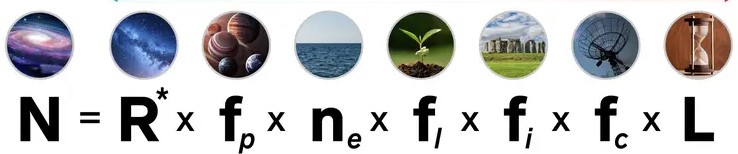
Actually it is NOT an equation, it is an estimate for the number of intelligent civilisations in our Milky Way. The idea is simple, you start with how many stars are born yearly in the Milky Way. How many of these stars will have planets, how many of these planets will be suitable for life, how many of these suitable planets will actually develop life. How many planets with life will develop civilistations (intelligent life), and how many of these civilisations will be able/willing to communicate with us. And finally, how many years will such a civilisation survive.

Here the Drake equation is visualised: The estimated number of intelligent civilisations in the Milky way who can communicate with us is given by N as the product of a number of factors.

R* = how many stars are born every year in our galaxy. (R = 1 yr−1)

fp = the fraction of these stars that have planets. (fp = 0.2 to 0.5)

ne = the average number of planets in the habitable zone of such a star (ne = 1 to 5)

fl = the fraction of habitable planets that actually develop life. (fl = 1)

fi = the fraction of those planets, where evolution leads to civilisations with intelligent life (fi = 1)

fc = the fraction of these civilisations that develop a technology capable of releasing detectable signs of their existence into space. (fc = 0.1 to 0.2)

L = the length of time that such a civilisation will exist.(L = 1000 -100,000,000 years)

In the 1961 discussion the various factors were discussed. I have given these estimates above. Using the lower limits, it gives a minimum of N ≈ 20 technological;y advanced civilisations, who could send signals to us. If those civilisations have not self-destructed, L could be many millions of years resulting in maximum of N ≈ 50.000.000 !

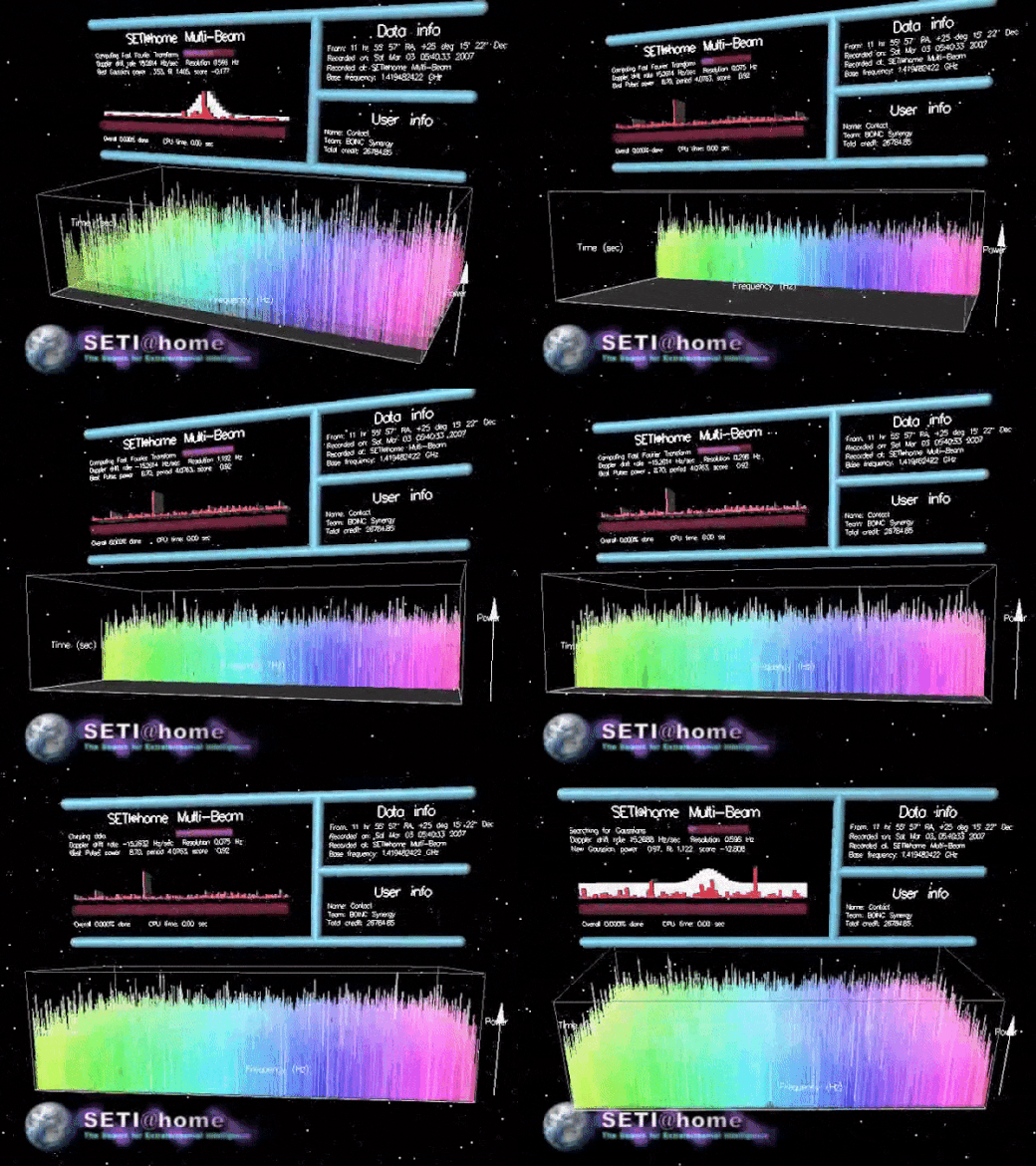
With this evaluation you will understand that it made sense to start the SETI program. After a few years a distributed computing project SETI@Home was started, where volunteers could use the idle time of their PC’s to analyse data from radio telescopes, searching for signals. of intelligent life . Many years I have taken part in this program. My PC during idle time was doing this.

After about 20 years the program was stopped, without any results. But in 2016 a follow-up project started Breakthrough Listen. Basically the same as SETI, but much more powerful, it will generate as much data in one day as previous SETI projects generated in one year. Until now no positive results.

I ended my 2019 post with :”As soon as evidence of life will be found, on Mars or deep under the frozen oceans of Jupiter’s moon Europa, I will celebrate and be convinced that life indeed is teeming in the Universe. Until then, I believe in the Rare Earth Hypothesis , that we might well be alone.

What is this Rare Earth hypothesis? In 2000 Ward and Brownlee published a book Rare Earth: Why Complex Life Is Uncommon in the Universe in which they argue that primitive (microbial) life may be common in the Universe, but that complex (intelligent) life is probably very rare.

I agree with them that complex life will be rare in the Universe, but I no longer think that primitive life will be common.

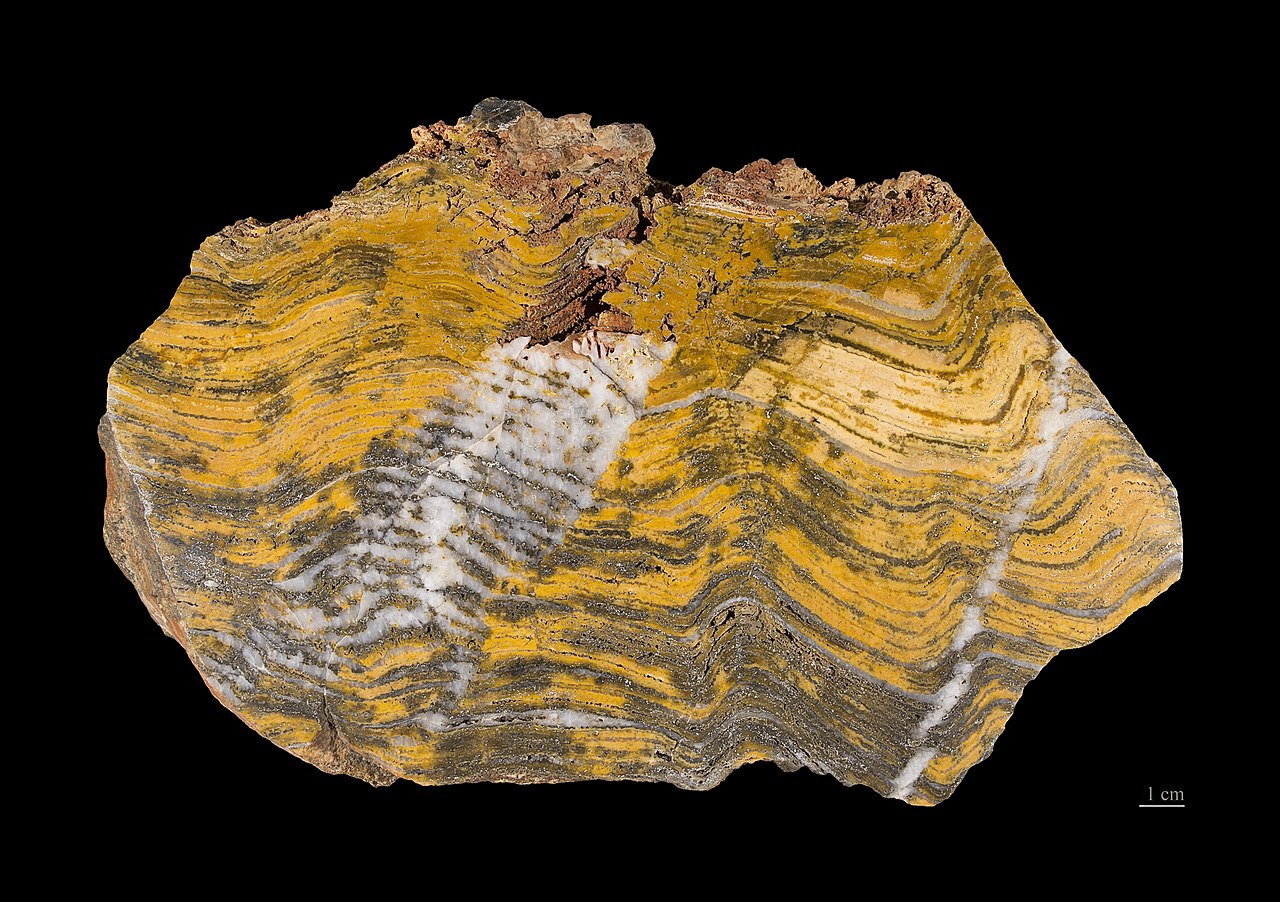
A few months ago I published a post Perseverance perseveres about the Mars rover who is looking for traces of past life on the planet Mars. The scientists were expecting/hoping to find stromatolites, fossils of microbial life formed in the time that Mars had water. Something similar to this, found in Australia, 3.4 billion year old.

Until now no sign of fossil microbial life has been found. So it could be that the chance that primitive life develops on a planet in the habitable zone is also small!

As long as no sign of (fossil) microbial life is found in our solar system or elsewhere, I think that even primitive life may be rare in the universe. I used to say, We may be alone in the Universe. I now go one step further:

We are probably alone in the Universe

But of course I hope that I am wrong

Kota Bharu trip, July 2023

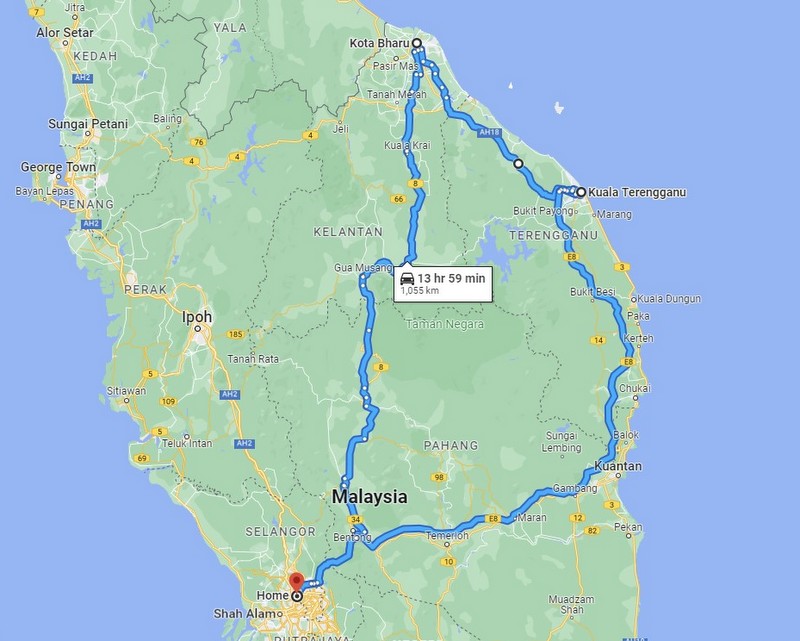
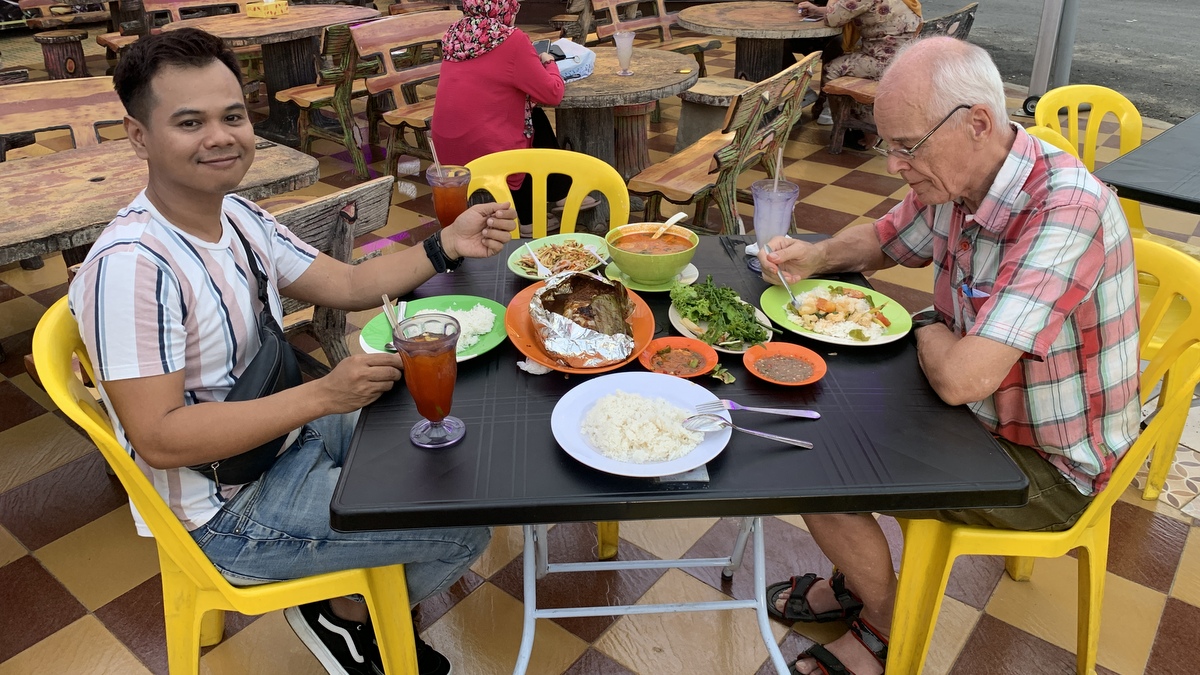
Here is a report about a 5D4N trip to Kota Bharu, organised by Paul and Fahmi. When I showed my interest, they invited me to join, It’s a long drive from KL to Kota Bharu, we used the inland route via Gua Musang, it took us about 7 hours, with some sanitary stops and lunch in the Gua Musang R&R.

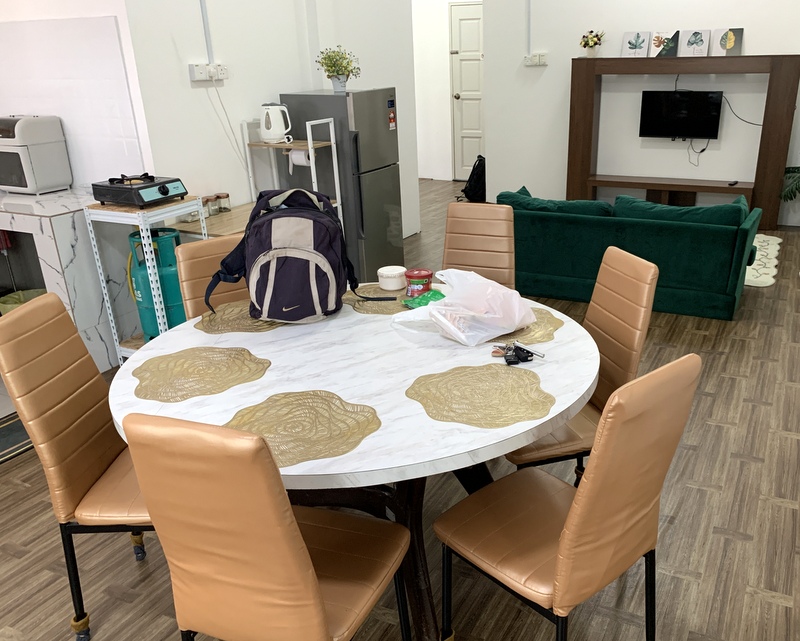
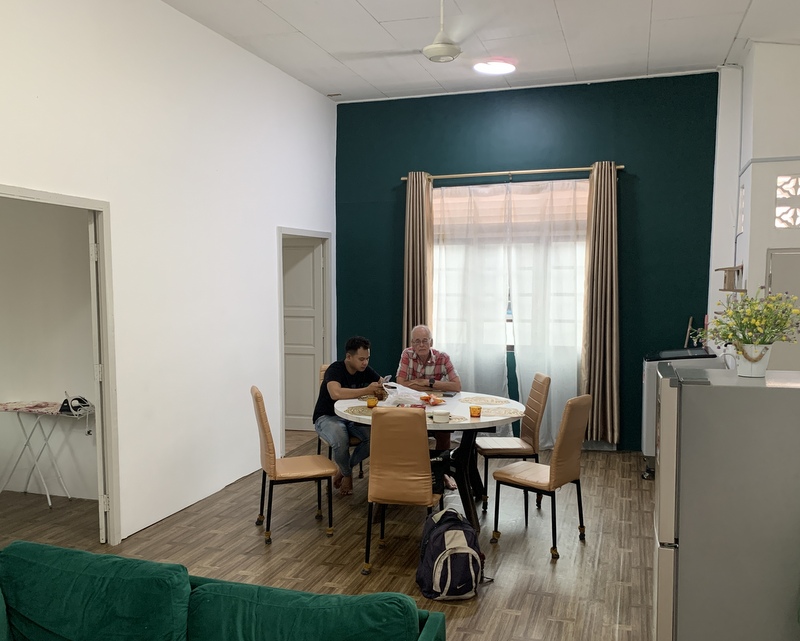
Paul and Fahmi had booked a homestay a bit south of the town center, in a kampung, but the house was modern and big enough for us, with three bedrooms.

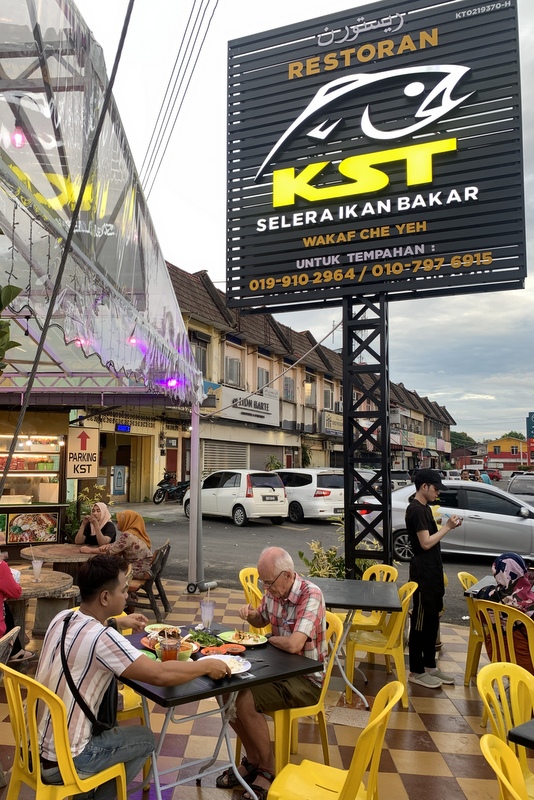
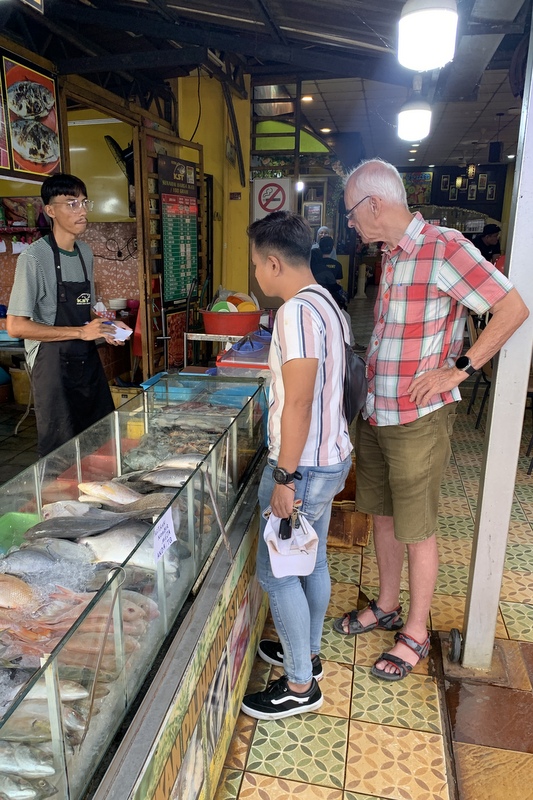
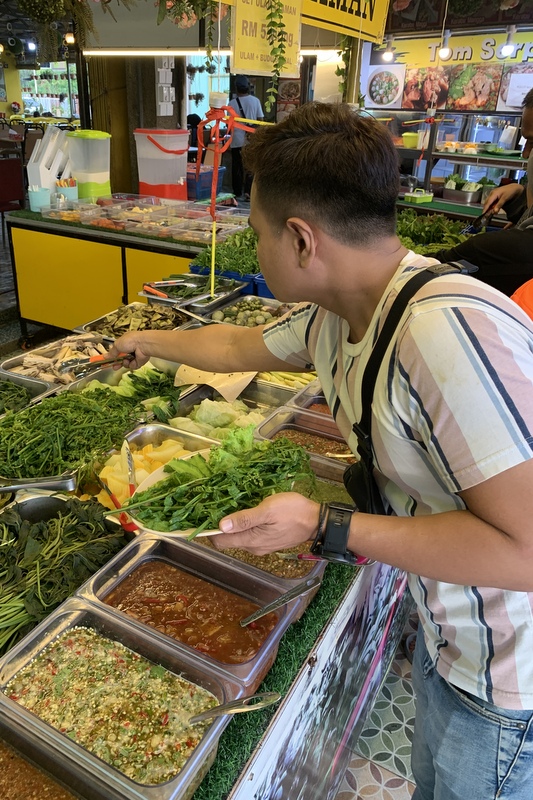
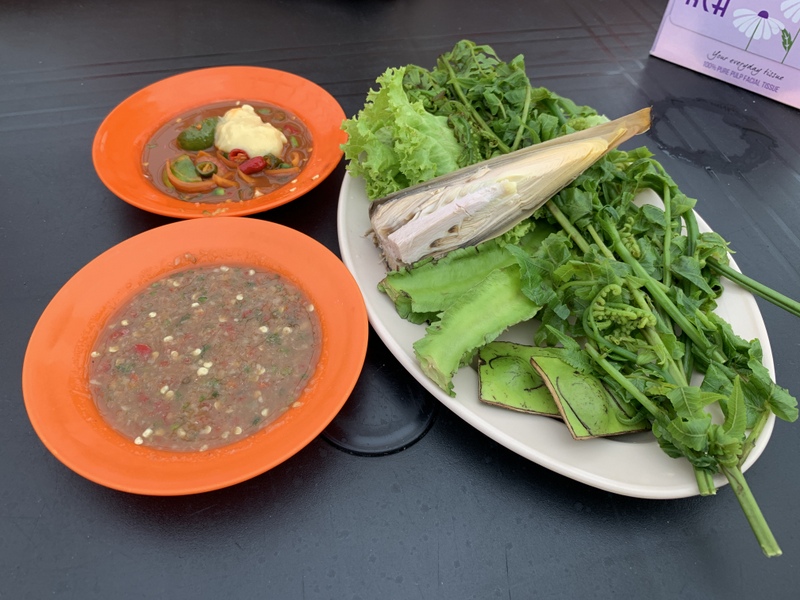
After a rest we went out for dinner The KST restaurant has good reviews and was not far from our homestay. Fahmi selected a fish for the Ikan Bakar and picked a variety of fresh vegetables for the Ulam, a Malay salad, where you dip the raw veggie in a sauce of your choice. .

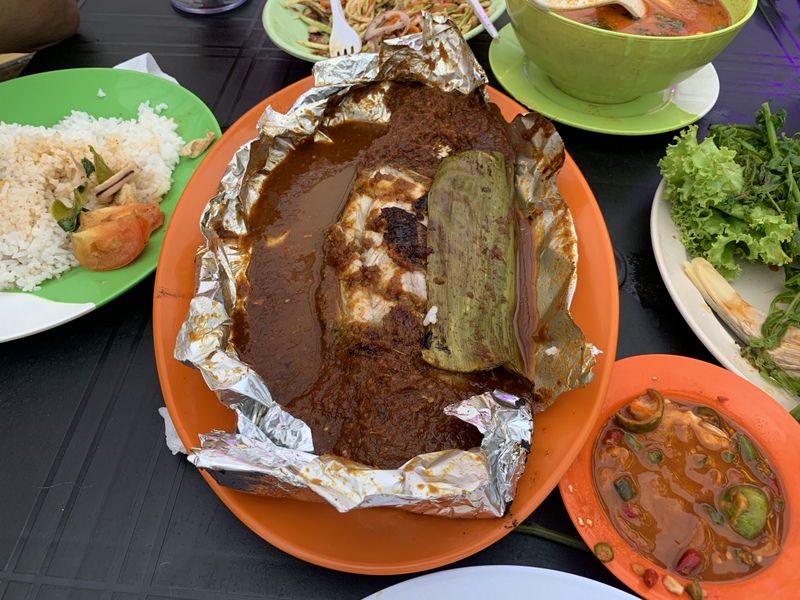
Left the ulam with two sauces, right the Ikan Bakar.

We also had Mango Salad and Tomyam soup. I nice start of our trip.

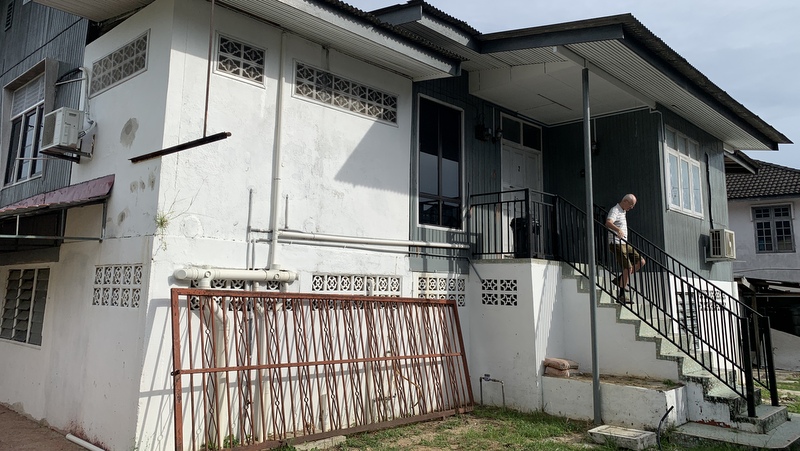
The next morning I took a photo of our homestay.. The owner (?) is living in the left part of the house. We had very good privacy in our part.

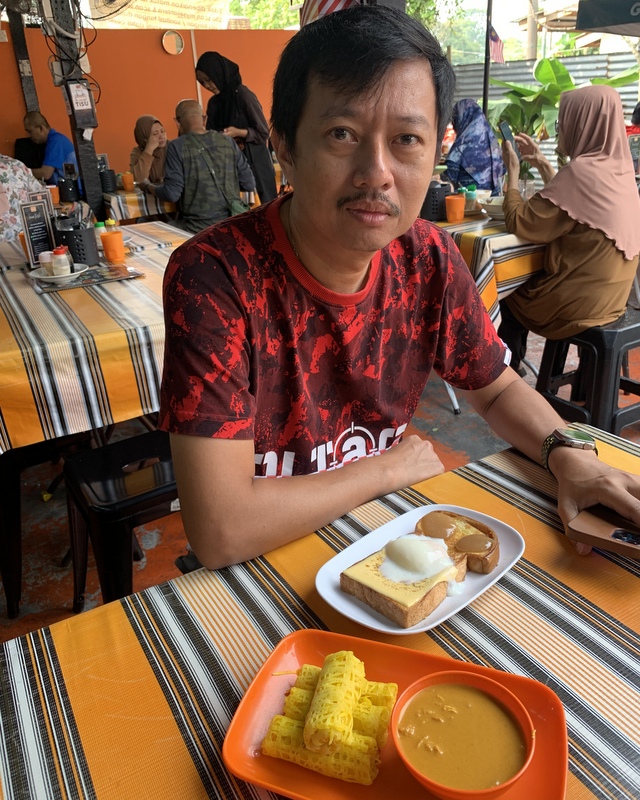
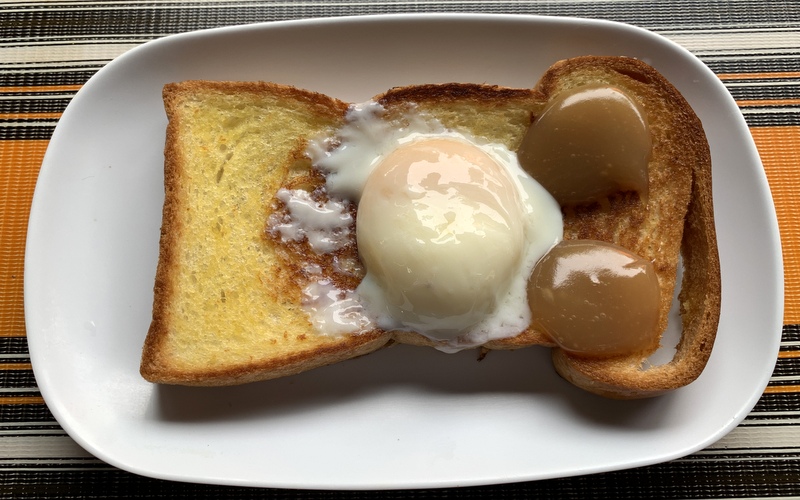
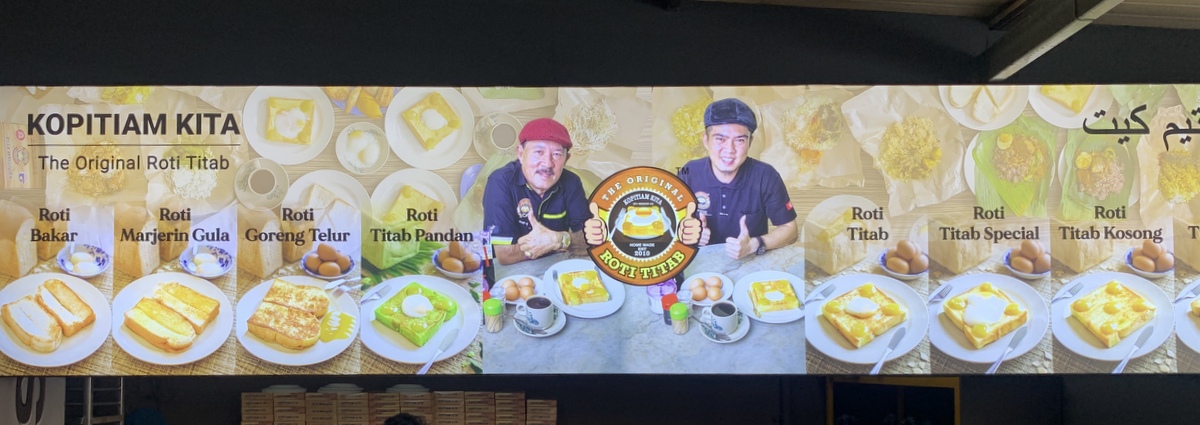
For our breakfast we went to another popular eatery, Kopitiam Kita. Famous for its Roti Titab, toasted bread with an half boiled egg and some kaya in the four corners.

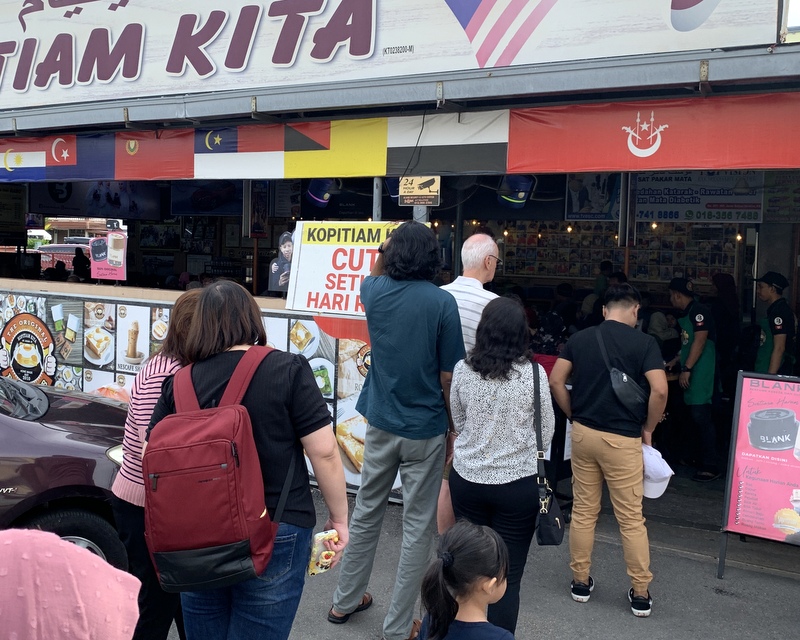
We had to queue, but found a table reasonably fast.

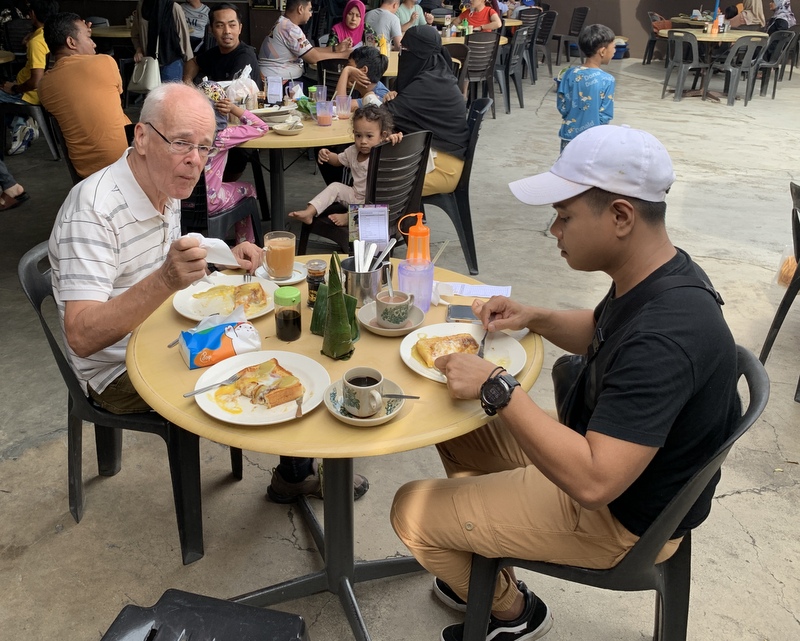
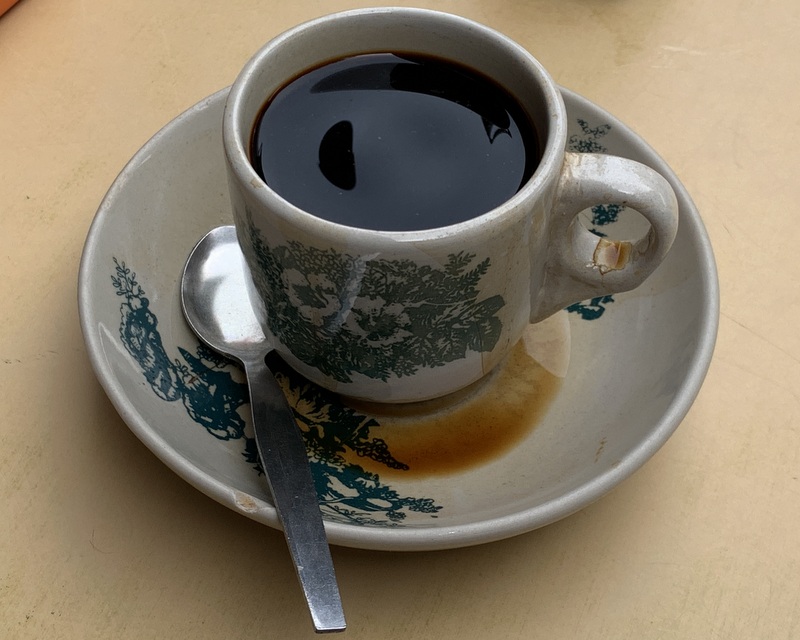
The Roti Titab looks a bit weird, but was actually very tasty. Coffee was also good. Friendly service.

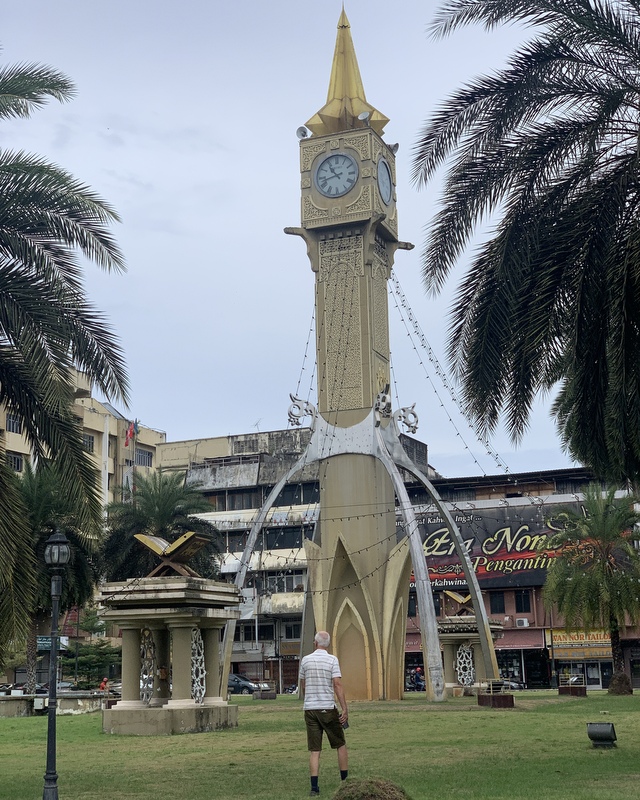
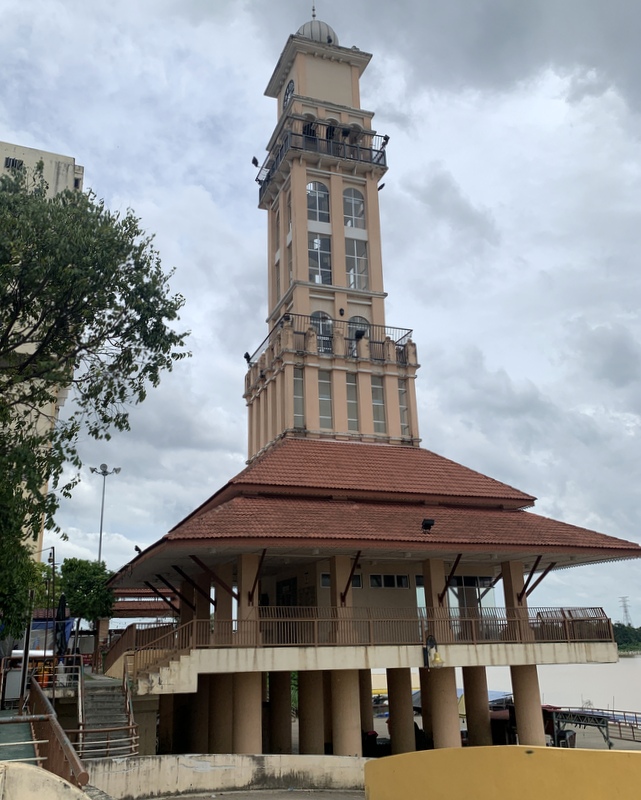
We drove to the center of the town and parked our car. Left the clock tower in the town center. Inspired by the Big Ben (?), could not find the date when it was built. Right a recent one, near the river. Both not really special.

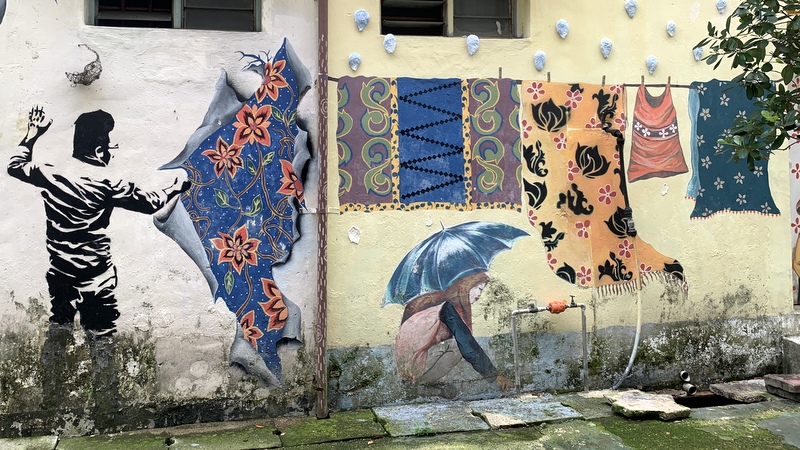
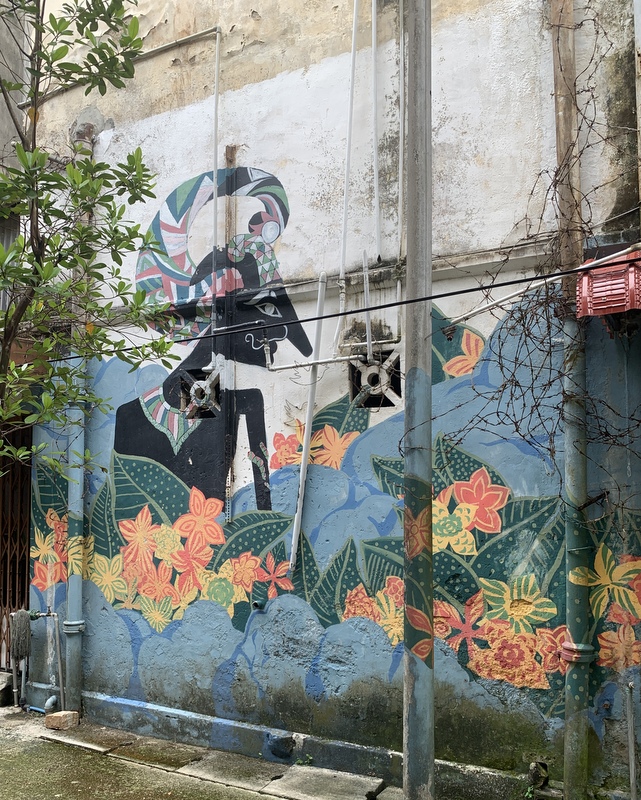
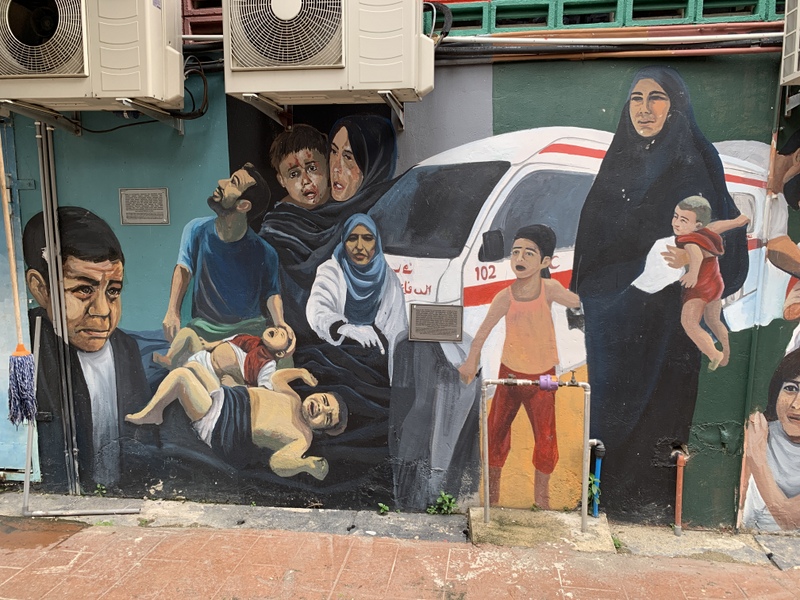
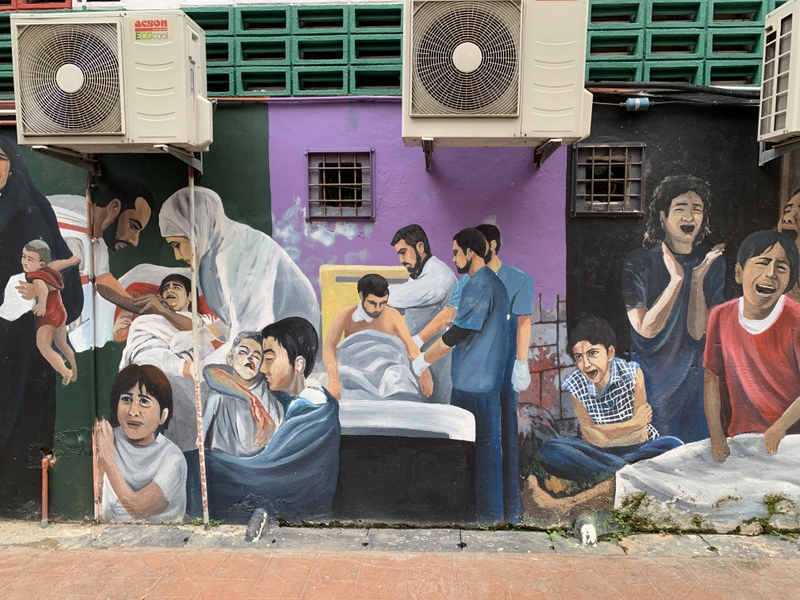
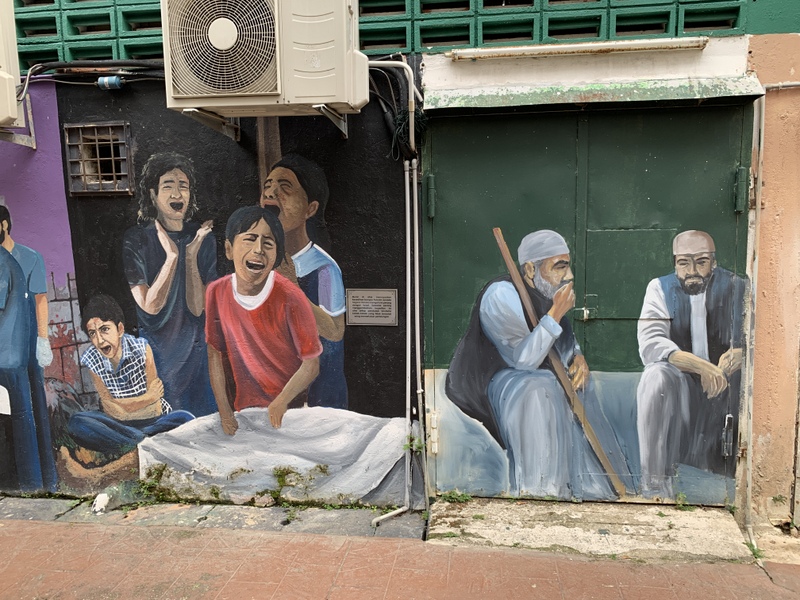
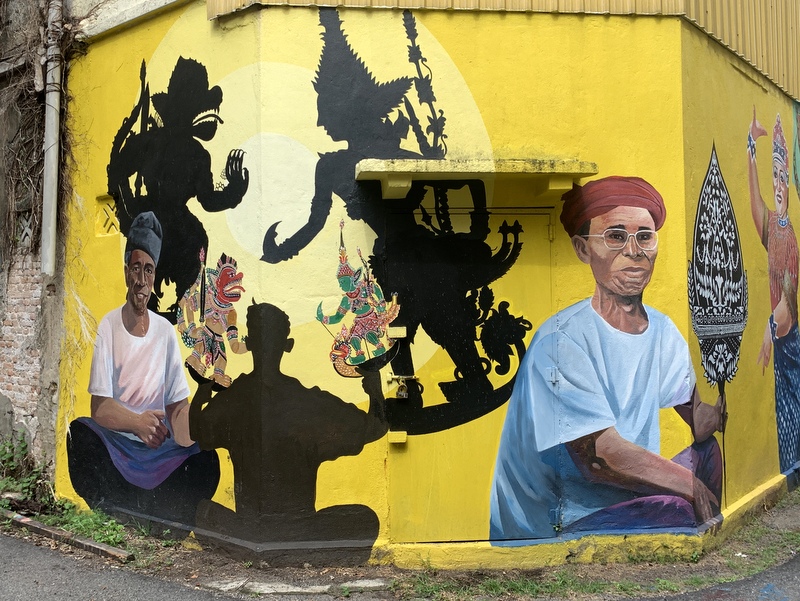
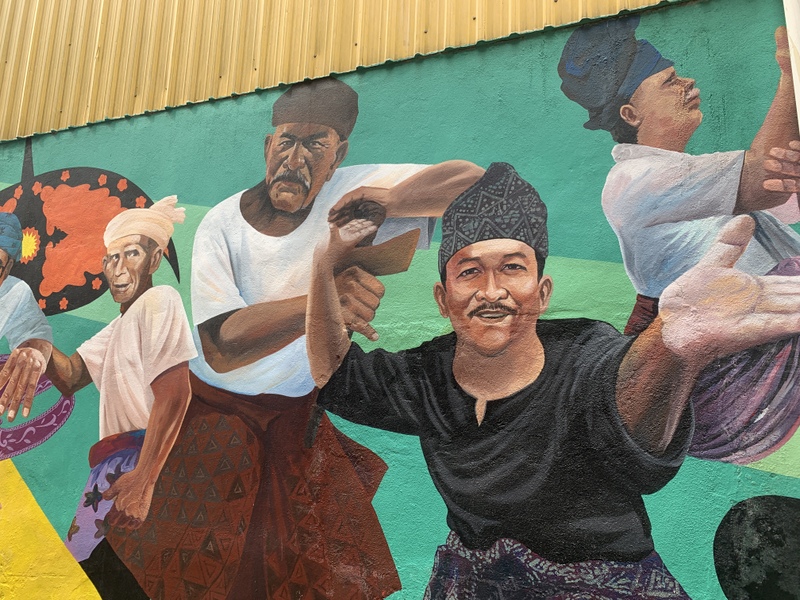
One of the attractions of Kota Bharu is its Mural Art. Nowadays Mural Art can be seen all over Malaysia, after Zacharevic’s creations in Penang and Ipoh started the trend. Often they are of mediocre quality, using a wall just as a canvas. Here in Kota Bahru they are quite acceptable, often depicting Kelantanese topics, like wayang kulit or kite flying.

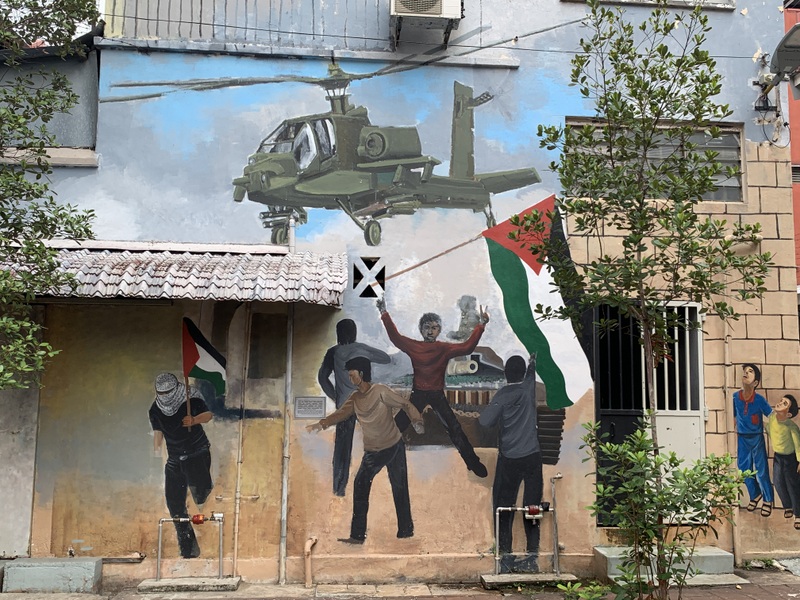
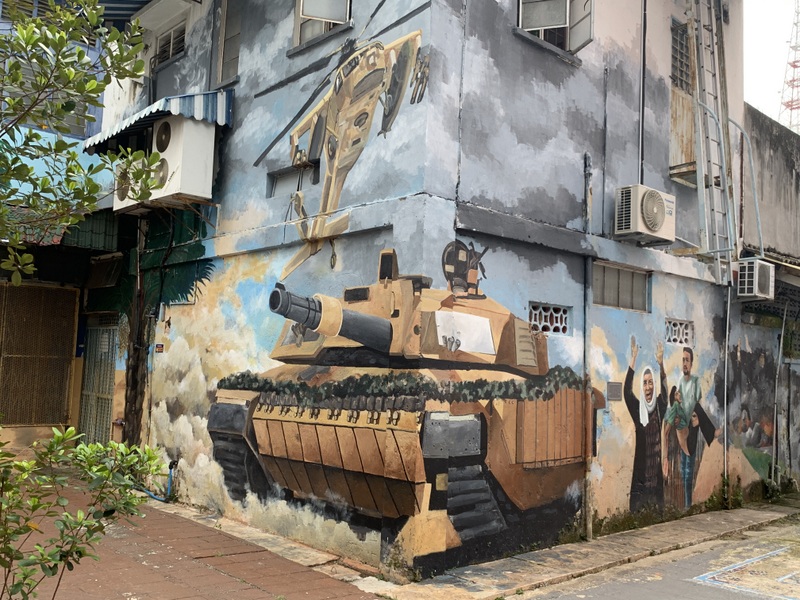
One section is dedicated to the Palestine war, a bit depressive but quite interesting. Kelantan is probably the most conservative Islamic state of Malaysia, strongly against Israel and in support of Palestine.. Here is a collection of scenes.

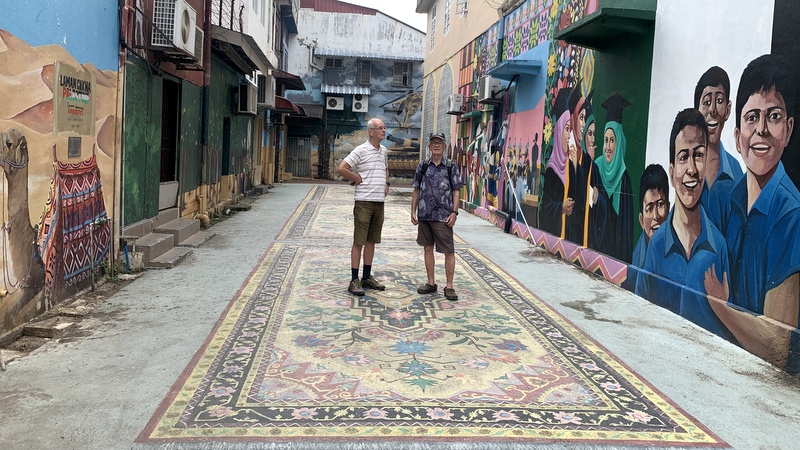
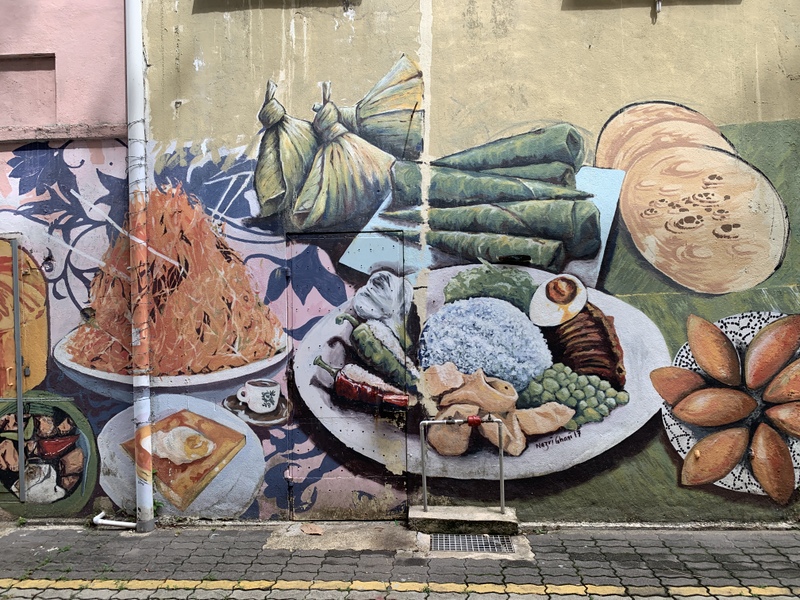
Another section, less depressive, is about Kelantanese life, food, customs etc.. The carpet on the floor has been painted!

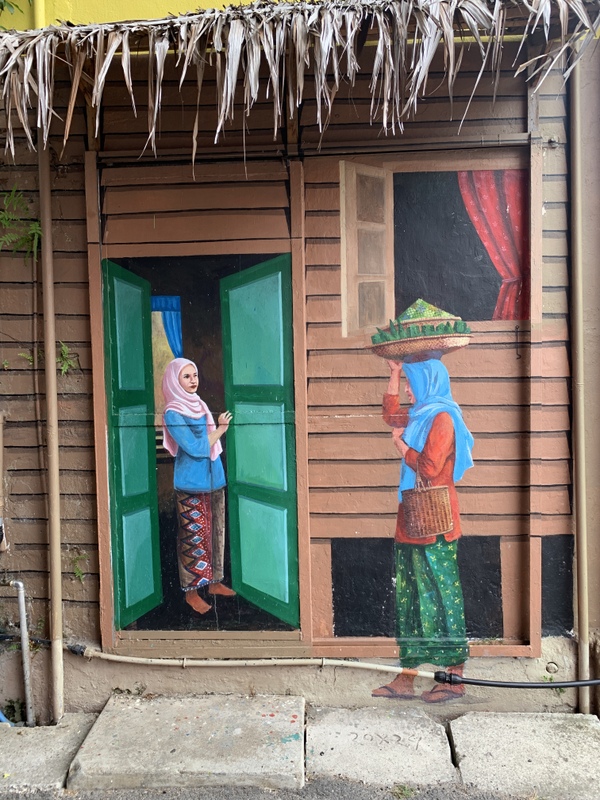
Various scenes of kampung life.

Nice countryside.

Left Wayang Kulit, right Silat (Malay martial art).

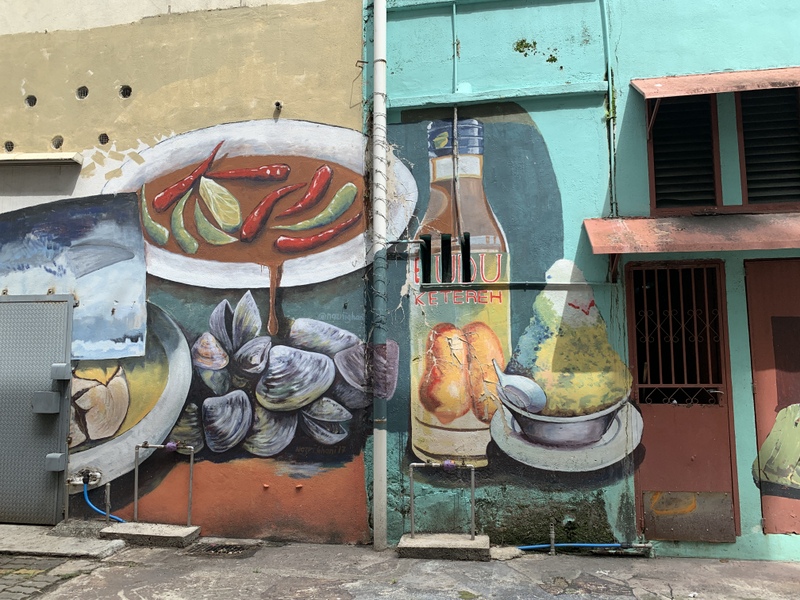
And of course food 😉

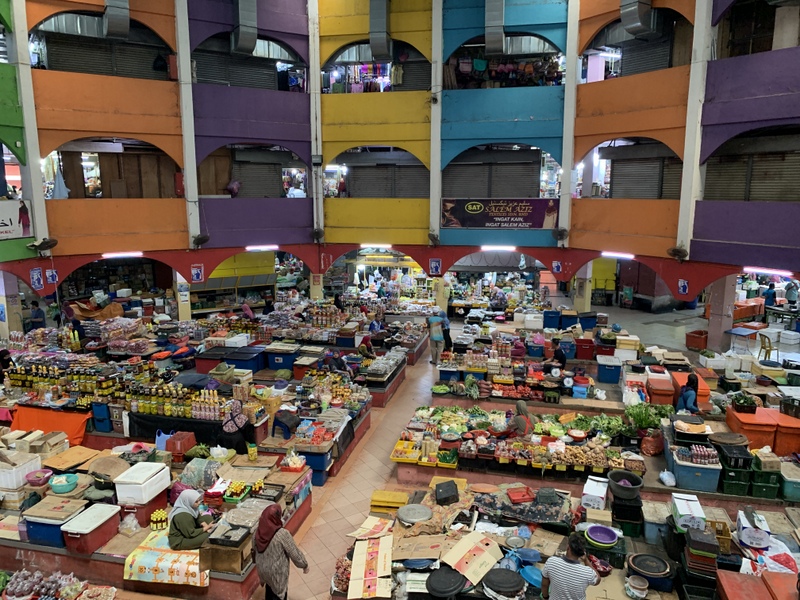
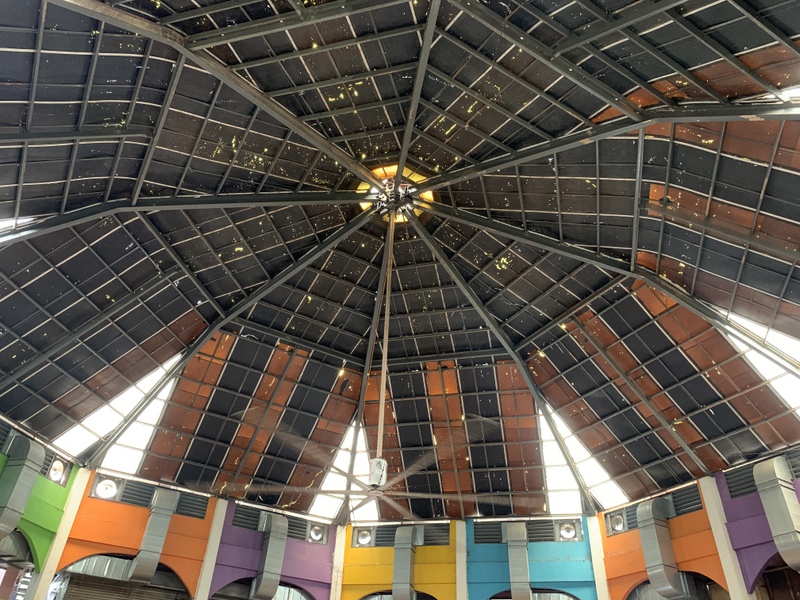
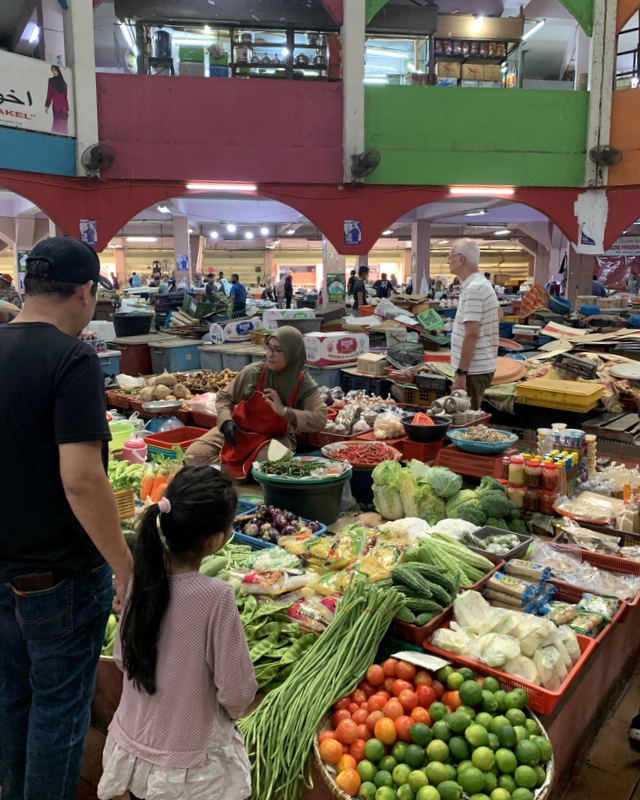
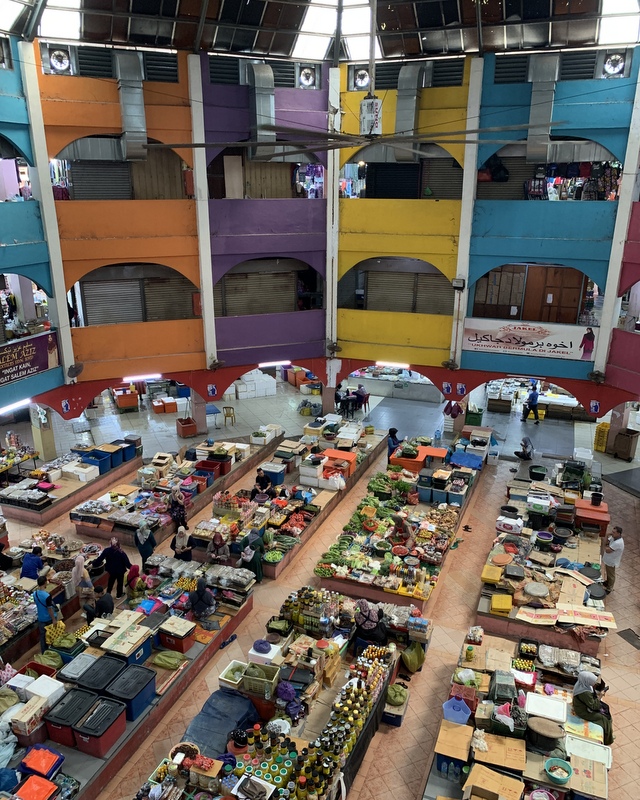
After walking around in this quarter of town, we had a look at Kota Bharu’s famous Siti Khadijah Market. The market is not old, it was opened in 1985 as the Buluh Kubu Market, but in 1997 renamed Siti Khadijah, after the wife of the Prophet Mohammed. Three storeys high, very colorful. The ground floor is a wet market.

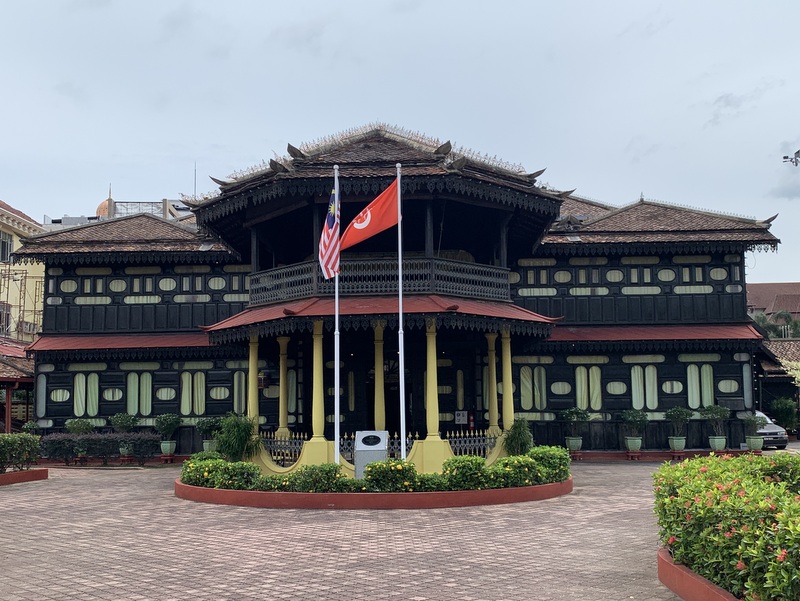
Kota Bharu has quite a number of museums. We only visited Istana Jahar, built as a royal residence in 1855. Now it houses the Museum of Royal Traditions and Customs of Kelantan.

When you are interested in colonial architecture, there is no need to visit Kota Bharu. We found only one building, a bank, built in 1912 and completed in 1922. It now houses the War Museum. In 1941 the Japanese invasion of British Malaya started with the landing of troops on the beaches of Kota Bharu.

Nearby is the Royal Landing Pier, We found a suitable place for lunch. In the background you see the clocktower near the Royal Landing Pier.

Walking back to our car we passed one more example of street art, an interactive one this time. Of course I had to try it 😉 .

After a long rest in our homestay we went out again, to the Cahaya Bulan beach.

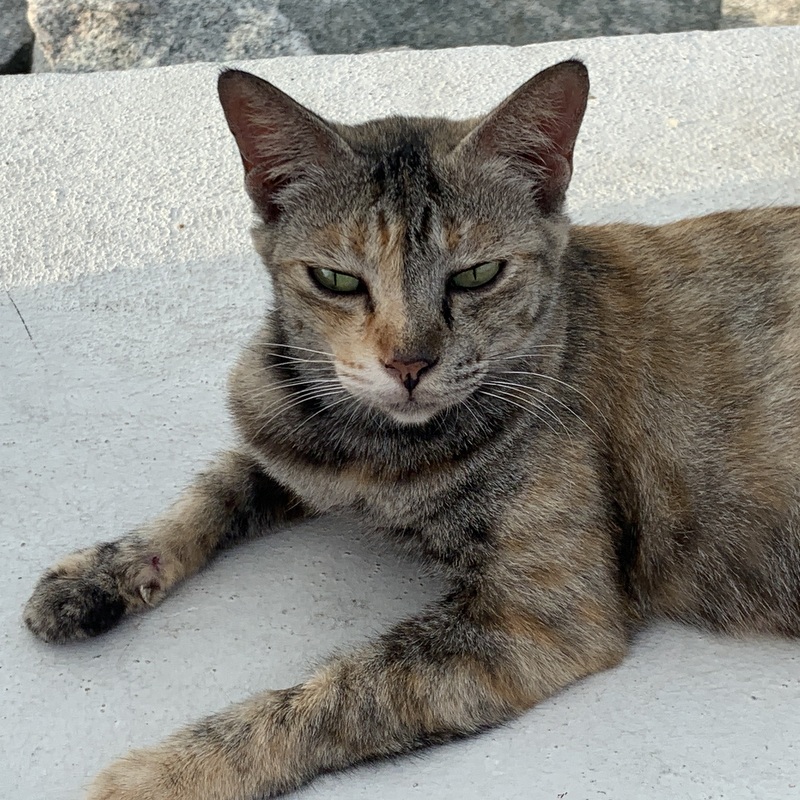
Paul is not really a cat lover, not clear why cats always like him !

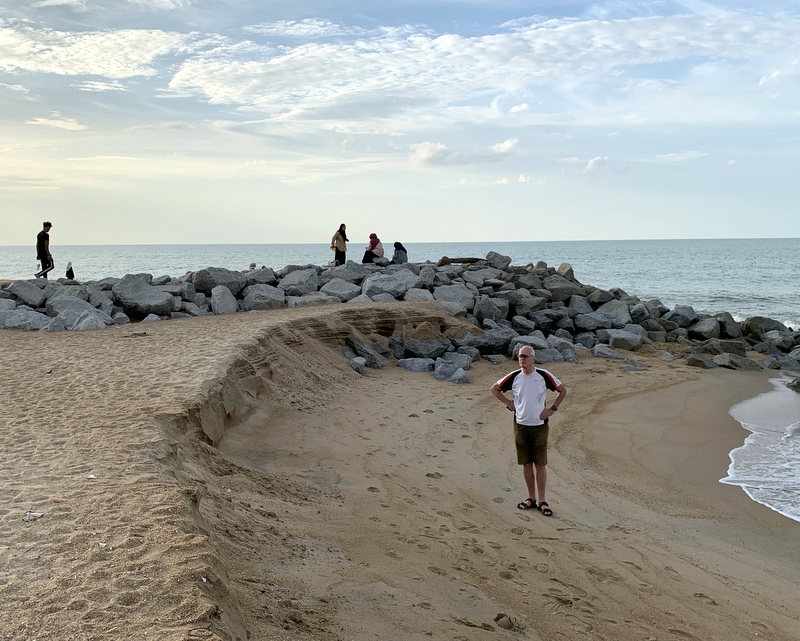
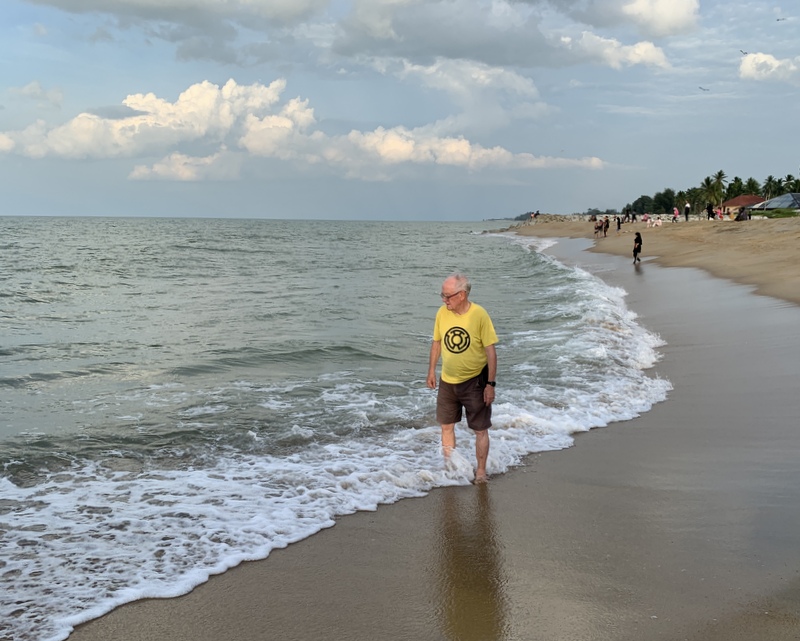
The beach is nice, but not spectacular.

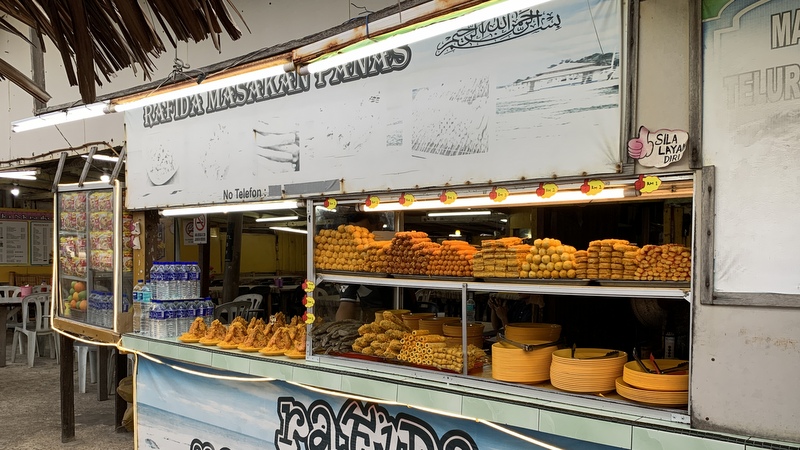
Many food stalls along the beach.

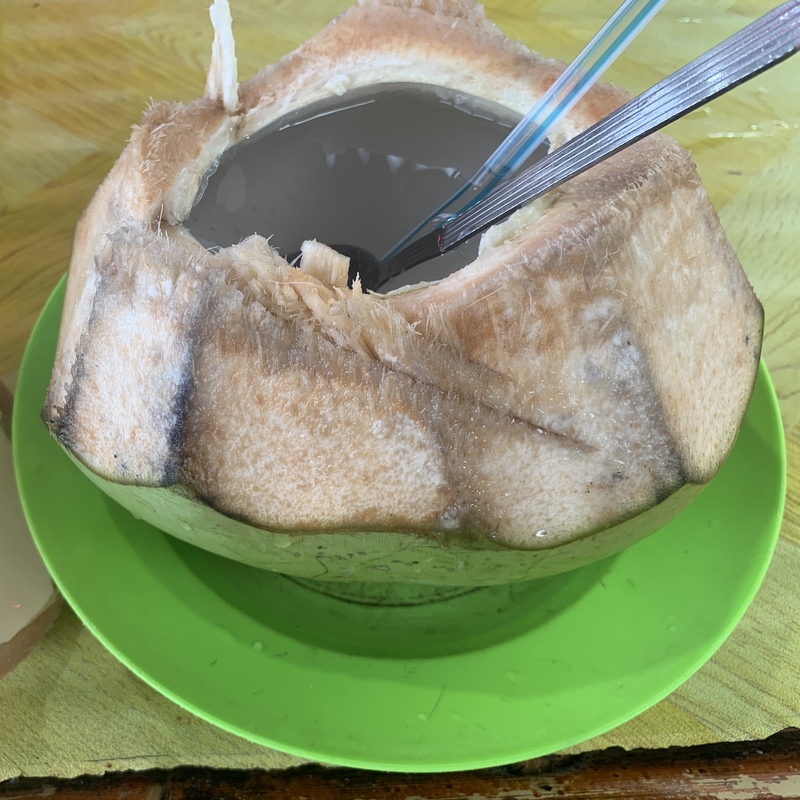
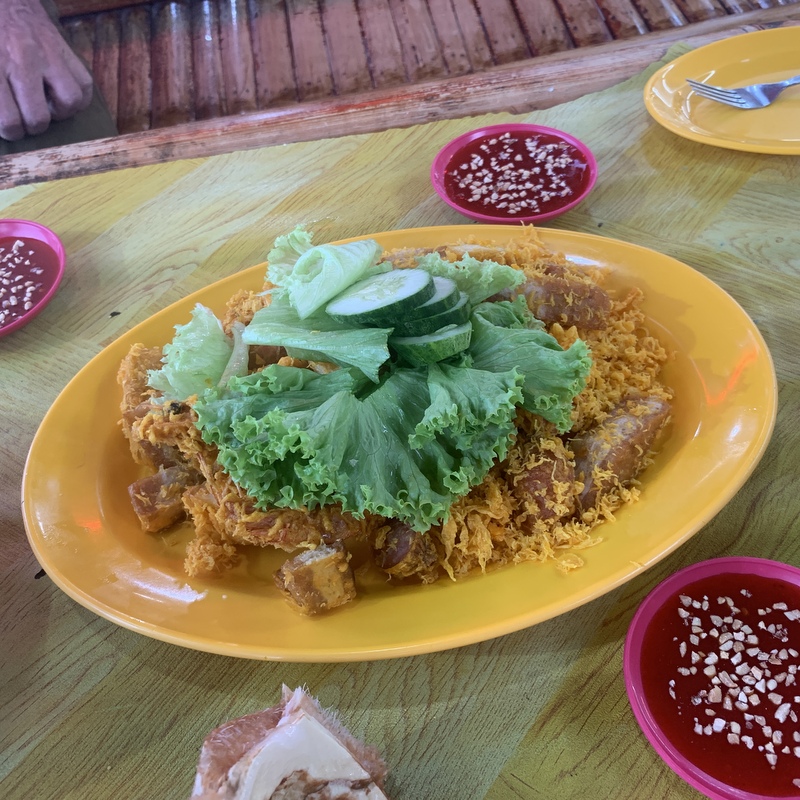
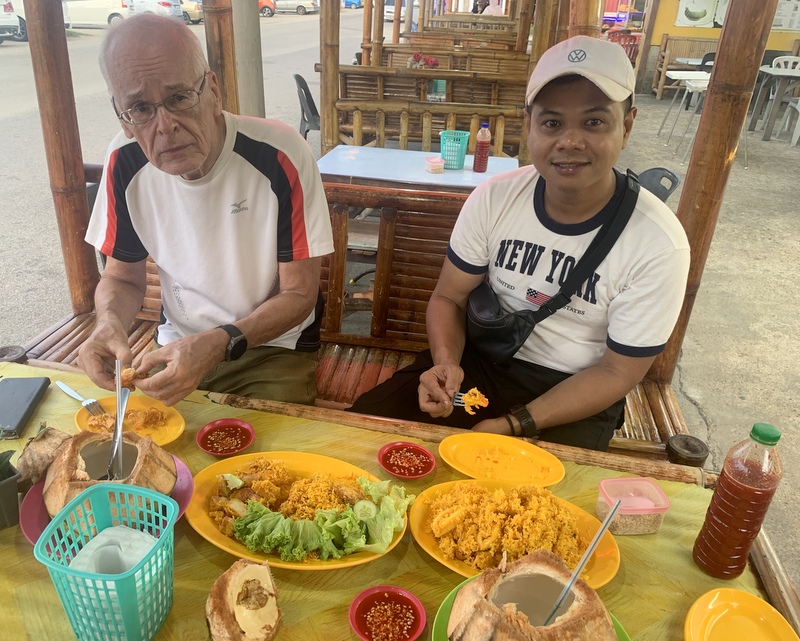
We ordered deep fried squid (celup teping sotong) and prawns. With a coconut as a drink.

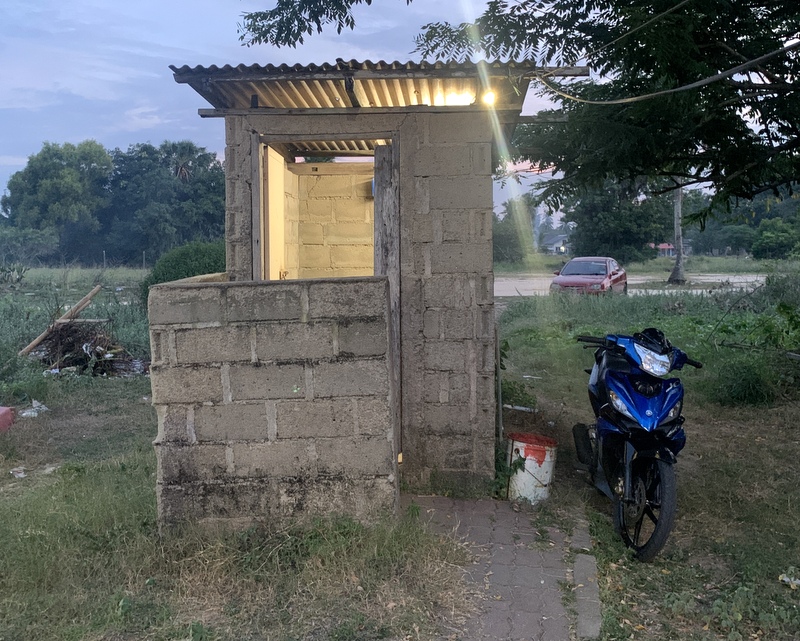
The stall even had an outside toilet!

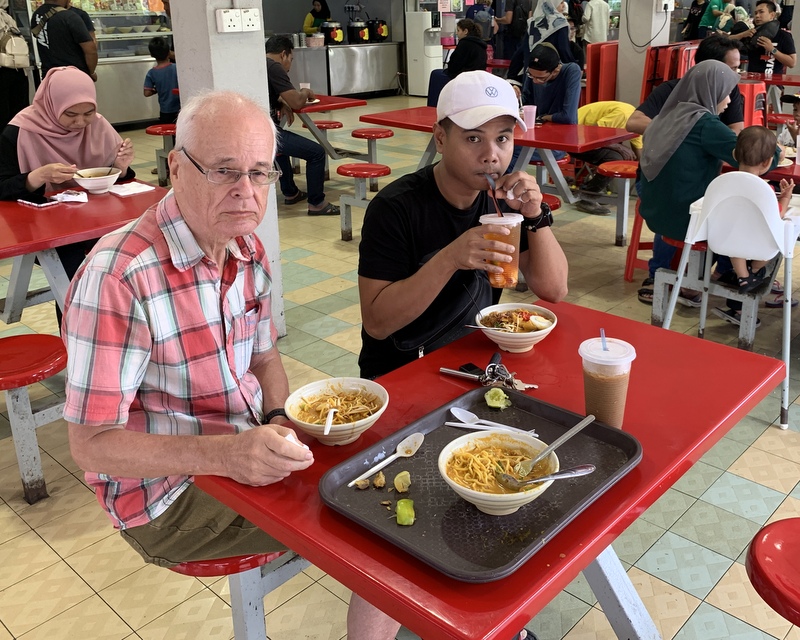
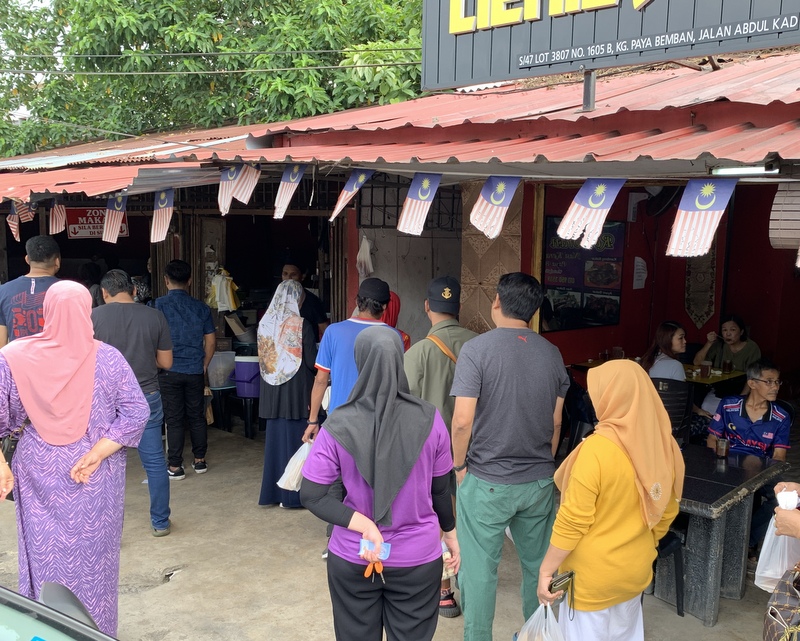
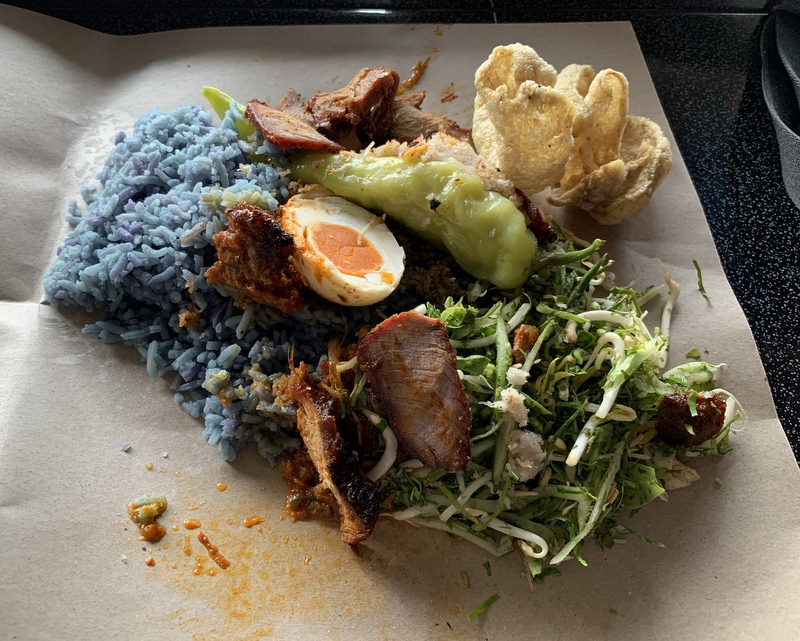
The next day was already our last day in Kota Bharu. We still had to try the Nasi Kerabu and went to Liniey Nasi Kerabu Tumis, where we had to queue for some time, as it is a very popular eatery. But it was worth it.

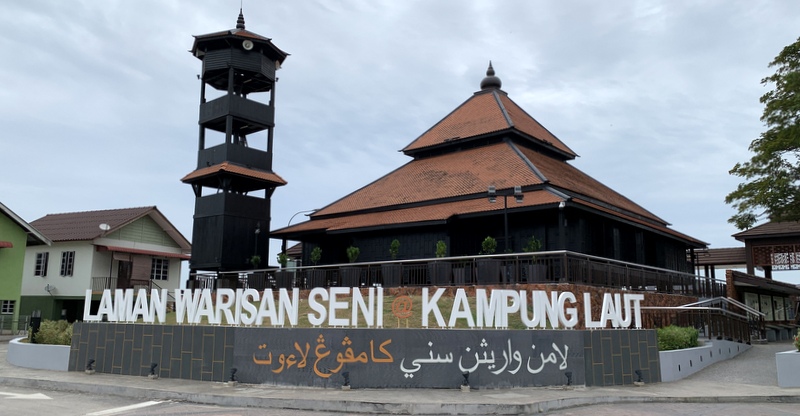
Our first destination for the day was the Kampung Laut Mosque. We had to cross the Kelantan river to reach the mosque.

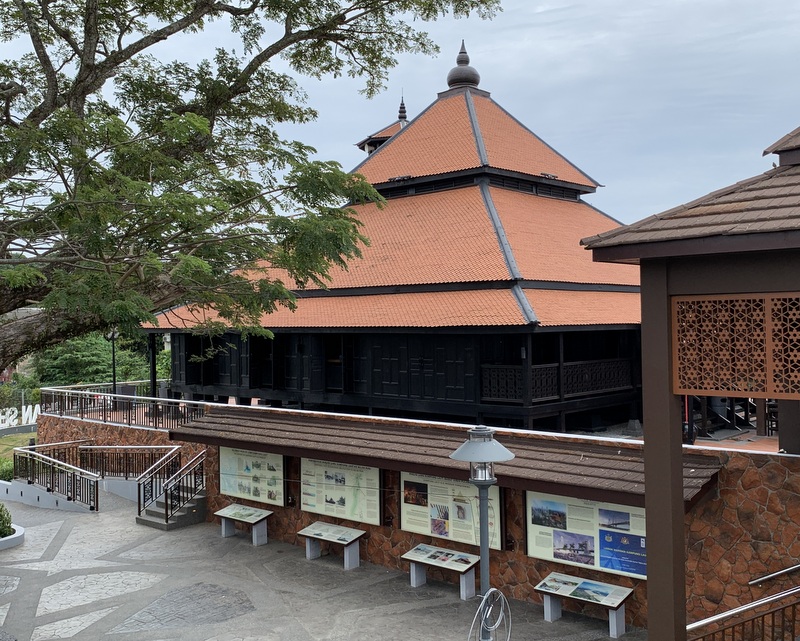
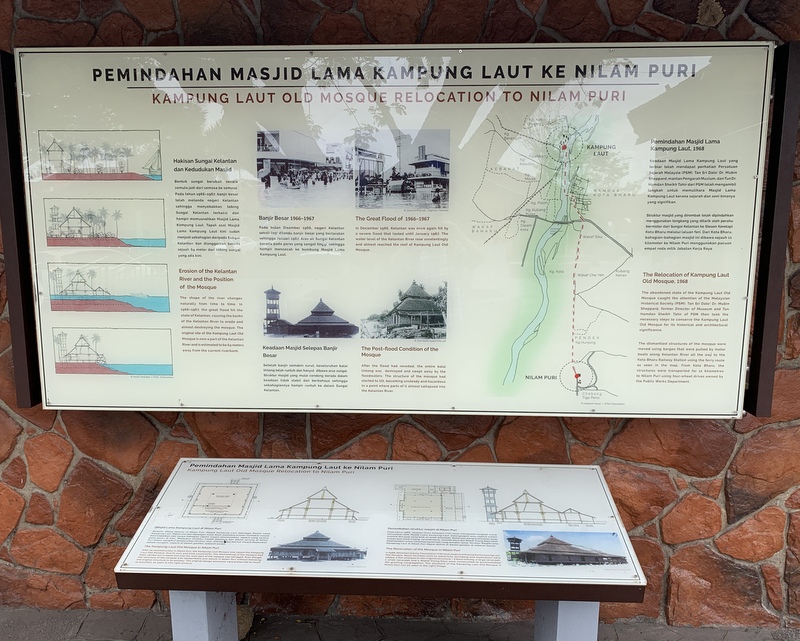
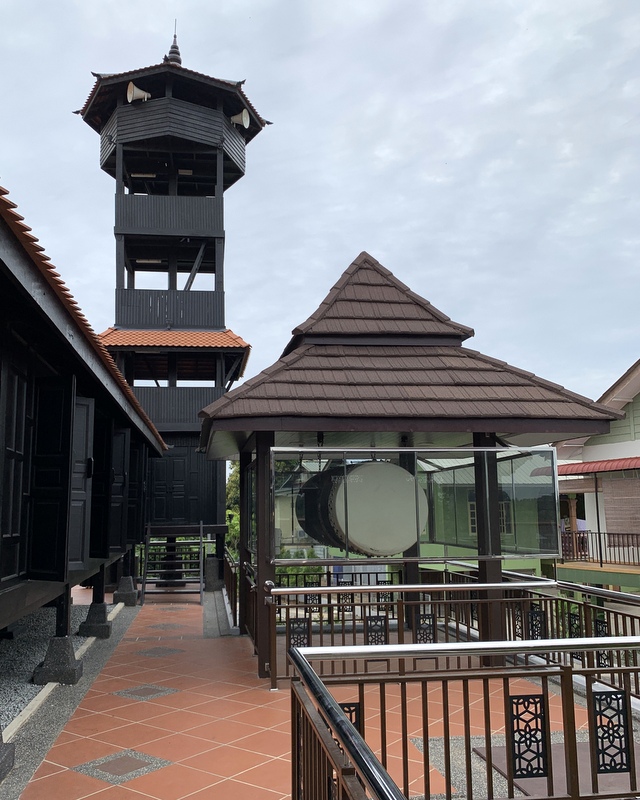
The mosque is one of the oldest in Malaysia and has an interesting history, which is explained in a number of panels. Its original location was close to the Kelantan river and erosion and flooding threatened to destroy the building. After a major flood in 1966-67 it was decided to dismantle the building, transport it to another village and rebuild it there. But that was a temporary solution only, Now the mosque has been brought back to Kampung Laut, at a safer distance from the river and protected by a heavy cemented wall from future flooding.

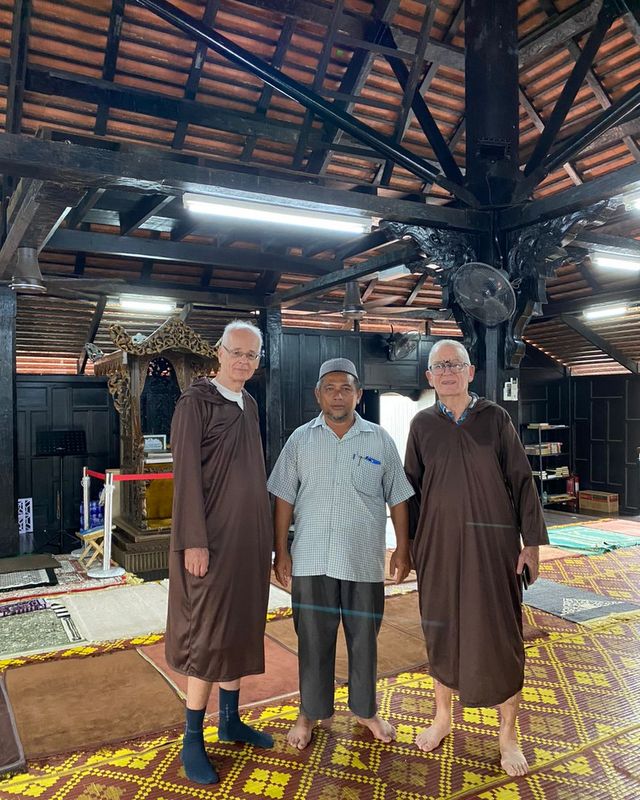
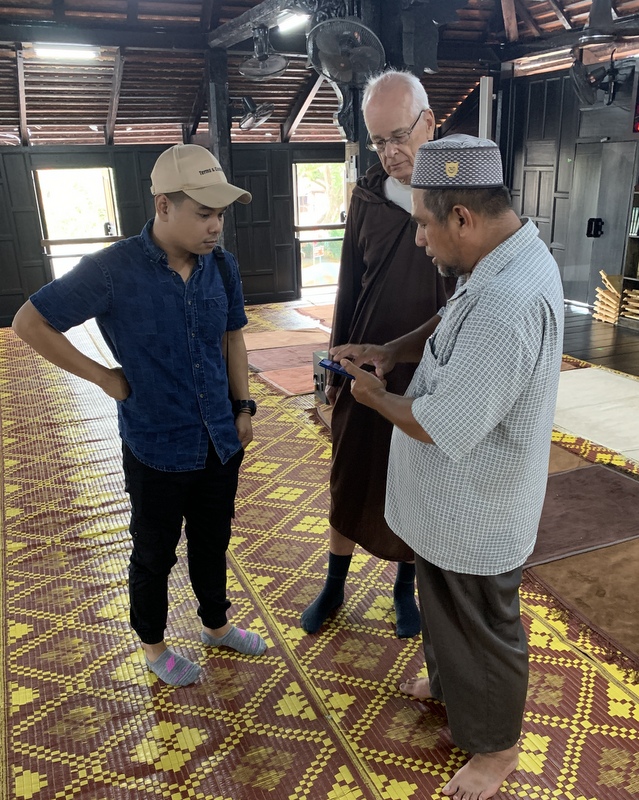
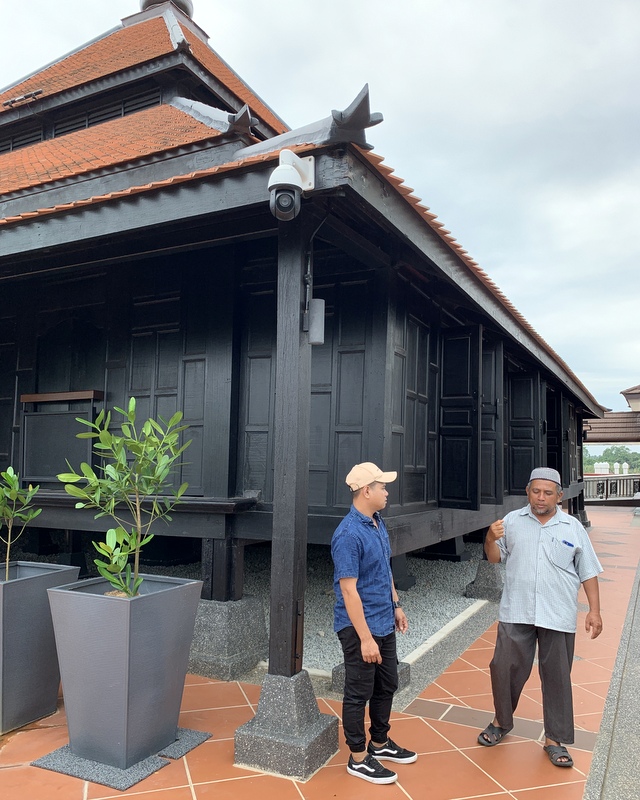
We could enter the mosque but as Paul and I were wearing shorts, we first had to cover our aurat (in this case our knees). The caretaker was very friendly.

The state of Kelantan has been in the past part of the Kingdom of Siam, Only in the Anglo-Siamese Treaty of 1909 it was decided that Kelantan would become one of the Unfederated Malay States , controlled by the Brits. .This explains why there still is Thai influence in Kelantan.

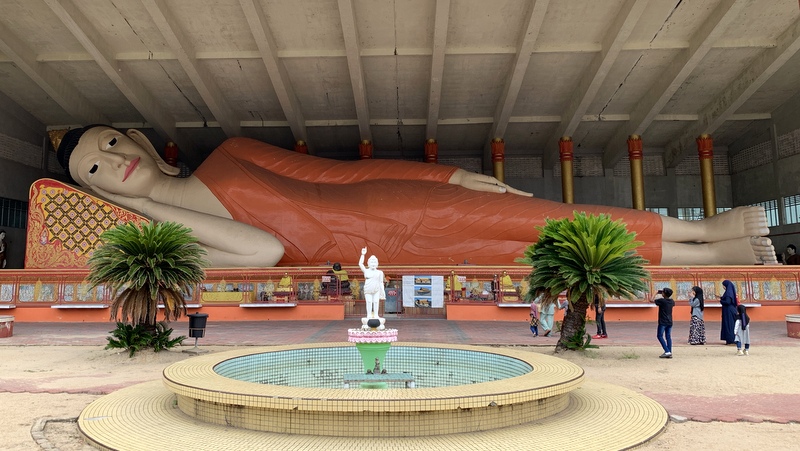
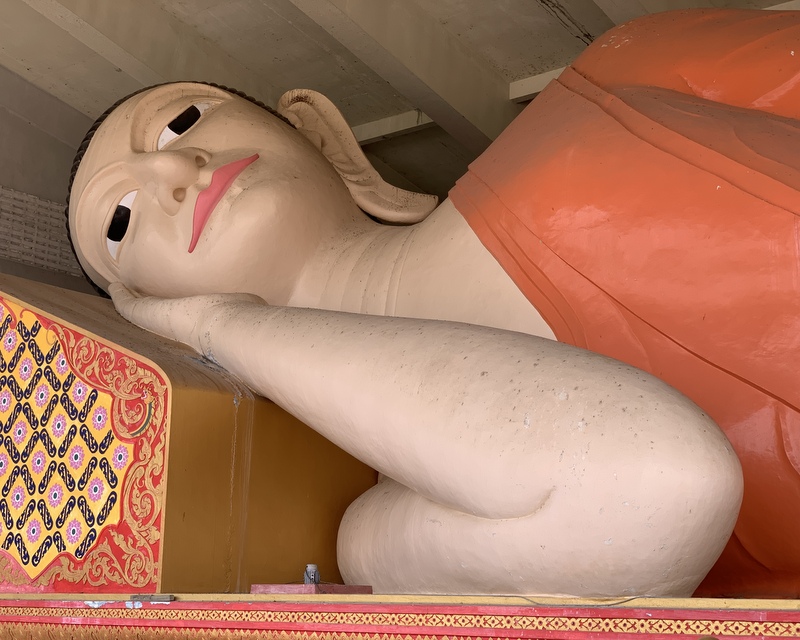
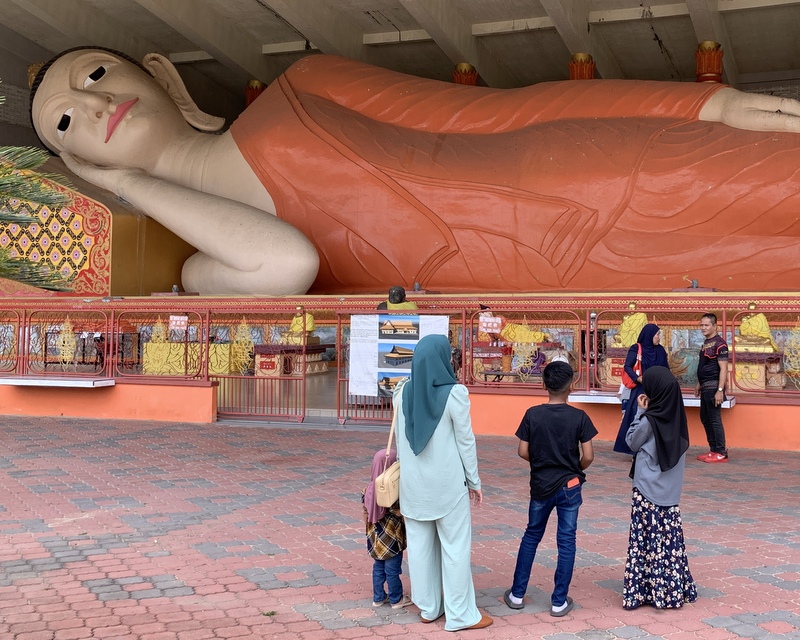
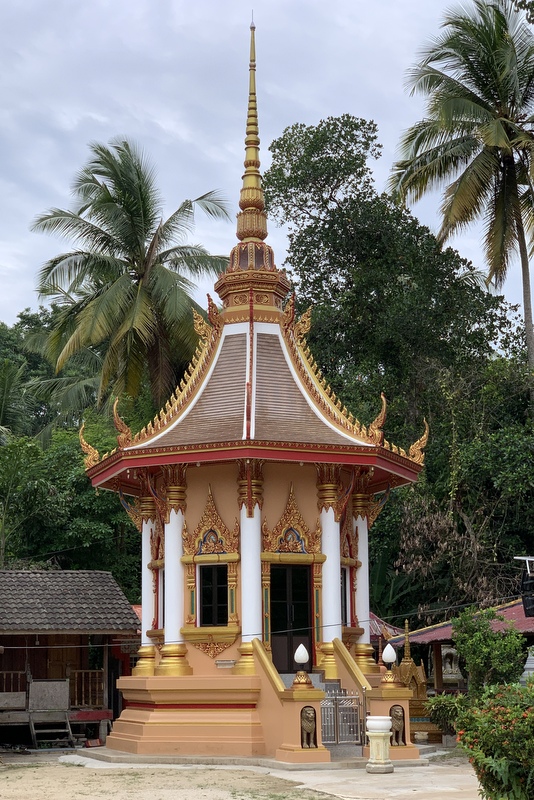
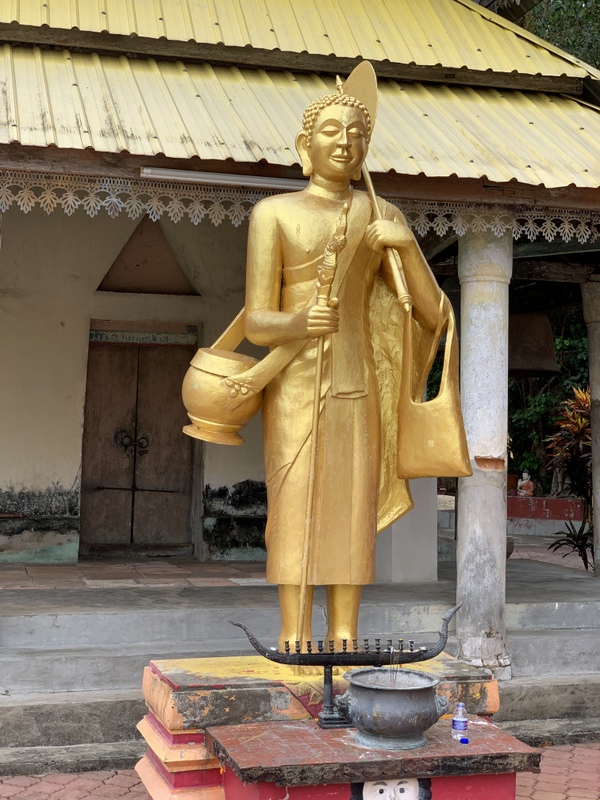
We visited two Buddhist temples in Tumpat, first the Wat Phothivihan with a giant Sleeping Buddha.

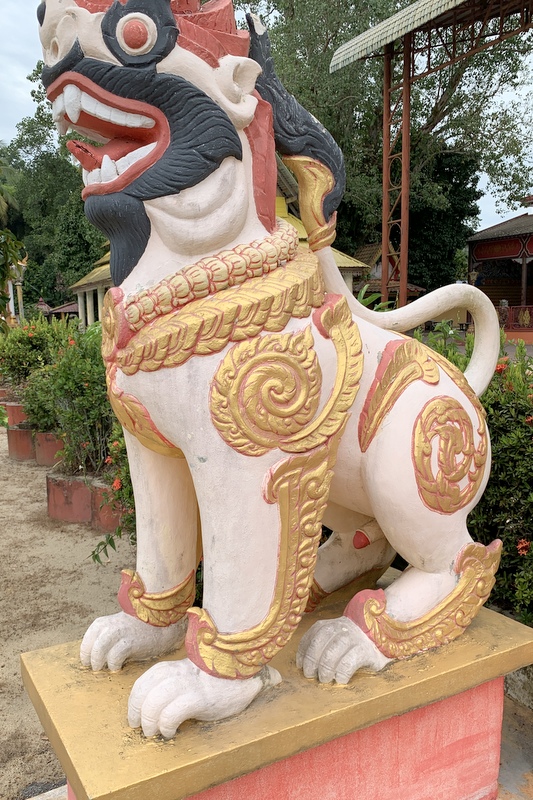
A few more photos. The entrance of the temple is guarded by two lions, one male and one female. When you look carefully you can see that the picture shows the male one 😉 .

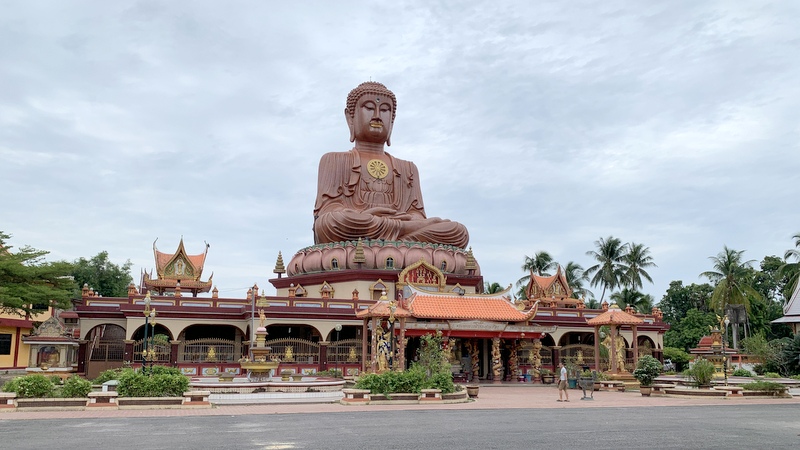
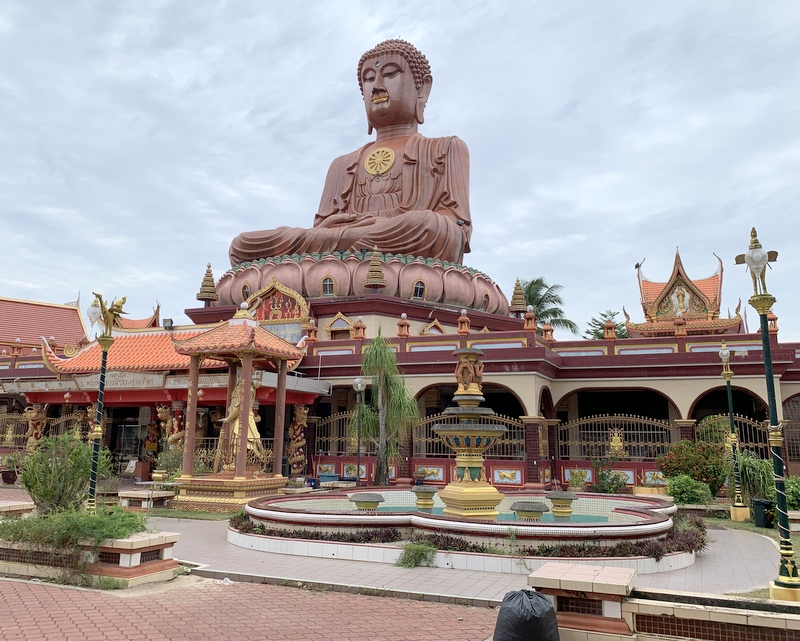
We continued to the Wat Machimmaram, with a giant Sitting Buddha.

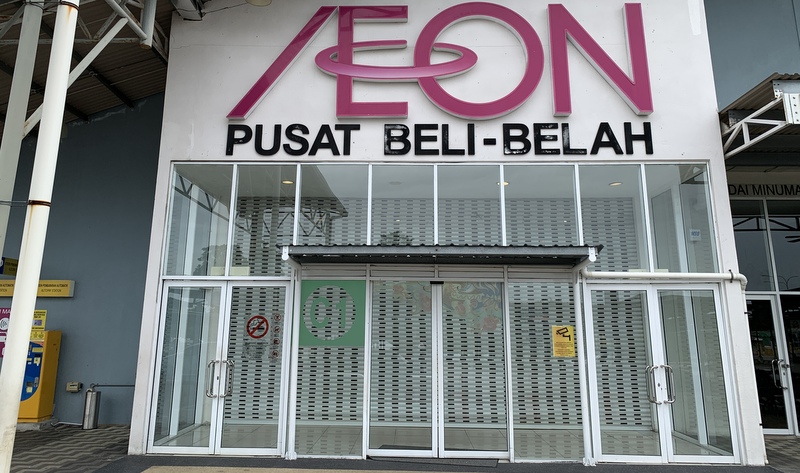
After so much local food, we were in the mood for something Western, so we went to the Aeon Mall, where we had already done some shopping the day before. But the whole mall was closed from 12:30 until 14:30! We had forgotten that it was Friday, Prayer Time, and that Kelantan is a very conservative Islamic State.

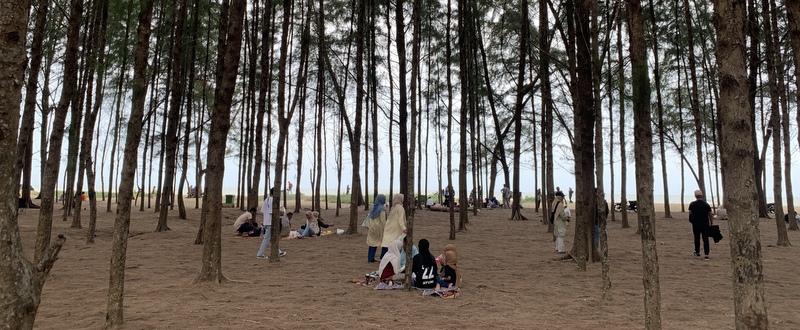
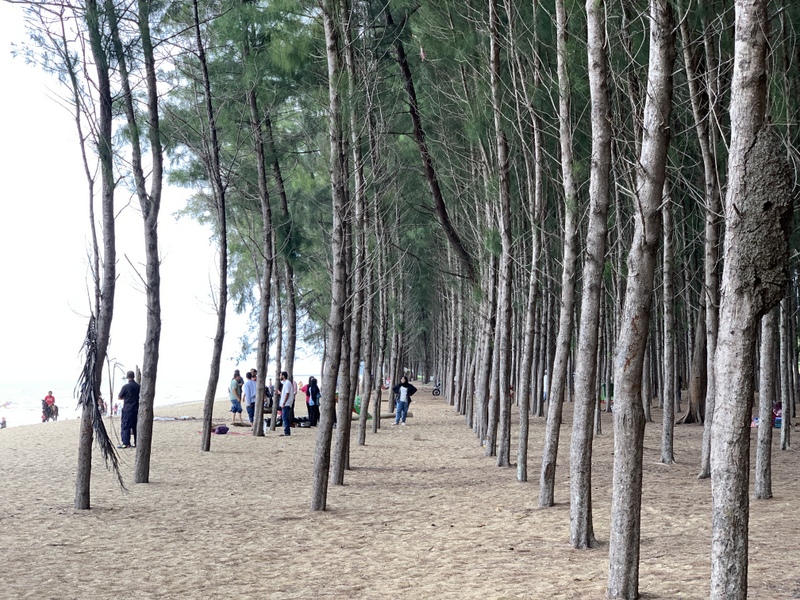
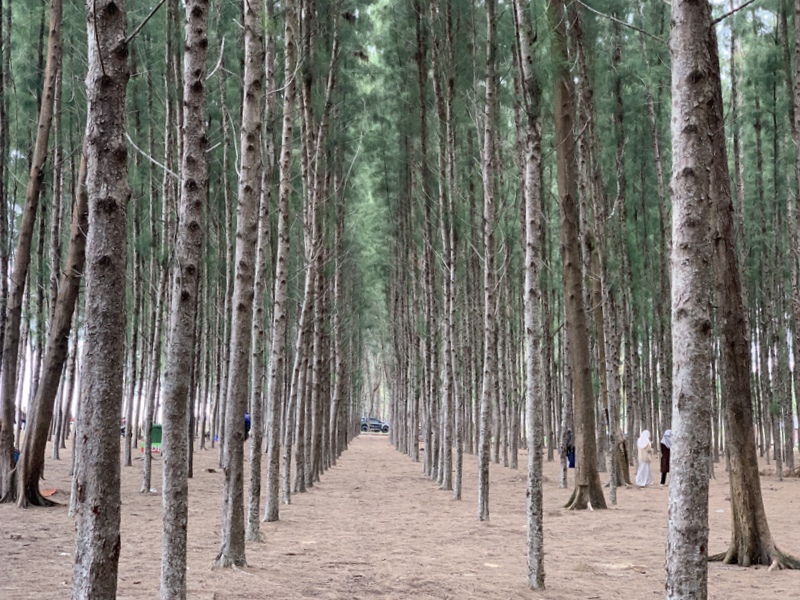
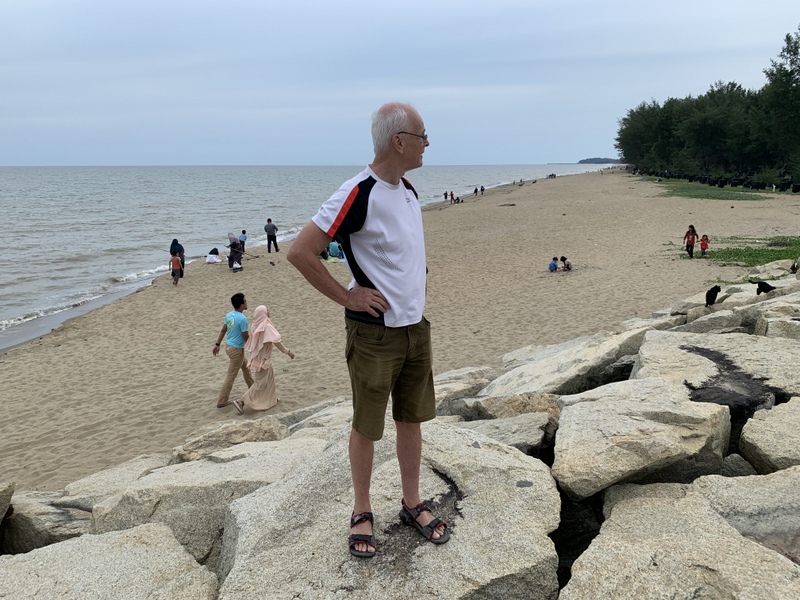
Luckily we had some biscuits at our homestay where we took a rest, before we went out in the afternoon. To another beach, Pantai Senok. A pleasant surprise. The main attraction is the forest of casuarina trees, planted in a grid pattern. Many families were enjoying the shade under the trees

Because of the grid pattern, you can see through the trees in certain directions.

A nice background for pictures.

Really a nice location.

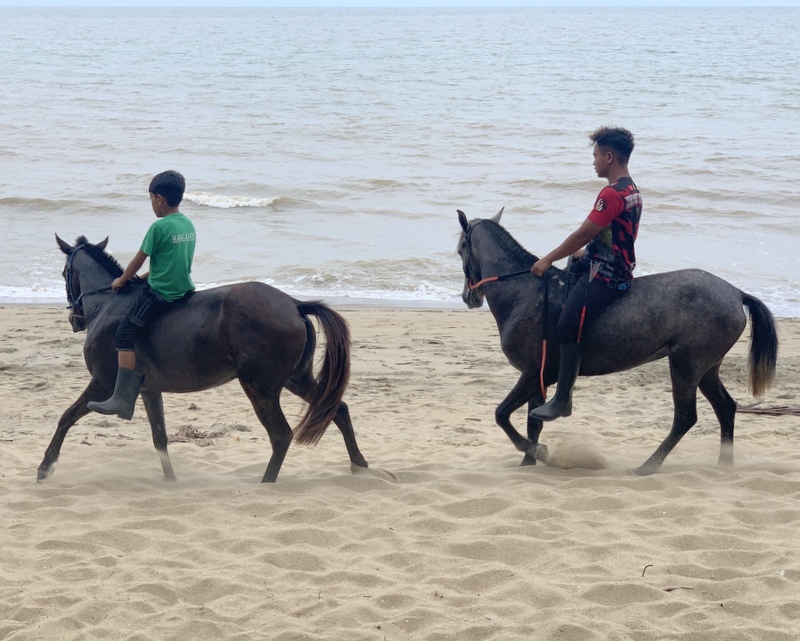
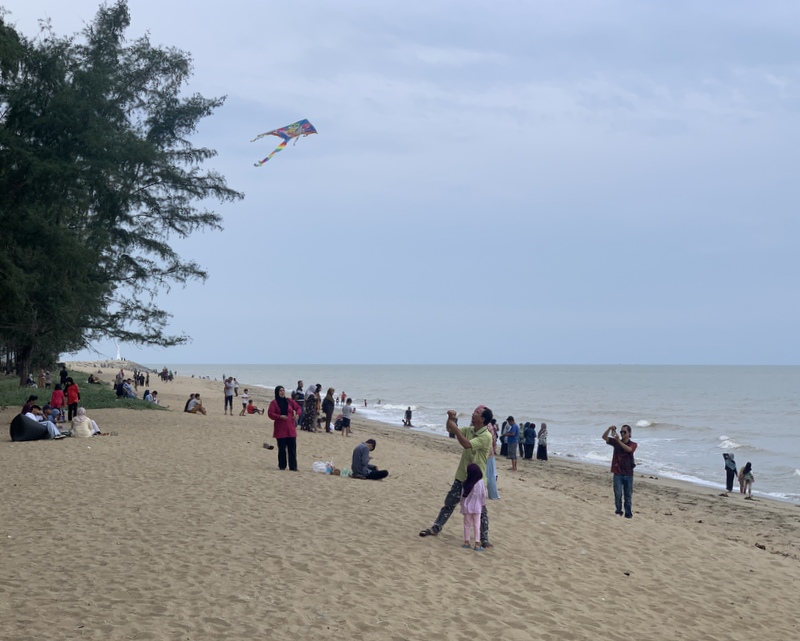
The beach is also attractive. People were riding horses and flying kites.

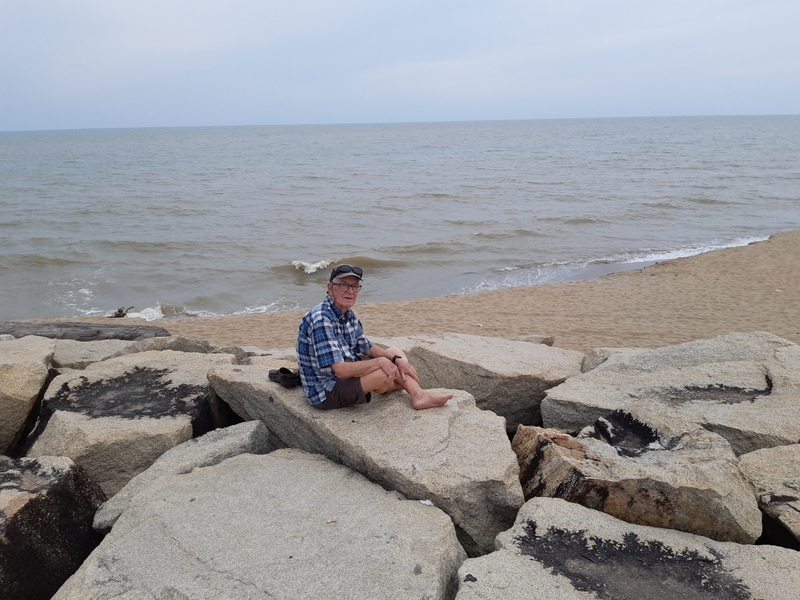
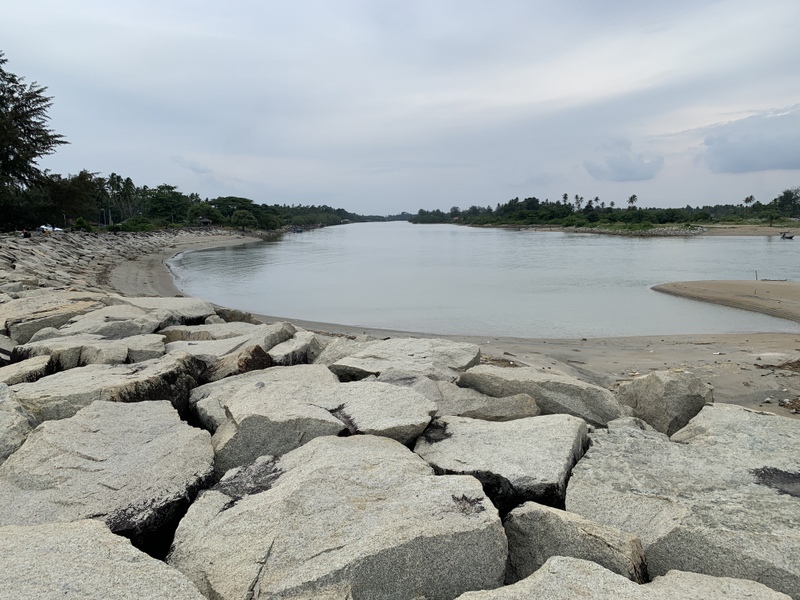
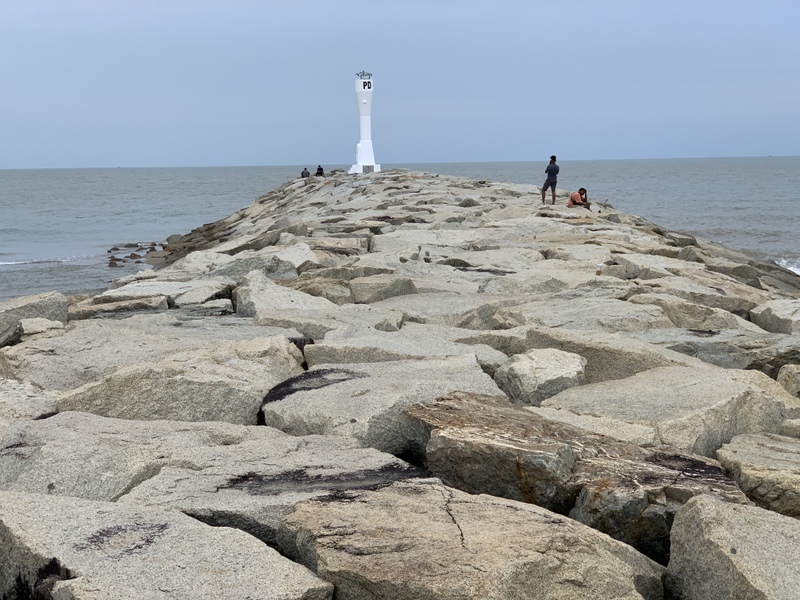
We walked along the beach until the dam, separating the beach from a river. A small lighthouse marks the mouth of the river.

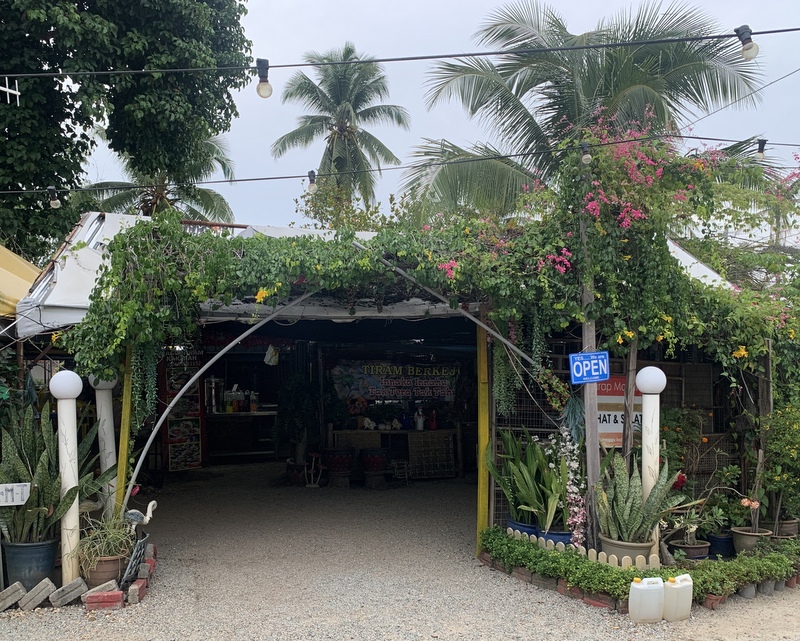
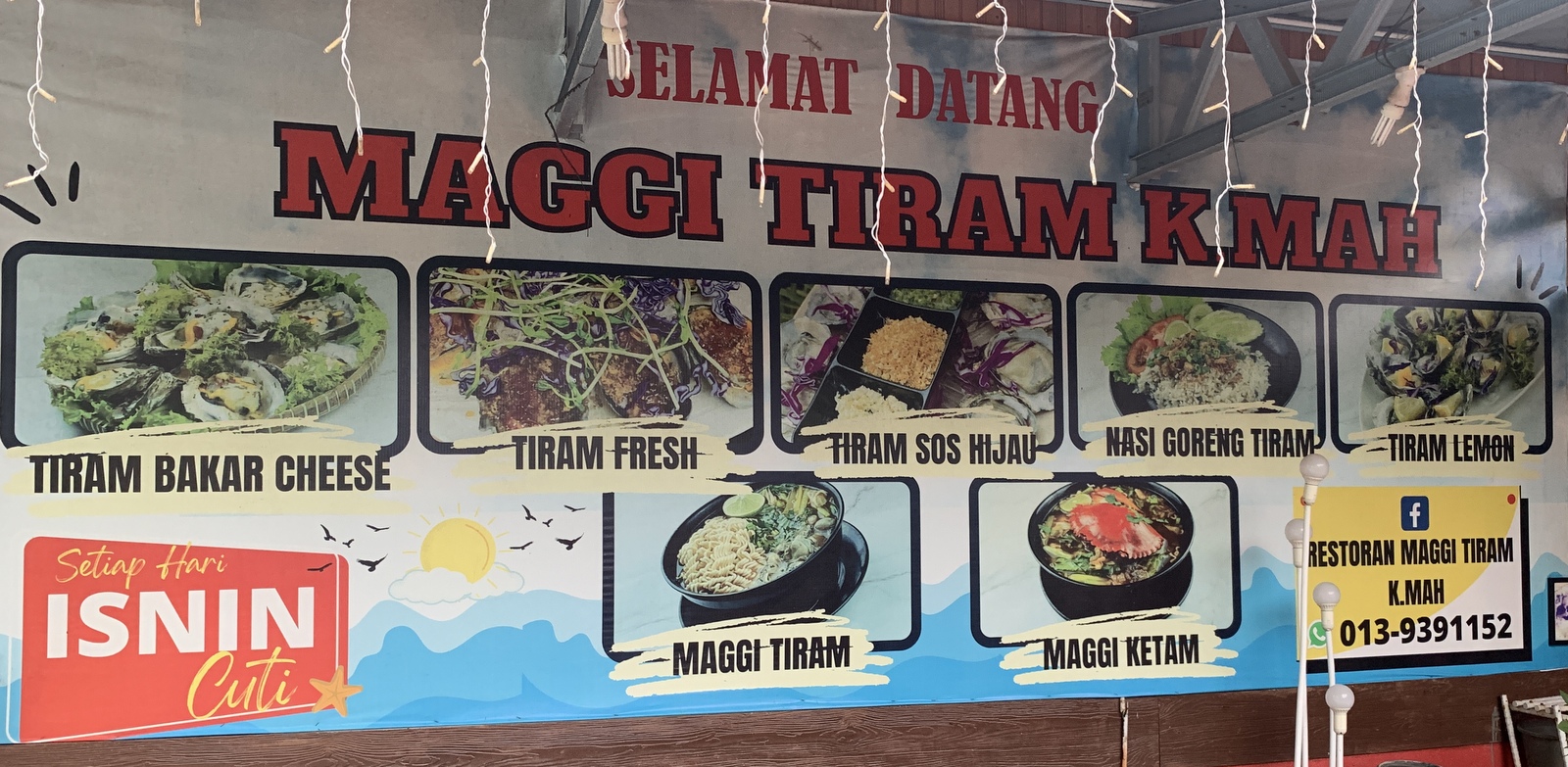
Using Google Search Paul and Fahmi had found a restaurant, not far from the beach, which specialised in oysters (tiram in Malay). When we arrived at this Maggi Tiram Kmah restaurant, we found a pleasant place, with friendly staff.

It’s all oyster dishes they serve 😉

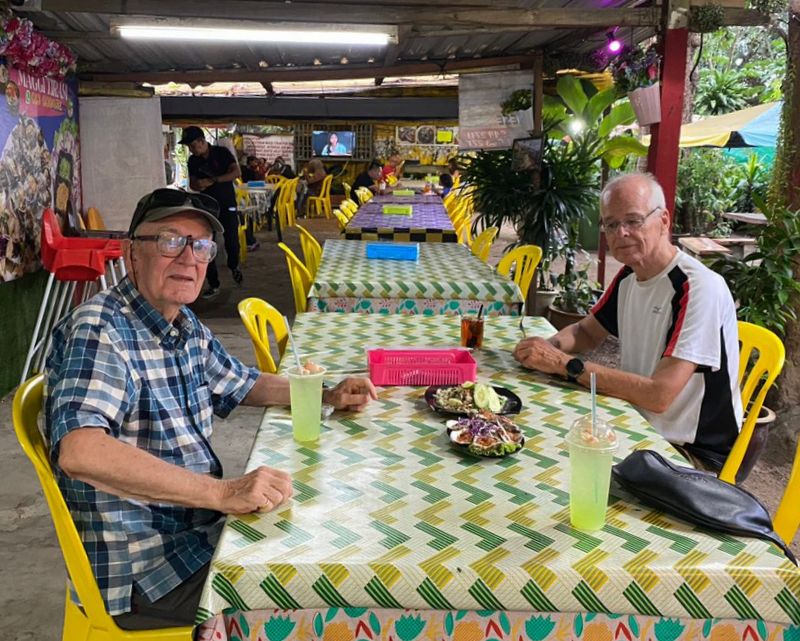
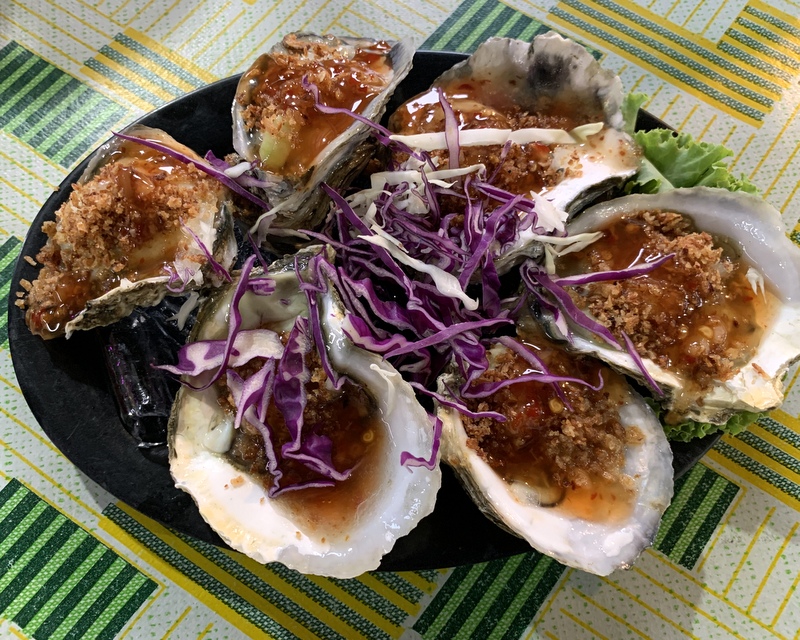
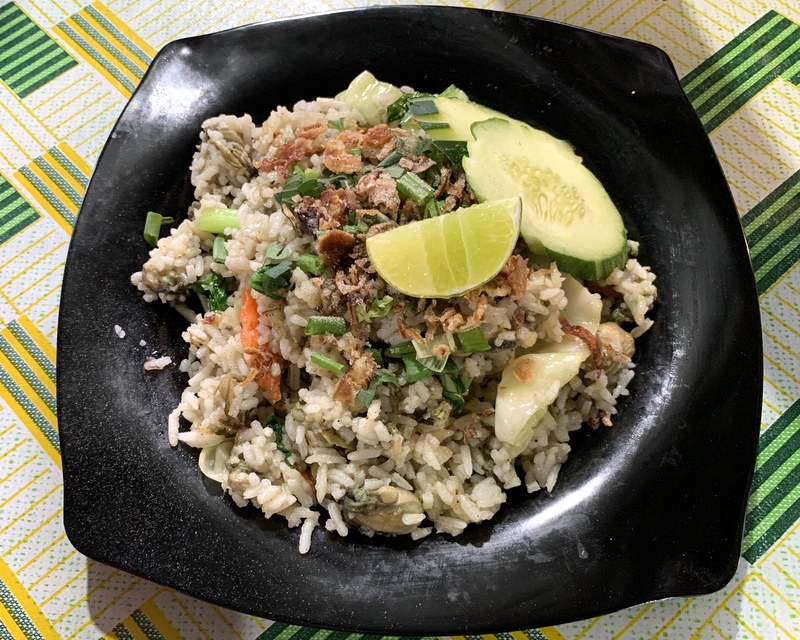
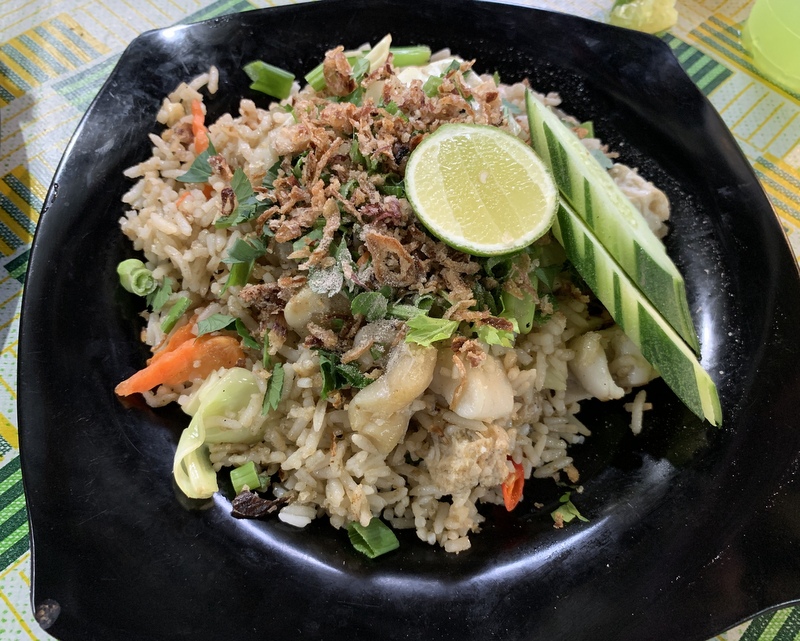
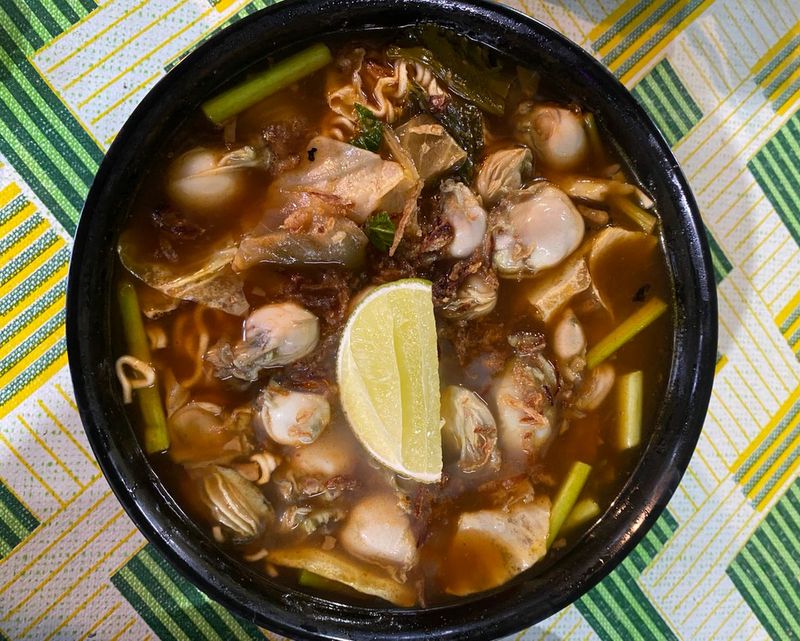
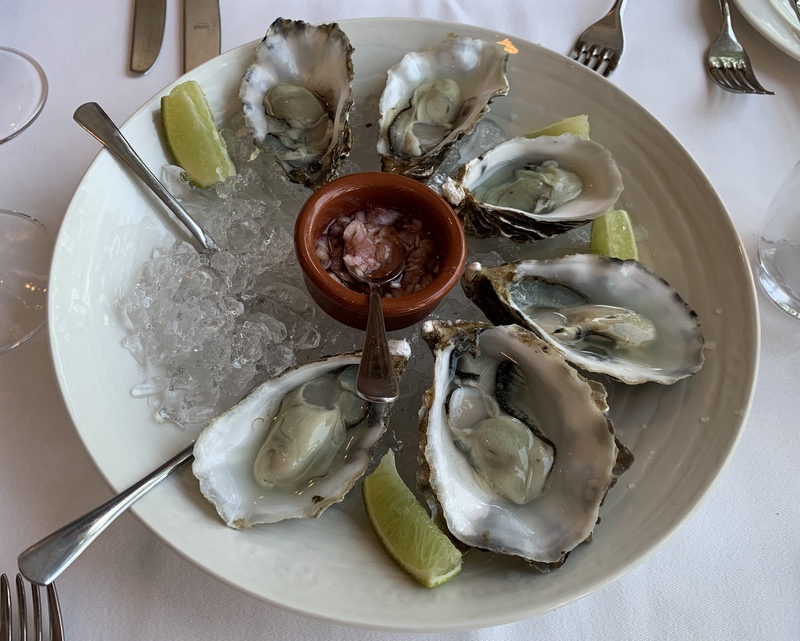
We had a delicious dinner, starting with fresh oysters , followed by nasi tiram, nasi telor sotong and maggi tiram (soup)

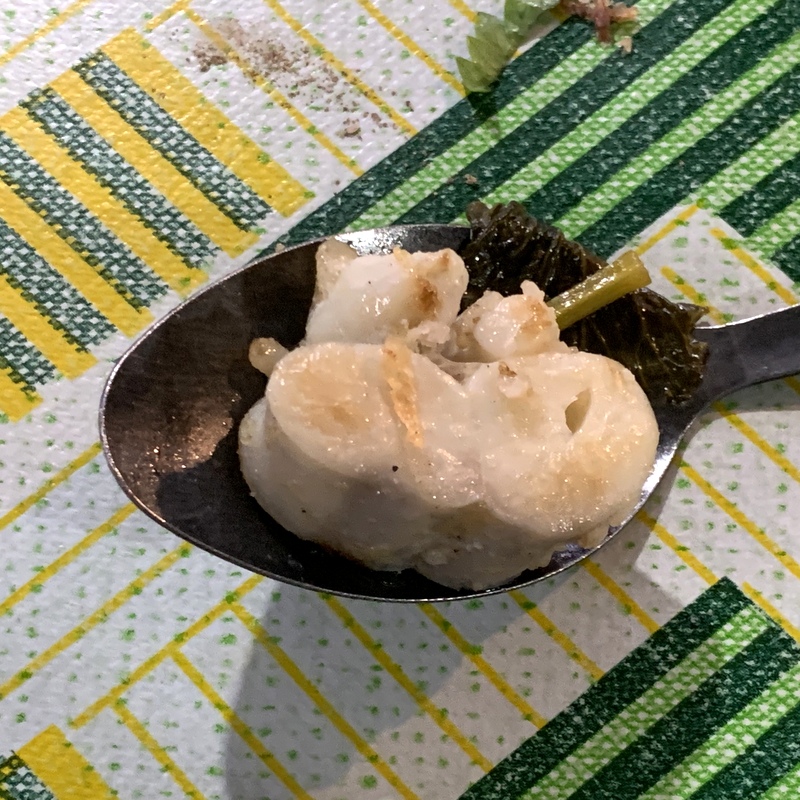
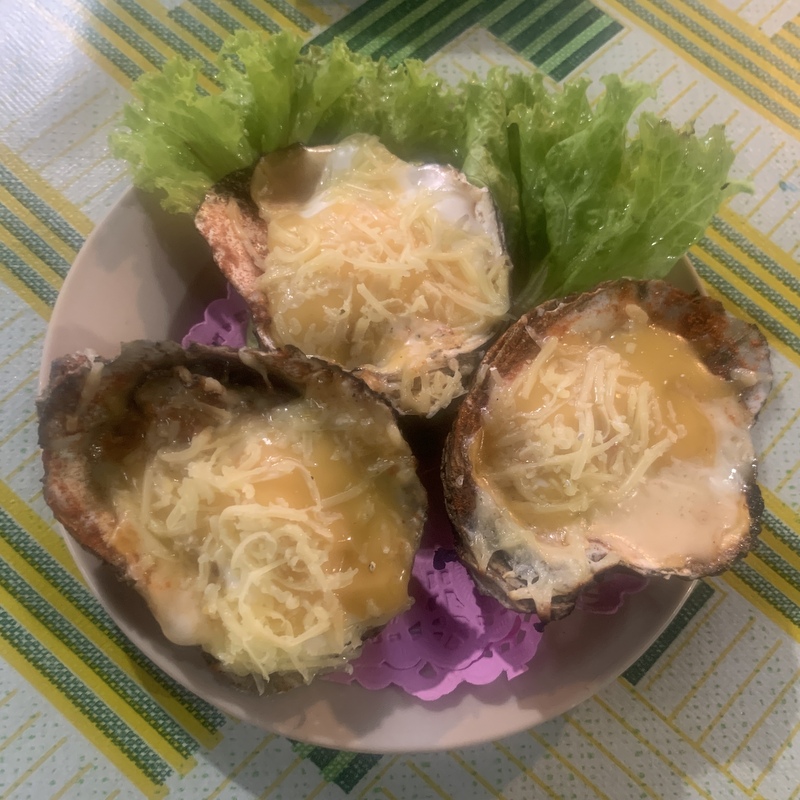
The left picture shows the telor sotong (squid eggs) and the right picture shows three cheese-baked oysters, given to us free of charge. The total bill, including drinks, was RM 45. Unbelievable 😉 .

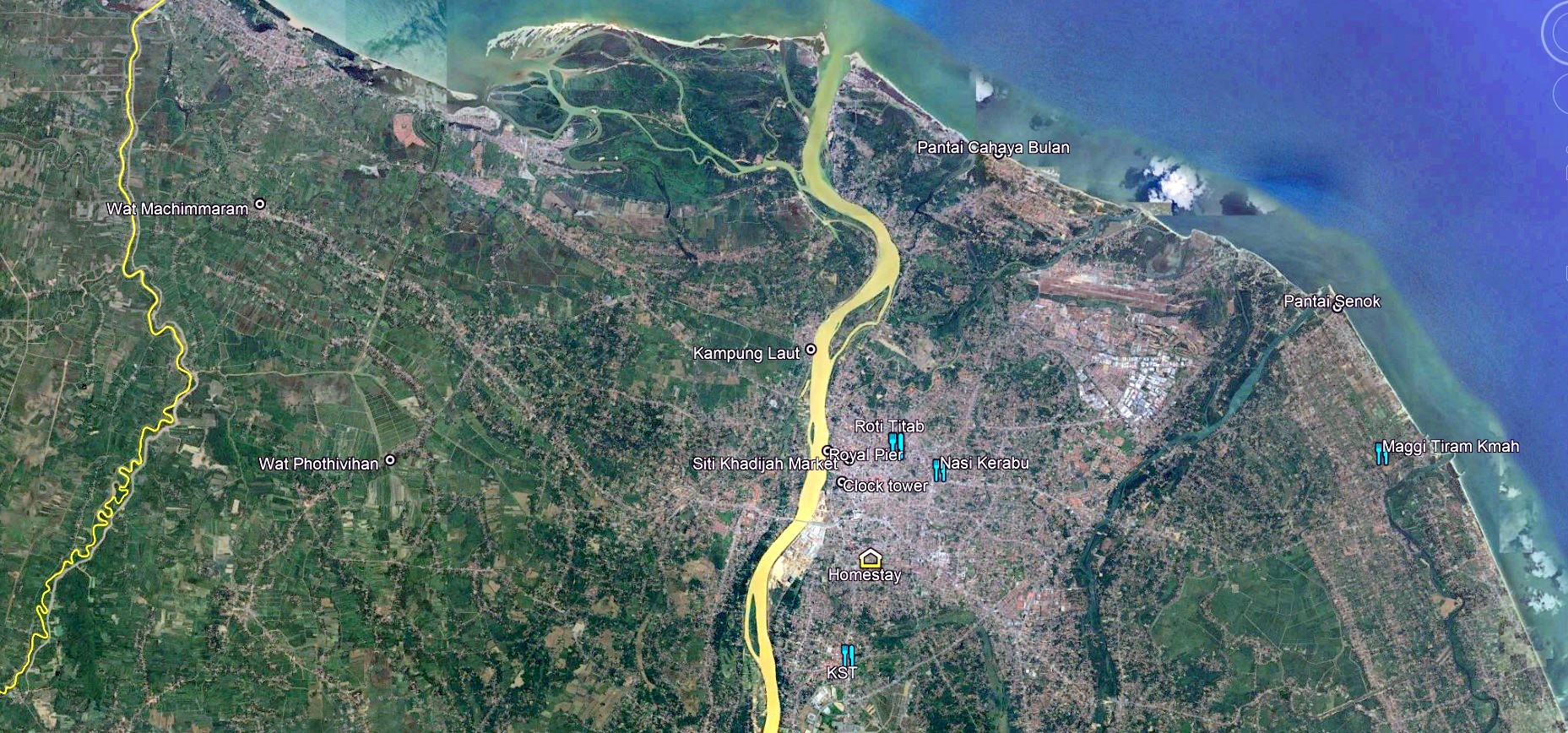
Here is a Google Earth screenshot with the locations we have visited. Click on the map to enlarge and see details.

The next day we started our drive back to KL. We stayed overnight in Kuala Terengganu, where Paul and Fahmi had booked a hotel.

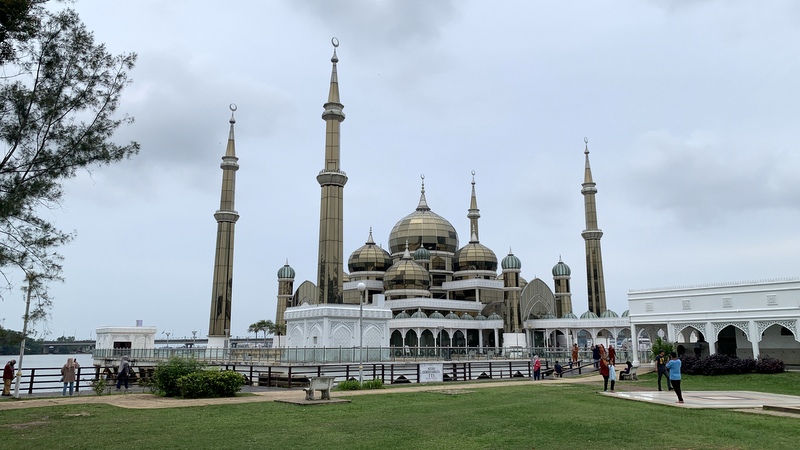
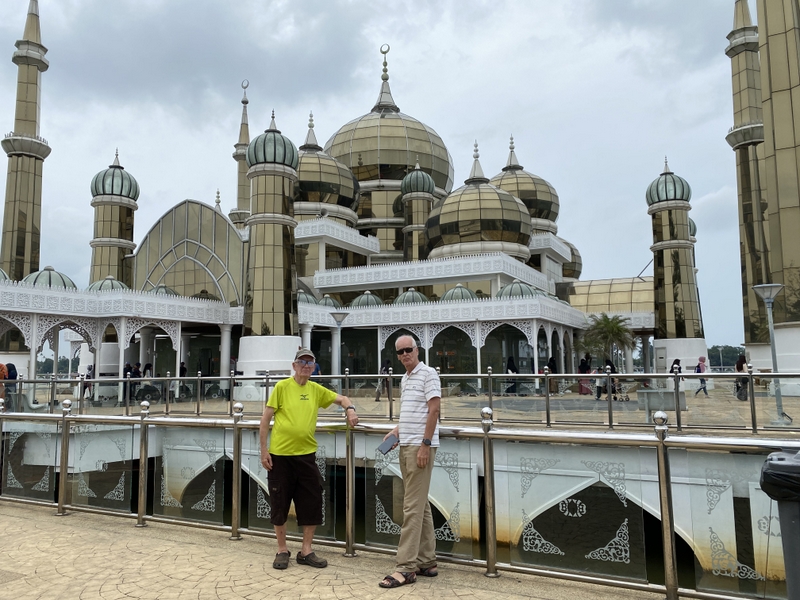
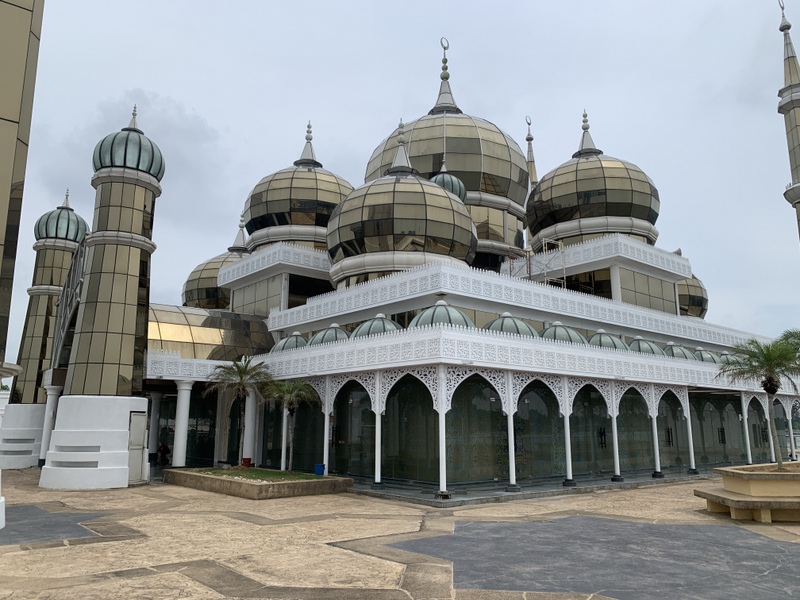
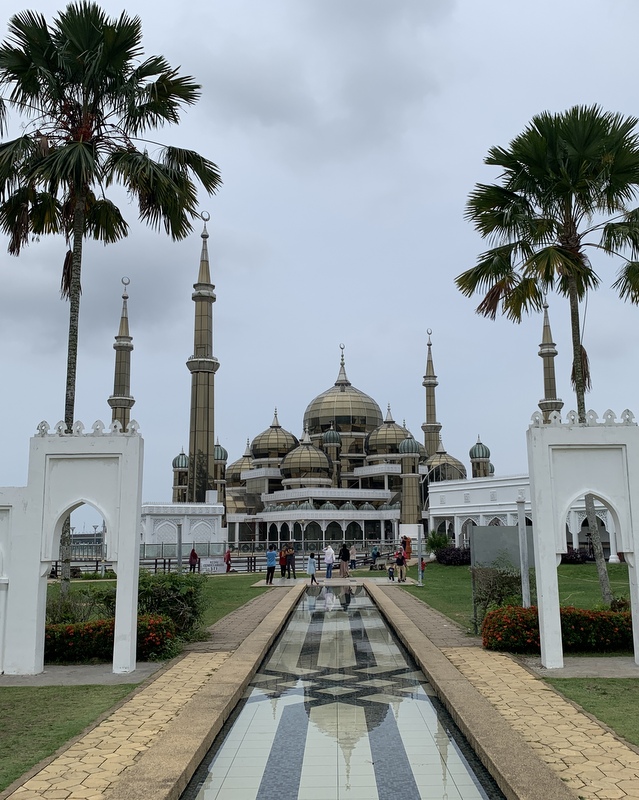
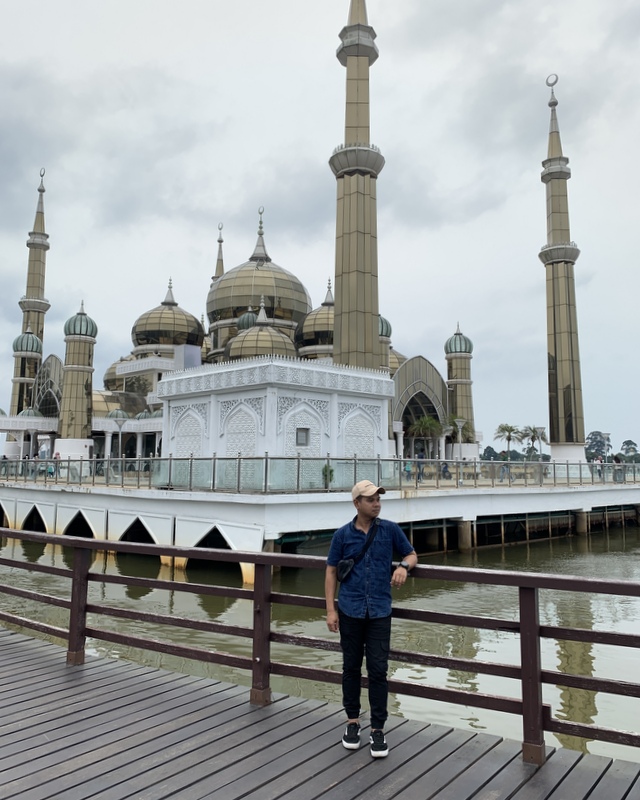
Kuala Terengganu has two interesting mosques, This is the Crystal Mosque, built between 2006 and 2008.

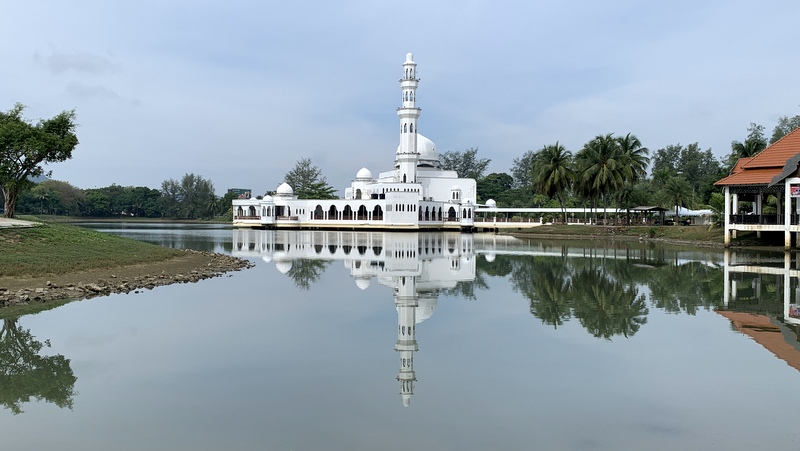
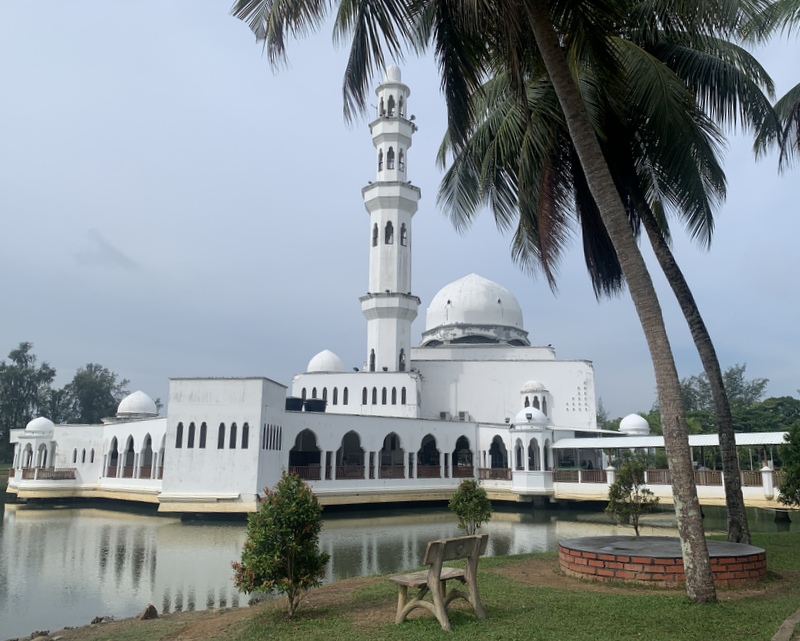
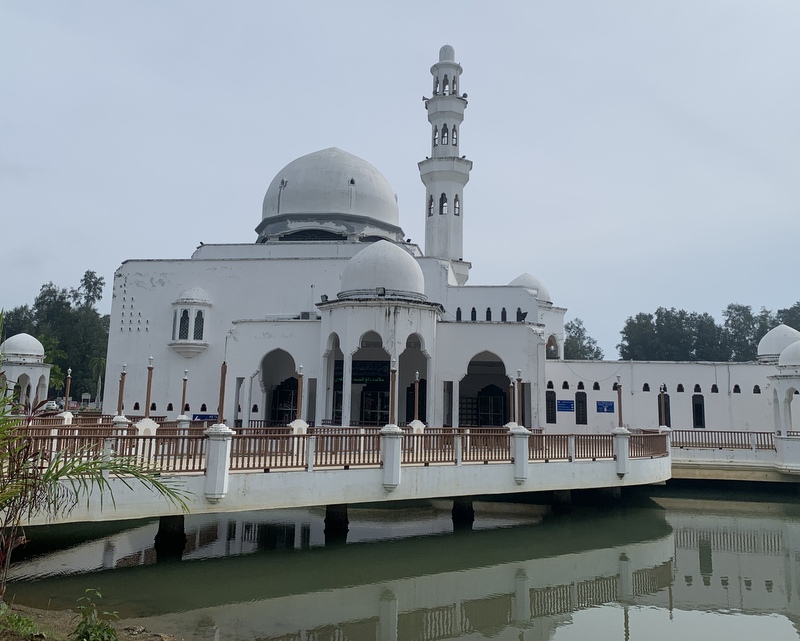
And this is the Floating Mosque, built between 1993 and 1995. A real beauty.

It was a nice trip. Thanks to Paul and Fahmi for inviting me.

Netherlands trip, 2023 week 4

Here is the report about my fourth week in the Netherlands in 2023. For earlier reports see: week 1, week 2, week 3

In this fourth (and last) week I had to prepare the Backershagen apartment for my departure. Do some cleaning and laundry. Main task to empty the fridge.

———————————————–
Thursday 15 June

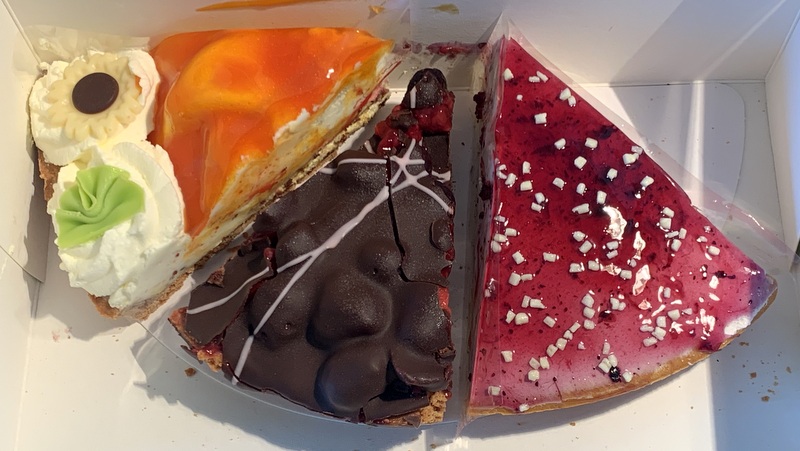
Visit from Henk and his wife Marian. I know Henk for many years, since my university time. First we had coffee with vlaai. In the shopping center near my aprtment there is a popular shop that sells this Limburg delicacy. I had bought three slices.

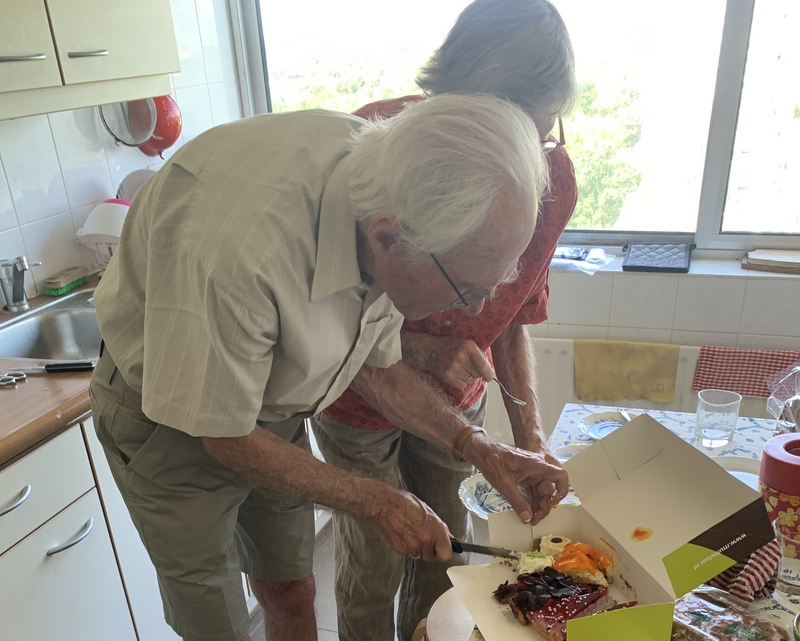
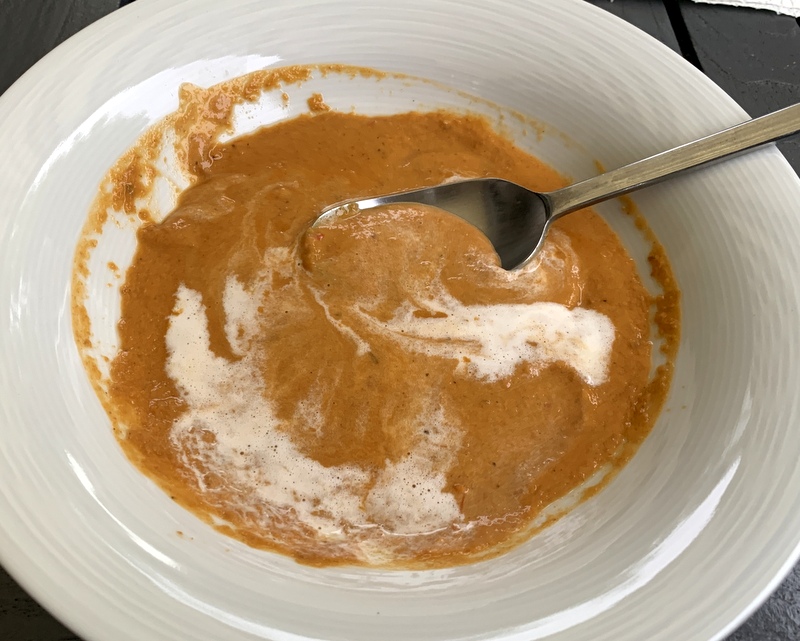
To make it easier to choose, Henk and Marian helped to cut he slices in half 😉 .We continued with lunch. It was a kind of heatwave in the Netherlands, I decided that a bowl of gazpacho (cold Spanish soup) would be a good start of our lunch. But in the supermarket there was no more stock, so I chose the “unknown vegetable soup”. They liked it.

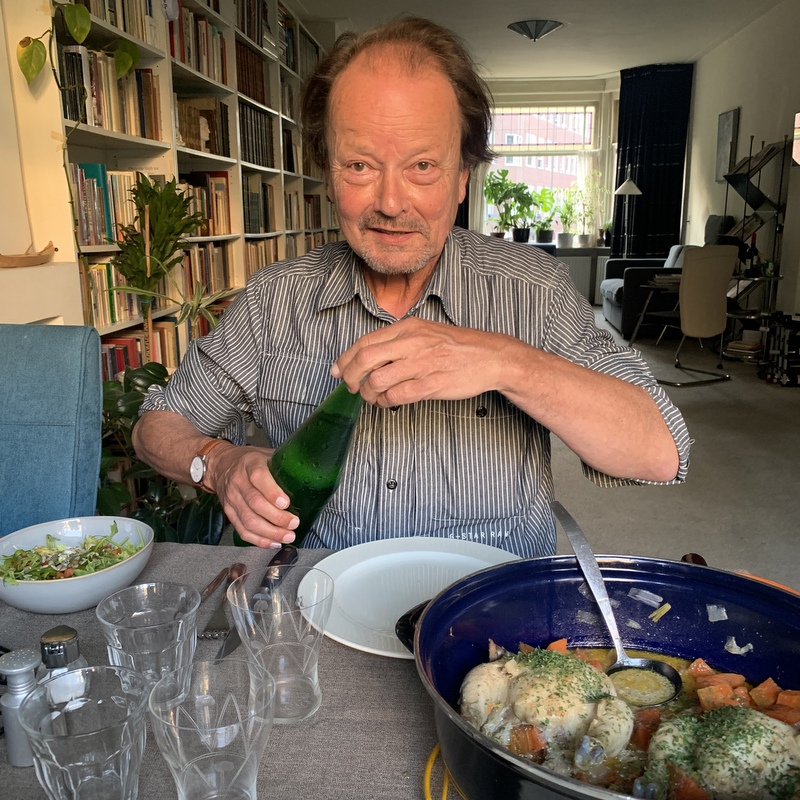
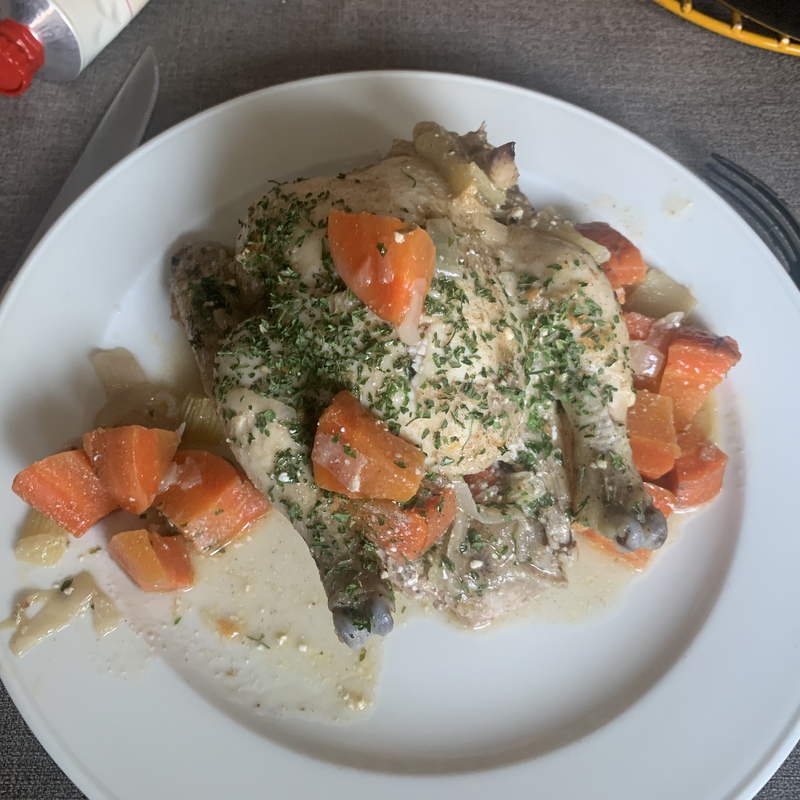
That evening I visited Nico, Paul’s brother for dinner and a chat. He had prepared poussin (young chicken) stuffed with Boursin (French cheese), a Belgian recipe. Excellent dinner.

———————————————–
Friday 16 June

A day without commitments, so I could relax after three hectic weeks. For dinner and wine I had not much choice, just finishing what was left, some of my meatballs in this case.

———————————————–
Saturday 17 June

As my first meeting with Lambert, in the Amsterdam public library, had been rather short, I decided to visit him again, this time going to Purmerend, where he lives. Forgot to take pictures.

I am very happy with the public transport in the Netherlands. I have been using train, metro, bus many times, using my so-called public-transport card, With this card you can access any kind of transport in the country. You don’t have to worry about enough balance on the card, it will be topped up automatically from your bank account.

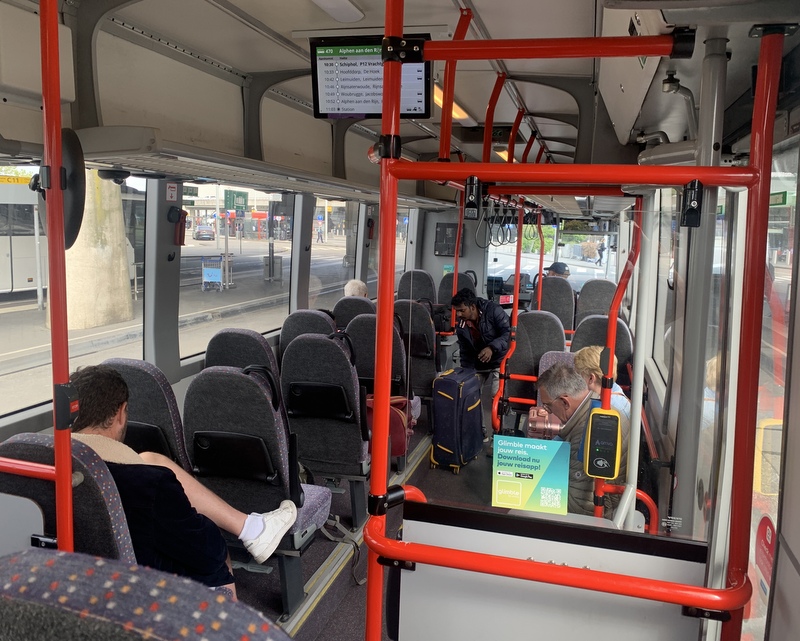
Here a bus to my hometown and the train to Arnhem.

The bus has special seats for senior citizens, and in the Amsterdam metro you are allowed to take your bicycle with you.

———————————————–
Sunday 18 June

I was lucky that during the last few days, friends invited me for dinner, so I didn’t have to cook myself. In this case Johan and Edmund, living in Vinkeveen in a nice house. They are proud of their beautiful garden and rightly so.

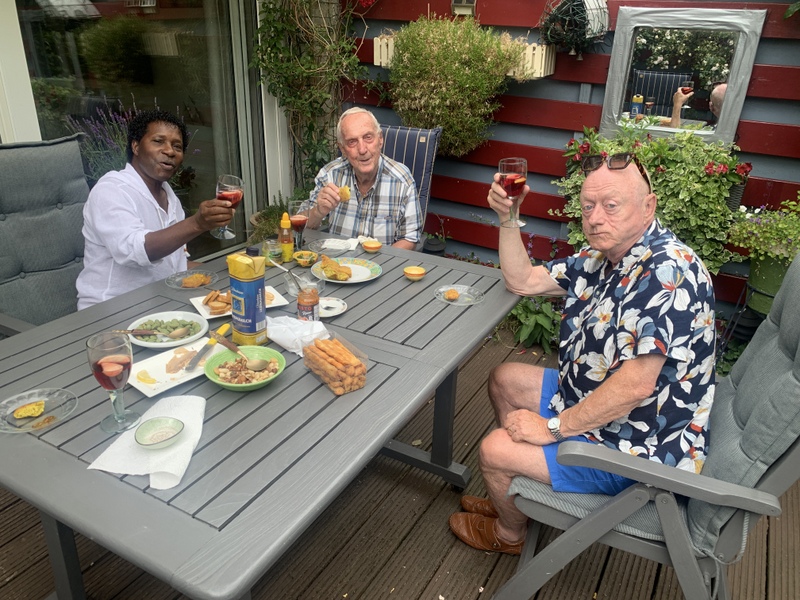
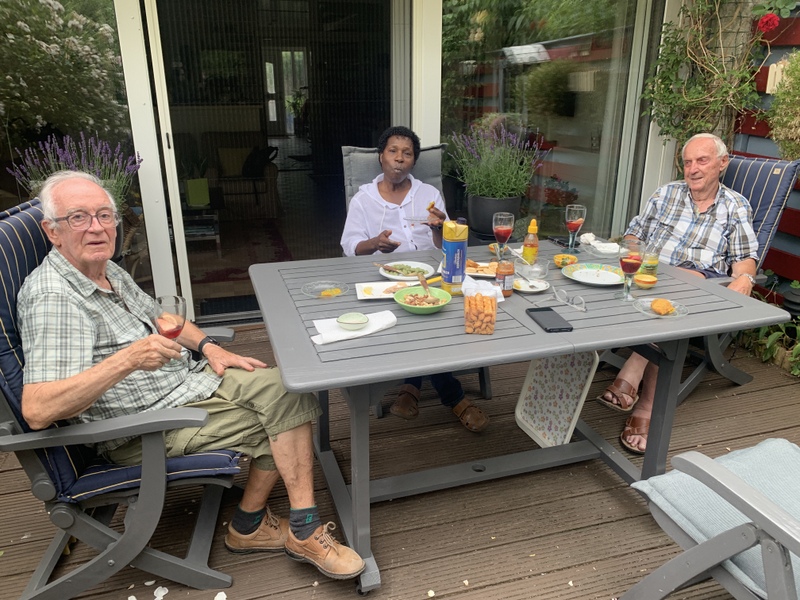
Johan and Edmund had invited Theo, another friend, for dinner. As the weather was good we had dinner in their garden.

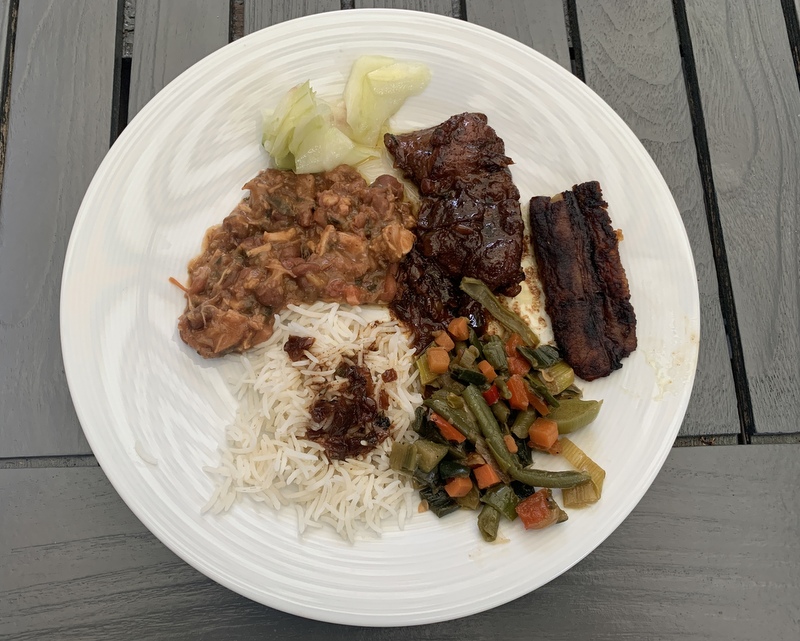
Edmund had prepared delicious Surinam food. Theo, also living in Amsterdam, took me back in his car to the town. Nice evening.

———————————————–
Monday 19 June

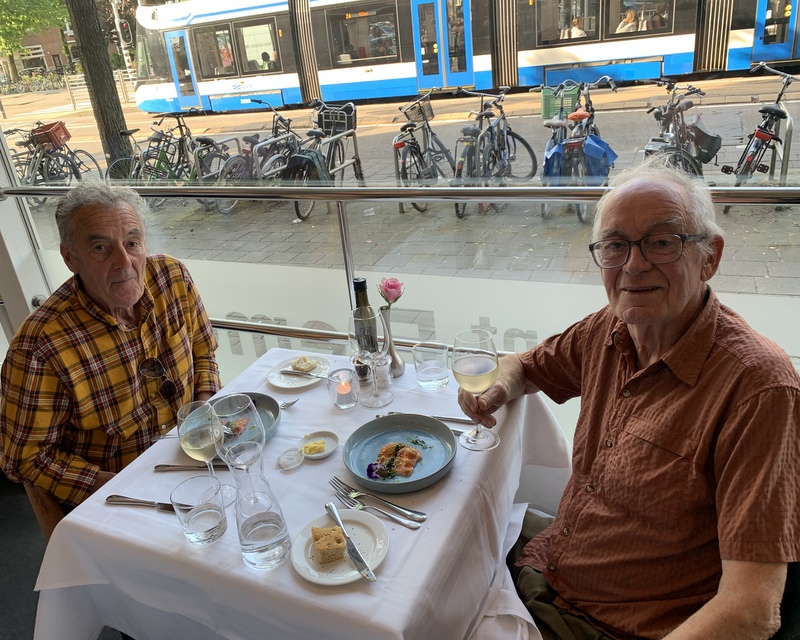
Dinner with Dick Jurriaans, former colleage at the Snellius school, in the Elements restaurant in Amsterdam. The kitchen and restaurant are staffed by students from the hotel school, connected to the ROC of Amsterdam. The result is perfect service, a creative menu and a very affordable price.

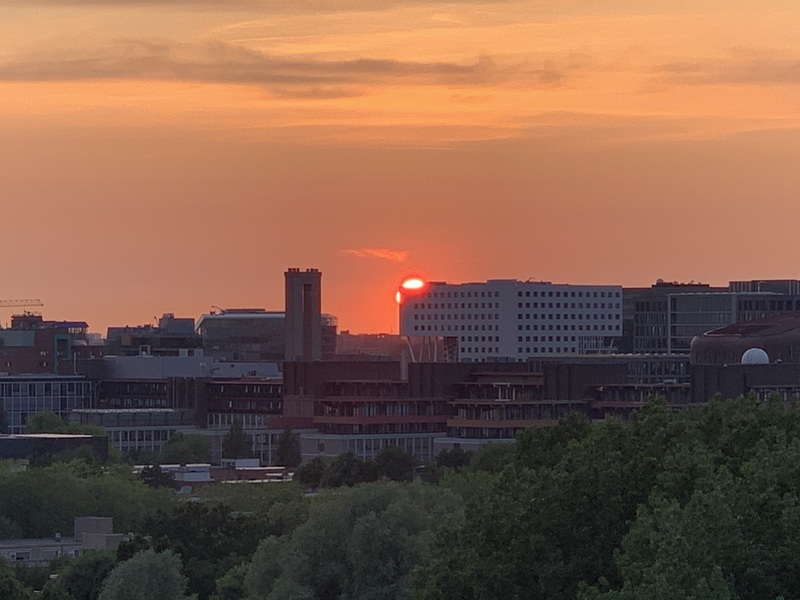
Almost the Summer Solstice. Compare the two photos, left on 28 May, right on 19 June

———————————————–
Tuesday 20 June

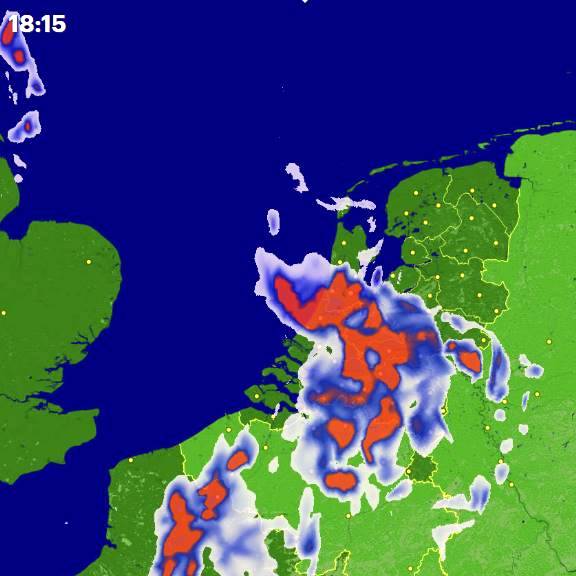
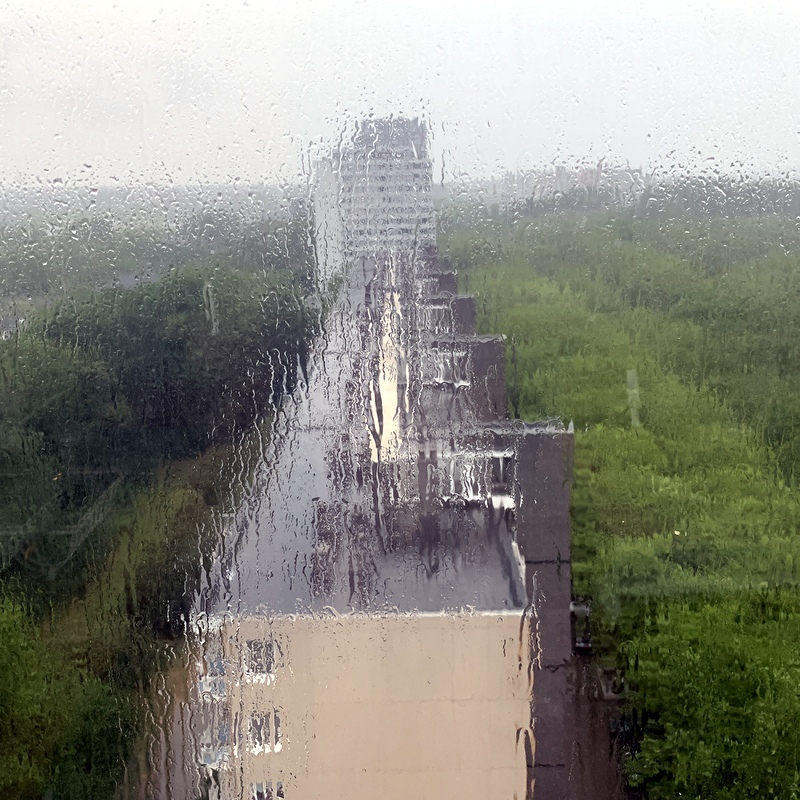
During this Netherlands trip I had been extremely fortunate with the weather. But for this day there was a warning voor extreme weather with lots of rain in the afternoon and evening. I was invited by Roald, a former student and a close friend for many years, to have dinner at his apartment in Amsterdam, but we deicded to cancel it.

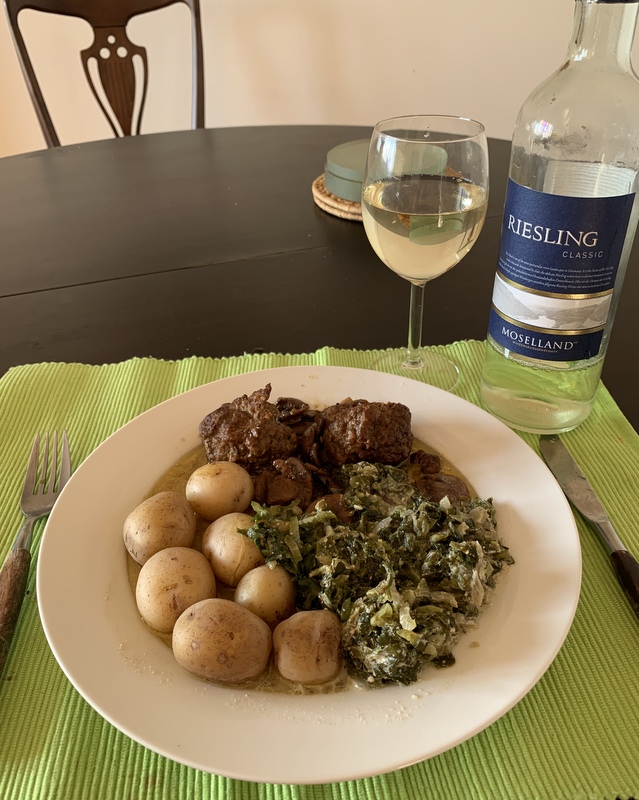
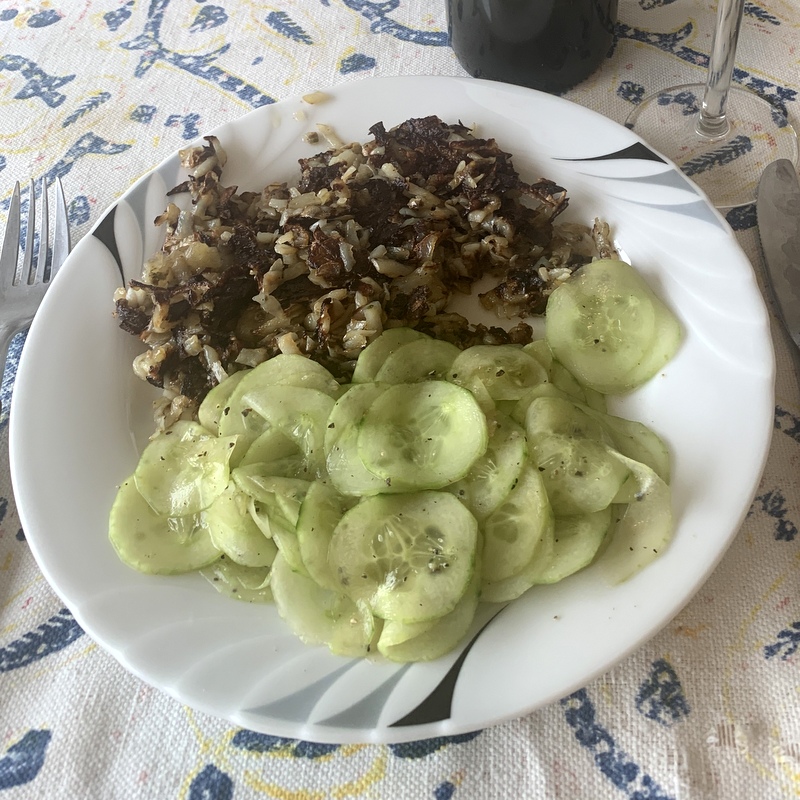
Left a screenshot of the rain radar website, in the center the actual downpour. So I had to prepare some food myself. Vegetarian, I still had some potatoes and cucumber. With a glass of wine, quite acceptable 😉 .

———————————————–
Wednesday 21 June

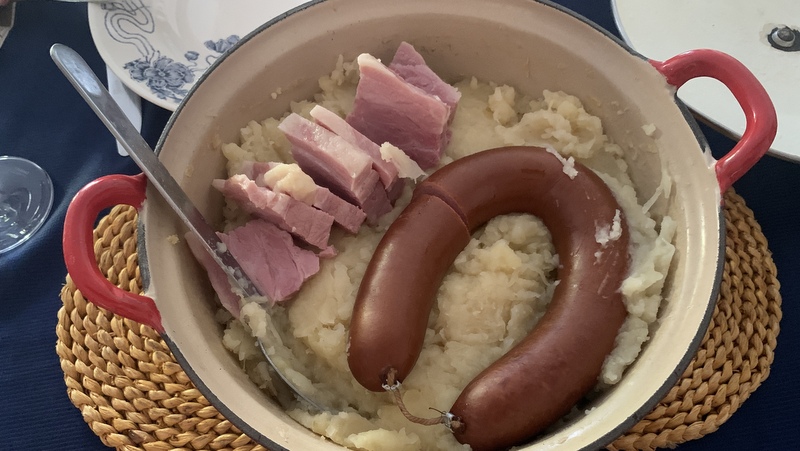
It has become a tradition that I have dinner with Inez, the day before I fly back. What would you like to eat, she asked. Real Dutch food, I told her, but I had already tasted many typical Dutch dishes. What about zuurkool stamppot met spek en rookworst? (sauerkraut stew with pork belly and sausage) Great, that was still missing on my list 😉 Actually this stew is really winter fare, but we enjoyed it a lot..

———————————————–
Thursday 22 June

Departure day. Packing my stuff, switching off the fridge, last minute checking of the apartment. My brother Otto brought me to Schiphol airport.

..This was the fourth week. During my four week stay, I had 25 meetings!

Netherlands trip, 2023 week 3 

Here is the report about my third week in the Netherlands in 2023. Click here for the first week and here for the second week.

———————————————–
Thursday 8 June

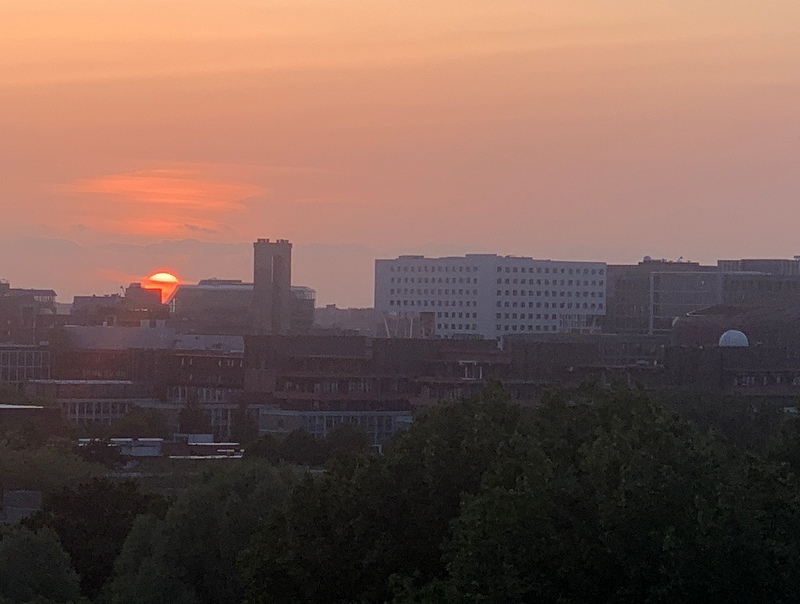
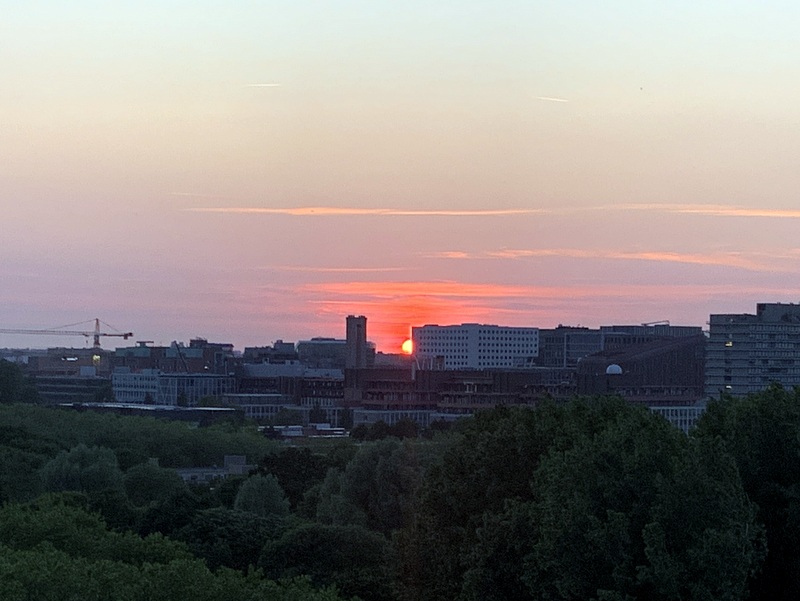
A visit from Wim, one of my first students and now a long-time friend. We had lunch in Backershagen and chatted a lot. Sunset is still moving (slowly) northwards, two more weeks to go until the summer solstice,

———————————————–
Friday 9 June

A 3D2N visit to Ruud and Jur in Groningen is usually part of my program when I am back in the Netherlands. This time I combined it with a visit to Gerrit, another former student, who became a good friend. I started teaching in 1976, when I was 32 years old and I still am in contact with a few of my first students, who are now more than 60 years old 😉 .

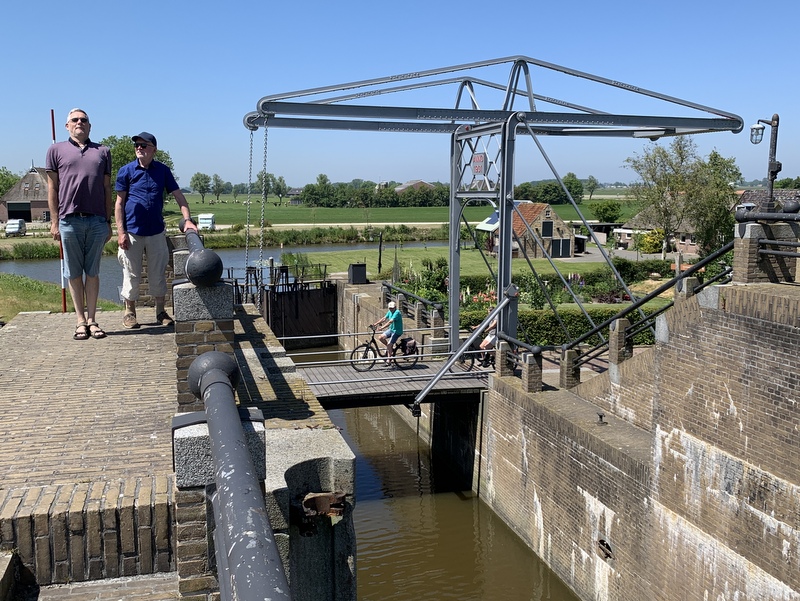
Gerrit moved a couple of months ago from Amsterdam to Dokkum, a town in the Friesland province. First I took a train to Leeuwarden and from there a bus to Dokkum, where Gerrit was waiting for me. After coffee and cake, we walked to the historical center of Dokkum.

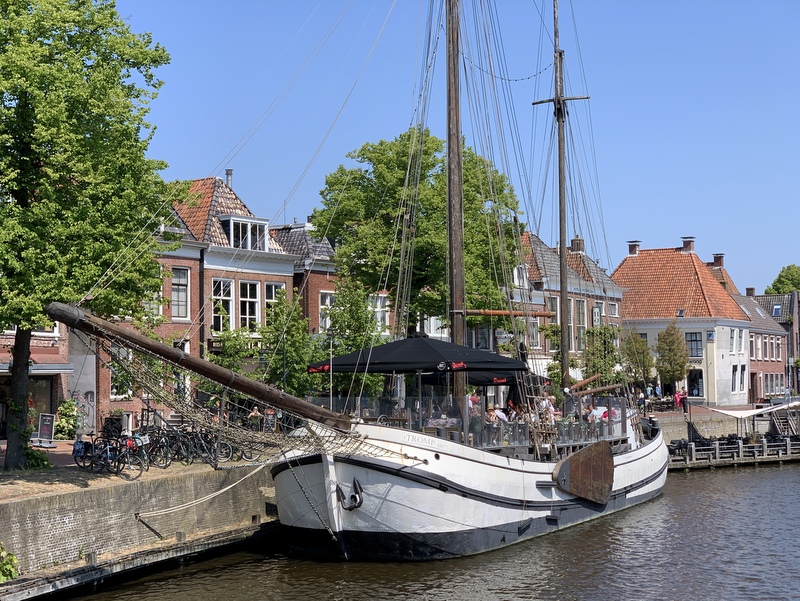
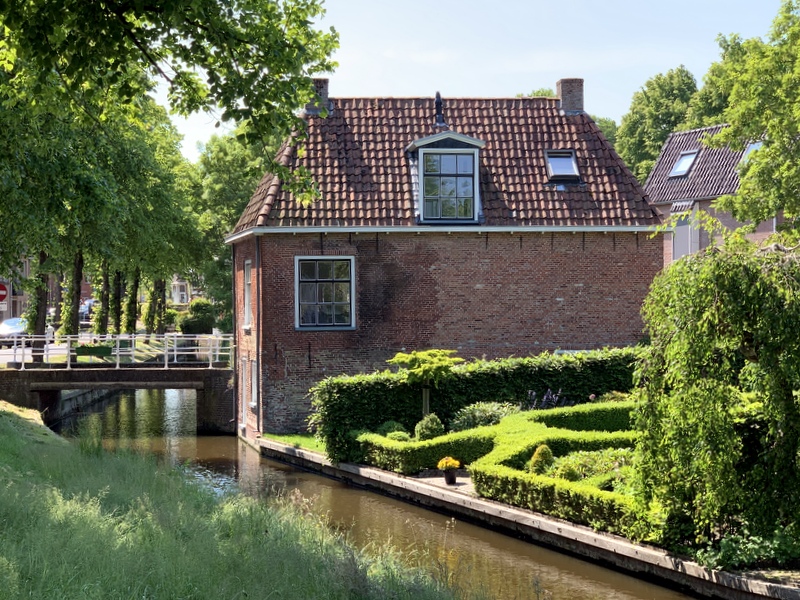
Dokkum has a rich history, in the past it had a harbour, and there are many heritage buildings. Many more photos can be found in my blog A Dutch Trip up North .

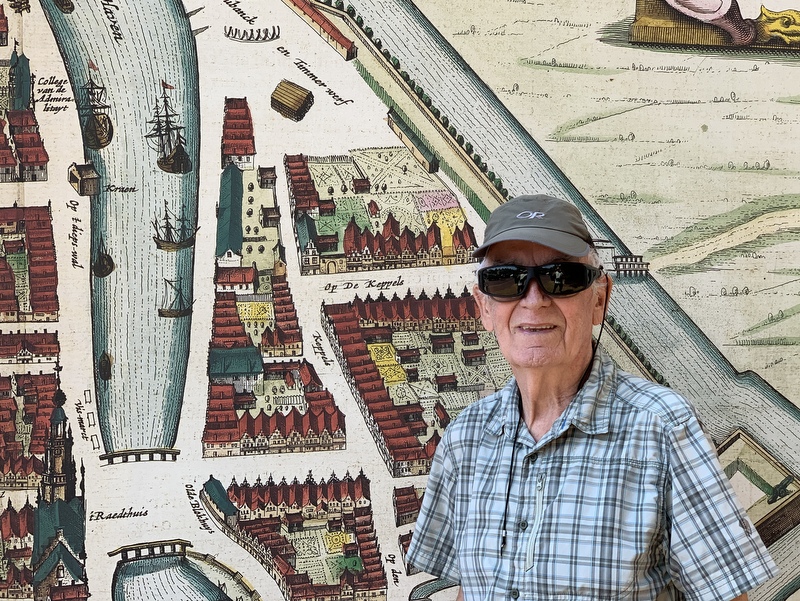
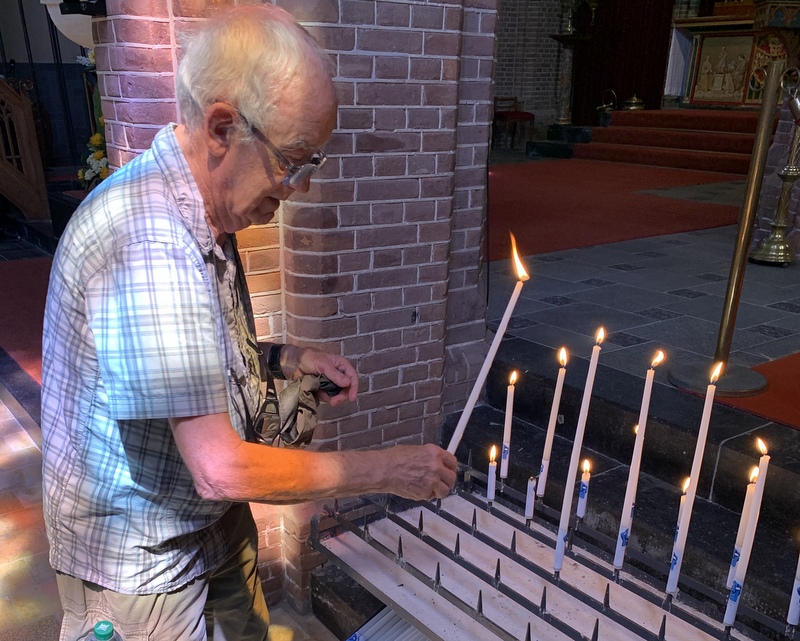
It was an enjoyable walk, worthwhile to come back another time. In the left photo I am standing in front of a historical map of Dokkum, in the right picture I am lighting a candle in one of the Dokkumer churches. I may be a staunch atheist, but I like to do this, while wishing something for a loved one.

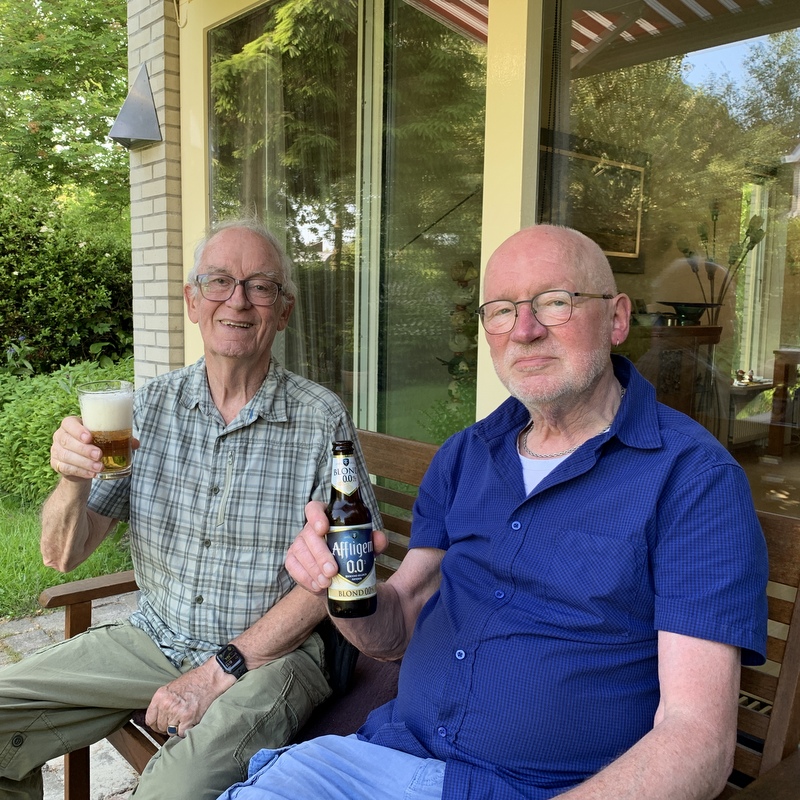
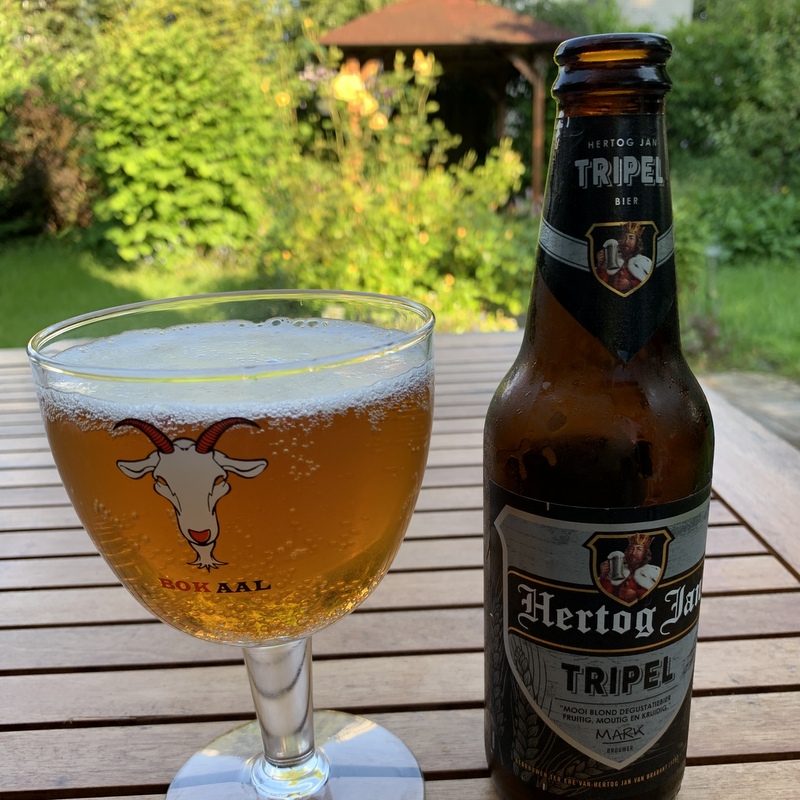
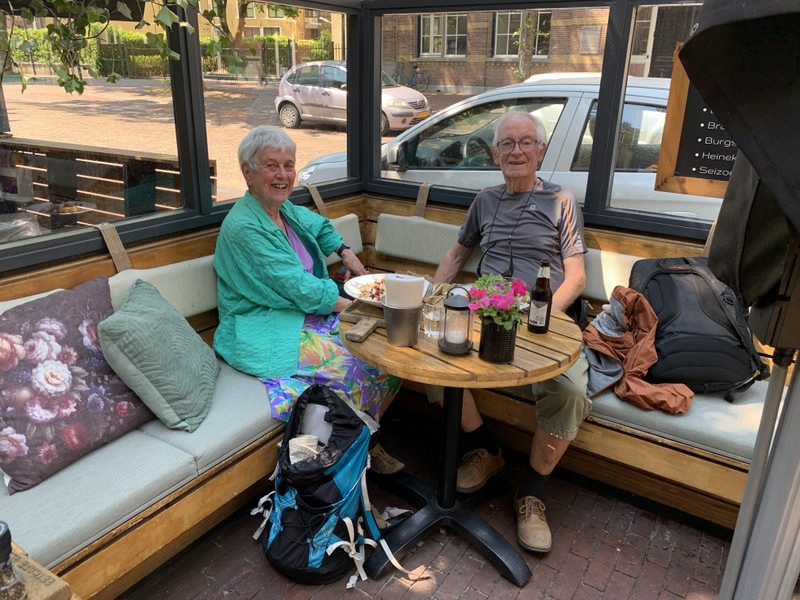
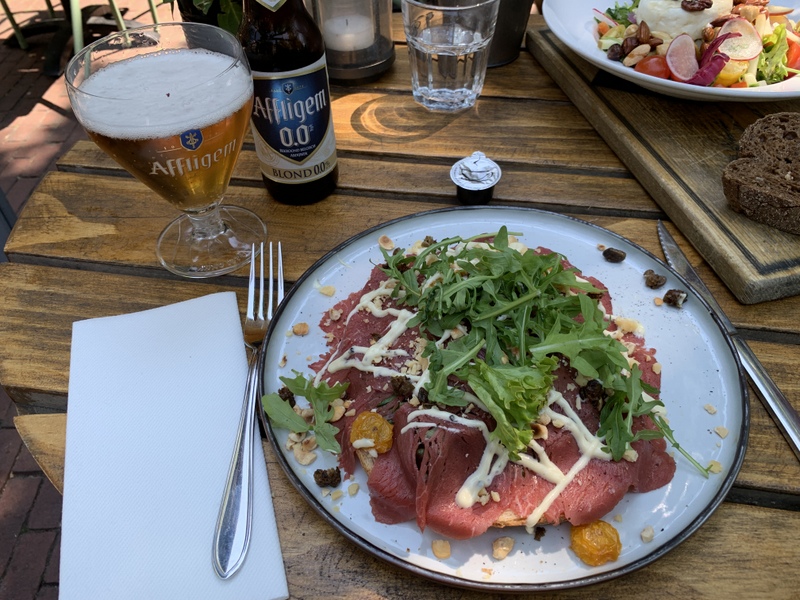
In the afternoon I continued my travel, by bus and train, to Groningen, where Ruud was waiting for me at the station. We enjoyed a beer in their garden. Actually two beers ;-). Left Affligem alcohol-free beer, which is getting quite popular these days. Followed by a “real” beer, a Belgian tripel, very strong, 8.5 %.

Jur had prepared a nice dinner.

———————————————–
Saturday 10 June

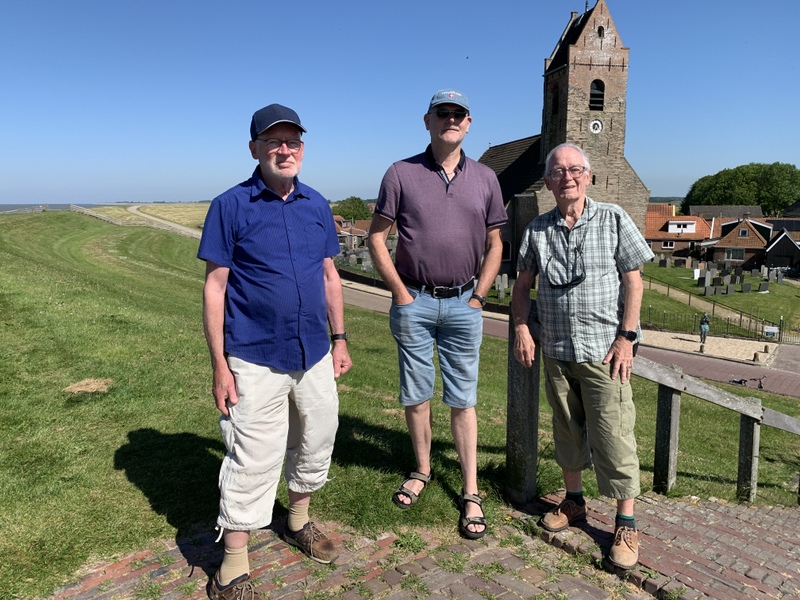
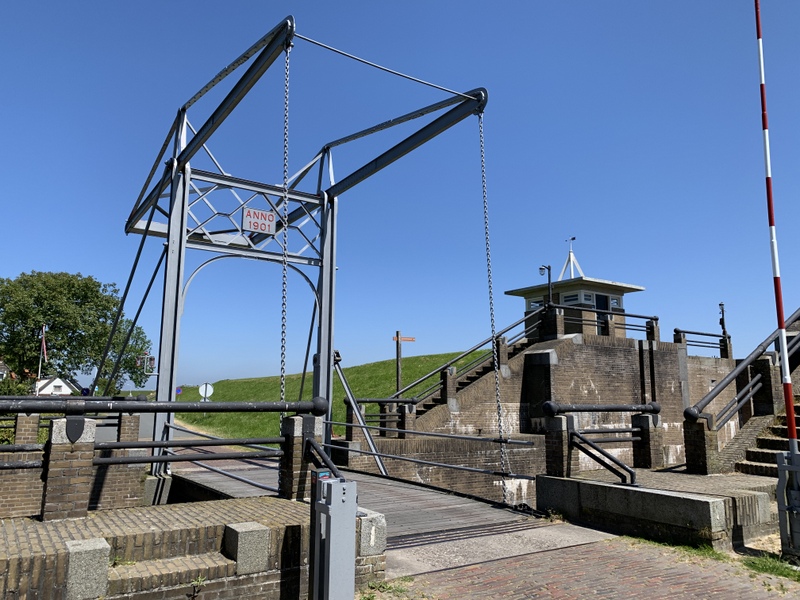
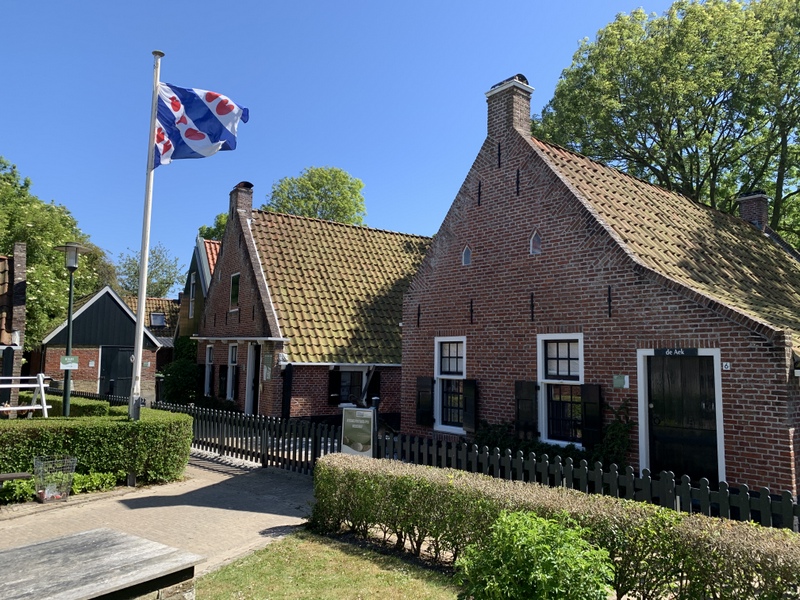
We made a trip to the northern part of the Friesland province. For me an unknown part of the Netherlands. Perfect weather.

Many more pictures and info in the album A Dutch Trip up North. The right picture is taken at the small village of Moddergat. I had never heard about it, Interesting history and really worth a visit.

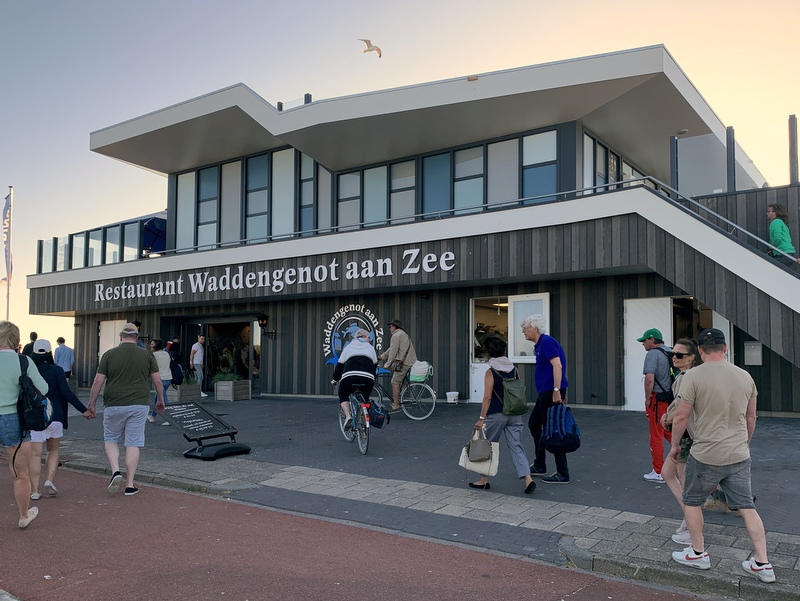
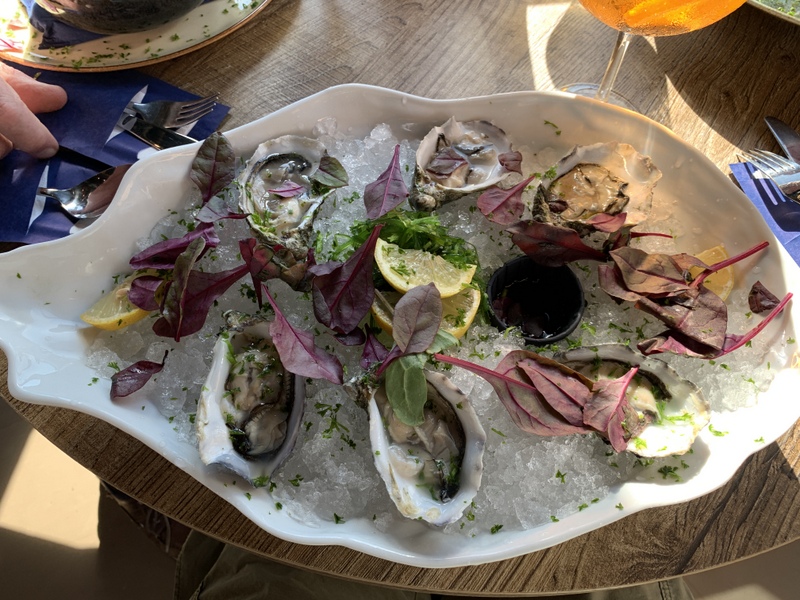
For our dinner we went to Lauwersoog, where we had a sumptuous seafood dinner. I started with oysters

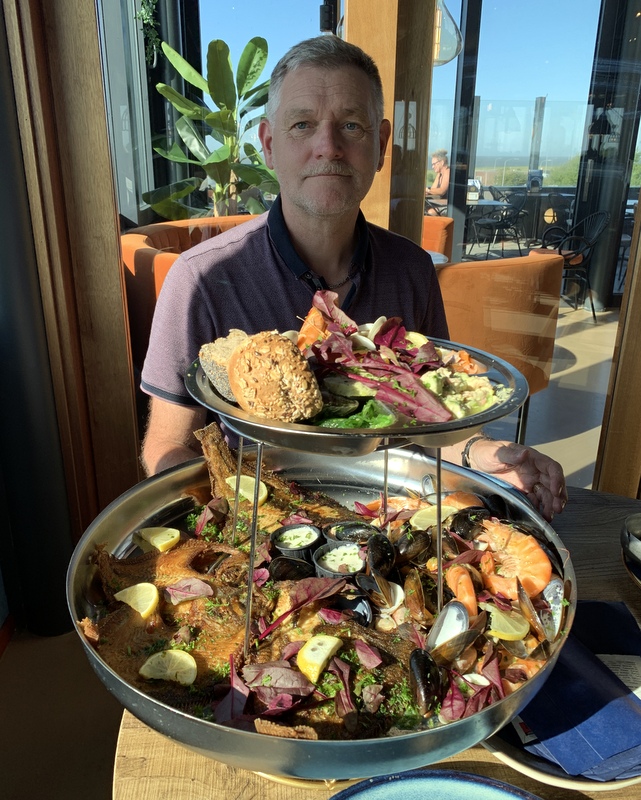
Jur and I shared a seafood platter. So much variety of seafood that we couldn’t even finish it. Ruud is not a fan of seafood, but enjoyed his dinner too. I will come back to this restaurant with Aric!

———————————————–
Sunday 11 June

On my way back to Amsterdam, I stopped in Leeuwarden to meet my university friend Nellie, who is living in Friesland. Talking about long lasting friendship, we met in 1961 as freshmen at the Free University of Amsterdam.

———————————————–
Monday 12 June

Rene and I were both physics teachers at the Snellius school, many years ago. When he started teaching in Utrecht, we kept in touch. Either I visit him and his wife Caroline in Nieuwegein, where they live, or they visit me in Backerhagen, like this year.

Caroline is always fascinated by the view from my apartment.

———————————————–
Tuesday 13 June

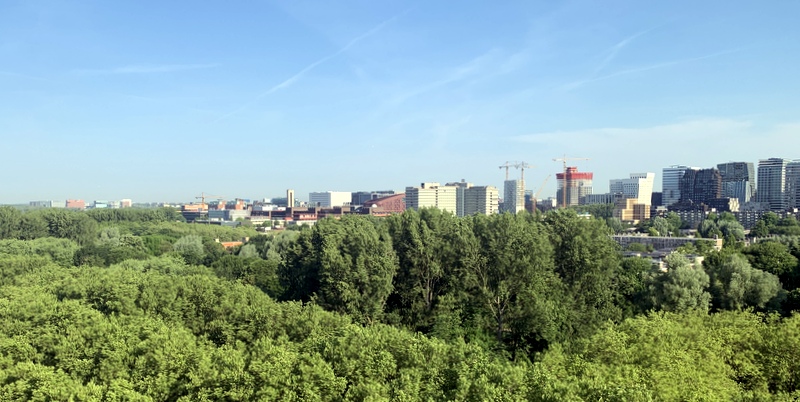
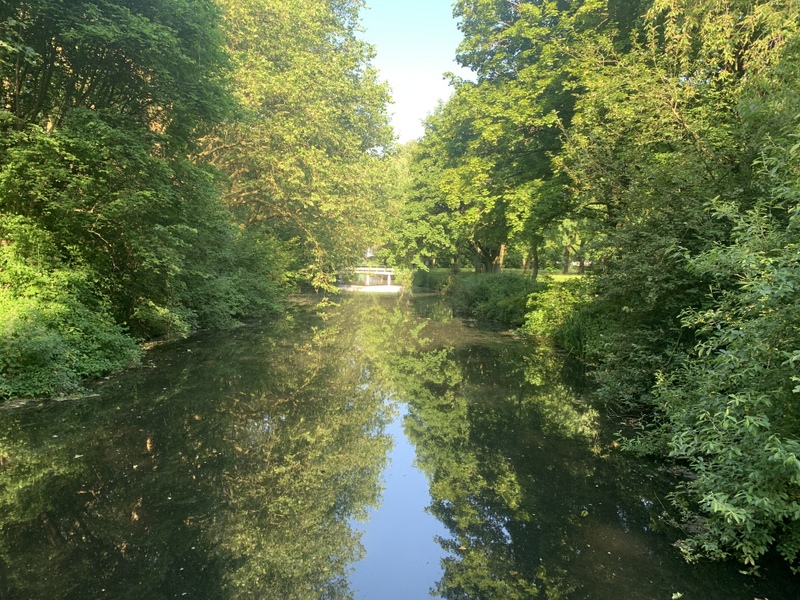
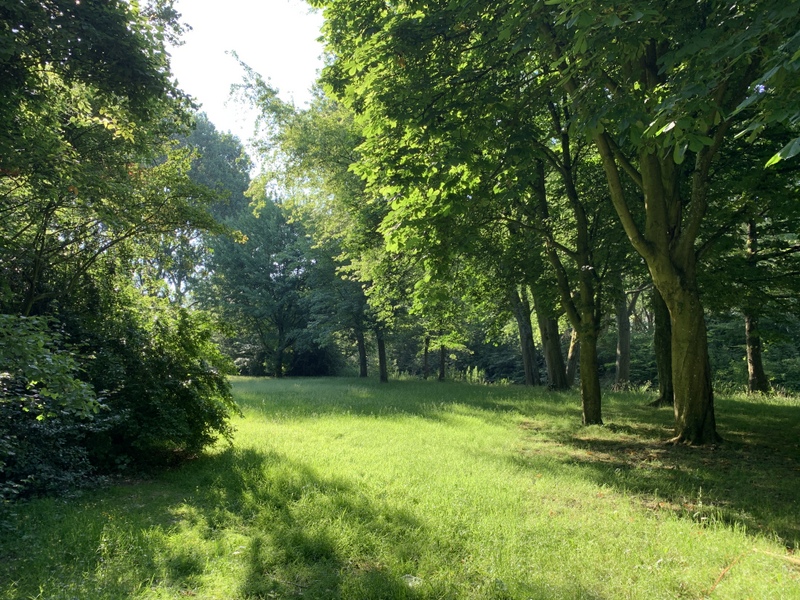
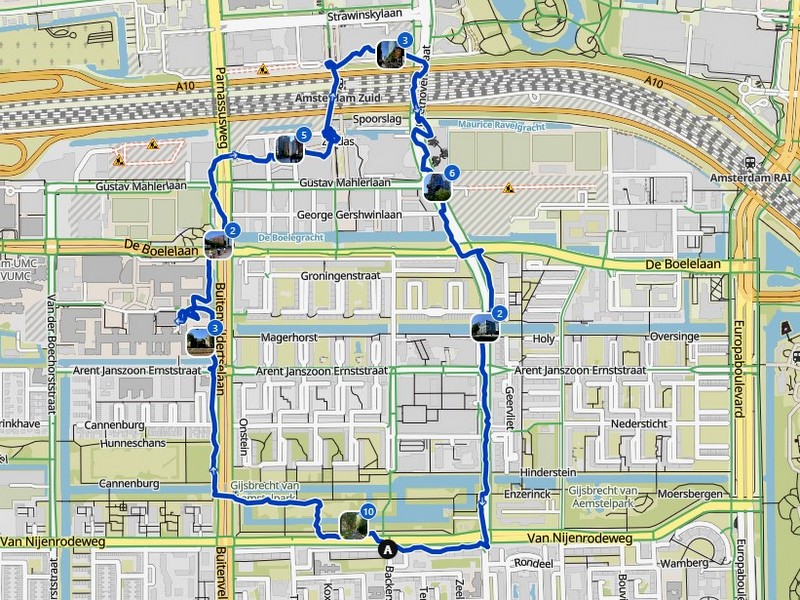
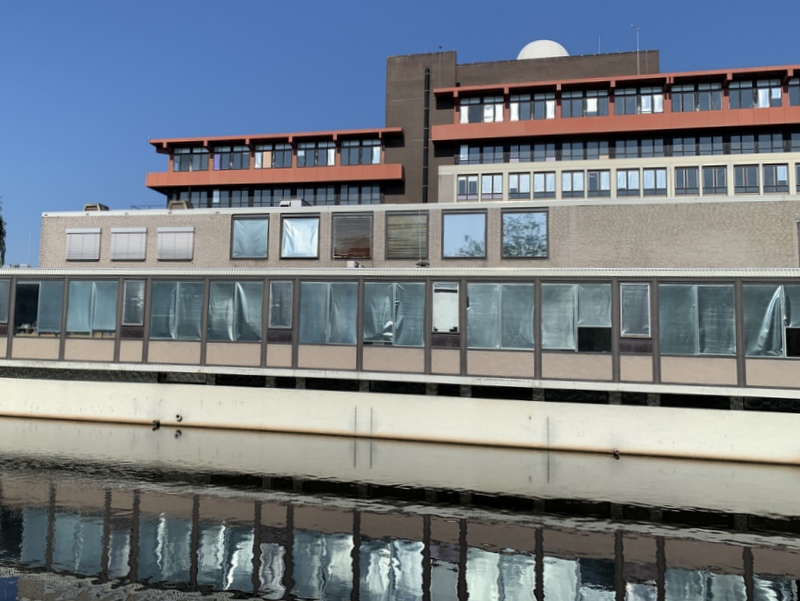
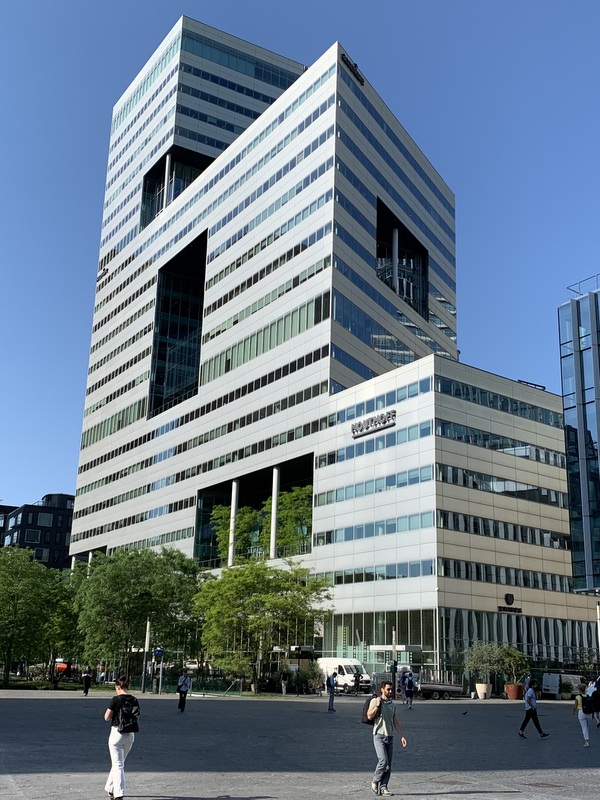
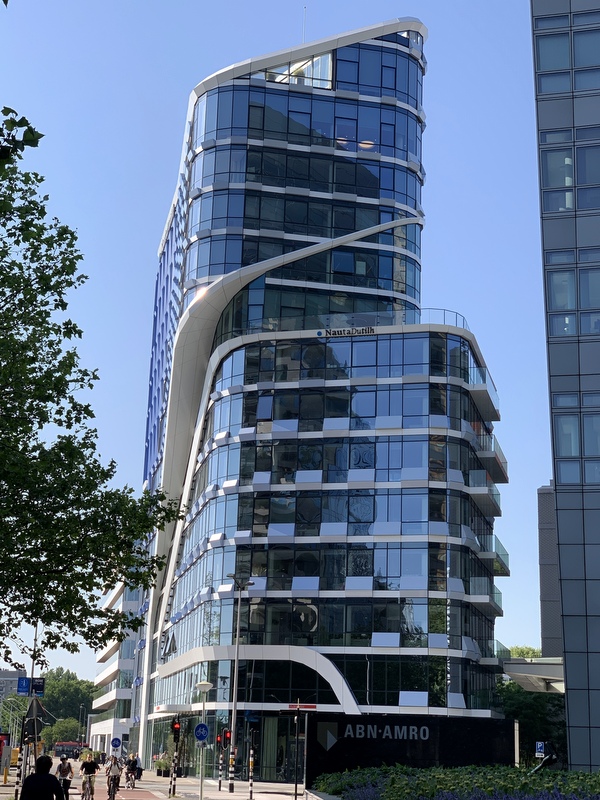
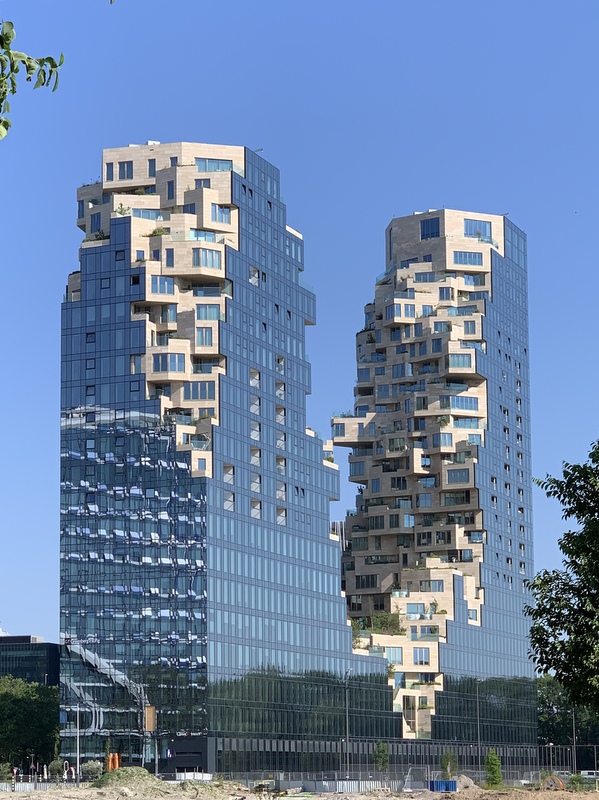
I started the day with another walk from my apartment. This time part nature, part architecture. Here is a report with many photos: De Zuidas.

The right photo shows the Science Faculty of the Free University where I have been working from 1969 until 1976 for my Ph.D degree.

The Zuidas (South Axis) is a rapidly developing business district in Amsterdam, also nicknamed the Financial Mile. Lots of interesting modern architecture.

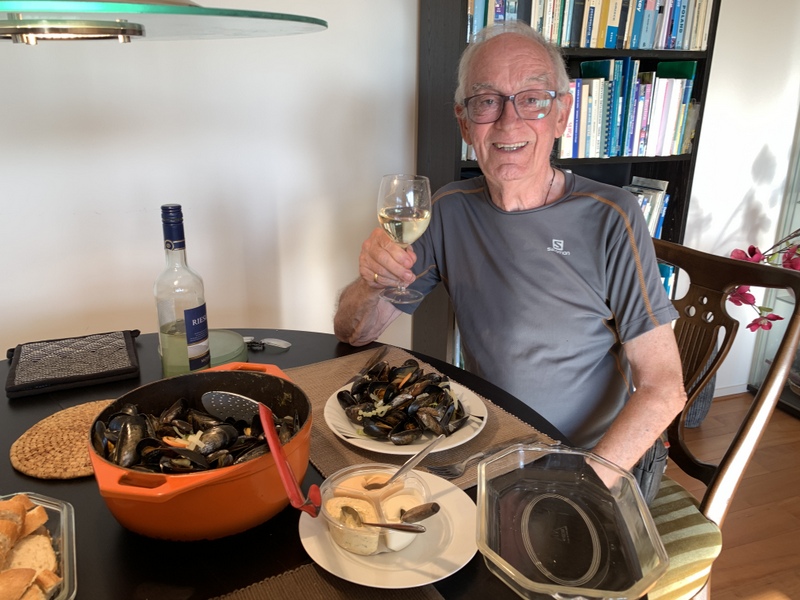
In the evening my brother Pim visited me for a mussel dinner. Nowadays mussels are available in the supermarkets even when there is no r in the name of the month (May-August). During this stay the dinner with Pim was the only time that I prepared dinner for a guest, the other guests came for lunch. Easier for me 😉 .

———————————————–
Intermezzo

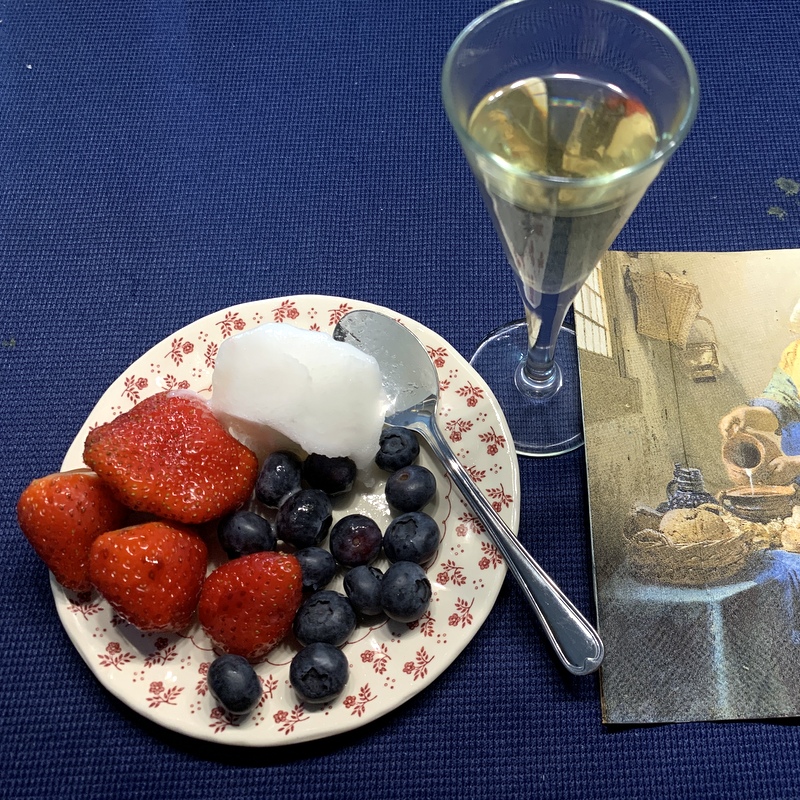
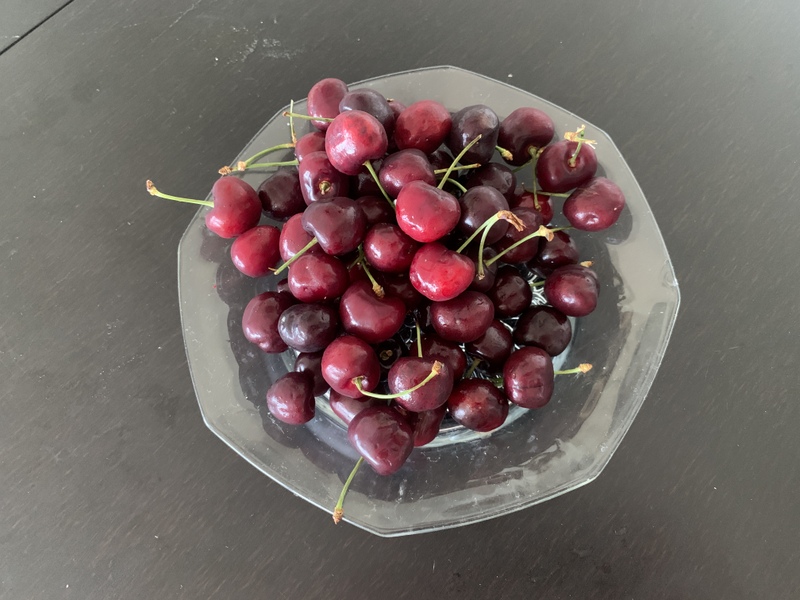
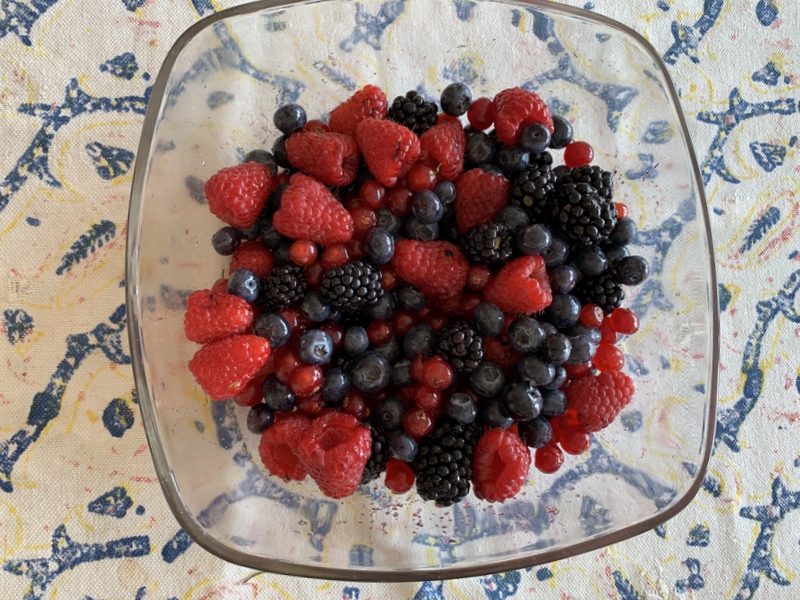
Not only did I enjoy the Dutch food, also the variety of fruits was very pleasant. When I am back in spring there are strawberries, now they were there too, even Dutch ones, But there were now also cherries, blueberries, raspberries, red berries and blackberries. Delicious.

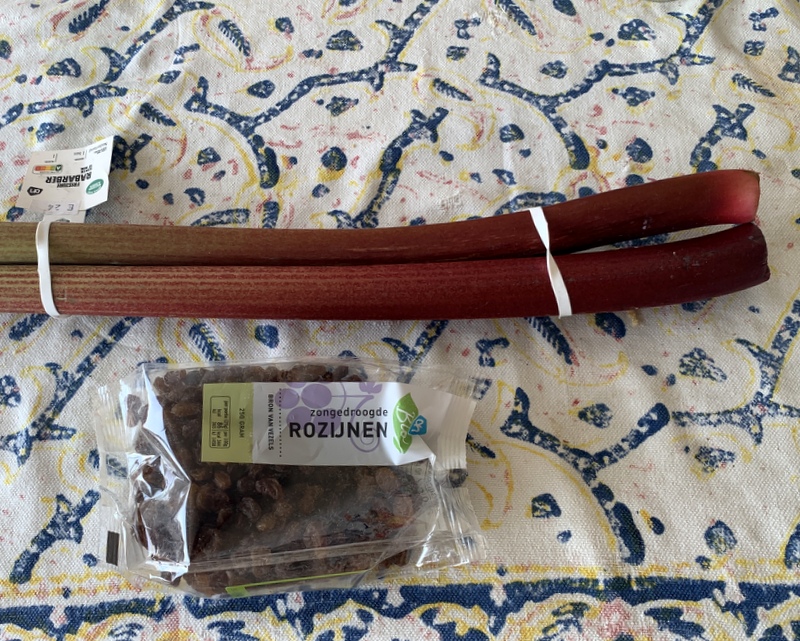
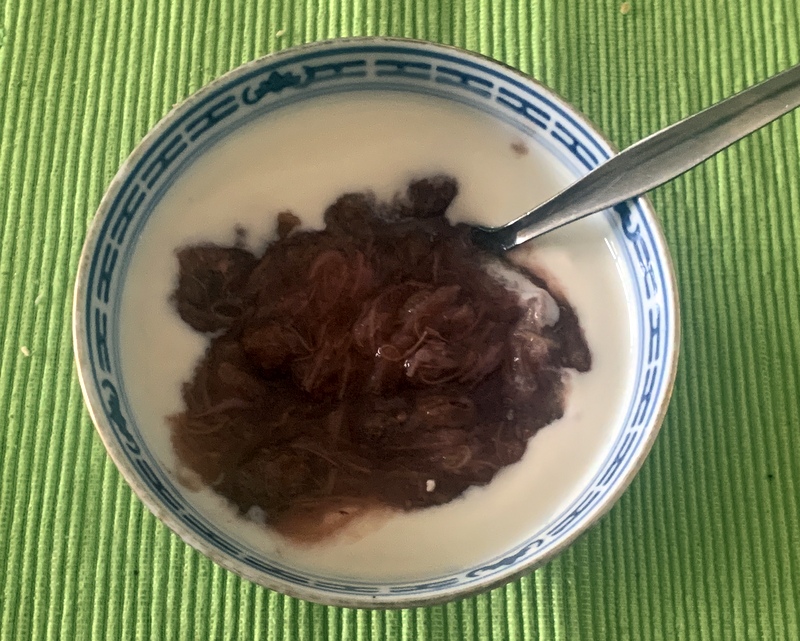
And there was rhubarb. Cooked with raisins and sugar, with yoghurt a perfect dessert.

———————————————–
Wednesday 14 June

A day trip to visit Carel Poeder and his wife Joanne. Carel was the principal of the Snellius school when I started teaching there in 1976. I kept in touch with them and in 2018 Aric and I visited them in France where they have a house. See my blog France 2018, part II. When back in the Netherlands they stay in a house on a campsite near Gaanderen. Nice rural environment.

Joanne picked me up from the Gaanderen station and drove me to the camping.

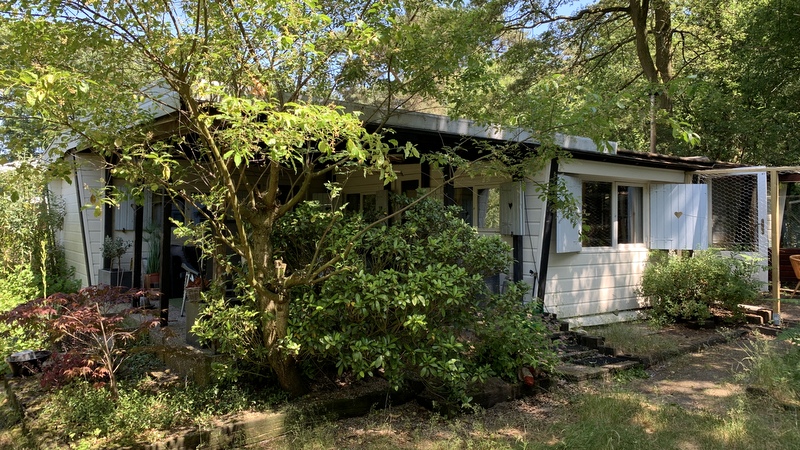
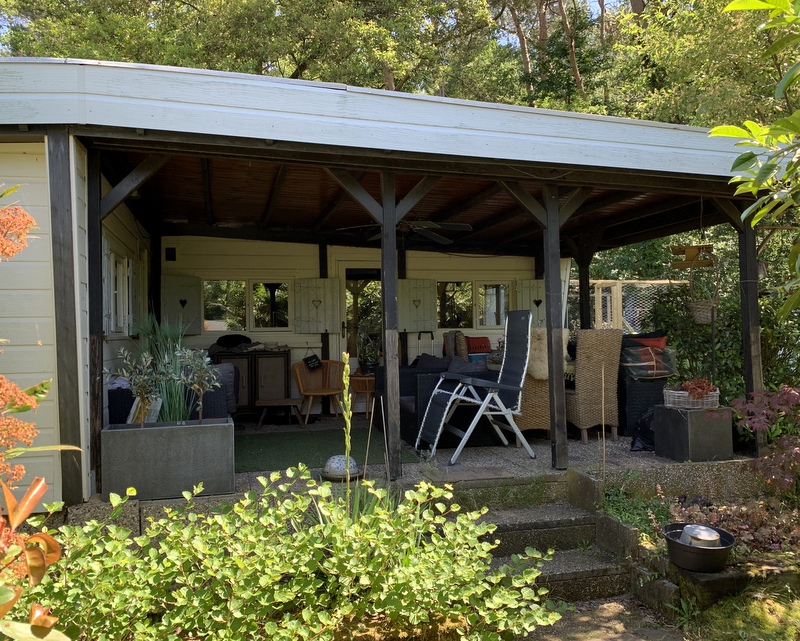
Originally two caravans, but it has the atmosphere of a real, nice house. A pleasant surprise. It was a short visit, we had coffee and lunch, then they dropped me at the station in Doetinchem.

This was the third week.