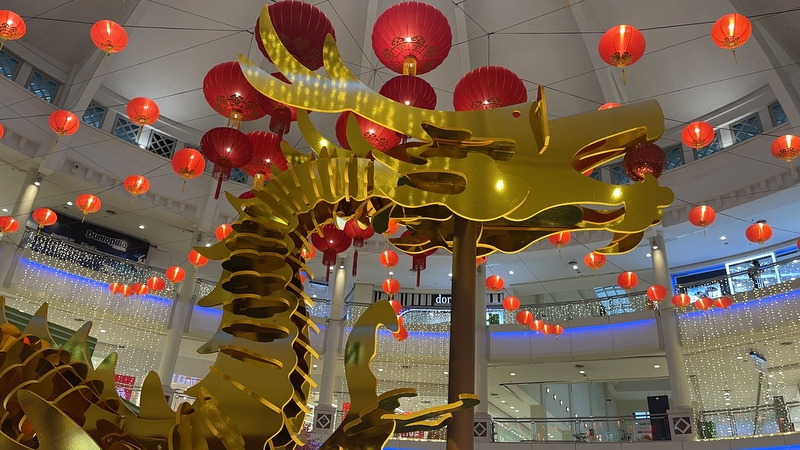
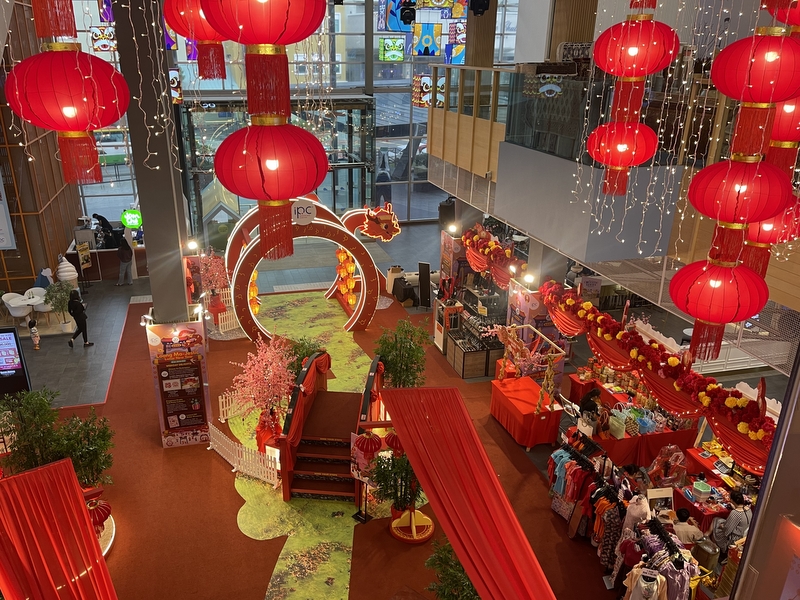
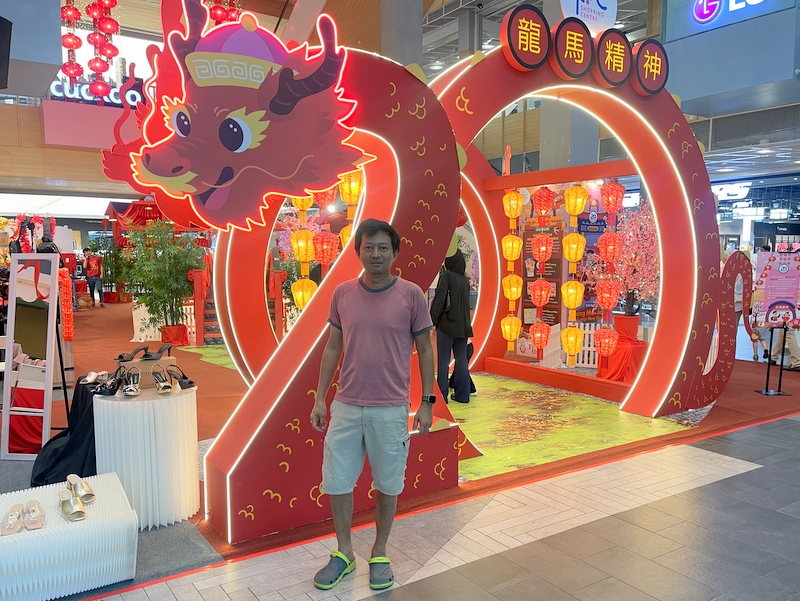
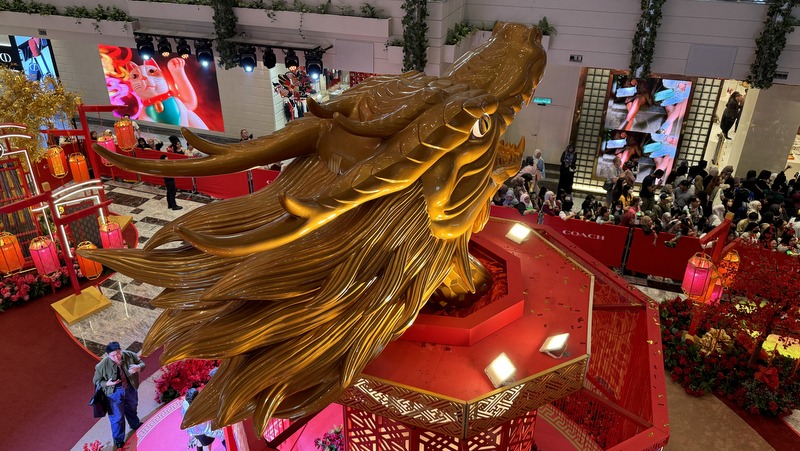
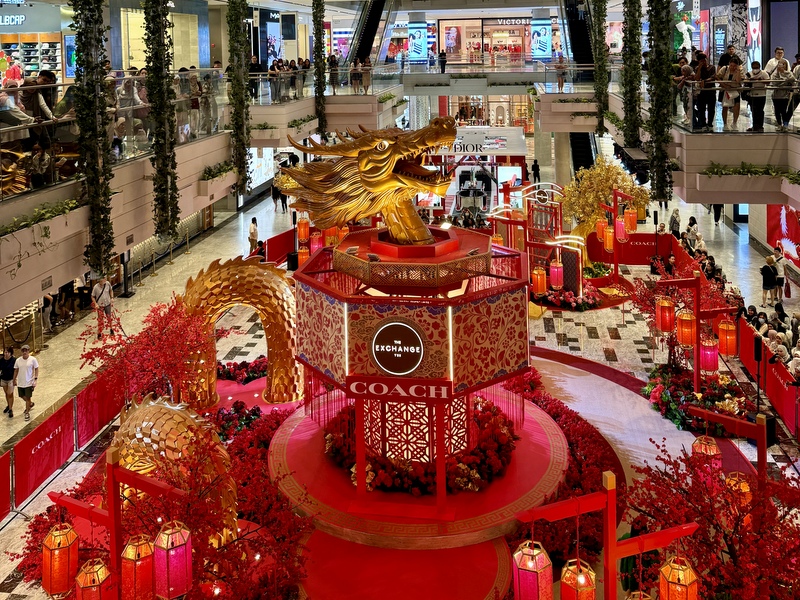
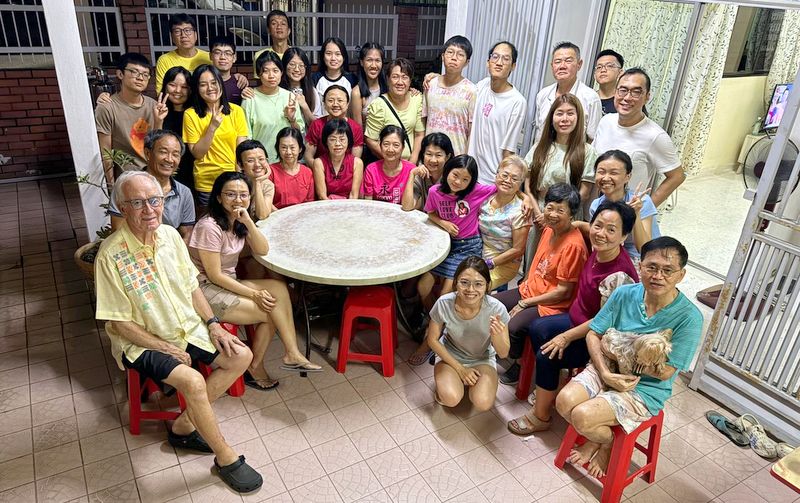
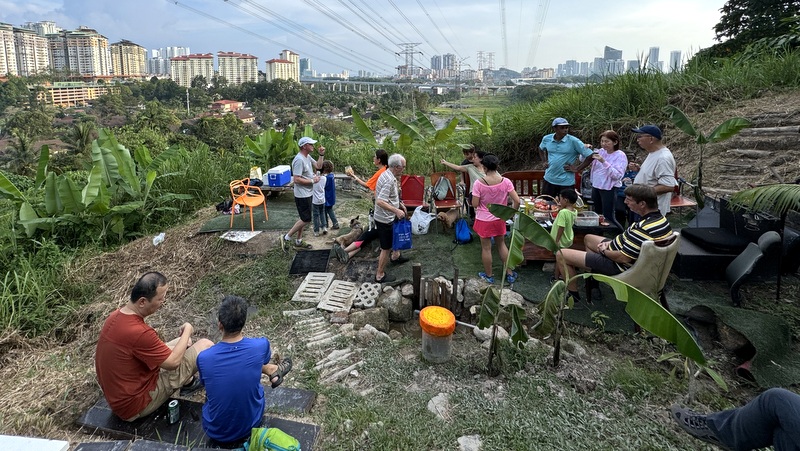
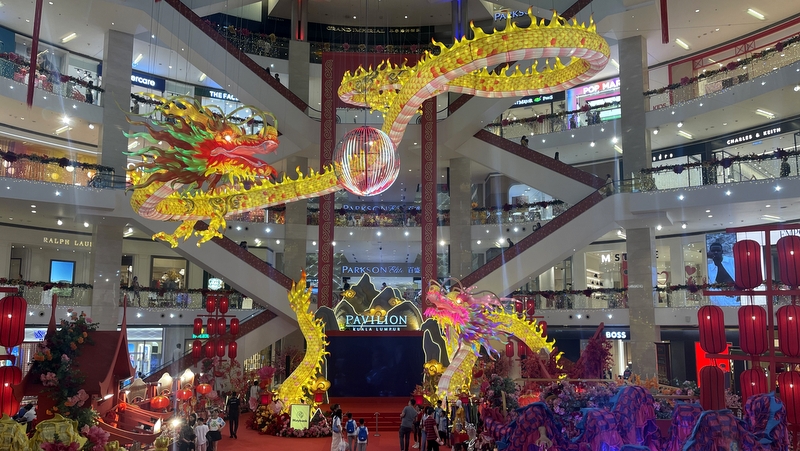
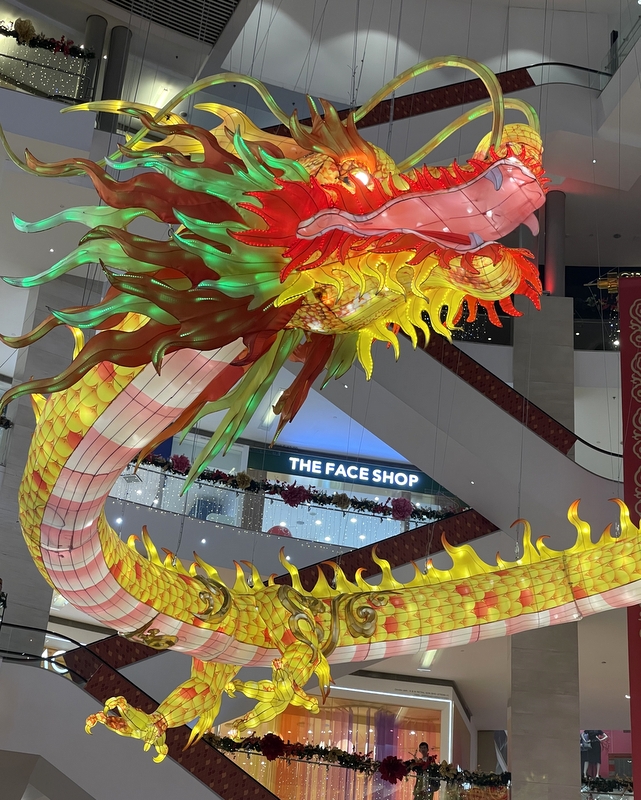
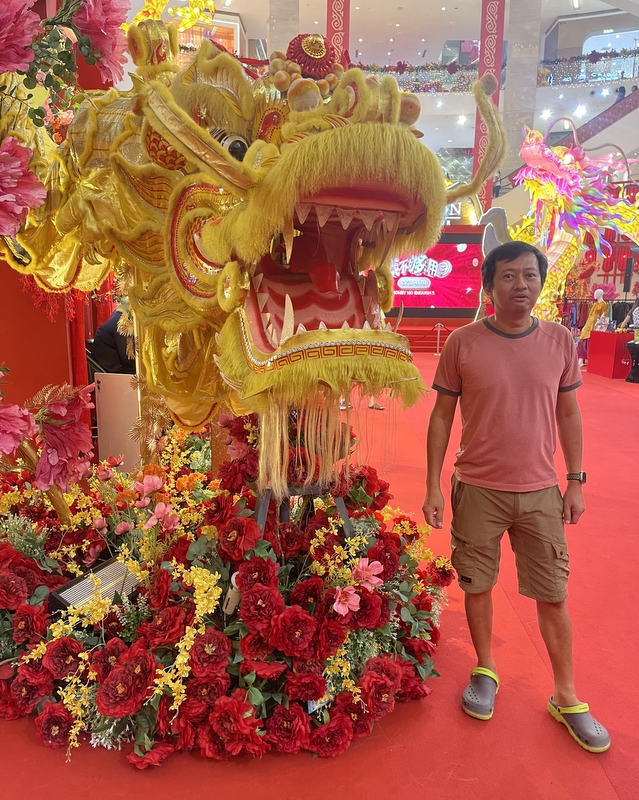
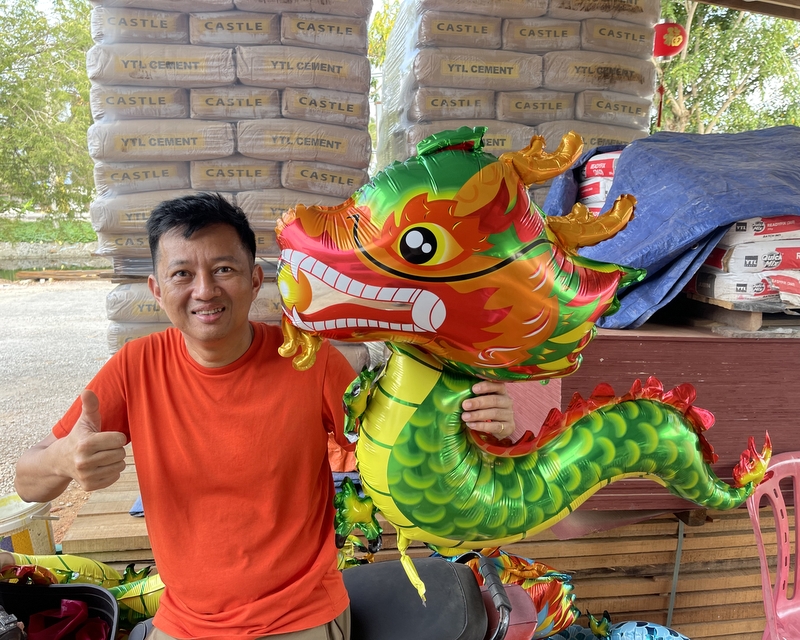
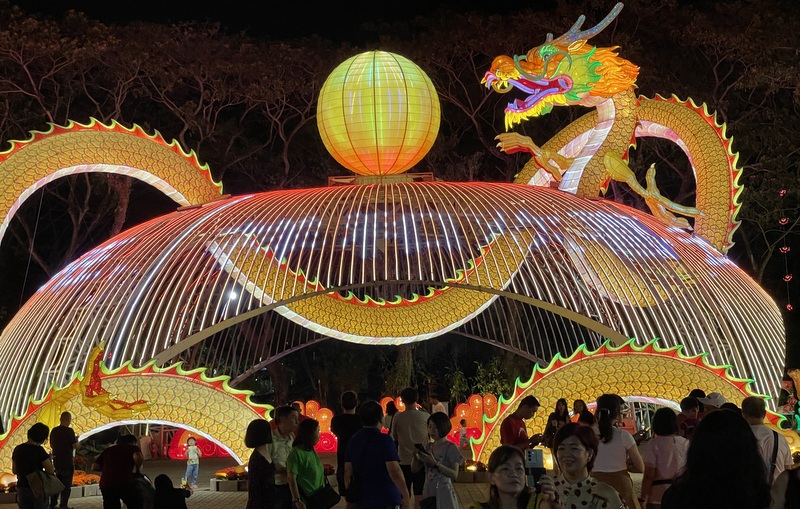
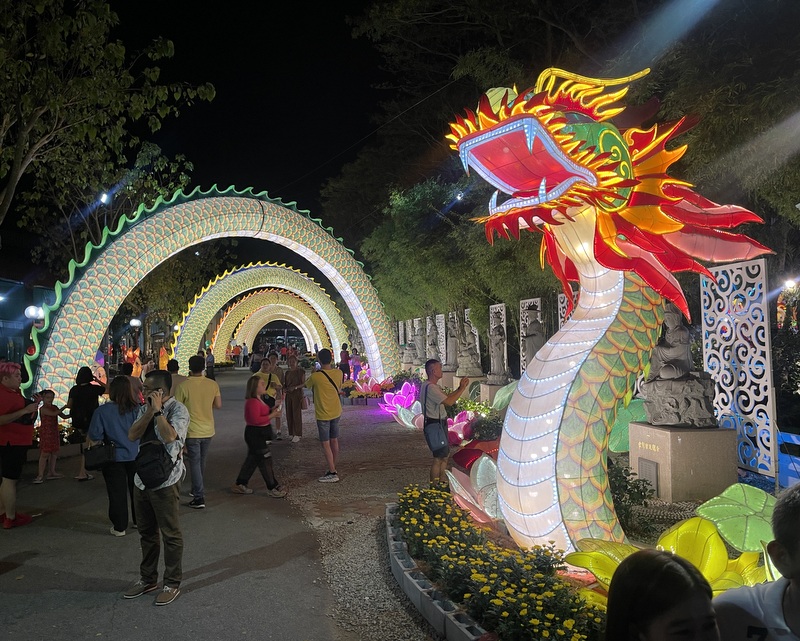
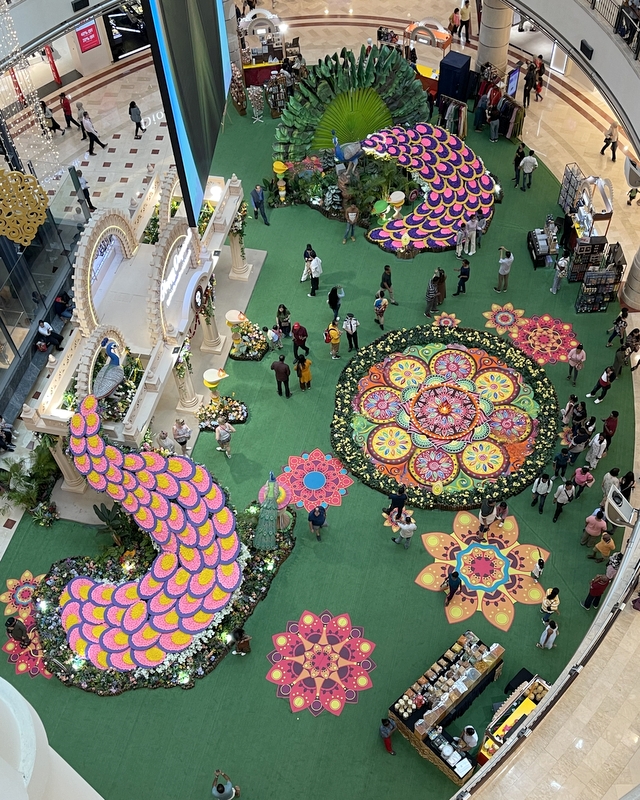
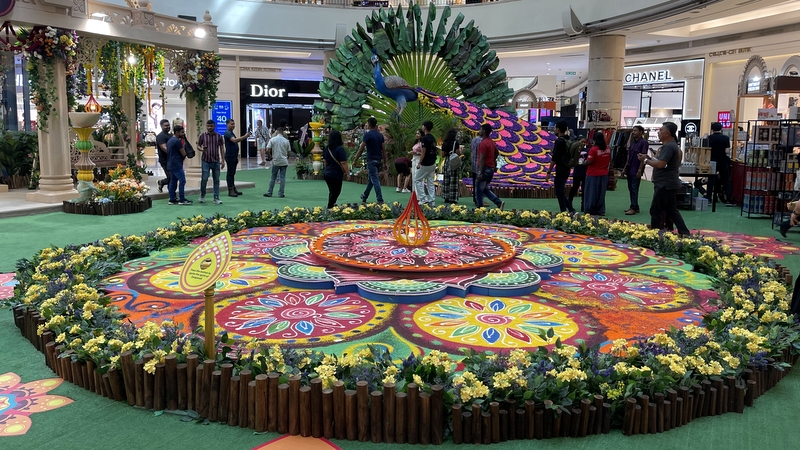
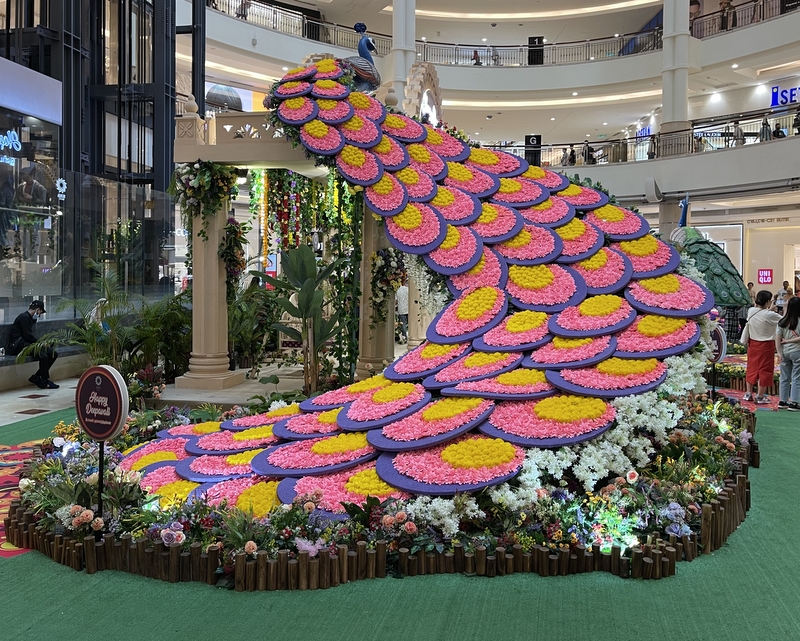
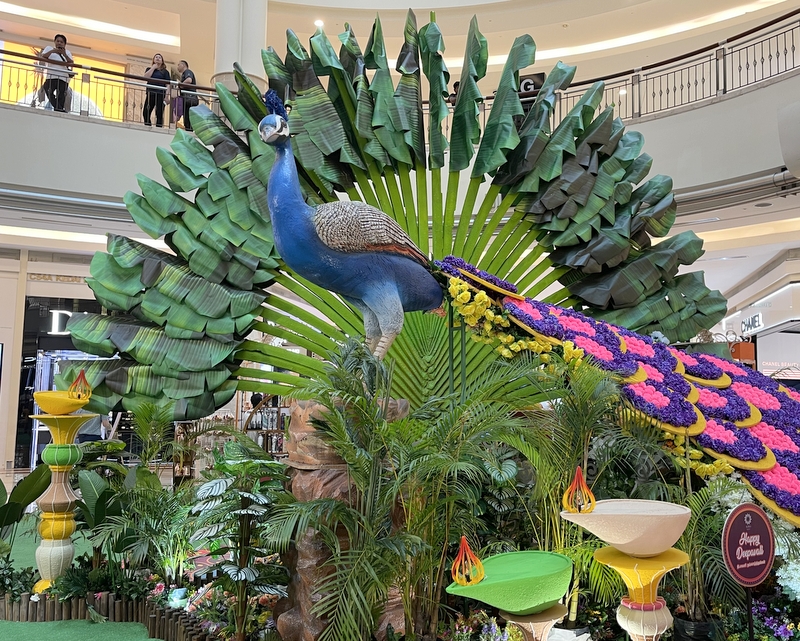
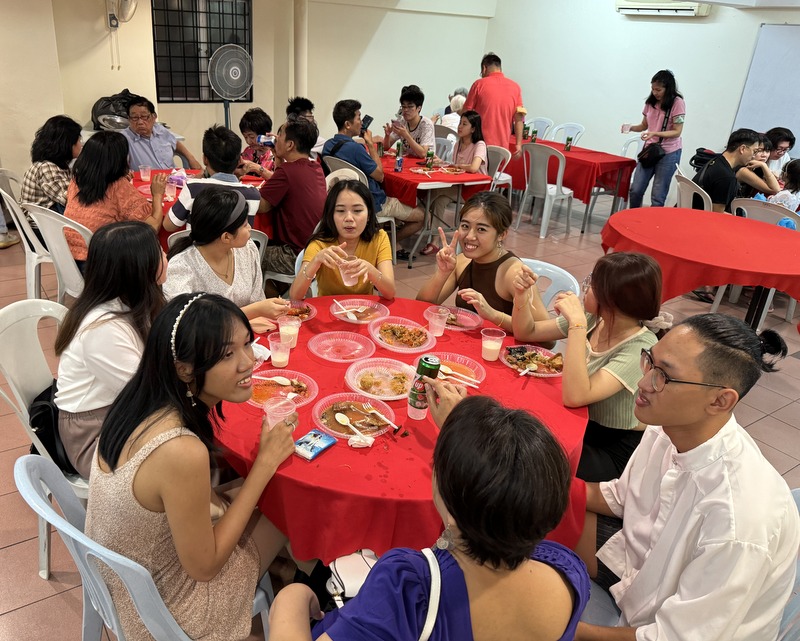
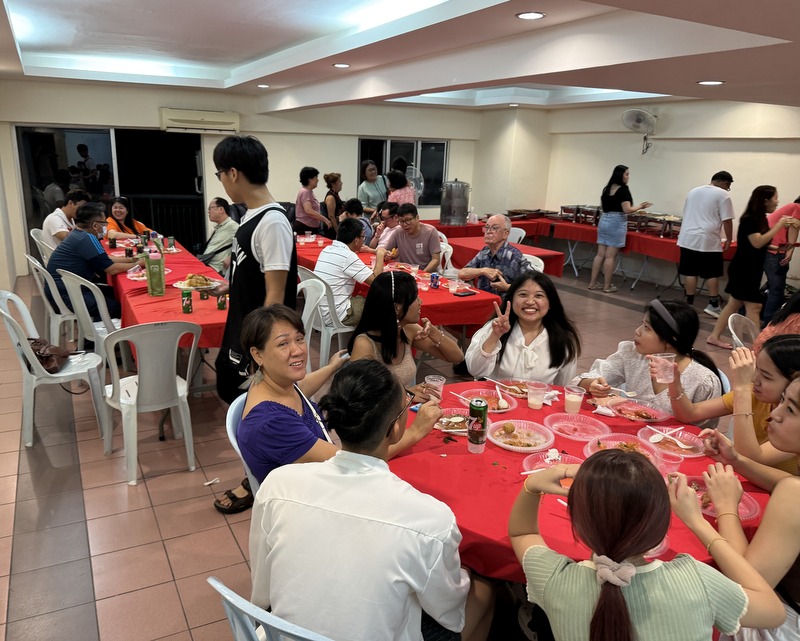
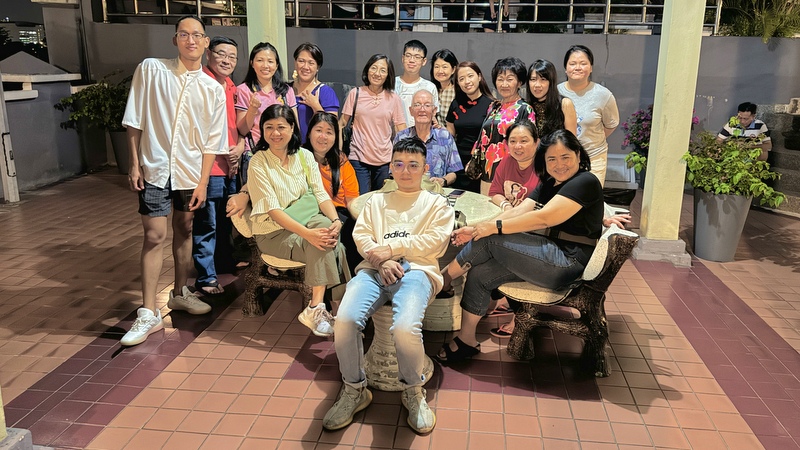
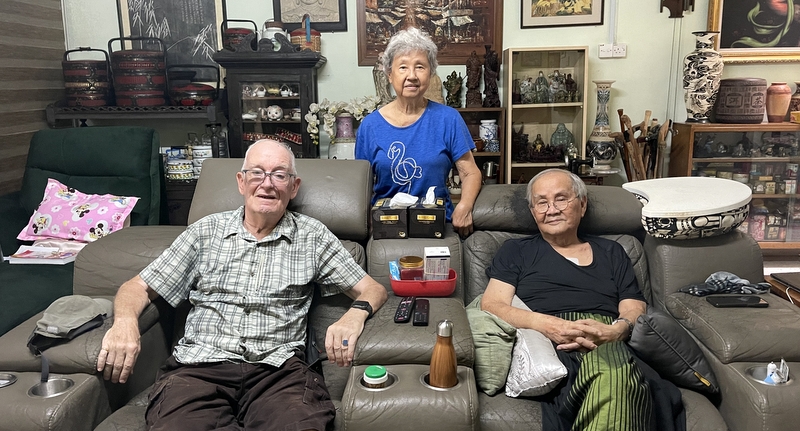
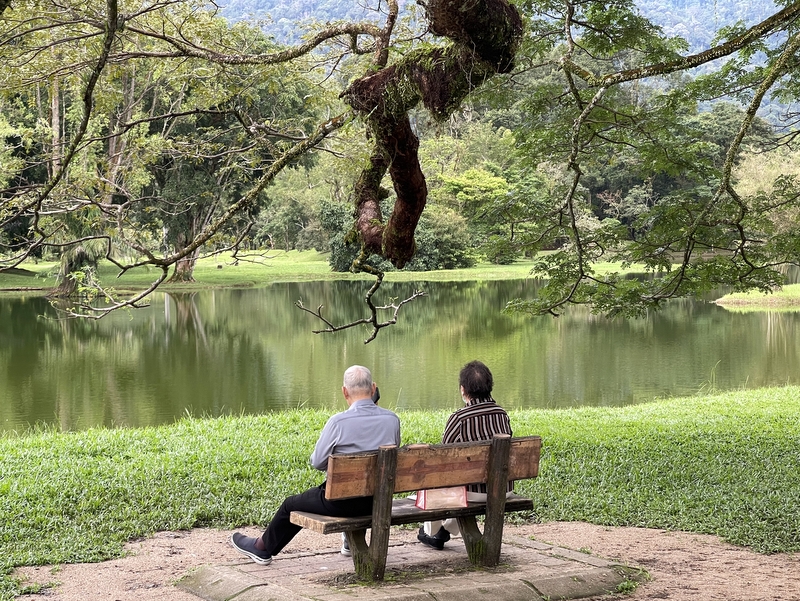
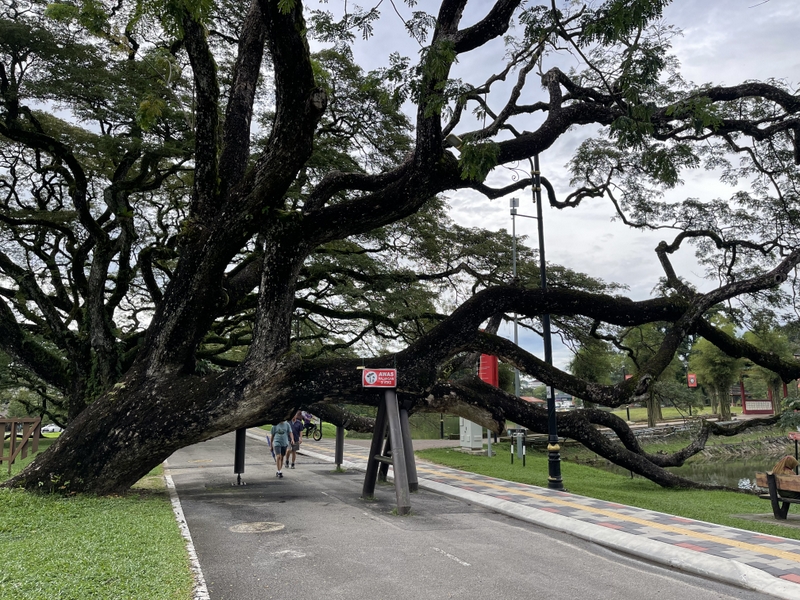
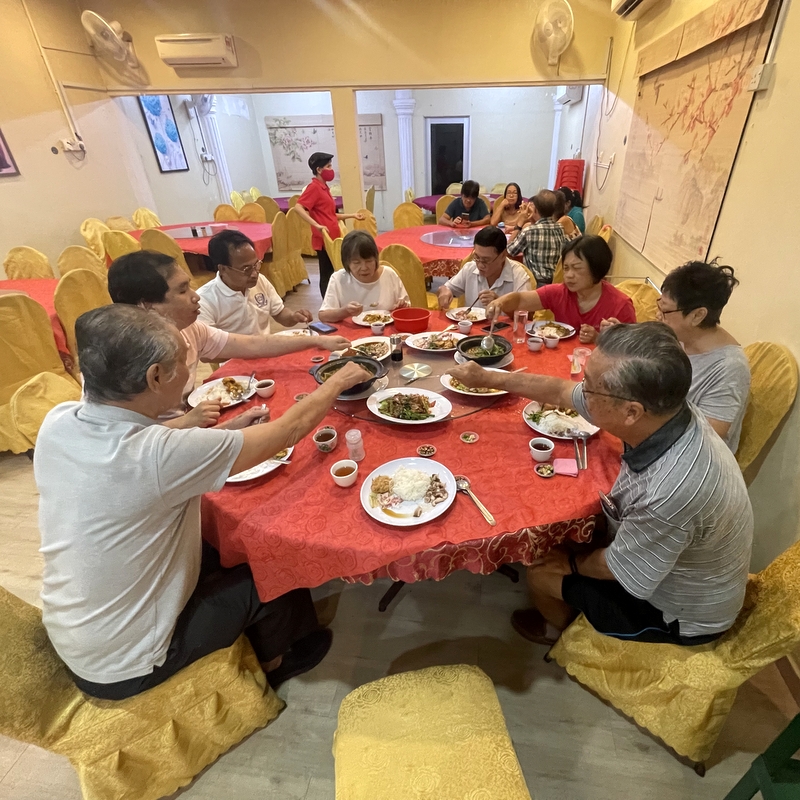
Yesterday the Chinese New Year celebrations ended with Chap Goh Mei on 24 February. Shopping malls try to outdo each other in elaborate and often spectacular CNY decorations. We visited a few. This year is the year of the dragon, so dragons everywhere.
On 1 February we went to the Curve, a shopping mall near to where we live. Relatively modest decorations.
The next day we visited the ExchangeTRX, a new, huge shopping complex in the center of Kuala Lumpur.
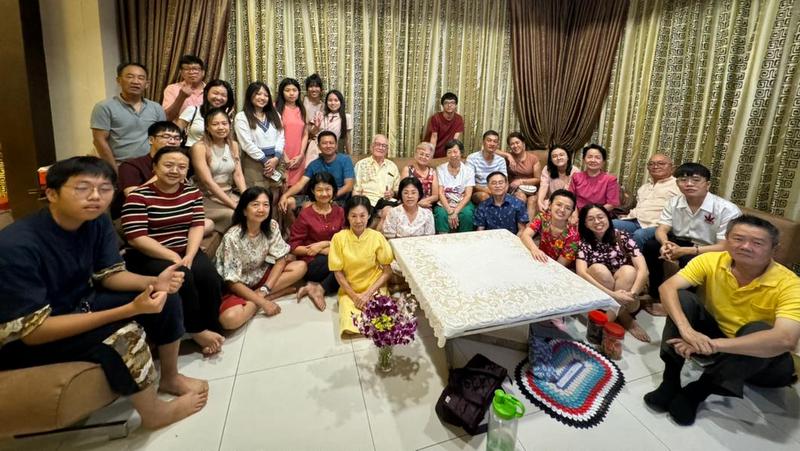
On Saturday our first CNY-dinner with Aric’s maternal family in Kepong.
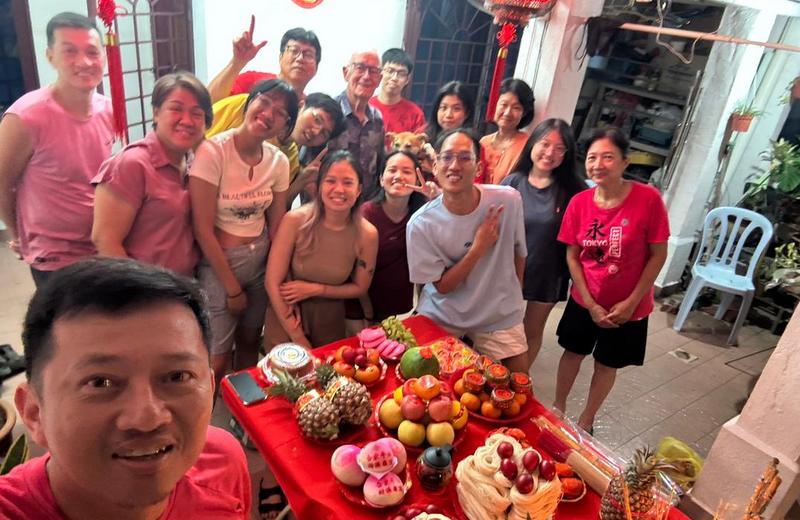
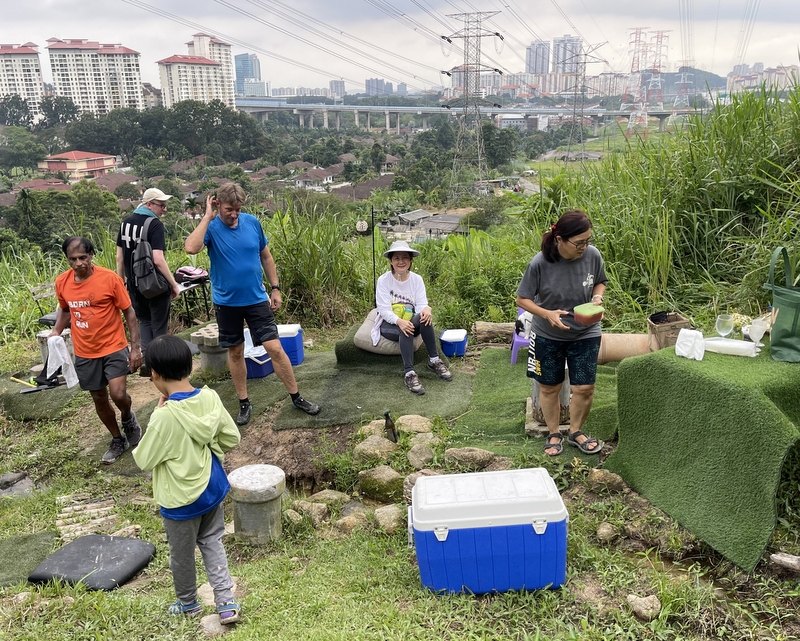
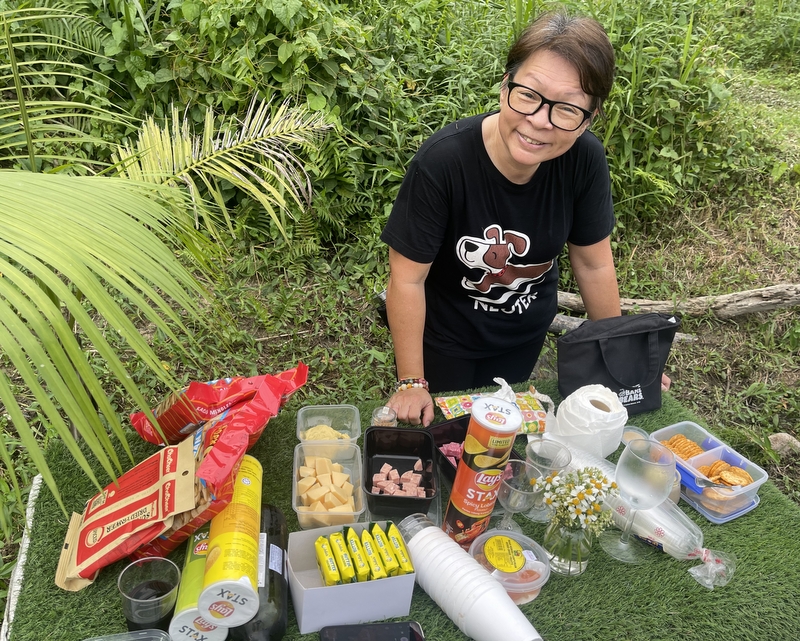
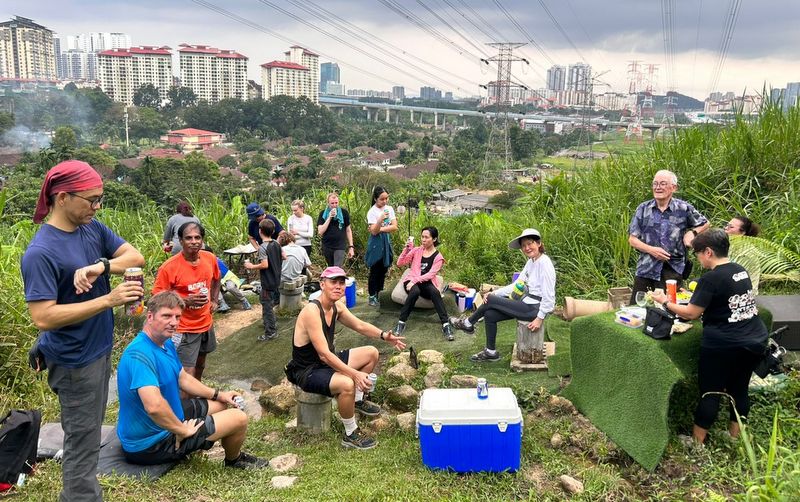
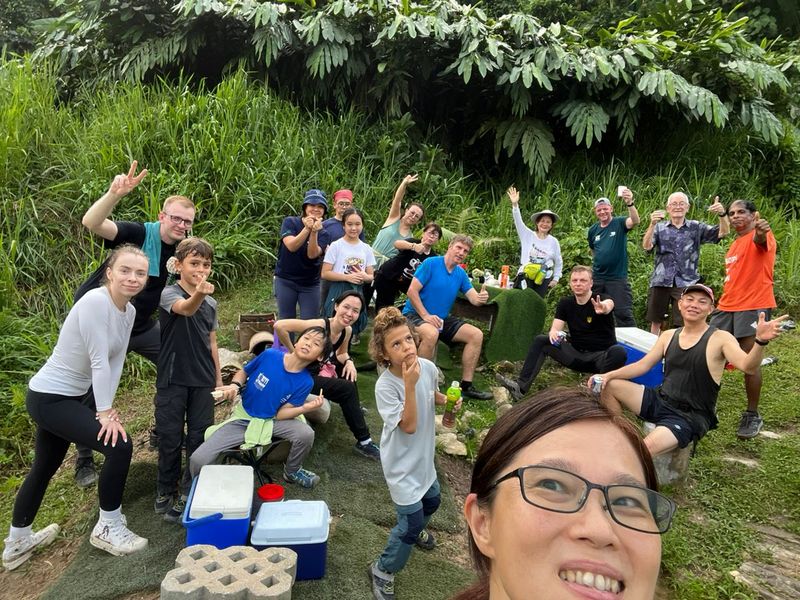
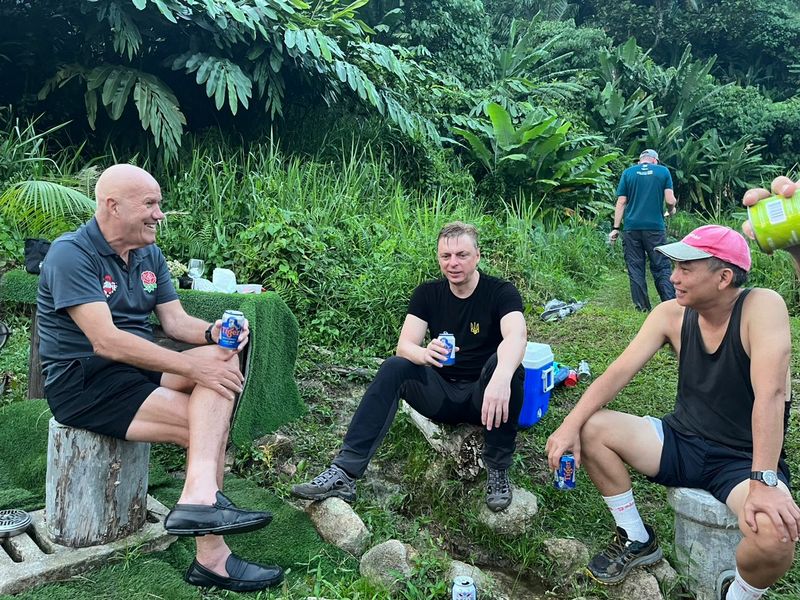
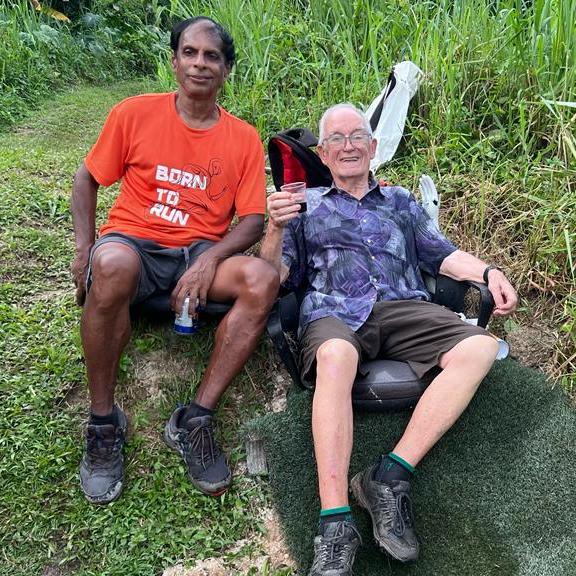
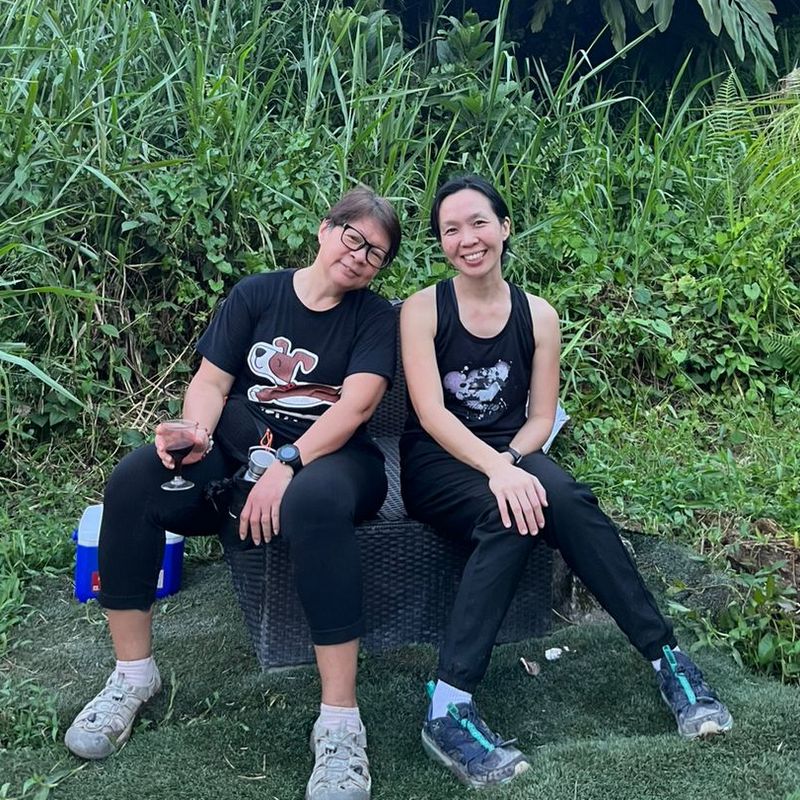
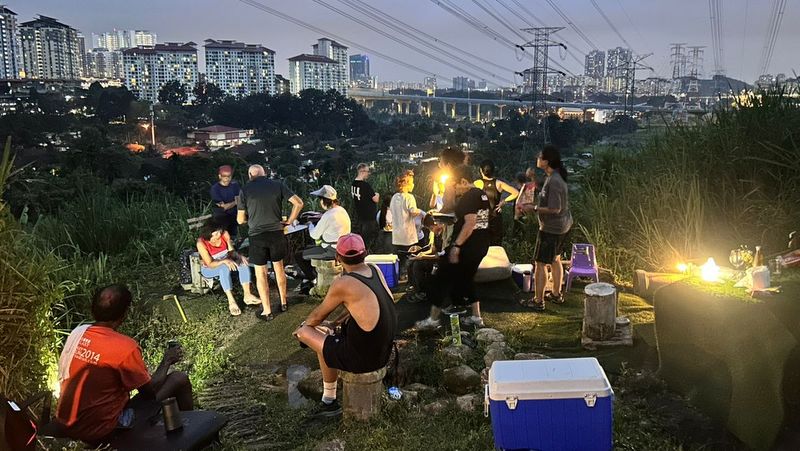
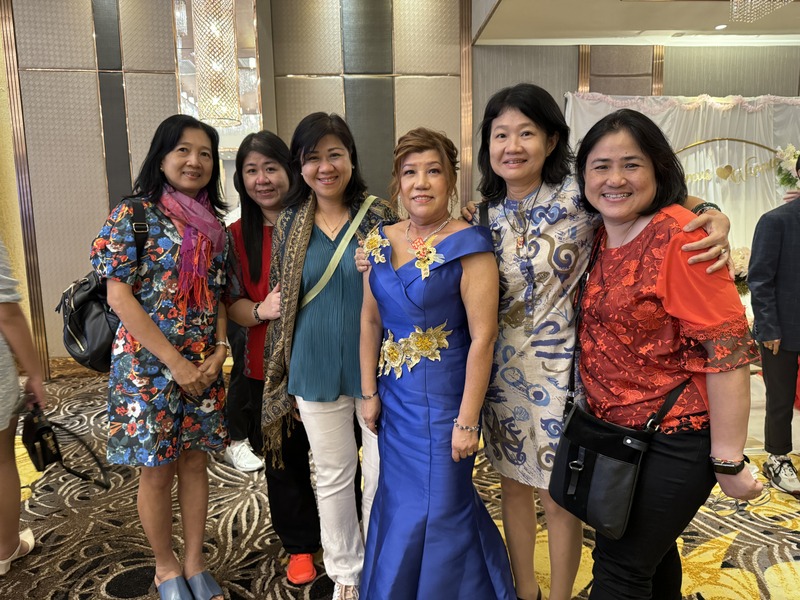
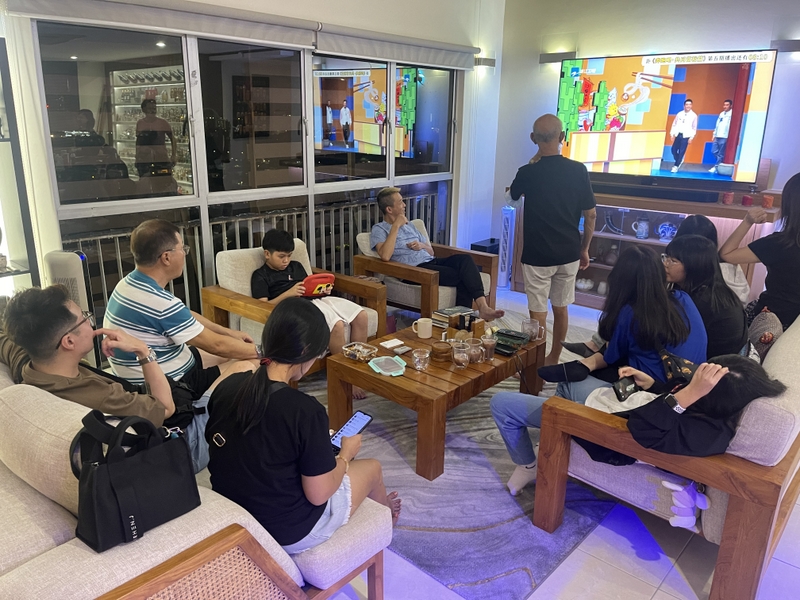
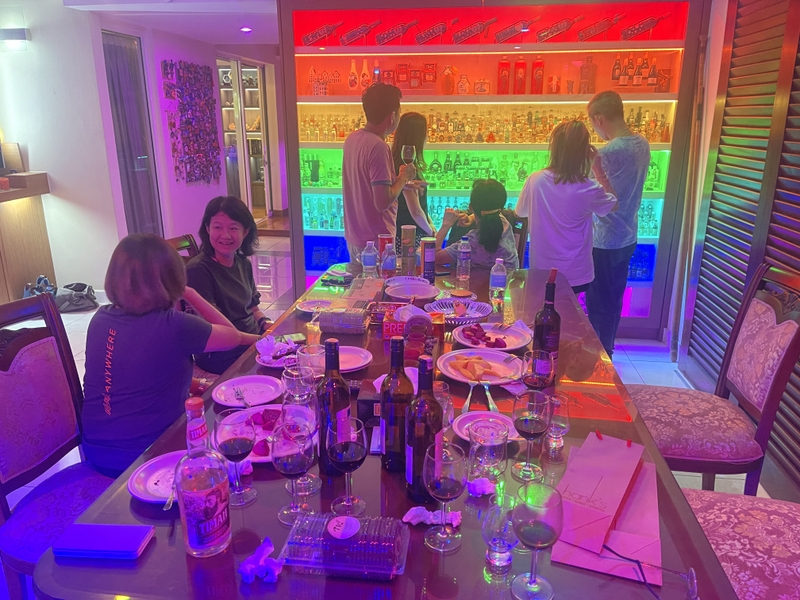
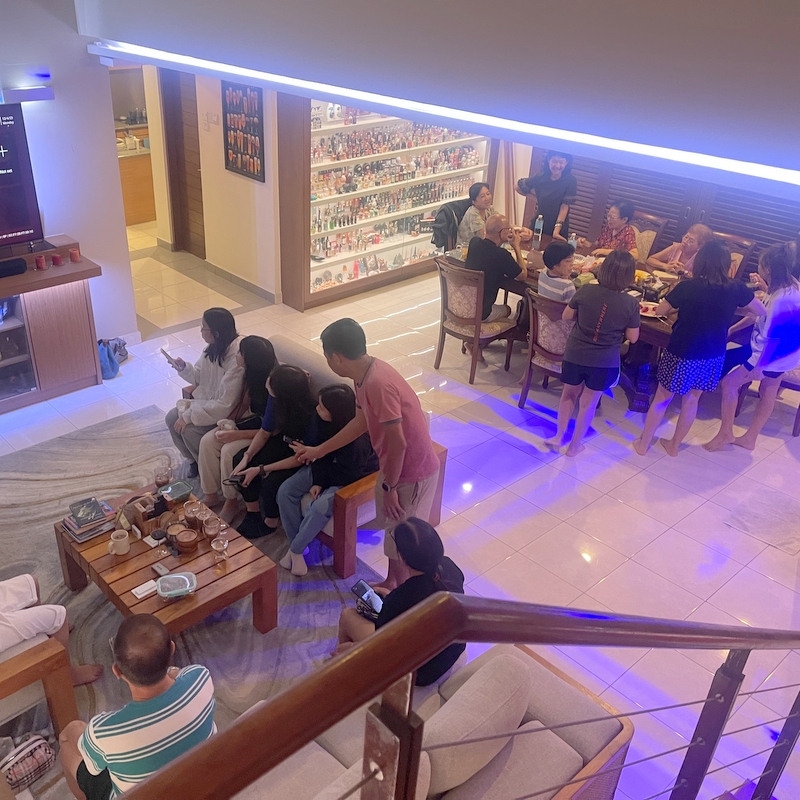
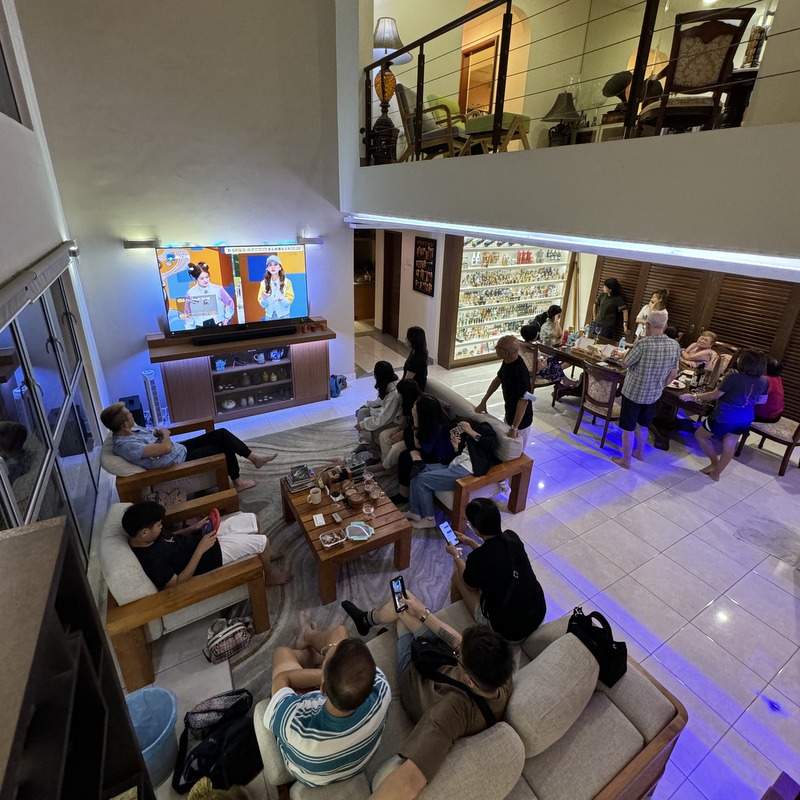
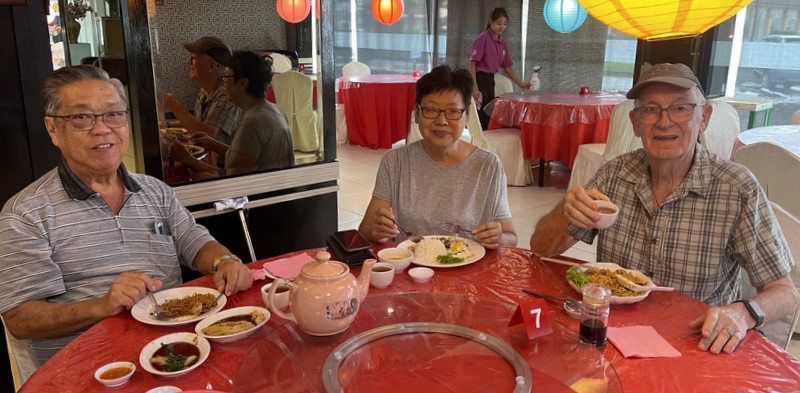
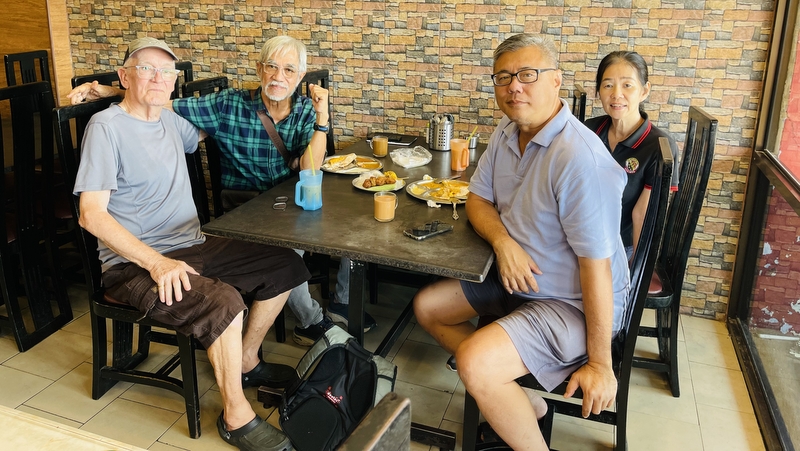
The following day another CNY meeting with my Bukit Lanjan hiking friends, just around the corner from where we live.
On 7 February we visited the Pavilion shopping mall in Bukit Bintang. By far the most impressive decorations.
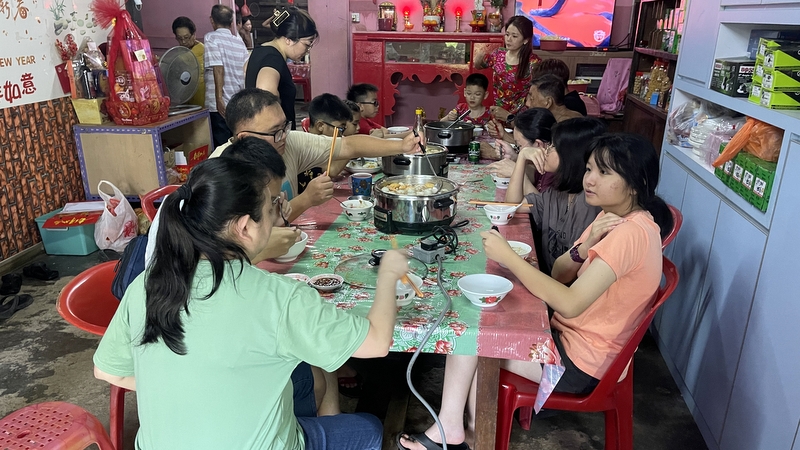
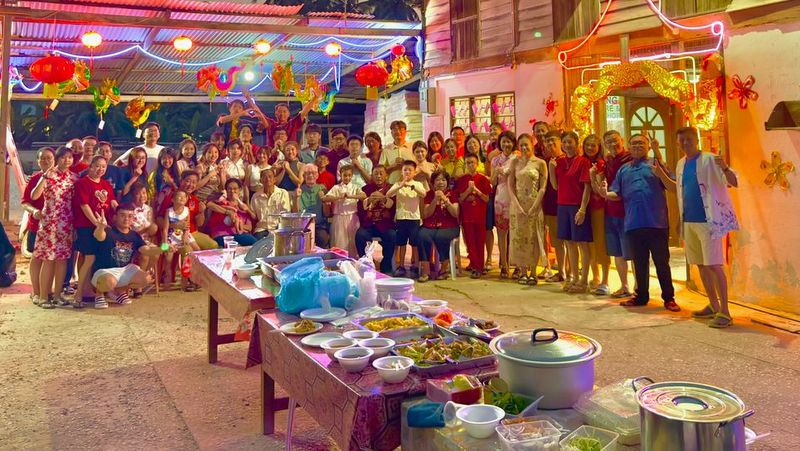
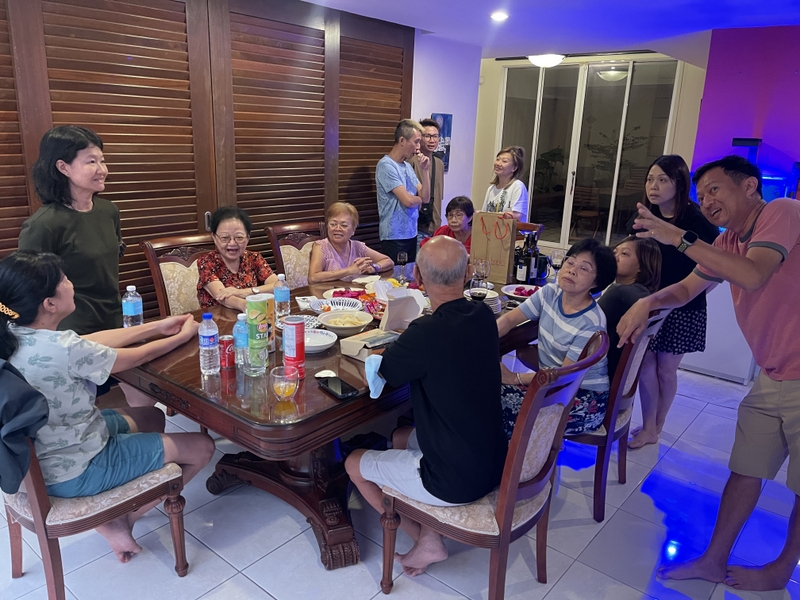
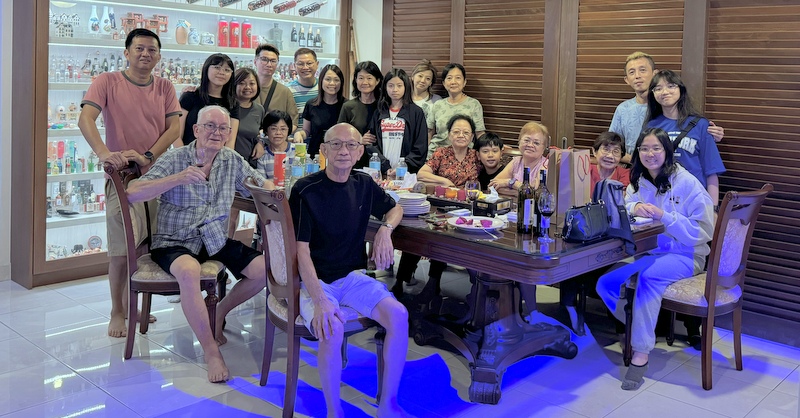
On Friday we went to Aric’s family house in Parit Baru for the CNY eve reunion dinner. Traditional steamboat, in multiple sessions because the (extended) family is huge.
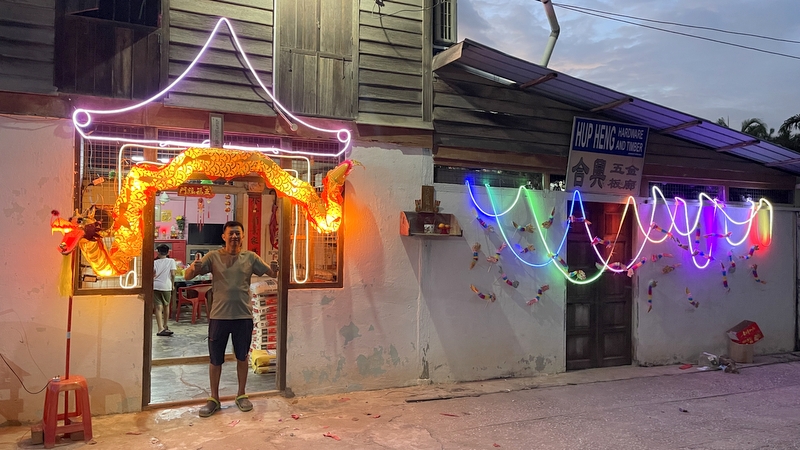
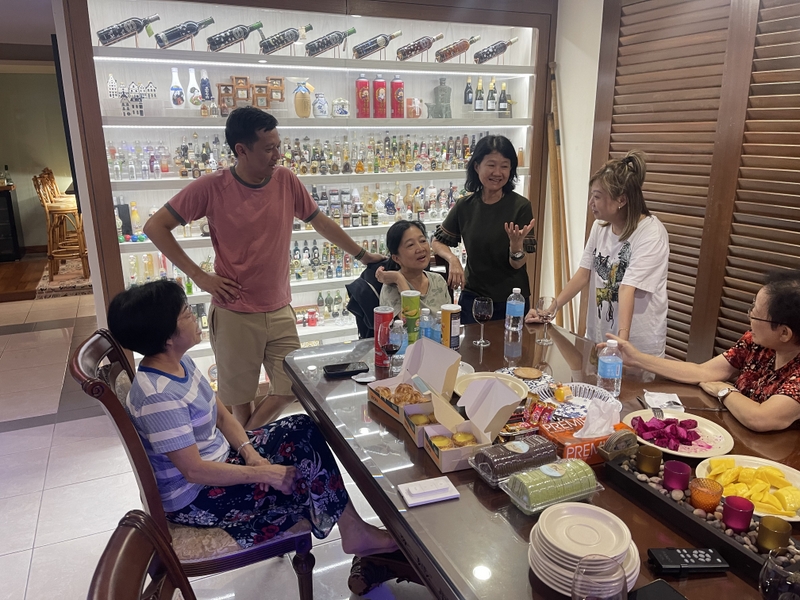
Aric always creates his own CNY decorations around the house and this time he was particularly successful.
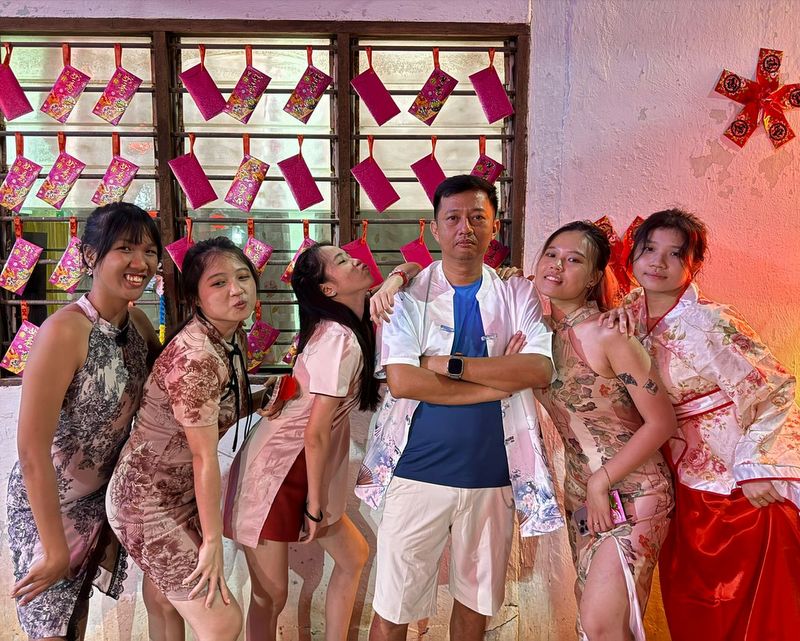
The theme this year was to wear traditional Chinese dress. The right picture shows Aric with a few competitors.
The extended family is huge 😉
On 18 February we went to Puchong for the celebration of the Hokkien CNY, another tradition.
The next day another CNY meeting with Aric’s maternal family.
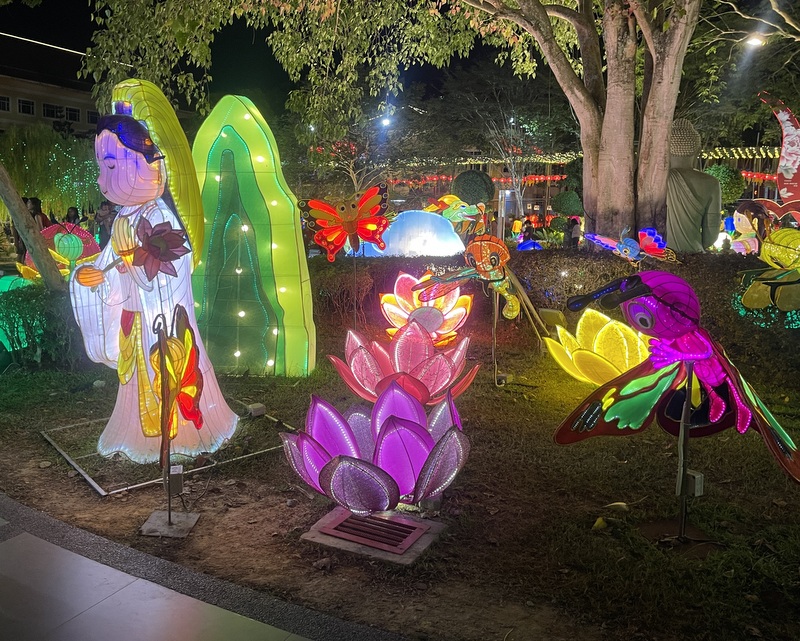
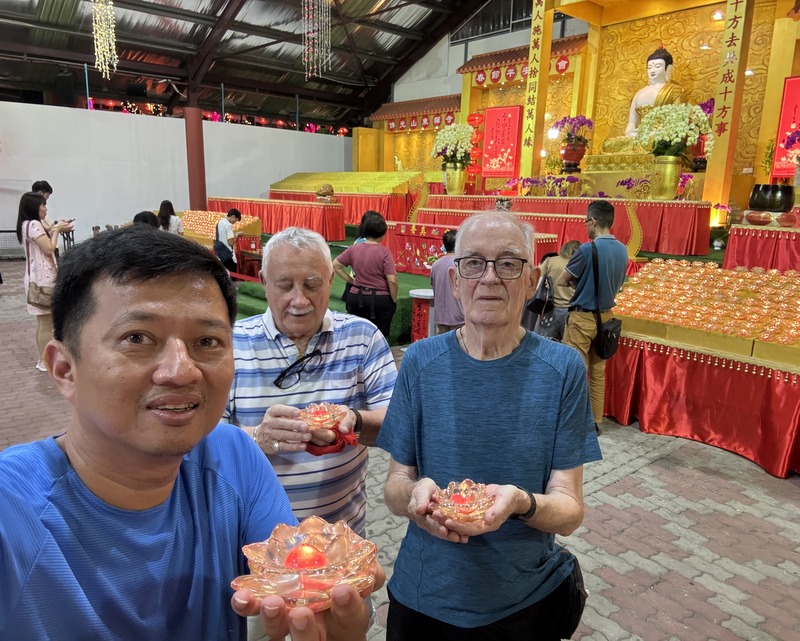
On 22 February we went to Jenjarom to visit the Dong Zen temple. Usually a serene quiet Buddhist temple, but during CNY a famous tourist attraction. Huge crowds. This is the centrepiece, flashing lights with loud music.
Very colorful but a bit kitschy.
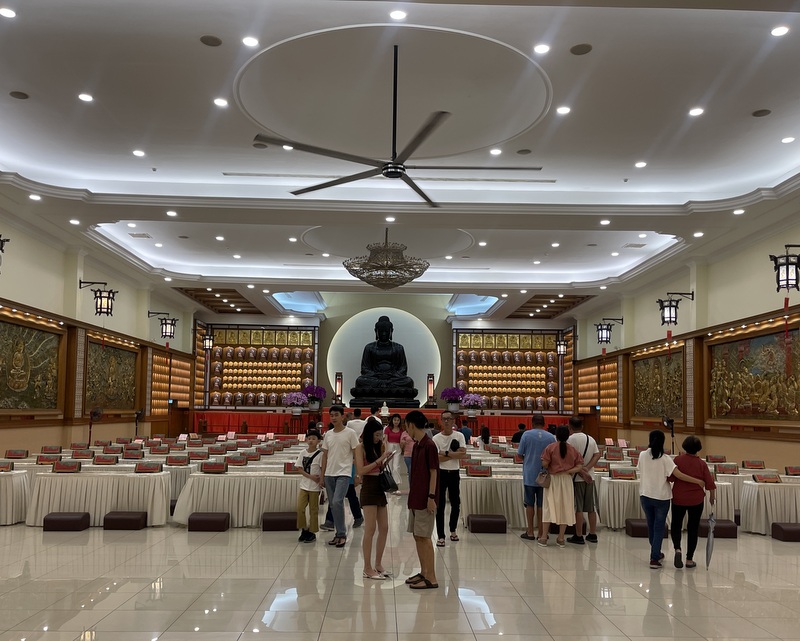
The main hall still has a different atmosphere.
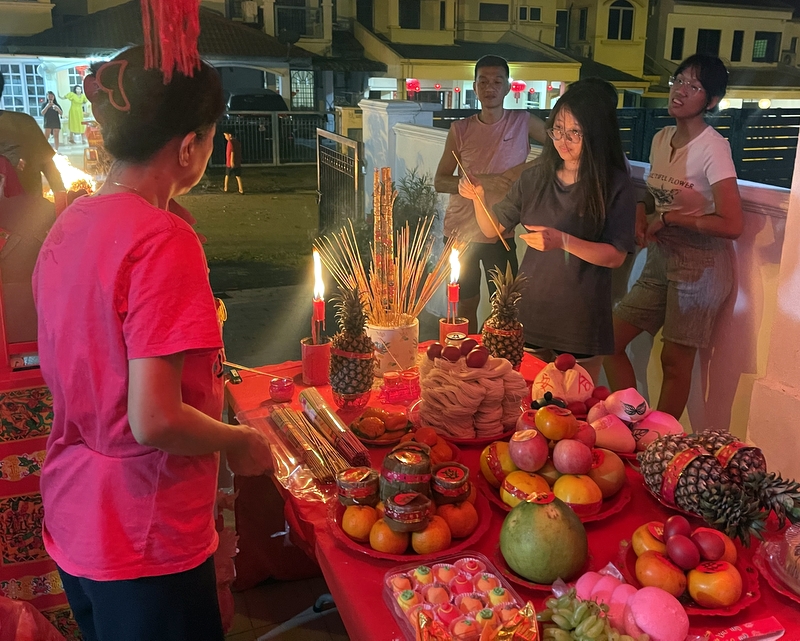
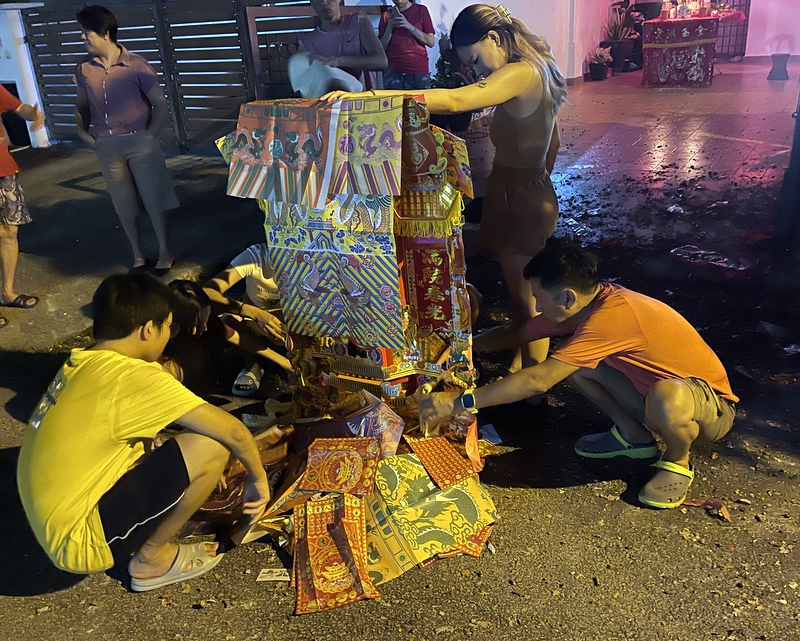
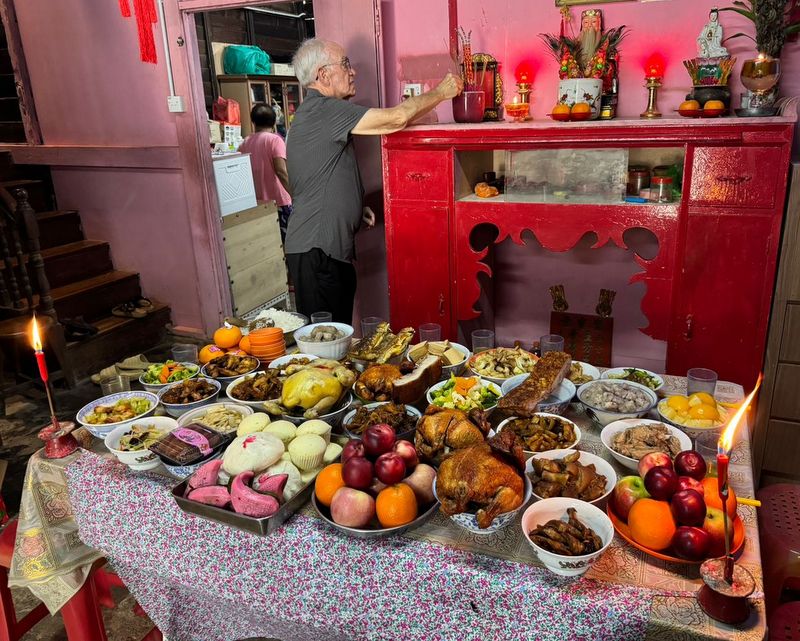
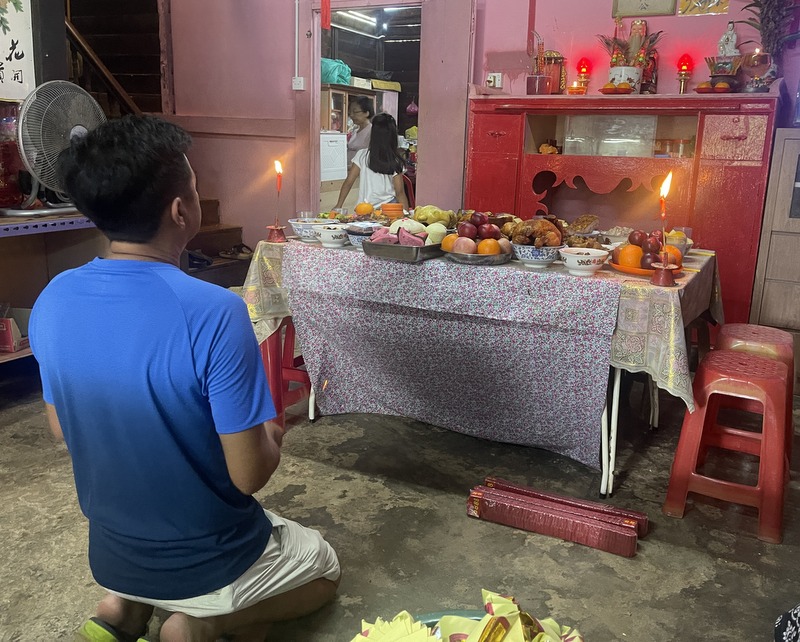
On 24 February, early morning, we went again to Parit Baru. Prayers for the ancestors.
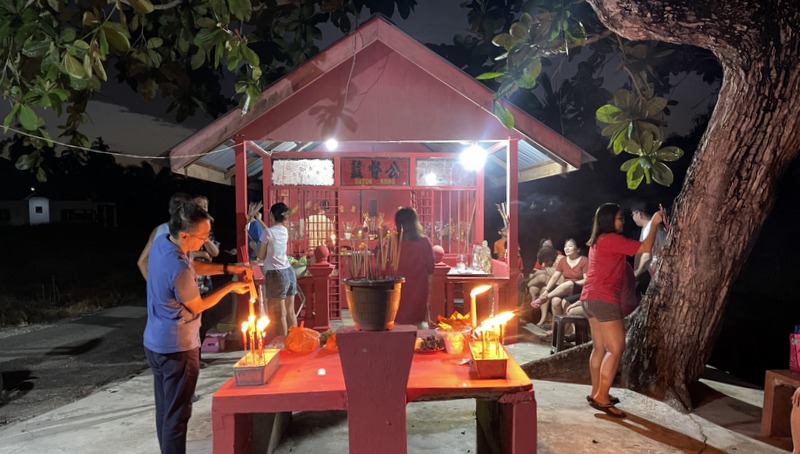
Before going back home we visited a local Datok Kong shrine near Aric’s family house
A busy three weeks 😉
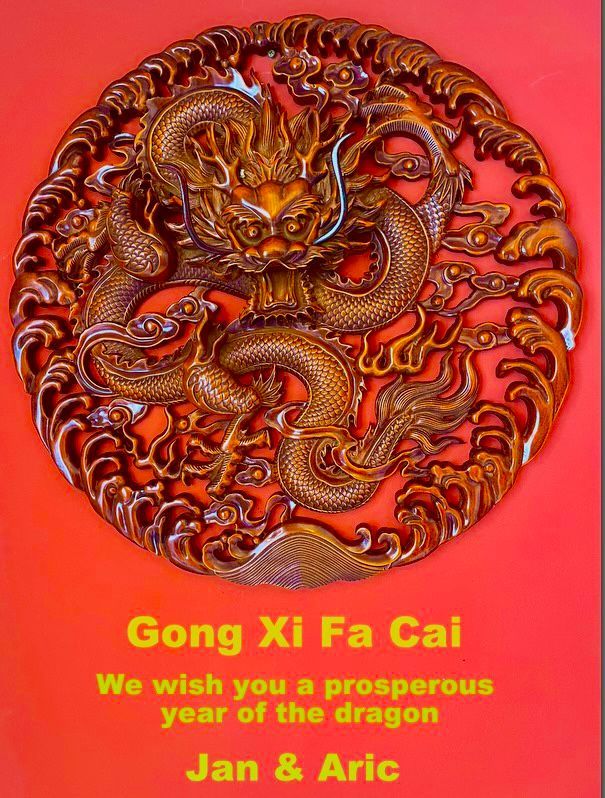
Aric’s Zodiac sign is the dragon, so you should be able to calculate how old he will be this year. Here is our CNY wish.
NewspaperSG is an online digital archive of over 200 Singapore and Malayanewspapers published since 1831. It has a very useful search option, which I have been using regularly, see for example my post about Menggelumchor.
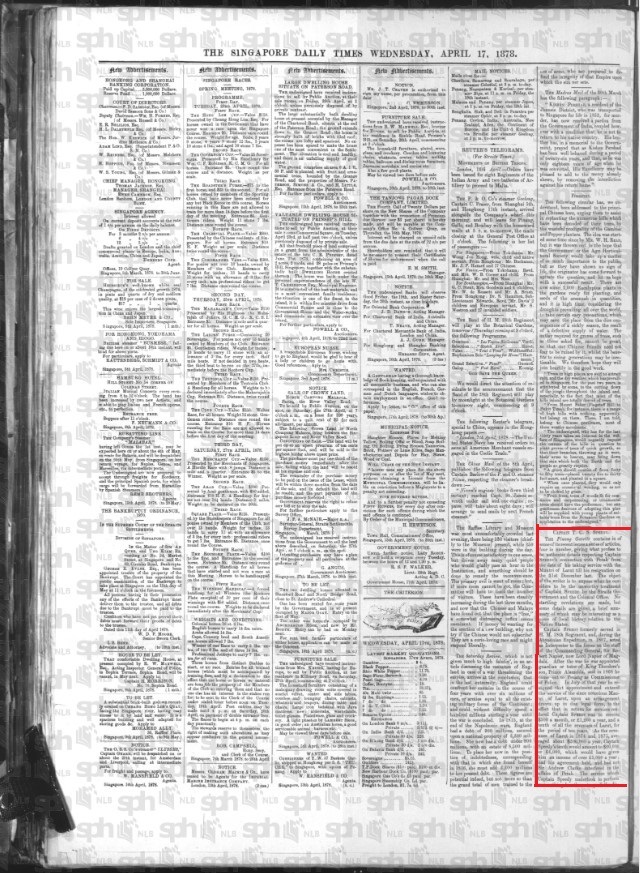
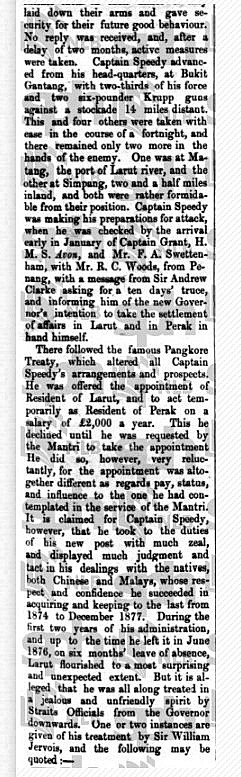
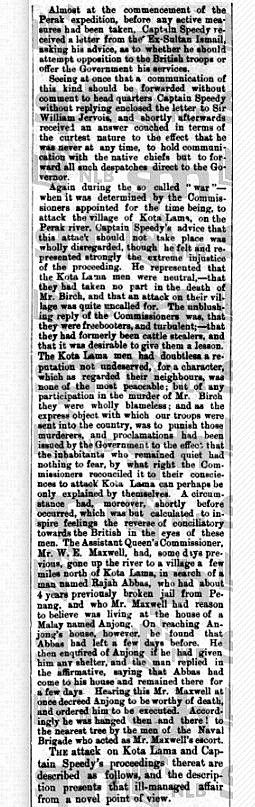
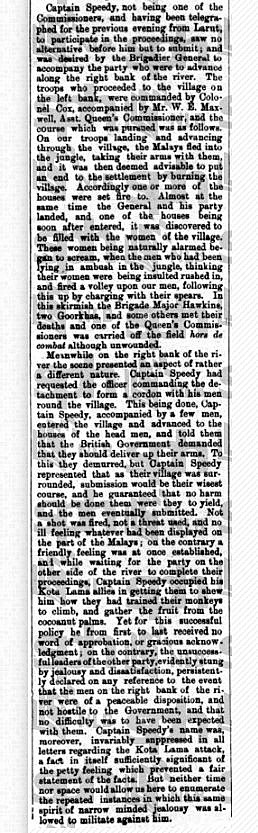
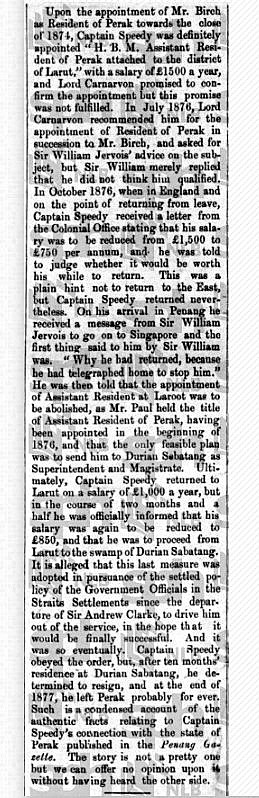
The 17 April 1878 issue of the Singapore Daily Times contains a long article about Captain Speedy who had left the Malay peninsula a few months earlier. I have marked the article below in red color.
The anonymous writer refers to 4 articles from the Pinang Gazette And Straits Chronicle. The NewspaperSG archive has a few volumes of the Pinang Gazette, but not from 1878, so the writer of the original articles is unfortunately also unknown.
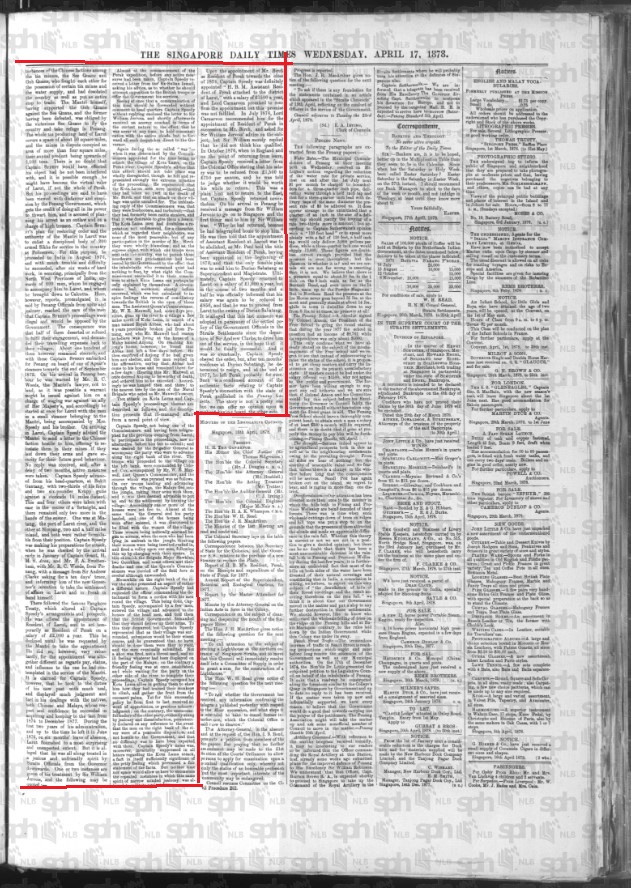
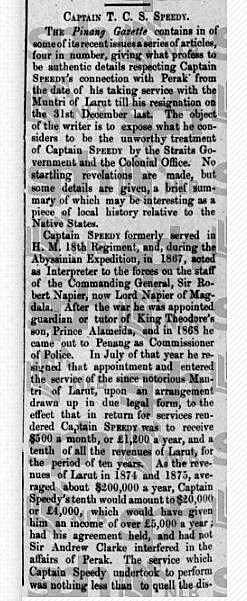
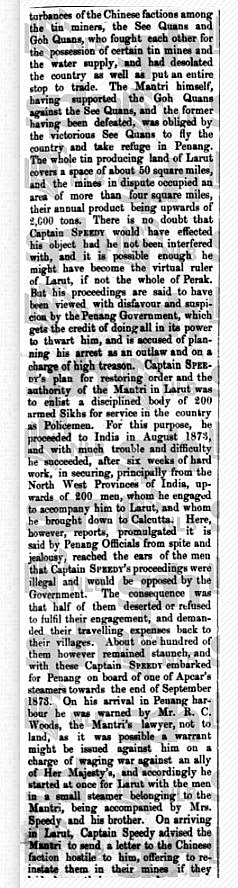
Here is the article, split in parts. When you click on it, you will see that it is just readable but not easy.
That’s why I have converted the text into a more readable form below. Here it is, in blue italic. In between I have added my comments
The Pinang Gazette contains in of some of its recent issues a series of articles, four in number, giving what profess to be authentic details respecting Captain Speedy’s connection with Perak from the date of his taking service with the Mantri of Larut till his resignation on the 31st December last.
In 1953 the orientalist J.M. Gullick published a well-documented monograph about Captain Speedy: Captain Speedy of Larut ,covering the same period (and more). It is available online and very readable.
The object of the writer is to expose what he considers to be the unworthy treatment of Captain Speedy by the Straits Government and the Colonial Office. No startling revelations are made, but some details are given, a brief summary of which may be interesting as a piece of local history relative to the Native States.
The setting is clear, the writer of the articles is critical of the way Captain Speedy has been treated by the Government of the Straits Settlements and the Colonial Office.
Captain Speedy formerly served in H.M. 18th Regiment, and, during the Abyssinian Expedition, in 1867, acted as Interpreter to the forces on the staff of the Commanding General, Sir Robert Napier, now Lord Napier of Magdala. After the war he was appointed guardian or tutor of King Theodore’s son, Prince Alameida, and in 1868 he came out to Penang as Commissioner of Police.
The dates are incorrect. Captain Speedy arrived in Penang in 1871 where he became Superintendent of Police. And he did not resign in July of that year, but in 1873.
In July of that year he resigned that appointment and entered the service of the since notorious Mantri of Larut, upon an arrangement drawn up in due legal form, to the effect that in return for services rendered, Captain Speedy was to receive $500 a month, or £1,200 a year, and a tenth of all the revenues of Larut, for the period of ten years. As the revenues of Larut in 1874 and 1875, averaged about $200,000 a year, Captain Speedy’s tenth would amount to $20,000 or £4,000, which would have given him an income of over £5,000 a year, had his agreement held, and had not Sir Andrew Clarke interfered in the affairs of Perak.
The interference of Sir Andrew Clarke -> the Pangkor Treaty (January 1874)
The service which Captain Speedy undertook to perform was nothing less than to quell the disturbances of the Chinese factions among the tin miners, the See Quans and the Goh Quans, who fought each other for the possession of certain tin mines and the water supply, and had desolated the country as well as put an entire stop to trade. The Mantri himself, having supported the Goh Quans against the See Quans, and the former having been defeated, was obliged by the victorious See Quans to fly the country and take refuge in Penang.
The whole tin producing land of Larut covers a space of about 50 square miles, and the mines in dispute occupied an area of more than four square miles, their annual product being upwards of 2,600 tons. There is no doubt that Captain Speedy would have effected his object had he not been interfered with, and it is possible enough he might have become the virtual ruler of Larut, if not the whole of Perak.
“He might have become the virtual ruler of Larut” The writer is obviously a staunch supporter of Captain Speedy.
But his proceedings are said to have been viewed with disfavour and suspicion by the Penang Government, which gets the credit of doing all in its power to thwart him, and is accused of planning his arrest as an outlaw and on a charge of high treason.
Captain Speedy’s plan for restoring order and the authority of the Mantri of Larut was to enlist a disciplined body of 200 armed Sikhs for service in the country as Policemen. For this purpose, he proceeded to India in August 1873, and with much trouble and difficulty he succeeded, after six weeks of hard work, in securing, principally from the North West Provinces of India, upwards of 200 men, whom he engaged to accompany him to Larut, and whom he brought down to Calcutta.
According to Gullick (page 34) the Straights Government had notified the Government of India that Speedy was allowed to bring sepoys to Larut
Here, however, reports, promulgated it is said by Penang Officials from spite and jealousy, reached the ears of the men that Captain Speedy’s proceedings were illegal and would be opposed by the Government. The consequence was that half of them deserted or refused to fulfill their engagement, and demanded their traveling expenses back to their villages. About one hundred of them however remained staunch, and with these Captain Speedy embarked for Penang on board of one of Apcar’s steamers toward the end of September 1873.
Gullick (page 33-34) writes differently, that Anson, the Lieutenant-Governor of Penang, actually supported Speedy’s mission to India. No mention that half of the men deserted, Gullick calls it a rumour that more than about 100 men were planning to follow
On his arrival in Penang harbour he was warned by Mr, R.C. Woods, the Mantri’s lawyer, not to land, as it was possible a warrant might be issued against him on a charge of waging war against an ally of Her Majesty’s, and accordingly he started at once for Larut with the men in a small steamer belonging to the Mantri, being accompanied by Mrs Speedy and his brother.
Gullick also writes that Soeedy did not land in Penang but continued to Larut. However, there is no mention at all of a possible warrant or arrest, had he landed in Penang.
On arriving in Larut, Captain Speedy advised the Mantri to send a letter to the Chinese faction hostile to him, offering to reinstate them in their mines if they laid down their arms and gave security for their future good behaviour. No reply was received, and, after a delay of two months, active measures were taken,
Gullick doesn’t mention this act of diplomacy by Speedy
Captain Speedy advanced from his head-quarters, at Bukit Gantang, with two-thirds of his force and two six-pounder Krupp guns against a stockade 14 miles distant. This and four others were taken with ease in the course of a fortnight, and there remained only two more in the hands of the enemy. One was at Matang, the port of Larut river, and the other at Simpang, two and a half miles inland, and both were rather formidable from their position.
Captain Speedy was making his preparations for attack, when he was checked by the arrival early in January of Captain Grant, H.M.S. Aron, and Mr. F.A. Swettenham, with Mr. R.C. Woods, from Penang, with a message from Sir Andrew Clarke asking for a ten days’ truce and informing him of the new Government’s intention to take the settlement of affairs in Larut and in Perak in hand himself.
There followed the famous Pangkore Treaty, which altered all Captain Speedy’s arrangements and projects. He was offered the appointment of Resident of Larut, and to act temporarily as Resident of Perak on a salary of £2,000 a year. This he declined until he was requested by the Mantri to take the appointment. He did so, however, very reluctantly, for the appointment was altogether different as regards pay, status and influence to the one he had contemplated in the service of the Mantri.
Gullick (p 38) doesn’t discuss this refusal and reluctant acceptance , but he mentions that the £2,000 a year caused irritation with the government officials in Singapore, as it was much more than they got.
It is claimed for Captain Speedy, however, that he took to the duties of his new post with much zeal, and displayed much judgment and tact in his dealings with the natives, both Chinese and Malays, whose respect and confidence he succeeded in acquiring and keeping to the last from 1874 to December 1877. During the first two years of his administration, and up to the time he left in June 1876, on six months’ leave of absence, Larut flourished to a most surprising and unexpected extent. But it is alleged that he was all along treated in a jealous and unfriendly spirit by Straits Officials from the Governor downwards. One or two instances are given of his treatment by Sir William Jervois, and the following may be quoted:
According to the writer Speedy is doing very well in Larut, but is treated badly by the Straits government and especially by William Jervois (who succeeded Clarke as Straits Governor). Two examples are given. In the first one, Speedy acted professionally but still was reprimanded “in terms of the curtest nature”
–Almost at the commencement of the Perak expedition, before any active measures had been taken, Captain Speedy received a letter from the Ex-Sultan Ismail, asking his advice, as to whether he should attempt opposition to the British troops or offer the Government his services. Seeing at once that a communication of this kind should be forwarded without comment to head quarters, Captain Speedy without replying enclosed the letter to Sir William Jervois and shortly afterwards received an answer cached in terms of the curtest nature to the effect that he was never at any time, to hold communication with the native chiefs but to forward all such despatches direct to the Government.
The second example is a long, detailed report about the so-called battle of Kota Lama on 4 January 1876. Captain Speedy is against the attack on this village. They may be bad people but were not involved in the killing of BIrch.
– Again during the so called “war” — when it was determined by the Commissioners appointed for the time being, to attack the village of Kota Lama, on the Perak river, Captain Speedy’s advice that this attack should not take place was wholly disregarded, though he felt and represented strongly the extreme unjustice of the proceeding. He represented that the Kota Lama men were neutral, — that they had taken no part in the death of Mr. Birch, and that an attack on their village was quite uncalled for. The unblushing reply of the Commissioners was, that they were freebooters and turbulent, – that they had formerly been cattle stealers, and that it was desirable to give them a lesson.
The Kota Lama men had doubtless a reputation not undeserved, for a character, which as regarded their neighbours, was none of the most peaceable; but of any participation in the murder of Mr. Birch they were wholly blameless; and as the express object with which our troops were sent into the country, was to punish those murderers, and proclamations had been issued by the Government to the effect that the inhabitants who remained quiet had nothing to fear, by what right the Commissioners reconciled it to their conscience to attack Kota Lama can perhaps be only explained by themselves.
“… by what right the Commissioners reconciled it to their conscience to attack Kota Lama can perhaps be only explained by themselves”. It is clear that the writer agrees with Captain Speedy.
The following paragraph casts a rather negative light on the character of W.E. Maxwell, who succeeded Speedy as Assistant Resident of Larut.
A circumstance had, moreover, shortly before occurred, which was but calculated to inspire feelings the reverse of conciliatory toward the British in the eyes of these men. The Assistant Queen’s Commissioner, Mr. W.E. Maxwell, had, some days previous, gone up the river to a village a few miles north of Kota Lama, in search of a man named Rajah Abbas, who had about 4 years previously broken jail from Penang, and who Mr. Maxwell had reason to believe was living at the house of a Malay named Anjong. On reaching Anjong’s house, however, he found that Abbas had left a few days before. He then enquired of Anjong if he had given him any shelter and the man replied in the affirmative, saying that Abbas had come to his house and remained there for a few days. Hearing this Mr. Maxwell at once decreed Anjong to be worthy of death, and ordered him to be executed. Accordingly he was hanged then and there! to the nearest tree by the men of the Naval Brigade who acted as Mr. Maxwell’s escort.
Here is the description of the battle. It is so different from the “official” narrative, for example Gullick (page 71) that I have written a separate post about the Battle of Kota Lama. This “novel point of view” I have given a different color.
The attack on Kota Lama and Captain Speedy’s proceedings thereat are described as follows, and the description presents that ill-managed affair from a novel point of view.
Captain Speedy, not being one of the Commissioners, and having been telegraphed for the previous evening from Larut to participate in the proceedings, saw no alternative before him but to submit; and was desired by the Brigadier General to accompany the party who were to advance along the right bank of the river. The troops who proceeded to the village on the left bank, were commanded by Colonel Cox, accompanied by Mr. W.E. Maxwell, Asst. Queen’s Commissioner, and the course which was pursued was as follows.
On our troops landing and advancing through the village, the Malays fled into the jungle, taking their arms with them, and it was then deemed advisable to put an end to the settlement by burning the village. Accordingly one or more of the houses were set fire to. Almost at the same time the General and his party landed, and one of the houses being soon after entered, it was discovered to be filled with the women of the village. These women being naturally alarmed began to scream, when the men who had been lying in ambush in the jungle, thinking their women were being insulted rushed in, and fired a volley upon our men, following this up by charging with their spears. In this skirmish the Brigade Major Hawkins, two Goorkhas, and some others met their deaths and one of the Queen’s Commissioners was carried of the field hors de combat although unwounded.
Meanwhile on the right bank of the river the scene presented an aspect of rather a different nature. Captain Speedy had requested to form a cordon with this men round the village. This being done, Captain Speedy, accompanied by a few men, entered the village and advance to the houses of the head men, and told them that the British Government demanded that they should deliver up their arms. To this they demurred, but Captain Speedy represented that as their village was surrounded, submission would be their wisest course, and he guaranteed that no harm should be done them were they to yield, and the men eventually submitted. Not a shot was fired, not a threat used, and no ill feeling whatever had been displayed on the part of the Malays; on the contrary a friendly feeling was at once established, and while waiting for the party on the other side of the river to complete their proceedings, Captain Speedy occupied his Kota Lama allies in getting them to show him how they had trained their monkeys to climb, and gather the fruit from the coconut palms.
Here is the conclusion of the writer. Speedy did not get any words of gracious acknowledgment and in the official reports his successful actions were suppressed or downplayed
Yet for this successful policy he from first to last received no word of approbation, or gracious acknowledgment; on the contrary, the unsuccessful leaders of the other party, evidently stung by jealousy and dissatisfaction, persistently declared on any reference to the event that the men on the right bank of the river were of a peaceable disposition, and not hostile to the Government, and that no difficulty was to have been expected with them. Captain Speedy’s name was, moreover, invariably suppressed in all letters regarding the Kota Lama attack, a fact in itself sufficiently significant of the petty feeling which prevented a fair statement of the facts.
But neither time nor space would allow us here to enumerate the repeated instances in which the same spirit of narrow minded jealousy was allowed to militate against him.
A few more examples of the way Captain Speedy was badly treated:
Upon the appointment of Mr. Birch as Resident of Perak towards the close of 1874, Captain Speedy was definitely appointed ” H.B.M Assistant Resident of Perak attached to the district of Larut” with a salary of £1500 a year, and Lord Carnarvon promised to confirm the appointment but this promise was not fulfilled.
In July 1876, Lord Carnarvon recommended him for the appointment of Resident of Perak in succession to Mr, Birch, and asked for Sir William Jervois’ advice on the subject, but Sir William merely replied that he did not think him qualified.
In October 1876, when in England and on the point of returning from leave, Captain Speedy received a letter from the Colonial Office stating that his salary was to be reduced from £1,500 to £750 per annum, and he was told to judge whether it would be worth his while to return. This was a plain hint not to return to the East, but Captain Speedy returned nevertheless.
The Straits Governor William Jervois was the most negative in his opinion about Captain Speedy. That is also Gullick’s conclusion
On his arrival in Penang he received a message from Sir William Jervois to go to Singapore and the first thing said to him by Sir William was “Why he had returned, because he had telegraphed home to stop him”. He was then told that the appointment of Assistant Resident at Laroot was to be abolished, as Mr Paul held the title of Assistant Resident of Perak, having been appointed in the beginning of 1876, and that the only feasible plan was to send him to Durian Saba tang as Superintendent and Magistrate.
Ultimately, Captain Speedy returned to Larut on a salary of £1.000 a year, but in the course of two months and a half he was officially informed that his salary was again to be reduced to £850,and that he was to proceed from Larut to the swamp of Durian Sabatang.
Durian Sebatang is now Teluk Intan.
It is alleged that this last measure was adopted in pursuance of the settled policy of the Government Officials in the Straits Settlements since the departure of Sir Andrew Clarke, to drive him out of the service, in the hope that it would be finally successful.
And it was so eventually, Captain Speedy obeyed the order, but, after ten months’ residence at Durian Sabatang, he determined to resign, and at the end of 1877, he left Perak probably for ever.
Such is a condensed account of the authentic facts relating to Captain Speedy’s connection with the sate of Perak published in the Penang Gazette. The story is not a pretty one but we can offer no opinion upon it without having heard the other side
Is this the conclusion of the Singapore writer or the Penang one? Really a pity that the relevant records of the Pinang Gazette have not been preserved.
The 32 piano sonatas composed by Ludwig van Beethoven between 1795 and 1822 are seen by many as a pinnacle of Western classical music. Some of them are so well-known that they have names, for example the Moonlight Sonata (Claudio Arrau, 1970), the Pathetique (Vladimir Ashkenazy, 1972), the Tempest (Glenn Gould, 1967) and the Appassionata (Emil Gilels, 1973). Numerous recordings are available, I have selected for this blog “old” ones.
My personal favourite has changed over time. At the moment it is sonata no 21 in C major, opus 53 , the Waldstein sonata, composed in 1804, when Beethoven was 33 years old.
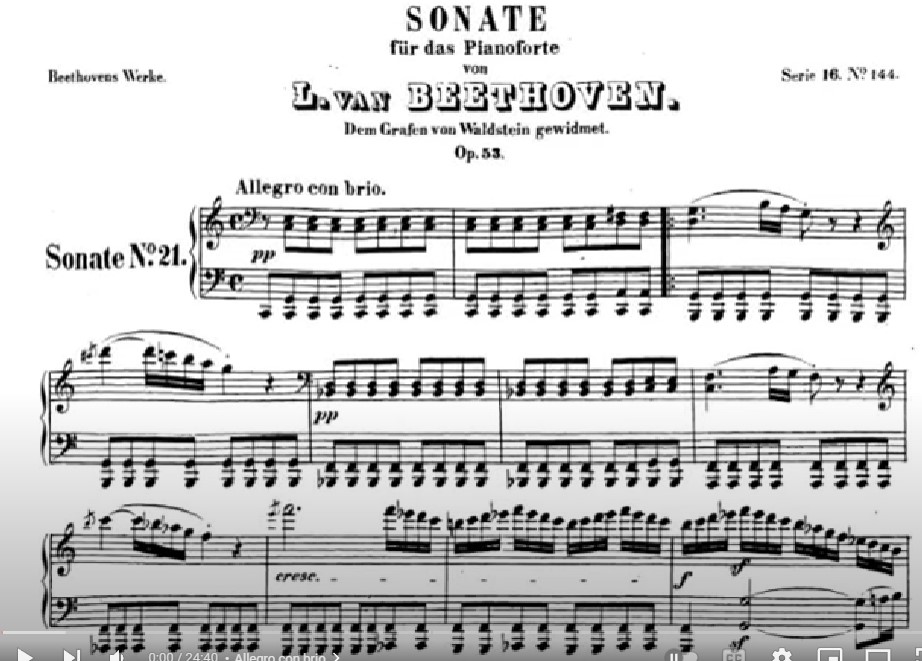
Here is the score of the sonata, by clicking on it you can follow it. Recorded by Wilhelm Kempff
The Wikipedia article about the Waldstein sonata (see the link above) is very informative, it gives a description of the three movements with several sound samples and concludes: It is considered one of Beethoven’s greatest and most technically challenging piano sonatas
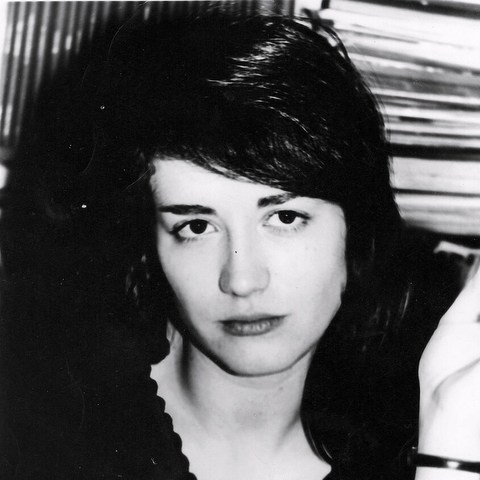
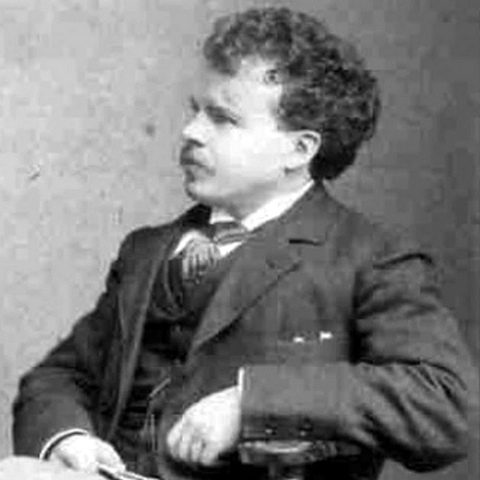
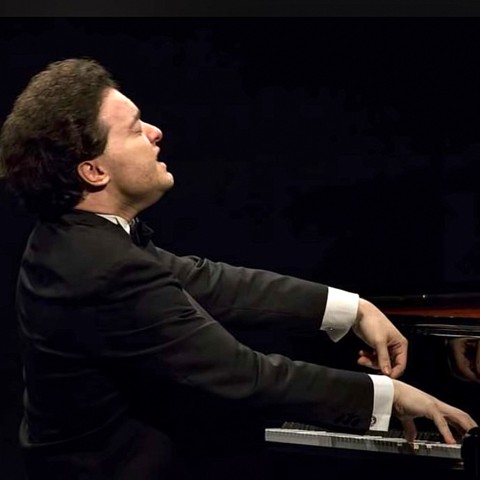
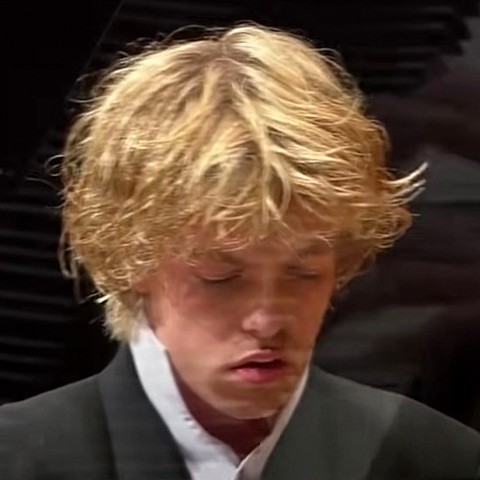
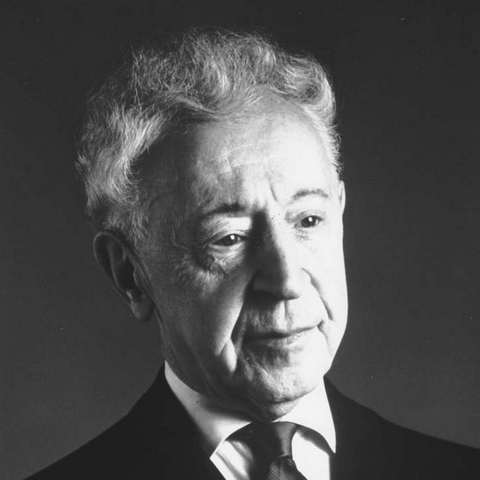
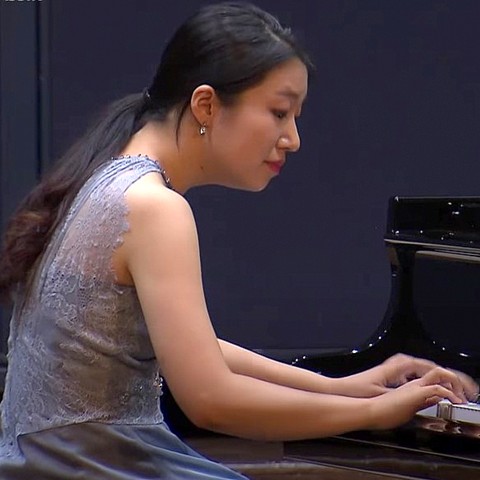
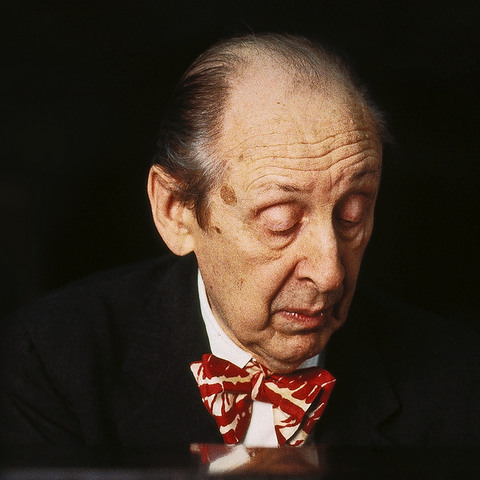
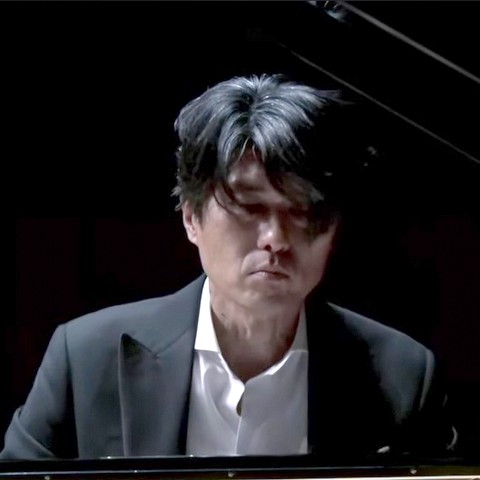
Almost all pianists have played the Waldstein and many recordings are available on YouTube. I have selected a few, click on an image to hear the recording. They span almost a century with Lamond the oldest I could find (1923 ?) and Yoshikawa a very recent one (2022).
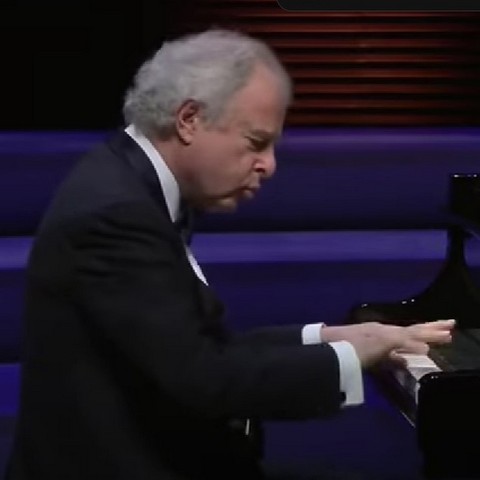
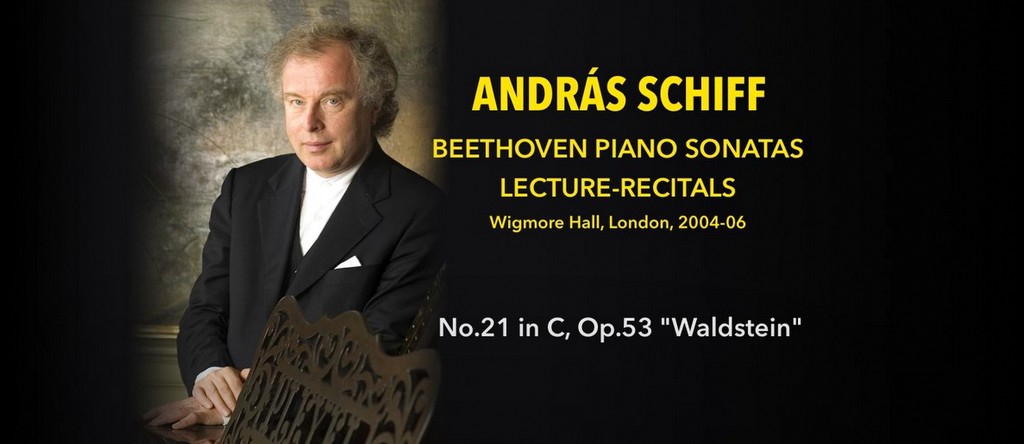
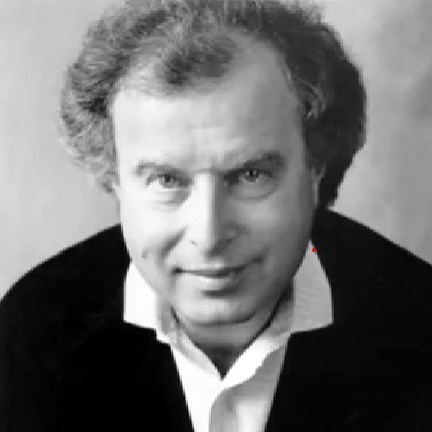
I am a fan of András Schiff. I like his playing, I like to see him play and I also like to hear him talk. Talk, yes, because almost twenty years ago, he has given “lecture-recitals” in the Wigmore Hall, London , where he analysed Beethoven piano sonatas before playing them.
Here is what he has to say about the Waldstein. Click on the image to listen to the lecture.
Personally I find his way of lecturing very charming, his way of talking is gentle and softspoken, it gives the impression that he is more or less improvising, although I am sure that his lecture has been prepared in details, with some little jokes every now and then. Very informative, just give it a try.
Of course he talks in this lecture about the second movement of the Waldstein. Beethoven had originally written a different one, but when he played the sonata for his friends, they objected, that it didn’t fit with the other two movements. Apparently Beethoven got angry, but he wrote a replacement anyway, calling it an Introduzione, and for me it makes the Waldstein special.
The original second movement, Andante Favori, is often played as an encore. Here you can listen to both, left the original Andante Favori, right the Introduzione. Both played by Schiff, click on the image to listen. If you have not listened to the full sonata, you may be surprised by the ending of the Introduzione. Actually the third movement follows immediately (“attacca”)
Schiff is a versatile musician, not only a pianist, but also a conductor. He looks to me a very amiable person, but not everyone agrees with that, click here for some sever criticism . I may write a separate blog post about him another time 😉
To end this Waldstein blog, here is a special visual recording. Click to watch. Left hand blue, right hand yellow.
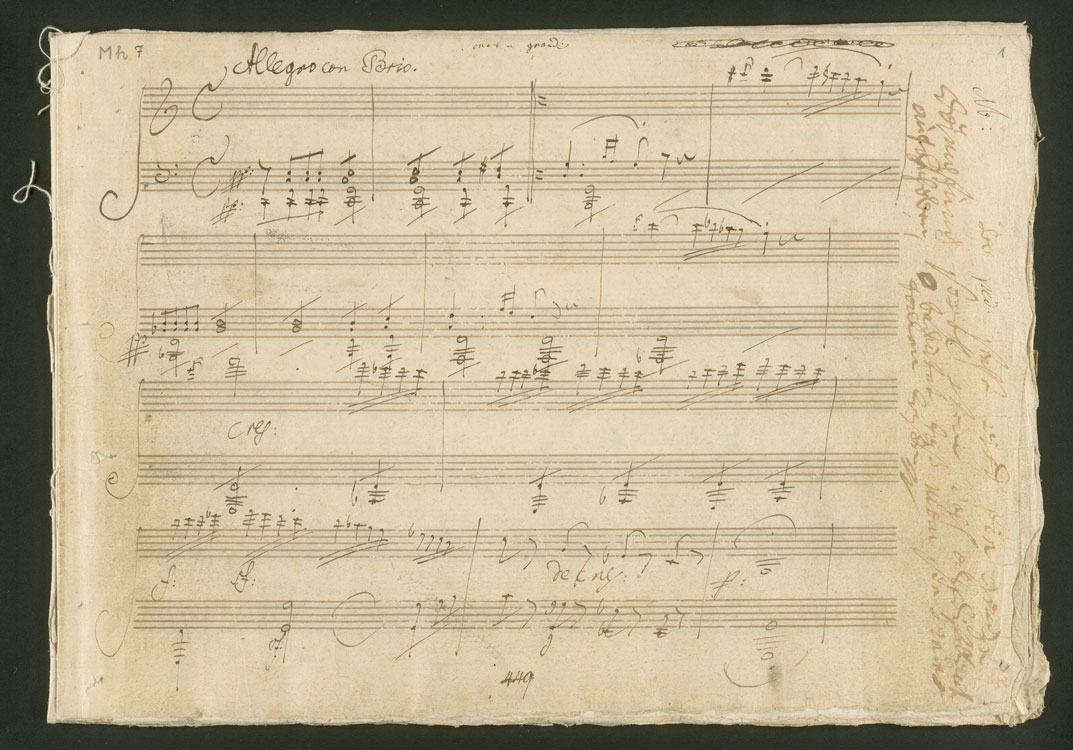
And here is the first page of the manuscript for the Waldstein sonata, written down by Beethoven himself.
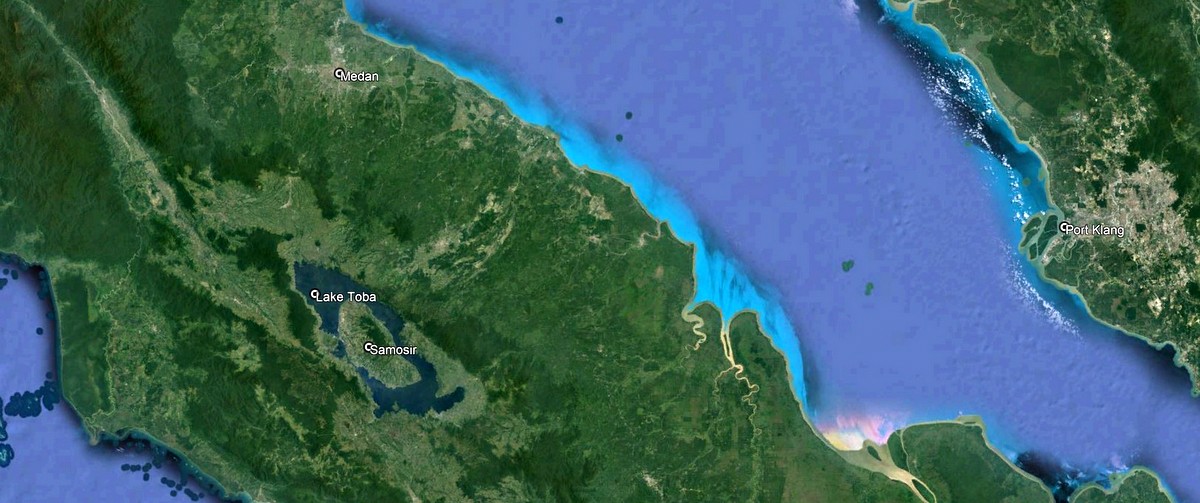
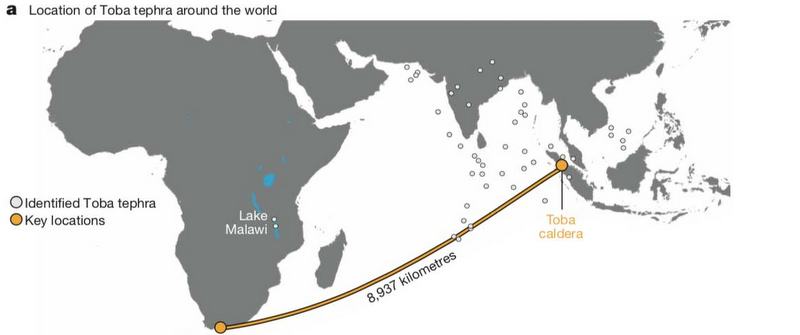
Here is a Google Earth image showing part of Sumatra with its capital Medan. The Malaysian coast is at the right with the harbour of Port Klang. Lake Toba, about 100 kilometres long, 30 kilometres wide, and up to 505 metres deep is the largest volcanic lake in the world. Volcanic? Yes, about 74.000 year ago, there was a volcanic eruption, the largest-known explosive eruption on Earth in the last million years. The eruption left a caldera, which is now lake Toba.
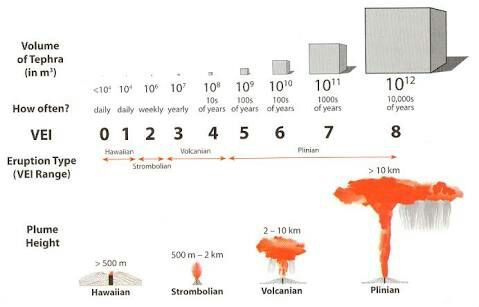
There exists a classification for explosive volcanic eruptions, similar to the Richter scale for earthquakes. It is called the Volcanic Explosivity Index (VEI). During an explosive volcanic eruption lots of (molten) rocks and ash (called tephra) are expelled into the air and it is the (estimated) volume of this tephra that is used to classify the eruption. Here is the VEI scale. Like the Richter scale it is logarithmic, each following step means a ten-fold increase in ejected volume. The “How often?” row gives an estimate of the frequency of the eruption, not surprisingly huge eruptions are very rare. There is an older classification of volcanic eruptions, Strombolian, Plinian etc, see Eruption Classifications. The last row gives an estimate of the plume height.
Here are a few examples
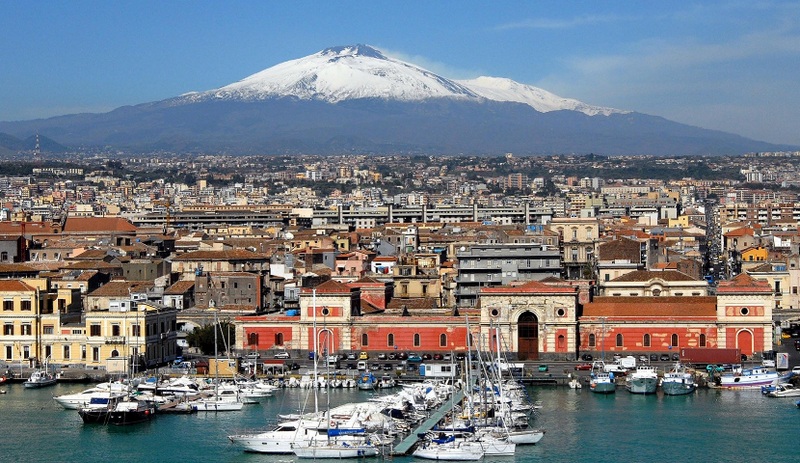
The Etna is Europe’s largest active volcano located in Sicily in southern Italy. On average it has a VEI index of 2. I visited this volcano twice, in July 1971 and July 1979. In 1971 it had erupted in April. Lava flows had caused a lot of damage and it was a special sensation to walk over solidified lava that was still hot under your feet. In 1979 it erupted in August but during my visit I still could climb up to the rim of the crater.
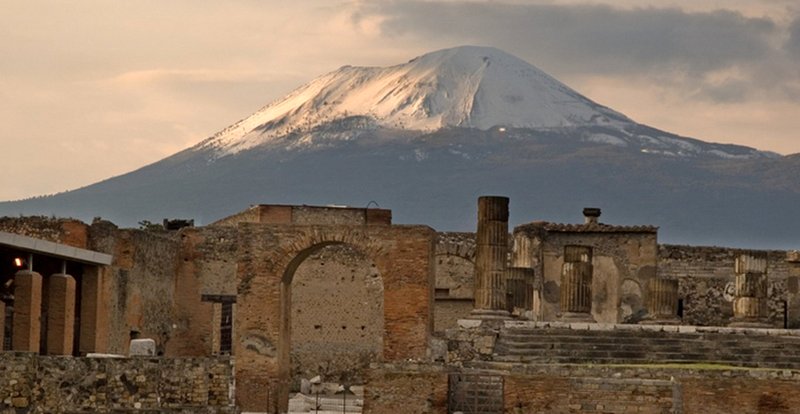
The Vesuvius volcano is also located in Italy, near Naples. It is not very active at the moment but erupted in 79 AD. spewing 3.25 km³ of tephra, destroying the cities of Pompeii and Herculaneum. VEI index 5. A catastrophic event.
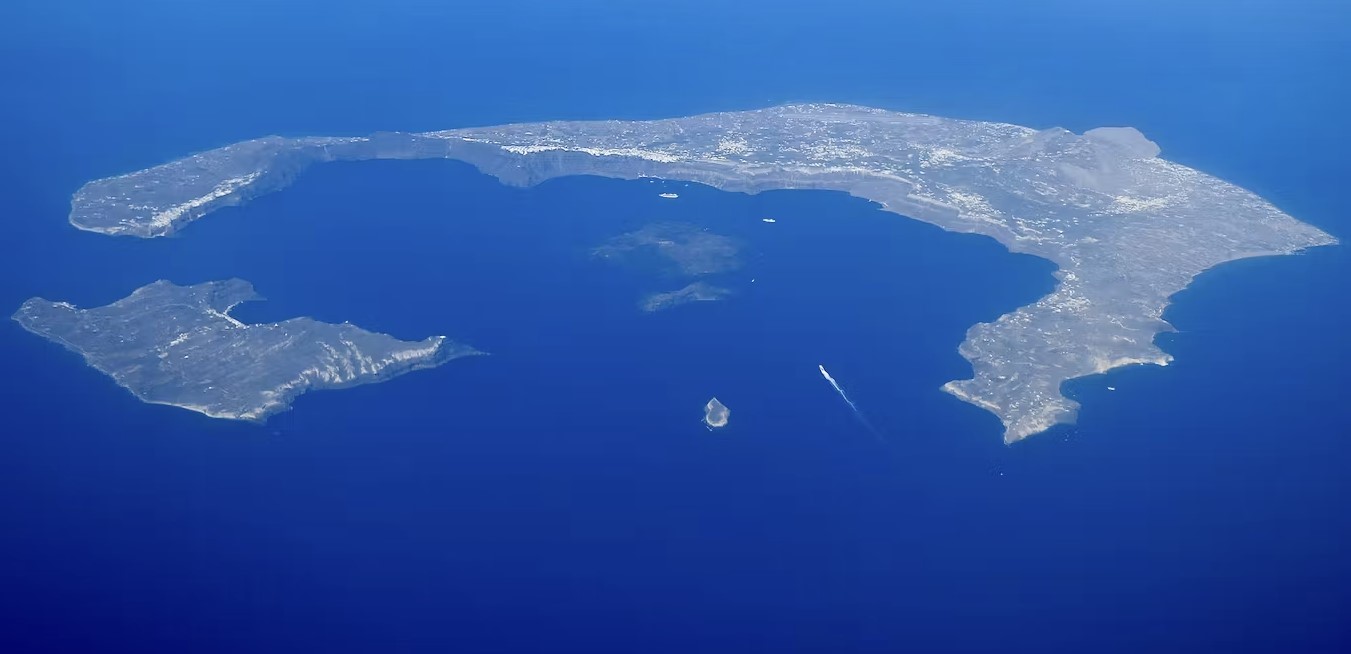
And that is only VEI-5. Here is the island Santorini in Greece, Or rather what is left of it after a volcano erupted on the island circa 1600 BCE . The eruption volume is an estimated 34.5 km³, so the VEI index is 6. In the center of the caldera two small volcanic islands have been formed. There is still a lot of discussion about the exact date of the eruption, it may have caused the downfall of the Minoan culture.
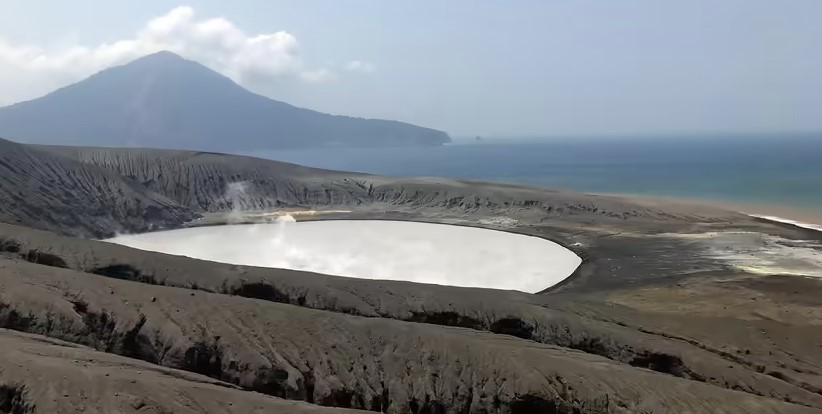
VEI-6 eruptions are not rare, they occur globally with a frequency of 50-100 years. In 1883 the Krakatoa erupted (8–25 km³ ) . Similar to Santorini, in the resulting caldera a volcanic island, Anak Krakatoa has formed. In this photo seen in the foreground, with Krakatoa in the background.
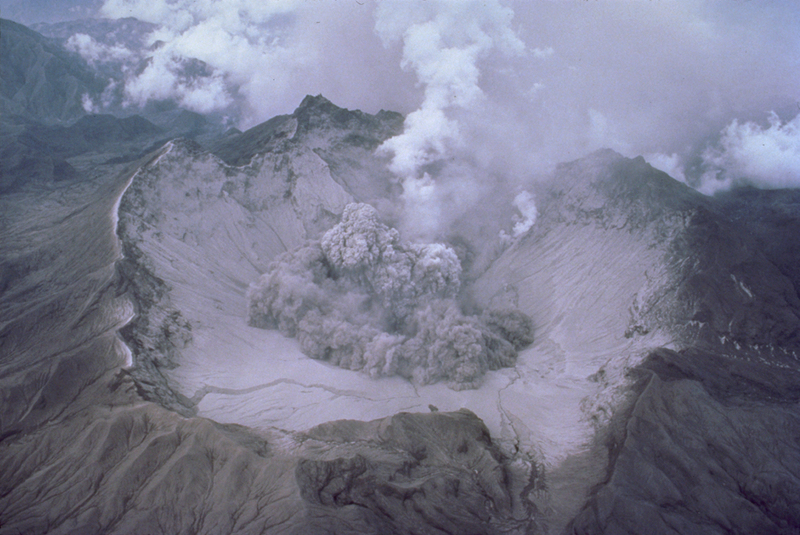
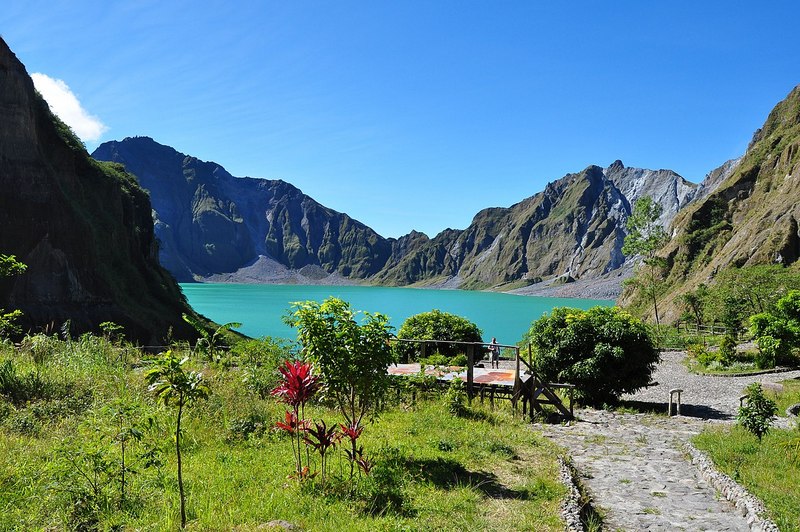
The most recent VEI-6 eruption was Mount Pinatubo in 1991 with an erupted volume of 12.5 km³ Two photos, one taken about one month after the eruption, the other one taken in 2012, where a lake has formed in the caldera. What a contrast 😉
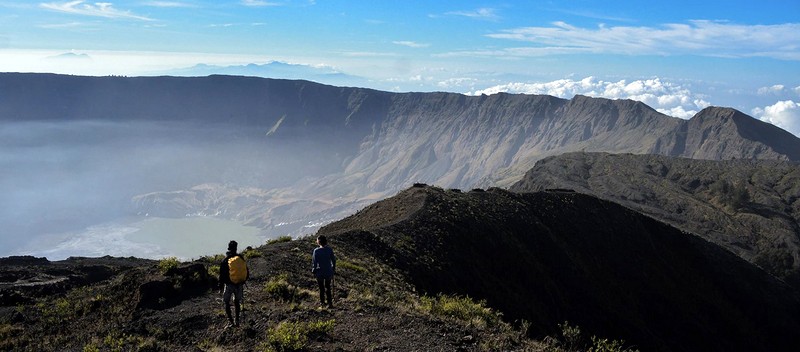
In recorded history there is only one VEI-7 eruption, Mount Tambora in 1815 with an eruption volume of 144–213 km³ Located on the Indonesian island of Sumbawa, it is now a tourist attraction. The caldera is 6-7 km wide and 600-700 meter deep.
VEI-7 eruptions are so powerful that the plume reaches the stratosphere. This can lead to a volcanic winter event. The lighter particles and ash fall/rain down, but the plume also contains massive amounts of gases like SO2 and H2S which in the stratosphere react with OH and H2O to form H2SO4 (sulphuric acid) aerosols. They reflect the sunlight, remain in the stratosphere for months or even years and spread globally. The effect is a temporary climate change, affecting crops etc. The year 1816, one year after the Tambora eruption was a Year Without a Summer ! Average global temperature was 0.4–0.7 °C lower, causing major food shortages in many countries.
After this long introduction, it’s time to come back to the Toba eruption. Because it happened so long ago, the estimates of the ejected tephra are of course less accurate, they vary between 2000-13200 km³ A recent one gives 8600 km³. Meaning that the Toba eruption was at least a VEI-8 (more than 1000 km³) and possibly even a VEI-9 (more than 10.000 km³).
How much is 8600 km³? Well, if all that tephra would be deposited over Peninsular Malaysia, it would result in a layer of about 65 meter thick!
When you compare the Tambora eruption with the Toba eruption, Toba should have resulted in a much stronger volcanic winter, possibly lasting many years if not decades.
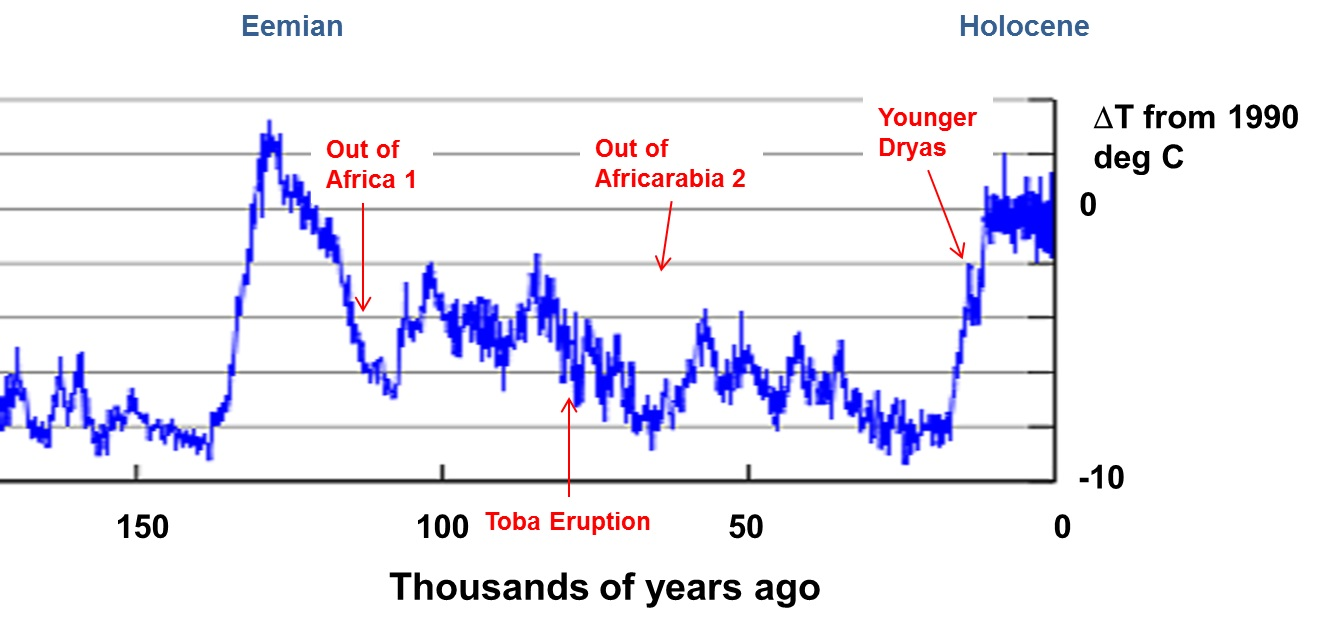
Could such a volcanic winter have affected our species, Homo Sapiens ? The Toba eruption happened during the Last Glacial Period . It was in that same period that waves of Homo Sapiens migrated out of Africa. This graph shows global temperatures during the last 150.000 years. The Eemian and the Holocene (our present era) are warmer Interglacials. During the Last Glacial Period temperature dropped as did the sea levels. See my blog posts Ice Ages and Sundaland. As you see in the graph, the temperature variations are rather irregular. There are markers for the Out of Africa waves and the Toba eruption
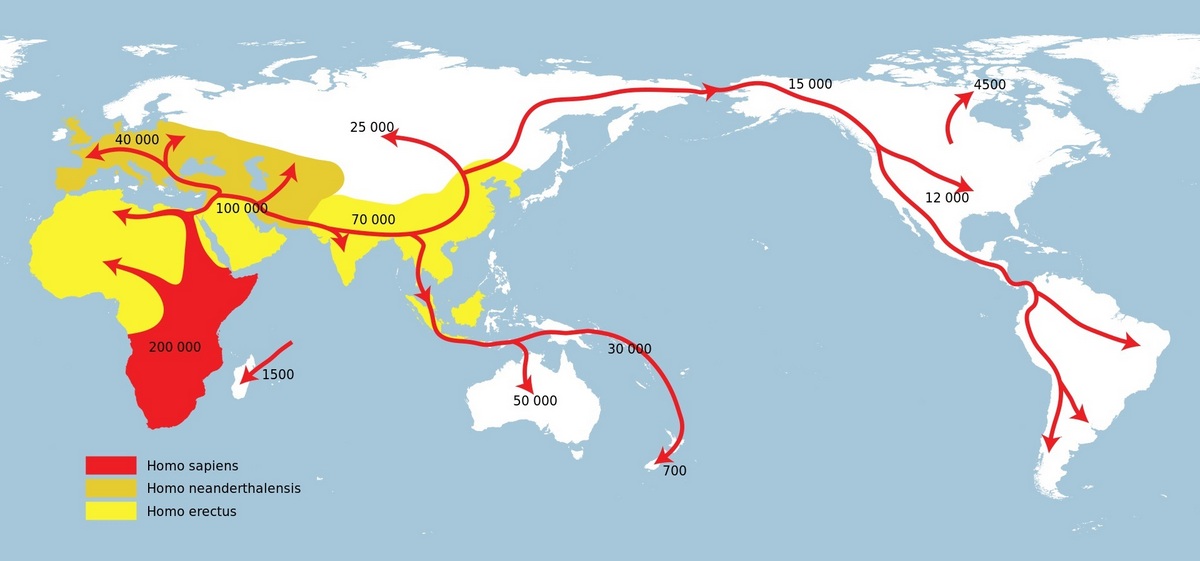
In this map the spreading of Homo Sapiens is shown (in red) together with the distribution of earlier human ancestors, the Neanderthals and the Homo Erectus. In 2012 I did a DNA-test to find out when my ancestors left Africa. For my paternal ancestor that was around 50.000 years ago, my maternal ancestor left earlier, ~70.000 years ago. Both after the Toba eruption. Here is my blog: My ancestors .
The Homo Sapiens population in Africa was small and the migrating groups even smaller, think about numbers in the thousands. They were hunter-gatherers. Sudden climate change might threaten their existence. The Toba Catastrophe Theory, developed a few decades ago, holds that the Toba eruption caused a global volcanic winter, leading to a near extinction of Homo Sapiens, causing what is called a (human) genetic bottleneck. Here is an illustration of a genetic bottleneck. Because only a small number of individuals survives the bottleneck, their genetic diversity is limited.
It is generally accepted that there have been many bottlenecks in the human evolution, Click here for an article about it. And a few months ago Scientific American published an article Human Ancestors Nearly Went Extinct 900,000 Years Ago That was the time of Homo Erectus, long before Homo Sapiens evolved.
The Toba Catastrophe is controversial. Did the Toba eruption produce a bottleneck? Was the Toba Volcanic winter so severe and long lasting that the global population of Homo Sapiens was reduced to about 1000 breeding pairs?
One vocal proponent of the Toba Catastrophe is Donald Prothero, an American geologist , paleontologist and prolific writer In 2018 he published When Humans Nearly Vanished about the Toba Catastrophe.
But here is an equally vocal opponent, John Hawks, an American paleoanthropologist with a popular blog, who wrote in the same year 2018: The so-called Toba bottleneck simply didn’t happen. He mentions research that humans thrived in South Africa during the Toba eruption.
I am not an expert, so don’t expect a verdict from me 😉
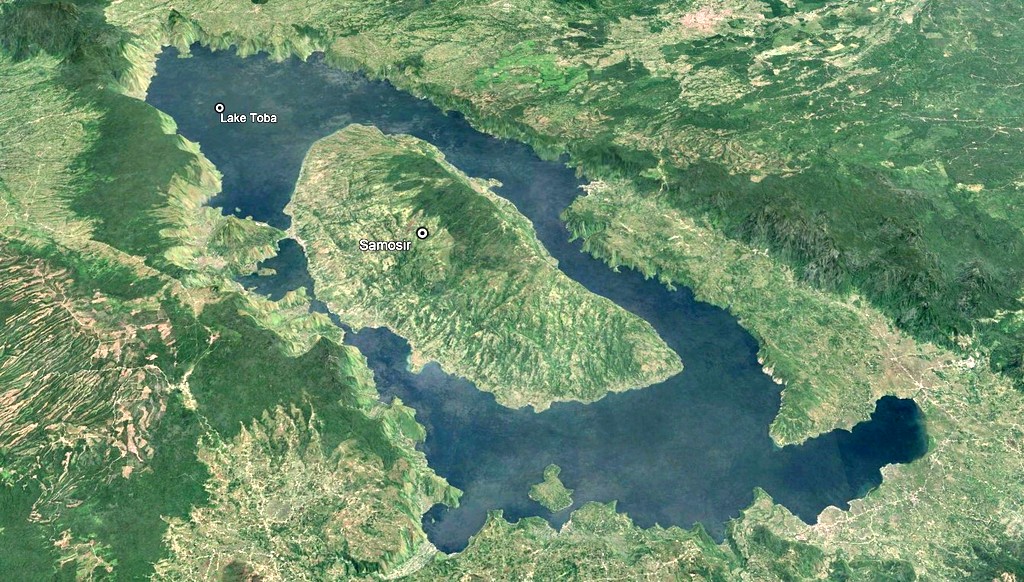
Nowadays Lake Toba and Samosir are tourist attractions of Sumatra. Here is a more detailed Google Earth image. Samosir was originally a peninsula until in 1907 a canal was opened through the isthmus.
I have visited Samosir in 1994, thirty years ago, I don’t remember much about it. Peaceful, interesting Batak culture. You don’t realise that you are staying on top of a dormant volcano. Deep below Lake Toba is a huge magma chamber (50.000 km³ ) that is filling up slowly with magma. This has lifted Samosir already around 450 m. Will there be another supervolcano eruption? Yes, but no need to worry, that may take another 600.000 years.
Since I wrote a blog post about Bukit Lanjan in March 2021, its hiking trails have been maintained and further developed by volunteers (Rainer, Pathman, Mark and many others)
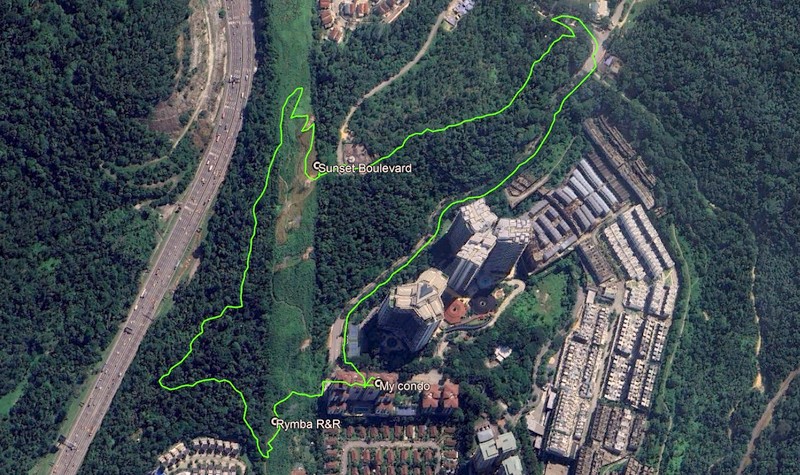
Here is an example of a trail that I often walk. Clockwise, uphill using the trails, downhill the tar road to protect my knees. Click on the GE screenshot below to view the Komoot report of a recent hike, with many photos.
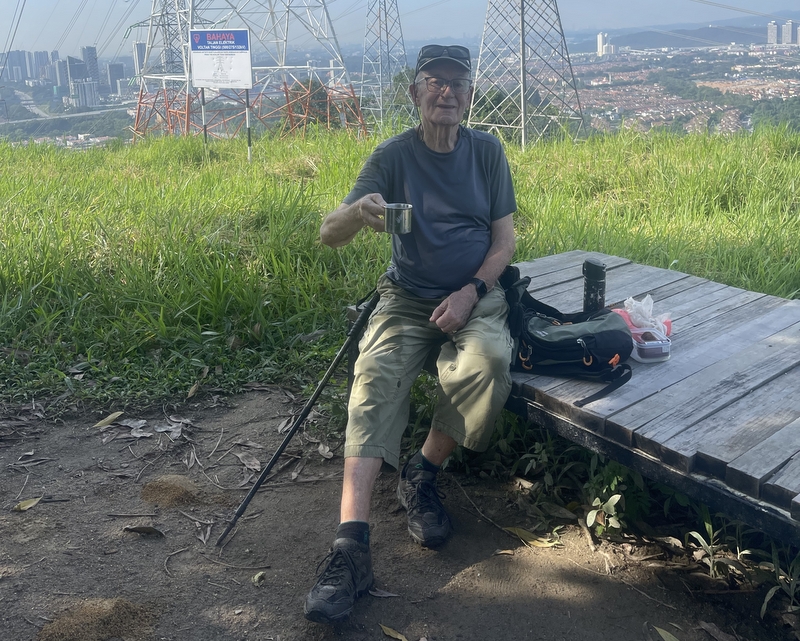
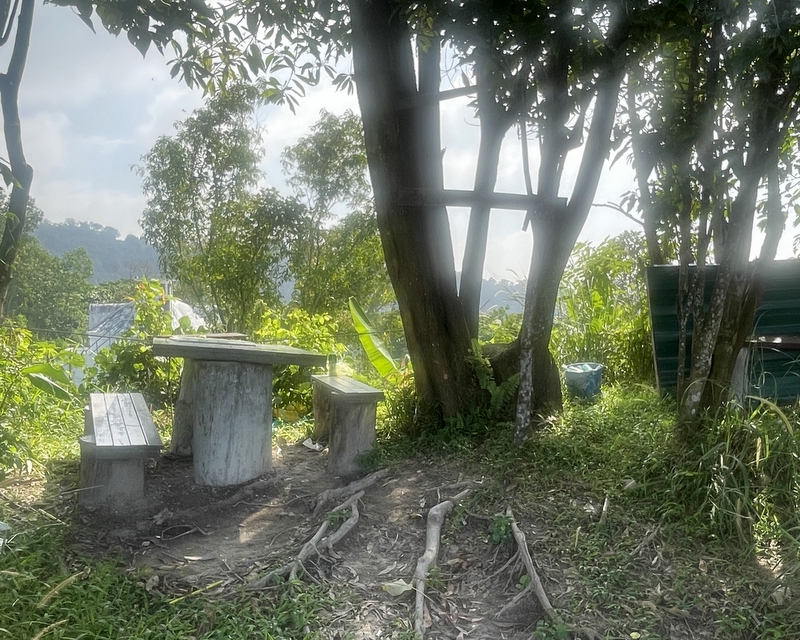
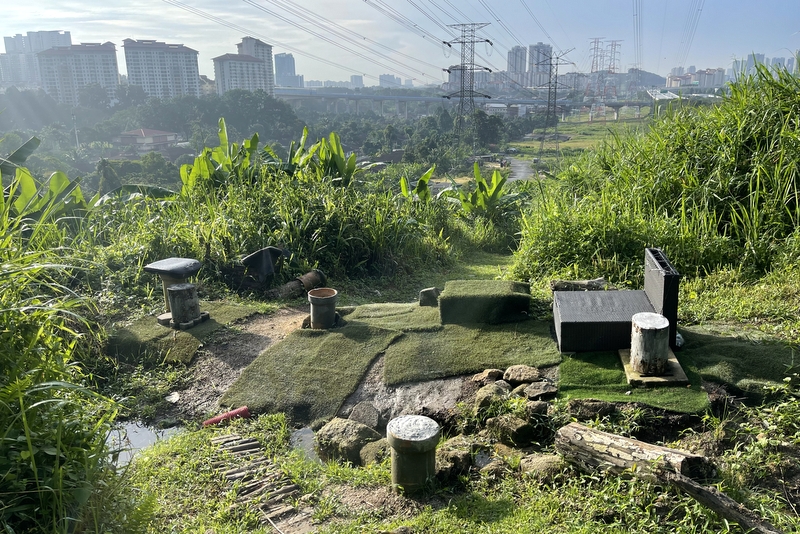
Halfway I have a coffee break at Sunset Boulevard, marked in the GE map. This location has been upgraded a lot with furniture and has become very popular.
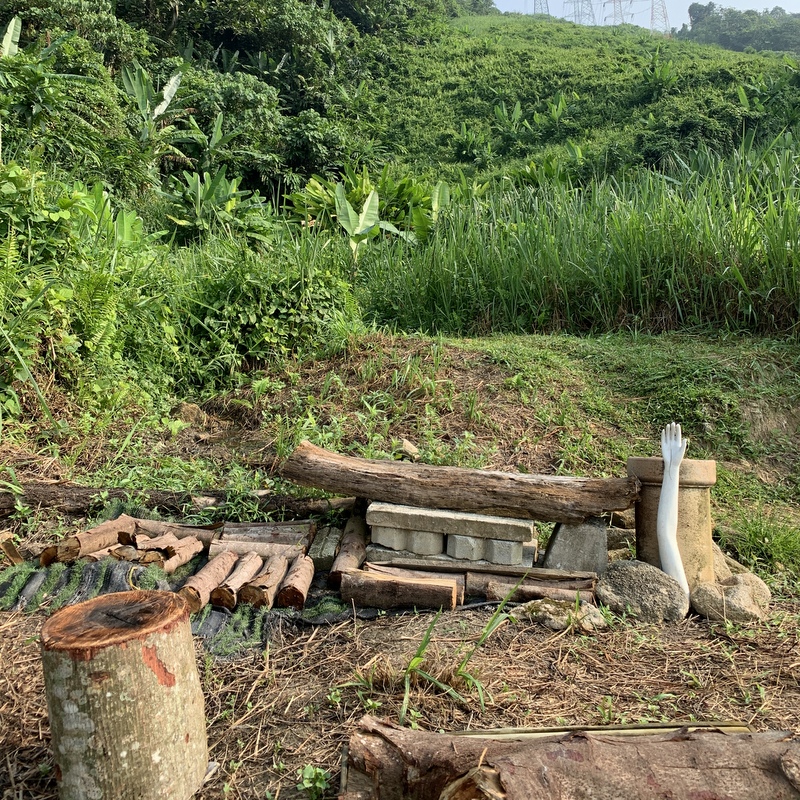
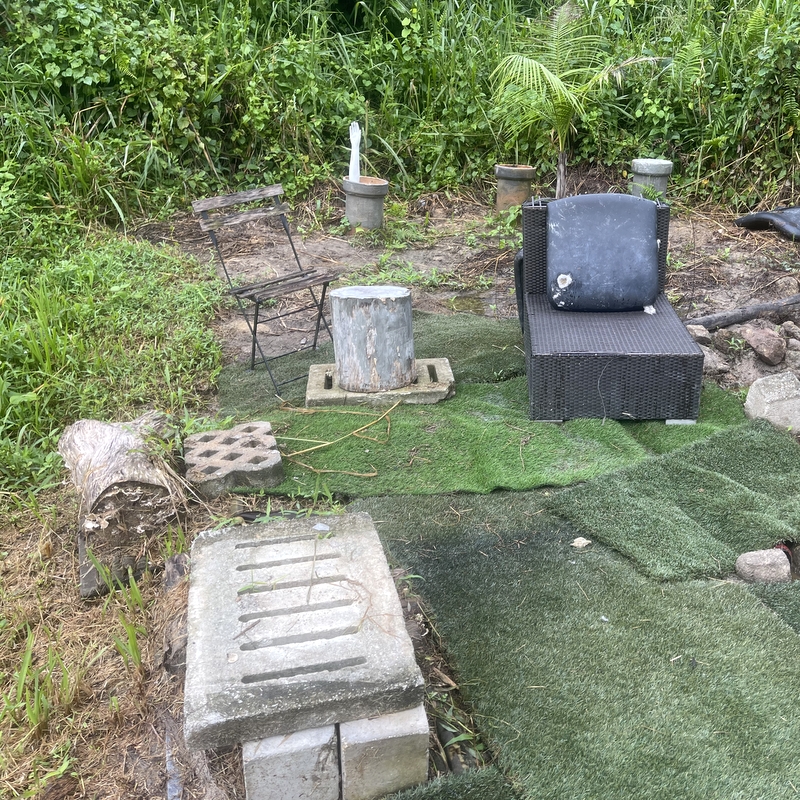
Another location shown on the GE map is Rymba R&R. R&R stands for Rumah Rehat , the rest stops along the highway. Rymba Hills is a residential area, visible bottom left on the map. Over the past year this rest stop has been developed by Pathman, who is living nearby. Here are two pictures, one taken in April, the other one in November.
And here is the present situation. The plastic arm has disappeared 😉
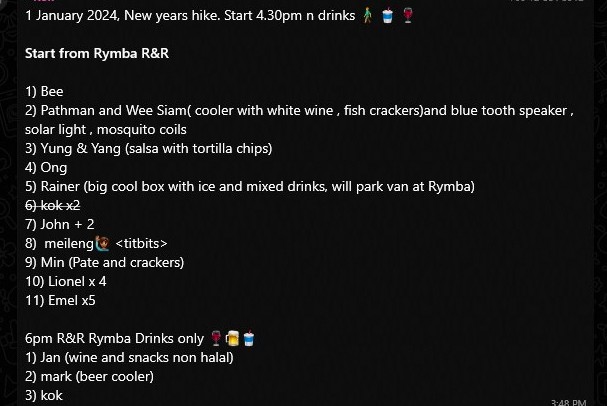
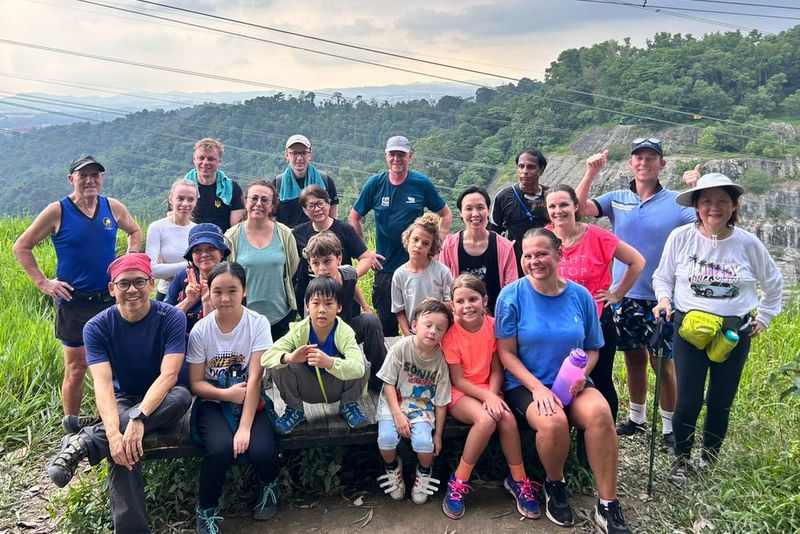
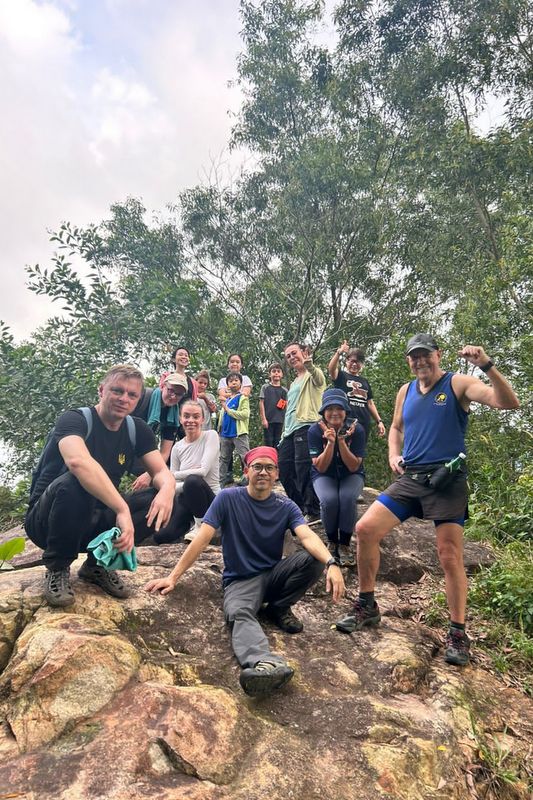
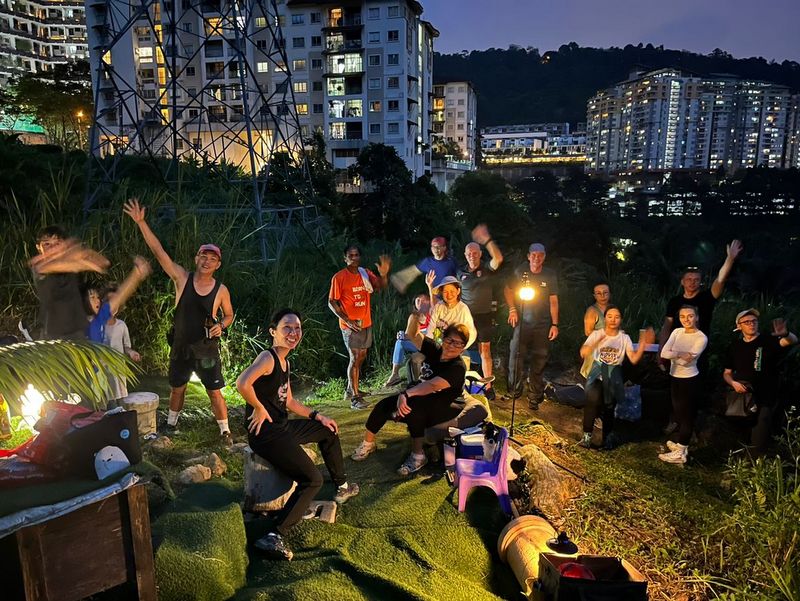
When Pathman told me that he often came here in the evening to relax with a drink, I showed my interest to join him, as I am living “around the corner”. But we never managed to fix a date. Until this time! Not the two of us, discussing the meaning of life, but a New Year meeting of the Bukit Lanjan hikers. There were two options, starting with a hike at 4:30 pm, finishing 6 pm at Rymba R&R, or skipping the hike and meeting directly at Rymba R&R. The plan was that everybody would bring something to drink and or eat. Many people first wanted to hike, here is a group picture at Sunset Boulevard.
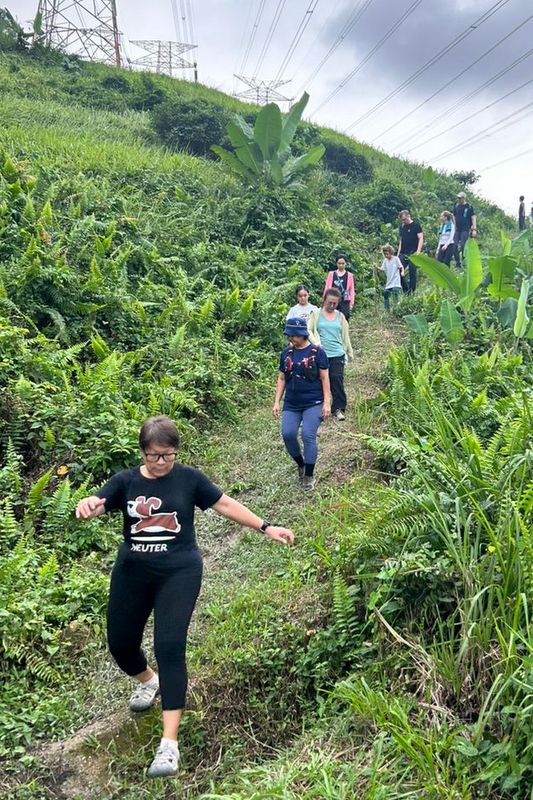
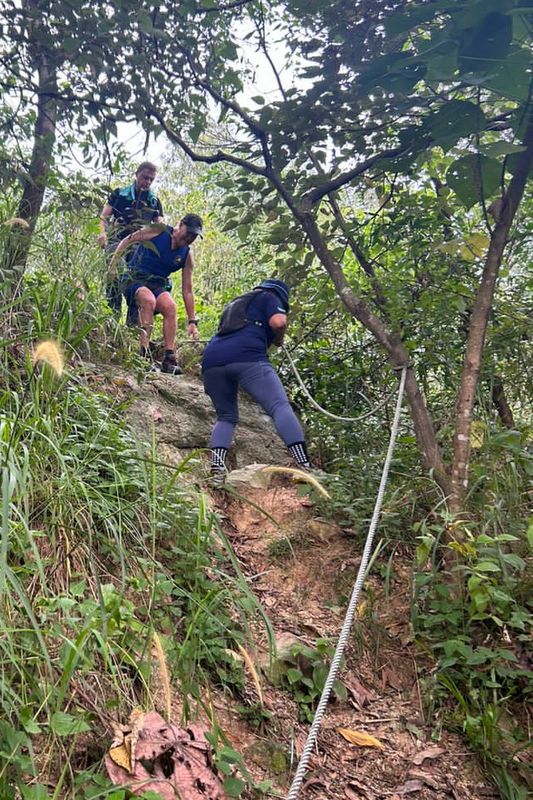
Some more photos of the hike. In the center is another interesting location, the Hard Rock cafe. Steep parts of the hiking trails have ropes.
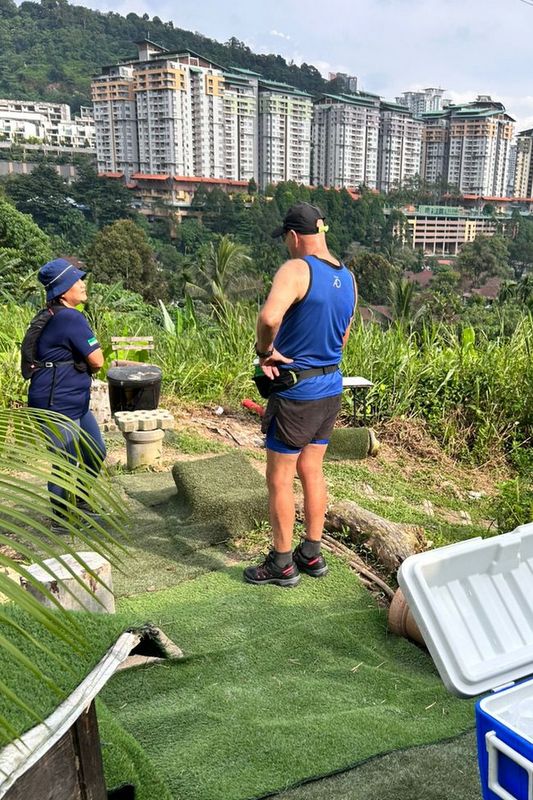
In the meantime the non-hikers already came to the R&R
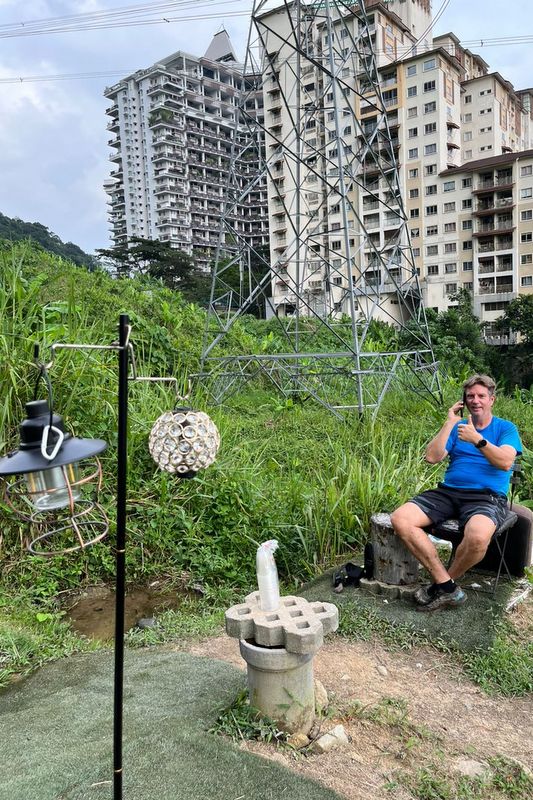
Around 6 pm the hikers arrived and the party started. There were drinks and snacks, Pathman had provided music and solar lights
It became a very pleasant gathering. We were very lucky with the weather, this time of the year there is often a heavy downpour in the afternoon.
I went back home before it got dark, because I didn’t want to take risks of stumbling at my age. So these photos (and quite a few others in this post) have not been taken by me.
As you can see, everybody is enjoying the New Year party.
Pathman created a YouTube video of the party. Enjoy!
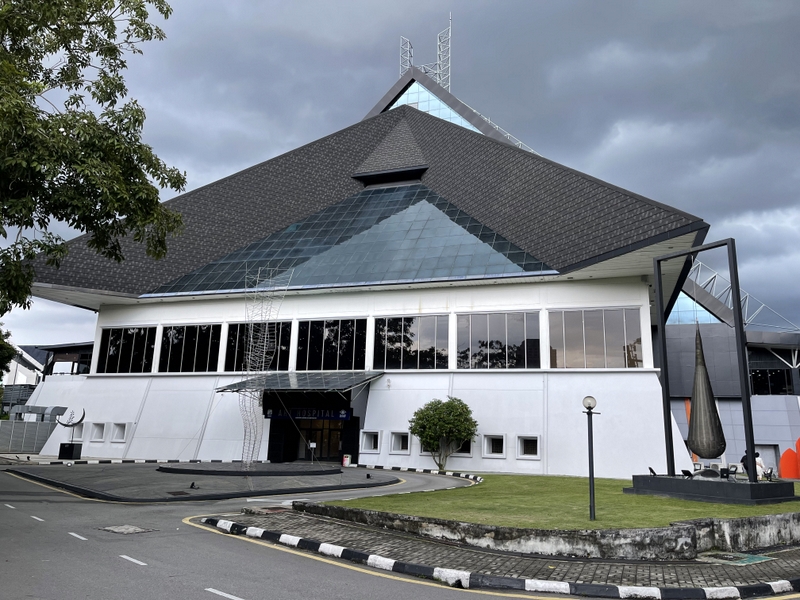
Let me start with a confession: I was not aware that Malaysia had a National Art Gallery. My friend George mentioned this museum to me and asked me if I would like to come with him and visit it. The museum is located next to the Istana Budaya (National Theatre), and can be reached by public transport. We decided to meet at the Hospital Kuala Lumpur MRT station, from where the museum is within walking distance.
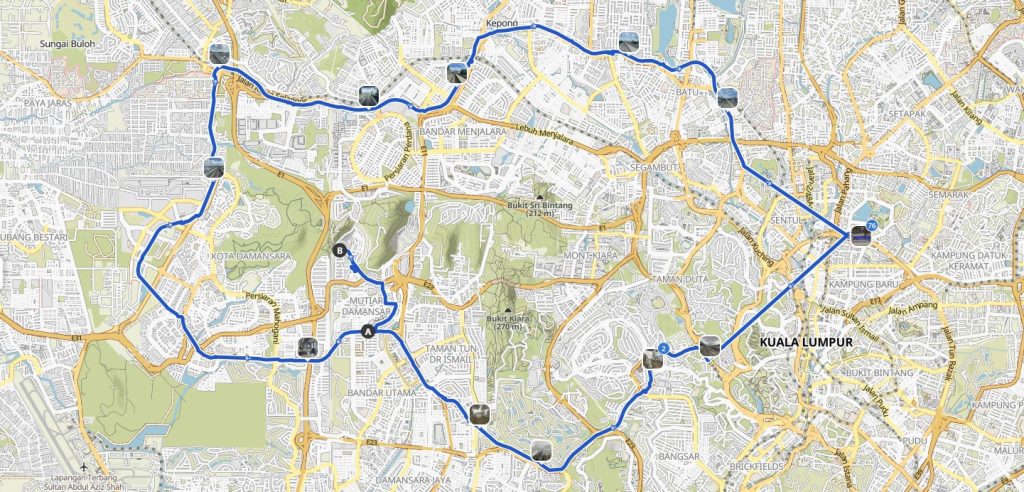
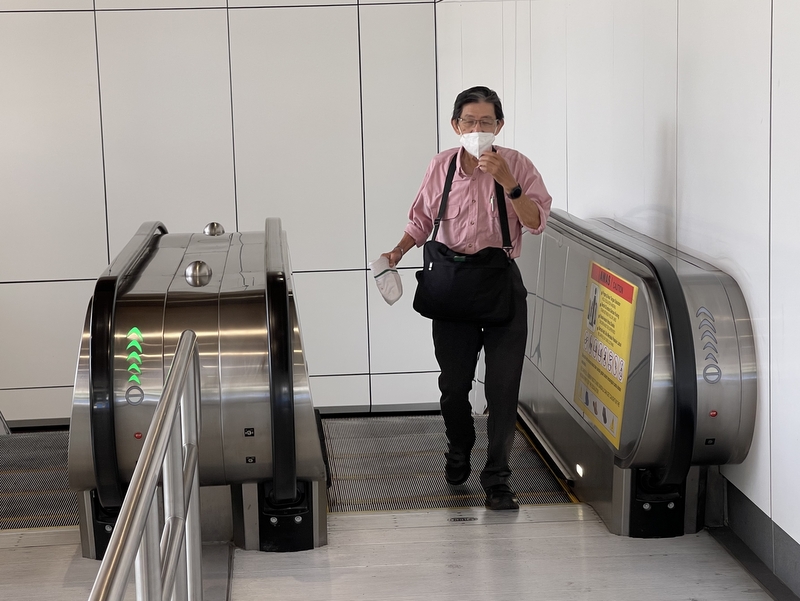
George is quite expert about KL public transport and advised me to use two MRT lines. First the Kajang line from Damansara Mutiara to Kwasa Damansara and transfer there to the Putrajaya line until the Hospital KL station. On my way back continue the Putrajaya line until the TRX station and transfer there to the Kajang line. A circuitous route, but fun. Altogether 34 stations! I used the Komoot app on my phone to record the trip. Komoot adds pictures taken during the trip to the report, just click on the map below to view them. Part of the MRT is underground, no GPS, that’s why you see two straight lines at the right.
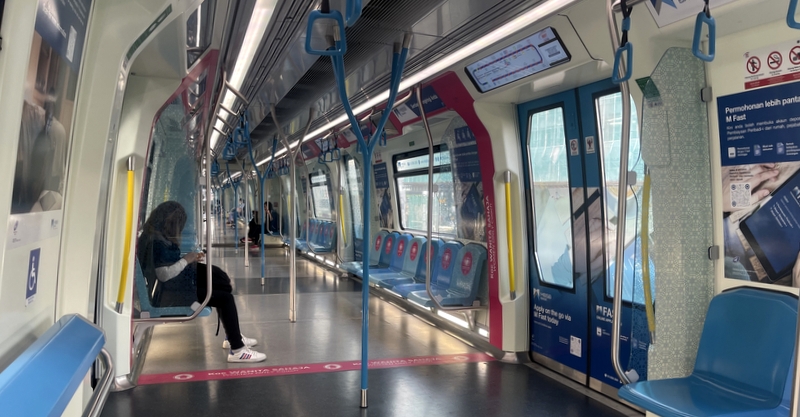
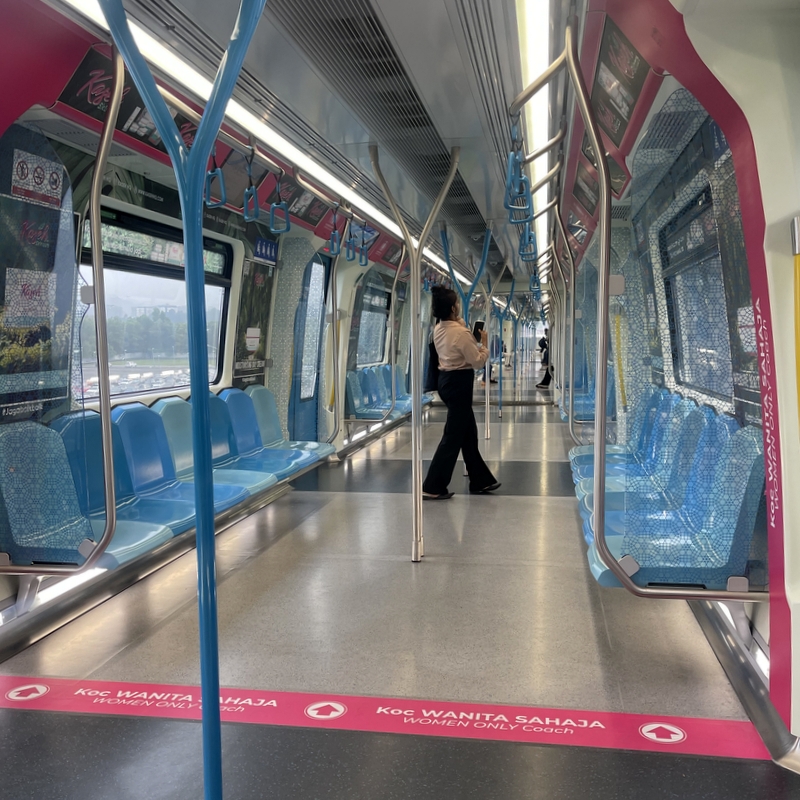
The MRT to Kwasa Damansara was almost empty, but the Putrajaya line was slowly filling up in Sri Damansara and Kepong. Notice the red line, it marks where the women’s coach starts. The seats there also have red markers.
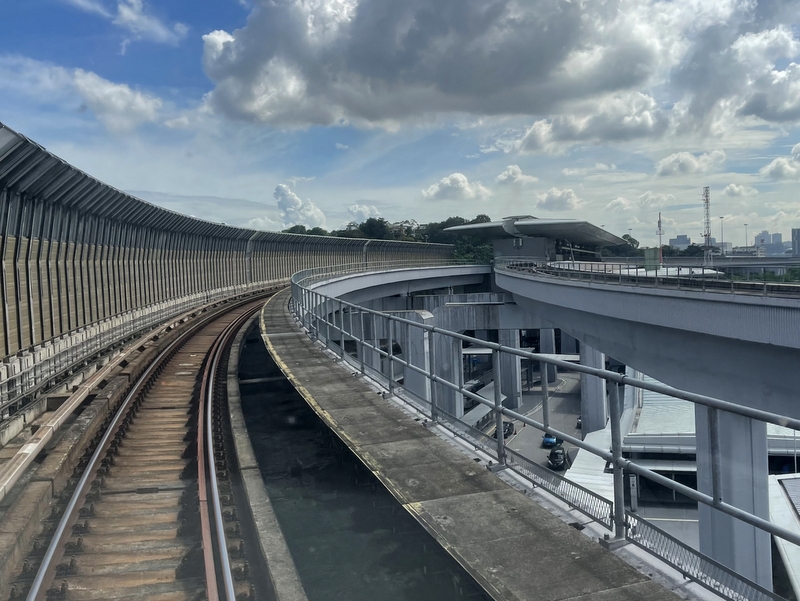
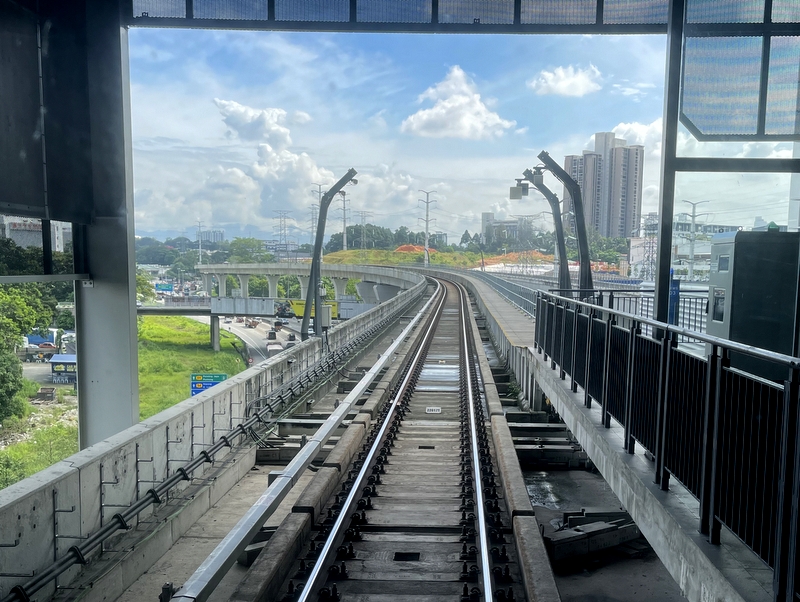
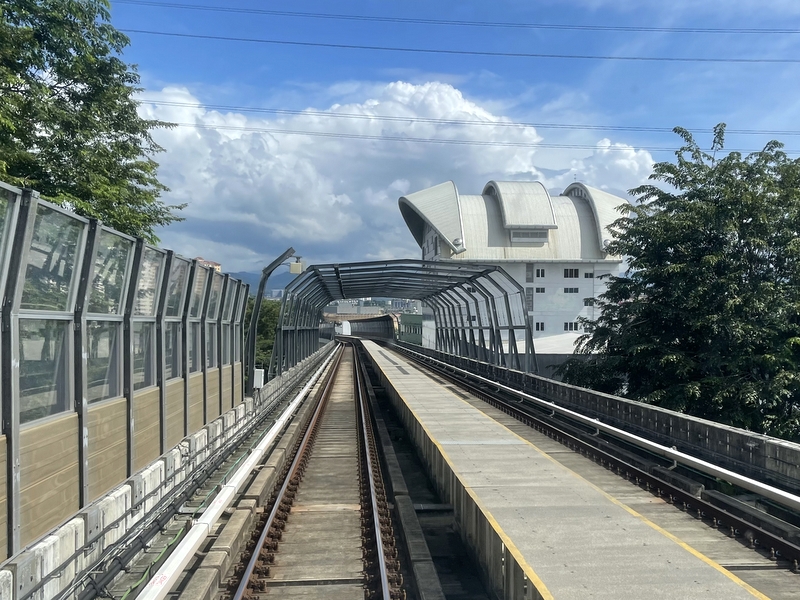
I had a seat at the front of the coach, from where I could take pictures. The MRT lines are state of the art and make traveling really easy.
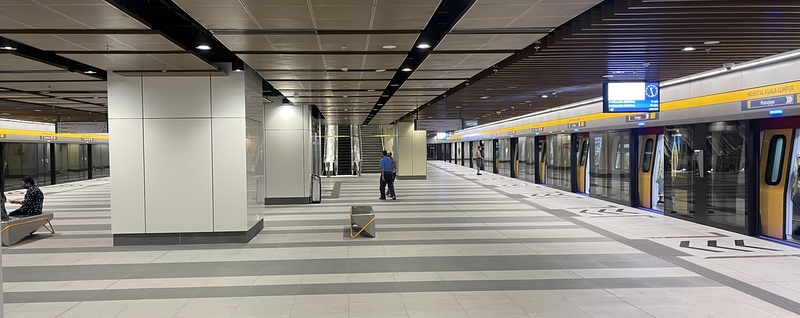
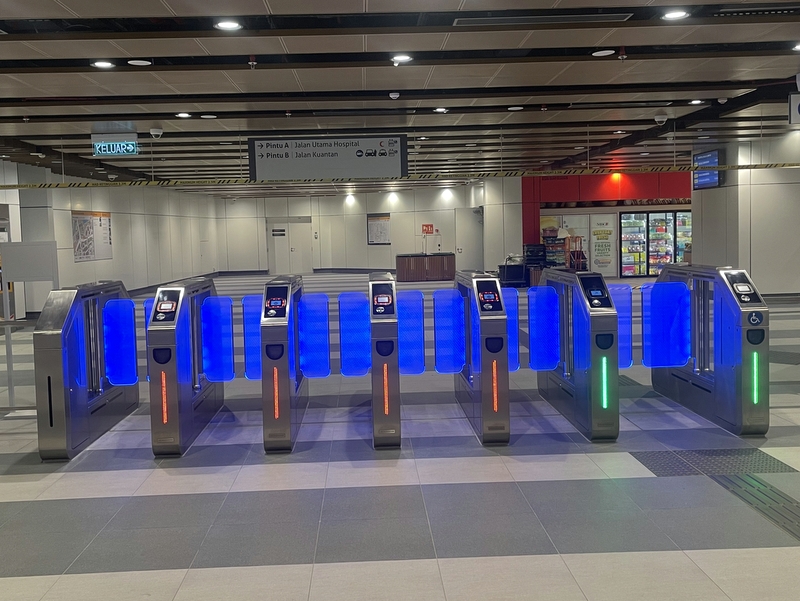
The Hospital KL station is huge and has an underground passage to the General Hospital. But I took the Jalan Kuantan exit to meet George.
At first we missed each other, I had to call him, as he was waiting for me inside the station while I went out already.
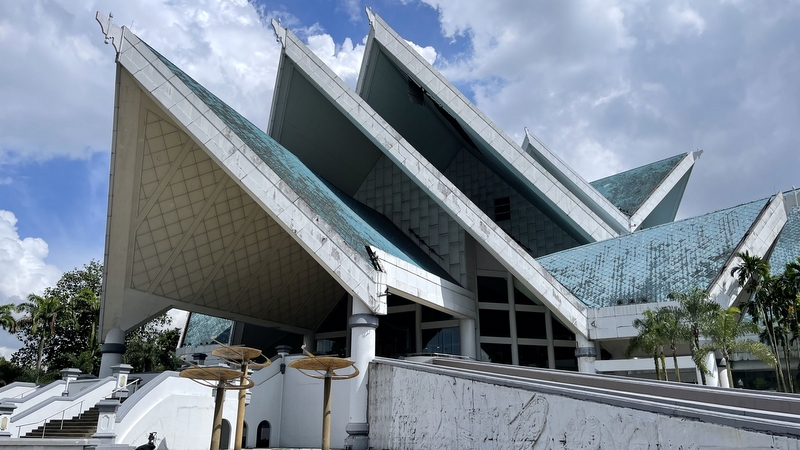
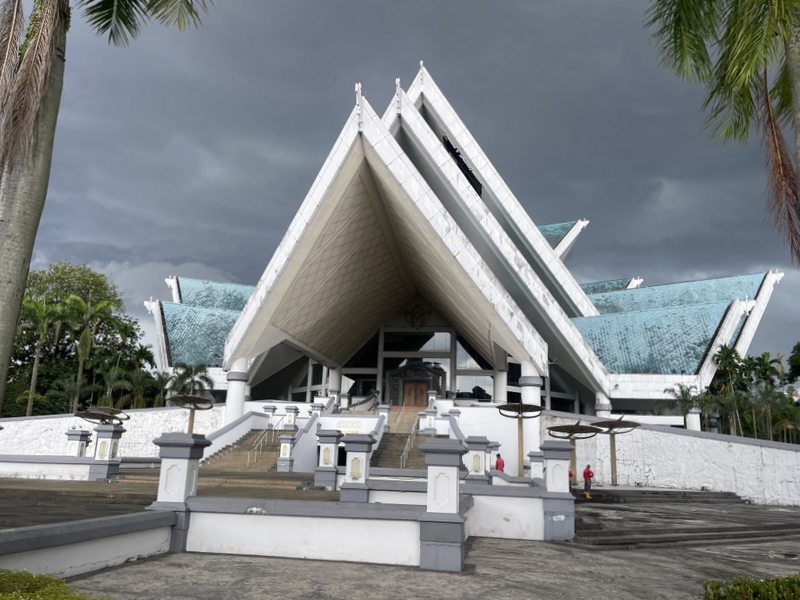
This is the Istana Budaya, opened in 1999, but now already closed three years for renovation. Interesting architecture, many years ago I have attended a concert there.
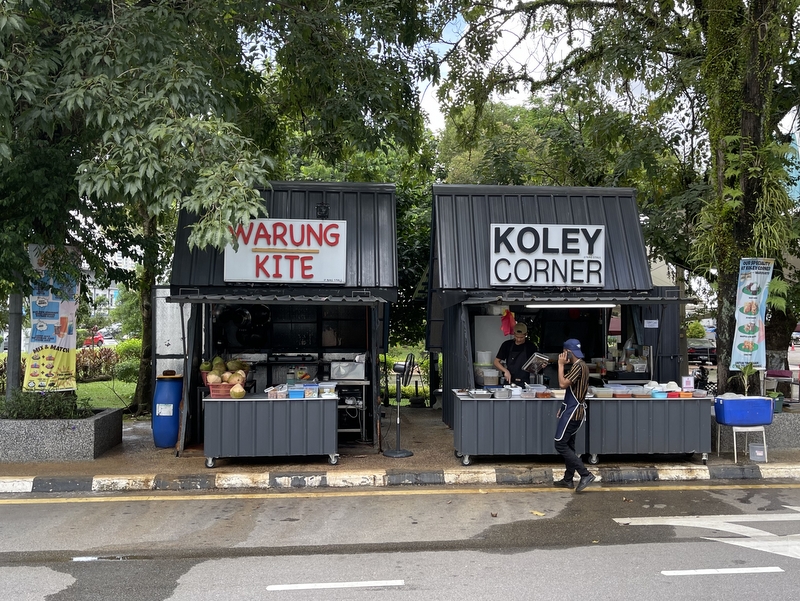
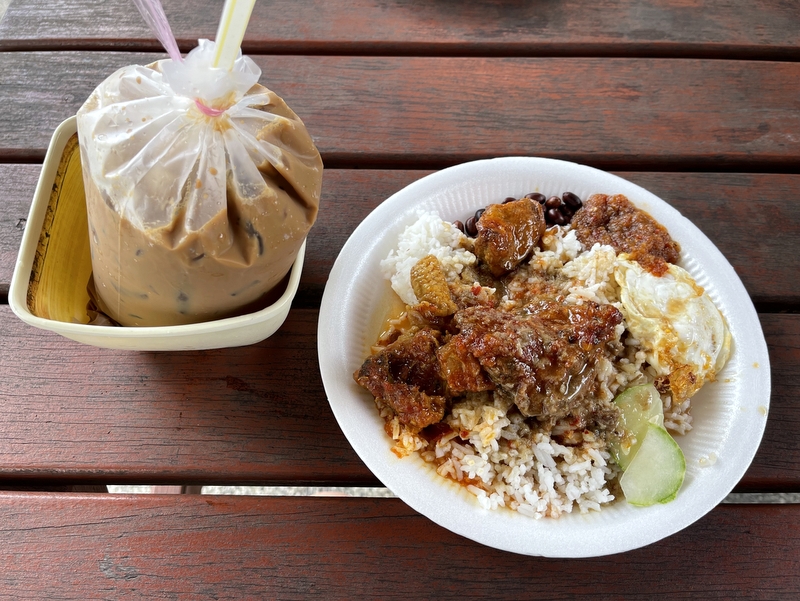
It was almost noon, we decided to have lunch first and found a few stalls nearby where we had nasi lemak and coffee.
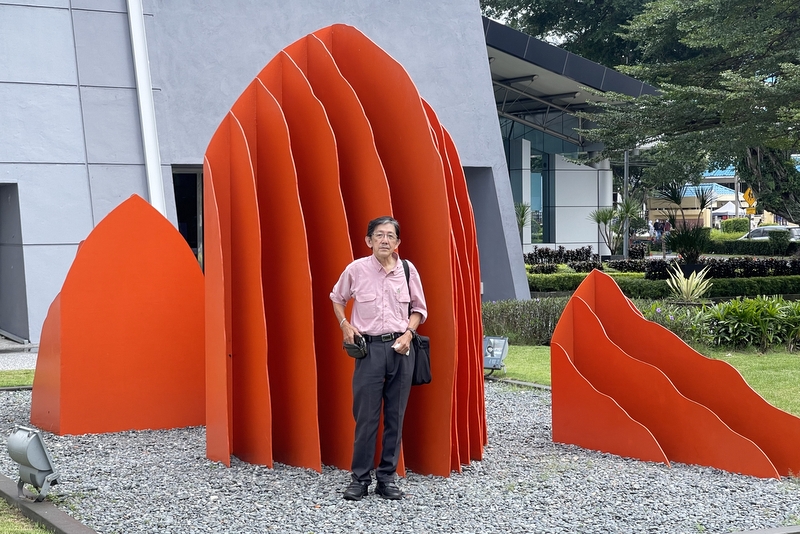
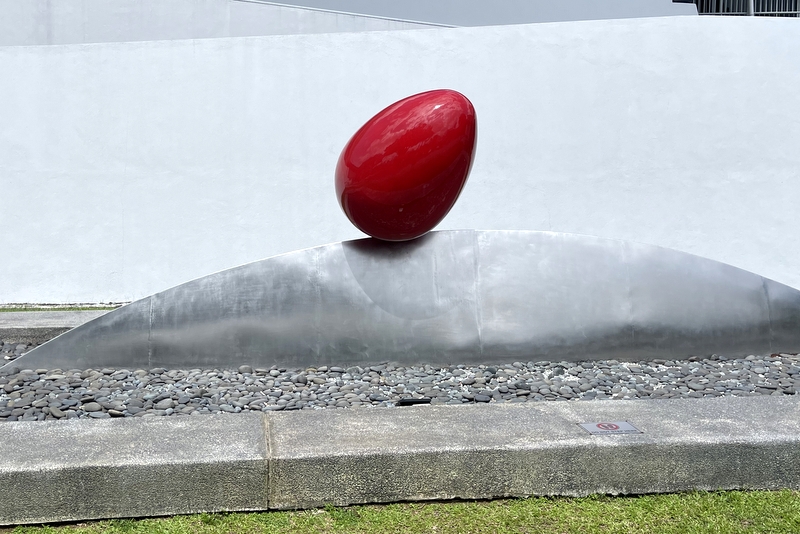
Walking to the museum entrance, we passed already a few (modern) artworks.
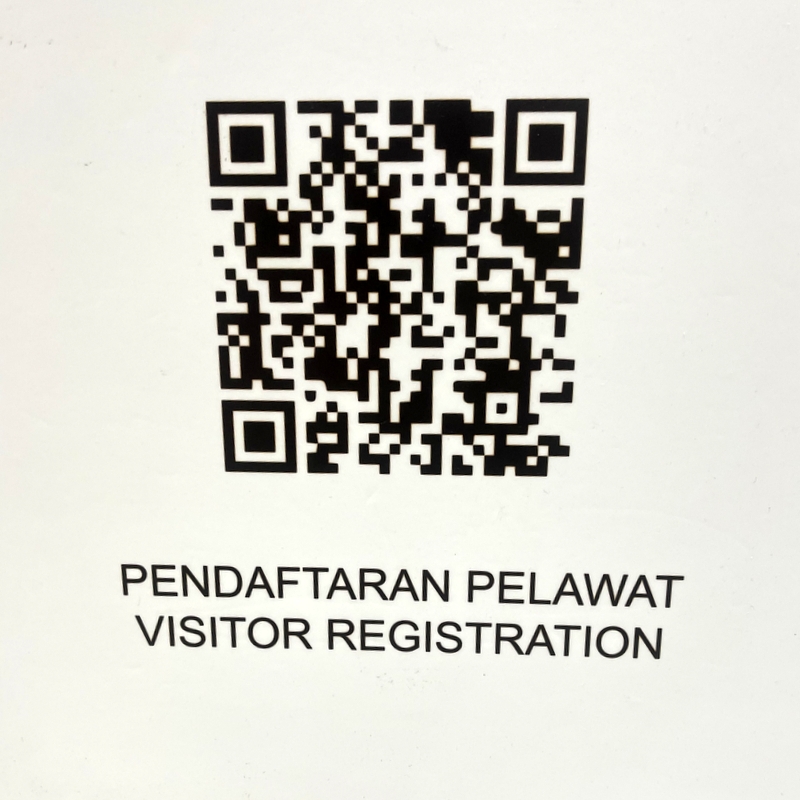
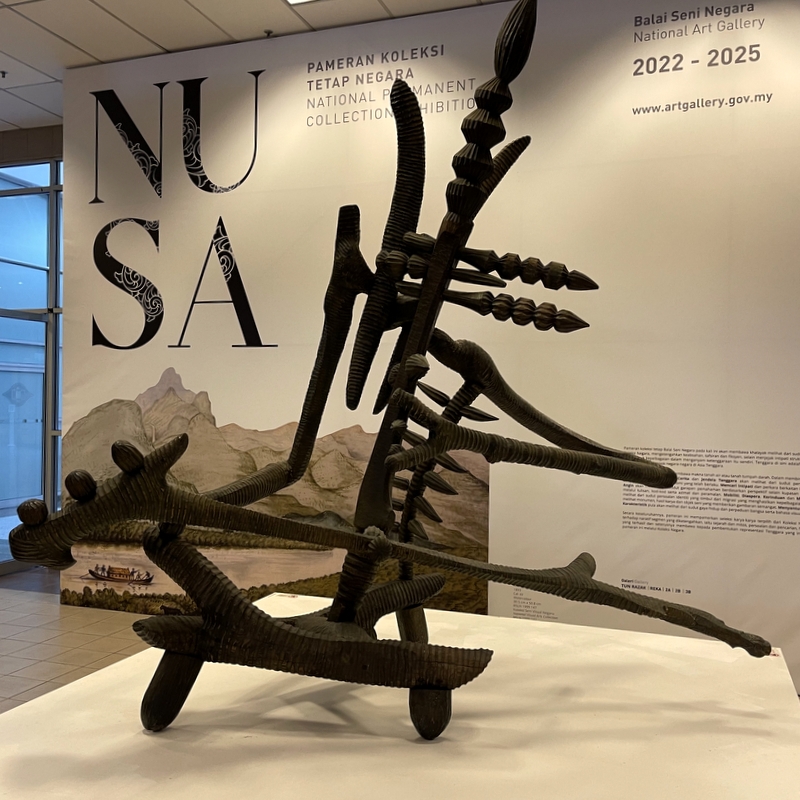
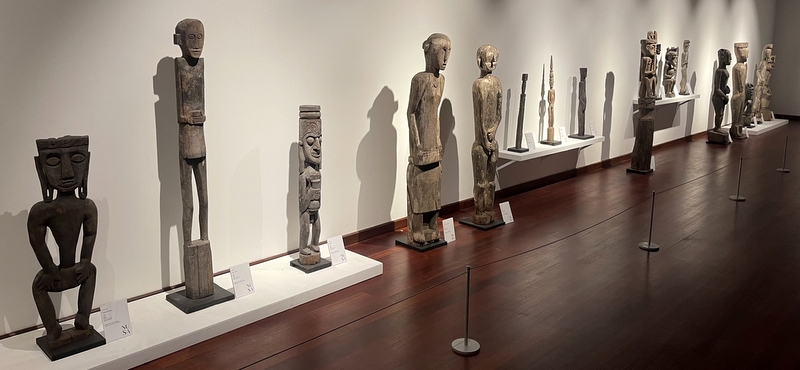
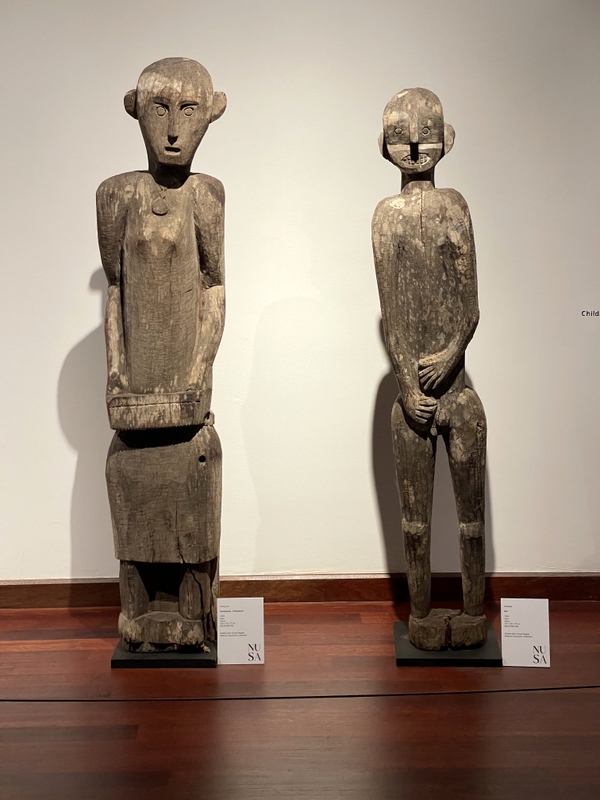
Entrance to the museum is free, you have to register in a modern way, via a QR code. From 2022-2025 the museum will show part of its permanent collection, the exhibition is called NUSA (motherland in English). There is an informative online catalog available (select the NUSA icon, loading will take some time).
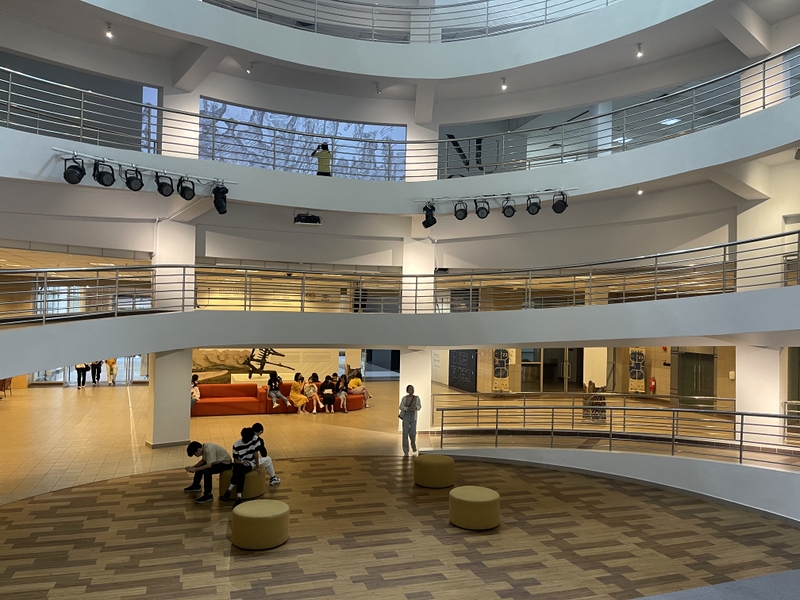
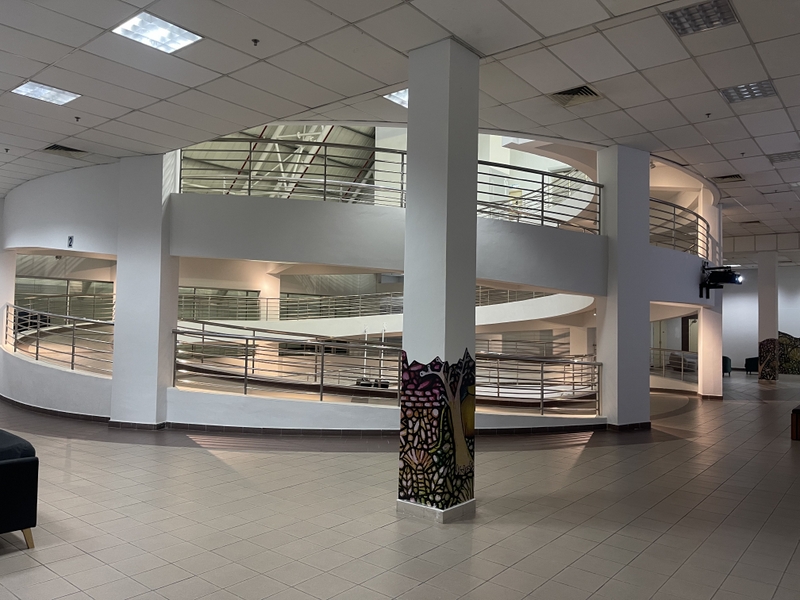
The National Art Gallery was created in 1958, one year after the Independence of Malaysia. The present building was designed by a Malaysian architect and opened in 1998. The interior is vaguely reminiscent of the iconic Guggenheim Museum in New York, but the spiral ramp, although visually attractive, is not functional here.
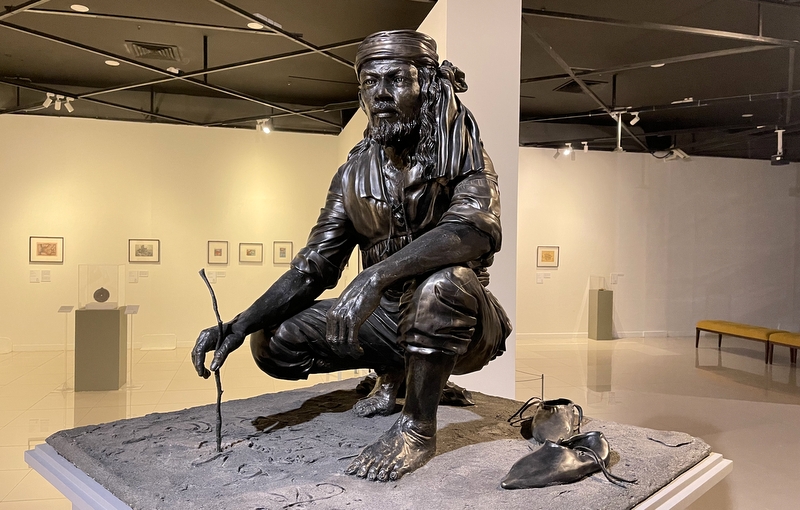
First we visited the Enrique de Malacca Memorial Project on the ground floor. Enrique was a Malay boy, acquired in Melaka as a slave by Magellan, brought back to Europe, accompanied Magellan on his famous circumnavigation of the world and disappeared without leaving any trace after Magellan was killed in the Philippines, during a battle. Assuming that Enrique, now ~ 25 year old, had gone back to Melaka, he would have been the first human who had personally travelled around the world. Worthy of inclusion in the Guinness book of records 😉 . I have condensed the story a lot .
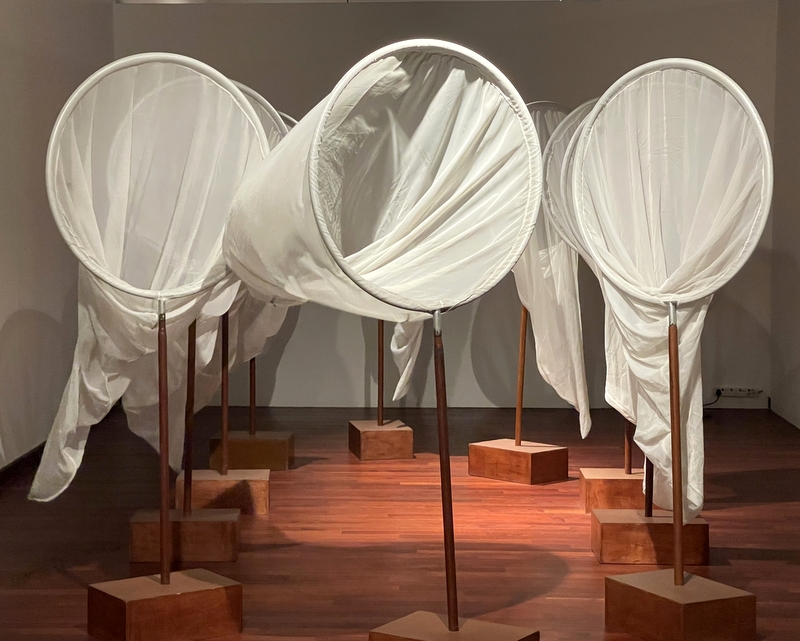
The project belongs to the category installation art. It contains copies of documents and maps, a model of a ship, a video and much more. Here is a statue of Enrique made by Ahmad Fuad Osman, the creator of the memorial project.
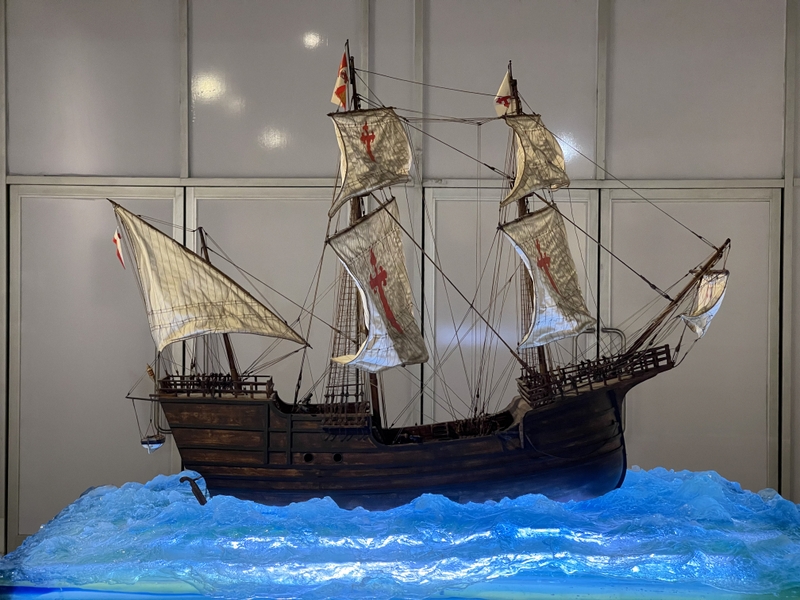
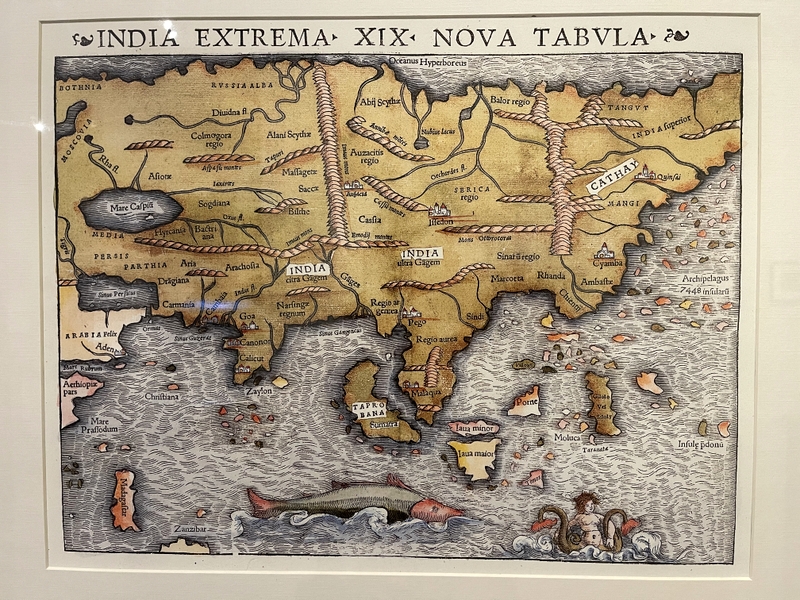
A model of a ship, similar to the ships in Magellan’s fleet and a a map of the world as it was known in those days.
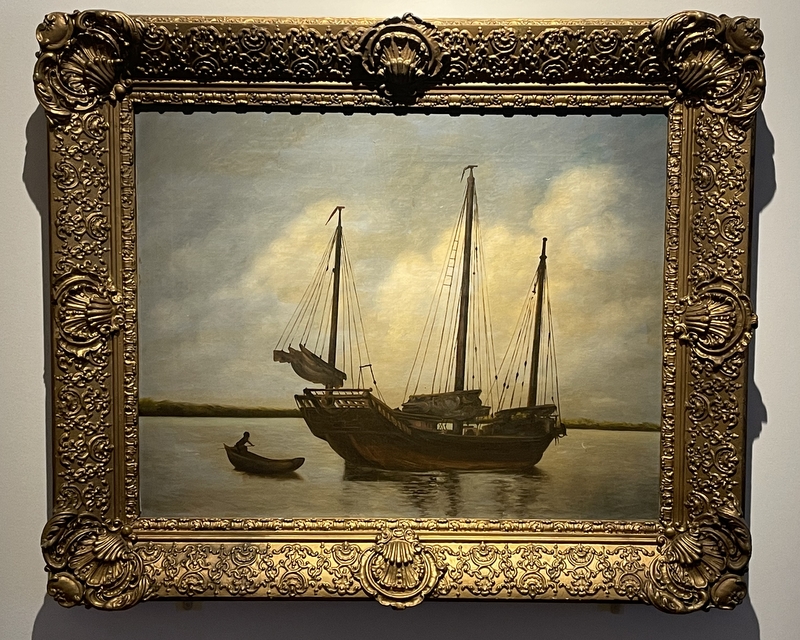
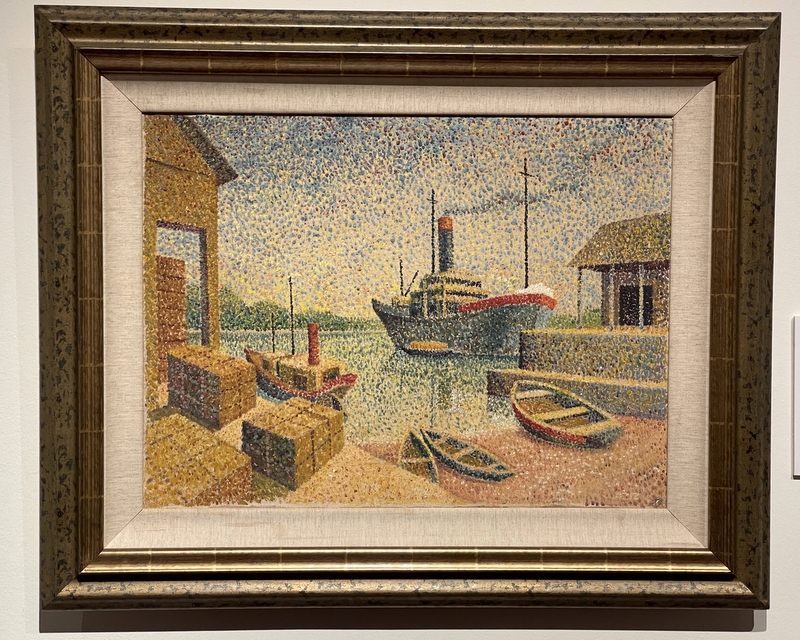
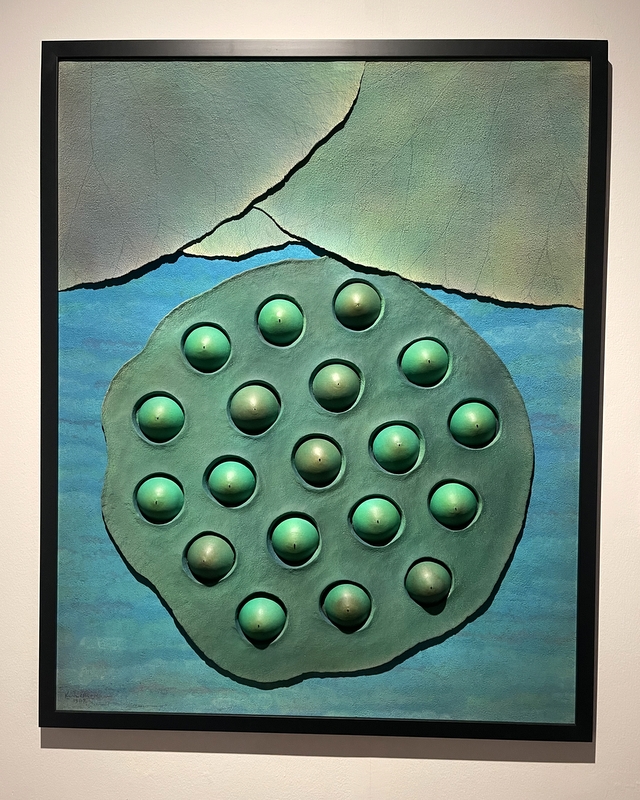
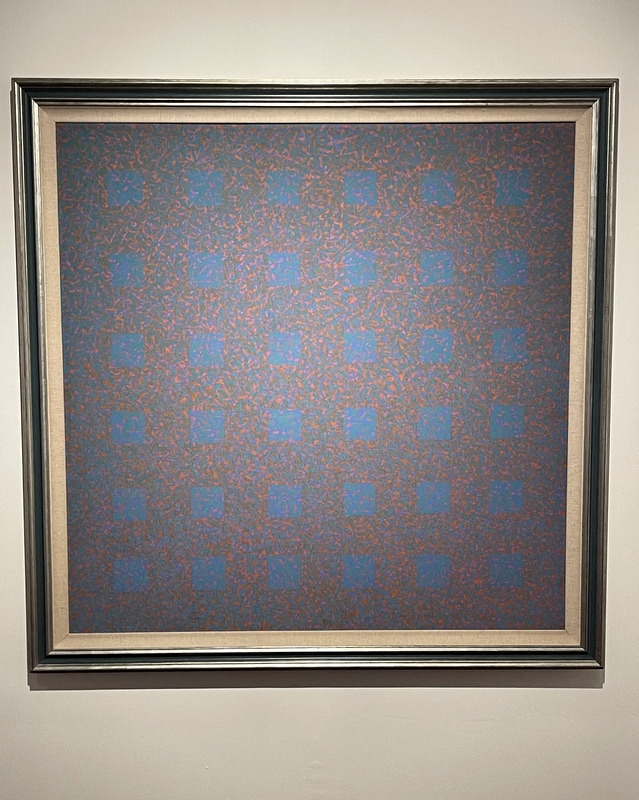
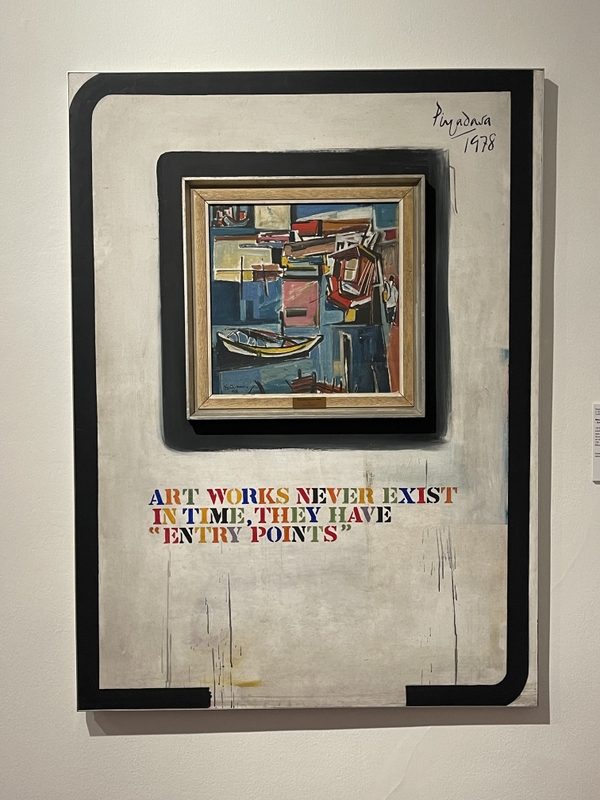
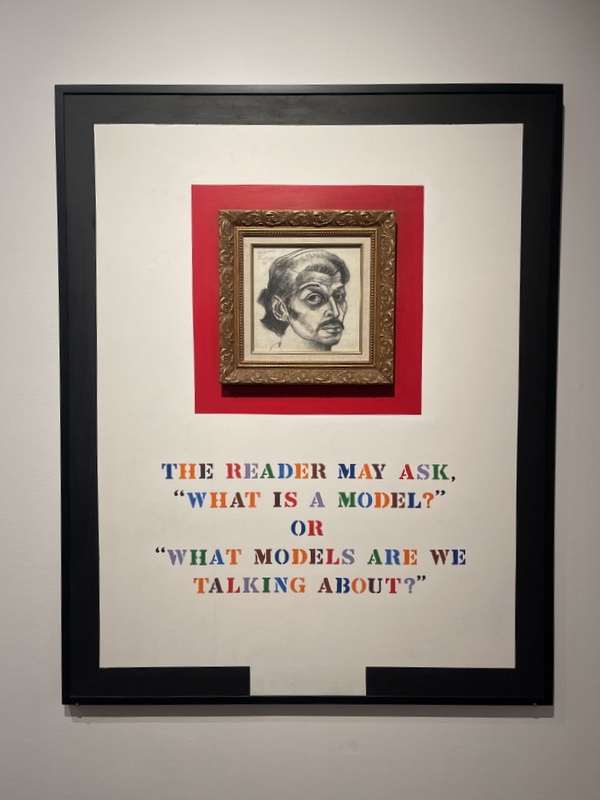
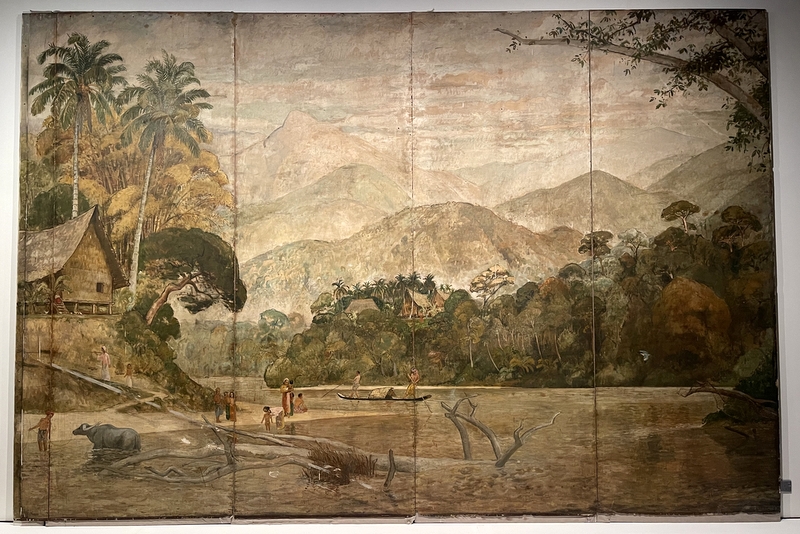
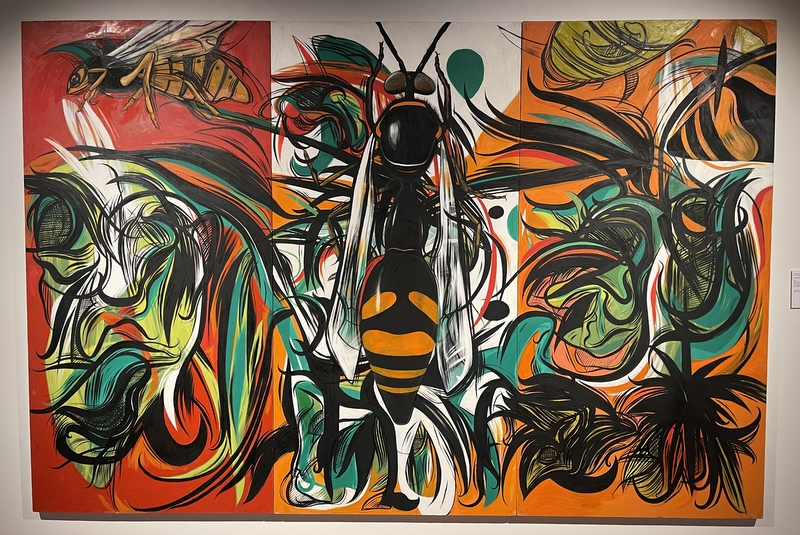
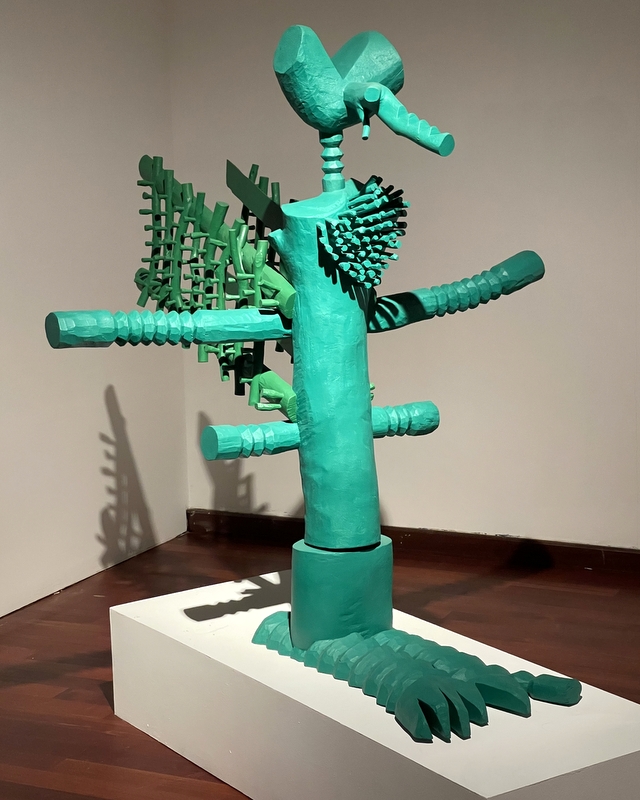
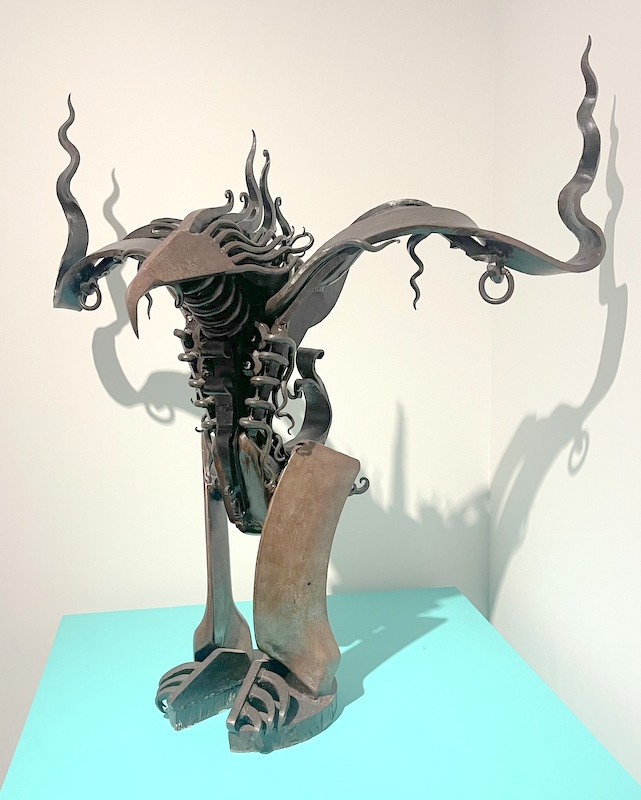
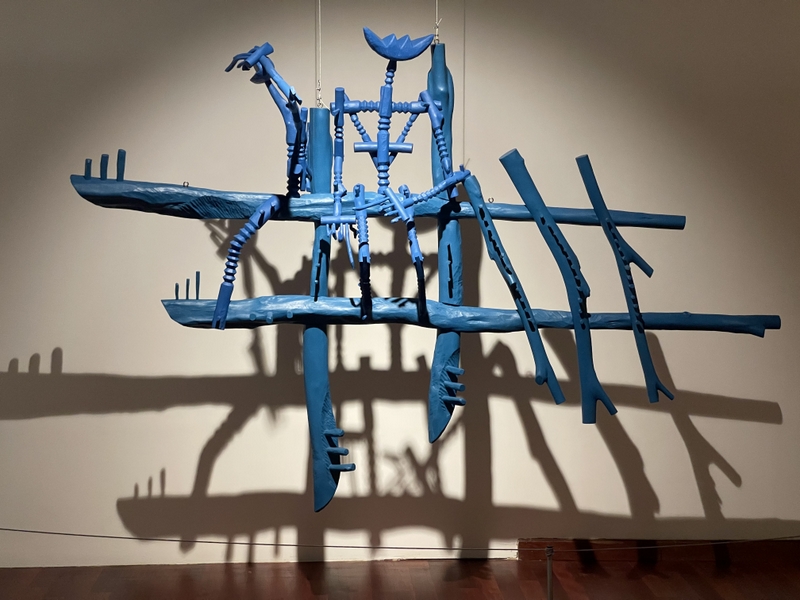
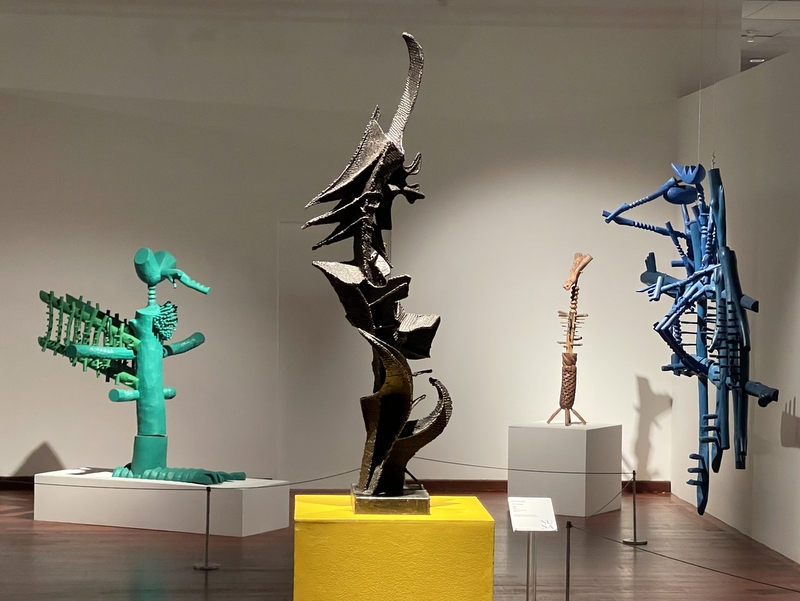
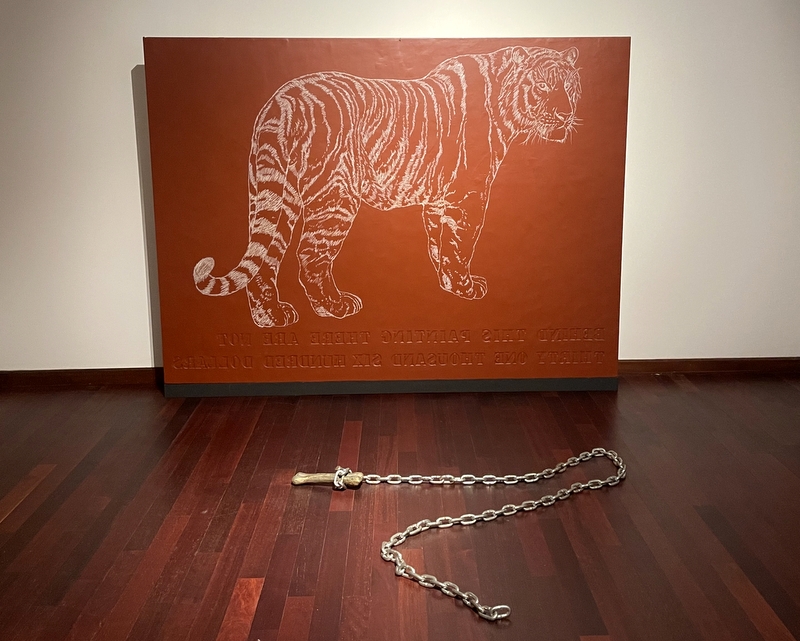
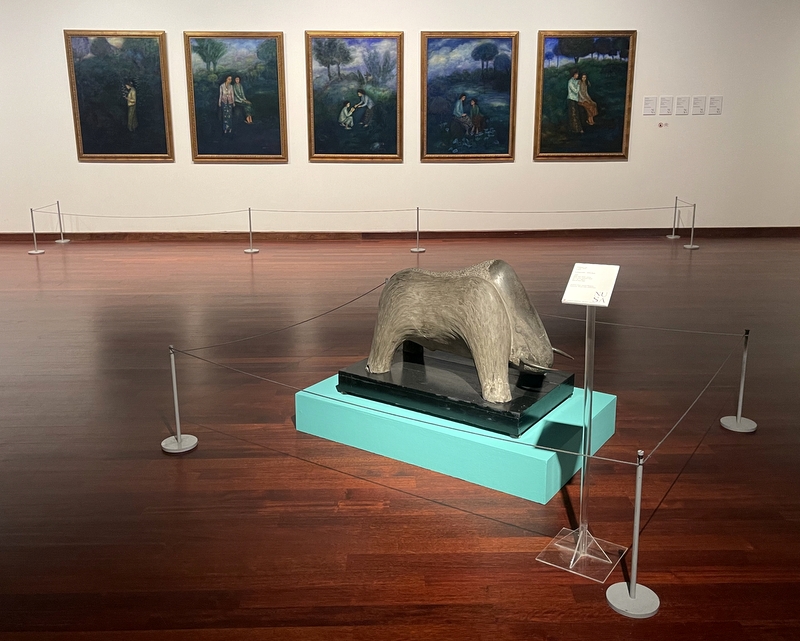
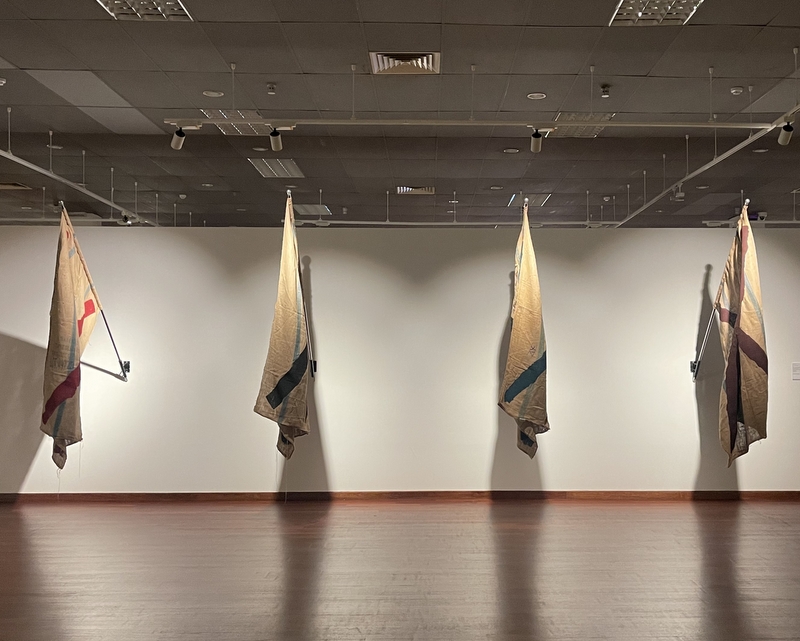
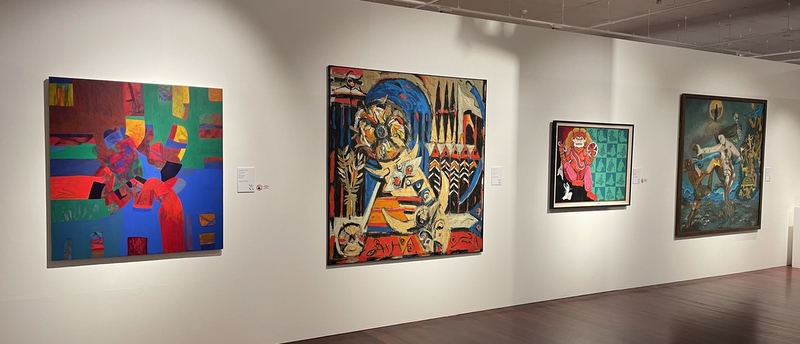
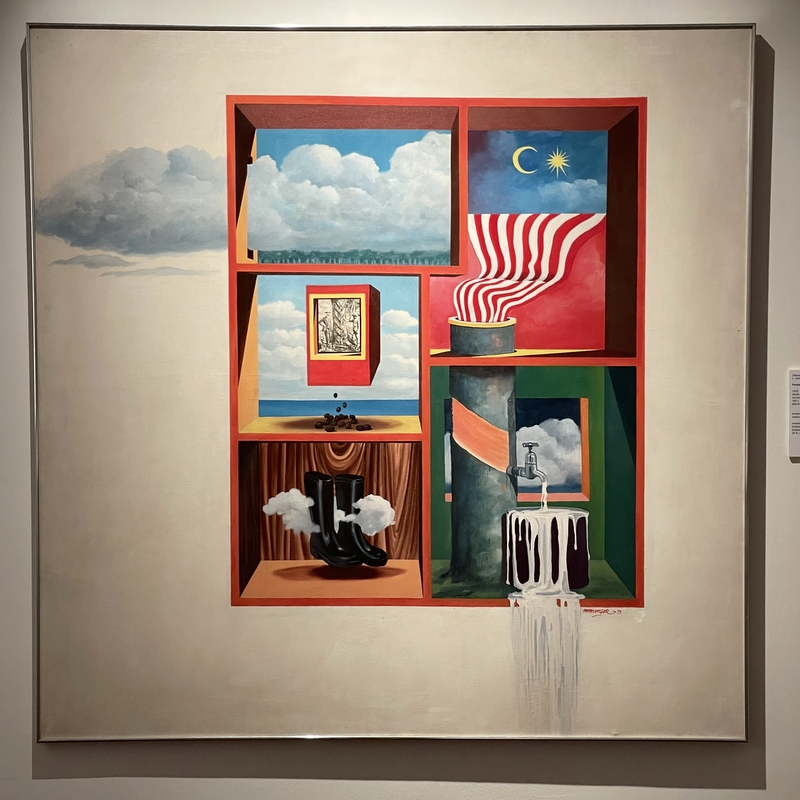
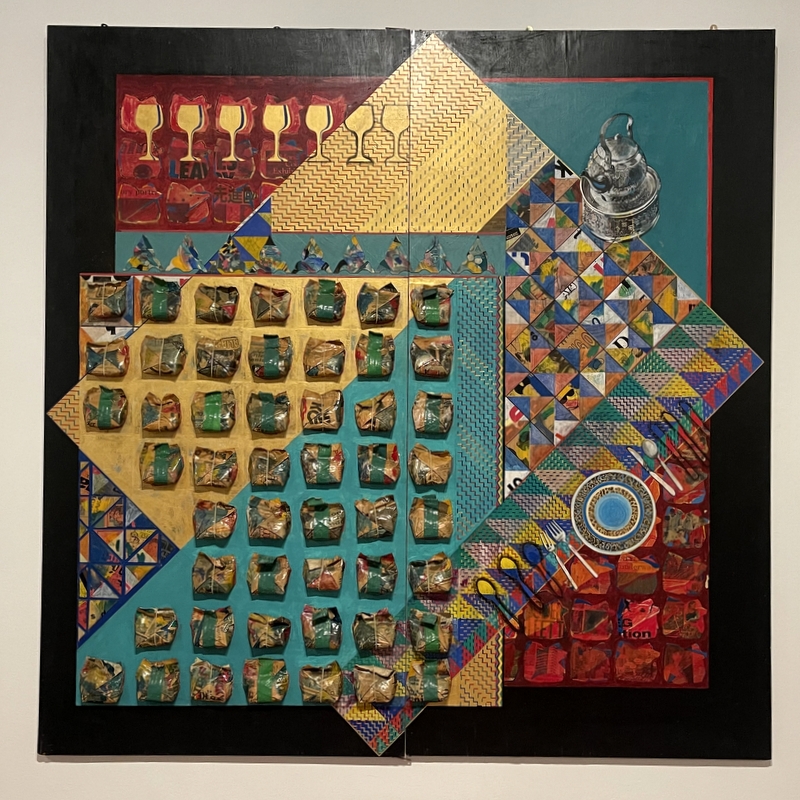
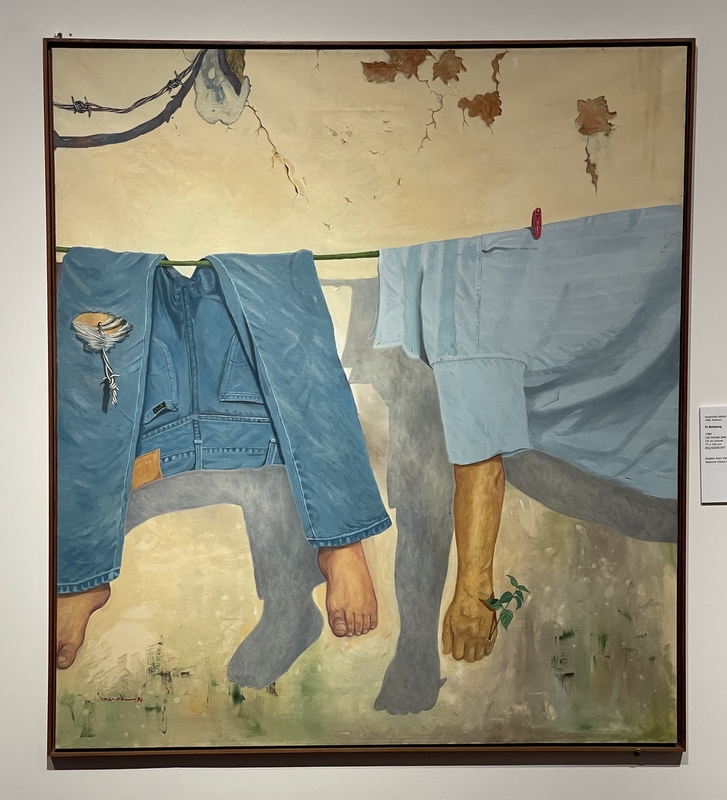
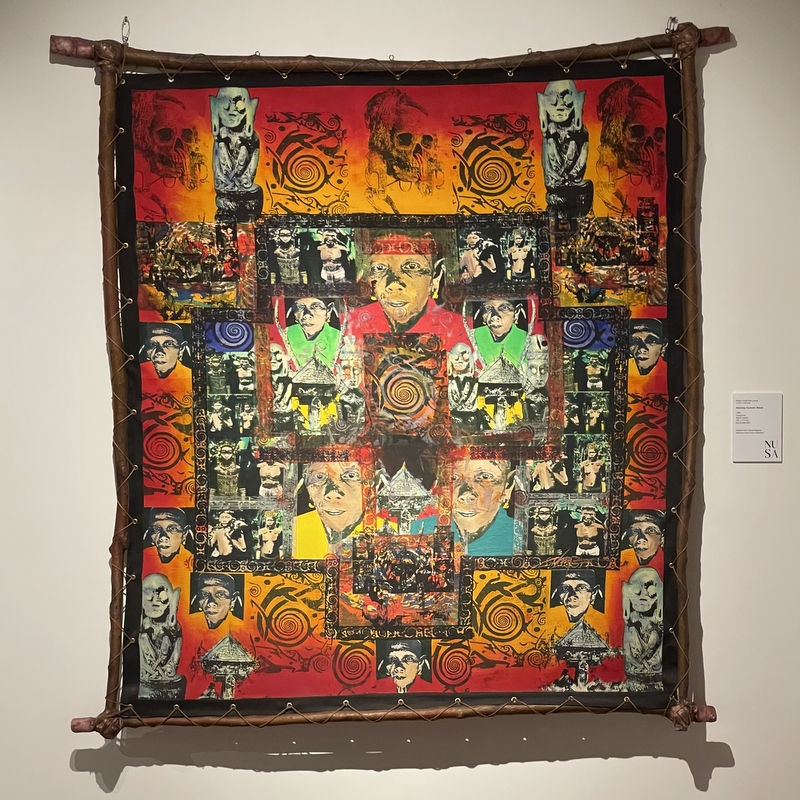
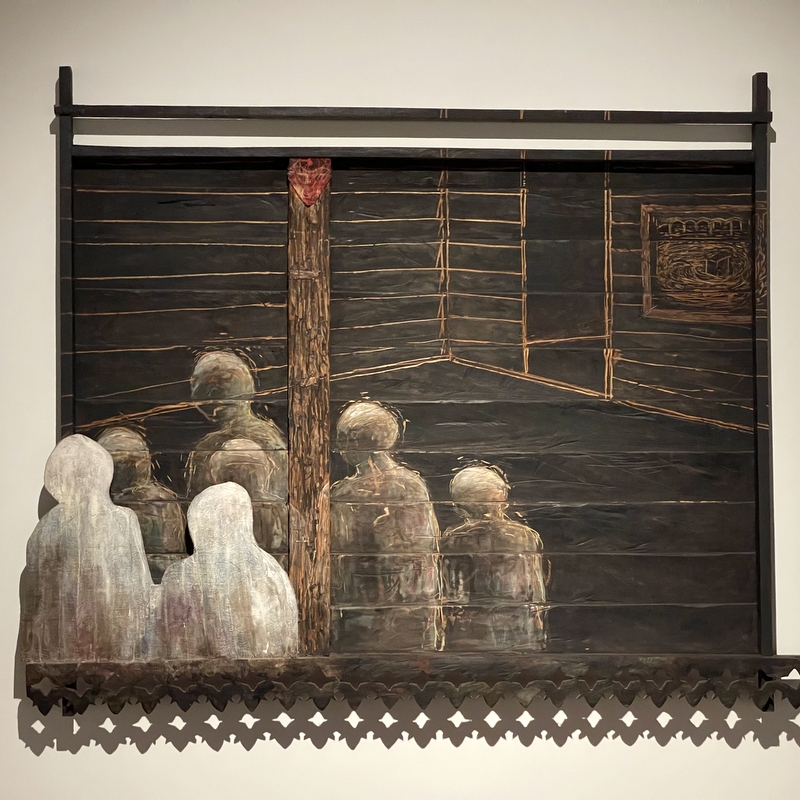
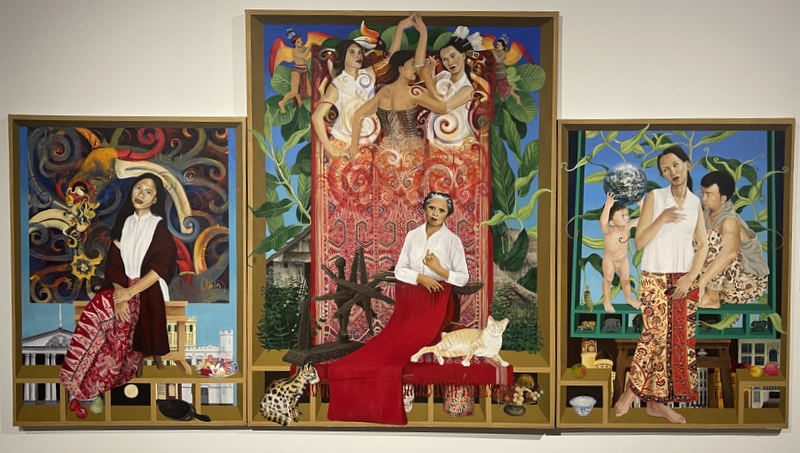
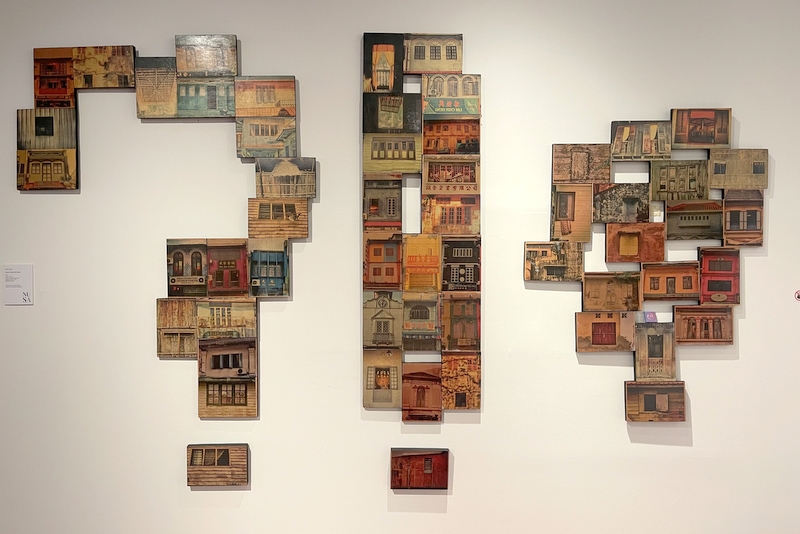
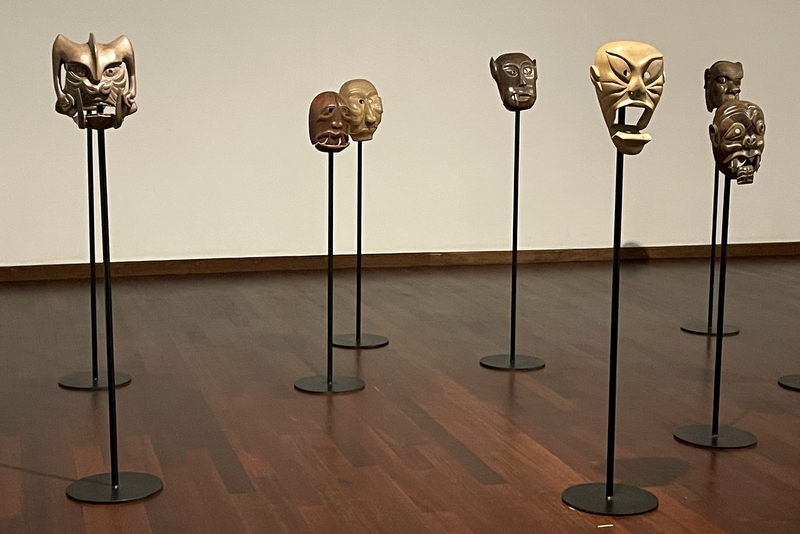
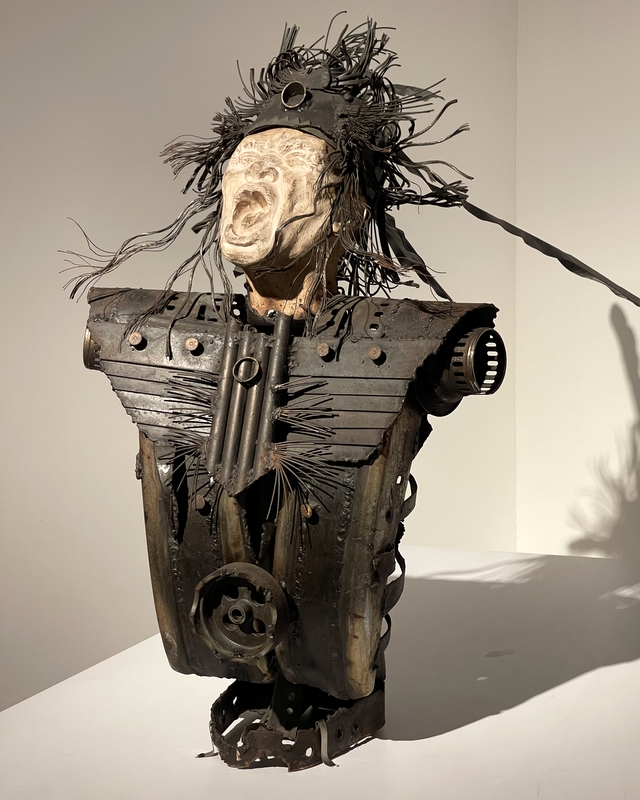
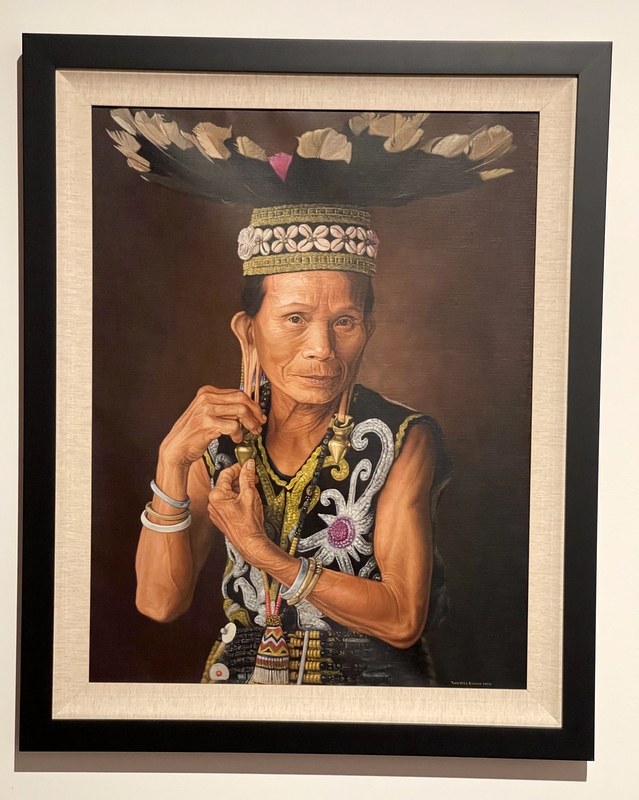
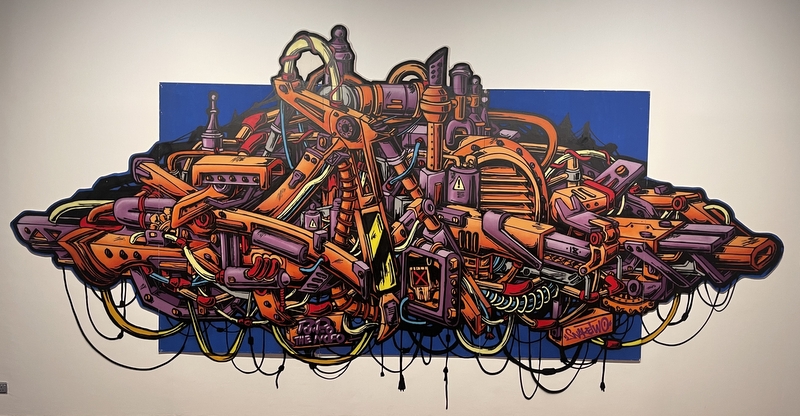
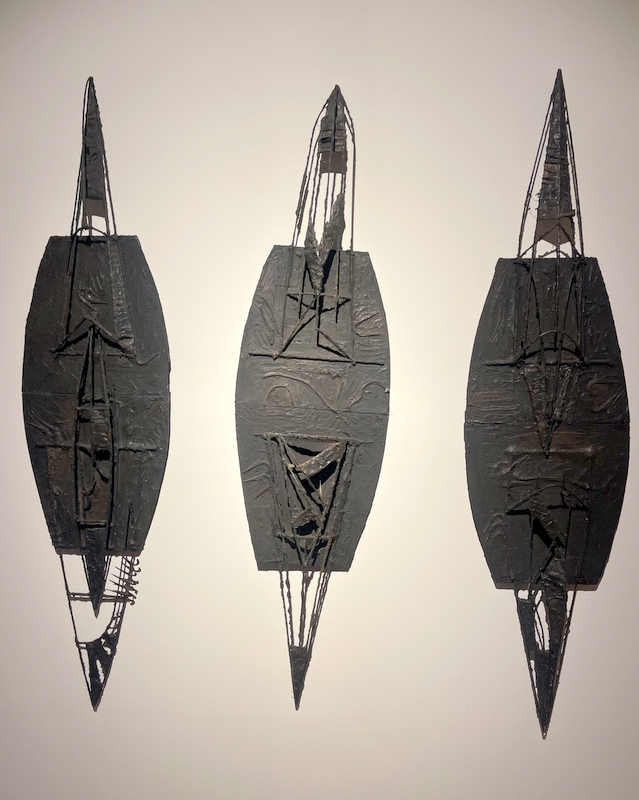
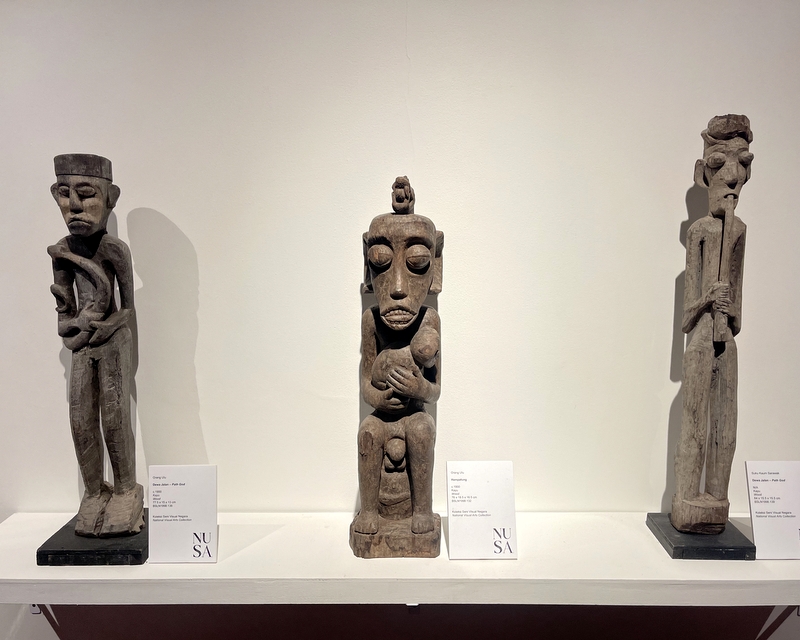
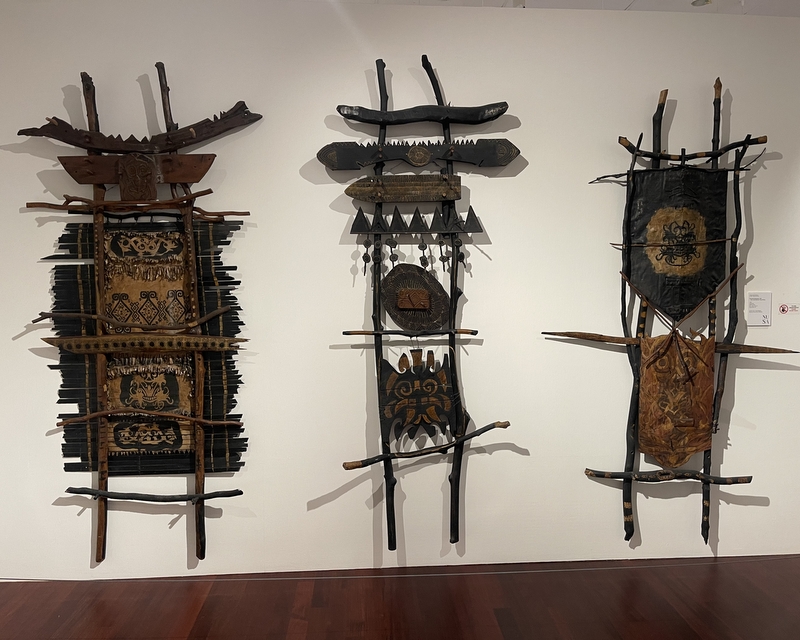
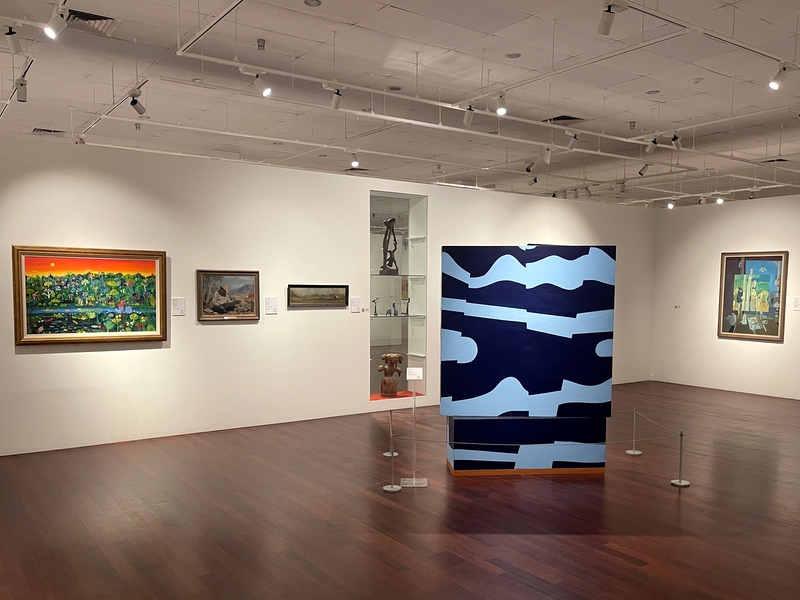
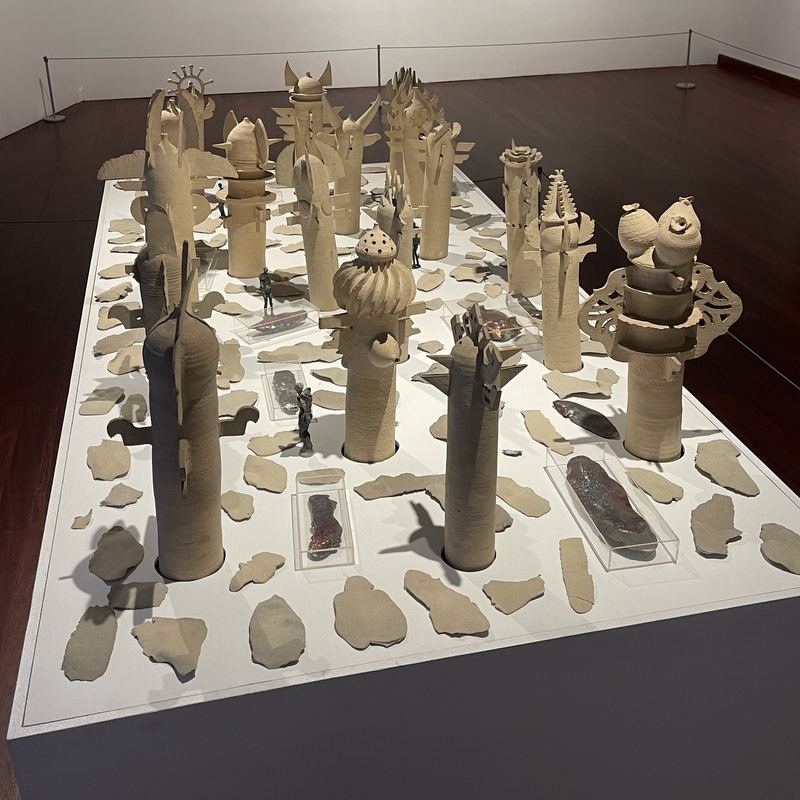
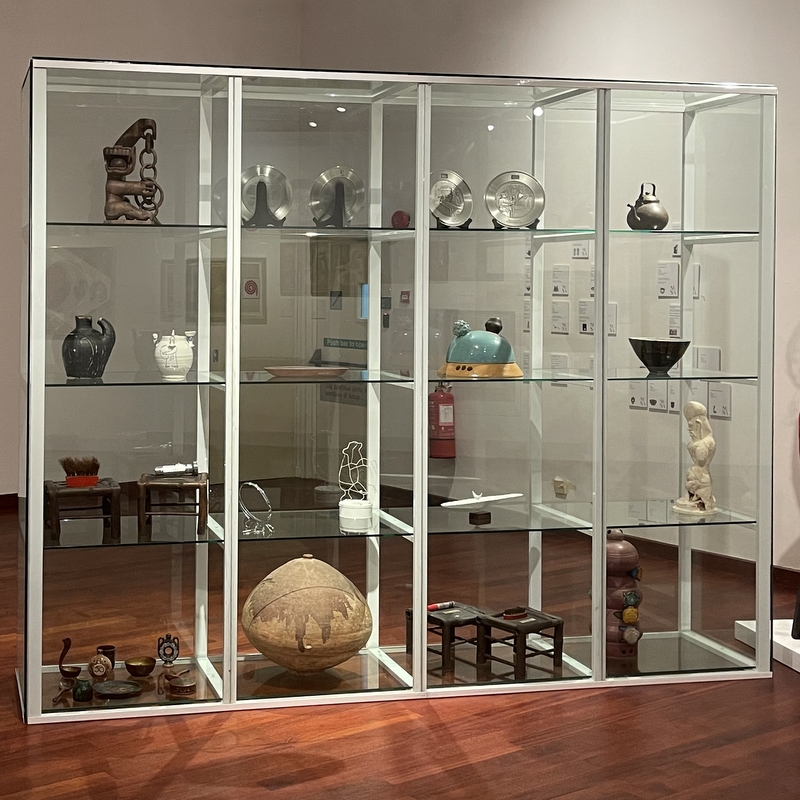
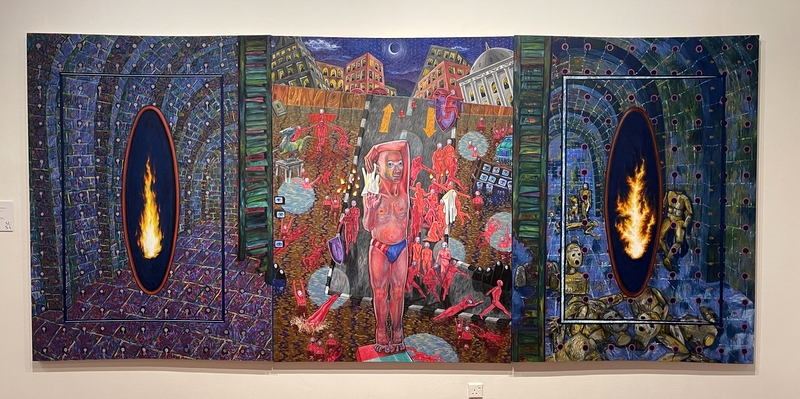
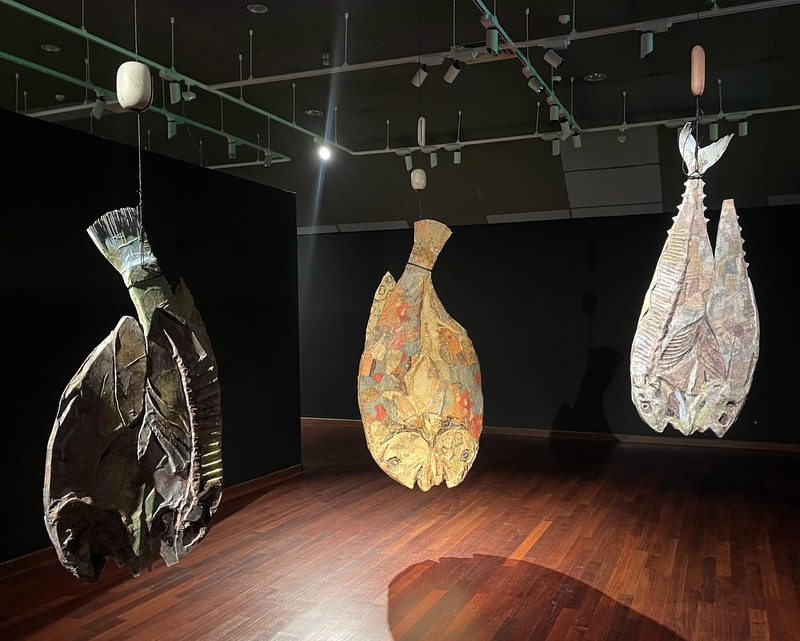
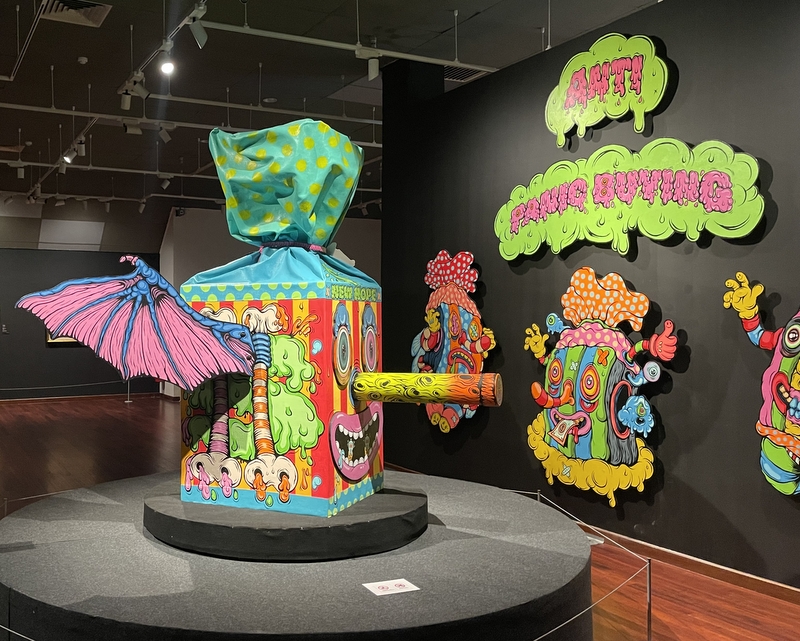
For George it was the main reason to visit the museum. I also stayed for a while, but then started to explore the other exhibition halls. I didn’t expect too much, but it became a pleasant surprise. A vibrant collection, full of contrasts, mostly work of local artists. A large variety of styles. The following is a personal selection of the artworks that appealed to me.
Traditional paintings.
Modern ones.
Using language.
Contrasts.
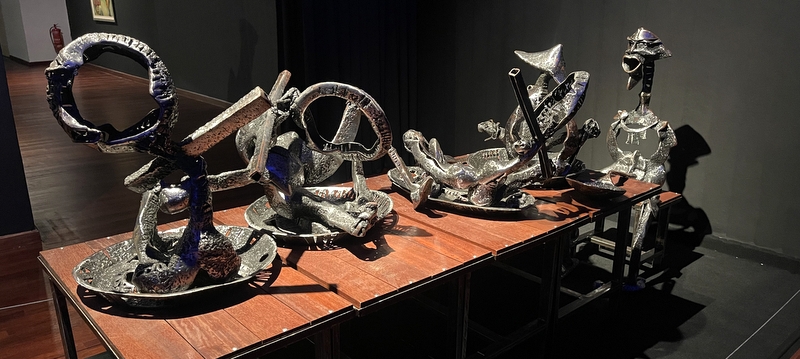
Also many sculptures.
It was really a pleasure to walk around. I kept taking pictures.
Here is a collection of paintings with their date of creation.
197519911994199519962009
Some artworks are huge.
Never boring.
Interesting collection of art from Sarawak and Sabah
`
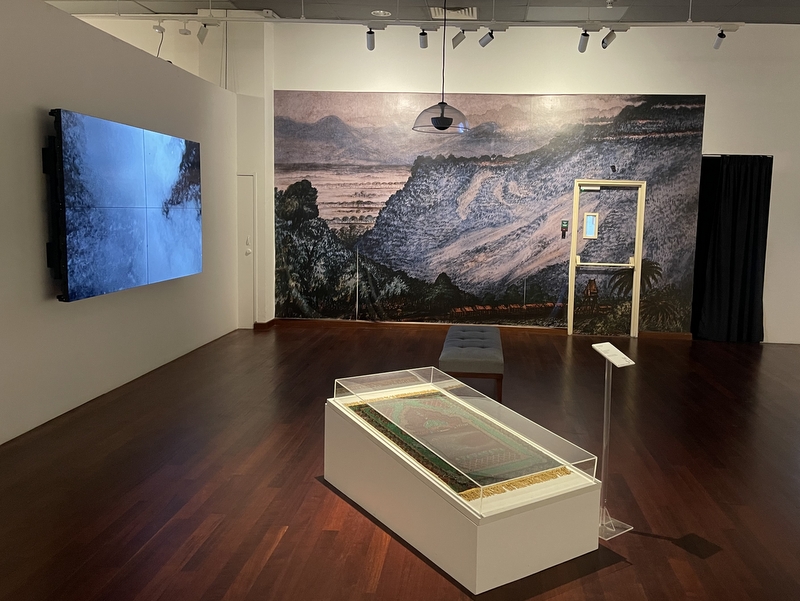
The museum uses the modern approach of combining different art forms in a hall
Another big painting, (208 x 460 cm) The Soul Under Midnight (1996) by Tan Chin Khuan .
On the top floor there was an exhibition of “Art and Gastronomy”
When we left the museum, the weather had changed, it would start to rain soon.
Left the National Art Gallery, right another photo of the Istana Budaya. Nice contrast with the dark sky.
Heavy rain on my way back.
A very interesting outing. Will come back to the museum for another visit.
On 22 November there will be a general election in the Netherlands for the Tweede Kamer (the House of Representatives) after the PM and his cabinet resigned in July due to disagreement about migration policy. Lots of information can be found here.
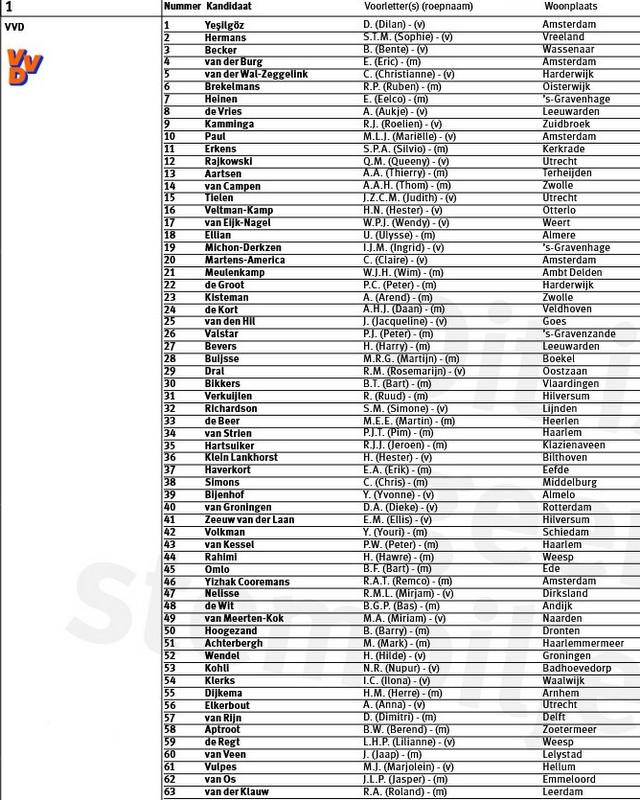
I don’t live in the Netherlands , but I am still registered as a “voter abroad“. I receive the voting forms by regular mail and email. Left is the voting form, as you see we have a crazy number (25!) of political parties. Right the list of candidates for one of the parties. To vote you mark the party of your choice, and in the lower part the number of the candidate of your choice.
Voting is anonymous, this is how it works for postal voting. By regular mail I received several weeks ago two envelopes, one white, one orange. The voting form goes into the white envelope, which then is sealed. You sign a consent form, make a photocopy of your passport and put them together with the white envelope in the orange outer envelope. You can send this envelope by regular mail to the Hague, where the polling center for voters abroad is located. But I prefer the option to deliver the document myself at the embassy.
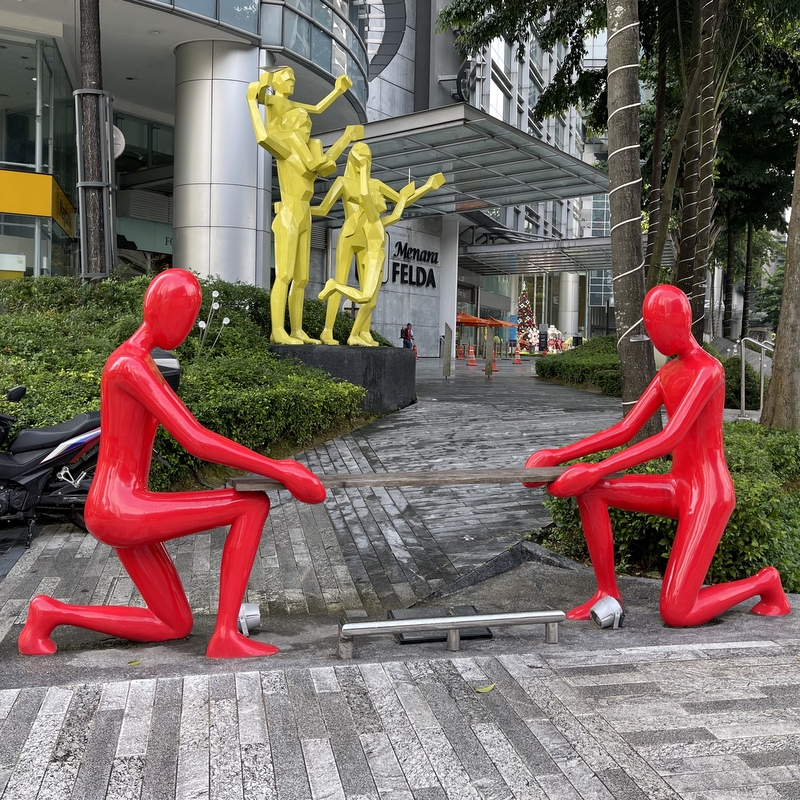
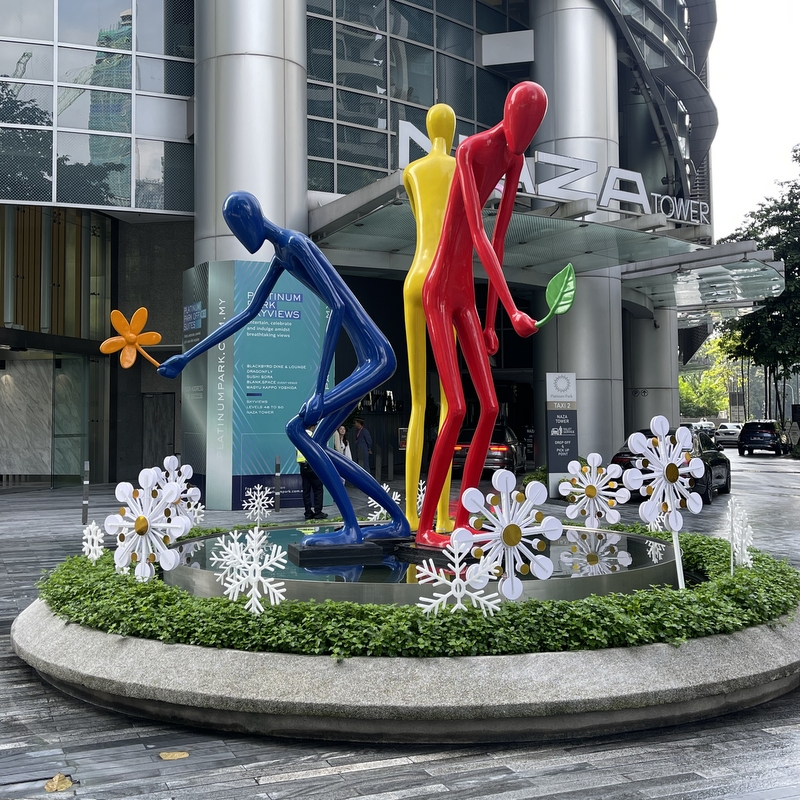
The consular section of the Dutch embassy is located on the 12th floor of the modern Naza tower. I traveled by public transport (MRT and LRT) to KLCC, from where I walked the last part. Lot of construction going on in that region. Nice modern sculptures, the right one is in front of the Naza tower
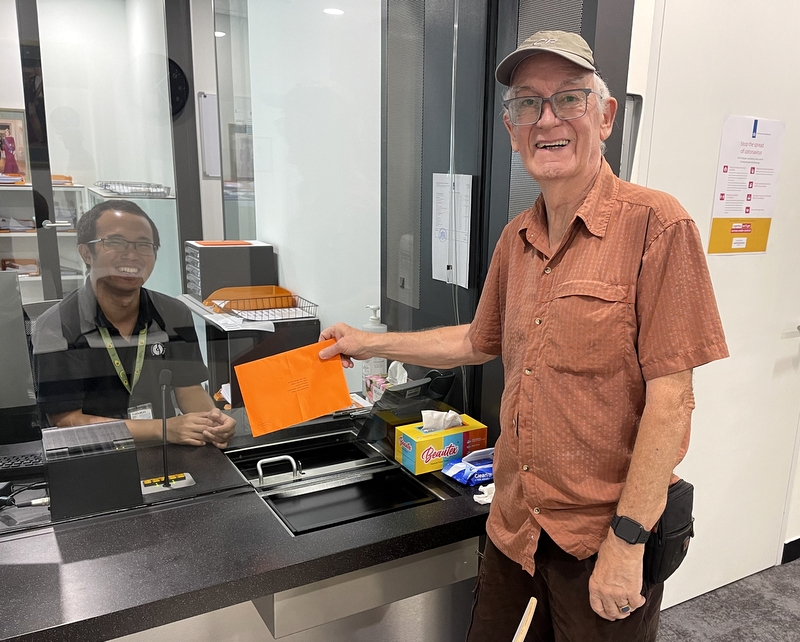
Normal procedure is to make an appointment with the embassy, where you get a date and a timeslot. But in this case there is no need, as I only wanted to hand over the envelope. The security asked, is it for voting, and when I confirmed, gave me an access card for the elevator. I was in and out in ten minutes 😉 Left the envelope as I had prepared it at home, right the moment that I hand it over to the smiling embassy guy.
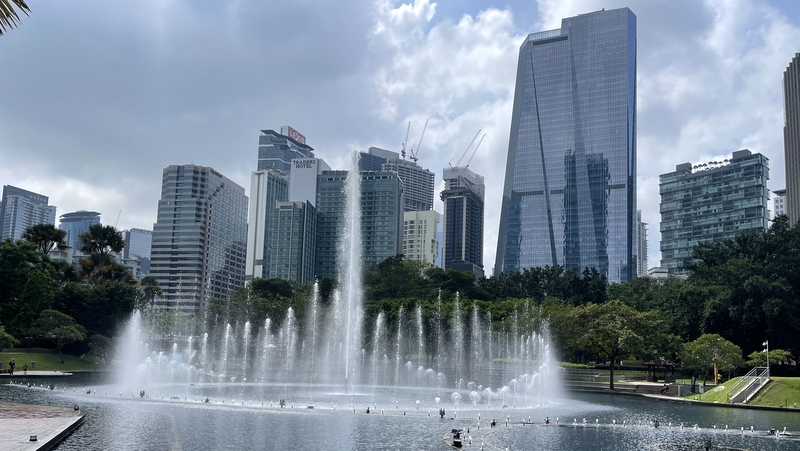
I walked back through the KLCC park,
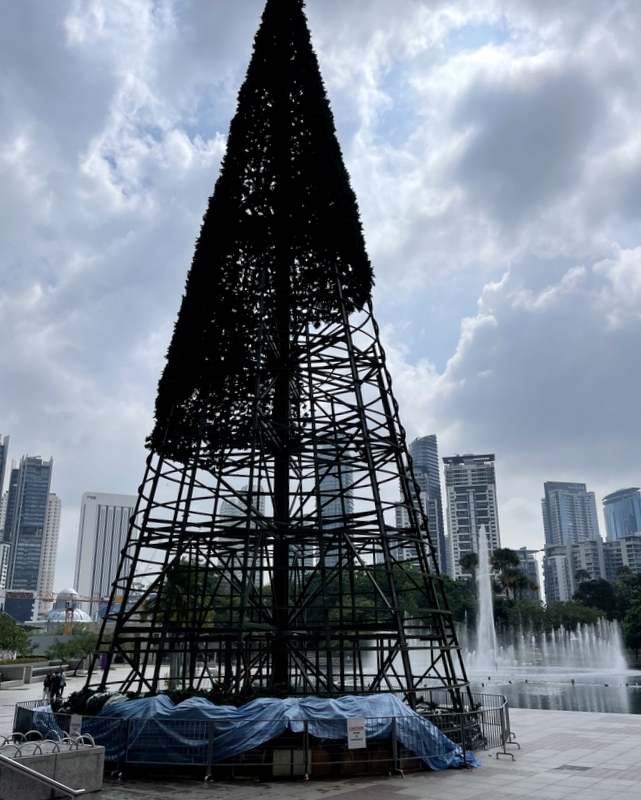
Construction of the huge (but fake) Christmas tree was already in progress. But inside KLCC it was still Deepavali mood. Beautiful decorations.
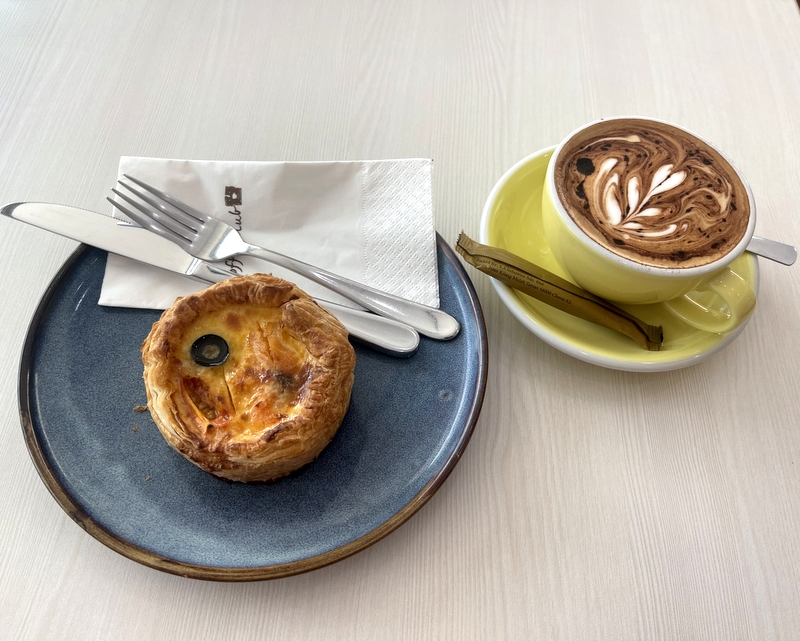
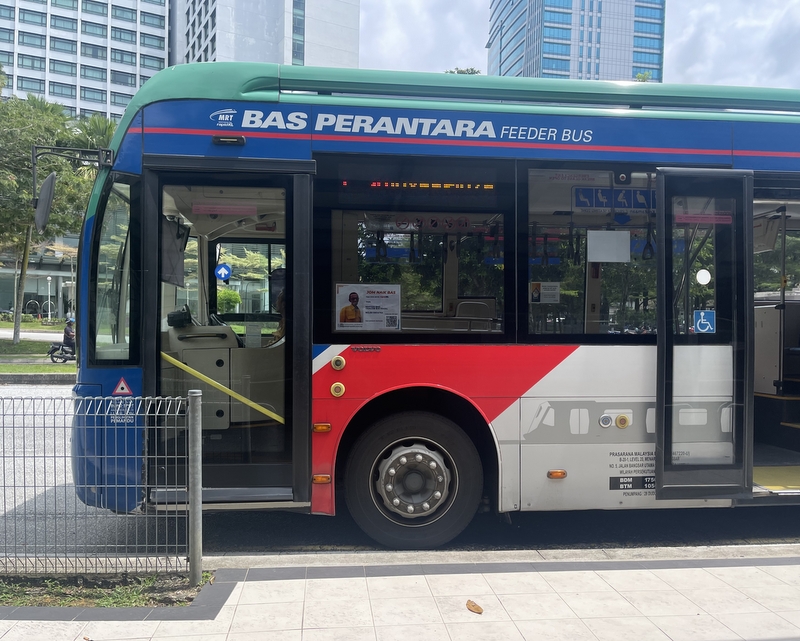
I decided to have a coffee and a snack at my favourite (but very expensive) Kinokuniya coffee shop. Then it was time to go back home. Same way, from KLCC I took the LRT to Pasar Seni, where I changed to the MRT to Damansara Mutiara. I was lucky, the feeder bus to Damansara Perdana was already waiting. Mission accomplished.
I will write an appendix to this post when the results of the election are out. in about one week time. Then I will also reveal which party I voted for 😉
————– Appendix —————-
.I wrote “in about one week time“, but it is now more than two weeks after the election The results have shocked me.
The Tweede Kamer (House of Representatives) has 150 Seats. Fifteen parties managed to win seats. For a majority government you need a coalition with more than 75 seats. Here are the results for parties with at least 5 seats, here is the full list. The table has Wikipedia links to a party and its leader, the percentage of votes and the number of seats. For comparison I also give the number of seats after the 2021 election. More about the last column below.
The shock is the unexpectedly large vote gain of the far right-wing PVV, led by the xenophobic and Islamophobic populist Geert Wilders, sometimes nicknamed the Dutch Trump. I voted for the left-wing GL/PvdA party, who also won, but not enough. The last column shows the voting percentages of the postal voters (abroad). Notice the dramatic differences. If “we expats” had to form a government, it would quite possibly be a coalition of left-wing GL/PvdA with left-center D66 and center-right NSC, Together more than 50% of the (postal) votes.
But of course that is wishful thinking. Our new government will probably be a right-wing one of ultra-right PVV, center-right VVD, center-right NSC and center BBB. But first many obstacles have to be removed. Several of the PVV’s positions are unconstitutional, such as banning Islamic schools, forbidding Qurans and not allowing Muslim immigrants to enter the country.
Personally I find it very difficult to accept that Wilders might become the next Prime Minister. We will wait and see.
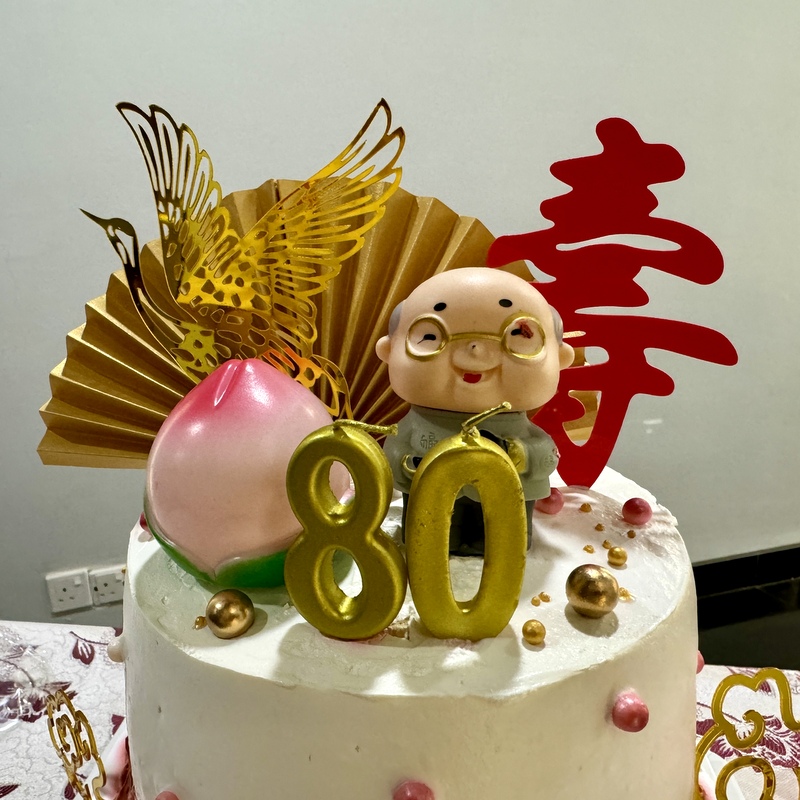
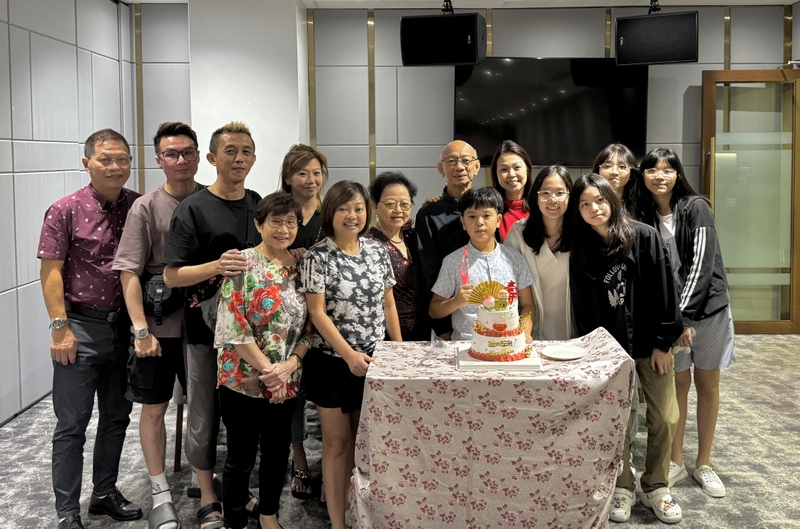
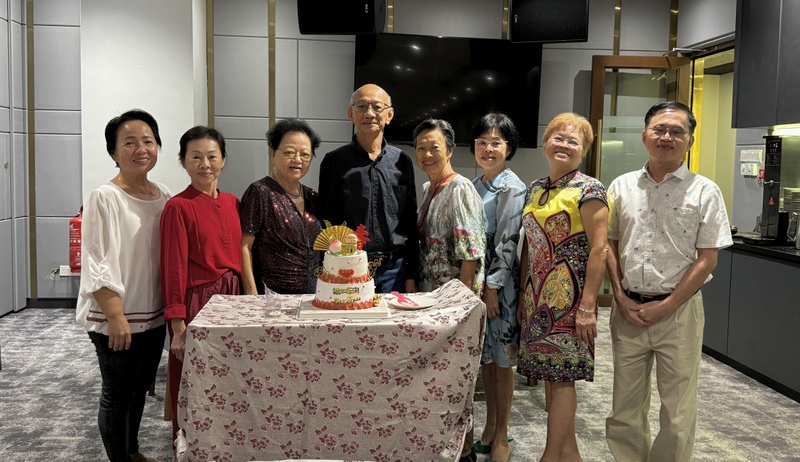
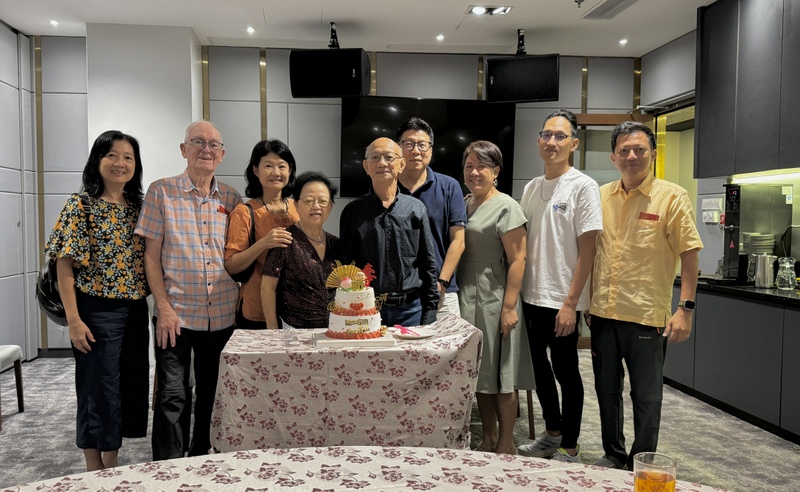
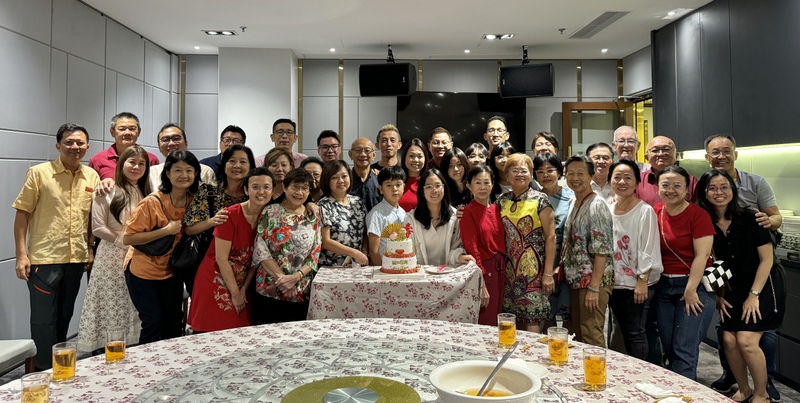
On Sunday 3 December there were two major events in Aric’s family. His maternal uncle, David, who lives in Singapore, had come to Malaysia to celebrate his 80th birthday. He had invited the family for a birthday lunch. And the youngest daughter of Aric’s paternal uncle no 6 was going to get married and we were invited for the wedding dinner on Sunday evening. How to survive two sumptuous meals on one day?
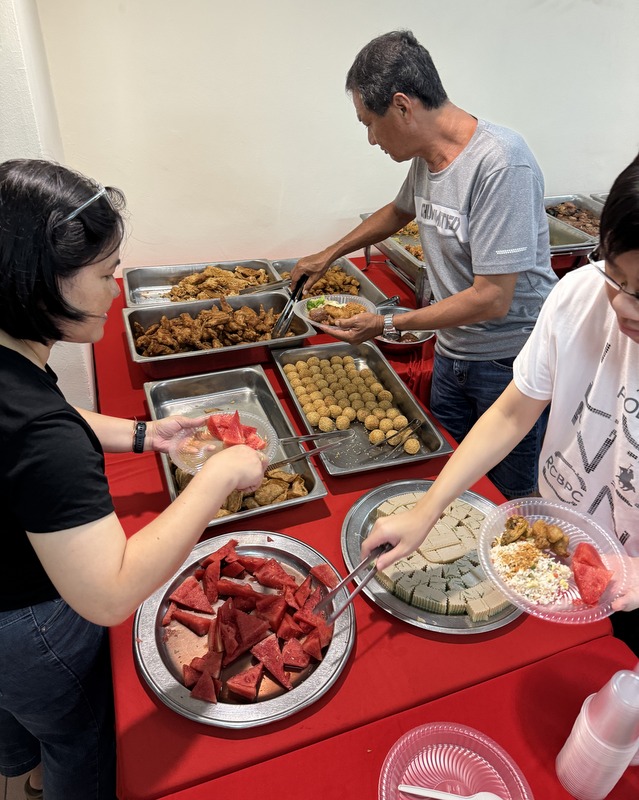
The weekend started on Saturday evening with a pre-wedding party in Cheras where Aric’s uncle lives. Buffet style. It was a pleasant evening. As usual, I was the only Kwai Loh in the group, but by now I know most of the family members.
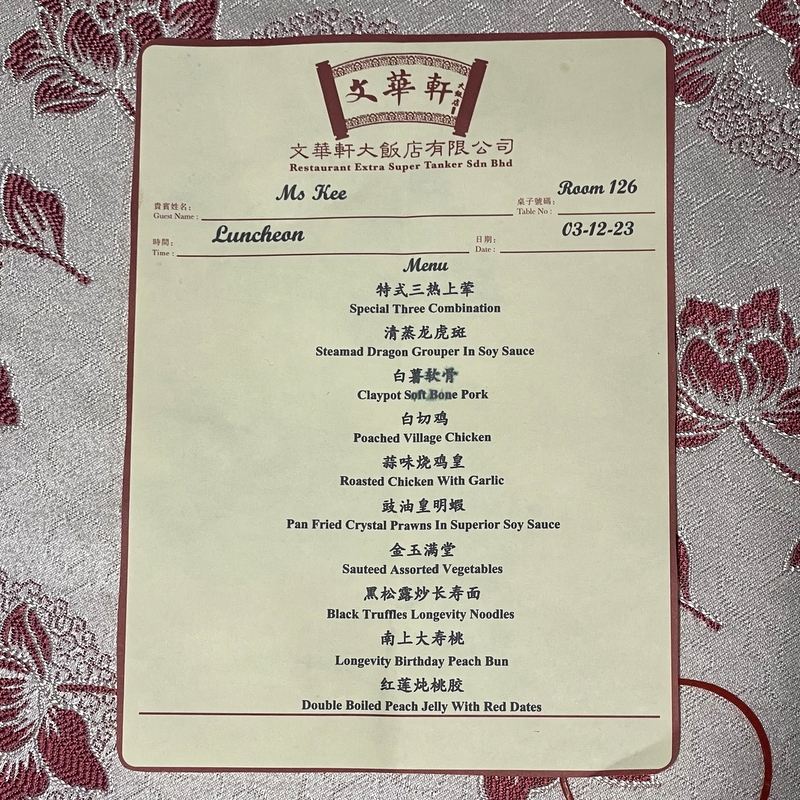
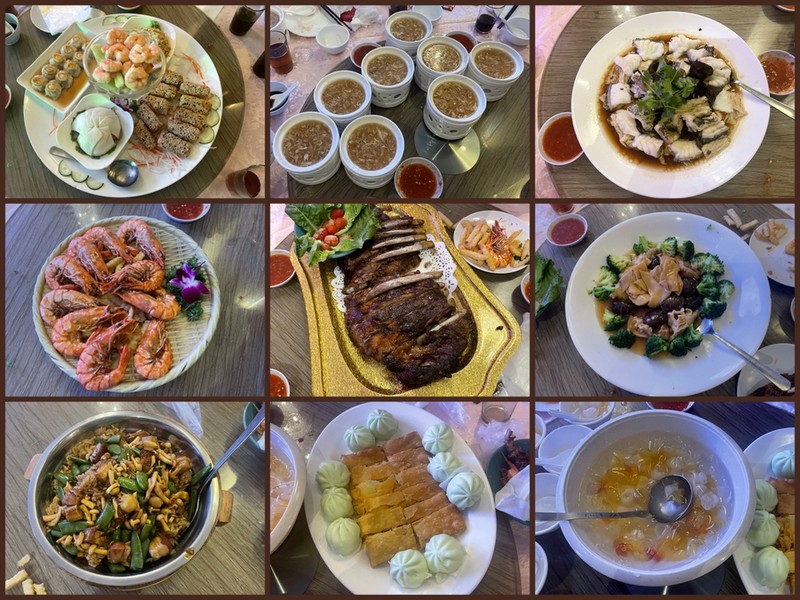
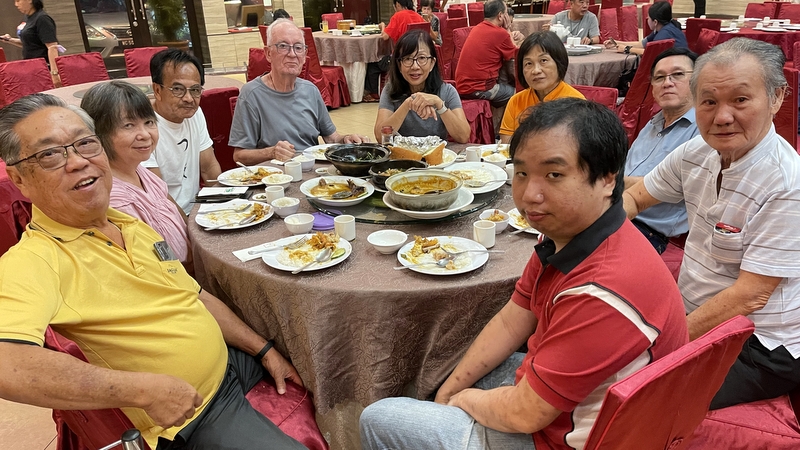
The birthday lunch took place in the Tropicana Garden Mall. Four tables. Sumptuous is an apt description of the lunch. Look at the menu, ten (!) dishes .
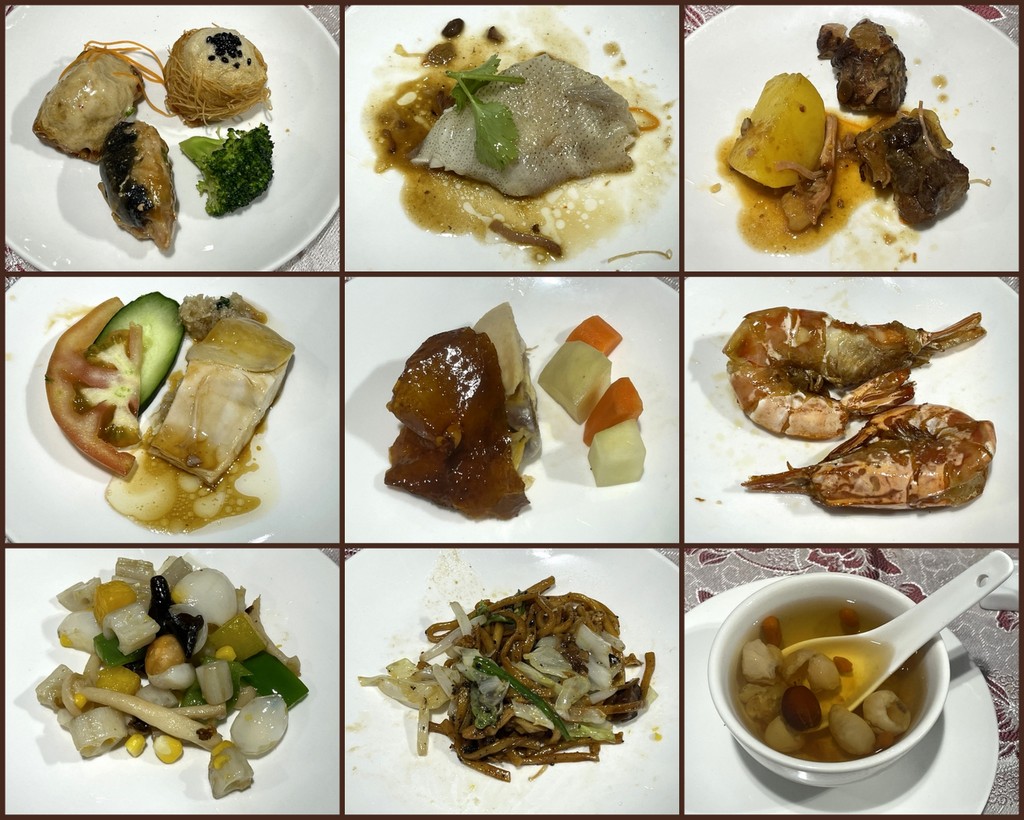
To survive, I decided to take only minuscule portions of the various dishes. And I also refused to have any alcohol, telling that I don’t drink before 6 pm, which actually is generally true 😉 . In the food collage only the Longevity Birthday Peach Bun is missing.
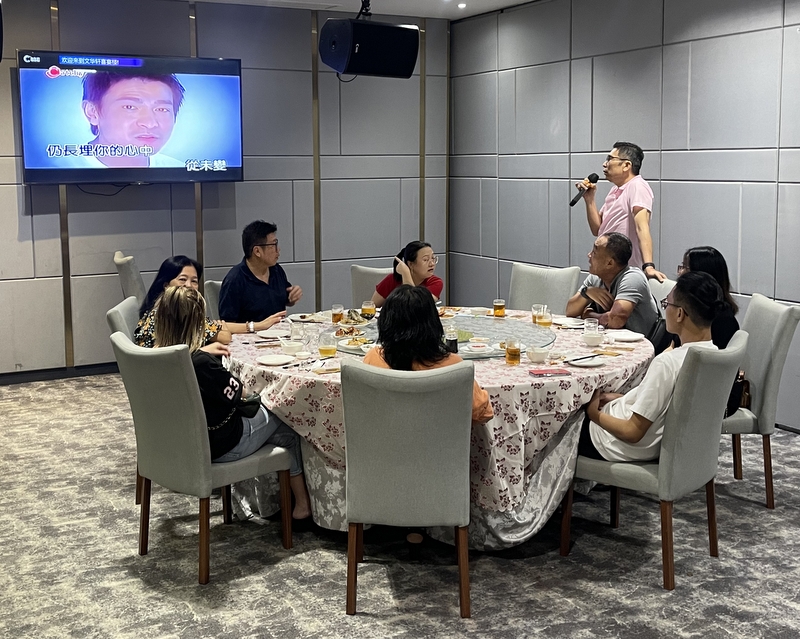
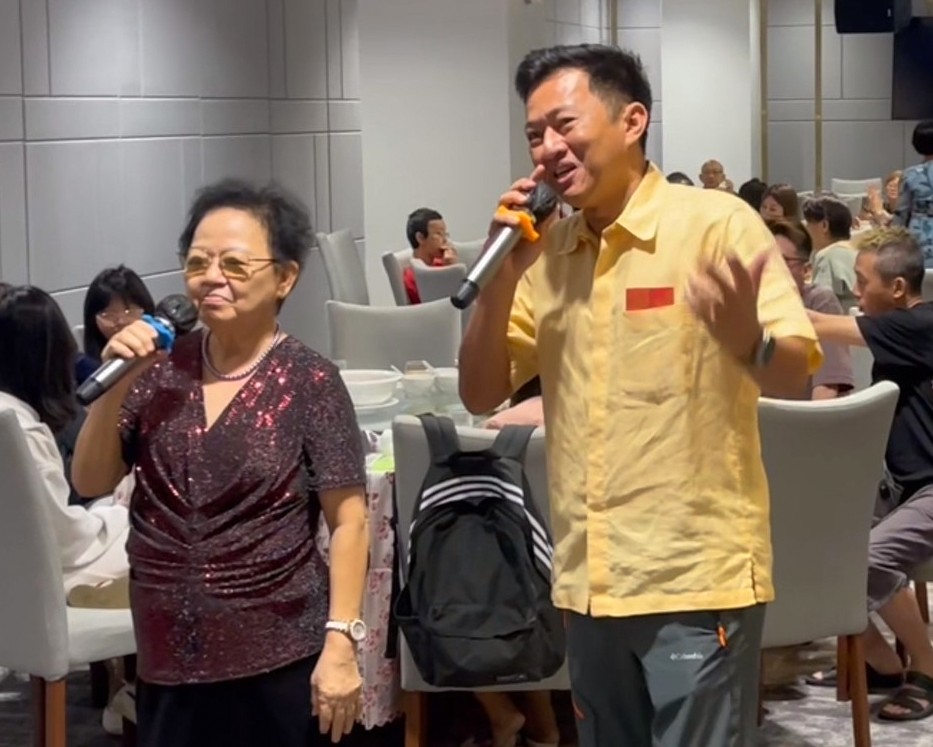
There was karaoke singing. Aric is a good singer, but rarely sings nowadays. I recorded his song, but he doesn’t allow me to share it here. Pity, click here for the original song, it was a popular 1959 movie, The Kingdom and the Beauty.
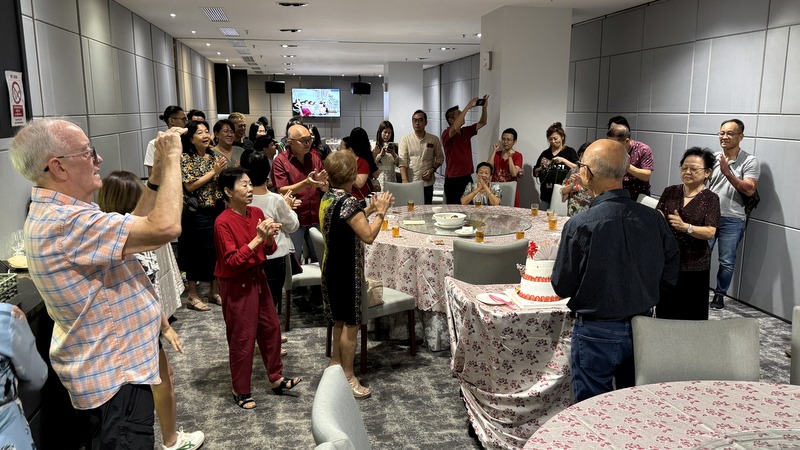
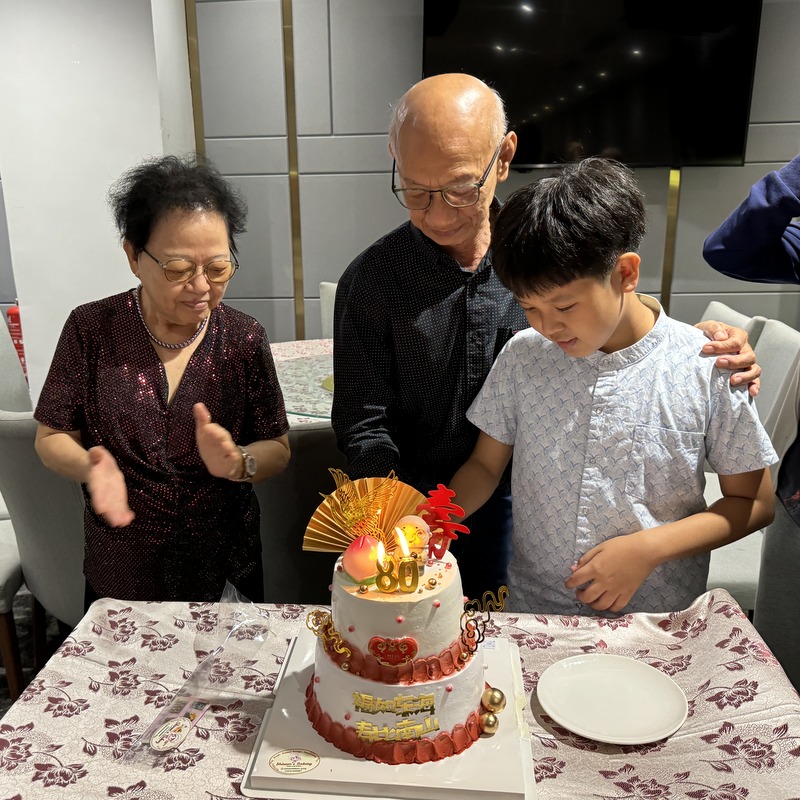
Of course there was a birthday cake and the singing of Happy Birthday To You.
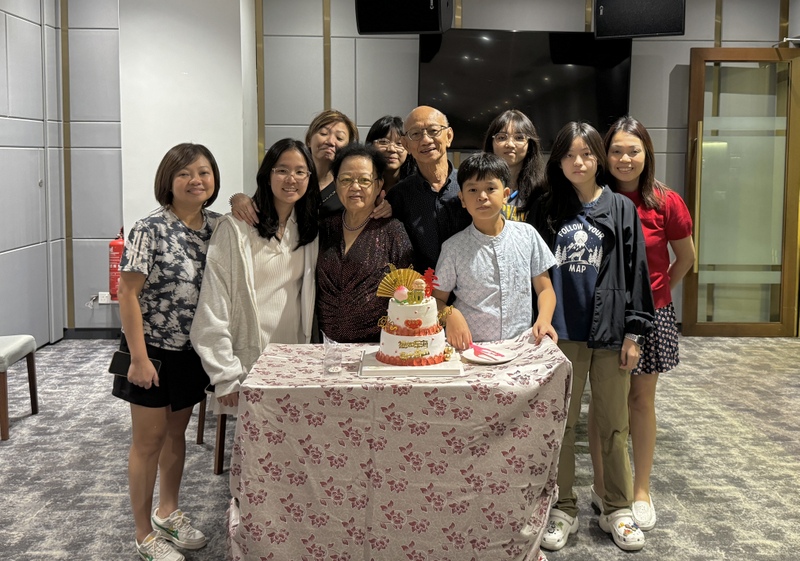
David in the center with various combinations of family, relatives and friends.
And the usual group photo.
Then finally the cake was cut. A very nice birthday celebration
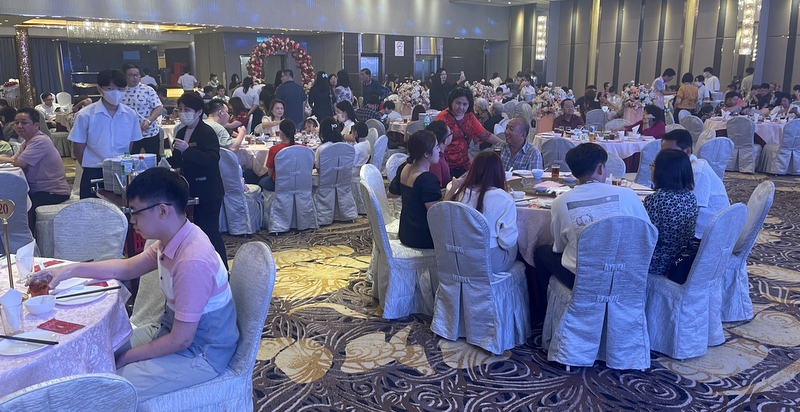
We came home and had a few hours to rest and recover before we went out again to the Hee Lai Ton Ballroom & Restaurant in Puchong. The wedding dinner took place in a big hall on the first floor, twenty tables.
Left the parents of the bride, right the entrance of the couple.
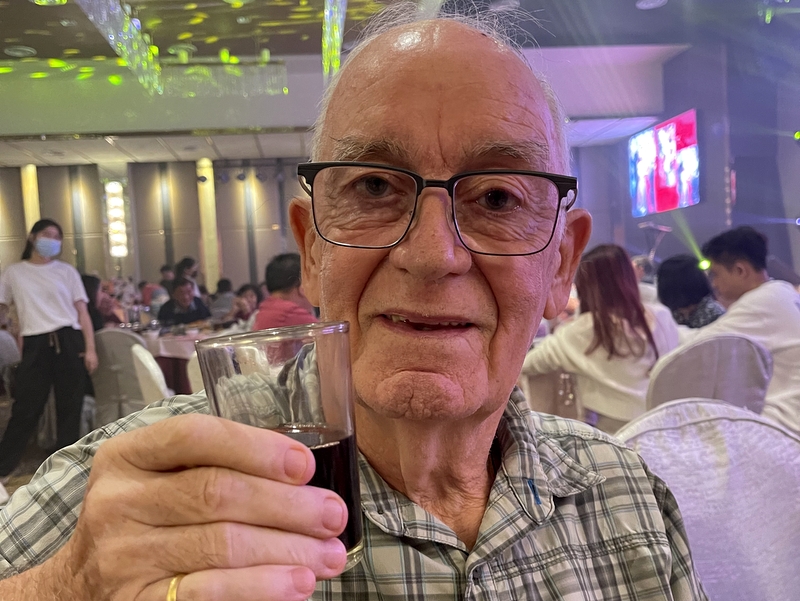
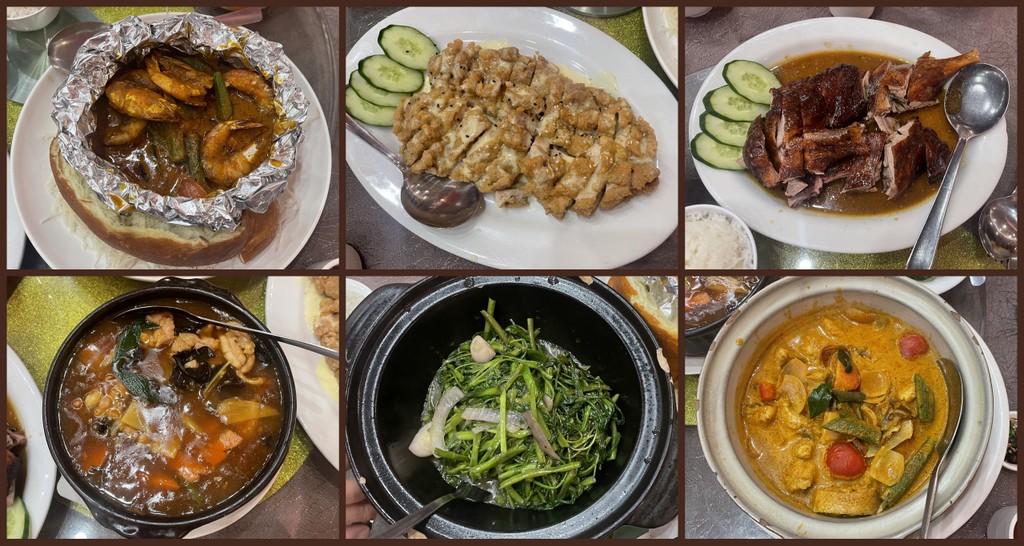
The food was delicious. but again I took only very small portions. And as it was after 6 pm, I had a few glasses of wine. This time I took picture of the dishes, not of what I put on my plate.
It was a pleasant , traditional gathering with a lot of Yam Seng toasting.
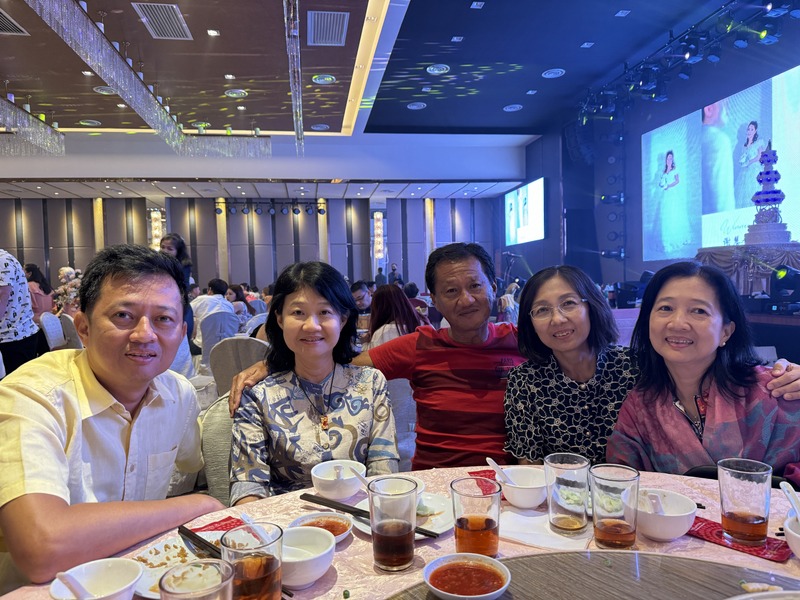
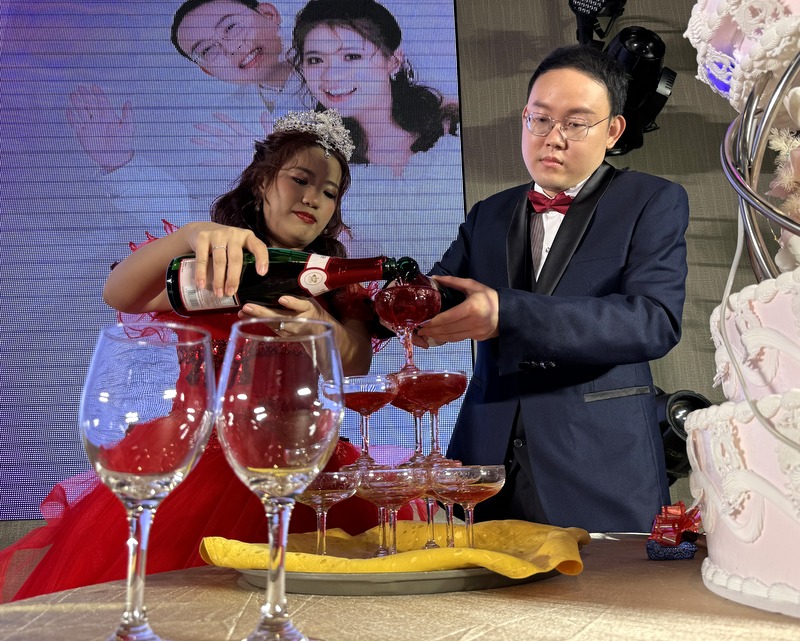
Here we are posing with bride and groom. One of the traditions is that the groom has to uncork a bottle of sparkling wine. A modern element was that here both bride and groom uncorked a bottle 😉
After filling the glasses they call the close relatives to the stage for a toast. That is basically the end of the dinner.
It was the end of a busy food-filled Sunday. But not yet the end of the weekend. David and his family had come from Singapore to Malaysia for the birthday celebration, but were also eager to have a look at our new penthouse. So we invited them for a get together on Monday evening. We had prepared drinks and snack food and they brought even more. It resulted in an animated party with a lot of wine 😉
A group photo at the end of the evening. The next few days we were recovering.
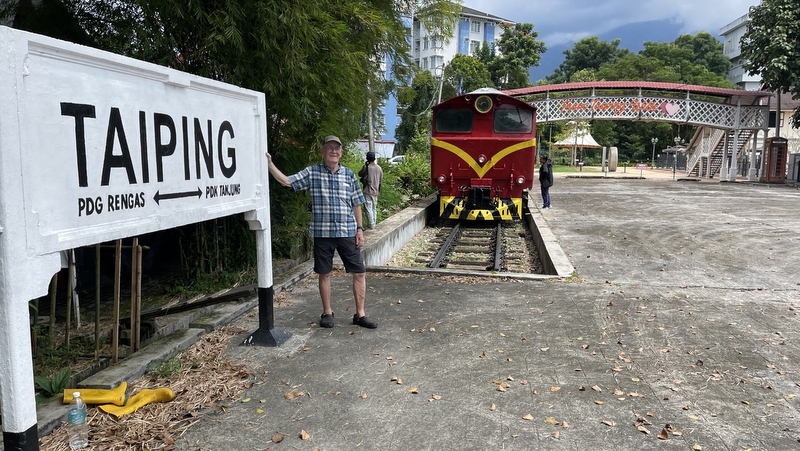
At first i considered calling this post Eat Eat Eat, because during this trip I had three sumptuous dinners with friends. But I also did more than eating, so I kept the title neutral. There were two reasons why I came back to Taiping so soon after my October visit. My friend LIew Suet Fun had [published a new book and I wanted to attend the book launch on 25 November. And Sharen, another friend, born in Taiping but mostly living in Switzerland, had asked me to join her to Taiping and be her “guide” .
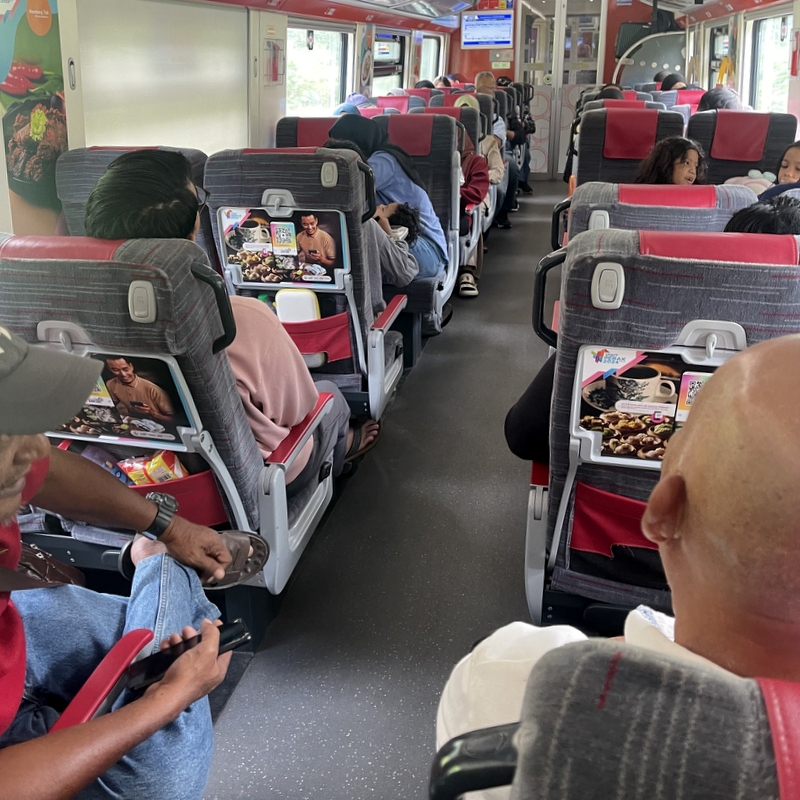
I boarded the ETS not in KL Sentral this time, but in Sg Buloh. First the feeder bus to the Mutiara MRT station, then the MRT to Sg Buloh. For me a much better option. The MRT has now a special section for ladies only. In the ETS I always choose coach C, because the canteen is there 😉
I am very fortunate to have friends in Taiping who are willing to provide transport. Tung Lay Chun and Kar Seng usually pick me up from the station and bring me to my hotel. But first we had lunch, they know many nice eateries. This time they took me to the SSL Traders hotel in Kamunting, where the restaurant had a very affordable lunch promotion.
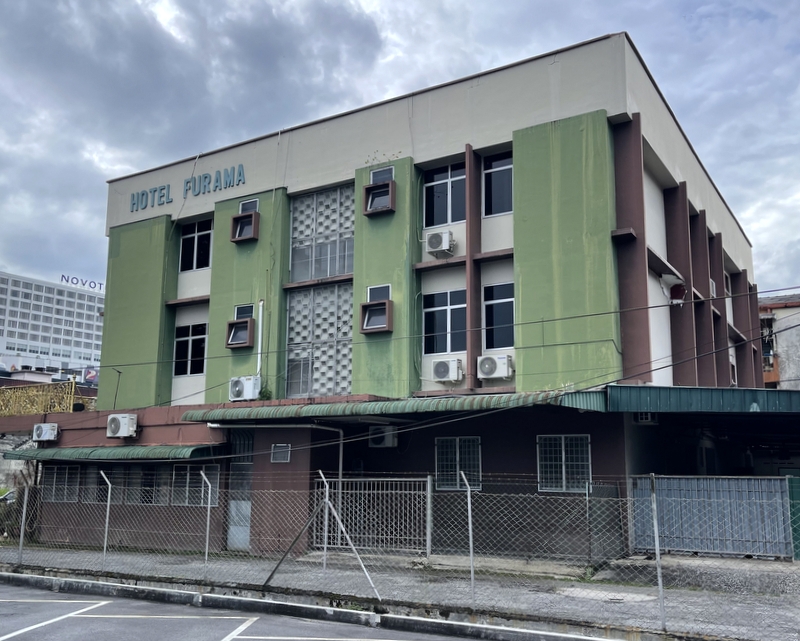
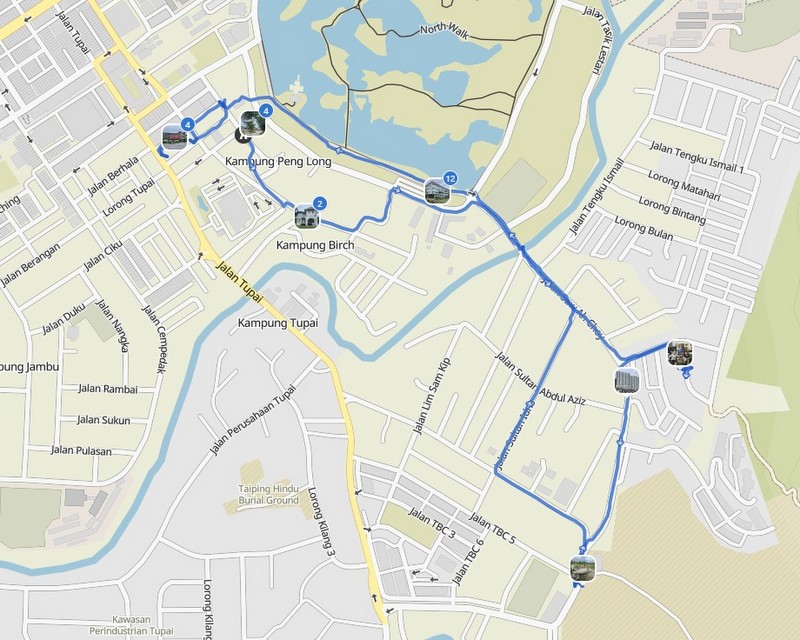
I had booked my usual room 201 in Furama, dropped my luggage there and went out again to visit my friend Goh Keat Soon. During my October visit, we had been looking for old heritage buildings, but shortly after he was admitted in hospital with a heart problem, now discharged and recovering. I decided to walk to his house. When you click on the map you can see the many pictures I took during my walk (no need to sign up or login)
eeeee
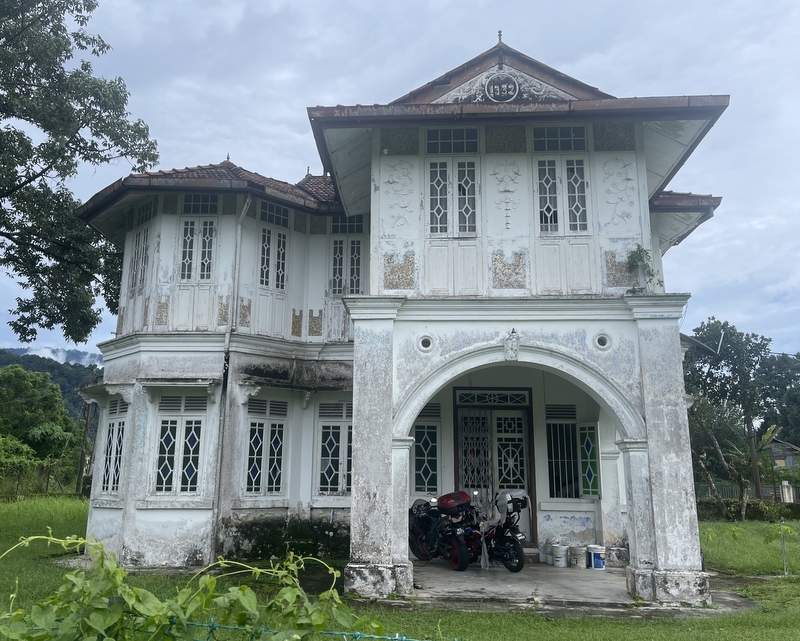
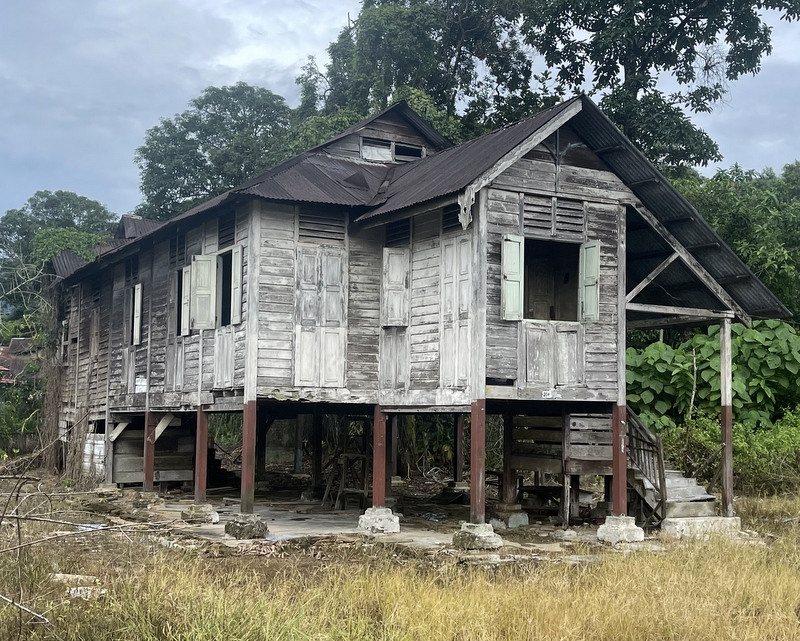
A few old buildings. The left bungalow, built in 1932 is in good condition and still inhabited. I had visited the interior during my August 2020 visit. The right house, in traditional Malay style, looks abandoned and will probably continue to decay . Taiping has many of these houses, and actually they are for me a big part of Taiping’s charm.
It was nice to meet Goh and his wife
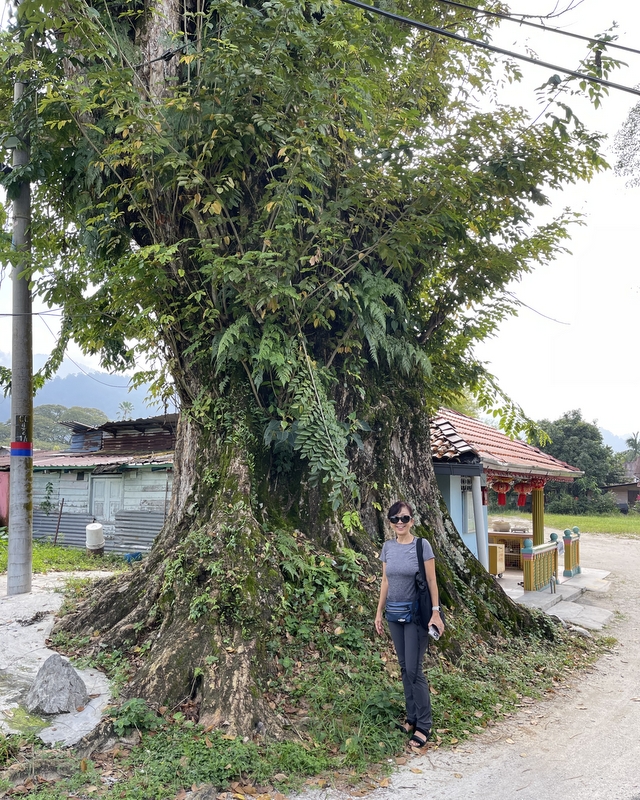
On my way back I followed the Raintree Walk. As I took a wrong turn, the total walk was almost 5 k.
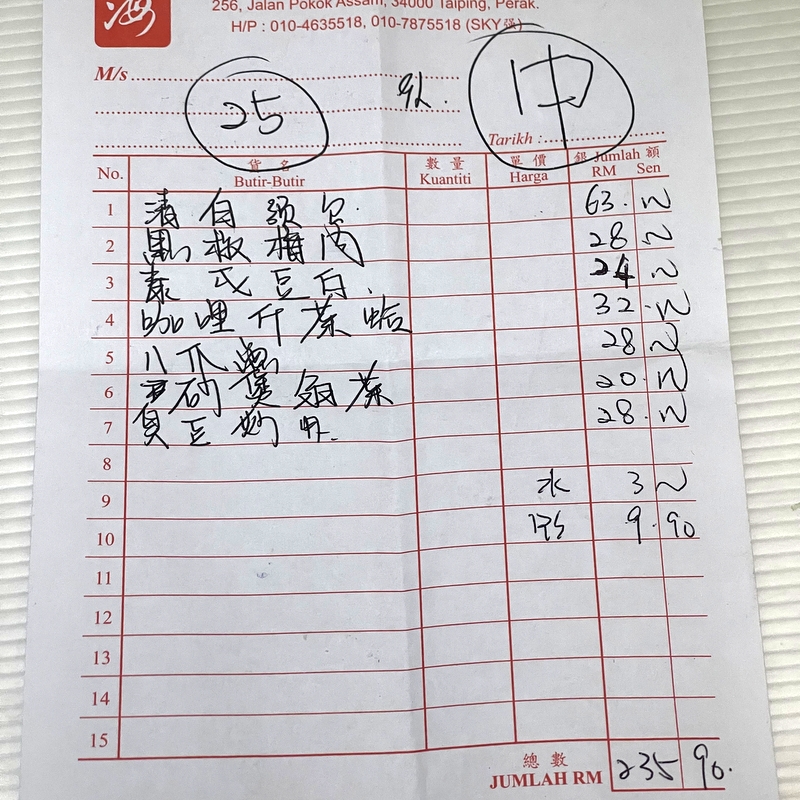
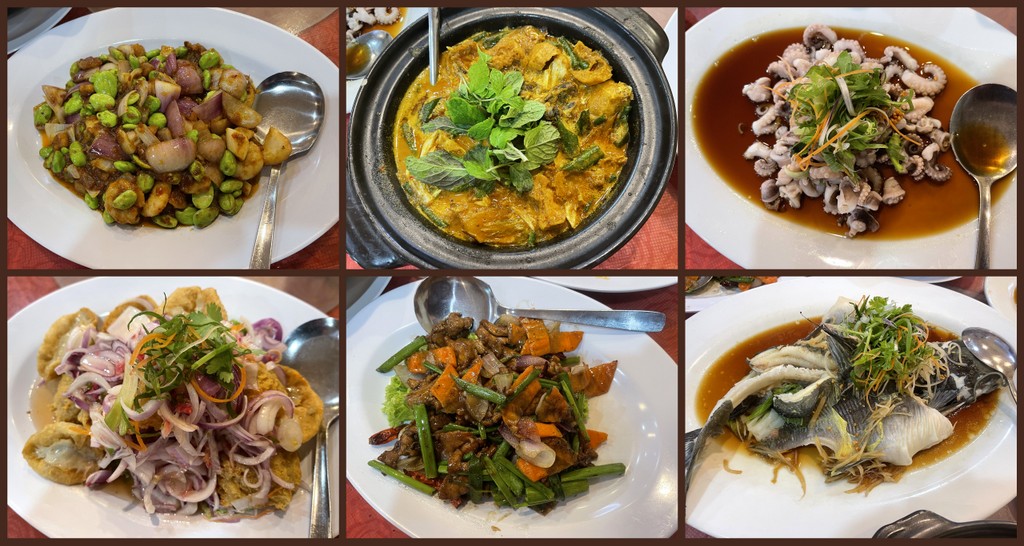
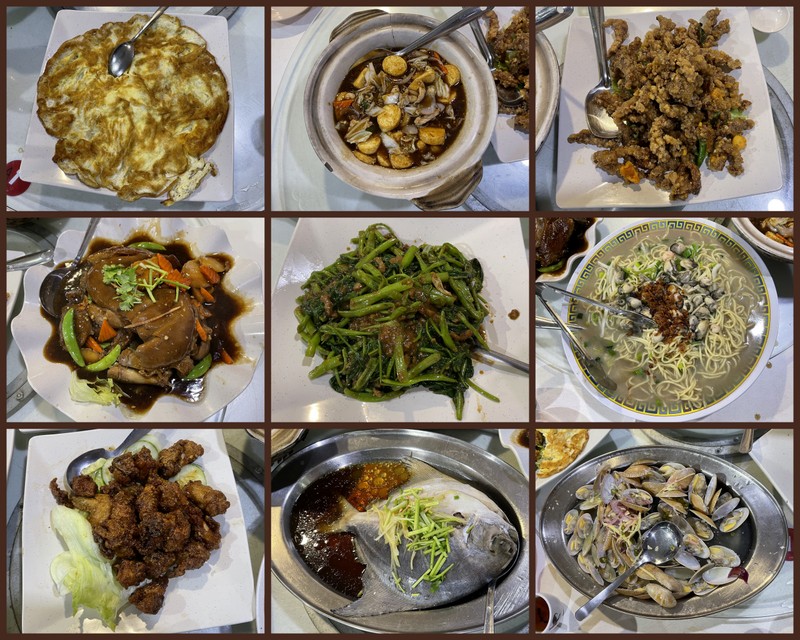
During my October visit I had invited Lay Chun and her “food gang” for a dinner and I did the same thing now. They picked me up from Furama and drove to the 83 restaurant in Pokok Assam. We where with 9 pax, ordered 7 dishes and the bill was RM 235.90 (about 46 Euro). Amazingly cheap
And the food was delicious. I forgot to take a photo of one of the dishes 😉
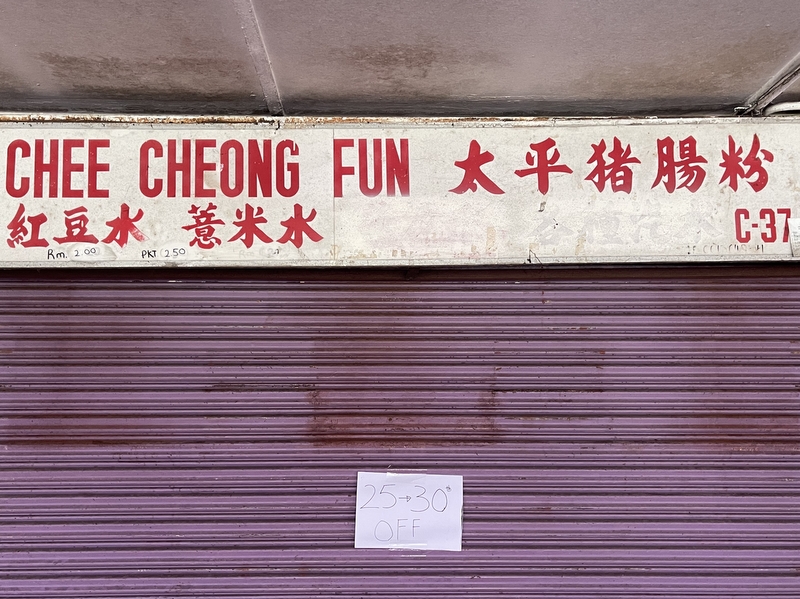
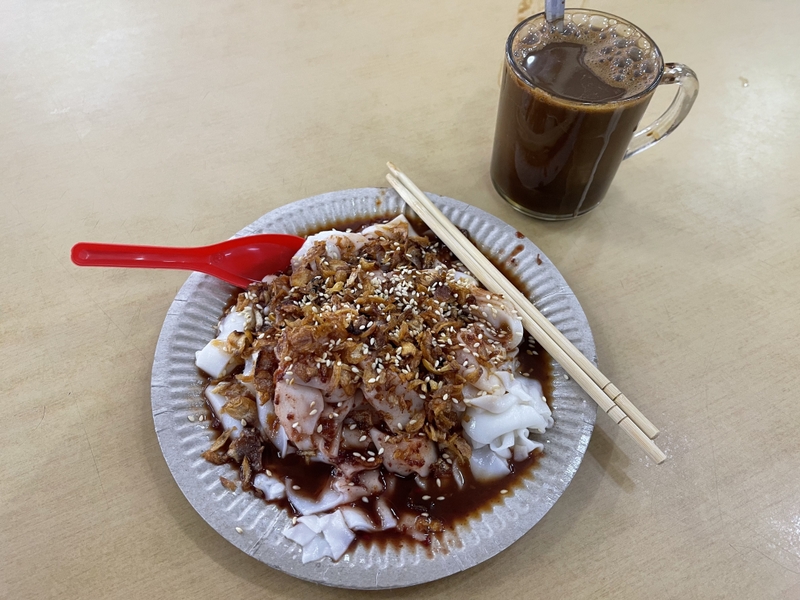
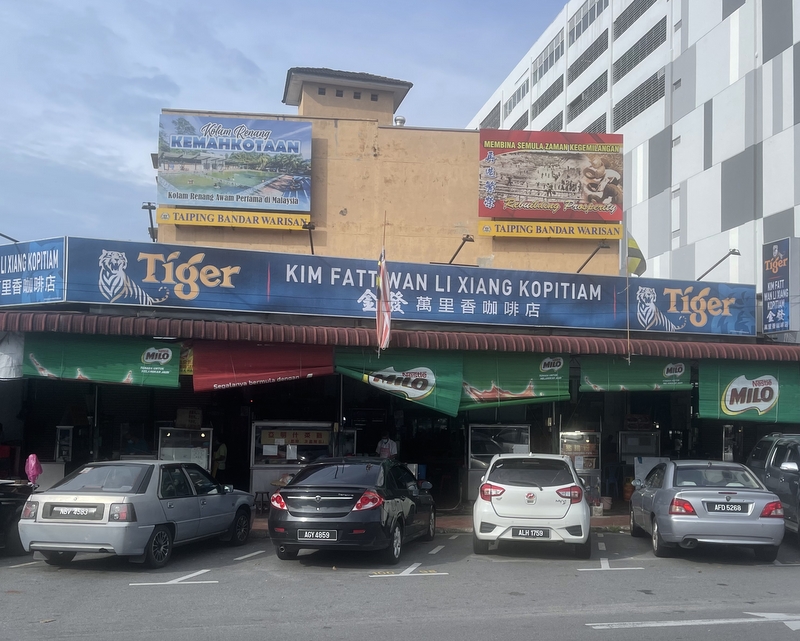
That was a well-spent first day of my visit. The next morning I was planning to have breakfast with my friend Foo, Chee Cheong Fun at the Circus Ground food court, near my hotel, but he warned me that the shop was temporarily closed. He suggested the Wan Li Xiang coffee shop, even closer to my hotel, where they also served CCF. We met there and the CCF was also quite good.
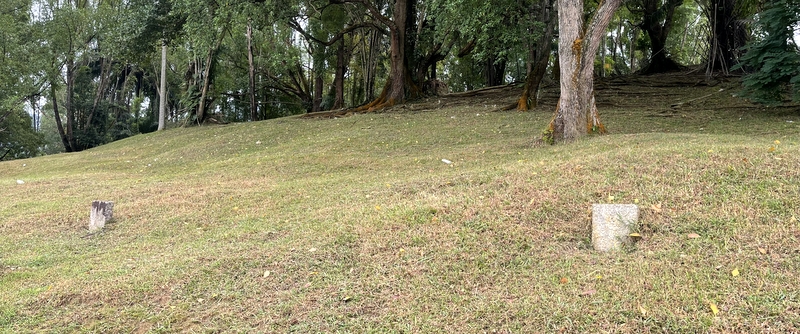
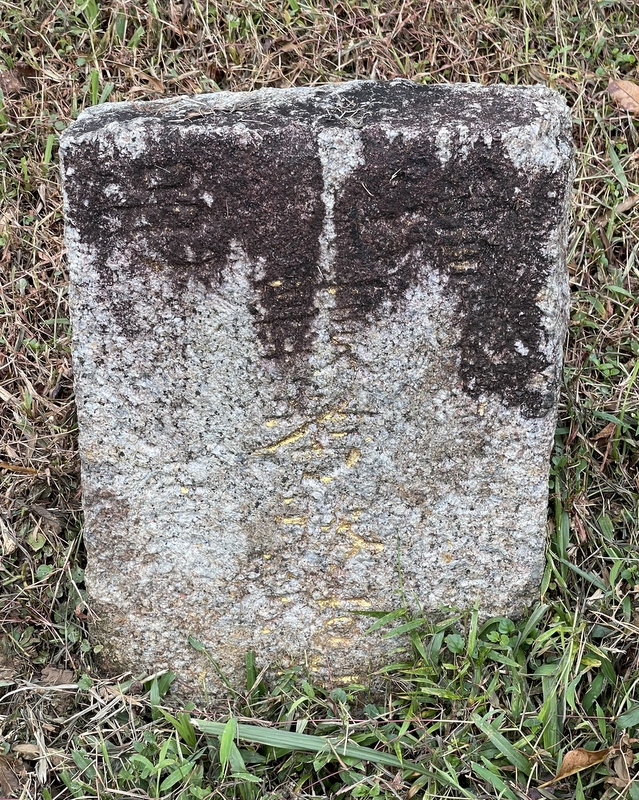
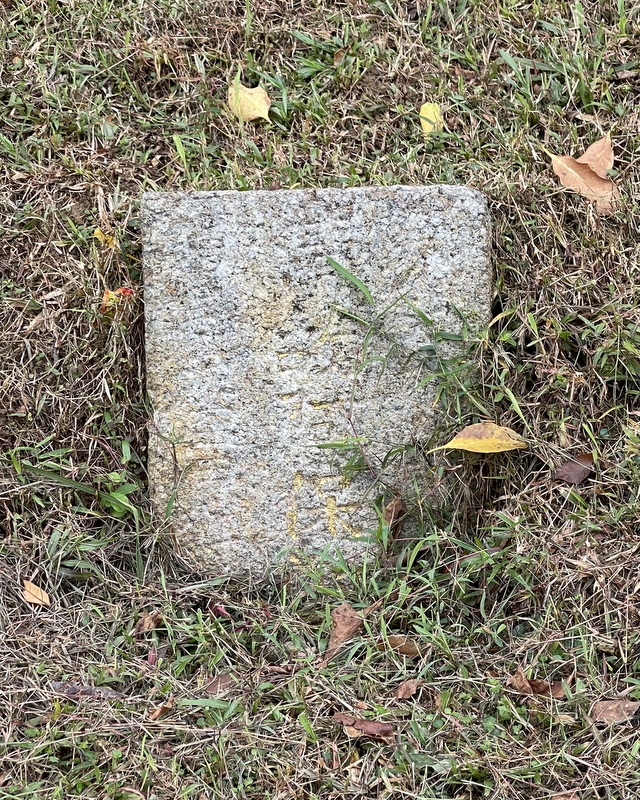
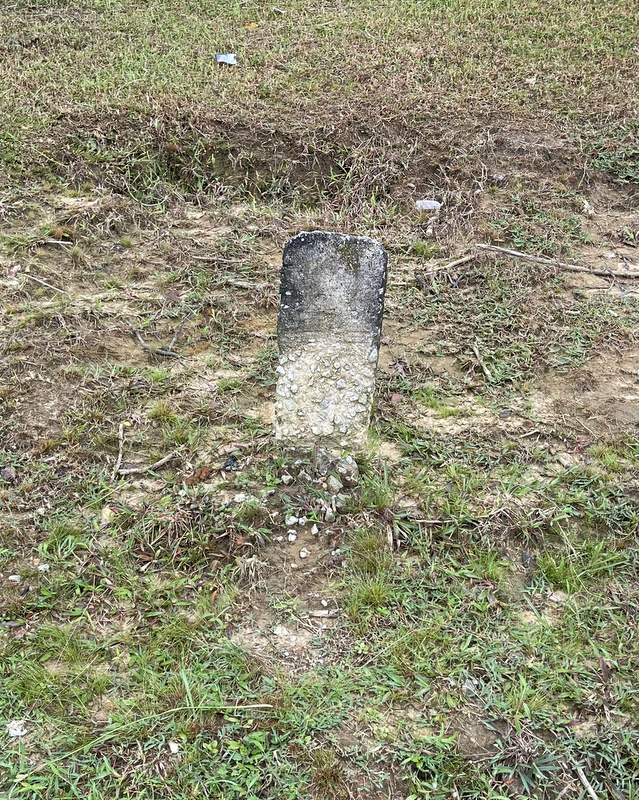
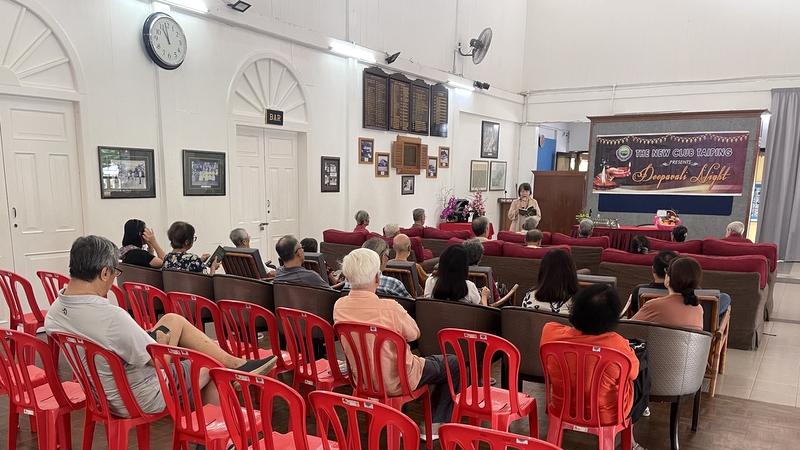
I told him about the book launch in the New Club at 10:30 am and he offered to drive me there. We share an interest in Taiping heritage, it was he who had drawn my attention to the 1932 bungalow shown above. On our way we passed the isolated tomb stones on the slopes of the ….. hill. There are actually three, the third one looks like being partially excavated. I have tried to find out who are buried here and when, but until now in vain.
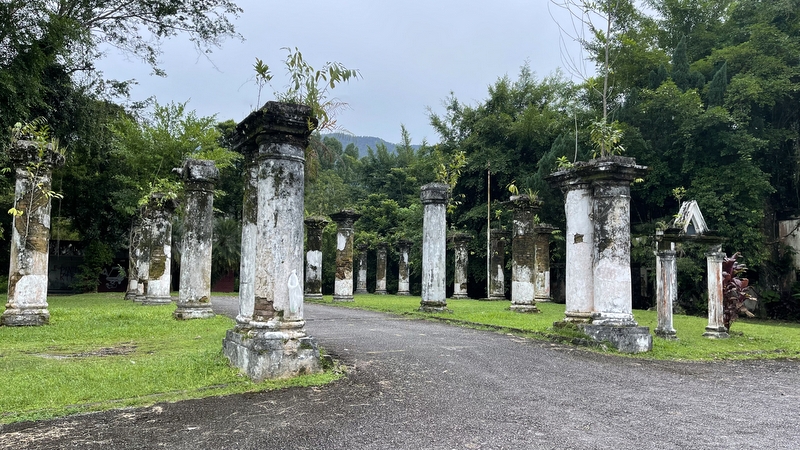
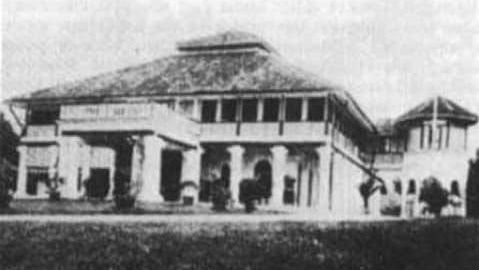
We had still time enough to have a look at the Pillars, the only remains of what was once the Residency. Right a old photo of the Residency. After Ipoh became the capital, the building was used for other purposes (survey department?, public works department?) and apparently it was destroyed by fire, but when? Another mystery.
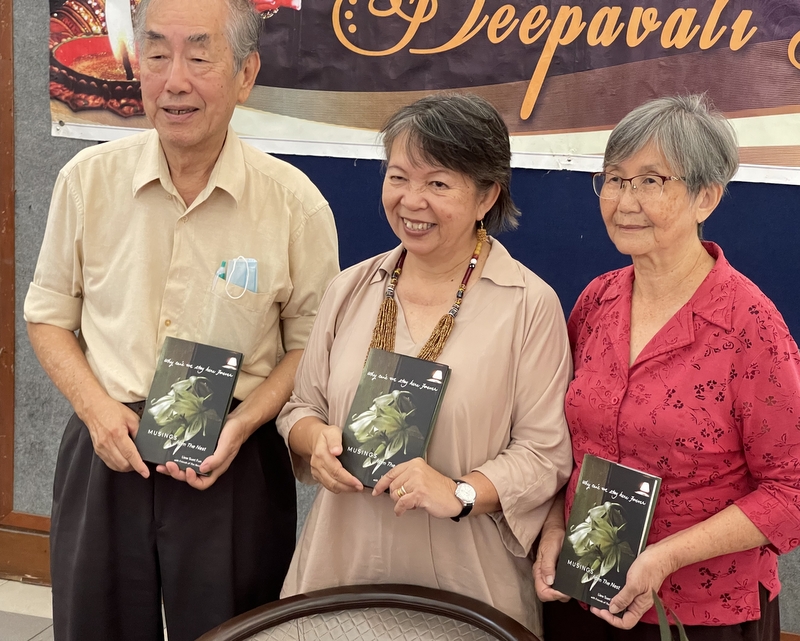
The book published by Liew Suet Fun has as title Musings from the Nest .For a number of years she and her husband Peter leased the Nest bungalow on Maxwell Hill from the Methodist Church. They transformed the bungalow in colonial style and made it a heaven on earth. I visited the Nest for the first time in 2017, with Aric and my Ipoh friend Hong, report here. The subtitle of her book “why can’t we stay here forever” applies to me, so I came back in 2018 three times, in April, July and December. I would have liked to continue, but in 2019 Suet Fun closed the Nest, because she was writing a book, then came COVID and a disastrous storm , destroying big parts of the access road to Maxwell Hill. Finally the Methodist Church, for reasons unknown to me, claimed back the Nest.
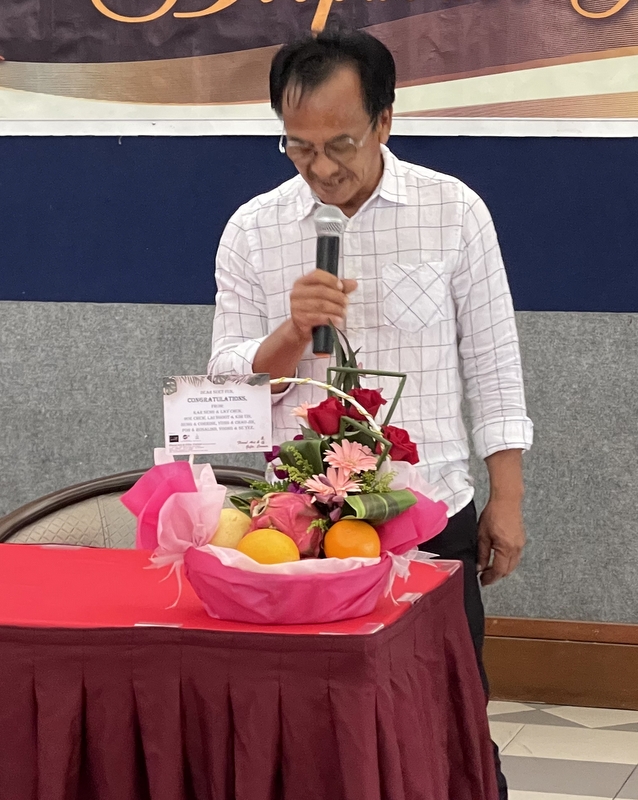
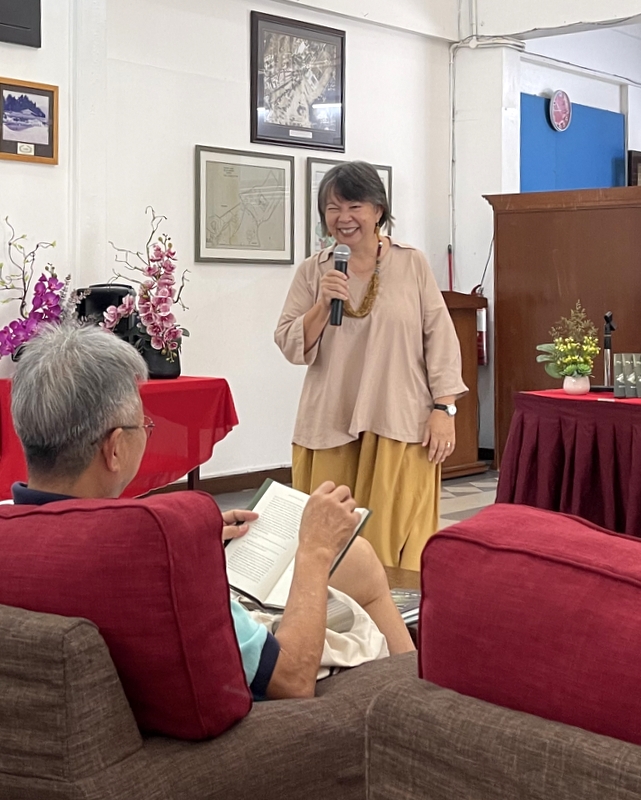
Peter started the book launch with a short introduction, after which Suet Fun explained how they became managers of the bungalow. She read a few passages from the book, followed by a Q&A session.
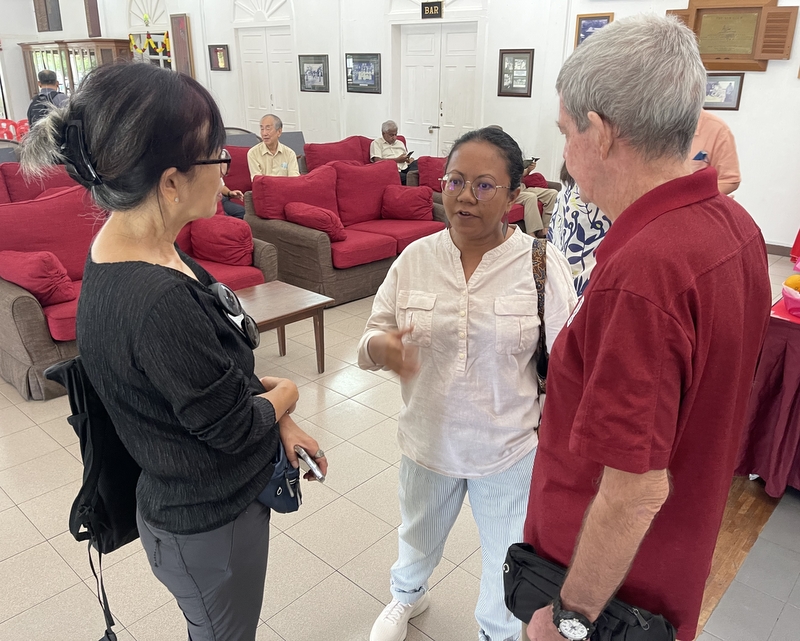
Of course the book was for sale (RM 60) and you could have it signed by the author. It was a nice event, for me especially interesting because I met people I had not seen for a long time. In the right picture Sharen talks to Safina and Grahame, who I last met in October 2020, before the Covid pandemic disrupted our lives.
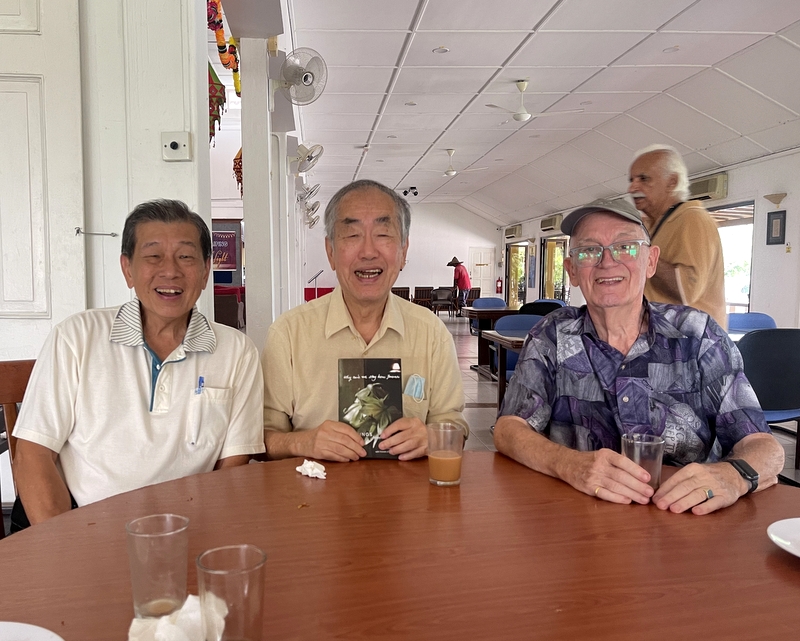
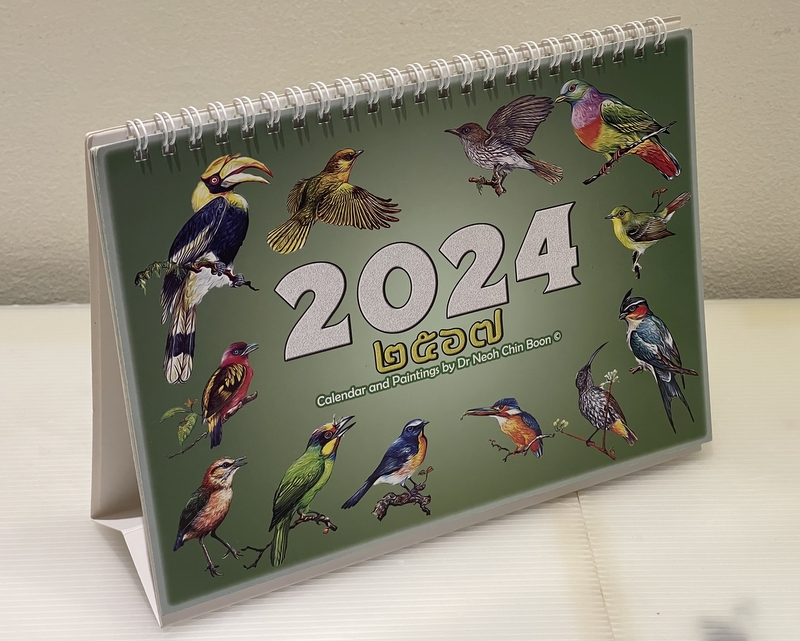
After the event many people stayed for lunch and some chit-chat. One gentleman, Dr Ng approached me and told me that we have a mutual friend, George Tan, who had mentioned me several times. He introduced another friend to me, Dr Neoh and I asked him if he was a birder. I explained that for many years I had maintained a website Birding in Malaysia and that he was mentioned on that site as not only a birder but also a bird painter. He presented me with a calendar containing images of his paintings.
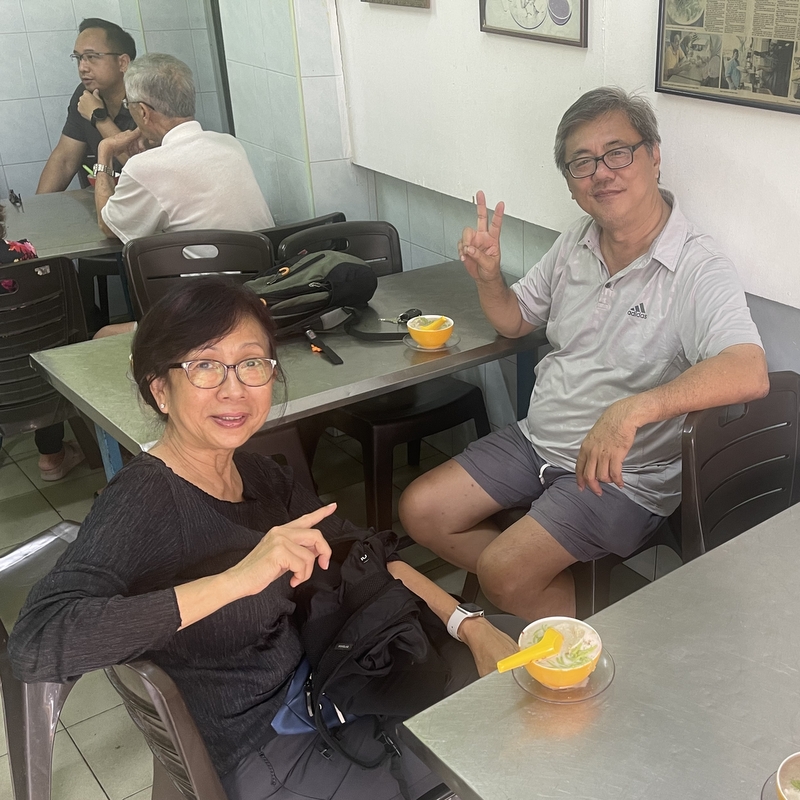
Of course a photo had to be taken. From left to right Dr Neoh , Dr Ng and Dr Stuivenberg 😉 .Malaysia and especially Taiping is a small world 😉
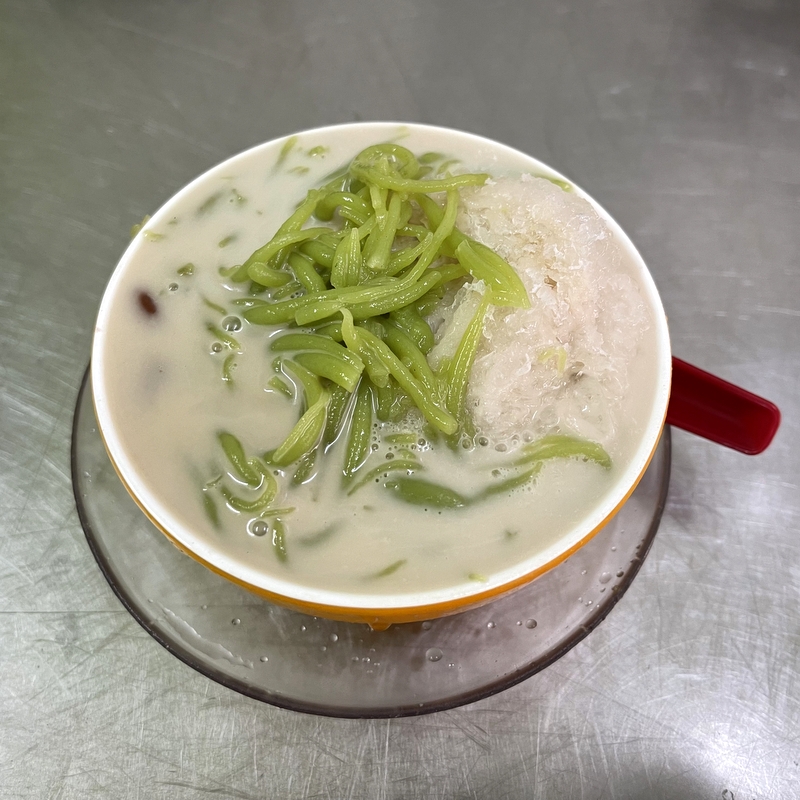
We ended this very agreeable event with a cendol at the famous Ansari Cendol.
I had suggested to Sharen, as her “tourist guide”, that we could go in the afternoon to Matang, visit the museum there, continue to Kuala Sepetang (charcoal kilns, mangrove forest) and finally have dinner in the Lemon Tree restaurant. The dinner plan was accepted, actually Mei, one of her Taiping friends, was going to invite us and host the dinner. For the afternoon she had her own plans, so I was “free” and had a lazy afternoon ;-). Later Sharen WhatsApped me : Pick up between 7 to 7:10pm. A lady by the name of Elaine & Teng Khoe..Please watch out for a red Honda Civic. Another example of the small world Taiping is, as I had met them already a few times earlier 😉
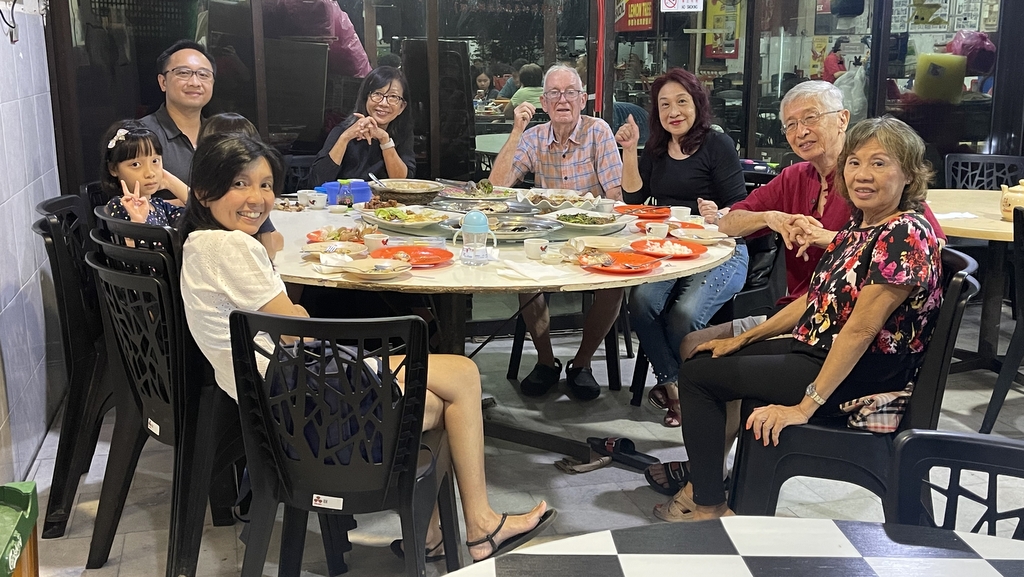
The dinner at the Lemon Tree restaurant was even more elaborate, with a total of nine dishes for 7 adults and 2 kids. From right, anti-clockwise Elaine, Teng Khoe, Mei, me, Sharen, Mei’s son David, one of the kids and David’s wife.
Delicious food, but of course way too much. Quite a lot was brought home tapau, Malaysian slang for take-away ;-).
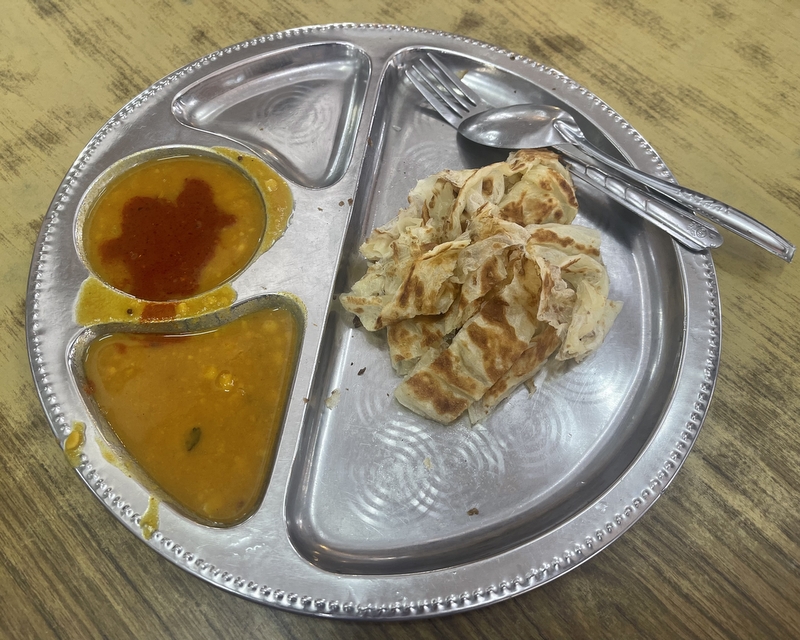
Nice dinner, nice company. Of course I was not hungry the next morning. I had a simple roti canai in the same restaurant where I had CCF the day before.
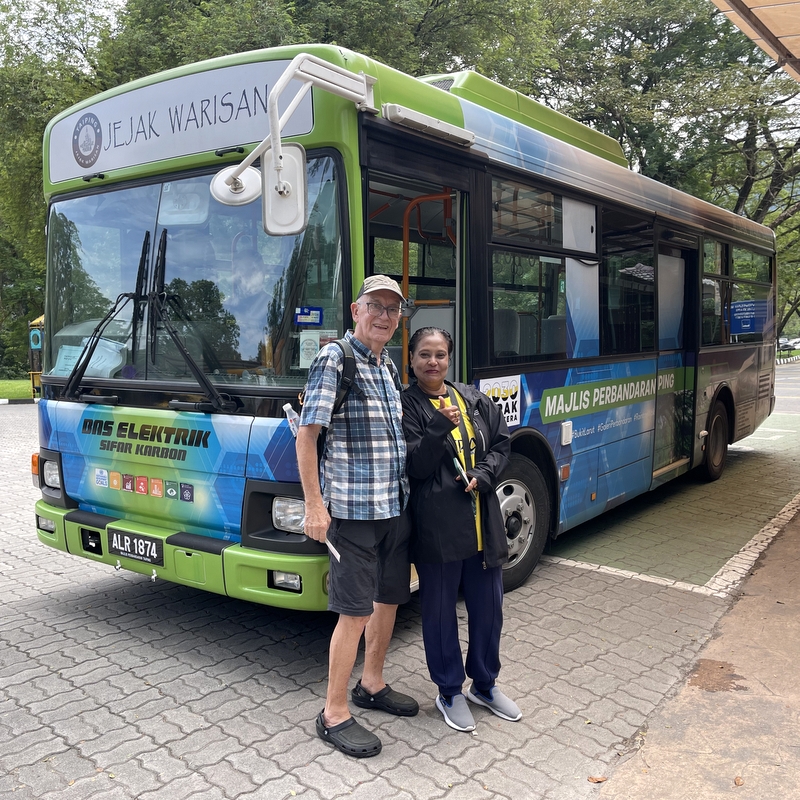
I had suggested to Sharen to do the EV Heritage trip. This is an electric bus trip, taking 1 hour and 20 minutes, following a route along Taiping heritage locations, with an explanation by a guide. Starting from the zoo, three trips daily.
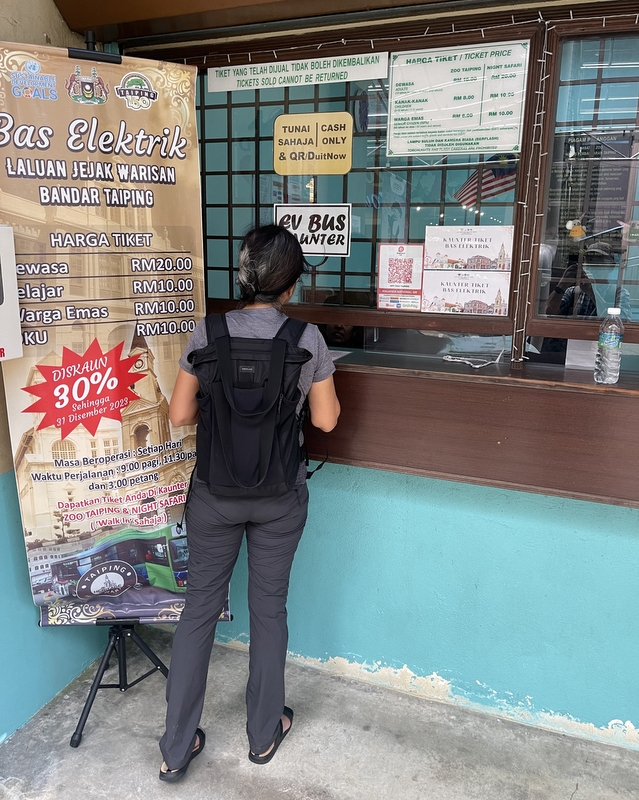
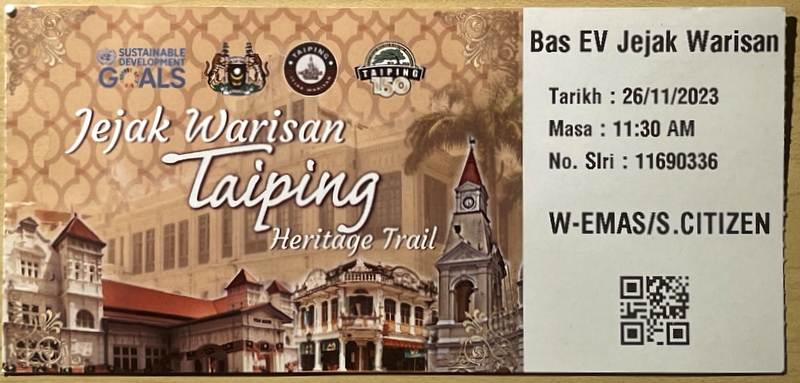
We walked from Furama to the Zoo, where we bought tickets. RM 20 for adults, RM 10 for Malaysian senior citizens. Quite expensive, but until 31 December you get a discount of 30 %.
No online/advance booking possible, only walk-in. As it was a Sunday morning, with many Zoo visitors, I was a bit worried that the tickets might be sold out. But it turned out that we were the only passengers, a worrying sign for the future of this EV heritage project 🙁 .
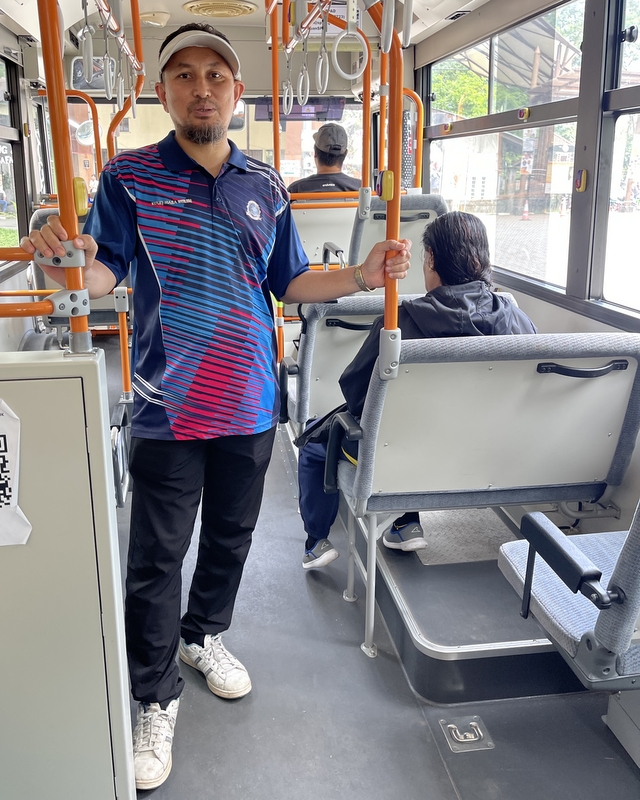
A nice surprise when we were waiting for the bus. A lady approached me and asked , do you remember me? It was puan Jamilah who I had met in March 2019, when she was working at the Galleria. She had heard (Taiping is a small world) that I was planning to do the EV heritage trip and decided to join. In the bus we met our guide Fendy
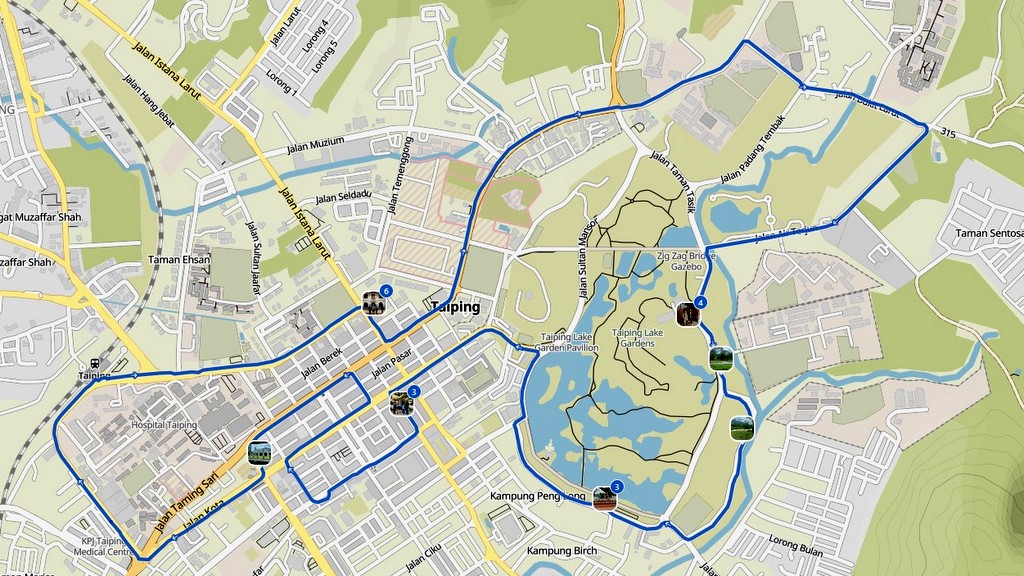
Here is the route followed by the bus, Click on the map to see the many pictures I took during the trip. During the trip Fendy commented on the various interesting locations we passed. There were three stops where we could walk around a bit
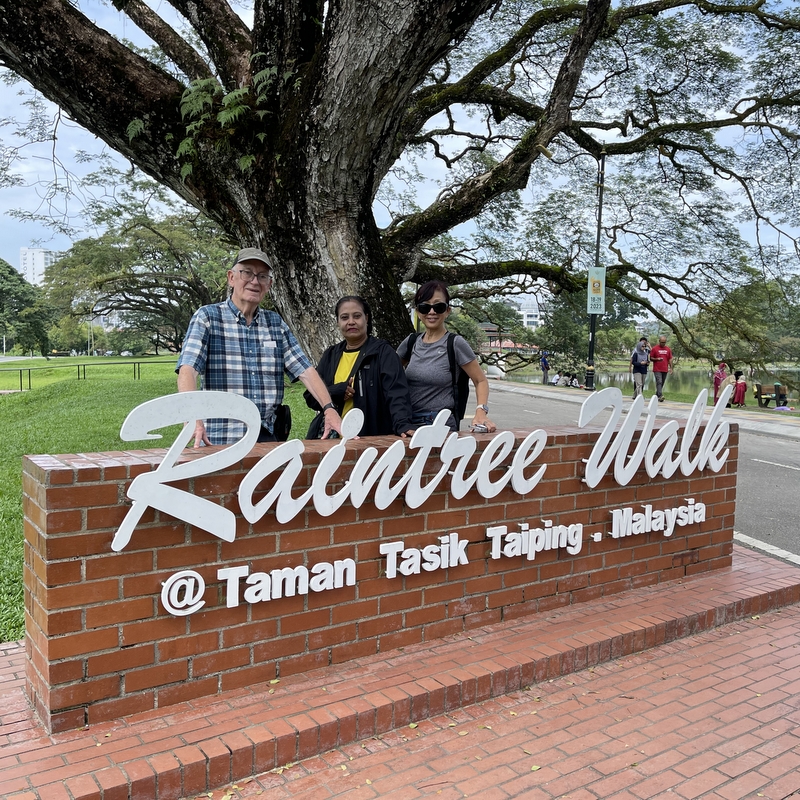
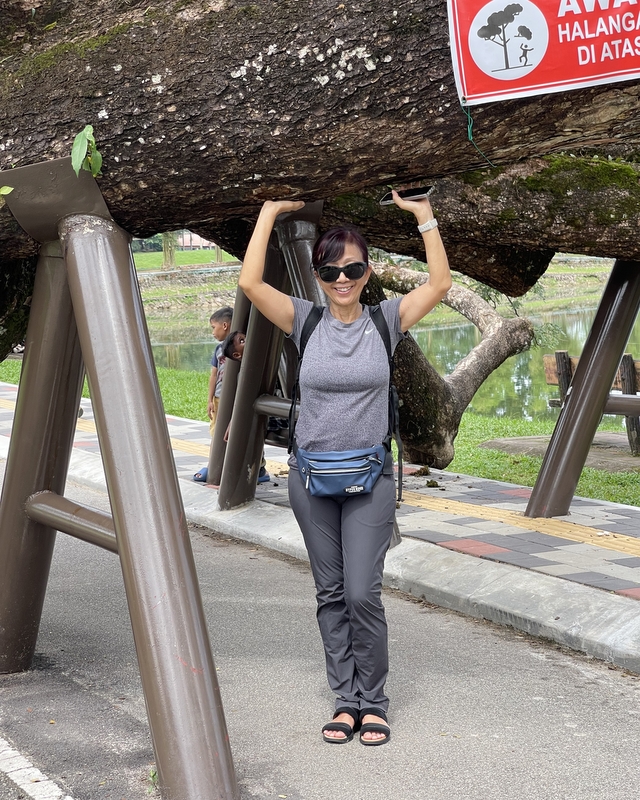
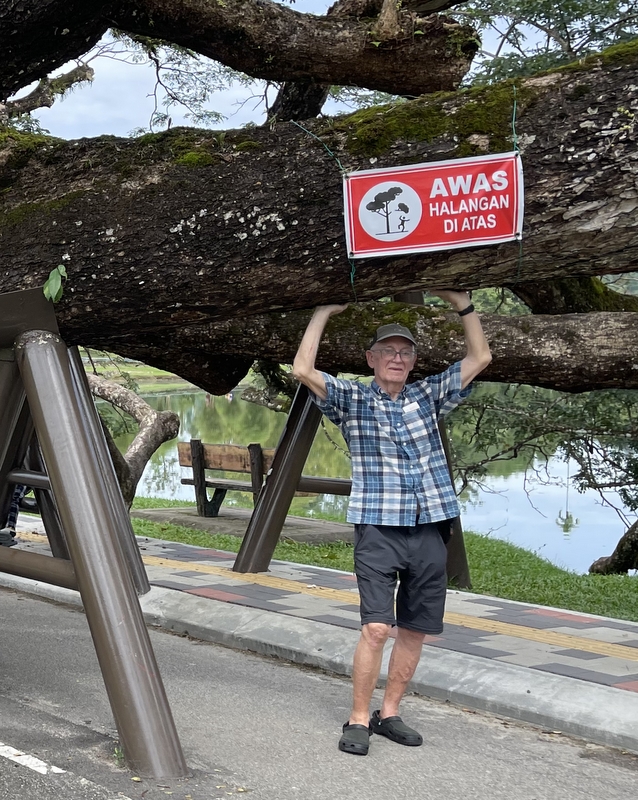
The bus is comfortable and can accommodate about twenty passengers. Our first stop was at the Raintree Walk, a pedestrian walk at the Taiping Lake Gardens. A few fallen rain trees have become tourist attractions and of course we had our pictures taken 😉
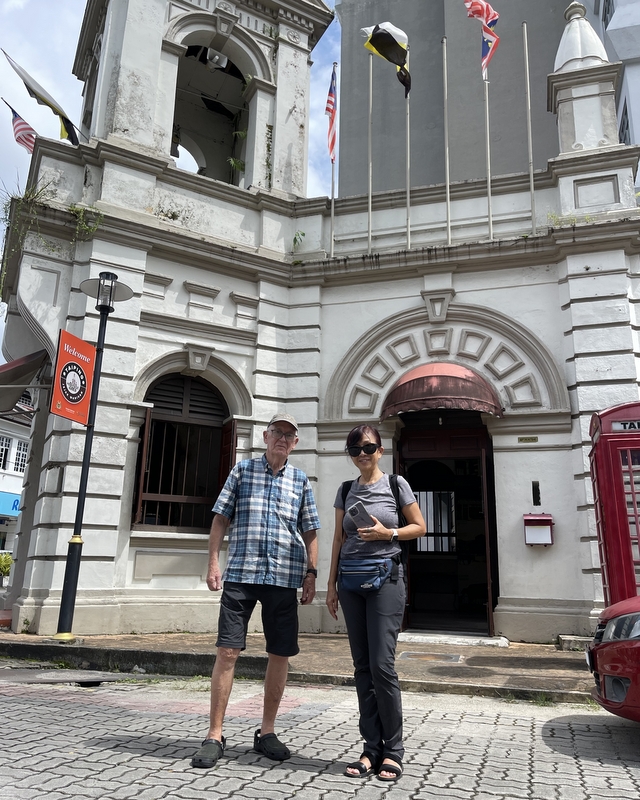
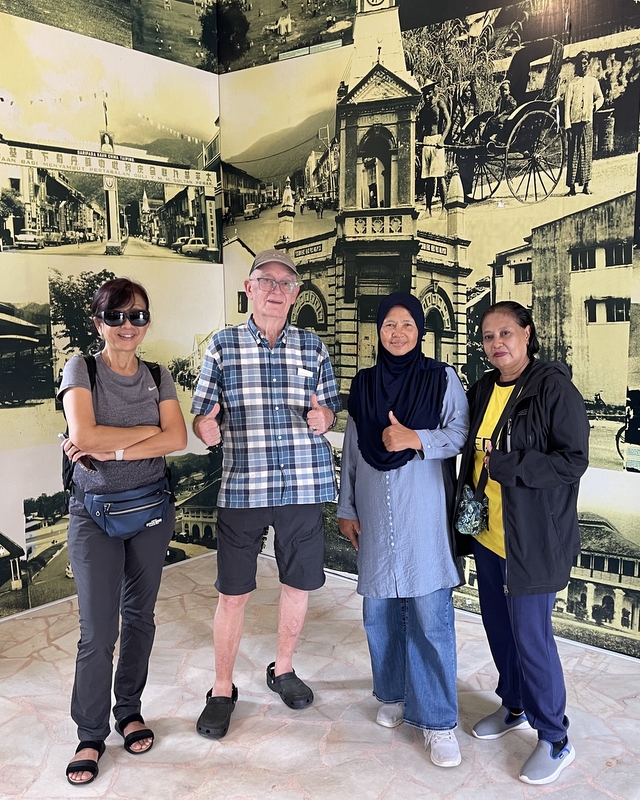
The next stop was at the clocktower, now the Taiping tourist office, where I had a short, pleasant meeting with puan Kamariah. In the pictures Sharen and I in front of the clocktower and with Kamariah and Jamilah inside the tourist office.
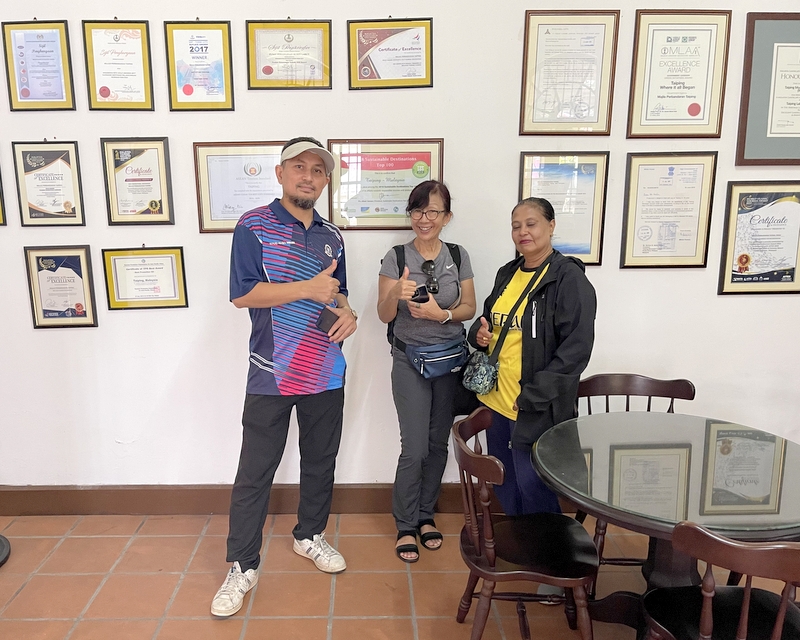
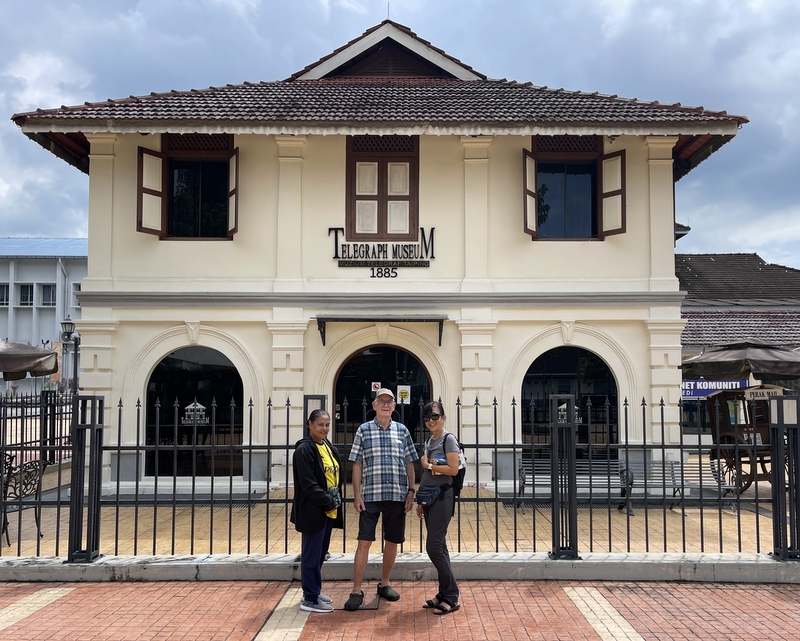
The third stop was at the Municipal Gallery, where we stayed a bit longer. Left a picture of Fendy, Sharen and Jamilah in front of the numerous rewards and certificates obtained by the Taiping Municipal council. In the right photo we are standing in front of the Telegraph museum next door.
The gallery building is still almost empty, but outside there are a few interesting heritage items, related to the railway history of Taiping.
What to say about the trip? It was certainly enjoyable, the explanations by Fendy were useful, and the company of Jamilah pleasant. But in the long term I think the project may fail unless some changes are made. Here are a few suggestions.
The starting point should not be the Zoo but the Galleria.
Online booking should be made possible.
Passing the heritage locations is going too fast. Instead of stopping at three locations it would be more useful to let the bus halt for a short while at many more locations, so the guide can explain a bit , while the passengers can take pictures (not leaving the bus)
It is a bit too expensive.
Sharen had her own programme for the afternoon, one of her relatives picked us up from the Zoo and dropped me at my hotel. I decided to have lunch at Prima and then walk a bit around town on my own.
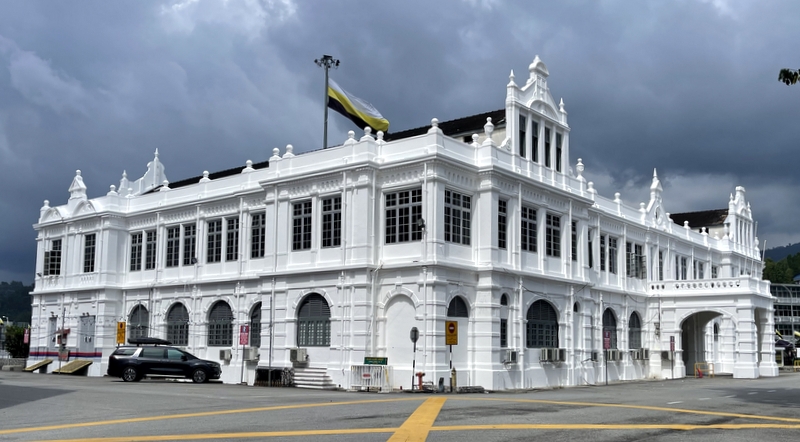
Here are the former British government buildings, a beautiful creation by Francis Caulfield, completed in 1897, now housing the Larut, Matang & Selama district office. A real gem of Victorian architecture
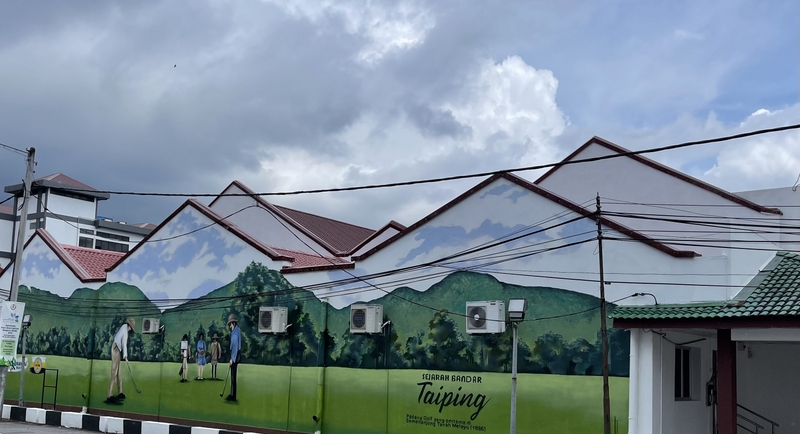
Recently a few huge murals have been created in Taiping. During my visit in October I had taken pictures of two of them. Here is another one, on the walls of the Kwantung association, showing people playing golf.
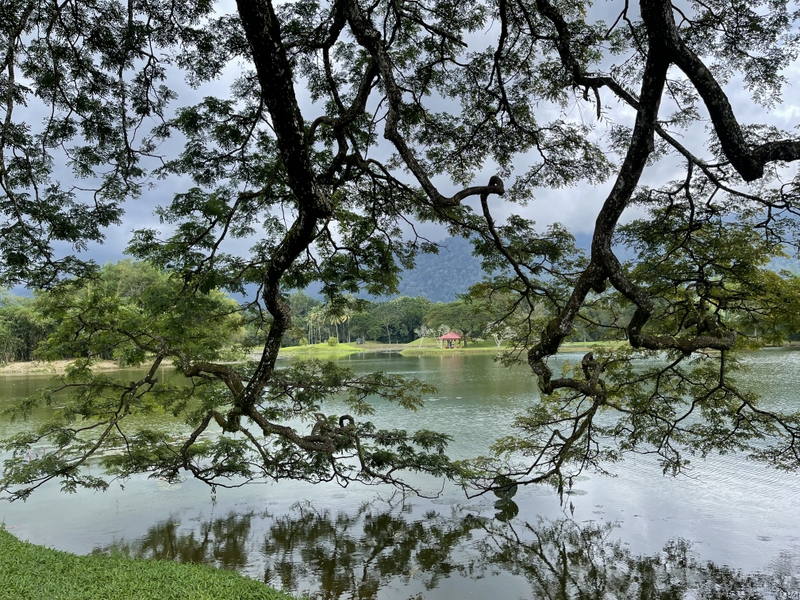
As it threatened to rain, I cut short my walk and returned to my hotel via the Lake Gardens
That evening my third sumptuous dinner, offered to Sharen and me in the Soon Lee restaurant by the group of people I had invited two days earlier. The same happened during my October stay in Taiping, I hosted a dinner and two days later there was in return a dinner where I was not allowed to pay. It is a quid pro quo aspect of Chinese culture. Delicious food
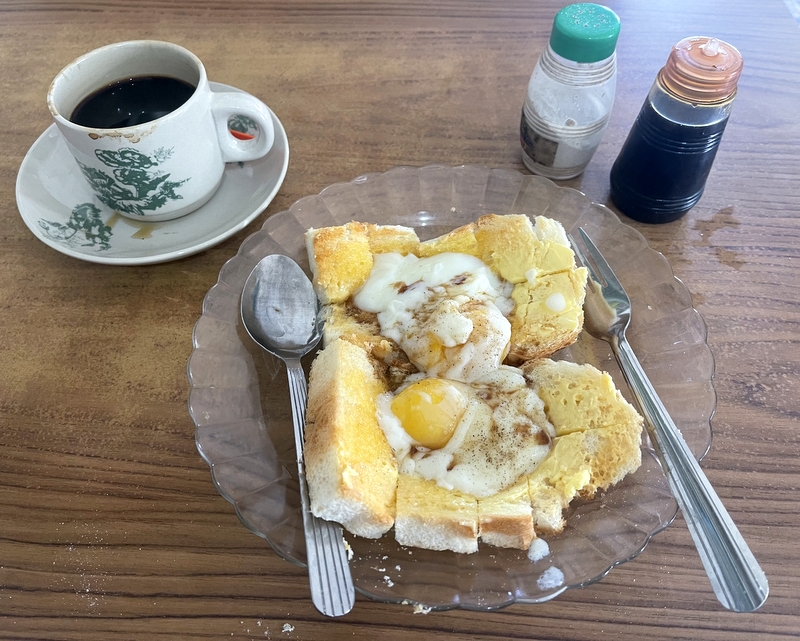
The next morning I walked to Lian Thong for my roti goyang, half-boiled eggs on toast. Goyang in Malay means shaking. One of my favourite coffee shops, also a very attractive building.
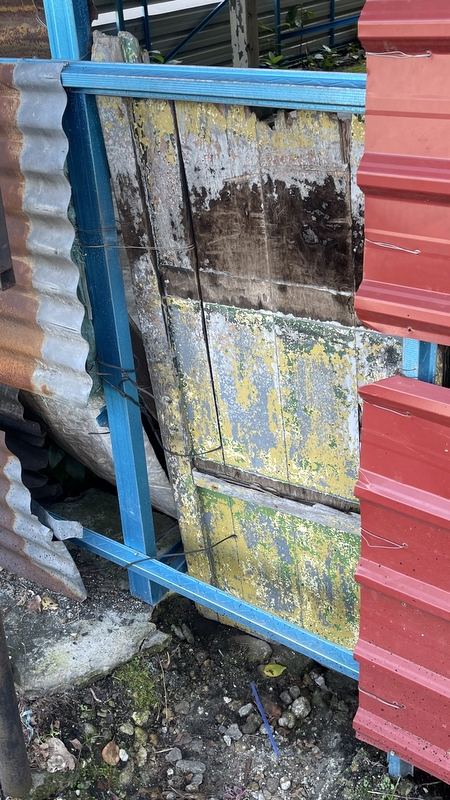
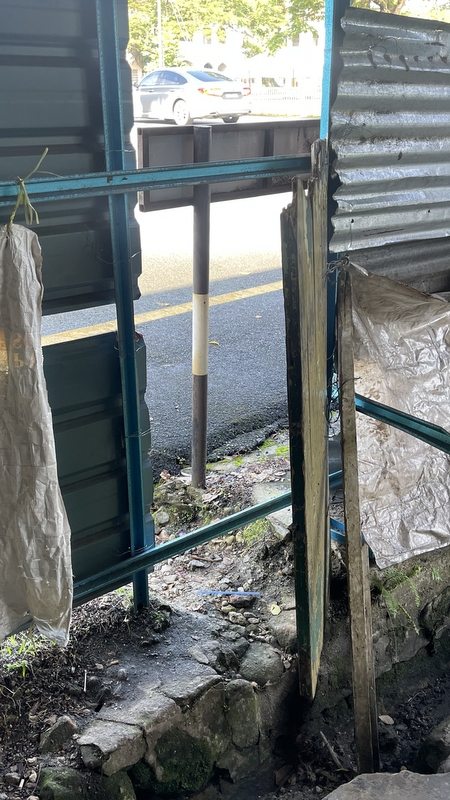
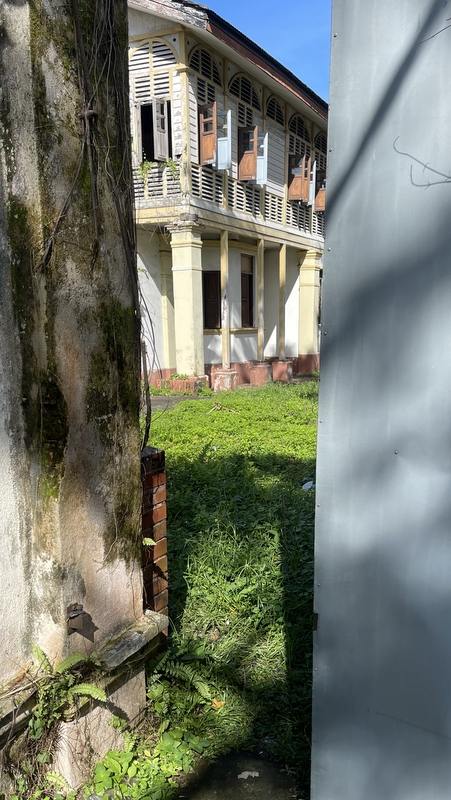
Our train was leaving at 1:40 pm, so I had time to walk around town. First I walked to the ruins of the Perak Railway building, where I had discovered during my October visit that you still could sneak in despite the solid fencing. Nothing had changed. Same at the Rest House next door, you can just walk in and out. The authorities must be aware of this, why don’t they take action?
Outside PWD ruinsInsideOutside Rest HouseInside
I continued to the market, where I got a pleasant surprise. They had started rebuilding. It looks like it will not be a renovation but a replica, but at least something is happening. Will it be completed by August 2024, as promised by the minister?
Walking back to Furama I got a call from Yeap that he and his wife were meeting Halim, if I had time to join them. Of course I wanted to see Halim, who has been diagnosed with a serious illness, but still is full of energy. We have become quite close friends.
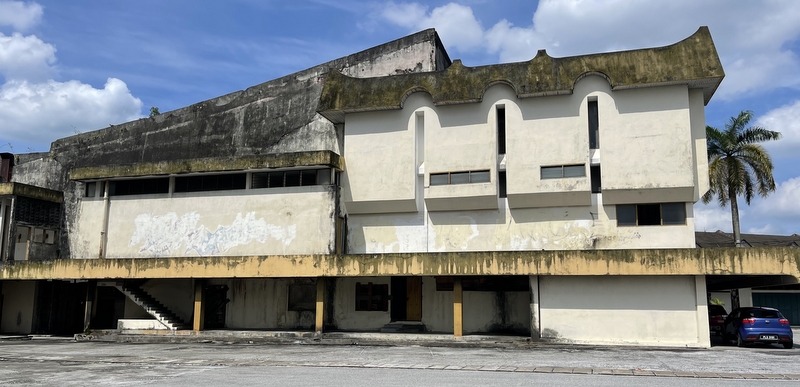
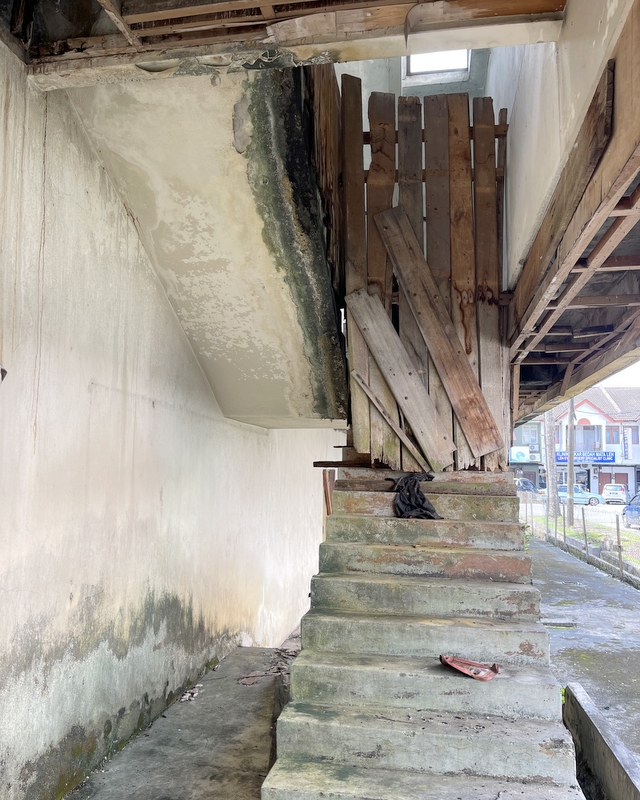
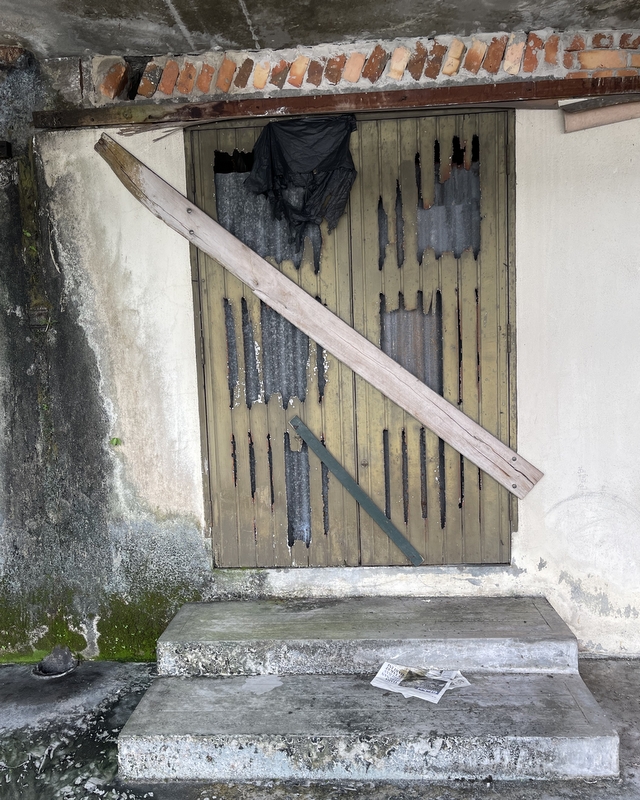
Yeap had offered to pick me up from Furama and drop me at the station. On our way, he showed me the remains of what was once one of the movie theatres of Taiping: the Mandarin Cinema. A huge building, abandoned since many years, but at least properly fenced off . A new discovery for me 😉
Then it was time to take the train back home. A nice trip with Sharen, although it was obvious that she didn’t need a guide for Taiping 😉
One year ago I wrote a post about the Paleomap Project. At the end of that post I included a link to the Story of the Malay Peninsula. Here it is again. The clip is less than 3 minutes and worth watching.
I ended my post with: Notice how during the Ice Ages the sea-level was so low that the islands of the Malay archipelago were connected. This was called Sundaland. Topic for another post.
Here is my post about Sundaland.
What is actually an Ice Age?
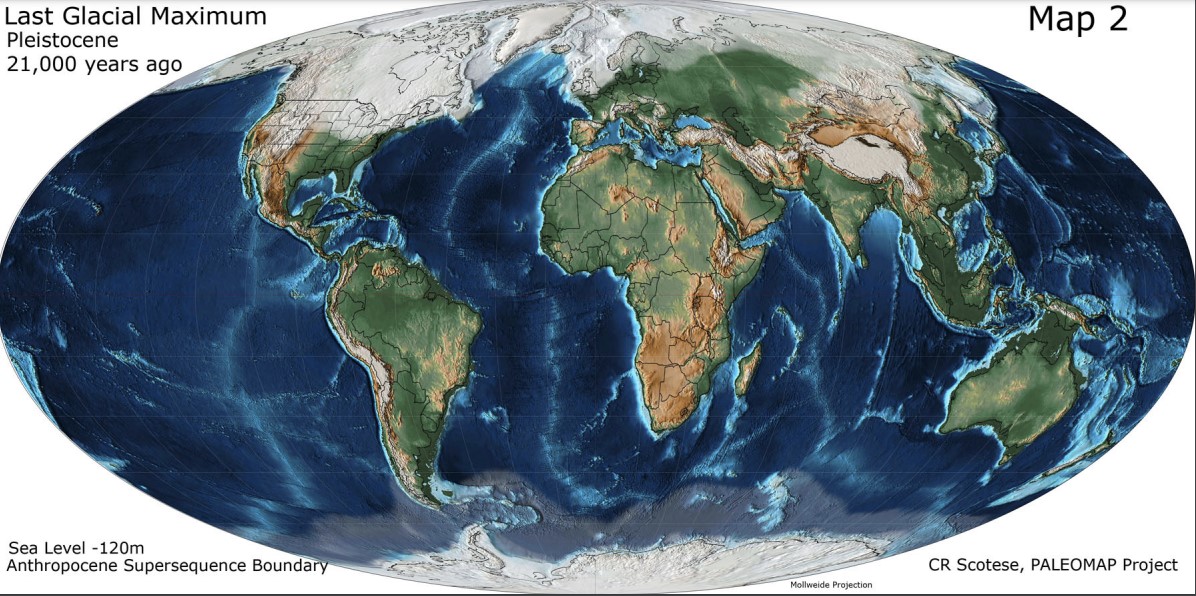
Probably most people will first think about the funny Ice Age movies, but hopefully many will also know that there has actually been a period in Earth’s history, where the climate was cold and a large part of the Earth (North America, Europe) was covered with ice. That was about 21 thousand years ago and it is commonly called the Ice Age. Here is a Paleomap of Earth during that time.
Notice that the map doesn’t say Ice Age, but Last Glacial Maximum ! I got interested, Googled a lot and wrote a separate post Ice Ages. Here is a summary.
In the 4.5 billion years of its existence, Earth has been mostly (~85%) a Greenhouse, no icecaps, icesheets, glaciers. But there have also been at least five major periods that Earth was an Icehouse, partially covered with ice. These Icehouse periods are called Ice Ages. At this time Earth is in the Late Cenozoic Ice Age, which started 34 million years ago.
In an Ice Age there is always permanent ice, but the amount fluctuates. There are periods that the ice advances, they are called glacials. And there are periods that the ice retracts, called interglacials.
The last glacial was about 21.000 years ago and is often called the (Last) Ice Age. At the moment we are living in an interglacial, icecaps, icesheets, glaciers are retracting. But Earth is still an Icehouse.
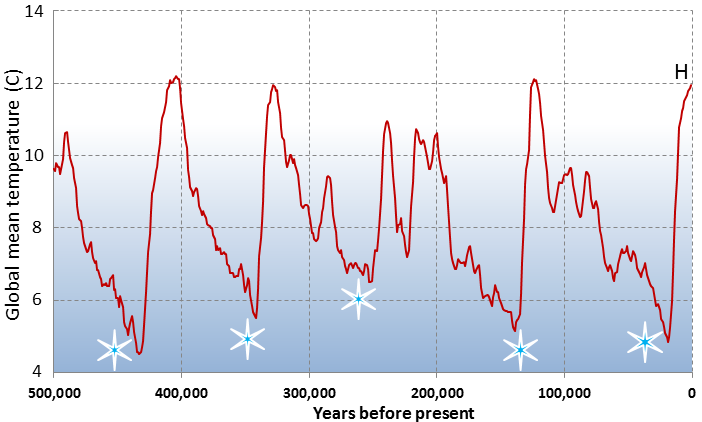
There have been numerous glacials and interglacials in those 34 million years. Here the global temperatures for the latest are shown. Notice that the timescale is from right to left, so the last glacial (“the Ice Age”) is the rightmost snowflake. And there is an obvious regularity with a period of roughly 100.000 year. If you want to know more about the theory, read the Milankovitch Cycles article in Wikipedia.
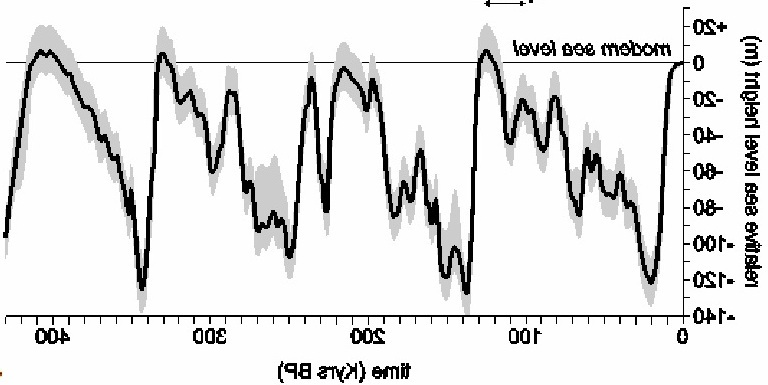
In this blog we are especially interested in sea levels. During a glacial a lot of water is frozen in icecaps, icesheets and glaciers, so the sea level drops, and during an interglacial ice melts and the sea level rises. Here are the sea levels during the last 400.000 years. In the original graph time goes from left to right, I have flipped it to make comparison with the temperature graph easier. Notice the similarity between temperature and sea level. During interglacials sea levels were about the same as nowadays, but during glacials they were up to 120 meter lower.
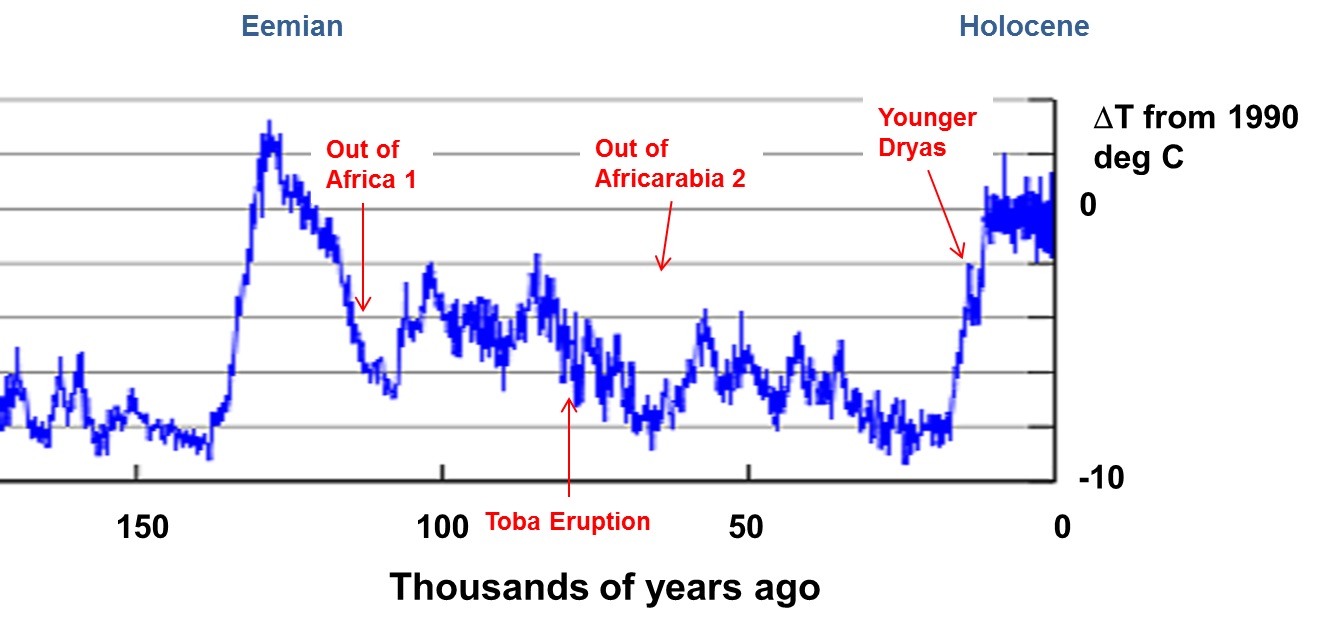
I will now concentrate on the last 150 thousand years, Here is a more detailed temperature graph. Starting from the left, we see the end of the Penultimate Glacial at about 135 thousand year ago. It was a very cold one. Then, relatively quite fast, temperatures are rising, until they reach a maximum at 125 thousands year ago in the Eemian Interglacial. Warmer than nowadays, sea level 6-9 meter higher (!) than today. After this maximum, slowly and irregularly , temperatures are dropping, until a new glacial maximum is reached, about 21 thousand years ago. After this the temperature rises again and we reach the Holocene interglacial in which we are living nowadays.
This time period is very interesting for homo sapiens. Indicated are two waves of migration out of Africa. And about 74.000 year ago the Toba volcano on Sumatra erupted, one of the largest eruptions in Earth’s history. Present day Lake Toba is occupying the caldera of this eruption. There is a theory that this eruption almost caused the extinction of homo sapiens, but this Toba catastrophe theory is something for a separate blog.
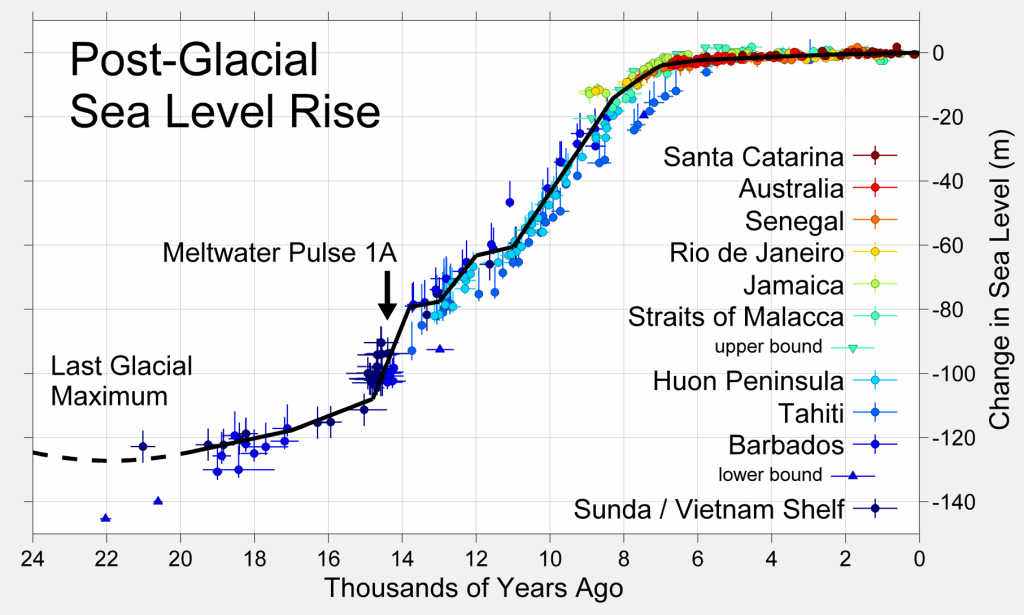
We zoom in one more time and look at the sea level. It was 120 m below present during the last glacial maximum, then rising more or less gradually until it reached present levels around 6000 years ago. Around 12-14 thousand years ago, there was an interruption with a cold period (Younger Dryas). Also notice the steep increase around 14 thousand years ago, caused my melting icesheets , about 5 cm per year !
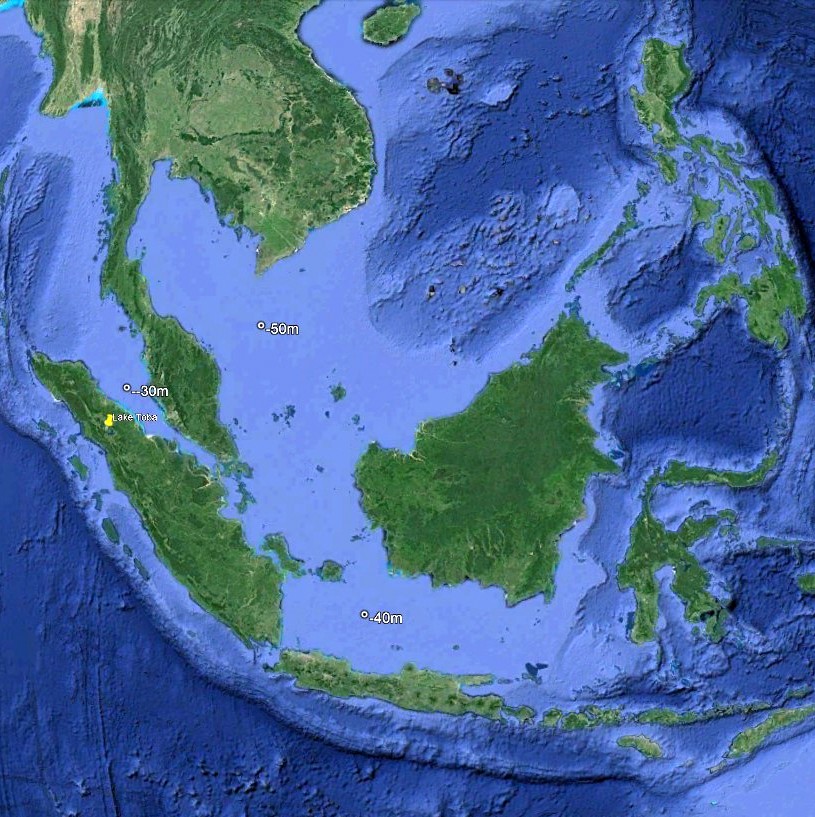
A sea level rise of 120 meter is enormous. Here is a Google Earth screenshot of South East Asia. The color of the sea indicates how deep it is, light blue is shallow, dark blue deep. When you open Google Earth on your computer and move your cursor over the screen, the depth is indicated. I have done that for three locations, and found 50, 30 and 40 meter.
When the sea level drops 120 m, the whole light blue region would become land!
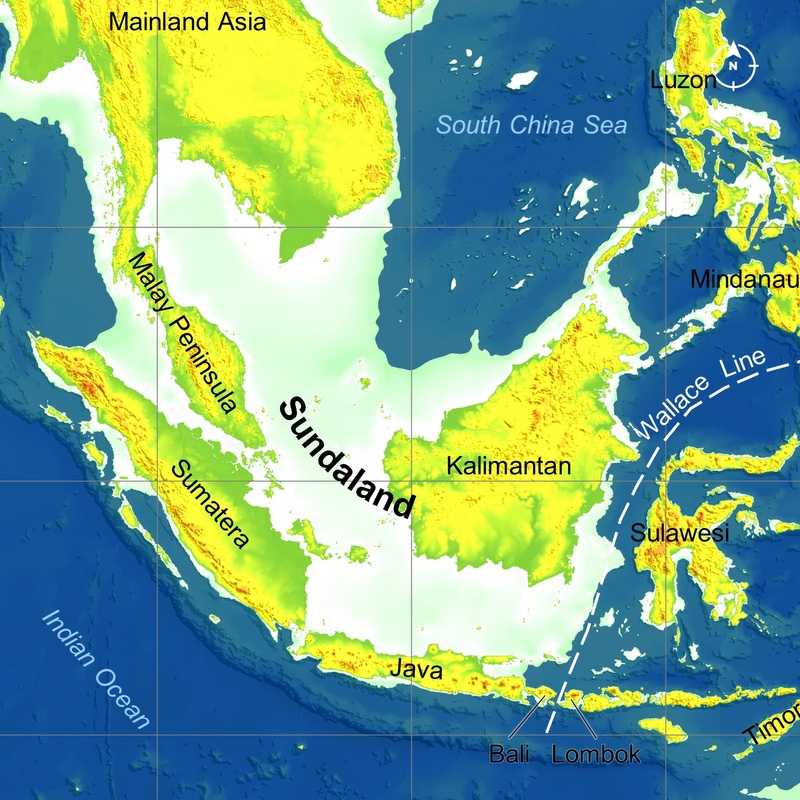
Here is how the region would look like, 21 thousand year ago. Sundaland! A continental shelf, exposed when the sea level is low. If there had been public transport in those days, you could have traveled overland between Indonesia, Malaysia, Thailand, Cambodia en Vietnam! And in the far future, during the next glacial, that will be possible again 😉 .
Here is a video, where you can follow Sundaland from the last Ice Age until present. Only 44 seconds, worth watching. Created by Dhani Irwanto, more about him later.
There are more regions on Earth where something similar has happened. In the lower right part of the video, you can see part of the Sahul shelf. During the last Ice Age Australia and New Guinea were connected.
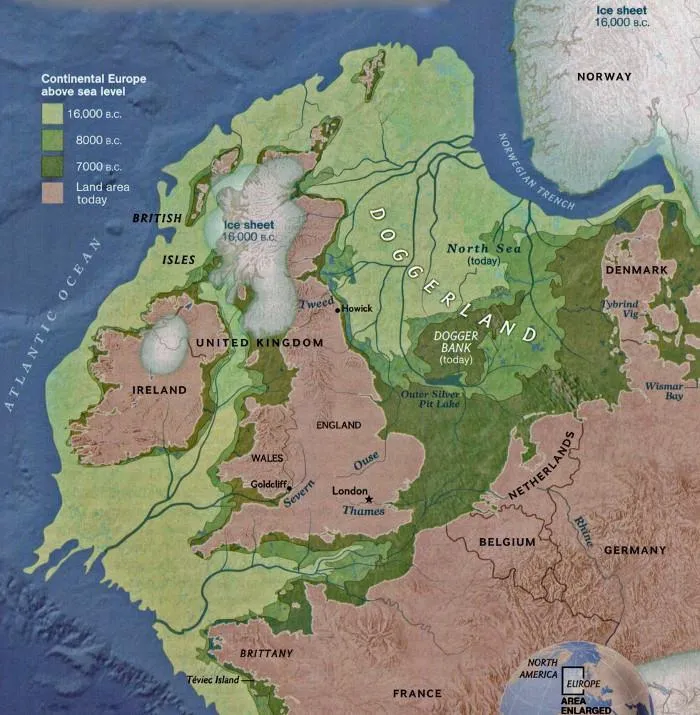
And in Europe during the last Ice Age, England, Ireland and mainland Europe were connected. The continental shelf is called Doggerland. Around 6500 year ago England became an island (again).
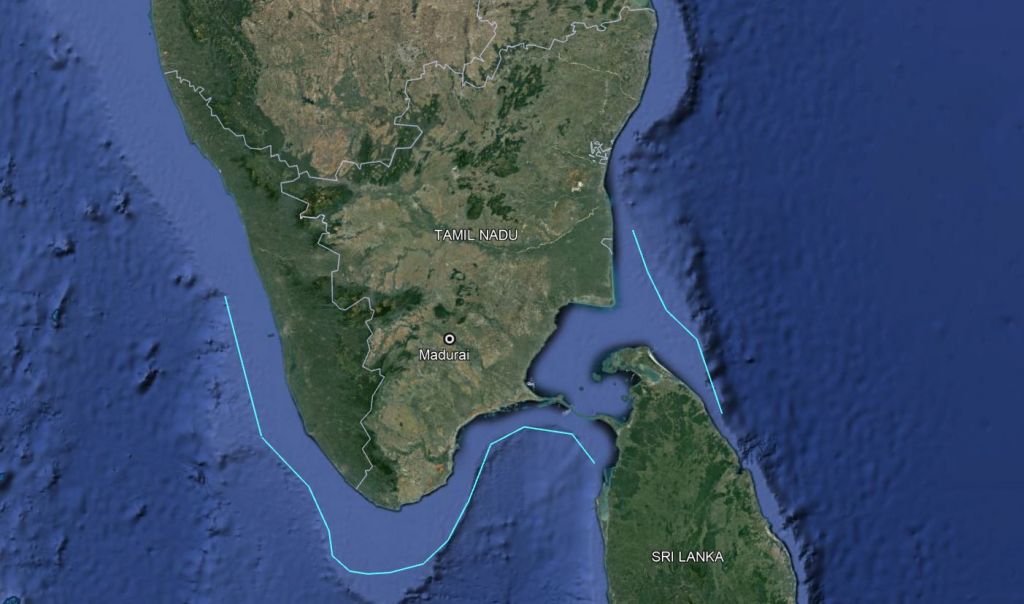
One more example. During the last Ice Age Tamil Nadu and Sri Lanka were connected. In this Google Earth image I have roughly marked the contour line (isobath) of 120 m below sea level. Some land is now submerged but not a continent as some Tamil nationalists still believe. See my blog Kumari Kandam & Lemuria.
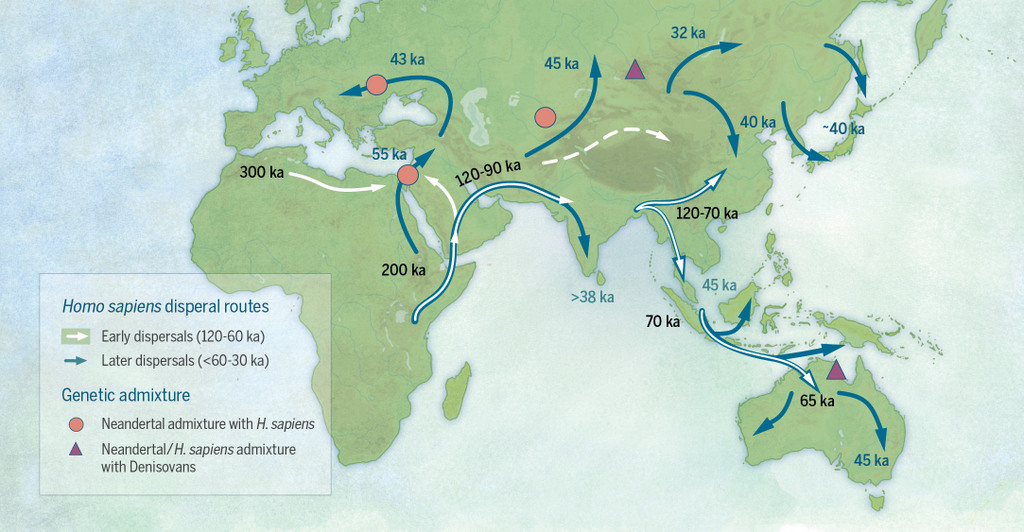
Sundaland is a huge landmass (~ 1.8 million km2), now partially submerged. but large during the time that homo sapiens migrated out of Africa. Here are some of these Early Human Migration routes.
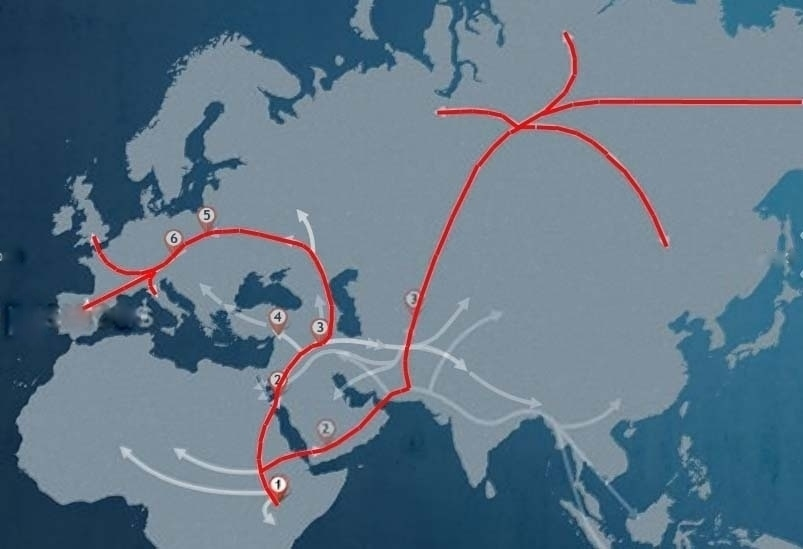
1in 2012 Aric and I took part in the Genographic Project , we sent samples of our DNA and got it analysed. It resulted in this map with the routes followed by our (maternal) ancestors. Read my blog My Ancestors for more details.
As you see there are migration routes to South East Asia and Sundaland. Could it be that during this last glacial there was a civilisation in Sundaland, later destroyed by the rising sea levels? Could that have been the lost continent, Plato’s Atlantis? Or the Garden of Eden?
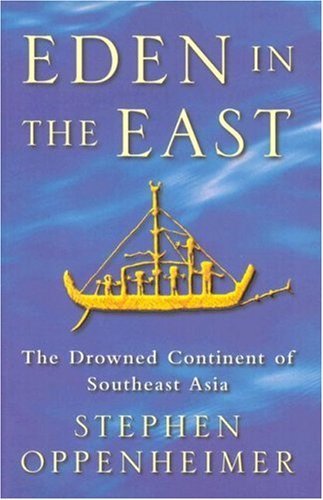
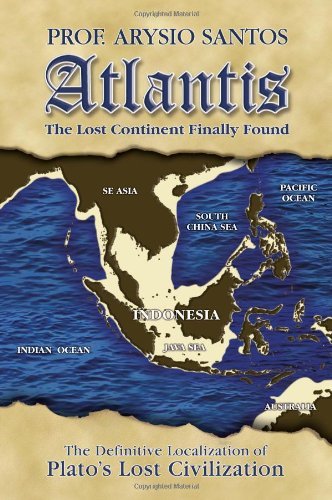
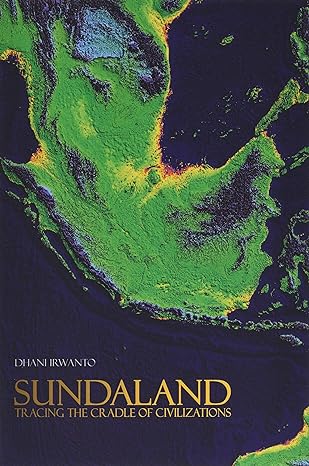
In the last few decades, three books have been published advocating exactly that. In 1999 Stephen Oppenheimer published Eden in the East. According to him it was Sundaland where the first human civilisation started. After Sundaland became flooded (Noah’s flood!), the population dispersed and fertilized the cultures of Mesopotamia, Egypt, China and India. A few years later, in 2005, Arysio Santos published Atlantis, the lost continent finally found. Santos was convinced that Sundaland was the Garden of Eden and Plato’s Atlantis. Quite recently, in 2019, Dhani Irwanto published Sundaland: Tracing The Cradle of Civilizations. Same approach. All these books are still for sale at Amazon.
It’s a fascinating topic, and there is no doubt that Sundaland existed. But Atlantis, the Garden of Eden, the Cradle of Civilisation? Here is some information about the authors.
Stephen Oppenheimer (1947-) is a British paediatrician and geneticist. After 1997 he started a new career as a researcher and popular-science writer on human prehistory.
Arysio Santos (1937-2005) was a Brazilian nuclear engineer, but “his true hobby in life was researching arcane subjects such as Symbolism, Alchemy, the Holy Grail, Comparative Mythology and Religion” (quote from his own website)
Dhani Irwanto (1962 -) is an Indonesian hydro civil engineer. Founder of Indonesia Hydro Consult in 2010 and its director until now. Became interested in Sundaland and has written books about it.
The authors have in common they have no formal training in the subject matter. They were captivated by the subject and delved into all aspects of it, climatology, geology, linguistics, anthropology etc. Their approach, especially Irwanto’s, tries to be scientific. But it is still Fringe Science, outside the mainstream discipline.
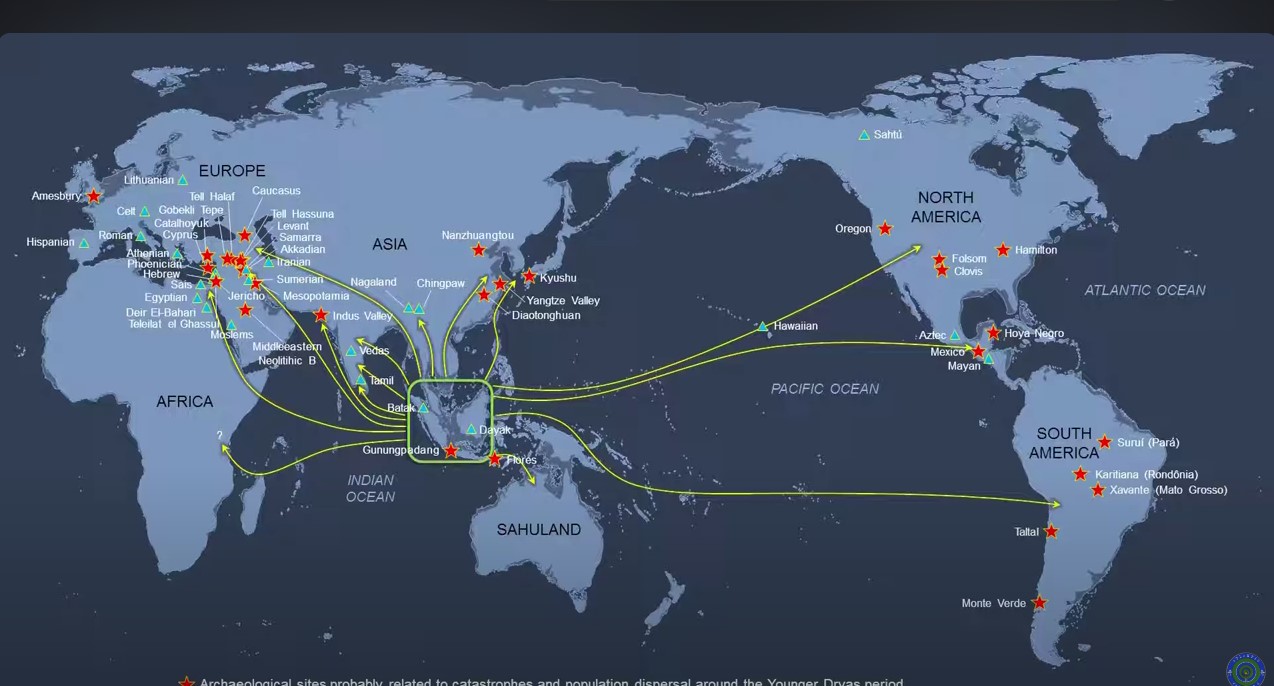
I was considering to buy Irwanto’s book, but then I discovered a video Tracing the Cradle of Civilisations in Sundaland, about a lecture he gave in the Philippines in 2017 at an Asean Advanced Archaeology Symposium. Brilliant presentation, worth watching (28 minutes).
But he is really going too far in his enthusiasm. Here is a screenshot from the video. Everything, all over the world , originated in Sundaland. So I may not buy the book.