The Hudson River School

Now that I have migrated my Multiply albums to my own website and also created my blog on the Stuif site , it is time to get my website out of its hibernation. Because for a long time I have not really maintained it.

So long that I had almost forgotten what I had put into it. Like for example my Virtual Museum. I created it in 2002 as a collection of some of my favourite painters. A very personal choice, often they have not created many works of art, so it is a pleasant surprise when you visit a museum and find out that they have a  Balthus or a Delvaux or a  Cole .

A Cole? Maybe you have never even heard about him.

Thomas Cole (1801-1848) was the founder of the Hudson River School, an American school of Romantic landscape painters. They started painting in the Hudson Valley (New York) although later they also visited other regions.

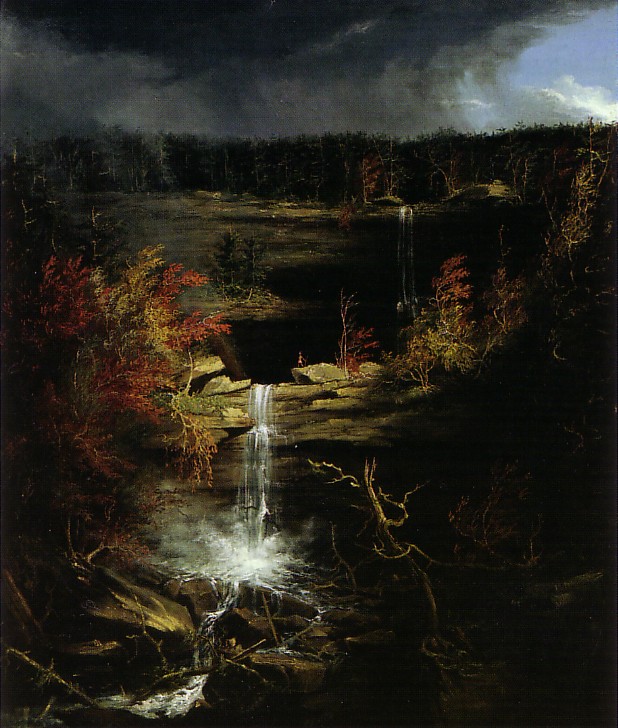
This is one of Cole’s paintings, created in 1826. The Falls of the Kaaterskill in the state of New York.

As romantic as it can be. Click on the picture to enlarge it and try to find the single person depicted, to show how fragile a human being is.

With my waterfall addiction I was of course curious to find out if waterfalls were a common topic for these landscape painters.

And indeed, they were..:-)


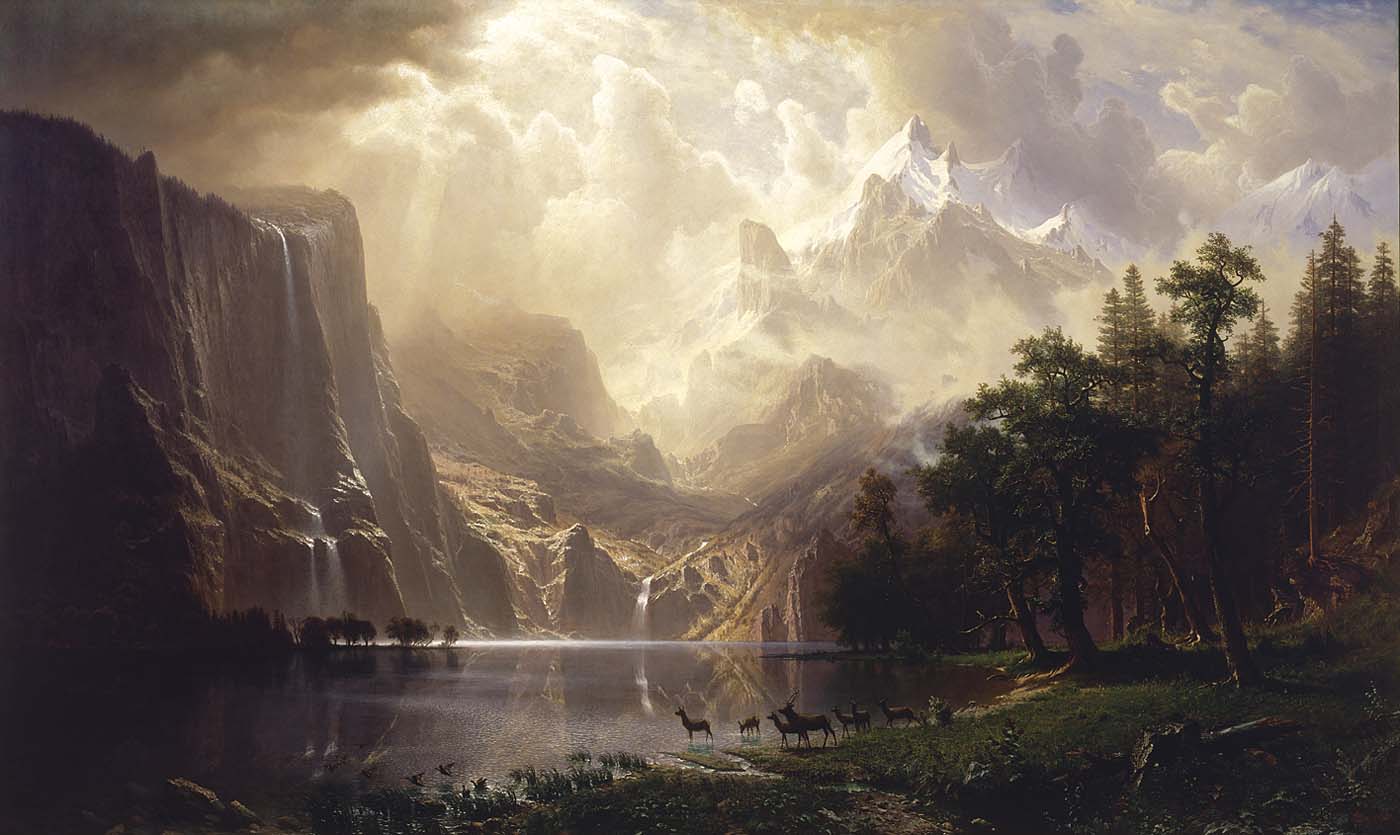
This is my favourite painting, by Albert Bierstadt, 1830-1902. He was born in Germany but emigrated, one year old, with his family to the USA.

It is called “Among the Sierra Nevada Mountains” and dates from around  1868. The Sierra Nevada is a mountain range in California, culminating in Mount Whitney at 4421 m.

California? It looks more exotic, like a landscape in Avatar..:-)

And that was indeed a criticism of his contemporaries, that he was not realistic enough. People were also critical about the size of his paintings, that they were dwarfing the works of his fellow-painters. This one measures (including the frame) 245 x 367 cm !
A beautiful painting.

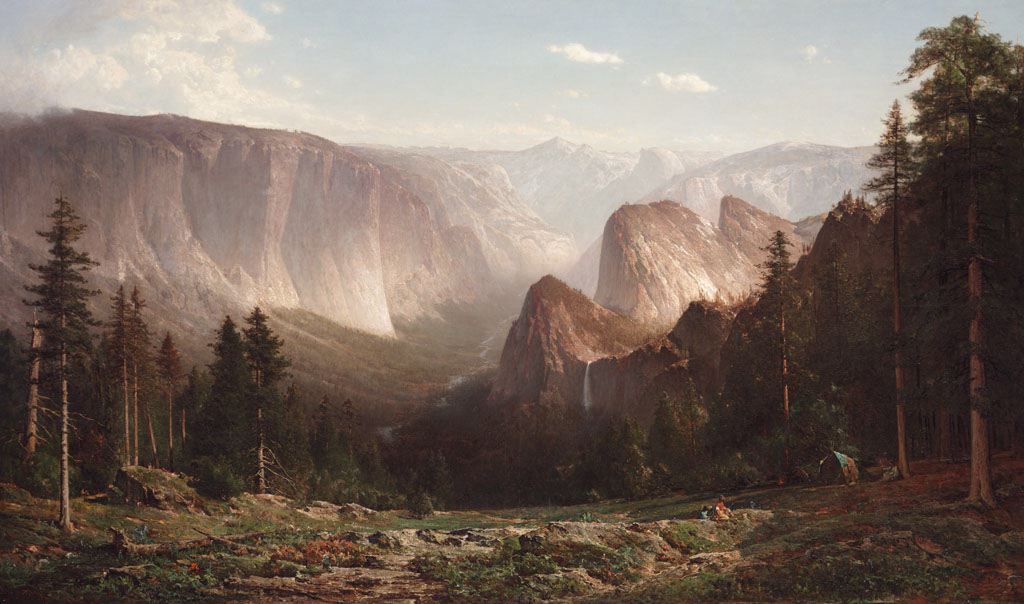
Here is another one, by Thomas Hill (1829-1908). Also a landscape in California, named Great Canyon of the Sierra, Yosemite. It dates from 1872. Also here signs of human life, an Indian tipi. Keep in mind that this part of the USA had only been recently explored and basically was still Indian territory.

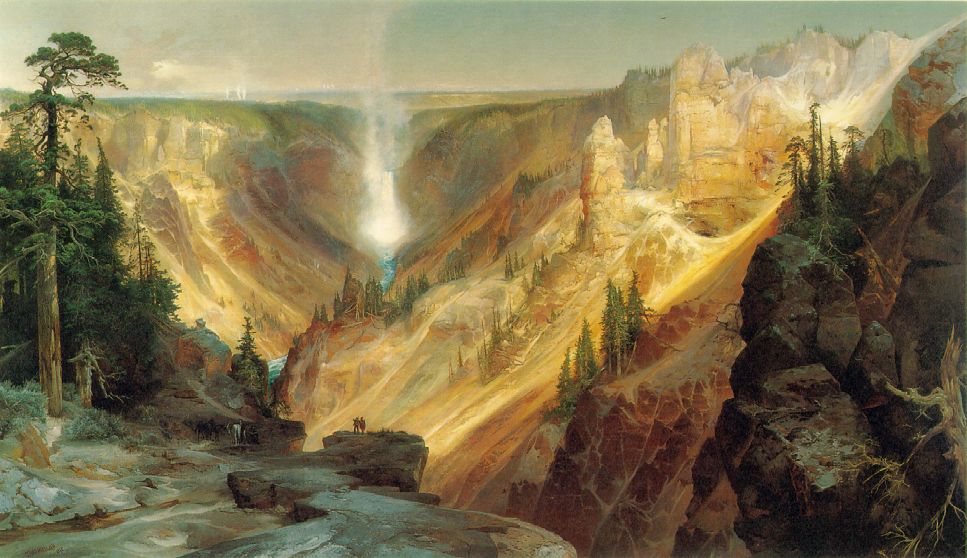
One more, by Thomas Moran (1837-1926). In 1871 he joined, as a guest artist, an expedition to Yellowstone, until then an almost unknown part of the USA.

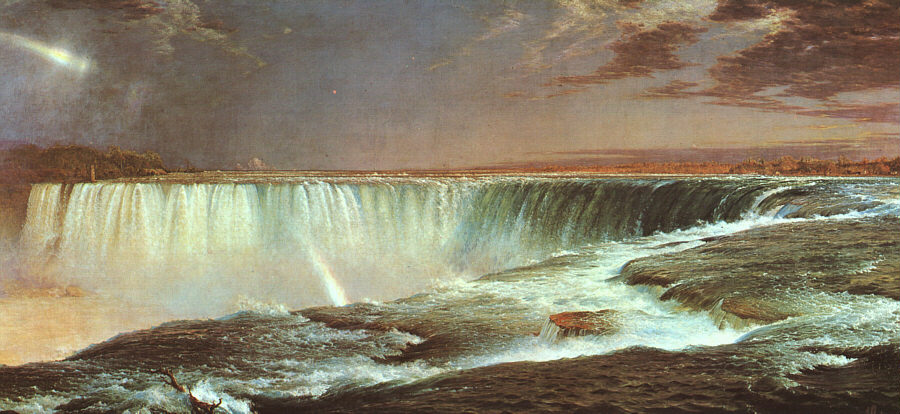
Back to the East Coast, the Niagara Falls, painted in 1857 by Frederic Edwin Church (1826 – 1900). Church was one on the most influential painters of the Hudson River School.

A final one by Church, possibly his most famous one, an impression of the Andes in South America, where he had traveled to Equador and Columbia a few years earlier. It was completed in 1859 and a huge success on its first exhibition  in New York, with people queuing and paying money to view the painting. Zoom in on the painting and try to find the village with the church, and other details.


About Kwai Loh’s, Ang Moh’s, Mat Salleh’s and more

A Dutch friend asked me, why is your blog called “The life of a Kwai Loh”?
Some of my Chinese Malaysian friends are a bit shocked, and ask me the same question.

Shocked, because Kwai Loh is a “bad” word  :-). It is Cantonese for “Ghost Man” and used for Caucasian people, maybe because of their often “white” complexion. It is generally considered to be a slightly racist word, although not as bad as the N-word in the USA.

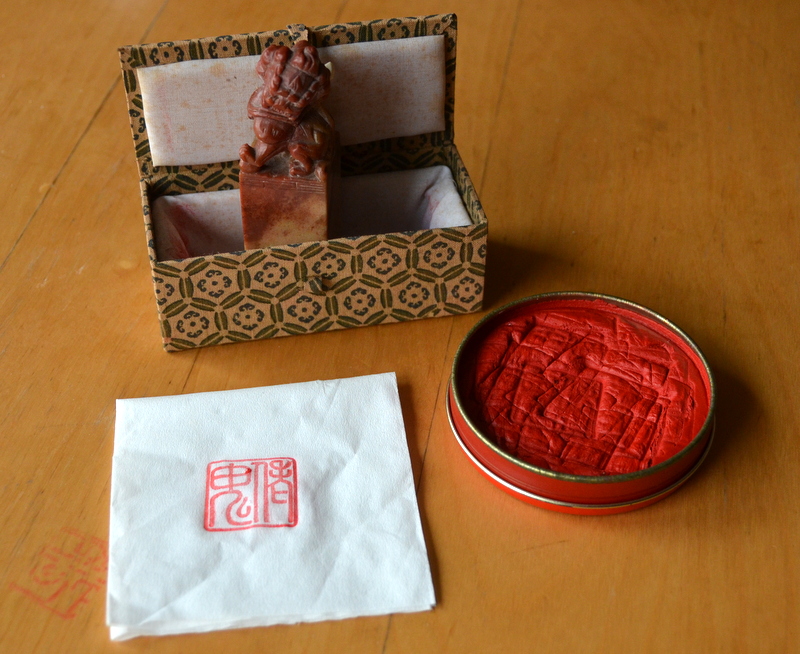
But I liked the sound of it, and when I was looking for a suitable nickname for my Multiply website, I thought, why not Kwai Loh? That’s how it started and when I was in Beijing a few years ago and found a shop where an old man made traditional chops, I ordered one with the two characters for Kwai Loh. He was surprised, but did it..:-) A chop, by the way, is Malaysian/Singaporean English for a seal.

My “Kwai Loh” seal

In Malaysia two more “slang” words are used to describe Western foreigners. One is also Chinese, Hokkien dialect: Ang Moh, meaning Red Hair. Not really offensive, I would say.

Then there is Mat Salleh, which is Malay. Origin not clear, it might come from “Mad sailor”, referring to the wild colonial past of Penang ..:-) Quite common these days, not offensive.

I hope you will agree that Kwai Loh fits me best. Especially because, being a secular humanist, I do not believe in the existence of ghosts/spirits at all. Period. More about this topic in future posts..:-)

Talking about offensive, what do you think about this? This monkey is endemic to Borneo and you can find it in Sarawak. Official name is Proboscis Monkey.

Proboscis Monkey

Do you know how it is called in Malay language? Orang Belanda!  The Dutch Man! That I call offensive.

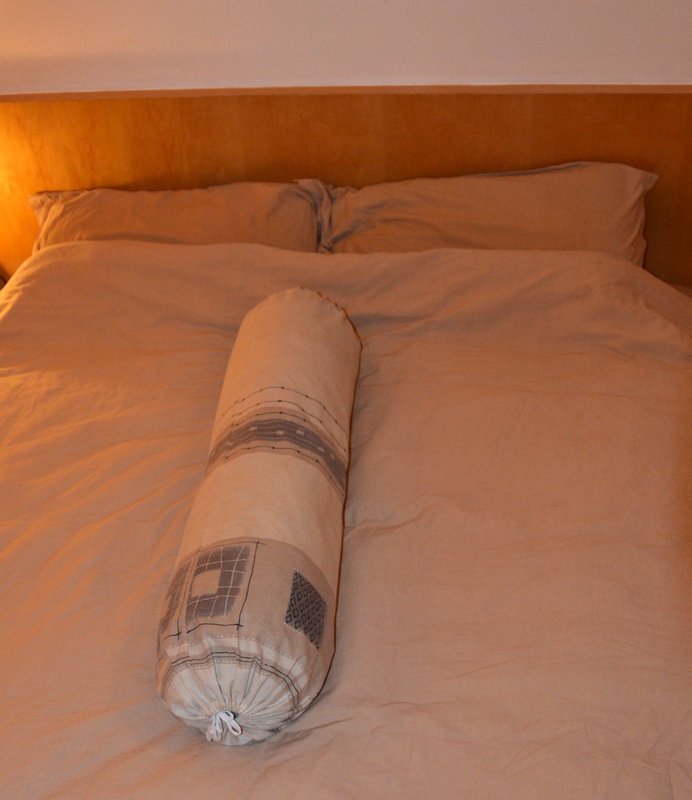
And what about this. In Asia it is quite common to have a bolster on your bed. Nice to cuddle when you sleep alone. This is our own bolster.

Our bolster

Now, guess how this bolster is sometimes called in Malay and Indonesia language!

A Dutch wife!

I leave it to your imagination to give an explanation…:-)


God’s particle

About three months ago CERN has announced the discovery of the Higgs boson, a.k.a. the God Particle. Several of my friends have asked me if I, being a physicist, could explain what it was all about. I tried, but it was not easy.

Here is another attempt…:-)

Let me start with an overview.

In the 19th century it became increasingly clear that matter is composed of molecules, and that molecules themselves are composed of atoms. Only a limited number of different atoms exists, ninety occur in nature, quite a few more have been made in laboratories. Imagine the tremendous simplification, everything around us is composed of these building blocks!

The periodic table of elements. Uranium (92) is the heaviest element found in nature. Promethium (61) and Technetium (43) are radioactive and not found in nature, giving a total count of 90 elements occurring naturally.

A monumental breakthrough took place in the 20th century, when it was discovered that atoms themselves consisted of only three (!) elementary particles, protons, neutrons and electrons. Protons and neutrons in the nucleus of the atom with electrons orbiting around this nucleus. Just a matter of numbers. Carbon with 6 protons and 6 neutrons in its nucleus and 6 electrons around this nucleus. Add one of each, and you get Nitrogen, do this again and you get Oxygen.This amazing simplicity was one of the reasons I decided to become a physicist. Even a nuclear physicist..:-)

Actually two more particles had to be added to the list. Light also consists of particles, called photons. And some of the elements are not stable but radioactive, the nucleus can send out an electron and at the same time another particle, called neutrino. Everything controlled by four forces. The strong nuclear force, keeping the protons and neutrons in the nucleus together, the electromagnetic force, keeping the electrons in orbit, the weak nuclear force, responsible for the radioactivity and, finally, the force of gravitation.

But this is not the end of the story, soon it became more complicated again! In cosmic radiation, and also in laboratory experiments (using powerful accelerators to let elementary particles collide), new particles were discovered. Not stable, often only living for split seconds, before decaying in other elementary particles. They were named muons, pions, hyperons, a confusing multitude.

It was discovered that protons and neutrons were actually NOT elementary particles, but that they were composed of “quarks”. Not just one, but several families of quarks. Bound together by “gluons”. And the electron and the neutrino were accompanied by other particle families, the muon electron, the tau electron, with corresponding neutrino’s. The strong nuclear force is actually the force between the quarks, with three quarks forming a proton or a neutron.

It has also been discovered that the elementary forces are carried by “force particles” and that the photon is actually the force particle of the electromagnetic force. One of the big successes of the last decades, was the experimental observation of the “weak nuclear force” carriers, the W and Z bosons.

All these experiments lead to what is now called the Standard Model. Three families of quarks, three families of ‘electrons’, three elementary forces with their force particles. This leaves out until now gravitation. That is actually a big problem, but we will not discuss it here
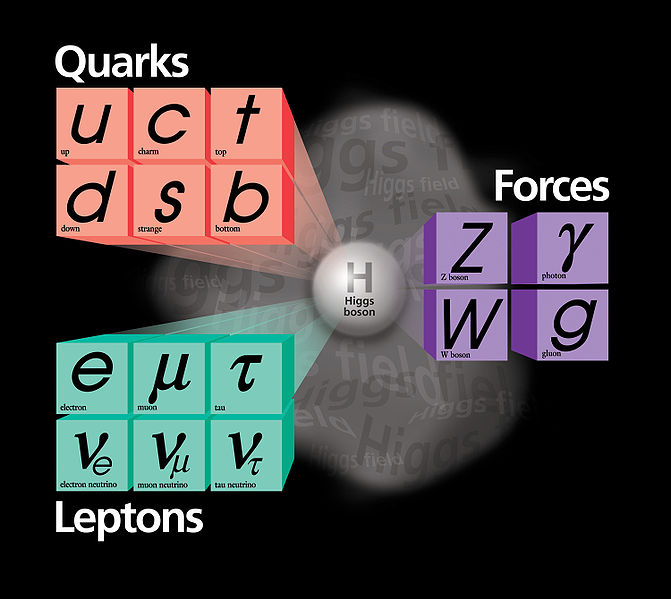
The Standard Model. Gravity is not taken into account. There are three quark families (up-down), (charm-strange) and (top-bottom). And three “lepton” families, electron, muon and tau, with their corresponding neutrinos. Finally the force particles, photon, gluon and the (W,Z) bosons

All the particles in the picture above have been “observed”. Observed in quotes, because these particles are so short-lived that their existence must be concluded from the traces they leave behind when they die…

Much more complicated than the simple “proton-neutron-electron” model, but definitely one of the most impressive results of modern physics.

One problem remains. All these particles, the quarks, the leptons, the force particles, have mass. Some are heavy like the quarks, some are light like the leptons, the photon has no mass, the neutrinos almost nothing. Why?

In 1964 Higgs and a few others came with a theory. There might exist another force field, permeating the universe, acting as a kind of “syrup”, slowing down other elementary particles and in that way giving them inertia ( = mass!). But if that field existed, it should have its own force particle, the Higgs boson. Nicknamed the God particle, because it gave mass to all the other particles.

The theory was widely accepted, so the search for the Higgs boson was on. A fierce competition resulted between CERN and the Fermilab in USA.

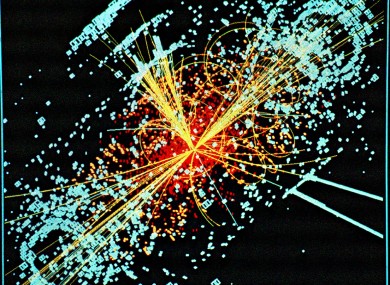
It now looks like it has been found. With a mass about 130 times the mass of the proton. And so short-lived that I have not even been able to find an estimate on the Internet. So you have to look at the traces it leaves behind when it dies. Here is an artist impression.
And here is a picture of the experimental setup at CERN (the ATLAS experiment) Try to spot the human figure in the picture!
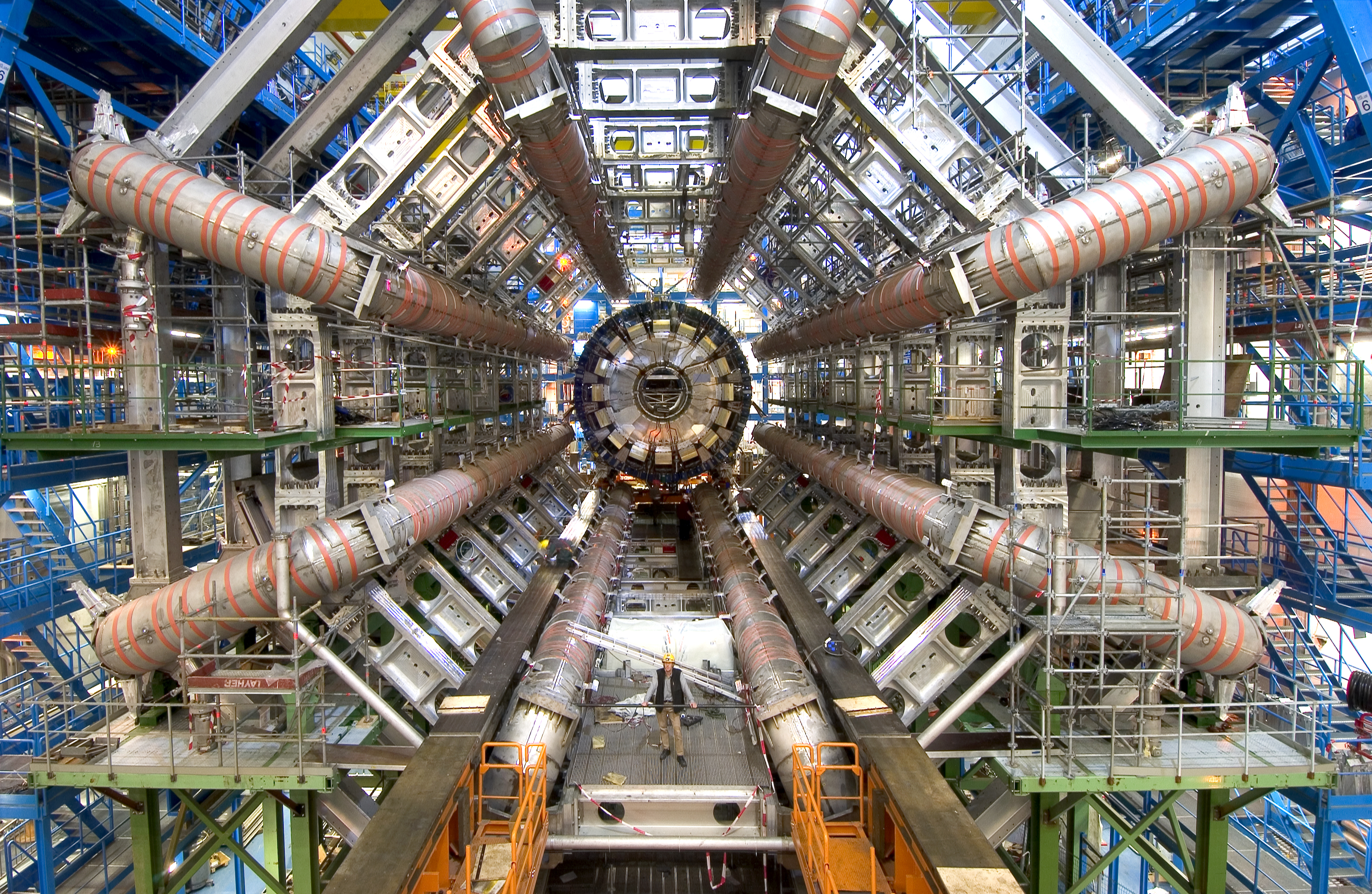
This is ATLAS, one of the four experiments at the Large Hadron Collider of CERN.

Is our understanding of the physical universe now complete? No way!

As mentioned before, there is still the problem left to combine the Standard Model with gravitation. Maybe string theory, but not everybody is convinced that this will be the solution.

There is a much bigger challenge. During the last decades it has become convincingly clear that there has to be more in our universe than quarks, electrons, photons, etc. Let’s call this “normal matter”. From what we know about the Big Bang and from the way our universe is expanding after the Big Bang, we now are sure that there are two more constituents of our Universe. There has to be “Dark Matter“, until now invisible. And there has to be “Dark Energy“, a repulsive force that actually accelerates the expansion of the Universe. That’s about all we know at the moment.

A small correction to the Standard Model? Absolutely not! Here is the present estimate. Normal matter takes only 4% (!). The rest is basically unknown at the moment!
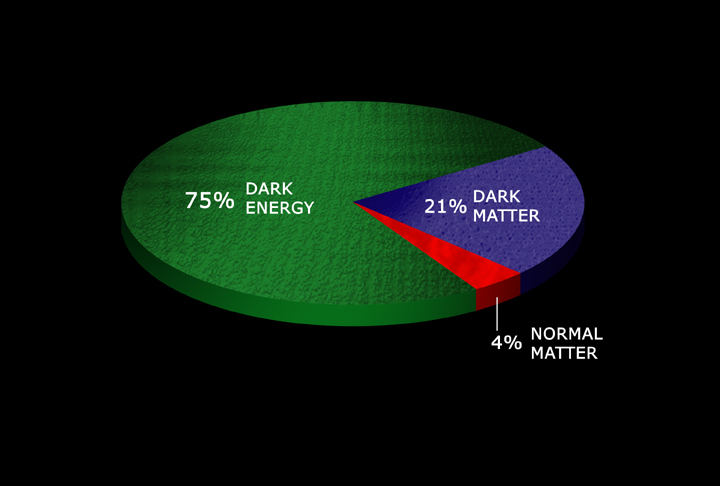
We know a lot about the 4% normal matter and next to nothing about the rest!

A sobering thought. But also exciting. There is still a lot to discover and explore in our physical universe. And for the ambitious among you: a lot of Nobel Prizes to win!

 

Stung by a bee

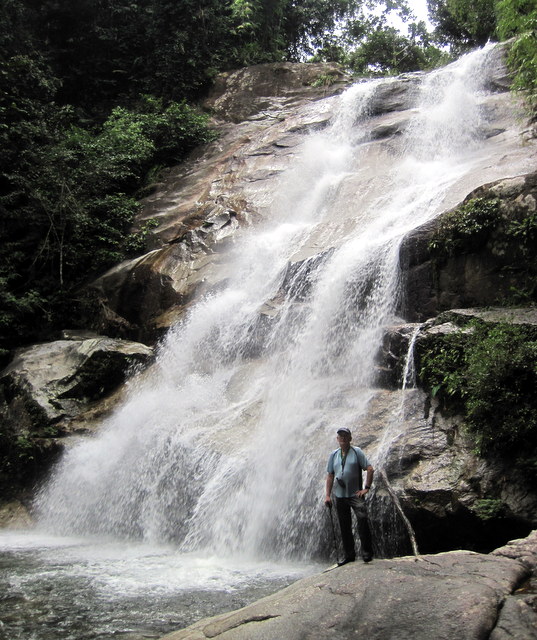
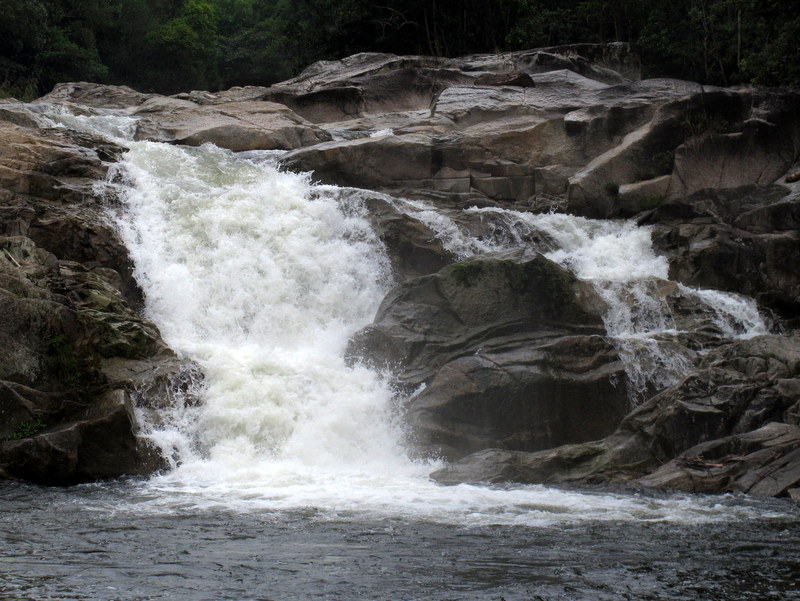
Two years ago I have visited the remote Medang waterfall near KKB with my friend Siang Hui. It is quite a long hike, but you are rewarded with an impressive waterfall.

While we were relaxing at the fall, taking a bath, making coffee and having lunch, I was stung by a bee. They are called sweat bees, although I think that they are actually wasps, because they don’t leave their stinger behind.
The name tells it all, they are attracted by sweat. And I sweat profusely, so they like me. During the hike, no problem, because I am moving, but when I have arrived at my destination it doesn’t take long before one of these tiny(!) critters finds me and signals to his friends: come over here for a treat!

They are not aggressive, but probably, waving them away with my hands, I must have frightened one of them. I was stung in my back, it was not very painful and I did not pay much attention to it.
However on our way back, a bit later, I started to feel uncomfortable. I felt that my mouth got swollen, I could not swallow properly, my voice sounded funny and I felt faint. I told Siang Hui that I wanted to lie down a bit. Of course he was concerned, but he kept his cool.

After about half an hour I started to feel better and we walked back (still more than one hour!) to our car. First I was thinking about going to a clinic, but my recovery was so complete that there was no need.

Of course the question was, what had happened? I had the feeling that it was related to the bee sting, and searching the Internet confirmed that it had been an allergic reaction!

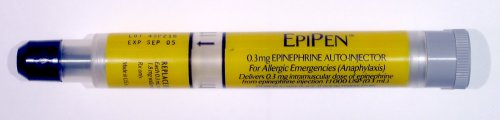
Actually I had experienced the onset of an anaphylactic shock ! Which can be life-threatening. It was an unpleasant discovery that I had developed an allergy for bee stings. I bought an Epipen and took it with me on my next jungle trips. With an Epipen you can inject yourself with a dose of epinephrine (adrenaline), in case of emergency.

Such an Epipen is not only expensive (~ RM 300), it has also a limited shelf life. Mine has passed its expiry date already.

Of course I was more than ever trying to keep those bees away. Because each following sting gives a stronger and faster reaction.

Two weeks ago I visited another waterfall with my friend Rani, see my earlier post. I was stung again, really a minor one, but still about the same effects.
And here too we were very far away from medical help. I had my Epipen ready, but after a while I recovered, so I did not need it. Kudos to Rani for his support!

When I wanted to buy an new Epipen, I was shocked to hear that they are no longer available in Malaysia! In a few weeks time a friend from Amsterdam will come here for her holidays, so I am now trying to buy one in the Netherlands and let her take it with her.

Recently a friend of mine, Harry Nian, died while on a solo expedition looking for new waterfalls in Terengganu. His last (unsent) sms was, that he was stung by many bees and could not move….. Anaphylactic shock?

I am rather scared at the moment to go back into the jungle..:-(

I am looking for a cream or spray that keeps bees and wasps away, found some information on the Internet, but no idea if this will be effective. And I have heard that there exists something called “immunotherapy” where you can overcome your allergy by regular (controlled) injections with tiny amounts of the venom. If a reader of this post has more information, please let me know!

A Day with May

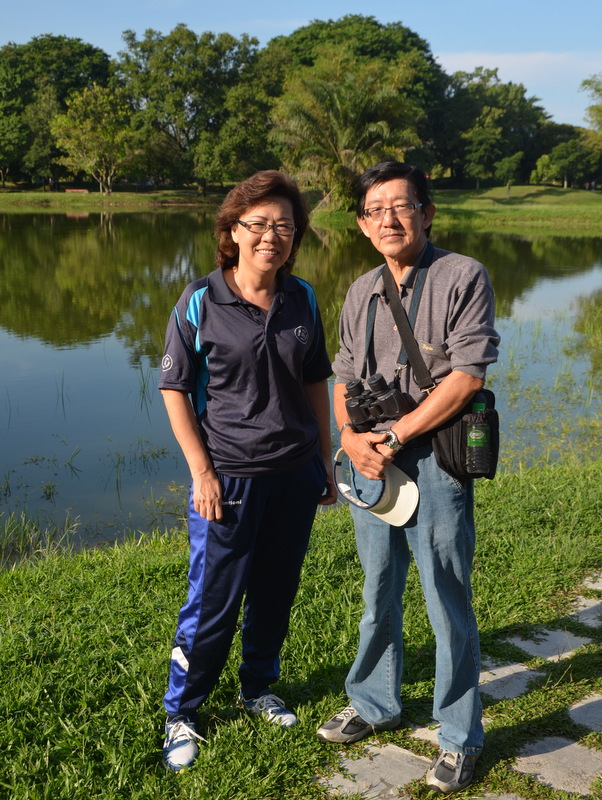
About two years ago, during a visit of Taiping, I met May during a walk in the Lake Gardens. We had a friendly conversation and later kept in touch via email.

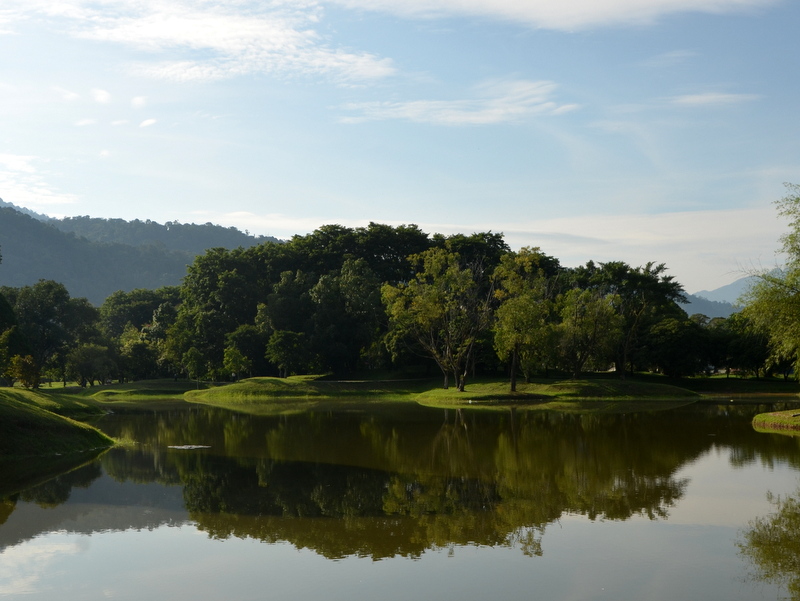
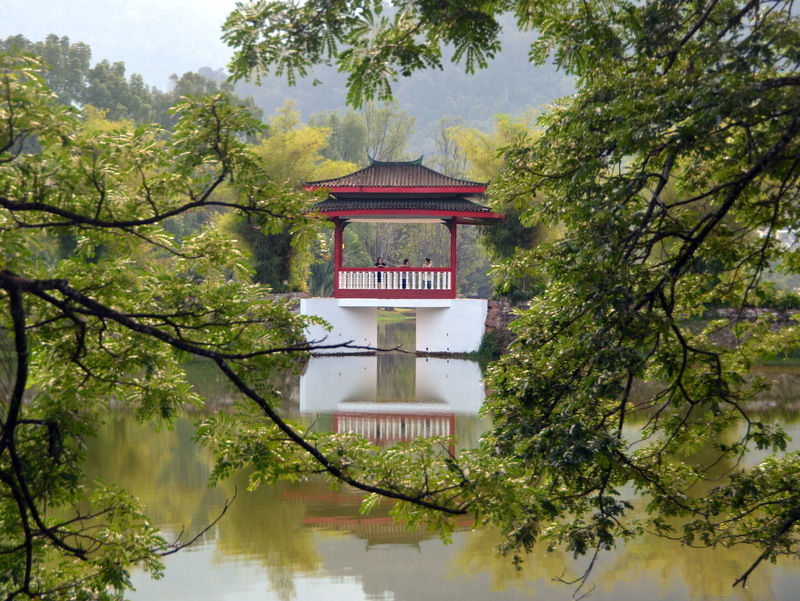
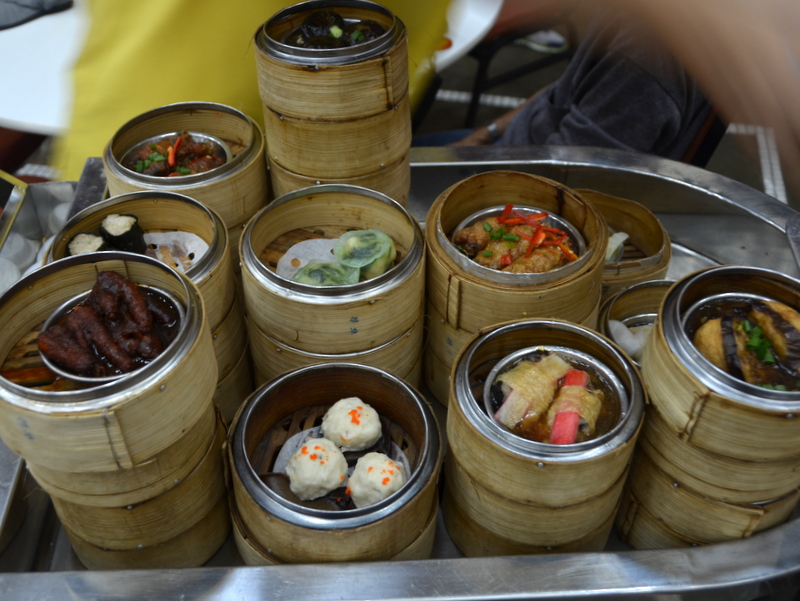
During my last visit we managed to meet again. First we had a walk in the Lake Gardens, beautiful as ever. Next we had breakfast with dim sum in the North Perak Chinese Chamber of Commerce and Industry (!) near the lake. Delicious glutinous rice too! I told her that George and I were planning to go to Austin Pool, and May was interested to join.

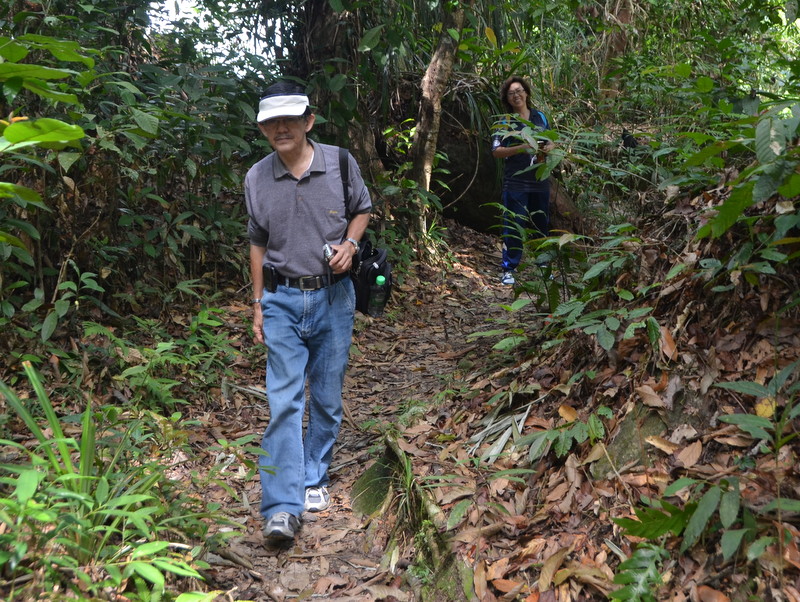
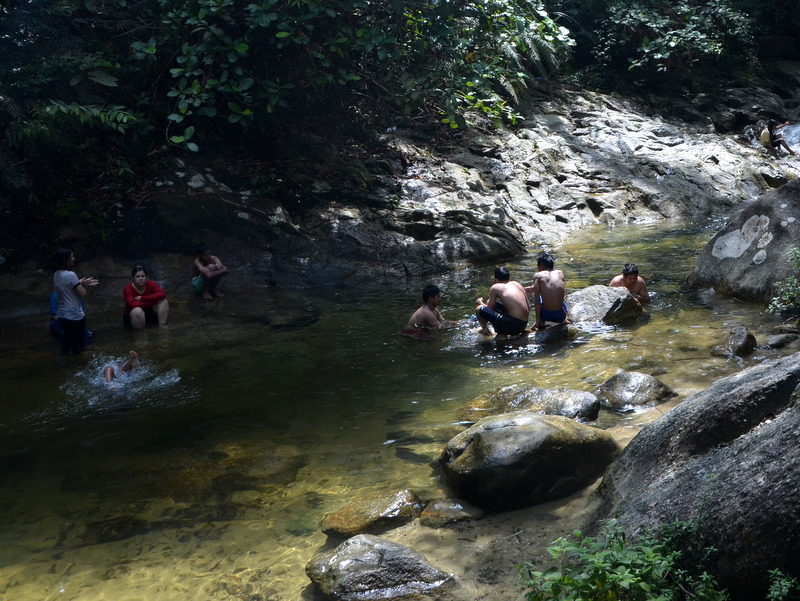
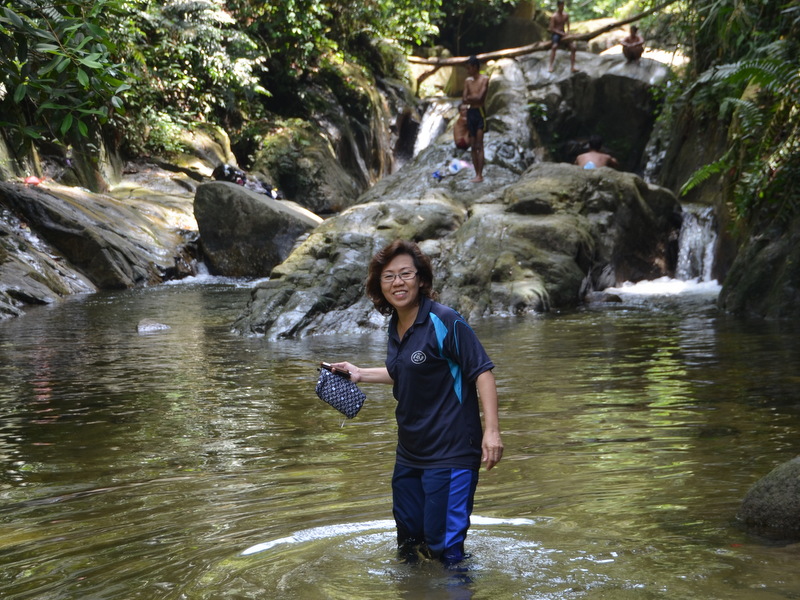
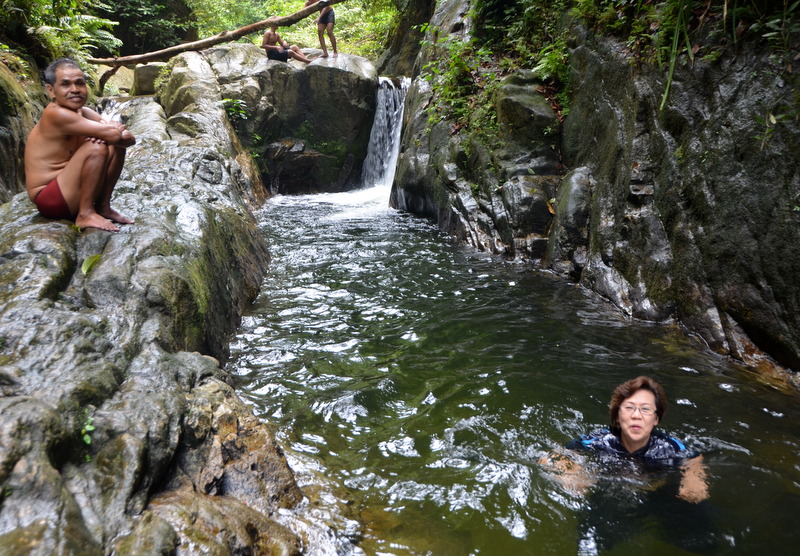
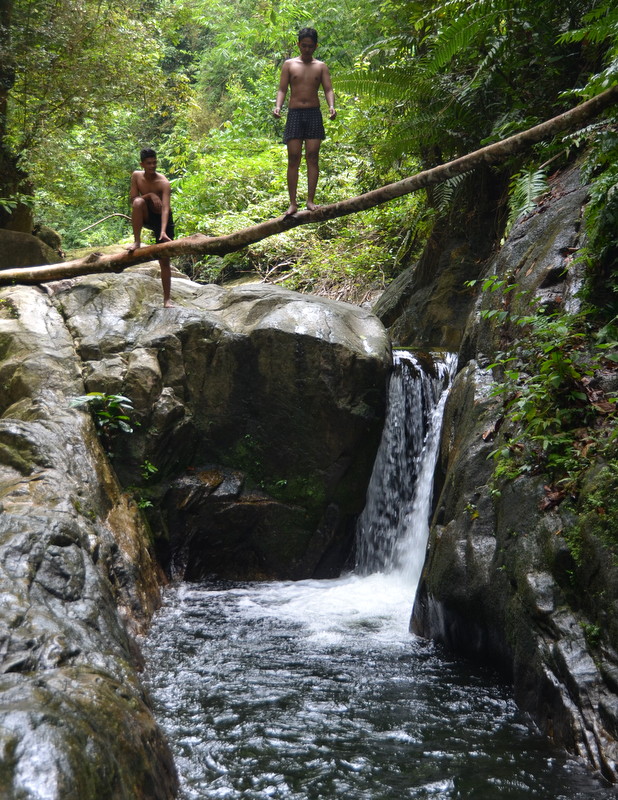
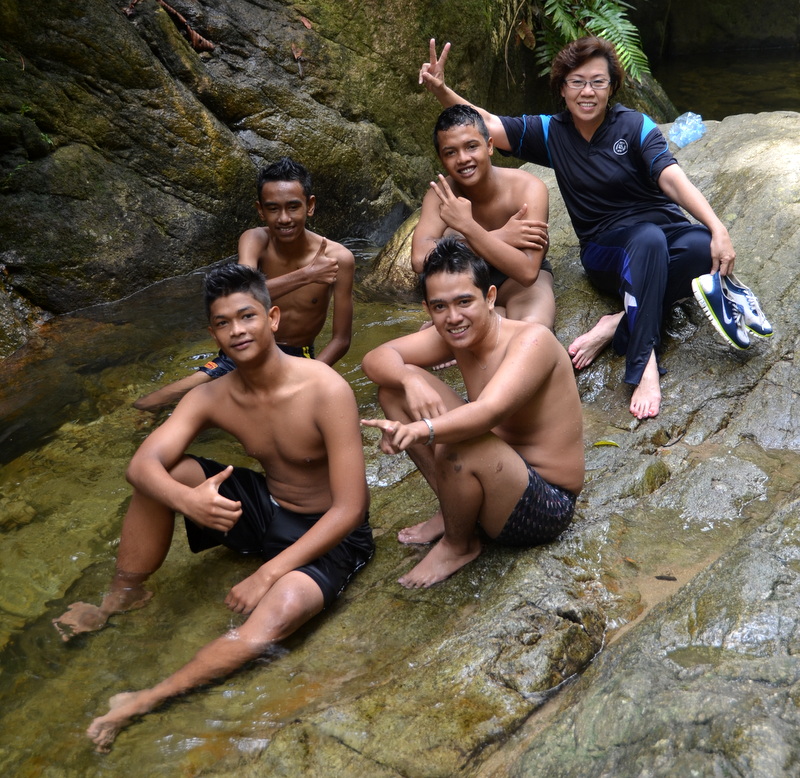
Austin Pool is similar to the better know Burmese Pool, but less crowded. Clear water, some cascades and a bit further along the trail a nice waterfall with a deep pool. Young daredevils were having fun in the water and May could not resist the temptation to take a bath herself.

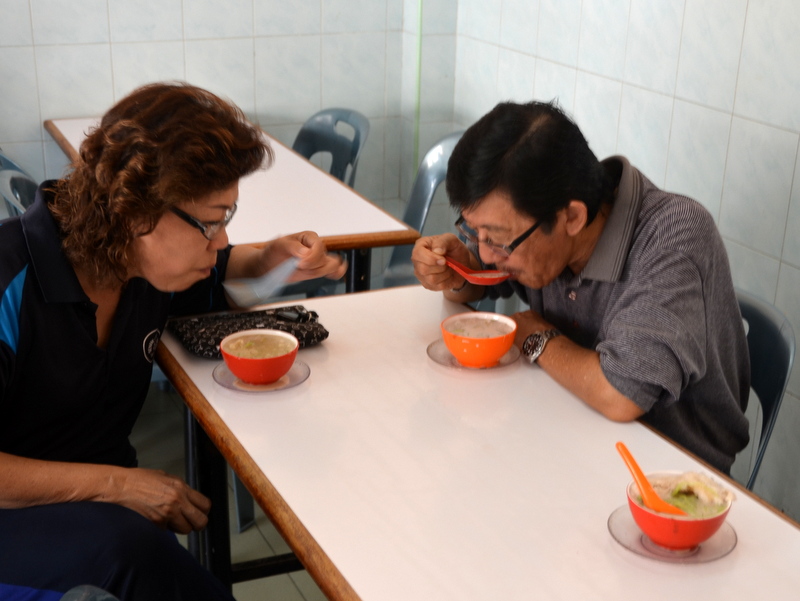
We ended up in one of the famous cendol shops of Taiping.

A half-day well spent!

International Day of Peace 2012

Did you know that there exists an International Day of Peace? I didn’t.
It falls on 21 September and has been observed since 1982.

In Malaysia the activities are concentrated in Taiping.Why there? In the 19th century there have been several wars fought between rivaling Chinese gangs about the tin mines of Larut. When these wars came to an end in 1874, it was decided to rename Larut in Taiping, which means “everlasting peace

And peaceful it is, these days. I am a regular visitor, and see it as my second hometown.

When I arrived this time, my Taiping friends told me about the Peace day, that there was a bicycle rally and if I liked to join.

The morning started with heavy rain, but just in time the sun came through. Quite a number of people had assembled near the Lake Gardens

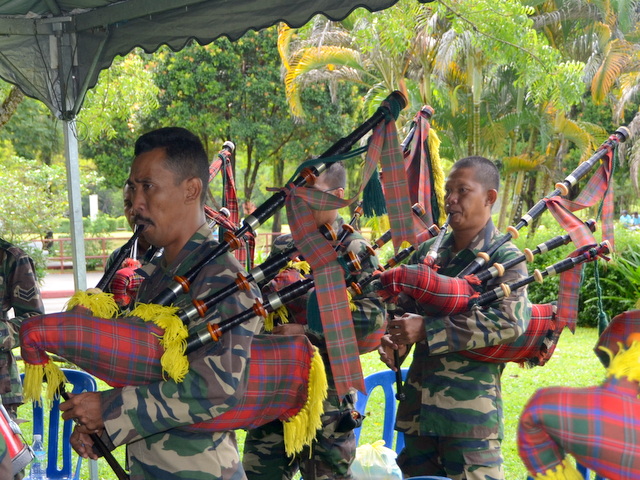
It was a nice, relaxed ride around the gardens and the town. At the “finish” we were rewarded with breakfast, while a band played (bagpipe!) music.

And here is an official picture.

It was a nice morning, I met several old friends and made new ones

To end this post with some trivia, I had number 179, anything special about that number?

Answer: it is a prime, and even a sexy one…:-)

How is the Sun doing these days?

My last post about the Sun is from August 2010. At that time it had become clear already that the present Solar Cycle 24 would be a weak one. We are now two years further, the maximum in solar activity is expected around September next year. Time for an update.

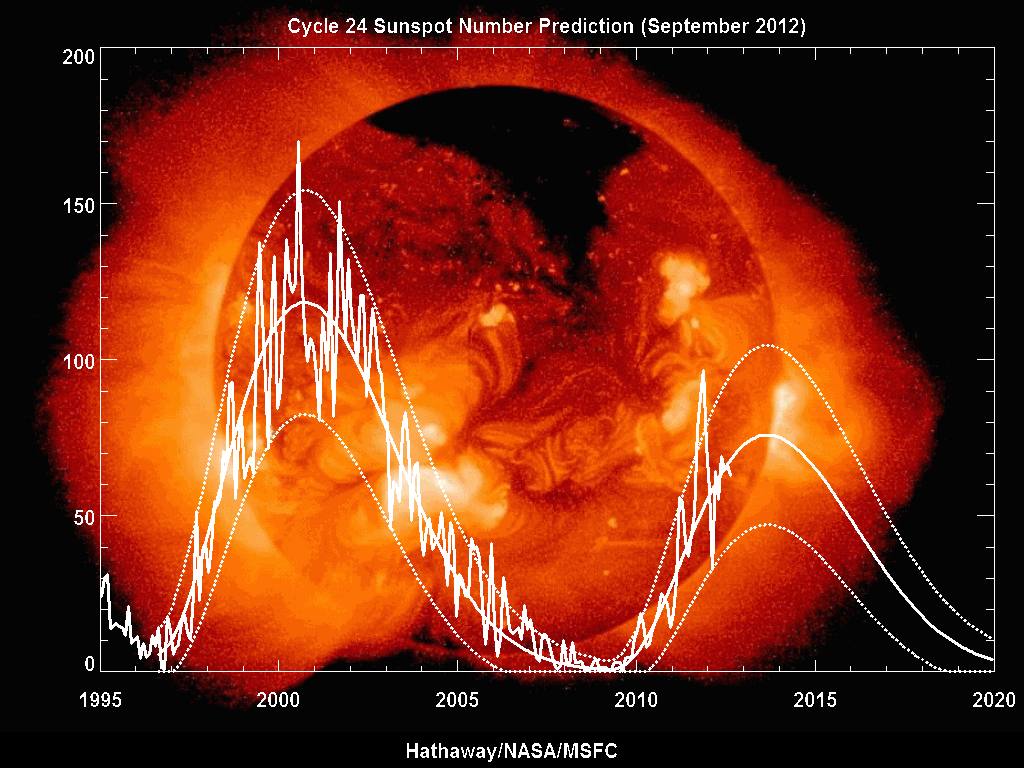
Here is the most recent prediction, with data points until September

The current prediction is a (smoothed) sunspot number maximum of about 76. That is low! We have to go back to Cycle 14 in 1906, to find a lower maximum value of 64.

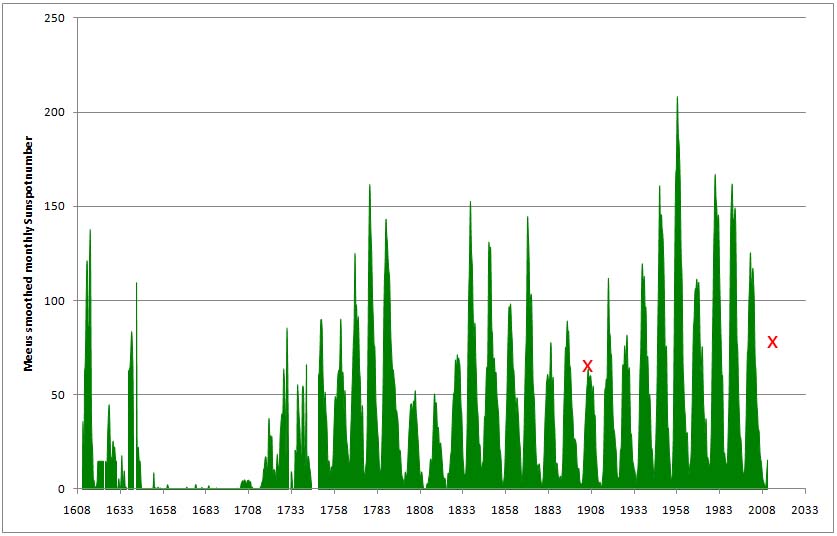
Here is a graph of the Solar Cycles over the past four centuries. With red crosses I have marked the 1906 maximum and the (predicted) 2013 maximum.

You will notice that the last half century we have had a “wave” of solar activity. Is that coming to an end now and will we enter a period of low solar activity? Nobody knows, as we do not understand very well the origin of the Solar Cycle.

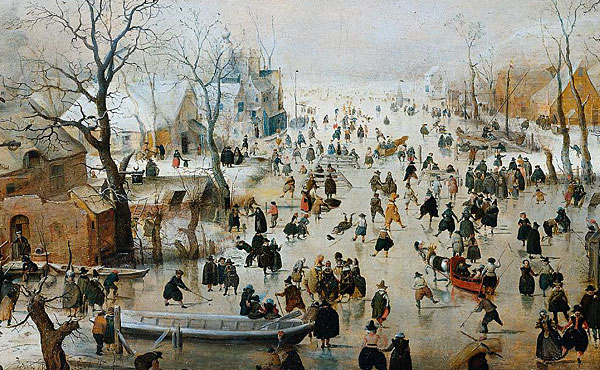
Both the Maunder minimum (17th century) and the Dalton minimum (~ 1800) had influence on the Earth climate. Severe winters in Europe as can be seen in paintings of the Dutch School, like this famous one by Hendrick Avercamp (1585-1634)

Now we live in a period of global warming. There are strong indications that our carbon emission is at least partly responsible for this. But could there also be a contribution due to the high solar activity during the last fifty years? Those are sensitive questions..:-)

Waterfalls

All my friends should know by now that I am addicted to waterfalls. My website Waterfalls of Malaysia contains almost 180 waterfalls, most of which I have visited personally.

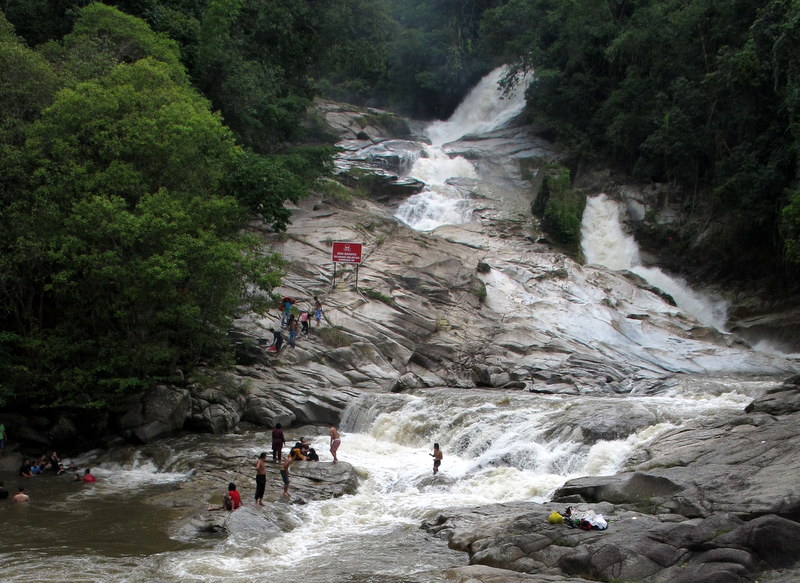
Yesterday I have added two more to my list in the Bentong region. Bentong has a famous waterfall, the Chamang waterfall, a dangerous one, almost yearly people drown here!

Chamang waterfall with a warning signboard in red

Here also is the start of the long trail up to Gunung Rajah. Recently my friend Siang Hui had discovered two more falls along this trail.

Visiting those two falls was the target of Rani and me. The month of the Hungry Ghosts had just passed, so it should be safe, LOL.

After a steep climb up from the Chamang car park, we reached a nice level road, leading us via an Orang Asli village in about 1.5 hour to the first fall, baptised Lubuk Chamang by Siang Hui.

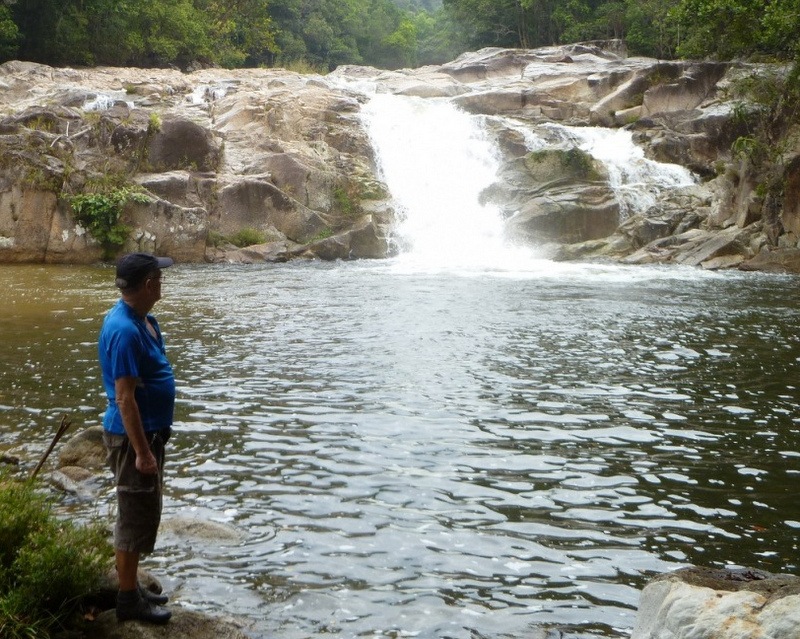
And a magnificent lubuk it was! The fall was not high, but strong with a huge, deep pool in front of it. A good place for a coffee and a dip.

Lubuk Chamang

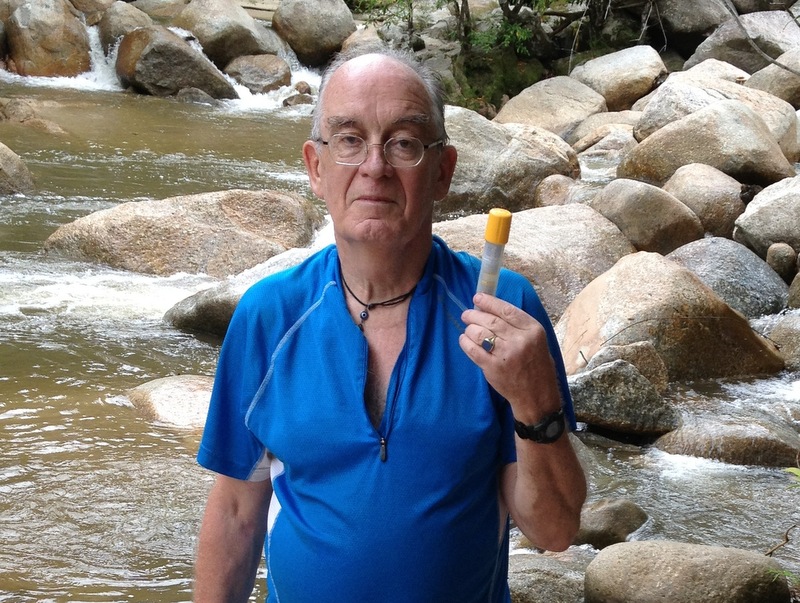
Unfortunately I was stung by a bee here. Maybe a Hungry Ghost, lost on his way back to his grave? Bees like me very much, because I am a sweaty person. The bad thing is that I am allergic for them. After I had a near-anaphylactic shock, two years ago, I always carry antihistamine tablets, and even a Epipen in case of emergency.

Not needed this time

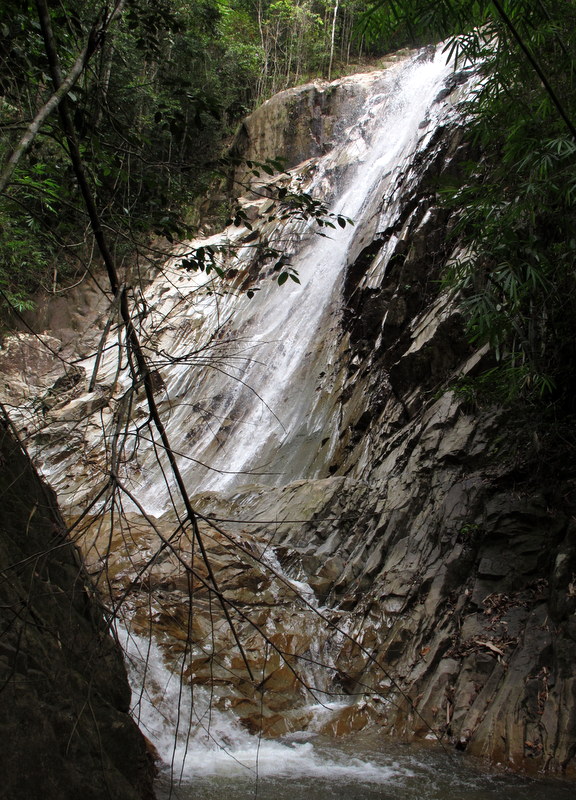
I did not need it this time, but still I had an uncomfortable half hour, before the allergic effects subsided. After I had recovered, we decided to continue to the second fall, in a tributary of the Perting river. This fall was tall, but not much water.

Anak Perting

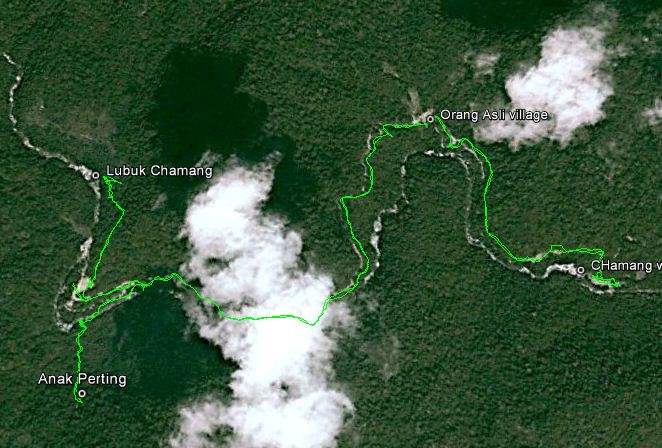
During the trip I took pictures with my iPhone. Combined with the GPS data, it resulted in an EveryTrail report Perting Fall . Here is a Google Earth screenshot of our hike


Kiara again

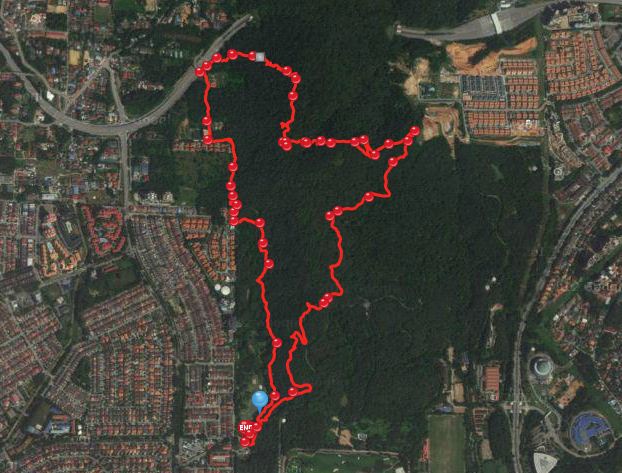
Another walk in Kiara with Pola Singh, this time joined by Chow, another avid hiker. We started as usual from the Lembah Kiara park.

This time I recorded our hike with EveryTrail, an interesting smartphone app, where you combine the GPS data with the pictures taken, add captions and a story and then publish the result on the Internet.


Here is a screenshot of the hike. Each red dot represents a picture.

When you start the slideshow you will be able to follow our hike.

Try it out: Kiara again


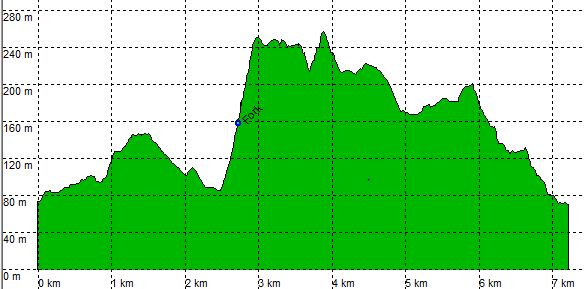
Climbing up from near the Penchala highway to the top of the hill was a steep climb, as you can see in the altitude map below …:-)!

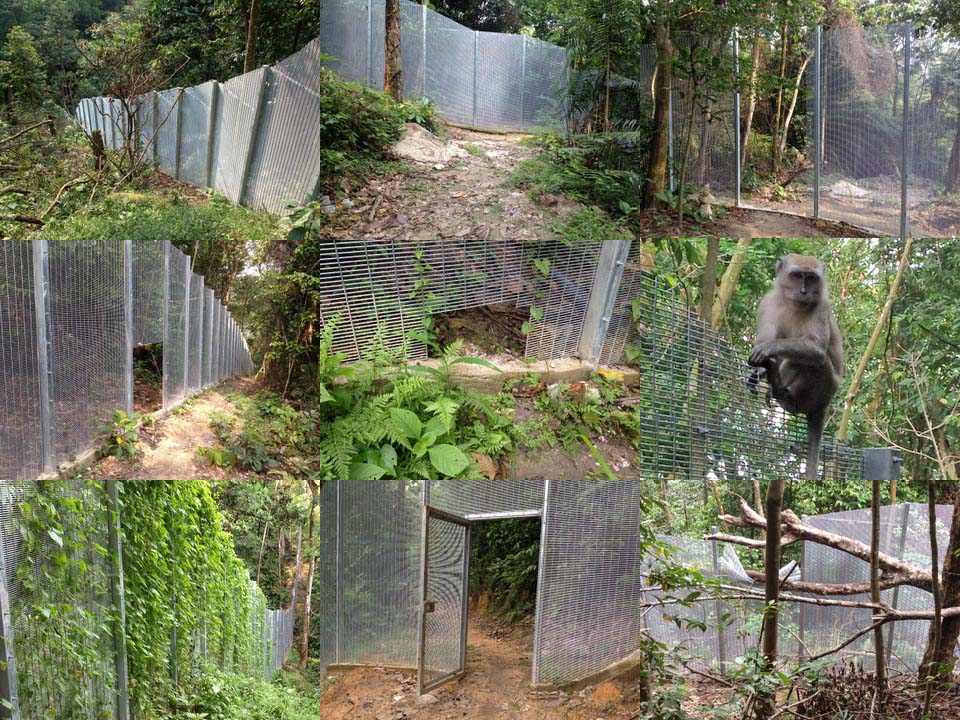
I walked along the Northern fence to the viewpoint, interested how the fence was doing after the work had stopped. Several openings have been created, legally or otherwise. I found a cute small gate for the little critters, because only monkeys are able to climb the fence, even taking a relaxed rest on top of it!

Plants start covering parts of the fence, a tree has fallen down, hopefully nature will fight back.


Malaysia Boleh!

According to local newspapers, a Malay Teachers organisation and the Ministry of Education have published  “guidelines” to help parents to identify gay and lesbian “symptoms” in their children so they can take early corrective measurements.

Muscular body, V-neck shirts, big handbags, wow!

At first I thought it was a hoax, but it seems to be true and has now reached even international newspapers like the Guardian (396 comments)


V-Neck :    Check!

Big handbag :   Check!

Muscular Body :  Hmm…. Fail

You can imagine the uproar this publication has caused in Malaysian Cyberspace.

Hundreds of, often hilarious but also very embarrassed, comments.


Of course it is actually worrying, showing that Malaysia, although having a first-world economy, still has in many respects a third-world mindset. Because this is not an isolated incident.

For example, recently Mohd Amin, the vice president of the Muslim Lawyers Association of Malaysia said that LGBT rights should be “excluded from a human rights declaration currently being drafted by Association of Southeast Asian Nations (ASEAN)

And a few months ago in the state of Terengganu, 66 Muslim schoolboys have been  sent to a gay ‘cure’ camp after school teachers identified them as being effeminate.

Malaysia Boleh!