Journal 8-6-2013

A long post with a variety of topics.

One of Aric’s cousins got a baby recently and she and her husband invited us for lunch in the Fitou Brasserie (Desa Park city). Good Western food. Long time ago that I had a Rack of Lamb!
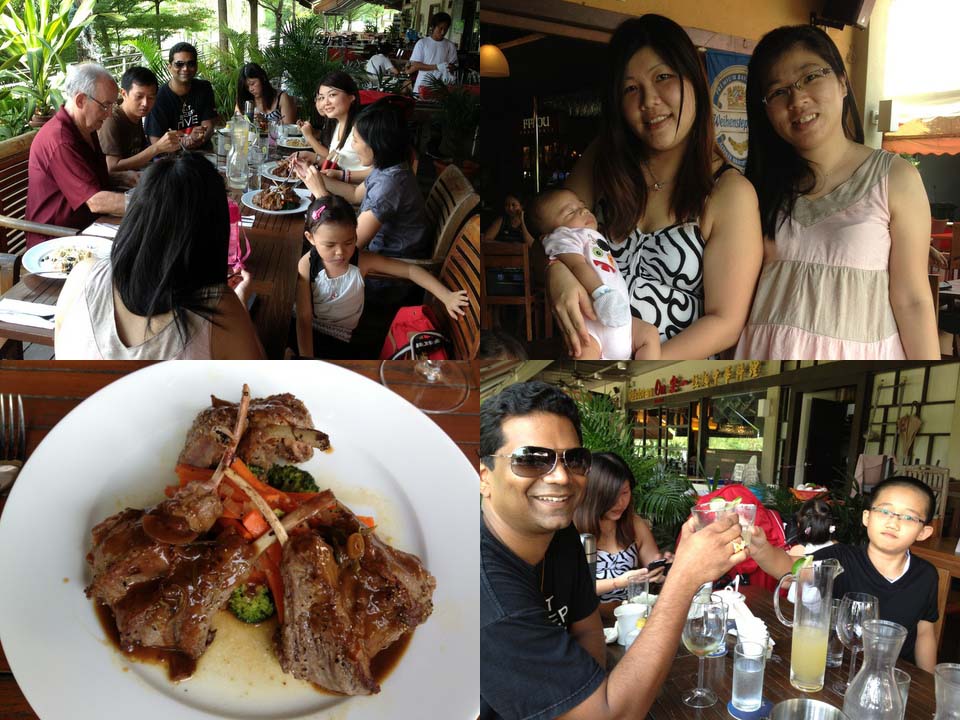
Lunch with Param

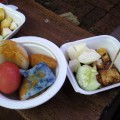
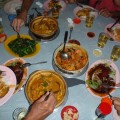
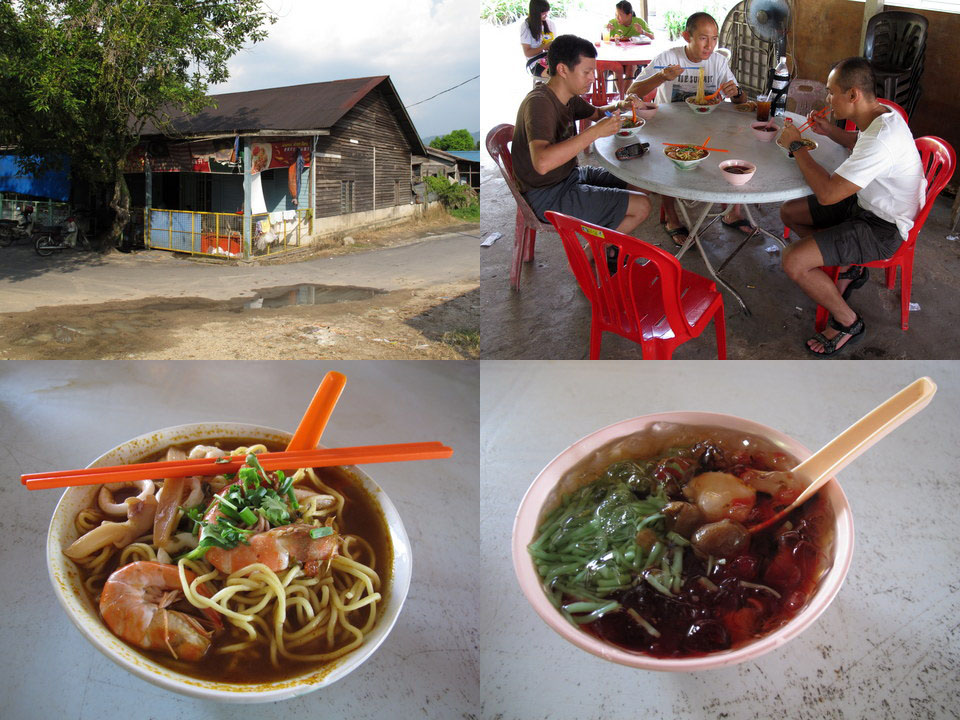
In my last post I have written already about my Wesak celebration in Taiping. As it had been some time ago since I visited my “hometown”, of course I had to enjoy the food! My friend George always knows new places to try out. This time we started with a dinner at the New Club, where the food is not that special, but the ambiance is nice. In the picture below you see also a dim sum breakfast, chicken/duck/pork rice and dumpling noodles.

Taiping food

We visited Kuala Sepetang, walked around in the fishing village, and went to the Matang mangrove forest, where we looked for birds, but we were not successful, as we were quite late.
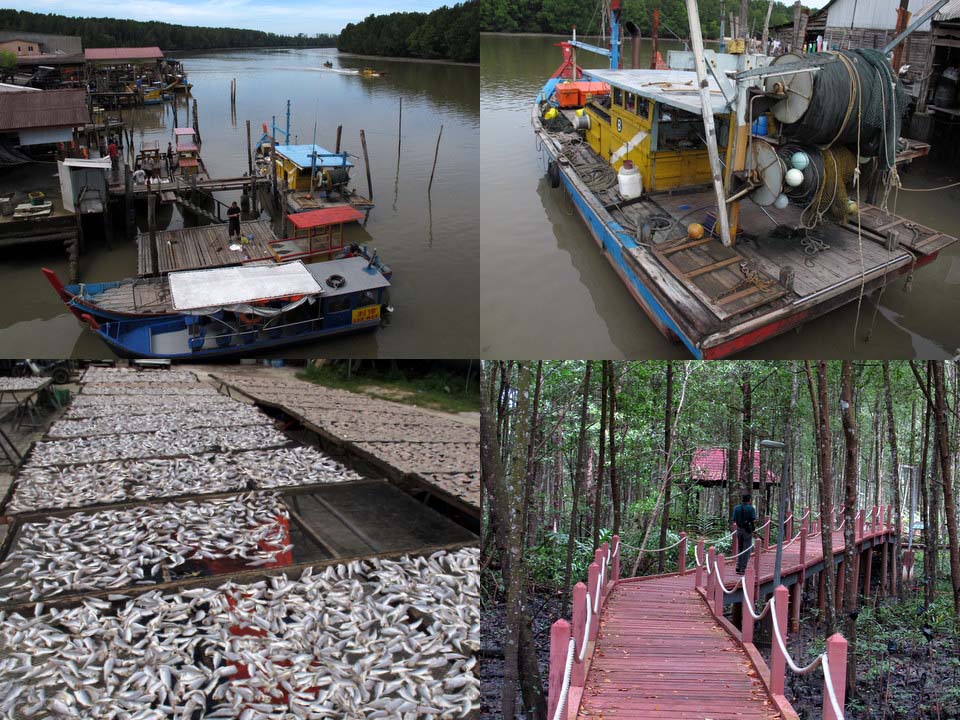
Kuala Sepetang

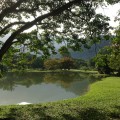
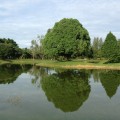
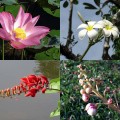
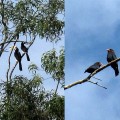
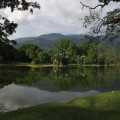
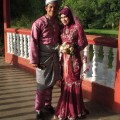
And of course we visited the Lake Gardens. The most beautiful park of Malaysia. Early morning, in the afternoon, always fascinating. Here we saw more birds, a pair of hornbills, dollarbirds. Of course flowers. And quite a few couples, taking wedding pictures..:-)

George came with me on our way back home. After earlier “scary” adventures he had vowed never to go on waterfall trips with me. But I convinced him that a nice waterfall near Beruas was easy peasy…:-) A less than ten minute walk. After that I brought him home in Shah Akam, where we visited the shop recently opened by his daughter, and named after his wife Mary! I wish them good luck.
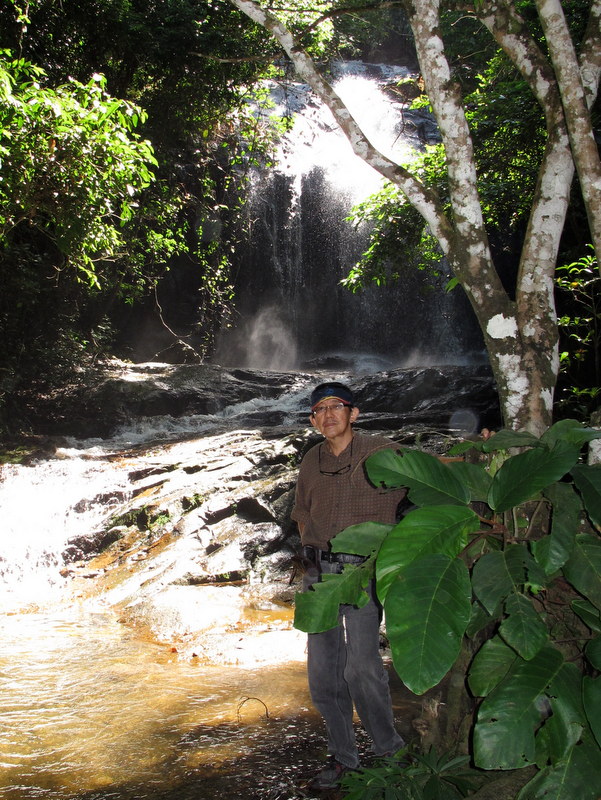
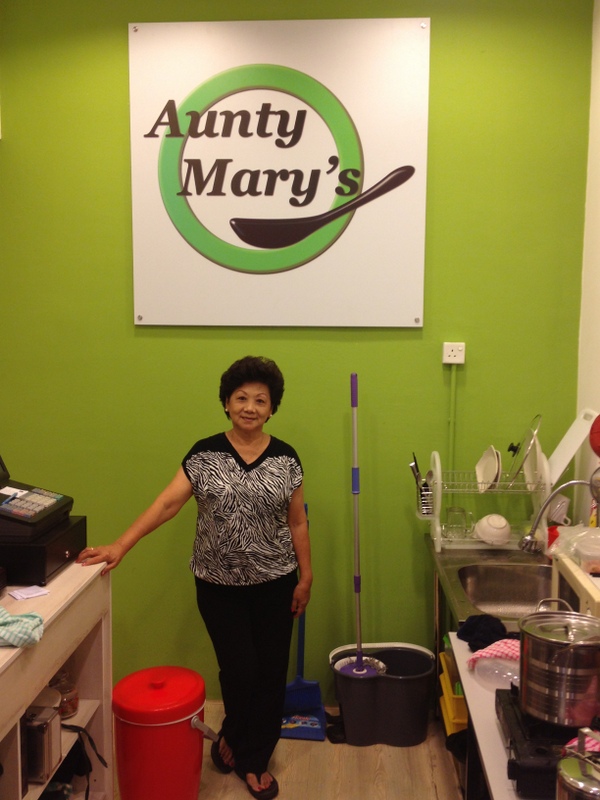
IMG_7629 2013-05-27 16.30.26


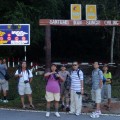
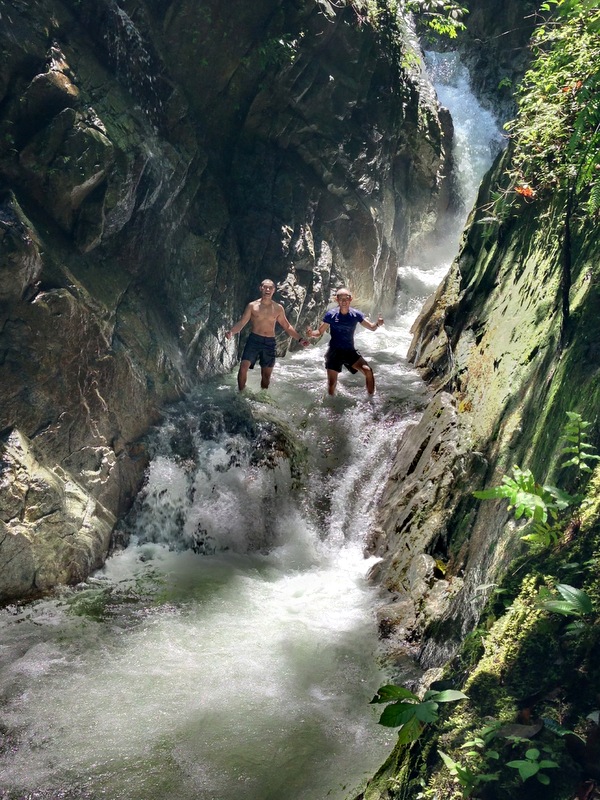
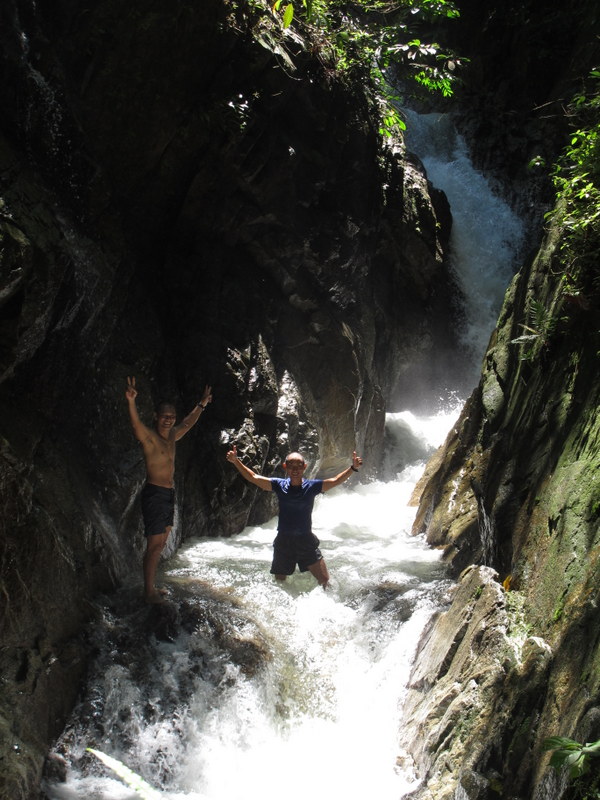
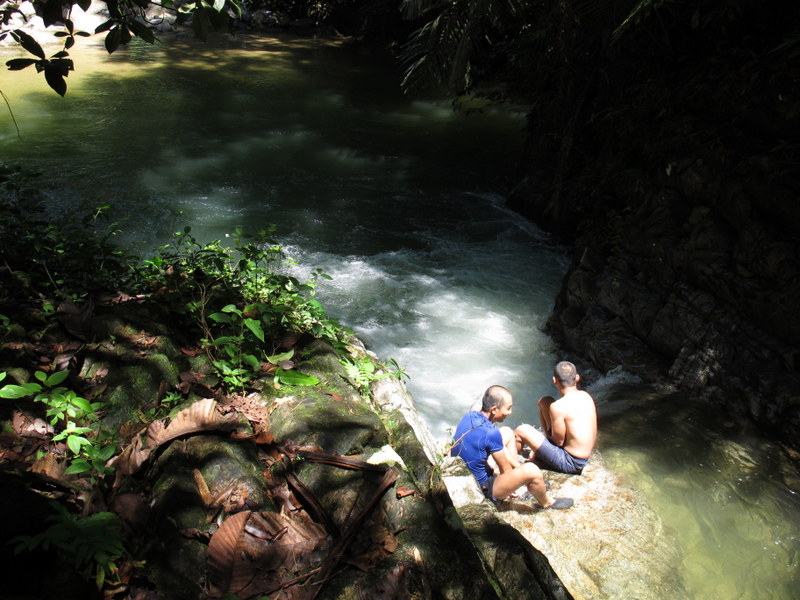
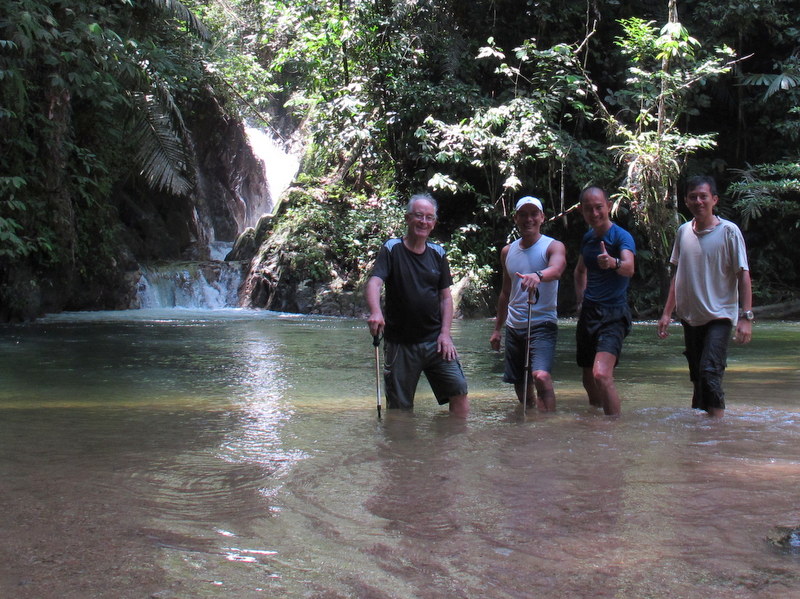
When my waterfall friend Teoh told me he could take a weekday off for a waterfall trip, it was no problem to suggest a nice destination: Ulu Rening, see my recent post. Edwin was also eager to go again, and another friend, Chadel, joined too. Again we had a fun time, beautiful weather! It was only when we took a picture “for the album” that we realised that we were all wearing a blue shirt!  Four shades of Blue…:-)
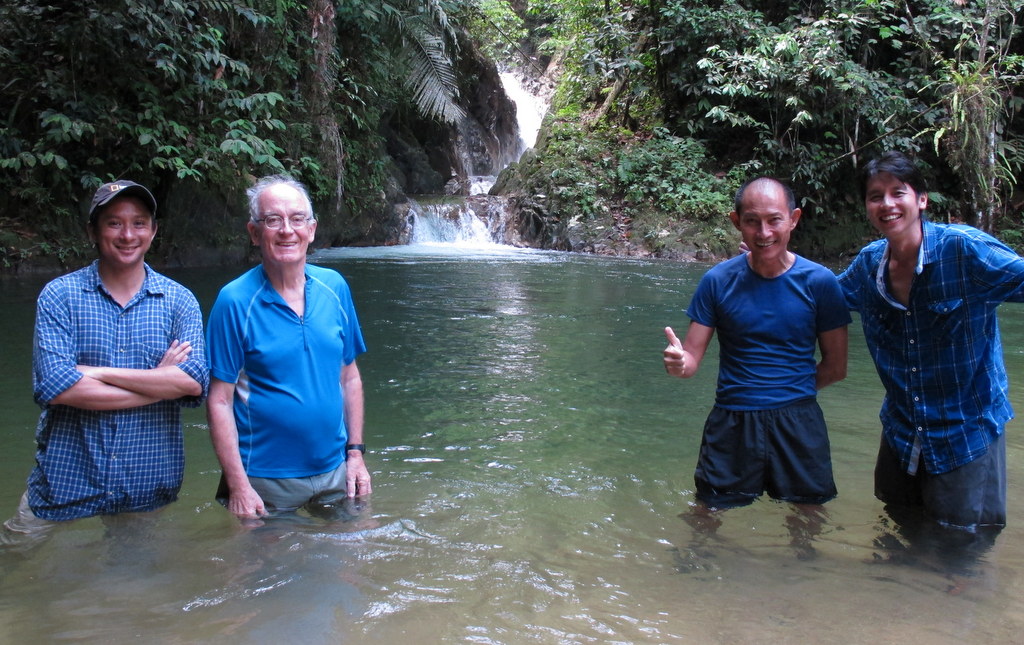
Ulu Rening

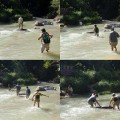
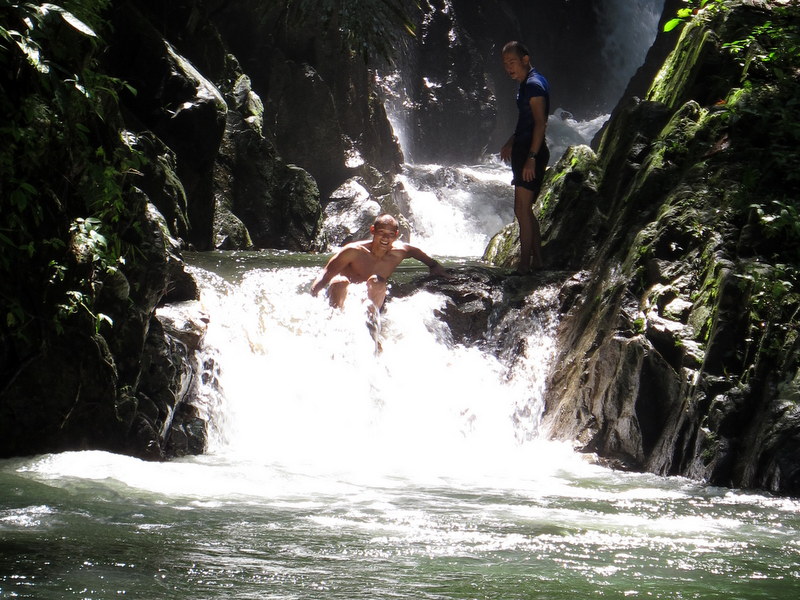
During my earlier visit, I had a few anxious moments, when I was caught in the turbulence, sliding doen the last tier of the waterfall. So this time I did not take any risk, which gave me the opportunity to video my friends while they were sliding down.

When I was in Taiping, my friends Girlie and Yeoh told me that they were coming to KL. So  I finally got my chance to invite them for lunch in my condo, after having enjoyed their hospitality so many times. As they did not know the way to my condo, but of course knew where IKEA was, I met them there for the free coffee, after which we had a Western style lunch at my place, soup, bread with salad and cheese, and tiramisu as desert.
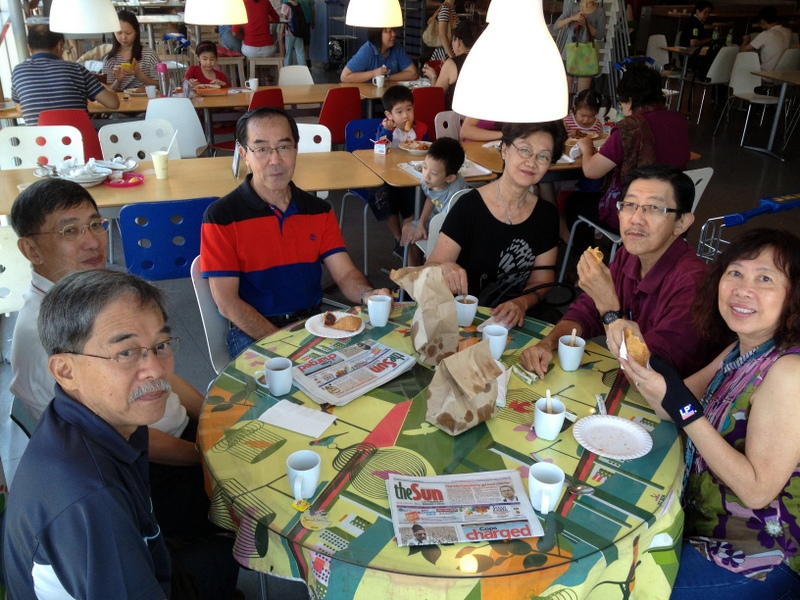
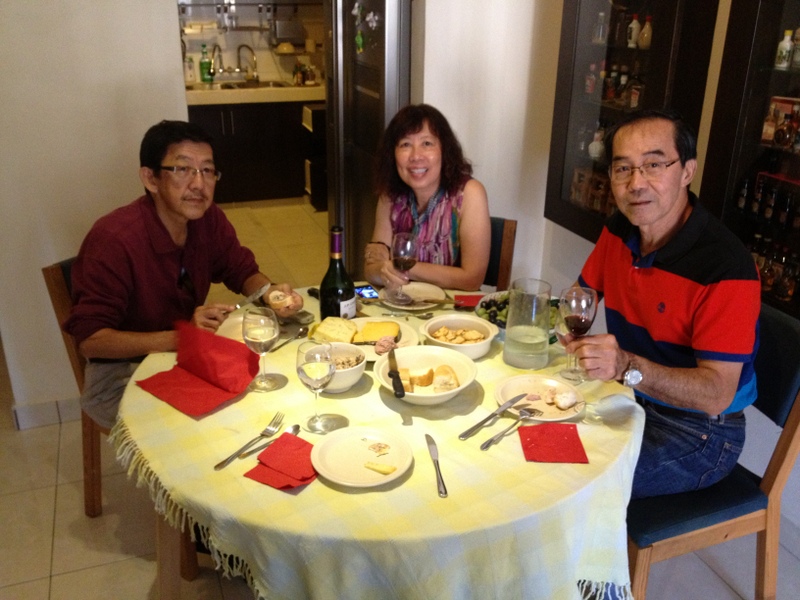
2013-06-06 10.57.48 2013-06-06 13.31.01

Finally something quite different. For our dinner we often go the commercial district near to our condo. Many shops and eateries. Many cars as a result. Malaysian style many cars are double parked. Very annoying when you come back and your car is blocked. Solution? See the picture below. Even when you can park close to the curb, you do not. LOL

Parking Malaysian style


Shame on Taiping!

Now that Malaysia has become my second home, I can say that Taiping is my second hometown..:-) I am a frequent visitor and became a member of the Taiping Heritage Society.

Taiping is rightly proud about its many historical firsts: the Prison (1879), the New Club (1881), the Lake Gardens (1881), the Clock tower (1881), the King Edward VII school (1883), the Perak Museum (1883) and many more.

So why is this post titled Shame on Taiping? Because the list of firsts contains two items that are at this moment in a deplorable state, being completely neglected for years already.

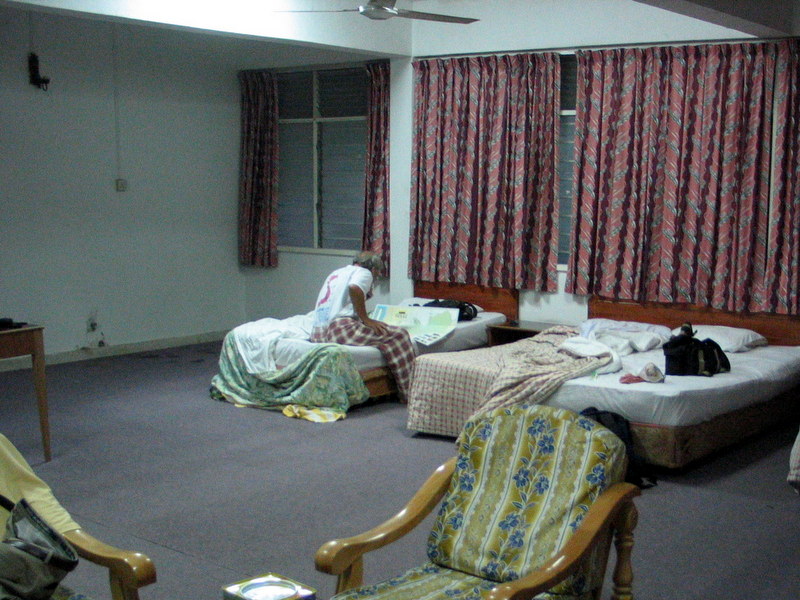
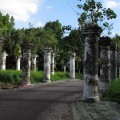
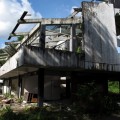
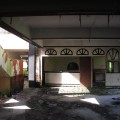
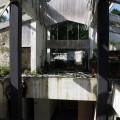
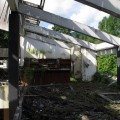
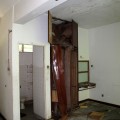
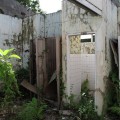
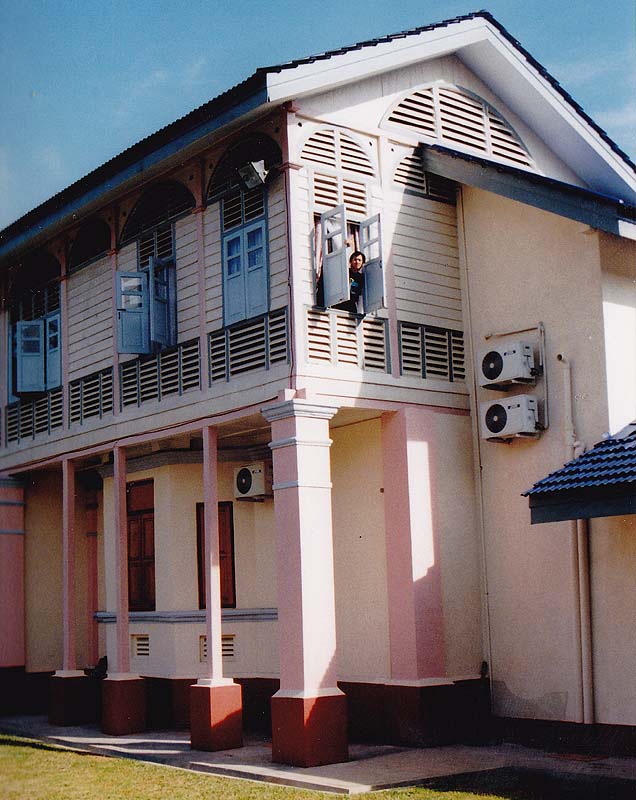
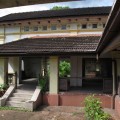
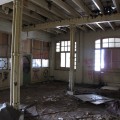
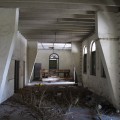
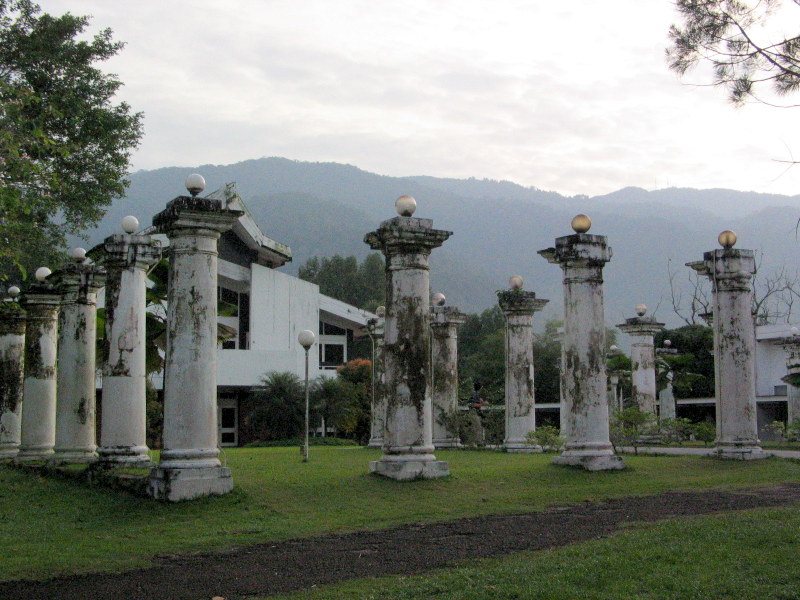
The first is the (location of the) Residence. In 1877, on a hill overlooking Taiping, a residence was built for the British Assistant Resident (Maxwell). It was here that Isabella Bird wrote several letters for her book the Golden Chersonese A few years later (1884) the building was enlarged and became the residence for the British Resident (Low). Nothing is left these days of this Residence, except the stone pillars, upon which the wooden house was built. After Merdeka a hotel was built at the back of these pillars. About ten years ago I have stayed overnight in this Casuarina inn. The inn is visible in the background. Basic accommodation.

IMG_7629

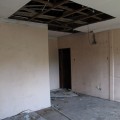
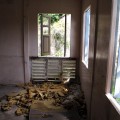
Room in Casuarina

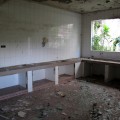
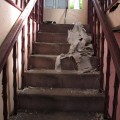
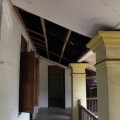
It has been closed now for many years already. Without any fencing, freely accessible, a haven for drug addicts. No wonder that every time I come and have a look, it is more ruined. It may not be possible to exploit a hotel here, but this historical location should be preserved. Shame on Taiping!

Here is a collection of pictures taken recently.

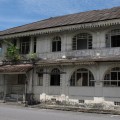
The Casuarina inn started as the New Resthouse. Why new? Because there exists another Resthouse, a real first, built in 1894. Opposite the King Edward school and not far from the Railway station. Also here I have stayed overnight, many years ago. It was at that time named the Lagenda Hotel. Quite acceptable budget hotel, good location.

Resthouse

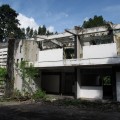
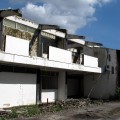
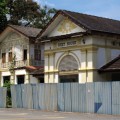
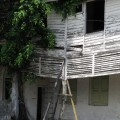
About five years ago, the hotel/resthouse was closed. In the beginning hardly any fencing, even now it is easy to enter the premises. With a predictable effect: the place is going to pieces and is now already probably beyond redemption.  Shame on Taiping!

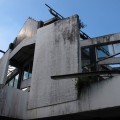
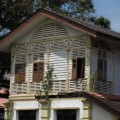
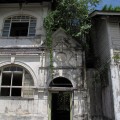
The last pictures have been taken of and in the buildings to the left of the Resthouse. They must be old as well, and especially the corner one looks architecturally interesting. Here too, you can just walk in, with predictable effect. Shame on Taiping!


Wesak 2013

In the Christian religion the birth of Jesus Christ is celebrated in December (Christmas), his death in March/April (Good Friday)  and his ascension to Heaven in May (Ascension Day).

Buddhism is more efficient and commemorates birth, death and the reaching of Nirvana of Gautama Buddha on the same day, called Wesak. It is celebrated on the Full Moon day in May, which fell this year on May 24. I was in Taiping at that time, visiting my friends George and Jennie.

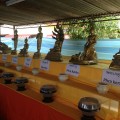
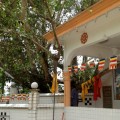
There are several Buddhist temples in Taiping. In the morning we visited the Thai Wat Phodhiyaram  (Thai)  and the Bodi Langka Ram Temple (Sri Lankan), located next to each other in Assam Kumbang, Taiping. And in the evening we went to the Sasanarakkha Buddhist Sanctuary (SBS), high up in the hills of Tupai. All of them belong to the Theravada school of Buddhism.

Buddhist flag

As you know  I am a secular humanist, opposed to religion. But I feel quite attracted to the philosophy of Theravada Buddhism. I do not believe in reincarnation, but the concepts of Anicca (impermanence), Dukkha (suffering) and Anatta (not-self) appeal to me. Although I must confess that I have not yet made much progress on the Noble Eightfold Path  🙂

In Sri Lanka I have attended Wesak many years ago. There it is a very solemn, quiet event, people are dressed in white sarongs and visit the dagoba (temple) to offer flowers. There may be some food, but that is for the poor.

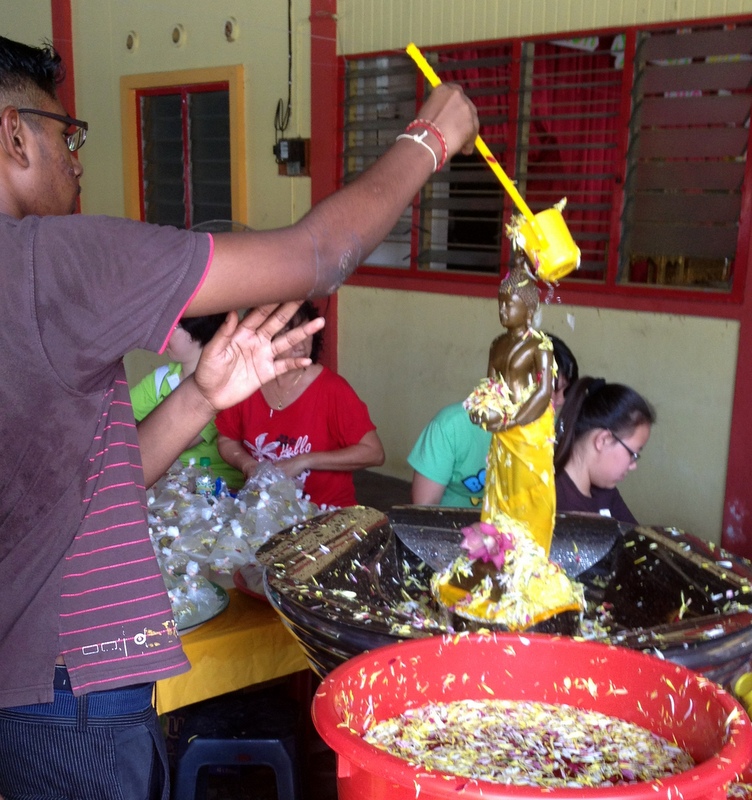
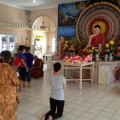
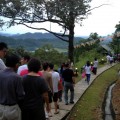
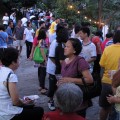
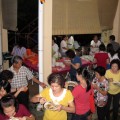
How different was the atmosphere this time in Malaysia! Many people come just for the free (vegetarian) food, I think, I saw many Indian (hindu) people. In the Thai temple a long queue of devotees was waiting to pour water on a Buddha (and then take this holy water home to bathe themselves). More Mahayana than Theravada…?

Wesak

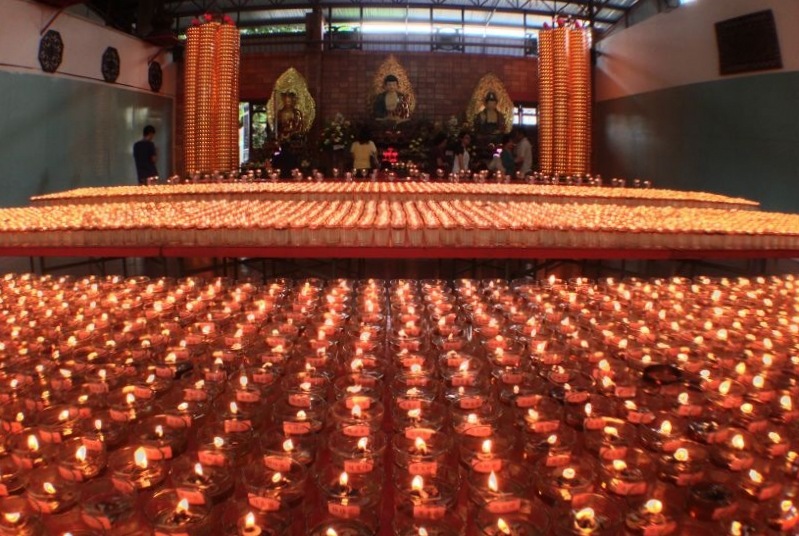
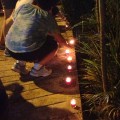
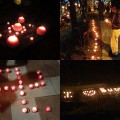
Many people had been lighting candles, a very nice sight. Candles

Here are a few more pictures taken during our morning visit

The SBS is not a real temple but a Buddhist training and meditation center. I had visited it several times before, once during the Katina ceremony, when the devotees give new robes to the monks, very impressive.

As the Sanctuary, high up in the hills, can only be reached by a narrow winding road, you had to park your car at the cemetery(!) down the hill, after which volunteers with 4WD’s shuttled you up. Well organised!

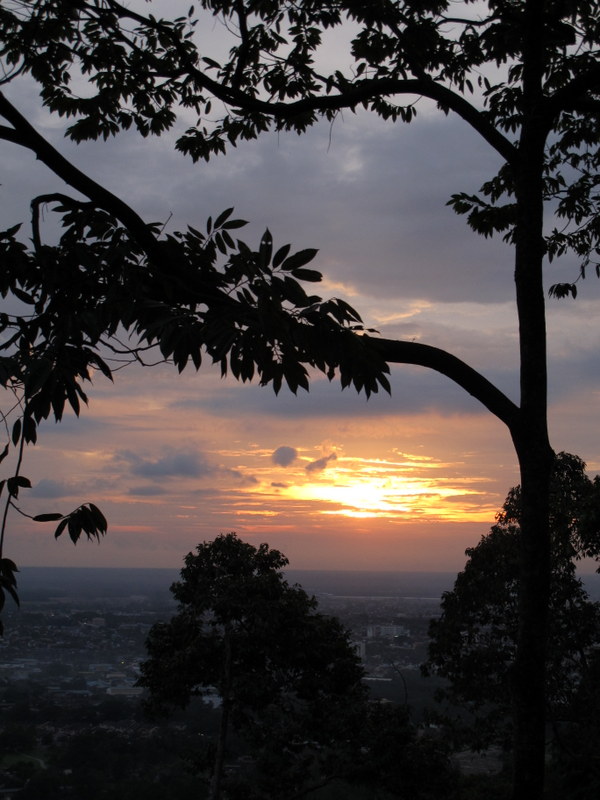
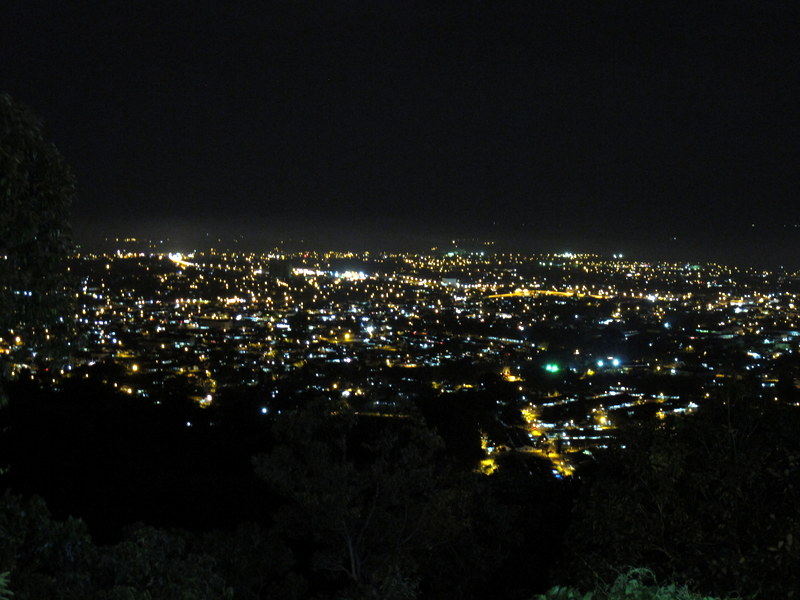
From the sanctuary you have a magnificent view of the sunset and Taiping, deep down.

IMG_7516 IMG_7537


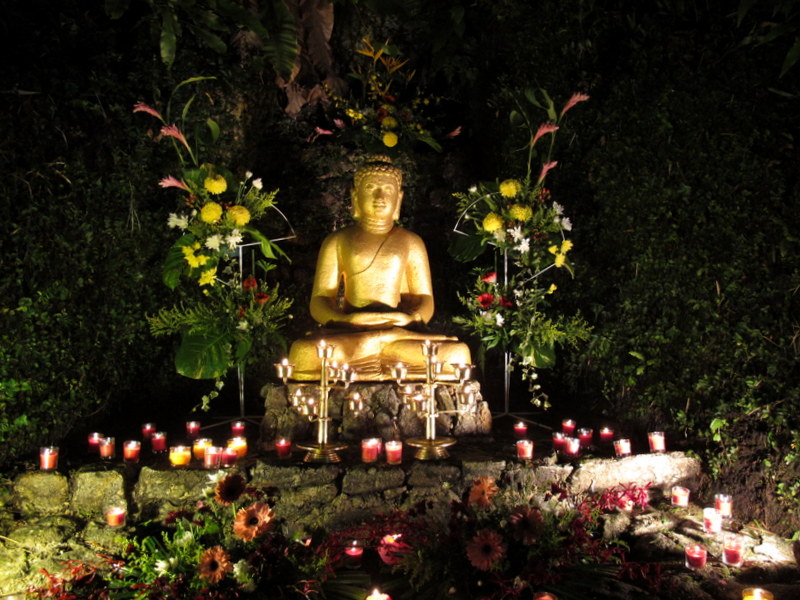
Focal point of the sanctuary is this statue of the Buddha in the so-called Dhyana (meditation) Asana. The back of the right hand rests on the palm of the other in such a way that the tips of the thumbs lightly touch one another.

Buddha


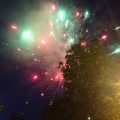
Compared with Sri Lanka, also here the atmosphere was more festive, there were even fireworks. And lots of food…:-) We saw  a  few Kungming lanterns (hot air balloons). Altogether it was a bit too carnavalesque to my taste.

Here is a selection of pictures

After the ceremony was finished, the thousands of visitors had to be transported back to the parking. Long queue, but kudos for all the volunteers!

Here is a video of the fireworks

Le Sacre du Printemps

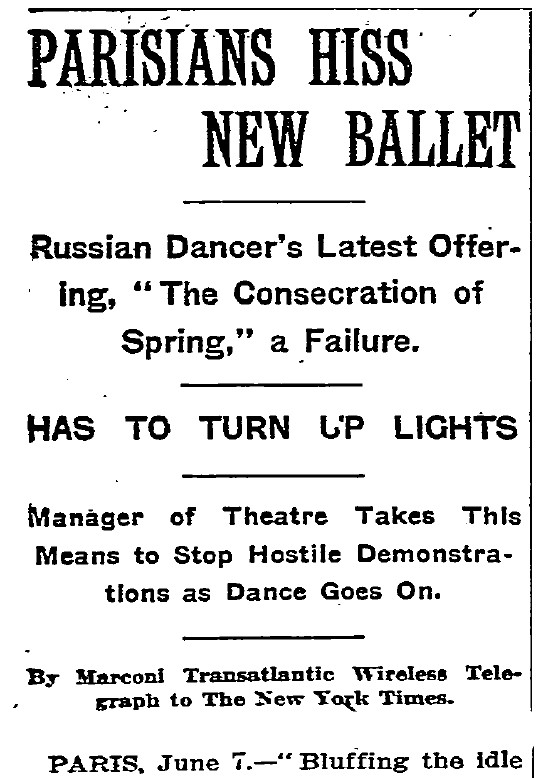
Today, 29-5-2013, it is exactly 100 years ago that in Paris the world premiere took place of Le Sacre du Printemps (the Rite of Spring), a ballet written by the young Russian composer Igor Stravinsky. This first performance caused a scandal, the fashionable Parisian audience almost rioted and made it nearly impossible for the dancers to hear the music. Here is a report in the New York Times, a week later

Russian_Ballet_in_Paris_-_New_York_Times_1913-06-07
Now the “Sacre” is widely considered as one of the most influential musical works of the 20th century.

The ballet has as subtitle: “Pictures of Pagan Russia in Two Parts“. The first part, named  L’Adoration de la Terre (Adoration of the Earth), is about the celebration of spring. In the second part, “Le Sacrifice (The Sacrifice)”, one girl is selected by fate as the one who will be sacrificed.  In a dramatic finale she dances herself to death.

To give an impression of this first performance, here is a  photo of the dancers in the 1913 premiere. The choreography was by the famous dancer Vaslav Nijinsky.

RiteofSpringDancers

A few years ago an attempt has been made to recreate the original Nijinsky choreography. Even after hundred years it is easy to understand the shock this kind of dancing must have given to an audience used to classical ballet.

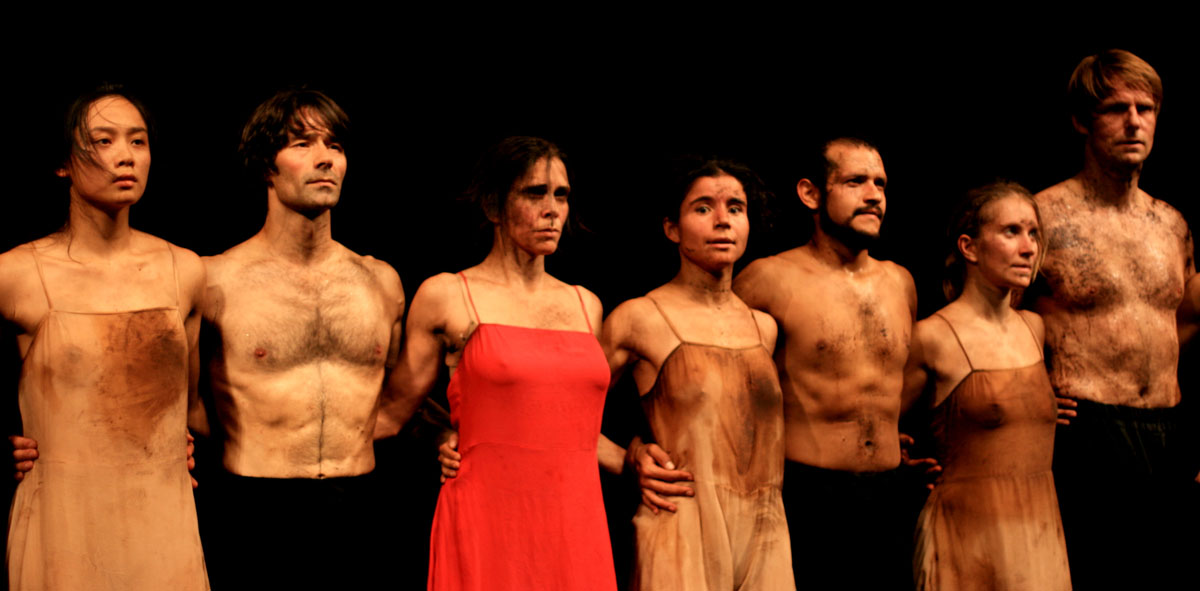
Many modern performances are nowadays available on YouTube, for example by Pierre Boulez (in a circus with horses!) and Maurice Bejart (very “naked”). Personally I find the performance by Pina Bausch with the Wuppertal Dance Theater the most impressive. I have been fortunate that I could attend both concerts she gave in Amsterdam, in 1982 and in 1995. The stage was covered with brown “earth” and the primitive, erotic vitality of the dancers was fascinating. Here you see them after the concert. The girl in red is the sacrifice.

Le_Sacre_du_Printemps_(Pina_Bausch_Tanztheater,_Wuppertal)

Here is a video of the last part of the Sacre du Printemps in the choreography of Pina Bausch, where the selected girl dances herself to death. Note how the male dancer lies down after about two minutes on his back. Then the girl starts dancing ecstatically. Is the man waiting for the girl? Watch this short clip until the end to find out.

Sacre du Printemps, Pina Bausch, last part 

Although originally created as a musical ballet, nowadays the Sacre du Printemps is often performed without ballet. The most impressive orchestral performance is for me the one conducted by Jaap van Zweden in the Amsterdam Concertgebouw. But you can find several more on YouTube.

What would life be without music….:-)?

Nostalgia

About five years ago, I have made two trips with my Kiara (walking) and Gang of Four (birding) friends. Searching my archive for something else, I came across the pictures taken during these trips.

Nostalgia! Here are two trips down memory lane..:-)

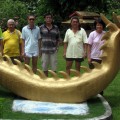
The first one was on 8-5-2008. A few months earlier I had discovered a nice restaurant in Ulu Yam, so I wanted to bring my friends there and offer them lunch. A Dutch treat, so to speak..:-). The route to Ulu Yam passes the Batu reservoir, where we took a picture of the group.

Batu reservoir

Here are some pictures of the trip. We stopped for a while at the Sg Tua waterfall and then continued to the WK restaurant. Their menu is limited but the quality is good and it is VFM (Value For Money). After the lunch we visited the Buddhist Monastery and Temple near Ulu Yam. It is the Sakya school of (Tibetan) Buddhism that is followed here.

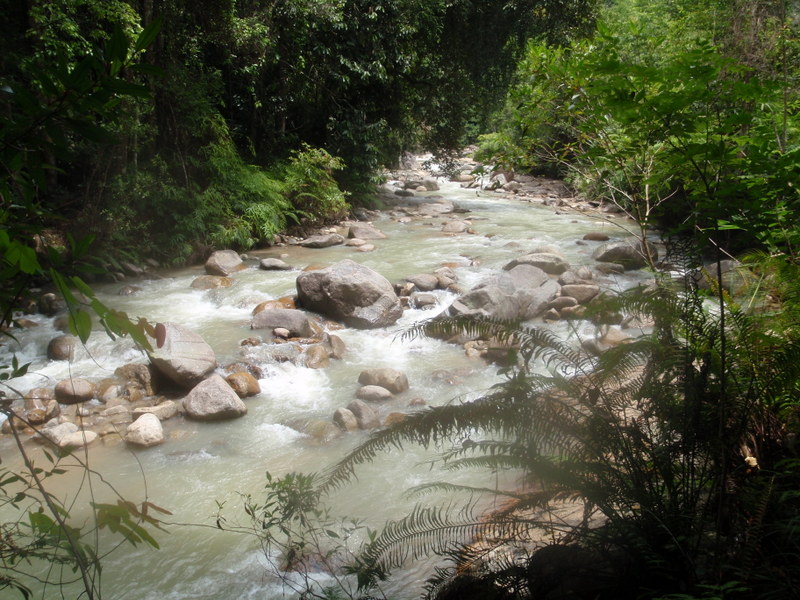
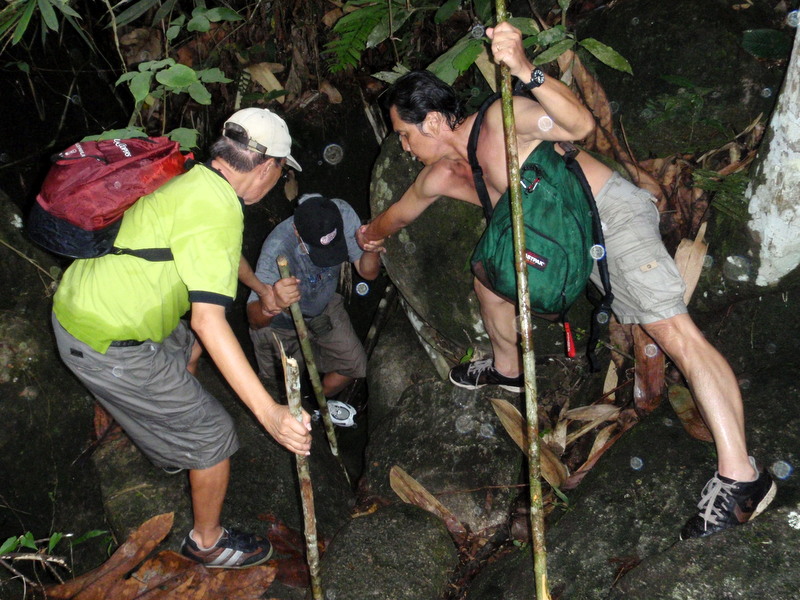
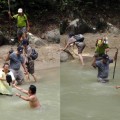
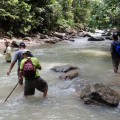
The second trip was a few months later, on 4-9-2008, to the Chiling waterfall. This is one of the most popular waterfalls in Malaysia, an interesting adventure because you have to cross the river several times before you arrive at the fall. During our trip the water level was high, resulting in a strong current, as you can see in this picture

Chiling river

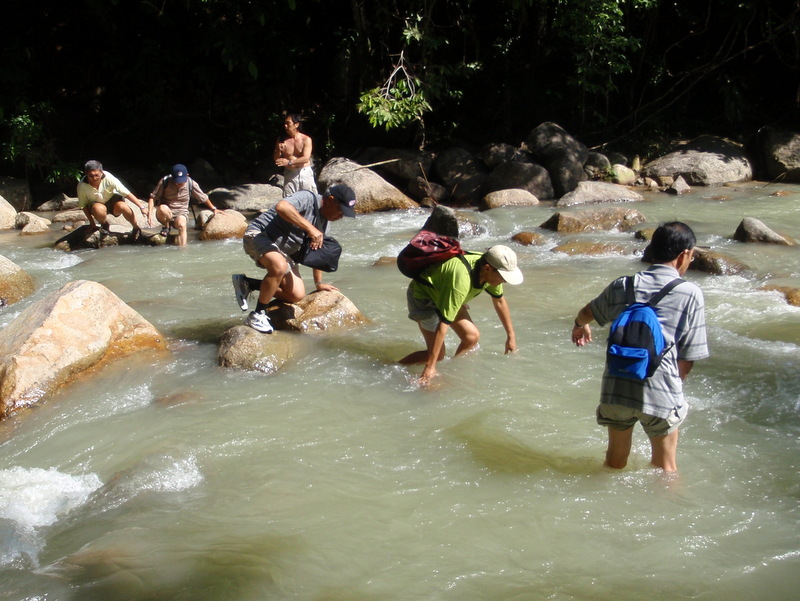
Because of the high water level, crossing was not that easy, but helping each other we managed.

Not so easy

Just before you reach the fall, some scrambling is needed. Also here our fellowship made it easy.

Helping each other

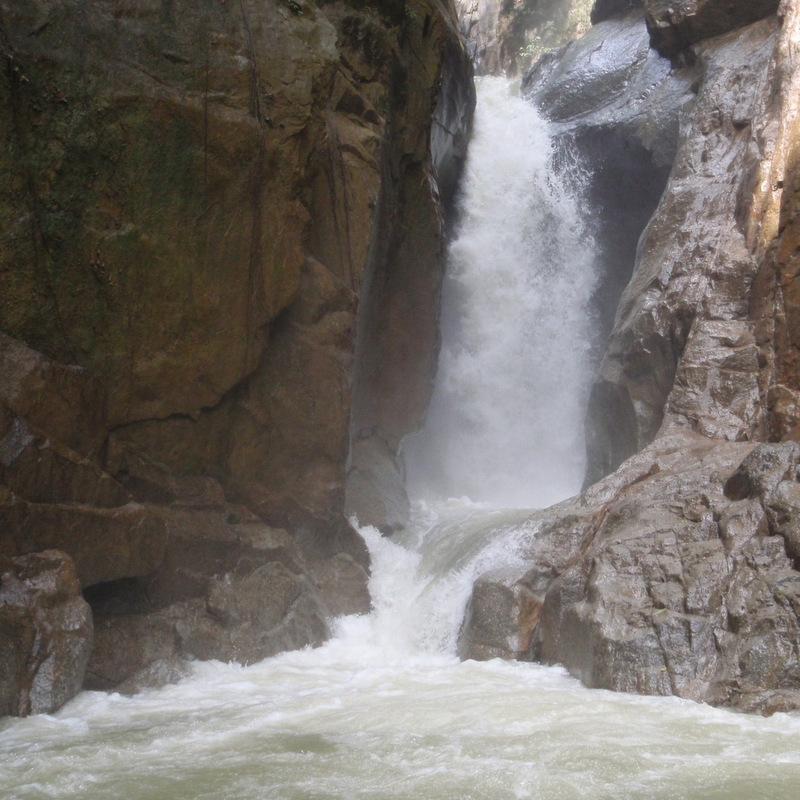
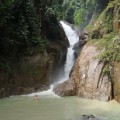
This is the impressive Chiling waterfall.

Chiling Fall

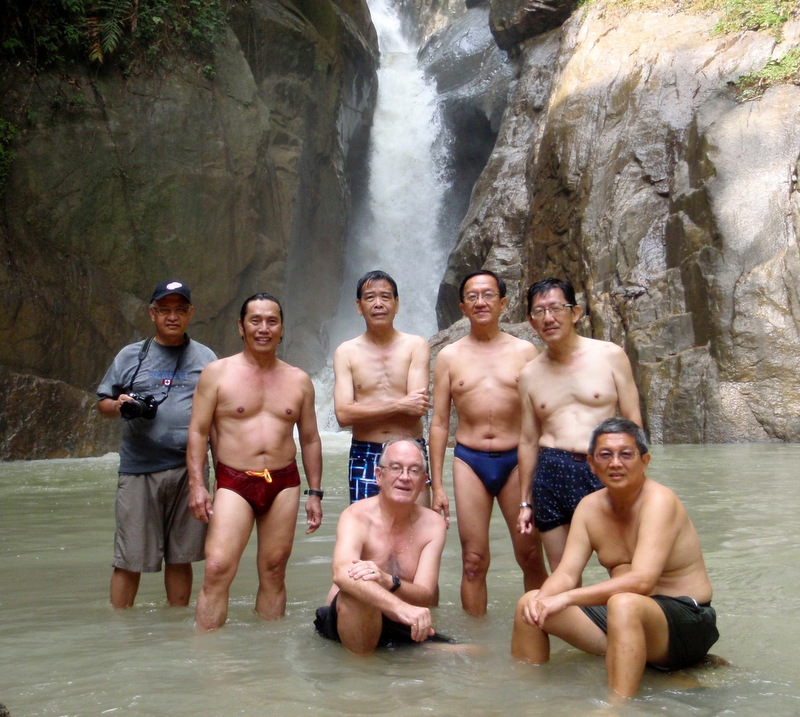
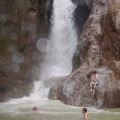
And here is the proof that we have been there. Still so “young” and adventurous…:-)

Kiara Bunch

More pictures in the gallery below. Our group was a mixed one, a few birders stayed behind and took pictures, the others followed me to the waterfall. We had big fun at the fall, before we walked back. Lunch was again at the WK restaurant.

Here are two videos. Quality is not very good, but you can feel the fellowship and the fun we had.


Ulu Rening adventure

The last waterfall I visited was the Upper Tebing Tinggi waterfall in Perak, see A Dream Come True , end of March. That is a long time ago for a waterfall addict like me, I was really craving for a waterfall. Siang Hui had given me info about a waterfall near Ulu Rening, quite remote and not known to many people. A perfect destination for a day trip.

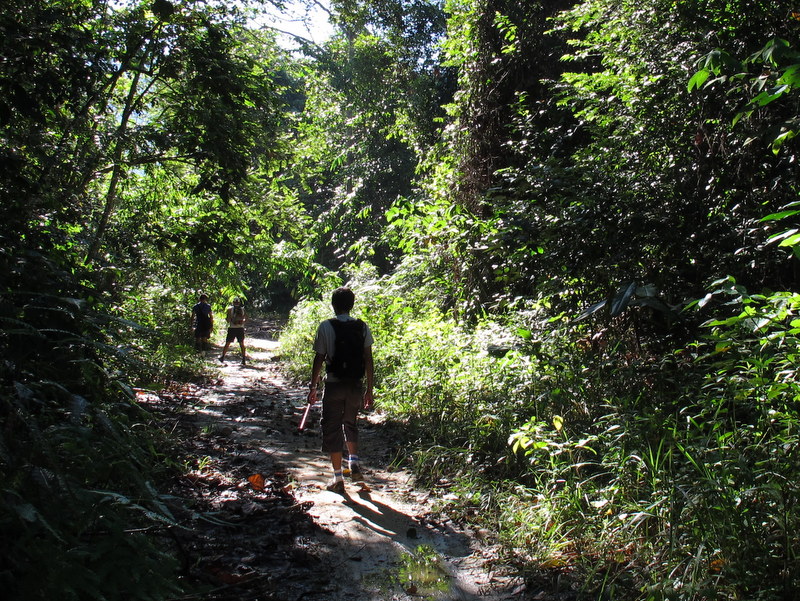
After our usual breakfast in a mamak restaurant, we (Aric, Rani, Edwin and I) drove to Batang Kali, where we bought nasi lemak for our lunch. Siang Hui had provided me with GPS-data and that was very helpful. The beginning of the trail was very clear, later it became  more vague, but no problem for experienced jungle trekkers like Rani and Edwin

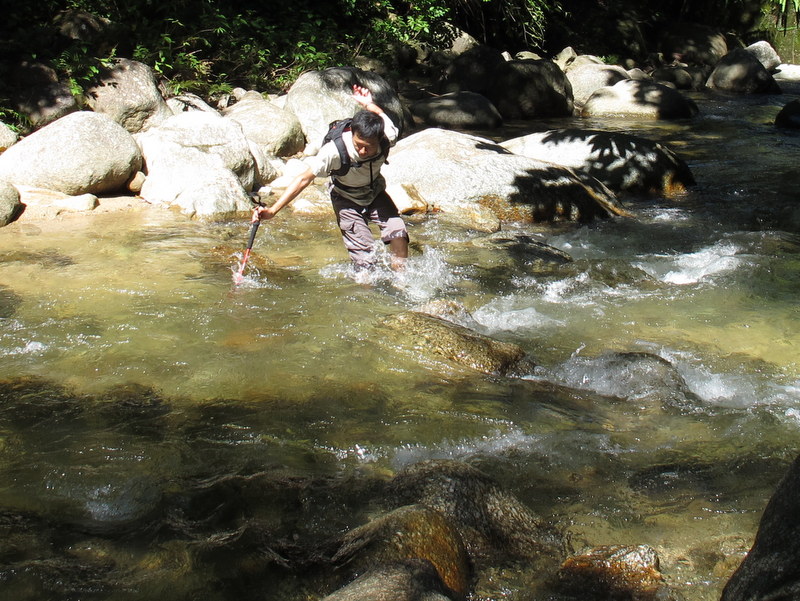
It took us about two hours to reach the waterfall, about 4.5 km from where we had parked our car. At the end we had to cross the river a few times. The weather was perfect.

.Ulu Rening

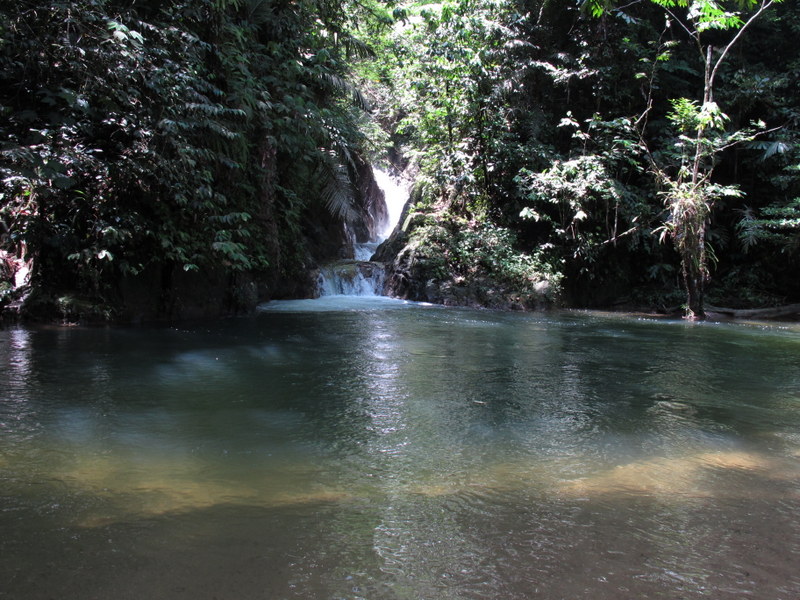
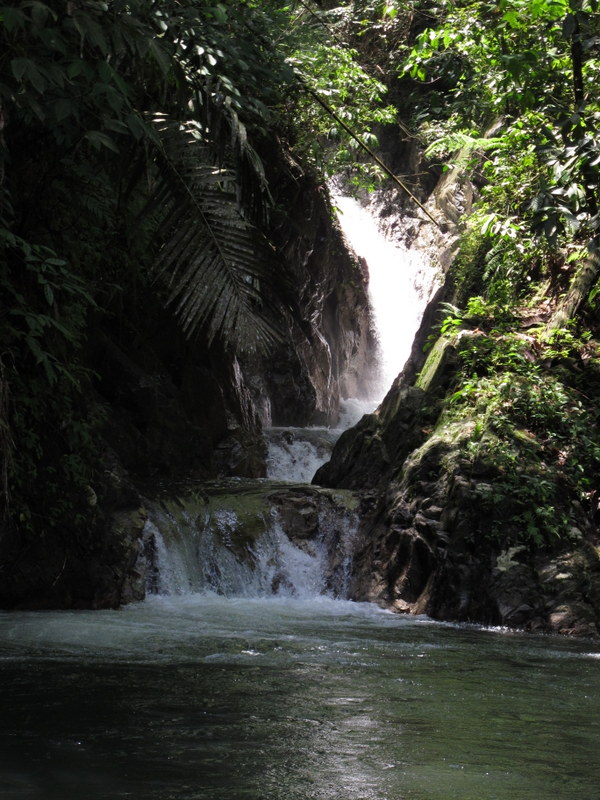
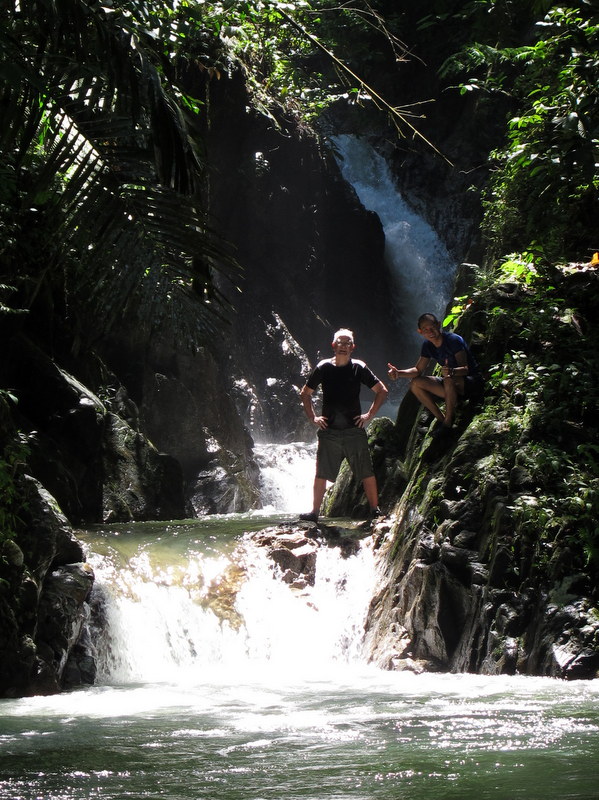
The waterfall was a nice surprise, because of the magnificent, very deep pool with crystal-clear water. In the picture you see the waterfall at the back, the water thundering down in a narrow gorge. To get there you have to swim and then scramble up the rocks to the right. Here, in a picture taken by Aric, you see Rani and Edwin trying to get closer to the waterfall in the background.

Ulu Rening fall

We spent a full two hours at the waterfall, having our lunch, making coffee, enjoying the peaceful surroundings. And of course playing with the water..:-) Before reaching the pool, the water went down one last step over smooth rocks, so you could slide down.Big fun!

Sliding down

As you can see, the water was very turbulent, not without danger as I experienced the second time I slid down. I was pulled down and back by the turbulence (see video) but I did not panic and managed to swim out. Scary moment for my friends, who were already prepared to come to  my rescue! That is why the video stops so suddenly..:-)

Here are more pictures of this wonderful trip.

We were hungry when we came out and Edwin suggested a Thai shop near Serendah. Ky IKEA friends had mentioned this shop a few times, but I had never been there. You must really know where it is, otherwise you will overlook it…:-)  We had nice Tom Yam noodles, Fried chicken, and Lok Mei (drink) for RM 41. A place to remember.
Here are two more video clips. The first one shows daredevils Rani and Edwin, conquering the current, so that Aric could take a picture (he is shouting “don’t move” to them, because the picture shown above is actually a HDR composite of three pictures)

And in this video Aric shows how to go down the slide without being caught in the turbulence…:-)

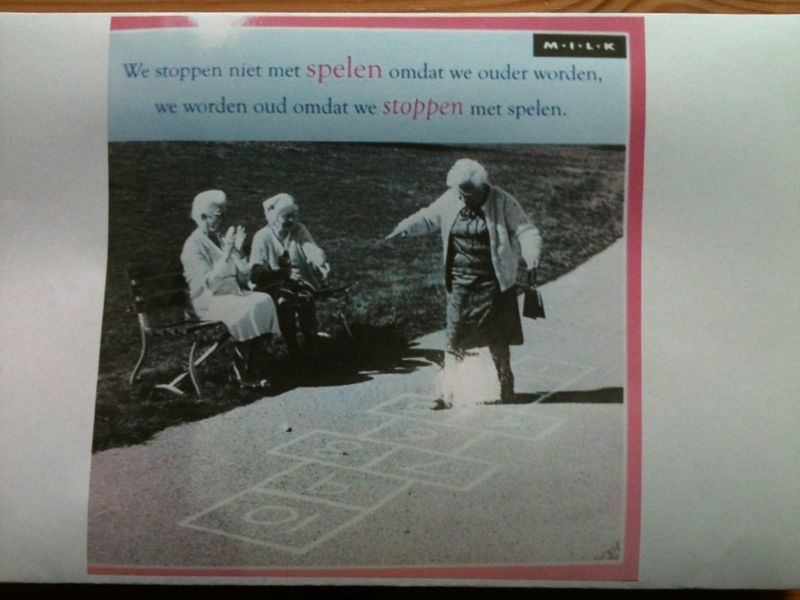
Chatting with my sister in the Netherlands after I came back home, I wondered if I was not getting too old for this kind of playing around.She sent me this cartoon.

Cartoon

The translation of the Dutch text is:

We do not stop playing because we grow old, we grow old because we stop playing.

Thanks, sis…:-)!

Fibonacci (part 2)

In part 1 we have seen that the Fibonacci series can be generated by a simple rule: start with 1, 1 then adding the last two numbers of the series gives the next one

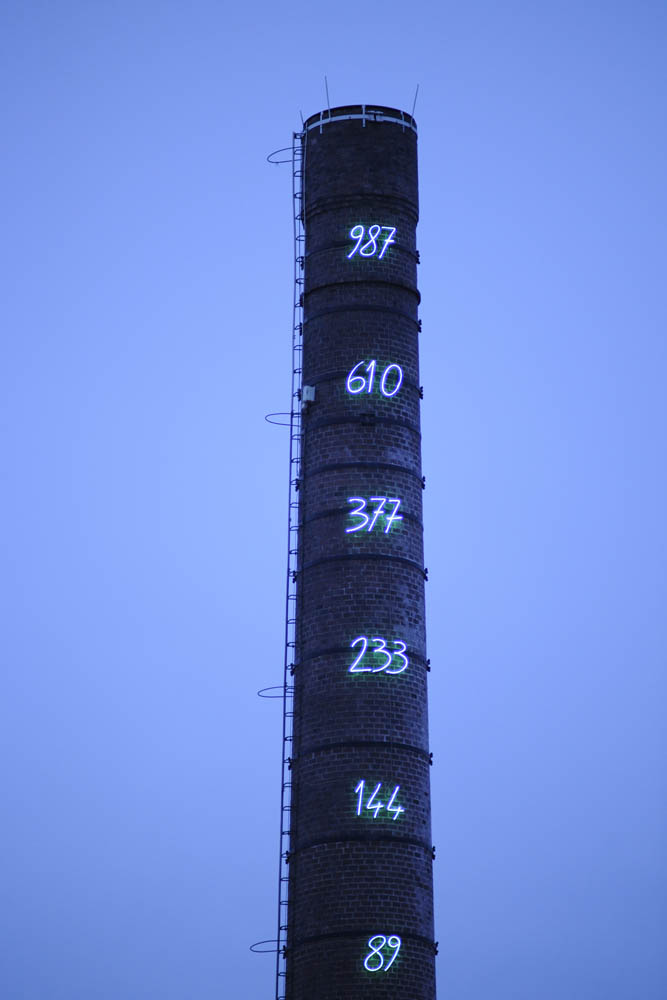
1, 1, 2, 3, 5, 8, 13, 21, 34, 55, 89, 144, 233, 377, 610, 987, 1597, 2584, 4181, 6765 ...

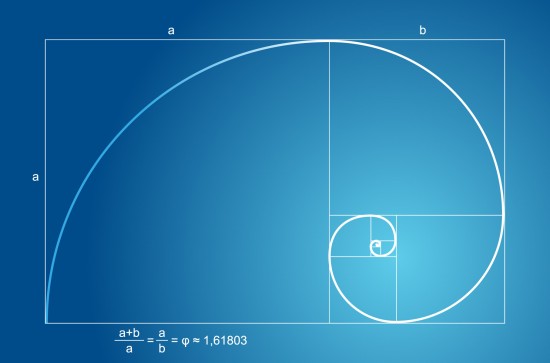
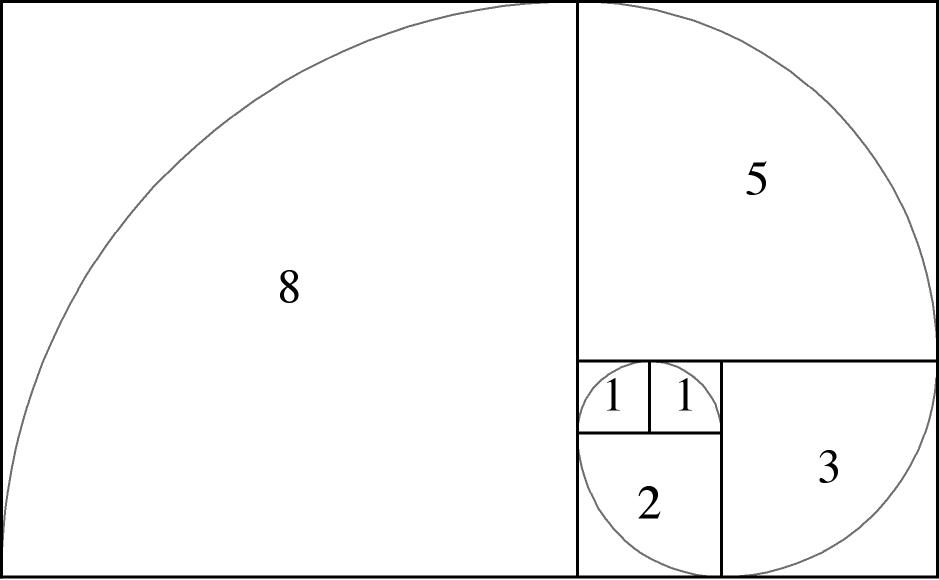
When you take the ratio of two consecutive Fibonacci numbers, this ratio approaches the Golden Ratio φ (phi) = 1.61803.. as you proceed in the series. And we have seen the close relation between the Fibonacci numbers and the Golden Spiral. Take note in the picture below of the rectangle containing the spiral. The ratio between width and height is φ. You will not be surprised that it is called the Golden Rectangle..:-)

Golden spiral

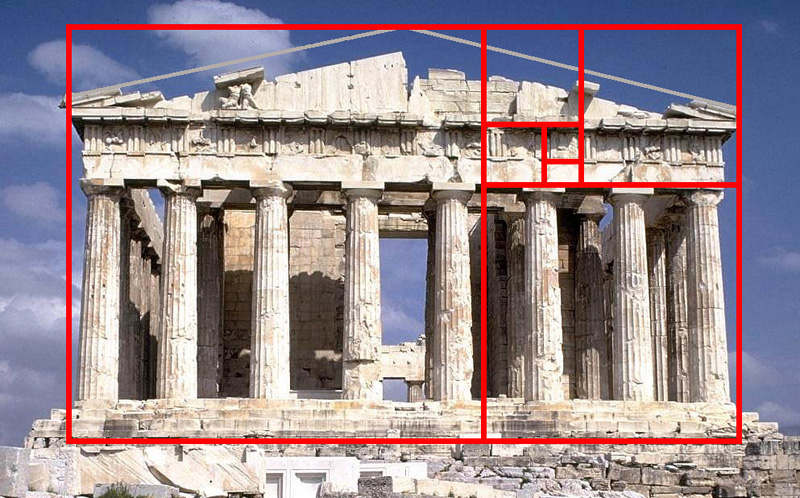
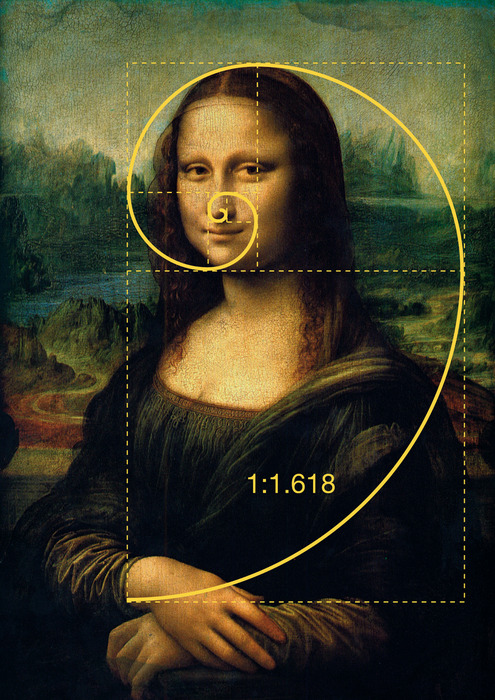
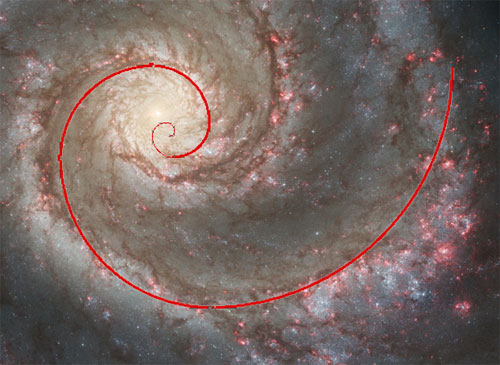
Has all or any of this a relation with the world around us? It is said that the Golden Rectangle is pleasing to the eye and that therefore many paintings have that format. It is said that the Parthenon temple in Athens was designed with φ in mind. There are people who believe that φ ( like π ) can be found in the dimensions of the  Pyramid of Cheops. And that the spiral arms of galaxies are Golden Spirals.

parthenonMona Lisagalaxy

The above statements are unfounded (the Parthenon) , false (painters had no preference for the Golden Rectangle) or only partly true (spiral arms of galaxies are logarithmic, but in general not golden). People who know me, will not be surprised that I am a skeptic..:-). When you are a believer, you will be pleased with the Golden Number website, maintained by “Phi Guy:” who introduces himself with “The inspiration for the site came as a result of coming to faith in God through Jesus Christ.” The guy must have taken the alternative name for φ (Divine Proportion) very literally.

This site is more to my liking: The Myth That Will Not Go Away

Often in a discussion about the Golden Spiral, the Nautilus shell is mentioned. Here it is,  a beautiful example of a logarithmic spiral in nature. But is it a Golden Spiral, does it grow with a factor 1.618 each quarter turn? The answer is negative. The golden spiral is the blue line. It is clear that it grows faster than the Nautilus! The average growth factor for a Nautilus is ~ 1.33.

Nautilus with golden spiral

Many references to Fibonacci and the Golden Ratio in  the world around us, are incorrect.

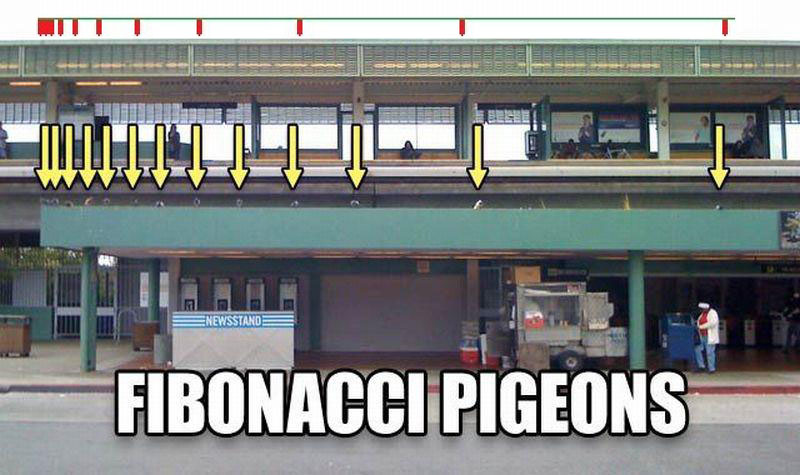
Here is one more, funny example. Recently I found on FB a picture of Fibonacci Pigeons. The location of the pigeons has been indicated with yellow arrows. Nice how the distance between the pigeons increases from left to right. But is it Fibonacci?

pigeons1

The answer is again negative. In the upper part of the picture I have indicated the Fibonacci positions. Compare the regular increase in spacing with the very irregular spacing of the yellow arrows!

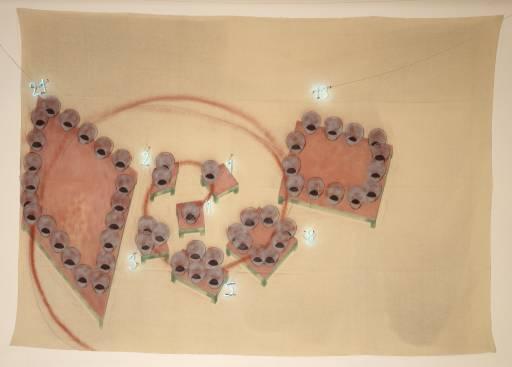
Ok, time to become more positive…:-) Several painters (Dali, Seurat) were intrigued by Fibonacci numbers and the Golden Ratio. One 20th century artist, Mario Merz, was fascinated by it and you can find references in many of his works. Here are a few.

TablesMario MerzSpiral

But the most beautiful examples come from nature, from the Kingdom of Plants.

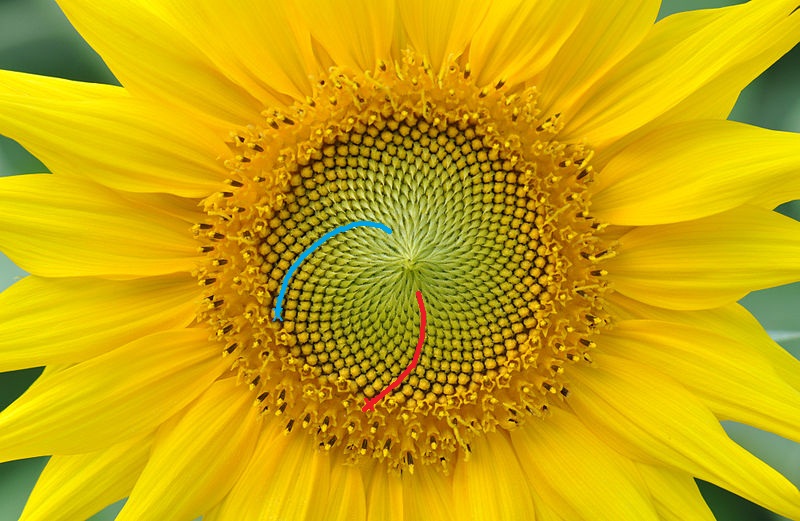
Here is a sunflower. What we call the flower is actually a combination of hundreds of small flowers (florets) surrounded by petals. As you see the florets are arranged in two series of spirals, starting from the center. One series is curving clockwise (red), the other one anticlockwise (blue). Can you count the number of blue spirals and red spirals?

Sunflower

The answer is : 55 red spirals and 34 blue ones. Two Fibonacci numbers!

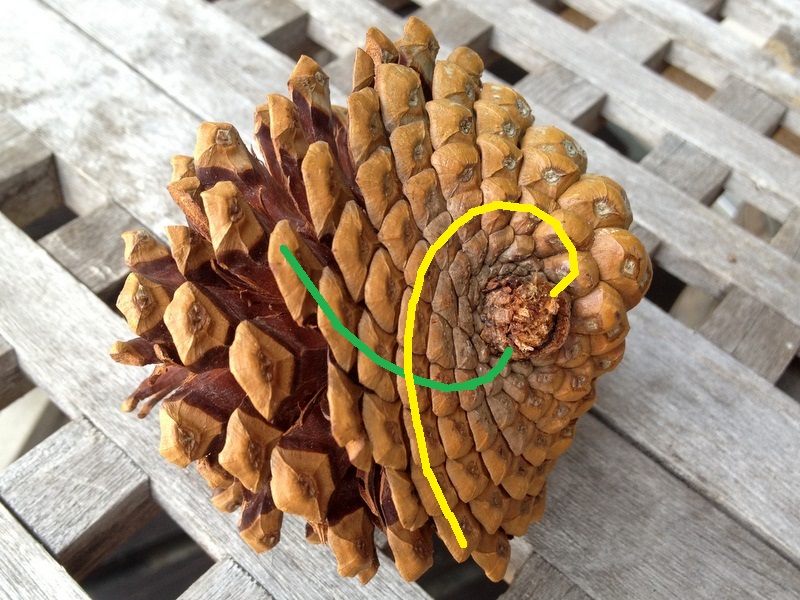
Here is a pine cone, that I found in the forest a couple of years ago. Also here the scales form  two series of spirals. I counted how many and found 13 green ones and 8 yellow ones. Again two Fibonacci numbers! Isn’t it amazing? Try it yourself with a pineapple..:-)

pine cone

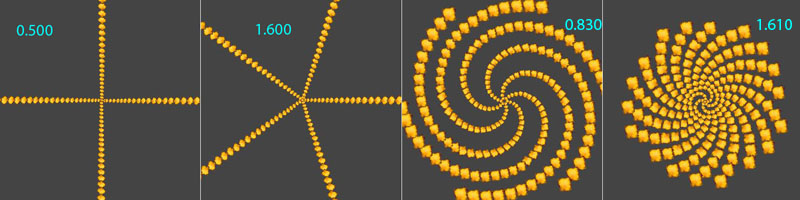
Is this Intelligent design? The Divine Proportion in action? The explanation is very interesting: by arranging the florets/scales this way, the available space is used the most efficiently. The idea is that new flowers/seeds are not formed in line with the old one, but rotated. If we express this rotation as part of a full turn (360 degrees), then a rotation of 0.5 would mean that each new cell is rotated 180 degrees. A rotation of 0.25 gives a rotation of 90 degrees, etc. Here are a few examples for various rotations. As you see, the result depends strongly on the chosen rotation value. For a value of 1.610, the space is used already quite efficiently.

rotations

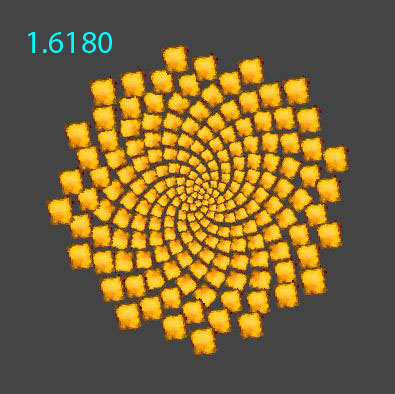
So, let us try 1.6180, the golden ratio. We see an almost perfect filling of the space. Notice the two series of spirals and count the number in each series and you will find 13 and 21 !

rotphi

The pictures above have been created with a beautiful app, which can be found on the website Math Is Fun . Have a look, and try out other values of the rotation. You will also find there an explanation why φ is so special.

Much more can be said about the Fibonacci numbers and the Golden Ratio. A Google search gives numerous hits. Also a book has been published: The Golden Ratio: The Story of PHI, the World’s Most Astonishing Number

Fibonacci (part 1)

Let me start with a rabbit tale..:-)

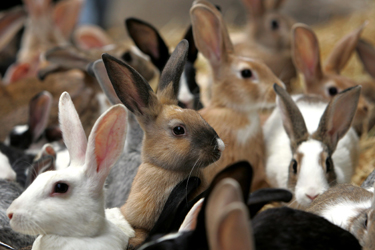
Rabbits

Once upon a time a pair of rabbits was born. One month later they were mature and mated. After a pregnancy of 1 month, a new pair of rabbits was born (and being rabbits, the parents mated again immediately). In this tale rabbits have eternal life and keep mating. The question is, how does the number of rabbit pairs grow with time?

Let us do some simple arithmetic (if you are afraid of numbers, skip this paragraph)

  1. At the start there is 1 pair, just born. We call it pair A
  2. After 1 month this pair A is mature and mates, so still 1 pair
  3. After two months, pair A delivers a new pair B, so we have now 2 pairs
  4. After three months pair A delivers again a new pair C, pair B has matured and mated, so 3 pairs
  5. After four months pair A delivers pair D, pair C has matured and mates, but now also pair B produces pair E, so totally 5 pairs
  6. After five months pair A delivers pair F, pair C delivers pair G, pair B delivers pair H, totally 8 pairs of rabbits.

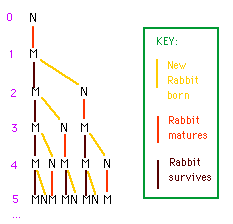
Complicated..:-)?  Maybe the graph below will help. Red vertical lines show mating (M), yellow diagonal ones indicate gestation and delivery  (N), black vertical ones are stable (each month producing a new pair)

rabbits

So the sequence gives (in rabbit pairs) 1,1,2,3,5,8… can you guess how it continues?

Here is the answer, each number is the sum of the two preceding ones! 2+3=5, 3+5=8, so the next term should be 5+8=13, then 8+13=21, 13+21=34. A very simple rule..:-)

Still you may wonder, who came with such a funny story. Well, that was Fibonacci, an Italian mathematician, living from c. 1170 – c. 1250.

Fibonacci

The numbers are now called Fibonacci numbers:

1, 1, 2, 3, 5, 8, 13, 21, 34, 55, 89, 144, 233, 377, 610, 987, 1597, 2584, 4181, 6765 ...

This Fibonacci series has several remarkable properties. To explain one of them, I first have to introduce the Golden Ratio, also known as the Divine Proportion!

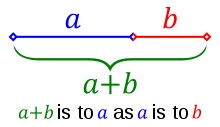
Hm, a little bit more mathematics (skip it if you are afraid of formulas). We have to go back to the old Greek philosophers. They were fascinated with numbers and ratios between numbers. You you may remember the Pythagorean triangles from your school days! Here is one of the problems they were interested in. Suppose you have a stick you like to divide in two parts a and b in such a way that the the ratio (a + b) / a is the same as the ratio a/b

220px-Golden_ratio_line

Hm, let’s try. We have a stick of 100 cm long and we divide it in a =50 cm and b = 50 cm. Then (50+50)/50 = 2 and 50/50 = 1. Not at all the same. Next we try a = 60 and b = 40. This results in (60+40)/60 = 1.6666.. and 60/40 = 1.500. Not yet equal. Next a =62 and b =38. Result: (62+38)/62 = 1.6129.. and 62/38 = 1.6315.. Getting closer! Refining this, we finally find a division of a = 61.8034.. and=38.1966.. with a common ratio of 1.6180..  The Greek mathematicians named this ratio the Golden Ratio with  φ (phi) as its symbol.

Back to our Fibonacci numbers. Let us take the ratio of two consecutive numbers. We start with 1/1 = 1, then 2/1 = 2, 3/2 = 1.5, 5/3 = 1.666, 8/5 = 1.6, 13/8 = 1.625, 21/13 = 1.615, 34/21 = 1.6190, 55/34 = 1.6176, 89/55 = 1.6182, 144/89 = 1.6180 etc

Surprise! The Fibonacci numbers and the Golden Ratio are related!

The ratio of two consecutive Fibonacci numbers approaches the Golden Ratio !

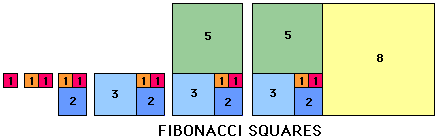
For the second remarkable property we will visualise the Fibonacci numbers in two dimensions, as squares. We add each square so that the result will be a rectangle. The last rectangle in the picture below measures 13 by 8, ratio 13/8 = 1.625, already close to the Golden Ratio..:-)

Fibonacci.squares

Next step, in each square we draw a quarter-circle. This is the result, we get a beautiful spiral, the Golden Spiral!

golden spiral

Not surprisingly, artists throughout the ages have been fascinated by Fibonacci numbers and the Golden Ratio. And in nature we come across many examples of Golden Spirals.

But that will be the topic of a separate post.

Note for readers with a mathematical background. The spiral above is an approximation of the Golden Spiral. And the Golden Ratio can be easily calculated.

golden ratio

Finally: the Golden Spiral is a special case of a logarithmic spiral, with a growth factor of φ for every 90 degrees of rotation.

GE13: the results

Just a short post.

It was an exciting day, yesterday, with a slightly disappointing outcome: BN will remain in power, although with a reduced majority. Here are the results of the GE13 election, together with the results of the 2004 and 2008 elections

Results GE13

In my last post I explained the malapportionment and the gerrymandering, resulting in an unbalance between the percentage of votes and the percentage of seats in Parliament. In G13 this has led to a dramatic result. BN still has a majority in seats, but, for the first time in many decades, it has lost in the popular vote! The government received 48.7 % of the votes, the opposition 51.3%  (Data taken from the Malaysian Insider)

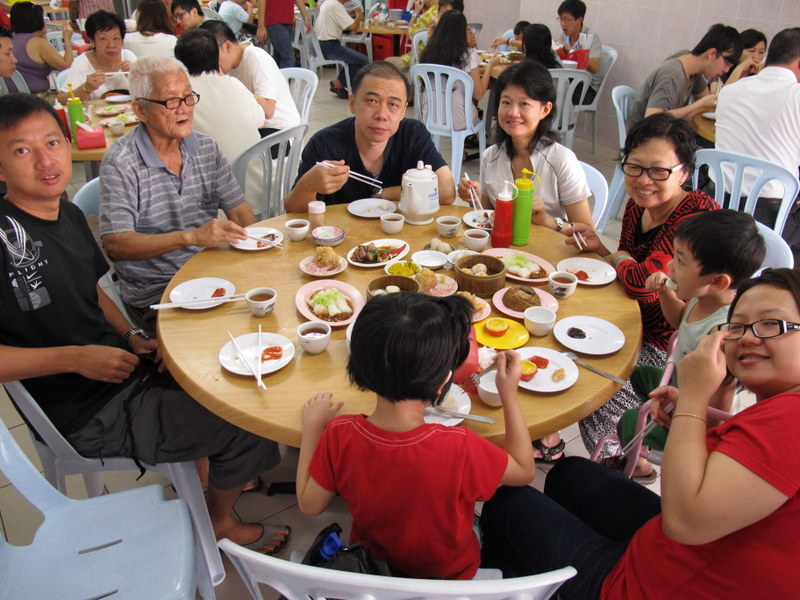
I joined Aric’s family to the polling station. Of course we first had a nice breakfast (dim sum).

Dim sum breakfast

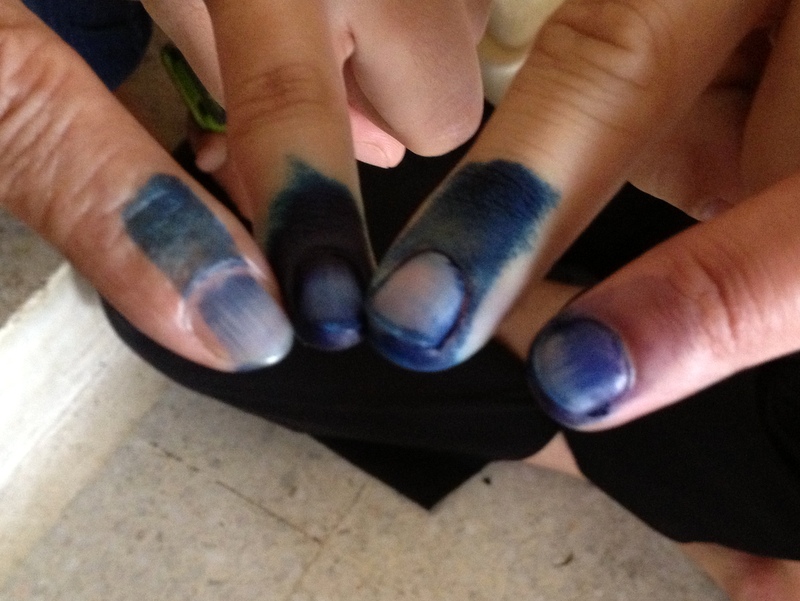
The voting takes place in schools, same as  in the Netherlands. It was well organised, with different queues for the various age groups. I was not allowed to enter the school grounds, but I did not have to wait  long, before the family came out again.For the first time “indelible” ink was used to make it impossible to vote twice! Of course everybody tried to test how indelible the ink was. Not very, it seems, just use toothpaste or grass or chlorox..:-)

Indelible inkalmost Malaysian

So, what will happen now? Opposition leader Anwar is protesting that there have been many irregularities. Yesterday, many video clips were circulating on the Internet about “foreign” voters, who had supposedly been given IC cards by BN. A good thing is that there have hardly been any clashes after the results came out, yesterday evening.

So probably no Ubah this time…:-(

It will be interesting to see if these GE13 results will weaken the position of PM Najib. The former PM, Badawi, resigned after the disastrous results of the 2008 election. The expectation was that Najib would at least win back some of the losses. But the results of these elections are worse for BN! Ok, the opposition lost Kedah, but strengthened its position in Penang and Selangor.

GE13

In my last post I mentioned that tomorrow the 13th General Elections will be held in Malasysia. Some of my Dutch friends asked me for more information about these elections and why everybody here is so excited/anxious/worried about the outcome.

So this post is meant primarily for my non-Malaysian followers, but of course I hope that my Malaysian friends will also read it. It is now Election’s Eve, so I must publish it fast, hopefully without mistakes…:-)

The present government is formed by BN (Barisan Nasional = National Front). BN is a racially based coalition of basically three parties, UMNO (Malay), MCA (Chinese) and MIC (Indian). BN (and its predecessor Alliance) has been in power from the Independence of Malaysia in 1957. That is more than 55 year and almost all the time they had absolute power ( more then 2/3 majority).

Well, as you know: Power corrupts and absolute power corrupts absolutely!

About the corruption and the cronyism in BN, I will not elaborate in this post. Do a Google search for Altantuyaa, Teoh Beng Hock, Rosmah, Taib, Khir Toyo, etc if you are interested.

Was there no opposition? Yes, there was. But Malaysia doesn’t have proportional representation, like we have in the Netherlands (and in many European countries). The country has (at this time) 222 parliamentary seats and is divided in 222 constituencies. In each constituency the winner takes all. So, if in each constituency the opposition gets 40% of the votes, at the end of the day they will not be represented in Parliament at all!

Before the 2004 election, the opposition parties formed an alternative coalition, Barisan Alternatif. Basically consisting of three parties: Keadilan (multiracial, progressive), DAP (Chinese, progressive) and PAS (Malay, conservative). At first not very successful, quite a lot of distrust between the component parties. But under the charismatic leadership of Anwar, they managed to cooperate better in the 2008 election. With a shocking result!

For the first time in decades BN lost its 2/3 majority!

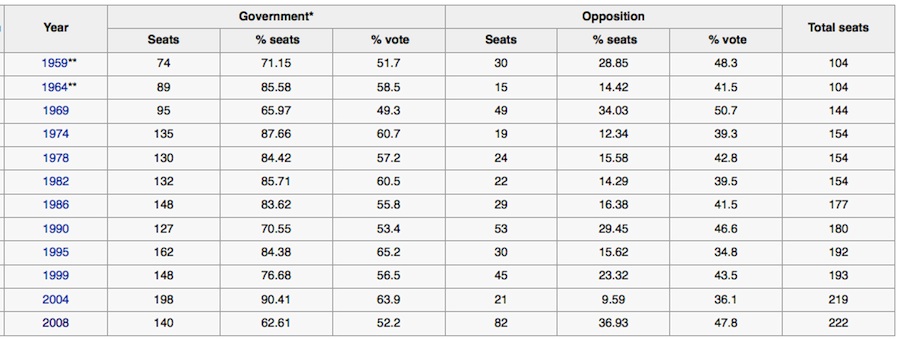
Elections stats

Now, when you study the statistics in this table, you will notice something strange. In these last election the opposition got 47.8 % of the votes, but only 37% of the seats! And in 2004 it was  even much worse, 36% of the votes against not even 10% of the seats!

How can that happen? The answer is: by Malapportionment and Gerrymandering

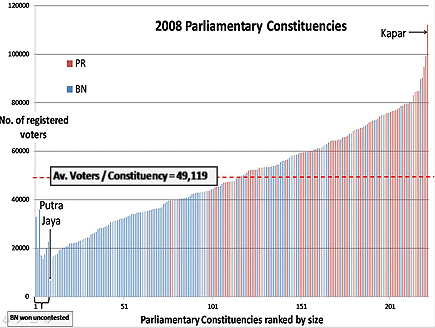
About Mal-apportionment: If you have an election system with constituencies, each of them voting for one MP, then each constituency should have about the same number of voters, right? In Malaysia that would result in about 49.000 voters for each constituency.

The real situation is stunningly different! Here is a graph of the constituencies in the 2008 election. As you see, there is a huge difference in size between the constituencies. The largest one, Kapar, has more than 100.000 voters, the smallest one, Putrajaya (center of the government!) not even 7000.

constituency size

Most countries with a constituency system (like the UK) have (constitutional?) election rules about which differences in size are allowed between constituencies (for example + or – 15%). Malaysia had those rules, but first they were relaxed and later replaced in 1973 by a vague “a measure of weightage”. Yes! With all due respect to my 2nd home, politically Malaysia is still a banana republic…:-(

But this is not all. In the graph the results of the 2008 elections are represented. Blue for a BN win, red for a win by the opposition. Do I have to explain in more detail? The constituencies with a small number of voters are dominantly BN, the larger ones vote for the opposition! Accidentally? No way. This is gerrymandering, choosing the boundaries of the constituencies in such a way,  that it favours the ruling powers. I find it really unbelievable that this is accepted by the Malaysian population.

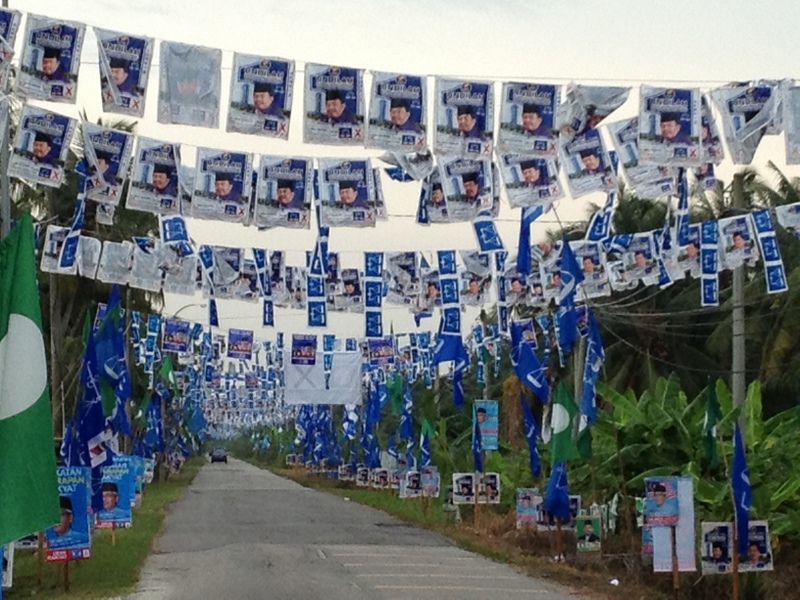
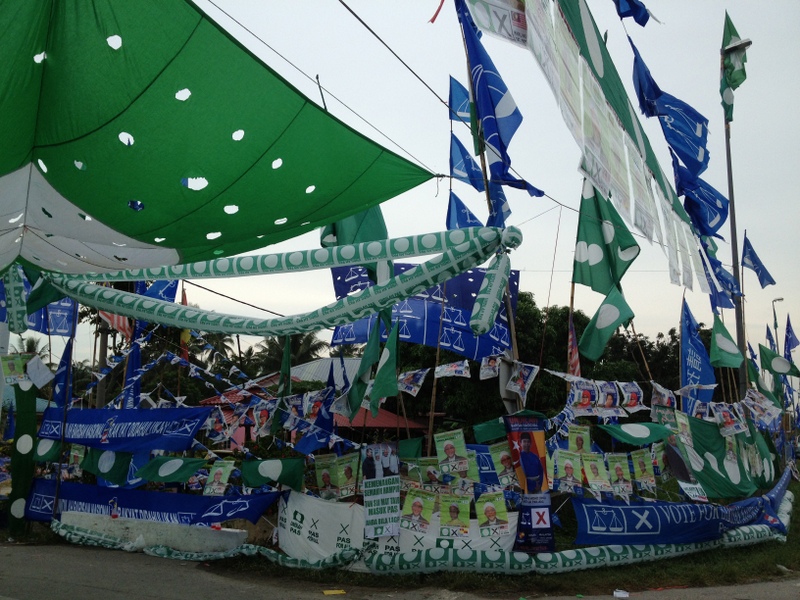
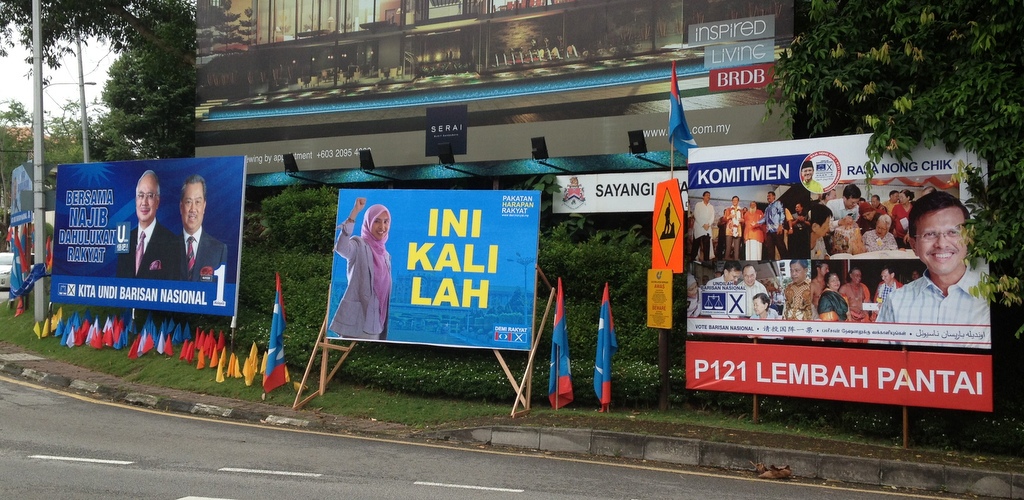
Ok, back to tomorrow’s elections.  It will be a battle between a (weakened) BN and Pakatan Rakyat (People’s Alliance), the successor of Barisan Alernatif. The elections are already named the dirtiest in the history of Malaysia. BN is doing its utmost best to remain in power, by any means. They have been flooding the country with flags and banners, rumours are that they are flying in phantom voters from Sarawak and Sabah while I am writing this. But there is a kind of vibrant feeling in the air, that a Malaysian spring might occur this time.

Ubah! Ini Kali lah    =  Change! This it the time

Here are a few pics taken the last few days.

2013-05-04 10.35.49 BN Opposition

Ini Kali Lah

Are people worried? Well, after the 1969 elections, race riots exploded, which are still remembered vividly by everybody staying in Malaysia at that time. Many people died, there was a curfew for several days. However, times have changed.

Will update you soon…:-)