Our Sun again

It is almost one year ago that I gave you an update about the Solar Sunspot Cycle 24. For those who have not read those earlier posts, a short recapitulation.

Sunspots are dark spots on the surface of the Sun and related to the sun’s magnetic structure. It is a periodic phenomenon, sometimes there are many, sometimes there are almost none at all. The period is about 11-12 years, and one such a period is called a Sunspot Cycle.
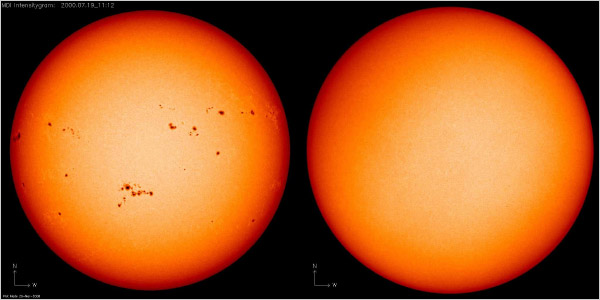
Sunspots

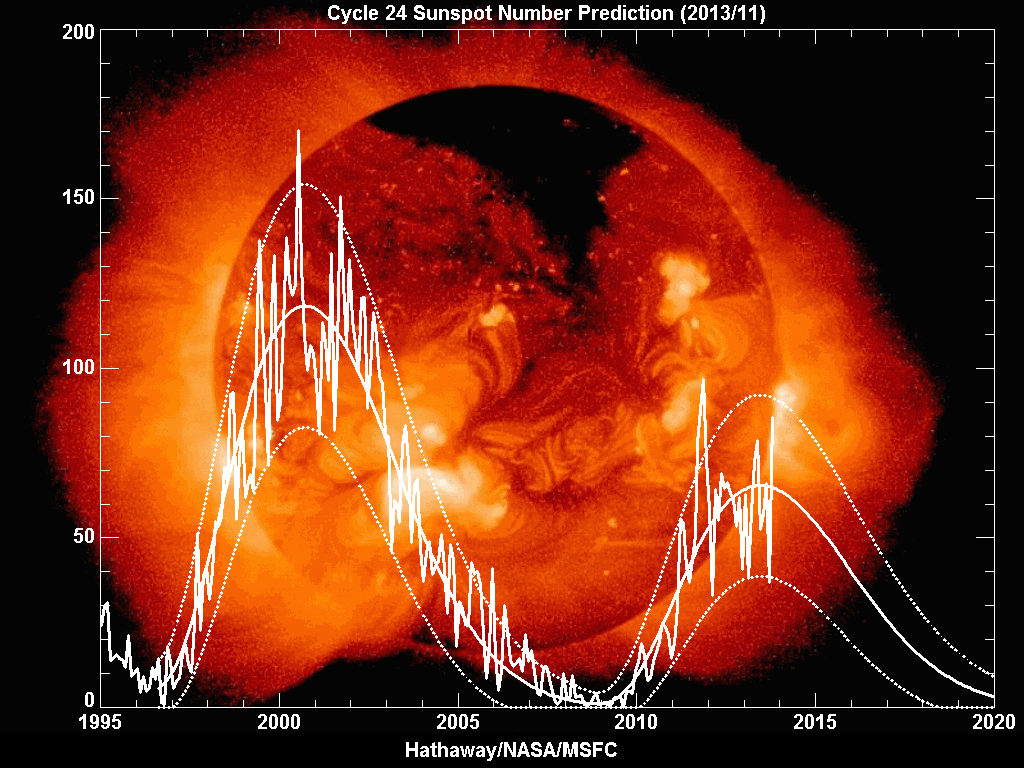
This periodic behaviour was discovered in 1843 by Schwabe, a German astronomer. Rather arbitrarily a numbering was introduced, with cycle 1 lasting from 1755 until 1766. We are now at the maximum of cycle 24. In the picture below the ‘average’ number of sunspots is shown as a function of time, for cycle 23 and 24, updated until November 2013
Cycle 23 and 24

As you see, the maximum is considerably lower than the maximum of cycle 23. And that is the reason that I have published my earlier posts, for example Don’t worry, our Sun is not dead. You can read more background information there.

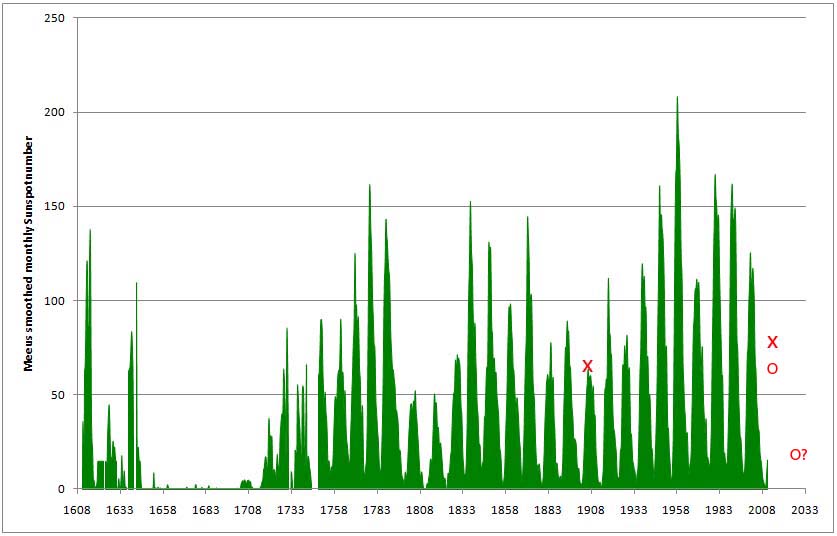
Here is a graph showing you the large variation in these sunspot maxima during the last 500 years. In the last 50 years the sunspot activity has been unusually high, whereas in the second half of the 17th century there was hardly any activity at all. This period is called the Maunder Minimum, whereas the last 50 years are sometimes called the Modern Maximum. Another period of low activity occurred in the beginning of the 19th century: the Dalton Minimum.
Solarcycles

So now the burning question is: are we on our way to a new minimum 

The picture above I have used already in my post, one year ago, How is the Sun doing these days? At that time the prediction was that the maximum would be about 76 and I had marked this maximum with a red cross, comparing it with the low value of 64 in 1906. Now, one year later, we have reached the maximum and it is even lower than predicted, ~ 65 (red circle). Although it is a bit early, a few predictions have been made already for cycle 25, which will peak around 2024. Peak may not be the right word, because the maximum might be as low as 7!

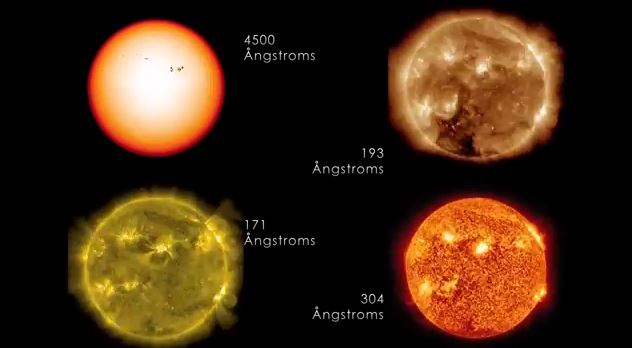
If we are going to a new minimum, will it be Dalton-like or Maunder-like? No one can tell at this moment. We do not really understand much of the underlying mechanism. When we study the Sun in visible light, it looks peaceful, with occasionally a few spots..:-). But look at the Sun in the ultraviolet region, and you see how violent it is.
solar images

Is there a relation between the periods of large/small solar activity and the climate on Earth? During the  Maunder Minimum we had the Little Ice Age.  Is the Global Warming fully due to the hothouse effect of carbon dioxide, or has the Modern Maximum also its influence? This is a sensitive topic, that I will not touch. The next decade we will hopefully learn more.

For more information, here is a very readable article in Sky and Telescope (published already two years ago): Is the Sunspot Cycle About to Stop?
Journal 6-11-2013

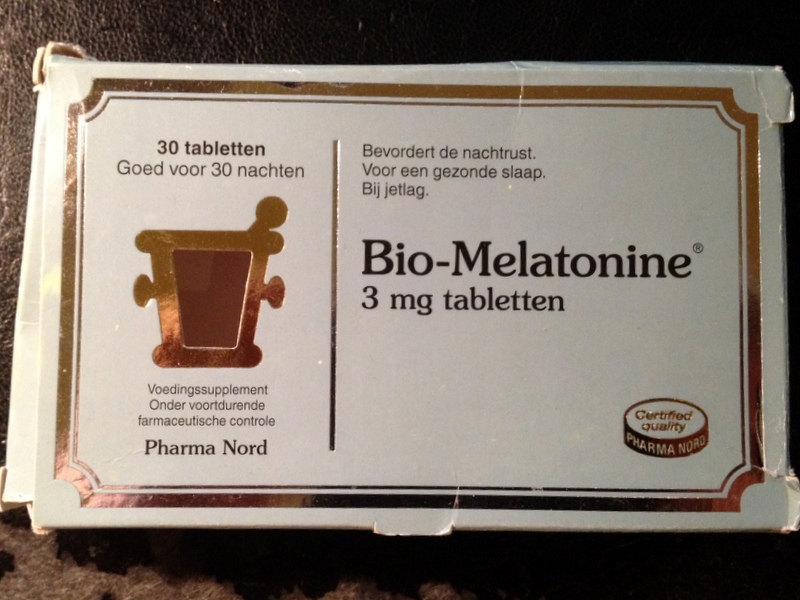
Back in my second home for almost three weeks already. How time flies. This time I suffered less from jet lag, maybe because I used Melatonin the first week. Melatonin is supposed to adjust your biological clock.

Melatonin

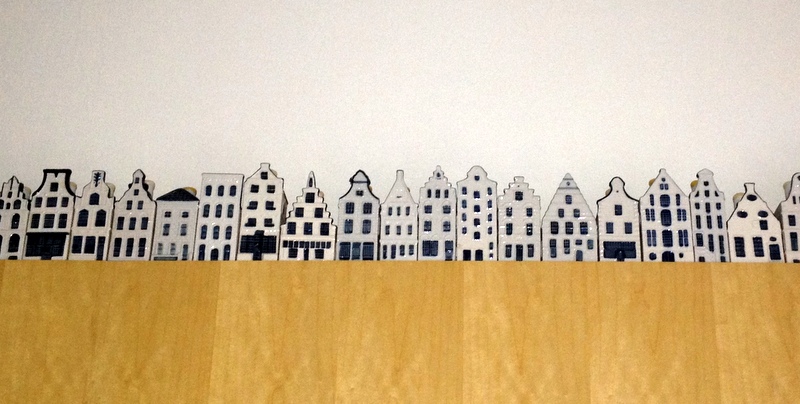
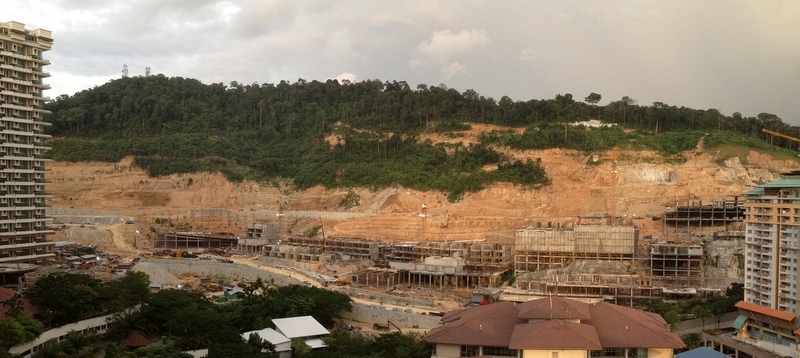
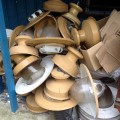
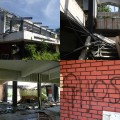
In earlier posts you have read that we are collecting KLM-houses. We bought many during our last visit, here is part of it. Next to it a sad picture of the present view from our balcony. The destruction of Bukit Lanjan has not stopped.

KLM-houses

View from our balcony


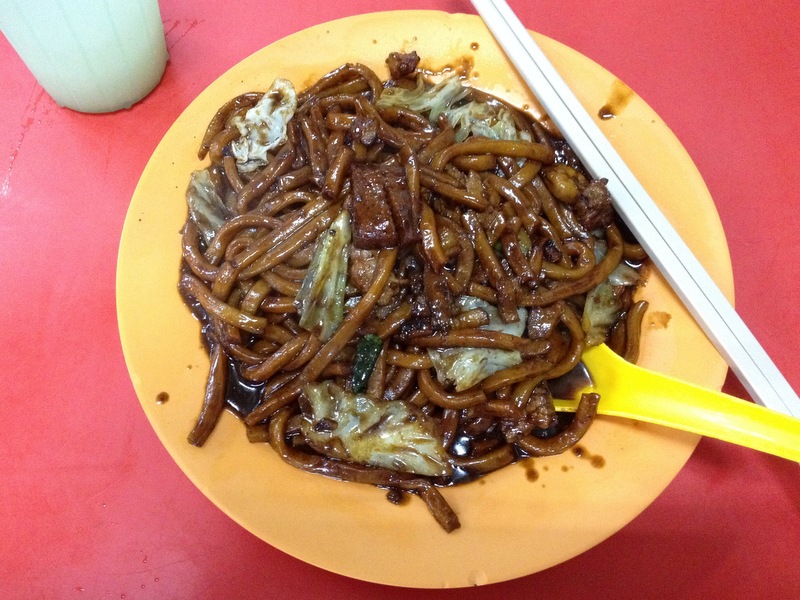
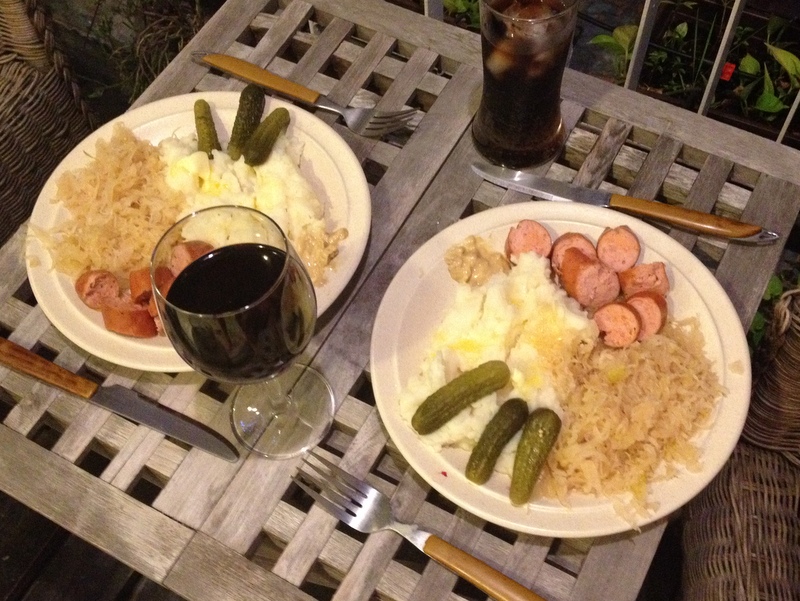
After two months of Western food I was craving for Nasi Lemak, Hokkien Mee (picture), Roti Chanai etc. But in the fridge there was still a smoked sausage (“rookworst”), so we had also a Western meal, with Sauerkraut and mashed potatoes..

Hokkien Mee

Sausage & Sauerkraut

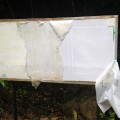
After a few days of recovery I started walking again in Bukit Kiara. It is still under threat of “development”, but walking there remains a pleasure. Instead of completing the atrocious fence, the authorities should concentrate on maintenance. Personally I don’t mind the “illegal” rubber tappers, but the neglected signboard for the Sg Penchala is an eyesore.

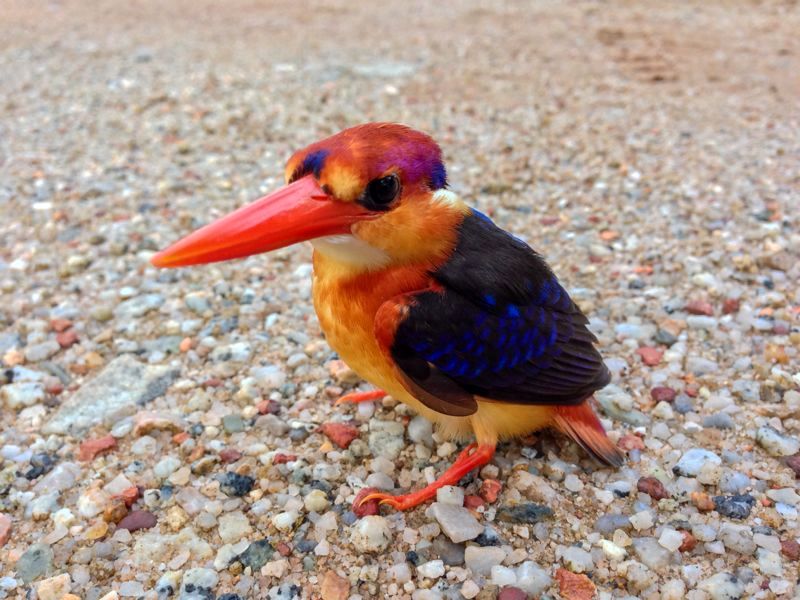
When Aric was back in Sabak Bernam he sent me a picture of a beautiful bird, found in his mum’s garden. With a broken wing. For my birding friend Khong it was no problem to id the bird: an uncommon Black-backed Kingfisher

Black-backed kingfisher

Aric took it back to KL, then a friend brought the tiny(!) bird to a bird doctor in Shah Alam. But the bird was too weak, it died. Pity.

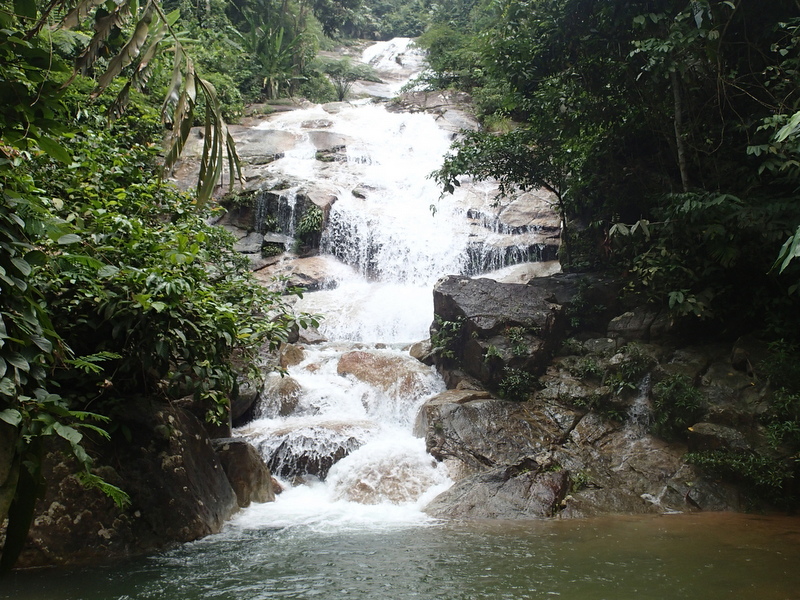
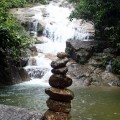
After recovering from the flight, as usual came the craving for jungle and a waterfall…:-) I found Paul and Rahim willing to join me to a remote waterfall in the Tanjung Malim region, the Gerehang fall. Not many people visit this fall, Rahim had to do a lot of chopping to clear a trail.

Gerehang fall

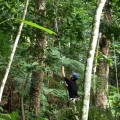
During our hike of about 5 hours we did not meet a single soul. When we arrived it started to rain for a while, but after the shower, the sun came through again, so we had coffee and our lunch. Unfortunately, with the sun came also the sweat bees, many of them, and with (or because of?) all my precautions, I got stung again. A tiny sting in my finger, but it resulted in a swelling of my hand that lasted for more than one day. I did not have to use my Epipen, but it was worrying. Maybe I must stop going to remote places in the jungle. Here are some more pictures.

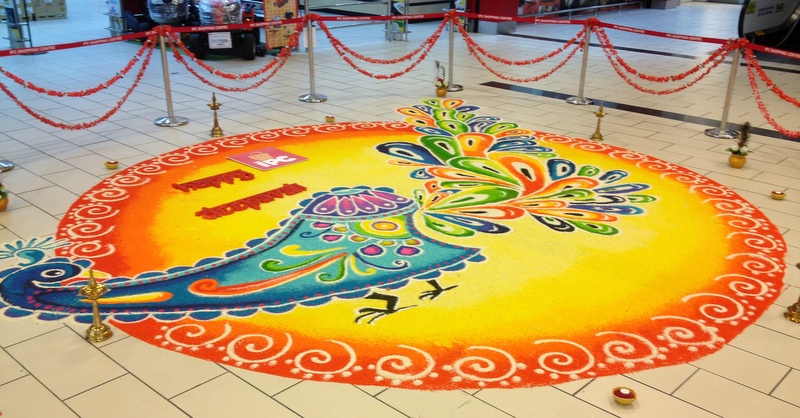
Last weekend it was Deepavali, the Hindu festival of light. In the Ikana/Ikea shopping center, a beautiful, elaborate, kolam was created.

2013-10-31 11.59.21

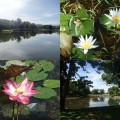
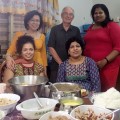
I spent the weekend in Taiping with my friends George and Jenny. Of course we visited the Lake Gardens, but also the ruins of the New Rest House. With May, another friend, I attended a delicious Deepavali lunch, offered by her Indian friends. I also took part in the Kathina festival, see my separate post. Here are some Taiping pictures

Malaysia, my 2nd home, full of variety


The Kathina festival 2013

During the rainy season (Vassa), Theravada Buddhist monks don’t travel and are going on retreat in a temple or monastery. When the rainy season is over, traditionally in October/November, the end of this 3-month retreat is celebrated during the Kathina festival.

The (legendary?) background of this festival is so interesting that I can not resist the temptation to tell you a bit about it.

A group of bhikkhus (monks) was on its way to the Buddha, when the rainy season started. Not to damage the harvest, living creatures (and themselves), they decided to stay where they were, although unhappy about the delay. After the rains stopped, they continued their travel. When they reached the Buddha, to console them, gave them a piece of cloth to stitch a robe. To stitch a robe, you need a frame, which is called a kathina. A detailed account can be found here

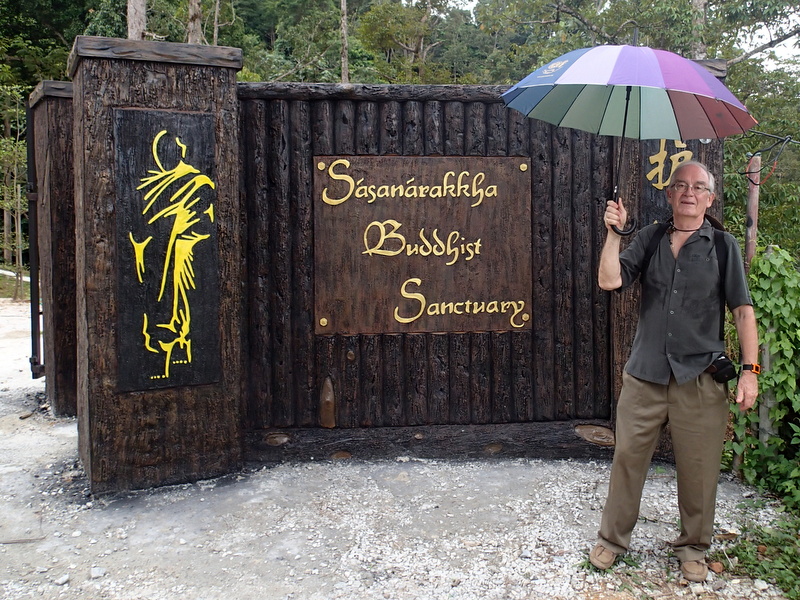
Nowadays the devotees offer this cloth (and other items) to the monks during the Kathina ceremony. This ceremony takes place in many locations in Malaysia, but is especially popular in Taiping, in the Sasanarakkha Buddhist Sanctuary. I have visited this beautiful, quiet sanctuary on the slopes of Maxwell Hill quite a few times.This time it was still beautiful, but not quiet with a few thousand visitors.

Entrance of the Sanctuary

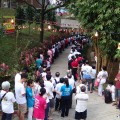
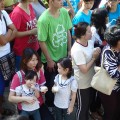
Many visitors

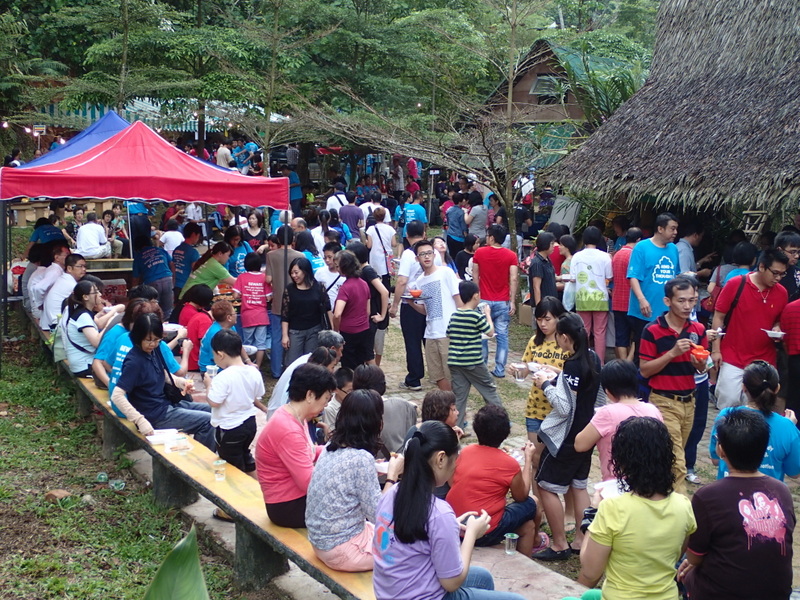
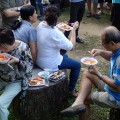
We went up early Sunday morning, as Jenny was a volunteer at one of the many food stalls. Food stalls, yes, because this is Malaysia, no celebration without food…:-)  Probably many visitors mainly came for the free food.

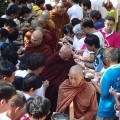
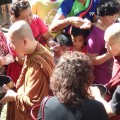
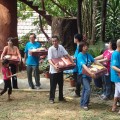
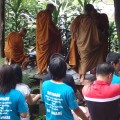
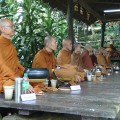
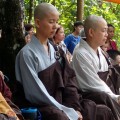
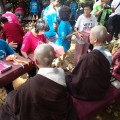
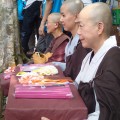
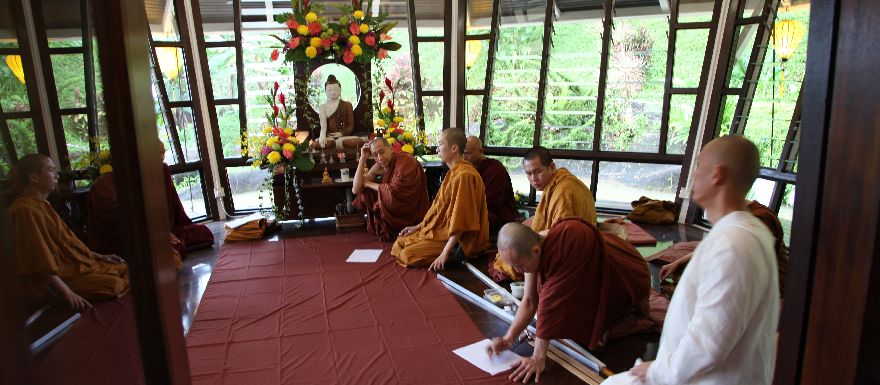
The Kathina procedure is as follows: the monks (this time there were seventeen plus three nuns) walk along the long row of devotees, who put a bit of rice in the alms bowl of each monk. They then proceed to their seats, where the robes and other items are given to them. One of the monks then gives a talk. It is finished around noon. Officially the cloth has to be sown into robes before the end of the day, but I don’t know if that is still the case nowadays. Here are pictures of the event.

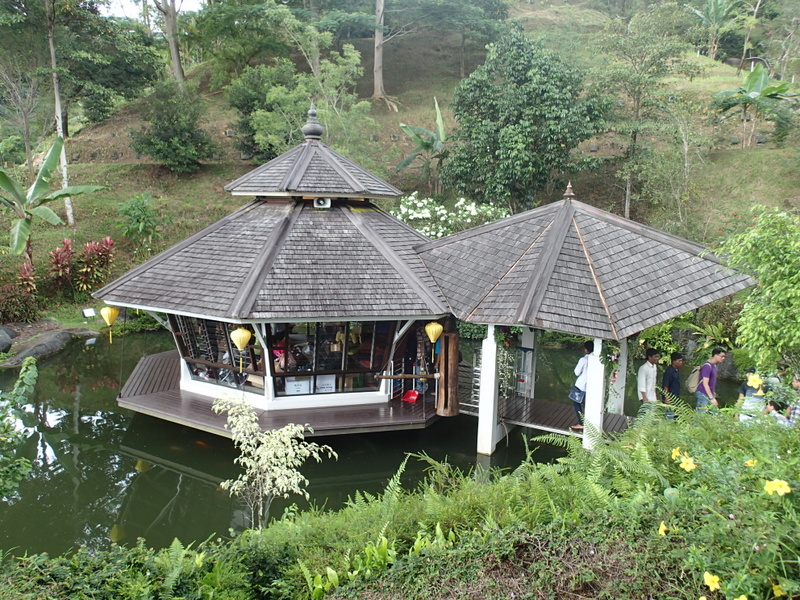
The event was organised very well, one organiser told me there were about 400 volunteers! On our way down, we passed one of the buildings of the sanctuary. This may be where the cloth is sown into robes, as I found a picture on the Internet, which seems to be taken inside this attractive building.

One of the buildings Sowing the robes


This was the second time I attended Kathina, it will hopefully not be the last one.


The BEHGHK-boson

After the (tentative) discovery of the Higgs boson earlier this year, it was generally expected that the 2013 Nobel prize for physics would be awarded to the theoretical physicists who, fifty years ago, postulated the concept of a particle that would give all the other elementary particles their mass (ok.. this is a bit of a simplification, lol).

And so it happened. On 8-10-2013 the Nobel committee awarded the prize to Peter Higgs and François Englert. François Englert? I had never even heard about this man!

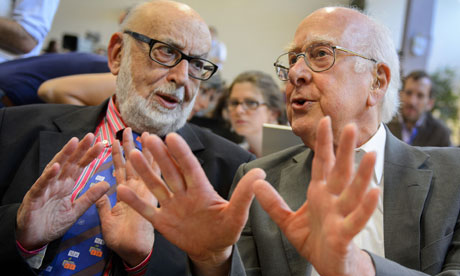
Englert and Higgs

Here they are, Englert (Belgian) to the left and Higgs (British) to the right.

I was intrigued and started surfing and reading. Not about the theoretical background, that is way to complicated for me. I was interested in the human aspects. The result is this post.

In the second half of the last century, physicists all over the world were trying to build a model for the fundamental forces in nature. This resulted in what now is called the Standard Model. See my post God’s Particle for (a little bit) more information.

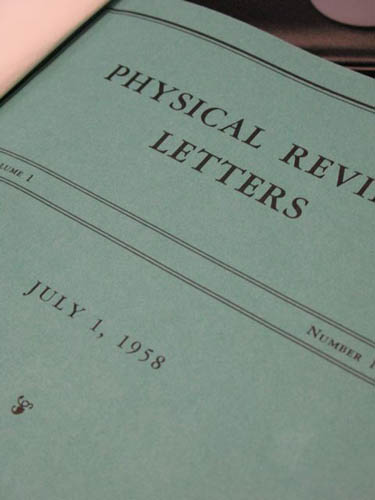
When a physicist finds something new and interesting, of course he wants to publish it. For example in the Physical Review, one of the leading physics magazines. As it was peer-reviewed, it could take easily half a year after submitting your paper before it got published. Therefore it was decided in 1958 to create Physical Review Letters, a weekly journal meant for short contributions. Time between submission and publication a couple of weeks only.

First issue of PRL

When I was doing my PhD research, there was always a copy of the Physical Review Letters in the library of our institute, available for perusal.

And it was a dream for many young scientists to publish something in this highly valued journal.

By the way, I never did…:-)

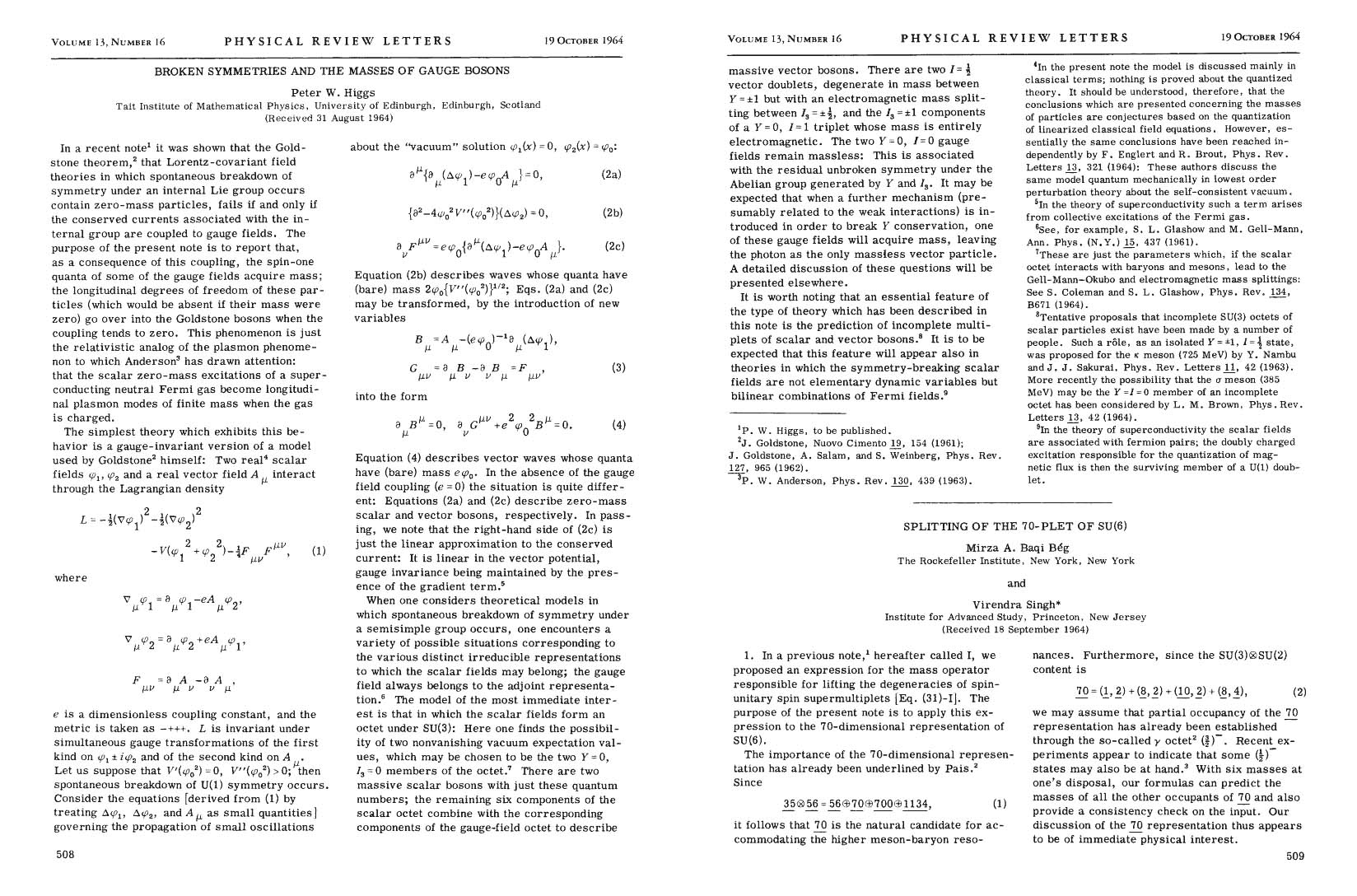
It was in 1964, that Peter Higgs (then 35 years old) published a letter in this journal: Broken symmetries and the masses of gauge bosons , submitted August 31 and published October 19. It was this article that finally resulted, almost 50 years later, in the Nobel Prize. Here it is ( don’t try to understand it)

Higgs

So what about Englert? Well, he and Robert Brout (Belgian American) had published a few weeks earlier, in the same magazine, an article with the title Broken symmetry and the mass of gauge vector mesons ! Submitted June 26 and published August 31. Comparing the titles you probably will accept, even without any understanding, that the two contributions basically cover the same ground!

And that is not all. A third article was published a few weeks later, again in the same journal. Thomas Kibble (Imperial College, London) had been studying with two American guest scientists, Gerard Guralnik and Carl Hagen, the same problem of symmetry breaking and mass, and come to similar conclusions. Their paper was submitted on October 12 and published November 16.

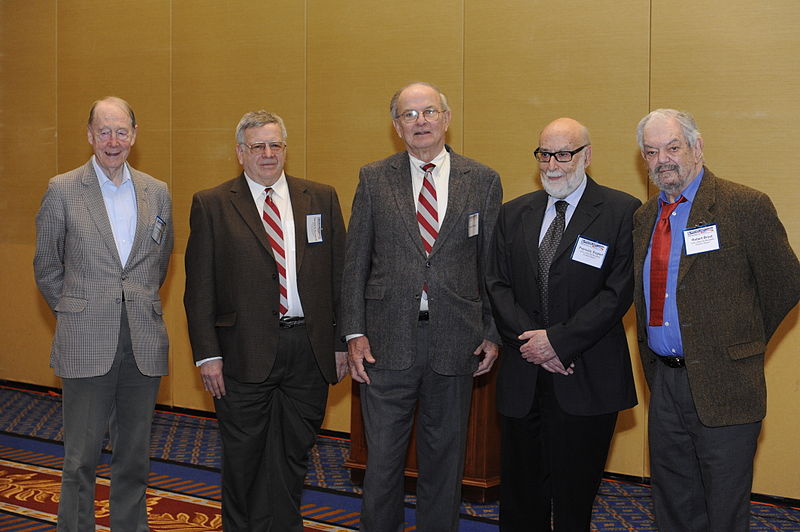
Three papers within three months. Independent research, no doubt about that, it was just that the time was ripe for it…:-). There has also been recognition by the physics community for all six authors. Three years ago the American Physical Society has awarded the prestigious Sakuarai prize to them.

Sakurai Prize

From left to right: Kibble, Guralnik, Hagen, Englert, Brout. Is it on purpose or accidental that Higgs is missing…:-)?

In the years after publication, when the Standard Model was developed, it became customary to talk about the Higgs boson, the Higgs field, the Higgs mechanism. Not really fair to the others, although Higgs was not to blame for that. Abdus Salam, one of the fathers of the Standard Model, used the name Higgs-Kibble boson, but it did not catch.

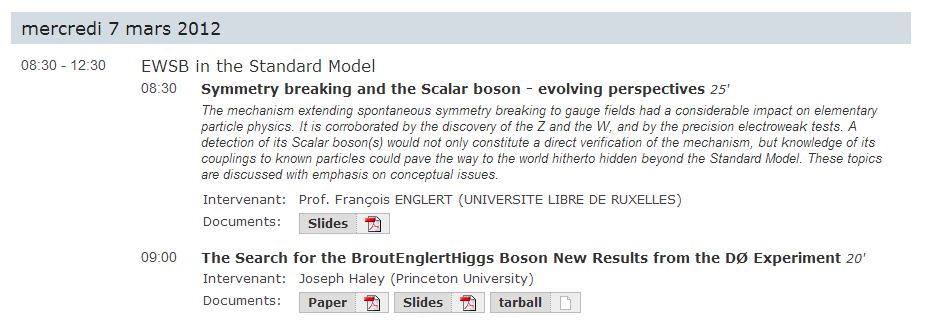
Recently, when it became clear that a Nobel Prize was coming, the discussion started again and became a bit less friendly. In a  2012 physics conference there was a directive that in contributions the name Higgs-boson should be avoided and replaced by BroutEnglertHiggs boson or by SM Scalar boson ! It caused a bit of an uproar, many physicists objected.

Here is a part of the program of this 2012 Moriond conference

Moriond program

Even in these alternatives the work of Guralnik, Hagen and Kibble remains invisible, so there was also a suggestion to rename the Higgs boson as BEHGHK boson. (the initials of the six authors).

Kibble found a name change silly, but Hagen objected to the name Higgs boson, because: ‘The rest of us are fighting not just for our ego but for our place in the annals of physics.‘ Read more about this controversy here

A Nobel Prize can be awarded only to people who are still alive and to a maximum of three people. That is the rule. So, what would the Nobel Committee decide? One option would have been, to choose one person in each of the three groups. Brout passed away two years ago, so the choice for the first two groups would be simple: Englert and Higgs. But what about the Imperial College group? How to choose between Kibble, Guralnik and Hagen?
I have read somewhere that this year the meeting of the committee about the Physics Nobel Prize took longer than usual…:-) Finally it was decided to leave the third paper out and award the prize to Englert and Higgs.

I think that Kibble will be phlegmatic over the outcome. Not so sure about Guralnik, Hagen will be disappointed.

To honour all six, here is a collage

The six authors

From left to right: Brout, Englert, Higgs, Guralnik, Hagen, Kibble: BEHGHK

Theoretical physicists are human too ..:-)

Naughty, naughty!

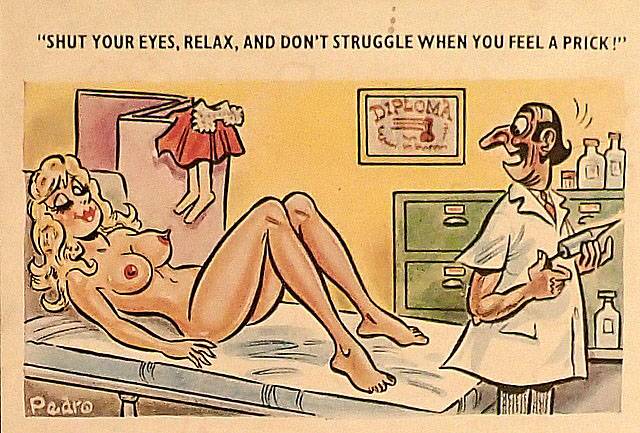
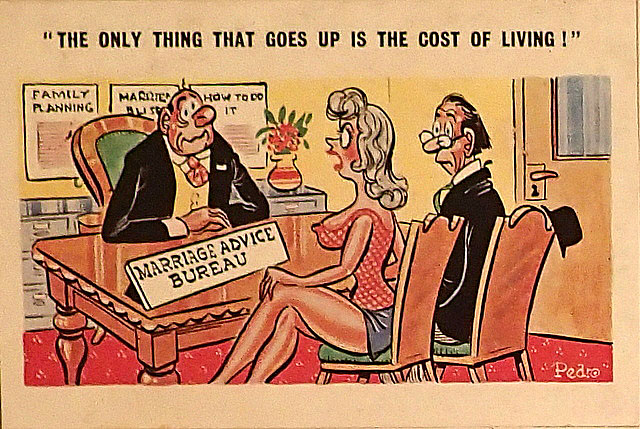
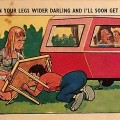
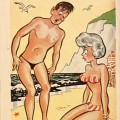
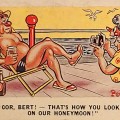
In the 1970’s I have been collecting postcards during my visits to England. Naughty postcards! They were popular in those days and actually quite innocent according to modern standards…:-) Here are two examples.

naughty21

naughty22

What to do with those postcards? After I had collected a lot, I decided to create a kind of collage with them on a piece of cardboard. And what better place to hang it than in the toilet ..:-) From that time on my guests often stayed a bit longer in the toilet and came out with a big smile. When I moved to my new apartment, I forgot more or less about this “work of art” until I found it back recently and put it again in the toilet.
Toilet humor

During my last stay I decided to take pictures of the individual postcards. Here is the rest of my collection. The quality is not perfect, but they have stood the test of time (~40 years) reasonably well. Enjoy…:-)

For those of you interested in some background information, you may notice that many of the cards are signed “Pedro”. it was one of the nicknames of their creator David Philip Millar (1909-1988), master of the double entendre

Journal 17-10-2013

The last three weeks, after Aric went back to Malaysia, I have been busy with many social and cultural activities. I started with visits to my GP, my cardiologist, my diabetician, my ophthalmologist and my dentist….:-)  Everything is under control.

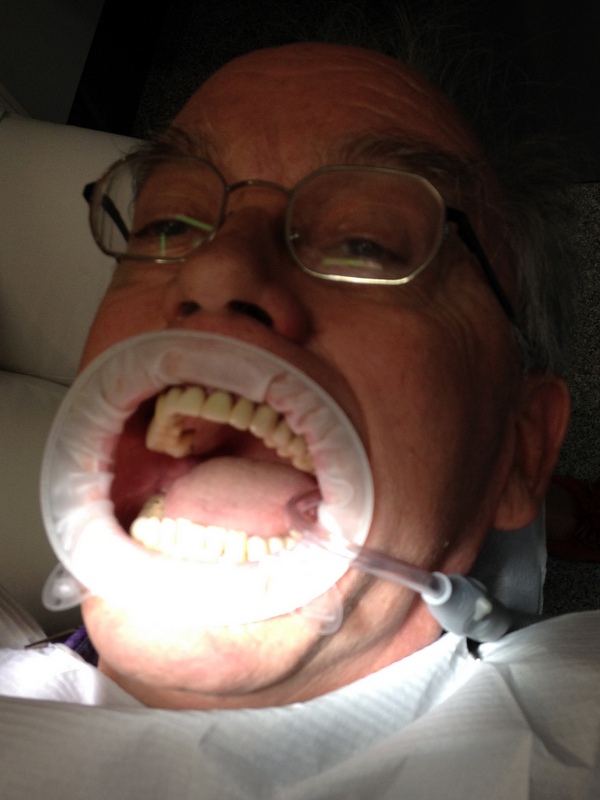
My dentist used a new torture contraption, which made me look like a breedbekkikker (wide-mouthed frog, rana ore lato, can only be found in the Netherlands, lol).

Breedbekkikker

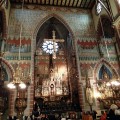
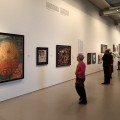
I visited two more musea and went to two concerts. In the Concertgebouw I listened to Maria Pires, playing Beethoven. She got an ovational applause which she rightly deserved. With a friend I went to the Gauguin, Bonnard & Denis exhibition in the Amsterdam Hermitage museum. A bit disappointing, although the museum itself is worth a visit. Another concert was given in the impressive Neo-Gothic Dominicus church in Amsterdam. My friend Yolanda sings in a choir, they performed works by Bach and Mozart. Beautiful music, especially the Bach cantata Aus der Tiefen rufe ich, Herr, zu dir . With another friend I went to an exhibition of Hundertwasser  in the Cobra museum in Amstelveen.


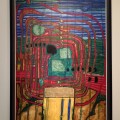
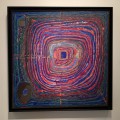
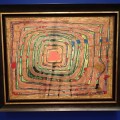
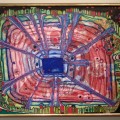
The Hundertwasser exhibition was a pleasant surprise. I knew him only as an architect (here is is picture I took of the Hundertwasserhaus in Vienna, 6 years ago), but first he became famous as a painter, in the 1950’s. Here are some of his paintings. Both from these paintings and his buildings it is clear that he did not like straight lines, he called them devil’s tools..:-)

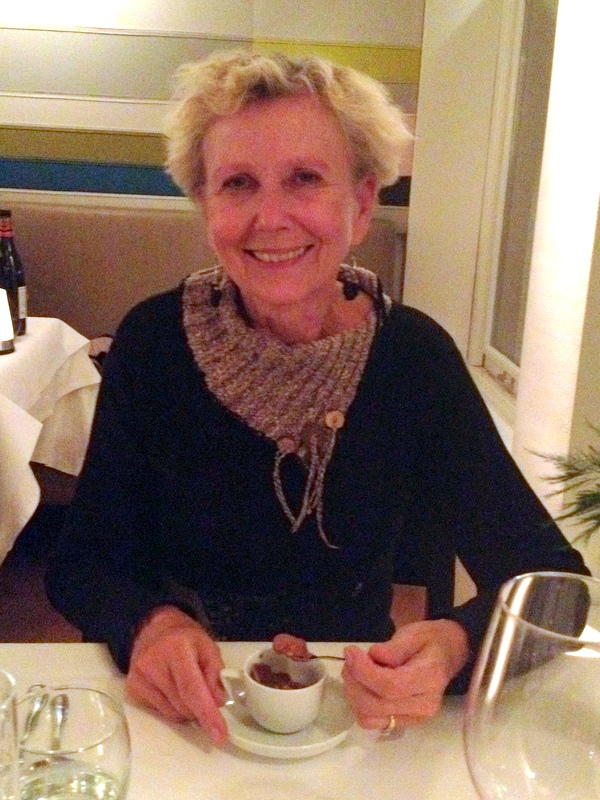
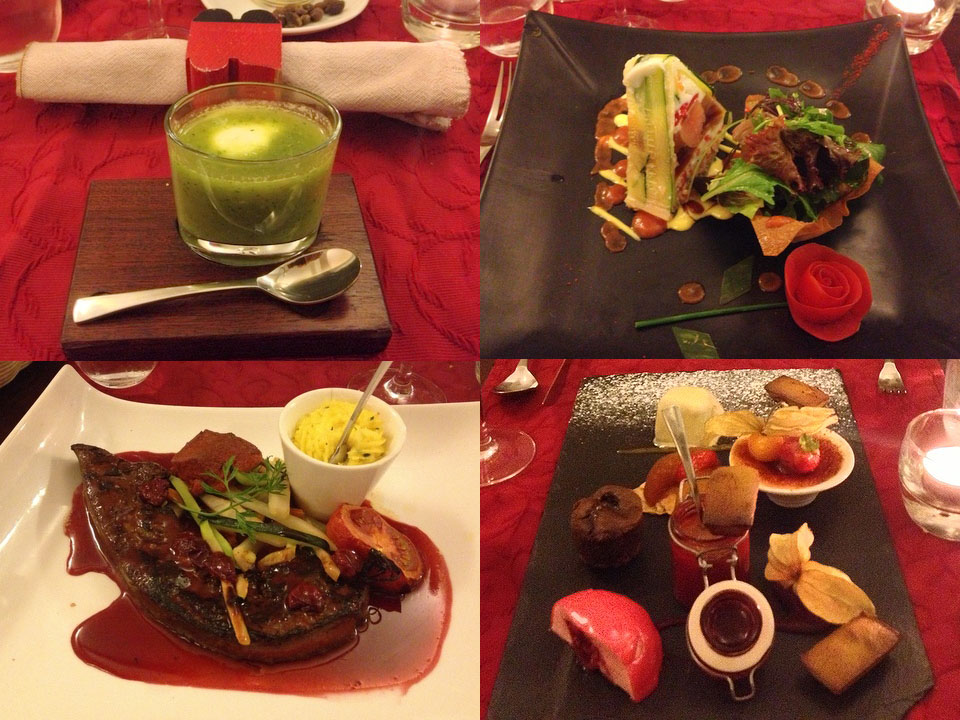
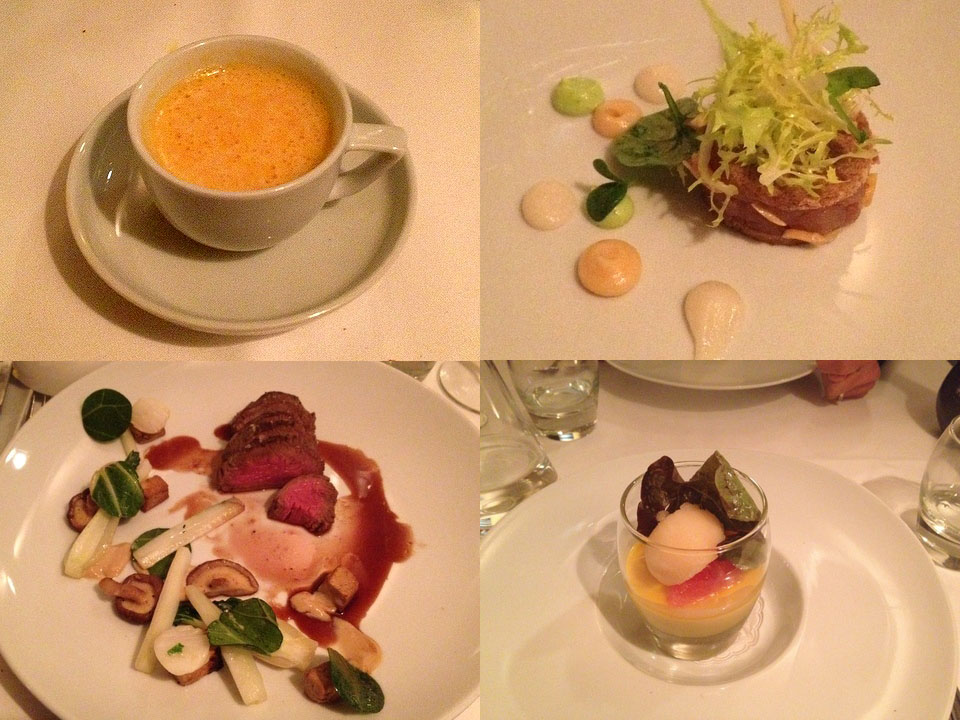
When I am back in the Netherlands, it has become a tradition to have dinner with Yolanda in a  ‘fine dining’ restaurant. This time we went to restaurant Vandemarkt and had a delicious dinner there. The presentation of the food makes it almost a work of art.The reason that in the picture the main course looks messy, is that I could not control myself, I started eating before I thought about taking a picture…:-)

vandemarkt food

Yolanda

Another tradition during my stay in the Netherlands is a reunion with my siblings. This time it took place at my sisters place. My brother Ruud could not be there because he just had had a hip replacement operation, but in these days, with webcams and skype, he still was able to join virtually…:-)

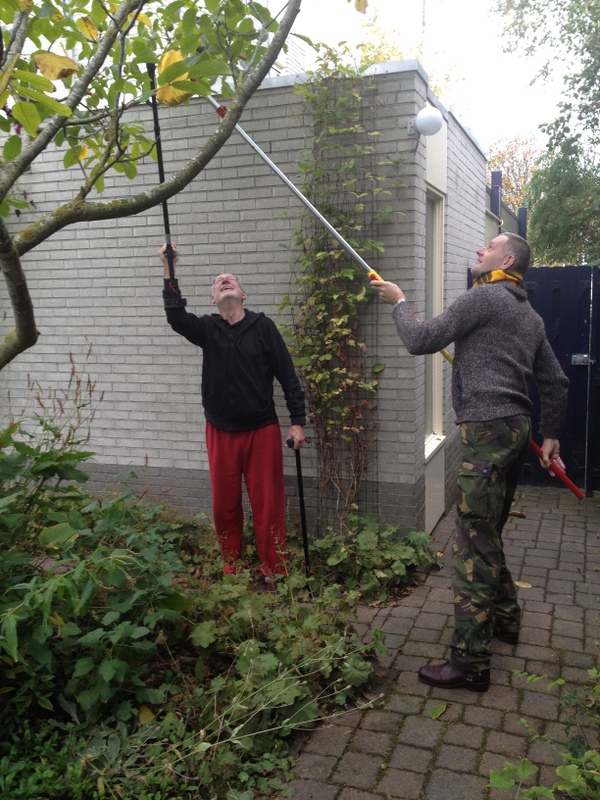
Just before coming back to Malaysia I went to Groningen to meet Ruud and his loved ones. He was already able to walk in the garden with his crutches and could point out to Jur where the walnuts were hanging. I stayed overnight and met his two sons, my favourite nephews.

Harvesting walnuts

Two nephews


I also met many friends, former students, ex-colleagues etc. Often for a drink and food, so not surprisingly I gained weight again, will have to work hard to slim down. The weather remained nice and warm with often spectacular sunsets.

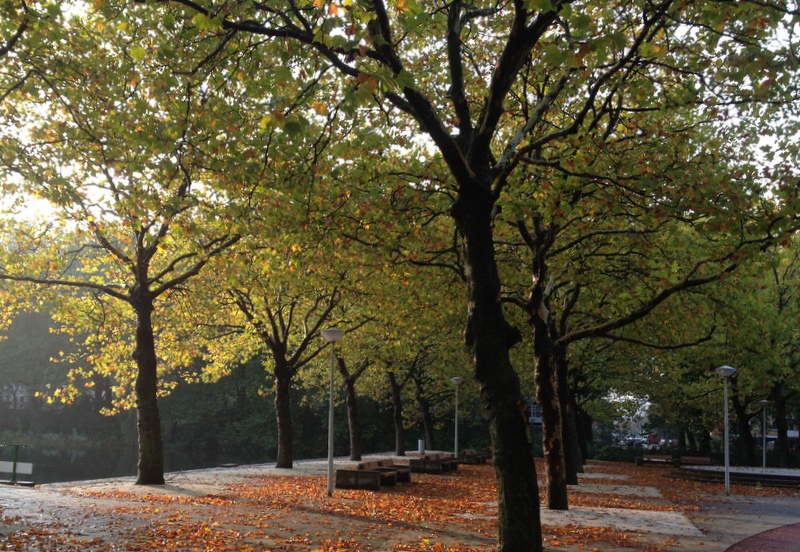
It was only during the last few days of my stay in the Netherlands that the weather became autumn-like, with some heavy rain and lower temperatures. But altogether I have been very fortunate, the weather gods must love me. On  my way to Schiphol airport I finally could take a picture of the trees near my apartment in autumn colors.

I will end this post with a picture of my new watch. It is a Pebble watch, synchronised with my iPhone. It gives a warning when a SMS or email has arrived and you can choose between many different displays of the time.

Pebble watch2013-10-16 09.36.26

Europe trip 2013 Barcelona & Amsterdam

After our two-week trip through Europe we needed some time to relax and do our laundry. Only a few days because we had one more destination on our program: Barcelona in Spain. The town of Gaudi, the country of paella and sangria!

It was a short visit of three nights only. Instead of looking for a hotel we found a nice apartment, a loft on the fourth floor of an old building, near to the Ramblas and in the middle of the Red Light district…:-) The dimensions must have been something like 30 x 5 meter!


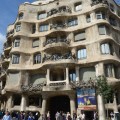
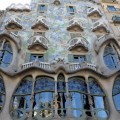
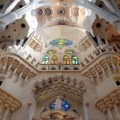
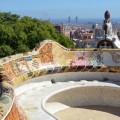
Of course we spent most of our time in Barcelona visiting and admiring the wonderful works of art created by Gaudi.. A pity that we were not the only ones! I have created a separate album about Barcelona on my Stuif’s Adventures site. Here only four pictures of the places we visited
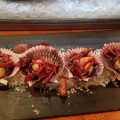
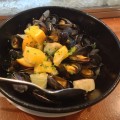
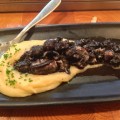
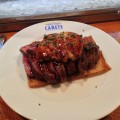
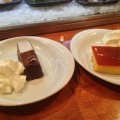
We had lots of tapas and sangria. Not always top quality. One night we had really a wonderful meal in a local tapas bar suggested to us by the hostess of our apartment. Spanish style, We started our dinner at about 10 pm..:-). Delicious food. The name of the restaurant is Cañete and you should not miss it when you visit Barcelona!
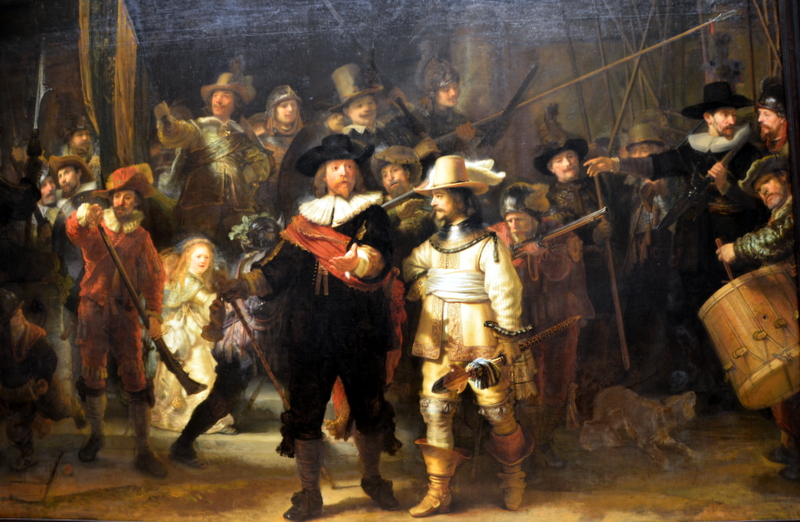
Back in Amsterdam, we had a few days left before Aric went back to Malaysia. The weather was still ok, so we looked for some more of the KLM houses. And we visited the Rijksmuseum, opened last year after an extensive renovation. With a spectacular result, I will post a separate blog later about it. We had a look at the Night Watch by Rembrandt, one of the most famous paintings in the world. Also here we were not the only ones…:-)
Night Watch

Here are a few more pictures of these last few days in Amsterdam

Europe trip 2013 part 4

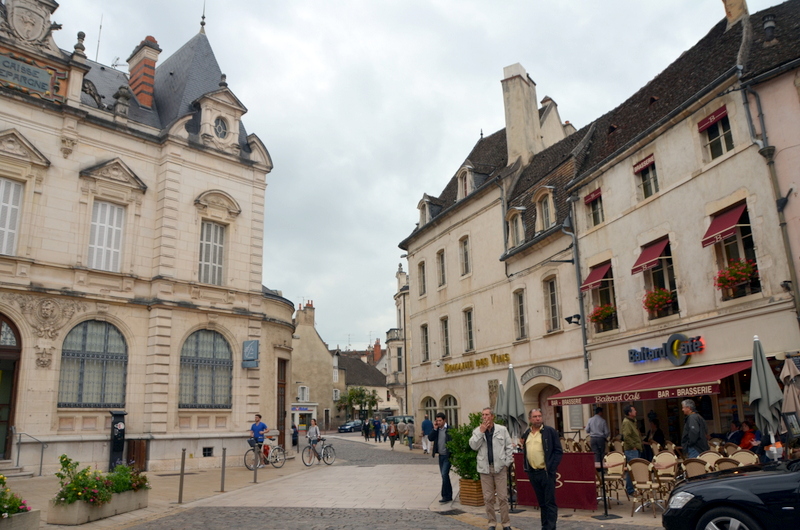
My idea was to travel back from Switzerland to Amsterdam via France. Last year I had visited a few Loire castles with my brother Pim,  and I wanted to show their beauty to Aric, so I booked two nights in Blois. However, planning in more detail, I found that the distance between Grindelwald and Blois was almost 700 km, a bit too long for a comfortable drive. Therefore I looked for a suitable stopover halfway. Beaune! To be honest, the name did not ring a bell. Now I know better.

DSC_5856

Wine lover friends will scold me, because Beaune is the Wine Capital of the Burgundy region. The most important wine auction of France is held here yearly, but we were too early for that. Besides, Burgundy wines are too  expensive for me.

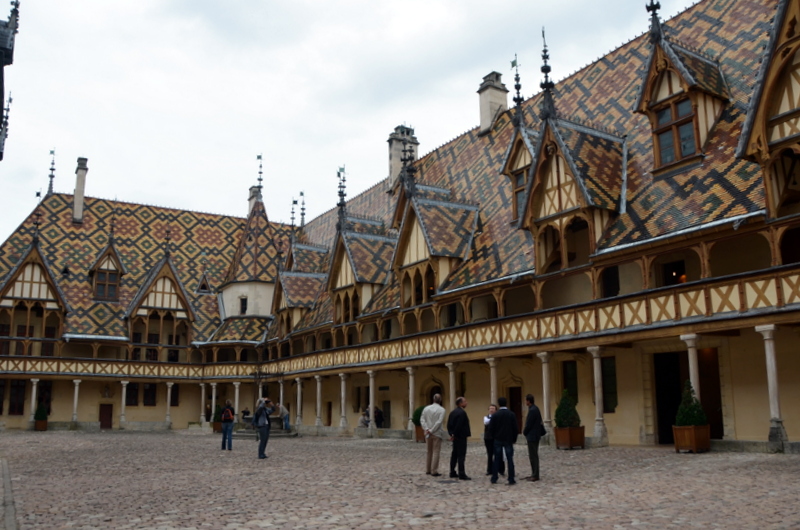
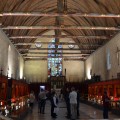
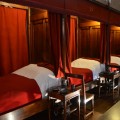
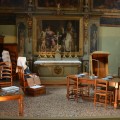
It is a medieval town with a famous tourist attraction: the Hospices de Beaune, a hospital for the poor, founded in 1443 (!)

DSC_5857

Well worth a visit, here are some pictures.

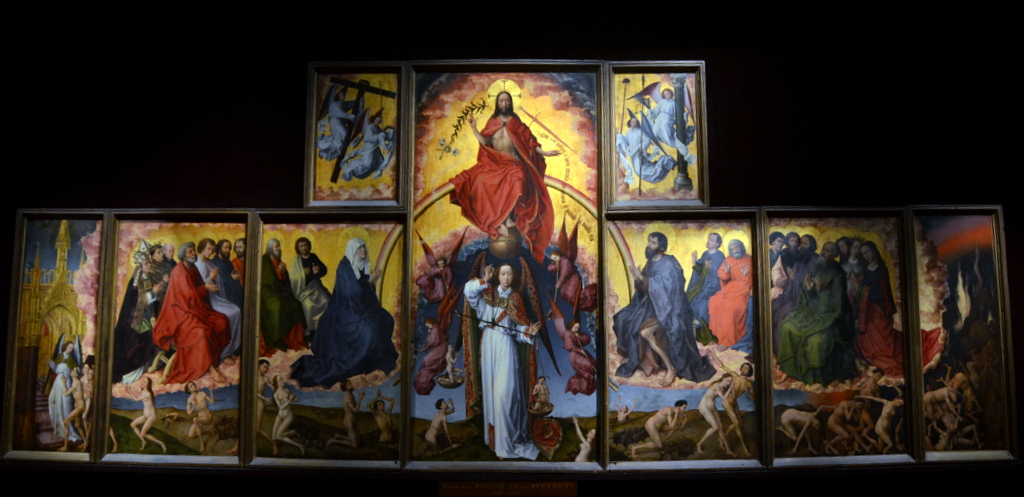
The hospices also possess a very famous medieval work of art, The Last Judgment (1445-1450) by Rogier van der Weyden. Impressive.

DSC_5917

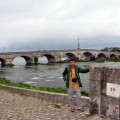
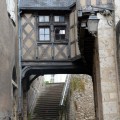
After a nice dinner and a good night sleep we continued the next day to Blois, situated on the banks of the Loire river. The weather had changed, it drizzled when we arrived. We did a short walk in the town

After our walk we had a delicious dinner

Haute Cuisine in les Banquettes Rouges, Blois

Haute Cuisine in les Banquettes Rouges, Blois

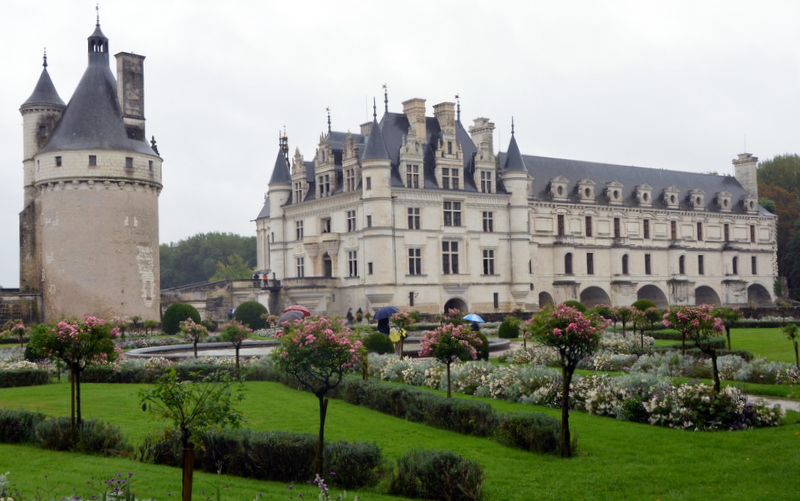
The next day it was raining cats and dogs! Still we decided to visit the two castles. And we were not the only ones. It was the National Heritage weekend, there were special activities everywhere and the admission was at a reduced rate or even free. Resulting in crowds of people. First we visited Chenonceau, my favourite.

DSC_6021

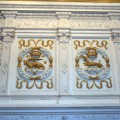
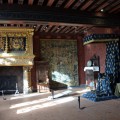
Because of the rain we skipped the beautiful gardens and spent more time inside the castle. In its present state it dates back to the 16th century. The castle was acquired by king François I and later given by his son, Henry II to his mistress Diane de Poitiers. She commissioned the building of the famous arched bridge across the river Cher.

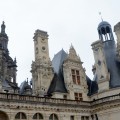
Next destination was Chambord, the largest of the Loire castles. If Chenonceau is androgynous, Chambord is alpha-male…:-).Built by the same king François I and possibly designed by Leonardo da Vinci.

DSC_6065

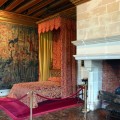
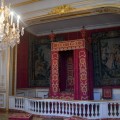
The rain had become heavy now, we were soaked already, so we spent only a short time on the roof with its many chimneys. Pity for all the people who took part in the activities. The castle was never inhabited continuously, the kings of France just moved in a for a couple of weeks. Lous XIV, the Roi-Soleil had a ceremonial bedchamber here, where VIPs could watch how he woke up and was dressed..:-)

Wet and cold we came back to our hotel, bought some food in the supermarket and had a simple meal in our room. This was the only day during our trip that we had bad weather, so we consider ourselves lucky…:-)

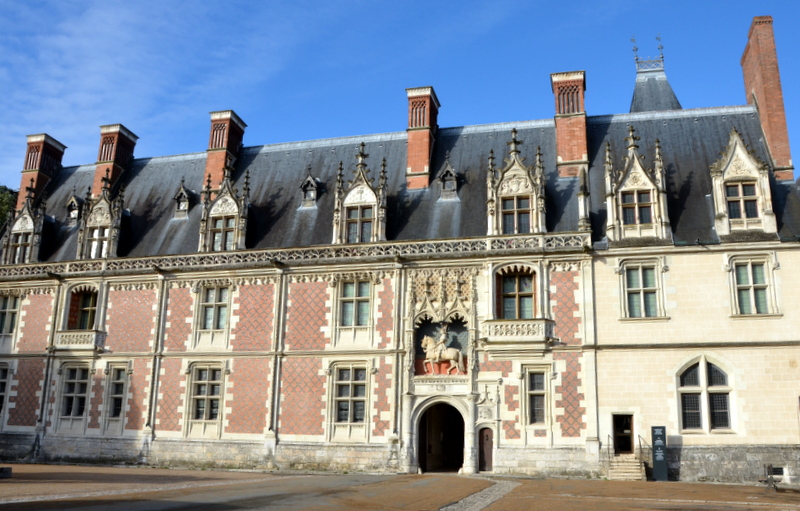
The next morning there was sun and blue sky again! But we had to be back in Amsterdam that evening, so we could only make a hurried visit of the castle of Blois. The Chateau de Blois is located in the center of the town, from our hotel room we could see the backside of the François I wing. Here is the entrance from the square:

DSC_6071

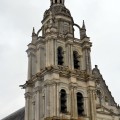
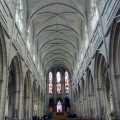
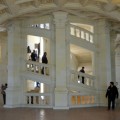
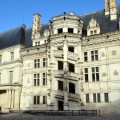
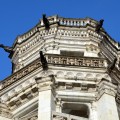
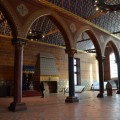
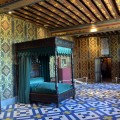
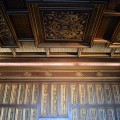
There is a lot to see in the castle, the famous octagonal staircase in the courtyard, the François I wing, the Salle des États Généraux and much more. But we had not much time. Here are some pictures

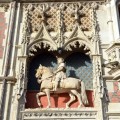
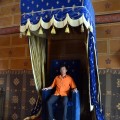
Are you interested in philosophy? Then you may think about the caption with Aric above: “The present king of France is Chinese” True or false?

We arrived in Amsterdam just in time to return our car. About 3500 km in two weeks time.

Europe trip 2013 part 3

When I was discussing my travel plans with my Malaysian friends, one of them mentioned Liechtenstein. It is a tiny country (160 square km, population less than 40.000)  between Austria and Switzerland. We decided to have a look and spend a night there.

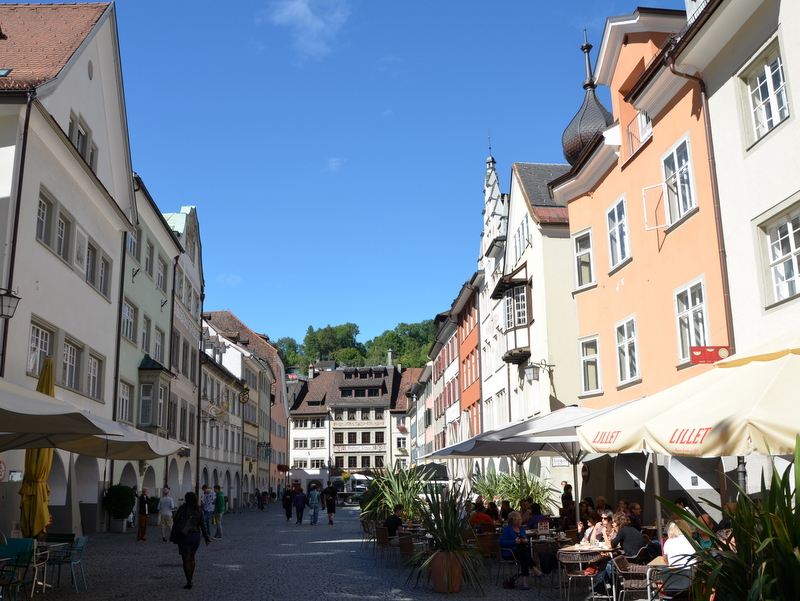
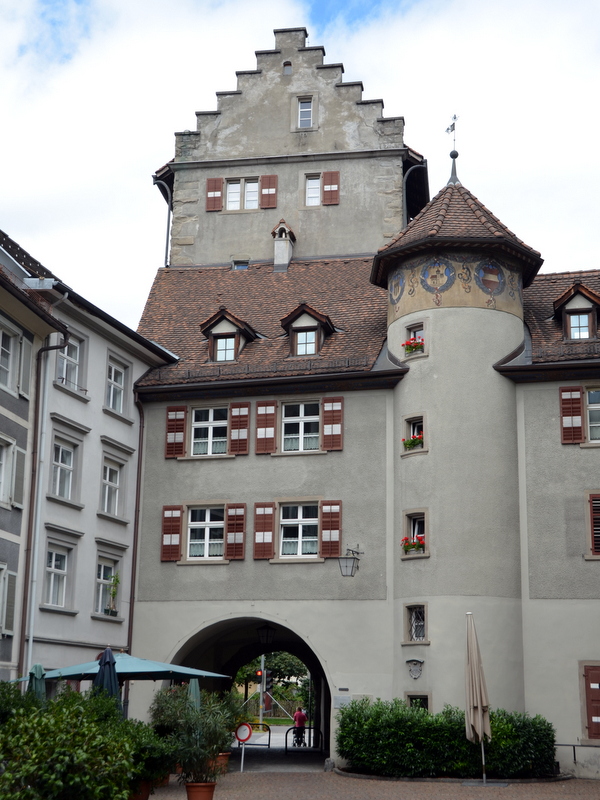
On our way from Hall we had lunch in Feldkirch, another medieval gem in Austria. It would be easy to spend a full holidays in Austria!

DSC_5626 DSC_5638DSC_5628


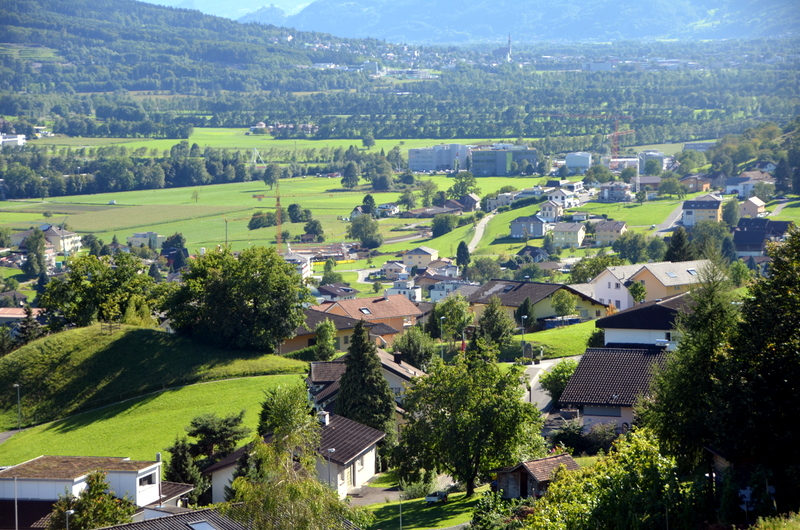
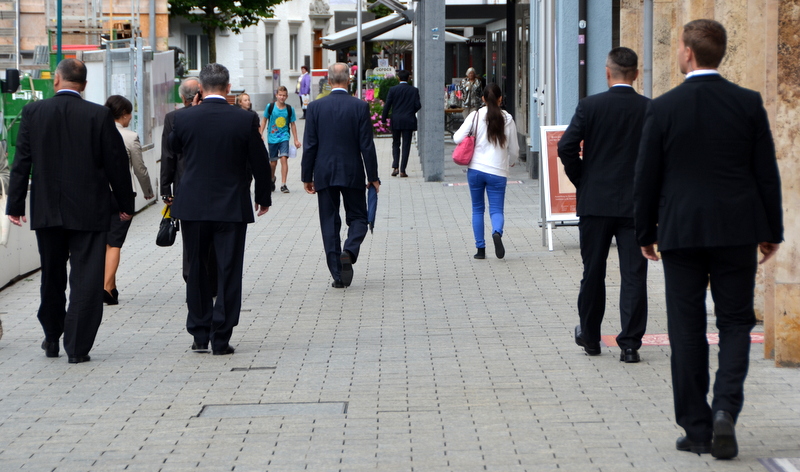
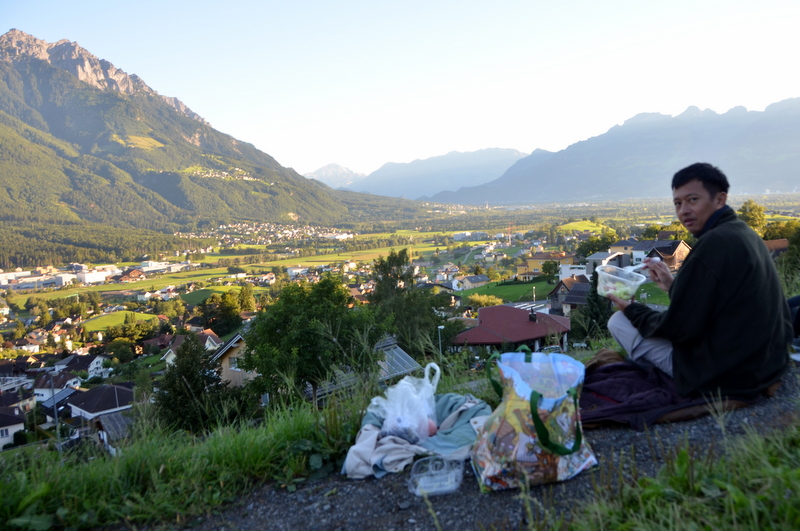
Liechtenstein is not part of the European Union, but belongs to the Schengen zone, therefore no border control or passport formalities. It is rich and expensive, has nice countryside, but nothing special. In the (characterless) main street of the capital Vaduz we met a VIP (the prince of Liechtenstein?) with his security guards. We found a supermarket, and bought food for an alfresco dinner…:-)

DSC_5642

DSC_5676

DSC_5650

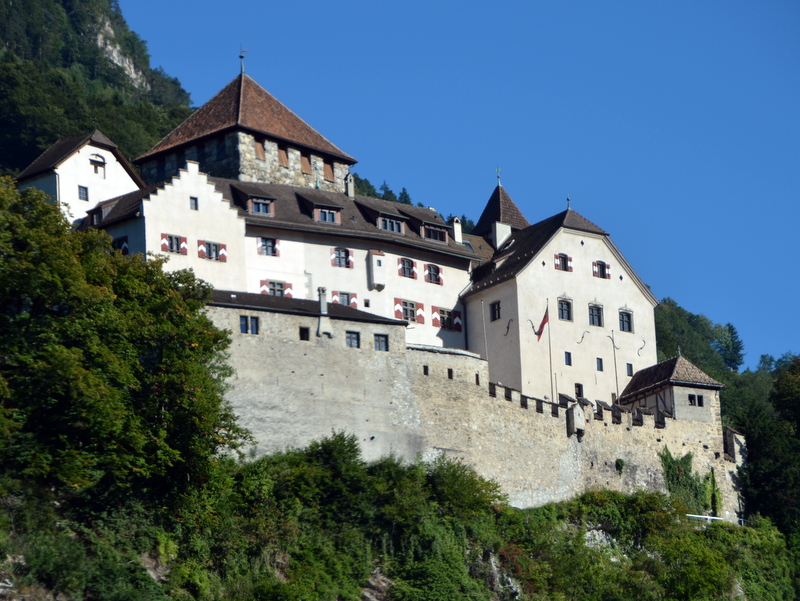
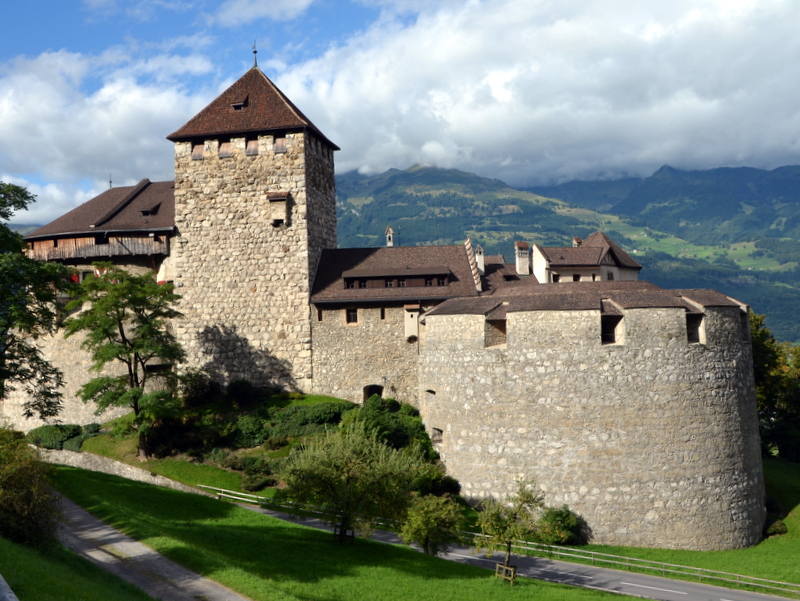
The next morning we had a look at the castle of Vaduz, where the Prince is still living. Then we crossed the border with Switzerland.  It was the first time we visited this country and probably it will also be the last time.

DSC_5644

DSC_5656

DSC_5678

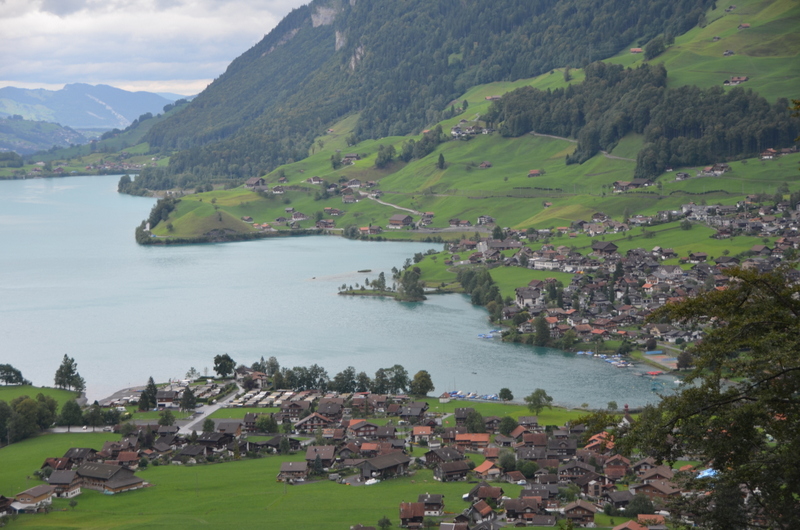
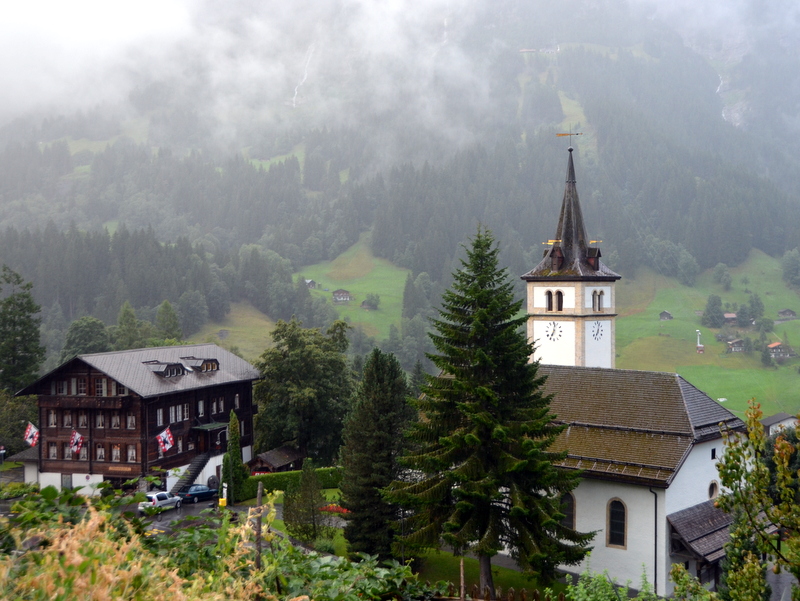
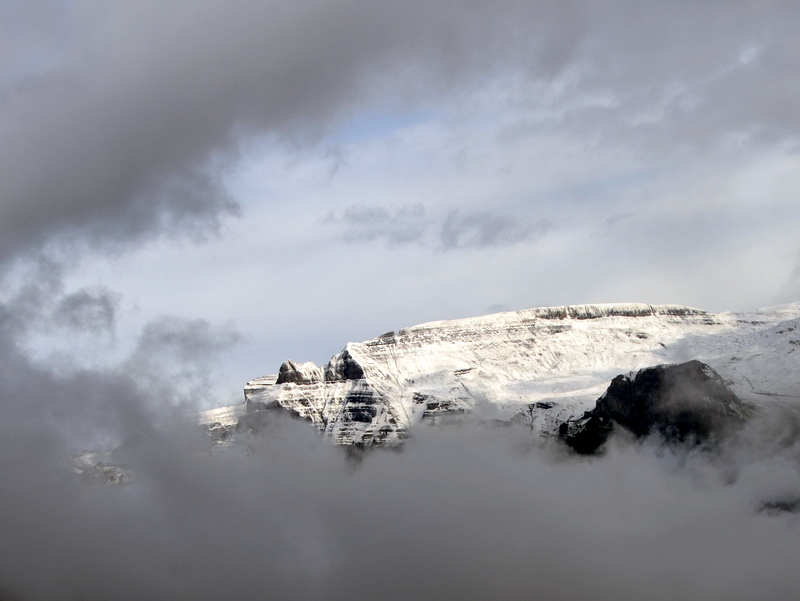
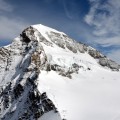
Our destination in Switzerland was Grindelwald. This mountain village is situated at the feet of the mighty Eiger, Monch and Jungfrau mountains. With a special train you can reach the Jungfraujoch, at an altitude of ~ 3500 meter. This was the main target of our trip, to see the snow and walk on it. But would the weather be favorable? We arrived in the rain and the next morning we could see fresh show on the mountain slopes. The pictures show a lake on our way to Grindelwald, the view from our hotel room and the fresh snow the next morning.

DSC_5681

DSC_5684

DSC_5691

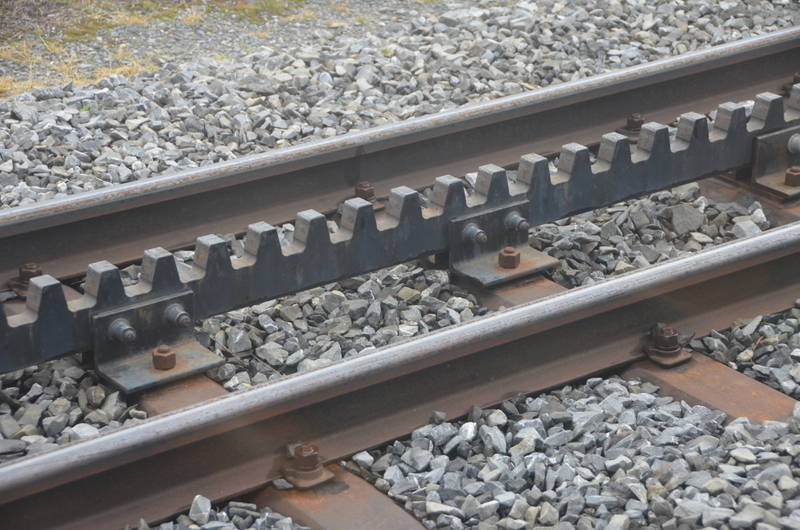
We decided to try our luck and bought tickets for the trip. Expensive, ~ 145 Euro pp. The train is a rack train and the ride consists of two parts. First you go from Grindelwald to Kleine Scheidegg. It was quite cloudy but sometimes we could see the mountains, which gave us hope.

DSC_5705

DSC_5706

DSC_5715

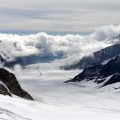
The second part goes through a tunnel in the Eiger mountain. The train stops at two locations in the tunnel where windows have been made, so you can look out. The first stop showed only mist and fog, but at the second one, Eismeer (Ice Sea), the clouds were breaking and we had a good view of the glacier. Impressive!

DSC_5748

DSC_5763

When we reached the Jungfraujoch station, this is what we saw.

2013-09-11 12.47.27

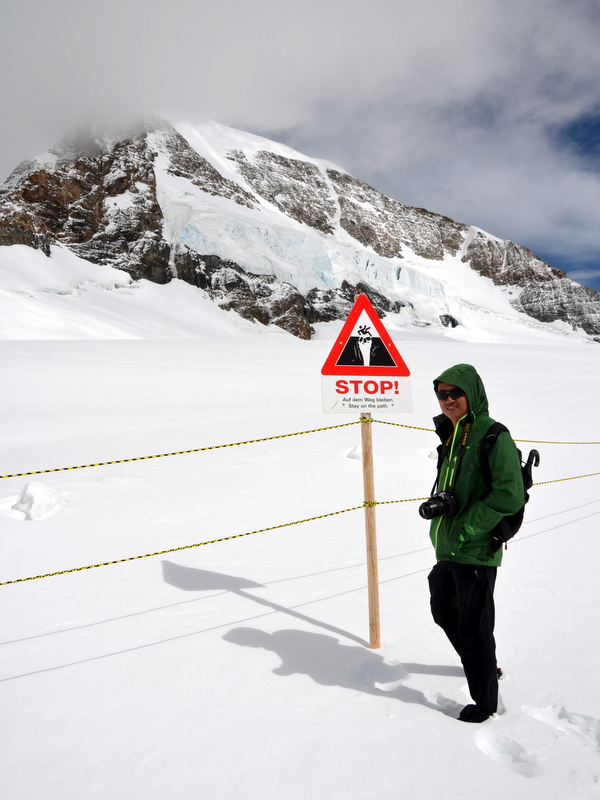
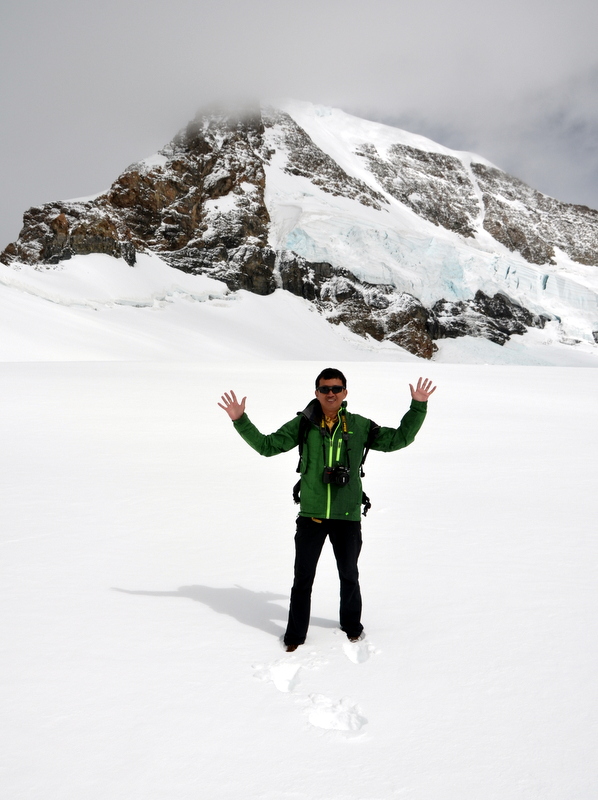
Difficult to describe our feelings. Exhilarated, almost emotional. You just could go out and walk on the glacier. Yes, it was very cold…:-)

DSC_5798

DSC_5799

DSC_5833

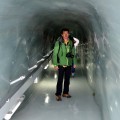
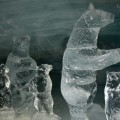
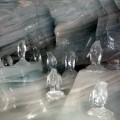
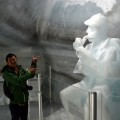
You can easily spend hours here. But go slowly, or you can get dizzy because of the high altitude. The highest point we reached is at the Sphinx observatory. It is possible to walk to the Mönch hut, but we were not equipped well enough for that hike. There is also the Ice Palace, dug out in the glacier with ice statues, freezingly cold but interesting.

The Jungfraujoch is called the Top of Europe and it certainly was the Top of our Europe trip. Worth every Euro. We have been very lucky, both one day earlier and one day later the weather conditions were bad!

Europe Trip 2013 part 2

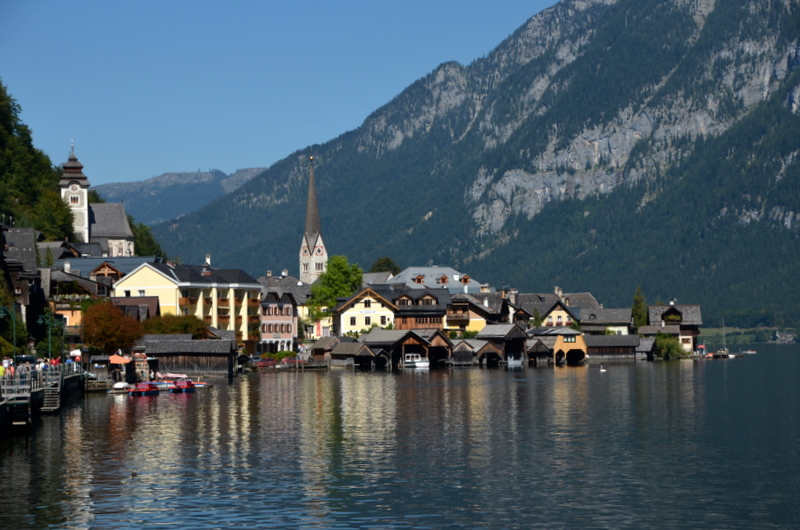
From Salzburg it is not far to the romantic small town of Hallstatt, situated on the shore of a lake.We stayed there three nights, to explore the region. Besides enjoying the atmosphere of the place, we visited a few popular tourist attractions.

DSC_5503

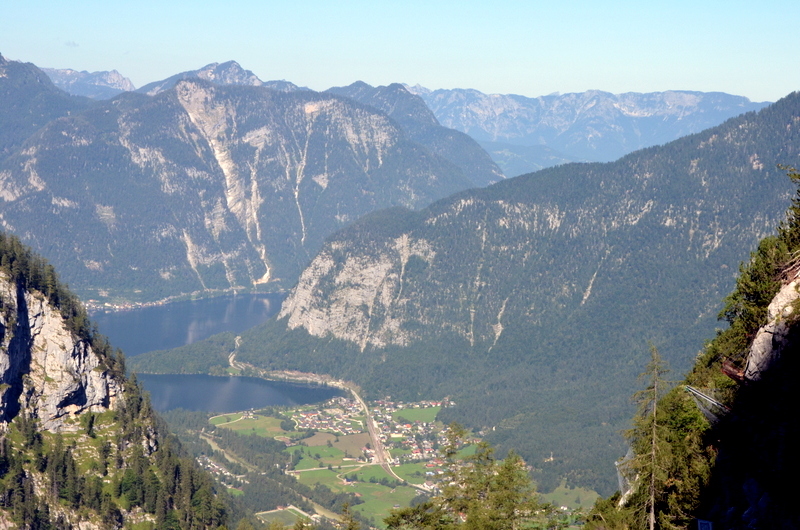
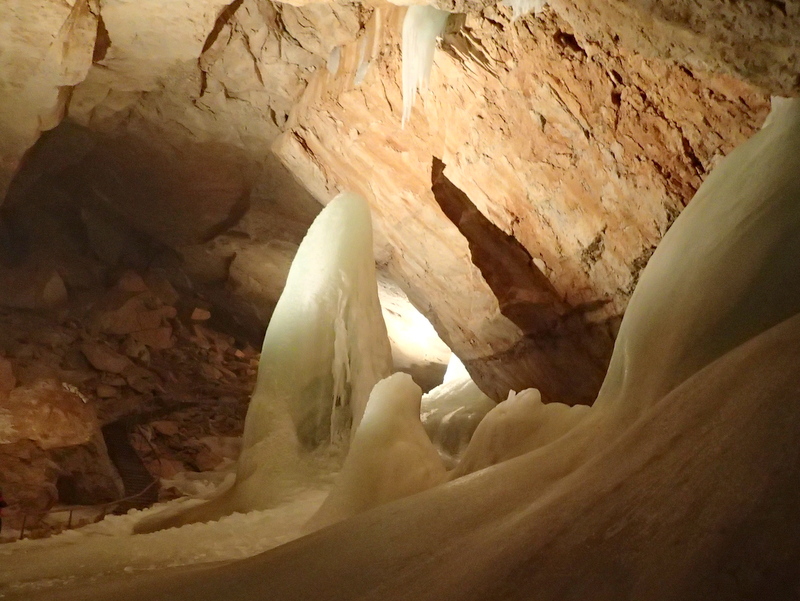
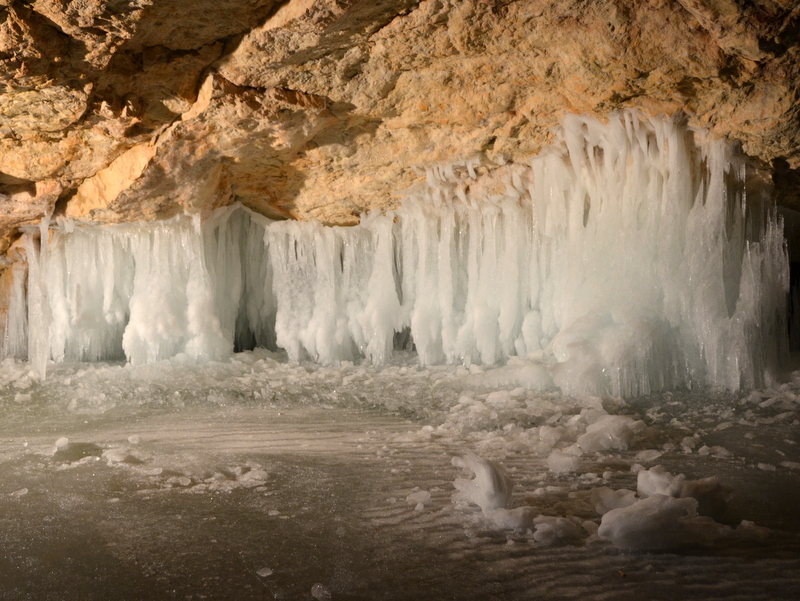
On our first day we took the cable car to the Ice Cave and the Five Fingers. The Ice Cave fills up completely with snow and ice during winter, even in summer this ice remains there.

DSC_5382

OLYMPUS DIGITAL CAMERA

DSC_5374

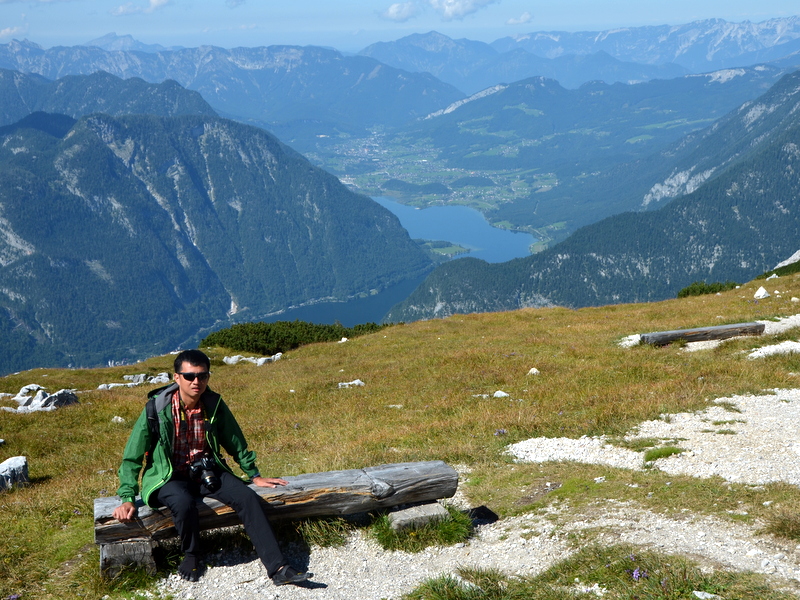
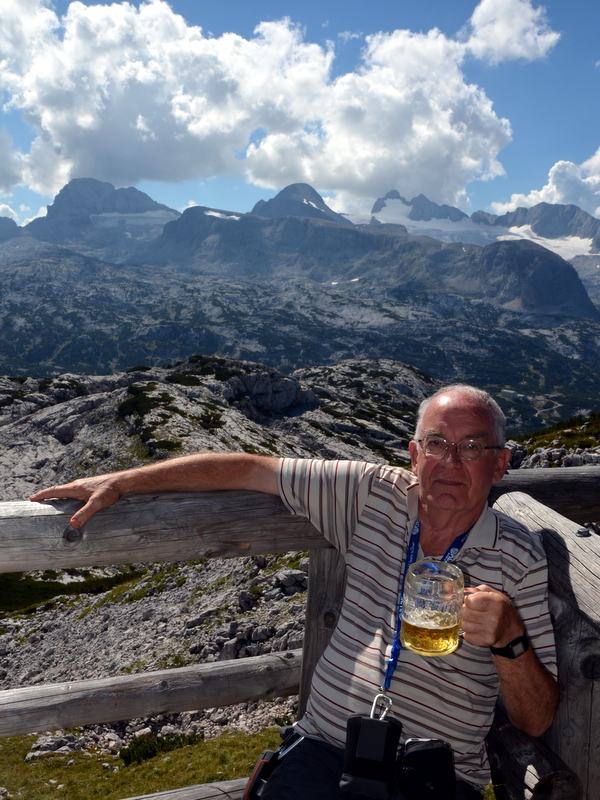
We also visited the nearby Mammoth Cave (not that interesting) and then took a second  cable car higher up. Fabulous views of the Hoher Dachstein massif (2995 m). Nice flowers. And a mountain hut, with food and beer, reminding me of my younger days as a mountaineer..:-)

DSC_5418

DSC_5410

DSC_5414


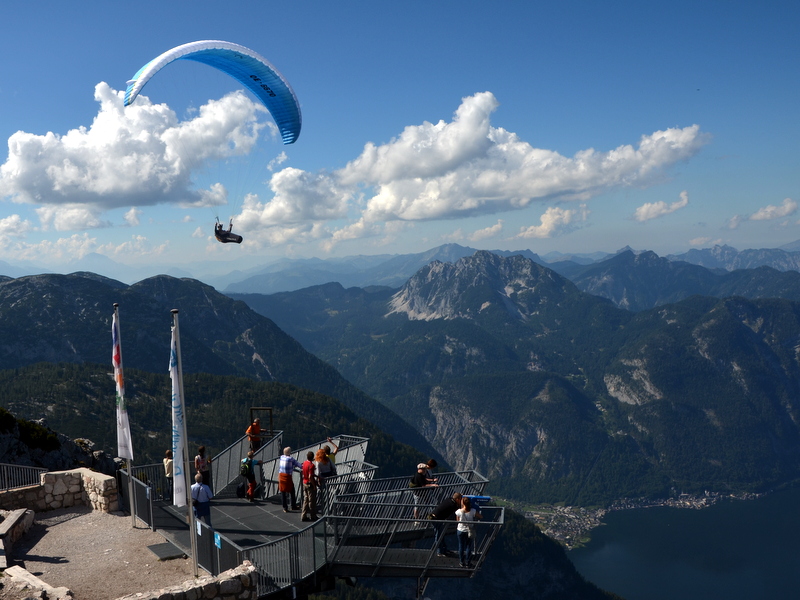
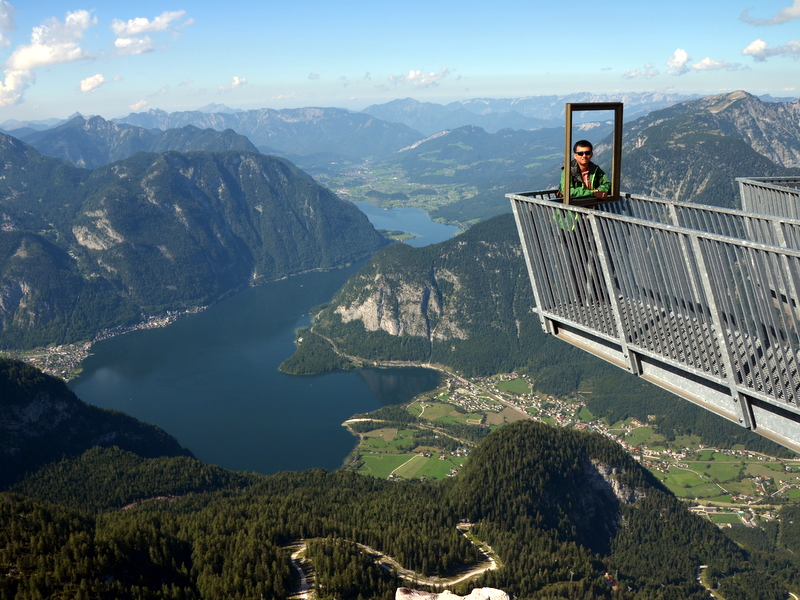
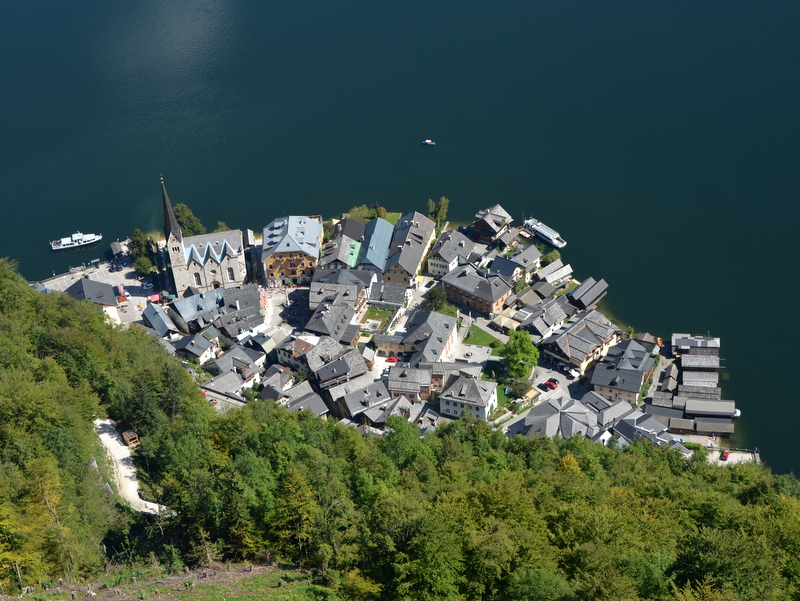
After our lunch we walked to the famous Five Fingers. A metal construction, resembling a hand with a beautiful view of Hallstatt deep down. Not suitable for people with fear of heights…:-) A popular place for paragliders

DSC_5448

DSC_5455

DSC_5491

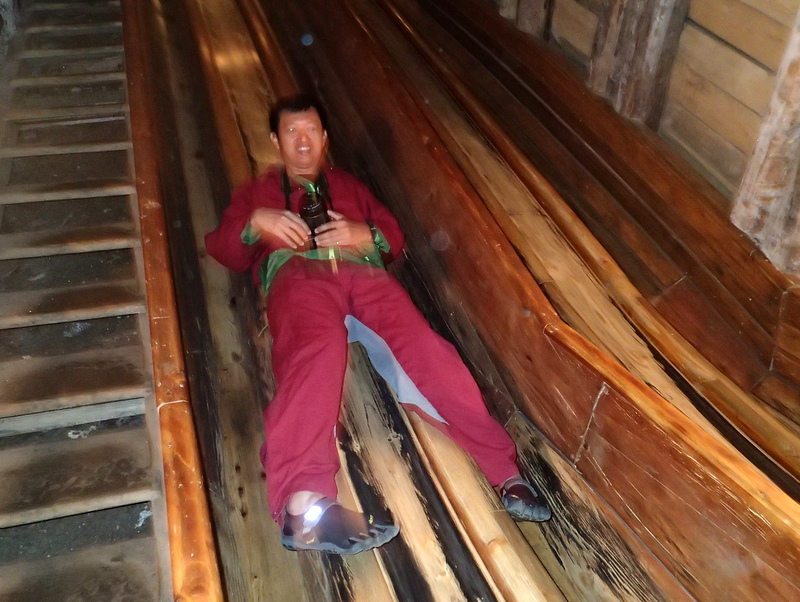
The next day we visited the salt mine. Hallstatt has a glorious past because of this mine. In the past miners mined the rock salt and to take it out they used slides. These slides are now a tourist attraction. Big fun!

OLYMPUS DIGITAL CAMERA

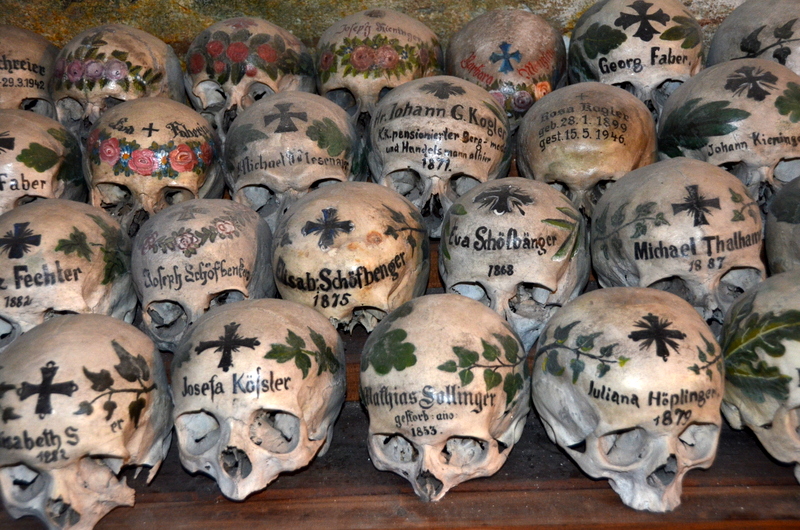
An “attraction” of a very different kind can be found in one of the churches. Because of its location, Hallstatt had only a limited space for a cemetery. Therefore after not so many years old graves were emptied to make space for new burials. The skulls of the deceased were treated with respect, painted with names etc, and kept in a chapel. Very impressive.

DSC_5521

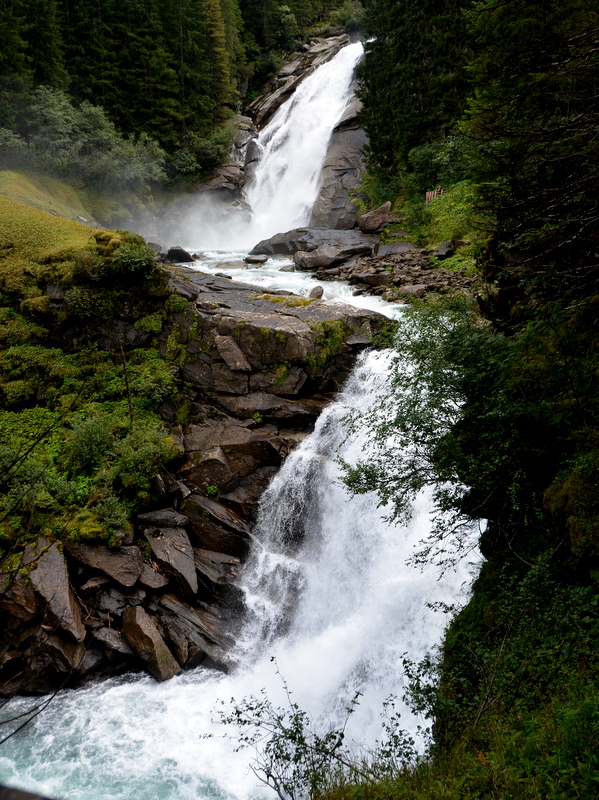
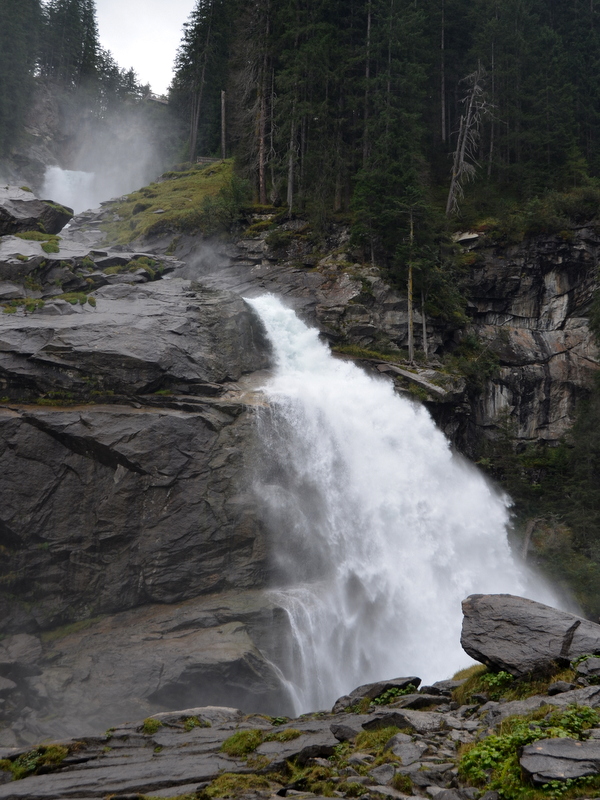
After Hallstatt we continued our trip in the direction of Switzerland, passing on our way the Krimml waterfalls. Impressive falls, the highest in Austria and, according to the website, the 5th-highest in the world. That however is cheating, as the falls consist of three separate tiers!

DSC_5551

DSC_5566

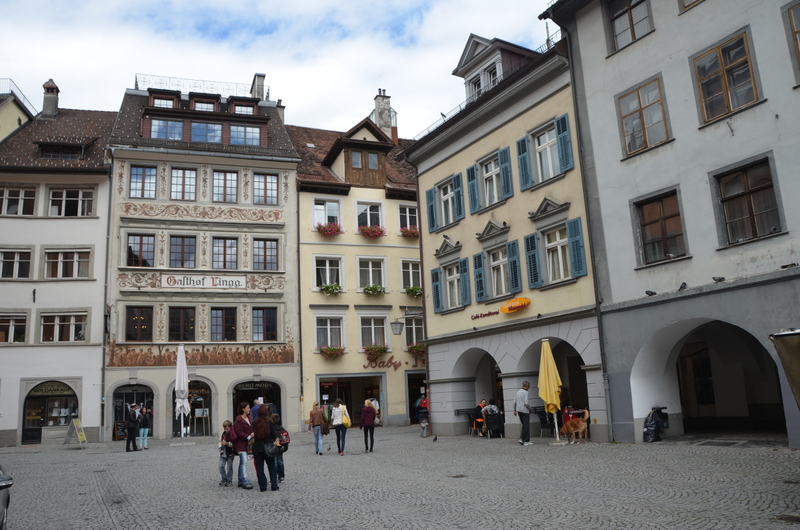
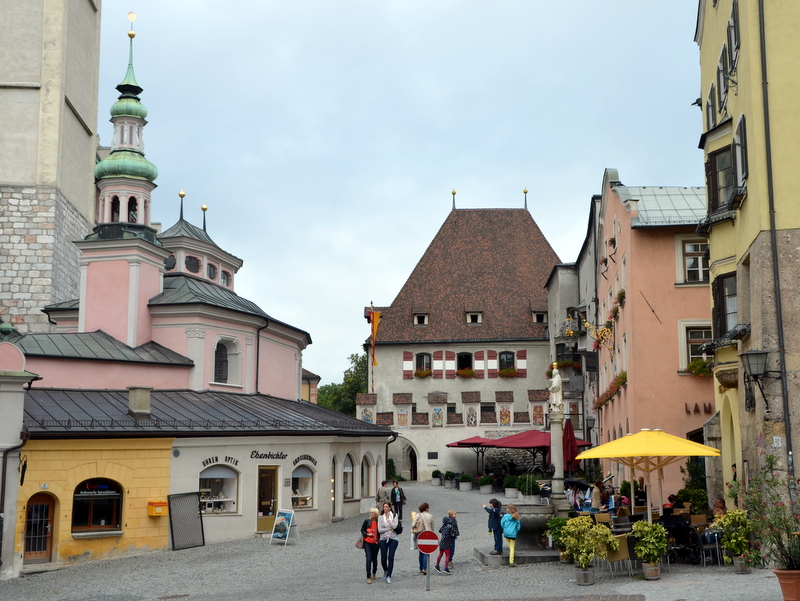
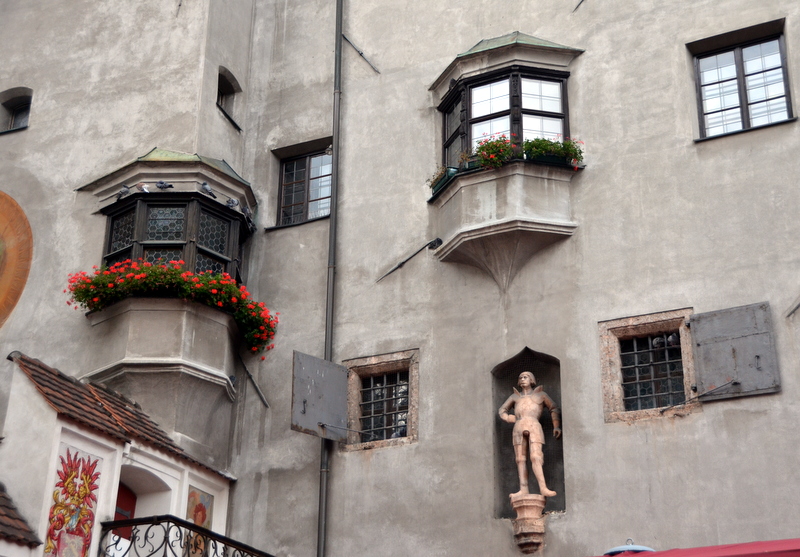
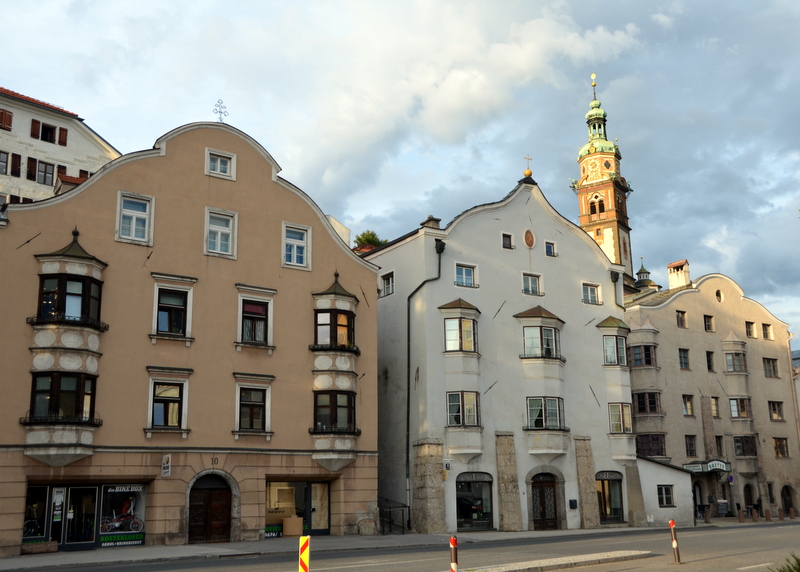
We had planned to spend one night in Innsbruck, but instead decided to stay in the small, medieval town of Hall in Tirol, not far from Innsbruck. An unexpected, pleasant surprise.

DSC_5609DSC_5594DSC_5576