Wake up, Rosetta!

Almost ten years ago, in March 2004, the European Space Agency (ESA) launched a spacecraft with an ambitious mission: to orbit and land on a comet. The spacecraft was called Rosetta. Once in orbit around the comet, a small probe, called Philae, would be launched to make a soft landing on the comet. In this artist impression you see Rosetta in orbit and Philae on its way down to the comet.
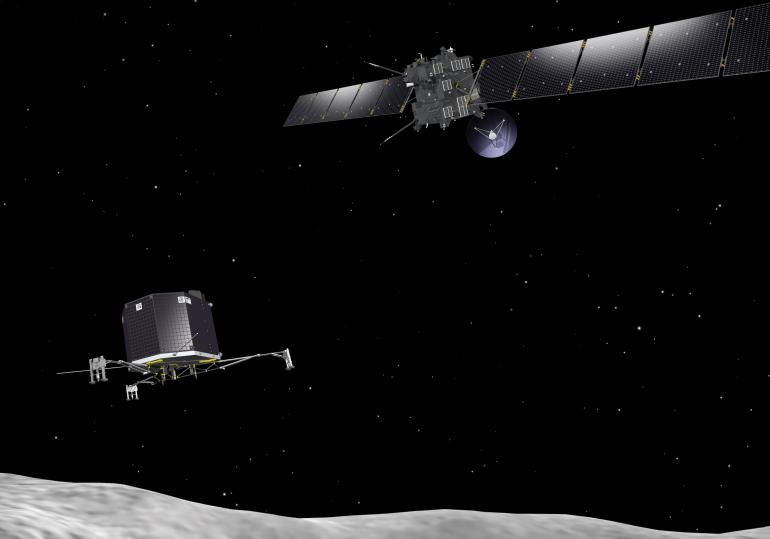
Rosetta and Philae

Destination of Rosetta is the comet 67P/Churyumov–Gerasimenko This “dirty snowball” as comets are sometimes called, was discovered in 1969. It has a diameter of 4 km and orbits the Sun with a period of 6.45 year. Comet orbits are very elliptical, when they are close to the sun, some of the comet material evaporates and gives rise to the famous comet tail. At the moment this comet is on its way to the Sun, reaching its closest distance (perihelion) in August 2015. Here is a model of the comet nucleus, generated from images taken by the Hubble telescope.
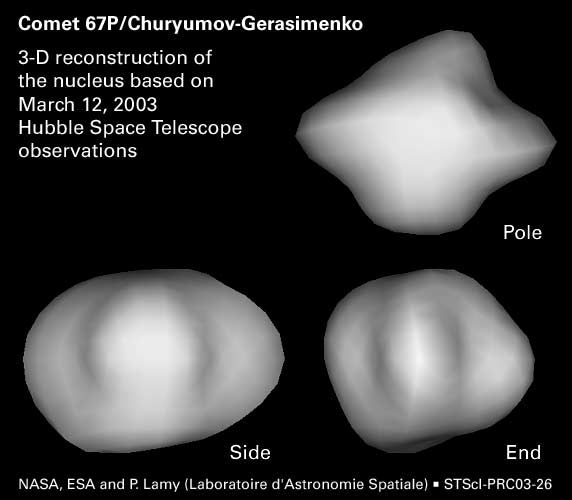
Nucleus of 67P

If everything goes as planned Rosetta will reach comet 67P/Churyumov–Gerasimenko in May 2014. A few months later, in November 2014, the probe will land on the surface of the comet. End of mission in December 2015.

Why does it take so long to reach the comet? Have a look at this diagram, where you see the orbit of the comet (red), the orbits of Earth and Mars (green and blue) and the flight path of Rosetta (dashed line).
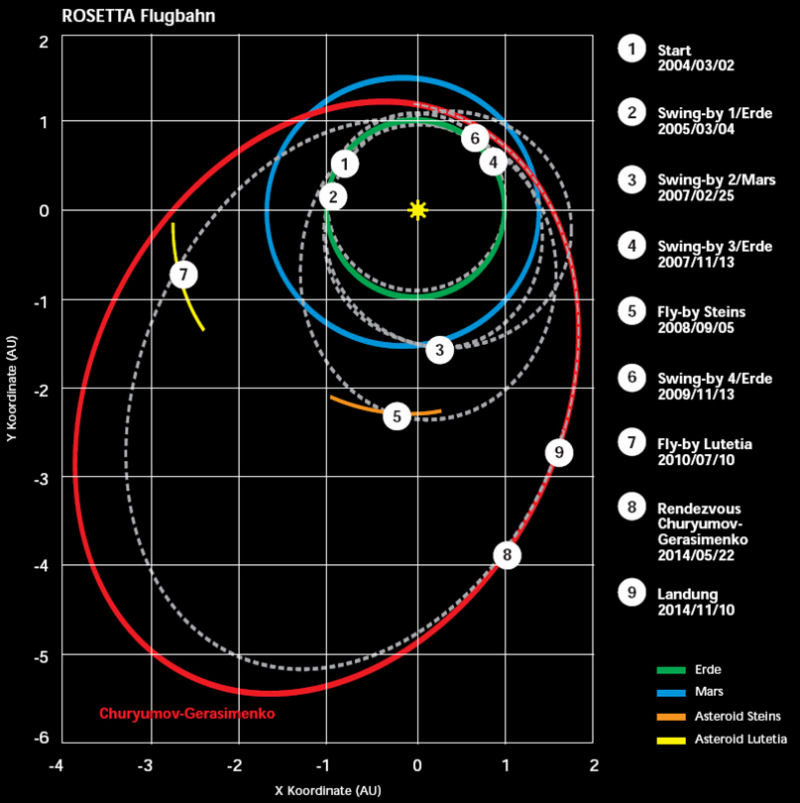
Rosetta flight path

The reason for the complicated flight path is that it is not feasible to give the spacecraft enough speed at launch to reach its target. To give the spacecraft its required speed, one or more so-called gravitational slingshots are needed.The principle is this: steer the spacecraft close to a planet or moon. Because these objects have their own (high) speed, the force of gravitation can give extra speed to the spacecraft.  A simple analogy can be found in sports. When a ball hits a stationary held tennis racket, the speed of the ball will basically remain the same (only reversed). But when the player moves the racket towards the ball, the ball will bounce back with a much higher speed.

Rosetta has used four of these slingshots, marked in the diagram above  Three times with Earth (2,4,6) and once with Mars (3). Imagine how accurately the scientists have to steer!

Actually they did it in a clever way so there were a few bonuses..:-) The second slingshot by Earth (4) was performed in such a way that the path of Rosetta would cross the path of an asteroid, Steins, on 5 September 2008! Perfect to test if all equipment was still working correctly. Here is an image of this rather small (diameter ~ 6 km) asteroid, taken by Rosetta during the fly-by (5 in the diagram). Closest distance between the two ~ 800 km, distance from the Sun more than 300 million km. Amazing.
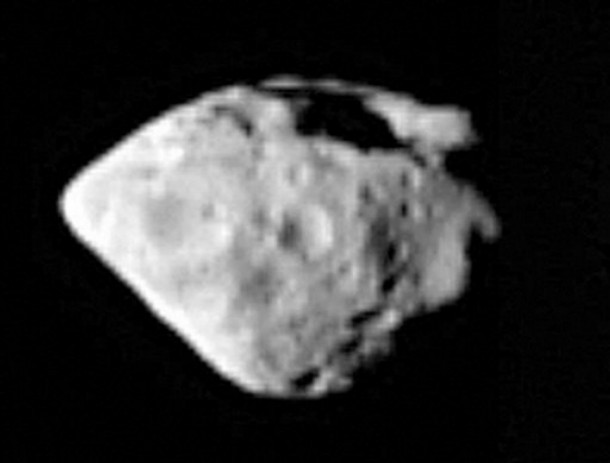
Stein asteroid

The last slingshot brought Rosetta in a very elliptical orbit, similar to the target comet. This is necessary because the spacecraft must approach the comet with a low relative speed, otherwise it can not go into orbit around the comet

Again a bonus, a spectacular one. The path of Rosetta crossed the orbit of another asteroid, a big one (diameter ~ 120 km), called Lutetia. Here is a picture. Asteroids are as old as the solar system, what an inferno it must have been in the beginning, noticing the surface pockmarked with craters.
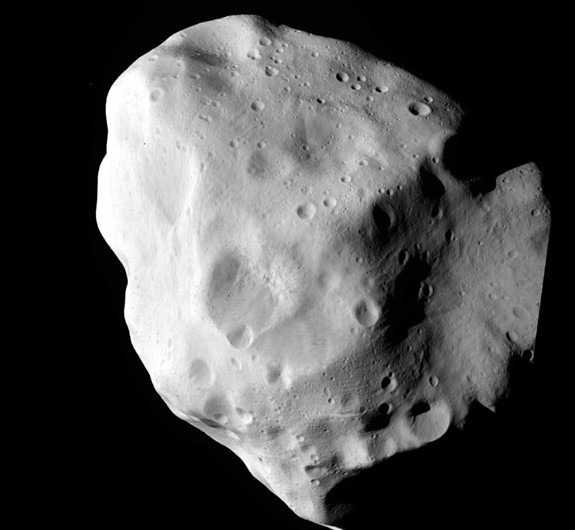
Lutetia

The very elliptical orbit of Rosetta after the last slingshot, means that it is moving very far from the Sun. And it depends on the Sun for it uses solar power. The engineers came with an ingenious solution, they let Rosetta go into hibernation!

On 9 June 2011, they sent a signal to Rosetta to switch off all instruments, keeping only the main computer and some heating alive, and starting a timer. It worked, because from then on the spacecraft did not send any signals.

For more than two and a half years there has been no communication with Rosetta! The timer has been programmed to give Rosetta a wake up call on 20-1-2014 at 10.00 GMT. The wake up process will take many hours. The controlled spinning has to be stopped, the antenna has to be pointed to earth etc, etc. It is expected that the first signal should reach Earth around 17:30-18:30 GMT (Malaysia time is GMT + 8 hours).

You can follow the events on Monday 20-1-2014 via live streaming (starts 9:15 GMT):

More information can be found on the ESA Wake Up Rosetta page. They have done a good publicity job. For example they have organised a Wake Up Rosetta competition for the general public. You can create a video and submit it (until tomorrow). Here is the Facebook page where you can view the contributions. And vote for your favourite!

Tomorrow will be a nerve-wrecking and nail-biting day for many scientists!

UPDATE 21-1-2014

Rosetta has woken up! Yesterday at 18:20 GMT a big applause started in the ESA control room, when a spike appeared in the spectrum analyser. It was the first signal from Rosetta, which had traveled for 45 minutes to reach Earth, 800 million km away.. In Malaysia it was already 2:20 am but I could not sleep, had to watch…:-) Here are two screenshots from the live blog
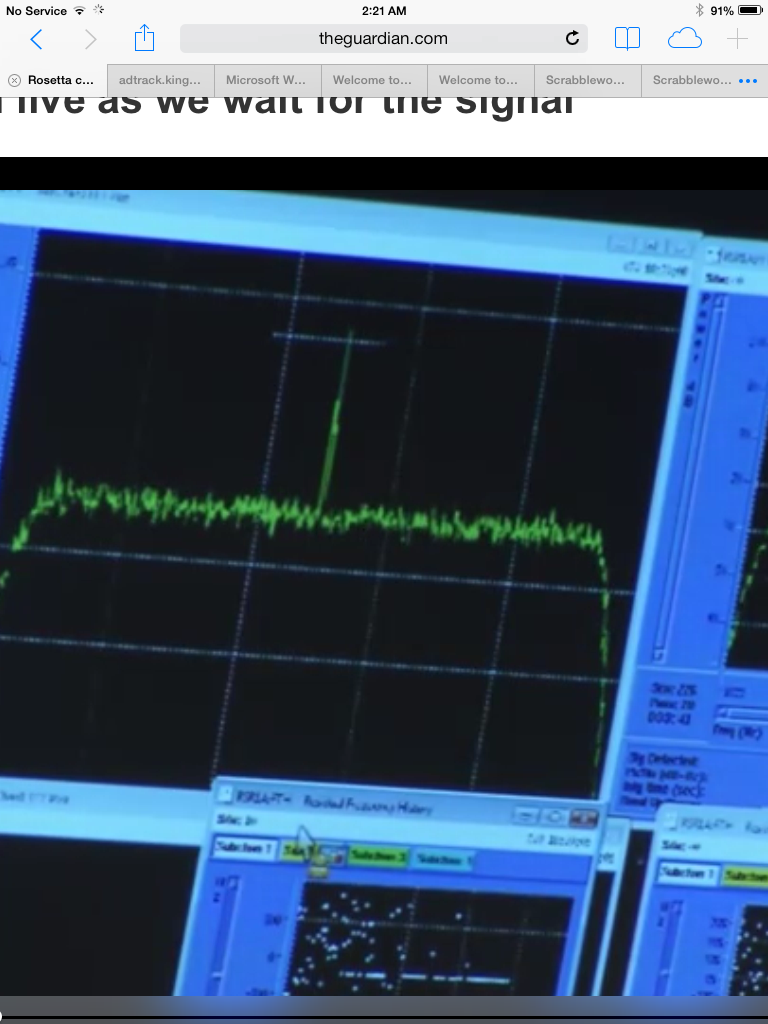

The signal

Hello World, I am awake

This was a sign of life, next step will be to receive a health report. What a brilliant achievement.

Another update

A friend sent me a link to an ESA webpage: Where is Rosetta An animation of the path of Rosetta through the Solar System. Breathtakingly beautiful. You can zoom in and out, tilt, etc. The page takes time to load, but really worth the effort !

 

Countertenors and Castrati

Some time ago, a friend sent me a link to a YouTube video in which the countertenor Philippe Yaroussky sings arias by Vivaldi, Haendel, Porpora etc.

Porpora? I had never heard about him. So I searched the Internet and found a website, the Porpora Project, dedicated to this 18th century Italian composer of Baroque operas, oratoria, cantatas etc.

A composer, but also very famous in his time as a singing teacher. Especially of castrati, boys who were castrated before they reached puberty, so they kept their high (soprano) voices! Yes, no kidding! In the beginning of the 18th century that was a not uncommon practice, it is estimated that more than 4000 boys yearly underwent this “operation”. Some of them became famous singers, like Carestini, Senesino, and last not least: Farinelli. He was a student of Porpora

Here is the aria Alto Giove from Porpora’s opera Polifemo. This opera was first performed in 1735 in London, with Farinelli as singer.

Here the aria is beautifully sung by Philippe Jaroussky. Is he a castrato? Of course not, castration for musical reasons became illegal in the 19th century and the last castrato, Alessandro Moreschi, died in 1922. Here you can hear him in Ave Maria

Jaroussky is, like my favourite Andreas Scholl, a countertenor. His vocal chords have developed normally during puberty, “breaking” his voice. But all males can still sing high, using their “head voice” and not their “chest voice. Try it out for yourself! Technically it is called the falsetto register and countertenors are trained to use it.

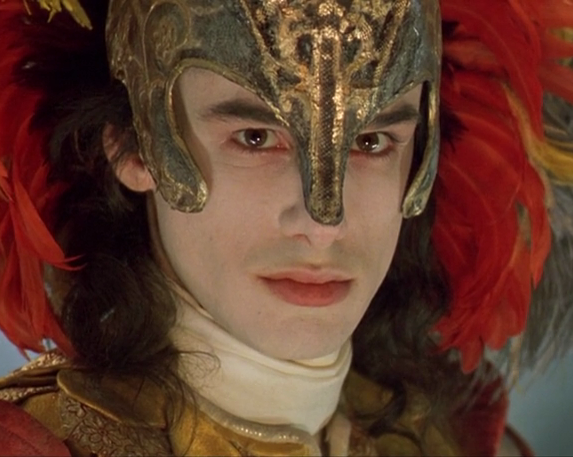
About Farinelli a fascinating movie has been produced in 1994. The movie can be seen on YouTube. The movie is not historically accurate, but really worth viewing. Here two times Farinelli, a portrait and a screenshot. The singing in the movie was  done by a soprano, by the way!

XIR237922 Farinelli1994c4

There are nowadays a few singers who are “natural castrati”, for endocrinological reasons their vocal cords have not grown during puberty. One of them is Radu Marian. Here he sings Lascia Ch’io Pianga by Haendel.

Another example of a natural castrato (male soprano) is Michael Maniaci , who sings here Mozart’s Exultate Jubilate

As I wrote before, Andreas Scholl is my favourite countertenor, so this post would not be complete without a recording by him. A recording of one of the most beautiful arias I know, from the Nisi Dominus by Vivaldi.

Baroque operas often had a castrato as a lead singer. Nowadays these parts are sung by a countertenor. Or of course by a soprano. One (mezzo) soprano who does this very well is Cecilia Bartoli, another favourite of mine. Here is a collection of Castrati arias sung by her.

Many of the arias in this recording have been composed by Porpora. More about Cecilia Bartoli in a later blog.

So many waterfalls!

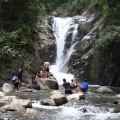
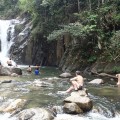
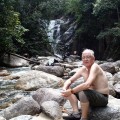
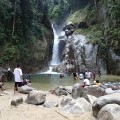
What better way to end the year than by visiting a waterfall!” That is how I ended my last post for 2013. So, let me start my first post for 2014 in a similar way:  “What better way to start the year than by visiting a waterfall!

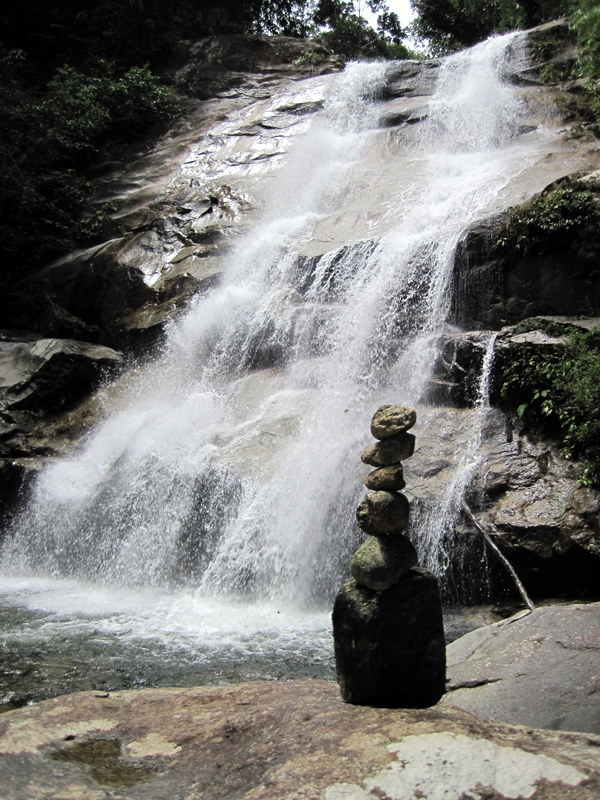
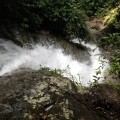
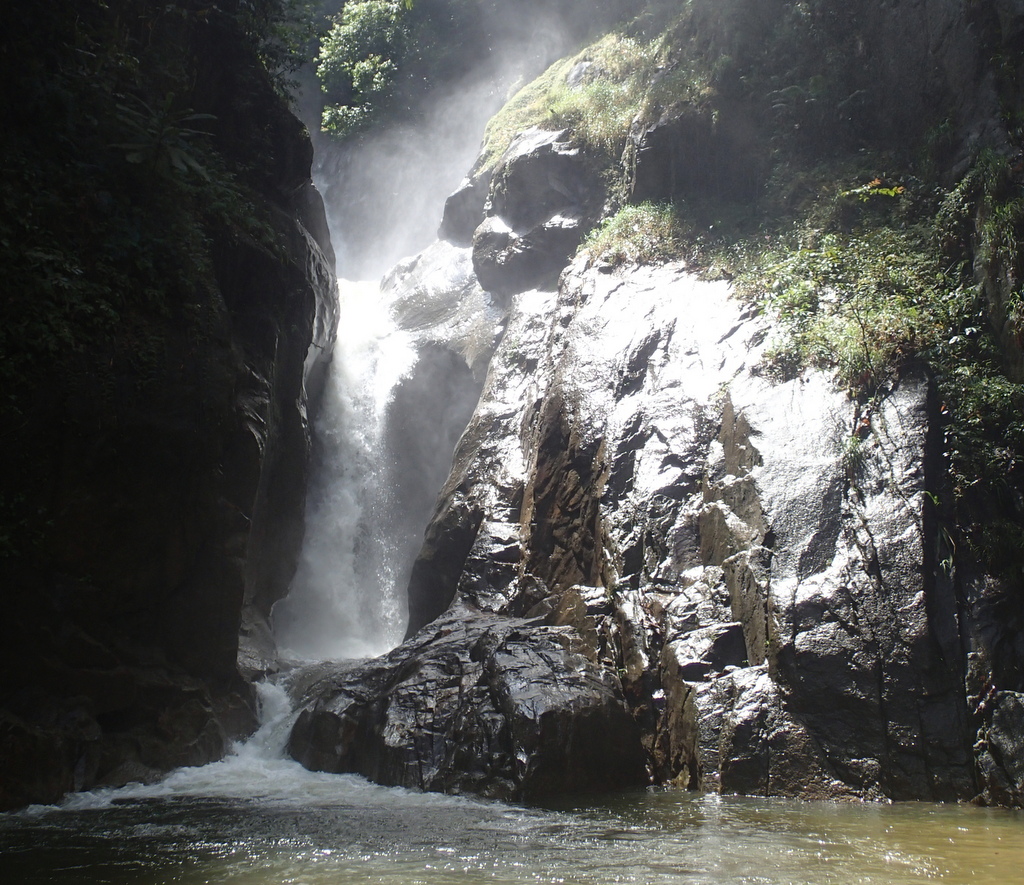
Yesterday I explored with a few friends waterfalls in the Sg Rinting. This river is located in the same region as the Chiling waterfalls, visited last week. But that is where the similarity ends..:-). The Chiling fall is the most popular waterfall in Malaysia, with a crowd of visitors each weekend. The Lata Medang, the main waterfall of the Rinting river is less frequented, access takes longer, although the trail is easy to find nowadays. Here is the Medang waterfall (upper part) with my personal marker. Picture taken few years ago.

Medang

Our target for this trip was not the Medang fall, but the several falls that can be found downstream of it. With as our main interest a tall fall, named Kijang Jatuh. After  having breakfast with Siang Hui and Nick, near my condo, we drove to KKB where we met Eddie. The trail head is the same as for Bukit Kutu and the Sg Luit waterfalls, starting from Kg Pertak. Well defined trail until you reach an Orang Asli (?) campsite near the first waterfall.

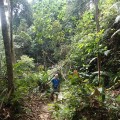
Well defined trail

First fall

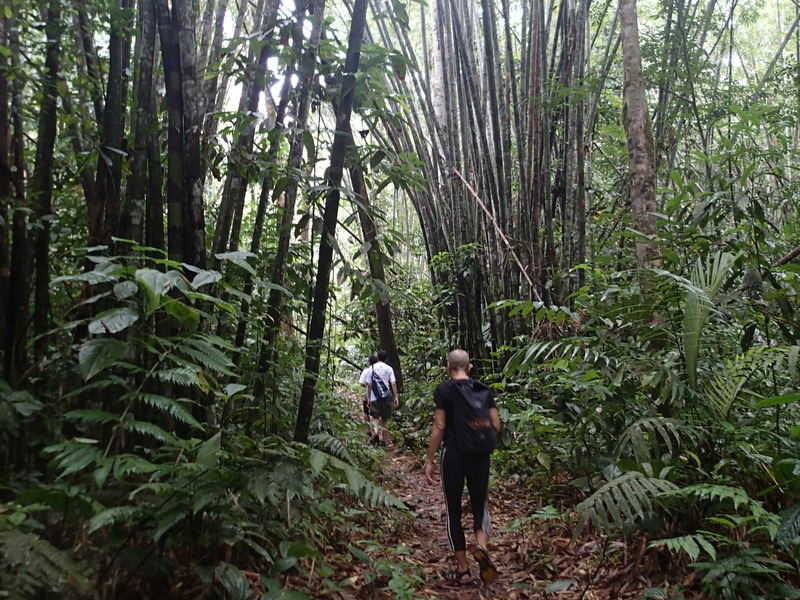
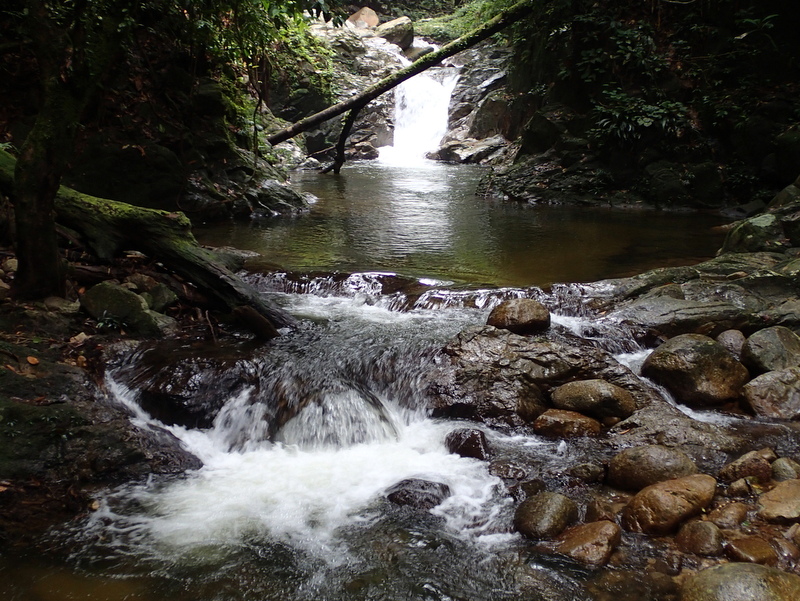
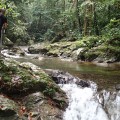
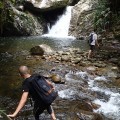
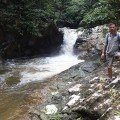
From there we started river trekking to the next tiers. Vague traces of trails, sometimes just following the river. Very rewarding hike. Here are some of the tiers we found.

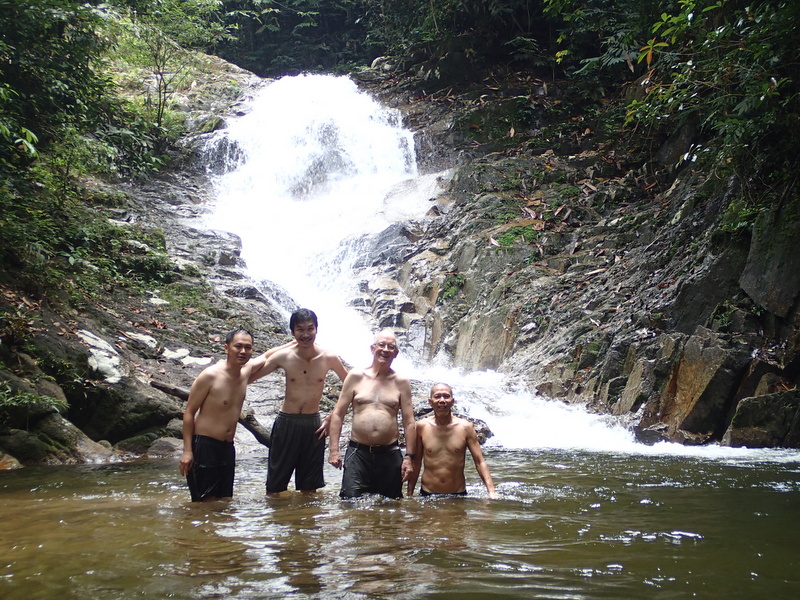
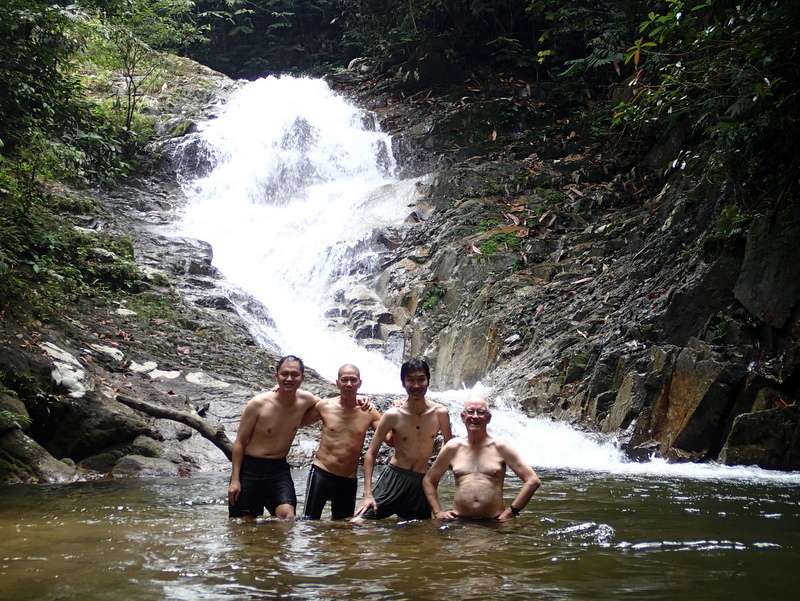
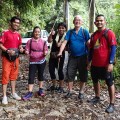
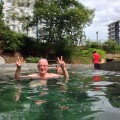
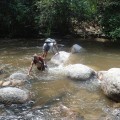
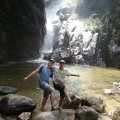
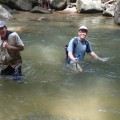
The second fall from right is called Lata Mendung. With a nice big pool. We took a short rest to take a group picture. Using the timer option. Eddie pushed the camera button and had to hurry to join us. Did not realise the water was quite deep, so he looked like a hobbit..:-) So we tried again, I took his place, becoming the hobbit. Very funny…:-)

Lata Mandung

Lata Mandung

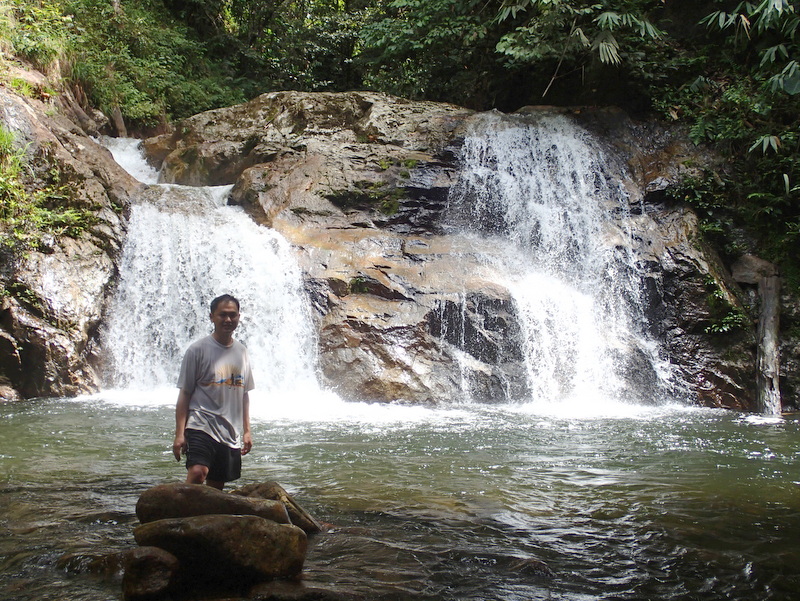
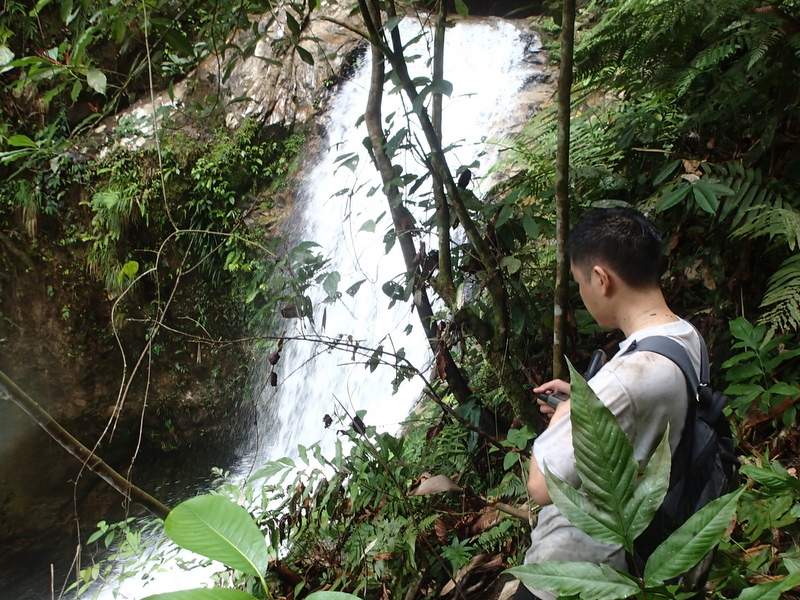
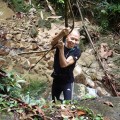
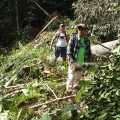
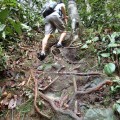
We continued our hike and reached the Twin Falls. The next one should be the tall Kijang Satuh. But how to go there? Following the river or scrambling up the slope? Siang Hui and Eddie decided for the second option. It was a tough and steep climb up to a former logging road, completely overgrown. Thanks to Eddie’s and SH’s expert parang handling, we managed to reach the location of the Kijang Jatuh fall. However, we could not reach the bottom of this impressive tier. Halfway down the slope became too steep. Here are the Twin falls and a partial view of the Kijang Jatuh. Maybe we must come back and try the river trekking option.

Twin Falls

Kijang Jatuh

I took a video of this fall, it gives an impression.

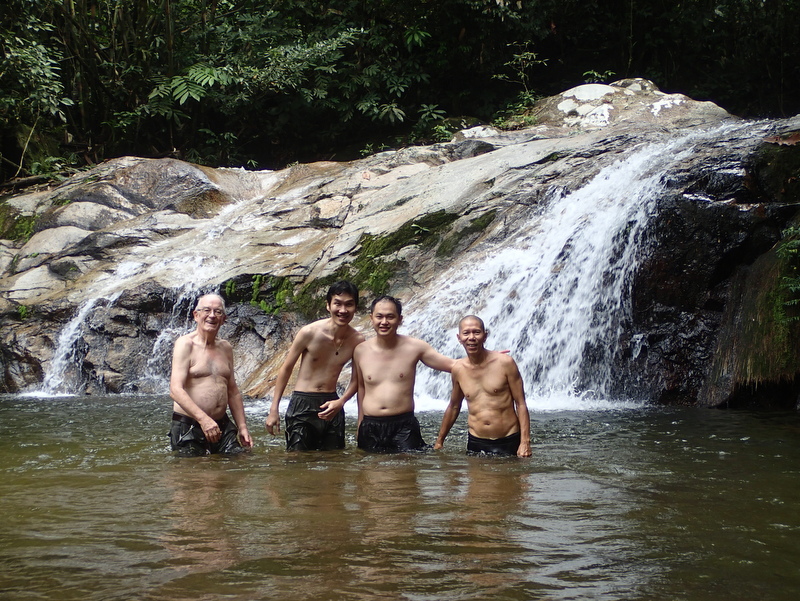
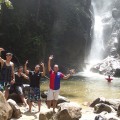
From this fall it is only a short hike to the Lubuk Mecu. Here we had a rest and our lunch. Time for another group picture. No hobbits this time..:-)

Lubuk Mecu

When we were ready to go back, a downpour started. It is what you can expect when trekking in the rain forest and part of the fun. But good that it did not happen during our scrambling up the slope! Here are some more pictures taken during this great trip. Not only waterfalls…:-)

A perfect start of 2014. In a few months time I hope to celebrate my 70st birthday, maybe it is time to slow down my waterfall activities a bit. But this trip was big fun!

Journal 30-12-2013

One more day to go, high time to write a journal about the last weeks of 2013, so I can start 2014 with a clean slate…:-)

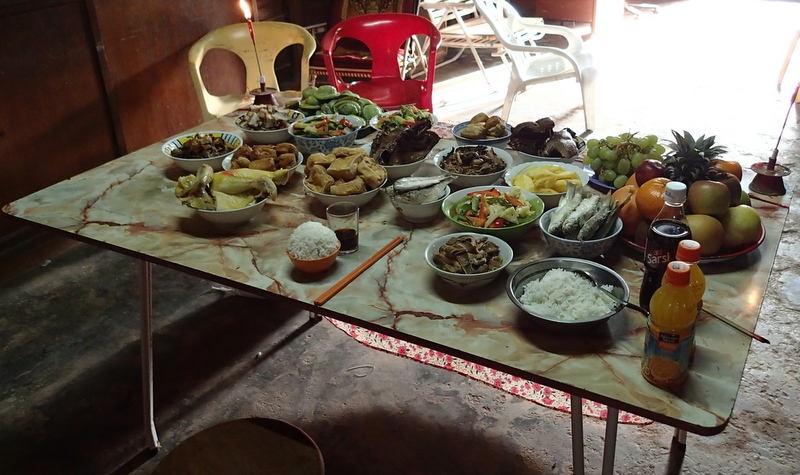
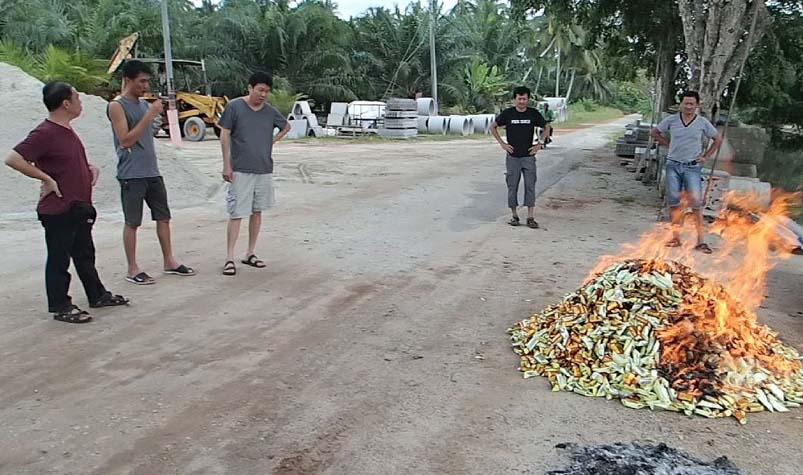
We went back to Sabak Bernam two times, related to the passing away of Aric’s father, 20 November last year. The Chinese calendar is lunisolar, many events follow the lunar cycle, so on 9 November this year there was a memorial ceremony. A meal for the deceased, prayers and the burning of gifts for him in the hereafter.

Ceremonial meal

Burning of gifts

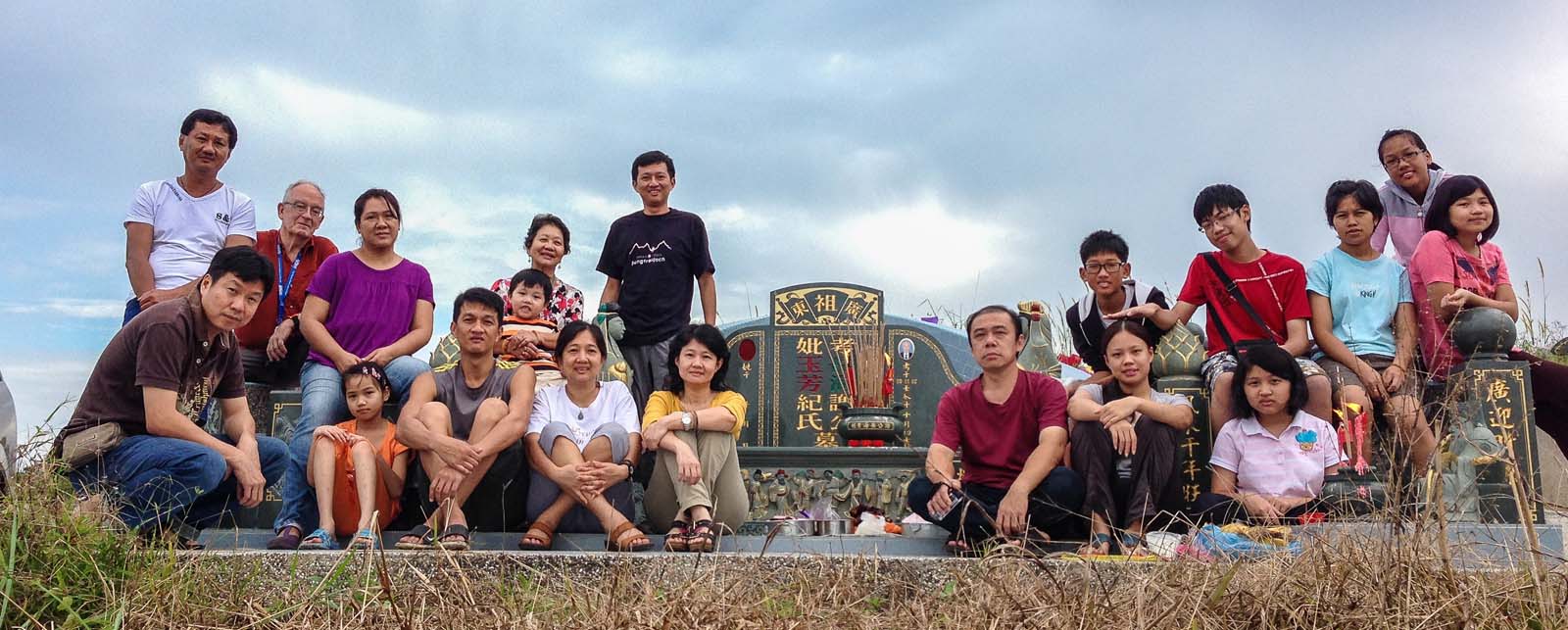
The second time was at the Winter Solstice, an important solar event in the Chinese calendar. We went to the cemetery, near Bidor. Aric took a beautiful picture of the whole family around the grave

cemetery

Here are a few more pics

We attended the wedding dinner of one of Aric’s cousins. In traditional style, with nine courses, cutting of the cake and yam seng singing.

Family picture

Nine courses

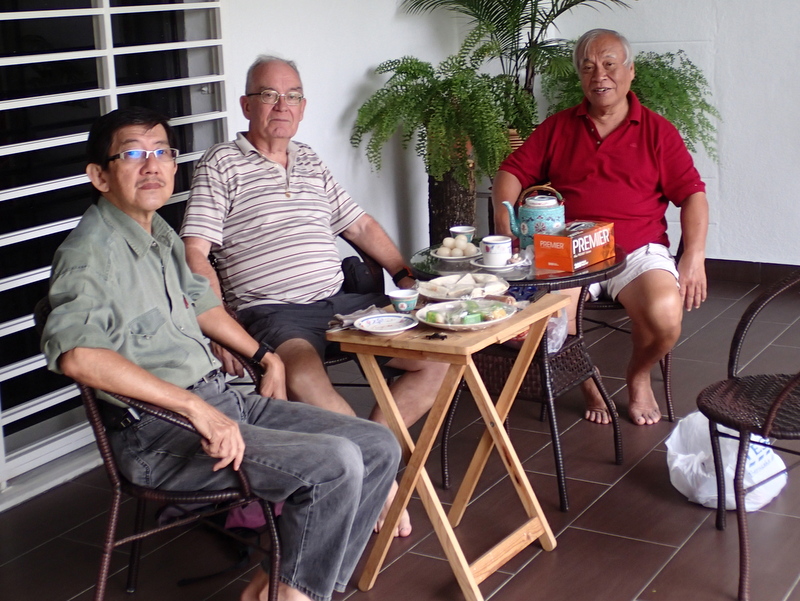
Of course I had several meetings with friends. Sometimes I am lazy to take pictures, but here are two. A visit to my friend Khong’s house to admire his garden and a dinner with friends of Aric in Chinese Muslim restaurant nearby our condo. Quite good food.

Meeting Khong and George

Dinner with Denise and Faresh

I made two waterfall trips with Eddie Yap. He guided us to a remote waterfall, which he had visited once before. So remote that even he, an experienced guide, could not find it back during the first trip..:-). We found a waterfall, but not the one he had in mind. It was a nice trip anyway, we had a relaxing bath in hot springs near KKB. Of course we had to come back, to find the missing fall! This time Eddie found it, a very pristine fall, access not so easy. A well hidden secret, we will keep it that way…:-)

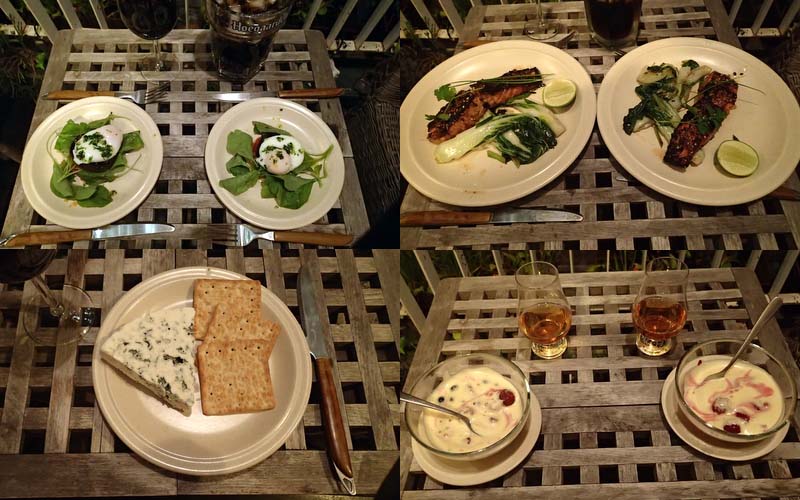
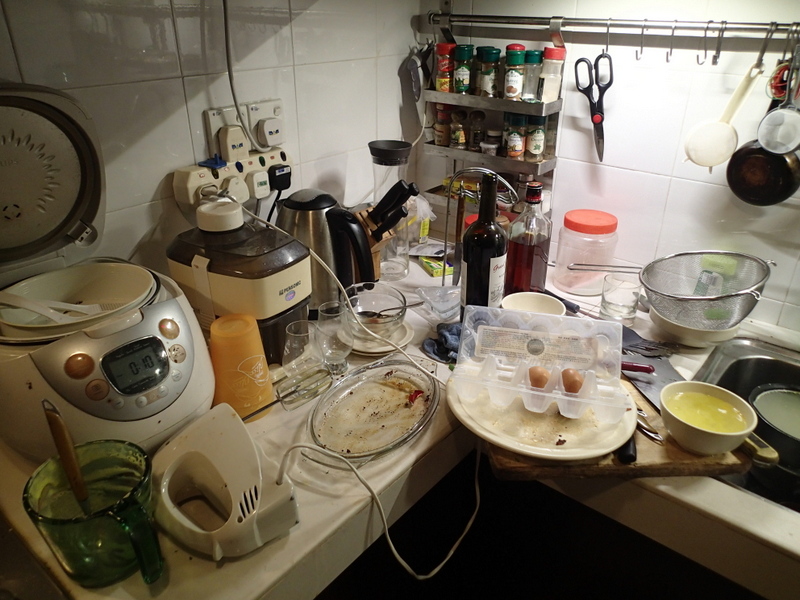
We celebrated Christmas in the usual way, relaxing at home with a nice home-cooked dinner…:-)  Poached egg on mushroom with spinach as a starter, baked salmon with pak soy as main course, blue cheese (for me only, haha), and zabaglione with forest fruits as dessert. Cleaning the kitchen later was quite a job!

1-PC252060

After dinner

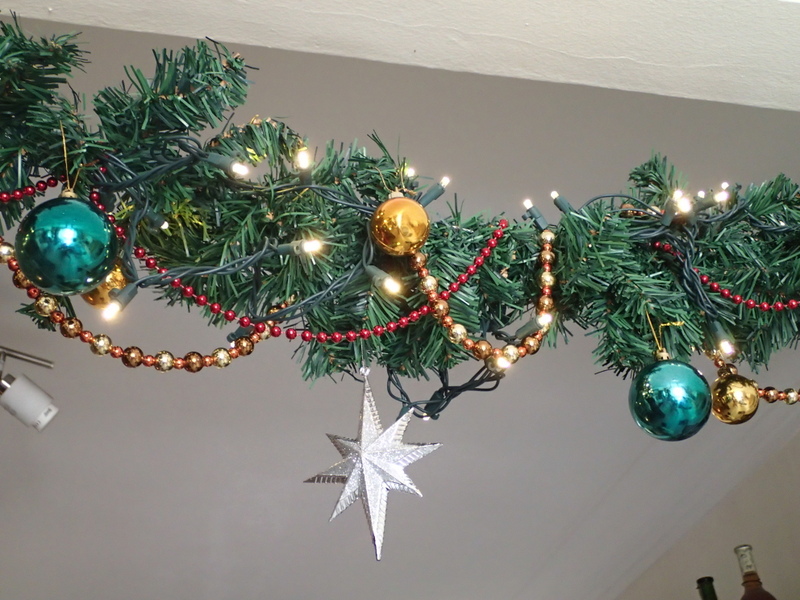
We always create our own (digital) Christmas and New Year card. This time using the Christmas decoration in our living room. Aric used his Photoshop expertise to “clean” the picture, I added the text.

Before

After

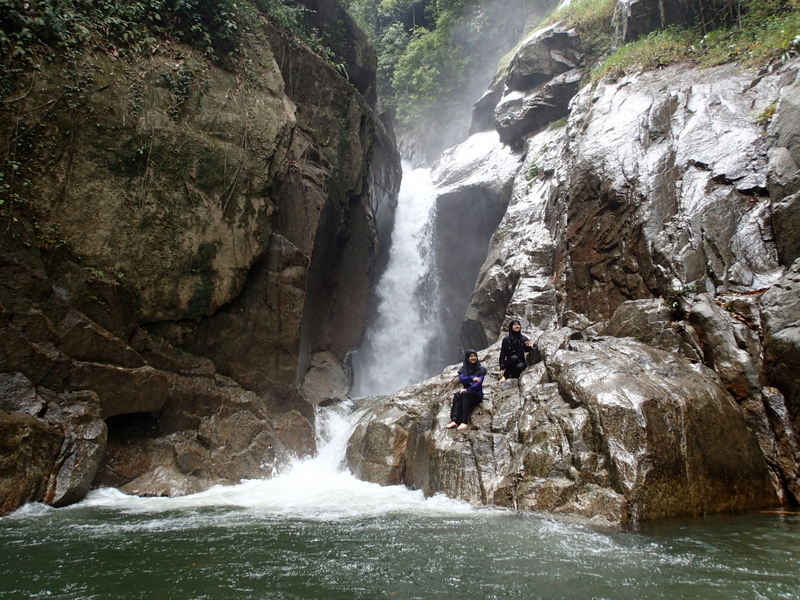
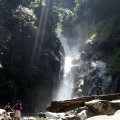
What better way to end the year than by visiting a waterfall! My Dutch friend and former colleague Dick was in Malaysia and wanted to visit a waterfall. Paul was also interested. Chiling is only open to the public during weekends, so there was a crowd. I have been there so many times now, but each time it is again a pleasure to visit this most popular waterfall in Selangor. This picture was a lucky shot, it looks as if only the two girls are there!

Chiling waterfall

We visited first the upper fall, as usual less crowded, then the lower fall. On our way back we had lunch in the WK restaurant in Ulu Yam. Here are more pictures.


Singapore

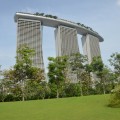
Recently I got a phone call from my friend Paul. “I have booked a trip to Singapore, with an overnight stay in the Marina Bay Sands hotel. Leaving tomorrow. Just got news from my friend that he is unable to join because of a problem in his family. Can you replace him”?

I was free that weekend, so of course I did not say no…:-). Two years ago I had visited this iconic hotel and enjoyed it very much, see my report.

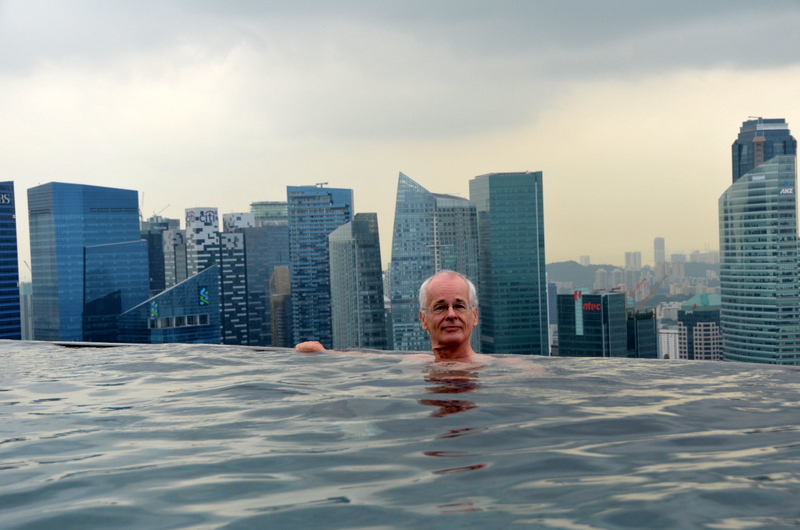
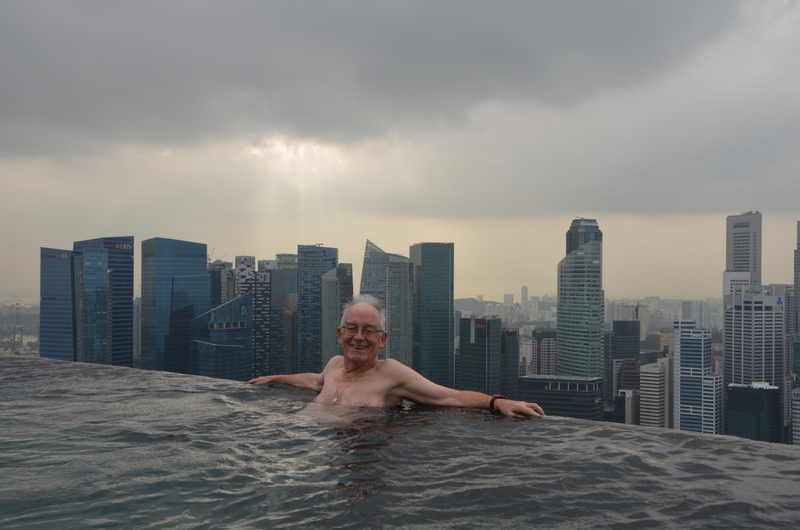
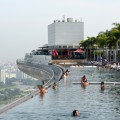
The next morning our bus trip to Singapore took about 6 hours. There is now a MRT station near the hotel! That afternoon we spent a lot of time in the infinity pool..:-)

DSC_6877

DSC_6885

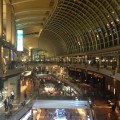
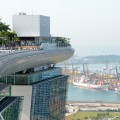
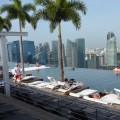
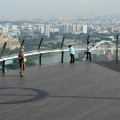
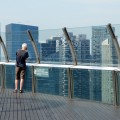
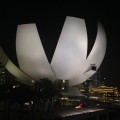
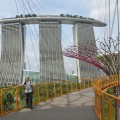
Here are more pictures of the hotel, the shopping complex  around it and the views from the Skypark on the 57th floor. The weather looked a bit threatening, but we had no rain

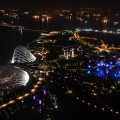
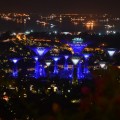
After our dinner (in the food court, the Marina Bay Sands restaurants are too expensive.. haha), we walked a lot in the the town and around the marina. Here are some night views.

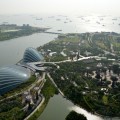
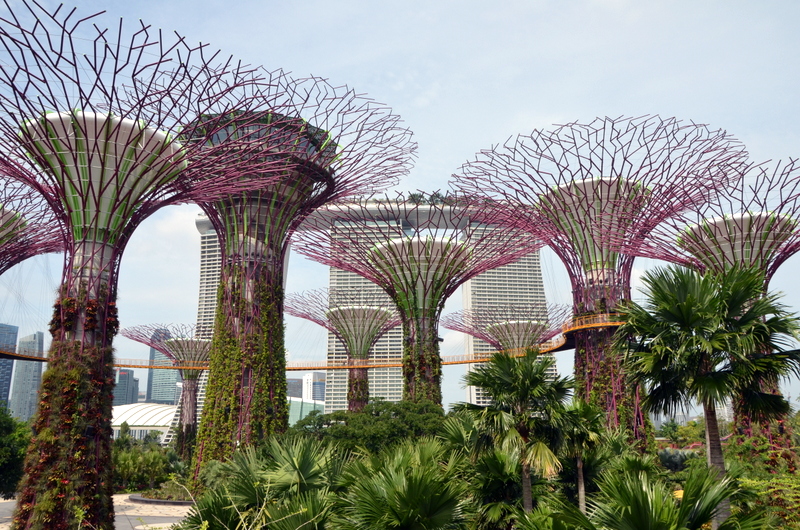
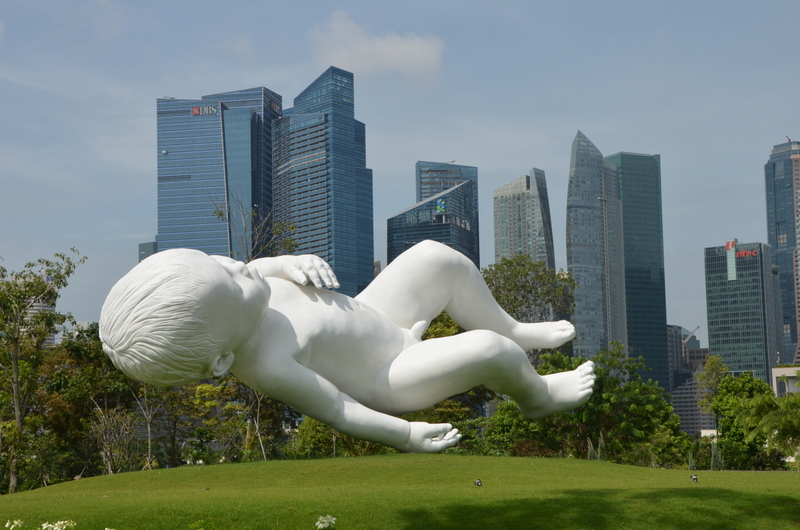
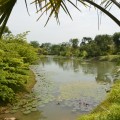
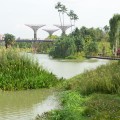
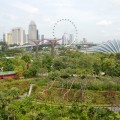
The next day we visited the Gardens by the Bay This park of more than 100 hectares, on reclaimed land, was not yet open to the public during my earlier visit. The park itself is freely accessible, but for some of the attractions you have to pay. From the park you have nice views of the hotel and the Singapore skyline.

DSC_7005

DSC_6988

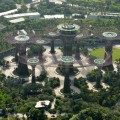
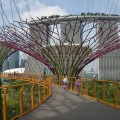
You can easily spend many hours here. Access to the two domes is expensive, we did not go in, later we heard that it is worthwhile. But we visited the “canopy walk” Here is a collection of pictures.

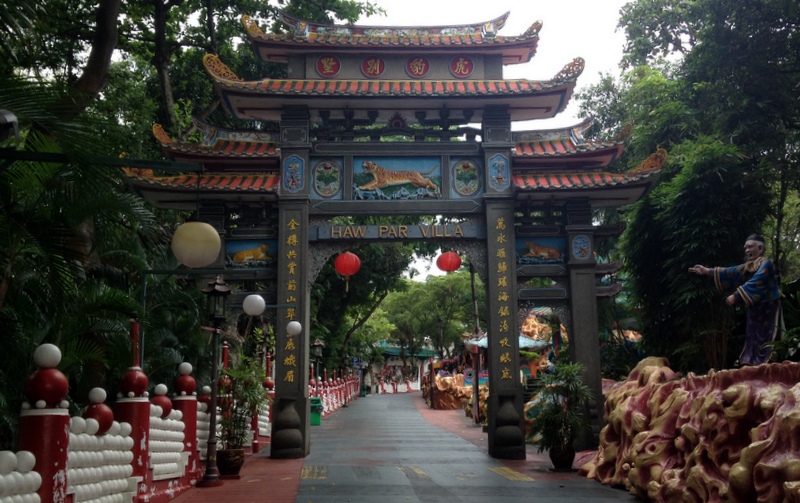
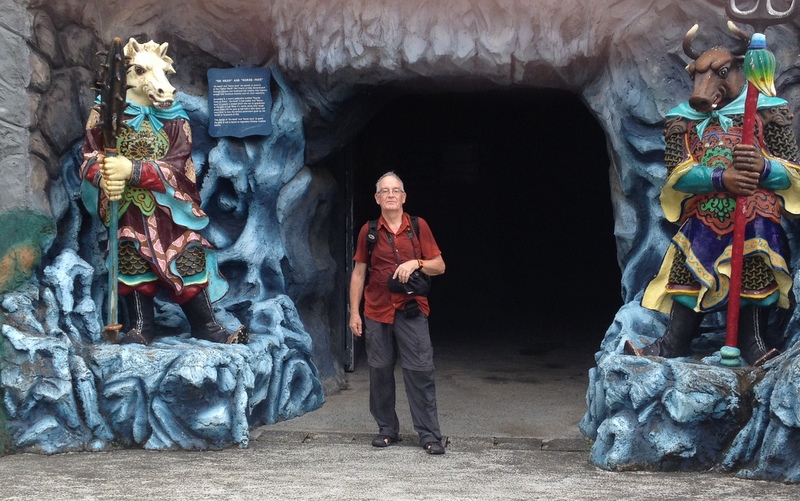
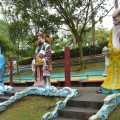
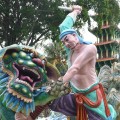
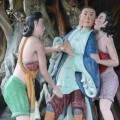
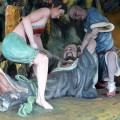
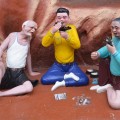
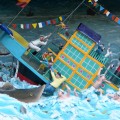
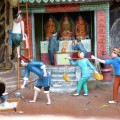
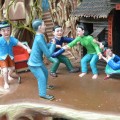
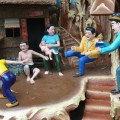
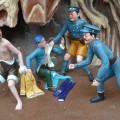
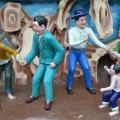
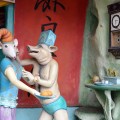
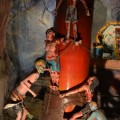
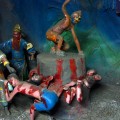
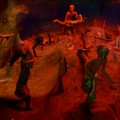
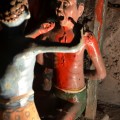
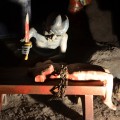
The next day,before we took the bus back to KL, we visited the Haw Par Villa. This theme park, containing over 1,000 statues and 150 giant dioramas depicts scenes from Chinese mythology, folklore, legends, history, and illustrations of various aspects of Confucianism. Created in 1937 by the makers of Tiger Balm, its main attraction are the Ten Courts of Hell

2013-12-15 09.27.18

2013-12-15 10.30.39

Access to the park is free and easy, there is a new MRT station around the corner. Not so many people know about its existence. The park is a photographers delight. Here is a selection of my pictures.

And here is what you can expect as punishment for what you did wrong in your life. Don’t worry too much. Before you are reborn in your next life, you will be served a cup of tea of Forgetfulness, so you will not remember anything in your next life!

This Haw Par Villa is definitely worth a visit!

Bukit Kiara: Not All Is Well

One year after the infamous Bukit KIara fencing project was brought to a halt by then Housing and Local Government Minister Datuk Seri Chor Chee Heung, the Friends of Bukit Kiara (FoBK) received a letter from Jabatan Landskap Negara (JLN) that the fence would be completed, instead of removed…:-(

Again a protest march was organised, the third one, on 28 September 2013. I could not attend as I was traveling in Europe. According to a STAR report more than 2000 people took part in this peaceful demonstration

Protest walk

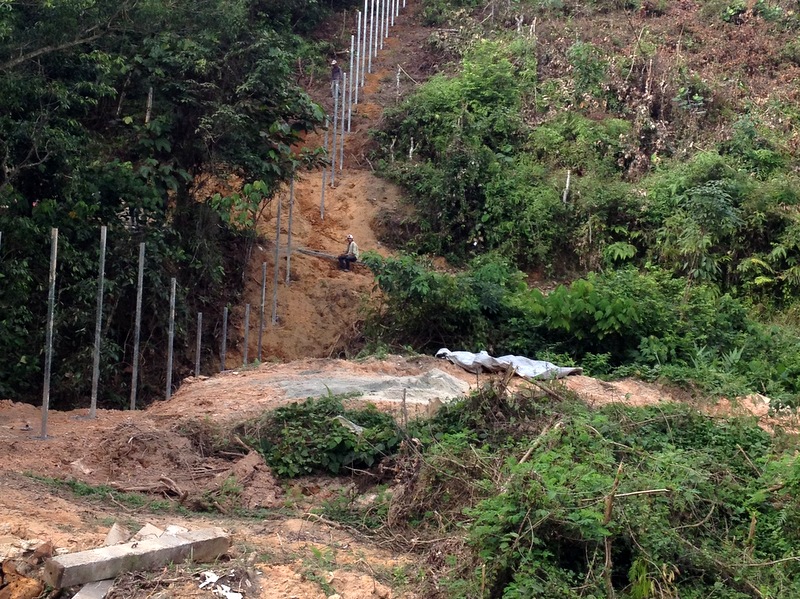
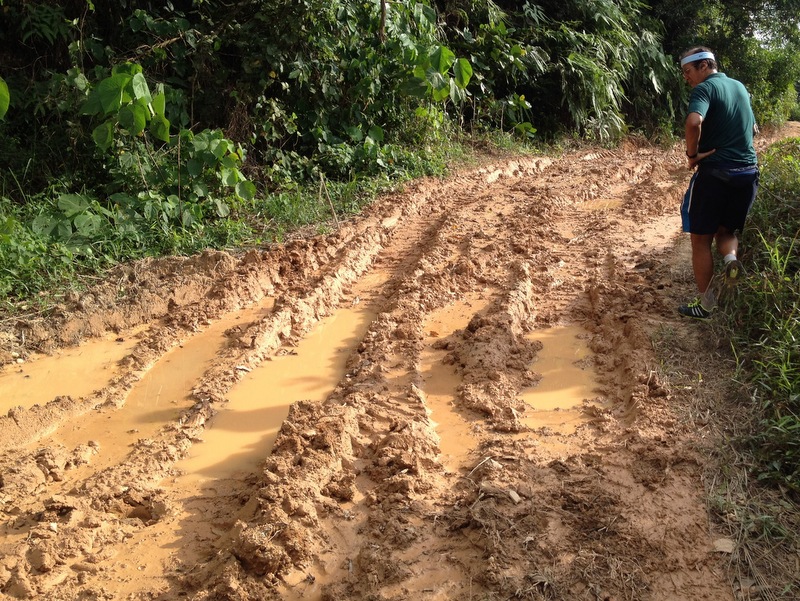
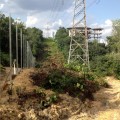
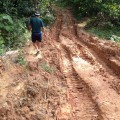
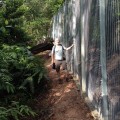
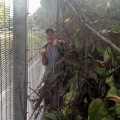
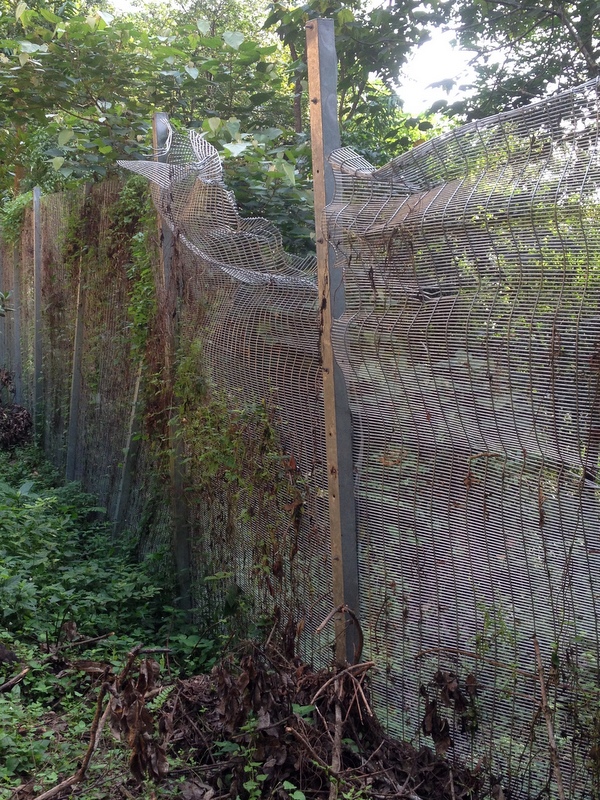
Did the walk have any positive effect? Not at all. Soon the bulldozers started again, trees were felled, access roads created, forest destroyed. This part of the fence is separating Bukit Kiara from the Sprint highway. Only bikers come here, they noticed that several of their trails were blocked and/or destroyed.

fencing

access road

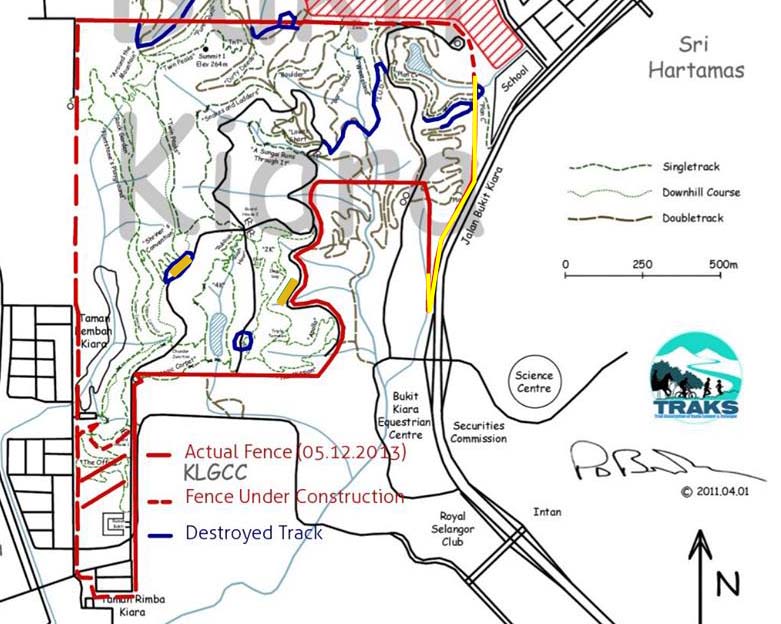
Here is a map of Kiara with the fence. Thanks to TRAKS. The yellow part has been recently constructed. As you see, there is a tiny part of the park fenced in between the highway and the plot leased by Berjaya.

Kiara Map

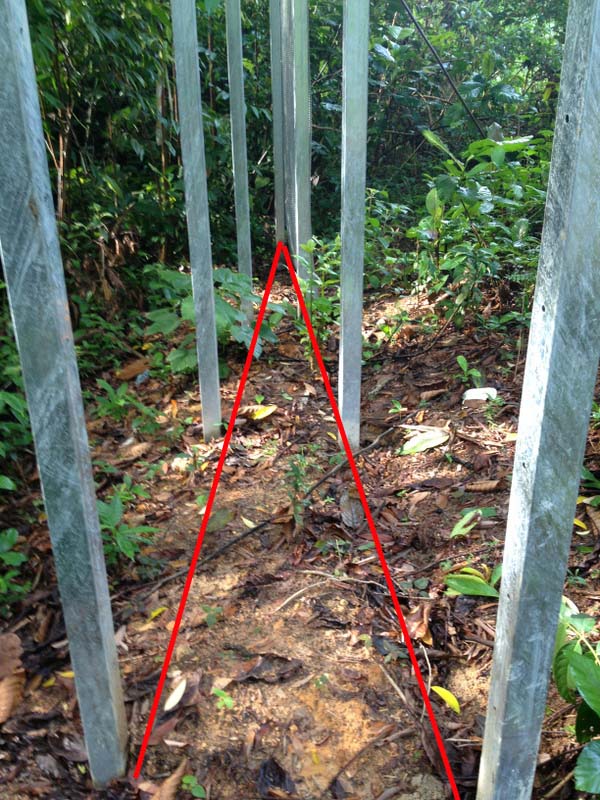
In an earlier blog, called Birdbrains? , I had already explored this location, after the work was stopped. Here is a picture from that blog, showing that they were really planning to build the fence in this moronic way.

IMG_17011

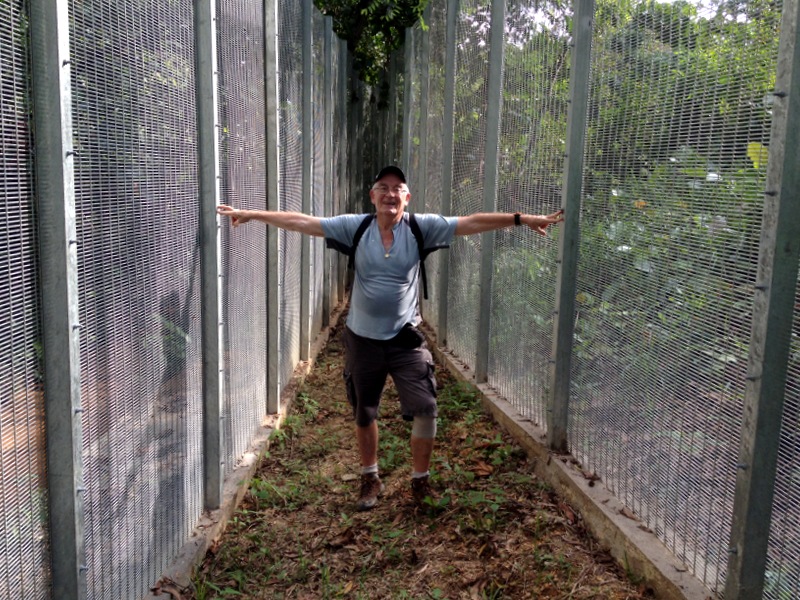
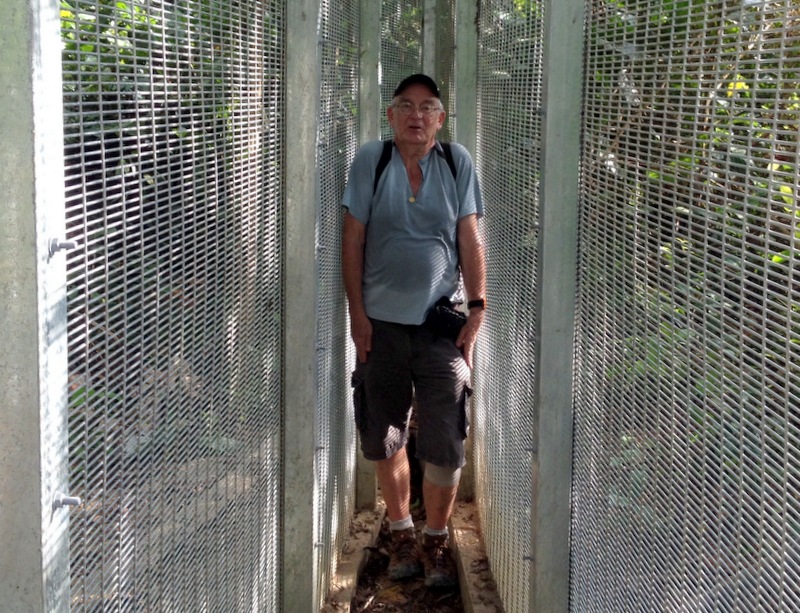
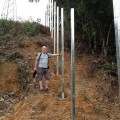
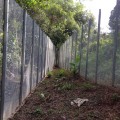
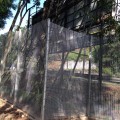
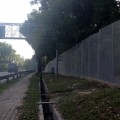
Now that this part of the fence has been completed, I was of course curious to see if JLN had really continued this folly. They did, this is what I found

Kiara fence

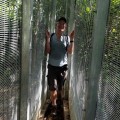
Narrowing

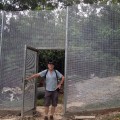
Here are a few more pictures, taken recently during a hike with Dr Pola Singh.

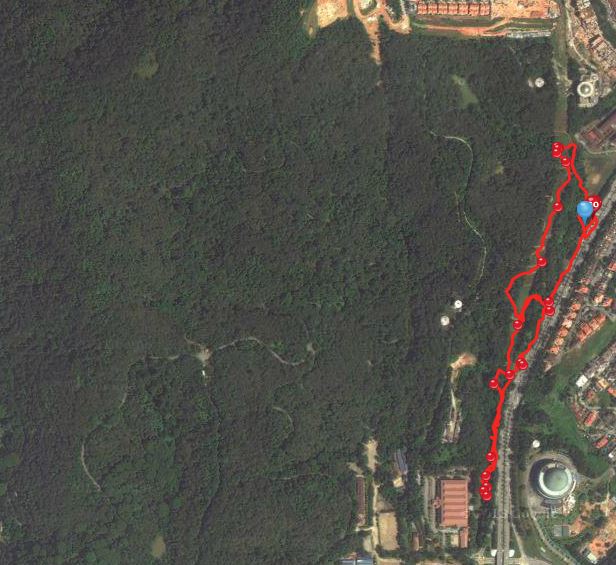
I recorded our GPS track with EveryTrail:

everytrail

Click on the link Kiara Fence to follow our hike on EveryTrail.

Each red dot represents a picture

We started at the Sri Hartamas school

On our way back we went through the small gate and walked along the highway back to our car.


Personally I think that the fencing issue is a lost cause. JLN is not interested in any form of cooperation with the people who are using and loving Bukit Kiara.

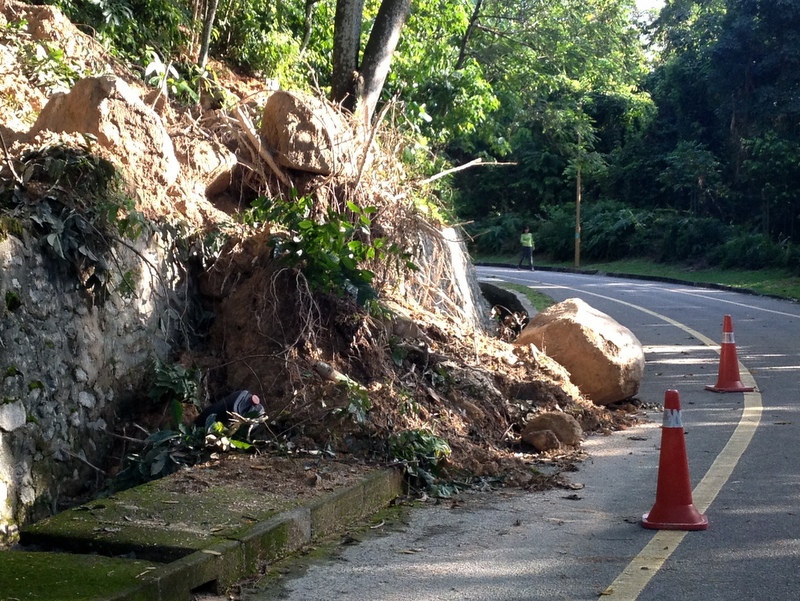
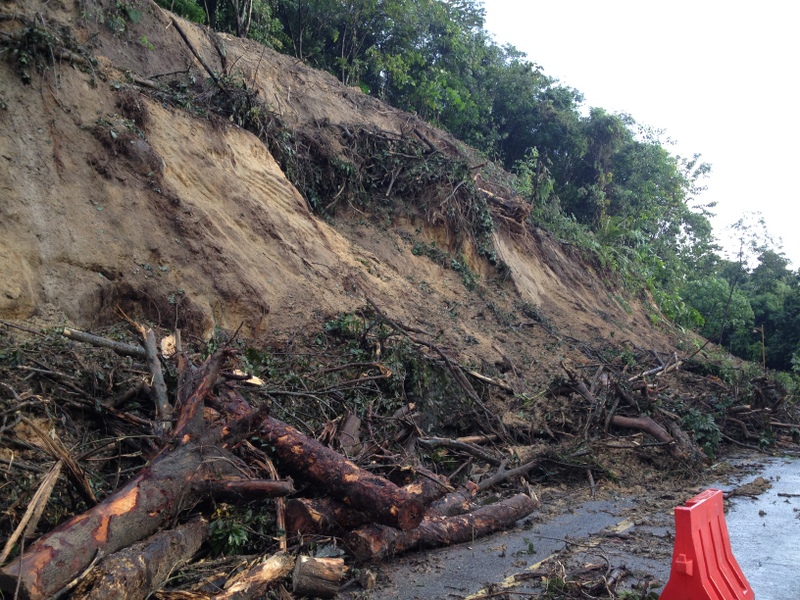
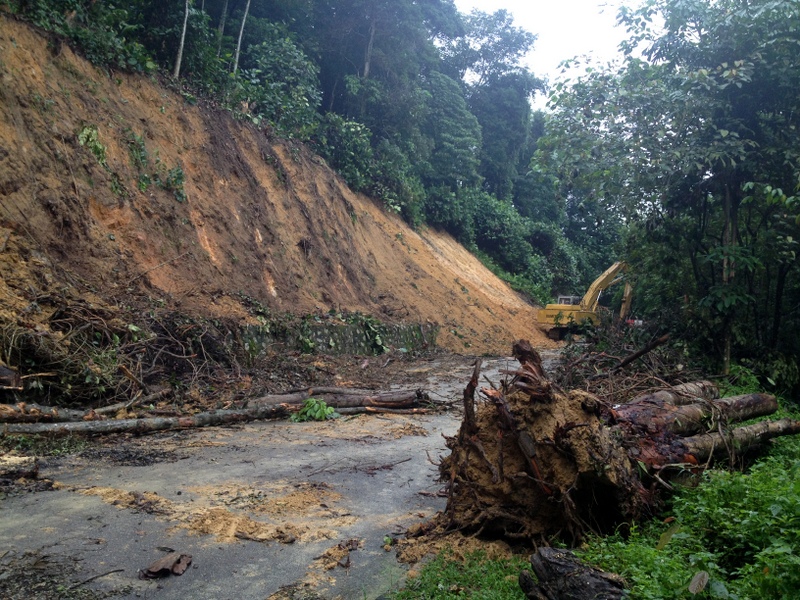
More is happening these days. Bukit KIara is hilly, with some steep slopes along the access roads. Sometimes (minor) landslides happen. Like for example this one, last year, a relatively big one.

landslide

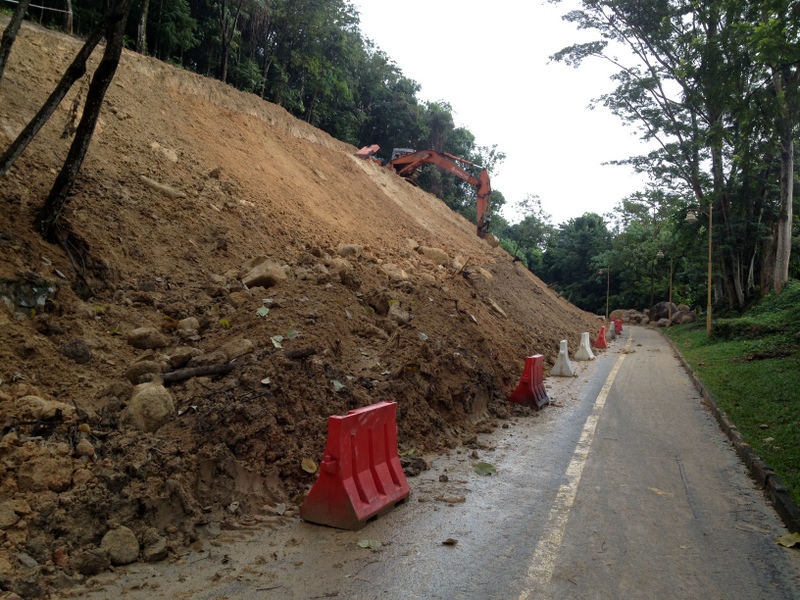
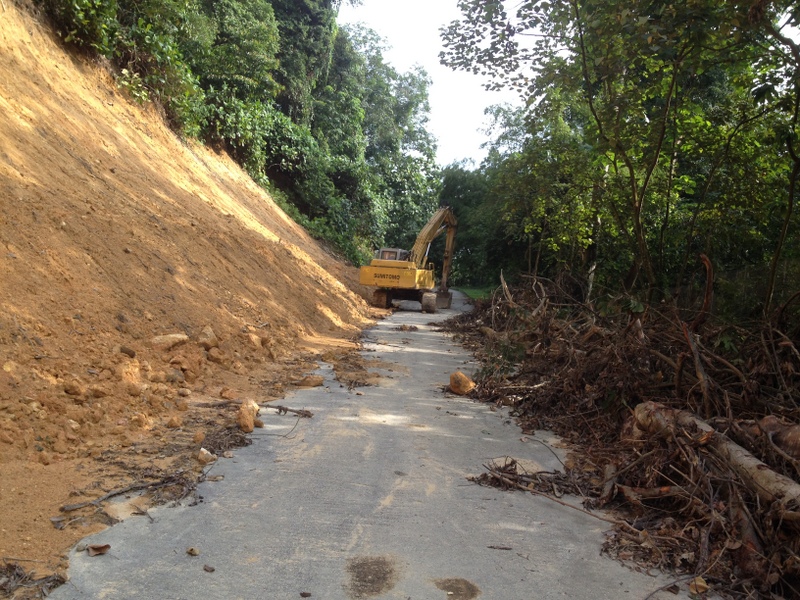
A few weeks ago JLN decided to solve this problem in a shocking, “maximal impact” way. Here are two pictures of the present situation. They call it slope reduction. Sarcastic comments galore: “If there is no landslide, JLN will create one” , “the rape of Bukit Kiara“, etc.

2013-11-15 08.29.57

slope reduction

The location where this “rape” is taking place, is indicated on the TRAKS map above in a brown color. This is the left one in the map. JLN must have been so happy with the result, that they have created a second one, along the tar road leading from the crossroads to the Equestrian club.

2013-12-07 10.11.25

2013-12-17 09.39.17

There are many similar slopes in Bukit Kiara, so the rape may go on. Felling the trees at this second “landslide creation”, one of the trees damaged the fence at the other side of the tar road. Divine justice?

Fence damage


This may give some hope for the future. I have seen more locations where fallen trees have damaged the fence.

As usual in Malaysia there is money available to build something, but no money is reserved for maintenance. If that is the case here, slowly the fence may disappear (maybe sometimes helped by volunteers, haha).


If you want to get regular updates about the Bukit Kiara situation, you should go to the TRAKS FB page and “like” it. Or visit their website.

You may have recognised the “Not All Is Well” in the blog title as a quote from Hamlet. In Shakespeare’s play, Hamlet continues: I doubt some foul play

The Sandakan Death Marches

In 1945, with the WWII coming to an end, the Japanese Imperial Army forced the prisoners of war (POW), kept in the Sandakan POW camp (Sabah), to march from Sandakan to Ranau, over a distance of more than 250 km. Many of the POW’s died during these marches, by disease or starvation. If they were too weak to follow, they were killed by the Japanese guards and left behind. As a result nobody survived these marches, except six, who managed to escape. These marches are now known as the Sandakan Death Marches.

I had never even heard about it, when I visited my friend Joe Yap in Sabah, a few weeks ago. Neither had she, nor many of my Malaysian friends which I questioned later. On our way to Sandakan, after enjoying spectacular views of the majestic Kinabalu mountain from the Kundasang cow farm, Joe asked me if I would like to visit a nearby War Memorial. A war memorial, I asked, what happened here?

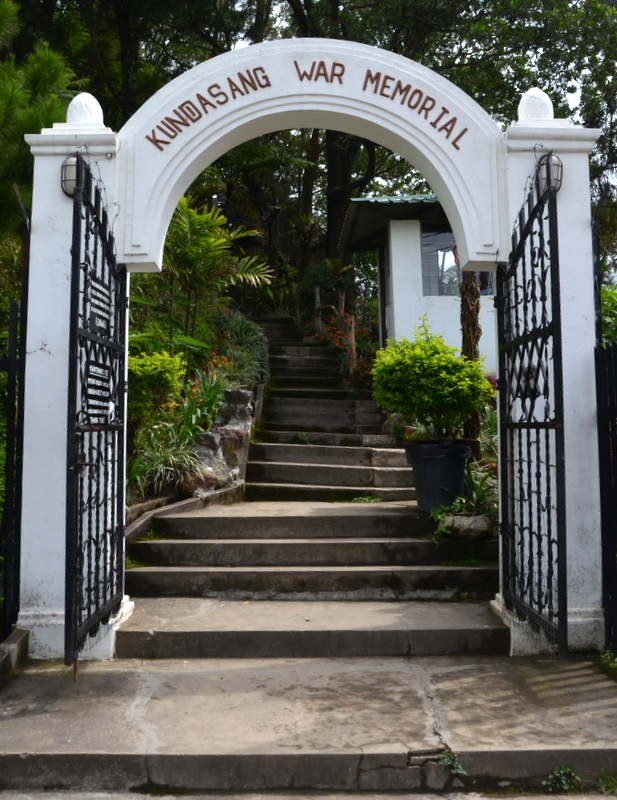
Kundasang War Memorial signboard We entered and there was this signboard, full of information. After reading it, we were hooked and decided to adjust our traveling program in such a way that we could learn more. In the report about my Sabah trip you will find more details and pictures

Here is background information about the Sandakan Death Marches.

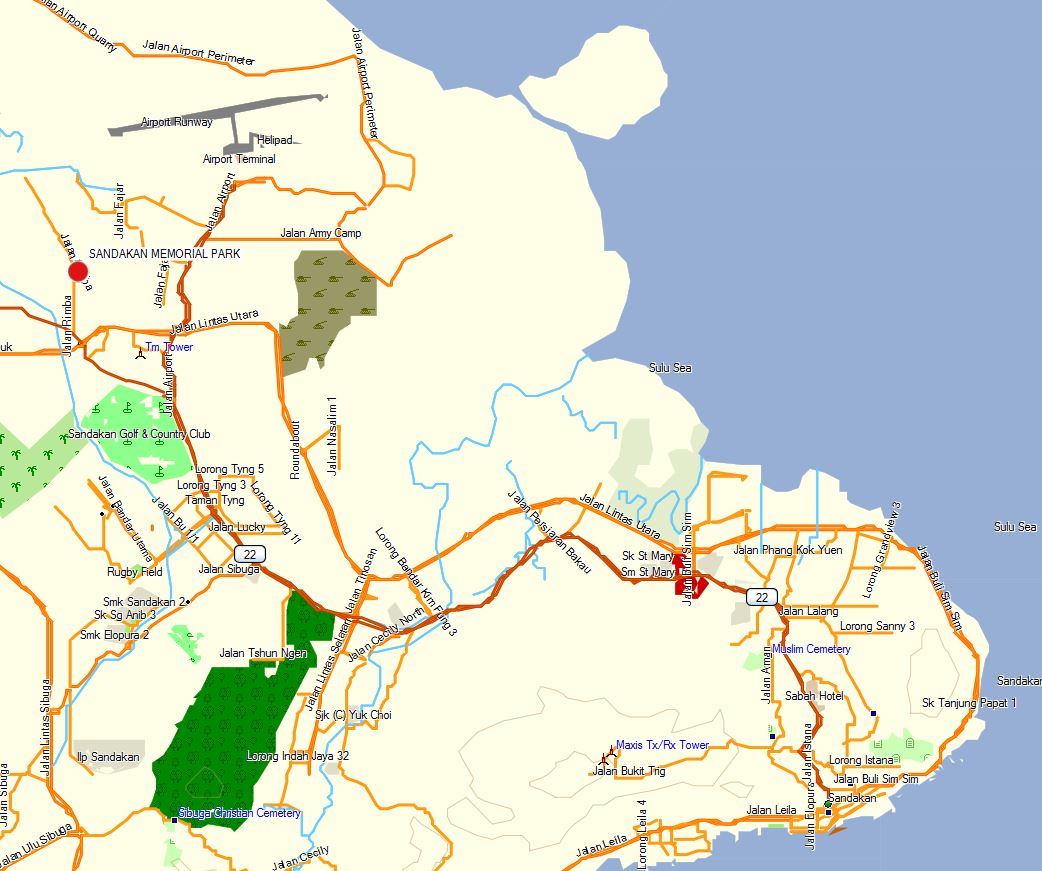
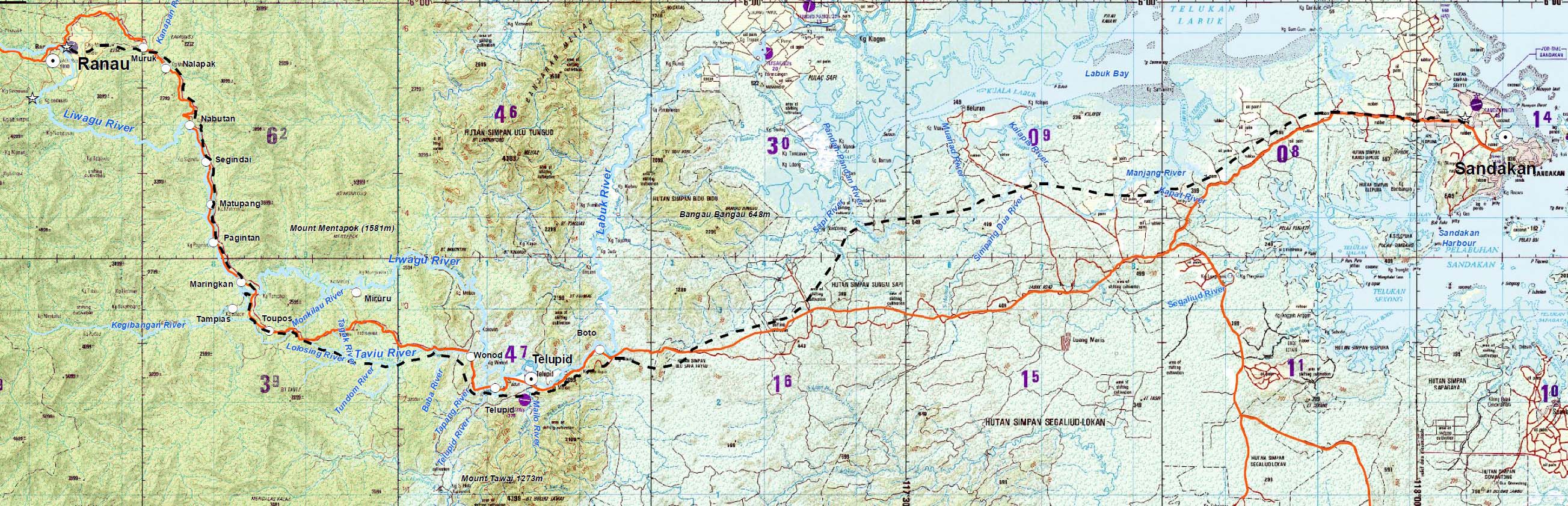
When Singapore fell, 15-2-1942, thousands of Australian and British soldiers were taken prisoner of war by the Japanese. In 1942 and 1943 they brought  about 2700 Australian and British POW’s to a camp, about 8 miles from Sandakan. They were used as a labour force to build a military airstrip. The location of the camp is shown in the map below. It is now the Sandakan war memorial.The military airstrip has become the Sandakan airport.

Batu 8 camp location

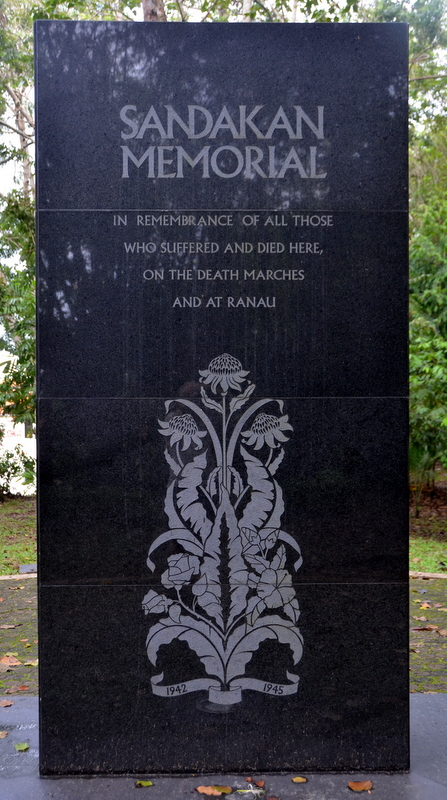
Sandakan War memorial

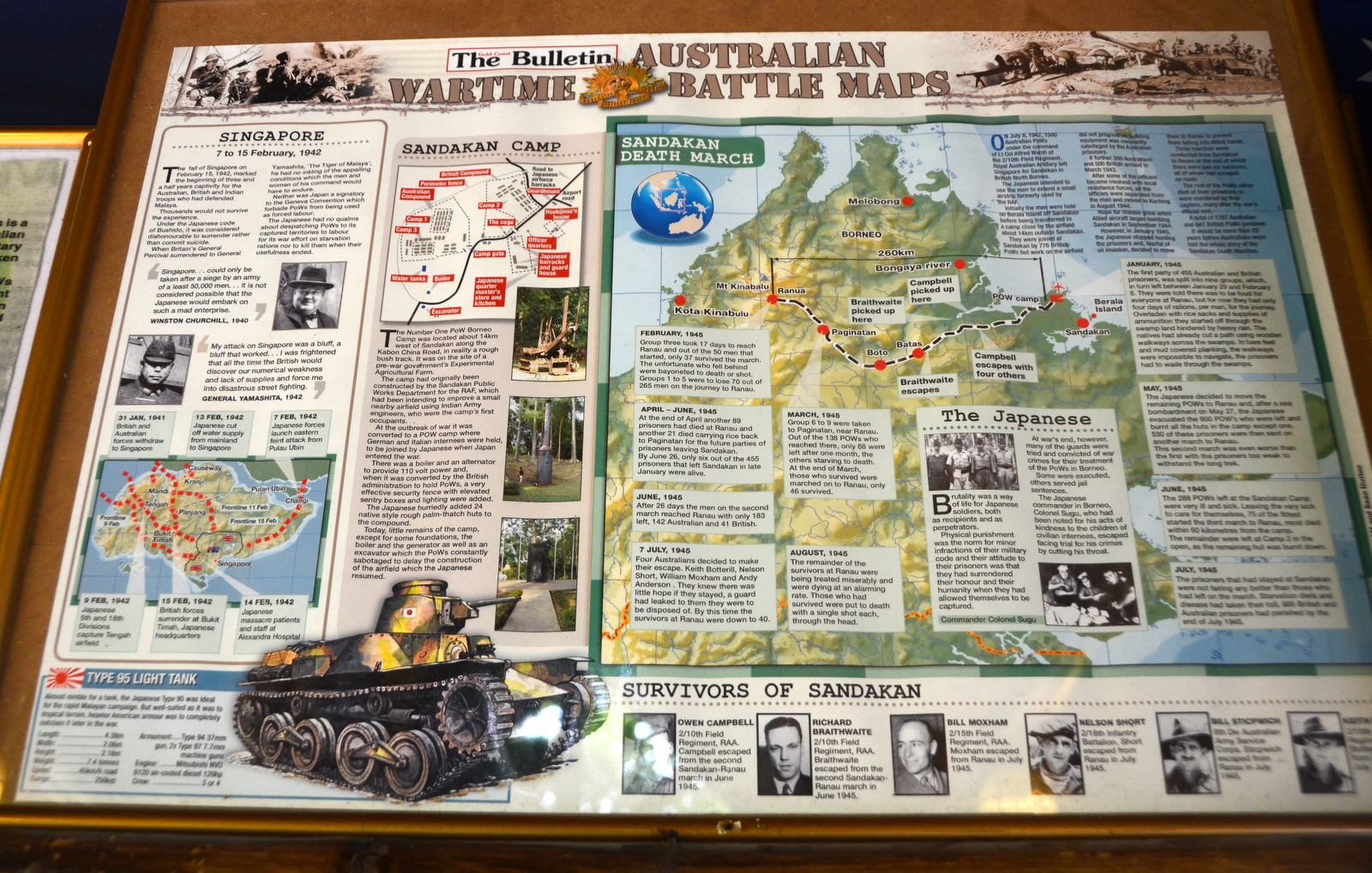
In the beginning living conditions were more or less acceptable, but throughout the years they deteriorated, with heavy punishments and cruel torturing becoming the order of the day. Many people died or were executed in the camp. When it became clear that Japan was loosing the war, the Japanese High Command ordered that the POW’s should be taken to Ranau, on the slopes of the Kinabalu. At that time (beginning of 1945) about 1900 POW’s were still alive. A trail was prepared through the jungle and the swamps and in January 1945 a first group of 470 men started the march. Here is the route they took, the black dashed line. The modern main road is in red.Death March Map

The men were selected because they were relatively fit. They had to carry heavy loads and did not get enough food rations, so many of them died on the way, through illness or exhaustion. If they were no longer able to follow the group, they were killed or left to die. The ~250 survivors who were able to reach Ranau, had to build a camp, where the conditions were even worse. When the next group arrived, in June 1945, they found only six POW’s still alive.

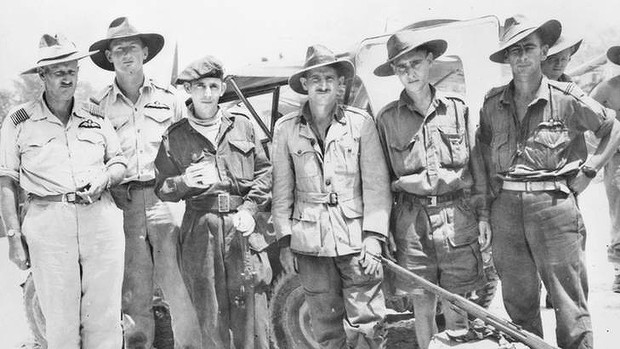
The second series of marches started on 29 May 1945 with approximately 536 prisoners, even less fit. Only 183 of them managed to reach Ranau. Two men managed to escape during the march, were helped by locals and eventually rescued. Another four managed to escape after arrival in Ranau. One of them was Keith Botterill, second from right in the picture. Next to him two other survivors.Read here his report 

survivors

The approximately 250 people left in Sandakan were so ill that initially the Japanese intended to let them starve to death. However, on 9 June it was decided that 75 of them should  march to Ranau. They were so weak that none of them survived beyond 50 km from the camp.

The remaining POW’s died in Sandakan, by starvation, often executed by the Japanese, some of them even after the surrender of Japan, 15 August 1945.

Final count: 2428 POW’s died in the Sandakan and Ranau camps, or during the marches. Only six managed to escape and survived.

These days a lot of information is available about the Sandakan camp and the death marches, but that has not always been the case! In the aftermath of the war, the Australian Army has tried to keep the details of the Japanese war crimes outside the publicity. Officially  because they wanted to spare the feelings of the next-of-kin.

But there was more. The Australian Imperial Army was aware already in 1944 of the atrocious conditions in the Sandakan POW camp. A rescue operation was planned, operation Kingfisher , but by a combination of misinformation and blunders it came to nothing. The army wanted to keep this scandal covered. For many years it was not clear what exactly had happened and how bad it had been.

In 1998 the Australian historian Lynette Silver published a book; Sandakan, a conspiracy of silence.

bookIn this book of almost 500 pages, she gives a detailed account of the situation in the Sandakan camp and the death marches, based on interviews with the six survivors and diary notes left behind by those who did not survive.

It is not always easy reading, but worth the effort and an impressive tribute to all those, often young, men, who perished.

Nowadays much more information is available.  The Australian Department of Veterans’ Affairs has published  a very readable report: Laden, Fevered, Starved , and doing a Google search for “Sandakan Death Marches” will give many more hits.

There are now even several travel agencies which offer Sandakan Death March trips Some of these agencies quarrel about what is the original death march trail, not so easy to determine after almost 70 years.

raft1

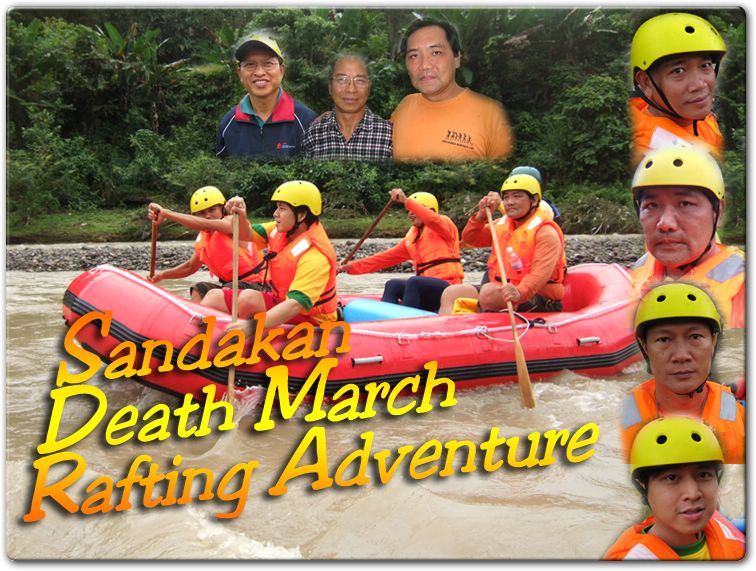
And what to think about this advertisement for a Sandakan Death March Rafting Adventure? With this introduction

The Sandakan Death March Rafting Adventure begins with an inspection of the the camp site, followed by refreshments. ”

Strange and rather disconcerting, that this tragedy is being used for commercial purposes.

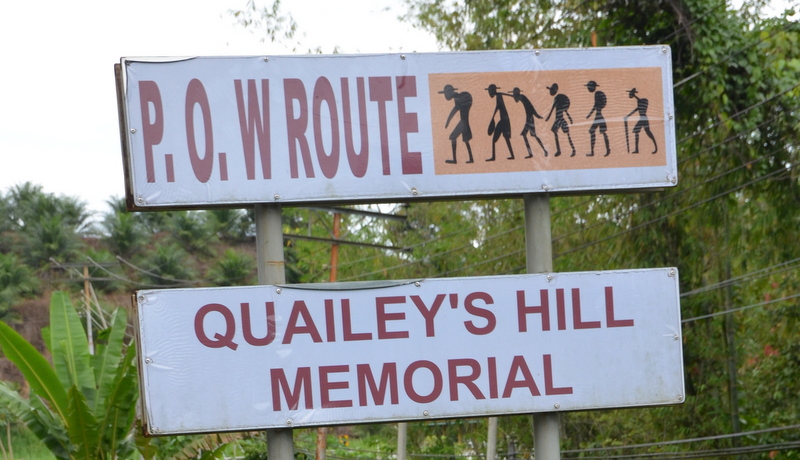
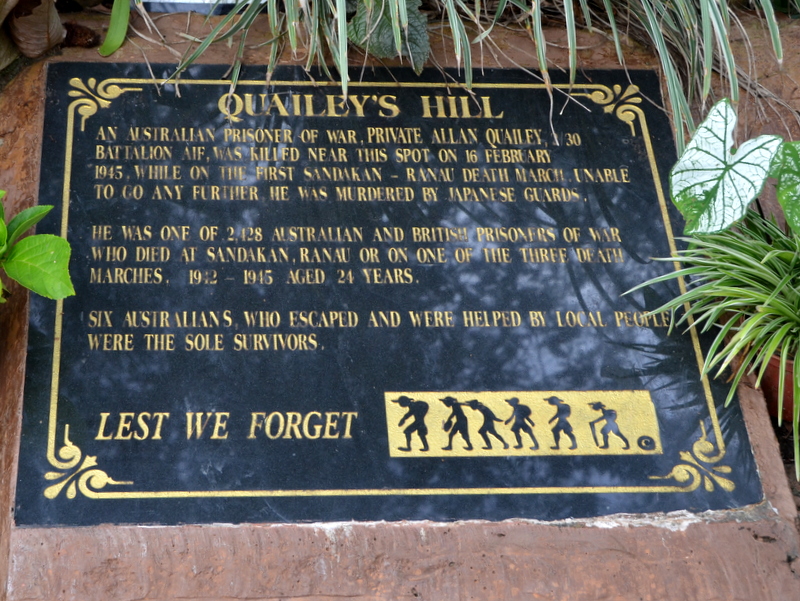
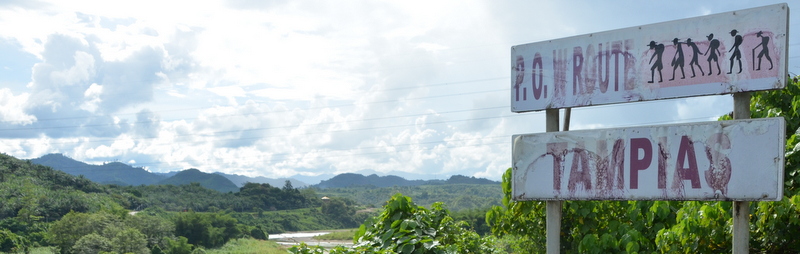
On our way back from Sandakan to Kota Kinabalu, we noticed several signboards, indicating the route of the Death March trail. Like this one near Quailey’s Hill, where 24 year old Allan Quaily was brutally murdered by the Japanese guards, when he had no more energy to continue the march.

DSC_6868

DSC_6676

The surrounding landscape is so peaceful now. Difficult to imagine the suffering of those who marched and died here. DSC_6866


Dutchman meets Orang Belanda

Recently I have visited my friend Joe Yap in Sabah. We had a nice time, full of activities. Here is a detailed report: Sabah November 2013

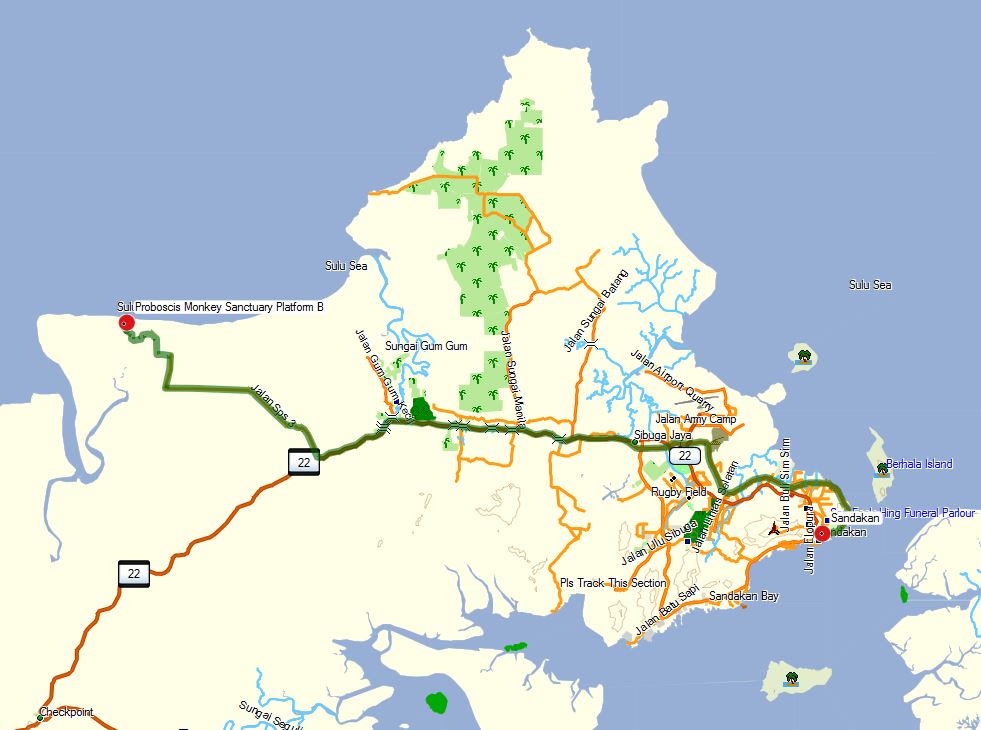
One highlight was the Labuk Bay Proboscis Monkey Sanctuary, located about 50 km from Sandakan.

Sandakan_map

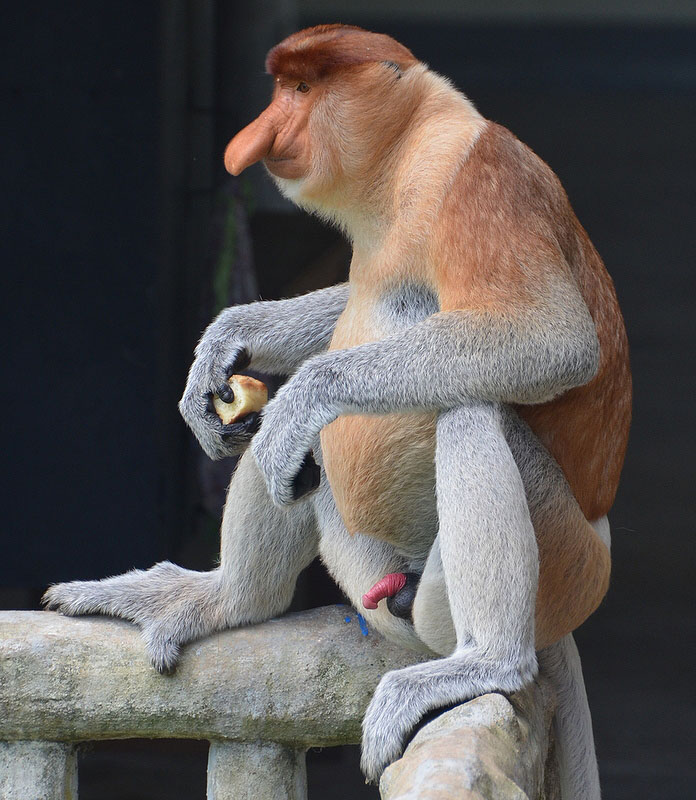
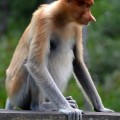
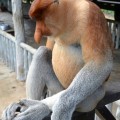
Near Sandakan there is also the better-known Sepilok Orang Utan Sanctuary, but I preferred to see the Proboscis Monkeys. Why? Because these splendid animals with their characteristic big noses and their potbellies are called in Malay: Orang Belanda, which means Dutch Man ! Not really a compliment for me and my compatriots… haha. Are our noses really that big? And our bellies that pot?

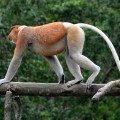
Here is a Dutch Man in all his glory.

Orang Belanda

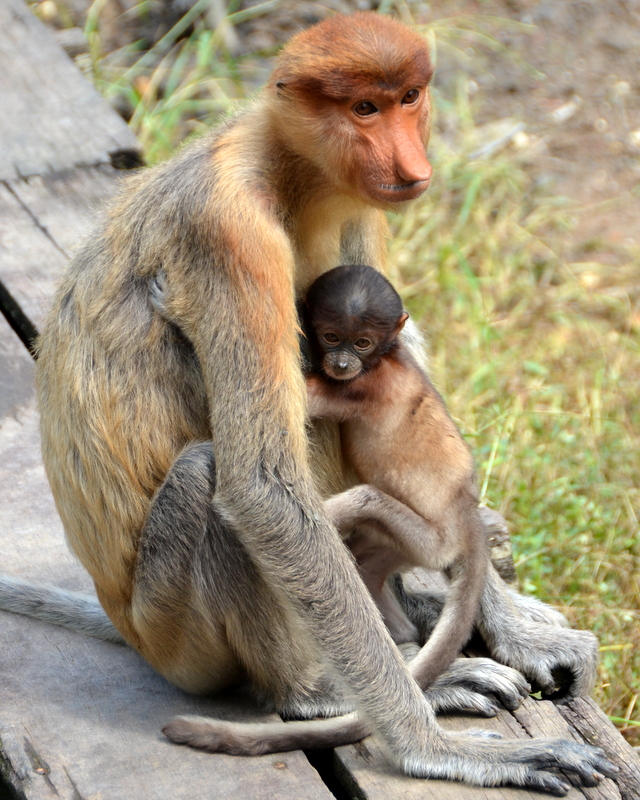
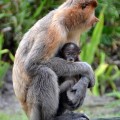
And here is a Dutch Lady with her child. She has a pot belly too, but her nose is smaller.

DSC_6812

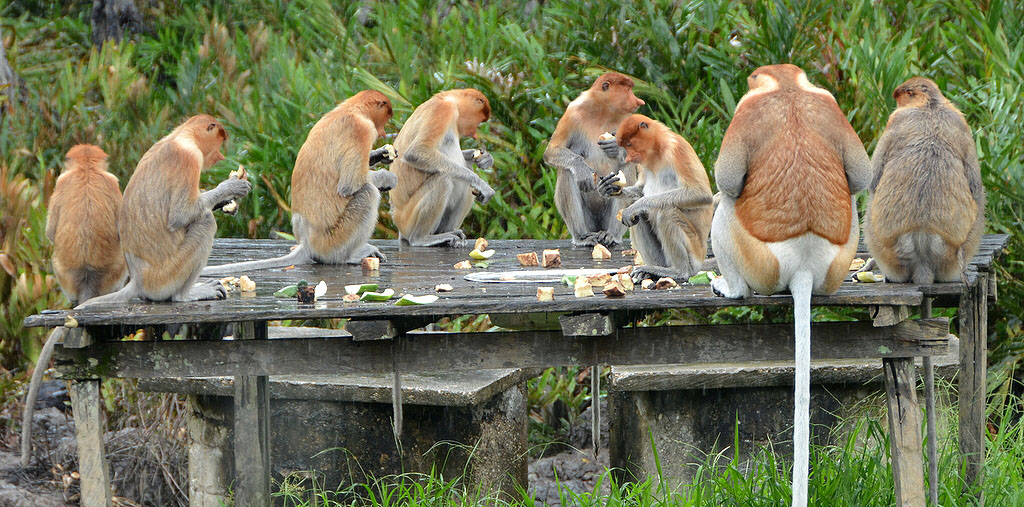
The Proboscis Monkey is endemic to Borneo and considered an Endangered Species. Years ago I had seen them in Bako N.P in Sarawak, but only from a distance. Here they are used to humans and come close, especially during feeding times.

Feeding time

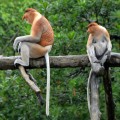
During our visit there were two (adult) males, each with his harem. Several of the females had children. These monkeys are really a photographers delight! Here is a collection of pictures.

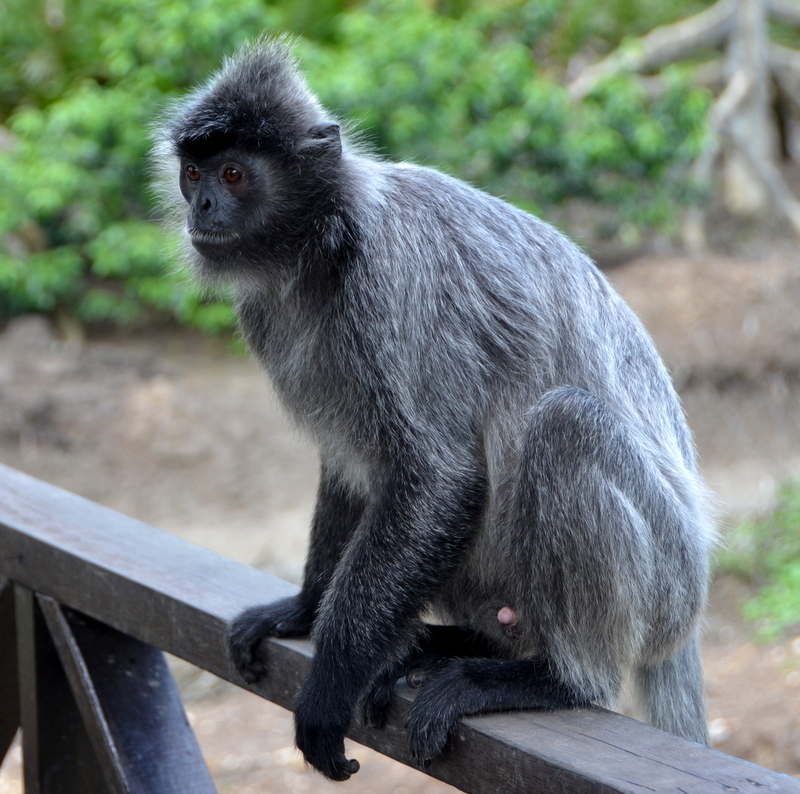
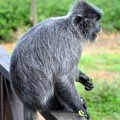
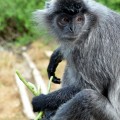
Besides the Proboscis Monkeys, there are also Silvered Leaf Monkeys. In Peninsular Malaysia you can find many of them in Kuala Selangor. Beautiful animals.

DSC_6830

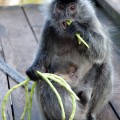
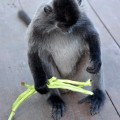
Here also a few more pictures. They have long beans for lunch

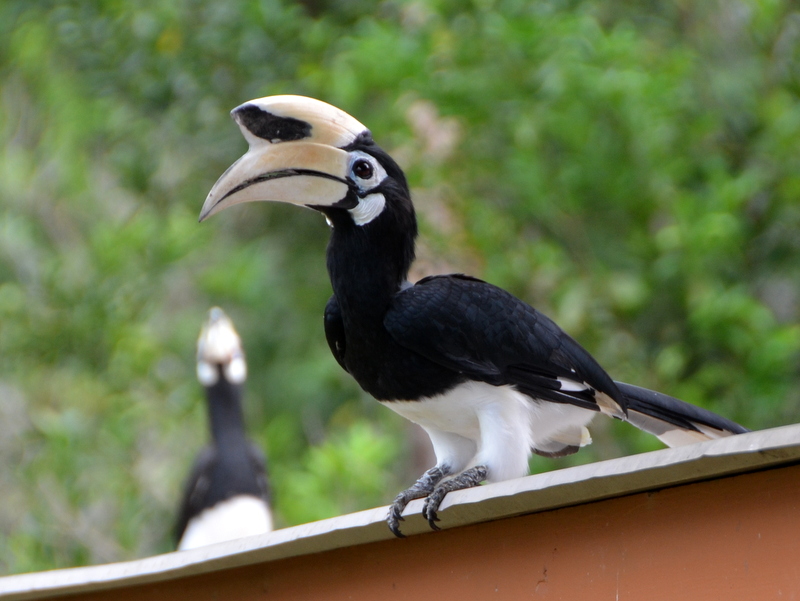
There are also a few hornbills (Oriental Pied)

Oriental Pied Hornbill

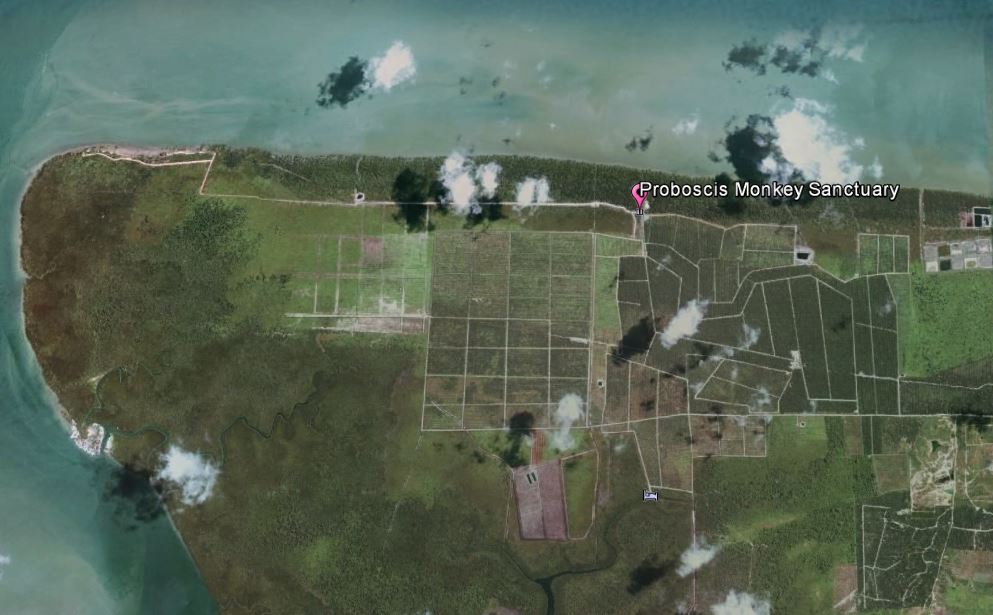
We enjoyed our visit tremendously, although I can understand that not everybody is happy with this project. The sanctuary is a small strip of mangrove forest and belongs to a oil palm plantation, as can be seen clearly on Google Earth.

Labuk Bay

A very small strip, hardly a sustainable habitat for a (fairly large) group of monkeys. They depend for their food on the Sanctuary and are almost domesticated. Exploited, say the critics. Very different from the Sepilok approach where the Orang Utans are taught to live independently of humans. Here are Tripadvisor comments, varying between “terrible” (21) and “excellent”(178).

My advice: visit the Sanctuary and judge for yourself 🙂

Amadeus

At the moment I am working on a post about music, the title will be Countertenors and Castrati. As usual I do quite a lot of surfing on Google, Wikipedia and YouTube, to collect information. Surfing around I can get easily distracted. This time it happened again…:-) Here is an intermezzo about Wolfgang Amadeus Mozart.

My distraction started with this YouTube recording of Mozart’s symphony nr 25 in g-minor. The Wiener Philharmoniker directed by Karl Bohm in 1978, when he was 84 year old.

When Mozart composed this symphony (in only two days), he was a teenager of 17 year old! Almost unbelievable! Even when you are not really a lover of Western classical music, you should at least listen to the opening bars of this symphony. Because it could well be that the theme is familiar to you. It is used in the award winning movie Amadeus, about the life of Mozart Here is a trailer, with the same music.

If you have not seen this movie, you don’t know what you miss. I have watched it many times and always get weepy eyes…:-). Short videos from the movie can be found on YouTube, like for example this clip, where Mozart comes home to find that his wife has left him. In the next scene his vulgar mother-in-law scolds him, and this scolding goes over in the famous Queen of the Night aria from Mozart’s opera die Zauberflote. Pure magic.

You can find many recordings of this beautiful aria on YouTube. Here are two interpretations by the sopranos Diana Damrau and Lucia Popp

And here is another recording, this time by a boy soprano, 14 year old  Robin Scholtz:

Before puberty sets in, with its voice break, boys can sing soprano parts. Here is another recording, by Jacques Imbrailo , also 14 year old when this was recorded in 1993, he is now a well known baritone.

But this young man, Olmo Herdia Blanco is 16 years old. He sings the aria as a countertenor. He looks nervous, but he has a promising voice.

So we are almost back at the topic of my next blog, Countertenors and Castrati…:-)

To end this post in a lighter vein, here is a hilarious performance by a 7(!) year old Chinese boy. At the piano a not much older girl. Clear fight between the singer and the pianist, won convincingly by the girl…:-)

Waterfalls

Quite a few times, on my waterfall hikes, I have met Eddie Yap, a nature guide. We became friendly, exchanged emails and agreed that we should try to make a trip together. But it never happened, until last week. It was a nice meeting, although the actual reason was not a happy one. Recently a nature guide drowned at a remote waterfall near Bentong, after he had first saved the life of one of his clients.

We had both visited this waterfall and did not really understand why it could be dangerous. So we decided to make Lata Hammers the target of our trip. Aric joined, as I have made it a rule now, to have at least three people on jungle hikes. Here is the upper fall, where the tragic accident happened.Upper Lata Hammersw

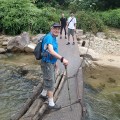
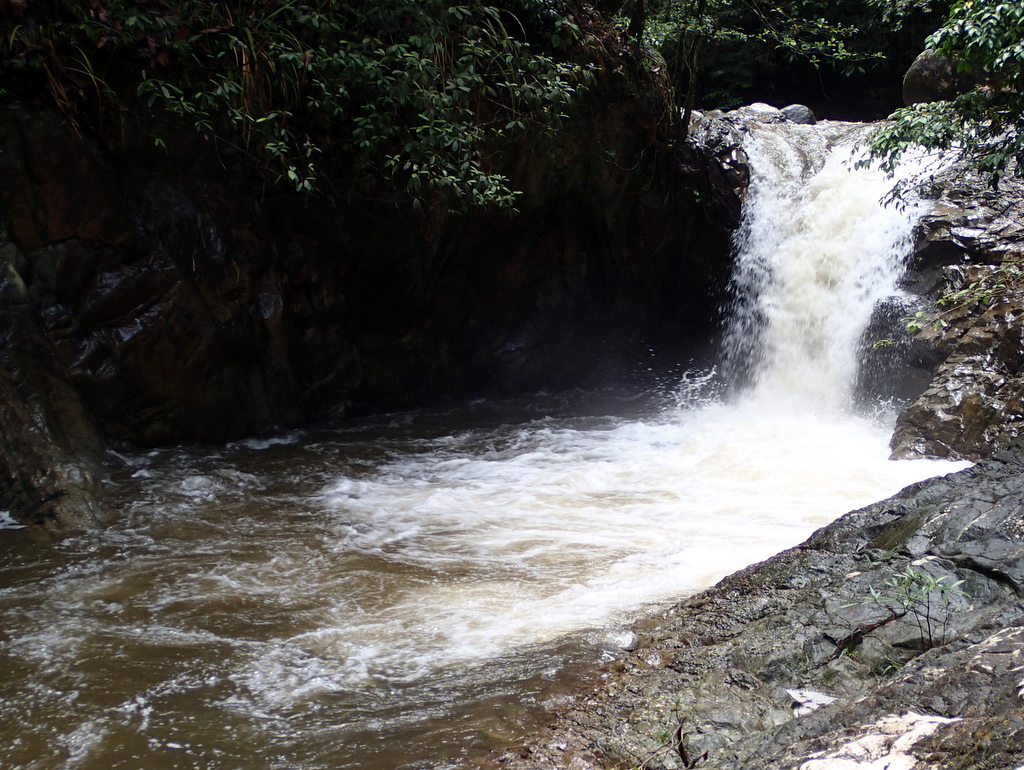
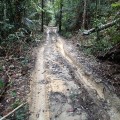
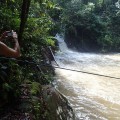
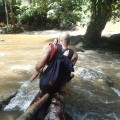
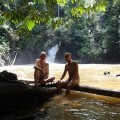
As you see, the water flow was huge, because there had been heavy rain the night before. At the trail head you have to cross the Perting Pandak river, and that was NOT easy. After that it is an easy, although muddy logging road, leading in about 45 minutes to the fall. Here you have to cross the river again, and it was good that a “bridge” consisting of trees had been constructed, otherwise crossing would have been very problematic. The waterfall was intimidating, turbulent waters, strong currents, we thought it wise not to swim. It is only a short walk to the upper fall, equally strong and turbulent. Here is a short video clip of the upper fall.

Although the target of this trip was a sad one, it was really a pleasure to finally make a trip with Eddie. We had a lot to talk about, and a lot in common, for example that we both like skinny dipping, haha. And good food, on our way back we stopped in Bukit Tinggi and had a delicious lunch at the 126 restaurant . Value for money too, we paid only RM 26 for the three of us!  Here are more pictures. Looking forward to a next meeting.

I took a few more videos at Lata Hammers. Here are the links: Crossing the tree bridge , The lower fall (notice the turbulence and the currents) and one more of the Upper fall

A few days later I went again to a waterfall. This time with my friends Richard and Gabriel, to the Chiling waterfall, near Kuala Kubu Baharu. This waterfall, the most popular in Malaysia, is only open to the public during weekends, you will not be the only visitor. As it is the rainy season now, I was expecting a large flow of water, so I had taken a rope for the (several) river crossings. But it had not been raining the night before, the crossings were passable, with some care. Here is the main fall , impressive, with a thunderous roar and a mist of water.

OLYMPUS DIGITAL CAMERA

It takes about 45 minutes from the ranger station (Chiling is a fish sanctuary) to the main fall. But first we climbed up to the upper fall, where it was quiet. Here is a video of the upper fall.

As the weather looked good, we decided to go the top fall, which I had explored in 2010 , We found the trail, it looked good, but unfortunately  it petered out halfway and as we were not in the mood to chop our way, we returned and went down to the main fall. We were surprised to find no visitors there, which caused Richard and Gabriel to do a joyful little dance.

Later new hikers arrived, but still it was not the crowd I had expected…:-) We had our lunch before we hiked back. I have visited this waterfall numerous times, it never gets boring! Here are more pictures.

Let me end this blog the same way as the waterfall pages on my website end:

Waterfalls can be dangerous ! Always take care about your safety