Fibonacci (part 2)

In part 1 we have seen that the Fibonacci series can be generated by a simple rule: start with 1, 1 then adding the last two numbers of the series gives the next one

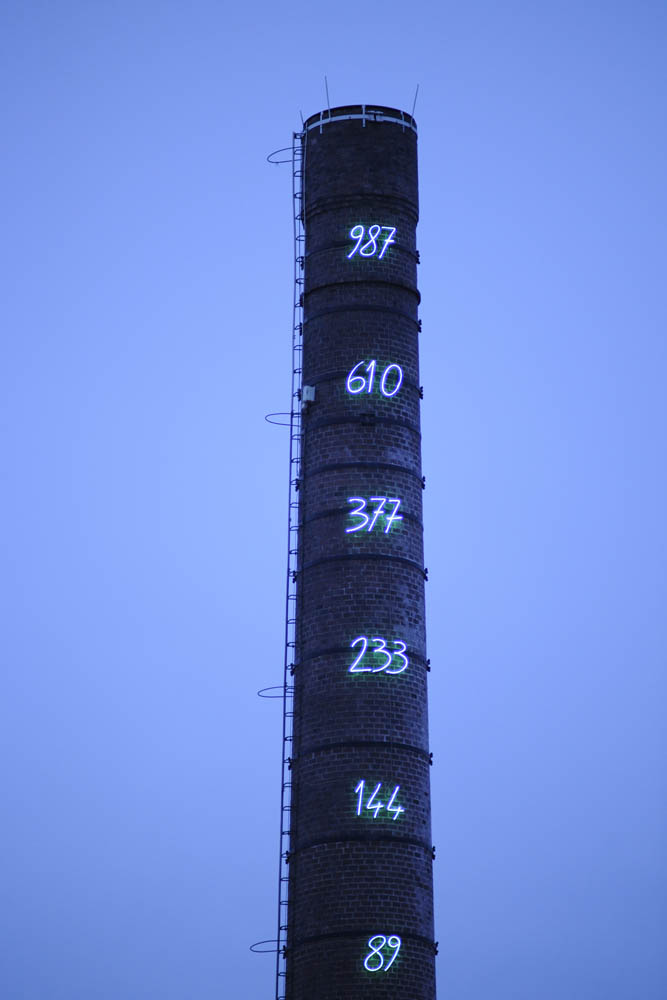
1, 1, 2, 3, 5, 8, 13, 21, 34, 55, 89, 144, 233, 377, 610, 987, 1597, 2584, 4181, 6765 ...

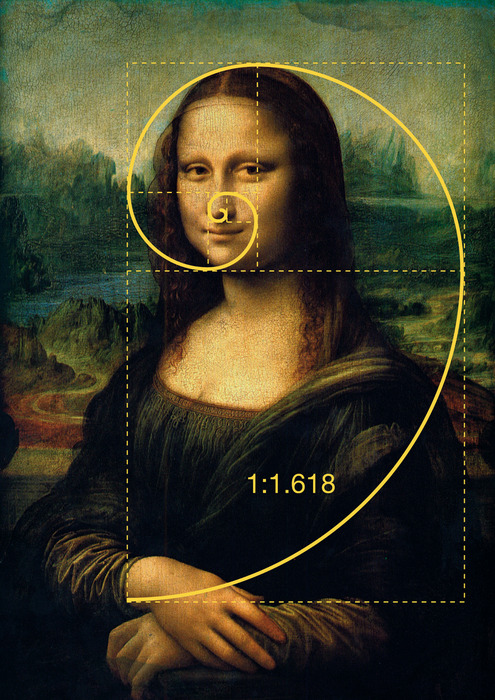
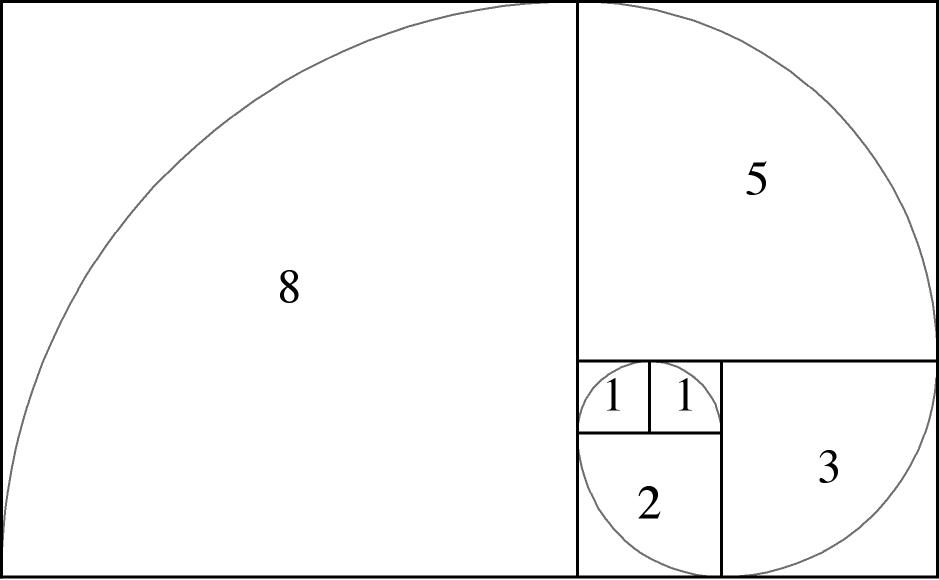
When you take the ratio of two consecutive Fibonacci numbers, this ratio approaches the Golden Ratio φ (phi) = 1.61803.. as you proceed in the series. And we have seen the close relation between the Fibonacci numbers and the Golden Spiral. Take note in the picture below of the rectangle containing the spiral. The ratio between width and height is φ. You will not be surprised that it is called the Golden Rectangle..:-)
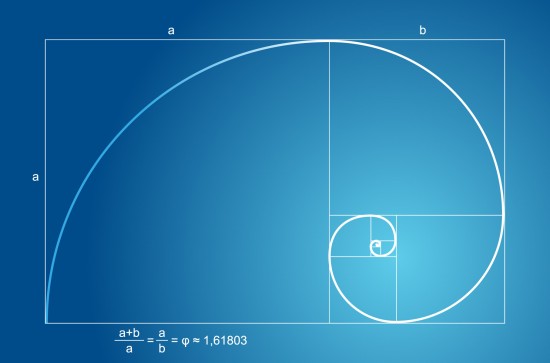
Golden spiral

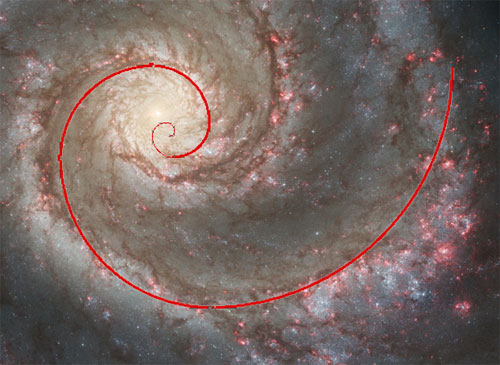
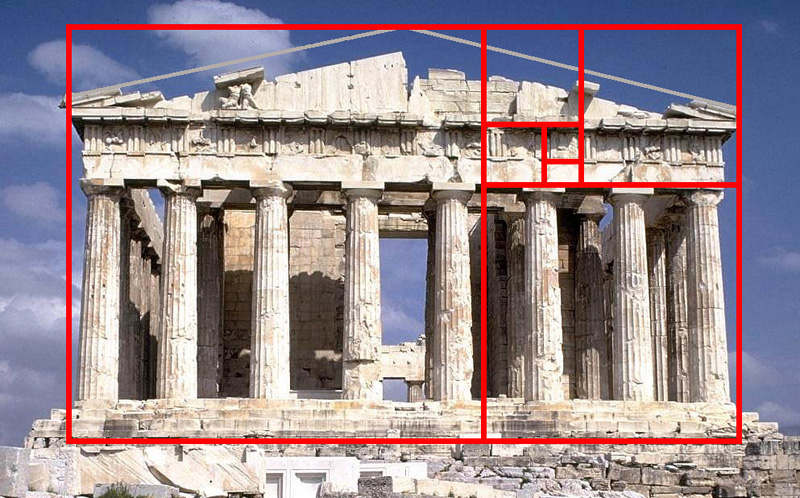
Has all or any of this a relation with the world around us? It is said that the Golden Rectangle is pleasing to the eye and that therefore many paintings have that format. It is said that the Parthenon temple in Athens was designed with φ in mind. There are people who believe that φ ( like π ) can be found in the dimensions of the  Pyramid of Cheops. And that the spiral arms of galaxies are Golden Spirals.
parthenonMona Lisagalaxy

The above statements are unfounded (the Parthenon) , false (painters had no preference for the Golden Rectangle) or only partly true (spiral arms of galaxies are logarithmic, but in general not golden). People who know me, will not be surprised that I am a skeptic..:-). When you are a believer, you will be pleased with the Golden Number website, maintained by “Phi Guy:” who introduces himself with “The inspiration for the site came as a result of coming to faith in God through Jesus Christ.” The guy must have taken the alternative name for φ (Divine Proportion) very literally.

This site is more to my liking: The Myth That Will Not Go Away

Often in a discussion about the Golden Spiral, the Nautilus shell is mentioned. Here it is,  a beautiful example of a logarithmic spiral in nature. But is it a Golden Spiral, does it grow with a factor 1.618 each quarter turn? The answer is negative. The golden spiral is the blue line. It is clear that it grows faster than the Nautilus! The average growth factor for a Nautilus is ~ 1.33.

Nautilus with golden spiral

Many references to Fibonacci and the Golden Ratio in  the world around us, are incorrect.

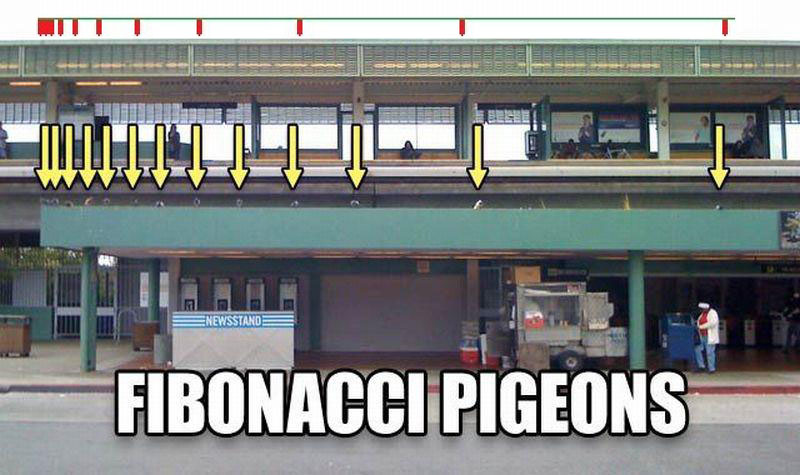
Here is one more, funny example. Recently I found on FB a picture of Fibonacci Pigeons. The location of the pigeons has been indicated with yellow arrows. Nice how the distance between the pigeons increases from left to right. But is it Fibonacci?
pigeons1

The answer is again negative. In the upper part of the picture I have indicated the Fibonacci positions. Compare the regular increase in spacing with the very irregular spacing of the yellow arrows!

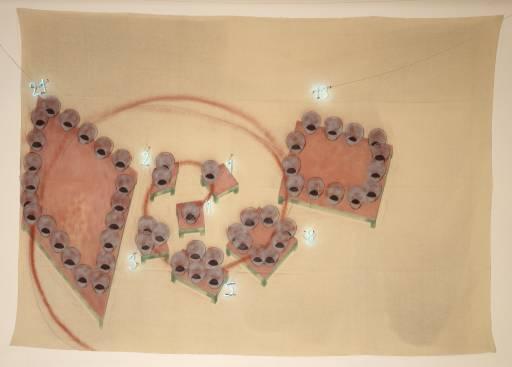
Ok, time to become more positive…:-) Several painters (Dali, Seurat) were intrigued by Fibonacci numbers and the Golden Ratio. One 20th century artist, Mario Merz, was fascinated by it and you can find references in many of his works. Here are a few.
TablesMario MerzSpiral

But the most beautiful examples come from nature, from the Kingdom of Plants.

Here is a sunflower. What we call the flower is actually a combination of hundreds of small flowers (florets) surrounded by petals. As you see the florets are arranged in two series of spirals, starting from the center. One series is curving clockwise (red), the other one anticlockwise (blue). Can you count the number of blue spirals and red spirals?

Sunflower

The answer is : 55 red spirals and 34 blue ones. Two Fibonacci numbers!

Here is a pine cone, that I found in the forest a couple of years ago. Also here the scales form  two series of spirals. I counted how many and found 13 green ones and 8 yellow ones. Again two Fibonacci numbers! Isn’t it amazing? Try it yourself with a pineapple..:-)
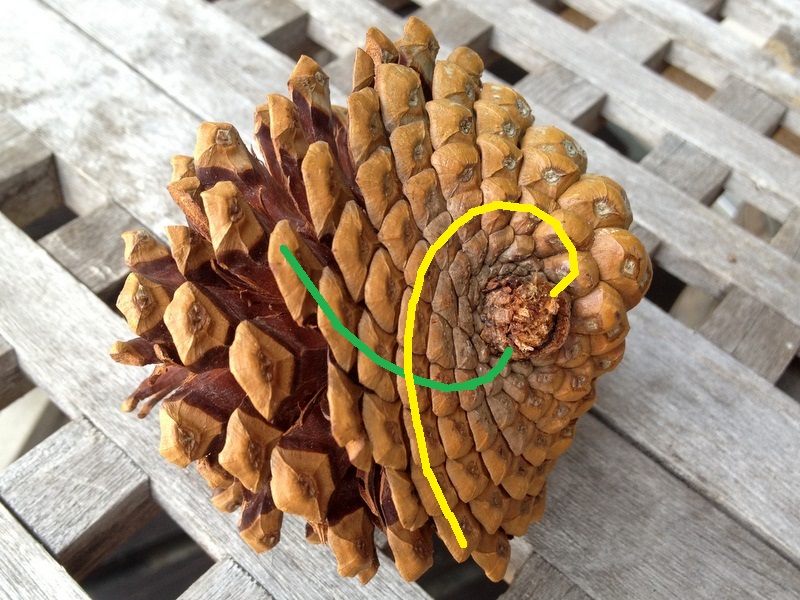
pine cone

Is this Intelligent design? The Divine Proportion in action? The explanation is very interesting: by arranging the florets/scales this way, the available space is used the most efficiently. The idea is that new flowers/seeds are not formed in line with the old one, but rotated. If we express this rotation as part of a full turn (360 degrees), then a rotation of 0.5 would mean that each new cell is rotated 180 degrees. A rotation of 0.25 gives a rotation of 90 degrees, etc. Here are a few examples for various rotations. As you see, the result depends strongly on the chosen rotation value. For a value of 1.610, the space is used already quite efficiently.
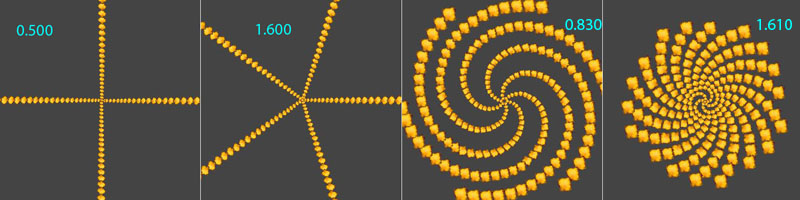
rotations

So, let us try 1.6180, the golden ratio. We see an almost perfect filling of the space. Notice the two series of spirals and count the number in each series and you will find 13 and 21 !
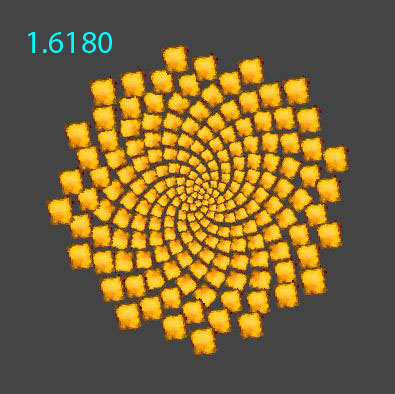
rotphi

The pictures above have been created with a beautiful app, which can be found on the website Math Is Fun . Have a look, and try out other values of the rotation. You will also find there an explanation why φ is so special.

Much more can be said about the Fibonacci numbers and the Golden Ratio. A Google search gives numerous hits. Also a book has been published: The Golden Ratio: The Story of PHI, the World’s Most Astonishing Number
Fibonacci (part 1)

Let me start with a rabbit tale..:-)

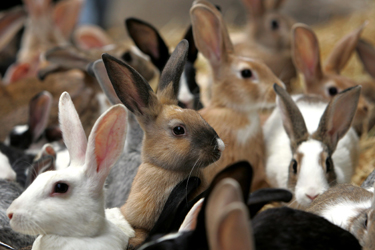
Rabbits

Once upon a time a pair of rabbits was born. One month later they were mature and mated. After a pregnancy of 1 month, a new pair of rabbits was born (and being rabbits, the parents mated again immediately). In this tale rabbits have eternal life and keep mating. The question is, how does the number of rabbit pairs grow with time?
Let us do some simple arithmetic (if you are afraid of numbers, skip this paragraph)

  1. At the start there is 1 pair, just born. We call it pair A
  2. After 1 month this pair A is mature and mates, so still 1 pair
  3. After two months, pair A delivers a new pair B, so we have now 2 pairs
  4. After three months pair A delivers again a new pair C, pair B has matured and mated, so 3 pairs
  5. After four months pair A delivers pair D, pair C has matured and mates, but now also pair B produces pair E, so totally 5 pairs
  6. After five months pair A delivers pair F, pair C delivers pair G, pair B delivers pair H, totally 8 pairs of rabbits.

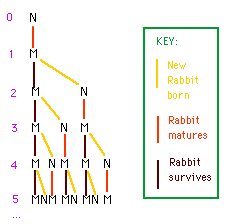
Complicated..:-)?  Maybe the graph below will help. Red vertical lines show mating (M), yellow diagonal ones indicate gestation and delivery  (N), black vertical ones are stable (each month producing a new pair)

rabbits

So the sequence gives (in rabbit pairs) 1,1,2,3,5,8… can you guess how it continues?

Here is the answer, each number is the sum of the two preceding ones! 2+3=5, 3+5=8, so the next term should be 5+8=13, then 8+13=21, 13+21=34. A very simple rule..:-)
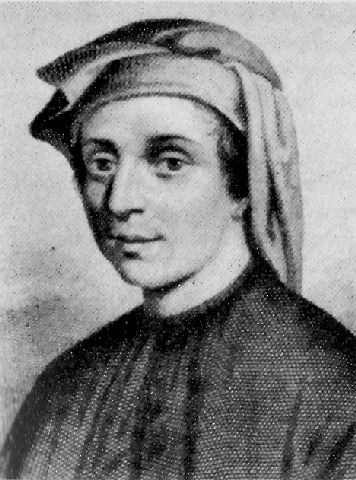
Still you may wonder, who came with such a funny story. Well, that was Fibonacci, an Italian mathematician, living from c. 1170 – c. 1250.

Fibonacci

The numbers are now called Fibonacci numbers:

1, 1, 2, 3, 5, 8, 13, 21, 34, 55, 89, 144, 233, 377, 610, 987, 1597, 2584, 4181, 6765 ...

This Fibonacci series has several remarkable properties. To explain one of them, I first have to introduce the Golden Ratio, also known as the Divine Proportion!

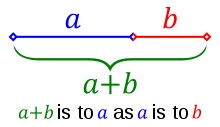
Hm, a little bit more mathematics (skip it if you are afraid of formulas). We have to go back to the old Greek philosophers. They were fascinated with numbers and ratios between numbers. You you may remember the Pythagorean triangles from your school days! Here is one of the problems they were interested in. Suppose you have a stick you like to divide in two parts a and b in such a way that the the ratio (a + b) / a is the same as the ratio a/b
220px-Golden_ratio_line

Hm, let’s try. We have a stick of 100 cm long and we divide it in a =50 cm and b = 50 cm. Then (50+50)/50 = 2 and 50/50 = 1. Not at all the same. Next we try a = 60 and b = 40. This results in (60+40)/60 = 1.6666.. and 60/40 = 1.500. Not yet equal. Next a =62 and b =38. Result: (62+38)/62 = 1.6129.. and 62/38 = 1.6315.. Getting closer! Refining this, we finally find a division of a = 61.8034.. and=38.1966.. with a common ratio of 1.6180..  The Greek mathematicians named this ratio the Golden Ratio with  φ (phi) as its symbol.

Back to our Fibonacci numbers. Let us take the ratio of two consecutive numbers. We start with 1/1 = 1, then 2/1 = 2, 3/2 = 1.5, 5/3 = 1.666, 8/5 = 1.6, 13/8 = 1.625, 21/13 = 1.615, 34/21 = 1.6190, 55/34 = 1.6176, 89/55 = 1.6182, 144/89 = 1.6180 etc

Surprise! The Fibonacci numbers and the Golden Ratio are related!

The ratio of two consecutive Fibonacci numbers approaches the Golden Ratio !

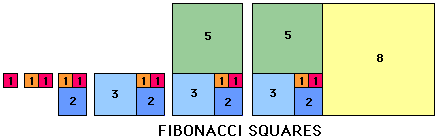
For the second remarkable property we will visualise the Fibonacci numbers in two dimensions, as squares. We add each square so that the result will be a rectangle. The last rectangle in the picture below measures 13 by 8, ratio 13/8 = 1.625, already close to the Golden Ratio..:-)

Fibonacci.squares

Next step, in each square we draw a quarter-circle. This is the result, we get a beautiful spiral, the Golden Spiral!

golden spiral

Not surprisingly, artists throughout the ages have been fascinated by Fibonacci numbers and the Golden Ratio. And in nature we come across many examples of Golden Spirals.

But that will be the topic of a separate post.

Note for readers with a mathematical background. The spiral above is an approximation of the Golden Spiral. And the Golden Ratio can be easily calculated.

golden ratio

Finally: the Golden Spiral is a special case of a logarithmic spiral, with a growth factor of φ for every 90 degrees of rotation.

GE13: the results

Just a short post.

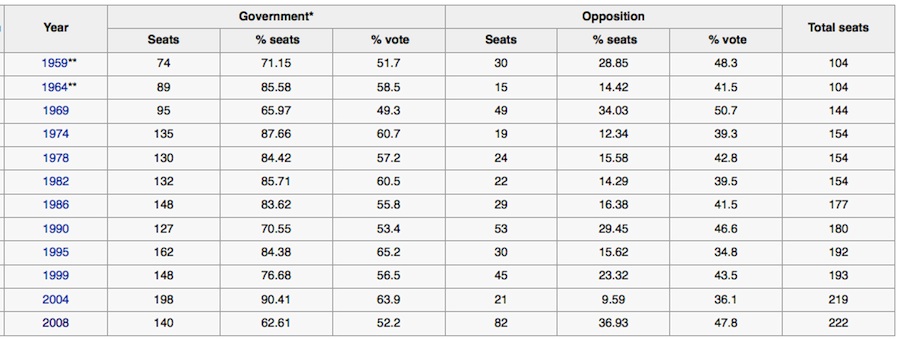
It was an exciting day, yesterday, with a slightly disappointing outcome: BN will remain in power, although with a reduced majority. Here are the results of the GE13 election, together with the results of the 2004 and 2008 elections

Results GE13

In my last post I explained the malapportionment and the gerrymandering, resulting in an unbalance between the percentage of votes and the percentage of seats in Parliament. In G13 this has led to a dramatic result. BN still has a majority in seats, but, for the first time in many decades, it has lost in the popular vote! The government received 48.7 % of the votes, the opposition 51.3%  (Data taken from the Malaysian Insider)

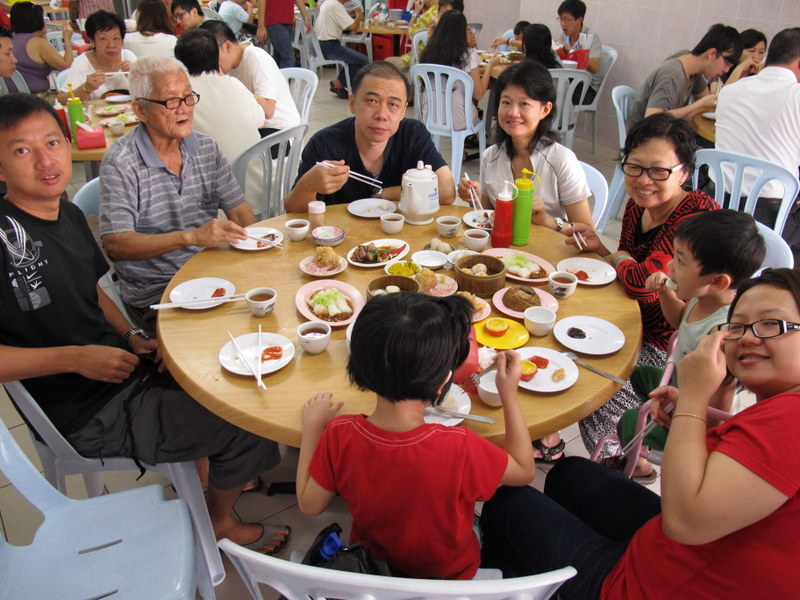
I joined Aric’s family to the polling station. Of course we first had a nice breakfast (dim sum).

Dim sum breakfast

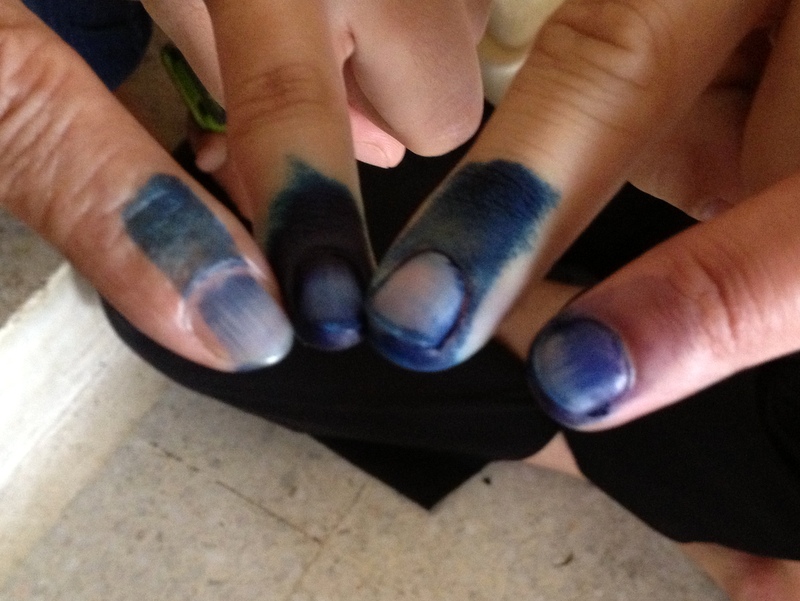
The voting takes place in schools, same as  in the Netherlands. It was well organised, with different queues for the various age groups. I was not allowed to enter the school grounds, but I did not have to wait  long, before the family came out again.For the first time “indelible” ink was used to make it impossible to vote twice! Of course everybody tried to test how indelible the ink was. Not very, it seems, just use toothpaste or grass or chlorox..:-)

Indelible inkalmost Malaysian

So, what will happen now? Opposition leader Anwar is protesting that there have been many irregularities. Yesterday, many video clips were circulating on the Internet about “foreign” voters, who had supposedly been given IC cards by BN. A good thing is that there have hardly been any clashes after the results came out, yesterday evening.

So probably no Ubah this time…:-(

It will be interesting to see if these GE13 results will weaken the position of PM Najib. The former PM, Badawi, resigned after the disastrous results of the 2008 election. The expectation was that Najib would at least win back some of the losses. But the results of these elections are worse for BN! Ok, the opposition lost Kedah, but strengthened its position in Penang and Selangor.

GE13

In my last post I mentioned that tomorrow the 13th General Elections will be held in Malasysia. Some of my Dutch friends asked me for more information about these elections and why everybody here is so excited/anxious/worried about the outcome.

So this post is meant primarily for my non-Malaysian followers, but of course I hope that my Malaysian friends will also read it. It is now Election’s Eve, so I must publish it fast, hopefully without mistakes…:-)

The present government is formed by BN (Barisan Nasional = National Front). BN is a racially based coalition of basically three parties, UMNO (Malay), MCA (Chinese) and MIC (Indian). BN (and its predecessor Alliance) has been in power from the Independence of Malaysia in 1957. That is more than 55 year and almost all the time they had absolute power ( more then 2/3 majority).

Well, as you know: Power corrupts and absolute power corrupts absolutely!

About the corruption and the cronyism in BN, I will not elaborate in this post. Do a Google search for Altantuyaa, Teoh Beng Hock, Rosmah, Taib, Khir Toyo, etc if you are interested.

Was there no opposition? Yes, there was. But Malaysia doesn’t have proportional representation, like we have in the Netherlands (and in many European countries). The country has (at this time) 222 parliamentary seats and is divided in 222 constituencies. In each constituency the winner takes all. So, if in each constituency the opposition gets 40% of the votes, at the end of the day they will not be represented in Parliament at all!

Before the 2004 election, the opposition parties formed an alternative coalition, Barisan Alternatif. Basically consisting of three parties: Keadilan (multiracial, progressive), DAP (Chinese, progressive) and PAS (Malay, conservative). At first not very successful, quite a lot of distrust between the component parties. But under the charismatic leadership of Anwar, they managed to cooperate better in the 2008 election. With a shocking result!

For the first time in decades BN lost its 2/3 majority!

Elections stats

Now, when you study the statistics in this table, you will notice something strange. In these last election the opposition got 47.8 % of the votes, but only 37% of the seats! And in 2004 it was  even much worse, 36% of the votes against not even 10% of the seats!

How can that happen? The answer is: by Malapportionment and Gerrymandering

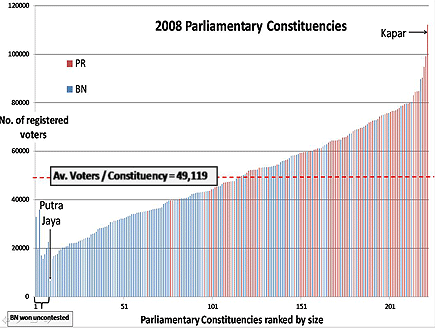
About Mal-apportionment: If you have an election system with constituencies, each of them voting for one MP, then each constituency should have about the same number of voters, right? In Malaysia that would result in about 49.000 voters for each constituency.

The real situation is stunningly different! Here is a graph of the constituencies in the 2008 election. As you see, there is a huge difference in size between the constituencies. The largest one, Kapar, has more than 100.000 voters, the smallest one, Putrajaya (center of the government!) not even 7000.

constituency size

Most countries with a constituency system (like the UK) have (constitutional?) election rules about which differences in size are allowed between constituencies (for example + or – 15%). Malaysia had those rules, but first they were relaxed and later replaced in 1973 by a vague “a measure of weightage”. Yes! With all due respect to my 2nd home, politically Malaysia is still a banana republic…:-(

But this is not all. In the graph the results of the 2008 elections are represented. Blue for a BN win, red for a win by the opposition. Do I have to explain in more detail? The constituencies with a small number of voters are dominantly BN, the larger ones vote for the opposition! Accidentally? No way. This is gerrymandering, choosing the boundaries of the constituencies in such a way,  that it favours the ruling powers. I find it really unbelievable that this is accepted by the Malaysian population.

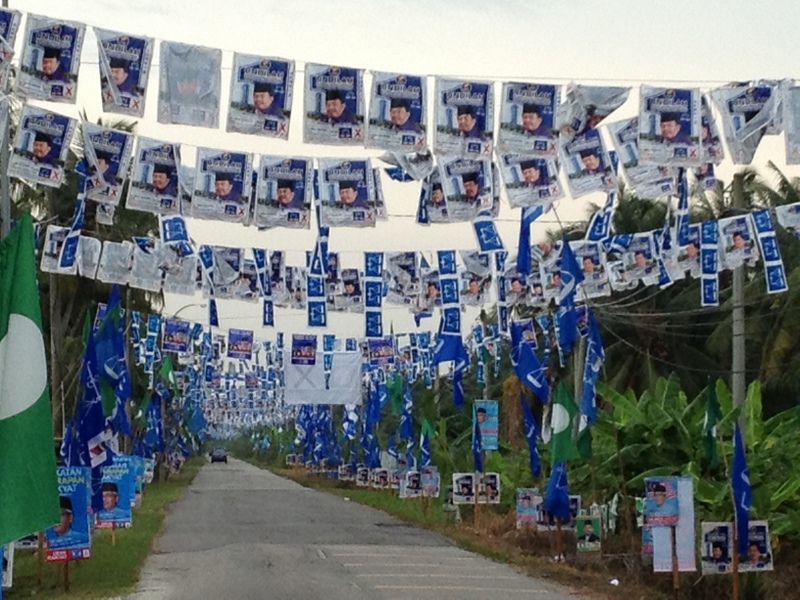
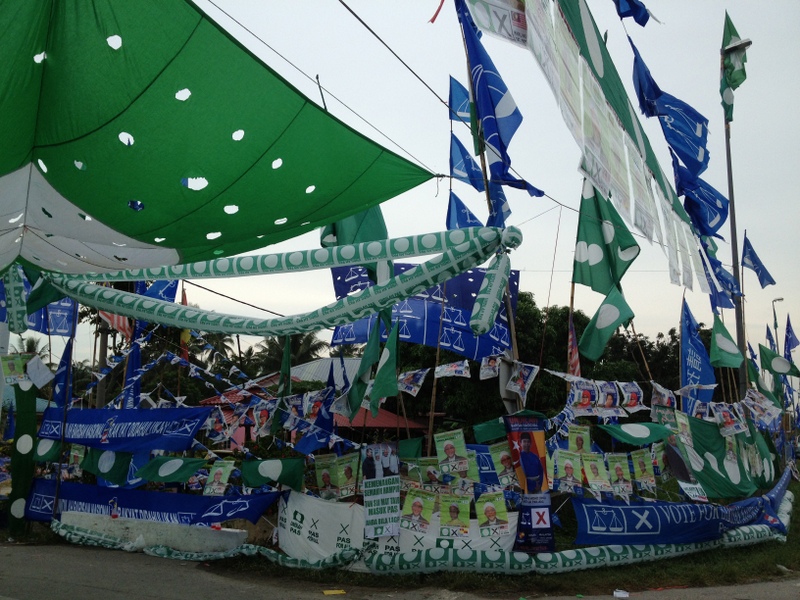
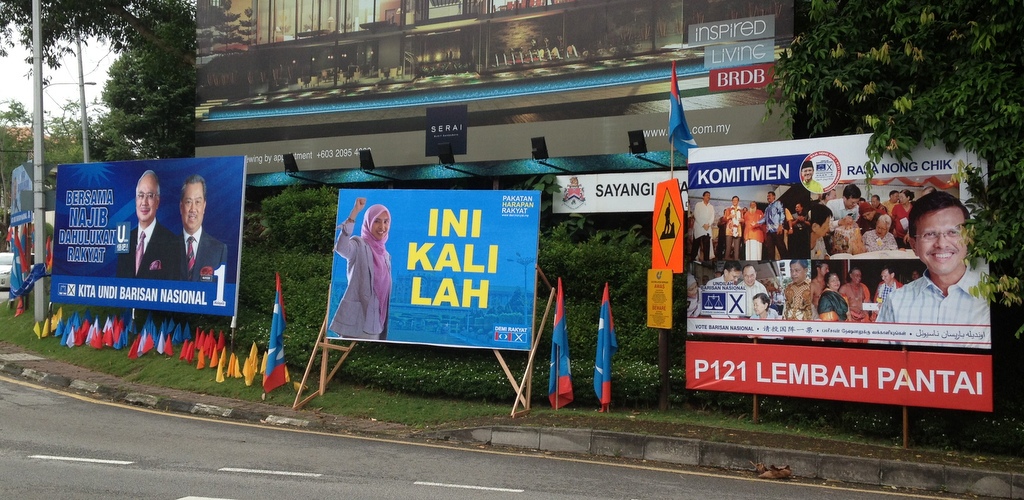
Ok, back to tomorrow’s elections.  It will be a battle between a (weakened) BN and Pakatan Rakyat (People’s Alliance), the successor of Barisan Alernatif. The elections are already named the dirtiest in the history of Malaysia. BN is doing its utmost best to remain in power, by any means. They have been flooding the country with flags and banners, rumours are that they are flying in phantom voters from Sarawak and Sabah while I am writing this. But there is a kind of vibrant feeling in the air, that a Malaysian spring might occur this time.

Ubah! Ini Kali lah    =  Change! This it the time

Here are a few pics taken the last few days.

2013-05-04 10.35.49 BN Opposition

Ini Kali Lah

Are people worried? Well, after the 1969 elections, race riots exploded, which are still remembered vividly by everybody staying in Malaysia at that time. Many people died, there was a curfew for several days. However, times have changed.

Will update you soon…:-)

Journal 1-5-2013

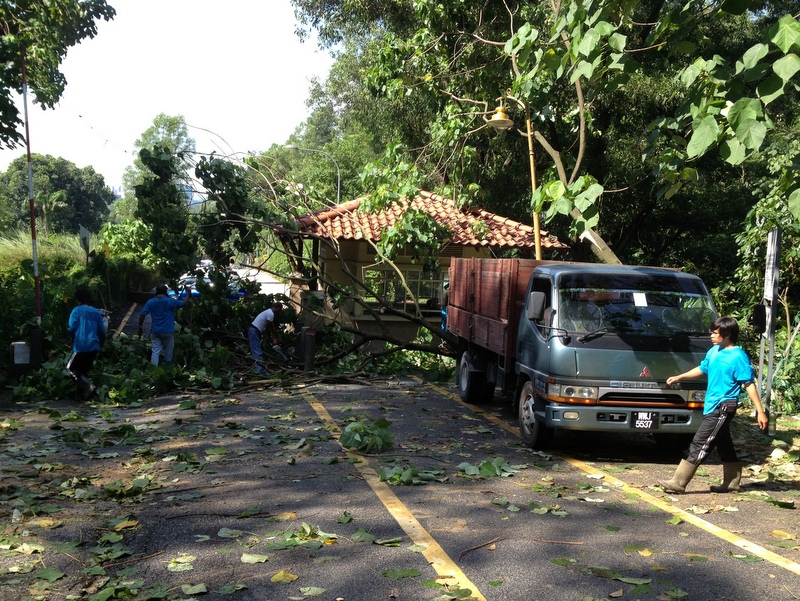
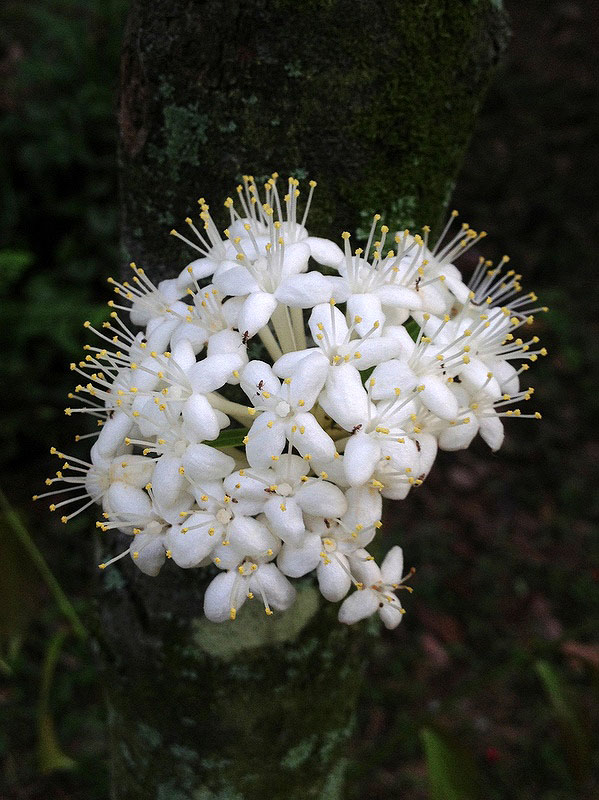
The last week we had some unusually heavy downpours, sometimes with strong winds. On my daily walks in Bukit Kiara I encountered several uprooted trees. I also noticed these uncommon flowers, stemming directly from the tree trunk. Beautiful.

Bukit KiaraKiara flower

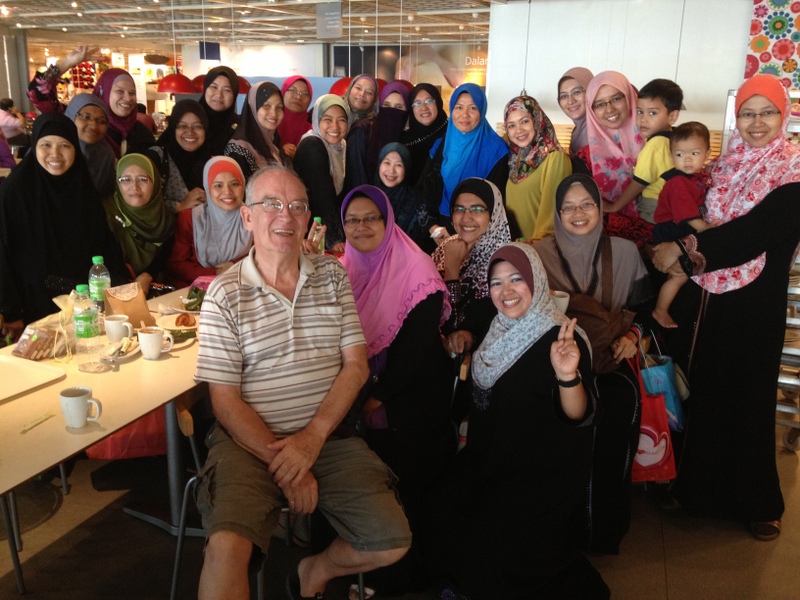
When I had my breakfast in IKEA, there was this big group of Malay ladies, probably on an outing, having a jolly good time. I asked permission to take their picture, no problem, and after that of course I had to be in the picture too.

IKEA

Sunday May 5, the 13th General Election will be held in Malaysia. It will be a battle between Barisan Nasional, in power since the Independence of Malaysia and tainted with cronyism and corruption, and Pakatan Rakyat, a loose coalition of opposition parties. BN has spent a lot of (taxpayers?) money on flags and banners, many streets are colored blue. In Bangsar and also my neighbourhood the last few days, many small flags have appeared in bright colors, symbolising the “Malaysian Spring” which will hopefully begin this weekend.

GE13GE13

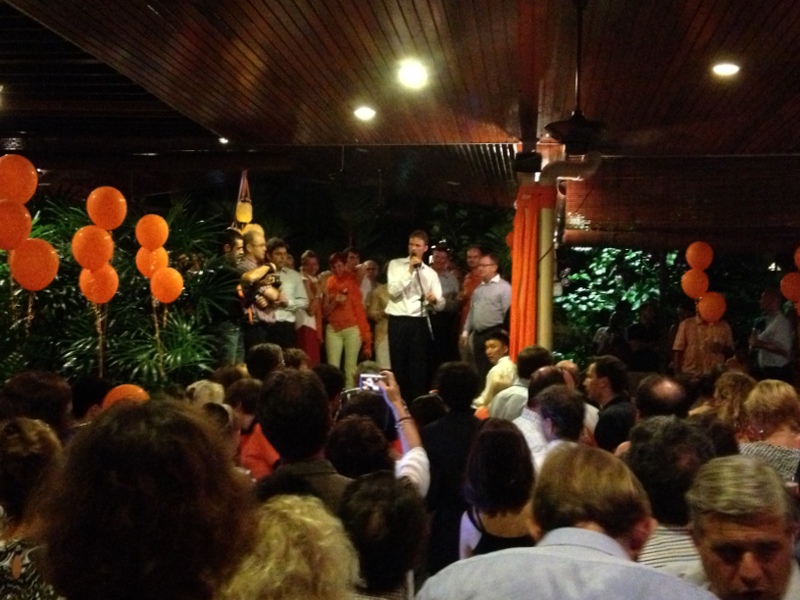
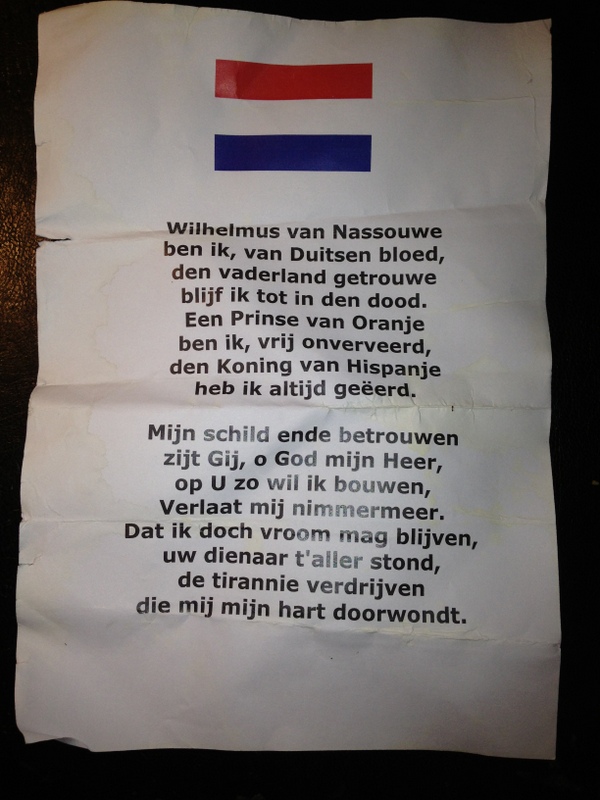
In my native country on the 30st of April, the coronation took place of the new Dutch king, Willem Alexander, the first male Dutch monarch in more than 100 years. The Dutch population in Malaysia had received an invitation from the ambassador for a Coronation Party at his residence. Although basically more of a Republican than a Royalist I decided to attend the event.  It was actually quite a nice happening, there was a large crowd, more than 400 people. Large TV screens with streaming video, so we could follow the ceremony live.  After the speech by the ambassador,  I even joined in the singing of the National Anthem! Good that the staff had distributed the text, because to be honest, I only know the first lines of the first verse….:-)

Dutch embassyNational anthem


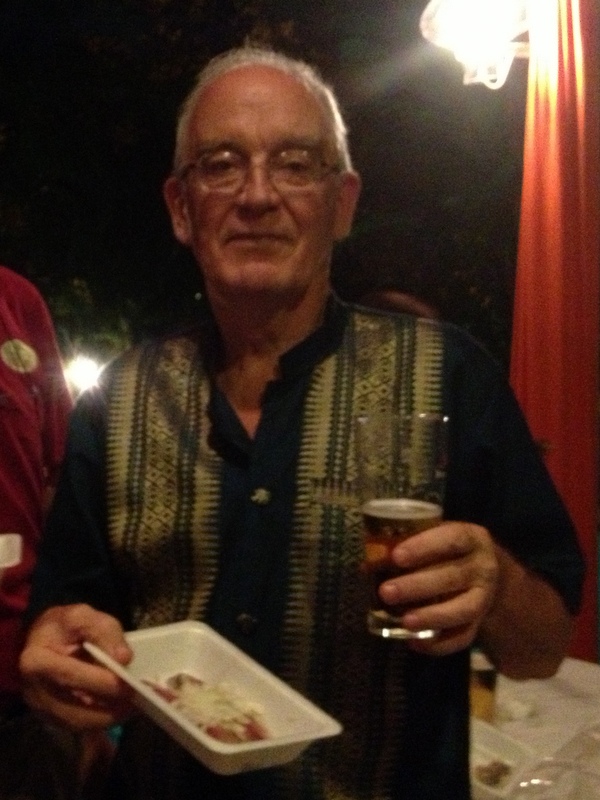
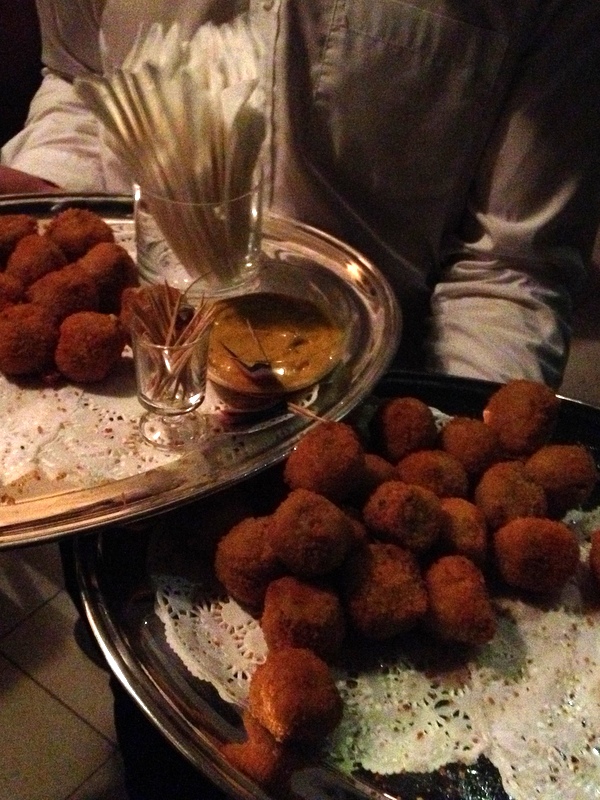
There was Heineken beer, herring, “bitterballen”, probably not only for me an important reason to attend the event…:-)

Herring and beerBitterballen


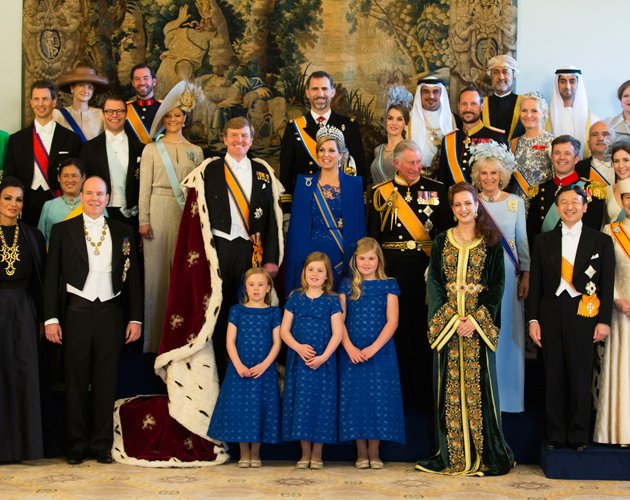
Here is the official photo taken after the coronation, with some of the royal guests. It is a tradition that ruling monarchs will not attend the coronation ceremony, only crown princes, so that after the coronation the new king is automatically the highest in rank! And an interesting detail: for Charles, the Prince of Wales, this is the second time that he attends a Dutch coronation ceremony, as he was already the crown prince when Beatrix became queen, 33 years ago..:-)

Coronation

Sudah Makan?

Sudah Makan? (Have you eaten already) is a customary greeting in Malaysia, where you would say in English: How Are You?

Here are a few pictures about my Makan, last two weeks…:-)

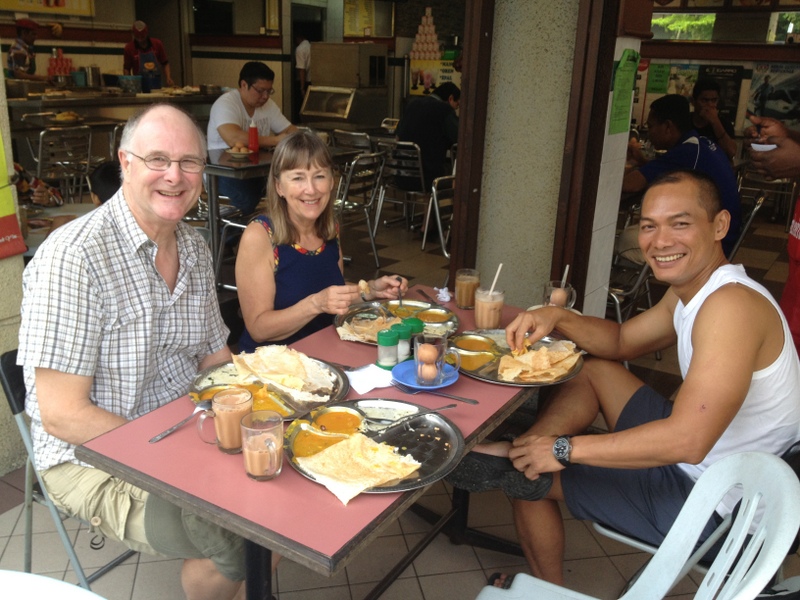
Breakfast and Lunch with Cathy, Neil and Rani. Actually we did a lot more than eating, here is the full report: Another nice outing, 21-4-2013

Breakfast

Lunch

Lunch with my Kiara gang, Telok Gong restaurant. Nice food, and toddy, my favourite drink!

Lunch with Kiara gangToddy

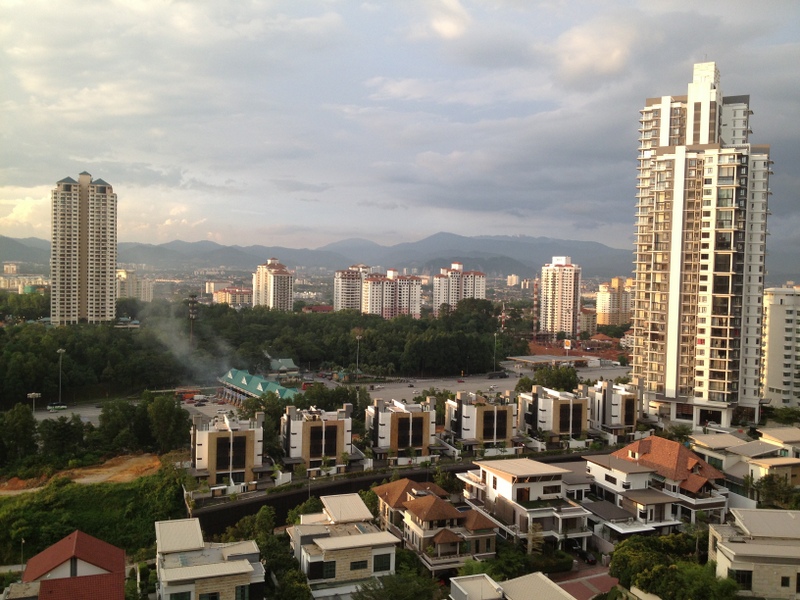
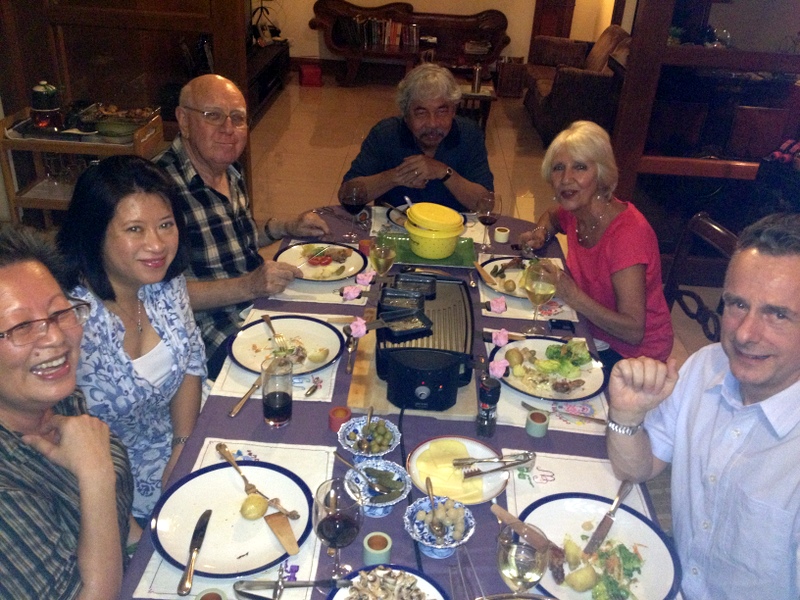
Raclette dinner with Pat and Wim, and their friends. Nice view from their condo, delicious food and pleasant company, what more is there to wish?

View from condoRaclette dinner

Dinner with Cathy and Neil at our place. Italian cuisine with an Asian touch.

Dinner C&N

Main course

So, yes, Sudah Makan! And the good news is: slowly (0k, very slowly…) I am loosing weight!


Destruction of Bukit Kiara

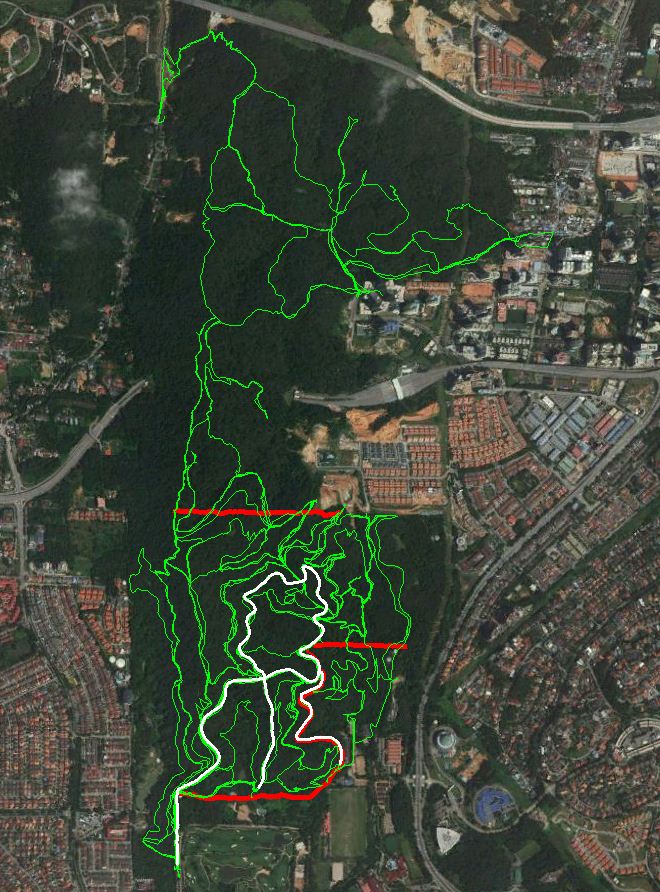
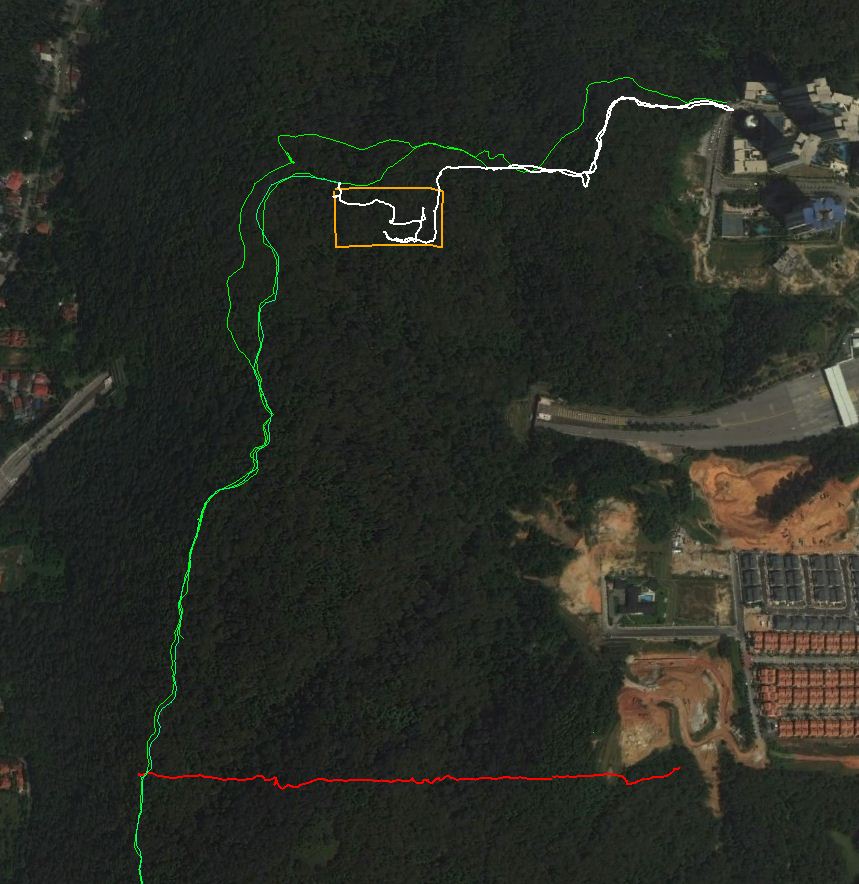
Time for another post about Bukit Kiara. Here is a GE screenshot of this Green Lung of KL. The tar roads are in white, the maze of trails, created and maintained by TRAKS are in green. The infamous fence in red. The southern part of the hill should be gazetted already years ago as a park. FoBK (Friends of Bukit KIara) is at the moment mainly concerned with the claim of Berjaya on a part of this park.

Kiara trails

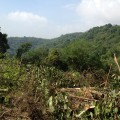
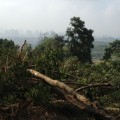
The part of Bukit Kiara north of the Penchala Tunnel is less visited and more remote. Apparently it is a so-called Malay reserve, which means that only Malay can own/develop it. Recently bikers and hikers noticed  that development in this part has started. With my walking kaki Pola Singh we have done a recce. In the GE screenshot the (northern) fence and a few of the trails have been indicated. The white road is a new road, that has been bulldozed, starting from Kiaramas.

Bukit Kiara North

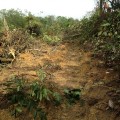
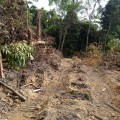
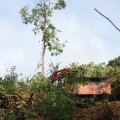
Talking with the contractor, the purpose of this road became clear. On the ridge a plot of land of 3 acres (~12.000 square meter!) will be cleared for the construction of 3 (!) bungalows. To get an idea of the size I have roughly indicated in orange what a plot of 3 acres would amount to.Later we heard from TRAKS that the plan is to clear a total of 12 acres. Unbelievable and sad. You wonder who the builders are and who has given them permission for this destruction…:-(

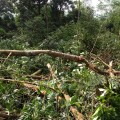
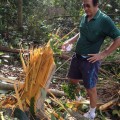
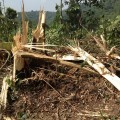
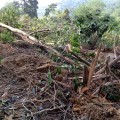
Here are some pictures, no need for much comment..:-(

What a relief to walk back on the forest trails after having seen this destruction

2013-04-20 10.10.04

I have recorded our recce as an EveryTrail trip.

Anniversaries

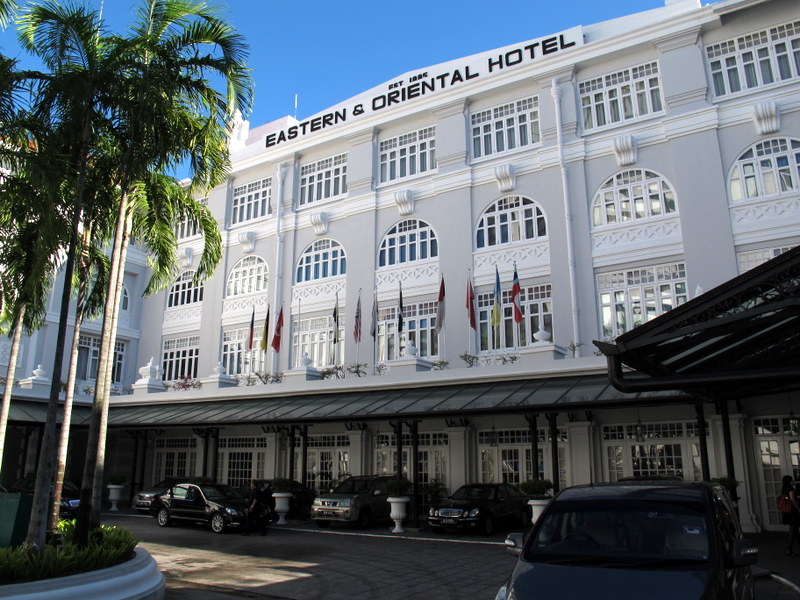
On April 14 it was fifteen years ago that Aric and I met for the first time. And on April 17 it was my 69th birthday. As  Aric would be diving in Sabah on that date, we decided to celebrate both anniversaries a week earlier, in the Eastern & Oriental hotel in Georgetown. The E&O is one of the grand hotels of South East Asia, established in 1885, a few years earlier than the equally famous Raffles hotel in Singapore.

E&O hotelE&O suite

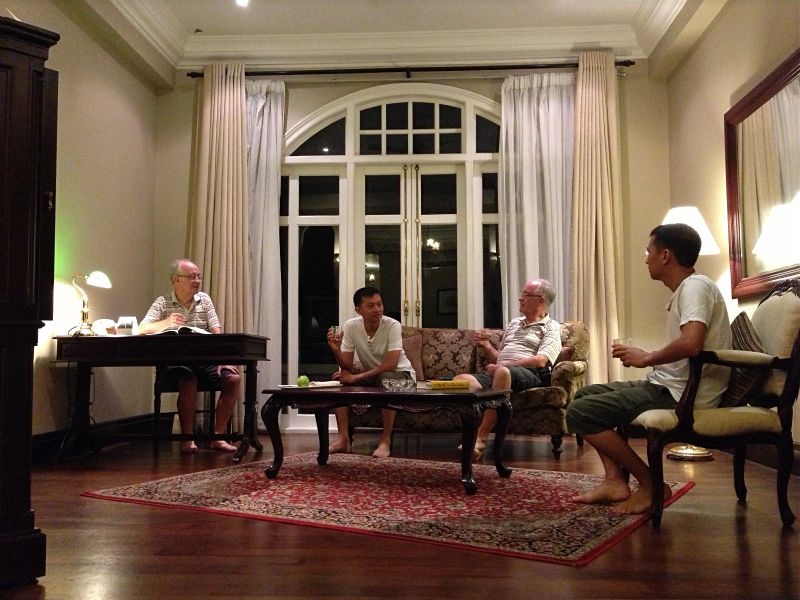
We had booked a suite, of course not cheap, but we enjoyed the luxury…:-). We spent most of the time in our suite, went only out for food. Aric had an app on his iPhone that made it possible to take several pictures and then combine them into one. Here is the interesting result

Two times us

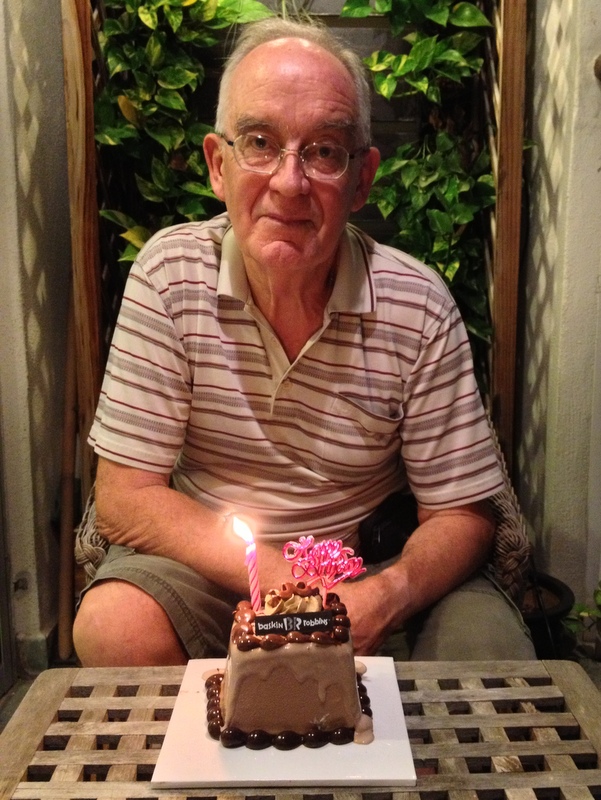
A detailed report with many more pictures can be found here: Fifteen Years. Back home, on the eve of my birthday and before Aric left for Sabah, we had the traditional birthday cake.

Birthday cake

Journal 10-4-2013

A summary of what I did in the week of (2-9) April

After our successful trip to Upper Tebing Tinggi, Rani accidentally deleted all the pictures from his camera…:-(  Aric has experience in “undeleting” data, so Rani came over for dinner and Aric managed to retrieve the pictures!

Dinner with Rani

A few days later I went for a haircut, in the nearby shopping center. For 18 Ringgit, less than 5 Euro, ridiculously cheap for  an European, but still considered expensive by my Malaysian friends, who go to an Indian barber for a few Ringgit…:-). Here is the result

Haircut

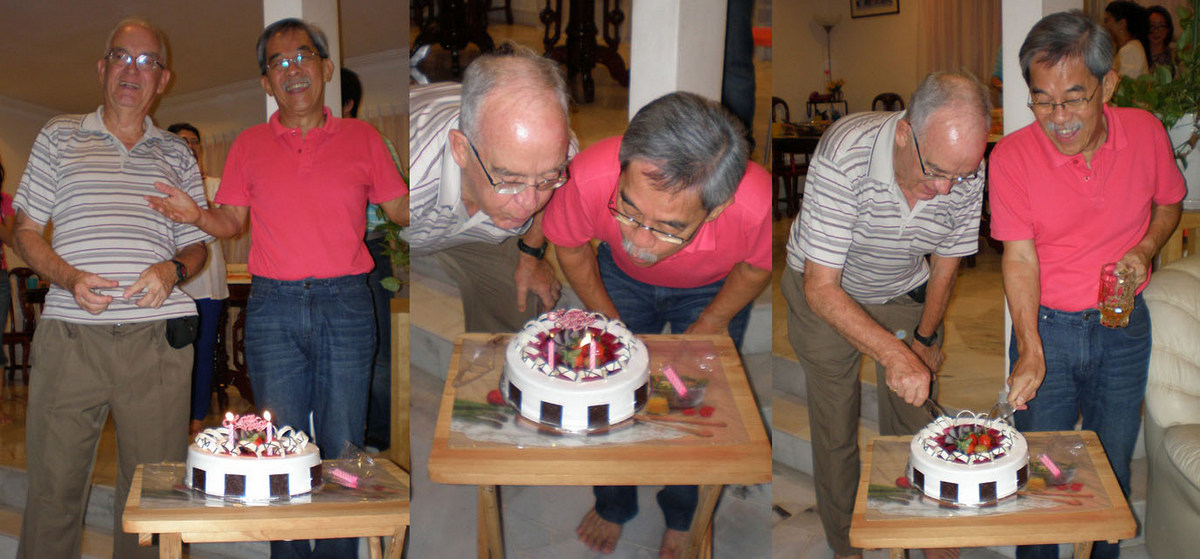
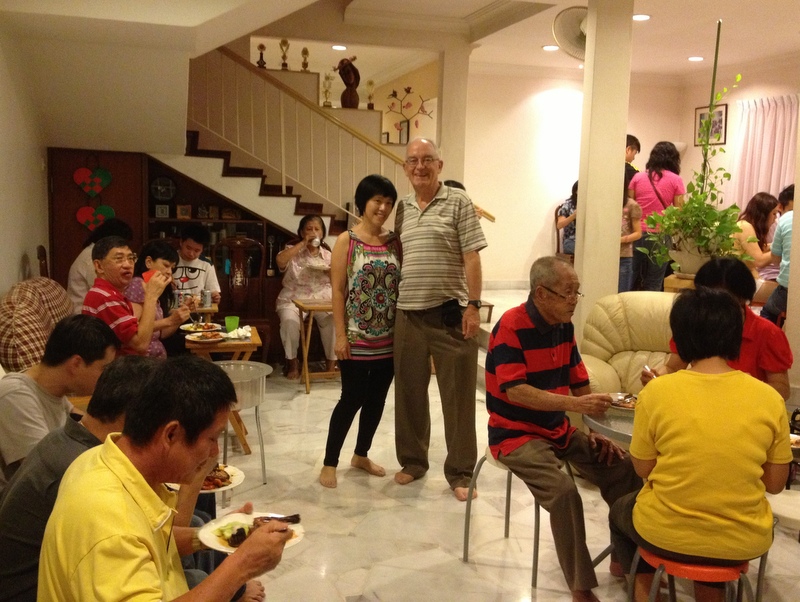
My friend Joe and his wife Beatrice invited me for a party, because of Joe’s birthday. They knew that I would have my birthday the next week, so there was a birthday cake for the two of us. Really nice! Good food, pleasant company. And lots of beer, Joe’s specialty !

Birthday cake

A picture of me with my charming hostess Beatrice.

Joe's party

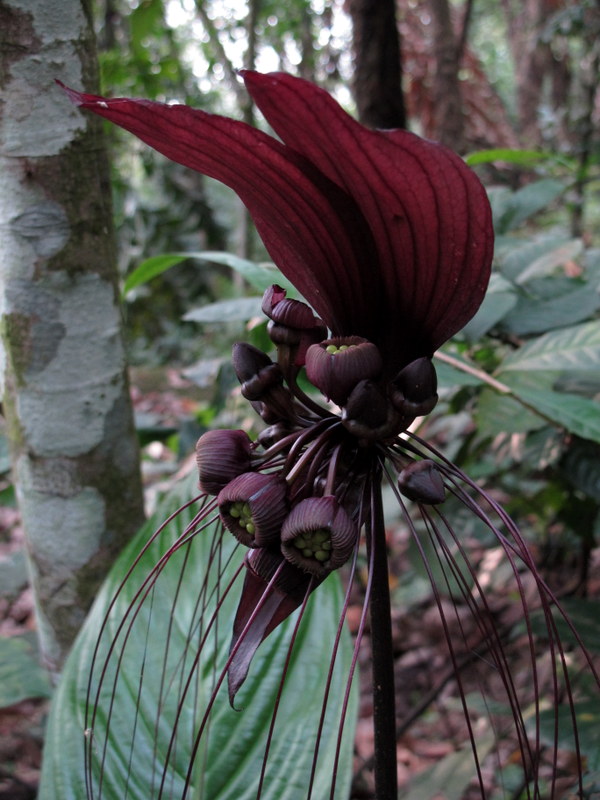
During the weekend I took Rani for a walk in Bukit Kiara, as he had never been there before. Of course I showed him the infamous fence, but we also saw quite a few beautiful bat lilies.

Rani and FenceBat Lily

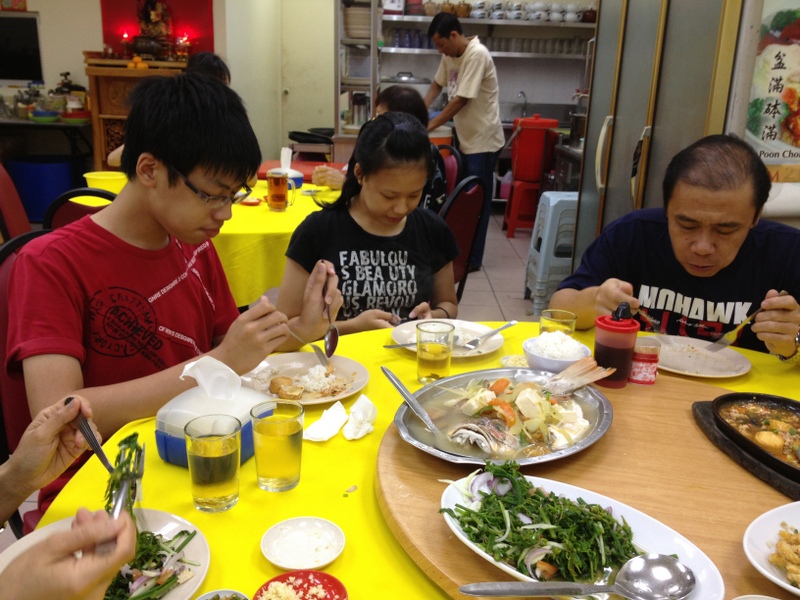
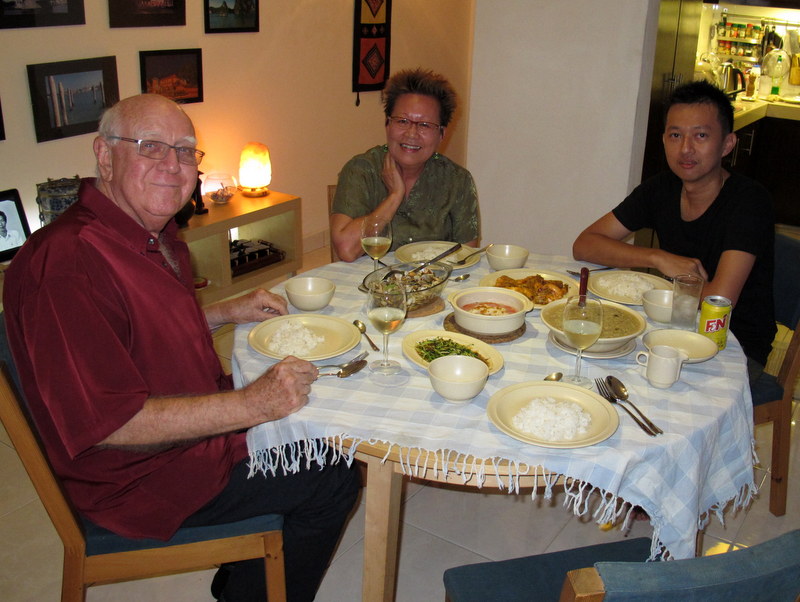
You will have noticed that food plays an important part in my life…:-) Two more dinners in that week. One with Aric’s sister in our favourite seafood restaurant in Damansara Perdana. The second dinner at home with our friends Pat and Wim. Aric was the cook and had done a wonderful job.

Dinner wiht Aric's sisterDinner with Pat and Wim

Even with all this food, I still manage to control my weight and even get it down a bit. Hurray!

Visitors from outer space

15 February 2013: A small asteroid enters the Earth atmosphere over Russia. Mass ~11.000 tonnes, size ~20 m and speed ~18 km/s. At an altitude between 15-25 km it explodes, causing a shock wave on the ground resulting in about 1500 people hurt (mostly by scattered glass) and ~ 7000 buildings damaged. Estimated energy 440 kilotons of TNT,  equivalent to ~25  times the energy of the  atomic bomb on Hiroshima, most of it absorbed in the atmosphere. This asteroid had not been discovered before its impact.

On the same day  about 15 hours later, asteroid 2012 DA14 passes Earth at a distance of only 28.000 km (that is within the orbit of the telecommunication satellites!). Bigger (about 40.000 tonnes and 30 m), it was discovered in February 2012. Although occurring almost simultaneously, the two events are not related.

Next year, 19-10-2014,  comet C/2013 A1 will pass extremely close to Mars, with a small possibility of an impact with the planet. Here we are talking about a different order of magnitude! Estimated size of the comet nucleus is ~ 3km! IF it would hit Mars, the energy released would be in the order of millions of Megatons of TNT. For comparison, the asteroid that struck Earth 65 million years ago and ended the dinosaur era on Earth  was only about three times as powerful.

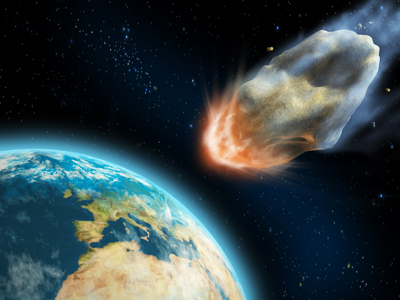
Asteroid hits Earth

Do we have to get worried? In the aftermath of the Chelyabinsk meteor there was a lot of commotion in the media that action should be taken immediately to protect us from future collisions. Suggesting that nobody had expected this. As if the scientific world was not already aware of this problem!

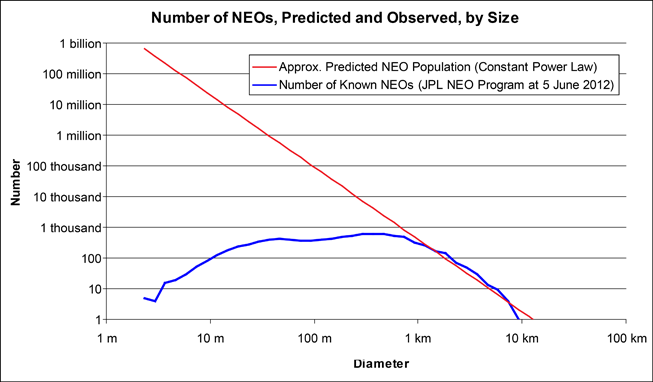
Those outer space objects (asteroids, meteorites, comets) that can come close to (or even hit) Earth are called Near Earth Objects (NEO’s). Because of the impact risk they are monitored already for decades. The problem is that there are many of them and that they come in all sizes. Here is a graph of their distribution. The blue line gives the number of known NEO’s, the red line is a estimate of their total number. Please note the double logarithmic scale of the graph! For example, only about 100 NEO’s with a size of ~10 meter have been observed, whereas the estimated total number is ~ 10 million!

Distribution of NEO's

At the moment about 10.000 Near-Earth objects have been discovered. About 900 of them are asteroids with a size of 1 km or larger.

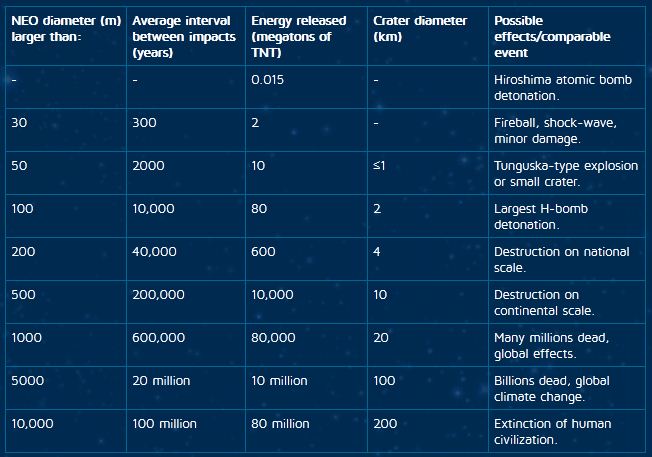
Here is a table with (statistical) information about the impact of a NEO. The second row gives data for objects with a size of 30 meter. The 2012 DA14 falls in this category. The effect of impact: a fireball, a shock wave and minor damage. Fits quite well the Chelyabinsk meteor, although it was smaller. The second column gives the average time in years between impacts of this size: 300 year.

If comet C/2013 A1 would have been on a (near) collision course with Earth, it would fall in the category: Billions of people dead, global climate change. Time interval: millions of years.

Followers of my blog may remember the post about Apophis At the time of discovery there was worry that it might hit Earth. We know now that the probability of impact is negligible. With its estimated size of 300 m it would create havoc, but no global destruction.

Neo impact risk

If a NEO on collision course is discovered early enough, it may be possible to deflect it. Numerous proposals exist. See my post Paintballing Apophis or do a Google search on “deflecting a NEO

Conclusion: Earth runs a risk of an impact with a NEO. It is not a matter of IF but of WHEN. Early observation of “dangerous” NEO’s is important, so protecting measures can be taken. That is why there are global initiatives, like for example  NEOShield

Neoshield

For this post graphs, tables etc have been taken from this very informative site.