Flooding in Malaysia

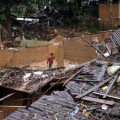
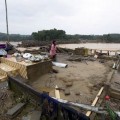
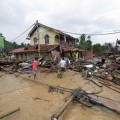
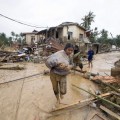
Every year, during the North-East monsoon, flooding occurs in the Eastern states of Peninsular Malaysia. Last month the country has been hit by the worst monsoon floods in decades. Not only Kelantan, Terengganu and Pahang were affected, also Johor and Perak were suffering. I have collected a few pictures from the Internet, to give an impression, especially for those readers who do not live in Malaysia.

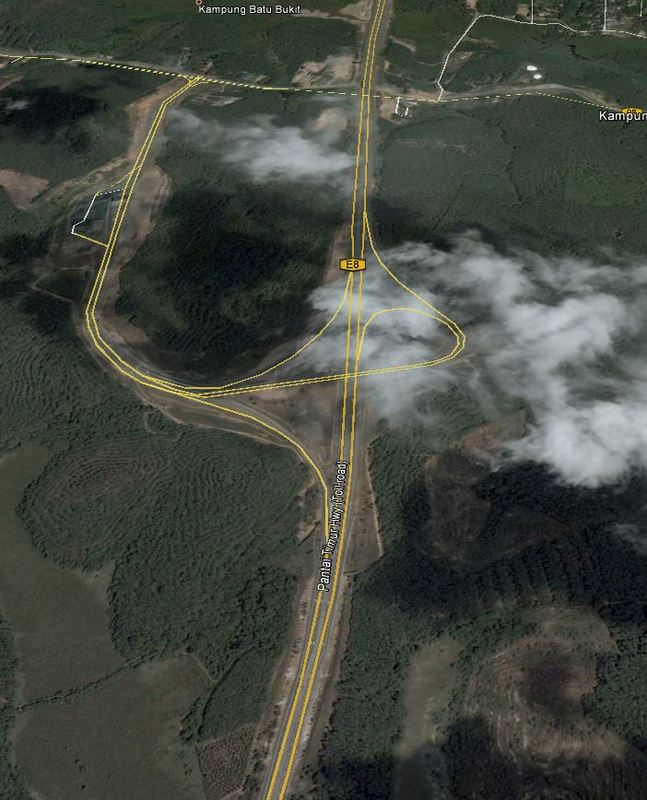
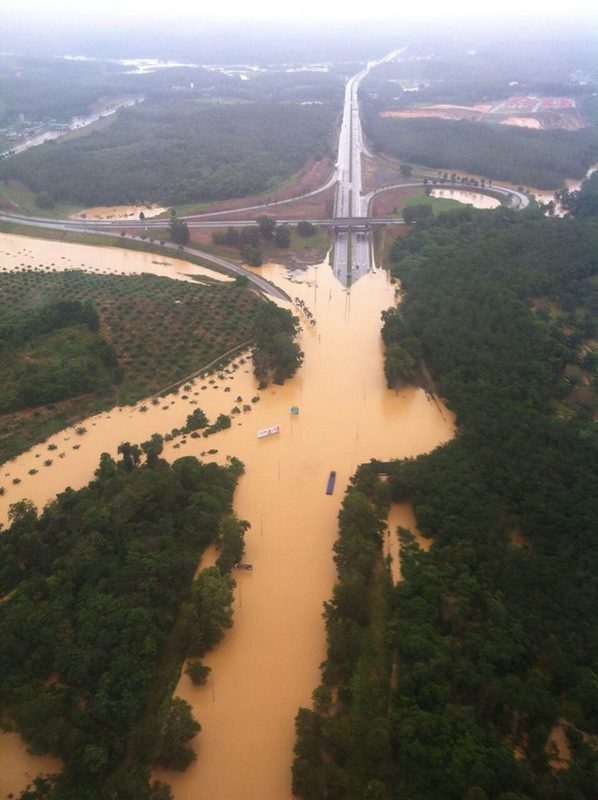
The main highway between KL and Kuantan on the East Coast was blocked by flooding. Here is an aerial view of the Temerloh exit, together with a Google Eart screenshot

GE_Temerloh

temerloh

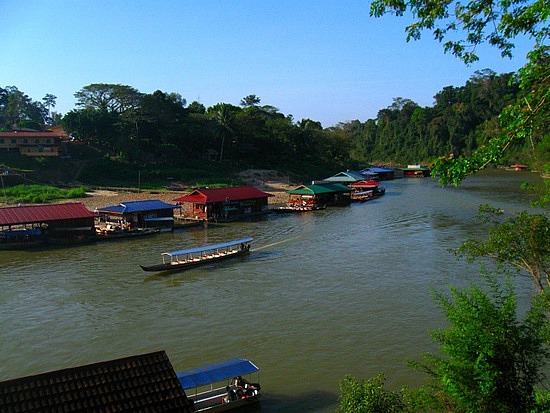
As the (old) trunk road was also flooded, it was impossible to reach the East Coast by road! The National Park Taman Negara was closed and tourists staying in the posh Mutiara resort had to be evacuated.  Here the Tembeling river near to Kuala Tahan and the Mutiara resort, next to the “normal” situation

Taman_Negara_floods_231214

Kuala Tahan

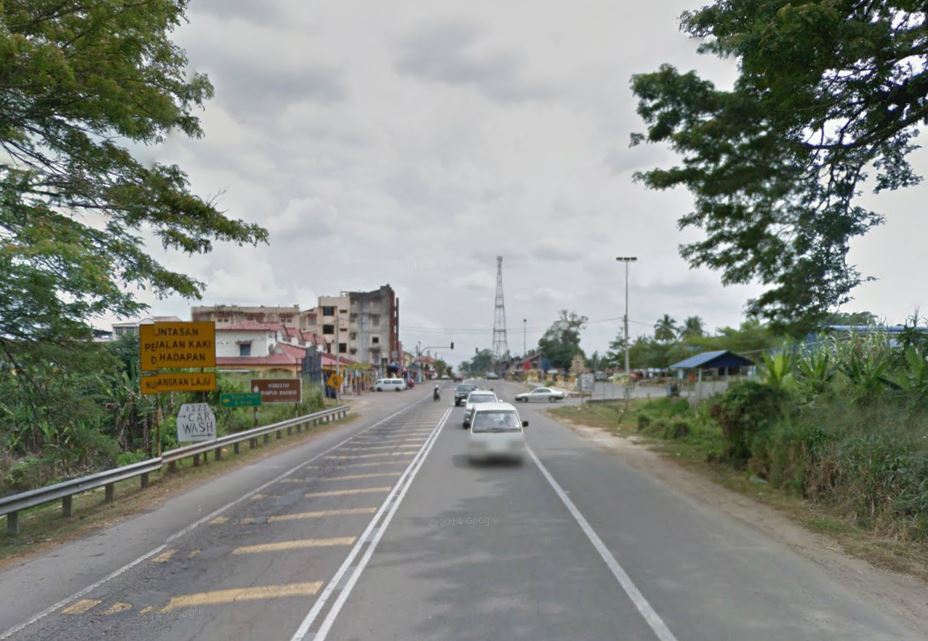
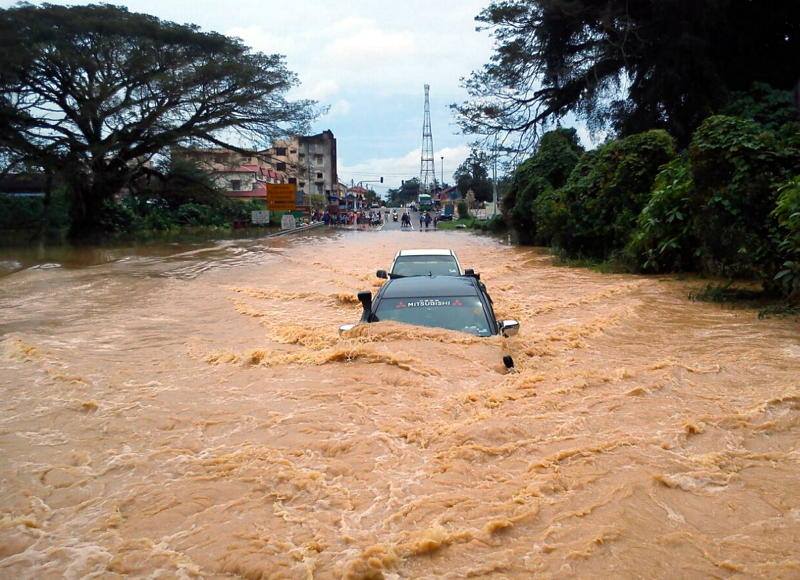
Kuala Krai in Kelentan was very badly hit. Using the Streetview option in GE, I managed to find the location where the “flood” picture was taken.

GE Kuala Krau

Kuala Krau

A few pictures of the devastation, after the water had receded. This is the region around Kuala Krai

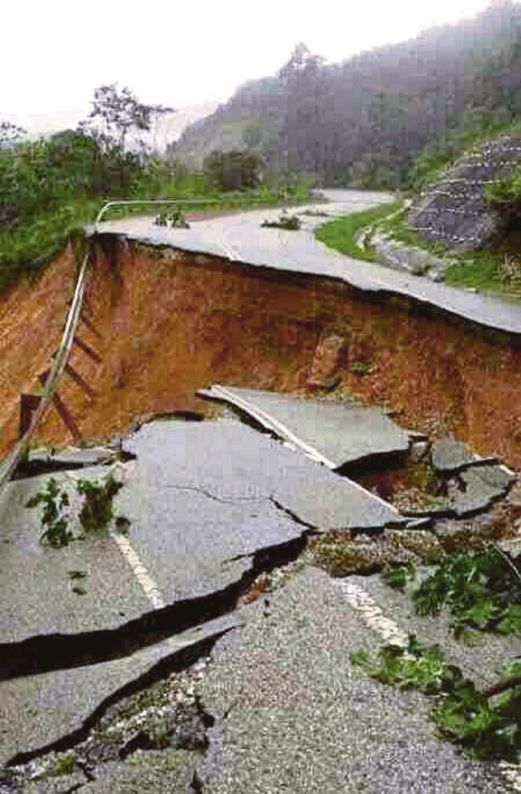
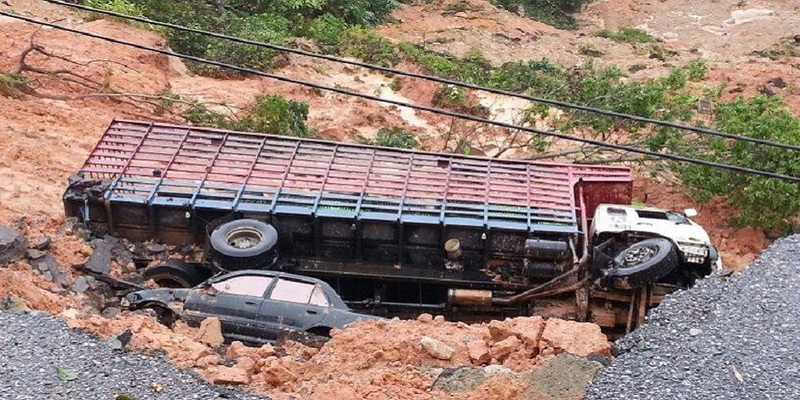
Many landslides occurred because of the heavy downpours. Left the  road leading from the Cameron Highlands to Gua Musang. Right the Grik-Jeli highway

NEWS

Grik Jeli


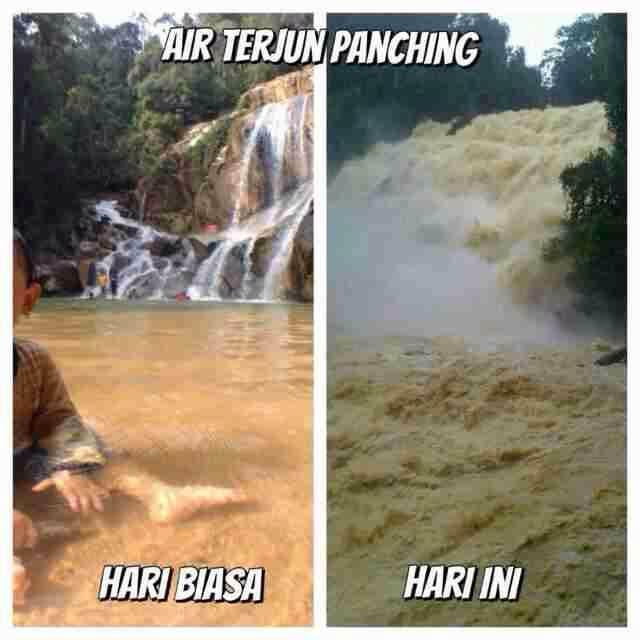
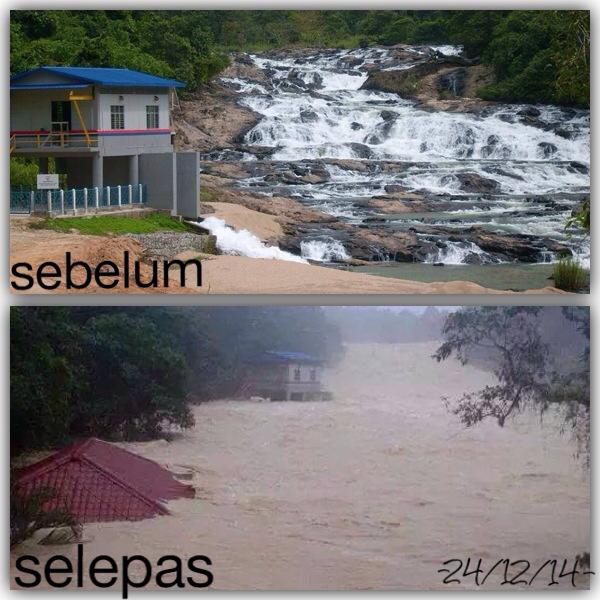
It will be clear to everybody that this season is not very suitable for waterfall trekking…:-) Two “for and after” pictures of waterfalls. Left the Pandan fall near Kuantan, right the Lata Rek waterfall in Kelantan. (Click to enlarge)

Pandan fall

Lata Rek

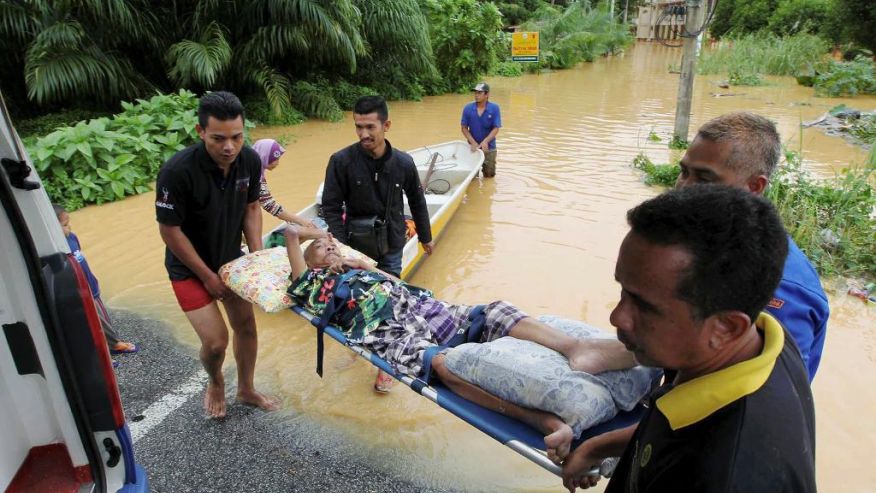
More than 200.000 people had to be evacuated to relief centers.

evacuation

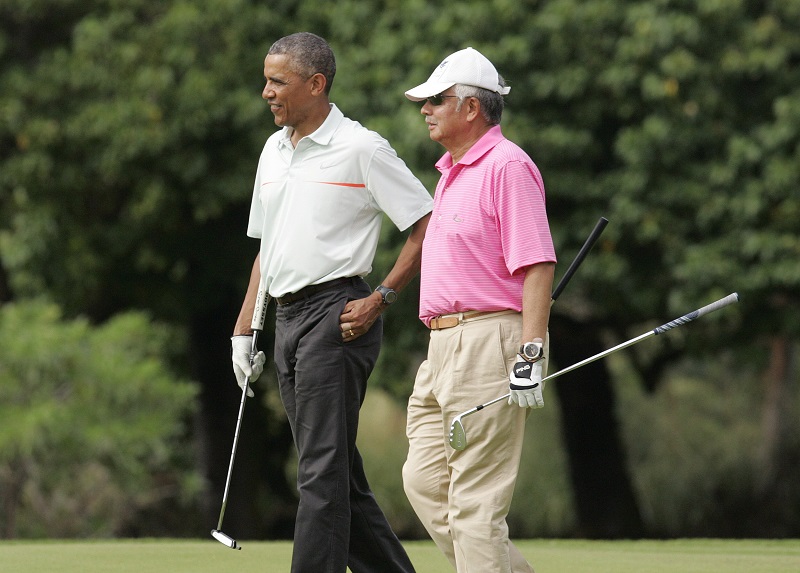
Meanwhile Najib, the PM of Malaysia, was playing golf with Barrack Obama in Hawaii, until he was urgently called back by his angry people.

Najib and Obama

This was his defense

First, Razak said that Obama had personally invited him to play golf, so he couldn’t really turn it down. Second, he said that the trip was booked so long ago that it would have been awkward to cancel it. And third, he said the trip wasn’t even really about fun, because it was more of a “golf diplomacy” mission.


Street Art in KL

During a recent visit to KLCC I spent some time in the Petronas Art Gallery to have a look at an exhibition about Street Art in Kuala Lumpur.

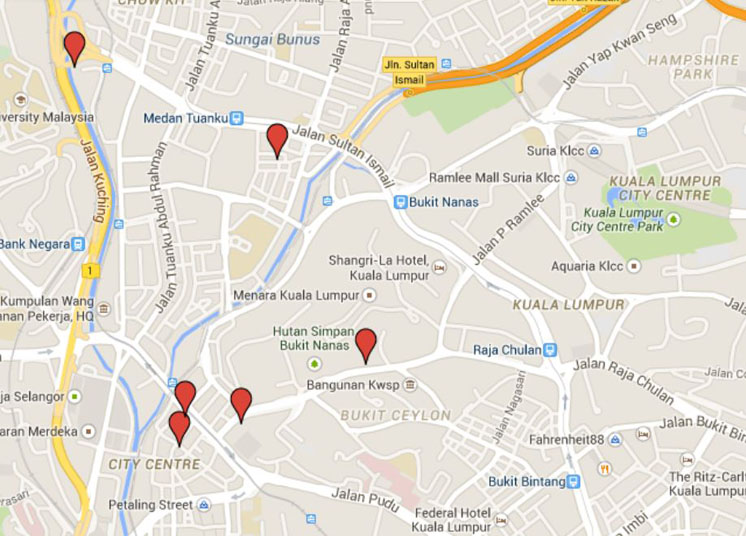
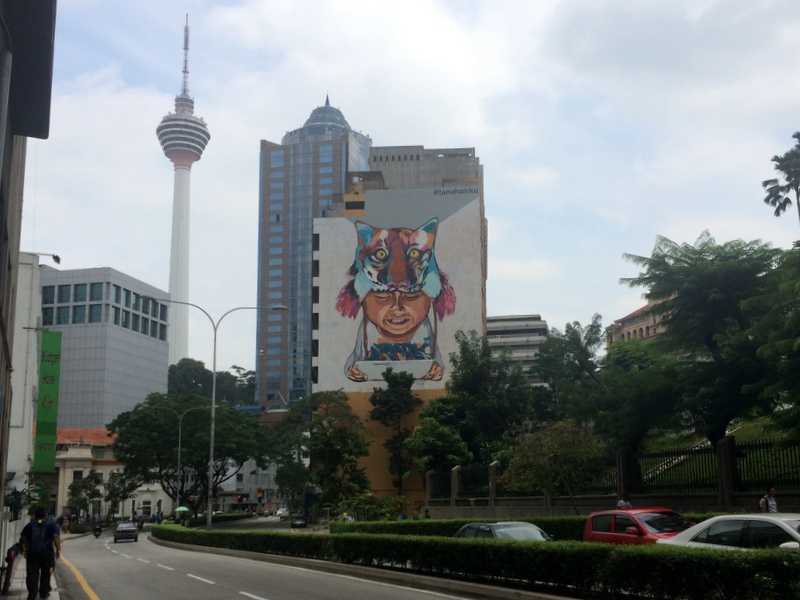
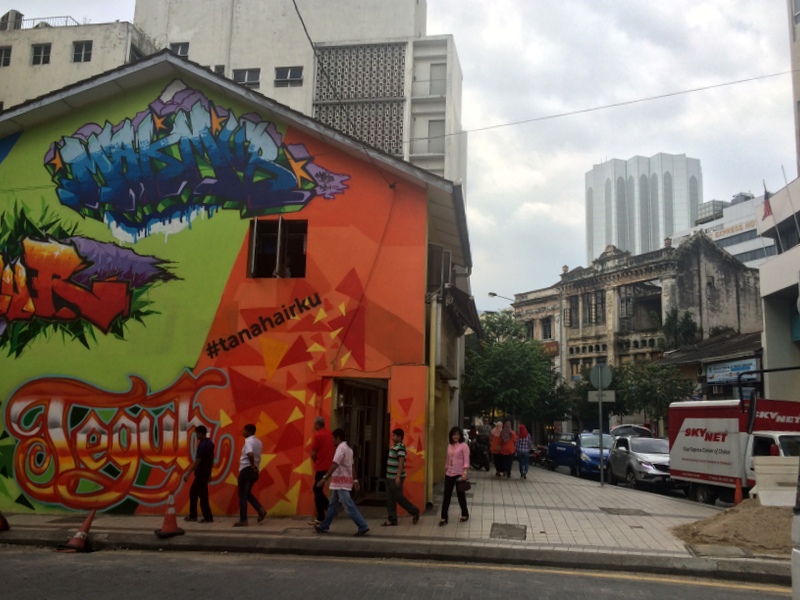
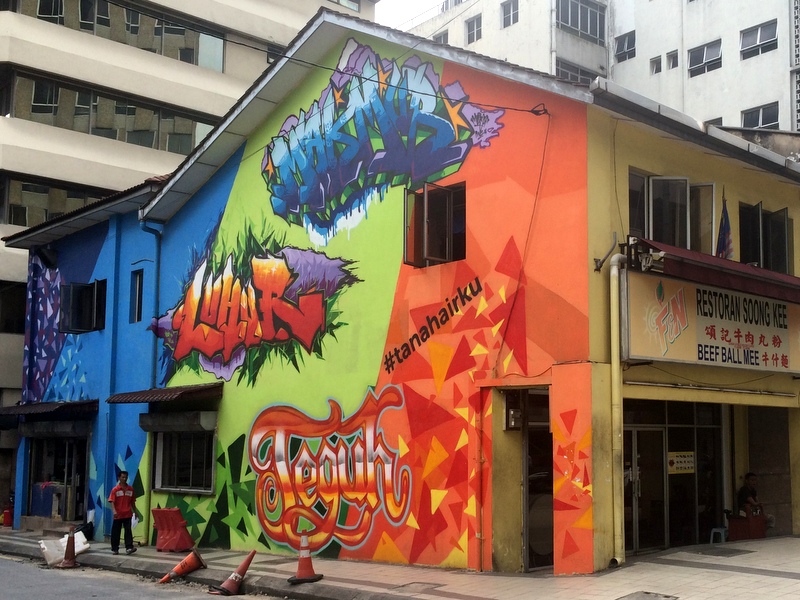
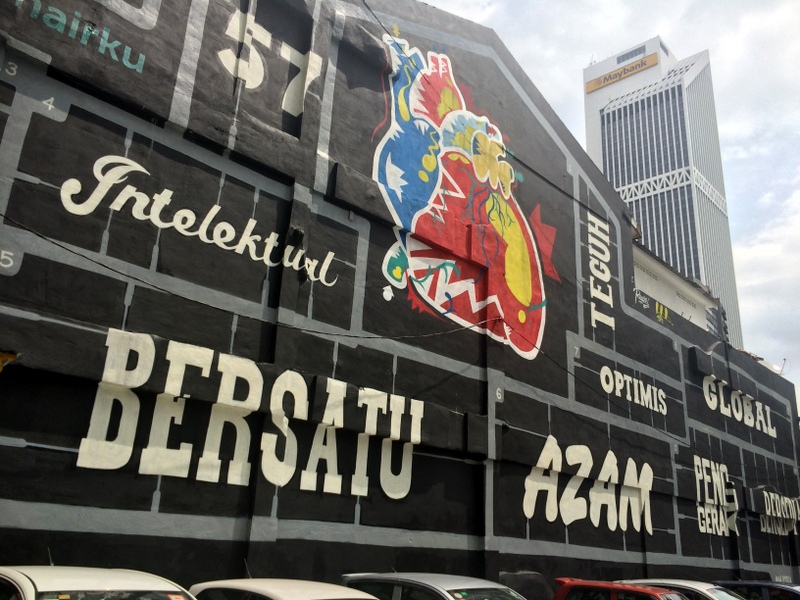
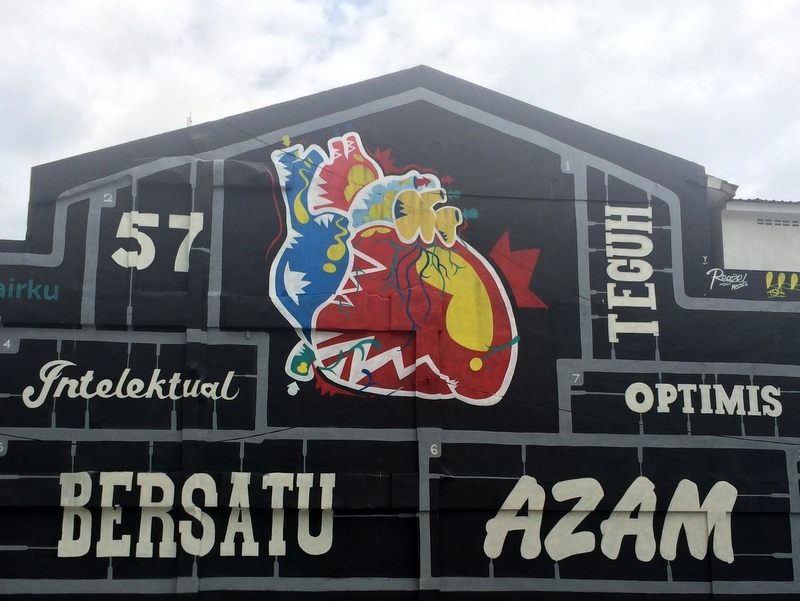
Last year in September, fifteen young Malaysian artists have created six large mural paintings on walls of buildings in KL. The project, sponsored by Petronas, was called  #tanahairku 2014 where Tanah Air Ku means My Homeland. In the exhibition small scale versions of the paintings were presented and in a folder the locations were shown. In a modern way, by giving the GPS coordinates…:-).

Petronas Exhibition

map


Quote from the folder: “Projek #tanahairku 2014 aims to encourage 30 million Malaysians – a unique melting pot of cultures, traditions and heritage – to come together, draw from our strength in diversity and unite towards a common purpose

We decided to have a look at the paintings ourselves. Here I present pictures of each of them, with the title, name of the artist(s) and a short description, as given in the folder

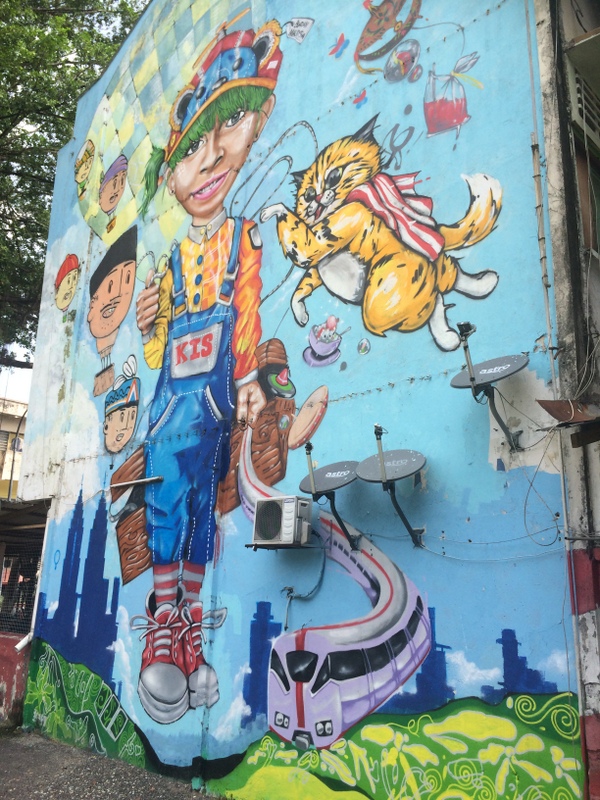
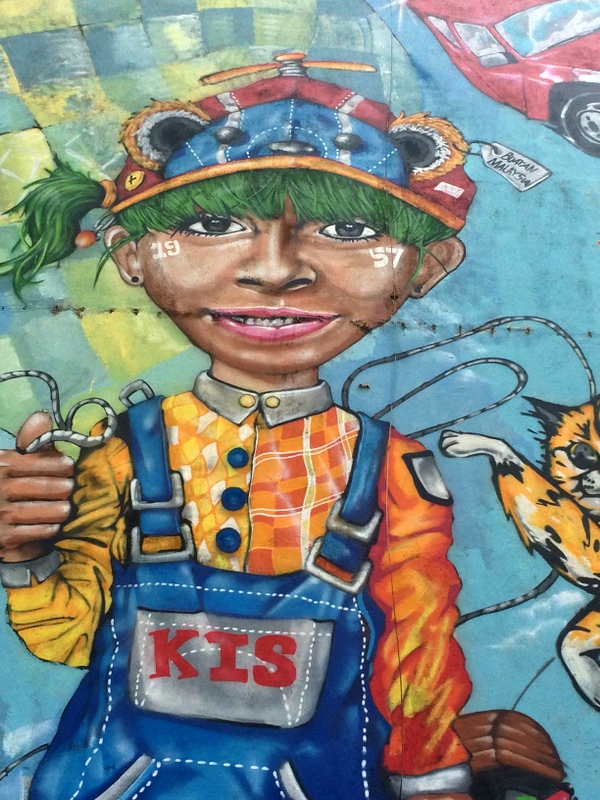
1. Smile by Keep It Simple a.k.a KIS

Welcome to a surreal fantasy - a mural featuring a plethora of 
national symbols, elements and historical icons

Mural

Mural

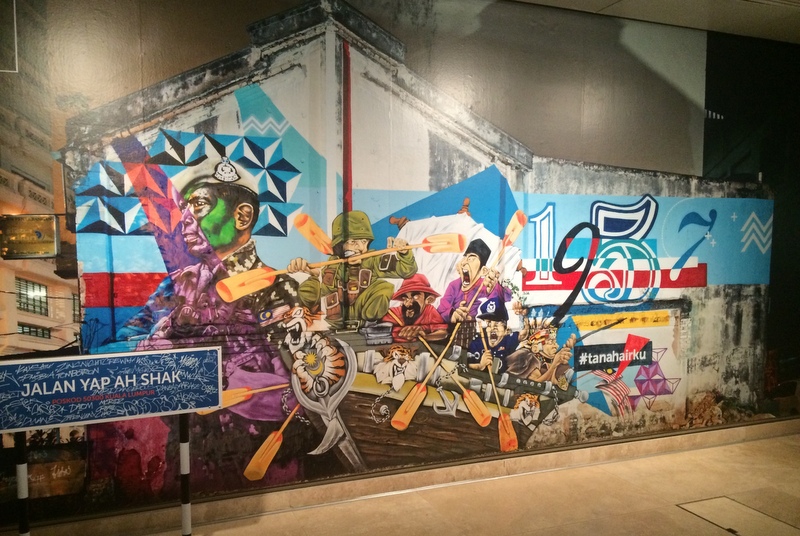
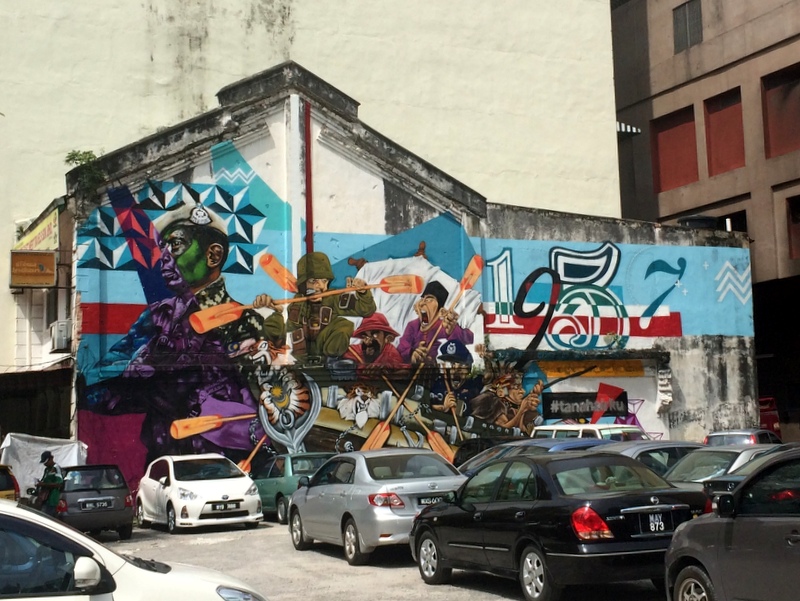
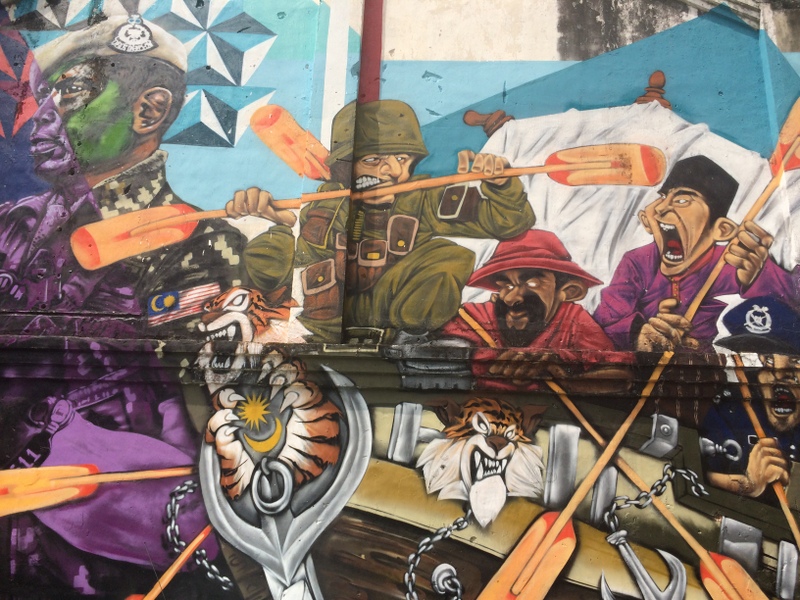
2. We Are All In The Same Boat by District Creative

A boat and its passengers. 
A country and its people. 
A juxtaposition of imageries. 
A message of strength in diversity.

MuralMural

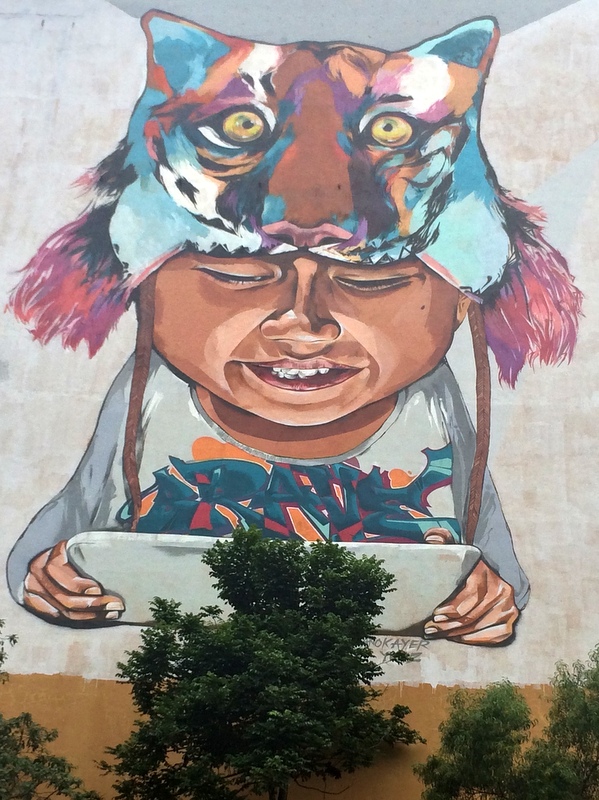
3. Brave by Anokayer & Yumz

An artistic take on the youth of the nation portraying the many 
compilations and contradictions in one visual

Mural

Mural

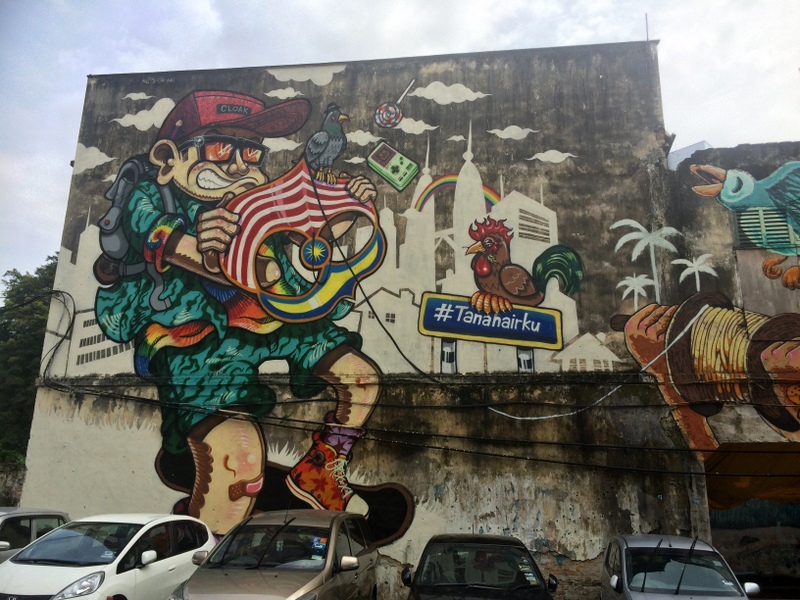
4. The Village and The City by Kenji X Cloak

The coming together of two worlds - an allegory of Malaysian 
life, and a wall-sized caricature portrait of the two artists

Mural

Mural

5. Makmur, Teguh, Luhur by Phiberwryte Connection

Three essential words chosen by the artist for the youth of the 
nation to embrace.

Mural

Mural

6.The Malaysian Model Heart Kit by KangBlaBla X Reeze

What is a Malaysian heart made of? What are the attributes and 
qualities that keep us going and define us as Malaysians

Mural

Mural

Altogether an interesting collection. Colorful, often graffiti-like. The description (given by the artists?) does not always help in understanding the significance of the mural, but never mind ..:-)

A few times you see 1957 in the murals. In 1957 the Federation of Malaya became independent, celebrated yearly on 31 August. The state of Malaysia was born 6 years later, in 1963. But that is a topic for another post…:-)

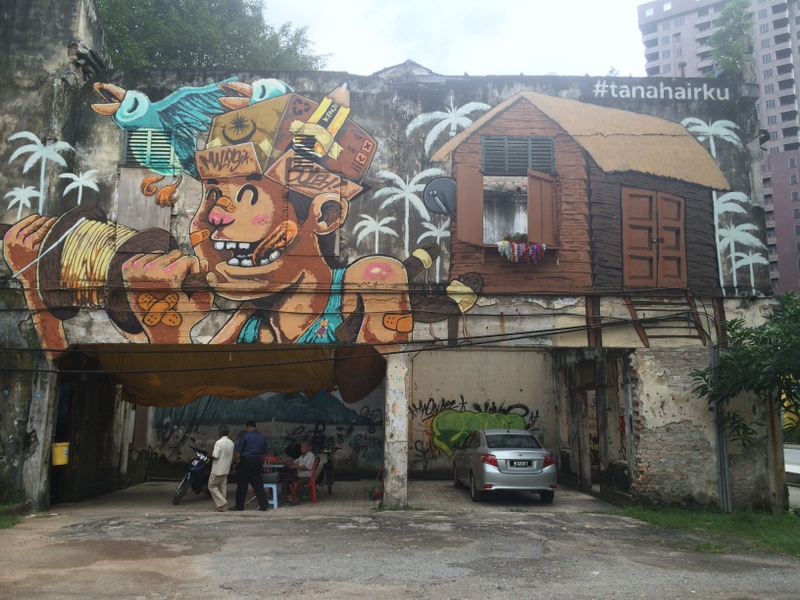
A nice project, I hope the murals will be maintained properly. Very different from the murals in Penang and Gopeng. Which is good! On our way back to our car we came across another one, not related to the #tanahairku project. I wonder how many more murals there might be in KL..:-)

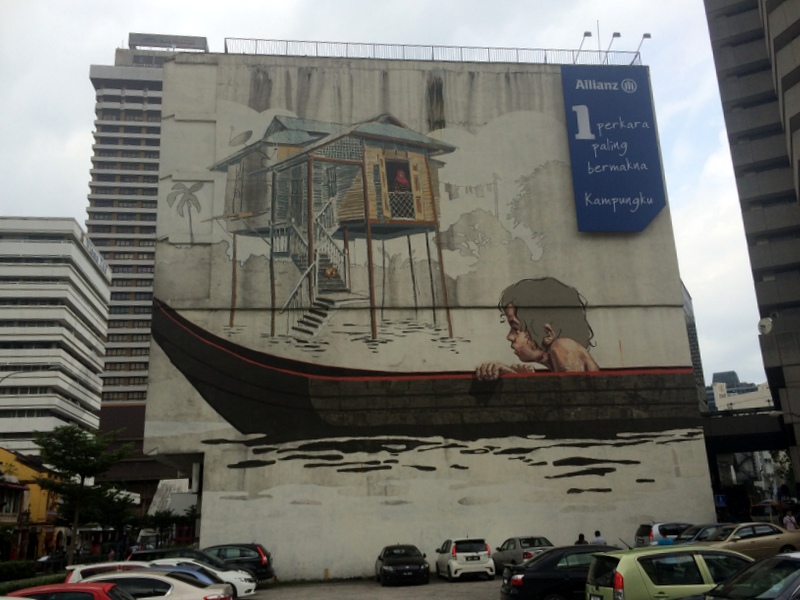
Mural

The project got its name from the poem Tanah Air (Homeland), written by a Malaysian poet laureate, Usman Awang (1929-2001). My knowledge of Malay language is not good enough (actually almost non-existent) to understand the poem, but apparently it is popular. Recently a  very niceYouTube video has been created of this poem.

;

As you may know I am quite worried about the future of Malaysia, with a government who is stoking racial unrest, just to remain in power. A project like this and the video offer a glimpse of optimism.


Journal 2-1-2015

December is not a very suitable month for waterfall trips. It is the season of the East monsoon, with lots of rain not only in the Eastern states, but all over the country. Not advisable to visit remote falls with a lot of river trekking. Early December I had visited the nearby Kanching Falls, we were back just before the rain started..:-)

Kanching

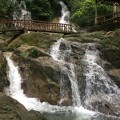
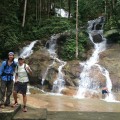
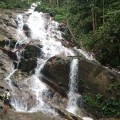
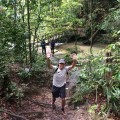
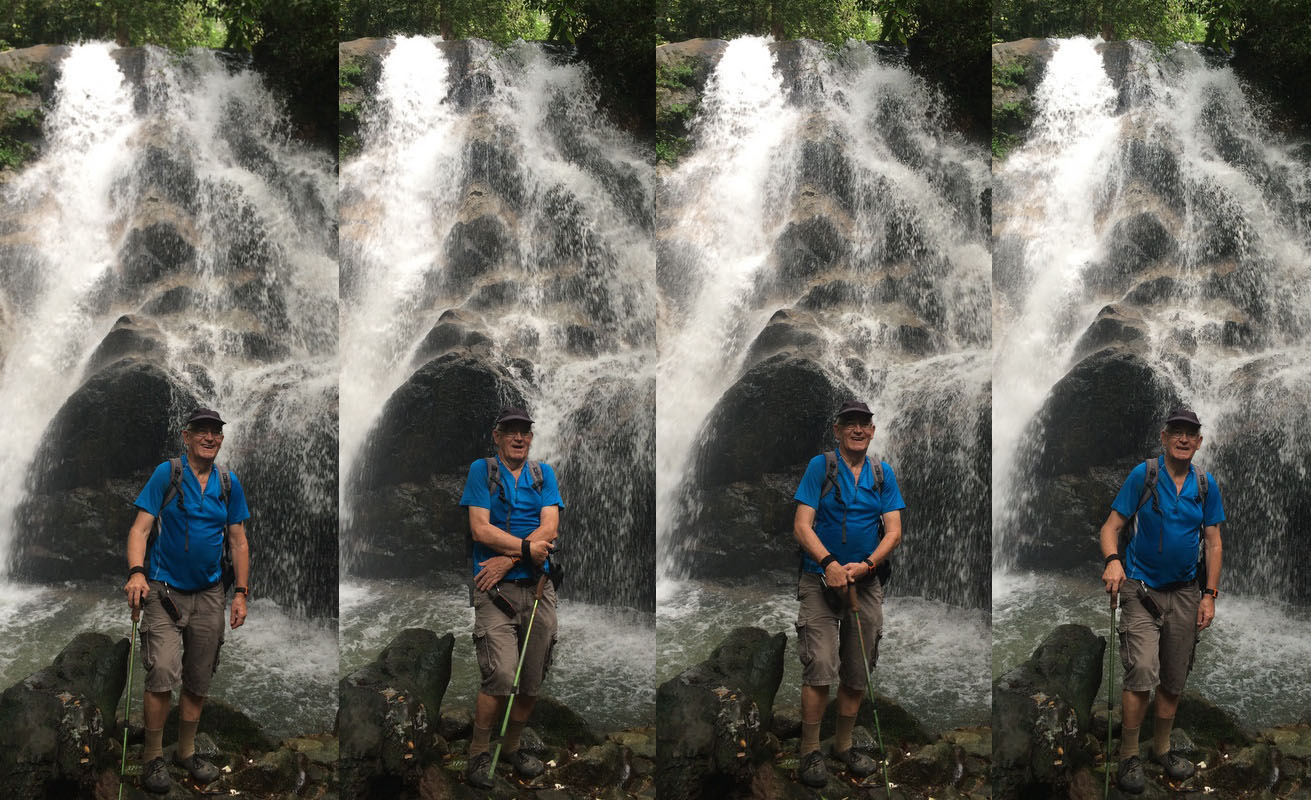
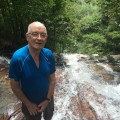
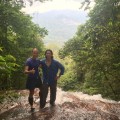
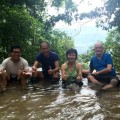
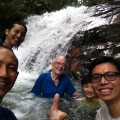
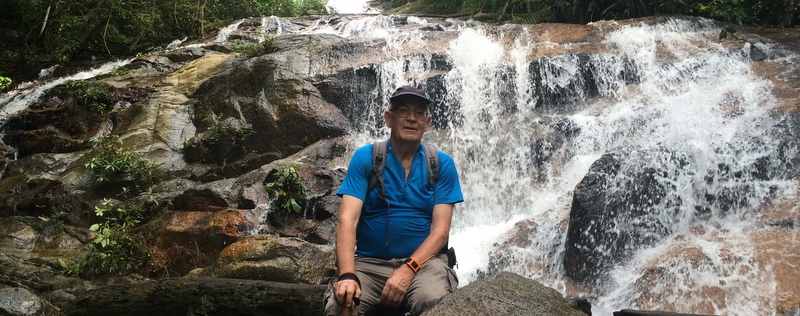
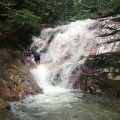
One week later I visited another waterfall with Janine, Edwin, Paul and Fahmy. I had been there before with my friend Eddie Yap, who has “discovered’ this pristine and unspoiled fall. He wants to keep it that way, I promised him to keep the location secret. We started early to avoid rain and we were lucky, the weather was splendid.

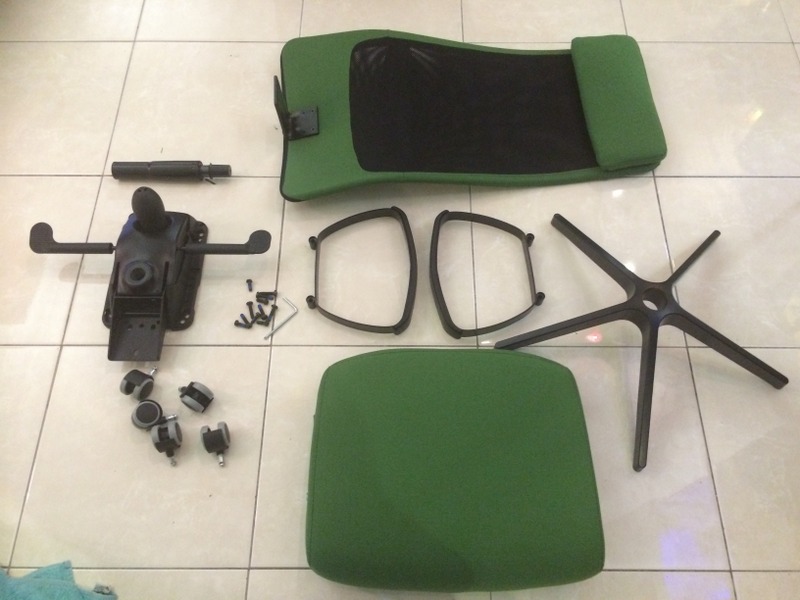
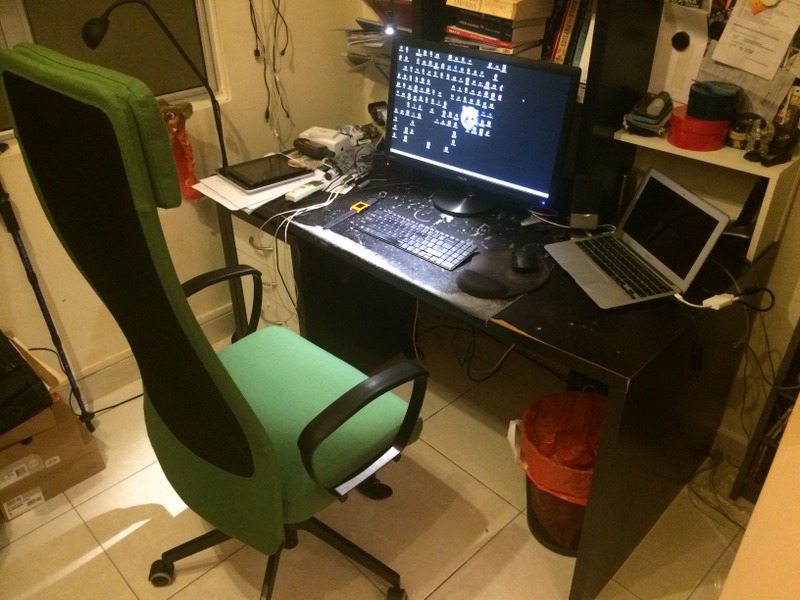
When at home, I spend much of my time with my computer, actually I must try not to get addicted (hey, you are already, some of my friends will tell me). Recently my computer chair broke down, I bought a new one in IKEA. Quite easy to assemble it…:-)

Chair

IMG_2470

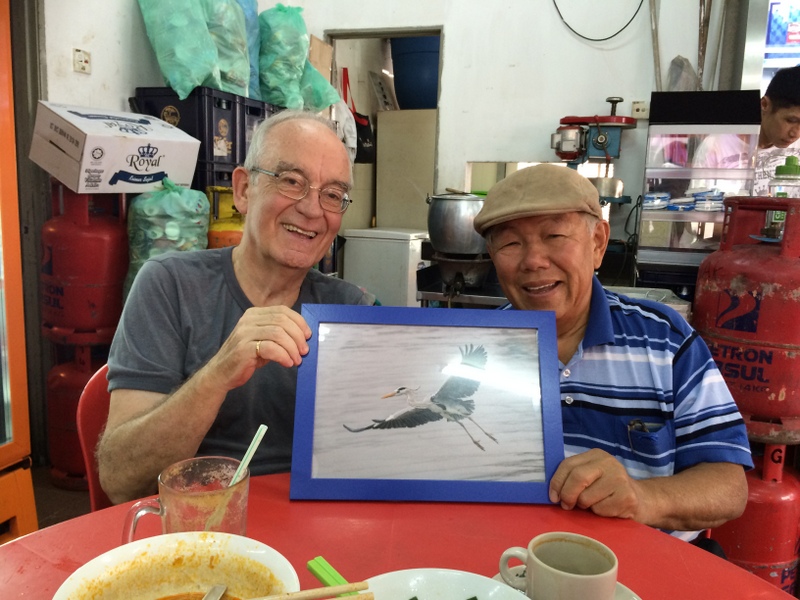
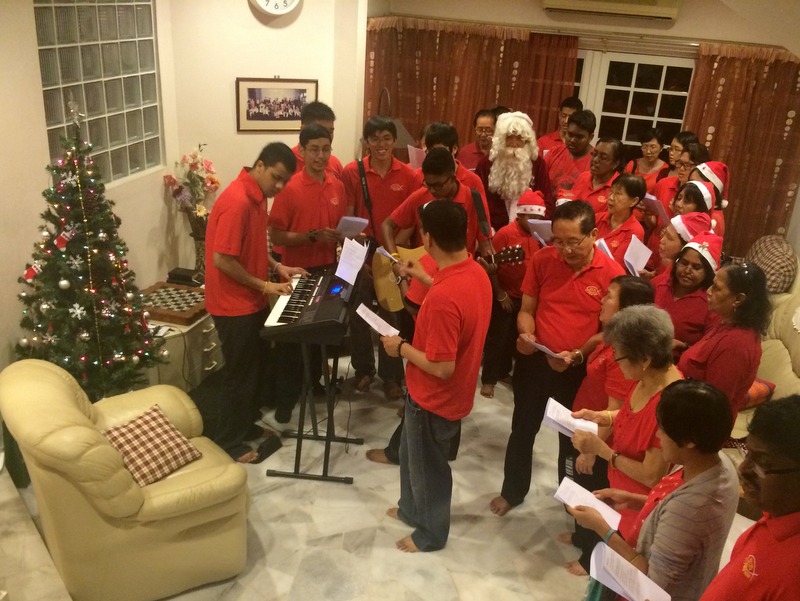
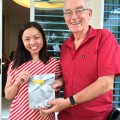
My friend Chuan has recently discovered the hobby of bird photography and is a fast learner. One of his pictures, a heron in flight, is very nice and I had promised him that, after some editing, I would have this picture printed and framed. Here I am handing over the result, during a lunch in our favourite Black and White stall. The other picture is taken at the house of my friends Joseph and Beatrice. Christmas Caroling, very enjoyable even for a non-believer like me…:-)

Chuan Christmas Caroling

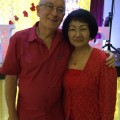
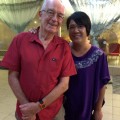
The weekend before Christmas I went to Sabak Bernam, to attend the wedding dinner of one of Aric’s cousins. It was a big event, more than 70 tables (that is the way the size of a Chinese wedding dinner is counted, one table is for ten people). Among the more than 700 guests there was one Kwai Loh (me) and one Indian (brother in law of the groom).  This time no pictures of the food (which was nice), the cutting of the cake, the uncorking of the champagne bottle, the yam seng singing. Just a few pictures of me…:-)

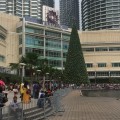
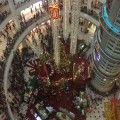
On Christmas Day we went to KLCC with Aei Ling, Aric’s older sister. Because her husband died recently, she and her kids will in general not visit family and friends during the mourning period of 100 days.  Therefore they did not attend the wedding dinner. We walked around in KLCC, crowded with everybody in Xmas mood;  later we had a nice dinner together.

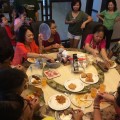
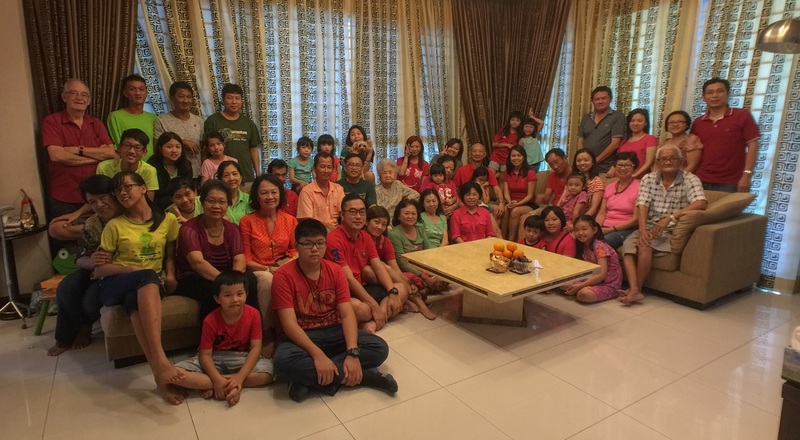
A few days later there was a big family gathering in Damansara Mutiara, near to where we live. Everybody was supposed to bring some food, I had prepared eggs stuffed with salmon and cucumber. They liked it…:-). It was a pleasant meeting, Aric is a very popular uncle with the many kids around.

Here is the official picture

Family gathering

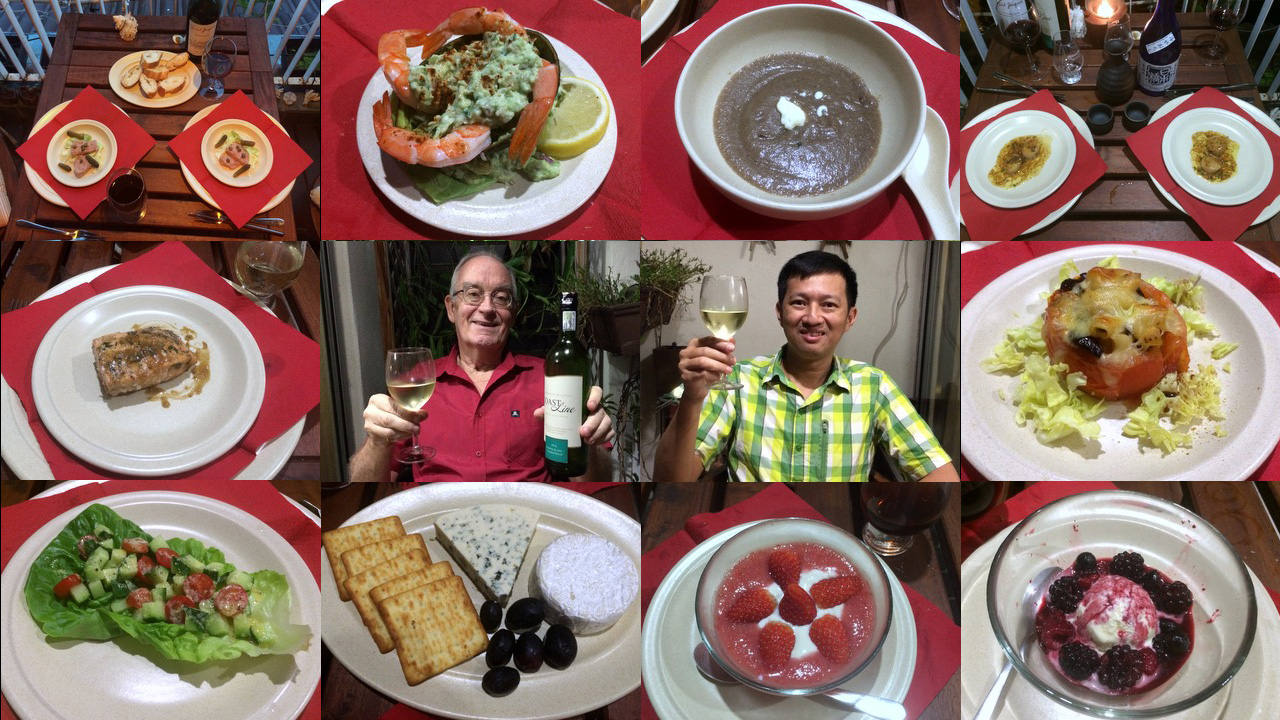
New Year’s Eve we stayed at home, as usual. This time we had decided to prepare a gastronomic dinner for the two of us, with Aric and I each preparing 5 dishes. We started with the first course at 7 pm and finished just before midnight. Big fun. Here is what we prepared.

dinner

From left to right and top to bottom:

1. Pork Liver Pâté  2. Avocado with prawns 3. Shiitake Soup 4. Scallops with vinaigrette
5. Salmon with herbs from the oven 6. Tomato stuffed with macaroni, olives and cheese
7. Salad 8. Cheese 9. Ricotta with strawberry coulis 10 Ice cream with warm berries

Wines: Merlot, Chardonnay, Sake and Monbazillac. We also had a bottle of champagne but we decided to keep it for another occasion. Don’t worry, we did not get drunk.

Wine

Because of the severe flooding in several states (more than 200.000 people evacuated!), the government had decided to cancel the traditional firework celebrations. Usually we watch the fireworks from our balcony, this time it was a quiet countdown.

Happy New Year

Winter Solstice, Christmas and New Year

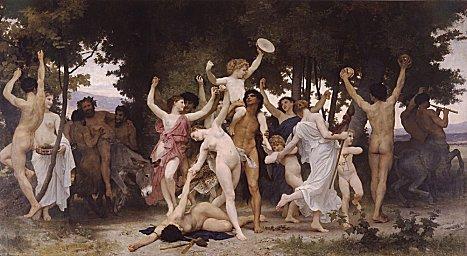
Have you ever wondered why Christmas is celebrated on 25 December, and why the New Year starts on 1 January? Most probably because both events are close to the Winter Solstice on 21 or 22 December. A huge amount of information can be found on the Internet.

Winter Solstice

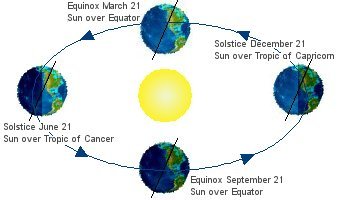
Because the Earth axis is tilted, the Sun is not always above the equator, but moves between the northern Tropic of Cancer and the southern Tropic of Capricorn.

seasons

This causes the seasons and the variability of the day length. When the Sun is above one of the Tropics, he “stands still” before moving back. This are the Solstices (latin: the sun stands still).

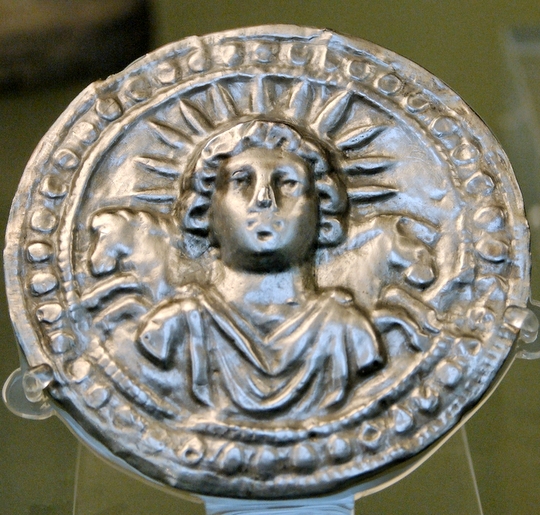
In Roman times after the Winter Solstice there was the celebration of the birthday of the Invincible Sun God (Dies Natalis Solis Invicti) on 25 December. The day length was increasing and the Sun was growing stronger

 Christmas

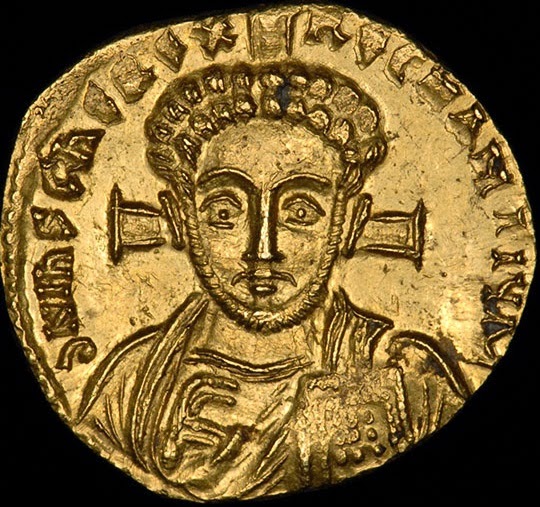
The birthday and even the birth year of the historical Jesus are unknown. Probably in spring, 1BC or 4BC, a lot of theories exist. In the beginning it was not considered an important event and In the first centuries of Christianity his birthday was not even celebrated. Only when emperor Constantine (306-337) adopted the Christian religion, it was decided to let the Dies Natalis of Jesus coincide with the birthday of the Sun God on December 25.  Below are two coins from Roman times. Left with the Sun God, right with Christ.

Sol InvictusChrist

One reason for choosing this date may have been to make it easier for the “pagan”  Romans to convert to Christianity. There are other theories, for example that the date was chosen, nine months after the supposed conception in March..:-)

New Year

Choosing a date for the beginning of a new year is completely arbitrary from an astronomical point of view. Therefore  there have been numerous conventions throughout the ages. The original Roman calendar started with the March equinox, had 10 months and ended in December. September, October, November and December still have (latin) 7, 8, 9 and 10 in their names.The winter days between December and March were unnamed. Only later two more months were introduced, January and February. January was named after the god Janus, who had two faces, one looking forward, the other one looking backward. Why the beginning of the year was moved from the equinox to the (winter) solstice? Possibly related to the big year-end party of the Saturnalia, held in December. Quite a wild party!

saturnalia

The Saturnalia were a kind of festival of light, again related to the winter solstice. Gift giving, banqueting caroling, candles. Many elements can be found back in the present Christmas and New Year celebrations…:-;

The Roman calendar has been refined several times, by including leap days, and as Gregorian Calendar is now accepted all over the world. Even in Malaysia, where the three ethnic groups have also their own calendar. The Islamic calendar is a lunar calendar, so the Islamic New Year (1st day of the month Muharram) moves 11-12 days earlier each year on the Gregorian calendar.

The Hindu and Chinese calendars are lunisolar. The length of a month is determined by the moon. So also here the New Year shifts 11-12 days to an earlier date every year. To keep the New Year in the same interval of the solar year, leap months are introduced every now and then. A more detailed explanation of the Chinese Calendar (and other calendars) can be found on my website

So the Chinese festivals (there are many) have no fixed date on the Gregorian Calendar. In 2014 the Chinese New Year was celebrated on 31 January, in 2015 it will fall on 19 February. Not moving to an earlier date, but to a later one. Because the present year is a leap year, it has an extra month…:-)!

There are two exceptions, where Chinese festivals follow the solar calendar. One is the Cheng Beng festival, the festival of tombs, when Chinese honour their ancestors. It falls always on the 15th day after the Spring equinox, 4 or 5 April.

And the second one? The Winter Solstice! It is called the Dongzhi festival and it is celebrated in the family with prayers for the ancestors. Traditionally it is the time of the year the family prepares Tang Yuan, glutinous rice balls that symbolise reunion and togetherness.

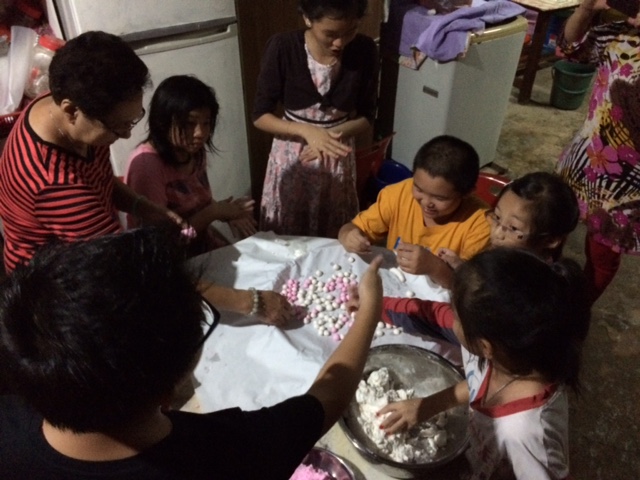
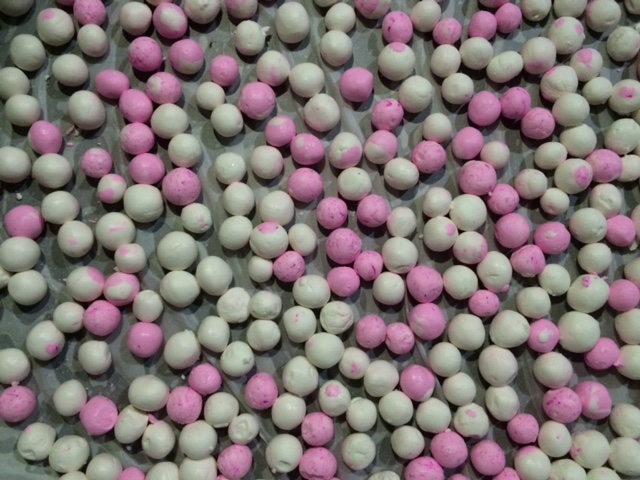
This year we celebrated it with Aric’s family. Everybody helped to prepare the balls which later were put for a few minutes in boiling water.

Preparing

the balls

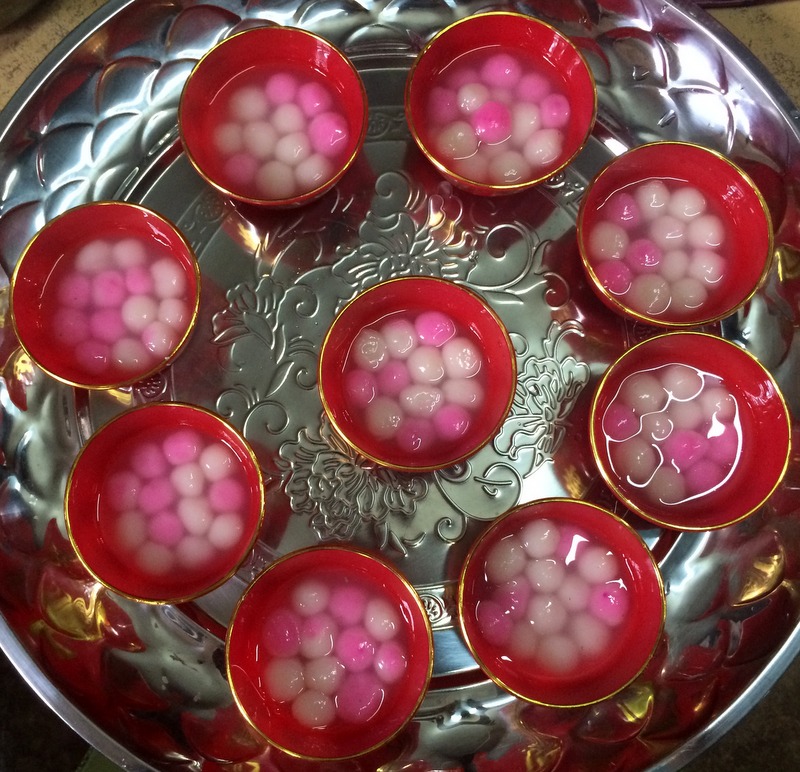
On the day of the Winter Solstice (this year 22 December) they are served with sweet syrup

finished
Happy Winter Solstice, Christmas and New Year!

Of Bacteria and Men

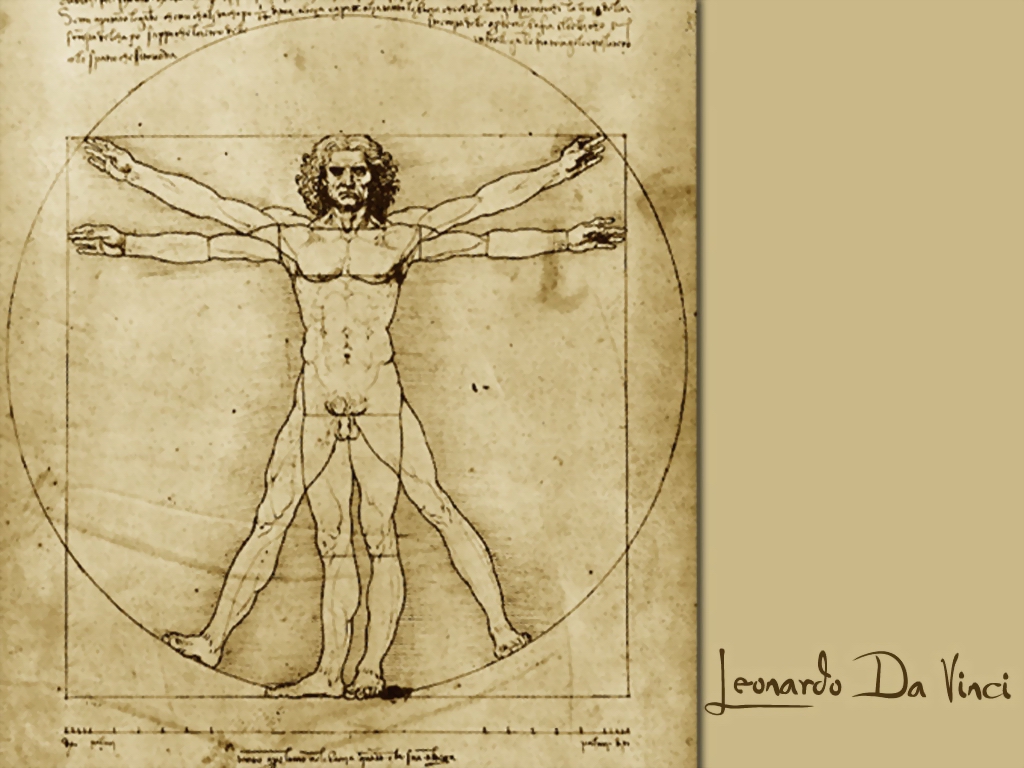
My recent Tree of Life post described how all living creatures share a common ancestor. Both Homo Sapiens and the E. Coli bacterium in his bowels belong to the same “extended” family!

Leonardo-da-Vinci-Vitruvian-Man

2_jpg35416396-ead4-4bc6-9cb4-3632839dad1cLarger

In that post I promised to write another blog about bacteria and the human body. Here it is..:-)

We humans are multi-cellular organisms consisting of roughly 10 trillion cells. For those not familiar with the naming of big numbers, one trillion = 1000 billion = 1000000 million. And for comparison, the global human population is at the moment ~ 7.3 billion, so there are ~ 1500 times more cells in your body than there are people living on our planet.

Bacteria are single-cell organisms. How many bacteria do we have in and on our body? A staggering 100 trillion, 10 times as many as we have body cells! They can be found on our skin, on our teeth, basically everywhere, but most of them live in our bowels, the so-called gut flora . The size of these bacteria is roughly 10 times smaller than an average human body cell,  their total mass is estimated to be 1-2 % of our body mass. Mind you, that is still a lot, about 1 kg of your body mass is bacterial!.

Probably you will have been taught that bacteria are bad and dangerous. Wash your hands, keep everything clean, etc. And of course there are bacteria that can harm you, even kill you. But most of the bacteria in/on your body are harmless and many are even needed for your survival. You would die without your gut flora!

Here are a few  things your gut flora will do for you:

  • The bacteria will do part of the digestion and help forming your stool
  • They are important to build your immune system and keep it in good order
  • They will fight harmful (pathogen) bacteria
  • They are needed for the production of Vitamin-K
  • Etc, etc

Together, all of the bacteria in the body would be the size of a large liver, and in many ways, scientists say, this microbiome (as the whole community of microorganisms in our body is often called) behaves as another organ in the human body: the Forgotten Organ…:-)

As the importance of our  microbiome has been recognised more and more in the last decades, some scientists nowadays consider us as superorganisms  or see us as an ecosystem!

Or, as a microbiologist recently formulated it, in a rather extreme way: “we would do well to begin regarding the human body as “an elaborate vessel optimized for the growth and spread of our microbial inhabitants.

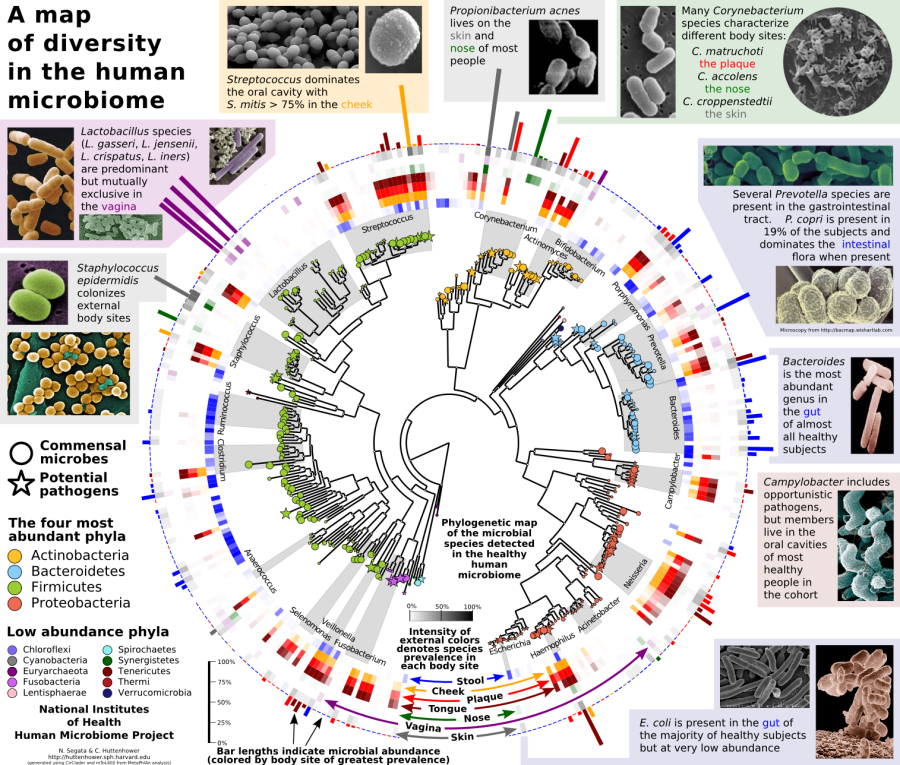
A project of the US National Institute of Health, the Human Microbiome Project has been researching the human microbiome. Here is a survey of what they found (click on the picture to see details).The various parts of our body have different bacterial communities.

HMB project

What about a baby, is it born with a gut flora? No, the womb is sterile (although maybe not 100%). But as soon as the baby has left the mother, the bacterial invasion begins and within days the gut flora is there. Essential to build the immune system of the baby!

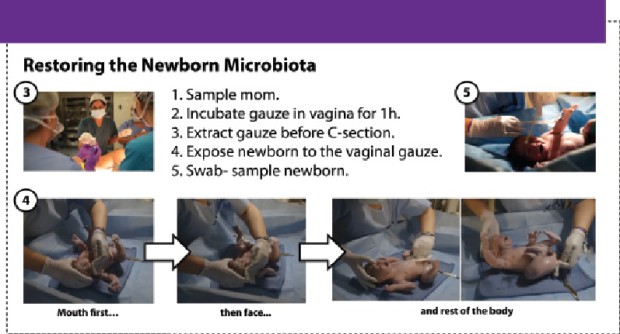
Interesting detail: the composition of the gut flora is different for Vaginal delivery and Caesarean section delivery. Now it is well known that babies delivered by Caearean section run a higher risk of asthma, allergies and several other health risks, because of the different gut flora. Here is an interesting solution

gut flora

Can you believe it…:-)? It is true.

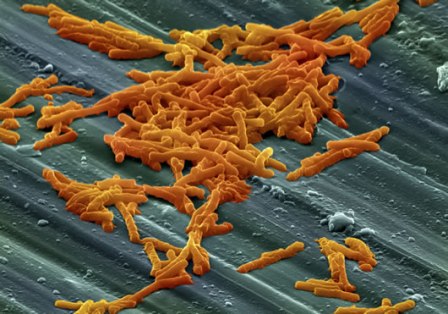
What about this. The Clostridium difficile bacteria is a common bacteria in soil, but can also live in your bowels. Pathogenic strains of this bacteria can cause diarrhea and inflammation of the colon, especially when the normal gut flora has been damaged by antibiotic treatment. The bacteria itself is resistant against most antibiotics, so it takes over the gut flora. Here is a picture of the bacteria.

clostrdiff

Infection with C. Difficile can be life-threatening, it kills approximately 14000 people yearly in the USA.

A promising solution?  Fecal transplantation therapy. Or, in common English: Stool transplant! Take some of the feces of a healthy donor and put it in the colon of the patient. It often works!!

The bacteria in the stool are able to restore the balance in the compromised gut flora of the patient.

Can you believe it…:-)? It is true. Here are some success stories: The Power of Poop

The Kanching Waterfalls

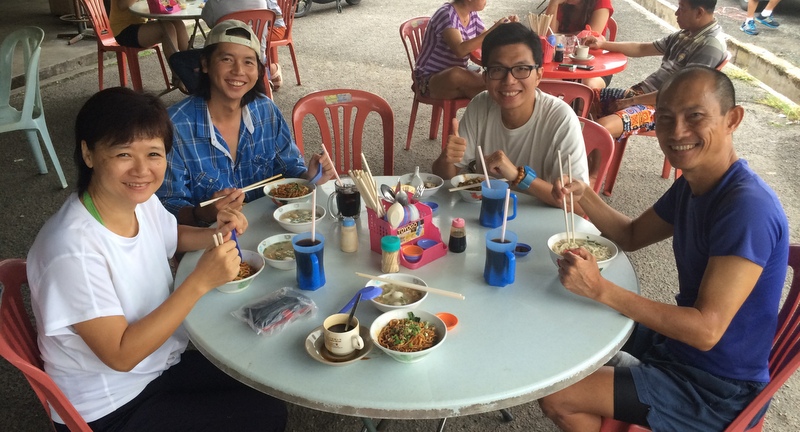
For the third time in a few months, I have visited the Kanching waterfalls, the pleasure park of Kuala Lumpur as it is called on my Waterfalls of Malaysia website.  This time with Edwin, Alice, Chadel and Jerry. We started with breakfast, near FRIM

Breakfast

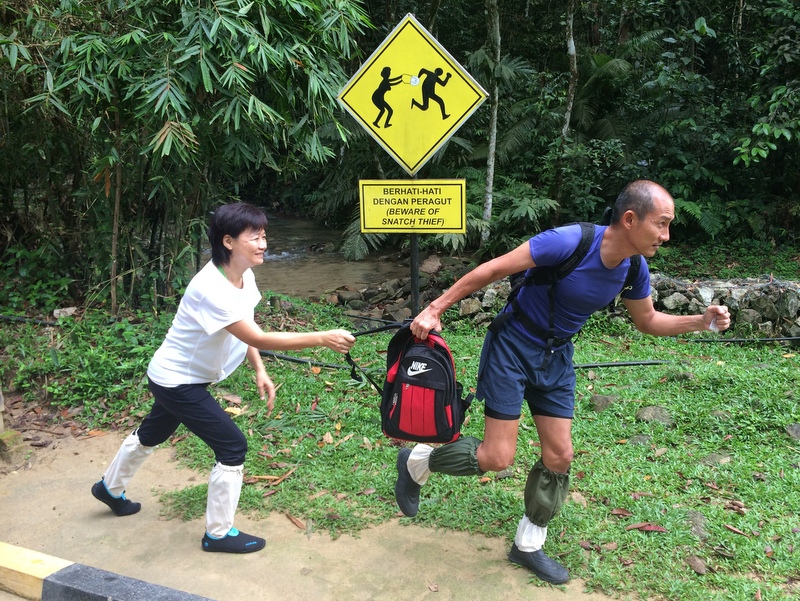
During weekends Kanching is crowded, but we went on a weekday and it was quiet.  We noticed new signboards, warning for snatch thieves. Apparently human ones, not the ubiquitous monkeys looking for food. Alice and Edwin had fun enacting a snatch theft.

Snatch thieving

There are seven waterfall tiers at Kanching, Here are the first four, not always easy to determine where one fall ends and another one starts…:-). The third fall, Kapor is the most popular one. As it was the rainy season, there was quite a lot of water.

Cemented steps continue until the fourth fall. After that there is a (sometimes steep) trail up the slope. There is work in progress to fence this part off, but  we could still continue to what is actually the most impressive part of Kanching.

Here is a video clip of the tall nr 6 fall/cascade

Fall nr 5 is my favourite. We used it for a short photo session. When I am in pictures, I always try to hide my tummy..haha. Good idea or not? Comments (friendly please) welcome.

Me and my tummy

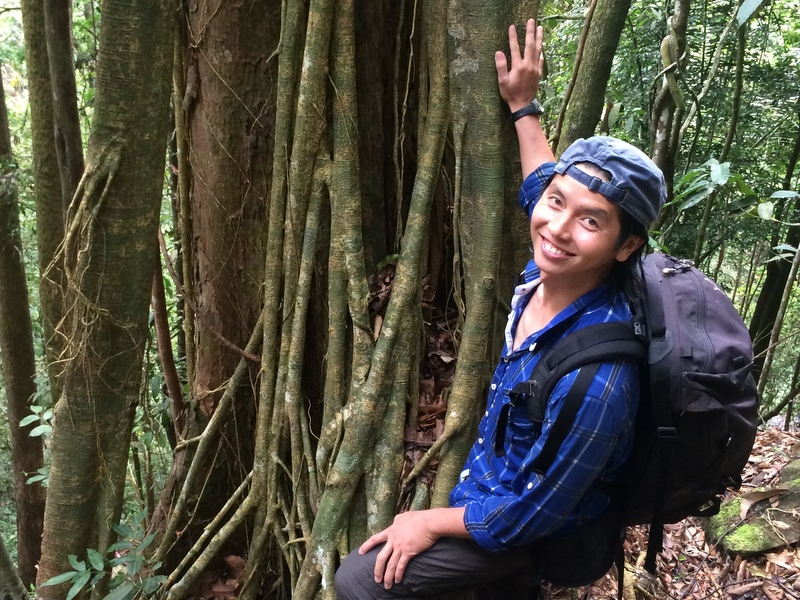
Actually, after fall nr 7, there are two more remote falls, so we decided to continue. No trail, river trekking, lots of leeches. Especially Alice enjoyed them and they liked her too!  Worried about afternoon rain, we turned back halfway, river trekking is nice but a slow process. Time to take nice nature pictures.

Coming back to fall nr 7, we had time to relax, take a bath and frolic around. I inspected the geocache I have  placed here, more than ten(!) years ago. Still in good condition. I took a “travelbug” from the cache, which I will put back in my Bukit Kiara geocache. Click on the links, if you want to know more about the interesting geocaching game..:-)

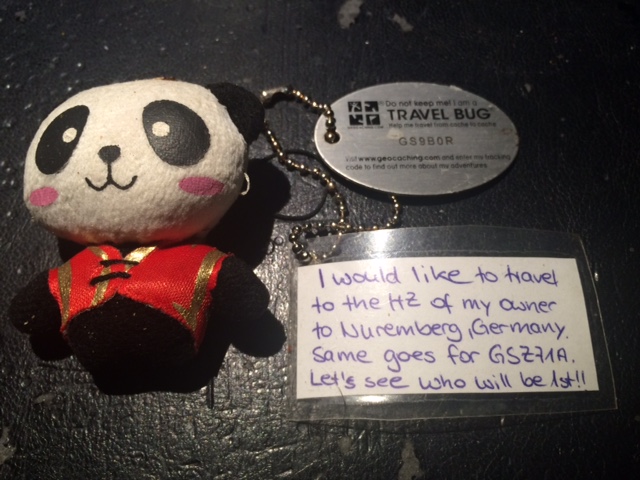
Here is the travelbug I took from my geocache. The owner hopes it will come back to Germany. If it is not retrieved before my next trip back to Holland, I will take it there myself.,

travelbug

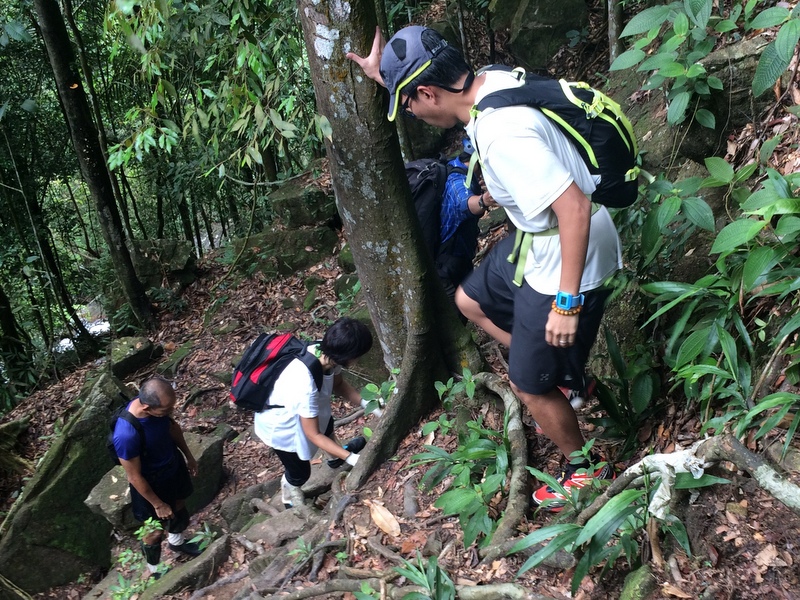
Then it was time to go back, scrambling down before the rain came. We had taken a sensible decision, the rain started just when we reached our cars!

Going down

Going down

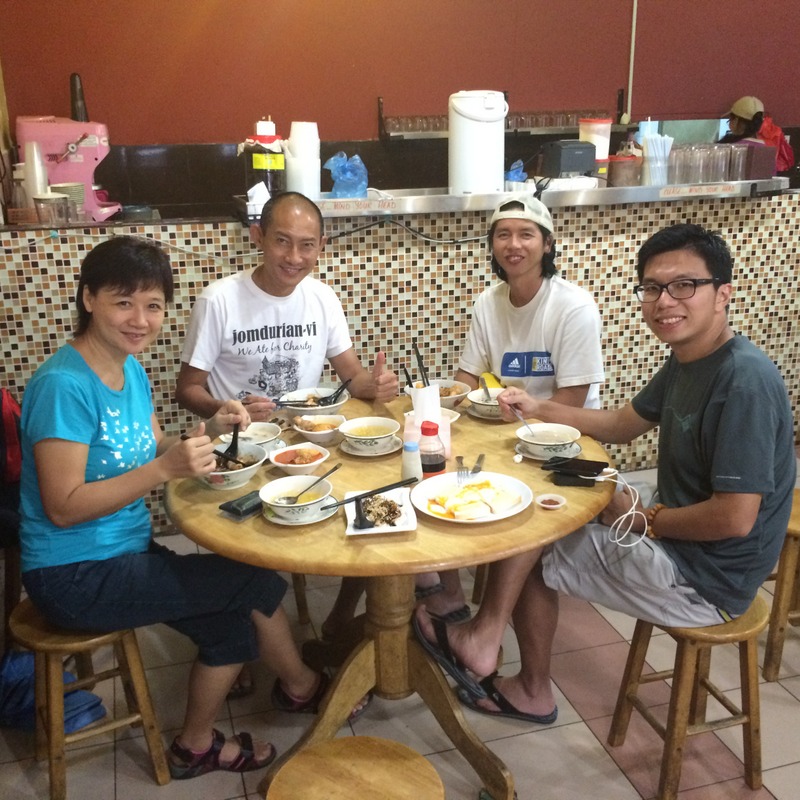
Of course were were hungry after a long day, so we ended our hike with a well-deserved late lunch in Aman Puri

Lunch

A very satisfactory trip with nice company!

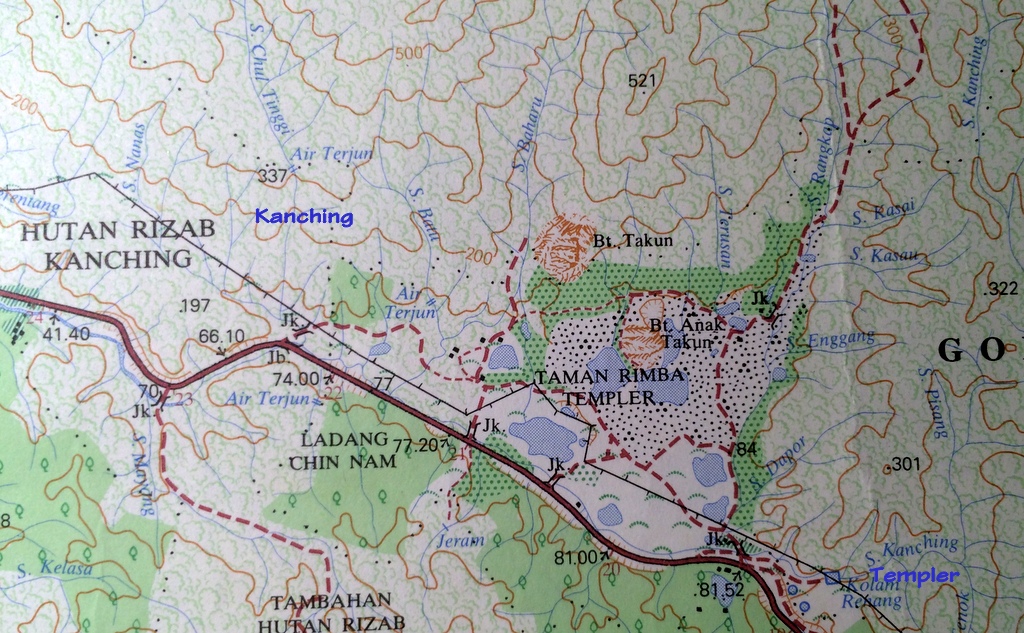
As there is often confusion about Kanching and the nearby Templer’s Park, here a topo map of the region. In red the trunk road nr 1 from KL to Rawang. I have indicated the location of Kanching and Templer’s in blue. What is very confusing, is that the Kanching falls are located in the Kanching forest, but the name of the river with the 7 waterfalls is Sg Chul Tinggi!. The actual Sg Kanching is located in Templer’s Park. It has also a waterfall but less interesting than the Kanching falls.

IMG_2273-001

Journal 30-11-2014

Another journal. Starting with sad news.

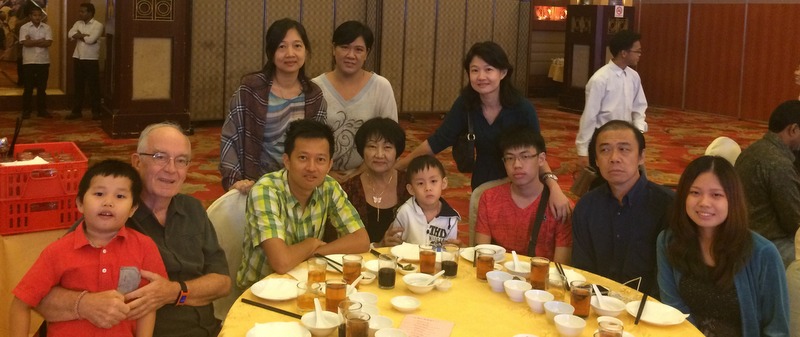
On Wednesday 8-10-2014,  Aric’s brother in law, passed away. A few days earlier we had met Victor and his family during a wedding dinner. Here he is sitting to the right with his wife and two kids, still in good health.

Family dinner

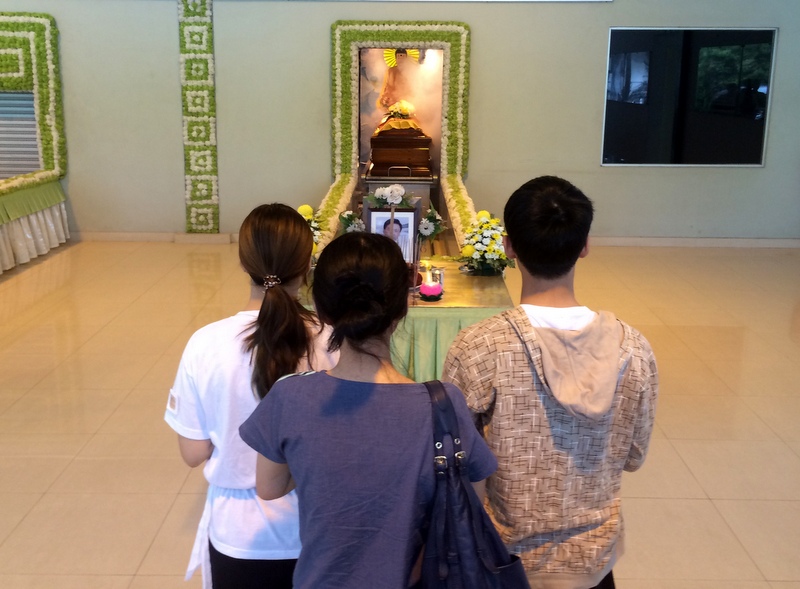
During the weekend he developed a fever and on Wednesday Aric took him to the hospital. A few hours later he passed away: blood poisoning (septicemia). How fragile life is. Hectic days followed, cremation on the following Saturday.

Cremation

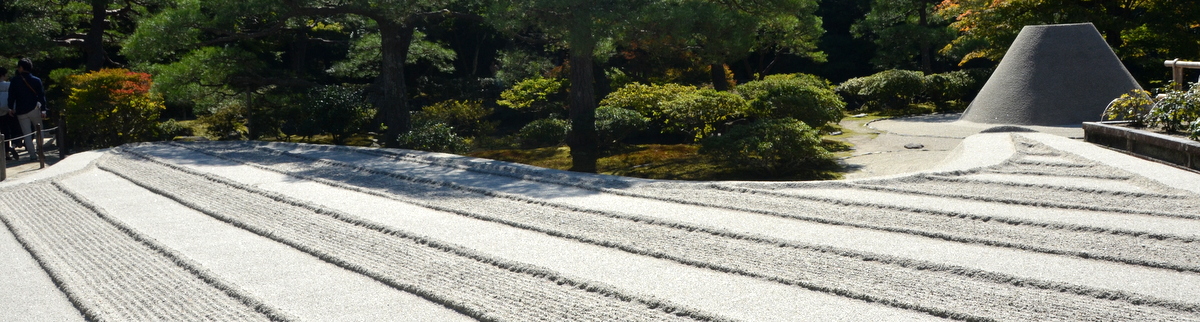
Less than one week later, our planned visit to Japan started. We considered canceling the trip, but decided to go. It was a good decision. Reports about Osaka, Kyoto and Wakayama have been published separately already. Here a picture of a Zen garden.

Zen Garden

Back in Malaysia, we were invited for the 60th birthday party of our friend Zen. In a very different style: a polka dot and swinging sixties party. A very pleasant evening!

I am still a regular walker in Bukit Kiara. The original Kiara Bunch has more or less dwindled away, only my friend Boon Chee is left over. So I often walk alone, but sometimes with friends whom I show the beauty of the hill. Here some pictures of two walks, one with Paul, another one with Rani.

When you have been following my blog, you will know that Bukit Kiara is under threat. Development is taking place and the plans to gazette it have not yet materialised. But at least there are plans to protect it.

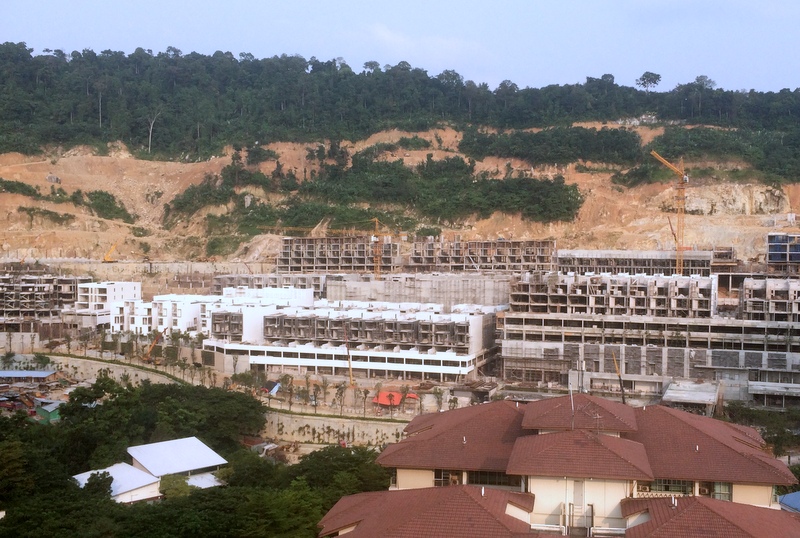
The situation is much worse for Bukit Lanjan, opposite our condo. The hill is basically the property of real estate developers..:-( Mainly MK Land, but now also Mammoth Empire. We chose our condo in Damansara Perdana mainly because of the splendid view of the forested Bukit Lanjan slope, as seen from our balcony. Have a look at how it was when we bought it, and the present situation!

Interested to buy one of these “villas”? Better first read this forum…:-)

View from our balcony Bukit Lanjan now

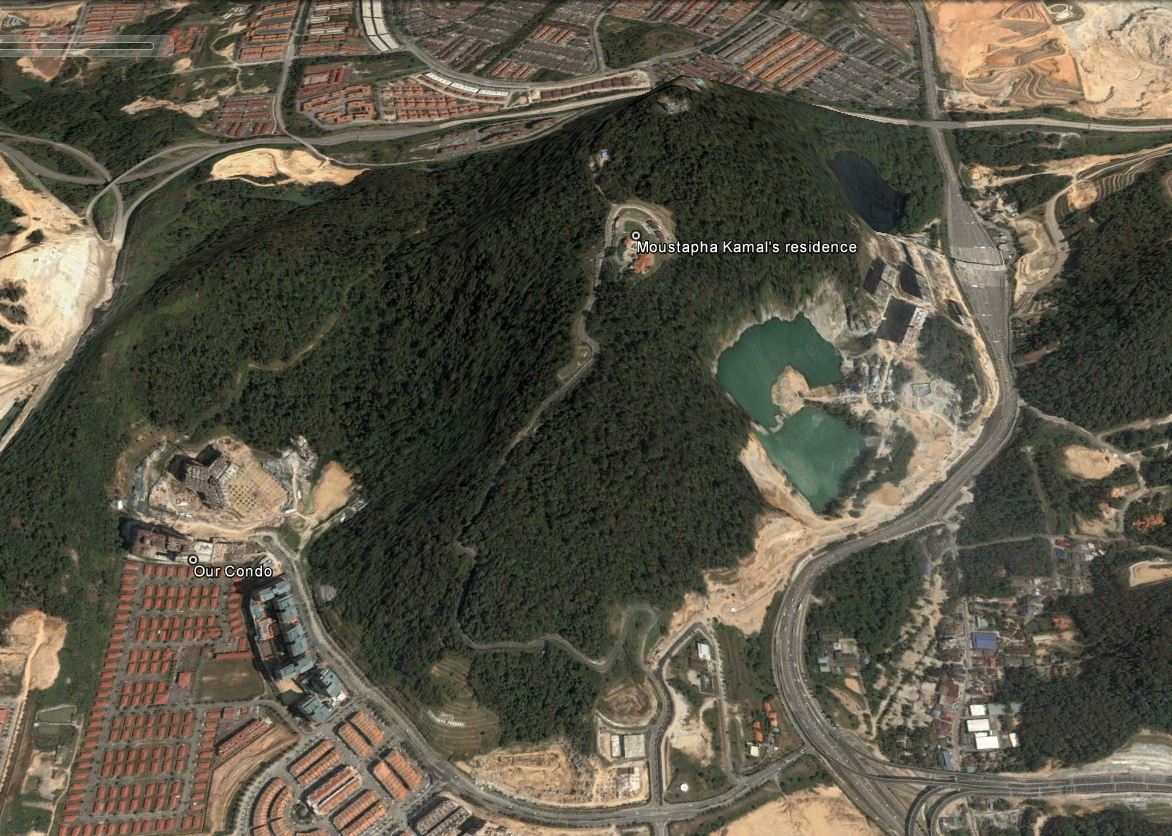
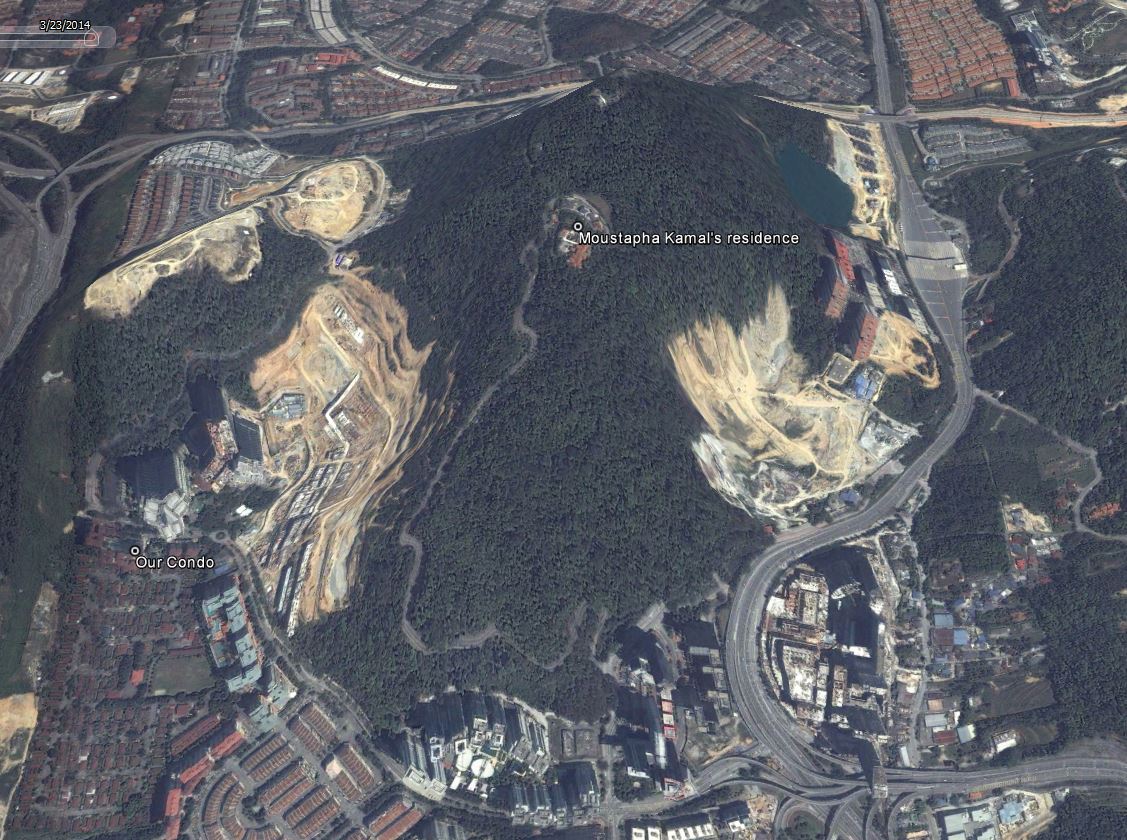
Here are two more pictures, Google Earth screenshots, to show clearly how Mustapha Kamal (the big boss of MK Land) has created his own paradise on top of Bukit Lanjan, in the meantime destroying the hill. Like Saruman in Lord Of The Rings… 🙁 Click on the pictures to enlarge and see details. Left the situation in 2010, right as it was beginning of this year. Sad.

Bukit Lanjan before

Bukit Lanjan2

Another popular location for walking and jogging is the Forest Research Institute Malaysia (FRIM). I have been there a few times, but do not know the location well, so I was happy to accept my friend’s Edwin invitation for a hike. Here are a a few pictures.

Of course I also visited waterfalls, although I have become much more careful recently. I guided my late friend Yian’s daughter Carolline and her NZ boyfriend Dave to the Kanching waterfalls. And I joined Edwin to a “secret” waterfall, recently discovered by him.

Last weekend  I was back in Taiping. On 23-11 the Taping Heritage Society had organised a day trip for its members and the Committee had asked me to tell the participants about the Kota Ngah Ibrahim in Matang. I had collected a lot of information, you can find it here About the trip irself I will write a separate post.

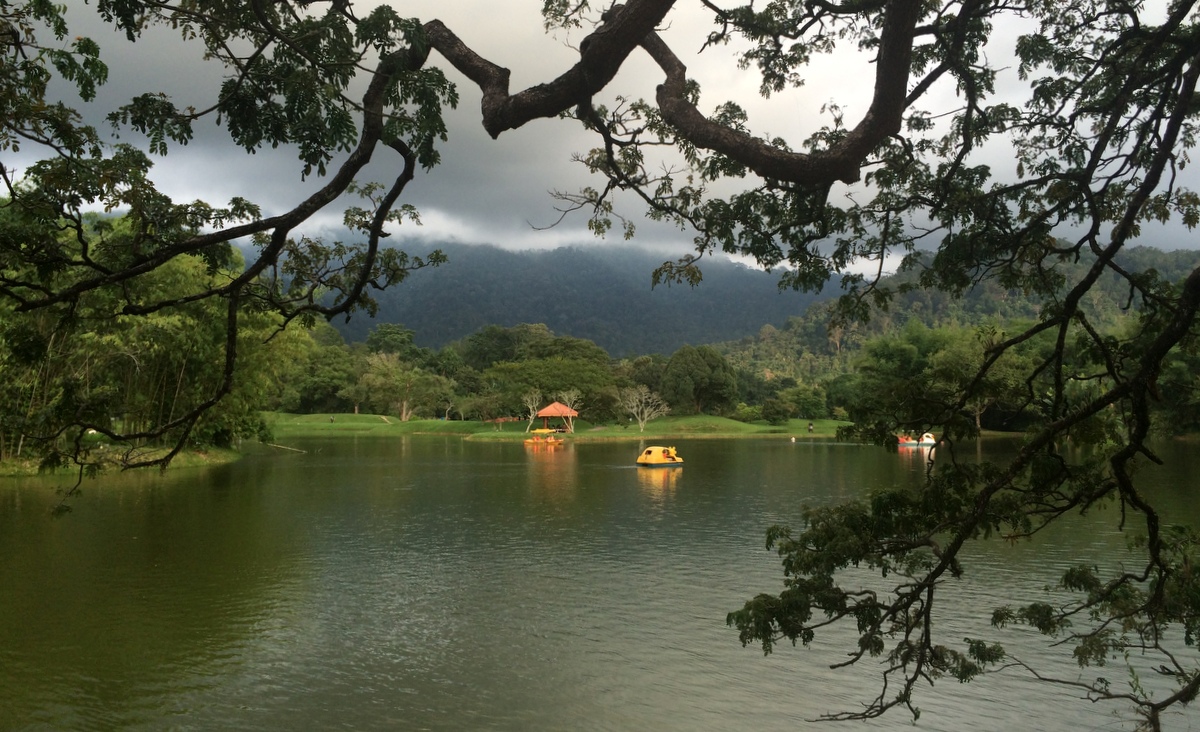
It is always a pleasure to visit the Lake Gardens in Taiping.

Lake Gardens.

Here is Rosetta again! (updated)

In two earlier posts I have reported about the exciting space adventure of Rosetta, a spacecraft launched in 2004 with as destination a comet, the  67P/Tsjoerjoemov-Gerasimenko. The first post, Wake up, Rosetta!, described how, after a hibernation of more than two and a half years, Rosetta woke up in January 2014, according to plan.

The second post, Rosetta meets 67P, published last August, reports how Rosetta successfully goes into orbit round the comet. It turns out that the comet has a strange shape, like a rubber bathtub duck.  Here is a picture, taken on 19 September at  28.6 km from the center of the comet. The head points to the right. If you look carefully you will see a kind of smoke coming from the “neck” of the comet. That is the coma, part of the comet material is evaporating because it is approaching the sun. Later, closer to the sun, 67P will develop the characteristic comet “tail”. The comet is rotating with a period of 12 hours and 36 minutes.
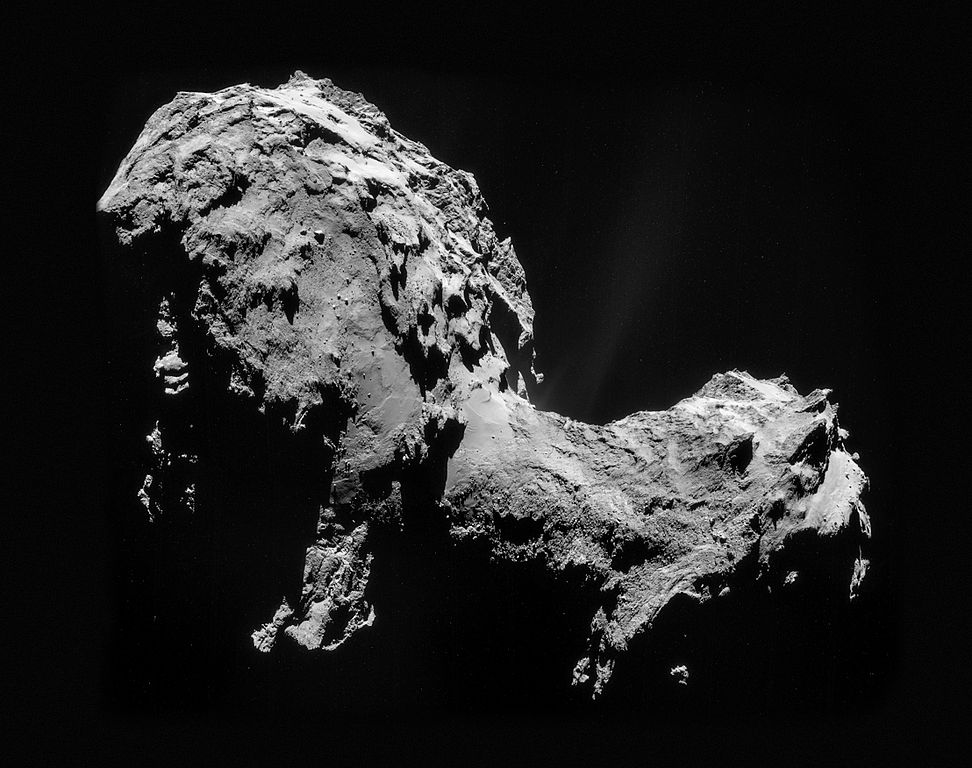
67P

The last few months the scientific instruments on board Rosetta have already been busy. For example analysing the composition of the “coma” smoke. With interesting results, finding not only water and carbon dioxide, but also methanol, ammonia and hydrogen sulphide. Here is an interesting blog about The “perfume” of 67P.  Quote:  If you could smell the comet, you would probably wish that you hadn’t

But the ultimate goal of the expedition is to land a module on the comet itself! This module has been called Philae and you can see it here still attached to Rosetta.
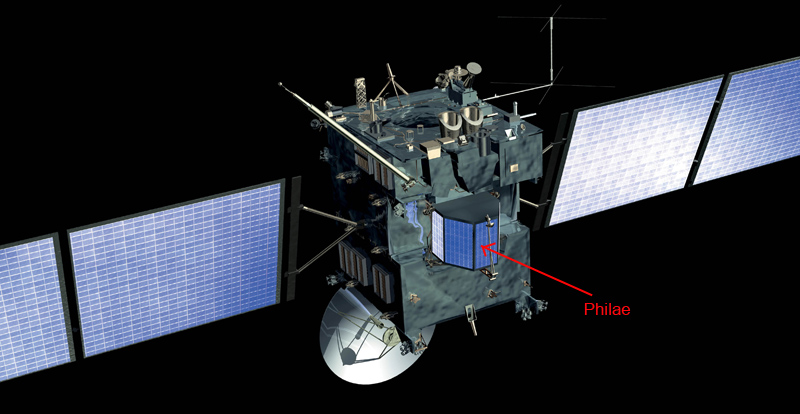
Rosetta with Philae

The last few months,  the scientists have been working hard to find a suitable landing site for Philae. That has not been a simple job, because of the complicated structure of the comet. The landing site should be relatively flat and smooth. Several options have been studied, finally the decision was made to choose location J, on the head of the duck in the picture below.
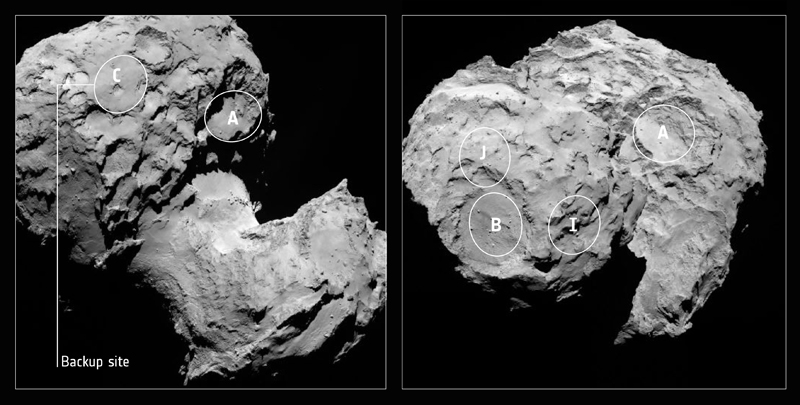
Landing sites

The landing site has now been renamed Agilkia. Why? Google and find out yourself 🙂 Hint: there is a relation with Rosetta and Philae.

The critical landing operation will take place on Wednesday November 12. At 8:35 GMT Philae will be deployed from Rosetta and start its slow fall to the comet.  It has no thrusters that can change its course, so ultimate precision is required in the timing of the separation. Keep also in mind that the distance between earth and the comet is at the moment about 500 million km, so signals take time to reach Rosetta. To be exact: 28 minutes and 20 seconds one way! So it will be 9:03 GMT before we know if the separation has been successful.

Falling to the comet? Yes, because the gravitational attraction of the comet is very small, but it exists. The falling proces willl take about 7 hours! And the speed at landing will be “only” ~ 1m/s. For comparison, that is the speed an object would get here on earth, when it falls 5 cm!

As soon as Philae touches the surface of the comet, two harpoons will be fired down to anchor the module. Otherwise it might bounce back into space! Here is an artist impression of a successful landing.
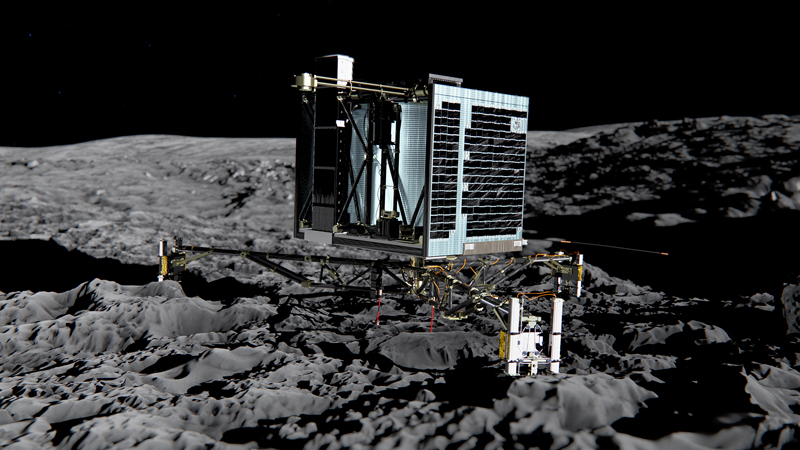
Philae landed

The two red lines under Philae are the harpoons. The construction of the three supporting “legs” allows landing on moderate slopes. If the slope is steeper than 30 degrees, the Philae might topple over, resulting in failure. The whole procedure is considered a risky one, success estimates of 75% “only” have been mentioned..

So let us keep our fingers crossed Wednesday! Malaysian time is GMT + 8 hrs, Dutch time is GMT + 1 hr. Here is the ESA control room. How many nails will be bitten on that day, waiting seven hours, while you can do nothing…:-)?
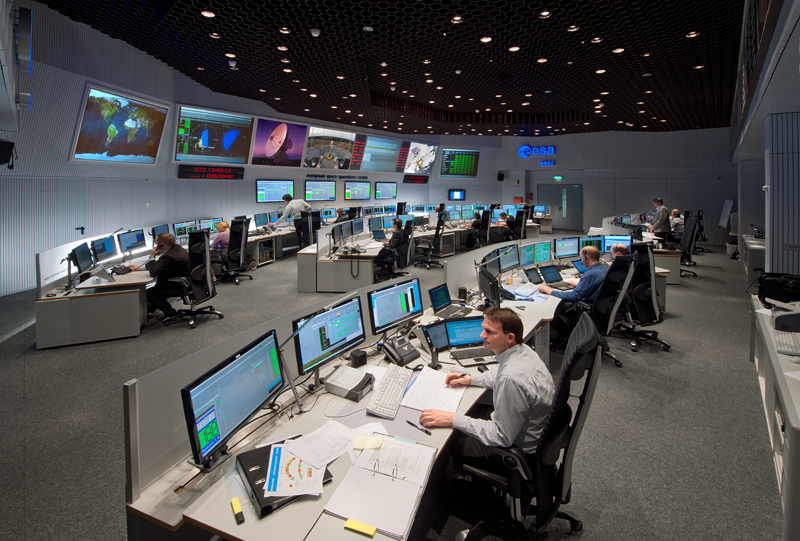
ESOC

On Wednesday there will be a live broadcast of the landing procedure

UPDATE 12 NOVEMBER

5am GMT

The Live broadcast has started already. It is still early in Darmstadt, people are arriving in the ESOC control room, where it is obviously quite cold…:-) Many sniffy people.

Here is a diagram of what will happen today. As I explained in my post, after separation Philae will “fall” to the comet. No course correction possible after separation, so utmost precision is needed

.Rosetta_s_trajectory_12_November_node_full_image_2
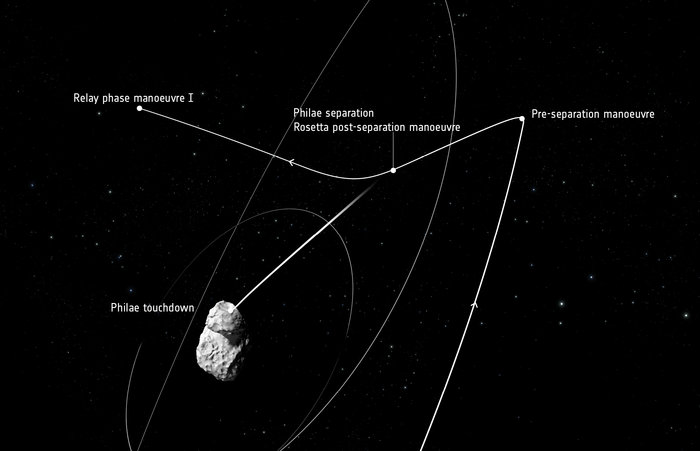
The last few days pictures have been taken by Rosetta with amazing details. Click here for a collection. Here is  a spectacular one.
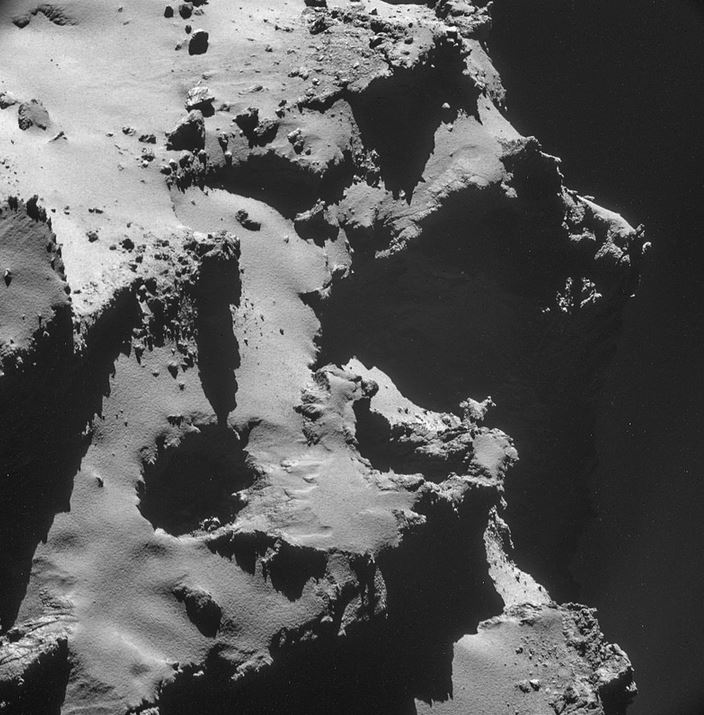
67P_detail

7:30 GMT

Just watched an interview with Gerhard Schwehm, mission manager of the Rosetta project. Now retired. I did not realise that the project started in 1985, almost 30(!) years ago. Less than one hour now until separation.

8:05 GMT 

I have been naive..:-) Thinking that at this moment the command should be sent to Rosetta to deploy Philae (because it takes 28 minutes for the signal to reach Rosetta). But of course they will not do it that way..:-)  Rosetta has been programmed to deploy Philae at 8:35am !  Around 9am GMT the ESOC will know if that separation has been successful.

8:35am  GMT

At this moment, 511 million km away, the Philae is starting its fall to the comet 67P. In spite of a problem that has been found in the  lander. As explained in my post, the Philae could bounce back after touching the surface of the comet. Therefore two harpoons are fired at touchdown to anchor it. Also, on top of the Philae, an amount of gas should be released, giving the Philae an extra push to the surface. It seems that this “thruster” doesn’t work properly.So everything will now depend on the harpoons.

9:05am GMT

Separation is succesfull!!

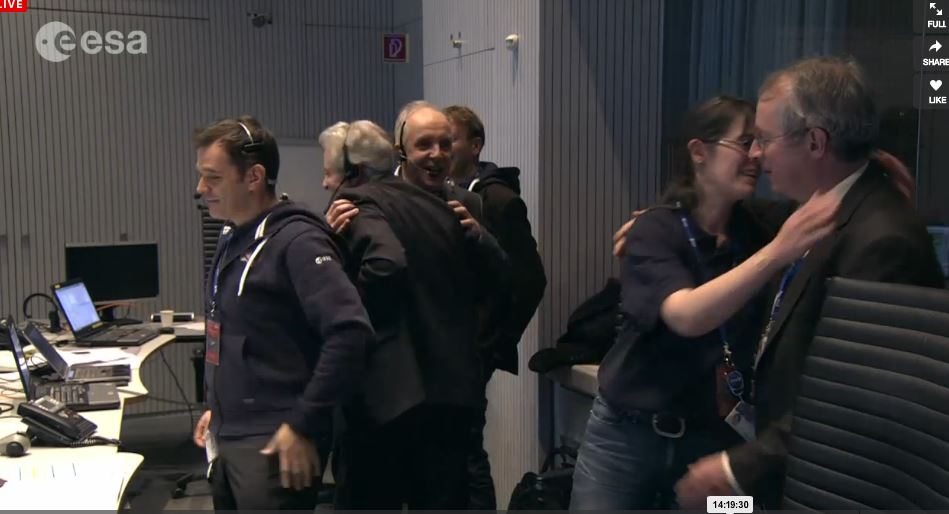
Waiting. Tense
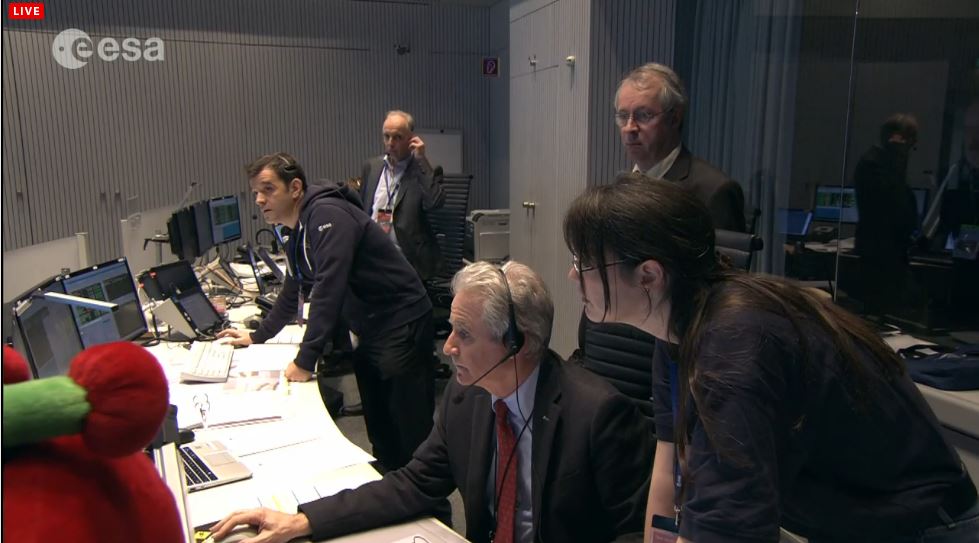
Waiting

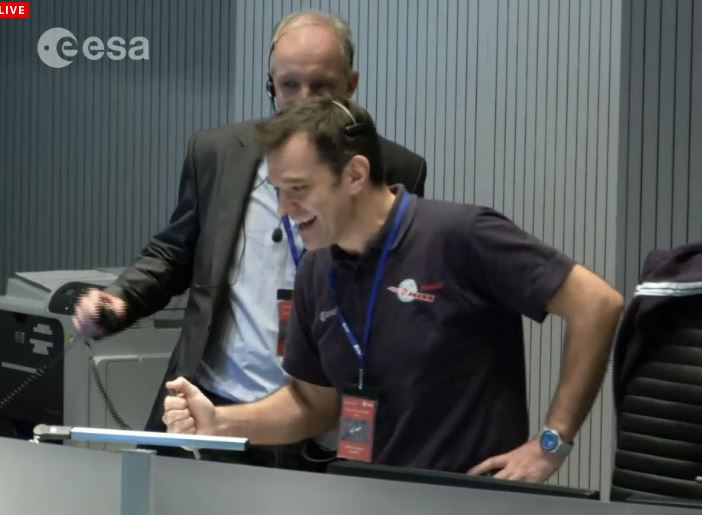
Relief. Hugging

We did it

From now on, the Philae is on its own. In two hours time hopefully contact will be reestablished between Rosetta and Philae

11:10am GMT

Contact established between Philae and Rosetta! Great! This is a bigger step than the deployment. Philae is too weak to communicate directly with Earth, it has to do that via Rosetta. And it did! So now we can follow its descent to the comet, and it may even be able to send pictures.

Tension and relief again..:-)
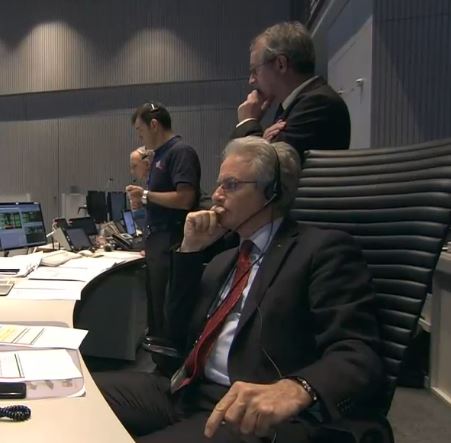
Waiting for a sign of life2

We got it

2:20pm GMT

The first image taken by Philae of Rosetta, just a short time after deployment. Unprocessed, so not high quality, but convincing proof that Philae is on its way to 67P
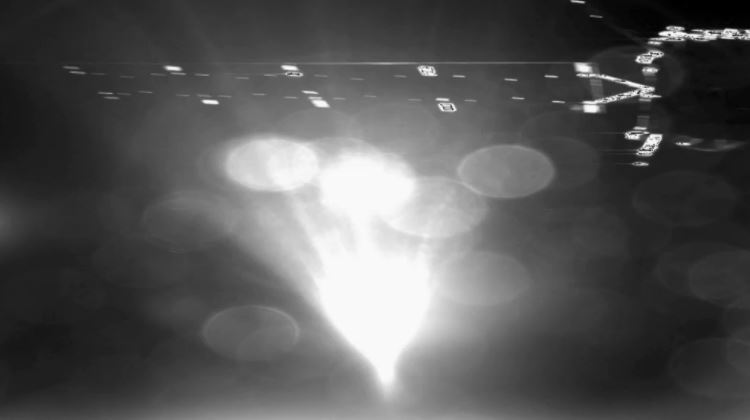
Rosetta as seen from Philae

2:40pm GMT

Telemetry data from Philae show that it is following the calculated trajectory accurately. The landing will be the most critical part. Everybody at Esoc keeps his/her fingers crossed.

Here is an image taken by Rosetta’s Osiris camera of the descending Philae lander. Amazing. The landing arms are out.
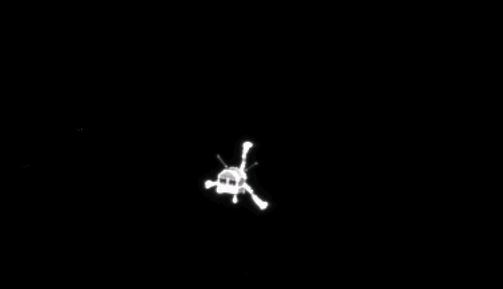
filae

3:30pm GMT

Waiting now for news about the landing. Personally I do no like the optimistic way of talking about success. There is a reasonable chance of failure, and then the disappointment will be huge.

4:05pm GMT

Success? Or not? It seems Philae has landed. Congratulations

And within minutes the news is spreading all over the world…:-)

CNN

UPDATE 14 NOVEMBER

We know now that the Philae has really landed, but not without difficulty! The harpoons meant to anchor the lander, did not fire, so the lander bounced back after touchdown. Because of the low gravity of the comet, it took almost 2 hours before the second touchdown! Then, a few minutes later, the third and final touchdown. The first bounce took the lander up, about 1 km vertically, but also possibly the same distance horizontally. So at the moment the scientists are not sure where actually the Philae landed! During a live broadcast, 13-11, one of the lead scientists explained that the intended landing location was the red square (see below). But after the two bounces, the probable location is now within the blue “lozenge”
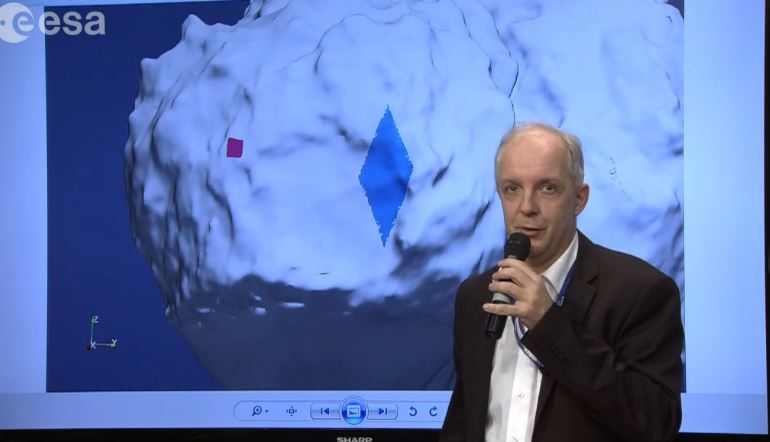
location

Because the Philae is not anchored, some of the planned experiments (like drilling to obtain and analyse some comet material) will be risky, as the lander might loose its balance and topple over.

It seems that the Philae has landed in a location that is more rocky than intended, maybe even beside a cliff. Those rocks may obstruct sunlight from reaching the solar panels of Philae. At the moment Philae is using the energy of its batteries, but soon it will depend on solar energy.

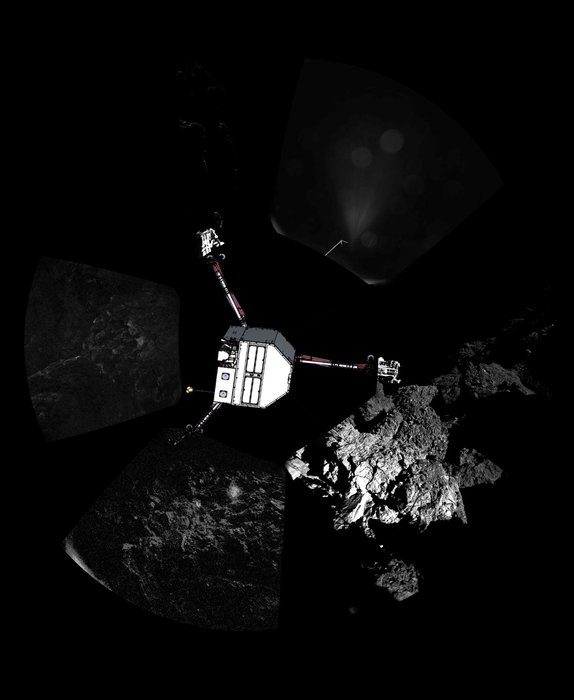
So there are minor(?) problems, which can hopefully be solved. Still the landing is an awesome achievement and at the moment the lander is already collecting scientific data and sending them to Rosetta. Also pictures of the surroundings have been taken. Here are first results, not yet fully processed. To the left a series of six “panoramic” pictures. On some of them a foot of the Philae can be seen. The collage to the right shows the same pictures, but with Philae superimposed.

ESA_Rosetta_Philae_CIVA_FirstPanoramic-838x1024

Comet_panoramic_lander_orientation_node_full_image_2


The Tree of Life

The Evolution Theory of Darwin is now generally accepted, although an astonishing 42% of the American population still thinks that the Christian God created humans more or less in their present form, about 10.000 year ago, according to a Gallup poll, held in May this year!

Huxley

Wilberforce

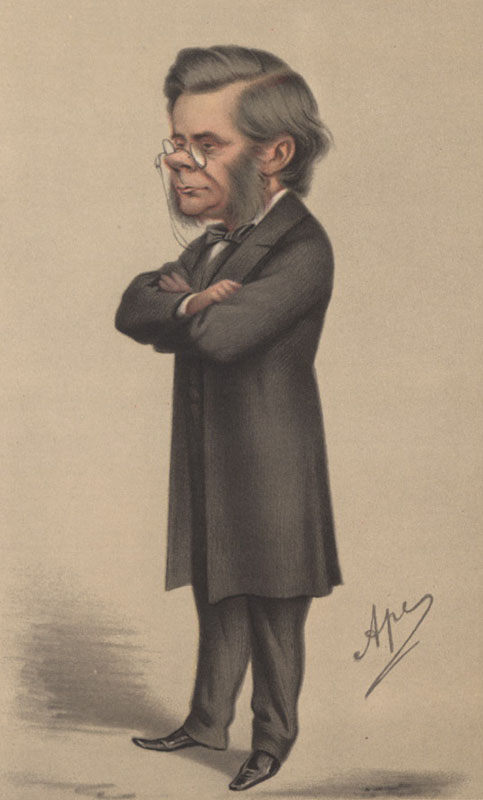
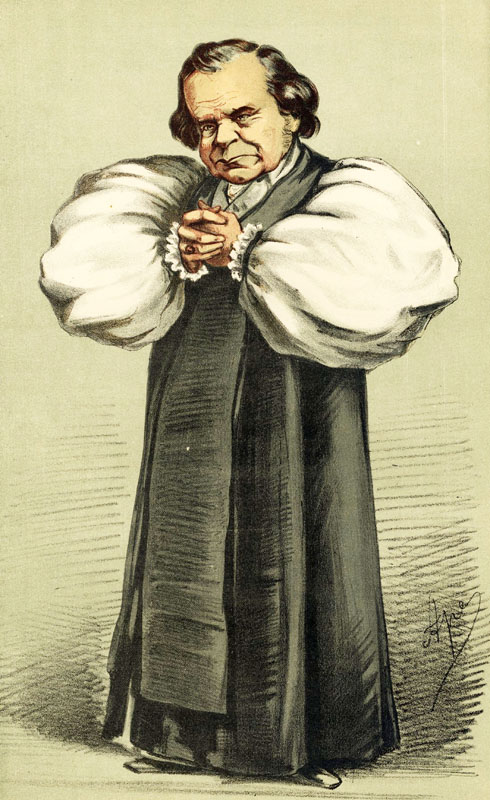
In 1860, after Darwin had published his book “On the Origin of Species, a debate was organised in Oxford between proponents and opponents of this new theory. Supposedly in this debate Bishop Wilberforce asked proponent Huxley  whether it was through his grandfather or his grandmother that he claimed his descent from a monkey

Huxley is said to have replied that he would not be ashamed to have a monkey for his ancestor, but he would be ashamed to be connected with a man who used his great gifts to obscure the truth.

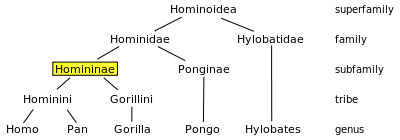
Actually both were wrong in assuming that humans descend from monkeys. Humans and monkeys have a common ancestor which may have resembled neither a human nor a monkey. Our closest relatives are the chimpanzees and the bonobos and our Last Common Ancestor (LCA) is estimated to have lived about 6 million years ago. For the LCA with the gorilla we have to go back ~ 7 million year, for the orang utan ~ 14 million year and for the gibbon ~ 18 million year.

Here is our extended family, in a diagram and as a collection of (baby) photos.

Our family

Homo: Humans                         Pan: Chimpanzees & Bonobos Gorilla: Gorillas                Pongo : Orang Utan                 Hylobates: Gibbons


our family

Of course the story does not end here. Our extended family belongs to the class of the “placental” mammals, together with mice, elephants, whales and bats and more than 5000 other species. The LCA of this (sub)class has lived around the time that an asteroid impact in Mexico may have caused the extinction of the dinosaurs, about 65 million year ago.

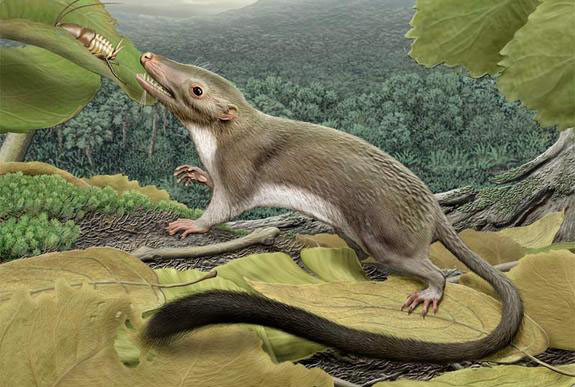
Last year an interesting article was published in Livescience: Meet Your Mama: First Ancestor of All Placental Mammals Revealed . It is an attempt, using advanced techniques, to determine the age of our Last Common Ancestor. In this article even an artist expression is given of our LCA (by palaeoartist Carl Buell )

Our maternal ancestor

Now, look at this picture carefully. This could be the (maternal) ~ 10 million-greats-grandmother of every living mammal, including you and me! Think about that for a while. You came from the womb of your mother, as she did from the womb of your grandmother. Repeat that ~ 10 million times and you end op with this shrew-like critter.

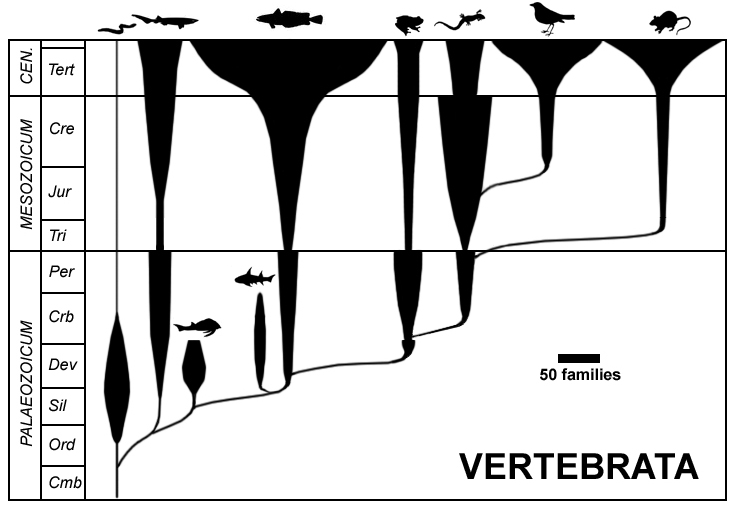
The Mammals are a class in the (sub)phylum of the Vertebrata, which contains six more classes (birds, reptiles, amphibians and three classes of fishes). Also here there has been a Last Common Ancestor, living somewhere around 500 million year ago. May have looked like a kind of segmented worm, with a gut, a mouth and an anus…:-)

Look at this interesting way to show the development of the seven vertebrate classes. To the left you see the geological eras Cambrium, Perm, Trias etc. The thickness of the various classes indicates the number of families in the class.

Vertebrates

Notice the sudden change in thickness at certain times. They mark mass extinctions.. During the Perm-Trias extinction ( ~ 250 million year ago) numerous families and species became extinct.  The other extinction shown is the one caused by the asteroid impact, 65 million year ago. Note the reduction of the reptile class (dinosaurs!)

The Vertebrata phylum belongs to the kingdom of the Animalia, together with eight other phyla. The most important of them are the Arthropods (insects, spiders, lobsters, centipedes)  Sponges, sea urchins, jellyfish, earthworms are all animals and have their own phylum.

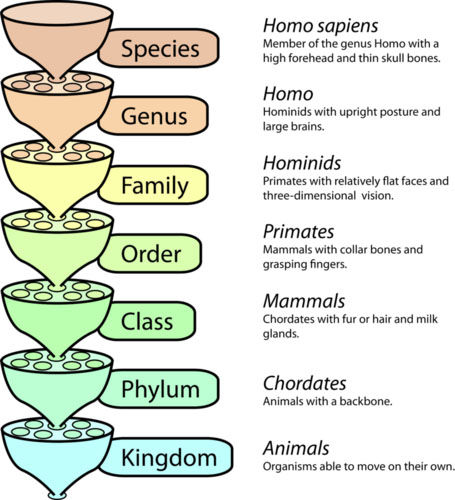
Confused by all these concepts like  family, class, phylum, kingdom? This part of biology is called taxonomy Here is a diagram of our human lineage.

human taxonomy

To keep it simple, I have skipped the category Order (we are Primates), taken the sub-class Placental Mammals and the sub-phylum Vertebrata, because the term is more familiar than Chordates.

So we humans are a member of the kingdom Animalia. Together with how many other species? Present count is ~1.5 million (mostly insects…haha) Estimated total animal species count between 2 and 20 million…


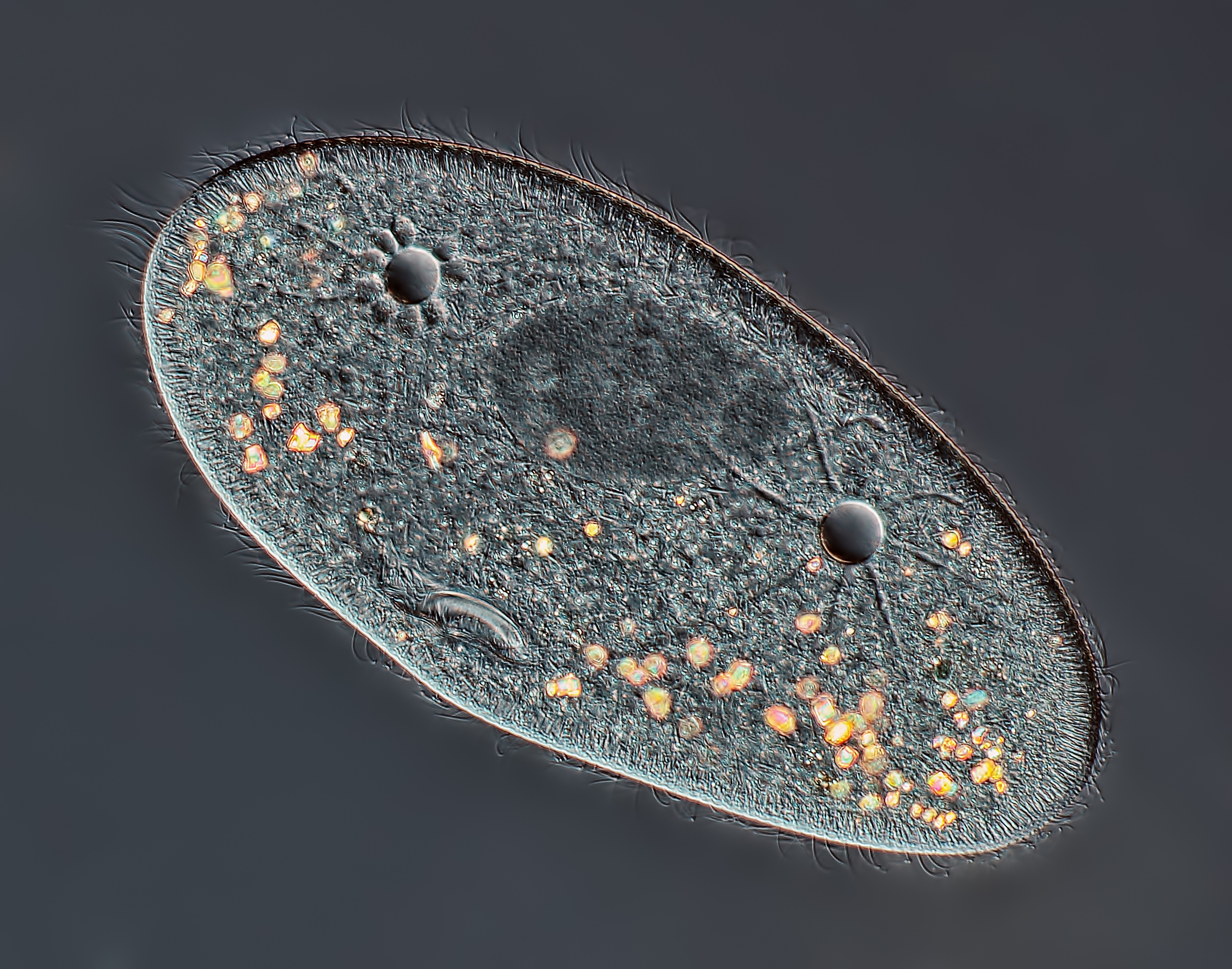
The kingdom of animals. Are there more kingdoms? Yes, there is also the kingdom of plants and the kingdom of fungi. All three contain multi-cellular organisms. And there are other kingdoms of unicellular organisms, like the paramecium, almost always present in stagnant water, and visible under the microscope                                                                                                                                                                                                                     Paramecium

Keep in mind that there has been a Last Common Ancestor of you and this amoeba-like critter! 

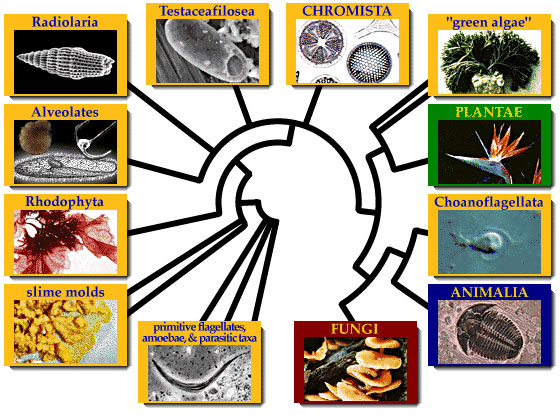
Why are these kingdomscombined together? Because they share a very important property: their DNA is contained in a separate part of the cell, the nucleus. These kingdoms form the domain of the Eukaryota  Here is a visual representation of the kingdoms in this domain.

eukaryota

Again, keep in mind that there has been a LCA of all the organisms in this picture  Although we have to go back far in time…:-) About 2 billion years, there is still a lot of discussion going on about the timing. But it is clear that developing a nucleus containing the DNA and organising the various functions of the cell was a major breakthrough in the evolution of life.

Do cells exist nowadays that do not have a nucleus? Sure! There are two more domains where the cells have no nucleus. One of them will be familiar to everyone, the domain of the Bacteria.  The other one is the domain of the Archaea, also a kind of bacteria and only recognised as a separate domain during the last decade. Click here if you want to know more about the differences between the two (warning, very technical).

Bacteria are small organisms but there are many of them. The number of different species is unknown, estimates vary between 10 million and 1 billion…! They are everywhere! There are typically 40 million bacteria in a gram of soil and a million bacteria in a millilitre of fresh water. And don’t forget the bacteria in our own body. There are about ten times more bacteria in our body than there are body cells! On average about 2 kg in an adult human body, mainly in your gut. And important for your digestion, you would die without them.

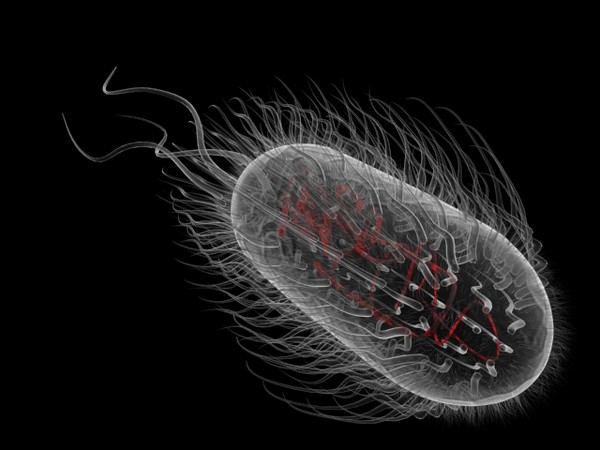
Here is a picture of the most common bacteria in your gut, the E. Coli bacteria. I will write a separate post later about bacteria and the human body.

e-coli

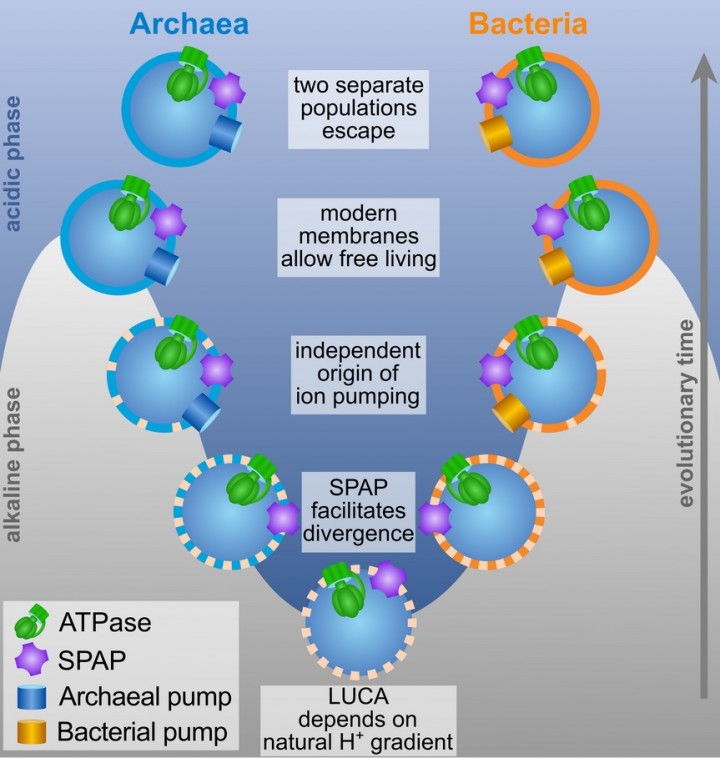
So, finally we have arrived at the beginning of life. About 3.5-3.8 billion years ago there lived the Last Universal Common Ancestor (LUCA) of every organism living now. We do not know much about it. It may have lived in the deep sea, near to a volcanic vent. Read Four Billion Year-Old Mystery of Last Universal Common Ancestor Solved for more information. Here is a diagram from this site, showing the first major evolutionary split, in Bacteria and Archaea .

luca

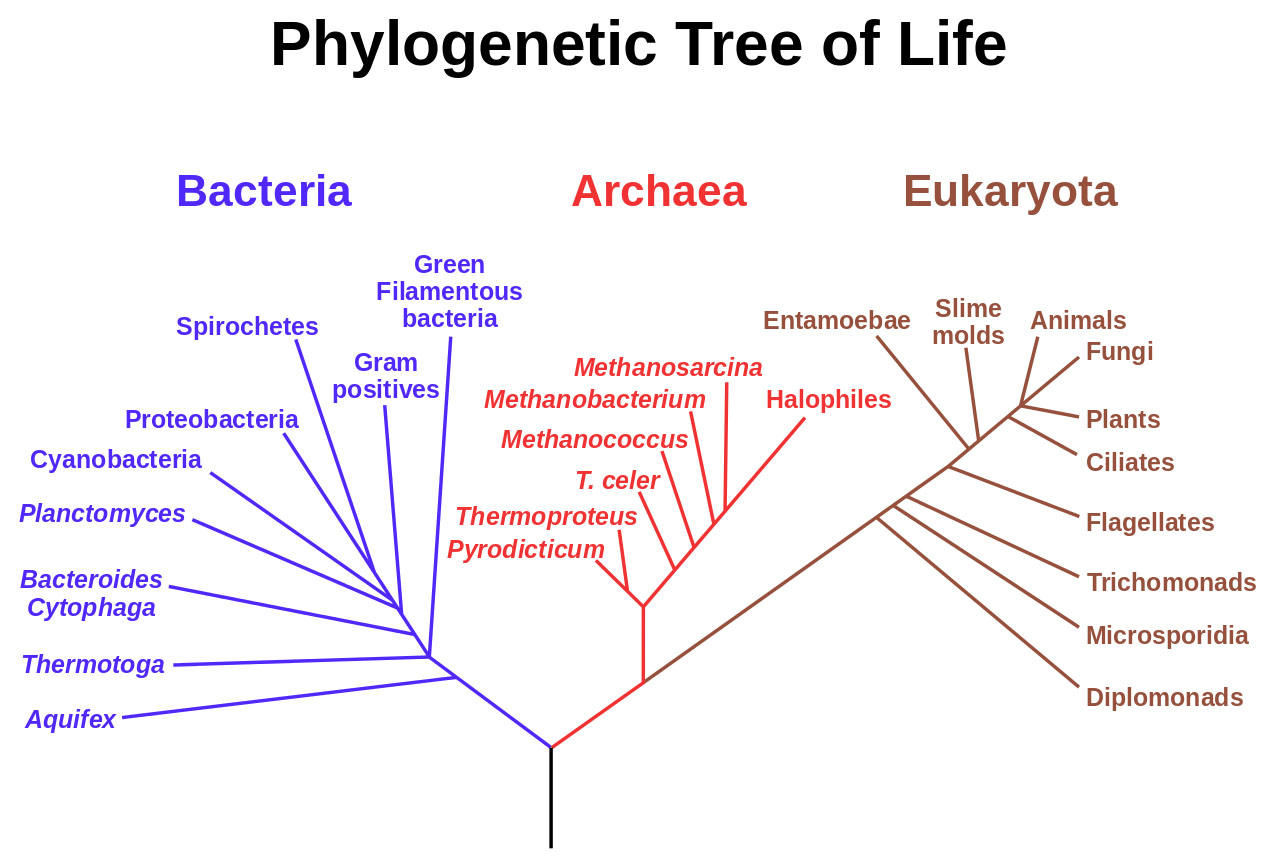
And here is the tree of life, showing the split in the three domains. First the split in Bacteria and Archaea, with the Eukaryota branching off from the Archaea. Note that the Kingdoms of Eukaryota in the graph below have often different names from the names in the visual representation above. A clear sign how this field of evolutionary biology is still in development.

tree of life

A much more detailed tree of life, although looking less like a tree, you can see below. Click here for a larger version. In blue the domain of bacteria, in green the Archaea and in red the Eukaryota. Each domain showing some of its kingdoms in different shades. Try to find homo sapiens..:-) And notice how huge and complicated the domain of the Bacteria is.

The names in the outer circle of this diagram are representative species in their kingdom. You can spend hours checking details in Wikipedia…:-)  For example Anopheles Gambiae : Mosquito, Oryza Sativa: Rice, Takifugu rubripes : Pufferfish, etc.

Tree_of_life_SVG

That a single tree of life can be constructed for all the living organisms, suggests that life has only started once on earth.  If life arose repeatedly then all of the separate origins must have disappeared without trace.

All living organisms belong to one big family with a common past of ~3.5 billion years. Isn’t that a nice conclusion for this post…:-)?

_______________

Much of the information in this post comes from the monumental book The Ancestor’s Tale, written in 2004 by Richard Dawkins

Japan trip, October 2014: Wakayama

Waka what?  Everybody knows about Osaka and Kyoto, but Wakayama will draw a blank with many visitors of Japan. It is not mentioned at all in the Rough Guide of Japan, for example!

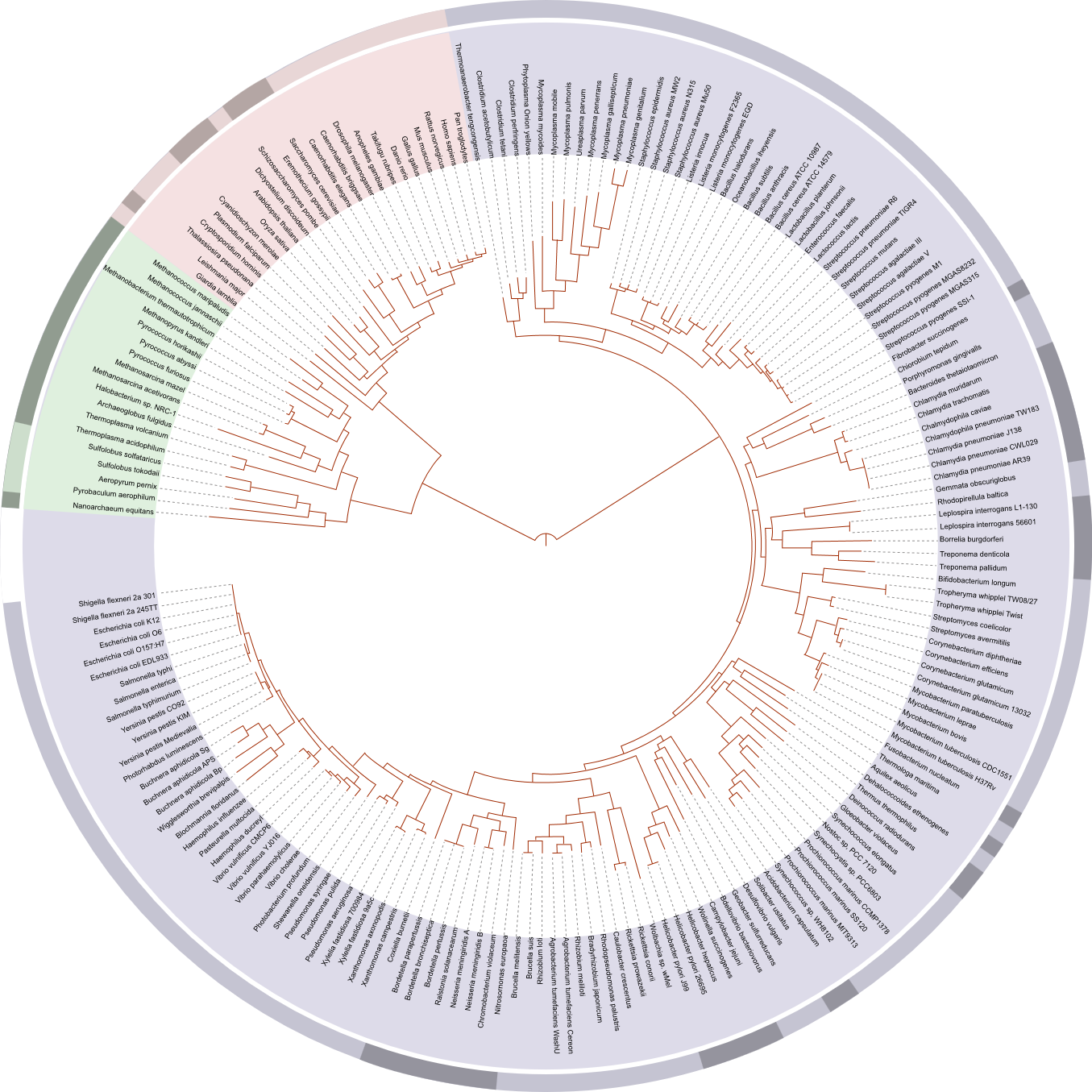
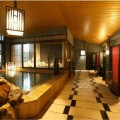
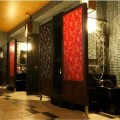
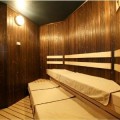
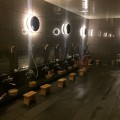
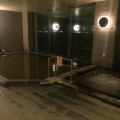
Wakayama is located about 60 km south-west of Osaka and we went there in the first place because of our interest in the Japanese bath culture of the onsen, the hot spring baths. The hotel we had booked, Dormy Inn, has a big onsen which occupies one floor of the hotel. Separate baths for male and female. Because everybody is naked, it is not allowed to take pictures, so I have taken a few pics from the Internet to give an impression. During our two days stay we used this onsen 5-6 times, it is really addictive…:-)

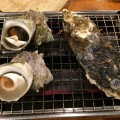
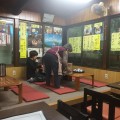
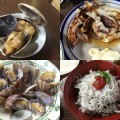
The first evening we were looking for a famous ramen stall, but it was closed. So we tried our luck in a BBQ seafood restaurant, hoping for somebody who could speak a bit of English. That was not the case but one of the waitresses was Chinese, studying Japanese language. With her help we could order quite exotic food…:-). Interesting detail, in the picture to the right I am about to eat the BBQ-ed shell. It was quite tasty. Only after swallowing it I was told that the blackish part should not be eaten as it contained the shit of the critter…:-)  Well, I survived.
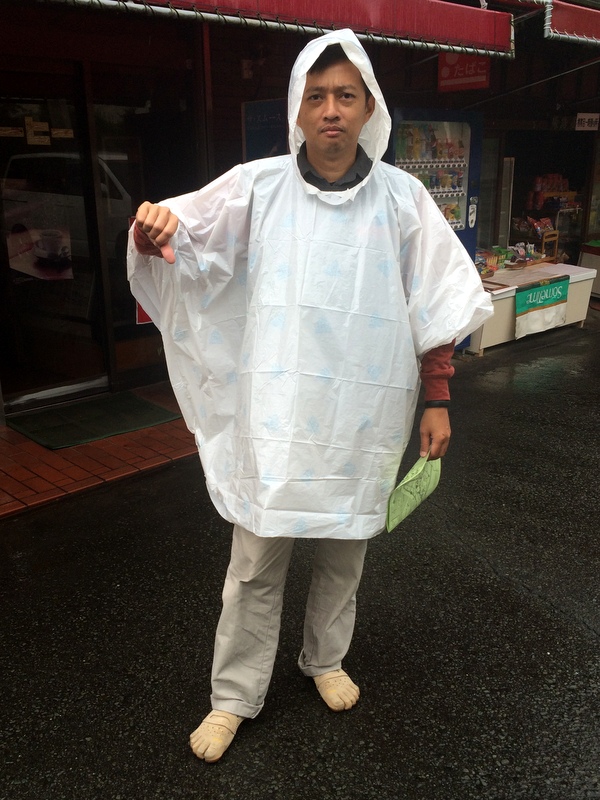
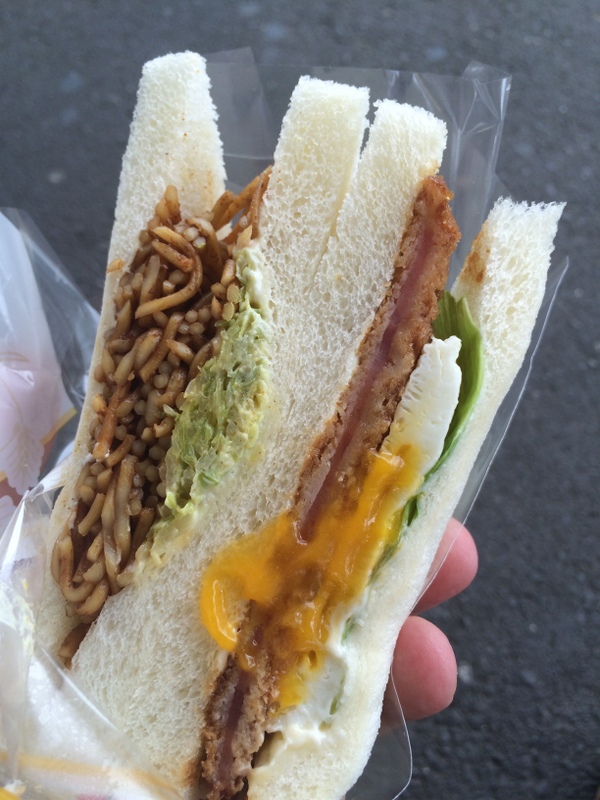
The next day was the only day we had rain. Aric had to use his raincoat. We had a snack for breakfast, bread with egg and noodles, a weird combination, but the taste was good.
Rain

Funny food

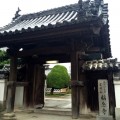
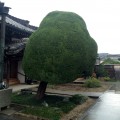
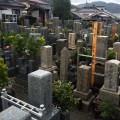
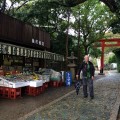
Our target was the Awashima Shrine in Kada, about one hour by train from Wakayama. Kada is a small seaside town. Walking to the temple we passed another small temple with a nice cemetery.
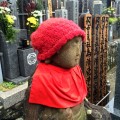
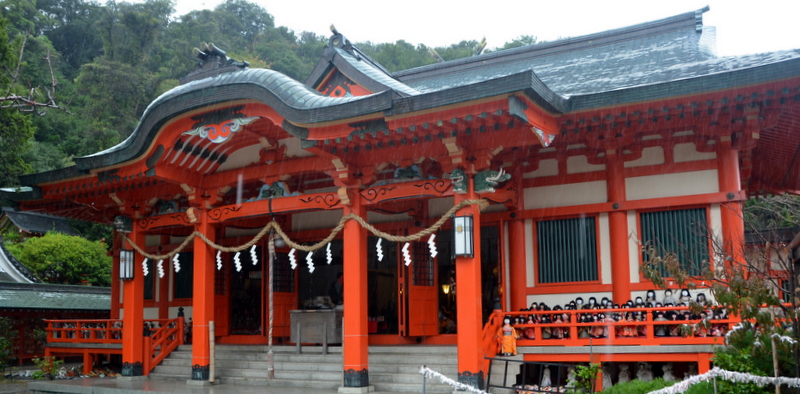
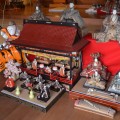
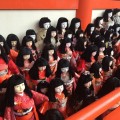
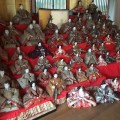
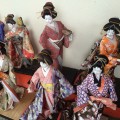
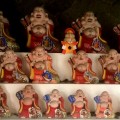
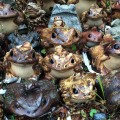
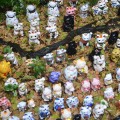
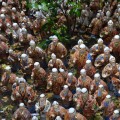
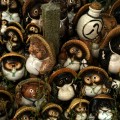
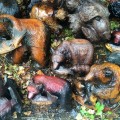
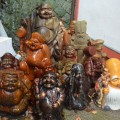
When we arrived at the shrine the drizzle had changed in a real downpour, so we had to take shelter for a while. The temple hall itself is nothing special, it is famous for the thousands of dolls and statuettes given to the temple by devotees.

Awashima Shrine

An orgy of colours and shapes. You keep taking pictures…:-) Click a picture to enlarge

Near the temple we found another nice restaurant for lunch. Again BBQ shells and seafood. Here they had a menu in English!

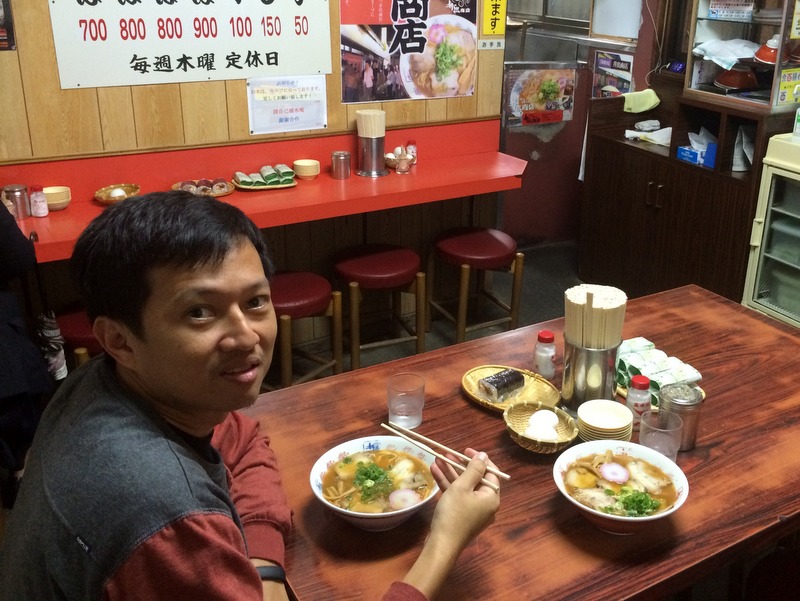
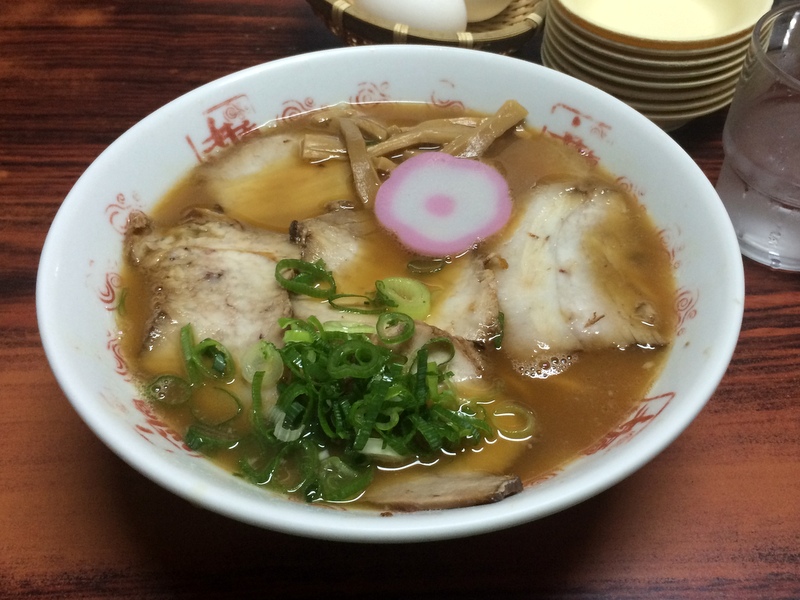
After we came back in our hotel, Aric went for another onsen session (he is more addicted than me.. haha) and then we went out again, first to the ramen stall, which was open now. They have won prizes with their ramen and deservedly so. The most delicious ramen I have ever tasted.
Ramen stall

Ramen

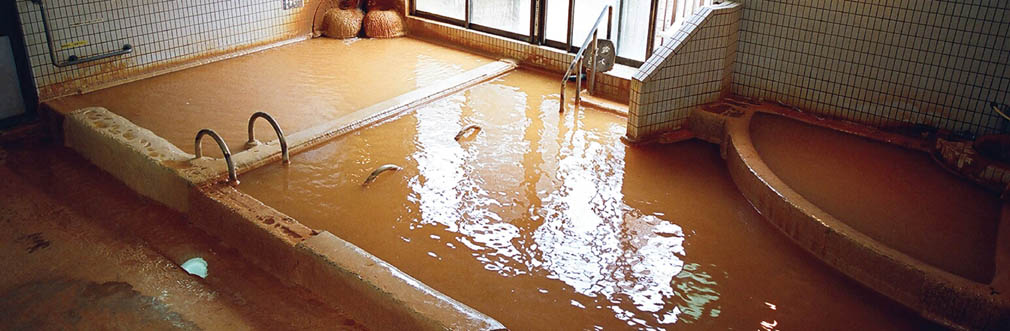
After this dinner we went to a public bath, the Hanayama onsen. Special about this onsen is the brownish  teh tarik color of the water. Also here no pictures, here is one from the Internet. Nice experience, people come here for their bath, young and old. But of course we remained outsiders because we could not speak Japanese…:-)
Hanamaya onsen

There are many more beautiful onsen in the countryside, access not always easy, maybe we can come again another time.
For our last night we had booked the Manpa resort, a ryokan resort with its own onsen, overlooking the sea. As we could only check in after 3pm, we had the morning to spend and we decided to visit the Wakayama castle.

That was a good move, because it turned out to be a much nicer place than the touristic and crowded Osaka castle.

On out way back to the hotel, looking for a suitable place for lunch. That can be really a problem in Japan, because local eateries are not always conspicuous. Fortunately often the signs use Chinese characters (with Japanese meaning) so Aric could guess the meaning. Like was the case with this canteen where we had lunch.

As the Manpa resort is a bit remote, we took a taxi. The resort has a nice view of the sea and also here one complete floor is reserved for the onsen. We had a nice room in Japanese style with a sea view.

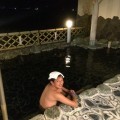
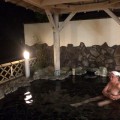
Of course we went a few times to the onsen. There were not many guests, so we had the bath for ourselves, and even could take a few pictures.

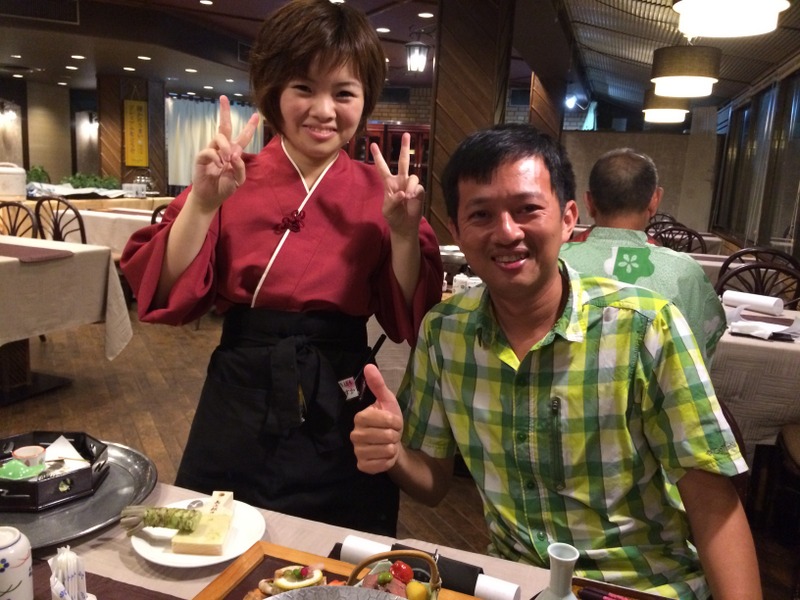
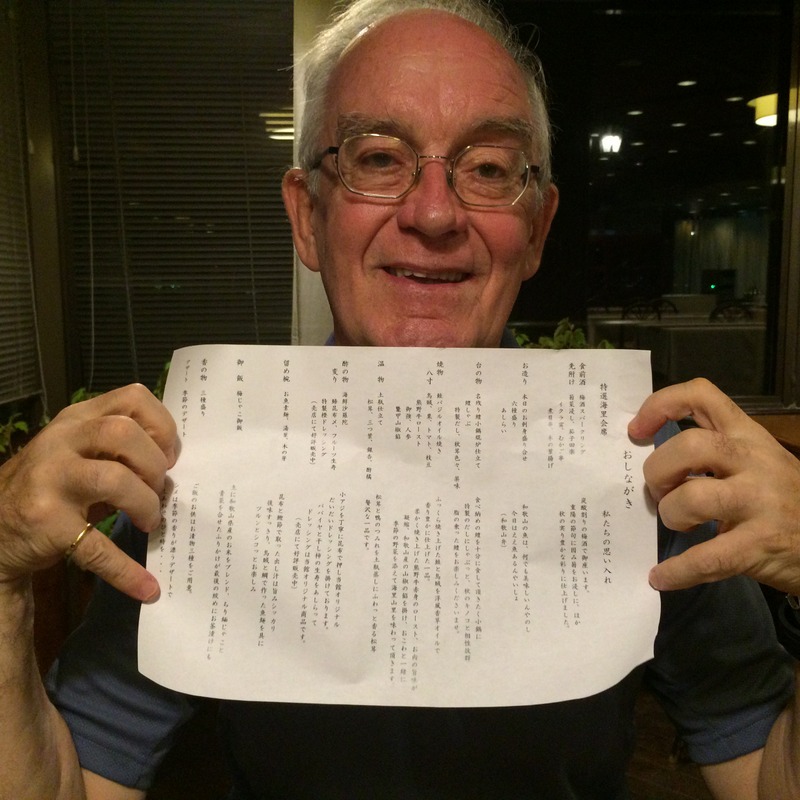
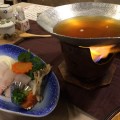
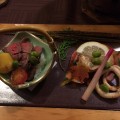
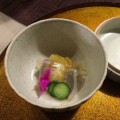
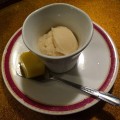
The (expensive) Manpa package includes a traditonal Japanese dinner and a breakfast the next morning. The dinner was a delight, although we could not read the menu. But the waitress was very nice

Manpa dinner

Manpa dinner

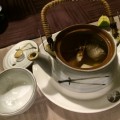
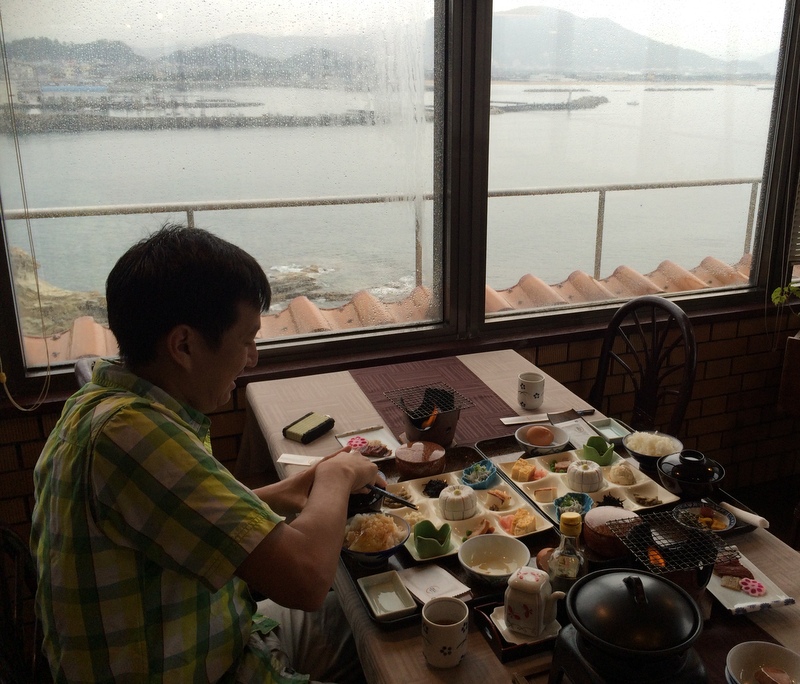
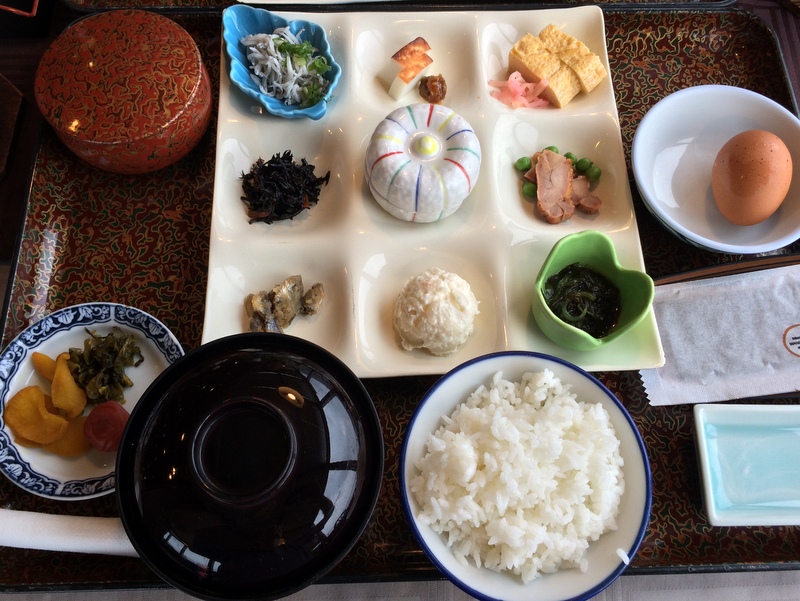
The departure time for our flight back to KL from Kansai airport was at 11 am, so we had to wake up early for our last onsen and then our breakfast. The breakfast was again very traditional Japanese, very fishy, actually not easy to eat so early in the morning….:-)

Manpa breakfast

Manpa breakfast

It was a remarkable trip. Not always easy, I needed quite a few days to recover. But it will be worthwhile to come back again.