There have been years when I visited more than twenty waterfalls, but that is over for various reasons. In 2023 I visited one waterfall only, during Chinese New Year, the Lata Juang.
As an octogenarian I have decided to visit only waterfalls with easy access “grandfather falls haha), so I was interested when my friend Edwin recently updated me about Lata Khong. When Khong and I “discovered” this waterfall, almost 20 years ago, access was already quite easy. Now the local Orang Asli community has made a cemented footpath for the last 100 meter to the fall , making access even easier. It makes sense they charge a small fee for parking and entry.
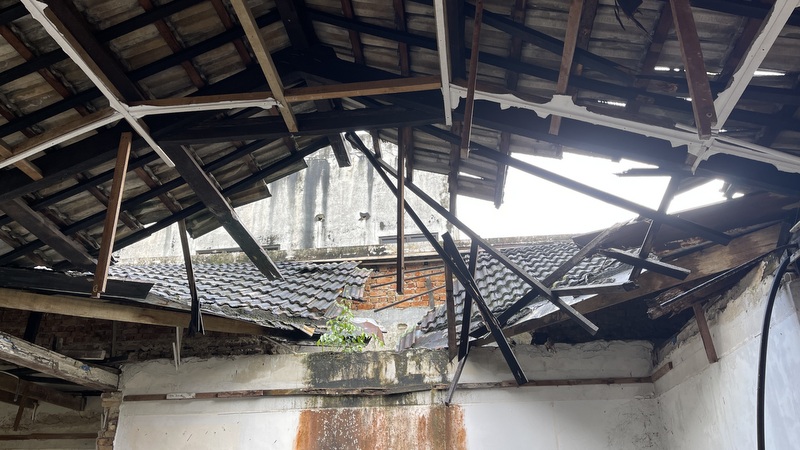
When we arrived in the kampung , we were shocked that access to the fall was impossible. An OA boy explained that a few days earlier the police had inspected the access road and decided that it was damaged/dangerous. Not really clear what kind of damage. Closure until January!. Read the hand-written notice.
That was disappointing, we had been driving from KL for about one hour, so what to do? The solution was to visit the Chamang waterfall near Bentong, another grandfather fall in the same region. I first visited this popular fall in 2004. The recent heavy rainfall made it even more impressive now.
Also here “development” has taken place, it is now called Taman Eko Rimba (Ecological Jungle Park) Chamang, with opening times and an entrance fee (RM 10 for me, a bit steep). There were a few tourists only, they stayed for a while at the huge signboard, then left.
Workers were constructing something new, we could not go down to the waterfall.
Which photo would you prefer?
Even with all the development the Chamang waterfall is still a very attractive one, but you must look for a suitable view point.
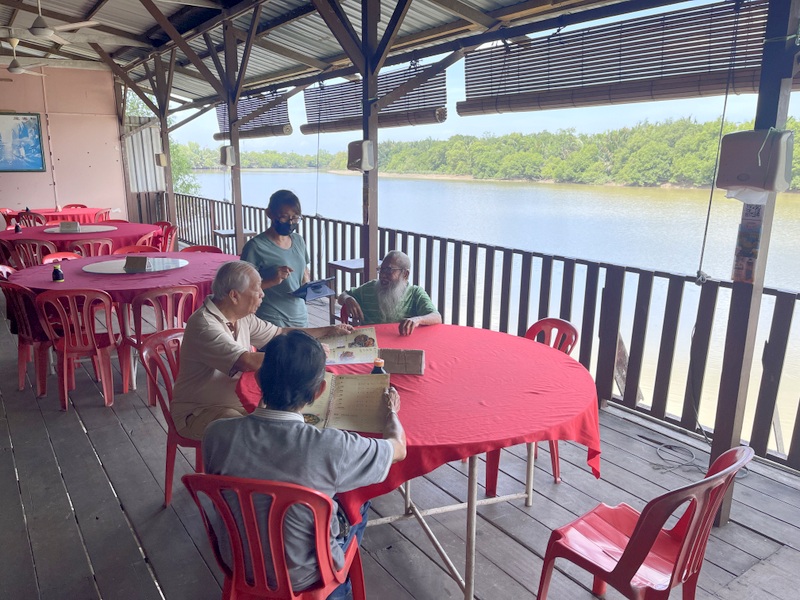
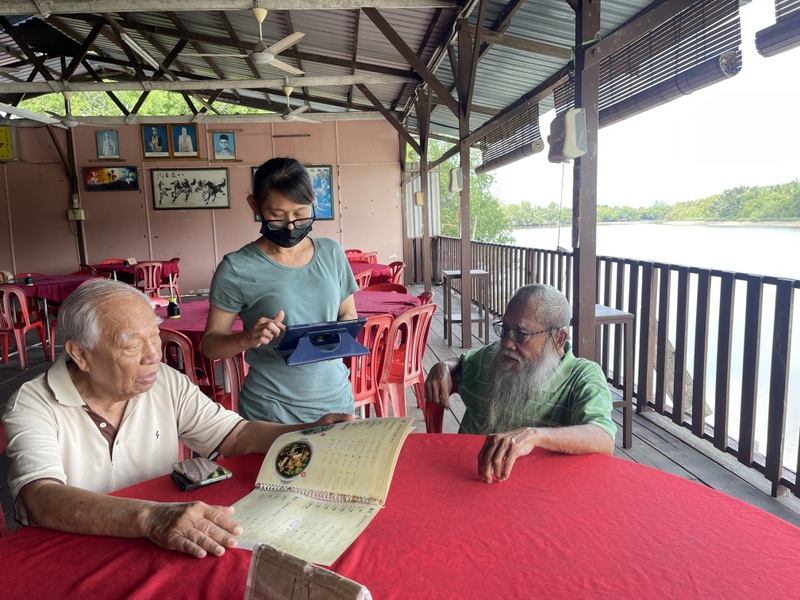
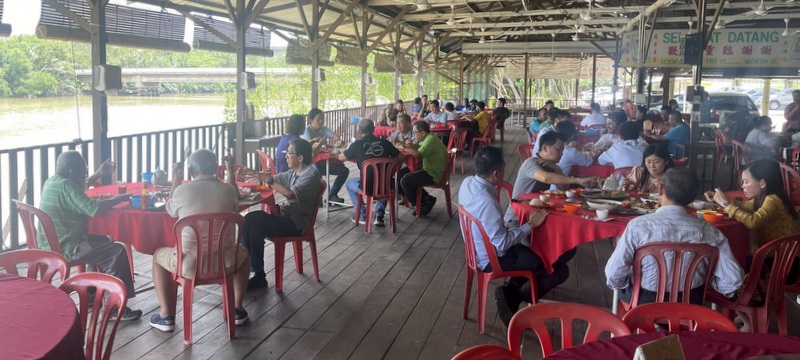
On our way back we had lunch at the Fantasy Valley restaurant in Kampung Bukit Tinggi. Very scenic location along the Tanglir river.
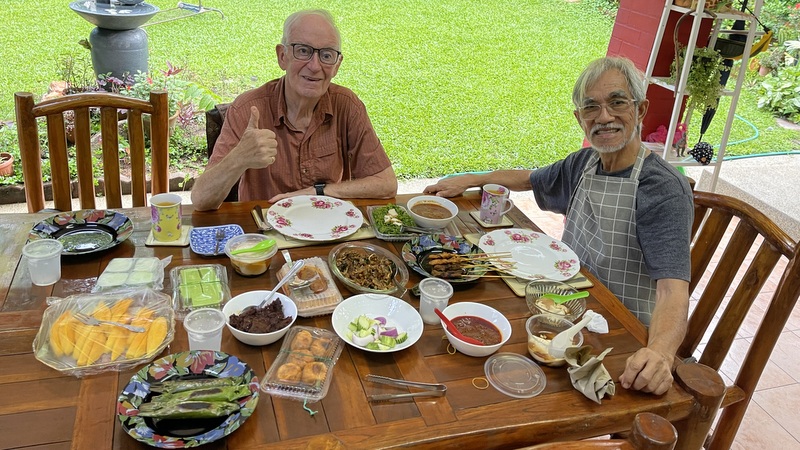
Aric ordered Claypot Prawn Glass Noodles and veggies. Big Udang Gala (Freshwater Prawns), not cheap, but so delicious!
Although we couldn’t visit Lata Khong, it was a very pleasant outing.
My blog post headings tend to be descriptive rather than imaginative. Here is a blog post I wrote two years ago: Penang & Taiping, 2022 😉 . Very similar, first two nights in Penang, then one night in Taiping. But also different, in 2022 we went with friends, this time it was a trip of Aric and me, like the trips we made earlier to Teluk Intan, Seremban and Melaka.
On our way to Penang we stopped at the Sungai Perak R&R for coffee and Cekodok Pisang (fried banana balls).
We had lunch in Bukit Mertajam with Assam Laksa. Aric is an assam laksa fan and on our trips he is always looking for new laksa stalls. He has a website, Assam Laksa Review, which contains at the moment 28 Assam Laksa shops. This one was very good, Aric gave it a rating of 9 out of 10.
Crossing the (old) bridge to Penang island.
In Georgetown we usually stay in heritage hotels, but this time Aric had booked a very modern one, the OZO hotel in Argyll road. Interesting car parking, you drive the car in a lift, and then it is transported to its place. When you need it again, the car comes out of the lift, nicely rotated 180 degrees!
Another interesting detail, the lobby is at the 20th floor. We had a comfortable room on the 18th floor.
A room with a view !
Recently Aric had bought a new camera for time-lapse photography and that was the main reason he had booked this hotel. Here he installs the camera to take pictures every ten seconds.
After a short rest we went out again, to visit an art exhibition, the Galeri Khazanah. A temporary exhibition of Malaysian artists, from 19 July until 17 August, in the beautiful UAB building, the headquarters of Khazanah Nasional Berhad , the sovereign wealth fund of Malaysia.
Free access, after registration. An interesting collection with 46 diverse artworks by 31 modern and contemporary Malaysian artists.
A variety of styles, abstract, realistic etc.
Left the exhibition poster. The other two pictures show augmented reality artworks. The white base is empty, but after scanning a QR code , a 3D artwork appears for a while in your smartphone camera, positioned on the base. Amazing,
Our dinner plan was to go to a lok-lok restautant. In 2022 we visited with friends the Peng Hwa Lok Lok in Pulau Tikus (No 2 in the link above). But it was closed this time, so we went to another one, the Ah Beng Lok Lok at Padang Brown (No 1 in the link). Also closed! Then we realisded that probably the night before there had been a Hungry Ghost event. So we gave up and found another simple stall, where I had prawn mee (also known as Penang Hokkien mee).
Back in our hotel, we enjoyed the night view. This is a “normal” picture taken with my iPhone.
And here is the artwork made by Aric with his new camera. It is a collage of 150 time-lapse pictures, with a diagonal slice of each picture.
As we had a very early dinner (around 6 pm), we got a bit hungry and went out around 10:30 pm for supper. Within walking distance from our hotel, there is a popular restaurant for prawn mee and loh mee, the Green House. We had to queue! It received a Michelin Bib gourmand, never heard about it, it is a bit similar to what my friends here call VFM (Value for money). My second prawn mee this day, better than the first one 😉 .
Walking back to our hotel, I was as usual impressed by the beauty of Georgetown.
The next morning we had breakfast with fried carrot cake, pau and coffee, in a cafe near our hotel. Befiore checking out, we had a look at the infinity pool on the 22nd floor. OZO is a bit like a little brother of the iconic Marina Bay Sands hotel in Singapore ;-).
One reason to visit Penang was to meet our friend Lim Chong Keat (LCK). He is the owner of the Bellevue Hotel on Penang Hill, we had booked to stay overnight there and had arranged to meet him in the afternoon. So we had a few hours to spend.
We drove to Bayan Lepas, near the airport. Aric knew about another laksa stall there, but first we visited a small waterfall, the Air Terjun Sg Ara. Never heard about it!
Unfortunately the laksa stall was closed, but nearby was a “famous” stall where they sold prawn crackers. We bought two and then went looking for another stall where we could have lunch.
We found another stall nearby where they sold Mee Siam, Mee Siam is a bit similar to Assam Laksa, it originated from Penang but can now be found all over Malaysia and in Singapore. Very tasty and the prawn crackers were the best I ever had.
After lunch, Aric suggested to visit the Wat Chayamangkalaram, a Thai Temple, famous for its large gold plated Reclining Buddha. The temple was founded in 1845 and is the oldest Siamese temple in the state of Penang.
The main hall , with the Reclining Buddha inside, is well guarded
The Reclining Buddha is one of the world’s longest (about 32 m from end to end). Very impressive.
The main hall also has a columbary.
You can spend hours here, but it was a very hot day and the bright sunlight was almost painful to the eyes.
Opposite the Siamese temple. there is a Burmese temple, the Dhammikarama temple. which is even older, founded in 1803. Both are Theravada temples. Because of the hot weather, we didn’t stay long.
Just a few more pictures. The pots in the pond are slowly rotating. The idea is to throw a coin into a pot, when you manage to do that , it will bring you good luck. Not easy.
When you are interested in Buddhism, you can just take a free book, but only when you are not a Muslim.
The two guys are happily carrying the temple bell.
At 4 pm we arrived at the family house of the Lim family. LCK was still talking with a group of botanists from the University of Malaya (UM).
With him we drove to the Bellevue hotel.
The Bellevue Hotel was originally the residence of William Halliburton, the first Sheriff of Prince of Wales Island, as Penang was called in those days. We have stayed a few times in the hotel , I love its old world charm. . The view from the veranda is fabulous.
We had a chat and a drink with LCK. He is an interesting personality, architect of the Komtar tower, now a botanist of international renown, with a wide interest in classical music, a “universalist” like his role model Buckminster Fuller.
A view of the hotel from the garden. And a view of Georgetown. In the garden a geodesic dome. There are many memories of Buckminster Fuller in the hotel.
We had local dishes for our dinner, prawns, veggie and tom yam soup.
Here is another creation by Aric, made with his new toy. This time it contains 30 time-lapse slices.
Rain during the night, still cloudy in the morning. Nice temperature.
The walls of the corridor have informative posters. We had a local breakfast, nasi lemak.
The hotel has an aviary, with several peacocks and other birds.
Around 11am we got transport down to our car. We drove back to the mainland where we found another laksa stall for our lunch. This time in Butterworth, not really special, Aric’s rating: 5-6 out of 10.
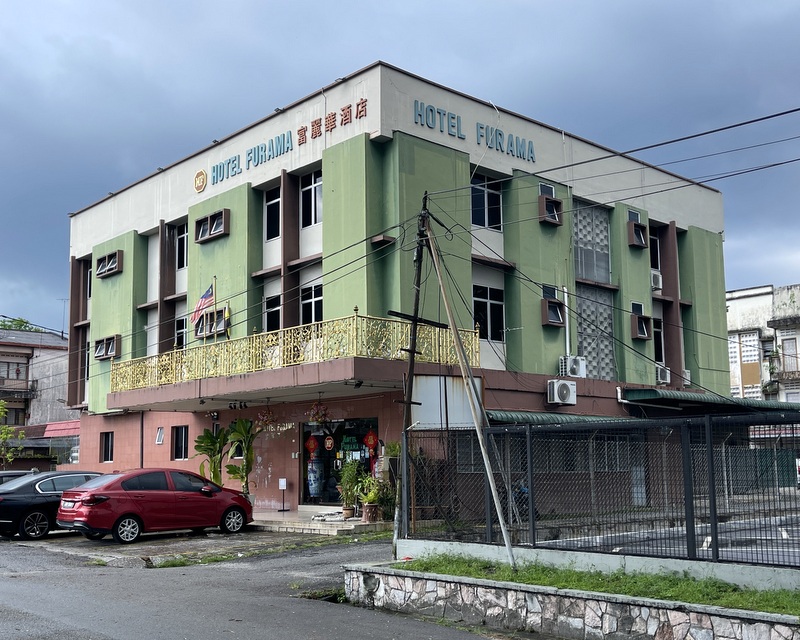
On our way to Taiping heavy rain. As usual I had booked “my” room in hotel Furama.
My friend George was also staying in Taiping, we are both friends of Suet Fun, so we invited Goerge & Jenny and Suet Fun & Peter for a dinner in Soon Lee. We thought no booking was needed, as it was the Hungry Ghost month, but that was a mistake, the restaurant was fully booked. So instead George suggested Restoran Kampoung Wan, a good alternative. Delicious food and a pleasant atmosphere.
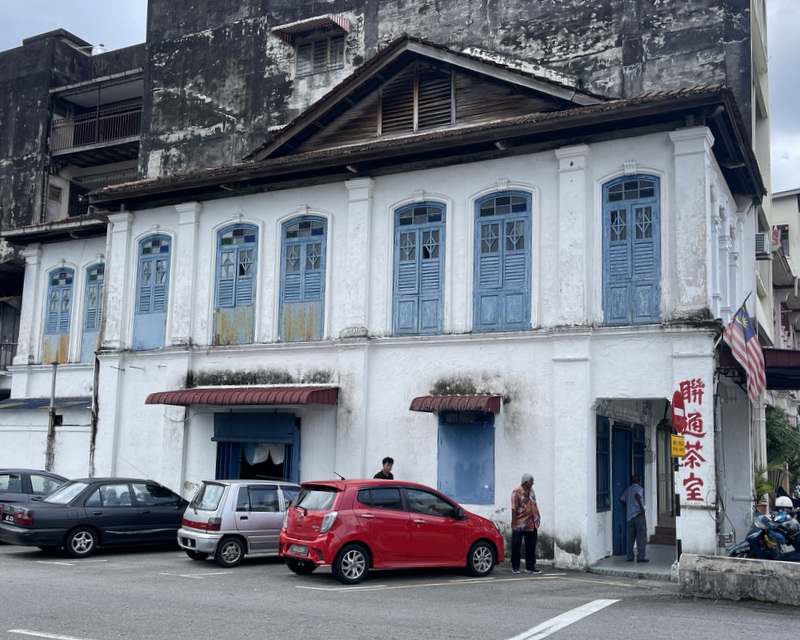
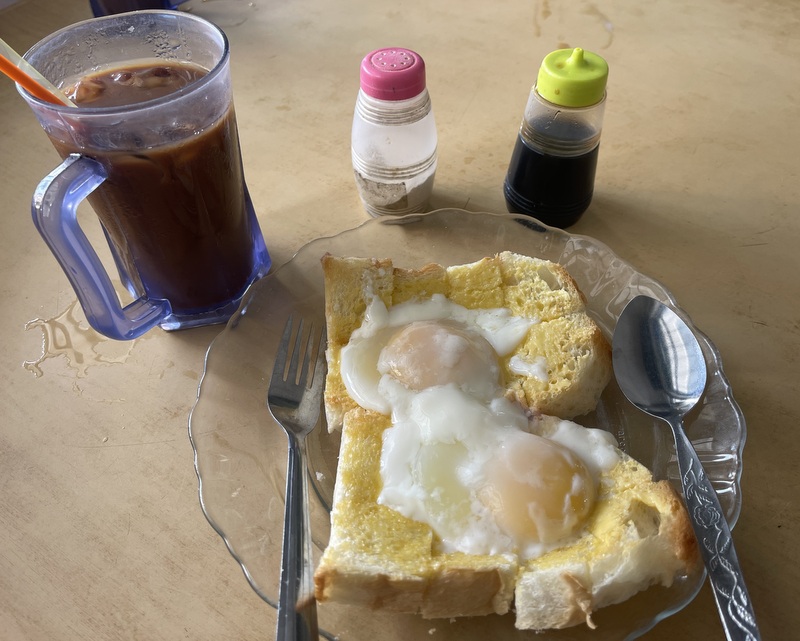
The next morning we had breakfast in the Rainy Corner, around the corner from Furama. Very good coffee.
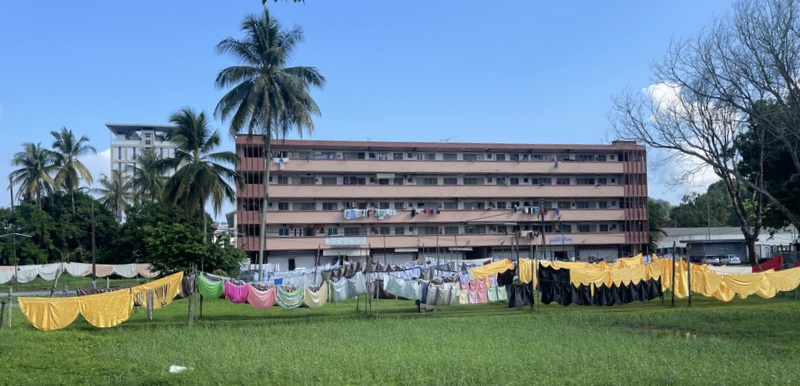
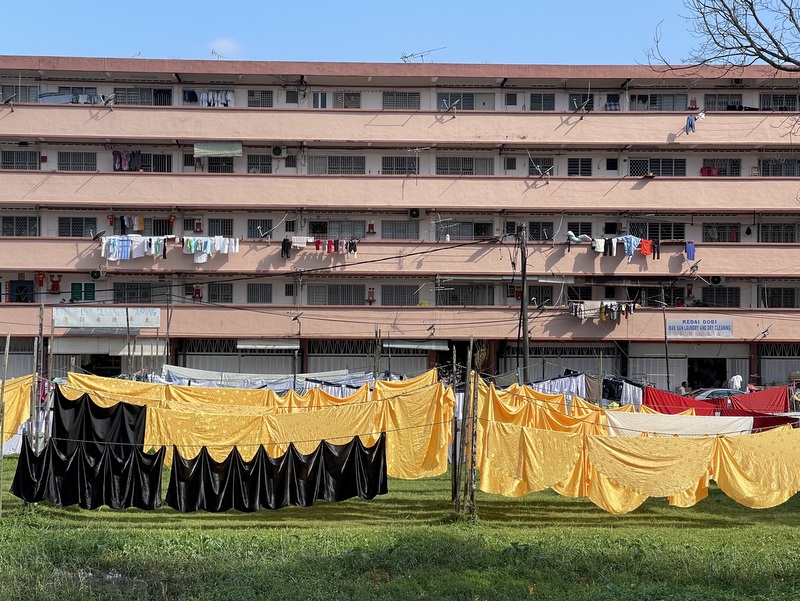
It is always a pleasure to be back in my adopted hometown. Here is the famous Dobi Line.
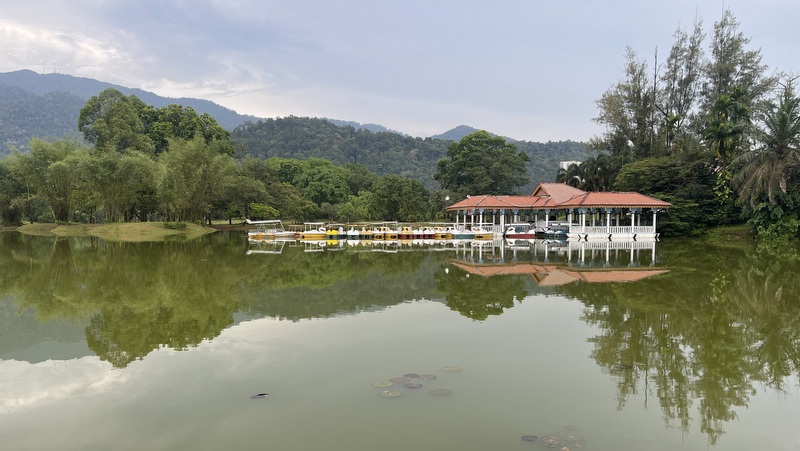
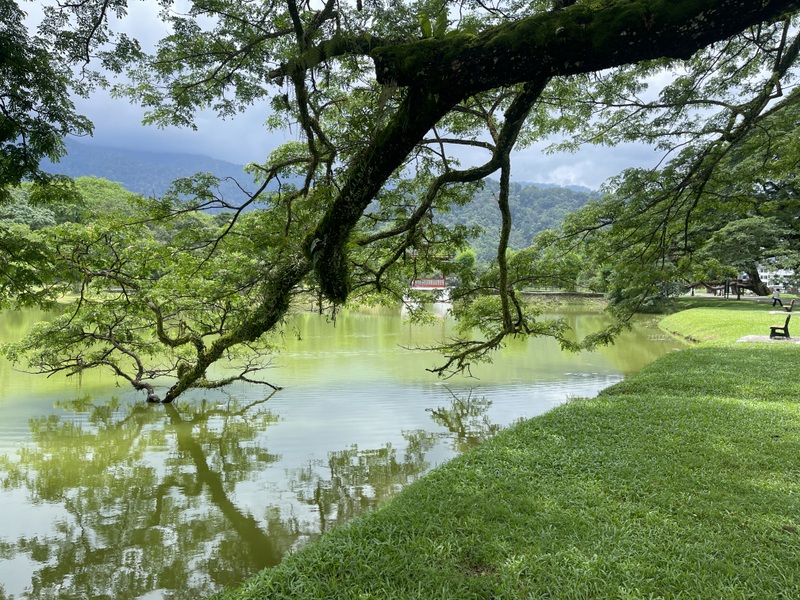
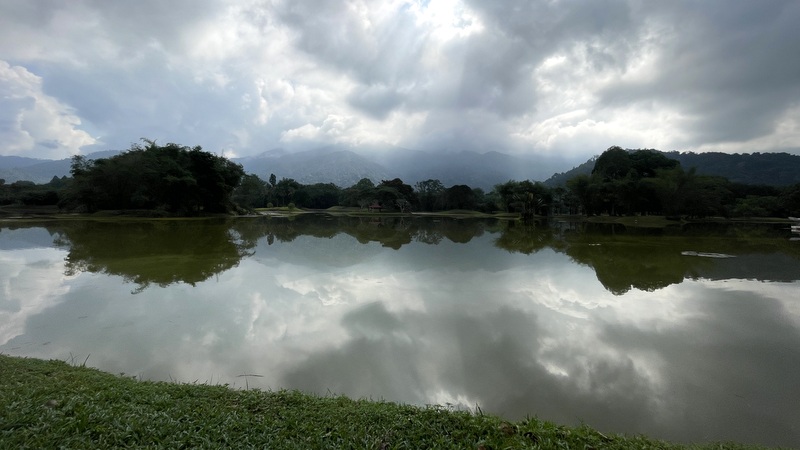
A few weeks ago I had received photos of the Lake Gardens, almost completely dried out after a long dry spell, unusual for rain town Taiping. Now the water level was back to normal.
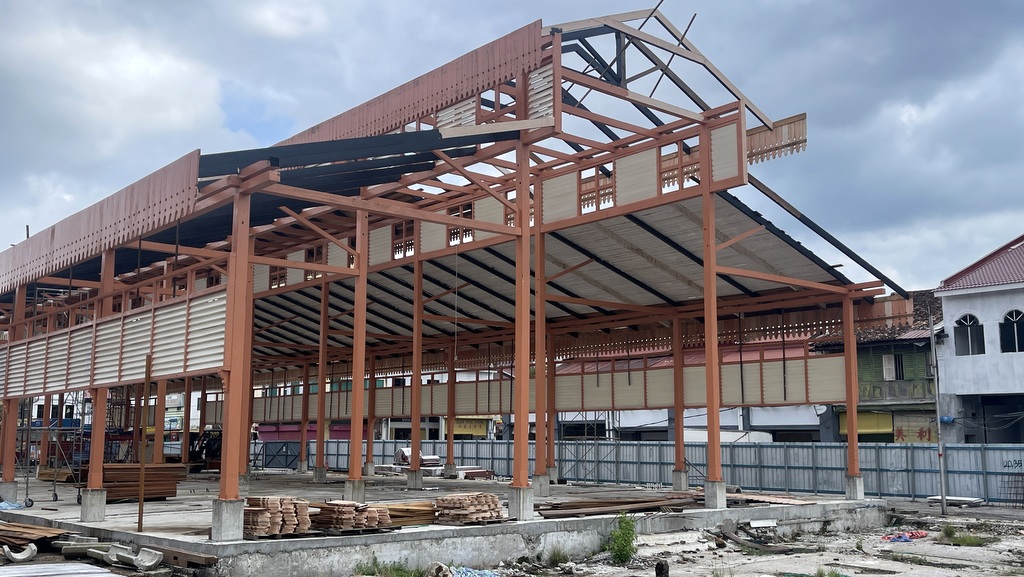
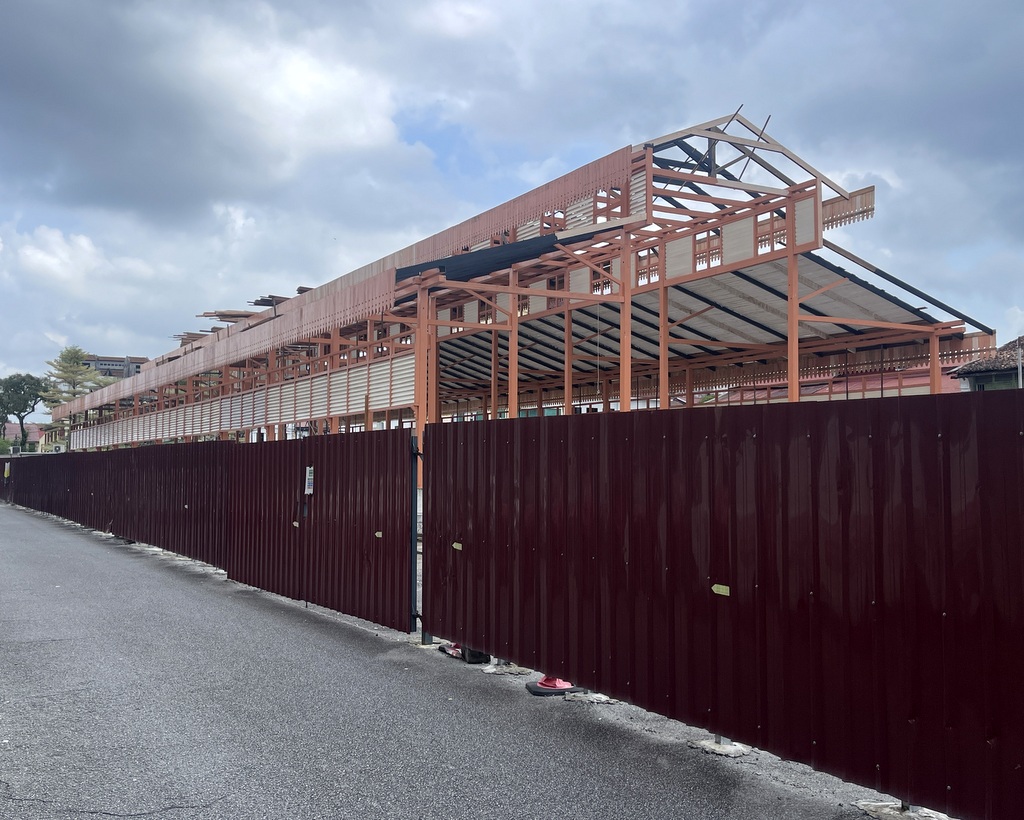
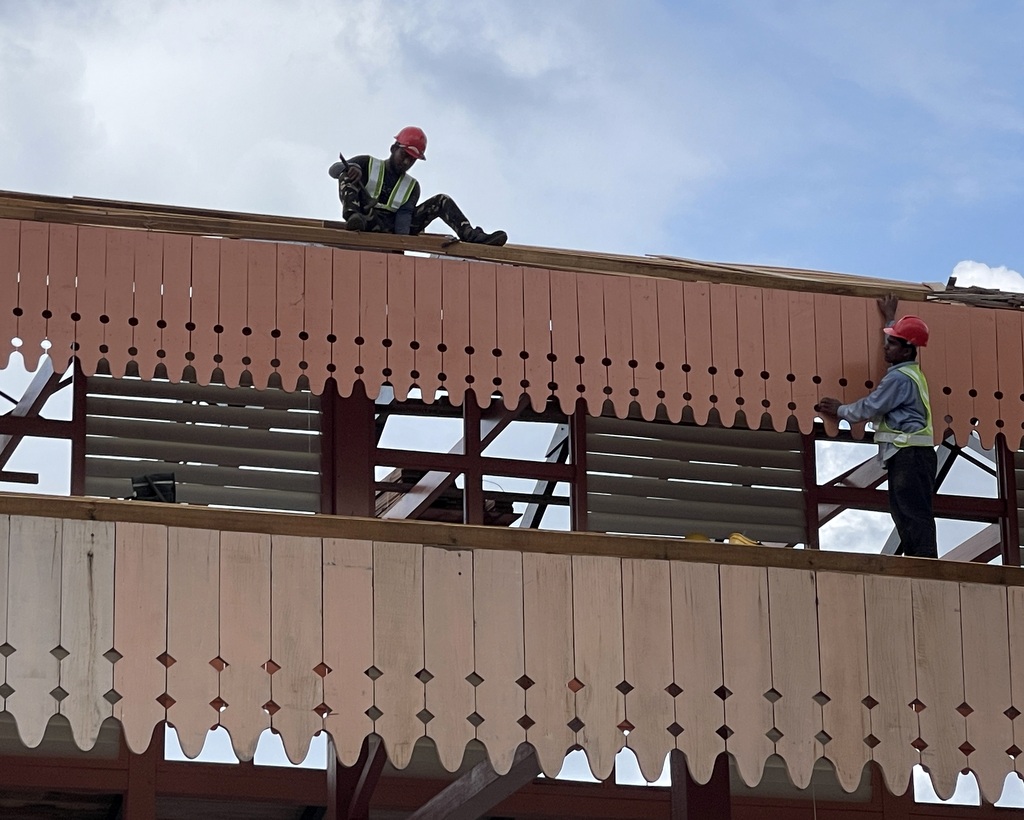
This time I had a special reason to visit Taiping, I wanted to see how the reconstruction of the two pasar buildings was going on. To be honest, I was impressed by the progress. Left the former chicken, beef and mutton market in April, right how it looks now.
A few more pictures. I will not discuss the issue whether this kind of rebuilding contributes to heritage preservation, but at least they are rebuilding. I hope the original stall holders will return, a bit worried that it might become like Pasar Seni in KL.
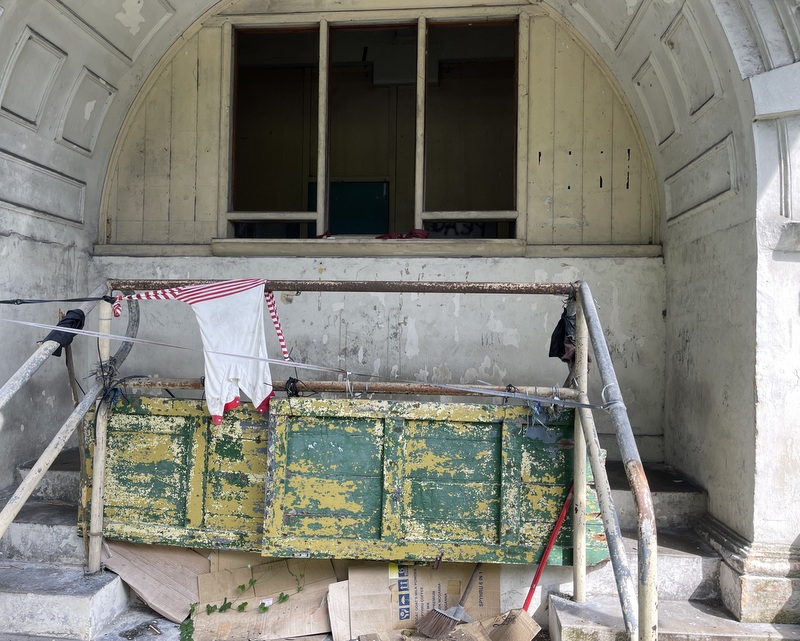
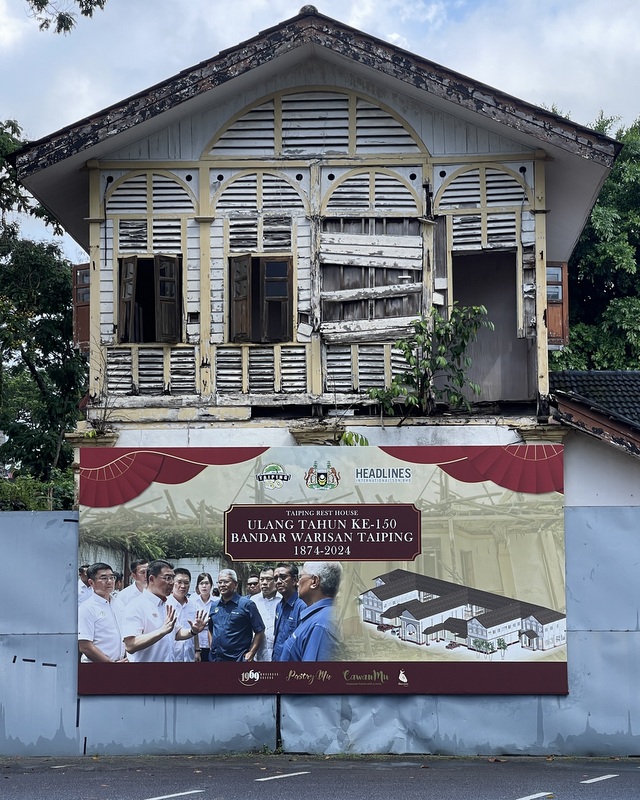
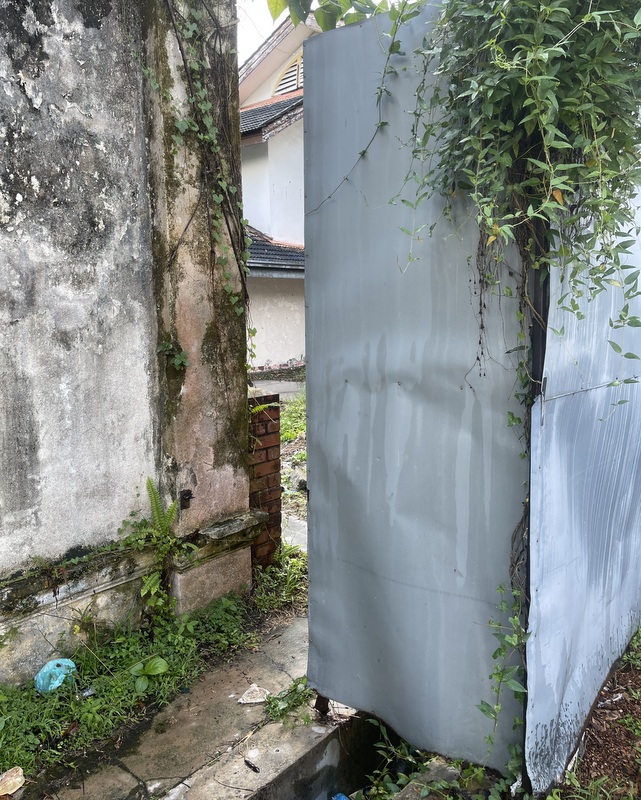
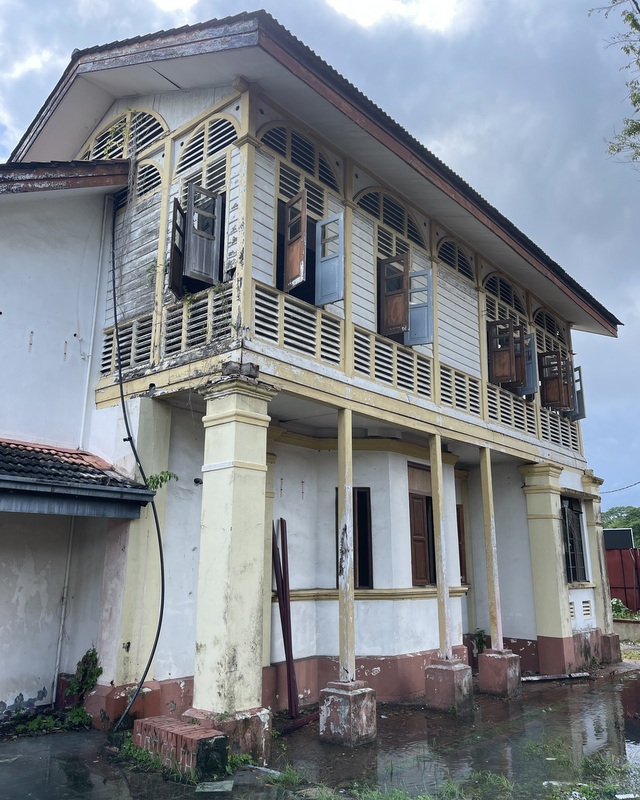
A visit to Taiping is not complete without having a look at what I call the Shame of Taiping. The Rest House and the building next to it. The illegal entrance to the Perak Railway /PWD building is still there, but it was now in a makeshift way closed with iron wire. Good that I didn’t enter, because actually the inhabitant was sleeping.
The two heritage buildings have been neglected for many years. In 2019 I wrote a blog with the sarcastic title Taiping Bandar Warisan (Taiping heritage town) about them.
In my blogTaiping, April 2024 I mentioned that in March an ambitious project was launched . Quotes from that blog:
The ambitious plan is to restore/rebuild the two ruins and transform them in a 4-star boutique hotel! Many VIP’s were present. and The “Taiping Boutique Hotel” is expected to be completed in two years.
The glamorous posters are still there. But nothing else happened, as far as I know. Completed in two years ?
We took the old road to Kuala Kangsar and passed the tombs of Long Jaafar. Very well kept.
We stopped for a while in Kuala Kangsar, because I wanted to visit the grave of Major Hawkins. He died on 4 January 1876 during the Battle of Kota Lama , speared by a Malay warrior. Read my blog The Battle of Kota Lama for more info about this battle.
At Bukit Chandan, next to the former Government Rest House (now Casuarina Hotel) lies a small Christian cemetery. Part of it is a war cemetery, Only 16 graves from the Perak War (1875-1876). There is a memorial with information about this (minor) war. Sabri Zain who pointed out a mistake in my blog (right <-> left), told me about this grave. It was easy to find.
Our trip had a nice, unexpected ending. On our way back, Aric mentioned a Cave Temple that was clearly visible from the North-South highway, but where exactly he was not sure. Using Google we managed to find it, it is the Kong Fook Ngam temple.
The temple is just one of the many cave temples around Ipoh. Officially it is closed on a Monday.
But a friendly caretaker let us enter and told us that there was a “Crystal Cave” behind the actual temple. We were allowed to explore. What a spectacular surprise.
Here is a collection of pictures taken in the huge cave complex. Really amazing.
Back in the temple, I bought a candle and placed it at the Reclining Buddha.
What a trip! Full of variety. And yes, with a lot of food.
One year ago I joined Paul and Fahmi on a trip to Kota Bharu. This year they invited me again, a 3D2N trip to Muar. I had visited Muar more than 10 years ago, see my report Penarikan Recce. Here are two maps of Muar, one from ~1940, the other one a Google Earth screenshot. I have marked a few POI’s and the location of our homestay. A bridge across the Muar river has replaced the ferry.
When we arrived in Muar it was still too early to check in, therefore we first drove to Tanjung Emas, a public park near the mouth of the Muar River. It was a bit too hot to explore, we decided to come back in the evening.
Driving back to the town, we passed the impressive Sultan Ibrahim Jamek Mosque, constructed bewteen 1925 and 1930. This royal mosque looks more like a palace.
We passed the former High Court Buildings.
Before we had lunch, we visited some of the murals of Muar. In recent years there has been a proliferation of mural paintings in Malaysia, starting with the iconic ones of Zacharevic in Penang. Sometimes (often?) of mediocre quality. Muar is teeming with murals, and although there are enough of the simple ones, often depicting cartoon characters, there are also many that have artistic value. Commissioned by the town council? They show aspects of traditional culture, heritage and nature. Here are a few.
This huge one shows, in the form of a a mural, many of the heritage buildings of Muar.
For reasons unknown to me, Muar has been officially named (since 2012 only!) the RoyalTown of Johor (that should be Johor Bahru, right?). Muar, the town of Murals, would be more appropriate. Murals are really everywhere.
Time for lunch. We went to a famous Mee Bandung restaurant in the town center.
The food was nice. There was a photo collage of illustrious visitors on the wall, for example the Sultan of Johor 😉 .
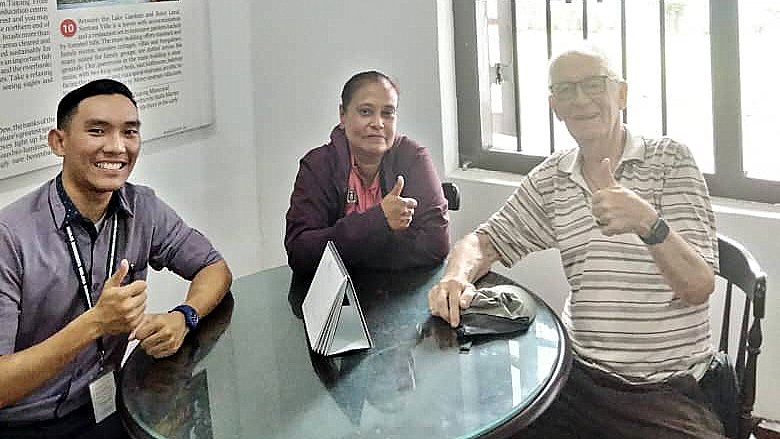
Of course we had also our pictures taken. Maybe we will end up on the wall as well?
After our lunch we continued looking for more murals. I was surprised to find this collection of art works in one of the lorongs (back alleys). Not graffiti-based, but almost like in an art museum, complete with description tags!
I was pleasantly surprised by the general atmosphere of Muar. There are lots of nice facades, often painted in bright colors. Looking at the dates on several gables, the city must have had its heyday in the 1920s .
It is a very clean city, some lorongs are decorated with ornamental plants, the five-foot ways are well-kept, and everywhere you find rubbish bins.
Our homestay was modern and comfortable, three bedrooms with aircon and fans. In a nearby supermarket we bought some groceries and we took a rest.
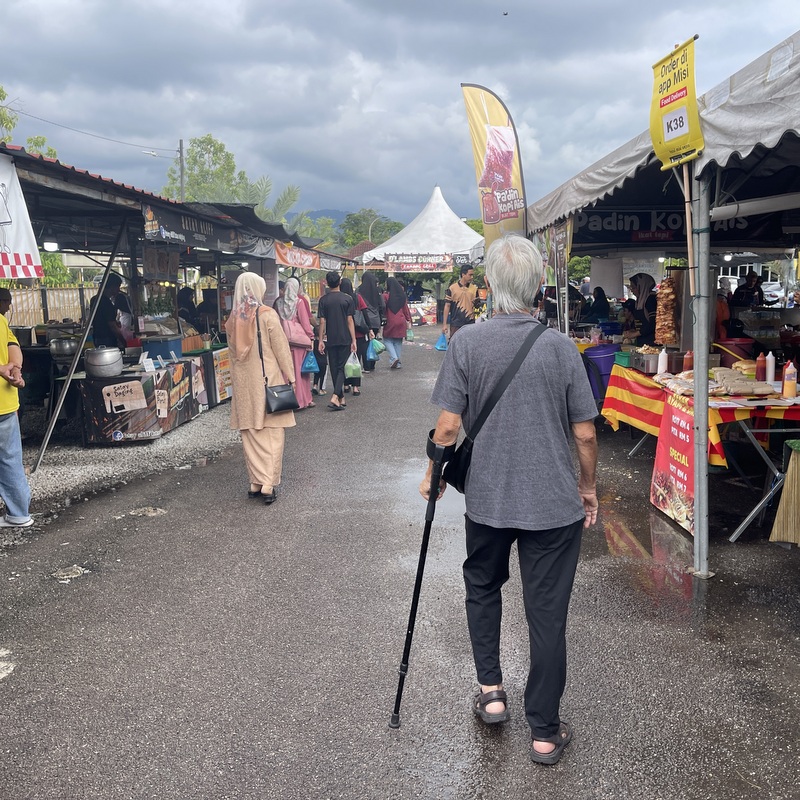
In the evening we went out again to an open-air food court in the center of town, near the Muar river. Muar is the fourth-largest town of Johor, but it still has aspects of a fishing village. The food court had a very relaxed atmosphere. We had otak-otak, sata(r) and satay.
After our dinner we drove back to Tanjung Emas, where we walked around and took pictures. There were more people now, but not as many as I expected.
The next morning we went for breakfast to the cafe of Pak Inchik. I had Roti Pool, one of their specialities.
Starting our walk, we first had a look at the Muar High School. The building dates back to 1915.
We continued visiting more murals.
Of course there is more than only murals. Left the Old Dutch Houses, right the Nattukkottai Chettiars Temple, dedicated to Lord Murugan.
And I found one ruined colonial building. As my followers know, I have a fascination for those remains of past glory. I would have liked to explore inside (like I did and do in Taiping), but the building was thoroughly fenced.
We had coffee in a famous Muar cafe, named Kopi 434.
Finally a last round of murals. I always like the 3D-ones. The last one is also a bit 3D, a relief created against the wall. Beautiful
Asam Pedas (Sour and Spicy Fish) is a speciality of the region, there are many eateries serving it, but not for dinner. We found one for lunch, Pak Ndak, again beside the Muar river. They also served fresh oysters and we could not resist the temptation 😉 .
We had seen enough murals. Fahmi and Paul had found on Google that Muar had an Art Gallery. We decided to have a look and found that it was not an art gallery but, according to their FB, a “new community concept”, There was a cafe and a shop where they sold objects made of rubber tree wood. I was intrigued by a wooden phone holder, shaped as a resonator, to amplify the sound of the phone. I bought one 😉
Back to our homestay for a rest. Dinner later at a Malay restaurant, not far from our homestay, as we were lazy to drive again into town. We had nasi goreng, fried squid and Thai salad.
The next morning we checked out and went to Pak Inchik again for breakfast. This time I had Lontong, delicious.
One last POI during this trip, outside Muar, the Beca Gergasi Muar, a giant tricycle. You may wonder who decided to create this object here, in the middle of nowhere.
Halfway on our way back, we stopped for lunch in Tampin (Negeri Sembilan). The Lomak Salai restaurant is really an experience, a kind of Malay style IKEA restaurant.
You just take a trolley, and collect the dishes you want. A place to keep in mind for a next visit.
It was an interesting trip, well organised by Fahmi and Paul. Fahmi is a vlogger with his own YouTube Channel . He created a vlog about this trip, have a look.
After the Klang (1867-1874) war, Jugra became the capital of Selangor. Not for very long, the state capital moved to Klang , then to Kuala Lumpur and finally to Shah Alam . The royal capital moved to Klang until now.
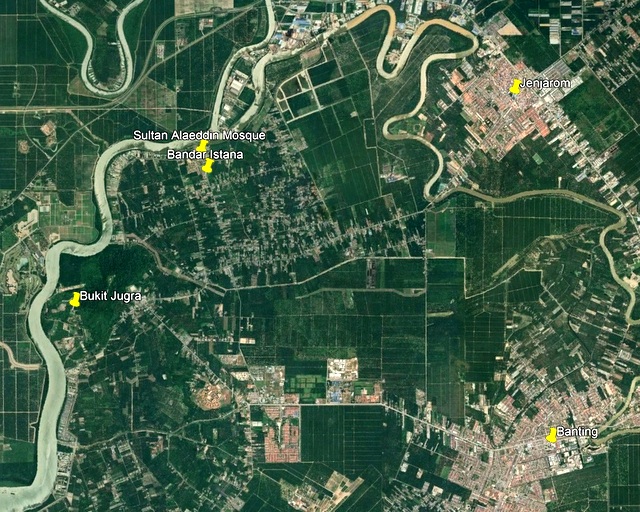
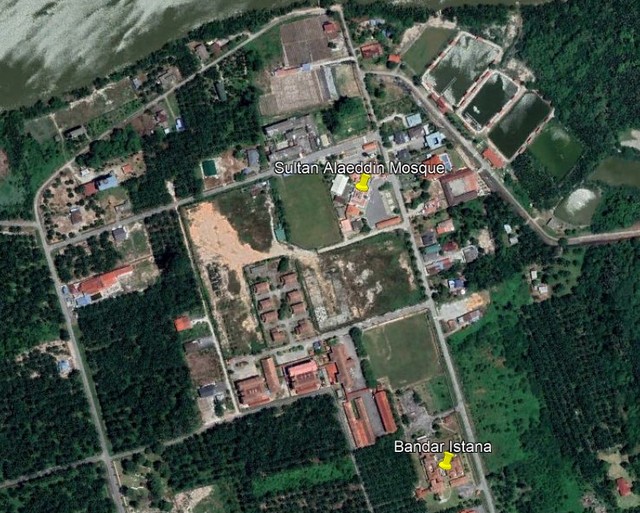
Jugra went into decline, overshadowed by nearby Banting. But there still are many historical remains. Left a GE screenshot of the region, right a detail.
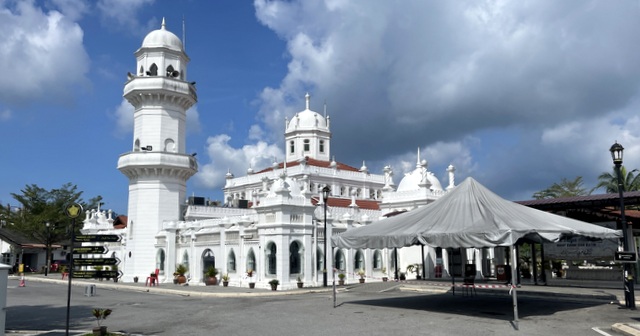
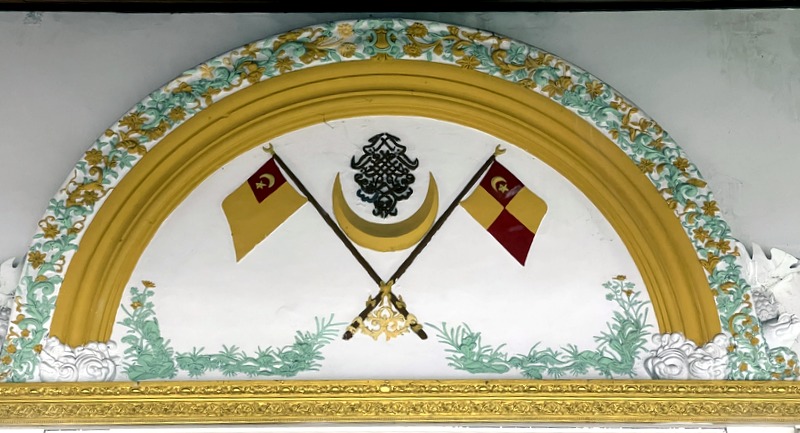
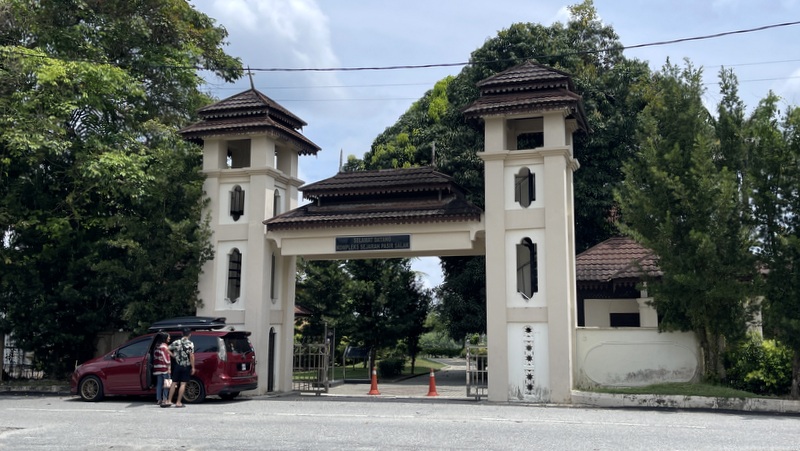
On our way to the Istana we passed the Royal Alaeddin Mosque . Unfortunately we could not walk in because Khong and I were not properly dressed (wearing shorts). Pity because it is a real beauty. Wikipedia is wrong in dating the construction of the mosque as 1903-1905, it was much later, 1925-1926, here is a convincing report. After a recent restoration it has been repainted in white, it was yellow before. A major improvement.
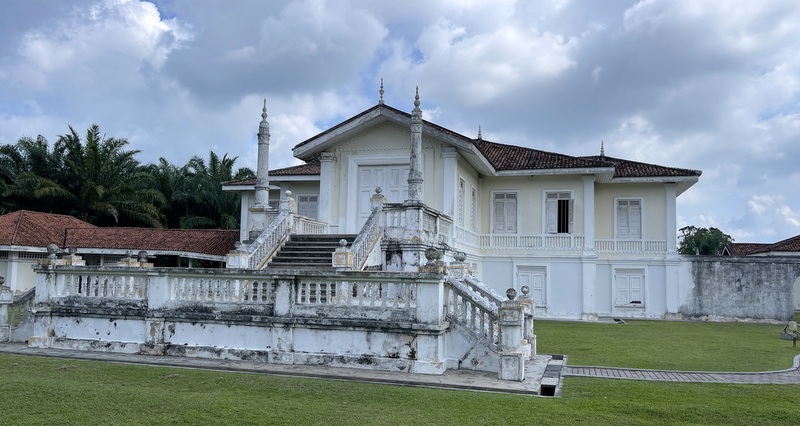
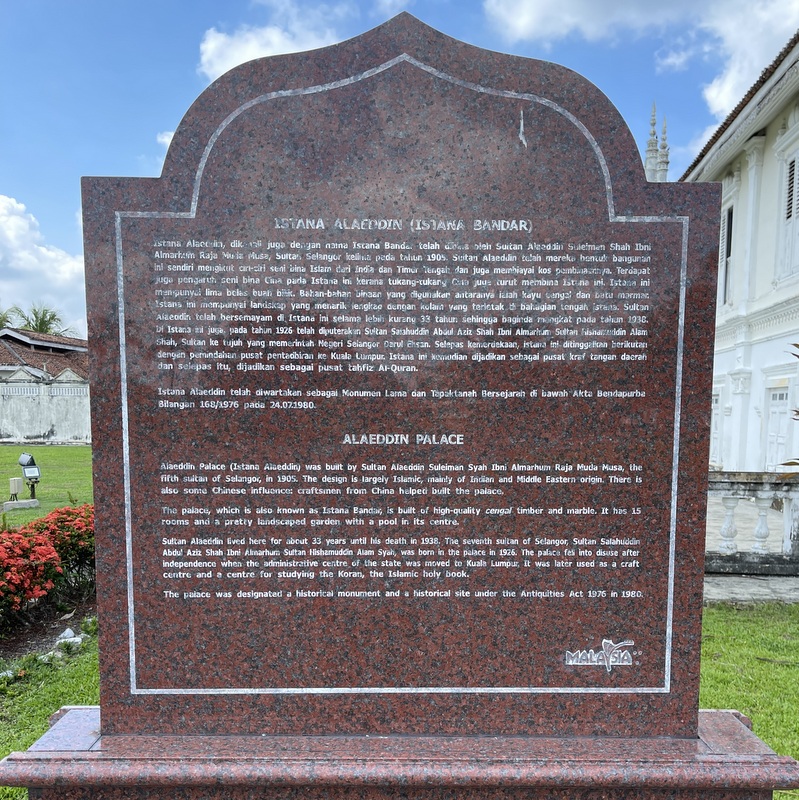
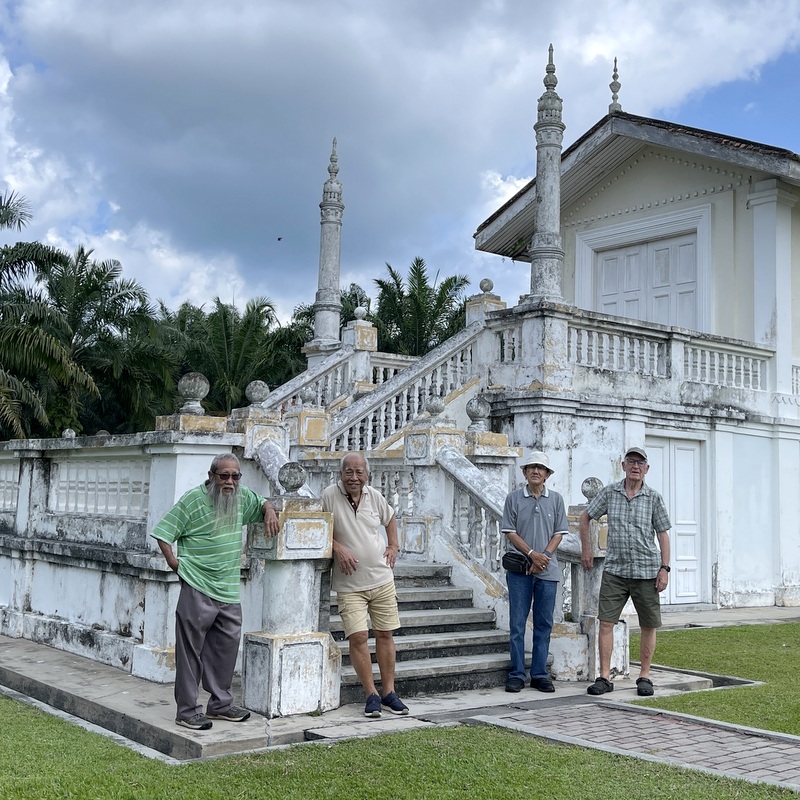
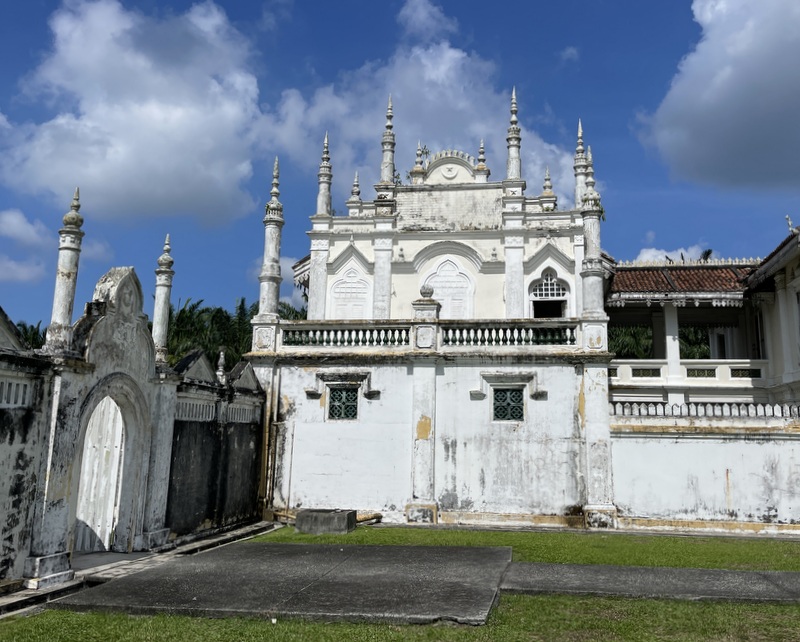
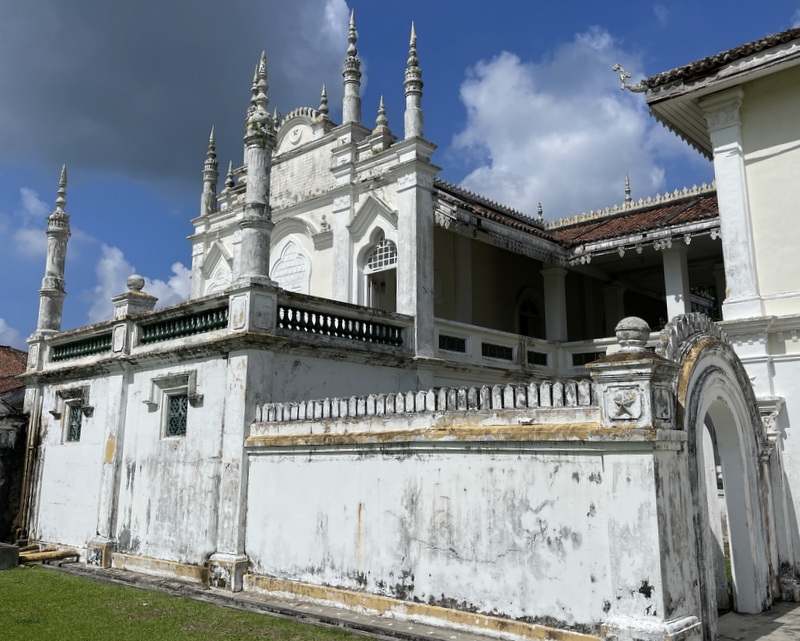
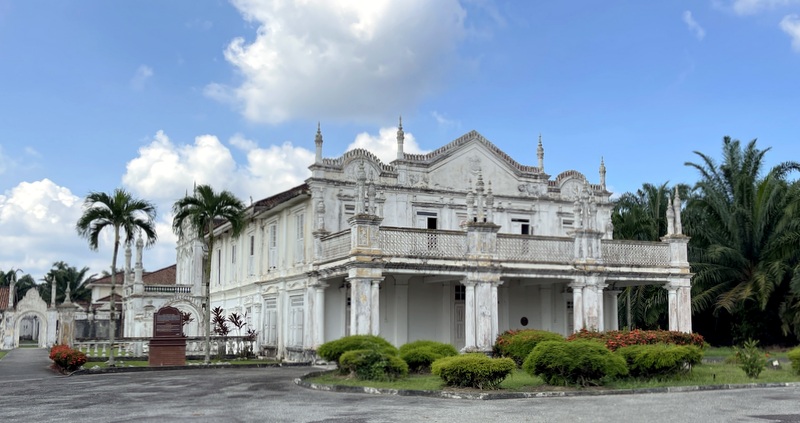
The date error may be caused by confusion with the Istana Bandar, situated only a few hundred meters away. That palace was completed in 1905. Both were built by Sultan Alaeddin Sulaiman Shah, the fifth sultan of Selangor (1898-1938) Although the Royal Town was Klang, the Sultan often resided in the Istana Bandar. After his death the palace was abandoned, it was given a number of other uses.
When I visited the palace with my friends Pat and Roger in 2013, it had recently undergone restoration and was closed, although we managed to get in. Click here for a report. Now it was open to the public, but completely empty inside.
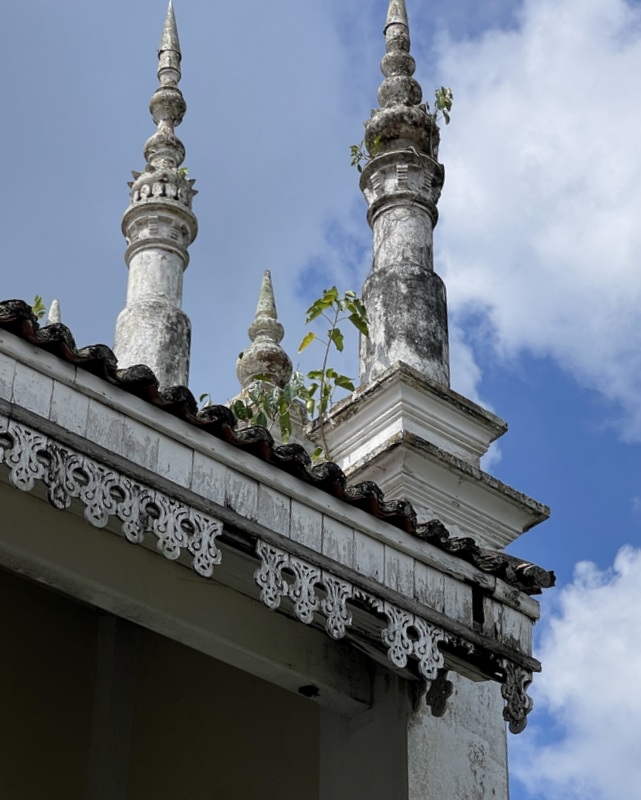
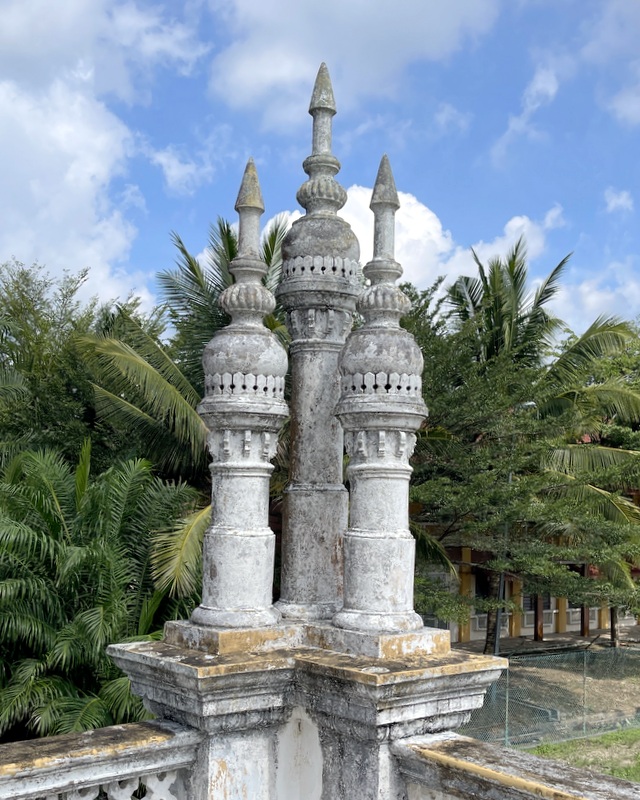
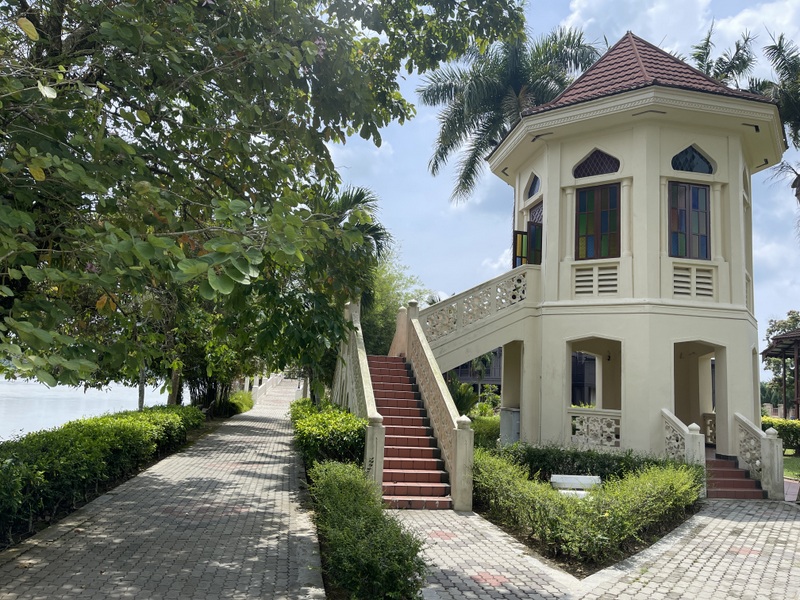
Ther architecture is interesting. We took many pictures.
The interior is empty. It would be a good location for a museum about the history of Selangor.
The only “decoration I found inside.
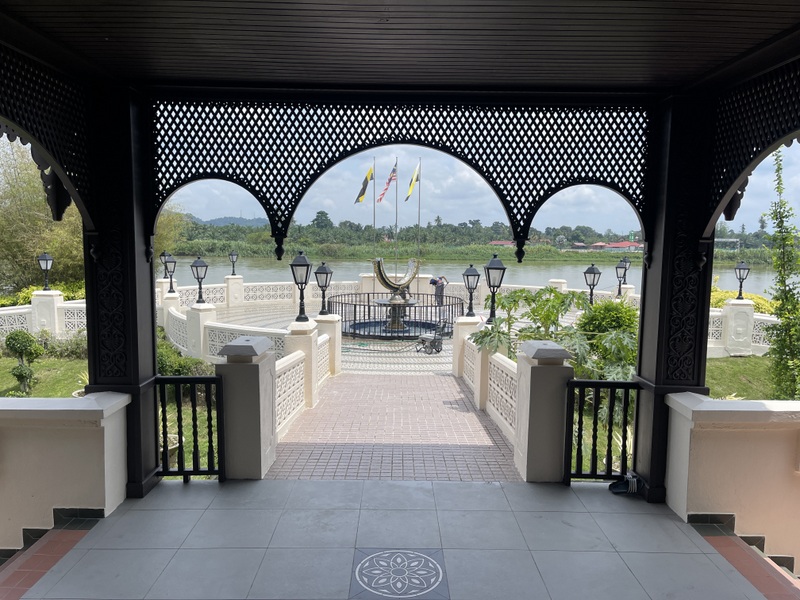
Opposite of the entrance there is a huge balcony.
Everywhere you see nice ornaments. The Visit Selangor website writes that the design is largely Islamic, mainly of Indian and Middle-Eastern origin.
There are also nice gardens.
A worthwhile visit. There were no other visitors, many Malaysians don’t know this place. When we left a few men arrived to take photos.
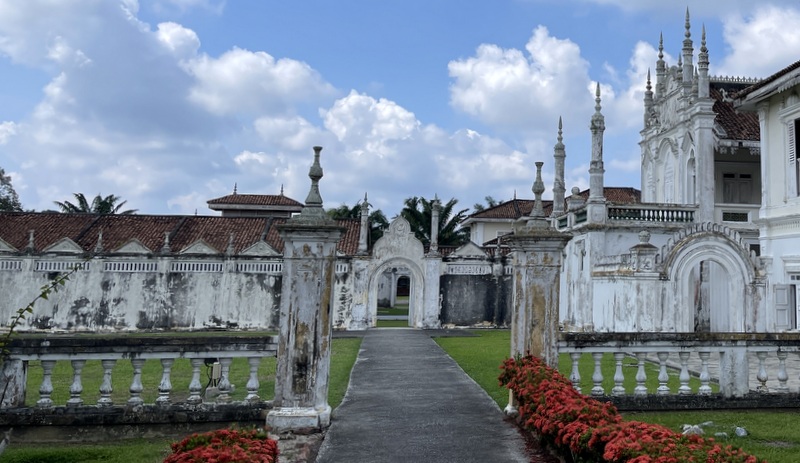
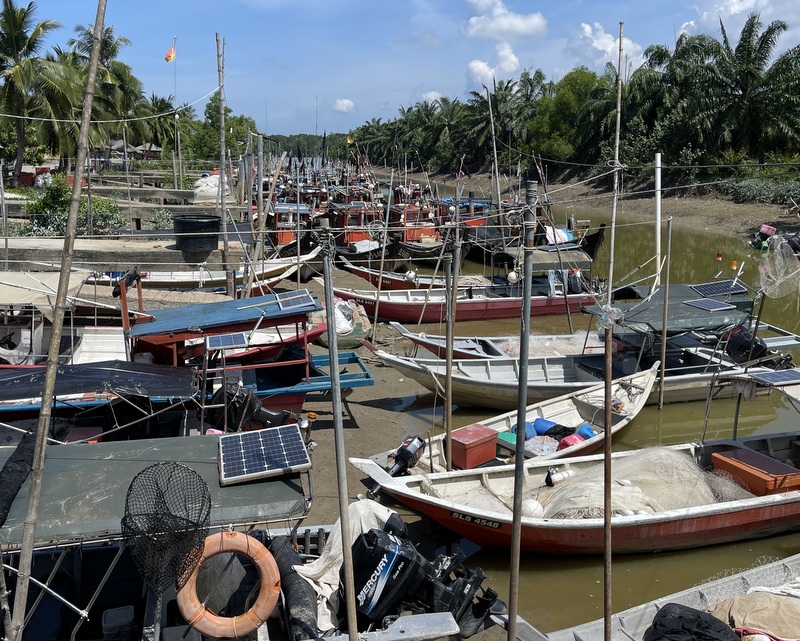
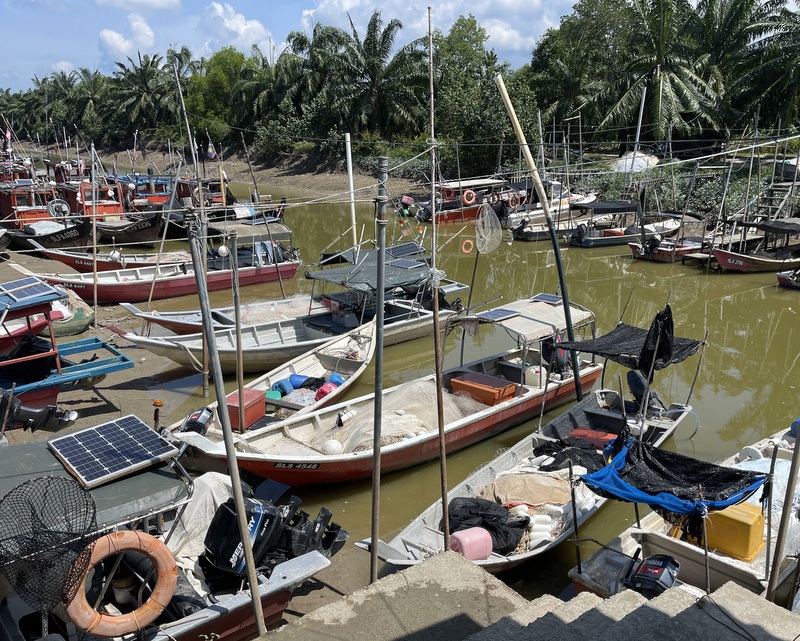
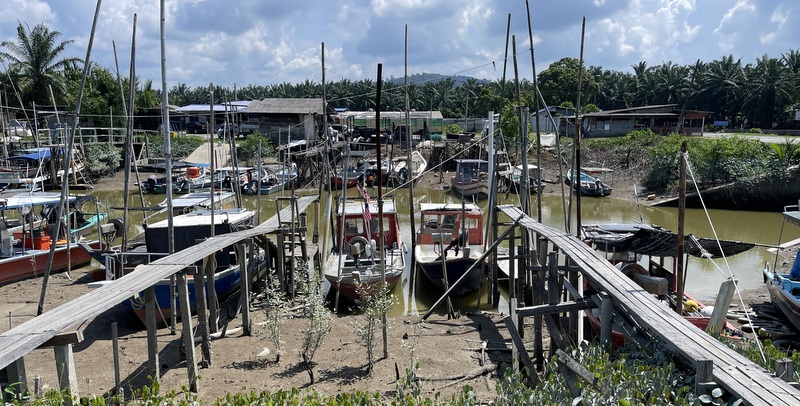
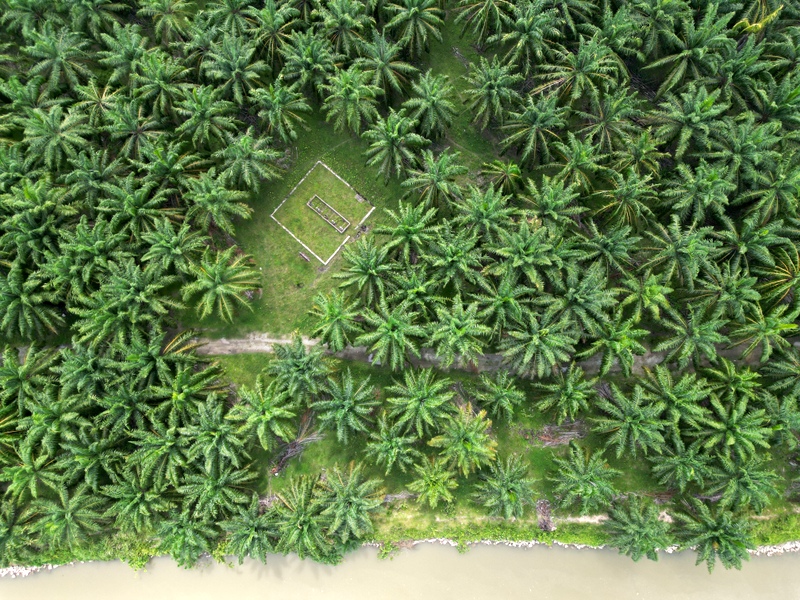
There is a lot more to see in Jugra, but we got hungry. We had a look at a nearby fishing village, Kelanang. Always picturesque.
We had lunch in the Kang Guan Seafood Restaurant, with a nice view of the Langat river.. As usual Khong selected the dishes.
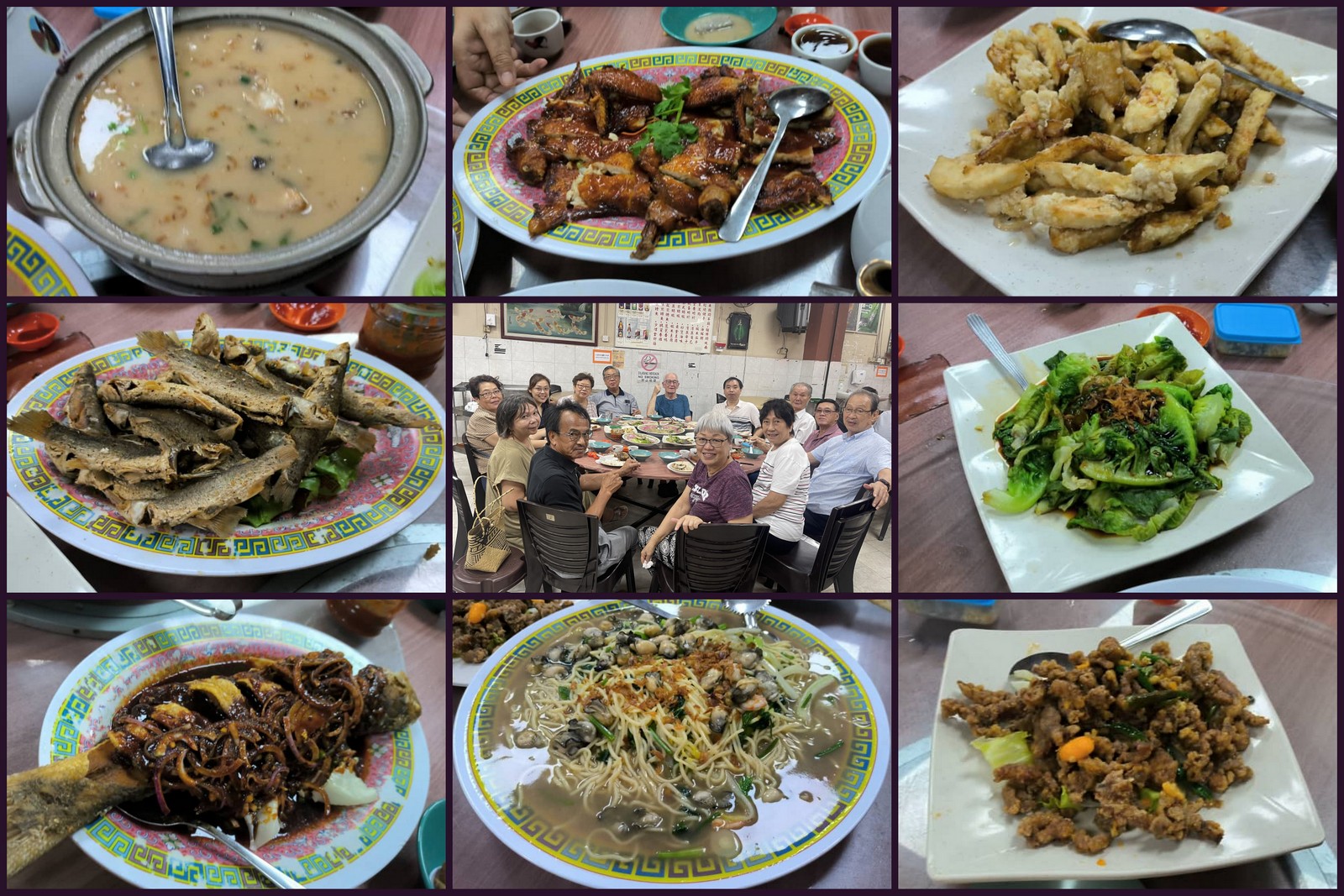
Here is our lunch. Five dishes, fried sotong, mantis prawns, tofu, chicken, meehoon. Total price : RM 110. That’s what the Gang of Four calls VFM (Value For Money) 😉
Nearby is a business district, which explains why there were so many formally dressed customers.
It was a nice trip and we agreed that we should not wait a long time before having another outing.
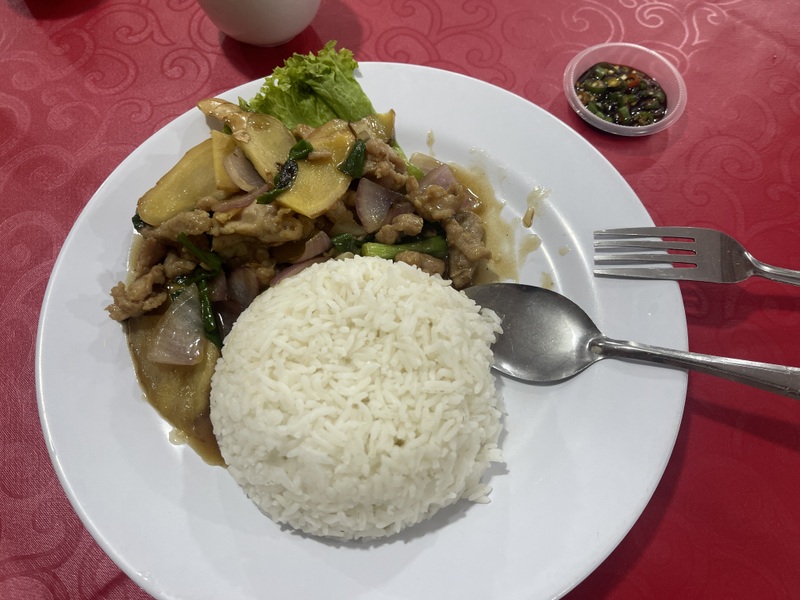
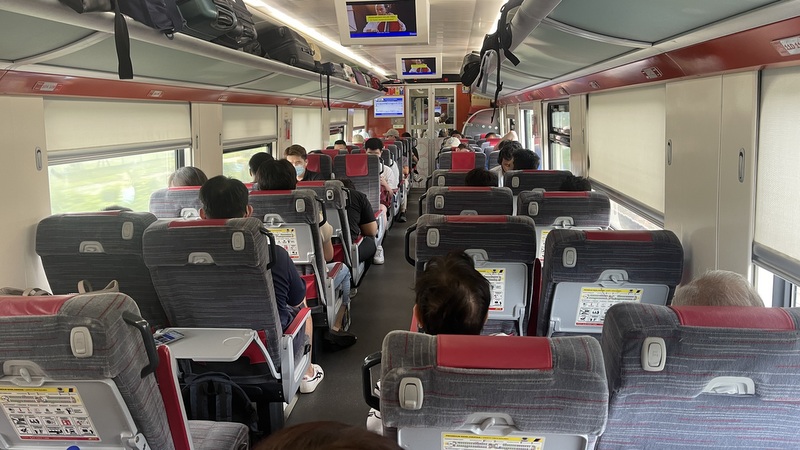
Before I will visit my hometown Amsterdam in May, I wanted to visit my (second) hometown Taiping. I booked hotel Furama for three nights and arrived on 1 April by ETS, where Lay Chun and Kar Seng were already waiting for me at the station. This time we had lunch in CRC, the Chinese Recreation Club. I had stir-fried pork with ginger, very nice.
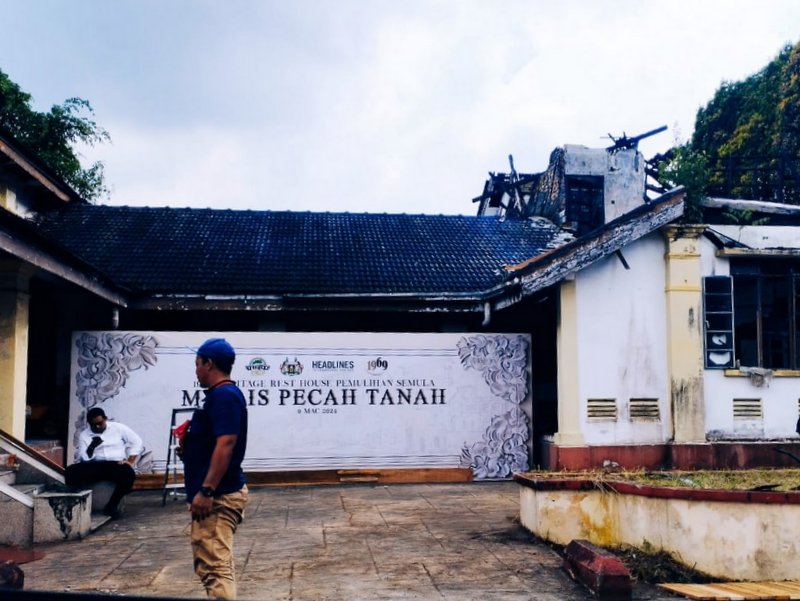
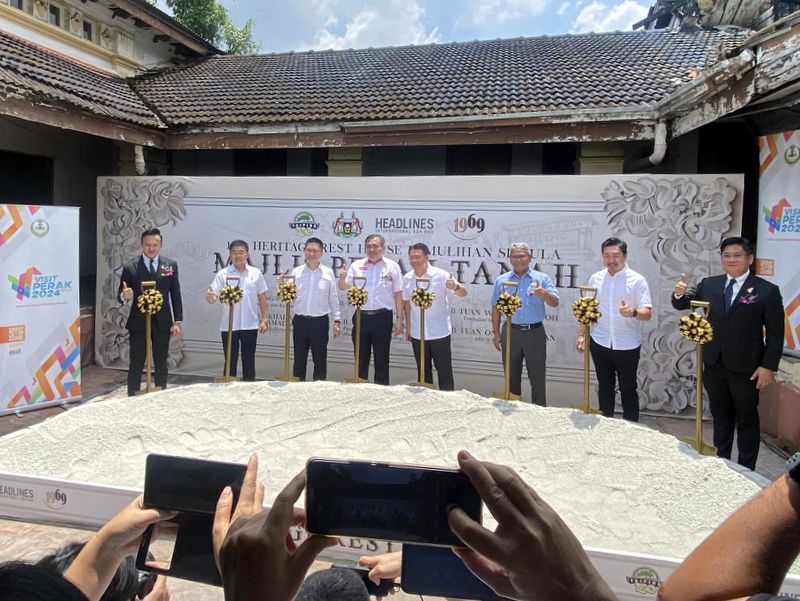
A few weeks earlier, Lay Chun had noticed, passing the ruined Town Rest House, that something was going to happen, a “ground-breaking” ceremony, but for what? (left photo). If you have been following my blog, you know about my interest in, and fascination with the two ruined buildings along Station Road, see for example my report Taiping Bandar Warisan, written in 2019. So of course I was intrigued. On 9 March my friend Liew Suet Fun attended the ceremony and reported about it in the Friends of Taiping Heritage Society FB group. It’s a private group, just become a member if you are interested in Taiping Heritage.
The ambitious plan is to restore/rebuild the two ruins and transform them in a 4-star boutique hotel! Many VIP’s were present. See the right photo.
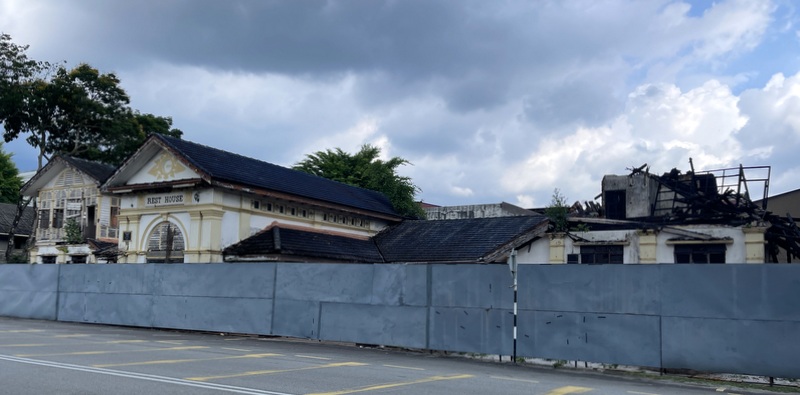
After our lunch we drove past the two buildings. The fencing of the Rest House, temporarily removed for the ceremony, had been put back. Note the remains of the right wing, destroyed by fire last year.
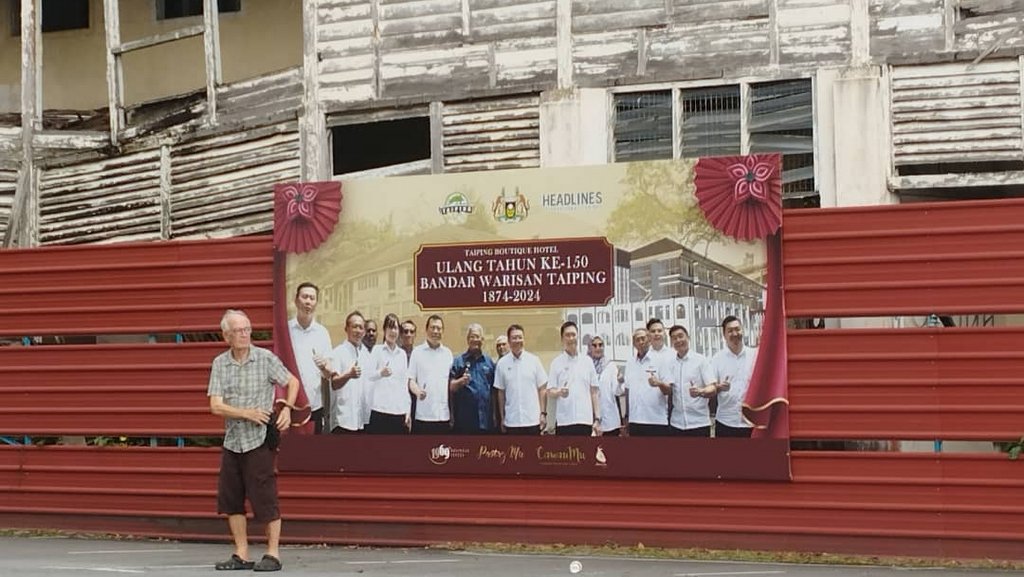
We also had a look at the other ruin, originally the Perak Railway Headquarters. Here I am standing next to the signboard with all the VIP’s. The plan is to keep the facade and add two floors. The “Taiping Boutique Hotel” is expected to be completed in two years.
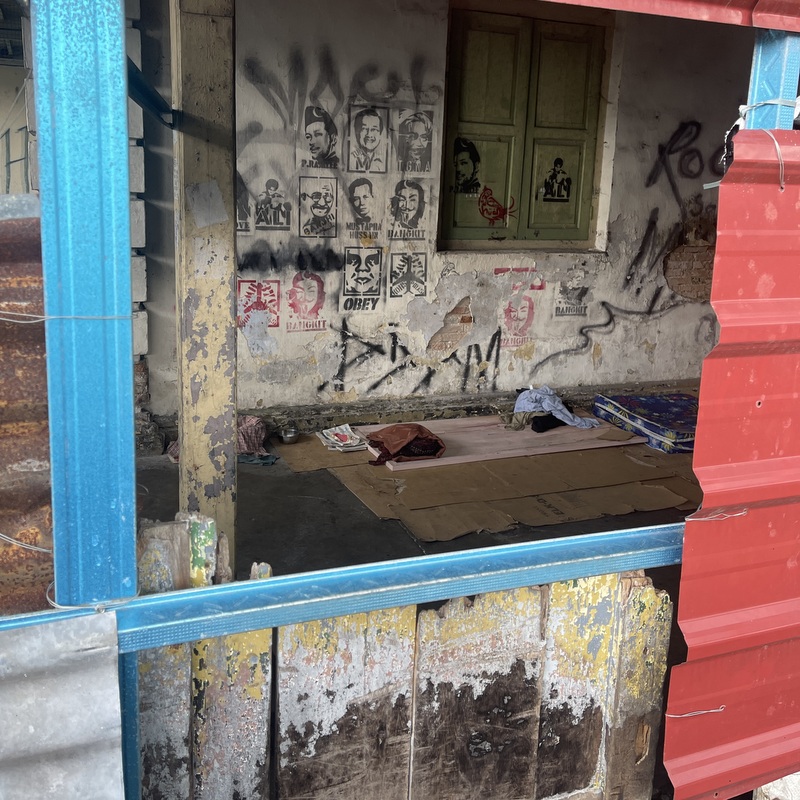
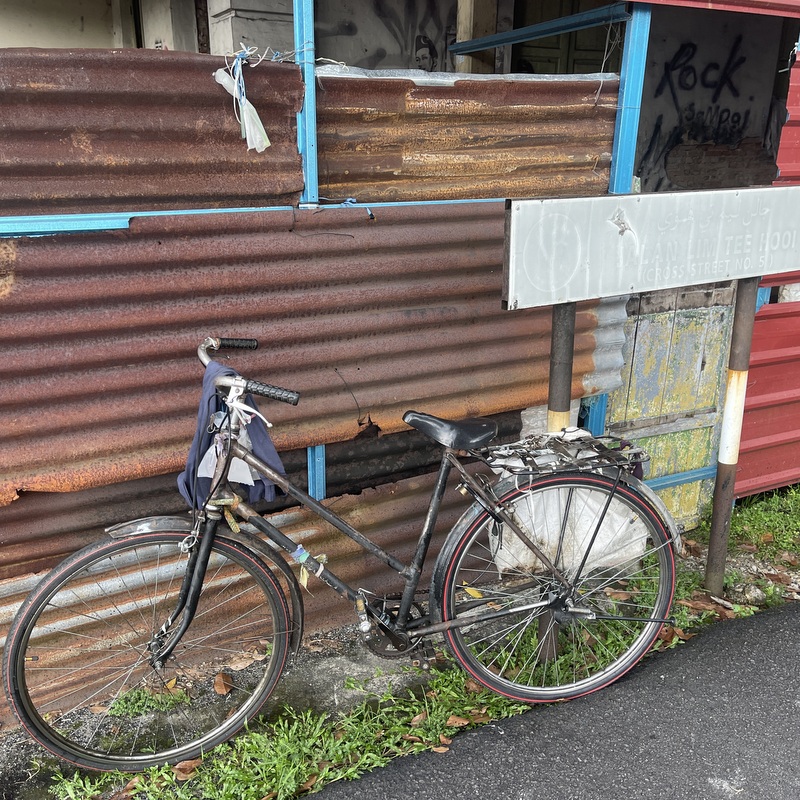
Actually the building has already occupants. The fencing looks solid, but it has a “secret” entrance, Here it is, a small makeshift door to enter the building. The bike has been parked nicely next to the entrance.
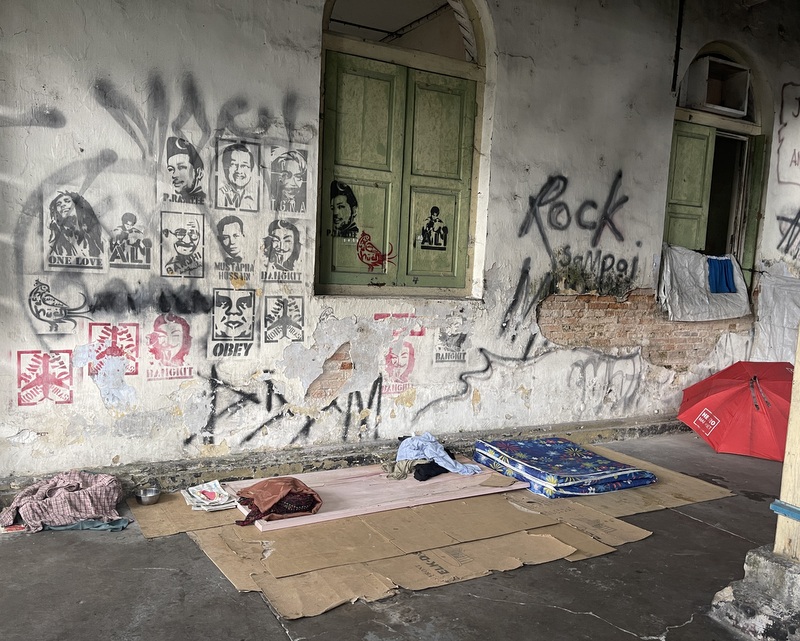
Left the “room” , I thought it wise not to explore further 😉 . Through a small gap in the fence I could take a picture of another “room”. I wonder if the authorities are aware of this use by homeless people.
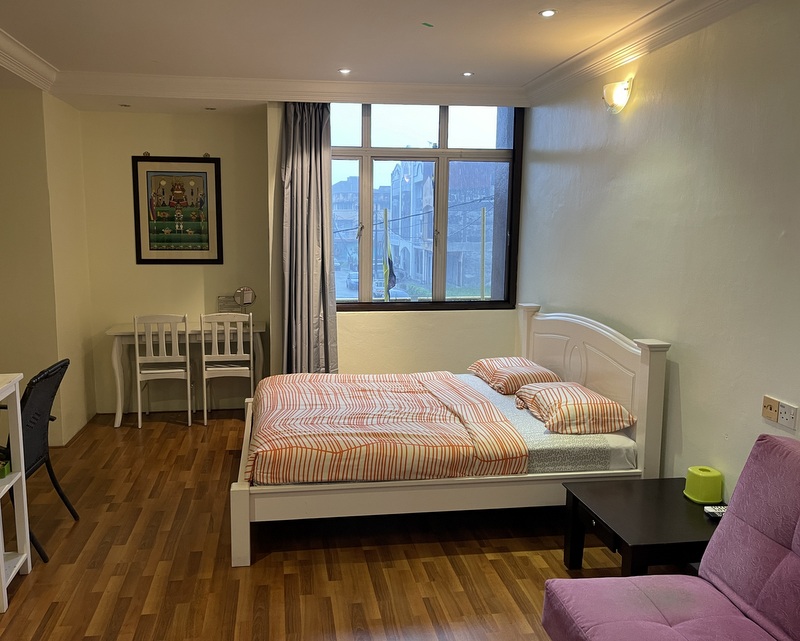
Here is my “own” room in the Furama Hotel.
I walked to the Lake Gardens, only a few hundred meters away from Furama.
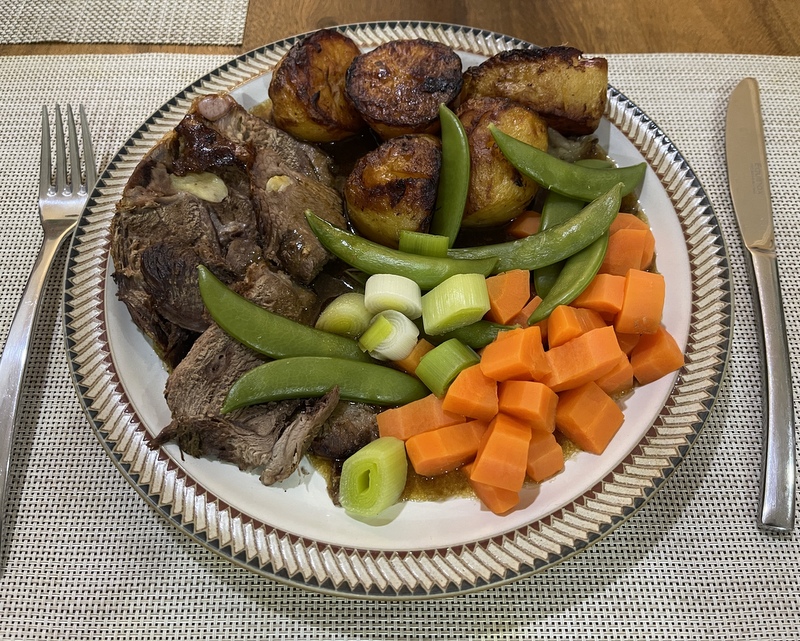
My friends Grahame and Safina had invited me for dinner. Because she is Muslima, I expected a “buka puasa” dinner. But Grahame was the cook and he had prepared a very traditional English dinner with roast lamb , roast potatoes and veggies!
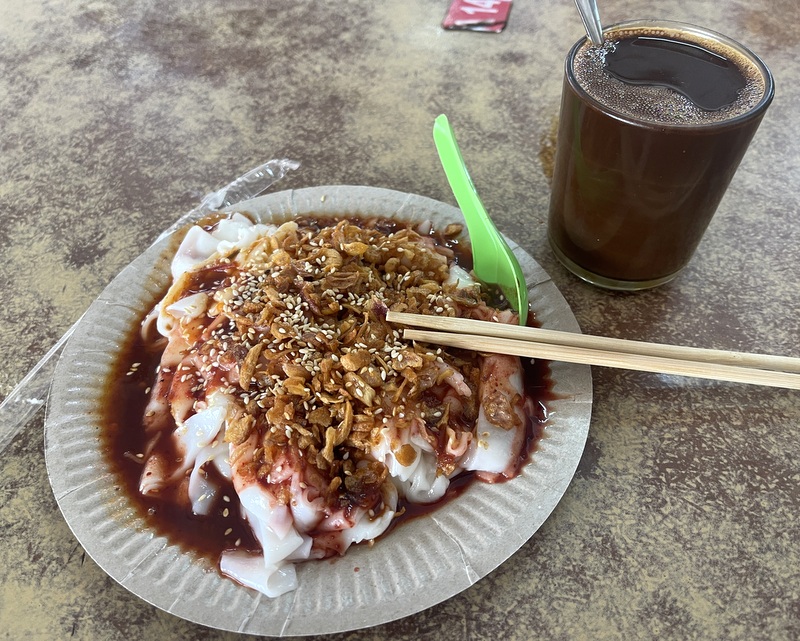
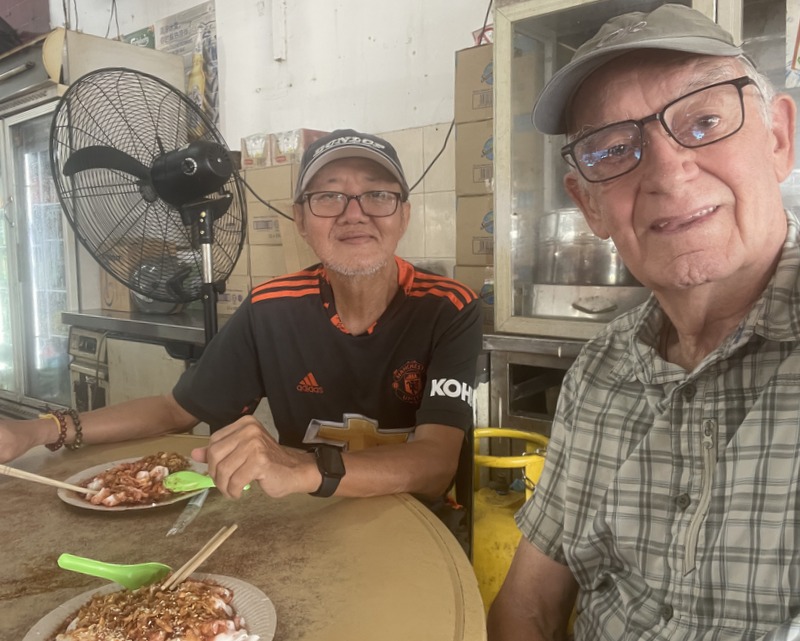
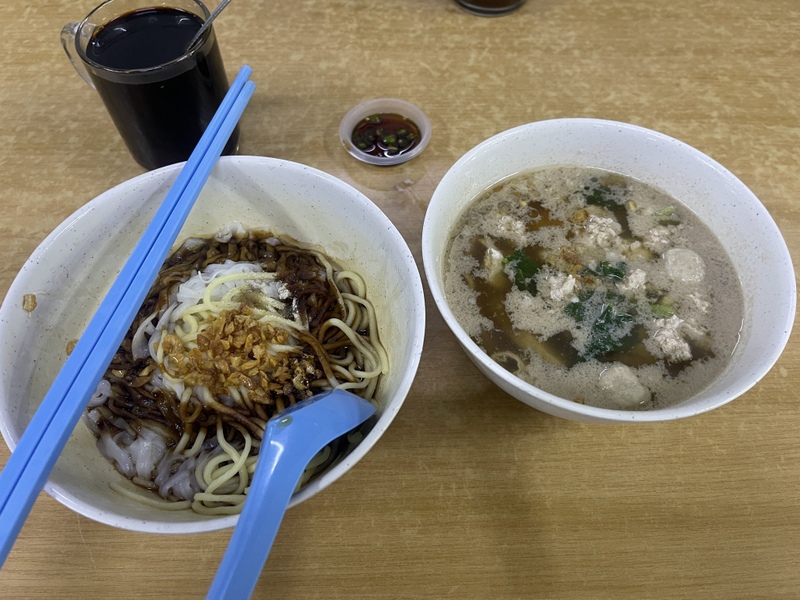
The next morning I had breakfast with my friend Foo. We often have Chee Cheong Fan at Tong’s stall in the Circus Ground, but it is now managed by his son and they have two weekly closing days on Monday and Tuesday. So we went to the Wan Li Xiang coffee shop, next to the Mall. Also quite good CCF.
After breakfast we had a look at the “rebuilding” of the iconic Taiping wet market. Here is the oldest part (1884), the fish, fruits and pork market. Making good progress, the “grapevine” rumours that it should be finished in autumn this year. I am missing the cast-iron metal structure parts, I hope they will be reused. The Taiping people are still a bit worried, read this July 2023 article in FMT: Mystery of the vanishing (Malaysia’s oldest) market.
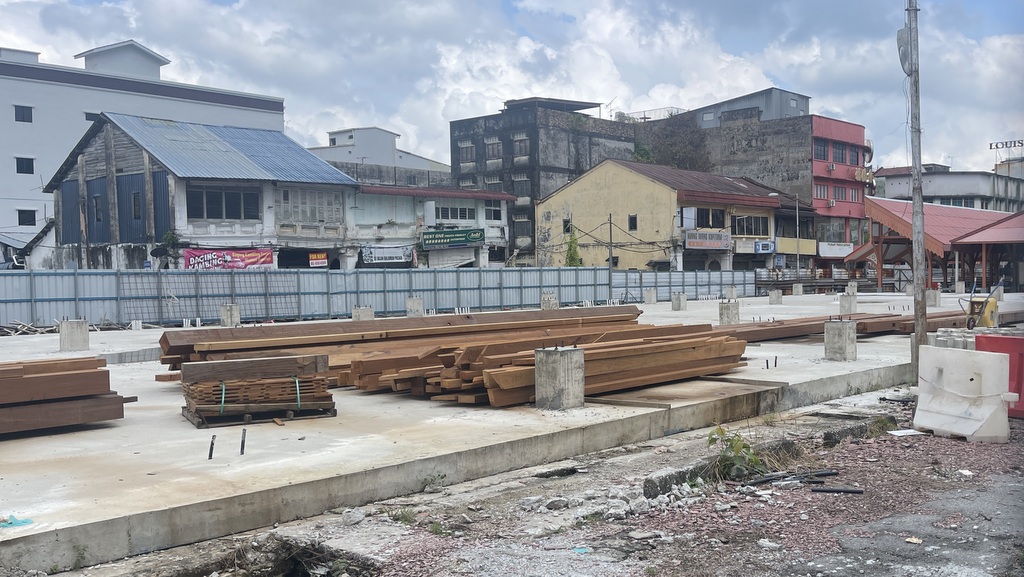
The other part of the market (chicken, beef and mutton) is still barren, although the piles of wood suggest that work will start soon.
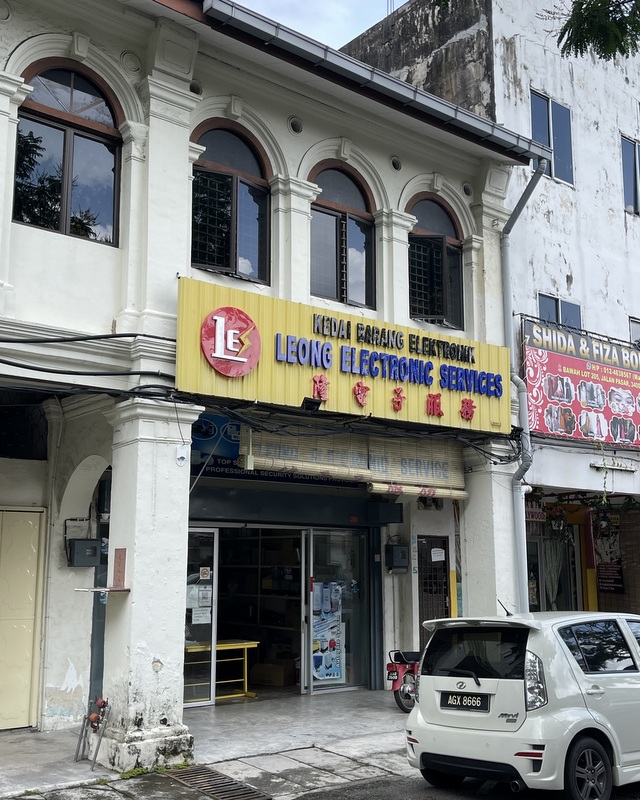
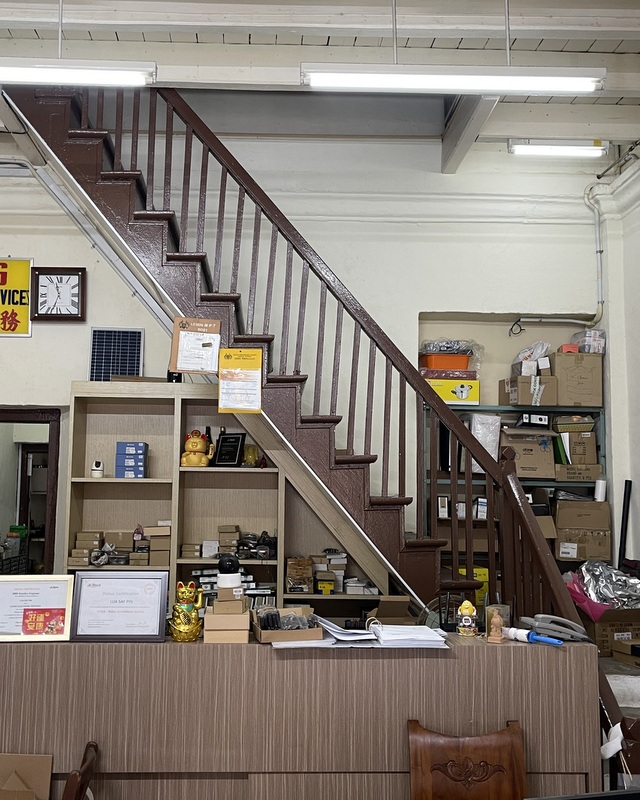
Foo also showed me the house where he was born, and told me interesting details about his life as a kid, enjoying the long stairs, leading to the first floor. It is now an electronic shop, I asked the lady if I could take a picture of the stairs. She must have been surprised, but did not object.
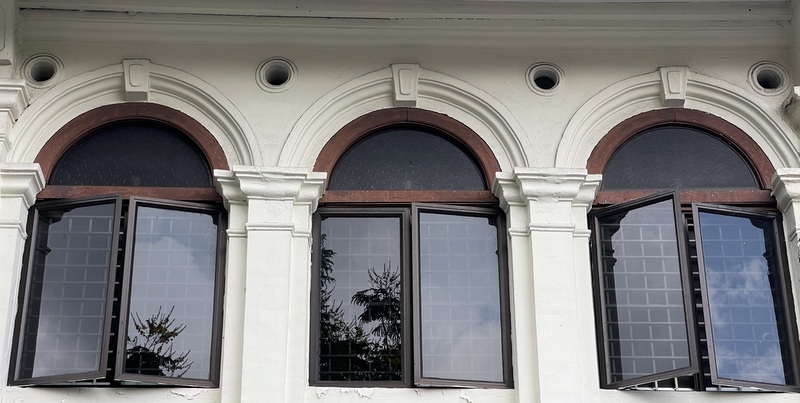
Detail of the first floor facade. Nice architecture, well kept.
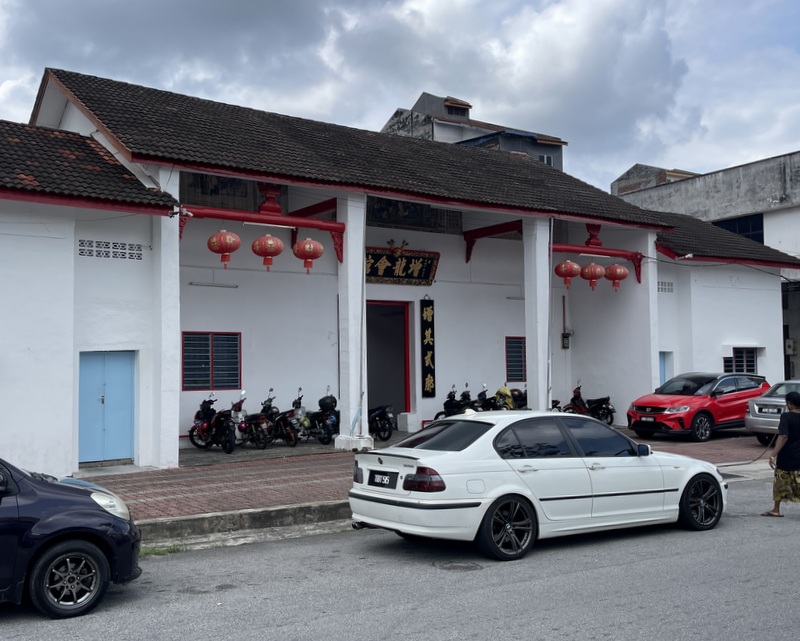
Walking back to my hotel, I enjoyed Taiping as usual. I passed the Tsen Loong Association, it was open, I had a look inside.
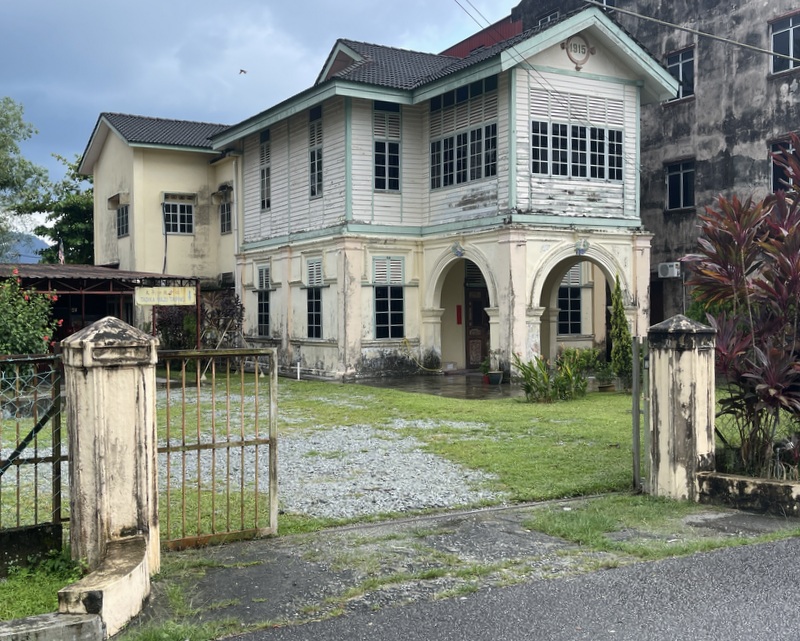
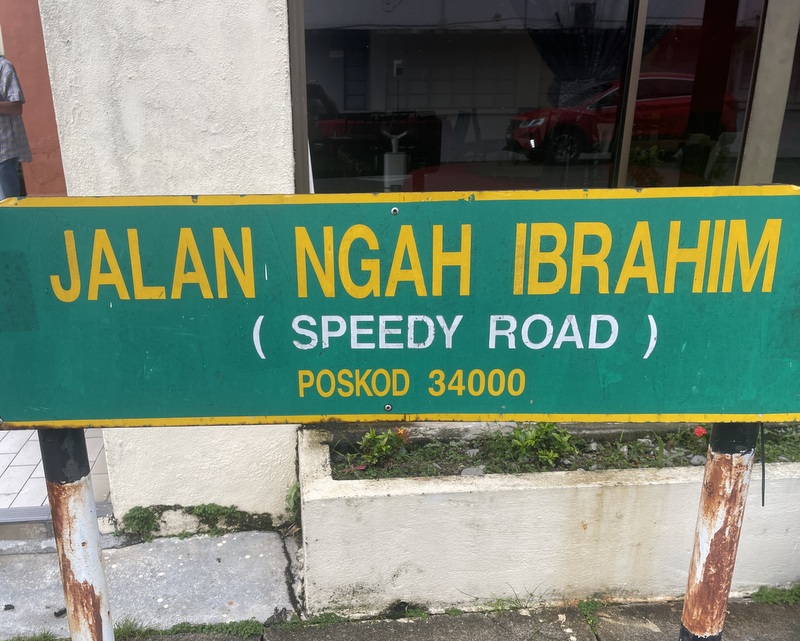
A nice bungalow near to my hotel, built in 1915. Many street names have been changed in 1955, for example Birch Road is now Jalan Maharaja Lela. First time I noticed that a road near my hotel was originally named Jalan Speedy. Now it is named after Ngah Ibrahim. who asked Speedy to come from Penang and help him in the conflict between the Ghee Hin and Hai San.
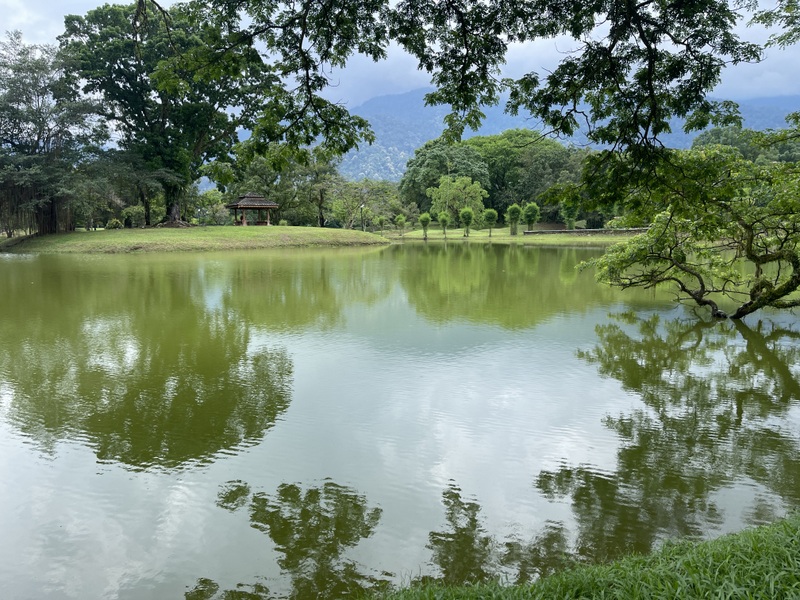
One reason that I like Furama hotel is that it is a few minutes walk to the Lake Gardens. The gardens are beautiful any time of the day.
In the afternoon I walked to the Galeri Perbandaran, where I met Jamilah and Aiman, both very interested in Taiping Heritage.
Dinner at the Lemon Tree seafood restaurant in Matang. It has become a kind of tradition during my Taiping visits to have a dinner with a group of friends. They almost weekly join for dinner, this time was a special occasion because one of them had won a Tesla car as a lottery prize. Very nice dinner, as usual.
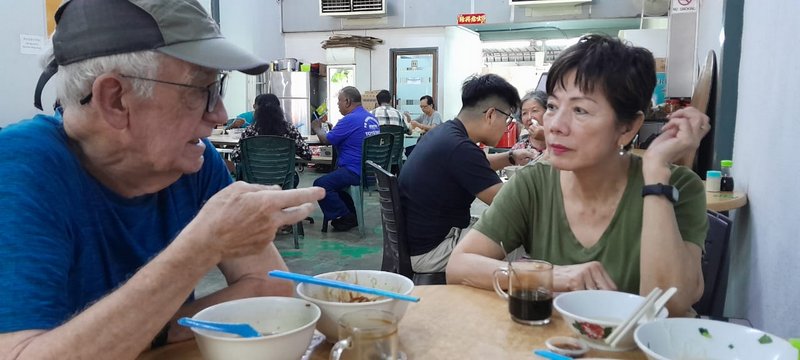
The next morning I had breakfast with George and Jenny, George was in Taiping for Cheng Beng and to meet friends, quite busy, so it was nice that we could meet, I had very tasty pork noodles.
I walked back to my hotel. Passing the colorful Dobi Line and relaxing for a while at the Lake Gardens.
I skipped lunch, as I was preparing for a buka puasa dinner with my friend Halim. He had suggested that I could fast from noon onwards. Abstaining from food is no problem, but not drinking anything was impossible for me, especially as it was really hot in Taiping.
I didn’t know that my Singapore friend ST Lee would also be in Taiping. We have not met for may years, so we arranged to meet 3 pm at the famous Ansari chendol place.
I decided to walk, although it looked like it would start to rain soon. I had just started, when a car stopped next to me. The driver opened his window and asked me, do you need a ride, it will rain soon. Surprised by his friendliness, I accepted his invite. Andy was the owner of the Rainy Corner restaurant near my hotel. He was on his way to deliver some goods. When we arrived at Ansari, I asked him to join me for a drink. Malaysian hospitality on its best!
A few minutes later ST arrived and we had our cendol. It was in September 2017 that we accidentally met in the same Ansari Cendol!
Here we are standing in front of his Taiping house in Jalan Barrack.
I walked back to my hotel and decided to have a look at the Rest House, mainly to check if it was still possible to “sneak” in with the “new” fencing. And yes, that was still possible. Left picture shows the present condition of the facade, with the signboard showing how the “new” building will look like. Right the gap in the fence. I do not understand why this has not been blocked
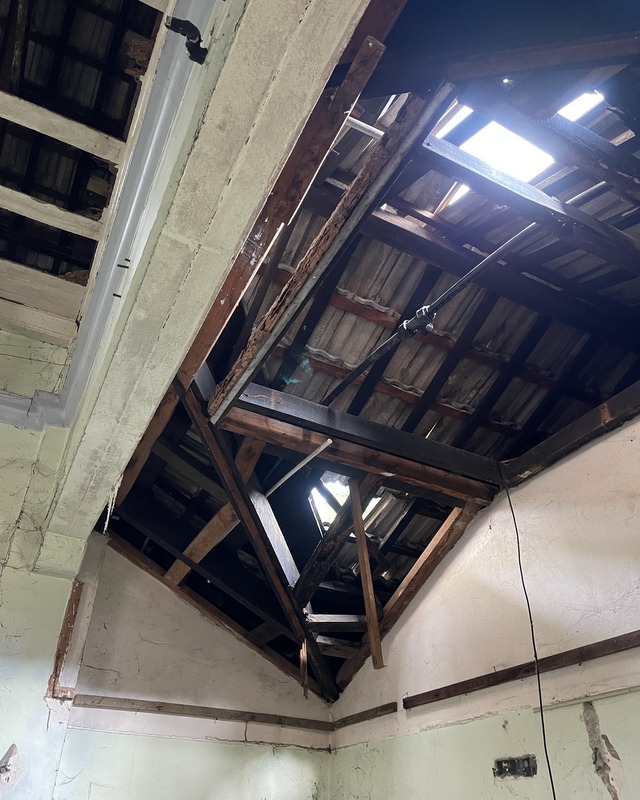
Some more photos, also of the interior. I am not an expert, but I think renovation or restoration is no longer an option, it will be rebuilding, hopefully keeping at least the original design.
Halim picked me up from Furama at 4:30 pm. We visited a Pasar Ramadan to shop for the dinner. Those markets are often crowded, we went early on purpose.
We arrived at Halim’s house around 6pm, I was prepared to wait until 7:30. But what a surprise, at 6:30 he and his wife said, come, let’s eat! It turned out that both were not fasting that day because of medical reasons! It was a nice dinner, too much to finish everything.
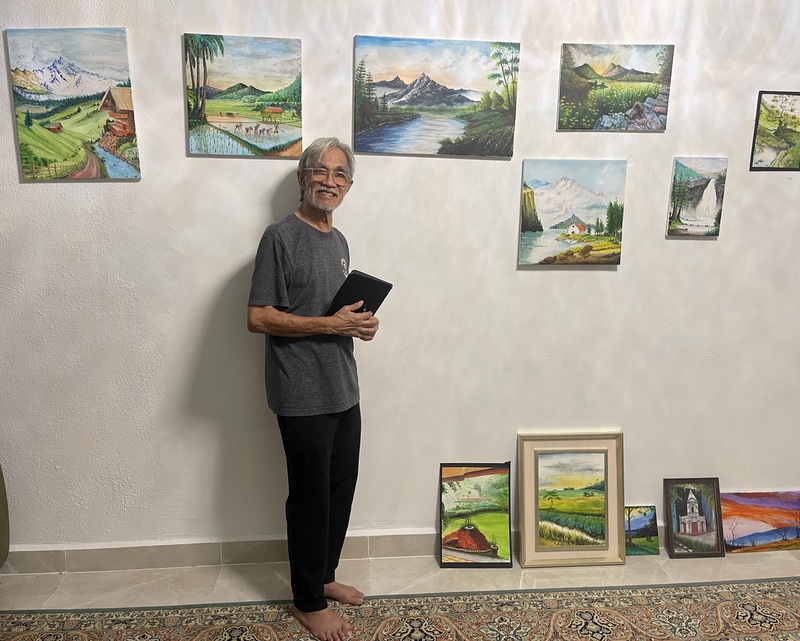
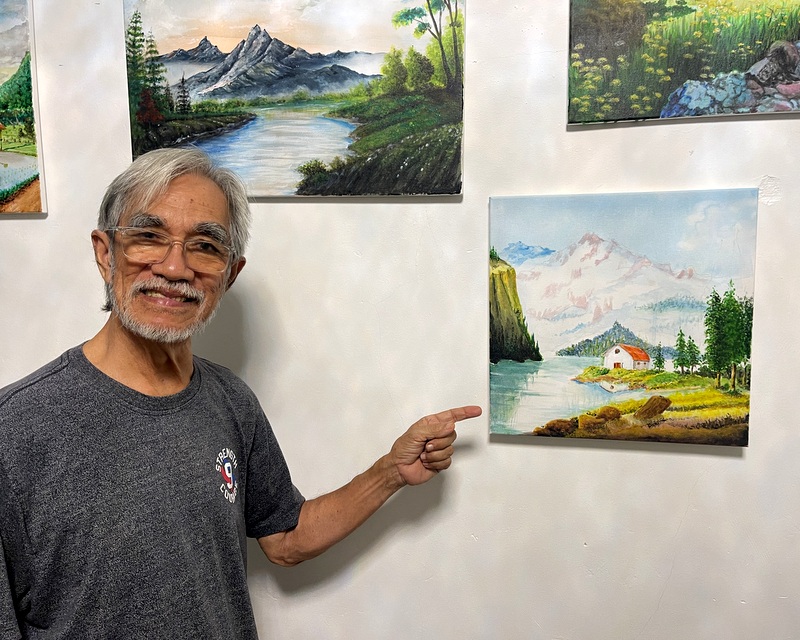
Halim is an accomplished amateur painter and was happy to show me his paintings, in the right picture pointing to his latest creation.
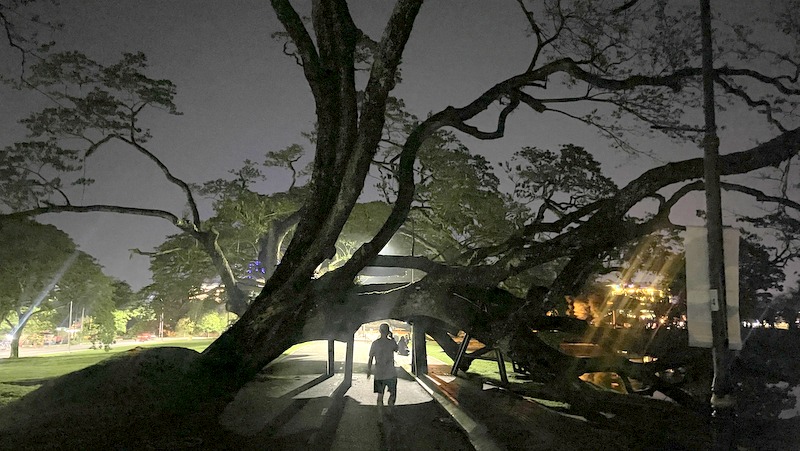
They drove me back and I asked them to drop me off at the Raintree Walk. Very scenic to walk back to my hotel.
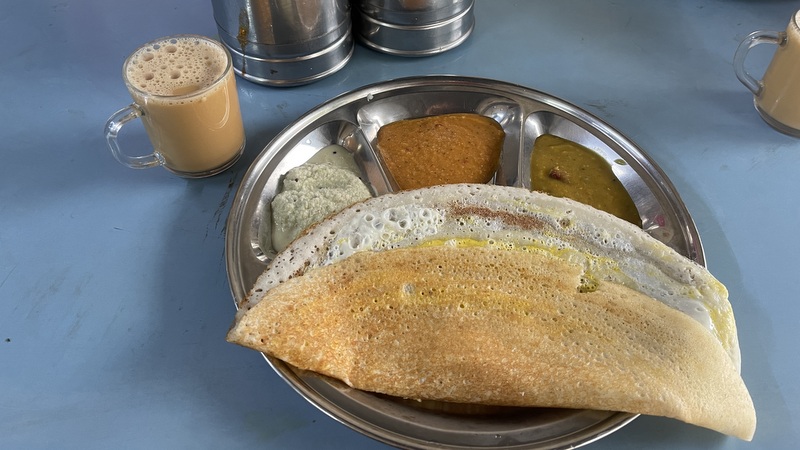
The last day, my friend Yeap picked me up from my hotel, we had breakfast in an Indian restaurant.
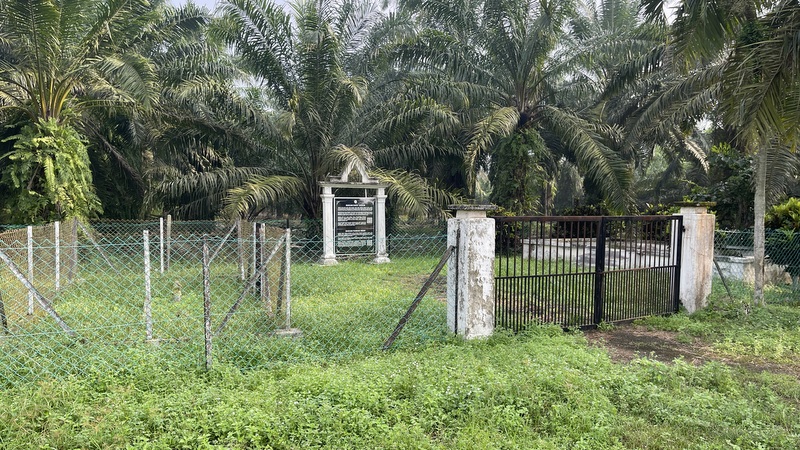
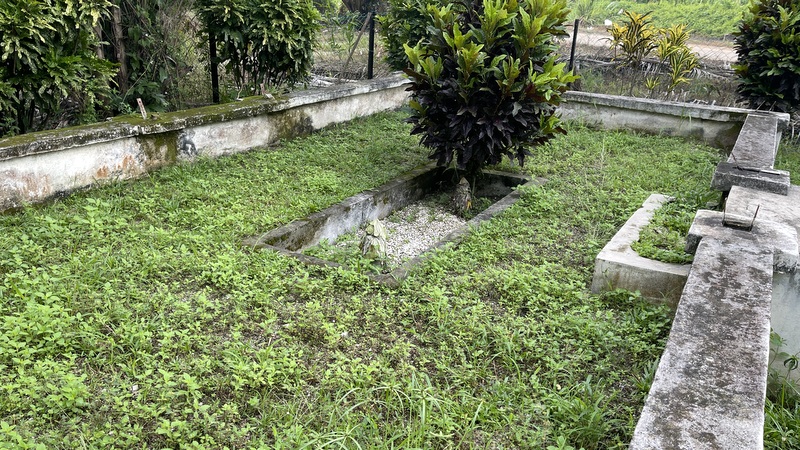
One reason for my Taiping visit was to have a look at the graves of the Malay nobles who had killed J.W.W Birch in November 1875. Recently I came in contact with Sabri Zain, who is very knowledgeable about the Perak War. See my report The Battle of Kota Lama. He wrote a FB page about these graves. They are located in Matang, not far from Kota Ngah Ibrahim!. Even many Taipingites are not aware of their existence! Their location is indicated on Google Maps, access is easy. Here is the small cemetery just beside the road.
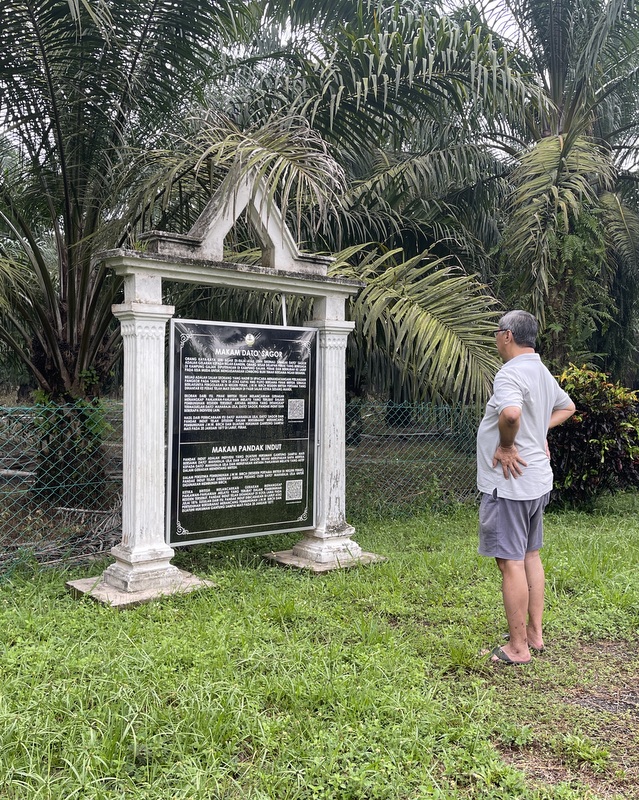
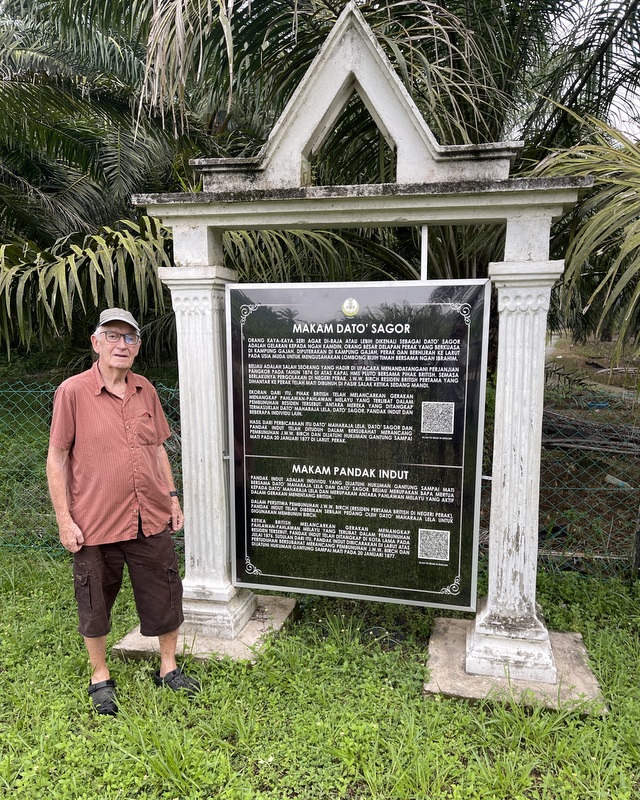
There are two graves, of Dato’ Sagor and Pandak Indut. The grave of Maharaja Lela may not have been preserved. I found another page about the graves Makam Dato Sagor Yang Terbiar, dated 2017 Since then the site has apparently been cleaned and is now reasonably well maintained.
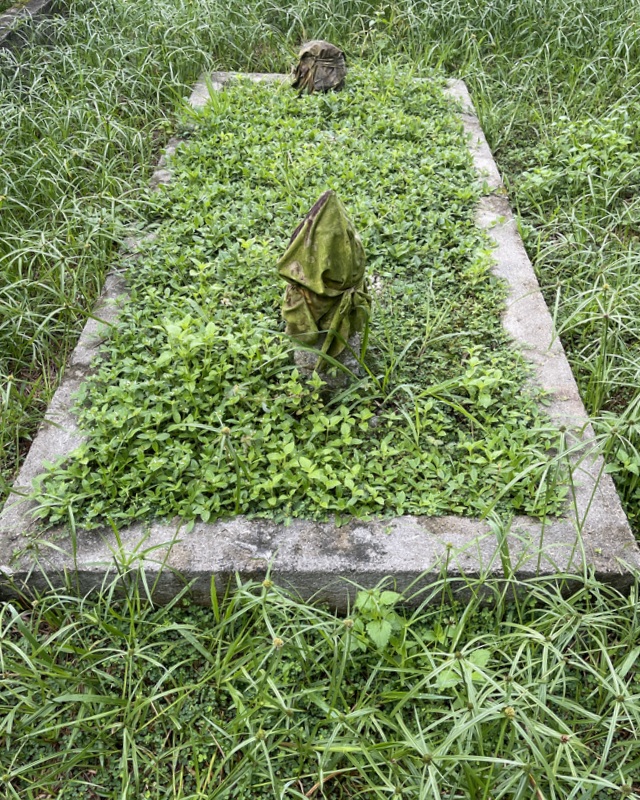
Modern technology, click on the QR-code and you will get the English text. The right photo shows the (smaller) grave of Pandak Indut
The grave of Dato’ Sagor is a lot bigger.
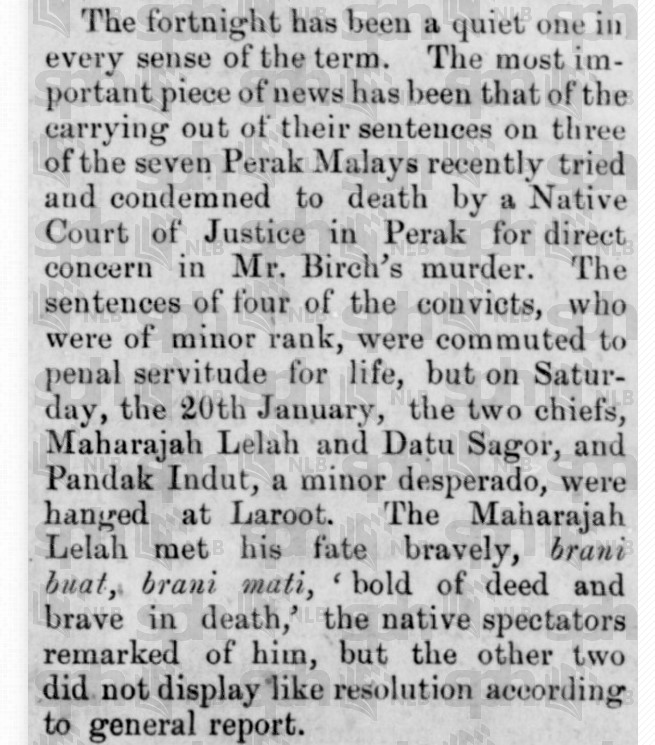
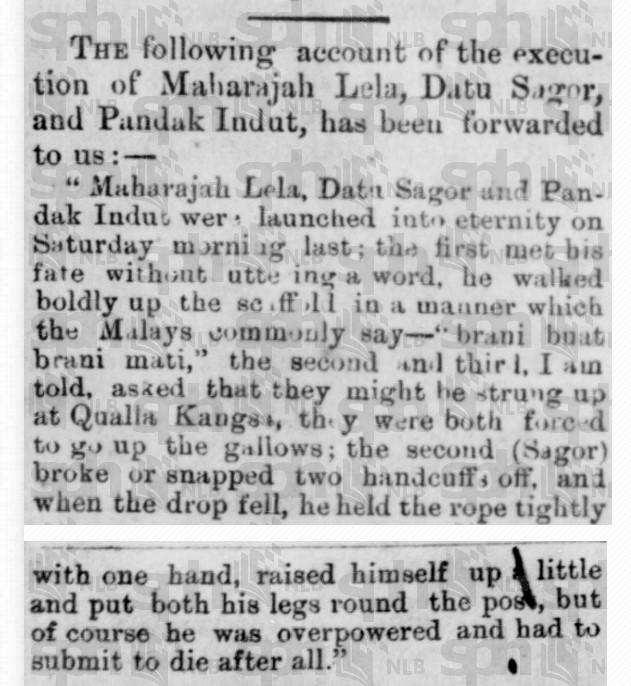
Here are two interesting snippets from the Straits Times Overland Journal, 8 February 1877, about the hanging of the pahlawan-pahlawan Melayu (Malay warriors/heroes)
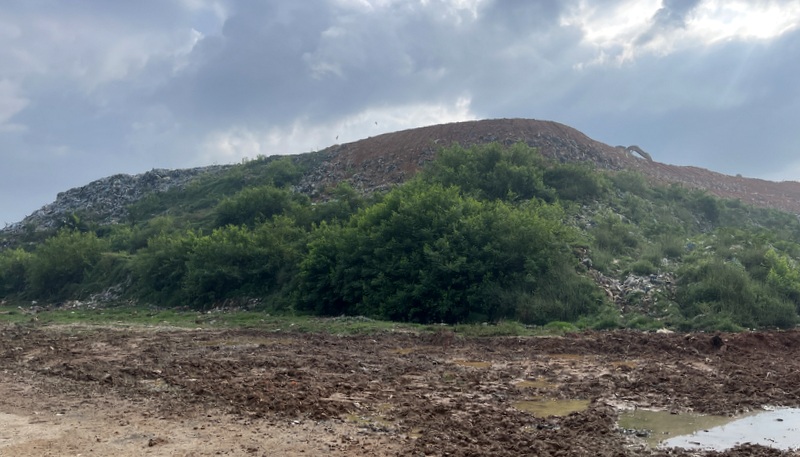
The road passing the tombs, ends at this massive rubbish dump. Probably a reason why the site is quite unknown.
On my way back to my hotel, a last look at the Lake Gardens, before checking out.
I had lunch with David Chiang at Lian Thong, one of my favourite restaurants, where I had roti goyang and coffee. David is a young energetic entrepreneur with an interest in heritage. He has lots of ideas about bringing back to life Taiping heritage sites.
After visiting Melaka (in August) and Seremban (in September), Aric and I made another overnight trip, this time to Teluk Intan. We visited the town in 2014, see Journal 5-10-2014 and had seen all points of interest. This time it was a convenient place to stay overnight and visit a few other attractions in the neighbourhood. Our program had three targets:
The Elephant Memorial
The Pasir Salak historical complex
The grave of J.W.W. Birch
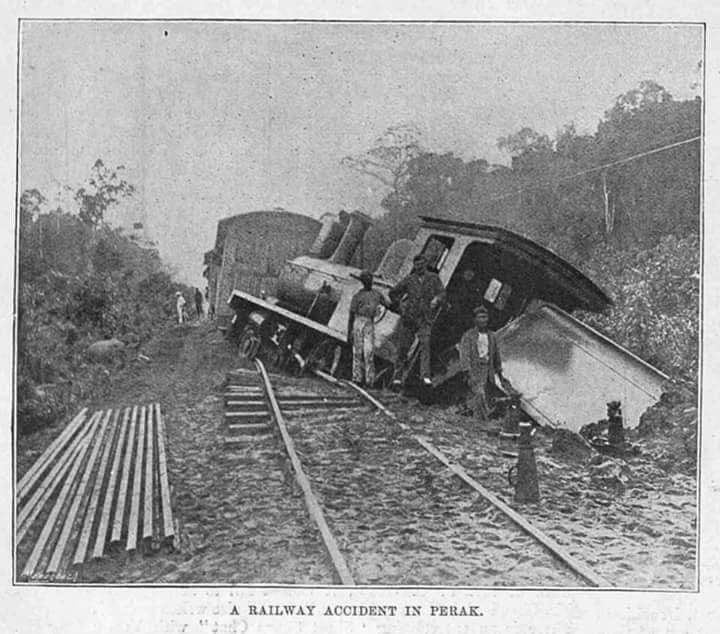
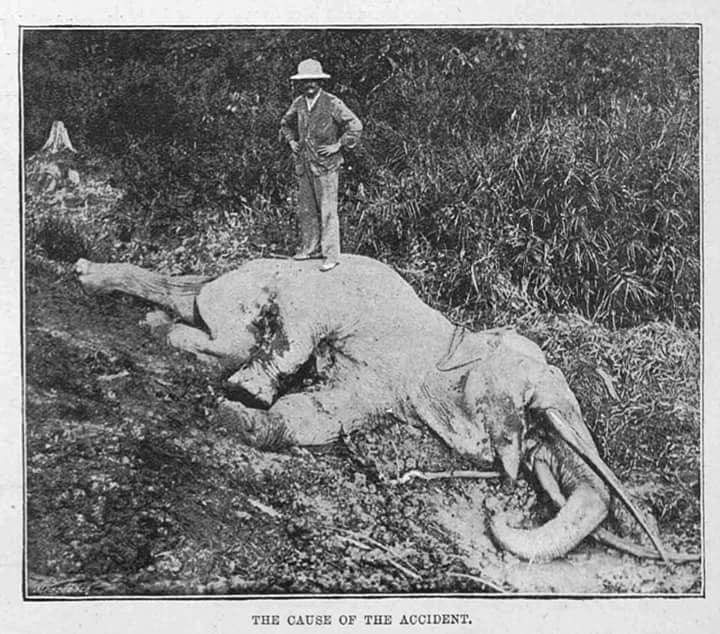
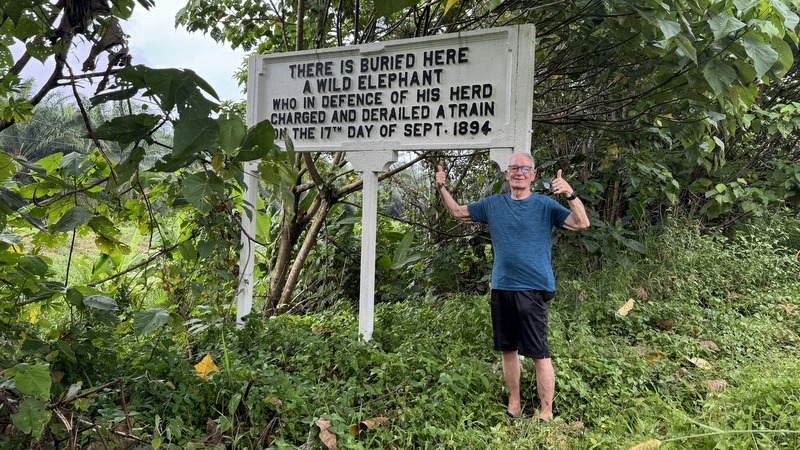
We started our trip on a Friday afternoon and reached Teluk Intan in about two hours. Before checking in at the Rick Resort, we first visited the Elephant Memorial. In 1894 there was an accident where an elephant attacked a train to protect its herd. The train derailed, the elephant died.
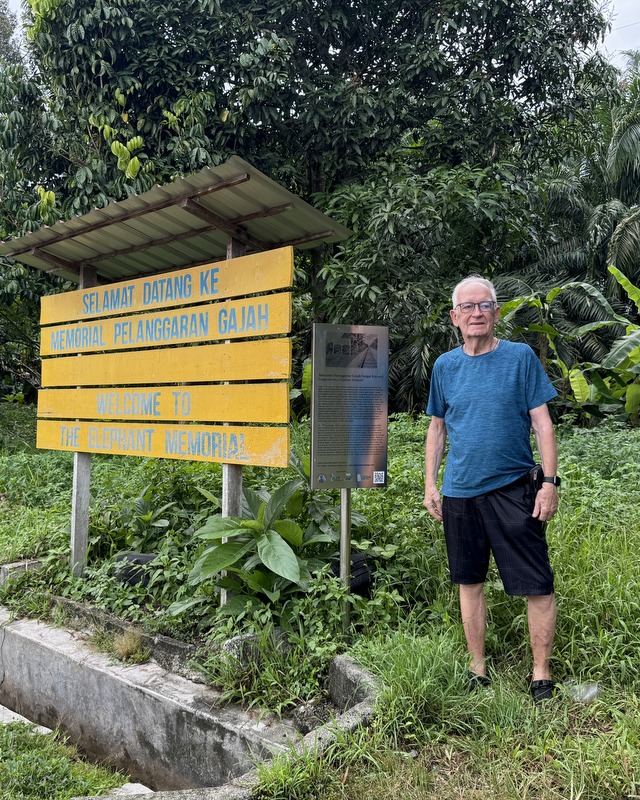
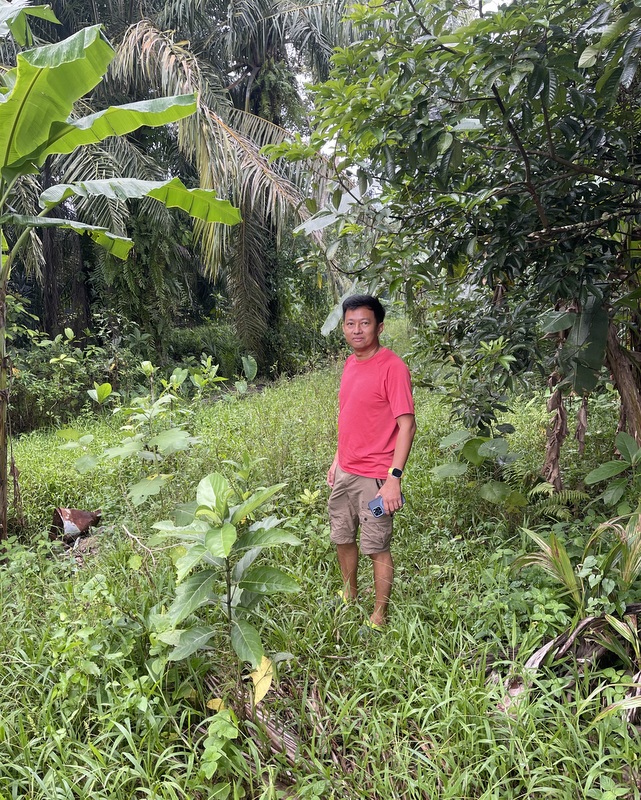
A memorial has been erected at the location where it happened. A signboard beside the road tells you where the trail starts and gives a description of the accident. It’s not much of a trail, but a very a short one. Not many people visit this place.
Here is the memorial.
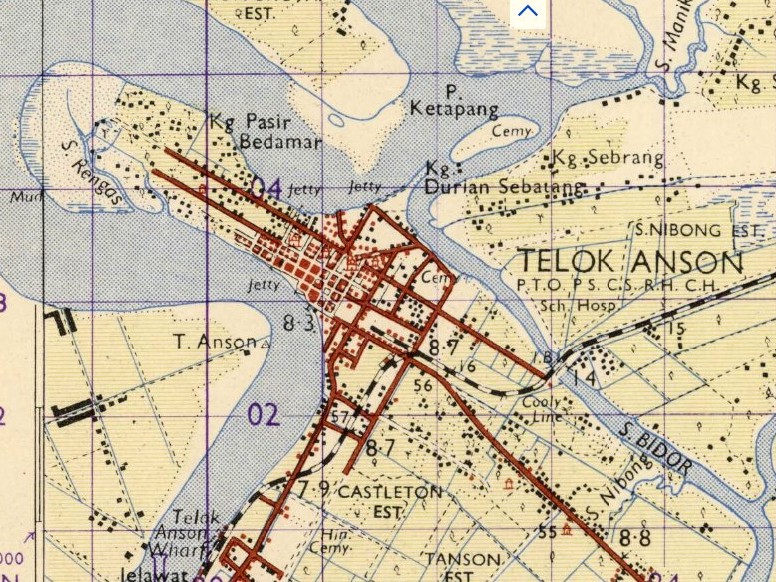
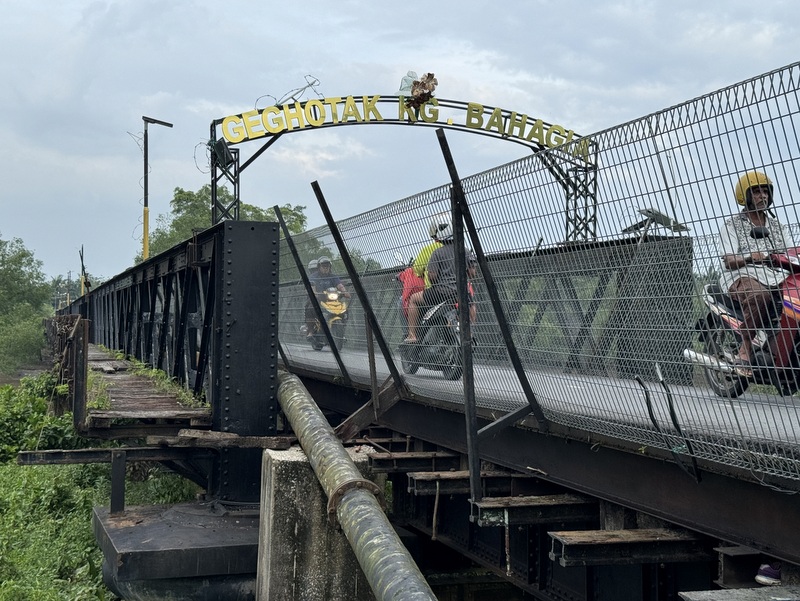
The railway between Tapah Road and Teluk Intan opened in 1893 and closed in 1989. The tracks have been dismantled, but the railway bridge across the Bidor river is still there, now used for bike traffic. The map shows Teluk Intan in the 1940s when the railway was still operational. In the other picture the remains from a pedestrian walkway next to the railway are still visible.
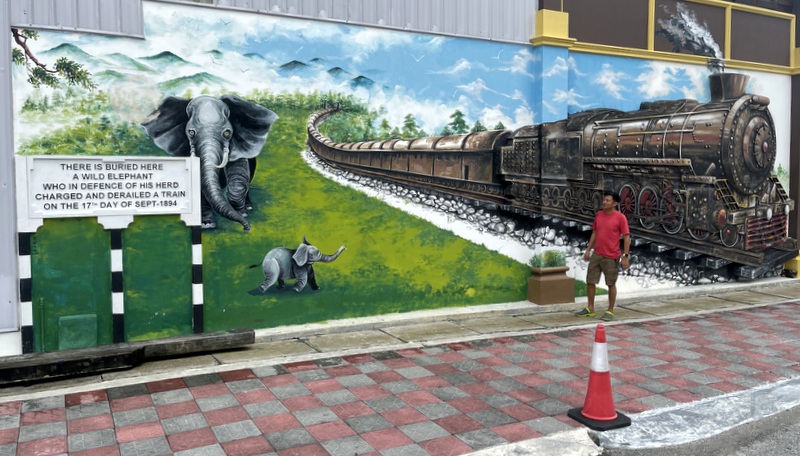
Not far from the bridge we found this attractive mural. I am not happy with the proliferation of murals all over Malaysia, but this one is very appropriate and well-done.
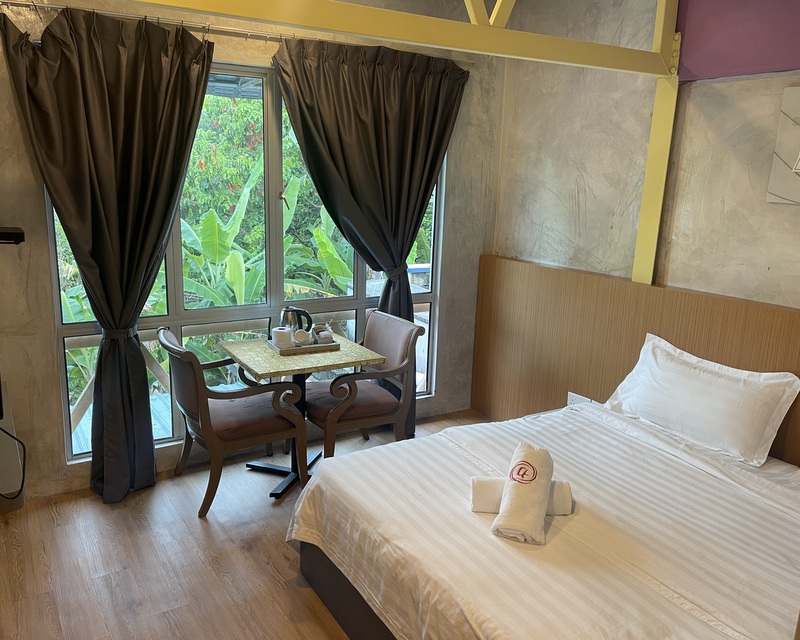
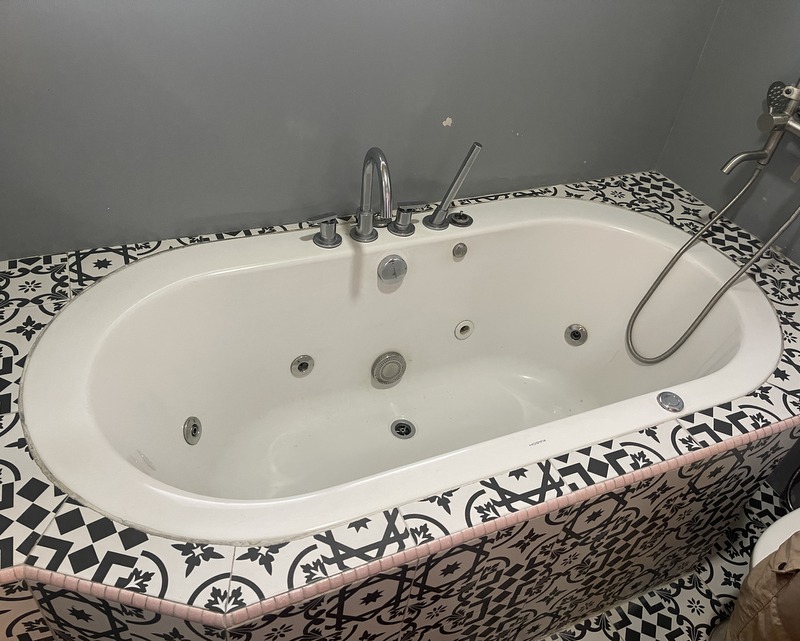
We had booked a room in Rick resort. Our room was not large but had the luxury of a private jacuzzi.
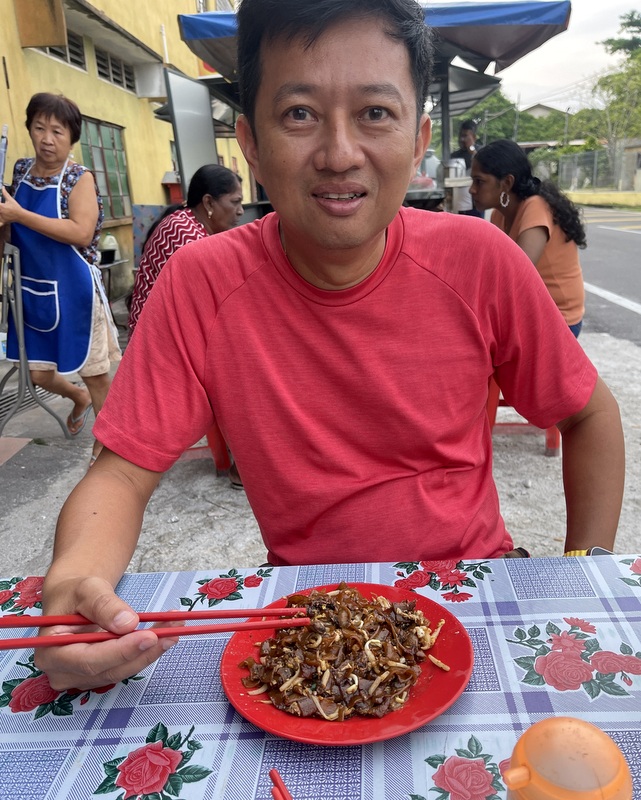
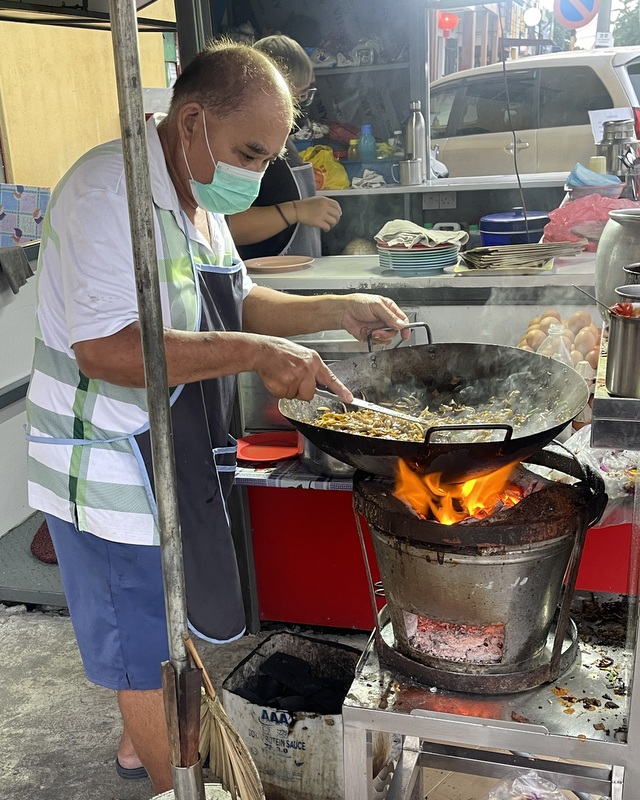
After a short rest we went out again for dinner. There is not much special food in Teluk Intan, but we found a nice family-run Char Koay Teow stall, just along the road. Traditional preparation, using charcoal.
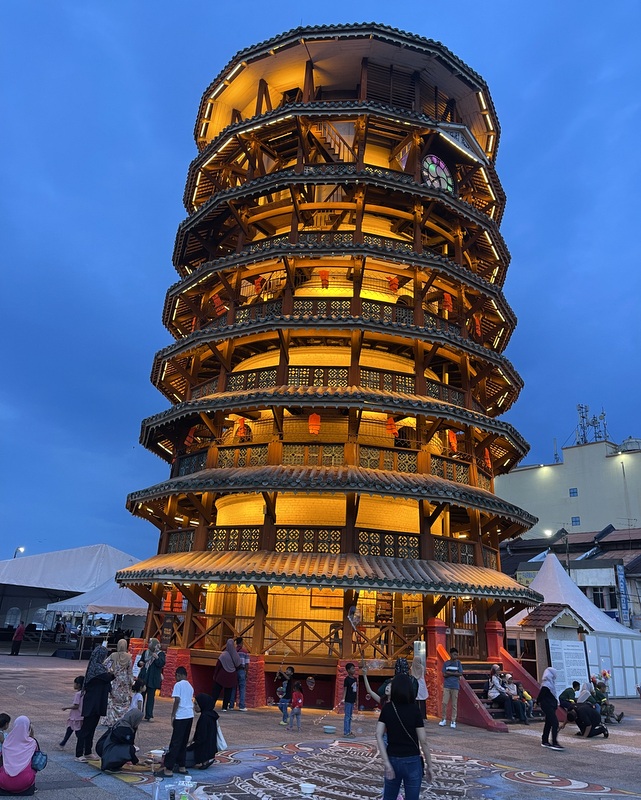
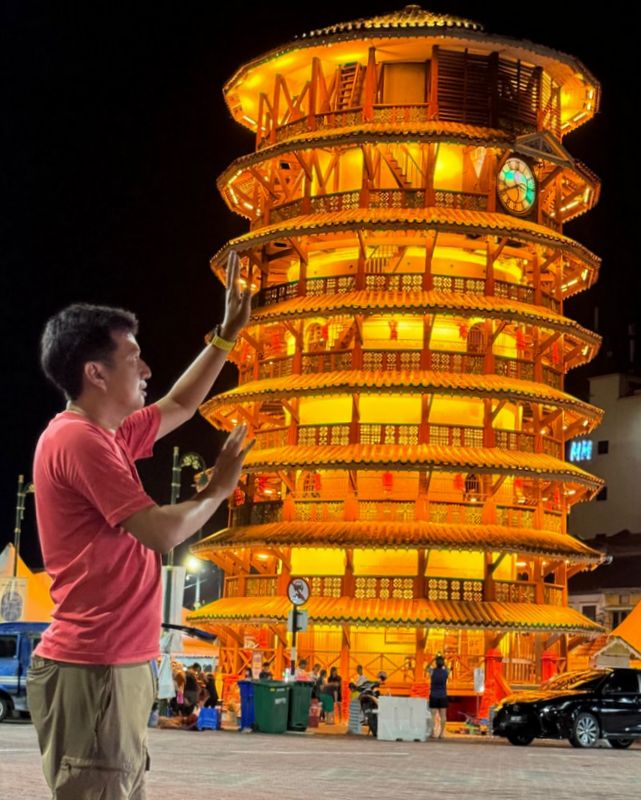
The main attraction of Teluk Intan is the leaning tower. It was brightly lit and many families were enjoying the evening. We spent quite some time there. Aric is trying to tilt the tower a bit more.
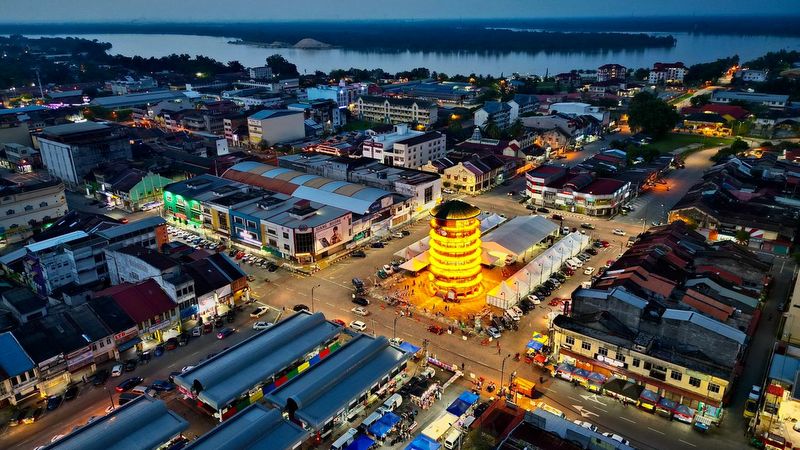
He had brought his drone.
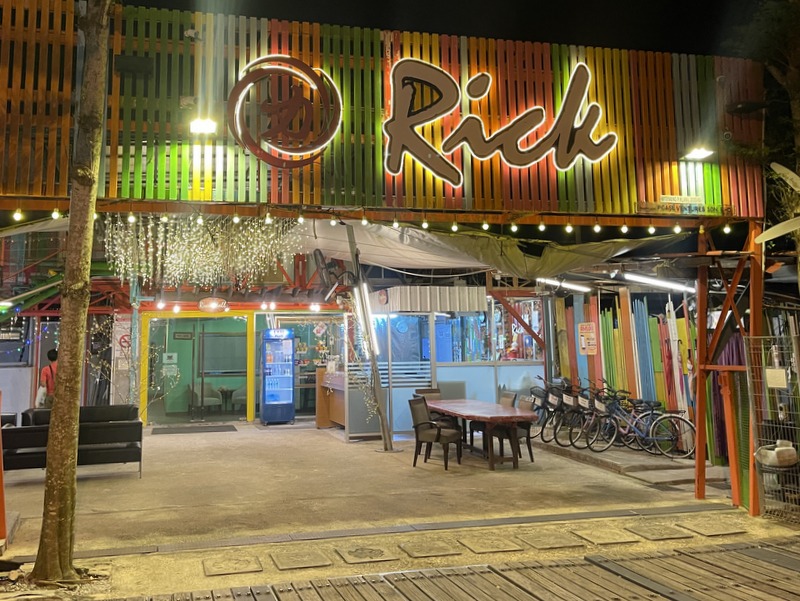
The resort was also nicely illuminated. I enjoyed the jacuzzi with a beer.
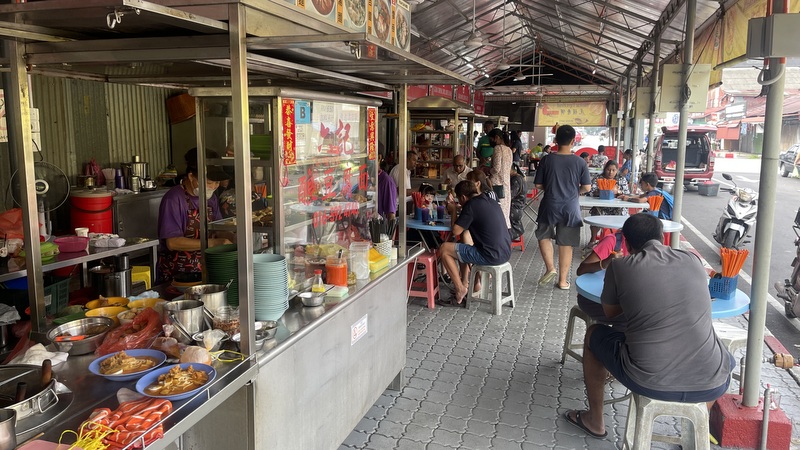
The next morning we checked out and went to the town center for our breakfast. The Maharani hawker center is located on both sides of the street.
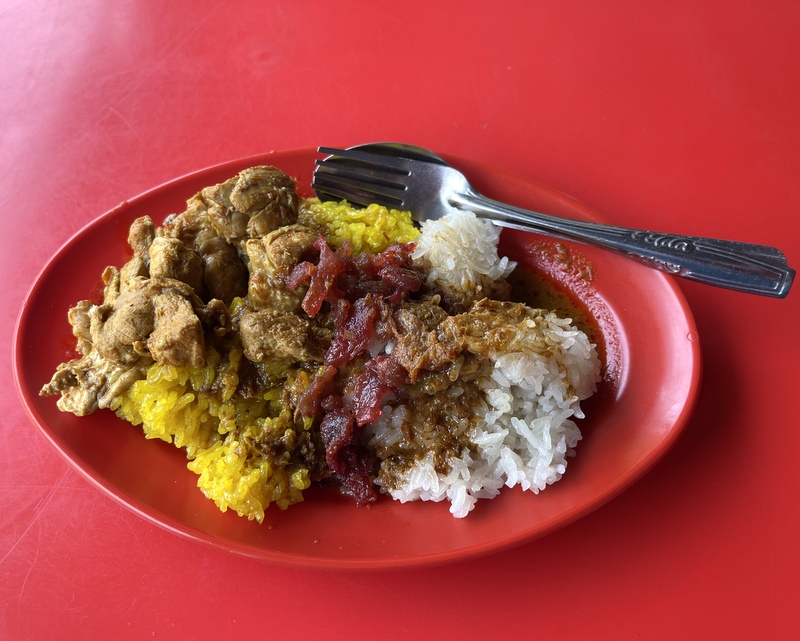
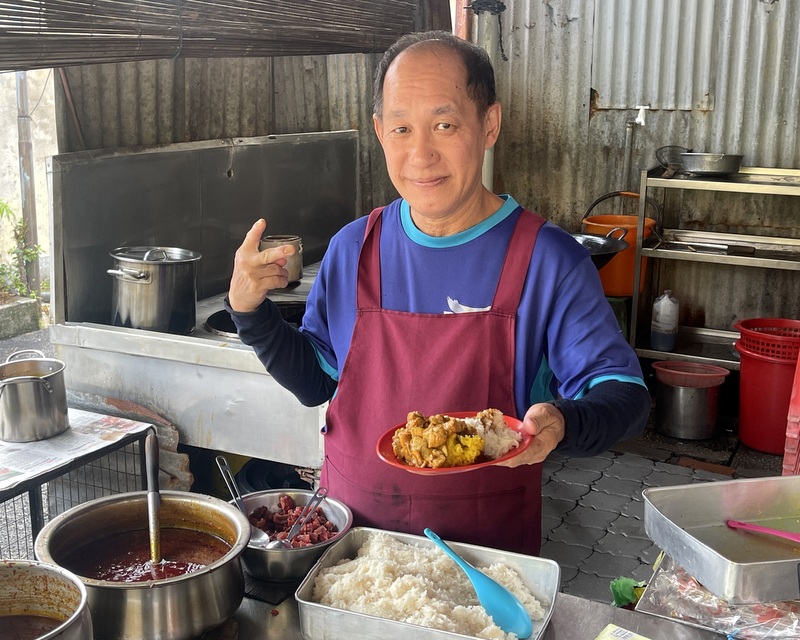
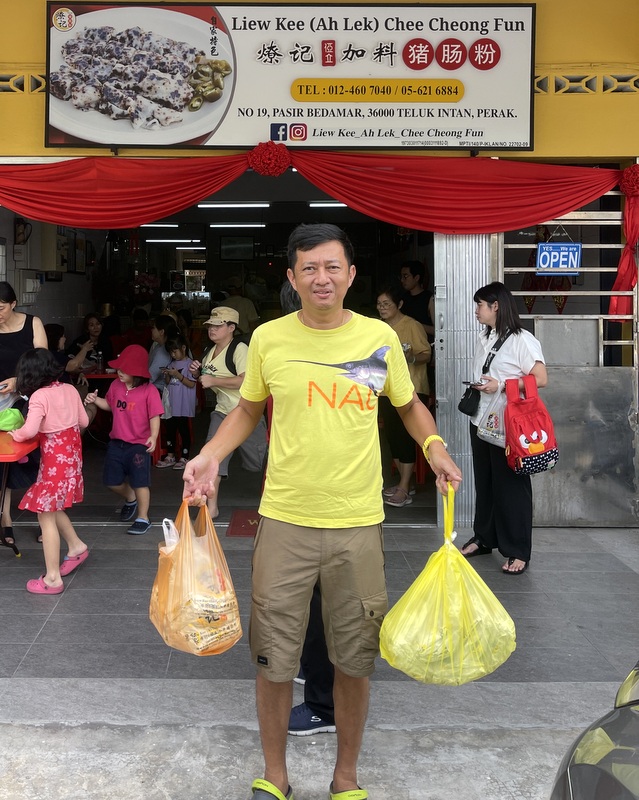
We had Ying Yong Glutinous Rice with Char Siew and Curry Chicken.. Interesting, but a bit heavy for breakfast. The stall owner was willing to pose with his food.
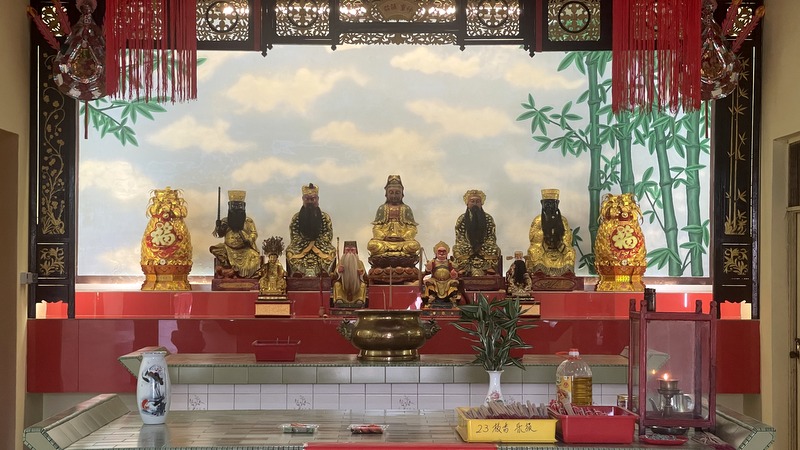
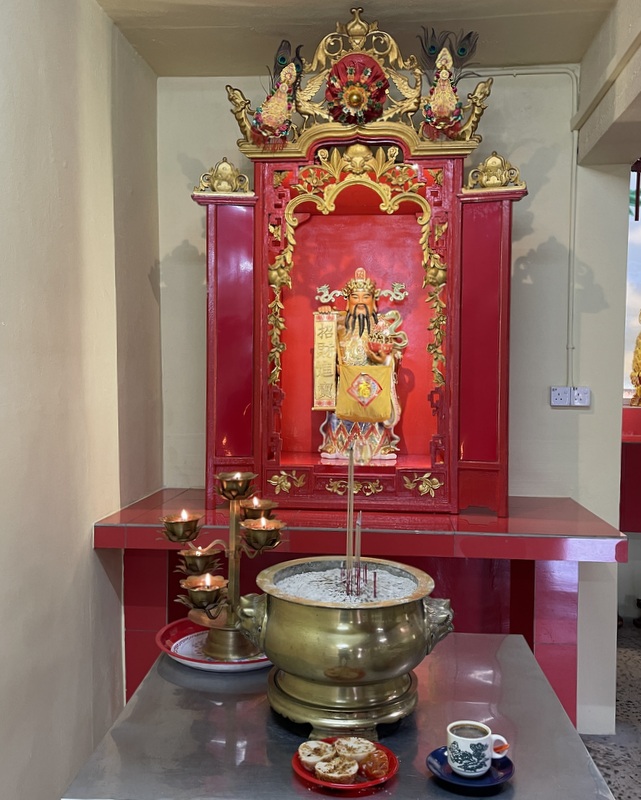
We had a look at the nearby Guong Dong temple, dedicated to Guan Yin (seated in the center). The deity is Caishen, the god of wealth, an important deity for Chinese 😉
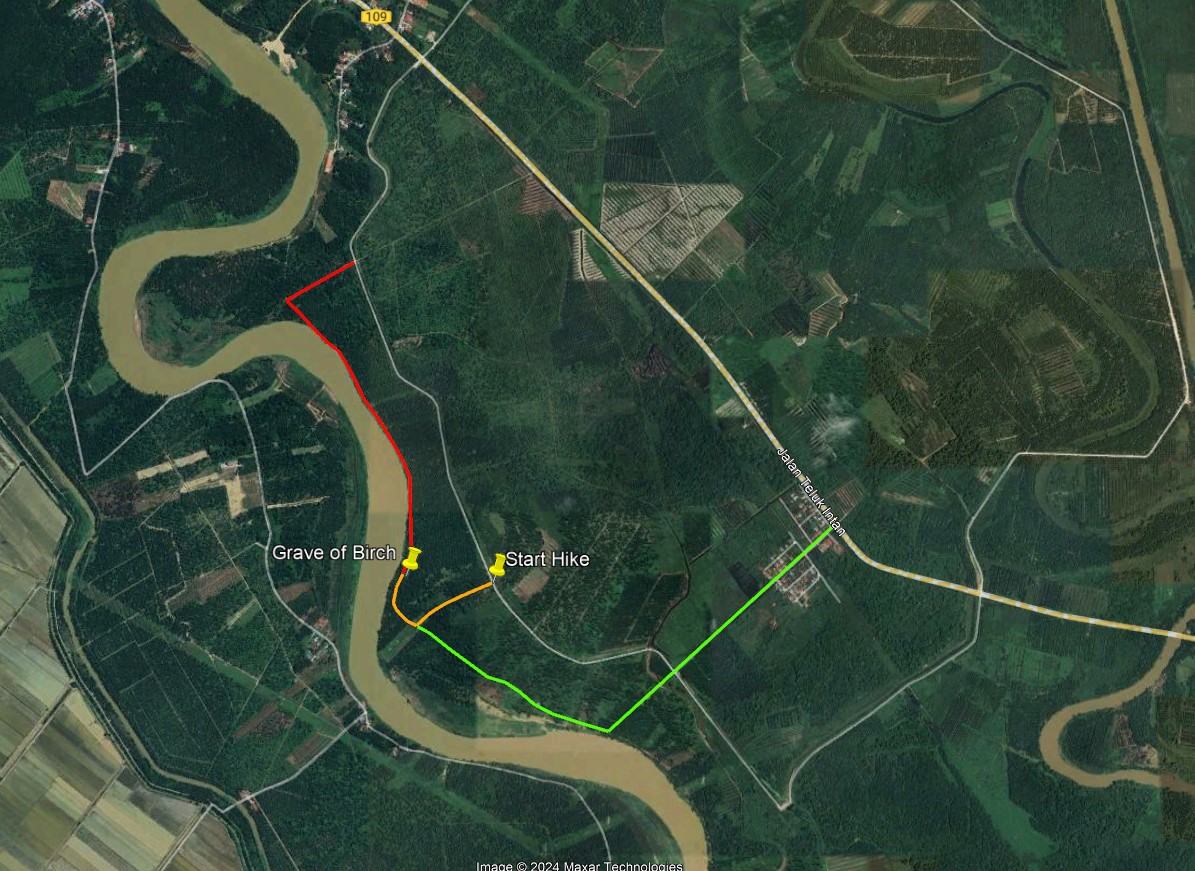
Then it was time for the main challenge of this trip, finding the grave of Birch. I had found a webpage created in 2019, Jejak Sejarah: Menjejaki Kubur JWW Birch with a map. And Sabri Zain visited the graves about ten years ago, here is his report: Perak Expedition: Bandar Bahru. He gave me clear instructions how to reach the graves. Here is the map of the region with Sabri’s route in green and the 2019 one in red.
We decided to try Sabri’s route first (the green one). The plantation road was in reasonable condition, but very overgrown, scratching our car so much, that we turned back halfway. Then Aric got the brilliant idea, why don’t we walk to the graves. He had noted that a minor road comes quite close to the graves and that on Google Earth it looks like a vague trail is going in the right direction..
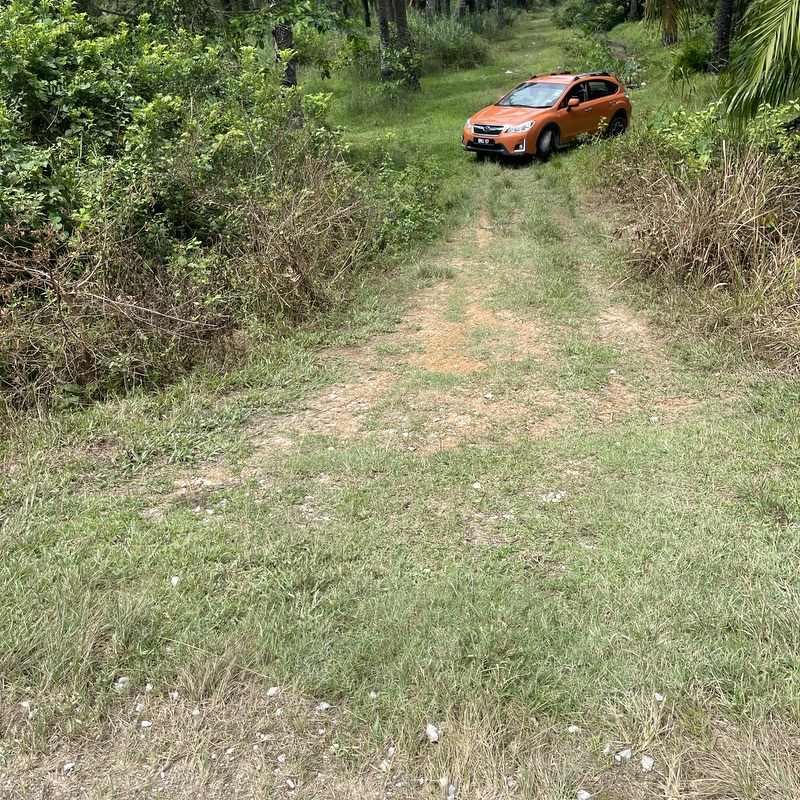
We found the trail location and parked the car there. It was actually a cattle trail, we had to walk carefully to avoid the cow dung, but it was not more than a 700 m hike before we reached the graves.
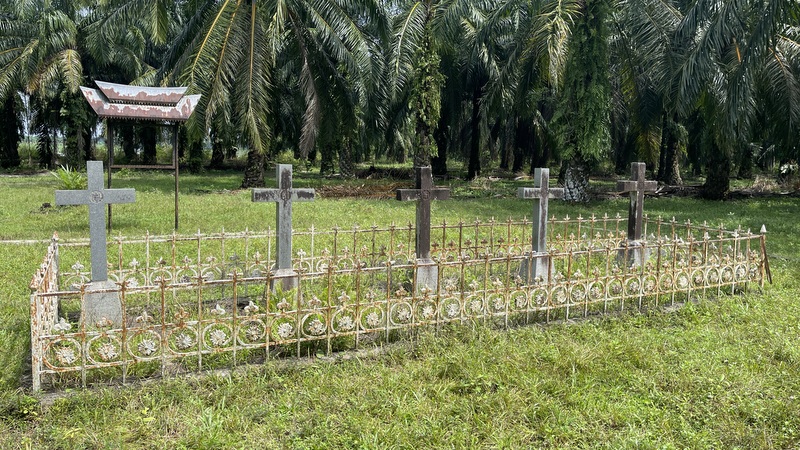
I found it quite impressive, so in the middle of nowhere.
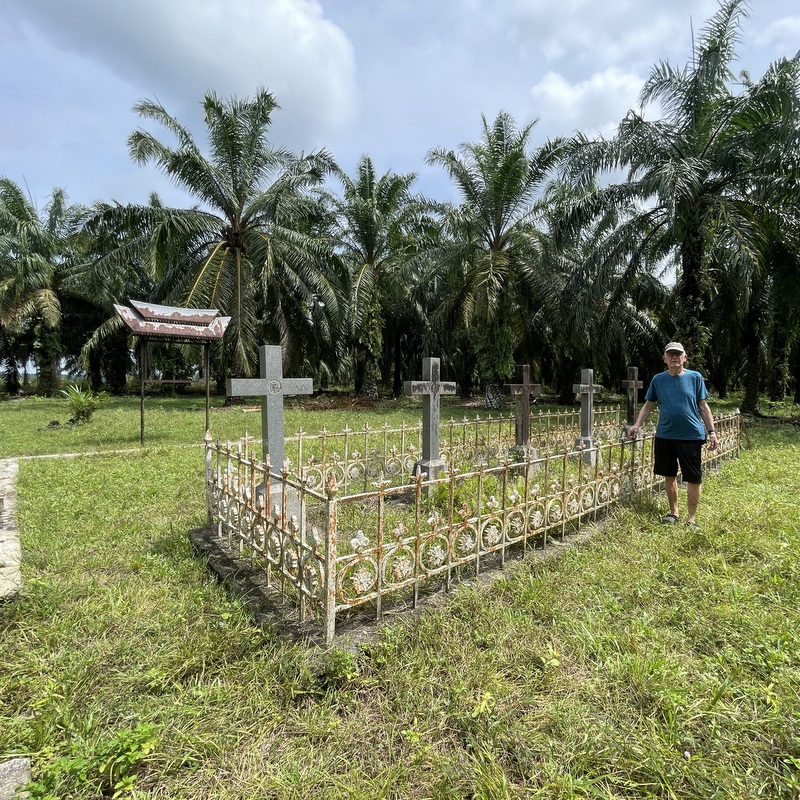
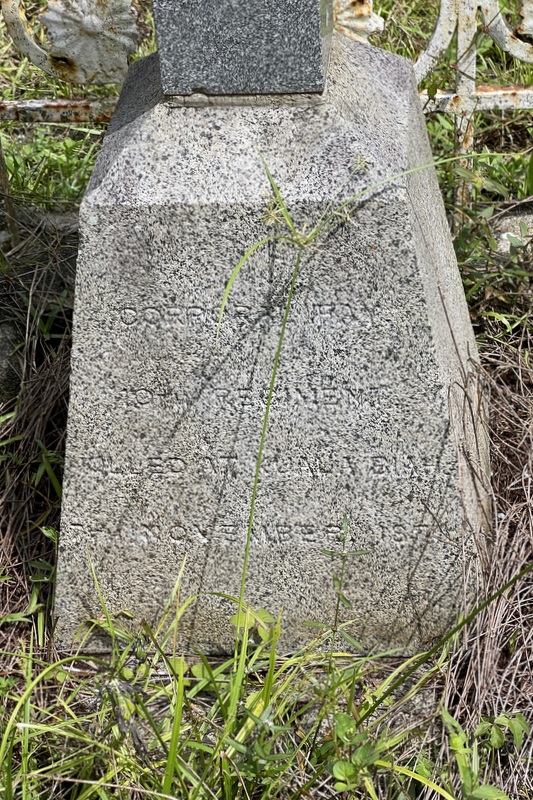
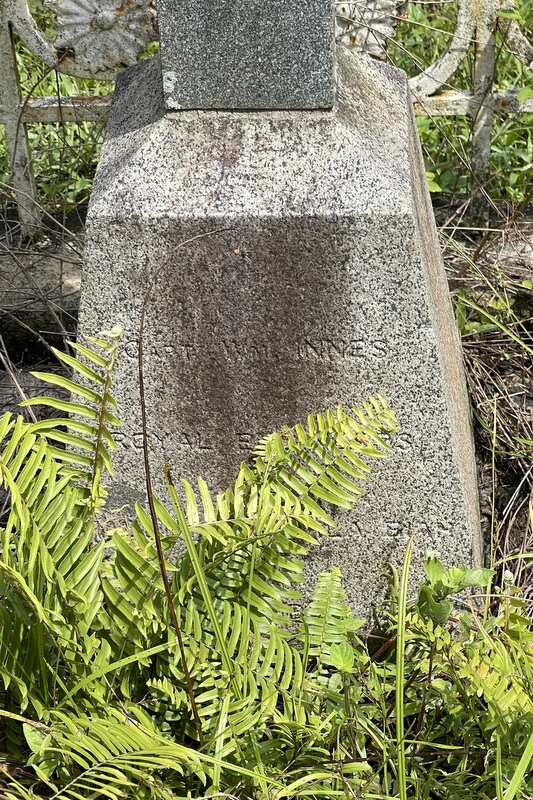
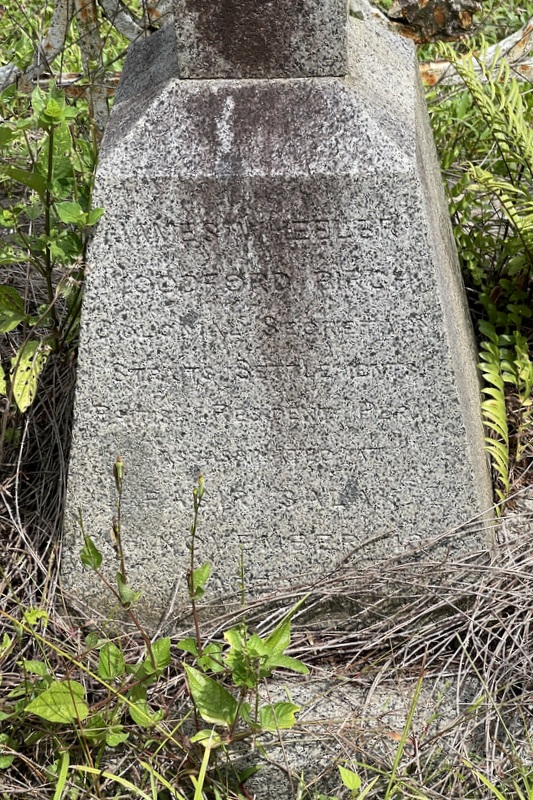
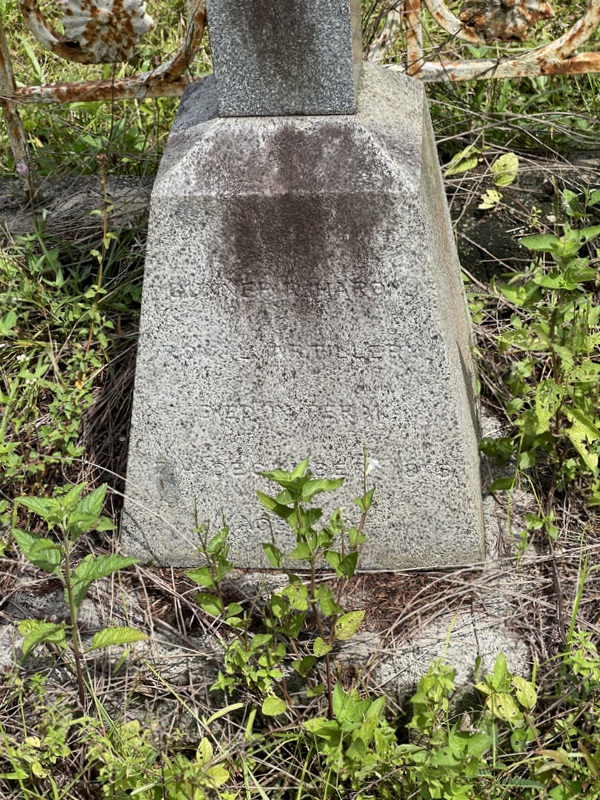
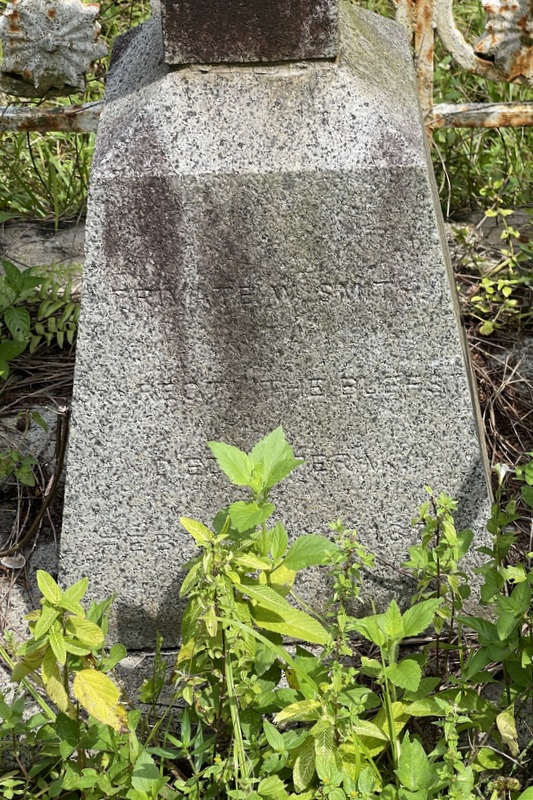
The grave of Birch is in the center. Left of his grave is the grave of Innes, who died a few days later during a failed attack on Pasir Salak. According to Sabri Zain the other three graves are of a British private, a Sepoy and a Malay scout. I may write a separate post about the killing of Birch and the hectic weeks that followed.
William InnesJ.W.W Birch
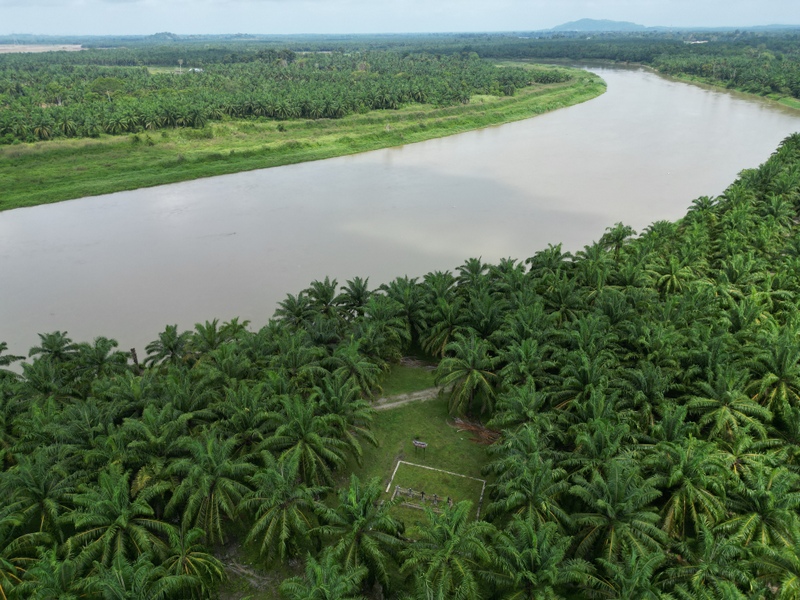
Aric used his drone to take aerial pictures of the cemetery and the nearby majestic Perak river.
We walked back to the car and continued our trip to the Historical Center of Pasir Salak. When we arrived we were the only visitors, later a Malay group arrived. I had visited the center long ago and was not impressed. The architecture of the complex is nice, maybe a bit over the top. There are two monuments about what actually happened here. And there is a Time Tunnel as main attraction.
But the concept of Bumi Pahlawan Melayu (Land of the Malay warriors) which you see displayed everywhere in the complex is not appropriate, in my opinion. It suggest a continuous struggle for independence, from the Melaka sultanate until the formation of UMNO. It would have been better to concentrate on British colonialism.
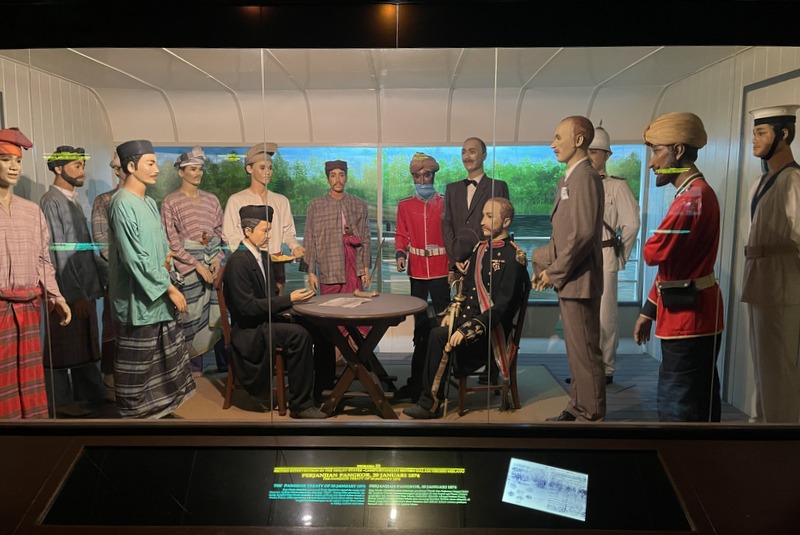
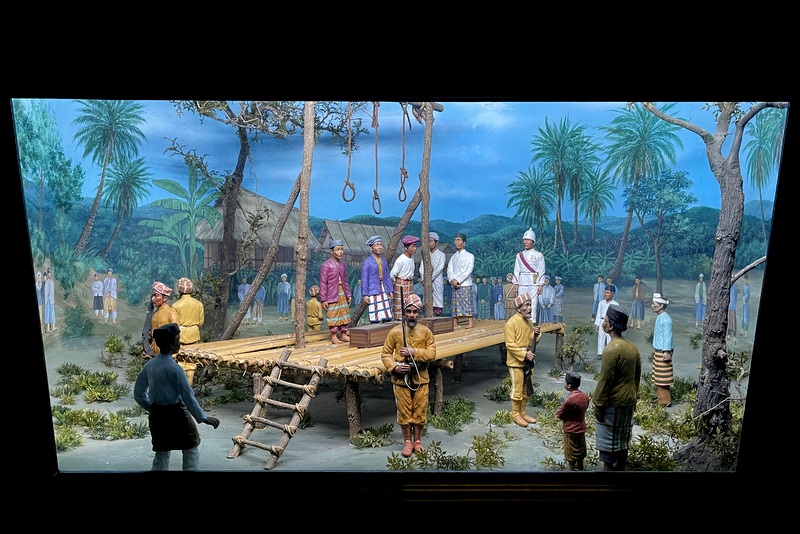
The time tunnel is actually quite well done. I remember a “primitive” version when i visited the first time, dioramas depicting the various phases of “Ketuanan Melayu“. Now it is more high-tech and more balanced. Officially not allowed to take photos, but I could not resist the temptation. The Pangkor Treaty (1874) and the hanging of Birch’s killers in Matang (1876).
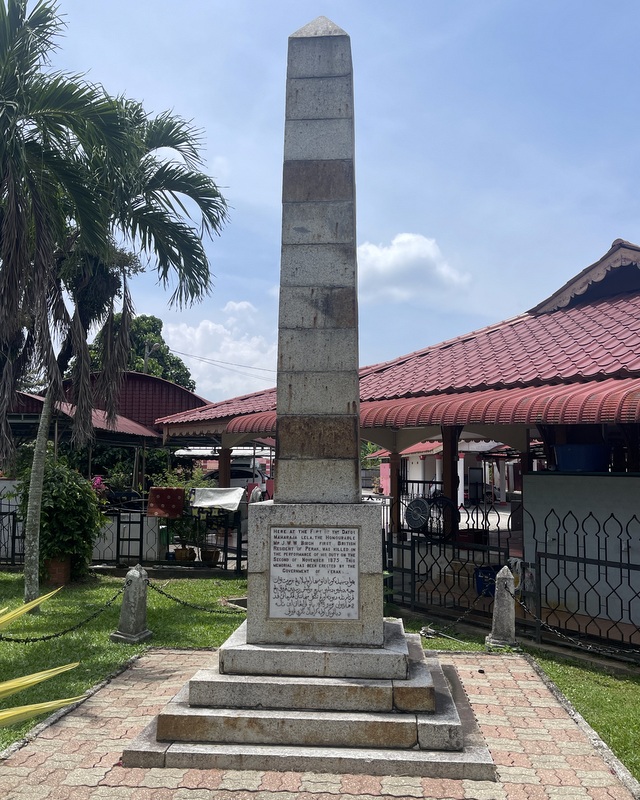
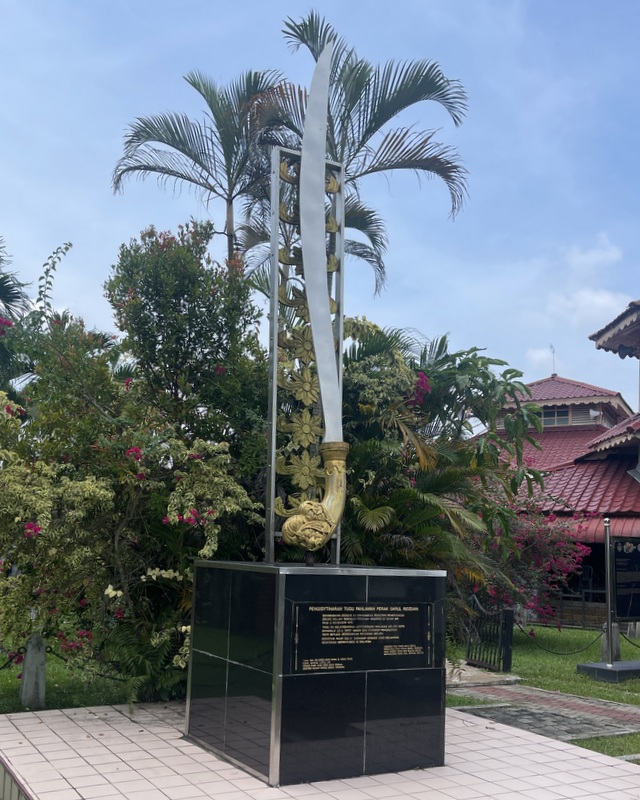
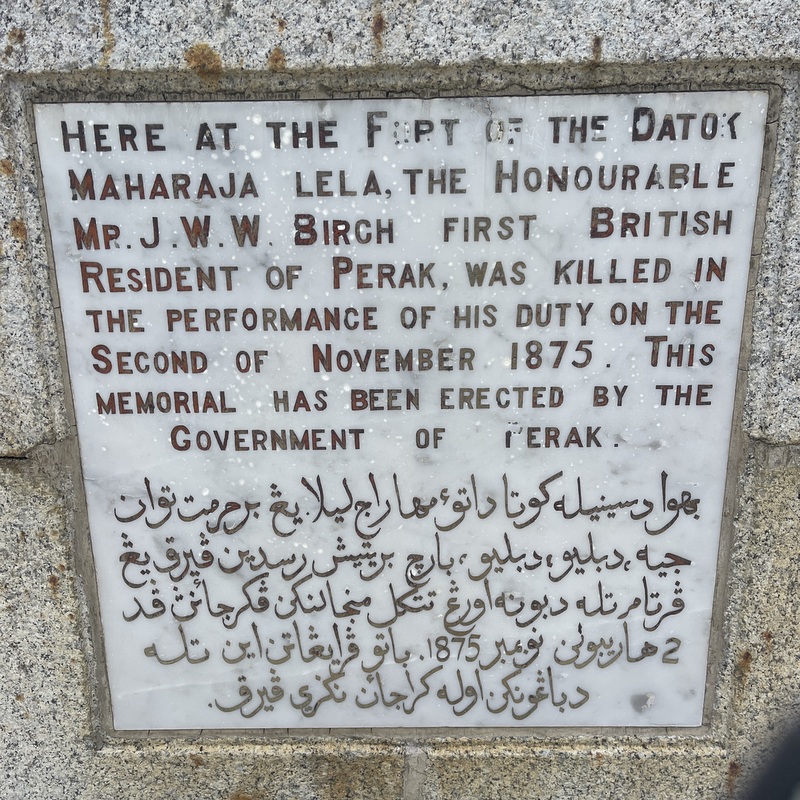
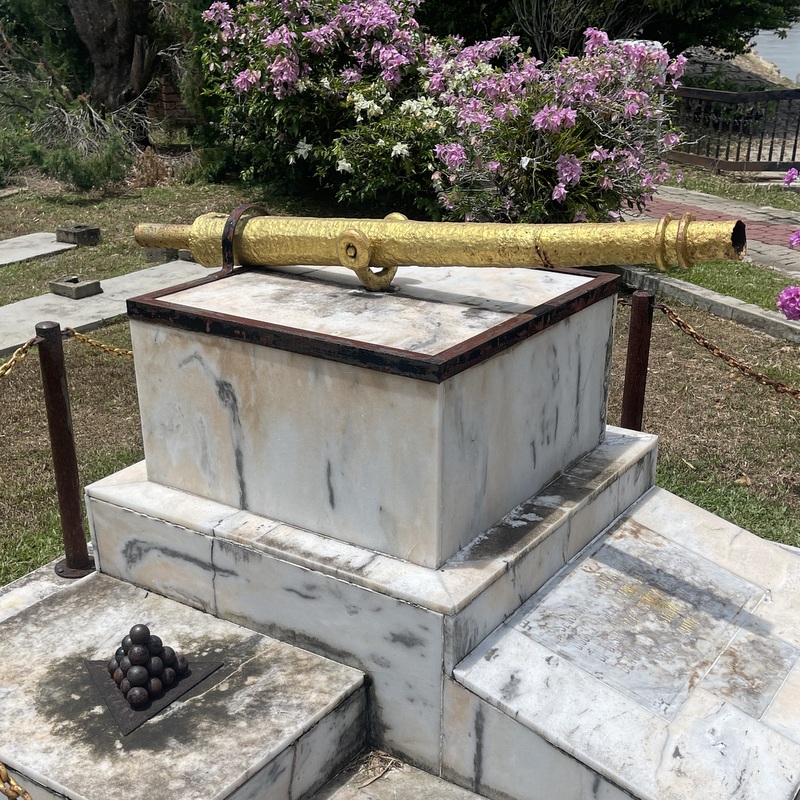
Here are the two monuments near the actual location where Birch was speared (while taking a bath in the river!). A British one (for Birch) and a Malaysian one (for his killers). The cannon is a so-called Rentaka, a bronze cannon, used by the Malays during the fighting.
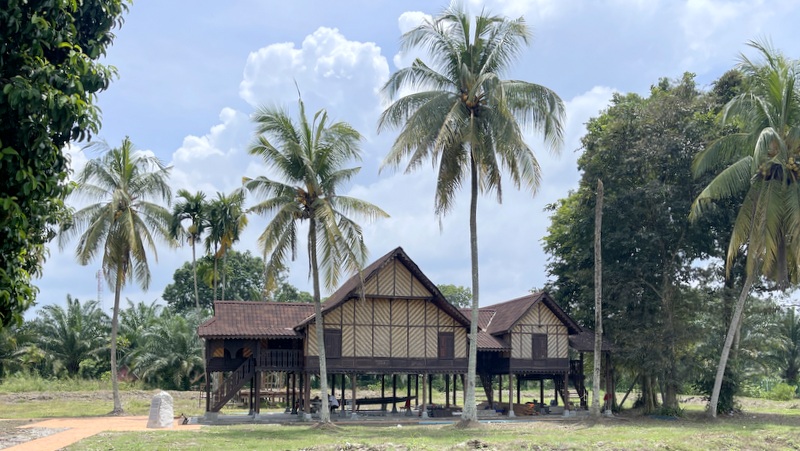
Pasir Salak was the home base of Maharaja Lela, he had his stronghold there. In the picture you see a replica, but already ruined.
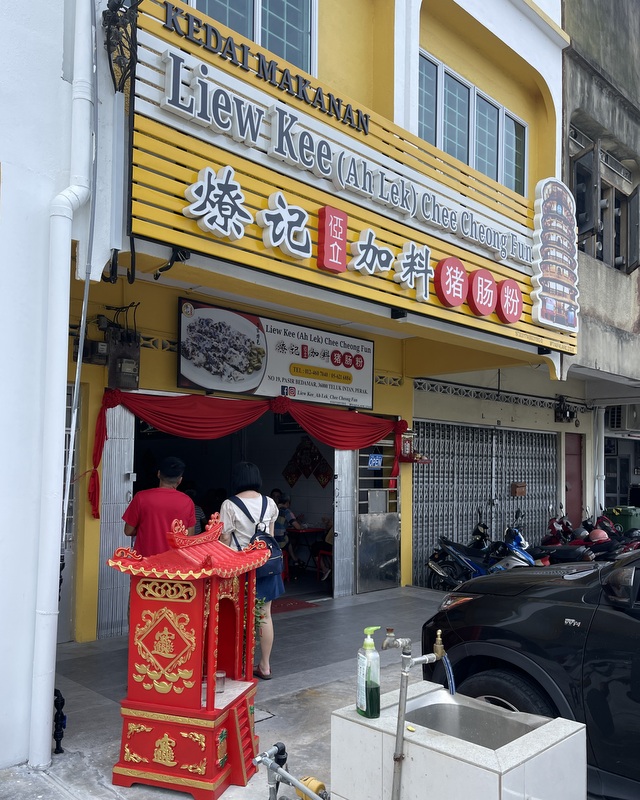
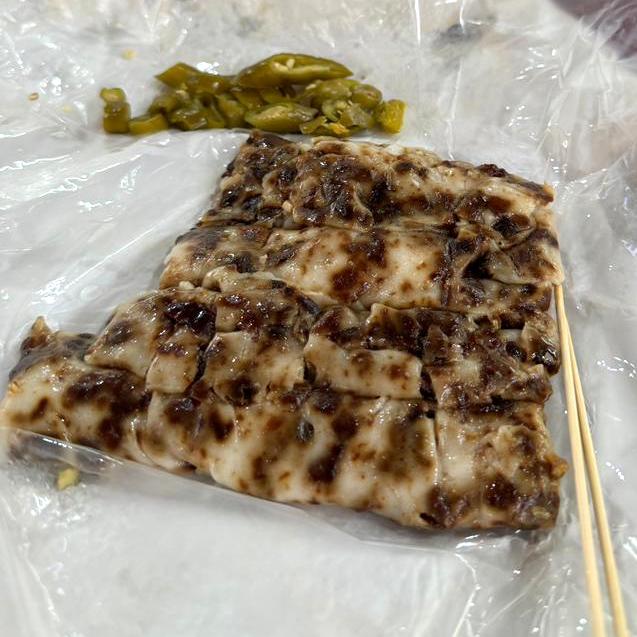
After this visit we drove back to Teluk Intan for lunch. The town may not be a haven for foodies, but there is one famous speciality, Liew Kee’s Chee Cheong Fun. Prepared with a variety of herbs, without a sauce. Aric bought 27 packs (at RM 8 per pack) to distribute them among family and friends ;-).
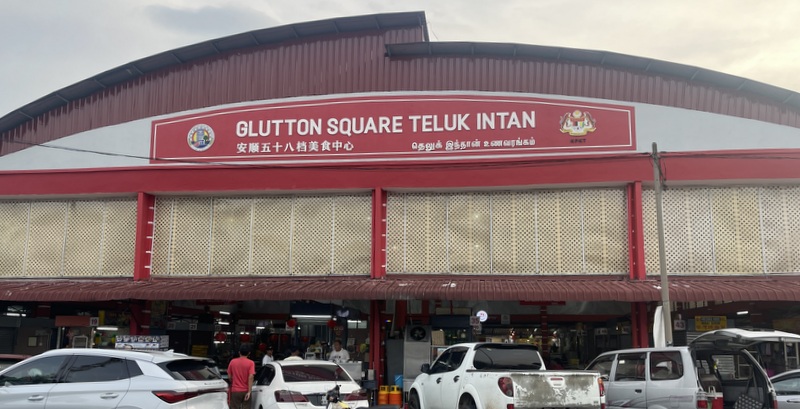
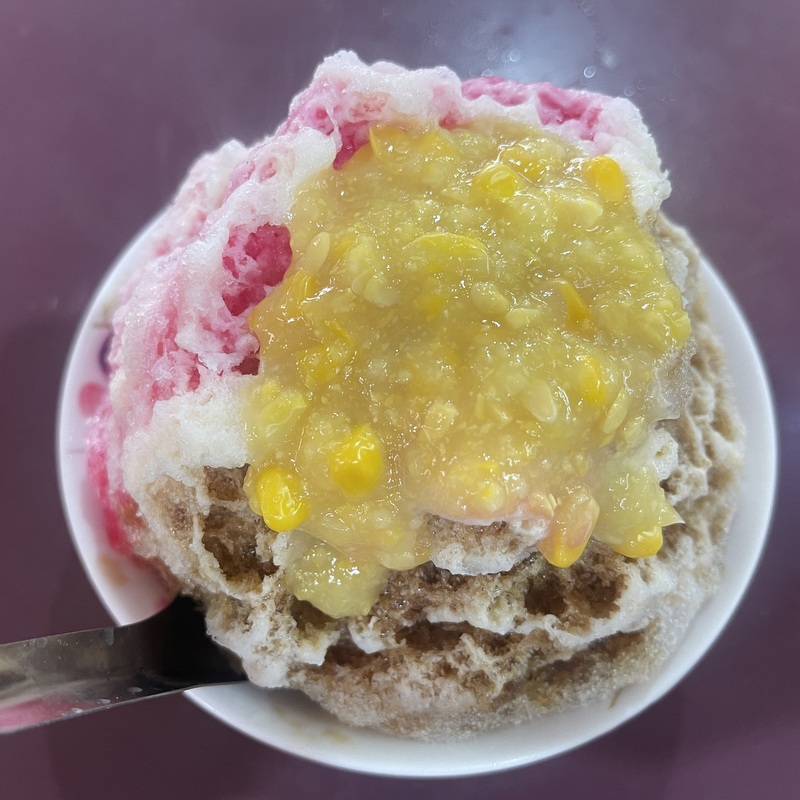
The shop has only limited seating capacity, so we went to the Glutton (!) Square Food court, where we ordered ABC and had a pack of CCF. Both delicious.
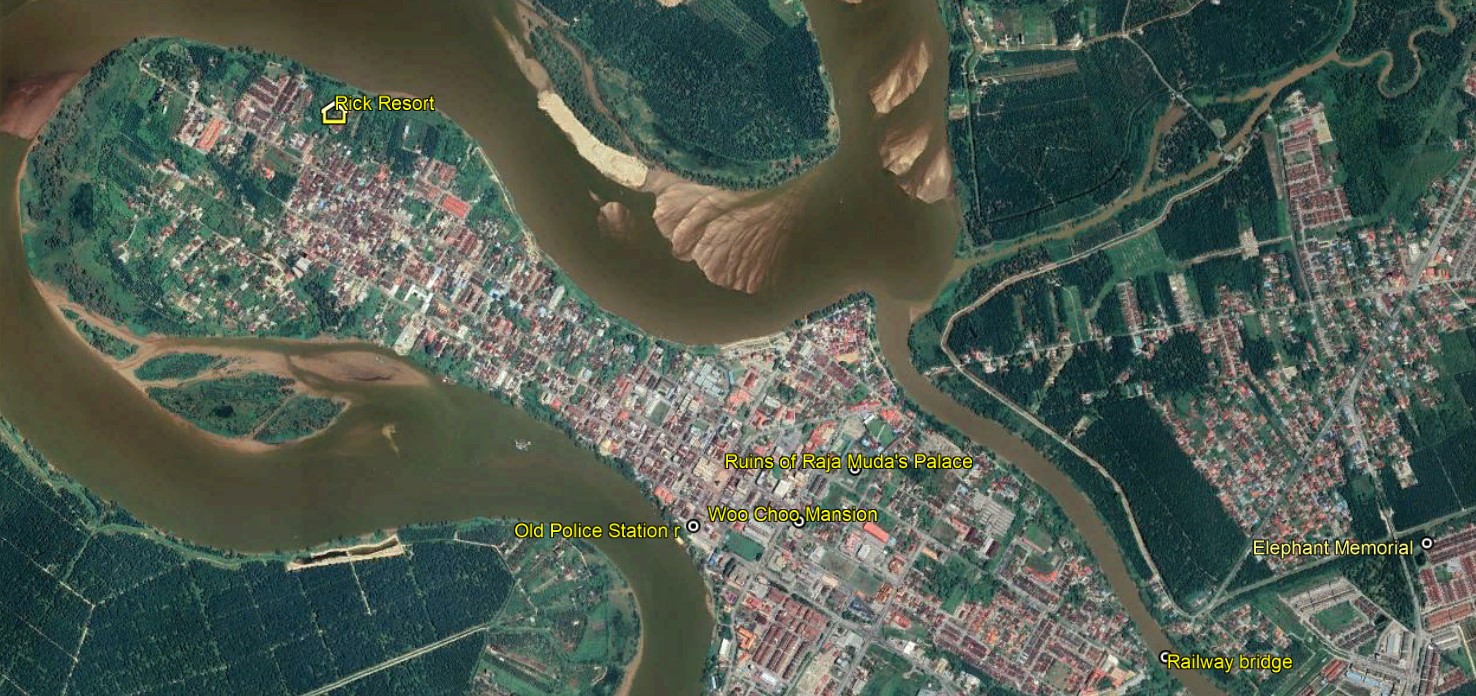
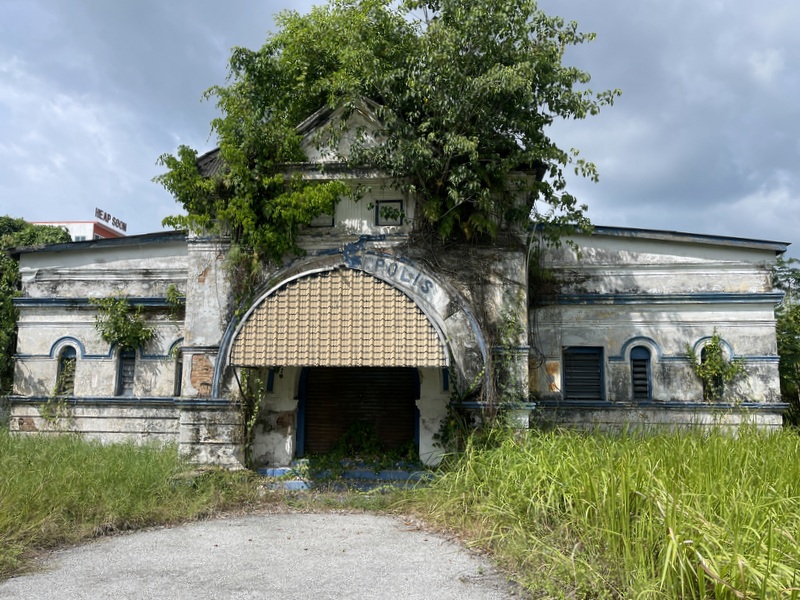
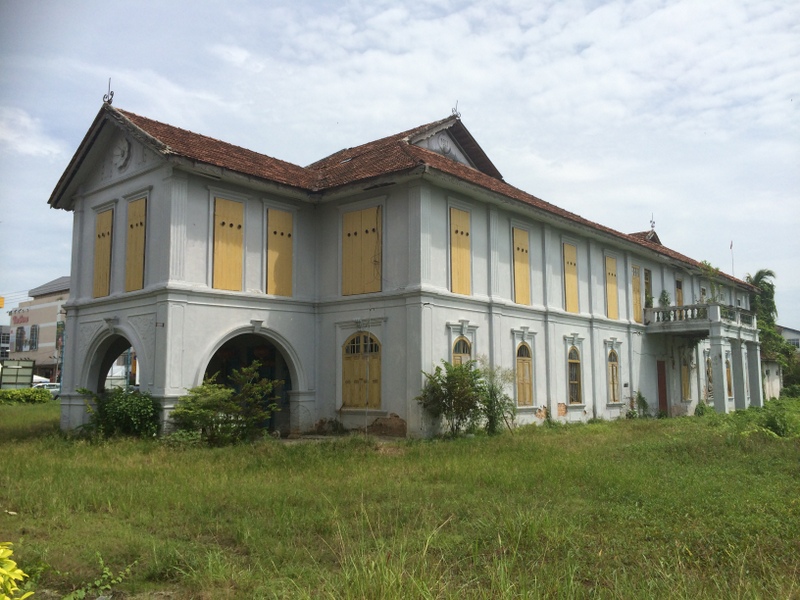
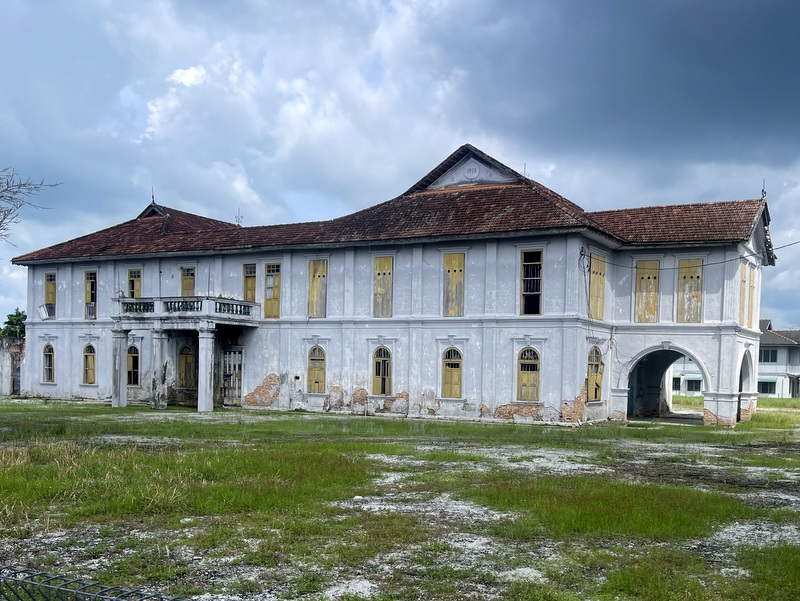
Before driving back to KL, we had a look at three more or less ruined buildings, indicated on this Google Earth map of Teluk Intan. The former palace of the Raja Muda, the Old Police Station and the Woo Choy Mansion. Also marked the Elephant Memorial, the Railway bridge and our resort.
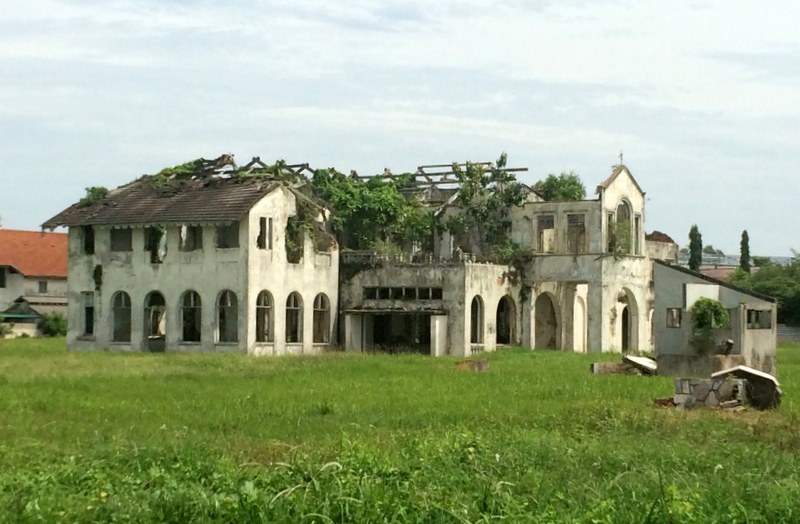
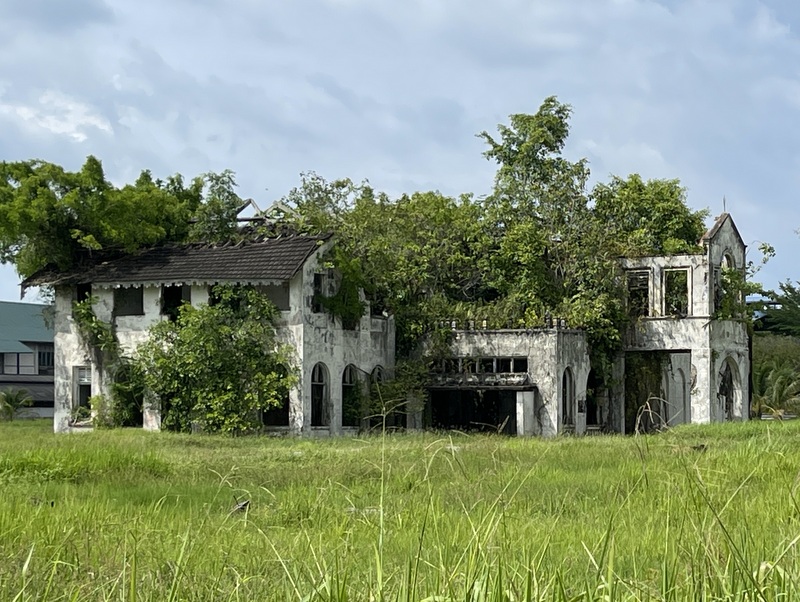
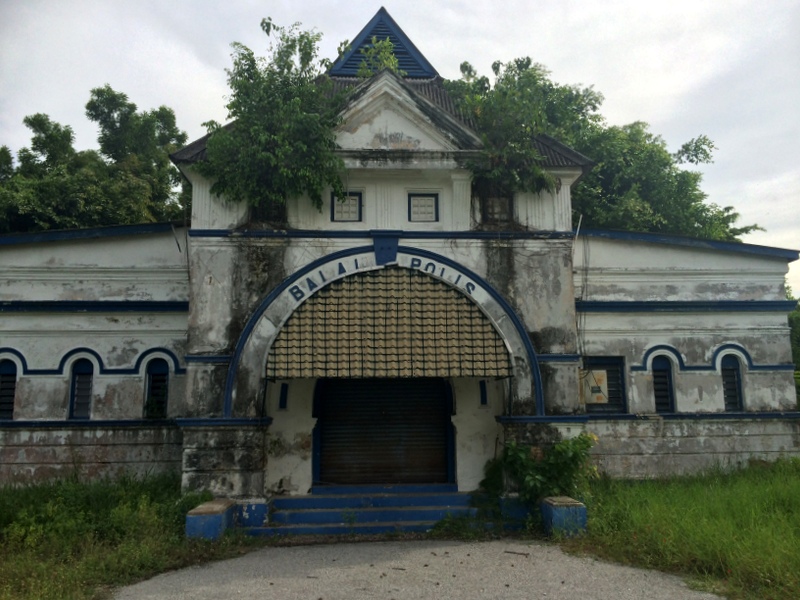
In 2014 I had also taken pictures of these three buildings and I was curious how much they had deteriorated since then. As you can see, not much difference, the Palace (1922) and Police Station (1882) more overgrown with trees and bushes. The mansion was built in 1918 by “towkay” Woo Choy. It is private property, not inhabited but apparently well maintained.
The Palace (2014)2024The Old Police Station (2014)2024The Woo Choy mansion (2014) 2024
All three properties were thoroughly fenced, no trespassing possible, a big difference with Taiping.
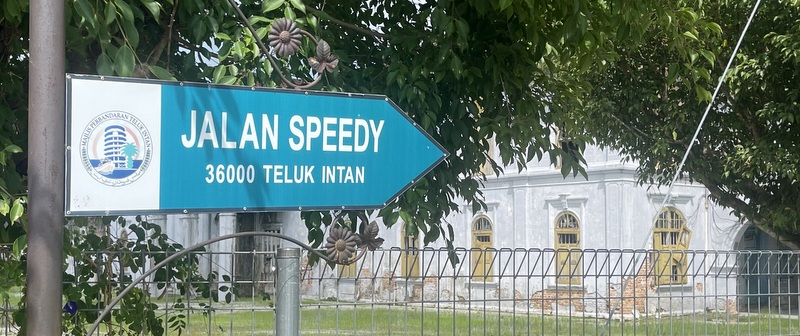
The entrance of the mansion is from Jalan Speedy. You wonder why Captain Speedy is honoured in Teluk Intan? You can find the answer in my blog post In Defense of Captain Speedy 😉
When J.W.W Birch, the British Resident of Perak, was murdered by the Malay nobility on 2 November 1875 in Pasir Salak, it was of course clear that the British Empire had to hit back. The result was the Perak War. Not a real war, more a series of skirmishes. The Colonial Office just wanted to catch the people responsible for the killing (and of course also show its strength). In July 1876 the last perpetrators were caught or surrendered. In December the trial took place in the fort of Ngah Ibrahim and in January 1877 three of them, Maharaja Lela, Dato’ Sagor and Pandak Indut, were hanged in Matang.
Two years later British explorer Isabella Bird arrives in the Malay peninsula and writes a fascinating travelogue The Golden Chersonese And The Way Thither about her visit. I am a big fan and have written a post about her, Isabella BIrd & Taiping. When she arrives 16 February 1879 in Kuala Kangsar to meet the Resident Hugh Low, he is not yet back home. His Sinhalese clerk suggests that she could make a trip (by elephant) the next day to a nearby village. He says “”I’m going to take you to Koto-lamah; no European has been there since the war. I’ve never been there, nor the Resident either.” Read my blog about her adventure. Or even better, read letter XX from her book as she writes very well.
Kota Lama (as it is spelled nowadays), is a small village , a few km north of Kuala Kangsar. Wikipedia in its article about the Perak War mentions very briefly the Battle of Kota Lama Kanan .
I am also a fan of Captain Speedy and have read Gulick’s monograph Captain Speedy of Larut (1953). Speedy took part in the Kota Lama expedition, here is what Gulick wrote about it (page 71):
On 4 January 1876 troops of Ross’s column moved into the two halves of Kota Lama, which straddled the Perak River. Speedy, despite his differences with Ross, was in charge of the political side of the operation. He called on the inhabitants to surrender their arms and the troops then began a home-to-house search. At first there was no resistance and the British relaxed their watchfulness. Ross and a group of headquarters staff officers came up to watch the search. They were attacked by a party of Malays. There was a short but exciting melee in which Ross’s Brigade Major was killed. The attackers were quickly driven off.
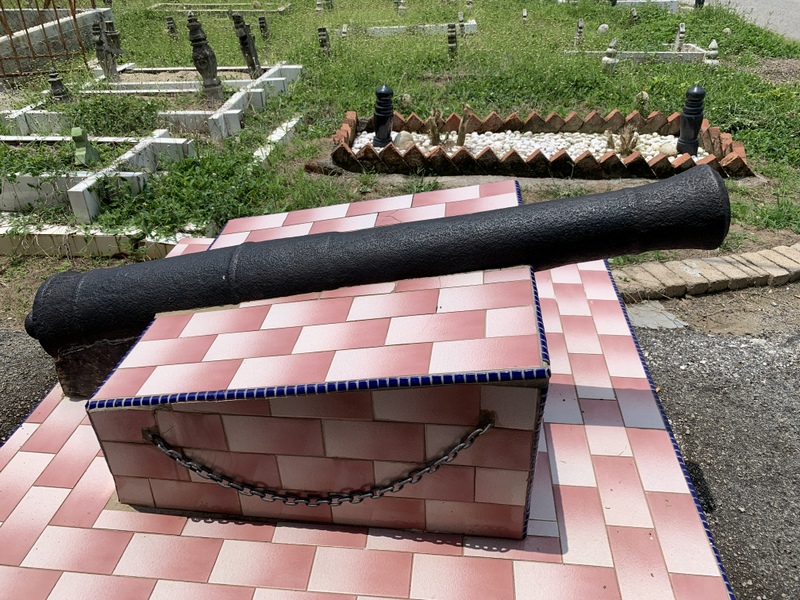
In August 2020 I visited Kota Lama Kanan, now a peaceful kampung. Kota Lama Kiri is on the other side of the Perak River. A cannon is the only remnant of the battle.
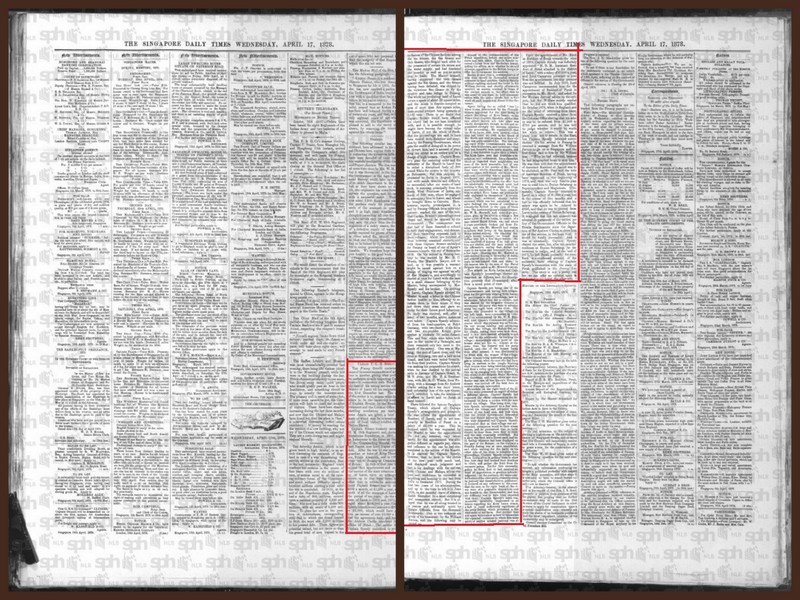
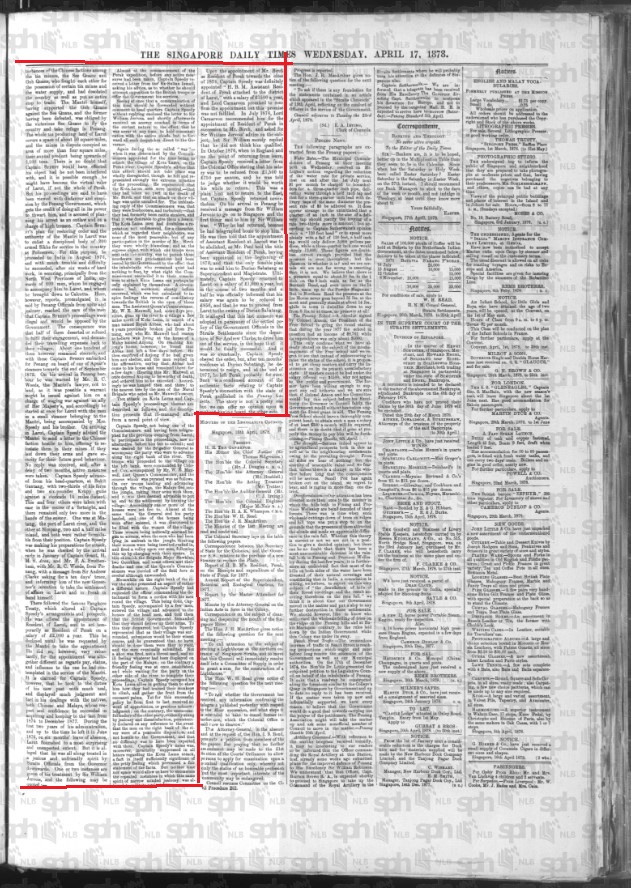
Until a few weeks ago this was what I knew about the Battle of Kota Lama. Then Marianne Pillai, a friend of mine with an interest in heritage, sent me a link to an article about Captain Speedy, published in the Singapore Daily Times of 17 April 1878. Speedy, after years of being thwarted by the Straits Government had, had finally resigned and left the Malay Peninsula in December 1877. The article is a fierce defence of Captain Speedy. Here is the article outlined in red.
Not easy to read, I converted the text into a readable format and wrote a separate post about it : In defense of Captain Speedy where I also add some comments.
The description in the article does not differ a lot from the one given by Gullick in his book, with a few exceptions. One of them is the description of the battle of Kota Lama. The description given by Gullick is short: Speedy is in charge of the political side of the operation. According to the article the situation is much more complicated.
Captain Speedy was actually against an attack on Kota Lama. They might be notorious people, cattle-stealers and robbers, but they had nothing to do with the killing of Birch. However, Brigadier General Ross, who was cross with Speedy (Gullick p 68-69), forced him to join the expedition.
The description of the expedition in the article is different from other reports I have seen. The main difference is that apparently there where TWO parts of Kota Lama, on both sides of the Perak river. Kota Lama Kiri on the leftright bank and Kota Lama Kanan on the right left bank. (also nowadays there are two kampungs!). Therefore the British troops are split in two parts. Colonel Cox commanding the troops on the left bank with Maxwell as Commissioner, and Captain Speedy proceeding on the right bank.
Captain Speedy, not being one of the Commissioners, and having been telegraphed for the previous evening from Larut to participate in the proceedings, saw no alternative before him but to submit; and was desired by the Brigadier General to accompany the party who were to advance along the right bank of the river. The troops who proceeded to the village on the left bank, were commanded by Colonel Cox, accompanied by Mr. W.E. Maxwell, Asst. Queen’s Commissioner, and the course which was pursued was as follows.
Here is what happened in Kota Lama KiriKanan. A violent encounter! Gullick writes that Ross was disappointed not to have a fight. Might this fight have been provoked? The report below suggests it.
On our troops landing and advancing through the village, the Malays fled into the jungle, taking their arms with them, and it was then deemed advisable to put an end to the settlement by burning the village. Accordingly one or more of the houses were set fire to. Almost at the same time the General and his party landed, and one of the houses being soon after entered, it was discovered to be filled with the women of the village. These women being naturally alarmed began to scream, when the men who had been lying in ambush in the jungle, thinking their women were being insulted rushed in, and fired a volley upon our men, following this up by charging with their spears. In this skirmish the Brigade Major Hawkins, two Goorkhas, and some others met their deaths and one of the Queen’s Commissioners was carried of the field hors de combat although unwounded.
And here is what happened in Kota Lama KananKiri. A peaceful solution, managed in a diplomatic way by Captain Speedy. “Not a shot was fired” ,
Meanwhile on the right bank of the river the scene presented an aspect of rather a different nature. Captain Speedy had requested to form a cordon with this men round the village. This being done, Captain Speedy, accompanied by a few men, entered the village and advance to the houses of the head men, and told them that the British Government demanded that they should deliver up their arms. To this they demurred, but Captain Speedy represented that as their village was surrounded, submission would be their wisest course, and he guaranteed that no harm should be done them were they to yield, and the men eventually submitted. Not a shot was fired, not a threat used, and no ill feeling whatever had been displayed on the part of the Malays; on the contrary a friendly feeling was at once established, and while waiting for the party on the other side of the river to complete their proceedings, Captain Speedy occupied his Kota Lama allies in getting them to show him how they had trained their monkeys to climb, and gather the fruit from the coconut palms.
The writer ends his report as follows:
Yet for this successful policy he from first to last received no word of approbation, or gracious acknowledgment; on the contrary, the unsuccessful leaders of the other party, evidently stung by jealousy and dissatisfaction, persistently declared on any reference to the event that the men on the right bank of the river were of a peaceable disposition, and not hostile to the Government, and that no difficulty was to have been expected with them. Captain Speedy’s name was, moreover, invariably suppressed in all letters regarding the Kota Lama attack, a fact in itself sufficiently significant of the petty feeling which prevented a fair statement of the facts.
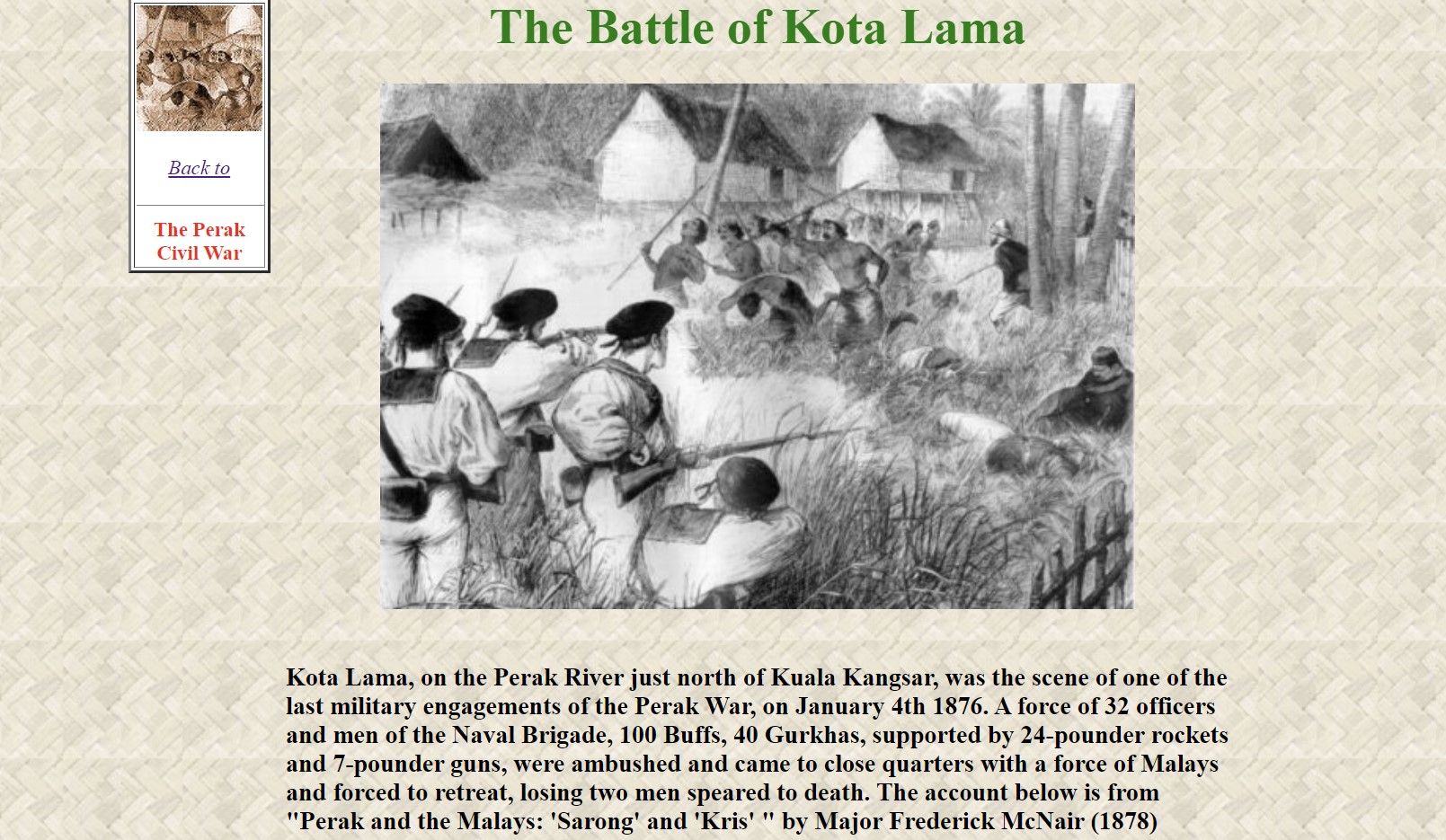
Reading this report I was of course very surprised. What is the true story? I started searching the Internet for more information. Soon I found a webpage, created by Sabri Zain, titled The Battle of Kota Lama, part of a collection of web pages about The Perak Civil War. Here is the introduction of Sabri’s webpage
McNair’s book Perak and the Malays is available online and interesting to read. In chapter XXXII he describes the attack on Kota Lama. He took part in the expedition himself, as he was the Commissioner and Maxwell the Deputy-commissioner (p 384) Here are a few quotes from the chapter.
Kotah Lamah — a place that had long been noted as a resort for the worst characters, and freebooters of the vilest description
On the arrival of the troops at Qualla Kungsa these people were not openly hostile
... it was determined to disarm the people
… the demand for arms to be given up was acceded to on being made by Captain Speedy
.. armed men were seen rushing off, in two or three instances, to the jungle.
General Ross and his party landed at the middle of the village, and were searching the various houses to see that they contained none but women and children
… they were assailed by a body of fifty or sixty spear-armed Malays, who had been hidden amongst the trees.
Compare these quotes with Gullick’s description, They are quite similar, possibly because Gullick used McNair’s book. But why does McNair not mention that the troops proceeded on both sides of the Perak River?
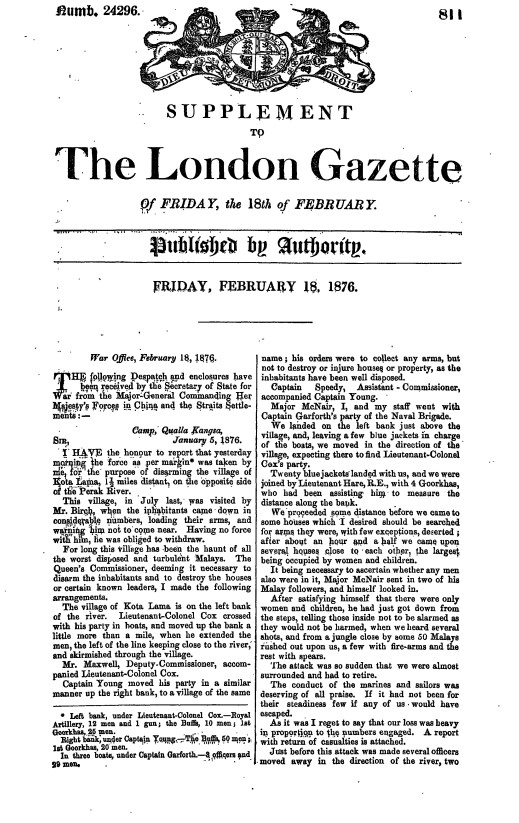
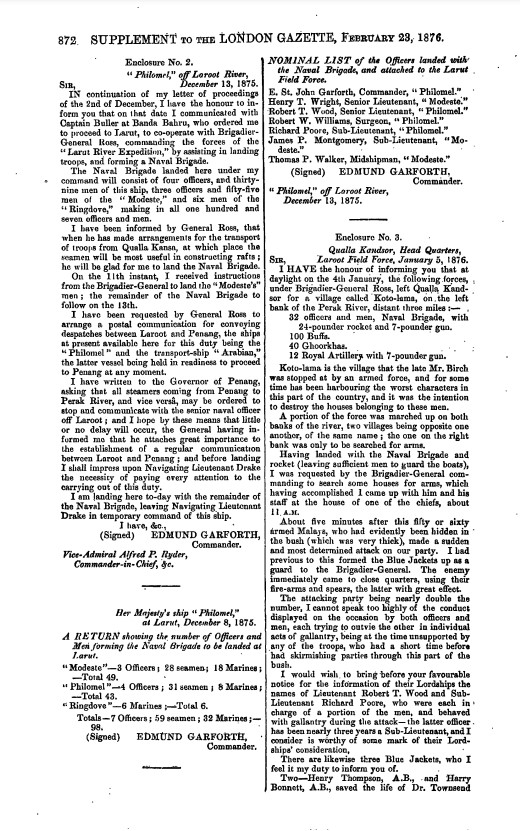
I searched further and finally found what I was looking for in the London Gazette, the journal of the British government, where the official dispatches are published. I found two that are relevant to the topic of this blog (there may be more).
The first one is a dispatch in issue 24296 written by Brigadier-General Ross, while the second one, in issue 24298, has been written by by Edmund.Garforth, the Commander of the Naval Brigade attached to the Laroot Field Force. Both dated 5 January 1876, one day after the battle. Here are the two dispatches, click on them to open the link where you can enlarge the image to make it readable. Garforth’s dispatch (right) starts actually on page 4 of the 24298 issue.
Here are a few quotes from the report by Ross, with my comments.
For long this village has -been the haunt of all the worst disposed and turbulent Malays. The Queen’s Commissioner, deeming it necessary to disarm the inhabitants and to destroy the houses of certain known leaders, I made the following arrangements.
The village is Kota Lama. From the start of the expedition the target was clear: punish the village and destroy it.
The village of Kota Lama is on the left bank of the river. Lieutenant-Colonel Cox crossed with his party in boats, and moved up the bank a little more than a mile, when he extended the men, the left of the line keeping close to the river, and skirmished through the village. Mr. Maxwell, Deputy-Commissioner, accompanied Lieutenant-Colonel Cox.
Captain Young moved his party in a similar manner up the right bank, to a village of the same name; his orders were to collect any arms, but not to destroy or injure houses or property, as the inhabitants have been well disposed. Captain Speedy, Assistant – Commissioner, accompanied Captain Young.
Here is finally the true situation, there were two parties proceeding to the two parts of Kota Lama, left (kiri) and right (kanan). One led by Cox with Maxwell, the Deputy-commissioner, the other one led by Young and Speedy. Ross mistakenly writes that Speedy was the Assistant-Commissioner. But he was not a Commissioner , he was the Assistant-Resident of Larut! McNair and Maxwell were the two Commissioners
The people of Kota Lama KiriKanan are bad, the people of Kota Lama KananKiri are “well disposed”. Does that make sense?
Major McNair, I, and my staff went with Captain Garforth’s party of the Naval Brigade. We landed on the left bank just above the village, and, leaving a few blue jackets in charge of the boats, we moved in the direction of the village, expecting there to find Lieutenant-Colonel Cox’s party.
So there were actually three parties. Ross himself with Garforth’s men, came by boat. Accompanied by McNair, the Commissioner.
… after about an hour and a half we came upon several houses .close to each other, the largest being occupied by women and children. It being necessary to ascertain whether any men also were in it, Major McNair sent in two of his Malay followers, and himself looked in. After satisfying himself that there were only women and children, he had just got down from the steps, telling those inside not to be alarmed as they would not be harmed, when we heard several shots, and from a jungle close by some 50 Malays rushed out upon us, a few with fire-arms and the rest with spears.
According to the newspaper article, the women started screaming, the men rushed out of the jungle to their rescue and the fight started. Doesn’t that make more sense?
The report by Edmund.Garforth is basically the same.
… at daylight on the 4th January, the following forces, under Brigadier-General Ross, left Qualla Kandsor for a village called Koto-lama, on the left bank of the Perak River, distant three miles.
Kota-lama is the village that the late Mr. Birch was stopped at by an armed force, and for some time has been harbouring the worst characters in this part of the country, and it was the intention to destroy the houses belonging to these men.
Again, from the start it was already the intention to destroy the village, “to teach them a lesson”
A portion of the force was marched up on both banks of the river, two villages being opposite one another, of the same name ; the one on the right bank was only to be searched for arms.
“Only searched for arms” because they were basically good people? It just doesn’t make sense. In the newspaper narrative Speedy’s diplomatic approach does. Speedy is not even mentioned in Garforth’s report.
Having landed with the Naval Brigade and rocket (leaving sufficient men to guard the boats), I was requested by the Brigadier-General commanding to search some houses for arms, which having accomplished I came up with him and his staff at the house of one of the chiefs, about 11. A.M.
In the report by Ross it is McNair who does the searching, telling the women not to worry.
About five minutes after this fifty or sixty armed Malays, who had evidently been hidden in the bush (which was very thick), made a sudden and most determined attack on our party. I had previous to this formed the Blue Jackets up as a guard to the Brigadier-General. The enemy immediately came to close quarters, using their fire-arms and spears, the latter with great effect.
According to Gullick (p 68) Ross was unhappy that there had not been any fight, blaming Speedy for the delay in reaching Kuala Kangsar from Larut. Now he gets his fight!
The two dispatches fit perfectly with the report in the Singapore Daily Times
My conclusions:
In my opinion the article in the Singapore Daily Times, based on the Pinang Gazette, is the most accurate description of what happened on the 4th of January 1876. There has never been a battle of Kota Lama KananKiri, thanks to Captain Speedy’s diplomacy. The battle of Kota Lama KiriKanan may have been provoked by the British colonial powers.
Of course the intriguing question remains, who wrote the four articles in the Pinang Gazette? The details about what happened in Kota Lama KananKiri, especially that the locals showed Speedy how they had trained monkeys to gather coconuts from the trees, suggest an eyewitness.
APPENDIX
Left and Right
What is the left bank of a river and what the right bank? That depends on whether you look upstream or downstream. Geography has “solved” this ambiguity by defining left and right bank of a river from the downstream perspective.
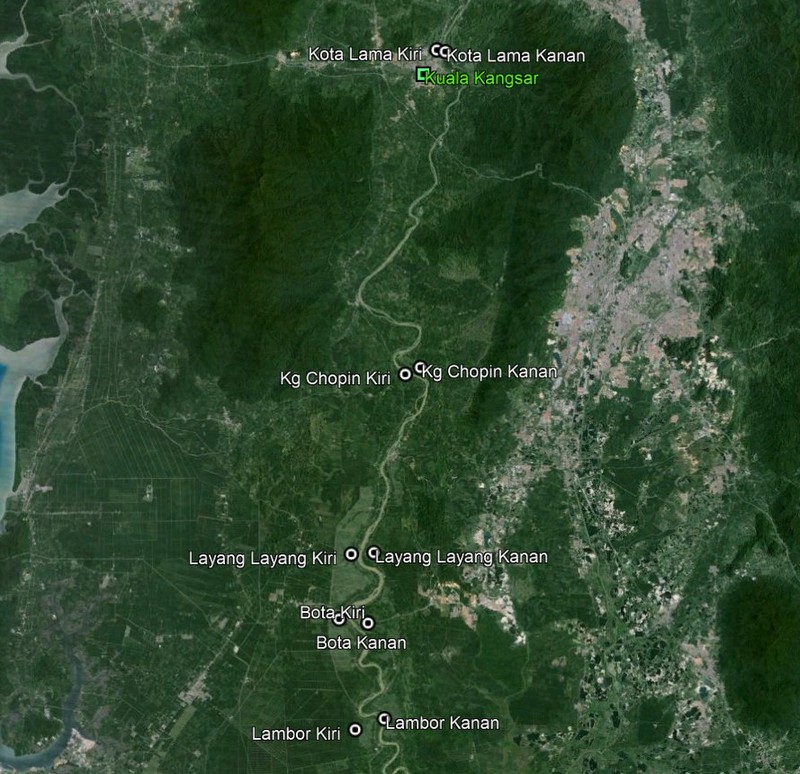
When you navigate the Perak River upstream. you will pass several villages that straddle the river and have a left (kiri) and a right (kanan) part. See the GE map.
The village names correspond to an upstream view! Although I was aware of the geographical definition, I assumed that the military campaign against Kota Lama used the same upstream perspective. After I published my post I communicated with Sabri Zain about it. He convinced me that the English military, reporting to the Colonial Office, would definitely use the conventional definition of left and right river banks.
With that definition Kota Lama Kanan is actually located on the LEFT bank of the Perak River!
Therefore I have edited the post and replaced Kota Lama Kiri with Kota Lama Kanan and vice versa. My conclusions remain the same. Thanks to Speedy’s diplomacy a violent conflict was avoided in Kota Lama Kiri and his role was downplayed in the official reports.
In retrospect I should have noticed my mistake earlier.
Isabella Bird crosses the river to reach the village where no European had been since the war.
Ross writes in his report, that Cox crosses the river in boats to reach the village.
So the village is Kota Lama Kanan, on the other side of the Perak river, as seen from Kuala Kangsar.
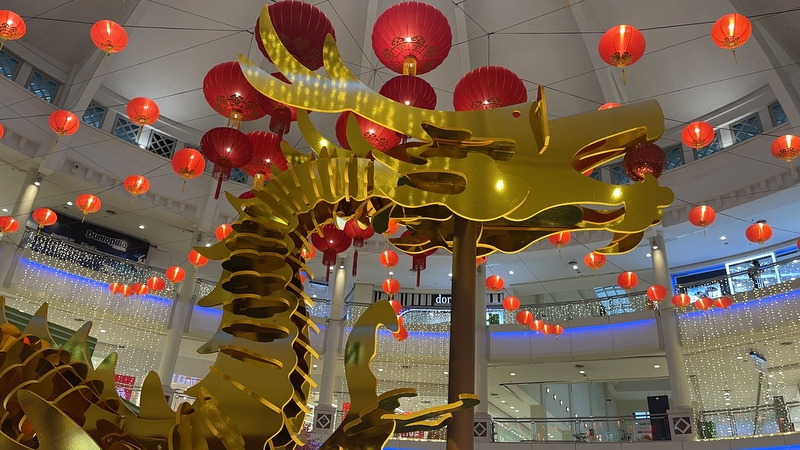
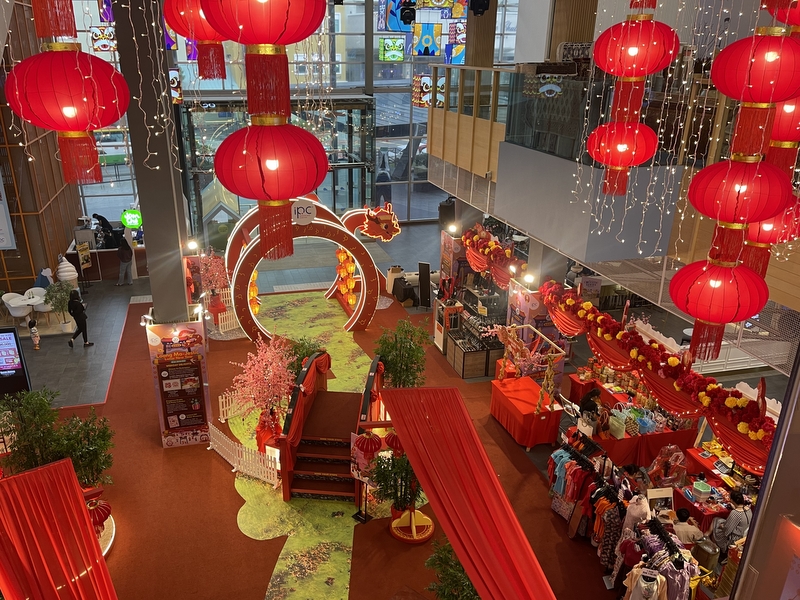
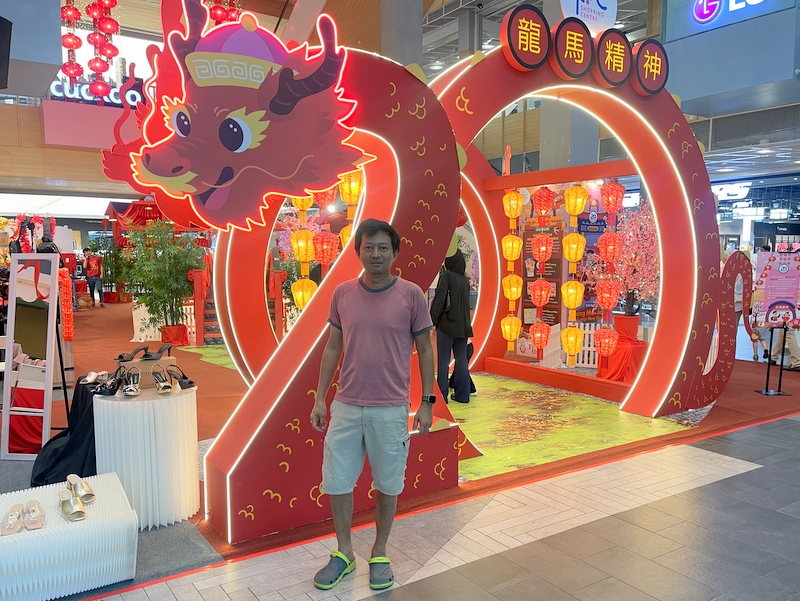
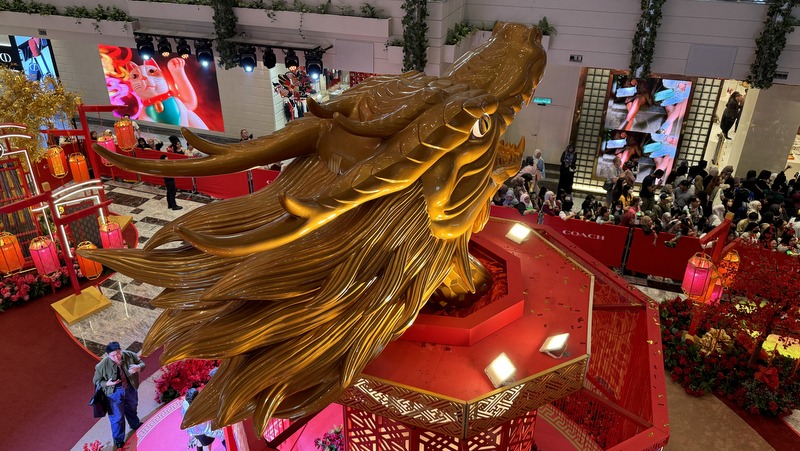
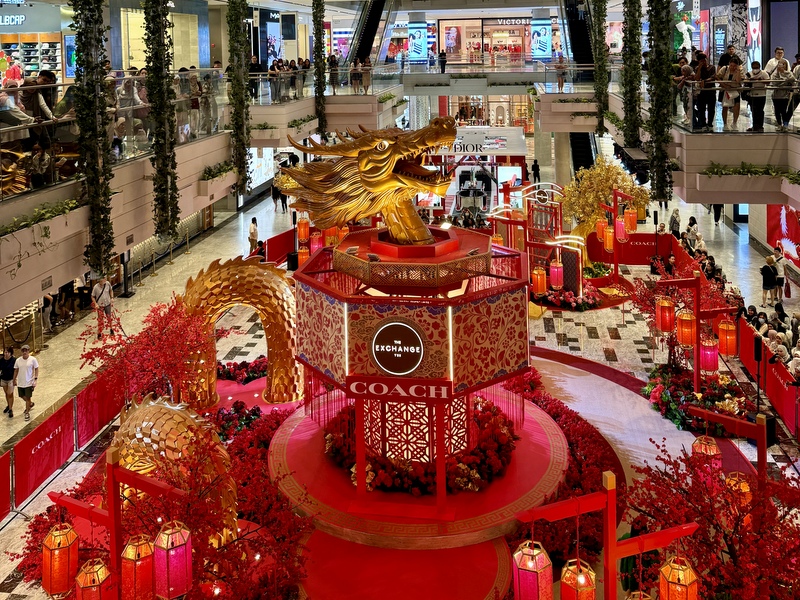
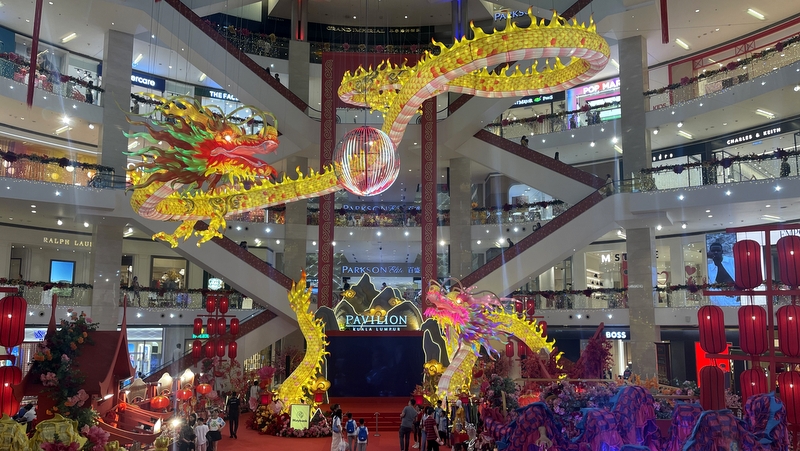
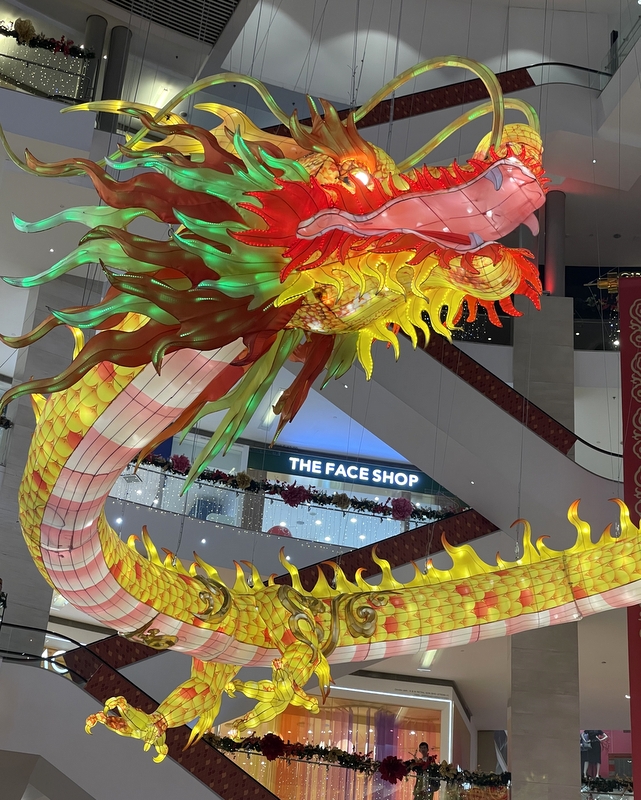
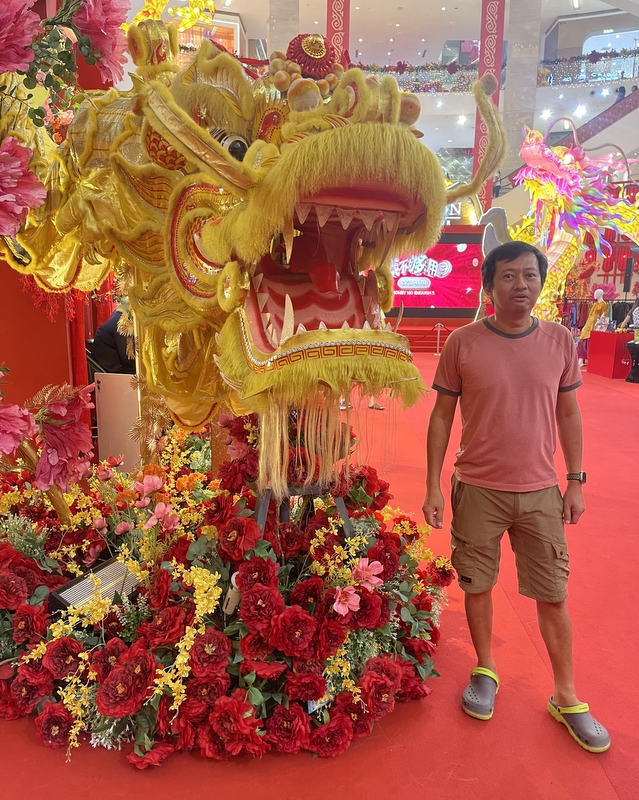
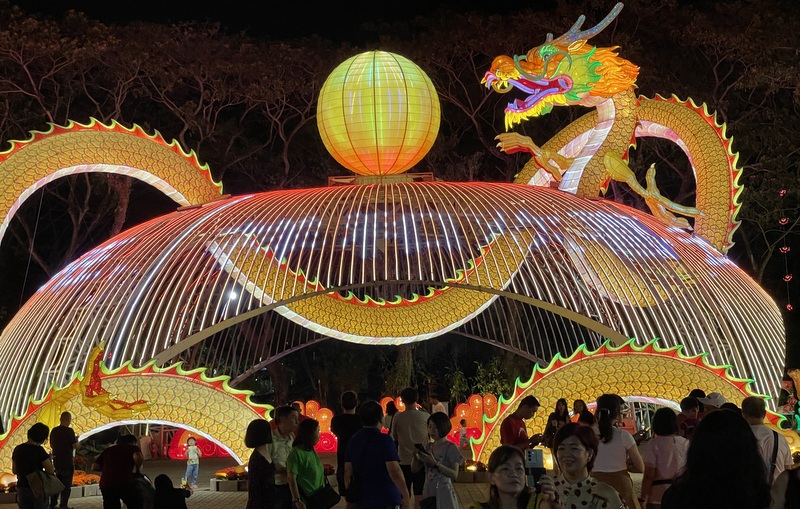
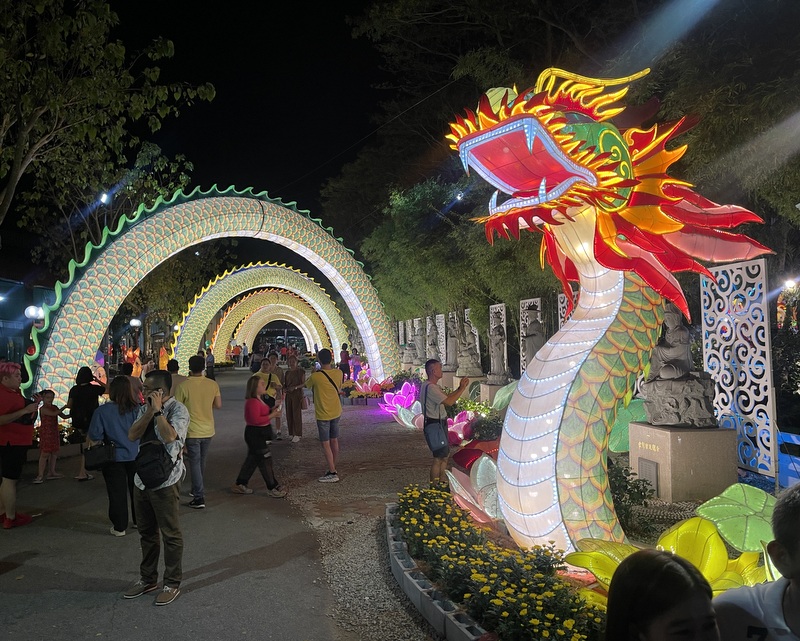
Yesterday the Chinese New Year celebrations ended with Chap Goh Mei on 24 February. Shopping malls try to outdo each other in elaborate and often spectacular CNY decorations. We visited a few. This year is the year of the dragon, so dragons everywhere.
On 1 February we went to the Curve, a shopping mall near to where we live. Relatively modest decorations.
The next day we visited the ExchangeTRX, a new, huge shopping complex in the center of Kuala Lumpur.
On Saturday our first CNY-dinner with Aric’s maternal family in Kepong.
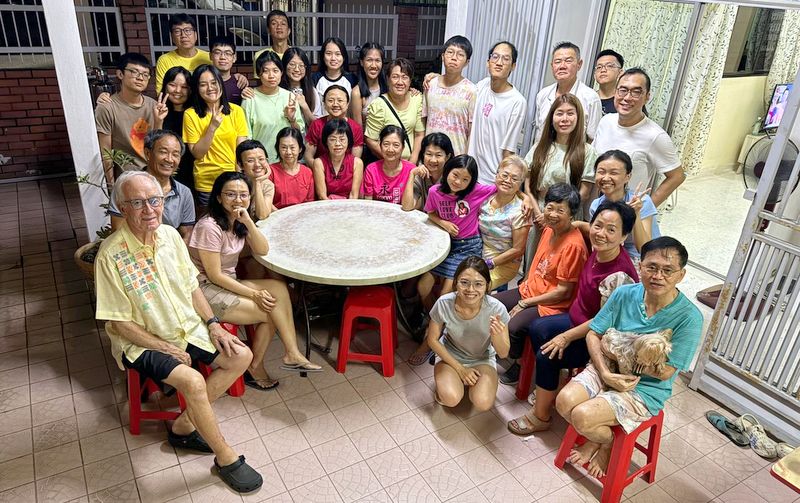
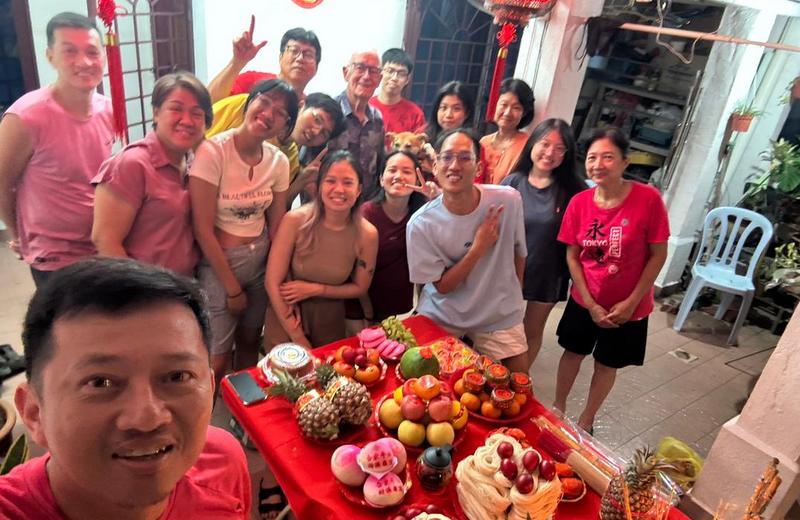
The following day another CNY meeting with my Bukit Lanjan hiking friends, just around the corner from where we live.
On 7 February we visited the Pavilion shopping mall in Bukit Bintang. By far the most impressive decorations.
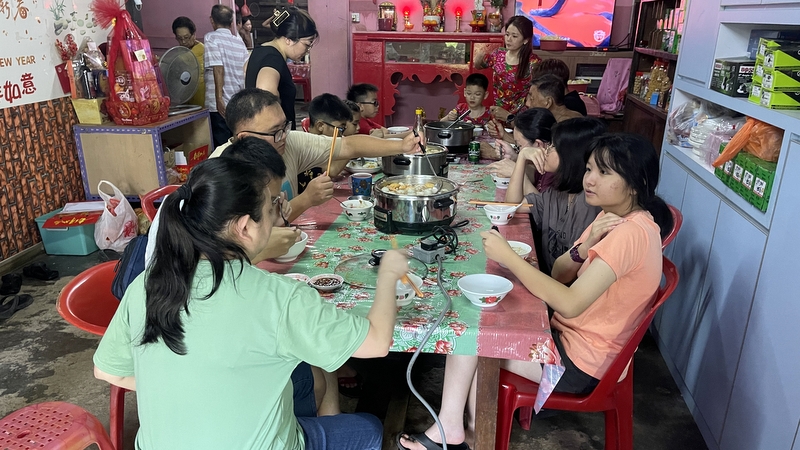
On Friday we went to Aric’s family house in Parit Baru for the CNY eve reunion dinner. Traditional steamboat, in multiple sessions because the (extended) family is huge.
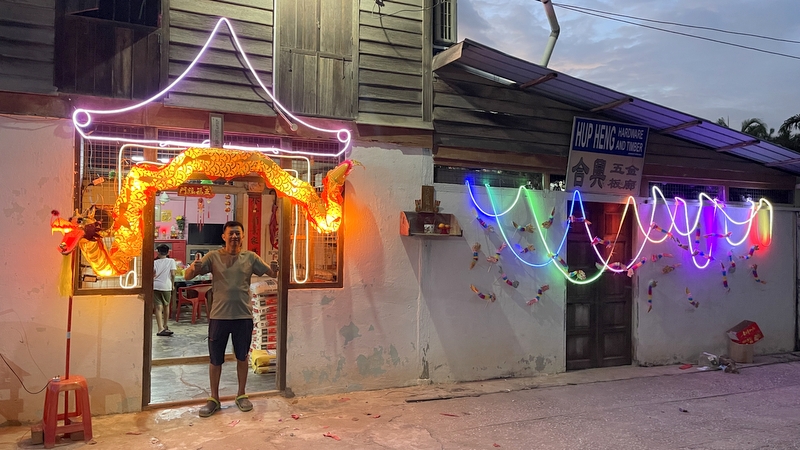
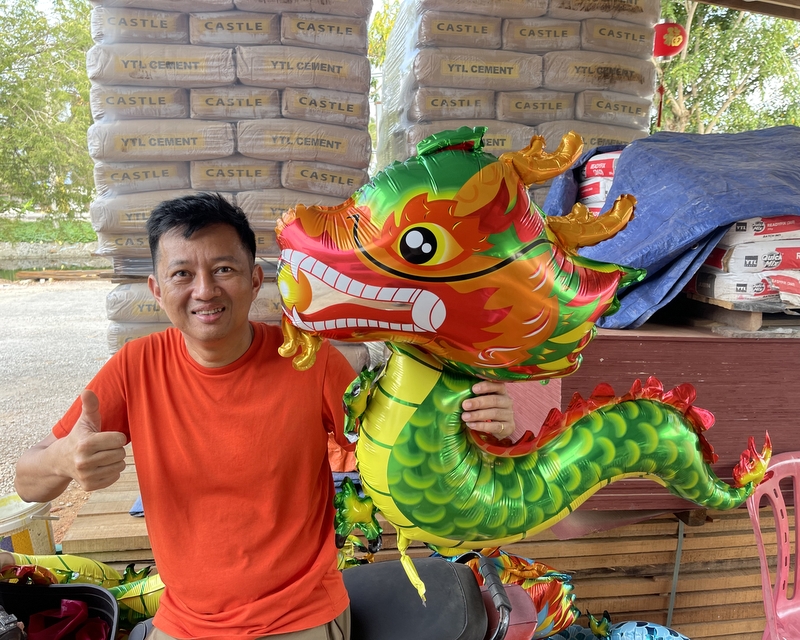
Aric always creates his own CNY decorations around the house and this time he was particularly successful.
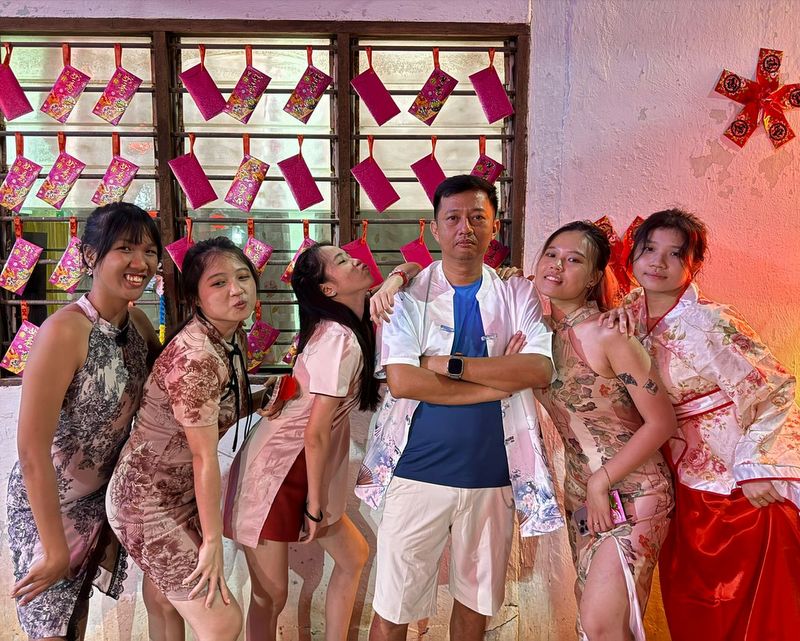
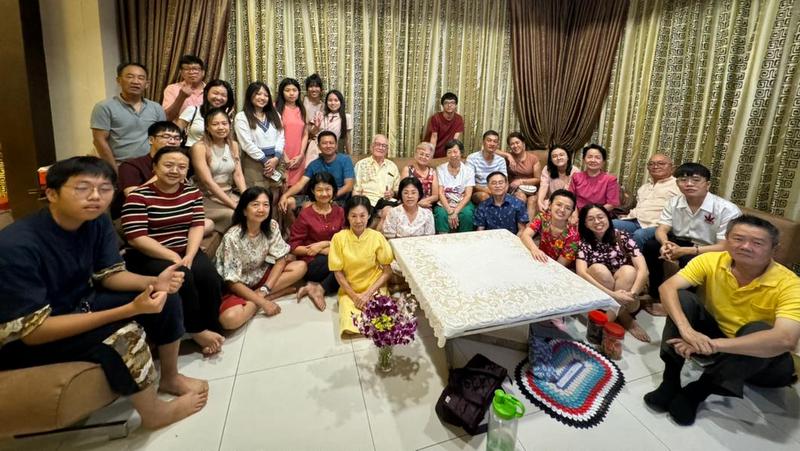
The theme this year was to wear traditional Chinese dress. The right picture shows Aric with a few competitors.
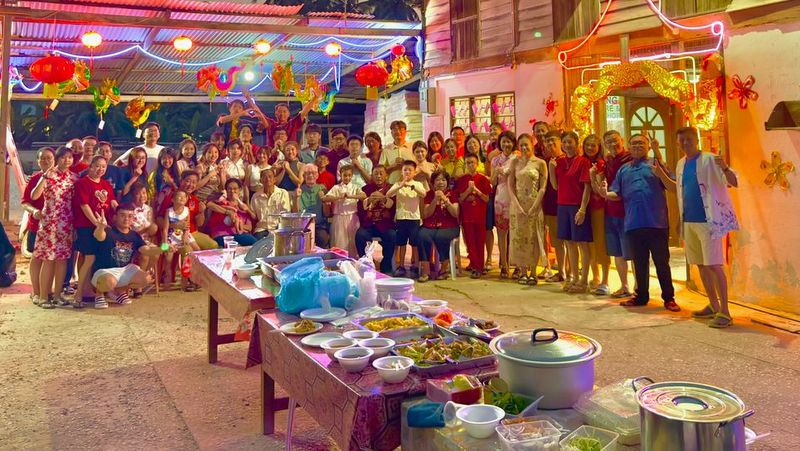
The extended family is huge 😉
On 18 February we went to Puchong for the celebration of the Hokkien CNY, another tradition.
The next day another CNY meeting with Aric’s maternal family.
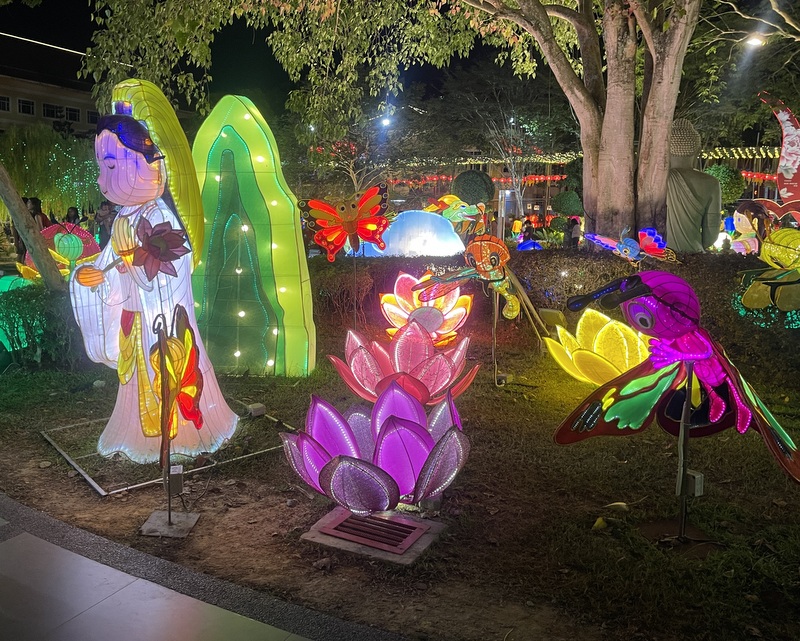
On 22 February we went to Jenjarom to visit the Dong Zen temple. Usually a serene quiet Buddhist temple, but during CNY a famous tourist attraction. Huge crowds. This is the centrepiece, flashing lights with loud music.
Very colorful but a bit kitschy.
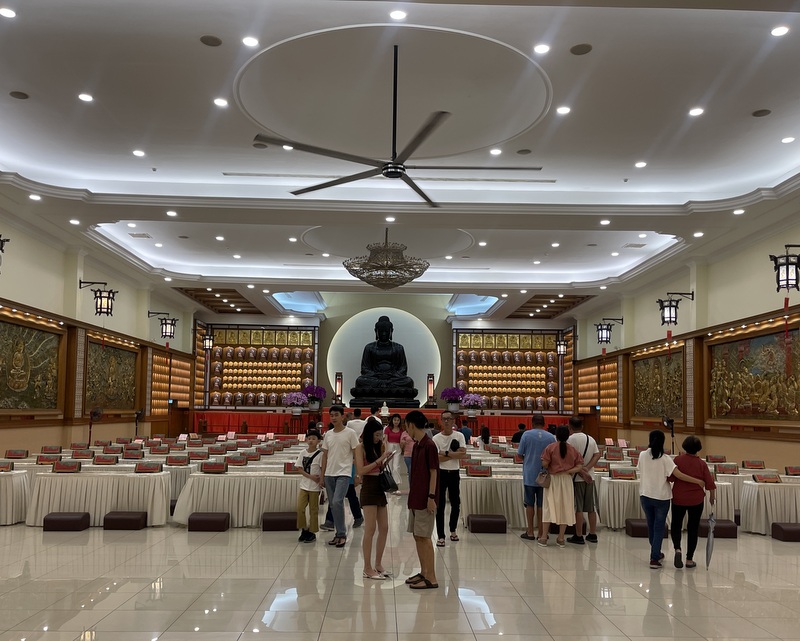
The main hall still has a different atmosphere.
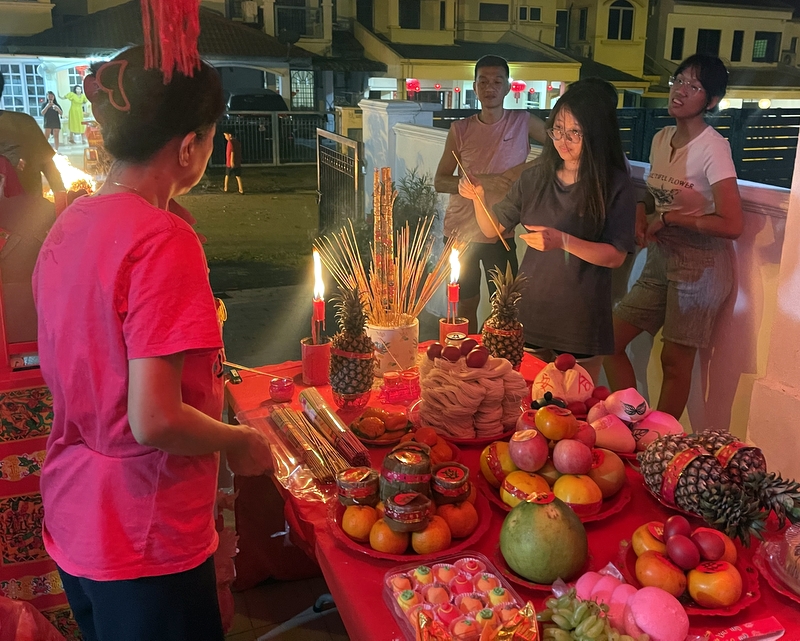
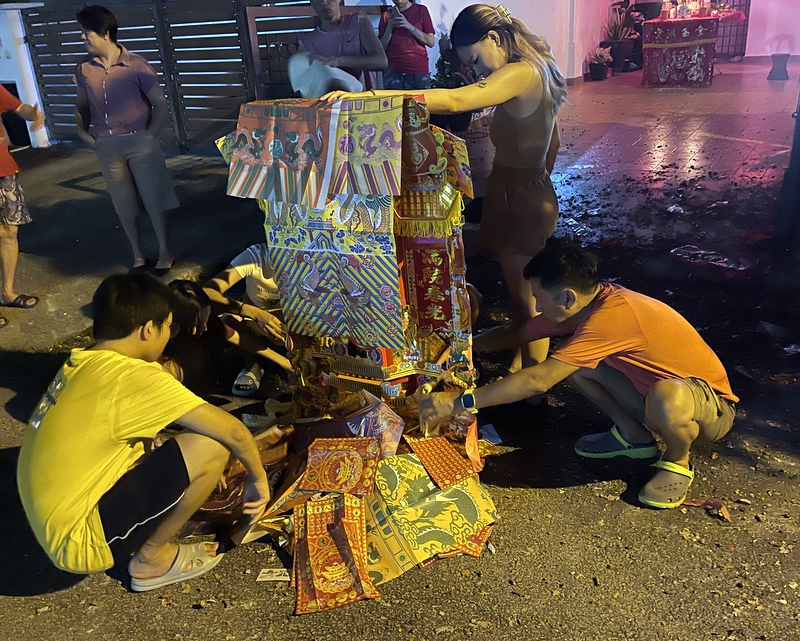
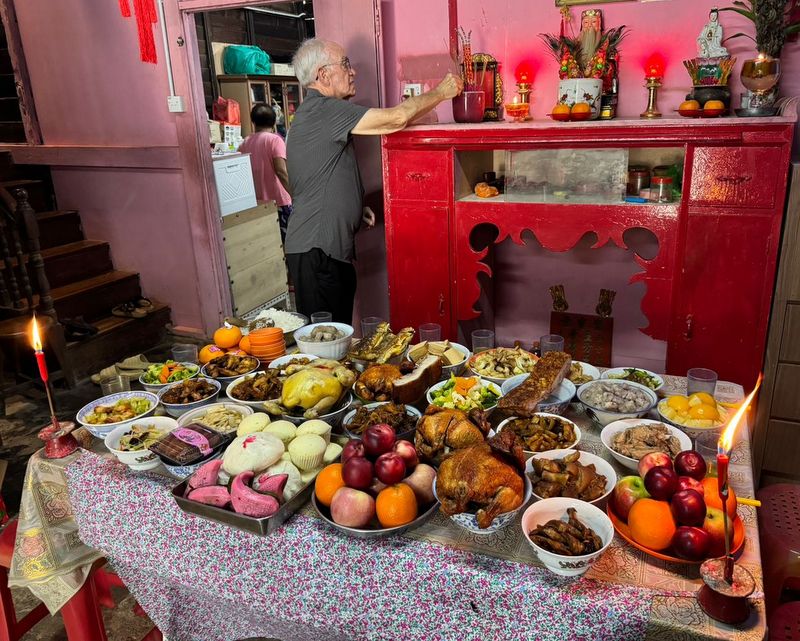
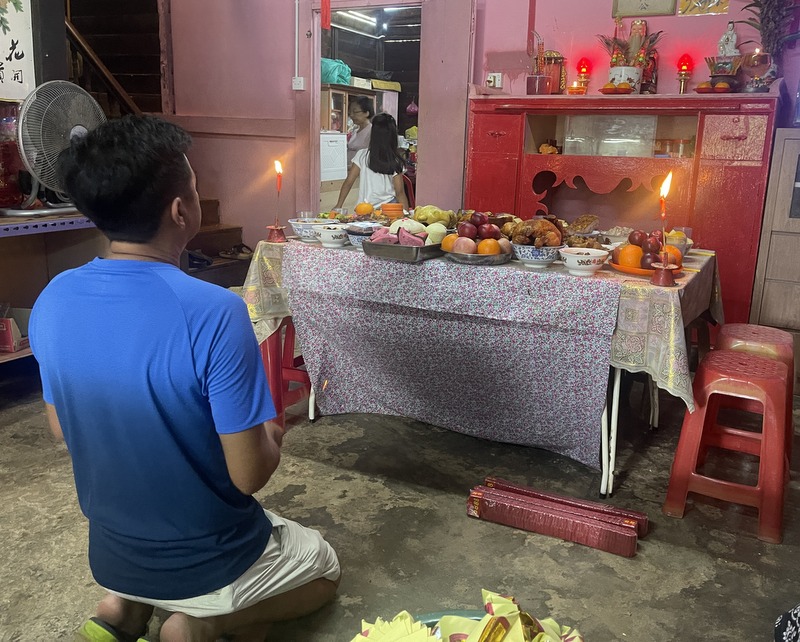
On 24 February, early morning, we went again to Parit Baru. Prayers for the ancestors.
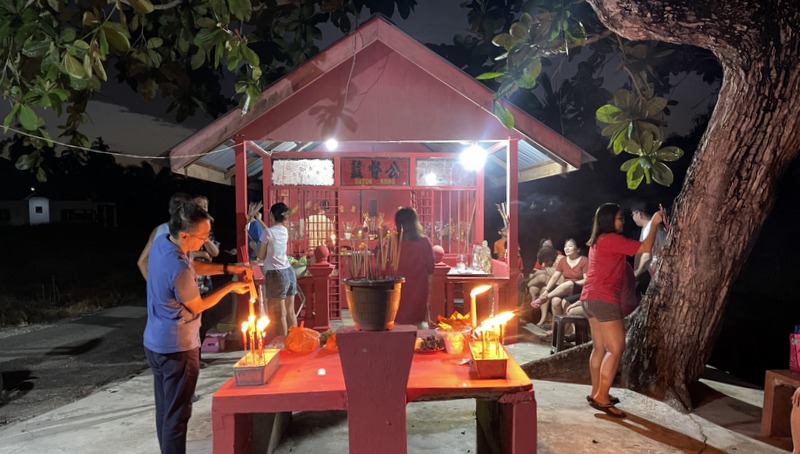
Before going back home we visited a local Datok Kong shrine near Aric’s family house
A busy three weeks 😉
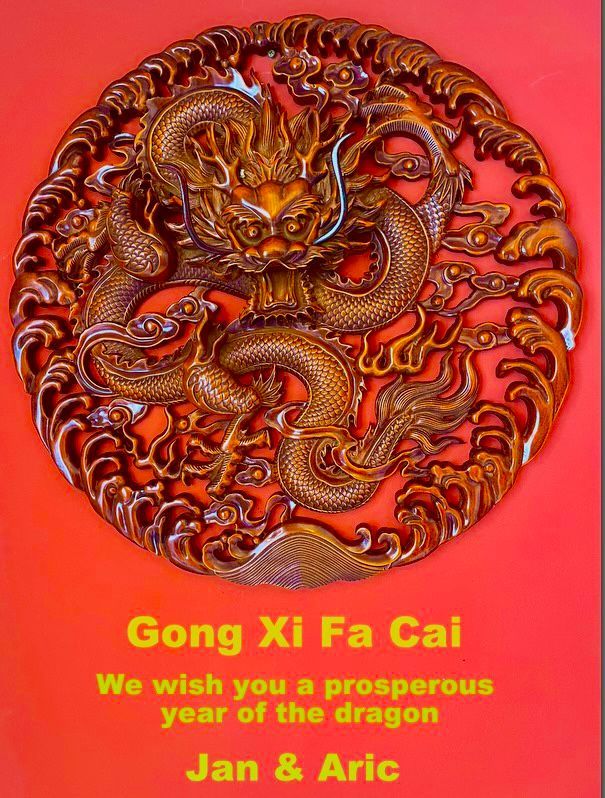
Aric’s Zodiac sign is the dragon, so you should be able to calculate how old he will be this year. Here is our CNY wish.
NewspaperSG is an online digital archive of over 200 Singapore and Malayanewspapers published since 1831. It has a very useful search option, which I have been using regularly, see for example my post about Menggelumchor.
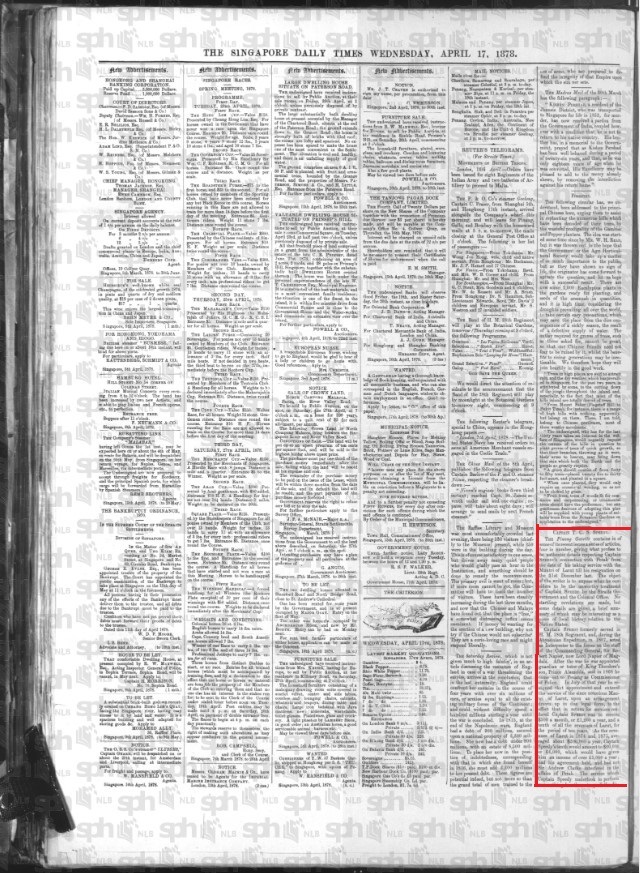
The 17 April 1878 issue of the Singapore Daily Times contains a long article about Captain Speedy who had left the Malay peninsula a few months earlier. I have marked the article below in red color.
The anonymous writer refers to 4 articles from the Pinang Gazette And Straits Chronicle. The NewspaperSG archive has a few volumes of the Pinang Gazette, but not from 1878, so the writer of the original articles is unfortunately also unknown.
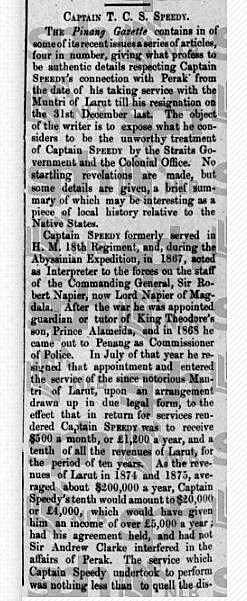
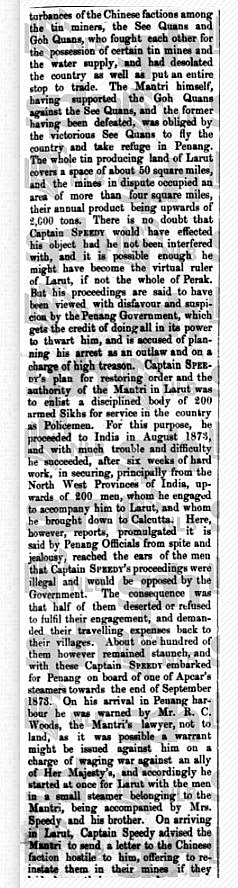
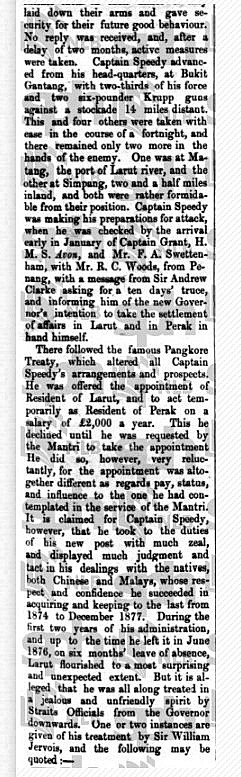
Here is the article, split in parts. When you click on it, you will see that it is just readable but not easy.
That’s why I have converted the text into a more readable form below. Here it is, in blue italic. In between I have added my comments
The Pinang Gazette contains in of some of its recent issues a series of articles, four in number, giving what profess to be authentic details respecting Captain Speedy’s connection with Perak from the date of his taking service with the Mantri of Larut till his resignation on the 31st December last.
In 1953 the orientalist J.M. Gullick published a well-documented monograph about Captain Speedy: Captain Speedy of Larut ,covering the same period (and more). It is available online and very readable.
The object of the writer is to expose what he considers to be the unworthy treatment of Captain Speedy by the Straits Government and the Colonial Office. No startling revelations are made, but some details are given, a brief summary of which may be interesting as a piece of local history relative to the Native States.
The setting is clear, the writer of the articles is critical of the way Captain Speedy has been treated by the Government of the Straits Settlements and the Colonial Office.
Captain Speedy formerly served in H.M. 18th Regiment, and, during the Abyssinian Expedition, in 1867, acted as Interpreter to the forces on the staff of the Commanding General, Sir Robert Napier, now Lord Napier of Magdala. After the war he was appointed guardian or tutor of King Theodore’s son, Prince Alameida, and in 1868 he came out to Penang as Commissioner of Police.
The dates are incorrect. Captain Speedy arrived in Penang in 1871 where he became Superintendent of Police. And he did not resign in July of that year, but in 1873.
In July of that year he resigned that appointment and entered the service of the since notorious Mantri of Larut, upon an arrangement drawn up in due legal form, to the effect that in return for services rendered, Captain Speedy was to receive $500 a month, or £1,200 a year, and a tenth of all the revenues of Larut, for the period of ten years. As the revenues of Larut in 1874 and 1875, averaged about $200,000 a year, Captain Speedy’s tenth would amount to $20,000 or £4,000, which would have given him an income of over £5,000 a year, had his agreement held, and had not Sir Andrew Clarke interfered in the affairs of Perak.
The interference of Sir Andrew Clarke -> the Pangkor Treaty (January 1874)
The service which Captain Speedy undertook to perform was nothing less than to quell the disturbances of the Chinese factions among the tin miners, the See Quans and the Goh Quans, who fought each other for the possession of certain tin mines and the water supply, and had desolated the country as well as put an entire stop to trade. The Mantri himself, having supported the Goh Quans against the See Quans, and the former having been defeated, was obliged by the victorious See Quans to fly the country and take refuge in Penang.
The whole tin producing land of Larut covers a space of about 50 square miles, and the mines in dispute occupied an area of more than four square miles, their annual product being upwards of 2,600 tons. There is no doubt that Captain Speedy would have effected his object had he not been interfered with, and it is possible enough he might have become the virtual ruler of Larut, if not the whole of Perak.
“He might have become the virtual ruler of Larut” The writer is obviously a staunch supporter of Captain Speedy.
But his proceedings are said to have been viewed with disfavour and suspicion by the Penang Government, which gets the credit of doing all in its power to thwart him, and is accused of planning his arrest as an outlaw and on a charge of high treason.
Captain Speedy’s plan for restoring order and the authority of the Mantri of Larut was to enlist a disciplined body of 200 armed Sikhs for service in the country as Policemen. For this purpose, he proceeded to India in August 1873, and with much trouble and difficulty he succeeded, after six weeks of hard work, in securing, principally from the North West Provinces of India, upwards of 200 men, whom he engaged to accompany him to Larut, and whom he brought down to Calcutta.
According to Gullick (page 34) the Straights Government had notified the Government of India that Speedy was allowed to bring sepoys to Larut
Here, however, reports, promulgated it is said by Penang Officials from spite and jealousy, reached the ears of the men that Captain Speedy’s proceedings were illegal and would be opposed by the Government. The consequence was that half of them deserted or refused to fulfill their engagement, and demanded their traveling expenses back to their villages. About one hundred of them however remained staunch, and with these Captain Speedy embarked for Penang on board of one of Apcar’s steamers toward the end of September 1873.
Gullick (page 33-34) writes differently, that Anson, the Lieutenant-Governor of Penang, actually supported Speedy’s mission to India. No mention that half of the men deserted, Gullick calls it a rumour that more than about 100 men were planning to follow
On his arrival in Penang harbour he was warned by Mr, R.C. Woods, the Mantri’s lawyer, not to land, as it was possible a warrant might be issued against him on a charge of waging war against an ally of Her Majesty’s, and accordingly he started at once for Larut with the men in a small steamer belonging to the Mantri, being accompanied by Mrs Speedy and his brother.
Gullick also writes that Soeedy did not land in Penang but continued to Larut. However, there is no mention at all of a possible warrant or arrest, had he landed in Penang.
On arriving in Larut, Captain Speedy advised the Mantri to send a letter to the Chinese faction hostile to him, offering to reinstate them in their mines if they laid down their arms and gave security for their future good behaviour. No reply was received, and, after a delay of two months, active measures were taken,
Gullick doesn’t mention this act of diplomacy by Speedy
Captain Speedy advanced from his head-quarters, at Bukit Gantang, with two-thirds of his force and two six-pounder Krupp guns against a stockade 14 miles distant. This and four others were taken with ease in the course of a fortnight, and there remained only two more in the hands of the enemy. One was at Matang, the port of Larut river, and the other at Simpang, two and a half miles inland, and both were rather formidable from their position.
Captain Speedy was making his preparations for attack, when he was checked by the arrival early in January of Captain Grant, H.M.S. Aron, and Mr. F.A. Swettenham, with Mr. R.C. Woods, from Penang, with a message from Sir Andrew Clarke asking for a ten days’ truce and informing him of the new Government’s intention to take the settlement of affairs in Larut and in Perak in hand himself.
There followed the famous Pangkore Treaty, which altered all Captain Speedy’s arrangements and projects. He was offered the appointment of Resident of Larut, and to act temporarily as Resident of Perak on a salary of £2,000 a year. This he declined until he was requested by the Mantri to take the appointment. He did so, however, very reluctantly, for the appointment was altogether different as regards pay, status and influence to the one he had contemplated in the service of the Mantri.
Gullick (p 38) doesn’t discuss this refusal and reluctant acceptance , but he mentions that the £2,000 a year caused irritation with the government officials in Singapore, as it was much more than they got.
It is claimed for Captain Speedy, however, that he took to the duties of his new post with much zeal, and displayed much judgment and tact in his dealings with the natives, both Chinese and Malays, whose respect and confidence he succeeded in acquiring and keeping to the last from 1874 to December 1877. During the first two years of his administration, and up to the time he left in June 1876, on six months’ leave of absence, Larut flourished to a most surprising and unexpected extent. But it is alleged that he was all along treated in a jealous and unfriendly spirit by Straits Officials from the Governor downwards. One or two instances are given of his treatment by Sir William Jervois, and the following may be quoted:
According to the writer Speedy is doing very well in Larut, but is treated badly by the Straits government and especially by William Jervois (who succeeded Clarke as Straits Governor). Two examples are given. In the first one, Speedy acted professionally but still was reprimanded “in terms of the curtest nature”
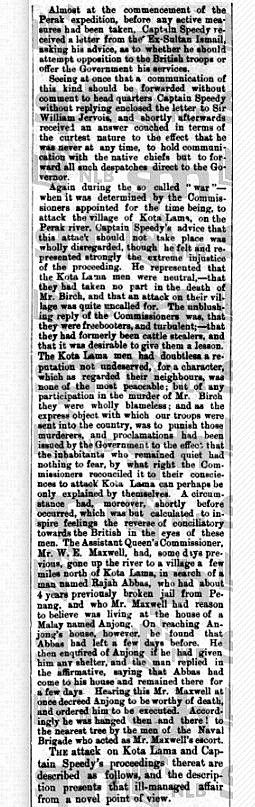
–Almost at the commencement of the Perak expedition, before any active measures had been taken, Captain Speedy received a letter from the Ex-Sultan Ismail, asking his advice, as to whether he should attempt opposition to the British troops or offer the Government his services. Seeing at once that a communication of this kind should be forwarded without comment to head quarters, Captain Speedy without replying enclosed the letter to Sir William Jervois and shortly afterwards received an answer cached in terms of the curtest nature to the effect that he was never at any time, to hold communication with the native chiefs but to forward all such despatches direct to the Government.
The second example is a long, detailed report about the so-called battle of Kota Lama on 4 January 1876. Captain Speedy is against the attack on this village. They may be bad people but were not involved in the killing of BIrch.
– Again during the so called “war” — when it was determined by the Commissioners appointed for the time being, to attack the village of Kota Lama, on the Perak river, Captain Speedy’s advice that this attack should not take place was wholly disregarded, though he felt and represented strongly the extreme unjustice of the proceeding. He represented that the Kota Lama men were neutral, — that they had taken no part in the death of Mr. Birch, and that an attack on their village was quite uncalled for. The unblushing reply of the Commissioners was, that they were freebooters and turbulent, – that they had formerly been cattle stealers, and that it was desirable to give them a lesson.
The Kota Lama men had doubtless a reputation not undeserved, for a character, which as regarded their neighbours, was none of the most peaceable; but of any participation in the murder of Mr. Birch they were wholly blameless; and as the express object with which our troops were sent into the country, was to punish those murderers, and proclamations had been issued by the Government to the effect that the inhabitants who remained quiet had nothing to fear, by what right the Commissioners reconciled it to their conscience to attack Kota Lama can perhaps be only explained by themselves.
“… by what right the Commissioners reconciled it to their conscience to attack Kota Lama can perhaps be only explained by themselves”. It is clear that the writer agrees with Captain Speedy.
The following paragraph casts a rather negative light on the character of W.E. Maxwell, who succeeded Speedy as Assistant Resident of Larut.
A circumstance had, moreover, shortly before occurred, which was but calculated to inspire feelings the reverse of conciliatory toward the British in the eyes of these men. The Assistant Queen’s Commissioner, Mr. W.E. Maxwell, had, some days previous, gone up the river to a village a few miles north of Kota Lama, in search of a man named Rajah Abbas, who had about 4 years previously broken jail from Penang, and who Mr. Maxwell had reason to believe was living at the house of a Malay named Anjong. On reaching Anjong’s house, however, he found that Abbas had left a few days before. He then enquired of Anjong if he had given him any shelter and the man replied in the affirmative, saying that Abbas had come to his house and remained there for a few days. Hearing this Mr. Maxwell at once decreed Anjong to be worthy of death, and ordered him to be executed. Accordingly he was hanged then and there! to the nearest tree by the men of the Naval Brigade who acted as Mr. Maxwell’s escort.
Here is the description of the battle. It is so different from the “official” narrative, for example Gullick (page 71) that I have written a separate post about the Battle of Kota Lama. This “novel point of view” I have given a different color.
The attack on Kota Lama and Captain Speedy’s proceedings thereat are described as follows, and the description presents that ill-managed affair from a novel point of view.
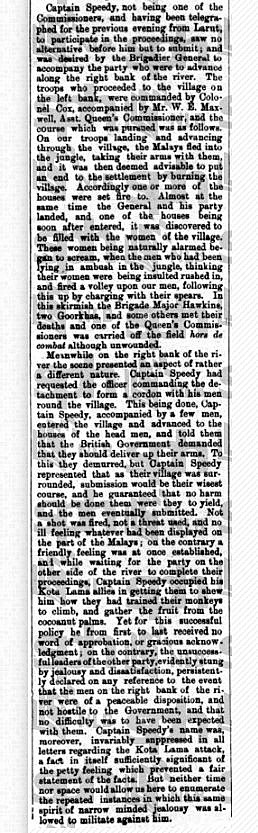
Captain Speedy, not being one of the Commissioners, and having been telegraphed for the previous evening from Larut to participate in the proceedings, saw no alternative before him but to submit; and was desired by the Brigadier General to accompany the party who were to advance along the right bank of the river. The troops who proceeded to the village on the left bank, were commanded by Colonel Cox, accompanied by Mr. W.E. Maxwell, Asst. Queen’s Commissioner, and the course which was pursued was as follows.
On our troops landing and advancing through the village, the Malays fled into the jungle, taking their arms with them, and it was then deemed advisable to put an end to the settlement by burning the village. Accordingly one or more of the houses were set fire to. Almost at the same time the General and his party landed, and one of the houses being soon after entered, it was discovered to be filled with the women of the village. These women being naturally alarmed began to scream, when the men who had been lying in ambush in the jungle, thinking their women were being insulted rushed in, and fired a volley upon our men, following this up by charging with their spears. In this skirmish the Brigade Major Hawkins, two Goorkhas, and some others met their deaths and one of the Queen’s Commissioners was carried of the field hors de combat although unwounded.
Meanwhile on the right bank of the river the scene presented an aspect of rather a different nature. Captain Speedy had requested to form a cordon with this men round the village. This being done, Captain Speedy, accompanied by a few men, entered the village and advance to the houses of the head men, and told them that the British Government demanded that they should deliver up their arms. To this they demurred, but Captain Speedy represented that as their village was surrounded, submission would be their wisest course, and he guaranteed that no harm should be done them were they to yield, and the men eventually submitted. Not a shot was fired, not a threat used, and no ill feeling whatever had been displayed on the part of the Malays; on the contrary a friendly feeling was at once established, and while waiting for the party on the other side of the river to complete their proceedings, Captain Speedy occupied his Kota Lama allies in getting them to show him how they had trained their monkeys to climb, and gather the fruit from the coconut palms.
Here is the conclusion of the writer. Speedy did not get any words of gracious acknowledgment and in the official reports his successful actions were suppressed or downplayed
Yet for this successful policy he from first to last received no word of approbation, or gracious acknowledgment; on the contrary, the unsuccessful leaders of the other party, evidently stung by jealousy and dissatisfaction, persistently declared on any reference to the event that the men on the right bank of the river were of a peaceable disposition, and not hostile to the Government, and that no difficulty was to have been expected with them. Captain Speedy’s name was, moreover, invariably suppressed in all letters regarding the Kota Lama attack, a fact in itself sufficiently significant of the petty feeling which prevented a fair statement of the facts.
But neither time nor space would allow us here to enumerate the repeated instances in which the same spirit of narrow minded jealousy was allowed to militate against him.
A few more examples of the way Captain Speedy was badly treated:
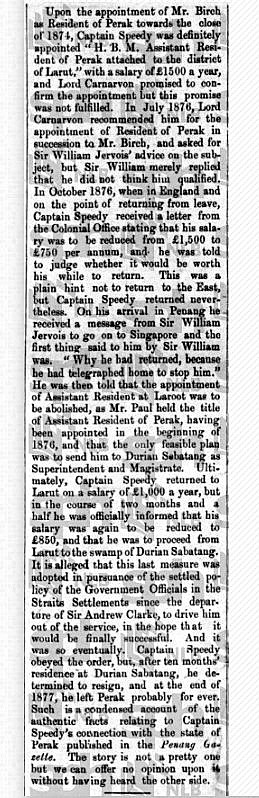
Upon the appointment of Mr. Birch as Resident of Perak towards the close of 1874, Captain Speedy was definitely appointed ” H.B.M Assistant Resident of Perak attached to the district of Larut” with a salary of £1500 a year, and Lord Carnarvon promised to confirm the appointment but this promise was not fulfilled.
In July 1876, Lord Carnarvon recommended him for the appointment of Resident of Perak in succession to Mr, Birch, and asked for Sir William Jervois’ advice on the subject, but Sir William merely replied that he did not think him qualified.
In October 1876, when in England and on the point of returning from leave, Captain Speedy received a letter from the Colonial Office stating that his salary was to be reduced from £1,500 to £750 per annum, and he was told to judge whether it would be worth his while to return. This was a plain hint not to return to the East, but Captain Speedy returned nevertheless.
The Straits Governor William Jervois was the most negative in his opinion about Captain Speedy. That is also Gullick’s conclusion
On his arrival in Penang he received a message from Sir William Jervois to go to Singapore and the first thing said to him by Sir William was “Why he had returned, because he had telegraphed home to stop him”. He was then told that the appointment of Assistant Resident at Laroot was to be abolished, as Mr Paul held the title of Assistant Resident of Perak, having been appointed in the beginning of 1876, and that the only feasible plan was to send him to Durian Saba tang as Superintendent and Magistrate.
Ultimately, Captain Speedy returned to Larut on a salary of £1.000 a year, but in the course of two months and a half he was officially informed that his salary was again to be reduced to £850,and that he was to proceed from Larut to the swamp of Durian Sabatang.
Durian Sebatang is now Teluk Intan.
It is alleged that this last measure was adopted in pursuance of the settled policy of the Government Officials in the Straits Settlements since the departure of Sir Andrew Clarke, to drive him out of the service, in the hope that it would be finally successful.
And it was so eventually, Captain Speedy obeyed the order, but, after ten months’ residence at Durian Sabatang, he determined to resign, and at the end of 1877, he left Perak probably for ever.
Such is a condensed account of the authentic facts relating to Captain Speedy’s connection with the sate of Perak published in the Penang Gazette. The story is not a pretty one but we can offer no opinion upon it without having heard the other side
Is this the conclusion of the Singapore writer or the Penang one? Really a pity that the relevant records of the Pinang Gazette have not been preserved.
Since I wrote a blog post about Bukit Lanjan in March 2021, its hiking trails have been maintained and further developed by volunteers (Rainer, Pathman, Mark and many others)
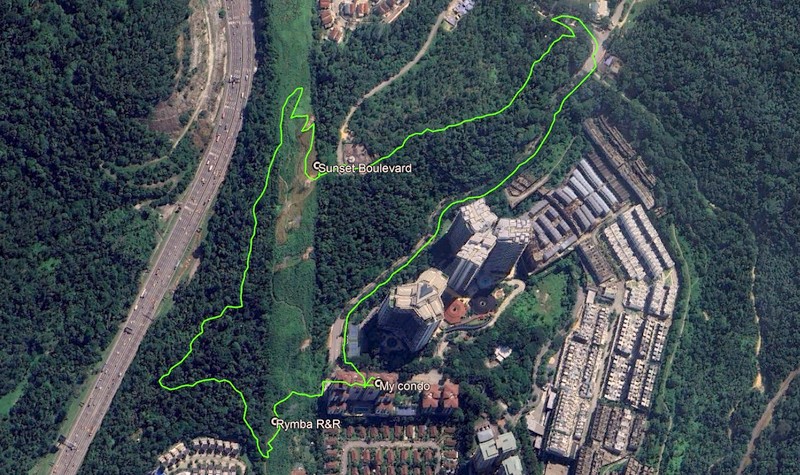
Here is an example of a trail that I often walk. Clockwise, uphill using the trails, downhill the tar road to protect my knees. Click on the GE screenshot below to view the Komoot report of a recent hike, with many photos.
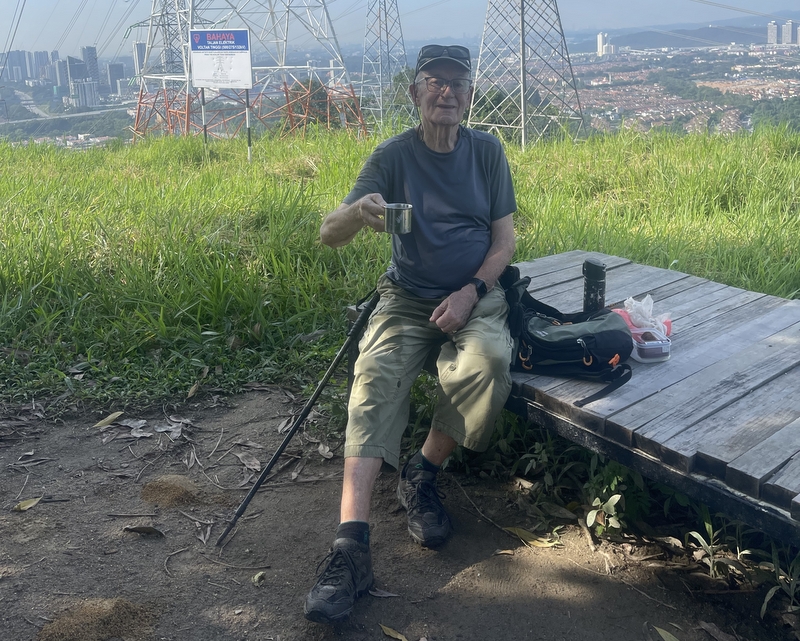
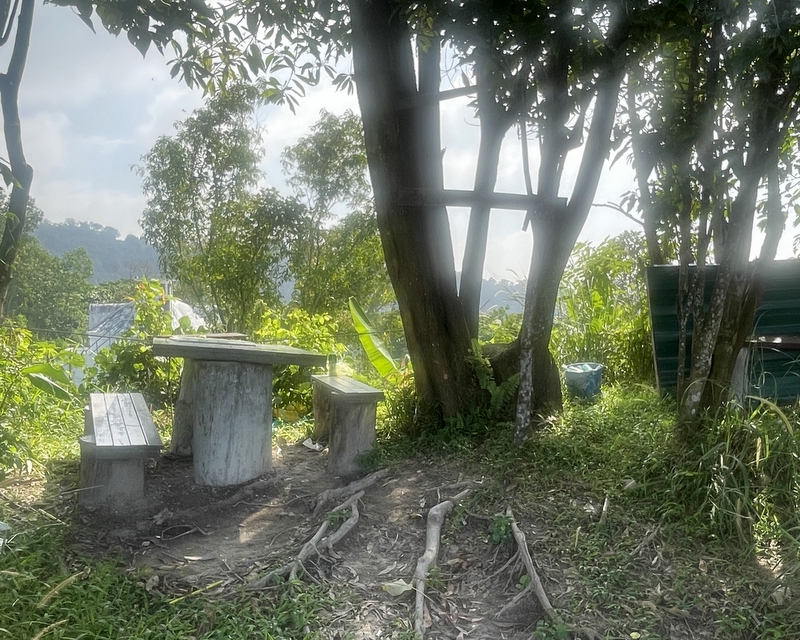
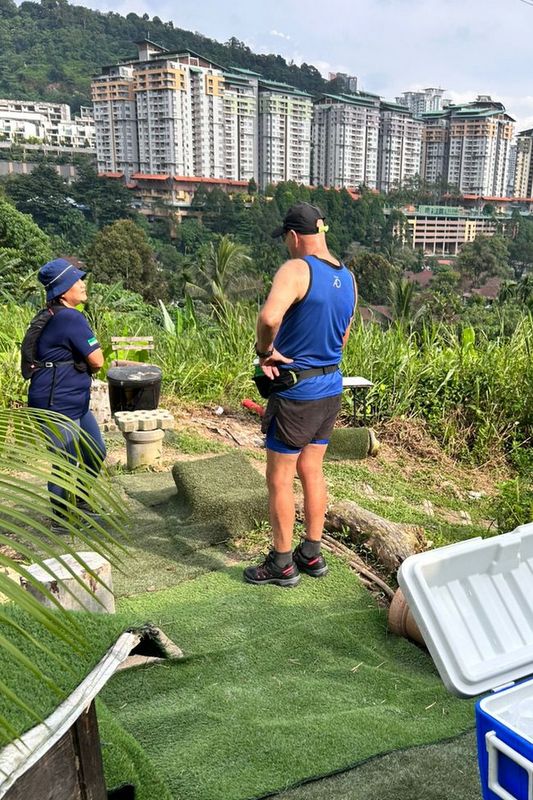
Halfway I have a coffee break at Sunset Boulevard, marked in the GE map. This location has been upgraded a lot with furniture and has become very popular.
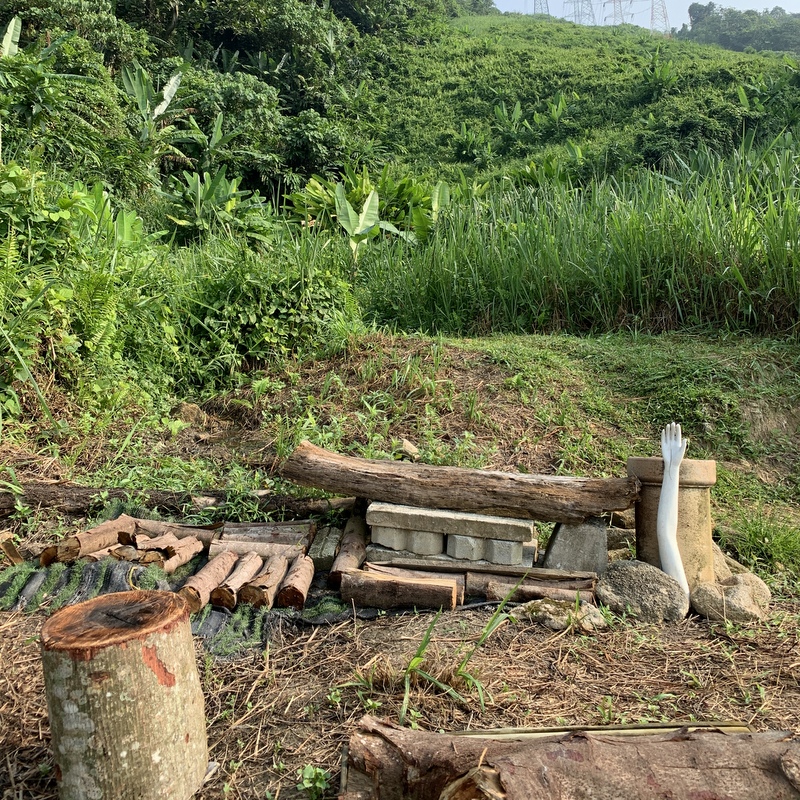
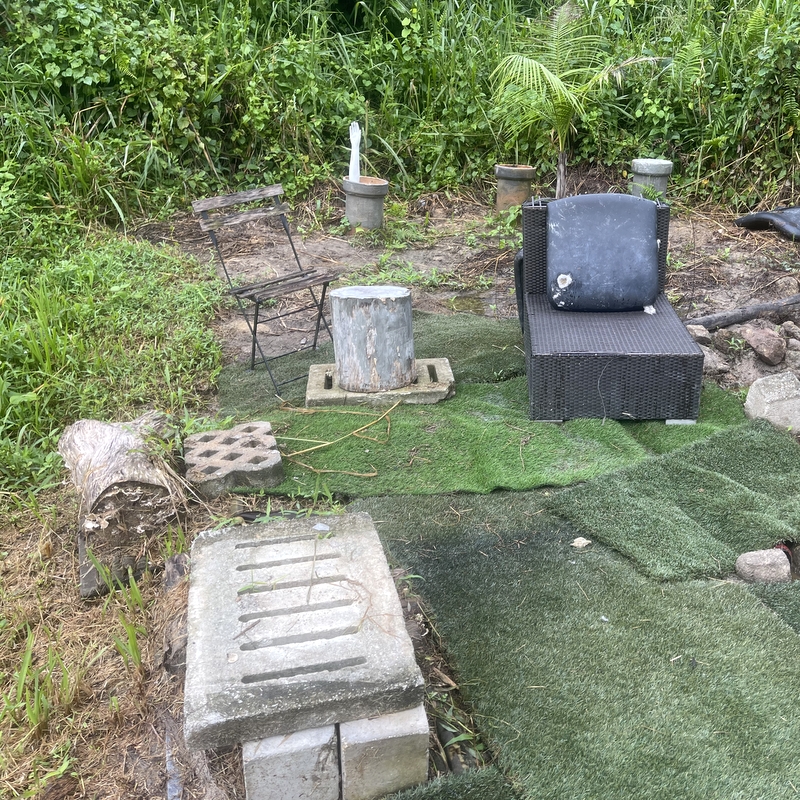
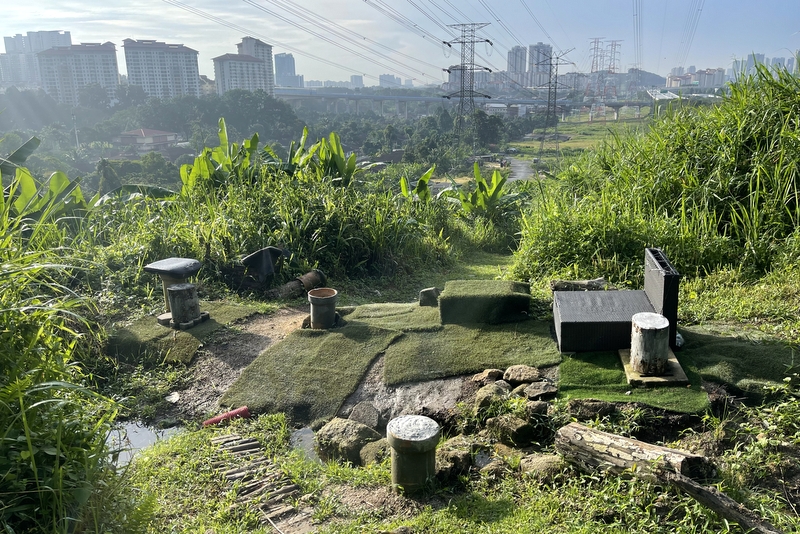
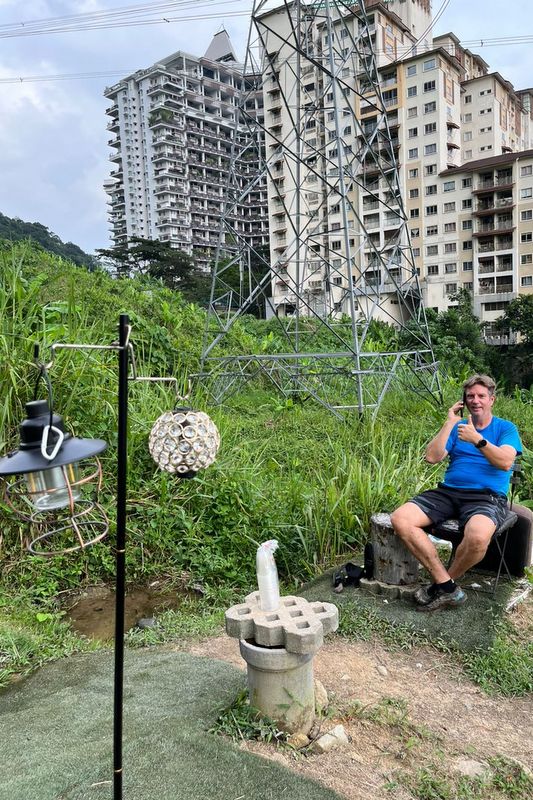
Another location shown on the GE map is Rymba R&R. R&R stands for Rumah Rehat , the rest stops along the highway. Rymba Hills is a residential area, visible bottom left on the map. Over the past year this rest stop has been developed by Pathman, who is living nearby. Here are two pictures, one taken in April, the other one in November.
And here is the present situation. The plastic arm has disappeared 😉
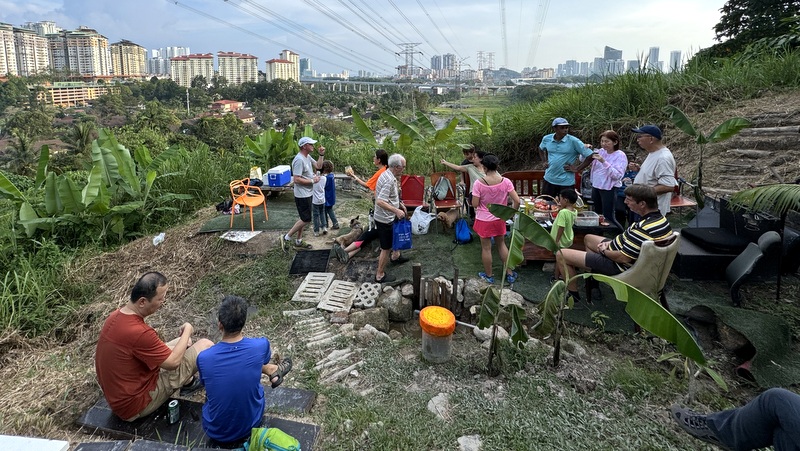
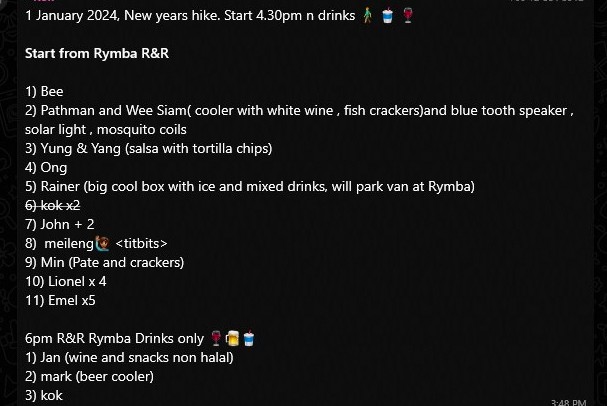
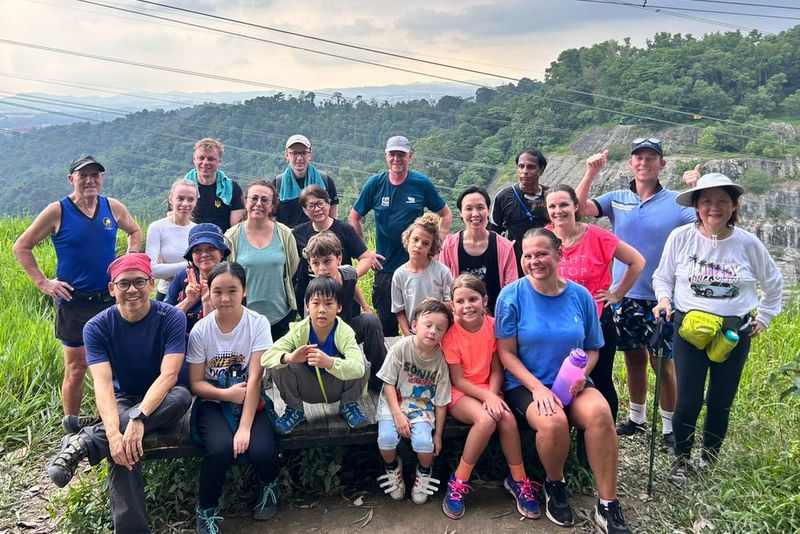
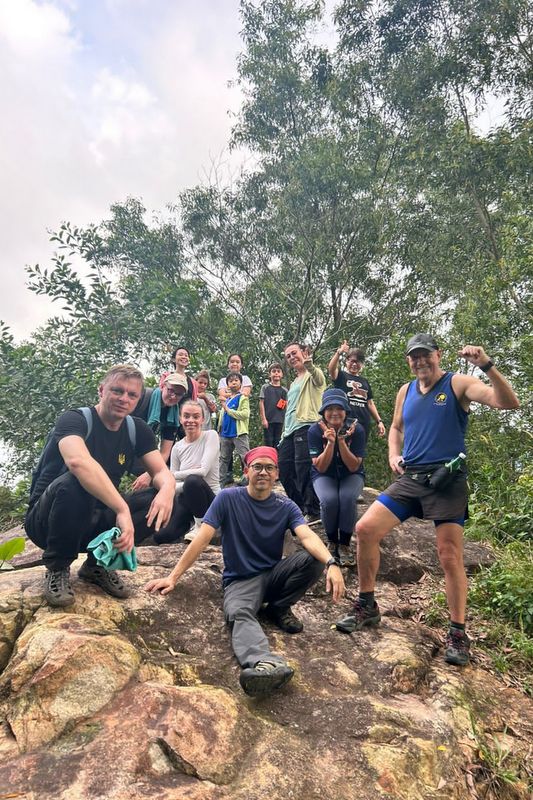
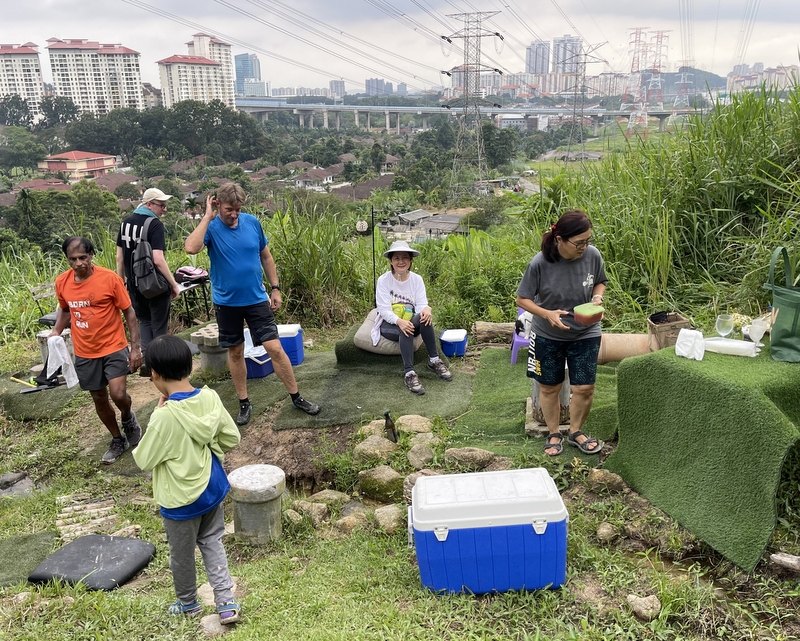
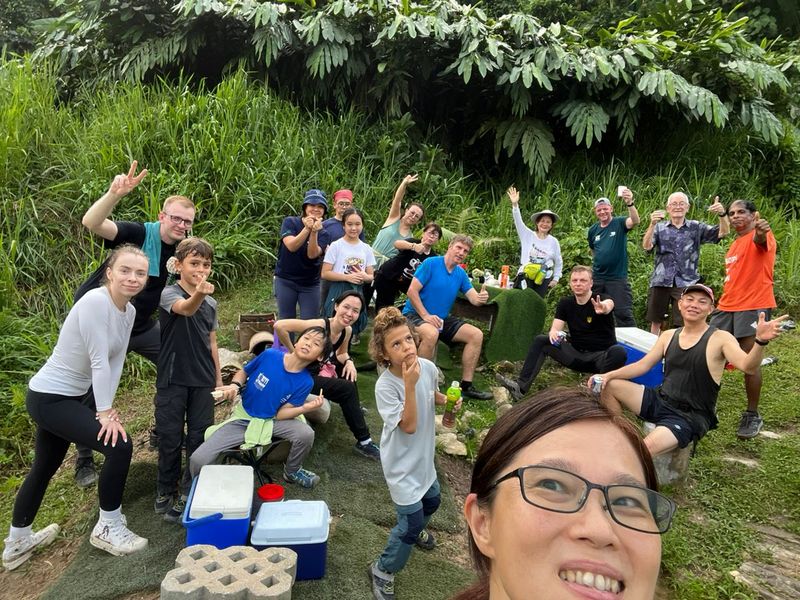
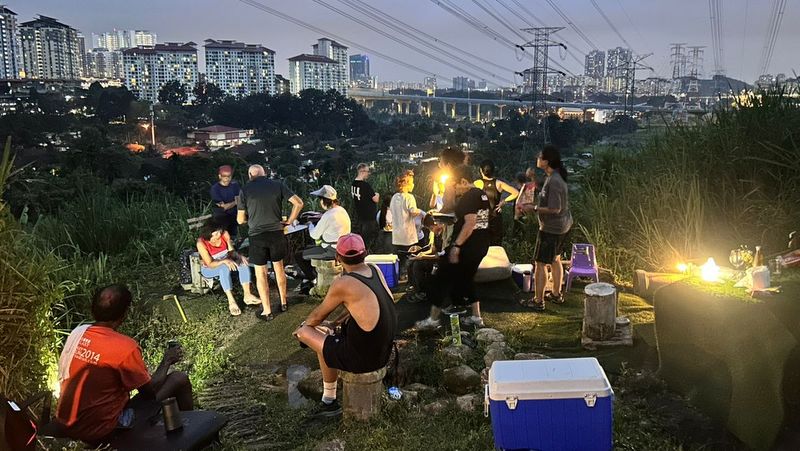
When Pathman told me that he often came here in the evening to relax with a drink, I showed my interest to join him, as I am living “around the corner”. But we never managed to fix a date. Until this time! Not the two of us, discussing the meaning of life, but a New Year meeting of the Bukit Lanjan hikers. There were two options, starting with a hike at 4:30 pm, finishing 6 pm at Rymba R&R, or skipping the hike and meeting directly at Rymba R&R. The plan was that everybody would bring something to drink and or eat. Many people first wanted to hike, here is a group picture at Sunset Boulevard.
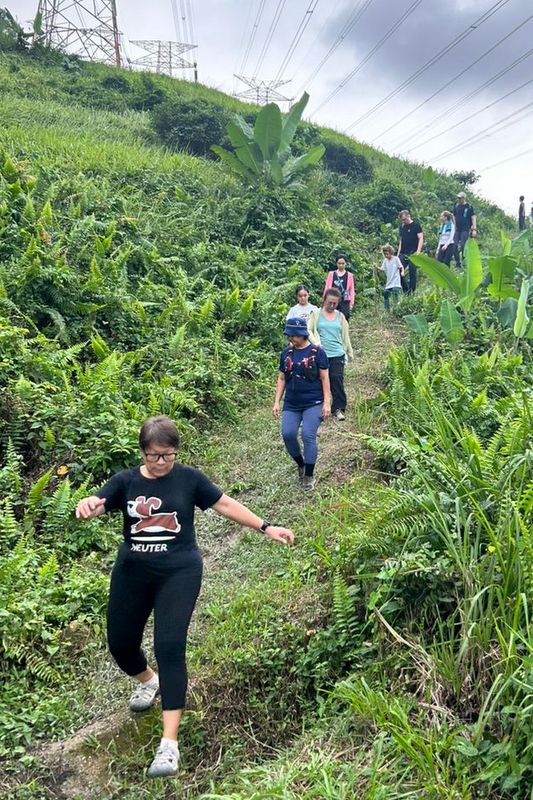
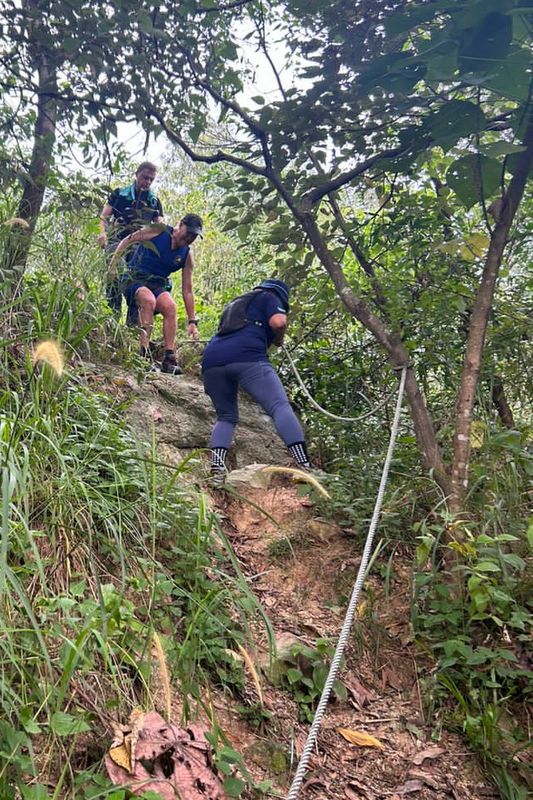
Some more photos of the hike. In the center is another interesting location, the Hard Rock cafe. Steep parts of the hiking trails have ropes.
In the meantime the non-hikers already came to the R&R
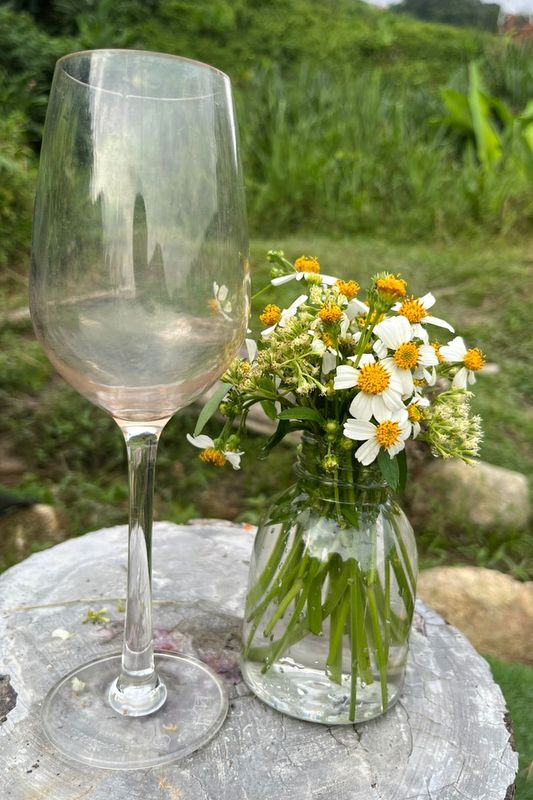
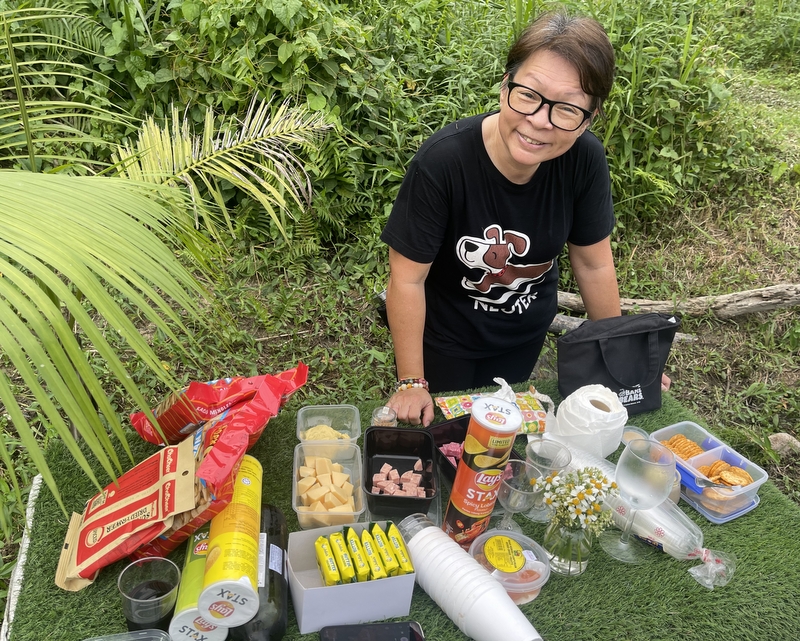
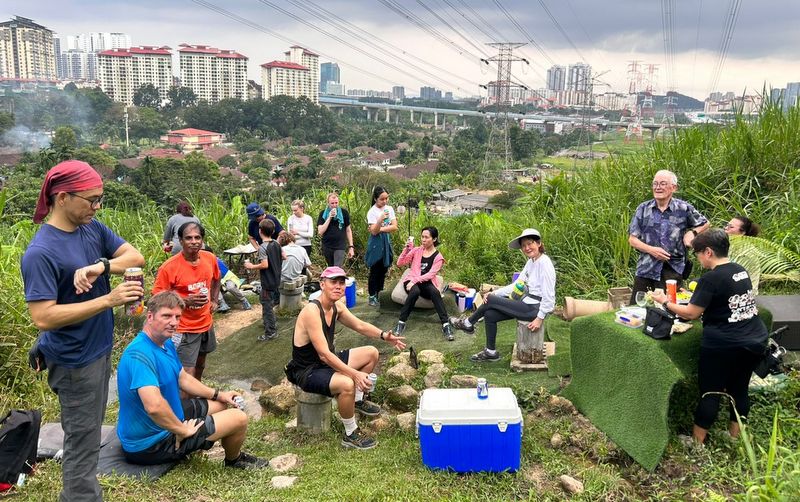
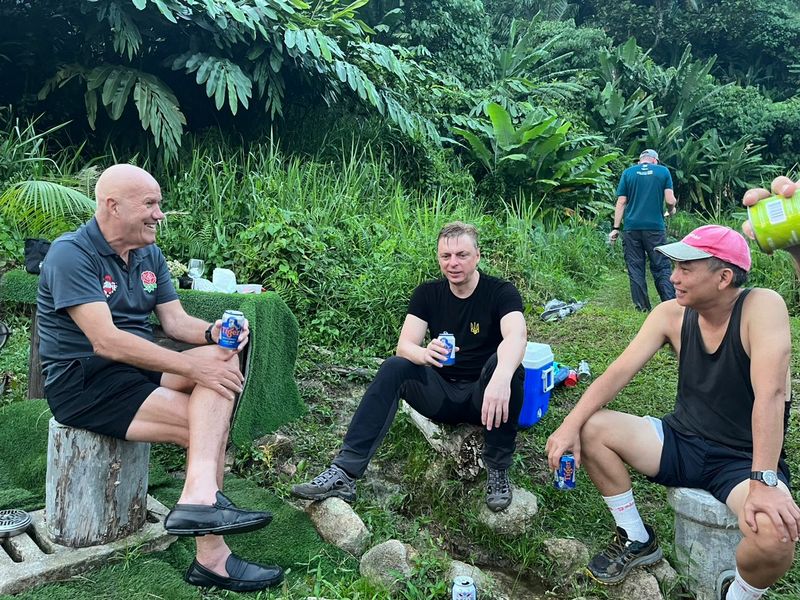
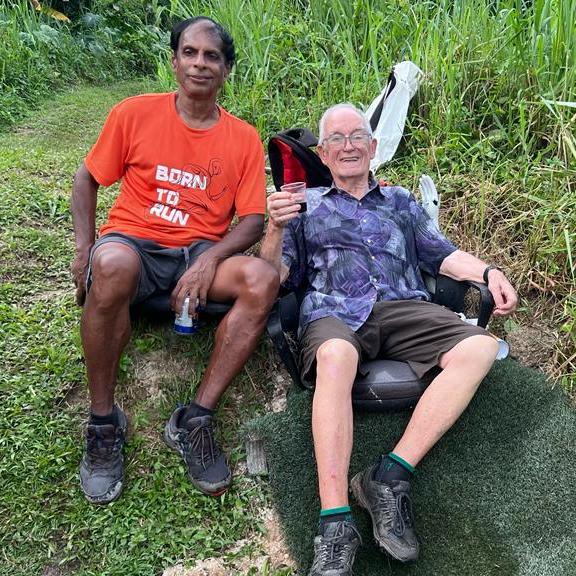
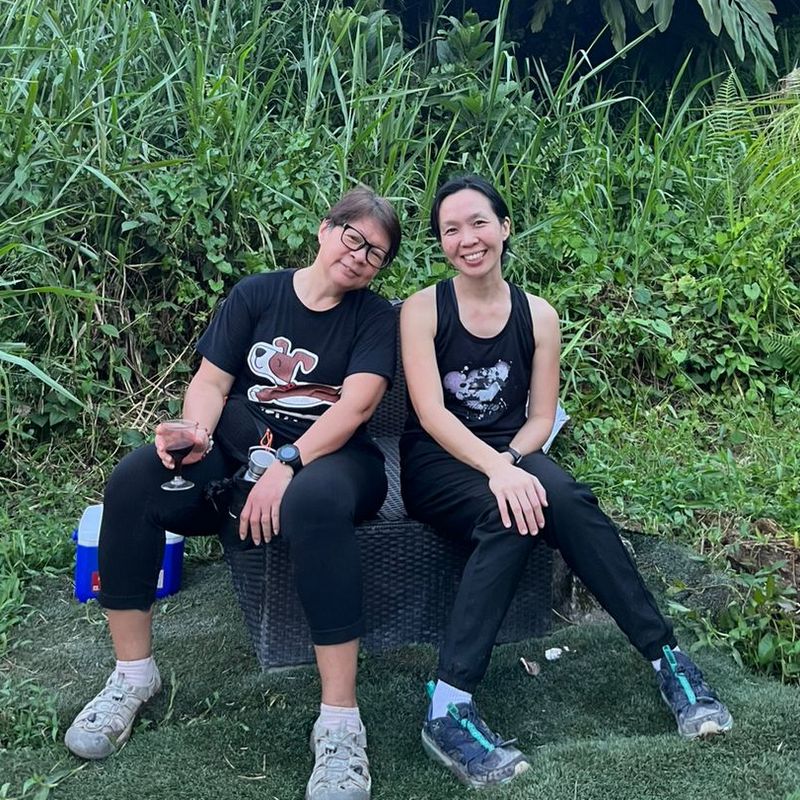
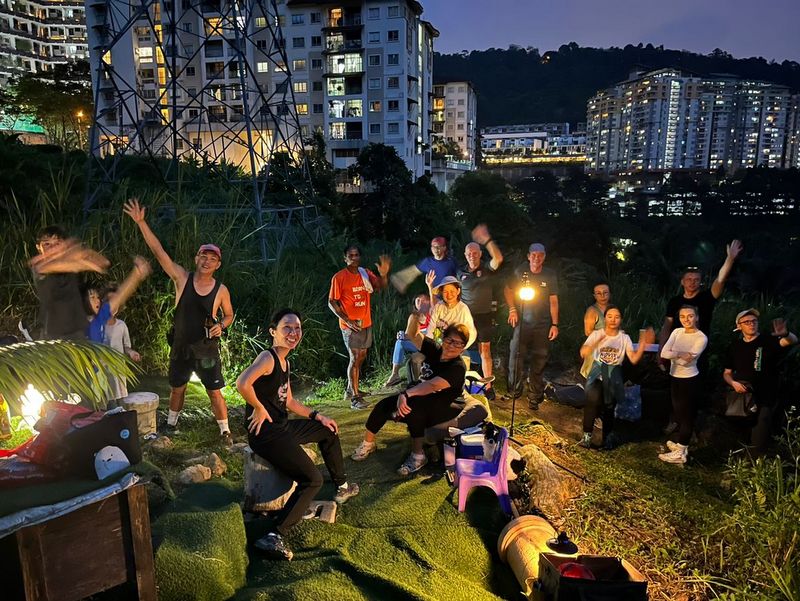
Around 6 pm the hikers arrived and the party started. There were drinks and snacks, Pathman had provided music and solar lights
It became a very pleasant gathering. We were very lucky with the weather, this time of the year there is often a heavy downpour in the afternoon.
I went back home before it got dark, because I didn’t want to take risks of stumbling at my age. So these photos (and quite a few others in this post) have not been taken by me.
As you can see, everybody is enjoying the New Year party.
Pathman created a YouTube video of the party. Enjoy!