A Grey Sunday in Amsterdam

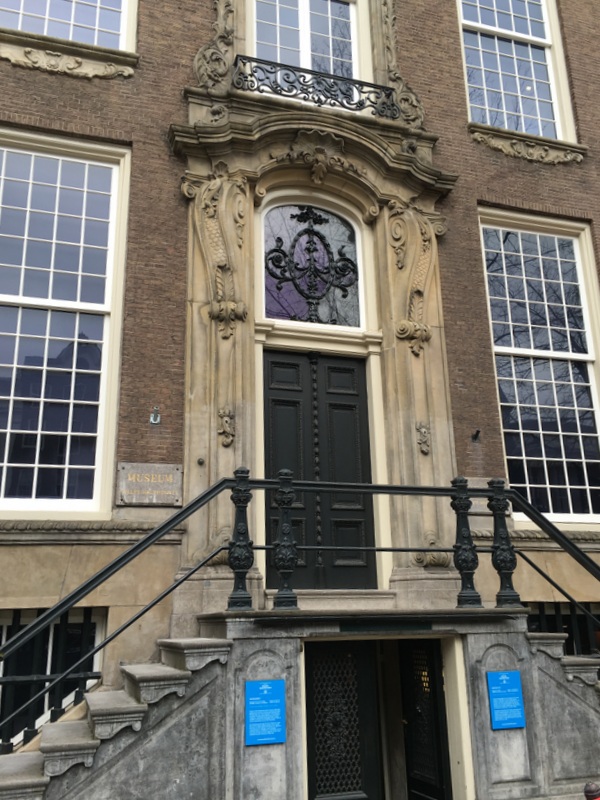
Usually I come back to the Netherlands when spring has started, but this time I was earlier. The weather was cold and grey, not inviting to go out and enjoy the countryside. Maybe visit a museum?  But which one, Amsterdam has more than 50 of them! Two of them are housed in patrician canal mansions and I decided to visit those.

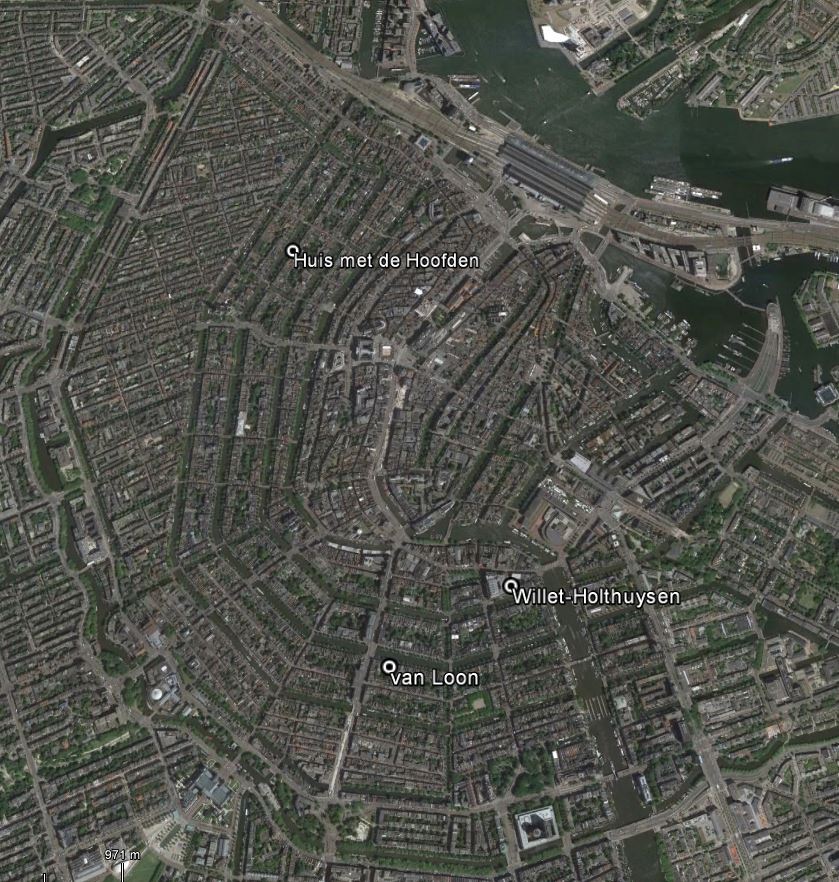
The famous Grachtengordel (“Canal Belt”) of Amsterdam, clearly visible in the GE map below, has been declared an Unesco World Heritage site in 2010. The three concentric canals were dug in te 17th century, the Dutch Golden Age

Map

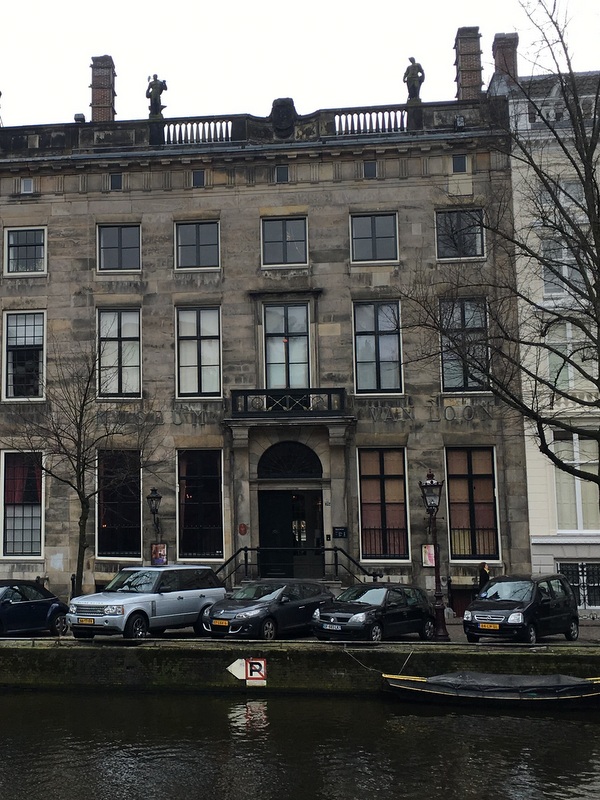
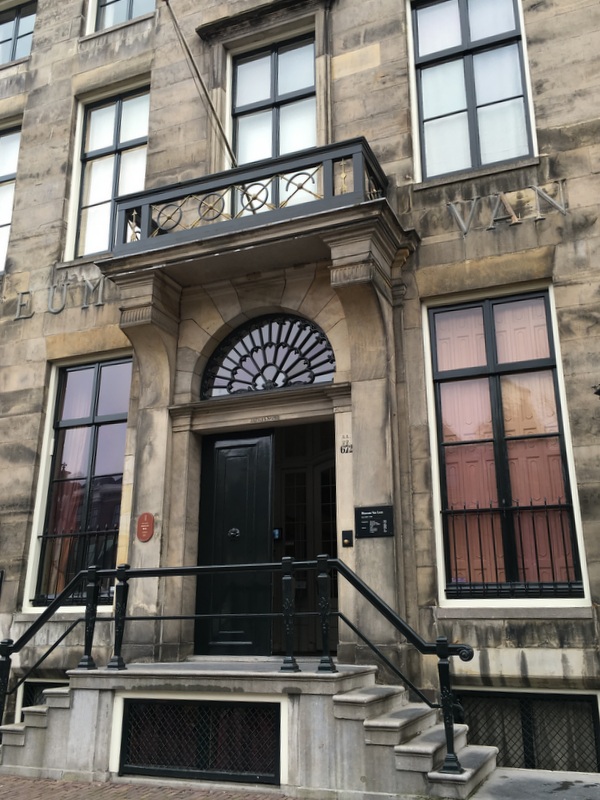
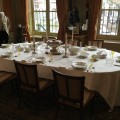
First I visited the museum van Loon. This merchant mansion was built in 1671, has had many tenants  (for example the painter Ferdinand Bol, a pupil of Rembrandt)  and owners and was finally bought in 1884 by the aristocratic family van Loon, who still owns it, but doesn’t live there anymore.

2016-03-20 15.24.33-1

2016-03-20 15.20.54

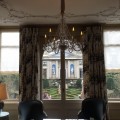
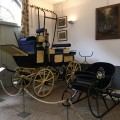
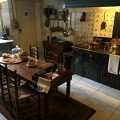
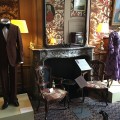
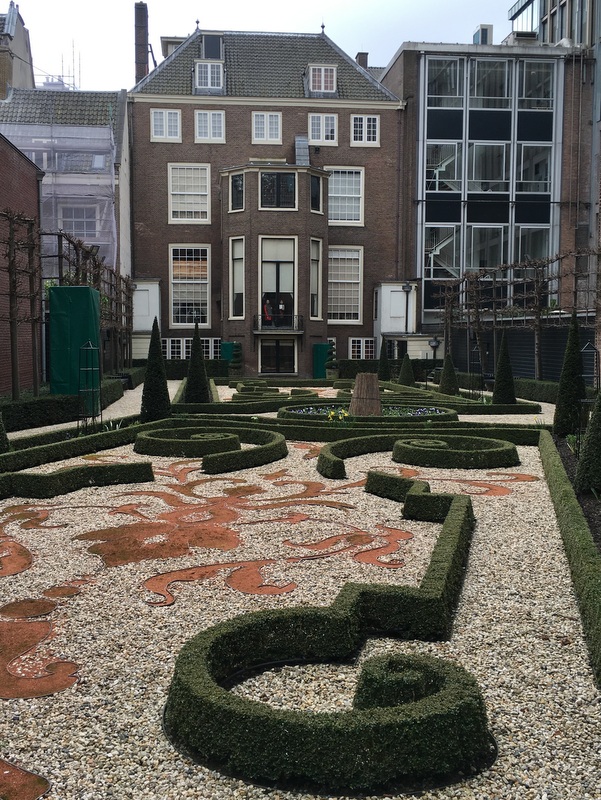
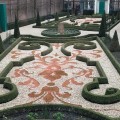
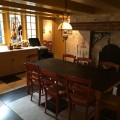
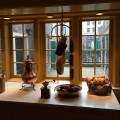
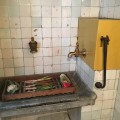
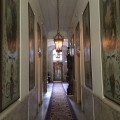
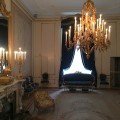
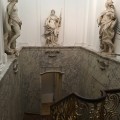
Here is a collection of pictures. These mansions have a big garden, with at the back the coach house. The kitchen is in the basement, the (elevated) ground floor has reception and living rooms, the first floor the bedrooms. The second floor (not accessible nowadays) contained the servant quarters. The museum gives a good impression how the rich merchants lived in those days.

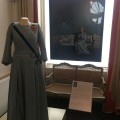
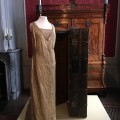
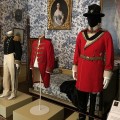
During my visit there was an interesting special exhibition. The van Loon family belonged to the Dutch aristocracy and many exhibits show their personal fashion style, from 1850 until present.

My second visit was to the Willet-Holthuysen museum. Built for Jacob Hop, mayor of Amsterdam, around 1685. Also here many owners, the last one was Mrs. Willet-Holthuysen, she bequeathed the entire house to the city of Amsterdam on condition that it became a museum in 1895.

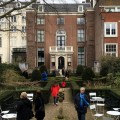
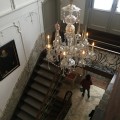
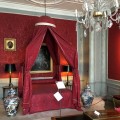
Similar design as the van Loon mansion. Elevated ground floor with diningroom and sitting room and a large ballroom. Kitchen in the basement, with access to a town garden. Bedrooms on the first floor. Notice how the 17th century building is flanked by ugly modern buildings

2016-03-20 16.09.43

2016-03-20 15.33.26-1

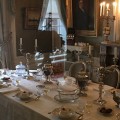
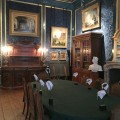
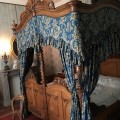
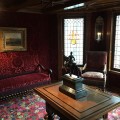
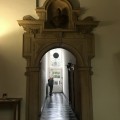
Also for this museum a collection of pictures. The Willet-Holthuysen couple were part of what you would call nowadays the jetset. Traveling a lot, giving parties, collecting art.

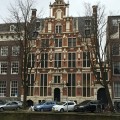
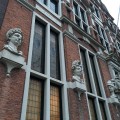
When I was searching the Internet for opening times etc, I found that there used to be another townhouse museum, the Geelvinck-Hinlopen mansion, unfortunately closed indefinitely last year. But the regular concerts of classical music, given in this museum, arestill being organised, only in a different location, in the Huis met de Hoofden (House with the Heads). This mansion was built in 1622. The interior is under renovation, only one room is accessible for concerts. Impressive facade.

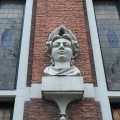
There is a legend that the six heads represent thieves, beheaded by a servant, when she noticed a burglary. Not true, they represent Greek gods…:-)

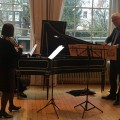
It was my lucky day, there was a concert on this grey Sunday afternoon! Musica Batavia , three musicians, on harpsichord, violin and recorder, were playing music by Bach, Telemann, Vivaldi and others.

They played very well, here is an example of their musical style, a sonata by Pietro Locatelli (an Italian composer who, by the way, lived most of his life in a canal house in Amsterdam!)


I really enjoyed this Grey Sunday in Amsterdam!

2016-03-20 16.12.13

The Largest Prime Number

On 7 January 2016 a “new” large prime number was discovered, with more than 22 million digits. Time for a blog about these numbers, which have fascinated mathematicians from Greek antiquity until present times.

Prime numbers are numbers that can only be divided by 1 and itself. For example 7 is a prime number, but 6 is not because it can be divided by 2 and 3. . Here is a list of the 168 prime numbers smaller than 1000. The number 2 is the only even prime, all others are odd.
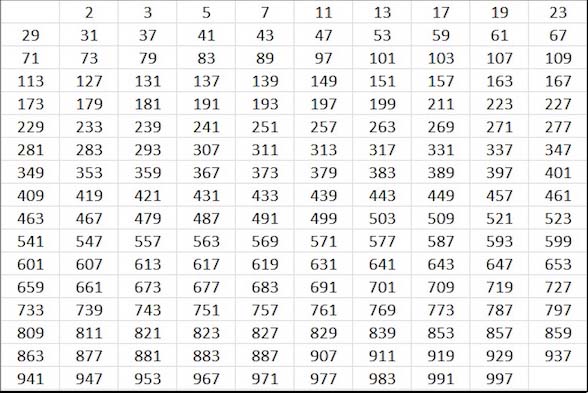
prime-numbers

How many prime numbers are there?

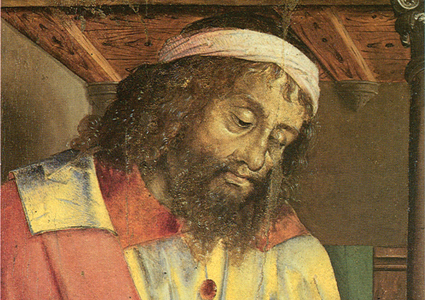
Euclides

Euclides, the famous Greek mathematician, living in present-day Egypt  around 300 BC, already proved that their number is infinite, and his proof is so elementary, that I often presented it to my students when I was a teacher, as an example of what is called Reductio ad Absurdum.

Euclides’ proof:  Assume that you have a complete list of all prime numbers.

  • Multiply them together and add 1. Call this number X.
  • Because of the added 1, this number X can not be divided by any prime number in your list (there will always be a reminder 1)!
  • So there are only two possibilities, either X is prime itself, or it can be divided by a prime number outside your list. In both cases it shows your list was incomplete.
  • Therefore our assumption was wrong and the list of prime numbers is infinite!

How to find out if a number X is prime?   Do we  have to check whether X is divisible by any number, smaller than X ? That would be a tedious job. Fortunately it is not as bad as that…:-). Because it is easy to see that we only have to check whether X is divisible by any prime number, smaller than the square root of X.

For example X=283, is it prime? The square root of 283 = 16.82…, so we have only to check division by 2,3,5,7,11 and 13.

  • 283 / 2 = 141 rest 1
  • 283 / 3 = 94 rest 1
  • 283 / 5 = 56 rest 3
  • 283 / 7 = 40 rest 3
  • 283 / 11 = 25 rest 8
  • 283 / 13 = 21 rest 10

So 283 is a prime number!

This procedure is called Trial Division. For large numbers it becomes time consuming. For example, we want to check if 1000.003 is prime.  There are 168 prime numbers smaller than 1000, so we have to do 168 divisions to finally conclude that, yes, 1000.003 is prime. Repeating this procedure for 999.997, you will find that this number is not prime, it can be divided by 757.

Imagine that you have to do these divisions with only pen and paper!

Back to the recently discovered large mega-prime. It is a so-called Mersenne prime, one less than a power of 2:  Mp = 2p − 1 with p itself a prime number.

  • M2 = 22 − 1 = 4 – 1 = 3 prime!
  • M3 = 23 − 1 = 8 – 1 = 7 prime!
  • M5 = 25 − 1 = 32 – 1 = 31 prime!
  • M7 = 27 − 1 = 128 – 1 = 127 prime!

Could this be a rule to create prime numbers? Unfortunately that is not the case.       M11 = 211 − 1 = 2048 – 1 = 2047 = 23 * 89 , not prime!
However the next one M13 = 213 − 1 = 8192 – 1 = 8191 is again prime.
As are M17 = 131.071 and M19 = 524.287. The last two are already quite large, in 1588 the Italian mathematician Cataldi had proven by trial division that they were prime.

Why are these numbers called Mersenne primes?
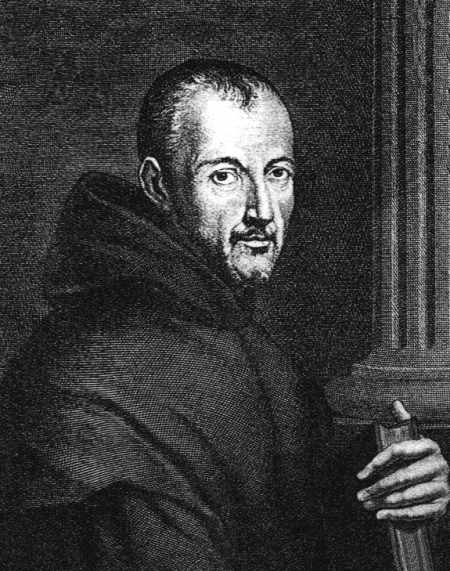
Marin_mersenne

Marin Mersenne was a French priest with an interest in mathematics, theology and philosophy.

He published in 1644 a list of these numbers 2p − 1, stating that they were prime for p  = 2, 3, 5, 7, 13, 17, 19, 31, 67, 127 and 257, and not for any other p below 257.

His list was incomplete and incorrect, but still these prime numbers carry his name…:-)

Incorrect, because M67 and M257 are composite
Incomplete, because M61 , M89 and M107 are prime

Mersenne was correct that M31 = 2.147.483.647 is prime, but how could he know? This is a big number, the square root is ~ 46.340, so he should first determine all prime numbers smaller than 46.340  (there are 4792) and then perform trial division for all those 4792 numbers. It must have been a lucky guess. And certainly it was a guess for M127 = 170.141.183.460.469.231.731.687.303.715.884.105.727 🙂
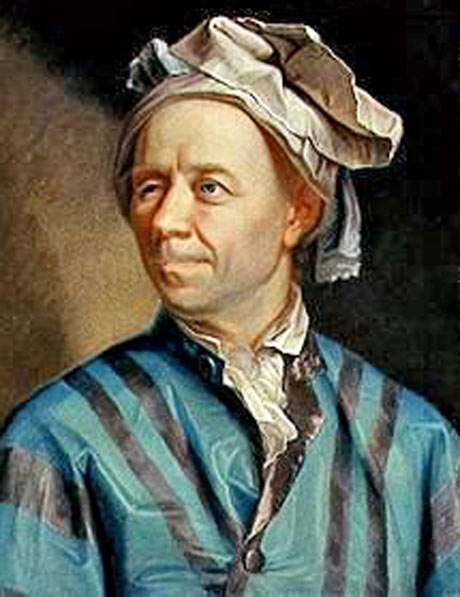
18th century mathematician Leonhard Euler

It was only in 1772, more than a century later,  that the great mathematician Leonhard Euler proved the primality of M31.

By a clever analysis of the general structure of Mersenne numbers, he managed to reduce the number of trial divisions to 84 !

Still a big job (pen and paper), the story is that he had a team of helpers to do the actual calculations.

This was the last result using trial division. For more than a century no developments regarding Mersenne primes took place.
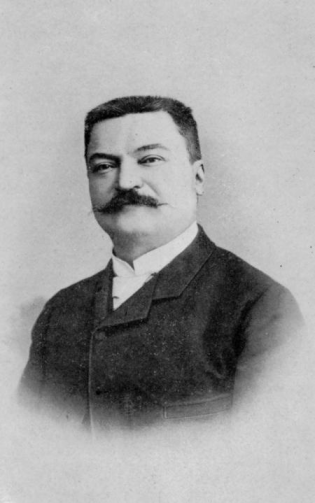
Elucas_1

Until 1857, when Édouard Lucas, a young French boy (15 years old), gets interested to prove that M127 is prime.

As trial division is not feasible for these large numbers, he studies the structure of the Mersenne numbers and develops a method to check the primality without trial divisions.

After 19 (!) years of testing his methods, he is convinced and announces in 1876 that M127 is prime. The 9th Mersenne prime!

His approach, later refined by others, is still used in the search for new Mersenne primes. Characteristic for this Lucas–Lehmer primality test is that it can decide that a Mersenne number is NOT prime, without finding the factors of this number. For example, using this test, we find that M257 = 231.584.178.474.632.390.847.141.970.017.375.815.706.539.969.331.281.128.078.915.168.015.826.259.279.871 is composite, but we don’t know its factors…:-)

With Lucas’ method, in the following years/decades the primality of M61 , M89 and M107 is proven. Still using pen and paper!

New activity starts only in the 20th century when the first computers are built.
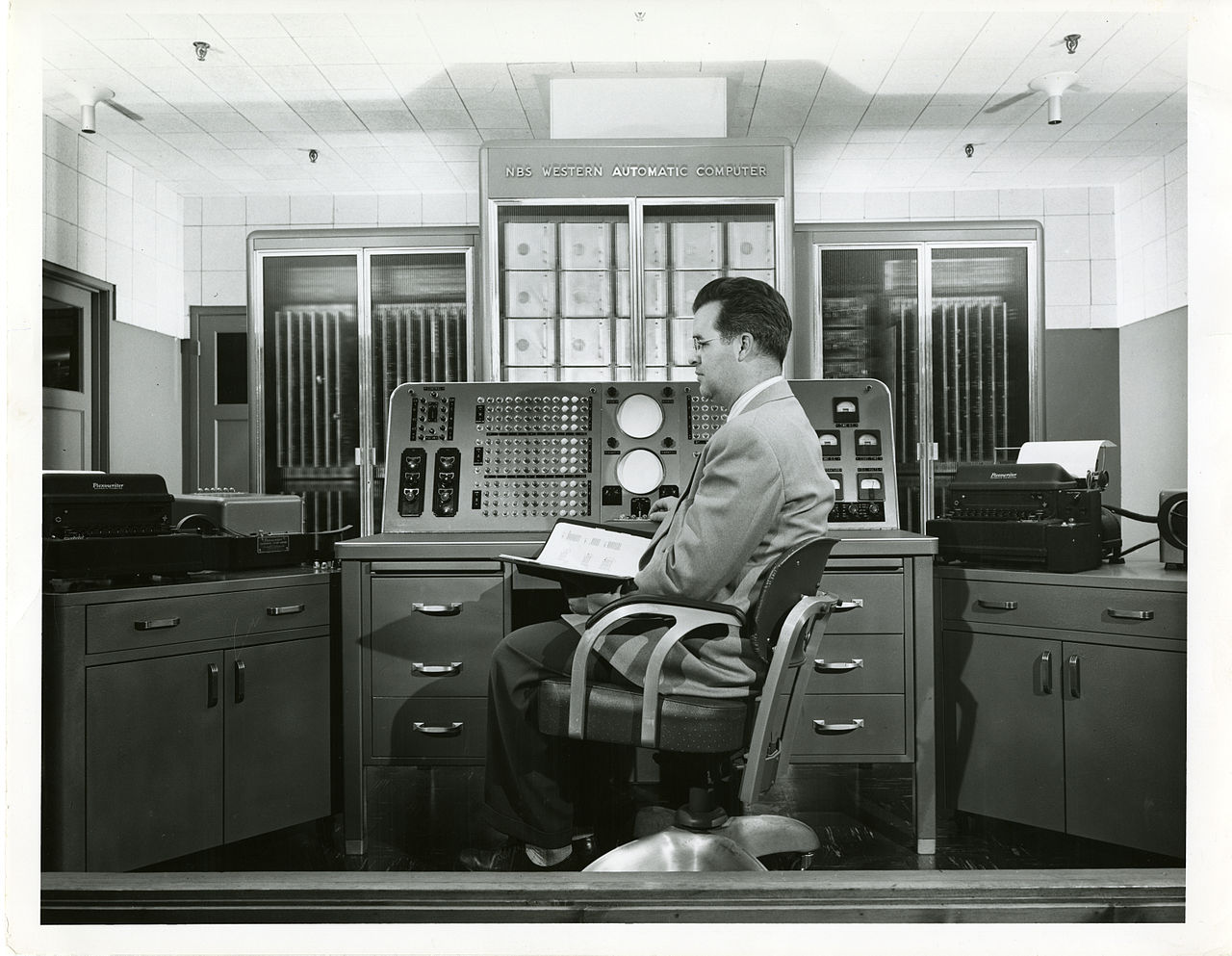
SWAC_001

One of them is the famous SWAC computer, built in 1950. Nowadays a PC or even a tablet would be more powerful.

In 1952 it was used to check new Mersenne primes. Within one year 5 new ones were found, for p = 521, 607, 1279, 2203  and 2281. Still using the methods developed by Lucas

Very large numbers! Here is prime number M2281 with 687 digits. To make it more readable, spaces have been inserted after three digits.

446 087 557 183 758 429 571 151 706 402 101 809 886 208 632 412 859 901 111 991 219 963 404 685 792 820 473 369 112 545 269 003 989 026 153 245 931 124 316 702 395 758 705 693 679 364 790 903 497 461 147 071 065 254 193 353 938 124 978 226 307 947 312 410 798 874 869 040 070 279 328 428 810 311 754 844 108 094 878 252 494 866 760 969 586 998 128 982 645 877 596 028 979 171 536 962 503 068 429 617 331 702 184 750 324 583 009 171 832 104 916 050 157 628 886 606 372 145 501 702 225 925 125 224 076 829 605 427 173 573 964 812 995 250 569 412 480 720 738 476 855 293 681 666 712 844 831 190 877 620 606 786 663 862 190 240 118 570 736 831 901 886 479 225 810 414 714 078 935 386 562 497 968 178 729 127 629 594 924 411 960 961 386 713 946 279 899 275 006 954 917 139 758 796 061 223 803 393 537 381 034 666 494 402 951 052 059 047 968 693 255 388 647 930 440 925 104 186 817 009 640 171 764 133 172 418 132 836 351
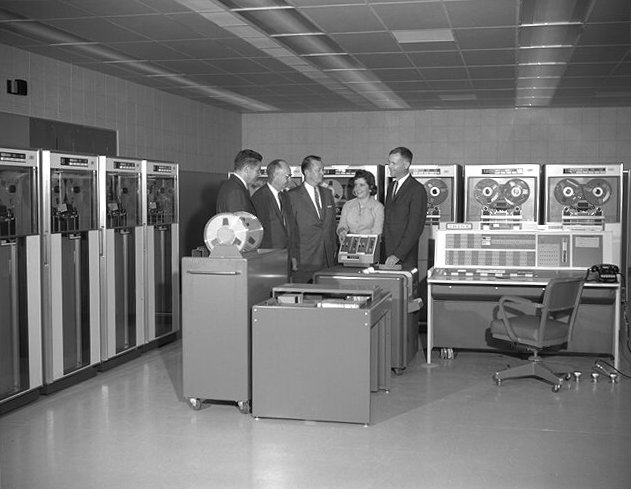
IBM_7090_computer

Computers became more powerful, and new Mersenne primes were discovered. In 1961 the first Mersenne prime with more than 1000 digits was found, M4253, using an IBM 7090 mainframe computer (pic left)

And in 1979 the first Mersenne prime with more than 10.000 digits was found, M44.497, using a Cray supercomputer.

You might expect that the recently discovered Mersenne prime M74.207.281 with more than 22 million digits has been found using a super-super computer…:-)  But that is not the case! Actually PC’s were used, not one but many, working together!

In 1996 the Great Internet Mersenne Prime Search ( GIMPS) project was started. It is an example of what is called  distributed computing.  A PC will often be idle, so why not  let it work during that time for a project such as GIMPS. Just download some software and your PC will try to find a new Mersenne Prime. Many thousands of volunteers are doing this. And with success

Since 1996, 15 new Mersenne primes have been found, all of them using GIMPS!

Of course finding a new Mersenne prime has no scientific value, it is just an intellectual challenge. But you might win a prize!

When in 1999 the first Mersenne prime was found with more than 1 million digits,M6.972.593 , the Electronic Frontier Foundation awarded this result with a prize of 50.000 US$. In 2008 M37.156.667 was found, with more than 10 million digits. The award was 100.000 US$

Two more prizes have not yet been awarded

  • 150.000 US$ to the first individual or group who discovers a prime number with at least 100 million digits
  • 250.000 US$ to the first individual or group who discovers a prime number with at least  1 billion digits

The latest Mersenne prime M74.207.281 has 22.338.618 digits, not yet enough for the next reward

So, why not join GIMPS!  I did….:-)

For this blog I have made extensive use of The Prime Pages

Large numbers have been calculated using the Online Big Number Calculator

CNY 2016

On 8 February, the Chinese year of the monkey started. I am a monkey myself, when you are familiar with the Chinese zodiac, you know that I will celebrate my 72nd birthday this year…:-). Oh, you thought it was my 60th? Don’t play play, lah!

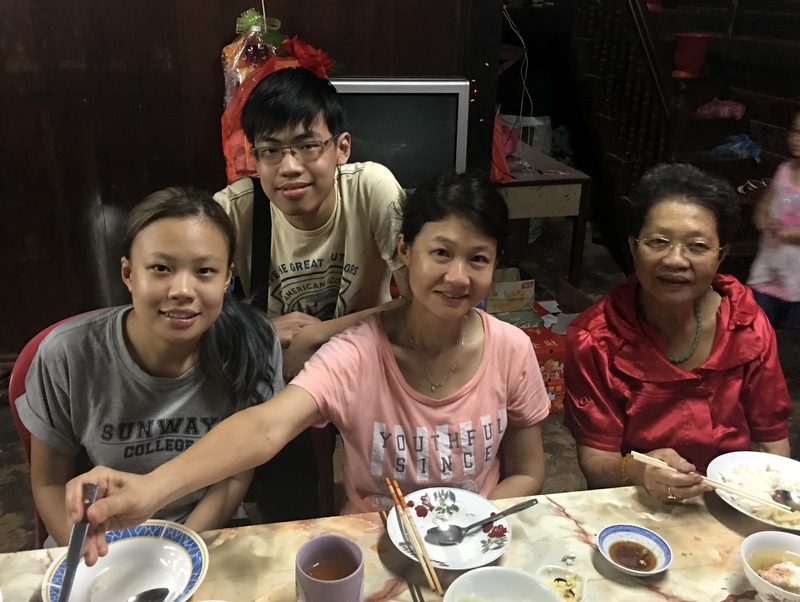
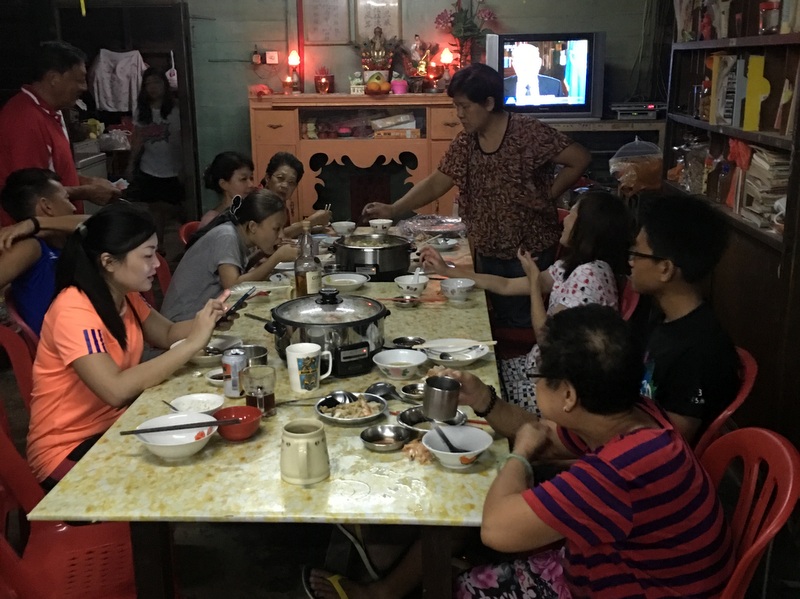
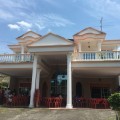
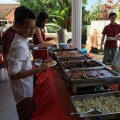
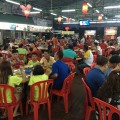
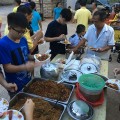
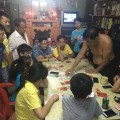
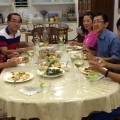
This year I decided to join Aric in his hometown for the traditional steamboat dinner on CNY eve. He had gone to Parit Baru already a few days earlier to help his mother with the preparations. As usual there was a big crowd, dinner in two rounds.

Second round. In the right picture Aric’s mother and his older sister with her two children.


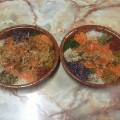
After the dinner it was time for the traditional Yee Sang ceremony. Yee Sang is a Teochew-style raw fish salad. Actually yee sang means “raw fish”, but the pronunciation is similar to the Chinese word for “abundance”. The ceremony is that the family members gather around the yee sang and toss the salad with their chopsticks. The higher you toss the salad, the more abundance you will get…:-)   It is a very Malaysian Chinese tradition.

On day 3 of CNY I was planning to visit a “new” waterfall between Beruas and Trong, with my waterfall friends Siang Hui, Nick and Rani. First I was thinking to stay in Parit Baru until then, but would I survive the crowd…:-)? Aric advised me that it would be better to “escape” for a few days, and come back on day 3 for the traditional family  party.

So I went to Taiping on day 1. I had booked a hotel in Taiping already, when my friend May protested, told me that the hotel was haunted and convinced me to stay with her in what she calls the “Maywarmers Lodge”. Of course Rani was welcome too. Malaysian hospitality!

By the same Malaysian hospitality I was invited for two CNY open houses…:-). I am a member of the Taiping Heritage Society and both Yeap, the president and Sharon, an active committee member, invited me as soon as they heard that I would be in Taiping.

I arrived in Taiping just in time for the open house lunch at Yeap’s residence

After the lunch I met Rani in town, he had traveled on his bike. Also Paul and Fahmi, who happened to stay in Taiping. We spent a nice afternoon together, visited the Burmese pool (really too crowded) and had a look at the ruined New Club swimming pool. We had a drink in the Lake Garden food court, before Paul and Fahmi went back to KL.

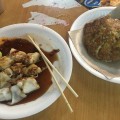
Later Rani and I had our dinner in the same food court, one of my favourites. And the next morning we had a dim sum breakfast with our hostess May.

Originally our plan was to visit Kuala Sepetang, but we felt lazy and only had a look in the afternoon at some of my “favourite” eyesore places in Taiping. I must have a  masochist streak..:-)

That evening Rani joined me to Sharon’s open house. In the picture you see Sharon’s husband, Dr Chan Ah Lak and his nephew Henry Chan, who also happens to be a friend of mine. As usual Malaysia is a small world….

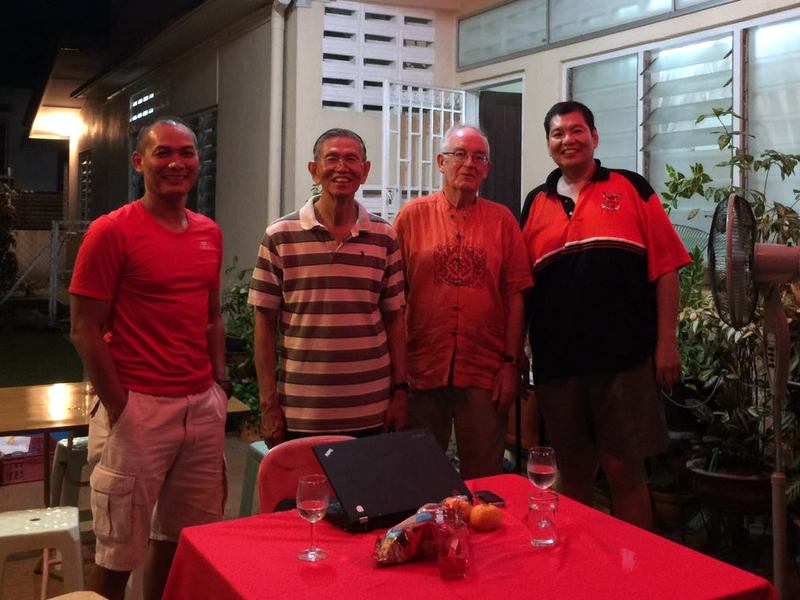
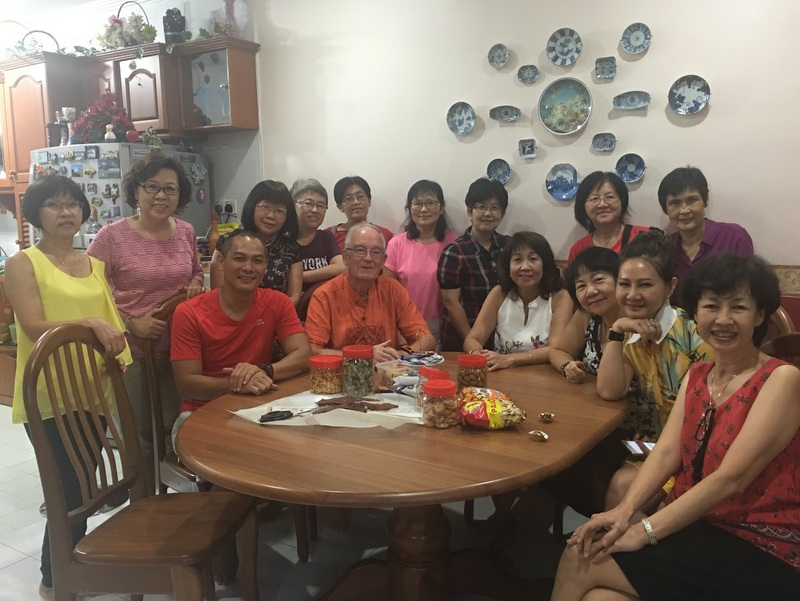
May had warned us that she was giving a CNY party for her former school mates that evening, so we were a bit shy to go back to her house…:-)  Of course a picture had to be taken, but after a while we could escape to our room..:-)

2016-02-09 21.53.51

The following day we had arranged to meet Siang Hui and Nick (coming from Teluk Intan) at the entrance of the Allagar Estate, between Trong and Beruas. From there a plantation road would take us to the trail head. Siang Hui had discovered the waterfall a few years ago and baptised it Lata Hui..:-).

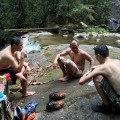
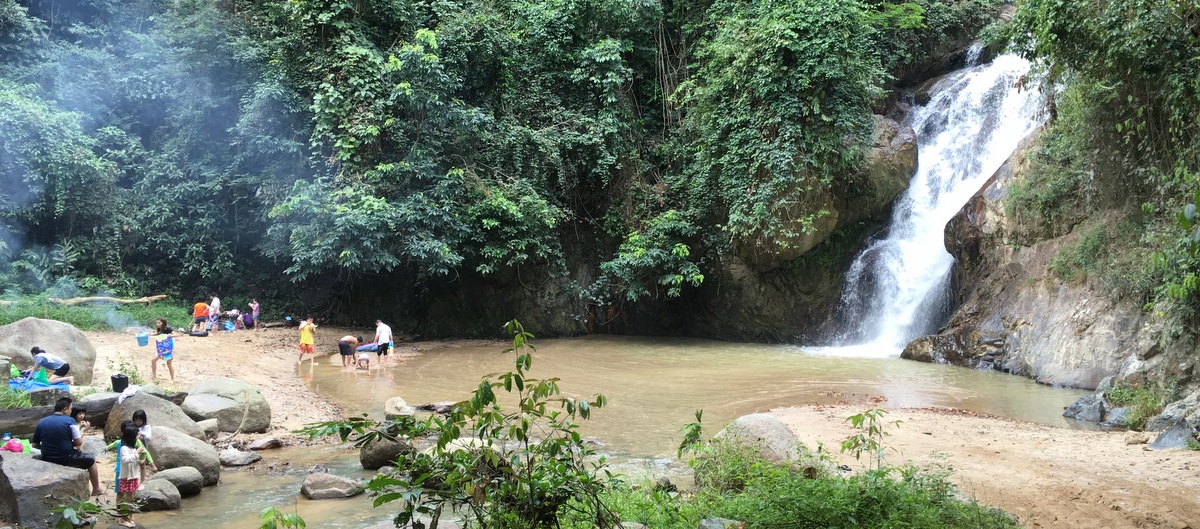
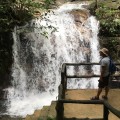
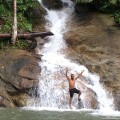
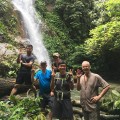
But what a disappointment. When we arrived at the trail head, we were stopped by an armed soldier, who told us that the region was out of bounds because of a military training. What to do? The only alternative was the Trong waterfall. We decided to go to the Upper Trong Fall, but we were not really in the mood, there were many leeches, we got lost a bit, and rather dispirited returned to the Trong Fall. A nice fall, we had our lunch there and a bath. But still a pity, we were so full of expectations.

Here is a short video of the waterfall

After our lunch, we all went our way, Rani back to Meru, Siang Hui and Nick to Teluk Intan, and I back to Parit Baru. Where I caused quite a sensation, entering the kitchen..:-)  Leeches, somebody screamed and yes, I had not checked my sandals and brought a few of these critters in the house. Immediately they were covered with salt, but I felt quite embarrassed.

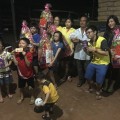
It was a nice evening. With the traditional firecrackers, a lucky draw, gambling and of course lots of food. Each year Aric likes to take an “official” picture and this year had decided for a location on the road outside the house. Not easy to control a crowd, but he managed…:-)

Here is the official picture of CNY 2016. The rule this year was to wear either a blue or a yellow shirt.

And here are the firecrackers. Illegal, but hey, this is Malaysia!

Gong Xi Fa Cai

Qing Xin Ling

Have you ever heard about the Qing Xin Ling Leisure and Cultural Village in Ipoh? I had not, until Aric mentioned it to me as a possible “stay-overnight” place during our recent trip up North. It turned out to be fully booked, but we decided to have a look at it anyway, because you can visit it as a day-tripper (RM 6). In the reviews (see the link above), people complain that the place  can be overcrowded on weekends, during  our visit it was still ok.

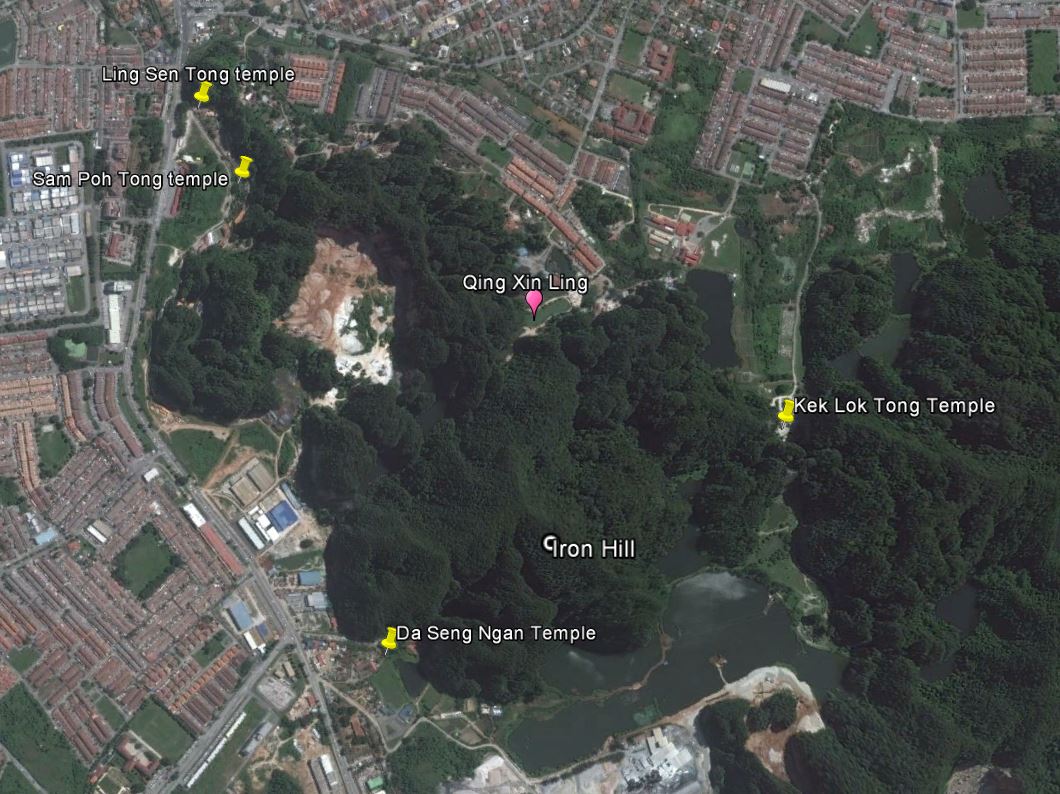
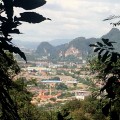
Here you see the location of Qing Xin Ling. Ipoh is surrounded by limestone hills, the image shows Gunung Rapat. Many caves and “wangs”, depressions enclosed by high limestone cliffs. Many Chinese temples too, one of them located at Qing Xin Ling. Recently the temple committee has transformed the temple grounds into a “Leisure and Cultural Village”, which has become so successful that the residents, living nearby, are complaining about traffic jams and parking woes.

Map

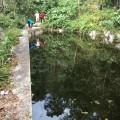
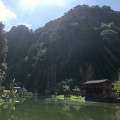
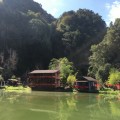
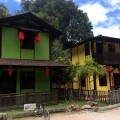
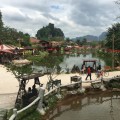
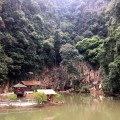
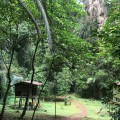
We paid the entrance fee and walked around. Mixed feelings. The location is beautiful, two lakes, surrounded by steep limestone cliffs. You can walk around the lakes, a number of brightly colored chalets has been built on the shores. Without the day trippers walking and cycling(!) around, it could have been a paradise.

But this serene atmosphere has been destroyed by the many artifacts constructed, to make it a kind of theme park. For example, what is a boat doing there, between the two lakes? From the deck you have a nice view of the two lakes, but for the rest it is an eyesore. Very strange.

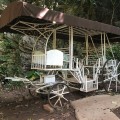
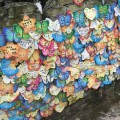
It is a confusing mixture of memorabilia ( an old motorbike, a push bike, a horse cart) and kitsch. Aric as birdman, stickers instead of love locks. Hm, a tree root,  let’s paint it as a snake. Shall we add two dinosaurs? Anything goes…:-)

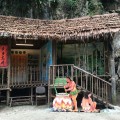
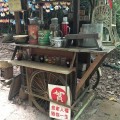
It becomes much more interesting when you walk up to  what I would call “memory lane”, a path leading to the upper wangs, where a number of stalls and shops have been created with old/antique stuff. Here you could spend a lot of time. Mostly bric-a-brac, but still interesting

2016-01-26 15.27.32

2016-01-26 14.05.30

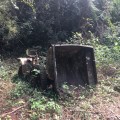
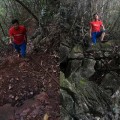
When you continue after this memory lane, you enter a completely different world. A trail leads up to Iron Hill, the top of Gunung Rapat. Recently this trail has been included in the “village”. In the beginning the trail is clear and well maintained, but it becomes steeper, there are ropes. You will pass old machinery dating back to when iron was mined here. As we were not prepared for a hiking tour we went as far as we could go, but went back before reaching the summit. Halfway, we had a nice view of Ipoh.

Will we ever come back here to stay in one of the chalets? No. But, better prepared,  we like to explore the trail to the top of Iron Hill.


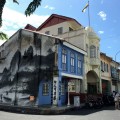
Ipoh Murals

Two years ago I published a post about Penang Street Art , and one year ago one about Street Art in KL. Using walls of buildings as a “canvas” for works of art is becoming more and more popular these days. Sometimes/often of mediocre quality. But when I heard that Zacharevic had created a series of murals in Ipoh, I wanted to see them. Because this artist adds something special to his creations.

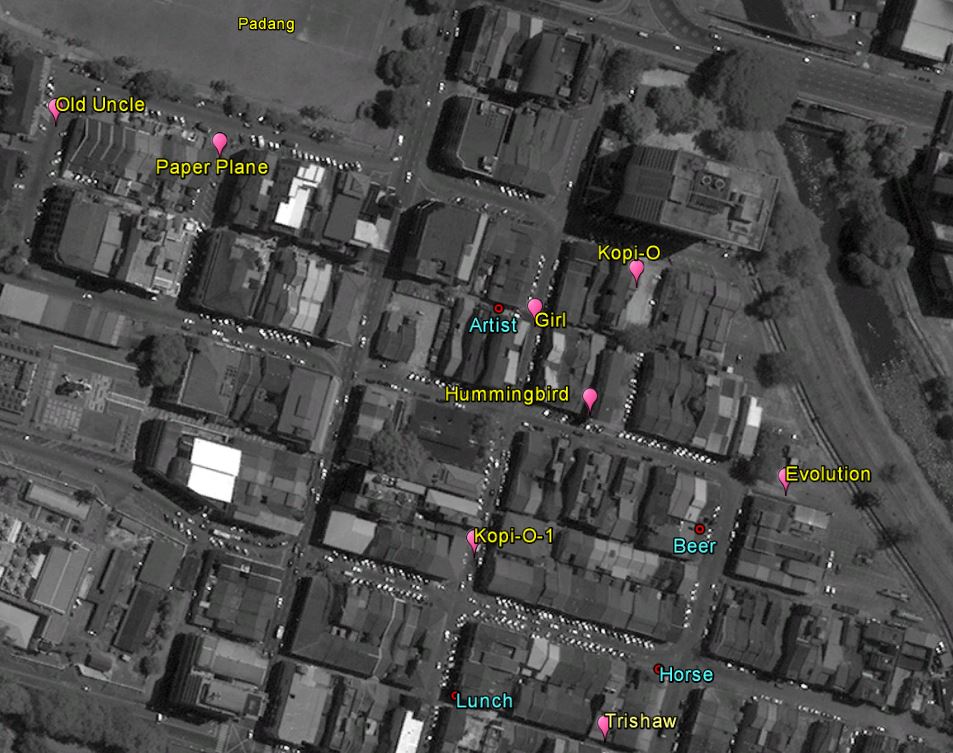
The seven murals are all in the old part of Ipoh, and on walking distance from each other. Here is a map. The Kinta river is at the right, the padang at the top. The Zacharevic murals are indicated with red markers and names in yellow. We found a few others, marked in blue.

Map

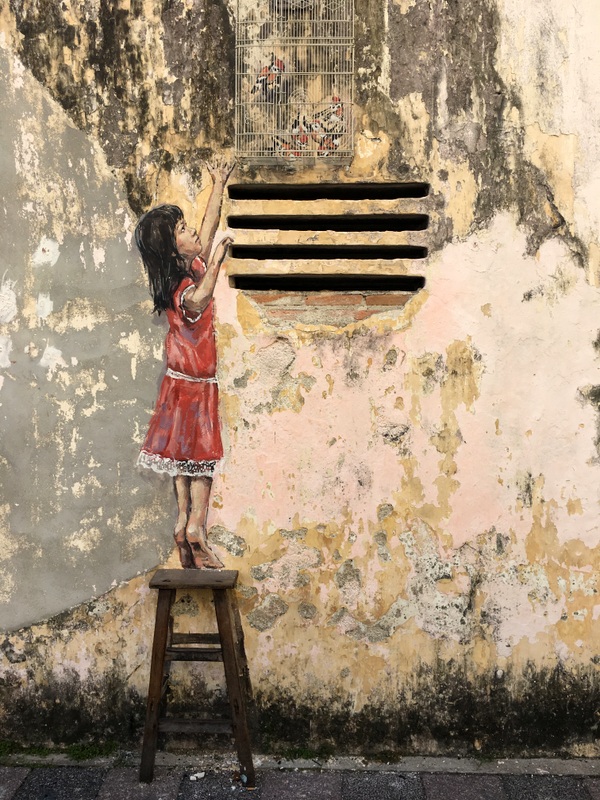
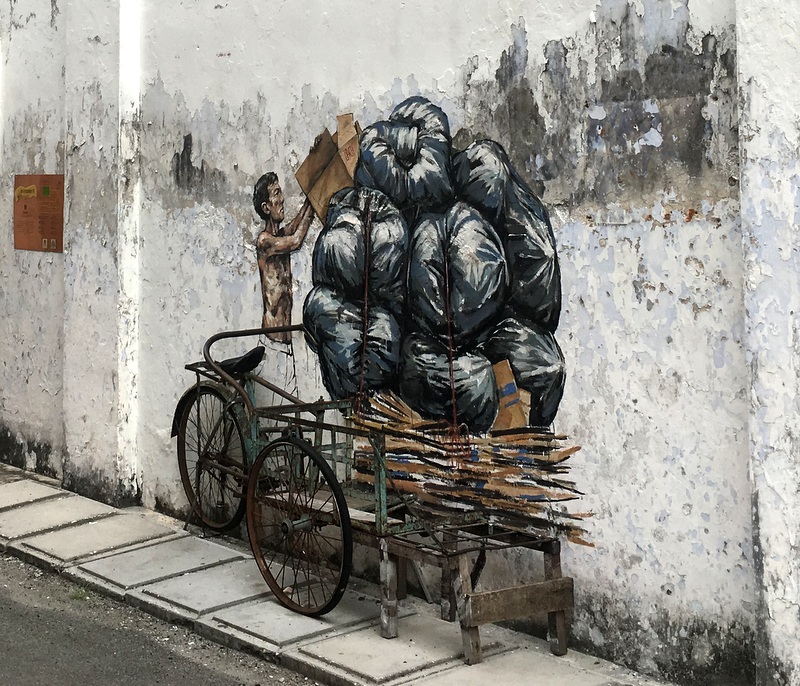
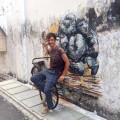
Here are two characteristic Zacharevic murals, incorporating real-life items, a chair, a trishaw. The left picture shows a girl, standing on a stool, reaching up to a birdcage, holding the air vent for support. To the right a man loading a trishaw.

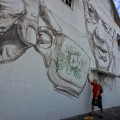
These 3D murals of course invite the spectator to become part of the artwork..:-). And the concept is easy to copy. The two anonymous murals Beer and Lunch have probably been commissioned by nearby cafes…:-). The difference in quality is obvious.
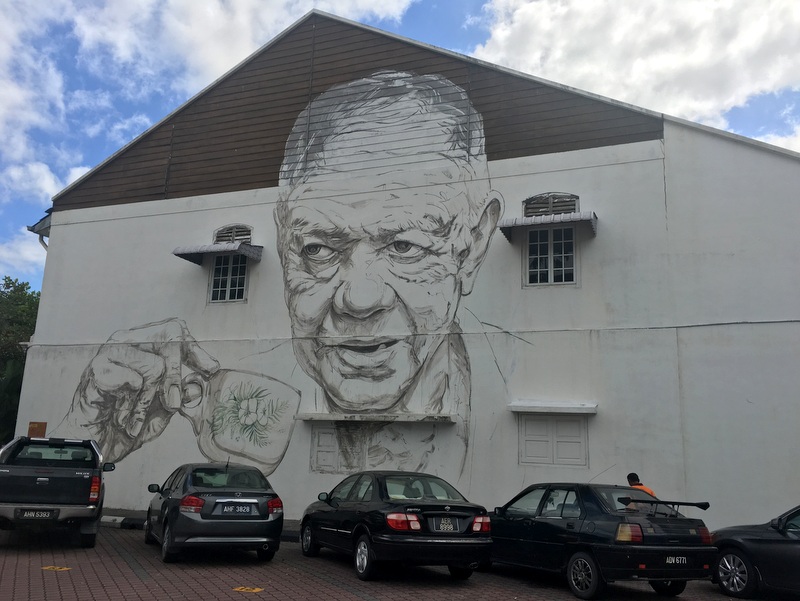
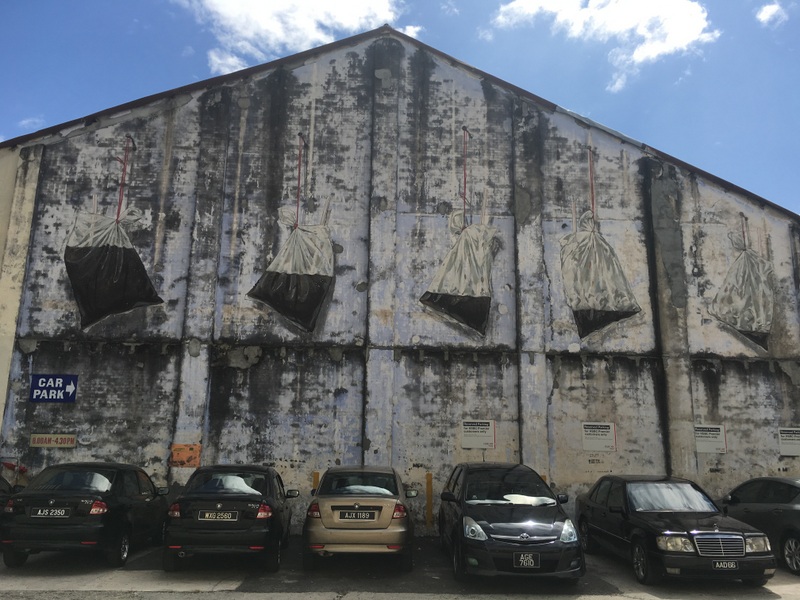
Many of Zach’s creations here in Ipoh are large, like Paper Plane, high up a wall and  Old Uncle, where he even uses the wooden planks of the building.

2016-01-26 11.35.38 HDR-003

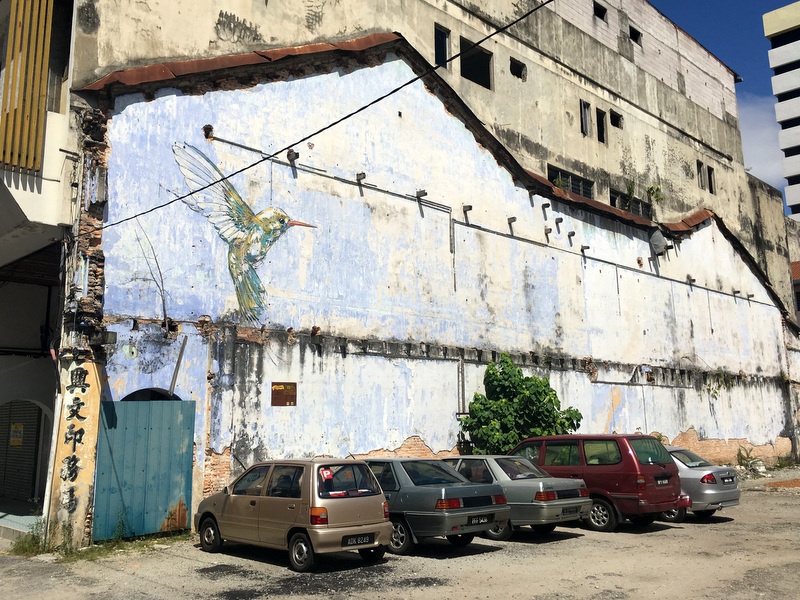
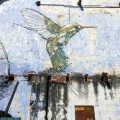
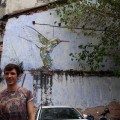
Here are two more, the left one is titled Kopi O, the right one Hummingbird.

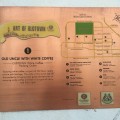
All the murals have explanatory plaques. You may wonder about the hummingbird, hovering in the air. Looks like something is missing..:-). When Zacharevic created this mural, there still was a huge tree. but it has been cut now, with only a stump left. No problem, in interviews Zach has said that his art is not meant for  eternity. Even the murals themselves will fade over time. Personally I like his approach.
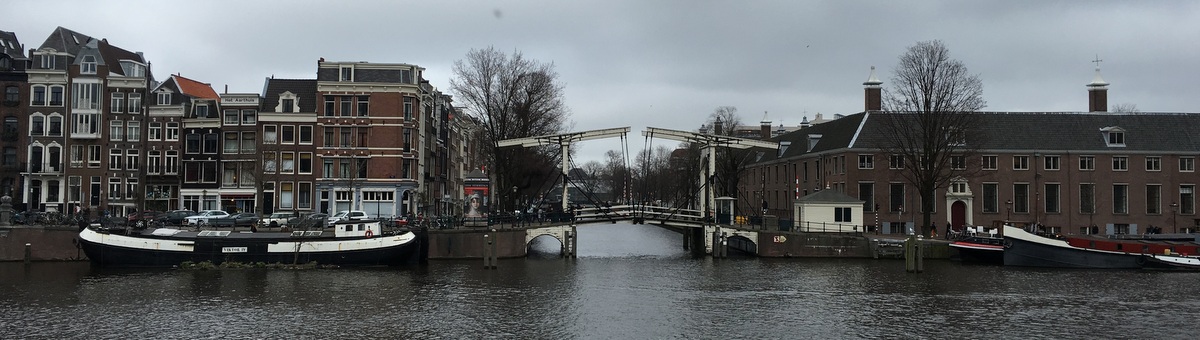
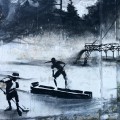
The most impressive mural is called Evolution and its theme is the tin mining industry that made Ipoh and the Kinta Valley famous.

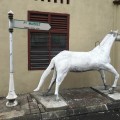
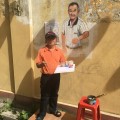
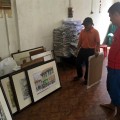
On our walk we found another Zacharevic mural, an attractive one. Maybe not included because the theme (Kopi O) is the same as the big one. We also found a horse statue, without any explanation. And we met an artist, Mr Woon, working on a mural, commissioned by the owner of a nearby shop. A friendly man, he showed us his atelier.

When you visit Ipoh, you should have a look at these murals! And you will probably find more…:-)


Lata Khong

Last month I organised a party for my waterfall friends. It was a very pleasant gathering, we had nice food and of course we talked a lot about waterfalls..:-).
The idea came up to have another meeting, but then at a waterfall. An easy one, no hiking required. One option would be Lata Khong near Karak. As it was a long time ago that I visited this fall for the last time, I wanted to do a recce first.
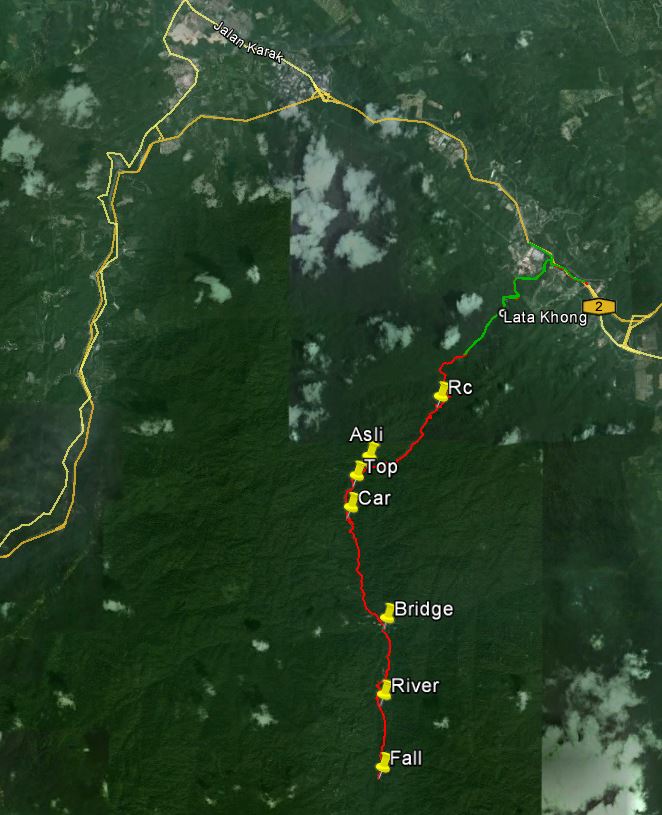
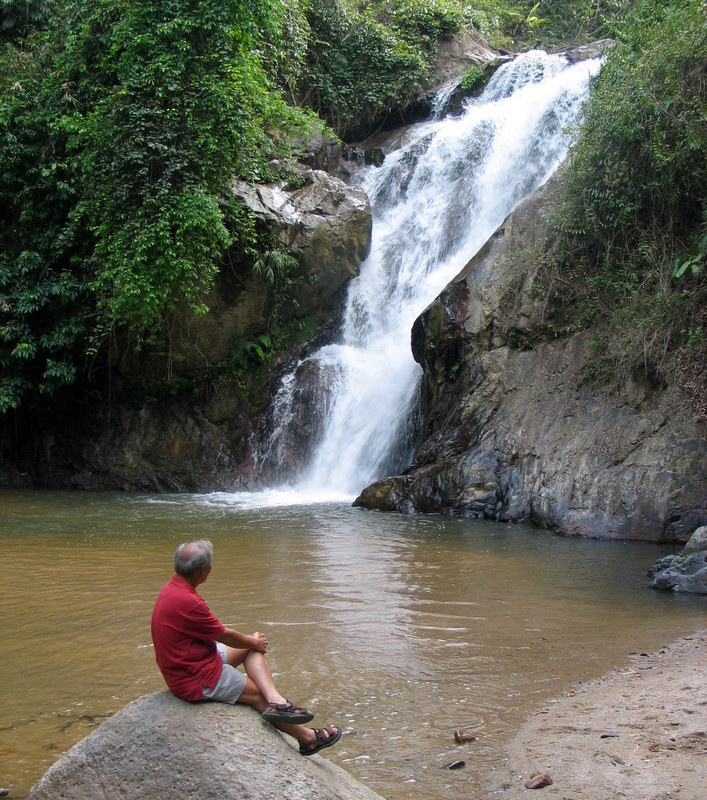
Lata Khong, a waterfall in the Dua Olak river has an interesting history. In 2003 I met Khong and as were both interested in waterfalls, soon we went out for waterfall hikes. One of these hikes started from KG Sg Dua Olak, March 2005. We had received GPS info about a very remote waterfall in that region. In the left image you see how extremely remote it was (the red trail)! Soon it became clear that this was too hard-core 4WD for us. But Orang Asli told Khong that there was a nearby waterfall, quite close to the road! And that is how we “discovered” what is now called Lata Khong!

waterfall

We were quite excited about this discovery, and soon I went back, a few times even. Once with Khong and a few weeks later with another friend, Edward, camping overnight at the fall. It was during this trip that we were wondering about the name of the fall. Of course locals have a name for it, but we didn’t know. So, shall we name it Lata Khong? It started as a joke, but even now the fall is still known as Lata Khong!

Here are pictures taken during my trips. The last picture is a recent one. The fall still looks the same, but the surroundings have changed. Forest has been cleared, access roads have been tarred.

And as was to be expected, more people have discovered the waterfall. When we organise an outing, we probably will not be alone.

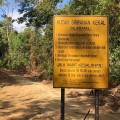
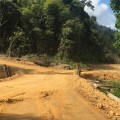
Access is easy, you can park your car at the tar road and walk the last part. We decided to explore the tar road until the end and were quite unhappy when we noticed that wide logging roads continued from there. If logging starts upstream, the water quality will go down..:-( And according to the signboard logging is completely illegal. But this is Malaysia….

So not all news is good, but the conclusion of our recce is, that the waterfall is still suitable for an outing. I will plan it soon and then update this blog

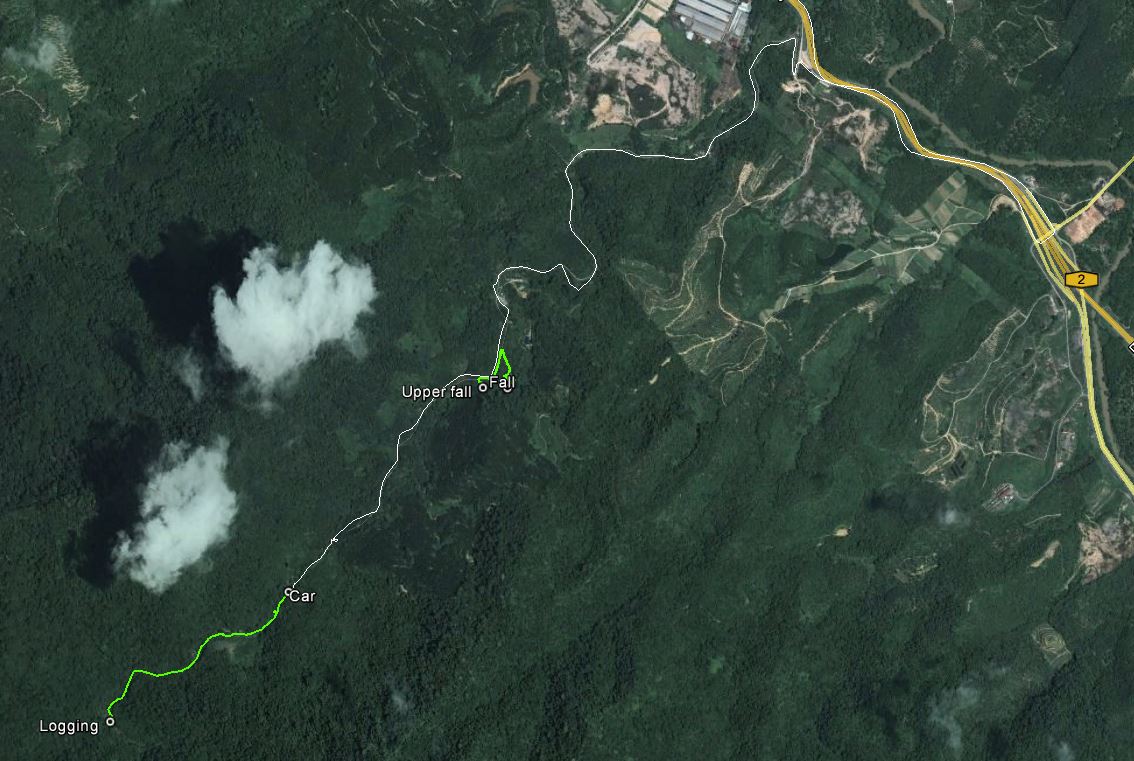
Hear are two more GE screenshots. The left image shows how far we have explored, the right one shows how detailed nowadays the GE imagery is, with Lata Khong and the upper fall visible!

Capture

detail


Kathina 2015

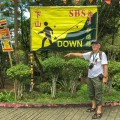
The Kathina festival in Taiping was held this year on 8 November. About the background of this Buddhist festival you can read more in an earlier blog The Kathina Festival 2013 . This time Aric joined me. The Sasanarakkha Buddhist Sanctuary (SBS) where the festival is held, is located high up the slopes of Bukit Larut. You have to park your car at the Chinese cemetery, from where volunteers with pick-up trucks and 4WD’s bring you to the sanctuary. Perfect organisation!

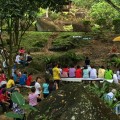
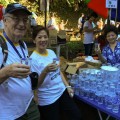
When we arrived, around 7am(!), there was already a big crowd, enjoying the large variety of food, prepared by volunteers and free of charge. A very nice, friendly atmosphere. Our friends Mary, Jenny and George had arrived early and were busy distributing mineral water.

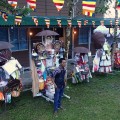
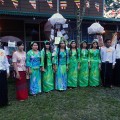
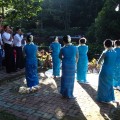
There was a remarkable number of Myanmar devotees. I understood that many of them had been helping SBS preparing for Kathina. Another reason could be that Myanmar is Theravada Buddhist, like SBS. Do you know the difference between Theravada and Mahayana Buddhism? Maybe I should write a separate blog about it..:-)

The Myanmar people carried a lot of gifts for the monks and they also performed a very nice musical show, with songs and dancing.

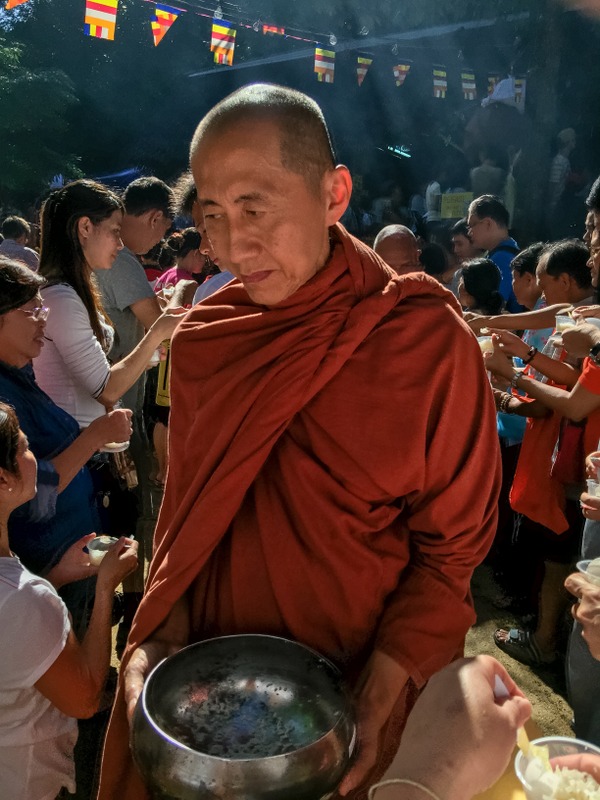
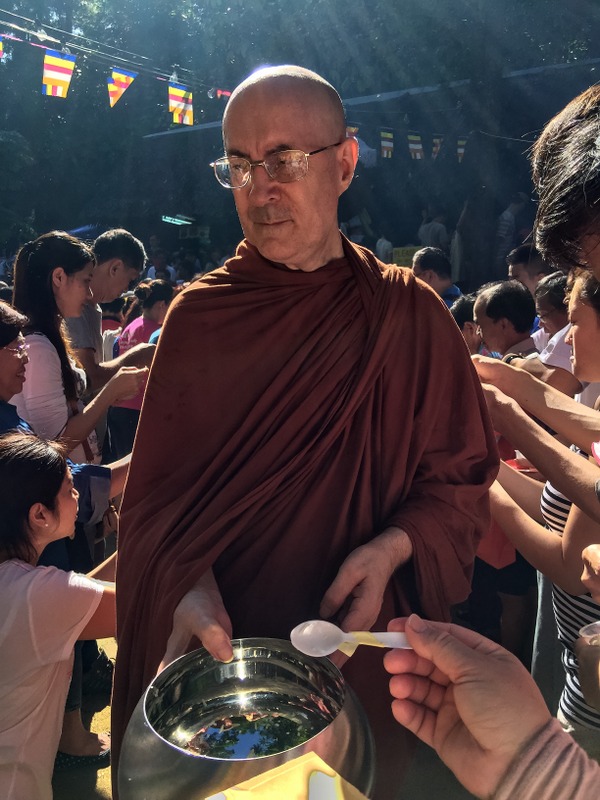
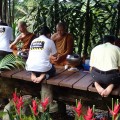
Around 10 am the alms giving ritual started. Very symbolic and impressive. The food stalls closed and everybody received a plastic cup with some rice in it and a small spoon. When the monks were passing you put a little bit of rice in the alms bowl they were carrying.

The atmosphere was solemn. Here are two nice pictures taken by Aric.

2015-11-08 10.10.18 HDR

2015-11-08 10.10.41 HDR

And here is a (too) short video clip

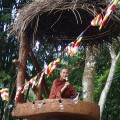
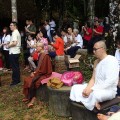
After the alms giving the monks walked to platforms where they sat down to receive gifts from the devotees.

I thought that the monks received here their new robes, but that is not true, the devotees present gifts.  A friend explained that actually only one piece of cloth is presented to the Sangha (the monk community). This is done early morning and during the day this cloth is used to make one robe. Which monk will receive this robe? During the Vassa (the period that monks don’t travel but stay in the monastery) they have to follow many rules and precepts. There are so many rules, that you can easily forget one or two..:-). My friend told me that the monk with the best “precept keeping record” gets the robe. Don’t know if it is true, it doesn’t sound very Buddhist, but it is a nice story.

The last part of the festival is a talk/lecture by the monks.  We listened for a while to the English talk by the head monk (?) before we walked down. This path down had been upgraded by the Myanmar volunteers and was really a pleasure walk, back to the car.

I hope to attend Kathina again in the coming years.

Journal 1-1-2016

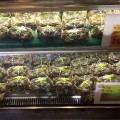
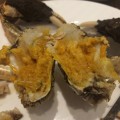
During our recent China trip, we stayed one night near the Yangcheng lake, hoping to enjoy a dinner with the famous hairy crabs. It turned out that we were a bit too early, the season was just starting. It became quite an adventure, read the report here. We had hairy crabs, but they were slightly disappointing because there was hardly any roe and that is what makes them a delicacy.

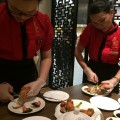
When, end of October, we noticed that the Dragon-I restaurant in 1 Utama had a hairy crab promotion, we could not resist the temptation..:-). The crabs are flown in twice a week from Shanghai, they are not cheap, price is RM 400-500 per kg. In Yangcheng we had to prepare the crabs ourselves, here it was done for us by two nice waitresses who created a real work of art. And as you can see, now there was plenty of roe. Not healthy but so delicious…:-)

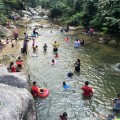
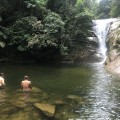
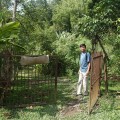
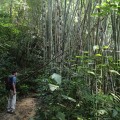
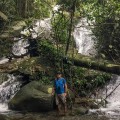
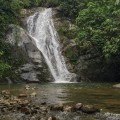
The next day I went back to Lata Tampit, this time with Aric, to show him how attractive these falls are. It was a weekday,during my first visit the 5th tier was crowded with people camping, now there were no other visitors. Beautiful large pool.

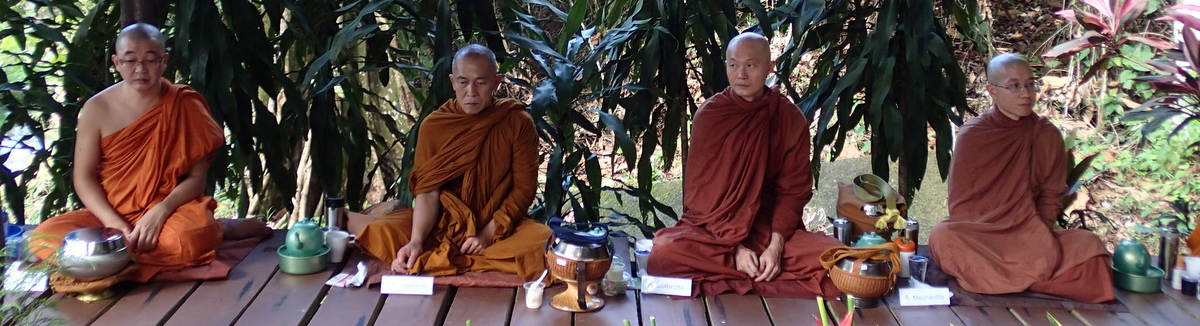
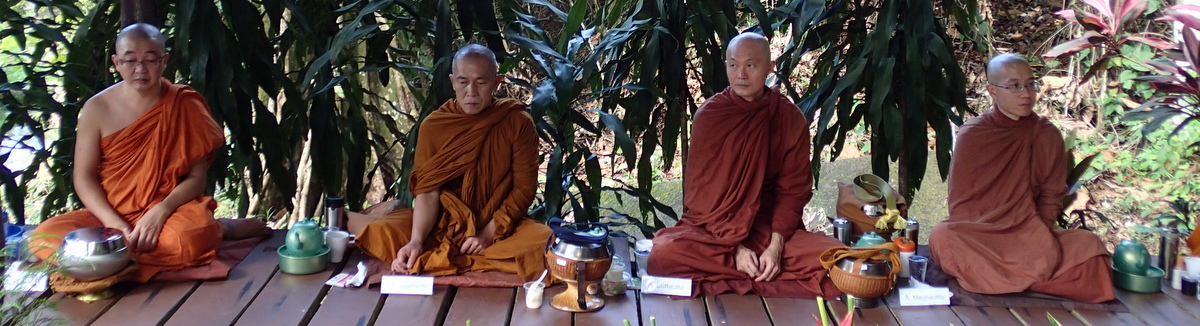
On 8 November the yearly Kathina ceremony was held in Taiping. In an earlier blog, Kathina Festival 2013 , I have given information about the background of this Buddhist festival. This time I went with Aric who had never attended. About the Festival I will write a separate post: Kathina 2015. Here only one picture of the monks waiting for the devotees to present their gifts

When I am in Taiping I always want to have a look at the Old Resthouse, probably a masochistic streak in my character. It is a real eyesore, half hidden behind a fence that proudly advertises the heritage of Taiping. But of course I still enjoyed my stay, meeting many friends…:-)

Recently I have written a post Kanching Mission(s), where one of the missions was to check for my friend Joe Yap if there was a lot of rubbish. There was, so she started organising a cleaning operation. I could not attend the event itself, as I would be in Laos, but I met her in Kanching a week earlier, when she went there with some of her volunteers. I met her there with my friend Rahim.. He had never been to Kanching, so I showed him a few of the falls, before it started to rain.

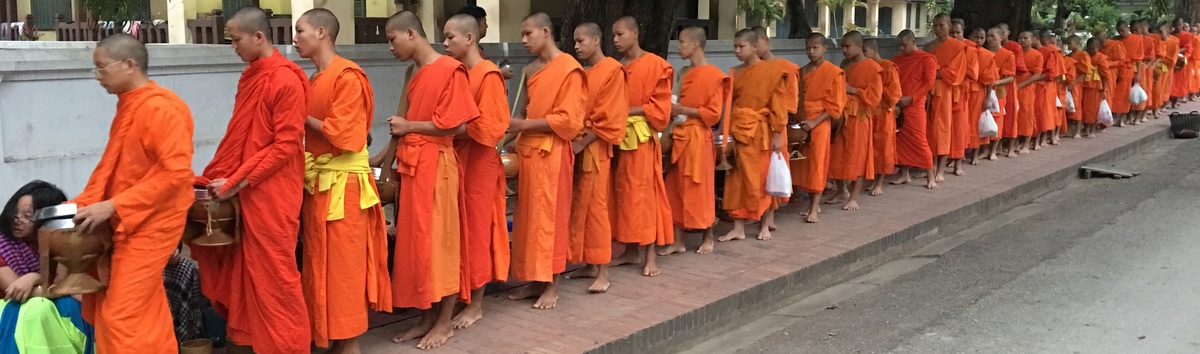
About our trip to Laos I have published already a few posts. More will follow. Here only a picture of an alms giving ceremony in Luang Prabang.

2015-11-30 06.27.20

Several of my friends were interested in Lata Tampit, so I went back for a third time. It will not be the last one, the waterfalls are beautiful, access is relatively easy, a pleasant half-day trip with a nice lunch as reward. Edwin suggested restaurant Wonderland Valley in Bukit Tinggi, and that was a good choice.

We don’t celebrate Christmas, but I decided it would be a good time to have a small party.  From this post you will have noticed that I am still addicted to waterfalls..:-), so I invited friends with a similar interest. My sifu Khong had recently created a personal book with all the waterfalls he had visited, I had borrowed the book to show it to my friends. There was food, a Western style buffet. And I had created a slide show of the waterfalls visited by me during the last 10-12 years. Without identification. After the dinner my guests had to determine name and location of the various falls. Big fun. A nice party

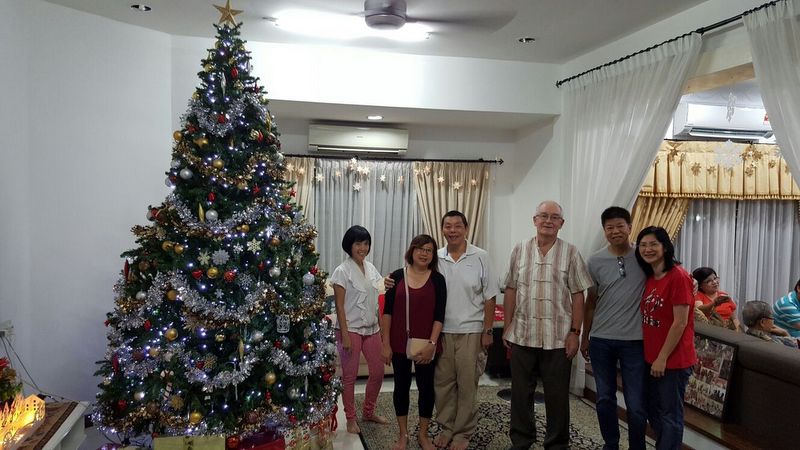
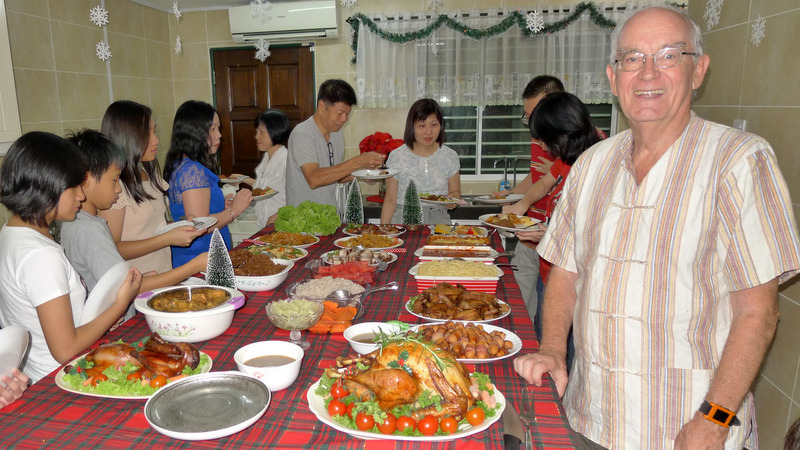
A few days later I was invited for a real Christmas party by my friend Philip. With a Christmas tree, a turkey and lots of other food. And even the singing of Christmas carols, where I surprised myself by joining the others in “Silent Night, Holy Night” 🙂

For New Year’s Eve, we have a tradition that we celebrate it at home, with a nice dinner. After the countdown we watch the fireworks at the Curve from our balcony. Nothing spectacular this time, but the dinner was a success.

And so came 2015 to an end. In that year I published more than 40 posts and albums!

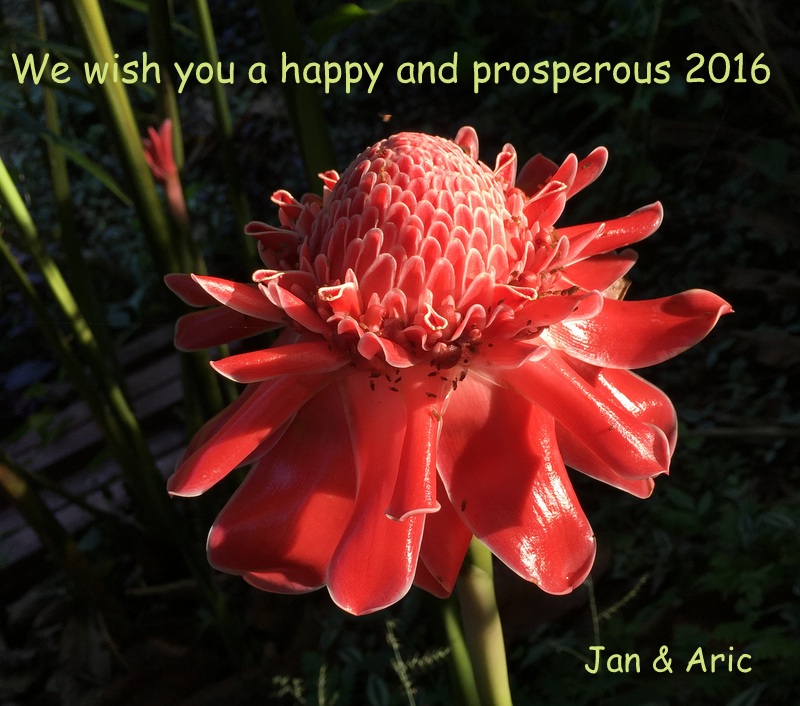
I wish all my followers a happy and prosperous 2016!

Laos 2015: Tham Chang cave

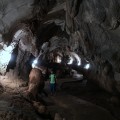
The limestone hills around Vang Vieng have many caves. We decided to visit one of them, the Tham Chang cave, because it is on walking distance from the village and considered  by some to be the most famous one .

Not sure it that is true, I noticed considerable confusion on the Internet, probably caused by the fact that Tham means cave in the Lao language, so all cave names start with Tham..:-).

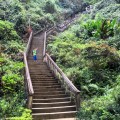
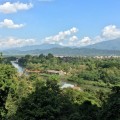
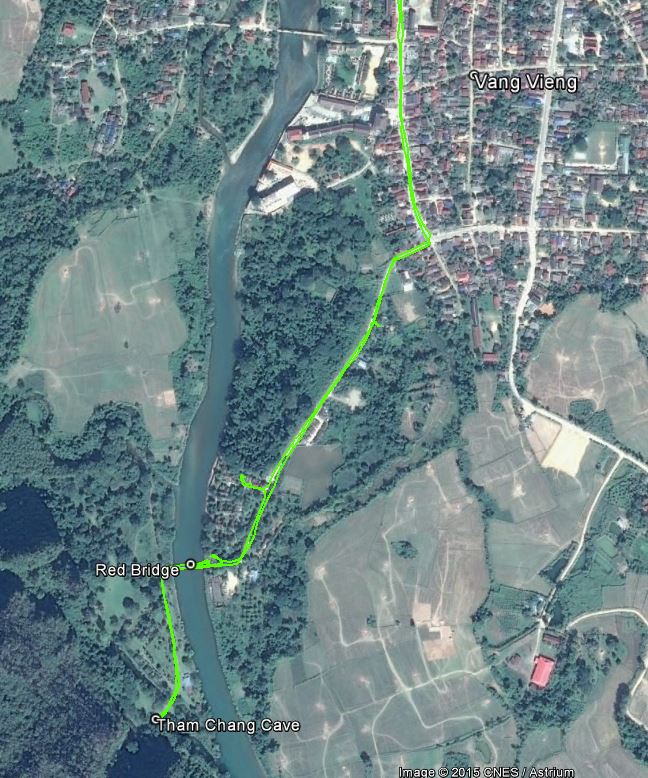
From the village it is a nice walk of not more than half an hour. You have to cross a resort (2000 Kip) and pay for the cave (15000 Kip). Not cheap, but worth it. Steep steps (147, we counted them!) bring you to the entrance of the cave, where a viewing platfom gives you a nice view of the surroundings.

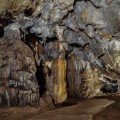
Don’t expect an unspoiled cave here, this cave has a long history, it has been used as a shelter in the 19th century by the local population, during invasion by Chinese marauders. Here and there inside the cave you can still see man-made constructions.

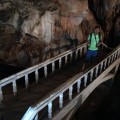
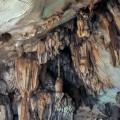
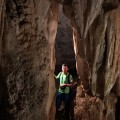
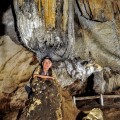
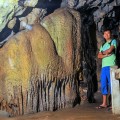
But there is enough beauty to be seen. You can follow several routes in the cave, all of them eroded in the past by water. Fascinating

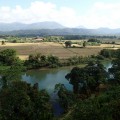
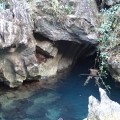
There still is a stream coming out of the hill, near the start of the steps up to the cave. A perfect place to take a bath. Never seen such crystal clear water! Of course we could not resist the temptation..:-)  The water was not cold at all.

And here is the GE map with the location of the cave

GE

Laos 2015: Pak Ou Caves

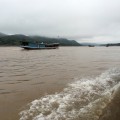
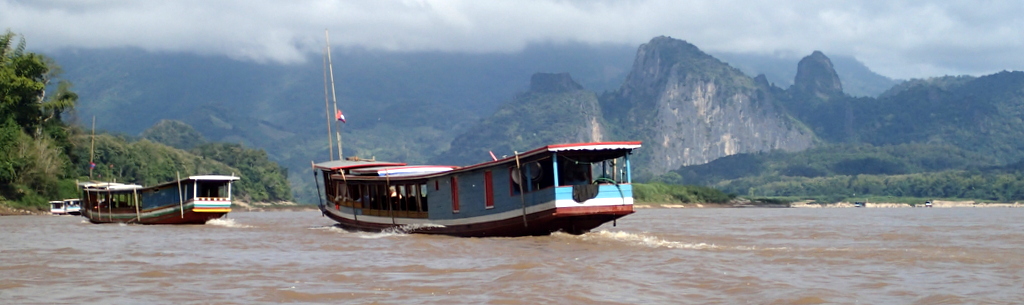
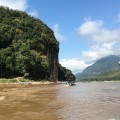
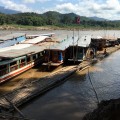
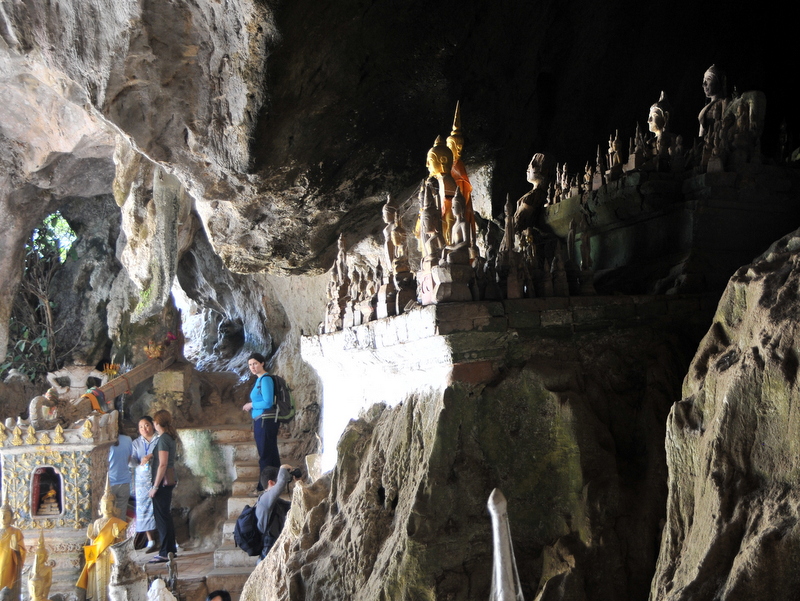
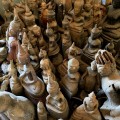
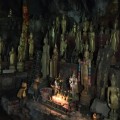
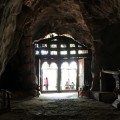
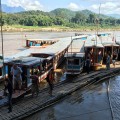
The Pak Ou caves are located about 30 km north-east of Luang Prabang and can only be reached by boat over the Mekong river. They are famous because of the countless  (often small) Buddha statues in the caves.  Every day numerous longboats bring hundreds of tourists to these caves.

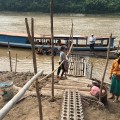
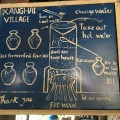
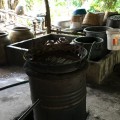
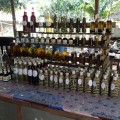
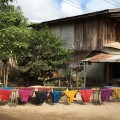
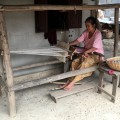
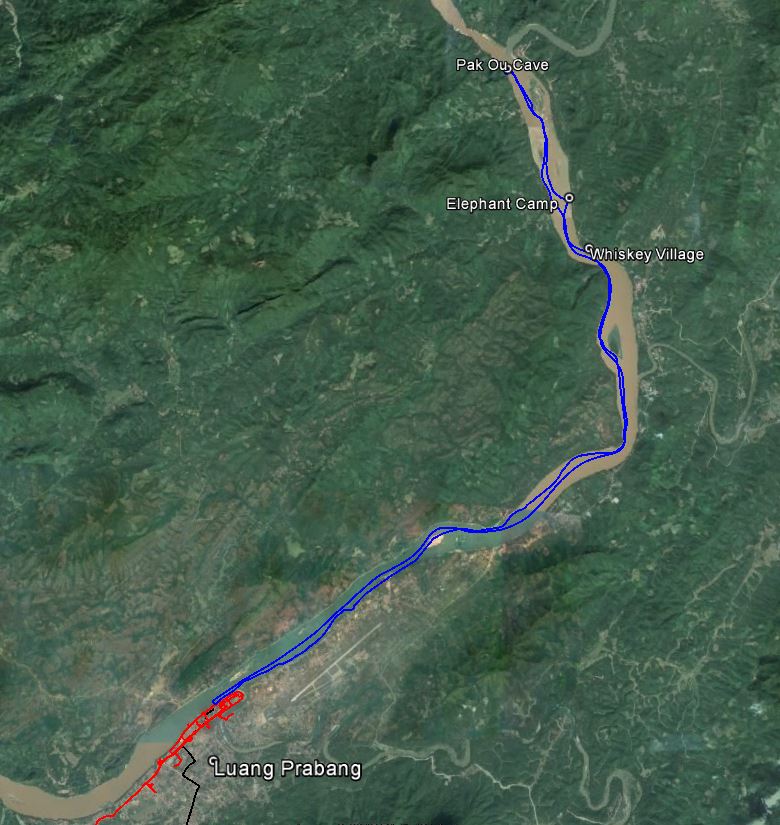
Our first stop was at Ban Xang Hai , the “whisky village”. The villagers use sticky rice to make rice wine and a much stronger (50%!) liquor. Taste is not bad. They also do weaving. A bit of a tourist trap.

After a short stop at the village we continued. We were going upstream and the skipper was skillfully choosing a route where the current was less. Still it took us about 2.5 hour to reach the caves (a half hour stop at the village included)

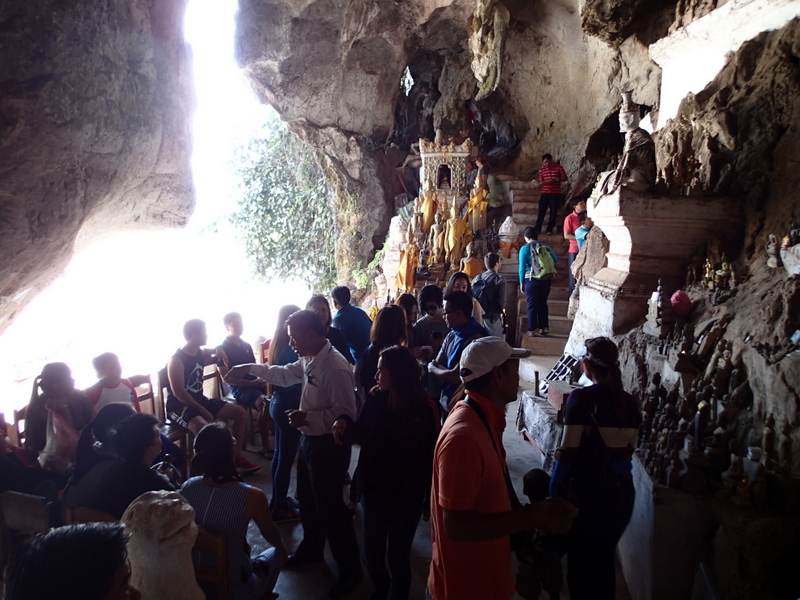
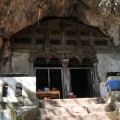
Arriving at the cave, we were told that we had 45 minutes to explore. I had been here a long time ago, in 1998(!) and I have a vague memory that we were about the only visitors, which contributed greatly to the atmosphere. Now it was very different with the crowd. Not easy to take pictures without people in it.

DSC_1950

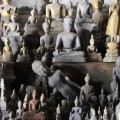
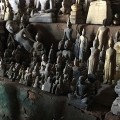
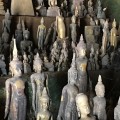
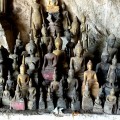
But we have done our best..:-) Here is a collection of Buddhas without people.

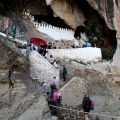
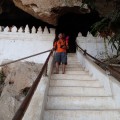
To reach the upper cave, you must climb a flight of steps. And you need a torch, no lighting here. Unfortunately we had hardly time to explore.

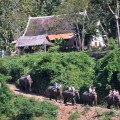
Going back took less time, because now we were going downstream. On our way back we dropped two passengers at the Elephant Camp, another tourist attraction of Luang Prabang.

Is the trip worthwhile? Yes, it still is, but better you rent a boat and avoid the peak hour. For the two of us it was too expensive, but when you are with a few more people it is worth it. Also you will have more time to enjoy the cave.

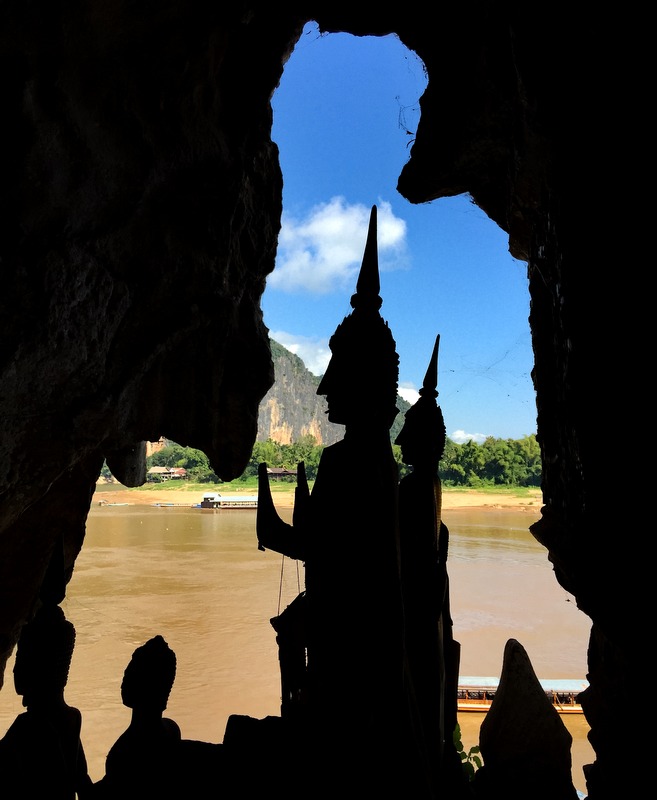
Here is a view from the cave of the Mekong river with the silhouette of a serene Buddha and a GE map of the trip.

2015-11-29 11.18.36-2GE